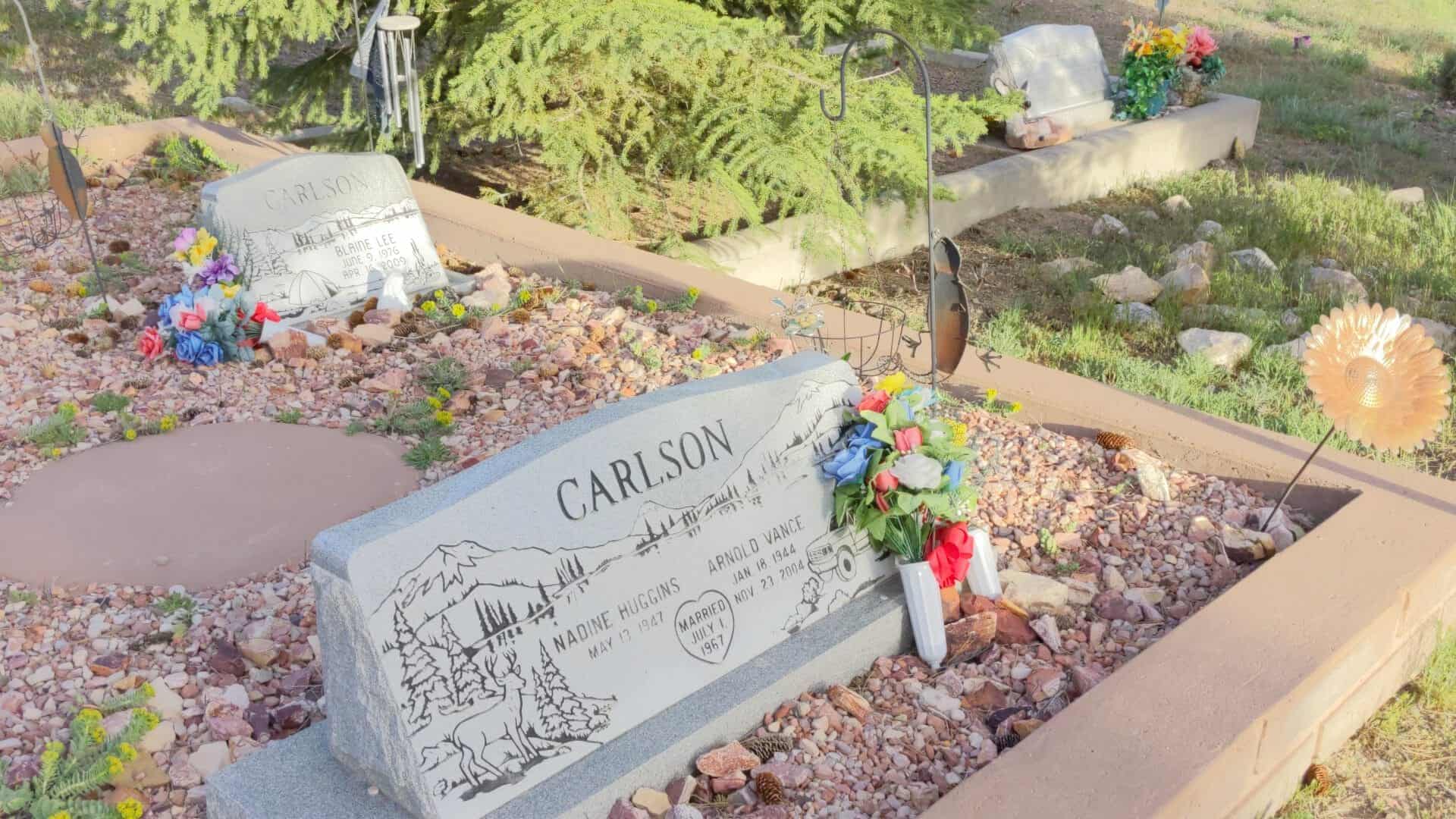
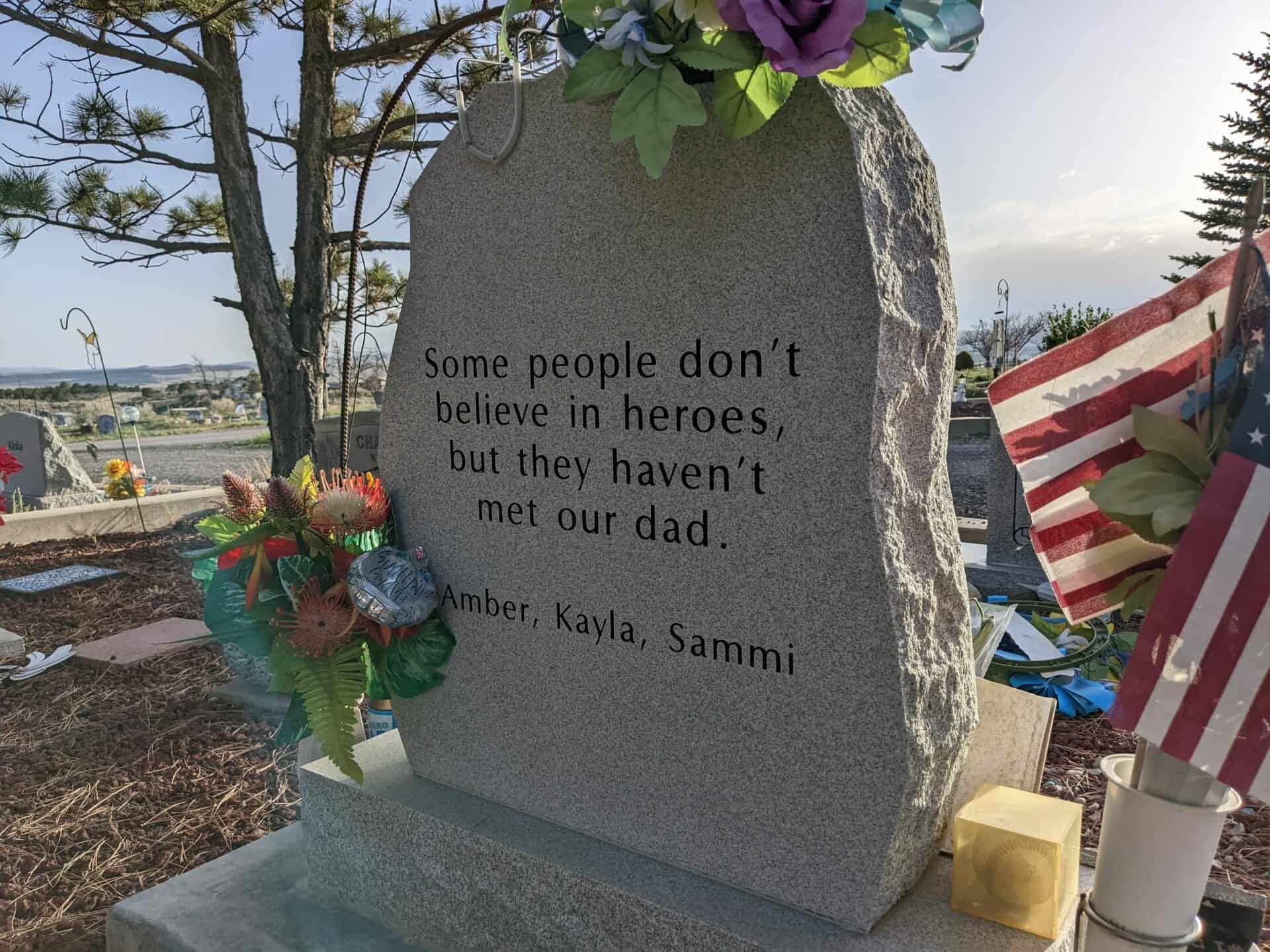
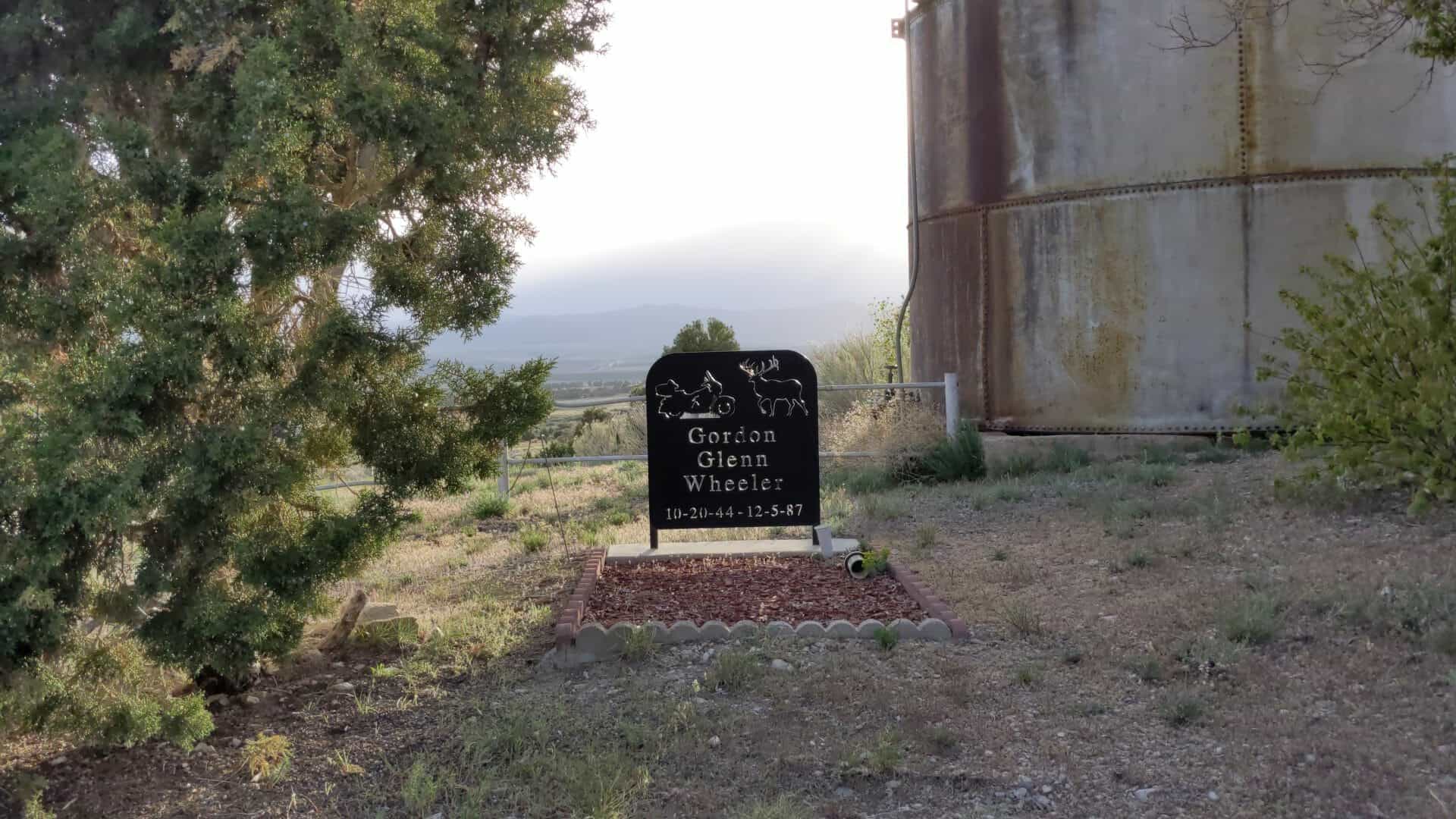
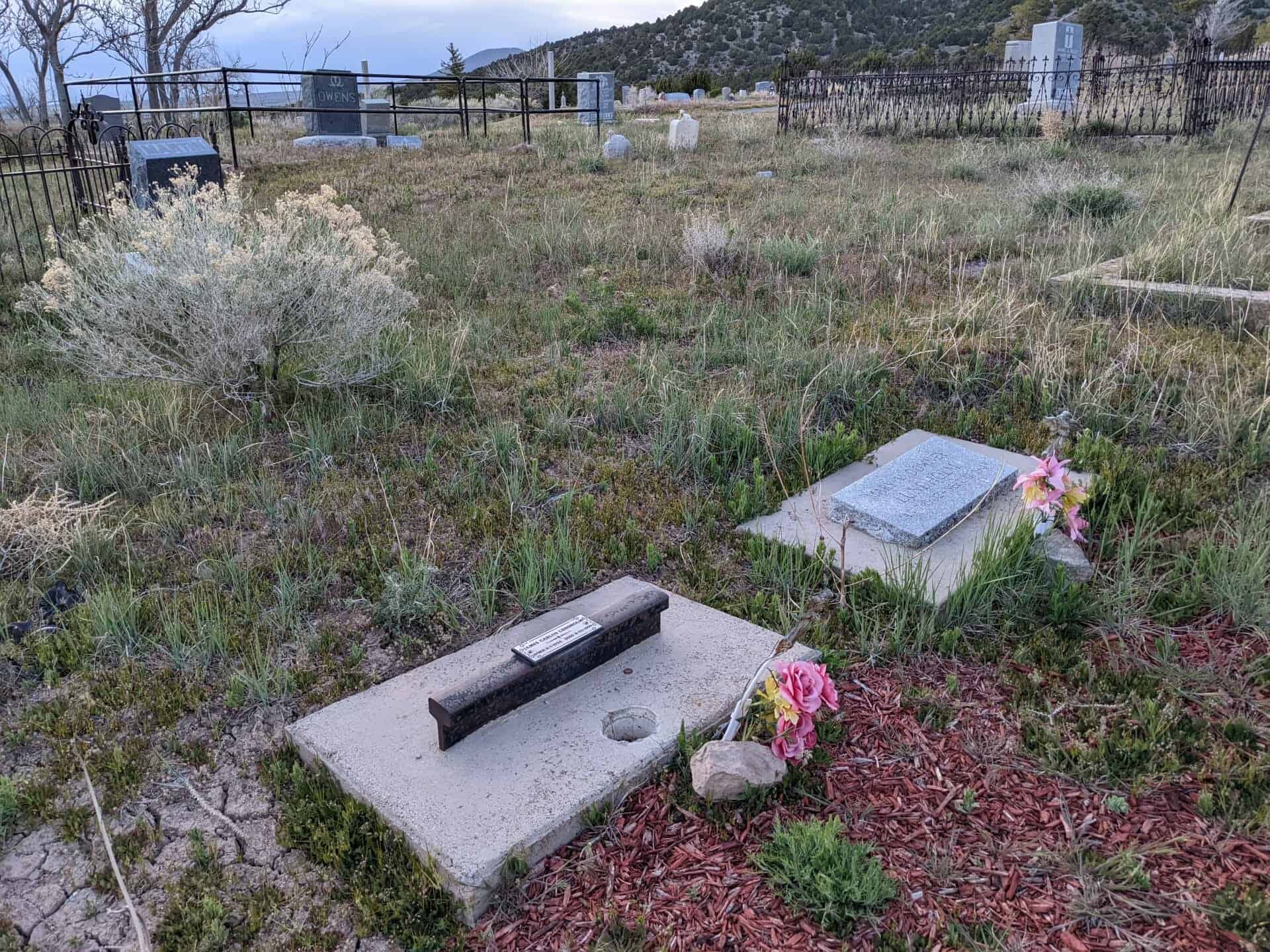
The Cemetery in Eureka, Utah was added to the National Register of Historic Places (#79003469) on March 14, 1979.
Although an exception to properties normally listed on the National Register, the Eureka Cemetery represents an integral part of the Tintic Mining district. Its contents provide insights into the types’ of people, cultures and social organizations that inhabited the area. Grave stones reveal nationality, as well as various cultural symbolisms which reflect values, bates of death also aid in identifying periods of disease and misfortune. In addition, various fraternal organizations have separate plots which aid in understanding their role as, in part, seeing to a decent burial for their members.
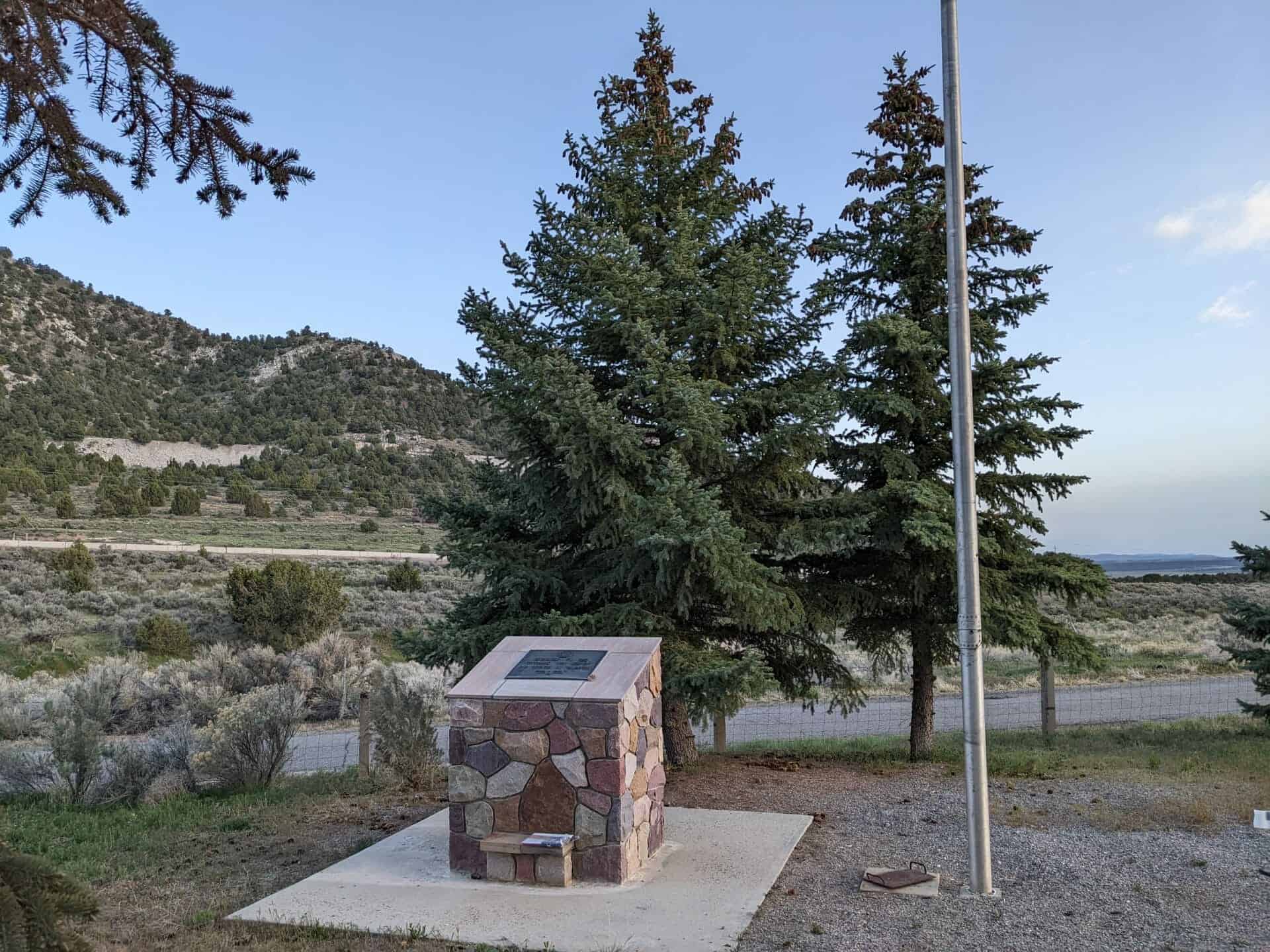
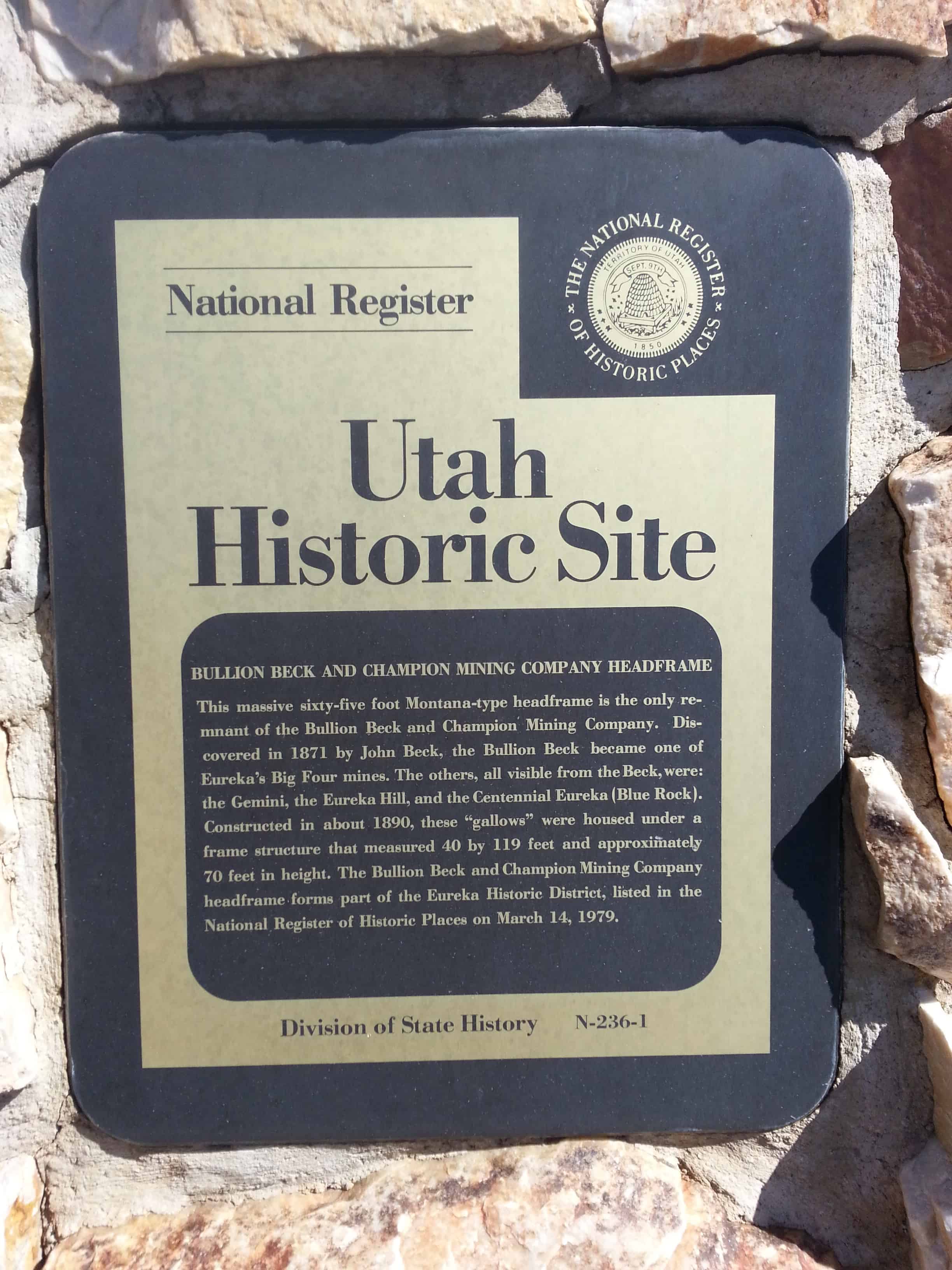
BULLION BECK AND CHAMPION MINING COMPANY HEADFRAME This massive sixty-five Montana type Headframe is the only remnant of the Bullion Beck & Champion Mining Company. Discovered in 1871 by John Beck, the Bullion Beck became one of Eureka‘s big four mines. The others, all visible from the Beck, were the Gemini, the Eureka Hill, and the Centennial Eureka or Blue Rock. Constructed in about 1890 these gallows were housed under a frame structure that measured 40 x 119 feet and approximately 70 feet in height. The Bullion Beck & Champion Company Headframe forms part of the Eureka Historic District listed in the National Register of Historic Places on March 14, 1979.
THE BULLION BECK & CHAMPION MINING COMPANY HEADFRAME
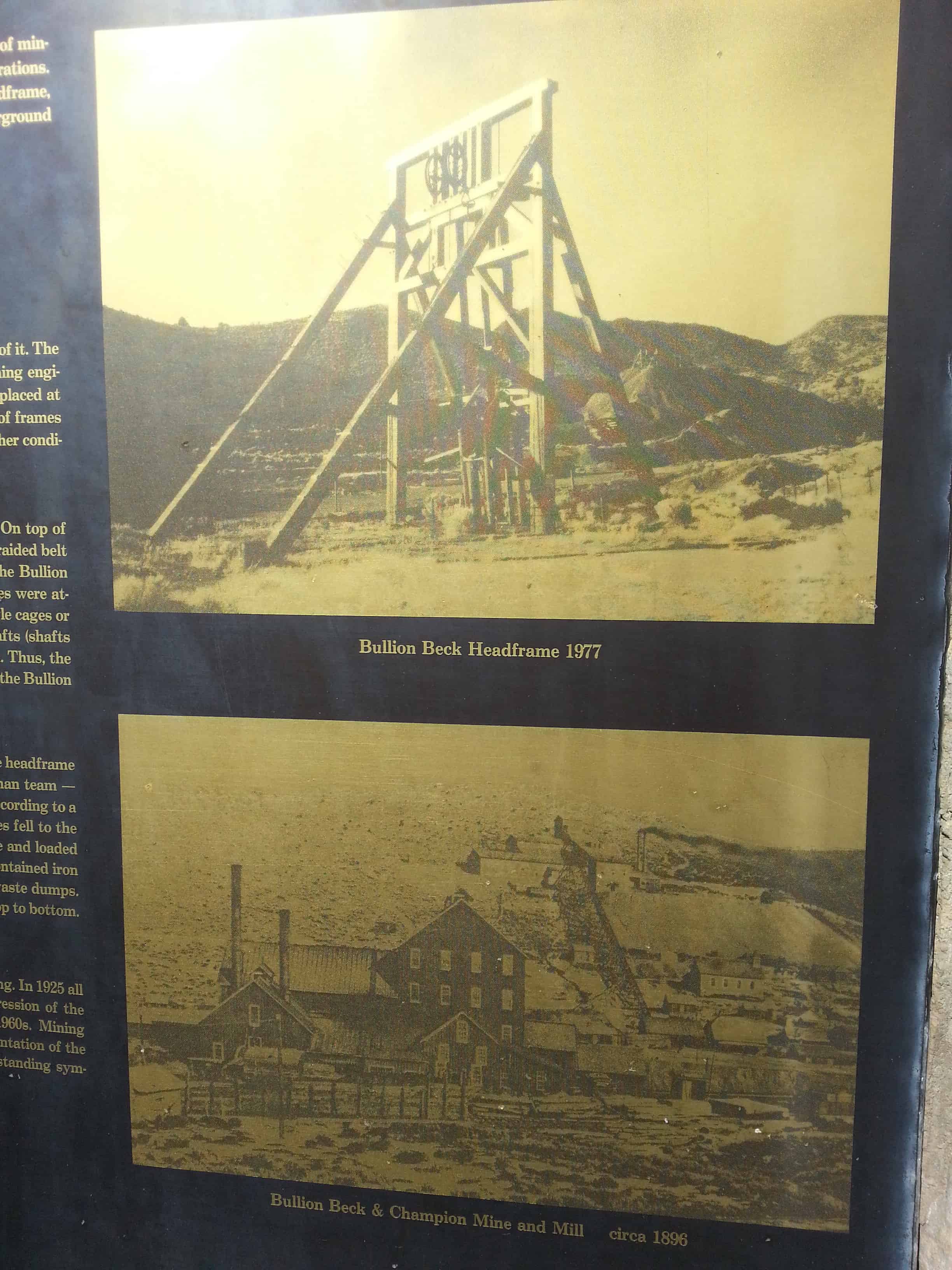
Perched over deep mining shafts, headframes or gallows frames illustrate the development of mining from small individually owned prospects to the large- scale operation of mining corporations. Technological innovations were required to accomplish this change. The Bullion Beck headframe, constructed in 1890, served to transport men, mules, supplies, and ore in and out of the underground workings. “The Salt Lake Tribune”, January 1, 1891, described the newly constructed plant:
Over the shaft is a main building of hoisting works. This is a substantially-framed structure, 40 x 119 feet, and high enough to take in the gallows frame, that being one of the best and strongest in the country and 60 feet in height. There are no better frame timbers or larger ones than these in Utah.
Headframes were of various types- the 4- or 6-post type and the A-type or modifications of it. The Bullion Beck gallows is A-type, also called two-post headframe or Montana type. Mining engineers’ handbook contains stress sheets and diagrams that illustrate how all bracing was placed at angles and in positions designed to hold the weight and stress needed to do the job. Sizes of frames depended on load weight, shaft size and depth, special equipment requirements, and weather conditions if exposed.
The Headframe allowed mining from depths of 300 to over 3,000 feet below the surface. On top of this frame sits sheaves, large wheels over which ran the hoisting rope. The rope, first a braided belt then a wire cable, ran from the hoisting engines some distance from the headframe. Bullion Beck had two Frazer and Chalmers 500 horse-power engines. The ropes from the sheaves were attached to cages that traveled in and out of the vertical shaft. These could have single cages or double-decked and had sections of track attached for rolling in ore cars. In inclined shafts (shafts descending at an angle) all self-dumping ore cars with wheels called skips were used. Thus, the vertical beams running in the center of the frame are often labeled skip guides. Those of the Bullion Beck were partially reconstructed in 1987.
Hoisting was the process of getting men, equipment, and ore in and out of the mine. The headframe served as part of the hoisting plant or works. Basically, the process involved a three-man team – hoist operator, top lander and cage tender. The hoist operator ran the hoisting engine according to a set system of bell signals. Removing loaded ore cars and sending down the empty ones fell to the top lander, while the cage tender delivered the loads to the different levels of the mine and loaded cars of ore or overburden to be sent to the surface. The floor at the top of the shaft contained iron plates and tracks for the cars so that they could be sent to the ore bins or to the waste dumps. Bullion Beck Mine contained a double compartment shaft with a man-way from top to bottom. The timber-lined shaft collar is now covered.
The surface plant of the Bullion Beck Mine was originally enclosed in a wooden building. In 1925 all of the plant was demolished except the headframe, which sat idle during the depression of the 1930s. It reopened due to World War II demand and operated into the early 1960s. Mining historians view the headframe as “the most prominent feature in almost any representation of the ordinary mine of the frontier period.” These wooden gallows are very rare. Those standing symbolize the important of the western mining landscape.
Daughters of Utah Pioneers Marker #512 (other markers listed here)
The discovery of the Sunbeam Lode and the subsequent organization of the Tintic Mining District on Decomber 13, 1869, was the beginning of a mining district which ultimately became world-famous. The name is in honor of the Ute Indian Chief Tintic who roamed this area with his braves. This district survives as the best physical reminder of Utah’s mining heritage. Towns include Eureka, Silver City, Diamond, Knightsville, and Homansville. Gold, silver, lead, and copper were the primary minerals of the region.
There were four railroad companies serving the mining district: Salt Lake and Western Railway, the Tintic Range Railway, the New East Tintic Railway, and the narrow gauge Eureka Hill Railway.
Eureka came to be known as one of the quietest boom camps in the west. There were stores, theaters, hotels, schools, newspapers, churches, an Andrew Carnegie library, and one of the first Golden Rule ( J.C. Penney ) stores.
There was a diverse ethnic mix in the district. The camps consisted of people representing many nationalities and religions, the famous and notorious, miners, prospectors, business proprietors, doctors, teachers, cowboys, railroad men, and beloved women. These women rocked the cradle, nursed the sick, and waited at the mouth of the mines to know who was being brought up from the bowels of the earth below. The women dressed the dead and knelt in prayer. To all who believed tomorrow would bring a better life, we pay honor. Today we stand together and remember the great heroes of yesterday who settled this district with a dream of a better tomorrow.
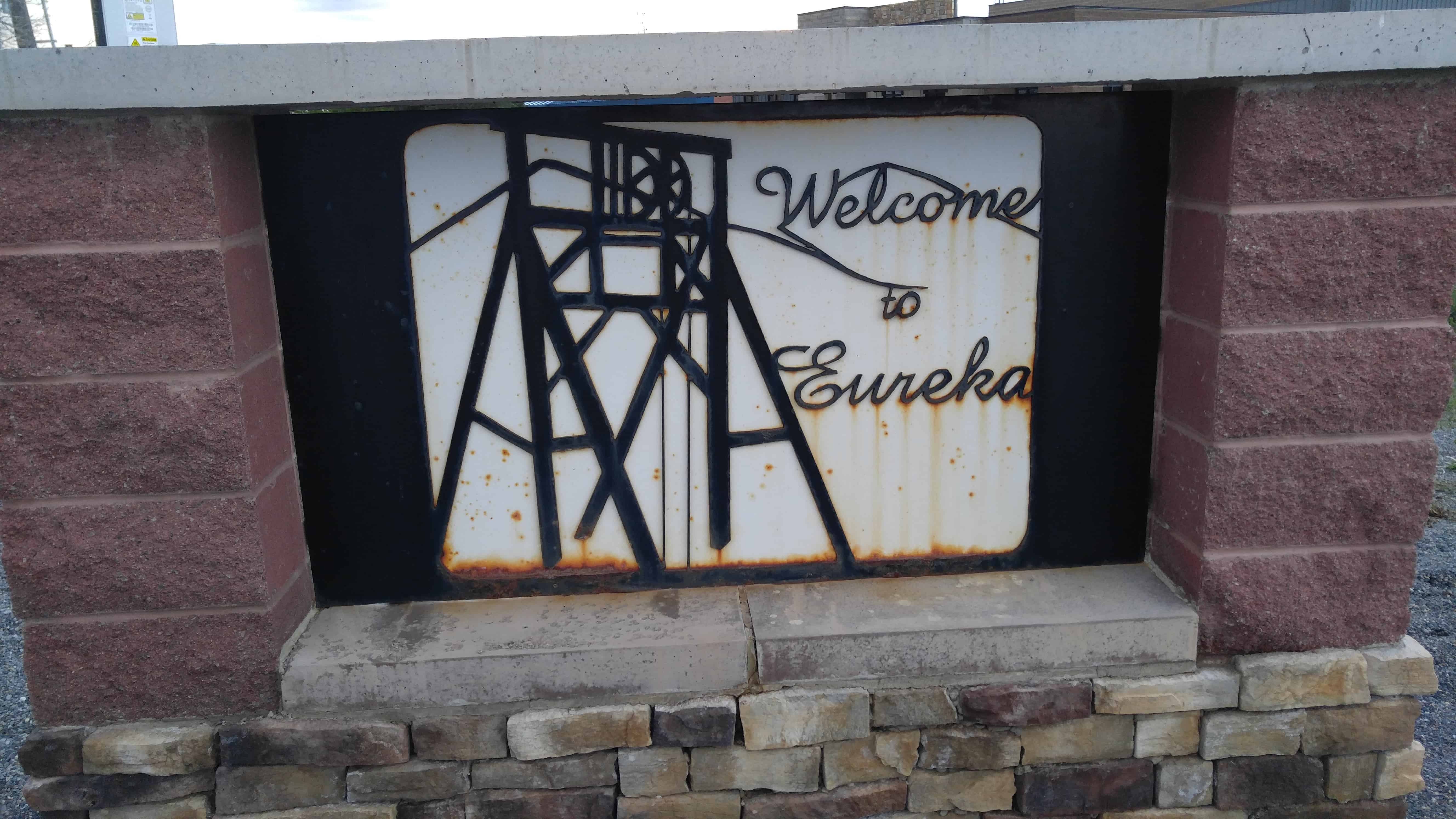
Originally known as Ruby Hollow before it developed into a bustling mining town, Eureka was incorporated as a city in 1892, Eureka became the financial center for the Tintic Mining District, a wealthy gold and silver mining area in Utah and Juab counties. The district was organized in 1869 and by 1899 became one of the top mineral producing areas in Utah. Eureka housed the “Big Four” mines—Bullion Beck and Champion, Centennial Eureka, Eureka Hill, and Gemini-and later the Chief Consolidated Mining Company.
Eureka’s role as the central financial point for the district ensured its survival. It housed business establishments, including the second-ever JCPenney store (then called the Golden Rule Store), financial institutions, local and county governmental buildings including Eureka City Hall (1899) and a Juab County Courthouse (1892), various churches, and the meeting places for numerous labor, social, and fraternal organizations. Mining entrepreneurs such as John Q. Packard, John Beck, Jesse Knight, and Walter Fitch Sr. were important figures in Eureka and Tintic history. In 1979 Eureka was placed in the National Register of Historic Places as part of the Tintic Mining District Multiple Resource Area, recognizing the importance of remaining buildings and sites.
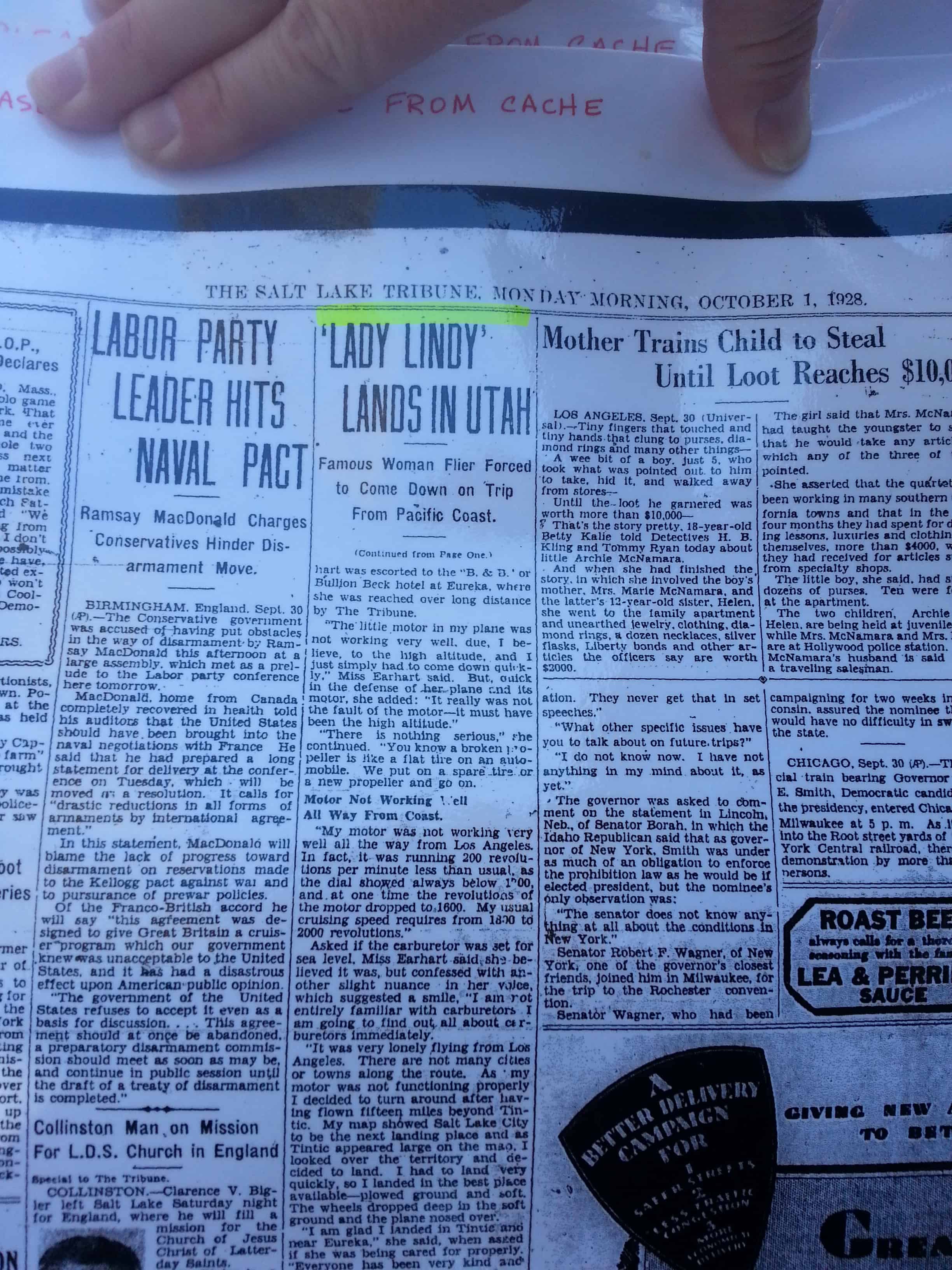
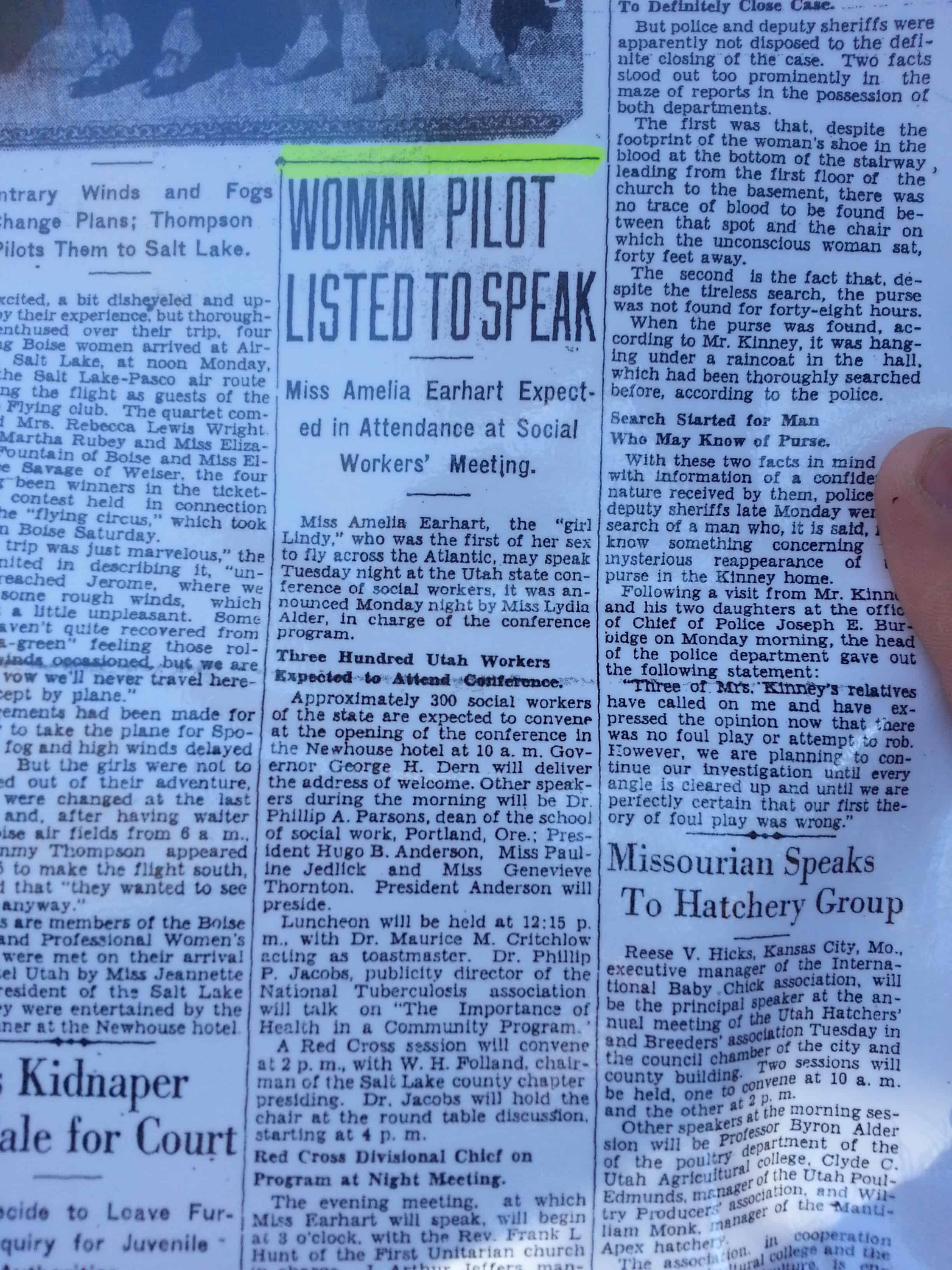
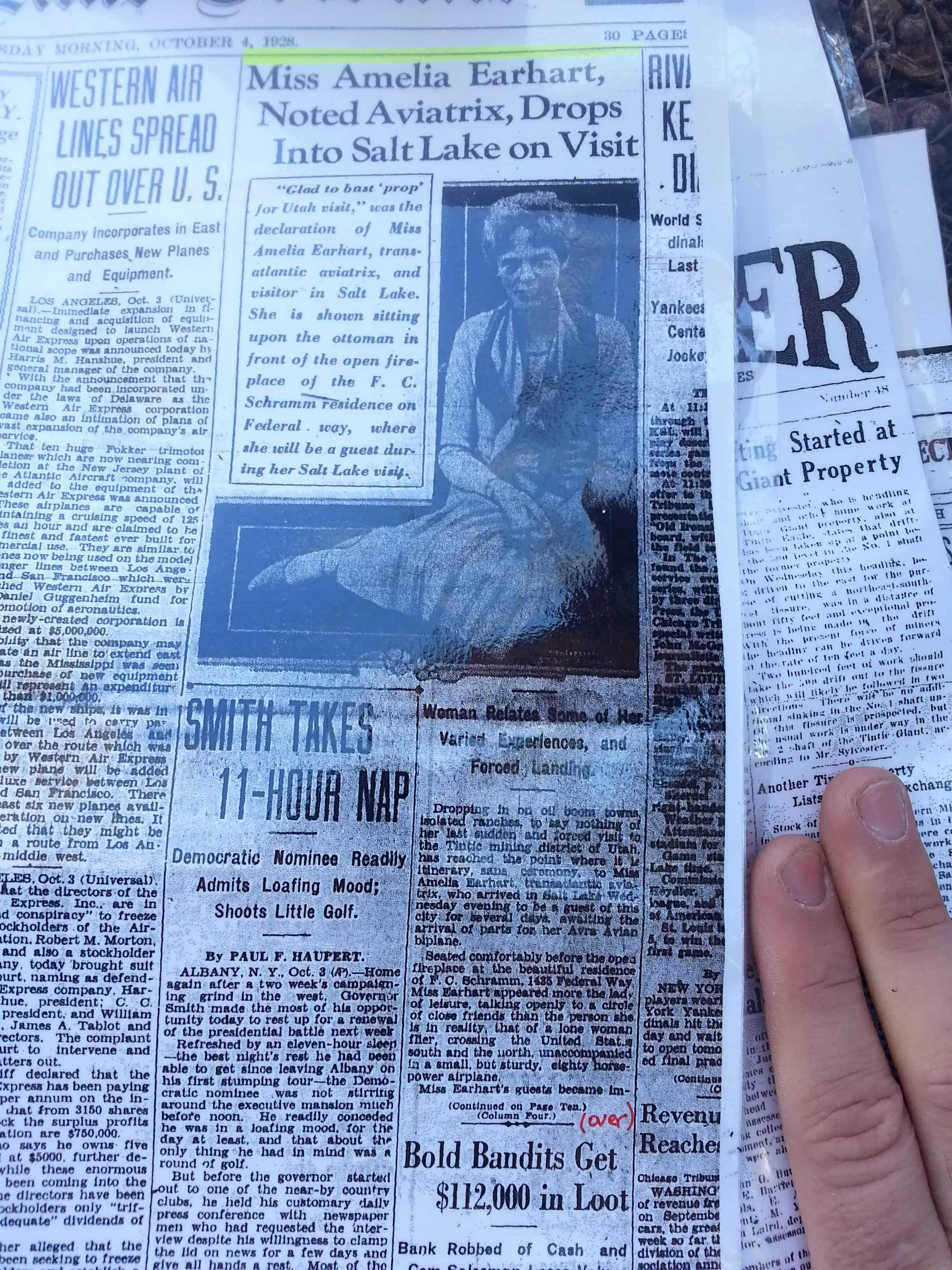
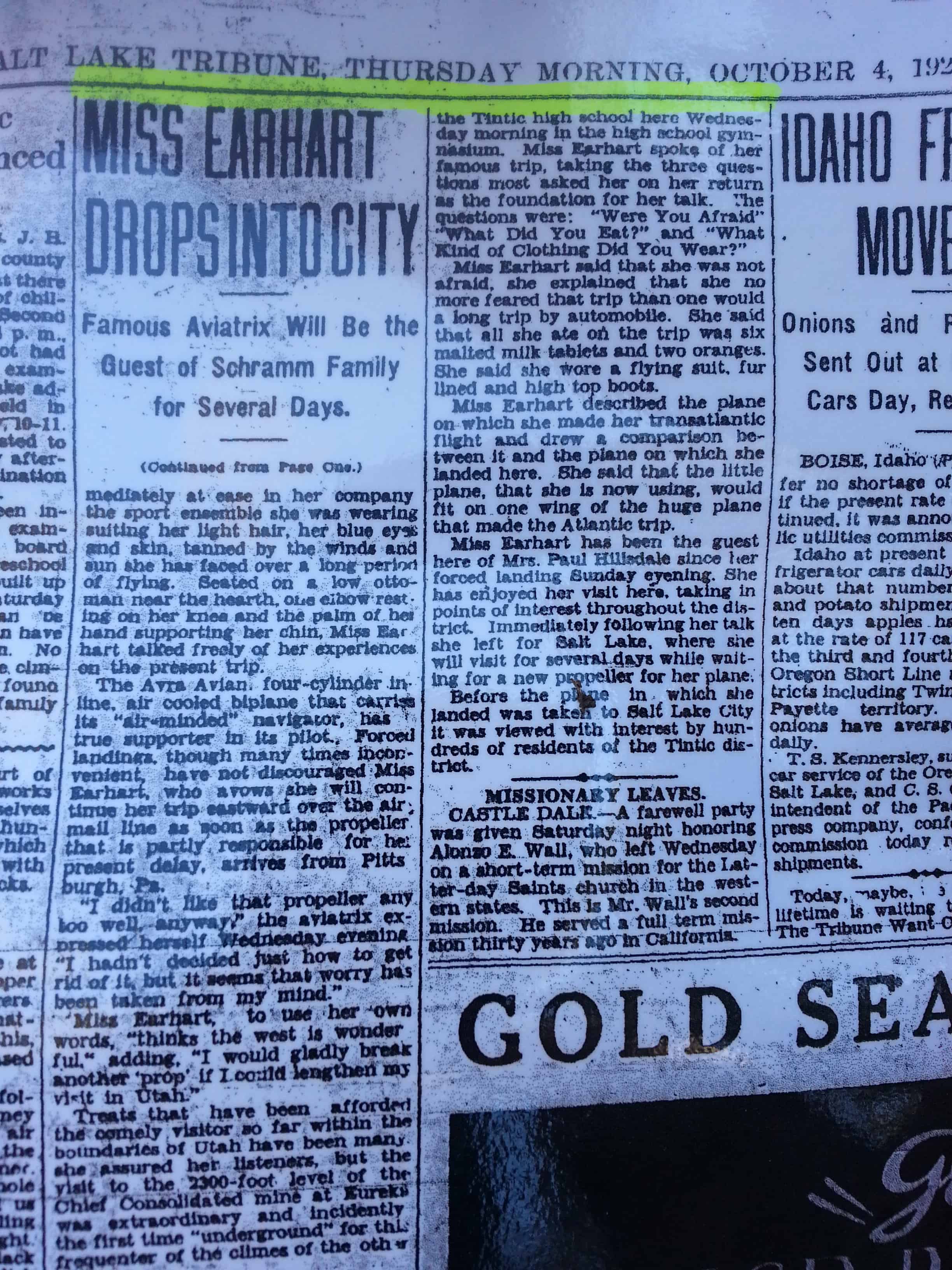
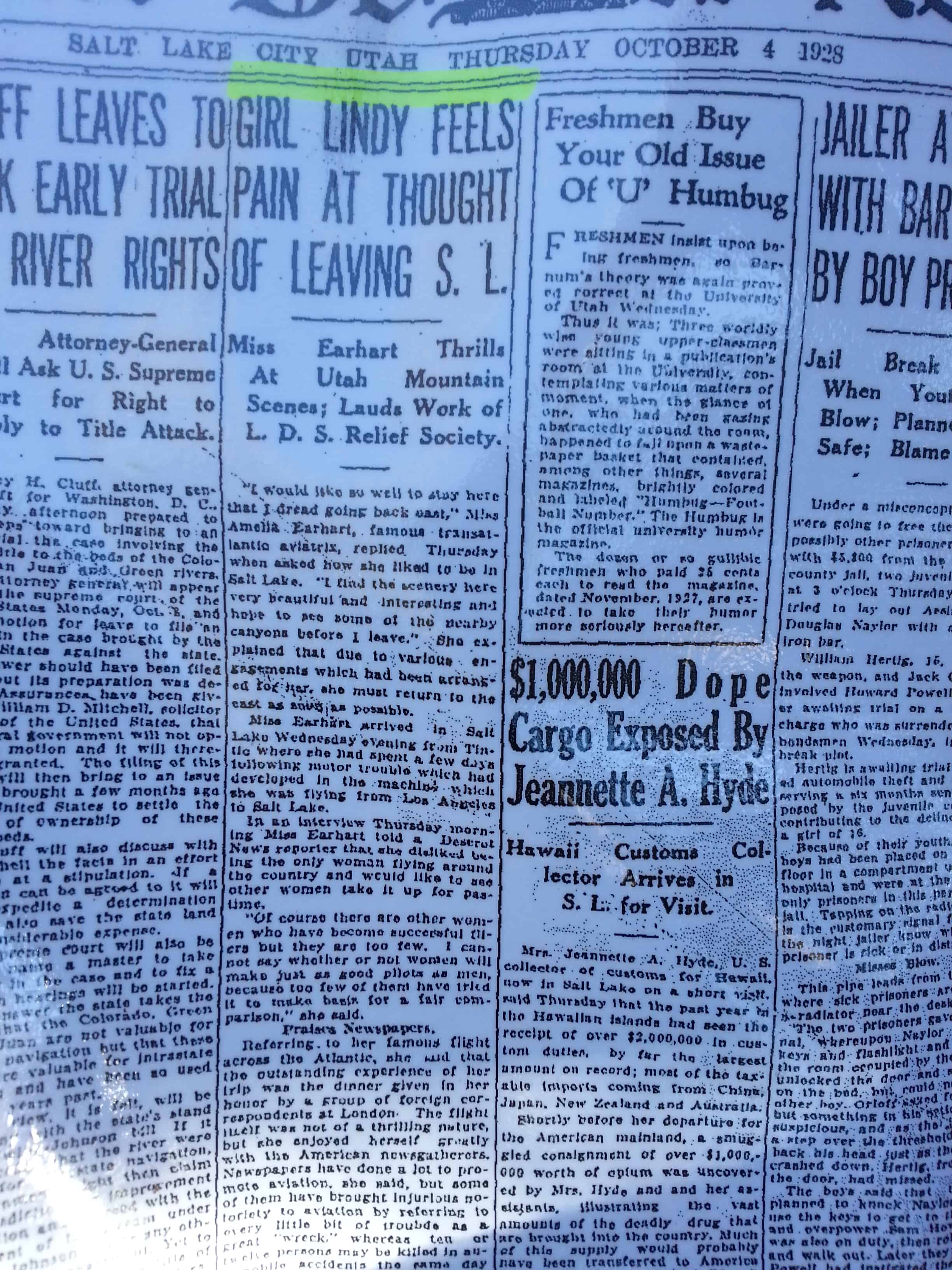
It’s not every day a worldwide celebrity drops in for an unannounced visit. That’s exactly what happened 81 years ago in a small desert town in Utah. The celebrity was Amelia Earhart. The aviator was hosted during her unexpected layover by the family of reporter Annie Feidt of the Alaska Public Radio network.
ANNIE FEIDT: It’s my favorite bit of family lore. As the story goes, Amelia Earhart crashed near Eureka, the mining town where my mom grew up and stayed in my great, great grandfather’s house. As it turns out, the truth isn’t so far off. But it was more of a force landing than a crash. She apparently ran into engine trouble over Utah and had to come down quickly in the Tintic Mining District. John Schmitt is a local history buff on the area.
Mr. JOHN SCHMITT: I was doing the research in the 1980s, so the old timers were still alive at that time and one of them, Jim Maxwell(ph), told me that he was first on the scene. And she jumped out of the plane and said, where am I? Where am I? Because all she had was crude maps since she was following the railroad line from Las Vegas up to…(continue at the source)