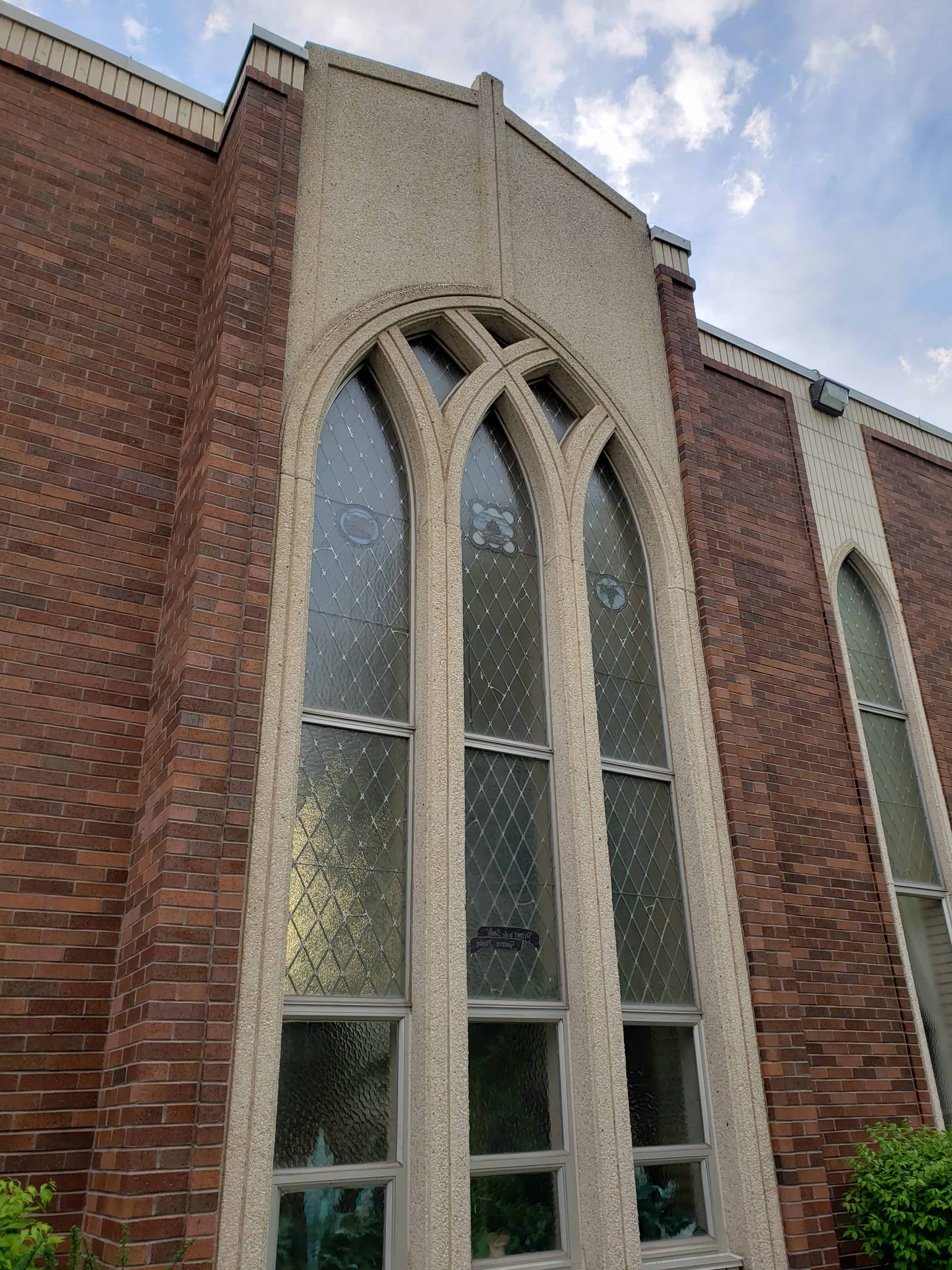
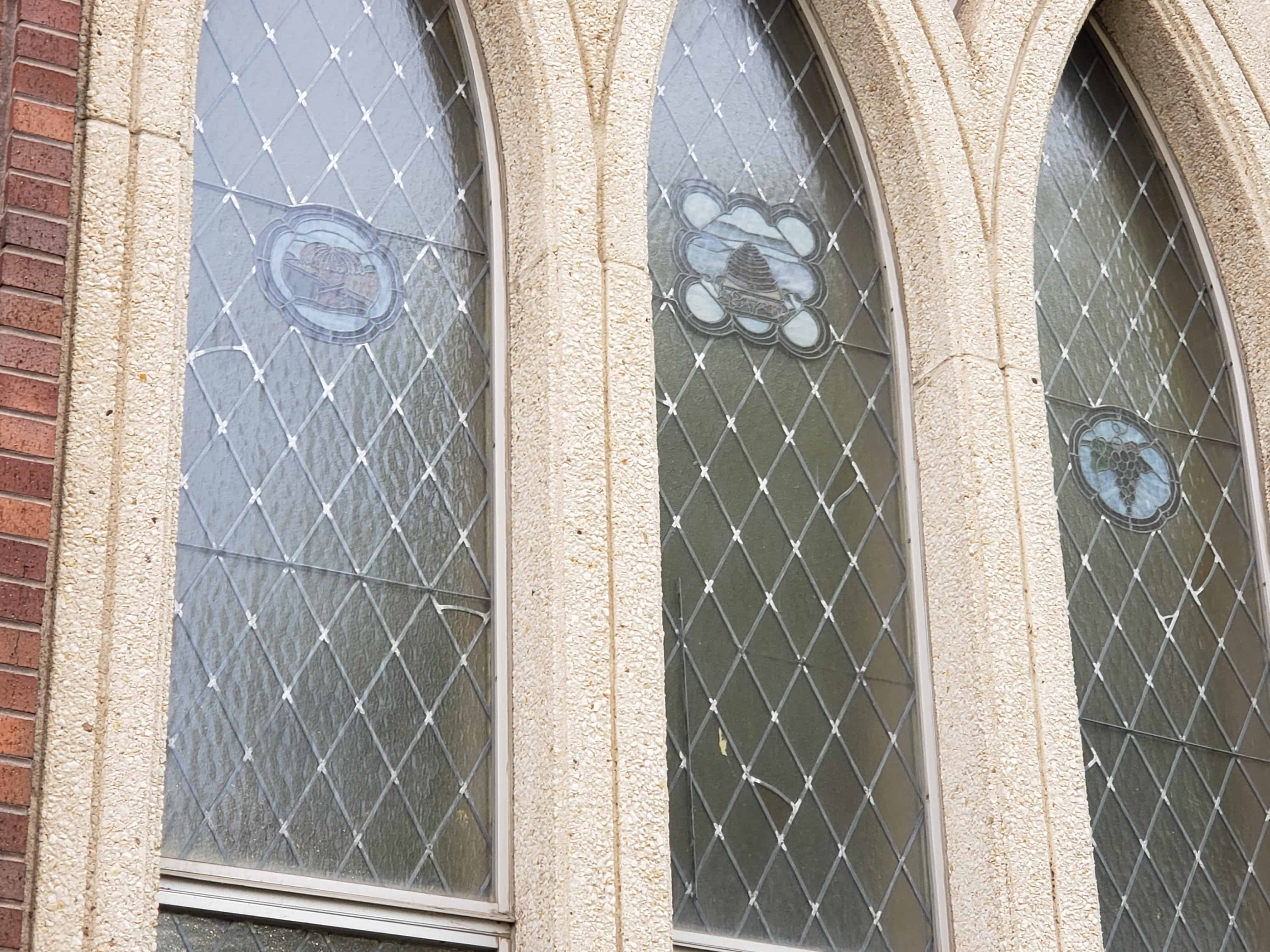
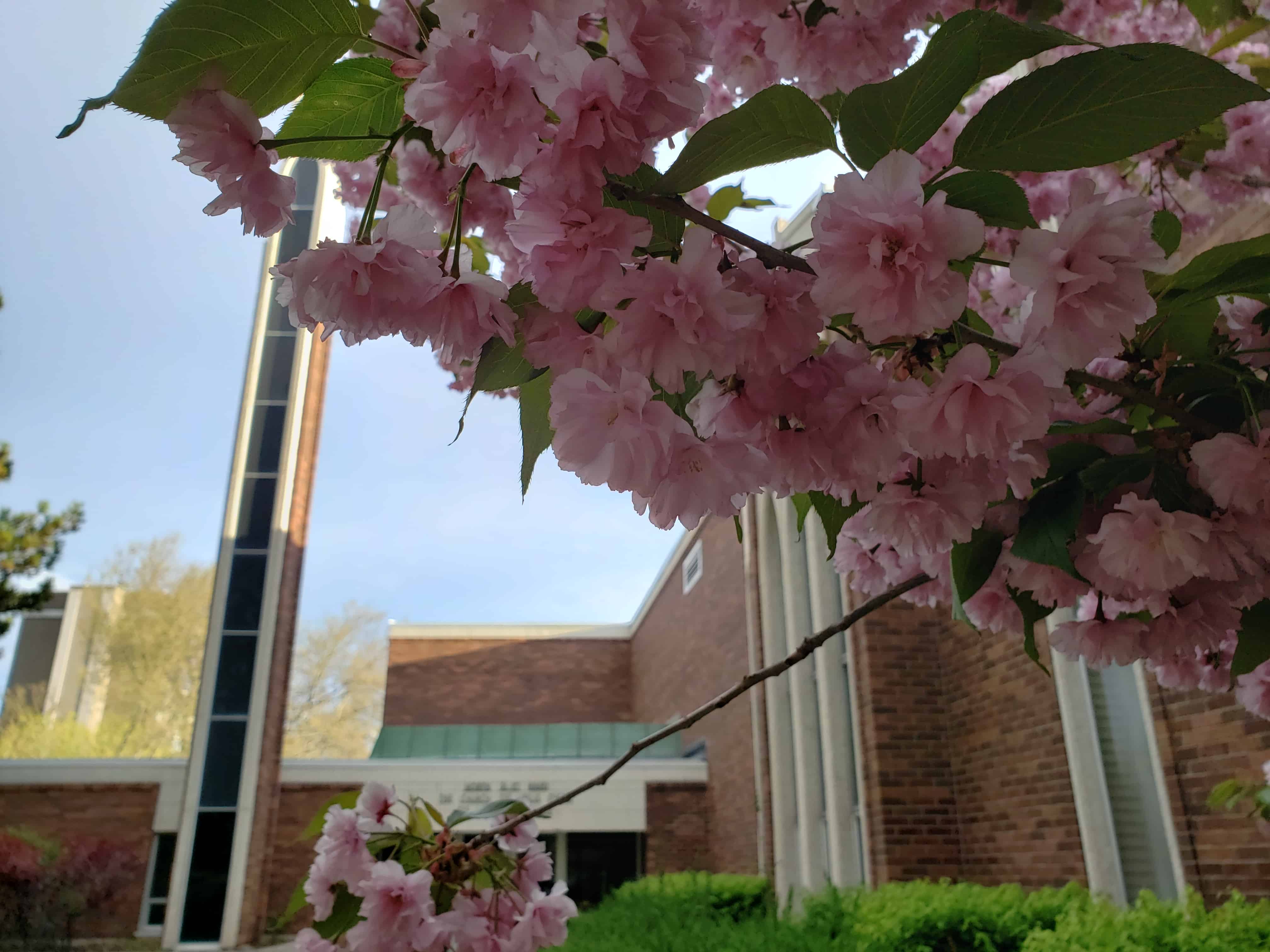
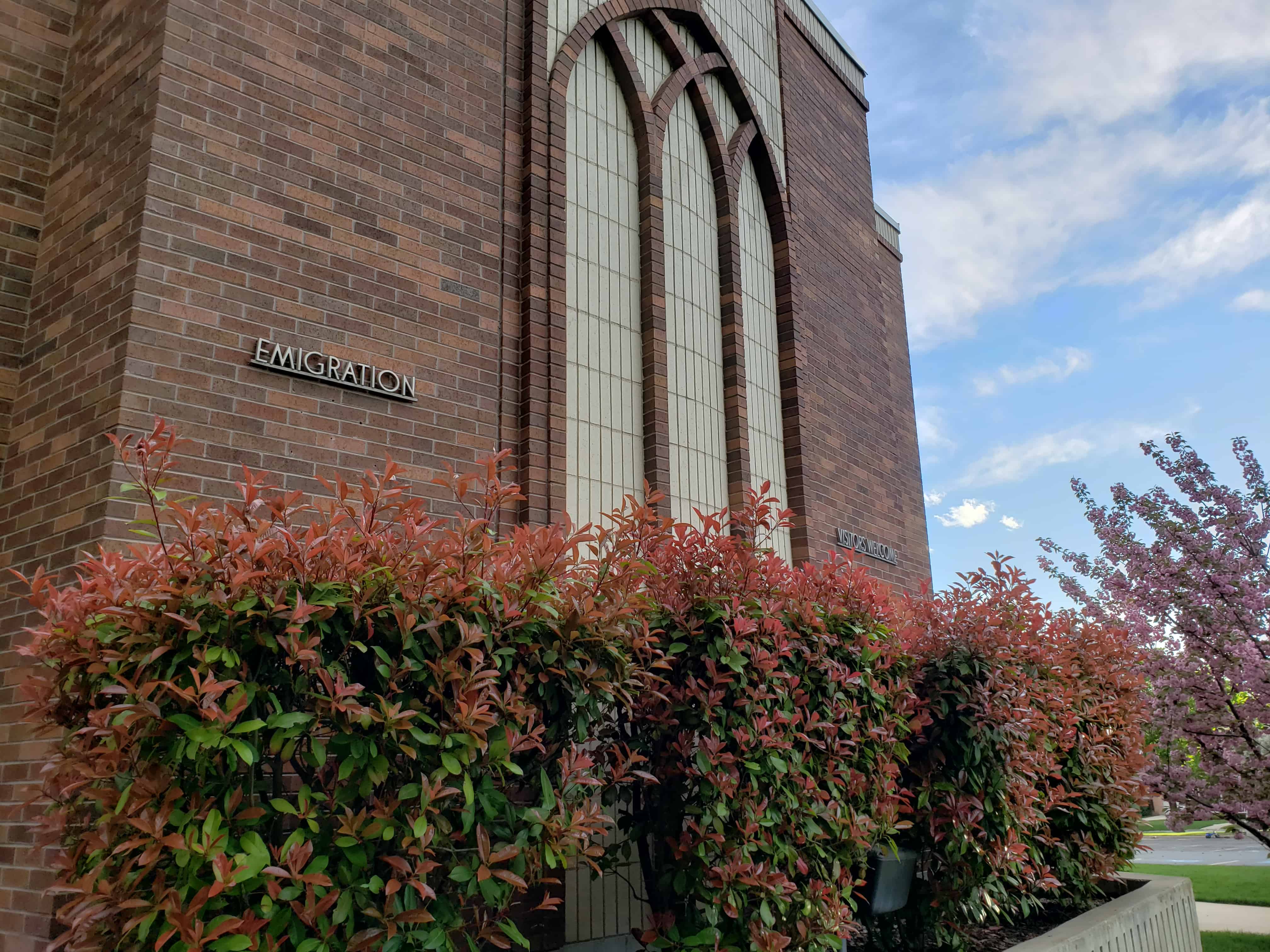
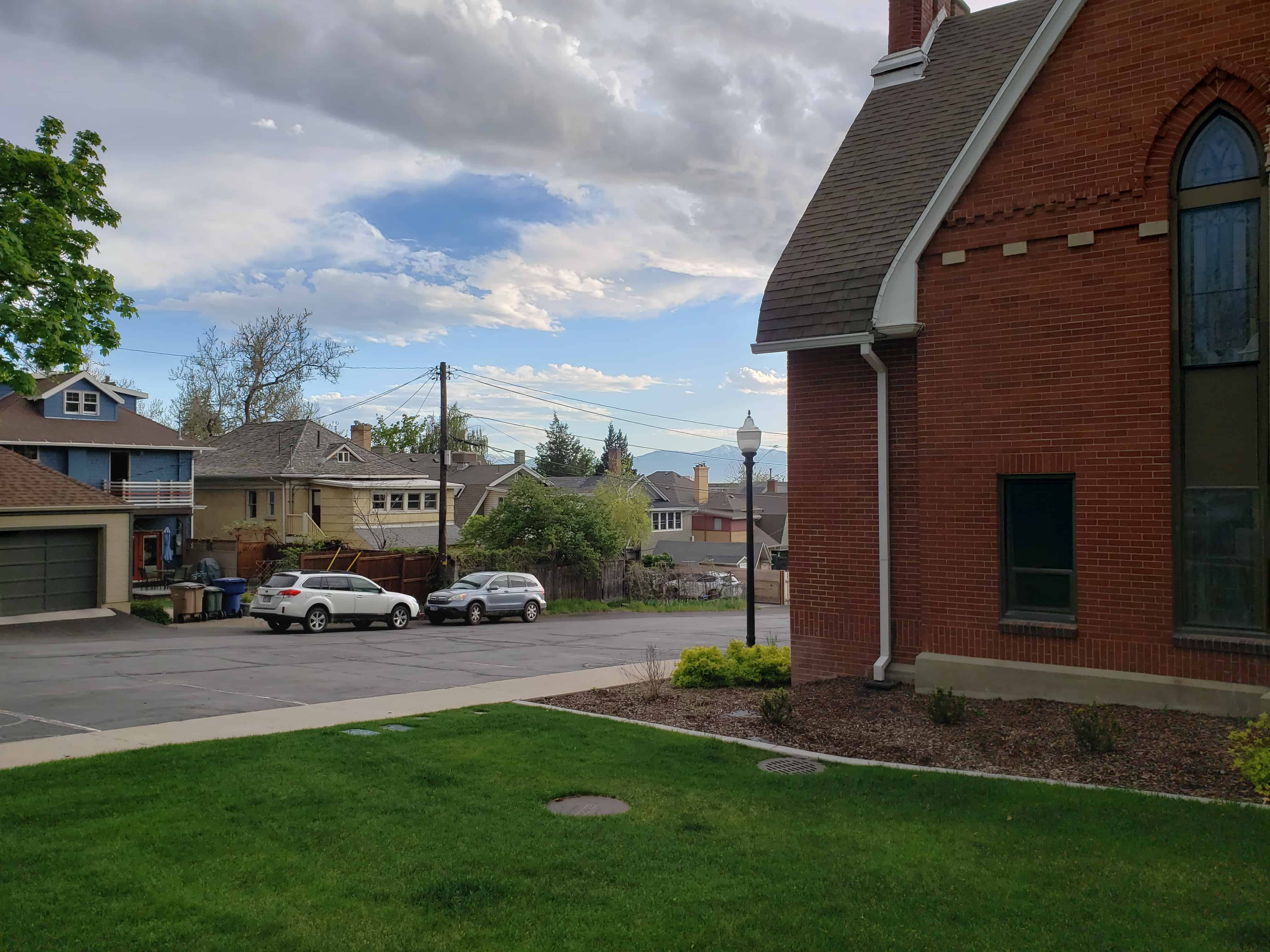
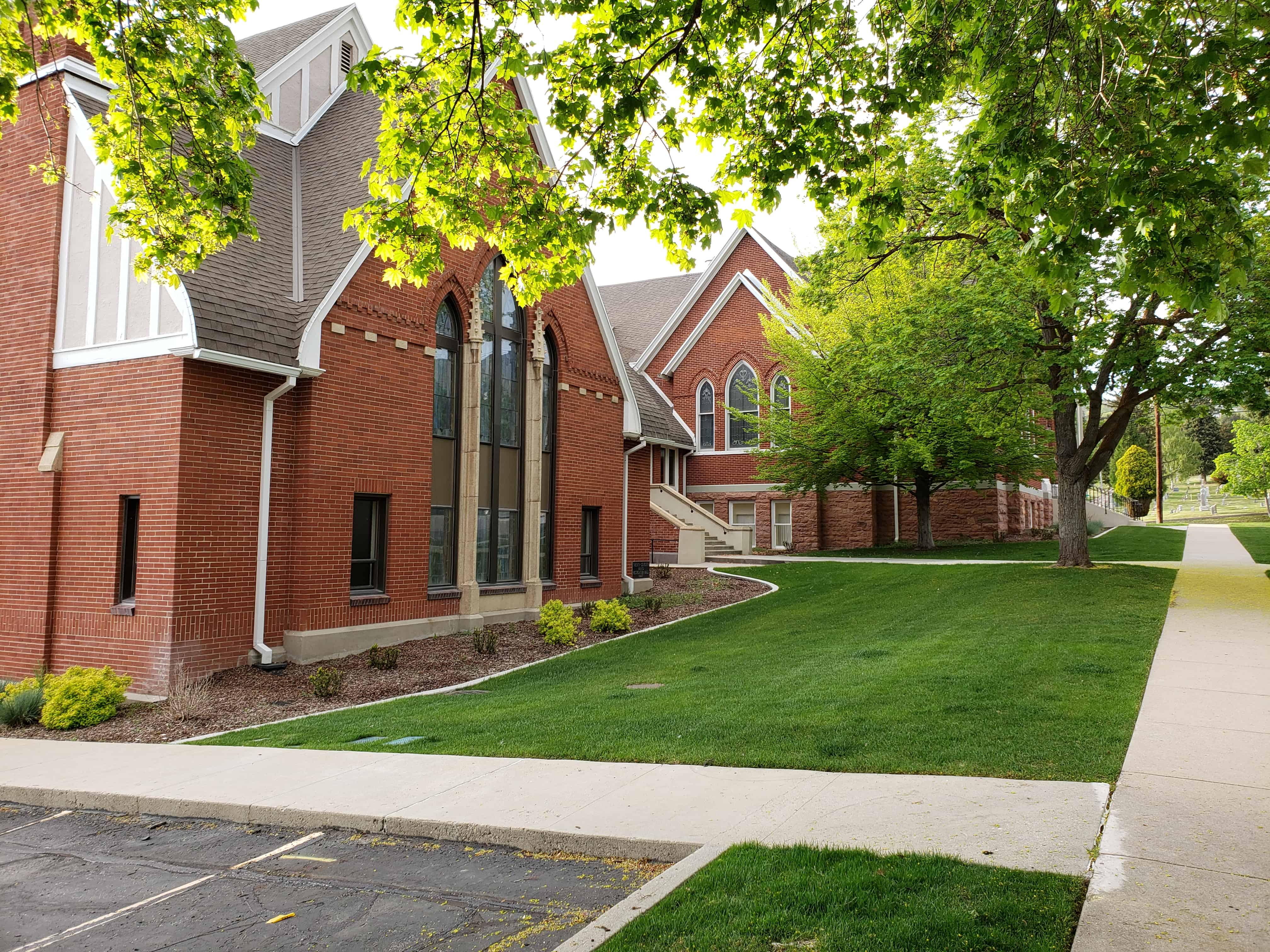
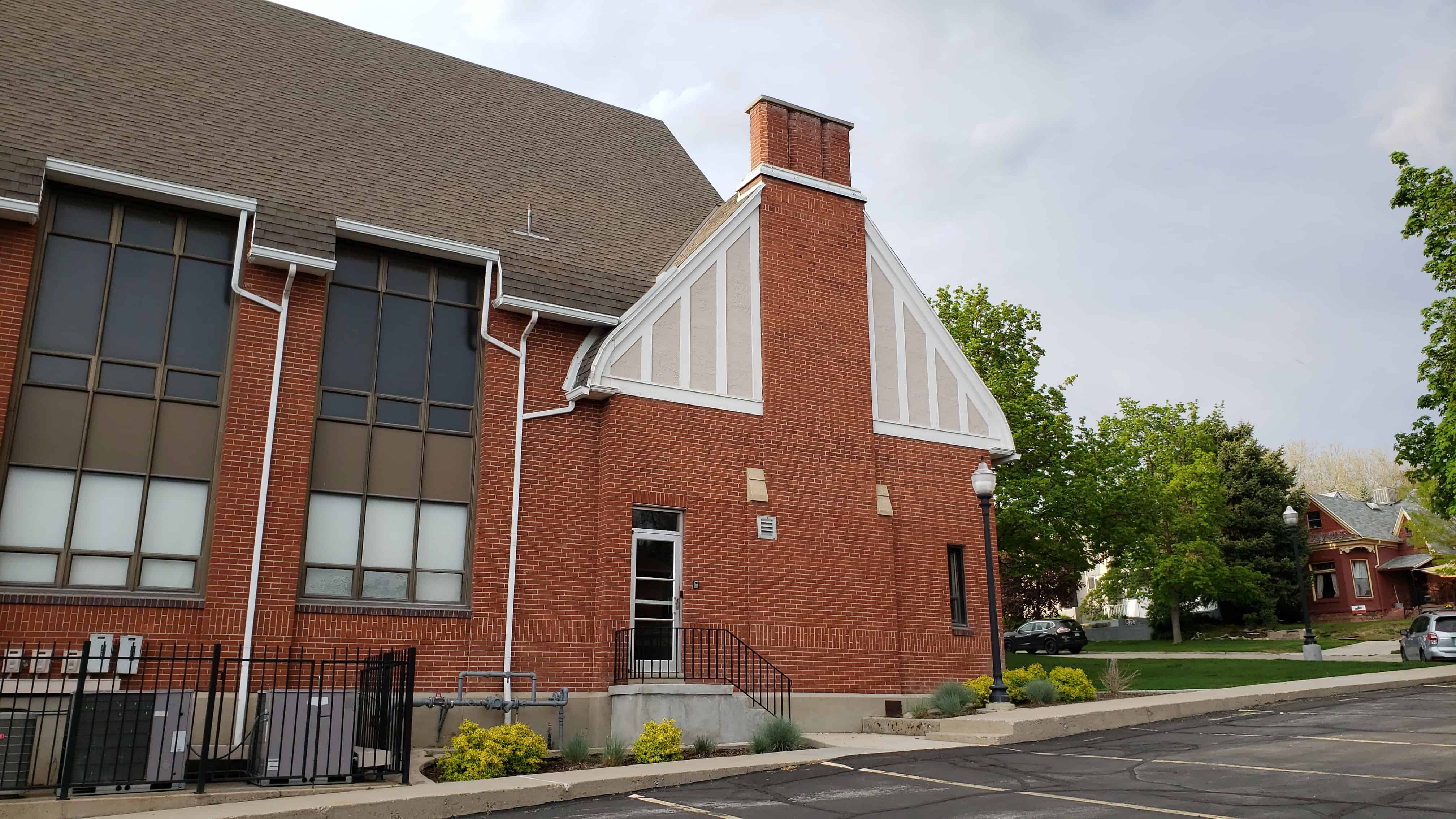
The White Meeting House Daughters of Utah Pioneers Marker #587
The White Meeting House stood on this site from 1856-1927. It was built just six years after the settlement of Springville, constructed of adobe, and first used as a school. Once the city was divided into four wards, the school was remodeled and expanded into a beautiful Latter-day Saint meetinghouse.
The White Meeting House was a cherished landmark used primarily for religious services. The addition of a stage and three upper seating galleries increased the seating capacity to 500, making it the location of many social and community functions as well. Notable speakers addressed the audience from its pulpit, including Brigham Young and other presidents of The Church of Jesus Christ of Latter-day Saints up to Heber J. Grant.
The White Meeting House stood as a monument to pioneer skill, craftsmanship and good taste for over 70 years, undergoing several major remodeling efforts until it was finally demolished in 1927.
On September 18, 1937 a marker was installed which read: “Site of the First L.D.S. Meeting House, A.D. 1856. This Marker Erected by Sons & Daughters of Springville Pioneers.” The marker was removed in 2010 when the Springville Public Library was built.
This marker was dedicated September 19, 2020, on Springville’s 170th birthday by the Springville/Mapleton Company of the Daughters of Utah Pioneers.
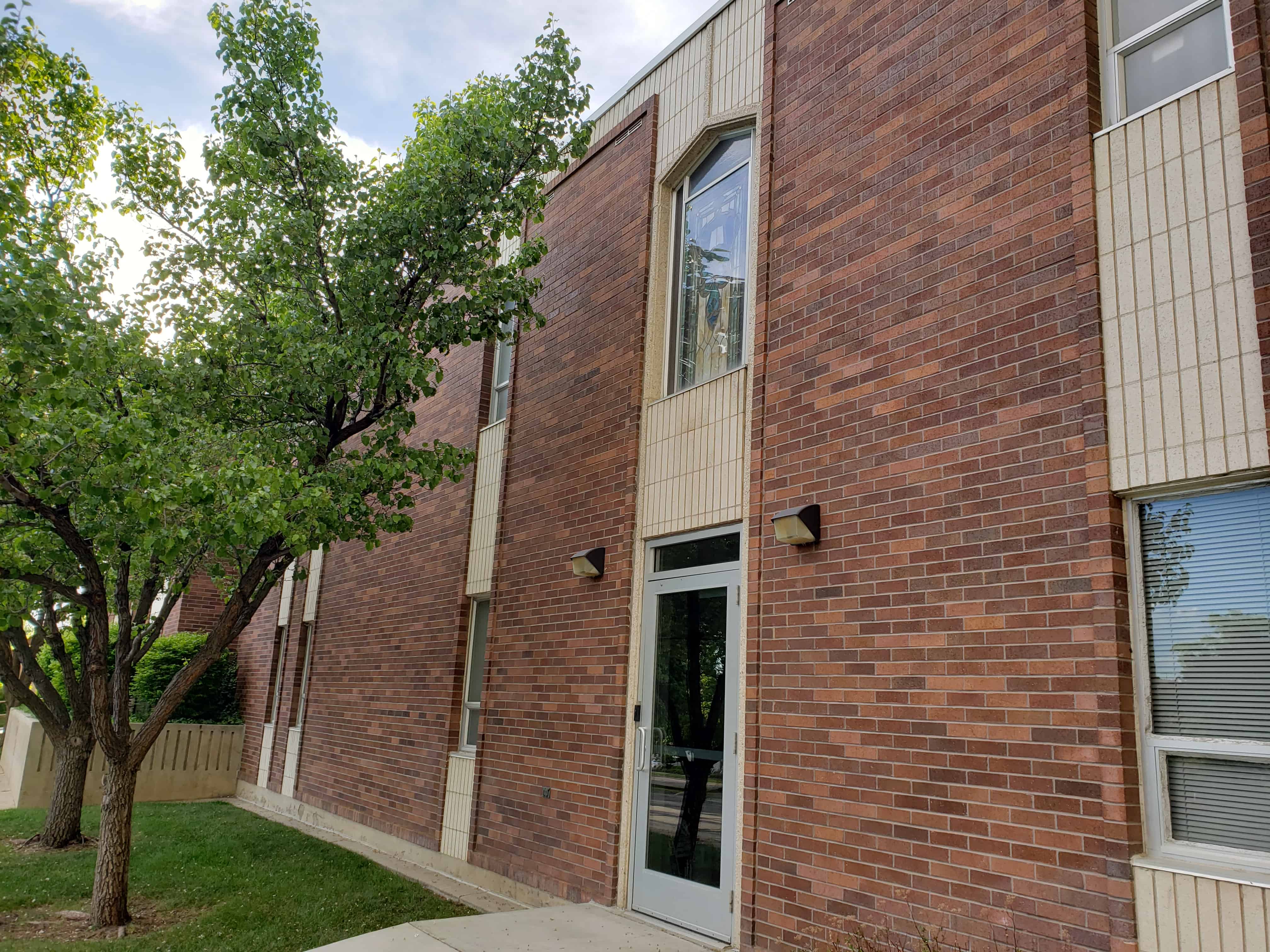
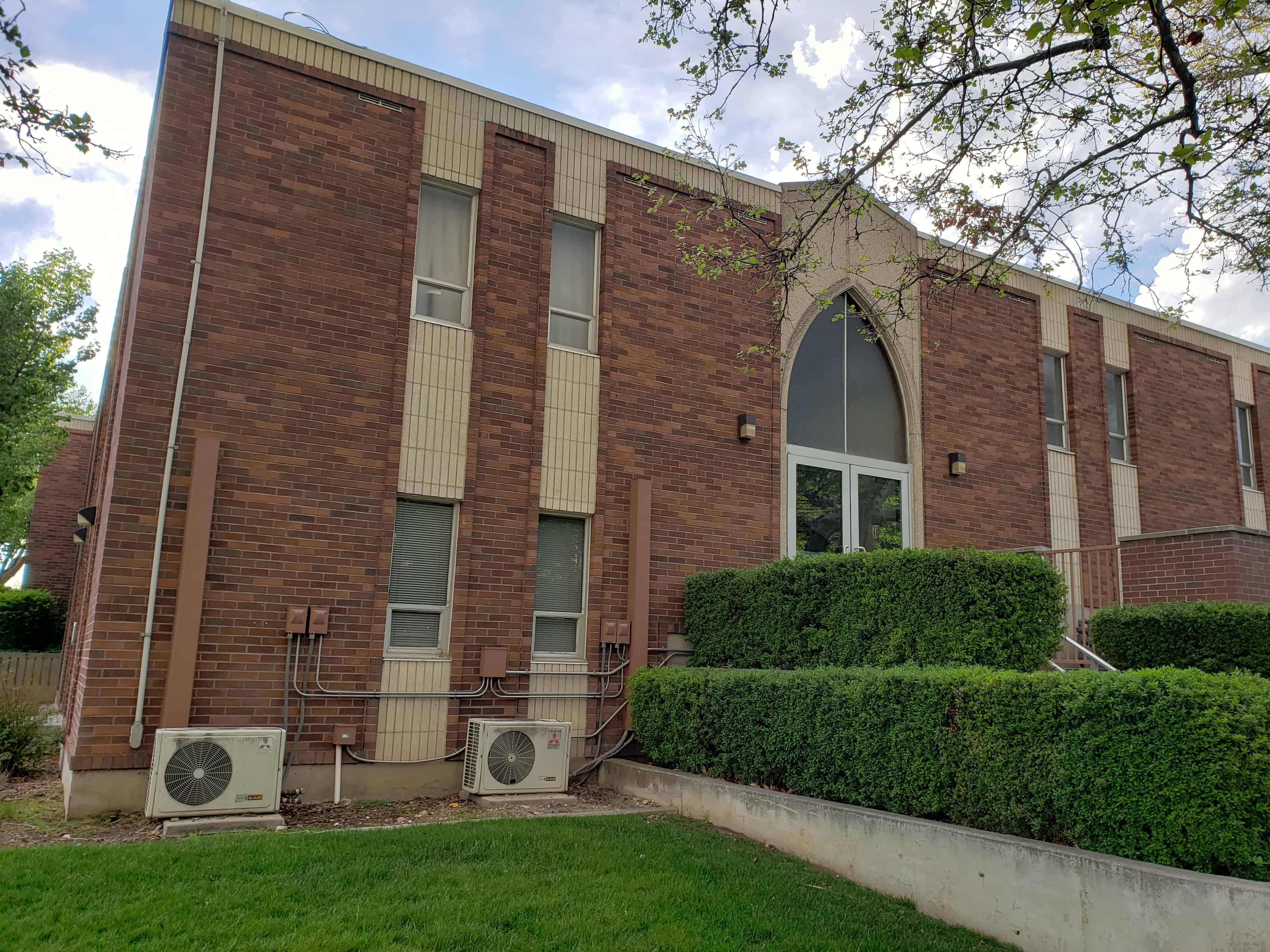
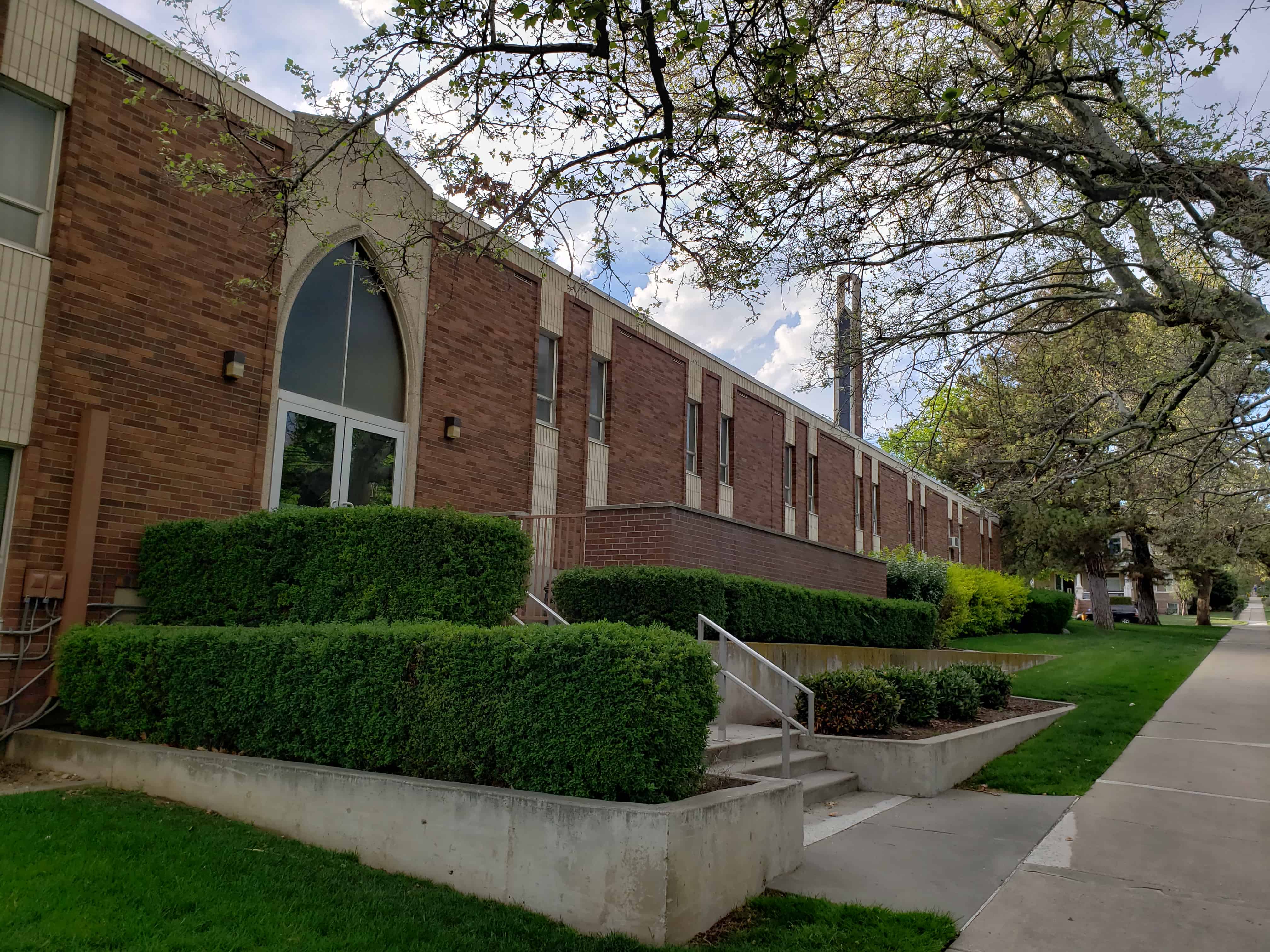
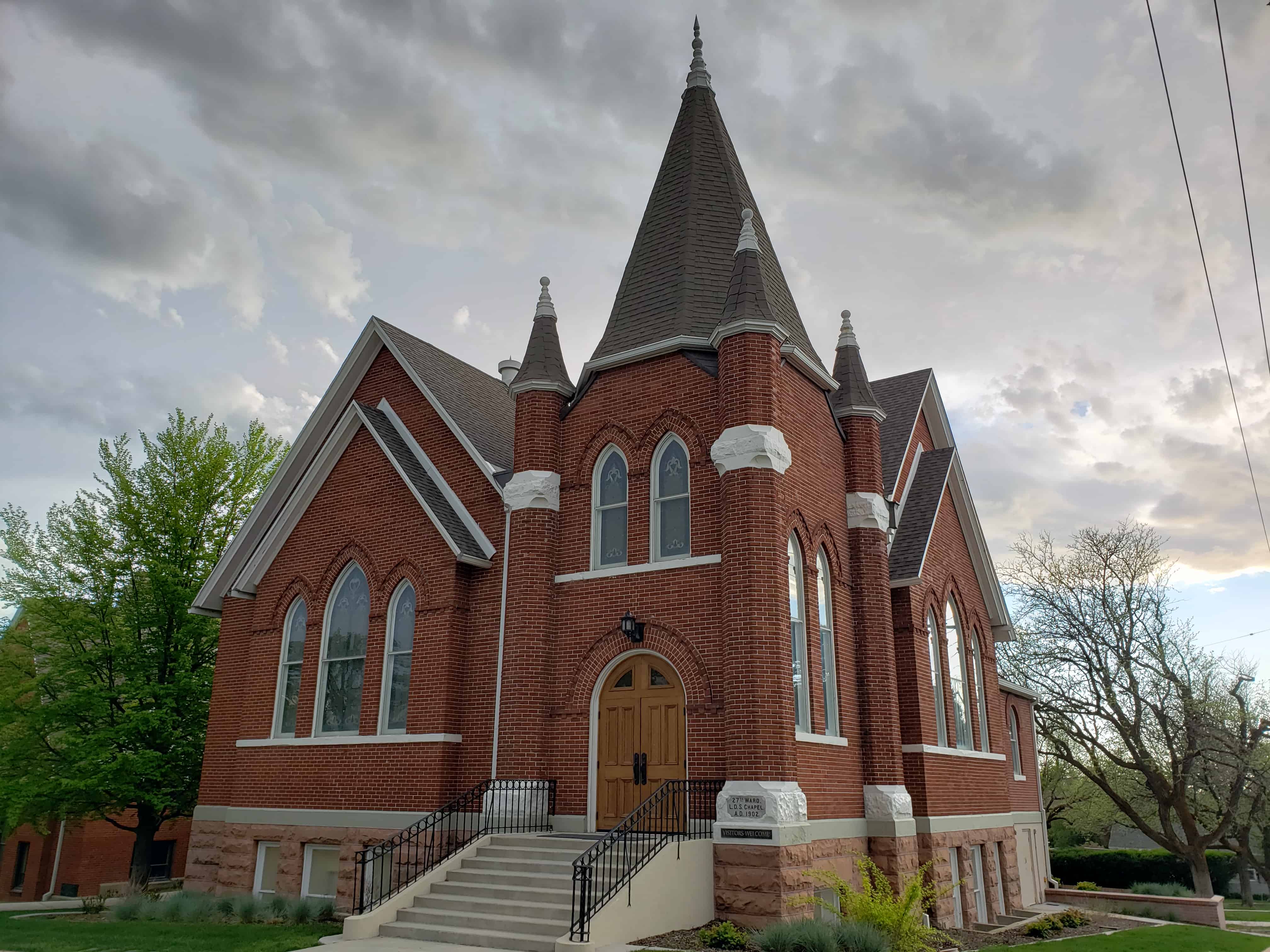
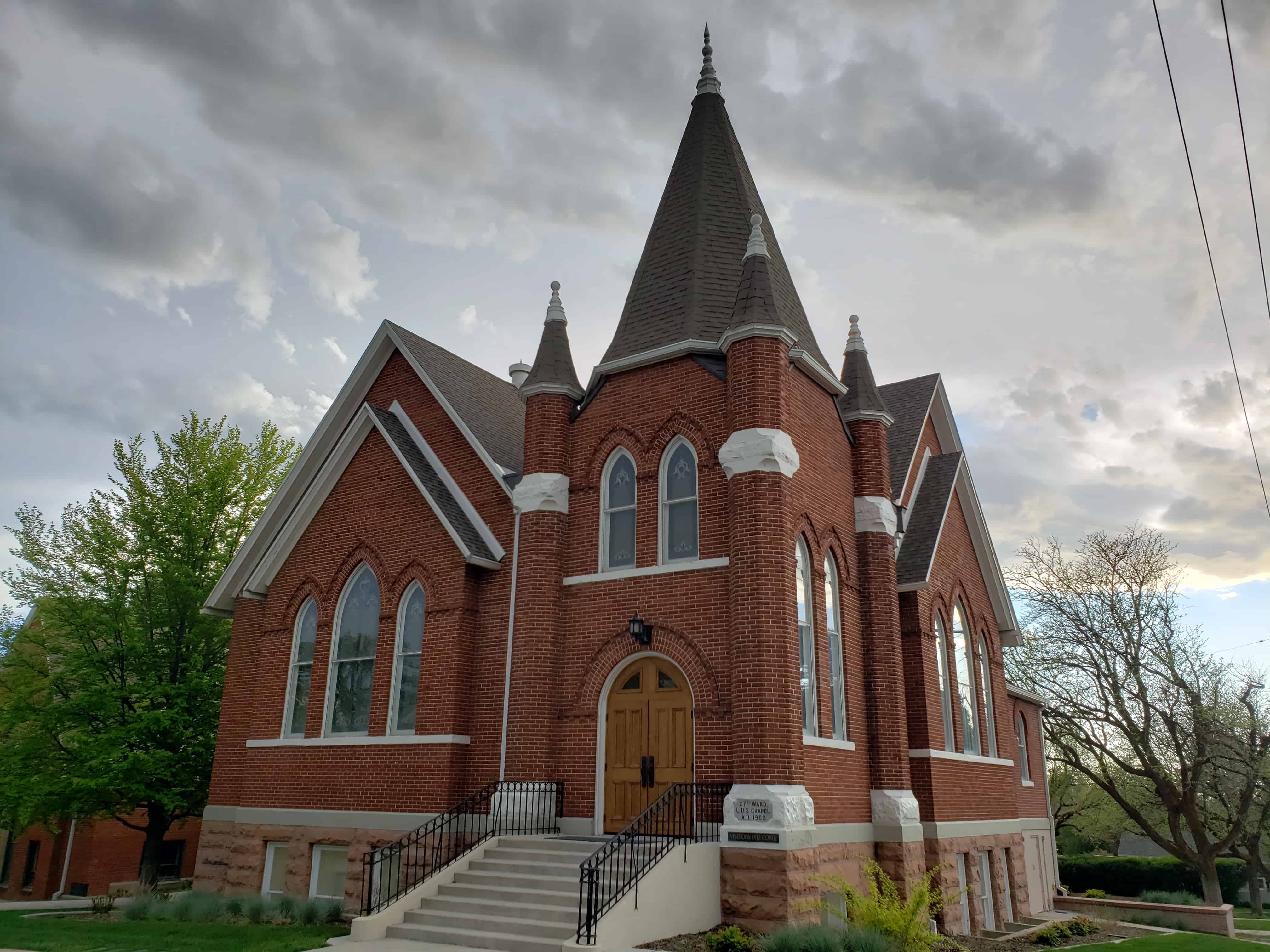
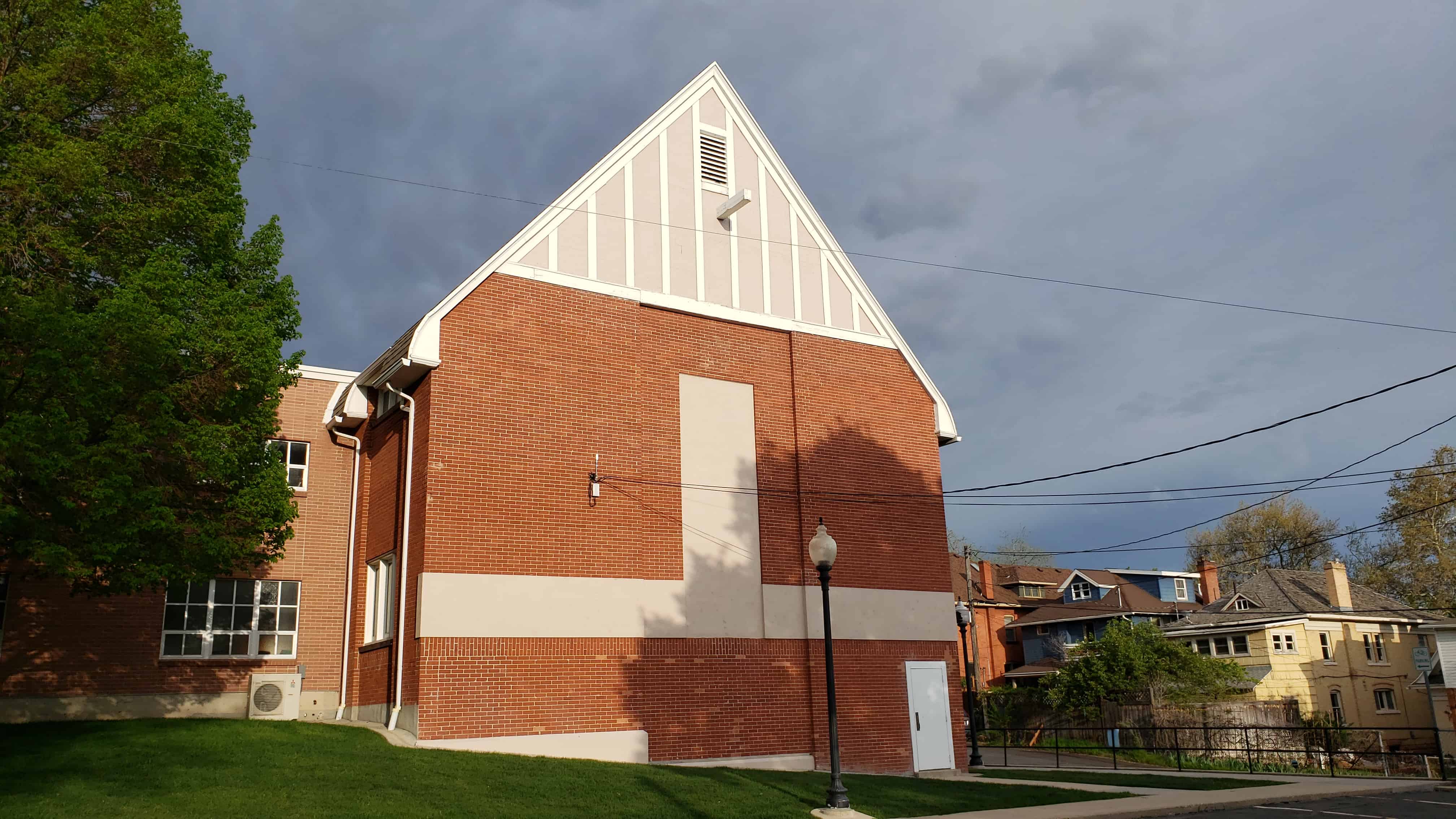
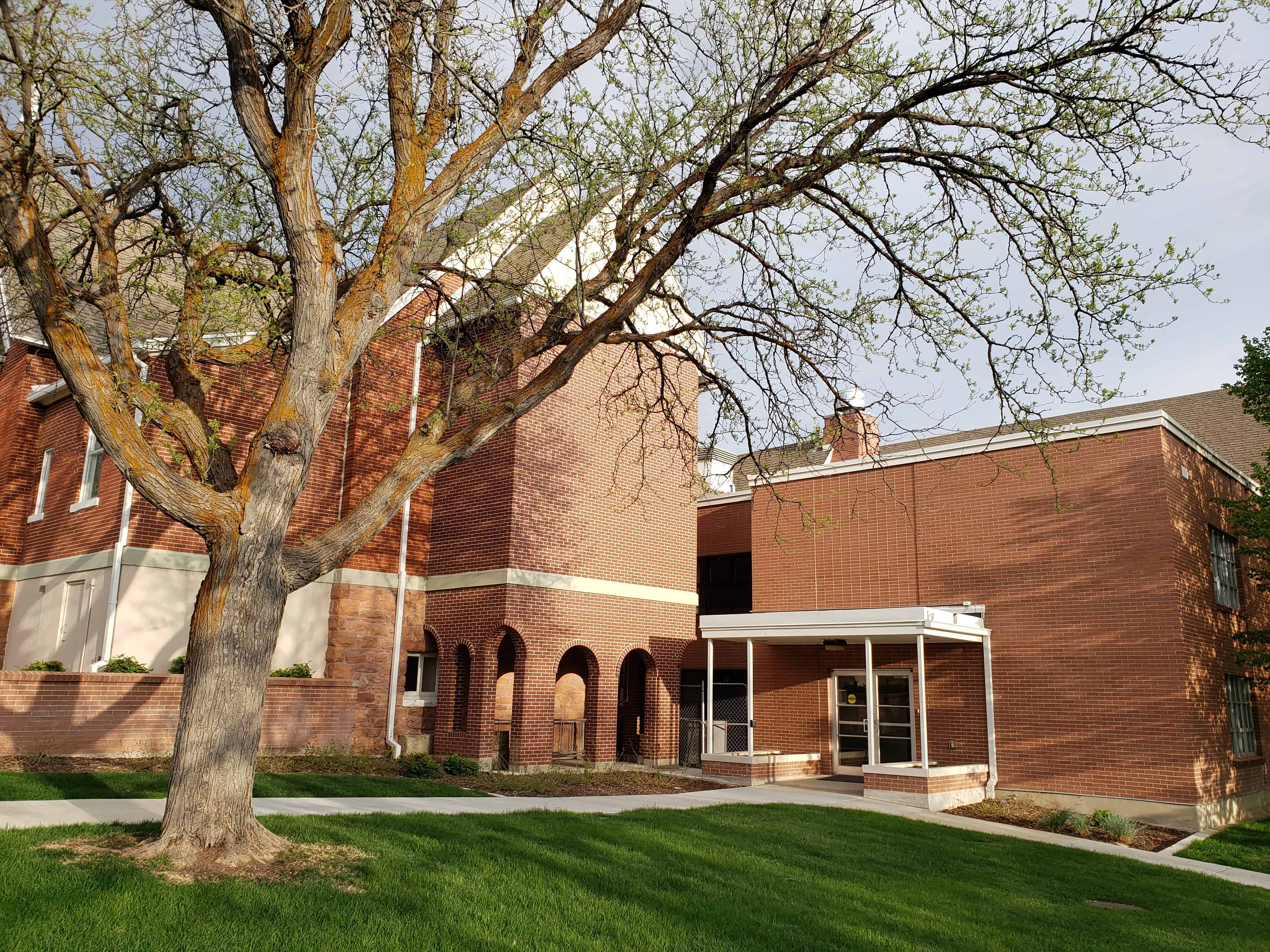
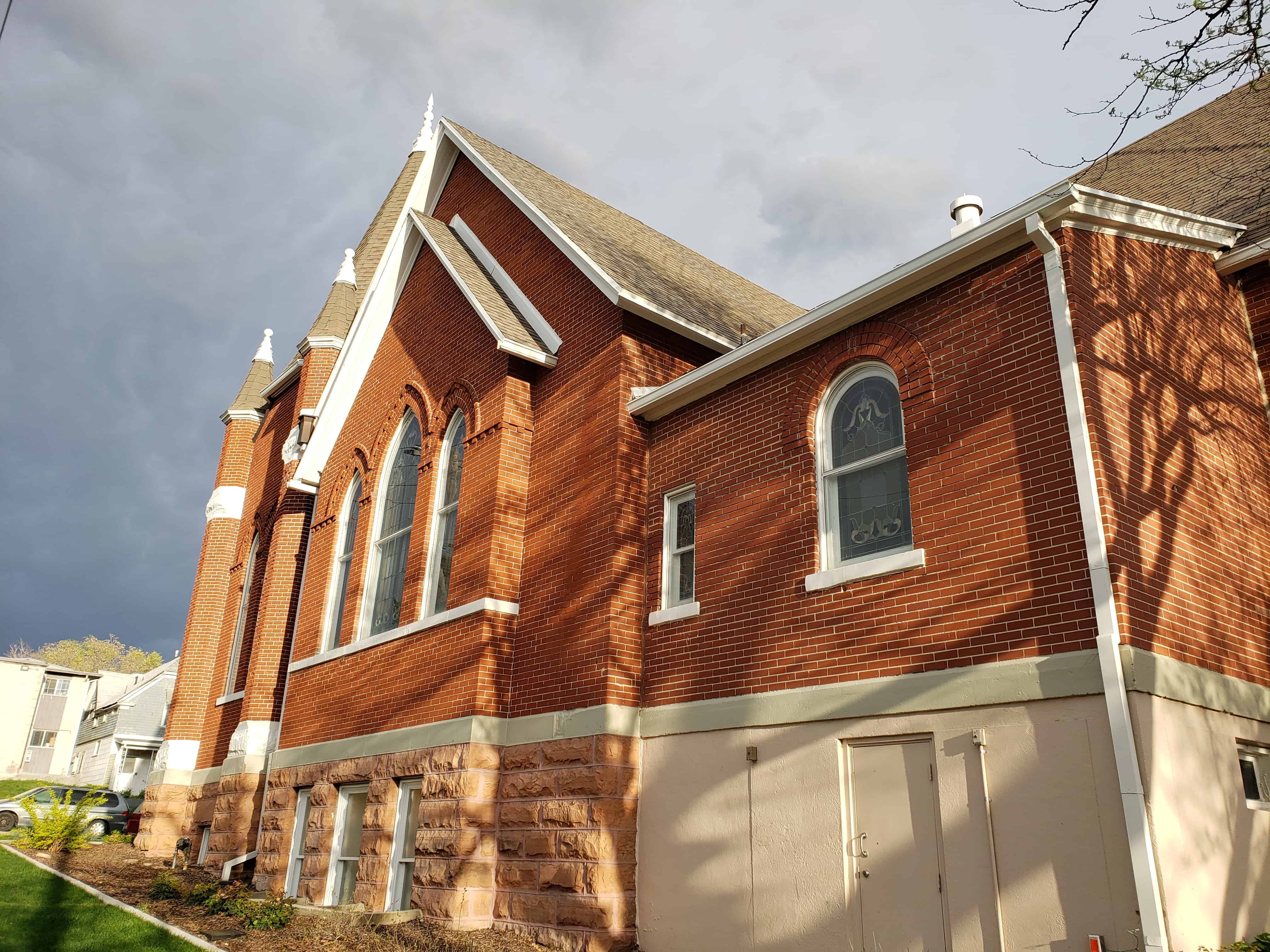
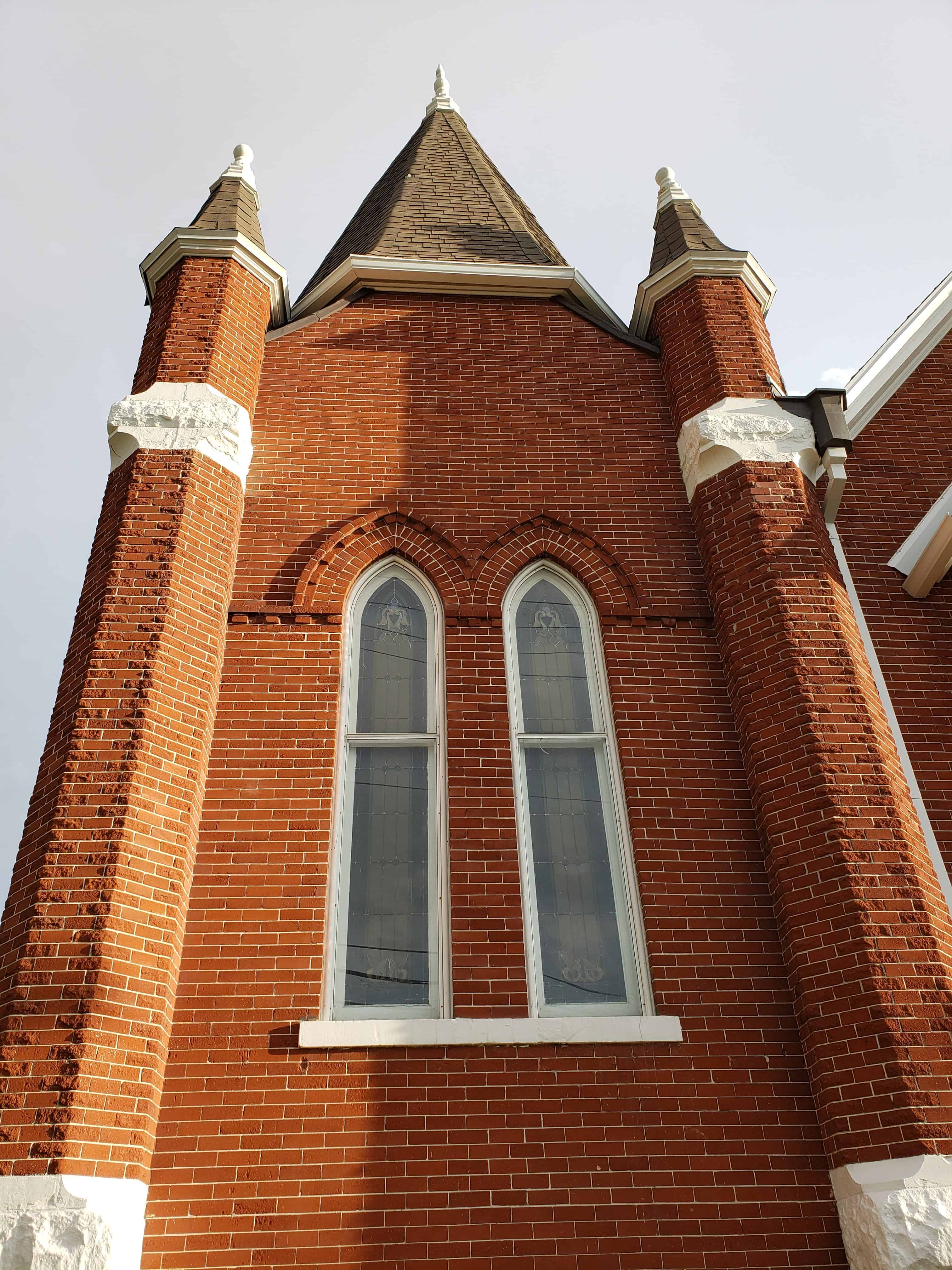
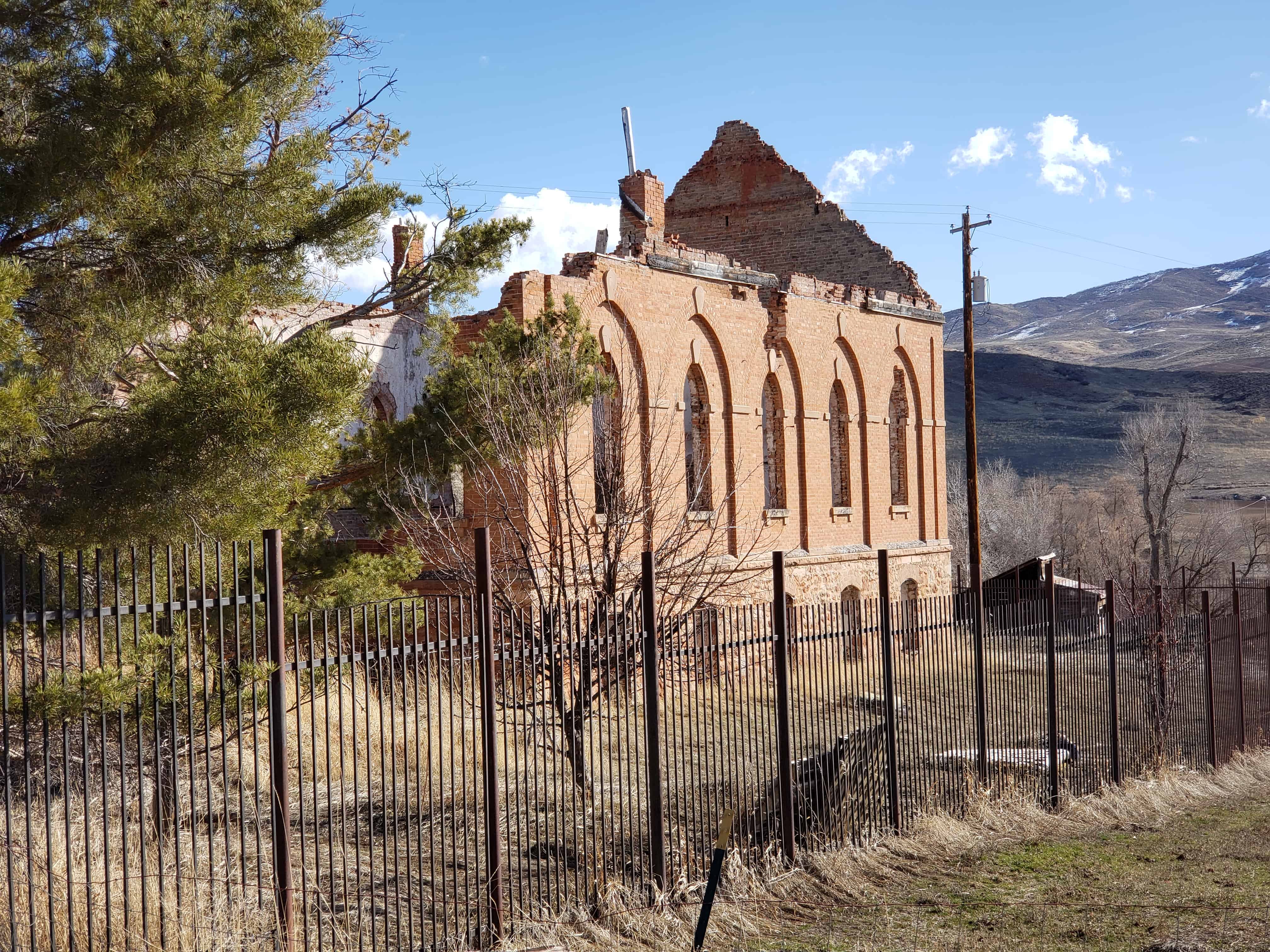
The old Leamington Ward Chapel, now the Leamington Town Hall and Museum. The new Leamington Chapel is on this page.
There is a monument out in front of the building with the old bell and a couple of plaques, one with history and one with the names of the war veterans.
The history plaque says:
Leamington was first settled in 1871, the town was named by Frank Young, who immigrated from Leamington, England.
The Medallion was given to the town which came off a English Ship named Leamington.
On January 9, 1883 the Leamington L.D.S. Ward was organized with Lars Nielson as Bishop and Wm. H. Walker and Benedict P. Textorious as Counselors.
In 1886 a building was constructed by Nicholas Paul, it was used as school and church. Millard County furnished the bell which was put in the tower, it cracked the 3rd time it was rang.
On February 27, 1899 one & one fifth acres of ground was sold to Leamington Ward and the Relief Society for the sum of $30.00 by B.P. and Josephine Textorious.
In 1903 a church building began with bricks from the old smelter. The building was finished in 1910 and dedicated June 1911 by Francis M. Lyman.
The Bell then was placed in the tower of the new building and served the community each Sunday morning for many years.
In 1952 the Bell was taken down by the Leamington Boy Scout Troop No. 149. It was welded and repaired by Wm. Stanley Bradfield and reinstalled. It was in service for some time, when the church was remodeled in 1970 the bell was taken down and put into storage.
This plaque was donated and paid for by the Anderson Reunion Organization.
The monument originator and White Stone donated by Wm. Stanley Bradfield. A new chapel was built in 1986 at another location. The City of Leamington purchased this Historic Building ad Amusement Hall, with four acres of land and two shares of water.
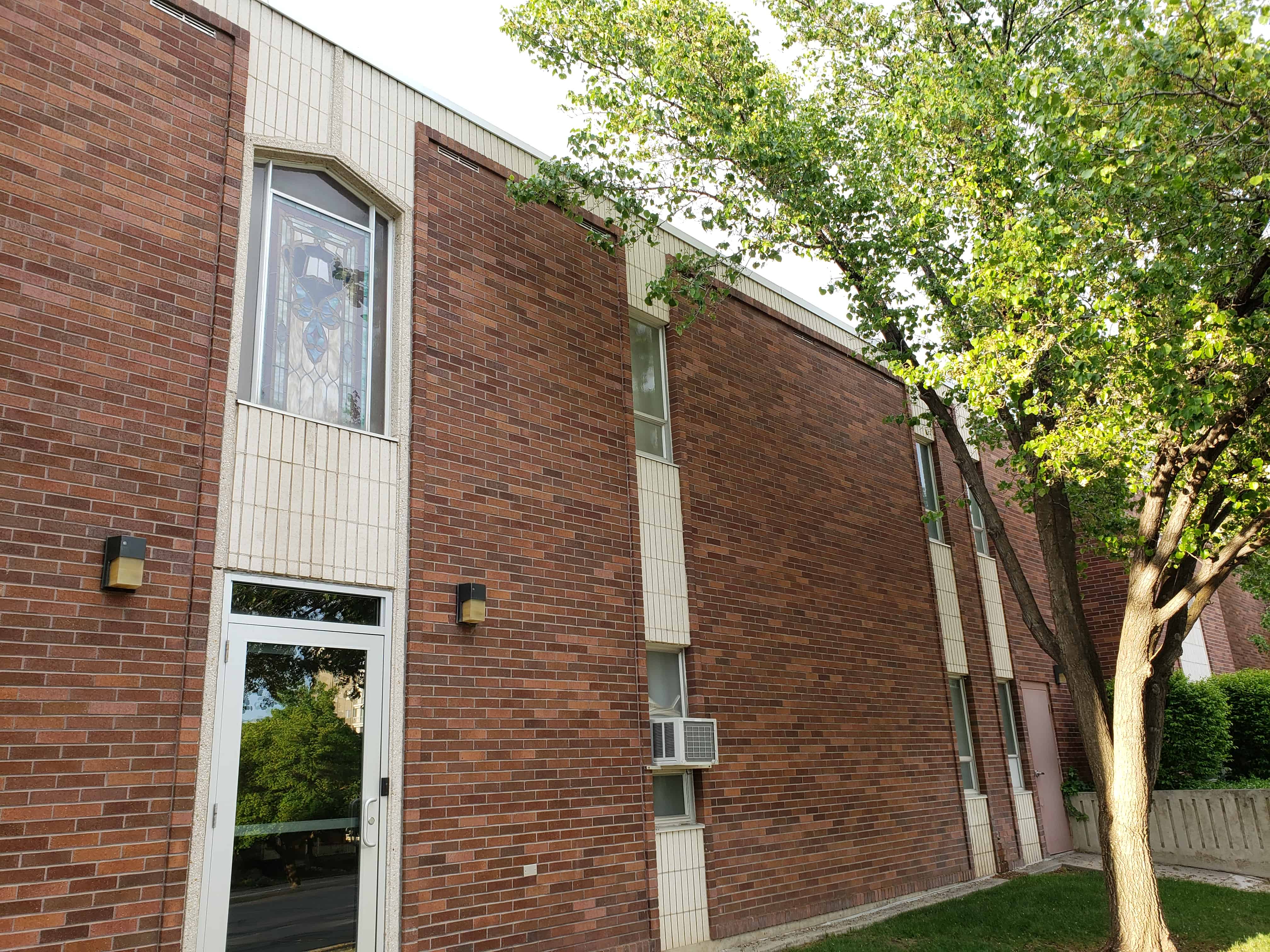
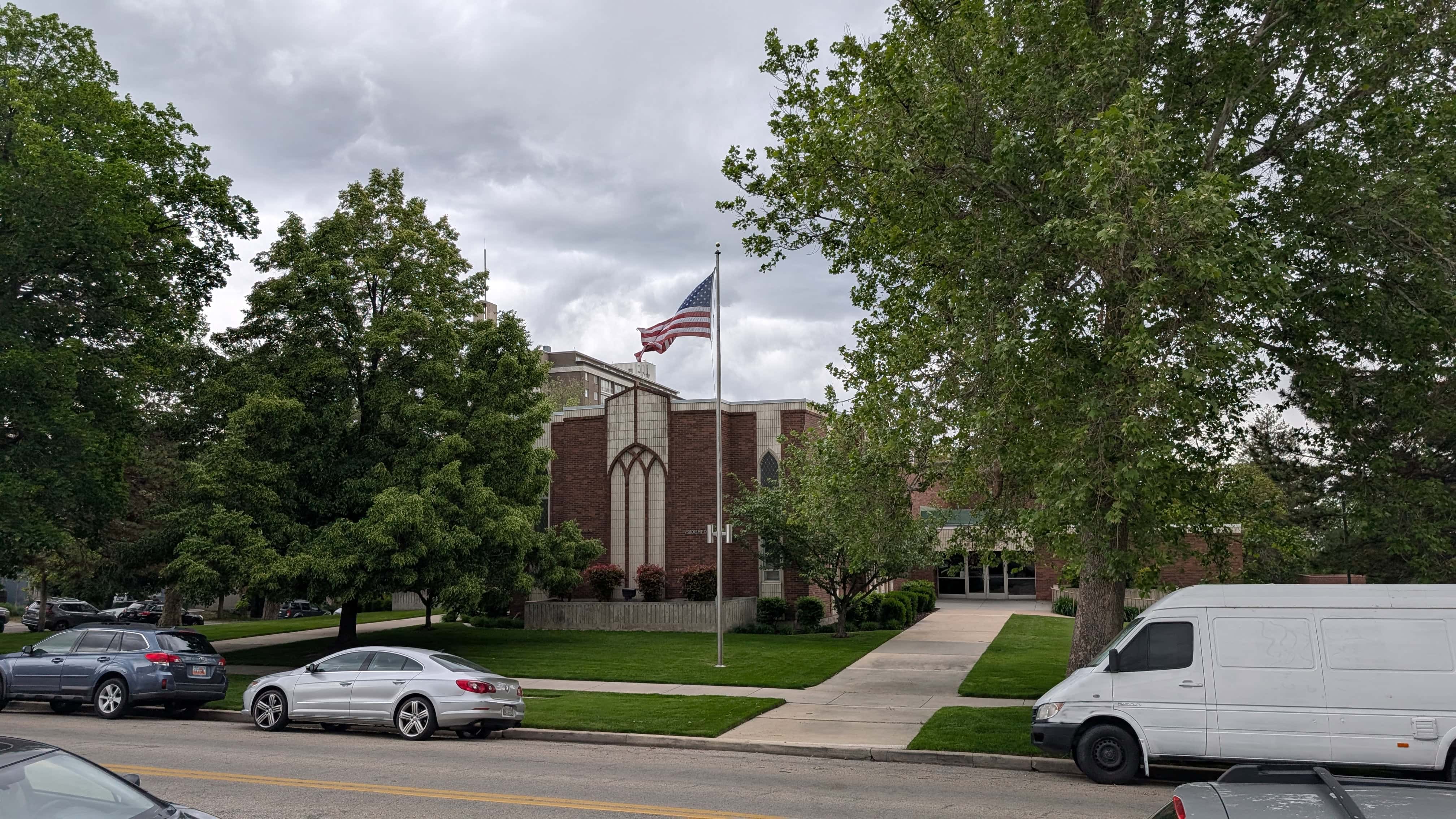
The old 34th Ward Meetinghouse of The Church of Jesus Christ of Latter-day Saints, now the Miracle Rock Church, located at 131 N 900 W in Salt Lake City, Utah.
This brick Neo-Classical structure on a raised basement was built in 1921. The temple-front facade features six massive Doric columns supporting a pediment. This building has been modified somewhat over the years but still retains its historic character.
Although the mining community of Park City began in the 1870s, it was not until 1895 that plans for the construction of this LDS Church were formulated. In 1897 construction on a meeting house was started and apparently completed that year. However, the church was burned in the great fire of June 19, 1898, which destroyed many of Park City’s buildings. Rebuilt in 1899, this building was formally opened for services on March 18, 1900. An addition was made to the rear between 1926-1930 and in 1938 work commenced on the amusement hall. The building served as a meeting house until 1962.
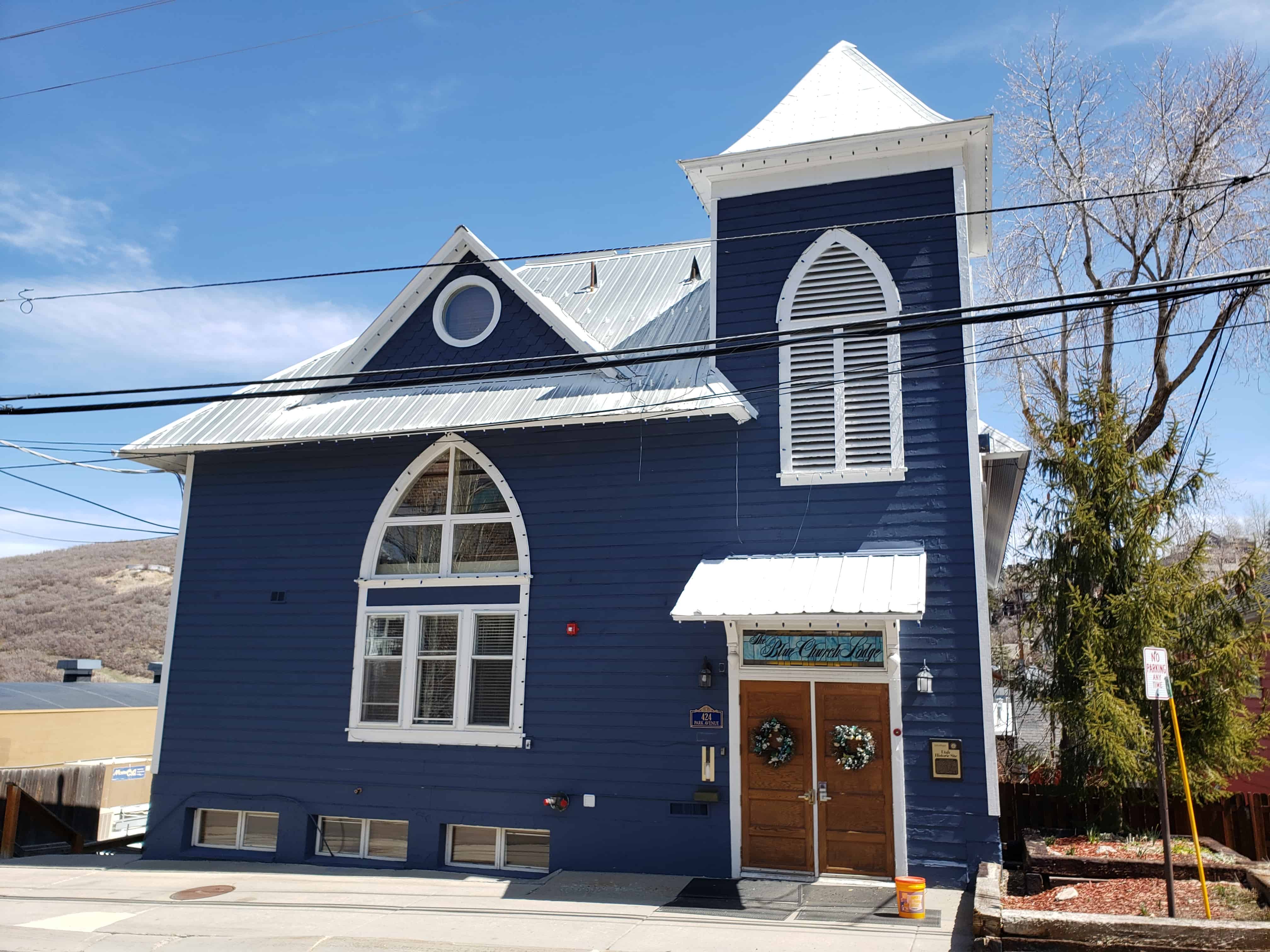
The LDS Park City Meetinghouse is located at 424 Park Avenue in Park City, Utah and was added to the National Historic Register (#78002696) on May 22, 1978.
The Park City Mining District dates to a beginning in 1868, with the discovery and location of various claims, among the more important were those by Rufus Walker and Ephraim Hanks. The discovery of ores and organized mining efforts in Utah is credited to the efforts of Col. Patrick E. Connor and his men, a group of California and Nevada volunteers, sent to Utah by the Secretary of War in 1862 to “watch” the Mormons and protect the Overland Mail. Connor’s men included many who were veterans of the California and Nevada mining fields. As such, the men, in passing their time, prospected the mountains in search of precious metals. When the first discoveries were made in the Park City area, Connor’s men were among those active in the vicinity.
In 1872, the discovery of the Ontario mine started Park City’s establishment as one of the West’s richest silver camps. Other operations such as the Daly Mining Company, also contributed to the district’s reputation. Mining in Utah for precious metals was promoted and advanced primarily by “Gentiles”; that is, non-Mormons. Irish influence was very pronounced and from the outset, Park City was a “Gentile Camp”.
Opposition to Mormons in Park City appeared very intense. In 1886 an organization known as the “Loyalty Legion” allegedly wrecked the home of an individual named (Gad) Davis, leader of the city’s Mormons. Additionally, the group encouraged mining companies not to hire Mormon miners. A “ban” existed for approximately seven years, when in 1894, church leaders prevailed upon the mining companies to employ Mormon miners. This coincided with the movement of Mormon entrepreneurs into mining ventures all over the state.
Church membership grew and meetings were held at Roy’s grocery store on Main Street. In 1894 Margaret D. Mason deeded lots 26 and 27, block 10 to the Trustees of the Park City branch of the Church of Jesus Christ of Latter-day Saints, reserving for herself the rear fifteen feet of property for a consideration of $600.00. At a business meeting held at Park City on March 3, 1895 and attended by President William W. Cluff, a committee of three consisting of Frederick Rasband, Orvis J. Call, and George W. Curtis, was appointed to select a building site on which to erect a meeting house. In August, 1895, a building committee comprised of Thomas L. Alien, John Adamson, Frederick Rasband, Hugh Reid, and Fred Thompson, was selected for the erection of the church.
Sources indicate that in 1896, $1,136.19 was raised for the new meeting house. Work continued on the building in 1897 with nearly $1,200 having been raised. On March 1, 1897, the basement was completed to the extent that it was used for a priesthood meeting., A second meeting was held there in April, with Charles Rasband replacing George W. Curtis as branch clerk. The meeting house was destroyed by fire June 19, 1898 the “Great Fire” destroyed many of Park City’s structure on the upper main street area.
Action to remedy the problem was quickly taken. In July, Willard Sorensen and William E. Potts were elected trustees to hold the deeds to the Church property. By September, 1898, the building committee previously chosen was reorganized with Thomas L. Alien, Chairman, William E. Potts, secretary and James R. Glade, treasurer. This committee took the necessary steps for the erection of a new structure.
Construction commenced approximately in 1899 and the finished portion of the two-story structure was formally opened for use on Sunday, March 18, 1900 and consisted of the assembly area. The main room was 40 ft. by 40 ft. and 18 ft. high with two vestry rooms, 11 ft. by 16 ft. and 11 ft. by 14 ft. respectively. At the March meeting a silver sacrament service was presented to the branch by the Relief Society with numerous visitors attending and a formal address presented by Apostle George Teasdale.
In 1925 Margaret D. Mason deeded the rear 15 feet of lots 26 and 27, block 10 to the Park City Church. During the following year, steps were taken to construct a 30 foot addition to the rear of the building which was completed between 1926 – 1930. By 1938, work commenced on the Ward Amusement Hall in the lower level of the structure.
The church remained as the meeting house until 1957 when church members voted to build a new chapel at a cost of $114,000. In December, 1962, the new church was dedicated. The old structure was in private hands until 1976 when it was purchased by it present owner.
Thus, the church was the first chapel of the LDS Church in Park City, rebuilt after the 1898 fire. Its wood Gothic style renders the structure as a rare “existing” example of this style utilized by the LDS Church. In fact, the use of the frame Gothic style for a meeting house dates to the turn of the century and the Park City and Eureka chapels remain the only significant examples of the frame type. In addition, the Park City meeting house is the largest frame structure existing in the town that dates back to the conflagration of 1898.
This structure represented the culmination of years of struggle by the Mormon community in a “Gentile” camp and has served a basic function in tending to the religious needs of the Park City Mormon population. In 1976, the Park City Council designated the structure as a historic building.