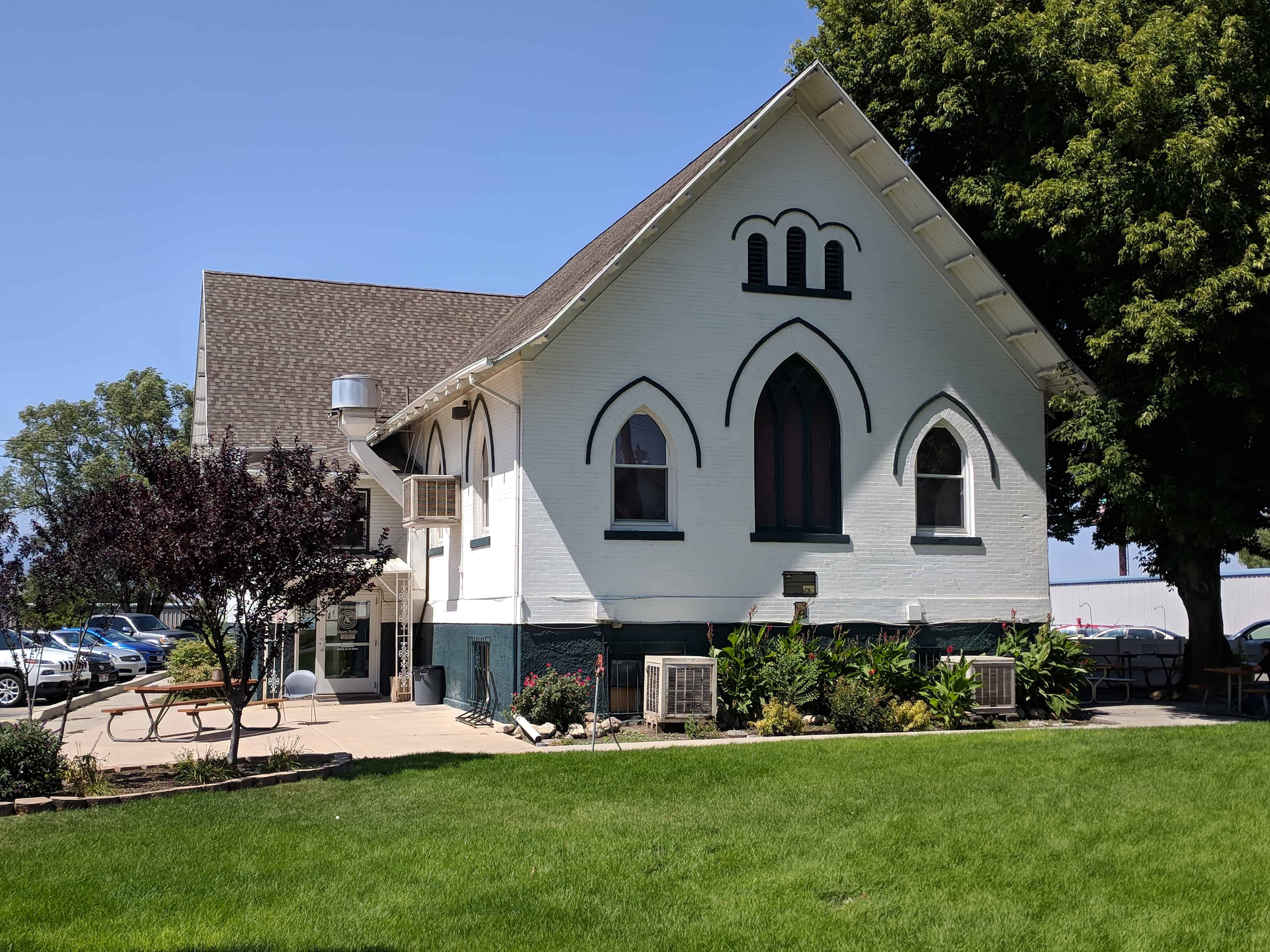
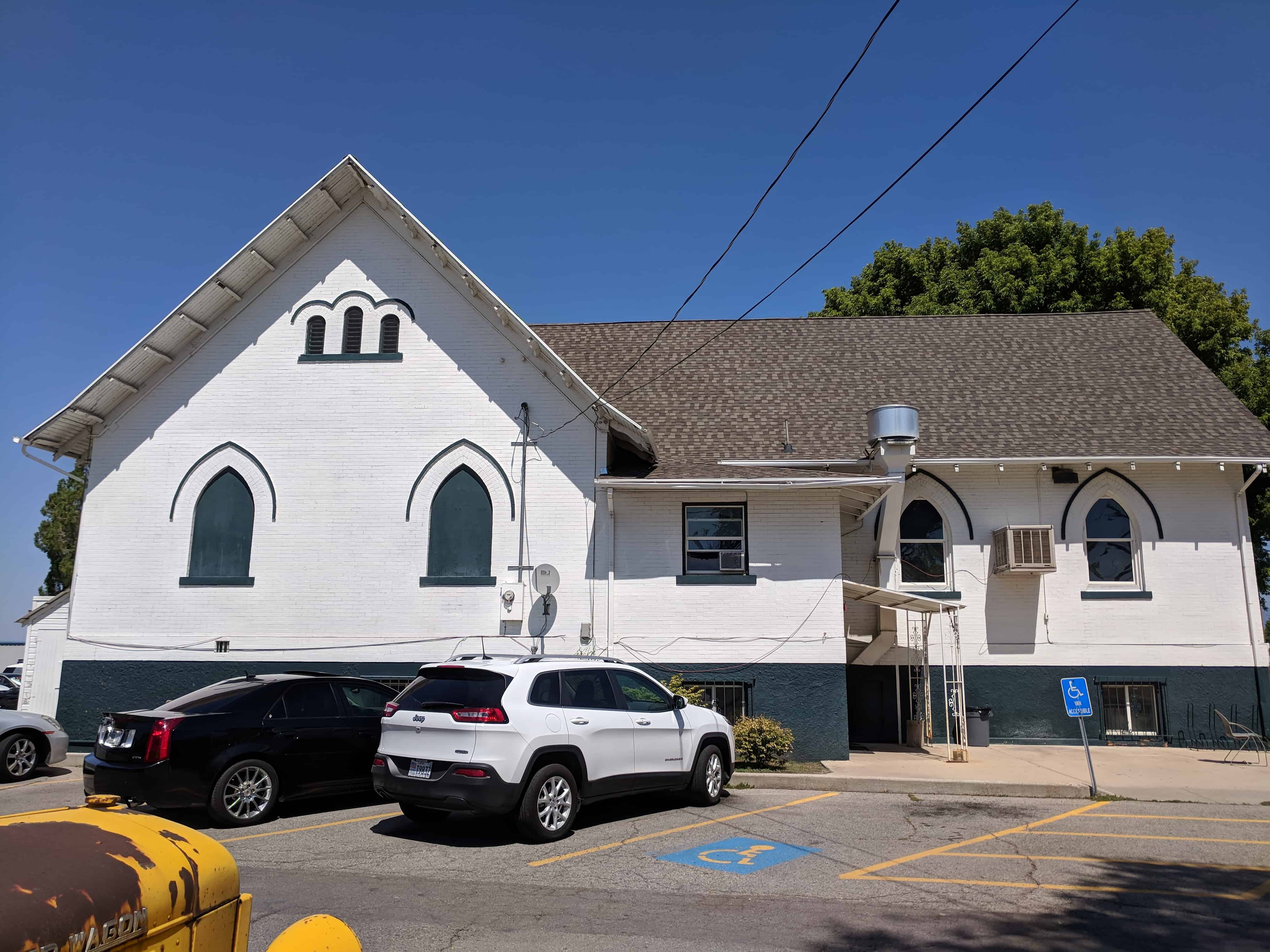
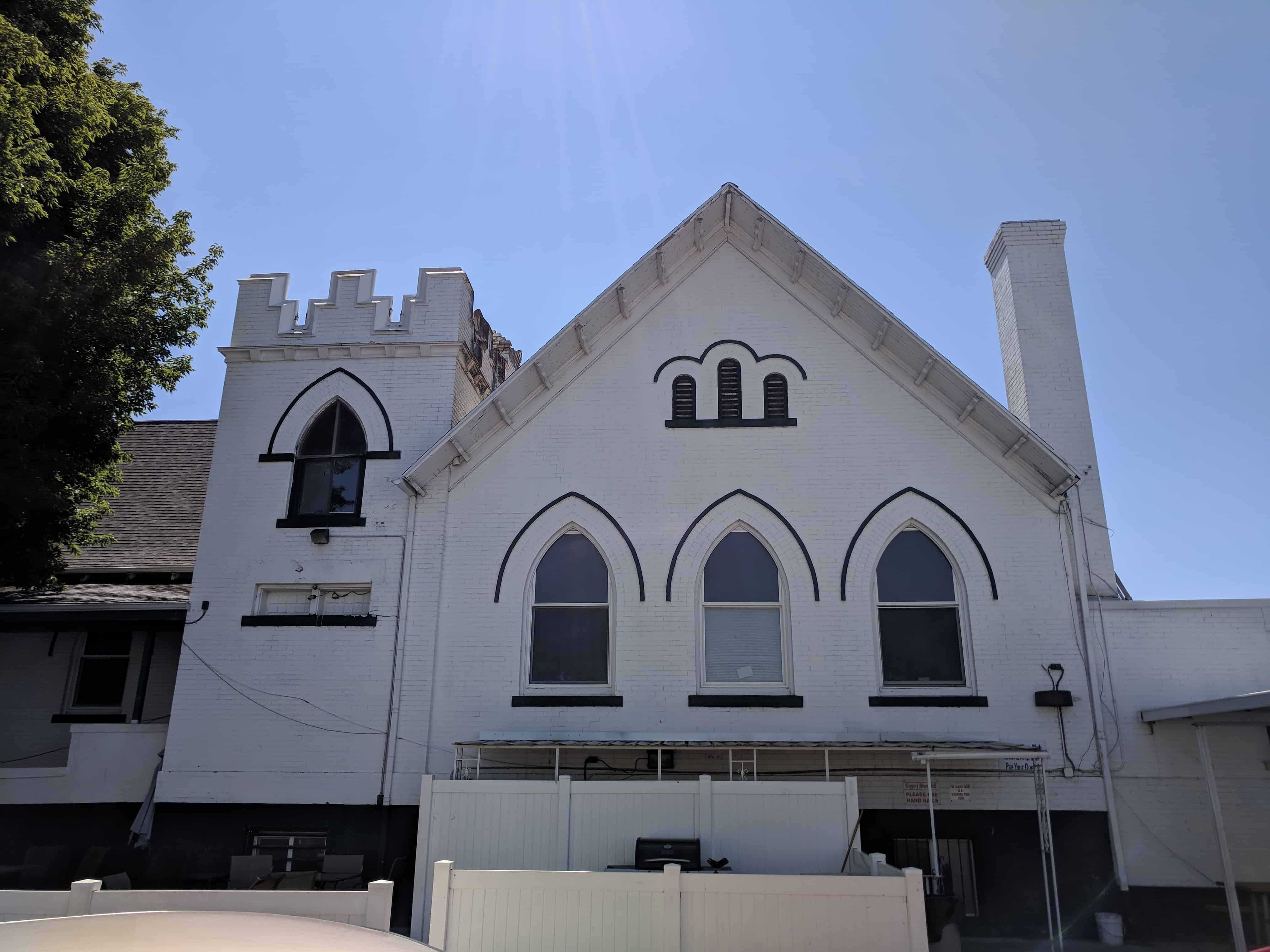
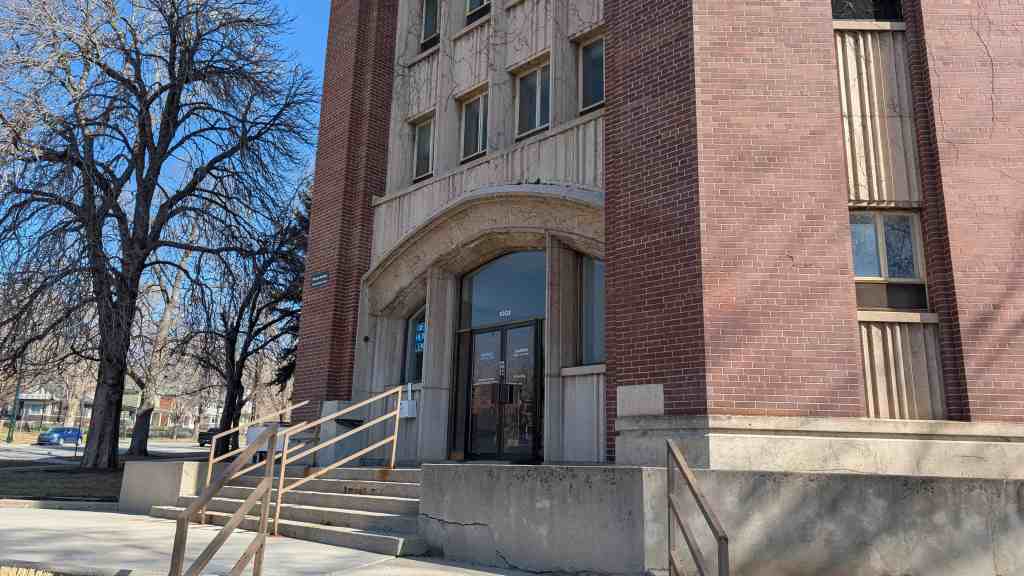
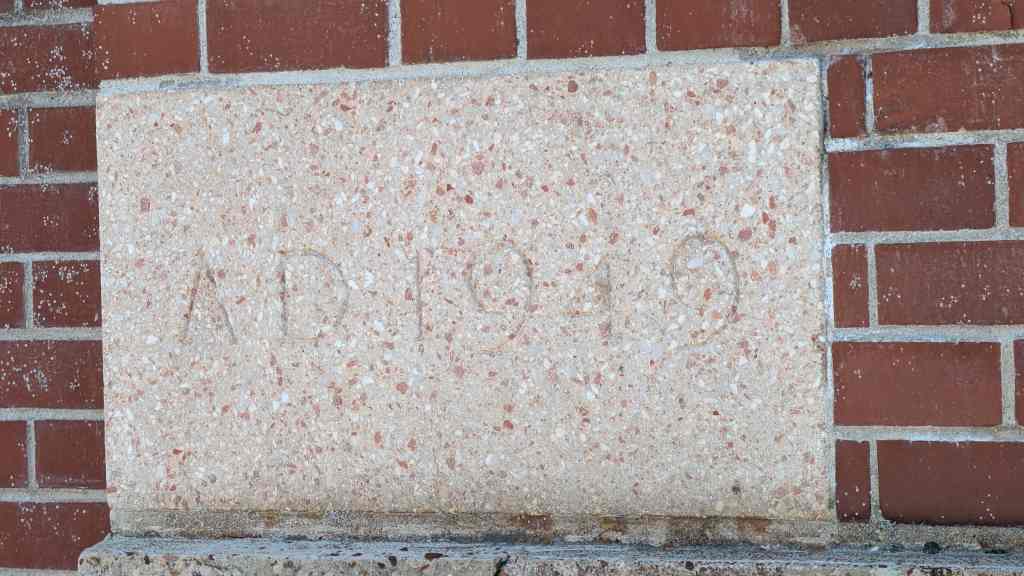
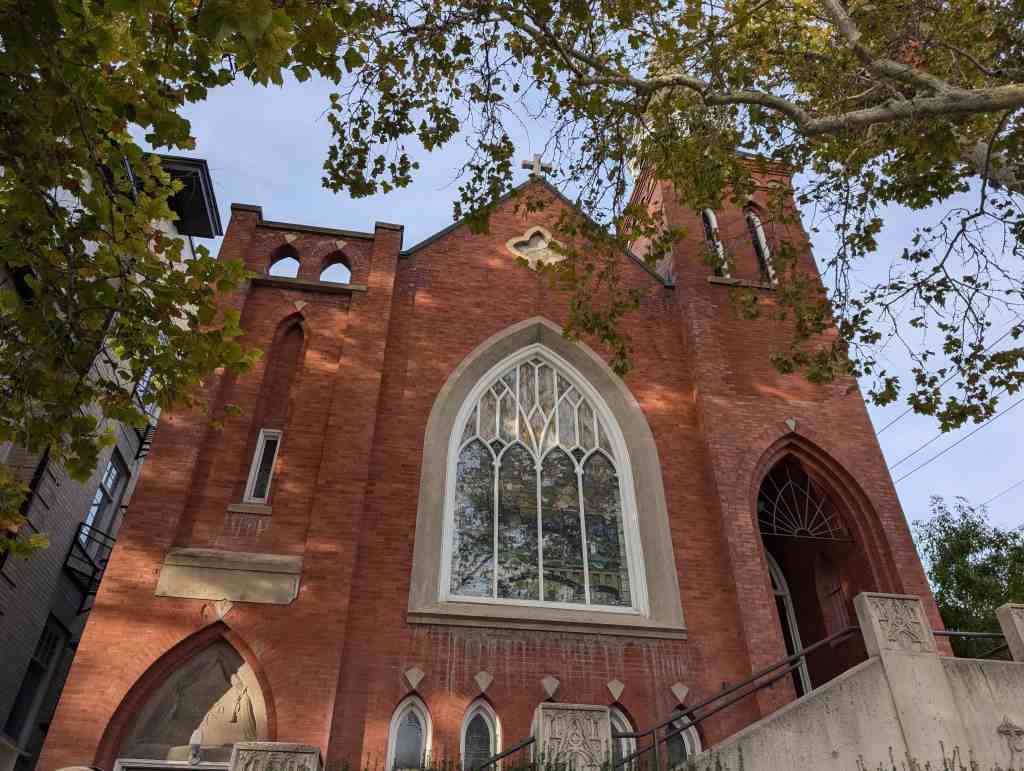
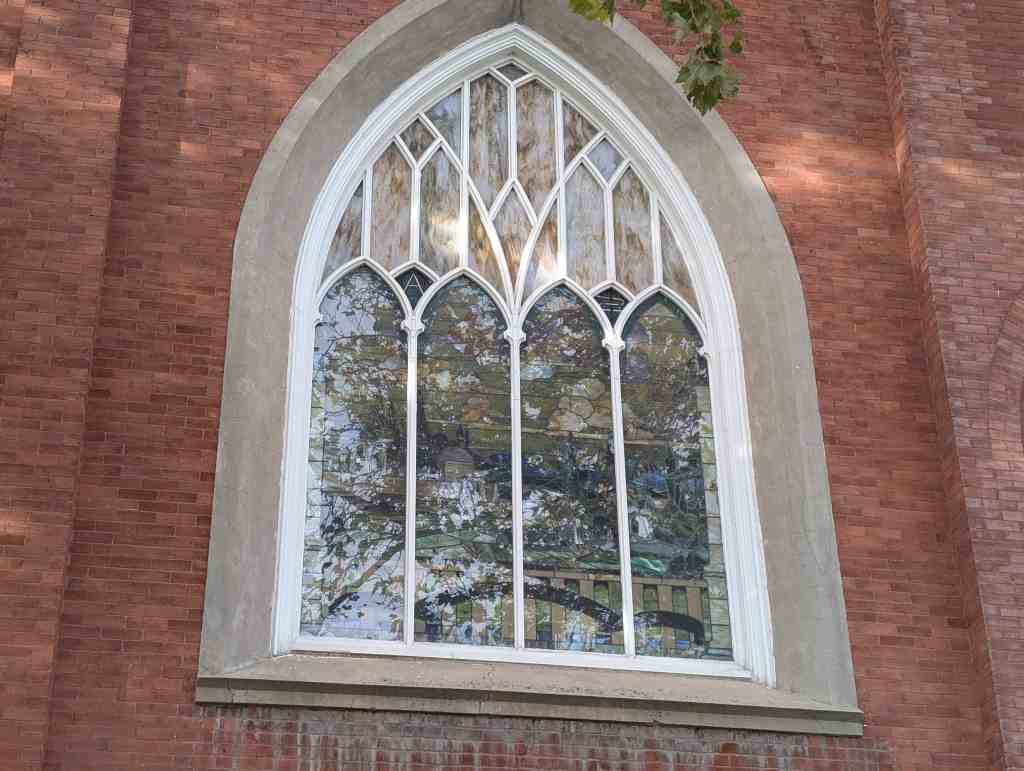
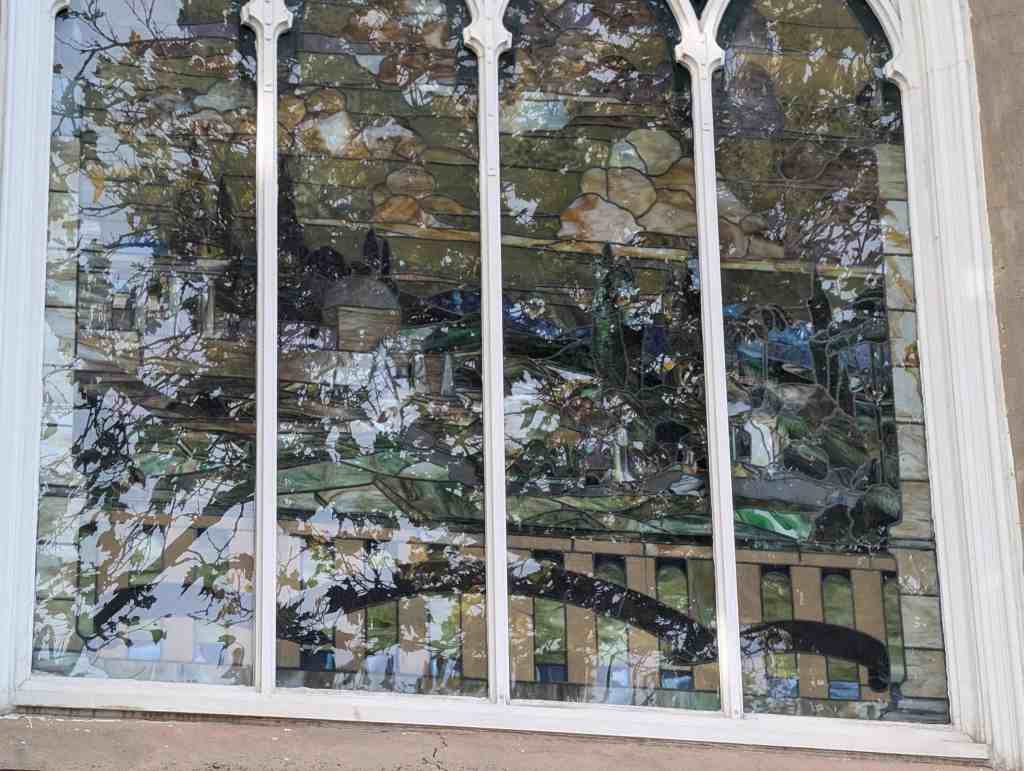
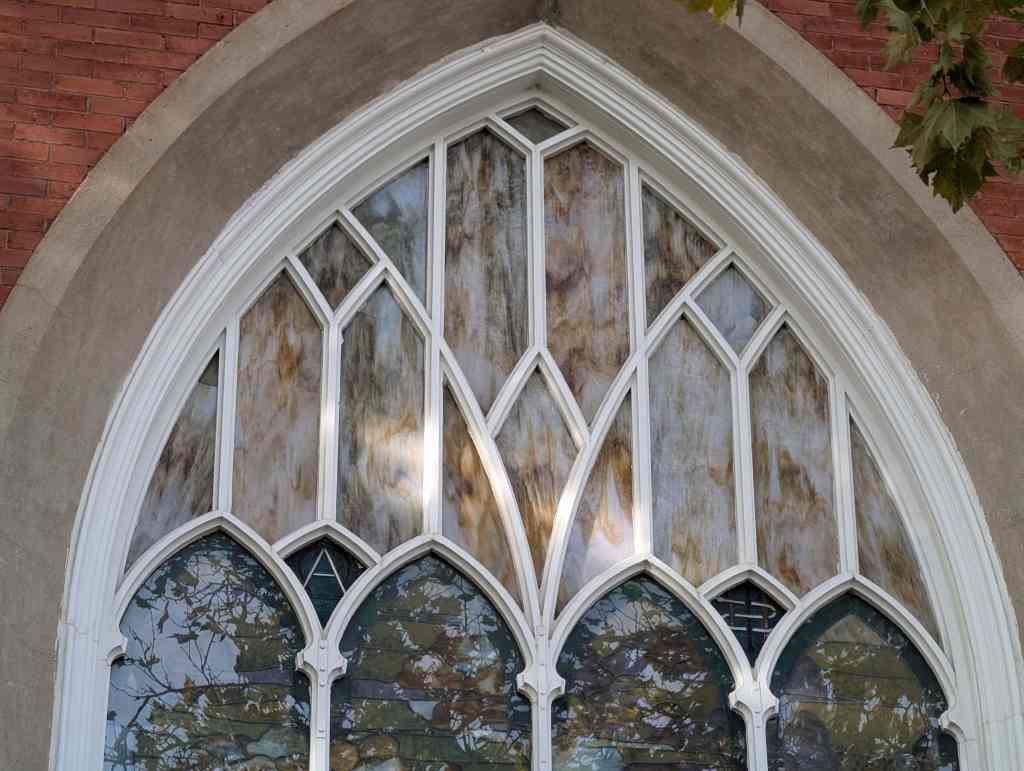
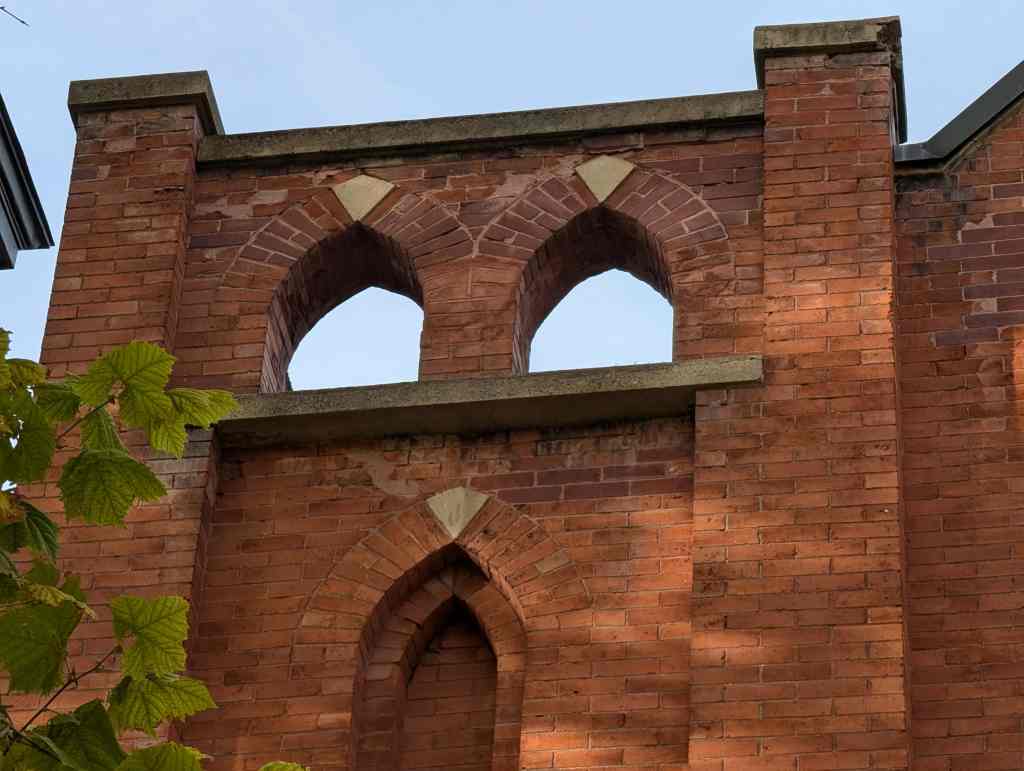
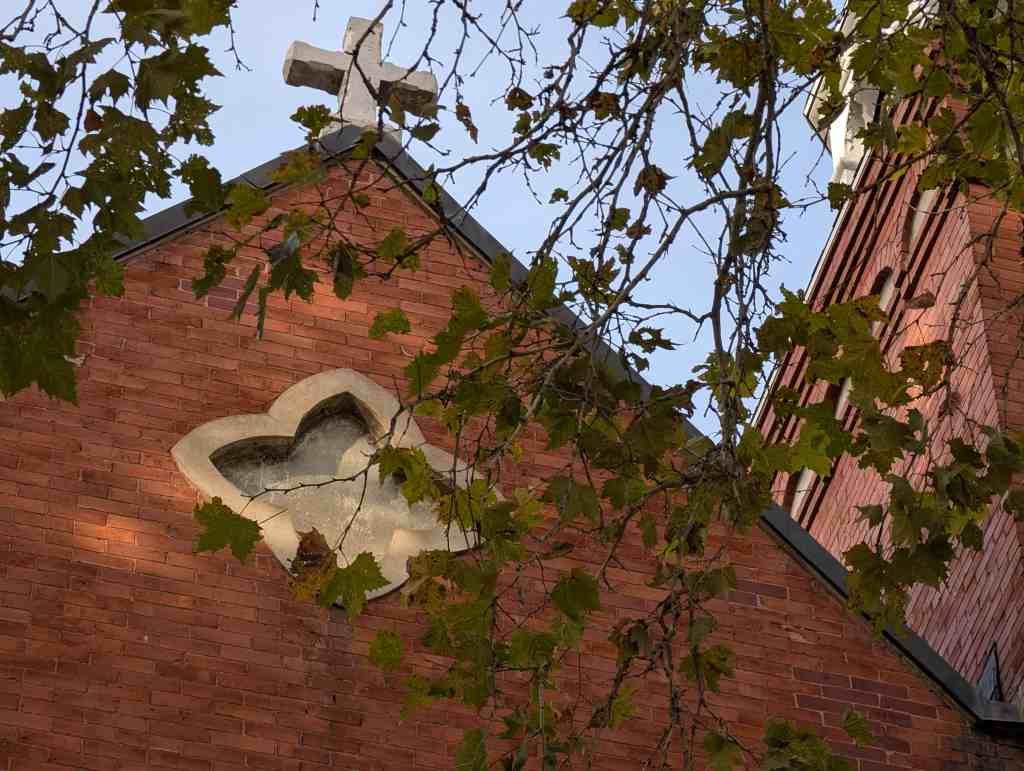
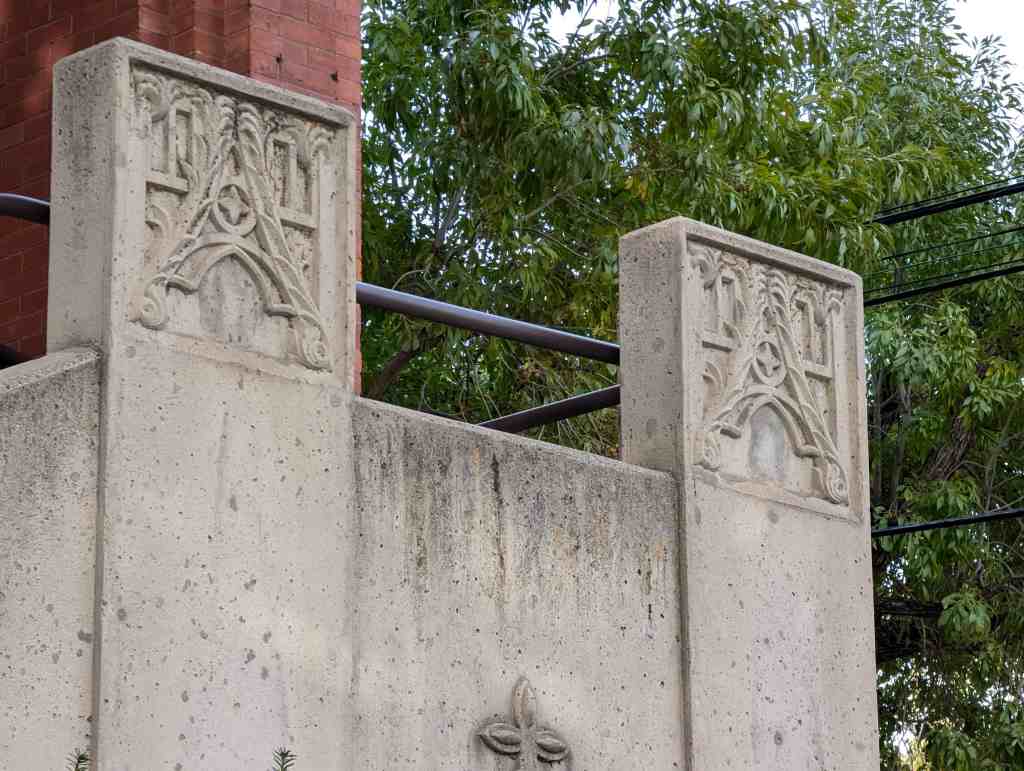
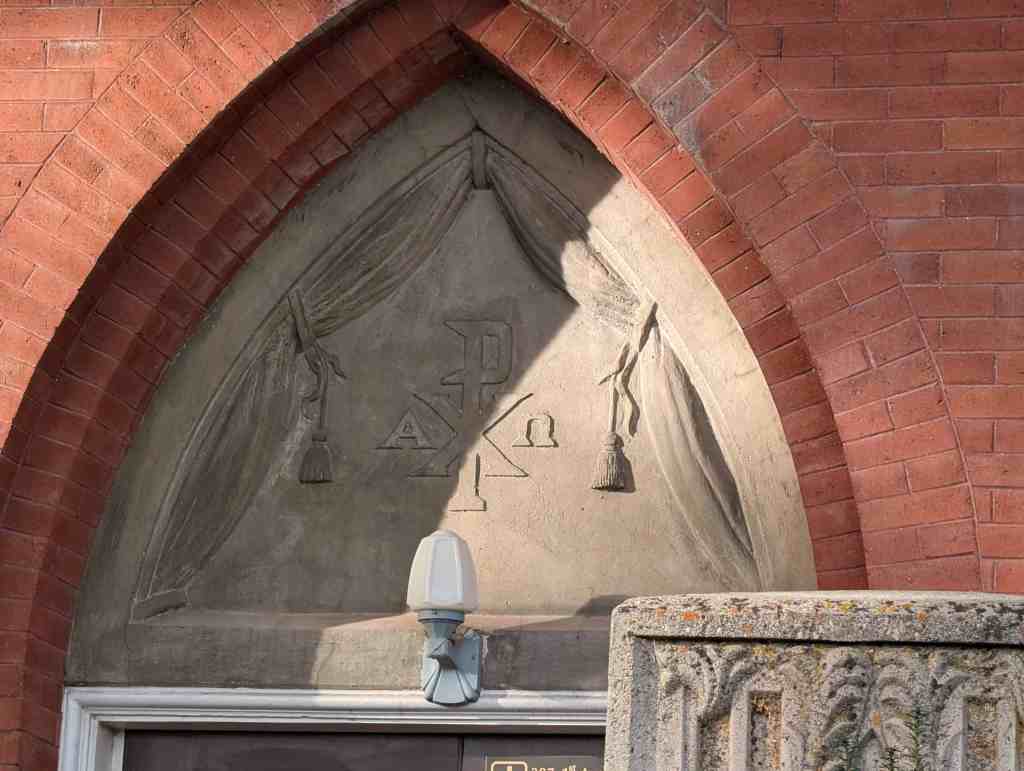
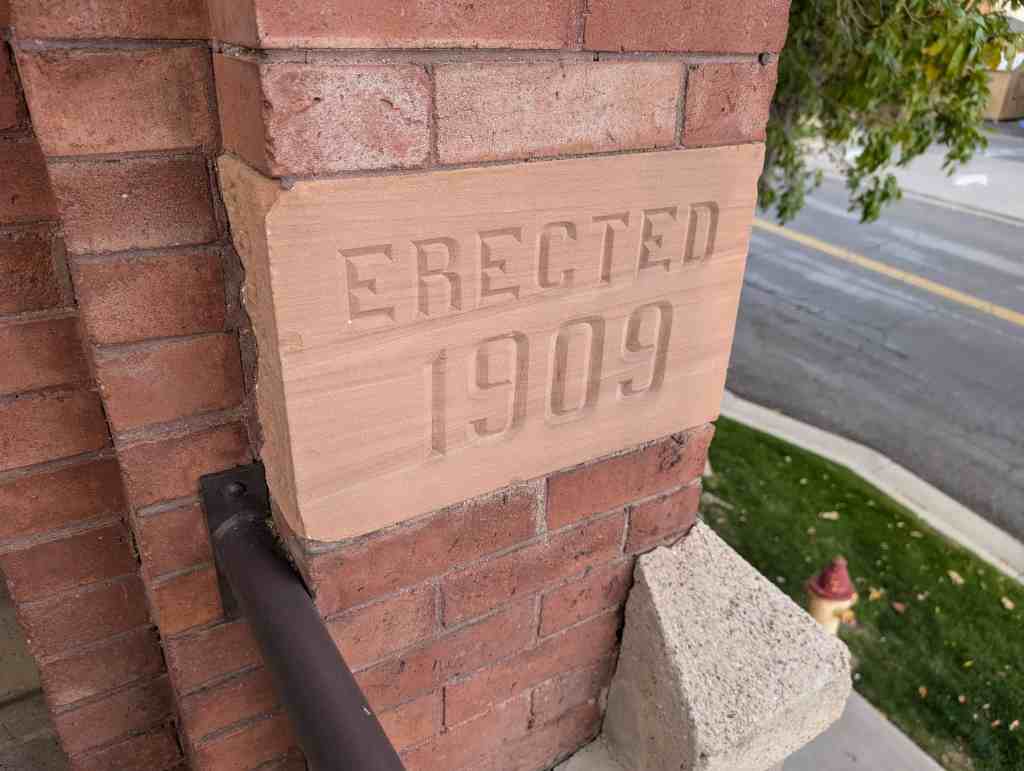
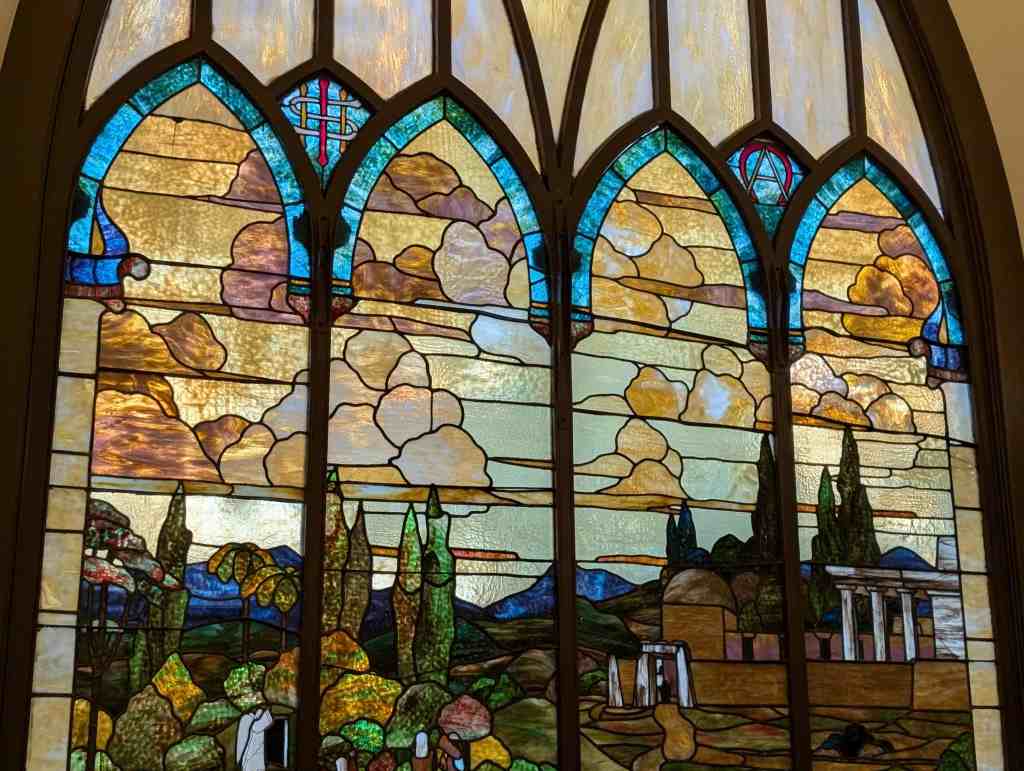
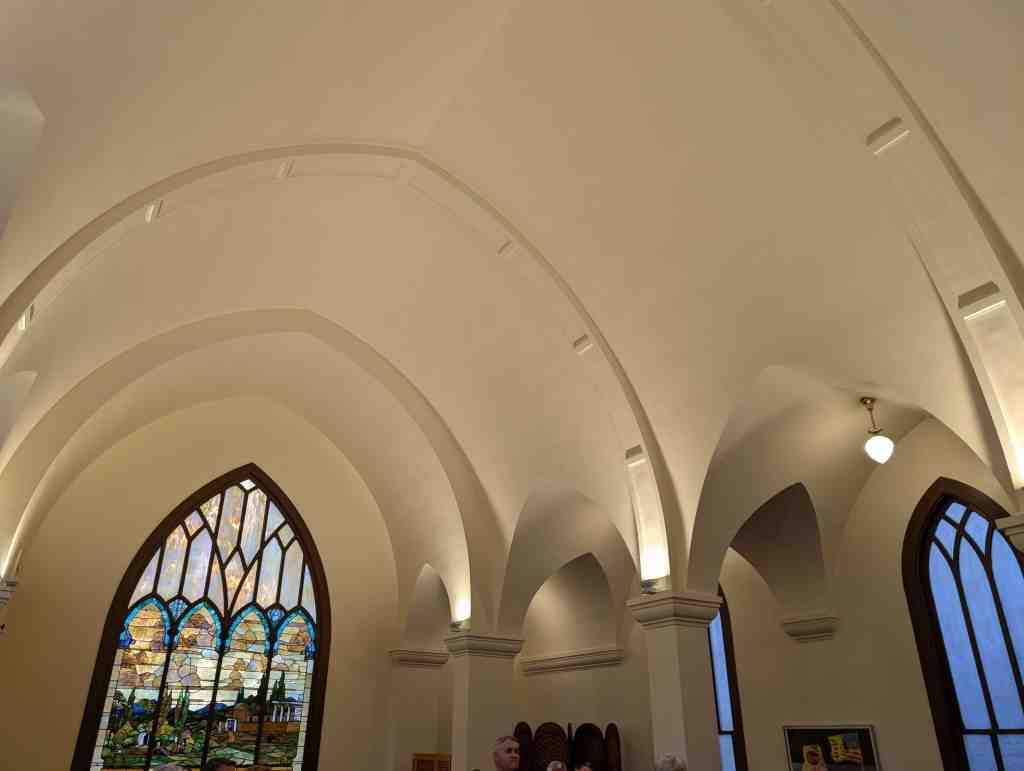
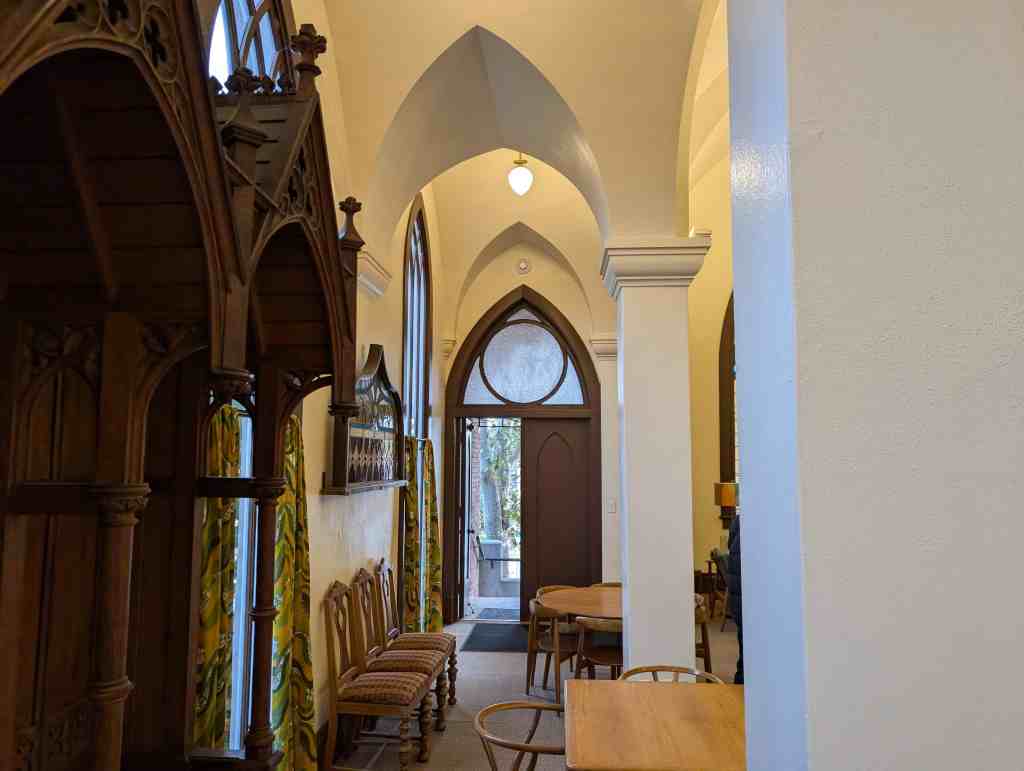
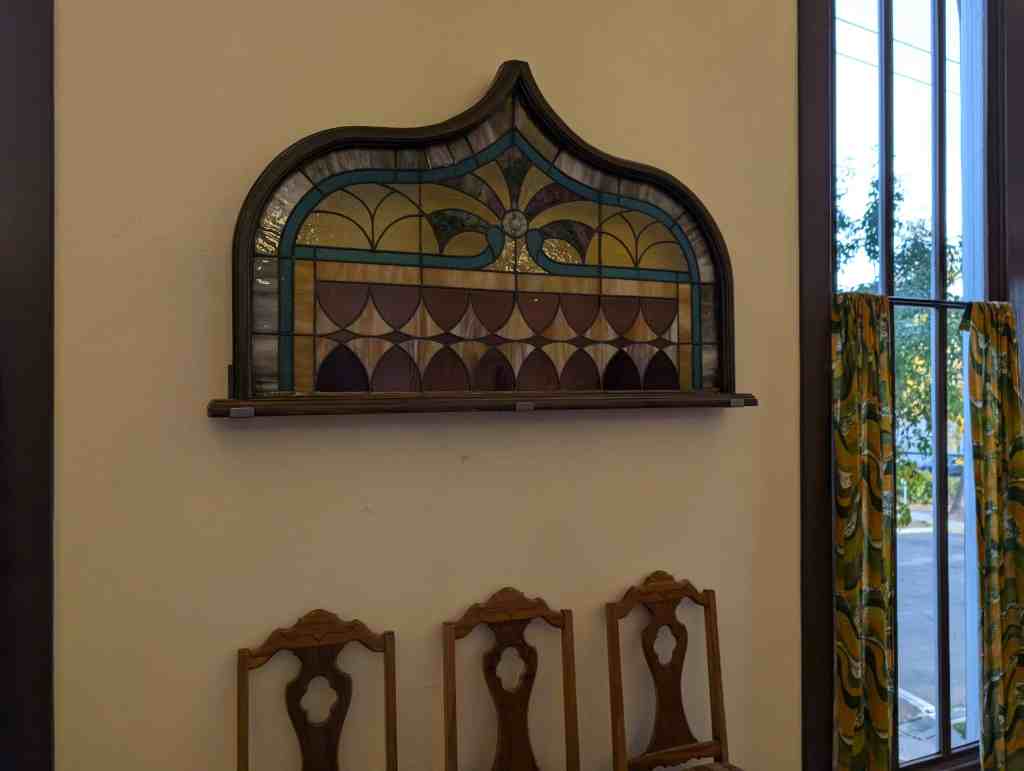
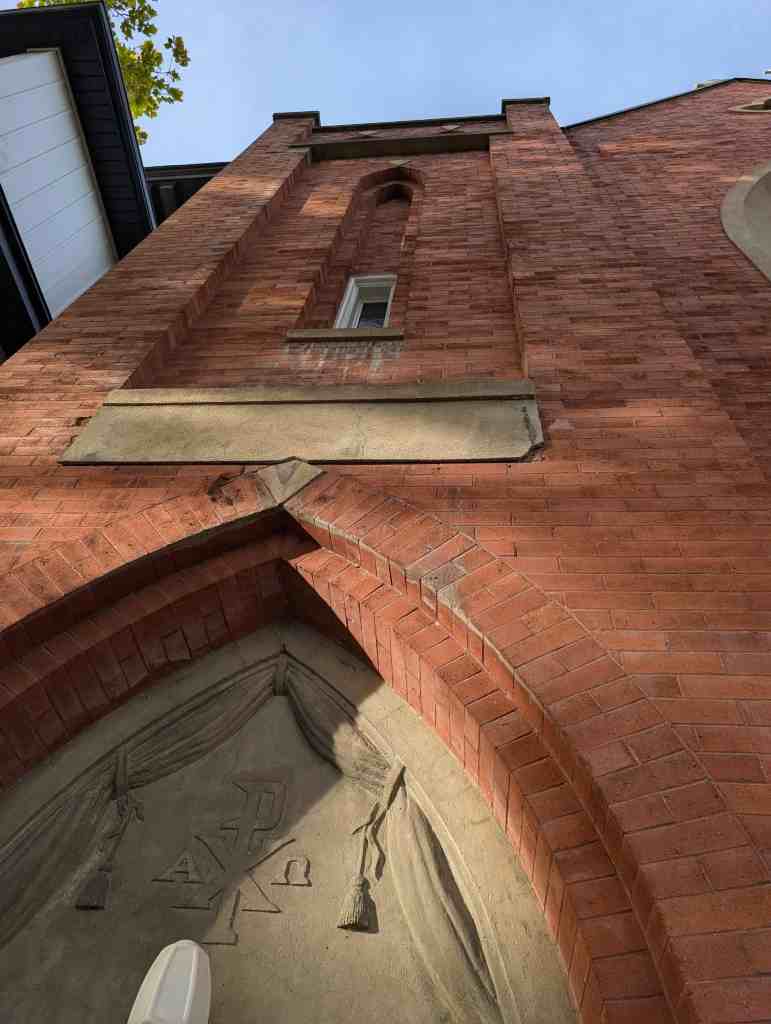
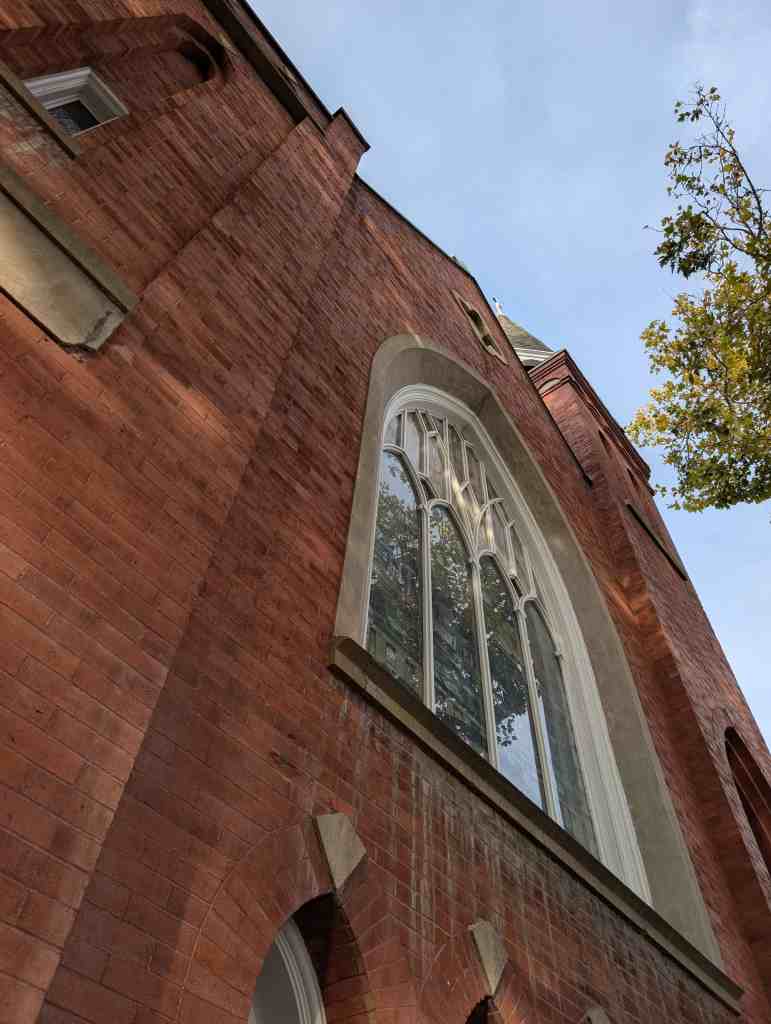
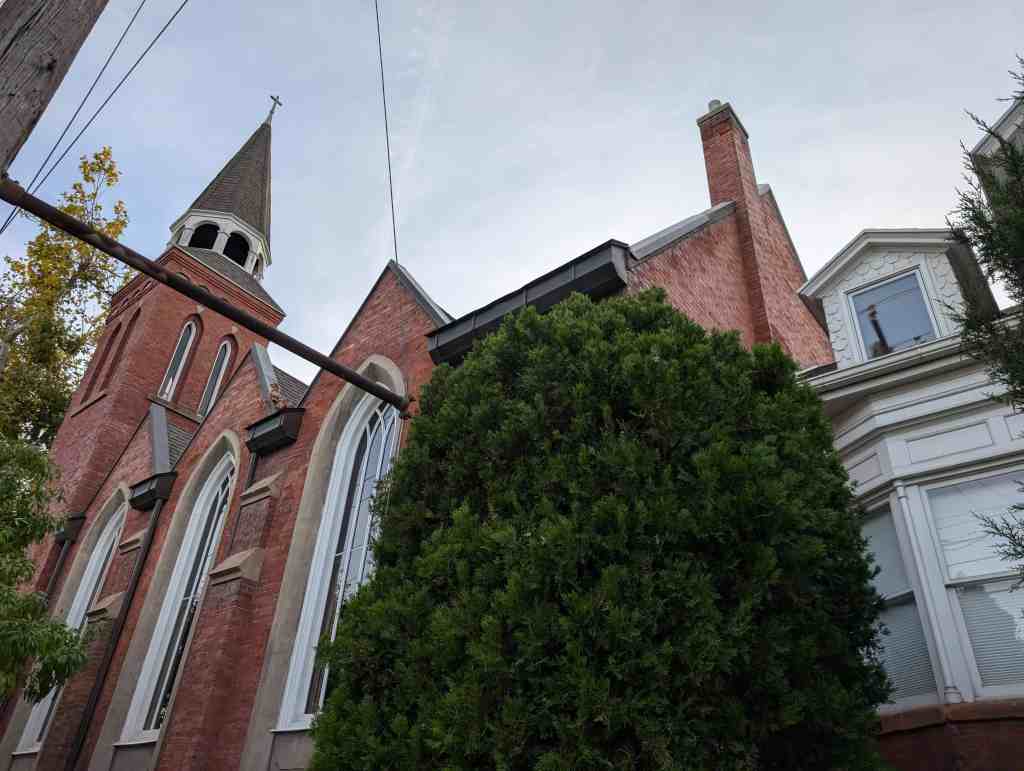
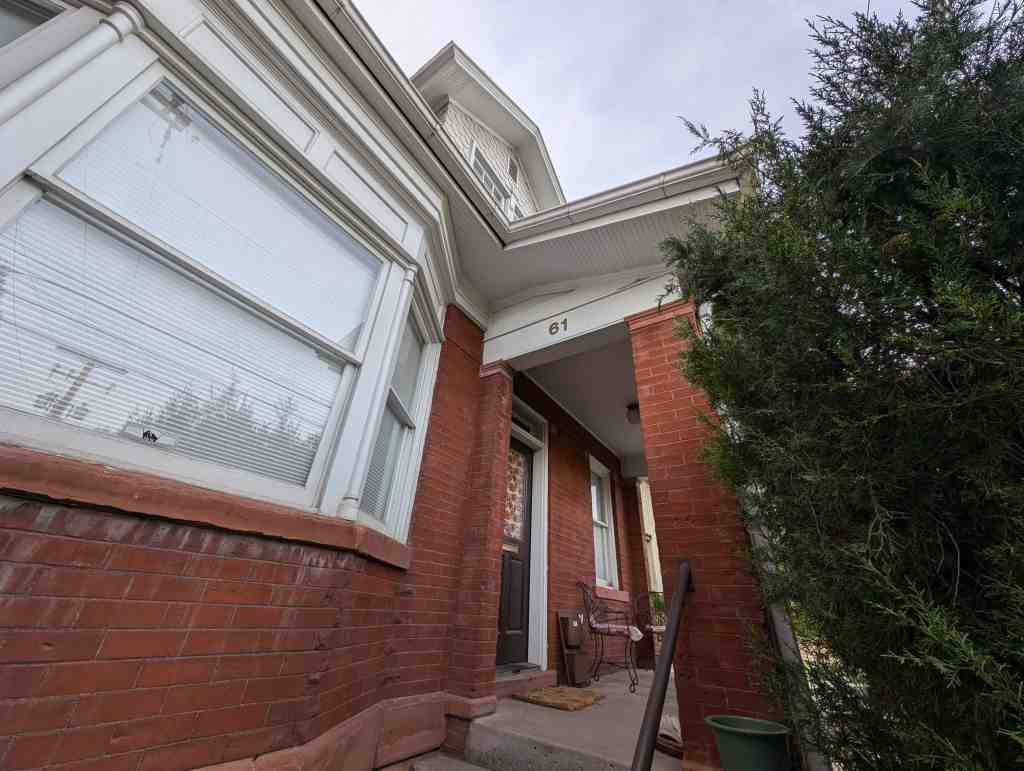
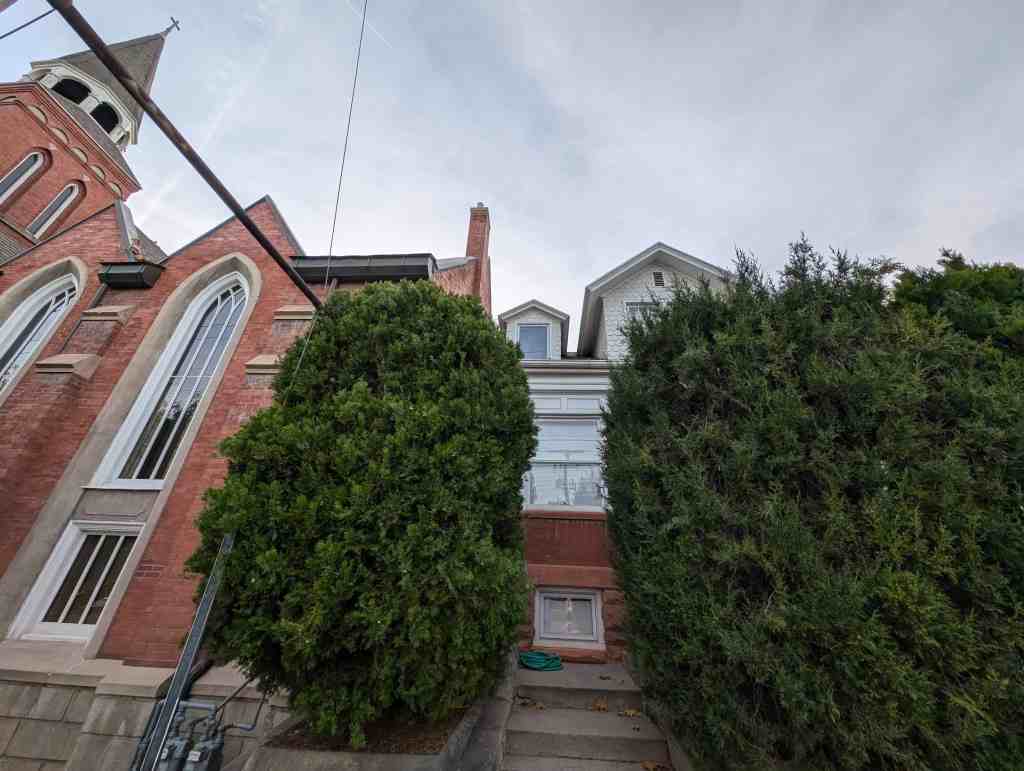
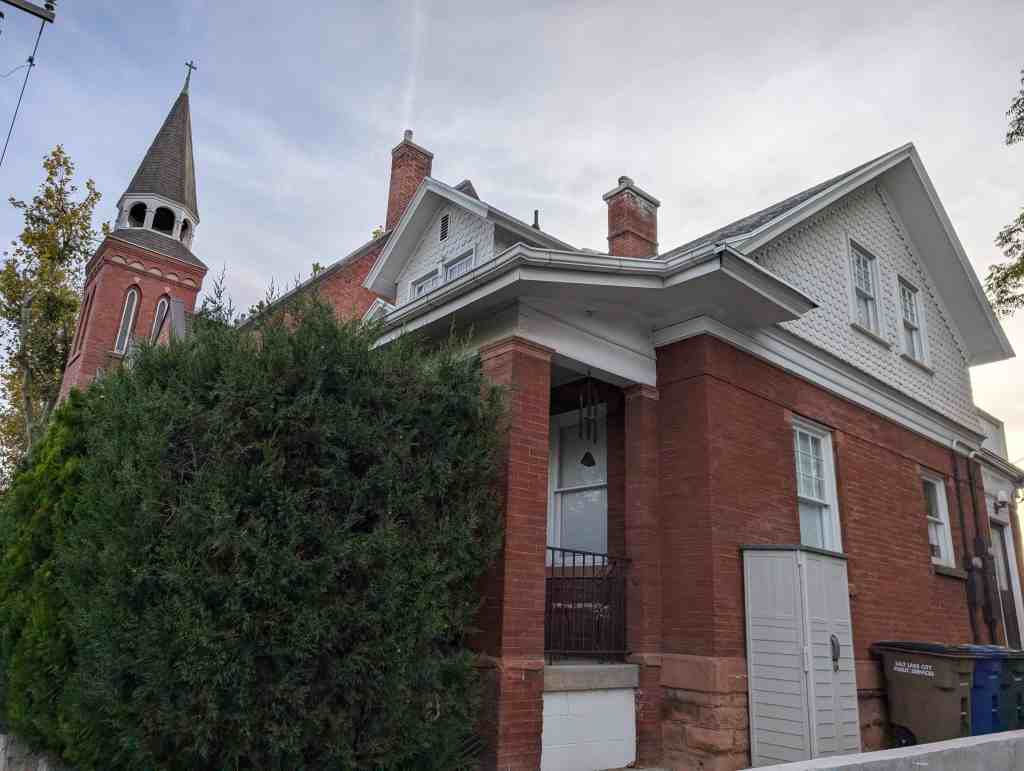
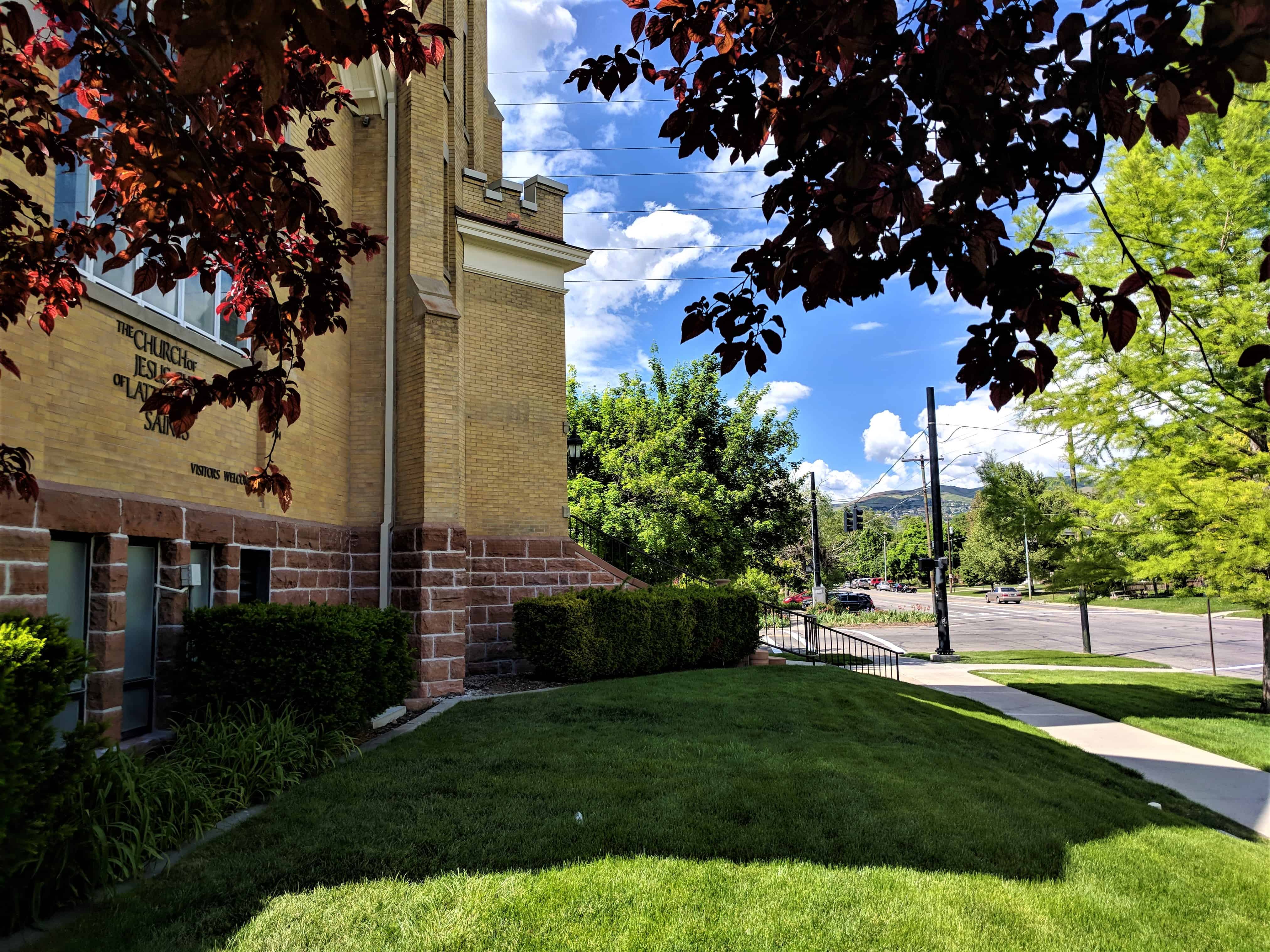
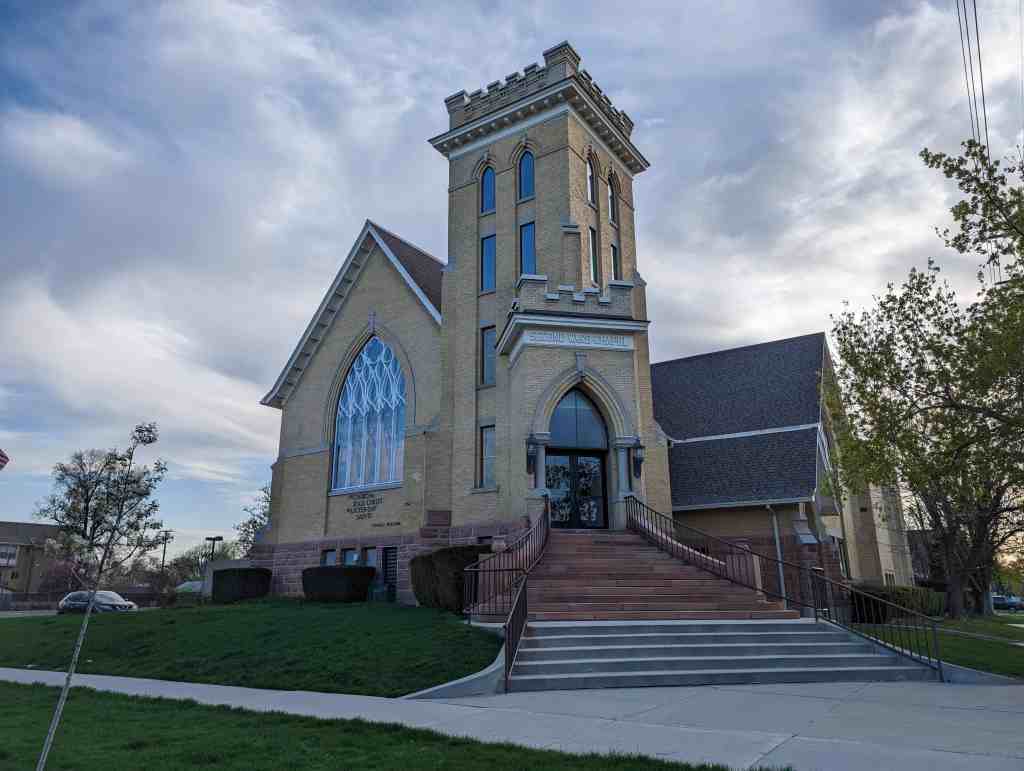
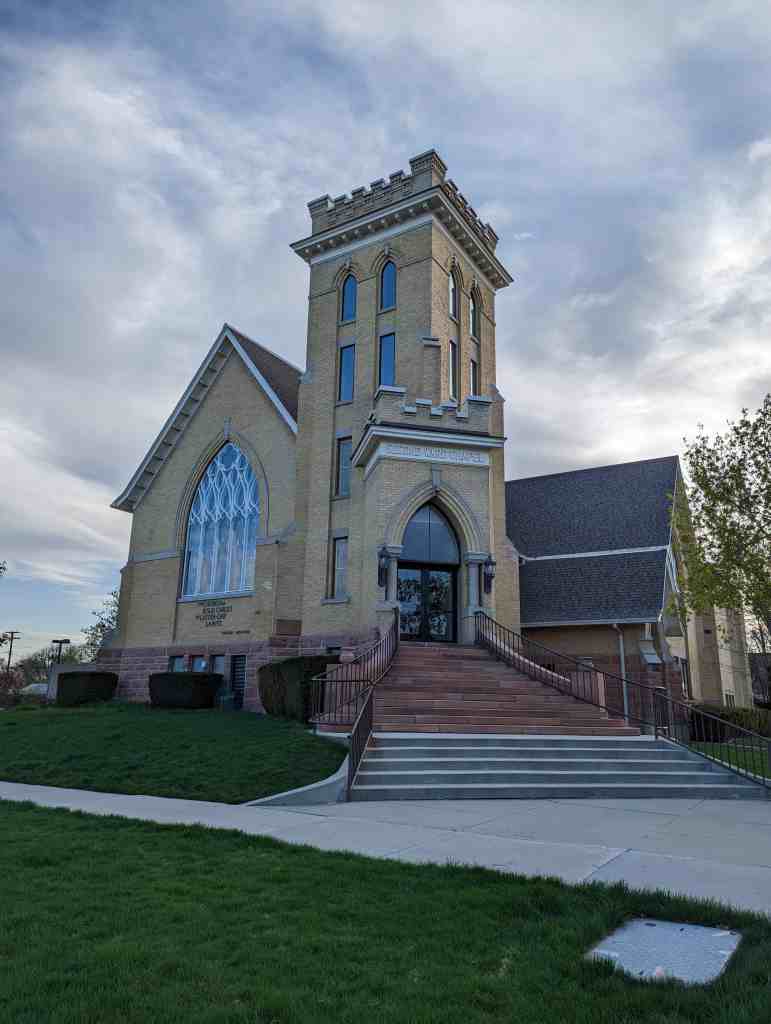
Built in 1909, the Murray LDS Second Ward Meetinghouse is significant for its use as a religious and social venue for Murray residents between the railroad tracks and Jordan River.
From the historic marker on the building:
In 1906, Stake President Frank Y. Taylor promised the Saints that if they would donate liberally in the spirit of love towards a new meetinghouse, the Lord would bless them. Bishop Jacob Erekson oversaw the building of the downsized, T-shaped, Gothic-style chapel in 1907. The dedication was held in 1911.
The Original ward was divided in 1959; Bishop Shirtliff presided over the 2nd Ward and Bishop Ted J. May presided over the new 15th Ward. They shared the building. The building was later abandoned and used for storage. The Alano Club, a non-profit, non-denominational support agency for the recovering alcoholics, sought to buy the building in 1977. The Church of Jesus Christ of Latter-day Saints halted any commercial sale, realizing that: “This (AA) would be a savior of souls.” Alano removed the dropped ceiling of acoustical panels, revealing an original high, historic-coved ceiling. In 2000, Alano restored the ceiling to its historic architectural integrity. Today, the building is well used and maintained.
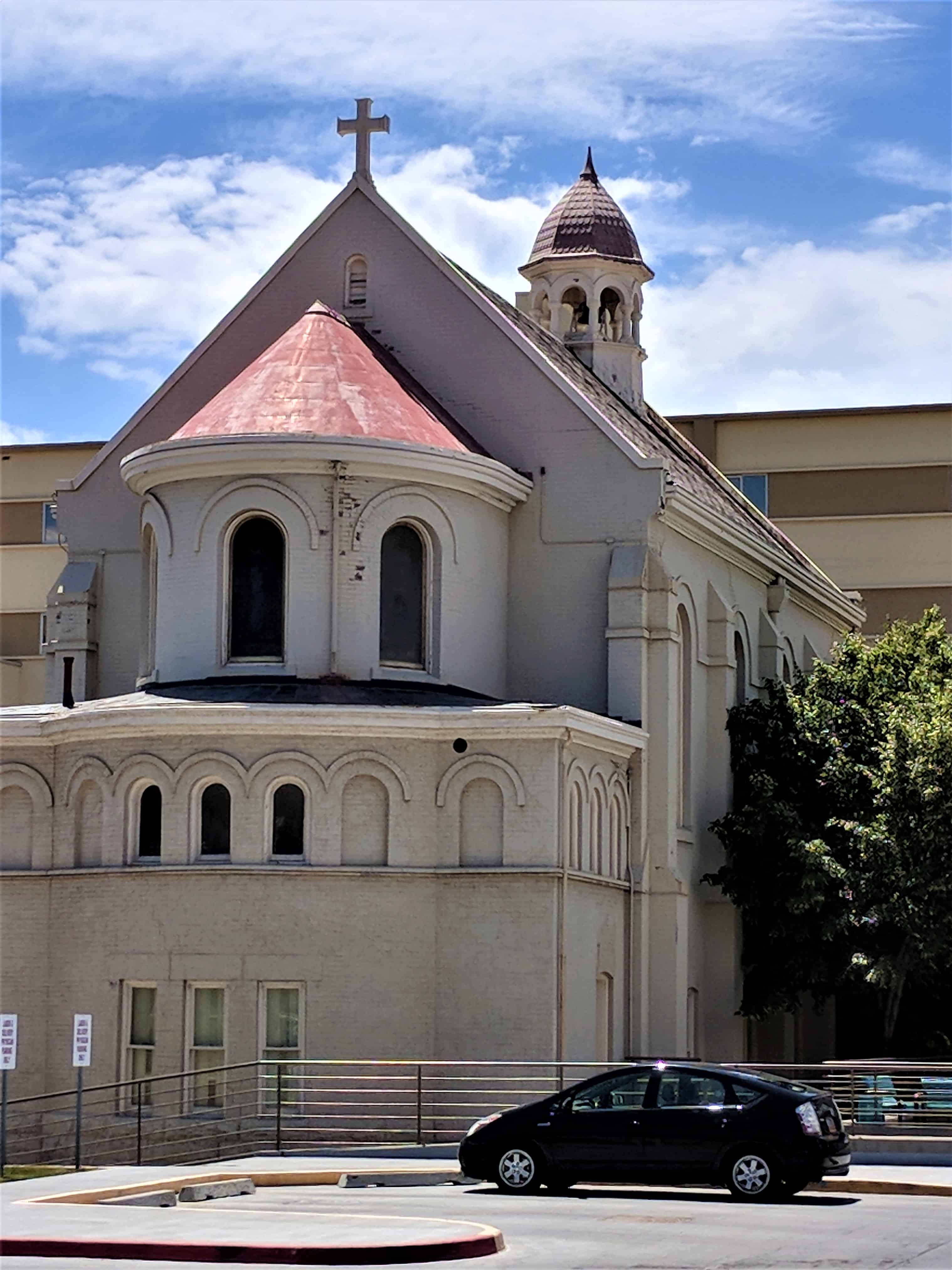
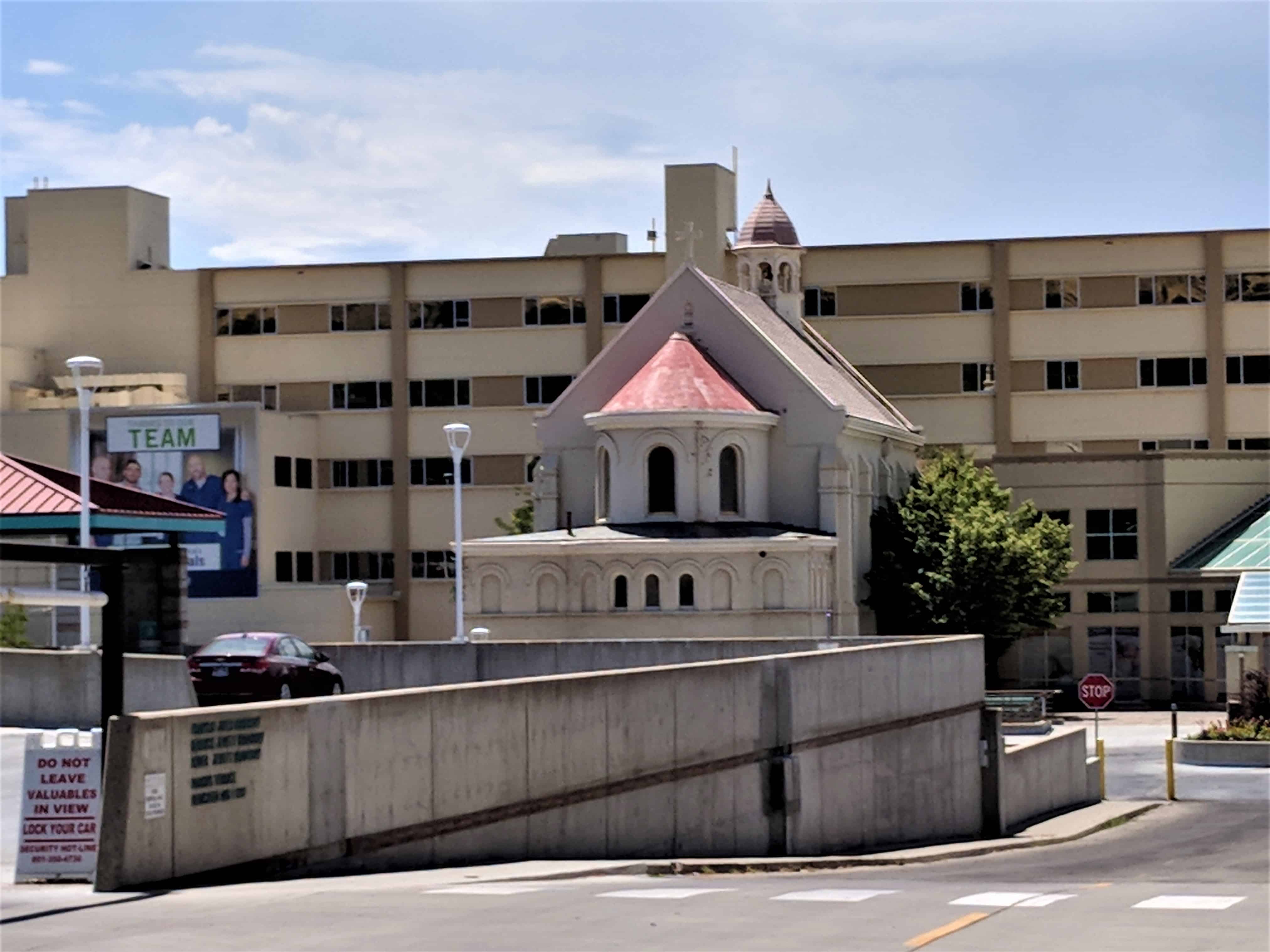
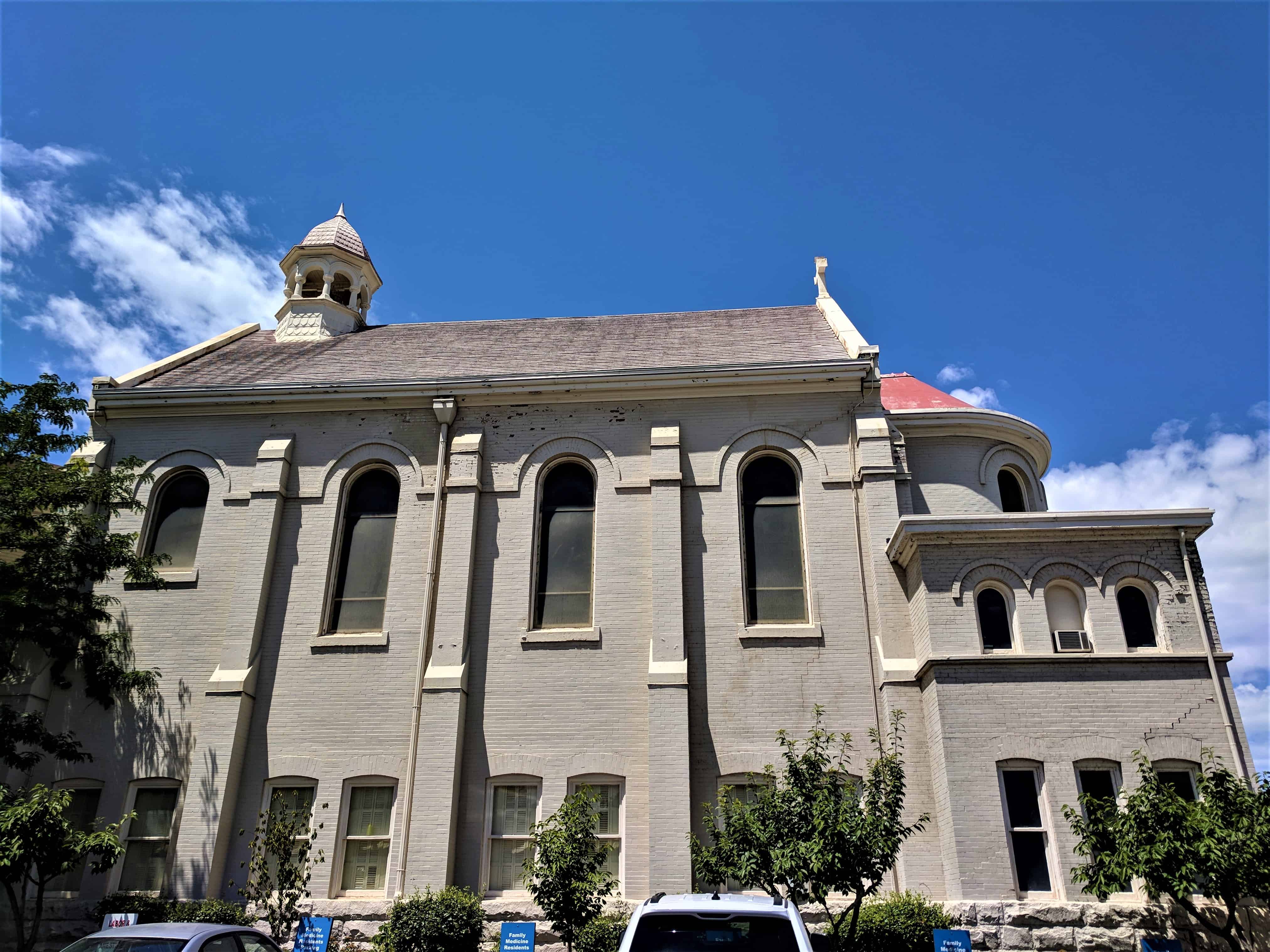
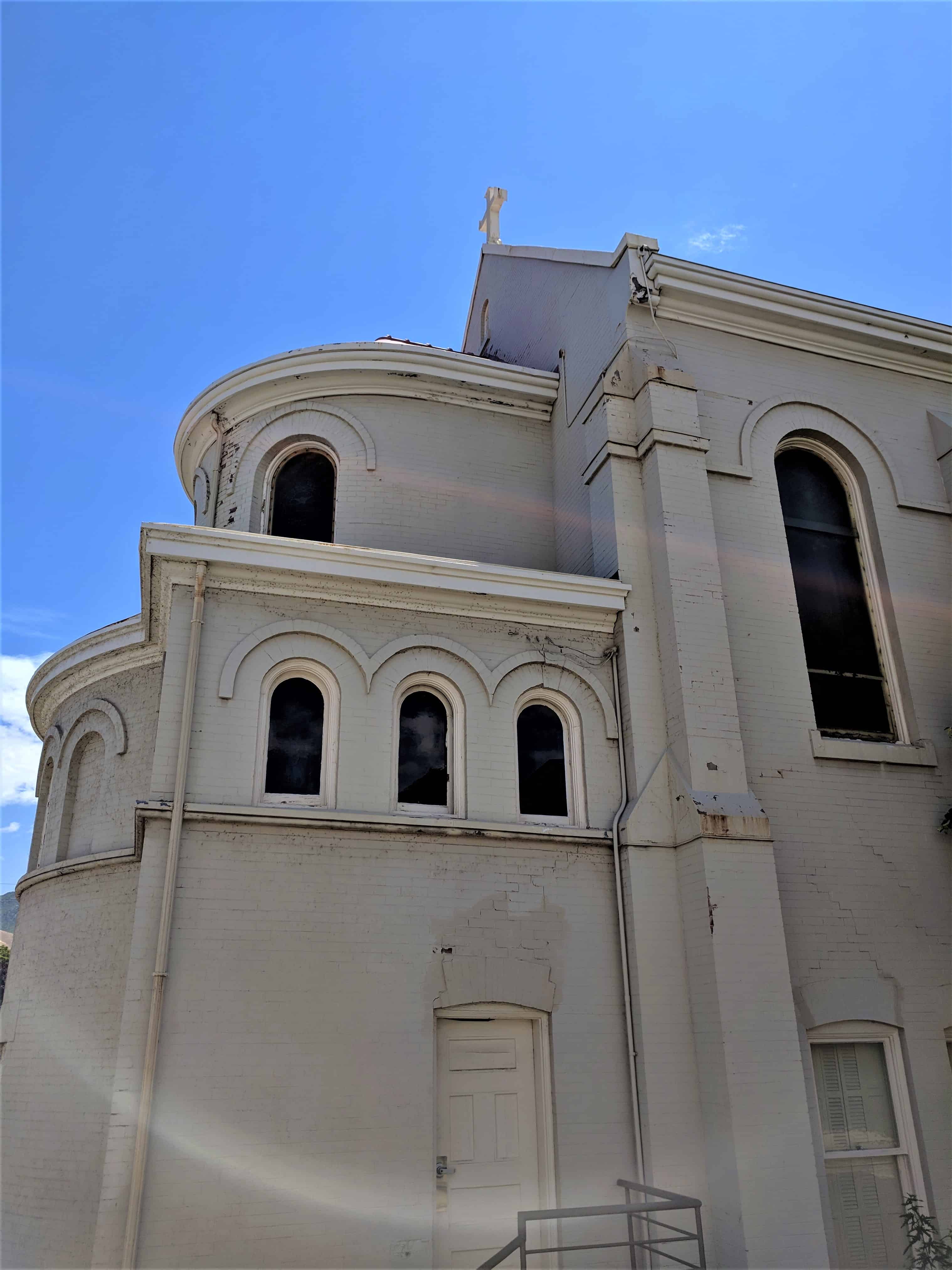
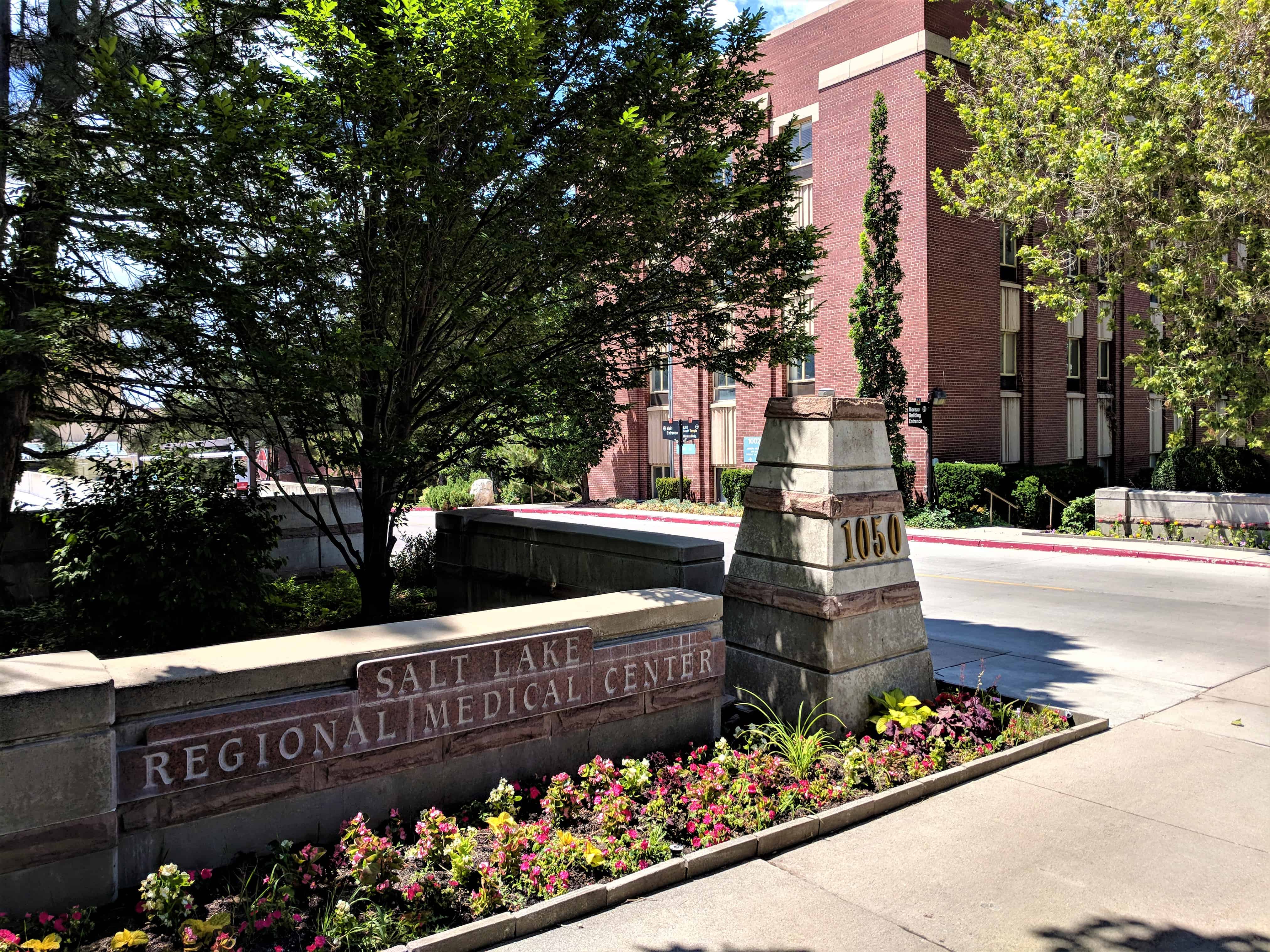
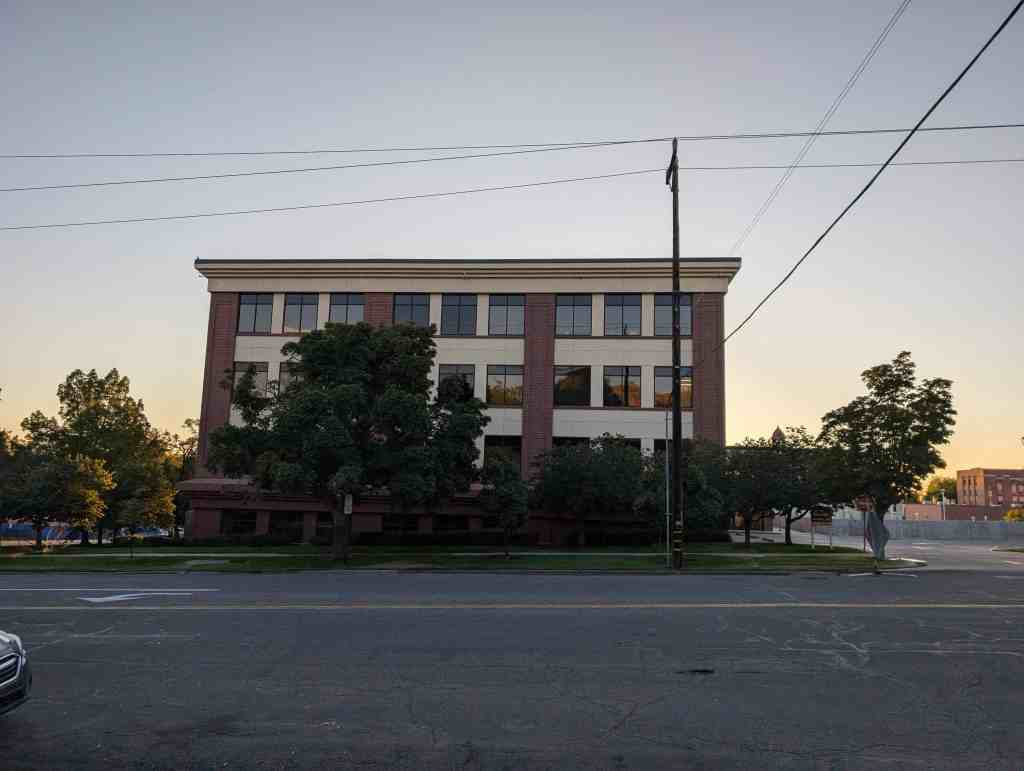
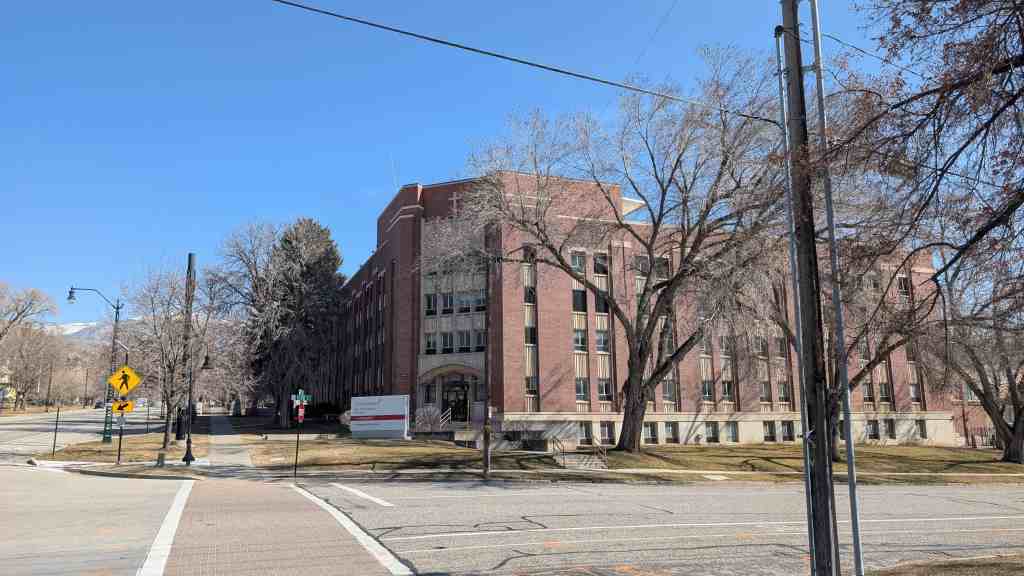
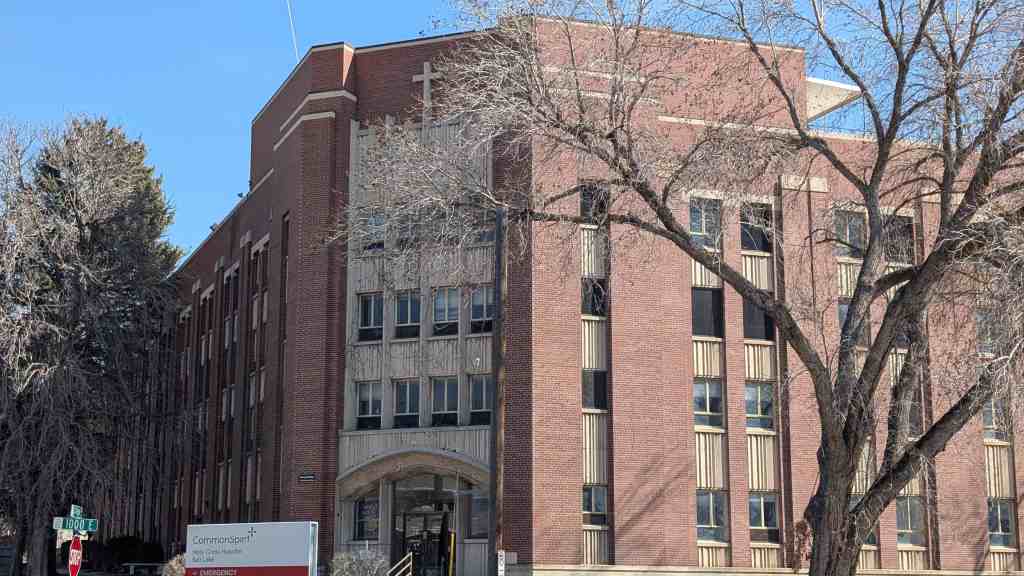
The Holy Cross Chapel at the Salt Lake Regional Medical Center in Salt Lake City, Utah.
Dedicated in 1904, the chapel was originally part of Holy Cross Hospital, established in 1875 by the Sisters of the Holy Cross. It was one of the first hospitals in the Salt Lake Valley.
Holy Cross Hospital & Chapel 1050 E. South Temple Main Building—1881-83, Henry Monheim, SLC West Wing—1903, Carl M. Neuhausen, SLC Chapel—1904, Carl M. Neuhausen, SLC East Wing—1916, Bernard O. Mecklenburg, SLC West Wing Remodeled—1920, Bernard O. Mecklenburg, SLC
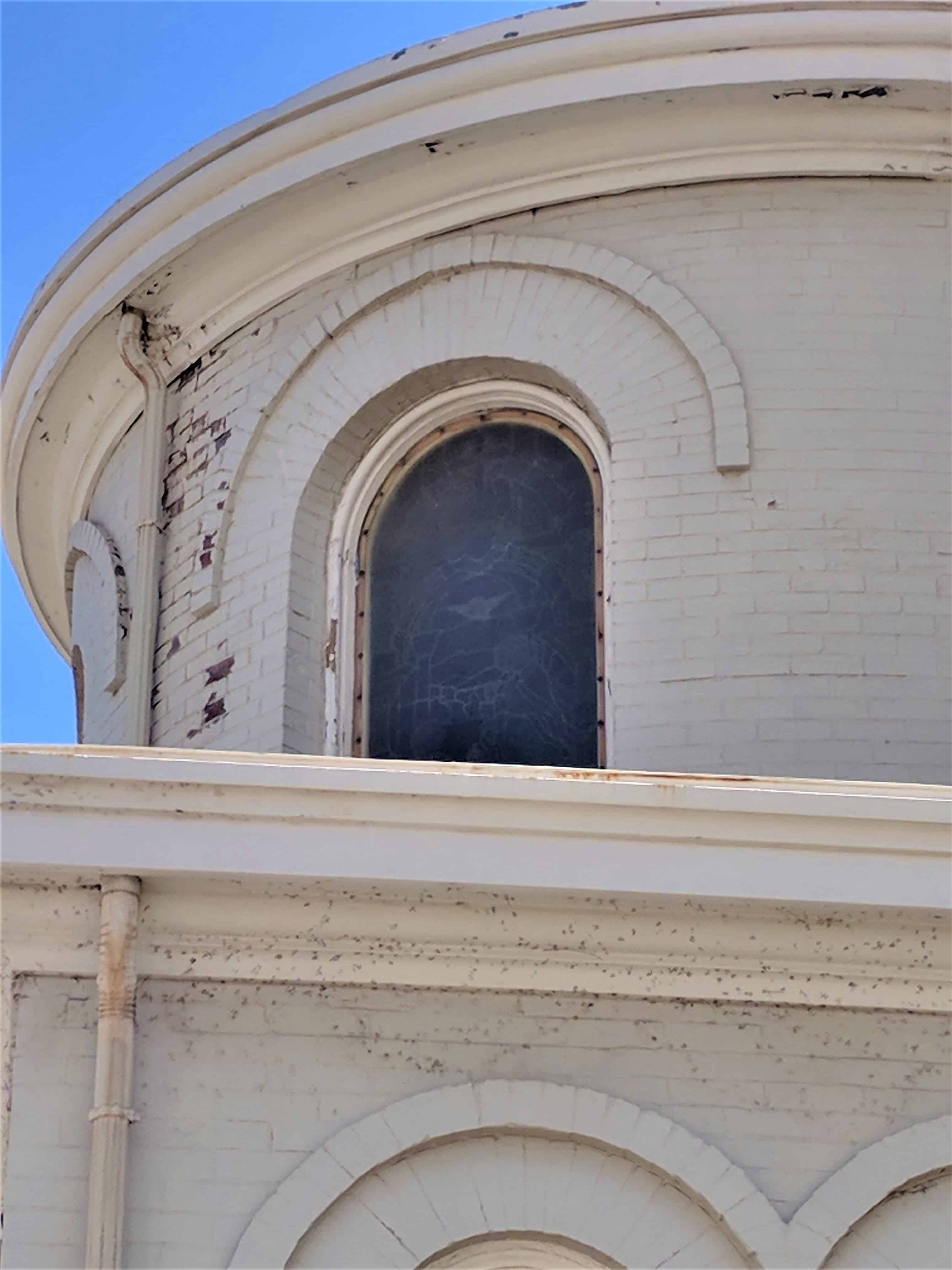
The two remaining historic sections of Holy Cross Hospital, now the Salt Lake Regional Medical Center, are visible from South Temple. The historic chapel, located in the large center courtyard, was dedicated in 1904. It was designed by Carl M. Neuhausen, the architect of The Cathedral of the Madeleine and the Kearns Mansion. The interior of the chapel was decorated by Italian artist Achille Peretti in 1909. The paintings he created for the dome above the alter and the choir loft remain a focal point of the chapel today.
The east wing of the hospital, completed in 1916, was designed by Bernard O. Mecklenburg. This Gothic style building features crenelated gable parapets and square corner buttresses with pyramidal caps. Mecklenburg also worked on the matching west wing of the hospital which was demolished in 1988. Neuhausen designed a one-story west wing in 1903 and Mecklenburg converted it into three stories in 1920. The original central building which connected the east and west wings was completed in 1883. Designed by Henry Monheim, this building was demolished and the new hospital building constructed in 1960.
Holy Cross Hospital was founded under the auspices of the Catholic Church in 1875 by Sisters Holy Cross and Bartholomew. Only the second hospital established in Utah, it was originally located in a small house with just 13 beds. The Sisters worked with three doctors who offered their medical services for free. (from Preservation Utah’s walking tour)
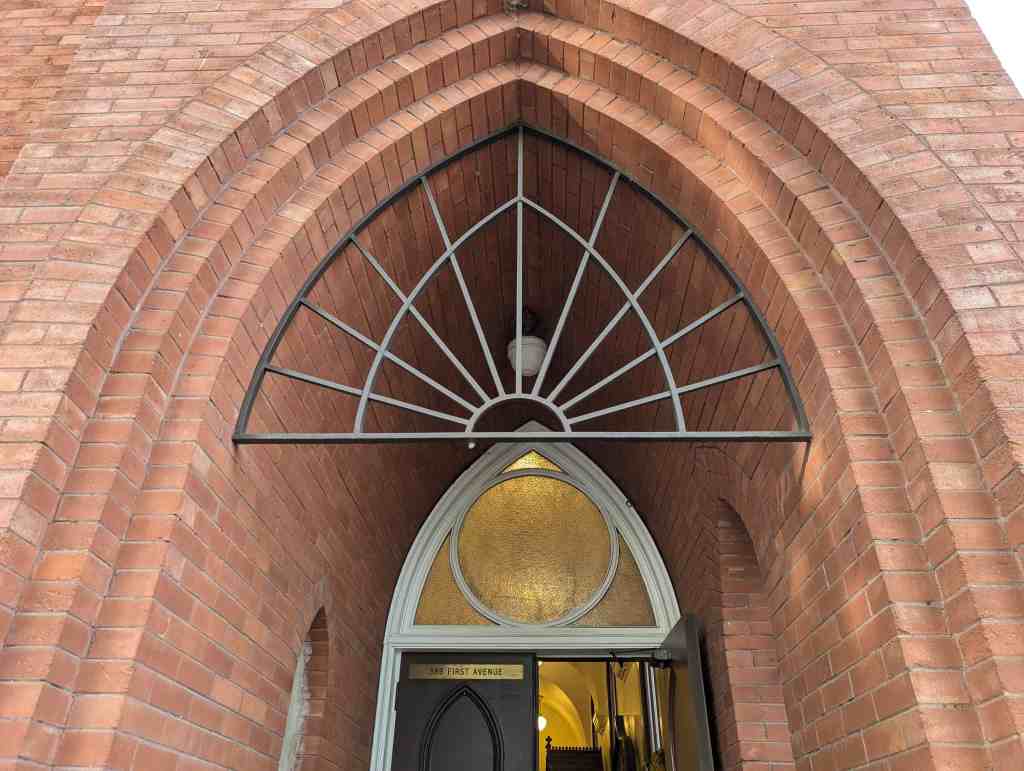
The beautiful, original structure can be found at First Avenue and E Street, no longer a church, but housing an architectural firm. Planning for the very first Mount Tabor structure began before 1902 when the United Danish Evangelical Lutheran Church raised some funds overseas and sent missionaries to Utah. Harold Jensen, a native of Tvilumgaard, Denmark, came to Salt Lake and in 1907 began seeking old and new Lutherans while starting to build the first church. The state Church of Denmark furnished nearly $15,000 to purchase property and the formal dedication of the First Avenue and E Street Mount Tabor Lutheran Church came in August 1911.(*)
By 1960, when the membership was about 400, an acre of property was purchased at the current location 700 East and 200 South and the “round church” designed by current congregation member, Charles D. Peterson, was built. The new structure was dedicated in 1965 by then Pastor Arthur V. Sorenson. Mount Tabor has since added on to its present facility expanding its fellowship and entrance areas, office space, handicap accessibility, and classrooms in 1996 under the leadership of Pastor Grant Aaseng.
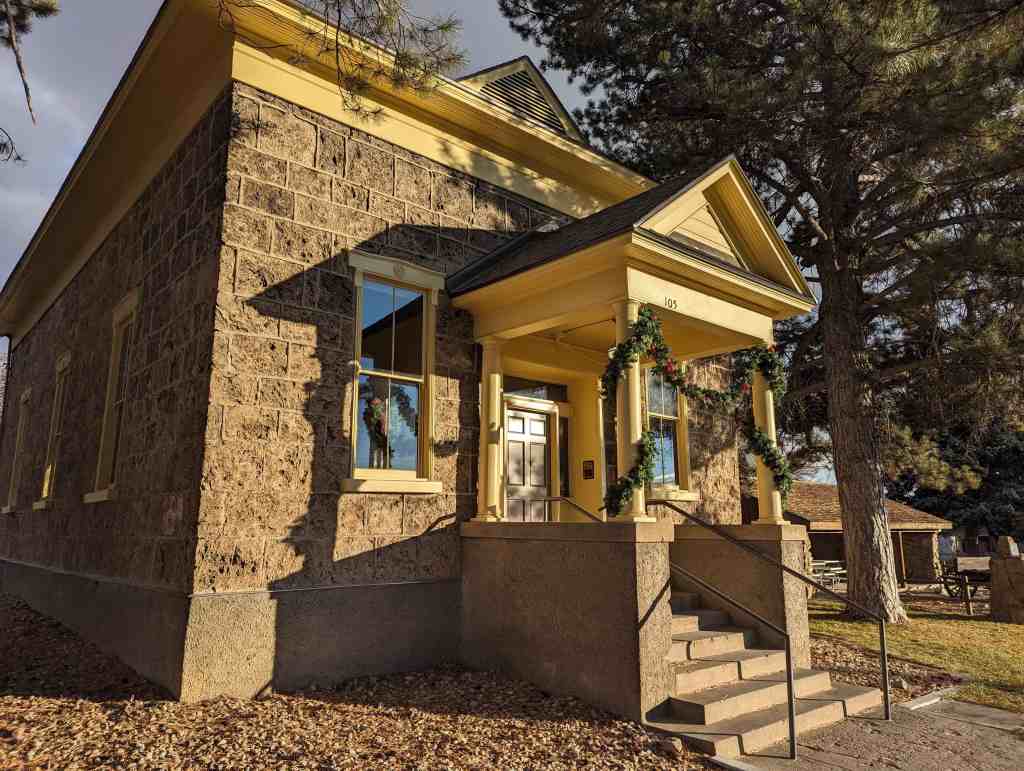
The Pleasant Grove Town Hall, built in 1887, replaced the city’s first town hall, which was a one-room log building. It was used as town hall building until 1940, when a third town hall building was built in the city. The Pleasant Grove Town Hall building was then used as a lunchroom for Pleasant Grove High School until 1949. Since that time, it has been used as the home of the Pleasant Grove First Baptist Church and the Pleasant Grove Public Library. Today it is home to Bliss Photo Studio and Boutique.
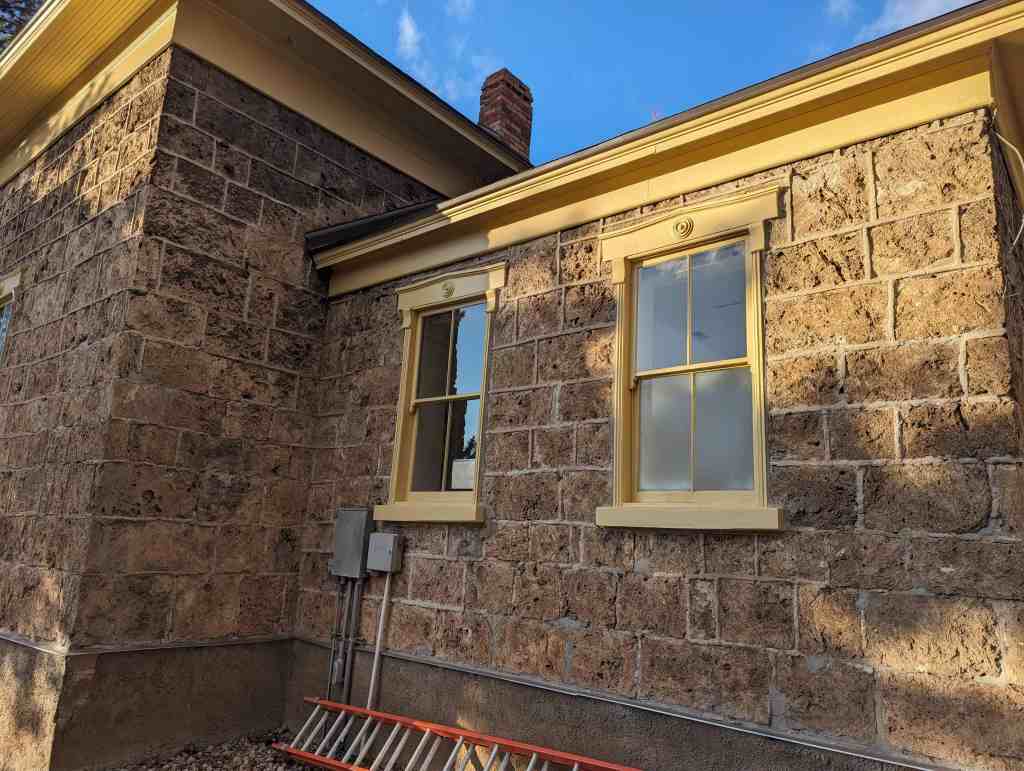
Built in 1887 from the widely used native soft-rock. The one-story rectangular building has the block massing of early Utah civic buildings. The symmetrical three bay façade features the center door covering of an angular pediment portico supported by Roman Doric columns. The angular pediment is repeated on the hip roof as a decorative dormer directly above the portico. Under the roof is a wide plain entablature.*
The First Church of Christ, Scientist in Utah was organized in Salt Lake City on July 17, 1891. The Church, designed by architect Walter E. Ware, was constructed of brick and kyune sandstone. Dedicated on November 27, 1898, the building is the oldest Christian Science Church in Utah and one of the oldest continuously used Christian Science churches in the world.
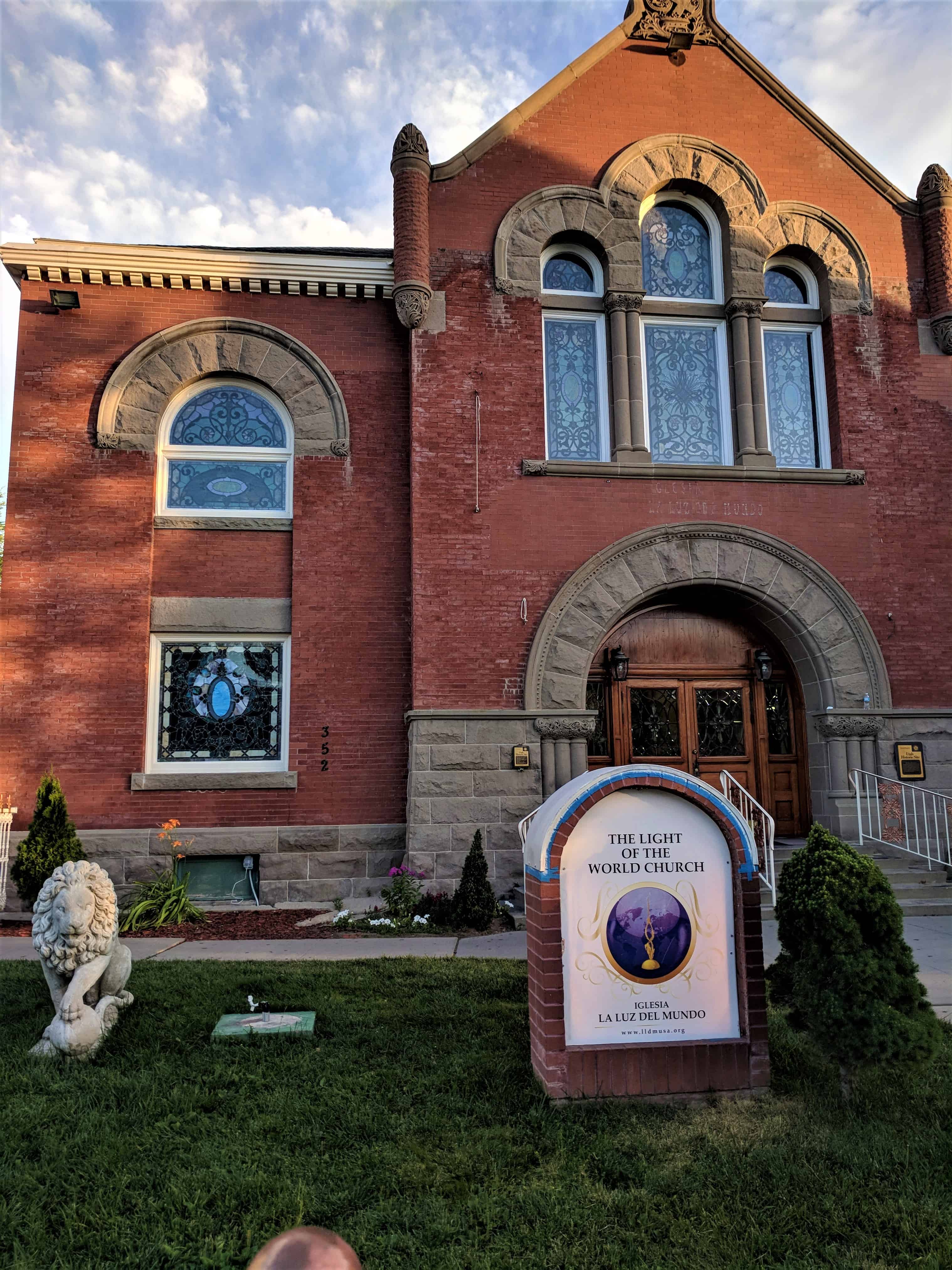
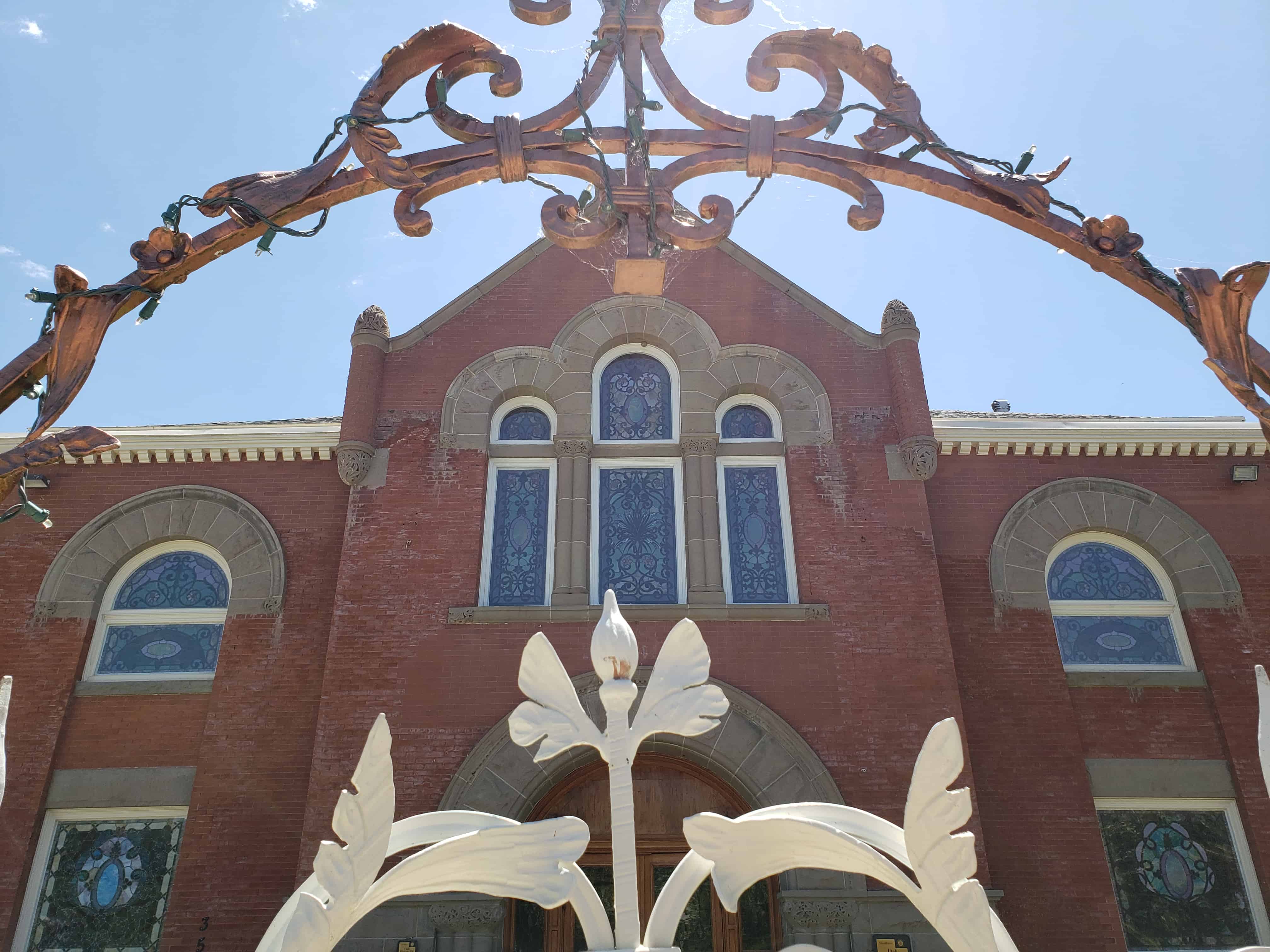
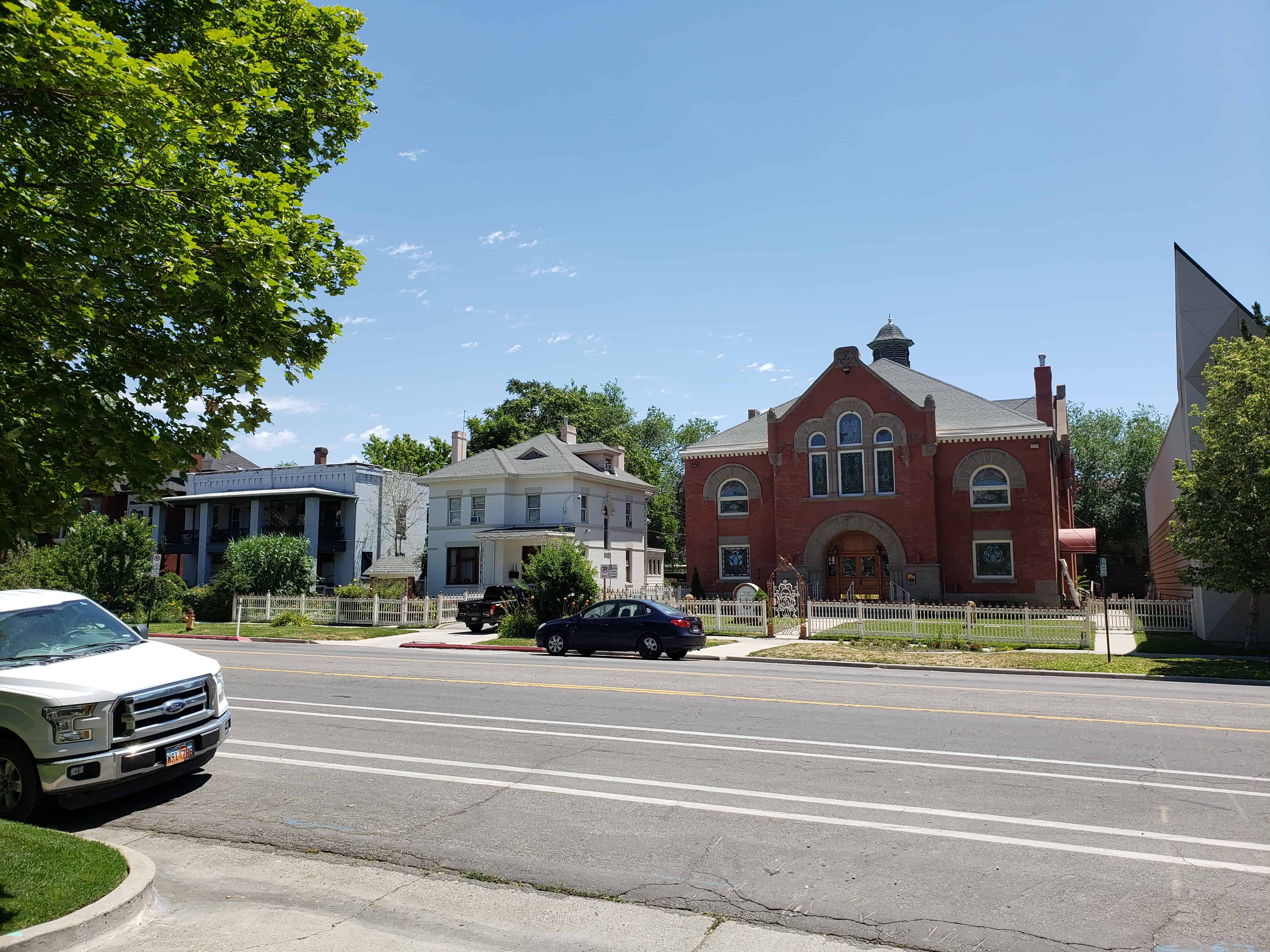
This church is located at 352 East 300 South in Salt Lake, the home at 360 E 300 S is on the same parcel.
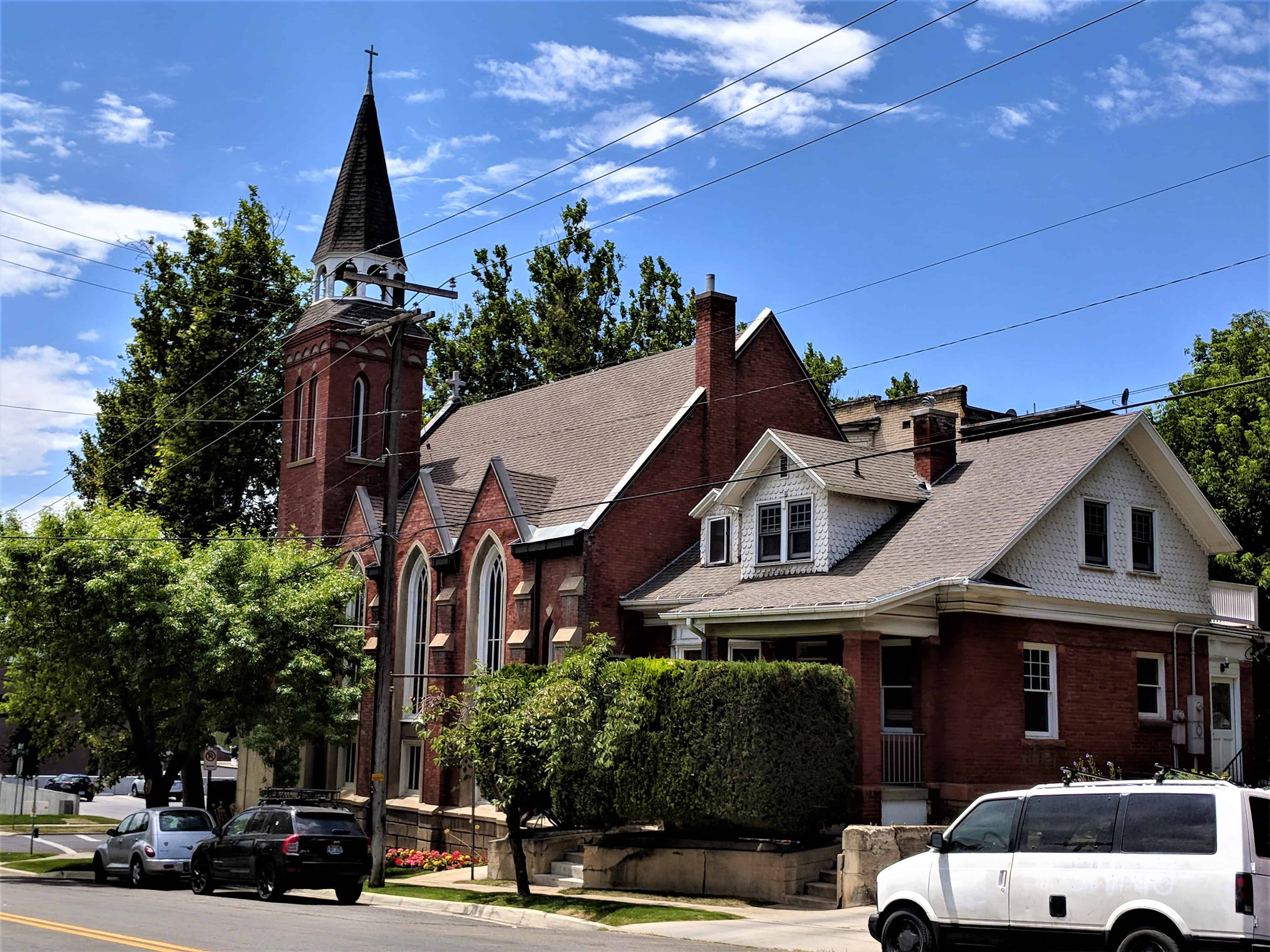
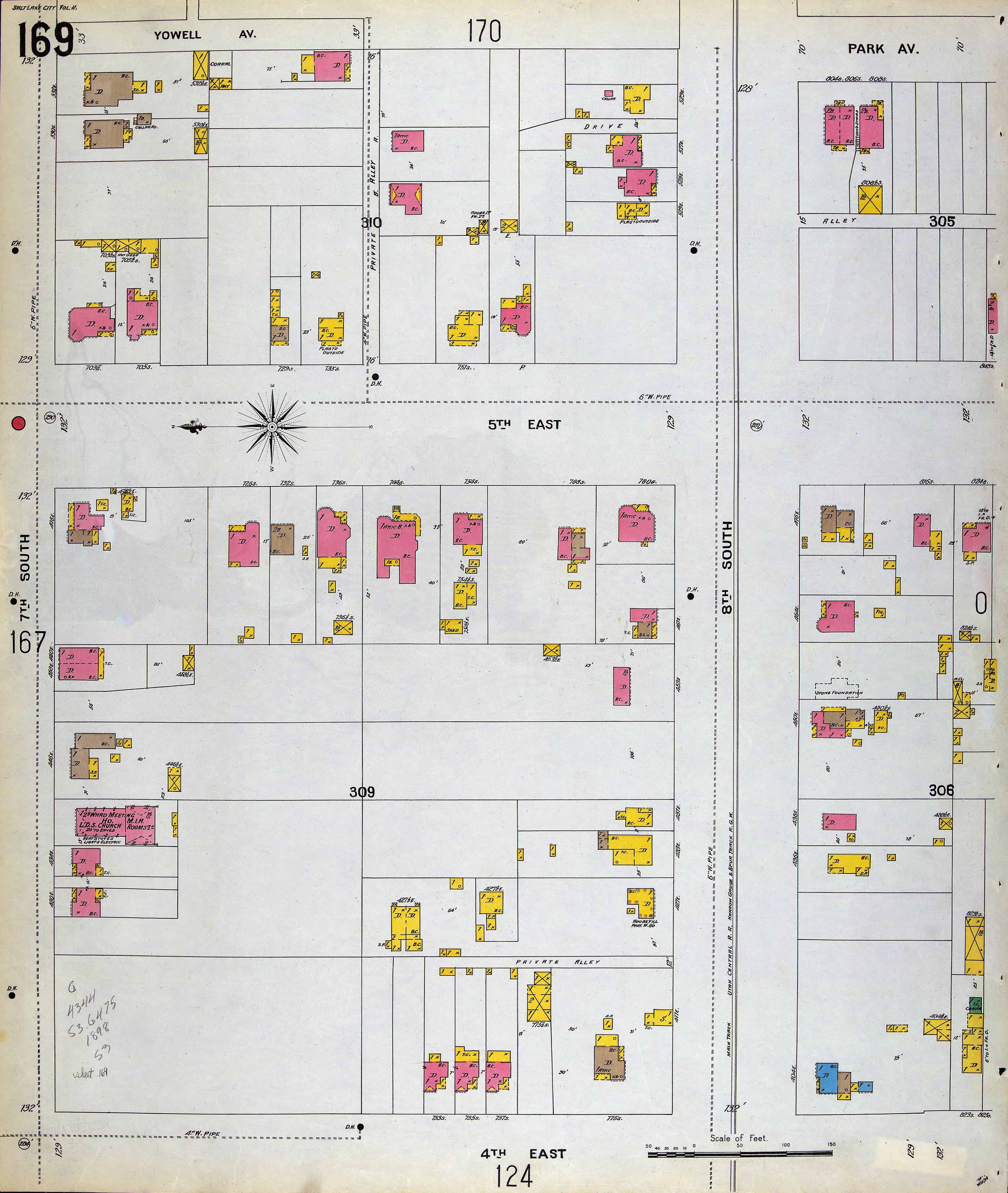
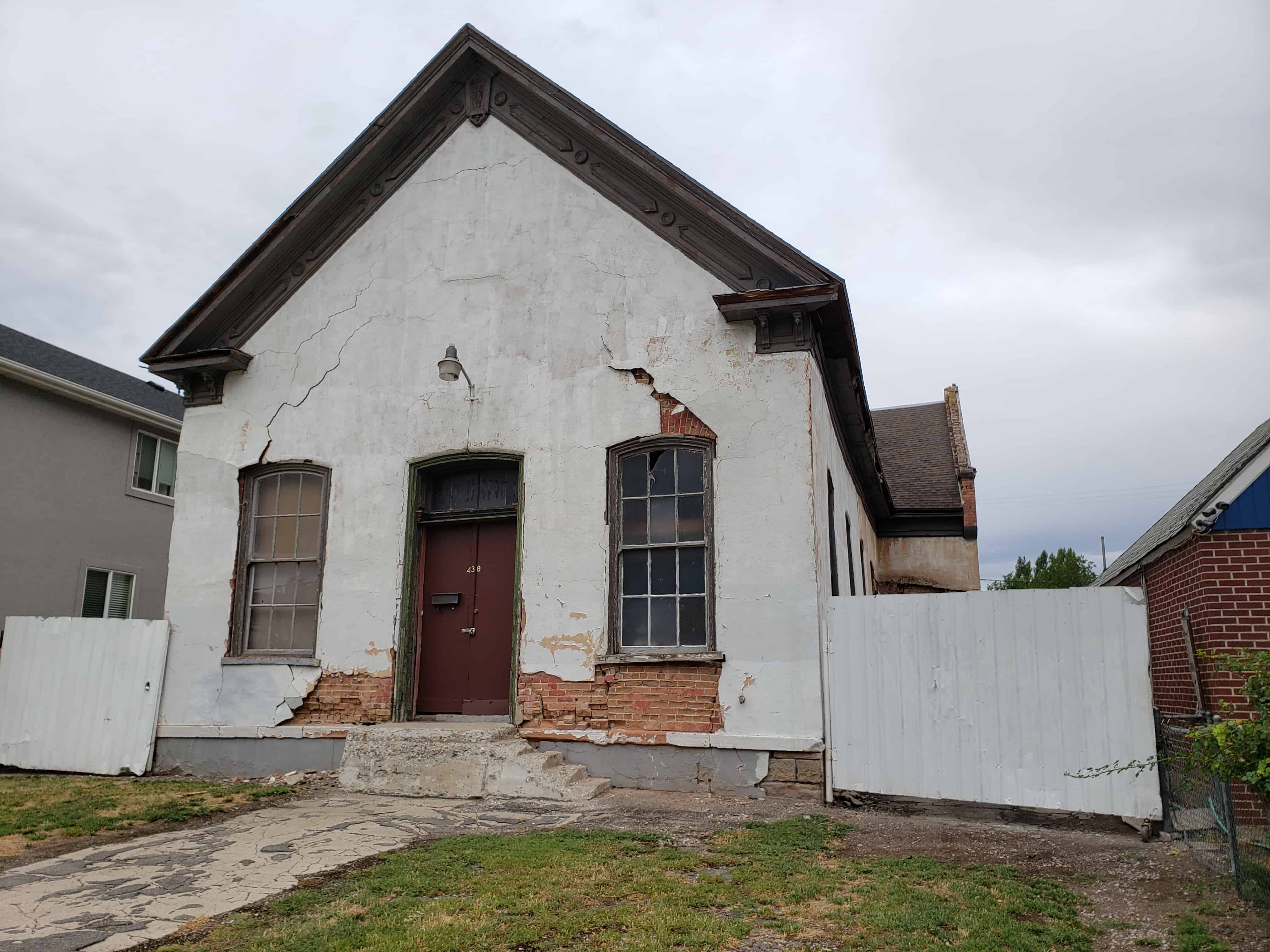
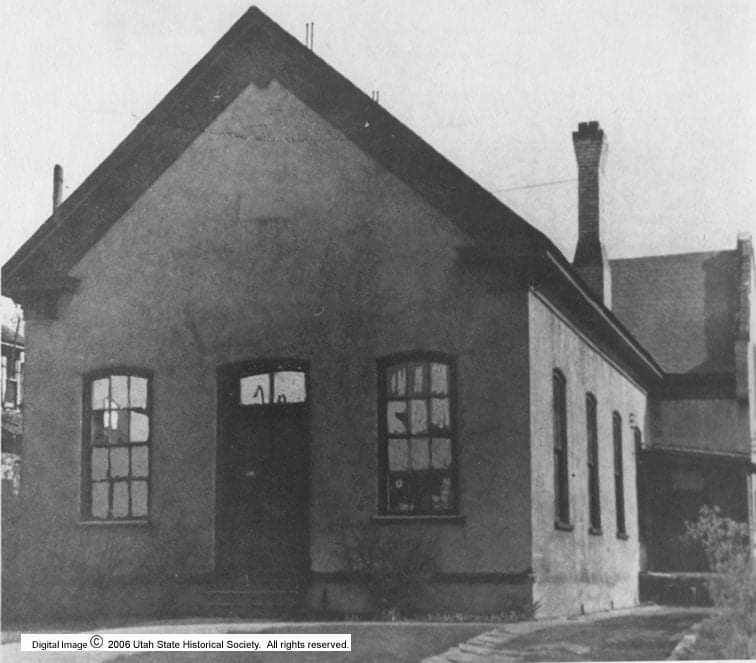
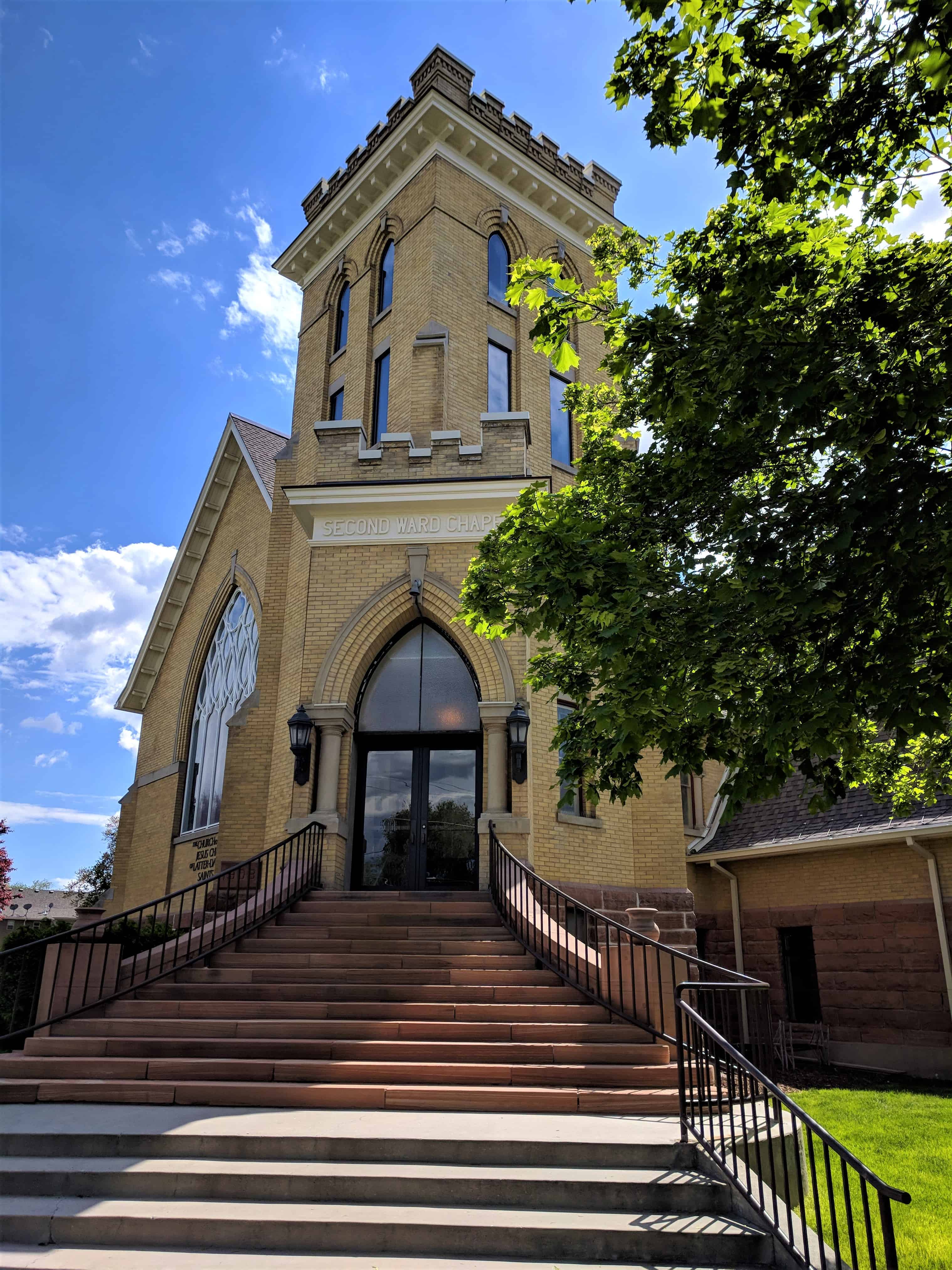
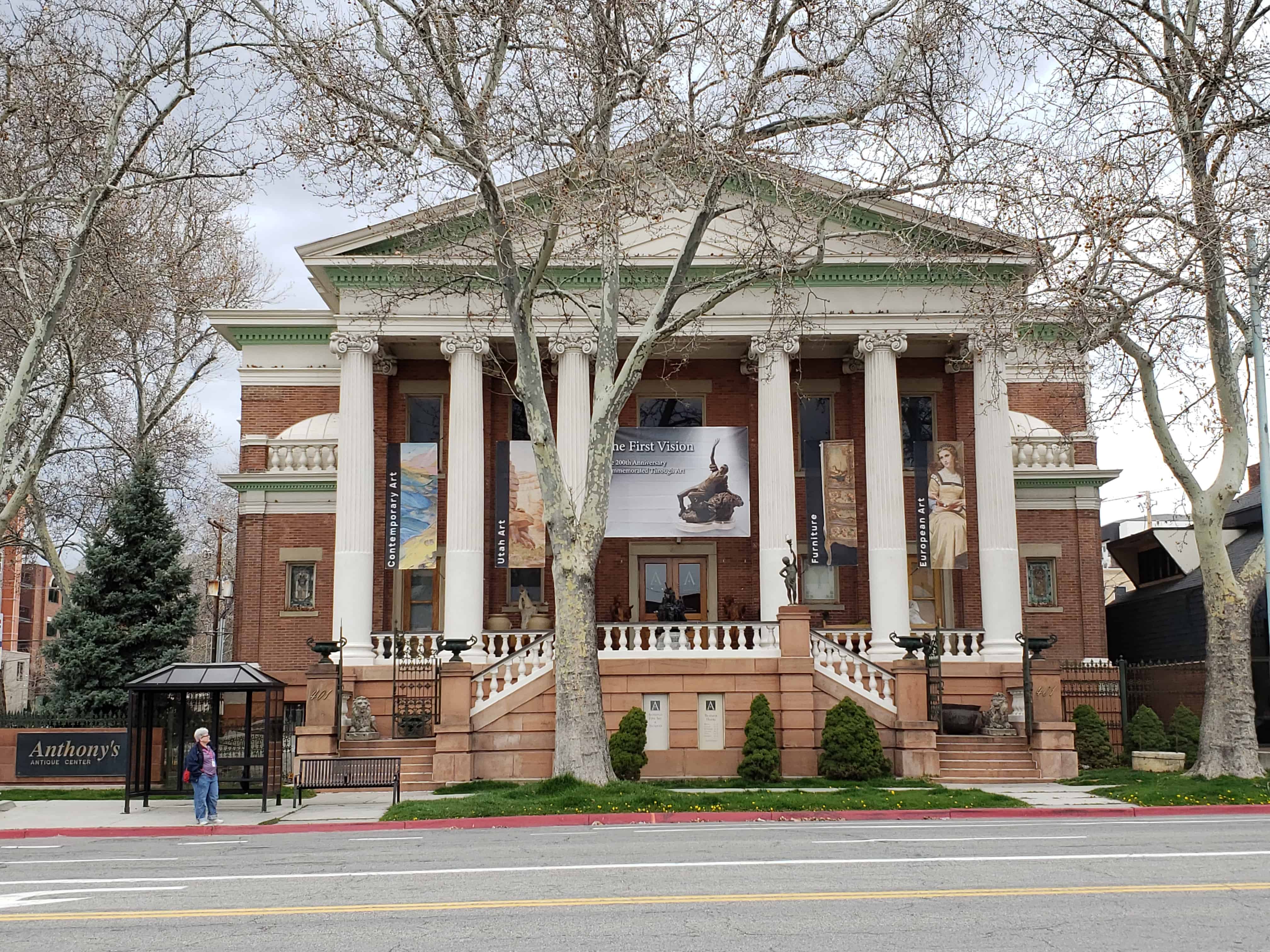
This cool looking building was originally the 2nd Ward Chapel of The Church of Jesus Christ of Latter-day Saints until it was replaced with this building down the road. I wondered for a few years what it was and finally Jacob Oscarson pointed out this map.
“The first Scandinavian saints who arrived in Utah in 1852, located in the 2nd Ward and the first Scandinavian meetings in Utah were also held in this ward.
An adobe school house was erected on 7th South St. between 4th and 5th East street in 1852. This was replaced by a brick building in 1883, which, after the erection of a fine ward chapel on the corner of 7th South and 5th East streets, was used as a knitting factory.”
– Andrew Jenson’s Encyclopedic History of the Church of Jesus Christ of Latter-day Saints
In 1865 the Military Governor of the Territory of Utah requested the Baptist Mission Society to begin work in Utah, feeling that the already established Presbyterian, Methodist, Episcopalian and Congregationalist churches were insufficiently vigorous in evangelizing among the Mormons.
No missionaries could be spared by the Baptists, and until the Reverend George W. Dodge took up his appointment in 1871 as Superintendent of Indian Affairs for the Territory of Utah, no clergyman was available to care for the handful of resident Baptists.
The Reverend Dodge immediately began a campaign to induce the Baptist Missionary Society to support a missionary in Utah. Although willing in principal, the Society had a personnel and financial problem created by the enormous burden it had shouldered in opening schools and missions for blacks in the South during this reconstruction period. However, in October 1871, they assigned the Reverend Seweel Brown to officially open a mission in the area, but specifying that he was to divide his time between Evanston, Wyoming, and Salt Lake City. This responsibility was difficult to discharge and the Reverend Brown stayed at his post for no more than a year.
It was not until 1881 that another Baptist missionary, the Reverend Dwight Spencer, was dispatched to Utah, and with greater financial support from the Missionary Society finally established a Baptist presence in Utah on a permanent basis. On August 1,1883, the First Baptist Church of Salt Lake City was organized with 16 charter members. The denomination flourished, and by 1900 several other churches and mission stations had been created in the Salt Lake City area, including, in 1896, the Rocky Mountain Region’s first black church, Calvary Baptists.
The growth of Salt Lake City and the changing pattern of residential development caused two congregations to come together in 1908. The well-established First Baptist Church and the Eastside church merged to form Immanuel Baptist Church. The reason for the coming together was simple; both had outgrown their pioneer structures and with the new stature of the Baptist Church as an established member of the community, it was decided that a large and impressive building would further enhance that prestige.
Accordingly, a lot was purchased at the corner of Fourth East and Second South streets in what was then one of the finest areas of the city. An architect, J. A. Headlund, was hired at a cost of $1,371.50 and given instructions to design a distinguished building. The Greek Revival structure that came from his pen was indeed impressive, and totally satisfied the parishmen of Immanuel Baptist.
Finished in 1911, but not dedicated until 1915, Immanuel Baptist took its place as one of the showplace churches of Salt Lake City. However, even at this late date, and despite the growth in the number of Baptists, the major financial contribution toward the construction of the building came from the Baptist Missionary Society. Financing for the $80,000 project as a whole, and the mortgage holder, was the Zim’s Savings and Trust Company, owned by the Mormon Church.
Despite the magnificence of their new building, the Immanuel Baptist Church did not experience any rapid new growth. The hoped-for growth in prestige is difficult to evaluate and it must be assumed that the social class categorization of Protestant denominations would limit Baptist influence as much in Utah’s power elite as elsewhere in the nation.
Immanuel Baptist enjoyed an increase in members and an important role in providing for Baptist servicemen during World War II. The huge Army and Air Force installation in Salt Lake County created a need for special support efforts in areas of recreation and opportunities for religious worship. Eventually, the changing demographics of Salt Lake City after World War II caused Immanuel Baptist’s role to be reassessed and the decision made to remove the congregation to a more suburban setting.
The contribution of this building to Salt Lake City lies principally in the dignity and refinement that it adds to its neighborhood. The history of the Baptist Church in Utah is similarly given a suitable monument to the earnest endeavors of the clergy and lay people who struggled to operate a Baptist community under circumstances that were difficult and often inhospitable.
John A. Headlund, the architect, was born in Engelholm, Sweden, in 1863, and trained at the Architects’ Institute in Chicago. He worked in Colorado Springs for Van Brunt and Howe before coming to Utah in 1891, where he designed a large number of school buildings in Salt Lake County, Park City, and Heber.
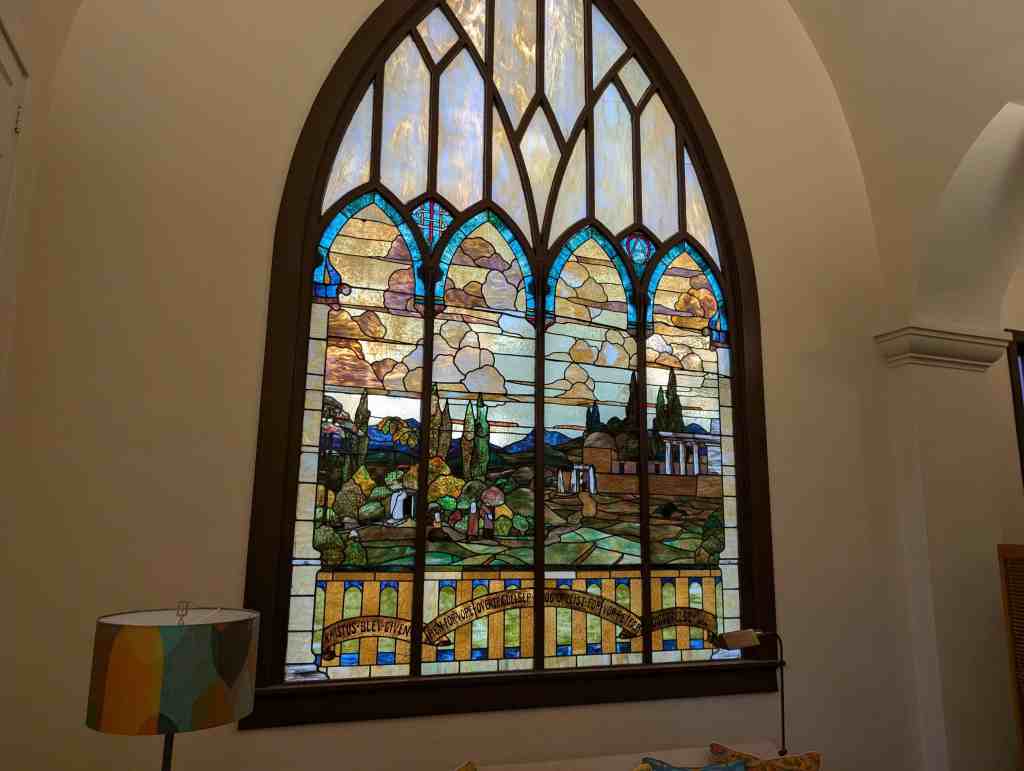
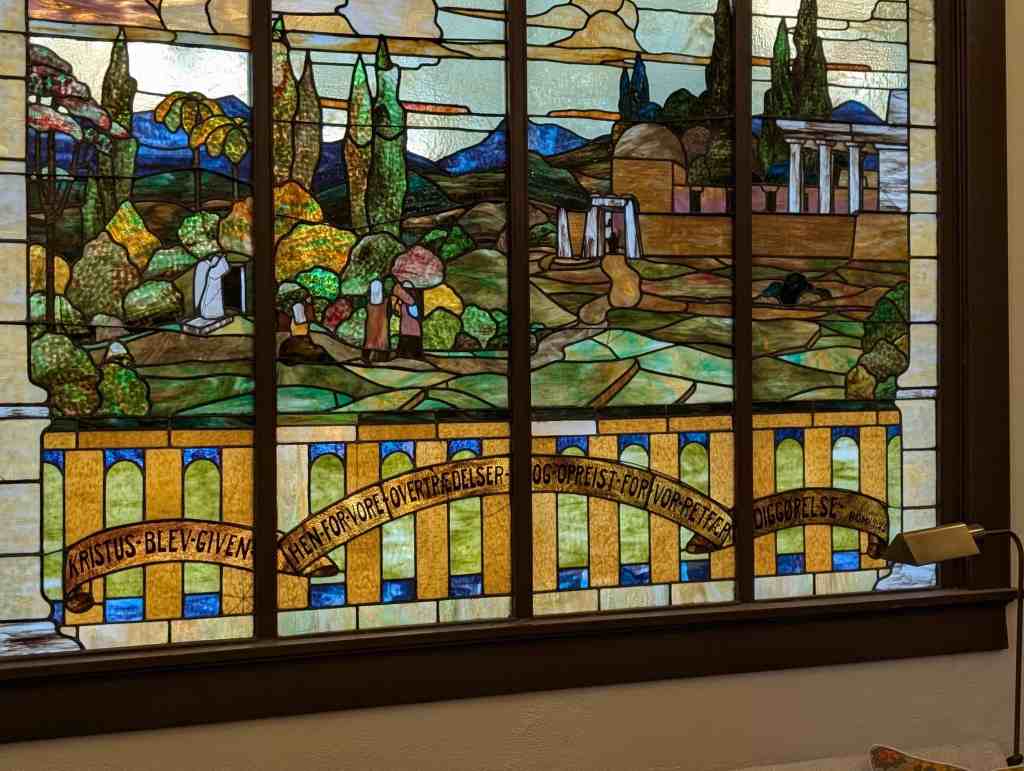
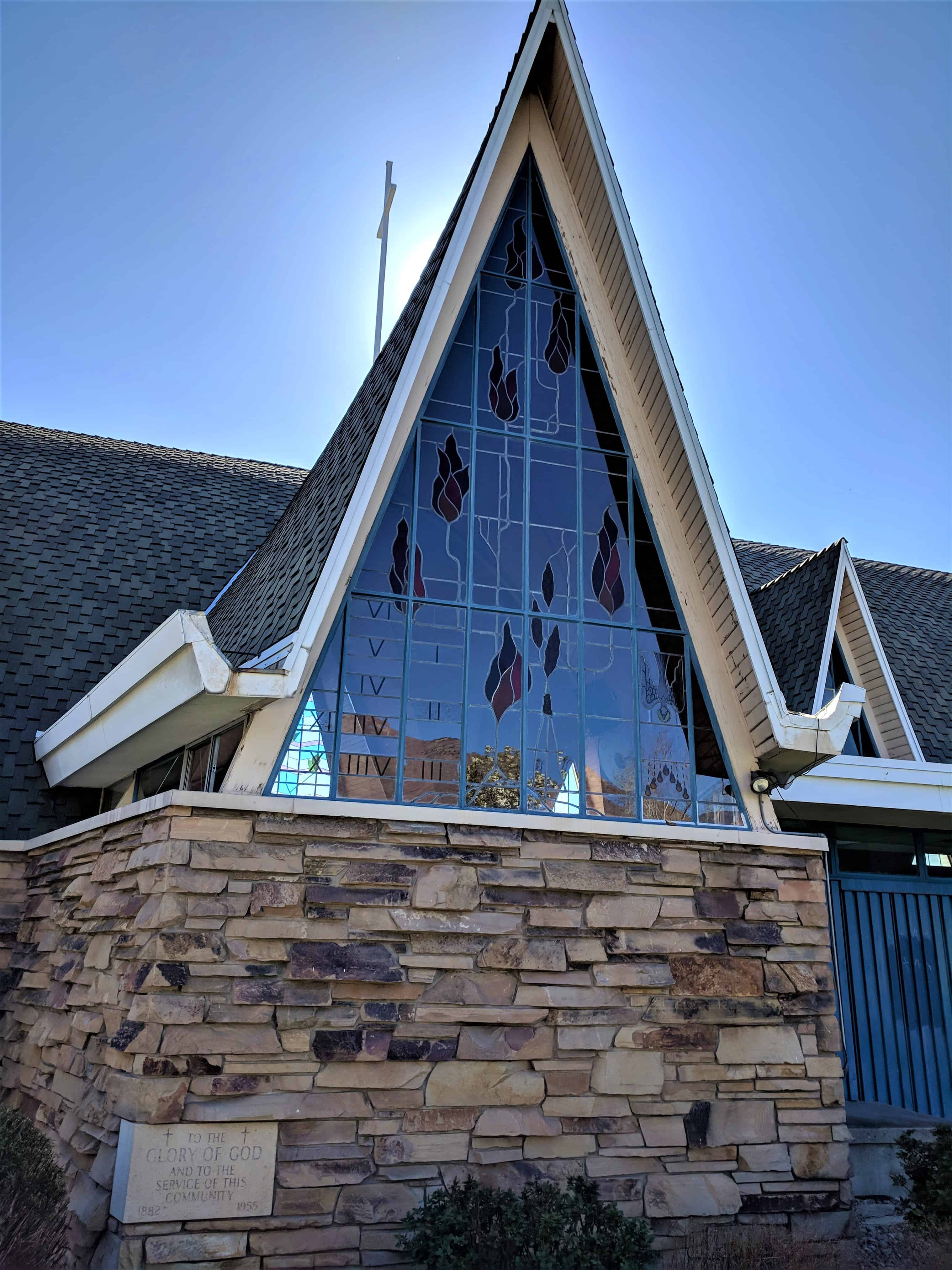
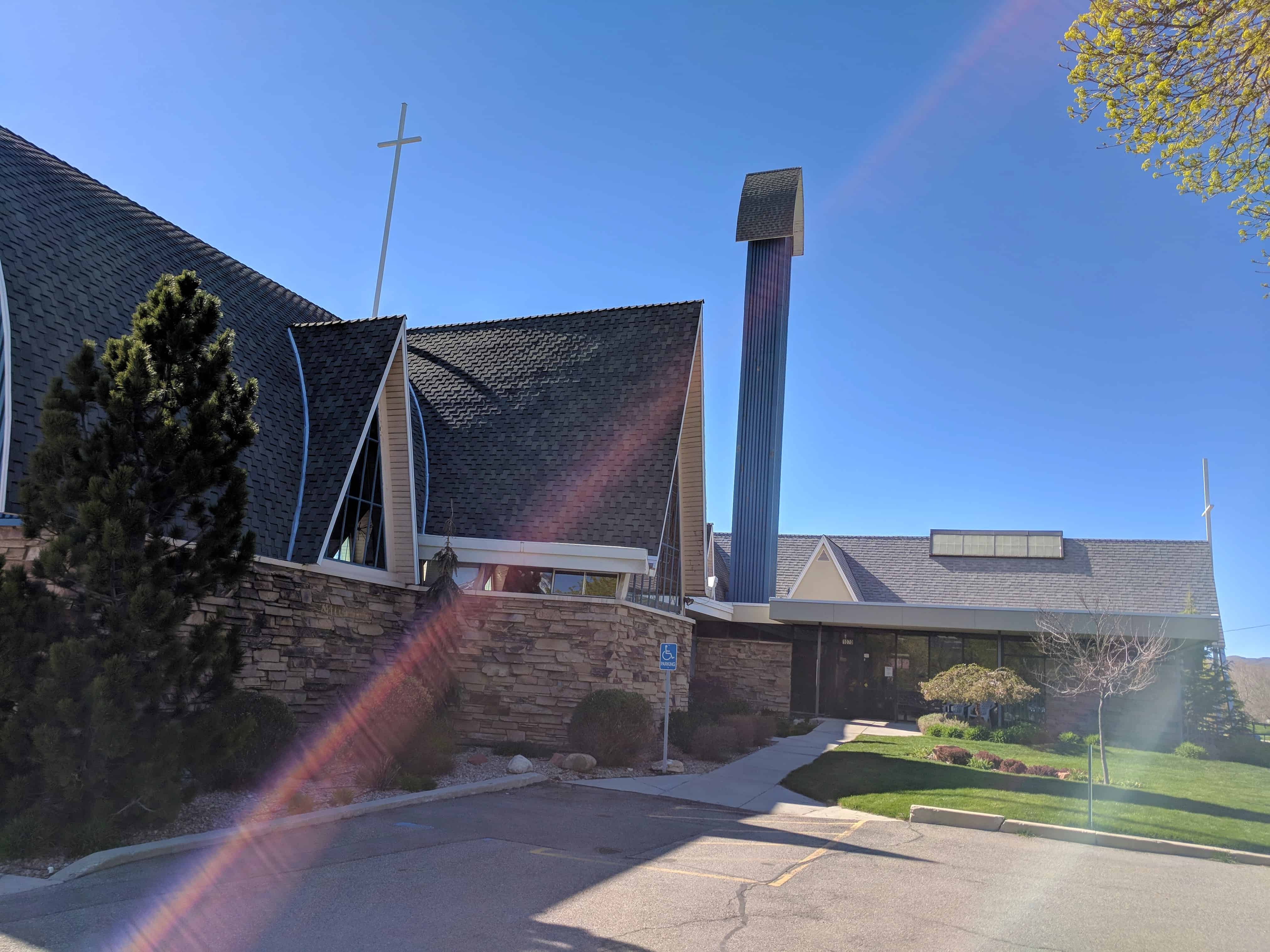
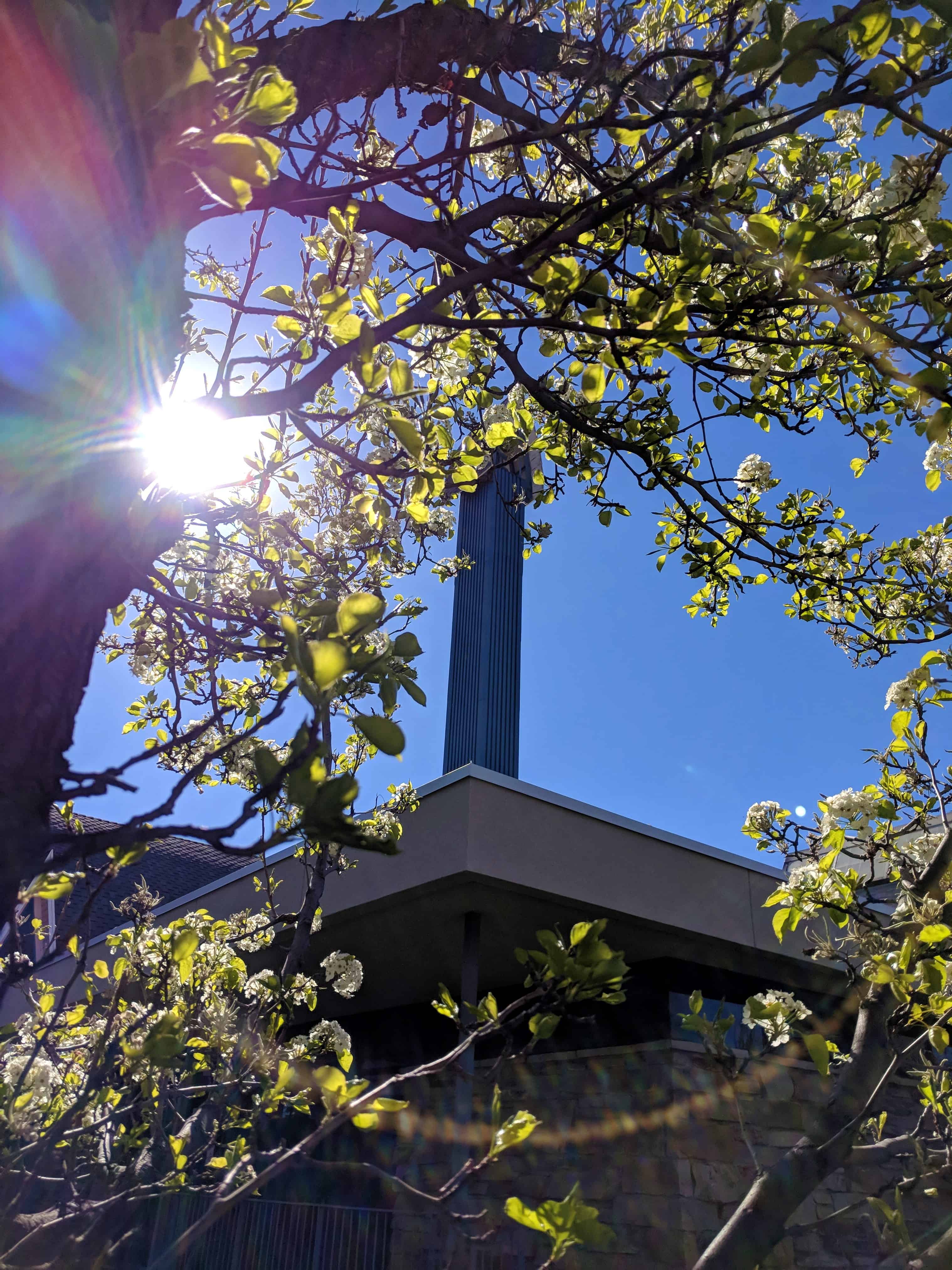
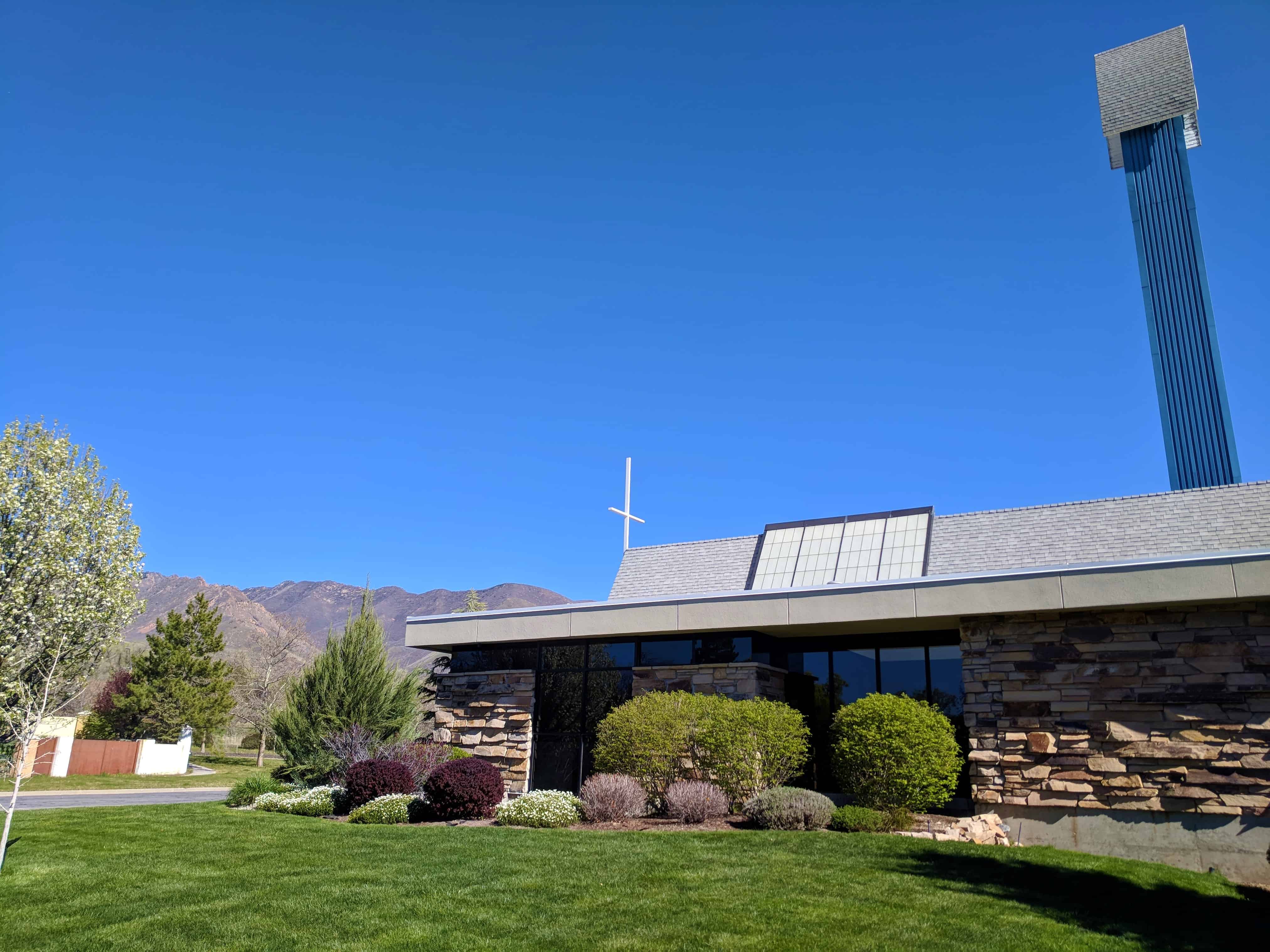
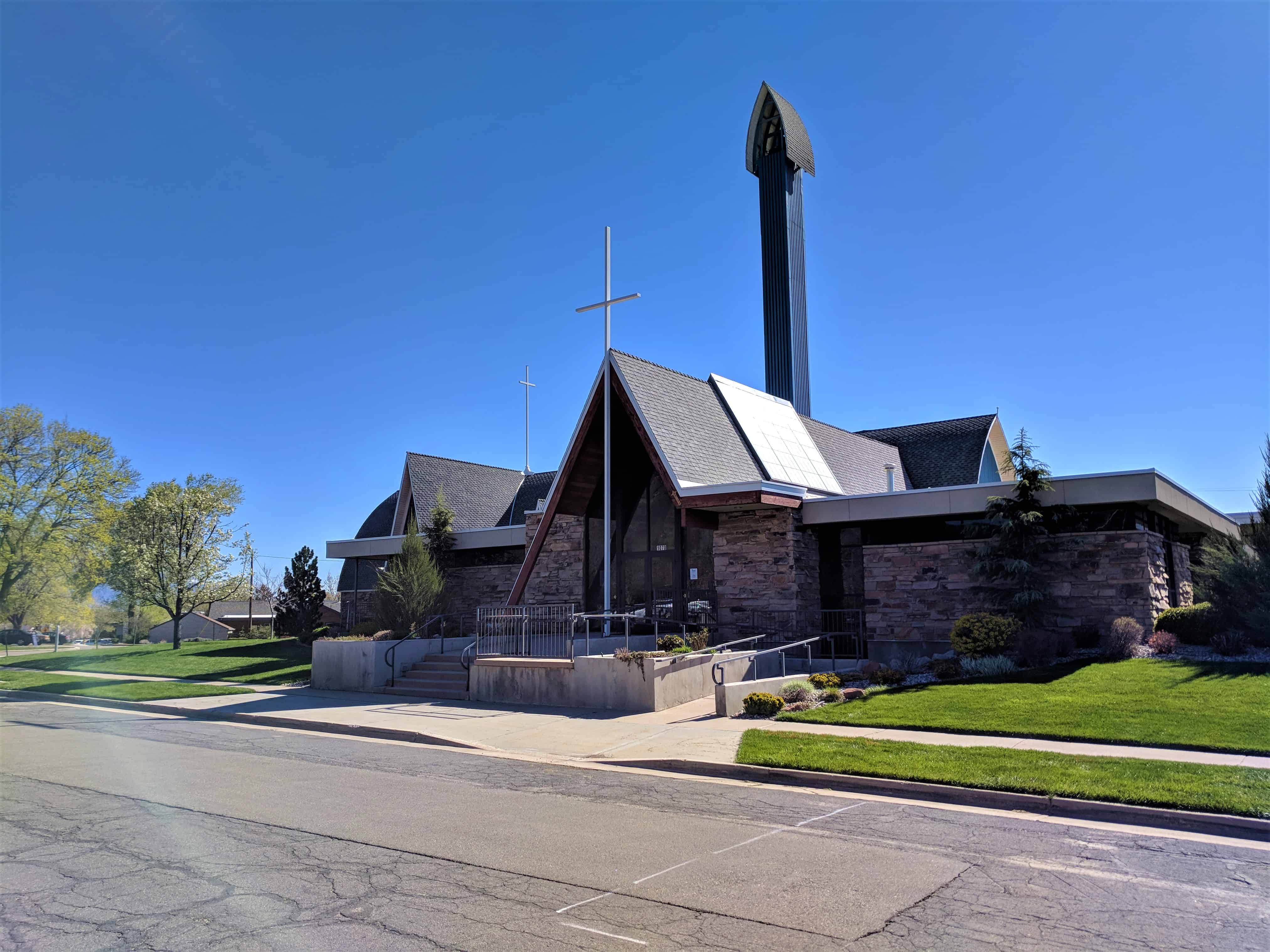
The first Lutheran church in Utah was originally located at 150 S 400 E in Salt Lake City . Organized July 18, 1852 it was later relocated to 1070 Foothill Drive.
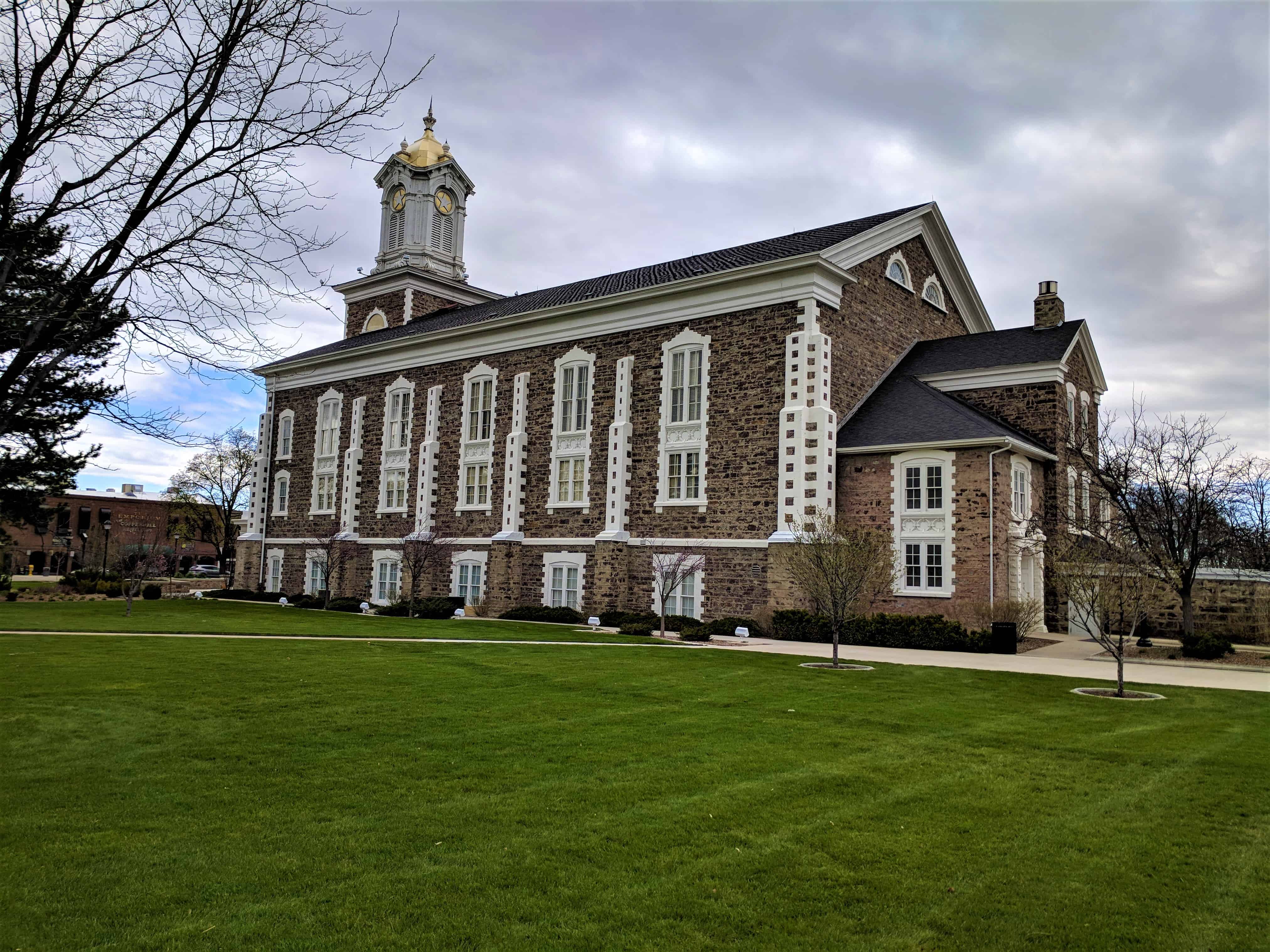
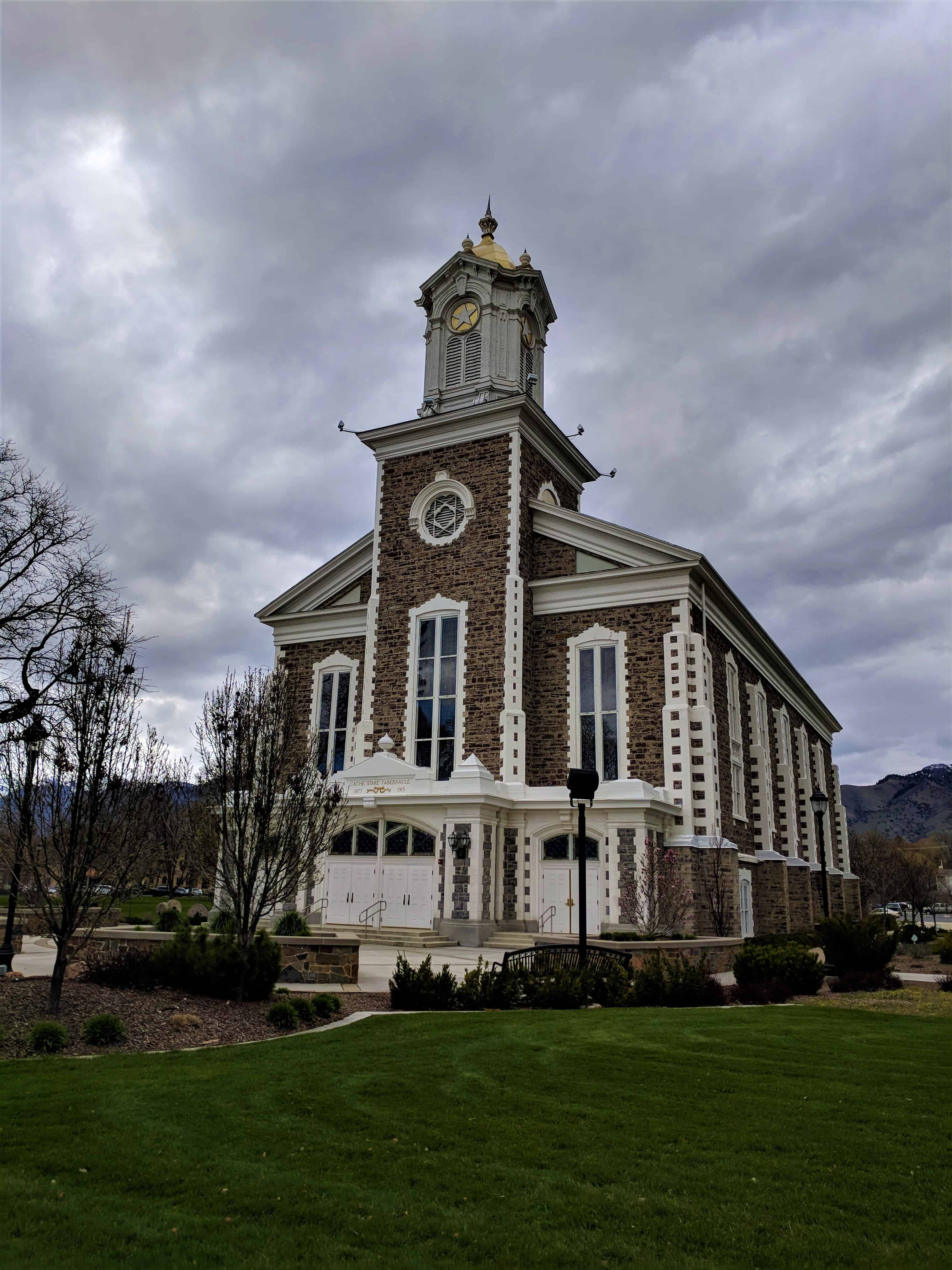
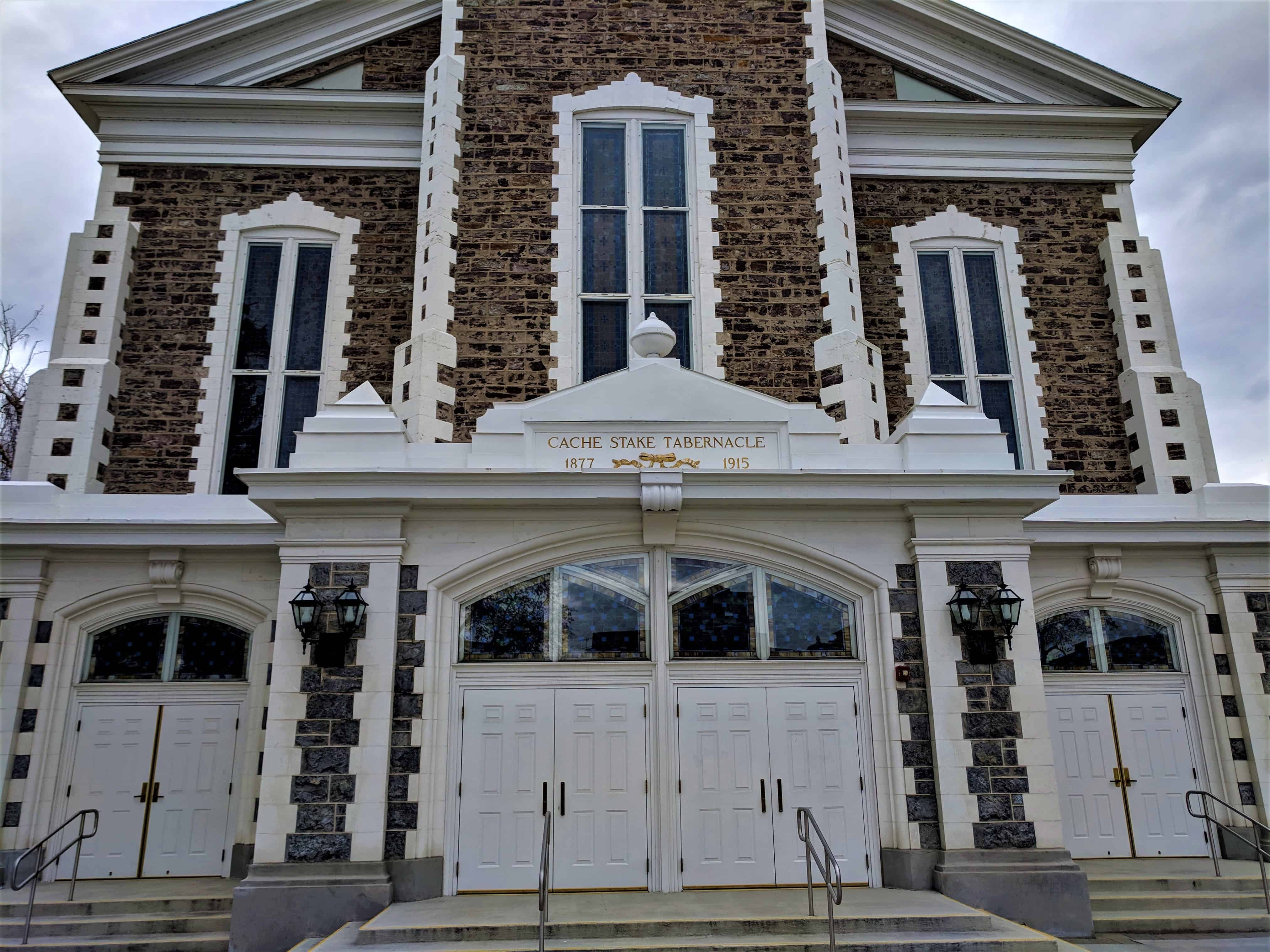
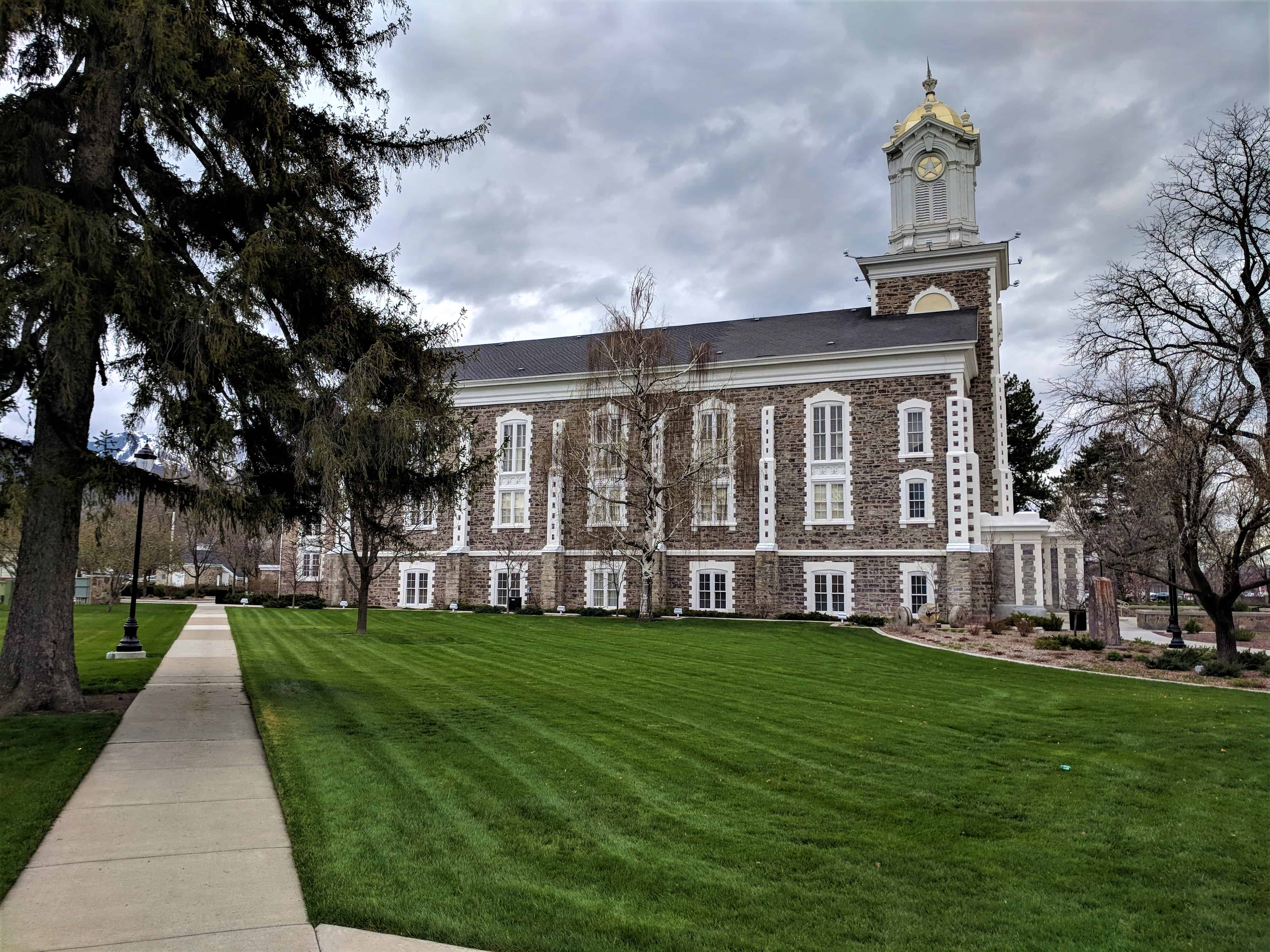
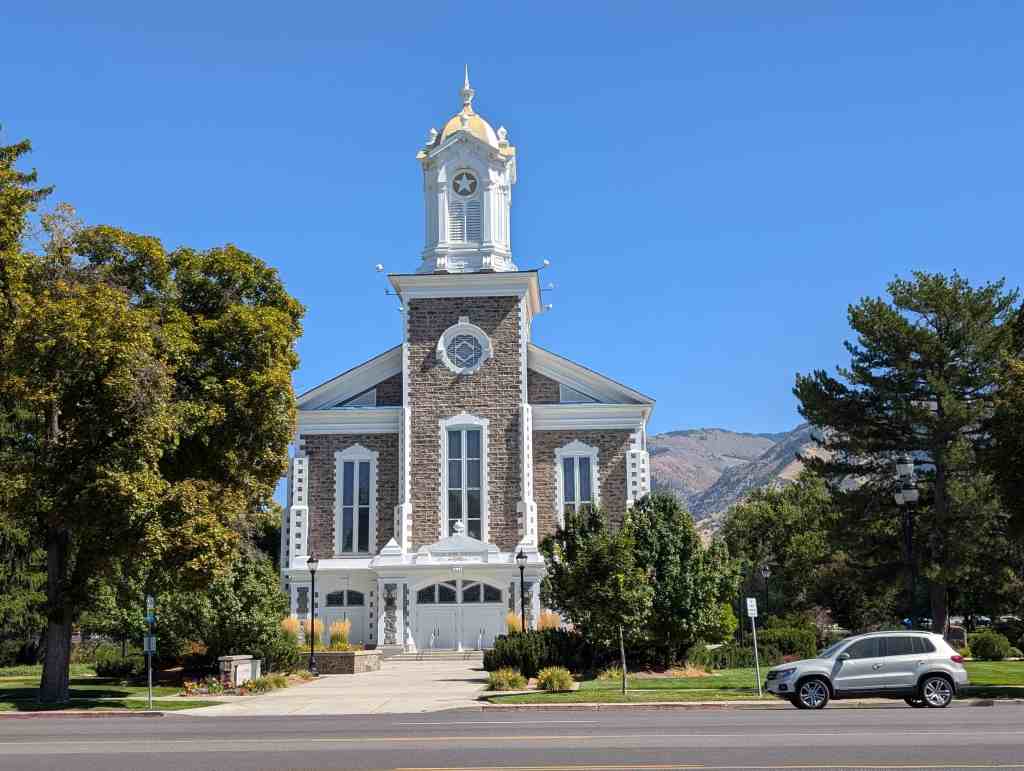
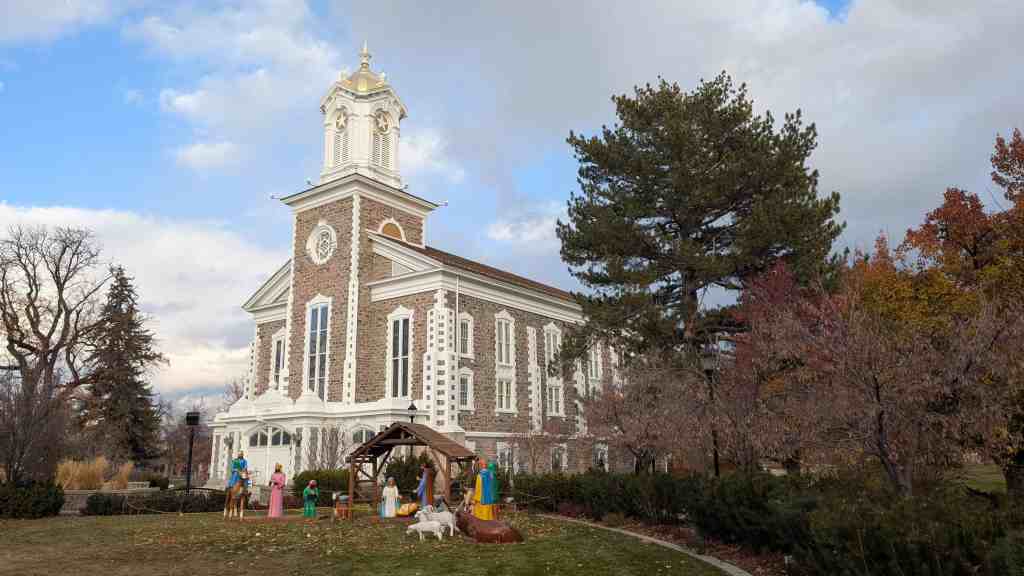
The Logan Tabernacle is a tabernacle of The Church of Jesus Christ of Latter-day Saints (LDS Church) and is located in Logan, Cache County, Utah. It is the site of many local celebrations, including the city’s annual Summerfest Arts Faire.
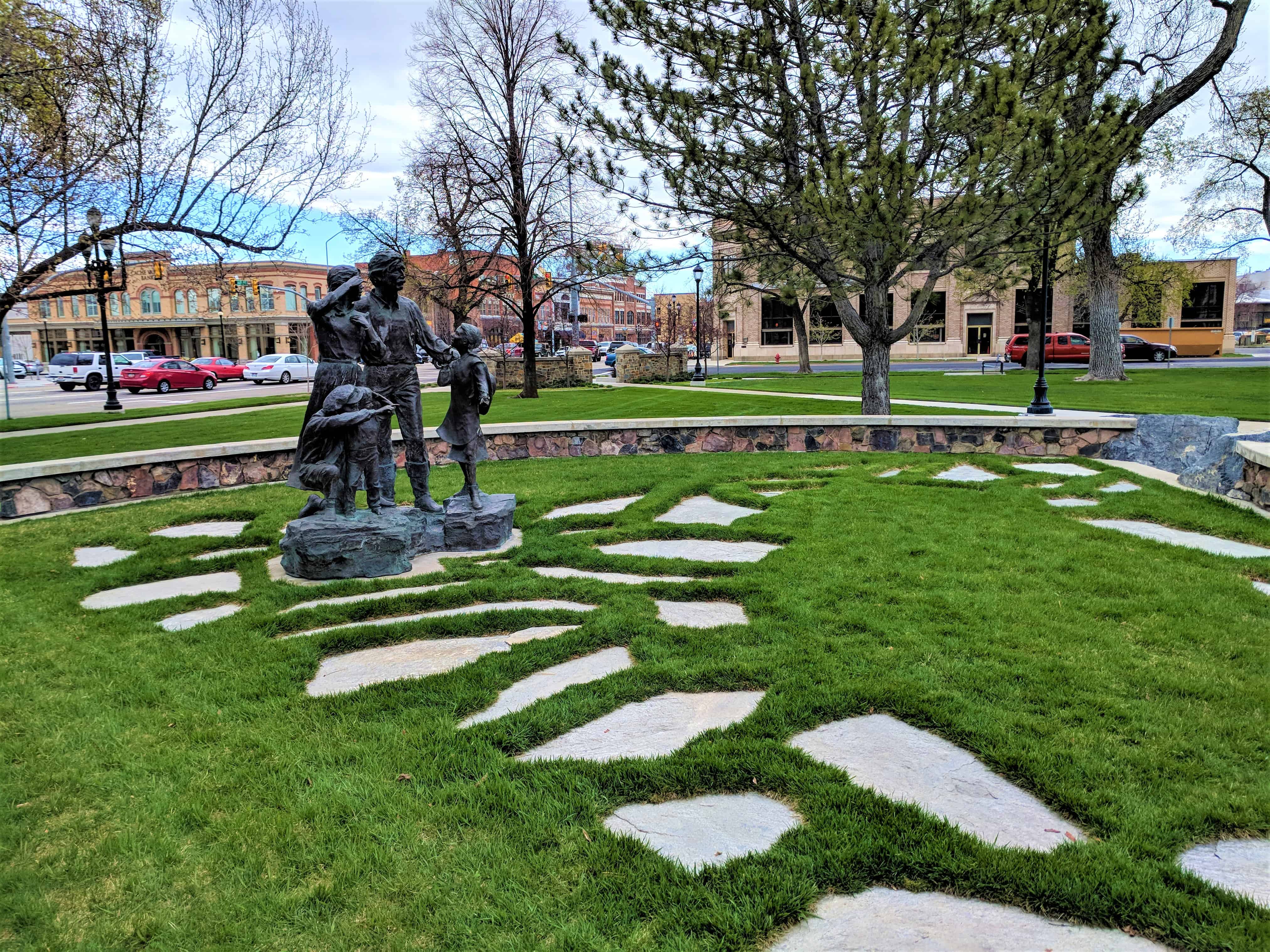
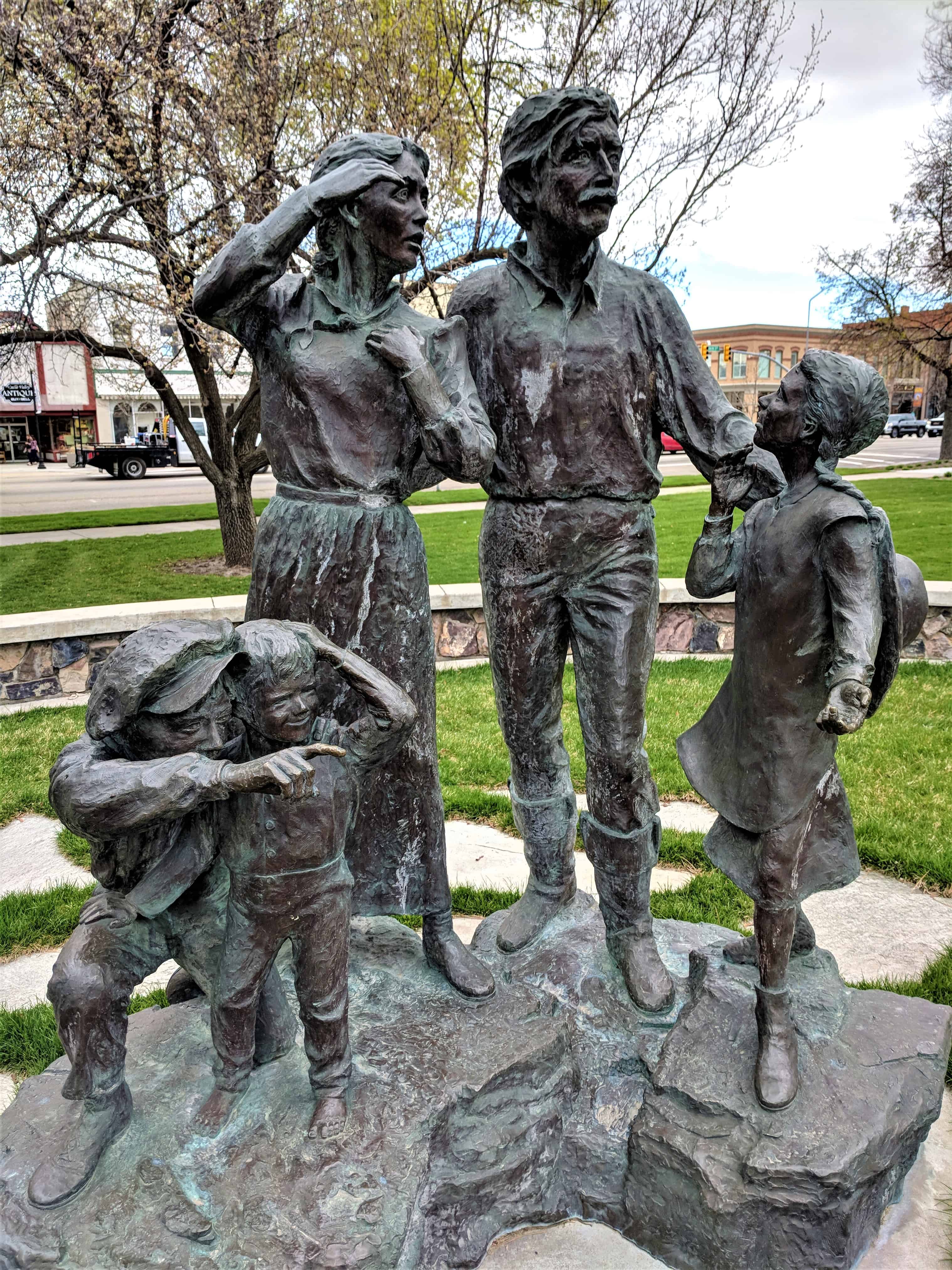
Several historic markers are located here, including:
Located at 50 North Main Street in Logan, Utah and added to the National Register of Historic Places (#75001800) on October 15, 1975.
Construction work on the Logan Tabernacle began in 1864, five years after the settlement of Cache Valley. Although the tabernacle was off to a good start with 1864 meeting, the not dedicated some I75 persons subscribing a total of $26,450 at a December 7, 1864 meeting, the project lagged for several reasons and the completed tabernacle was until 1891, more than a quarter century after the work began.
The heavy increase of population in Cache Valley led to the establishment of many wards in the area with each ward having the responsibility to construct its own meetinghouse. The building of these ward chapels absorbed most of the available labor and cash. Work on the Tabernacle was also slowed because of the absence of several church officials on missionary work and the deaths of leaders, Ezra T. Benson and Peter Maughan. After 1877 and the decision to construct the Logan Temple, the tabernacle was given second priority. In 1877, Charles O. Card, Superintendent of construction of the Tabernacle, was transferred to supervise the building of the Logan Temple, and Bishop Anthon Skanchy was assigned to supervise work on the Tabernacle until its completion.
In an 1873 visit to Logan, Brigham Young advised that the original 60 foot by 106 foot foundation be torn out and enlarged to 65 feet by 130 feet. On January 1874, the basement story was dedicated. By 1878, the upper story was sufficiently complete to hold the August quarterly conference there. The present entrance and tower were built later under the direction of George Cole and in November 1891 the completed tabernacle was dedicated by President Wilford Woodruff.
The Logan tabernacle derives its significance from its architectural qualities, its function as the primary LDS meeting hall in Cache Valley and its story of twenty seven years of construction at a time of economic austerity and when the church members efforts were strained by other building projects.
With its variant design elements, the Logan tabernacle is classically eclectic in its architectural styling. A rendering drawn prior to 1875 shows the original intention of combining Gothic, Greek, Roman, Byzantine and perhaps other classical and revival features in the building. The present edifice is very much like the building depicted in the old rendering, The dark stone tabernacle is rectangular in plan, measuring 65 x 150 feet, The height to the top of the tower is 135 feet. The upper floor consists of one room and a vestry while the basement contains eight rooms. The interior is beautifully finished with the woodworking and seats being grained, the floors carpeted and the walls and ceilings frescoed with original designs. The tabernacle is used for stake conferences and other large gatherings and will comfortably seat 4,000 people, including seating in the gallery. The building cost has been estimated at $100,000.
The general form of the tabernacle follows the usual pattern for early Mormon meetinghouses — that of a simply gabled box with an engaged central tower in the front façade. To this form is added much relief and interest through varied detailing. Features include buttresses with stone of alternating colors, quoins of white stone at the building corners and around all the window and door bays, a molded cornice with full return across the front wall and butting into the tower; a vestry which extends outward from the tower and is capped with small, stone pinnacles; soaring windows with central mullions and segmented arches; a round window with the Star of David motif within on the tower; and a wooden lantern or steeple which I is ornately milled and topped with a golden dome and several finials. While these are the dominant features, there are many others that add to the rich quality of the design.