Al Starr entered the Henry Mountains as an early prospector in the 1880’s He started a mine on Mt. Killer which he worked a few years. Evidently the mine was not a paying operation and in 1890 he settled at Starr’s Spring to start a cattle operation. This operation too succumbed to economic disaster and by 1900 the ranch was abandoned.
The significance of the site lies not in its role in history, but in the unique form of construction of the ranch house and smoke house. As mentioned, it is now a scenic attraction at Starr Springs Campground.
The site is of local significance since Al Starr was not a major figure head in the early settlement of the Henry Mountains or the West.
Local legend has it that the ranch was often visited by Butch Cassidy and his cohorts.
A short lived venture, Starr Ranch failed probably because of overgrazing. Today, the region’s primary economic base is ranching, and the Starr Ranch represents an early effort at this occupation in the south end of the Henry Mountains,
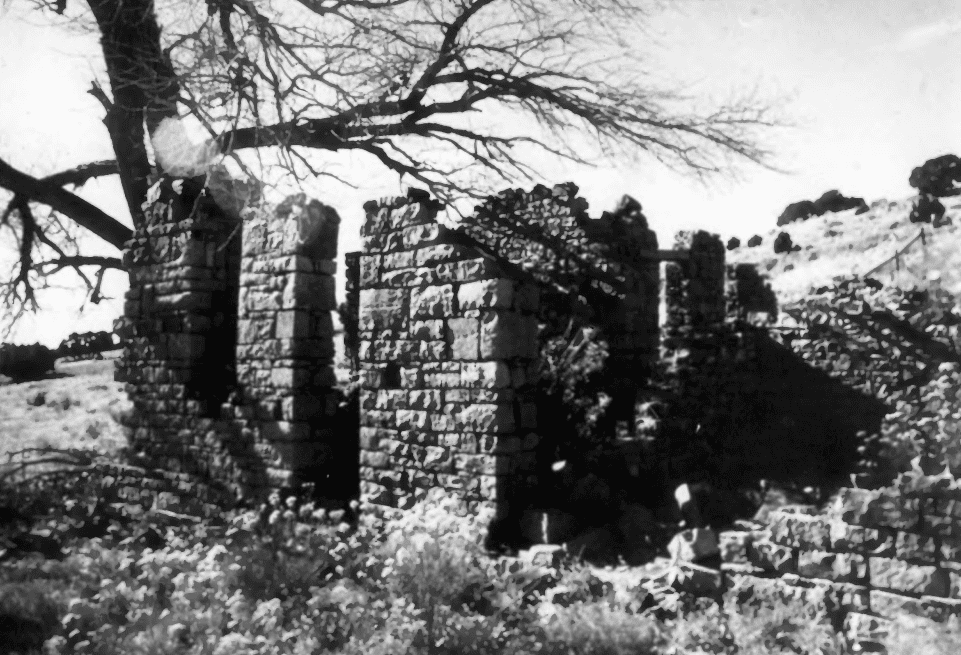
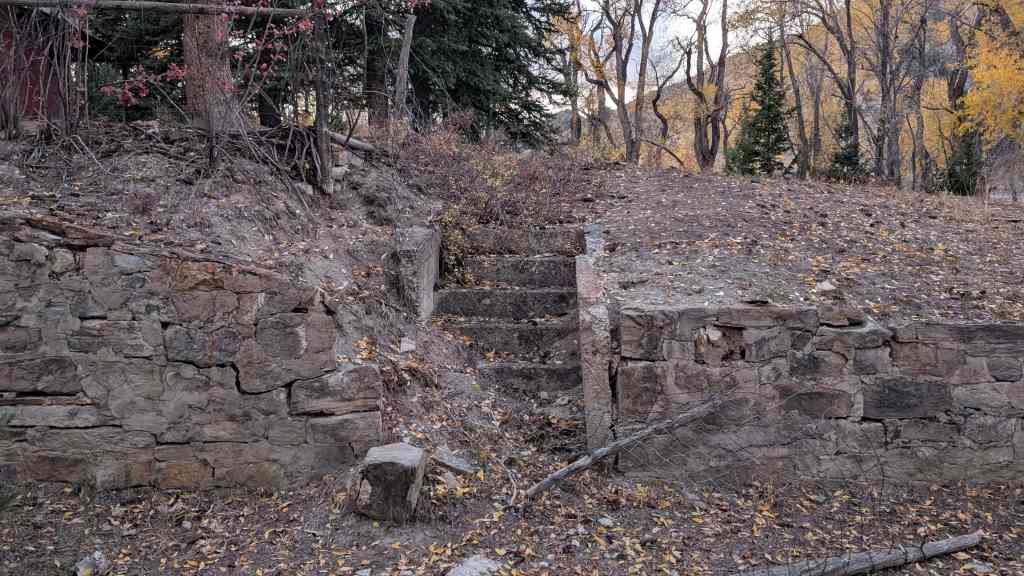
Of unusual construction for the area, the ranch house, was built of dressed granite (diorite) and chinked with mud. Much time and care was taken in the construction of the building in relation to its relatively short use span.
The smoke house, too, is uniquely built. A dugout, its only visible support is the earthen sides of the structure, and its arched roof. The only wooden posts found in the building are two pole stringers used as meat drying racks.
Starr Ranch is located in Garfield County and was added to the National Register of Historic Places (#76001816) on April 23, 1976.
The site represents the first permanent ranch in the southern end of the Henry Mountain in 1890. The site consists of a ranch house and smoke house. The smoke house appears to have been the residence while construction of the house was taking place. The roof of this subterranean structure was made of fitted granite rocks in an arched form of construction. There is no internal or external form of support for this roof. No mortar was used in construction of either the smoke house or the ranch house. The ranch house was also constructed of closely fitting granite rocks with soil used for sealing of the rock walls. The walls were about two feet thick.
The site is now protected by a fence. Vandalism is evident on the main ranch house, with many of the interesting sculptured window sills removed. The smoke house is still intact.
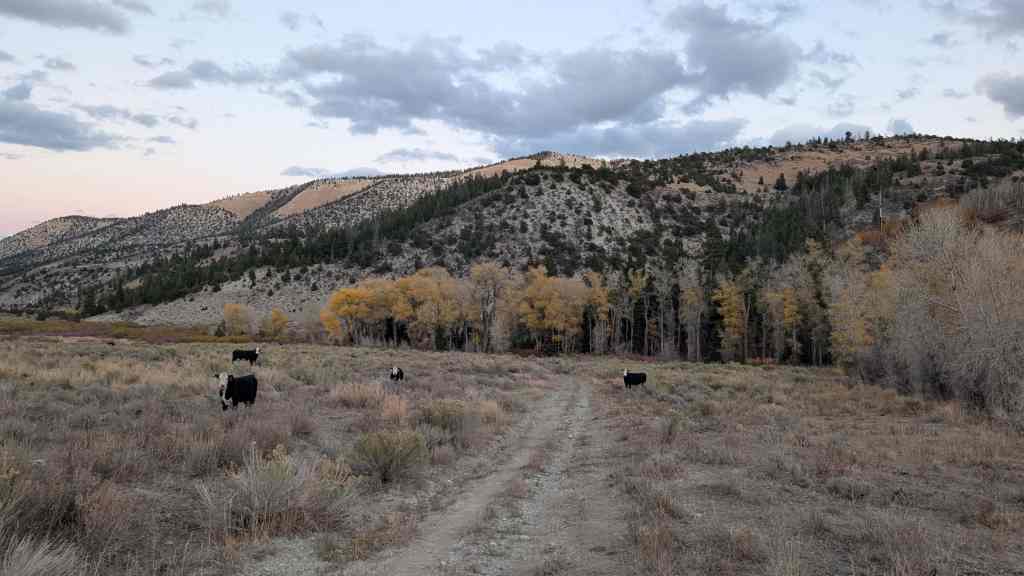
The terrain is rolling hills to flats, near a large spring which bears Starr’s name, The surrounding area is now a developed recreation area and is one of the points of interest in the southern end of the mountains.
The buildings have been altered by deterioration and vandalism
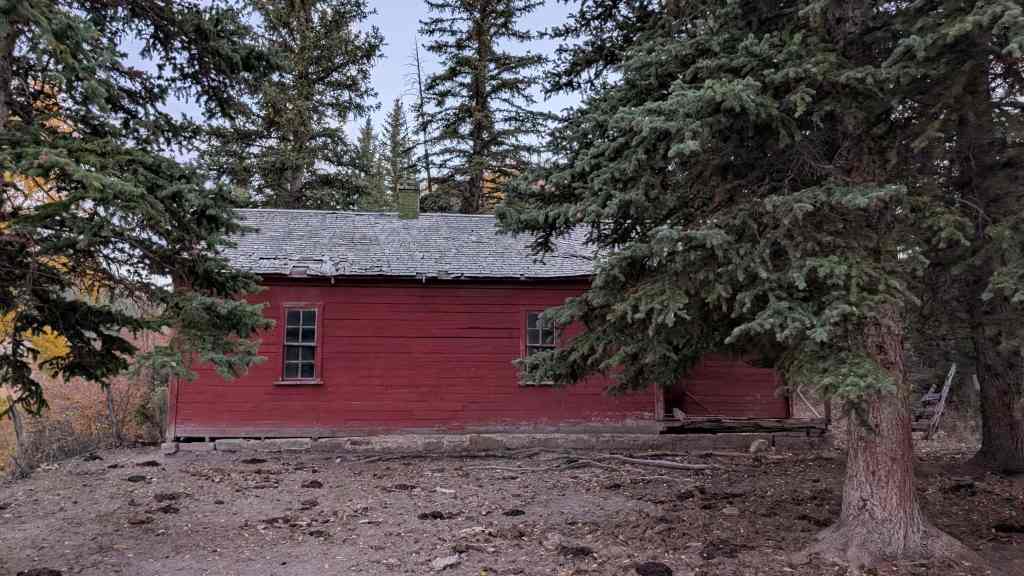
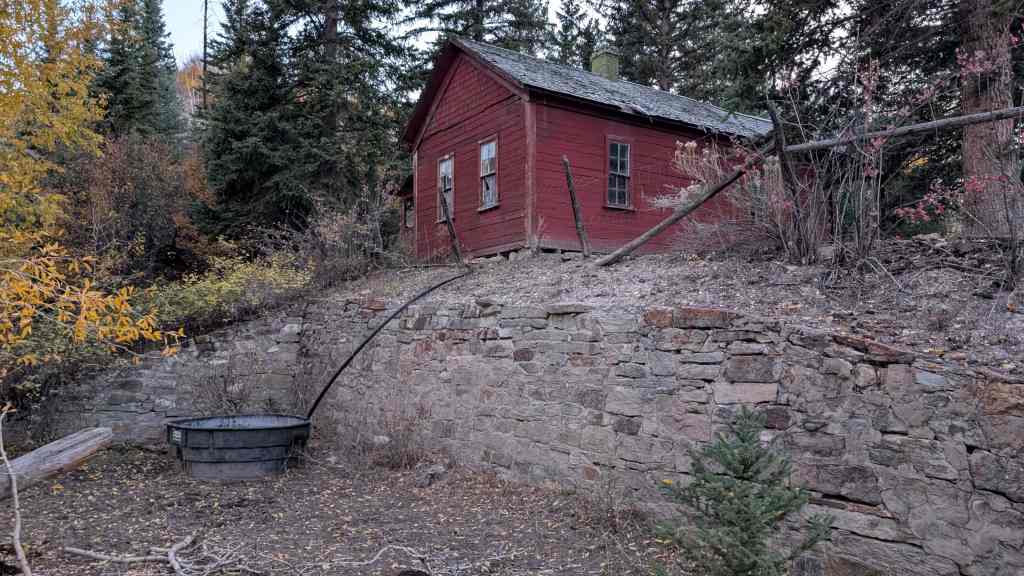
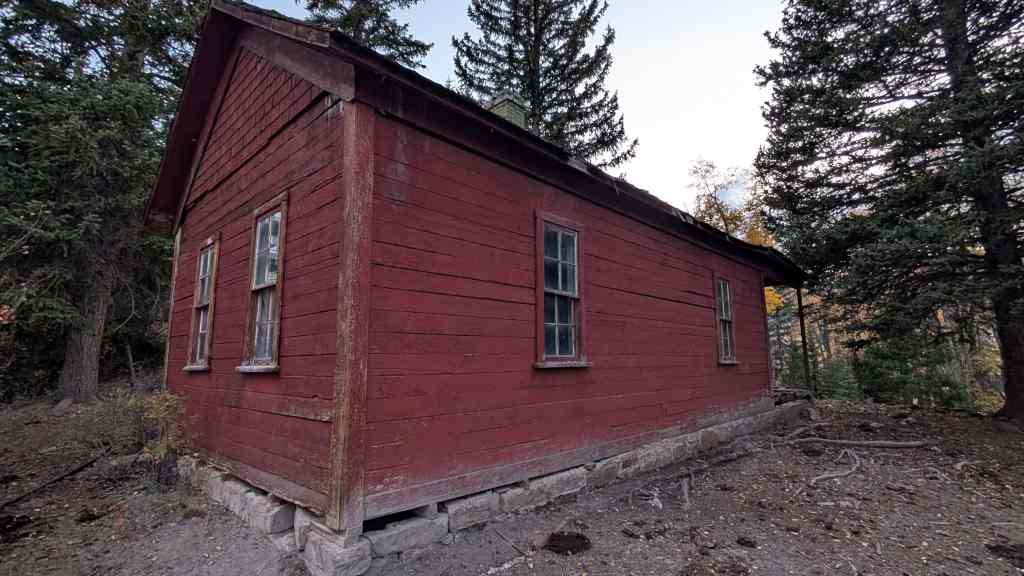
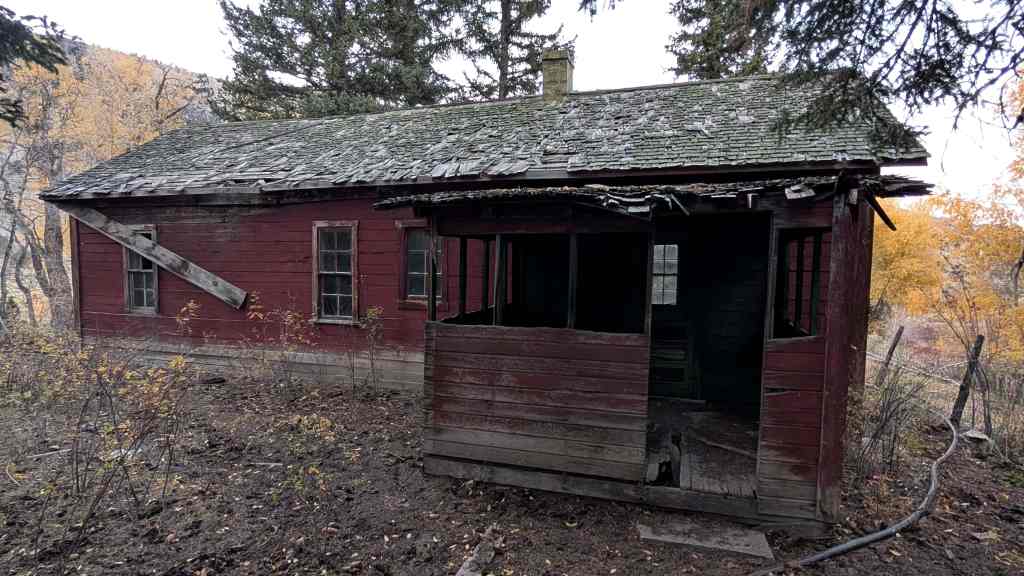
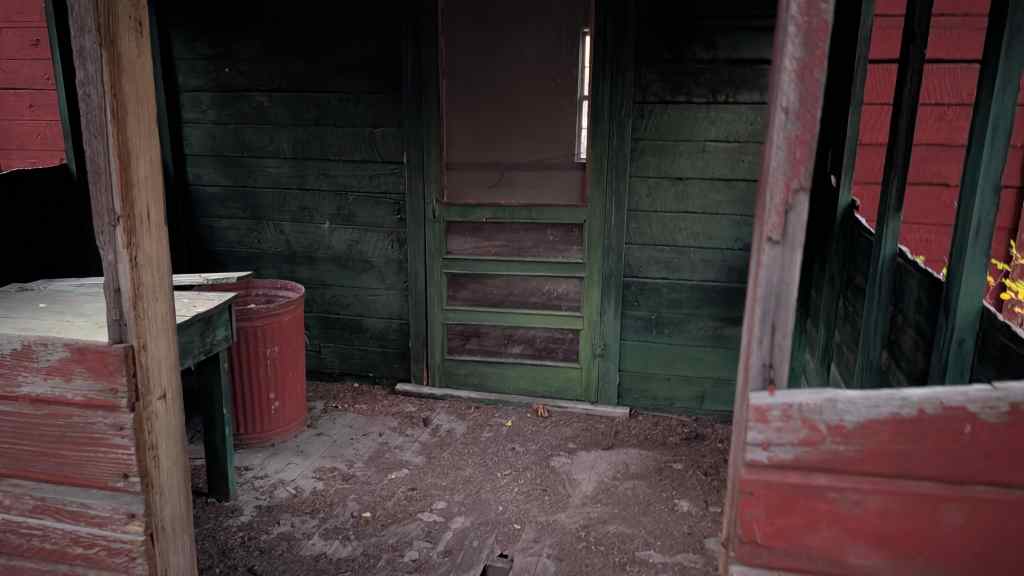
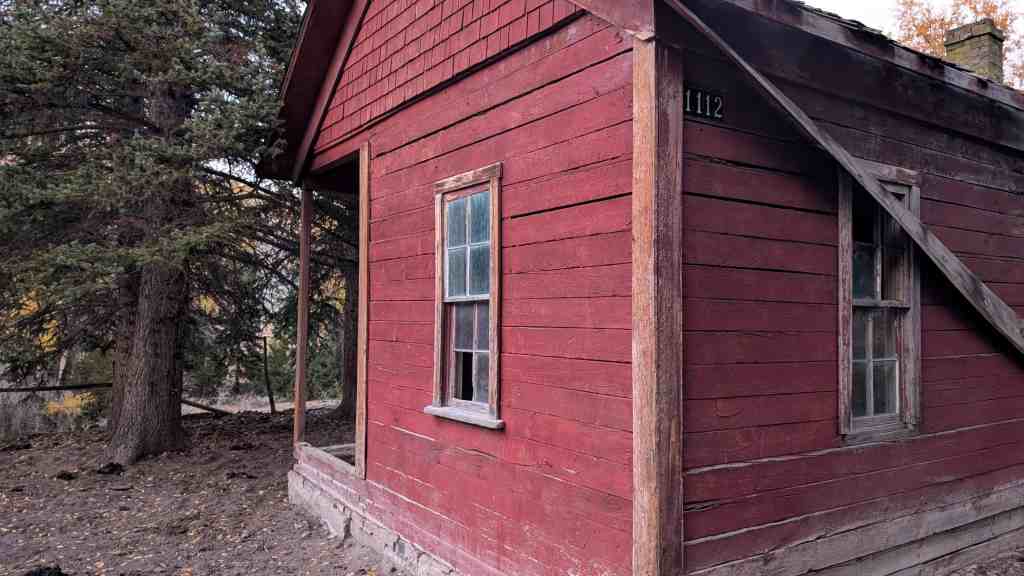
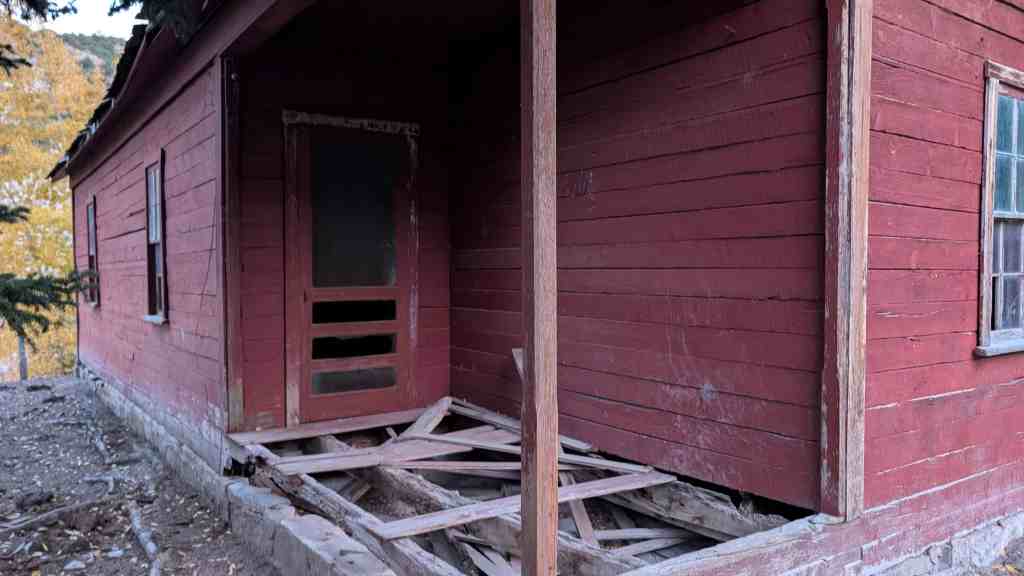
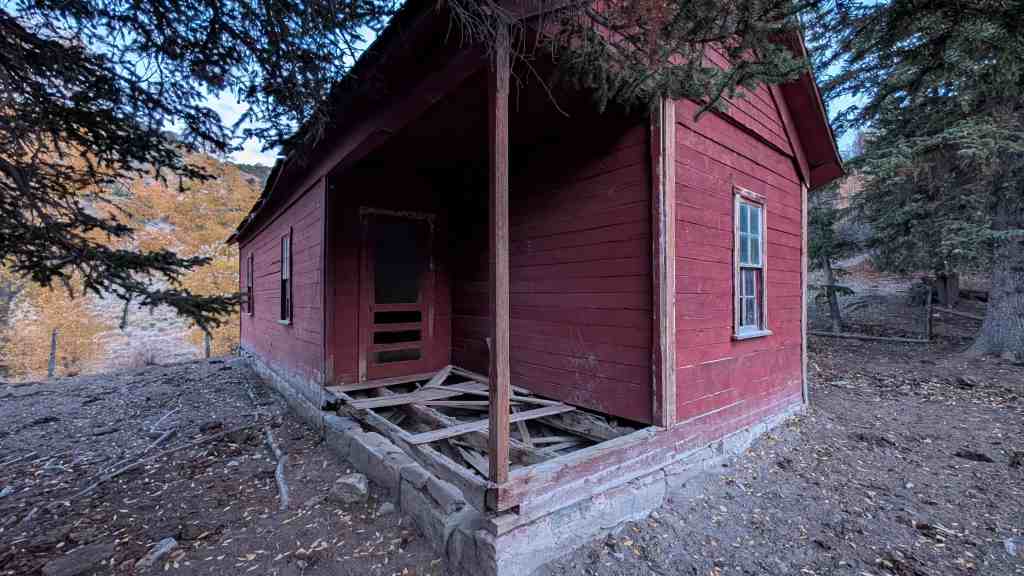
The Indian Canyon Ranger Station, built in 1914 as part of the Ashley National Forest, is an extant reminder of the early days of the Forest Service in Utah. After the Forest Reserve Act of 1891, the Division of Forestry was formed for the management of the land and timber sales. The United States Forest Service, as we now know it, was officially established by President Theodore Roosevelt on July 1, 1905, being placed under the jurisdiction of the Department of Agriculture. Rangers were required to closely monitor the land, but because of the remoteness of the forests, buildings were acquired or constructed to house the rangers and to establish a federal government presence on the land. The Indian Canyon Ranger Station is the earliest remaining ranger station from the Uinta National Forest, and one of the earliest remaining structures on the Ashley National Forest built specifically by the Forest Service to house a ranger. And, although it has been vacant for at least two decades, it is still in good condition and has seen little alteration from its original conception. For this reason it is a good example of the facilities in which these overseers of the forests lived during the first few decades of the Forest Service.
The Indian Canyon Ranger Station is located in Duchesne County, Utah and was added to the National Historic Register (#99001294) on October 28, 1999.
Although the Indian Canyon Ranger Station site is now a part of the Ashley National Forest, up until 1954 this section of forest belonged to the Uinta National Forest.2 The Uinta National Forest was officially named in 1906, after previously being known as the Uintah Forest Reserve. The Forest Reserves were created by President Grover Cleveland on February 22, 1897, upon recommendation by Gifford Pinchot, a government appointee under the Secretary of the Interior, that government stewardship of forest lands was required if the forests were to survive. On February 1,1905, the Forest Reserves were transferred to the Department of Agriculture, and shortly after the name “Forest Service” was adopted. The site for the Indian Canyon Ranger Station was apparently chosen because of its central location for administrative purposes of the district. It was also near a stage stop on the route between Duchesne and the rail station located at Kyune, Utah.
The land was originally withdrawn from homestead entry in December of 1906 but construction on a ranger station did not commence for another seven years. The dwelling was completed in 1914, at a cost of $1052.85, but was the only building on the site for another seven years until the barn was constructed in 1921, at a cost of $431.73. Constructed before formalized Forest Service plans were implemented, the dwelling is unique in its architecture, with no other similar Forest Service buildings existing in Northern Utah. A wood-frame latrine was constructed in 1926, and a wood-frame and bevel-siding garage/storeroom in 1935 at a cost of $1706.86.3 These two structures became dilapidated beyond repair and were removed in the c. 1970s. The 1936 “Descriptive Sheet” for the site states that at that time the dwelling had no interior bathroom, and exactly when the bathroom was added is not known, although it appears to be from the 1940s. The same memorandum suggested that the barn be moved to a different location on the site or be screened from view by trees or shrubs, but a map from 1924 shows the barn in its current location and there are no traces of tress or shrubs remaining, so apparently this suggestion was probably never carried out.
In 1936 proposals were made to upgrade the site and construct a new dwelling (Forest Service R-4, Plan #53) with a basement, and a woodshed (R-4, Plan #66), but these never came to fruition. The main reason no changes were made was probably due to the difficulty in obtaining an adequate supply of water to the site which would have been required with the larger building and increased crew size. In spite of not receiving the recommended upgrades, the Indian Canyon Ranger Station was in continual use six months out of the year as the summer headquarters for the ranger until 1950. After this time it was apparently used as a guard station for seasonal use of forest service crews until the early 1970s.
Ranger and guard stations were used as work and living centers for forest crews who managed and presided over Forest Service lands. They were built mainly as a convenience before the automobile became common transportation because the Forest Service lands and work areas were so far from the personnel’s homes. The buildings and sites were also used as social centers for other people such as sheep herders and miners who worked in the vicinity. By approximately the 1950s, a majority of the ranger stations were being located in urban settings for convenience as the Forest Service went to a more centralized administrative plan, although some of the ranger and guard stations were, and still are used for seasonal management of the forests.
Forest Service administrative sites fell into two categories, ranger stations and guard stations, although the application of the terms has blurred somewhat over the years. Basically, ranger stations were larger than guard stations and were used as a year-’round base for the Ranger, his staff, and oftentimes his family. Buildings on a ranger station site might include a dwelling, an office (these two might be combined in the same building as in this case), a warehouse, and other buildings used for maintenance and storage of animals and vehicles. The large ranger complexes demonstrated administrative complexity and implied permanence on the site. Guard stations, on the other hand, housed from two to four crew members who came from various parts of the state and country, and were placed in remote areas of the forest where the crews worked during the summer. Since they were used for just a portion of the year, guard station sites met basic requirements, usually only consisting of a bunk house, garage or barn, and perhaps a storage shed. Because of the heavy snowfall during the winter, the guard stations, and some ranger stations (such as Indian Canyon), were only occupied seasonally, usually between May and October, or until snow prevented travel on the roads.
Forest Service administrative buildings have not been systematically researched on a national level, nor does any consistent typology exist, mainly because of the variation in types and styles up until the 1930s. At this time, the National Forest Service adopted official plans for nationwide implementation. Using various means, including the Civilian Conservation Corps, Forest Service employees, and private contractors and individuals, the Forest Service was able to construct a large number of buildings during the 1930s and early 1940s.
These buildings are generally of wood-frame construction, with various styles of wood siding, and concrete or stone foundations. Several different styles of guard stations were designed, along with accompanying outbuildings which included barns, garages, storage sheds, and large warehouses. Although often thought of as being rather spartan, ranger stations could be quite homey and colorful. A Forest Service “Improvement Plan” describes the interior of a dwelling:
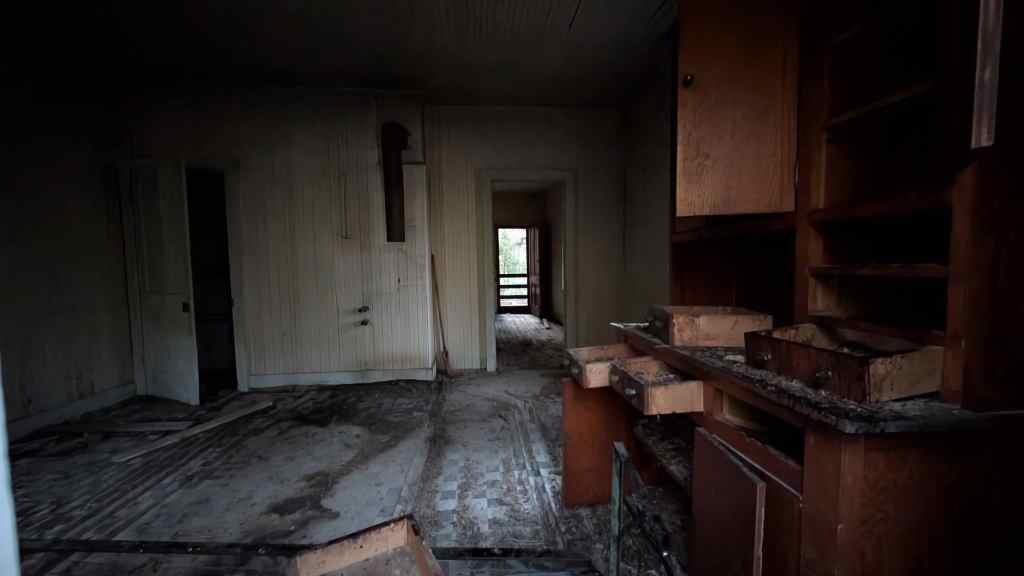
“Interior: Living-dining room and bedroom walls all finished with two coats calcimine in the following colors: Living, dining room, light tan. Bedroom walls peach, ceiling cream, bedroom light tan. Floors and wood work, cherry stain and varnish. Bath room and kitchen walls and woodwork finished with 3 coats of Nile Green enamel, two tone. Bathroom floor cherry stain and varnish, kitchen floor linoleum.”
Many of the historic Forest Service buildings are still in use and have seen little alteration, although nonhistoric alterations are becoming an increasing problem. Because their use as residences is not specifically required, some of the buildings are being used for storage, or are sitting vacant as this one is. In order to decrease the cost of maintenance, the Forest Service is opting to destroy some of the buildings, cover them with aluminum siding, or renovate them for other uses. As the number of historic guard stations decreases, the importance of understanding their place in history increases.
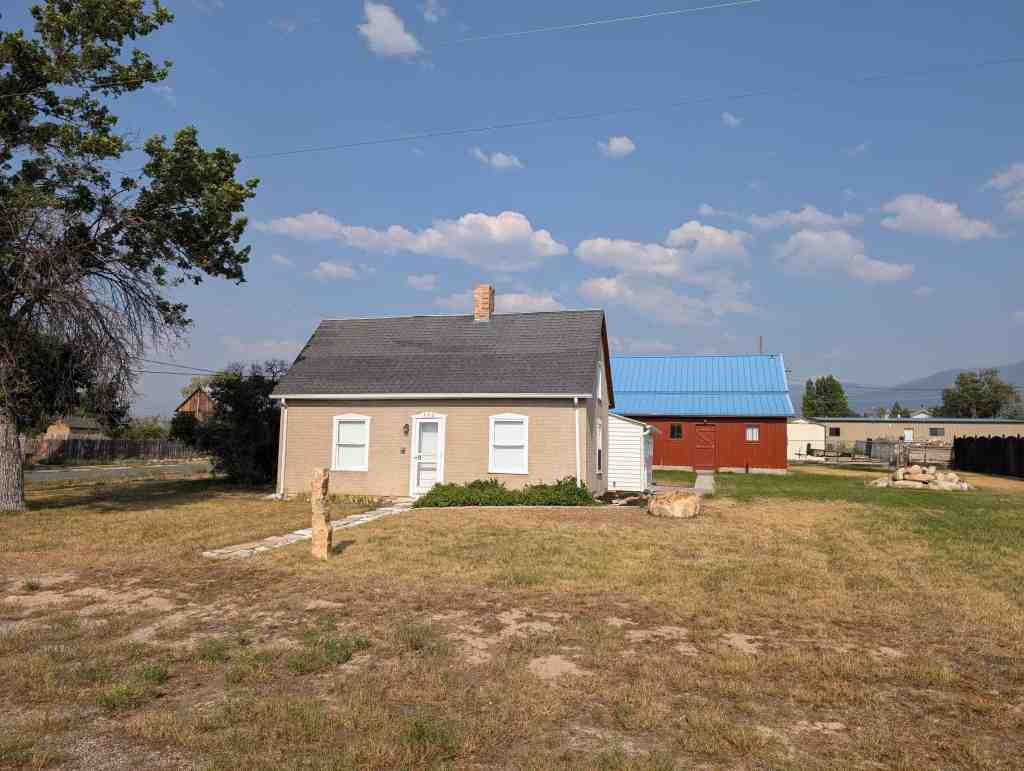
The George Washington Baker house in Mendon, Utah (located in Cache Valley), was constructed in 1869 and is significant as an example of a one-story stone “double-pen” vernacular type. This house form, with its distinctive six-bay, double-door façade, is significant as one of a small number of traditional house forms common in Utah communities during the 1850-80 “pioneer” settlement period. The “double-pen” type migrated out of the upland South into the Midwest during the early nineteenth century. There it was utilized by early Mormons and transferred to Utah in the late 1840s and 1850s. This dwelling was the home of the George VI. Baker family, and remains one of four stone houses that exist in original condition from the early years of Mendon’s settlement.” The James Gardner House was listed in the National Register in 1982 and the Samuel Baker, Joseph Baker, and James G. Willie stone houses will be nominated to the Register in December 1982. Baker was an early settler in Cache Valley and one of Mendon’s original inhabitants. He was a farmer and in 1870 served as the first mayor of the incorporated town of Mendon. The small two-room house was enlarged around 1875 with a stone addition of several rooms to the rear.
Located at 115 N 100 W in Mendon, Utah and added to the National Historic Register (#83004416) on February 10, 1983.
Mendon, in Cache Valley, Utah, was settled in the 1856-60 period by members of The Church of Jesus Christ of Latter-day Saints as part of the larger colonization of the Great Basin region during the second half of the nineteenth century. In the 1850s, Cache Valley served primarily as range land for the LDS church livestock herd, but in 1856-57 the Valley became the home of a small band of farmers. The effort to settle the area was temporarily interrupted by the Utah War of 1857 when an army was dispatched from Washington to quell the so-called Mormon “rebellion.” At this time, outlying colonies were abandoned and settlers pulled back to the larger towns. Mormon families came back into Cache in 1858 and permanent settlements were established, including the one at Mendon on the west side of the valley. Mendon was surveyed in 1859, and in 1860 a fort, consisting of two rows of joined log cabins, had been erected.2 The year 1865 found the people of Mendon breaking up the fort and moving out onto their city lots. The first permanent houses were built at this time, often of locally quarried stone. George Baker completed the original section of his new stone house in 1869.
George Baker was born in 1837 in Pomfort, New York. His parents were converts to the LDS church and migrated westward to Utah in 1847, settling first in Salt Lake City. During the 1850s a young George Baker worked as a herder on the LDS church ranch in Cache Valley and eventually made the area his home in 1860. Baker built one of the log houses in the Mendon fort and in 1861 married Agnes Richard. By 1862, the first of the Baker’s ten children was born. George’s brother, Joseph, constructed the first rock house in Mendon outside the fort in 1865 and George began work on his own house soon after, finishing the dwelling in 1869.
The house Baker built was a traditional type consisting of two square rooms under a gable roof. Historians have often called this house the “double-pen” type. The house form migrated out of the upland South into the Midwest during the early nineteenth century. There are Mormon examples of the type in Nauvoo, Illinois, their city on the Mississippi, and the house occurs throughout the Mormon settlement region in the West. The house often has a four- or six-bay façade with two front doors arranged symmetrically.. The presence of the two front doors has caused this house to be erroneously called a “polygamy” house. There is, after all, a door for each wife. This house type might certainly have served such a purpose, and indeed, examples can be found in the state which were occupied by two families. Yet, the double-pen type’s firm roots in the traditional architecture of the nineteenth century and single family examples like George Baker’s served to effectively dispute it’s exclusive association with polygamy. The double-pen house is typical, then, of the early domestic architecture of Utah and becomes significant as one of several stone houses remaining in Mendon from the early years of settlement. (The Robert Gardner House, c. 1875, was listed in the National Register in 1982. Research is continuing on the remaining half-dozen early homes in the town for possible nomination.)
The George Baker house in Mendon, Utah, is a one-story vernacular house constructed of locally quarried metamorphic stone. The walls are coursed rubble, with special attention devoted to the regular jointing on the façade. There are large ashlar quoins at the corners. The stonemasons who worked on the house are not identified in the Baker family records. It is known that two Cache Valley masons, Robert Crookston and Robert Murdock, worked in Mendon, but no specific information is available to link these individuals with particular houses. Also, the 1870 census for Mendon includes Richard Mills, an immigrant mason from England, who could have assisted in the construction.
The original 1869 house consisted of two roughly square rooms (15’4″ x 14’4″ and 14’6″ x 14’4″ the difference being the width of the internal partition). The house had a symmetrical six-bay façade and two front doors. There was a large, centrally placed stone fireplace in the south room. External ornamentation was limited to Greek Revival returns and entablature. The sills and lintels are plain. The house originally had a porch spanning the length of the façade, but it was removed after the present owner purchased the dwelling (ca. 1940s). A rear “T” extension also of coursed rubble stone, and containing two rooms, was added to the house. Judging from the quality of workmanship and material, this addition probably occurred in the 1870s. A lean-to shed was attached to the north side of the rear “T” in the 1940s and the large central fireplace was removed at this time. Later, after the porch was removed, hooded coverings one a gable and the other a shed roof–were placed over the two front doors. These alterations do not detract from the historical visual integrity of the Baker home. The structure remains in good condition with some deterioration evident on the external woodwork.
This house was built c.1880 by Andrew “Fishman” Thompson, a Danish convert to the LDS Church and an active member until controversy between the English and Danish communities in Spring City resulted in his becoming a devout Seventh Day Adventist. He and his wife, Jenssine Amalia, reared ten children in this home: James, Andrew, Christina, Frederick, Thomas, Anne, Agnes, Cephus, Nena, and Tenus. The children attended the Methodist school. Andrew was known as “Fishman” because he would bring in fish from Utah Lake and elsewhere, hauling them around town on ice to sell to local residents.
The Charles D. White House is significant in terms of its architecture and the lives of its original occupants.
The house represents one of Thomas Frazer f s best designed homes in his mature style of building. Its proportions are pleasing, as are its lines, with all its parts contributing to the whole. The craftsmanship is unsurpassed and, structurally, the home is in excellent condition.
Charles D. White was a prominent citizen in pioneer Beaver. He was a farmer and a herdsman, both managing and owning large herds of cattle and sheep. In 1875 he managed the sheep herds of the L.D.S. Church’s United Order. He was also for many years the superintendent of the Beaver Co-op Store, a very large mercantile institution.
Mr. White also played a very active role in his Church. He served as bishop of Beaver’s First Ward (L.D.S. Church) from 1877 until 1891 when he was named President of the entire Beaver Stake.
Mr. White was a polygamist and one of his two wives was active in Church affairs.
His first wife, Mary Ann Greenwood White, grew up in Beaver and served in the Beaver Stake Relief Society as a treasurer and a counselor. His second wife was Margaret Gilles, but not much information is available regarding her life.
In conclusion, the Charles D. White house is significant because it is still regarded as one of Beaver’s mansions. It’s size and quality of construction are indicative of Mr. White’s prominence in his community. The design is representative of Thomas Frazer‘s mature style of building, a style that was first synthesized some five year earlier in the Duckworth Grimshaw House, also in Beaver, Utah. The Charles D. Whtie House is Frazer’s largest extant house and it displays five of the six architectural elements common to his style of building: dormer windows, a center gable, ashlar stonework, bargeboard along the eaves and dormers, and white-painted mortar joints.
115 East 400 North in Beaver, Utah – Listed on the National Register of Historic Places (#80003889) on February 14, 1980. The text on this page is from the nomination form for the register.
The Charles D. White House is a large, one and a half story home. It was built c. 1882 by Thomas Frazer, the local stone mason, for White and one of his two families. The house has an original “T” plan and has a simple vernacular, gabled design. It is constructed of a native black basalt, with a gray granite being used for the lintels above the windows and doors. Large basalt blocks comprise the quoin stones at the corners of the building.
On the ground floor, the front façade displays four windows and one door, all arranged symmetrically. Upstairs, there is a central gable with a door in it, and dormer windows on either side. The dormers and eaves are finished with a decorative bargeboard, while the steeply pitched roof supports two end-wall chimney stacks.
The rear section of the house is similar to the front façade in that it has two dormer windows upstairs, on either side of a door which leads out to a porch. The eaves and dormers are again finished with bargeboard and there is another end-wall chimney.
The masonry work is very typical of Thomas Frazer’s building style. The two facades that face the street are built of cut stone, while the remaining facades are composed of rubble stone. With the cut stone blocks, Frazer squared them roughly, then set them in place and gave them a perfectly square appearance by adding black-dyed mortar to their edges. He then either beaded the mortar joints or recessed them and he always painted the mortar joints white. At the C. D. White House, the mortar joints are recessed and their white appearance is perfectly preserved under the porch in the corner of the house.
The most interesting detail on the interior of the house is the hand-painted graining on the French doors of the music room.
One of the original granaries is still standing on the east side of the house. It displays one façade of cut stone, the side that faces the street, and has a door and a window on the same façade.
Fort Pearce was built during the Blackhawk War of 1865-1868, a period of conflict with the Ute Indians in central and southern Utah. This was Utah’s last major Indian conflict. During this time the Navajo Indians also raided the settlements of southern Utah. The Navajos used Fort Pearce Wash as a means of gaining entry into these Mormon settlements. The fort was built in 1866 to keep out the Navajo raiding parties. No battle was ever fought with the Indians at the site.
Also during this period the farmers fields were not fenced and the fort with its large corral was used to hold cattle to keep them from destroying the crops in the fields. This holding of cattle at Fort Pearce was a common practice and continued long after the Indian unrest ceased.
The fort and the wash upon which it is situated is named for Captain John D. L. Pearce, noted military leader and Indian fighter from St. George, Utah, who took part in the Blackhawk War and other Indian conflicts in southern Utah.
At the present time, the area is visited by the local people, scouting groups and historical societies as a means of conveying an awareness and interest in the pioneer heritage of this part of southern Utah.
Fort Pearce was built and occupied by Mormon settlers desirous of maintaining agricultural communities in that part of southern Utah. Although the direct purpose in building the fort was to keep Navajos from raiding settlements, its corral proved to be its most useful asset, in keeping livestock from destroying valuable crops.
Fort Pearce is located in Washington County, Utah and was added to the National Historic Register (#75001834) on November 20, 1975. The text on this page is from the nomination form for the national register.
Fort Pearce, situated on the edge of Fort Pearce Wash, is a rock-walled structure that at present has walls standing approximately six feet high. The single story structure is over thirty feet long and the gunports are now a part of the irregular outline of the top of the walls. There are also the remains of a rock corral a short distance to the south of the fort. The walls of this corral are only a few feet high at one corner and usually consist of piles of rock rubble. Much of the corral’s walls has eroded away due to its location in the wash. The fort itself is situated on exposed rock and is not in danger from soil erosion.
In Immortal Pioneers, Albert E. Miller states that originally the walls of the fort were about eight feet high. The structure was never roofed. This fort was fashioned in the shape of a cross with two portholes in the front of each of the four projecting ends, and one porthole in each side of each projection, making in all sixteen portholes. This arrangement gave the guards a crossfire from all directions. From looking at the present outline of the fort, it is doubtful whether the fort actually was in the shape of a cross as stated above.
Building of the fort started on December 4, 1866, as noted in the diary of Charles L. Walker of Washington, Utah. In 1869., the Washington Ward Tithing Ledger indicated that at least six men were given credit for work done on the repair of the fort and the building of corral. It is also noted in the diary of Charles L. Walker that he and other men of the area did repair work on the fort and built a corral in late 1869.
In Red Hills of November, A. K. Larson states that four days of hard labor (December 20-24, 1869) by nineteen men produced a corral with walls five and one-half feet high on a base two and one-half feet wide. This corral is just south of the fort and appears to have crossed the wa;Sb,5.nd included ground on both sides.
The Hall house is one of the best examples of the Spanish Colonial Revival style in Salt Lake City. Especially significant are the tiles of the front entry. They are probably the work of Ernest Batchelder, an important southern California artist of the Arts and Crafts period. The house was built for Nels G. Hall, a prominent businessman, and designed by the architect Slack Winburn and his sons. Hall desired a simplicity and elegance in the exterior design and a functional interior, which are reflected in the house.
The Nels G. Hall House is located at 1340 East Second Avenue in the Avenues of Salt Lake City, Utah and was added to the National Register of Historic Places (#80003923) on October 3, 1980. The text on this page is from the national register’s nomination form.
Nels G. Hall was born on December 29, 1884, in Provo, Utah, a son of Nels and Josephine Bergstrom Hall. He was educated in Provo and graduated from Brigham Young Academy’s School of Business. He married Hazel Greaves at Ephraim on September 5, 1910. They had three children; Katherine, Jeanne and Nels G. Hall.
Hall’s business career began in 1905 when he moved to Salt Lake City to accept a position with the Utah Savings and Trust Company. He then became assistant to Heber M. Wells, who later became the first governor of Utah, in 1914 Hall helped create the Columbia Trust Company and became vice president. In 1920 he left to become secretary-treasurer of the Panama Sugar Company. He soon returned to Salt Lake City to become manager of the Utah Wholesale Grocery, and at that time lived at 275 llth East. He then assumed vice presidency of the Columbia Trust Company and entered into the mining business with several business associates, forming the South Mountain Mining Company at Jordan Valley, Oregon. It was during this period of Mr. Hall’s life that he began the plans for the house. He had visited California and resolved to build a Spanish Colonial or Mission style similar to houses he had seen, and eventually decided on the Spanish Colonial Revival plans. In 1945 Hall sold the mining company and devoted his time to personal investments and business. l He was active in the Church of Jesus Christ of Latter-day Saints in the Federal Heights Ward, and he was also active in civic affairs.
Nels G. Hall lived in the house from the day it was ready to occupy until his death at the age of 80 on December 31, 1964. His widow, Hazel, remained in the house until her death some six years later. Their only son, Nels, lived in the home a short time until his untimely death in 1971. The house remained vacant as such for five years and later occupied by Dr. Alien S. McGaughey. The Thomas Buranek family are the current residents.
Nels G. Hall hired the architect Slack Winburn and his son to design a house similar to Spanish-style houses he had seen in California. According to Hall’s daughter, he wanted simplicity and elegance in the exterior design and a functional and warm interior. The builder was J.H. Johnson.
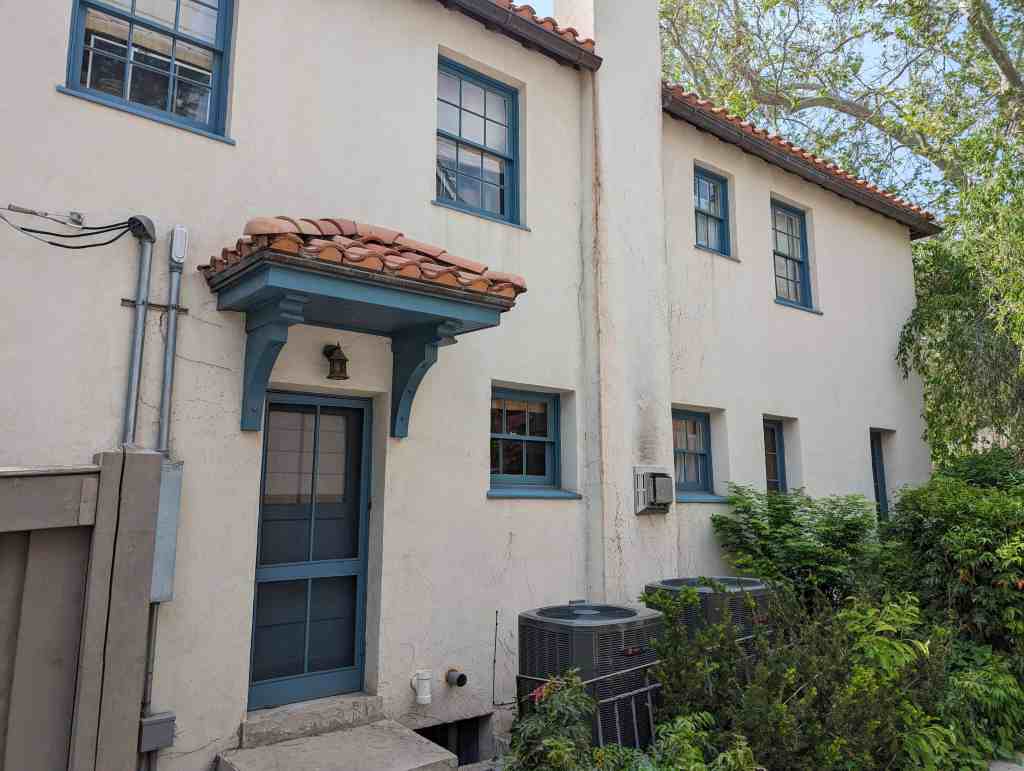
The exterior appearance of the house is in keeping with the simplicity and elegance desired by Mr. Hall. The principal building material is brick, with a stucco finish. The house has a very solid appearance, with the windows recessed from the exterior façade about six inches. One exception to the brick construction is a frame extension of the master bedroom in the rear of the house. This is also covered with stucco.
Wood was used on the exterior of the house mainly for the cornice and the openings. Doorways, window frames, balconies and support posts in the rear of the house are wooden. There is also a small wooden deck extension in the rear. Simple wooden posts support a roof over a sun porch located above the concrete garage. The garage is partially underground, and was built at the same time as the original structure.
In the Spanish Revival style chimneys were commonly placed in the interior of the house. The Hall house, however, has both its chimneys located on the exterior walls, one on; the east and one on the west façade. The physical appearances of the two chimneys are in keeping with popular designs used for this style. One chimney is used for two fireplaces, one below the other.
The wooden posts which support the rear extension of the second floor (the master bedroom) are designed in the style of the Spanish Colonial Revival. Two posts are placed very close together, as if to resemble a single post. A common feature of the Spanish Colonial Revival style is the balcony. Typical balconies are long and extend around a portion of the exterior. Two balconies are situated on the Hall house on the street façade, second floor. The first is made of wood, with panels having a cutout sun motif in the center. These panels of wood were quite common for privacy as well as for wind protection. The second balcony, around the corner from the other, is ornamented with wooden spindles.
One of the loveliest features of the house is the front door surrounded by beautiful ceramic tiles. These tiles were probably the work of Ernest Batchelder, an artist of the Arts and Crafts period who lived and worked in southern California. The tiles depict popular Spanish motifs. Extra tiles were purchased in case tiles were damaged by weather or age. These tiles were ordered, as were the roofing tiles, through the Cahoon Brick Company.
The Hall house main floor plan consists of a living room, dining room, breakfast room, study, kitchen and one-half bath. There are two fireplaces on the main floor. On the second floor, there are three bedrooms, a full bath, and the master bedroom is in the rear of the house. The lower level consists of an amusement room, a bedroom, a laundry room and a three/quarter bath.
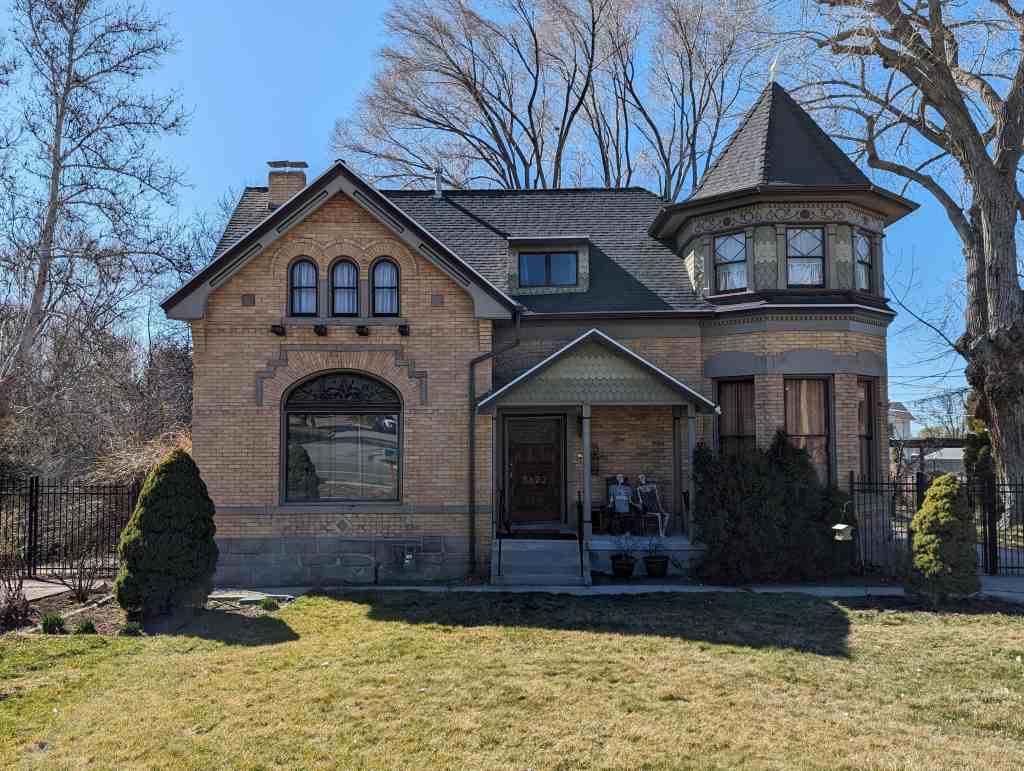
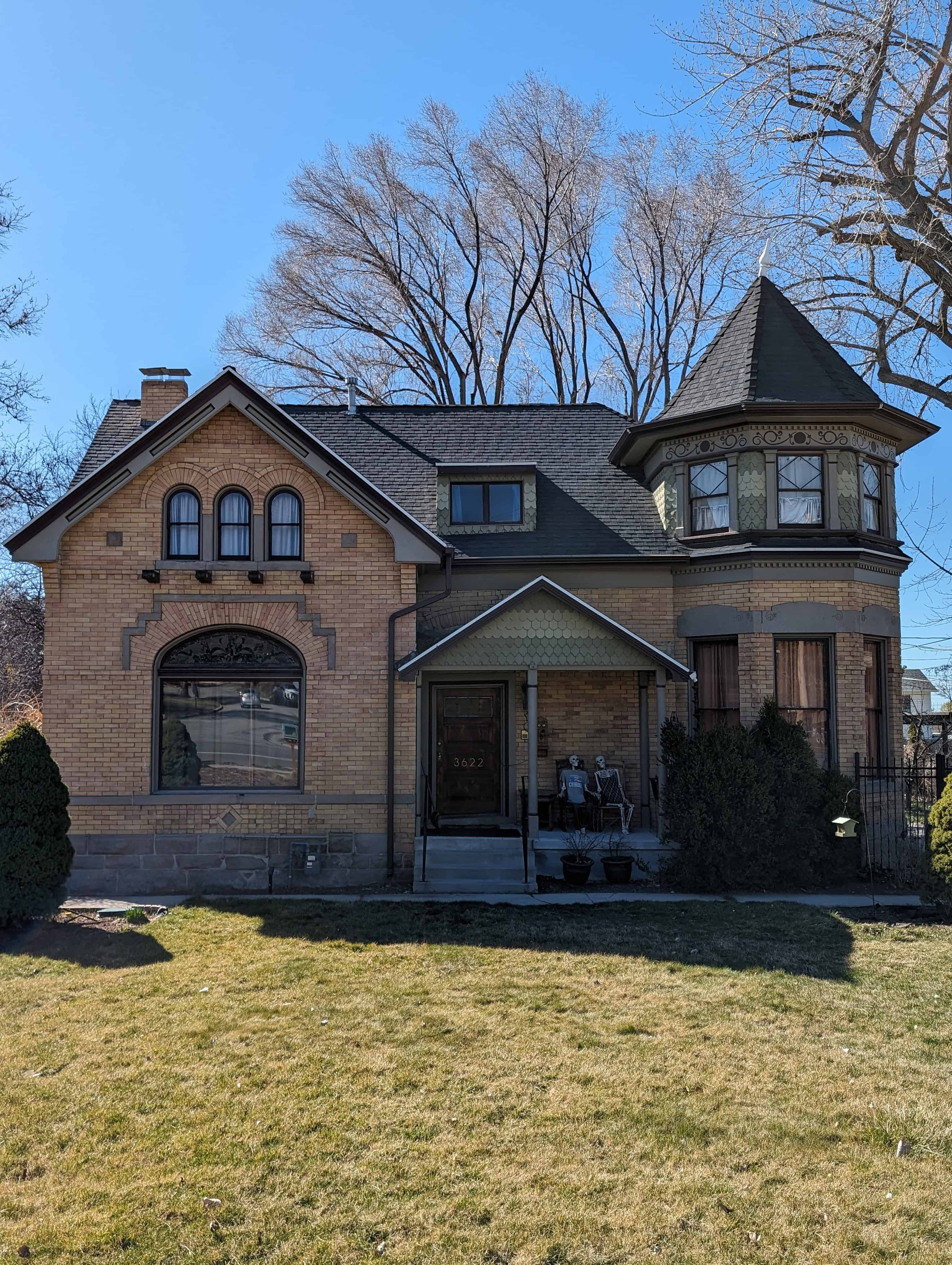
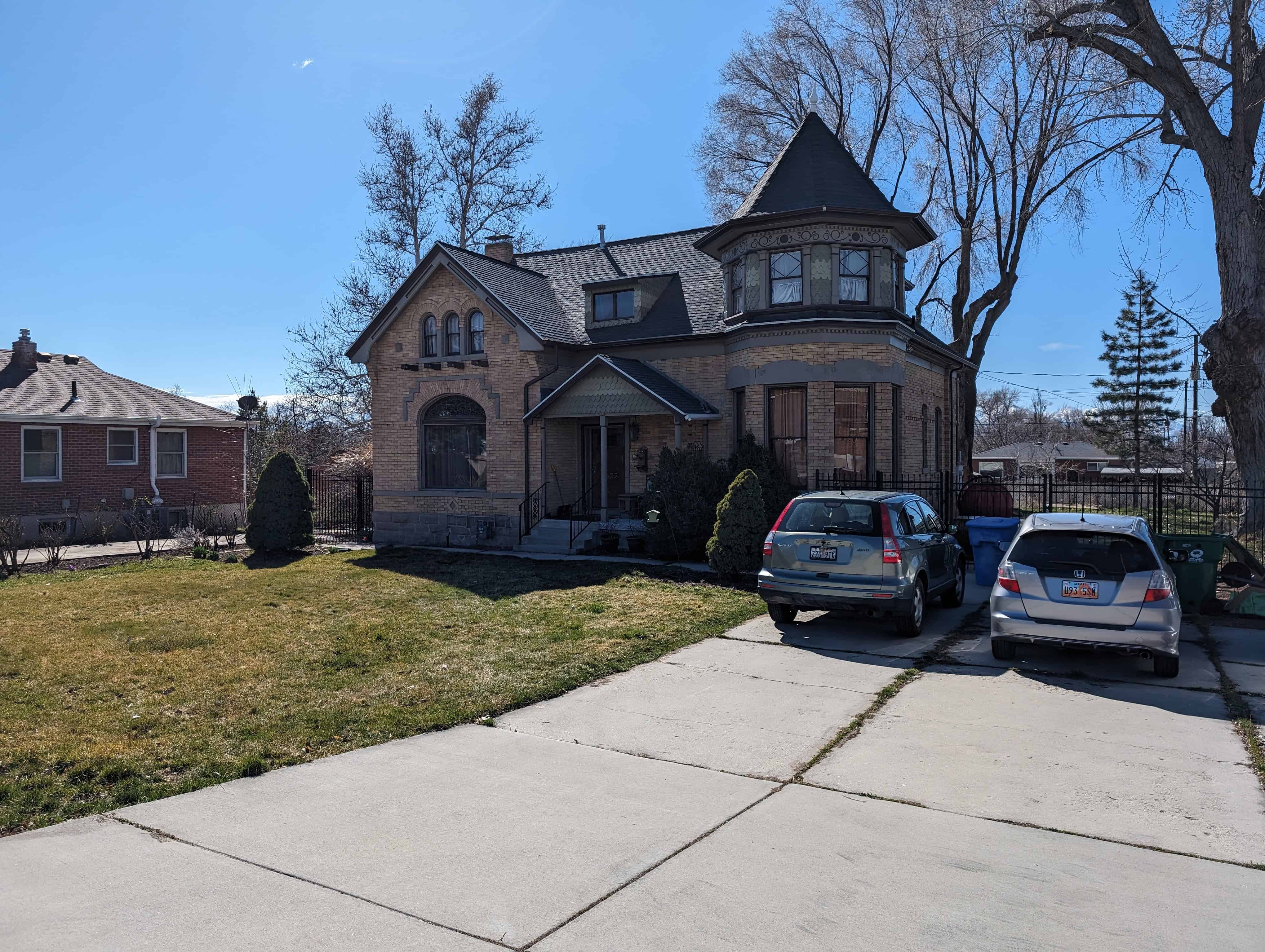
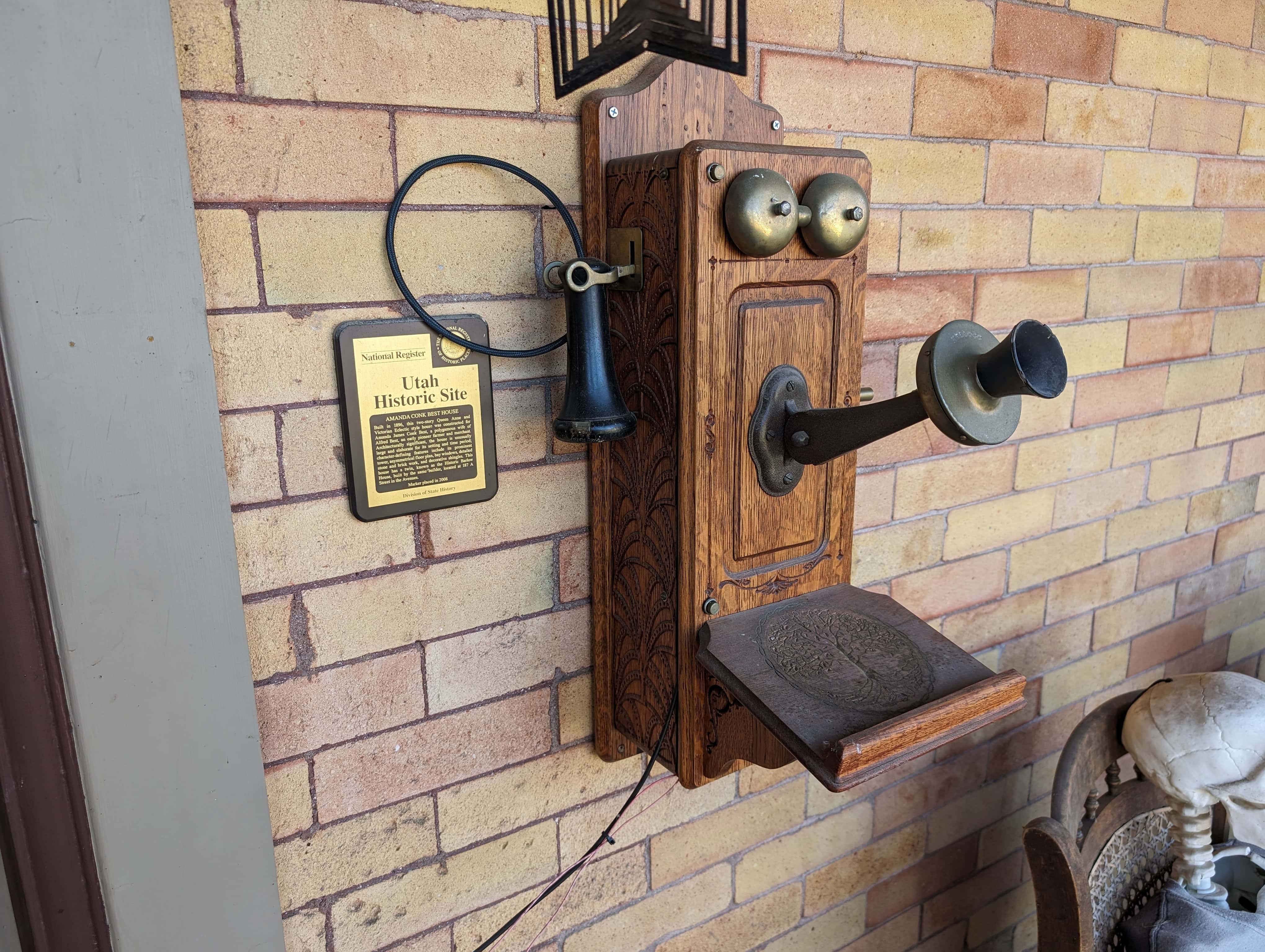
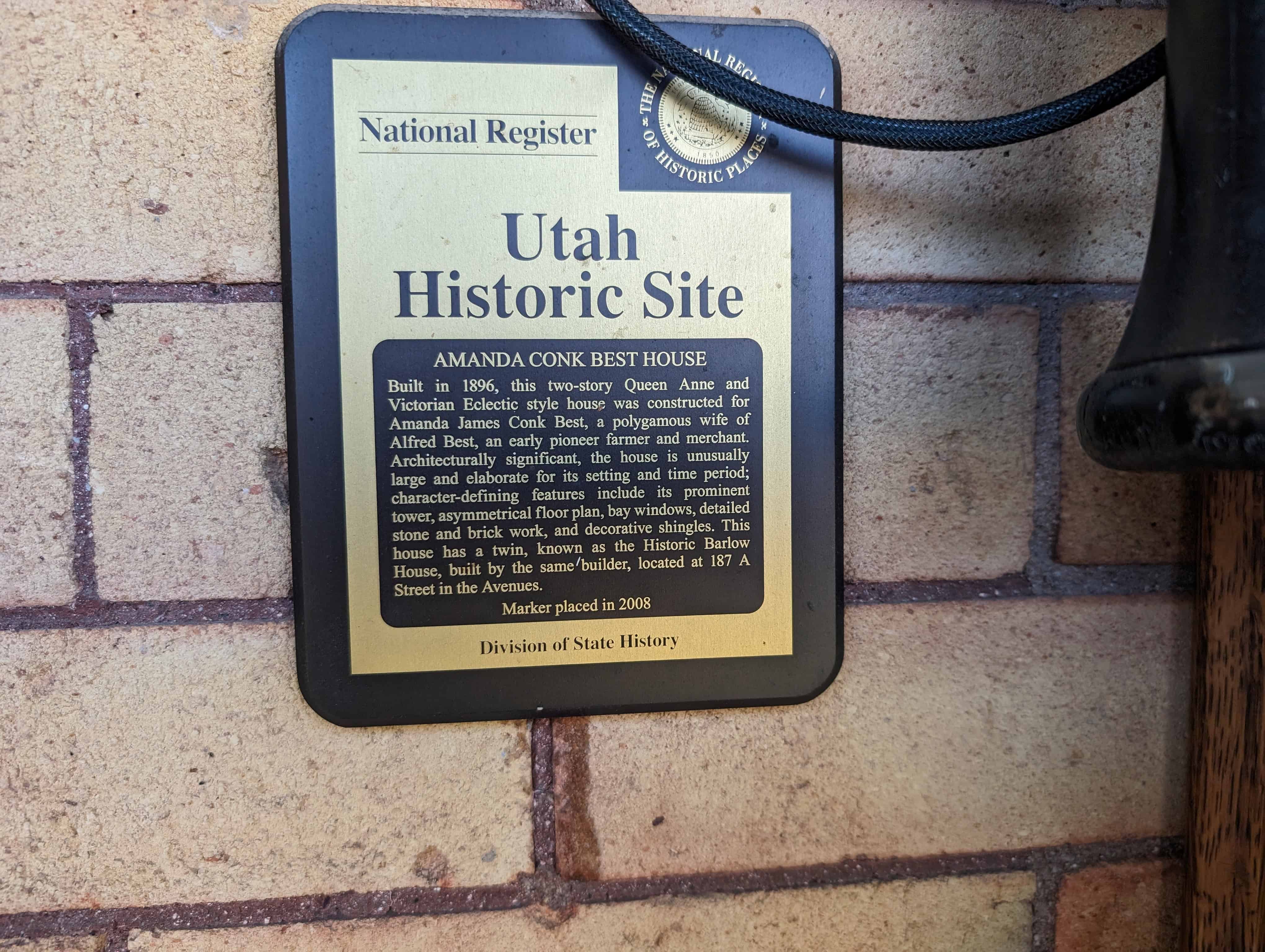
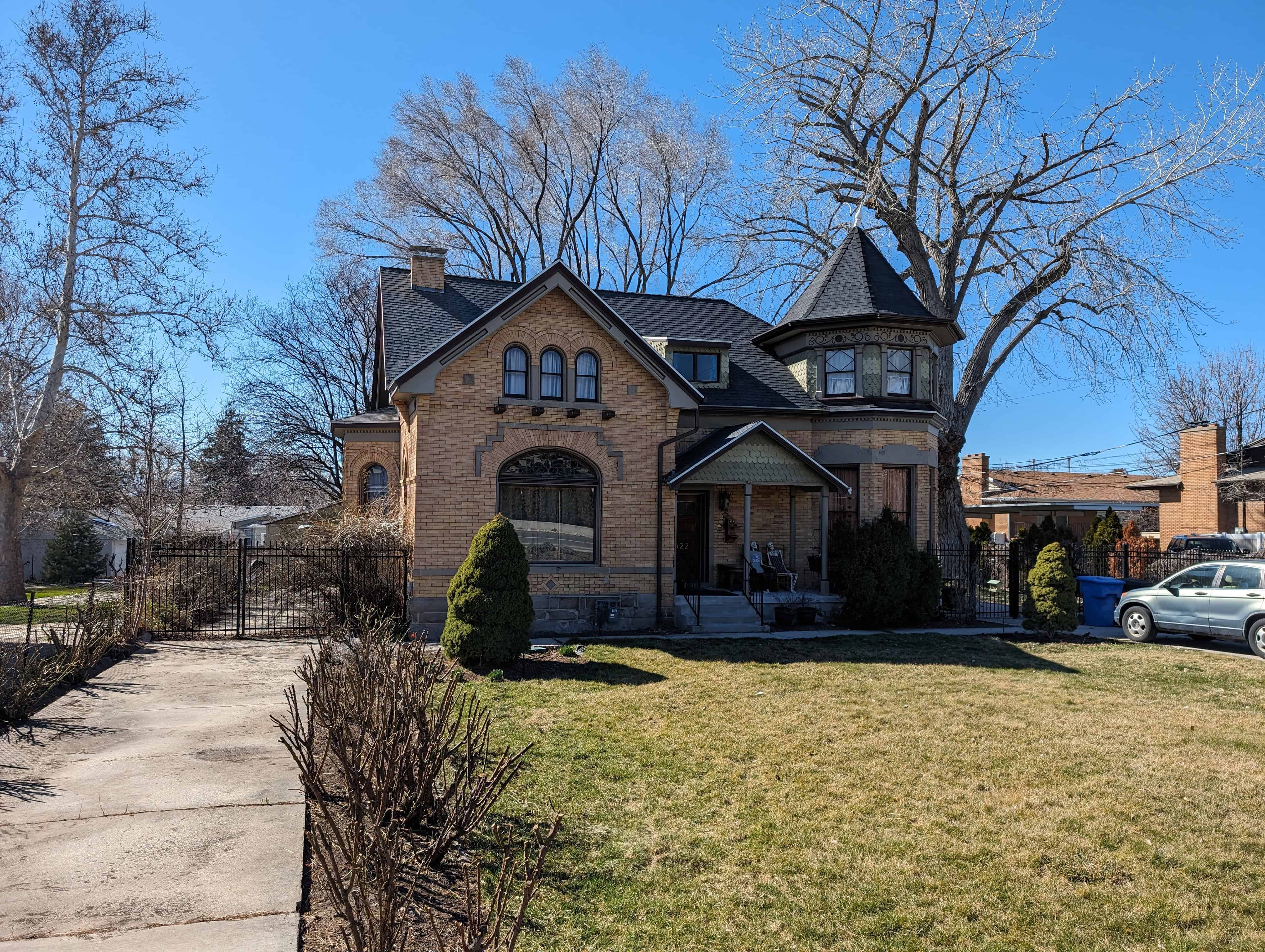
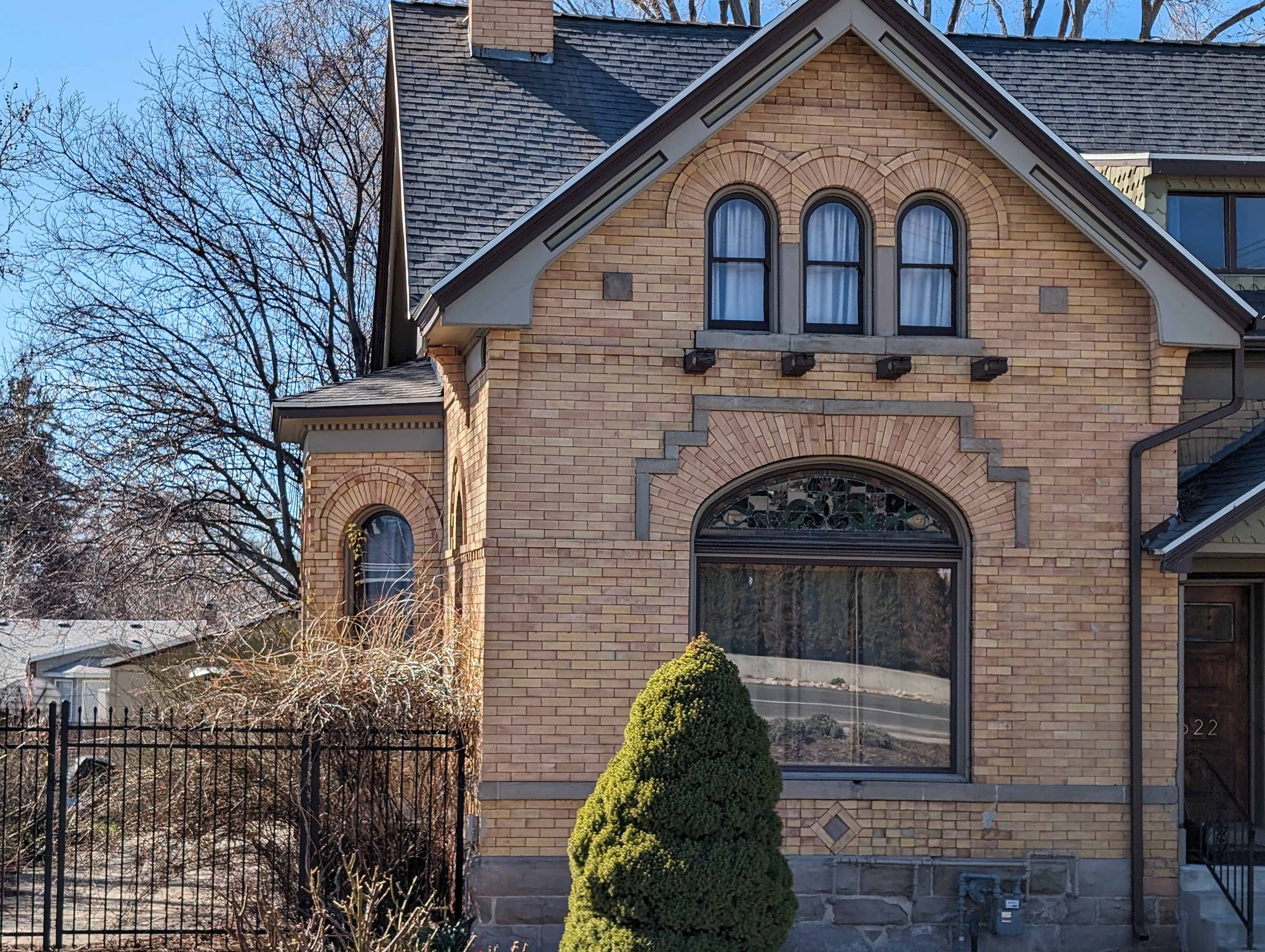
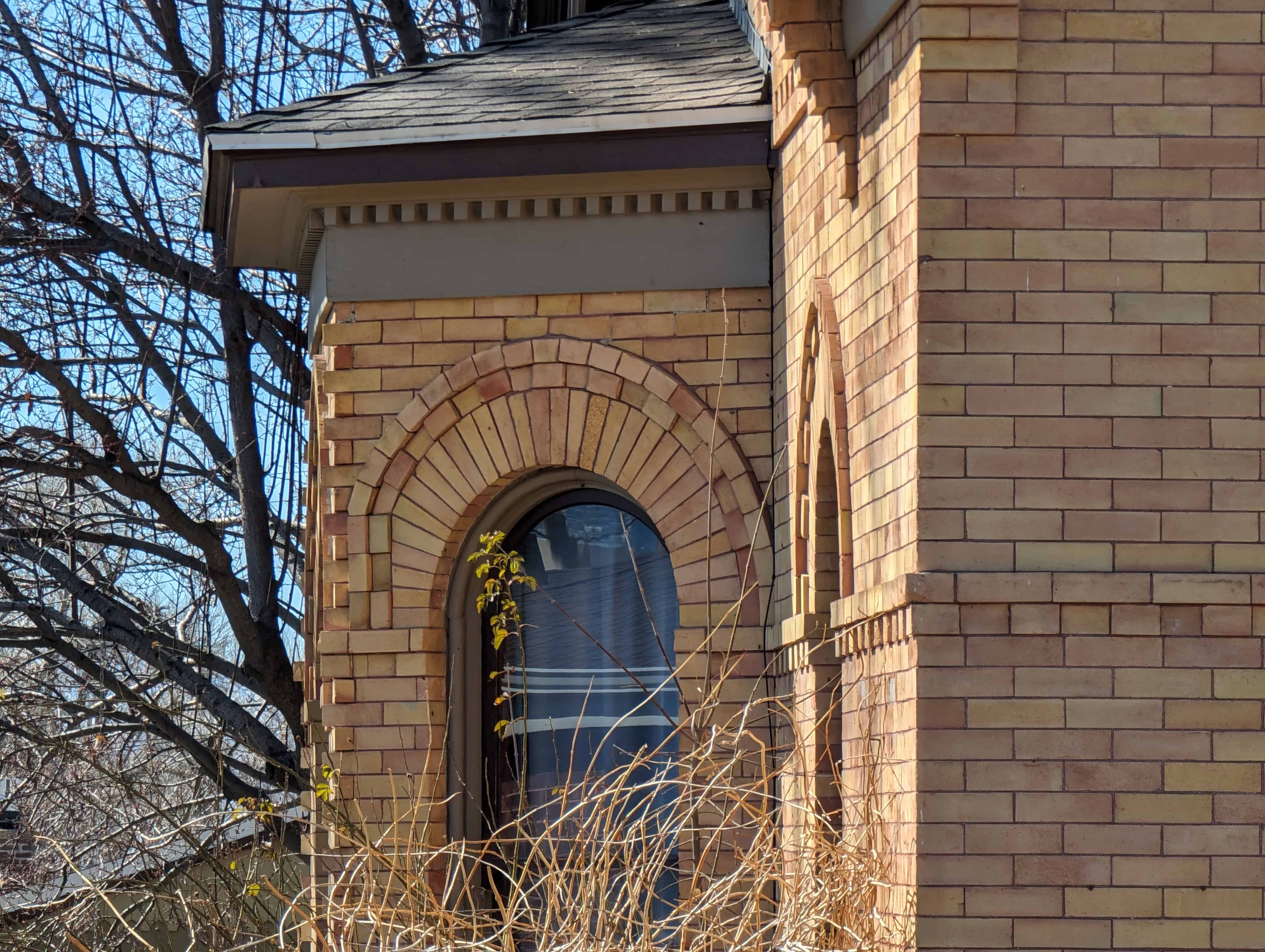
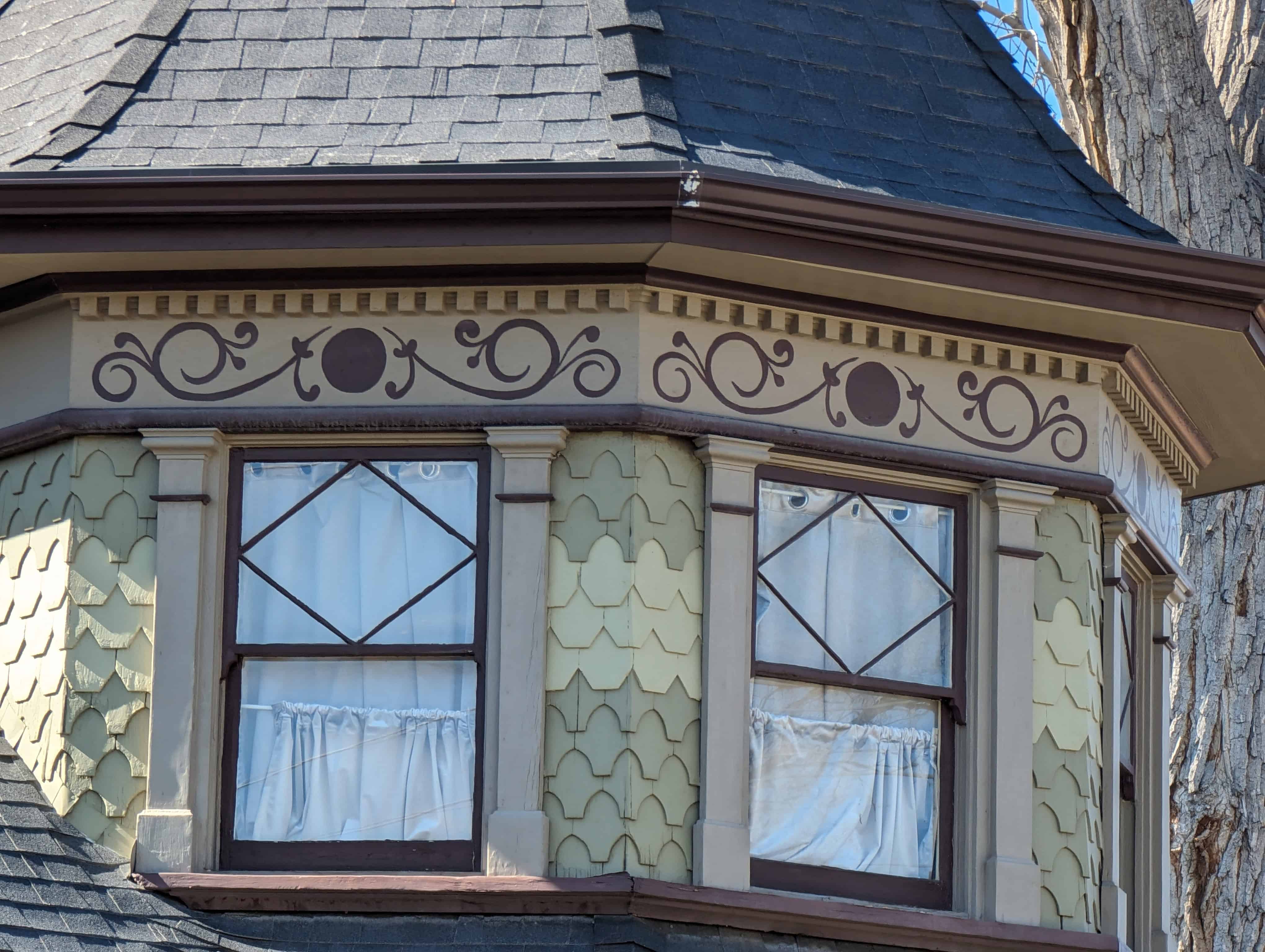
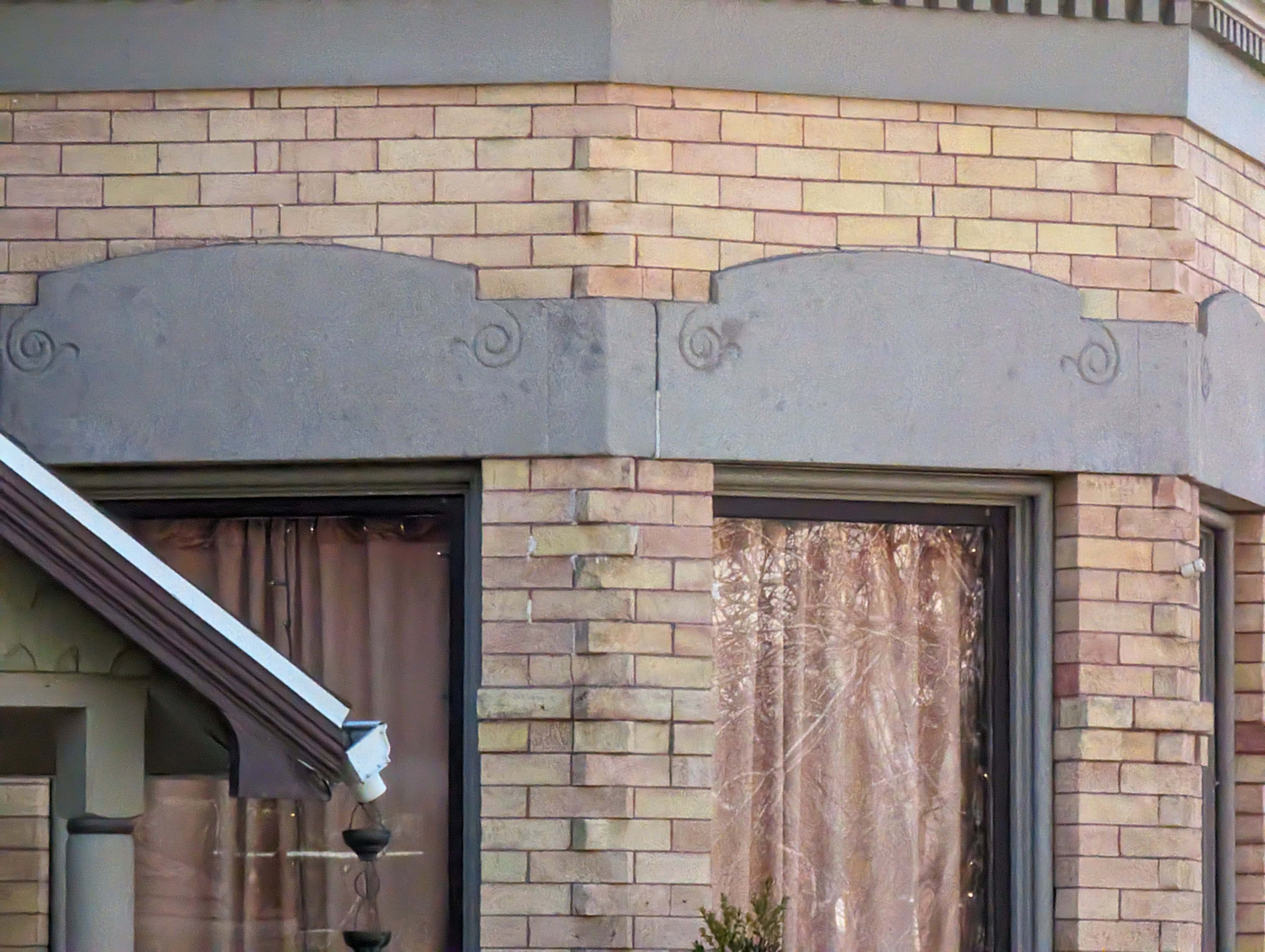
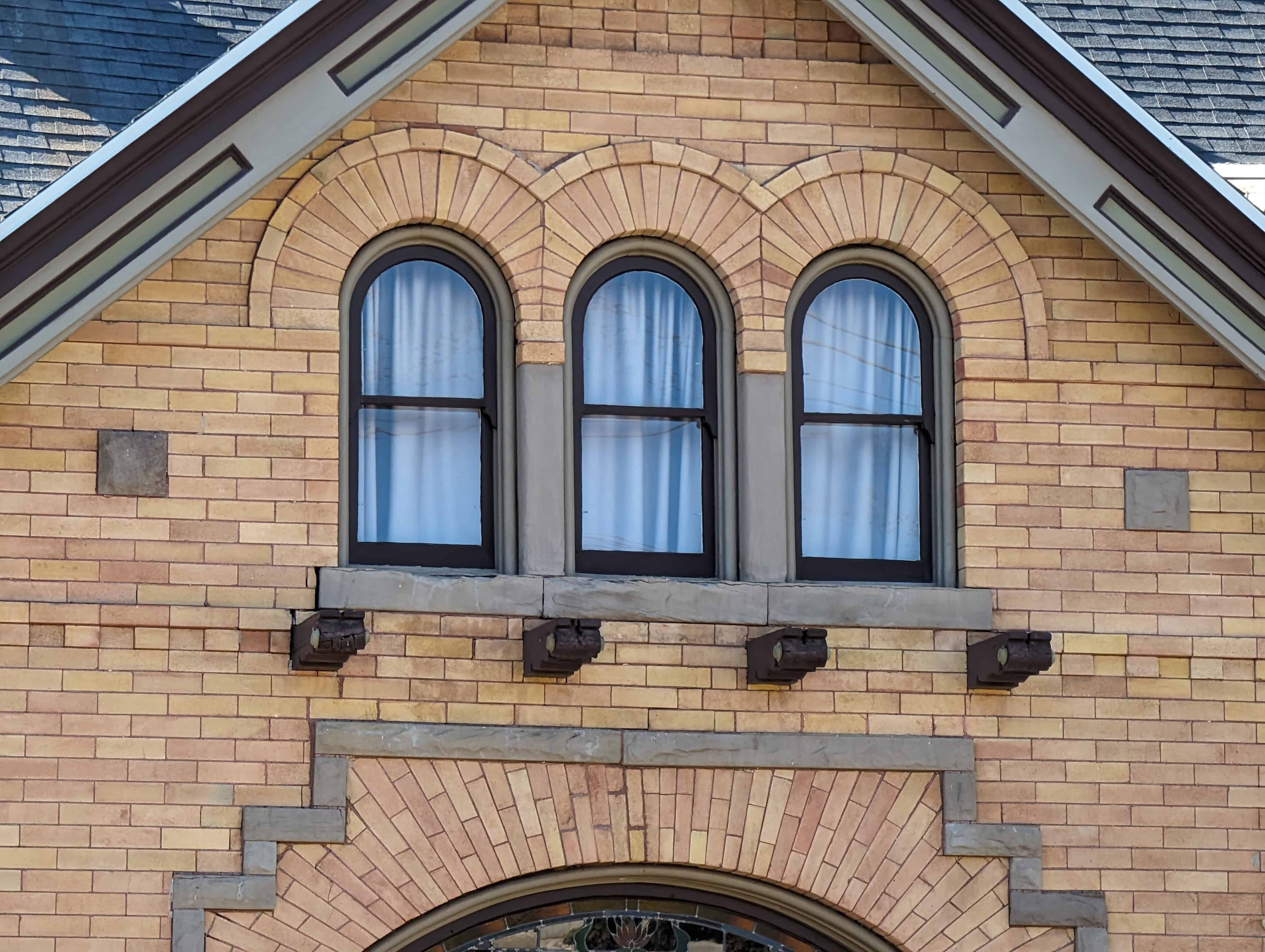
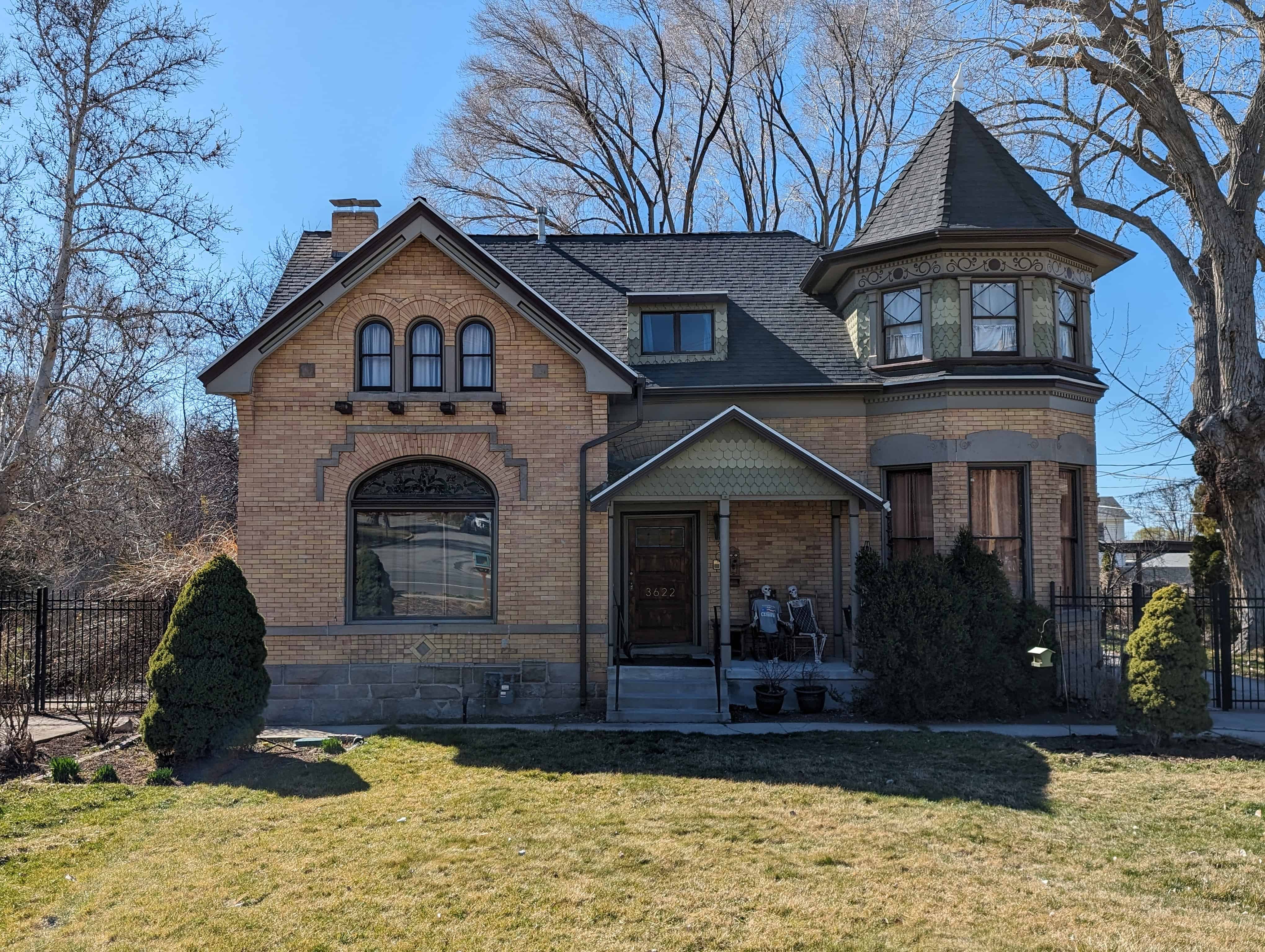
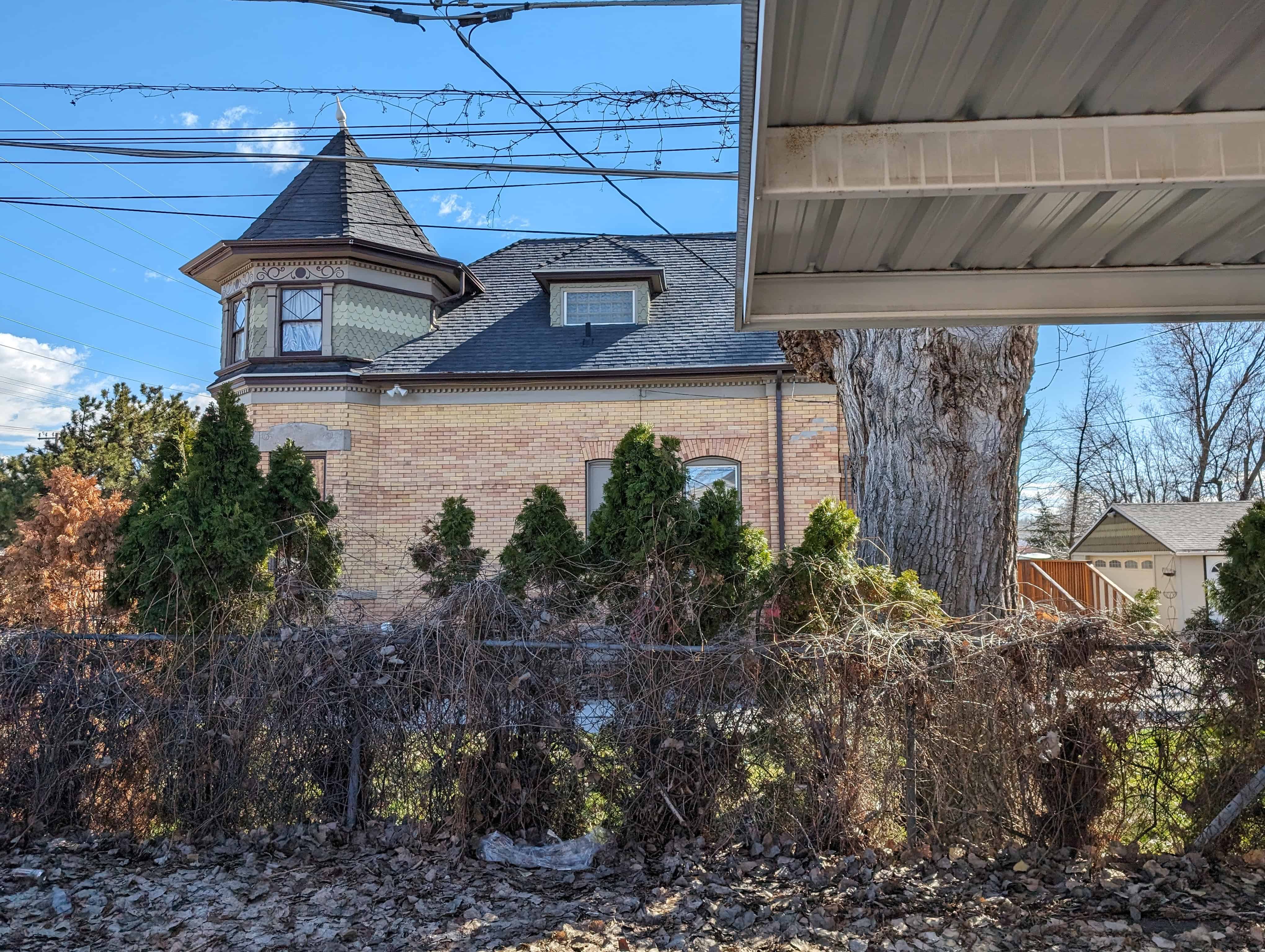
Built in 1896, this two-story Queen Anne and Victorian Eclectic style house was constructed for Amanda James Conk Best, a polygamous wife of Alfred Best, an early pioneer farmer and merchant. Architecturally significant, the house is unusually large and elaborate for its setting and time period; character-defining features include its prominent tower, asymmetrical floor plan, bay windows, detailed stone and brick work, and decorative shingles. This house has a twin, known as the Historic Barlow House, built by the same builder, located at 187 A Street in the Avenues.
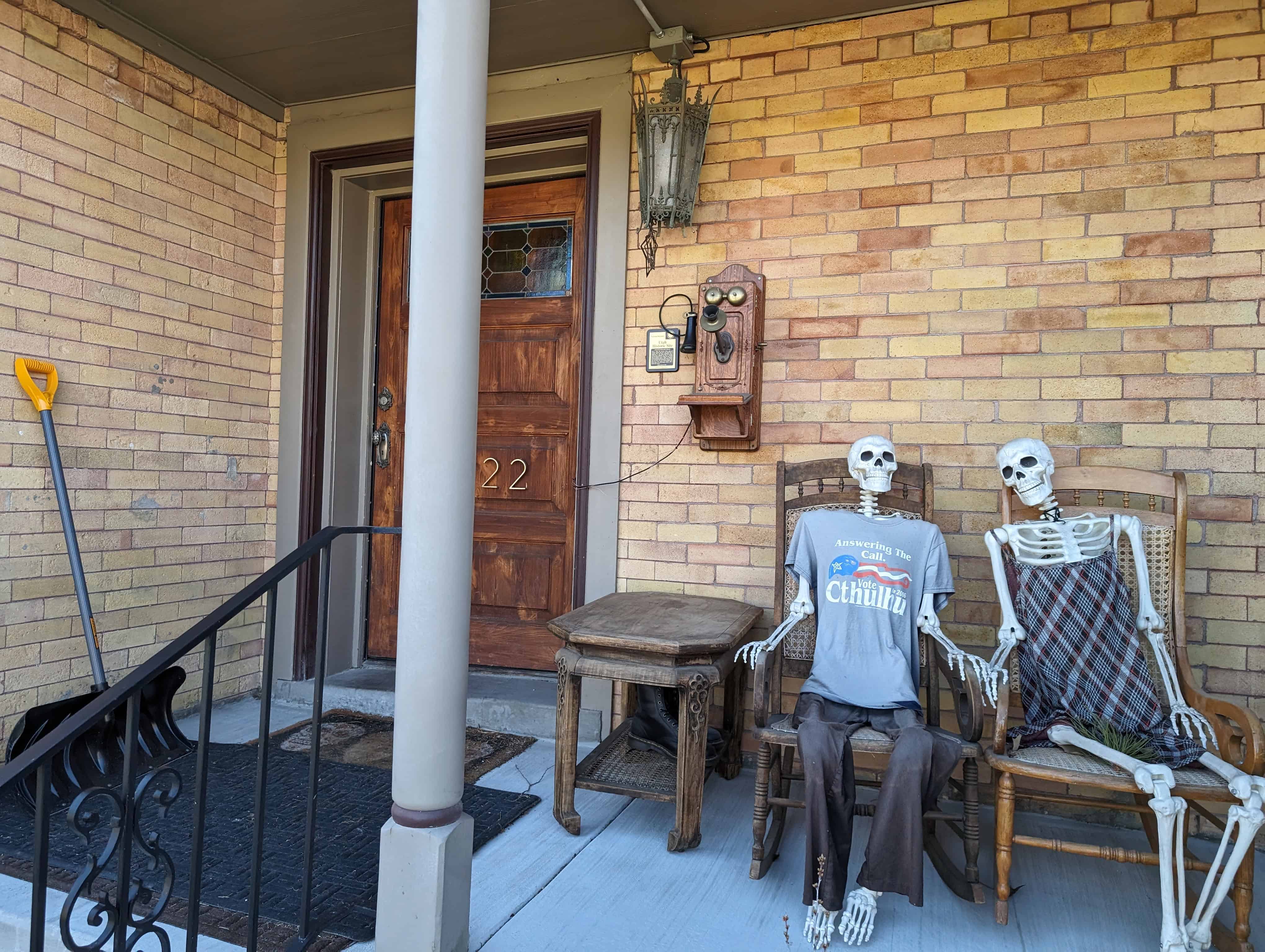
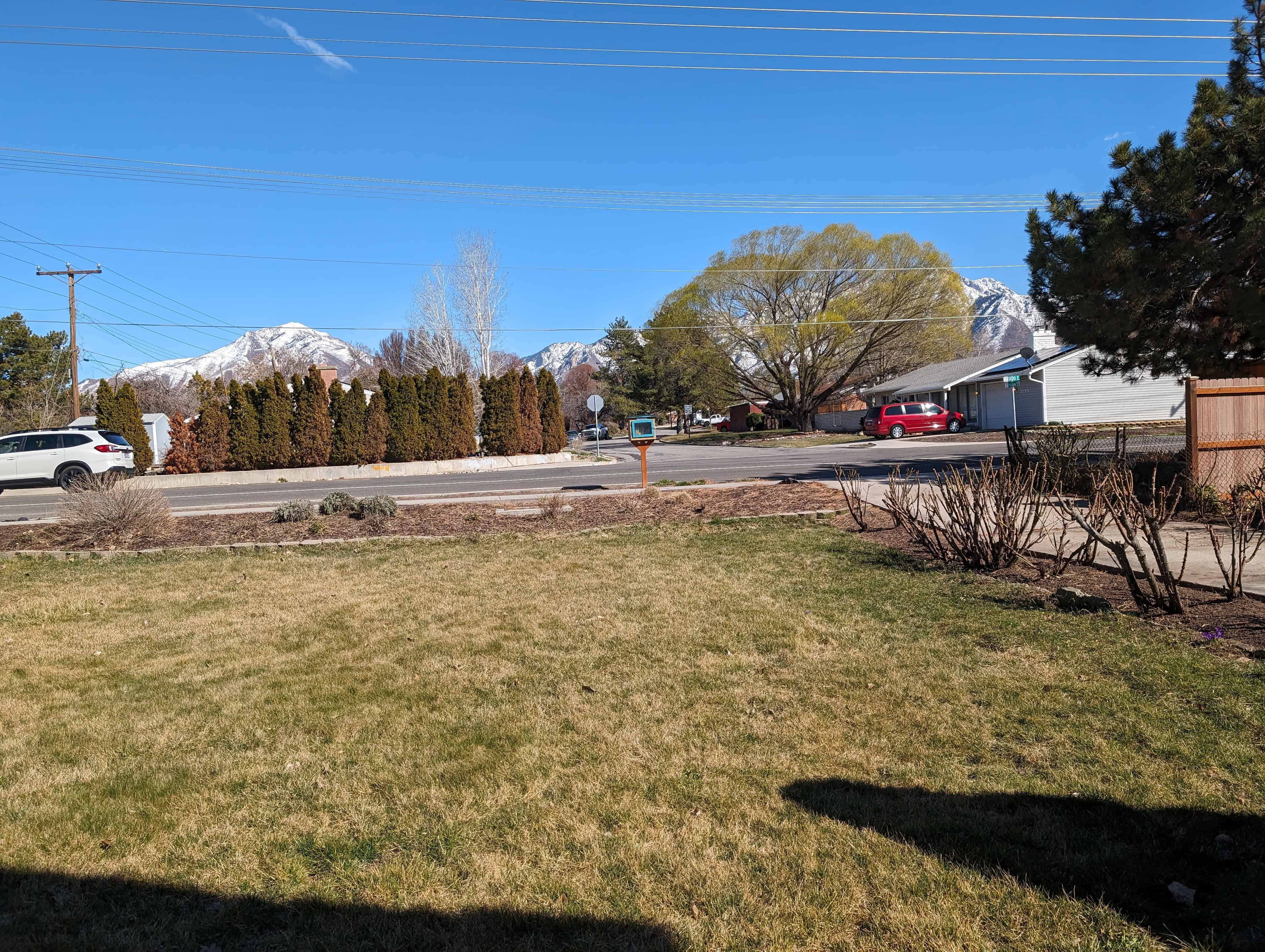
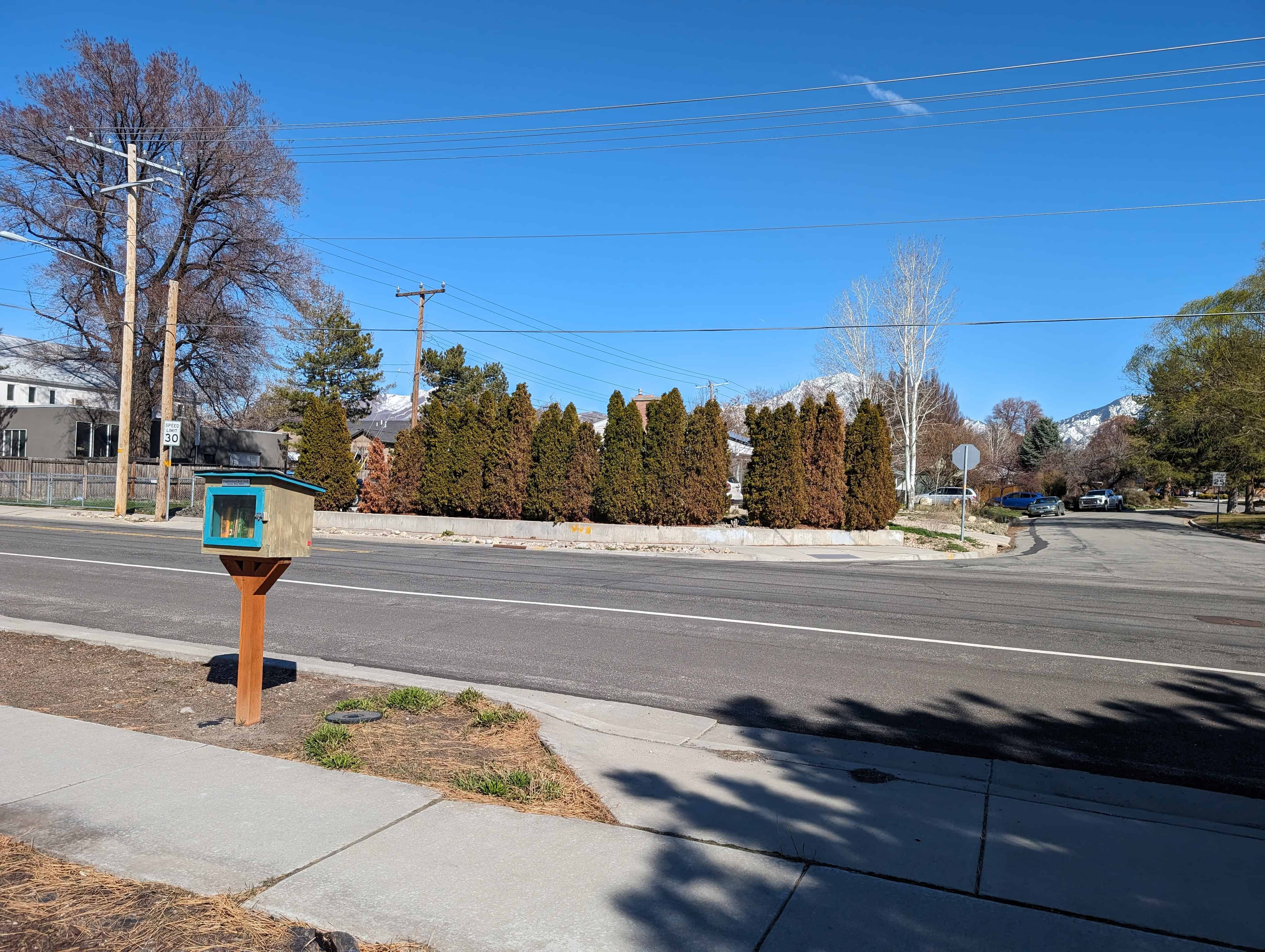
Located at 3622 South 1100 East in Salt Lake City, Utah and added to the National Register of Historic Places (#08001154) on December 4, 2008.
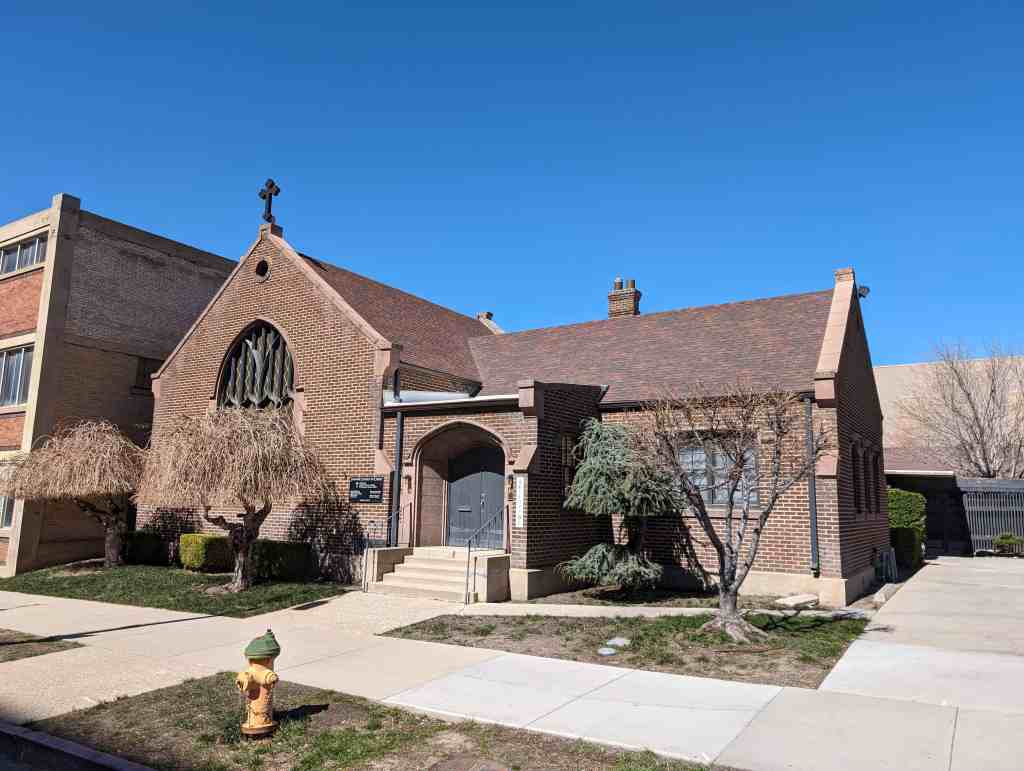
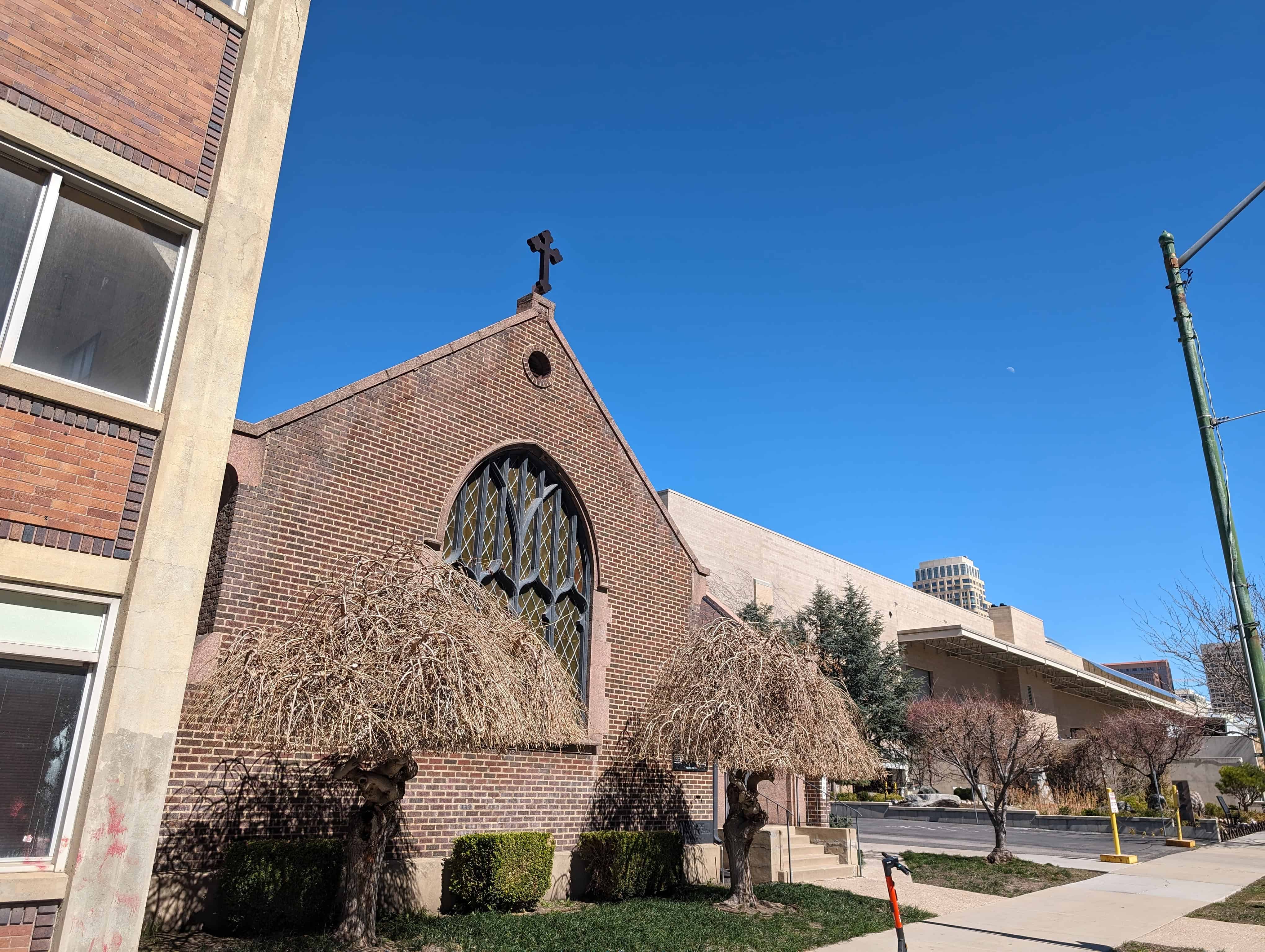
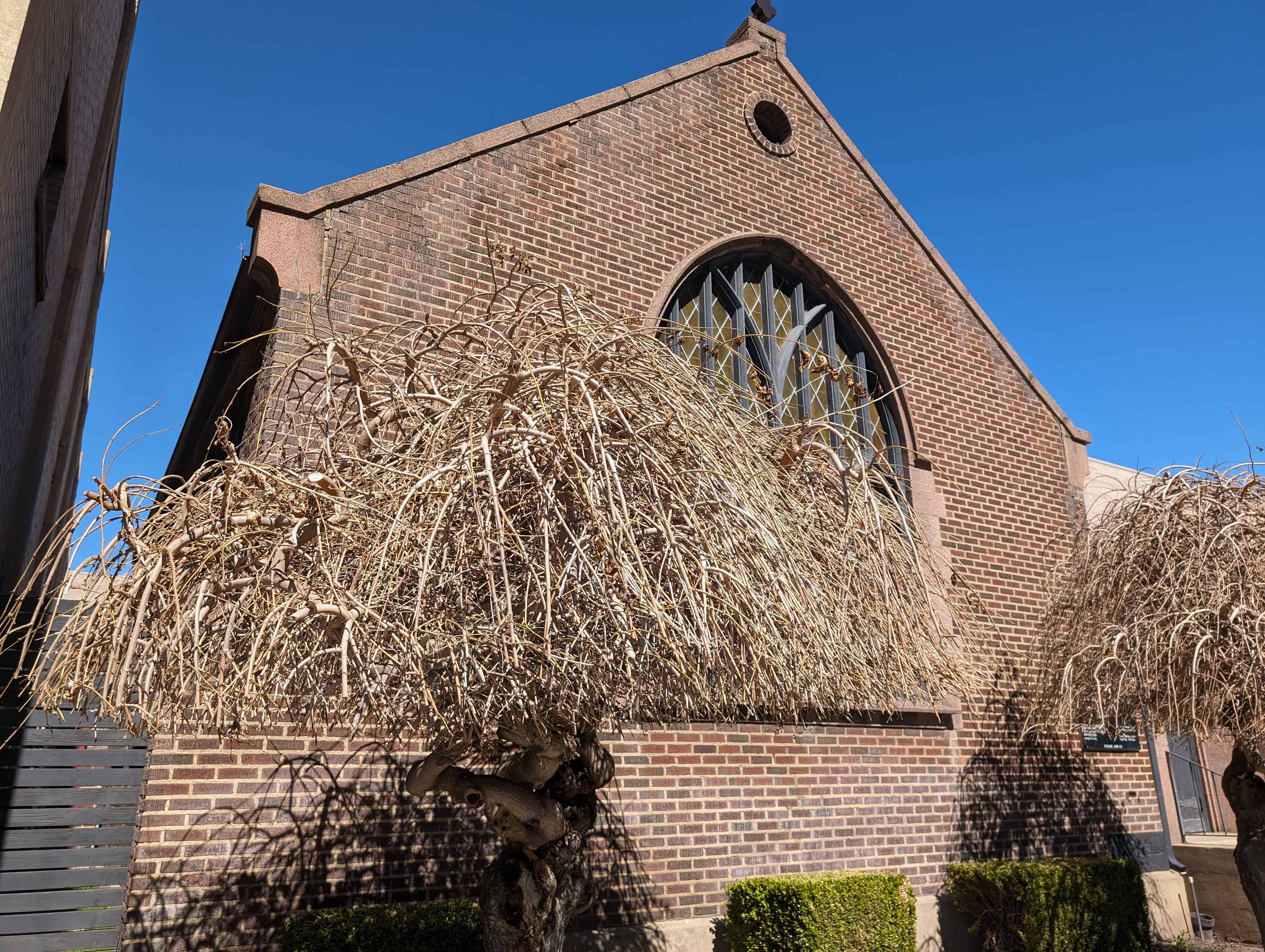
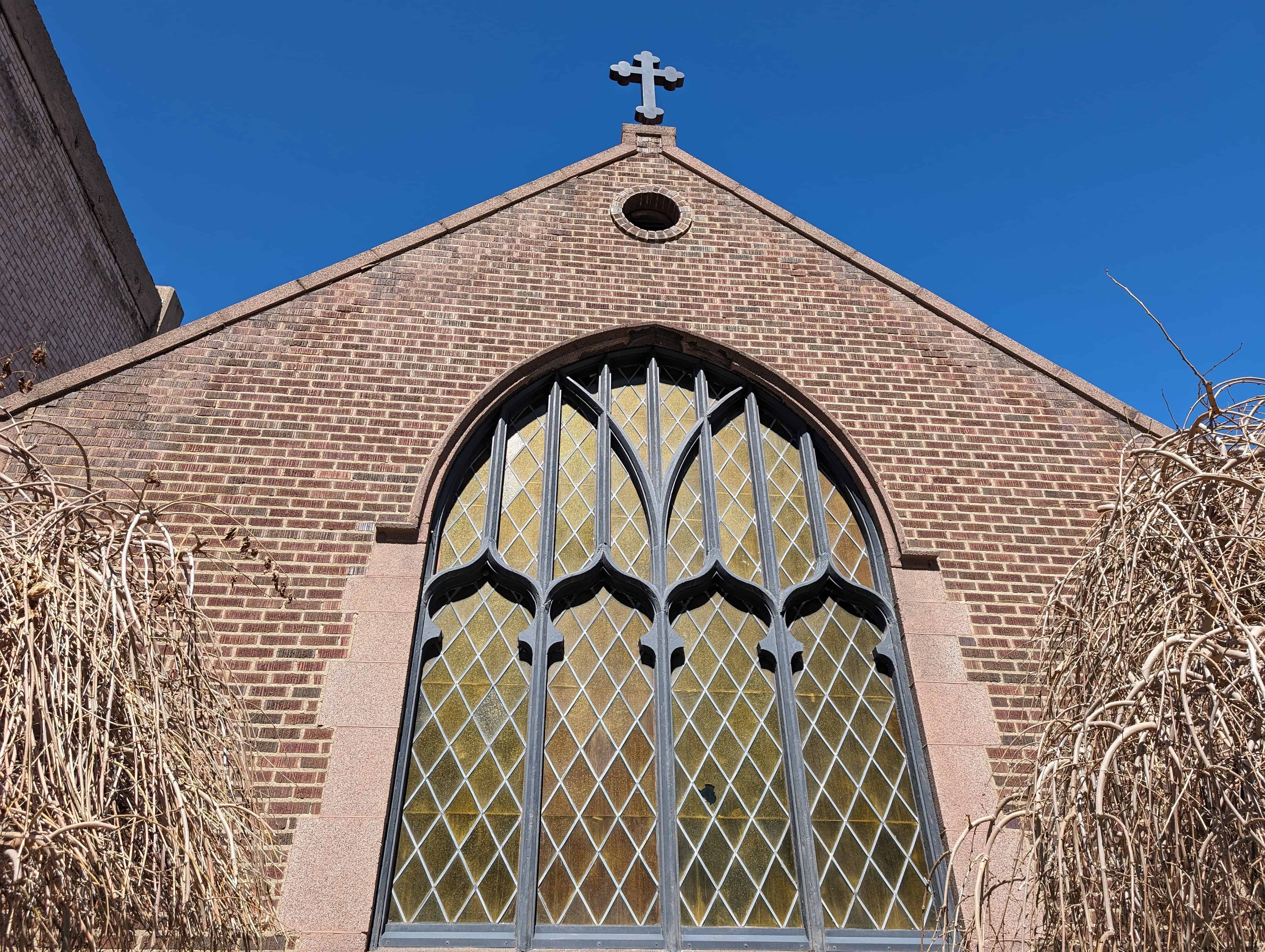
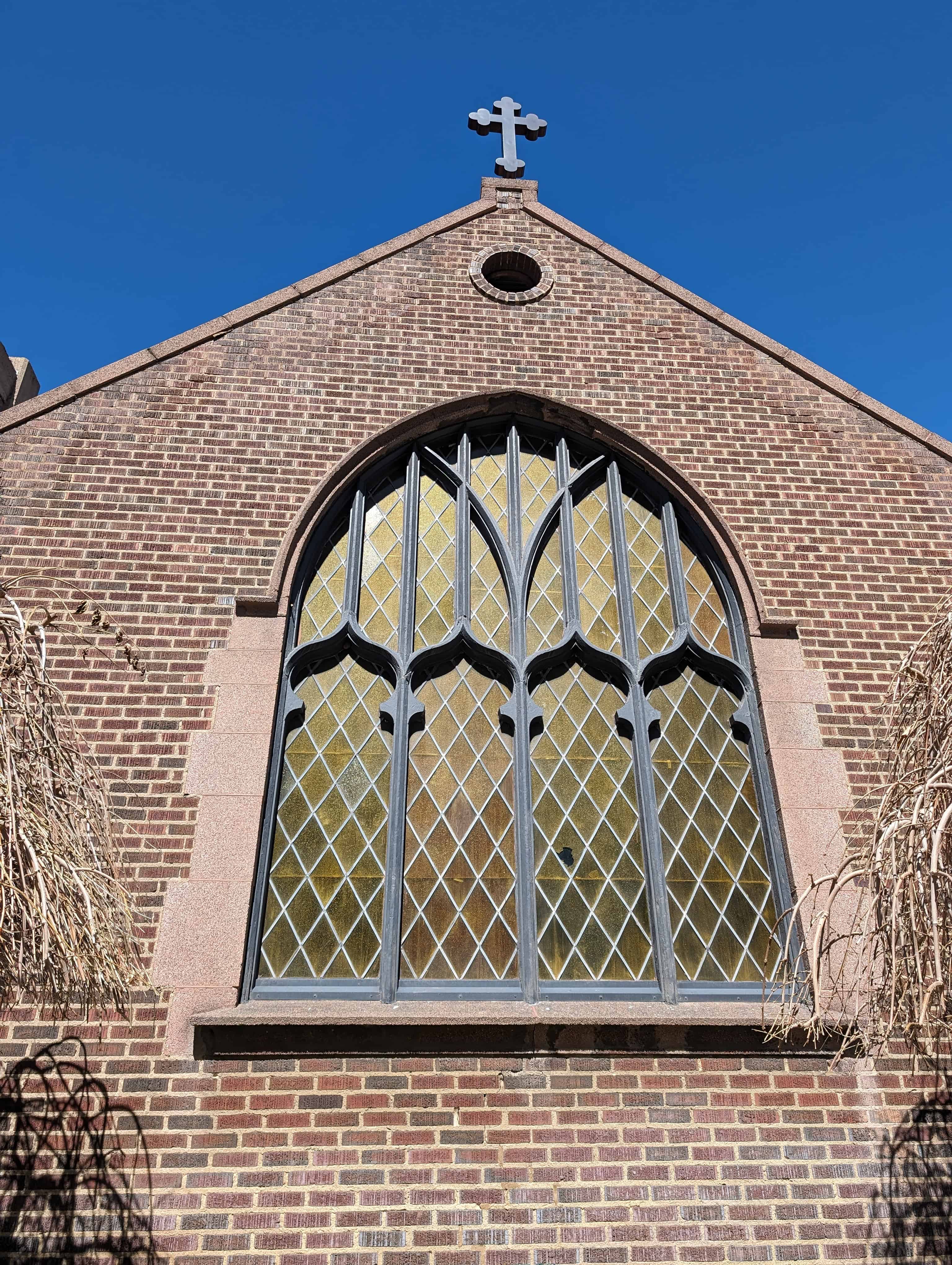
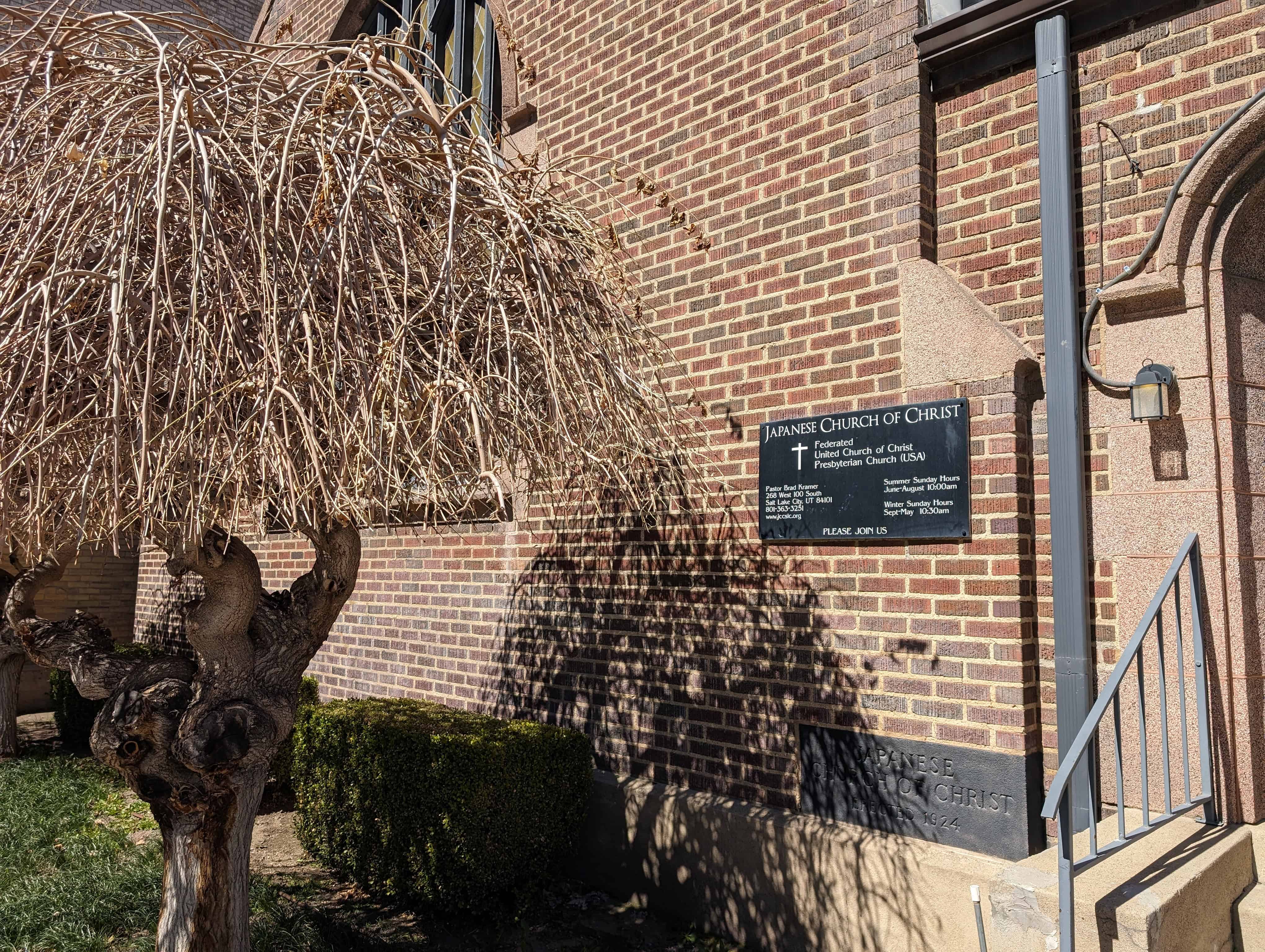
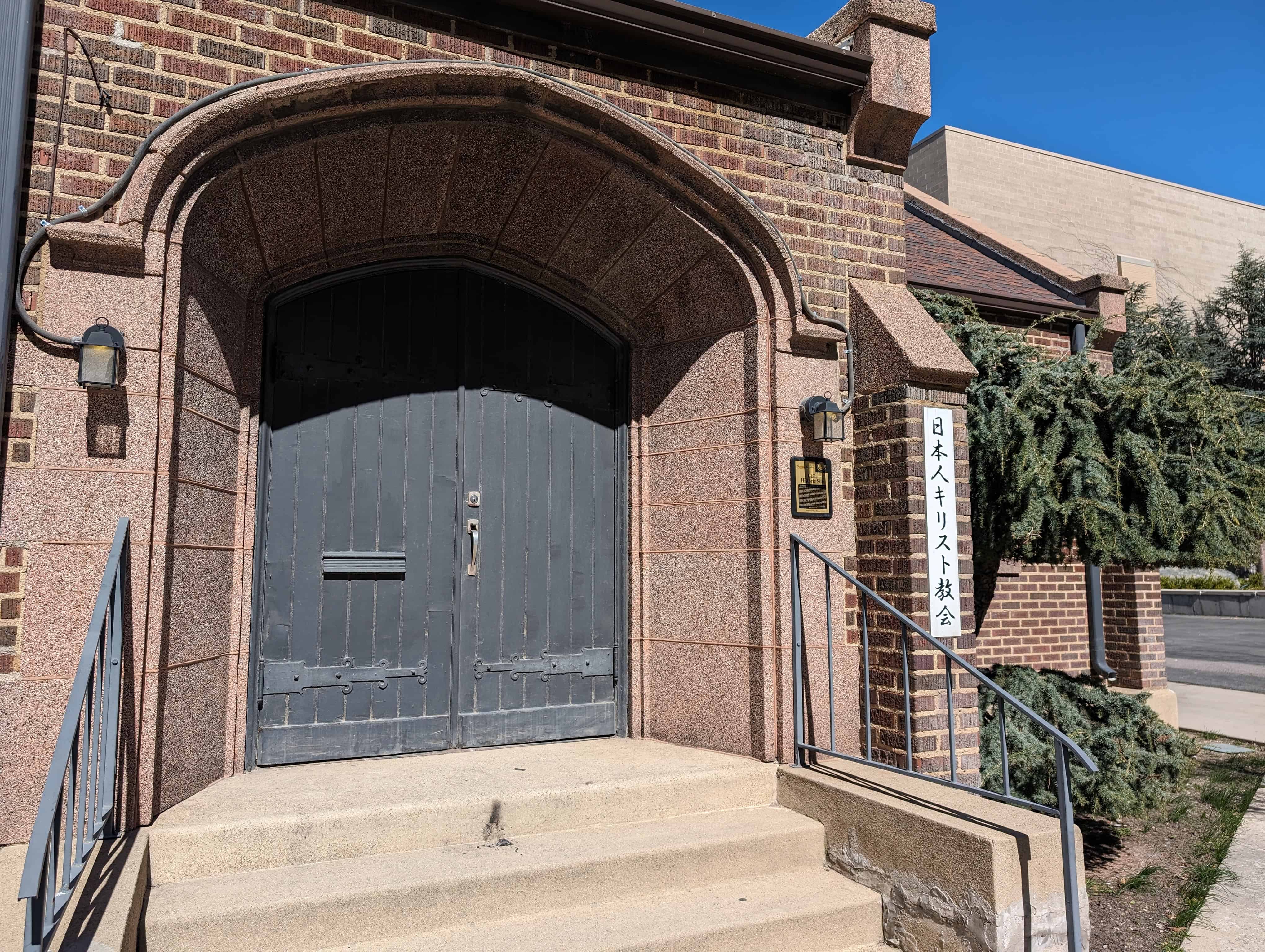
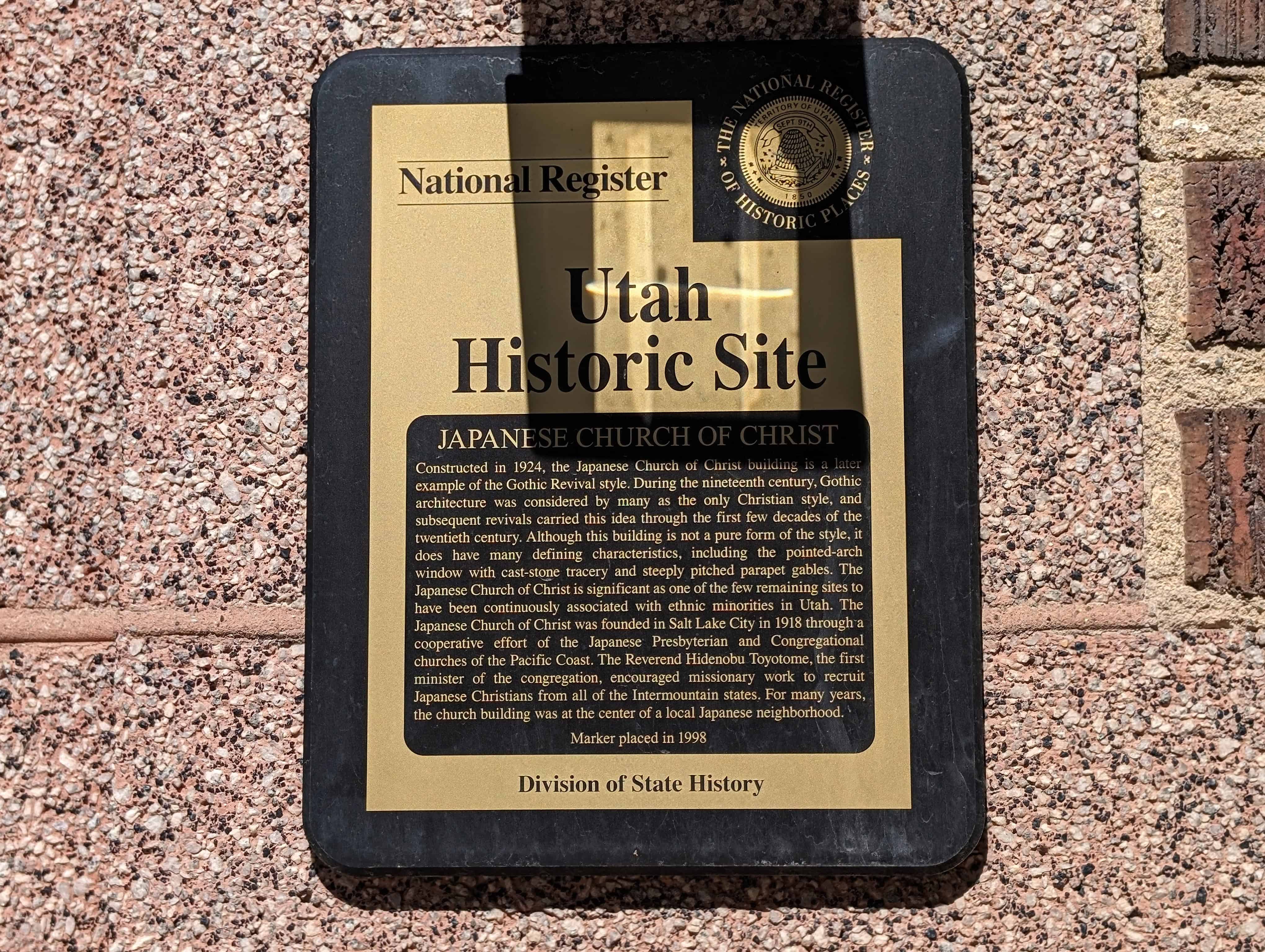
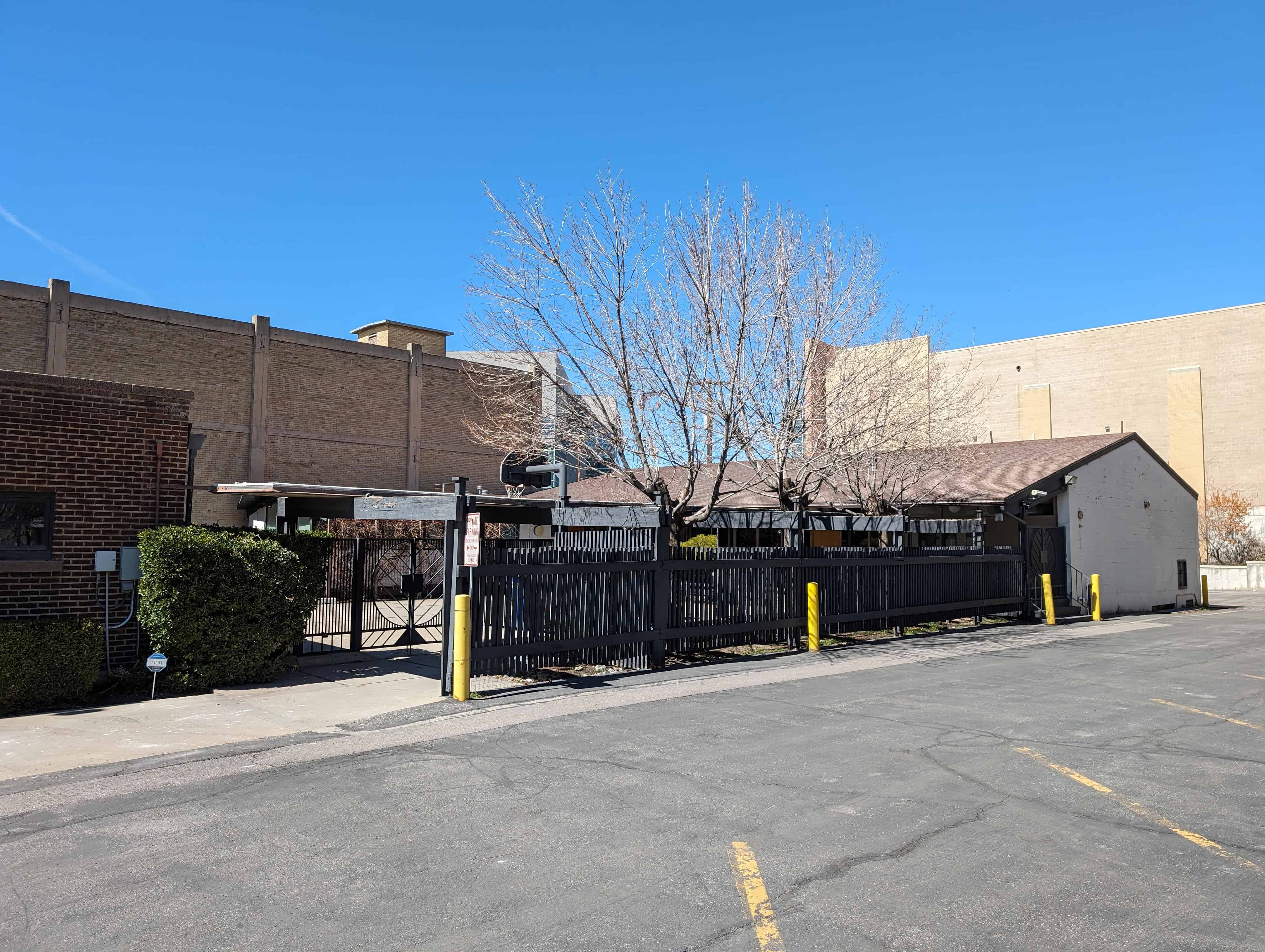
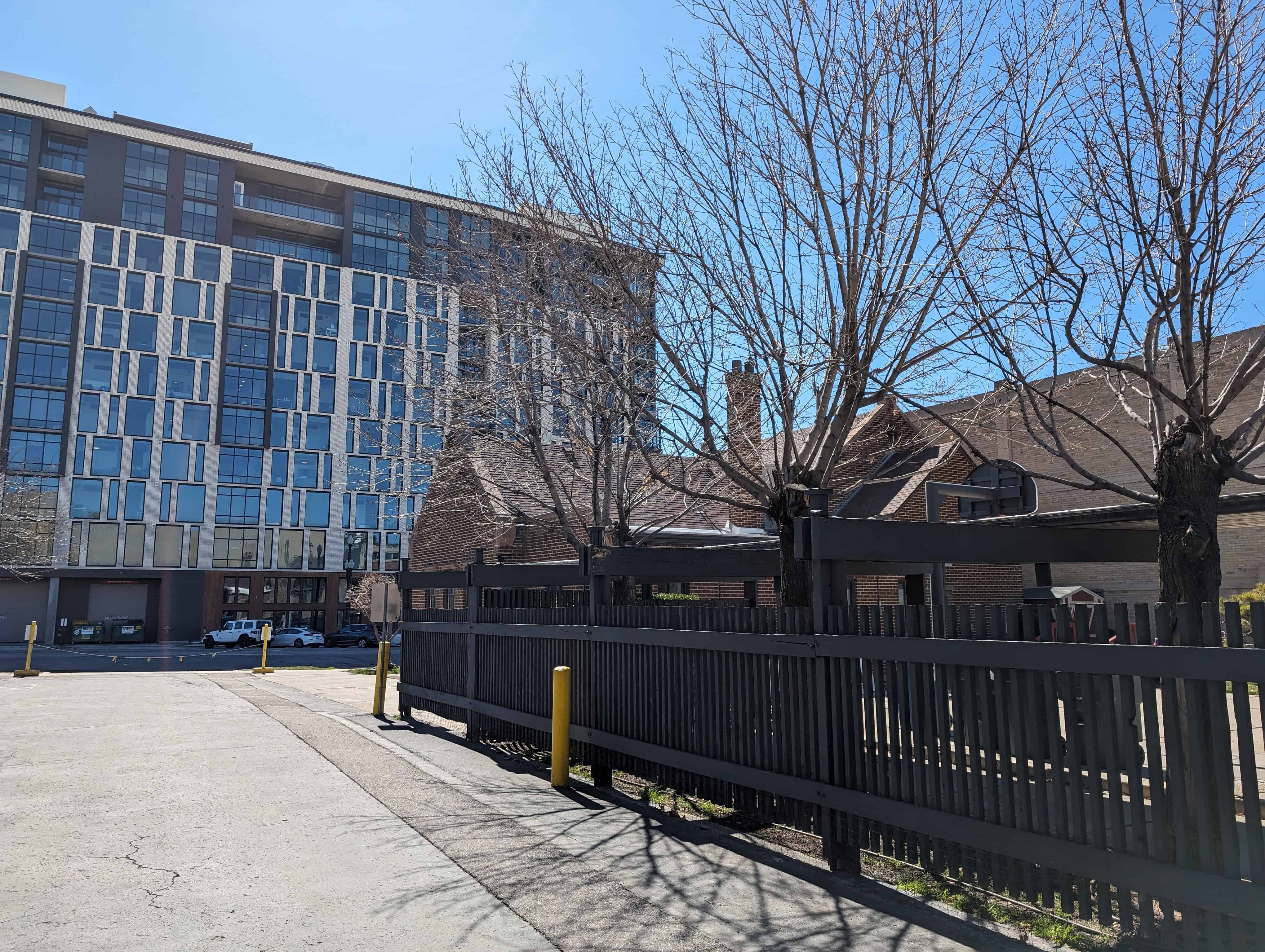
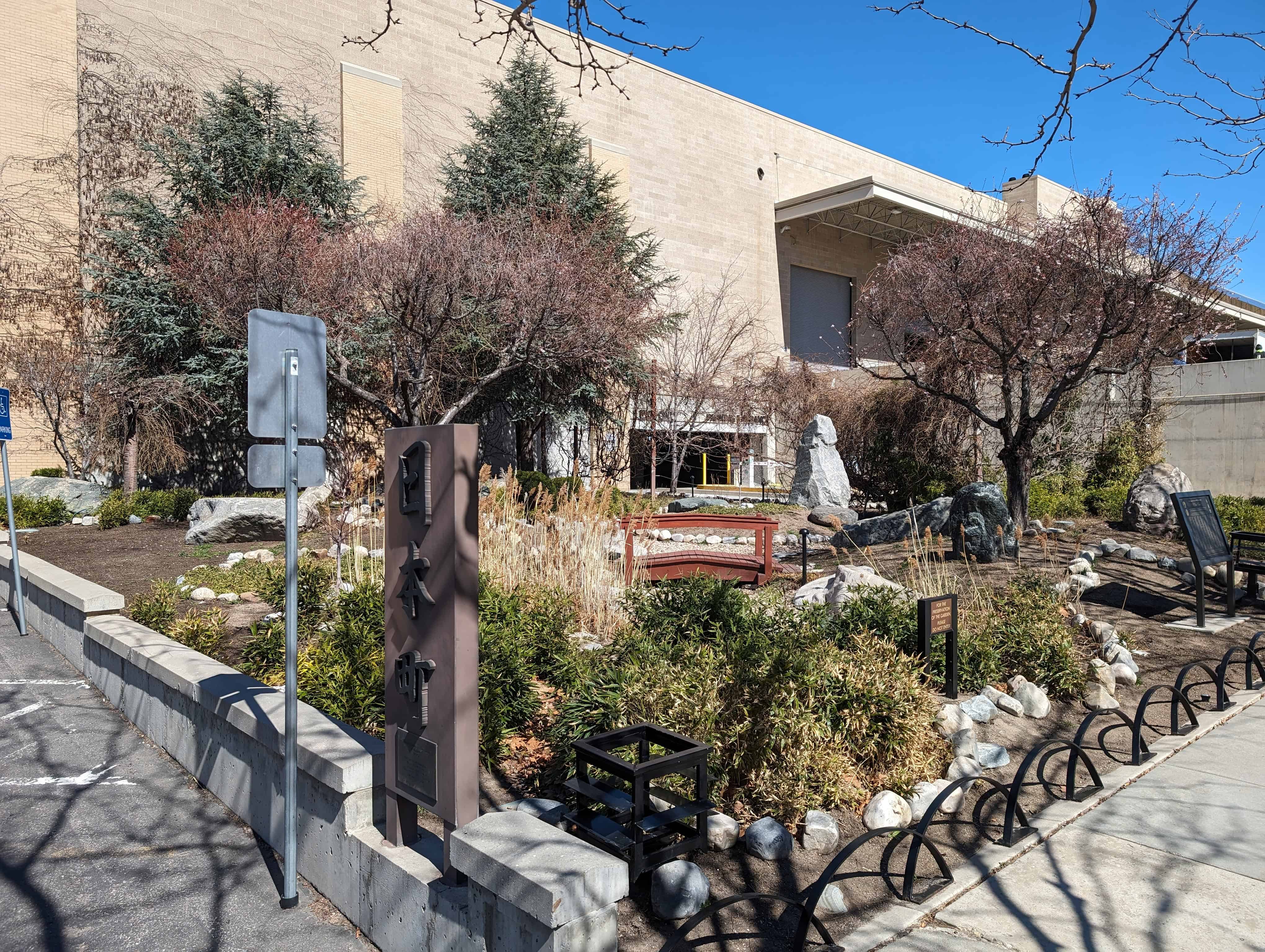
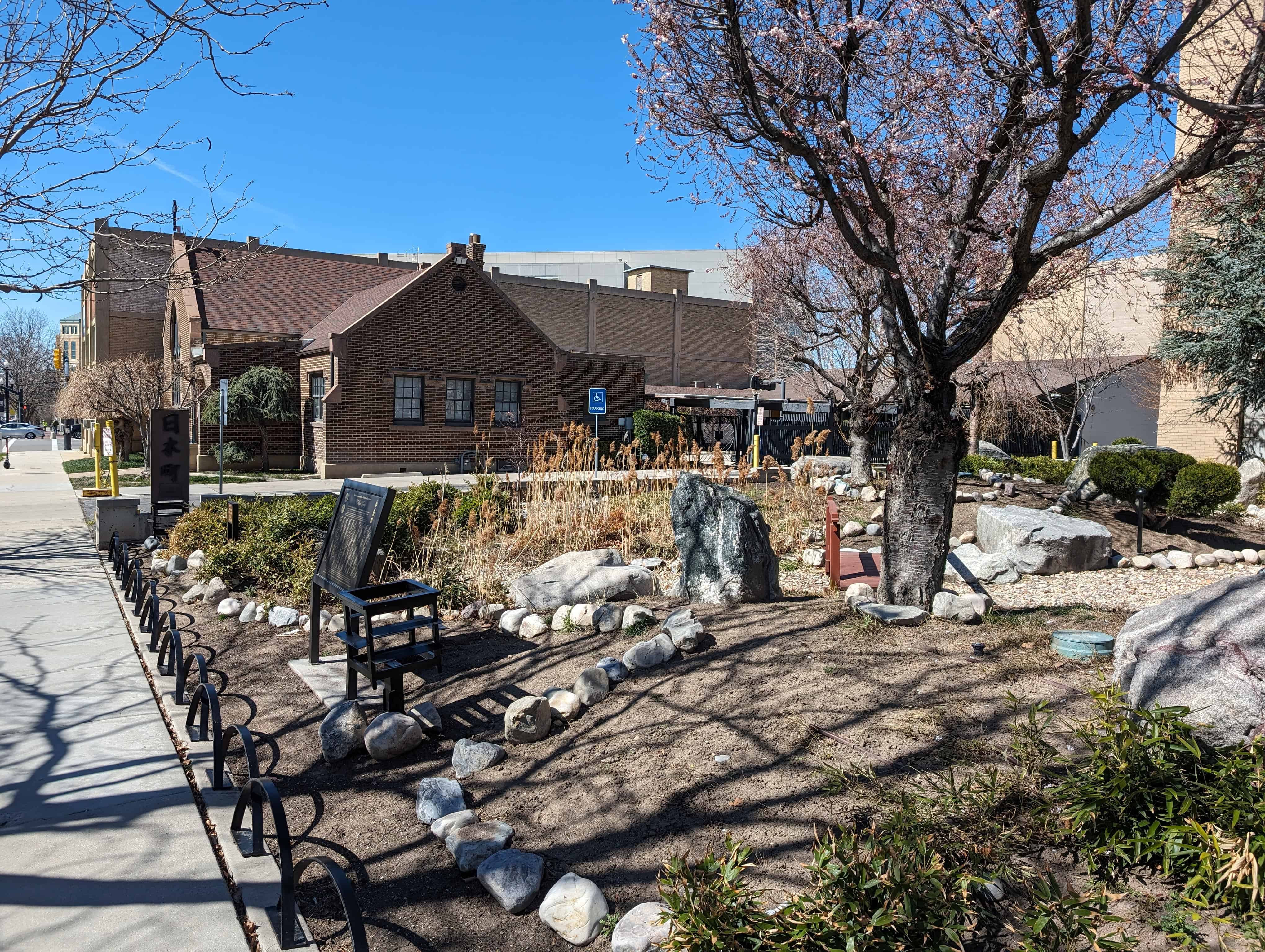
Constructed in 1924, the Japanese Church of Christ building is a later example of the Gothic Revival style. During the nineteenth century, Gothic architecture was considered by many as the only Christian style, and subsequent revivals carried this idea through the first few decades of the twentieth century. Although this building is not a pure form of the style, it does have many defining characteristics, including the pointed-arch window with cast-stone tracery and steeply pitched parapet gables. The Japanese Church of Christ is significant as one of the few remaining sites to have been continuously associated with ethnic minorities in Utah. The Japanese Church of Christ was founded in Salt Lake City in 1918 through a cooperative effort of the Japanese Presbyterian and Congregational churches of the Pacific Coast. The Reverend Hidenobu Toyotome, the first minister of the congregation, encouraged missionary work to recruit Japanese Christians from all of the Intermountain states. For many years, the church building was at the center of a local Japanese neighborhood.
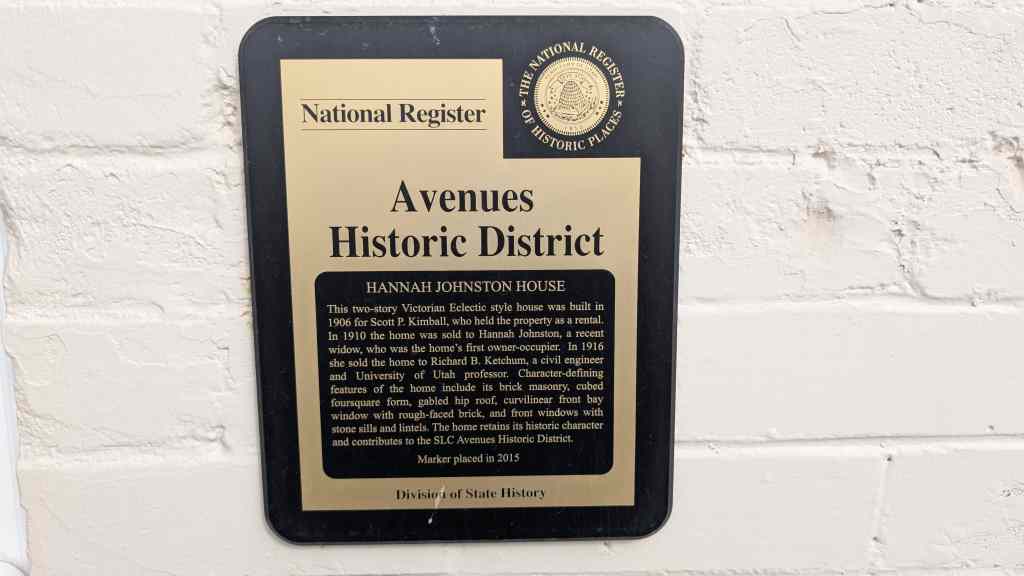
This two-story Victorian Eclectic style house was built in 1906 for Scott P. Kimball, who held the property as a rental In 1910 the home was sold to Hannah Johnston, a recent widow, who was the home’s first owner-occupier. In 1916 she sold the home to Richard B. Ketchum, a civil engineer and University of Utah professor Character-defining features of the home include its brick masonry, cubed foursquare form, gabled hip roof, curvilinear front bay window with rough-faced brick, and front windows with sandels. The home retains its historic character and contributes to the SLC Avenues Historic District.