• About JacobBarlow.com
  • Cemeteries in Utah
  • D.U.P. Markers
  • Doors
  • Exploring Utah Email List
  • Geocaching
  • Historic Marker Map
  • Links
  • Movie/TV Show Filming Locations
  • Oldest in Utah
  • Other Travels
  • Photos Then and Now
  • S.U.P. Markers
  • U.P.T.L.A. Markers
  • Utah Cities and Places.
  • Utah Homes for Sale
  • Utah Treasure Hunt

JacobBarlow.com

~ Exploring with Jacob Barlow

JacobBarlow.com

Tag Archives: NRHP

Dyre and Maria Amundsen House

27 Monday Mar 2023

Posted by Jacob Barlow in Uncategorized

≈ Leave a comment

Tags

Historic Homes, Murray, NRHP, Salt Lake County, utah

Dyre and Maria Amundsen House

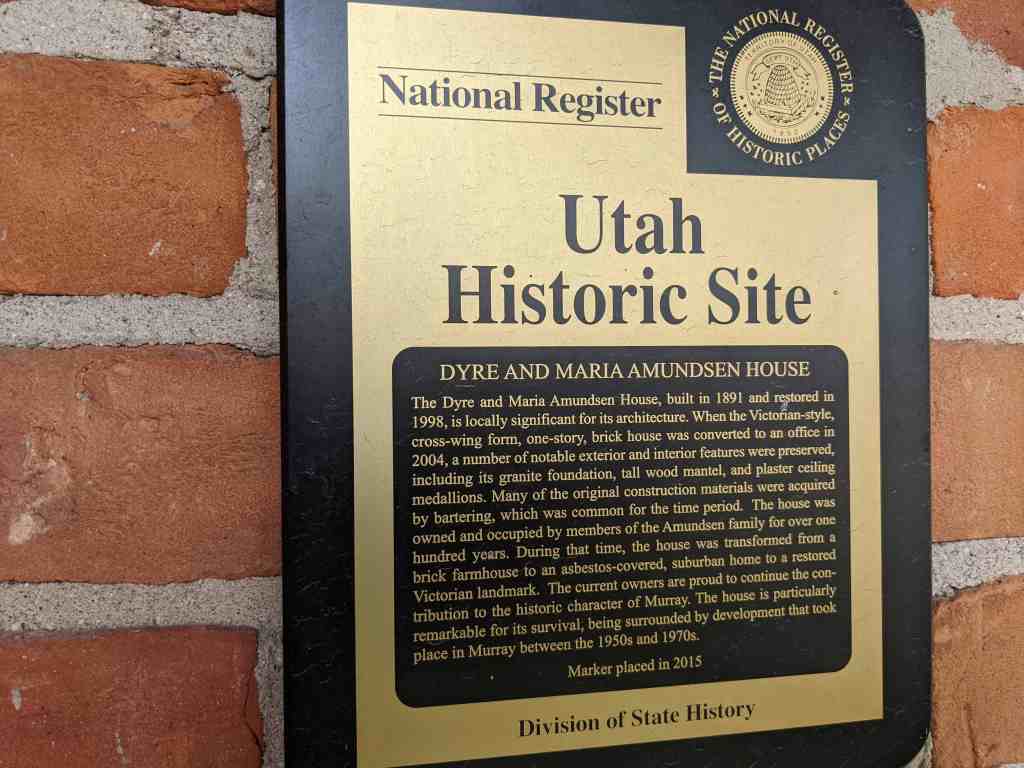
The Dyre and Maria Amundsen House, built in 1891 and restored in 1998, is locally significant for its architecture. When the Victorian-style, cross-wing form, one-story, brick house was converted to an office in 2004, a number of notable exterior and interior features were preserved, including its granite foundation, tall wood mantel, and plaster ceiling medallions. Many of the original construction materials were acquired by bartering, which was common for the time period. The house was owned and occupied by members of the Amundsen family for over one hundred years. During that time, the house was transformed from a brick farmhouse to an asbestos-covered, suburban home to a restored Victorian landmark. The current owners are proud to continue the contribution to the historic character of Murray. The house is particularly remarkable for its survival, being surrounded by development that took place in Murray between the 1950s and 1970s.

Located at 307 East Winchester Street in Murray, Utah and added to the National Historic Register (#15000131) on April 6, 2015.

The Dyre and Maria Amundsen House, built in 1891 and restored in 1998, is locally significant under Criterion C in the area of Architecture. Although the Victorian-style one-story brick house was converted to an office in 2004, a number of notable exterior and interior features have been preserved. These include the granite foundation, a tall wood mantel, and plaster ceiling medallions. The house was owned and occupied by members of the Amundsen family for over one hundred years. During that time, the house was transformed from a brick farmhouse for a major farmstead to an asbestos covered suburban home to a restored Victorian landmark. The house is particularly remarkable for its survival at the edge of an explosion of residential and commercial development that took place in Murray between the 1950s and 1970s. The period of significance dates from the construction of the house in 1891 to the remodeling in 1951. The house is a particularly elaborate early example of a cross-wing Victorian cottage in Murray, especially considering the construction materials were acquired by the barter system common for the time period. The property meets the registration requirements under the Multiple Property Submission, Historic Resources of Murray City, Utah, 1850–1967. The associated historic contexts are “Early Residential and Agricultural Buildings of Murray, 1850-1910” and the “Americanization of Murray’s Residential Architecture, 1902-1965.” The Dyre and Maria Amundsen House has good historic integrity and contributes to the historic character of its Murray neighborhood.

When the Amundsen House was built in 1891 in the Victorian Eclectic style, it did not have the visual complexity of contemporaneous homes in the fashionable urban neighborhoods of Salt Lake City. The house did have a simple elegance that was suited to its rural setting. The unknown builder used a modified cross wing plan and a variety of materials to achieve the visual interest that is characteristic of the Victorian-era domestic architecture in Utah. Dyre Amundsen helped to haul granite blocks for the construction of the Salt Lake City LDS temple and family oral tradition suggests that Amundsen was given permission to select cast-off blocks for personal use. Much of the wood used in the house came from locust trees that Dyre Amundsen planted in the late 1860s or early 1870s. The red and contrasting yellow bricks were likely produced at the local brickyard in Murray. The brick and windows were paid for by a one-acre crop of potatoes. The interior spaces in the south half of the house are larger than the typical house of the period. Family tradition states that Dyre Amundsen received the two large plaster ceiling medallion moldings from the LDS Church as payment for hauling the granite blocks. The brick moldings, granite blocks, ceiling medallions, wide corridors, are atypical for a Victorian-era cross-wing house of the period in Murray.

The Amundsen House as a product of the Victorian period marks a pivotal point in Murray’s history. The availability of kiln-dried brick in the 1860s and the coming of the railroad in the 1870s transformed Murray’s domestic architecture from vernacular buildings to Victorian forms with asymmetrical massing and a variety of texture. The Victorian cottage was the most popular house type in Murray between 1884 and 1910. Dyre and Maria Amundsen originally built an adobe house on their homestead in the late 1860s, then worked many years to afford the spacious brick home that built in 1891. In the post World War-II era, the old brick house may have seemed out-of-date as frame cottages and brick ranch houses were built on the former Amundsen homestead. The family had the house covered with asbestos siding in 1951 effectively suburbanizing it for the next generation. The 1996 to 1998 rehabilitation of the house restored much of the Victorian elegance and was awarded a Utah Heritage Foundation award in 1999.

Dyre Amundsen was born on June 11, 1837, in Gernserud Buskerud, Norway. The family name was Anunsen in Norway. Dyre immigrated to Utah in 1862. While helping to bring other immigrants across the plains in 1863, Dyre Anunsen met and married Beata Erickson, who died in October 1863, only a month after their marriage. Dyre was living in South Cottonwood in 1865 when he met Sophia Maria Person. Maria Person was born in Marna, Sweden, in 1833.2 She immigrated to Utah in 1864.

Dyre and Maria were married in October 1865.3 They lived with the Wheeler family until a small cabin was built for them on Andrew Hammer’s property. Their son, John David, was born in the cabin in December 1867. Dyre Anunsen served in Utah’s Black Hawk War in 1866 and was award a medal for his service. Sometime in 1867 or 1868, Dyre Anunsen claimed a homestead on land along the angled land that would become 6400 South. As a latecomer to the area, his homestead of 160 and 37/100s of an acre was in the shape of an upside down “T” and claimed in three separate parcels. Dyre built a two-room adobe house for his family where a daughter, Sarah Ann, was born in January 1870. A second daughter, Marinda, was born there in April 1873. The adobe house was located west of the later brick house. Dyre was a logger and a farmer. One of the first projects he completed on his homestead was planting a grove of locust trees. The family would later use the wood to build a barn, fences, and the woodwork in the brick house. On February 20, 1875, Dyre Anunsen was granted a land patent for his homestead property.

The Anunsen begin using the name “Amundsen” in the 1880s. In 1891, Dyre filed a deposition with Salt Lake County to change the name on his deeds. The brick house was built in 1891. The builder is unknown, but Dyre himself may have placed the granite foundation blocks that he acquired. The bricks, windows, and other building materials were paid for by an acre of potato crop. The plaster ceiling medallions were reportedly given to Dyre in payment for hauling some of the granite for the Salt Lake temple.4 The Amundsen house and property were at the southern edge of Murray City after annexation in 1905. Dyre Amundsen died on November 17, 1906. He is buried in the Murray Cemetery. At the time of his death, the homestead property had been reduced by more than a half. The land and its water shares were divided between Maria Sophia Amundsen and her three children. Both daughters, Sarah Ann Amundsen Jensen and Marinda Amundsen Boyce, had been married several years and were living in Idaho. In 1909, Maria Amundsen deeded her acreage to her son John David, but retained a life estate. Maria Sophia Amundsen died on August 9, 1918. Her funeral was held in the Grant Ward meetinghouse and she was buried in the Murray Cemetery.

John David Amundsen married Alma Pauline Janson on September 19, 1899. Alma was born in Sweden in 1860 and immigrated to Utah in 1897. On the 1900 census, John David (as David) and Alma are living with his parents, Dyre and Maria. David and Alma had three children: Alice Engre Sophia (born in 1901), Edith Selma Lenora (1903), and Wallace Janson (1906). In a letter describing the history of the house, Edith’s daughter-in-law, Linda Adams, wrote that “the house became two dwellings [Edith’s] parents occupying the three rooms on the West side and her grandparents the two rooms on the East.”5 Edith recalled the driveway was lined with “tall stately poplar trees” and her grandmother had planted the front yard with “yellow roses and Mormon tea vine.” The rest of the yard was planted with “as many shrubs as possible to keep the dust down.”6 David and Alma kept the land as productive as they could, raising vegetable, hay, and sugar beets.
The early settlement of the area began soon after the members of the Church of Jesus Christ of Latter-day Saints (LDS or Mormon) began arriving in the Salt Lake Valley in 1847. Mormon pioneers quickly spread out from Salt Lake City in search of suitable agricultural land. By 1848 a settlement in the area later known as Murray was established eight miles south of Salt Lake City. The settlement was first called South Cottonwood and was a community of scattered farmsteads originally extending from the Big Cottonwood Creek to the southern end of the Salt Lake Valley, east to the Wasatch Mountains, and west to the Jordan River. As more settlements were established in the south valley, the name South Cottonwood was retained by a group of farmers organized as the South Cottonwood Ward of the LDS Church. An adobe meetinghouse, located at the corner of Vine Street and 5600 South, was the community center for the group. The main north-south corridor was the Territorial Road (later State Street). The Salt Lake City & Jordan Canal and the East Jordan Canal were dug to bring water from the Big and Little Cottonwood Creeks to the farmsteads between South Cottonwood and the settlement of Union to the southeast.

The north half of the South Cottonwood did not remain rural. At the west end Vine Street, an industrial and commercial center began to grow in response to several smelters that were established near the railroad lines west of State Street in the early 1870s. In 1883, the name Murray (after the territorial governor, Eli Murray) was adopted for the town’s official postal designation. The name Murray became official during the incorporation of the city in 1903. At the time of incorporation the boundaries of the city extended from approximately 4500 South to 5600 South, and 900 East to 900 West. In 1905, the city boundaries were extended south to include both sides of 6400 South, which was the main east-west corridor and marked the south boundary of the historic South Cottonwood community.

During the first half of the twentieth-century, Murray City was an industrial town with its own power plant, water system, and school district. Residential development took place near the city center or along the major transportation routes, while the outlying areas continued as farmland. After the last remaining smelter closed in 1950, Murray City with its stable infrastructure and centralized location experienced a post-war suburban building boom. The population jumped from 5,740 in 1940 to 21,206 in 1970. Between 1946 and 1967, sixty seven subdivisions of mostly single-family ranch houses were platted within the boundaries of Murray City. In 1972, commercial property along State Street between 6100 and 6400 South was consolidated for the construction of the Fashion Place Mall. The opening of the mall was planned to coincide with the construction of the Interstate-215 belt route just south of 6400 South. Since the 1970s, the commercial development around the mall has spread along 6400 South east to 900 East. Only a few historic homes, such as the Dyre and Maria Amundsen House, remain to tell the story of the neighborhood’s agricultural past

The census indicates all three grown children were living at home in 1930. Alice worked as a stenographer, Edith was a saleslady for a dry goods store, and David and Wallace worked the farm. David deeded approximately eleven acres in the north half of the property to Wallace in 1931. Alice Amundsen died of influenza in May 1933. One month later, Edith Amundsen married Bronson Adams. Bronson Howard Adams was born in Beaver, Utah, in 1908. Bronson and Edith moved away for a short time, but returned to live at the Amundsen House in 1934. It would be the only time in her life that Edith did not live in the family house on 6400 South. Alma Pauline Janson Amundsen died in February 1936. John David Amundsen died in December 1939. That year, Wallace Amundsen, who remained a bachelor, gave Edith his share of the property with the family home. Wallace Amundsen was living with Edith’s family on the 1940 census, but later moved to an adjacent home at 353 E. 6400 South. He died in 1979.

Edith and Bronson Adams had three children, Kathleen, Patricia, and Howard. Bronson worked in sales and as a warehouseman before starting a career with the Union Pacific Railroad. In July 1949, Bronson Howard Adams died during an operation at the age of forty. In order to care for her family and pay the taxes, Edith sold off much of the family property by the mid-1950s. The covering of the brick house in asbestos shingles in 1951 occurred just after the first postwar subdivision in the south half of Murray was developed between 1946 and 1950. Two of the largest subdivision developments in Murray, Murray Dale and the Murray Dale Addition, were platted in 1953 and 1954, north and east of the Amundsen house on land that was formerly part of the Amundsen farmstead. Edith Adams graduated from the Salt Lake Business School and worked for the Frank Edward Company until her retirement in 1970. When she passed away on October 15, 1995, she was recognized as a lifelong resident of Murray. After her death, her son Howard and his wife Linda, restored the family home. They were assisted by Dan Lossee, a local architect. The home was rented intermittently by family members and others before being sold to Tamra Lee, the owner of the Mt. Olympus Title Company in 2004.9 Although a busy title company office, the house maintains its domestic charm.

Narrative Description

The original footprint of the Amundsen House is a rectangle of 40 feet by 26 feet with a six-foot projecting wing at the southwest corner. The foundation is made from large rock-faced granite blocks. The red brick is laid in a common (American) bond with headers every seventh course. The mortar joints are flush and are a contrasting light tan. There is plain wooden frieze (painted tan) under the eaves. The west projecting wing has a hipped roof. The main wing runs west to east with a simple gable that has been extended to the north. The bell cast extension of the roof above the front porch was made during the 1998 renovations. The wood shingles were installed at the same time. The south projection has two narrow Victorian windows with ornamental drip hood moldings of segmented and corbelled brick in a contrasting tan color. The sills are corbelled rowlock brick. The moldings and the original wood sills were damaged and replaced in 1998.

The current wood windows were installed in 1998, but are similar to the original one-over-one, double-hung windows, which were too damaged to repair. The west elevation has three openings with similar windows with a pair in the center. The treatment of the front door and two windows on the main wing’s façade are the same. The half-glass front door with transom is original, although the glass has been replaced with decorative leadedglass. The front porch is the only major modification to the façade. It is full width rather than the entrance-only porch of the original and wraps around the east side to the bay addition. The new Victorian-style porch features a concrete base with a wood plank deck. The slender lathe-turned posts and balustrade were installed in 1998, but are compatible with the Victorian-style.

The north half of the house was slightly lower and set back on the east elevation. Tax records indicate that by the late 1930s, the house had a 9 feet by 14 feet lean-to addition and a 5 by 7 feet screened porch on the rear elevation. The original east elevation had two windows, one in the taller south half and one in the shorter north half. The rear porch was enclosed and expanded around 1951 when the entire house was clad in pink asbestos siding. The 1951 remodeling included wood surrounds for each opening and wrought-iron supports over the front stoop. In 1996, the siding was removed. The rehabilitation of the house was completed in 1998 including installing a new roof, cleaning the brick, and installing the replacement wood windows. The brick chimney at the center of the house was originally much taller with a corbelled cap. In 1951, it was shortened, but is still operable. A compatible brick addition on a concrete foundation was designed to replace the rear lean-to and enclosed porch addition. A new bay window has altered the historic footprint along the east elevation. The addition matches the details on the original house, but can be distinguished by the use of newer materials.

On the interior, the Amundsen House has 1,844 square feet of space on the main floor. The house has no basement or cellar. The attic space is not useable. The interior features an unusually wide central passage and 12-foot-high ceilings. The parlor to the west features the original carved wood mantel with a mirror inset. The hearth and firebox was replaced with stone tile in 1998. Other original woodwork such as the fluted and paterae window casings and the tall baseboards are intact. The ornamental plaster ceiling medallions in the parlor and living room are original, but the light fixtures are period antiques that were obtained from the Hotel Utah in Salt Lake City. Behind the parlor is the original home’s only bedroom (closet added in 1998). The kitchen is north of the living room on the east side of the house. The east projection, built in 1998, is a conference room. The wallpaper was selected to match the original as seen in family photographs. The French doors and newer woodwork match the style of the original features. The bathroom at the north end of the hall was moved to the east, to provide access for the rear addition. The addition features two rooms and a central bathroom. The spaces have been used for offices since 2004; however, the house could be returned to residential use.

The current 0.53 acre site is only a fraction of the original 160-acre homestead. The unusual shape of the parcel is partially a result of a number of factors: subdivision development to the north, substation expansion to the west, and the busy Winchester Street (6400 South) and Fashion Boulevard intersection, which leads to the Interstate-215 interchange. The driveway originally accessed 6400 South, but was reconfigured in 1998 to provide access from 300 East. The contributing 1930 frame one-car garage is located northeast of the house.1 The space between the concrete driveway and 6400 South is landscaped with evergreens and bark. There is lawn on three sides of the house. There is a large vegetable garden plot in the northeast portion of the lot. Fencing is a combination of brick pier, white vinyl, and chain link.

The immediate neighborhood is a mix of large-scale commercial and single-family residential. The Fashion Place Mall (1972) is directly west of the substation and commercial development has spread along the south side of Winchester Street. On the north side of Winchester Street are historic homes, mostly from the 1940s. The neighborhood north and east of the Amundsen property is a subdivision that was developed in the mid to late 1950s. The original setting of the house has been somewhat compromised by later development, but the house has integrity of location. Minor alterations were made to the design and materials of house in 1998, but the house retains high integrity in terms of workmanship, feeling, and association of the original Victorian-style brick house. Because of its surroundings, the restored Dyre and Maria Amundsen House is a distinctive landmark and a contributing resource in its south Murray neighborhood.

Dr. George Fennemore House

23 Thursday Mar 2023

Posted by Jacob Barlow in Uncategorized

≈ Leave a comment

Tags

Beaver, Beaver County, Historic Homes, NRHP, utah

Dr. George Fennemore House


The Dr. George Fennemore House is located at 90 South 100 West in Beaver, Utah and was added to the National Historic Register (#80003885) on February 1, 1980.

The text below is from the historic register nomination form:

George Fennemore was a doctor of medicine who originally came to Beaver with his family as refugees from San Bernardino, California. They arrived in Beaver c. 1858 when Brigham Young, the Mormon leader, deemed it hazardous to have Mormon colonies spread so thinly between Utah and California and therefore ordered the San Bernardino colony evacuated. Dr. Fennemore probably had the house built but there is some possibility that his son Albert may have been responsible for its construction.

Neils Peter Ipson and his family were the second residents of the Fennemoe House. His mother Georgina, was originally from Denmark and settled in Parowan, Utah. She was a polygamist wife, but became unhappy under those marital conditions and left Parowan with her children for Beaver. In her new town she practiced her skills as a midwife.

Her son Neils became the “cashier” of the State Bank of Beaver and a part owner, a “cashier” being the approximate equivalent of today’s bank manager. Neils was also a school trustee for some time before compulsory education became the law. His wife was Mary Ann Ipson, affectionately known as “Aunt Polly,” and was remembered for her immaculate housekeeping in a home that was one of the town’s mansions. The Ipsons owned the house from 1906 until 1924 when they left so Neils could accept employment with the State of Utah in Salt Lake City.

The house is significant because of its style of architecture, its historic date and its preserved historic character. Its style may be described as a vernacular translation of a Second Empire style. However, this house represents a different phase of vernacular architecture, a phase that is more sophisticated than the one that preceded it. The home has a very pleasing design and this is remarkable when it is considered that the second owner, Mr. Ipson, altered the appearance substantially. Mr. Ipson had the second floor built, which included the four bedrooms and the dormer windows. He also installed cast iron roof cresting which is no longer extant. Unlike most additions, Mr. Ipson did not destroy the home’s design but in fact improved it. With its hardwood trim and its hand-grained paneling, this home has the finest extant interior of any home in Beaver.

Veterans Administration Hospital

22 Wednesday Mar 2023

Posted by Jacob Barlow in Uncategorized

≈ 1 Comment

Tags

NRHP, Salt Lake City, Salt Lake County, utah

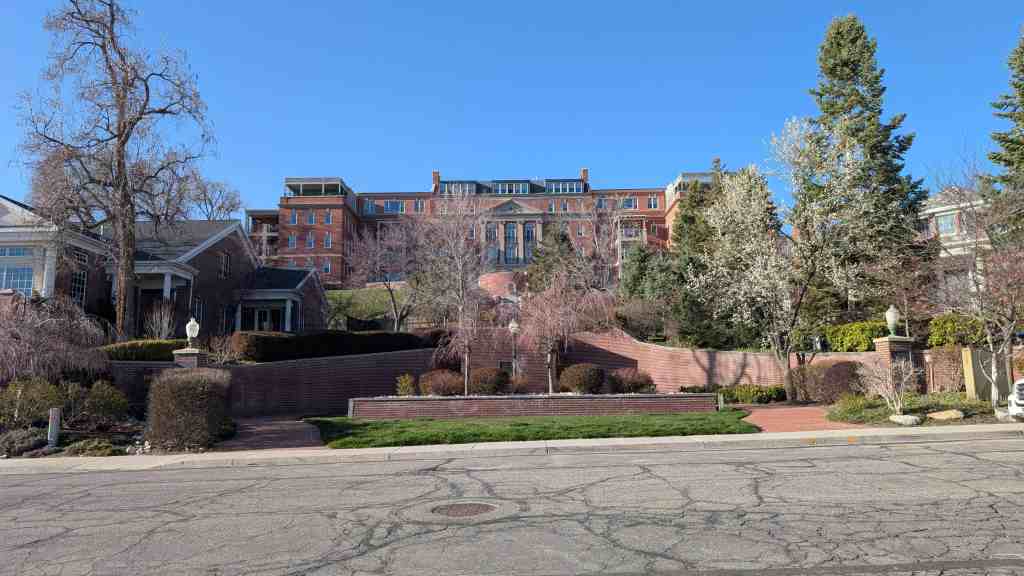
The Veterans Administration (V.A.) Hospital, built in 1932 with a 1939 addition, is significant in its role of providing medical and rehabilitation services for veterans of the United States armed forces. The main building was constructed in 1932 and the annex building in 1939, fulfilling plans that had begun in 1924 to build medical facilities in response to the needs of World War I veterans in the intermountain west region. This hospital provided services to veterans of the Spanish-American War, World War I, World War II, and the Korean War, and describes the involvement of the military in providing for those who participated in war. The V.A. Hospital influenced both direct and indirect federal revenues it provided for the community. The building of the hospital helped with easing unemployment in Salt Lake City during the Depression era. It also represents the medical influences and trends in the area between the period of significance, 1932-46. The association between the V.A. Hospital and the University of Utah Medical School beginning in 1946 provided facilities, equipment, and research funding for the school and allowed the V.A. Hospital to participate in main-stream medical research and education to provide veterans with the best medical care available.

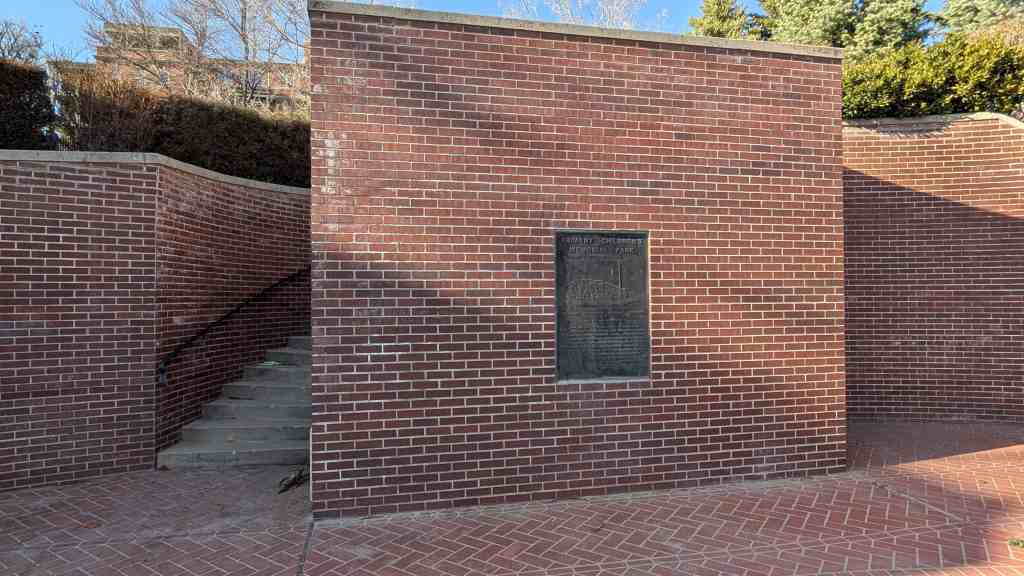
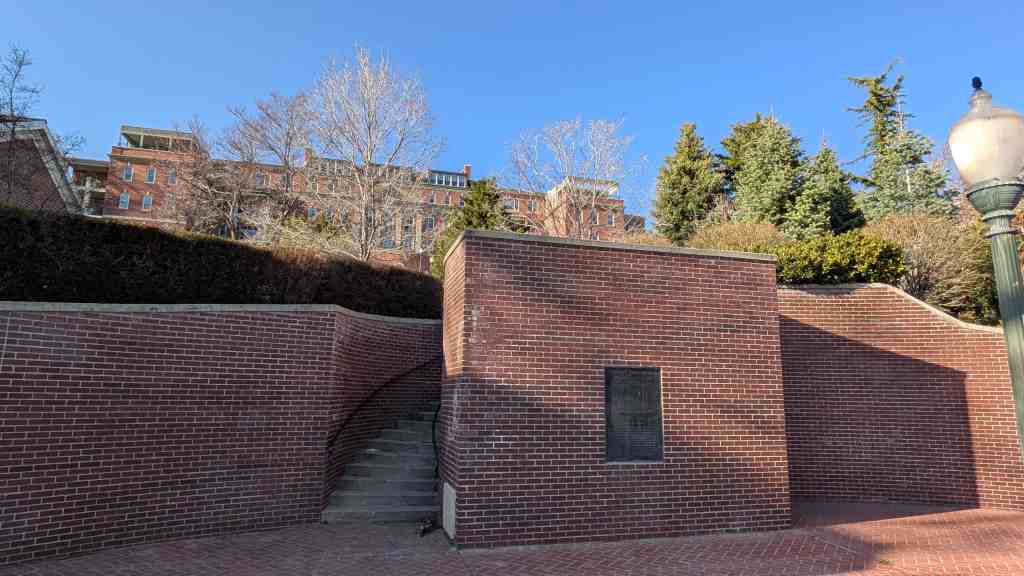
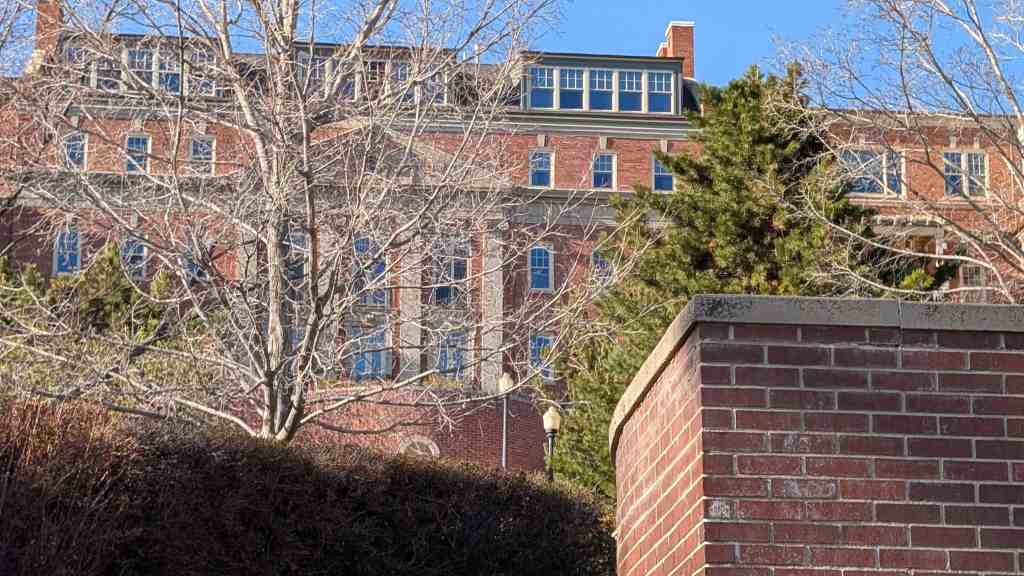
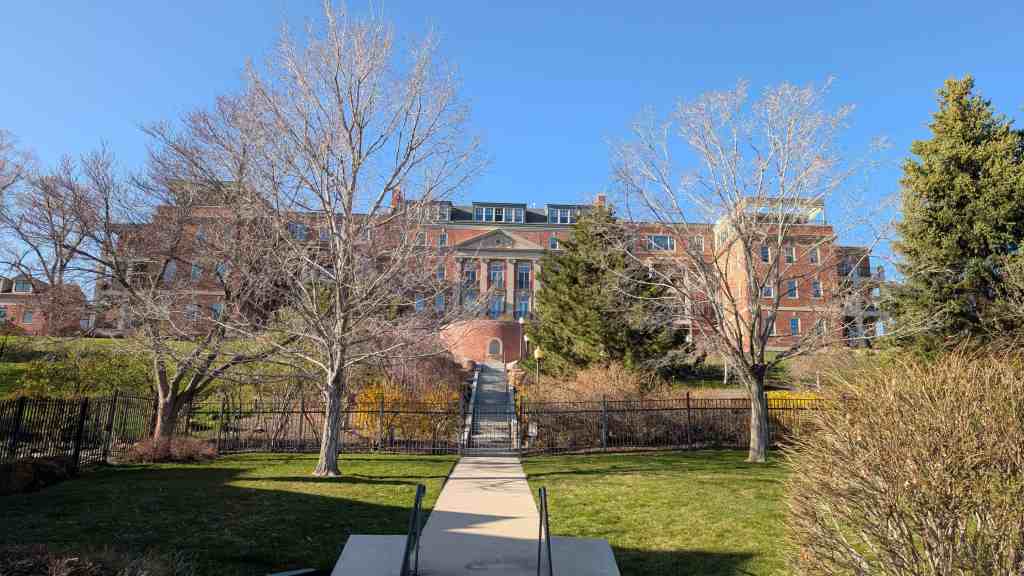
The former Veterans Hospital, now the Meridian Condos. Built in 1932 and located at 400 Capitol Park Avenue the Avenues district of Salt Lake City, Utah (also referred to as 401 12th Avenue) and added to the National Register of Historic Places (#96000630) on June 16, 1996.

Related:

  • 364 Capitol Park Avenue
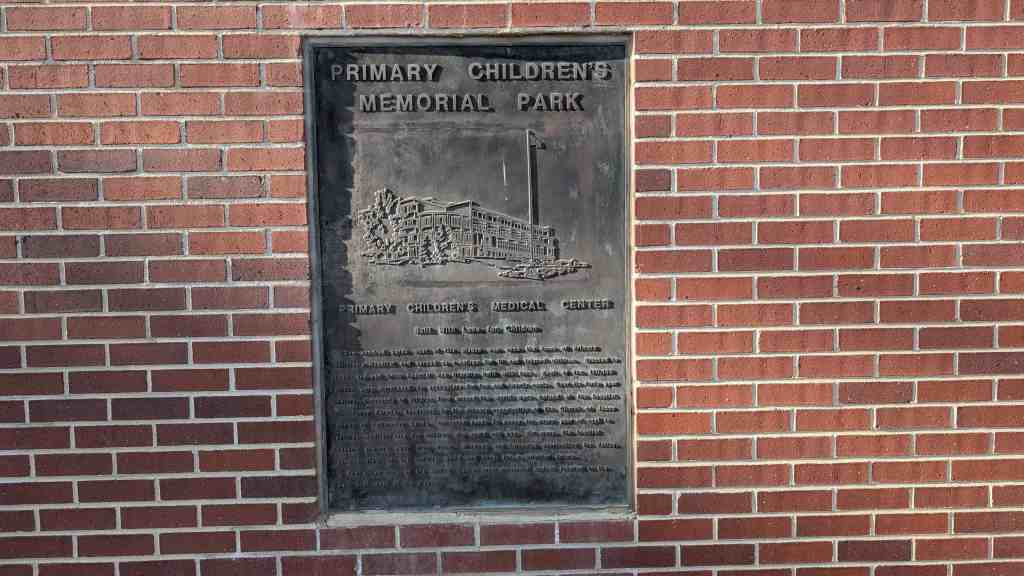
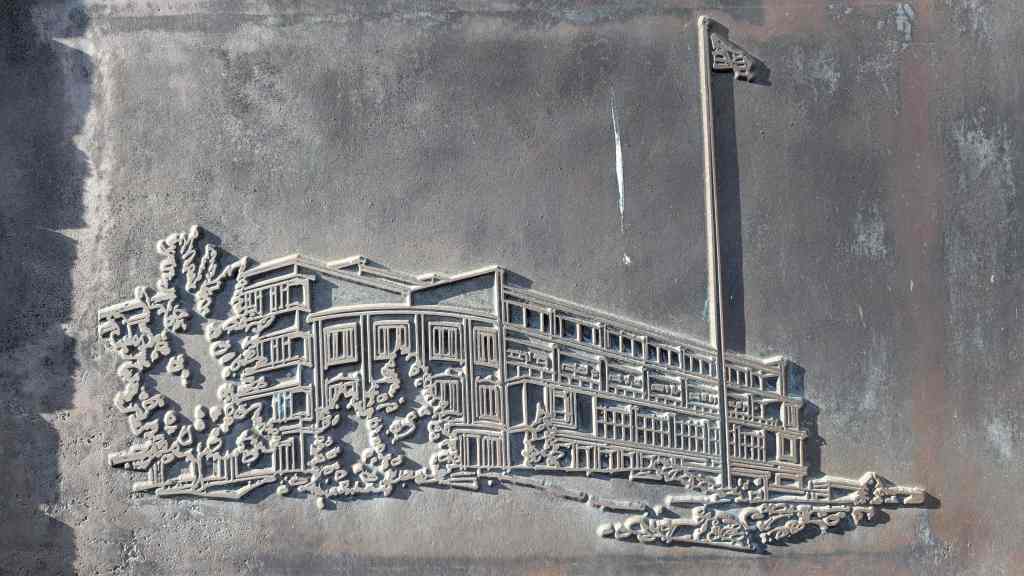
  • Primary Children’s Hospital
  • The old Veterans Hospital at 12th Ave and E St is now the Meridien Condos
  • rachels_slc_history

Scenes filmed here:

  • Ridgemont Federal Sanitarium (Halloween 4 filming location)
  • The Stand

386 East Twelfth Avenue in the avenues in Salt Lake City, Utah

The Veterans Administration was created by Executive Order No. 5398 on July 21, 1930. It was a consolidation of the Bureau of Pensions, the U.S. Veterans Bureau, and the National Home for Disabled Volunteer Soldiers, and was charged with administering all laws relating to the relief of, and other benefits provided by law for, former members of military and naval forces, for veterans and dependents of deceased veterans of all who served in wars or during time of peace. Along with compensation and pensions, insurance, death and retirement benefits, it also managed hospitalization and domiciliary care for veterans of all wars. The V.A. hospital located at 401 E. Twelfth Avenue in Salt Lake City, Utah, was part of that health care delivery system, and served veterans of the U.S. military exclusively.

The hospital had been under consideration by the old Veterans Bureau as early as 1924. 2 By October 1930, it had been approved and an architect’s drawing of a site plan appeared in the Salt Lake Tribune* It included the main, recreation, patients, and utility buildings, as well as officers and nurses quarters removed from, but in proximity to, the complex of four primary structures. The main hospital, however, is the only building from the original plan that was actually built, and it was somewhat simplified from the original blueprints. However, the basic configuration, size, and classical detailing remained in the final design that was typical of other V.A. hospitals constructed in the post-World War I era.4 Standardized plans would allow for constructing the building with what was anticipated to be a relatively short period of time alleviating the need for such a facility in the region. Additionally, building the hospital was considered “a means of relieving the unemployment situation in Utah.

The federal government purchased three city blocks from the state of Utah and part of two blocks more from Salt Lake City and eight private interests. The hospital was accepted on June 10, 1932. On July 5, Oliver J. Hunter, a World War I veteran, was its first patient. Formal dedication exercises were held on July 24, 1932, Pioneer Day, a state holiday in Utah. On July 1, 1939, work began on the hospital annex. After moving administrative and recreational activities out of the main hospital in 1940, the facility’s capacity increased to 158 beds, or an emergency bed capacity of 202.

The V.A. Hospital admitted only veterans and dependents and, therefore, was never an integral part of the Salt Lake or Utah health care community. Major Salt Lake hospitals in operation at the time the V.A. facility opened in 1932 included Salt Lake St. Mark’s Hospital, organized in 1872 by the Episcopal Church, the Catholic Holy Cross Hospital founded in 1875, the L.D.S. Hospital (Church of Jesus Christ of Latter-day Saints) which opened in 1905, the L.D.S. Children’s Convalescent Hospital, the Salt Lake County General Hospital opened in 1912, and the Shriners Hospital for Crippled Children, opened in 1925. There was also a military hospital at Salt Lake’s Fort Douglas.

The outbreak of World War II put new demands on the V.A. hospital system nationally. “On March 24, 1943, Congress approved a Vocational Rehabilitation program for honorably discharged veterans of World War 2 suffering vocational handicap due to their service in the Armed Forces. As a result, rehabilitation became a major effort of the Salt Lake facility. In 1946, as part of a nation-wide plan to bring V.A. hospitals into the mainstream of medicine, research, and education, and to provide them with the best medical care each community affords,” the University of Utah medical school entered into a cooperative agreement with the V.A. to supervise medical activities at the Salt Lake Veterans hospital. Plans included a residency program at the V.A. for doctors in the services during World War II that may have had their training interrupted by the war, a program that was open until 1949, only to doctor-veterans. Additionally, it allowed the medical school to provide professional guidance and service to the hospital while the hospital afforded opportunities for the training of doctors. The University Medical School had been established in 1904 and first became a four-year program at the Salt Lake County Hospital in 1942. The federal contract with the V.A. greatly enhanced the medical school’s research capabilities.

World War II brought another major medical facility to Utah. On October 10, 1942, the U.S. Army opened the Bushnell Hospital in Brigham City, Utah, which operated through the war. It had 3000 beds, approximately fifteen times the number of beds at the Salt Lake V.A. Hospital.

The war also touched off major national hospital building program by the Veterans Administration. The March 3, 1946 Salt Lake Tribune carried an Associated Press article about the planned construction of 77 new hospitals, and the acquisition of several more that would increase the total number of permanent hospitals from 98 to 183. Salt Lake City was approved to receive a second V.A. facility – a rarity justified by the fact that it was the only city in the intermountain west with a medical school and a large enough corp of specialists to support it. 12 Work began on the second Salt Lake V.A. Hospital on a 270-acre site once part of the Fort Douglas Military reservation in 1950. It opened as a Neuropsychiatric and Tuberculosis hospital in 1952 with an original bed capacity of 546. It brought the total number of hospitals operated by the V.A. to 155.

The task of consolidating the two Salt Lake facilities took place over a number of years as the new hospital grew. Management of the two hospitals was combined in 1955. 13 Between 1952-62, Salt Lake was one of the few cities nationwide to operate two V.A. hospitals. In February, 1962, the 12th Ave. complex ceased to function as a hospital and patients were transferred to the Fort Douglas V.A. Hospital. It was used to house laboratories and various research facilities.

Several potential buyers considered the old V.A. hospital. The University of Utah made a tentative offer in September 1961. The Utah Public Welfare Commission made an official request for the property in October. In April, 1962 the Salt Lake City Board of Health rented the facility. The Veterans Administration declared the site “surplus” as of July 1, 1963. At that time V.A. experimental laboratories and the Health Department were using the building.

On Dec. 1, 1964, the U.S. General Services Administration transferred title of the old V.A. property to the Church of Jesus Christ of Latter-day Saints (LDS Church). The Church exchanged churchowned property valued at $763,400 and $25,000 cash for the property. The Church used part of the facility as an annex to its Primary Children’s Hospital. The buildings also housed some classes for the Church’s Brigham Young University Salt Lake Center.

The LDS Church sold the property on December, 17, 1987 to IHC Hospitals Inc., which subsumed Primary Children’s and a number of other Church owned facilities. When a new Primary Children’s Hospital was opened in April of 1990, the old V.A. Hospital was left vacant. On January 30, 1995, IHC sold the property to Park City Construction. The original 28 acres was subdivided and sold to developers, with Park City Construction retaining the 5.3 acres on which the hospital itself sits. Their intention is to retain the historic exterior as nearly as possible and remodel the interior into condominiums. The company offices are currently housed in the annex. The main building is vacant while the remodeling takes place. A small maintenance and repair shop building was part of the original hospital construction. It is located to the northeast of the hospital on a parcel now owned by the LDS Church and is scheduled for demolition.

The integrity of the Veterans Administration Hospital buildings has been maintained and they contribute to the historic qualities of the Avenues Historic District area. Current plans appear to provide for appropriate reuse of the buildings and safeguard their continued use.

Narrative Description

Constructed in 1932 and 1939, the Veterans Administration Hospital on Twelfth Avenue in Salt Lake City is a red brick neoclassical style complex that faces south. It is set back from the street on a steep hill, giving it a stately presence. The main building, constructed in 1932, has a gabled, five-and-a-half story central section with four-story cross wings extending east and west. It is attached in the rear (west side) to the smaller 1939 annex by a three-story L-shaped brick connector. There are two fairly minor exterior alterations to the main building. The wide, floor length windows on the third and fourth floor southeast and southwest corners have been bricked in, and the stairway leading to the second floor front entrance of the main building has been removed and replaced by a ground level entrance. The building retains most of its original integrity and contributes to the historic qualities of the area.

Subdued exterior classical details found on both buildings include symmetrical facades, pedimented entryways, circular windows with garland embellishments on the tympanum, keystones above the window openings, dentils, and Ionic pilasters. Twelve-over-twelve double-hung windows exist throughout the Veterans Hospital, incorporate central gable pediments. The roofs are gabled and the main building incorporated three dormers along the front. The four-story wings have flat roofs. The connector service wing has a flat roof. All roofs are asphalt.

The main building has a central corridor running the length of the building with single and double rooms and multiple-bed wards on each side. Changes include the bricking in of the large windows in the southeast and southwest corners of the third and fourth floors. Originally day porches, they were changed to rooms suitable for six-bed wards. The annex floor plan originally included large, open administrative and meeting spaces supported by pillars. These spaces have since been closed into small rooms. Some of these rooms now serve as offices for the current owner, Park City Construction. Ceilings in both buildings have been lowered. The overall integrity of the interior spaces remains good.

Just outside the present boundaries of the property to the northeast of the main hospital building is the only small outbuilding dating from the original construction period. It is a two-story brick maintenance and repair shop. Though historically part of the hospital property, it is currently part of another parcel and is scheduled for demolition.
Beaver County Courthouse.

04 Saturday Mar 2023

Posted by Jacob Barlow in Uncategorized

≈ Leave a comment

Tags

Beaver, Beaver County, Courthouses, NRHP, utah

Beaver County had been created by the Territorial Legislature in 1855. General management of the county was entrusted to the County Court which consisted of a probate judge and three selectmen, who jointly possessed the power of the County Commissions today. In 1876 the 6,000 inhabitants of the county elected to build Beaver County Courthouse to house the Second Judicial District Court of the Territory of Utah.

Because of Indian unrest during the Black Hawk War, the trials of John D. Lee, associated with the Mountain Meadows Massacre, and a general desire on the part of the Federal government to maintain a watchful eye over “Mormons” to the south, both the courthouse, the seat of Federal authority, and Fort Cameron, with Federal troops nearby, played significant roles in the lives of these early Utahns. In fact, William Stokes, a former Union soldier, directed the building of the courthouse. The architect is unknown.

Although begun in 18?6, the courthouse was not completed until 1882, at a cost of $10,960. Fire partially destroyed the structure in 1889, but it was soon rebuilt with many improvements. Later additions to the
rear include a 32′ x 29′ vault and a jail.

The second trail of John D. Lee was held in the Second Judicial District Court In Beaver, U.T. during December 1876, The courthouse, only in early excavation stages at the time, was not the site for these trials.

Nevertheless, this lovely courthouse remains in use today by Beaver County, an emblem of the pretentious construction in public buildings during the Territorial period. It also symbolizes the Federal Government’s attempts to govern and “observe” the Mormons during a period when the practice of Polygamy heightened those conflicts.

Located at 90 East Center Street in Beaver, Utah and added to the National Historic Register (#70000622) on October 6, 1970.

  • Beaver Territorial Courthouse (D.U.P. Historic Marker)

Episcopal Church of the Good Shepherd

04 Saturday Mar 2023

Posted by Jacob Barlow in Uncategorized

≈ Leave a comment

Tags

Carpenter Gothic, Chapels, Churches, Episcopal, Episcopalian, Historic Chapels, Historic Churches, NRHP, Ogden, utah, Weber County

Episcopal Church of the Good Shepherd

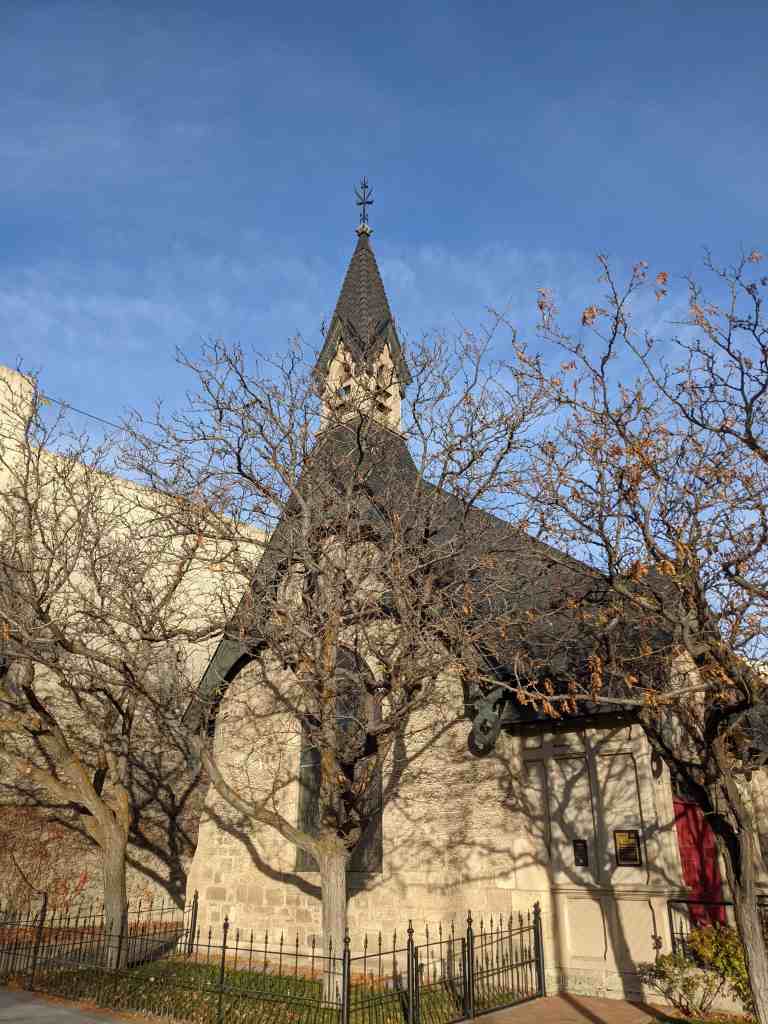
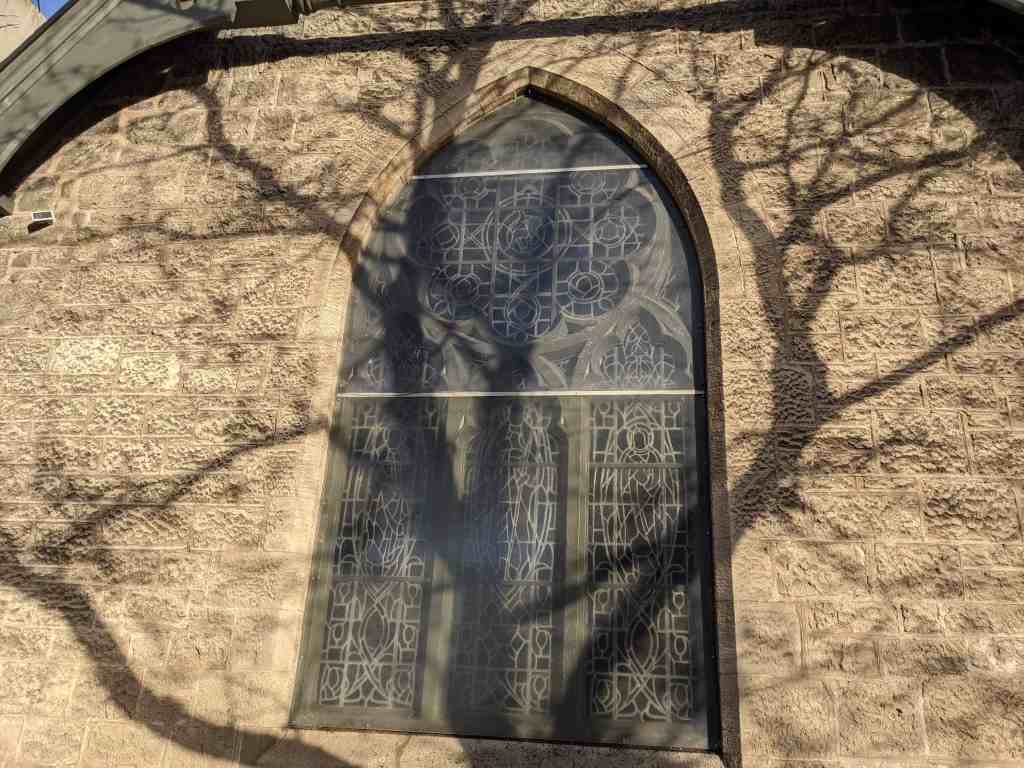
The Episcopal Church of the Good Shepherd is an example of “Carpenter Gothic” style of architecture. Some of the buildings defining features are the stained glass contained in the Tudor windows, the bell tower which contains the first church bell ever to be rung in Ogden, and the wrought iron fence across the front of the courtyard.

The Episcopal Church was the first Protestant religion to locate in Utah. Bishop Daniel Tuttle arrived in Utah in 1867. Three years later, in 1870, Reverend James Lee Gillogly was sent to Ogden as a resident missionary. In 1874, Bishop Tuttle obtained a $4,000 donation from John W. Hammersly of New York for the erection of a church in Ogden in memory of his daughter, Mrs. Catherine L. Livingstone.

The cornerstone was laid April 29, 1874 and the building was consecrated on February 6, 1875. It stands today as a reminder of the pioneering work of the early Episcopalians in the west.

Located at 2374 Grant Avenue in Ogden, Utah and added to the National Historic Register (#73001864) on April 3, 1973.

Twenty years after the arrival of the first Mormons in Utah other religious groups began to make inroads into the Mormon Zion, The first Protestant group to set up a permanent organization in Utah was the Episcopal Church. The Episcopalians did not come West with the express purpose of making converts of the Mormons but rather to find its members and offer services to them.

Brigham Young said that he did not expect any “abuse and detraction from an Episcopal bishop. They are men of education and better sense; they are gentlemen, and any gentleman is welcome here, no matter what his creed.” (Daniel Sylvester Tuttle, Reminiscences of a Missionary Bishop, p. 59-60)

Bishop Daniel Tuttle arrived in Utah in 1867, Three years later, in 1870, Reverend James Lee Gillogly was sent to Ogden as a resident missionary. Church services were first held in the passenger room of the Ogden train station. That same year an old building which had been used as a saloon was secured for church and educational purposes.

In 1874 Bishop Tuttle obtained a $4000 donation from John W. Hammersley of New York for the erection of a church in Ogden in memory of his daughter, Mrs. Catherine L, Livingstone, The designs for the church were provided by Gordon W. Lloyd of Detroit, Michigan.

The cornerstone was laid April 29, 1874 and on February 6, 1875 the church was consecrated. The total cost was near $11,000 and Mr. Hammers ley willingly provided the extra money.

From the time of his arrival Mr. Gillogly assumed an attitude of strong and square opposition to the Mormons, As a result antagonisms did develop between the two churches. In this sense the Church of The Good Shepherd serves as a reminder of that conflict, but even more so it stands as a monument to the pioneering work of the early Episcopalians in the West.

Church of the Good Shepherd (Episcopal)

Congregation established 1870. Cornerstone laid April 29, 1874 by Bishop Daniel S. Tuttle. Consecrated February 6, 1875. Funds donated by John W. Hammersley of New York.

Dedicated to the Glory of God
Tuttle Hall
In memory of The Rt. Rev. Daniel Sylvester Tuttle
First Bishop of Utah

Ogden High School

04 Saturday Mar 2023

Posted by Jacob Barlow in Uncategorized

≈ 1 Comment

Tags

Art Deco, NRHP, Ogden, Schools, utah, Weber County

Ogden High School, completed in 1937, together with the U.S. Forest Service Building (1933) and the Ogden/Weber Municipal Building (1939), are exceptionally important as the most significant Art Deco structures in Ogden and the state of Utah. These structures gain added importance as works of the architectural firm of Hodgson and McClenahan, and are excellent examples of federal, work projects initiated during the Great Depression of the 1930s. Leslie S. Hodgson, who designed the school, has been labeled as the most important architect of the Ogden-Weber County area from the late 19th to mid 20th century. The Ogden High School was regarded as his “masterpiece, the culmination of almost four decade’s work.”

Located at 2828 Harrison Boulevard in Ogden, Utah and added to the National Historic Register (#83003201) on June 7, 1983.

Related:

  • Schools in Utah

Public works projects formed an important part of the federal government’s response to the depression of the 1930s. The Public Works Administration was established under the National Industrial Recovery Act, and was continued by the Emergency Relief Appropriation Act of 1935. This agency was authorized to make loans and grants available for “non-federal construction projects of states, counties, cities, territories, and possessions, and to conduct federal demonstrations of slum clearance and low-rent housing.” Such projects were financed by PWA grants from Federal Emergency Relief Administration funds for a portion of the total cost. The remaining cost was usually paid by the local bodies sponsoring the projects.

As early as June 1933, Ogden City, Utah was seeking some $1,745,000 from the state PWA director, R. A. Hart, with the Ogden City Board of Education applying for $600,000 for a new high school. Sources indicate that after delays in funding, plans were executed by the architectural firm of Hodgson and McClenahan for the structure. The contractor for the building was the company of George A. Whitmeyer & Sons. Leslie S. Hodgson, who produced most of the design concepts for the firm became noted for his ability to work with a wide range of architectural styles, from Prairie School and Egyptian Revival to the Art Deco, for example. The high school was considered his “masterpiece,” as he designed it and supervised its construction.

Completed in 1937, Ogden High School cost about $1,150,000. Ogden’s “Million Dollar School” was lauded locally as “truly a magnificent structure, modernly equipped,” with credit going to the Board of Education, PWA, and local voters who provided needed funding for the project. At dedicatory festivities,
state PWA director, R. A. Hart, listed his agency’s objectives as putting men to work, and constructing worthwhile buildings. He stated further that Ogden City and Weber County had done more for recovery through construction projects than any other unit in the state. The high school became a source
of community pride, with a Kiwanis arboretum and lane dedicated at the site in April 1938.

The building remains as the Ogden High School. Remodeling was completed at the school in the late 1970s, by the architectural firm of Sterling R. Lyon, with Barbara G. Cowley, project designer. This was accomplished tastefully, and reflects the continued pride held for the building.

Architecture:

The corner stone of Ogden High notes that it was Public Works Project #1423. Like the U. S. Forestry Service Building and the Ogden/Weber Municipal Building, it was designed by the firm of Hodgson and McClenahan during the 1930s when both public works projects and the Art Deco Style were predominant
on the American architectural scene.

Ogden High School, completed in 1937, was built of tan brick with glazed terra cotta trim. The horizontal massing almost negates the vertical implications which are so characteristic of the Art Deco Style. The asymmetry of massing also varies from most Art Deco prototypes. Flat roofed, similarly detailed rectangular units of varying height are collected into an overall grouping. Interior space use administrative offices, classrooms, gymnasium and auditorium) is implied by the exterior massing.

As in the other Art Deco buildings, vertical bands of metal frame windows are separated by brick pilasters. Spandrels reveal decorative masonry with the geometric Art Deco character, stressing verticals and diagonals in the corbelling patterns. Top spandrels and pilasters are terminated by terra cotta trim reflecting the undulation of the wall plane below.

The main entrance is determined by a tall rectangular mass. Cast terra cotta spandrels here have geo-floral motifs. There is greater spatial undulation here than in other parts of the building and a more vertical feeling. Each of the four entrance doors has a geometric patterned metal grill transom. The original exterior lamps at the entrance are extant, reflecting Art Deco design considerations.

The school interior remains largely unchanged and well preserved. Polychromatic wall stencils, patterned floors, marble dados, metal trim and plaster work are extant. The library was recently renovated (late 1970s) in a way most sensitive to the original design. Subsidiary buildings on campus and all exterior modifications also sensitively reproduce the character of the main building in scale, massing, materials, and trim. The nomination includes the school and gymnasium building.

Sandy Second Ward Chapel

03 Friday Mar 2023

Posted by Jacob Barlow in Uncategorized

≈ Leave a comment

Tags

Chapels, Churches, Historic Churches, Historic Sandy, NRHP, Salt Lake County, Sandy, utah

Sandy Second Ward Chapel

This Classical Revival structure was built by Joseph Don Carlos Young, noted LDS Church architect, in 1921. Andrew Hansen, a local farmer and builder, supervised the construction. The cost of the chapel was $20,000. It was dedicated December 11, 1927, by LDS Apostle George Albert Smith.

The Sandy Second Ward Chapel was built during a time of emphasis on multiple-use buildings and architectural experimentation. The building combines a large chapel area, classrooms, and recreation space. The building was converted to a Baptist church in 1962 and is still being used for religious worship. It retains its historic integrity and remains in excellent condition.

Located at 8630 South 60 East in Sandy, Utah and added to the National Historic Register (#97000638) on July 9, 1997

The Sandy Second Ward Chapel, built in 1921, is being nominated under two contexts:
1) Mormon Meetinghouses and Tabernacles in Utah, 1847-1936; and
(2) Historic Resources of Sandy City: Specialized Agriculture, Small Business and Community Development Period, 1906-1946.
The Classical Revival structure combines a large chapel area, classrooms, and recreation space. The chapel represents the third phase of Mormon (LDS) meetinghouse building during which there was an emphasis on multiple-use buildings and architectural experimentation. The architect, Joseph Don Carlos Young, was serving as the official LDS Church architect at the time he designed this building. The chapel is of local significance as the only surviving historic LDS chapel in Sandy. The building was converted to a Baptist church in 1962 and is still being used for religious worship. The chapel retains its historic integrity and remains in excellent historic condition.

The Sandy Second Ward Chapel is located near State Street, northwest of Sandy’s historic downtown. The area was originally collection of small farms. The property was purchased from LeGrande Young by Josephine Jensen in October 1893. She sold it five months later to M.L. Freed. The taxes were not paid so it was taken over by the county until sometime before 1921 when Morinda Lundberg, a postmistress in Sandy redeemed it and donated it to the Sandy Second Ward.

At the turn of the century, the congregation of Church of Jesus Christ of Latter-day Saints (LDS or Mormon) church members had only one meetinghouse, a gothic revival style structure completed in 1897. As the town’s LDS population grew, mostly due to the number of second generation church members, it became necessary to divide the congregation. On January 1, 1921, church officials decided to create the Sandy Second and Third Wards. The First Ward continued to meet in the 1897 meetinghouse, and the Second Ward began to hold their meetings in the local school.

The Second Ward began almost immediately to build their own meetinghouse. The cost of the structure was $20,000. The architect was Joseph Don Carlos Young, LDS church architect. Local farmer and builder, Andrew Hansen supervised construction.

The chapel was dedicated December 11, 1927 by George Albert Smith. James P. Jensen was the first Bishop with counselors, A.R. Gardner and Robert Larsen. G. Leonard Ohlson was clerk. Clyde Swenson was chairman of the building committee. The first bishopric served sixteen years.

As an LDS meetinghouse, the building saw little modification. On December 17, 1924, an electrical fire reportedly caused $1,000 damage to the chapel. 19 Additional lots with residences were acquired in 1950. The residences were perhaps used by the Second Ward for additional meeting space. Within a decade, the building was considered inadequate for the growing congregation. A new building was constructed large enough to house both the First, the Second and the 13th Wards, and was officially dedicated on March 27, 1966.

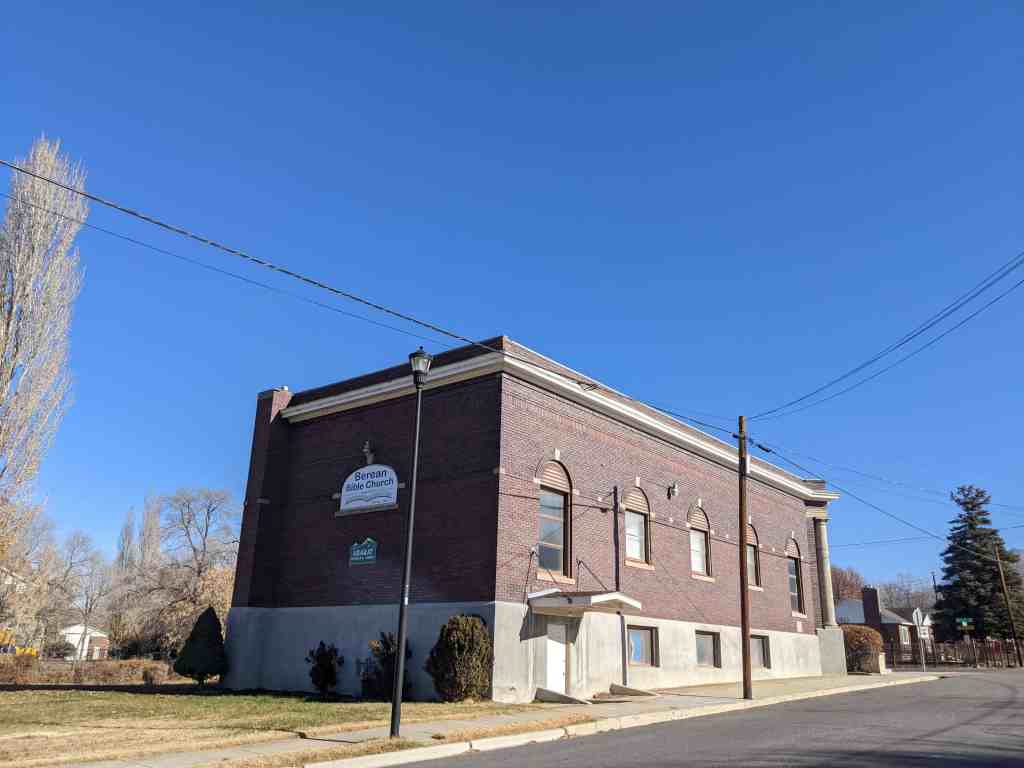
The building and grounds of the old Second Ward Chapel were deeded to the Anchor Baptist Church on May 7, 1962. The Anchor Baptist Church used for six years, during which time, they were constructing a new building on 5600 South near Highland Drive. They could not handle the financial obligations of both buildings. On May 17, 1968, the property was deeded to the Baptist Mid Missions Inc., and a congregation of Berean Baptists currently uses the building.

Architecture:

The Neoclassical, or Classical Revival, style enjoyed many years of popularity in Utah and the rest of the United States. Between 1900-1925, buildings such as banks, courthouses, post offices and churches employed the Greek and Roman classical motifs.

More conservative than the contemporary Beaux Arts Classicism, neoclassical buildings were usually symmetrical, monumental forms with facades highlighted by colonnades and porticos. The Sandy Second Ward Chapel is a relatively simple version of the style, but the building includes several distinguishing elements: the raised basement, the Tuscan columns at the entry, the arched windows, the parapet and the accentuated keystones. 22 The chapel is a unique interpretation of the style with an asymmetrical curving façade (which pre-dates the Art Moderne movement by nearly a decade).

Architect:

Joseph Don Carlos Young was born on May 6, 1855. He was the son of Brigham Young and Emily Dow Partridge Young, and was one of the first native Utahns to be formally educated in architecture. He attended the Rensselear Polytechnic Institute in New York. Joseph Don Carlos Young designed a number of commercial and residential buildings in Salt Lake City, but is primarily remembered as one of the official architects of the LDS Church (c. 1883-1930). He directed the completion of the interior of the Salt Lake Temple and designed the LDS Church Office Building (now known as the administration building). He took a part in designing several LDS Chapels. Young utilized a variety of styles, but primarily designed Neo-Classical and Renaissance Revival buildings. The Sandy Second Ward Chapel represents a relatively simple and refined statement of his work. Joseph Don Carlos Young died in 1938.

Narrative Description:

The Sandy Second Ward Chapel, built in 1921, is located at the corner of 8640 South and 60 East in Sandy City. The current address of the building is 8630 South 60 East. The building is located on the southeast corner of a 0.77 acre property. Two residences are also on the property, but do not contribute to the historic significance of the chapel. The building has received only minor exterior and interior alterations since its original construction.

The building is constructed of dark maroon brick on a concrete foundation. In plan, the structure is L-shaped, with the longer end, approximately 90 feet, running parallel to 8640 South. The shorter end is approximately 45 feet and is parallel to 60 East. The main entrance is at the curved intersection of the two sides, and is accessed by ten curvilinear concrete steps. The exterior brick walls rise from a plastered concrete foundation and water table to a parapet which runs along the street facades of the building. The parapet hides the two intersecting gables of the asphalt-shingled roof.

The parapet is capped by a coping of rowlock brick. Two feet below the parapet is a metal cornice. A rowlock course of brick is found directly belong the cornice. A second cornice extends over the main entrance and is supported by four columns. The visual line of this cornice is continued around the building by a course of soldier brick. Three courses of brick, one header and two stretcher, are “punched out” and circle the building at the window arches.

The building elevation is divided into bays by thirteen large round arched windows. The window arches are of rowlock brick and accented by lug sills, impost blocks, and keystones made of a cast aggregate resembling granite. The original windows had sixteen panes and hinged at the bottom to open inward. The semi-circular windows were “spoked” with wooden muntins. The windows were replaced in the 1980s by one-over-one fixed windows and the arches have been filled in with vinyl lap siding. The main entrance was originally two doors under an elliptical arch, also accented with a keystone and impost blocks. They have been replaced by a single door with sidelights. The fanlight over the doors was replaced by a single sheet of glass in 1980s, but has been more recently covered by plywood.

The most prominent Classical elements on the building are the four columns at the main entrance (two of which are currently hidden by a pair of large evergreens). The columns are made of the same granite-like cast aggregate and are Tuscan with a slight entassis. The only other decorative elements are two signs which read “Berean Baptist Church”. One is above the main door and the other is on the otherwise blank west wall under an elliptical arch. According to the Pastor Wesley Clem, the original stained glass window in that space was removed (date unknown).

Another blocked window is also on the west side at basement level. The other basement windows are used, though the glass and frames have been replaced. Two exterior doors, one on 8640 South and the other at the rear, access the basement level.

The main floor of the building is above a raised basement and has three sections: foyer, classrooms and chapel space. The main entrance originally opened to a wedge-shaped vestibule and a foyer with a high ceiling. The vestibule was partitioned to make closet space and a pair of windowed doors was installed at the foyer entrance in 1995. Access to the chapel from the foyer is through a pair of doors to the west. At the south is a staircase with one landing to the lower level, while on the east wall is a door leading to a small office. On the north side of the foyer are two doors leading to classrooms. Some type of door, possibly a folding door, originally allowed the rooms to be made one large room, but the opening has been blocked. One corner of each room has been converted to a closet.

Entrance to the chapel from the foyer was through a large, arched opening now enclosed by two doors, installed in the 1980s. The chapel floor slopes two feet from the back to the front of the chapel. The space of the chapel has changed little since the original construction, although a major remodeling of the pulpit area took place when the Baptist congregation modified the chapel for their worship services in the 1960s. The original pews were removed and replaced by others in the 1980s. Drywall has been applied to the interior walls of the chapel and the windows no longer appeared arched from the inside. The drywall also covers a row of stenciling which decorated the chapel. The ceiling has been sprayed with asbestos and the lighting fixtures have been updated. Insulation materials were added to the majority of the main floor rooms at the same time the drywall was applied during the 1980s.

A second arch spans the podium area. The original molding and a plaster dove in relief at the center of the arch are still intact. The arched opening was originally flanked by dark wood Tuscan columns and a pair of heavy curtains. The columns have been removed and the sides enclosed as dressing rooms for the baptismal font. An original staircase down to the basement level is now accessed from the south dressing room. Another staircase leads to the rim of the baptismal font. The font area was constructed in 1969. Previous to that date, the building had no font. The baptismal font was built at the back of the podium and can be partially viewed by the congregation through a arched opening. The back of the font, as well as the floor and walls of the dressing rooms, is tiled in squares of beige.

Above the font is a Latin cross tiled in a slightly darker color. The ceiling above the font has a latticework screen which is original.

The basement runs the full length of the building. The balustrades of both staircases are original, as are the doors and much of their hardware. There was originally one restroom, with a dirt floor, at the east end of the basement. The room was enlarged by excavation and made into two restrooms. Under the foyer area are two classrooms and two closets, all finished in drywall. Similar work is in progress in the classrooms and hallway under the chapel. A large room, probably recreational space, is at the west end. This space originally could be enlarged by some type of folding door leading to the classrooms, now blocked as well.

The ceiling of the basement was originally sloped to match the floor above. A drop ceiling is currently being installed to give a space a uniform ceiling height. Under the podium and font are storage rooms.

The building occupies the southeast corner of a 0.77 acre property. Associated with the building currently, but not during the historic period, are two residences at the northwest corner. The front building (8595 South 40 East) is a 1950s cottage used as housing for the Berean Baptist missionaries. The back building (8597 South 40 East) is reportedly from the 1880s and is currently the home of the associate pastor. This building has been altered substantially. Both are white with lap siding.

There are two small aluminum sheds next to the back residence. A large gravel parking area adjoins the houses. The rest of the property is landscaped with grass. An irrigation ditch runs along the north side of the site. A smaller, disused ditch is on the east. Sidewalks are found on the south and west sides. Four large evergreens flank the entrance. A row of poplars has recently been planted along the east side of the site.

Historic Context: Mormon Meetinghouses and Tabernacles in Utah, 1847-1936

The history of Utah is closely tied to the Church of Jesus Christ of Latter-day Saints. More commonly known as Mormons, members of the church played a significant role in the early settlement and subsequent growth of the state of Utah. It is not surprising therefore that the religious buildings of the Mormons comprise one of the principal segments of the state’s architectural heritage. Within the larger theme of Mormon religious architecture, eight specific historic contexts have been identified [See the Multiple Property Submission, Mormon Church Buildings in Utah. 1847-1936]. The Sandy Second Ward Chapel is significant within the third phase of the context “Mormon Meetinghouses and Tabernacles, 1847-1936”.

The most common types of nineteenth-century Mormon religious buildings were the meetinghouses and tabernacles. Designed as assembly halls for regular Sunday services, these buildings differed principally in size and scale. Tabernacles were typically large buildings with a seating capacity sufficient to accommodate the membership of several LDS wards, with wards being the smallest unit of ecclesiastical jurisdiction within the LDS Church. Smaller Mormon towns consisted of a single ward, while the larger communities were subdivided into several such districts. Every ward had a meetinghouse, or ward meetinghouse. Wards were further organized into larger geographical groupings called stakes, and usually (though not always (each stake had its own tabernacle. Tabernacles and meetinghouses were generally placed in a central location within the gridiron plan of the Mormon town. There are approximately 20 tabernacles and 237 meetinghouses remaining in Utah that were constructed prior to 1940.

Tabernacle and meetinghouse design went through five significant periods of historical development. The first period is associated with the early years of Mormon western settlement and begins with the arrival of the Saints in the Great Salt Lake Valley in 1847 and extends until around 1870. During this phase, the smaller meetinghouses were likely to serve a variety of functions such as schoolhouses, city halls, and social centers.

A second period of LDS Church tabernacle and meetinghouse architecture was ushered in by the ecclesiastical reforms of the late 1870s. A significant number of new religious buildings appeared throughout the state during the years between 1870 and about 1885. These buildings were generally larger and more substantial than those of the settlement period. At this time also it became characteristic of Mormon communities to have separate buildings for different functions. Another result of this increased building activity was that many of the first-period structures were demolished to make way for the new ones.

The expansion activities of the LDS Church were curtailed during the 1880s and 1890s as the leadership’s attention was increasingly consumed by the struggle with the U.S. Government over the doctrine of polygamy. Under pressure from Congress, The Mormons disavowed the practice of plural marriage in 1890 and the way was paved for Utah to become a state in 1896. Nearly twenty years of political conflict, however, had left the church in confusion and disarray. Beginning in about 1898, a serious revitalization program was launched that included, among other things, a restructuring of the hierarchy, a return to financial solvency, a revival of faith and commitment among the membership, and a rebuilding of the church architecture.

As a symbol of rededication, a massive church building effort was initiated in 1898 that lasted until the end of World War I and into the 1920s. This period of architectural development may be considered one of “activation”, as the church moved to strengthen its institutional base in Utah and surrounding states. It was during this time that the first “modern” meetinghouses appeared. These multi-functional buildings gathered all the activities of the local church under one roof. Ward buildings now included an assembly hall or chapel, the offices of the bishop, a room for the women’s auxiliary, and classrooms for Sunday school. Designs varied. On one side, a conservation faction within the church hierarchy favored the Neoclassical and Colonial Revival, while on the other, progressive groups championed Prairie School and Arts and Crafts designs. All in all, the early years of the twentieth century mark one of the richest periods in LDS Church architectural history.

The fourth period in tabernacle and meetinghouse development spans roughly a thirty-year period between 1925 and 1955 and represents a time of both consolidation and experimentation. The multi functional building became the mainstay of the building program, but designs ranged from the Moderne to the Colonial Revival. The LDS Church grew rapidly during the 1940s and 1950s and the need for new meetinghouse construction was even greater. Standardization increased, and there was a drive toward architectural efficiency that eventually lead to the creation of the LDS Church Building Department in 1954. The work of building department architects remains the final and fifth stage in the development of Mormon religious architecture in Utah.

The Sandy Second Ward Chapel is significant within the third phase of meetinghouse development. There are currently 29 meetinghouse buildings remaining in Utah from the third phase. The construction dates of these buildings ranged from 1899 to 1925. Sandy Second Ward Chapel represents the multi-functional and architecturally rich meetinghouse of the third phase, but it was also designed by an official church architect, a practice which would become more common in the fourth phase. The building was used by the LDS Church until the 1960s when it was replaced by a non-historic chapel.

The remaining Period III meetinghouses are as follows:

  1. American Fork Second Ward Meetinghouse, Utah County (Historic District)
  2. American Fork LDS Third Ward, Utah County
  3. Clearfield Ward Chapel, David County
  4. Clinton Ward Meetinghouse, Davis County
  5. Enterprise Meetinghouse, Washington County (National Register listed)
  6. Eureka LDS Wardhouse, Juab County (Eureka Historic District)
  7. Hanksville Meetinghouse School, Wayne County (National Register listed)
  8. Heber First Ward Meetinghouse, Wasatch County (major addition)
  9. Heber Second Ward Meetinghouse, Wasatch County (National Register listed)
  10. Hyrum First Ward Meetinghouse, Cache County (National Register listed)
  11. Kaysville Tabernacle, Davis County (State Register)
  12. Leamington LDS Church, Millard County
  13. Levan Ward Chapel and Amusement Hall, Juab County
  14. Logan Sixth Ward, Cache County (Logan Historic District)
  15. Moab LDS Meetinghouse, Grand County (altered)
  16. Moab Star Hall, Grand County (National Register listed)
  17. Murray First Ward, Salt Lake County (NR documentation started)
  18. Murray Second Ward Meetinghouse, Salt Lake County
  19. Murray Tenth Ward (formerly Grant Ward House), Salt Lake County
  20. Prove Third Ward Chapel and Amusement Hall, Utah County (National Register)
  21. SLC 453 S 1100 E, Salt Lake County (University Historic District)
  22. SLC 160 S University, Salt Lake County (University Historic District)
  23. SLC Cannon Ward LDS Church, Salt Lake County
  24. SLC Fifth Ward Meetinghouse, Salt Lake County (National Register listed)
  25. SLC Ensign Ward Meetinghouse/Amusement Hall, Salt Lake County (Avenues H.D.)
  26. SLC Guadalupe Center (LDS 16th Ward), Salt Lake County
  27. SLC Miracle Rock Church (LDS 34th Ward), Salt Lake County
  28. SLC New Hope Center, Salt Lake County
  29. Sandy Second Ward Chapel, Salt Lake County (NR documentation started)

History of Sandy:

The first half of the twentieth century was a period of transition for the city of Sandy. The mining, smelting and small farm era was being replaced by a more diversified economy. In some ways the town still resembled the earlier predominantly agricultural community founded by Mormon settlers in the 1860s, especially as the “boom town” economy created around the mining industry waned. The population of Sandy remained around 1,500 for the four decades between 1900 and 1940. However, the city was defining itself as the political, economic, civic and social center for a major portion of the southeast Salt Lake Valley. This period of Sandy’s history laid the groundwork for city’s eventual transformation from small town to suburb.

The transition began with the failure of several canyon mines which fed Sandy’s economy. As sampling and smelting plants shifted to other locations, Sandy’s impact as a mining town diminished.

While the dominant force in the economy of Sandy during the 1870s, 1880s and 1890s was undoubtedly that of mining, the local agricultural community had not ceased to develop. The local agricultural economy saw Sandy through the mining boom and subsequent depression.

The community was also seeing a great deal of civic development. The city of Sandy was incorporated on September 26, 1893. By 1911 the city was managing its own water resources and had a volunteer fire brigade of twenty-five, complete with two fire trucks. Utah Power and Light began servicing Sandy in 1913, and by 1914 the city was managing a park and a cemetery.

Economically, the city was changing dramatically. The depletion of the mineral resources in the Alta area and the loss of the smelting and sampling industries had changed the economic structure of Sandy City significantly. Moreover, a series of national and local depressions beginning in 1893 and continuing to the onset of World War II had made small-scale single-crop agricultural enterprises nearly impossible. Sandy farmers had an especially difficult time, needing to overcome the additional challenges of water scarcity and the arid, sandy soil.

Fortunately irrigation methods improved steadily through these years, and several Sandy farmers were able to successfully continue to raise hay and grain. Despite the success of these specialized agricultural industries, most farming in Sandy during the first half of the twentieth century was purely subsistence level. Between 1900-1920, the number of farms doubled, but nearly all were very small scale. Eighty-five percent of the farms were smaller than forty-nine acres. Six farms were between two hundred and one-thousand acres, and one farm was 1,217 acres.

During the first half of the twentieth century, the majority of Sandy residents continued to live on their farms. Most managed to survive economically by combining subsistence farming with other occupations, primarily cottage industries and mercantilism. The majority of occupations were highly diversified. Sandy appeared to have at least one resident involved in occupations associated with early urbanization: a physician, a dentist, a barber, a plumber etc. The most common business listed was dry goods. The Sandy City Bank founded in 1907, employed four, and had the largest deposits of any bank in the southern portion of the Salt Lake valley. Several residents listed their civic responsibilities: city treasurer, postmaster, marshal, justice of the peace.

As the non-Mormon or “Gentile” population moved out of Sandy with the decline of the mining industry, Mormonism continued to be the dominant religion. By the 1920s, the LDS population had grown large enough to require the construction of two new ward buildings. The Sandy Second Ward meetinghouse was completed in 1921 and the Third Ward in 1926. In addition to the three LDS wards, the 1927-28 gazetteer lists two other congregations: the Sandy Congregational Church and the Inter-Mission (Swedish/Lutheran) Church.

Before the 1900s, transportation between Sandy and other towns in Salt Lake County had been limited to pedestrian or horse traffic on rutted, dirt roads. Several railroad lines and mining related spurs had converged at Sandy by the 1880s, but the service they performed was primarily freight. The extension of the State Street streetcar line from Murray to Sandy on July 4, 1907 gave Sandy residents easier access to the shops and recreations of Salt Lake City.

A few residents may have commuted to work in Salt Lake, but the city generally remained self-contained. Buses began to replaced streetcars in the 1920s, at about the same time State Street’s south end was paved for automobile traffic. The last streetcar to operated in the Salt Lake Valley was discontinued in the 1946. By that time, automobiles were becoming increasingly more common, even in Sandy.

The original township of Sandy had expanded to the west of the railroad tracks with the boom of the mining industry. After the turn of the century growth was slower. At the west boundary of the city, commercial buildings as well as bungalows and period cottages appeared along State Street, the main artery to Salt Lake City. The institutional buildings, both civic and religious, were also made of brick and exhibited a variety of popular styles and decorative elements. Of the remaining large commercial and institutional buildings, examples ranged from the Renaissance Revival to PWA Moderne.

The Specialized Agriculture, Small Business, and Community Development Period in Sandy was a time of transition from farmlands and mining industries to quiet neighborhoods and small town civic pride. The architecture of the historic square mile of Sandy, as it is called, illustrates this transition, and stands in marked contrast to later development. In the years since World War II, Sandy has plated nearly 300 subdivisions and annexed over 10,000 acres, making it one of Salt Lake’s largest “bedroom” communities. Though Sandy’s city center has been moved adjacent to the mall, the city’s historic downtown is a distinctive reminder of Sandy’s small town past.

Ogden / Weber Municipal Building

03 Friday Mar 2023

Posted by Jacob Barlow in Uncategorized

≈ 2 Comments

Tags

NRHP, Ogden, utah, Weber County

The Ogden/Weber Municipal Building, 1939, together with the U.S. Forest Service Building and the Ogden High School, are exceptionally significant as the best Art Deco Style building in Ogden and the state of Utah. They also represent important works of the architectural firm of Hodgson and McClenahan, and are excellent examples of federal work projects initiated during the Great Depression of the 1930’s.

The Municipal Building is a warm brick building with glazed terra cotta trim. In many ways it is a “typical” Art Deco example. Symmetrically arranged from a rectangular base, side wings step down gradually from the taller central mass. Metal frame casement windows are separated by brick pilasters which function visually to accent verticality and to modulate the surface lanes. The flat roofs are capped with contrasting glazed terra cotta trim which undulates respectively to the walls and pilasters, activating the roofline and terminating the vertical movement with crisp geocurvalinear shapes.

The Municipal Building is one of Utah’s Public Works Administration projects designed to put people to work and create useable structures for the future.

Located at 2549 Washington Blvd in Ogden, Utah and added to the National Historic Register (#83003202) on June 7, 1983.

Related:

  • Ogden Carnegie Library (was located here until 1969)
  • Original Pioneer Settlers of Weber County (historic marker in the building)
  • Ogden Memorial Plaza
    • Captain James Brown
    • Jedediah Strong Smith
    • John Henry Weber
    • Lorin Farr
    • Pioneer Forts in and near Ogden, Utah

The Ogden/Weber Municipal Building, 1939, together with the U. S. Forest Service Building (1933) and the Ogden High School (1937), are exceptionally significant as the best Art Deco Style buildings in Ogden and the state of Utah. They also represent important works of the architectural firm of Hodgson and McClenahan, and are excellent examples of federal work projects initiated during the Great Depression of the 1930s. The Municipal Building also symbolizes the unification of city and county governments in an effort to consolidate facilities and save tax dollars.

Local governmental officials were conferring on a consolidation of Ogden City and Weber County facilities in Ogden at least as early as March, 1934. At this time federal aid, through the Public Works Administration, was made available to the states as part of the government’s response to the
depression. The PWA program was initiated to help provide jobs and construct useful buildings. In October, 1937, U. S. Senator Elbert D. Thomas, of Utah, notified Ogden Mayor Herman W. Peery that Ogden City and Weber County “may” receive a federal grant for a joint building. R. A. Hart, FWA
director for Utah, stated at the dedication of Ogden High School that Ogden City and Weber County had done more for recovery through construction projects than any other unit of government in the state.

Leslie S. Hogdson and Mryl A. McClenahan were commissioned sometime in late 1937 or early 1938 to prepare preliminary plans for a building, subject to final approval by the PWA. By April, 1938, backers of the joint facility were confident that funds appropriated by the Roosevelt administration for the project would be released. Those local officials who supported the effort included Mayor Peery, City Commissioners Edward T. Saunders and William J. Rackham, and County Commissioners George F. Slmmons (Chairman), Charles A. Halverson, and W. R. McEntire.

Plans, as drawn by Hodgson and McClenahan, called for a “modern” Art Deco design. In the words of Leslie Hodgson, “It might be termed ‘restrained contemporary’ design with vertical lines emphasized and marked by the absence of horizontal accentuations.” The building was then, in 1938, projected to
cost about $600,000. Work began in October, 1938, as the south wing of the old City Hall was razed to make way for the new edifice. By April, 1939, the reinforced concrete foundation had been poured, but final plans for the structure were delayed because of a need for further engineering data.

Work commenced again in June, 1939, and in March, 1940, the Salt Lake Tribune echoed the headline, “Ogden-Weber Building Nears Finish.” The article stated that,

Ogden city offices will occupy the north side of the first floor, and Weber county offices will be on the south. The 11 stories above will be occupied alternately by the city and county.

Jail equipment will occupy three stories with cells, but it will take four entire stories for the jail, detention quarters and city-county law enforcement offices. A joint custodian will be In charge of the jail system for both city and county.

On November 8, 1940, the $952,668 Weber County-Ogden City administration building was formally dedicated, even though it had been occupied since June 15. Morgan M. Lewis, acting regional head of the PWA from San Francisco, stated that the building was a “monument to the creative and public spirited
activities of the architects, Hodgson & McClenehan [sic], and the sponsors, Weber county and Ogden city [sic].” The final cost was placed at $952,668.52, with the PWA paying 43% or $410,175. Ogden City and Weber County each contributed $271,246.75, or 28 1/2% of the cost. Ogden City’s last payment occurred in 1940.

The building continues to function as the Ogden-Weber Municipal Building, a center for local governmental activity.

A public works project completed in 1939, the Ogden/Weber Municipal Building is the last of three important Art Deco commissions in Ogden designed by the firm of Hodgson and McClenahan. It is a warm brick building with glazed terra cotta trim. In many ways it is a “typical” Art Deco example, resembling the Syracuse Lighting Company Office Building (1932), Syracuse, New York.

Symmetrically arranged from a rectangular base, side wings step down gradually from the taller central mass. Metal frame casement windows are separated by brick pilasters which function visually to accent verticality and to modulate the surface planes. The flat roofs are capped with contrasting glazed terra cotta trim which undulates respectively to the walls and pilasters, activating the roofline and terminating the vertical movement with crisp geo-curvalinear shapes. The water table and window sills are also glazed terra cotta elements.

The building is twelve stories in height, with its main entrance centered on the east facade in a projecting flat-roofed pavilion capped with terra cotta trim. A flight of stairs leads to the actual entrance area and four steel frame doors. Each door has a tall transom which displays a metal grill with pierced geometric design. The doors and transoms have a terra cotta surround. Period lamps in the Art Deco Style flank the entrance.

The exterior retains its historic integrity, and the interior maintains much of its original character. Especially notable in the interior are the marble dados, metal arid wood trim, plaster work, light fixtures, and patterned floors.

Moab L.D.S. Church

02 Thursday Mar 2023

Posted by Jacob Barlow in Uncategorized

≈ 1 Comment

Tags

Chapels, Grand County, Historic Buildings, Historic Churches, Historic Markers, Moab, museums, NRHP, Schools, utah

Moab L.D.S. Church

Constructed of adobe in 1889, the Moab L.D.S. Church was built nine years after the establishment of Moab in 1880. Angus Stocks supervised the laying of the foundation and adobes. Within a few years of the original construction, an addition was made to the rear of the building. The church was used by the Moab Ward until 1925 when a new church was built and this church deeded to the Grand County School District. In 1937 the Grand County Camp of the Daughters of the Utah Pioneers began holding meetings in the building and have continued to use the building, with the exception of a ten year period between 1954-1964 when it was used for classrooms.

The Moab L.D.S. Church is located at 45 North 200 East in Moab, Utah and was added to the National Historic Register (#80003907) on November 28, 1980.

Related:

  • Early L.D.S. Church (D.U.P. Marker located here)
  • Elk Mountain Mission (D.U.P. Marker located here)
  • Moab Cabin (located here)

This 1889 stuccoed adobe structure is emblimatic of the LDS origins of Moab and the continuing importance of religion in the life of that community and is significant as a late example in Utah of a church building which exhibits the Greek Revival influence. It is of typical pioneer architecture, constructed of locally-available materials through the efforts of many local citizens, and its T-shape plan reveals the rapid growth of LDS Church membership during Moab’s early years of settlement. This structure was also the only religious building in Moab until 1910, when the Baptist chapel was formally dedicated.

The Moab area was long of interest to many groups because the Colorado River could be easily crossed at that point. Moab (then unnamed) was on the Old Spanish Trail, it became the site of the Mormon Elk Mountain Mission in 1854-55 and was sporadically used as grazing lands for cattlemen from both Utah
and Colorado in the 1860s and 1870s. Both Utes and Piutes claimed the land, and were partially responsible for the quick demise of the Elk Mountain Mission.

The present town of Moab dates its official founding from the establishment of the post office on March 23, 1880. The town served as a regular stop on the mail route from Salina, Utah to Ouray, Colorado, the first and only route in southeastern Utah and much of western Colorado. As a fragile link to the outside world, it was of tremendous importance to settlers in the area who tended to congregate at mail stops, hence increasing the population of towns like Moab. Most of those early settlers of Moab were Mormons, and on February 15, 1881, visiting church officials organized the Moab Ward with Randolph H. Stewart, bishop, Alfred G. Wilson, first counselor, and Orlando W. Warner, second counselor.

At the time of the Ward’s founding, Moab was part of the Emery Stake. However, in 1884 the Moab ward became part of the San Juan stake and began acquiring property. The Church lot was sold for $100 by the patentee, Leonidas L. Crapo, to Bishop Stewart and Counselor Warner in 1884. The bishop, a polygamist with three wives, was sorely pressed by the “raids” of the time and in 1885 transferred the land solely to Warner for $500. The following year Warner deeded all of Lot 1 to the Moab LDS Church Trustees-in-Trust: Henry Holyoak, Jefferson A. Huff and David A. Johnson.

In 1888 the building program began. “For the first part of the building, O.W. Warner, Henry Holyoak, and O.D. Allan were appointed as the building committee. Labor, money, and building materials were donated by the Church members. Angus Stocks supervised the laying of the foundation and the adobes (which) were made in the Jonathan Huff place.. .Hyrum Alien supervised the hauling of rock…from the canyon east of Moab. J.H. Staniford supervised the carpenter work. Lumber, shingles, windows and doors were ordered from Salt Lake City. Everyone with a team and wagon helped with the hauling.. .Bill Bliss cut the stones for the foundation and Angus Stocks laid them. Mr. Bliss helped make adobes on the Huff place. John Holyoak, Mrs. Mary Murphy, and their two oldest boys hauled the adobes to the Church site.” “Grandpa” Henry Holyoak cut logs from Pack Creek to make lumber at his sawmill. Many other community members aided in construction.

However, even as the church building rose, the town population also increased. When church members congregated for the first service in 1889 the building proved too small to hold them. Builders added another room sometime prior to 1900, giving the building its present “T” plan. For many years children attended Sunday school in the basement.

In 1902 the Moab LDS Church incorporated, and the Trustees-in-Trust deeded the land to the bishop, David A. Johnson, who immediately deeded the land to the Moab Corporation of the LDS Chruch, all in that year. Until 1925 this building continued serving as a church, until the population of the faithful
increased beyond the capacity of this structure. A new church was built at a cost of $30,000, and a newer one for $200,000. In 1925 the first church was deeded to the Grand County School District, who still retains ownership.

From 1925 to 1937 this building remained vacant. On November 3, 1934 the Grand County Camp of the Daughters of Utah Pioneers was organized and began meeting in private houses and in the Relief Society rooms of the newer LDS Church. As their membership expanded, they needed more space, and in 1937 the School Board allowed them to begin meeting in the original IDS Church. At their first meeting there, on May 26, 1937, “Daughter Mary presented the Daughters with an Organ” which still remains at the Hall. On October 28, 1937, “Daughter Mabel Johnson donated a stove for the rooms of the DUP. It was decided that members would take turns in furnishing coal and kindling for the fires and should also take turns in starting the fires, on meeting nights.” Finally, the Daughters installed linoleum removed from the local hospital, for which they had made curtains. At the April 28, 1938 meeting the Daughters organized a committee for gathering relics.

Since that time the original church has served as the DUP meeting rooms and Relic Hall with the exception of a ten-year period from 1954-64. During this period of Moab’s uranium boom, the school district reclaimed the building for use as classrooms and added the door at the left rear of the building to
permit easy access. They also installed a new, lower ceiling in the front part of the structure in a room then used for band class.

The Moab L.D.S. Church is a one story, gable roof building, originally built with an I plan, but later extended to a T plan. It was built of adobe with a rock foundation and later stuccoed over. A belfry is mounted on the ridge of the roof over the main entrance. Slender chimneys with decorative brick coursing occur at each end of the extension. Greek Revival influence is evident in the orientation of the church with the gable end to the road, and in the boxed cornice which returns on the gable ends. The single door on the façade has a Greek Revival-type of pediment. According to an old photograph, a small circular window was centered over the door which no longer exists. There are three two over two double hung sash type windows on each side of the original building. With two exceptions the same type of window was used on the extension. A six over six double hung window with a transom has been used on the rear and on the north wall of the extension. Alterations to the original structure include the major rear addition, the elimination of the circular window, and the lowering of an interior ceiling. A rear door with a
frame extension over it was added to the rear extension and the larger windows also may not be original. The stuccoing of the entire building dates later than the construction of the original building and its extension.

Star Hall

01 Wednesday Mar 2023

Posted by Jacob Barlow in Uncategorized

≈ Leave a comment

Tags

Grand County, License Plate Art, Moab, NRHP, Richardson Romanesque, Richardsonian, Richardsonian Romanesque, Romanesque, Sandstone Buildings, utah, Victorian

Star Hall

Star Hall is significant as one of the finest examples of the Richardsonian Romanesque architectural style in southeastern Utah (Criterion C). As a well preserved and locally rare example of the style, it is important to Utah’s architectural history. Due to its stature as one of the only remaining historic structures in Moab, Star Hall is a unique symbol of the community’s heritage. Star Hall is also significant as the primary community meeting and recreation hall in Moab, initially owned and operated by the LDS church, and later by the local school district (Criterion A). It has made a lasting contribution to the social history of Moab and its beauty and architectural style make the preservation of Star Hall vital to the local community.

Located at 159 East Center Street in Moab, Utah and added to the National Historic Register (#93000416) on February 19, 2008.

The first recorded deed of the Star Hall property shows Leonard Leonidas Crapo (b. 1838 – d. 1929) buying all of Lots 1, 2, 3, and 4 in Block 18 of Moab, Utah for $200 from the Land Office at Salt Lake City. Mr. Crapo was the first county attorney, a Justice of the Peace, a postal delivery worker, and one of Moab’s first uranium miners.

On February 22, 1884, Crapo sold Lot 1 (where Star Hall is now located) to Randolph H. Stewart and Orlando W. Warner for $1,000. While not explicitly listed on the warranty deed, Stewart and Warner undoubtedly purchased the property for the Church of Jesus Christ of Latter-day Saints (LDS or Mormon church). In 1881 Randolph H. Stewart was sent to Moab by the LDS church to organize the Moab Ward (congregation) and build the first Mormon church. Stewart was the bishop of the Moab Ward and Orlando W. Warner was a member of the ward bishopric, a second counselor. On July 25, 1885, Stewart sold the property to Warner for $500. Then on August 7, 1896, Warner and his wife Priscilla, “sold” the property to the trustees-in-trust of the LDS church for $1.

The Church of Jesus Christ of Latter-day Saints had Star Hall built as a recreational center or amusement hall for its Moab Ward members. The church contracted the construction of the hall to local Moab residents:

Will Shafer had the contract to do the woodwork. Steve Day cut the timber by a blue print supplied by Will Shafer. Will Bliss had a contract to do the rock. Stone came from the Goose Island stone quarry about a mile above the river spring. Will Bliss hauled the rock by team and wagon, making about four trips a day. Steve Day quarried it. A.M. Stocks dressed the rock for the arches for doors and windows and Bill Hawks helped lay up the rock.

William Albert Shafer (b. 1859) was a carpenter by trade who moved to Moab in 1888. Steven H. Day (b. 1883 – d. 1970) was not known for any particular construction skill or trade. Angus Murray Stocks (b. 1844 – d. 1920) was a noted mason and blacksmith, and once Star Hall was built, he was one its most renowned fiddlers and square dance callers. A.M. Stocks moved to Moab in 1885 and was one of the finest stone masons and stone quarriers in the region. William Jesse Bliss and John Will is “Bill” Hawks were also considered fine stone masons. (Bill Hawks had moved to Moab in 1902 to work as a mason on the old courthouse.)

While the exact date these men broke ground for the start of construction of Star Hall is unknown, on Nov. 3, 1905 the Grand Valley Times newspaper referenced the nearly completed construction of Star Hall: “It is reported that the new hall building will be raised two feet before the roof is put on. The building which was kept going so well during the summer seems to have struck one of those stagnant shoals so common to this climate.”

Then on Dec. 29, 1905 the same newspaper reported: “Practically nothing in the way of improvements has been shown in Moab, outside the work that has been accomplished in getting up the walls of a new amusement hall. Not a step toward making the town more attractive and healthier as a residence point.”

Once Star Hall was completed in May 1906, it did make the community “more attractive and healthier as a residence point” since the Church of Jesus Christ of Latter-day Saints used Star Hall for recreational, social and cultural activities. The church sponsored dinners, dances, plays and other community functions in Star Hall. One participant remembered the events:

They used to serve dinners in there, and I remember going to a lot of dinners in there. Everybody would have to furnish food and I know they’d have long tables clear the length of that big room…after they’d had their [dinner], or got the meal out of the way, they’d clear the tables out and then dance, and sometimes they’d dance most of the night.

In 1925, after Star Hall had been the center of church-sponsored activities for nineteen years, the LDS church sold all of Lot 1 in Block 18 to the Grand County School District. There is some confusion over the purchase price for the structure and property. The Times Independent newspaper stated that the Grand County School District had offered the Church of Jesus Christ of Latter-day Saints a total of $8,500 $7,000 was for Star Hall and one half of the adjoining lot and $1,500 for the church building (now the Daughters of Utah Pioneers building) and the rest of the property. According to the Times Independent, this total offer of $8,500 was accepted by the General Authorities of the Church of Jesus Christ of Latter-day Saints in Salt Lake City. However, the actual warranty deed filed July 11, 1925 and recorded July 10, 1926 indicates the church sold Lot 1 to the Grand County School District for $1.00.

Whatever the actual purchase price, after Star Hall became school property in 1925, the school district hired noted Salt Lake architect, Walter E. Ware to examine the building. He proposed replacing the window glass, repairing doors and windows and placing a ceiling over the stage. As stated by the Times Independent: “The repairs contemplated will all tend to make the hall more comfortable during cold weather.” Since the stage is covered with a ceiling today, it is likely these repairs were carried out about 1925, but the school district has no records of such expenditures. Whether or not Star Hall was altered in 1925, the school district continued to use Star Hall as a theater and auditorium, as well as a large classroom.

In 1968 the Grand County School District hired the Salt Lake architectural firm of Richardson and Richardson to draft plans for remodeling the interior of the building. The main alteration at this time was ’tilting’ (reconstructing) the main floor and balcony to provide a better view of the stage and installing 292 permanent seats (236 on the bottom and 56 in the balcony). This alteration of the interior allowed Star Hall to retain its original function as Moab’s auditorium, theater, community meeting house, and civic center. To this day, public meetings, concerts, theatrical performances, and most other community functions are still held in Star Hall.

The Richardsonian Romanesque style was made popular by Henry Hobson Richardson in the late 1800s and it was most frequently used for churches and county courthouses. It is therefore not surprising that the Church of Jesus Christ of Latter-day Saints chose this impressive style for its local recreational hall, Star Hall. Hallmarks of the Richardsonian Romanesque style are semicircular arch motifs for windows, entry porches and doors; and rock-faced stonework. Star Hall exemplifies this style in Utah, along with the Roman Catholic Rectory of the Cathedral of the Madeleine in Salt Lake City and the John Dixon house in Payson.

Since completion of construction in 1906, Star Hall has been one of the most important buildings in Moab, Utah. It has functioned as the central locus of community recreation, and social and cultural life since 1906. Since 1925 it has also served an important educational function with classes held there, as well as school performances, plays, graduation ceremonies, etc. Today, almost nine decades after its construction, it continues to serve the same functions as it did originally. Star Hall is eligible for the National Register of Historic Places under Criterion A since it exemplifies how the Church of Jesus Christ of Latter-day Saints has integrated religion with the social, cultural and recreational activities of its members. The church’s sponsoring of the latter activities along with religious services is currently typified by the construction of recreational rooms and basketball courts within its modern churches. This early pattern of separate facilities was consistent in the history of the church, making Star Hall an important example of this building type. Although the building was originally owned and used by the LDS church, it is no longer owned by a church nor used for religious functions (Criteria Consideration A).

Star Hall is a beautiful Richardson Romanesque style meeting hall in Moab, Utah. It is one of the only remaining historic structures in this southeastern Utah town. In plan, Star Hall is T-shaped, with the narrow portion (also a gable end) facing south onto Center Street, the main east/west street in Moab. The top, wide portion of the ‘T’ (the rear of the building) faces north toward the center of the block. The structure has had very little alteration to its exterior since it was constructed by the Church of Jesus Christ of Latter-day Saints in 1905-06. It was apparently repaired and updated c. 1925 and again in 1968.

The walls are made of twenty-one courses of locally quarried, rock-faced ashlar, reddish-pink sandstone. The mortar is the same color as the sandstone blocks and is predominately sand. The structure has a main, north/south gable roof with slightly smaller cross-gables with lower ridge lines over the ‘T’ 1′ extensions. All roofs are covered with non-historic brown asphalt composition shingles and all gable ends are pedimented. The eaves are wide, composed of tongue and groove boards, painted a dark brown. The pedimented, south-facing gable end is covered with plain wooden shakes which are Pabsco Spanish Tiles painted with Pratt & Lambert Red #231. These shakes replaced original shakes which had deteriorated by 1968.

Star Hall has a centrally located, round arched main entrance facing south onto Center Street. The main arched entrance has wooden paneled, double-doors with narrow sidelights and a fan-light window above. Immediately above the arched stone entry are metal letters reading “Star Hall”. While Star Hall is the original name of the building, these letters are probably not original. On either side of the main entrance and immediately above the top of the door are two decorative metal light fixtures of unknown date. (They were not present in a photo taken in 1909.)

Originally, three stone steps led to the main entrance from a dirt sidewalk. During the 1968 remodel of Star Hall, these original stone steps were replaced with three concrete steps leading up from a concrete sidewalk. The top of the original stone steps and the modern top step match the top of the beveled water table which is composed of two courses of dressed sandstone blocks.

The main entrance is flanked symmetrically by pairs of windows. The front windows, as with all windows in Star Hall, are two-over-two, double-hung windows with sandstone lug window sills and round arches of sandstone blocks over the half-round fixed transoms. The window sills lines around the building are all at the same height with the tops of the window sills approximately five feet above the present ground surface.

The long east and west sides of the T-shaped Star Hall are 69.5 feet long. The ‘bottom’ or south-facing side of each extension of the upper part of the ‘T’ is 10.0 feet long. The east- and west-facing sides of the upper part of the ‘T’ are 28.5 feet long. Despite the overall symmetry in dimensions and appearances, there are slight differences between the east and west sides of the building, so the east and west sides are described separately.

The east side of the main ‘stem’ portion of Star Hall contains four windows and one door which currently look out on the historic Moab LDS Church meetinghouse (listed on the National Register; now a Daughters of Utah Pioneers facility), a modern tennis court and school building. Originally, the east side faced onto poplar trees and the church. Located to the north of the four east side windows is an arched
entrance. The door in this east entrance is paneled wood with a fan-light window above and leads into the main room just south of the stage. (Instead of a door at this location, the west side contains another window.)

The south-facing (or Center Street-facing) side of the east portion of the top of the ‘T’ contains a single, central arched window. A single brick chimney is centered in the gabled roof above this south-facing window. On the east-facing side of this portion of the ‘T’ are two more arched windows, and a single door which leads to the basement.

The rear of the structure has been somewhat obscured by the addition of a concrete pad containing the air conditioner on the east side, and a low, one-story, concrete block storage room on the west. These c. 1971 additions abut the original walls of Star Hall. From the rear of the building a second brick chimney is visible. (At least one historic chimney, located on the south end of the west side, has been removed.) The rear elevation was probably configured with a centrally-located pair of doors and two evenly spaced windows to each side.

The west-facing side of the ‘stem’ has five arched windows identical in construction and placement to those on the front and east sides of the structure. The west side windows look out on the Grand County Courthouse. (This 1937 brick, PWA Moderne style building is potentially NR-eligible.) Originally the south-facing extension of the top of the ‘T’ contained another arched window, identical to the arrangement on the east side, but as part of the 1968 remodel, this window was converted into an arched door to provide access to the west wing of the stage. Below the door, nine concrete steps have been added on a stone base. This base does not alter the integrity of the building since it is constructed of the same local rock-faced ashlar sandstone blocks as the original construction stones. The mortar in this additional base, while cement, matches the original mortar in color. The west-facing end of the ‘T’ has two arched windows, but unlike the east side, no door is present north of the windows on the west side of the ‘T’. Another fan-light window is centered in the gable above the west windows.

Constructed from 1905 to 1906 by local craftsmen, Star Hall is architecturally significant as a fine local example of Richardsonian Romanesque architecture and is historically significant for the role it has played in the community over the years as a primary community gathering place, recreation hall, and school house. The T-shaped sandstone building was originally owned and operated by the LDS Church for activities such as dances, plays, and dinners. The church used the building for nineteen years and in 1925 they sold it to the Grand County School District. In 1972 the building became home of the Moab Art Theatre, a community theater and training center in the dramatic arts. The building, actively used today, is a prominent historic resource within the community of Moab.

STAR HALL HISTORY


Star Hall is the oldest public building in Moab that is still in use. Listed on the National Register of Historic Places, it was constructed in 1905-1906 by the local Mormon community to serve as a social and cultural center.

The exterior of the building is considered one of the finest examples of an architectural style called “Richardson Romanesque,” buildings that are rough-hewn versions of more elaborate structures created by Henry Hobson Richardson in New England.

The building opened in May, 1906, with a “musical entertainment” organized by the Busy Women’s Club to raise money for the victims of the San Francisco earthquake. At the time, the building had no name, but within six months it was referred to as The Star Opera House.

In the next two decades the “Opera House” was home to a variety of theatrical presentations, musical events, dances, meetings, political rallies, lectures, poetry readings and other public entertainments. Starting in 1907, the Shafer Brothers began to advertise and promote Star Hall to traveling shows. With a capacity of 500 and a gas-lit auditorium and stage, it was described as “the best equipped Amusement Hall in South Eastern Utah.” The basement was often used for large dinners, followed by dances. For several years in the era of silent movies, the “The Star” served as Moab’s cinema.

In 1925, the LDS Church sold the building for $1 to the Grand County School District, which changed the building’s name to Star Hall. Over the next thirty years, the School District used the facility many ways: for classrooms, as a venue for basketball games, and finally for shop and woodworking classes.

By the 1960’s. Star Hall had fallen into disrepair and was almost razed. After much public debate, the School Board used funds from a bond issue to renovate the structure and return it to its original use as a place for public entertainment. Among other improvements, a raked floor was installed. Opening night of the “new” Star Hall was May 23, 1968, with local students offering a presentation of Rodgers and Hammerstein’s Oklahoma.

Since that reopening, the hall has once again served as a performance center for plays, music, ceremonies, films, and meetings. Both audiences and performers praise Star Hall for its acoustics and intimacy.

In 1998, ownership of Star Hall was transferred from the School District to Grand County. A committee of local arts organizations – including the Moab Community Theatre, Moab Music Festival, and Moab Folk Festival- serves as an advisory group.

Thanks to the initiatives of many community members, the exterior of the building was repaired and restored in the late 1990’s and, in 2006-2007, the interior was renovated as part of Star Hall’s Centennial Celebration.

← Older posts
Newer posts →

Follow Jacob

Follow Jacob

Blog Stats

  • 2,023,815 hits

Social and Other Links

BarlowLinks.com

Recent Posts

  • Oljato Trading Post
  • Our Lady of Lourdes Catholic Church
  • Dale’s Sinclair Service Station
  • 83 N Street
  • First Company of Pioneers into the Valley

Archives


Loading Comments...