• About JacobBarlow.com
  • Cemeteries in Utah
  • D.U.P. Markers
  • Doors
  • Exploring Utah Email List
  • Geocaching
  • Historic Marker Map
  • Links
  • Movie/TV Show Filming Locations
  • Oldest in Utah
  • Other Travels
  • Photos Then and Now
  • S.U.P. Markers
  • U.P.T.L.A. Markers
  • Utah Cities and Places.
  • Utah Homes for Sale
  • Utah Treasure Hunt

JacobBarlow.com

~ Exploring with Jacob Barlow

JacobBarlow.com

Tag Archives: NRHP

John Henry Shafer House

01 Wednesday Mar 2023

Posted by Jacob Barlow in Uncategorized

≈ Leave a comment

Tags

Grand County, Historic Homes, Moab, NRHP, utah

John Henry Shafer House

The John Henry Shafer House, constructed in 1884, is significant under Criteria B and C. Under Criterion C, it is significant as possibly the oldest extant residence in Moab, Utah, and is identified with the colonization of the area. The cross-wing form of the house, although not an early type of residence in Utah, was early for that region. The home is also significant under Criterion B for its association with John Henry Shafer, the original owner, who was a prominent citizen during the settlement era of Moab and Grand County. Mr. Shafer contributed to both the local government and the education system. He helped organize the county government and select the first county employees, was Grand County’s first representative to the Utah State Legislature, commissioner of Grand County for several years, and served on the school board. The site retains much of its integrity, with several mature trees and vegetable gardens. Although the house has been abandoned for years, a complete restoration is planned for use as office space.

Ownership:
1884-1891 – J. Shafer
1891-1916 – J. Tangren
1916-1919 – D. Parriot
1919-1930 – M. Martin
1930-1941 – D. Perkins
1941-1973 – R. Holyoak
2002 – Restored by Grand County Historical Preservation Commission

Located at 530 South 400 East in Moab, Utah and added to the National Historic Register (#94000366) on May 2, 2001.

The Moab area, located along the Old Spanish Trail in an area known as Spanish Valley, has been important to many groups throughout Utah’s history because the Colorado River could be easily crossed at that point. Both Ute and Piute Indian tribes claimed the land, and were partially responsible for the quick demise of the Elk Mountain Mission (National Register listed), an early Mormon colonization effort from 1854 to 1855. The area was also used sporadically as grazing lands for cattlemen from both Utah and Colorado in the 1860s and 1870s.

The idea of colonization was revisited in 1878 when settlers established the town of Plainsfield in upper Spanish Valley. The present town of Moab was officially founded with the establishment of the Post Office on March 23, 1880. The town served as a regular stop on the mail route from Salina, Utah to the northwest, to Ouray, Colorado to the southeast. At the time, it was the only route in southeastern Utah and much of western Colorado.

John Henry Shafer

The original owner, John Henry Shafer, was born in Salt Lake City, Utah on April 25, 1851, the son of Mormon immigrants. Although Shafer worked primarily as a rancher, he took part in many colonization efforts. When he was about twenty, he packed supplies for Major John Wesley Powell’s expedition when they emerged from the depths of the Grand Canyon at the mouth of the Virgin River. In 1878, Shafer arrived in the Moab area with other settlers and colonized the upper Spanish Valley, southeast of Moab in San Juan County. He helped build the grade for the Denver & Rio Grande Railroad through Grand County in the early 1880s, having charge of a crew of men, and also hauled freight for the construction of the first telegraph line between Denver and Cheyenne.

John Henry Shafer moved to Moab in 1880 and married Mary Forbush in 1881. Very little is known about Mary except that she was born October 7, 1865, and died May 14, 1889. John married Sariah Eveline (Essie) Johnson in November that same year. Sariah Johnson was born December 18, 1872, in Mona, Utah, and moved to Moab with her parents when she was 10 years old. As a midwife, “Aunt Essie” helped Dr. Williams deliver a number of Moab babies. She was also an accomplished seamstress and made dresses for many of the women in town.

“Uncle” John Shafer made many significant contributions in the formation and development of the community. He was referred to as the “father of the Grand County school system,” and it was largely through his efforts, aided by a few other citizens, that the county was established and maintained as a political entity. In 1890, he was one of three selectmen appointed under the Territorial Legislature to organize a county government. During his appointment, he helped select the first county clerk/recorder, assessor/collector, coroner, prosecuting attorney, and sheriff. When Grand County was created, Shafer was named as a member of the school board. The new county had no funds, and inevitably, there was no money available for the operation of schools. Shafer advanced the funds to build the first schoolhouse in Moab and to pay the teachers’ salaries. Shafer was Grand County’s first representative to the Utah State Legislature, serving two terms, and was elected to the position of county commissioner several times. He was also politically active and organized the Republican party of Grand County, being chairman for many years. John Henry Shafer died two weeks before his 80th birthday in 1931.

Other Owners

In 1891, the property was deeded to John and Ester Tangren. In 1912, the property was bought by Dale M. Parriot. Richard L. and Sarah Schofield Holyoak purchased it in 1941. Since then, the property has been known as the Holyoak Farm.

John Tangren was born July 27,1859 in Sweden and moved to Salt Lake City, Utah with his parents at the age of 12. He married Ester Alien in1878 and they moved to Moab 1890. In addition to ranching and farming, he was a member of the board of trustees of the Grand County high School for many years, serving in that capacity until his death January 18, 1912. Ester Alien Tangren was born September 27, 1859 in Ogden, Utah. She served as president of the Relief Society and president of the Primary Association for the local ward of the Church of Jesus Christ of Latter-day Saints. She died October 6, 1924.

Dale Martin Parriott was born April 13, 1885 in London, Iowa. He came to Utah with his mother and father in 1890 and moved to Moab in 1904. In 1914, he leased his land while he operated one of the first motor stage lines in the area. Two years later, he soled his interest in the stage line to the Moab Garage Company and returned to farming. He married Ruth Cartwright of Delta, Colorado in 1920. No information regarding her has been found. Grand County is the leading corn producing county in Utah and Moab corn has a history of national recognition. For example, at the 1925 Hay and Grain show in Chicago, Moab corn was awarded four out of five possible places with Mr. Parriott receiving second prize. In addition to farming, Parriott served a 2-year term as Grand County commissioner. He died November 19, 1958.

Richard Leroy Holyoak, a lifetime resident of Moab, was born January 11,1898. He was well known locally as a guide, a great camp cook, and as having a knack for treating both people and animals when they were sick. He married Sarah Victoria Schofield in 1922. In addition to being a farmer and a rancher, Holyoak served as president of the Young Men’s Mutual Improvement Association and the Sunday School Superintendent for the local ward of the Church of Jesus Christ of Later-day Saints. He also served as president of the Moab Irrigation Company, director of the Water Conservancy District, and was a member of the Grazing Service Advisory Board for the Taylor Grazing Act. Richard Holyoak died June 2 1975. Sarah Victoria Schofield Holyoak was born June 2, 1897 in Manassa, Colorado where she grew up and taught school prior to getting married in 1922. She served as secretary, and later president, of the Relief Society for the local ward of the Church of Jesus Christ of Latter-day Saints. Sarah Holyoak also sang with the Singing Mothers, and was a member of the Daughters of Utah Pioneers. Sarah died June 6, 1979.

Architectural Significance

According to survey information at the Utah State Historic Preservation Office, this simple, one-and-one-half-story, Victorian Eclectic style building with a cross-wing plan is architecturally significant for a number of reasons. There are only four known adobe residences, two with a cross-wing plan, left in Moab; the Shafer House is the oldest of the city’s seventeen remaining Victorian style; and of the six Victorian Eclectic style residences in the city with a cross-wing plan.

The cross-wing house plays an ever-present role in Utah. Because Mormon town planning based on Joseph Smith’s “Plat of the City of Zion” was promoted early on, nucleated villages were set up in a gridiron fashion. With a prescribed number of lots per block, housing, a garden, and a small family farm were incorporated into each homestead. Houses were usually placed at the corner of the lot nearest the intersection of the streets, which left two sides of the house as potential formal facades. With symmetry being a principle concern in the design of a house, the ambiguity of placement was somewhat disconcerting to the designers.

Nevertheless, house builders devised solutions that were also in keeping with changing architectural trends. By adding another wing to the common single-cell or hall-parlor, another less-formal façade was created so that there was now an entrance onto both streets. With the addition of the wing, the classical form of the house was altered to a Victorian type. Thus, not only was space increased, but the entire appearance of the house was updated as well. The familiar, and proven, hall parlor plan was maintained with the addition of another room, usually in the form of a kitchen.

By approximately 1880, cross-wings were being constructed as a general type, rather than just as additions to previously existing homes, although cross-wing additions continued to be a popular way to update and enlarge an existing home. The cross-wing ushered in the Victorian house type in Utah that would dominate through the first decade of the twentieth century.

In rural areas of Utah, the Victorian Eclectic was the most common of the Victorian styles. This style allowed builders and architects great freedom in selecting decorative motifs to achieve picturesque intricacy and enhancement of the irregular massing of their designs. As the name implies, however, this late-nineteenth-century expression is not a distinct style, but a term used to identify buildings that show a combination of elements from popular styles. Like other late picturesque styles, it was applied to cottages and other small residences in scaled-down form. The characteristics that the John Henry Shafer house exhibits are irregular plan, asymmetrical façade and roof silhouette, and arched windows and door openings.

Narrative Description – Residence

The John Henry Shafer House, built in 1884, is a simple, one-and-one-half-story, Victorian Eclectic style building with a cross-wing plan. It is constructed from adobe brick with a stucco finish. It has a relatively steep cross-gable roof with open eaves, and the asphalt shingles are mostly failing, revealing the original wood shingles. Two brick chimneys extend from the ridge of the roof, one on the south wing approximately two thirds of the way toward the gable end and the other on the north section just east of where the two wings intersect. The main and upper stories of the original portion of the building have single-hung, two-over-two sash windows with simple details such as brick segmental relieving arches. Outside entrances are located on every elevation of the house and are all similar, having segmental arches and transoms.

There have been two additions to the house, a kitchen (southeast corner) built in the 1920s and a bathroom (east-center) built in 1972. 1 These two shed roof additions are attached to the east side of the south wing, constructed of brick with a stucco finish, and covered with a corrugated steel roofing. Overall, this historic structure is in fair condition; the primary structural failure is the stucco which has fallen from all the walls except the north wall and the additions, i.e. kitchen and bathroom; also the gable end has fallen in on the south wing. Many of the windows and doors have been boarded up and their condition is unknown. Those that have not been boarded up are missing their glazing. A complete restoration using tax credits is planned pending National Register listing.

Narrative Description – Outbuildings

One non-contributing structure is located within the boundary area of the nomination. This is a small (6′ x 10′) frame and plywood shed used for storage of gardening equipment. This was placed on the property in the late 1990s. There are no other contributing or non-contributing outbuildings located within the nomination boundaries.

Narrative Description – Site

The house is surrounded by open, sandy land adjacent to a schoolyard. To the north of the house, the property slopes down to the banks of a creek. Landscaping on the property consists of mainly native vegetation including several large cottonwood trees near the creek, a few fruit trees adjacent to the residence, and an adjacent community garden to the north and west of the house.

Weber Stake Relief Society Building

21 Tuesday Feb 2023

Posted by Jacob Barlow in Uncategorized

≈ 1 Comment

Tags

NRHP, Ogden, utah, Weber County

Weber Stake Relief Society Building

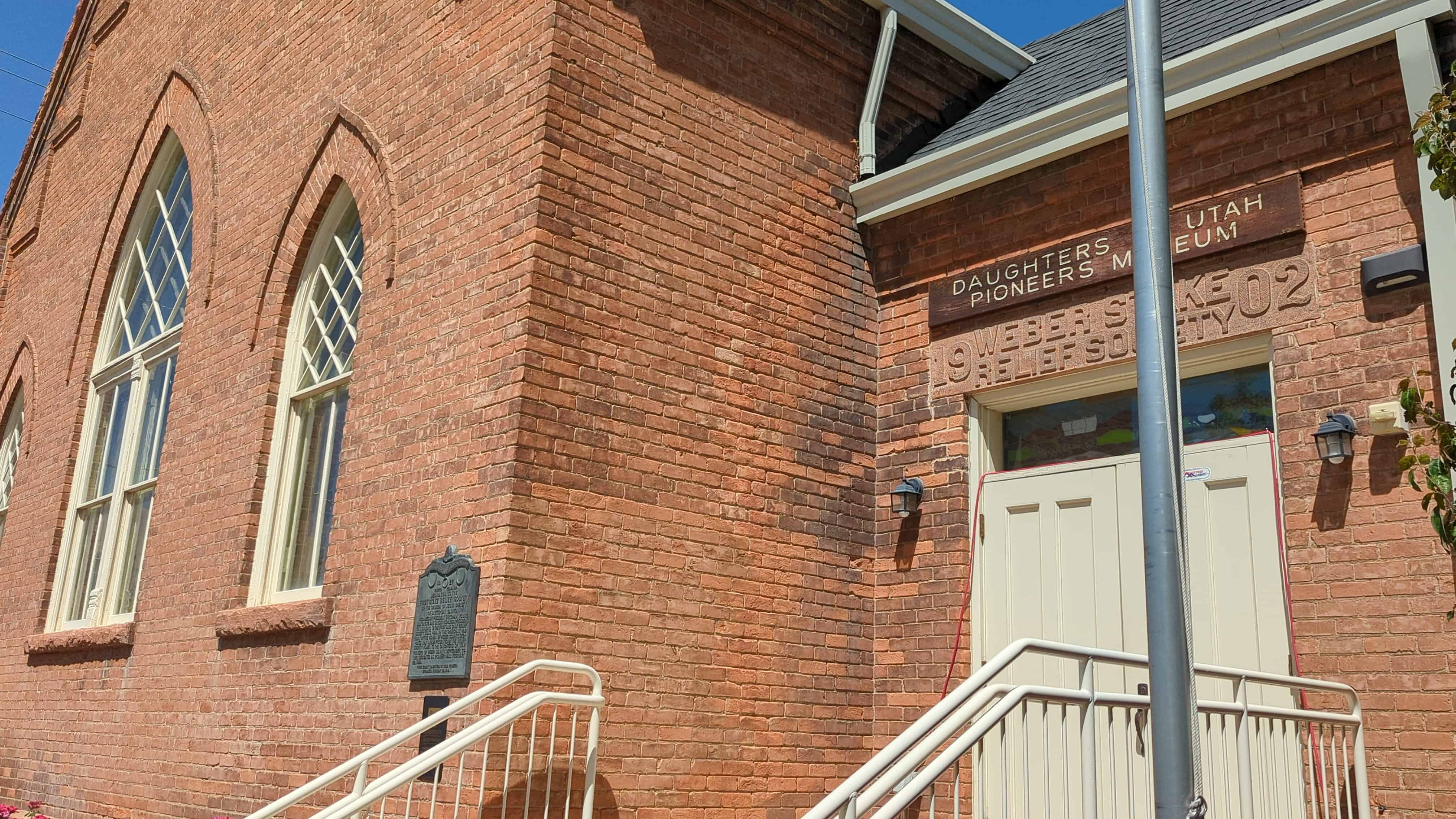
Constructed in 1902, the Weber Stake Relief Society Building is locally significant as the center of activities for the women’s organization of the Church of Jesus Christ of Latter-day Saints (Mormon or LDS Church). During the late nineteenth century. Relief Society women in virtually every Mormon community constructed buildings to accommodate their activities . There were meetinghouses, granaries, stores, and homes of assistance for the needy. These buildings represent the significant role the Relief Society played i n promoting the spiritual and temporal welfare of Mormon communities. Relief Society buildings were gradually abandoned during the early twentieth century as new accommodations for the Relief Society were provided within the main church buildings being constructed at that time. Although the building acted as a religious structure , it s significance i s derived from it s representation of the historical theme of Relief Society activity in early Mormon communities.

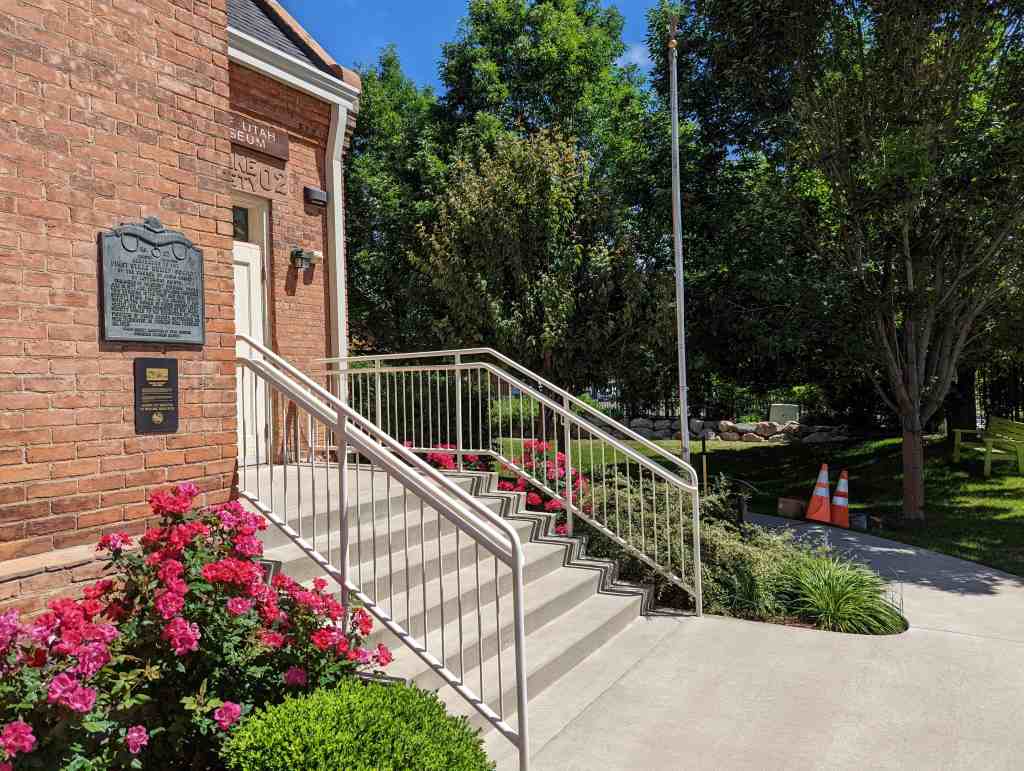
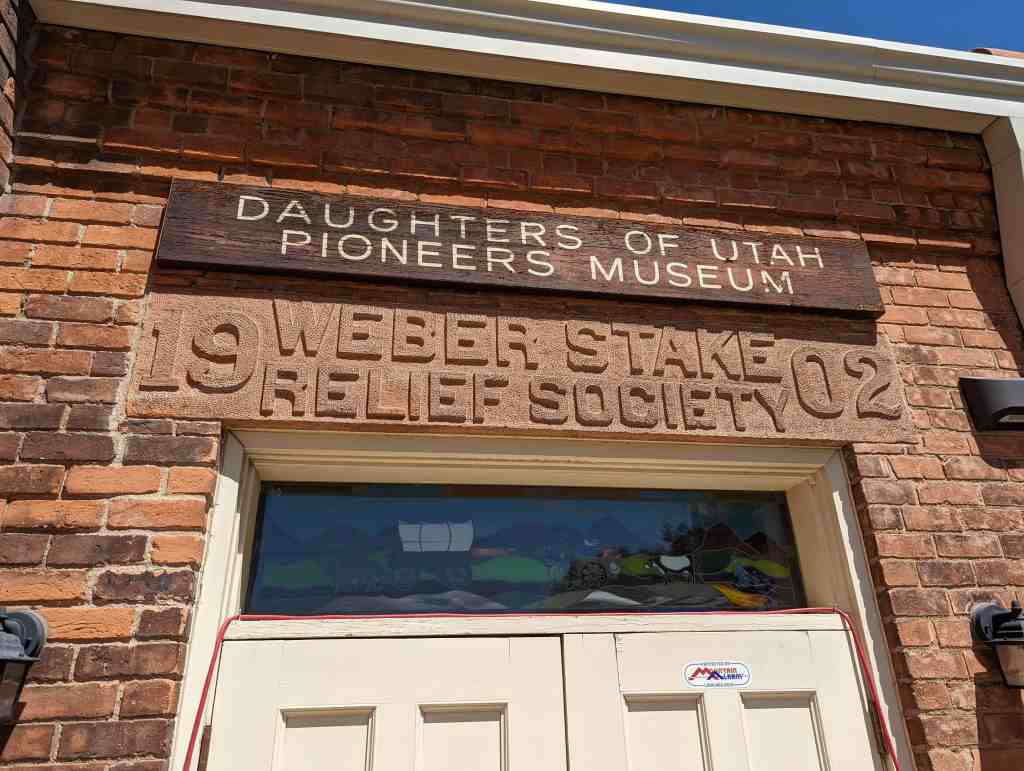
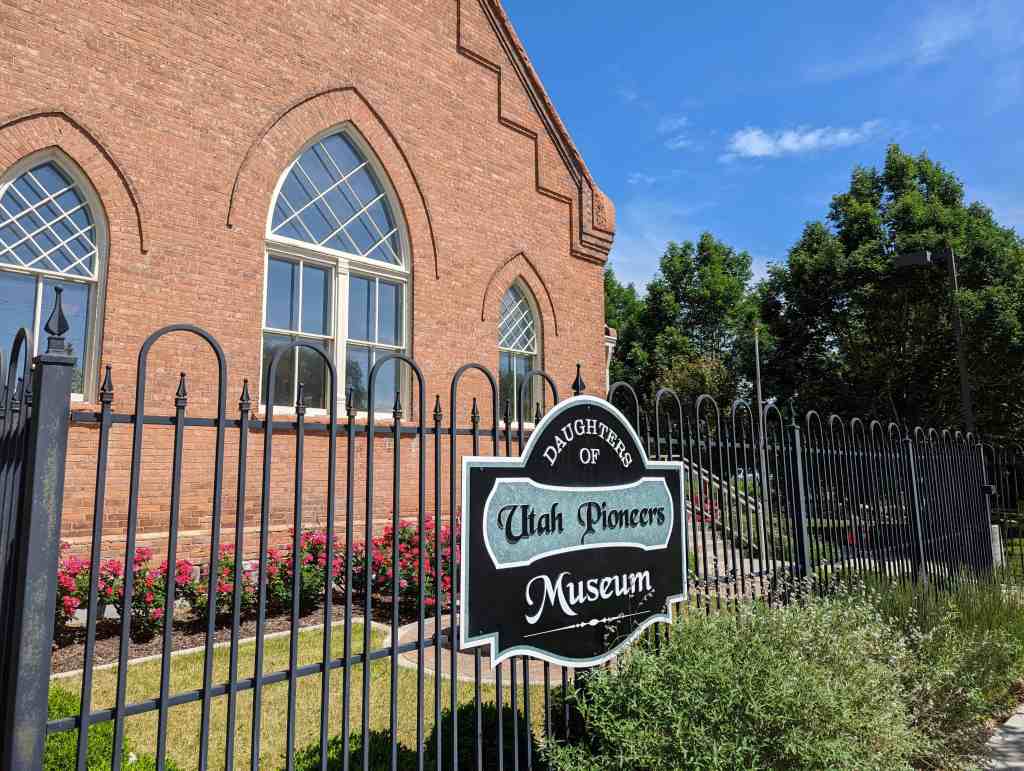
This building is located at 2104 Lincoln Avenue in Ogden, Utah, it was moved from 2148 Grant Avenue on January 24, 2012, it was added to the National Historic Register on February 13, 1989 (#88003438) and it is the home of the Weber County Daughters of Utah Pioneers Museum.

The Weber Stake Relief Society was organized in 1877 under the direction of Brigham Young and other LDS church officials. It was reportedly the first Relief Society group to be organized by stake rather than ward (a stake comprises several wards or congregations). Like Relief Society groups church- wide, the Weber Stake Relief Society was responsible for providing assistance to the poor, the sick and the needy. It is unknown where the group met during its first 25 years, but in 1902 plans were made -for constructing a large brick building on Tabernacle Square in downtown Ogden. Property for the building was donated by the Ogden Third Ward of the LDS church. Work commenced in the spring of 1902 under the supervision of a three-man building committee consisting of D.H. Peery, Barnard White and S.W. Wade. Funds were obtained by the women through donations and various fund-raising projects. Most of the $5,000 construction cost was paid by the time the building was dedicated on July, 19, 1902. The dedication was attended by a number of church officials and scores of women who were also celebrating the 25th anniversary of the organization of the Weber Stake Relief Society. 2 The building was used by the
Relief Society for a variety of purposes, including meetings, quilt- making, concerts, dances, .and other cultural events.

Changes in church organization and policy brought an end to the use of the building by the Relief Society in 1926. The Weber Stake had been divided into three stakes in 1908, and wit h the growth of those organizations the building was unable to accommodate al l the needs of the Relief Society. In addition, the church began constructing new church buildings which included accommodations for the Relief Society and other auxiliary functions. As a result of those developments, the building was no longer needed as a Relief Society facility. In 1926 it was transferred to the Weber County Daughters of Utah Pioneers in 1926 wit h the stipulation s that it be used as a non-profit museum for displaying pioneer relics. If those conditions were not adhered to then the property was to revert back to the church. The Weber County Daughters of Utah Pioneers have maintained a museum in the building to the present.

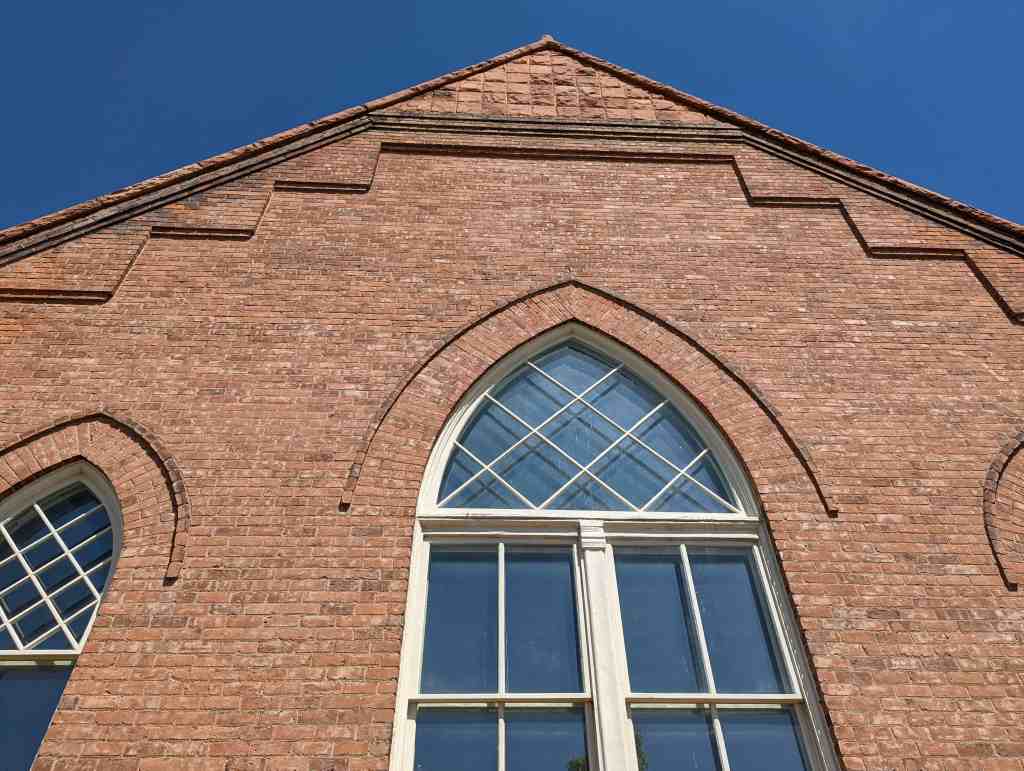
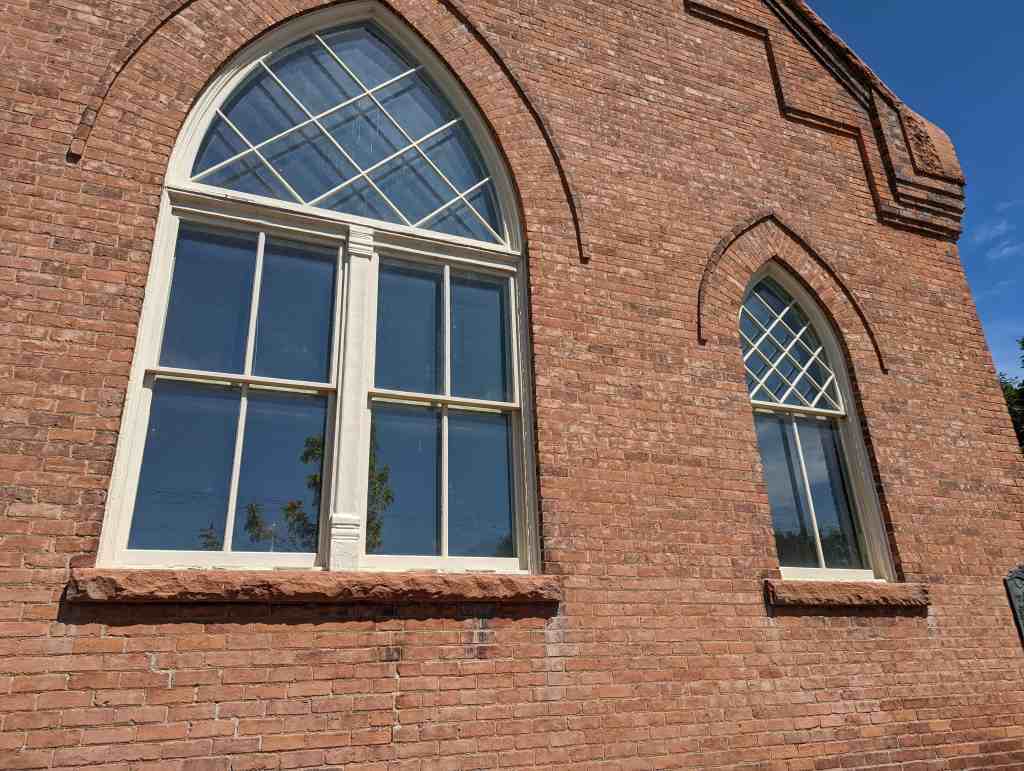
This brick building , constructed in 1902, is a good example of the Victoria n Gothic architectural style, a style which was popular in Utah in the years between 1880 and 1910. Gothic features include the prominent, steeply pitched gable roof that spans the main part of the building, and the three pointed arched windows in the principal façade. The center window is the largest, and all three are highlighted
by low-relief segmental brick arches. Rusticated stone coping has been used along the raking eaves of the front gable. Further adding to the the rustic appearance of the building are the slate tiles infilling the top of the front gable and the use of a shadow line of low-relief brickwork to approximate a stepped gable along the raking eaves. Also, diamond-paned tracery is found in the transoms of the three front windows.

The rest of the building is plainer and more Victorian in style. Rows of main story and basement windows along each side and rear of the rectangular gabled block have slightly rounded segmental arches. The rear gable is pedimented but devoid of ornamentation. A one story gabled entrance wing is located on the front of the south side, and there is another one story gabled extension to the rear of the main block. Both these sections appear to be original and have rusticate d coping along their raking eaves. A smaller addition has been placed at the southeast corner of the rear section which also appears original . The building remains in good historic condition.

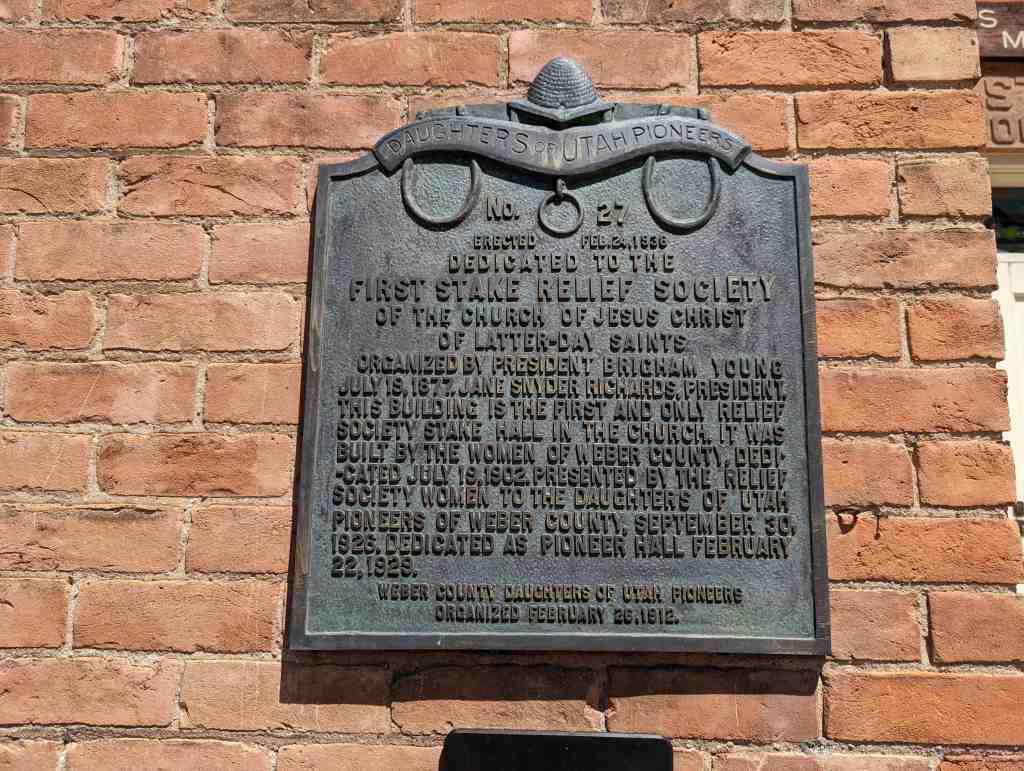
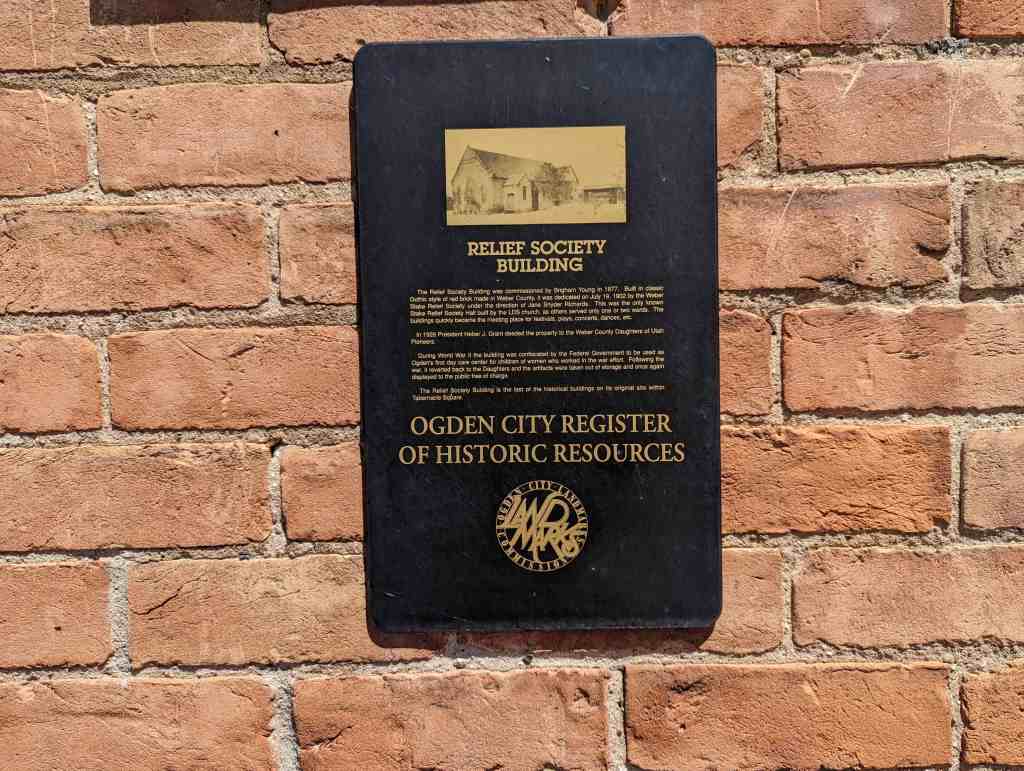
The Relief Society Building was commissioned by Brigham Young in 1877. Built in classic Gothic style of red brick made in Weber County, it was dedicated on July 19, 1902 by the Weber Stake Relief Society under the direction of Jane Snyder Richards. This was the only known Stake Relief Society Hall built by the LDS church, as others served only one or two wards. The buildings quickly became the meeting place for festivals, plays, concerts, dances, etc.

In 1926 President Heber J. Grant deeded the property to the Weber County Daughters of Utah Pioneers.

During World War II the building was confiscated by the Federal Government to be used as Ogden’s first day care center for children of women who worked in the war effort. Following the war, it reverted back to the Daughters and the artifacts were taken out of storage and once again displayed to the public free of charge.

The Relief Society Building is the last of the historical buildings on its original site within Tabernacle Square.

Miles Goodyear Cabin

20 Monday Feb 2023

Posted by Jacob Barlow in Uncategorized

≈ Leave a comment

Tags

Cabins, Historic cabins, NRHP, Ogden, Weber County

The Miles Goodyear Cabin is located outside the Weber County Daughters of Utah Pioneers Museum at 2104 Lincoln Avenue in Ogden, Utah. There are several historic markers that talk about it:

U.P.T.L.A. Marker #41 says:
This cabin, built about 1841 by Miles Goodyear, as far as known the first permanent house built in Utah, stood near the junction of the Ogden and Weber Rivers. In 1848 it was sold to Captain James Brown of the Mormon Battalion with a Spanish land grant covering all of Weber County. It was preserved by Minerva Stone Shaw and by her presented to the Daughters of the Utah Pioneers, Weber County Chapter, who placed it on its present site.

D.U.P. Marker #484 says:
Miles Morris Goodyear built this cabin on the lower Weber River as a way station and trading post. The cabin, along with other buildings became Fort Buenaventura meaning good venture. It was the first permanent settlement in the Utah Territory. Miles Goodyear (1817-1849) had traveled as far as Fort Hall in 1836 with Dr. Marcus Whitman’s party of Methodist Missionaries. Goodyear was a trapper, prospector and trader. His Indian wife Pomona was the daughter of Ute chief Peet-teet-neet. The couple had two children, William Miles and Mary Eliza.

Mormon Battalion Captain James Brown and Mary Black Brown bought Fort Buenaventura and all of Weber County for $1,950 in gold. Mary Brown made the cabin home for her family and made 1,000 pounds of cheese during the first year.

The Browns sold the cabin to Amos P. and Minerva Leontine Jones Stone. The Stone family lived in the cabin for a time, eventually using it as a blacksmith shop. A daughter, Minerva Pease Stone Shaw, in 1926 presented the cabin to Weber County Daughters of Utah Pioneers for preservation. It has been moved seven times, ultimately being placed at this site. In 1994 it was disassembled for preservation of the logs and reassembled in 1995 at this location to benefit posterity.

The Ogden City Landmarks Commission plaque says:
Miles Goodyear came west as a venturesome young man with the Whitman- Spaulding Expedition of 1836. He married a daughter of the Ute Chief, Pe-teet-neet, and located his stockade and cabin on the Weber River. This post became a stop-over and replenishment station for California-bound emigrants. Goodyear called his place Fort Buenaventura.

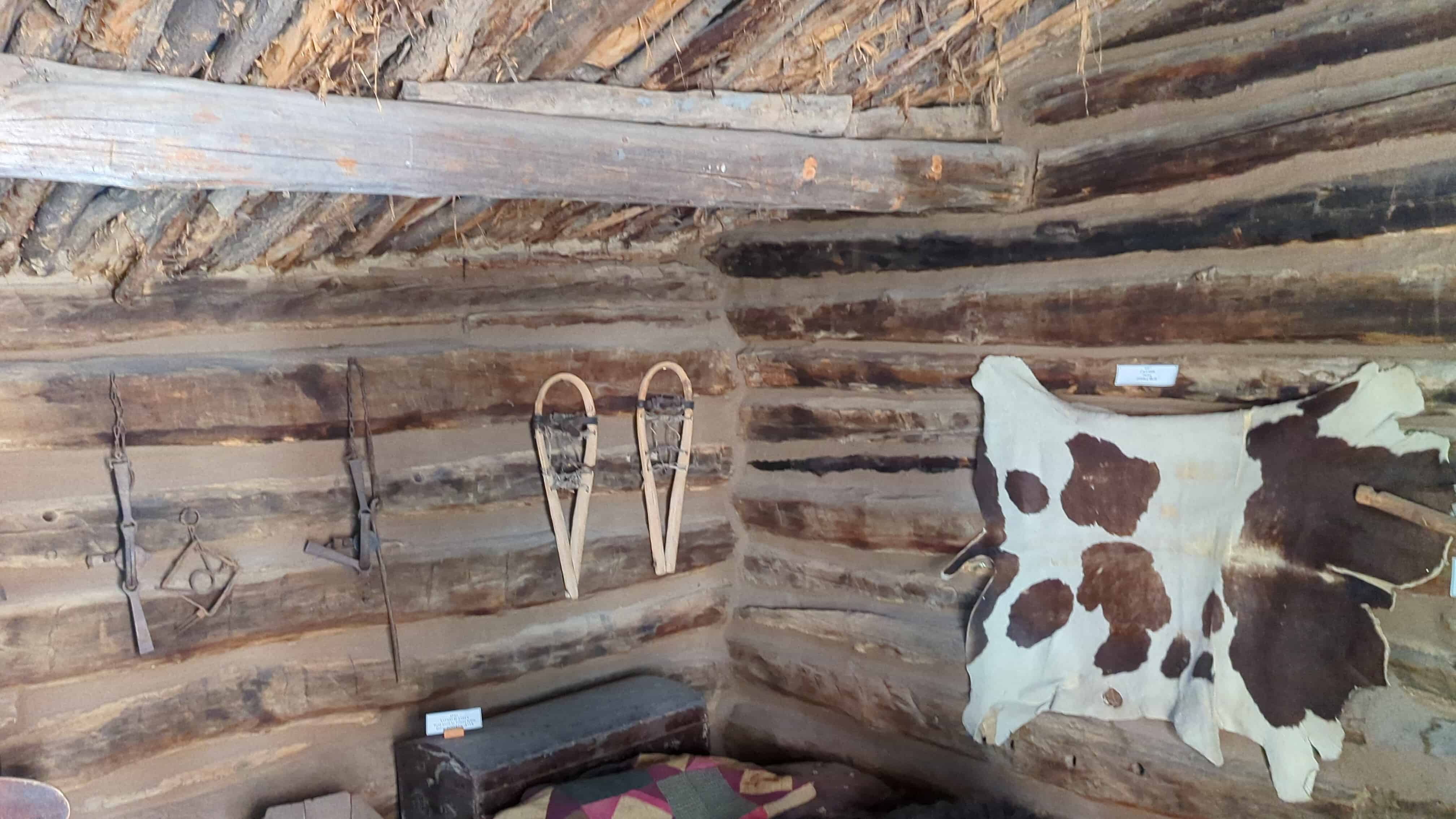
The cabin was built of sawed cottonwood logs in 1845 by Goodyear. Its dimensions are 14’4″x17’9″. The original floors were dirt. As the foundation logs sat on the ground, they rotted away and have been replaced. In addition, some of the lumber in the door and the windows was sawed after 1847.

Originally located on the Weber River two miles above the Ogden River confluence, the cabin has been moved several times. In 1928 it was donated to the Daughters of the Utah Pioneers.

The cabin was added to the National Historic Register (#71000866) on February 24, 1971.

The earliest permanent white settlers in Utah were trappers and traders. In the Miles Goodyear cabin the story is told of the transition from trap- per and trader to settler. Goodyear came west as a venturesome young man with the Whitman-Spaulding Expedition of 1836. At Fort Hall on the Snake River in present-day Idaho, he left the party to become a mountain man.” In time he married a daughter of the Ute Chief, Pe-teet-neet, and located his stockade and cabin on the Weber River. This post became a stop-over and replenishment station for California-bound emigrants. Goodyear called his place Fort Buenaventura.

Goodyear combined his trapping ventures with trading as far afield as California. On July 10, 1847, he met the advance party of the first Mormon emigrants at Bear Lake bottoms, where he talked with O. P. Rockwell, George A. Smith, Erastus Snow, and Norton Jacobs.

The new emigrants soon became interested in Goodyear’s holdings. James Brown saw them in August, 1847. After returning from California with Mormon Battalion payrolls, Brown pursued this interest and was per- mitted to negotiate with Goodyear who sold his properties for $1,950.00. The original claim included about 225 square miles, nearby all of present Weber County.

Brown moved in by March, 1848. The site became known as Brown’s Fort, Brown’s Settlement and, subsequently, Brownsville. The name Ogden was be- stowed officially in 1851.

Only the cabin remains of Goodyear’s Fort Buenaventura. But through it, this important transitional part of American and Utah history can be told.

Providence Church

01 Wednesday Feb 2023

Posted by Jacob Barlow in Uncategorized

≈ 3 Comments

Tags

Cache County, Historic Churches, Historic Markers, NRHP, Providence, utah

Construction of this building began under the direction of Bishop William Budge in 1869, ten years after the settlement of Providence. It was completed in 1873 at a cost of $12,800 and replaced a 32 x 16 foot hewn log structure erected in 1860. Reddish colored limestone, quarried near Dry Pole Canyon on the mountainside directly to the east, was used by head mason James Henry Brown in the 30 inch thick, 20 foot high walls. Known as “The Hall” and then as “The Church,” the meeting house had an excellent plank dance floor, a stage and proscenium at the east end of the hall, and a pump organ. It was a community center for dances and plays as well as religious services. In about 1877, a two-story rock vestry was added on the east. Other major additions and alterations were made in 1926, 1948, and 1968; however, the Old Rock Church of Providence is one of the best remaining examples of early Utah pioneer meeting houses.

Related:

  • The Old Rock Church
  • Providence Pioneers
  • The Providence Players

Located at 10 South Main Street in Providence, Utah

The First Presbyterian Church of Manti

20 Friday Jan 2023

Posted by Jacob Barlow in Uncategorized

≈ Leave a comment

Tags

Greek Revival style, Historic Churches, Manti, NRHP, oolite limestone, Presbyterian, Presbyterian Churches, Sanpete County, utah

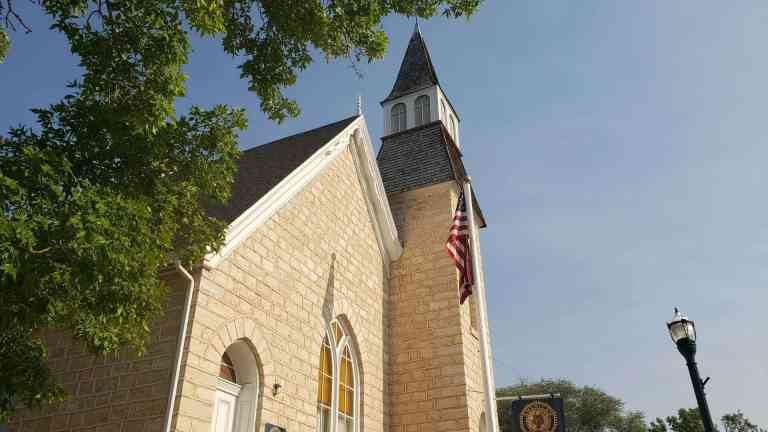
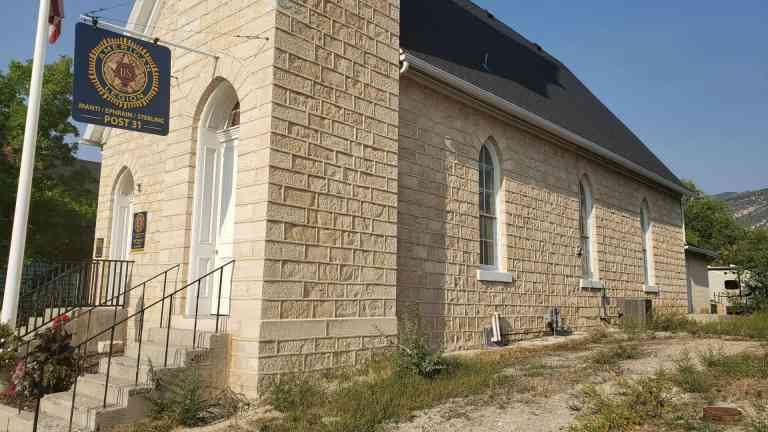
The First Presbyterian Church of Manti

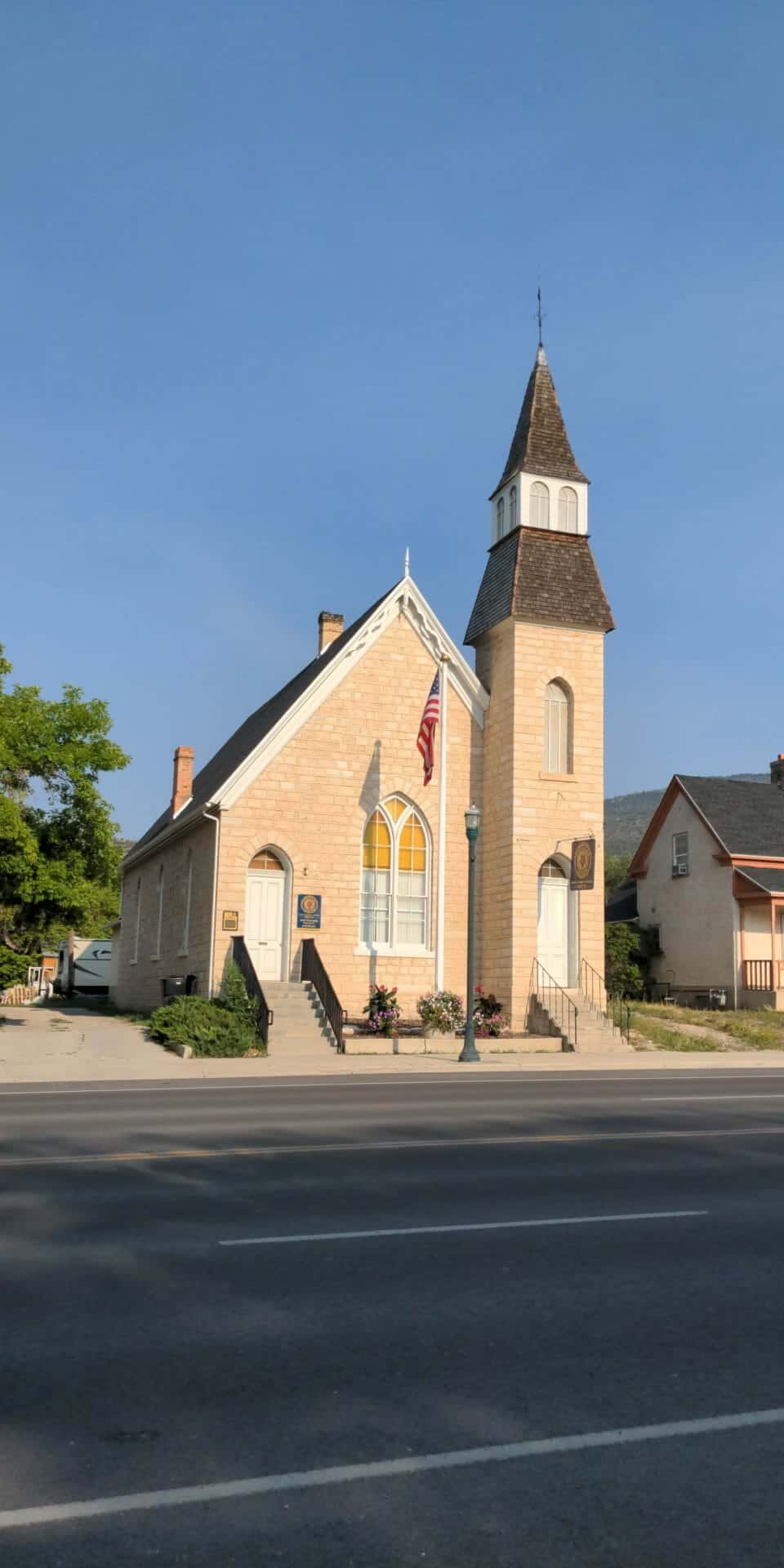
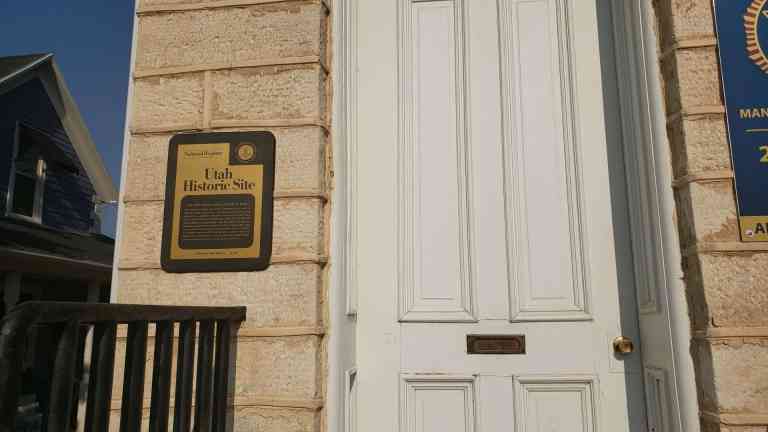
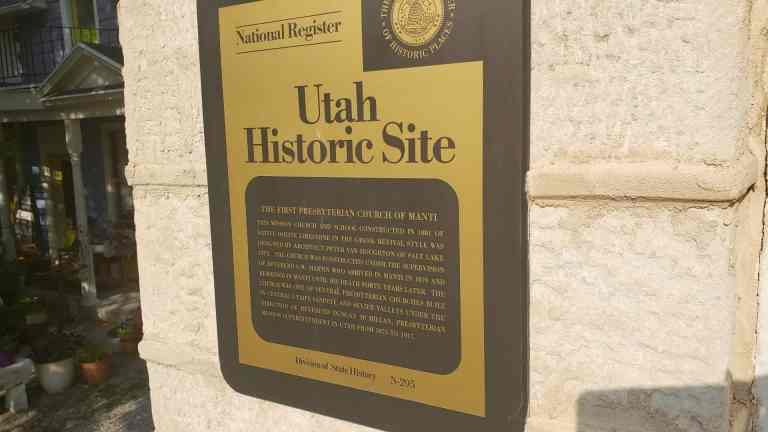
This mission church and school constructed in 1881 of native oolite limestone in the Greek Revival style was designed by architect Peter Van Houghton of Salt Lake City. The church was constructed under the supervision of Reverend G.W. Martin who arrived in Manti in 1879 and remained in Manti until his death forty years later. The church was one of several Presbyterian churches built in central Utah’s Sanpete and Sevier Valleys under the direction of Reverend Duncan McMillan, Presbyterian Mission Superintendent in Utah from 1875 to 1917.

Located at 165 South Main Street in Manti, Utah and added to the national register of historic places (#80003951) on March 27, 1980.

From the national register’s nomination form:
The First Presbyterian Church of Manti is significant because it documents the important role of a non-Mormon religious organization in stimulating improved educational opportunities in Utah and because the circumstances surrounding its being brought into existence place aspects of Mormon settlement into a new perspective. The building is a distinguished addition to the built environment of Manti.

Presbyterianism was established in Utah on June 11, 1869, with the arrival of the Reverend Melancthon Hughes to begin a pastorate in Corinne, Utah. Although begun with work in a Gentile boom town, Presbyterianism in Utah quickly became a determined missionary and youth education program aimed principally at converting Mormons.

As a religion whose own beliefs demanded an educated understanding of Christian doctrine, and whose style of religious organization was democratic, Presbyterians perceived Mormonism as a perversion, “a sort of cross between Roman Catholicism and Protestantism with vestigal marks of paganism, too eclectic to be evangelical and yet too evangelical to be wholly non-Christian.”1 Similarly, the authoritarian nature of the Mormon Church and its internal discipline was seen as “despotic suppression of liberty among its votaries and victims.” Convinced that Mormonism was both false and un-American, and, strengthened by the resolve that “Christianity and patriotism are natural allies … the Presbyterian Church discovered that it had mission work in Utah requiring intellectual strength, fervent piety, and executive ability.”

The missionary who epitomized these qualities, the Reverend Duncan McMillan, was also the man who brought into being the Presbyterian missionary strategy in Utah of offering superior educational facilities that would in time create an educated populace who would turn away from Mormonism. McMillan’s first venture demonstrated his ability to capitalize on available opportunities. Hearing of a group of disaffected Mormons in Sanpete County, he received permission from the Presbytery of Utah to proceed to Mt. Pleasant.

When he arrived on March 3, 1875, the Reverend McMillan found a group of potential converts in the Mt. Pleasant Liberal Club. These people were former members of the Mormon Church, either apostate or excommunicated, who had been growing in number since 1862 when a rift in the local Mormon Church organization had produced the defection of a sizeable number of Swedes. They had been joined over the years by others, Anglo-American and from the other Scandinavian groups, whose common bond was that they were now no longer Mormon. Politically they supported the Liberal Party against the People’s (Mormon) Party in territorial politics, but religiously they were adrift.

Since they had progressed far enough in organization to have completed a Liberal Hall just the year before, the situation for the Reverend McMillan was well-nigh perfect … to have both a congregation and a meeting place.

The other situation from which the Reverend McMillan was able to profit was the poor quality of public schools in Utah. While Mormon communities had generally established schools as among their settlement priorities, the nature and product of this schooling left much to be desired. Lack of trained teachers and an irregular and often-interrupted school year meant that most children received an indifferent education at best, but often, none at all. Fashioning benches with his own hands, McMillan opened his first school in Mt. Pleasant on April 20, 1875, with 35 students in attendance.

After overcoming some initial financial problems and with the help of other ministers and a corp of dedicated female Presbyterian missionary teachers, McMillan would establish congregations or schools throughout Sanpete and Sevier counties and in other parts of Utah territory. His school at Mt. Pleasant would become the Wasatch Academy, still operating and listed on the National Register.

In 1877 two former Mormon missionaries, Andrew Jenson and Andrew Nelson, called on McMillan and invited him to start a school in Manti. McMillan quickly called upon his brother and sister-in-law to undertake the project The school grew to 122 pupils, the largest of any school in Sanpete County,’ and a congregation was begun with twelve new Presbyterian converts. The most active elder of the new church was Andrew Nelson, a polygamist with four wives, 24 children, and 118 grandchildren. In order to accommodate to his new Presbyterian sensibilities, Nelson abandoned three of the wives.

McMillan, always sensitive to charges levelled by other Presbyterians that the Utah mission to the Mormons was inordinately expensive, triumphantly reported:

there are more converted Mormons in that one church than in all the churches of Salt Lake City put together …. Now I should like those pious economists to know that our noble, wealthy, Presbyterian Church has “wasted” only $75.00 in the conversion of those ten families, and the planting of Presbyterianism in the midst of this wilderness of sin.

The First Presbyterian Church of Manti had been firmly established by the time the Reverend G. W. Martin and family arrived in 1879 to take up the post of minister. The Reverend Martin would remain at his post in Manti for over forty years, and during that time would witness both the first flush of success as Presbyterian schools and churches sprang up in Sanpete and Sevier county under the prodding of the dynamic McMillan and, sadly, he also witnessed the gradual stagnation of Presbyterian effort. Because the Presbyterian schools had offered solid curricula and able, well qualified teachers, Mormon parents had rarely hesitated to take advantage of this educational opportunity for their children. But by the mid-1890s Mormon Stake Academies and the improved public education system made the Presbyterian schools less attractive, and gradually with the exception of Wasatch Academy the mission schools went out of existence. Proselyting, after the first harvest of Mormon dissidents, became increasingly difficult and conversions were slow. The Manti congregation dwindled through migration and reconversion to Mormonism, and when the Reverend McMillan died in 1917 the Presbyterian Church in Manti died with him. However, unlike some of his firey colleagues, the Reverend Martin was held in considerable esteem by the Mormon community of Manti. They valued his educated (a B.A. from the University of Ohio and a B.D. from Union Theological College) commitment to civic affairs in their community, and his consistently friendly and broad-minded attitude toward Mormonism. His funeral, in the church he had built and served for forty years, was attended by dignitaries of the Mormon Church who had offered the Manti Tabernacle to accommodate the large crowd who attended the service.

Subsequently the First Presbyterian Church of Manti, with its bell that had once rung for city curfews as well as church services, fell into disuse and disrepair. It is currently operated as a lodge hall.

School and Gymnasium Block

08 Sunday Jan 2023

Posted by Jacob Barlow in Uncategorized

≈ Leave a comment

Tags

Clark County, Gymnasiums, Historic Markers, Mesquite, Nevada, New Deal Funded, NRHP, PWA, PWA Projects, Schools

School and Gymnasium Block

Public Square, Circa 1894

Tent Chapel and School, circa 1899. When Mormon settlers came to Mesquite Flats in 1894, they designed the southeast corner of this block as the Public Square. It was a place where the community gathered for many events. At this site a tent was set up circa 1899 for use as a chapel and a school. It was 16′ x 16′ with no windows, no heat, a dirt floor, and only logs to sit on.

Block School, circa 1922. 

The Block School, so-named because it was made of cement block, had four classrooms and an auditorium. It stood on the southeast corner of the block until it was replaced with a new campus in the 1960’s. The Church of Jesus Christ of Latter-Day Saints rented the schoolhouse for meetings and gatherings for several years.

Gymnasium, circa 1938.

This red brick gymnasium was built adjacent to the Block School and became the center of recreation for the community. The gymnasium was placed on the National Register of Historic Places in 1992. It represents Italian Renaissance REvival style architecture. Construction of the gymnasium was funded through the federal Public Works Administration (WPA) program.

This is Mesquite Historic Marker #9 (see others on this page) located at 51 East 100 North in Mesquite, Nevada.

The Mesquite High School Gymnasium was added to the National Register of Historic Places (#92000119) on March 10, 1992.

From the national register’s nomination form:
The Mesquite High School Gymnasium is significant under Criteria C in the area of significance of Architecture. Built in the Italian Renaissance Revival Style, it is representative of the historic context “Schoolhouse Architecture in Southern Nevada’s Fifth Supervision District, 1870 to 1942.” It is significant as an example of its style as well as its rare use of terra cotta and tinted concrete brick. The Mesquite Gymnasium is illustrative of the School Support Building property type, and possesses the characteristics of that type in terms of its historic use, which reflected the expanding educational curriculums of the 1930s, and its functional design, which incorporated a central gymnasium with classrooms on the perimeter. The building is representative of the Custom Architecturally Designed Schoolhouse property type as well. It embodies the characteristics of that type in terms of the formality of its style, and the special attention paid to the spatial organization of the building’s uses.

School support buildings were important components of the expanding role of education that occurred beginning in the early 20th Century. Their function and necessary large size often required designs and methods of construction quite different from traditional school buildings. Almost always designed by architects, and usually in the formal styles, the school support building became symbolic, not only of educational reform, but also of community stature.

Funded by the federal Public Works Administration (PWA), the Mesquite Gymnasium was designed by Salt Lake City architect Miles E. Miller, and built by Salzner-Thompson, contractors. Miller also designed gymnasiums in the nearby towns of Bunkerville (1939) and Overton (1938) under the PWA program. The Mesquite Gymnasium exemplifies the public architecture sponsored by the federal relief programs of the Depression era. The federal government promoted subdued or minimal versions of the traditional styles associated with public buildings. Those styles were mostly drawn from Italian Renaissance or classical examples. They also promoted the use of modern, fireproof materials, particularly concrete and steel.

The design of the Mesquite Gymnasium illustrates that preference through its incorporation of elements of the Italian Renaissance Revival Style in a simple, straightforward manner. Stylistic features of the Mesquite Gymnasium that typify the Italian Renaissance Revival model are strict attention to symmetry at the principal façade, a division of the façade into three primary bays, and classical detailing of the cornice, entry frontispiece, pilasters, and doorways. The gymnasium entrance bay is designed with a pair of fluted classical pilasters flanking each side of the recessed, round arch doorway. The pilasters terminate at an ornate entablature and cornice that extends the length of the facade. Those elements are built of tan terra cotta. Although a common architectural product, its application on Southern Nevada school buildings is rare. The stylized frieze at the gymnasium eave is also decorated with terra cotta, in the form of medallions.

Aside from the application of terra cotta ornamentation and symmetry of the building, the design makes little additional reference to classical architecture. The balance of the gymnasium’s design is, however, in keeping with the concepts of minimalism, simplicity, and use of modern materials, as promoted by the federal government. Windows along the front of the building, which shed light into classrooms, are organized in groups of five and are tall, steel sash awning windows. Other windows are symmetrically located and also constructed of steel. Tall, arched windows along the rear wall of the gymnasium, now infilled, were also constructed of steel sash.

The use of brick-size, red-tinted concrete masonry units is regionally rare, but reflects the desire to use modern fireproof materials that simulated traditional clay brick. Although briefly popular during the 1920s and 1930s, the use of concrete brick was not economical and was soon replaced with larger concrete block, which required less material to manufacture and less labor to erect. The masonry work at the gymnasium is well detailed, with stepped back reveals at the building corners, and soldier courses at the water table and as a decorative band along the upper walls of the lesser facades.

Leeds CCC Camp

03 Tuesday Jan 2023

Posted by Jacob Barlow in Uncategorized

≈ 2 Comments

Tags

CCC, Eagle Projects, historic, Leeds, New Deal Funded, NRHP, utah, Washington County

Leeds CCC Camp

Built in 1933, the Leeds Civilian Conservation Corps Camp is significant as perhaps the best remaining example of a CCC camp in Utah. These camps were typically built of relatively temporary frame construction, and the surviving buildings and features such as the stone terraces at the Leeds camp present a unique, if somewhat limited, view of these important facilities. The economic impact of the Great Depression was especially severe in Utah where unemployment averaged 25 percent during the 1930s and was once as high as 36 percent. Because of the pressing need for conservation work, such as flood control, water resource development, etc., in the arid climate of southern Utah, the CCC work projects were of great importance locally.

Approximately 250 men were housed in frame barracks that were located to the southwest with other buildings such as a mess hall, library, and showers. The remaining stone structures are but a few of those originally built. The men were typically from out-of-state and served in the CCC for 9 to 12 months. Temporary remote “spike” camps were established near many of the actual construction projects. The Leeds CCC Camp was closed in 1942, and most of the frame buildings were removed before 1950.

Related:

  • CCC Camps
  • Civilian Conservation Corps, Leeds, Utah
  • New Deal Funded Projects in Utah
  • “They Were Poor, Hungry, and They Built to Last”

Located at 90 West Mulberry Lane in Leeds, Utah and added to the National Historic Register (#93000062) March 4, 1993.

Leeds Historic CCC Camp

In the depression year of 1933, President Franklin Delano Roosevelt initiated the Civilian Conservation Corps. This program provided much needed employment for the nation’s youth 18-25 years old. The men had to complete the 8th grade, and have 3-4 family members dependent on their paycheck. The men received $30.00/month of which $25.00 was sent home to their family.

The men at this base camp developed the Oak Grove Campground, built bridges and constructed roads from Leeds to St. George. They were instrumental in preserving and protecting forests, waterways and other natural resources. But the real benefit was that it gave these young men hope, self respect, and a new start in life.

Our task today is to preserve and restore this Utah CCC camp site. Your donations will be used wisely. For more information on other local CCC camps: www.wchsutah.org

2011 by Eagle Scout Project by Kody Allen.

Empress Theatre

31 Saturday Dec 2022

Posted by Jacob Barlow in Uncategorized

≈ Leave a comment

Tags

Beaux Arts style, high-style architecture, Magna, Neo-Classical style, Neon Signs, NRHP, Salt Lake County, Theaters, utah, Vintage Signs

The Empress Theatre, built in 1917, is both historically and architecturally significant. The design of the building, a combination of Neo-classical and Beaux Arts styles, makes it the most outstanding example of high style architecture in Magna. Though not a premier example of the Neo-classical style in Utah, the Empress Theatre is one of a number of distinctively styled theatres in small Utah towns that are dominated by relatively plain commercial buildings. Historically, the Empress Theatre is one of the oldest and best preserved commercial buildings in Magna, and it is the oldest theatre in the community.

The theater was added to the National Historic Register (#85000962) in 1985 and is located at 9104 West 2700 South in Magna, Utah

  • Theaters in Utah

The Empress Theatre was built on Main Street in Magna in 1917 by the Western Theatre Corporation, about which nothing is known. The theatre was owned by Western Theatre Corporation only until October 1918, when it was sold to Thirza A. Hemingway, also an unknown. During Hemingway’s years of
ownership, 1919-23, the theatre was listed in the city directories only in 1919 and 1923, indicating that it was not in operation for 3-4 years. Frank Burgner, who bought the theatre in 1923, owned and operated it until 1932, after which it was owned for three years by State Building and Loan Association. From 1931 through 1935 the theatre was once again left vacant, as indicated by the city directories. George and Alice Smith bought the Empress Theatre in 1935 and operated it for almost 20 years. The building has been virtually unused for the past 30 years.

At the time of its construction the Empress Theatre was the second theatre in Magna. The other theatre, the Palace Theatre, operated from 1914-17, but its location is currently unknown. Two other theatres also operated in the town during the period from the 1920s through the 1940s, the Rialto (1921-26) and the Gem (1927-44+). Only the Gem remains and it has been significantly altered.

The Empress Theatre was constructed during the period of greatest growth in Magna, the 1910s-20s. The Utah Copper Corporation was established in 1903, incorporating numerous small mining operations into one large one, and soon after erected the Magna and Arthur concentrators near the site of Pleasant Green, which several years later became known as Magna. The Empress Theatre was one of a number of buildings that were erected along Main Street during the decades of the 1910s and ’20s, creating a substantial commercial district. Most of those buildings have been left vacant and neglected over the past 20-30 years, however, as the prime commercial district has shifted further west and south and the depressed local economy has dried up most businesses in the old Main Street area. The Empress Theatre is one of the best preserved of the older commercial buildings along Main Street, and it is easily the most sophisticated in terms of its architectural design. Most of the remaining buildings in the area are relatively plain, nondescript commercial buildings.

This is a 1-story one-part commercial block type building that is constructed of brick and has a flat roof. The design is essentially Neo-Classical, although some Beaux Arts influences are in evidence. The most distinctive features of the building are its pressed tin dentiled” cornice and decorative curvilinear gable on the parapet. At the center if the gable is a rectangular panel framed by rosettes and topped by scroll work and a flag pole. There are swags and garlands on the frieze above the recessed front entrance. The façade is broken up into three bays by brick piers. The entrance bay is highlighted by ornate, pressed tin pandrels at both corners. These spandrels appear to be inspired by the Beaux Arts style. The brick piers have vertical recessed panels, a decorative motif that is carried over on horizontal panels on each of the side bays. Narrow transom lights are found above the openings on each of the side bays. The building is currently vacant but remains in good condition and retains its historical integrity.

The Empress Theatre was built in 1917 by the Western Theatre Corporation. Originally a burlesque theater for the local miners, the theater soon began showing silent movies. The Empress is one of four theaters that were erected along Magna’s Main Street during the decades of the 1910s-1930s. This followed the establishment of Utah Copper Corporation, which brought jobs and population growth to the area.

For many years, the Empress went through a number of owners as well as periods of vacancies. The theater was abandoned for several decades and was purchased in 1978 by the Barker family who began restoring the building. Leo Ware took over ownership in 1983 and continued the project. However, in July 1984, the Salt Lake County Commission threatened to have the building demolished because it was unsafe. After an appeal, the Commission reversed their decision and allowed Ware until the end of the year to stabilize the building, which he did. He continued working on the building for more than a decade, using state and federal grants to help with the expenses. Unfortunately, Ware was injured in an auto accident in 2002 and could not finish the rehabilitation of the building. In 2006, a local non-profit organization, Oquirrh Hills Performing Arts Alliance, was formed to take over the project from Ware. The Alliance continued to receive grants and completed the work. The Empress finally reopened as a live performing arts theater in November 2006 and has seen over 100 productions since then.

The design of the building, a combination of Neo-classical and Beaux Arts styles, makes the Empress Theatre the most outstanding example of high-style architecture in Magna. This theater is an example of the many distinctively styled, early 20th-century theaters found in small Utah towns, which are dominated by relatively plain commercial buildings. Historically, the Empress Theatre is one of the oldest and best preserved commercial buildings in Magna.

167 South Main Street

26 Monday Dec 2022

Posted by Jacob Barlow in Uncategorized

≈ 1 Comment

Tags

Carbon County, Helper, Historic Buildings, NRHP, utah

This one-story red brick commercial building was built in 1927 by Helper Securities. Five business storefronts completed the whole of this larger building. The northernmost portion at 167 South Main Street was occupied by the Success Meat and Grocery Company during the early 1930s. The building is in excellent condition and is a contributing property within the Helper Historic District.

167 South Main Street in Helper, Utah

Mammoth Fire Station

25 Sunday Dec 2022

Posted by Jacob Barlow in Uncategorized

≈ Leave a comment

Tags

Juab County, Mammoth, NRHP, utah

Mammoth Fire Station

This structure, constructed c. 1930, is significant for it’s association with the history of firefighting in Mammoth. In August 1912, the Mammoth City Council organized a volunteer firefighting unit, and on August 27, 1912, the first meeting of the Mammoth City Volunteer Fire Department, Number 1 was held. In December 1930, their name changed to the Juab County Fire Department. This building, built of brick, remains an example of the commercial style architecture of Mammoth. It continues to serve the firefighting needs of Mammoth. The Mammoth Fire Station was listed on the National Register March 14, 1979 as part of the Mammoth Historic District.

← Older posts
Newer posts →

Follow Jacob

Follow Jacob

Blog Stats

  • 2,023,741 hits

Social and Other Links

BarlowLinks.com

Recent Posts

  • Oljato Trading Post
  • Our Lady of Lourdes Catholic Church
  • Dale’s Sinclair Service Station
  • 83 N Street
  • First Company of Pioneers into the Valley

Archives


Loading Comments...