• About JacobBarlow.com
  • Cemeteries in Utah
  • D.U.P. Markers
  • Doors
  • Exploring Utah Email List
  • Geocaching
  • Historic Marker Map
  • Links
  • Movie/TV Show Filming Locations
  • Oldest in Utah
  • Other Travels
  • Photos Then and Now
  • S.U.P. Markers
  • U.P.T.L.A. Markers
  • Utah Cities and Places.
  • Utah Homes for Sale
  • Utah Treasure Hunt

JacobBarlow.com

~ Exploring with Jacob Barlow

JacobBarlow.com

Tag Archives: NRHP

Beaver Main Post Office

02 Wednesday Feb 2022

Posted by Jacob Barlow in Uncategorized

≈ 2 Comments

Tags

Beaver, Beaver County, Historic Buildings, NRHP, Post Offices, utah

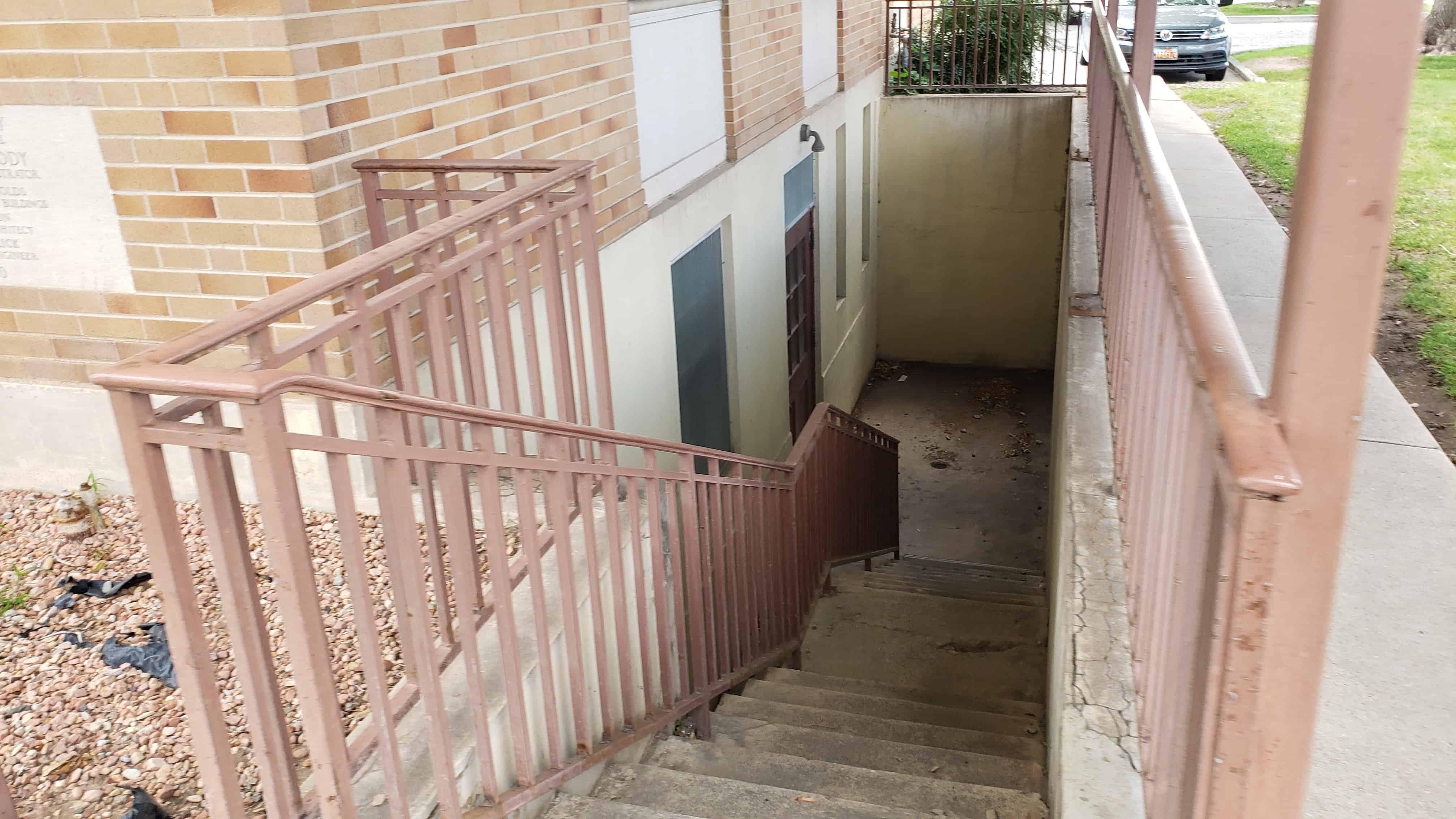
The Beaver Main Post Office is a one-story, buff-colored brick building on a raised concrete basement. The front façade is symmetrical, divided into five bays devoid of significant detailing. A centered entry bay with two equally-sized window bays on either side break the otherwise plain façade. Granite steps and landing, flanked by square concrete buttresses, provide access to the entry. Above the entry doors, and fronting a transom window is an ornate aluminum grille in which a low-relief sculpted eagle is centered. The façade is terminated by a plain limestone frieze with a slightly projecting molded cornice. A hipped roof, clad with copper, covers the front portion of the building while the rear is covered by a flat built-up tar composition roof. Centered on the ridge of the hipped roof is a square copper and glass cupola.

Built in 1941 at 20 South Main Street in Beaver, Utah

Related:

  • National Register Nomination Form

Physical Appearance

The front facade (east) is divided into five flat-arched bays. The main entry bay is centered, and flanked on each side by two window bays. The entry bay is slightly recessed from the brick-faced facade and framed in wood. The entry consists of double metal doors with six-light glass panels, topped by a nine-light transom window which rests atop a plain wooden door head. The ornate painted aluminum grille, in which a flat relief sculpted eagle is centered, is set in front of the transom window. Single free-standing lanterns in a torch motif rest atop each of the entry buttresses.

The window bays are identical to each other and of the same dimension as the entry bay. The bays consist of triple-hung six-light windows of wood sash which are set above a plain sandstone panel. The panel is slightly recessed and rests on the limestone facing of the raised basement wall. A plain limestone frieze extends across the façade between the line marking the tops of the bays to a plain, slightly projecting sandstone cornice. “United States Post Office”, “Beaver, Utah” is carved into the frieze and centered on the entry. The copper-clad hipped roof is topped by a square cupola a copper base, centered copper louvers flanked by four-light glass panels, and flat copper cap. A weather vane is set atop the cap.

The south façade is flat and divided into two sections the front section projecting slightly relative to the rear. Each section contains two window bays identical in design and detail as those of the front façade. Sandstone faces the exposed basement wall, frieze above the window bays, and cornice. Brick faces the remainder of the façade. The hipped roof overlies the front section and the flat built-up tar composition roof covers the rear.

The north facade is almost identical to the south facade. It differs in that one window bay is filled with brick (original construction) and one small one-over-one light double-hung sash window flanks each side of the bricked-in window.

The rear facade is similar in design and use of materials as the front except that the entry has been replaced by a brick-enclosed concrete loading platform. Extending rearward, the platform is slightly offset from the center of the building. The platform opens to the north with a single metal overhead loading door and a single metal pedestrian door. The west and south sides are solid brick. A flat roof with a metal marquee which projects over the loading area covers the platform. Two window bays, identical to those of the front and sides of the main building, flank each side of the platform. A smaller vertically-aligned window with one-over-one, double-hung wood sash occupies the northern corner.

The physical appearance of the Beaver Post Office has not been altered. No major renovations have occurred since its 1941 construction.

Though not yet fifty years old, the Beaver Post Office is exceptionally significant on the state level for art and architecture and on the local level for politics/government. The design is a duplicate of several other western post
offices, but it is the only example of Depression-era Federal architecture in Beaver. Moreover, it is the only example of its design-type in Utah. The building and the mural which it contains represent the efforts of the federal government, through its public works and art programs, to assist communities during a period of economic emergency. The mural, one of three post office murals in the state, represents a significant type, period, and style of artistic expression which, through its visual expression, relates to the social history of its locality. Finally, the building symbolizes the linkage between the federal government and local citizens through their home-grown Congressman, Abe Murdock.

  • Life on the Plains Murals

Architecture

The Beaver Main Post Office is a well-preserved and unaltered example of a small-town, single-purpose post office in the Starved Classical style. The building exhibits the modern or the International design influence in its flat facades and lack of explicitly articulated historical design elements, yet retains Classical symmetry and proportion. Flat brick piers, extending from the exposed basement wall to a broad limestone band, divide the five bays of the façade. These elements are reductions of the pilasters or columns, and the entablature of the Beaux-Arts designs. Ornamentation is stripped and limited to the ornate grille in which is set a low-relief eagle sculpture (also standardized) which rests above the entry doors. Although the building is given an American Colonial flavor by use of a hipped roof and cupola,
the design is modern.

The design represents the culmination of the evolution of federal design in the vastly expanded public buildings programs beginning at the turn of the century. The buildings prior to 1920 were designed in the Beaux-Arts tradition.
Those buildings of the early 1930s carry over this tradition, yet begin to show the transition to the modern. The Classical influence remains clear and the historical detailing retains its definition, however the facades become flatter
and tend toward simplicity. Federal architecture after the mid-1930s evidences greater refinement and attention to the modern influence. This is strongly evident in the Beaver Post Office which represents the end of the design revolution, which essentially ended at the onset of World War II. As such, it is a significant element in the state’s legacy of federal architecture and integral to the group of post offices included in this thematic nomination. Therefore, the building has statewide significance under Criterion C.

Art

According to Dan E. Burke, in the exhibition catalogue for Utah Art of the Depression (1986), the public arts programs sponsored by the federal government in Utah during the Depression were successful in not only in enriching the lives of Utah citizens but also for laying down the first stone in the foundation of a vital cultural movement. The first of the federal programs, the Public Works of Art Project (PWAP), functioned from December 1933 to June 1934. Under the direction of the Women’s Division of the Utah Civil Works Administration, projects were initially assigned to Utah artists. Included in this body of work were sculptures, sketches, easel paintings and murals for the Utah State Capitol
rotunda. After the initial projects were completed, several other artists received commissions to execute murals and easel paintings.

Following PWAP, arts programs were continued under the Federal Emergency Relief Administration of Utah (FERA) which existed in Utah from April 1, 1934 to July 1, 1935. Administered by Judy F. Lund, twenty-two artists produced eighty-three art works. These works included easel paintings, ceramic pieces, woodblock prints, sketches, sculptures, posters and the completion of the State Capitol dome murals. The program allowed completion of projects initiated under PWAP, provided additional opportunity for artists to produce their artwork, and continued federal support for the arts until the beginning of the Section of Painting and Sculpture.

The Section of Painting and Sculpture (renamed the Section of Fine Arts in 1938) was established by the Treasury Department on October 14, 1934. It was under this program that the Beaver mural and murals in the Provo and Helper post offices were completed. The Section, which was administered in Washington, dealt directly with the artists, and selected artists through national and regional design competitions. The Section sought the best decorative art that it could find for designated federal buildings. The intent of the program’s administrators was that the work would reflect the themes and styles of the American Scene, with a hope that it would strike a responsive chord in the general public. Although the program is attributed with having fostered an American Regionalism, art critics could never find a coherent body of work that was truly Regionalist or representative of particular sections of the country. The work that was created did, however, portray the American Scene in the form of localized subject matter. Further, the work resulting from the program tended to pursue an inoffensive middle ground of style and content which was sometimes viewed as producing limp platitudes rather than strong statements. This resulted from the requirement for final approval from Washington as well as compliance with local preferences. The strife or dark side of the Depression was not portrayed, but instead the nostalgic and positive events of the American Scene were depicted.

No Utah artist received a commission under the Section of Fine Arts program and none participated in the Treasury Relief Art Project (TRAP) which was initiated in July 1935.

The WPA Federal Art Project (WPA/FAP) perhaps made the greatest contribution to the body of Utah art. Implemented in mid-1935, the Utah program was sponsored by the Utah State Institute of Fine Arts. Three areas of activity were covered by the program: (1) creation of art; (2) technical research; and (3) art applied to community service and art education. Several hundred works of art including fourteen murals were added to the collections of the State, and various public agencies and municipalities.

Beaver’s mural (approximately 12′ x 6′, oil on canvas), entitled “Life on the Plains”, is attached to the lobby wall over the Postmaster’s door. One of only three post office murals in the state, it was executed in 1943 for a sum of $740. The mural depicts prospectors panning for gold, wranglers rounding up a steer for branding, and traders dealing with local Indians. John W. Beauchamp, the artist, was born in Marion, Indiana on June 22, 1906. He studied under Richard E. Miller, Leon Kroll and P. Lewis Schlemmer and was awarded the Beck Medal for portraiture by the Pennsylvania Academy of Fine Art in 1935. His other post office murals included Millinocket, Maine and Muncey, Pennsylvania.

The Beaver Post Office is significant under Criterion A for its historic association with the federal government’s New Deal public arts programs. The mural is also significant under Criterion C as an integral part of a building that represents a significant type, period, and style of artistic expression. Finally, the building is eligible under Criterion D because of its information potential relating to artistic expression and techniques of the period, and social history of its locality.

Politics / Government

The building, the city’s first federally-constructed post office, is a legacy of the massive federal public works programs which were designed to assist local communities during a period of national economic emergency. Other WPA projects in Beaver at this time included work on local schools, an armory, reservoir, and racetrack. The post office also represents the efforts on the part of local citizens, through their elected representatives in Washington, D.C., to secure a federal building. This linkage is especially meaningful for Beaver since Congressman Abe Murdock (D), who served in the House from 1932 to 1940 and in the Senate from 1940 to 1946, was raised and practiced law in Beaver. The local press credited Murdock, “better known in Beaver as ‘Abe'”, as “the one man responsible” for the post office, and praised his “splendid efforts in behalf of our little city.”

Local Context

Beaver City is in southwestern Utah on the high, Great Basin desert at the foot of the Tushar Mountains. It is the county seat of Beaver County and had an estimated 1984 population of 2,076. Tourism, agriculture and its status as the local retail and service center provide the base for the local economy.

Beaver City was founded by Mormon pioneers in 1856 on the banks of the Beaver River. Because of its high altitude (6,000 feet which makes for a short growing season) and arid climate, Beaver was settled primarily as a stock raising
village, though local farmers have always grown hay, corn and oats. Ross A. Rogers was appointed the settlement’s first postmaster on July 24, 1857. After the Mountain Meadows Massacre of 1857, many of the refugees from the abandoned Mormon mission in San Bernardino settled in Beaver, considerably boosting its population. But the young community faced so many hardships and experienced such poverty that church leaders decided new leadership was necessary. John Riggs Murdock of Lehi became Beaver’s new leader in 1864 and soon things began to improve. By 1868, there were approximately 1,000 people living in Beaver. It had been designated county seat, and it appeared that the tentative community had finally taken root as a permanent settlement.

In 1870 a woolen factory was built and in 1873 a U.S. military post (Fort Cameron) was established in Beaver. Both contributed greatly to Beaver’s growth. By the 1870s Beaver had also become a crossroad for travelers as well as a supplier for the nearby mining towns. While Fort Cameron closed in 1883 and the mills closed in 1900, Beaver’s role as
a mining supplier and traveler’s stop helped it to maintain its commercial position. In 1900 Beaver’s population was 1,701; it has fluctuated very little since then (its 1980 population was 1,792). When mining operations in western Beaver County began to decline after the 1910s, it was about then that motor vehicles become more popular and plentiful and Beaver again emerged as an important spot for travelers (this time for tourists).

The Beaver Post Office is on the southwest corner of Main Street and West Center Street in the city’s central business district. Adjacent land uses include the Beaver City Library (one-story brick, Neoclassical/ NHR) to the west and the Beaver Stake Visitor’s Center (one-story log cabin, 1940, on site of 1865-1866 Tabernacle) to the south. The National Guard Armory (discussed in news coverage of Post Office construction) is south of the log cabin. North of the site, across West Center, is the Mansfield, Murdock & Co. Store (two-story brick, NHR). Two-story brick buildings are north of the Mansfield, Murdock Building (commercial block). One-story brick commercial buildings are in the block opposite the Post Office to the northeast and across Main to the east. Although the Post Office is not within an historic district, the buildings noted as NHR are included in the Beaver Multiple Resource Area which is listed in the National Register of Historic Places.

Local newspaper coverage of the construction of the Beaver Main Post Office

In 1937 Beaver celebrated the 80th anniversary of its 1857 founding. During this time the Beaver Press was able to report considerable progress for the city: on May 21st it reported that the Chamber of Commerce was planning a $22,000 racetrack for the city, on August 6th it announced that Beaver’s new $25,000 theatre would open that night, and on October 8th it reported that the Beaver City Bank would soon be opening (the town had been without a bank since the closing of the State Bank of Beaver County). The year before there had been discussion of a new hospital and a new armory (articles of March 6, and March 20, 1936).

1938 brought news of progress for Beaver’s federal building. On August 4, 1938 the Beaver Press reported “Bids Opened Today for Federal Building Site” (two bids were received) . An article of September 22nd explained that congress had approved the building during the last session, primarily due to the “inexhaustible efforts of Congressman
Murdock, better known in Beaver as ‘Abe’.” (Abe Murdock (D), a resident of Beaver, served in the U.S. Congress from 1932 to 1940, and in the U.S. Senate from 1940 to 1946.) The same article revealed that a new choice for the site was a centrally located corner site, owned by the church. The church was asking $10,000 for the property, but was willing to lower the price to $7,500 if the City Council would agree to sponsor a $2,500 project to improve the adjoining park.

In 1938 the Beaver Press also reported further discussion of the racetrack, which would be built with WPA funds (August 18th article) and it was reported that $160,000 worth of work was slated for Beaver schools, with $72,000 coming from the WPA (July 27th and September 29th articles). An article of October 27th commented on the “considerable building and construction work in Beaver County” and mentioned a reservoir project that would also utilize WPA funds. On November 17th the paper announced that the corner site had been approved for the federal building. It was reported that the building would house the Post Office, Forest Service, Farm Administration, County Agent and Welfare Office, and that “this project will help the unemployment problem.”

Bids for Beaver’s federal building were requested in the Beaver Press on February 8, 1940. On March 7th it was announced that John Bernstson of Salt Lake City was the low bidder with a bid of $53,436. An article of April 18th
reported that excavation was complete, construction had started, and gave credit to Congressman Murdock for his effort in securing the project for Beaver. Another Beaver project was discussed in a Beaver Press editorial of May 2nd the armory. The editorial noted that the armory project would give employment to WPA workers and cost $50,000 (Beaver would contribute $4,300 and the site). A week later the paper reported that the city had agreed on a site and the cash for the armory (May 9th article).

An article of June 6th noted “work progressing on Federal Building” the plumbing was in and concrete was being poured but on September 12th it was reported “$80,000 Federal Project Delayed.” Work had been suspended due to failing quarry conditions in the area; arrangements had been made to ship in limestone from Bedford, Indiana. “Beaver May Have to Wait Until Next Summer for New Post Office” was the story of September 26, when it was reported there had been communication with Bedford regarding the “much needed limestone.” A month later it was reported that work was moving forward bricklayers were setting stone, the lawn was in and sidewalks and driveways were completed (October 17th article).

On September 25 , 1941 a front page photograph of the Federal Building illustrated an article reporting that the building had been officially opened on September 2nd. On October 3rd another front page article gave credit to Senator Abe Murdock as “the one man responsible for this fine structure” and praised his “splendid efforts in behalf of our little city.” The paper also noted that “construction was started over a year ago, but because of the rapidly increasing demand for materials for national defense programs it was not until just a few weeks ago that the building was finished.”

Wasatch Wave Publishing Company Building

01 Tuesday Feb 2022

Posted by Jacob Barlow in Uncategorized

≈ Leave a comment

Tags

Heber City, NRHP, utah, Wasatch County

55 West Center Street in Heber City, Utah

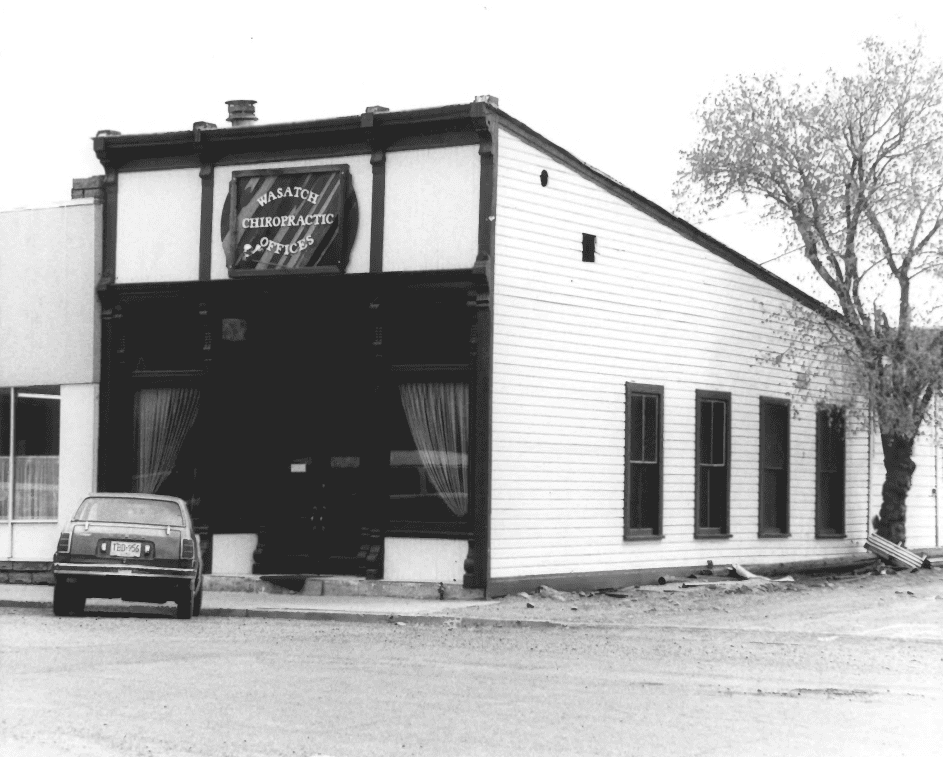
Former location of the Wasatch Wave Publishing Company Building, which was added to the National Register of Historic Places (#79002519) on December 27, 1979 and demolished in ~2000.

The Wave Publishing Company Building is significant because of architectural style and because of its importance in the development of communication in Wasatch County. It is also one of the oldest newspaper offices in the state of Utah, and one of a handful of unaltered wood Victorian boomtown storefronts in the state. It is one of only five commercial frame buildings now standing in Heber City. The building was the home of the local newspaper, the Wasatch Wave from 1901 until the early 1970s. Since the newspaper was ~the only way other than word of mouth to spread local news through the county, it played an important role in keeping the people informed of what was happening in the area. The paper not only provided news, but promoted changes in the community. It encouraged development of a water system, electric power plant and railroad through its editorials. The Wave continues to promote improvements in the county and to be the “voice” of Wasatch.

When the Mormons moved south during the Utah War in 1857, Brigham Young formed a company to build a road up Provo canyon to provide work to the men and to provide a route for Army supplies other than through Salt Lake City. With the new road, many people in Utah Valley who did not have land decided to move to a remote valley below the mouth of Provo River. They named the valley Provo after the river and their main community Heber City in honor of Heber C. Kimball, a Mormon leader.

Since Provo Valley was isolated from the rest of the settlements in the territory, news traveled ^slowly to the small communities of Heber, Midway, Charleston, Daniels Center Creek, and mainly had to depend on people traveling to L.D.S. Church meetings in Salt Lake, L.D.S. Church officials coming to the area or the mail system for news of the outside world. The only way for news to travel throughout the valley was through mail or word of mouth. In 1889 William Buys, a local surveyor and attorney, recognized the need for some way to spread information more efficiently throughout the valley. He decided to start a weekly newspaper. The small paper which he started has continued to operate as a weekly newspaper in Wasatch County. Although the residents can now tune into Salt Lake City radio and television stations for state, national and international news, the newspaper is still the main source of information for local events.

The first issue of the Wasatch Wave was 1889, William Buys named it the Wave because “we realize that it but a tiny ripple upon the great ocean of journalism, but we sincerely hope and trust that it may grow and gather strength as its proceeds on its perilous journey.” Buys solicited correspondence from everyone and announced he would carry articles on “general news, farming, mining, science, history, literature and series.”

Buys served as editor and publisher of the newspaper most of the time between 1889 and 1909 when he died. From 1891 to 1895 his son-in-law, George H. Barzee was the editor while Buys was ill. Co Glanville and Joseph A. Murdock had a lease to run the paper from 1895 to 1898.

From 1905 to 1909 the Wave was owned by the Wasatch Real Estate and Development Company. The development company hired Buys as the editor of the paper but he was required to work with the board of that the company appointed in setting newspaper policy.

After publisher Broadbent The first issue of the Wasatch Wave was 1889, William Buys named it the Wave because “we realize that it but a tiny ripple upon the great ocean of journalism, but we sincerely hope and trust that it may grow and gather strength as its proceeds on its perilous journey.” Buys solicited correspondence from everyone and announced he would carry articles on “general news, farming, mining, science, history, literature and series.”! Buys served as editor and publisher of the newspaper most of the time between 1889 and 1909 when he died. From 1891 to 1895 his son-in-law, George H. Barzee was the editor while Buys was ill. Co Glanville and Joseph A. Murdock had a lease to run the paper from 1895 to 1898. From 1905 to 1909 the Wave was owned by the Wasatch Real Estate and Development Company. The development company hired Buys as the editor of the paper but he was required to work with the board of that the company appointed in setting newspaper policy, the development company dissolved, William Buys became the of the paper again. He died in December 1909 and Charles of Provo was hired to replace him. Broadbent was the editor until 1939. John A. Wallis was editor from 1939 to 1942. Frank W. and James F. Mountford later took over the paper. Frank was editor in 1942 and in 1958 James joined his staff.

The Wave has carried a variety of news over the years that it has been in operation. It usually had general news stories, a serial, and a “comings and goings” section that told who had traveled during the week, who was visiting and any changes that were taking place in the community. Since the area was predominantly a Mormon community, ward announcements and stake conference minutes were included. The editorials in the Wasatch Wave helped make the citizens aware of the need for local improvements. The Wave pushed for the development of a power plant, a water system, a fire department and general civic improvements. It also was the public voice of disapproval when the Denver & Rio Grande Railroad made plans to cut the number of runs to the valley and the voice of encouragement when the Pike Peak Coast to Coast Highway decided to come through Heber.

The Wave bought this plot of land in June 1901 to build a new office. The newspaper moved into the building in September that year. In 1909 the building was enlarged and the floor was raised. The newspaper continued to use the building until the offices were moved to the old Bank Block at the corner of Main and Center. The building was vacant until 1978 when Gerald W. Klein, a chiropractor, bought it. Although he has had to alter some of the interior of the building to adapt to the needs of his equipment, he has maintained the original integrity of the exterior.

Barnes-Gibson Home

29 Saturday Jan 2022

Posted by Jacob Barlow in Uncategorized

≈ Leave a comment

Tags

1850s, Davis County, Historic Homes, Kaysville, NRHP, utah

The Original portion of the Barnes-Gibson Home was constructed of adobe in 1851 by John R. Barnes. In 1867-1869 he built the two story brick structure and it was purchased in 1941 by Mr. & Mrs. James R. Gibson.

The John R. Barnes House is located at 10 South 100 West in Kaysville, Utah and was added to the National Historic Register (#82004121) on July 23, 1982.

This house is significant because of its association with John R. Barnes, the dominant economic figure in Kaysville during the late Nineteenth and early Twentieth centuries, and because it represents several distinct stages of architectural design in Utah. Originally built ca. 1869 as a small adobe structure, the house was extensively remodeled in the mid-1870s using a folk/vernacular plan, and in the early 1890s it received a Victorian addition that dramatically changed its character. Epitomizing the height of fashion in two distinct buildings styles, the house reflects John R. Barnes’ attempt to maintain a residence fully consistent with his economic status and social position in Kaysville.

Barnes was born in England, July 28, 1833 and emigrated to Utah as a convert to the Mormon Church in 1853. He settled in the newly established community of Kaysville, twenty five miles north of Salt Lake City, and for the next ten years, farmed and taught school. In 1863 he opened the first general merchandise store in Kaysville. The business flourished and became the foundation for other business ventures, and he operated it for the rest of his life. He also remained in farming throughout his life, becoming one of the largest landowners in Davis County. In 1891 he established the Barnes Banking Co. in Kaysville, in 1902 the Kaysville Canning Co., in 1905 the Kaysville Milling Co., and in 1907 the Davis County Canning Co. Thus, by the early twentieth Century, he was the dominant force in Kaysville’s economic life, owning the towns’ leading store, its bank, its cannery, its mill, and running one of the largest farming operations in the county.

Barnes was also active in political affairs. He was a member of the Kaysville City Council from 1868 until 1882, mayor from 1916 to 1918, a member of Utah’s Constitutional Convention in 1895, and a member of the first Utah State Legislature as senator from Davis County. Also active in Mormon Church affairs, he served in the bishopric of the Kaysville Ward for thirty years, from 1877 until 1907.

Barnes was a polygamist and married three wives, Emily Shelton in 1853, Elizabeth Geeves in 1865, and Emily Stewart in 1869. According to his son and biographer, “He was gradually becoming a man of affairs, indeed so much that he felt he was able to follow the practice of the one principle of the Gospel he had embraced that was enjoined as essential to the highest glory in the Celestial kingdom of God, plurality of wives.” Barnes built this house for his third wife, Emily Stewart, following his marriage to her in 1869. At the time, he was living with his first two wives and their children in a house about one block south of this one. Barnes evidently divided his time between the two houses. In 1875 his first wife died. It is not clear whether her five children remained with the second wife in the house in which they had been raised, or whether they moved in with the third wife, who now had three children of her own. In 1887 Barnes was convicted of “unlawful cohabitation” under the Edmunds Act of 1882, fined $300 and sentenced to three months in prison. To avoid further prosecution following his release from prison, he decided to legally marry and live with one of his two wives. With the consent of Elizabeth, his second wife, he married Emily Stewart, and lived with her and their children in this house. If they had not done so earlier, the children from his marriage with his first wife now moved into this house.

The architect of the second section of the house was William Allen, a largely self-trained architect/brick mason who worked extensively in Davis County. His influence may be seen in other substantial brick and stone houses in Kaysville. Born January 1870 in London, England, he emigrated to Utah as a Mormon convert in 1863 and settled in Kaysville. He worked first as a farmhand and then followed his father’s trade as a brick mason. After studying architecture and drafting by correspondence, he became Davis County’s most prominent architect. In addition to this house, he designed the Kaysville Presbyterian Church (1888), the Davis County Courthouse (1889-1890) , the Barnes Bank Building (1910), the Kaysville Tabernacle (1912), the Kaysville Elementary School (1918), and homes for Henry H. Bloc4, governor of Utah from 1932 to 1940, John G. M. Barnes, Hyrum Stewart, James Smith, John Barton and his own house.

Smithfield Tabernacle

24 Monday Jan 2022

Posted by Jacob Barlow in Uncategorized

≈ Leave a comment

Tags

Cache County, Cache Valley, Historic Buildings, Historic Churches, NRHP, Smithfield, Tabernacles, utah, Yellow Brick of Smithfield

Smithfield Tabernacle

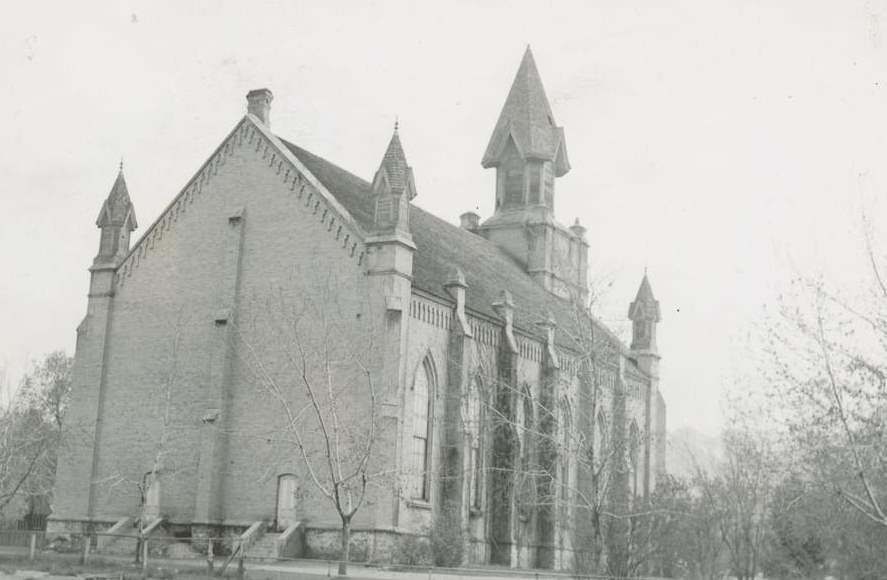
Construction for this large, Victorian Gothic style Smithfield Tabernacle began in 1883, was completed in 1902, and was renovated in 1955. The building is significant as it was the primary place of worship for the LDS community in Smithfield for many decades. The tabernacle was financed and constructed by the local Smithfield LDS Ward congregation. Constructing such a large edifice was unusual for a small congregation. The majority of LDS tabernacles were constructed by and for multiple LDS congregations to meet in a larger congregation called a Stake. The building is also important for its association with the planning and development of Smithfield City, specifically in the use of public space. Typical of early Mormon settlements in the Great Basin region, this large edifice was constructed on the public square to serve as the community center and to establish a feeling of permanence.

From the time of its construction, the Smithfield Tabernacle was the largest building in Smithfield and was the symbolic center of the community. Its distinctive yellow brick was locally manufactured in Smithfield. In addition to religious meetings, the building was used for all large community gatherings, including plays, concerts, graduation ceremonies, and political and agricultural meetings.

When the local LDS congregation outgrew the Smithfield Tabernacle in 1942 and out of concern for the deterioration of the unused building, residents found a new purpose for the building as a much-needed youth recreation center. It served as the only public recreation facility in Smithfield from 1955 until the construction of a new recreation center in 2000. Although some architectural details have been altered or were removed, the building still clearly reflects its original use as a place of worship while accommodating the more recent use as a recreation facility.

Located at 99 West Center Street in Smithfield, Utah and added to the National Historic Register (#100000509) on January 17, 2017

Related:

  • LDS Tabernacles
  • Yellow Brick Homes of Smithfield

Scipio Town Hall

22 Saturday Jan 2022

Posted by Jacob Barlow in Uncategorized

≈ Leave a comment

Tags

City Hall Buildings, DUP, museums, New Deal Funded, NRHP, Scipio, utah

Built in 1935, the Scipio Town Hall is one of over 230 public works buildings constructed in Utah under various New Deal programs during the Depression years of the 1930’s and 40’s. The types of buildings constructed included schools, county courthouses, libraries, National Guard Armories and a variety of others. The Scipio Town Hall was intended for use both as a town hall and as a meeting place for all civic and political functions in the community. Two Scipio men Will and Lew Critchley were the brick and stone masons on the building. Several years after construction, probably in the late 1940’s, the brick vestibule on the front was added. This building is a good example of the stylized classicism associated with the PWA Moderne architectural style in Utah. The building was renovated in 1986 with funds raised principally by the Round Valley Camp of the Daughters of Utah Pioneers to be used as a museum for the D.U.P. and as a Senior Citizens Center.

Located at approximately 49 North State Street in Scipio, Utah and added to the National Register of Historic Places (#88002999) on December 22, 1988.

Related:

  • New Deal Funded Projects in Utah
  • Scipio, Utah

Built in 1935, the Scipio Town Hall is part of the Public Works Buildings Thematic Resource nomination and is significant because it helps document the impact of New Deal programs in Utah, which was one of the states that the Great Depression of the 1930s most severely affected. In 1933 Utah had an unemployment rate of 36 percent, the fourth highest in the country, and for the period 1932-1940 Utah’s unemployment rate averaged 25 percent. Because the depression hit Utah so hard, federal programs were extensive in the state. Overall, per capita federal spending in Utah during the 1930s was 9th among the 48 states, and the percentage of workers on federal work projects was far above the national average. Building programs were of great importance. During the 1930s virtually every public building constructed in Utah, including county courthouses, city halls, fire stations, national guard armories, public school buildings, and a variety of others, were built under federal programs by one of several agencies, including the Civil Works Administration (CWA), the Federal Emergency Relief Administration (FERA), the National Youth Administration (NYA), the Works Progress Administration (WPA), or the Public Works Administration (PWA), and almost without exception none of the buildings would have been built when they were without the assistance of the federal government.

The Scipio Town Hall is one 233 public works buildings identified in Utah that were built during the 1930s and early 1940s. Only 130 of those 233 buildings are known to remain today and retain their historic integrity. Twenty-two city halls were built; this is one of 17 that remain. In Millard County 10 buildings were constructed, of which only 6 remain.

The Scipio Town Hall was constructed as a Works Progress Administration (WPA) project and was intended for use both as a town hall and as a meeting place for all civic and political functions in the community. Two Scipio men, Will and Lew Critchley, were the brick and stone masons on the building. Several years after the building was constructed, the town board decided to add a sloping floor and put in some theatre seats so the townsfolk could enjoy a movie every Friday and Saturday night. Also at that time the brick vestibule on the front was added. The town board continued to hold their meetings in the basement of the building for a number of years after that. The building was vacant for several years until being renovated as a senior citizen center in 1985-86.

Princess Recreation Hall / Lynndyl LDS Meetinghouse

20 Thursday Jan 2022

Posted by Jacob Barlow in Uncategorized

≈ Leave a comment

Tags

Chapels, City Hall Buildings, Dance Halls, Historic Buildings, Hospitals, Juab County, Lynndyl, NRHP, Schools, Theaters

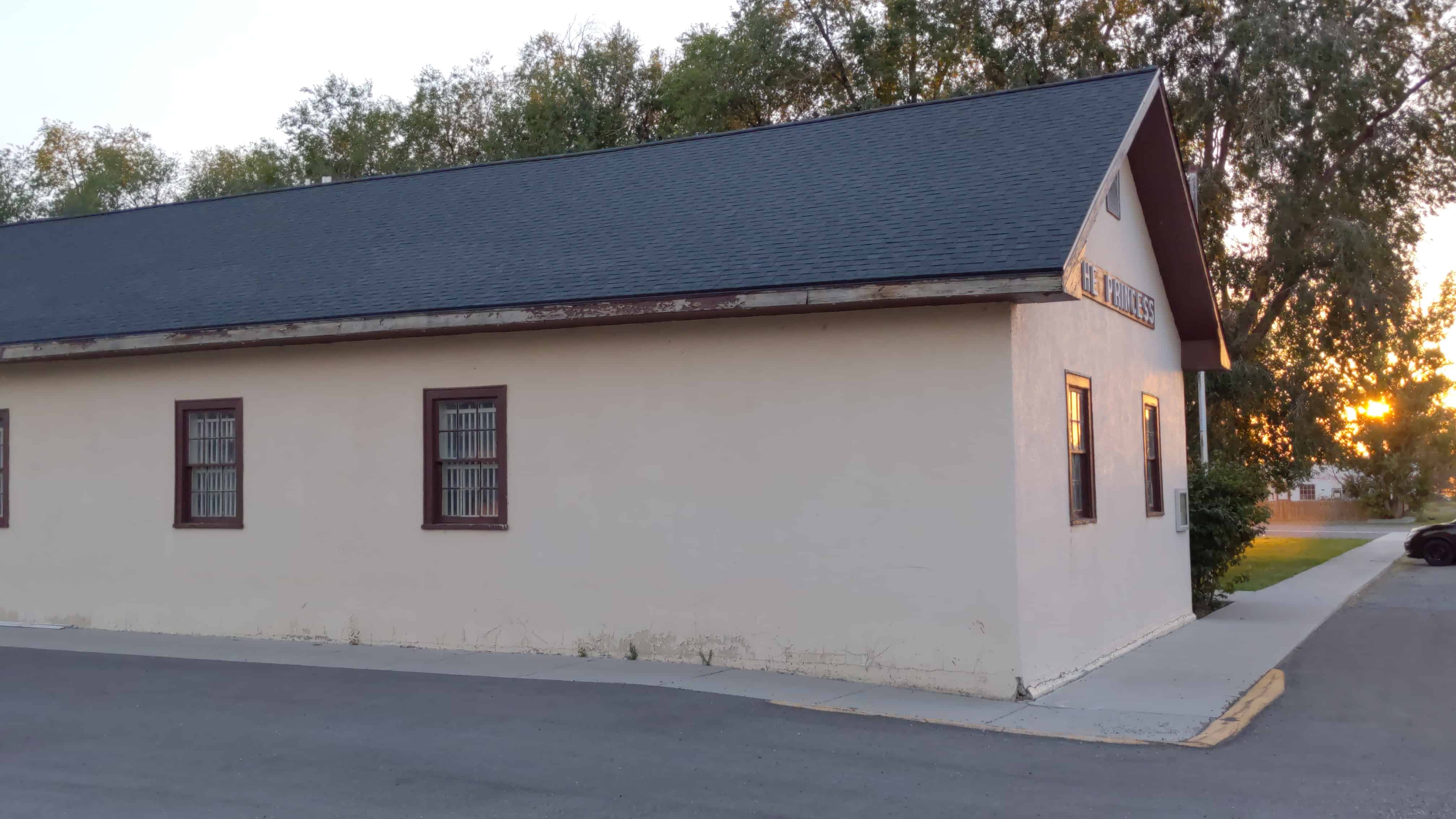
The Princess Recreation Hall/Lynndyl LDS Meetinghouse is locally significant in the areas of entertainment/recreation and religion. Lynndyl Town was established during the railroad expansion era and the Princess Recreation Hall was built to meet the needs of the citizens for a social gathering center. Originally constructed in 1914 as a social and recreation place for the community, is was used for sporting events, dances, public meetings, a school house, a movie theater, and even a hospital during the influenza epidemic of 1917-1918. During its time as a recreation hall, the building also concurrently served as the meetinghouse for the LDS Lynndyl Ward from 1915-1985. It its 100 year history the Princess has never been empty and has remained a community center for social gathering from the beginning. It has been used as the Lynndyl Town Hall since 1982.

Located at 98 East Center Street in Lynndyl, Utah

From the National Register nomination form:
Located within the town of Lynndyl, the Princess Recreation Hall/Lynndyl LDS Meetinghouse is a one-story wood frame and stucco building with minimal detail, located at 98 East Center Street. It is situated in the north-east corner of the community park, with a sports court to the west and a grass sports field to the south and west. The original 1914 building was a recreation hall constructed of wood frame and wood siding, with a basketball court and stage. In 1936-38, an addition was constructed to the west of the building for classrooms and other meeting space to accommodate the needs of The Church of Jesus Christ of Latter- day Saints’ membership in the town. The structure now took on an “L” shape, with projecting entryways. The original building and the new addition were finished with a more modern stucco appearance, although it maintained a vernacular classical appearance. In 1983, a fire station was added to the south of the building, creating a “T” shape. And, although the outside was finished to match the 1936 stucco exterior, the inside of the new section was modern. However, the interior of the 1914/1936 church remodel was not altered. As of 2014, the interior still retains this layout and architectural detail, such as stained wood molding and interior wood doors. The structure has very simplistic features such as the wood decorative eaves and the original wood frame six over six double hung windows, which helps the structure to retain its historic integrity.

Located within Millard County, in the small town of Lynndyl, Utah, The Princess Recreation Hall/Lynndyl LDS Meetinghouse is currently being used for the town hall. In spite of a 1983 addition, the structure has kept its historic integrity by retaining much of the original work from 1914 and the 1936-38 addition. The building was constructed on the corner of Center Street and 100 East, in the north east corner of the public community park. Ball fields can be found south of the building and a sports court is found to the west, divided by a row of several large deciduous trees separating the building from the sports court. Other vegetation around the building includes shrubs and grass. A concrete sidewalk is found along the road on the north and east sides of the building, with unmarked gravel parking adjacent to the concrete sidewalk.

The building was originally constructed in 1914 as a rectangular plan recreation hall with gymnasium and auditorium. The original structure was built on a concrete slab with wood framing and covered with wood siding. The vernacular building was constructed with simplistic detail that was functional rather than decorative. In 1936, the Church of Jesus Christ of Latter-day Saints responded to the demand for a larger place of worship by constructing an addition to the west portion of the building. The new structure used a concrete block foundation which raised the main level of the addition up one-half story and allowed for a full basement. This basement had a coal furnace and coal storage room along with classrooms. The new addition was built using wood framing. It did not keep to the original exposed wood siding of the original, but was finished with stucco. The exterior of the original recreation hall was also finished with stucco to match the new exterior. Other simple details were added to the wide eaves to give the building a slightly more formal appearance, with an understated Classical feeling. When completed in 1938, the new Lynndyl LDS church building had an L-shape plan and increased space for meetings and classes, yet the social hall remained open as a community gathering area with wood floors and plaster covered walls. When completed the finished space was approximately 3,620 square feet.

From the primary entrance on the north side of the 1936-38 wing, one enters a vestibule then proceeds to the interior of this section. The interior of the addition was designed in a split level format with a full set of stairs to the basement and a half flight to the upper level. The basement below this section has rooms for storage, classrooms a coal furnace and a coal room.

The upper level of the addition has a large room on the west side that was originally used as chapel for church services. Another room to the east of this is divided off by an accordion wall and served as a classroom. There is a small window on the south elevation that provided light to this room. However, this was covered on the exterior when the fire station was added. To the east of this room, and separated by another accordion wall is the back stage area from the gymnasium. The east wall of this area has large built-in cupboards and a single window. A doorway at the northeast corner, next to the stage curtains, provides access to a small stairway leading down north to the gymnasium floor. The gymnasium is to the north of this area and is a large open hall with maple flooring. A basketball hoop is on the north end. The ceiling is coved and has fairly old acoustic tile. The gym has a separate exterior entrance through the projecting vestibule on the west side described above. Another doorway at the southwest corner of the gymnasium provides access to an interior stairway leading up to the hall/landing area and a small kitchen. All of the original plaster walls, doors, wood trim and finishes are retained in the 1914-1938 part of the building and very little has been changed or updated except for carpeting on the floors, accordion doors, and light fixtures.

The building remained in this plan until 1983 when Lynndyl Town moved into the building creating a new use as the town hall. Although no structural changes took place within the existing building, a fire station was constructed at the south end as an extension of the gymnasium/auditorium section and was built using wood frame construction and covered with stucco to match the rest of the structure.

The 1983 fire station addition is accessed from the interior by a doorway from the classroom section of the 1936-38 addition. The door leads to a landing with stairs (behind a door) that go up to the second story of the addition, and a half-flight of stairs that leads to the ground-level hall and rooms of the addition. Two restrooms at the north end of the addition are separated from the garage/vehicle storage area of the fire station by an east/west running hallway. At either end of the hall are exterior exits. At the west end of the hall are located the stairs to the second floor and a second stairwell to the basement rooms. The fire station garage area is a single large, open area with room for two vehicles and equipment.

The building has undergone two building campaigns since the original construction that have seen two major sections added to the building. The first one, 1936-38, made major alterations to the original structure in both form and use. The second, in 1983, added a new use and major addition while making little alteration to the overall appearance. In spite of the non-historic addition, the building still retains historical integrity of the 1930s appearance and is a contributing historic building in the small town of Lynndyl.

The Princess Recreation Hall/Lynndyl LDS Meetinghouse is locally significant under Criterion A in the areas of Entertainment/Recreation and Religion, as well as Criteria Consideration A for its historical use as a religious meeting place. Lynndyl Town was established during the railroad expansion era and the Princess Recreation Hall was built to meet the needs of the citizens for a social gathering center. Originally constructed in 1914 as a social and recreation place for the community, it was used for sporting events, dances, public meetings, a school house, a movie theater, and even a hospital during the influenza of 1917-18. During its time as a recreation hall it also concurrently served as the meetinghouse for The Church of Jesus Christ of Latter-day Saints’ Lynndyl Ward from 1915-1982. Therefore, it is significant in relation to its contribution to the social and religious aspects of Lynndyl. Within the 1914-1964 period of significance, the building had two distinct construction periods: 1914, when the original wood framed building housing the gymnasium and stage was built, and 1936-38, when the meetinghouse expansion was completed. In its one hundred-year history the Princess has never been empty and has remained a community center for social gathering from the beginning. It is currently being used as the Lynndyl Town Hall, and has been since 1982 when the Lynndyl LDS Ward was disbanded. In 1983 a section was added to the rear of the building to house the town fire station. In spite of the new construction, the historic portion of the building retains its historical integrity and remains a contributing historic building in the small town of Lynndyl.

The Princess Recreation Hall is significant in the area of Entertainment/Recreation as it was the center of all social life for the community. In 1914 the town’s people desired a social hall to be constructed for their gatherings and events. F.L. Copenham, Walter Johnson and other community members helped construct the hall. Prior to completion, the first ball was held and was recorded as being a “grand affair”. The hall was used for a variety of social and sporting purposes and events. These included a movie theater, a dance hall, and a sporting events center which included a basketball court and collapsible boxing and wrestling ring. According to the Polk and Co.’s Utah Gazetteer, the Princess had several recorded managers, Elmer A. Jacob (1918-1919), GW Sudbury (1924-1925) and Elmer Banks (1927-1928).

The Princess truly served as multi-functional building in this small town. During the day it was used as the school house and at night a dance hall with music provided by a piano, fiddle and banjo, and later, the Lynndyl Town Band. The building was mostly used as a gymnasium where a collapsible platform could be set up for boxing and wrestling. According to a poem written by Lynndyl resident, Roberta Dutson, boxer Jack Dempsey and wrestler Ira Dern, visited the Princess for an exhibition.

Along with the role as a dance hall and gymnasium, the building also served as the local movie theater. According to local historian, Mary Greathouse:
“The first picture show was run by Elmer Jacobs. Sometimes the film would break and the audience sat in the dark until Elmer climbed down [to] find a woman who would loan him a hairpin to make repairs. At other times, the film would catch fire and Mr. Jacobs would toss it down from the projecting booth for someone to stamp out. The film would be sliced and the show would go on.”

The building was heated by two large stoves, located in opposite corners of the gym. Prior to 1928, when electric power infrastructure was brought to Lynndyl, the power for lights and the projector was provided by a generator powered by an “old Ford motor”

During the influenza pandemic of 1918, the population of Lynndyl was devastated. Because of the population size and isolation of the town, there was no hospital to serve the health needs of the community. In order to deal with the many sick who required increased observation the Princess was put into use as a makeshift hospital. The building’s use as a hospital was short-lived, as was its former use as a place of education. When the flu threat was over a new school was constructed adjacent to the hall and opened for students in 1919.

The Princess Recreation Hall/Lynndyl LDS Ward Building is significant in the area of Religion under Criteria Consideration A because of the dual role of the building as the primary social and religious-use space in the community. Although there were some informal Sunday schools being held in different homes, there were no other formally established religious organizations in Lynndyl other than the Church of Jesus Christ of Latter-day Saints (which was typical of most communities in Utah). The Lynndyl LDS Ward, which met in The Princess, was the only ward (parish) found in the area.

In 1915, not long after the recreation hall was completed and put into use, the LDS Church purchased the building to use as a meetinghouse. This did not end its use as a recreation hall, however. Even though the ward used the space as a meetinghouse, the structure remained significant in regard to the social aspect of the community as a whole. From its inception, the LDS Church championed recreational activity in all the communities it settled in Utah and the surrounding region. Particularly after the turn of the twentieth century, when the Church’s building program became more formalized, it was common to construct “cultural halls” near its meetinghouses which had functions similar to the Princess Recreation Hall, with a basketball court and stage area. Perhaps because of the small population of Lynndyl, the LDS Church deemed it more feasible to purchase the existing hall and make it a multiple-use building.

For many years the simple gymnasium and stage was used as the chapel and classrooms, with curtains hung on wires to divide up the space. As the population of the community increased, more space was needed for the expanding Lynndyl Ward. In 1936, approval was granted by the school board for the ward to meet in the school building while Princess Hall was enlarged to include a formal chapel and classrooms. In 1938, construction was completed and on Saturday, September 10, a celebration was held that included sporting events followed by a banquet and program. Some 700 people were in attendance for the events which ended with a dance in the hall. On Sunday, the building was dedicated by LDS Church President Heber J. Grant. At this time the membership for the Lynndyl Ward was 248 people.

The town continued with stable population for a few years longer, but as steam locomotives switched to diesel, the railroad no longer found it necessary to stop in Lynndyl. As a result jobs decreased and with it, the population. Although population declined over the decades, the building continued in shared public and religious use for several decades.

On Sunday, November 22, 1981, the LDS Stake President announced the Lynndyl Ward would most likely be abandoned at the beginning of 1982. This was a shock to many of the members and devastating to think of their community without a place to worship and meet with friends and neighbors. The ward continued on for another eleven months and on October 20, 1982, the last meetings were held in the Lynndyl Ward Meetinghouse. Alpha Nielson, who wrote the history of the Relief Society2 in Lyndyll, stated the following: “No more Lynndyl. No more meeting place. No more cultural hall or public building. A little town with no identity. No heart or soul”.

Although the Lynndyl Ward no longer met in the building, it did not remain empty for long. Soon after the ward moved out, Lynndyl Town set up offices in the building. Along with the new use, the town established a local fire department and constructed permanent quarters for their emergency vehicles in 1983. Along with Town functions, the building continues to be used as a public meeting space for the community, with the gymnasium and stage put in use at various times of the year.

When the nearby IPP power plant finally opened, the population saw a small increase; however it has always remained below 150 residents. In 1990 C.B. Tolbert became mayor and pushed for a beautification of the community. He had the town hall repainted and placed letters on the outside that stated once again “The Princess” (Greathouse 207). Being the town hall, it has remained a community gather place. Public meetings continue to be held at the building along with recreational activities, dances, pancake breakfasts, holiday turkey dinners, bingo games, basketball and other recreational activities. The Princess Hall has remained throughout Lynndyl’s history the most significant and prominent structure within the community, and remains a contributing historic resource.

Douglas General Mercantile

30 Thursday Dec 2021

Posted by Jacob Barlow in Uncategorized

≈ Leave a comment

Tags

1880s, Cache County, Cache Valley, Mercantile Buildings, NRHP, Smithfield, utah

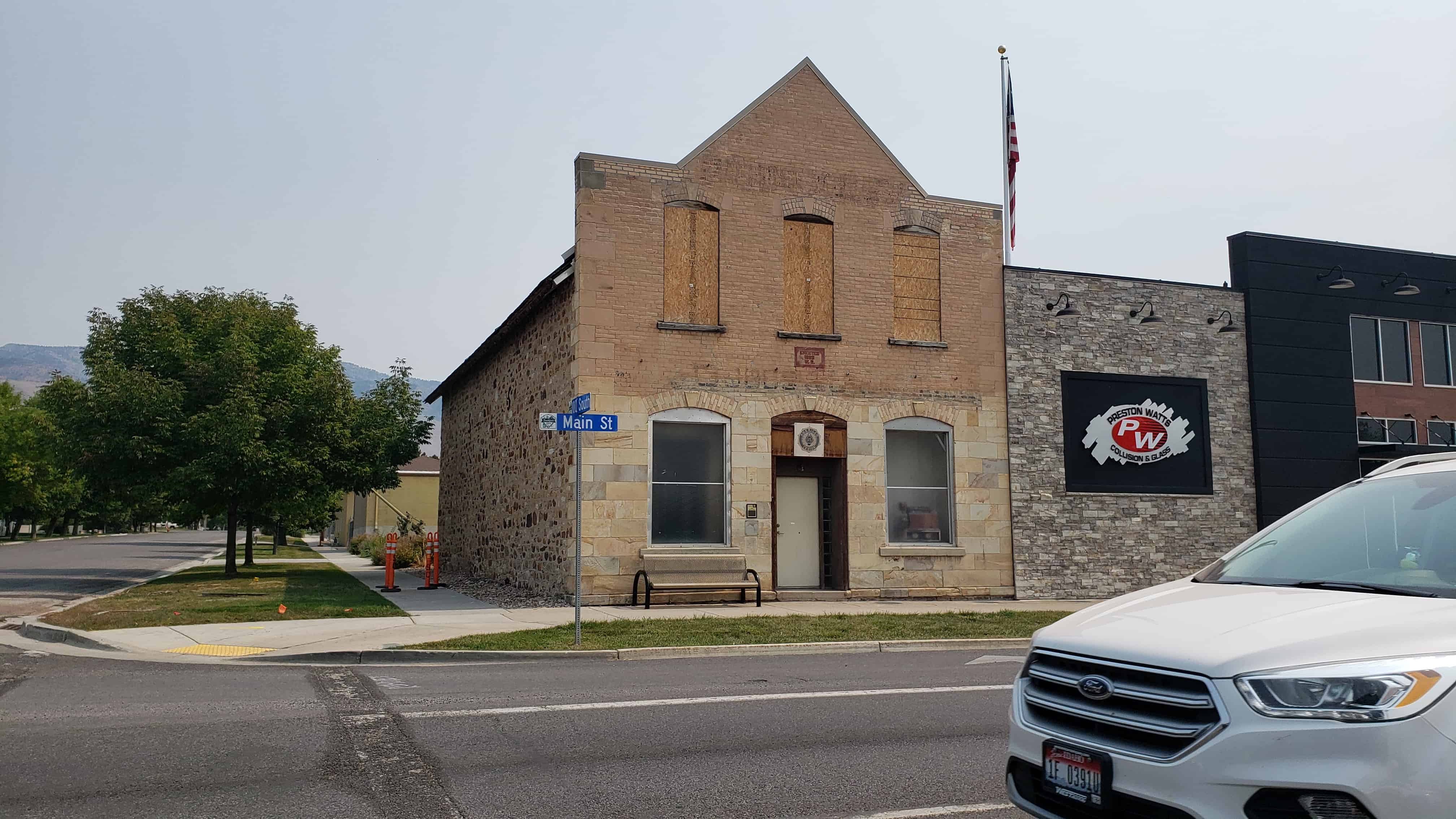
Built in 1883, the Douglas General Mercantile Store is locally significant as the oldest remaining commercial building in the town of Smithfield, Cache County, Utah. The town was founded in October 1859 as part of Cache Valley, which was itself settled in 1856 during the first stage of the Mormon colonization of Utah. William Douglas, who operated the store, began business in Smithfield in 1865, obtaining goods from the East and wholesaling them throughout the area. In 1883, when the building was constructed, it was one of only three such establishments in the town, and remains as the only physical structure tied to Smithfield’s early commercial history. The building has been associated with the commercial activity in the town through the firms of Douglas Mercantile, James Cantwell & Son, and the Union Merc Company since 1883. In addition, the building is the second oldest mercantile building identified to date that is located outside Utah’s heavily populated area known as the Wasatch Front, which comprises four of Utah’s twenty-nine counties. The oldest building is the Ephraim United Order Cooperative Building constructed in 1871-71. Also, the building gains added importance in the history of Smithfield because of its unique construction, the only one of its type in the town. Stone was used for the rear and two side walls in a rubble construction technique, while brick was utilized on the upper half of the façade and coursed sandstone for the
lower half. Thus, the building represents the use of four different building materials as wood was also utilized.

Located at 101 South Main Street in Smithfield, Utah and added to the National Historic Register (#82004113) on August 4, 1982.

Related:

  • 1980 Photos

The town of Smithfield in Cache Valley, Utah, was tied to the early Mormon colonization of Utah. Part of what has been labeled “the inner cordon of settlements,” Cache Valley was itself settled in 1856, and Smithfield in 1859. As an agricultural region in northern Utah, Cache Valley aided in the supplying of goods not only to northern Utah, but also to mining regions in Idaho and Montana. Smithfield, which began as a settlement of dugouts and wagons, in 1860 became a village with houses arranged in “fort style” (forming a square where the rear portions of the buildings constituted the walls of the fort). It had been named Smithfield in 1859 for John Glover Smith, the first Mormon bishop, who exercised power in both church and civic affairs.

William M. and Cyntheann Merrill Douglas arrived in Smithfield in 1862. Douglas was born in Scotland in 1839, came to Utah in 1854 as a convert to the Mormon church, and settled in Salt Lake City. He established a general store in Salt Lake in partnership with Thomas Richardson. It was with Richardson that Douglas operated a store in 1865 in Smithfield. Goods were hauled from Chicago, Illinois to Ogden, Utah (about 35 miles north of Salt Lake), then to Smithfield by team. There, these goods would be wholesaled to nearby towns such as Richmond and Logan (eventually the Cache County seat). According to one local source, the indication was that Douglas and Richardson served as early distributors of general merchandise for the entire Cache Valley area.

William Douglas and Thomas Richardson were both called to serve missions for the LDS church in 1869, closing the store. In 1871 Douglas reopened his business in a frame structure. By 1883 business was such that the merchant could afford to construct the present wood, stone, brick, and sandstone building. Architecturally, the Douglas General Mercantile represents a unique type of construction in Smithfield, utilizing four different building materials–the only one of its kind in town.

In 1897 Douglas sold the structure and business to James Cantwell, who had settled in Smithfield in 1862. Cantwell served as the town’s postmaster and city councilman for nearly 20 years. The store operated as James Cantwell & Son until 1910, when it was sold to William L. Winn and Lorenzo Toolsen, who established the Union Mercantile corporation. Thus, the building served as a main commercial establishment for the agricultural town of Smithfield, and as it is the only remaining commercial building from the town’s early history, gains local significance and importance. Since 1964 the Smithfield American Legion Post has occupied and used the building. No immediate plans have been
made to rehabilitate or restore the building.

William McLachlan Farmhouse

22 Wednesday Dec 2021

Posted by Jacob Barlow in Uncategorized

≈ Leave a comment

Tags

Farms, Historic Homes, NRHP, utah, West Valley, West Valley City

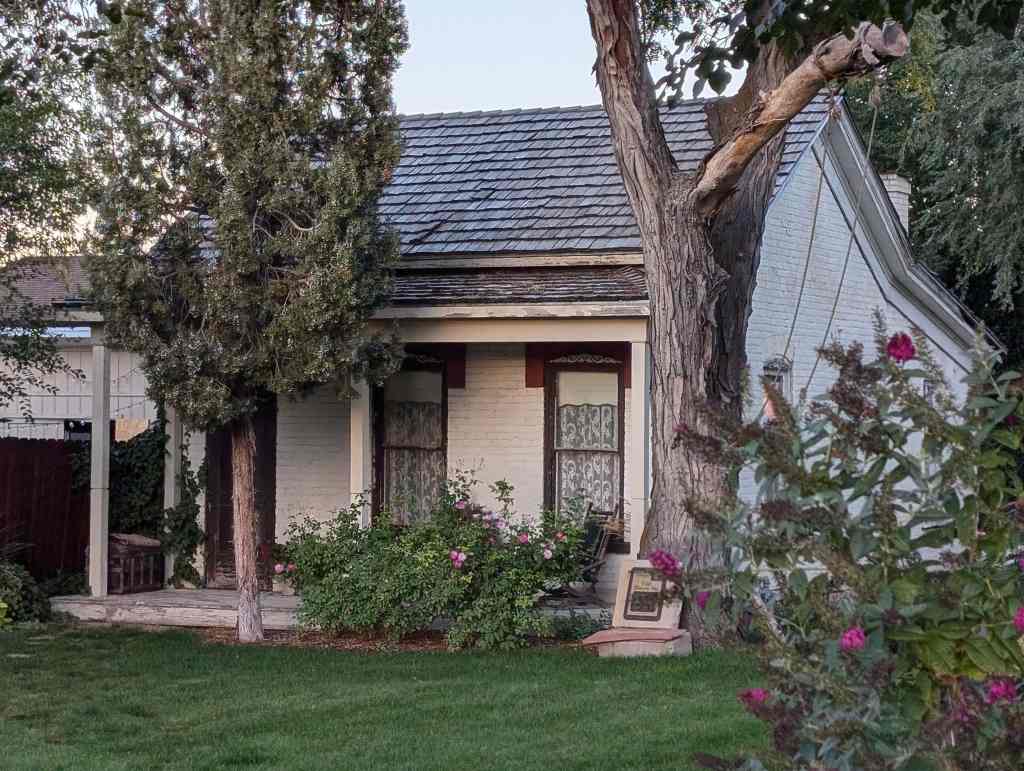
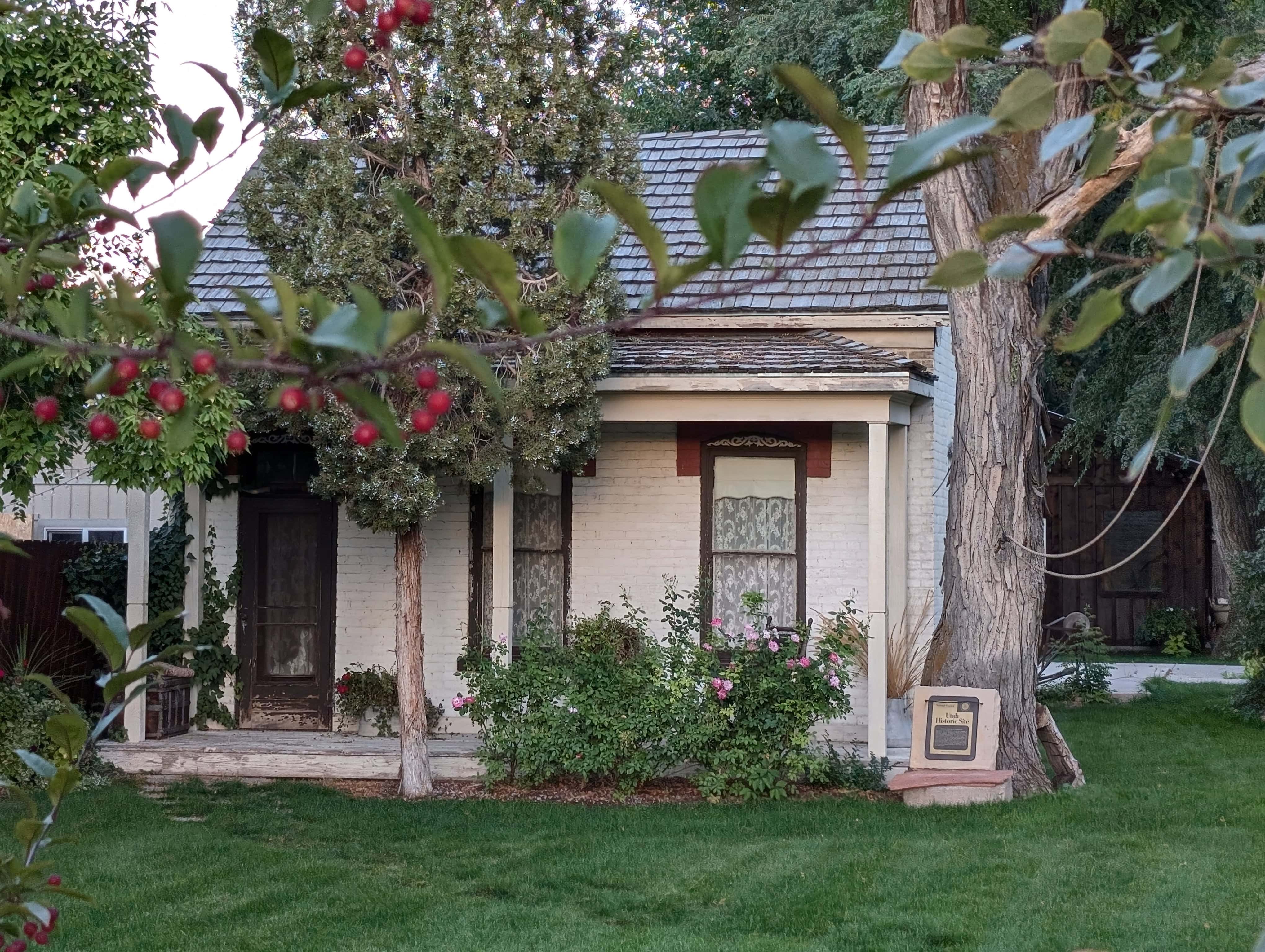
The William McLachlan Farmhouse is located at 4499 South 3200 West in West Valley City, Utah and was added to the National Register of Historic Places (#80003928) on February 14, 1980.

The William McLachlan farmhouse is significant because it is a particularly good example of the small “homestead” farmhouse which was atypical in Mormon settlement areas, where the “farm-village” system of in-town residence coupled with daily commuting to surrounding agricultural areas was generally favored. However, isolated farmsteads did begin to occur in Utah in the 1870’s following the arrival of the general land office. The practice received further impetus in the 1880 ‘s when many polygamists reputedly built homes in out-of-the-way places to shelter plural wives from the raids of the federal “polygamy .hunters”. While there are written and folklore references to this practice, the McLachlan farmhouse is exceptional in the completeness of the documentation of actual construction and of the events that brought it about. The house type is unusual, and the only one known in the Salt Lake Valley region of “over Jordan”.

William McLachlan was born in Thornhill, Dumfrieshire , Scotland, in 1840. Trained as a carpenter and contractor, McLachlan converted to the Mormon Church and immigrated to America in 1863. He was clerk of the Church emigrant company aboard the ship Amazon, assigned to keep a historical record o£ the group. This interest in record keeping persisted throughout his life, as did his high level of activity in the Mormon Church … serving as President of the mission in New Zealand (1875-77) and later as President of the Pioneer Stake.

McLachlan was a polygamist, and like many of the less wealthy polygamists of the period, extremely distressed by the consequences of anti-polygamy raids. In order that his wives not be left penniless should he be arrested and imprisoned, McLachlan purchased land and built this home in a then-remote area “over Jordan”. When it was completed in March 1885 it became home for Maggie Naismith, his second wife, and her five children. McLachlan himself vanished into the underground” for nearly eight years. Part of the time he was employed as a carpenter on the Manti temple and used his earnings there to support his families. His wives were visited as often as it was safe, and Margaret received title to her house in 1886 to protect her and her husband from loss of property should he be caught and prosecuted. Fortunately, McLachlan was never brought to trial.

Hawarden

17 Friday Dec 2021

Posted by Jacob Barlow in Uncategorized

≈ 2 Comments

Tags

Granger, Historic Homes, NRHP, Salt Lake County, West Valley

Hawarden House

Constructed in 1906 for Ira W. Bennion, this house was named “Hawarden” after his father’s boyhood home in Wales. Ira W. Bennion and other members of the Bennion family played an important rile in the development of the cattle and sheep industry in Utah, Nevada, Idaho and Wyoming.

“Hawarden,” a Granger landmark since its construction, is a locally significant example of the kind of imposing residence that the Bennions, successful agricultural entrepreneurs, could afford to mark their social and economic achievements “over Jordan”. Its Box Style design reflects the contemporary tastes in large, single family homes. The simplicity of form and detail, square massing and box-like proportions are characteristic of this mode. The Bennion family was prominent in local history, and “Hawarden” is one of the few historical reminders of past eras in a rapidly growing community known principally for extensive tracts of ranch-style homes.

Located at 4396 South 3200 West in the Granger area of West Valley City, Utah – it was listed on the National Historic Register (#80003924) on February 14, 1980.

Ira Wainwright Bennion, who built the house in 1906, was born in the neighboring “over Jordan” community of Taylorsville. Building on the work of his pioneer parents, Ira Bennion expanded the family interests to encompass cattle ranching in Utah and sheep operations in Idaho, Wyoming, Nevada, and Utah.

Because of its heavy demands on time, and the necessity of being separated from his family for many weeks of each year, Ira Bennion eventually withdrew from the family business. During one of his missions for the Church of Jesus Christ of Latter-day Saints, Ira had visited Hawarden, his father’s boyhood home in Wales. This beautiful and historic spot, alive with memories of border wars between England and Wales was the site of a major confrontation between Parliamentarians and Royalists during the English Civil War. At the time of Bennion’s visit, Hawarden was also the country seat of William Evart Gladstone, a major figure of 19th Century English politics and a Prime Minister of the United Kingdom.

Impressed by these family associations, Ira Bennion returned to the United States and upon retiring from the family business, acquired farm land on the “Jordan range” where he had once herded cows as a boy. When his very substantial family home was built, he had a tablet of stone engraved with the name “Hawarden” placed on the front wall – a practice common in Great Britain. Eight of his fifteen children were born in the house, which he continued to occupy until his death in 1927.

Built in 1906, “Hawarden” in Granger stands as a stately representative of early twentieth century residential architecture in rural Utah. Constructed of red brick using common bond coursing, the two and a half story home rests on a concrete foundation. The Box style regularity of the hipped roof and rectangular plan is broken by a gabled side bay, for whose curving portion rough faced brick of identical color was used. The pedimental gable is shingled, has a moulded wood cornice and pent end. A. one story, hipped roof front porch has coupled Tuscan supports and a plain balustrade. At the foundation level of the porch, coupled rough faced ashlar stones are located beneath the columns. The symmetry of the primary façade changes with the side entrance placement, a typical feature of this architectural style. A. later, one story brick addition at the rear of the home replaces the original rear porch. A. wide moulded cornice marks the top of the wall.

Window treatment on the Hawarden House is plain but sensitively varied. Facade piercing respects the proportions of the home and its horizontal orientation. The main entance features a two-panel door with upper light and transom light, framed by Classical Revival pilasters. Side panels have leaded glass upper lights. The entire entrance configuration creates a Greek Revival allusion, which is consistent with the ornamental scheme.

At the second story level of the main façade are a pair of tripartite windows. A. central double hung, sash window is flanked by pilasters similar to those at the entrance, and by oblong side lights of the same height which have leaded glass border designs. Centered between these windows is a carved stone tablet with a foliated scroll ornament bearing the inscription HAWARDEN, the Welsh estate after which the home was named. Sills for these windows are dressed red sandstone.

Side elevation windows are generally double hung, sash types with dressed red sandstone lintels and brick of red sandstone sills. In the gable area of the southern projecting bay, however, is a fine Palladian window, contributing further to the emphasis on classical detail.

North elevation windows conform to the given window configurations in type and proportion, except for a double-hung and semicircular window combination creating a round arched window unit which lights the interior stairway. Lighting the upstairs hall is a double hung, sash stained glass window.

The original façade piercing pattern on the West (rear) façade has been altered by the later brick porch enclosure. The second story door probably opened onto a balcony.

Interior alterations of the Hawarden House include updating by the installation of electricity, a bathroom on each floor and a natural gas furnace. The original large kitchen has been converted into a formal dining room. Closets have been added to the upstairs bedrooms, and two of the bedrooms have been combined to create a master bedroom suite.

The present owners are carefully restoring the home, reversing later modifications by removing false ceilings and stripping woodwork. The original main fireplace with carved mantel is extant.

Hawarden and the surrounding grounds stand together in the midst of urban sprawl as an imposing remnant of the culture they represented. Structurally sound and with only sympathetic modifications, Hawarden is an important local example of early twentieth century domestic architecture in a rural setting.

1980
1980

Odd Fellows Hall/Beaver Drugstore

13 Monday Dec 2021

Posted by Jacob Barlow in Uncategorized

≈ Leave a comment

Tags

Beaver, Beaver County, Historic Buildings, I.O.O.F, NRHP, utah

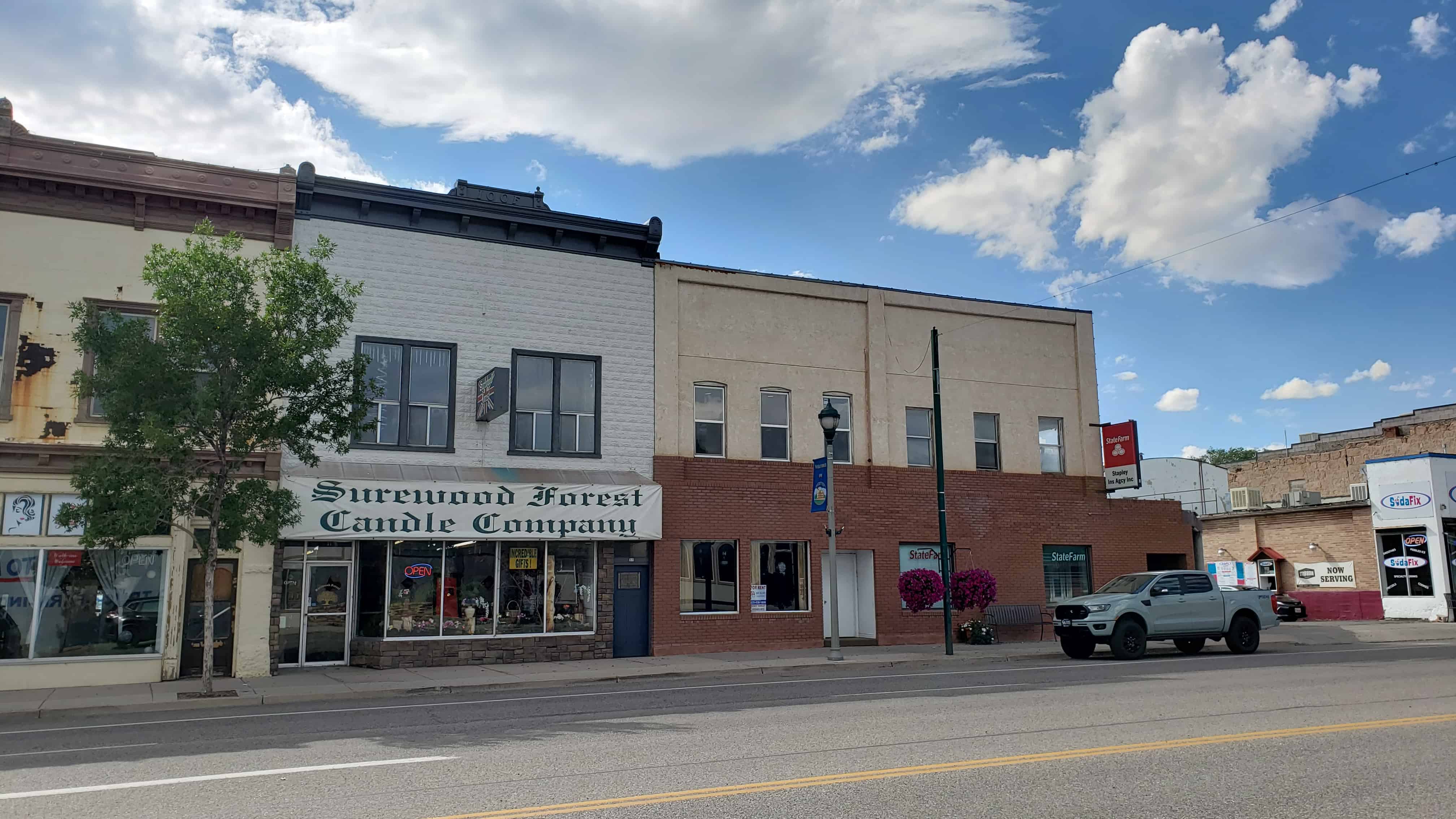
The Odd Fellows Hall, built in 1903, is significant as one of only four commercial w structures on Main Street that retain historic integrity, and as the only building in Beaver documenting the importance of secular fraternal lodges and societies in the development of the town. The Independent Order of Odd Fellows ranked as an important nineteenth and twentieth century fraternal organization, who served a vital social function in many towns throughout the country. The eventual acquisition of this building by the Beaver Grand Lodge symbolized the adherence of this social order to the town of Beaver.

This commercial structure was built in about 1903, probably by Charles C. Woodhouse. Scant records indicate that the structure served as a commercial property on the first floor and housed meeting rooms and social space on the second. In 1926 the IOOF Beaver Lodge, who had apparently been utilizing the second floor of the facility, decided to purchase the property as their own. The building was mortgaged and finally paid off in November, 1940. It continues to be owned by the IOOF Lodge.

An original 1917 Sanborn map and an updated map of 1931 indicate that the structure housed a drug store on the first floor. It continues in that function as the home of Beaver Drug.

Located at 35 North Main Street in Beaver, Utah and added to the National Historic Register (#83003885)

Related:

  • Odd Fellows Buildings
← Older posts
Newer posts →

Follow Jacob

Follow Jacob

Blog Stats

  • 2,041,204 hits

Social and Other Links

BarlowLinks.com

Recent Posts

  • Hark Wales & Oscar Smith
  • Threshing Machine
  • Spencer and Helen Isom “Home”
  • Shetlar Wagon
  • Pioneer Hay Barn, Manger, and Corral

Archives


Loading Comments...