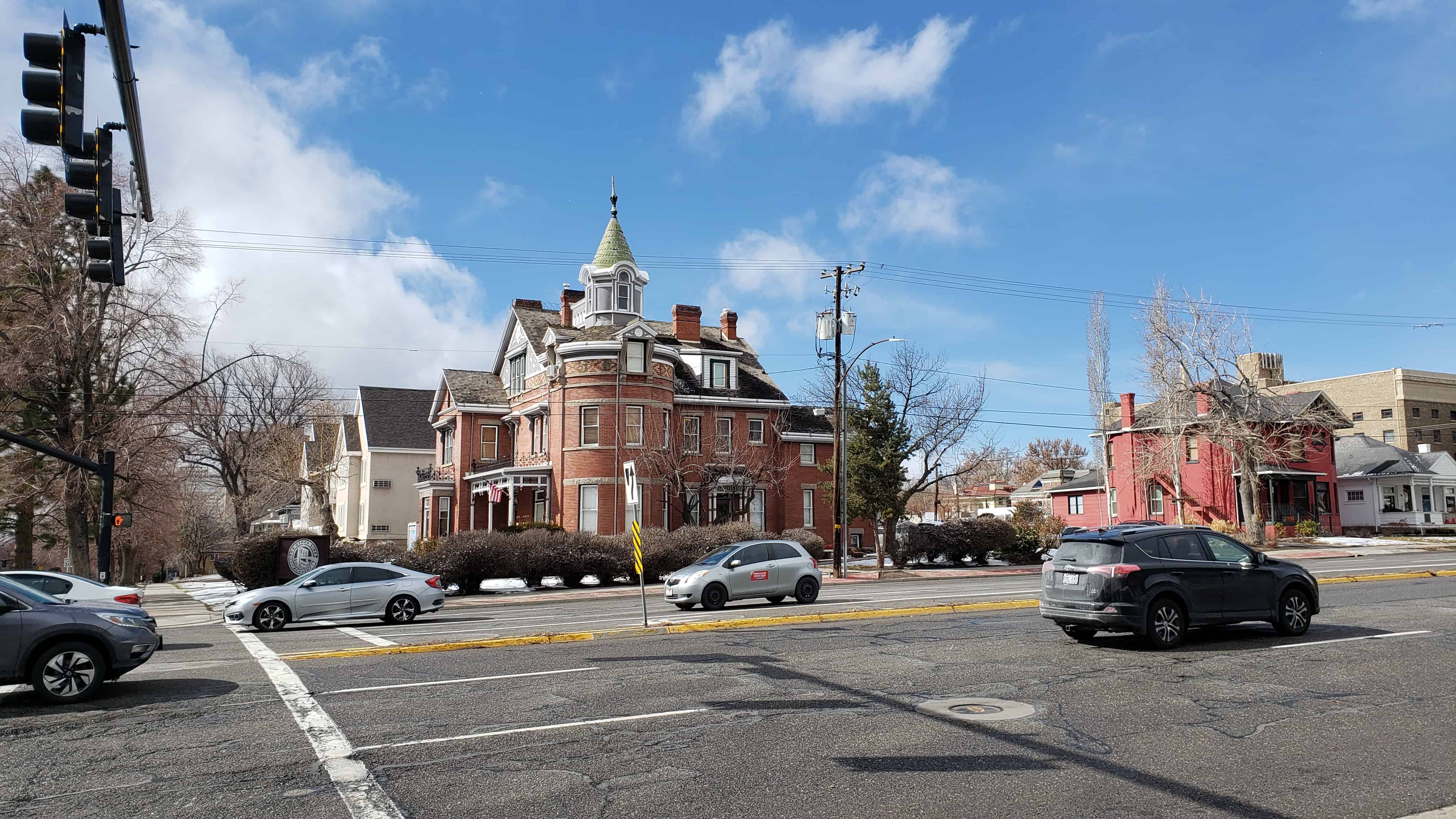
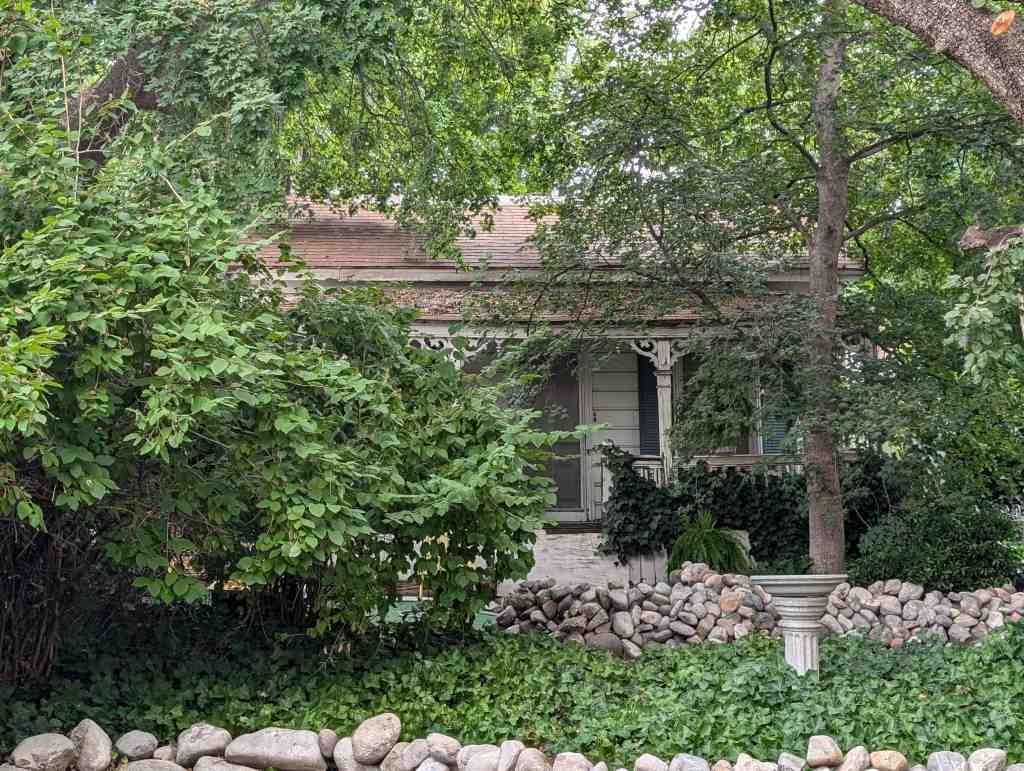
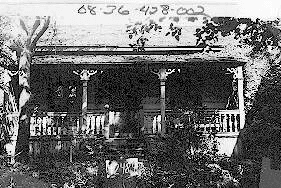
This house is significant as the residence of Francis Armstrong for whom it was built in 1892. He was an entrepreneur, civic leader and Mayor of Salt Lake. It is significant also as one of the finest example of Queen Anne Style architecture in Salt Lake City.
Armstrong was born October 3, 1839 in Plainmiller, Northumberland, England, to William Armstrong, a machinist, and Mary Kirk. The family emigrated to Canada in 1851. At nineteen Francis went to Missouri and then in 1861 drove an ox-team to Salt lake City, His early employment in sawmills led eventually to a partnership in Taylor, Romney, & Armstrong Lumber and Construction, the foundation of a considerable fortune. At the time of his death in 1899 he was President of the Utah Commercial Savings Bank, the Western Valley loan & Trust Company/ the Utah Power and Light Company, Vice-President of Taylor, Romney & Armstrong Company, and a director of many other firms.
He was active in public affairs, elected to a number of city and county offices in the 1870’s and 1880’s and to the office of Mayor of Salt Lake City in 1886 and in 1888. Hs had been elected to his second term as chairman of the Board of County Commissioner shortly before his death in 1899.
On December 10, 1864 he married Isabelle Sidoway, by whom he had eleven children. In May of 1870 he took a second wife, Sarah Carruth. She died in 1883, survived by only one of her seven children. A member and staunch supporter of the LDS Church, he was remembered for his blunt integrity, energy, and determination in public and business life rather than for involvement in church governance.
Armstrong’s widow occupied the house until her death, December 11, 1930. In 1931 the house passed to Mary Hannah Armstrong Madsen. Following her death the house passed to her husband Richard W. Madsen in 1933. Madsen was manager of the Standard Furniture Co, President of the Western Loan & Building Co. and of the Utah State National Bank.
The house stood vacant for several years and in 1934 was converted into apartments, Madsonia Realty received title in 1953 following his death. Jones O. and Amelia Petersen received title the same year and resold it to Ira and Myrtle H. Oviatt. They sold it to George W and Martha Linnes in 1974 and they resold it to Navalco of Utah the same year. Navalco sold it to Armstrong Manor Associates in 1980 and they deeded a 48 8/10 undivided interest to Suzanne Carson Erickson the same year.
This is a one-story house with a gable façade and side wings forming a “T”. Windows are double hung. The front porch has wooden Tuscan columns. The house has been covered with asbestos shingle siding, probably in the 1950’s. There is a small shed-roofed rear addition. The moulded cornice is extant.
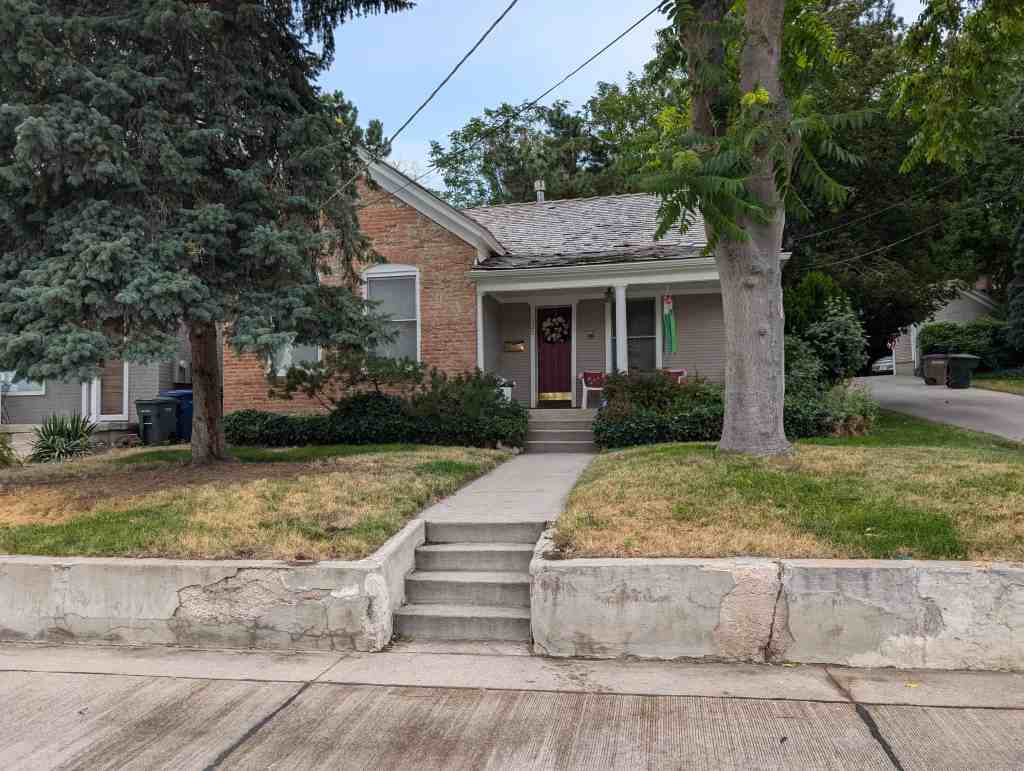
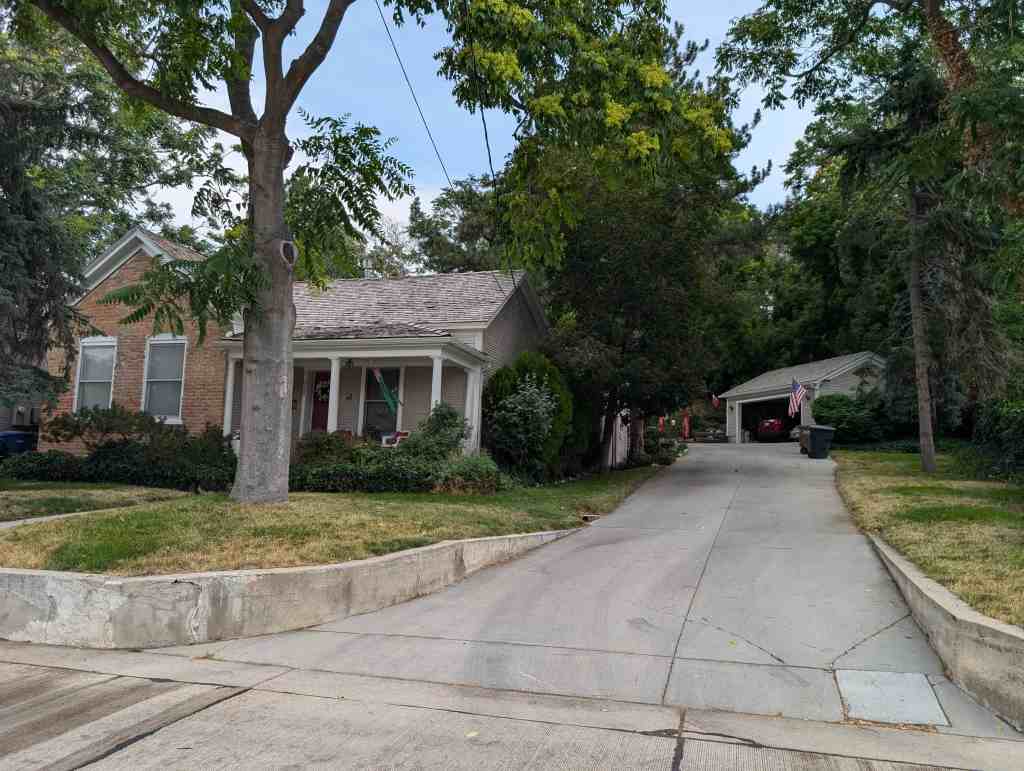
This house appears to have been built in the late 1870’s by Richard Collett. Collett was born April 10, 1847 in Watlington, Oxferdshire, England. In 1856 he converted to the LDS Church, the only member of his family to do so. He emigrated to Utah in 1863, arriving October 4. He worked as a shoemaker, successively for William Jennings, William Sloan “of the big boot”, ZCMI,” the Workingmen’s Coop, William H. Rowe, and the Deseret Tanning and Manufacturing Co. In the 1890’s he operated a general store from a small brick building next door, now 334. He was a member of Dimick Huntingtons martial band, the Tabernacle Choir, and the 19th Ward choir. His wife’s name was Mary. Collett died in 1904.
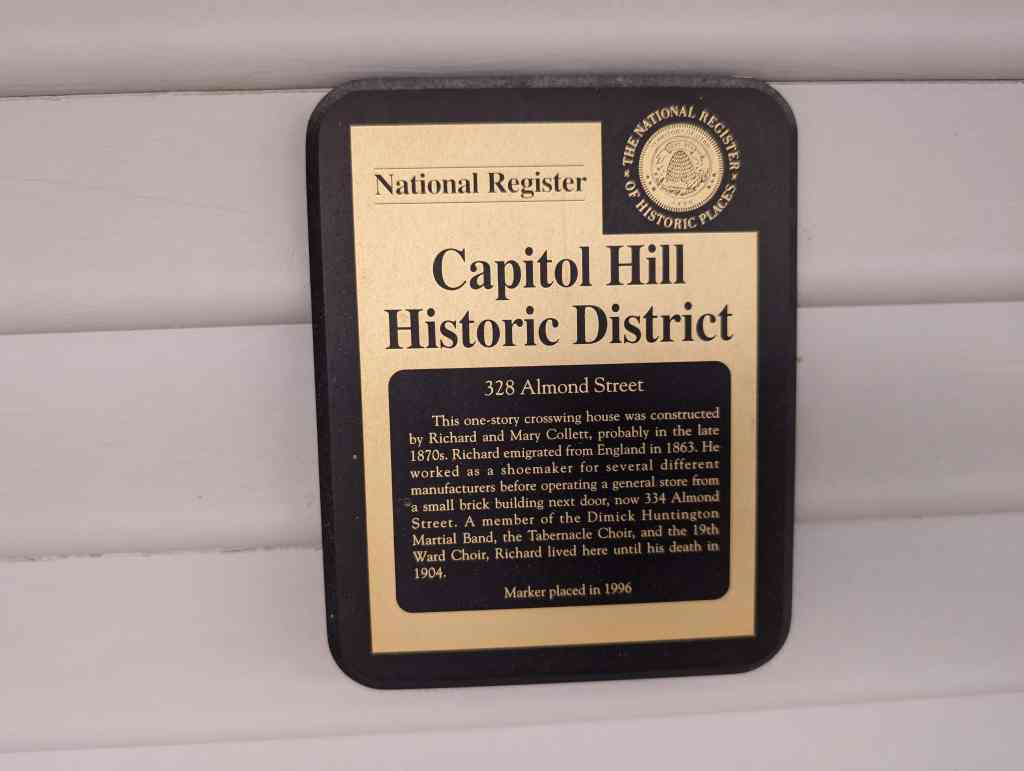
This one-story crosswing house was constructed by Richard and Mary Collett, probably in the late 1870s. Richard emigrated from England in 1863. He worked as a shoemaker for several different manufacturers before operating a general store from a small brick building next door, now 334 Almond Street. A member of the Dimick Huntington Martial Band, the Tabernacle Choir, and the 19th Ward Choir, Richard lived here until his death in 1904.
This one story home of rectangular plan has a gable roof. The front porch extends the full length of the main façade, with a roof supported by square posts with decorative mouldings with turned balusters between. Windows are two over two, double hung type. A frame extension of lean-to variety is located at the side.
Evidence of title, directories, and sanborn maps suggest this house was built about 1873, by Edwin Rawlings.
Rawlings was born February 1, 1838 in England. He emigrated to Utah in 1862. He worked as a cabinet maker and carpenter for ZCMI and later for the Co-Op Furniture Co. An accomplished musician, he was a charter member of the martial band organized by Dimick Huntington and associated with the Nauvoo Legion. His wife Annie and three children survived upon his death September 7, 1914.
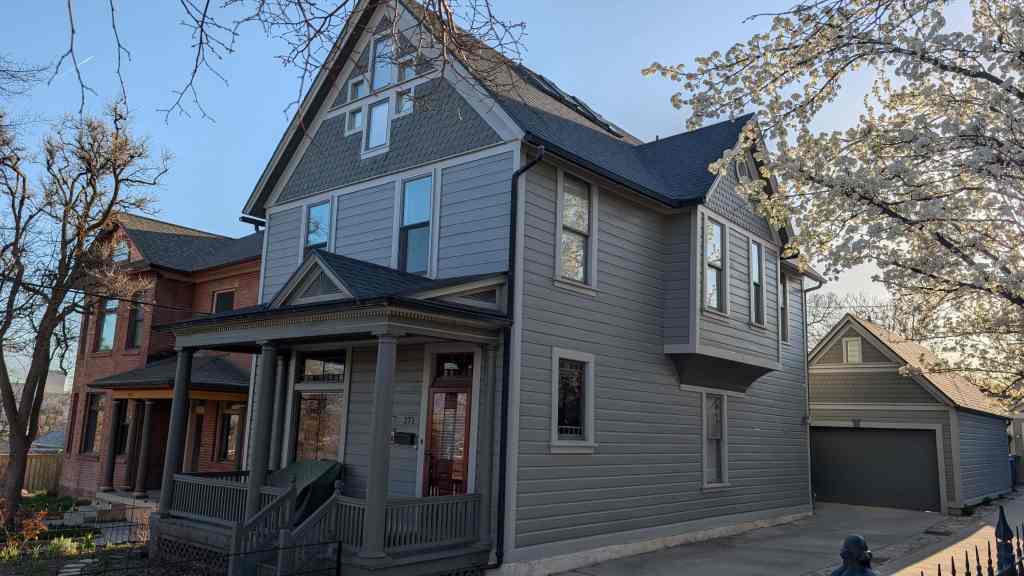
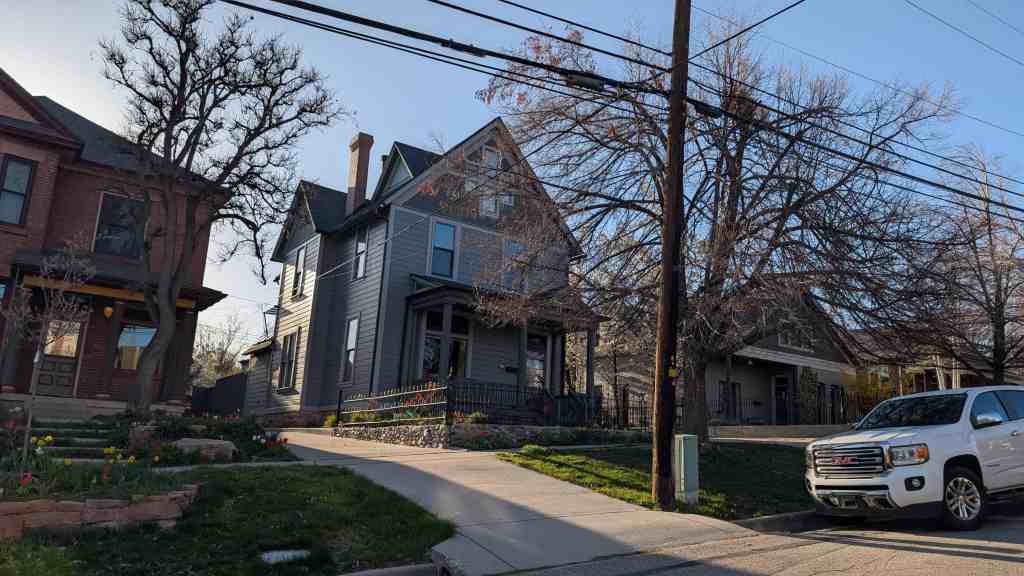
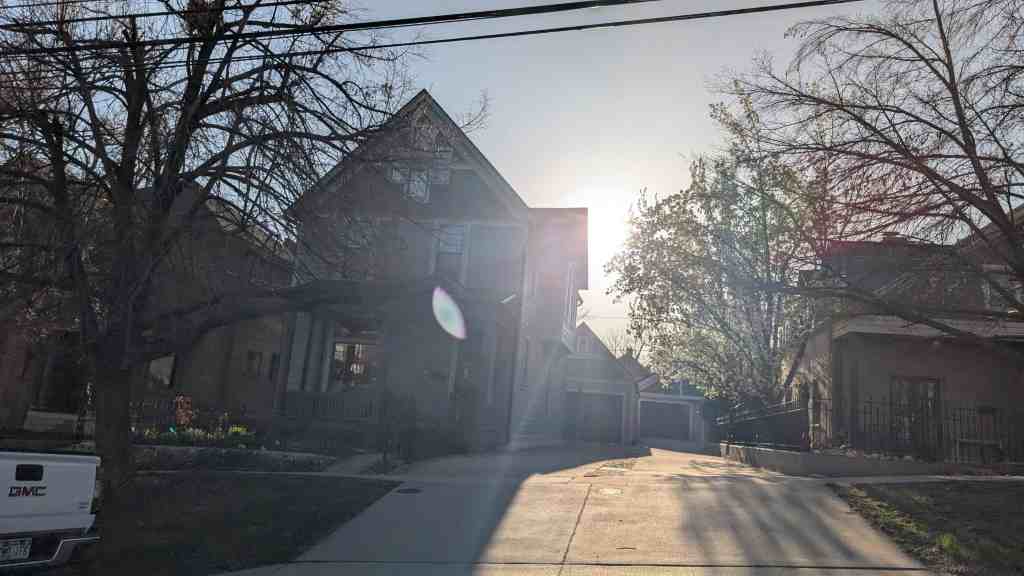
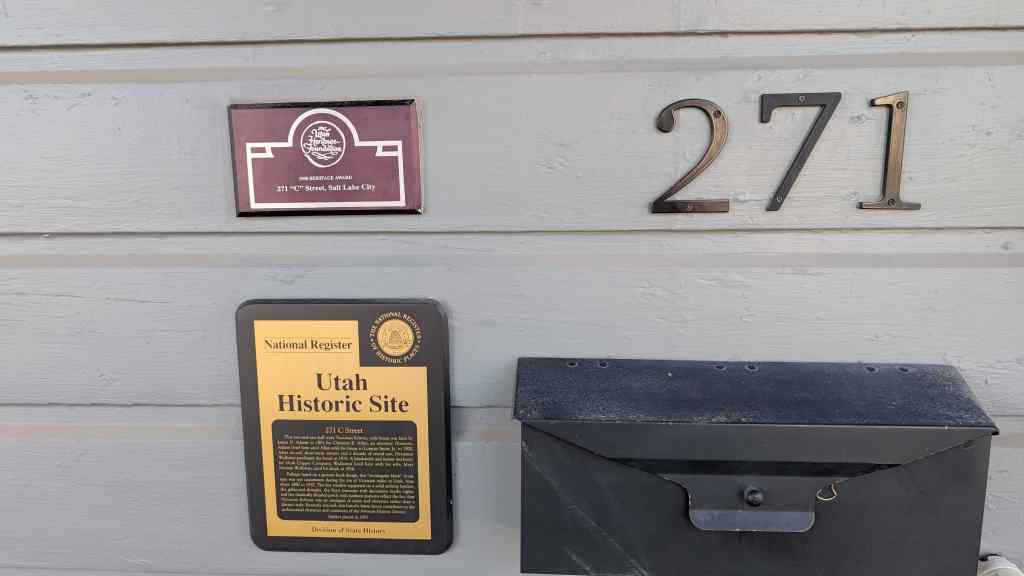
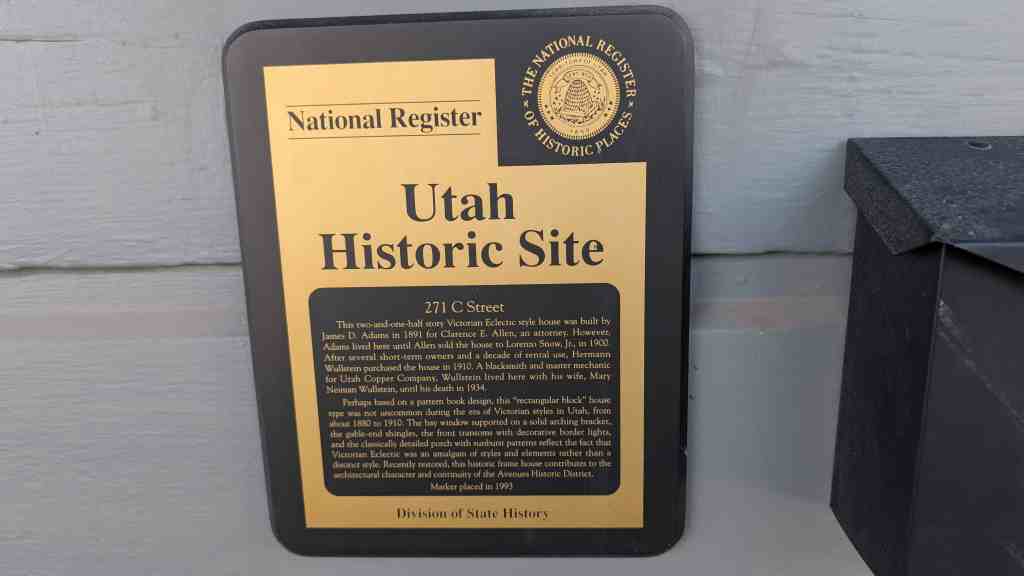
This two-and-one-half story Victorian Eclectic style house was built by James D. Adams in 1891 for Clarence E. Allen, an attorney. However, Adams lived here until Allen sold the house to Lorenzo Snow, Jr., in 1900. After several short-term owners and a decade of rental use, Hermann Wullstein purchased the house in 1910. A blacksmith and master mechanic for Utah Copper Company, Wullstein lived here with his wife, Mary Neiman Wullstein, until his death in 1934.
Perhaps based on a pattern book design, this “rectangular block” house type was not uncommon during the era of Victorian styles in Utah, from about 1880 to 1910. The bay window supported on a solid arching bracket, the gable-end shingles, the front transoms with decorative border lights, and the classically detailed porch with sunburst patterns reflect the fact that Victorian Eclectic was an amalgam of styles and elements rather than a distinct style. Recently restored, this historic frame house contributes to the architectural character and continuity of the Avenues Historic District.
Interesting history compiled by Rachel Quist: In April 1898 the Rescue Home for “fallen women” rented this house.
Within the next 10 months the Rescue Home had 20 applicants, 5 births, 1 death, 1 marriage, 7 women placed in suitable outside homes, and 2 children were taken to the orphanage.
Neighbors on C Street objected to the Rescue Home and in Sept 1899 they petitioned the SLC Council to have the home removed and stop financial support. Thomas A. Horne, who lived just north at 277 C St, was the primary objector who complained “the women are boisterous, they make noise…and they sing indecent songs. They contaminate the children.”
Not wishing to antagonize the neighbors on C Street, the Rescue Home soon signed a 3-month lease on a larger house at 54 S 1200 East from owner Judge Loofbourow. The neighborhood soon made vigorous objections and Judge Loofbourow cancelled the lease without notifying the Rescue Home first.
In Nov 1899 the Rescue Home found another house in Sugar House area and paid 4 months rent in advance. University of Utah Professor Byron Cummings (Football & Archaeology) led the objection citing the 35 children in the neighborhood. The Rescue Home was given 3 months to vacate.
Frustrated that “respectable communities” disallowed the Rescue Home they looked for a new location in the “slums” of Commercial Street (now Regent St) but they could not find a suitable location, likely due to the high rents that the brothels and other businesses could pay.
After months of looking for a new location, the Rescue Home’s Board of Directors decided that to continue the work would be useless and the entire board resigned in Feb 1900.
A new board was established who vowed to continue the work and even secured additional locations. University of Utah Art Professor Edwin Evans led the protest against the 1458 S 1300 East location in March 1900.
Even after the Rescue Home closed itself to prostitutes and only allowed “reformable” women the neighbors protested so vigorously that the location at 51 S 800 E was also abandoned.
By Jan 1902 the whole organization was turned over to the Salvation Army who operated similar homes throughout the country with much success…. except in SLC.
Located at 214 S State St in Salt Lake, the Clayton building was listed on the National Register of Historic Places (#82004138) from 1982 to 1994. It was the home of Salt Lake High School in 1892 (see History of Salt Lake High School)
Carlson Hall, built in 1937-38, is historically significant as the first women’s residence hall at the University of Utah as well as the first dormitory built on the university campus. It was the result of a three-decade long struggle to have a women’s dormitory constructed. The building served as a women’s residence hall as well as social center for female university students for 33 years. Carlson Hall is one of only two historic women’s residence halls built in Utah. The building also represents part of a national trend, from the teens through the 1930s, to provide better opportunities for women in higher education. Carlson Hall is also significant as a federally funded public works project. It was built by the Works Progress Administration (WPA) which, along with several other New Deal programs, provided much-needed jobs during the Depression through construction projects such as this. Virtually all of the public buildings constructed in Utah during the 1930s and early 1940s were built under federal programs. Over 240 buildings were constructed statewide, and four were built on the University of Utah campus. (A 1985 thematic nomination of Public Works Buildings documents the significance of this important phase of Utah and U.S. history.)
From the time the University of Utah moved to its permanent campus in 1900, there was concern about the lack of housing for students from out of the Salt Lake area and out of state. The need for adequate, safe women’s housing was a national issue, as well as a local one. Responding to the growing number of female students, the university hired its first Dean of Women, Lucy M. Van Cott, in 1907. Her responsibilities included supervision of female students, helping them find university-approved lodging as well as employment (for pay or in exchange for room and board). The Utah Chronicle reported that acceptable boarding places were difficult to find and “many good places prefer male boarders.”
In December 1911, Dean Van Cott attended a national conference of the Deans of Women in Chicago at which the “gathering voted unanimously for two things: Dormitories on the college campus and student government.” Van Cott pressed continuously for a women’s dormitory throughout her 25-year tenure. In 1912, she and Mrs. W.W. Riter, whose husband was a member of the Board of Regents, rented a house at 1333 East 400 South to be used as a small dormitory. Known as both the Riter Dormitory and the experimental dormitory, the off-campus building was controlled by the university and supervised by a house mother. After remodeling and refurnishing, rooms were rented to twelve women. The Riter Dormitory was in operation only until 1915.
Housing was difficult for male students as well. In 1912, the Episcopal Church of Salt Lake received a gift for the construction of the Emery Memorial Hose. Located at the northwest corner of 200 South and University Street, the Emery Memorial House opened in early 1914 for thirty male students.4 It was used as a training center during World War I and as a youth center in the 1930s. The Catholic Church took over the building in 1947, which has continued to use it to the present as a religious and social center. The building was extensively remodeled in 1985-86 and is no longer eligible for National Register consideration.
The Utah Federation of Women’s Clubs also was involved in the fight to build a women’s residence hall. They lobbied the Utah Legislature in favor of a bill which would have approved funding its construction, but it was defeated in 1913. Little progress was made for a dormitory after that due to World War I and the ensuing recession.
George Thomas, who assumed the presidency of the University of Utah in 1921, actively pursued construction of a women’s dormitory. Throughout the 1920s, Thomas sent letters to colleges and universities across the country inquiring about the construction, funding, size, and maintenance of their dormitories.
By the 1926-27 academic year there were 1,311 women registered at the university; 488 were not from Salt Lake City. These statistics were part of a Women’s Legislative Committee report to the 1927 Utah Legislature entitled “A Girls’ Dormitory, Why?” The committee pointed out that dormitory living meant better scholarship, health, school spirit, “higher ideals of citizenship and right living…[and] a democracy of spirit among the rich students and the poor students.” In addition, the committee suggested that the university was losing financial gifts from wealthy Utahns who were forced to send their daughters to out-of-state universities. 7 Statistics in the report showed that 35 state universities, a state college, an agricultural college, and Cornell University all had at least one women’s dormitory.
At a February 1927 meeting, the Board of Regents of the University of Utah carried a motion to approve a Senate bill “providing means for the erection of a Women’s dormitory…if it can be had without burdening the University of Utah.”8 The bill failed, but the next year the Board of Regents sponsored a Dormitory Questionnaire which asked: “If dormitory facilities under university control were available on or near campus, furnishing board and room from $30.00 to $37.50 per month, would you desire to obtain a place in the dormitory?” 9 Of the 896 respondents, 117 answered yes. However, beginning in 1931, the Depression forced the Legislature to reduce appropriations to the university, making no provision for expansion or erection of new buildings.
In 1934 the university received the residual of the Mary P. Carlson estate, appraised at the time at over $121,000. 12 The money was to be used as the Board of Regents saw fit, but Mary Carlson requested that any building erected be named in memory of her husband August W. Carlson, a former regent. The bequest on its own was not enough to construct a new building so President Thomas suggested that the state try to get the federal government to participate in constructing a women’s dormitory. The state would be responsible for 55% and the federal government 45%. Thomas’ feeling was that “for over twenty-five years the women of the state have been agitating for a dormitory or what may be called a ‘woman’s building’.” Ultimately the Works Progress Administration (WPA) provided the additional $90,000 and construction of Carlson Hall proceeded under Federal Emergency Administration of Public Works Project No. Utah 1045-2-D.
Federal public works programs in the 1930s were very important in Utah, which was one of the states most severely affected by the Great Depression. In 1933, Utah had an unemployment rate of 36 percent, the fourth highest in the country, and for the period 1932-1940 Utah’s unemployment rate averaged 25 percent. Because the depression hit Utah so hard, federal programs were extensive in the state. Overall, per capita federal spending in Utah during the 1930s was ninth among the 48 states, and the percentage of workers on federal work projects was far above the national average. Building programs were of great importance. During the 1930s virtually every public building constructed in Utah, including county courthouses, city halls, fire stations, national guard armories, public school buildings, and a variety of others, were built under federal programs by one of several agencies, including the Civil Works Administration (CWA), the Federal Emergency Relief Administration (FERA), the National Youth administration (NYA), the Works Progress Administration (WPA), or the Public Works Administration (PWA), and almost without exception none of the buildings would have been built when they were with out the assistance of the federal government.
Carlson Hall was one of two women’s dormitories built on college campuses in Utah by the WPA. The 1936-37 Women’s Residence Hall at the Utah State Agricultural College (now Utah State University) was also a WPA. building. Carlson Hall and the Women’s Residence Hall are the only historic women’s residence halls built in the state of Utah. The first men’s dormitory, Bailiff Hall, was built on the University of Utah campus in 1954. The second women’s building, Van Cott Hall, was constructed in 1963. Thus, Carlson Hall is the only dormitory from the historic period on the University of Utah campus.
Paul Paulsen was selected as the builder for Carlson Hall, and the local firm of Ashton and Evans was chosen as architect. Prior to their 1923 partnership, Raymond J. Ashton worked as a draftsman and architect, and Raymond L. Evans was an employee of the well-known Utah architecture firm of Ware and Treganza. Ashton and Evans also designed Gardner Hall on the University of Utah campus, and the W.P.A.-funded George Thomas Library (now the Utah Museum of Natural History), Field House at the University of Utah and Utah State Agricultural College Field House, as well as the Utah State Prison located at Point of the Mountain. Ashton was extensively involved in state and national AIA affairs, serving two terms as national president beginning in 1943, the first and only Utah architect to achieve that distinction.
Upon its completion in 1938 Carlson Hall became the anchor of the university’s southwest boundary. A much larger facility was envisioned, of which this was only one quadrant, but the other sections were never built. The first group of women moved in for autumn quarter 1938. The Board of Regents set rates for room and board at $30.50/month for a double room, and $34.50 for a single. This included three daily meals and housekeeping. The interior was designed in the early American style. When not studying, the women played piano, listened to the radio or sat by the fire in the formal living room. The furniture was moved out of the way when dances were held. Playing shuffleboard or ping pong in the basement were also common pastimes. Men were allowed only in the common areas, never in the bedrooms. Carlson Hall was specifically designated for freshman women from out of the Salt Lake City area. To avoid the forming of cliques, no sororities were allowed in the hall. A strict curfew was enforced to maintain a proper home environment. For every 15 minutes a resident exceeded curfew she was “campused” one night the next weekend. The curfew was still in place, though slightly modified, until well into the 1960s. Although the women of Carlson Hall lived in a fairly controlled environment, residents felt the accommodations were good, the food was excellent and the social life, even better.
Though Carlson Hall’s period of significance extends only to 1946 (due to the 50-year rule for National Register significance), it served as a women’s residence hall and social center until 1971, a total of thirty-three years. In 1971, the bedrooms were converted into faculty offices and the kitchen, dining room, library, and solarium became classrooms. The building now houses the History and Ethnic Studies departments and the Tanner Humanities Center. It also provides additional classroom space for the adjacent Law School.
The following is from a historic marker on the house, but I think it might be talking about the house next door which also has a plaque with the same text: The Jensen/Clark House, built c. 1921, is significant for its association with Sandy’s historical development. The Jensen/Clark House is a one-story bungalow with a full-width from porch and hipped roof with wide, overhanging eaves. Joseph and Frances Jensen purchased a 98-foot-wide by 200 foot-deep section of land for $1,000 in September 1921. One month later, they secured a mortgage for $3,500, presumably to build the house. In April of 1933, the house was sold to Dr. Lionel and Charlotte Sorensen. Two years later, the Sorensens secured a $3,200 mortgage to construct the infirmary that is just west of the house. In 1939 the house was sold to Dr. Thomas Clark, a family physician, and his wife Charlotte. The Clark family held the property for forty-five years selling it in 1984 to James Witherspoon.
The Edward and Harriett Rosenbaum House, built in 1928, is a two-story Colonial Revival and Georgian-style residence. The property is locally significant under Criterion C as a high-end architectural example of the Colonial Revival and Georgian Revival styles with some Federal style elements. The house is also significant for its association with two of Utah’s most prominent architects: Taylor A. Woolley and Clifford P. Evans. Both men were apprentices to Frank Lloyd Wright in the 1910s, but rarely used Prairie-style elements, preferring to work in different styles to satisfy the tastes of their Utah clients. The firm produced mostly institutional buildings and apartment blocks. The Rosenbaum House is the only example of a grand mansion designed by the firm Woolley and Evans whose limited domestic output consisted of more modest houses. The Rosenbaum House has excellent integrity in the qualities of workmanship, and materials.
The design of the house has all of the characteristics of the classical styles (e.g. fanlights, sidelights, multi-light sashes, dentiled cornice and classical pediments). The main floor features a formal hall, living room, and dining room that are particularly well-preserved, which enhances the high artistic qualities of the exterior. The integrity of the original design is somewhat impacted by an early 1990s side addition, but the addition is compatible and is separated from the original house by a breezeway. The period of significance is the period of construction, 1928.
Edward Rosenbaum, a banker, and his wife, Harriet, were the original owners of the house. The family lived there only a few years until Edward’s untimely death in 1930. The second owners, Prescott and Beatrice Dunn, lived there for 25 years, adding a swimming pool and bath house in 1948-1949. The Dunn family owned a large retail enterprise in Salt Lake City. In 1955, the property was acquired by an insurance executive, Frederick Moreton and his wife, Sarah. The Moreton family held the deed until 1992 and made very few alterations, preserving most of the residence’s distinguishing exterior and interior features.
The setting and location of the property also contributes to its architectural significance. The property represents the Bonneville-on-the-Hill development, a one-of-a-kind model for an exclusive suburb of Salt Lake City. The Bonneville-on-the-Hill development was conceived in 1917 with the acquisition of dry bench land above the popular Federal Heights subdivision. In a departure from the norm, a formal plat was never filed for Bonneville-on-the-Hill. Managed by a syndicate of influential men, the neighborhood did not possess the architectural uniformity of contemporaneous subdivisions. The neighborhood grew more organically as individual lot sizes were increased and sold ad hoc as wealthy families vied to build increasingly grander mansions from the 1920s into the 1970s. The Rosenbaum House on Circle Way, built in the late 1920s, represents the early phase of the high-status neighborhood. The addition of a swimming pool and bath house in the late 1940s (although now altered or replaced) enhanced the property’s status in its exclusive upper-class suburb. The property is a significant contributing resource in Salt Lake City’s Federal Heights neighborhood.
The Mort Cheesman House, built in 1912-13, is significant as one of a very limited number of large scale Craftsman houses in Utah, and as an outstanding and unique example of that type. It is one of two monumental and unique Craftsman homes designed by tie successful Salt Lake architectural firm, Ware and Treganza, the other example being the Knight-Mangum house in Provo. Alberto O. Treganza, the principal designer of the firm, had worked for the famous San Diego firm of Hebbard and Gill, and the design of the Cheesman house may reflect the influence of that experience. It is a distinctive example of the Craftsman style because of its single axis orientation, and its unorthodox point of entry. The combination of stucco and cobble rock as building materials, while not unusual, is not common in Utah, especially in large homes. It was more often reserved for use in Craftsman Bungalows.
Located at 2320 East Walker Lane in Holladay, Utah – it was added to the National Register of Historic Places (#82004137) July 23, 1982.
The Morton A. Cheesman House was designed by the architectural firm of Ware and Treganza in 1912 and the house was completed by 1913. Craftsman elements which tie the house together include: a low pitched roof; ornamentation created by the use of natural materials such as exposed rafters and purlins, bands of casement windows, and cobble rock for the base and chimneys; the use of leaded glass in some windows; and the combination of materials, stucco and cobble rock, to create visual interest rather than relying on the application of ornament to serve that purpose. The house was built on eleven acres of property originally owned by Mr. Cheesman’s maternal grandfather, Joseph R. Walker, a famous Salt Lake banker and businessman. The settlement of the Walker estate resulted in Mrs. Mary Ann Walker Cheesman receiving the property.
The house being nominated belonged to Mary Ann’s son, Morton. From evidence of title, it appears that Mary Ann owned the property on which Morton’s house was built until 1916, at which time she deeded the property to him. Mary Ann’s own house was built in 1912 and is located adjacent to her son’s house. Her house was also designed by Ware and Treganza.
In 1921, Cheesman deeded the property back to his mother and in 1925, Mary Ann mortgaged the house for $15,000 to Malcolm A. Keyser, a friend of the Cheesman family. In 1931, Mary deeded the property and house to Mr. Keyser. The reason for the property loss has been blamed on the stock market crash of 1929 as both Morton and his mother lost large amounts of money in the crash. In 1932, the city directory lists Morton as an employee of the Salt Lake City Water Department and residing at 746 East Second South. In the same year, Keyser and his family moved from their home at 6710 Holliday Boulevard to Mary Ann’s former residence. The Morton R. Cheesman house remained vacant. Mr. Keyser deeded the house to his son M. A. Keyser, Jr. in 1940, and in 1945 the house was deeded to George R. McClure and his wife, Helen Keyser. The McClures were the first people to inhabit the house after the Cheesman’s departure and are the current owners.
Norton R. Cheesman was born June 1, 1889 in Salt Lake City, a son of Martin J. and Mary Ann Walker Cheesman. Morton started his business career in 1910 as a treasurer for Walker Brothers Dry Goods and continued in that position most of the time that he lived in this house. He was also president of Cheesman Auto Company and involved in the Campbell-Cheesman Realty Company. He was later employed for the Salt Lake City Water Department. He was married to Vera Edward and later divorced. In 1940, he married Naomi Brinton. He was the father of two children. Cheesman died November 21, 1963, in Salt Lake City.
The Knight Allen house was built for J. William Knight, an important businessman in turn-of-the-century Provo and a son of Jesse Knight. It was subsequently owned by R. E. Allen a son-in-law of Jesse Knight who was also an important businessman and an officer in all the Knight family businesses. The Knight-Allen house is significant historically as the residence of important early businessmen of Provo.
The Knight-Allen house was built about 1899 for J. William Knight. It is probable that it was designed by Richard C. Watkins, a prominent local architect. J. William Knight married in 1899 and this was the couple’s first house. When he and his new wife moved to Canada to manage a Knight concern there, J. William Knight sold the house to his sister Inez and her new husband, Robert Eugene Allen. Because the Knights lived in the house for such a short period of time, the building is more closely associated with the Allen family.
Robert E. Allen was born in Coalville, Utah in 1877. He received his education at Summit Academy, Brigham Young Academy, and Rochester Business College. In 1901 he started teaching at Brigham Young university and in 1902 he married Amanda Inez Knight. Allen was quickly assimilated into the business concerns of the Knight family and became a rather wealthy businessman. He served as manager of the Knight Power Company from 1908 to 1912. From 1907 to 1933 he was secretary of the Knight Investment Company which directed the family’s holdings and was also cashier of the Knight Trust and Savings Bank. He later served as manager of First Security Bank in Provo.
Inez Knight Allen was a woman of note. She was one of the first two women sent as proselyting missionaries by the L.D.S. Church. She later became very active in politics and civic affairs. She was the Democratic National Committee woman from Utah for four years, was a delegate to National Democratic conventions, and ran unsuccessfully for the state senate. She also chaired many local civic groups.
Mr. and Mrs. Allen were very generous with their wealth and contributed heavily to B.Y.U. Several buildings were constructed by the University with these contributions.