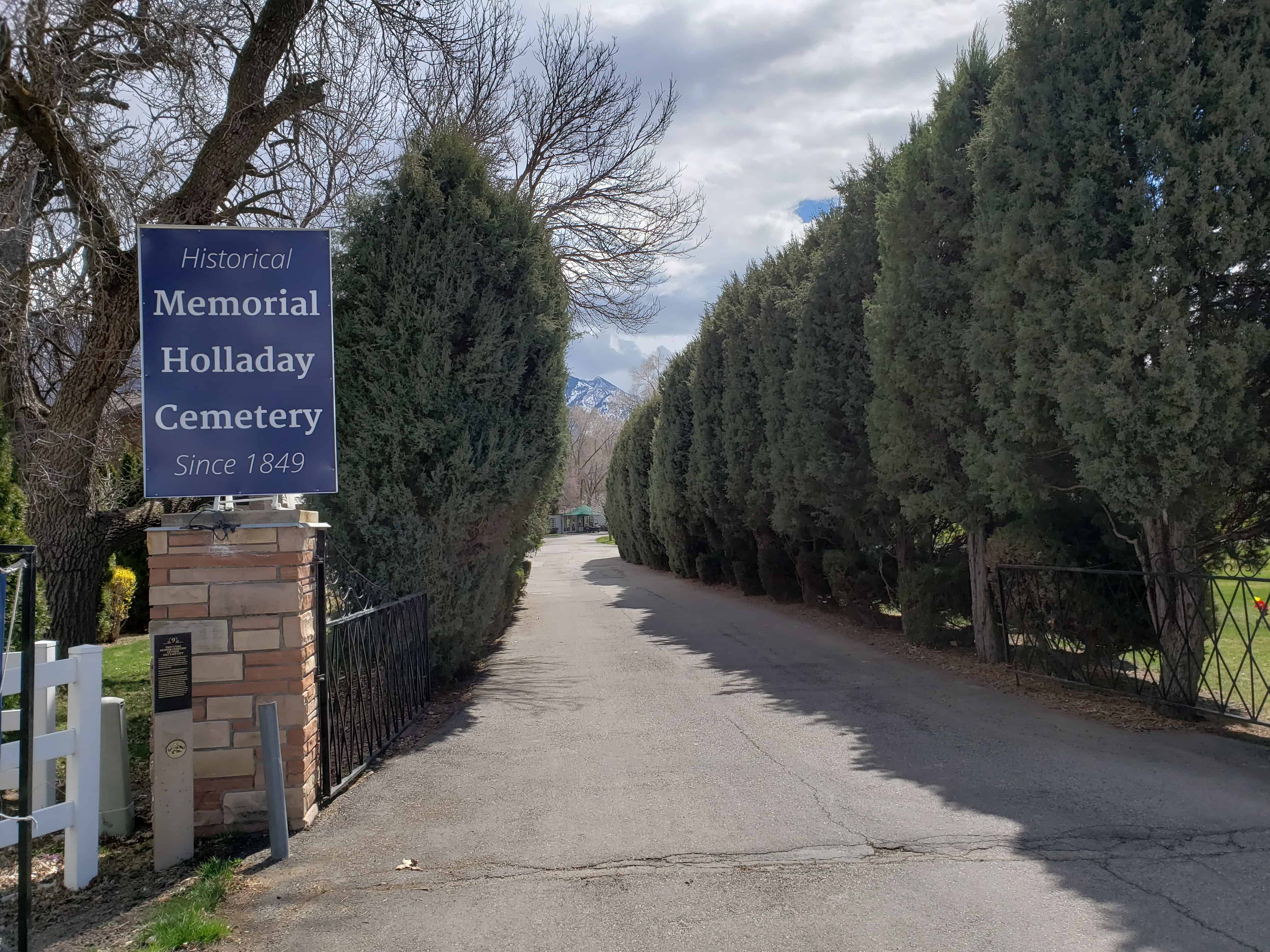
In 1848, when the first pioneer death occurred in Holladay, the cemetery knoll southeast of here, overlooking lowland watery meadows of a then meandering Big Cottonwood Creek, was selected as a community cemetery. Tradition has it that the first burial was a baby.
For 127 years, local LDS Church leadership oversaw this 13-acre cemetery in behalf of the entire community. In 1975 the cemetery was sold.
In early pioneer Utah times, burial was generally 1 to 2 days after death. Families themselves often dug the grave 5 to 6 feet deep. The deceased person was dressed in regular clothing or in a burial shroud (a long nightgown-type of burial dress) and placed in a snug fitting wooden box or in blankets and cloth material. Funerals were a community affair, most persons participating one way or another – attended the funeral at church, providing food for participants after the service, or helping the bereaved family do their chores.
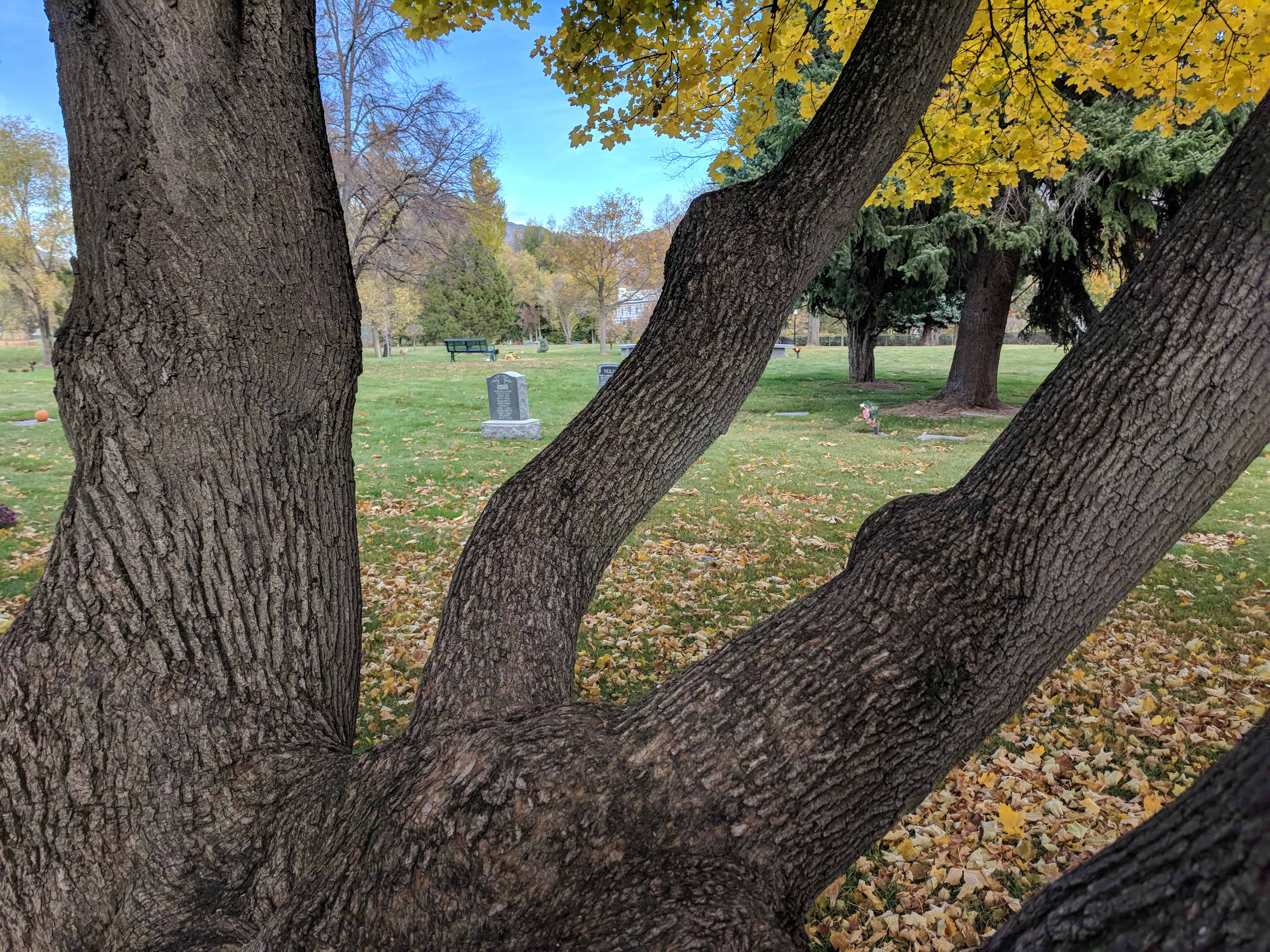
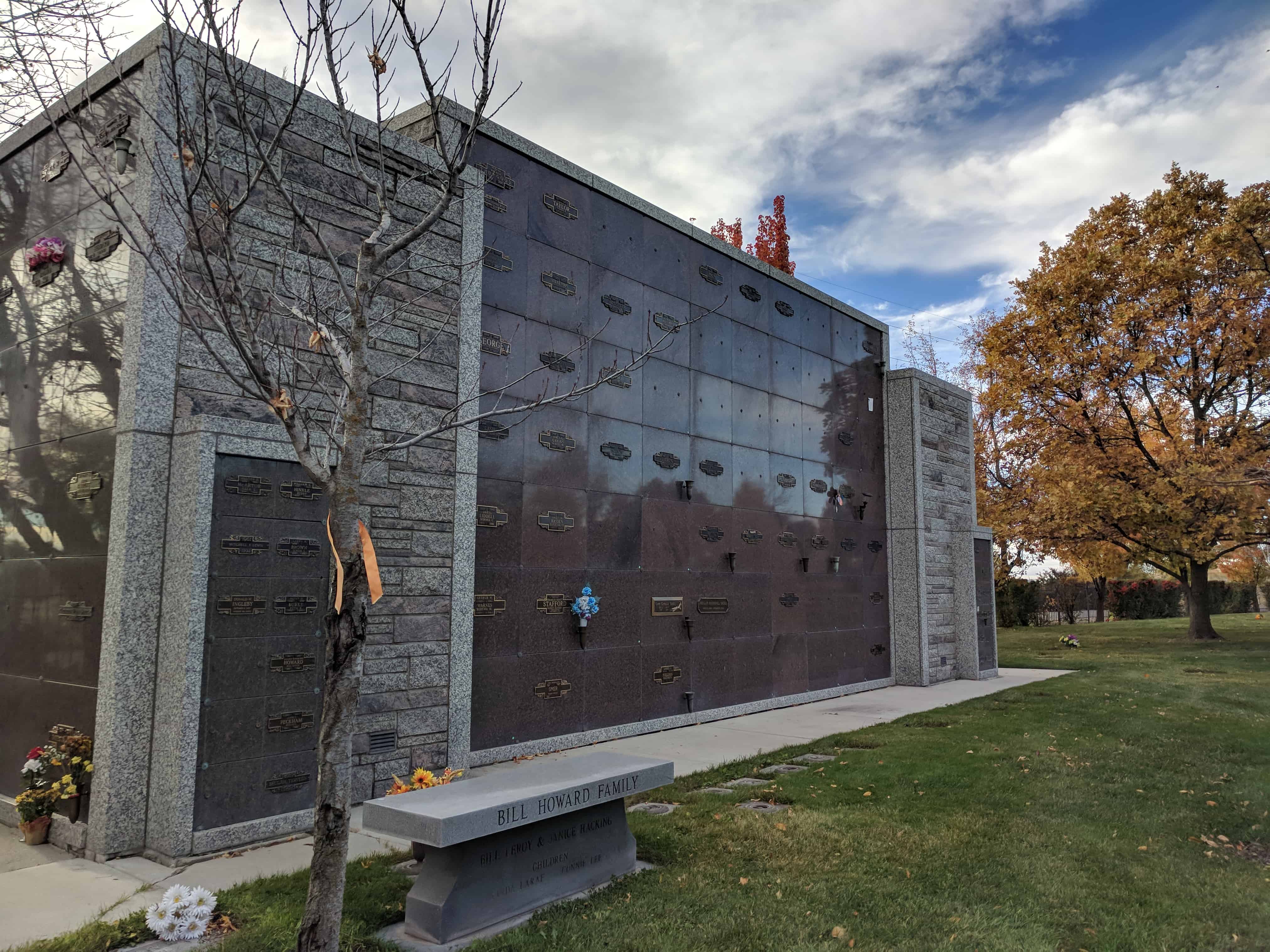
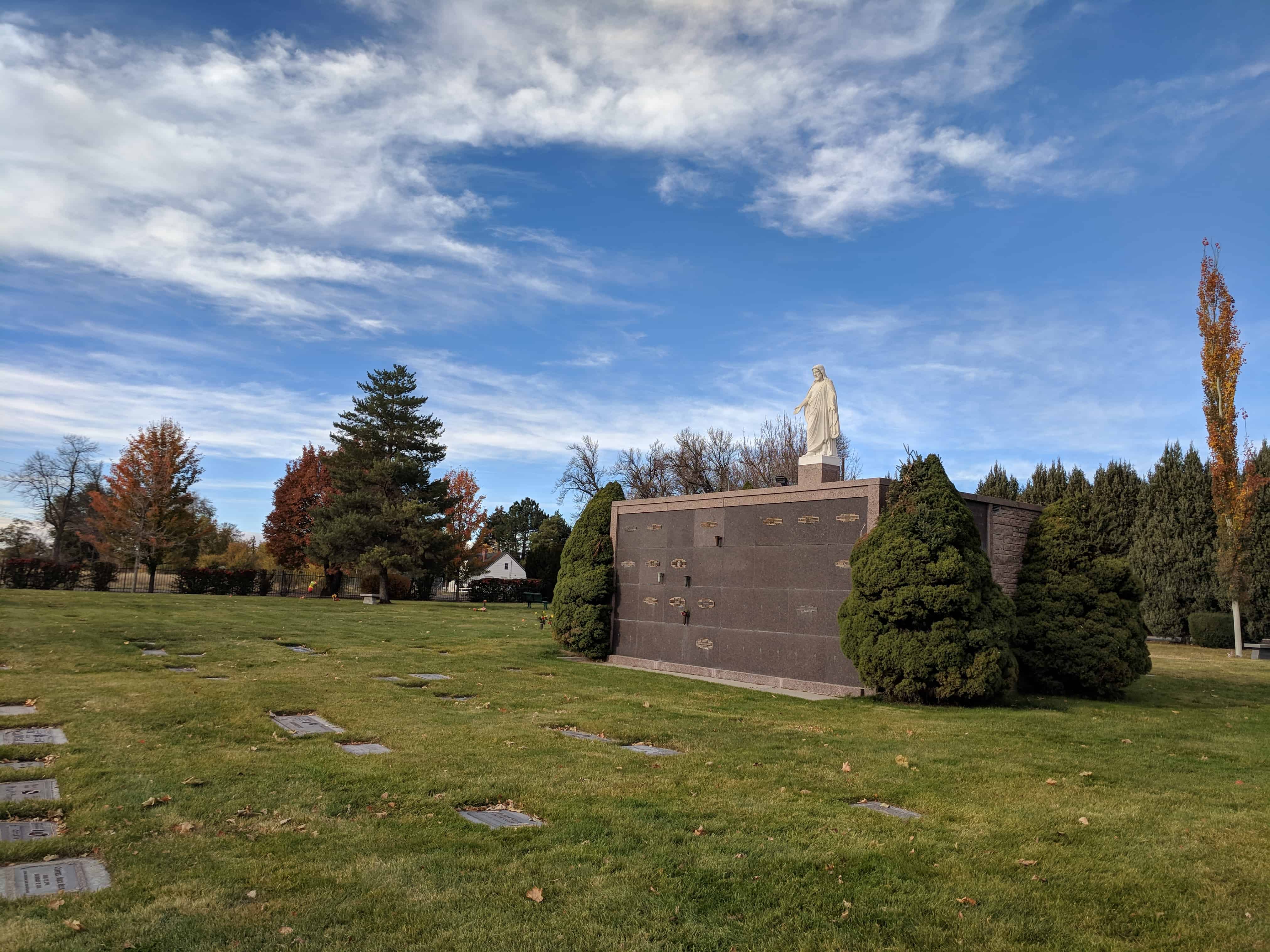
Located in Holladay, the Memorial Holladay Cemetery, also called Holladay Memorial Park is a beautiful cemetery with monuments, memorials and graves from pioneers to the area and recent.
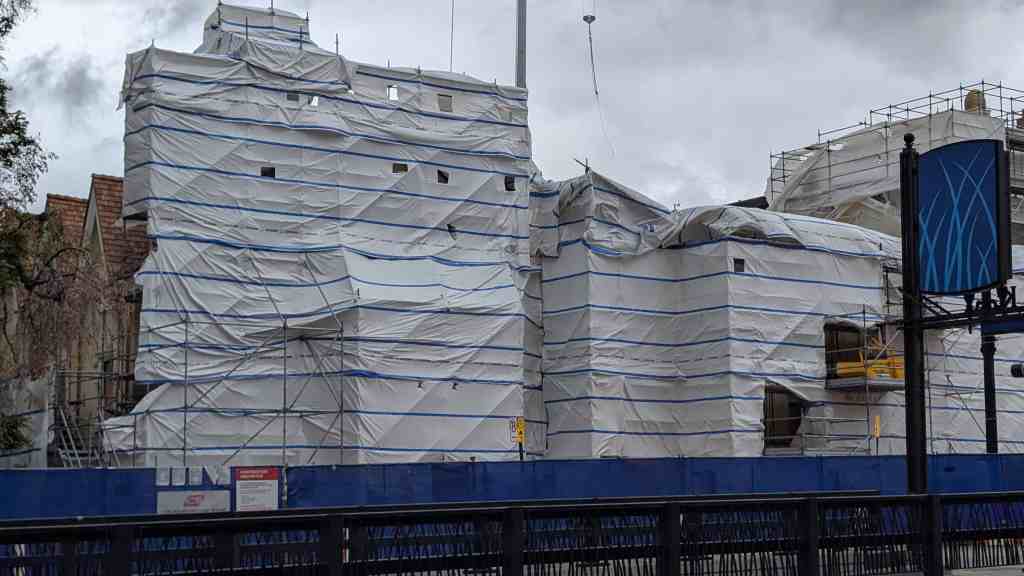
Erected about 1852 by President Brigham Young as the Official Residence of the President of the Church of Jesus Christ of Latter-day Saints and occupied by him from the time it was completed until his death in 1877.
From 1852 to 1855 it also served as the Executive Mansion of Governor Brigham Young of the Territory of Utah.
It was also the home of presidents Lorenzo Snow (1898 – 1901) and Joseph F. Smith (1901 – 1918), both of whom died here.
The Beehive is the State Emblem signifying industry.
The Utah Historic Site plaque says the Beehive House was built in 1854 of adobe brick, the architect was Truman O. Angell and it was the home of Brigham Young, the 2nd President of the Church of Jesus Christ of Latter-day Saints and 1st Governor of the Territory of Utah.
Tourstop 5 in the Salt Lake City Tour says: The Beehive House served as Brigham Young’s residence, office, and reception area for official visitors. At the time the house was built, Young was both president of the LDS Church and Utah’s territorial governor. The Beehive House was designed by Young’s brother-in-law, Truman O. Angell. Angell was also the architect for the Lion House and the Salt Lake LDS Temple. Built of stuccoed adobe, the Beehive House features a two-story veranda, an observatory, and a cupola topped with a beehive. Young’s son added a three-story wing to the north when he remodeled the house in 1888. In the early 1960s, the LDS Church restored the Beehive House to resemble its 1888 appearance.
(from Preservation Utah’s walking tour) The Beehive House 67 East South Temple 1853-1855, Truman O. Angell, SLC 30-minute guided tours available every 15 minutes Monday-Saturday, 9:30 am-4:30 pm, and Sunday, 10:00 am-1:00 pm.
The Beehive House served as Brigham Young’s residence, office, and reception area for official visitors. It was designed by Young’s brother-in-law, Truman O. Angell. Angell, one of Utah’s prominent early architects, also designed the Lion House and the Salt Lake City LDS Temple. The Greek Revival style Beehive House features a two-story veranda, an observatory, and a cupola topped with a beehive. Young’s son added a three-story wing to the north after he purchased the house in 1888.
In addition to the Beehive House and the Lion House, Young’s walled estate fronting South Temple also included the White House, a family schoolhouse, carpenter shop, barns, orchards, and gardens. The Eagle Gate at the intersection of South Temple and State streets marks the original entrance to Young’s multipurpose compound. The Eagle Gate also provided access to City Creek Canyon to the northeast. See the marker on the northeast corner of the intersection for a history of the Eagle Gate.
In the early 1960s, the LDS Church restored the Beehive House and opened it as a house museum. Guided tours of the building are available daily.
From the nomination form for the National Historic Register:
The beautiful old mansion Is the pioneer home of Brigham Young, but It in 1851. Today’s workmen, under the direction of architects (all grandsons of Brigham Young) have done a remarkable job of restoration. The outside adobe brick walls have been painted in the original straw-colored yellow, which gives the manor a gay, but antique appearance of the original.
The Beehive House was built to meet the dual needs of Brigham Young, second president of the Church of Jesus Christ of Latter-day Saints and first governor of the state of Deseret, later Utah Territory. Above all, however, the Beehive House was a home for his family. It was also used as an official mansion where the Mormon leader received and conferred with other Church leaders, state and federal dignitaries, and entertained prominent traveling officials. During the life of Brigham Young, many famous people were entertained in the Beehive House, including President Ulysses S. Grant, Emperor Dom Pedro of Brazil, General William T. Sherman, Ralph Waldo Emerson, Mark Twain, Jay Gould, Horace Greeley, and even the midget Tom Thumb and his tiny wife.
In 1893, the Church purchased the historic building to make it the official residence of its presidents. Lorenzo Snow and Joseph F. Smith were the only two succeeding presidents to live in it. After the death of President Smith, the house stood vacant for a number of years, and was again remodeled and maintained as an away-from-home residence for young women who came to the city to work or attend school.
In 1959, when the Church decided to restore the Beehive House, a committee made up primarily of descendants of Brigham Young was chosen to carry out the task. Research and detective work on the part of this committee took 18 months to complete, and included the use of old manuscripts describing the house, the search for Brigham Young’s furnishings, and the discovery of “clues” beneath old plaster to find tell-tale evidences of still earlier construction. The “Manuscript” had been written by Clarissa Young Spencer who lived in the Beehive House from childhood until after her marriage.
Heavy coats of paint and wallpaper were peeled away, revealing the original colors and patterns. False ceilings were torn down, exposing ornate medallions which pioneer craftsmen installed in 1854.
With restoration and furnishing complete, the lovely mansion is now open for tours to the public. In its location, it is near Temple Square, a National Landmark, and the Lion House, which adjoins it on the west, and which is also a National Landmark.
The design of the Beehive House follows the 19th century Greek revival in architecture. The architect was Truman O. Angel, who also designed the many-spired Salt Lake Temple, Some of the original drawings for the Beehive house, fortunately, were found in the archives of the Church Historian’s Office shortly after work on the restoration had begun in 1959, and proved invaluable in the complete restoration of the home.
As originally built, the main part of the house consisted of two stories and an attic, surmounted by a beehive-shaped cupola, the traditional Mormon symbol of industry which was to give the home its name. Surrounding this tower is a a steel-railed (originally was wood) “widow’s watch,” reminiscent of the colonial coast.
Since the death of Brigham Young, the Beehive House has undergone two major alterations. The first was made by a son who purchased the home in 1888. Under this remodeling, the rear section was rebuilt into a three-storied wing. The formal dining room downstairs also was extensively remodeled, and an upstairs sitting room and parlor added.
The “adobe” walls were found to be in remarkably good condition. When later additions were torn out (during restoration), the walls revealed the exact location of stairs, halls, doorways, partitions and roof lines as described in the old manuscripts and original plans. With restoration, wide pine board floors, laid with square nails replaced the hardwood (not original.)
In the 1850’s, Brigham Young had a nine-foot high cobblerock wall erected around the Beehive House as protection from unfriendly intruders and as a make-work project for men who needed employment. Portions of this same wall (recently pushed back 23 feet to widen State Street north of Eagle Gate now border the home on the north and east sides. A low wrought-iron fence stands in front of the house where the big wa11 once stood.
The oak-finished door, now painted white, with its silver doorknob opens onto the main hallway. The doorbell system installed by Brigham Young was discovered and restored. Downstairs were Brigham Young’s bedroom, the Parlor and kitchen; on the second floor the “long hall” for entertaining guests, and Brigham Young:1 s offices.
The lovely home is now authentically restored and furnished with furniture from Brigham Young and his family, and from other period furniture at a cost to the Church of Jesus Christ of Latter-day Saints approximating one-half million dollars.
Built by President Brigham Young and used by him as a residence from about 1855 until his death in 1877. On the lower floor were the dining room and kitchens. On the next floor were the living rooms and large parlor; and on the top floor were the bedrooms.
It was in this house that President Young died. Later the building was used for school purposes and as a social center for women and girls. The lion is a replica of one that occupied a similar position on a prominent home in Vermont, the State where President Young was born and spent his youth.
In 1869, Brigham Young founded the Young Women organization in the Lion House.
The Utah Historic Site plaque says the Lion House was constructed 1855-56 as a residence for Brigham Young and his family. The Lion House takes its name from the recumbent lion set on top of the front portico. The House was designed by Truman O. Angell and built of stuccoed adobe. Brigham Young, second president of the Church of Jesus Christ of Latter-day Saints and first territorial governor of Utah, died in this house on August 29, 1877. Since its construction, the Lion House has functioned as a community social center.
Tourstop 4 in the Salt Lake City Tour says: The Lion House takes its name from the carved lion on top of the front portico. The House was constructed with adobe blocks, a common building material during Utah’s settlement period. Brigham Young, second president of the Church of Jesus Christ of Latter-day Saints built the Lion House for his wives and children. He and some early Church members practiced the Old Testament principle of polygamy which was officially ended in 1890. The basement contained a dining room which could accommodate 70 people. On the main floor were sitting rooms and bedrooms for wives with children. The second floor had bedrooms for children and childless wives – one under each of the 20 steeply-pitched gables.
(from Preservation Utah’s walking tour) The Lion House 63 East South Temple 1854-1856, Truman O. Angell, SLC Restaurant open to the public Monday-Saturday, 11:00 am-2:00 pm, and Thursday-Saturday, 5:00-8:30 pm. No tours available. The Lion House is one of several houses built on South Temple by Brigham Young, the second president of the LDS Church and Utah’s territorial governor.Young’s presence on South Temple made it Salt Lake City’s most prestigious residential street. For many years, South Temple was informally known as “Brigham Street.” Brigham Young intended the Lion House to be a model for polygamous living arrangements. As many as 20 of his wives and dozens of his children lived here at one time. The basement contained a dining room which could accommodate 70 people. On the main floor were sitting rooms, a “prayer room,” and bedrooms for wives with children. The second floor had 20 bedrooms for childless wives and older children, one under each of the 20 gabled dormer windows. Brigham Young died in the Lion House in 1877. Some of his wives and children continued to live in the house until the 1900s. Today the building contains a reception center and restaurant.
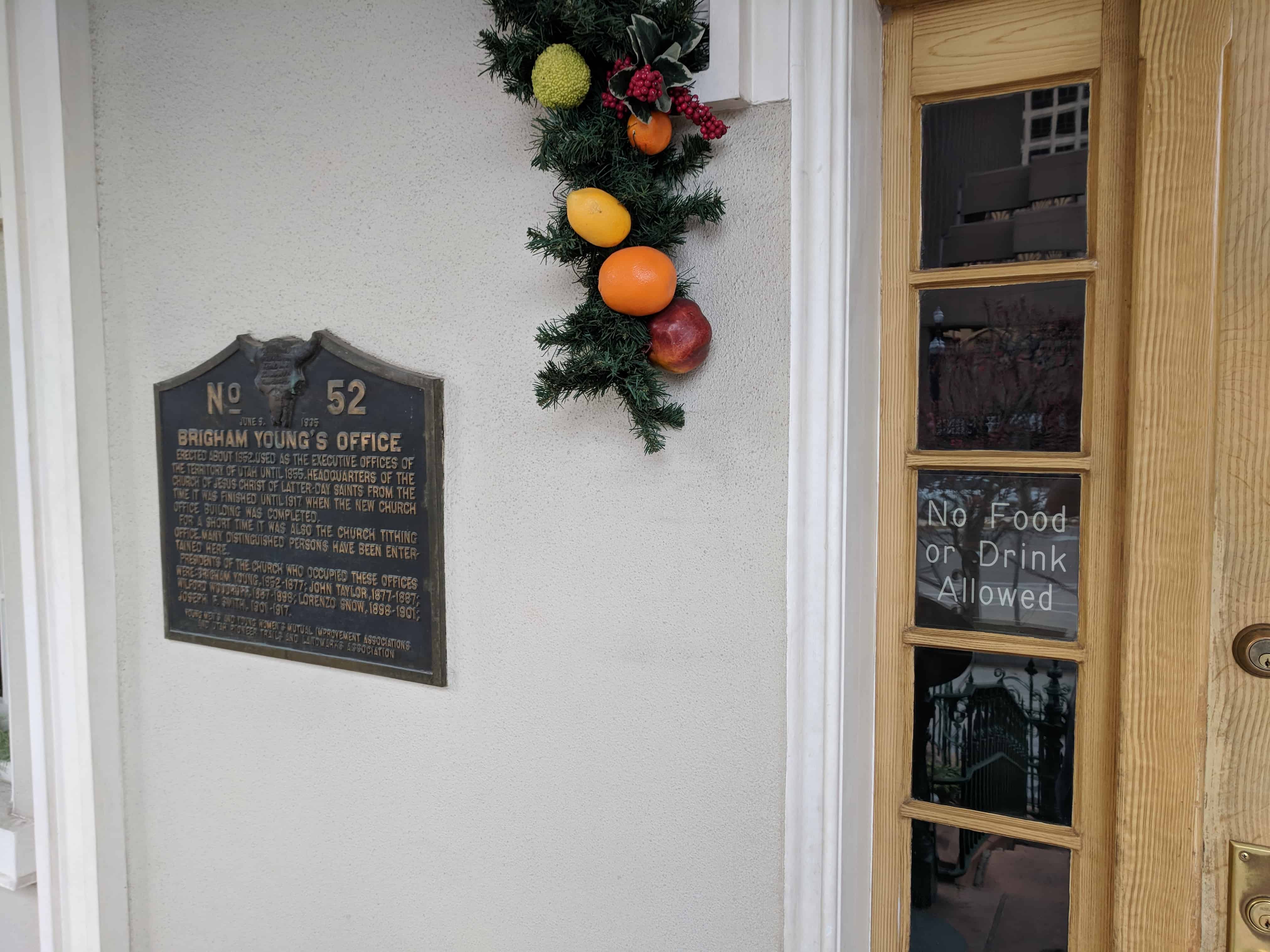
Erected about 1852, used as the executive offices of the Territory of Utah until 1855, headquarters of the Church of Jesus Christ of Latter-day Saints from the time it was finished until 1917, when the new Church Office Building was completed.
For a short time it was also the Church Tithing Office. Many distinguished persons have been entertained here.
Presidents of the Church who occupied these offices were Brigham Young, 1852 – 1877; John Taylor, 1877 – 1887; Wilford Woodruff, 1887 – 1898; Lorenzo Snow, 1898 – 1901; Joseph F. Smith, 1901 – 1917.
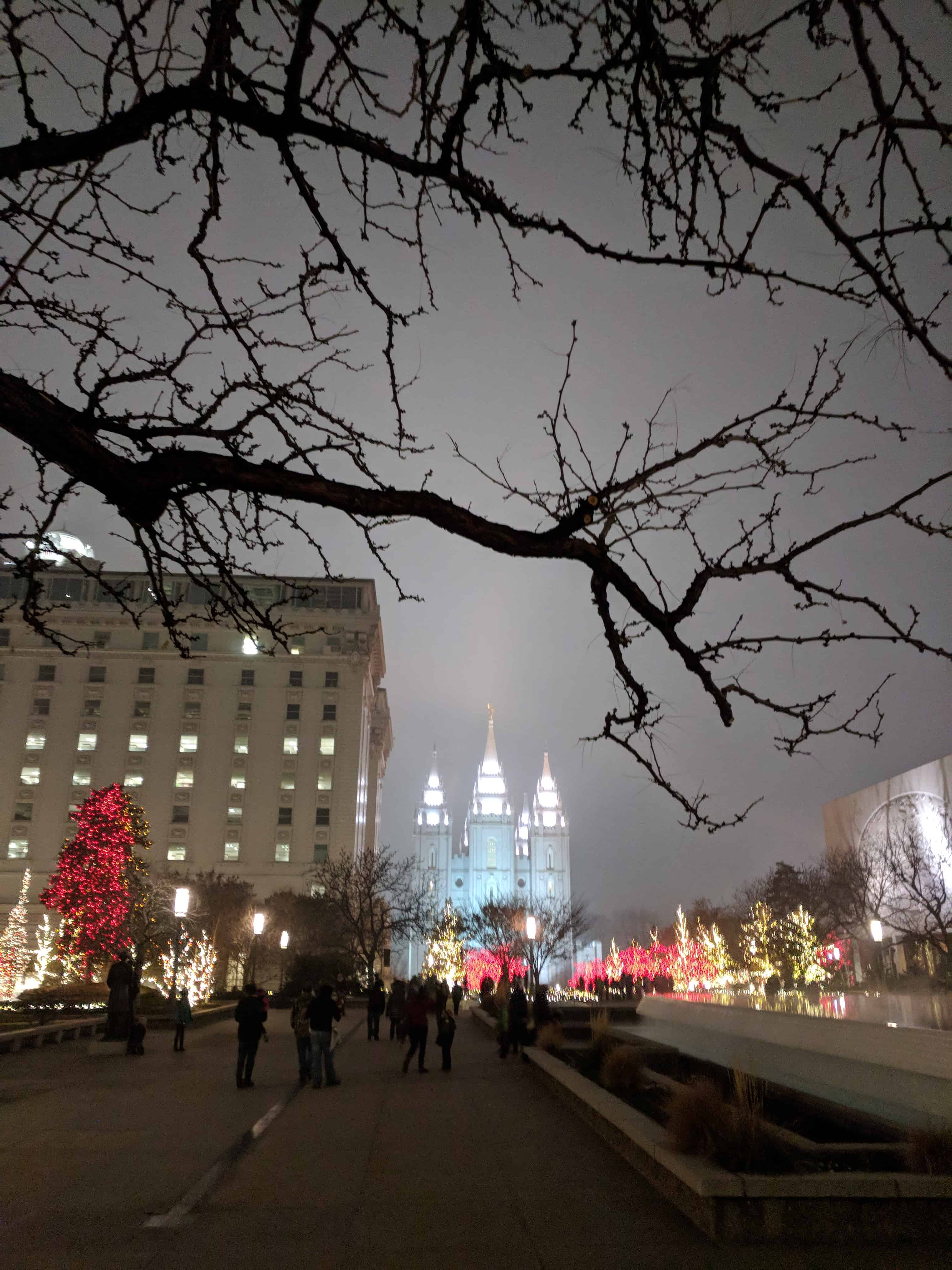
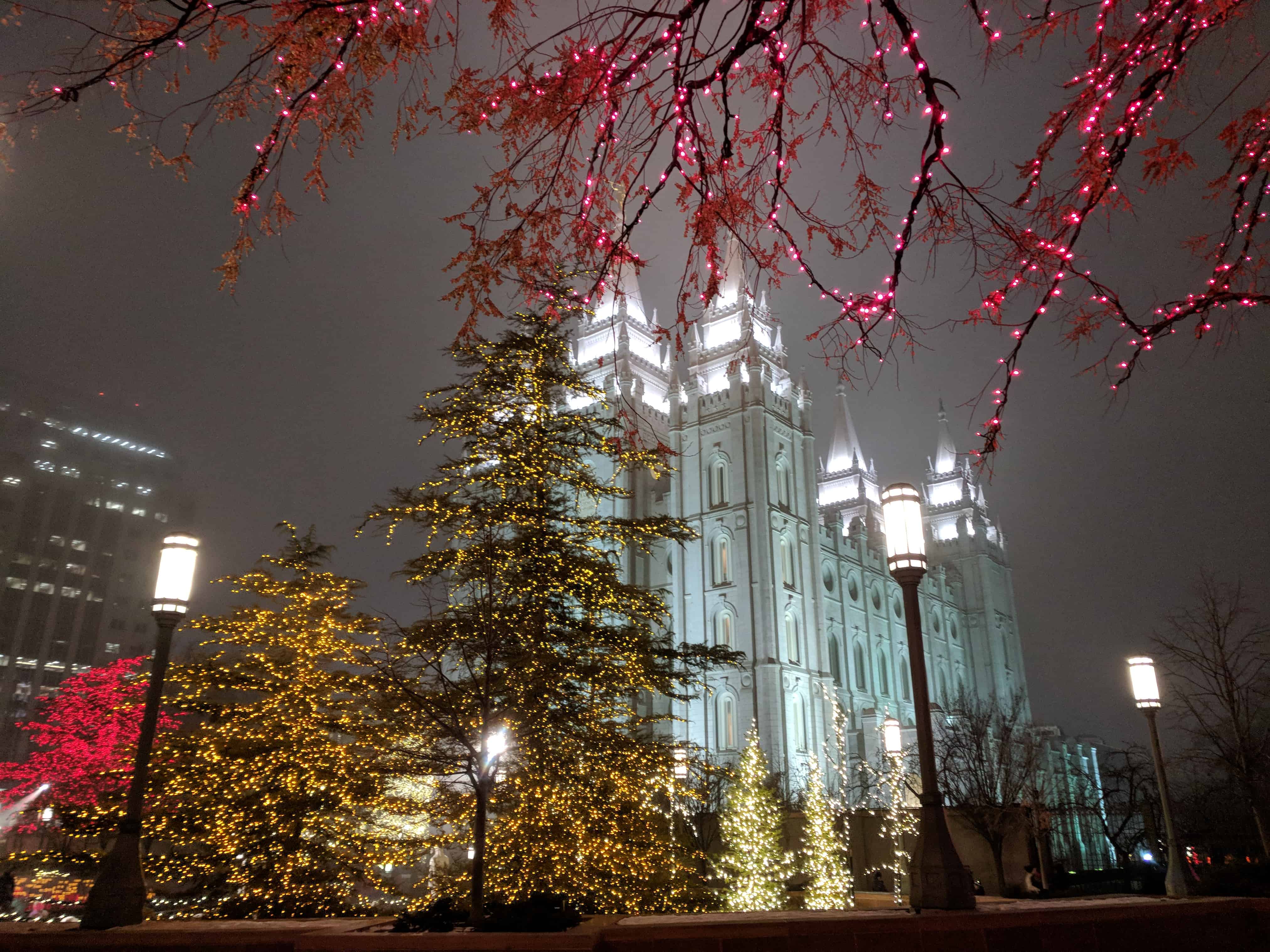
The Christmas Lights at Temple Square in Salt Lake are a popular site that many travel to experience. They’re up from Thanksgiving to New Years every year. Here are some pictures I took this year (2017).
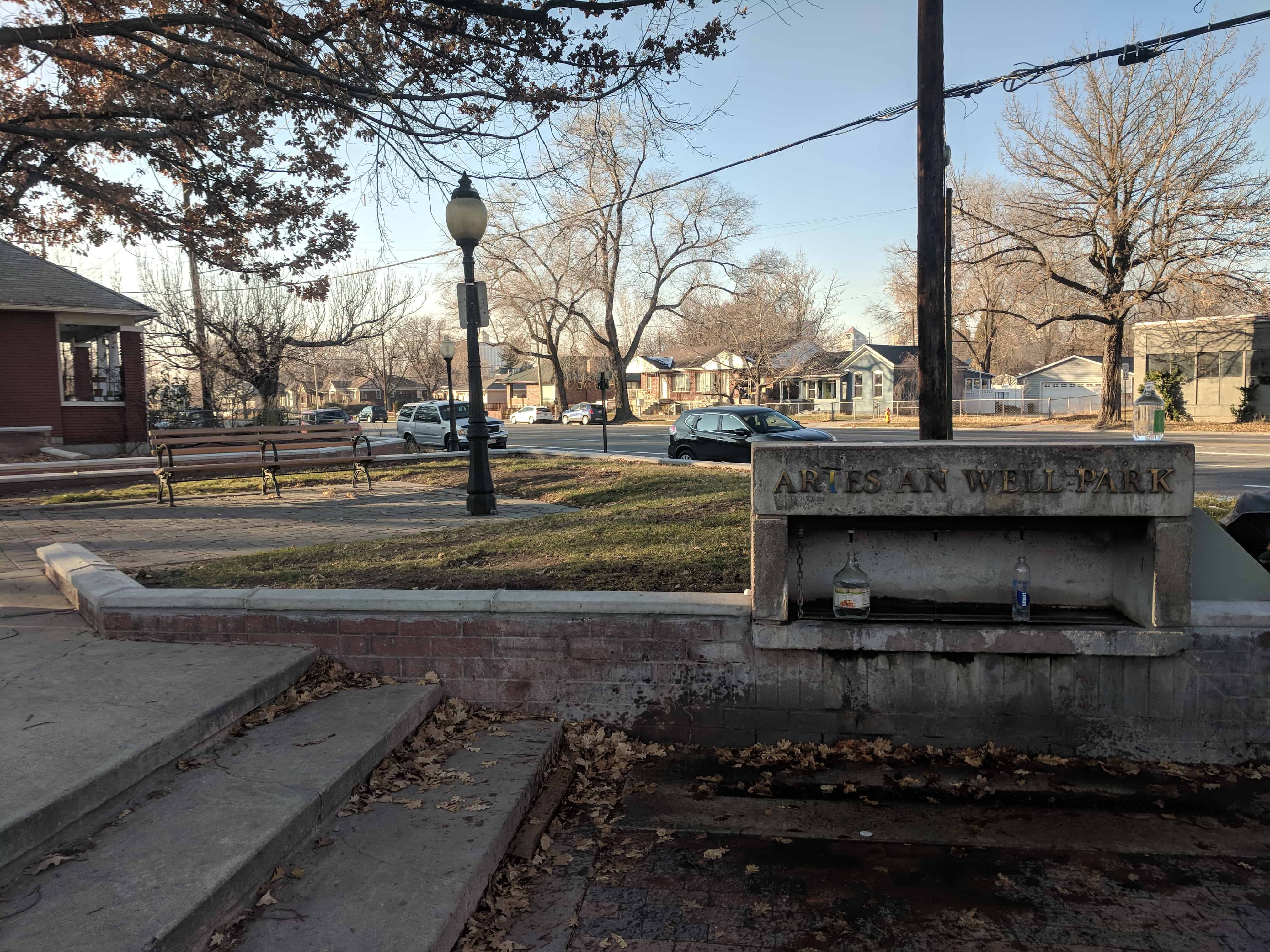
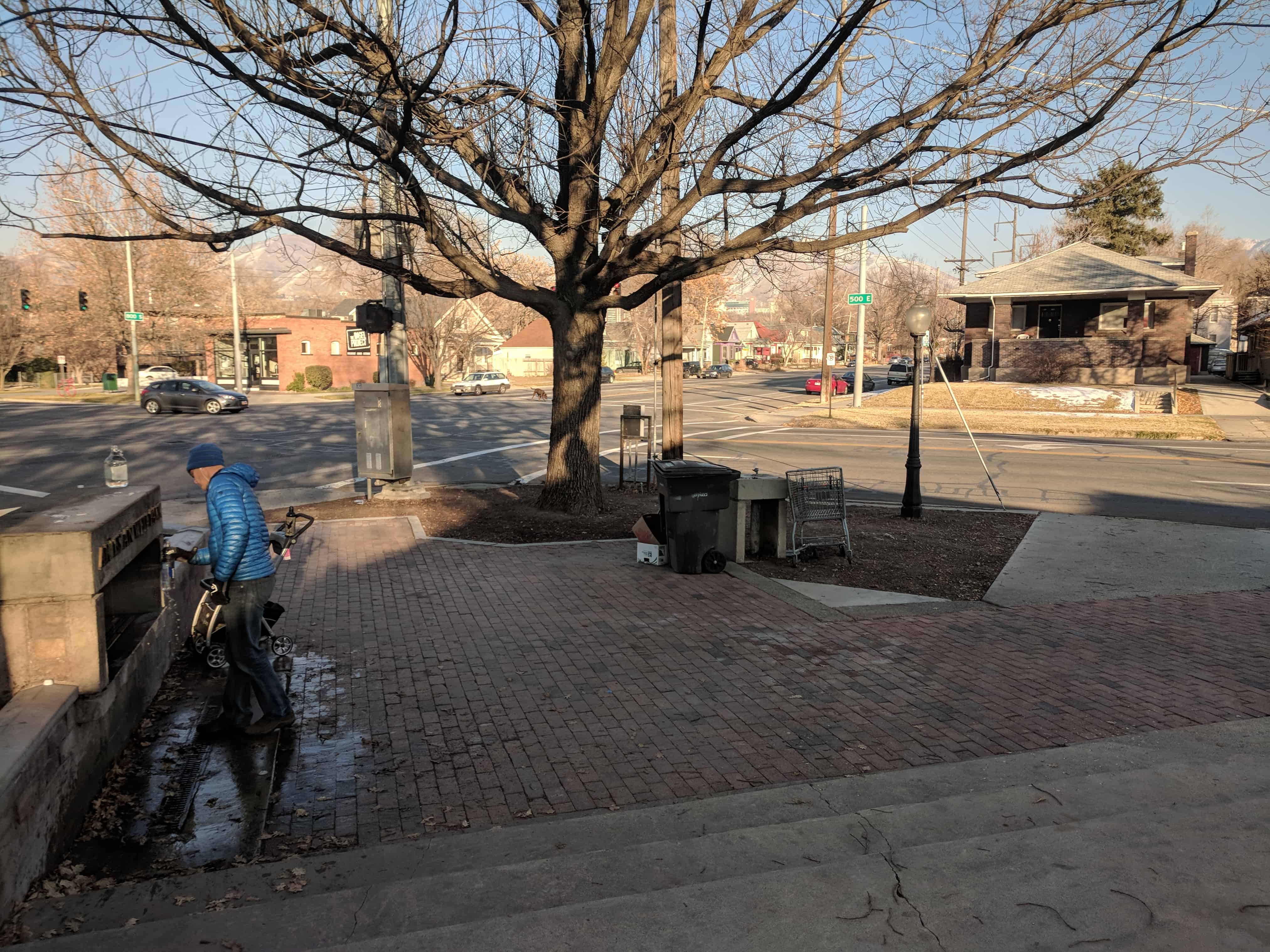
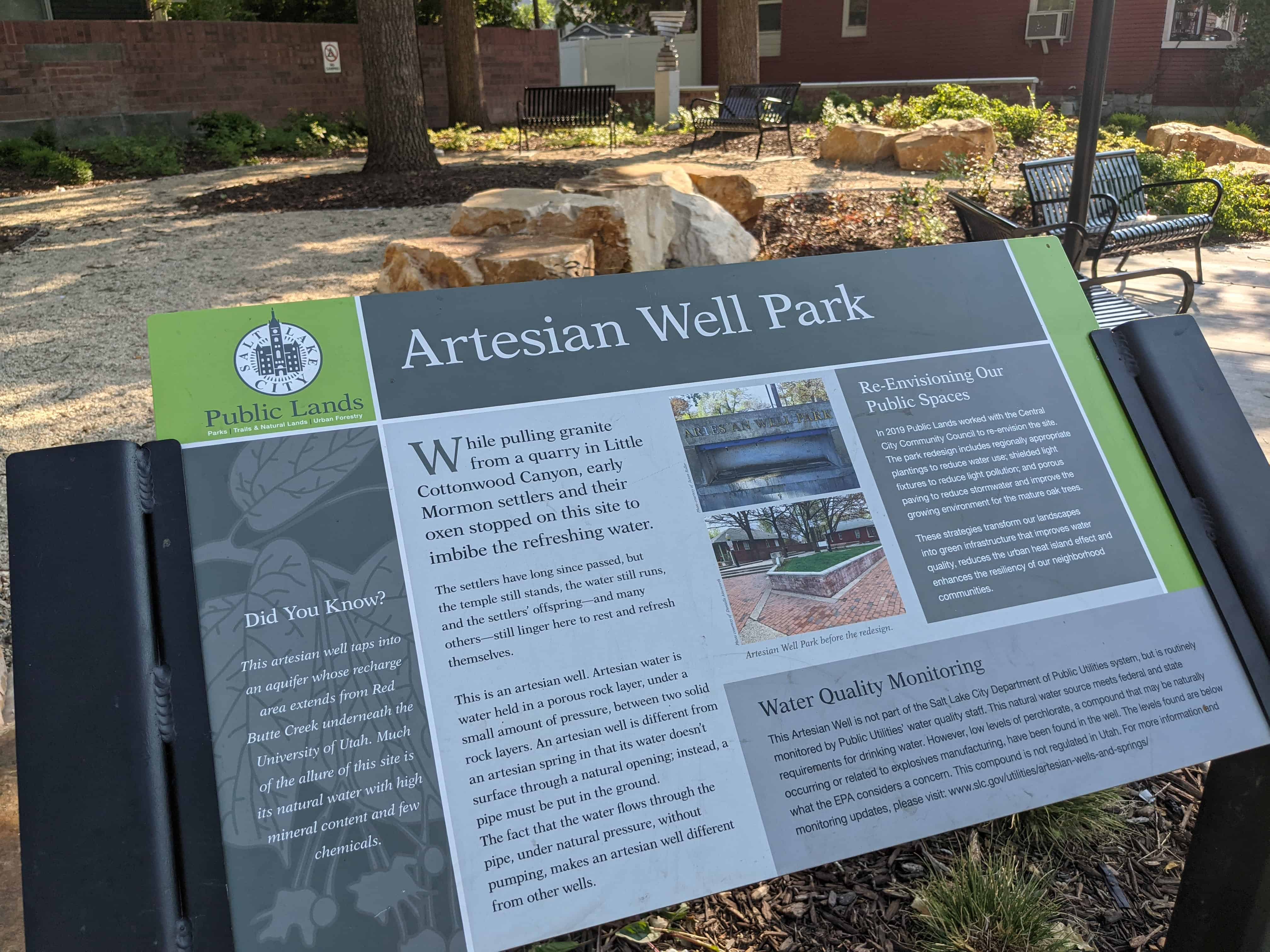
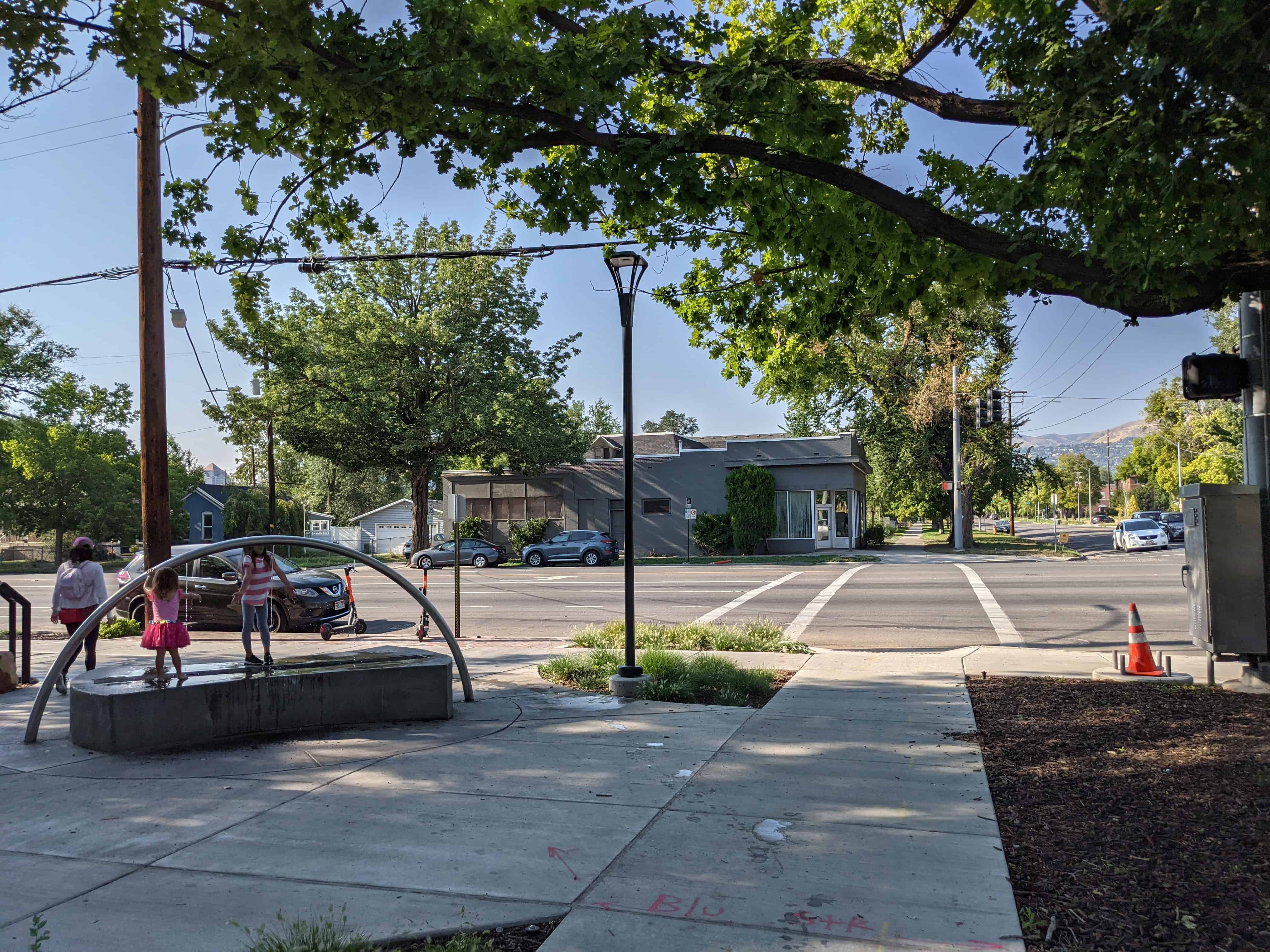
Artesian Well Park in Salt Lake City is a small urban park that contains a natural artesian spring fed by an underground aquifer. It occupies a quarter acre on the southwest corner of the intersection between 800 South and 500 East. People from all over the surrounding area have been coming to get water for free from this spring for over 100 years.
While pulling granite from a quarry in Little Cottonwood Canyon, early Mormon settlers and their oxen stopped on this site to imbibe the refreshing water.
The settlers have long since passed, but the temple still stands, the water still runs, and the settlers’ offspring – and many others – still linger here to rest and refresh themselves.
This is an artesian well. Artesian water is water held in a porous rock layer, under a small amount of pressure, between two solid rock layers. An artesian well is different from an artesian spring in that its water doesn’t surface through a natural opening; instead, a pipe must be put into the ground. The fact that the water flows through the pipe, under natural pressure, without pumping, makes artesian well different from other wells.
This artesian well taps into an aquifer whose recharge area extends from Red Butte Creek underneath the University of Utah. Much of the allure of this site is its natural water with high mineral content and few chemicals.
First Building Outside Salt Lake City for Religious & Education Instruction.
Located at the intersection of 300 East and Gordon Lane (about 4200 South) in Salt Lake.
Inscription reads: To commemorate the first building in the valley outside of Salt Lake City erected for the purpose of religious & education instruction.
Edward Potter Hemsley was born April 23, 1839, at Ditchling, Sussex, England. On May 5, 1862, Edward and his sister, Ellen Potter Hemsley, emigrated to America where their older brother, Richard was already situated in Salt Lake City. Their father, stepmother, and a younger brother, Job, remained in England until some few years later, when they also emigrated.
Edward and Ellen joined a pioneer company led by Captain Miller for the trek to the West. Edward was only twenty-three years of age and he enjoyed the adventure, enduring the hardships and conditions that killed his stepmother a few years later as she traveled to Utah. She was buried along the trail with canvas for a coffin and weeds for memory flowers.
Some time after his arrival in Salt Lake City, Edward married Miriam Simonds who as a young girl had also been in Captain Miller’s pioneer company. The couple settled in Sugar House, where they purchased ground and built a substantial home at 1923 South 1200 East.
Because Miriam suffered from chronically poor health, a neighbor girl named Margaret Brown was employed to help nurse her. Miriam ultimately invited Margaret to marry her husband, which she did in the Salt Lake Endowment House on March 17, 1866. Miriam lived for twelve more years, dying February 24, 1878. Miriam had three children and Margaret had twenty-three.
Edward Hemsley farmed his land and also served as a doctor in the Sugar House area. He was known as Dr. Hemsley, and he treated mental as well as physical ailments and even pulled teeth as required. He compounded a “marvelous” salve that was widely used in treating a diversity of ailments. He was in the early Sunday School superintendency of the Sugar House Ward and used a horse and wagon to transport little children from the district to the house where Sunday School was conducted. He was active in sponsoring dancing and amusements, and was a popular accordionist. In his later years he was appointed warden of the state prison.
Edward Hemsley purchased a tract of land in Mill Creek which he called “THE BRICKYARD.” With his brother Job they manufactured bricks used in construction of early homes, businesses, and church meetinghouses. Bricks from their operations were used to build the first school house in Sugar House. Their business was so vital that Brigham Young rescinded Edward’s mission call so that he might stay home and continue to make bricks. The color of the bricks was obtained from the various levels of clay. For deep red bricks, they would plow two rows of deeply laid yellow clay and one row of black top soil. White brick came from the clay near the top of the pit.
Edward Hemsley died July 22, 1910, at the age of seventy-one.”
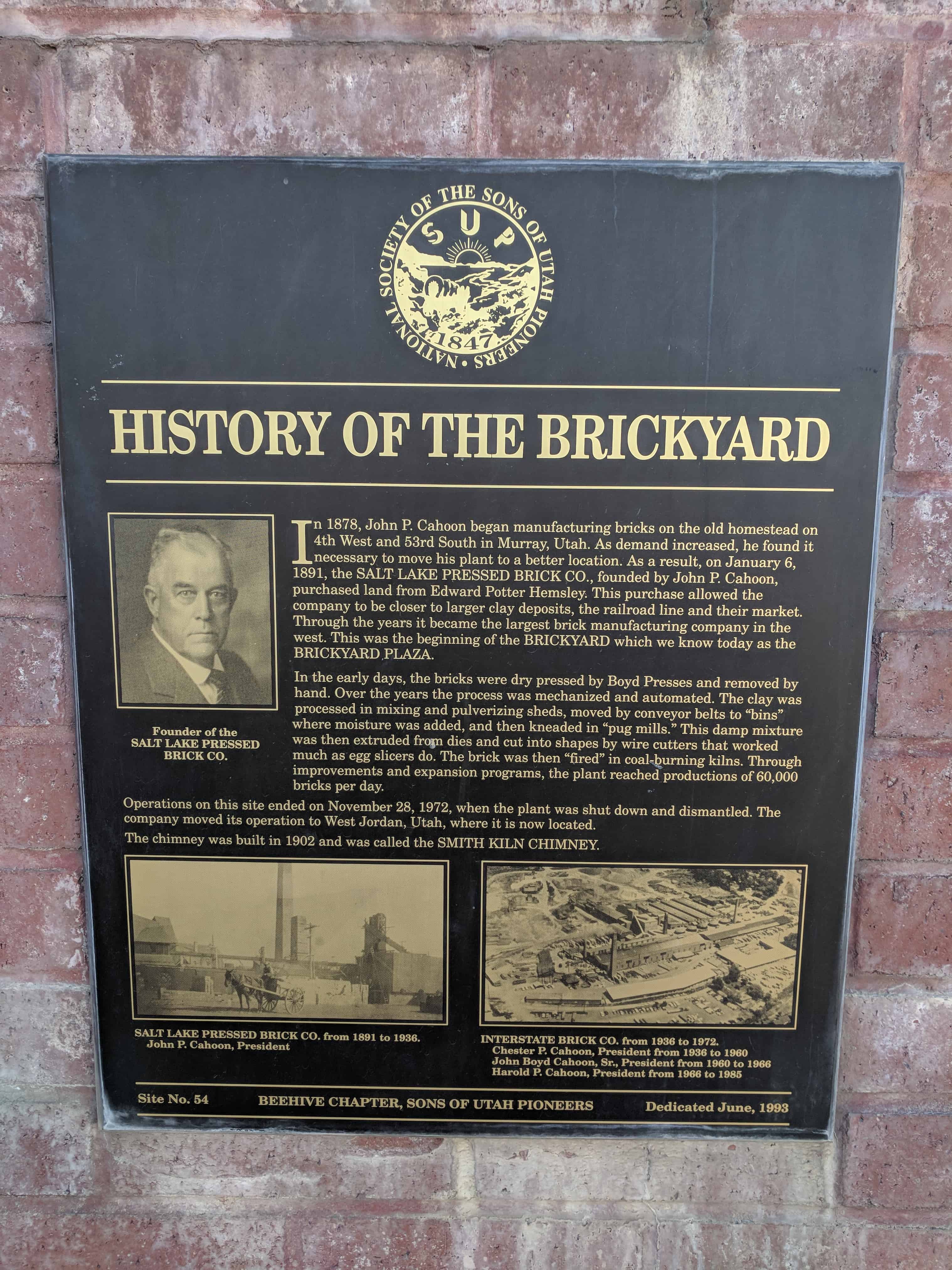
History of the Brickyard
In 1878, John P. Cahoon began manufacturing bricks on the old homestead on 4th West and 53rd South in Murray, Utah. As demand increased, he found it necessary to move his plant to a better location. As a result, on January 6, 1891, the SALT LAKE PRESSED BRICK CO., founded by John P. Cahoon, purchased land from Edward Potter Hemsley. This purchase allowed the company to be closer to larger clay deposits, the railroad line and their market. Through the years it became the largest brick manufacturing company in the west. This was the beginning of the BRICKYARD which we know today as the BRICKYARD PLAZA.
In the early days, the bricks were dry pressed by Boyd Presses and removed by hand. Over the years the process was mechanized and automated. The clay was processed in mixing and pulverizing sheds, moved by conveyor belts to “bins” where moisture was added, and then kneaded in “pug mills.” This damp mixture was then extruded from dies and cut into shapes by wire cutters that worked much as egg slicers do. The brick was then “fired” in coal-burning kilns. Through improvements and expansion programs, the plant reached productions of 60,000 bricks per day.
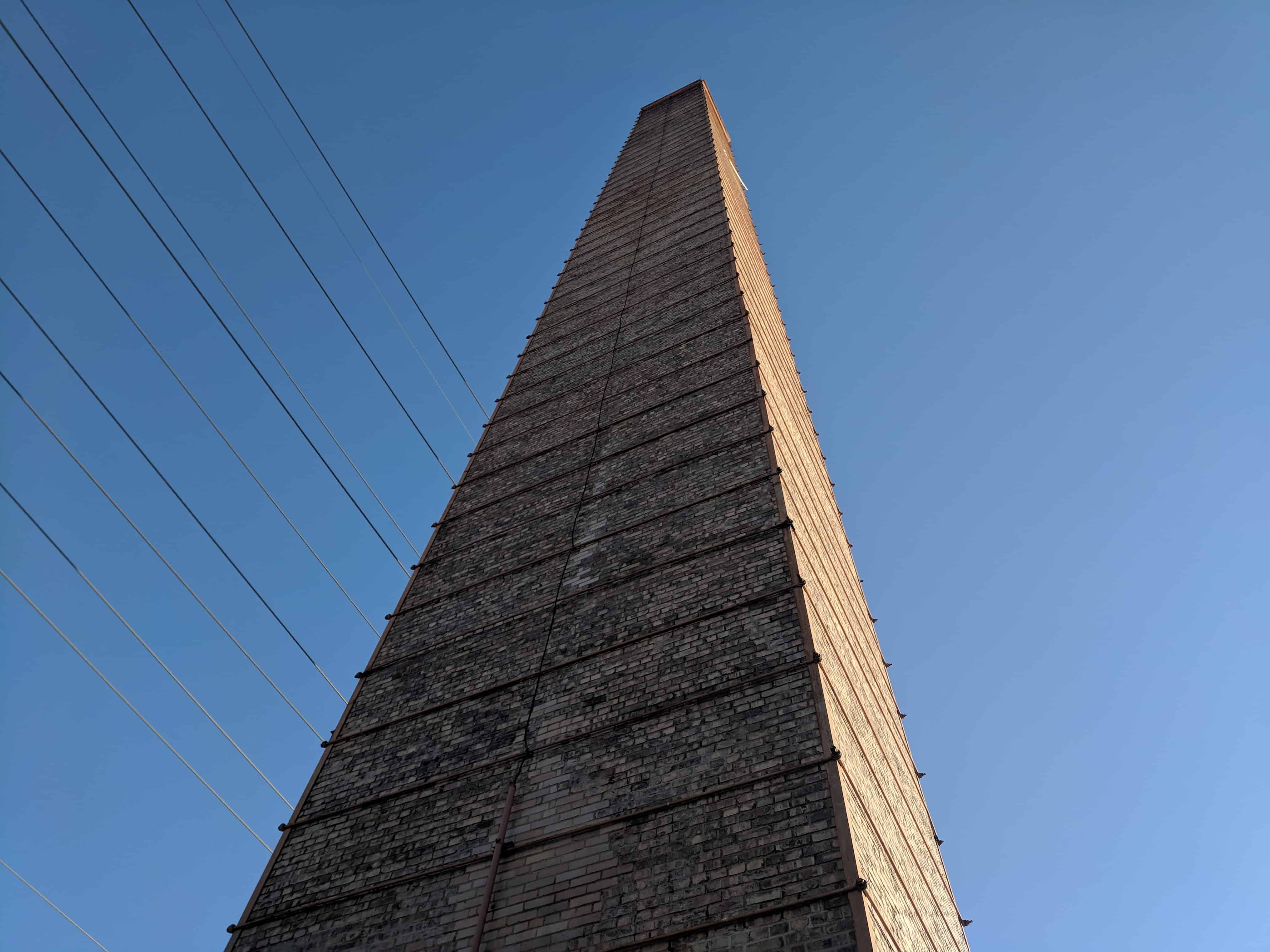
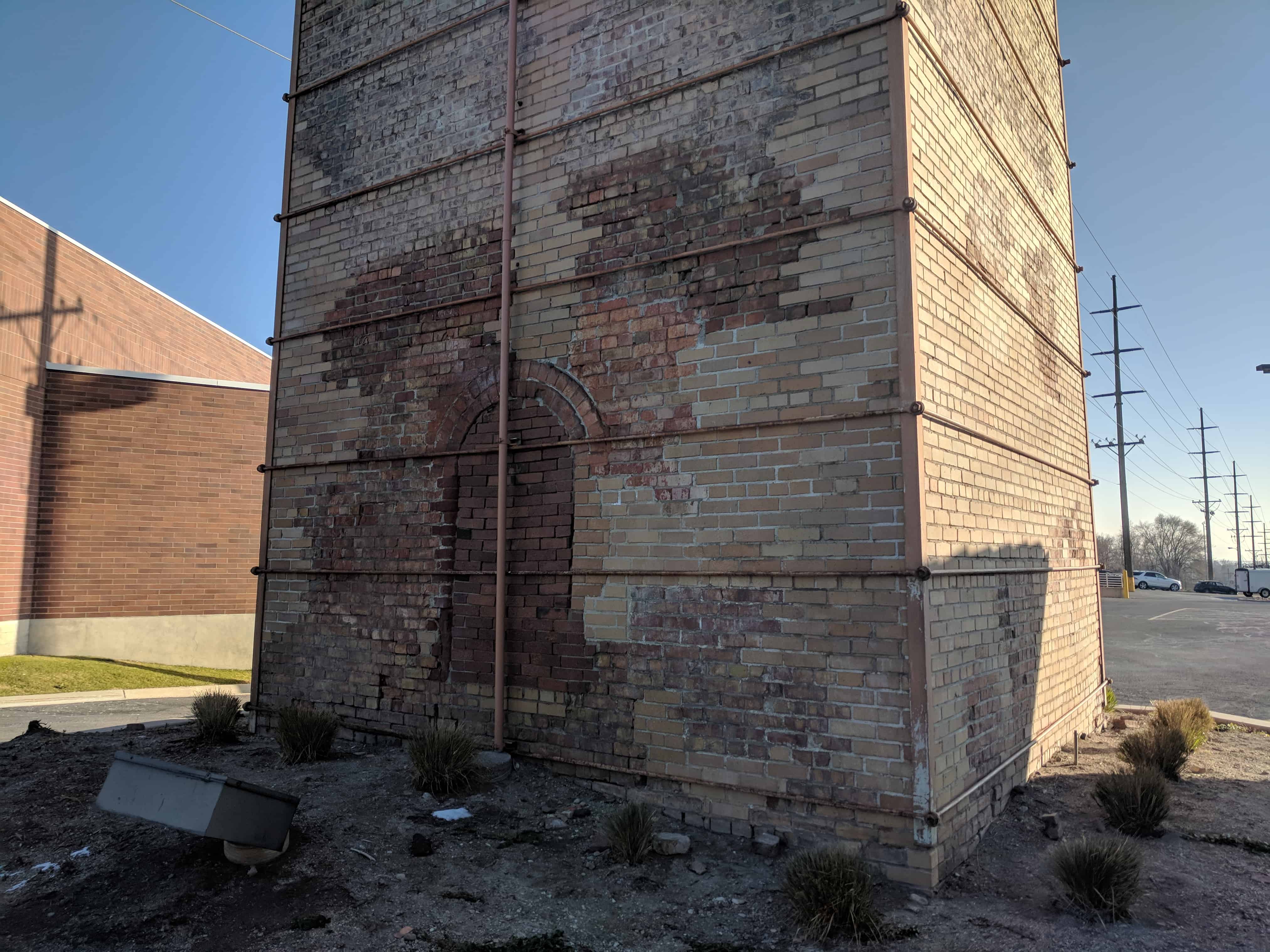
Operations on this site ended on November 28, 1972, when the plant was shut down and dismantled. The company moved its operation to West Jordan, Utah, where it is now located. The chimney was built in 1902 and was called the SMITH KILN CHIMNEY.
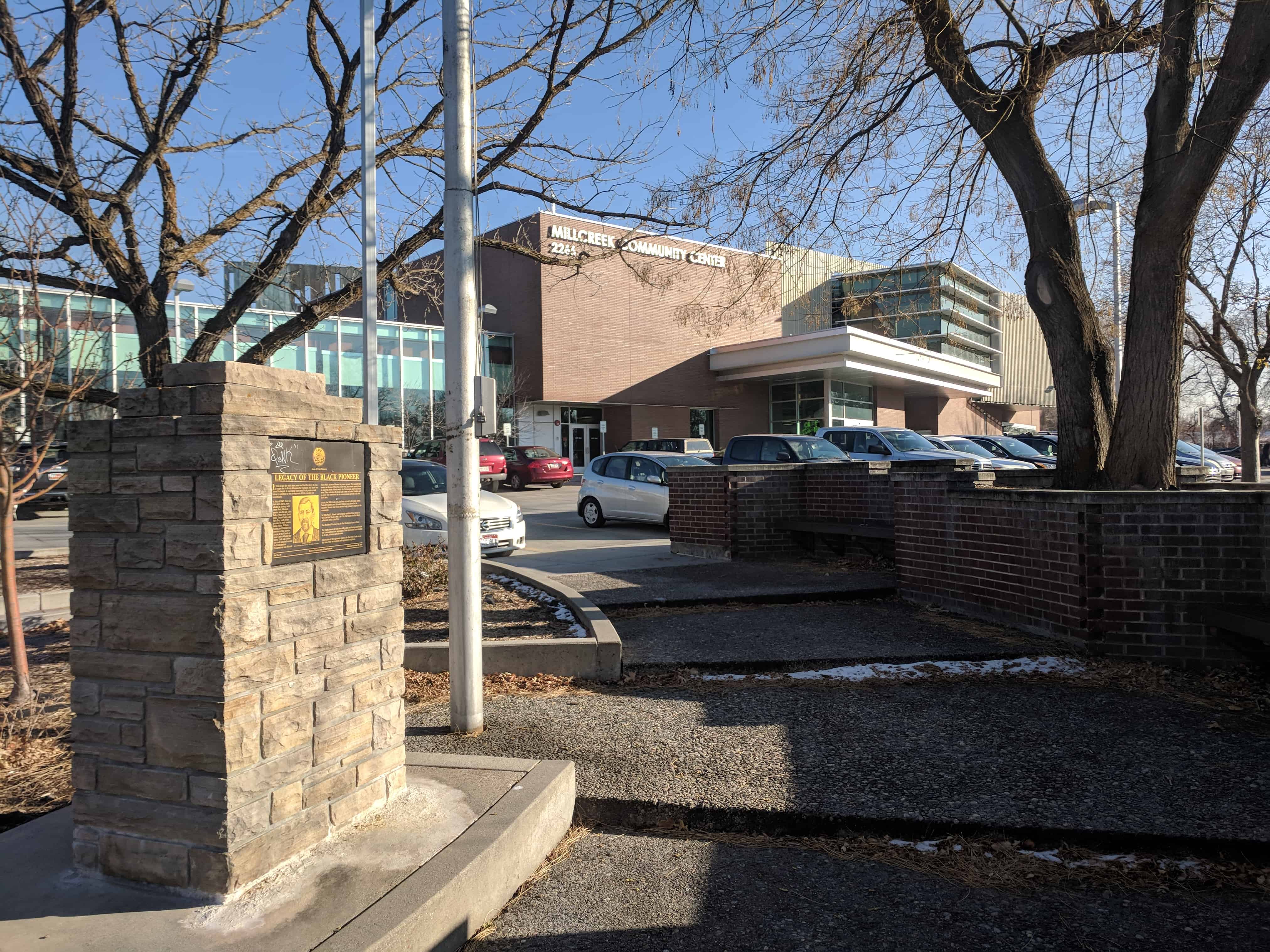
In 1824-26 the first black man came into Utah Territory. He was a trapper for the Rocky Mountain Fur Company. His name was James Beckworth. In succeeding years many black people would follow to contribute to the development of Utah, socially and economically.
In July of 1847, three (3) black men, slaves, were selected to journey with Orson Pratt, Mormon apostle, into the Salt Lake Valley. They were: Green Flake (see his grave here), Oscar Crosby, and Hark Lay, each in turn provided by their owners, James Flake, William Crosby, and William Lay, members of the pioneer groups of the Church of Jesus Christ of Latter-day Saints. Utah was a slave state (territory) and remained so until the Emancipation Proclamation was effected.
Many black pioneers followed in pioneer groups. They assisted their owners as directed. When they were freed, the owners assisted them in acquiring lands of their own in the Cottonwood, and Fort Union areas. They cultivated the land, built homes and raised families and in every way contributed to the socio-economic growth of the Salt Lake area.
In this, the Mill Creek Area, land was secured by Sylvester James, Samuel Chambers, and Sylvester Perkins. Each proved to be successful farmers who would market their produce to leaders of the community.
In 1888 Paul C. Howell and his family established their home in the 12th-14th Ward in Salt Lake City. He became the first black policeman in Salt Lake City.
Don Bankhead Freeman was the first black child born in Utah.
The black pioneers of Utah have left a great and lasting contribution that is remembered and appreciated. Their descendants have excelled in the arts, athletics, and education.
Descendants of these pioneers reside in the East Mill Creek area at this time. They are respected and appreciated neighbors.”
Note: In 2011, this monument was to have been removed by Salt Lake County to make way for a new County Building – Millcreek Community Center, 2266 E. Evergreen Ave., Millcreek Township, UT 84109. It included a new Senior Center. Their announced intention was to replace the monument. Due to some questions concerning the historical accuracy of the original narrative and an attempt by someone to change the original wording by scratching an incorrect change to the plaque, new wording was proposed. Due to fiscal restraints, the county built around the monument without making any changes.