• About JacobBarlow.com
  • Cemeteries in Utah
  • D.U.P. Markers
  • Doors
  • Exploring Utah Email List
  • Geocaching
  • Historic Marker Map
  • Links
  • Movie/TV Show Filming Locations
  • Oldest in Utah
  • Other Travels
  • Photos Then and Now
  • S.U.P. Markers
  • U.P.T.L.A. Markers
  • Utah Cities and Places.
  • Utah Homes for Sale
  • Utah Treasure Hunt

JacobBarlow.com

~ Exploring with Jacob Barlow

JacobBarlow.com

Tag Archives: Salt Lake City

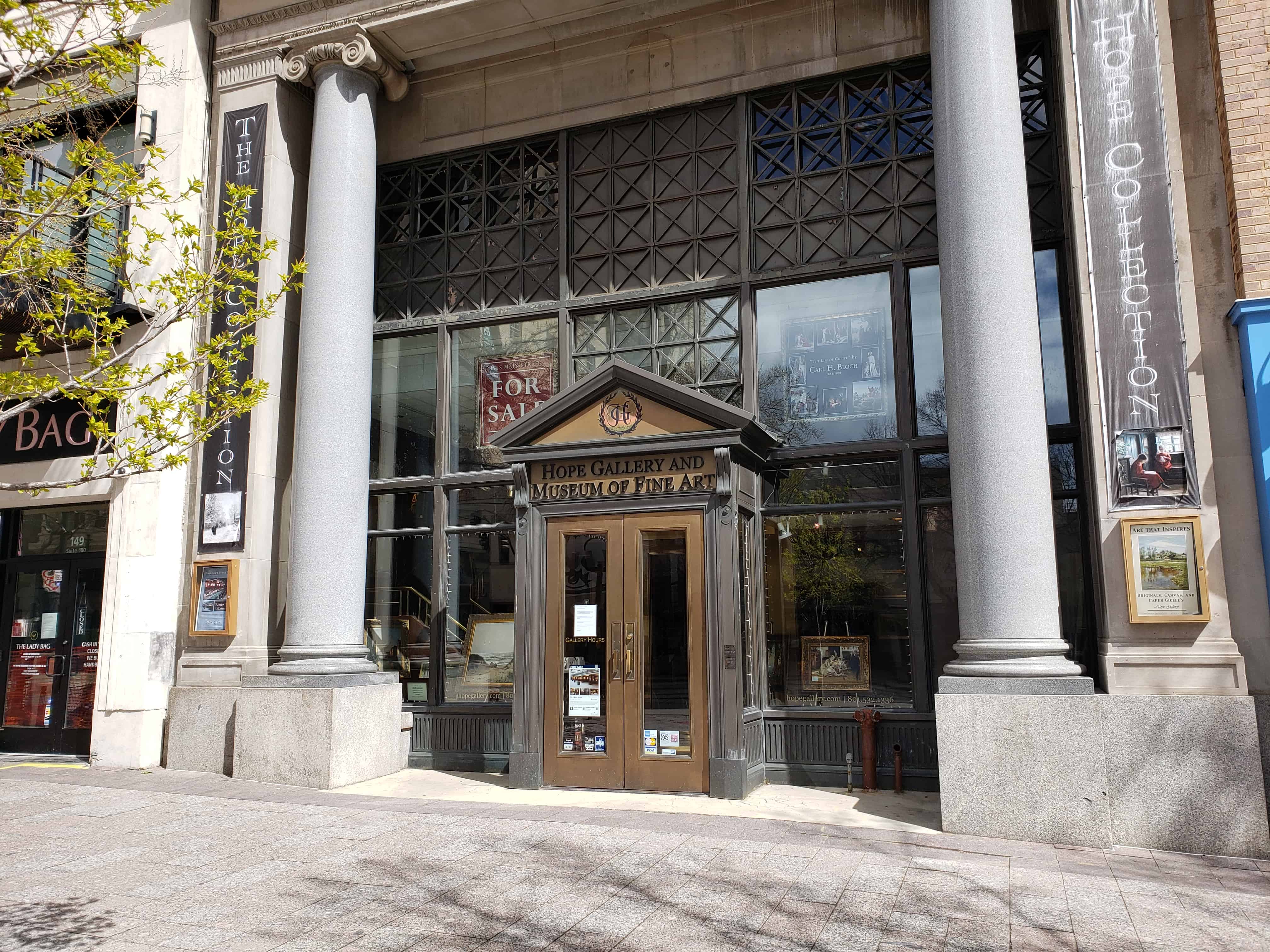
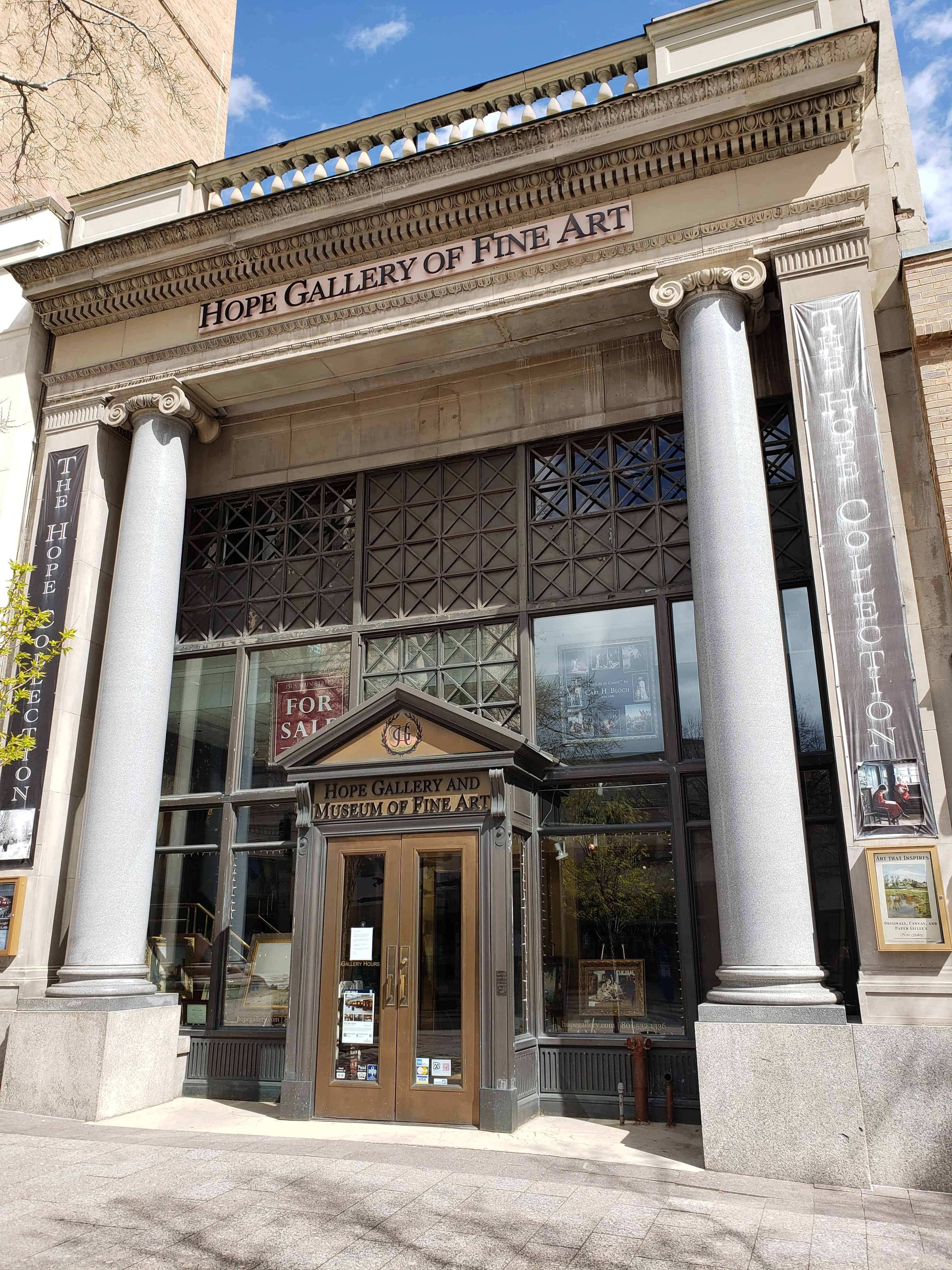
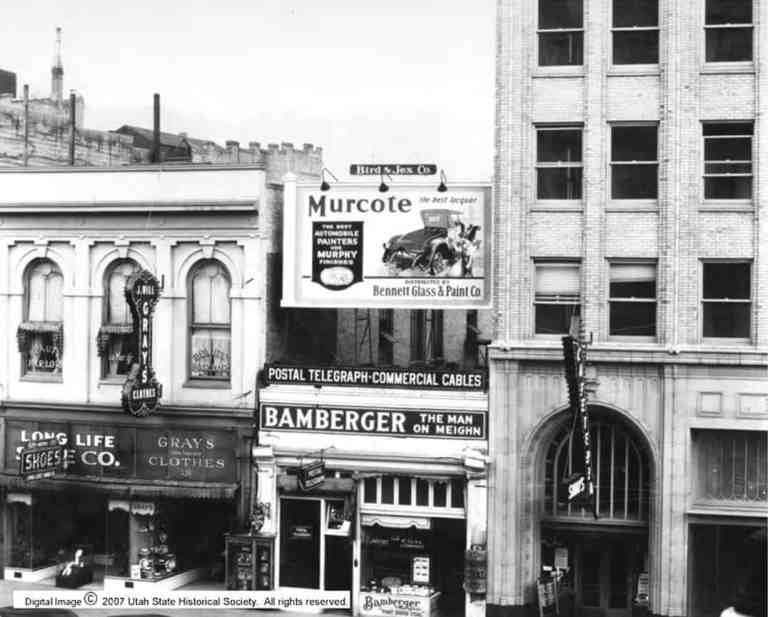
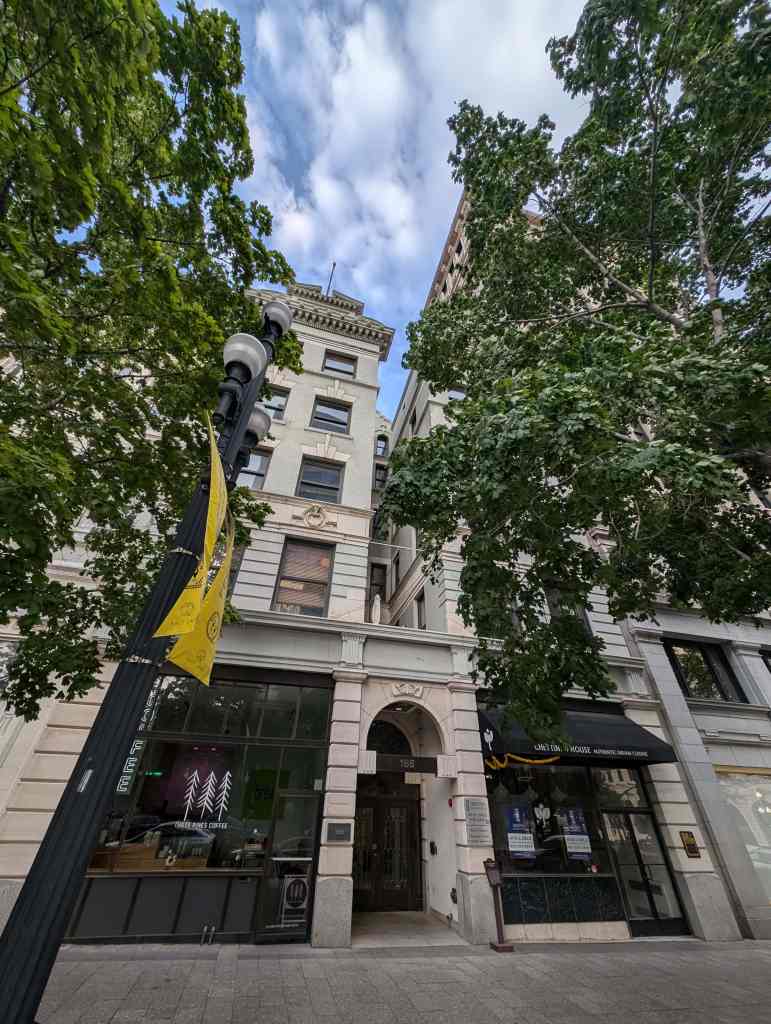
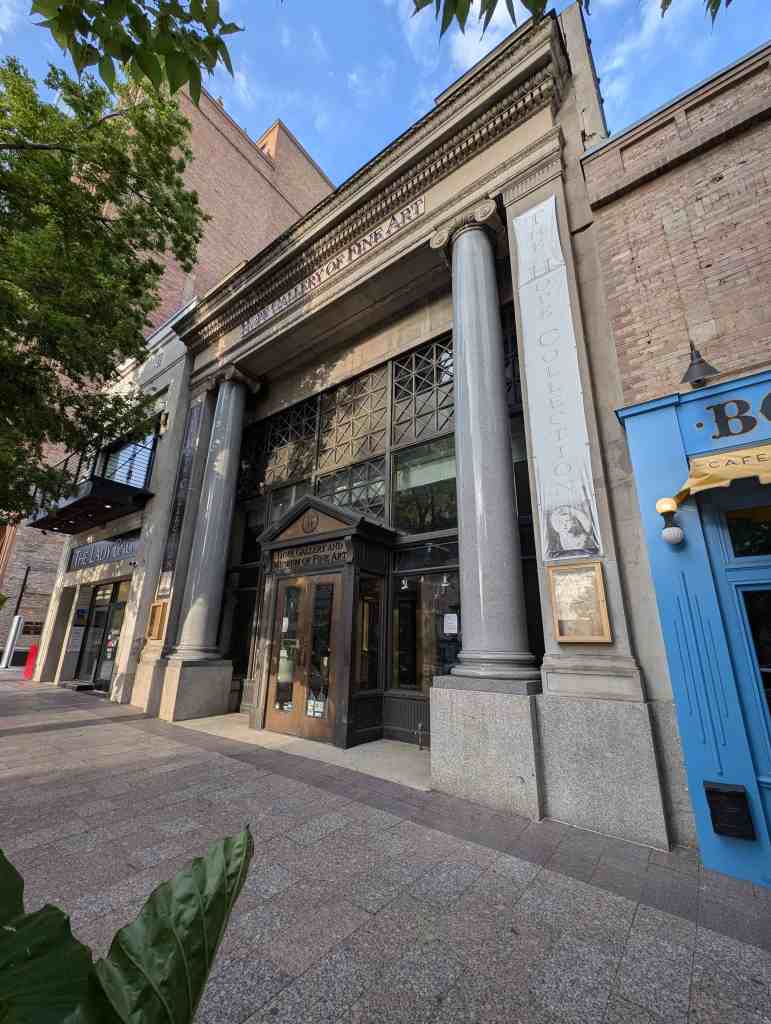
Tracy Loan and Trust Company Building

12 Monday Sep 2016

Posted by Jacob Barlow in Uncategorized

≈ 2 Comments

Tags

Downtown SLC, historic, Historic Buildings, Salt Lake, Salt Lake City, Salt Lake County
2016-06-25-13-39-32

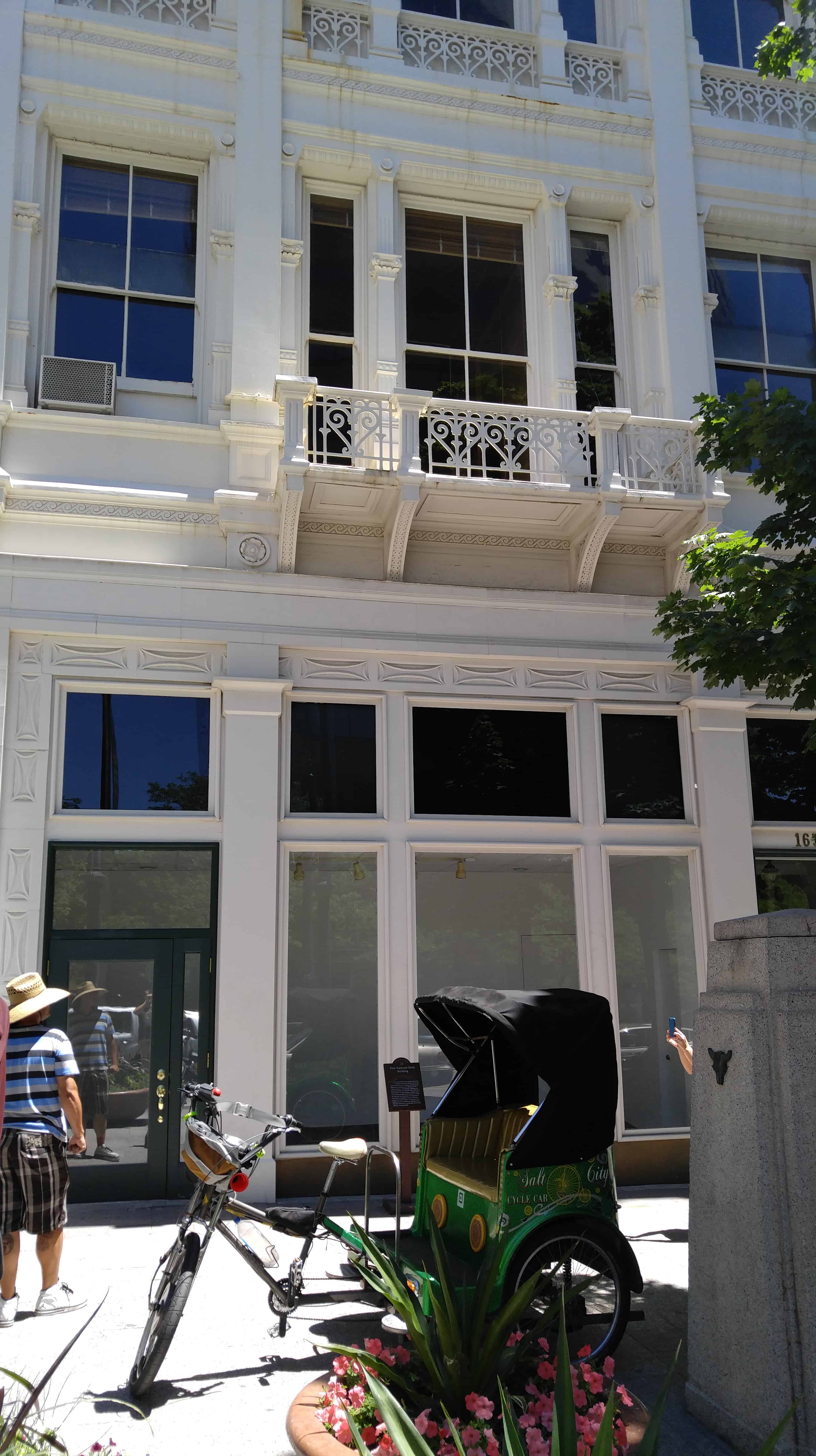
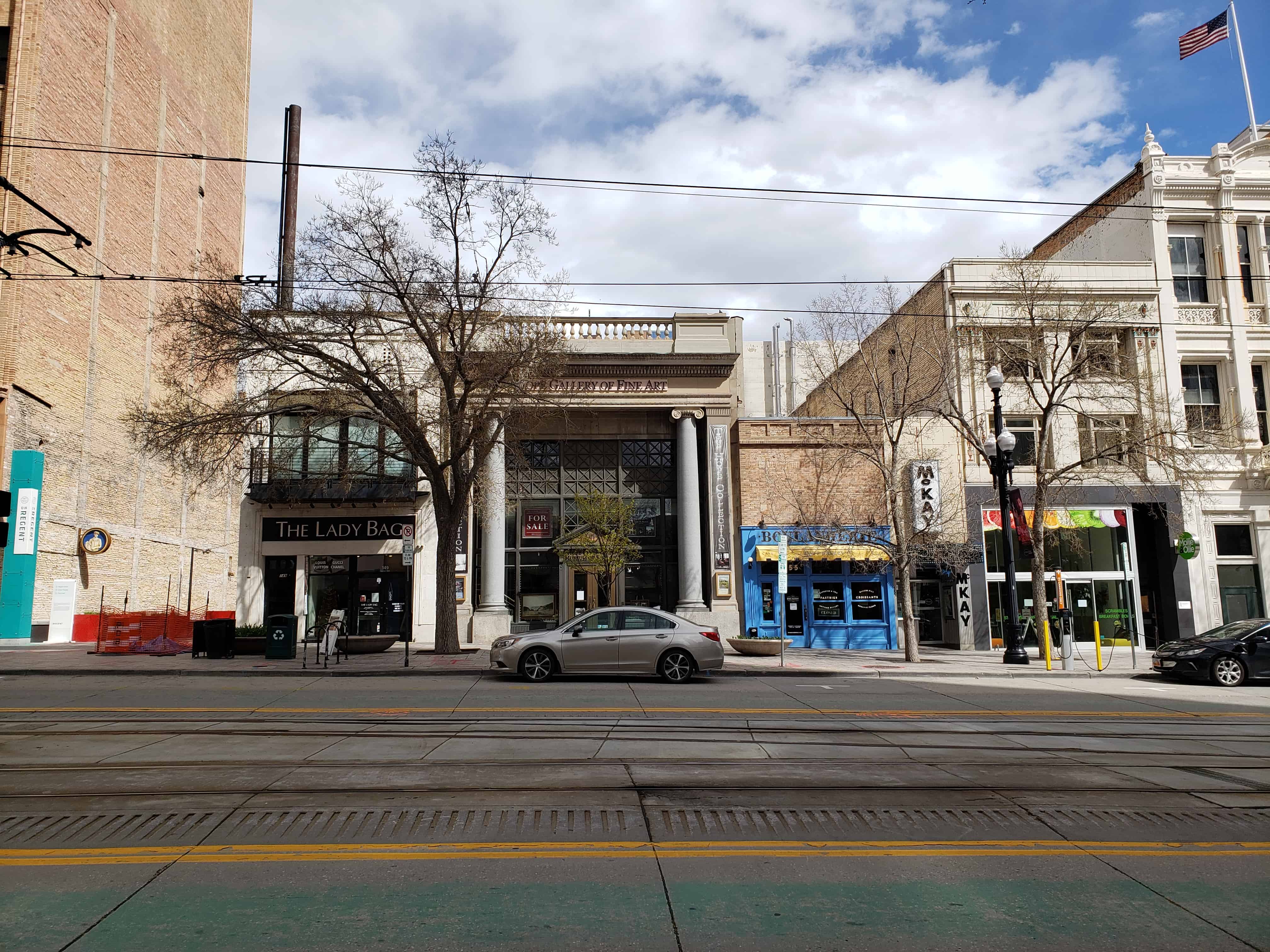
Tracy Loan and Trust Company Building

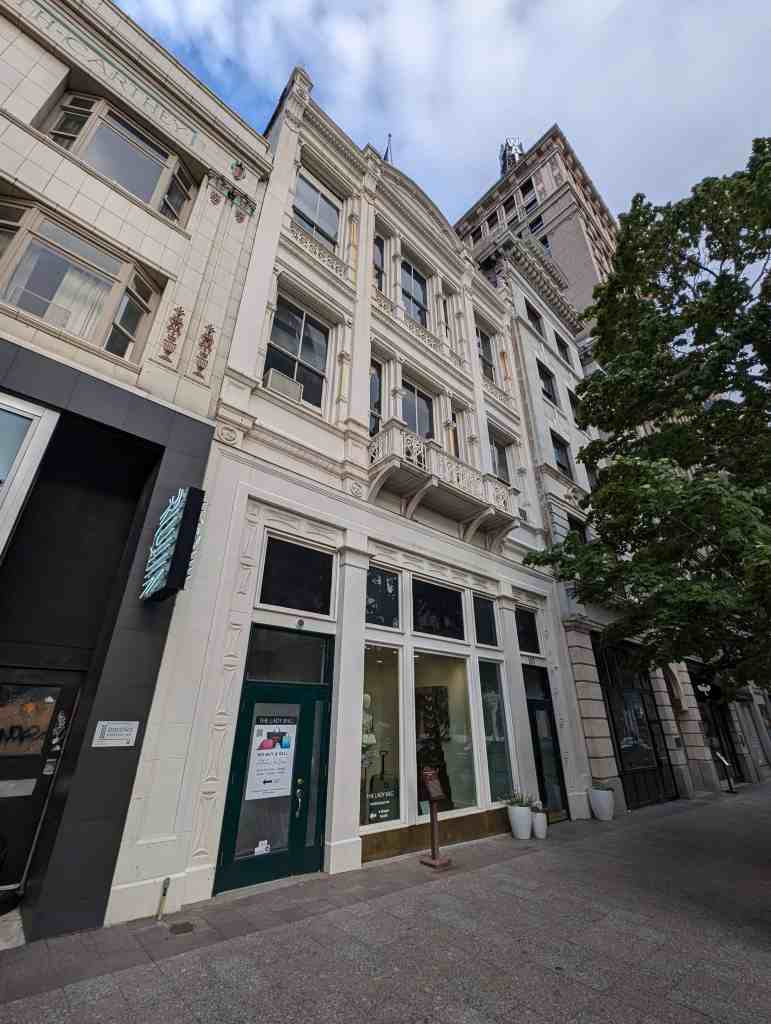
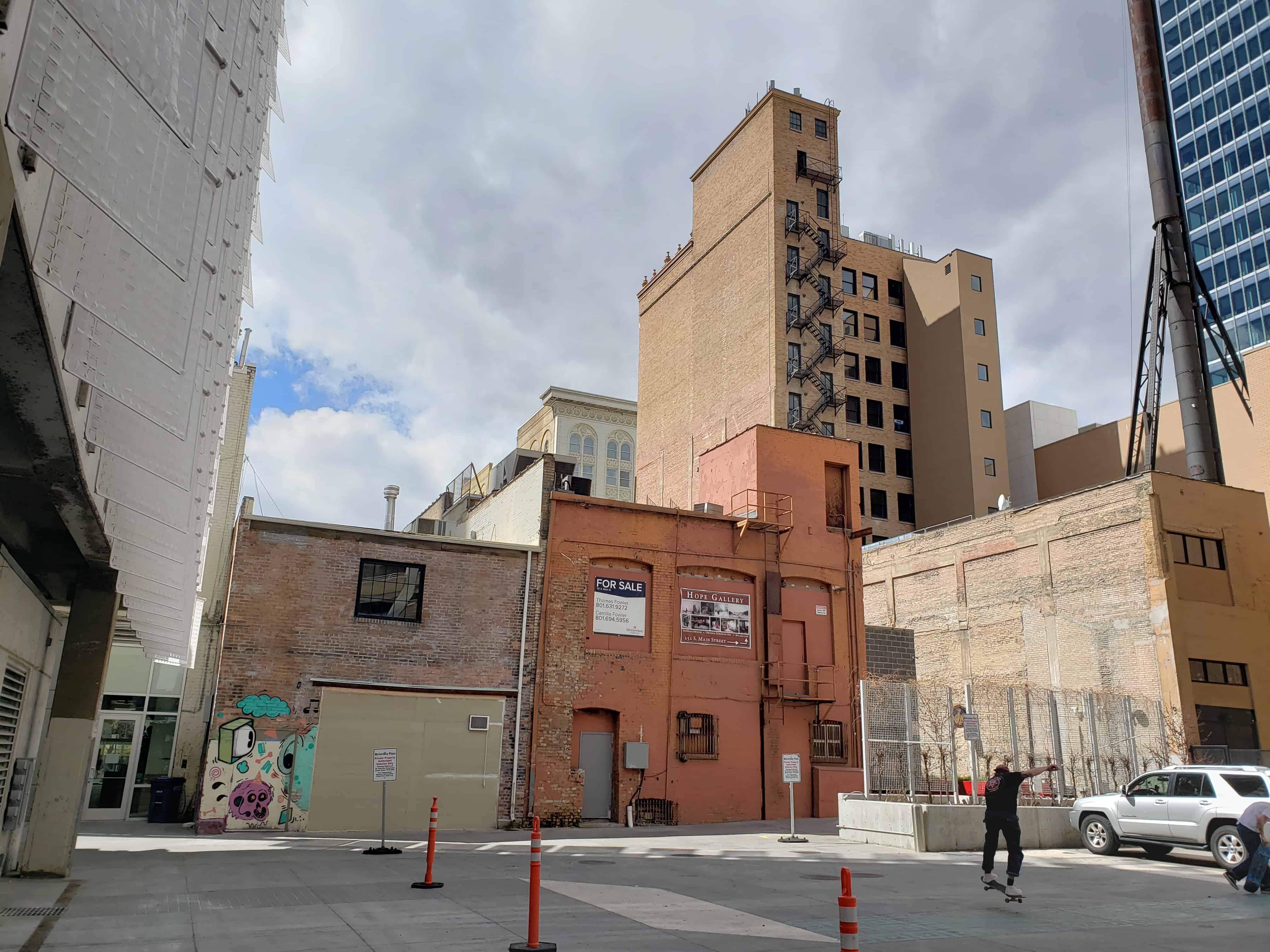
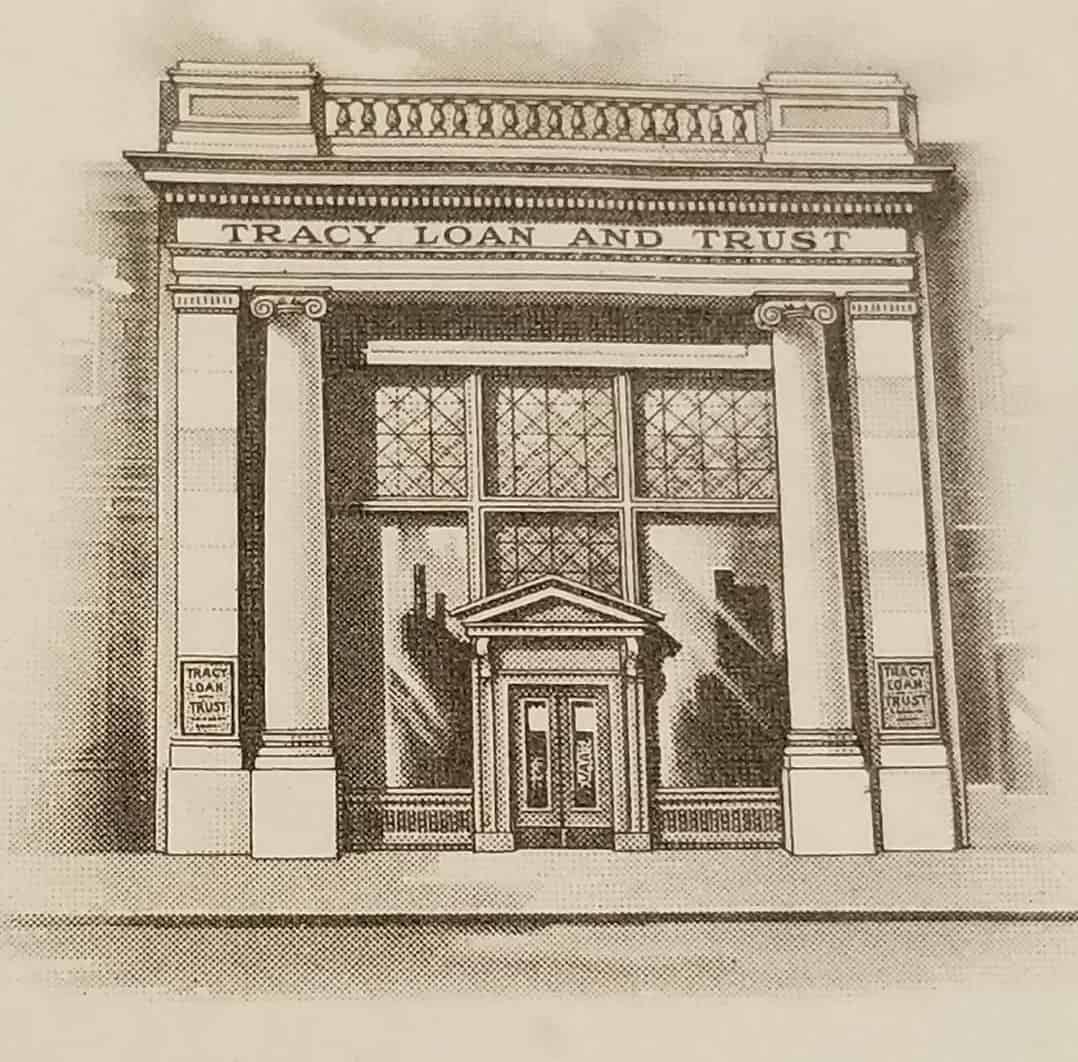
This building, designed by Architect Walter J. Cooper and constructed by James Stewart and Company, was built in 1916 for the Tracy Loan and Trust Company.  Originally organized in the Cheyenne, Wyoming, in 1884.  The Tracy Loan and Trust Company was moved to Salt Lake City in 1892 and has been one of Utah’s important banking institutions since that time.  Renovation was begun by Ivory and Company in 1975 and continued after the building was acquired by Allen C. Brown in 1977.

Located at 151 South Main Street in Salt Lake City, Utah

Related:

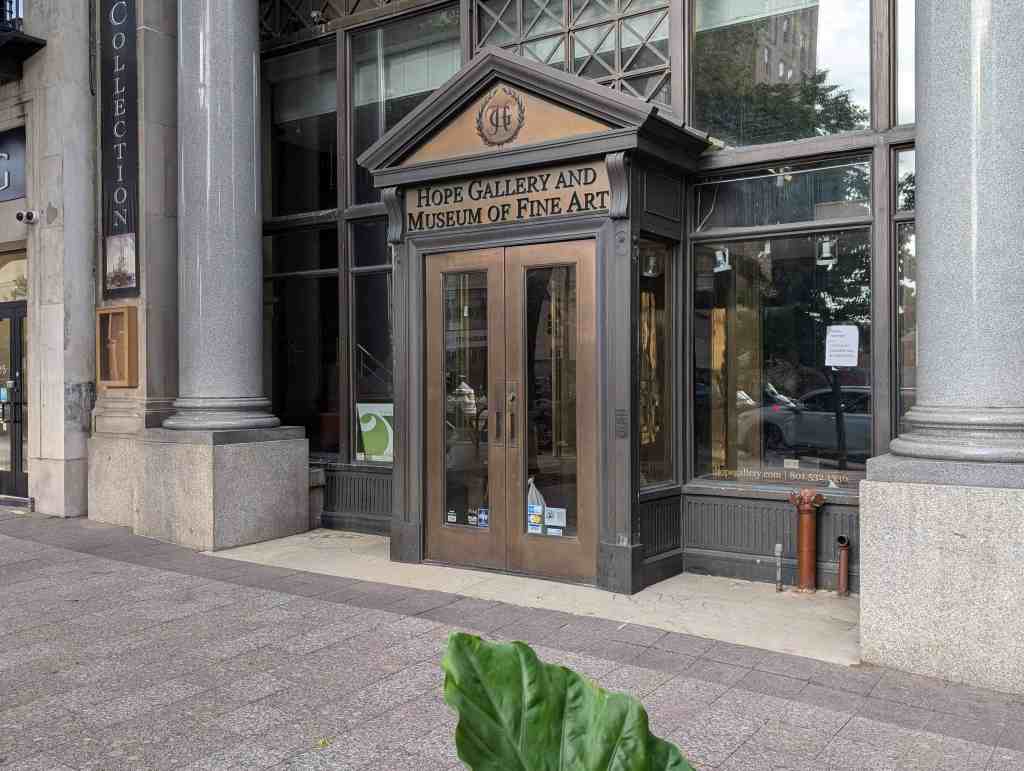
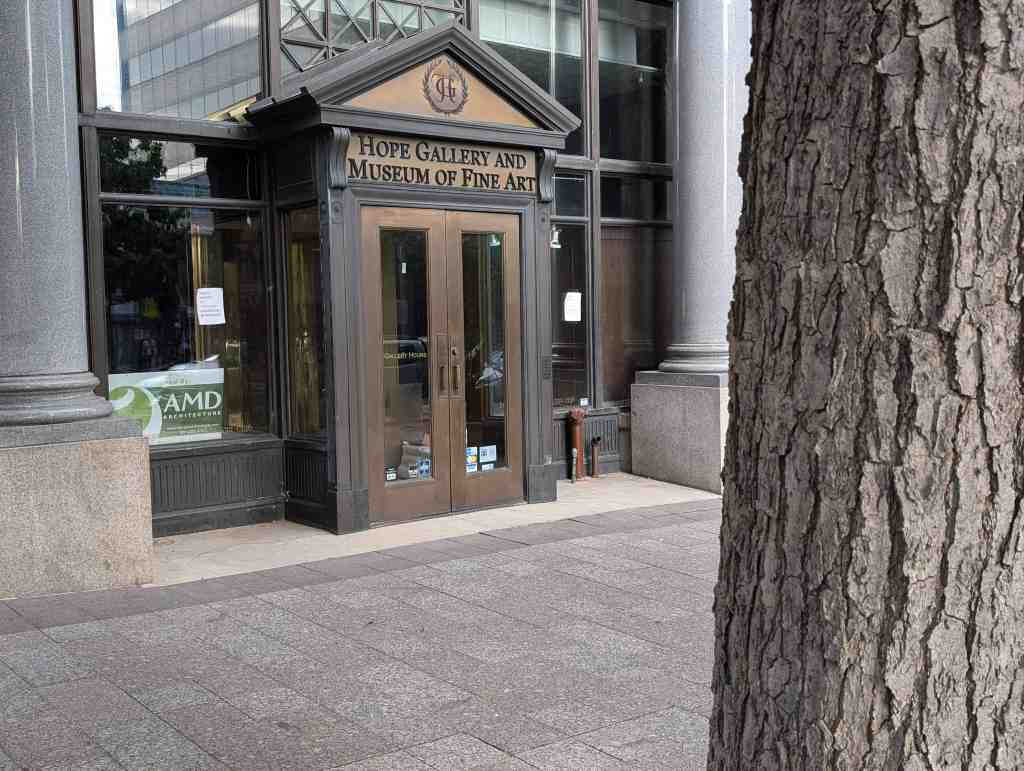
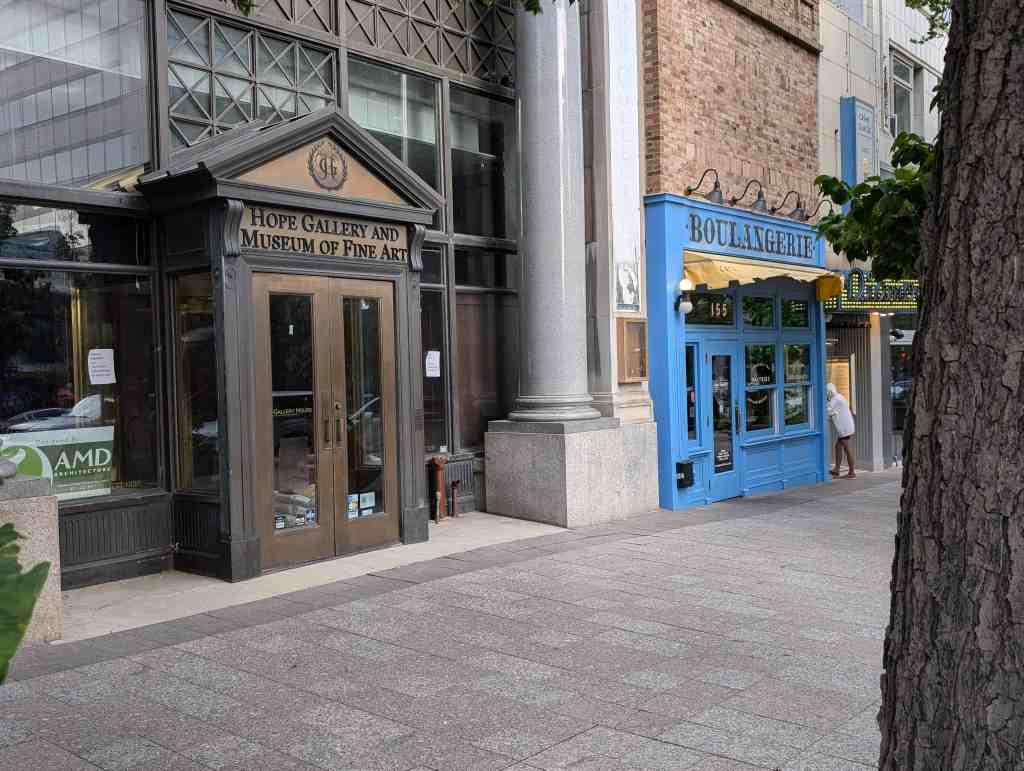
  • Hope Gallery – 12 Gifts of Christmas Filming Location

Parleys Way on the Lincoln Highway

12 Monday Sep 2016

Posted by Jacob Barlow in Uncategorized

≈ 1 Comment

Tags

historic, Lincoln Highway, Parley P. Pratt, Parley's Canyon, Salt Lake, Salt Lake City, Salt Lake County, utah

  • 692f6ae2-4848-49af-8b77-18b952083316

(Located at Parley’s Plaza)

The Nation’s first coast-to-coast route for automobile travel followed Parley P. Pratt’s Golden Pass road into the valley of the Great Salt Lake.  Spanning the Country during the years from 1913 to 1928, the Lincoln Highway was conceived and financed by private sources before the national government became responsible for interstate highways.

The first federal highway acts were passed by Congress during the 1920s.  Route numbers were assigned to all major highways and the Lincoln Highway become a part of America’s history.

  • b9f1c0a8-adcc-42b6-871b-676acc295e12

– Parley P. Pratt Monument –

  • b20f897c-74b1-4982-b509-d1b85c879bd7

Born in New York in 1807, Parley Parker Pratt converted to Mormonism in 1830 and became one of its most successful missionaries and writers.  After joining the original Mormon pioneers in the Salt Lake Valley, he became a leading explorer and colonist. A great builder of roads and communities, Parley’s soul was full of romance, poetry and song.  He authored many widely-used religious tracts, popular hymns, and a colorful autobiography.  Parley was killed while doing missionary work in Arkansas in 1857.

See the other Lincoln Highway Markers I’ve found on this page.

Salt Lake Tribune Building (Ezra Thompson Building)

11 Sunday Sep 2016

Posted by Jacob Barlow in Uncategorized

≈ 3 Comments

Tags

Downtown SLC, historic, Historic Buildings, Salt Lake City, Salt Lake County, utah

2016-06-25-13-39-55

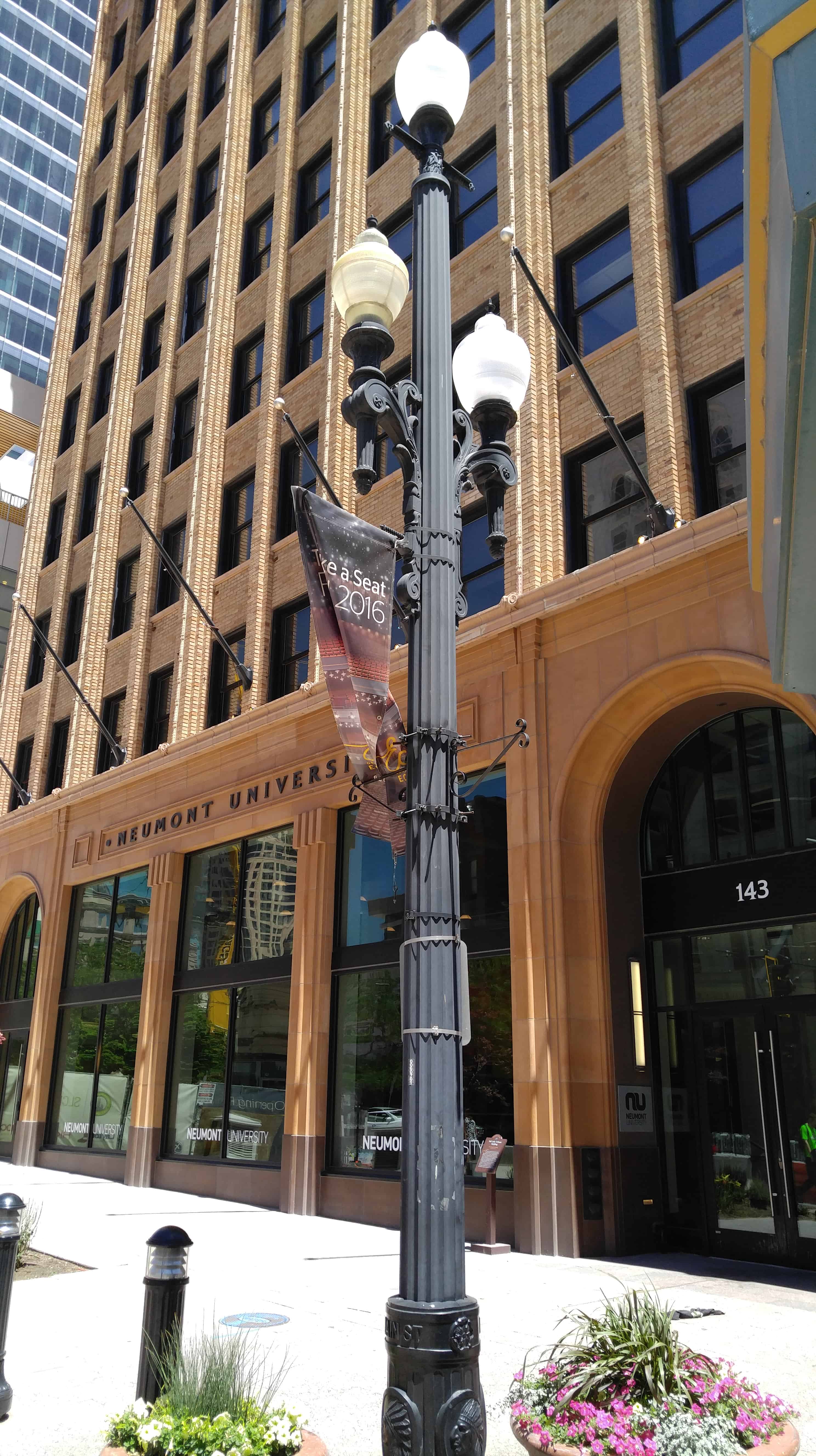
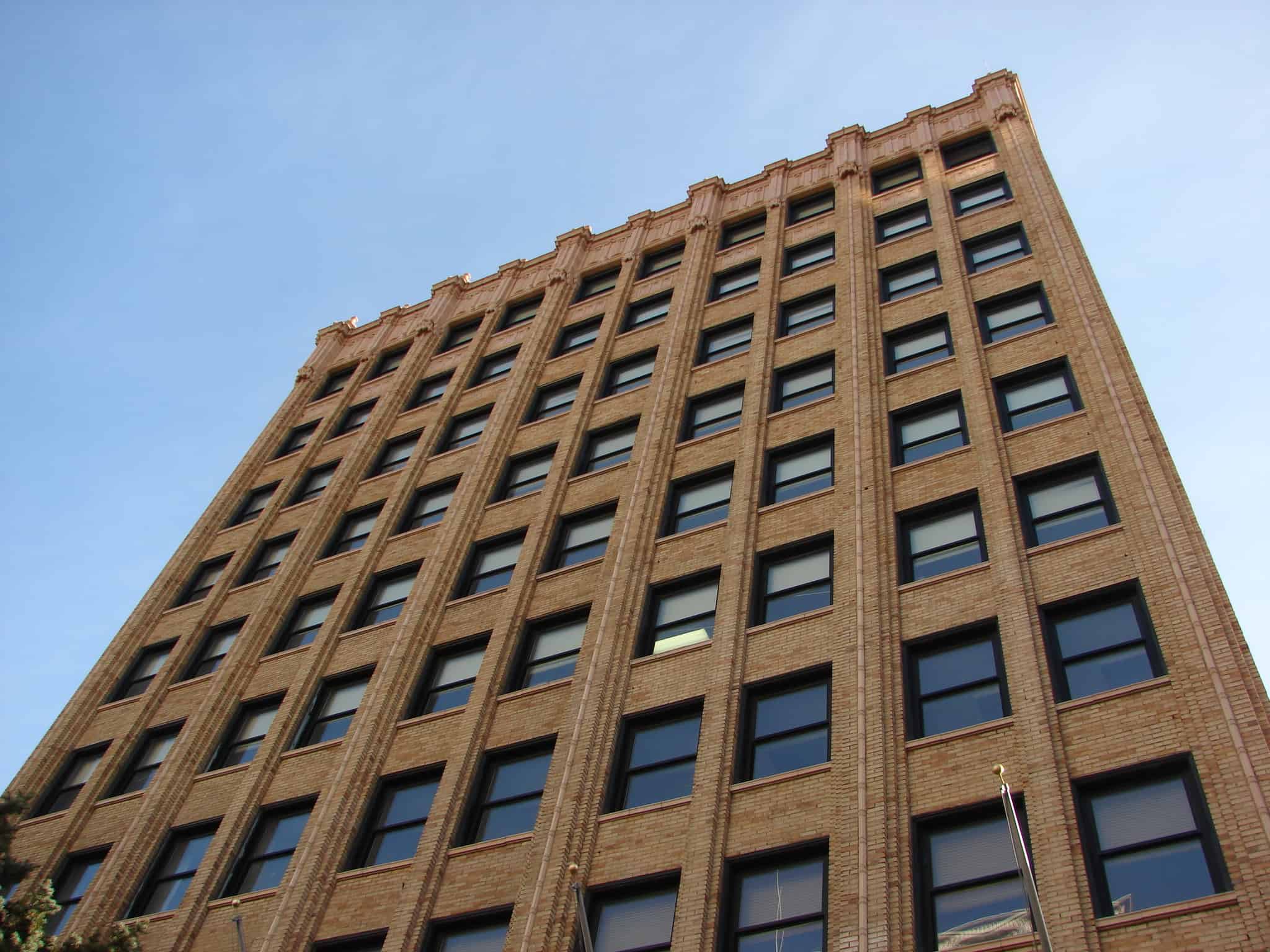
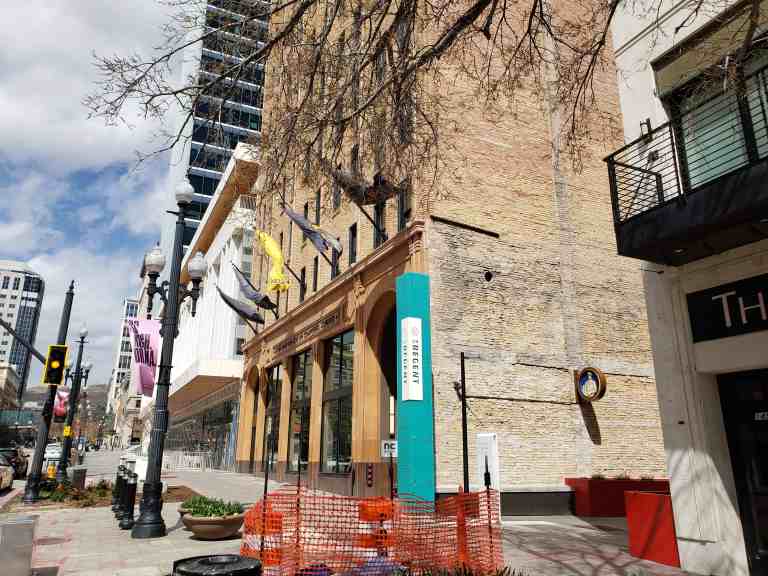
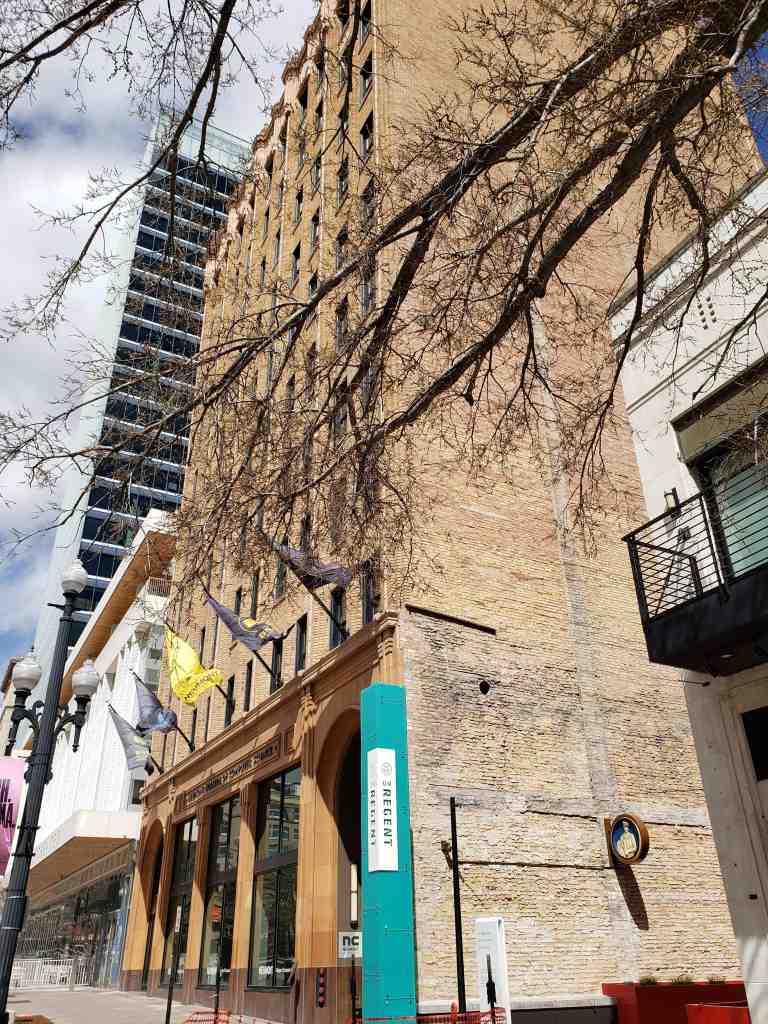
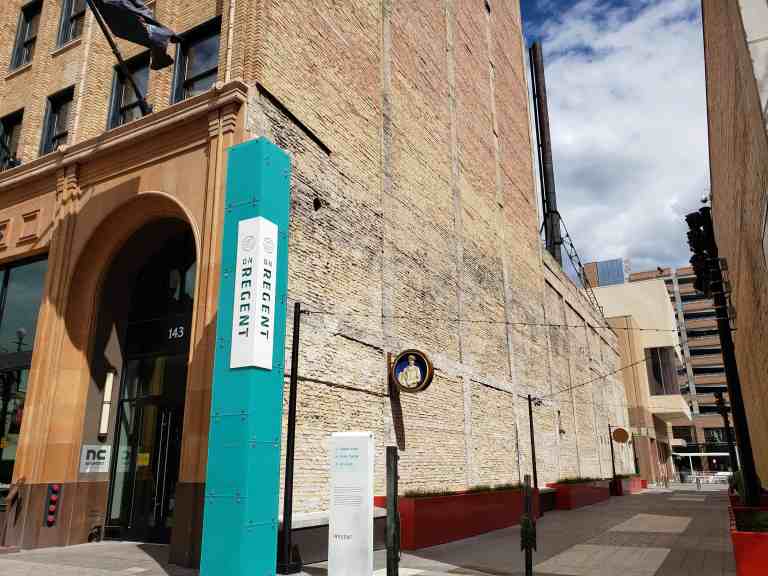
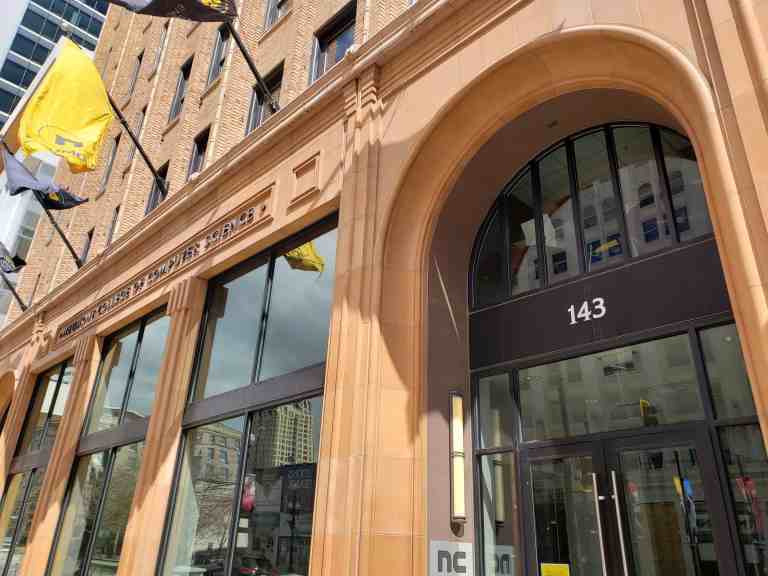
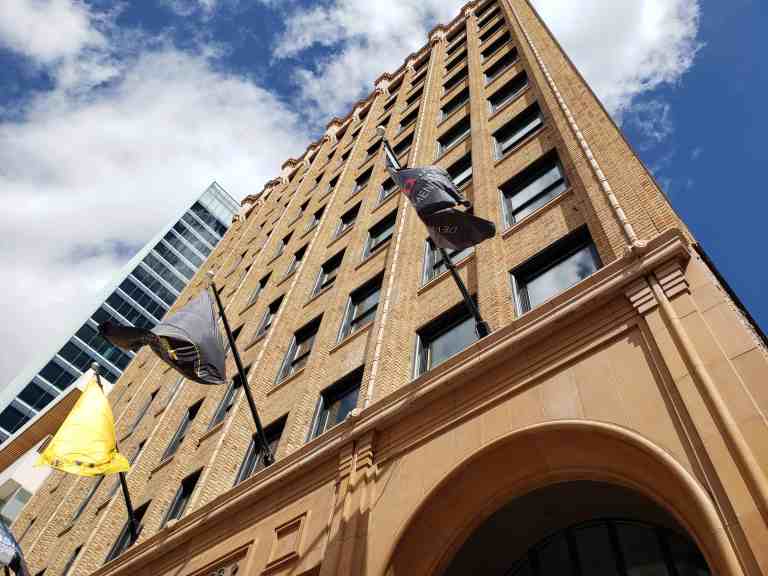
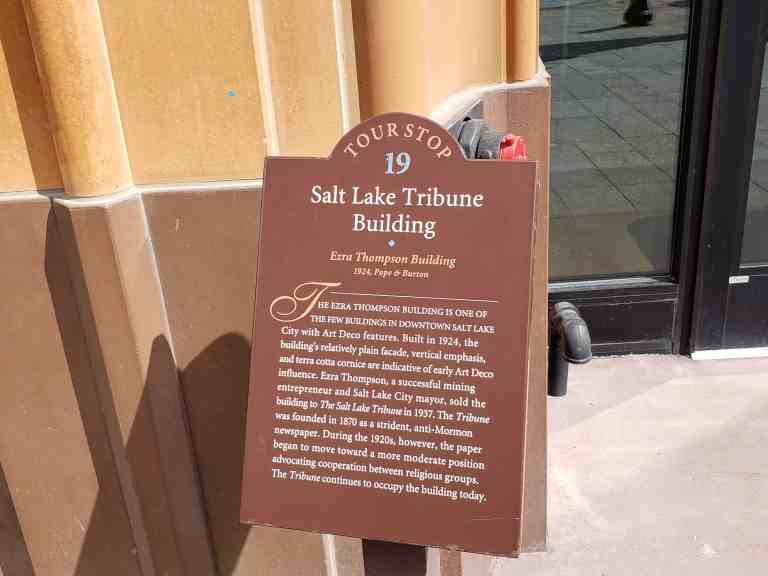
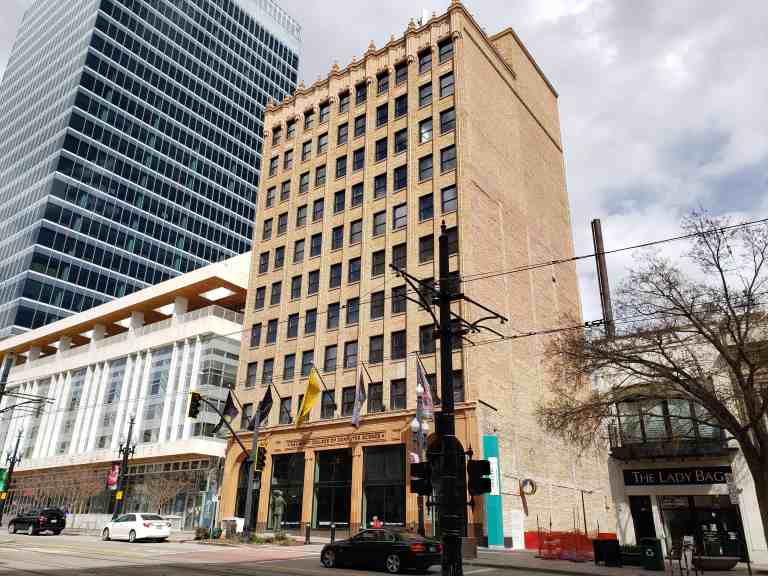
The Ezra Thompson Building is one of the few buildings in downtown Salt Lake City with Art Deco features.  Built in 1924, the building’s relatively plain façade, vertical emphasis, and terra cotta cornice are indicative of early Art Deco influence.

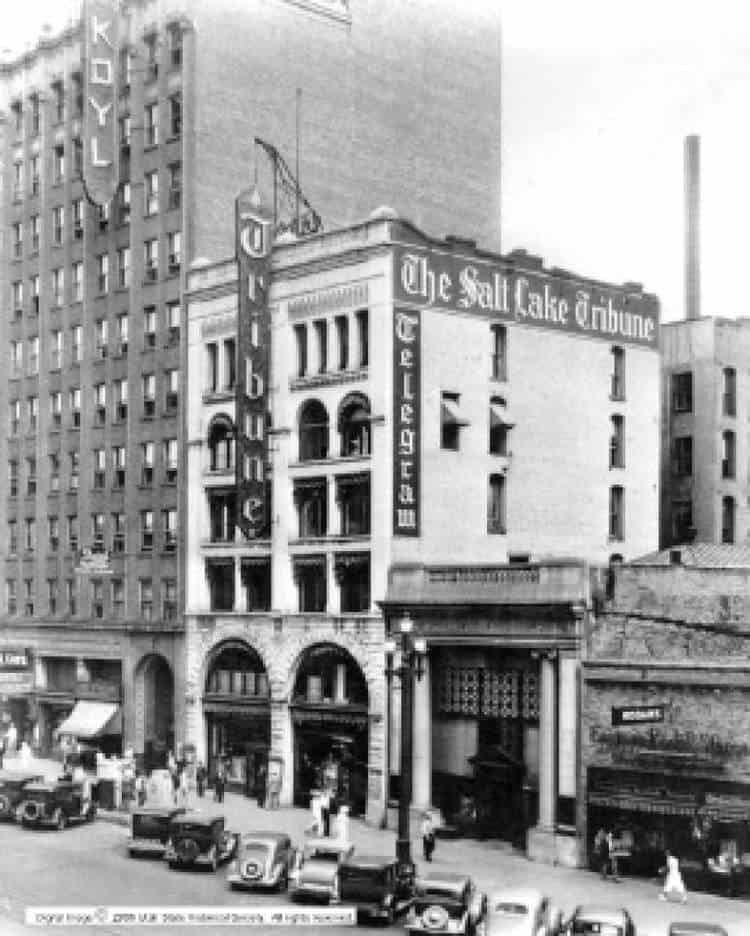
Ezra Thompson, a successful mining entrepreneur and Salt Lake City mayor, sold the building to The Salt Lake Tribune in 1937.  The Tribune was founded in 1870 as a strident, anti-Mormon newspaper.  During the 1920s, however, the paper began to move toward a more moderate position advocating cooperation between religious groups.

This building is located at 143 South Main Street in Salt Lake City, Utah.

Historic plaques/markers located here are:

  • 100th Anniversary – Salt Lake Tribune
  • Historic Block 70
  • History of the Salt Lake Tribune
  • Mark Twain on Salt Lake City
  • Pony Express Division Headquarters
  • Site of a Pony Express Station

Engineering Department Standard of Measure

11 Sunday Sep 2016

Posted by Jacob Barlow in Uncategorized

≈ 2 Comments

Tags

Benchmarks, Downtown SLC, historic, Salt Lake, Salt Lake City, Salt Lake County, Survey

  • 2018-09-11 11.13.27

This survey marker lies in the sidewalk on the southeast corner of 400 South State Street in downtown Salt Lake City, Utah.

ENGINEERING DEPARTMENT
SALT LAKE CITY

STANDARD OF MEASURE

Under this cover lies a granite survey monument. It extends approximately six feet deep and is five feet square at the base. There is a similar monument one hundred feet and another one four hundred feet to the East of here. Salt Lake City Engineering set these monuments in the year 1895. They were used as the Standard of Measure for surveying the blocks and streets as they exist today.

This is located next to the DUP Marker for the Pioneer Camping Grounds on Washington Square.

2018-09-11 11.13.35
2016-06-25-15-49-31

    Herald Building

    11 Sunday Sep 2016

    Posted by Jacob Barlow in Uncategorized

    ≈ 3 Comments

    Tags

    Downtown SLC, historic, Salt Lake, Salt Lake City, Salt Lake County, utah

    dt-common-streams-streamserver-cls

    Herald Building

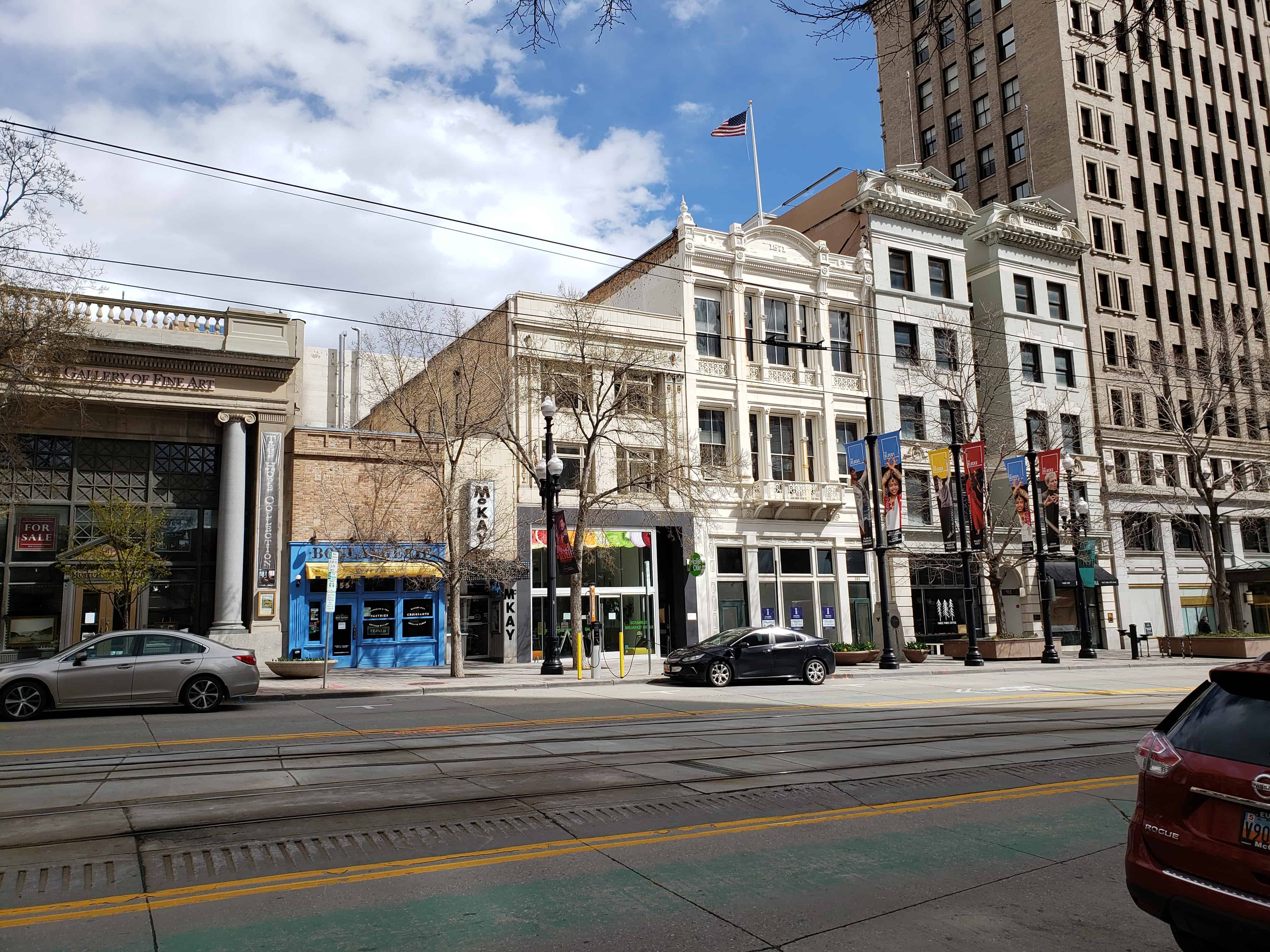
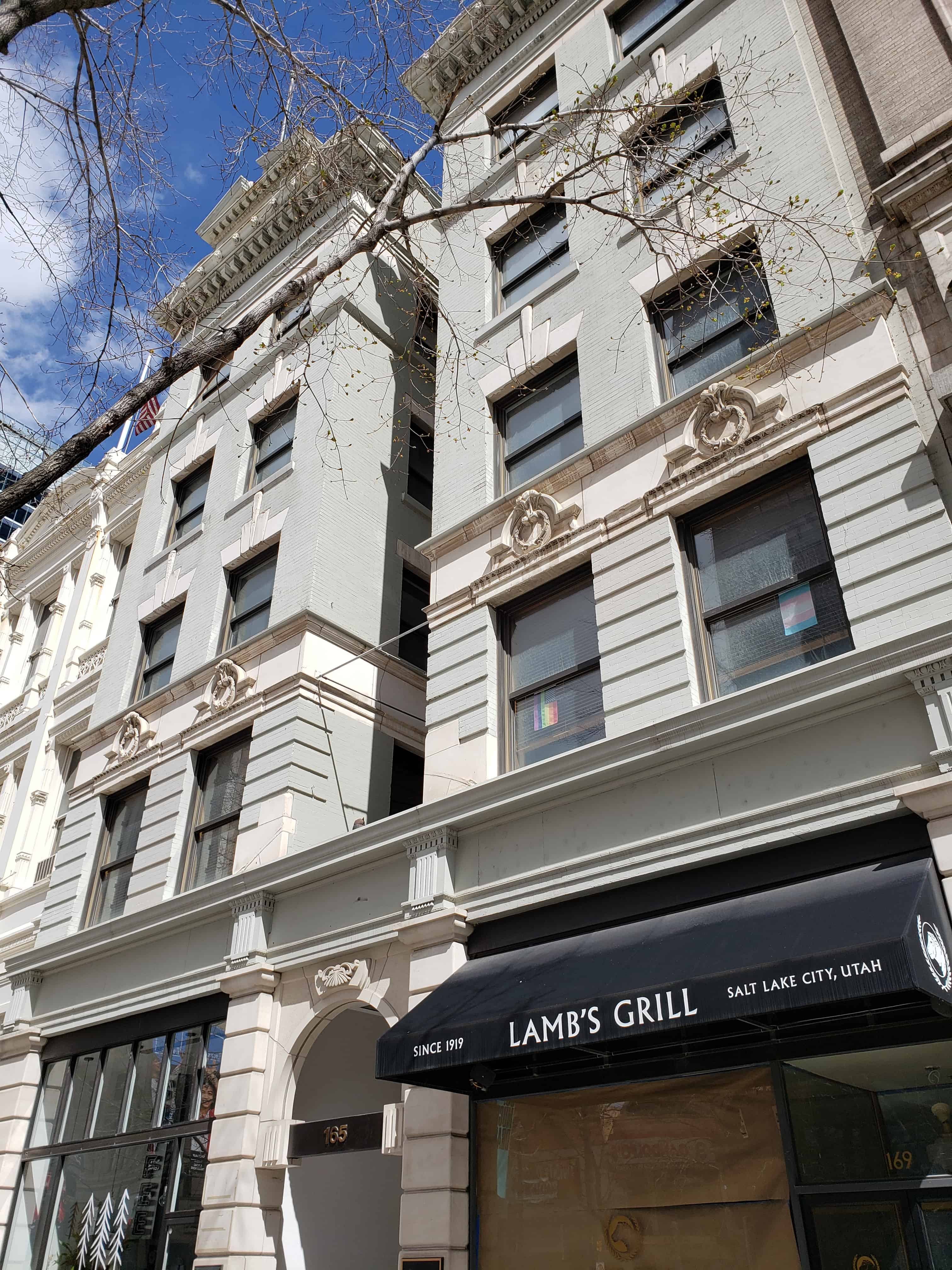
    Designed by architect John C. Craig, the Herald Building was constructed in 1905 to house the Salt Lake Herald, a daily newspaper which began publication in June 1870. The Salt Lake Herald ceased publication in 1920. During its existence, the paper served as a defender of the Mormon Church and later spokesman for first the Democratic and then the Republican political parties in the state. The Herald Building is now the home of Lamb’s Restaurant established in 1919.

    The Herald Building’s U-shaped plan is unusual.  Many 19th and early 20th century buildings have a U-shaped plan to allow light and air to reach interior offices.  Most often, however, the “U” opens to the rear or the side of the building rather than to the front.   The Salt Lake Herald, a staunchly pro-Mormon newspaper, constructed this building in 1905.  After the Herald moved out in 1913, the Little Hotel occupied the building for many years.  Lamb’s Restaurant, a Salt Lake City icon, has been in business on the ground floor of the Herald Building continuously since 1919.  Look for the ornate tin cornice which crowns the building.

    165 South Main Street in Salt Lake City, Utah

    2016-06-25-13-34-57
    2016-06-25-13-46-35

    Walker Center

    09 Friday Sep 2016

    Posted by Jacob Barlow in Uncategorized

    ≈ 2 Comments

    Tags

    historic, Memorials, Salt Lake City, Salt Lake County, utah

    2016-06-25-13-29-58

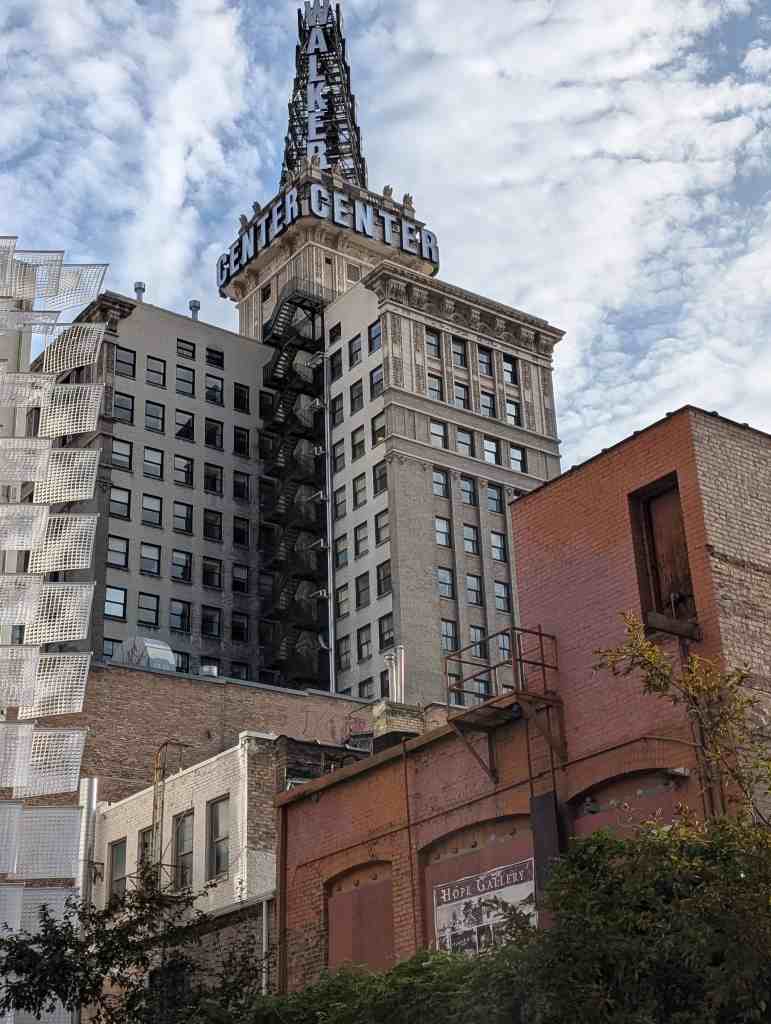
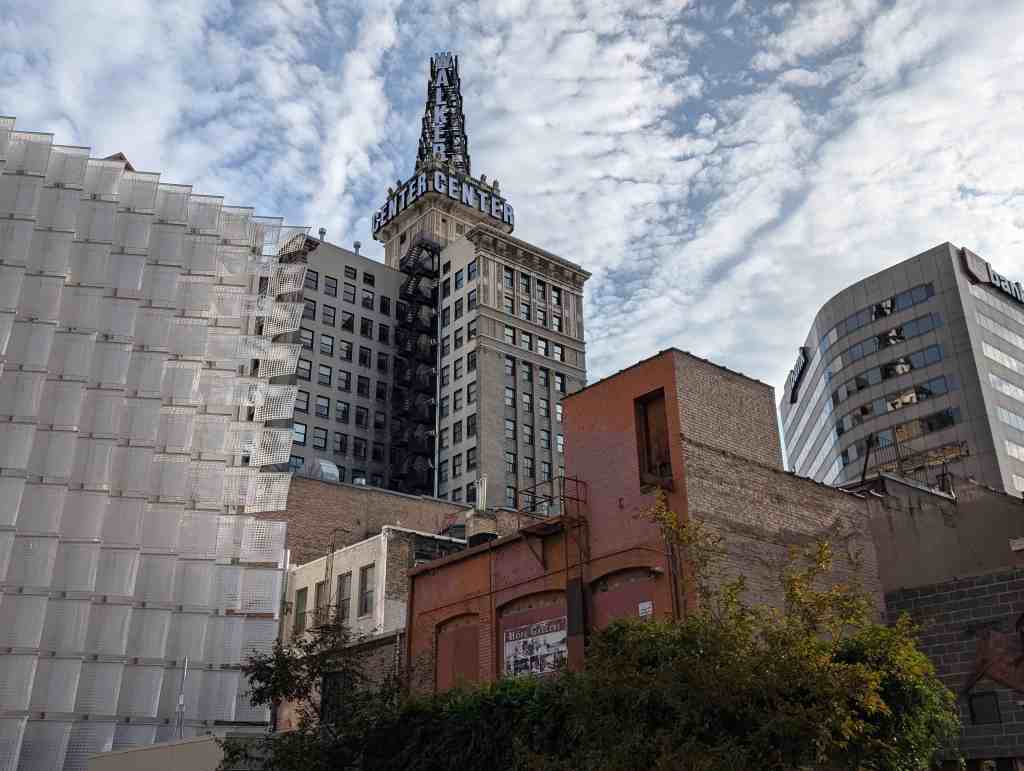
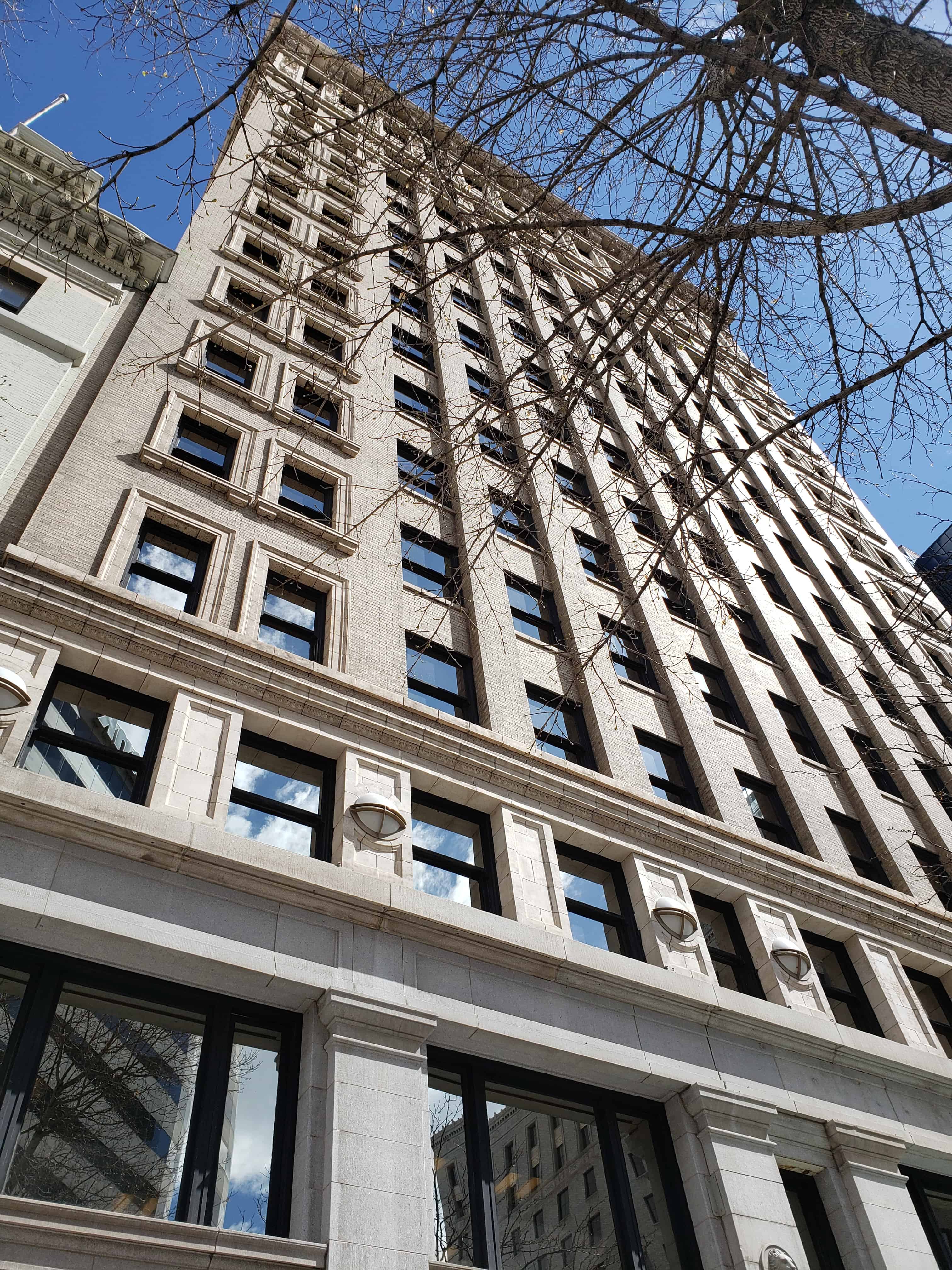
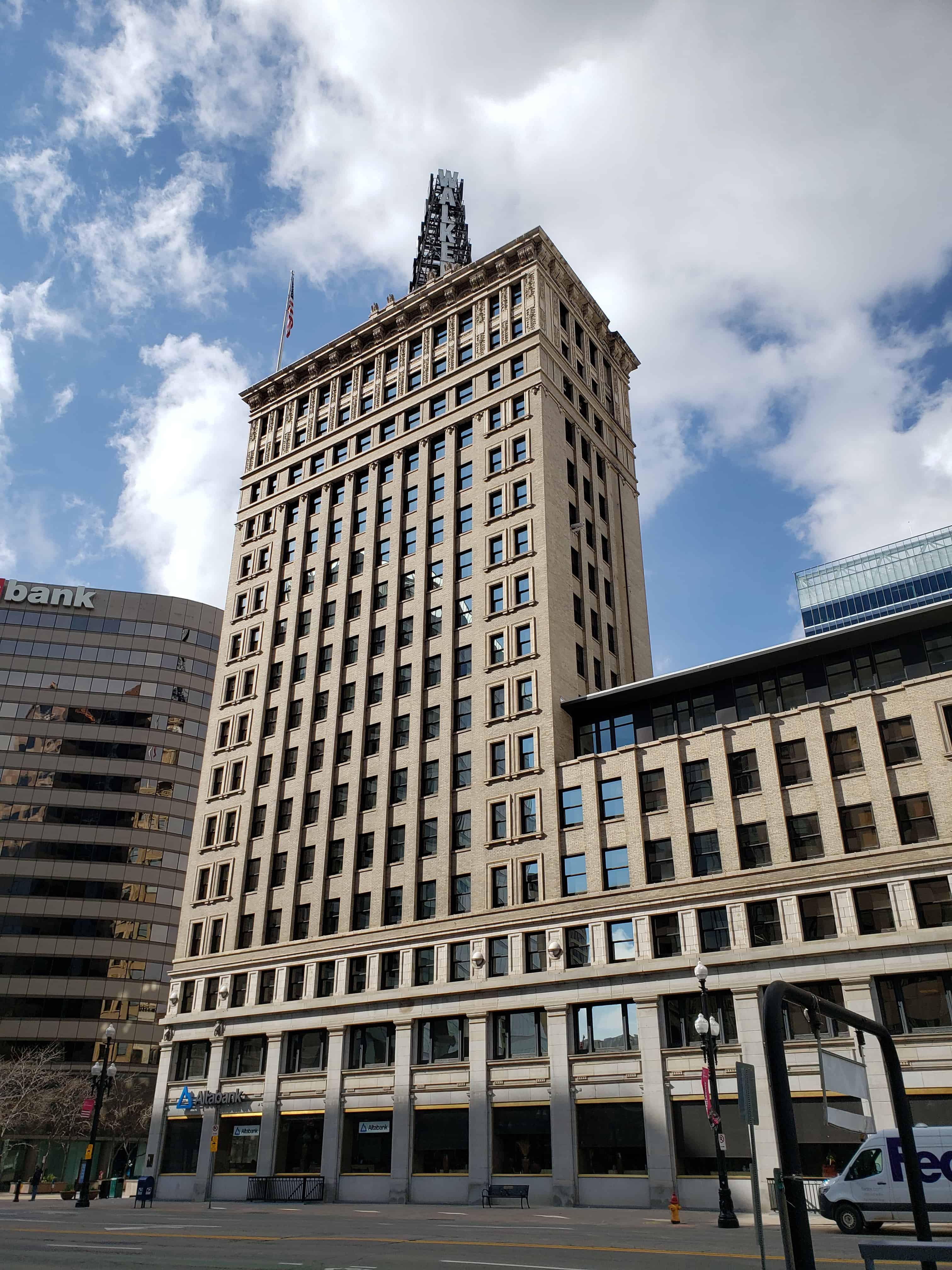
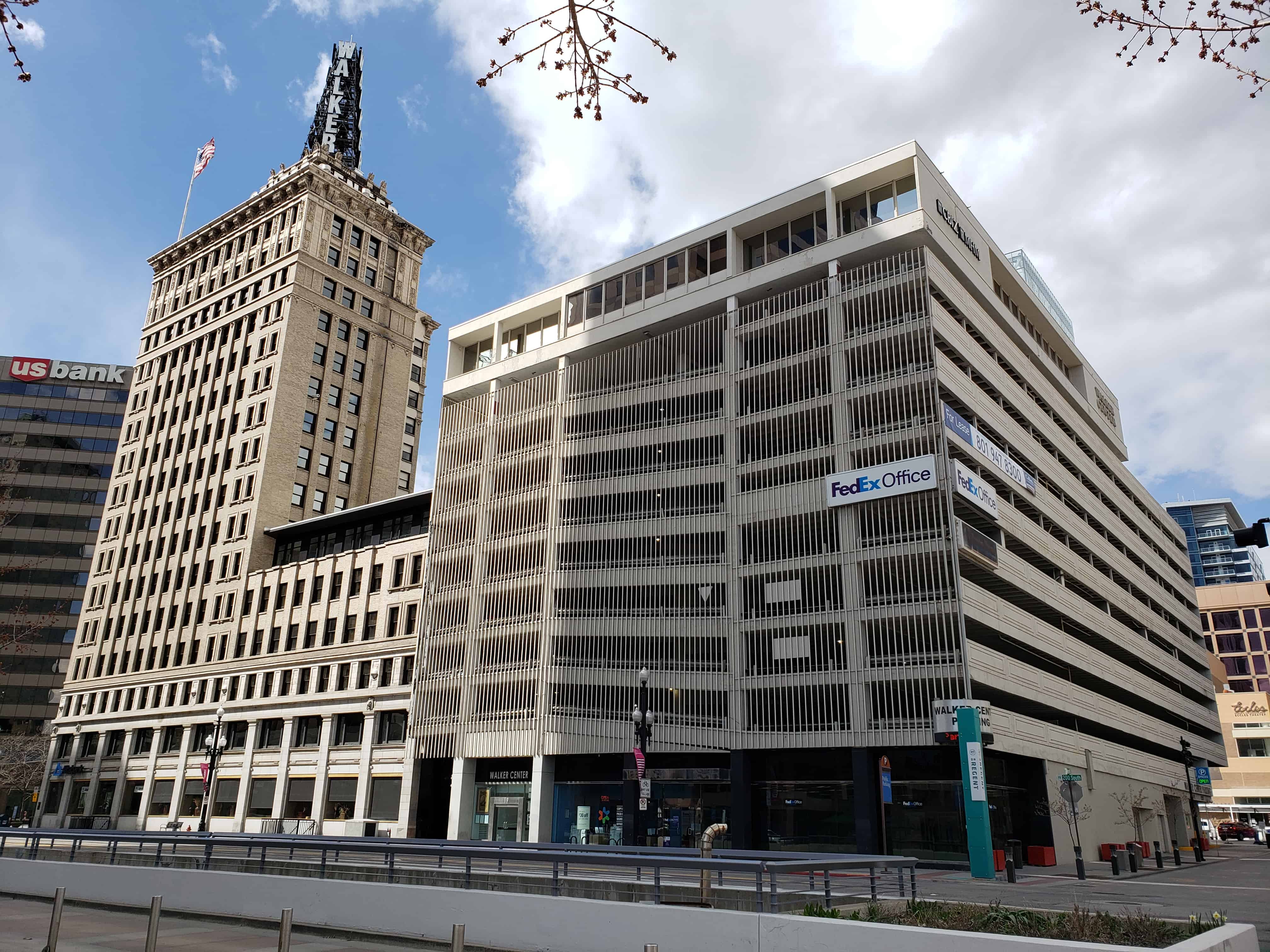
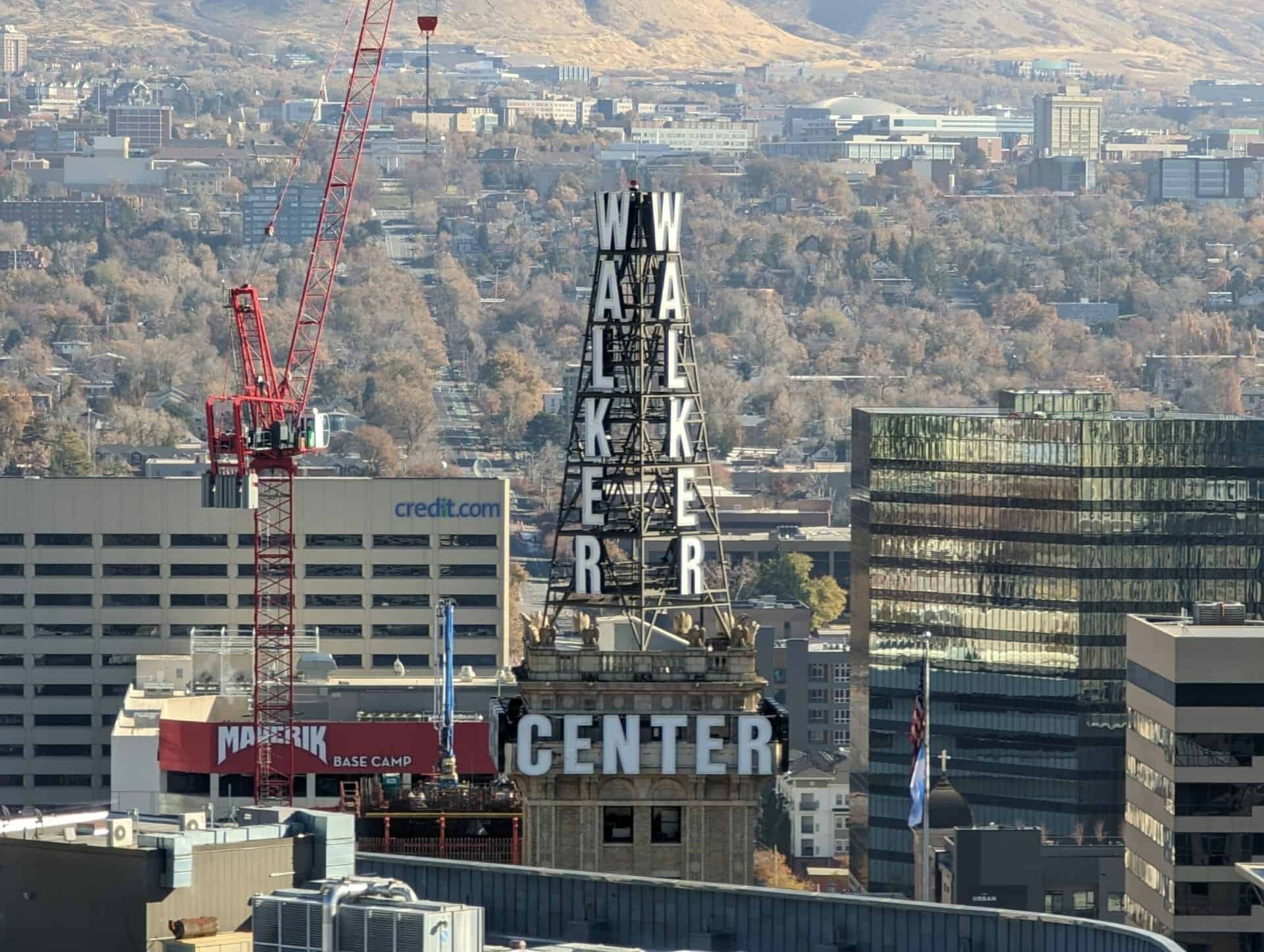
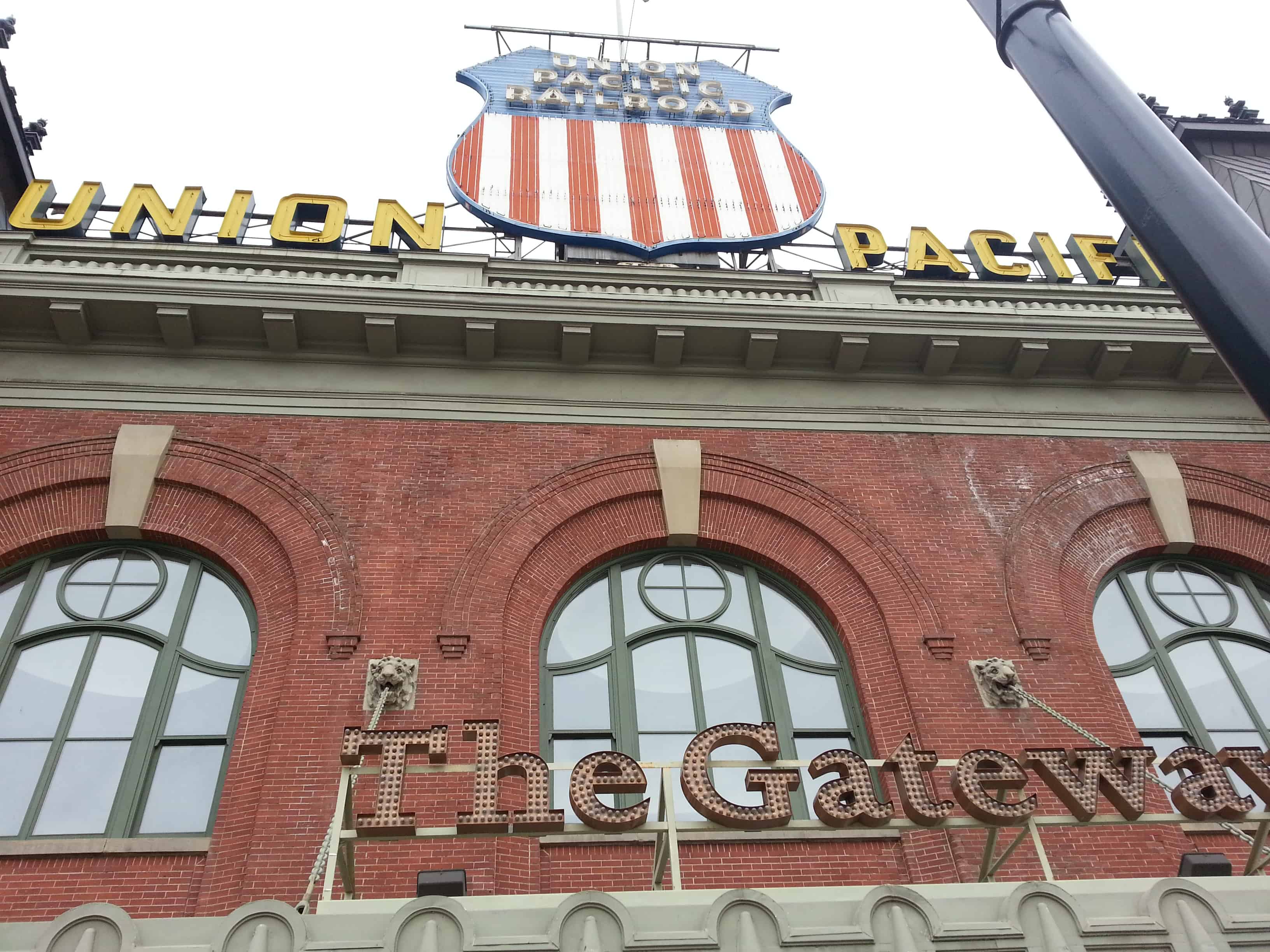
    Walker Center (formerly Walker Bank Building) is a skyscraper in Salt Lake City, Utah, United States. It was opened on December 9, 1912; taking a little over a year to be built. At the time of its completion, it stood as the tallest building between Chicago and San Francisco (16 stories). It was originally constructed as the headquarters for Walker Bank, founded by the Walker brothers: Samuel, Joseph, David, and Matthew. The basement originally contained the vault for the bank, as well as a barbershop, florist, cigar store, and other shops. The main floor contained the bank, and upper floors were used as office space.  It was designed by the St. Louis, Missouri-based architecture firm Eames and Young.

    Weather Tower

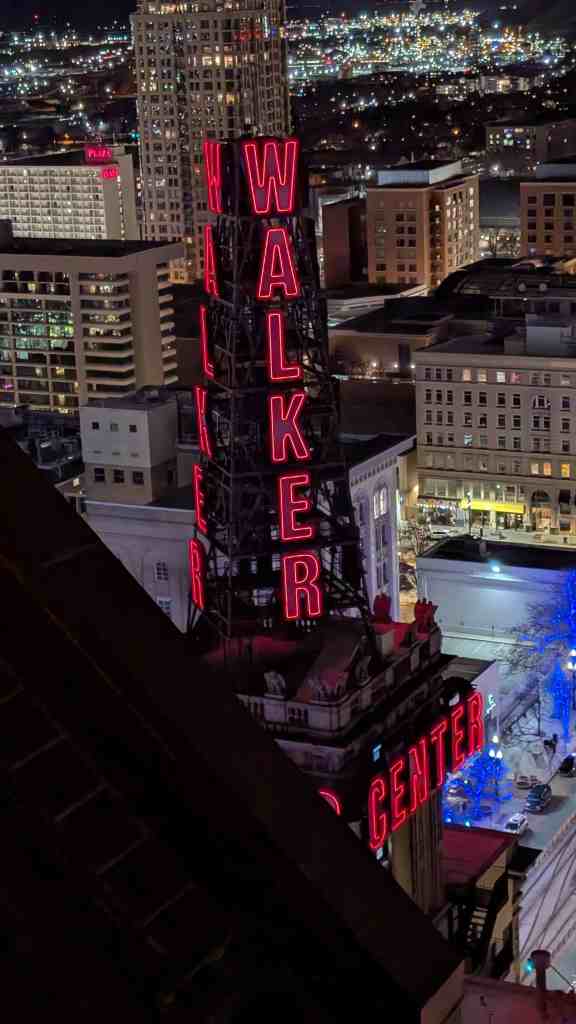
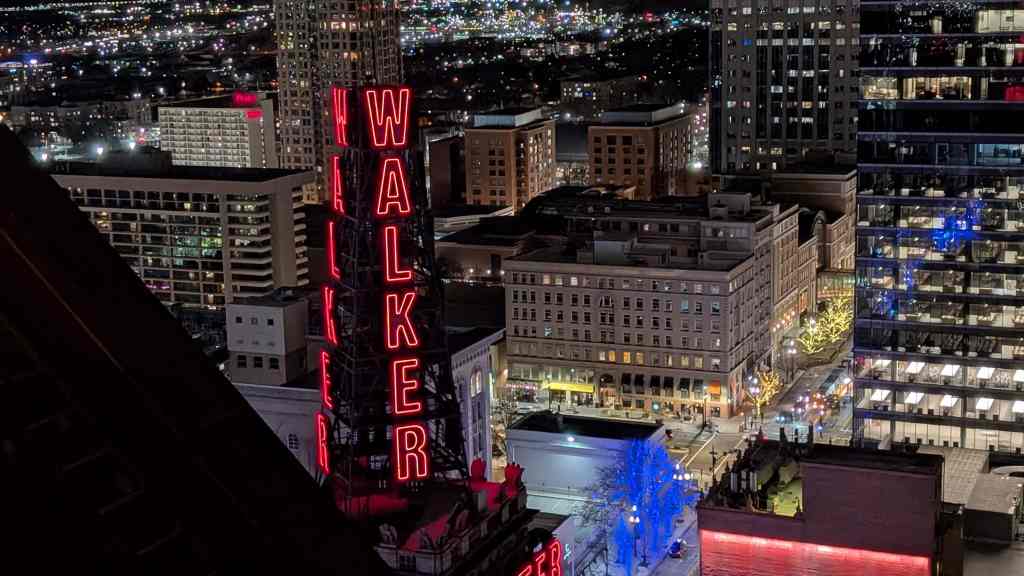
    The Walker Center is topped by a 64-foot weather tower, which gives a weather forecast based on the color of the lights. The weather tower was taken down in the 1980s due to a city ordinance but replaced in 2008. The meaning of the tower colors are:

    blue: clear skies

    flashing blue: cloudy skies

    red: rain

    flashing red: snow

    Related Posts:

    • Chief Andrew H. Burt Memorial
    • Main Street Salt Lake City
    • NRHP # 06000929
    • Salt Lake City, Utah
    • Photos from the first “test run” of the tour of the building

    2016-06-25-13-29-40

    Constructed in 1911-12 the Walker Bank Building is significant under Criteria A and C for its influence on the Salt Lake City banking community in the early 20th Century as well as for being an excellent example of a three part vertical block skyscraper done in a Sullivanesque style in downtown Salt Lake City. The building was designed with the most modern of amenities and innovations in building equipment and design. These included outside light for each office room, ice water taps on each floor, and four gearless traction elevators. The construction of such a large building in downtown Salt Lake City was a monument to the growth, progress, and modernization of the city following Utah’s acceptance as a state. Investing in the building signified the faith the Walker Brothers Bank had in the future of the city. One of the tallest buildings in the West for its time, it stands as an example of the success and growth of the financial sector of Utah during the 1900-1910’s. It was also one of the last building projects completed prior to the start of World War I, which put an effective halt on major construction projects in downtown Salt Lake City. Eames and Young, an architectural firm based in St. Louis, Missouri, designed the building for the bank. Both William S. Eames and Thomas Crane Young served as presidents of the St. Louis Chapter of the American Institute of Architects, in 1890 and 1909-10 respectively.

    Eames was also elected as National President of the Institute in 1904, the first from St. Louis to hold that office. They formed their partnership in 1885, which lasted until Eames’ death in 1915. The firm achieved a national reputation, receiving good publicity for the duration of its existence and having their work featured and praised by professional journals such as Architectural Record. The building was designed with characteristics of Chicago School skyscrapers, containing the three parts of a classical column – the bottom floors functioning as the base, the middle stories as the shaft with little ornamental detail, and the top floors serving as the capital with a greater degree of ornamentation capped with a cornice.

    Stylistically, the building has hints of the Second Renaissance Revival, with its symmetry, accentuated belt courses, and modillions. It received national attention with a feature in the February 1914 issue of American Architect, as well as mention in the New York Times, The high-rise office building included several retail shop areas on the basement and ground floors, in addition to the bank’s primary ground floor space. Retaining much of its original detailing and character, the building is in excellent condition and is a contributing historic resource in Salt Lake City.

    History of the Walker Brothers (see also Walker Brothers Bank)

    The Walker brothers’ influence on Salt Lake City began soon after their arrival in September 1852. There were four brothers, all born in Yeadon, Yorkshire, England: Samuel Sharp born September 22, 1835; Joseph Robinson born August 29, 1836; David Fredrick born April 19, 1838; and Matthew H born January 16, 1845. They, along with two sisters, immigrated to St. Louis, Missouri, with their parents, Matthew and Mercy Long Walker, in 1850. The father and two sisters died there from cholera in 1851. In April 1852, the four brothers and their mother decided to move on west to Salt Lake City.

    The Walker brothers engaged in various pursuits prior to organizing their dry goods store in 1859. The store, first located at Camp Floyd about fifty miles southwest of Salt Lake City, profited well from the troops, and after their departure, the stock was relocated to Salt Lake City and the Walker Brothers Dry Goods Company became well-established there.9 In conjunction with their dry goods store, the brothers engaged in banking, which was commonly connected to the general merchandising business in those days.

    The eldest brother, Samuel S., married Fannie Bascom, January 5, 1857, and together they had ten children. He was active as a businessman until his death on September 10, 1887. 10 Joseph R., married to Mary Ann Carson in 1859, had seven children. In addition to his involvement with the Walker Brothers Dry Goods Company and the Walker Brothers, Bankers, Joseph was also president of the Alice Gold & Silver Mining Company in Montana. After his death on January 6, 1901, his heirs sold their interest in the bank and acquired control of the Walker Brothers Dry Goods Company. 11 David Fredrick, a prime starter of the dry goods store, married his first wife Emeline Homes in 1859, and together they had seven children. Emeline died in 1876; in 1883, David married his second wife, Althea Hunt, with whom he had three children. In 1888, having sold his interest in the brothers’ business, he moved to San Francisco and started business there. His death was September 12, 1910.

    The youngest brother, Matthew H., was married to Elizabeth Carson in 1865. They had two children. After Elizabeth’s death in 1896, he was married a second time in 1897 to Angelina Andrews Hague, with whom he had a daughter. In addition to his banking and merchandising involvements, Matthew served on the Board of Education from 1898 to 1902. He died on July 29, 1916.

    Salt Lake Tour Stop #22 says:
    Walker Bank Building
    1912, Eames & Young
    When it was completed in 1912, the 16-story Walker Bank Building was the tallest building in the Intermountain West and a source of much pride to Salt Lake City. A penthouse crowned by eagles sits atop the building. The two stories beneath the penthouse feature elaborate classical ornamentation. Walker Bark was founded by four brothers who immigrated to Utah on foot and later established a mercantile business. Although the Walker brothers became disaffected from the LDS Church over the issue of tithing, their mercantile business prospered and took on banking functions. Eventually the bank made the Walker brothers some of Utah’s wealthiest men.

    World’s First KFC

    09 Friday Sep 2016

    Posted by Jacob Barlow in Uncategorized

    ≈ 1 Comment

    Tags

    First, Salt Lake City, Salt Lake County, South Salt Lake City, utah

    World’s First KFC (Kentucky Fried Chicken)

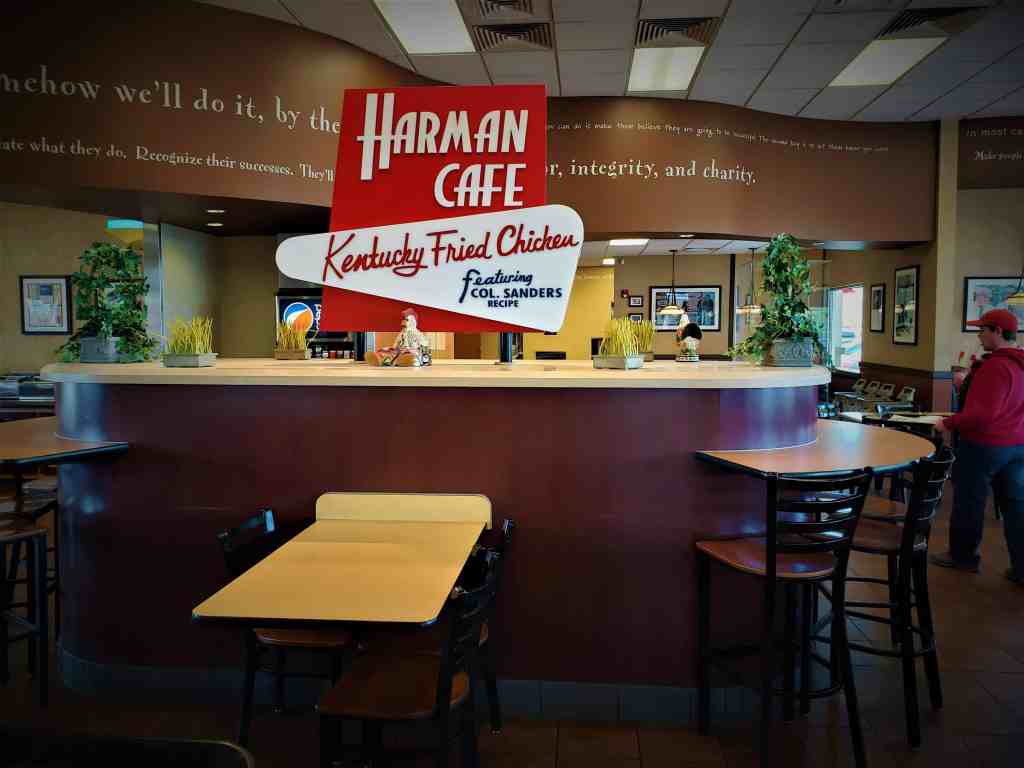
    It all started here at 3890 South State in Salt Lake City, Utah, the first home of Kentucky Fried Chicken.

    In 1941 Leon W. “Pete” Harman and Arline Harman purchased the “Do Drop Inn” at 3890 South State.

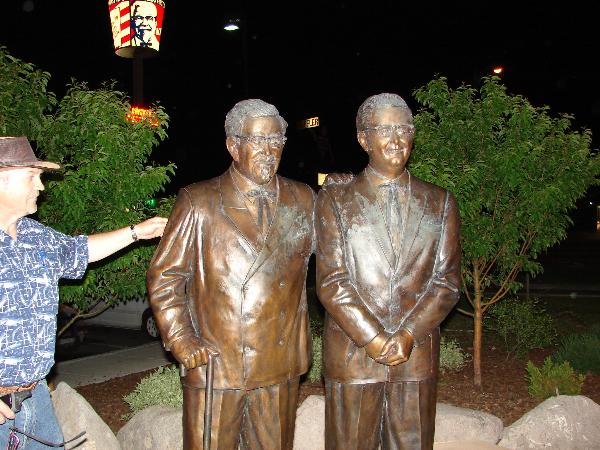
    Pete met the Colonel and a few years later in 1952, Harman’s became the first Kentucky Fried Chicken franchise.

    Pete’s innovative ideas, charming nature, and love for the restaurant business have resulted in Harman’s Kentucky Fried Chicken restaurants growing from just one to over 300.

    Pete and Arline’s joy comes from watching people grow and experience success.

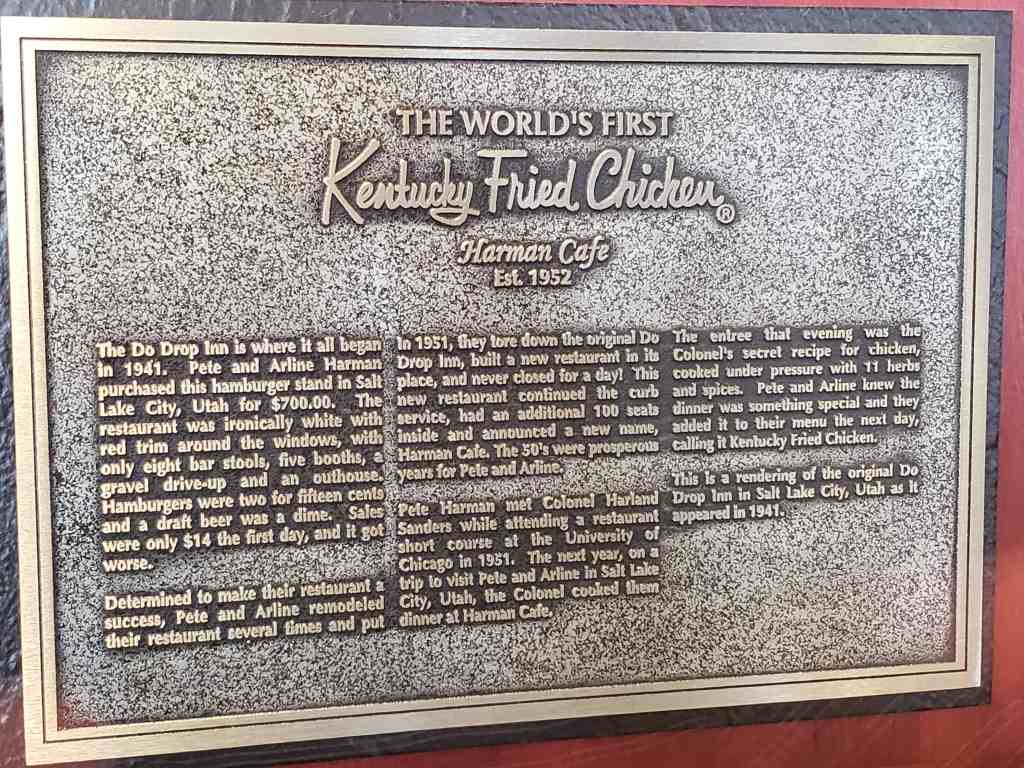
    The Do Drop Inn is where it all began in 1941. Pete and Arline Harman purchased this hamburger stand in Salt Lake City, Utah for $700.00. The restaurant was ironically white with red trim around the windows, with only eight bar stools, five booths, a gravel drive-up and an outhouse. Hamburgers were two for fifteen cents and a draft beer was a dime. Sales were only $14 the first day, and it got worse.

    Determined to make their restaurant a success, Pete and Arline remodeled their restaurant several times and put in 1951, they tore down the original Do Drop Inn, built a new restaurant in its place, and never closed for a day! The new restaurant continued the curb service, had an additional 100 seats inside and announced a new name, Harman Cafe. The 50’s were prosperous years for Pete and Arline.

    Pete Harman met Colonel Harland Sanders while attending a restaurant short course at the University of Chicago in 1951. The next year, on a trip to visit Pete and Arline in Salt Lake City, Utah, the Colonel cooked them dinner at Harman Cafe.

    The entree that evening was the Colonel’s secret recipe for chicken, cooked under pressure with 11 herbs and spices. Pete and Arline knew the dinner was something special and they added it to their menu the next day, calling it Kentucky Fried Chicken.

    This is a rendering of the original Do Drop Inn in Salt Lake City, Utah as it appeared in 1941.

    • ddc6f516-a2df-4171-ab14-dc28e2b9ef9f
    • 7a21a5c4-2c2b-463e-9d2a-902463f3ddad

    Hotel Monaco

    30 Tuesday Aug 2016

    Posted by Jacob Barlow in Uncategorized

    ≈ 2 Comments

    Tags

    historic, Historic Buildings, Salt Lake City, Salt Lake County, utah

    2016-06-25 13.32.27

    Continental Bank Building – 1923-1924

    While 13 stories tall, the Continental Bank Building’s Main Street facade is only three bays wide. The building’s narrowness gives it a vertical emphasis. Its design combines Second Renaissance Revival elements on the first two floors and a plain treatment of the upper floors.

    Note the carved stone faces in the keystones above the large arched windows. This site was originally occupied by an early Salt Lake City hotel named the White House. Continental Bank completed the present building in 1924. The building housed a series of banks before it was renovated as the Hotel Monaco Salt Lake City in 1999.

    Located at 15 West 200 South in the downtown neighborhood of Salt Lake City, Utah.

    Capitol Theatre

    30 Tuesday Aug 2016

    Posted by Jacob Barlow in Uncategorized

    ≈ 2 Comments

    Tags

    historic, Historic Buildings, NRHP, Salt Lake City, Salt Lake County, Theaters, utah

    2016-06-25 13.24.15

    The Orpheum Theatre (now Capitol Theatre), the second theatre built in Salt Lake City for the Orpheum Theatre chain, is significant for introducing innovative architectural features in theatre construction to the Intermountain West. Built in 1912-13, the Orpheum Theatre utilized the most modern mechanical contrivances of its time bringing advancements in safety and comfort through carefully manipulating the interior environment of its public spaces. The building of the theatre also marked an important event in the importation of out-of-state architects and foreign design styles to provide alternatives to the more conventional American and Utah vernacular styles which dominated the majority of commercial and public architecture. The introduction of new building materials tapestry brick and terra cotta, and a highly decorative new style–Italian Rennaissance, along with the “water-curtain,” “Plenum System” air-conditioning and “totally fireproof” construction made the Orpheum Theatre a significant building in the development of architecture in Utah. Of the several theatres built nationally by San Francisco architect G. Albert Lansburgh, the Salt Lake Orpheum was considered one of the most successful.

    With such an outstanding facility, the Orpheum Theatre was capable of attracting the best-known performers of the day. The theatre was significant as a major center of vaudeville in Salt Lake City.

    46 West 200 South in Salt Lake.

    After having built a theatre on South Main Street in 1905, the L. L. Orpheum Realty Company took out a permit for a new theatre on May 27, 1912. Architect for the theatre was G. Albert Lansburgh of San Francisco. Thirty-six years of age at the time, Lansburgh had graduated from the Ecole des Beaux Arts in Paris and was awarded Le Dlplome d ! Architect de Government Francais and a gold medal from the Society of French Artists at the Grand Salon of the Champs Elysses in 1906. After spending seven more years studying ancient and modern architecture in Europe, Lansburgh returned to San Francisco, his boyhood home, and began practice. Among the more important buildings which he designed were the Orpheums in San Francisco and Los Angeles, the Manx Hotel, Newman and Levism Building, Concordia Club, Sacks Building, E. and M. A. Gunst Buildings, and Lamberman’s Buildings. Lansburgh was also involved with restoration architecture, having done the restoration of the Temple Emanuel in San Francisco.

    Related Posts:

    • Theaters in Utah

    Lansburgh’s training in classicism was brought to bear in the design ot the Orpheum Theatre in Salt Lake City. Designed in what described at the time as the “Italian Renaissance Style,” the building displays a profusion of classical revival detailing. The exquisite terra cotta figurines, moldings and brackets, were unknown in the city, with the exception of the Hotel Utah which was built at the same time and used terra cotta decoration from the same California manufacturer.

    The theatre housed from 1,800 to 2,000 and was built at a cost of $250,000. Capitalization for the project came from the Walker Estate in Salt Lake City as well as M. Meyerfeld of the Orpheum circuit.

    Amenities included were a mezzanine floor lounge for female patrons, marble floors and staircases, removable seats in the front of the auditorium to allow for enlargement of the orchestra pit, 26 box seats, among them a central “royal” box. No posts hindered the view of spectators. Perhaps the most impressive features, however, were those intended to bring extra comfort and safety.
    The Orpheum Theatre was considered architecturally advanced during its time. Constructed of concrete, steel and brick, this fireproof construction was aided by a “Water Curtain” which was a series of sprays in front of an asbestos curtain which automatically activated when the temperature reached a designated height. According to one report, “Water spouts from the sides and descends from above, forming a complete screen of water through which fire or smoke could not penetrate.”

    A mechanical ventilation system known as the “Plenum system” was also provided. Precurssor to present forced air conditioning systems, it worked thusly: “Automatically the air is expelled through gratings beneath the seats at a rate of three feet per second. It rises to be drawn out through the ventilators in the ceiling and dome without any perceptible draught.” It was claimed that “on the hottest day ‘n summer it is possible to keep the atmosphere at 60 degrees while, when the mercury is below zero in winter, patrons can be warm and snug…and breathe absolutely pure air.”

    An added safety feature was the exit system with 30 exits from all sides of the building, “the doors of which are fitted with patent contrivances that cause them to fly open on the least pressure from the inside. A special structural system made the building “earthquake-proof.” The boiler was placed in a separate building to eliminate the dangers of possible explosions.

    The total absence of posts, concealed lights and mirrored reflectors, special acoustical treatments were among other new elements which attracted large crowds of theatre-goers. Catering to the vaudeville type of productions, weekly offerings of such artists as Will Rogers, Sophie Tucker, Trixie Friganza and Joe Frisco played to Salt Lake audiences. The theatre offered such fare under the Orpheum Chain until 1923 when the Ackerman-Harris vaudeville Chain purchased the building. In 1927, the Orpheum was purchased by the Louis Marcus Chain, which also owned theatres in Provo, Ogden, and Boise, as well as others in Salt Lake, for $300,000

    Major remodeling over a three-month period transformed the structure into a Louis XVI-style theatre, a notable feature being a sunburst set in the center of the ceiling. Interior design was by R. E. Powers, and Co., considered a prominent national designer of the era.

    Called the “city’s leading motion picture palace,” by reviewers, the seating capacity was enlarged to 2,260, and included a new Wurlitzer organ, billed as second in the city only to the Tabernacle Organ, and featured Tabernacle Organist Alexander Schreiner as organist.

    It apparently catered to a wide spectrum of society, with prices in 1917 ranging from 10 to 75 cents, depending on seating and show-time. The theatre changed with the times, being transformed from live theatre to “talking shows” in 1929.

    The Orpheum or Capitol Theatre as it was later called has continued to show motion pictures to the present time, although parts of the building have been turned over to small commercial businesses. In early 1976 the Salt Lake City Redevelopment Agency purchased the building and are currently having the building restored for use as a much needed performing arts center. The restoration is intended to return the Orpheum to much of its original appearance.

    Original Appearance:

    Newspaper accounts of the opening, August 1, 1913, give an idea of the original appearance of the theatre. Some of the features mentioned include the lobby which was “paved with marble flags, domed by a striking groined ceiling in Caen stone and flanked by supporting pillars.” The staircases to the balconies were marble. The original color scheme was French gray and gold, “the gold being subdued with French lacquers in blue and mulberry which go well with the gold orsini velvet draperies, in turn relieved by mulberry and rose colored silk underdrapes.” The theatre balcony and proscenium arch were heavily molded with classical motifs. Descriptions of the building’s original appearance are extremely detailed and lengthy, but, in short, the entire theatre was extravagantly finished, both inside and out.

    1976 Appearance:

    The building now known as the Capitol Theatre is a brick structure, three stories in height with a highly decorative facade consisting of tapestry brick and polychrome terra cotta. The symmetrical front facade is five bays wide with large Roman;arches over each bay on the street level and sets of Palladian windows situated directly above each lower bay. Until recently, the arches were concealed by metal siding which covered the entire clerestory portion of the street level facade. Other modifications of the facade include the rearrangement of spaces and masses between the columns at the street level. Undisturbed, however, is the ornate facade from the first story cornice up. The Palladian windows display round columns with composite capitals, and classically molded entablatures or lintels complete with cartouches, foliated bands, cherubs and stereotyped classicist heads, all done in terra cotta. The frieze is also a repetitious band of cherubs and musical instruments. The bracketed cornice is crowned with a band of drama masks.

    Much of the theatre’s interior is intact. The building is rectangular in shape and features the main lobby, ticket rooms, offices, a set of grand staircases elevators, men’s and women’s parlors and restrooms, a large balcony, theatre, orchestra pit, stage control and mechanical rooms. Much of the original interior decor is intact although some changes were made as a result of the remodeling in 1927. The restoration in progress intends to restore as many of the original features as possible. ;

    Capitol Theatre

    Constructed 1912-1913, the Capitol Theatre incorporated classical design and was stylistically advanced for its time. the theater’s highly decorative Italian Renaissance style is significant as an innovation in the development of Utah architure. The building, with its façade style, including exquisite terra cotta figurines, moldings and brackets, was new in the city, along with the Hotel Utah, which was built at the same time. The interior marble staircases and balconies, as well as the marble-paved lobby, were originally set off by a color scheme of gray and gold.

    Designed by Albert G. Lansburgh, who had graduated from the Ecole des Beaux Arts in Paris, the Capitol Theatre was originally built as part of the Orpheum Theatre chain. It utilized the most modern mechanical contrivances or its time, bringing advancements in safety and comfort through such features as fireproof and earthquake-resistant construction and air conditioning. The building was remodeled in 1929 as a motion picture theater. In 1976 it was purchased by Salt Lake County and restored closely to its original form.

    Counterpoint

    26 Friday Aug 2016

    Posted by Jacob Barlow in Uncategorized

    ≈ Leave a comment

    Tags

    Art, Downtown SLC, Salt Lake City, Salt Lake County, utah

    2016-06-25 13.23.20

    Counterpoint

    Swirling like a maple seedling

    fan which swirls in arcs

    far from the shading tree,

    with wrist in hand

    the euphony of counterpoint

    continues outward on –

    the melody of two uniting in the dance of once –

    an auger in the earth of time,

    in air, the spare

    and delicately spinning seed

    at last alights and roots

    in memory’s loam.

    -Dennis Smith

    2016-06-25 13.23.10
    2016-06-25 13.23.15
    2016-06-25 13.23.31
    2016-06-25 13.23.40

    ← Older posts
    Newer posts →

    Follow Jacob

    Follow Jacob

    Blog Stats

    • 2,064,989 hits

    Social and Other Links

    BarlowLinks.com

    Recent Posts

    • The Heinrich Gubler Home
    • The Temple Quarry
    • The Old Settler’s “Swallow’s Nest”
    • Arthur Miles Home
    • Navajo Shadehouse Museum

    Archives

    Loading Comments...