The University of Utah (also referred to as the U, the U of U, or Utah) is a university in Salt Lake City, Utah
The university was established in 1850 as the University of Deseret by the General Assembly of the provisional State of Deseret, making it Utah’s oldest institution of higher education. It received its current name in 1892, four years before Utah attained statehood, and moved to its current location in 1900.(*)
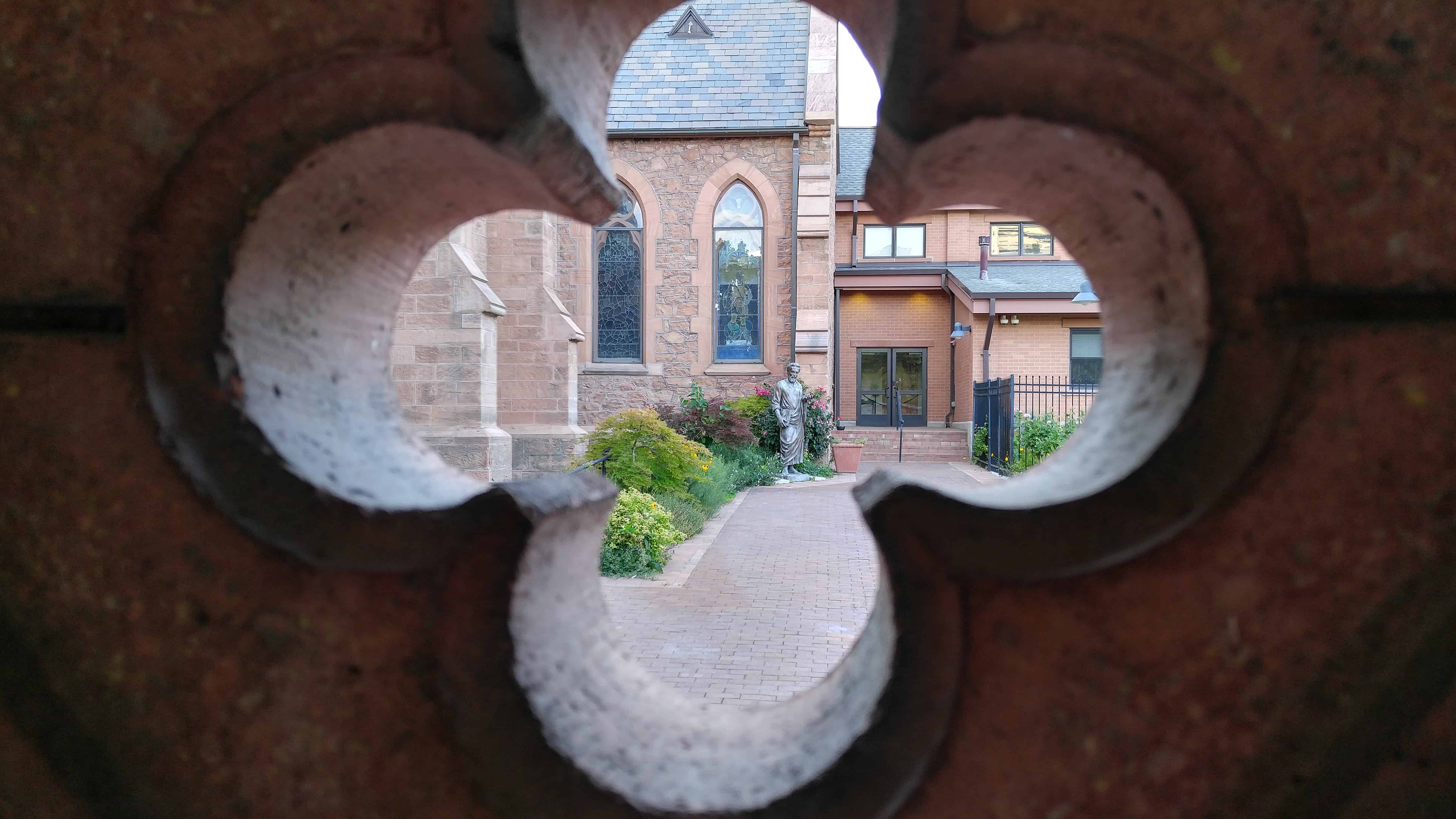
A fire in 1935 gutted the sanctuary, but the church was rebuilt following the original design.
Located in the Central City neighborhood at 231 East 100 South in Salt Lake City, Utah. The building was added to the National Historic Register (#70000630) on September 22, 1970.
The original plan for the Cathedral was drawn by Richard Upjohn. His design called for an east-west transept on a Latin cross plan. The cornerstone was laid in 1870, but only part of the nave was built in 1871. However, the original plan was completed in two later stages, 1882 and 1902.
It was built of red sandstone, cutstone, and rubble, with one story, a basement and a gabled roof. The belfry and chimney are extensions of the façade. The nave windows have Gothic arches; the; gables contain rose windows. Arched roof beams are supported on hammerbeams and stone corbels. The stained glass windows represent the tastes of a ninety-year period and include several from Tiffany Studios.
Several alterations have been made. The east transept and an organ were added in October 1882; the west transept and chancel were added in 1902 (architect: Mr. Hall). The west transept and chancel were rebuilt after fire on March 31, 1935. The interior alterations to the main and second floor were by architects, Snedaker & Macdonald (November 1946). The front was extended with a new vestibule and cloisters were added in 1958 (architect: Ashley T. Carpenter). The balcony and organ were installed at rear of nave in 19&7 by Mr. Carpenter. Present condition of fabric is excellent. The additions obscure, but have not changed, the original building.
St. Mark’s Episcopal Cathedral is the oldest non-Mormon cathedral in Utah and probably the oldest religious structure in continuous use in Salt Lake City. It was designed by famed architect, Richard Upjohn, architect of the Trinity Church, New York City, and founder and first president of the American Institute of Architects. It is said to be the last church designed by Mr. Upjohn and is a good example of his Gothic Revival style. Its location in Utah is significant.
Now owned by the Corporation of the Episcopal Church of Utah, 1911, St. Mark’s Episcopal Cathedral, Parrish of Salt Lake City, Utah, who held the cornerstone centennial celebration April, 1970. This lovely cathedral sits in downtown Salt Lake City as a monument to a great architect and pioneer church construction in Utah.
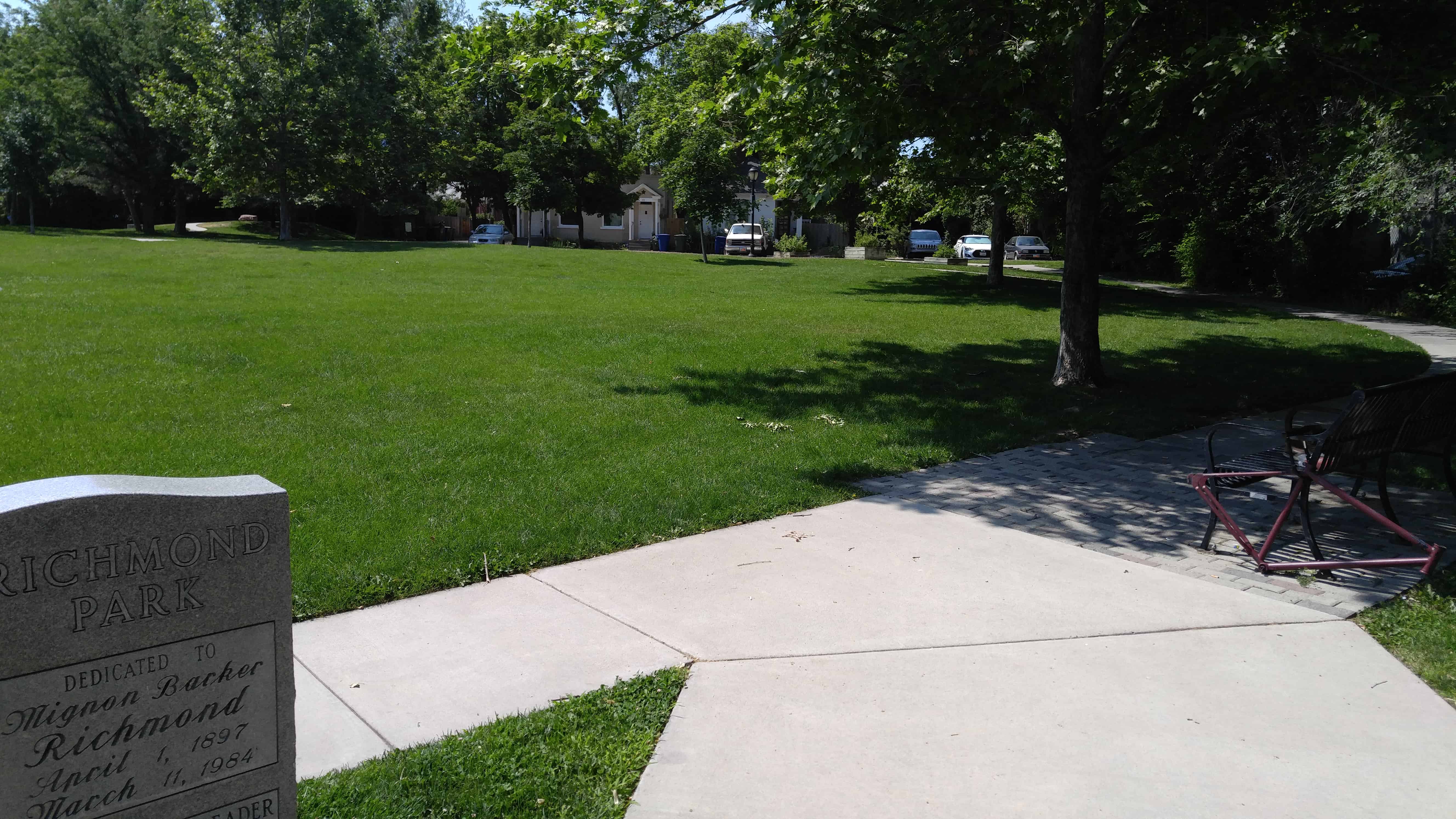
One of Salt Lake City’s Parks, for others see the list here.
Dedicated to Mignon Backer Richmond – April 1, 1897 – March 11, 1984
Utah’s first black college graduate – Utah State University, June 1921.
Educator-Civic Leader – Humanitarian.
Mignon Richmond was an activist and community leader that left her mark on Salt Lake City, yet her name is fading from the minds of Salt Lake’s current residents. Utah State history has dedicated space to tell her legacy through photographs, artifacts, and even her voice. Come to the Rio Grande and learn the story of Mignon and pass it on.
Constructed in 1918, this Tudor Revival Style house was built for Willard Tellé and Caroline Y. Cannon, who had purchased the land from Loren Price Jr. in 1917. Character defining architectural features of the home includes its asymmetry, half-timbering, multi-gabled roof, and casement windows with leaded glass.
Willard, a son of George Q. Cannon, followed in his father’s footsteps in the business world. After attending the University of Utah and the Massachusetts Institute of Technology, he became president and general manager of the Utah-Idaho Sugar Company.
The home had been converted to a 4-plex apartment in the late-1940s and was carefully restored in a major renovation in 2014.
Heber C. Kimball, pioneer of 1847 and first counselor to Brigham Young, was allotted the land adjacent to this monument upon which to build homes for his family, the majority of whom arrived in 1848. He and Newel K. Whitney dedicated a plot of ground one-half block east as a private cemetery for both families. Buried therein are 33 Kimballs, 13 Whitneys and 10 others. Both Heber C. Kimball and Newel K. Whitney are interred in this sacred spot.
This is a private cemetery with- a large central monument to Heber C. Kimball and Newell K. Whitney, A stone retaining wall and an iron fence separate the cemetery from the street.
Heber C. Kimball was born June 14, 1801, at Sheldon, Vermont. He became an £ apostle of the L.D.S. Church in 1835 and in 1847 first counselor to President Brigham Young, in whose company he came to the Salt Lake Valley the same year. He received a large tract of land north of the Temple Square as his inheritance “where he settled his family and constructed mills. He died in 1868.” Whitney was Born in 1795, and was the second presiding bishop of the L.D.S. Church. He came to Utah in 1848 and died here in 1850. Whitney’s wife, Ann Houston Whitney, was the first person buried there after the cemetery was dedicated in 1848.
Thirty-three Kimballs, thirteen Whitneys, and ten others are reported to have been buried here before the site was closed in 1889. Since 1931 the property has been held and maintained by the L.D.S. Church.
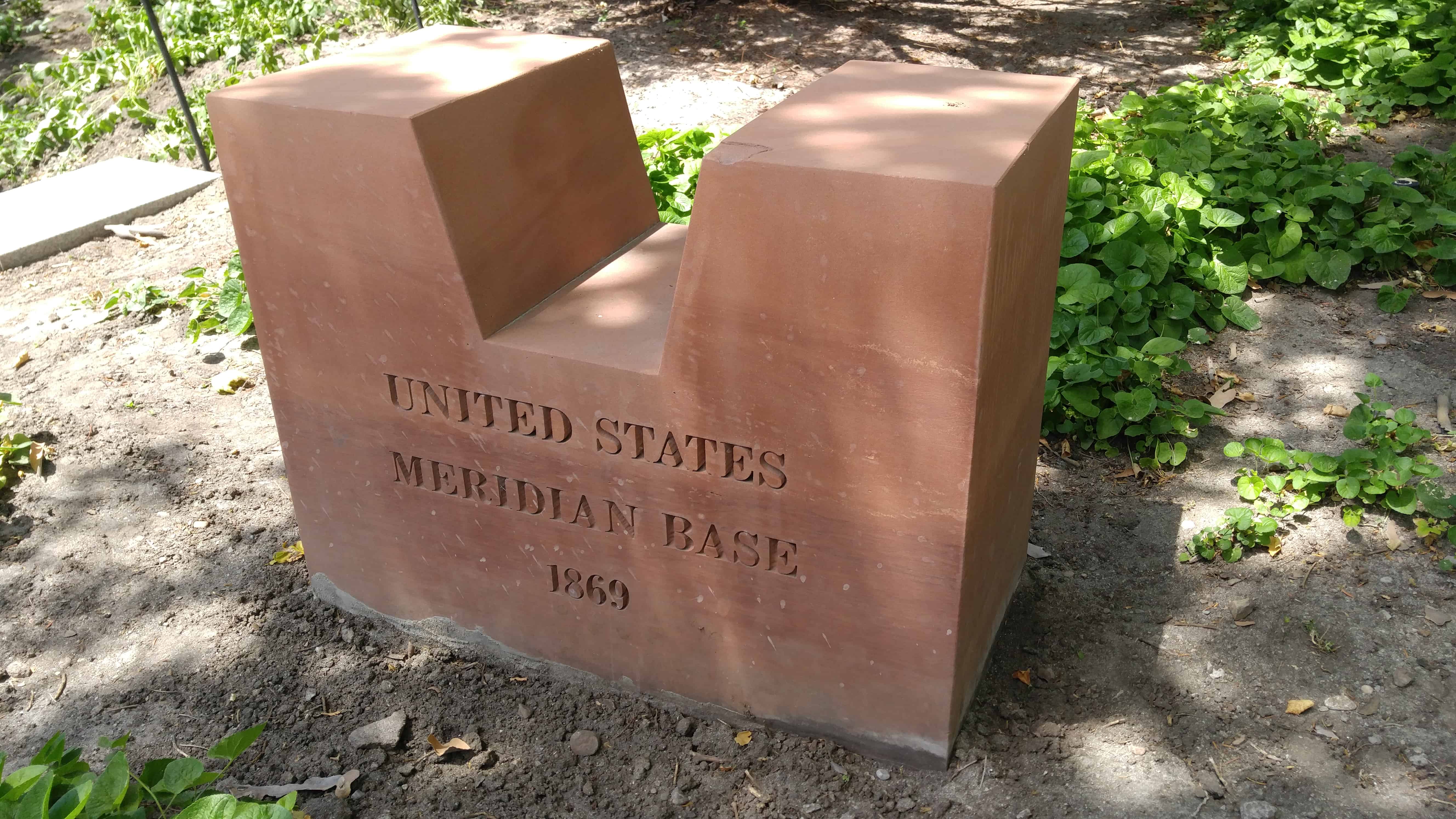
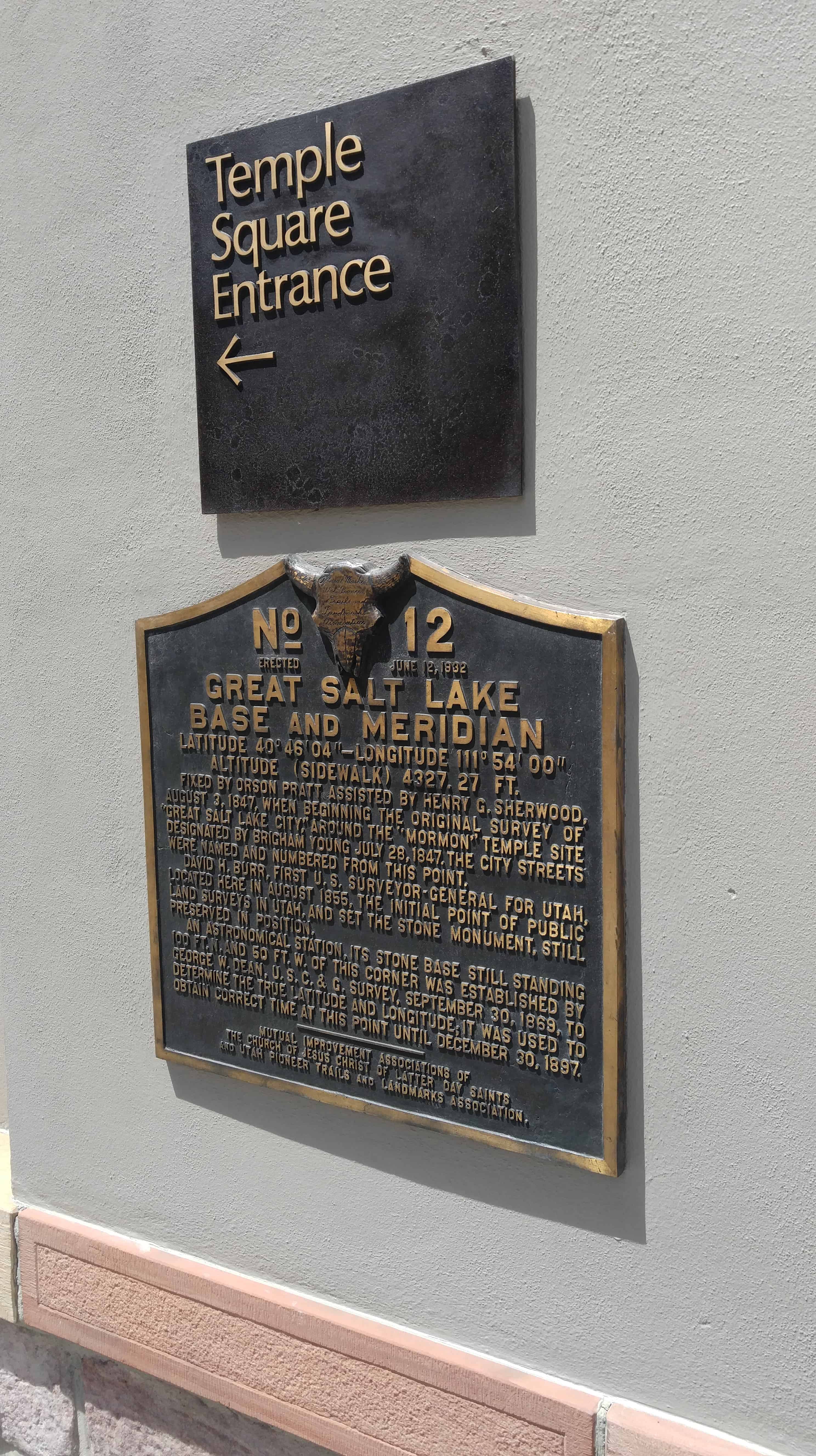
“An astronomical station, its stone base still standing 100 ft. N. and 50 ft. W. of this corner was established by George W. Dean, U.S.C.&G. survey, September 30, 1869, to determine the true latitude and longitude; it was used to obtain correct time at this point until December 30, 1897.” (from the plaque on for the Great Salt Lake Base and Meridian)
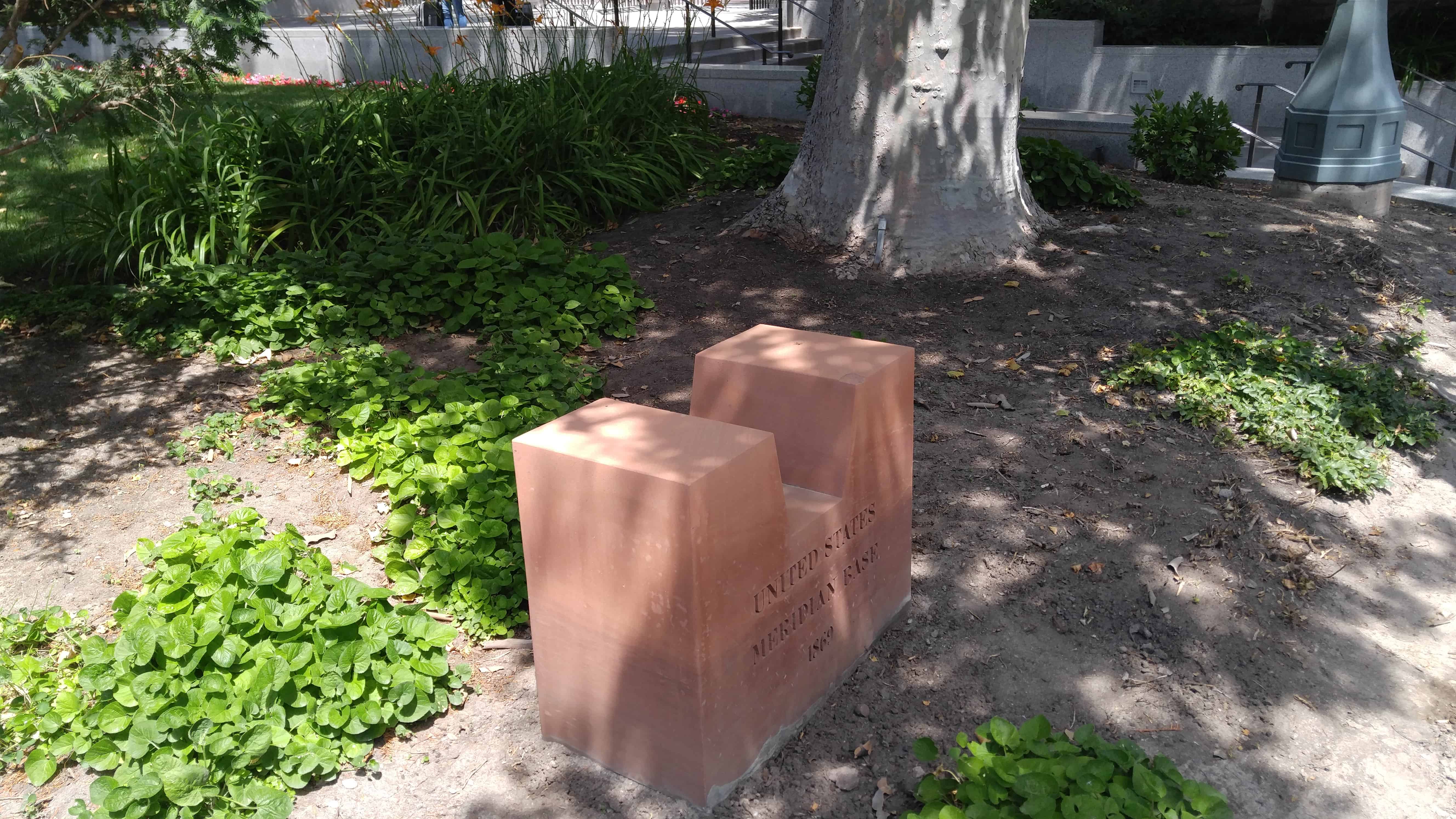
The Great Salt Lake Base and Meridian Monument and Plaque, The stone was placed on August 3, 1847 when the original survey of “Great Salt Lake City” began. The city streets were all surveyed and numbered from this point.
Fixed by Orson Pratt assisted by Henry G. Sherwood, August 3, 1847, when beginning the original survey of “Great Salt Lake City,” around the “Mormon” Temple site designated by Brigham Young July 28, 1847. The city streets were named and numbered from this point. David H. Burr, first U.S. Surveyor-General of Utah, located here in August 1855, the initial point of public land surveys in Utah, and set the stone monument, still preserved in position. An astronomical station, its stone base still standing 100 ft. N. and 50 ft. W. of this corner was established by George W. Dean, U.S.C.&G. survey, September 30, 1869, to determine the true latitude and longitude; it was used to obtain correct time at this point until December 30, 1897.
See other historic markers in the series on this page for UPTLA/SUP Markers.
Undoubtedly the most well known monument in Salt Lake City, it sits at the base reference point for the original plat map and the current address numbering system.
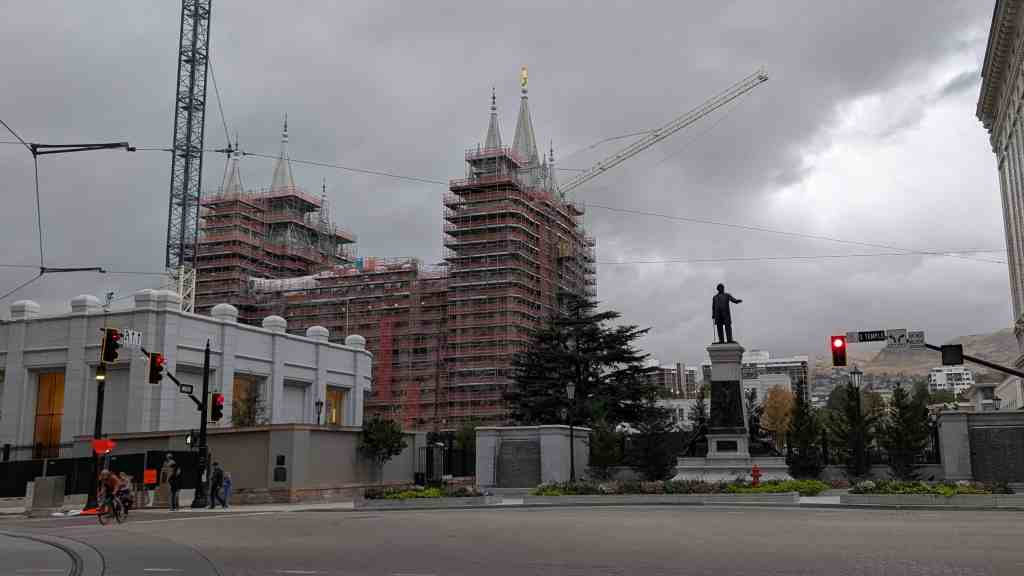
In Honor Of Brigham Young and The Pioneers
On the reverse is a plaque that names the entire complement of the original party:
The names of the PIONEERS who arrived in this valley, July 24, 1847. *Signifies those now living. The unmarked ones are all deceased.The names of 143 men (including 3 colored servants), 3 women, and 2 children. 27 of those listed are marked as still among the living at time of dedication, 50 years to the day from the initial arrival in the valley. The entire company and outfit consisted of 143 men, 3 women, 2 children 70 wagons, 1 boat, 1 cannon, 93 horses, 52 mules, 66 oxen, 19 cows. This monument erected by public subscription. Was unveiled July 24, 1897. The monument is topped by Brigham Young himself, flanked at a lower level by a frontiersman and a native American. These figures represent those who precede the Pioneers in the valley and gave the immigrants invaluable aid in settling the valley. The monument is faced with a plaque showing a Mormon family going about routine duties during the trek west.
The Utah Museum of Contemporary Art has been an award-winning aesthetic force and community leader since it was established in 1931. Located in the heart of downtown Salt Lake City, UMOCA encourages exploration into what it means to exist in today’s world through art that inspires imagination, stimulates thought, and transforms society. The Museum connects people around the contemporary art practice of Utah and beyond to shape an engaged and thoughtful global citizenry. UMOCA strives to be a place where all points of view, experiences, and ages feel welcome to explore the pressing issues of our time through socially relevant art exhibitions and programming.
UMOCA is a five-time recipient of funding from the Andy Warhol Foundation and a 2015 and 2016 recipient of the Art Works Grant awarded by the National Endowment for the Arts .
I found the Urban Adventure Quest online and it looked like a lot of fun, I took a friend and followed the clues around downtown Salt Lake City exploring and seeing a lot of things that most people would miss in their hurry.
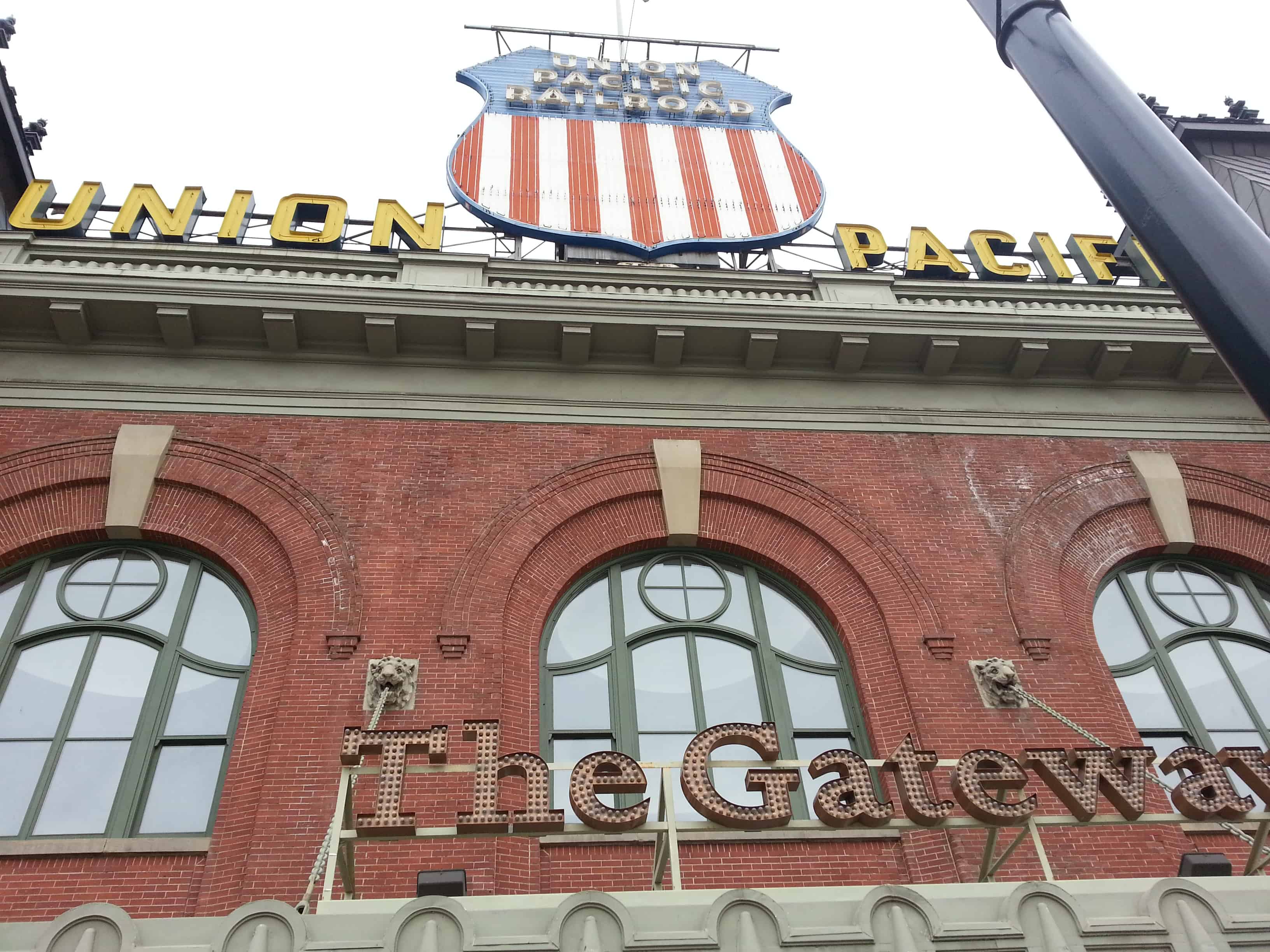
The Union Pacific Depot, Temple Square, City Creek, the State Capitol and other locations will be visited. I would suggest this to anyone with a few hours and a love for exploring.