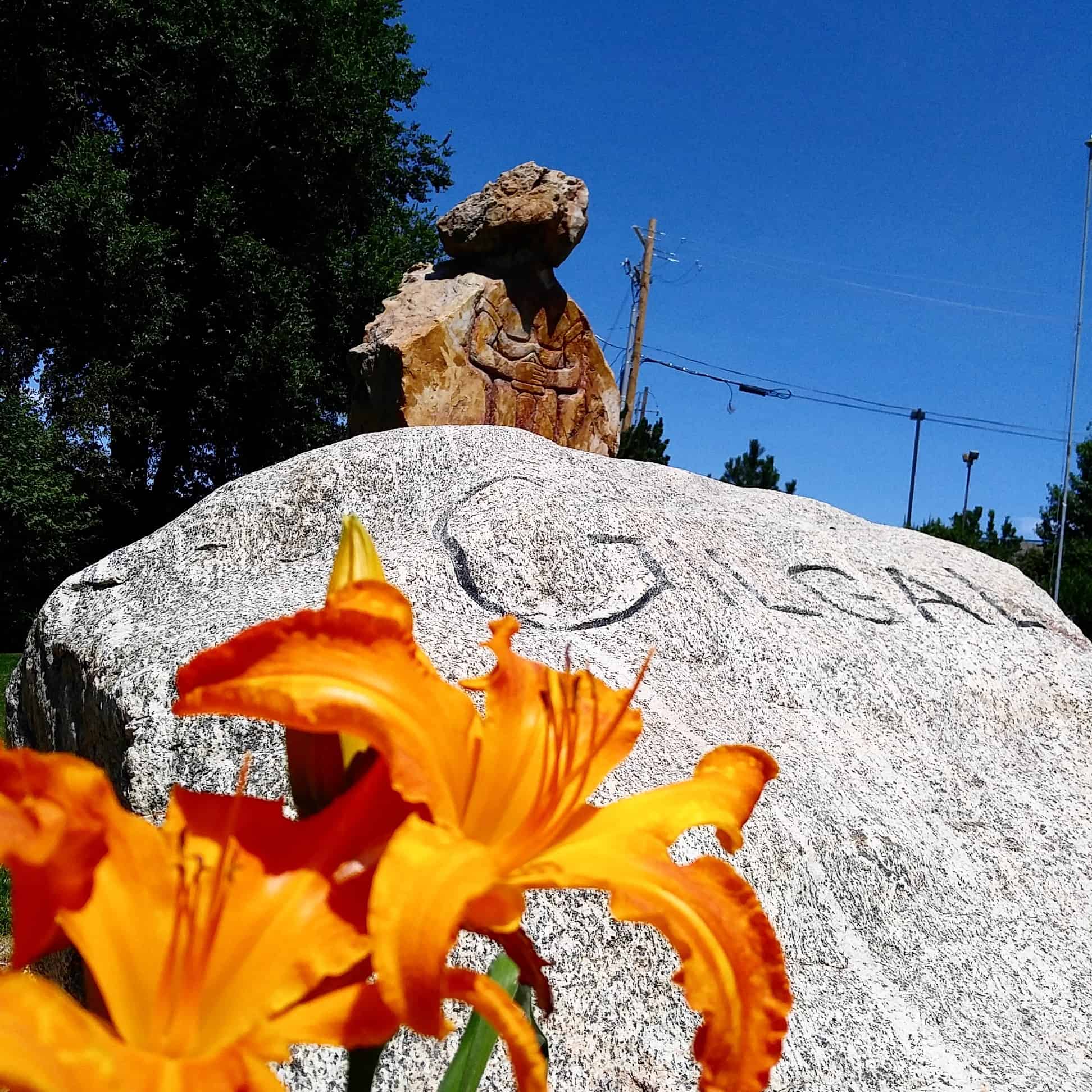
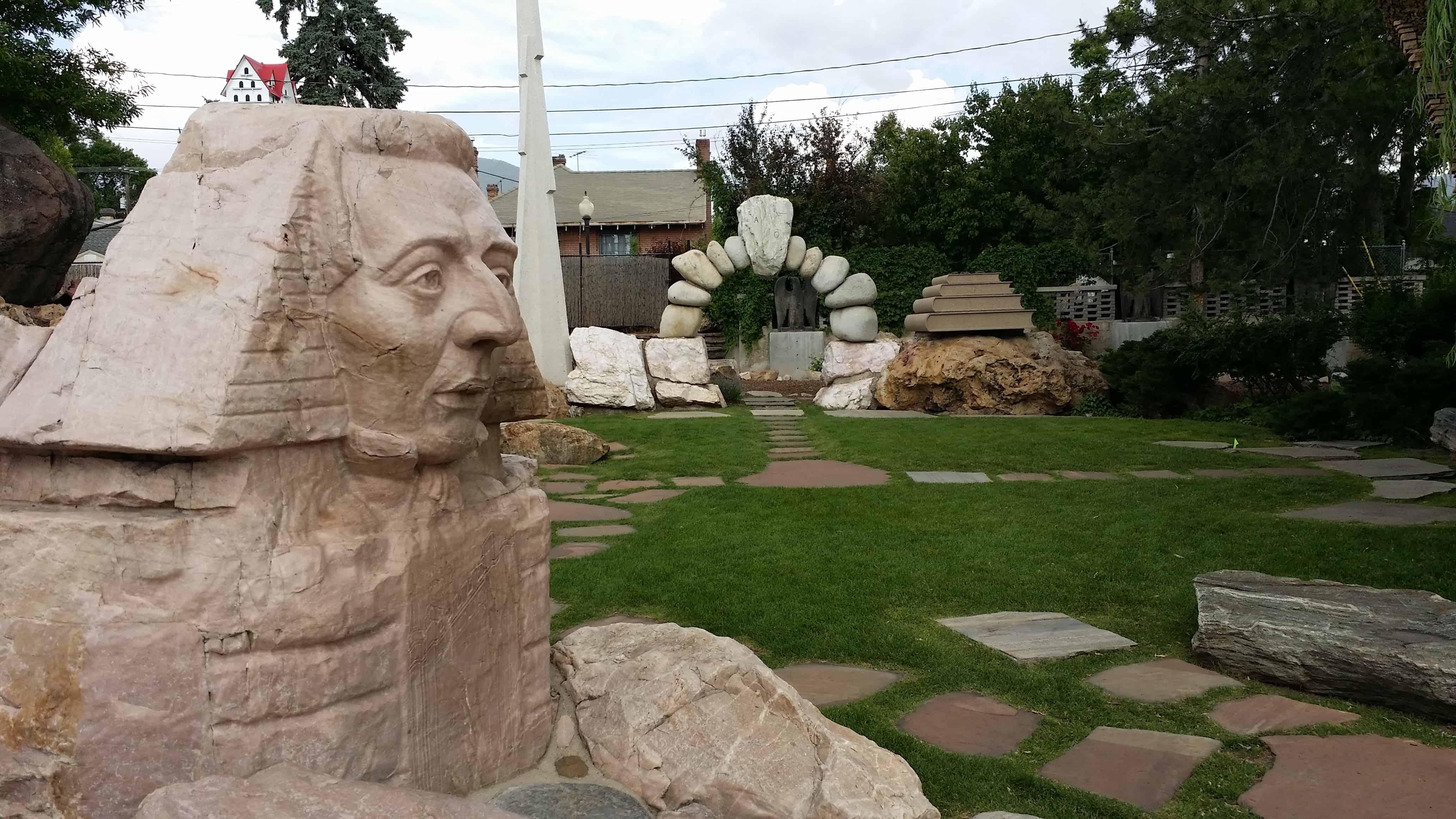
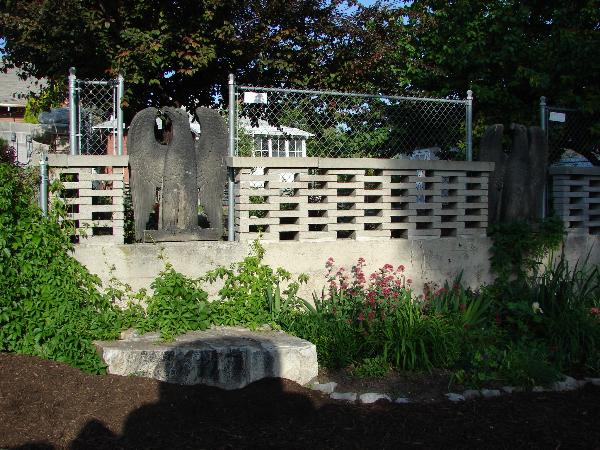
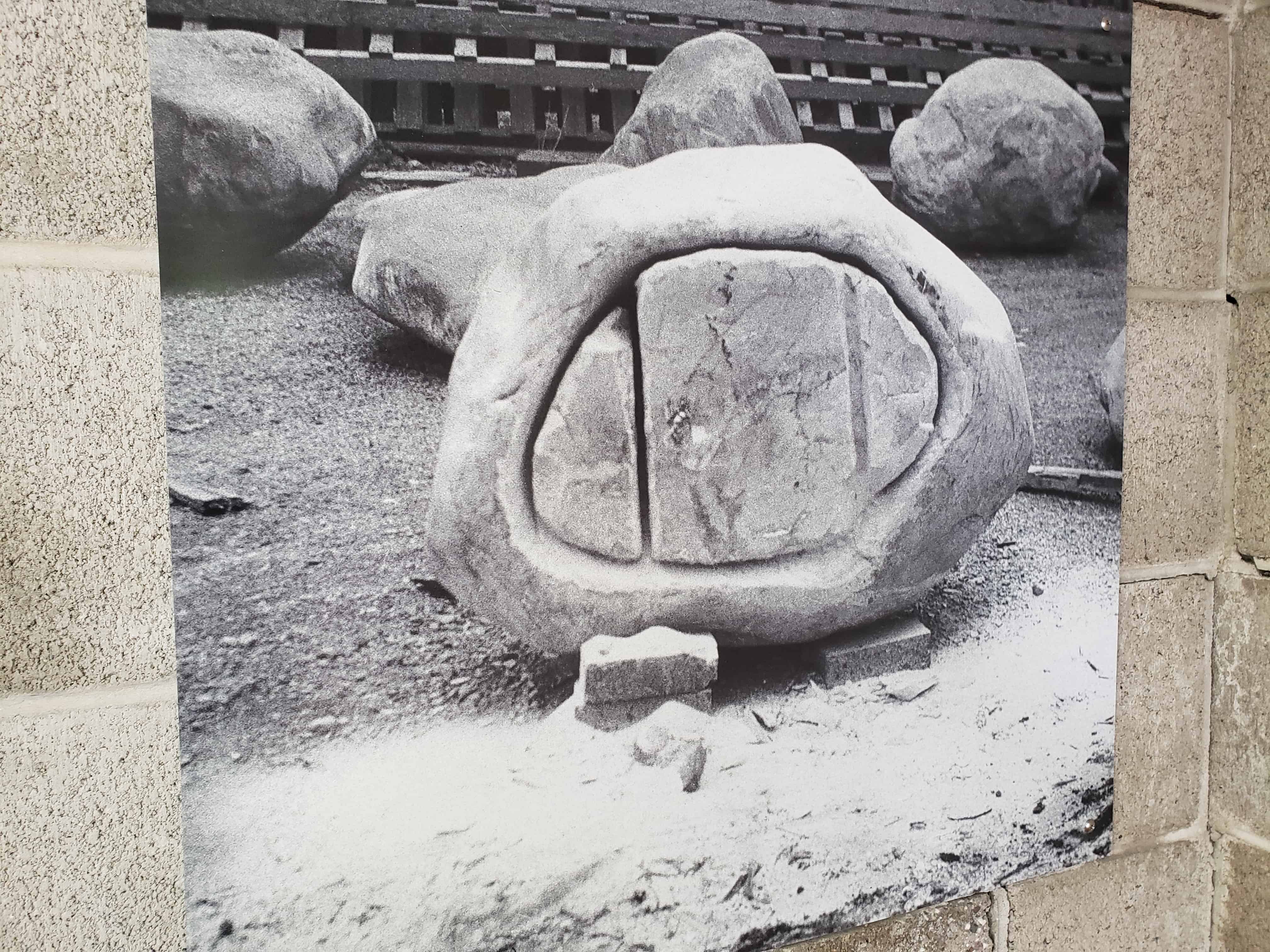
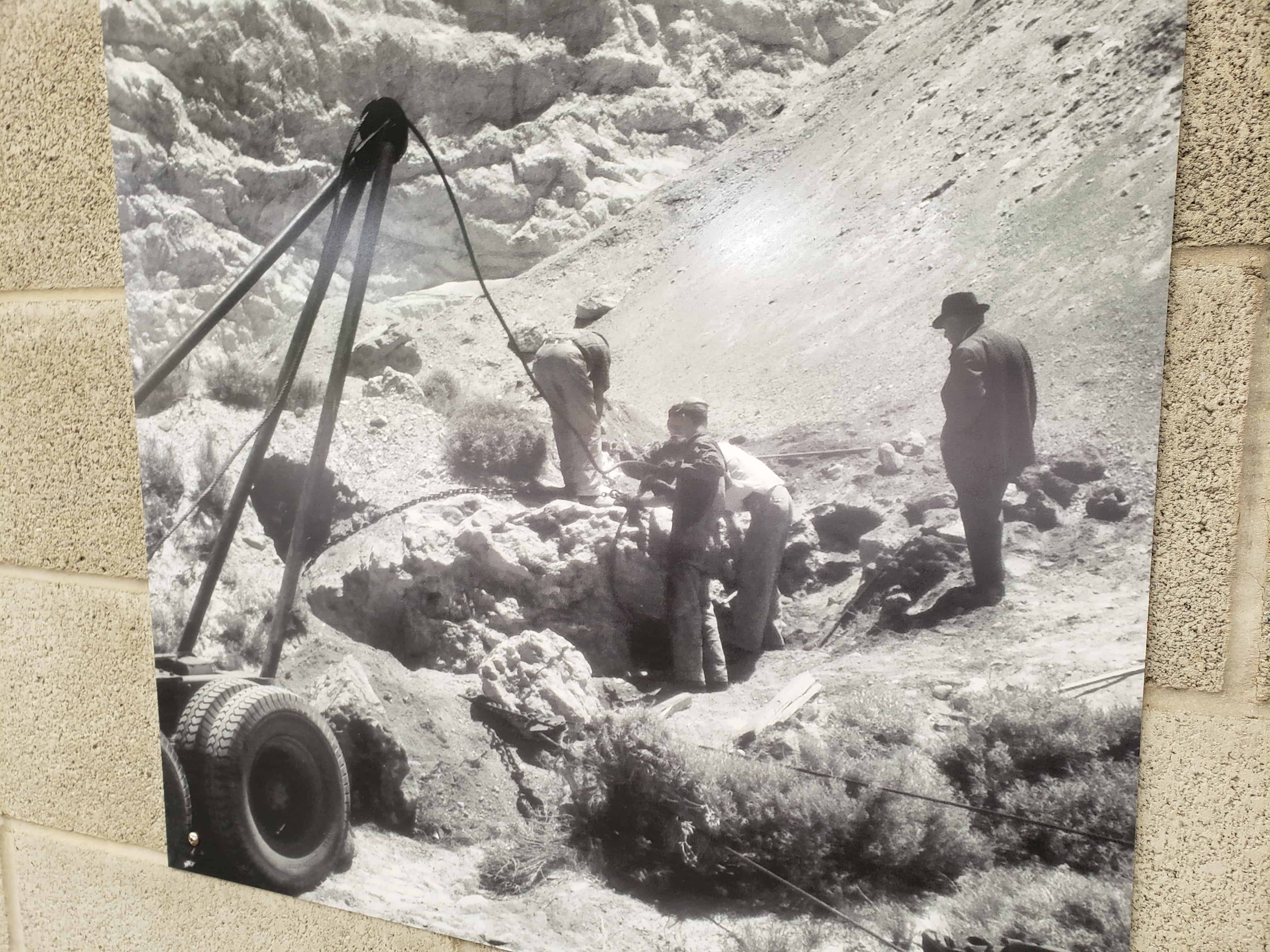
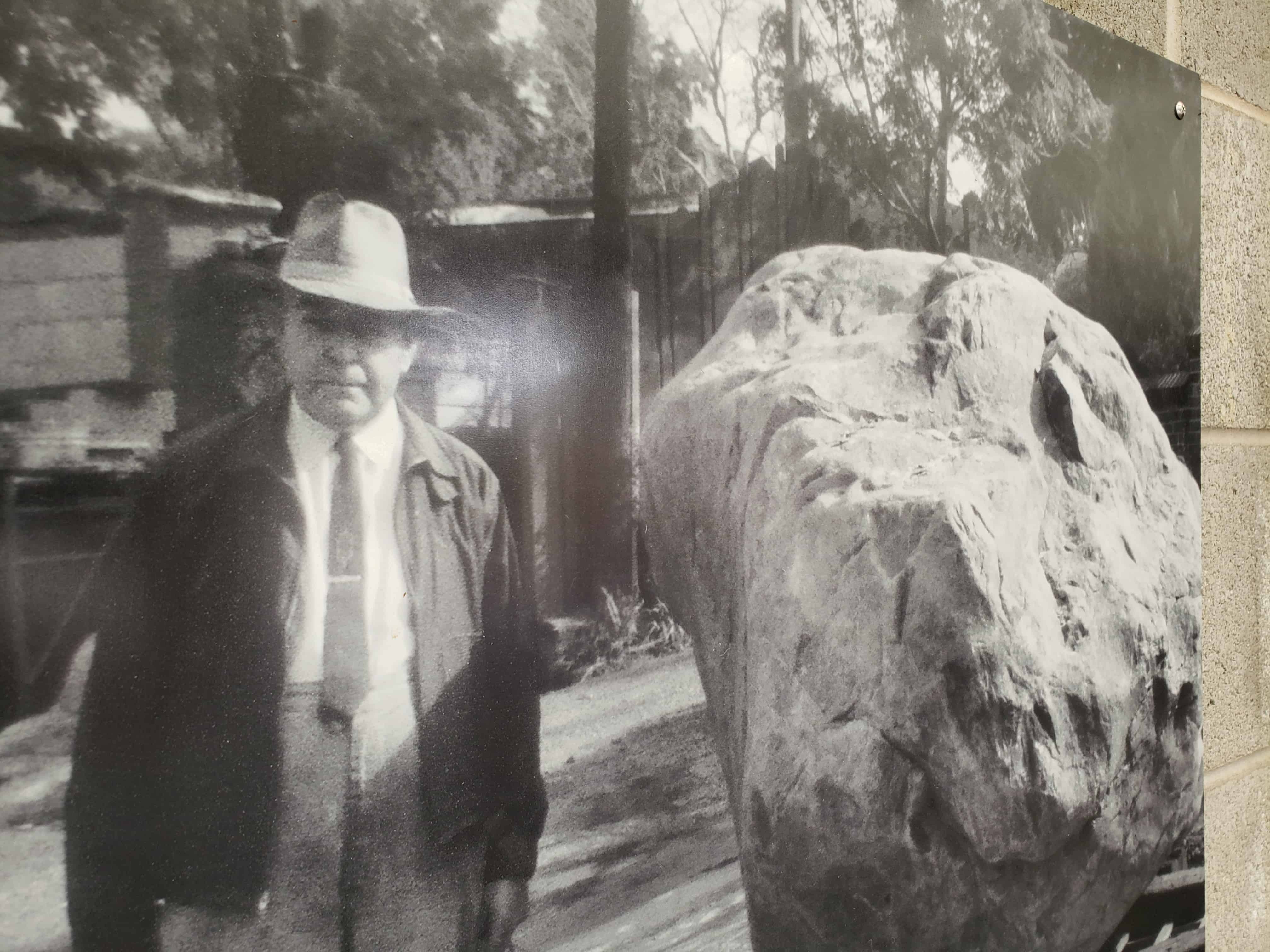
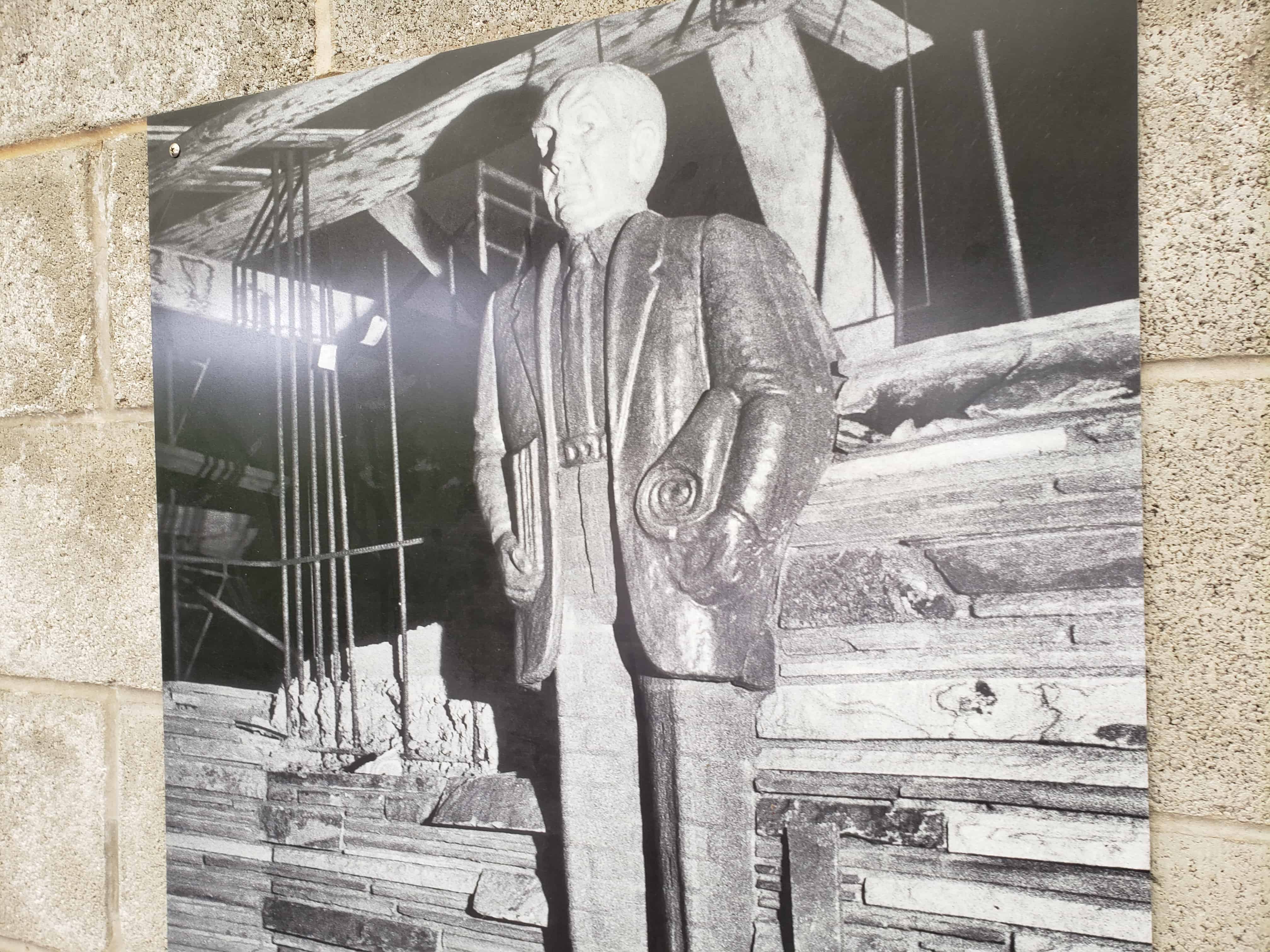
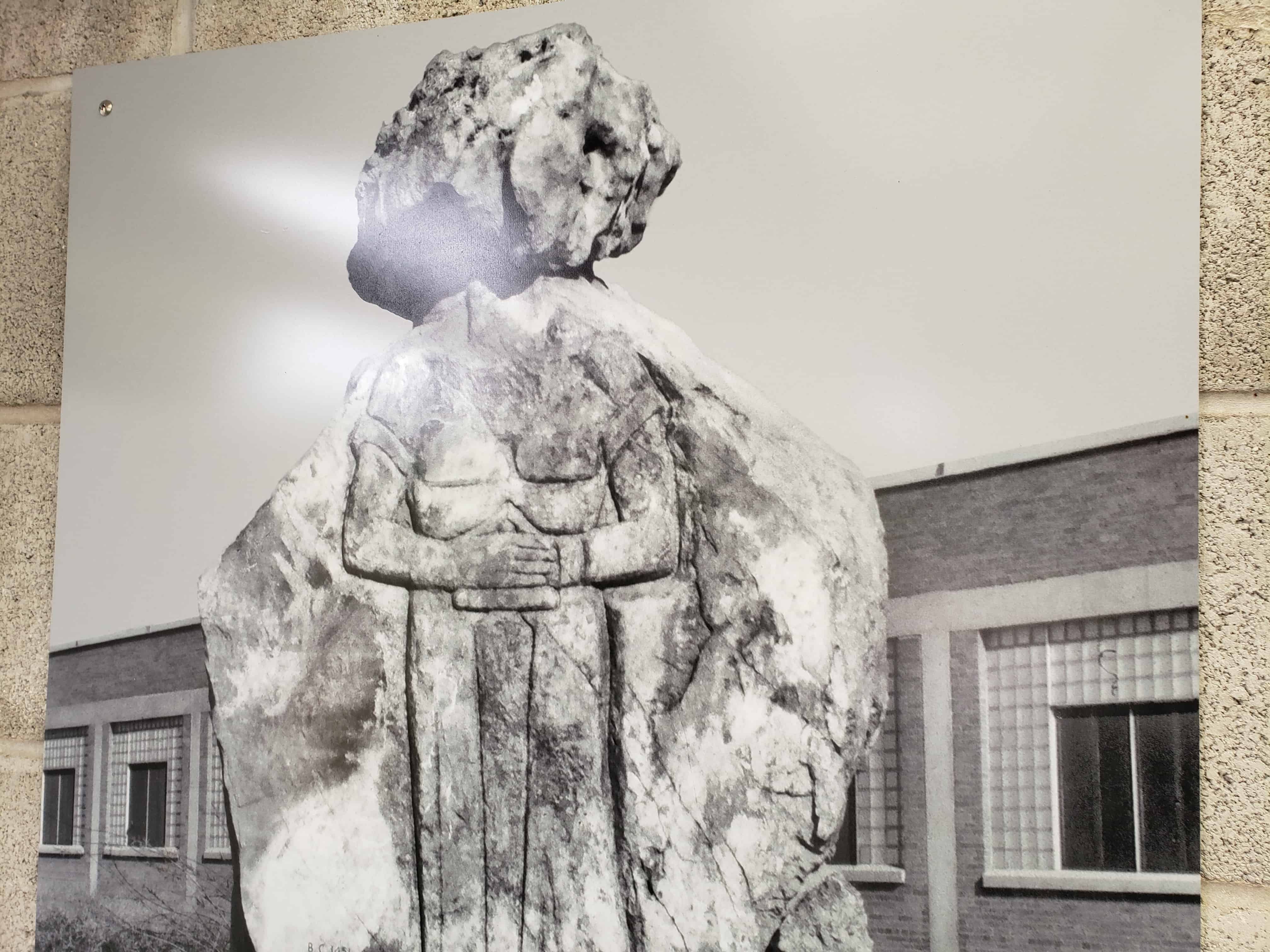
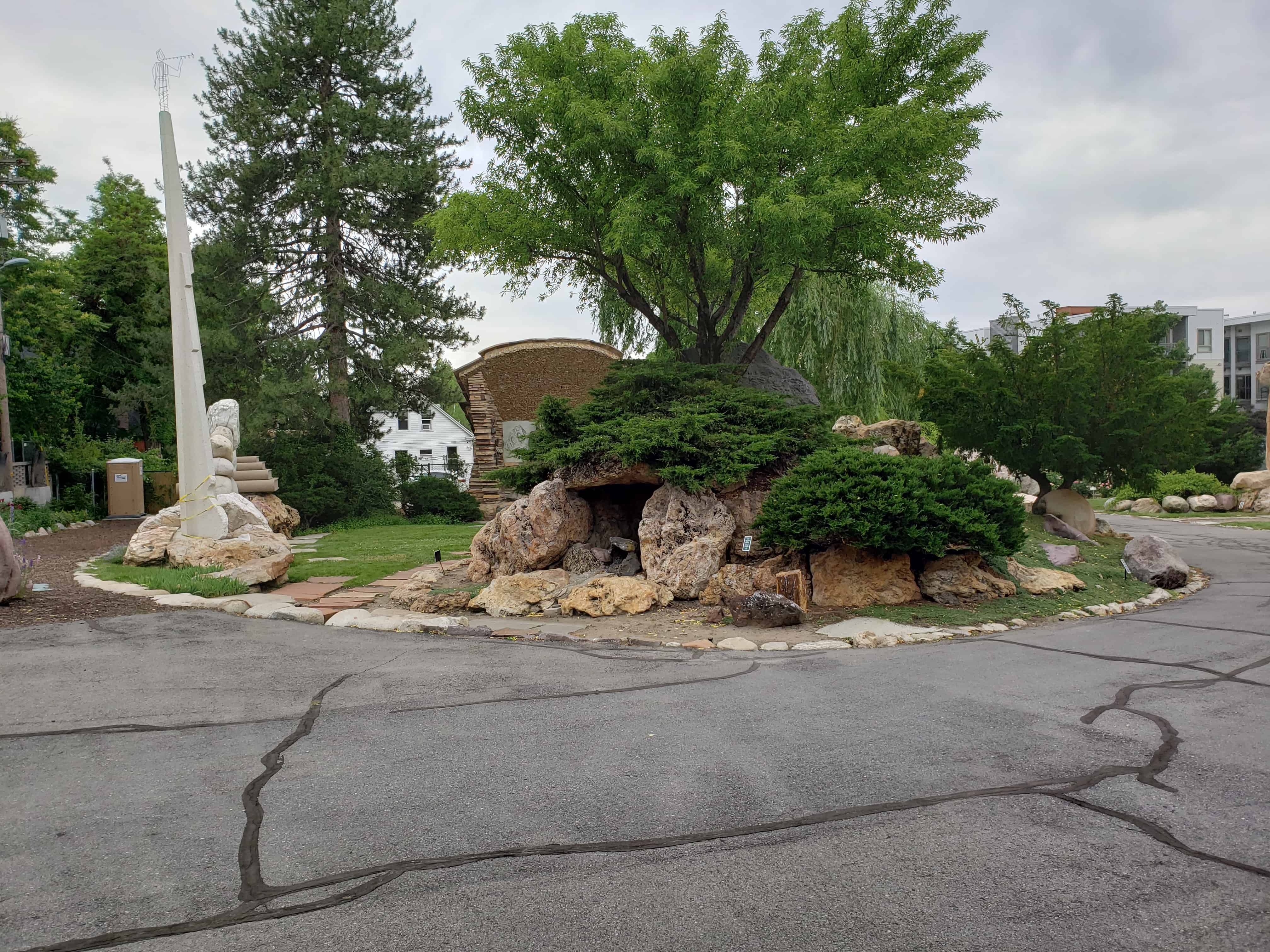
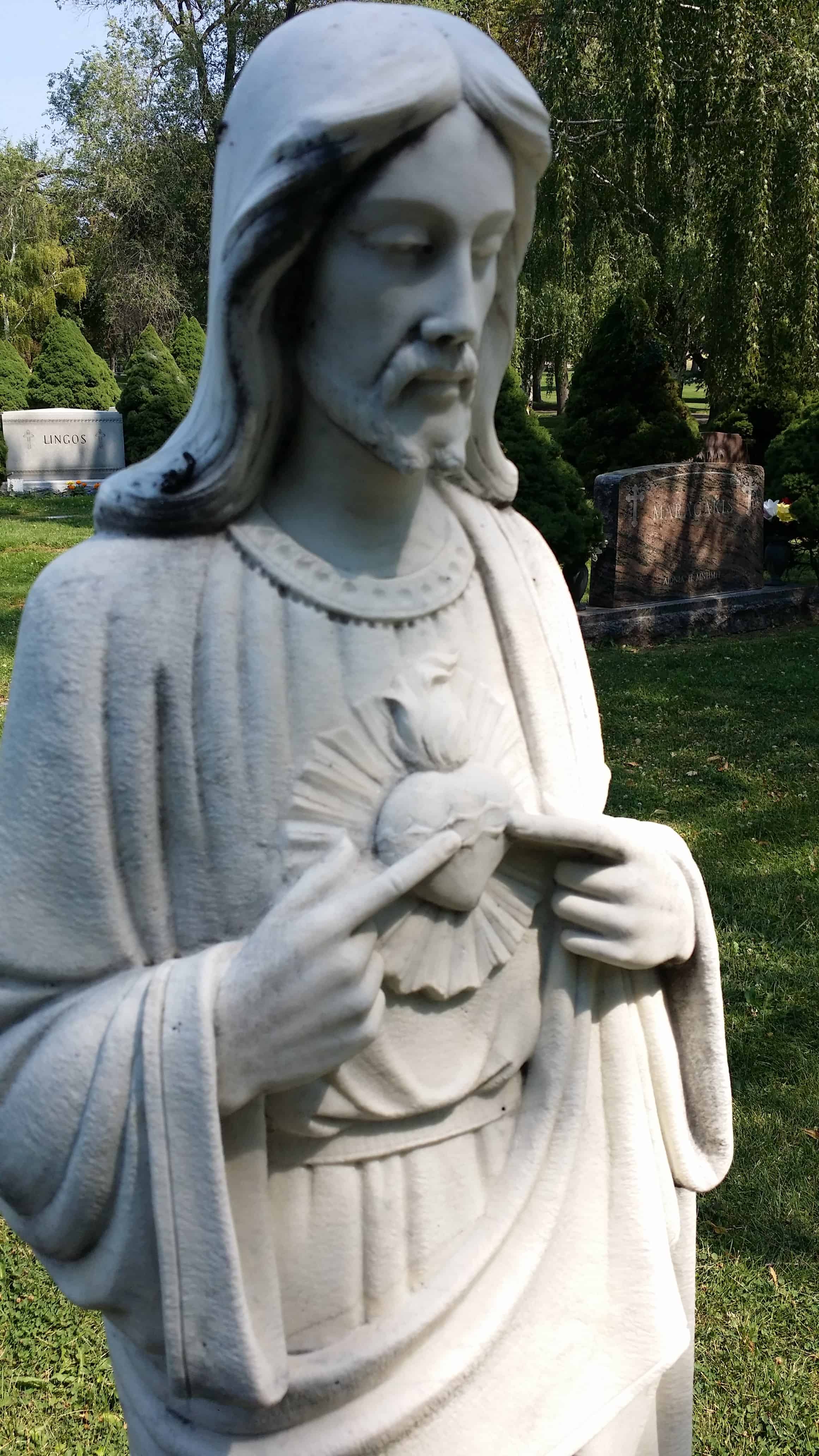
Located at 749 East 500 South in Salt Lake City, Gilgal Sculpture Garden was envisioned, designed and created by Thomas Battersby Child, Jr. in the mid-twentieth century.
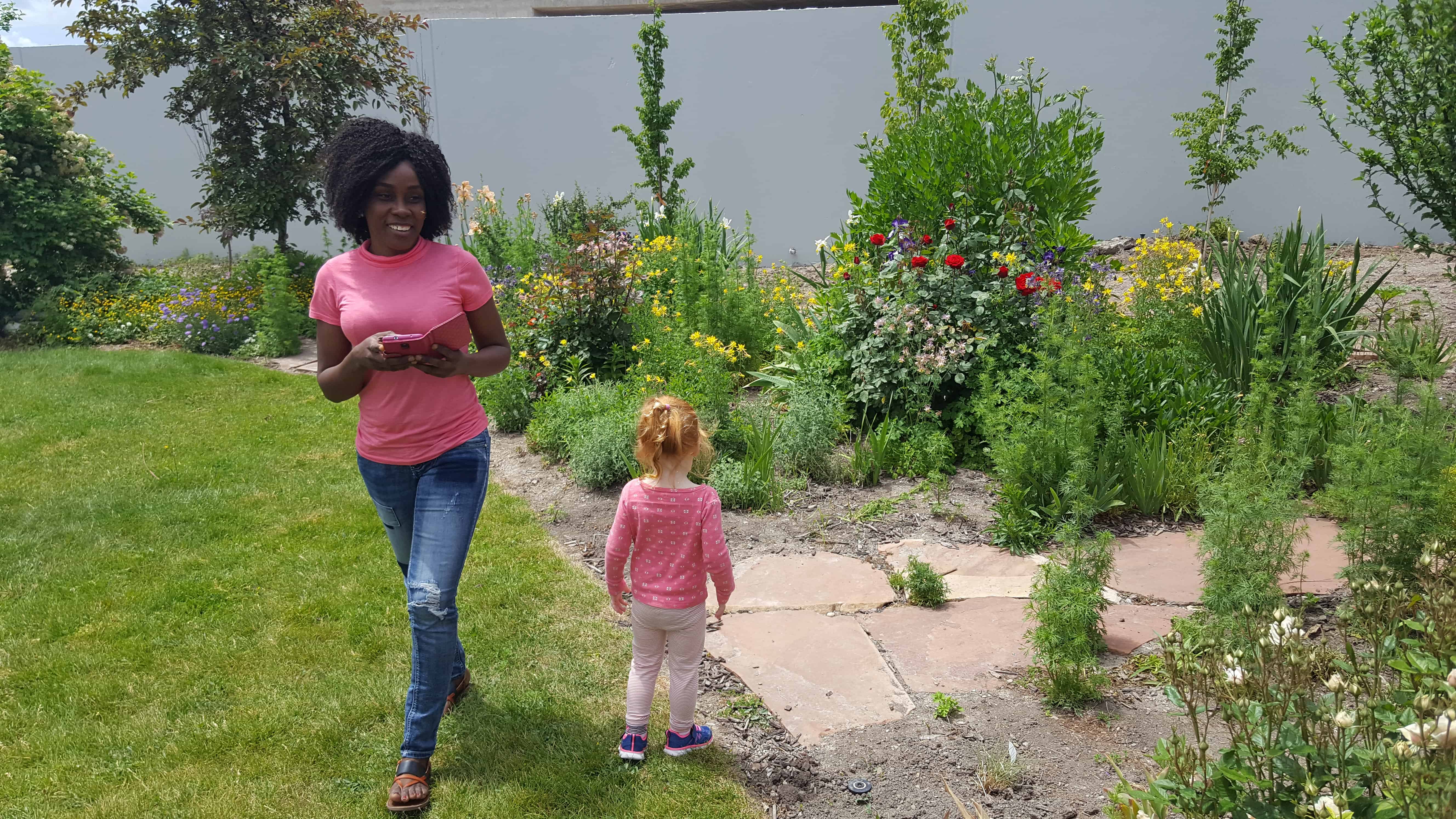
Tucked in the middle of the block behind houses and businesses, many are still unaware of its existence and enjoy a true sense of discovery when they visit the garden for the first time.
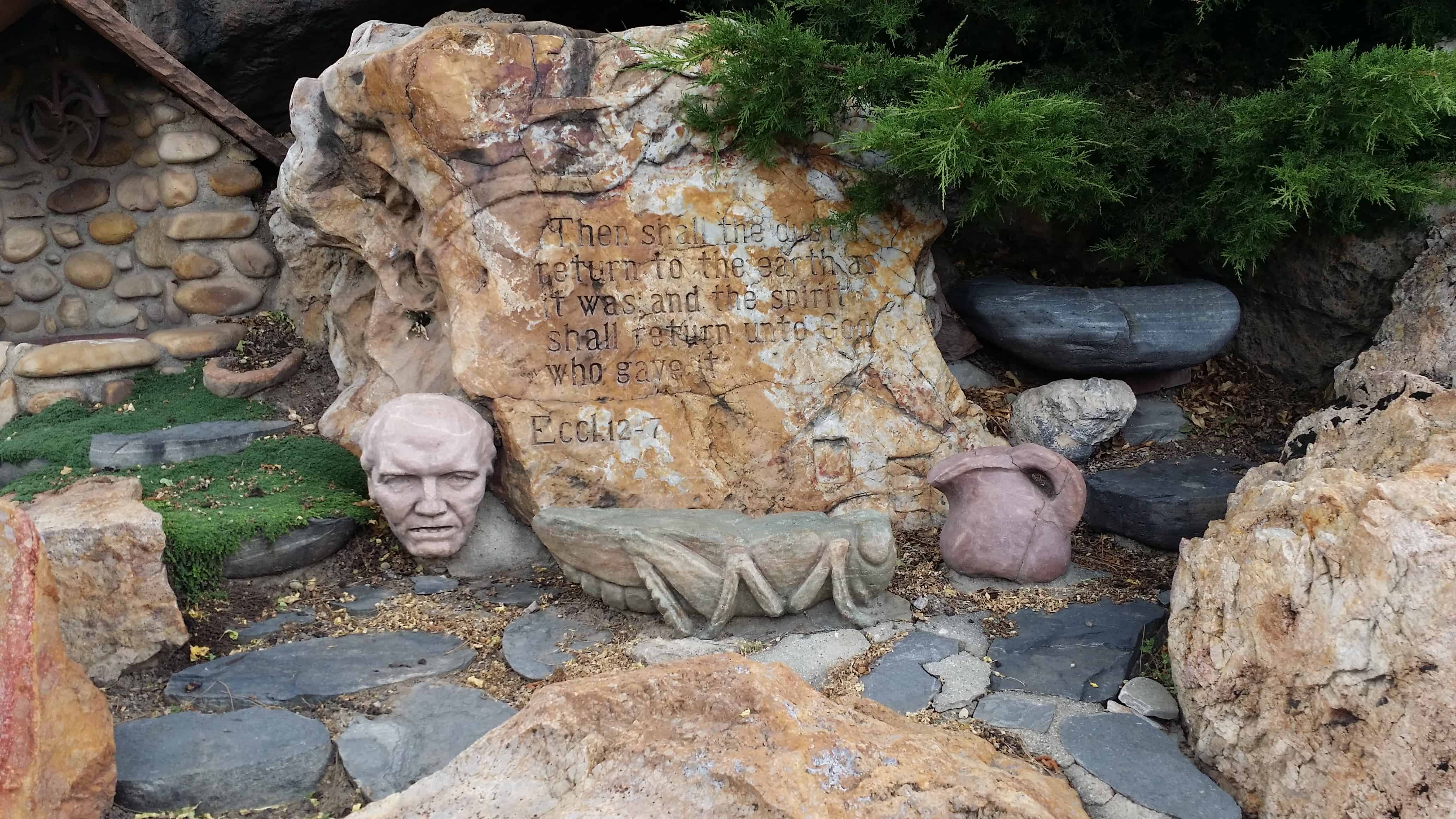
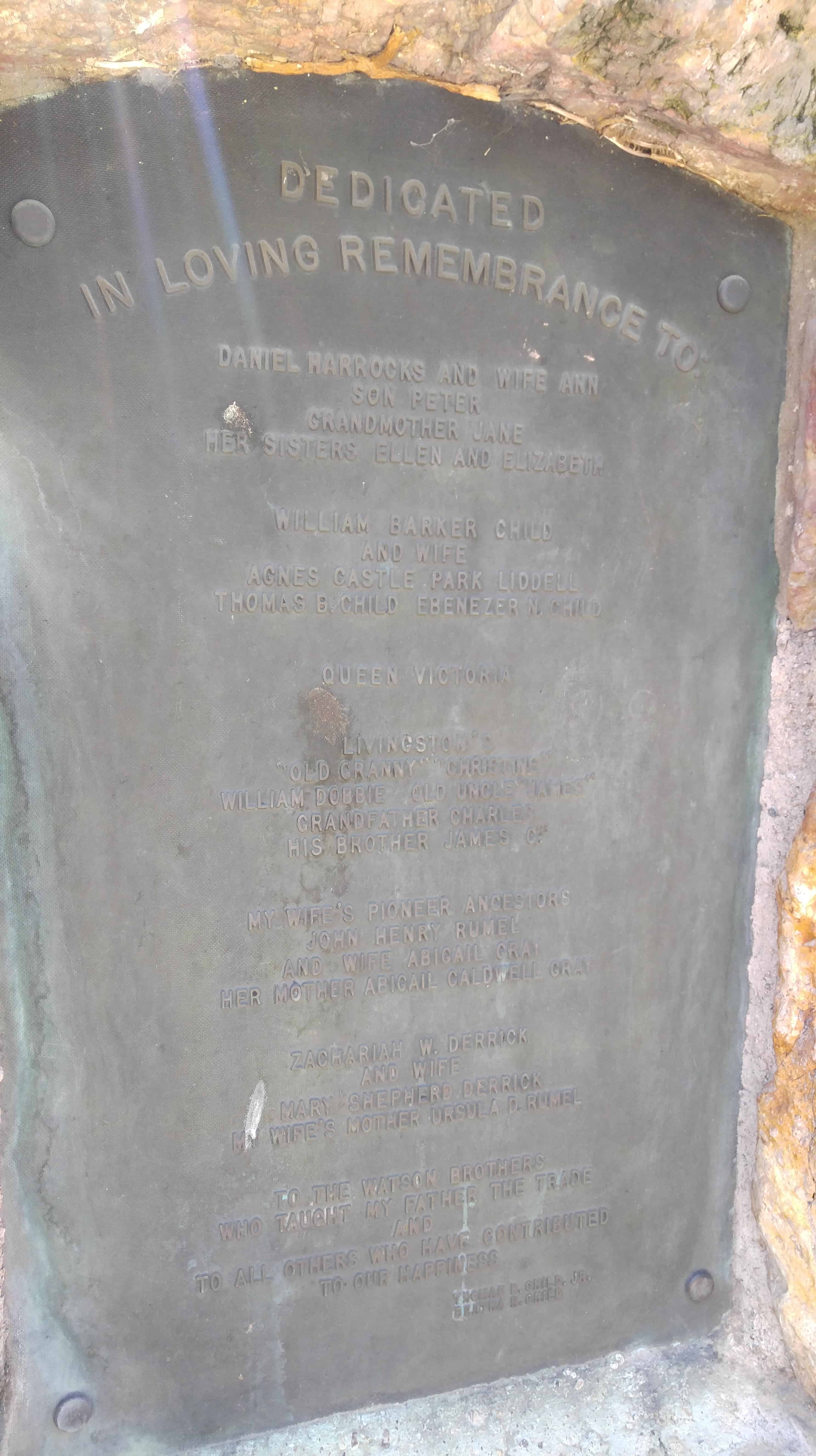
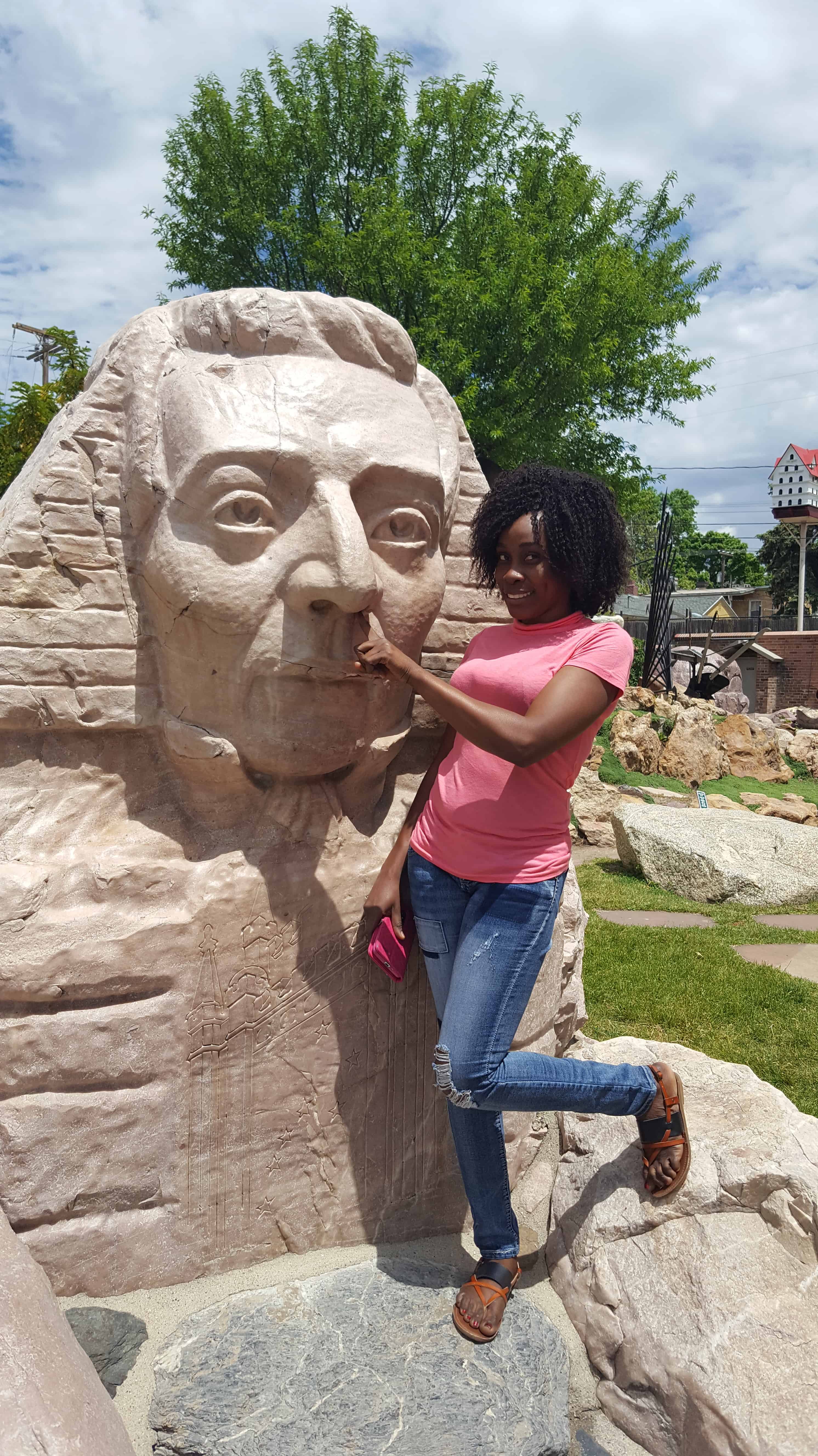
Gilgal Sculpture Garden contains 12 original sculptures and over 70 stones engraved with scriptures, poems, and literary texts. As a whole, Gilgal Sculpture Garden is significant as the only identified “visionary art environment” in Utah.
The public is invited to visit the garden seven days a week. There is no admission charge. Walking tour brochures are available at the garden. Visiting hours: April/September – 8 am to 8 pm October/March – 9 am to 5 pm Closed New Year Day; Thanksgiving; Christmas.(*)
Gilgal Garden is the legacy of Thomas Child’s desire to give physical form to his deep-felt beliefs. “If you want to be brought down to earth in your thinking and studying, try to make your thoughts express themselves with your hands,” Child wrote. The garden contains twelve original sculptural arrangements and over 70 stones engraved with scriptures, poems, and philosophical texts. Each represents an idea that rang of truth to Child in his life-long spiritual quest. Together, the sculptures and stones create a landscape of meaning and a unique work of art.
Child shared Gilgal Garden with thousands of visitors during his lifetime. He hoped the garden would inspire viewers to ponder “the unsolved mysteries of life” and struggle to find their own answers. Child was aware that many people would find Gilgal Garden strange, but hoped they would accept its challenge. “You don’t have to agree with me,” he explained. “You may think I am a nut, but I hope I have aroused your thinking and curiosity.”
Child began work on Gilgal Garden in 1945, when he was 57 years old. By then, he had already led a successful career as a masonry contractor, married and raised a family, been a leader in community affairs, and served as a bishop of the LDS Tenth Ward for over 19 years. Child’s passion for his garden consumed much of his time and money until his death in 1963.
With the completion of the transcontinental railroad in 1869, the isolation of Salt Lake City was broken, and the Church of the Latter Day Saints witnessed an ever-increasing non-Mormon population in their city. Sheldon Jackson recruited newly ordained home missionary Josiah Welsh (1841–1876) to organize a Protestant congregation.
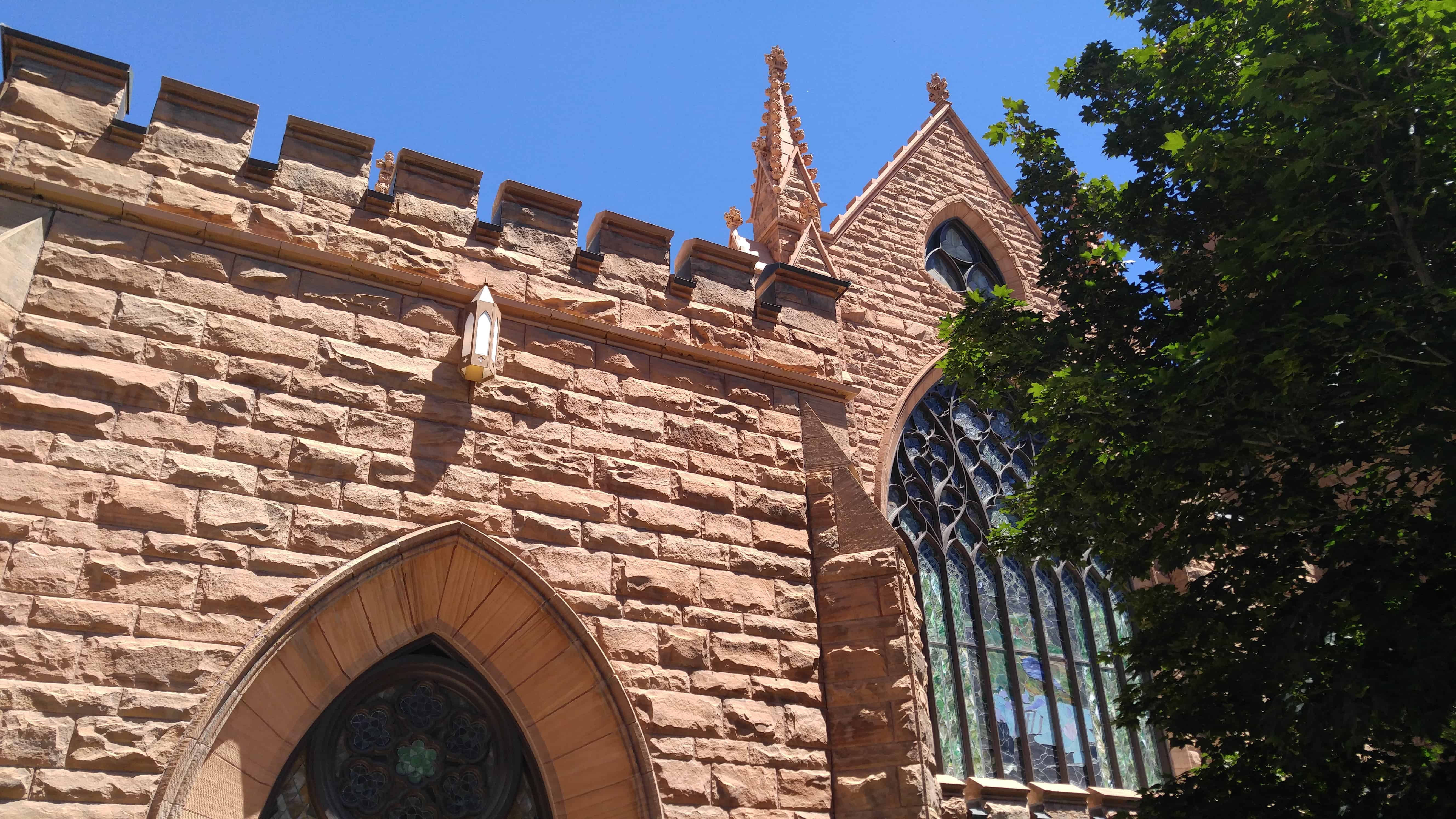
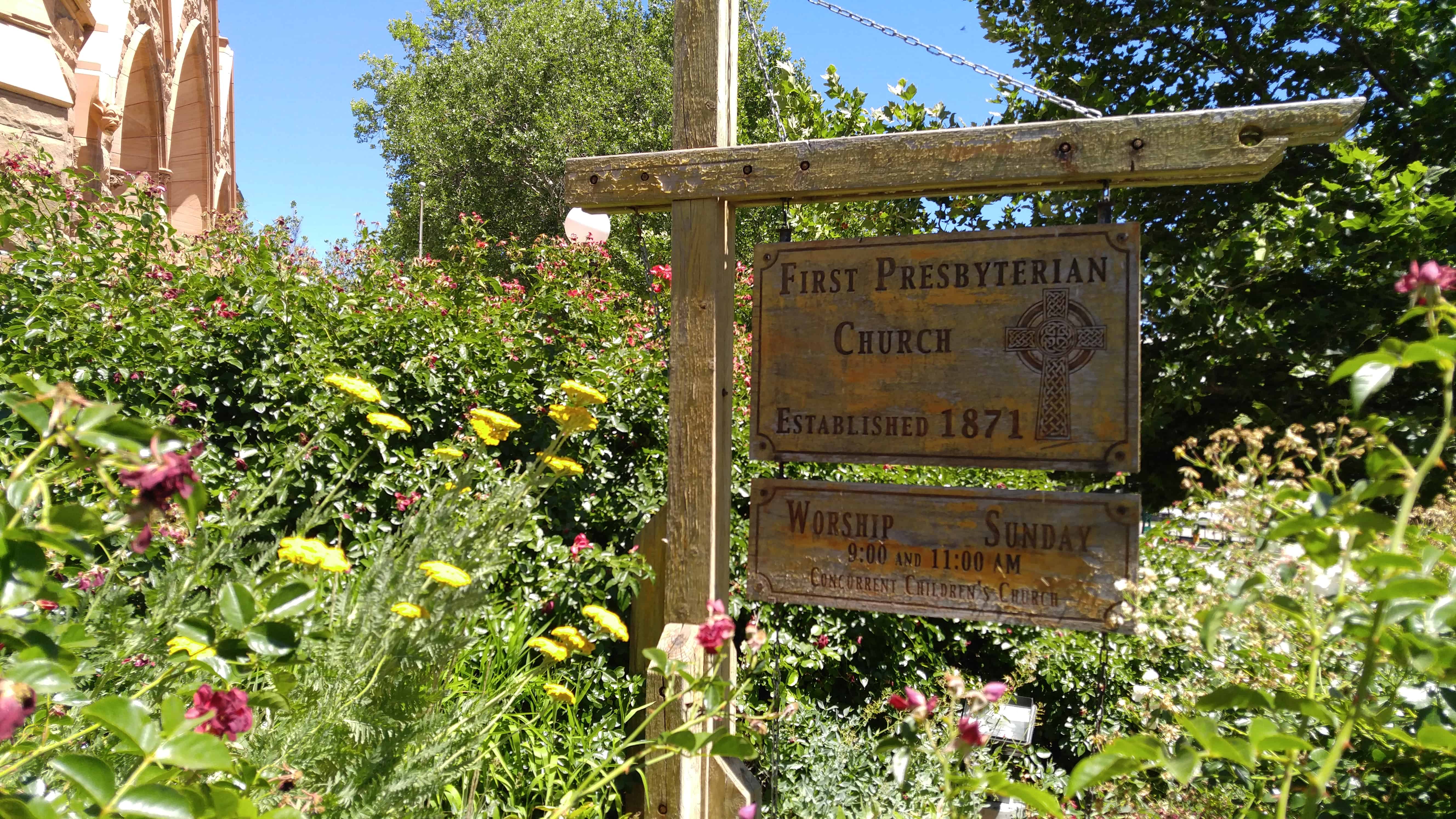
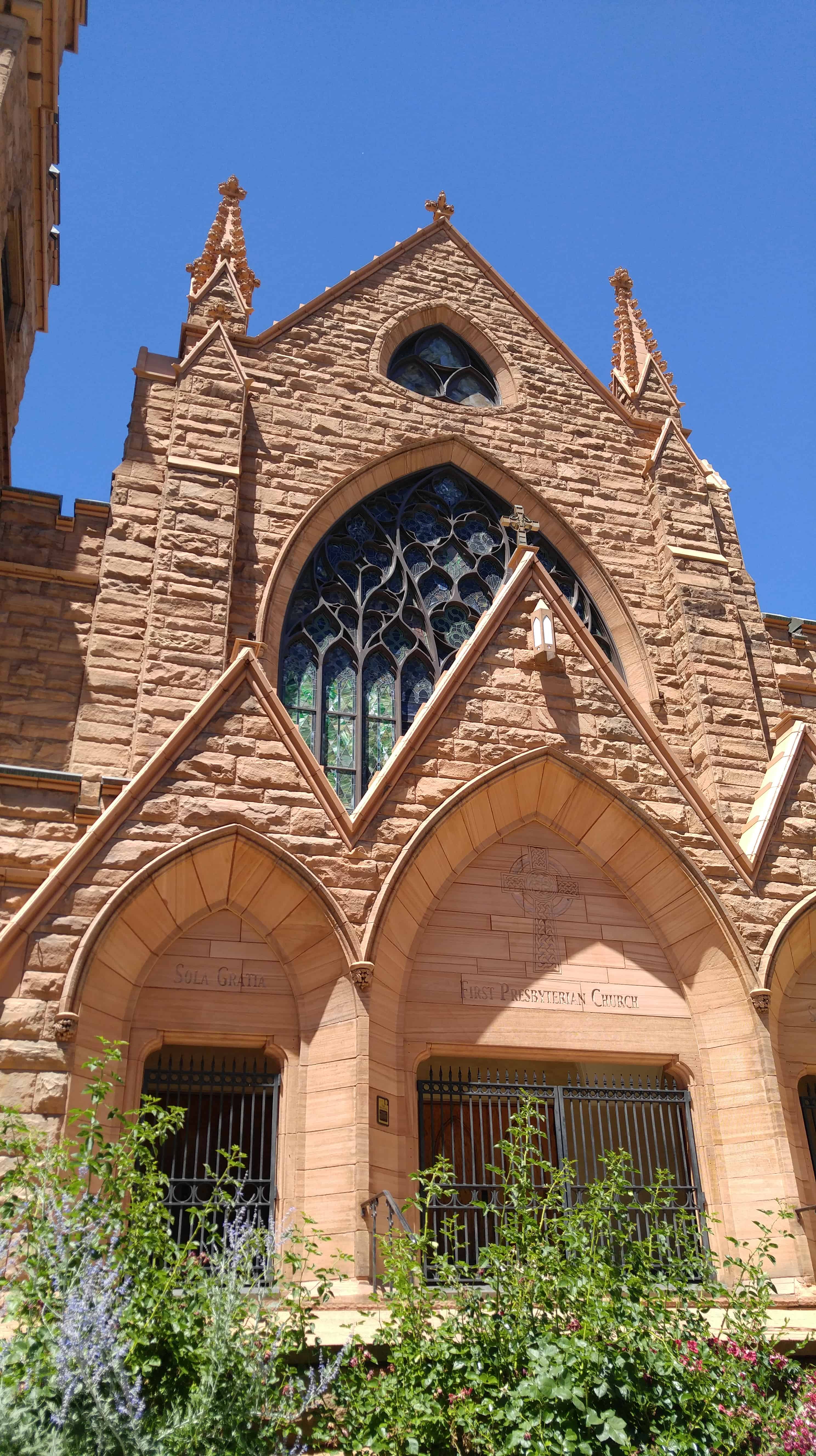
The First Presbyterian Church was organized in November, 1871 with eleven members. Its first building, built with monies solicited in the East, was the first home of Westminster College, and was occupied for thirty years before the congregation, which grew to over five hundred members, moved to its present facility. Walter E. Ware designed the Gothic Revival structure, with its low square tower and patterned on the cathedral church of Carlyle, England. The exterior was built of locally quarried red butte stone with hard stone trim.
First occupied in 1905, the congregation substantially enlarged, renovated, and modernized it in 1956. It was listed on the National Register of Historic Places in 1980. It is also Entry No. 323 on the American Presbyterian/Reformed Historic Sites Registry.
The construction of the First Presbyterian Church marked the coming of age of Utah’s Presbyterian community. The state’s early Presbyterian chapels and mission schools were funded by Presbyterian missionary organizations in the East. The money for this magnificent building, however, was raised by local Presbyterian congregations. Thus, the First Presbyterian Church was a symbol of the growing numbers and influence of Presbyterians in Mormondominated Utah.
Utah architect Walter E. Ware modeled his design for the First Presbyterian Church on the beautiful medieval cathedral in Carlisle, England. Like the Carlisle Cathedral, First Presbyterian Church is built of red sandstone. The church’s irregular massing, crenellated square tower, finials, and lancet-shaped windows are also reminiscent of the Carlisle Cathedral.
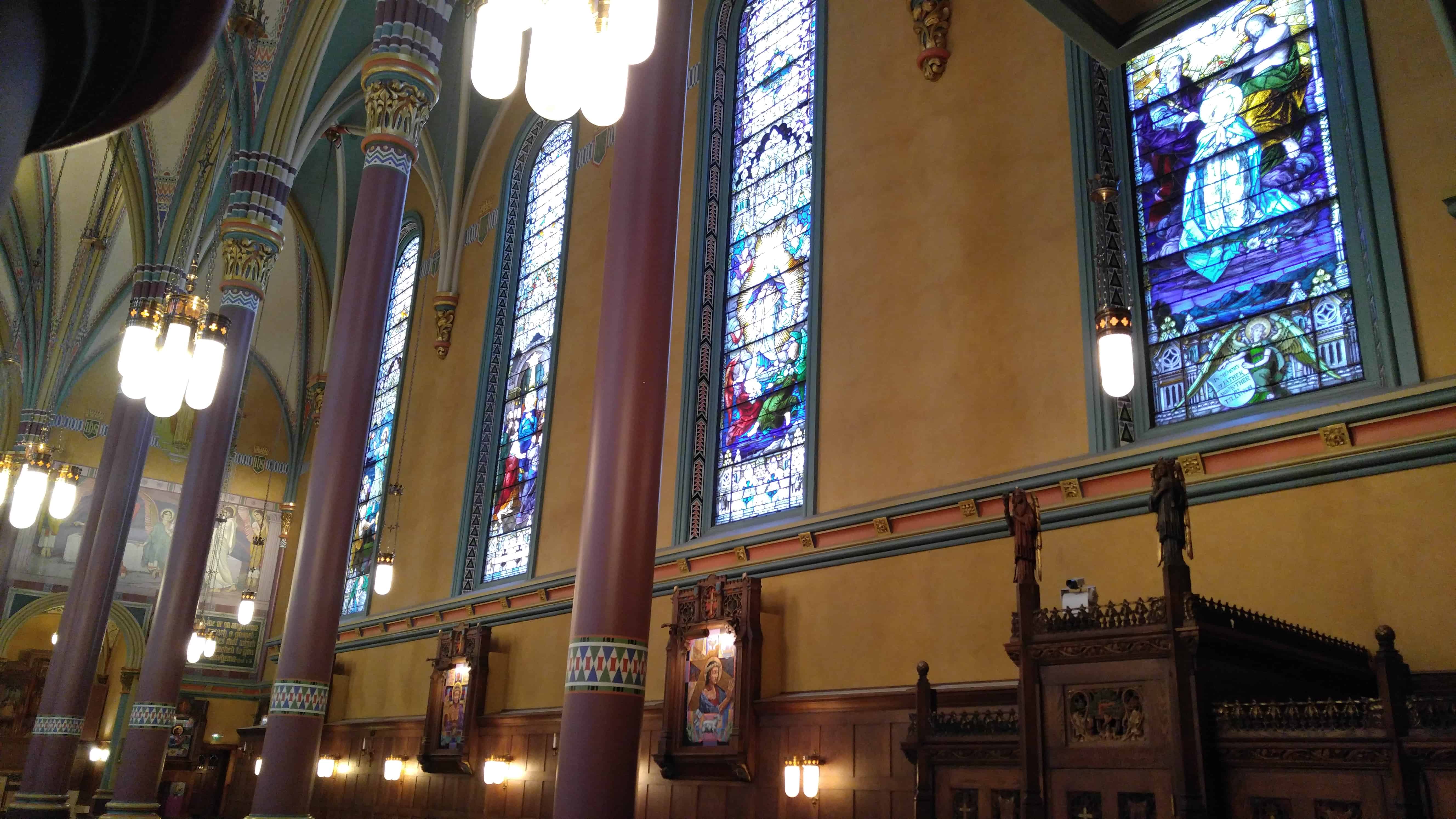
The church’s three large stained glass windows are artistic treasures. The west window depicts Christ in the manger, the south depicts Christ at Gethsemane, and the east depicts the first Easter. In October 1906, only five months after the church was completed, a severe storm blew out the magnificent east window. Because of the damage, no services could be held in the church for six months. Undaunted, congregation members raised over $3,000 to replace the window.
The sanctuary of First Presbyterian Church is noted for its fine acoustics and has long been used for concerts and recitals. The debut of the church’s new pipe organ in 1911 was reported in the Deseret News as “one of the most notable musical functions that have been held in the city.” Today, the church continues to host musical performances as well as the meetings and activities of over 50 cultural, educational, and community groups.
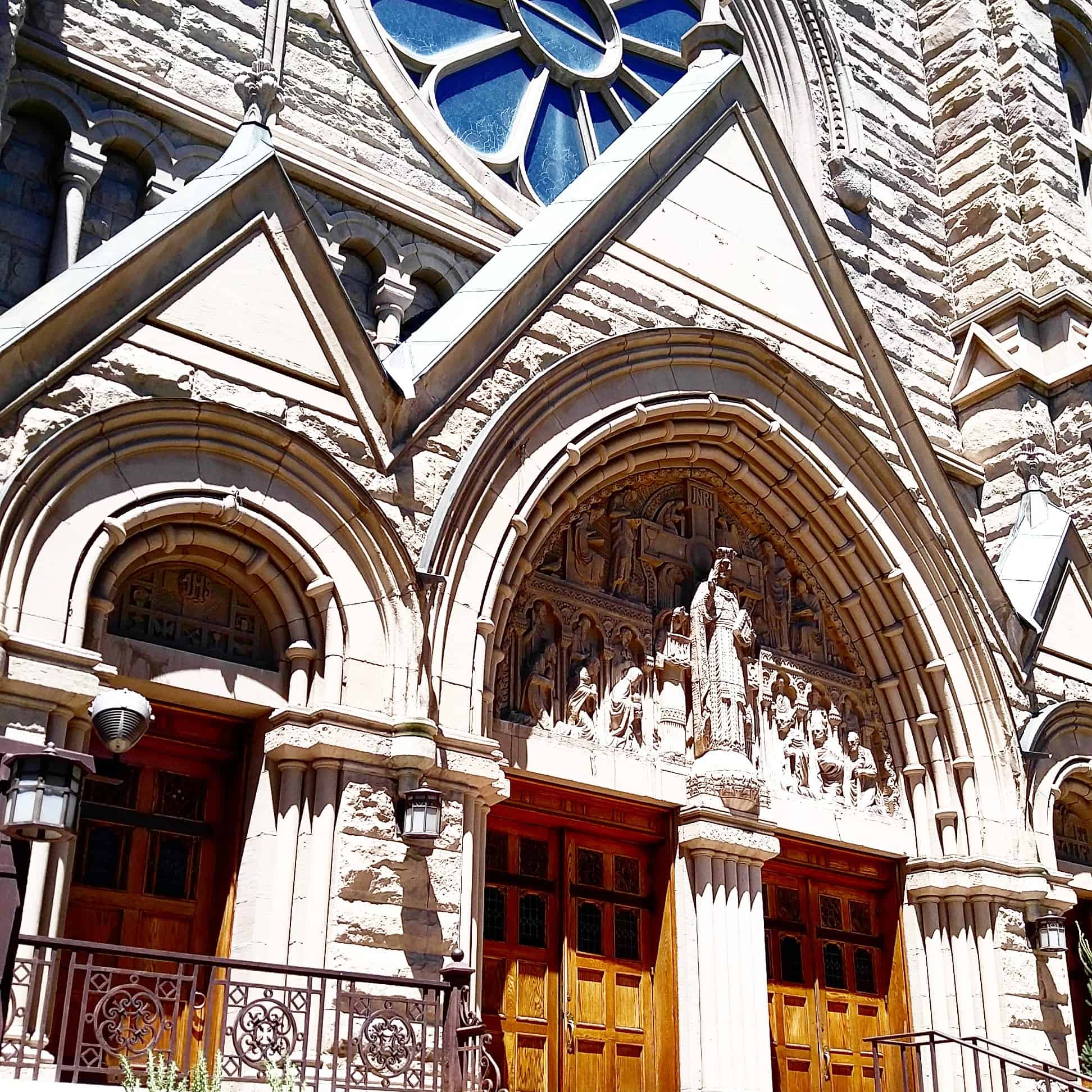
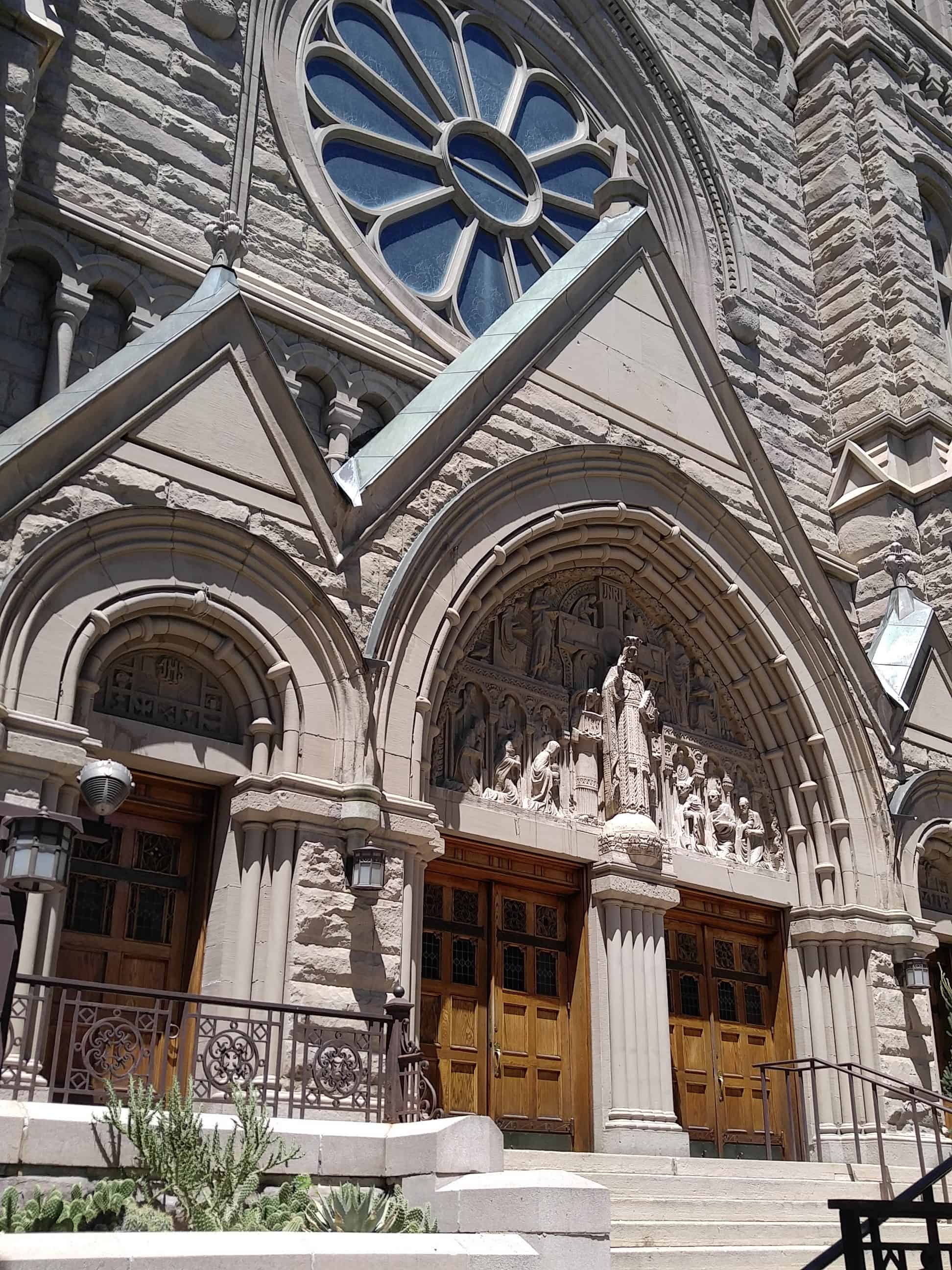
The Cathedral of the Madeleine is a Roman Catholic church in Salt Lake City, Utah, United States. It was completed in 1909 and currently serves as the cathedral, or mother church, of the Diocese of Salt Lake City. It is the only cathedral in the US under the patronage of St. Mary Magdalene.
The cathedral was built under the direction of Lawrence Scanlan, the first bishop of Salt Lake. It was designed by architects Carl M. Neuhausen and Bernard O. Mecklenburg. The outside is predominantly a Neo-Romanesque design, while the inside tends more toward the Neo-Gothic. Construction began in 1900 and was completed in 1909. It was dedicated by Cardinal James Gibbons, Archbishop of Baltimore.
The Cathedral of the Madeleine has a very interesting history in which four important facets of Utah and American history are expressed. First of all, it was designed by Architect C. M. Neuhausen, and demonstrates his attachment to H. H. Richardson’s architecture, popular in America at the turn of the century. Some writers suggest that the influence of Sir Christopher Wren is also evident as a result of the Irish background of Bishop Lawrence Scanlon.
Secondly, the Cathedral represents the missionizing efforts of Catholicism in settling the American west. Fathers Antanazio Domingues and Silvestre Velez de Escalante were the first white men to explore into Utah. In addition, in 1776, the “Pious Fund” established by the early Jesuit Padre Kino and Father Salvatierra, for building churches in the Californias (1697), became available after more than two centuries of “controversy,” Allowing a ruling by the Hague Tribunal in 1902. Monies from these Jesuit funds were paid to the “Bishops of the Californias” of which $124,080.54 sent to the Salt Lake Diocese for building the Cathedral, a fitting tribute to the long and continuing impact of the Catholic missions on the American west.
Thirdly, much of the money used to build and furnish the Cathedral came rom Utah mines, which also provided the first attraction for major Catholic emigration to Utah. Such names as David Keith, Thomas Kearns, Mrs. Mary Judge and others are among the contributors. The Father of Utah mining, General Patrick Connor, was a Catholic. Many of the thousands of miners who came to exploit Utah’s minerals were and still are Catholics. Between 1873 and 1915 all were directly affected by the Cathedral builder, Father Scanlon.
Finally, the lovely Cathedral is the crowning, tangible monument to the extensive and effective labors of Bishop Lawrence Scanlon. Father Edward Kelly had been assigned to Salt Lake City in 1866, and his successor, Father Patrick Walsh, came in 1871. They had purchased land and built the first Catholic Church in Salt Lake City, yet the edifice retained a debt of $6,000 Scanlon arrived in 1873.
Under Scanlon’s direction, churches were built in most of the mining and larger communities of Utah. all parishes in Utah before his death, and all charitable and educational institutions as well, including All Hallows College, St. Mary’s Academy, St. Ann’s Orphanage, and Holy Cross Hospital.
The Cathedral itself evolved slowly. In 1889, land was purchased from Don Carlos Young for about $39,000. Ground was broken on July 4, 1889, but the cornerstone was not laid until July 22, 1900. By 1907 the building was almost finished except for the spires. At that time Bernard O. Mecklenburg was hired as a new architect. Construction was completed and the structure dedicated August 15, 1909. It was a day for celebration, especially by Utah Catholics. Construction costs have been estimated at over $300,000 plus furnishings.
Bishop Scanlon worked successfully with Mormon and civic leaders, who held him in high regard. His death May 10, 1915 was mourned by all Utahns. In tribute to him, his remains were placed in the crypt under the Sanctuary. The words of Bishop Keane, given at the time the Cathedral was dedicated, pay eloquent tribute to this structure: “This magnificent temple is a confession of faith of the Catholics of Salt Lake. Families will come and go, revolutions will arise, but Temples such as this remain as lasting monuments to those who built them, monuments to the living faith in human hearts.“
(from Preservation Utah’s walking tour) The Cathedral of the Madeleine 331 E. South Temple 1899-1909, Carl M. Neuhausen (1899-1907), SLC, and Bernard O. Mecklenburg (1907-1909), SLC Open to the public M-F, 7:30 am-9 pm, Sat. & Sun., 7:30 am-7 pm. Guided tours available Fridays at 1 pm and Sundays at 12:30 pm.
The mining fortunes that gave rise to South Temple’s grandest mansions also helped fund the construction of Utah’s first Catholic cathedral. The Cathedral of the Madeleine was built between 1899 and 1909 under the direction of the Right Reverend Lawrence Scanlan. It was designed by prominent Utah architect Carl M. Neuhausen as a Romanesque-style building with round Roman arches and rough-cut stone. Later, when Bishop Scanlan acquired additional funds for the project, the towers and pointed Gothic style portico were added to the plans. Upon Neuhausen’s death in 1907, Bernard O. Mecklenburg was hired to complete the roof and towers. While the exterior of the cathedral was substantially complete by 1909, the interior remained quite plain. In 1915, the Right Reverend Joseph Glass embarked on a three-year project to enhance the interior. Under the direction of noted American architect John Comes, the finest craftsmen of the day created paneling, painted murals, and carved wooden altarpieces for the building. The resulting ornate, polychrome interior is an outstanding example of the Gothic Revival style popular in the early 20th century. Comes also oversaw the completion of the exterior of the cathedral with the addition of the tympanum carving, tower gargoyles, and bi-level front steps.
Both the exterior and interior of the cathedral have undergone extensive restoration to preserve their historic character. The National Trust for Historic Preservation recognized the excellence of the interior restoration with a prestigious Honor Award in 1994.
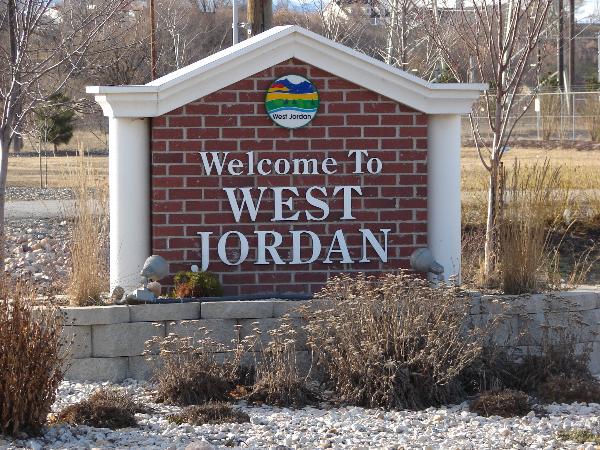
West Jordan received its name from Mormon settlers who entered the Salt Lake Valley in 1847 under the leadership of their prophet, Brigham Young. These first European-Americans thought of the area to be their Zion, or Holy Land, and thus named the river flowing west of their first settlement, Salt Lake City, the Western Jordan, a reference to the River Jordan in Israel. The name was later simplified to “Jordan River”. Like its Middle Eastern namesake, the Jordan River flows from a fresh water lake (Utah Lake) to an inland salt sea (Great Salt Lake). West Jordan was founded around 1849 on the western banks of the Jordan River.
One of the first sawmills in the area was built in 1850 in the city by Archibald Gardner. Gardner was a devout Mormon whose legacy can still be seen in modern West Jordan. His collection of mills and houses, now historic, have been renovated into a specialty shopping district known as Gardner Village.
Early West Jordan relied primarily on agriculture, mills, and mining activity to form the base of its economy. The first leather tannery west of the Mississippi River was constructed in the city in 1851.
All of the solid fir timber beams used in Hoppers were cut from trestle pilings used to support the Southern Pacific Railroad trestle in the Great Salt Lake.
The wooden trestle known as “The Lucin Cutoff” used in 1902 provided a means for the train to cross the lake in a shorter time. The twelve mile trestle was replaced 100 years later by a solid fill causeway.
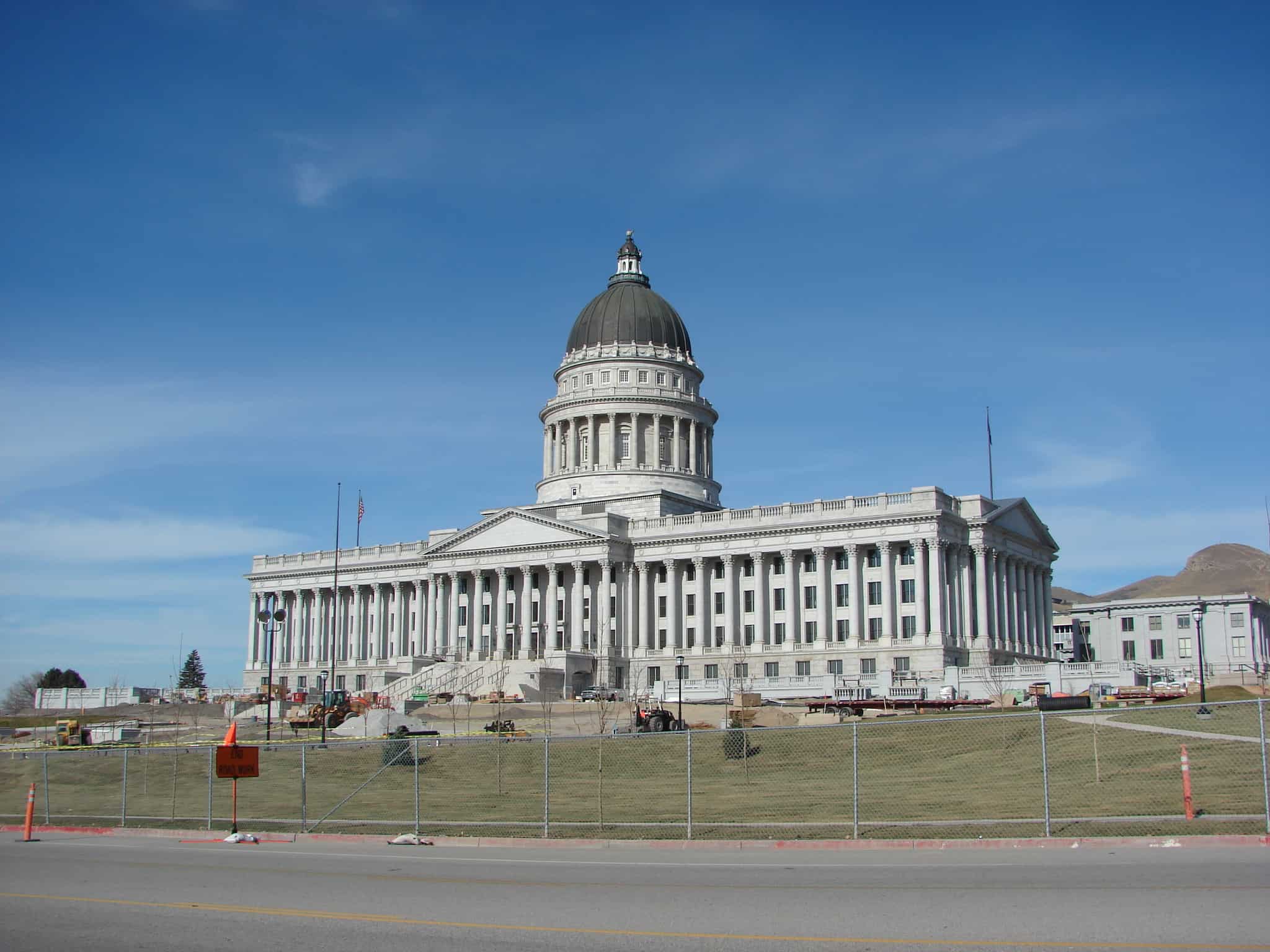
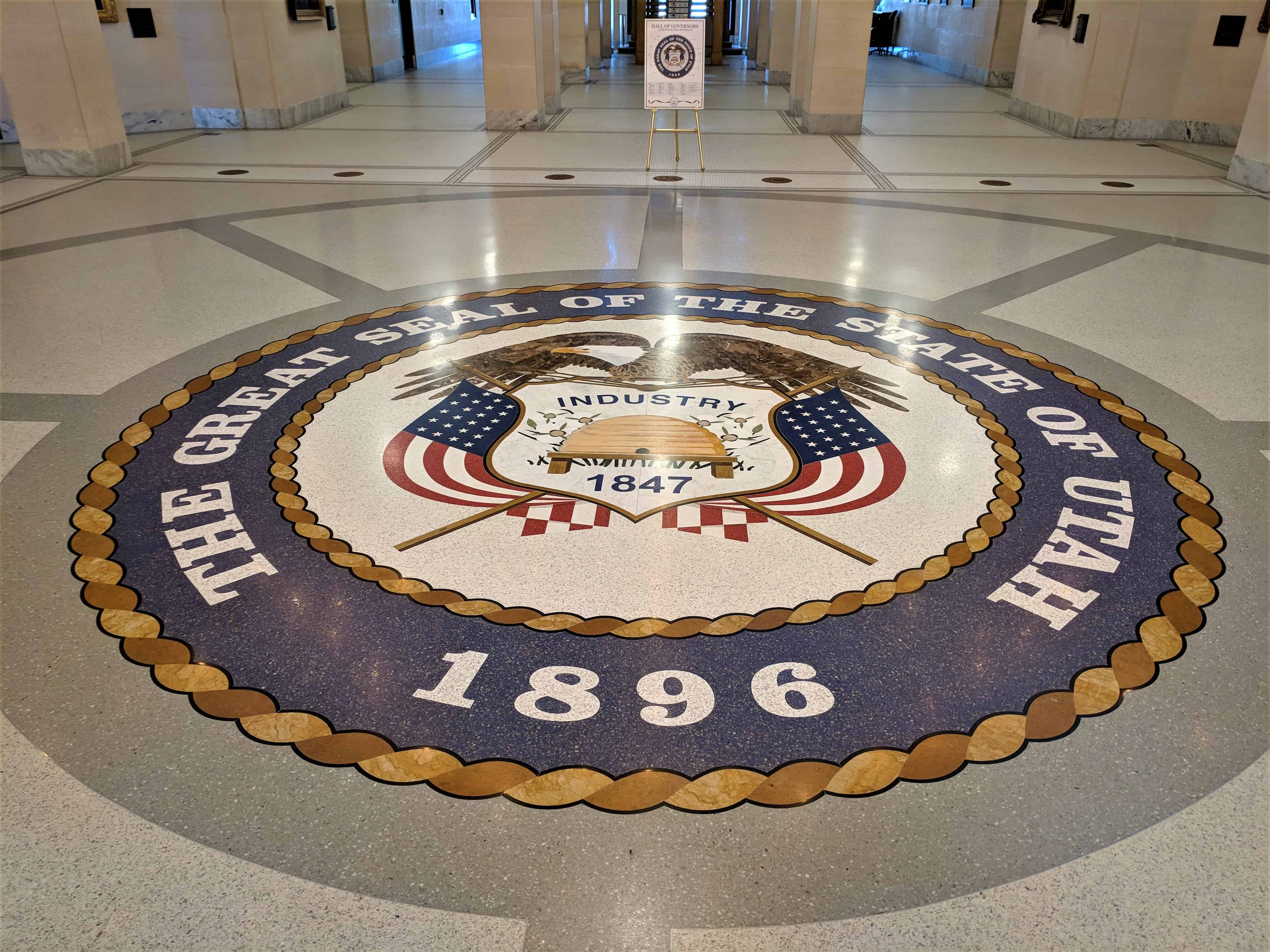
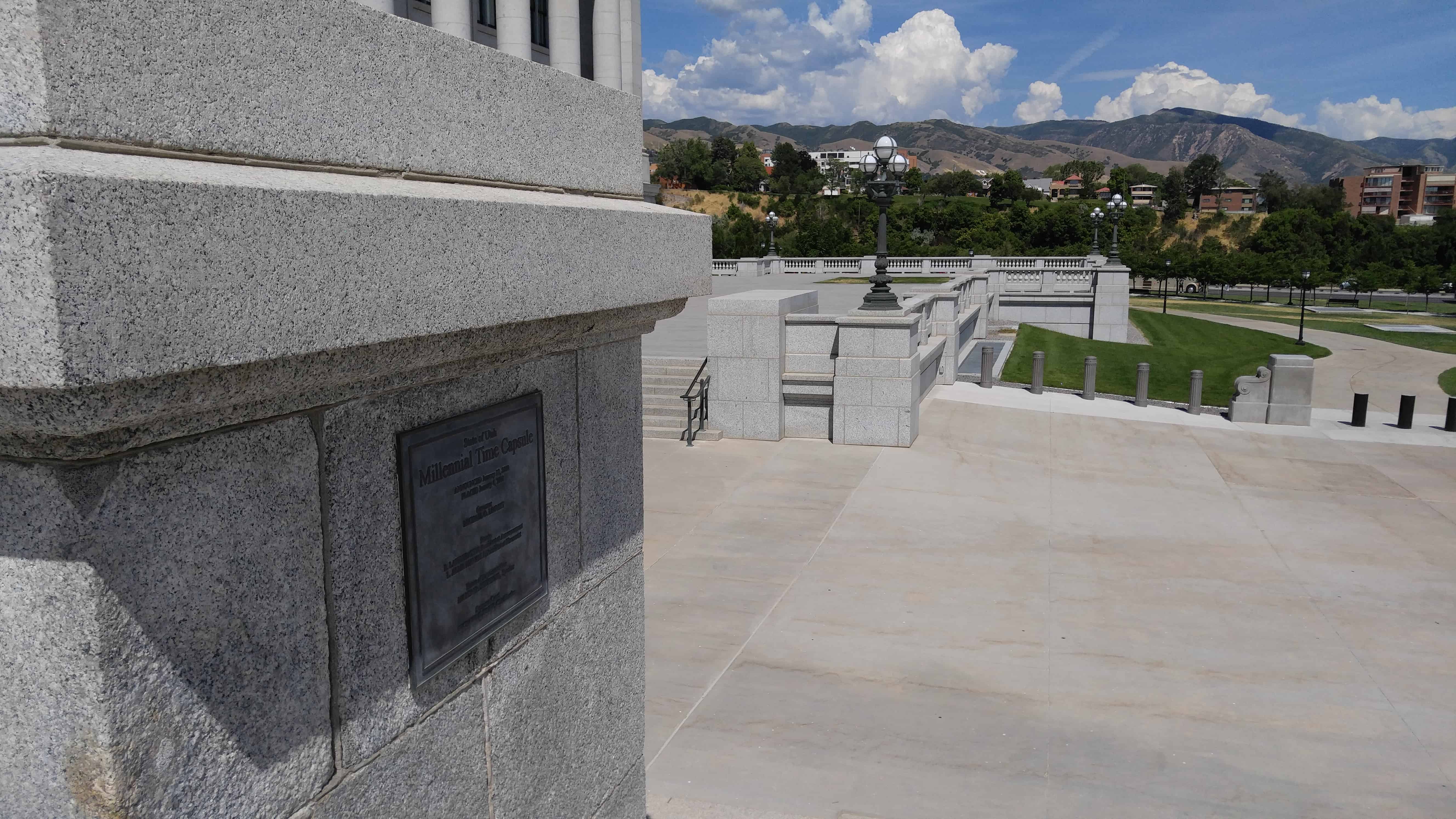
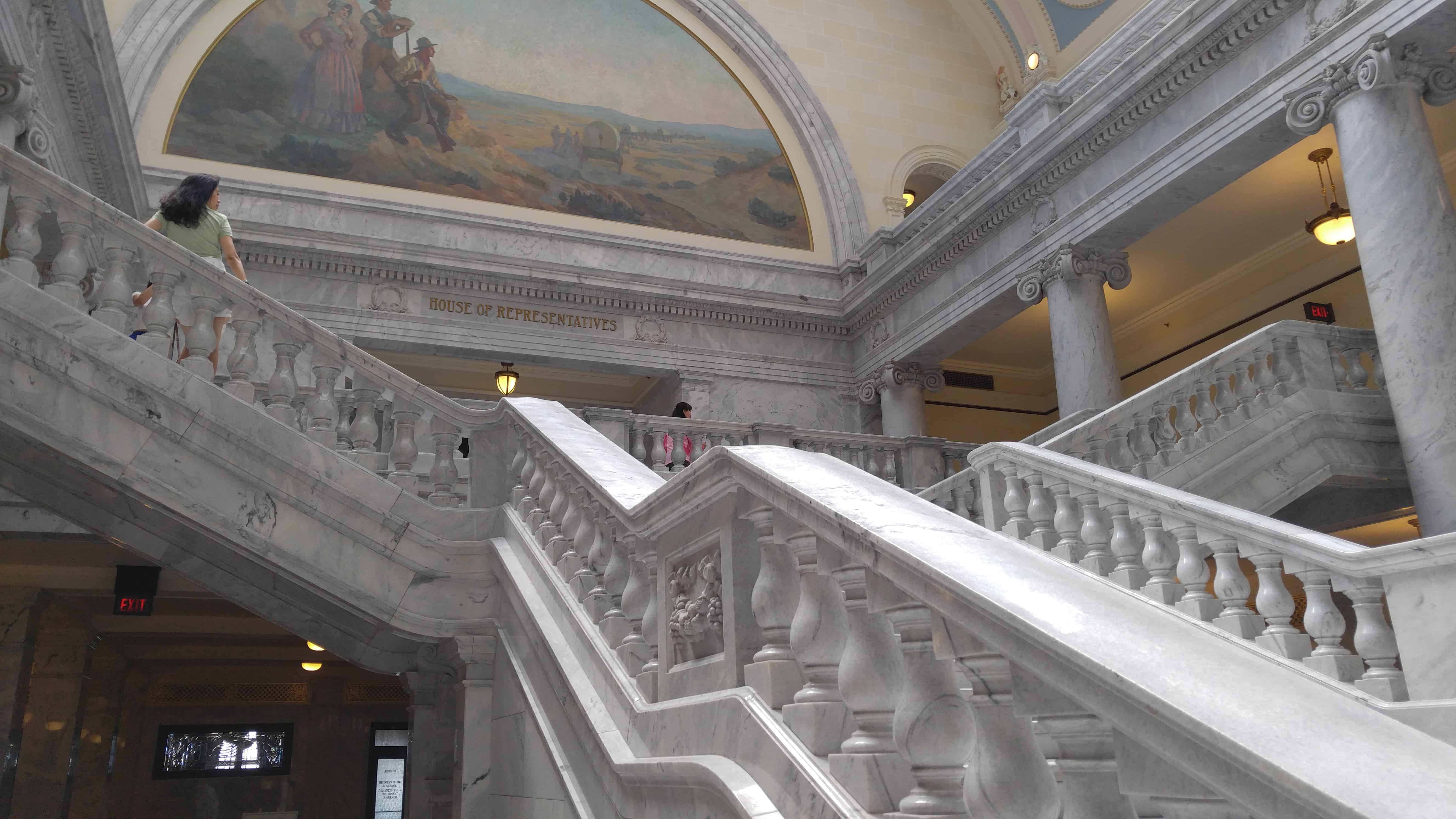
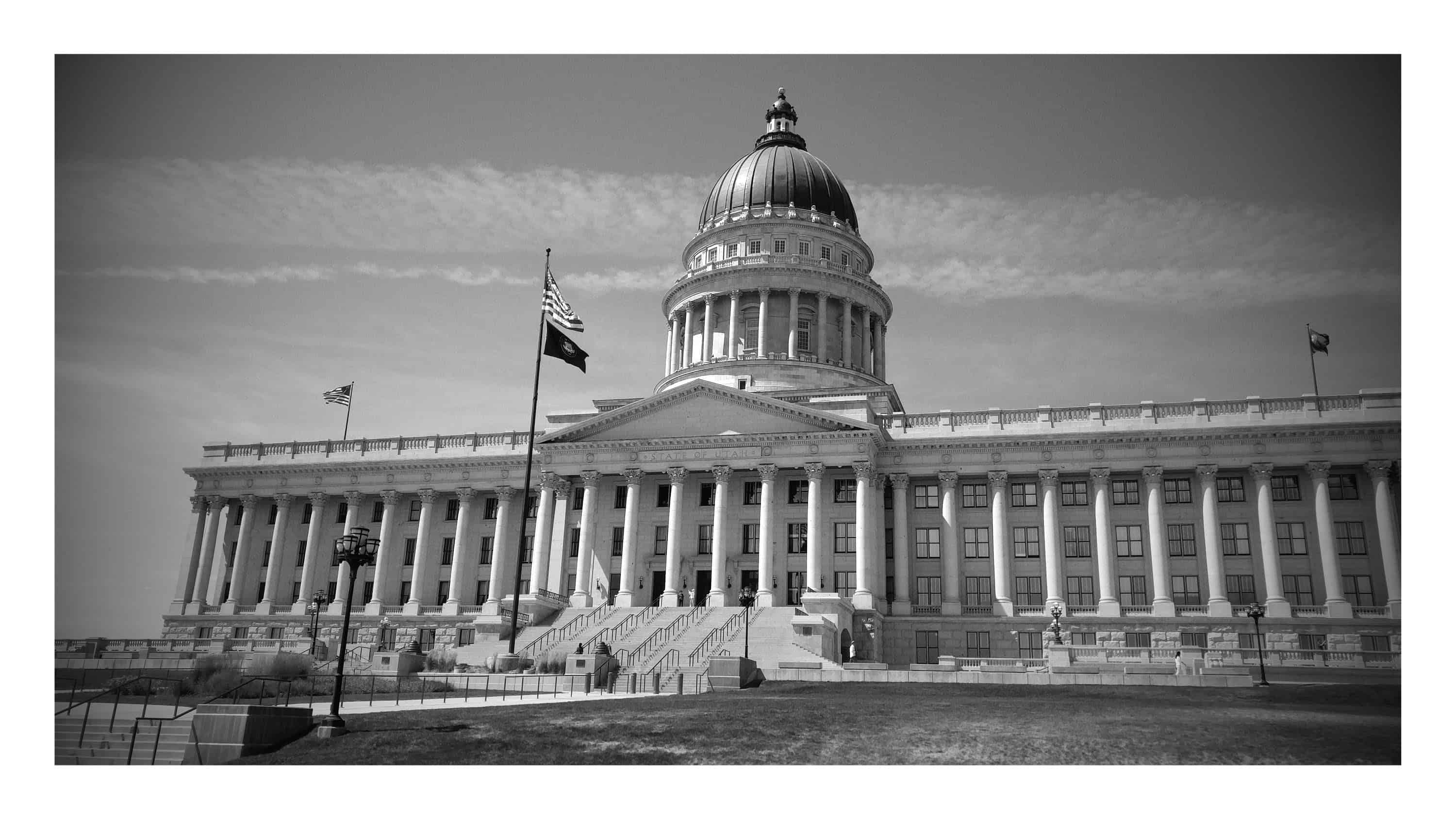
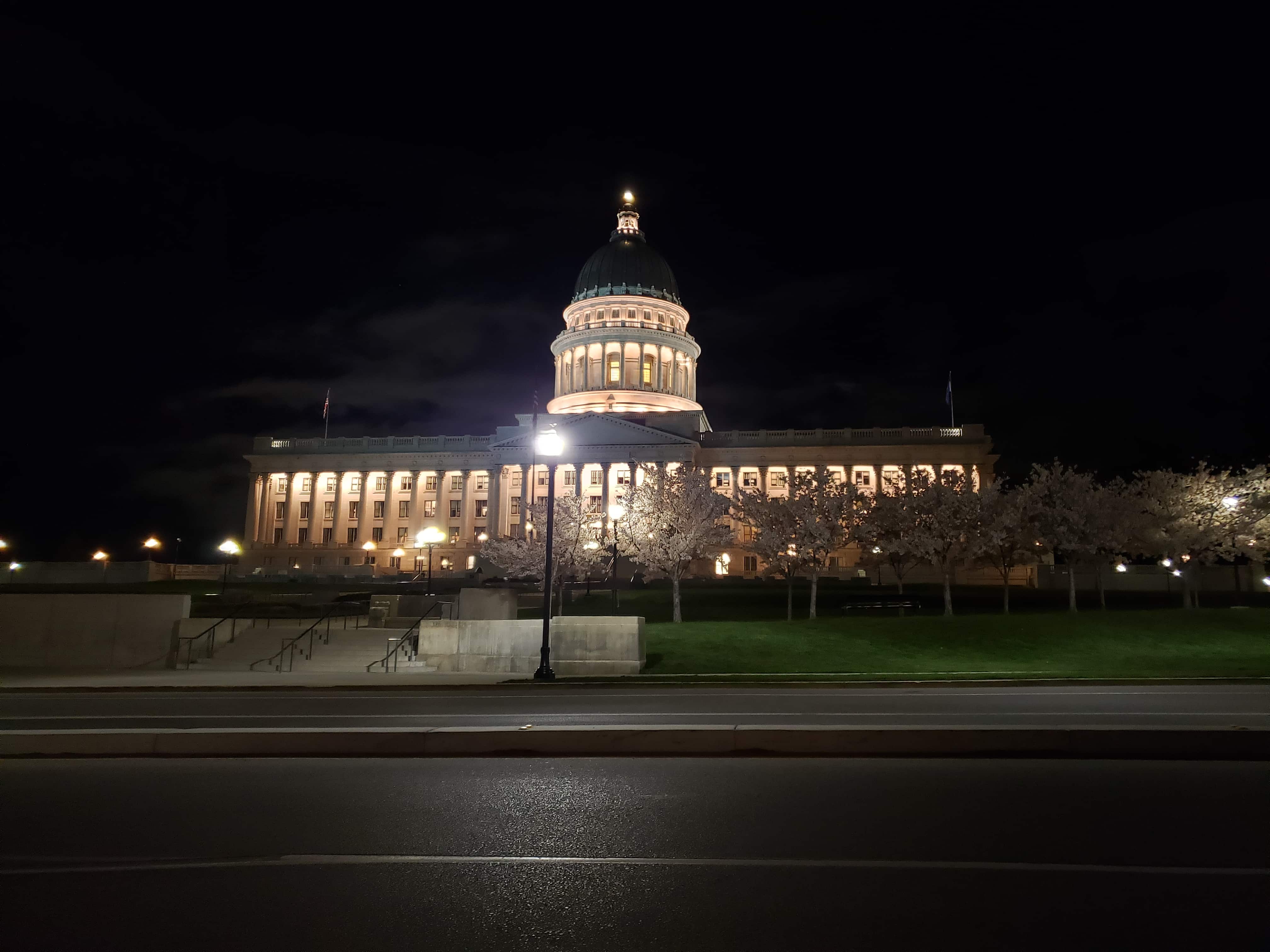
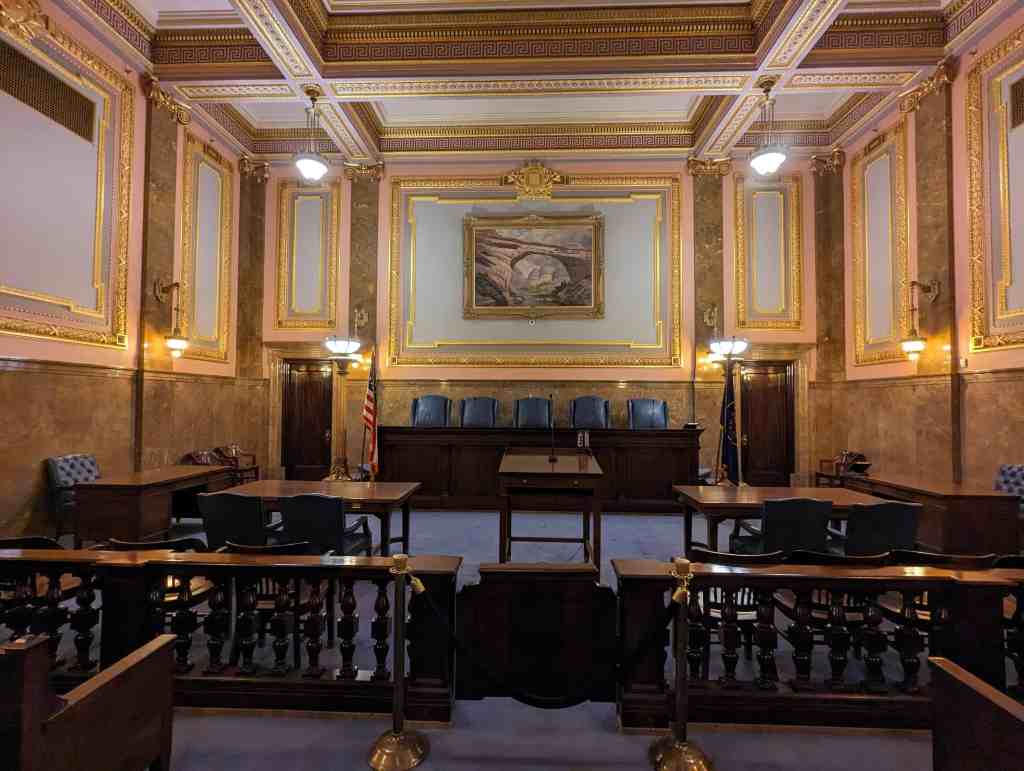
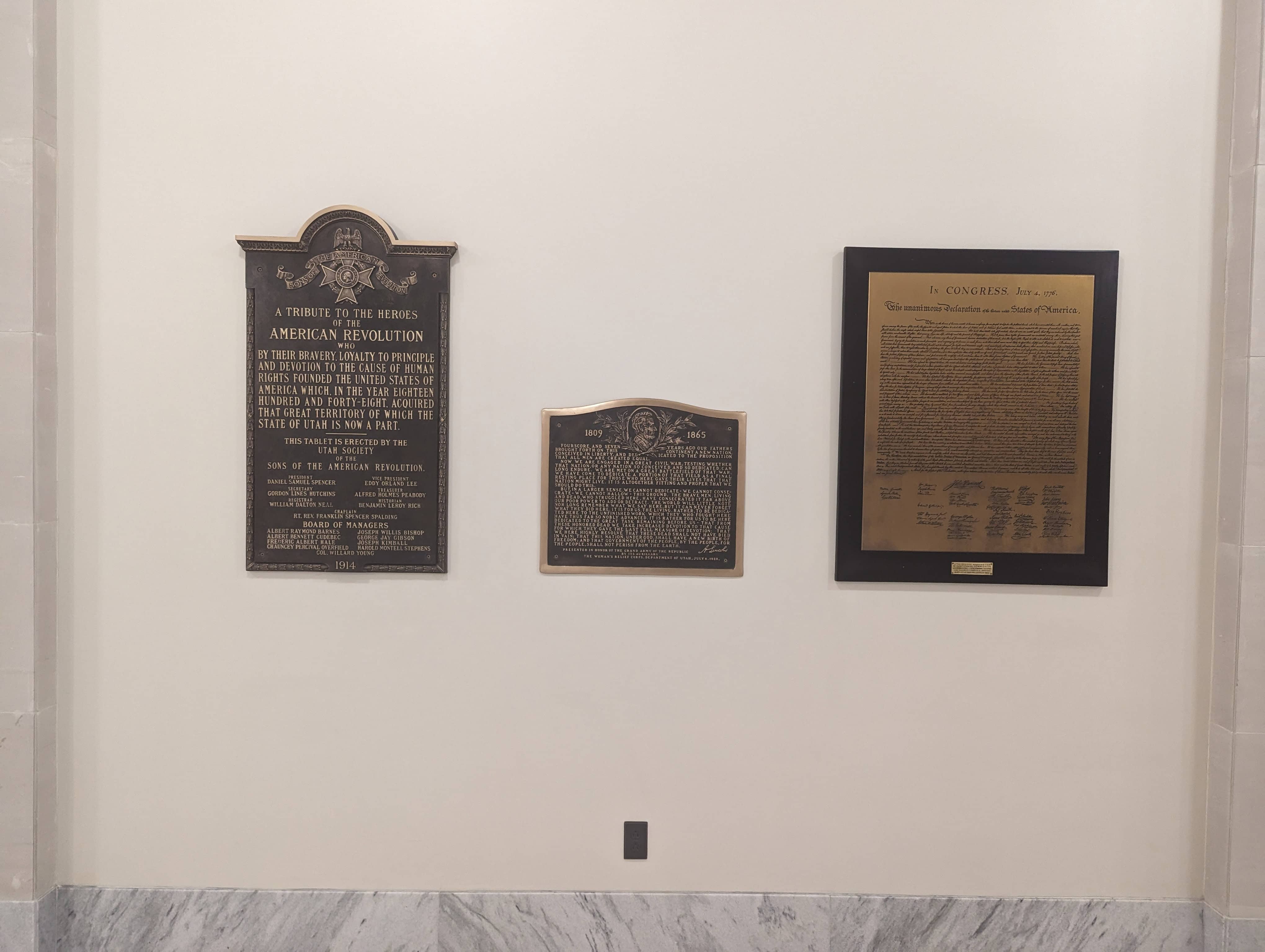
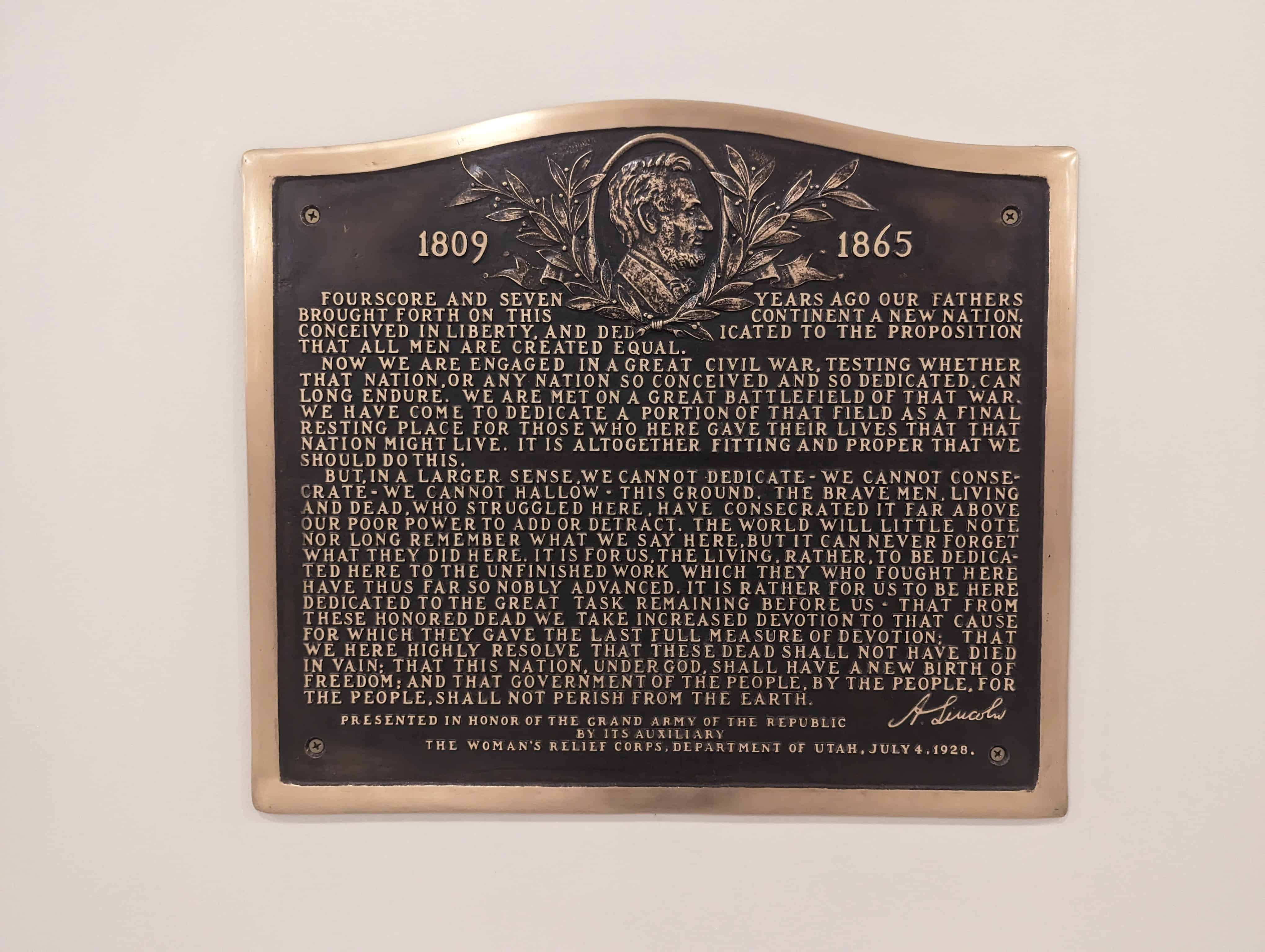
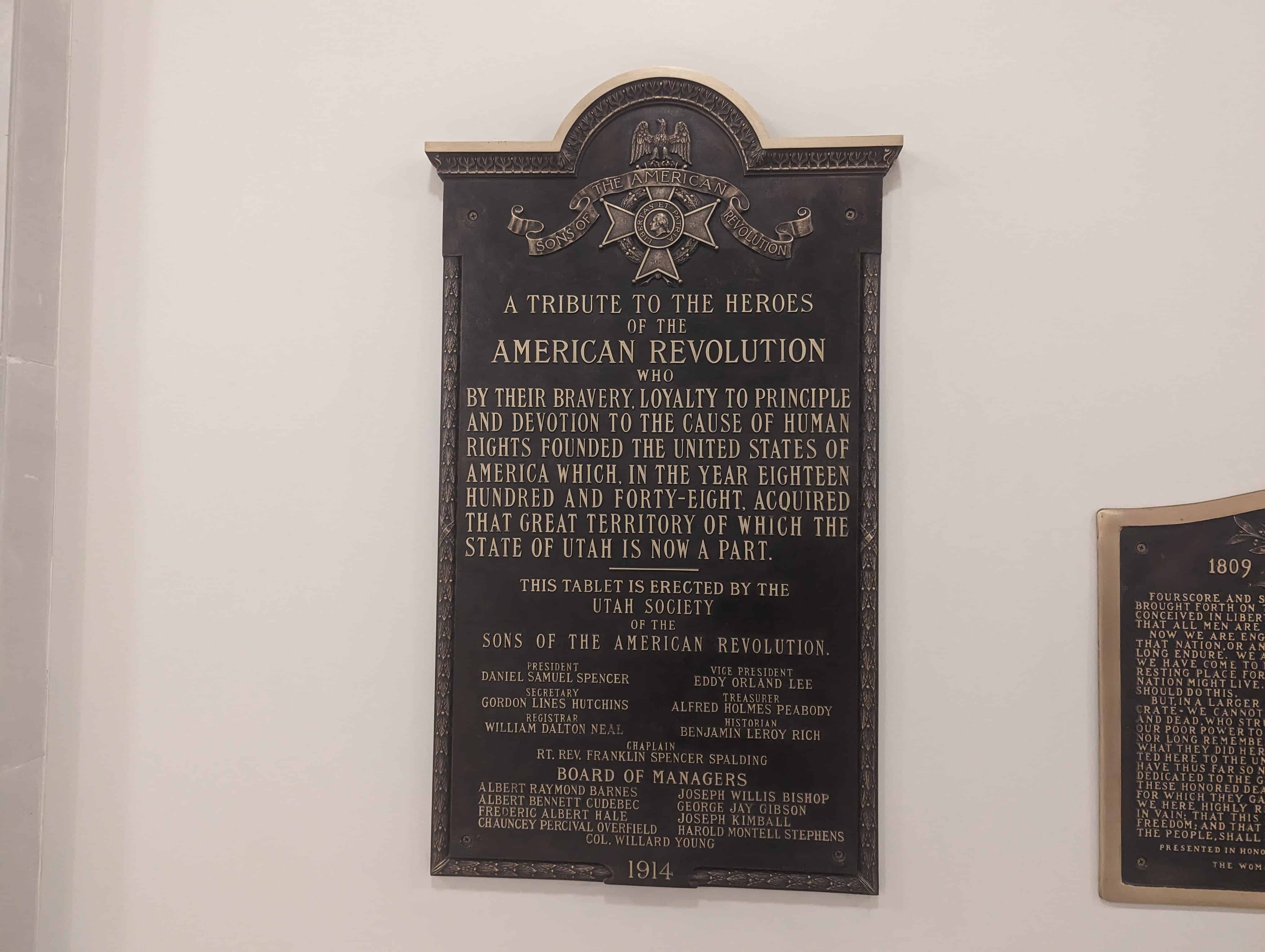
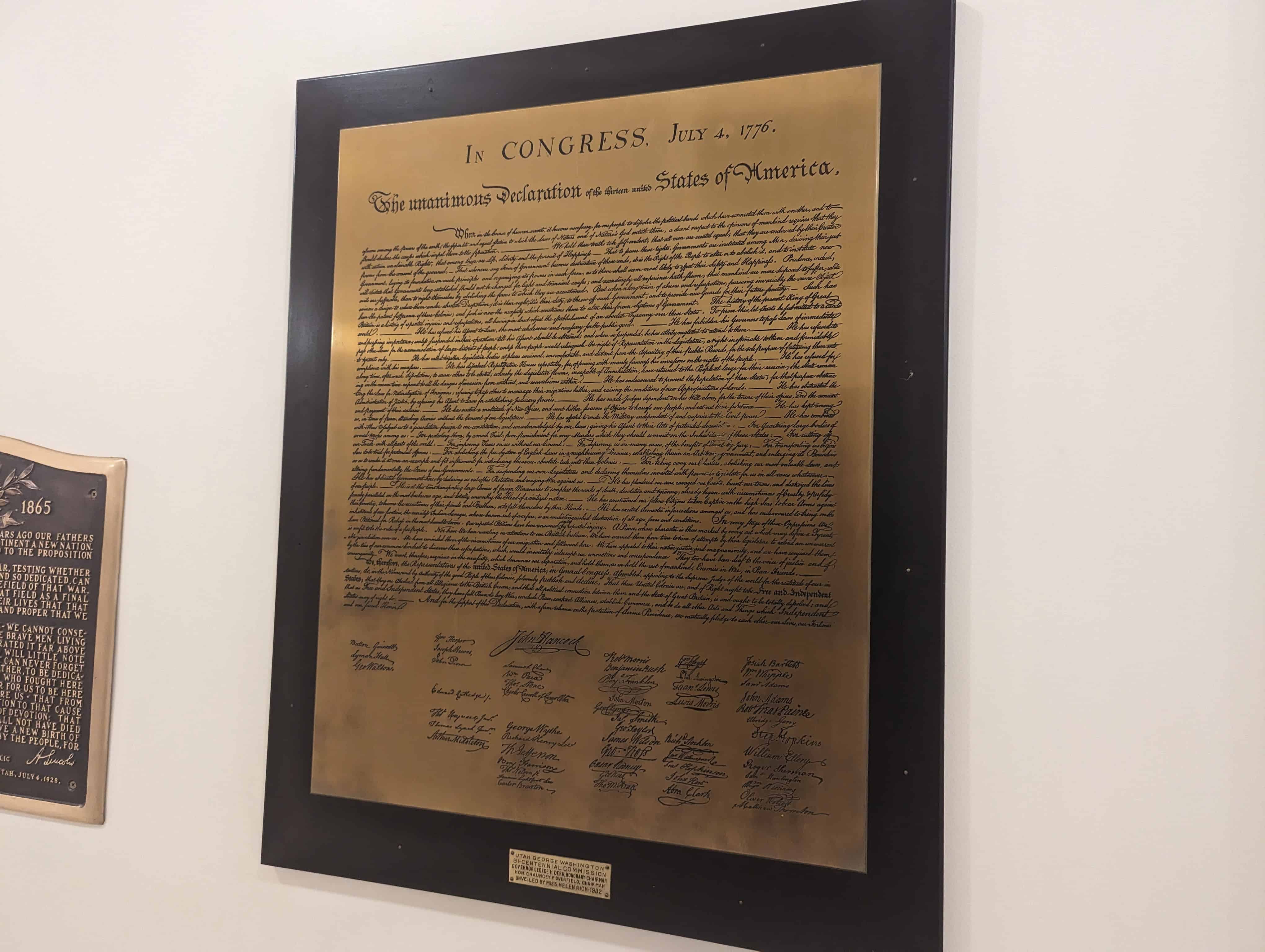
The Utah State Capitol is the house of government for the U.S. state of Utah. The building houses the chambers and offices of the Utah State Legislature, the offices of the Governor, Lieutenant Governor, Attorney General, the State Auditor and their staffs. The capitol is the main building of the Utah State Capitol Complex, which is located on Capitol Hill, overlooking downtown Salt Lake City.
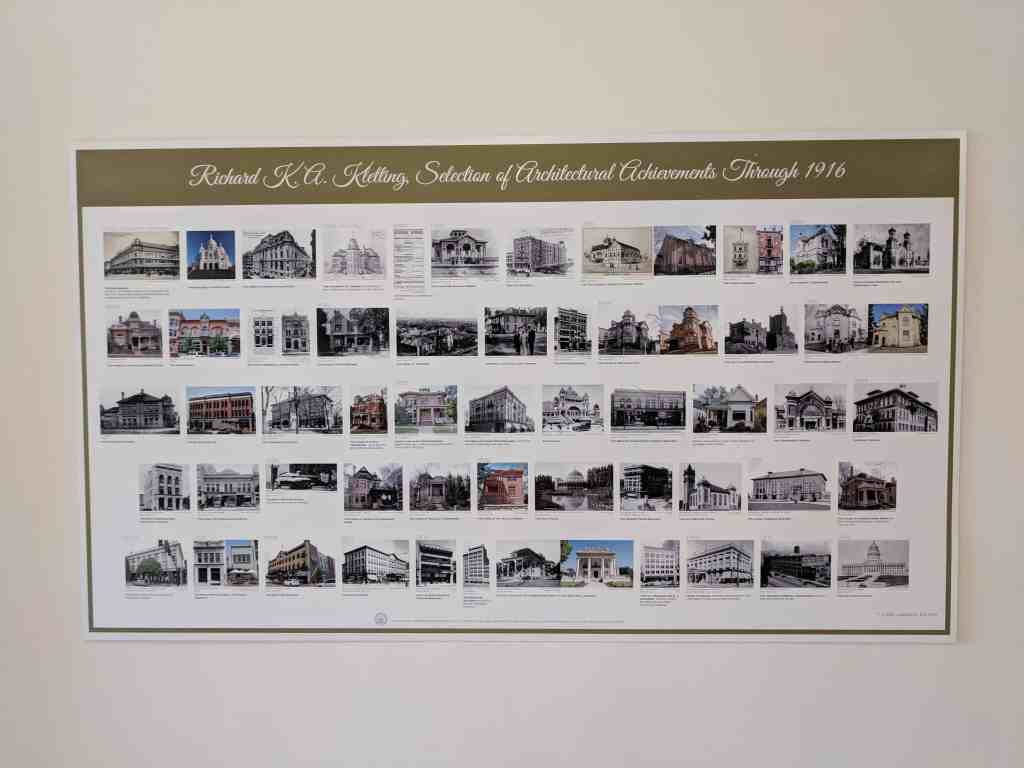
The Neoclassical revival, Corinthian style building was designed by architect Richard K.A. Kletting, and built between 1912 and 1916. The building was added to the National Register of Historic Places in 1978. Beginning in 2004, the capitol underwent a major restoration and renovation project. The project added two new buildings to the complex, while restoring many of the capitol’s public spaces to their original appearance. One of the largest projects during the renovation was the addition of a base isolation system which will allow the building to survive as much as a 7.3 magnitude earthquake. After completion of the renovations, the building was rededicated and resumed normal operation in January 2008.