I found the Urban Adventure Quest online and it looked like a lot of fun, I took a friend and followed the clues around downtown Salt Lake City exploring and seeing a lot of things that most people would miss in their hurry.
The Union Pacific Depot, Temple Square, City Creek, the State Capitol and other locations will be visited. I would suggest this to anyone with a few hours and a love for exploring.
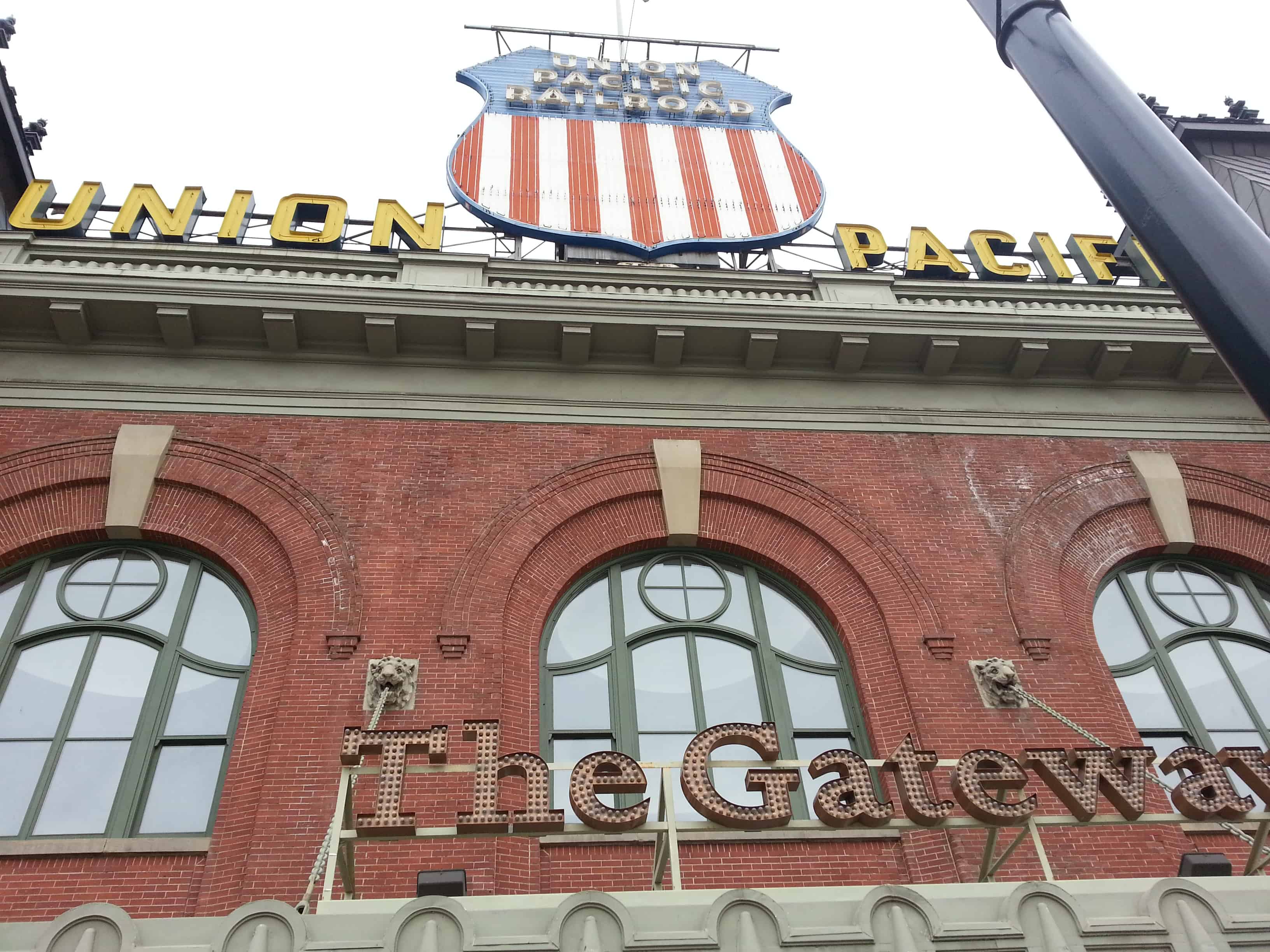
The completion of the Union Passenger Station which provided joint services for the San Pedro, Los Angeles and Salt Lake Railroad and the Oregon Short Line was the culmination of a series of events, the most important of which was the establishment of a more direct rail route to Southern California, In the early 1900s there existed a rivalry between Senator William A, Clark of Montana and the E, H, Harriman railroad interests over a proposed rail link between Salt Lake City and Los Angeles,, California, A settlement was reached in June of 1903 and in September of that year maps were published indicating the proposed improvements for the Oregon Short Line in Salt Lake City, including a new depot to be shared with the San Pedro, Los Angeles and Salt Lake Railroad. The new direct route was completed and opened for business in the spring of 1905. By eliminating the need to travel to Southern California via Sacramento (on Harriman-controlled systems), passengers and freight traveled more quickly and inexpensively due to a savings of over 400 miles between the two cities.
On September 12, 1903, an announcement was carried in the Deseret Evening News, noting plans for a proposed depot on the present site, Two” years later the Oregon Short Line was given permission to go ahead with the proposed depot; however, work did not commence until February 1908. D, J, Patterson,, architect for the Southern Pacific Company, prepared the plans for the building in cooperator with John D. Isaacs, consulting engineer for the Harriman System.
The depot was completed in July 1909 and has served as Salt Lake City’s railroad transportation center since that time. Its greatest significance, however, is its place as one of the outstanding architectural structures in Utah.
The Salt Lake Union Pacific Station is a large detached building, basically rectangular in shape with wings on both sides of the central waiting room complex. The central area is 100 x 136 feet while the wings measure 71 x 126 feet each. The central complex is the tallest but contains only two stories, the added height taken up by a dome ceiling over the waiting room. The wings contain three stories each and are arranged symmetrically with respect to the central complex, There is a basement under both wings but not under the central complex. Basement walls are constructed of reinforced concrete with some brick work. Exterior walls on the first level are made of cut gray sandstone which has a smooth dressed finish and is laid in even courses. The sandstone is a veneer for the structural walls of reinforced concrete. Walls above the first level are made of brick, laid in stretcher bond.
The mammoth roof is mansard and features small circular French Second Empire dormers which seen overwhelmed by the massive arc of the roof and the large windows on the lower level, Perhaps the most distinctive architectural feature, the roof is covered with black slate shingles and is terminated by fancy metal entablatures and crestwork, all in French Renaissance style.
The cornice is heavily molded, boxed, bracketed and has a molded, frieze.
Window bays in the station are of three types square, segmented and Roman. The flat bays contain several window types, most of which feature decorative brick framing in the form of radiating voussoir headers or corbeled, square brick “frames.” In each bay are combination of double-hung sash windows and larger fixed sash center and transom windows. The segmented bays are on the ground level only and constitute the openings for several triple door entries. The three Roman or half-round bays are found on the second level of the central complex of the station. These bays are recessed from the main plane of the building and have corbeled arches, The windows themselves are either fixed or easement.
Other exterior decorative elements include the twin front towers, carved stone gargoyles, faint quoins at the building’s corners, classical fascia on the entry canopy, stained glass windows (on the west side) and original gas lamps.
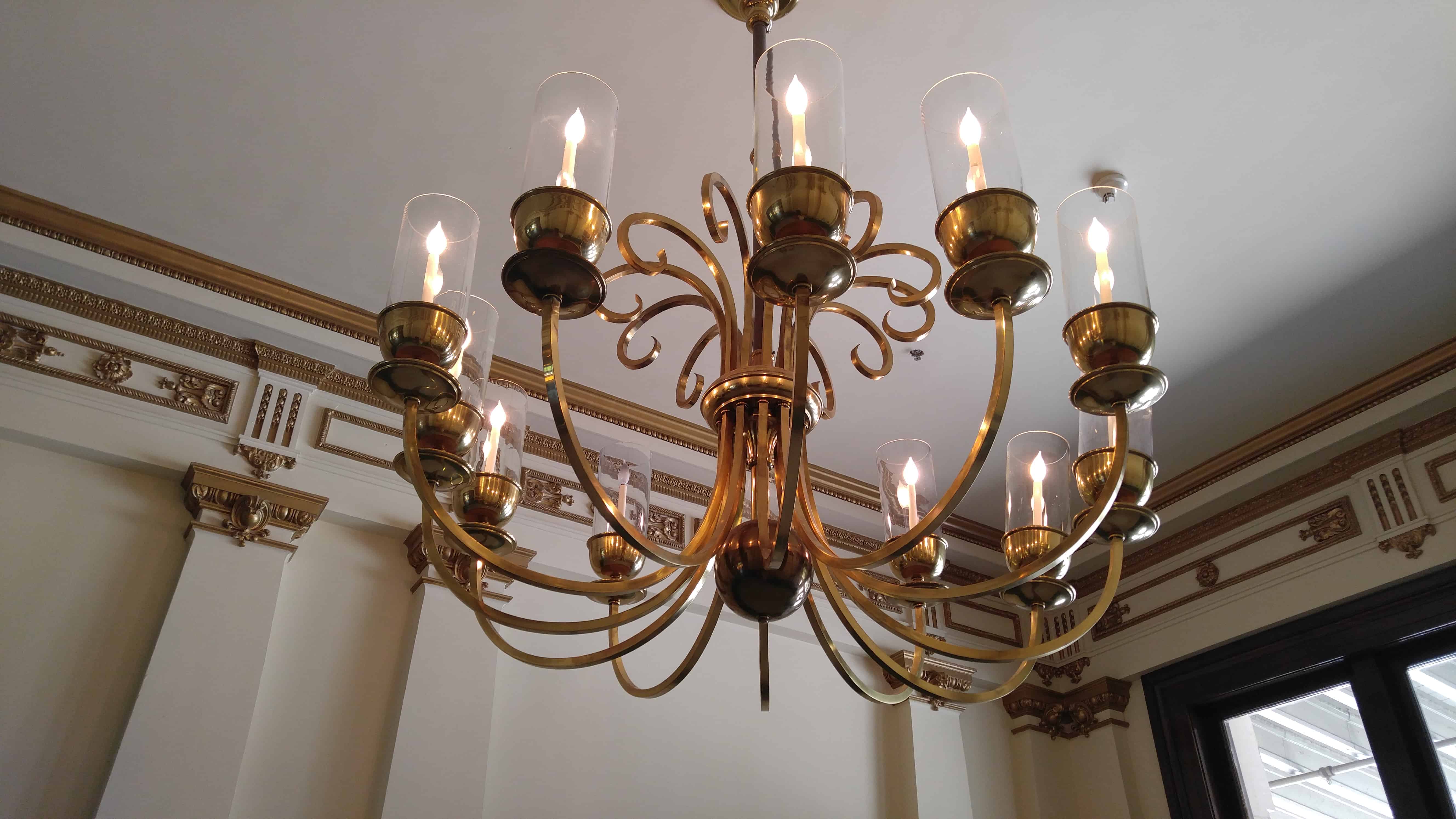
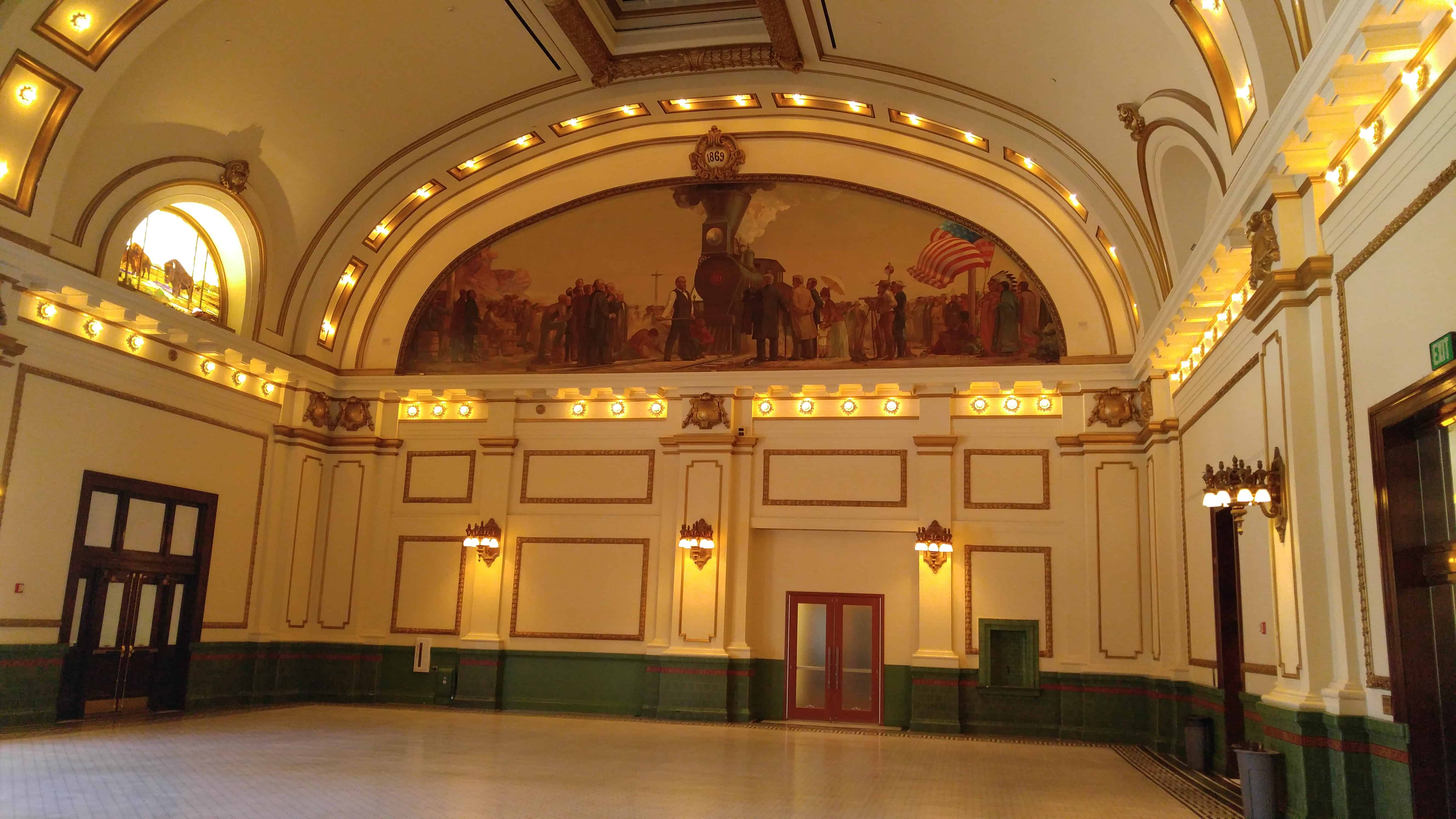
The station’s interior consists of a typical grouping of railroad-related rooms, including waiting rooms; baggage rooms; ticket office,, employees and administrative offices railway agent and express offices, telegraph, engineering and equipment offices; club rooms and many other specialized rooms and areas. Most impressive architecturally is the large waiting room with its round, vaulted ceiling and lighting fixtures recessed in the arches of the vault.
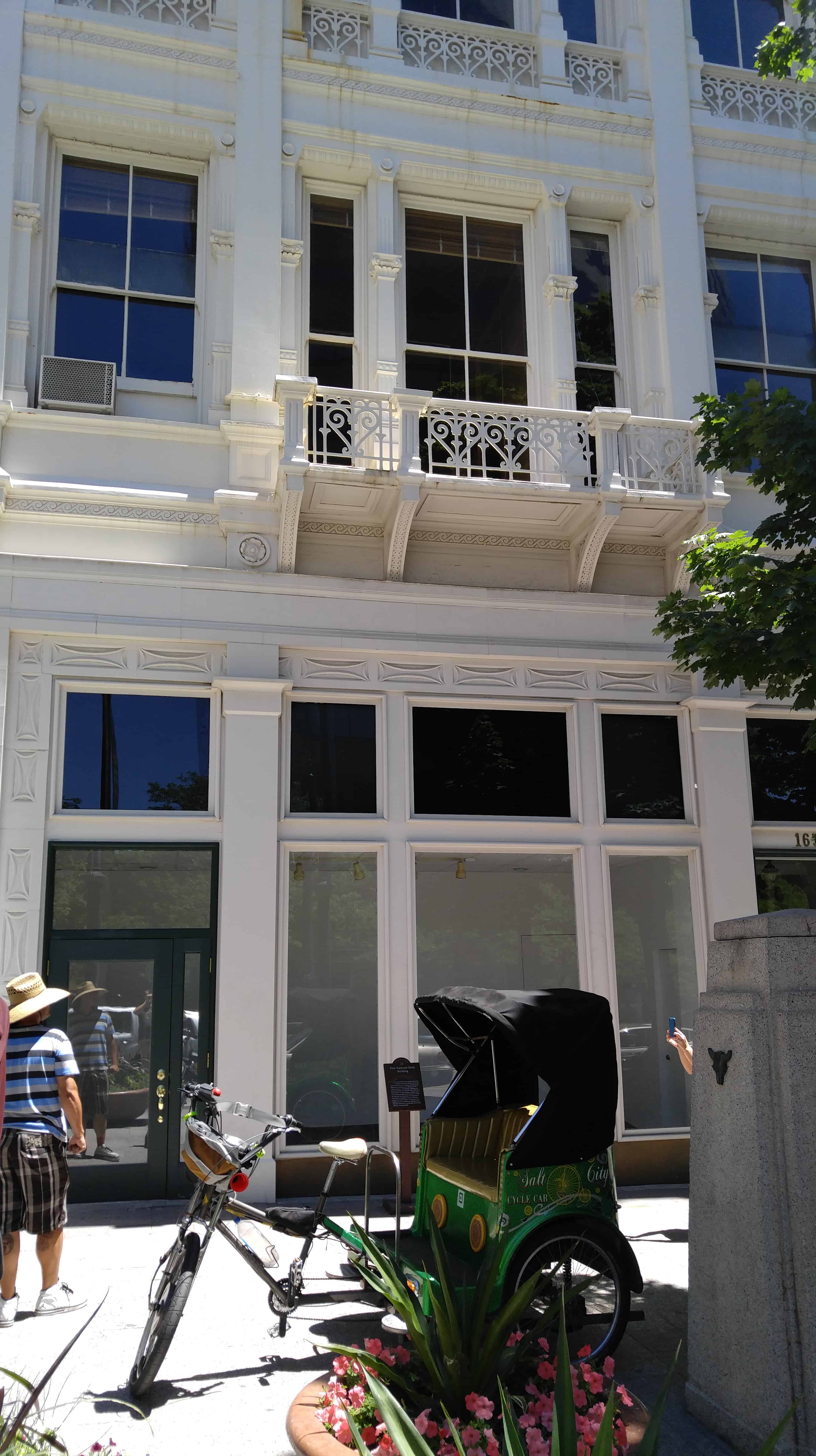
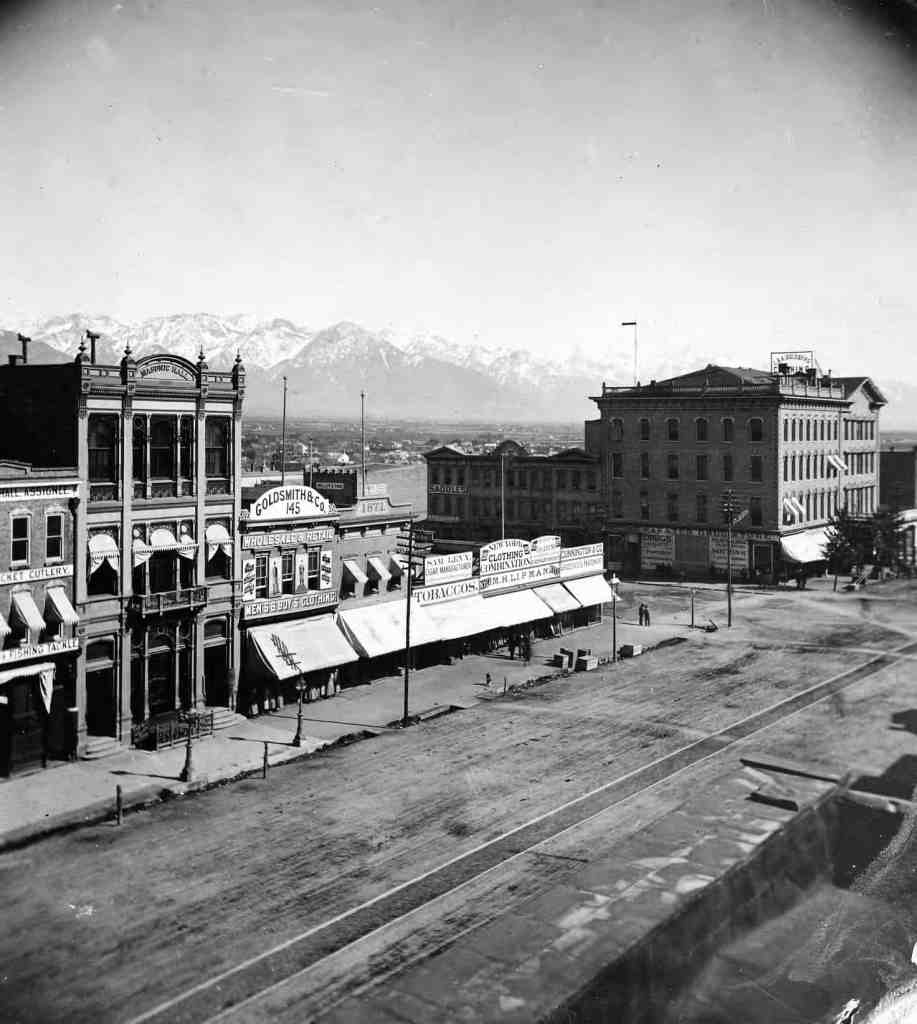
The First National Bank Building features the oldest known cast iron façade in the Intermountain West. It was designed by Richard M. Upjohn, one of America’s most distinguished 19th century architects. The building originally had a fourth story which was destroyed by fire in 1875.
First National Bank was spectacularly profitable when it constructed this building in 1873. By the end of 1874, the bank had been liquidated. The depression of 1873 and liberal lending practices were the main cause of the bank’s demise. Its expensive new building, however, contributed to its financial woes. Originally estimated to cost $80,000, the building ended up costing $140,000.
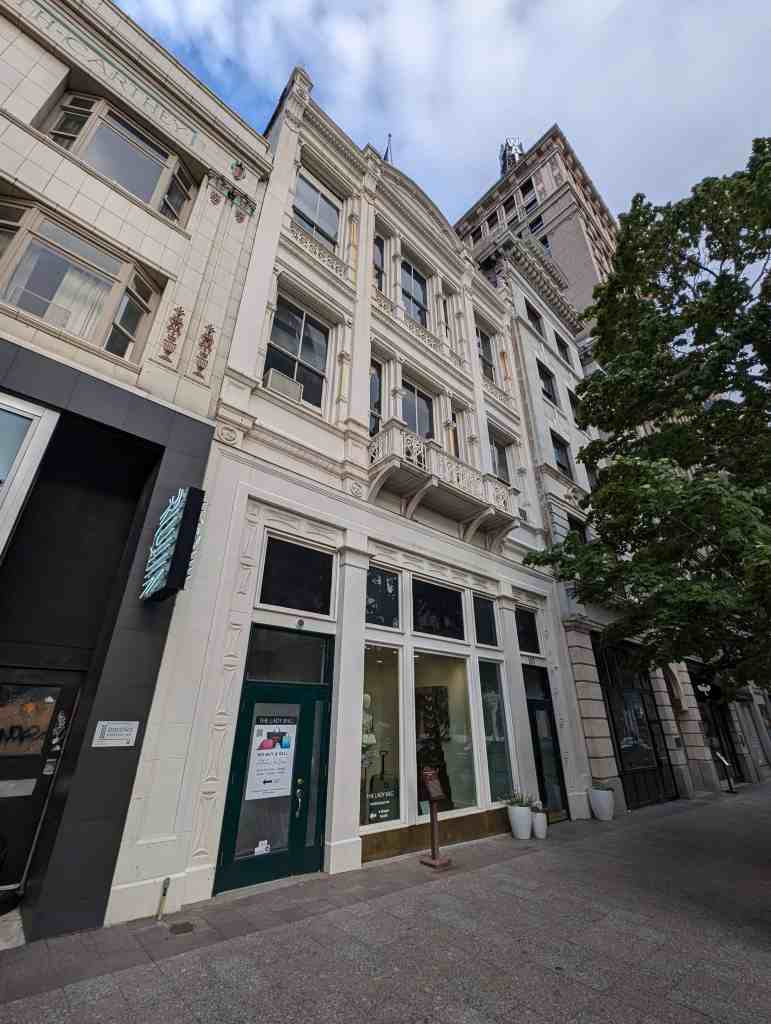
See other buildings on Salt Lake’s Main Street on this page.
There is also a monument in front of this building to the Pony Express Station that used to be in this location.
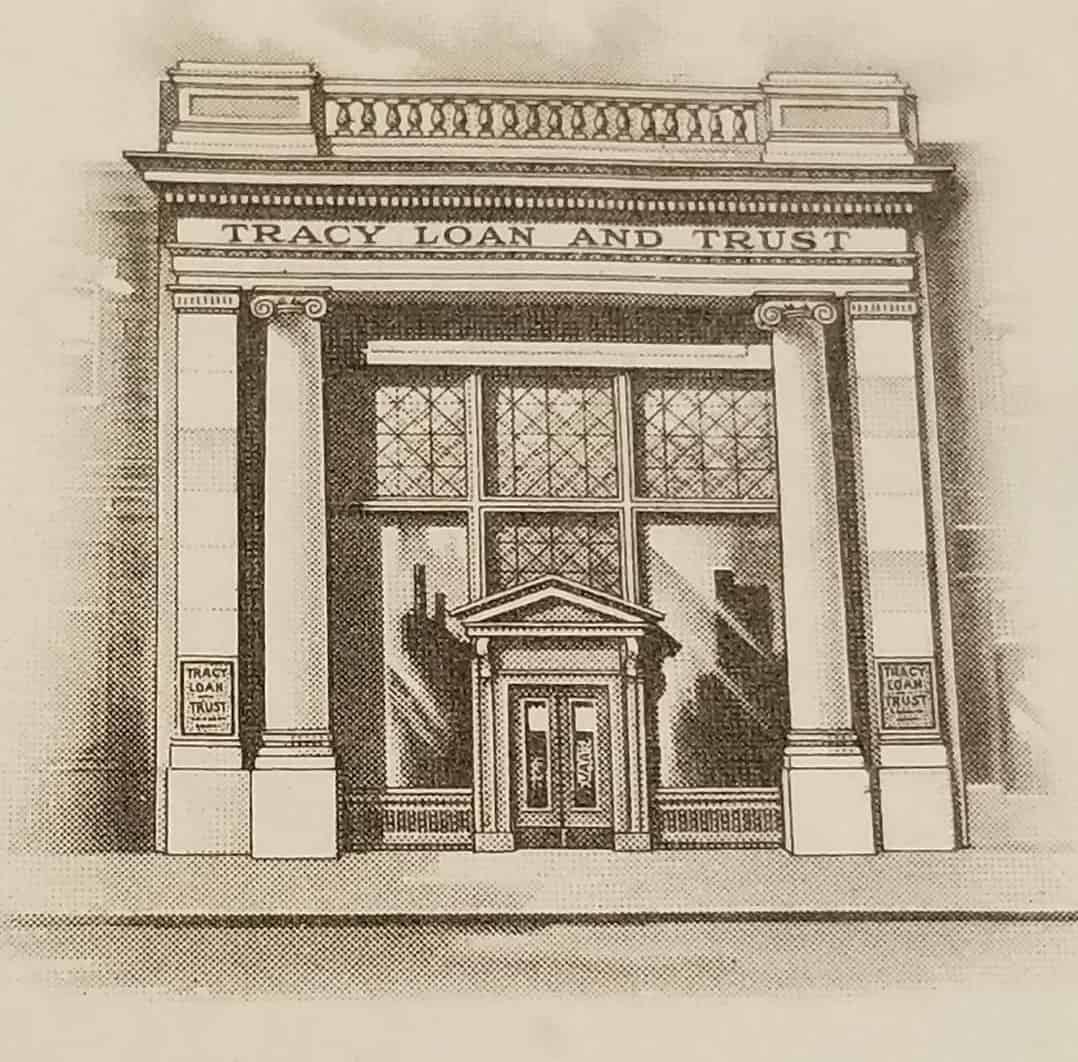
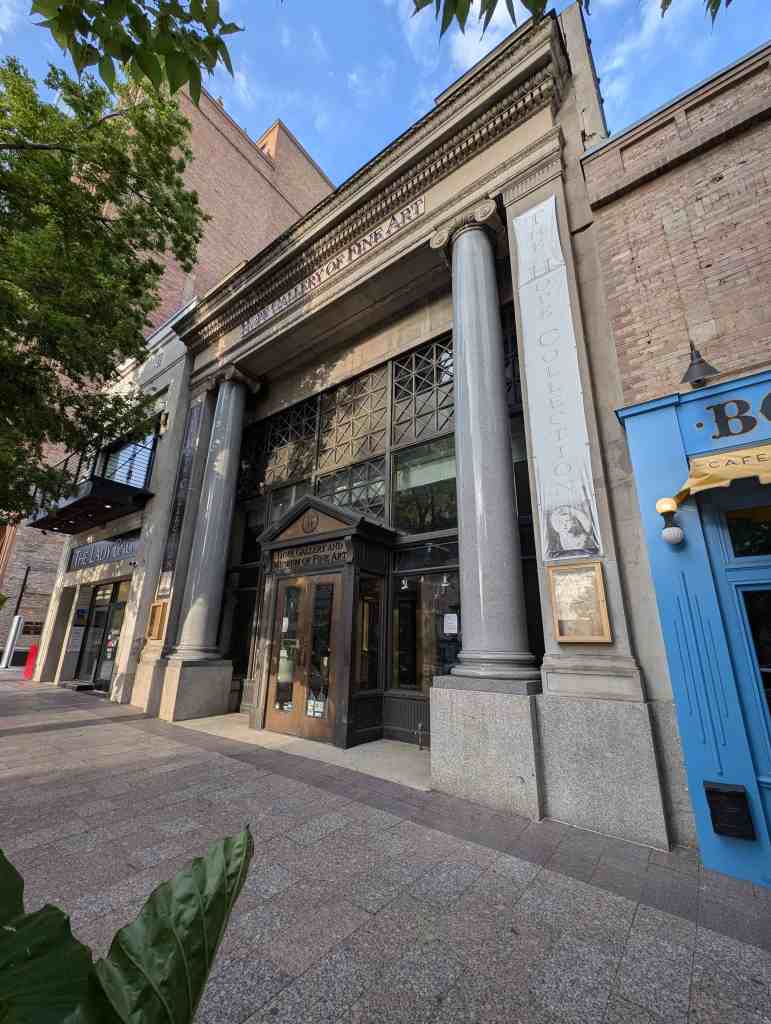
This building, designed by Architect Walter J. Cooper and constructed by James Stewart and Company, was built in 1916 for the Tracy Loan and Trust Company. Originally organized in the Cheyenne, Wyoming, in 1884. The Tracy Loan and Trust Company was moved to Salt Lake City in 1892 and has been one of Utah’s important banking institutions since that time. Renovation was begun by Ivory and Company in 1975 and continued after the building was acquired by Allen C. Brown in 1977.
The Nation’s first coast-to-coast route for automobile travel followed Parley P. Pratt’s Golden Pass road into the valley of the Great Salt Lake. Spanning the Country during the years from 1913 to 1928, the Lincoln Highway was conceived and financed by private sources before the national government became responsible for interstate highways.
The first federal highway acts were passed by Congress during the 1920s. Route numbers were assigned to all major highways and the Lincoln Highway become a part of America’s history.
– Parley P. Pratt Monument –
Born in New York in 1807, Parley Parker Pratt converted to Mormonism in 1830 and became one of its most successful missionaries and writers. After joining the original Mormon pioneers in the Salt Lake Valley, he became a leading explorer and colonist. A great builder of roads and communities, Parley’s soul was full of romance, poetry and song. He authored many widely-used religious tracts, popular hymns, and a colorful autobiography. Parley was killed while doing missionary work in Arkansas in 1857.
See the other Lincoln Highway Markers I’ve found on this page.
This survey marker lies in the sidewalk on the southeast corner of 400 South State Street in downtown Salt Lake City, Utah.
ENGINEERING DEPARTMENT
SALT LAKE CITY
STANDARD OF MEASURE
Under this cover lies a granite survey monument. It extends approximately six feet deep and is five feet square at the base. There is a similar monument one hundred feet and another one four hundred feet to the East of here. Salt Lake City Engineering set these monuments in the year 1895. They were used as the Standard of Measure for surveying the blocks and streets as they exist today.
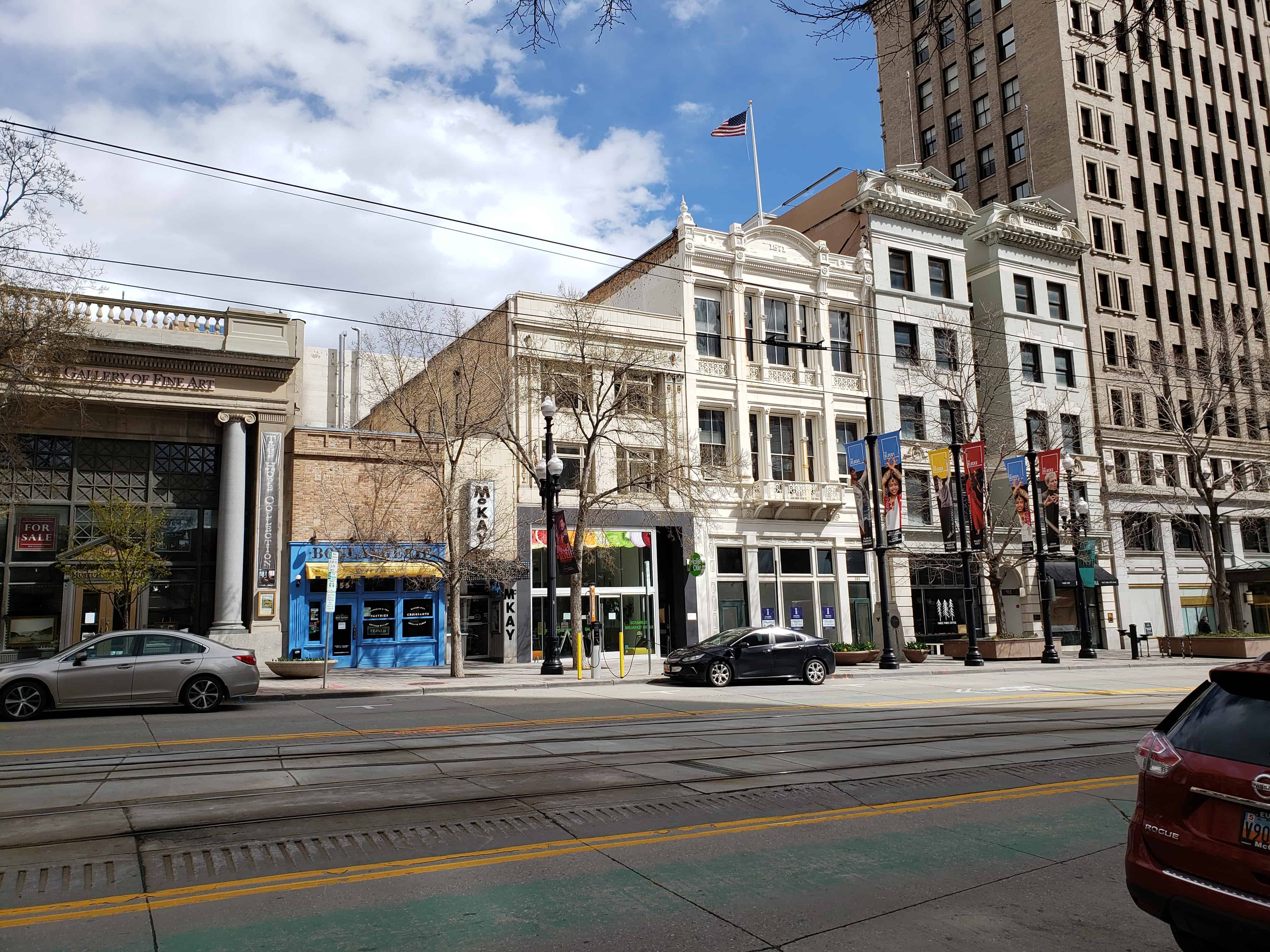
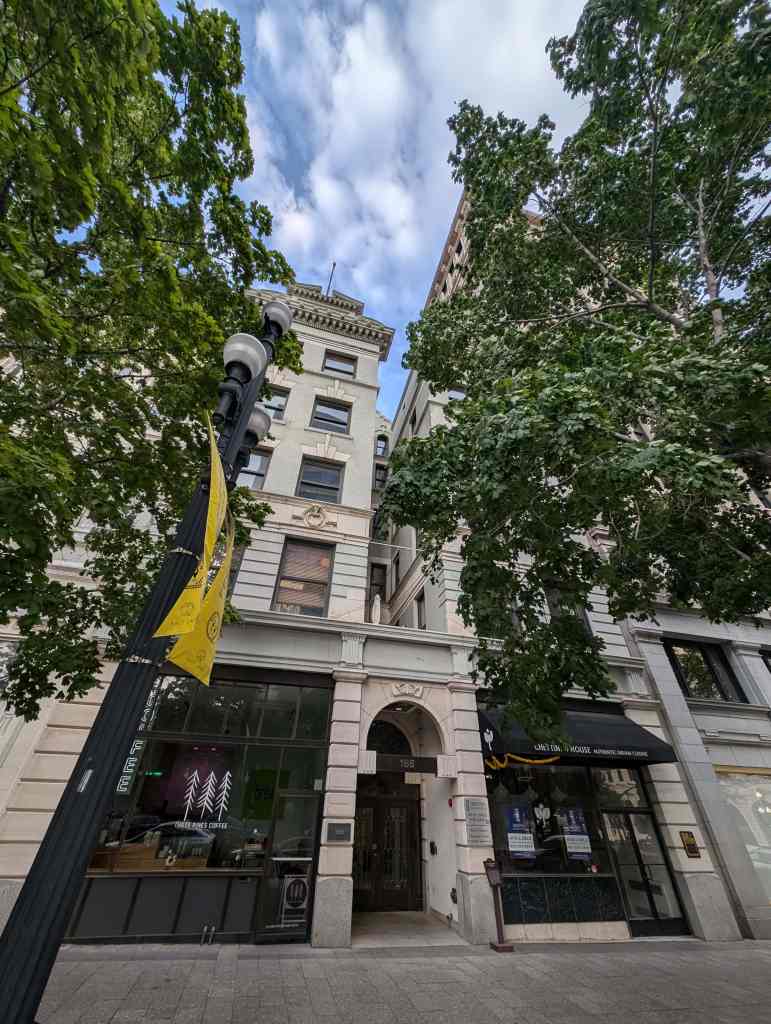
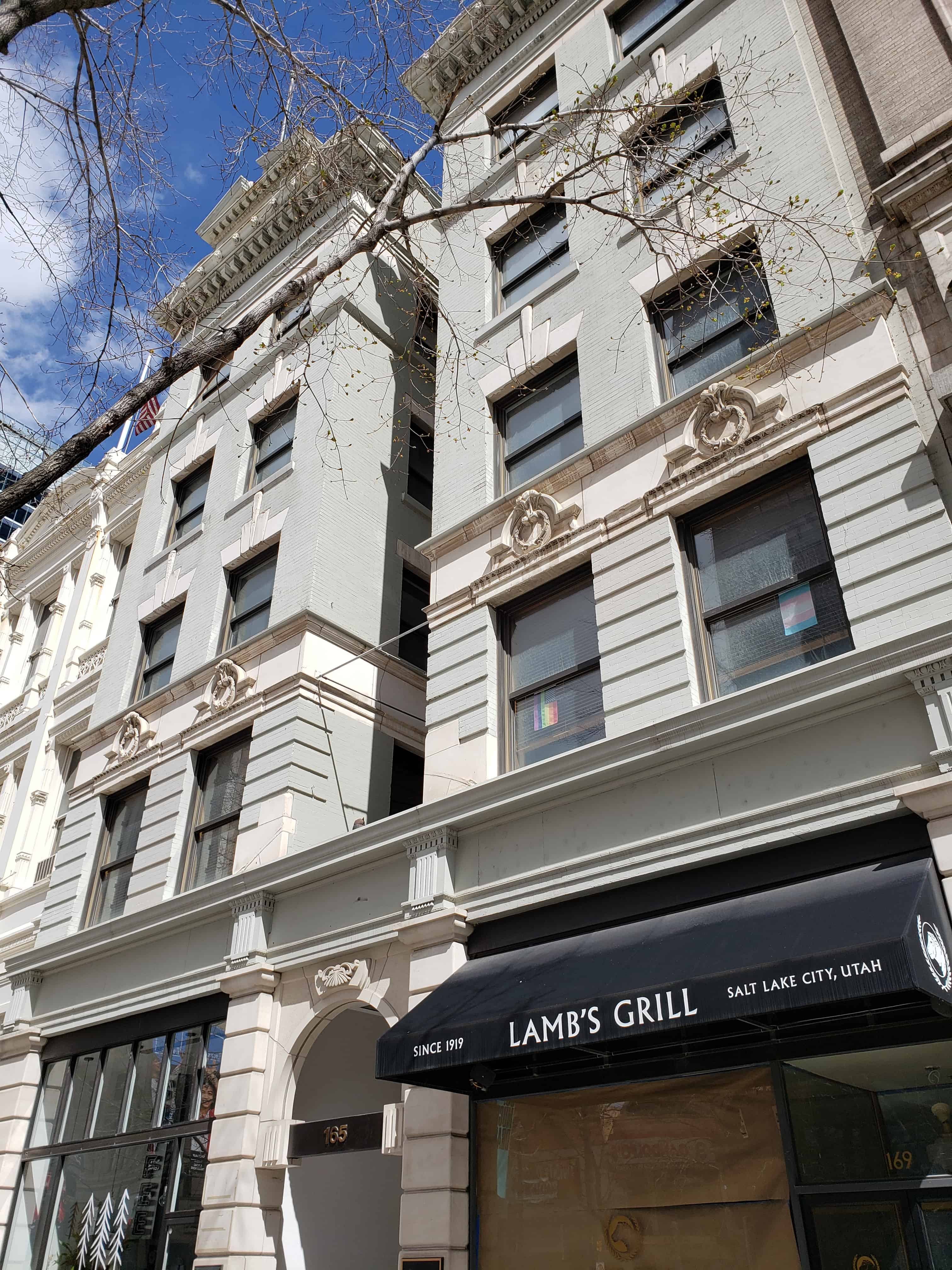
Designed by architect John C. Craig, the Herald Building was constructed in 1905 to house the Salt Lake Herald, a daily newspaper which began publication in June 1870. The Salt Lake Herald ceased publication in 1920. During its existence, the paper served as a defender of the Mormon Church and later spokesman for first the Democratic and then the Republican political parties in the state. The Herald Building is now the home of Lamb’s Restaurant established in 1919.
The Herald Building’s U-shaped plan is unusual. Many 19th and early 20th century buildings have a U-shaped plan to allow light and air to reach interior offices. Most often, however, the “U” opens to the rear or the side of the building rather than to the front. The Salt Lake Herald, a staunchly pro-Mormon newspaper, constructed this building in 1905. After the Herald moved out in 1913, the Little Hotel occupied the building for many years. Lamb’s Restaurant, a Salt Lake City icon, has been in business on the ground floor of the Herald Building continuously since 1919. Look for the ornate tin cornice which crowns the building.