Tags

Saint Ambrose – 339 – 397 A.D. Bishop of Milan Father and Doctor of the Church Defender of the Orthodoxy


07 Friday Oct 2016
Posted in Uncategorized
Tags
Saint Ambrose – 339 – 397 A.D. Bishop of Milan Father and Doctor of the Church Defender of the Orthodoxy
03 Monday Oct 2016
Posted in Uncategorized
Tags
historic, Historic Buildings, Jordan River, Salt Lake, Salt Lake County, South Jordan, utah, West Jordan, West Valley

Pioneer Crossing Bridge
Erected 2013 – This bridge commemorates the area where the first pioneers crossed the Jordan River to settle the West side of the Salt lake Valley. In November 1848, the family of Joseph and Susannah Harker were the first “over Jordan” and built a log home near 3300 South and 1400 West.
On January 9, 1849, the families of Thomas MacKay, John Bennion, Samuel Bennion, Thomas Tarbet, William Blackhurt, William Farrer, John Robinson and James Taylor crossed the Jordan River on the ice and built dugouts and cabins in this area.
Other settlers followed these first pioneer, resulting in many prosperous communities West of the Jordan River. Pioneer Crossing Bridge honors these first families and all others who have sought a brighter future by making their home on the Salt Lake Valley’s West side.

Moesser – Rushton Granary
Erected c1878 in Hunter, Preserved 2014 – As pioneers and homesteaders moved West across the Salt Lake Valley they prospered in developing farming communities. Harvested lumber from Bingham, Harker and Coon Canyons in the Oquirrh Mountains was used by settlers to build area homes, barns and granaries.
Pioneer Joseph Hyrum Moesser constructed this granary near his adobe brick house in c1878 at approximately 4450 South 5400 West in Hunter. Newly wed Alma E Rushton acquired this granary and surrounding farm in 1917. Merging it into the Rushton homestead across the street. This historic granary was in use for over 100 years of agricultural production and is perhaps the oldest building in West Valley City today. It commemorates all those that seek to build and shape their community into a better place.


25 Sunday Sep 2016
Posted in Uncategorized
Tags
Capitol Hill Historic District, Chapels, historic, Historic Churches, NRHP, Salt Lake, Salt Lake City, Salt Lake County, utah
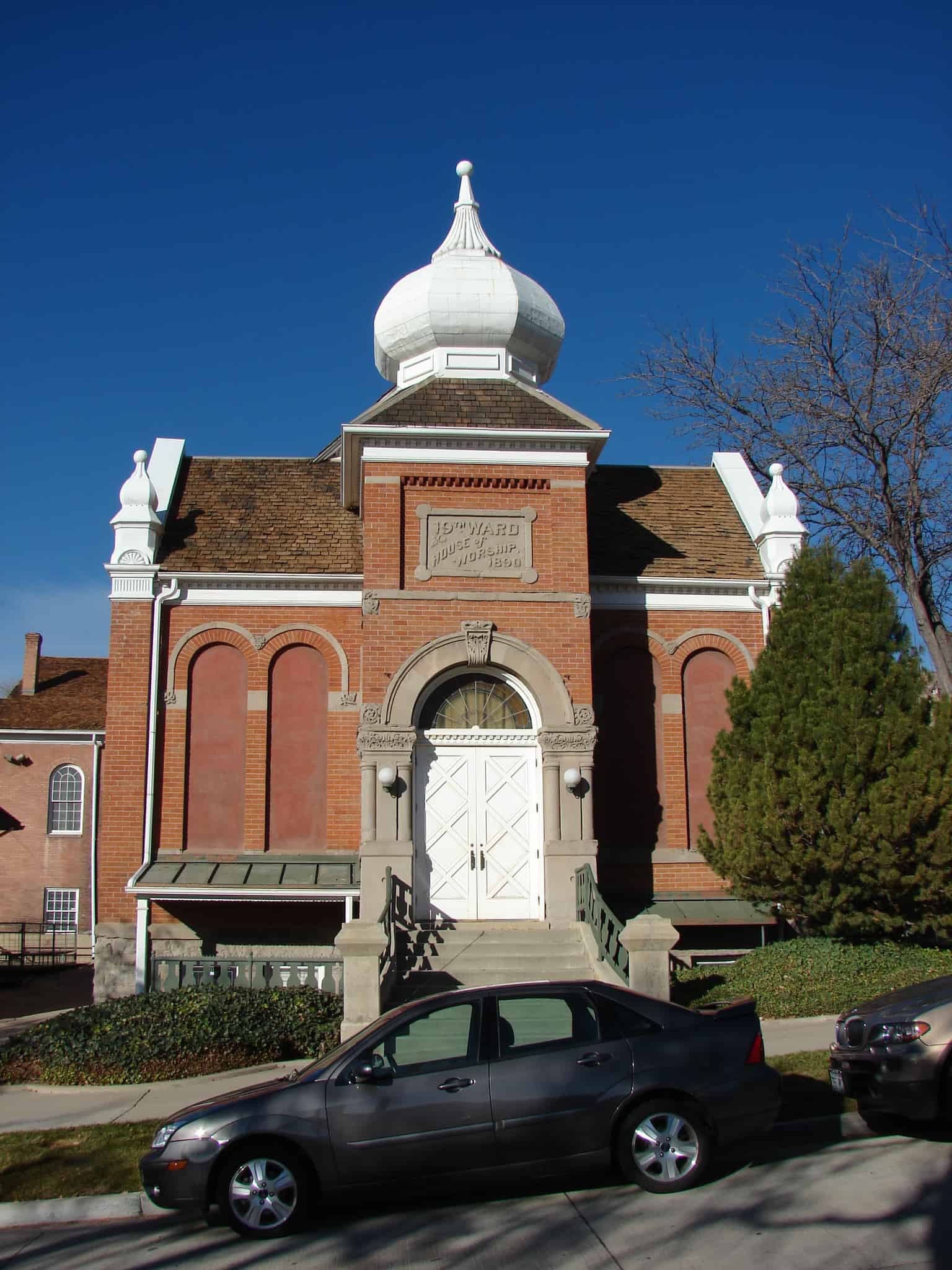
The 19th Ward Meetinghouse and Relief Society Hall.
Located at 168 W. 500 North, Salt Lake City, Utah, was listed on the National Register of Historic Places in 1976.
It was built in 1896. Its architecture is significant in American history as reflecting changes imposed upon The Church of Jesus Christ of Latter-day Saints (LDS Church) by outside influences. Pressure included various Federal enforcement efforts following upon the Edmunds–Tucker Act of 1877, which outlawed polygamy. In effect, the LDS Church capitulated, and sought to adopt different values in conformity with worldwide ones. The meetinghouse was designed by architect Robert Bowman and represented a “totally out of character” change in style; it includes an “oriental, Byzantine, or German Renaissance-inspired onion dome”. It was no longer a church when listed on the National Register of Historic Places in 1976.
The building currently houses the Salt Lake Acting Company.
See other historic churches in the area on this page.
19th Ward Boundaries: (*)
… bounded on the north by 5th North St. and Girard Avenue (or the 24th Ward), east by the brow of the hill (or Capitol Hill Ward), south by 2nd North St. (or the 17th Ward), and west by 1st West St. (or the 22nd Ward).
The boundaries of the 19th Ward were extended so that at one time all that part of Salt Lake City lying between 2nd North St. and the Warm Springs and from Main St. and Arsenal Hill to the Jordan River belonged to the ward, although much of this territory, at the time, was unoccupied.
History timeline:
1849, February 22 – one of the original nineteen wards
1889 – all that part of the ward lying west of 2nd West St. was separated from the 19th Ward and organized as the 22nd Ward.
1891 – all that part of the ward lying north of 9th North St. was separated from the 19th Ward and organized as the 23rd Ward
1909 – the western boundary of the ward was changed from 2nd West St. to 1st West St.
1926 -all that part of the ward lying north of 5th North St. was organized as the 24th Ward
The 19th ward is one of the original 19 wards in Salt Lake City in 1849, you can see the others on this page.
Related:
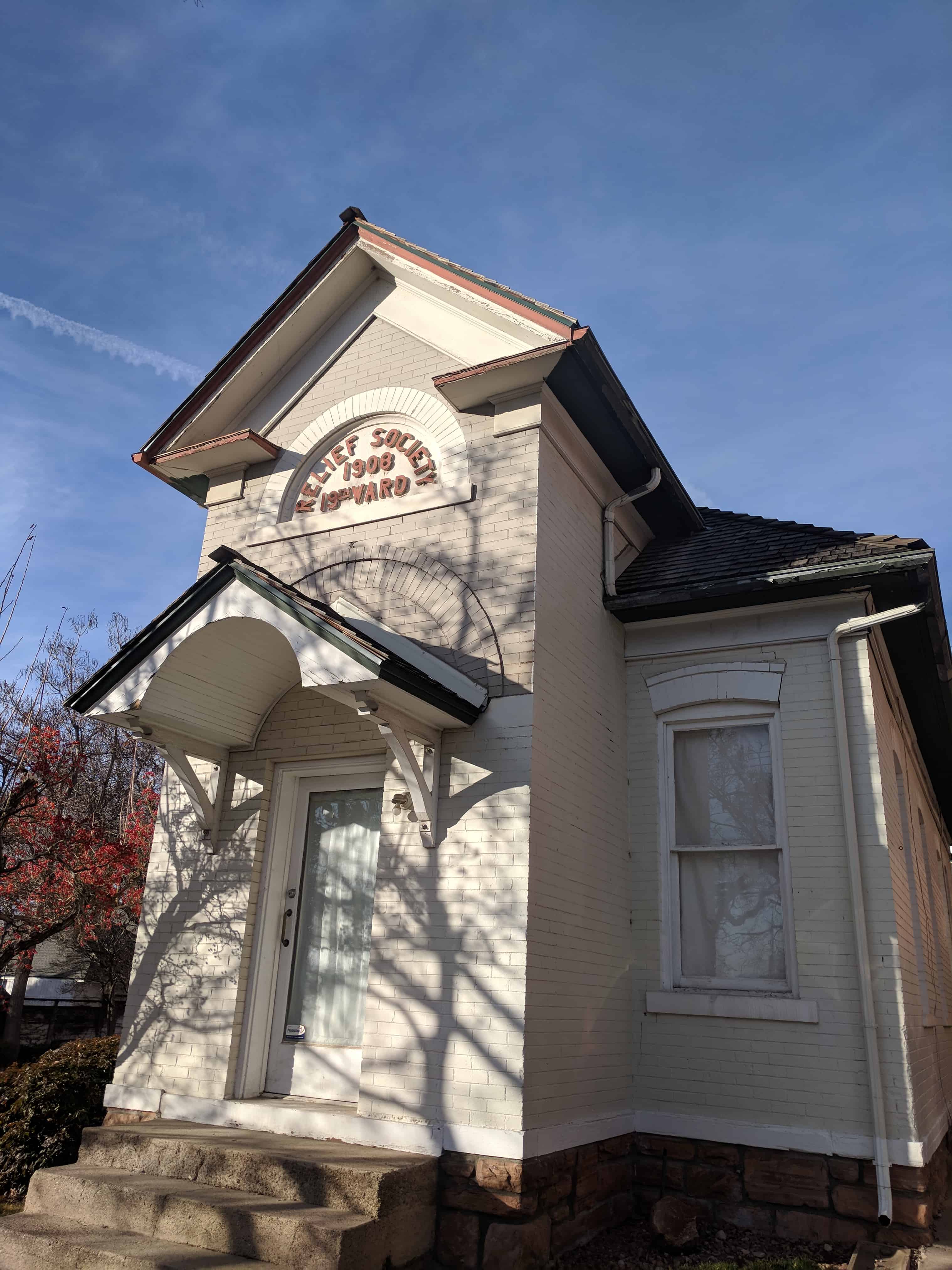


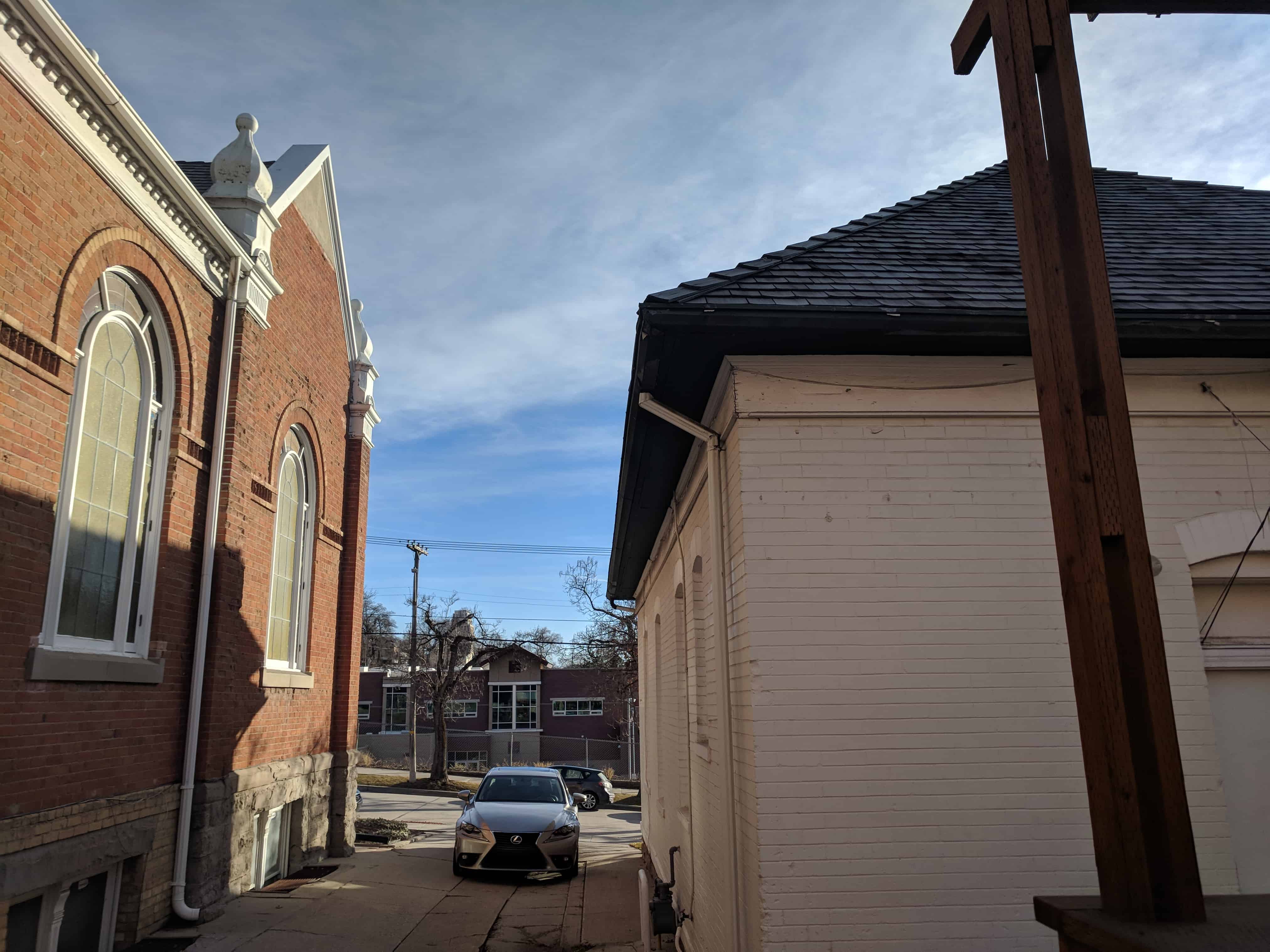


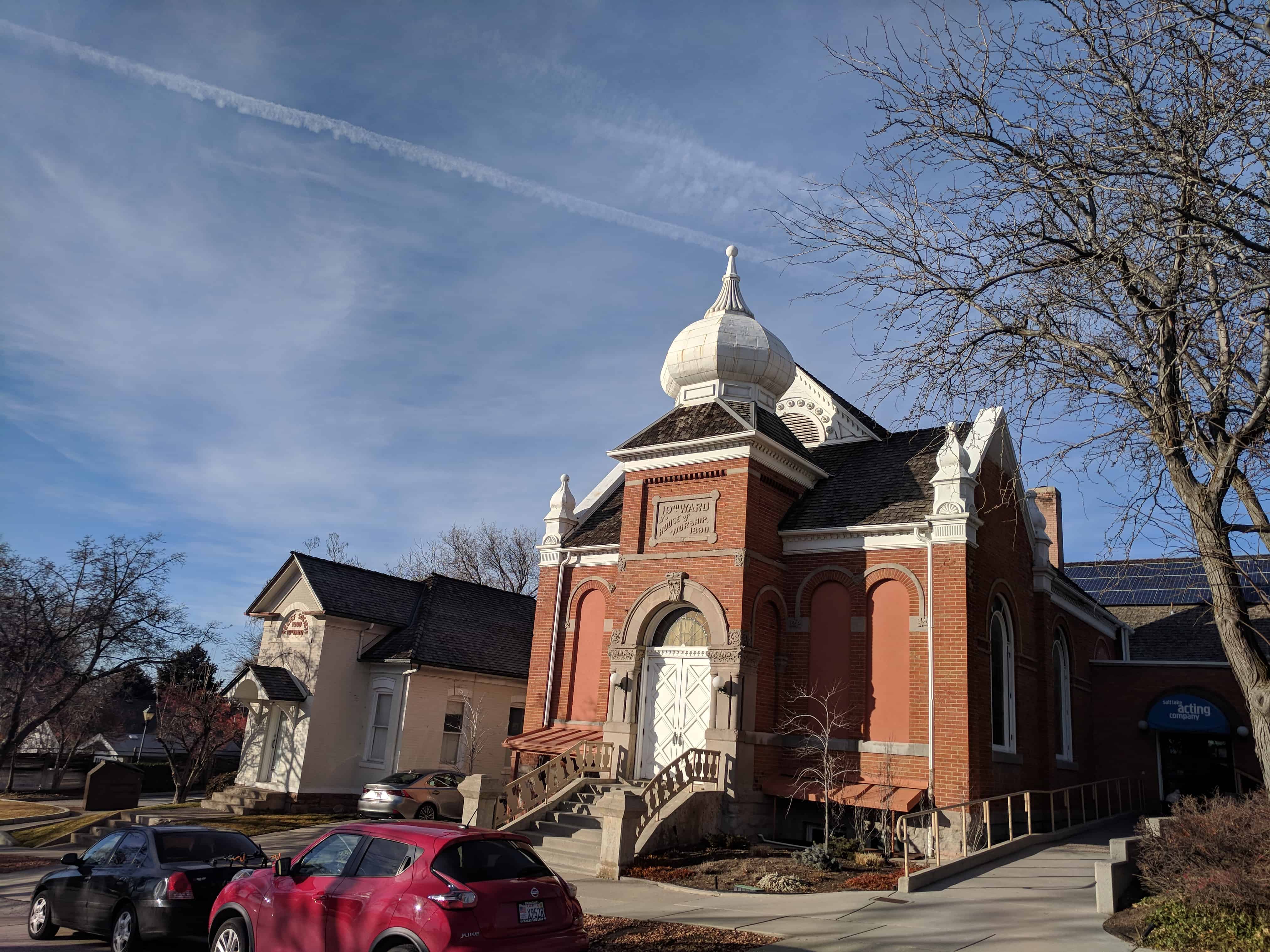


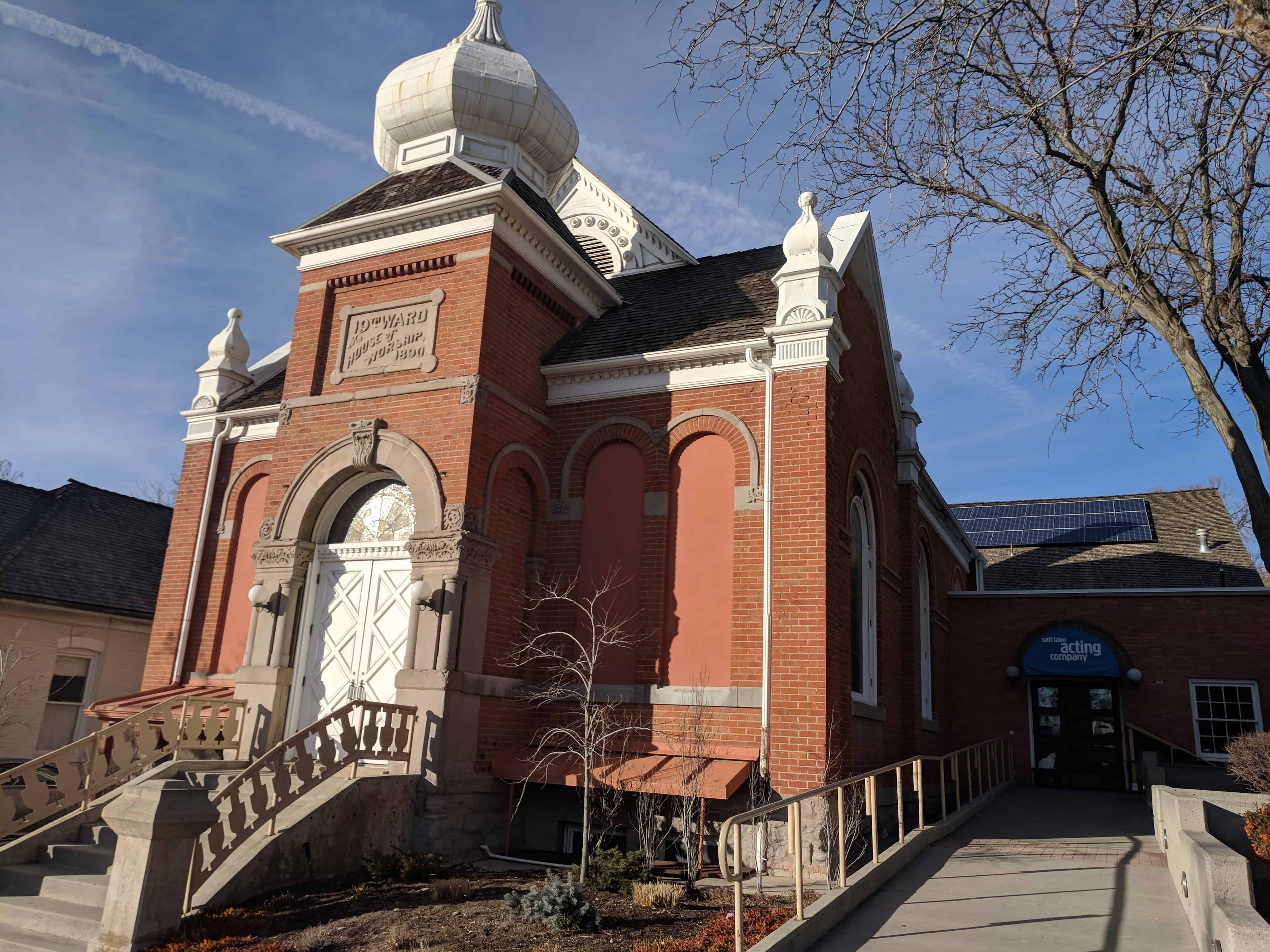
This structure was the third meetinghouse erected 1890-1892 for the 19th ward of the Church of Jesus Christ of Latter-day Saints. Originally encompassing nearly 120 square miles, the 19th ward, repeatedly reduced to create new wards, is now one of the smallest. The meetinghouse is no longer used by the church. The 19th Ward Relief Society Hall was built in 1908 about two blocks away and later moved to its present site. The amusement hall was erected in 1929.
“In 1852 the population of the 19th ward numbered 303 adults and 100 children under eight years of age. Immediately after the organization of the ward the people met for worship in the Warm Springs Bath House, which served until a school house was erected that year on the northeast corner of 4th North and 2nd West streets. In 1866, on the site of the old school house, was erected a large and commodious Building, to which wings were added on the north and south some years later.”
This chapel deviated from the early pioneer chapels built in the valley. Built in 1890 this building shows a heavy Russian influence in its architectural style, The large onion shaped dome is the dominant feature of the chapel. The chapel or assembly hall has been stripped of its pews, to enable it to be used by Ballet West. The ballet trop now uses the chapel as it’s practice headquarters. Since religious icons and symbolic decoration are not common in Mormon meetinghouse, very little else was changed by Ballet West.
The below text is from Preservation Utah‘s Historic Buildings on Capitol Hill Self-Guided Tour:
The Russian influence apparent in the 19th Ward Meetinghouse was a dramatic departure from the plain uniformity of older LDS chapels. Built in 1890, the chapel exemplifies the waning of the pioneer period and a greater acceptance of more varied styles of architecture. The large white onion-shaped dome and lesser onion-topped pillars are dominant features of the red brick building. It is listed, along with the Relief Society Hall, on the National Register of Historic Places.
The 19th Ward was one of the original nineteen wards organized in Salt Lake City. At first, members met in private homes or at the Warm Springs Bath House (later Wasatch Springs Plunge). Subsequent gatherings were held in an adobe schoolhouse until it was razed and replaced by a small chapel in 1866.
The Relief Society Hall was built in 1908 about two blocks away from the present chapel. The building was later moved to this location. The amusement hall was added in 1929. This is the only remaining ward chapel with an adjacent Relief Society Hall in the city. The facility is now owned by Salt Lake City and is being restored to provide office space for the Utah Heritage Foundation and other non-profit organizations.
25 Sunday Sep 2016
Posted in Uncategorized
Tags
Chapels, Churches, historic, Historic Churches, Salt Lake, Salt Lake City, Salt Lake County, utah
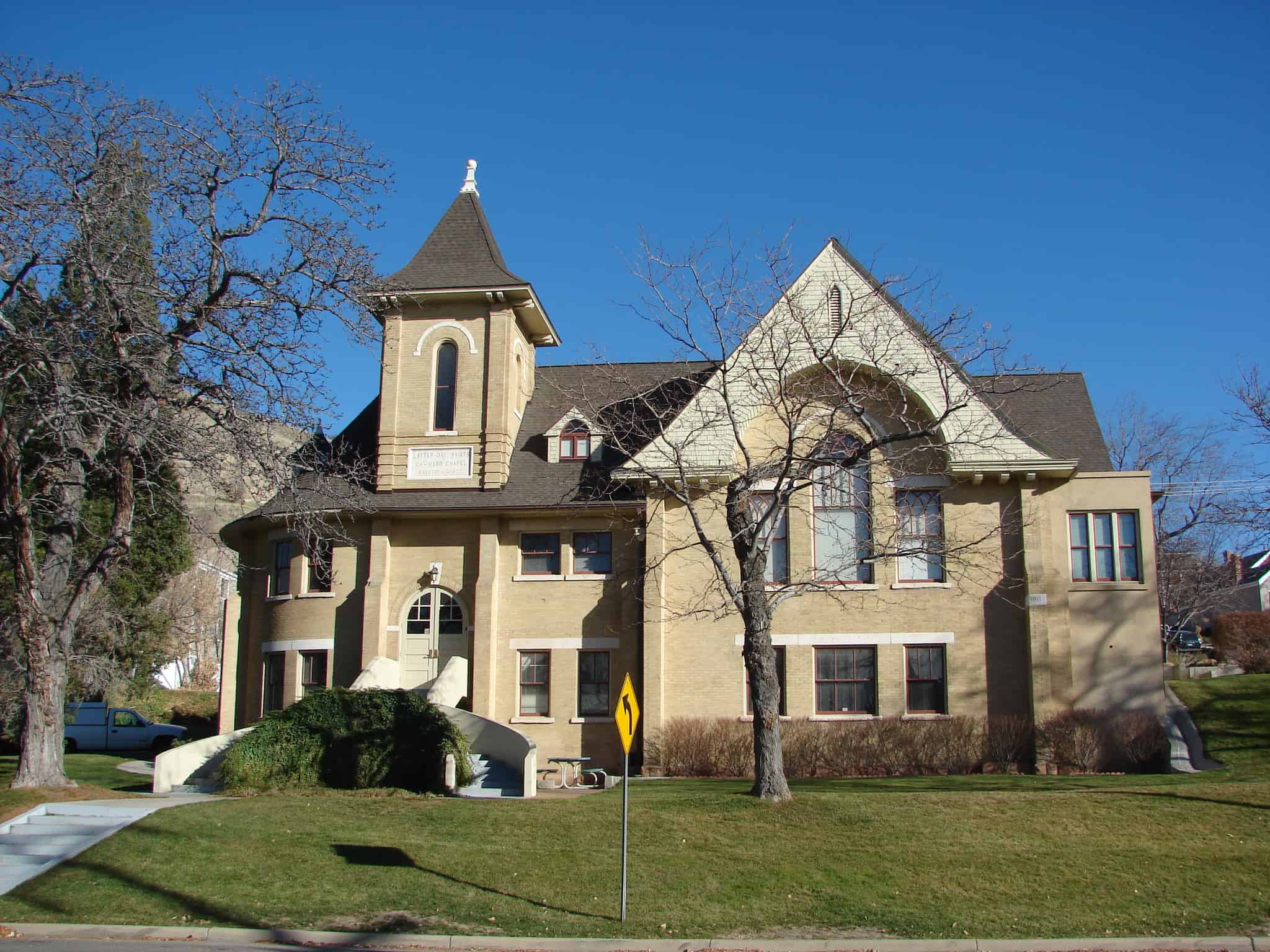
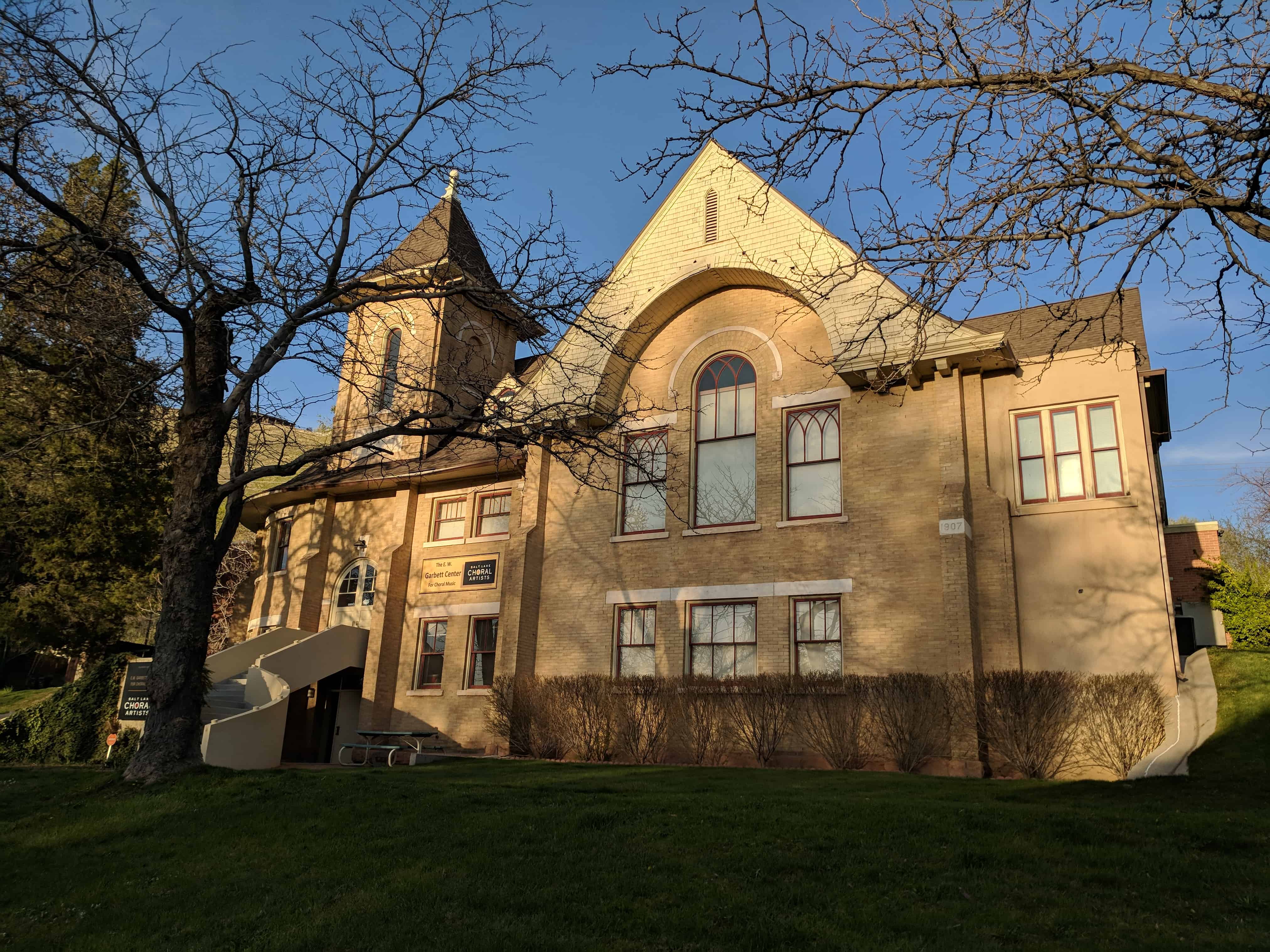
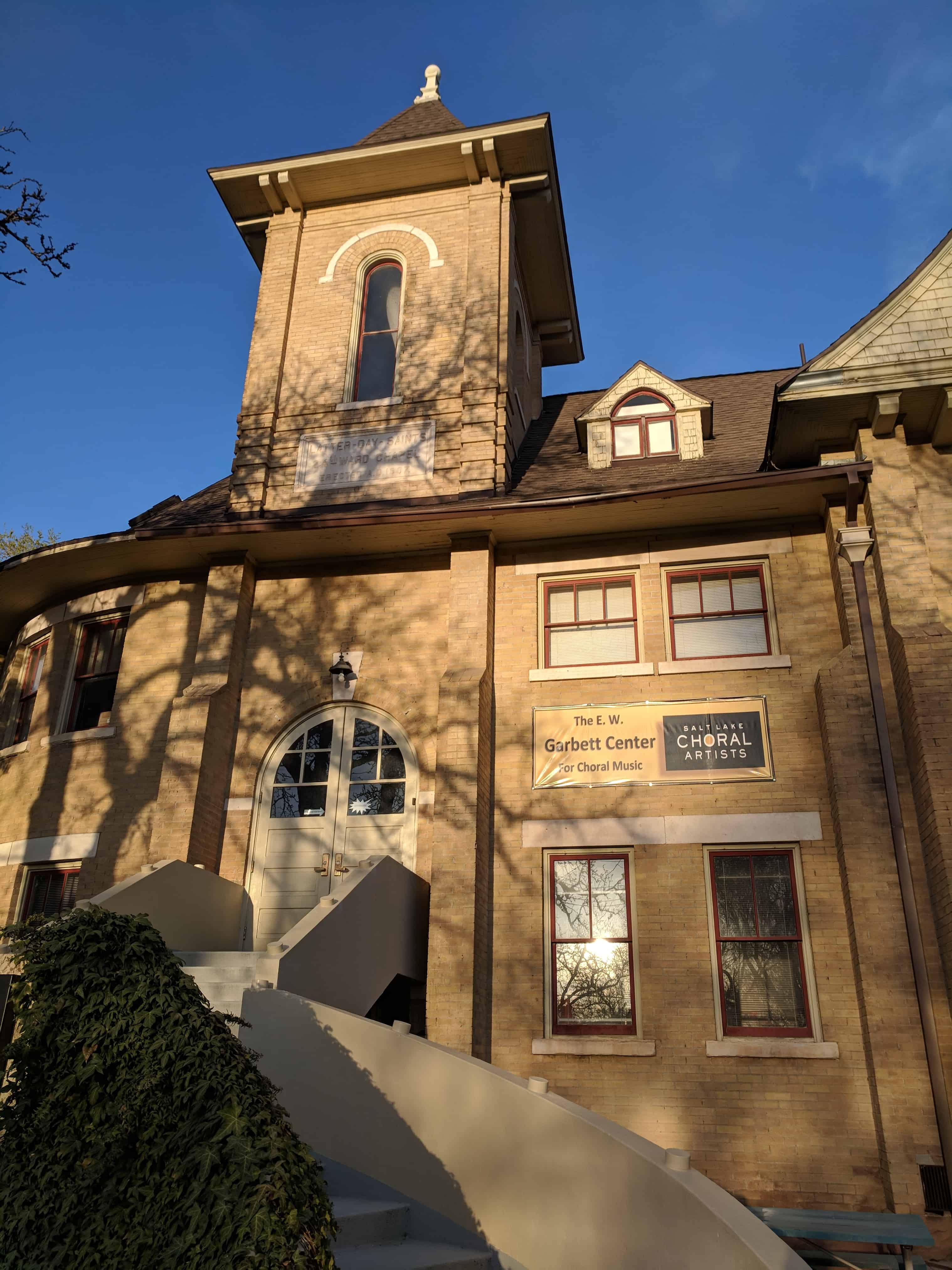
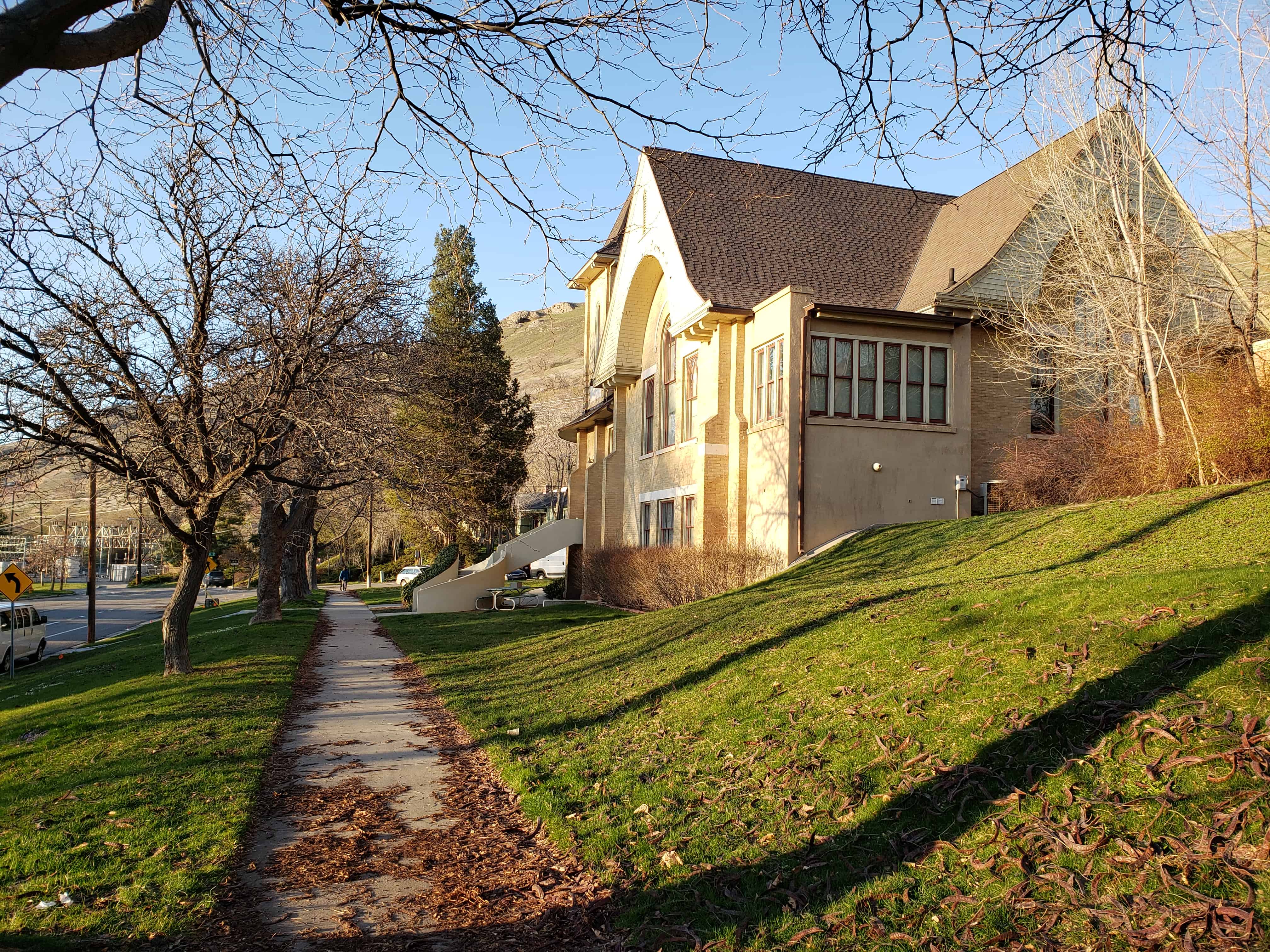
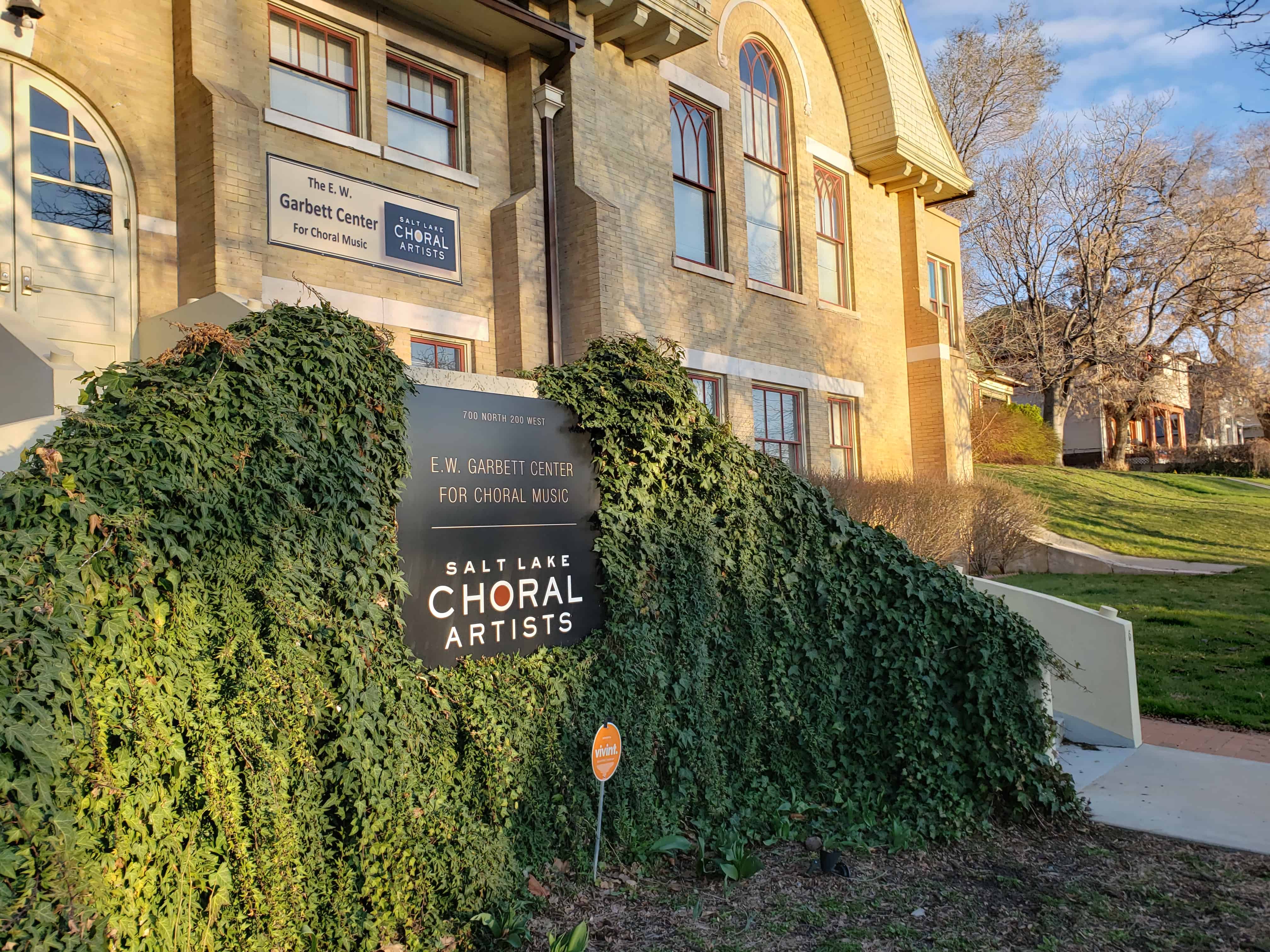
A gorgeous 100+ year old chapel in Salt Lake City, the 24th ward chapel was built in 1907 and is located at 700 North and 200 West. The church sold it in 1969.
See other historic church buildings in Salt Lake on this page.
Related:
“The 24th Ward (new) was organized February 4, 1906, from the north part of the 19th Ward. Immediately after the organization of the ward, the erection of a substantial brick and stone chapel on the triangle at the junction of Wall St. and 1st West St. was commenced. To this chapel, which originally cost $17,000, improvements and additions have since been made so that it now has an auditorium with a seating capacity of 500 persons. In the basement is a spacious amusement hall.” William Wood Jr., the first Bishops of the ward, served nearly 25 years until 1925. The chapel continued in use until the 1970’s when it was sold by the church.
The old 24th LDS Ward is a two-story asymmetrically planned brick structure. The original tan brick has been painted white. The plan and elevation include curved and rectilinear elements and the roof is multiply hipped and gabled. The main gable has a recessed arch enclosing a round arched windows flanked by rectangular lights. The gable features shingle siding. A square tower over the entrance has a hipped roof and round arched windows. Windows have massive concrete sills and lintels. In the south an addition has been made. Modifications have occurred to turn the building into a school facility.









23 Friday Sep 2016
Posted in Uncategorized

This Obelisk is the original “This is the place” monument, erected in 1921 to commemorate the arrival into the Salt Lake Valley of the Mormon pioneers. It is presumably nearer to the actual location where Brigham Young halted his wagon and declared, “This is the right place, Drive on.”
The monument has been refurbished and rededicated under the direction of the Sons of the Utah Pioneers.
In commemoration of a most significant historical event, this monument was first dedicated July 25, 1921. It marked the arrival in this valley of the Mormon Pioneers 74 years earlier, and more specifically, the moment when President Brigham Young rose from his sick-bed in Wilford Woodruff’s carriage and proclaimed to all the world: “This is the Place.”
Even in 1921, there was much disputation as to the exact location of the noted event. This monument was located here as the definitive answer as to where the event occurred. This answer came primarily from two speakers, very different in their presentations, but equally convincing in their conclusion.
The first speaker was 83-year-old W.W. Riter. As a lad of 9 years, he and his parents had followed Brigham Young to this valley. W.W. Riter was the living authority for the correct placing of the monument. In his early years, Wilford Woodruff had taken him to the spot and stated that this is exactly where Brigham Young had uttered those important words.
The second speaker was Brigham H. Roberts, age 64, a prolific historian, theologian, congressman, eminent scholar, and a member of the Quorum of the Seventy. He said, “There has been much discussion as to whether this particular spot just outside the mouth of Emigration Canyon was really the place.” Then quoting often from the journal of Wilford Woodruff, Mr. Roberts proved conclusively that there can be no doubt that the spot now marked by this concrete monument is very near to the actual place. In fact, speaking of the question, he remarked: “Seventy four years ago yesterday an incident occurred on or near the spot where we now stand that is destined to live in the memory of men through the ages to come.”
The above comments have been taken substantially from three articles published in the Salt Lake Tribune and three in the Deseret News of the period. The comments came before and after the event.
The project refurbishing the monument was jointly undertaken by the Mills Chapter of the Sons of Utah Pioneers and Zachary Mahoney, a Scout who used his skill and wisdom to make his Eagle Project not only memorable but lasting.
Note: Elder Boyd K. Packer rededicated the refurbished monument in 2007.
This is Sons of Utah Pioneers historic marker #129 (see other S.U.P. Markers here) located at This Is The Place Heritage Park at 2601 Sunnyside Avenue in Salt Lake City, Utah
19 Monday Sep 2016
Posted in Uncategorized

The Willard T. and Caroline Y. Cannon House
Constructed in 1918, this Tudor Revival Style house was built for Willard Tellé and Caroline Y. Cannon, who had purchased the land from Loren Price Jr. in 1917. Character defining architectural features of the home includes its asymmetry, half-timbering, multi-gabled roof, and casement windows with leaded glass.
Willard, a son of George Q. Cannon, followed in his father’s footsteps in the business world. After attending the University of Utah and the Massachusetts Institute of Technology, he became president and general manager of the Utah-Idaho Sugar Company.
The home had been converted to a 4-plex apartment in the late-1940s and was carefully restored in a major renovation in 2014.


19 Monday Sep 2016
Posted in Uncategorized
Tags
Capitol Hill Historic District, Cemeteries, Downtown SLC, historic, Salt Lake, Salt Lake City, Salt Lake County

The nearby DUP Marker says:
Heber C. Kimball, pioneer of 1847 and first counselor to Brigham Young, was allotted the land adjacent to this monument upon which to build homes for his family, the majority of whom arrived in 1848. He and Newel K. Whitney dedicated a plot of ground one-half block east as a private cemetery for both families. Buried therein are 33 Kimballs, 13 Whitneys and 10 others. Both Heber C. Kimball and Newel K. Whitney are interred in this sacred spot.
This is a private cemetery with- a large central monument to Heber C. Kimball and Newell K. Whitney, A stone retaining wall and an iron fence separate the cemetery from the street.
Heber C. Kimball was born June 14, 1801, at Sheldon, Vermont. He became an £ apostle of the L.D.S. Church in 1835 and in 1847 first counselor to President Brigham Young, in whose company he came to the Salt Lake Valley the same year. He received a large tract of land north of the Temple Square as his inheritance “where he settled his family and constructed mills. He died in 1868.” Whitney was Born in 1795, and was the second presiding bishop of the L.D.S. Church. He came to Utah in 1848 and died here in 1850. Whitney’s wife, Ann Houston Whitney, was the first person buried there after the cemetery was dedicated in 1848.
Thirty-three Kimballs, thirteen Whitneys, and ten others are reported to have been buried here before the site was closed in 1889. Since 1931 the property has been held and maintained by the L.D.S. Church.
The cemetery is located at 41 Gordan Place in the Capitol Hill Historic District in Salt Lake City, Utah


19 Monday Sep 2016
Posted in Uncategorized
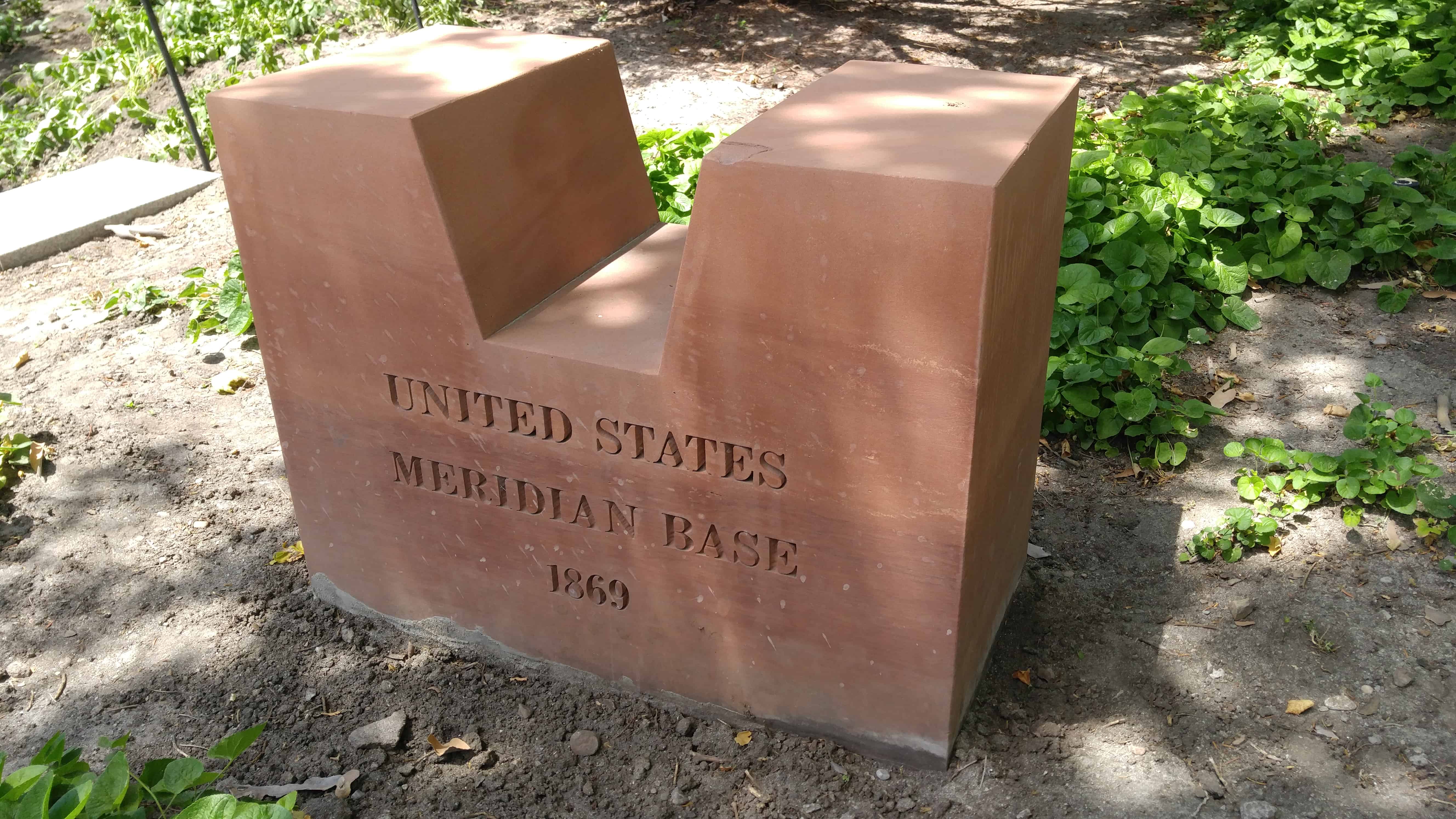
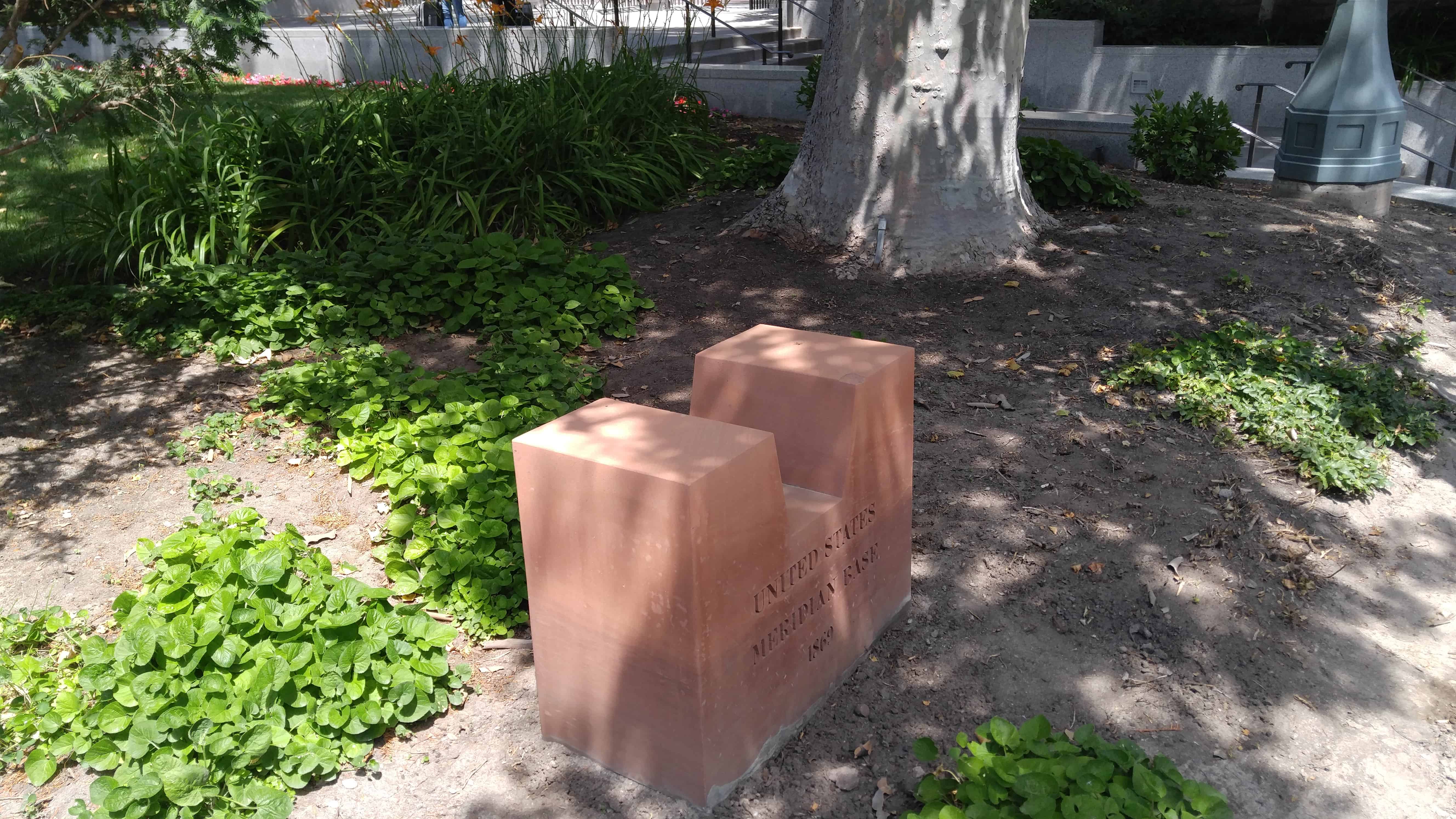
On Temple Square, just north of the east end of the south visitor center.
“An astronomical station, its stone base still standing 100 ft. N. and 50 ft. W. of this corner was established by George W. Dean, U.S.C.&G. survey, September 30, 1869, to determine the true latitude and longitude; it was used to obtain correct time at this point until December 30, 1897.” (from the plaque on for the Great Salt Lake Base and Meridian)
| Marker Information
| |
| Placed By: | Not Available |
| Date Placed: | 1869 |
| Materials: | Engraved in the stone |
| Marker Condition: | Excellent |
| Monument Information
| |
| Constructed By: | Not Available |
| Materials: | Cut sandstone block |
| Dimensions (base): | 2′ Square |
| Condition: | Excellent |
| Additional Information
| |
| Surveyor’s Name: | Kate Wacker |
| Surveyor’s Organization: | USHS |
| Date Surveyed: | 1995-11-14 |

19 Monday Sep 2016
Posted in Uncategorized
Tags
historic, LDS, LDS Church, Monuments, Salt Lake, Salt Lake City, Salt Lake County, Temple Square, utah

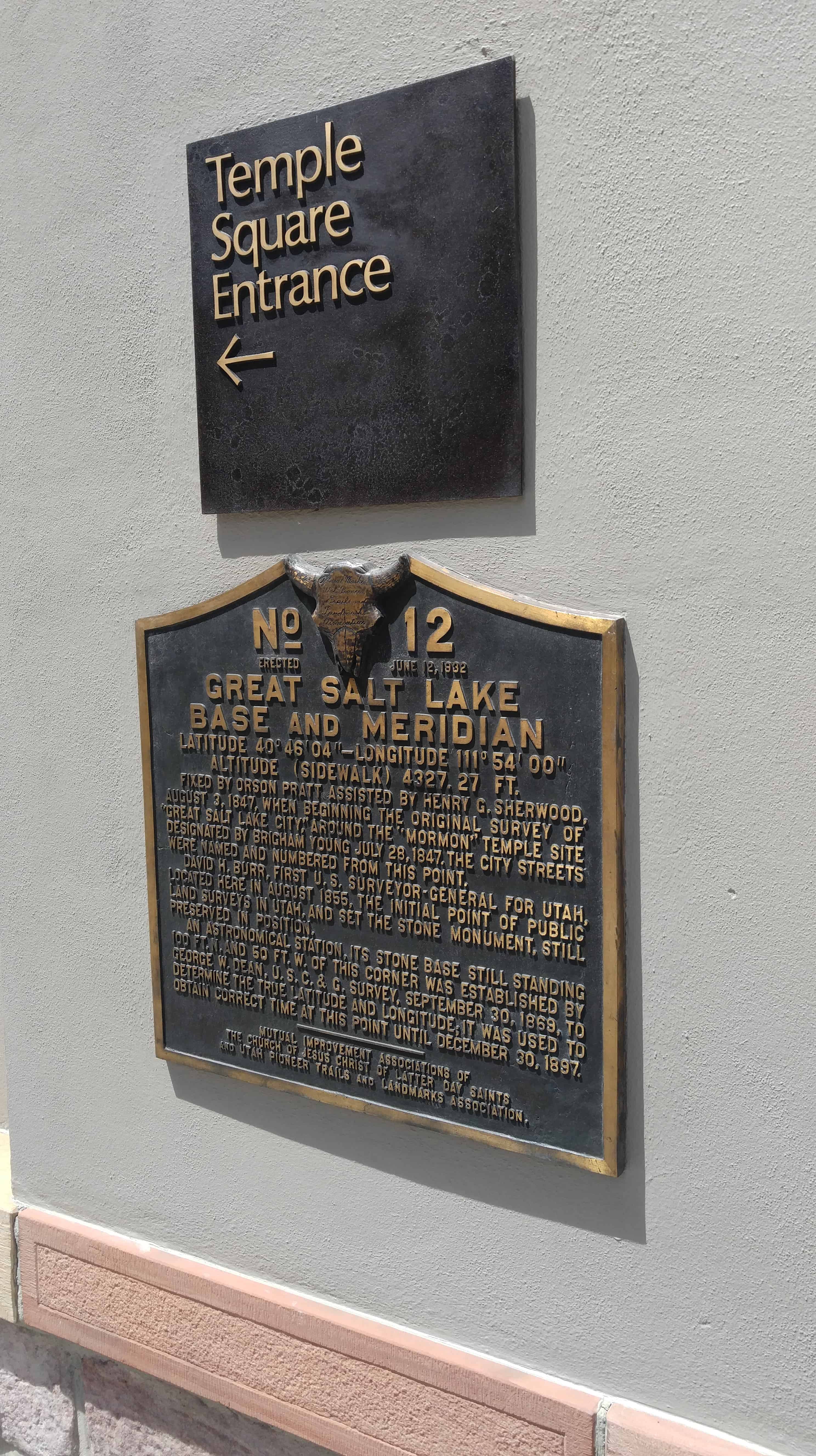
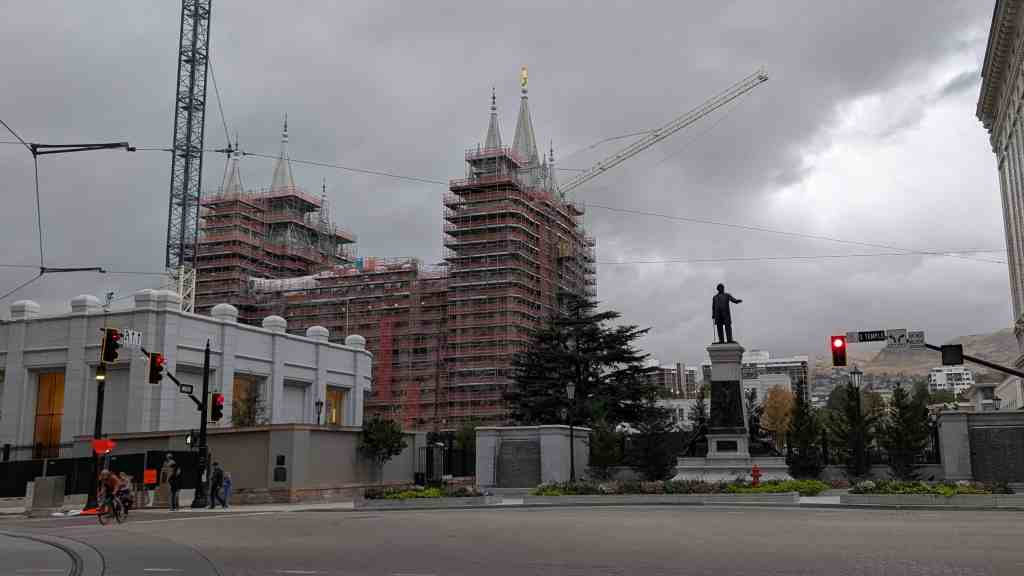
Undoubtedly the most well known monument in Salt Lake City, it sits at the base reference point for the original plat map and the current address numbering system.
In Honor Of Brigham Young and The Pioneers
On the reverse is a plaque that names the entire complement of the original party:
The names of the PIONEERS who arrived in this valley, July 24, 1847.
*Signifies those now living. The unmarked ones are all deceased.The names of 143 men (including 3 colored servants), 3 women, and 2 children.
27 of those listed are marked as still among the living at time of dedication, 50 years to the day from the initial arrival in the valley.
The entire company and outfit consisted of 143 men, 3 women, 2 children
70 wagons, 1 boat, 1 cannon, 93 horses, 52 mules, 66 oxen, 19 cows.
This monument erected by public subscription. Was unveiled July 24, 1897.
The monument is topped by Brigham Young himself, flanked at a lower level by a frontiersman and a native American. These figures represent those who precede the Pioneers in the valley and gave the immigrants invaluable aid in settling the valley. The monument is faced with a plaque showing a Mormon family going about routine duties during the trek west.
The artist was Cyrus Dallin.


Related:
19 Monday Sep 2016
Posted in Uncategorized

The Utah Museum of Contemporary Art has been an award-winning aesthetic force and community leader since it was established in 1931. Located in the heart of downtown Salt Lake City, UMOCA encourages exploration into what it means to exist in today’s world through art that inspires imagination, stimulates thought, and transforms society. The Museum connects people around the contemporary art practice of Utah and beyond to shape an engaged and thoughtful global citizenry. UMOCA strives to be a place where all points of view, experiences, and ages feel welcome to explore the pressing issues of our time through socially relevant art exhibitions and programming.
UMOCA is a five-time recipient of funding from the Andy Warhol Foundation and a 2015 and 2016 recipient of the Art Works Grant awarded by the National Endowment for the Arts .
