I-70 in the San Rafael Swell
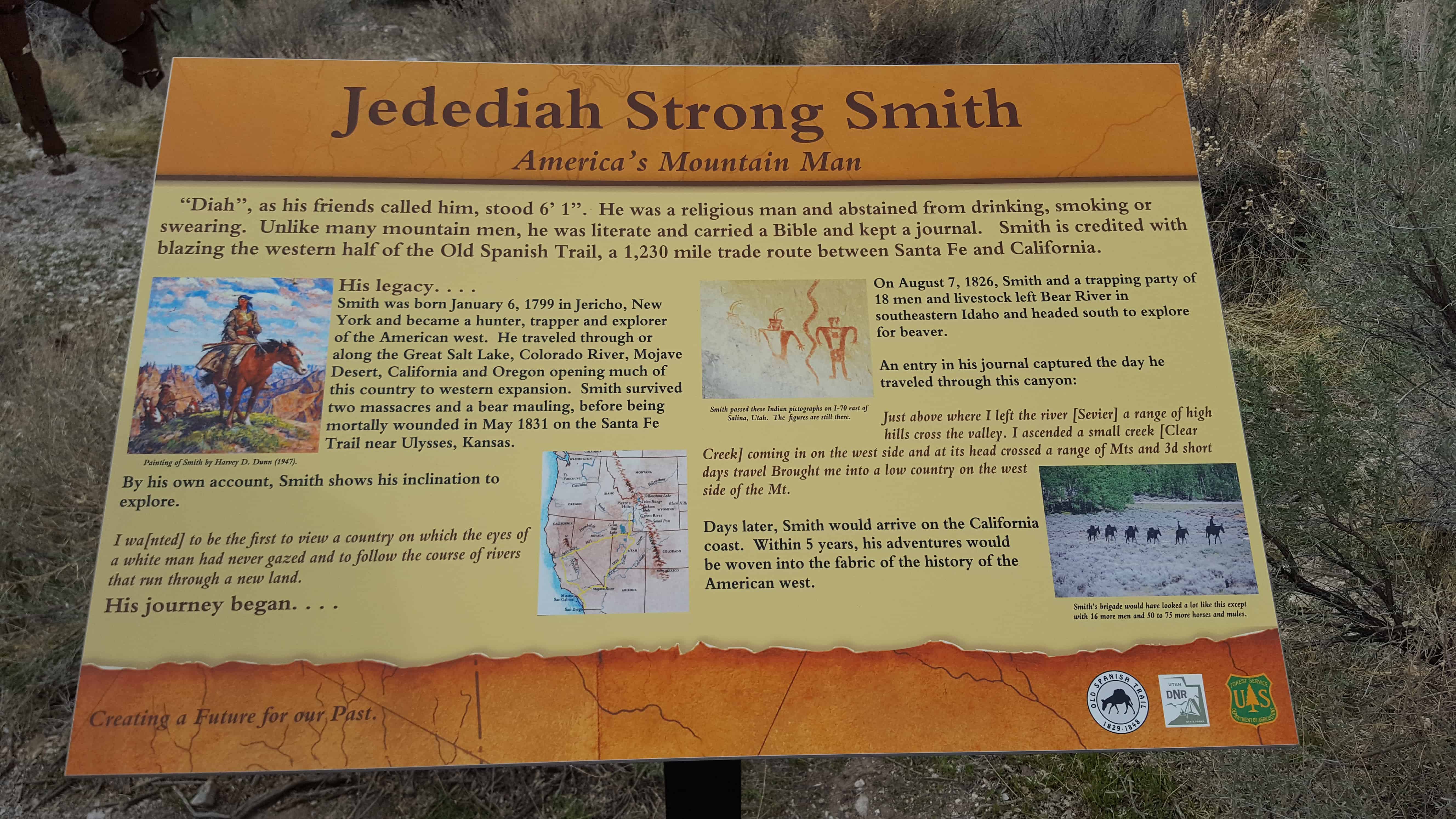
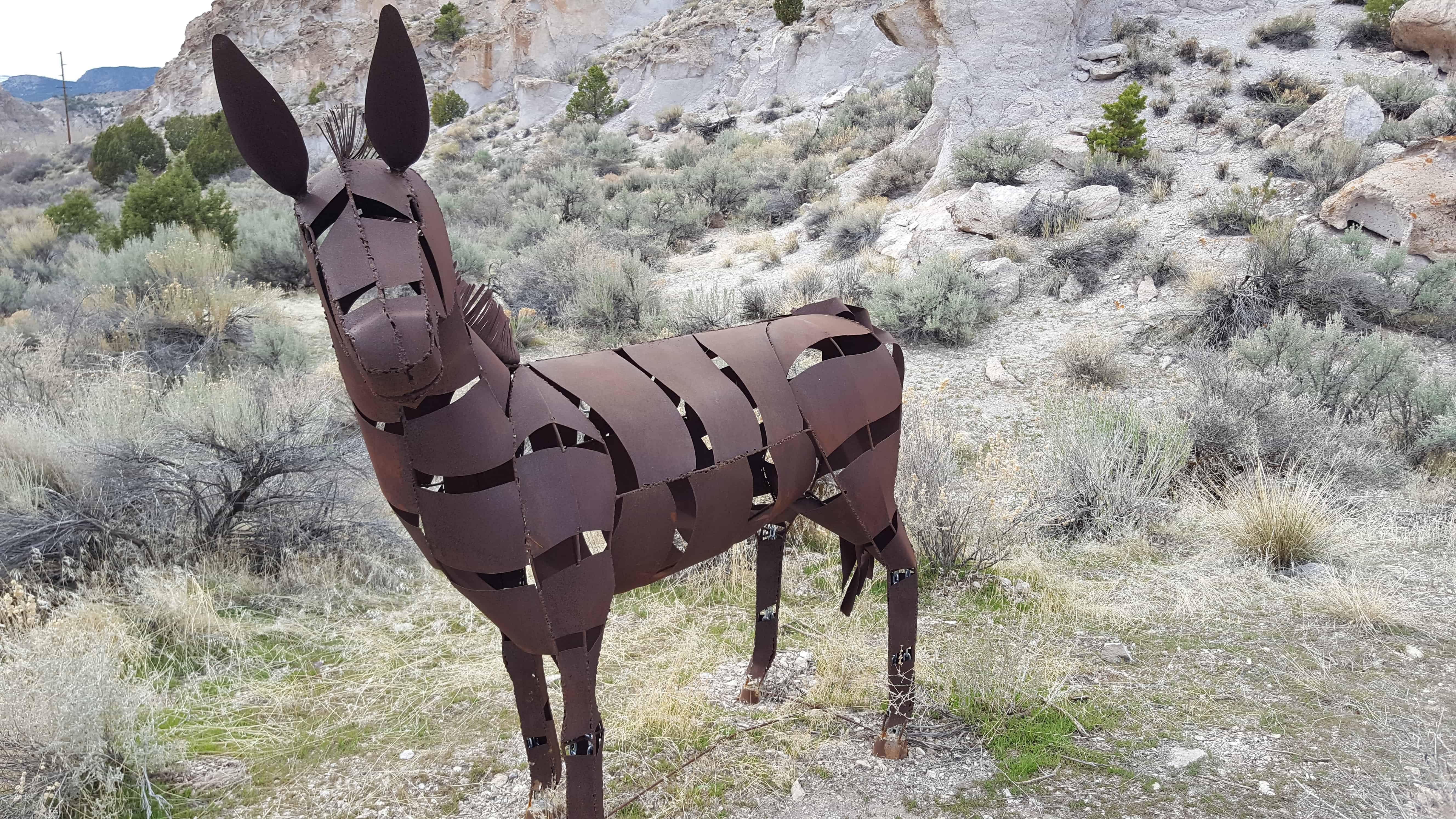
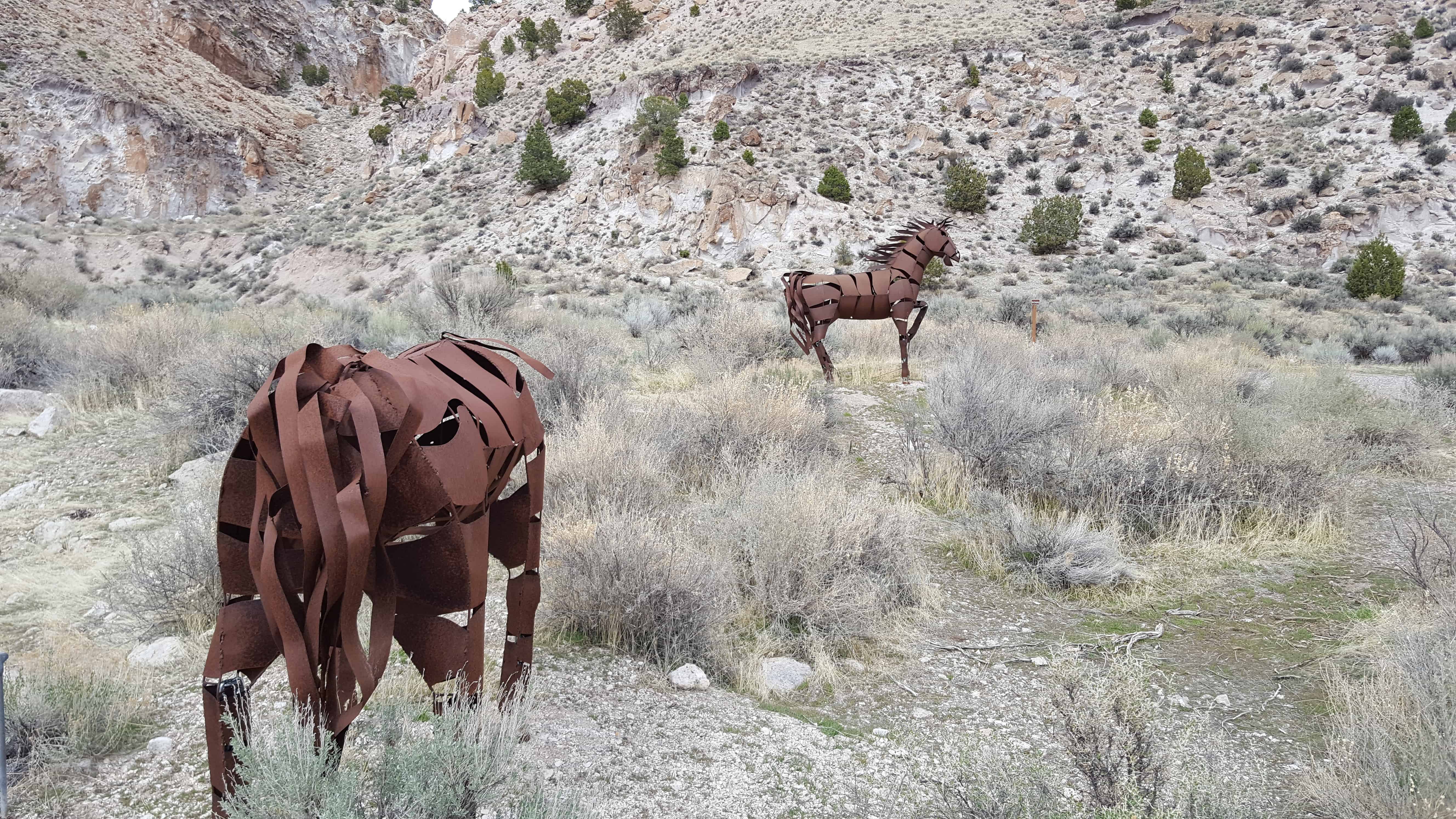
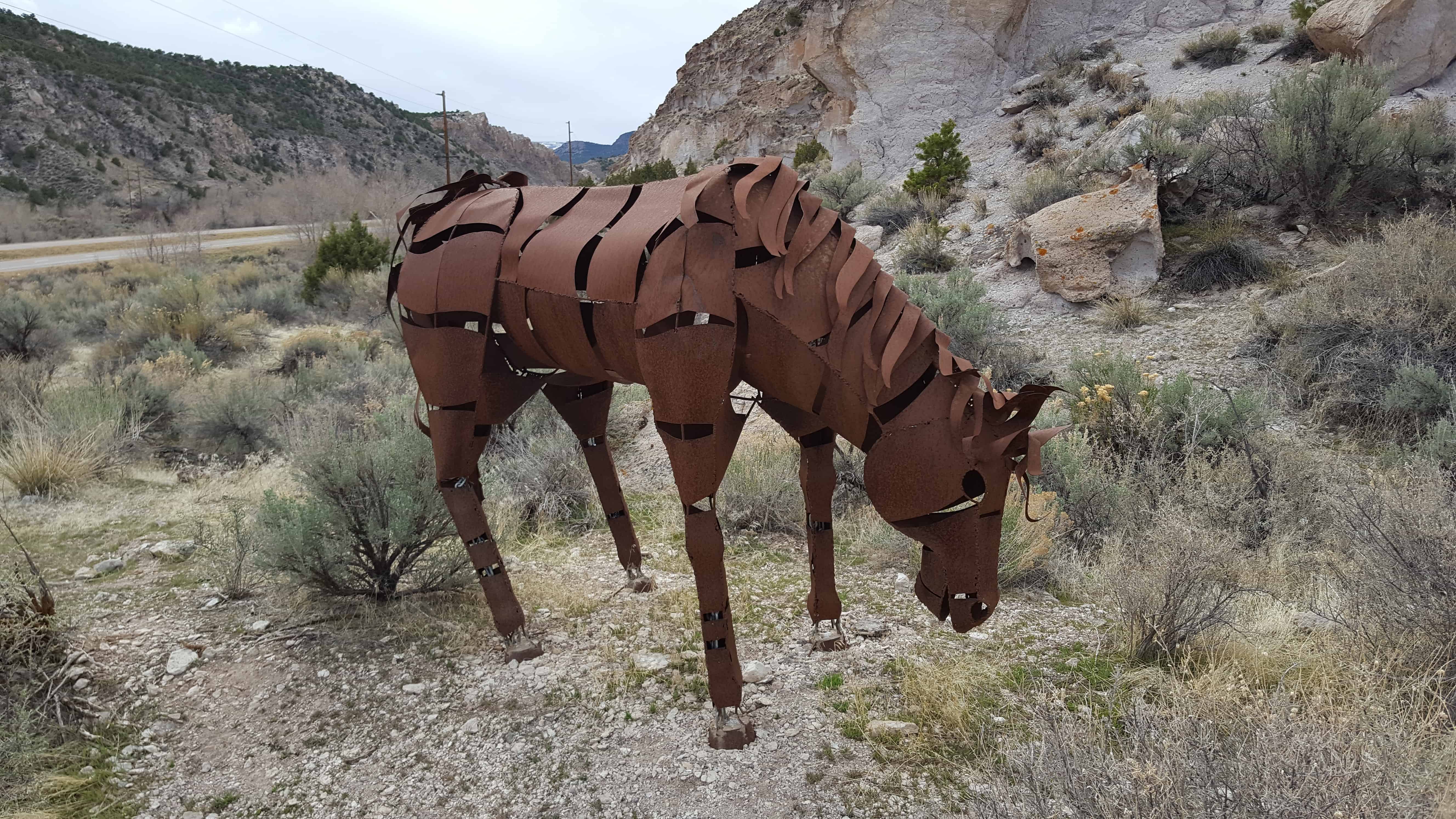
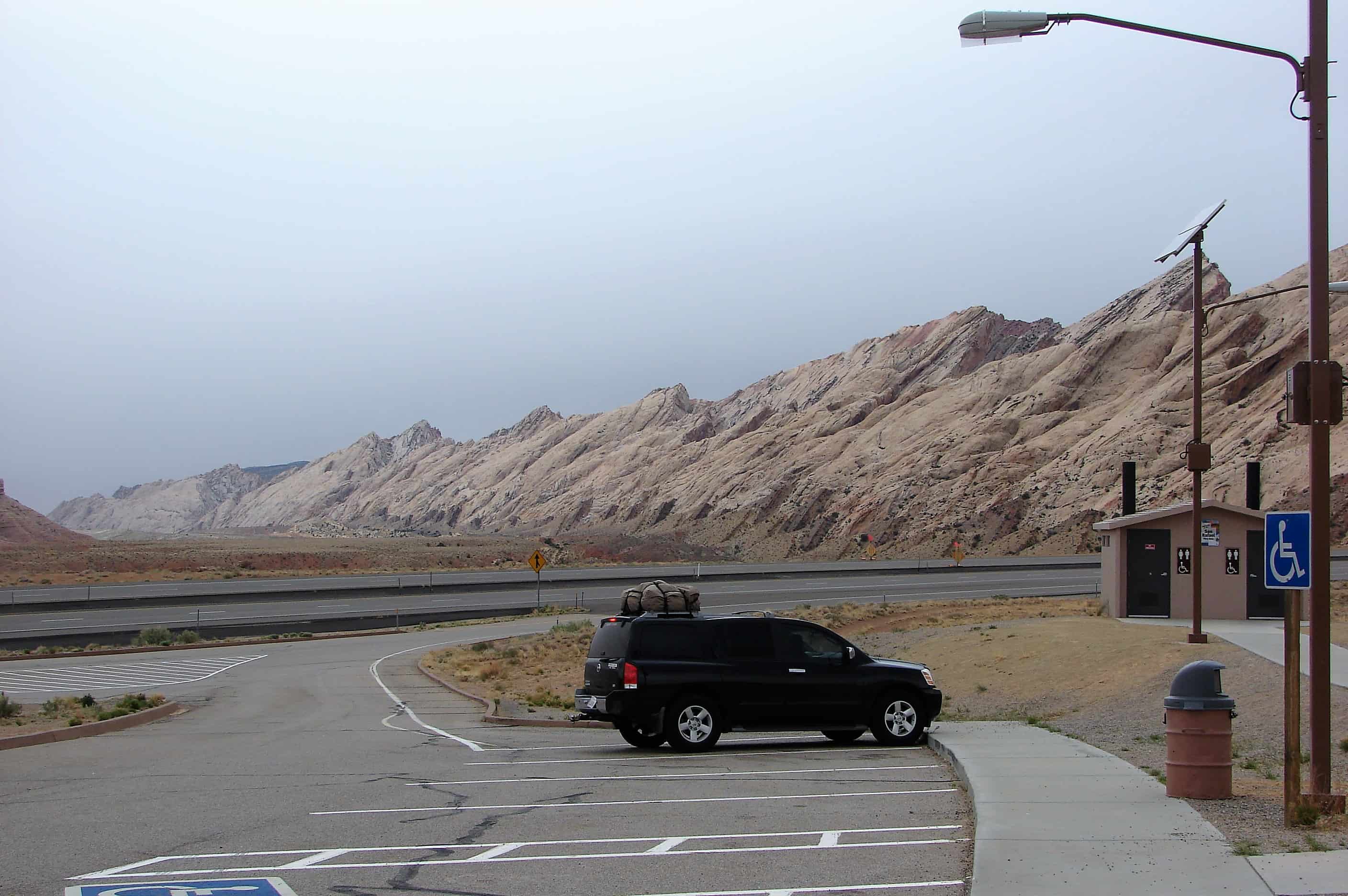
There are several rest areas to stop and see amazing views and read plaques and markers while traveling Interstate 70 across the San Rafael Swell in Utah.
This is also the longest stretch of freeway without gas so make sure you fill up, there are longer stretches of highway but as for freeway this is it.
Westbound Stops:
- Ivie Creek Rest Area
- Sand Bench View Area
- Devil’s Canyon View Area
- Ghost Rock Rest Area
- Spotted Wolf View Area
Eastbound Stops:
- San Rafael Reef View Area
- Black Dragon Rest Area
- Ghost Rock View Area
- Eagle Canyon View Area
- Salt Wash Rest Area
Here is an assortment of some of the signs and things to see/read.

Forces at Work
The mountain to the southeast, the San Rafael Knob, is 7,921 feet above sea level, the highest point in the San Rafael Swell. This deep canyon is Devil’s Canyon. It cuts through the Carmel Formation, made of limestone and sandstone deposited in a sea that has gone for 180 million years.
The dramatically long and steep slopes below the Carmel are formed of Navajo sandstone, a formation prevalent through-out the Colorado Plateau, forming spectacular views throughout Utah and Colorado. You are still ascending the west side of the rock dome that is the San Rafael Swell. An anticline of huge proportions, the Swell was formed when forces below pushed up layers of rock in the earth’s crust. Erosion has worn away overlaying layers, forming the canyons, pinnacles, and peaks you see here and as you drive farther east. Imagine a rainbow with a rough and ragged flat top where every ribbon of color is revealed.
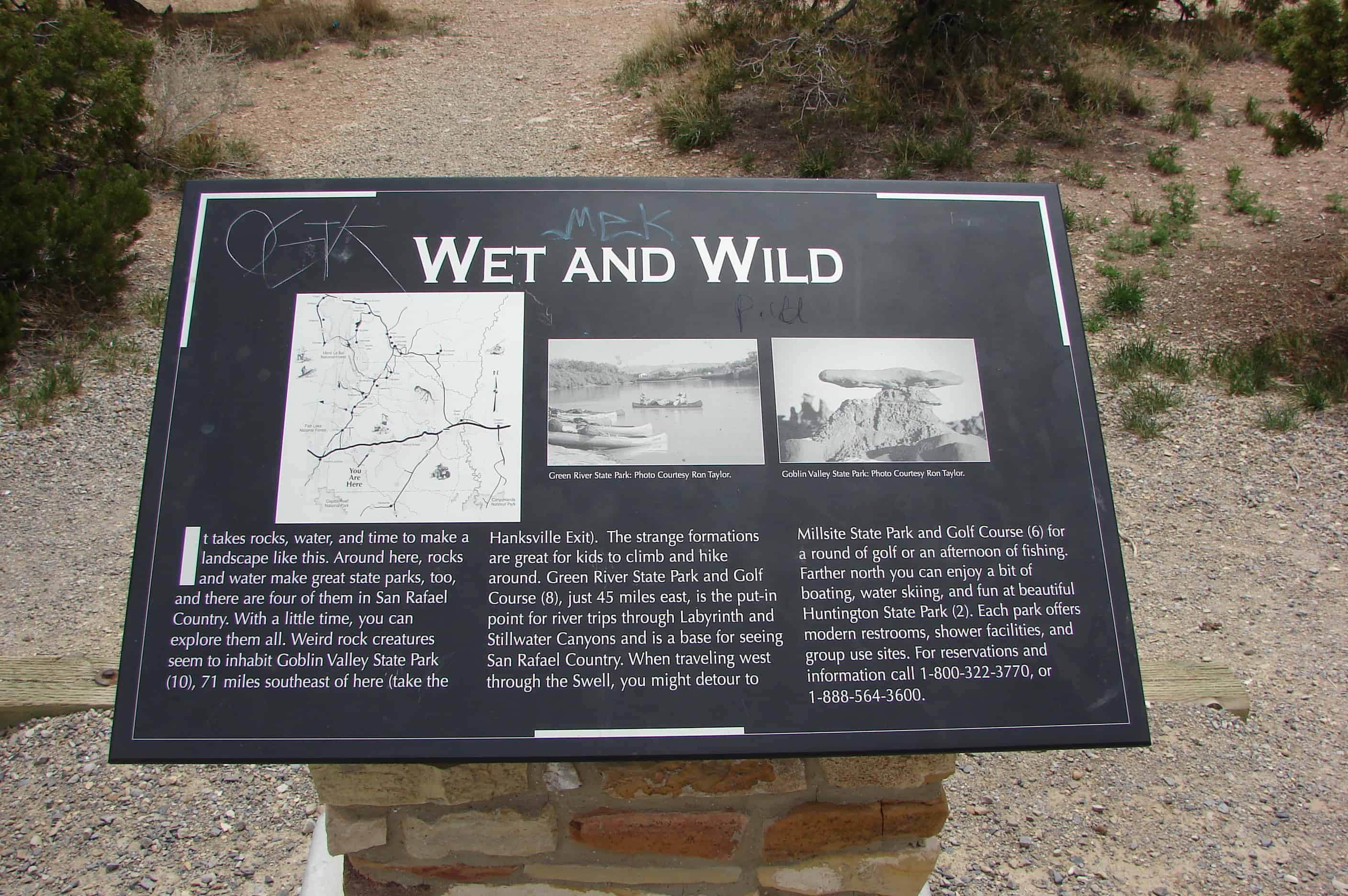
Wet and Wild
It takes rocks, water, and time to make a landscape like this. Around here, rocks and water make great state parks, too, and there are four of them in San Rafael County. With a little time, you can explore them all. Weird rock creatures seem to inhabit Goblin Valley State Park, 71 miles southeast of here (take the Hanksville Exit). The strange formations are great for kids to lcimb and hike around. Green River State Park and Golf Course, just 45 miles east, is the put-in point for river trips through Labyrinth and Stillwater Canyons and is a base for seeing San Rafael County. When traveling west through the Swell, you might detour to Millsite State Park and Golf Course for a round of gold or an afternoon of fishing. Father north you can enjoy a bit of beating, water skiing, and fun at beautiful Huntington State Park. Each park offers modern restrooms, shower facilities, and group use sites.

Home to Many
Humans have lived among these rocks and cliffs for longer than you can imagine. Archaeological investigations conducted as part of the interstate construction across the Swell during the 1970s and 1980s located over a hundred prehistoric sites. The sites show the hundreds of generations of Native American people inhabited this rugged land for thousands of years and in all seasons. Archaeologists explored sites from the early Archaic Period of hunting and gathering, about 9,500 years ago, up to historic ranching sites of the early 20th century. People survived by hunting and gathering until about the time of Christ, when small-scale agriculture, dependent on corn, beans, and squash, was adopted. Archaeological remains of these farmers, whom we call Fremonts, include small settlements of pit swellings, granaries, outdoor shaded work areas, hearths, storage pits, and trash mounds. The earliest evidence of farming on the Swell dates to about A.D. 500 at the Confluence Site. This site provided important insight into the transition from hunting and gathering to agriculture in the region, and predated previously known agriculture sites by 200 years, Bows and arrows and ceramics were the technological innovations of this time. Researchers found Fremont sites in the Ghost Rocks area, a few miles east of here, which is an upland environment and not well suited for growing corn. Study of the sites told archaeologists much about the Fremont way of life, which included hinting and gathering year-round and farming at lower elevations along riverbanks.


Ghost Rock
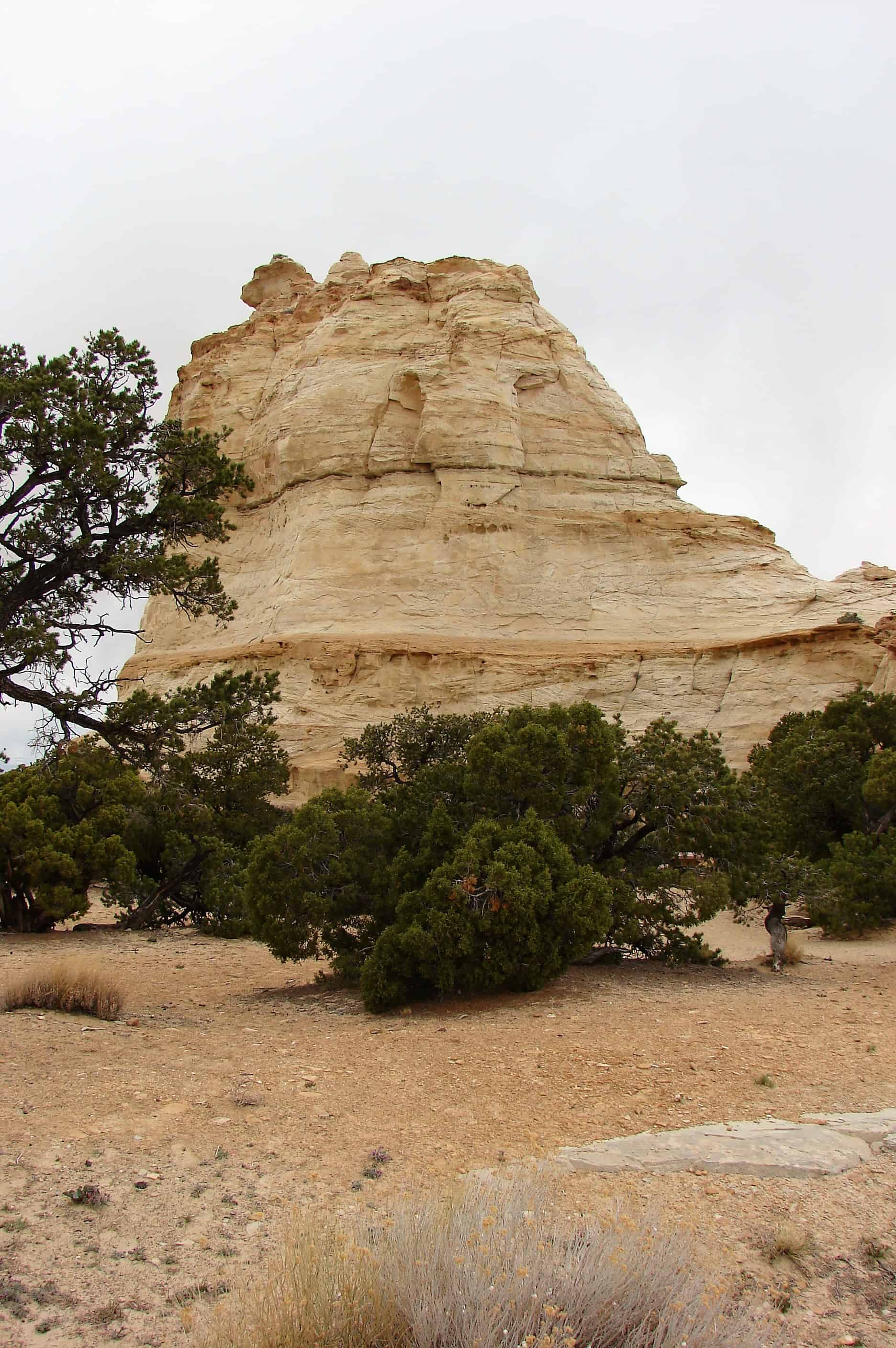
Imagine riding your horse through the San Rafael Swell in a heavy fog. Standing above the fog are two huge white rocks. Would you think you had seen a ghost? A cowboy thought so, hence its name – Ghost Rock. Cowboys in the Swell were a daring, tough lot, and the Swasey Brothers, (Charlie, Sid, Joe, and Rod) were tougher than most. They herded cows and rounded up wild horses here. Their cabin still stands, nestled in the white sandstone cliffs below, in an area called the Head of Sinbad. Here they built horse traps made from twisted juniper. It was here Joe had his “office” in an alcove in the white sandstone. Father east, Charlie bed Sid his herd of cattle that Sid couldn’t jump his horse across the deep San Rafael River gorge. It was about a 16-foot jump. He made the jump, won the cattle, and became a legend in San Rafael County.

Cowboys of the San Rafael
The Wild West is still wild in Castle Valley. Cowboys mounted on horseback still trail battle to high mountain pastures or to San Rafael Swell grazing allotments. During summer, rodeo cowboys take their chances on an eight-second ride at community-sponsored amateur rodeos such as the San Rafael Pro Rodeo, the Black Diamond Stampede, or sometimes just in the corral out back.
Almost anyone can enjoy a western adventure, brandin’, ropin’, and ridin’ with real cowboys of the San Rafael. Outfitters can guide you into the wilds of the San Rafael for the experience of a lifetime. You can reach the ranching communities of Castle Valley by taking the Moore Exit, following the Moore Road northwest to SR-10 and then north to Ferron. Turning south will take you to the town of Emery and on to the I-70 interchange at Fremont Junction.
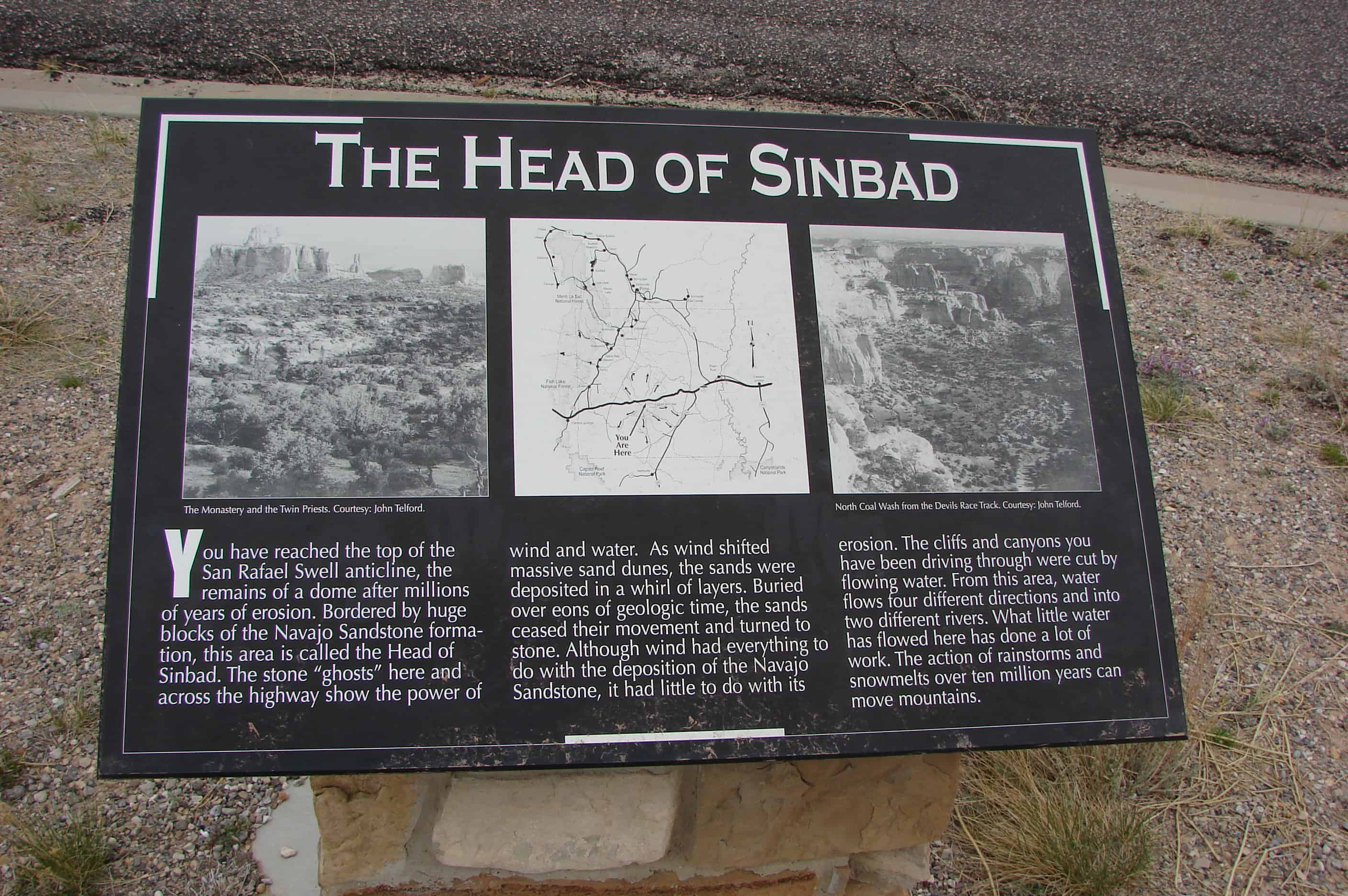
The Head of Sinbad
You have reached the top of the San Rafael Swell anticline, the remains of a done after millions of years of erosion. Bordered by huge blocks of the Navajo Sandstone formation, this area is called the Head of Sinbad. The stone “ghosts” here and across the highway show the power of wind and water. As wind shifted massive sand dunes, the sands were deposited in a whirl of laters. Buried over eons of geologic time, the sands ceased their movement and turned to stone. Although wind had everything to do with the deposition of the Navajo Sandstone, it had little to do with its erosion. The cliffs and canyons you have been driving through were cut by flowing water. From this area, water flows four different directions and into two different rivers. What little water has flowed here has done a lot of work. The action of rainstorms and snowmelts over ten million years can move mountains.


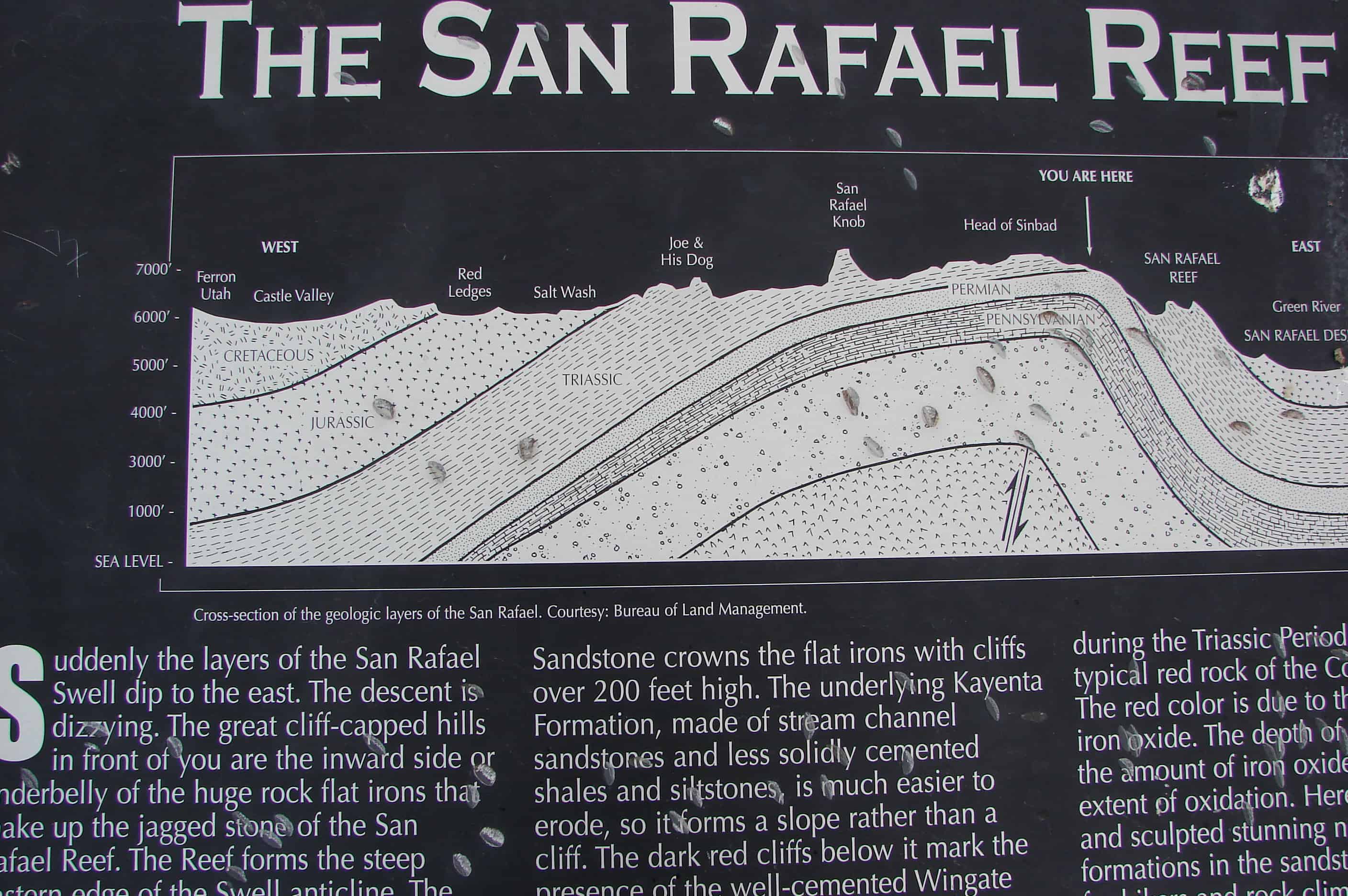
The San Rafael Reef
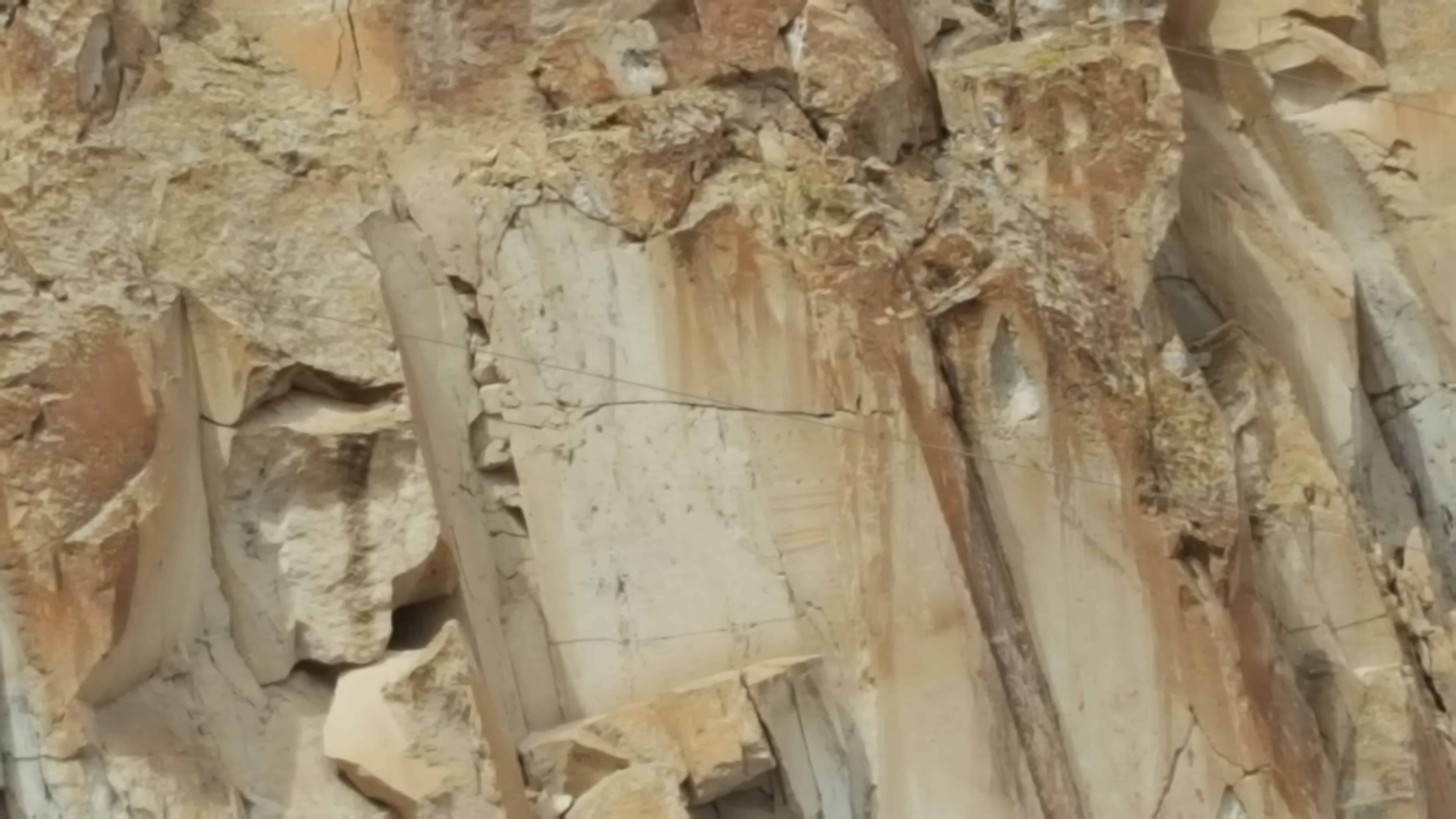
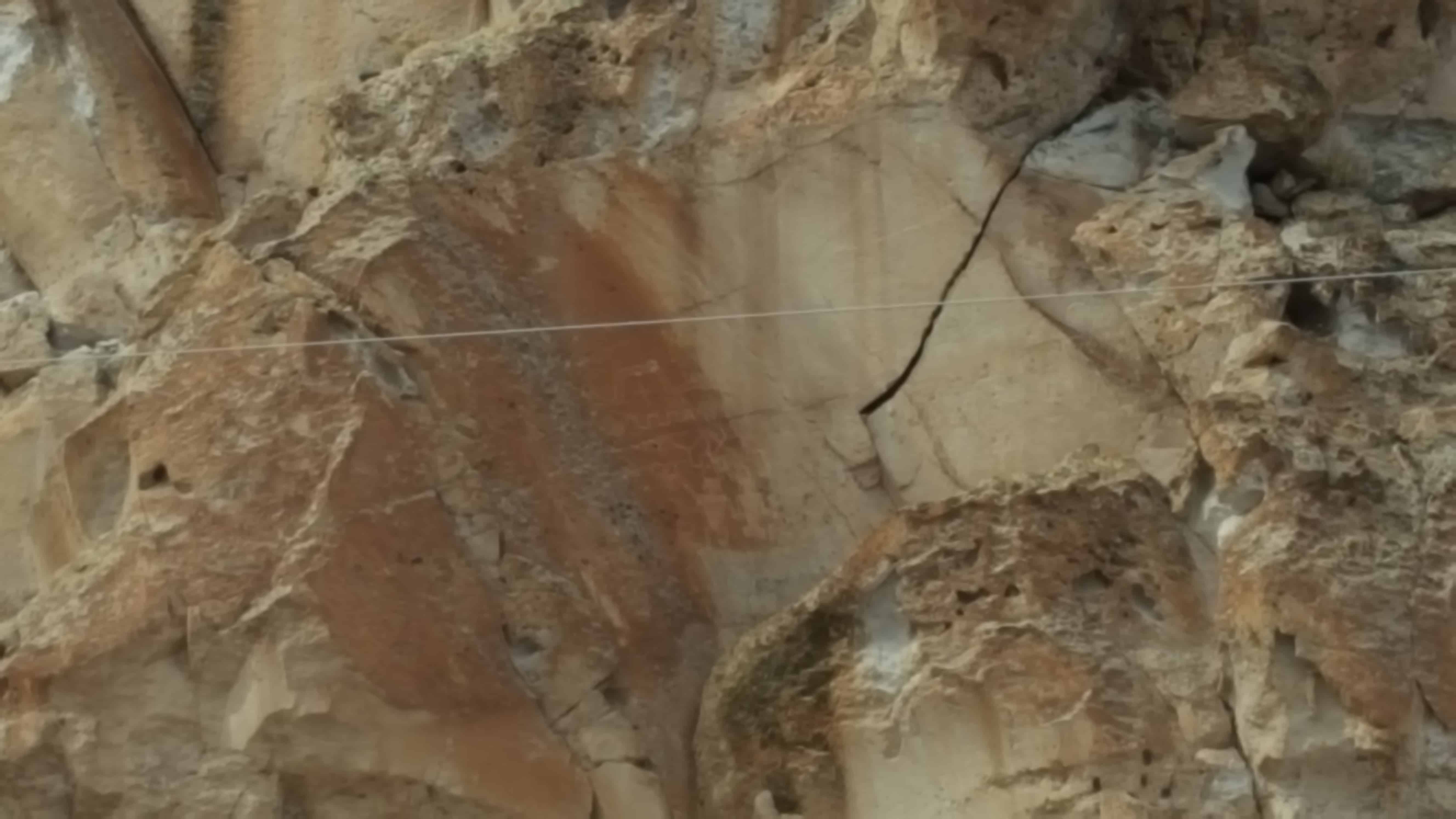
Suddenly the layers of the San Rafael Swell dip to the east. The descent is dizzying. The great cliff-capped hills in front of you are the inward side or underbelly of the huge rock flat irons that make up the jagged stone of the San Rafael Reef. The Reef forms the steep eastern edge of the Swell anticline. The solidly cemented, hard-to-erode Navajo Sandstone crowns the flat irons with cliffs over 200 feet high. The underlying Kayenta Formation, made of stream channel sandstones and less solidly cemented shales and siltstones, is much easier to erode, so it forms a slope rather than a cliff. The dark red cliffs below it mark the presence of the well-cemented Wingate Sandstone. These layers were deposited during the Triassic Period. This is the typical red rock of the Colorado Plateau. The red color is due to the presence of iron oxide. The depth of color depends on the amount of iron oxide in the sands and extent of oxidation. Here water has sliced and sculpted stunning narrow canyons and formations in the sandstone – a paradise for hikers and rock climbers.

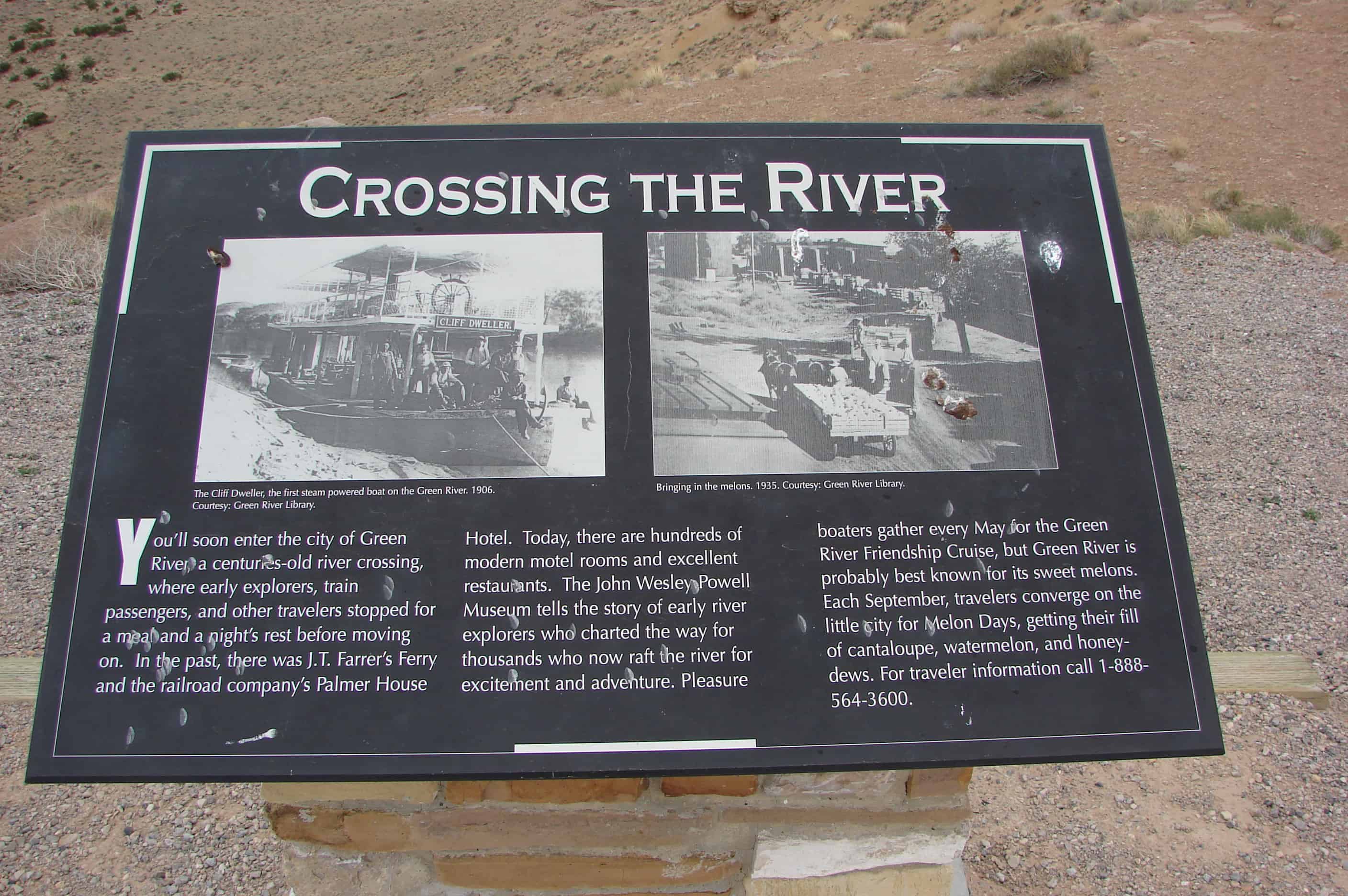
Crossing the River
You’ll soon enter the city of Green River, a centuries-old river crossing, where early explorers, train passengers, and other travelers stopped for a meal and a night’s rest before moving on. In the past, there was J.T. Farrer’s Ferry and the railroad company’s Palmer House Hotel. Today, there are hundreds of modern motel rooms and excellent restaurants. The John Wesley Powell Museum tells the story of early river explorers who charted the way for thousands who now raft the river excitement and adventure. Pleasure boaters gather every May for the Green River Friendship Cruise, but Green River is probably best known for its sweet melons. Each September, travelers converge on the little city for Melon Days, getting their fill of cantaloupe, watermelon, and honeydews.

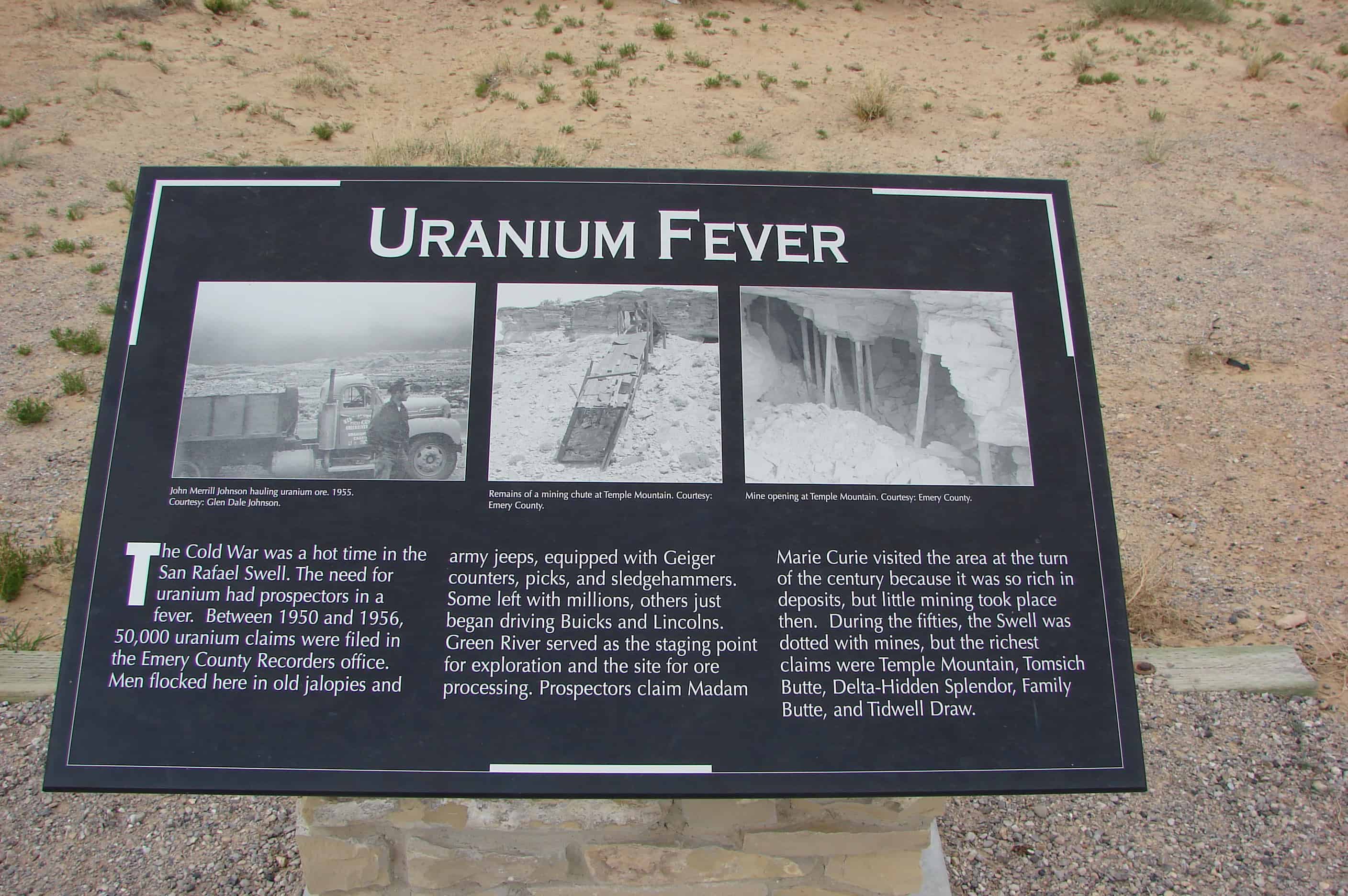
Uranium Fever
The Cold War was a hot time in the San Rafael Swell. The need for uranium had prospectors in a fever. Between 1950 and 1956, 50,000 uranium claims were filed in the Emery County Recorders office. Men flocked here in old jalopies and army jeeps, equipped with Geiger counters, picks, and sledgehammers. Some left with millions, others just began driving Buicks and Lincolns. Green River served as the staging point for exploration and the site for ore processing. Prospectors claim Madam Marie Curie visited the area at the turn of the century because it was so rich in deposits, but little mining took place then. During the fifties, the Swell was dotted with mines, but the richest claims were Temple Mountain, Tomsich Butte, Delta-Hidden Splendor, Family Butte, and Tidwell Draw.


The Silent City
The people of Green River call this the Silent City, a jagged cityscape formed by a great rock wall, the San Rafael Reef. You are about to enter and cross the San Rafael Swell, a large anticline where the earth’s crust has been heaved from below to form a great down of rock layers. Erosion, over millions of years, has erased the top of the dome. Imagine a rainbow with a rough and ragged flat top where every band of color is revealed. Here, at the eastern edge of the anticline, erosion has sliced and sculpted the steeply tiled layers of hard sandstone. Slot canyons, spectacular pour-offs, sheer cliffs, and miles of desert varnish remain. Exploring the San Rafael Swell off I-70 can be fascinating but dangerous to the novice. Be sure you have plenty of water, gasoline, good, and a reliable map.
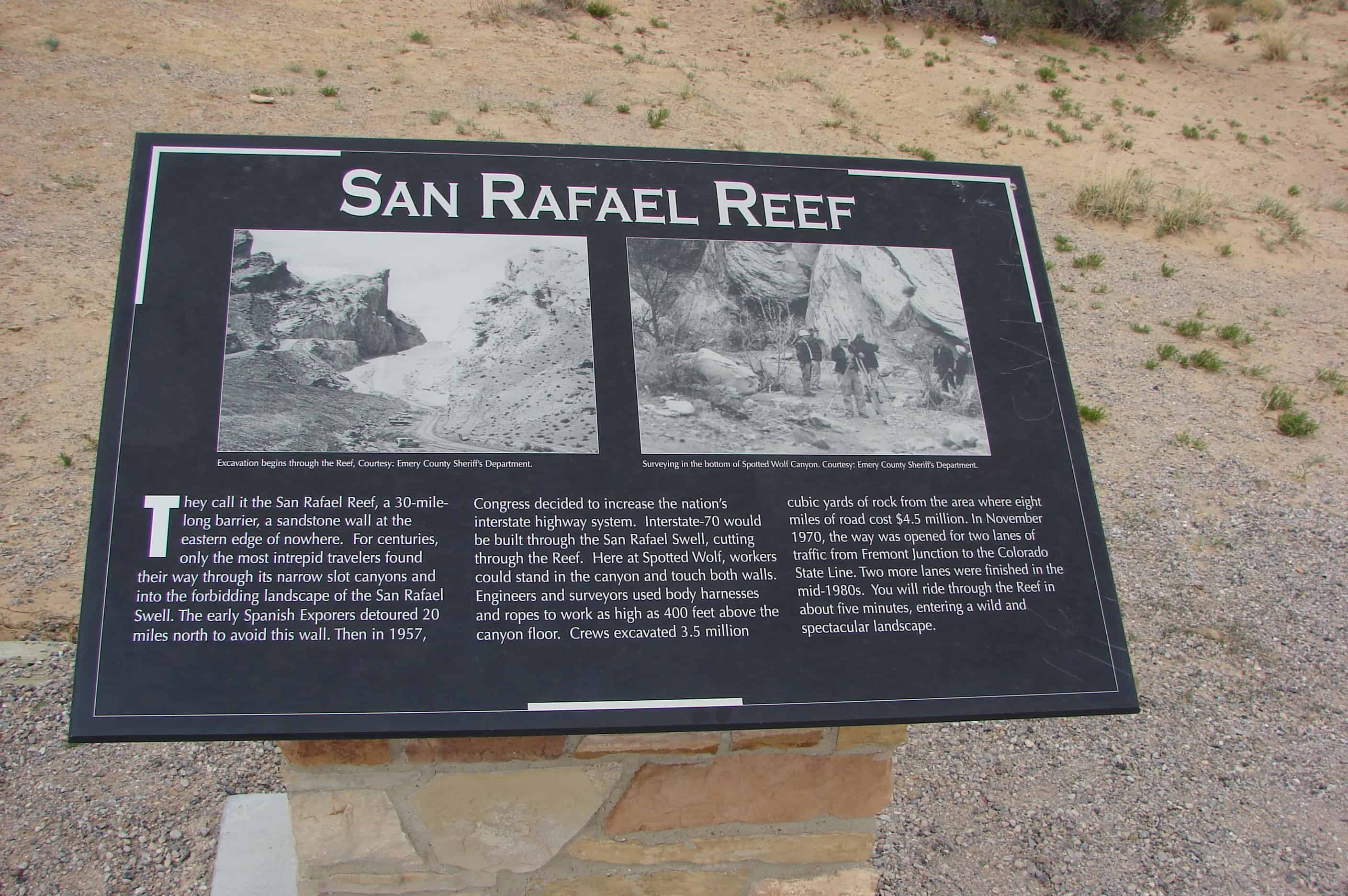
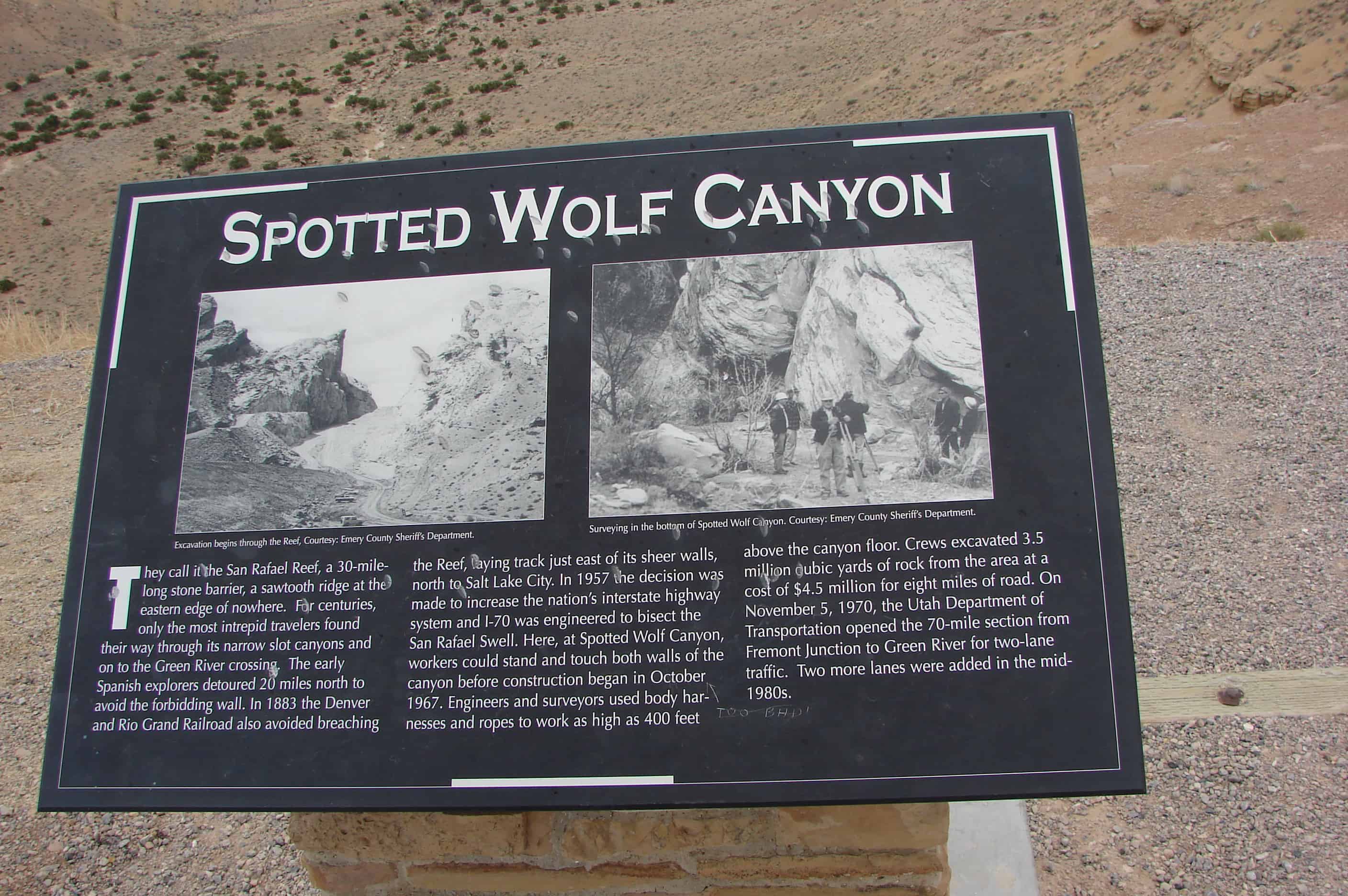
San Rafael Reef / Spotted Wolf Canyon
They call it the San Rafael Reef, a 30-mile-long barrier, a sandstone wall at the eastern edge of nowhere. For centuries, only the most intrepid travelers found their way through its narrow slot canyons and into the forbidding landscape of the San Rafael Swell. The early Spanish Explorers detoured 20 miles north to avoid this wall. Then in 1957, Congress decided to increase the nation’s interstate highway system. Interstate-70 would be built through the San Rafael Swell, cutting through the Reef. Here at Spotted Wolf, workers could stand in the canyon and touch both wall. Engineers and surveyors used body harnesses and ropes to work as high as 400 feet above the canyon floor. Crews excavated 3.5 million cubic yards of rock from the area where eight miles of road cost $4.5 million. In November 1970, the way was opened for two lanes of traffic from Fremont Junction to the Colorado State Line. Two more lanes were finished in the mid-1980s. You will ride through the Reef in about give minutes, entering a wild and spectacular landscape.
photos