• About JacobBarlow.com
  • Cemeteries in Utah
  • D.U.P. Markers
  • Doors
  • Exploring Utah Email List
  • Geocaching
  • Historic Marker Map
  • Links
  • Movie/TV Show Filming Locations
  • Oldest in Utah
  • Other Travels
  • Photos Then and Now
  • S.U.P. Markers
  • U.P.T.L.A. Markers
  • Utah Cities and Places.
  • Utah Homes for Sale
  • Utah Treasure Hunt

JacobBarlow.com

~ Exploring with Jacob Barlow

JacobBarlow.com

Tag Archives: utah county

The Knight Block

22 Saturday Nov 2014

Posted by Jacob Barlow in Uncategorized

≈ 3 Comments

Tags

historic, Historic Buildings, NRHP, Provo, utah, utah county
2018-03-10 14.26.06

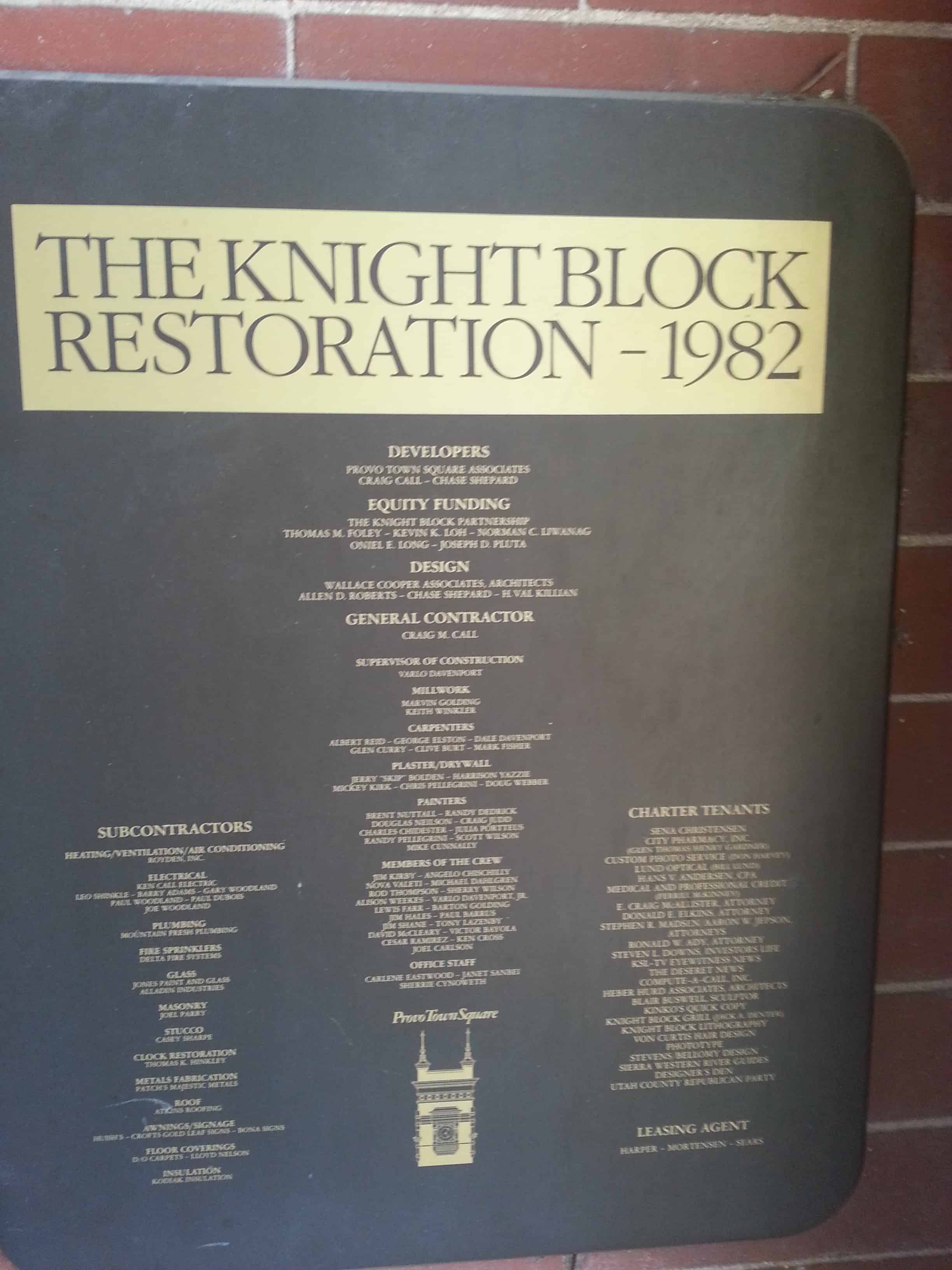
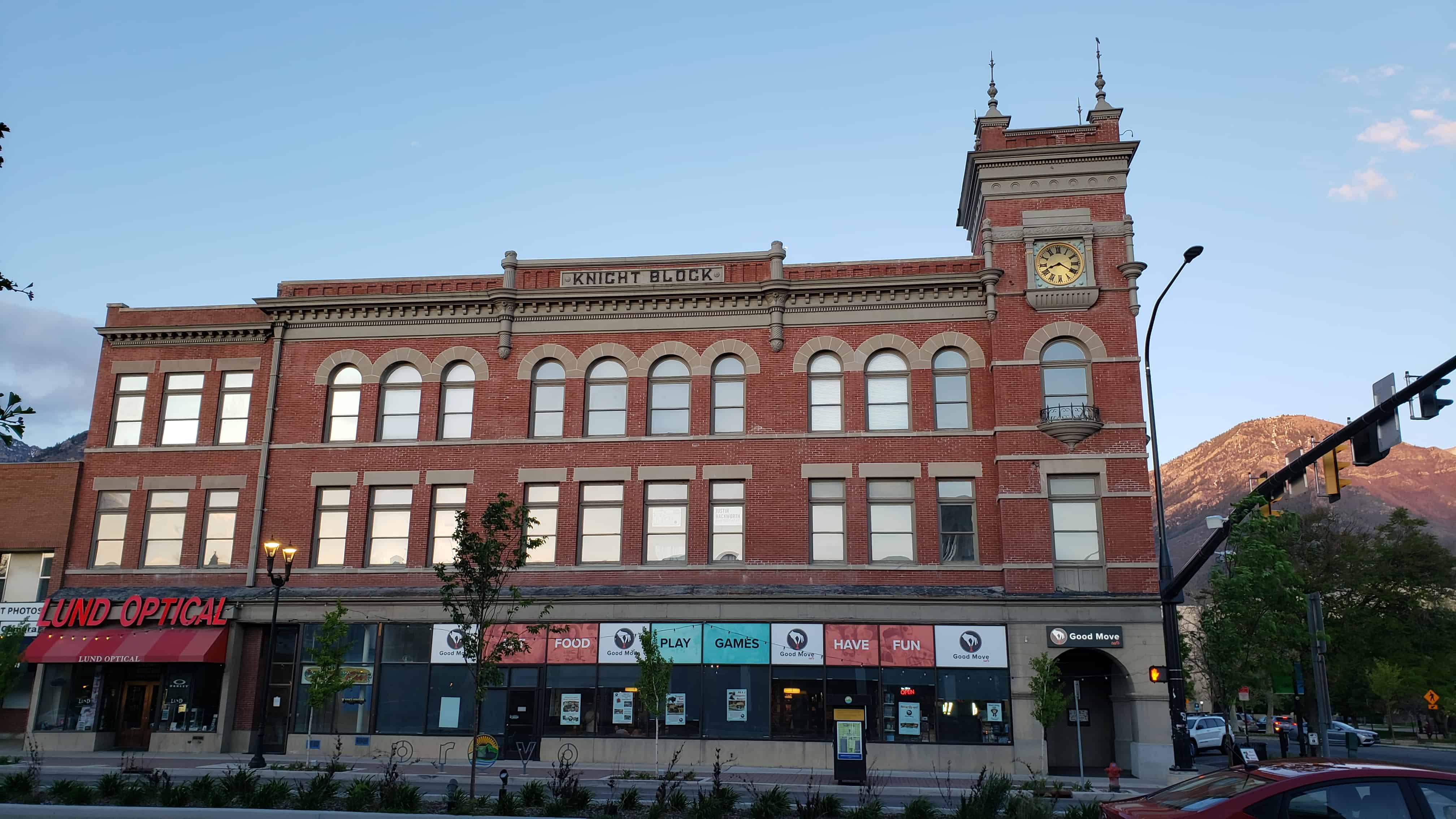
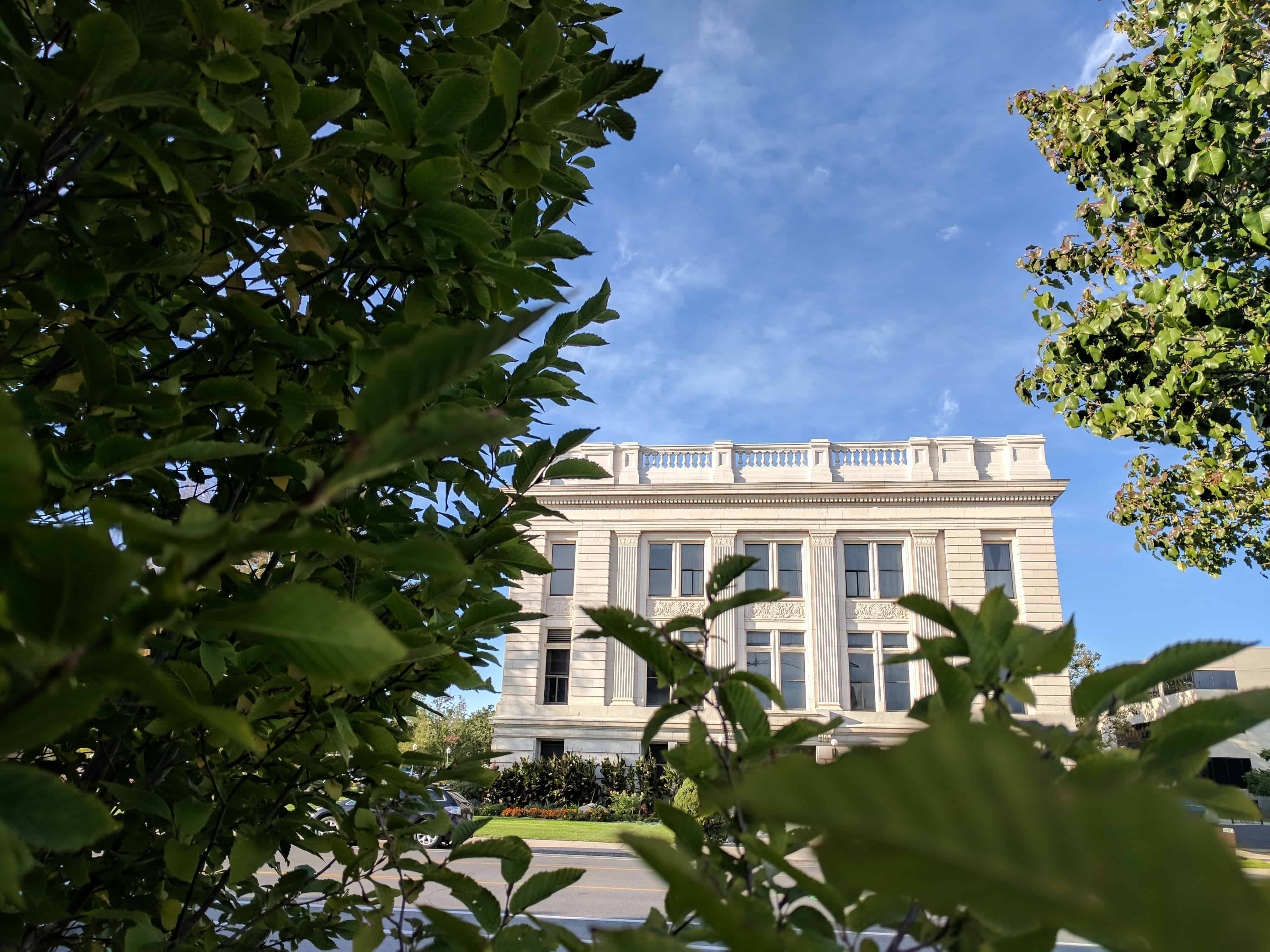
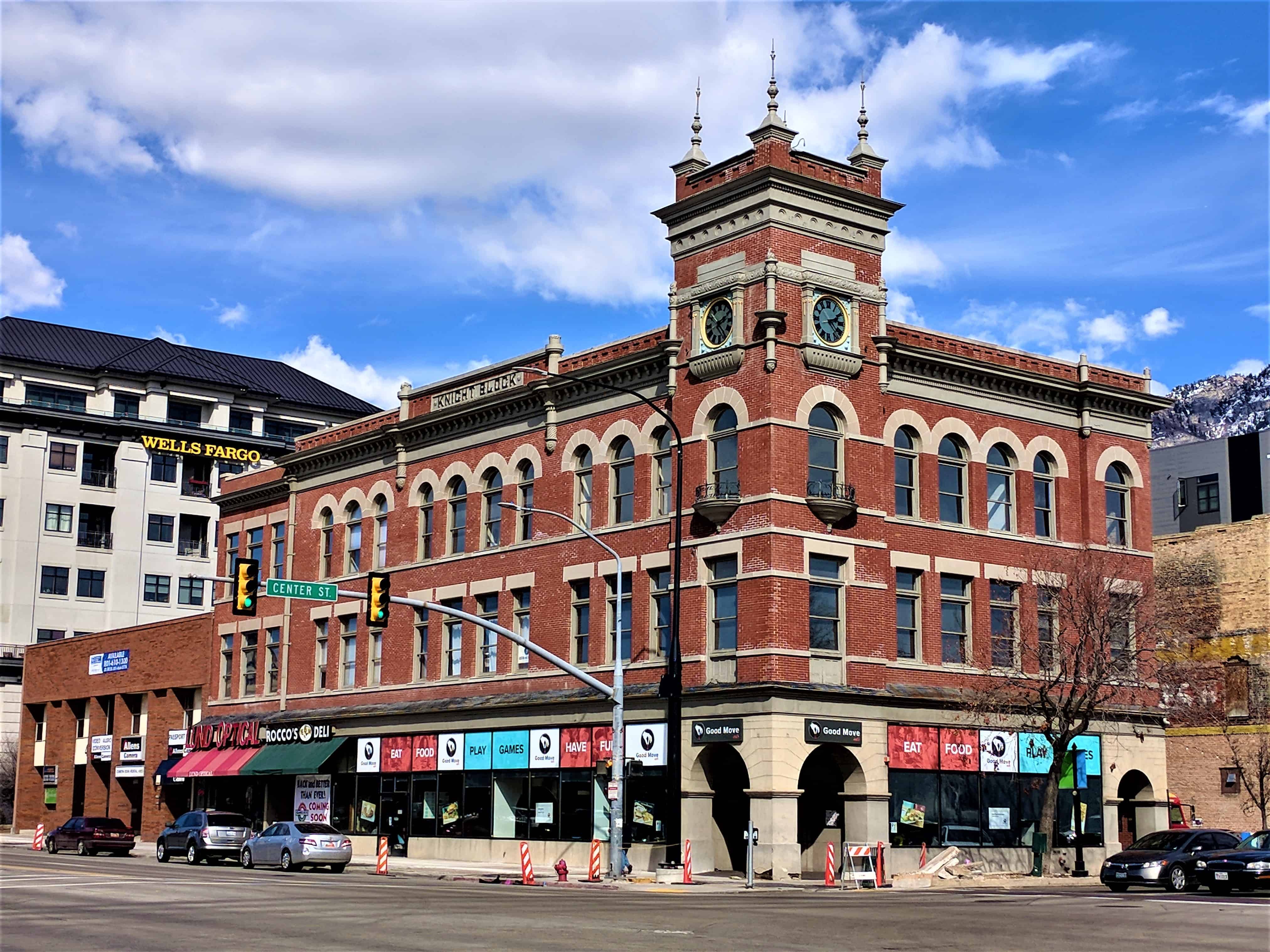
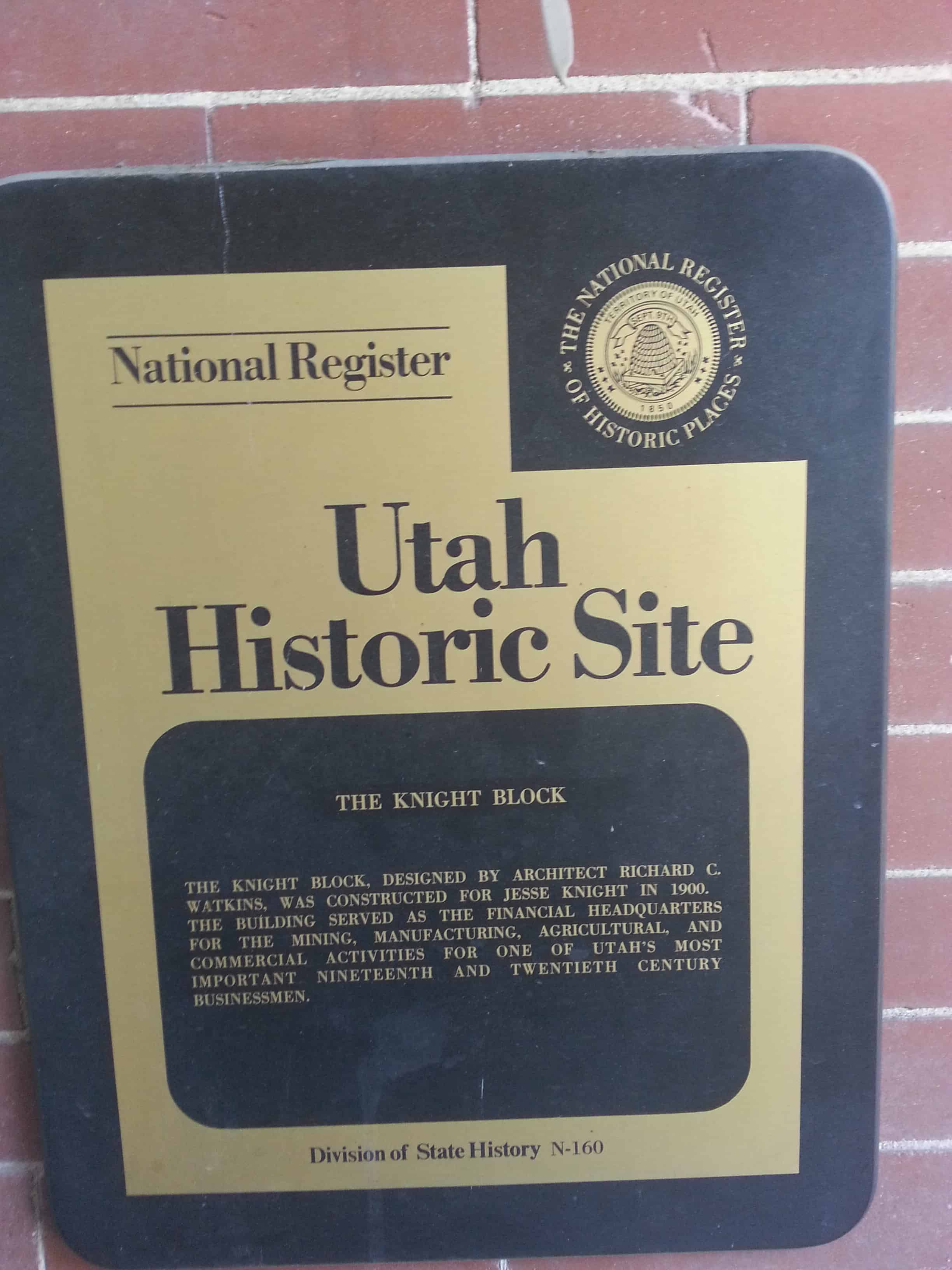
The Knight Block, designed by architect Richard C. Watkins, was constructed for Jesse Knight in 1900. The building served as the financial headquarters for the mining, manufacturing, agricultural, and commercial activities for one of Utah’s most important nineteenth and twentieth century businessmen.

Located at 1 East Center Street in Provo, Utah and added to the National Register of Historic Places (#77001322) on December 2, 1977.

2013-06-02 17.20.29

Knight Block

Built: 1900

The Knight Block Building, one of two twin buildings on the north corners of University Avenue and Center Street, is an iconic structure in Provo. It was built in 1900 for local mining magnate and businessman Jesse Knight, to house his financial headquarters. But while the building still bears his name, the Knight family has long since ceased doing business there.Today, the Knight Block rents spaces to several local businesses.It was designated to the National Registry of Historic Places in 1977.

Location: University Avenue and Center Street, Provo
2013-06-02 17.21.01
2013-06-02 17.21.06
2013-06-02 17.23.20
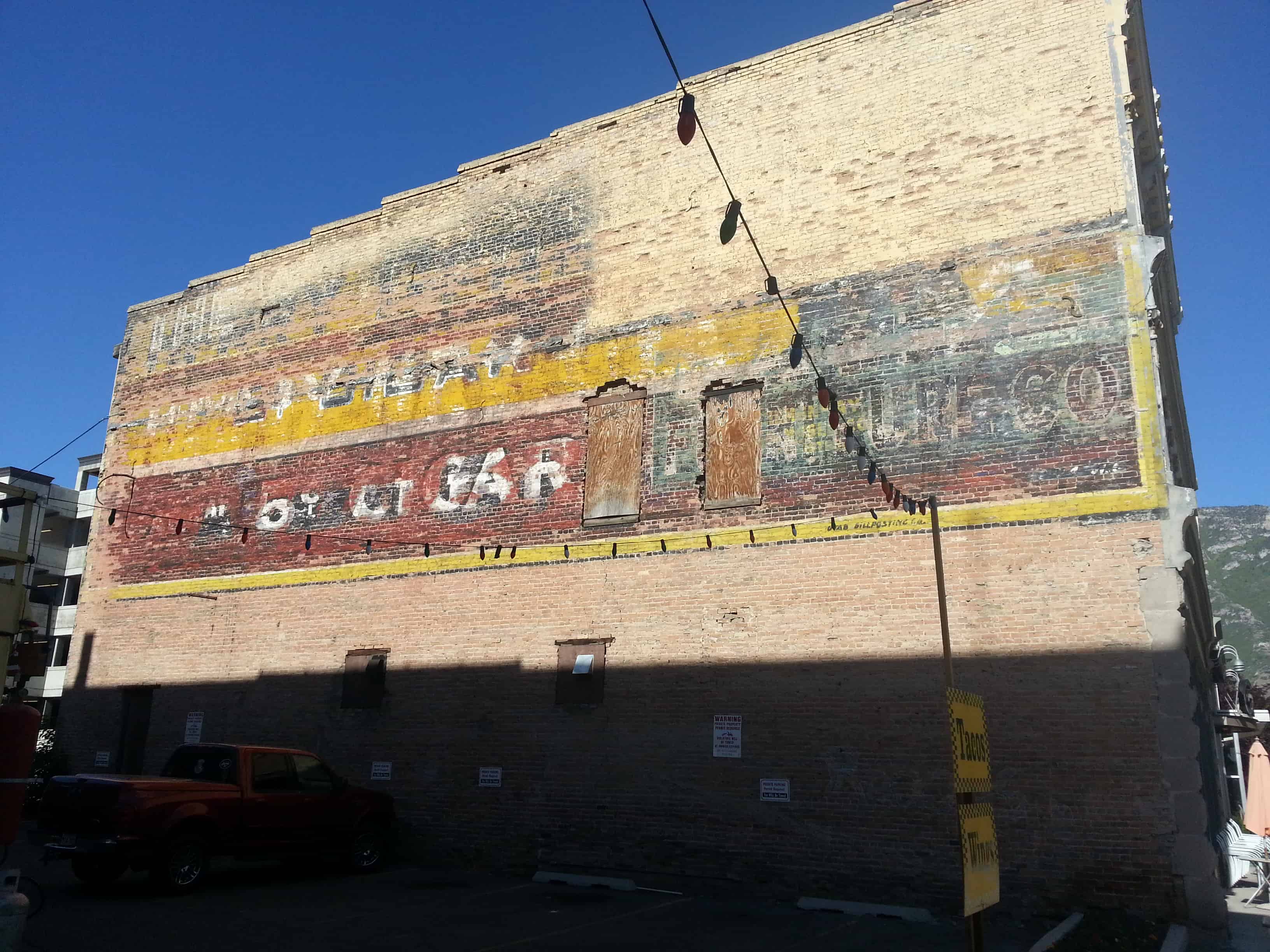
(the next building to the east)

From the National Register’s nomination form:

The Knight Block, built in 1900, is significant for its historical associations with Jesse Knight and the development of Provo and Central Utah. Long one of the city’s most imposing landmarks, its fine architecture also qualifies it for preservation.

Knight was born in Nauvoo, Illinois in 1845 while the “Mormon” Church prepared to move West. His story of growth and prosperity parallels the Church’s progress in Utah, and intertwines the political, financial and religious influences of central Utah’s development. He attributed his vast wealth from mining, ranching, finance, and industry to spiritual insights he had received, and became a major factor in avoiding bankruptcy for the Church during the years the federal government disenfranchised it and took title to Church assets.

Knight’s philanthropy promoted employment and education in Central Utah. His large woolen mills and public works projects were designed to create jobs. Seven major buildings on-the-campus of Brigham Young University resulted from his’ contributions.

In 1909, the Utah democratic convention offered a unanimous nomination as governor to Knight. Because of Church pressure and his own misgivings, he declined. His own town, Knightsville, was unique in Western mining development, for it had no saloons, no gambling houses, and no “honkytonks, ” representing a stark contrast to the development of other “non-Mormon” boom towns in other areas of the state.

As Knight’s financial headquarters, this edifice is the most significant reminder of his career and times. It also is Provo’s best link to the turn-of-the-century commerce that changed it from a farming hamlet to an industrial center. It remains in its original use, a visual tie-to Pioneers, like Jesse Knight and the Mormon role in Utah’s commercial development.

The Knight Block is a three story rectangular building, approximately 55 feet by 118 feet, housing a ground floor of retail space with a full basement and two upper floors of offices. The office levels have six bays on the South facade and 13 on the West. These two facades are the public areas of the exterior walls, The most prominent feature of the structure is a clock tower on the Southwest corner which extends above the roof line of the rest of the building. This tower is flat-roofed, with a center flagpole and finial point on each of the four corners. The clock, with faces on the South and West, still keeps accurate time and is original/except for the electrical rewind system.

Most of the building is red brick with gray limestone lintels and belt courses that form window sills. Originally large stone arches formed the tower base and framed the entrance to the office stairs on the Eastern side of the South façade. These have been removed and the first floor is now faced with a corrugated metal veneer above and below the plate glass store windows installed after a fire circa 1934. The second and third floors are in an excellent state of preservation, with recent painting of the wood, cleaning of the brick, and rehabilitation of the tin work.

The upper floors of the façade are highlighted by pressed metal trim, which forms a bracketed cornice on the South and West facades, topped by brickwork that features rectangular indentations. A sign “Knight Block” caps the center of the West façade. The clock tower is dignified by more elaborate pressed metal trim, framing the clock faces, and forming a metal frieze and more intricate cornice at the top.

The second floor windows have square openings with limestone -lintels, the third floor, roman arches of stone instead. The corner windows had small balconies with metal railings originally. Only the third floor balconies remain. The last three bays on the north end of the west facade are slightly different having straight lintels on the third level. This part was built on to the structure shortly after completion, and is known as the Annex.

The interior of the first floor has been altered, except for the hexagonal ceramic tile floors that remain. The second and third levels are well preserved with the original banisters, balustrades, doors, hardware, and woodwork intact. An Axminister carpet adds to the historical flavor. An Otis elevator was installed circa 1935, with little effect on the building’s historicity. About \ the original milk glass chandeliers also remain.

Historic Utah County Courthouse

22 Saturday Nov 2014

Posted by Jacob Barlow in Uncategorized

≈ 7 Comments

Tags

historic, Historic Buildings, Provo, utah, utah county

  • 2018-10-27 17.09.42

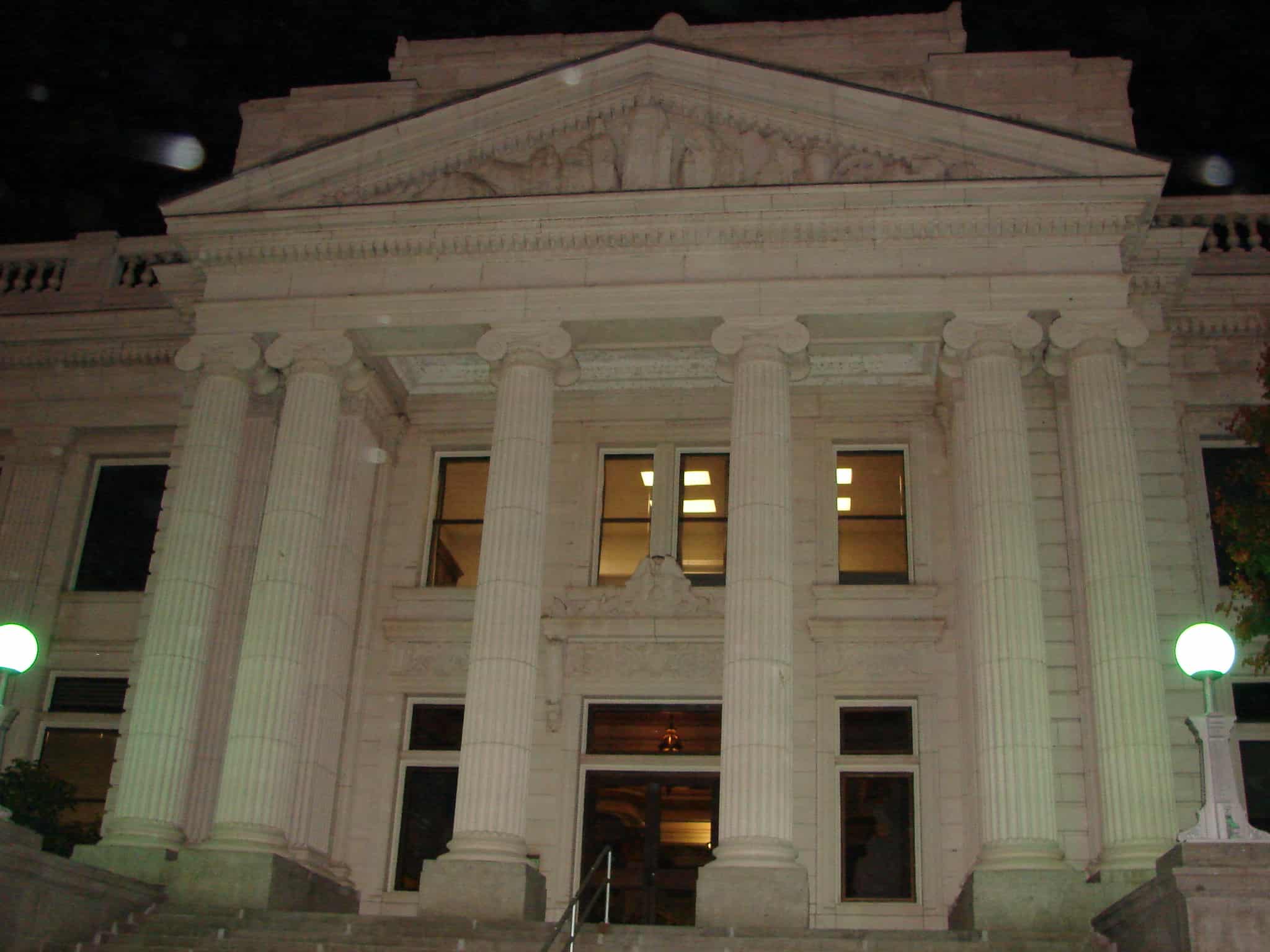
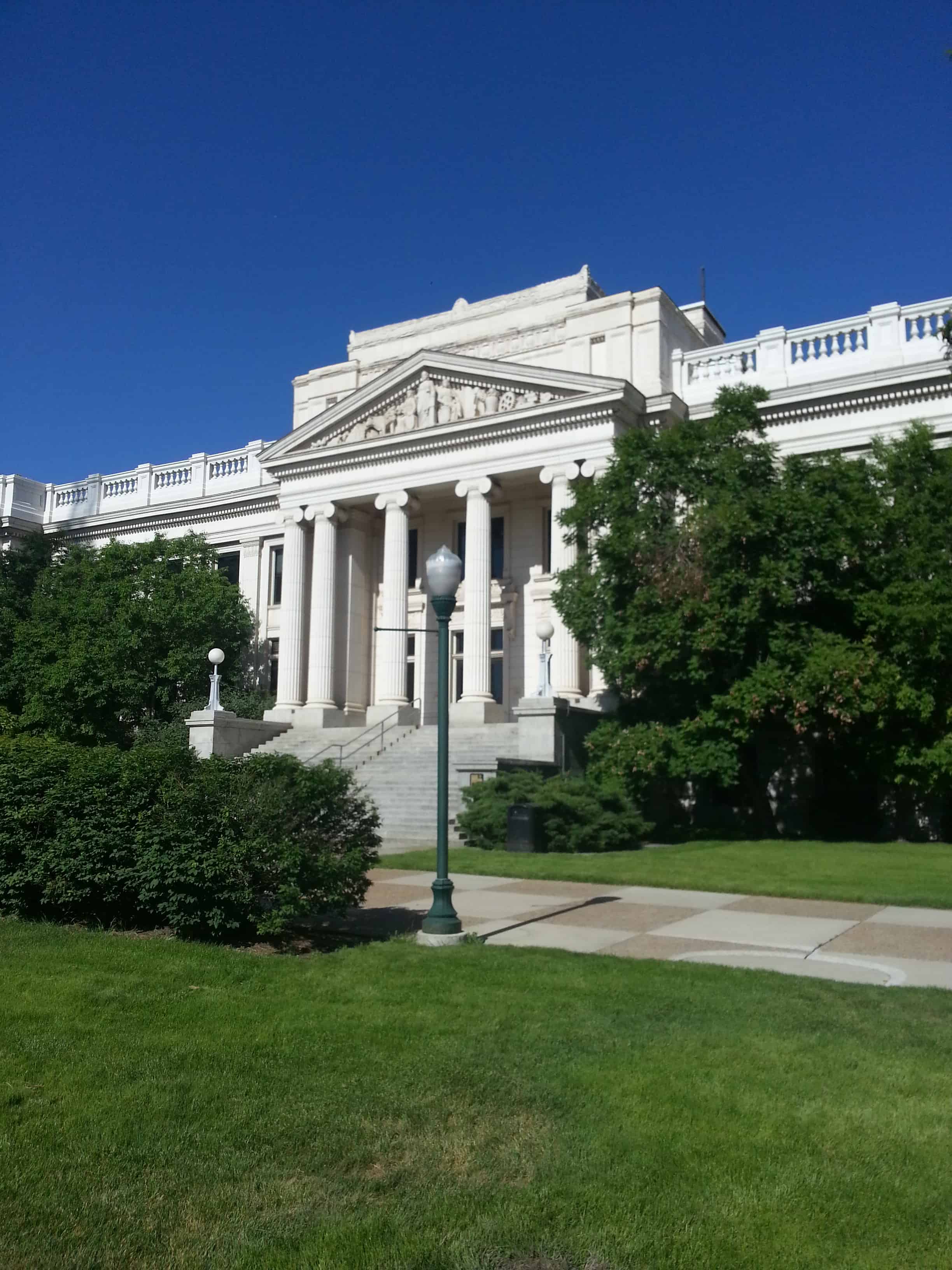
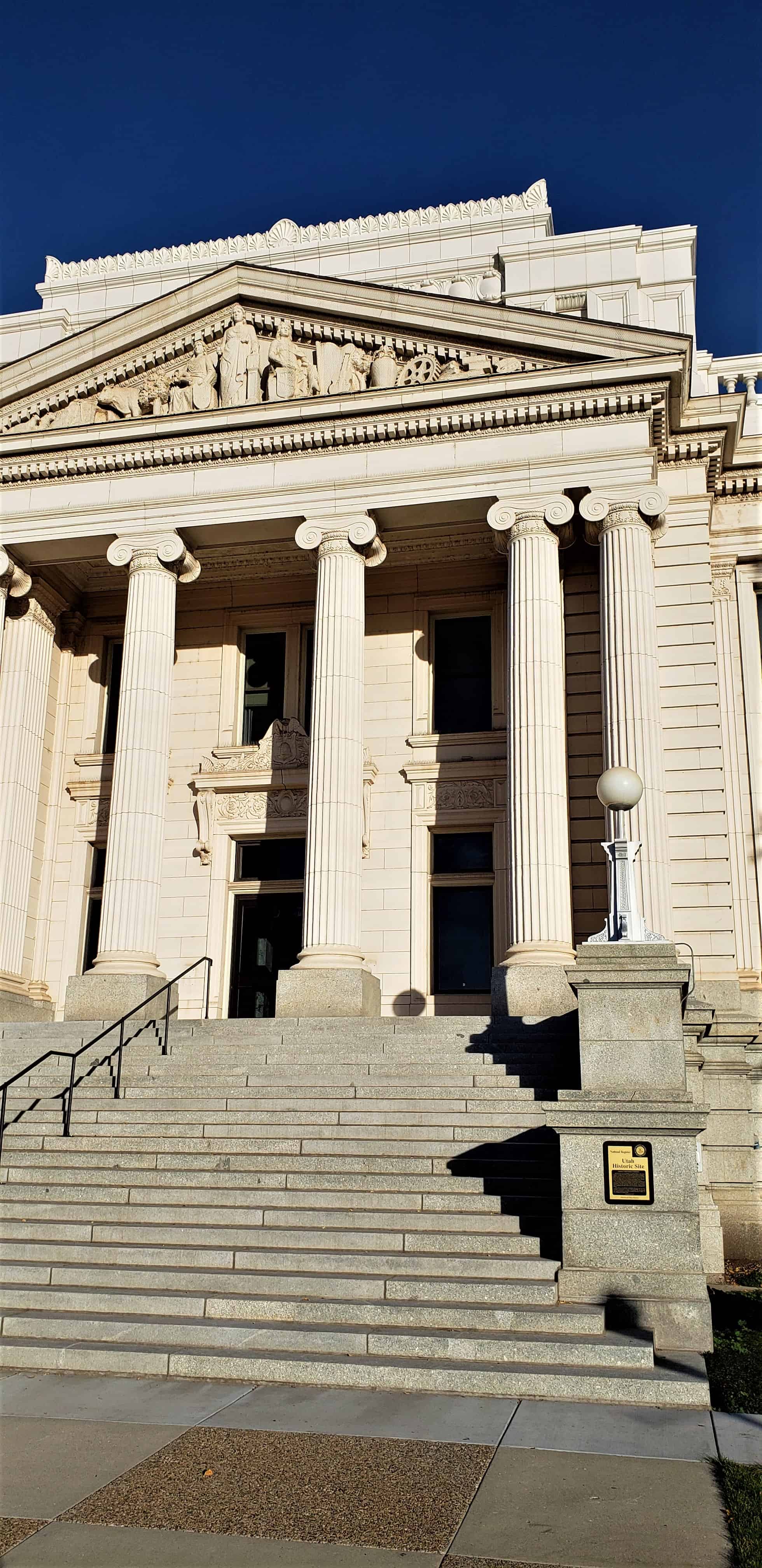
The Provo City and County Building, now called the Historic Utah County Courthouse, was built between 1920-26. Joseph Nelson, the architect, traveled with a committee to the West Coast to gather ideas from other administration buildings, prepared sketches, and submitted a plan that was accepted by the committee in 1919.
Rudine and Chytraus were the contractors for this two-and-one-half story Neoclassical building. Built of oolitic limestone from Sanpete County, the lower portion of the building is faced with granite from Little Cottonwood Canyon.

The sculpture grouping within the pediment was designed by Joseph Nelson and executed by sculptor Joseph Conradi. The figure of justice stands in the center with female figures on each side representing Utah County and Provo City. Horticulture, dairying, mining, lovestock, and farming on the left, and music, sculpture, industry, letters, and painting on the right, are the various arts and industries symbolized in this grouping.

The interior is also elaborately ornamented. The central two-story foyer incorporates a painted arched ceiling and a stained glass skylight. The stairs at the rear of the central pavilion curve upward to the mezzanine. Two long narrow atria with coffered ceilings are accented with stained glass panels below skylights. The floors throughout are of Alaskan marble.

Related posts:

  • American Family
  • Escalante Trail
  • 2018-10-27 17.13.53
  • 2018-10-27 17.14.04
  • picture09oct07-024
  • 2013-06-02 17.13.52
  • 2013-06-02 17.14.08
  • 2013-06-02 17.15.13
  • 2013-06-02 17.15.23
  • 2013-06-02 17.16.12
  • 2017-09-27 17.40.13

Pines, Utah

22 Saturday Nov 2014

Posted by Jacob Barlow in Uncategorized

≈ 1 Comment

Tags

birdseye, Pines, Thistle, utah, utah county

  • 64d41d24-e182-41bc-bb5a-57dce6f68206

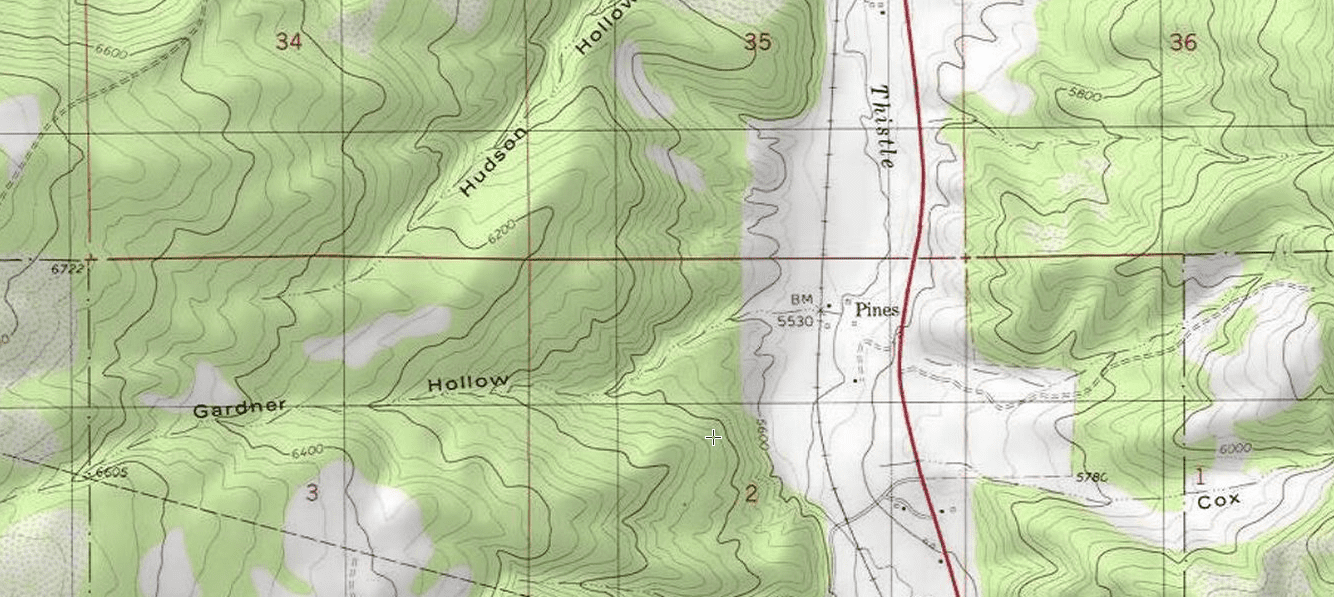
Pines shows up on my maps as a small placename, I haven’t been in to the ranch but I drive by it often and would love to check it out and learn some history of the area.

  • Screenshot 2014-11-22 15.26.26

Payson Fort Wall

15 Saturday Nov 2014

Posted by Jacob Barlow in Uncategorized

≈ 1 Comment

Tags

Forts, historic, Payson, utah, utah county, Walker War

Several of the towns in Utah started out as forts as protection for the people, many of those have the location of the fort marked, some of those have the location of the corners of the forts marked.  Here are the markers placed to mark where the corners of the Payson Fort was.

The Main Gate:     N 40° 02.629 W 111° 43.774


picture16dec07-033
picture16dec07-034

This road has remained open since 1853.  Just inside was a stagecoach inn & Pony Express station which operated until the telegraph came in 1861.  Alexander Keele, while on voluntary guard duty, was killed on 18 July 1853 by Indians as they left the Fort.

The Southeast Corner: N 40° 02.621 W 111° 43.775


picture16dec07-031
picture16dec07-032

The Fort was 60 rods square with corners built of logs forming a buttress.  Adobe, rock and mud walls stood 8 feet tall.  4 feet wide at the bottom and 2 feet wide at the top on a rock foundation with a deep 4 foot trench around the outside.   It was built during the Walker Indian War 1853-54.

The Southwest Corner: N 40° 02.622 W 111° 44.105


picture16dec07-028
picture16dec07-029
picture16dec07-030

The Northwest Corner: N 40° 02.875 W 111° 44.105


picture16dec07-037
picture16dec07-038

The Northeast Corner: N 40° 02.868 W 111° 43.775


picture16dec07-035
picture16dec07-036

Springville Carnegie Library

12 Wednesday Nov 2014

Posted by Jacob Barlow in Uncategorized

≈ 3 Comments

Tags

Carnegie Libraries, historic, Historic Buildings, NRHP, Springville, utah, utah county

  • 2014-09-14 11.34.12

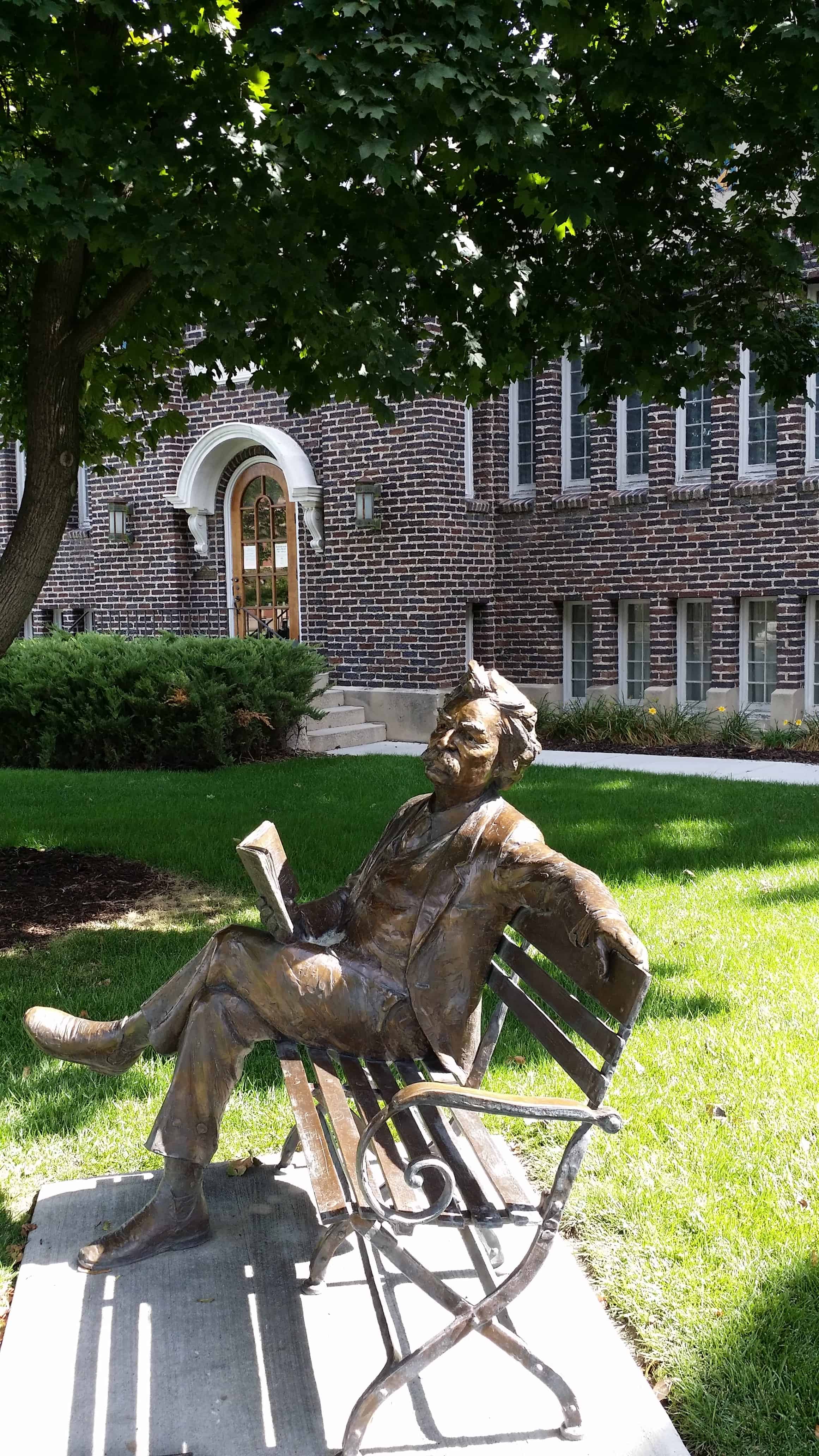
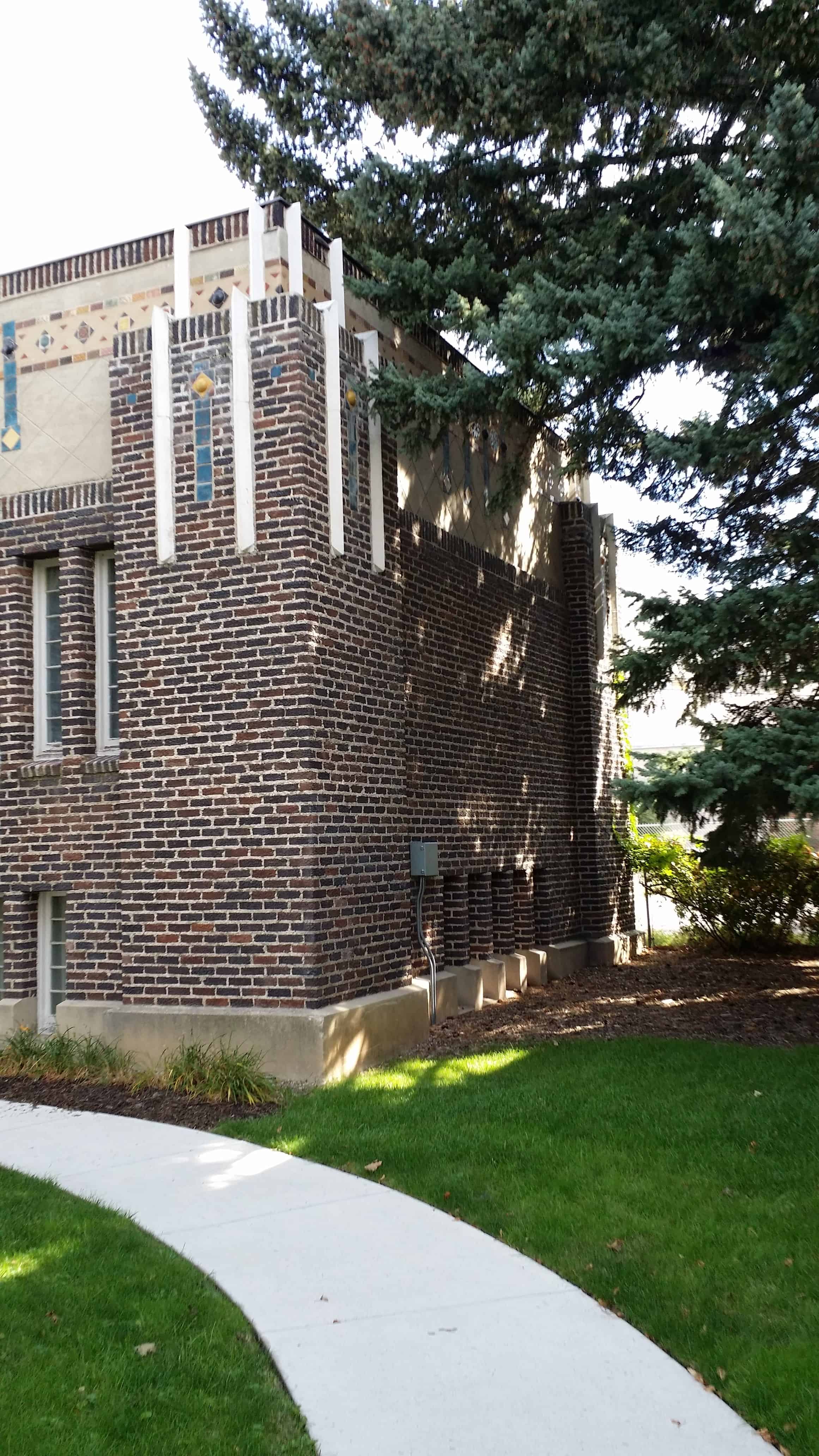
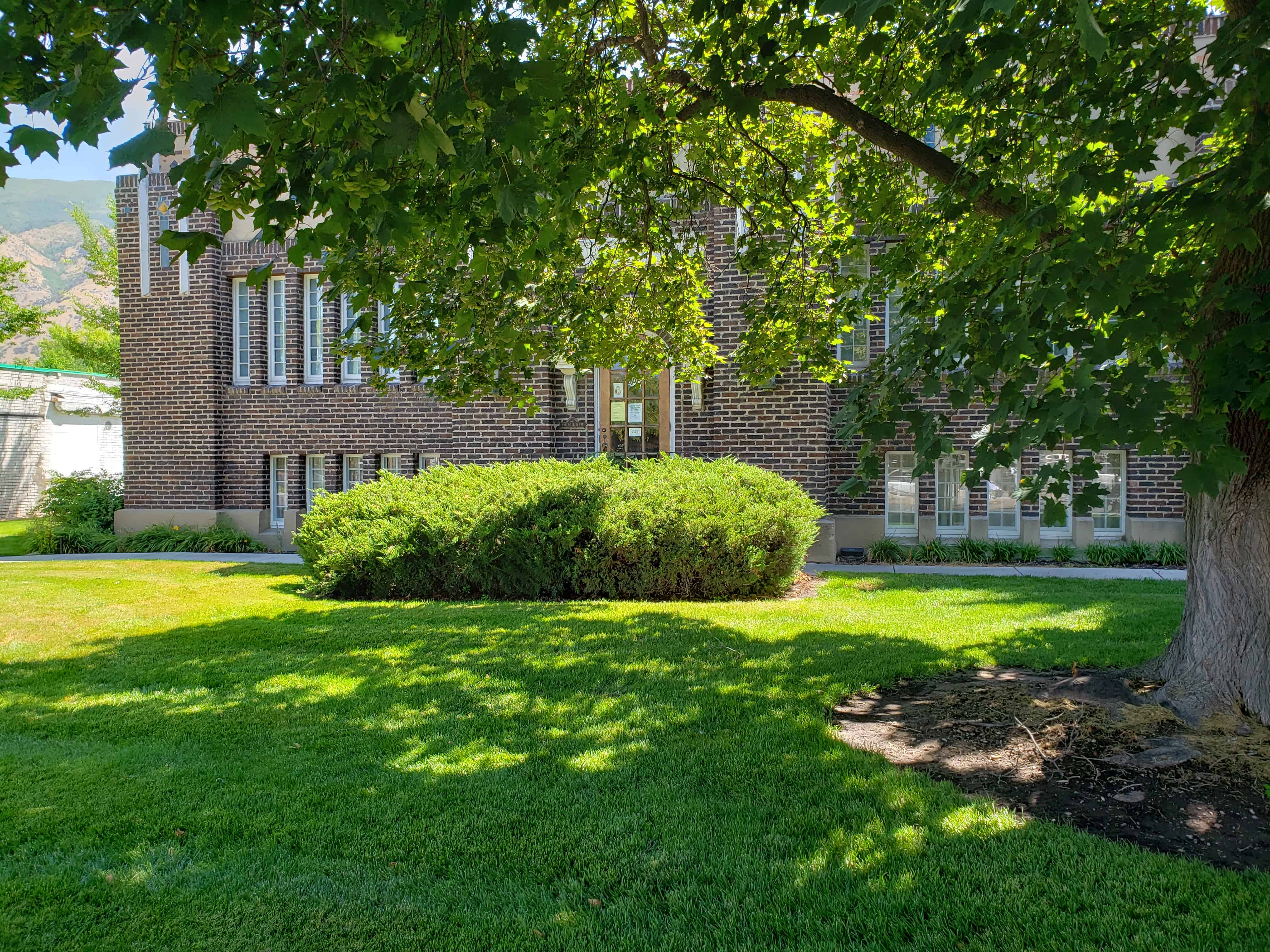
The Springville Carnegie Library at 175 S. Main St. in Springville, Utah is a Prairie School style Carnegie library building completed in 1922. It is one of the 23 Carnegie Libraries built in Utah. It functioned as the city public library until 1965, when the library was moved to a new larger. The 1922 building was listed on the National Register of Historic Places in 1991. It now houses a pioneer relic museum.

The National Register of Historic Places Registration Form describes the building as building that follows the Carnegie Library standards. The building is generally characterized by Prairie style architecture, most notably seen in the tall, vertical windows arranged in a strong horizontal band on both the main and lower levels. However, the main entry is characterized by its classical influences including the rounded top main door capped by a semi-circular pre-cast concrete hood with decorative scroll brackets on both sides.

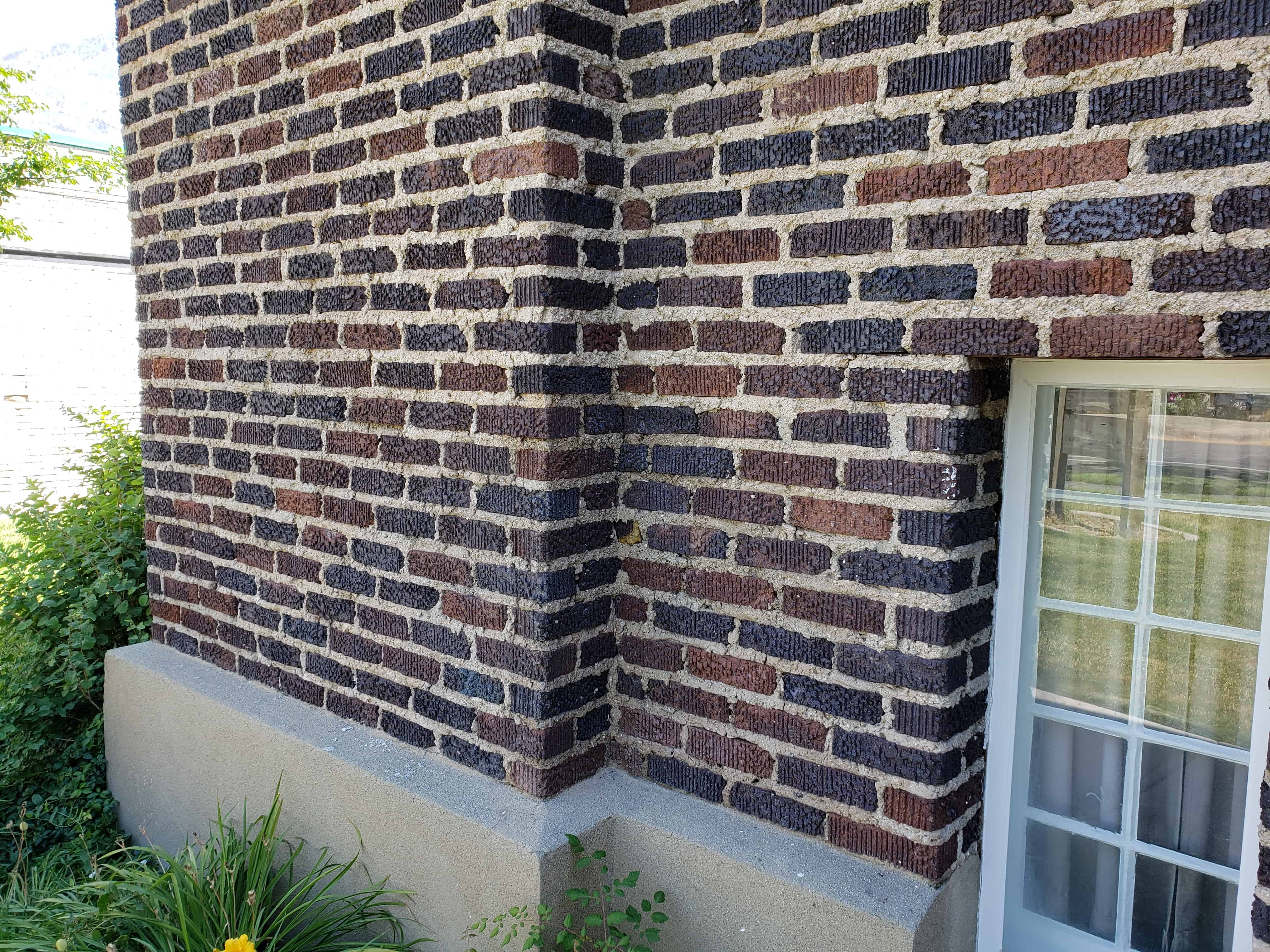
The library is rectangular in shape and one-and-one-half stories in height. The exterior consists of textured bricks and is capped by a horizontal band of stucco decorated in ceramic tile mosaics. This stucco also characterized by a brick soldier course at the top and bottom.

Large masonry piers interrupt at all four corners of the building as well as at the main entry. They divide the main facade into three symmetrical parts.

In the 1970s, an imitation mansard roof was added and this greatly altered its appearance. This addition rendered the Springville Carnegie Library ineligible for recognition by the National Register of Historic Places. Since then, the mansard roof was removed, which restored the building to its original appearance. It is now currently eligible.

The last modification to the exterior of the building was the replacement of a three foot tall brick railing wall at the main entry by a cast iron railing.

Related Posts:

  • Carnegie Libraries in Utah
  • Designed by Walter Ware
  • 2014-09-14 11.34.23
  • 2014-09-14 11.34.20
  • 2014-09-14 11.34.37
  • 2014-09-14 11.34.44
  • 2014-09-14 11.34.49
  • 2014-09-14 11.34.57

United States Post Office – Springville Main

12 Wednesday Nov 2014

Posted by Jacob Barlow in Uncategorized

≈ 1 Comment

Tags

historic, Historic Buildings, NRHP, Post Offices, Springville, utah, utah county

  • 2014-09-14 11.27.04

The U.S. Post Office-Springville Main at 309 S. Main in Springville, Utah was built in 1941. It was built in Colonial Revival style and credited to supervising architect Louis A. Simon. It has also been known as Springville Main Post Office. It was listed on the National Register of Historic Places in 1989.

  • 2014-09-14 11.27.16
  • 2014-09-14 11.27.39
  • 2014-09-14 11.27.41
  • 2014-09-14 11.27.44
  • 2014-09-14 11.27.58

George Taylor Jr. House

08 Saturday Nov 2014

Posted by Jacob Barlow in Uncategorized

≈ 1 Comment

Tags

historic, Historic Homes, NRHP, Provo, utah, utah county

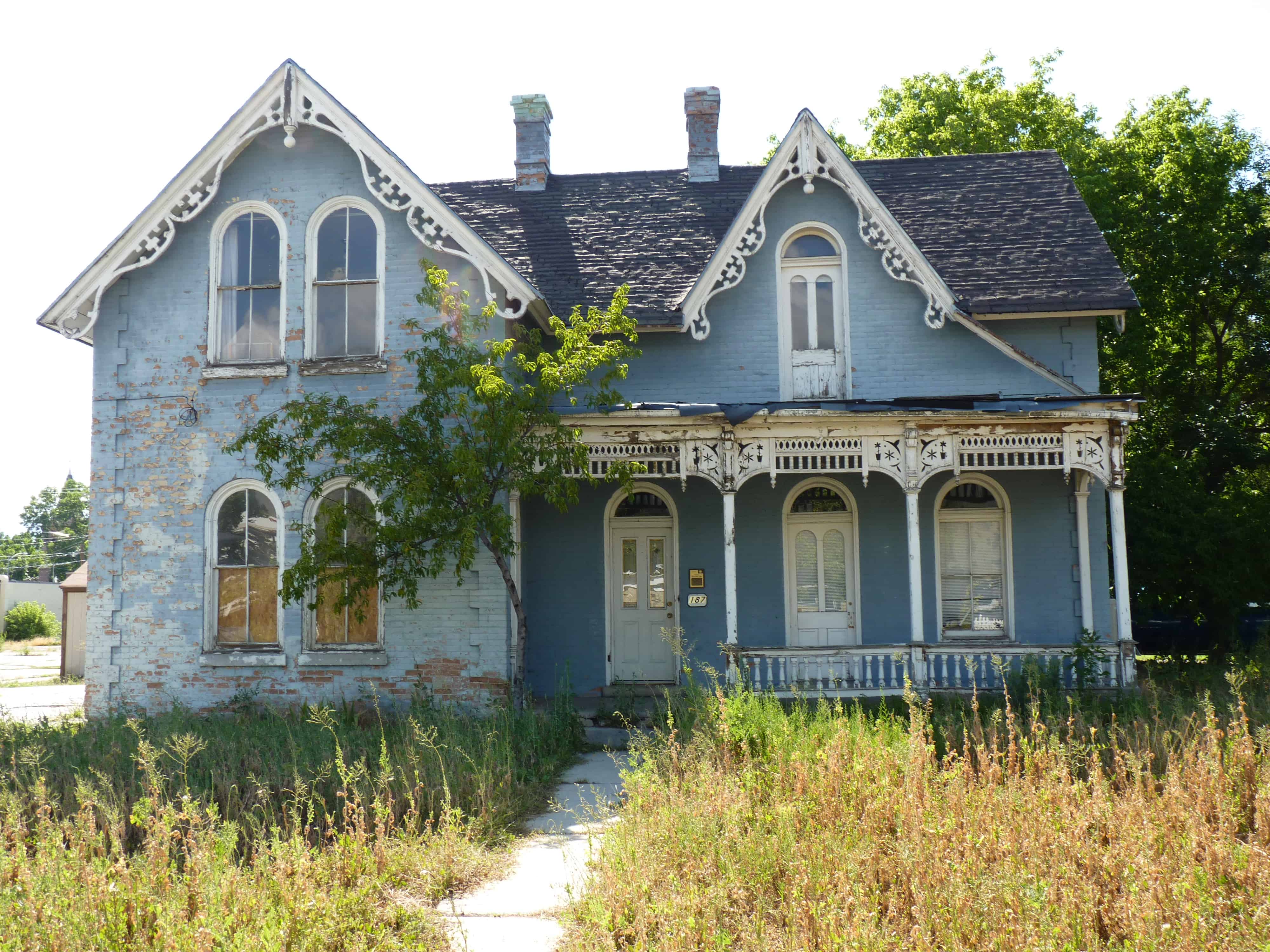
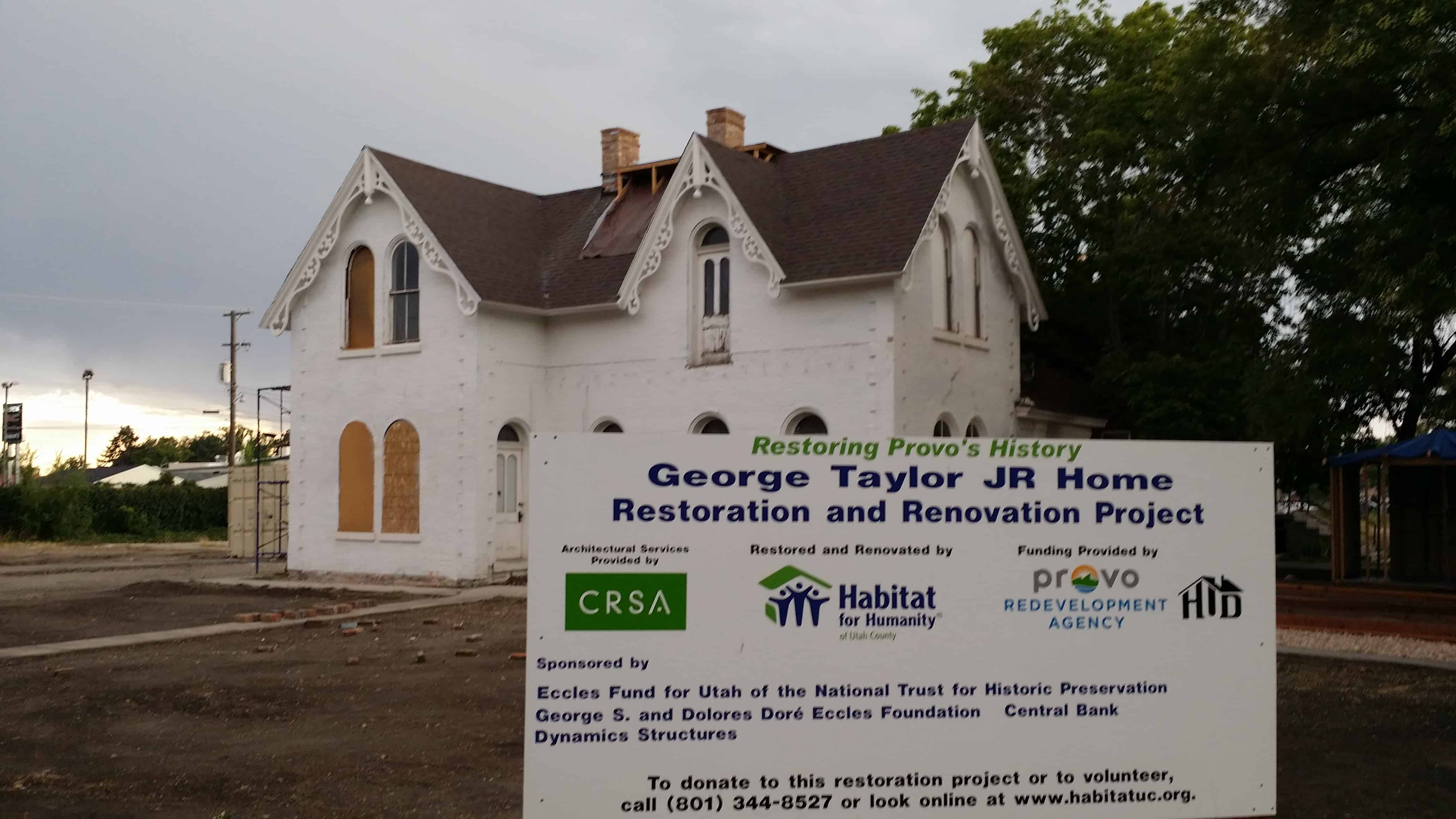
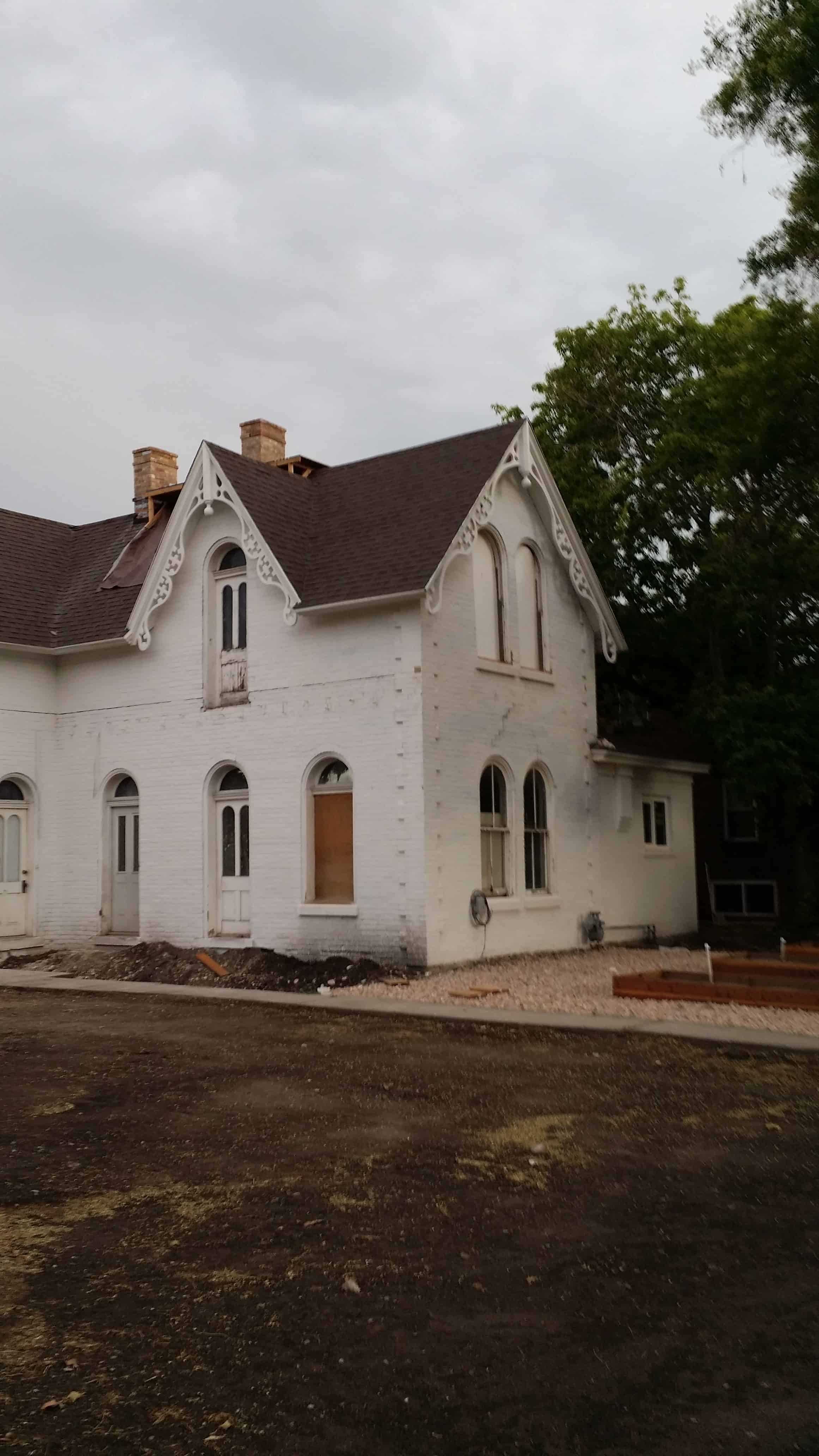
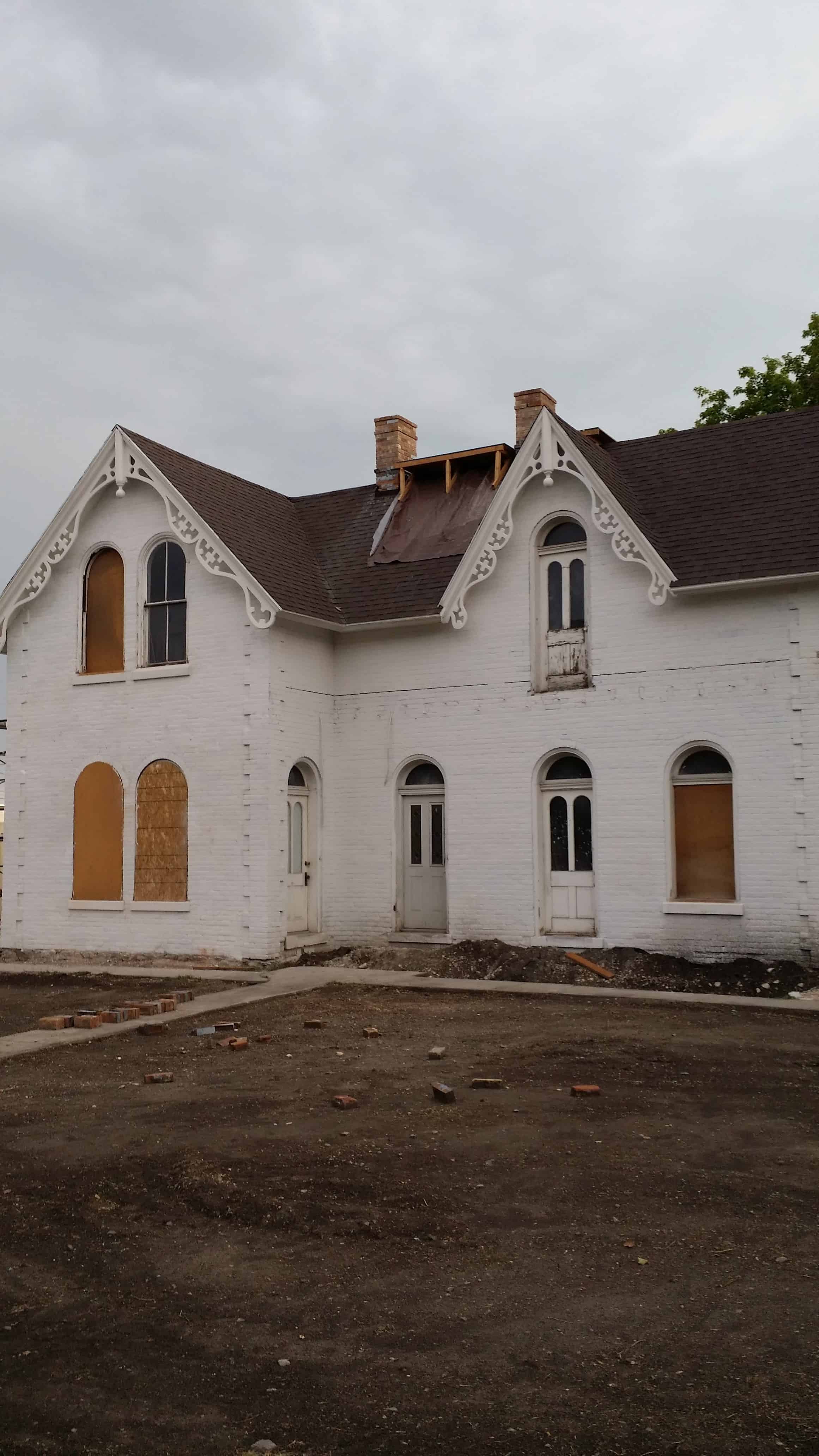
The George Taylor Jr. House is a historic house located at 187 North 400 West in Provo, Utah. It is listed on the National Register of Historic Places.

This house was designated to the Provo City Landmarks register on August 22, 1995.

Built in the 1880s, this house offers an important example of the cross-wing house type in Utah. The cross-wing plan was a predominant form of late nineteenth-century construction. The house also portrays a style reminiscent of the Gothic Revival as evidenced by the laced porch and high-arched windows. These two elements, and the unusual craftsmanship of this home, make the Taylor House one of the best examples of the cross-wing plan in the state. Rounded-arch windows and door openings like those seen here are rare in Provo.

Here are two photos from before the remodel (not mine)

http://en.wikipedia.org/wiki/File:George_Taylor_Jr._House_Provo,_UT.jpg
http://en.wikipedia.org/wiki/File:George_Taylor_House_Provo,_UT.jpg

I came around during a remodel, here are my photos then.   I will get more after it is done.

2014-08-24 19.26.43
2014-08-24 19.26.50
2014-08-24 19.27.01

Joseph H. Frisby House

08 Saturday Nov 2014

Posted by Jacob Barlow in Uncategorized

≈ 1 Comment

Tags

historic, Historic Homes, NRHP, Provo, utah, utah county


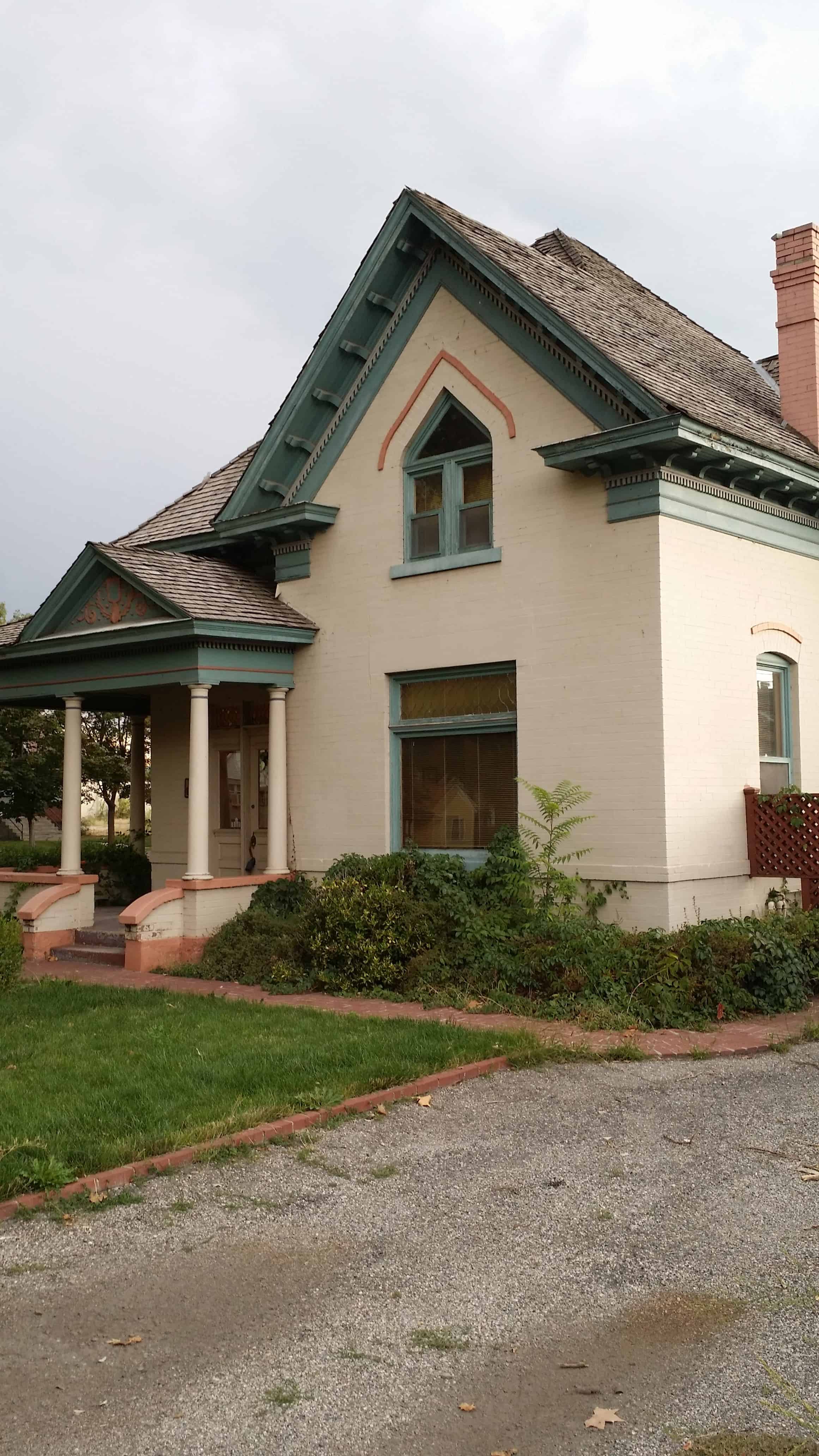
The Joseph H. Frisby House (209 North 400 West) is a historic house located at 209 North 400 West in Provo, Utah. It is listed on the National Register of Historic Places.

This home was built in 1906 for Joseph H. Frisby during the first year of his term as Provo City Mayor. “The House is a somewhat modest Victorian Eclectic house type that was most likely influenced by house pattern books. This house type was not used in Salt Lake City, or in many other areas of the state, but was inexplicably popular in Utah County (Historic Provo p. 8).”

“The Joseph H. Frisby house is a two story brick house with an irregular plan. The irregular plan is determined by the roof configuration of a central pyramid intersected on three sides by projecting gables. A one story porch wraps around the northeast corner of the facade and is terminated at each end by one of the projecting opelted wings. The porch is supported on Tuscan columns that extend from the side of one gabled wing under the eaves of the pyramidal roof to the other gabled wing. Classical detailing appears in the cornice and in the porch. The boxed cornice has brackets and a frieze decorated by dentils. A pediment with Classical Revival decoration on its tympanum and dentils on its frieze is located above the steps leading to the main entrance. Of particular note in the fenestration are the second story windows which have a triangular top above which the brickwork is in the configuration of a four-center ogee and a key-hole, and an oval stained glass window on the south wall of the first floor. A rear extension, which may have been a later addition, was most likely added soon after the original structure was built, and complements the house in its massing and fenestration (National Park Service p.2).”

Joseph H. Frisby was born in Birmingham, England in 1850, and was an English immigrant. He came to Utah in 1864, crossing the plains by ox team, and settled in Coalville, where he remained for several years until he went to Arizona. He settled in Provo in the year 1903, and had this house built soon after in 1905. Frisby lived at this location until 1913, when he sold this house and moved down the street to 258 North 400 West, where he died two years later.

Joseph H. Frisby lived a significant life, having served as a justice of the peace, having operated a mercantile business, and having been mayor of Provo for two years. Frisby’s election was tangled up in controversy. During this time, the town of Provo was divided. Needing a railroad, the east side of town insisted that it be built on the east side of Provo, while the west insisted it belonged on the west side. Hoping to sway the decision, the west side of Provo nominated Joseph Frisby for mayor in hopes that he would act in their favor. Having won the election but narrowly, Joseph decided to postpone the decision until he was out of office.

Joseph Frisby sold his house to Charles Hopkins in 1913. Hopkins, born February 21, 1864, at Dorcetshire, England, immigrated to America in 1887 and settled in the town of Elkhorn, Montana. In Elkhorn Hopkins was primarily involved in mining and the mercantile business, as well as serving as the local postmaster for fifteen years. In 1912 Hopkins relocated to Provo where he was elected to the Provo City Commission, where he served for thirteen years. Under his administration the City and County Building was built, the Provo Memorial Park was planned and most of Provo’s streets were paved. Hopkins also served as the chairman of the Utah County WPA and FERA. He died November 9, 1936 in the Frisby House.

2014-08-24 19.22.35 2014-08-24 19.22.51 2014-08-24 19.23.10 2014-08-24 19.23.16 2014-08-24 19.23.29 2014-08-24 19.23.42

William D. Roberts House

06 Thursday Nov 2014

Posted by Jacob Barlow in Uncategorized

≈ 1 Comment

Tags

historic, Historic Homes, Provo, utah, utah county


The William D. Roberts House is located at 212 North 500 West, it is a historic building located in Provo, Utah, United States. It is listed on the National Register of Historic Places.

William D. Roberts was a central figure in the City of Provo’s development. His home, located at 212 North and 500 West, was built in 1875 in the Greek revival style. The William D. Roberts House was designated to the Provo City Historic Landmarks Registry on August 22, 1996.

The William D. Roberts house was constructed in 1875. A two story home with a gable roof, this home is “The best-preserved example in Provo of a house that displays the traditional form and Greek Revival detailing of the pioneer period while concurrently reflecting the increased verticality of the early Victorian influence in Utah (Randall p. 1).” The use of the Greek revival style is evident in the decorative features of the building. The home contains a boxed cornice as well as six over six double hung sash windows with pedmimental window heads. The doors also exhibit these window heads. There have been several alterations made to the structure since it was originally made, such as alterations on the facade, and extensions made to the house, the home still retains much of its original character.

Born in Winchester, Illinois, on September 4, 1835, William D. Roberts was approximately ten when his family relocated from Illinois to Garden Grove, Iowa. After a subsequent move to Lancaster, Missouri, his family relocated yet again to Provo Utah in 1851. It was in Provo that William D. Roberts joined the Church of Jesus Christ of Latter Day Saints. Eventually Roberts fulfilled two missions for the church, one in California and one in Great Britain. He also became a member of the Seventies; a general authority in the church. Later in 1851, William, his brother Bolivar, and their father left for California. Once in Placerville, then known as Hang Town, Their father practiced medicine while William and Bolivar mined for a living. This pursuit did not prove as fruitful as planned, as William was not able to afford making it back to Utah until 1855, and at that time only made it with two twenty dollar gold pieces after the four years in California.

Once back in Provo, Roberts fulfilled several assignments of note. Roberts was assigned among a group of men to find Chief Tintic and his company of men, who had been harassing the settlers. Also, Roberts was one of the men who left Utah to help the pioneer Saints make it all the way to Utah when many were trapped within the cold in 1856. In the year 1857, on their way to trade with emigrants in Sweet Water, both Roberts and a man by the name Daniel Jones were abducted by Crow Indians, but rescued the next day by travelers heading towards California. In 1858 Roberts worked in freighting and carrying passengers between Salt Lake City and Los Angeles, California.

On February 6, 1862, Roberts wed Maria Julia Lusk in Lancaster, Missouri, and subsequently he brought her to live with him in Provo. William Roberts became active in the community of Provo, serving as a member of the City council from 1878 to 1881, as an alderman from 1884 to 1885, and as the first postmaster in the state of Utah. He also participated in the first brass band put together in Utah county, as well as in Provo’s first dramatic association. William Roberts died on March 8, 1912.

Related Posts:

  • Hotel Roberts
  • 2014-08-24 19.07.49
  • 2014-08-24 19.07.53
  • 2014-08-24 19.08.19
  • 2014-08-24 19.08.34

Silver Row

05 Wednesday Nov 2014

Posted by Jacob Barlow in Uncategorized

≈ 4 Comments

Tags

historic, Historic Homes, NRHP, Provo, utah, utah county

Built in 1890, the Silver Row Apartments were very representative of the times in the state of Utah. Row houses, such as these, were prevalent in the larger cities of Utah and represent much of the lower-income residential architecture of the time period. Few of these examples remain today, making these apartments a valuable and significant asset to the state of Utah’s history. The Silver Row Apartments were designated to the Provo City Historic Landmarks Registry on April 26, 1996.

The original owner of Silver Row was David P. Felt. Felt was born in Salt Lake City in 1860. After marrying Nora Civish, Felt relocated to Provo, Utah. Silver Row was built by him about 1890, but after three years Felt sold the apartments to Samuel S. Jones and Henry J. Maiben. Maiben stayed in one of the units with his family until he died, and his family stayed until the early 1920s. Samuel Jones sold his interest in the property in 1902. In 1920 Joseph Nelson, an architect, bought the apartments and sold them six years later to George P. Parker, a wealthy judge residing in Provo. Parker retained the property until 1958, when Silver Row was purchased by Thomas O. And Judity W. Parker. B. Park Brockbank attained the apartments in 1973, after which Robert L. Gunther did in 1976. The title passed to Bob and Pop Investments, Inc. In 1977, after which it passed to John A. Riding in 1978.

2014-08-24 19.01.40
2014-08-24 19.01.42
2014-08-24 19.01.53
2014-08-24 19.01.57
2014-08-24 19.02.01
← Older posts
Newer posts →

Follow Jacob

Follow Jacob

Blog Stats

  • 2,020,688 hits

Social and Other Links

BarlowLinks.com

Recent Posts

  • 83 N Street
  • First Company of Pioneers into the Valley
  • Blue Base – The Stand Filming Location
  • 926 E South Temple
  • 969 E South Temple

Archives


Loading Comments...