Theories about the origin of the city’s name suggest that it may be a corruption of the Spanish la virgen, after the nearby Virgin River, or possibly an error in the transcription of the term “beaver skin.”
The city made national headlines in 2001 when the City Council passed an ordinance declaring La Verkin a “United Nations-free zone”.
La Verkin contains the southern most highway junction to Zion National Park, at the intersection of Utah SR-9. The city is also home to Pah Tempe Hot Springs; a historic volcanic sulfur spring that sits on the edge of Virgin River. There’s also a noted pony-truss style bridge, built in 1908, that rises some 600ft over the river, spanning over 75ft in length.
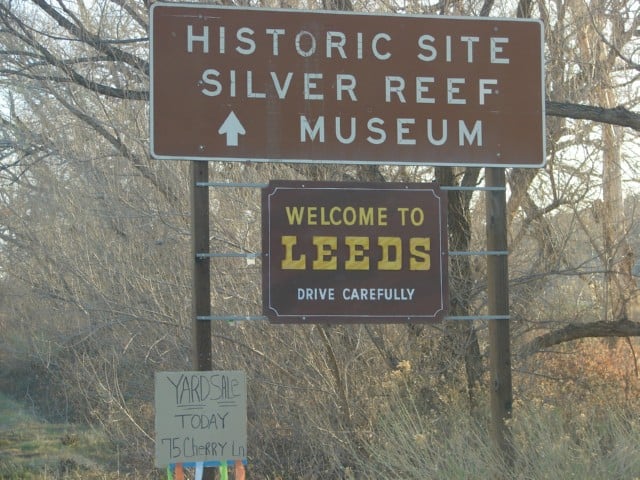
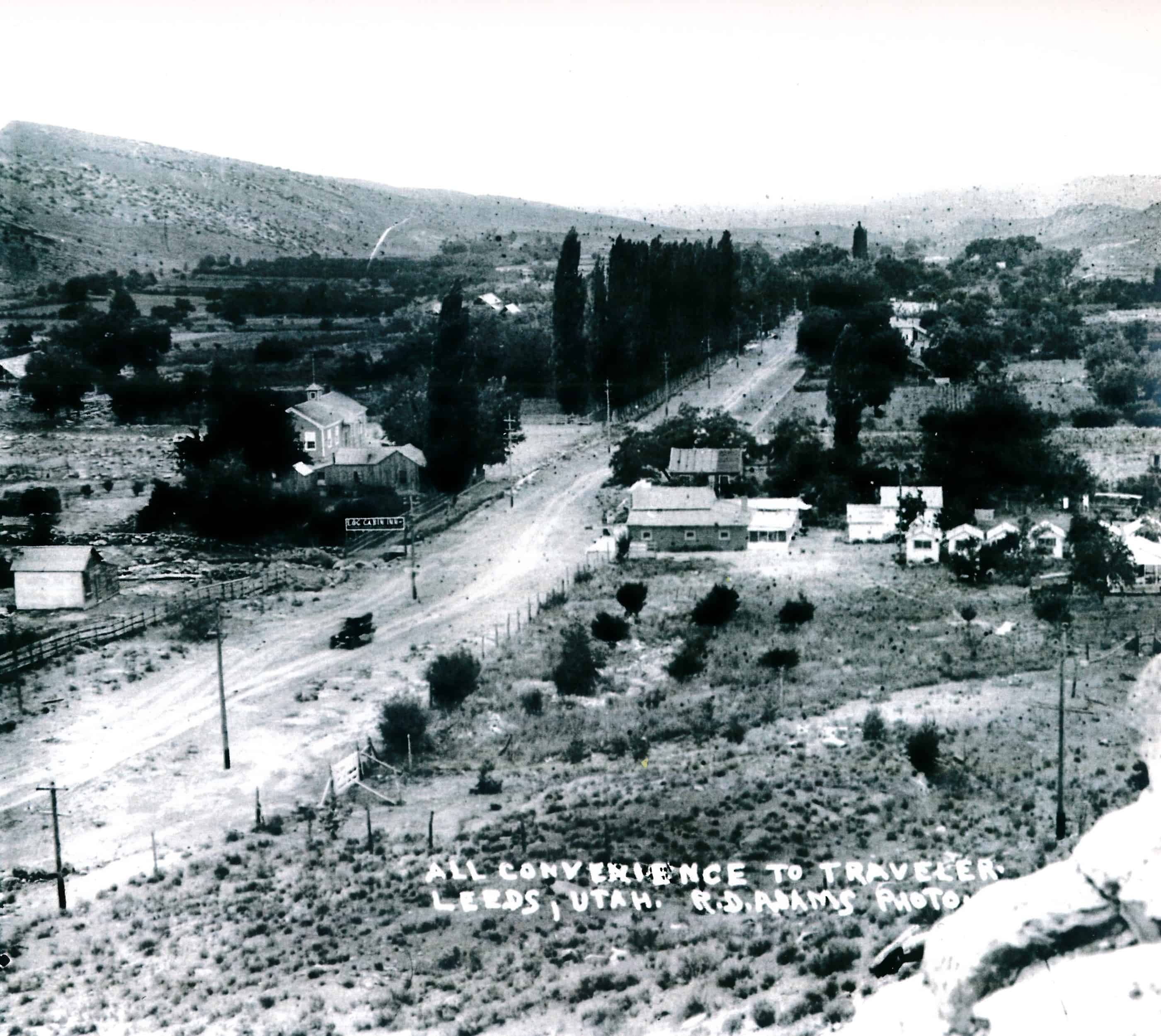
Leeds is in Washington County, near I-15 northeast of St. George, just a few miles southeast of the Pine Valley Mountain Wilderness Area of the Dixie National Forest and Quail Creek Reservoir. Leeds is an outgrowth of nearby Harrisburg. In 1867 settlers came from Leeds, Yorkshire, England to settle the area. An early name was Bennington in honor of the local LDS presiding elder. It was he who suggested the name be changed to Leeds.
Leeds also played an important role in providing jobs for young men who were housed here during the depression years and given conservation work, such as flood control, water resource development. They built roads and bridges and were involved in the construction of the Zion Park tunnel. Hence, the Leeds CCC (Civilian Conservation Corps) Camp was constructed in 1933. The project housed ca. 250 men in buildings constructed of wood and stone. By 1950 the frame barracks had been removed. Today, only a few of the original stone structures remain.
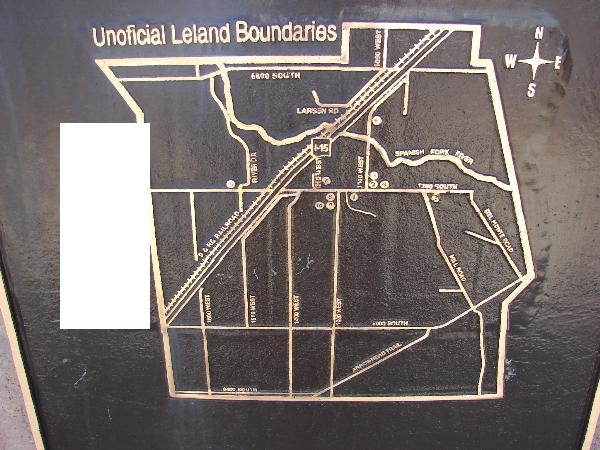
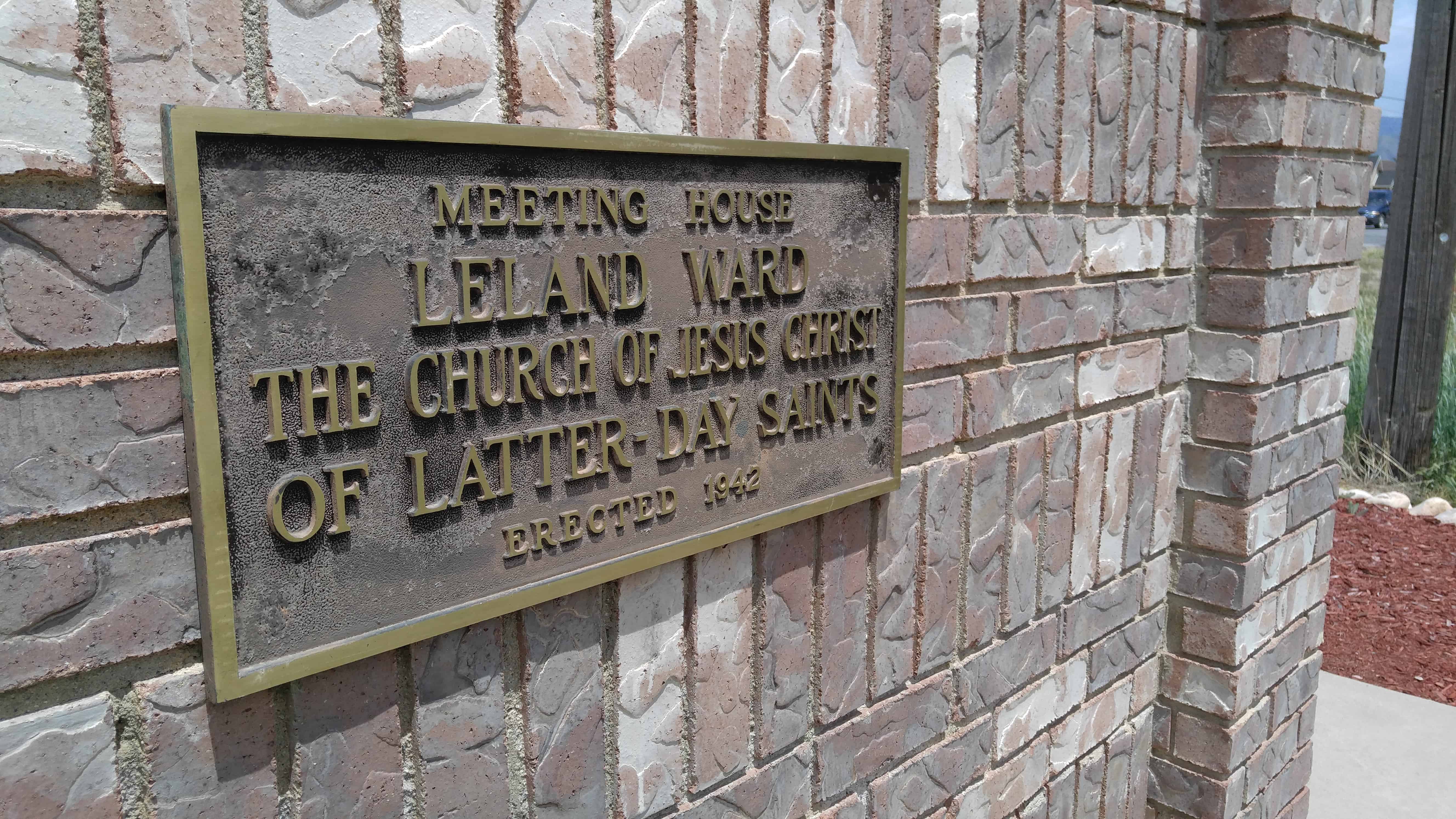
This area of Utah County was brought under cultivation and irrigation in the mid-1850s. A survey in the 1860s known as the “New Survey” designated where permanent roads and irrigation ditches would be. Leland has always been a highly productive irrigated agriculture area. Major crops have been barley, wheat, corn, sugar beets and alfalfa. Canning crops were peas, lima beans, and sweet corn. Beef and dairy cattle are the major livestock.
LDS Church records stated that it was originally the South Branch of Spanish Fork 2nd Ward and later the Riverside Branch, 2nd Ward. On April 29, 1900, LDS Apostle Reed Smoot officially organized a new ward. Those present selected the name “Leland,” named after Leland Stanford, founder of Leland Stanford University. Membership of the new Leland Ward was 224. Andrew Jensen, Church Historian, in 1900 recorded,” Leland Ward consisted of Latter-day Saints residing in a farming district lying southwest of Spanish Fork.
The center of the ward or the place where Leland schoolhouse stands, is a certain point on the country road about 1/2 mile south of Spanish Fork River or 2 1/2 miles, by nearest road from the center of Spanish Fork. The ward extends from the school house 2 miles east, 2 miles south, 1 mile west, and 1 1/2 miles north; in other words, the ward extends from north to south about 4 miles, from east to west about the same distance, making the area of the ward something like 4 miles square. Nearly all of the inhabitants within the limits of the ward are Latter-day Saints and meetings and Sunday School sessions are held in the district school house.”
The monument was erected and dedicated as a special Sesquicentennial project in the year 1997 to honor the stalwart Leland Pioneer settlers, and recognize them for their endurance, hard work and perseverance in the settling of Leland.
The Timpanogos Cooperative Marketing Association (TCMA) building was built in 1926 along the east side of the Salt Lake and Utah Electric Interurban Railroad as part of the railroad’s Snow depot/station at 380 South Orem Boulevard. The TCMA Building is rectangular in shape, measuring sixty feet by one hundred feet in size. A six foot wide by fifty-one foot long open porch runs along the south elevation of the building. The building has been only minimally modified, is in good condition, and retains its general historic integrity. The Salt Lake and Utah rail lines were removed during the 1950s.
By 1910, Orem was a prosperous agricultural community, exporting fruit and vegetables throughout the state. A railroad station and produce packing sheds were constructed here (400 S Orem Boulevard) after the completion of the Orem Line of the Salt Lake and Utah Railroad in 1913. The depot was used both for passengers and freight shipments. Use of the railroad line declined in the 1930′s but continued on a limited basis until the 1960′s.
George F. Carroll bought this home in 1914. The home was originally built on a 16.5 acre lot and included a catalog ordered Montgomery Ward kit house north of the original house (now at 247 South). In 1928, the original house caught fire and was a total loss. The same year, this bungalow home was built in its place for $7,000. This home is interesting because of the Colonial Revival bungalow architecture and the use of multi-colored brick. The new house had hardwood floors and was connected to the city water system. The house still remains in the Carroll name as of 2001.
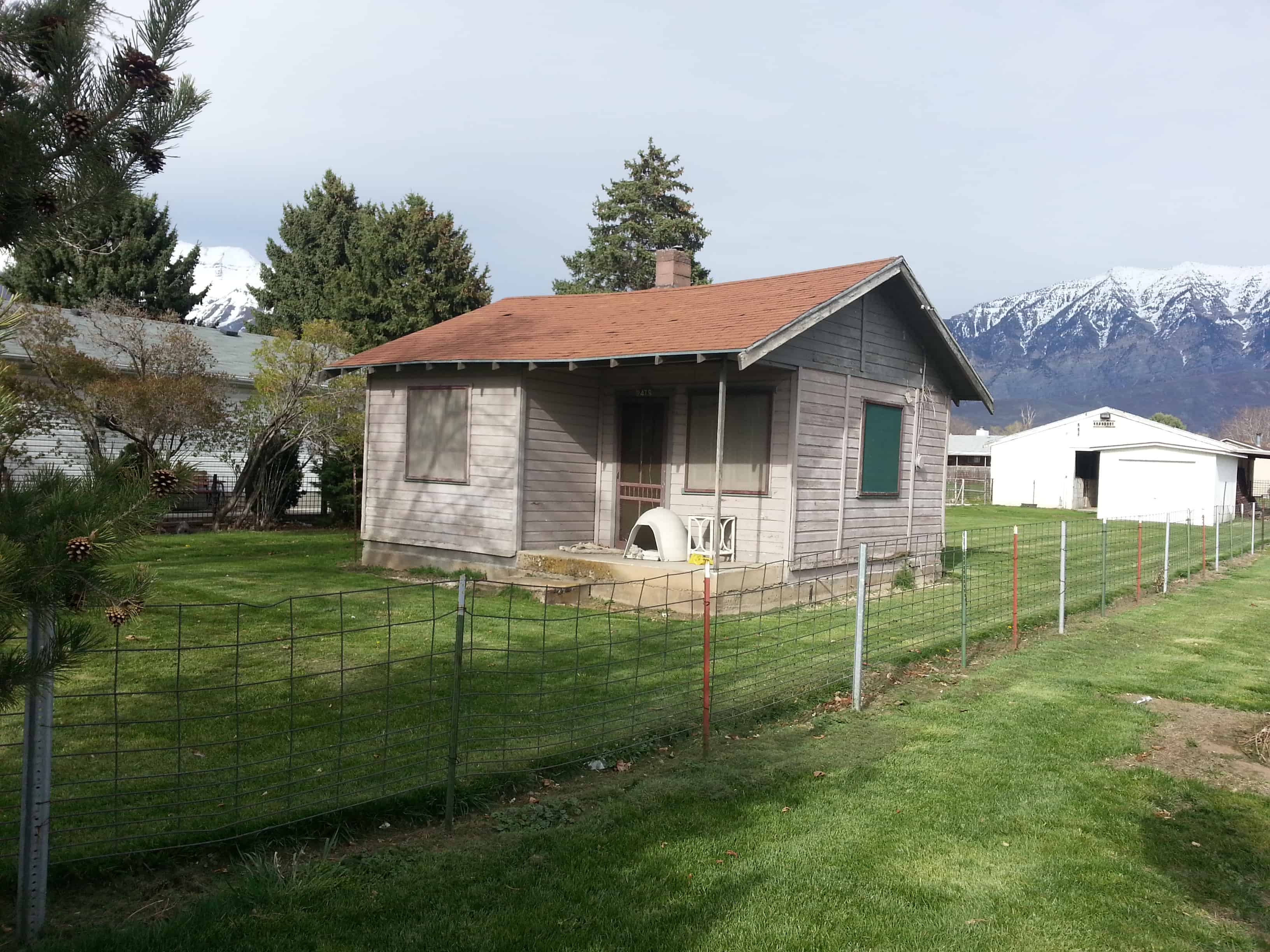
The Susan Heaton house is a Craftsman influenced kit house that was ordered from Montgomery Ward and was assembled for Susan Clarissa Heaton in 1916 on land, which had been purchased by her son-in-law, George F. Carroll in 1914. The same year Susan’s daughter, Clarissa, married George F. Carroll and moved her family to Orem and Susan joined them. In 1916, Susan ordered this prefabricated house from the Montgomery Ward catalog and the kit house arrived by inter-urban rail at Snow Station and was put together by Montgomery Ward employees. The Heaton house was a relatively small and simple example of a kit house, but its appearance in the small agricultural town of Orem was an unprecedented event. Montgomery Ward discontinued kit houses in 1931 as sales declined during the depression.
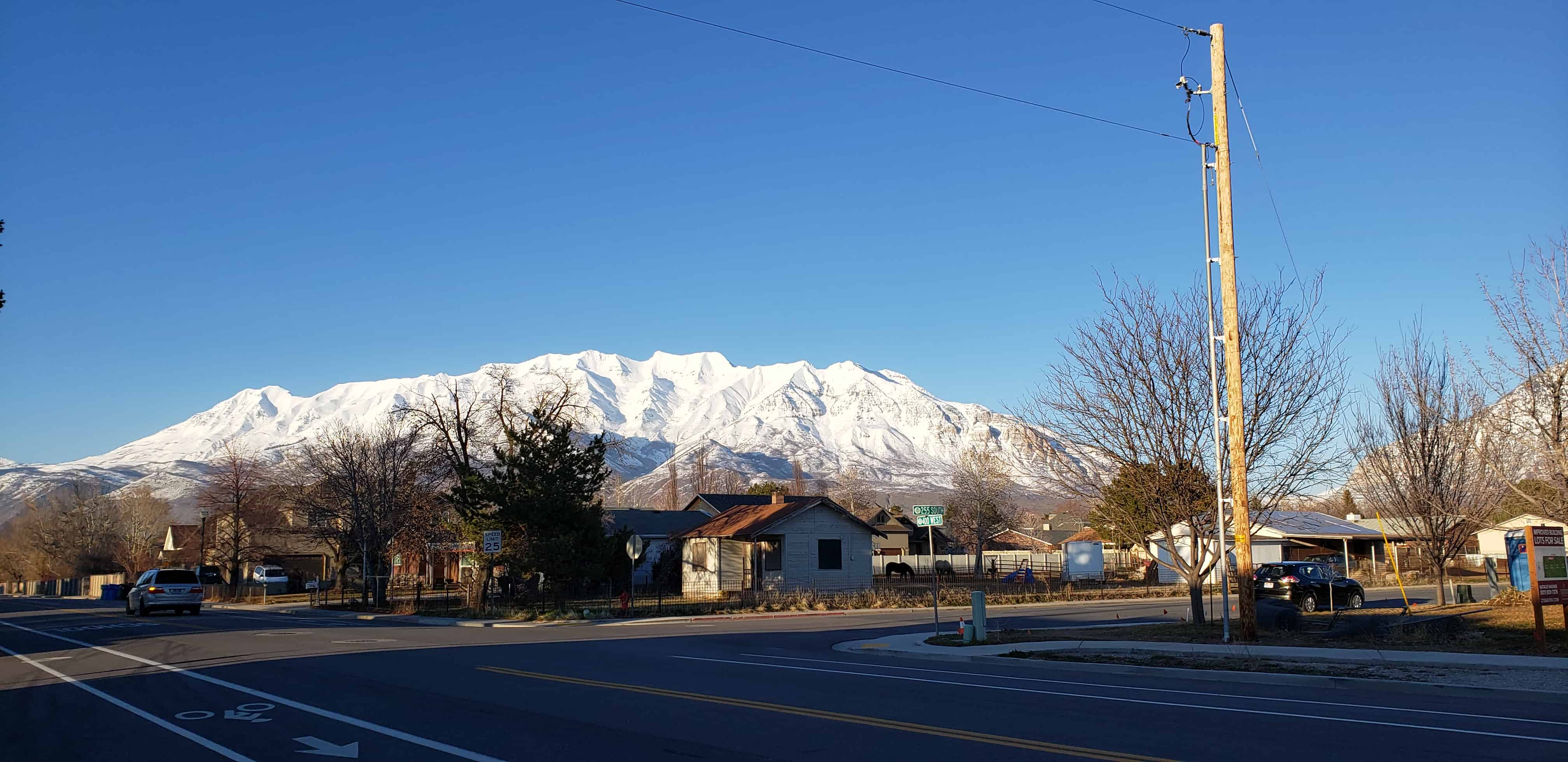
(2013) The Susan Heaton house is now a house for a couple of Emu’s and is located at 247 S 400 W on Orem.
(From Orem’s Website) Orem’s settlement history is somewhat unique in the State of Utah. Although full-time occupation of what was then known as “Provo Bench” did not occur until 1877, the first attempts at settling the Bench occurred in the late 1850s. However, lack of a major water supply prevented this until a small canal was completed that brought water to the parched land in 1864. Soon, more canals were dug and settlers from Provo and Pleasant Grove were planting crops—first alfalfa, then berries, and then fruit trees. The fruit trees particularly thrived and soon orchards and small farms were springing up everywhere. However, few architectural examples remain from this early era of settlement.
State Street was a section of the major traffic route to the south and helped the fruit industry early on. However, it was not until a rail line was established through the area that business really thrived. Walter C. Orem owned the company that built the line, and so to honor him “Orem” was chosen for the name of the developing community which incorporated as a town in 1919. During this developing era, small farmhouses constructed in Vernacular Classical and Victorian styles typical of the rest of the state were the norm. Few commercial buildings were constructed as farming was the primary occupation.
It would take more than two decades before Orem would become a city in 1941, on the eve of WWII. At about this time the farming community would add an industrial component to its economy with the construction of what would become Geneva Steel. The architectural transition is apparent in the types of buildings, particularly homes that were constructed during this era. Bungalows, which became the house of choice in the late 1910s and 1920s transitioned to period cottages that hinted at historic European styles. However, the leaner times following the Great Depression and lasting up through the War influenced architectural styles. Fewer materials were available so houses were much simpler and cheaper to build. WWII-era cottages were the typical house built during the 1940s and early 1950s. Orem’s only National Register historic district—Christeele Acres—was constructed in 1943 and features typical examples of this type.
Following WWII the economy began to pick up again as many returning GIs took jobs at Geneva. Commercial development increased and more substantial commercial buildings were constructed in Orem. Prosperity brought with it larger homes in newer styles that continued to reflect simplicity in their architecture. The ranch house was the vogue choice, and practically the only choice in the 1950s. Ranch subdivisions sprouted up in many areas of Orem during this decade as the population rapidly increased. Many of these neighborhoods are still historically intact and reflect the end of the historic era.
Orem’s fertile orchards and farmlands added to it’s early reputation as the “Garden City of Utah.”
This 1909 central-block-with-projecting-bay type is an eclectic mixture of the Victorian eclectic and Arts and Crafts styles. From the placement and style of the doors and windows on the main floor, it appears that this house was originally a one story cross-wing. The windows and doors on the main level all have segmental arches above with the exception of the window on the first floor of the projecting bay. The roof and the second story windows all have arts and crafts detailing. In 1909, James and his wife Clara built their house on land that had been deeded to them by James’ father. James was one of the five men who presented a petition for the formation of a new city. He was asked to serve on the board of trustees, but was removed when the newly organized board split over the decision whether to bond for water or not. Many of those community members living south of 800 South strongly opposed the bond issue. James and Clara sold this home to their youngest son in 1943 and the house remained in the family name until 1998.
The John C. and Sarah E. Snow house was built in 1902 and is a one-story three bay frame hall-parlor type with an off-set internal brick chimney and a lean-to addition to the rear. Its Vernacular Classical styling is evident in its rectangular shape with a centrally placed door and a smooth symmetrical façade as well as the raking cornice and corner boards. Classical styling was found in Utah houses from early pioneer times up until 1890. John C. Snow purchased 80 acres of land in 1885. He was a carpenter in Provo and most likely built the house.