Near this spot on Tuesday, October 17, 1865, Black Hawk, a Ute chief, led his warriors out of Cottonwood Canyon foraging for cattle. They stole the entire Ephraim herd. Settlers who were working in the fields were massacred and lie buried in one grave: Martin P. Kurhe, Hansine J. Kurhe, Elizabeth Petersen, Benjamin J. Black and William T. Hite. William Thorpe was killed near Guard Knoll; Soren N. Jespersen, badly mutilated, died at Wiregrass Flat. Jens Sorensen was killed April 12, 1865.
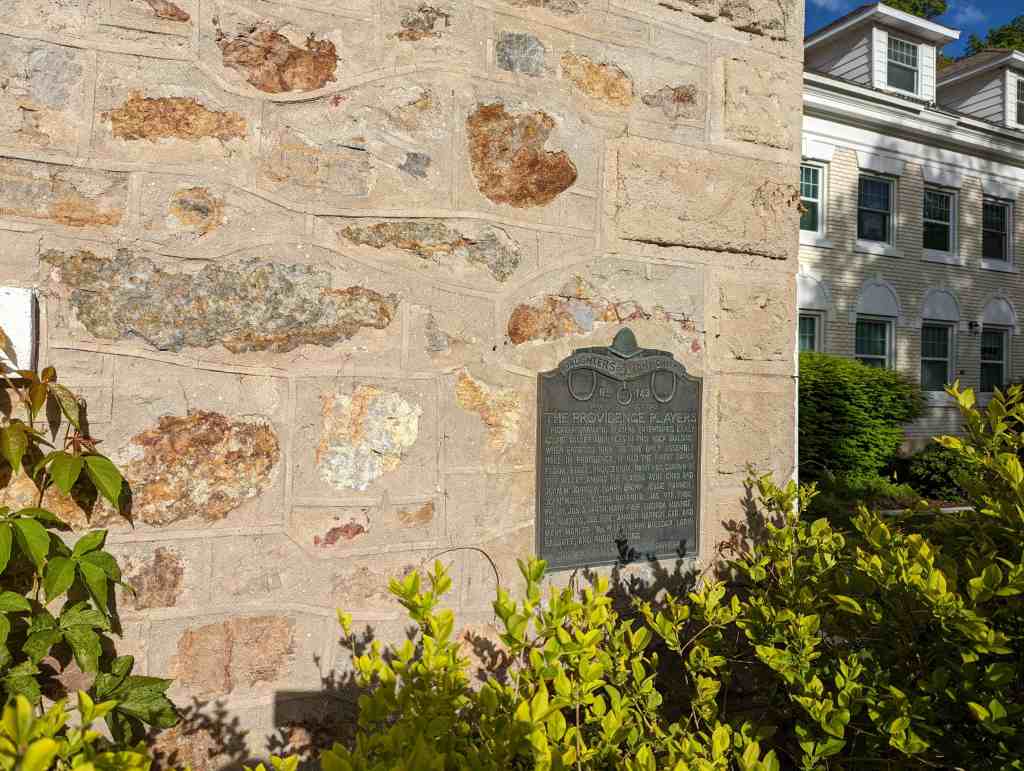
Pioneer dramatic players entertained early Cache Valley audiences in this rock building. When erected, 1868-70, the only assembly hall in Providence, it had the finest dance floor, stage, proscenium, paintings, curtain, in the valley. Among the players were: Chas. and Joan M. Johnson, Harry Brown, Jessie Hammer, John Wilson, Alzina Hammond, Jas. Nye, Thos. Priday, Jos. A. Smith, Mary Naef, Lucinda Monroe, Wm. Reading, Jas. Fife, Ammon Harmon, Geo. and Mary Marler, Wm. W. Low, Henry Bullock, Lorin Bassett, and Rudolph Hugg.
Daughters of Utah Pioneers historic marker #143 located at the Providence Church at 10 South Main Street in Providence, Utah
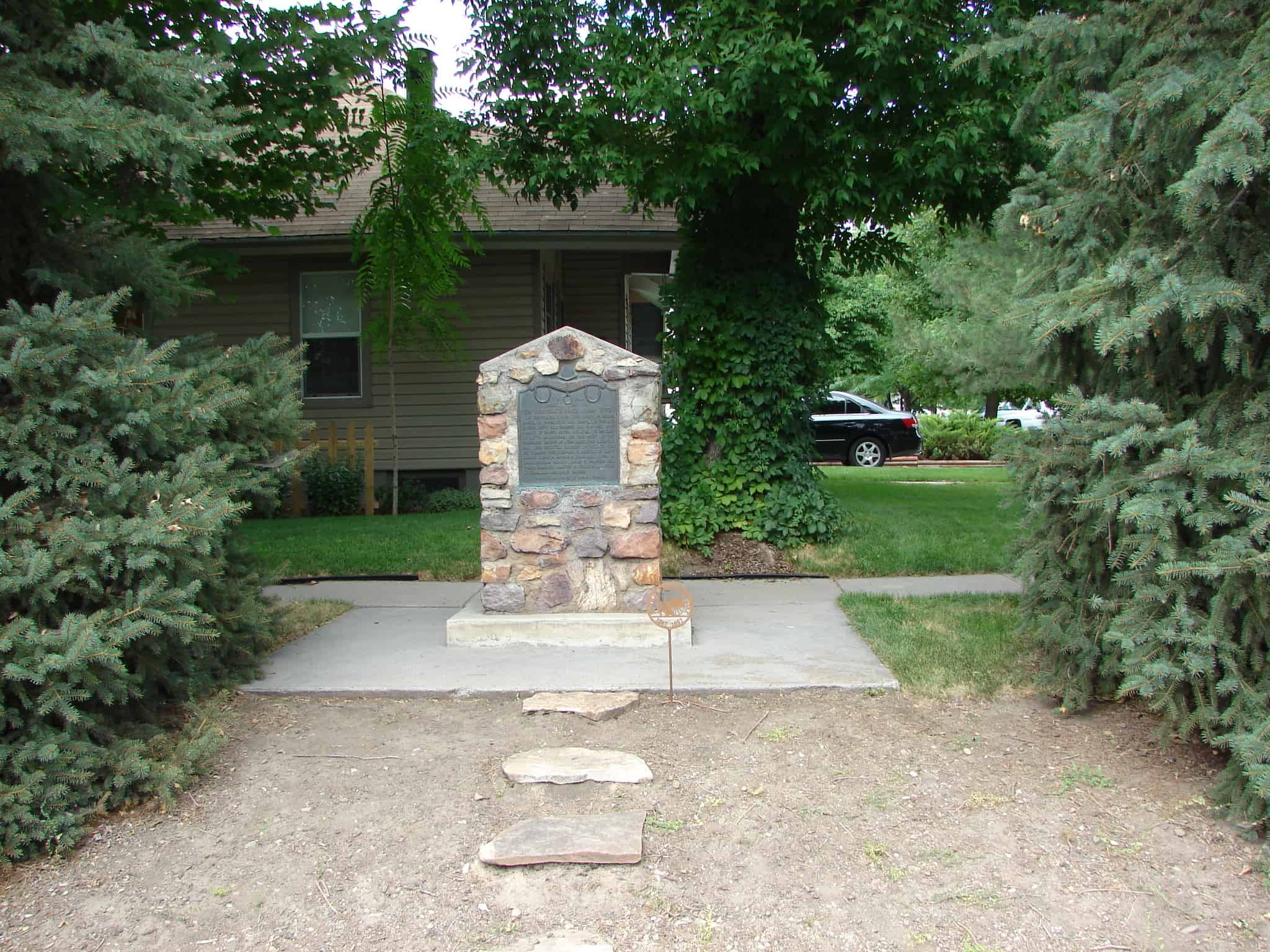
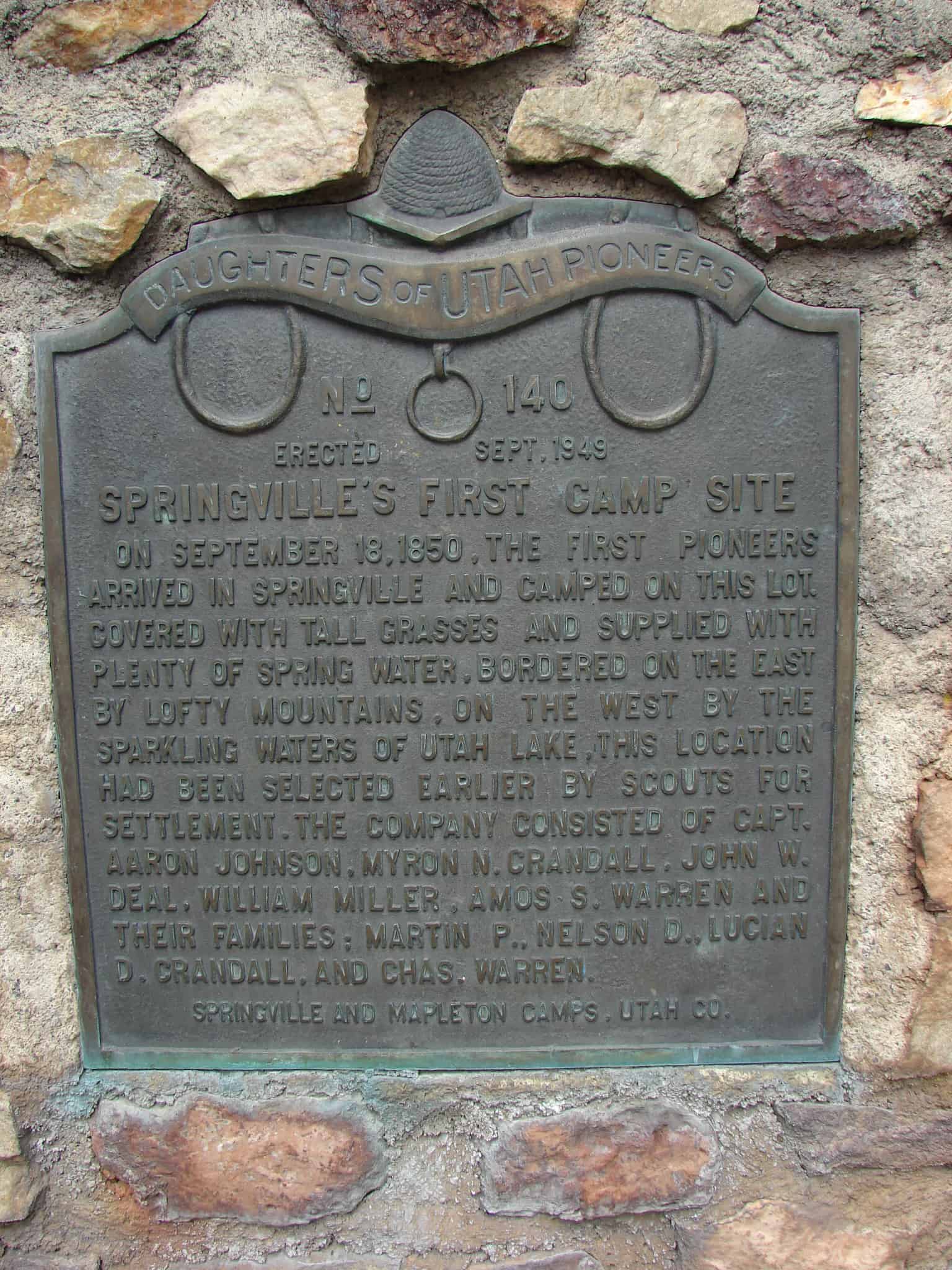
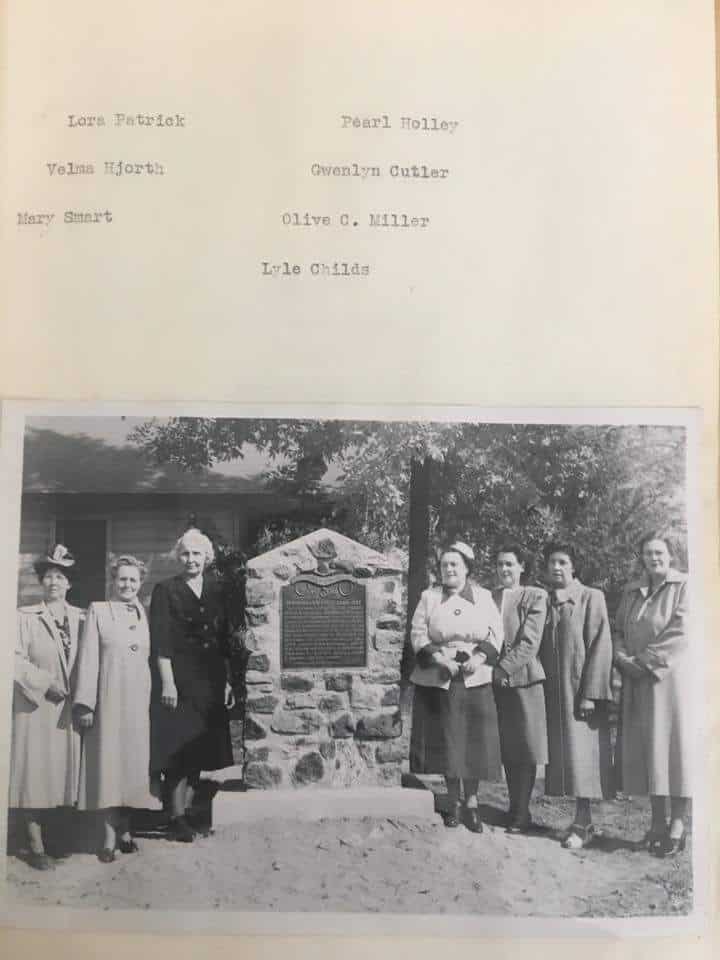
On September 18, 1850, the first pioneers arrived in Springville and camped on this lot. Covered with tall grasses and supplied with plenty of spring water, bordered on the east by lofty mountains, on the west by the sparkling waters of Utah Lake, this location had been selected earlier by scouts for settlement. The company consisted of Capt. Aaron Johnson, Myron N. Crandall, John W. Deal, William Miller, Amos S. Warren and their families: Martin P., Nelson D., Lucian D. Crandall, and Chas. Warren.
Check out all of the historic markers placed by the Daughters of Utah Pioneers at JacobBarlow. com/dup
In 1881 Thomas Judd, promoter, with others completed an 840 foot tunnel and 1 1/4 mile canal to bring water from the Rio Virgin for the cultivation of this valley. Excavations opened a large crystal cave of stalactite and stalagmites. In 1903, the first post office with H.W. Gubler as post master. June 23, 1904, an L.D.S. Ward was organized under a bowery with Morris Wilson as bishop, in 1904 first school house was built.
This marker stands 90 ft. North of the gate to Lindsey’s Gardens, first playground in Utah. In 1865 Mark Lindsey and wife Bothiah Savill Lindsey, handcart pioneers of 1859, homesteaded a quartersection; built a home, dance hall, museum, lunch arbors, a bathhouse fed from a spring in the ravine, planted gardens, made swings, giant strides, whirleygigs, greasy poles, croquet and baseball grounds, sold soft drinks, homemade ice cream and cake. Admission adults 10c, children 5c.
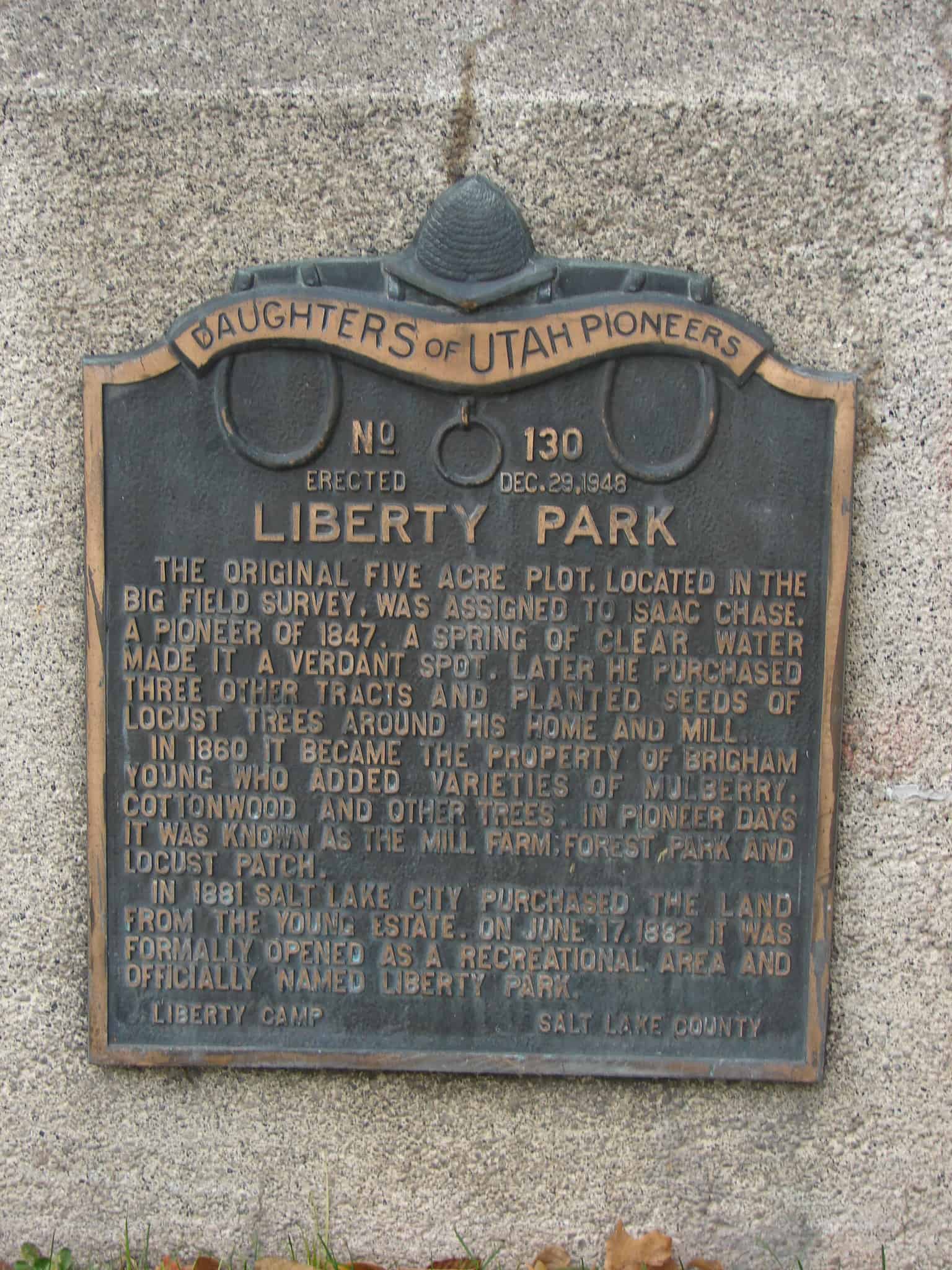
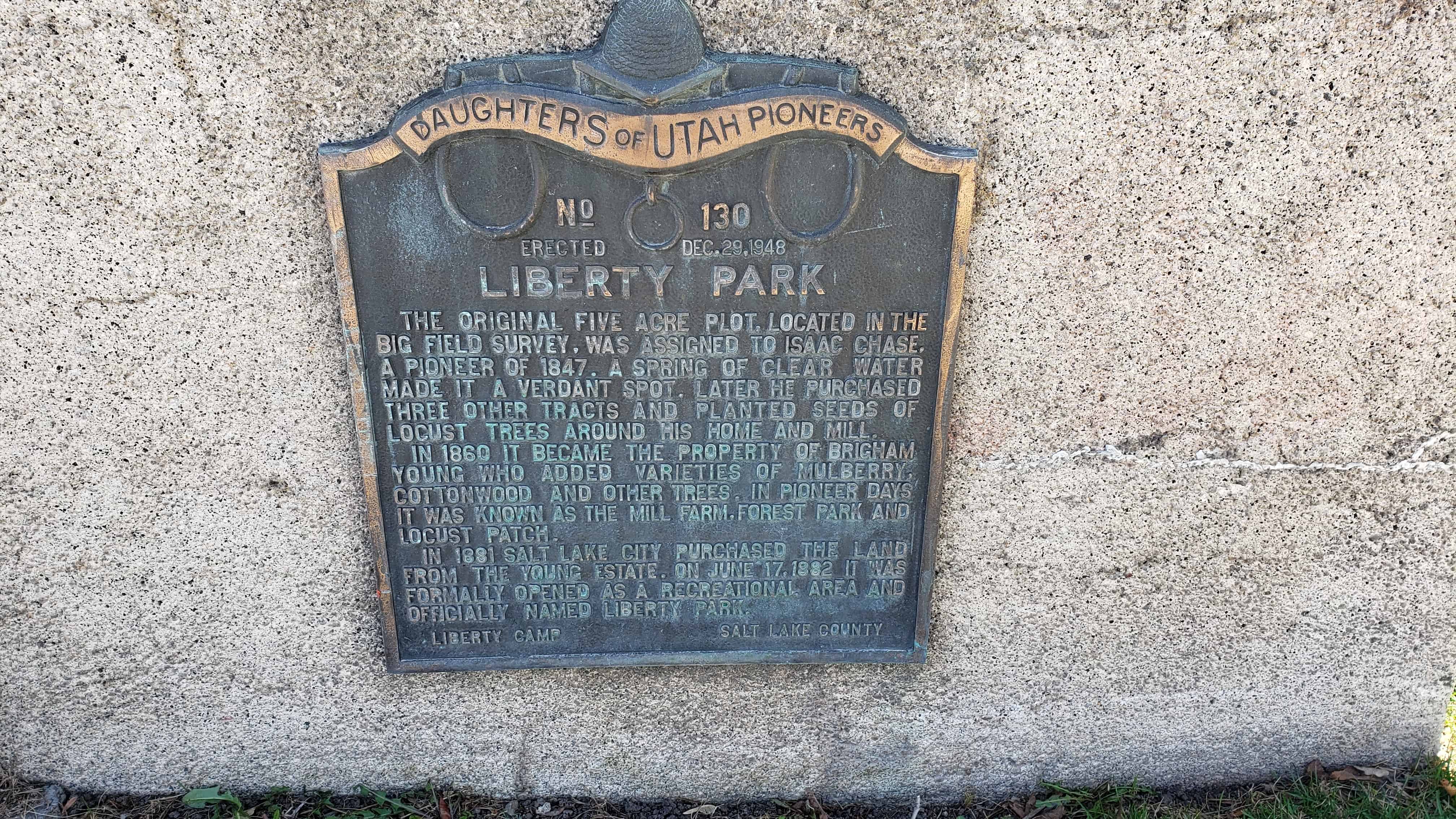
The original five-acre plot, located in the Big Field Survey, was assigned to Isaac Chase, a pioneer of 1847. A spring of clear water made it a verdant spot. Later he purchased three other tracts and planted seeds of locust trees around his home mill. In 1860, it became the property of Brigham Young, who added varieties of mulberry, cottonwood and other trees. In pioneer days it was known as Mill Farm, Forest Park and Locust Patch. In 1881, Salt Lake City purchased the land from the Young estate. On June 17, 1882 it was formally opened as a recreational area and officially named Liberty Park.
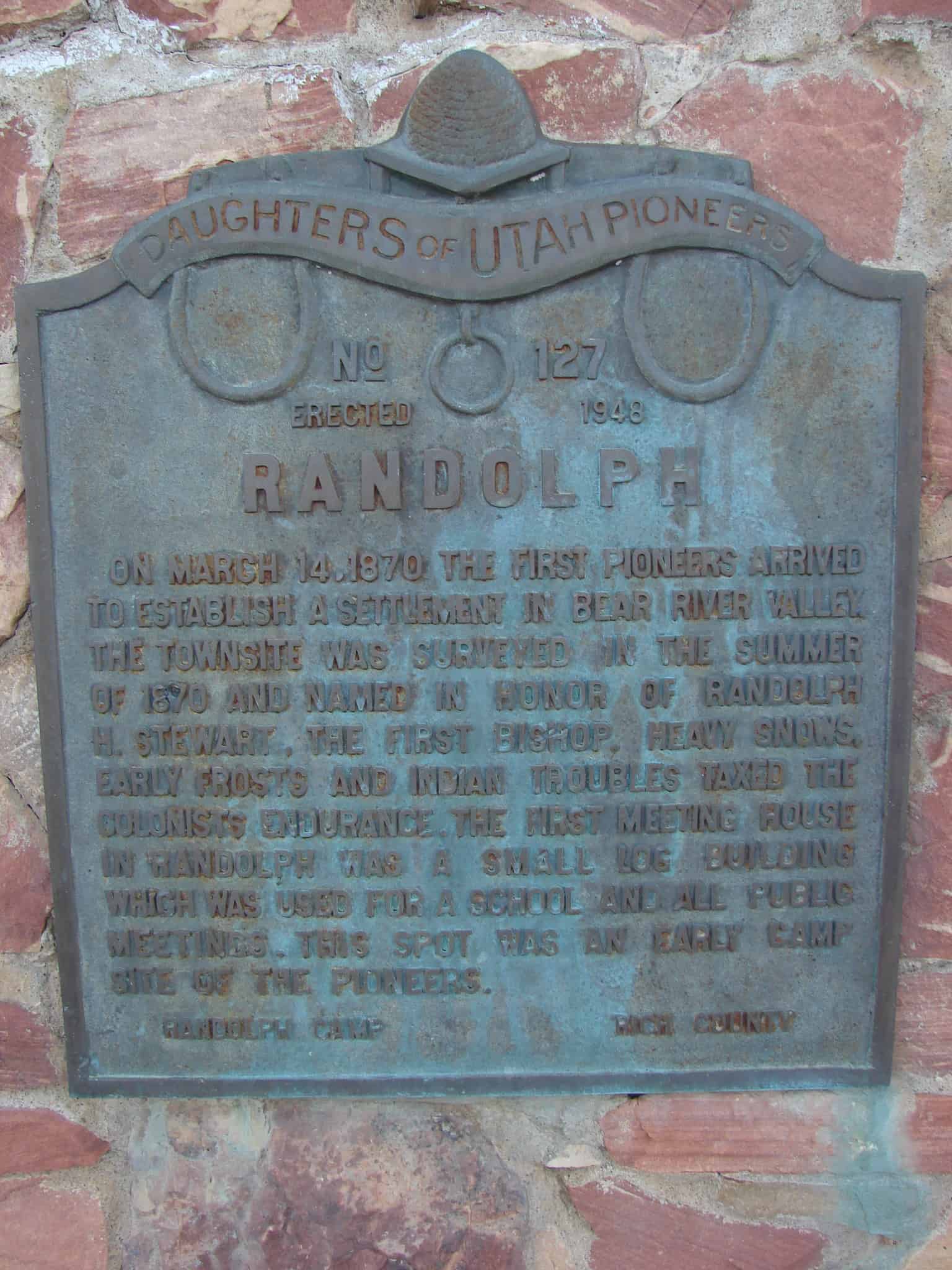
On March 14, 1870, the first pioneers arrived to establish a settlement in Bear River Valley. The townsite was surveyed in the summer of 1870 and named in honor of Randolph H. Stewart, the first Bishop. Heavy snows, early frosts and Indian troubles taxed the colonists’ endurance. The first meeting house in Randolph was a small log building which was used for a school and all public meetings. This spot was an early camp side of the pioneers.
Check out all of the historic markers placed by the Daughters of Utah Pioneers at JacobBarlow.com/dup
Cave
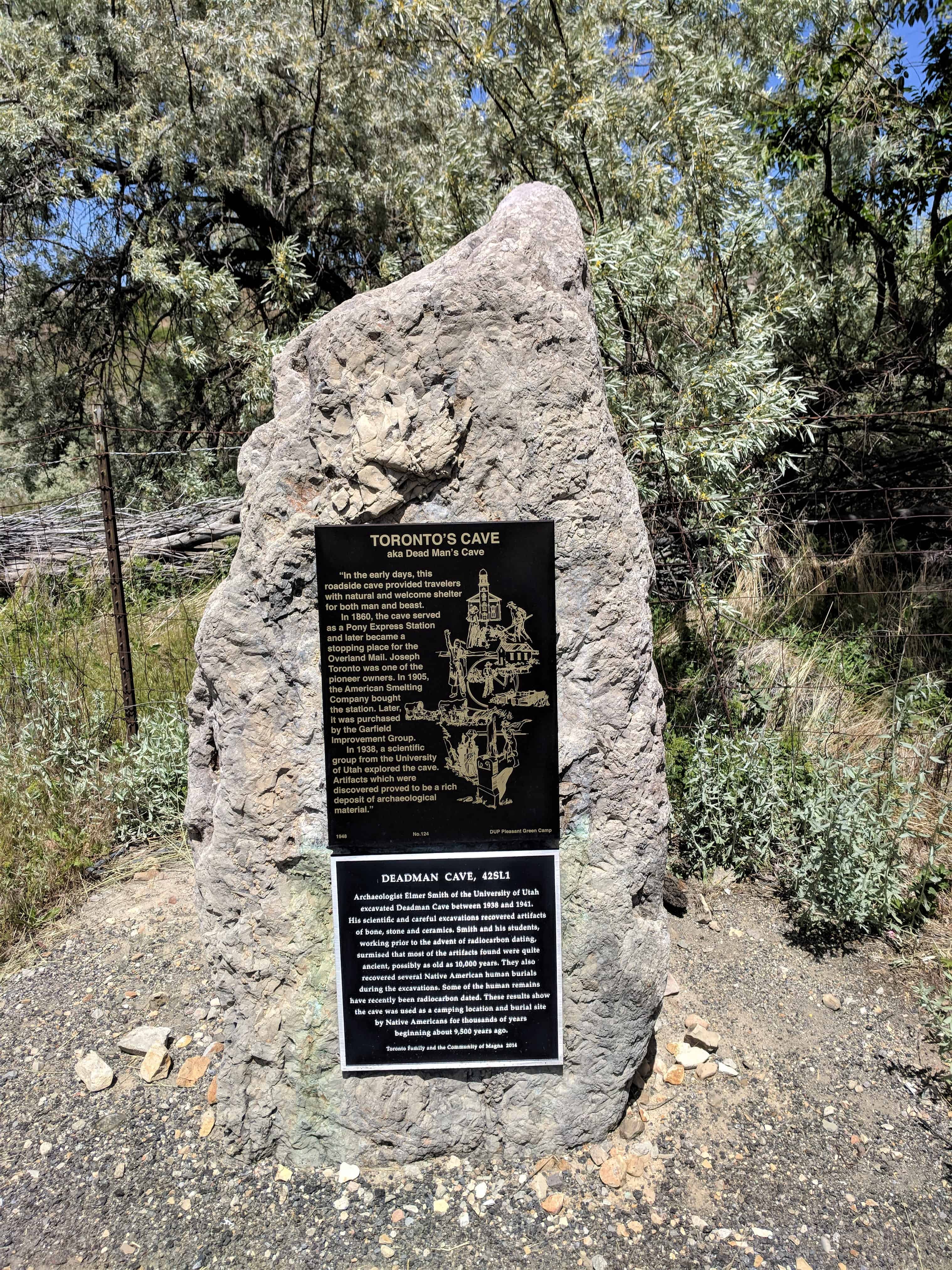
In the early days this roadside cave provided travelers with natural and welcome shelter for both man and beast. In 1860 it served as a Pony Express Station; later a stopping place for the Overland Mail. Joseph Toronto was one of the pioneer owners. In 1938, it was explored by a scientific group from the University of Utah, and the artifacts discovered proved to be a rich deposit of archeological material. The American Smelting Company bought it about 1905. Later it was purchase by the Garfield Improvement Group.
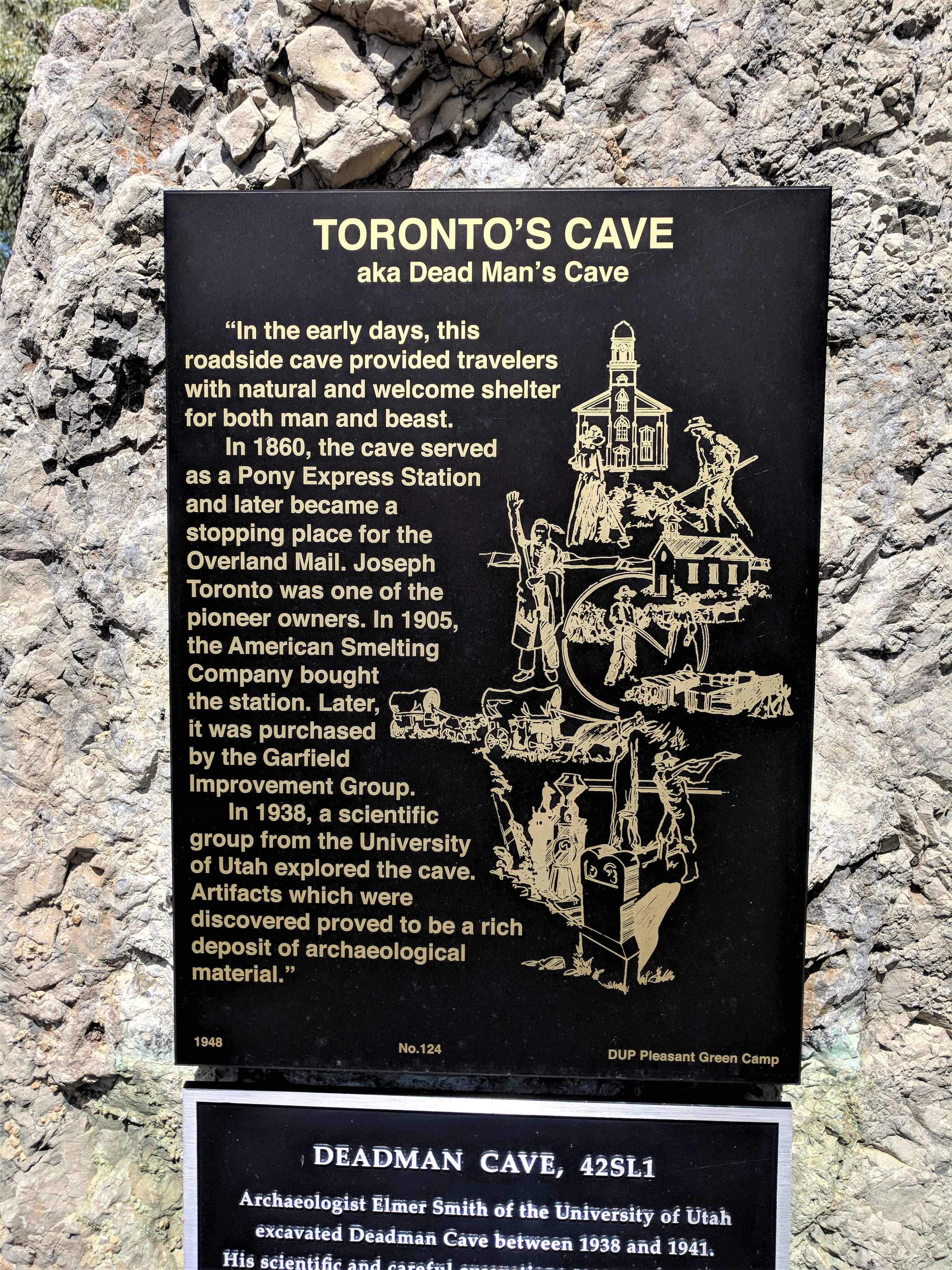
Update: Above are photos and historic marker text from when I first visited in 2008. Below is the replaced marker and text on the same stone from when I stopped by in 2018.
Toronto’s Cave aka Dead Man’s Cave
In the early days this roadside cave provided travelers with natural and welcome shelter for both man and beast. In 1860 the cave served as a Pony Express Station and later became a stopping place for the Overland Mail. Joseph Toronto was one of the pioneer owners. In 1905, the American Smelting Company bought the station. Later, it was purchased by the Garfield Improvement Group. In 1938, a scientific group from the University of Utah explored the cave. Artifacts which were discovered proved to be a rich deposit of archaeological material.
Deadman Cave, 42SL1
Archaeologist Elmer Smith of the University of Utah excavated Deadman Cave between 1938 and 1941. His scientific and careful excavations recovered artifacts of bone, stone and ceramics. Smith and his students, working prior to the advent of radiocarbon dating, surmised that most of the artifacts found were quite ancient, possibly as old as 10,000 years. They also recovered several Native American human burials during the excavations. Some of the human remains have recently been radiocarbon dated. These results show the cave was used as a camping location and burial site by Native Americans for thousands of years beginning about 9,500 years ago.
Check out all of the historic markers placed by the Daughters of Utah Pioneers at JacobBarlow.com/dup
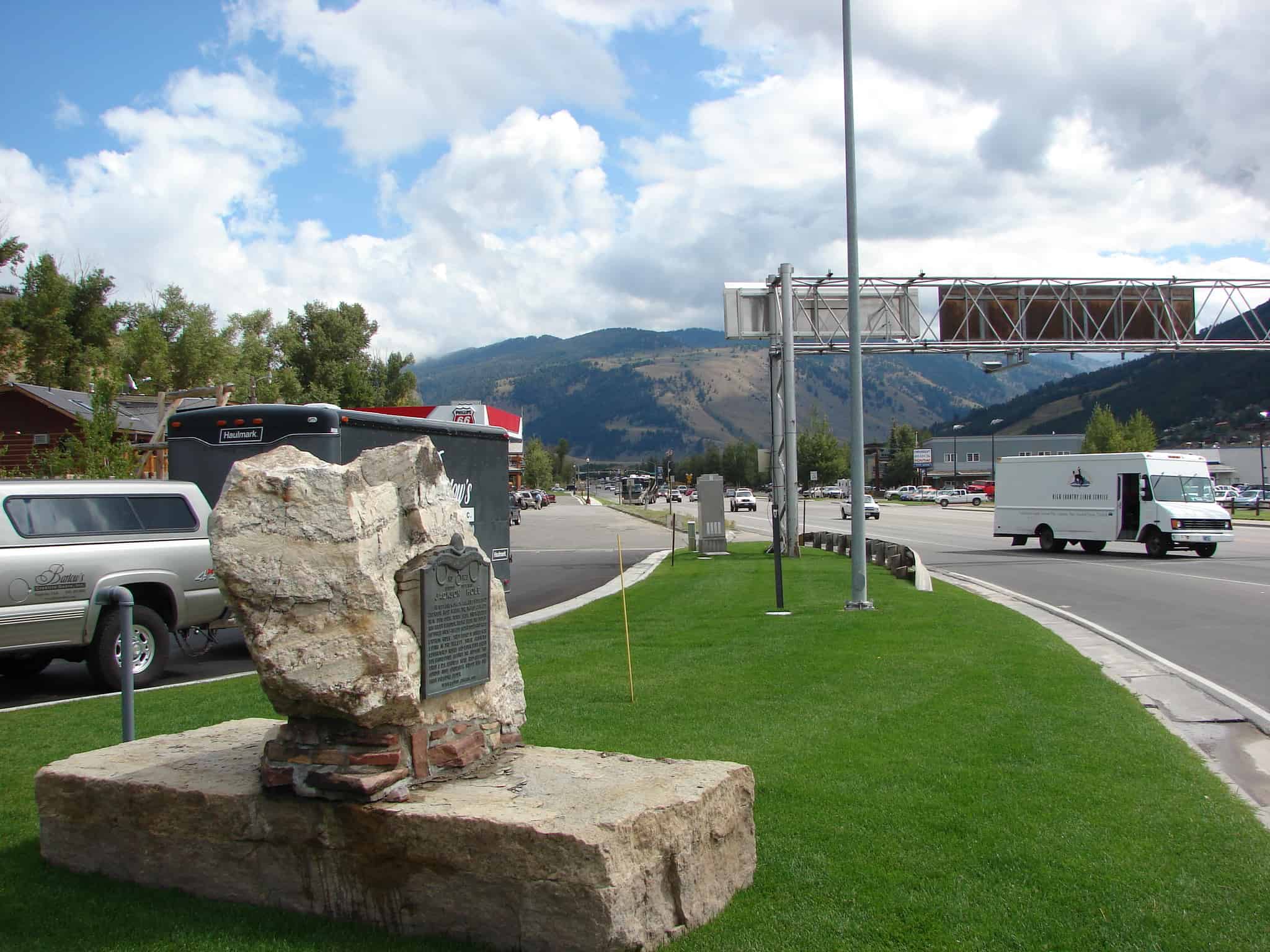
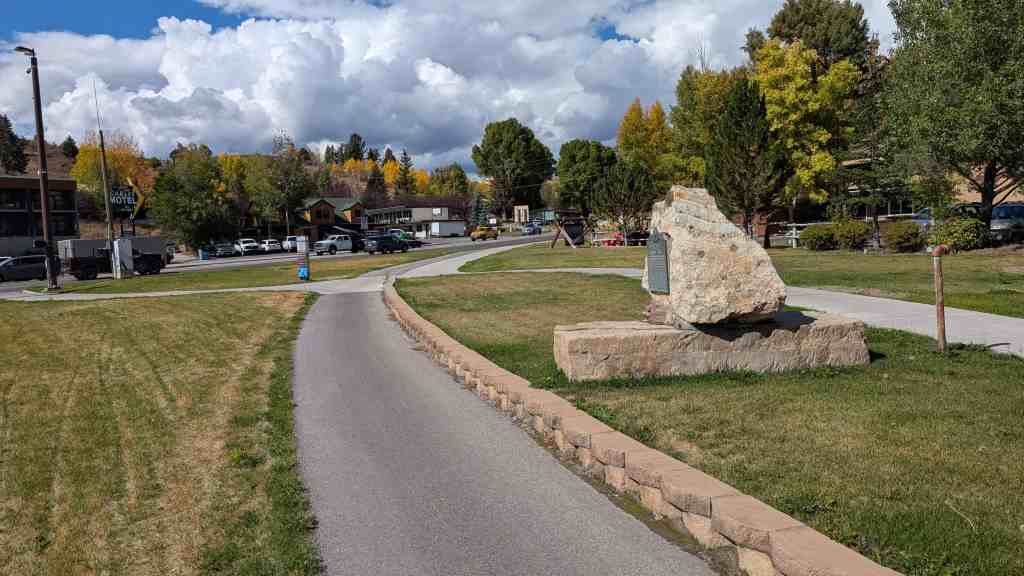
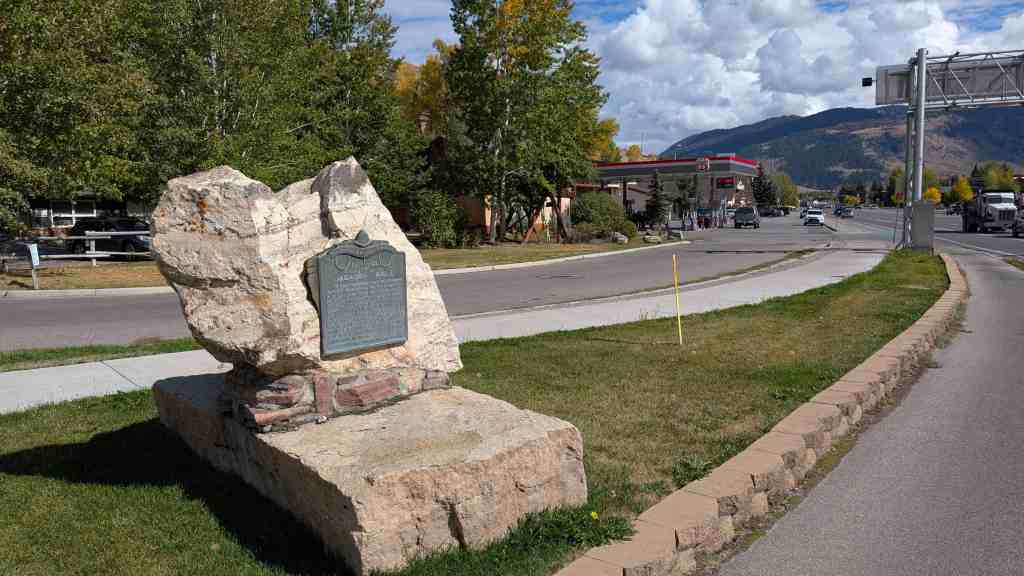
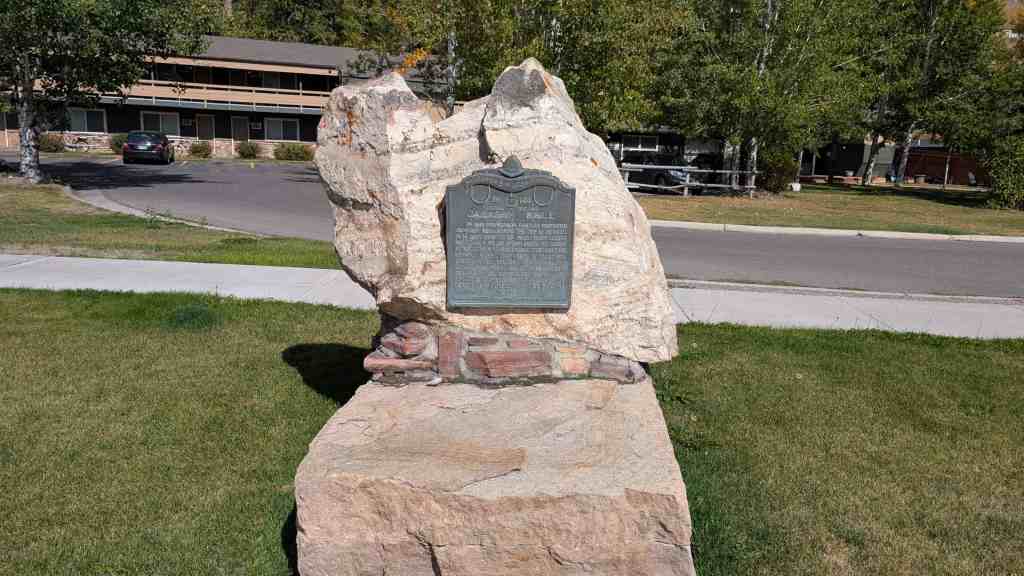
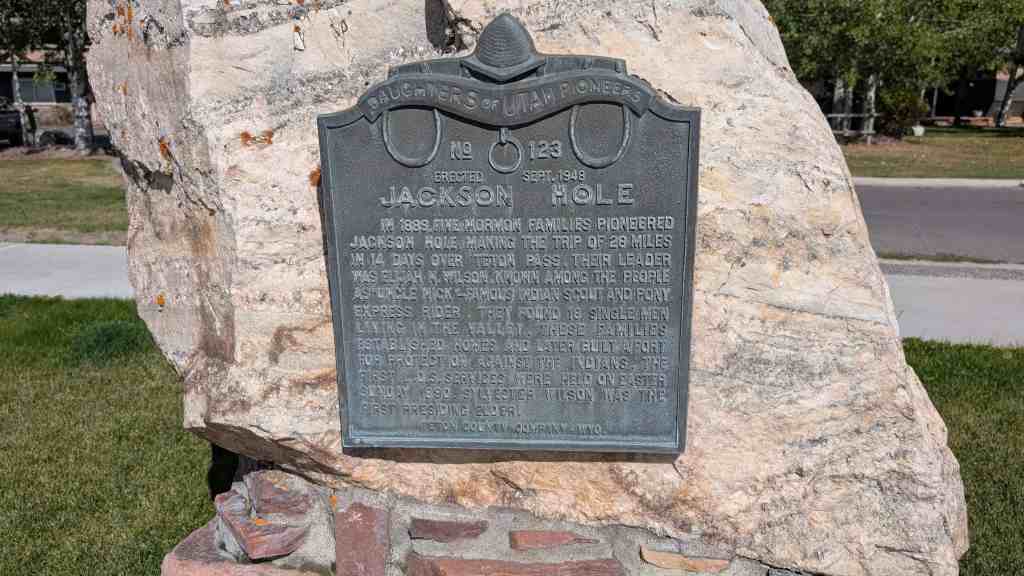
Jackson Hole In 1889 five Mormon families pioneered Jackson Hole making the trip of 28 Miles in 14 days over Teton Pass. Their leader was Elijah N. Wilson, known among the people as “Uncle Nick” – famous Indian scout and Pony Express Rider. They found 18 single men living in the valley. These families established homes and later built a fort for protection against the indians. The first L.D.S. services were held on Easter Sunday 1890. Sylvester Wilson was the first presiding elder.
Check out all of the historic markers placed by the Daughters of Utah Pioneers at JacobBarlow.com/dup
This building was originally a stage coach station built and operated in 1866 by William Reeves for the Wells Fargo Company which had control of the overland route. After the Utah Central R.R. was completed in 1870, it was abandoned. Mr. Reeves remodeled the station, making an amusement hall where dances and home dramatic performances were given. It was known as Elkhorn Hall. Religious meetings were held here during the construction of the Centerville Ward Church in 1879-1880.