• About JacobBarlow.com
  • Cemeteries in Utah
  • D.U.P. Markers
  • Doors
  • Exploring Utah Email List
  • Geocaching
  • Historic Marker Map
  • Links
  • Movie/TV Show Filming Locations
  • Oldest in Utah
  • Other Travels
  • Photos Then and Now
  • S.U.P. Markers
  • U.P.T.L.A. Markers
  • Utah Cities and Places.
  • Utah Homes for Sale
  • Utah Treasure Hunt

JacobBarlow.com

~ Exploring with Jacob Barlow

JacobBarlow.com

Monthly Archives: November 2021

Richmond Carnegie Library

08 Monday Nov 2021

Posted by Jacob Barlow in Uncategorized

≈ Leave a comment

Tags

Cache County, Carnegie Libraries, Libraries, Richmond, utah

Built in 1913-14, the Richmond Carnegie Library is significant as one of sixteen remaining Carnegie libraries of the twenty-three built in Utah. Thirteen of the sixteen library buildings maintain their original integrity and are included in the Carnegie Library Thematic Resource Nomination. In addition to making important contributions to public education in their respective communities, these libraries are Utah’s representatives of the important nation-wide Carnegie library program, and they document its unparalleled effect in the establishment of community-supported, free public libraries in Utah.

Located at 38 West Main Street in Richmond, Utah and added to the National Historic Register (#84000147) on October 25, 1984.

Related:

  • Carnegie Libraries in Utah

The Richmond Carnegie Library was built in 1913-14 with an $8,000 grant from millionaire/philanthropist Andrew Carnegie. Carnegie funded the construction of over 1650 library buildings in the U.S., 23 of which were built in Utah
communities. The major conditions upon which all Carnegie grants were given were that the recipient community donate the building site and provide an annual maintenance budget of at least 10% of the grant amount.

On July 1, 1912, a special election was held in Richmond to determine public
support for a city library tax. Approval for the tax was overwhelming, with
95 of 107 voters chosing to support the move. Five days after the vote, a
special session of the city council was held to appoint members of the Board
of Directors for the Public Library. Three months later, on October 14, 1912,
the city council passed a resolution accepting an $8000 grant from Andrew
Carnegie for the construction of a library building, concurrently accepting
the accompanying $800 annual maintenance commitment.

Although the town received the Carnegie grant in the fall of 1912, it was not until the fall of 1914 that the building was completed. Land for the library was purchased in March 1913 from Mary J. Hendricks for $800, and in April library board members traveled to Salt Lake City to inspect the library facilities there in order to get a better idea what they wanted in their own library. The architectural firm of Watkins & Birch were awarded the design contract for the building, and August S. Schow was given the construction contract. The building was officially opened on October 20, 1914, and Lulu Burnham was appointed librarian.

Watkins & Birch, a Provo, Utah based architectural firm, actively pursued Carnegie library contracts throughout the state and were responsible for designing several other library buildings besides this one. Their design for this and other library buildings conformed to the rectangular, one-story with raised basement design recommended by the Carnegie Library Board as being the most efficient and economical plan for a small town library. Other library buildings designed by the firm include those in Ephraim, Provo, Eureka, Manti, Cedar City, and possibly Garland, since it closely resembles this building in Richmond.

Although the Richmond Carnegie Library was apparently not the first library in
the town, it has continued to serve as the town’s library since its
construction up to the present, and it is the only building in town known to
have served as a library.

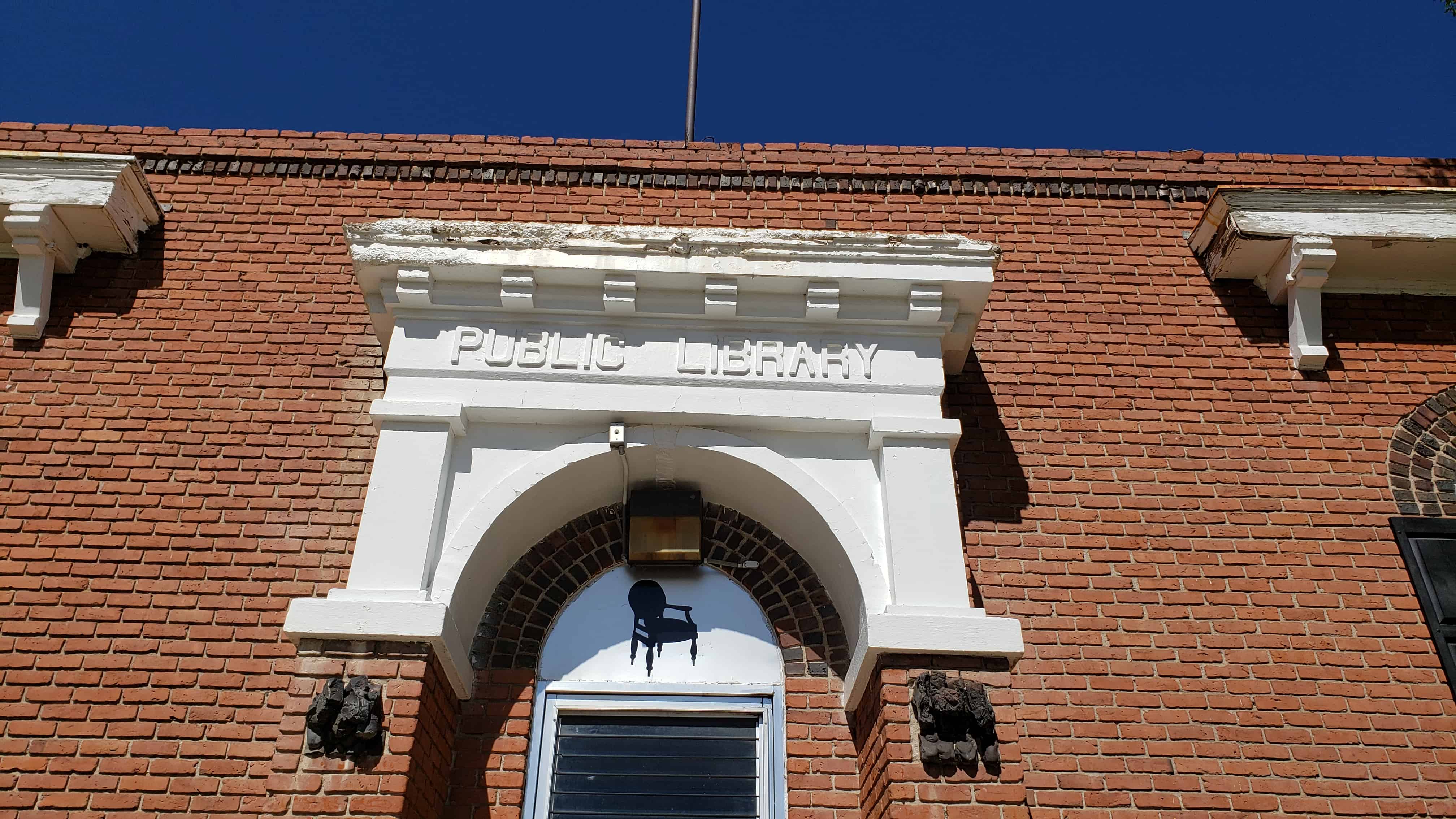
The form of the Richmond Carnegie Library is similar to that of many other Carnegie Libraries in Utah. It is a one story yellow brick rectangular building with a raised basement and a flat roof. It was designed in no particular style, but the symmetrical facade, the division of the facade by pilasters, the raised basement, the capitals of the pilasters, the wide
cornice, and the parapet above the cornice reflect Classical Revival influences.

Pilasters with simple geometric capitals divide the building into bays. The façade is five bays wide, the center bay being a projecting pavilion with the main entrance set into it. Each of the window bays is a large three pane opening with a transom that is also divided into three panes. The entrance pavilion not only projects beyond the rest of the wall, but it is framed by brick piers which have geometric capitals that differ from those on the rest of the building. Into each pier is set a small rectangular window, each highlighted by a band of red brick. The entry itself is also framed by thin bands of red brick. The original door has been replaced by a modern glass door, and the transom has been filled in.

The ends of the building are two bays wide, again defined by pilasters, and there are two oblong three part windows per end. The rear of the building like the façade is divided into five bays. The pilasters along that wall, however, have no capitals and there are no distinctive decorative features on that side of the building. There are small square windows in four of the five bays, and long, narrow windows have been set into the central bay.

Red brick which contrasts with the yellow brick of the building, has been used to provide visual interest and is the key to the decorative scheme of the building. Narrow strips of it have been arranged to create the geometric capitals, to frame the rectangular windows in the entrance piers, and to frame the entrance area. Red brick has also been used to outline rectangles of yellow brick on each end of the building and to create a keystone centered in the lintel of each window on the front and sides of the building.

Except for the change made to the entrance, the exterior of the building is virtually unaltered. That change in no way affects the original integrity of the building.

Panguitch Carnegie Library

08 Monday Nov 2021

Posted by Jacob Barlow in Uncategorized

≈ Leave a comment

Tags

Carnegie Libraries, Garfield County, Libraries, NRHP, Panguitch, utah

Built c. 1918, the Panguitch Carnegie Library is significant as one of sixteen remaining Carnegie libraries of the twenty-three built in Utah. Thirteen of the sixteen library buildings maintain their original integrity and are included in the Carnegie Library Thematic Resource Nomination. In addition to making significant contributions to public education in their respective communities, these libraries are Utah’s representatives of the important nation-wide Carnegie library program, and they document its unparalleled effect in the establishment of community-supported, free public libraries in Utah.

Located at 75 East Center Street in Panguitch, Utah. It is on the National Historic Register (#84000148).

I really liked seeing the cool clinker brick on the face near the entrance.

Related:

  • Carnegie Libraries in Utah

The Panguitch Carnegie Library was built c. 1918 with a $6,000 grant from millionaire/philanthropist Andrew Carnegie. Carnegie funded the construction of over 1650 library buildings in the U.S., 23 of which were built in Utah communities. The conditions upon which all Carnegie grants were given were that the recipient community donate the building site and provide an annual maintenance budget of at least 10% of the grant amount.

The Panguitch Carnegie Library was one of the smallest of the Carnegie libraries built in the state. The $6000 grant received by the town was much less than the $10,000 or more that was given to 17 of the 23 Utah towns that built Carnegie libraries. Parowan also received $6000, and Tooele received only $5000. The property upon which the library was built was purchased by the city in February 1916, soon after the city received the Carnegie grant. Architect of the building was probably Isaac L. Wright of Richfield, who worked in the Richfield area from about 1912 to 1919.
The library building was evidently completed in 1918, as indicated by the minutes of the city council meeting of May 22, 1918 in which the lighting and furnishing of the building was discussed.

The Panguitch Carnegie Library was apparently not the first library to be established in the town but it has certainly been the most long-lasting, having continued to serve as the town’s library up to the present. The building has also served the city in other capacities, although auxiliary uses of Carnegie library buildings were disapproved of by the Carnegie Library Board. The basement and west room of the building have been used extensively for city meetings and even as city offices.

The Panguitch Carnegie Library is a one story rectangular brick building with a raised basement and a flat roof. It was designed in no particular style, but the balance of the decorative elements and openings on the façade, and the
suggestion of a classical portico in the frontispiece of the entrance give it a slightly classical flavor.

The façade is symmetrical, with a raised entrance centered between two bands of windows. There are three panels per window band, and each band has a transom with an elliptical upper edge. Each transom is accented by squares of
stick work. Above the windows are decorative ledges supported by brackets. Below the windows are pairs of double hung sash basement windows. An arch motif links the openings on the façade. The transom over the entrance is
arched, as is the opening of the frontispiece, the transoms over the large front windows, and the contrasting dark brick relieving arches of the large front and basement windows. The most prominent feature on the façade is the brick and frame frontispiece at the entrance. Brick piers frame the entrance and are topped by truncated frame piers and an entablature with dentils under the cornice.

No alterations have been made to the exterior of the building, therefore it maintains its original integrity.

Tooele Carnegie Library

08 Monday Nov 2021

Posted by Jacob Barlow in Uncategorized

≈ Leave a comment

Tags

Carnegie Libraries, Libraries, NRHP, Tooele, Tooele County, utah

Built in 1911, the Tooele Carnegie Library is significant as one of sixteen remaining Carnegie libraries of the twenty-three built in Utah. Thirteen of the sixteen library buildings maintain their original integrity and are included in the Carnegie Library Thematic Resource Nomination. In addition to making important contributions to public education in their respective communities, these libraries are Utah’s representatives of the important nation-wide Carnegie library program, and they document its unparalleled effect in the establishment of community-supported, free public libraries in Utah.

Located at 47 East Vine Street in Tooele, Utah and added to the National Historic Register (#84000420) on October 29, 1984.

Related:

  • Carnegie Libraries in Utah
  • Tooele Carnegie Free Public Library (S.U.P. Historic Marker)

The Tooele Carnegie Library was built in 1911 with a $5000 grant from millionaire/philanthropist Andrew Carnegie. Carnegie funded the construction of over 1650 library buildings in the U.S., 23 of which were built in Utah communities. The conditions upon which all Carnegie grants were given were that the recipient community donate the building site and provide an annual maintenance budget of at least 10% of the grant amount. The city of Tooele
provided the books and building site for the library, and promised to provide at least $500 per year for the upkeep and operation of the library building. Designed by Salt Lake City based architect Frank M. Ulmer, the Tooele Carnegie
Library, which, complete with books, cost a total of $6500, was officially opened on May 10, 1911.

Although the Carnegie library was the first building constructed and used specifically for library purposes in Tooele, it was not the first library organized in the city. The Tooele City Library Association was first organized in February 1864 under a territorial legislative charter. Due to financial difficulties brought about by the Association’s involvement in the construction of a social hall in the town, the book collection was taken over by the Tooele (LDS church) Ward Ecclesiastical Board in 1878. Members of the library were assessed annual dues to cover the operation expenses of the library and to pay the $35 annual salary of the librarian. The library operated out of the social hall (known as the Opera House), which it shared with other community activities. A private, fiction library was opened in Tooele in 1893 by William C. Foster, secretary of the library association. Foster, who operated his library until his death in 1906, rented out books for a fee of 25tf per month. The $5000 Carnegie grant enabled the city to replace those private, user-funded libraries with the city-supported Tooele Free Public Library. It has continued to serve as the city’s library up to the present, although the original building was expanded in 1973 by a major addition on the west. Despite that addition, the building retains its original integrity.

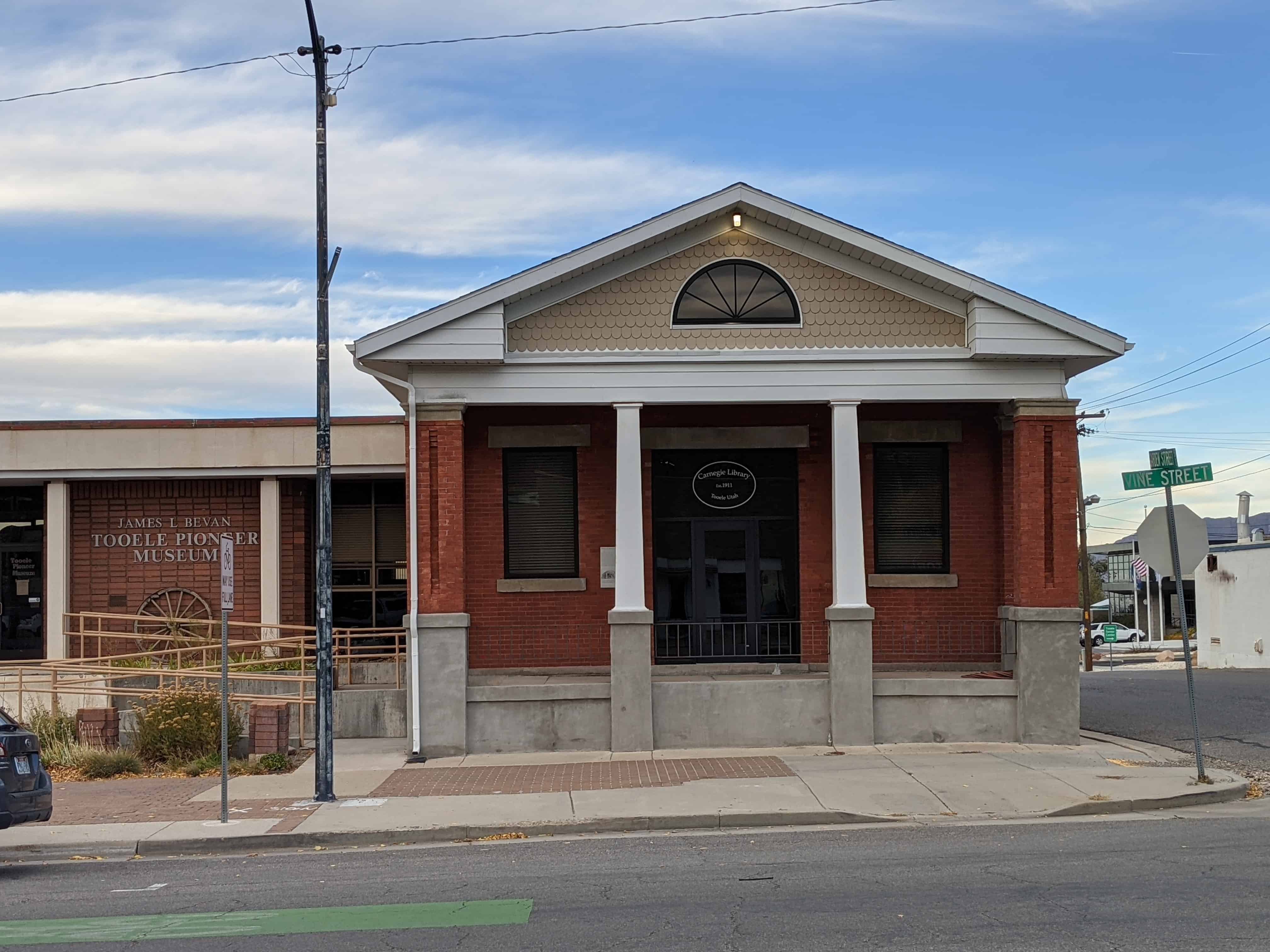
The Tooele Carnegie Library is a long rectangular building set on a slight hill so that from the façade it appears to be a one story building, but it actually drops off to two stories in the rear. It is oriented gable end to the street, resembling a temple-form building, with a door centered between two windows, and has a portico spanning the façade. The low pitch of the gable roof, the domestic scale of the building and porch, and the use of fish-scale shingles in the gable section are reminiscent of bungalows that were being built at the same time. The symmetrical arrangement of openings on the façade, the returns of the cornice, and the wide frieze of the entablature, however, counter the domestic character and emphasize Classical Revival influences.

Alterations to the Tooele Carnegie Library include the addition of a large brick wing on the west side of the building in 1973, which cuts into the west wall of the library building, and the painting of the exterior brick walls (n.d.). These changes, however, do not substantially affect the original integrity of the building. The addition was set back far enough that the façade of the library is completely unaffected by the addition. The 1973 addition visually joins the library building with the 1867 stone Tooele County Courthouse/City Hall on the west, although the addition is joined to the courthouse only at the roof level and the two buildings neither share a common wall nor are connected on their interiors. The Tooele County Courthouse/City Hall was listed in the National Register in 1983.

Eureka Carnegie Library

08 Monday Nov 2021

Posted by Jacob Barlow in Uncategorized

≈ 1 Comment

Tags

Carnegie Libraries, Juab County, Libraries, utah

Built in 1909, this former Carnegie Library (now the Memorial Hall) is located at 263 West Main Street in Eureka, Utah.

Related:

  • Carnegie Libraries in Utah

It was modified quite a bit in 1947, prior to that it looked like this:

Ogden Carnegie Library

08 Monday Nov 2021

Posted by Jacob Barlow in Uncategorized

≈ 1 Comment

Tags

Carnegie Libraries, Libraries, Ogden, utah, Weber County

Carnegie Free Library – Ogden, Utah

Over the entrance was chiseled the quotation: “In the education of its people lies the safety of the republic.”

February 1, 1901
A letter is drafted to philanthropist Andrew Carnegie requesting financial support in building a library.

September 23, 1901
Following a $25,000 donation from Mr. Carnegie, the cornerstone of the future library is laid on this site.

April 21, 1903
Ogden’s Carnegie Free Library, a two-story sandstone structure, is dedicated.

February 3, 1969
Library is razed, ending a historical chapter of Ogden’s past.

The library was located at about 2585 South Washington Blvd in Ogden, Utah

Related:

  • Carnegie Libraries in Utah

  • https://collections.lib.utah.edu/details?id=572767

Beaver Carnegie Library

08 Monday Nov 2021

Posted by Jacob Barlow in Uncategorized

≈ 1 Comment

Tags

Beaver, Beaver County, Carnegie Libraries, Historic Buildings, Libraries, NRHP, utah

Beaver Carnegie Library

This Carnegie Library in Beaver is built in a Federalist Revival Style. Its plan is rectangular, with the broad side to the street. It has a flat roof and the front façade has a central door and two windows on either side, all of which are arranged with bilateral symmetry. The window detiling and the cornice are the most interesting architectural features on the exterior. The main windows are quite large and are filled with small panes of glass and wooden mullions. The windows are all arched and above them are arched transom windows with swag-like mullions. There are side lights as well and all the glass is outlined and emphasized with broad bands of decorative brickwork. The cornice is approximately 3 feet wide and is overhanging and banded with molding. Besides this, there are several decorative brick patterns and 2 brick string courses on the exterior. This brick is yellow color and was imported to Beaver. On the interior, the building still retains its original high ceilings, book cases, and furnishings. Only a month ago were the original hardwood floors covered with indoor/outdoor carpet.

Built in 1917 at 55 West Center Street in Beaver, Utah

Related:

  • Carnegie Libraries in Utah
  • National Register Nomination Form

The library is an excellent example of the Federalist Revival Style and is the only building designed so clearly in this style in Beaver. The building is one of a series of small town libraries built to enhance the cultural and educational life of rural areas by the Carnigie family. That it has remained totally unaltered until 1979 is a tribute to its excellent design and workmanship.

The Murphy Building/Windsor Hotel

08 Monday Nov 2021

Posted by Jacob Barlow in Uncategorized

≈ 1 Comment

The Murphy Building/Windsor Hotel

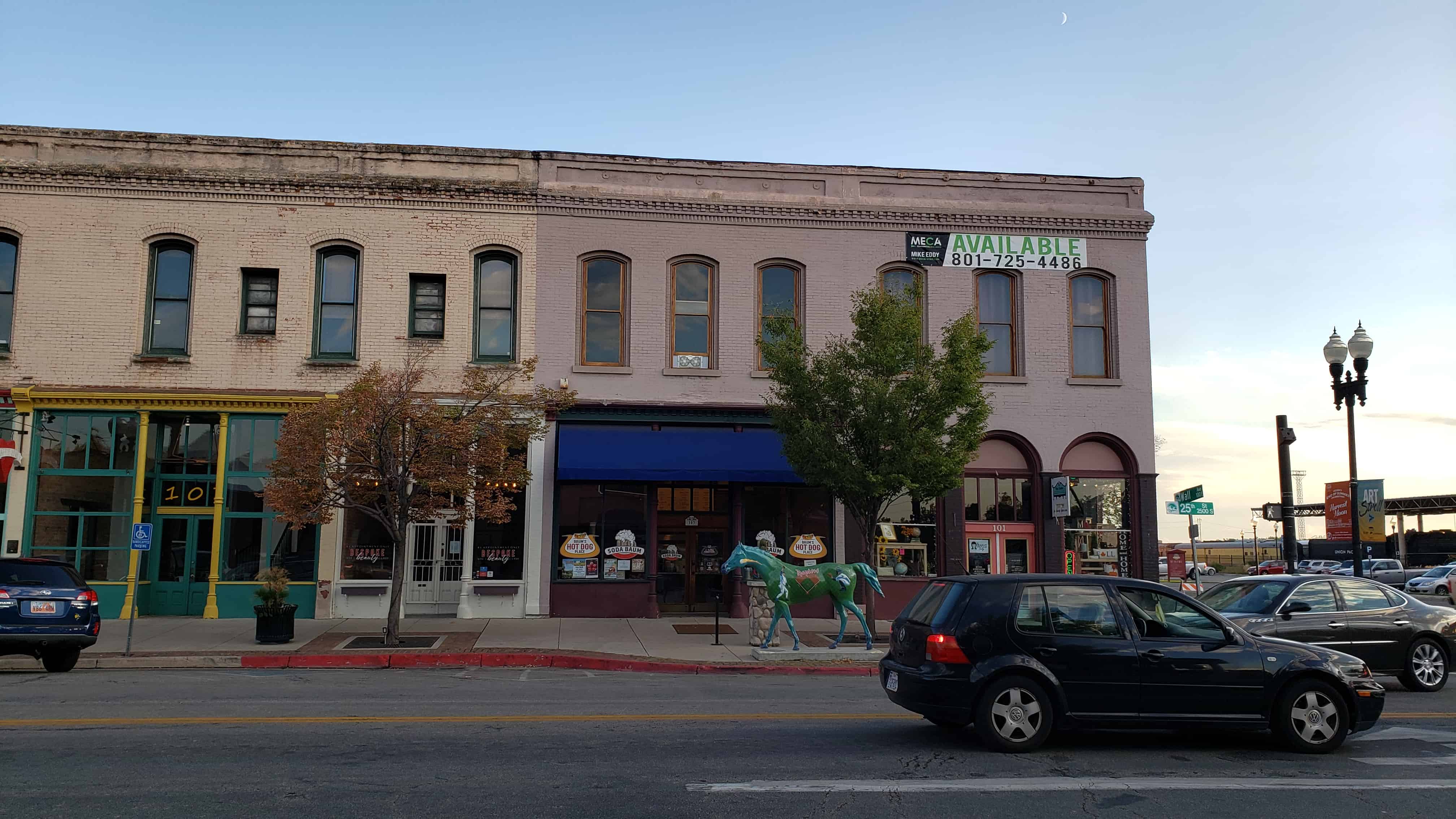
This building was constructed circa. 1887 and was one of the earliest buildings built on the 100 block of 25th Street. The property was owned by George W. Murphy, a veteran of the Civil War who migrated west in 1869. Murphy also owned the Senate Saloon (111-113 25th Street) and the Murphy Block (101-103 25th Street), located to the east and west of this building. The family owned these buildings and operated businesses out of them for over fifty years.

Mr. Murphy operated a cigar and tobacco shop on the main floor with the Reno Hotel on the second floor during the late 1880s and 1890s. Other businesses included:

  • Fred A. Smith’s Grocery, Confectionery and Curio Shop (1895-1932)
  • George W. Murphy’s Grocery Store (1903-1913)
  • The Windsor Hotel (1899-1913)
  • WPA Community Center and Carnegie Free Library (1936-1938)

This building is an example of Commercial Vernacular architecture in a two-story two-part block structure. The second story of the building has give segmentally arched window openings and the brick corbeled cornice line ties this structure to the building located to the west.

Located at 105-109 25th Street in the Lower 25th Street Historic District in Ogden, Utah.

Related:

  • Carnegie Libraries in Utah


Garland Carnegie Library

08 Monday Nov 2021

Posted by Jacob Barlow in Uncategorized

≈ 1 Comment

Tags

Box Elder County, Carnegie Libraries, Garland, Libraries, utah

Built in 1914, the Garland Carnegie Library is one of 23 Carnegie libraries in Utah and one of over 1,650 library buildings in the United States that were built by millionaire/philanthropist Andrew Carnegie. Carnegie donated the entire cost of the building on the condition that the town provide the land, books, librarian, and an annual maintenance budget. Although many small towns found it financially difficult to maintain their new libraries, much less improve their library services, Carnegie libraries were generally beneficial in the communities in which they were built. In addition to providing improved and expanded library services, Carnegie libraries established standards of library operation operation and building design which were used for many years in the construction of non-Carnegie libraries in other communities. The general contract for the building was awarded to the Newton Company of Ogden, Utah. Architects may have been Watkins and Birch, who designed the similarly-styled Carnegie library in Richmond. Watkins and Birch actively pursued Carnegie library design contracts throughout Utah and designed at least five that were built in Utah.

Located at 86 West Factory Street in Garland, Utah and added to the National Historic Register (#84000146) on October 25, 1984.

Related:

  • Carnegie Libraries in Utah

Built in 1914, the Garland Carnegie Library is significant as one of sixteen remaining Carnegie libraries of the twenty-three built in Utah. Thirteen of the sixteen library buildings maintain their original integrity and are included in the Carnegie Library Thematic Resource Nomination. In addition to making significant contributions to public education in their respective communities, these libraries are Utah’s representatives of the important nation-wide Carnegie library program, and they document its unparalleled effect in the establishment of community-supported, free public libraries in Utah.

The Garland Carnegie Library was built in 1914 with an $8,000 grant from millionaire/philanthropist Andrew Carnegie. Carnegie funded the construction of over 1650 library buildings in the U.S., 23 of which were built in Utah communities. The conditions upon which all Carnegie grants were given were that the recipient community donate the building site and provide an annual maintenance budget of at least 10% of the grant amount.

The groundwork for the establishment of a library in Garland began around 1908, when a number of citizens began to promote the idea of a library in the town and prompted the organization of the Garland Library Board. In January 1912, secretary of the board, R.L. Bush, acting on behalf of the city, applied to and received from Andrew Carnegie a grant for $8,000 for the erection of a library building. It was noted in the Salt Lake Tribune that Garland was the first city in Box Elder County to be honored by the gift of a Carnegie library.

Actual construction of the library building did not begin until the spring of 1914. The general contract was awarded to the Newton Company of Ogden, Utah, and the plumbing and heating contracts were given to the Blumenthal Company of Provo, Utah. The architect of the Garland Carnegie Library is unknown, but the building closely resembles the Carnegie library in Richmond, so it is possible that the architects of that building, Watkins & Birch, also designed
this building, especially since they are known to have actively pursued Carnegie library design contracts and designed at least five that were built in Utah.

The Garland Carnegie Library was completed in November 1914 and dedicated on December 12, 1914. The dedication ceremony was postponed two weeks in order that it be held in connection with the dedication of the Bear River Stake Tabernacle (of the LDS church), which was built across the street to the west of the library. The library was dedicated on Saturday and the tabernacle on Sunday; both services were conducted in the new tabernacle. Speakers at the library dedication included Professor Howard R. Driggs of the University of Utah, and Epraim G. Gowans, state superintendent of public instruction. Mattie Strong was appointed librarian.

General maintenance expenditures of the new library building proved, at least for a time, to be a burden on the community. City officials felt that their old quarters (location unknown) had served them better than the large,
expensive Carnegie library. However, the building has continued in use to the present as the city library.

The basic form of the Garland Carnegie Library is similar to that of many of Utah’s Carnegie libraries. It is a one story brick rectangular building with a raised basement and a flat roof. A simple Classical Revival decorative scheme distinguishes the exterior, consisting of: the symmetrical arrangement of the façade with a central pavilion; the raised basement; the balanced arrangement of pilasters around the building, each distinguished by a capital that is a variant of the Ionic capital; and the pronounced cornice with dentils on the frieze topped by a parapet.

The façade is divided into five bays by pilasters, and has a projecting entrance pavilion centered between pairs of window bays. The main door may be original, but it is set into a panel of glass window cubes which probably reflects a 1930s alteration (exact date unknown). Each of the windows is two panes wide topped by a transom that is divided into four small glass panes. The ends of the building are two bays wide, also defined by pilasters, and there are two oblong three part windows per end. The rear of the building, like the façade, is divided into five bays. The pilasters along that wall, however, have no capitals and there are no distinctive decorative features on that side of the building. There are small square windows in four of the five bays, and a long, narrow window set into the central bay. There is a second
entrance into the library on the west side at the basement level.

The building is essentially unaltered, except for the change made to the main entrance. That change, however, is not significant, and does not affect the original integrity of the building.

Virgin Valley

07 Sunday Nov 2021

Posted by Jacob Barlow in Uncategorized

≈ 1 Comment

Tags

Mesquite, Nevada, Nevada Historic Markers

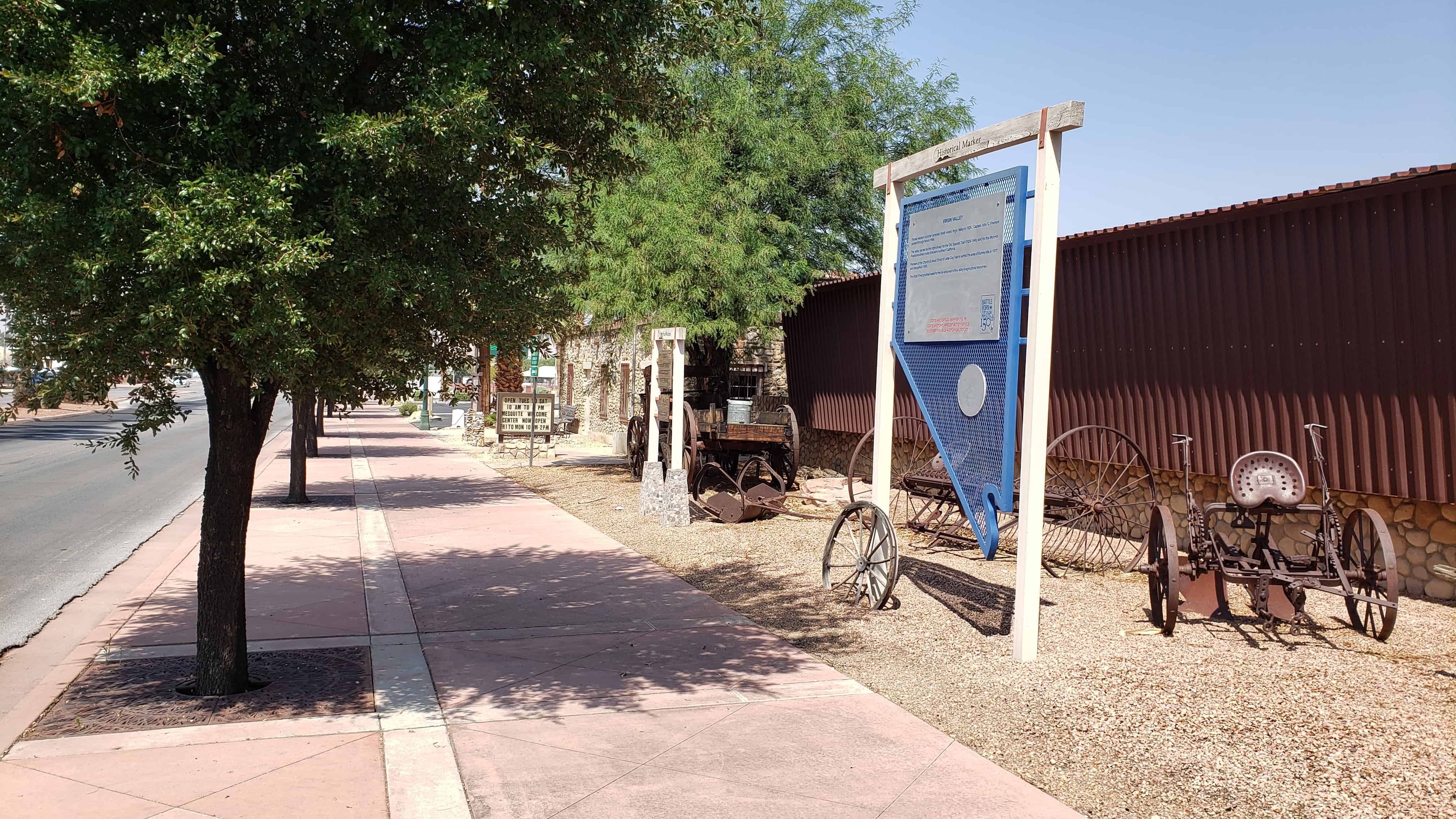
Virgin Valley

Famed western explorer Jedediah Smith visited Virgin Valley in 1826. Captain John C. Fremont passed through here in 1844.

The valley served as the right-of-way for the Old Spanish Trail (1829-1848) and for the Mormon Road or southern route of travel to southern California.

Pioneers of the Church of Jesus Christ of Latter-Day Saints settled the area of Bunkerville in 1877 and Mesquite in 1880.

The Virgin River provided water for the development of the valley’s agricultural resources.

Nevada Historic Marker #56, located at 15 West Mesquite Blvd in Mesquite, Nevada.

Related:

  • Other Nevada State Historic Markers

225 E State St

07 Sunday Nov 2021

Posted by Jacob Barlow in Uncategorized

≈ Leave a comment

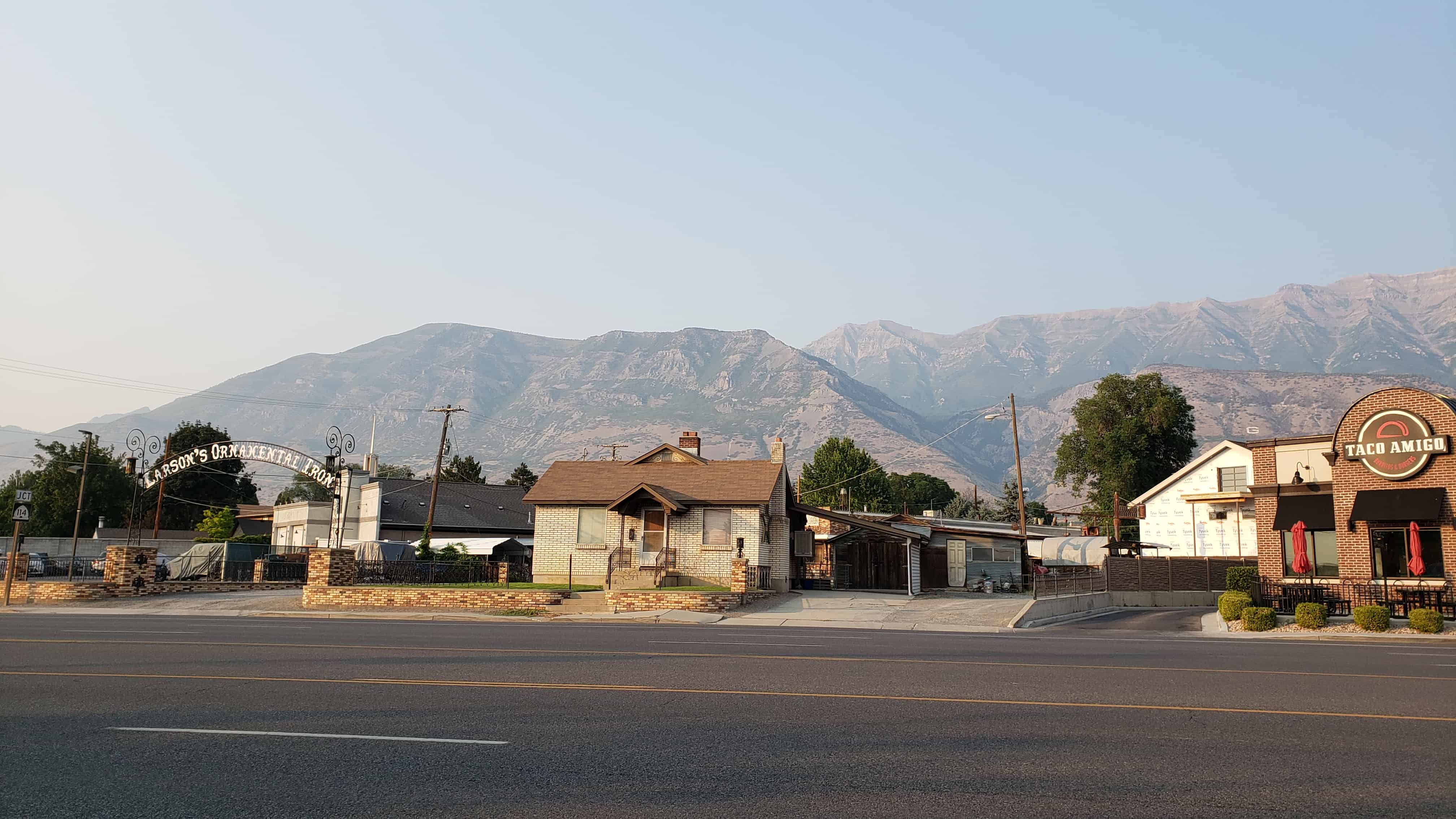
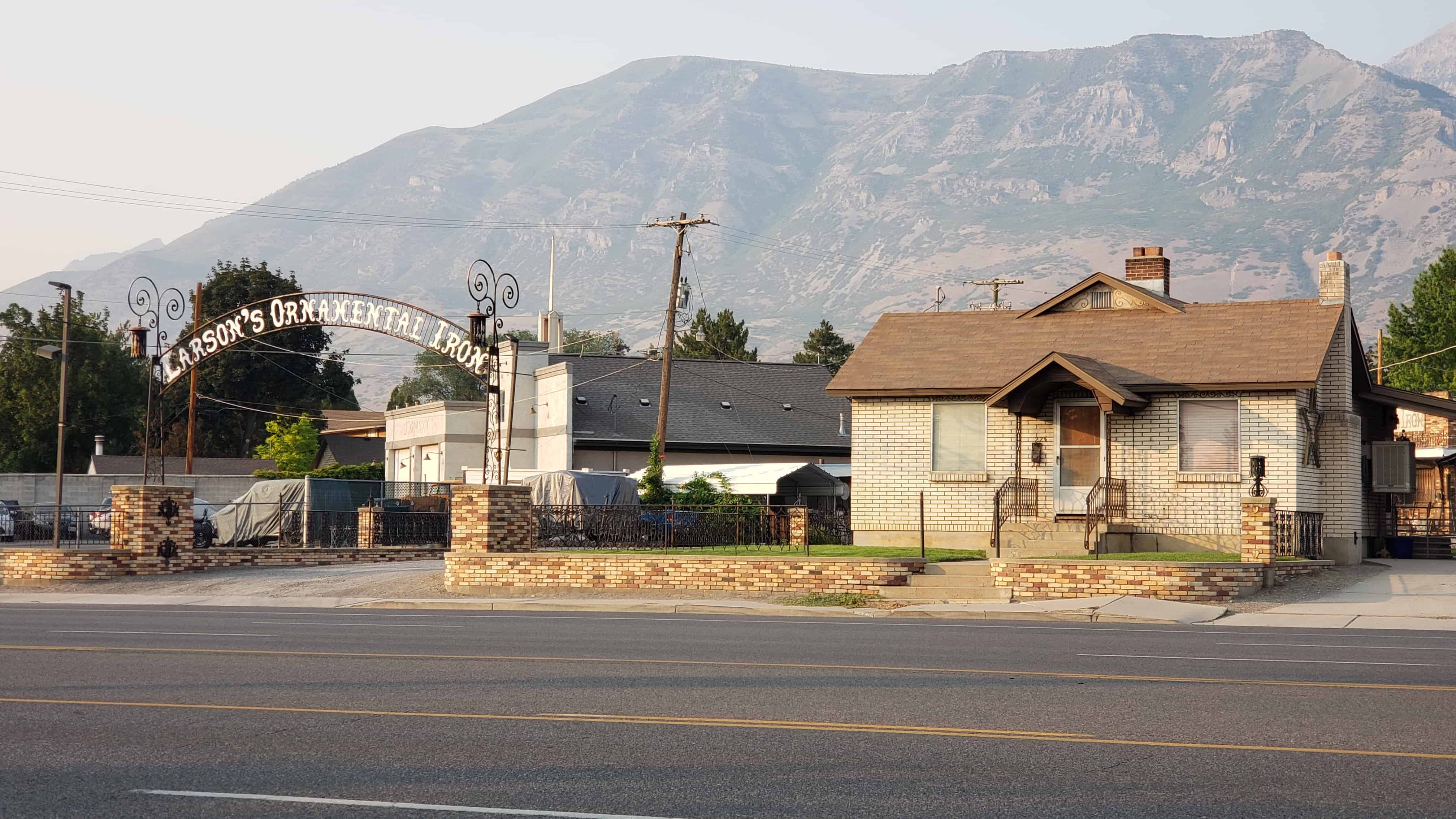
225 East State Street in Pleasant Grove, Utah

← Older posts
Newer posts →

Follow Jacob

Follow Jacob

Blog Stats

  • 2,019,611 hits

Social and Other Links

BarlowLinks.com

Recent Posts

  • First Company of Pioneers into the Valley
  • Blue Base – The Stand Filming Location
  • 926 E South Temple
  • 969 E South Temple
  • 1001 E South Temple

Archives


Loading Comments...