Fruit Heights is on Bear Creek on the upper benchland one mile east of Kaysville. An early name for the site was East Kaysville, a name used until August 23, 1939, when it was changed to Fruit Heights. It had long been famous for its fruit crops and pleasant location above the valley floor. Today the area is being converted to a residential housing community.(*)
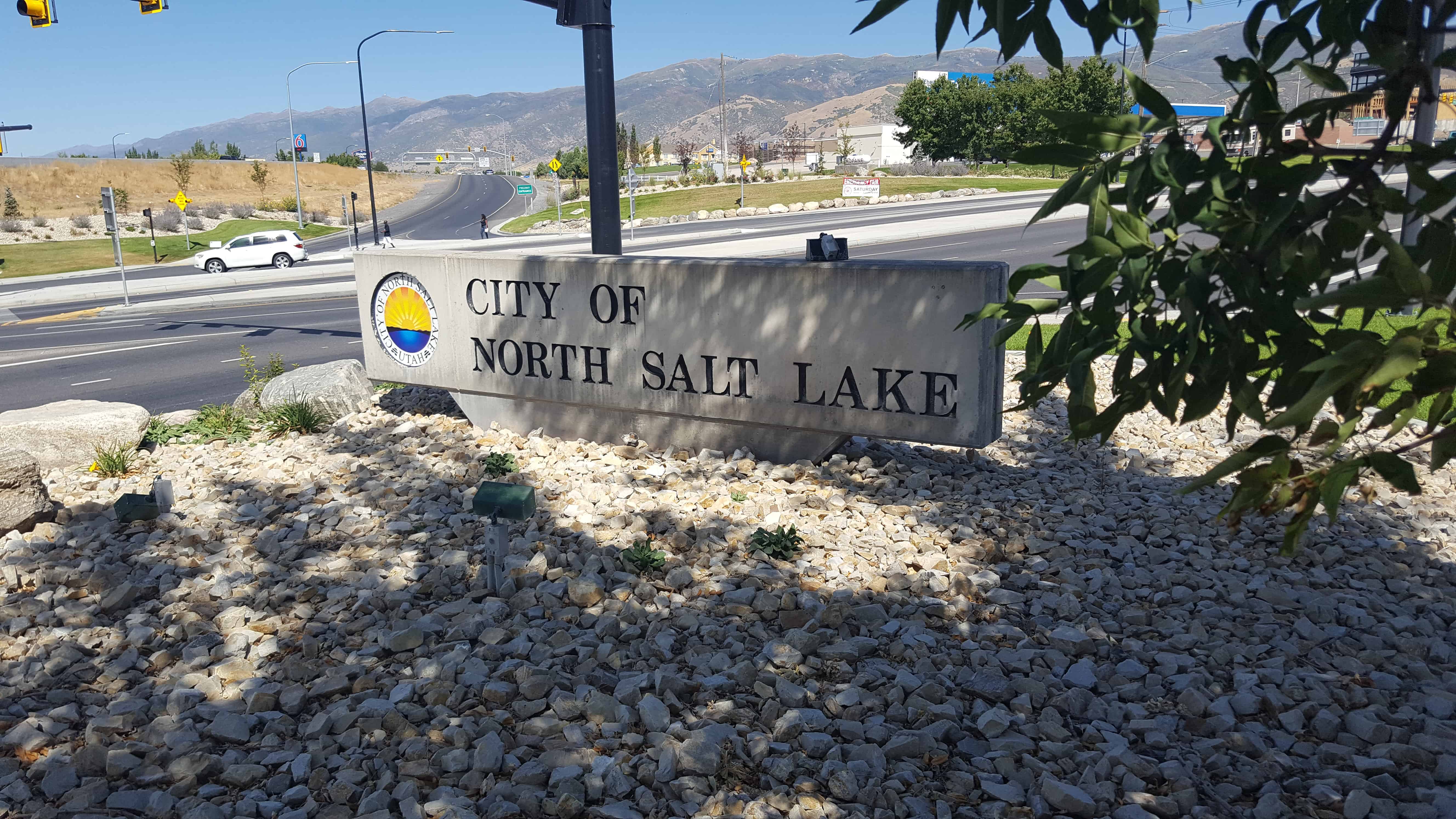
Beginning at the boundary line of Salt Lake and Davis counties and stretching east up the mountainside and west towards the Great Salt Lake sits the city of North Salt Lake. On its northern border the city meets Woods Cross and Bountiful.
In 1847 Brigham Young sent settlers north to find pastureland for cattle and to establish settlements. Among these people were the first homesteaders in North Salt Lake. As they left the Salt Lake area and traveled north, they found several steaming hot springs and ponds. These hot springs are still active on the southern boundary of the city. To the west flowed the Jordan River, and the land was swampy and covered with swamp grass. To the east the land slowly climbed up the tall grass-covered lower mountainsides. This grass sometimes hid a deep crevasse large enough to be of danger to cattle. Small natural springs found their way from the mountains into the grassy valley below. Many of the hillsides were rocky and sandy and not well suited for crops or cattle; however, they did produce several sand and gravel excavations.
The first homes built in the area were crude dugouts, which at least offered protection from the winter storms. Later homes were made of adobe, utilizing the natural clay deposits in the area. One of the first settlers of North Salt Lake, John Winegar, built his home of clay from deposits by the Jordan River. Because of the clay deposits, several brickyards were located in the area for a short time.
The home was constructed in 1914 by George Ernest Spackman. George, a local farmer, and his wife Bertha resided in the home for many decades. The single-story, stucco bungalow has a full-width front porch, front-facing gable, and features a projecting bay. The house retains excellent historic and architectural integrity and is a contributing resource to the Farmington Main Street Historic District.
This house was constructed c. 1857 for Hector C. Haight, “the father of Farmington,” who in addition to helping settle the community, was a farmer, builder, hotel proprietor and county probate judge for a number of years. He and his family loved in this house, which also doubled as a hotel, until his death in 1879.
The Union Hotel, as it was known, is the oldest remaining hotel in Farmington, which was a natural stopping place for travelers because it was located one-day’s journey from Salt Lake City. LDS Church authorities and others with business in the communities to the north often stayed overnight at the Union and other hotels in Farmington. The rear section of the house was probably added in the 1860s or ’70s, apparently to accommodate the expanding hotel business. The original four-room section of the house is one of the few examples in Utah of a two-story double cell house, a traditional yet relatively uncommon house type in early Utah.
Although the original adobe walls of the house were covered with aluminum siding in the late 1950s, its basic form, window and door openings, and interior remain virtually unaltered.
George Quinn McNeil was born to John McNeil and Mary Jan Quinn McNeil on January 4, 1865, in Bountiful, Utah. He married Adriane Marie Thomas on August 15, 1888. They lived on the family farm located on the southeast side of Bountiful City. Today, the area is known as North Canyon.
McNeil assisted Daniel Davis at the grist mill located on this site. NcNeil captured bears in the mountains above Bountiful City which were trained to do work around the mill. The bears were also taught to pull McNeil’s wagon. He desired to take the bears on a tour from Bountiful City throughout the United States and have them perform a circus-type act. McNeil had traveled only a short distance from Brigham City with the bears when they misbehaved and the tour was cancelled.
George Quinn McNeil died on June 23, 1943.
We are pleased to recognise his unique role regarding the mill. (Caption under Photograph) George McNiel (sic), and Jerry Ellis, second from left, caught and trained bears at the Heber C. Kimball Grist Mills.
See other historic markers in the series on this page for SUP Markers.
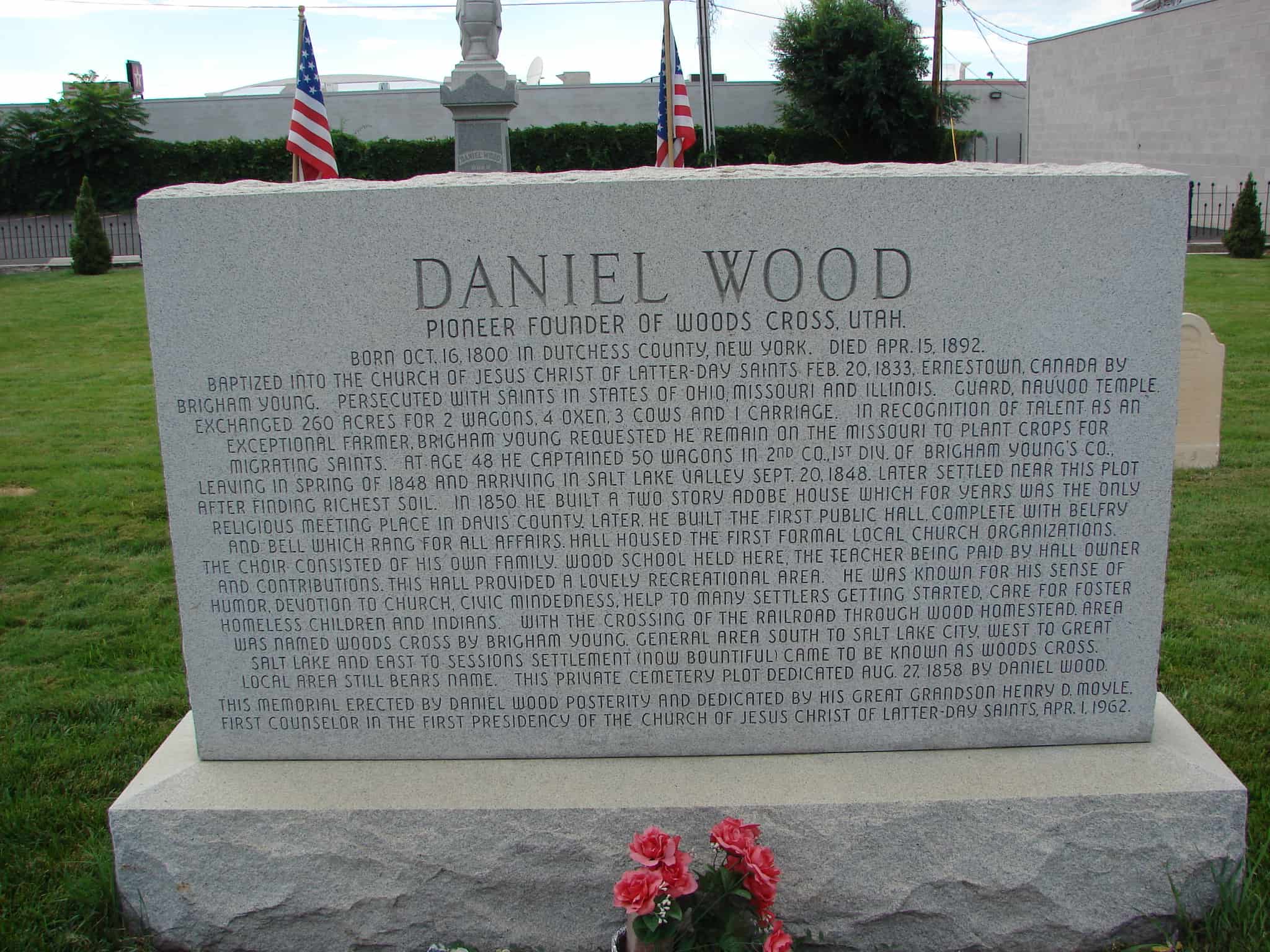
Pioneer Founder of Woods Cross, Utah Born Oct. 16, 1800 in Dutchess County, New York. Died Apr. 15, 1892 Baptized into the Church of Jesus Christ of Latter-Day Saints Feb. 20, 1833, Ernestown, Canada by Brigham Young. Persecuted with Saints in states of Ohio, Missouri and Illinois. Guard, Nauvoo Temple. Exchanged 260 acres for 2 wagons, 4 oxen, 3 cows and 1 carriage. In recognition of talent as an exceptional farmer, Brigham Young requested he remain on the Missouri to plant crops for migrating saints. At age 48 he captained 50 wagons in 2nd Co., 1st Div. of Brigham Young’s Co. Leaving in spring of 1848 and arriving in Salt Lake Valley Sept. 20, 1848. Later settled near this plot after finding richest soil. In 1850 he built a two story adobe house which for years was the only religious meeting place in Davis County. Later, he built the first public hall complete with belfry and bell which rang for all affairs. Hall housed the first formal local church organizations. The choir consisted of his own family. Wood School held here, the teacher being paid by hall owner and contributions. This hall provided a lovely recreational area. He was known for his sense of humor, devotion to Church, civic mindedness, help to many settlers getting started, care for foster homeless children and Indians. With the crossing of the railroad through Wood homestead, area was named Woods Cross by Brigham Young. General area south to Salt Lake City, west to Great Salt Lake and east to Sessions Settlement (Now Bountiful) came to be known as Woods Cross. Local area still bears name. This private cemetery plot dedicated Aug. 27, 1858 by Daniel Wood This Memorial erected by Daniel Wood Posterity and dedicated by his Great Grandson Henry D. Moyle, First Counselor in the First Presidency of the Church of Jesus Christ of Latter-day Saints, Apr. 1, 1962. (Other side of monument) Interred in Wood Cemetery…(list of names)…
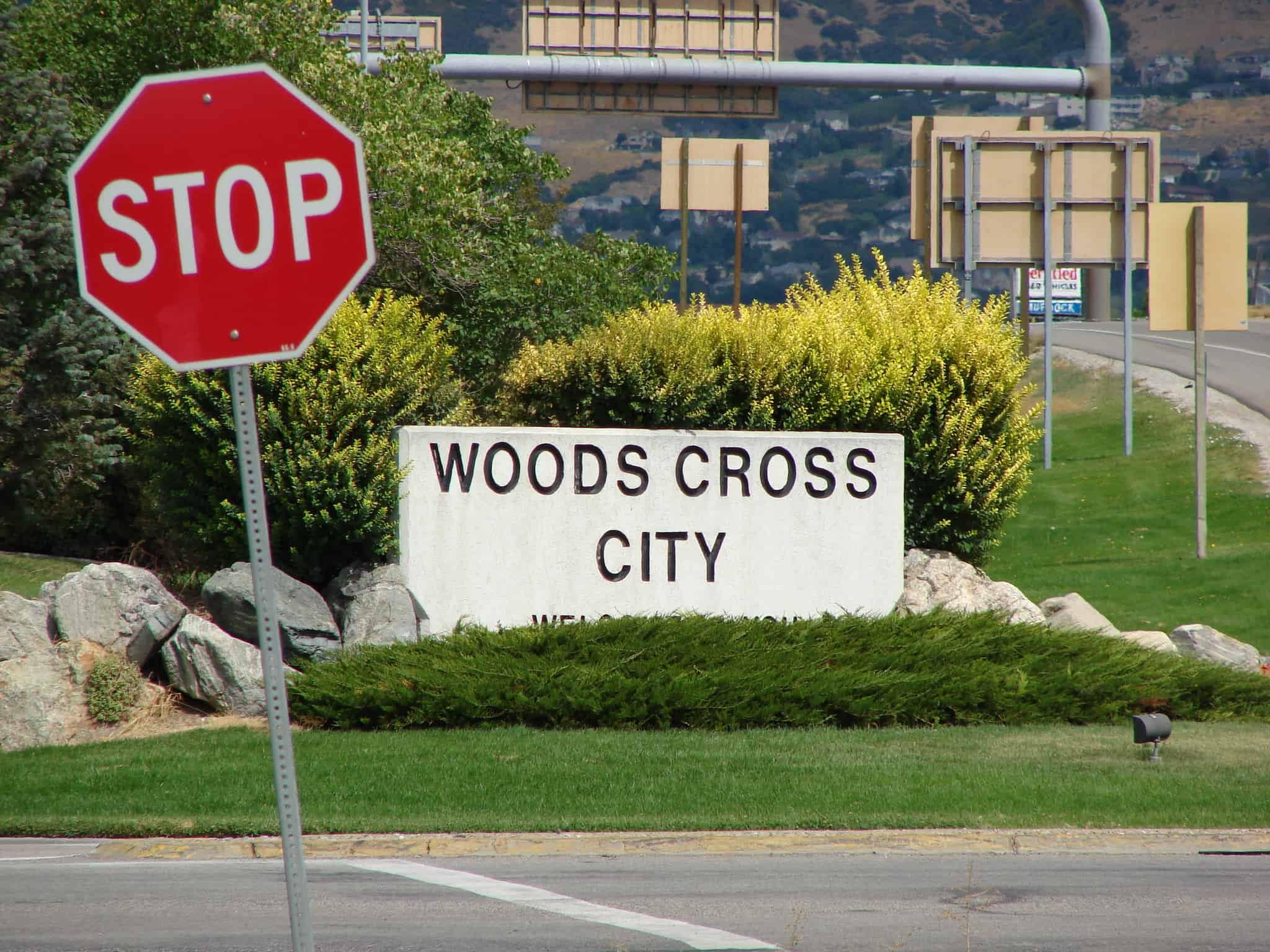
Woods Cross lies near the bottom of the Great Salt Lake Basin, approximately eight miles north of Salt Lake City. It was officially chartered in 1935 by the owners of the Reservoir and Pipeline Company who pooled their Mill Creek water shares and transferred their capital stock and assets to the new city board of trustees. Woods Cross was originally an unincorporated area extending from the southern boundary of Centerville south to the Salt Lake County line and including the areas and communities of Val Verda, Orchard, North Salt Lake, West Bountiful, among others.
In 1847, after the initial Mormon settlement of the Salt Lake Valley, Peregrine Sessions went north to locate pasture lands. He selected a spot near Cudahy Lane, where he spent the winter with is family watching over the herds. The next year, 1848, other settlers arrived and built cellars and dugouts along and near the banks of the Jordan River.
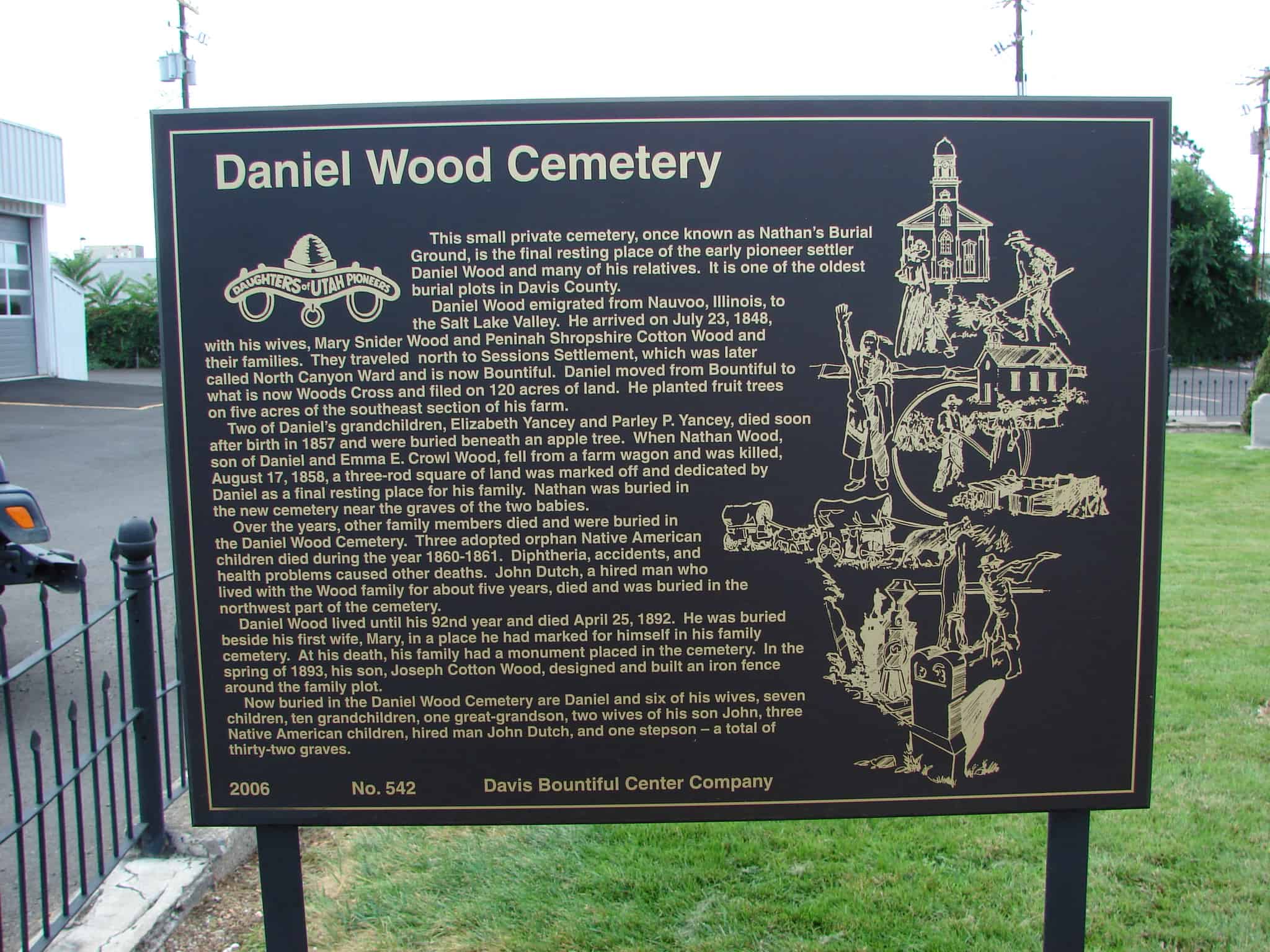
This small private cemetery, once known as Nathan’s Burial Ground, is the final resting place of the early pioneer settler Daniel Wood and many of his relatives. It is one of the oldest burial plots in Davis County.
Daniel Wood emigrated from Nauvoo, Illinois, to to the Salt Lake Valley. He arrived on July 23, 1848, with his wives, Mary Snider Wood and Peninah Shropshire Cotton Wood, and their families. They traveled north to Sessions Settlement, which was later called North Canyon Ward and is now Bountiful. Daniel moved from Bountiful to what is now Woods Cross and filed on 120 acres of land. He planted fruit trees on five acres of the southeast section of his farm.
Two of Daniel’s grandchildren, Elizabeth Yancy, and Parley P. Yancy, died soon after birth in 1857 and were buried beneath an apple tree. When Nathan Wood, son of Daniel and Emma E. Crow Wood, fell from a farm wagon and was killed, August 17, 1858, a three-rod square of land was marked off and dedicated by Daniel as a final resting place for his family. Nathan was buried in the new cemetery near the raves of the two babies.
Over the years, other family members died and were buried in the Daniel Wood Cemetery. Three adopted orphan Native American died during the year 1860-1861. Diphtheria, accidents and health problems caused other deaths. John Dutch, a hired man who lived with the Wood family for about five years, died and was buried in the northwest part of the cemetery.
Daniel Wood lived until his 92nd year and died April 25, 1892. He was buried beside his first wife, Mary, in a place he had marked for himself in his family cemetery. In the spring of 1893, his son, Joseph Cotton Wood, designated and built an iron fence around the family plot.
Now buried in the Daniel Wood cemetery are Daniel and six of his wives, seven children, ten grandchildren, one great-grandson, two wives of his son John, three Native American children, hired man John Dutch and one stepson – a total of thirty-two graves.
Check out all of the historic markers placed by the Daughters of Utah Pioneers at JacobBarlow.com/dup
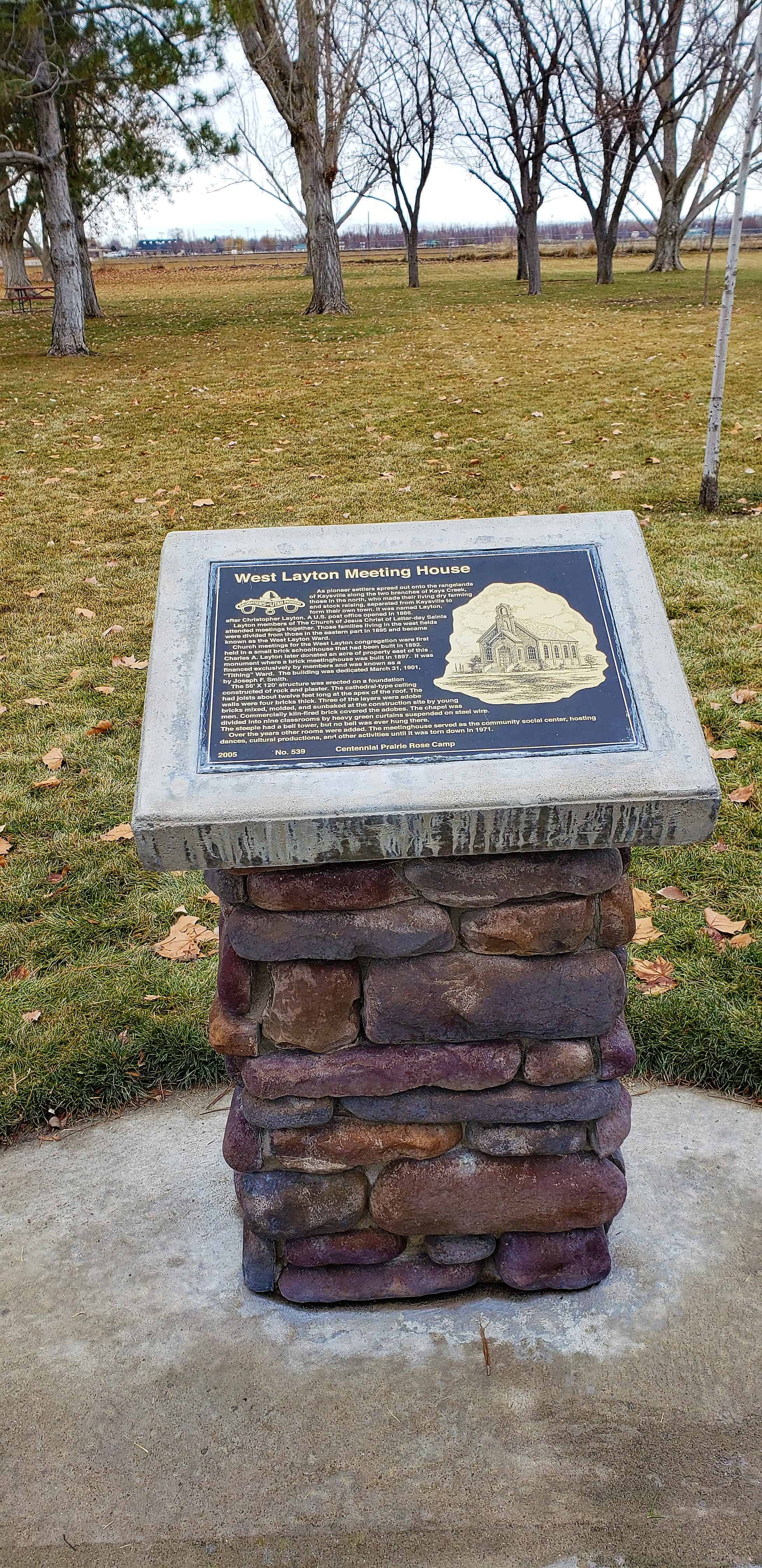
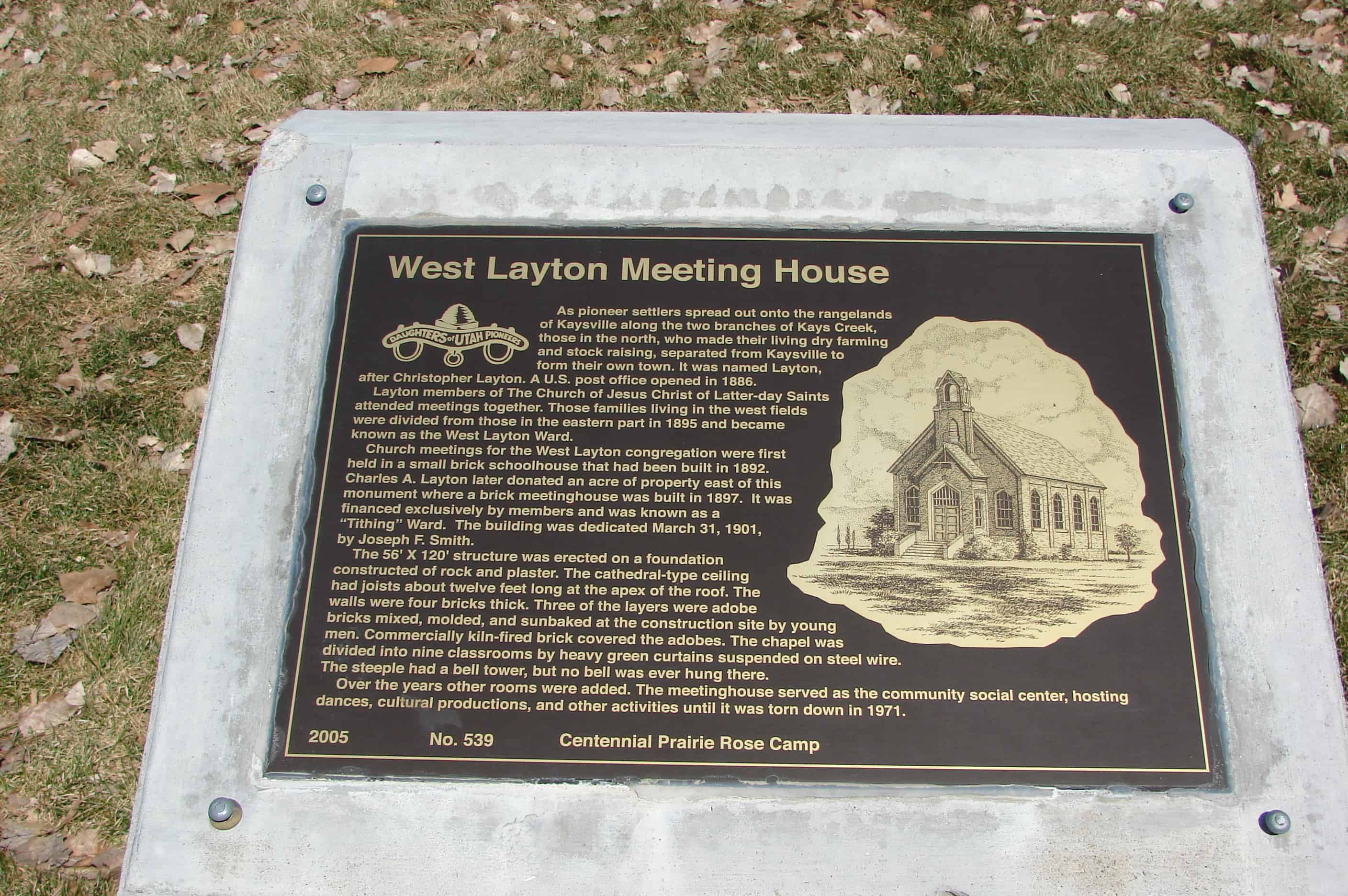
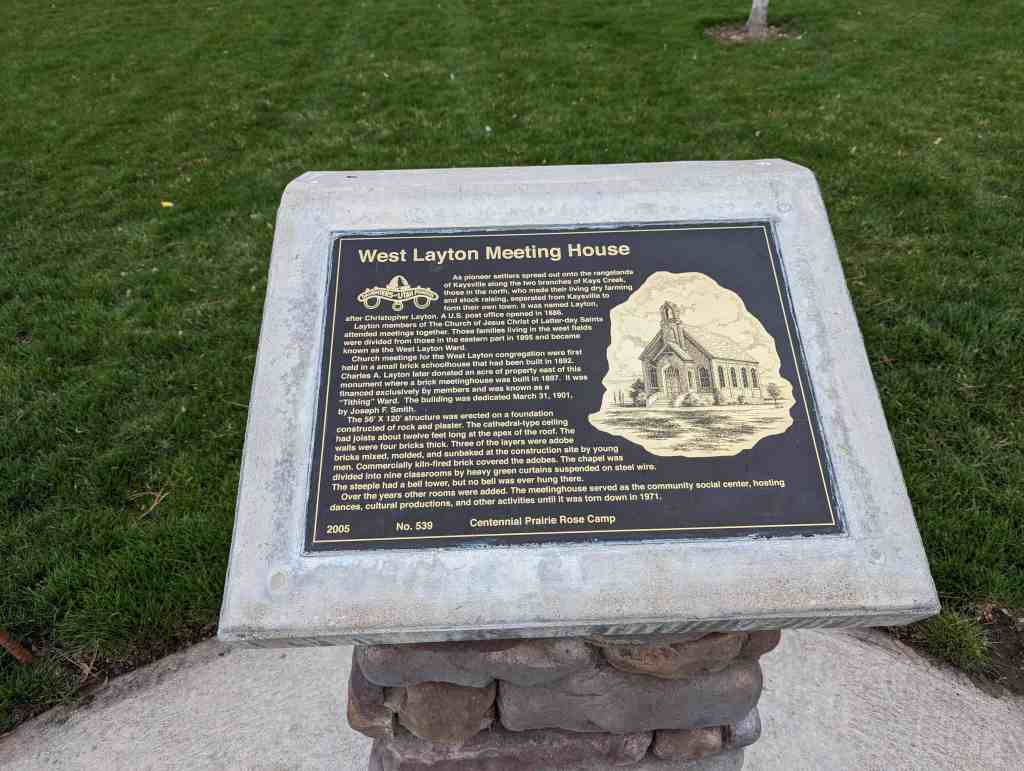
As pioneer settlers spread out onto the rangelands of Kaysville along the two branches of Kays Creek, those in the north, who made their living dry farming and stock raising, separated from Kaysville to form their own town. It was named Layton, after Christopher Layton. A U.S. post office opened in 1886.
Layton members of The Church of Jesus Christ of Latter-day Saints attended meeting together. Those families living in the west fields were divided from those in the eastern part in 1895 and became known as the West Layton Ward.
Church meetings for the West Layton congregation were first held in a small brick schoolhouse that had been built in 1892.
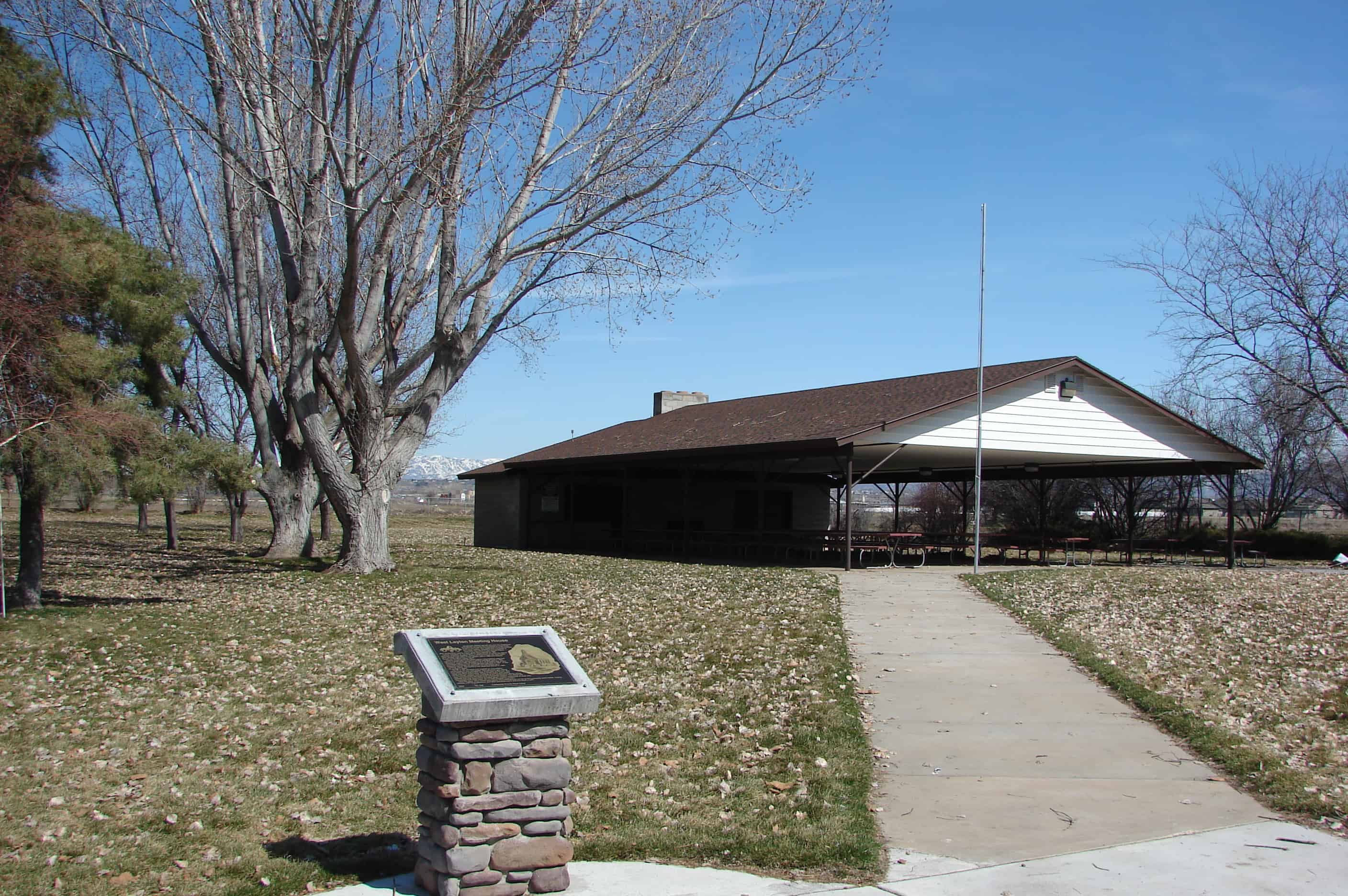
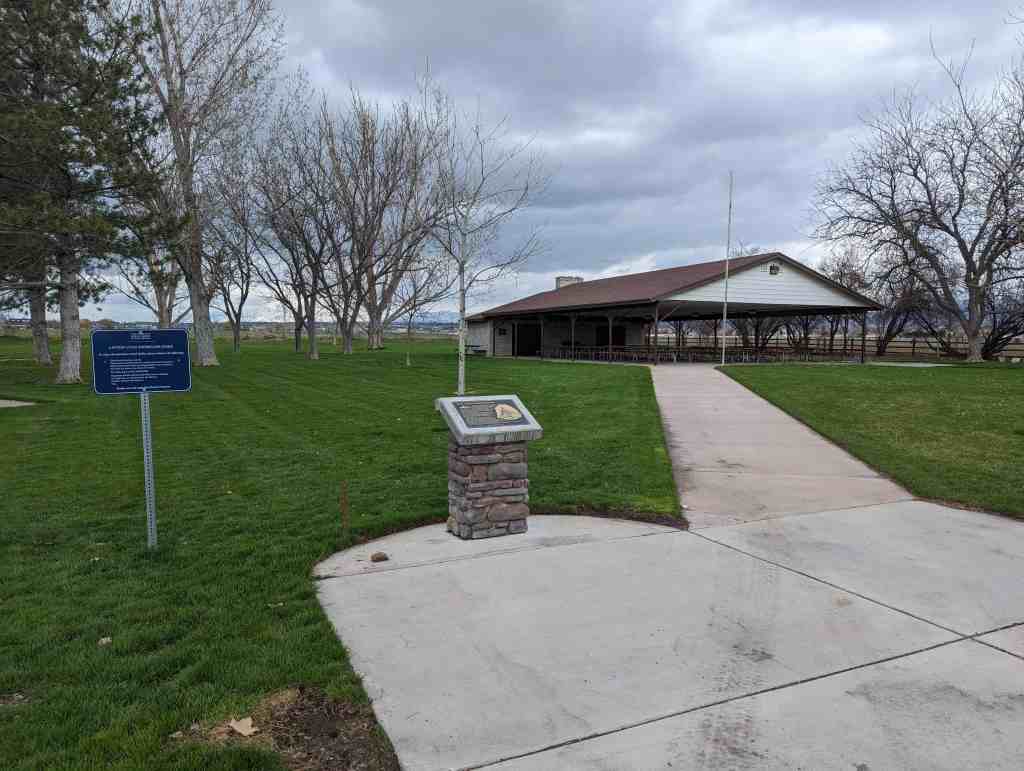
Charles A. Layton later donated an acre of property east of this monument where a brick meetinghouses was built in 1897. It was financed exclusively by members and was known as a “Tithing” Ward. The building was dedicated March 31, 1901, by Joseph F. Smith.
The 56′ x 120′ structure was erected on a foundation constructed of rock and plaster. The cathedral-type ceiling had joists about twelve feet long at the apex of the roof. The walls were four bricks thick. Three of the layers were adobe bricks mixed, molded, and sunbaked at the construction site by young men.
Commercially kiln-fired brick covered the adobes. The chapel was divided into nine classrooms by heavy green curtains suspended on steel wire. The steeple had a bell tower, but no bell was ever hung there.
Over the years other rooms were added. The meetinghouse served as the community social center, hosting dances, cultural productions, and other activities until it was torn down in 1971.
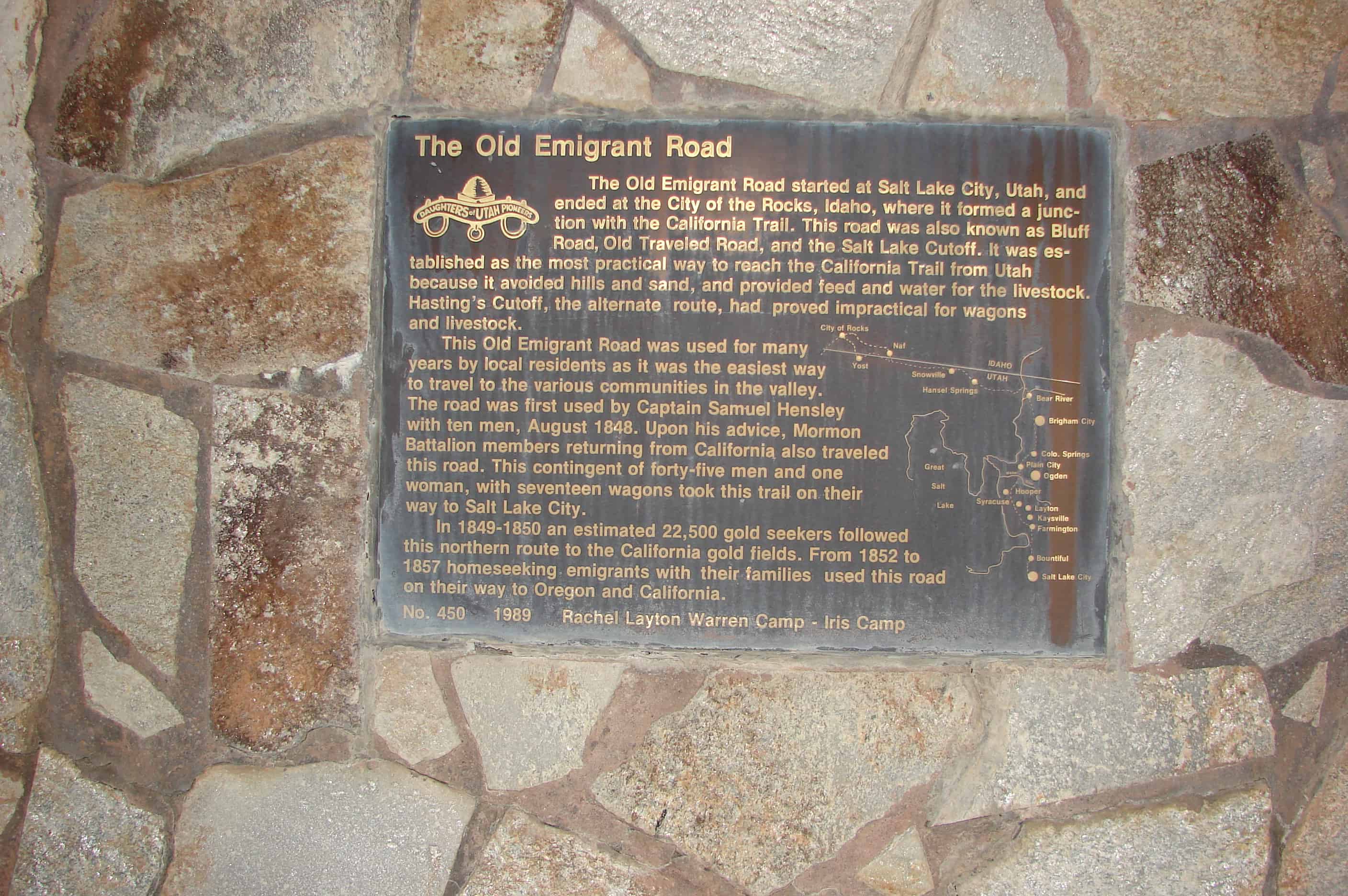
The Old Emigrant Road started at Salt Lake City, Utah, and ended at the City of the Rocks, Idaho, where it formed a junction with the California Trail. This road was also known as Bluff Road, Old Traveled Road, and the Salt Lake Cutoff. It was established as the most practical way to reach the California Trail from Utah because it avoided hills and sand, and provided feed and water for the livestock. Hasting’s Cutoff, the alternate route, had proved impractical for wagons and livestock.
This Old Emigrant Road was used for many years by local residents as it was the easiest way to travel to the various communities in the valley. The road was first used by Captain Samuel Hensley with ten men, August 1848. Upon his advice, Mormon Battalion members returning from California also traveled this road. This contingent of forty-five men and one woman, with seventeen wagons took this trail on their way to Salt Lake City.
In 1849-1850 an estimated 22,500 gold seekers followed this northern route to the California gold fields. From 1852 to 1857 homeseeking emigrants with their families used the road on their way to Oregon and California.
Check out all of the historic markers placed by the Daughters of Utah Pioneers at JacobBarlow.com/dup