• About JacobBarlow.com
  • Cemeteries in Utah
  • D.U.P. Markers
  • Doors
  • Exploring Utah Email List
  • Geocaching
  • Historic Marker Map
  • Links
  • Movie/TV Show Filming Locations
  • Oldest in Utah
  • Other Travels
  • Photos Then and Now
  • S.U.P. Markers
  • U.P.T.L.A. Markers
  • Utah Cities and Places.
  • Utah Homes for Sale
  • Utah Treasure Hunt

JacobBarlow.com

~ Exploring with Jacob Barlow

JacobBarlow.com

Tag Archives: DUP

Mormon Pioneer Adobes

10 Tuesday Jun 2014

Posted by Jacob Barlow in Uncategorized

≈ 1 Comment

Tags

Alameda County, California, DUP, Fremont, historic

picture30jul08-035

The first local member of The Church of Jesus Christ of Latter Day Saints (the Mormons) arrived on the ship Brooklyn on July 31, 1846 at Yerba Buena (San Francisco). Several families traveled to Washington township, the present area of Fremont, Newark and Union City, and established their homes.

The Mormon Battalion arrived in Southern California, January 29, 1847. Some men from that group traveled north and settled here. One of them, John Conrad Naile (Naegle), arrived in 1848 and built a large adobe home about 1/5 mile east of this marker. School, dances, and other social gatherings were held there.

On April 23, 1850 Apostles Charles C. Rich and Amasa Lyman organized the first branch of the L.D.S church for this area in the adobe home of Earl and Letitia Marshall located approximately 3/5 mile southwest of this marker. Church services were held on the second floor of the Naile adobe until 1850. At this time, John M. Horner built a schoolhouse in Centerville, which served as the first structure built especially for L.D.S services in the area. The local congregation grew during the Gold Rush until 1857-58, when Brigham Young gathered members in Utah.

Check out all of the historic markers placed by the Daughters of Utah Pioneers at JacobBarlow.com/dup

The Spanish Trail

10 Tuesday Jun 2014

Posted by Jacob Barlow in Uncategorized

≈ 3 Comments

Tags

DUP, historic, Moab, San Juan County, utah

picture24jul07-046

The Spanish Trail

Kane Springs, San Juan County, was a major water stop along the historic Spanish Trail, in use from 1829 to 1848. Large trade caravans halted here and drank from the abundant spring waters. In autumn months, pack trains carried woolen textiles and raw wool over the trail from the settlements on the upper Rio Grande to the coastal towns of California. On reaching California, wool merchants exchanged their goods for horses and mules, which were driven back to New Mexico the following spring. It took trail riders over two months to complete the journey.

The 1,120-mile route, from Santa Fe, New Mexico, to Los Angeles, California, followed a northward looping course that passed through the rugged southern and central landscapes of Utah. This trail avoided the deep canyons of the Colorado River and the hostile Indians of Arizona.

In 1848, at the end of the Mexican war, the territory encompassing the Spanish Trail became part of the United States. Thereafter, caravan traffic followed direct east-west lines. In the post-trail period, the waters of Kane Springs refreshed weary travelers, cattle drovers, pioneer settlers, and outlaws.

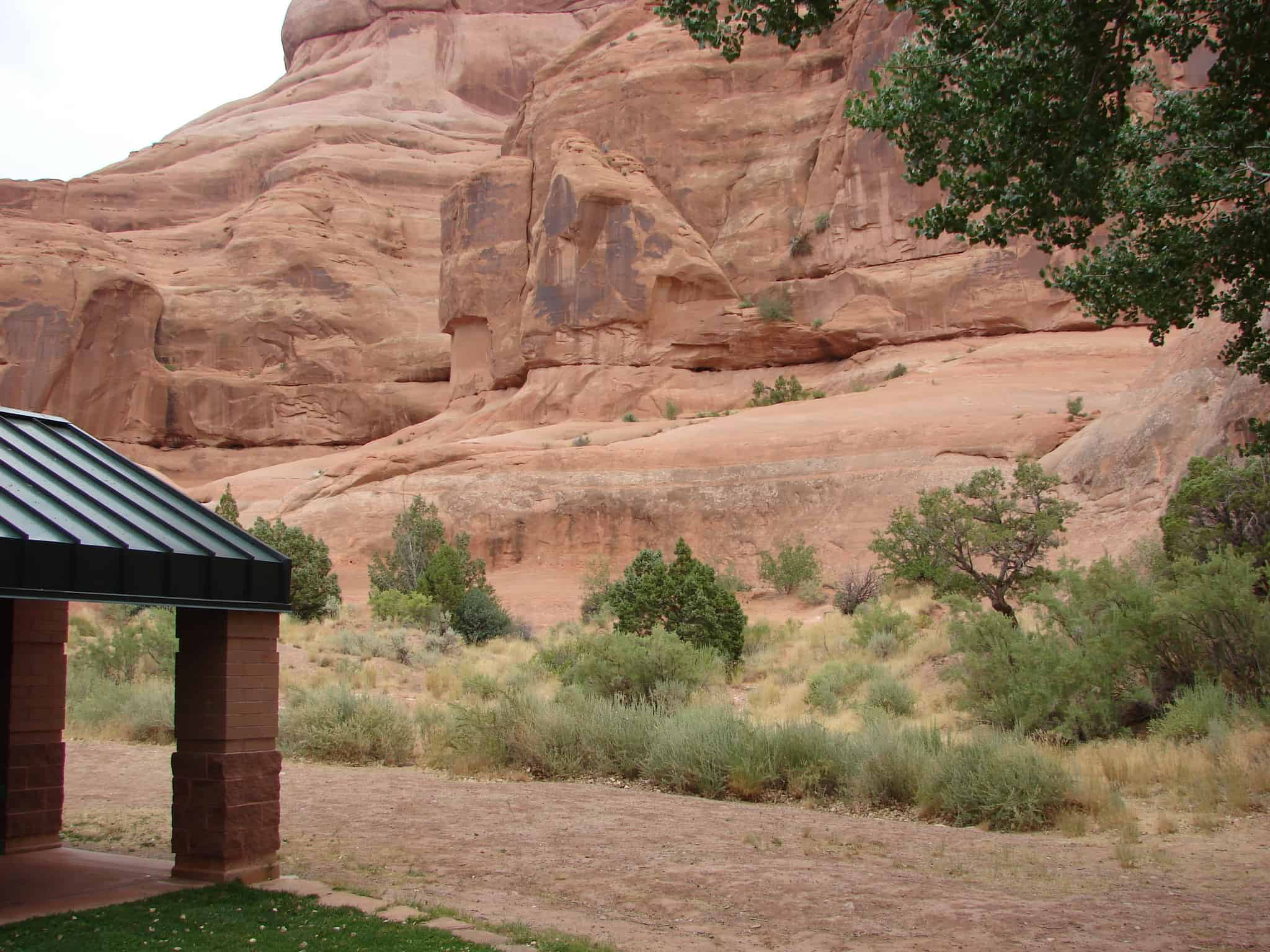
Daughters of Utah Pioneers historic marker #487, located at the Kane Springs Rest Area on Highway 191 in Grand County, Utah.

  • D.U.P. Historic Markers

Miles Goodyear Cabin

10 Tuesday Jun 2014

Posted by Jacob Barlow in Uncategorized

≈ Leave a comment

Tags

DUP, historic, Ogden, utah, Weber County

Image

Miles Goodyear Cabin

Miles Morris Goodyear built this cabin on the lower Weber River as a way station and trading post. The cabin, along with other buildings became Fort Buenaventura meaning good venture. It was the first permanent settlement in the Utah Territory. Miles Goodyear (1817-1849) had traveled as far as Fort Hall in 1836 with Dr. Marcus Whitman’s party of Methodist Missionaries. Goodyear was a trapper, prospector and trader. His Indian wife Pomona was the daughter of Ute chief Peet-teet-neet. The couple had two children, William Miles and Mary Eliza.

Mormon Battalion Captain James Brown and Mary Black Brown bought Fort Buenaventura and all of Weber County for $1,950 in gold. Mary Brown made the cabin home for her family and made 1,000 pounds of cheese during the first year.

The Browns sold the cabin to Amos P. and Minerva Leontine Jones Stone. The Stone family lived in the cabin for a time, eventually using it as a blacksmith shop. A daughter, Minerva Pease Stone Shaw, in 1926 presented the cabin to Weber County Daughters of Utah Pioneers for preservation. It has been moved seven times, ultimately being placed at this site. In 1994 it was disassembled for preservation of the logs and reassembled in 1995 at this location to benefit posterity.

Image

The photos above were taken when the historic marker was located near the Ogden Temple, at N 41.22785 W 111.97261.

It was since moved to the new location of the D.U.P. Museum at 2148 Grant Avenue in Ogden, Utah.

The cabin and museum were later moved to 2104 Lincoln Avenue in Ogden, Utah

Ephraim Pioneer Cemetery

10 Tuesday Jun 2014

Posted by Jacob Barlow in Uncategorized

≈ 2 Comments

Tags

DUP, Ephraim, historic, Sanpete County, utah

picture24nov07-039

This page is for the D.U.P. Historic Marker about the Ephraim Pioneer Cemetery, for the page about the cemetery itself visit this page.

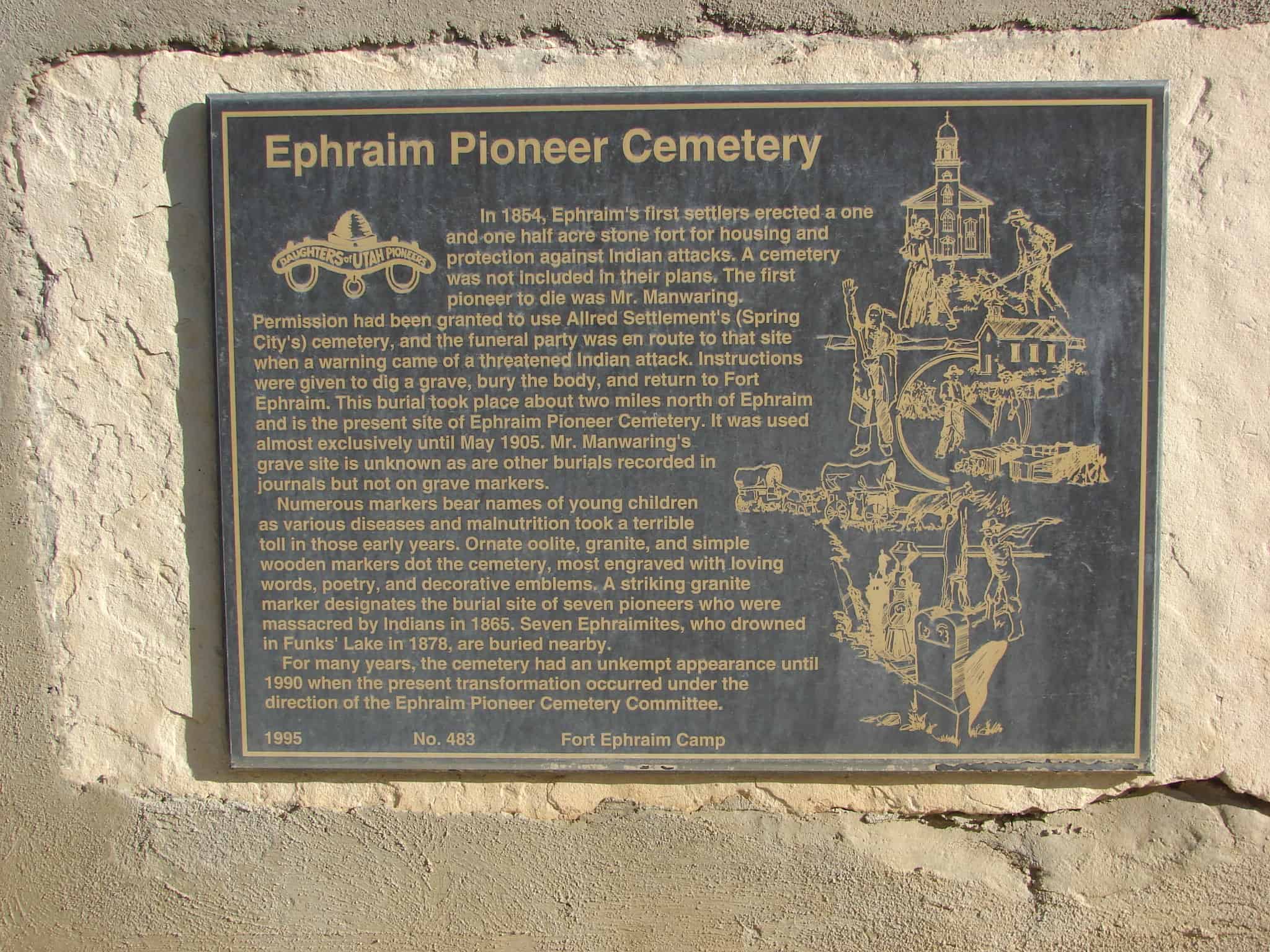
In 1854, Ephraim‘s first settlers erected a one and one half acre fort for housing and protection against Indian attacks. A cemetery was not included in their plans. The first pioneer to die was Mr. Manwaring. Permission had been granted to use Allred Settlement’s (Spring City’s) cemetery, and the funeral party was en route to that site when a warning came of a threatened Indian attack. Instructions were given to dig a grave, bury the body, and return to Fort Ephraim. This burial took place about two miles north of Ephraim and is the present site of Ephraim Pioneer Cemetery. It was used almost exclusively until May 1905. Mr. Manwaring’s grave site is unknown as are other burials recorded in journals but not on grave markers.

Numerous markers bear names of young children, as various diseases and malnutrition took a terrible toll in those early years. Ornate oolite, granite, and simple wooden markers dot the cemetery, most engraved with loving words, poetry, and decorative emblems. A striking granite marker designates the burial site of seven pioneers who were massacred by Indians in 1865. Seven Ephraimites, who drowned in Funks’ Lake in 1878, are buried nearby.

For many years, the cemetery had an unkempt appearance until 1990 when the present transformation occurred under the direction of the Ephraim Pioneer Cemetery Committee.

Check out all of the historic markers placed by the Daughters of Utah Pioneers at JacobBarlow.com/dup
A Pioneer Home

10 Tuesday Jun 2014

Posted by Jacob Barlow in Uncategorized

≈ 1 Comment

Tags

Box Elder County, Brigham City, DUP, historic, utah

2018-10-20 09.59.54

The Knudsen Cabin, built by Porter Squires for Wilhelm and Laura Amelia C. Knudsen. In 1855 was one of the first permanent structures in Brigham City. Located on the corner of First East and First South, the original cabin was 14 feet x 16 feet. It had a lot running the full length of the inside walls and was entered by means of a small square outside door just below the gables. Six of their thirteen children were born in the cabin during the years from 1856-1865.

The Cabin was moved to Rees Pioneer Park in 1929 where it could be preserved as a typical pioneer dwelling. The move cost $15.00. Charles Squires, son of the original builder, was hired to do some restoration work for $221.00. It was dedicated September 8, 1929.

In 1993 Box Elder South Company Daughters of Utah Pioneers made arrangements to lease enough land to form a yard around the cabin permitting removal of the 1948 cover which had largely obscured it from view. Renovation and restoration followed including installation of a clay floor, cedar roof and half-loft; and planting of old fashioned flowers in the yard and furnishing the cabin with pioneer originals and replicas – all combining to create more fully the atmosphere of a 1855 pioneer home. Bronze plaque on chimney of cabin: Pioneer Cabin built by Porter Squires 1855 for Wm. Knudsen moved to this location 1929 by Box Elder County Daughters of Utah Pioneers.

This historic marker is located in Brigham Young Park in Brigham City, Utah. It is #3 in the Brigham City Historic Tour and #482 of the D.U.P. historic markers.

2018-10-20 10.00.34
2018-10-20 10.00.20
2018-10-20 10.00.49
picture7sep07-270

Verdure

10 Tuesday Jun 2014

Posted by Jacob Barlow in Uncategorized

≈ 1 Comment

Tags

DUP, historic, San Juan County, utah, Verdure

picture24jul07-077

The oldest Mormon settlement in the Blue Mountain Region was first known as South Montezuma. Later the name was changed to Verdure after the lush green growth along the stream bed. Verdure was settled by men of the Blue Mountain Mission March 11, 1887, under the direction of Pres. Francis A. Hammond of the San Juan Stake. He called George A. Adams, Frederick I. Jones, Parley R. Butt and Charles E. Walton to establish a new settlement at North Montezuma, later named Monticello. They first set up camp at Verdure to prepare for a permanent settlement at Monticello, six miles to the north.

When company members moved on to Monticello in 1888 the Adams and Butt families remained at Verdure. By 1894 they were joined by the Alvin Decker, Willard Butt, Lingo Christensen, R.P. Hott and Francis Nielson families. Nielson operated a store and a school out of his log home, the first church met in the Decker home, and in 1893 a post office was installed in the Adams home.

Verdure was a peaceful frontier village where cattle, farming and cheese-making were the main occupations. Gradually the settlers moved to Monticello.

2017-03-12 16.46.24
2017-03-12 16.46.24-1

Check out all of the historic markers placed by the Daughters of Utah Pioneers at JacobBarlow.com/dup
Enoch Schoolhouse and Tithing Office

10 Tuesday Jun 2014

Posted by Jacob Barlow in Uncategorized

≈ 1 Comment

Tags

DUP, Enoch, historic, Iron County, utah

picture01oct07-034

SCHOOLHOUSE – The second schoolhouse in Enoch was a two-story structure built on this site in 1917-1918. It was a brick building containing two classrooms, two libraries, two bathrooms and a furnace room. Only one room served as a classroom, and one was sometimes used as a playroom during the winter. Between twenty and thirty students a year attended this school in grades one through six. The building was used until Iron County bussed the students from Enoch to Cedar City. It was torn down some years later.

TITHING OFFICE – On the site across the street and one-half block to the west are the remains of the Bishop’s storehouse and tithing office. The wooden building, 20 feet by 17 feet 9 inches, had a tall peaked roof, an outside staircase, and looked like an ordinary granary. It contained bins both in the basement and on the main floor. These bins were used to store grain, potatoes and other crops that were brought in as tithing payments. Tithing produce was used to help those in need. Sometimes seed, such as wheat, was loaned to the farmers at planting time to be paid back after the harvest.

picture01oct07-036

Check out all of the historic markers placed by the Daughters of Utah Pioneers at JacobBarlow.com/dup

Salem’s First Post Office

10 Tuesday Jun 2014

Posted by Jacob Barlow in Uncategorized

≈ Leave a comment

Tags

DUP, historic, Payson, Salem, utah, utah county

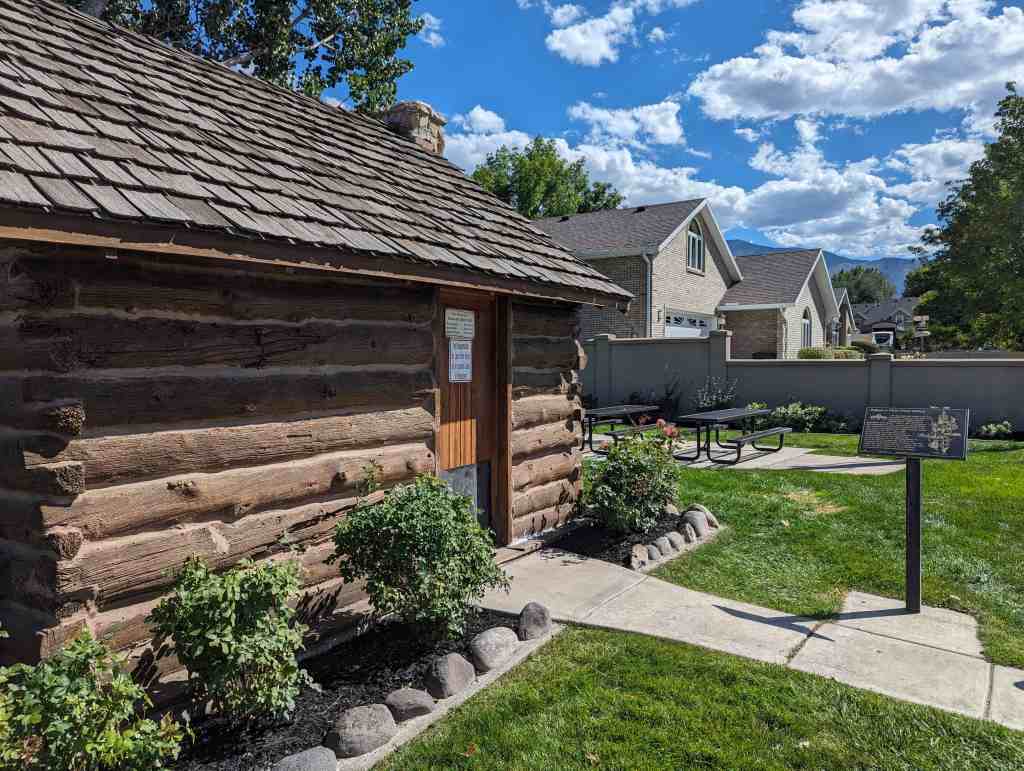
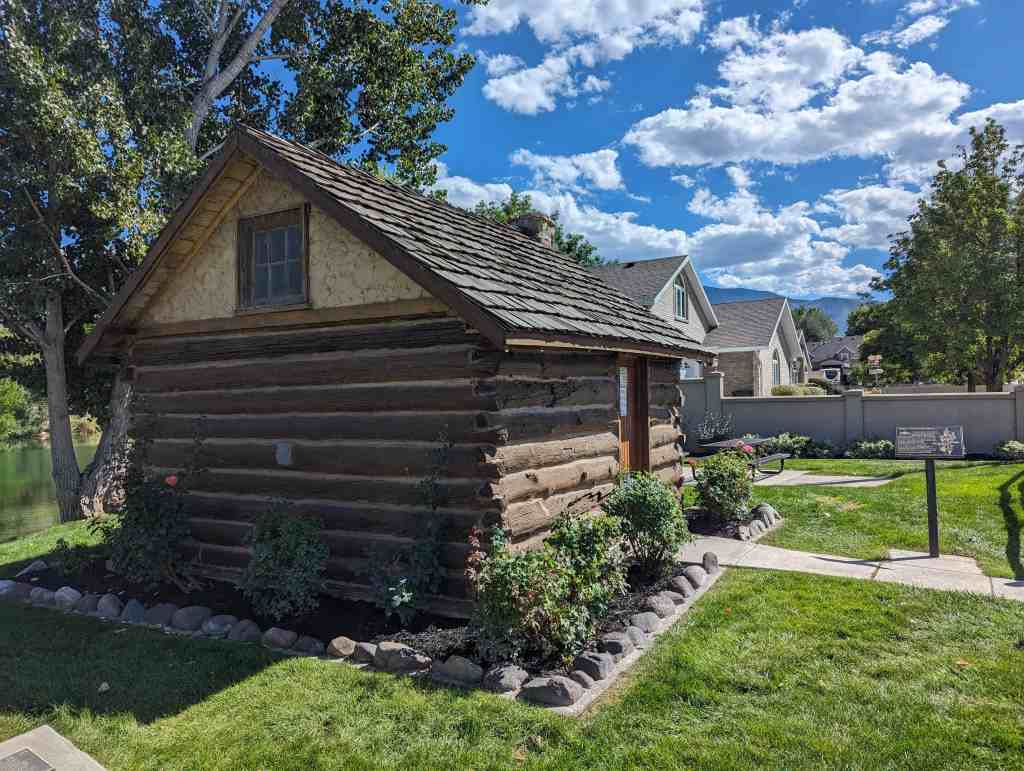
This log cabin was used as the first Post Office in Salem. It was built on the east bank of the Salem Pond by George Killiam, who served as postmaster from March 1, 1872 to 1877. Harry Nelson then purchased the cabin, moved it to the southeast part of Salem, and used if for a summer home. It was later sold to Chris Nelson, his brother, whose children played there until 1937, when it was purchased by the Daughters of Utah Pioneers. The cabin was next moved to a location northwest of the chapel of The Church of Jesus Christ of Latter-day Saints. On March 19, 1972, the cabin was moved to the southwest corner of the church lot when a new LDS Chapel was built. It has now been moved to the west bank of the Salem Pond at 13 South 300 West, renovated and furnished with pioneer artifacts.

The text above is from Daughters of Utah Pioneers historic marker #479, located at Salem Pond at 99 South 300 West in Salem, Utah

  • D.U.P. Historic Markers
Image
Image

A Pioneer Home

10 Tuesday Jun 2014

Posted by Jacob Barlow in Uncategorized

≈ Leave a comment

Tags

DUP, historic, Salt Lake City, Salt Lake County, utah

 Image


This marker is supposed to be at the old Pioneer Cabin across the street to the west from Temple Square, (see this post) but in searching it out I found out it was in storage at the DUP Museum across the street from the State Capitol.   I went there and got the pictures. 

The location when they get it placed back at the cabin will be: N 40 46.235′ W 111 53.682′

The location now, the Museum is at: N 40 46.591′ W 111 53.468′


The Marker reads: One of the oldest houses in Utah, built in September 1847, by Osmyn m. and William H. Deuel, located North of the east portal of the old fort, now Pioneer Park.  In 1849 Albert Carrington bought and moved it to 1st North and West Temple.  He presented it to his daughter Frances, when she married Zebulon Jacobs.  In 1912 they gave it to the Church.  It was moved to the museum in the Vermont Building and later to this site.  Albert Carrington was assistant to Capt. Stansbury during his U.S. Survey in 1849-50.  Part of Stansbury’s time was spent in this cabin.


Image

Check out all of the historic markers placed by the Daughters of Utah Pioneers at JacobBarlow.com/dup

The Tithing Lot and Relief Society Hall

09 Monday Jun 2014

Posted by Jacob Barlow in Uncategorized

≈ 2 Comments

Tags

DUP, historic, Iron County, Paragonah, utah

picture01oct07-050

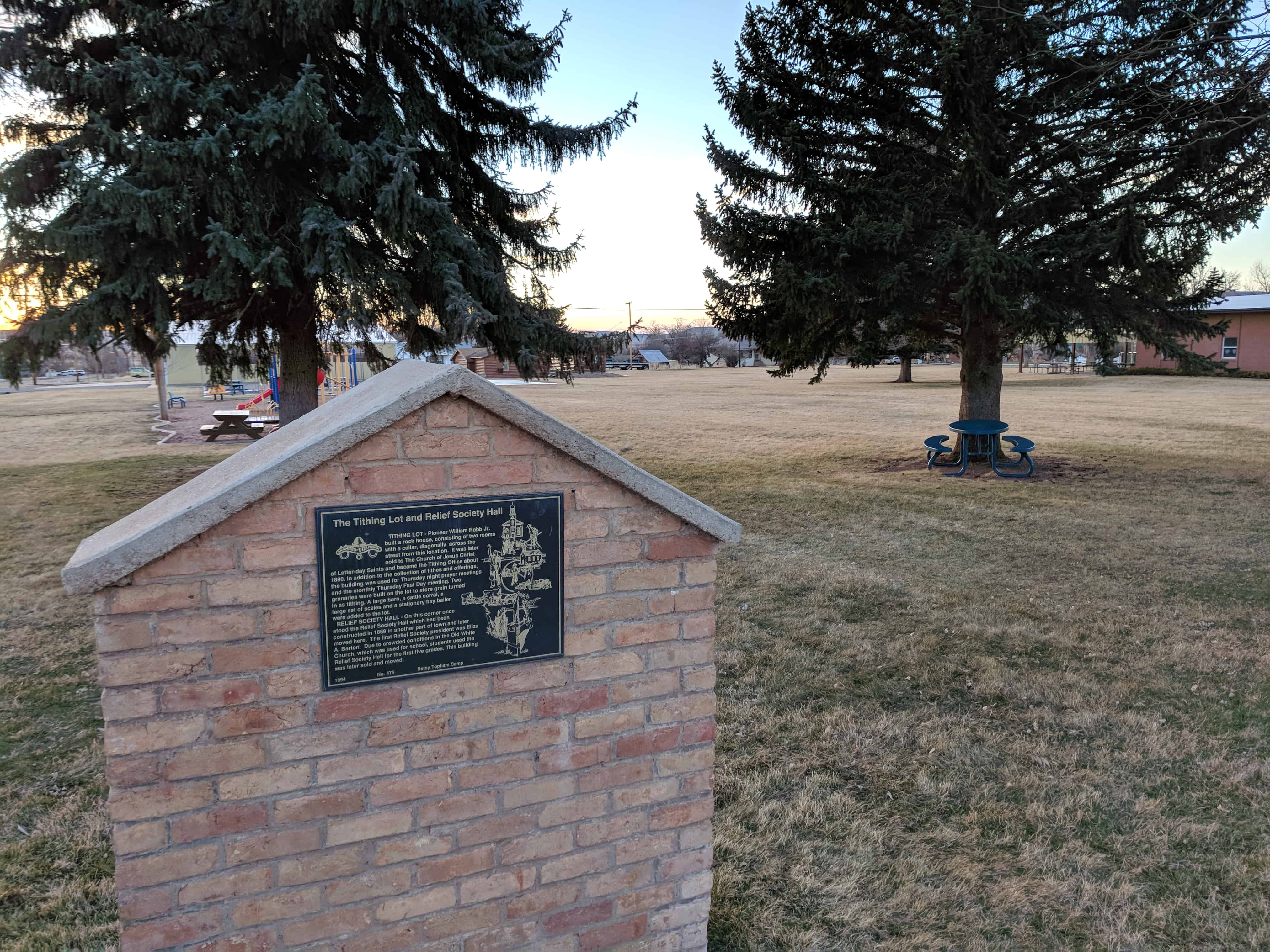
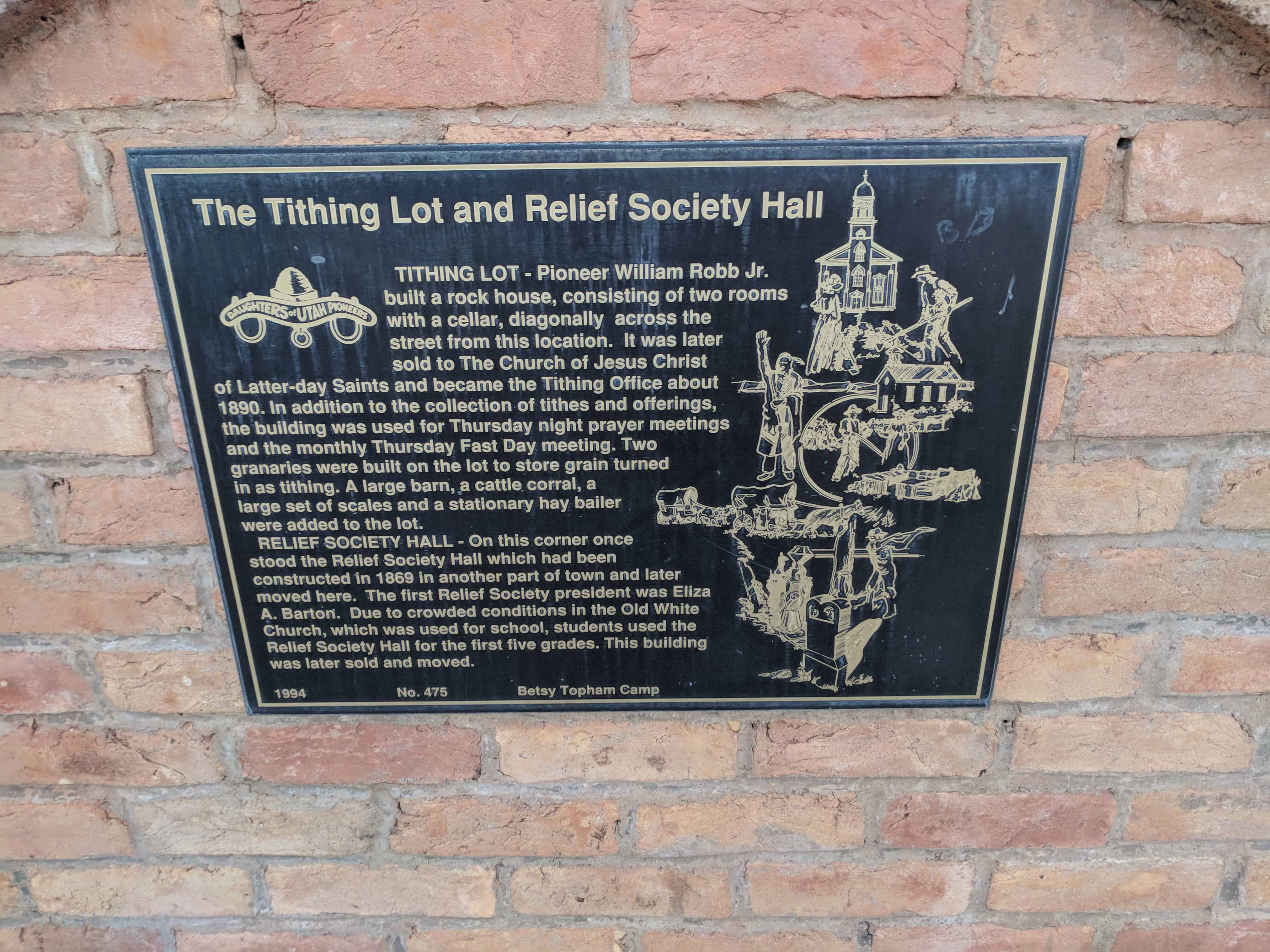
TITHING LOT –

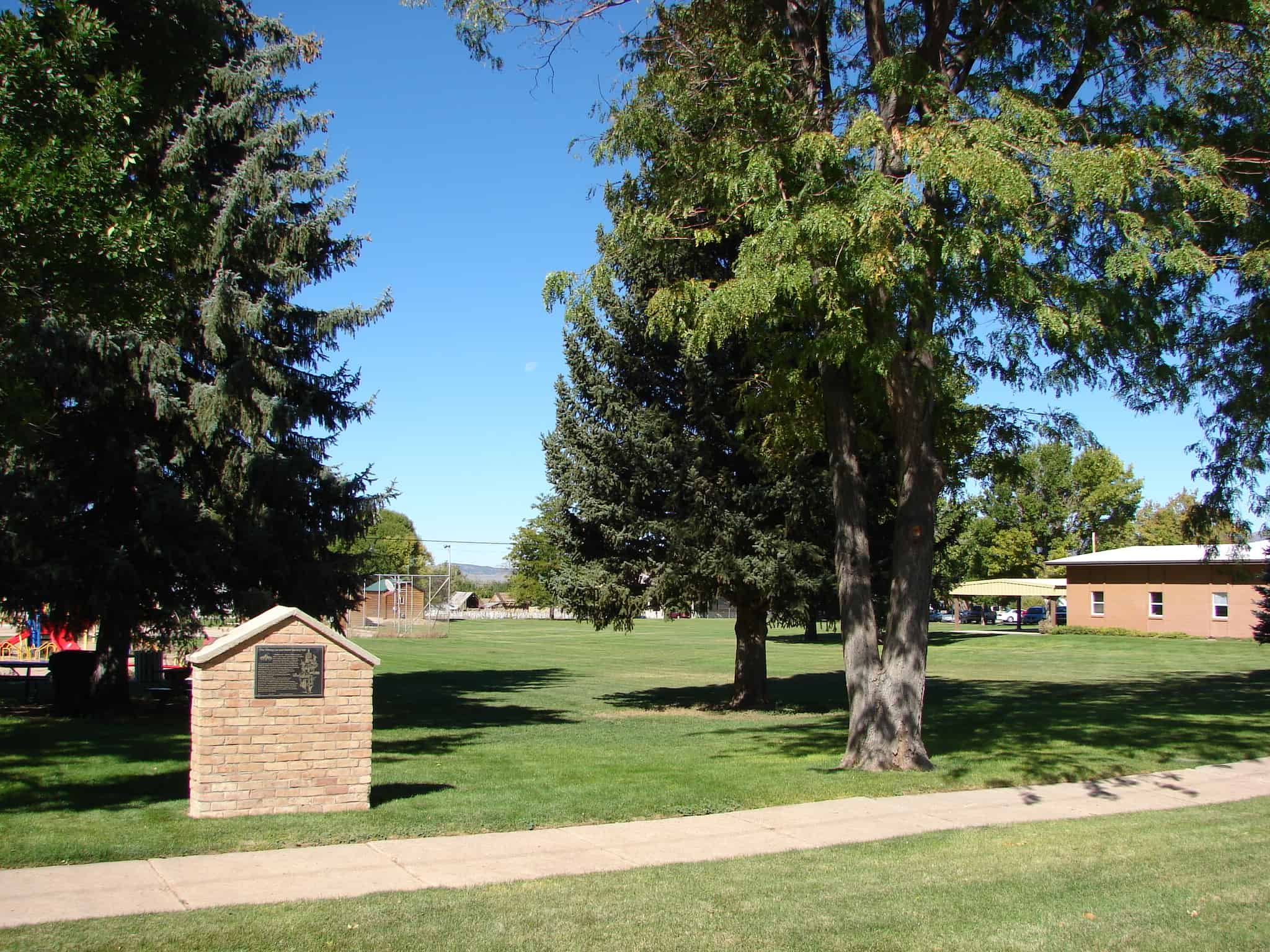
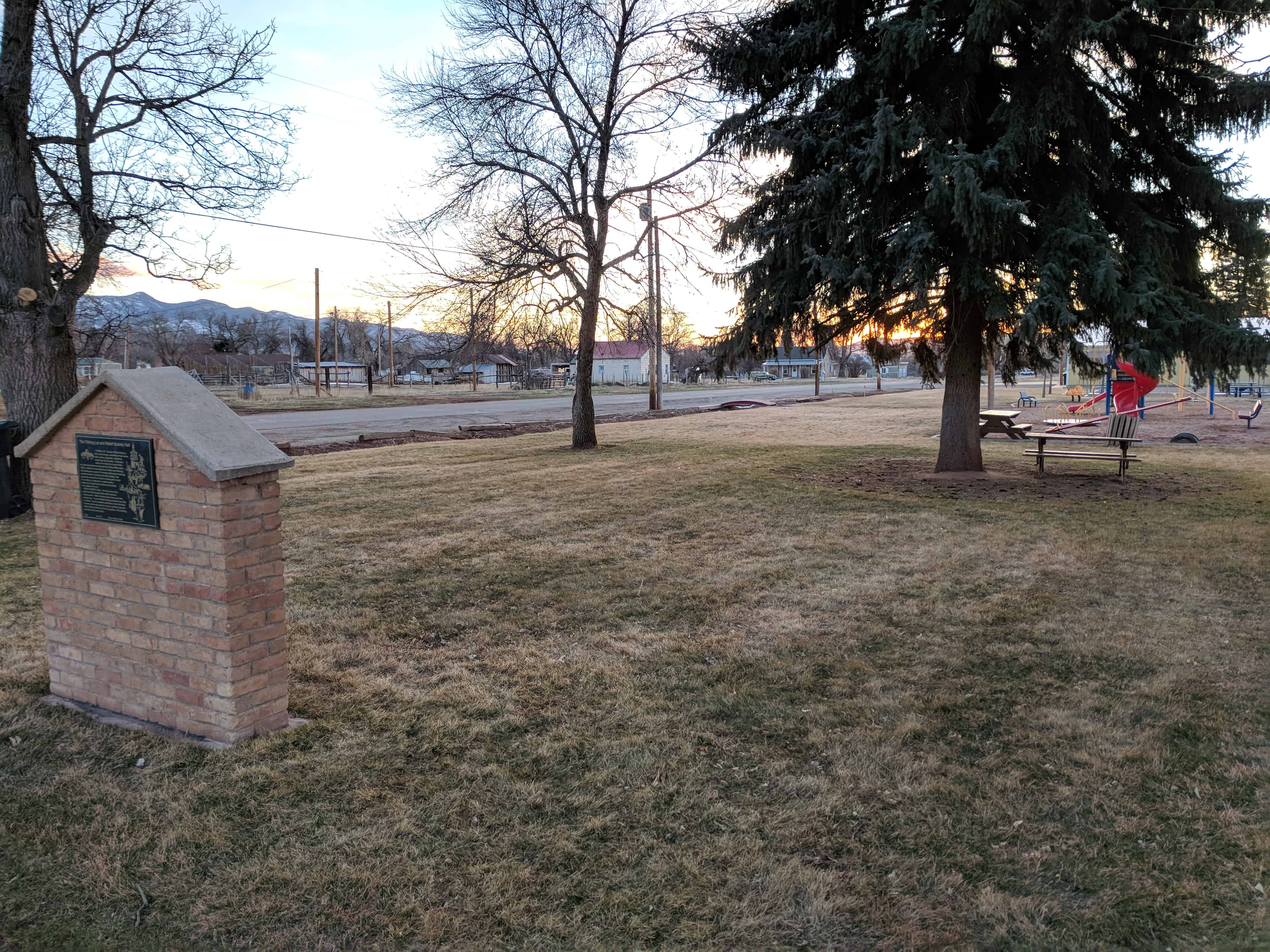
Pioneer William Robb Jr. built a rock house consisting of three rooms with a cellar, diagonally across the street from this location. It was later sold to the Church of Jesus Christ of Latter-day Saints and became a tithing office about 1890. In addition to the collection of tithes and offerings, the building was used for Thursday Night prayer meetings and the monthly Thursday Fast Day meeting. Two granaries were built on the lot to store grain turned in as tithing. A large barn, a cattle corral, a large set of scales and a stationary hay bailer were added to the lot.

RELIEF SOCIETY HALL –

On this corner once stood the Relief Society Hall which had been constructed in 1869 in another part of town and later moved here. The first Relief Society president Eliza A. Barton. Due to crowded conditions in the Old White Church, which was used for school, students used the Relief Society Hall for the first five grades. This building was later sold and moved.

Located in Paragonah.

picture01oct07-048

2018-02-18 18.12.51

2018-02-18 18.12.56

2018-02-18 18.13.00

Check out all of the historic markers placed by the Daughters of Utah Pioneers at JacobBarlow.com/dup

← Older posts
Newer posts →

Follow Jacob

Follow Jacob

Come wander with me on Youtube.

Blog Stats

  • 2,091,753 hits

Social and Other Links

BarlowLinks.com

Recent Posts

  • Provo High School Seminary Building
  • 821 E 100 S
  • 820 E 100 S
  • 817-819 E 100 S
  • 814 E 100 S

Archives

Loading Comments...