Tags
The Soldier Creek Kilns / Waterman Coking Ovens
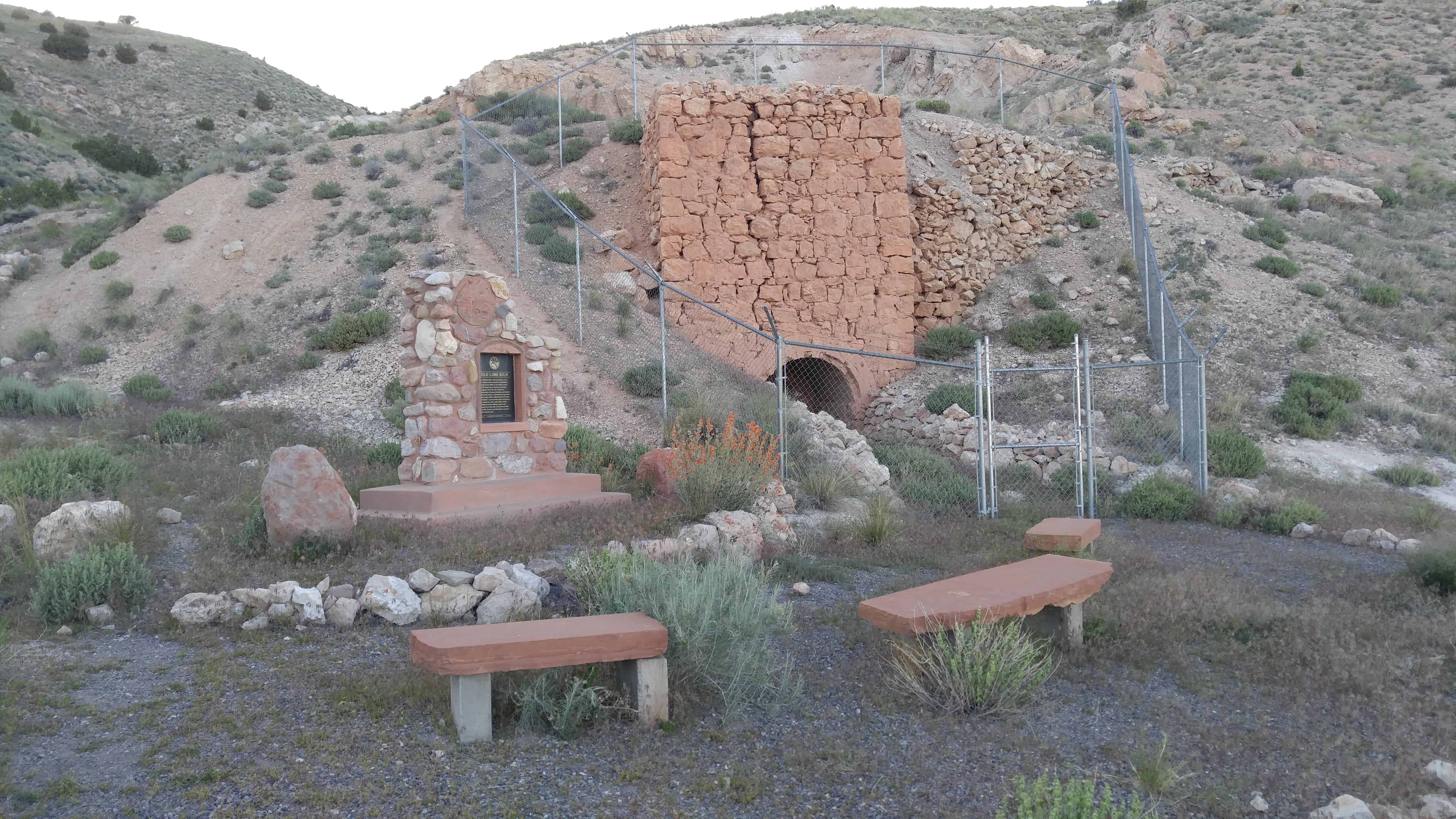
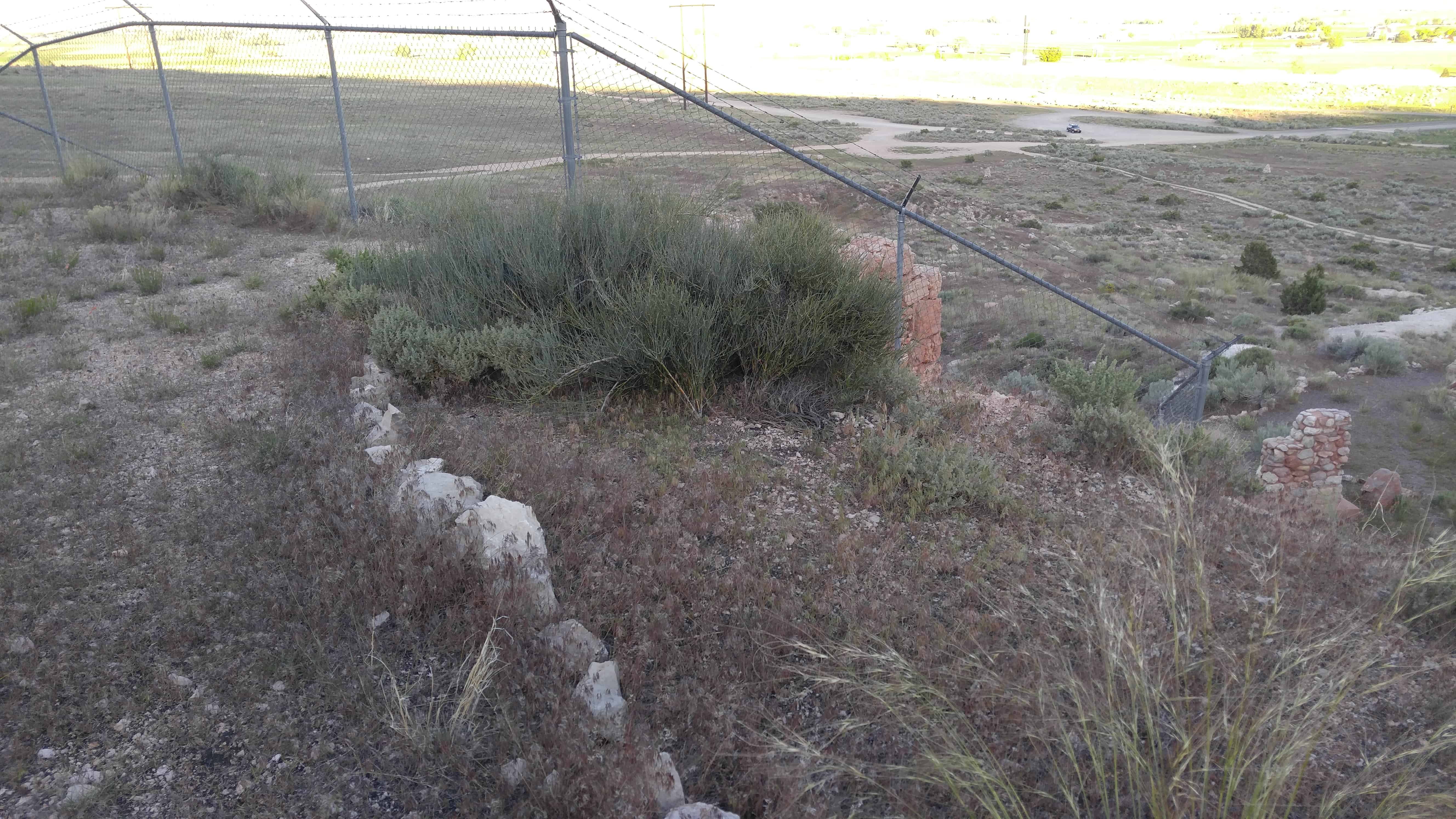
The Soldier Creek Kilns, comprising the remnants of four charcoal kilns and one lime kiln, are significant because of their economic importance to the Utah mining industry in the Qphir and Rush Valley Mining Districts, which were among the oldest mining areas in the state. The charcoal kilns dating from about the 1870’s, represent only a few remaining kilns of the early mining efforts in Utah, especially as they occurred in the leading smelter area in Stockton, near Rush Lake. Of equal sigificance is the historical-archealogical potential of the area immediately surrounding the kilns in providing a more complete documentation of the charcoal industry and the activities of its workers in Utah and the west. Charcoal was necessary as a fuel for the early smelting of ores, and it was smelting that made mining of lower grade areas economically feasible, thus fostering the growth of commercial mining in Utah. Mining has remained a vital component of the states economy.
The Kilns were added to the National Register of Historic Places (#80003973) on August 19, 1980. The text on this page is mostly from the nomination form for the national register.
Related:
Commercial mining for the precious metals began in Utah with the arrival of Colonel Patrick E. Connor and the Third California Volunteers in 1862. By 1863 Connor’s troops, many of whom were experienced miners from the California and Nevada boom towns, were prospecting the mountains to the east and west of Salt Lake City. Initial discoveries were made in 1863 and in the immediate years prospecting and mining blossomed. The mountains to the west of Salt Lake were especially fertile for early mining.
The Rush Valley district, in Tooele County, was formed in June, 1864. First occupied as a military post, the Stockton area became a smelting point for areas mined in the surrounding hills, both from the Qphir and Rush Valley districts. Many claims in Rush Valley had been filed by soldiers stationed at Camp Douglas in Salt Lake. After the Civil War these men left the territory, having made their claim in the district perpetually valid by adhering to the by-laws of the district. This action prevented subsequent locations of the same grounds and retarded the development of Rush Valley for many years, with title lapsing by 1870. It also explains the paucity of solid documentation for this area.
Sporadic work in the district occurred through the 1870’s, including the building of small smelting works to accommodate various grades of ore. Several sources list various smelters as follows: Jacobs Smelting Company Works, Carson and Buzzo Smelting Works, Chicago Smelter, and the Waterman Smelting Works. All were located near the town of Stockton and on the shores of Rush Lake.
The Soldier Creek Kilns were built during the mid-1860’s to 1870’s period at a point…. Since charcoal was a necessity as fuel to fire the furnaces of these “smelters, the kilns represented a vital stage in the entire process. Early transportation of ores was difficult, therefore, ores from Ophir as well as Rush Valley were shipped to the Stockton smelters. Information relating directly to these kilns is most incomplete. However, in 1874 a mining newspaper, in describing the Chicago operation stated:
“In the rear of the furnaces are the fuel sheds, in which a supply is maintained of 20,000 bushels charcoal, and forty tons of coke. The charcoal is obtained under contract, from the adjacent mountains, and produced chiefly from nut pine, delivered at the works at twenty-one to twenty-two and half cents per bushel. The coke used is obtained from Pennsylvania at a cost of $36 to $42 per ton, …”
Sources also indicate that the Soldier Creek Kilns supported a small camp of fifteen to twenty families. The kilns were beehive kilns built of stone, and the presence in the area of a lime kiln illustrates the construction and maintenance stages of the process. Timber was harvested off the slopes of Bald Mountain, some two miles east of the kilns. In this regard the site was most appropriate, located on a flat between Silver Creek and the north flank of the canyon, near the mid-point between the lumber supply and smelters. A detailed historical archaeological survey may prove of great significance in better understanding this camp and its social and economic dynamics.
Information is available on the Beehive Kiln in general, thus, shedding light on the Silver Creek Kilns. The Beehive Kiln was introduced from the east and built in a form of a parabolic dome, with a base of fifteen, twenty, to twenty-four feet in diameter and a height of nineteen to twenty-two feet. In some sections it was a rule to make the height of the kiln equal to the diameter. Thicknesses of the walls varied from the base, (greater), to the summit, (smaller). Two openings existed and were generally closed by iron doors. One opening was at the base and the other approximately two-thirds of the way to the apex, used to load the kiln with wood. A 16-foot kiln held about 15 cords of wood, while a 26-foot kiln held 45 cords. Kilns ranged in cost from $500 to $1000 and since, if maintained, they lasted a long time, represented a relatively small investment.
Kilns were usually fired at the bottom center of the structure. The fire was drawn to the top by a space left in the upper door. The door was then closed entirely and the fire regulated by vent holes at the base of the kiln. Cracks in the kilns had to be patched, and the Silver Creek kilns exhibit this patching with stucco-like material present on both the interior and exterior surfaces. Duration of the burning was from three to seven days and another three to six days for a cooling period.
Little is actually known about the charcoal industry in Utah. This is especially true concerning the social aspects of the industry. The Silver Creek site, as noted in the description, offers the possibility of recovering information archeologically to shed much needed documentation on this vital phase of early mining in Utah. Mining has been recognized as having been critical to Utah’s economy and since the charcoal industry was of significance to mining, the dynamics of that industry may prove of added importance to an understanding of the total Utah mining experience.