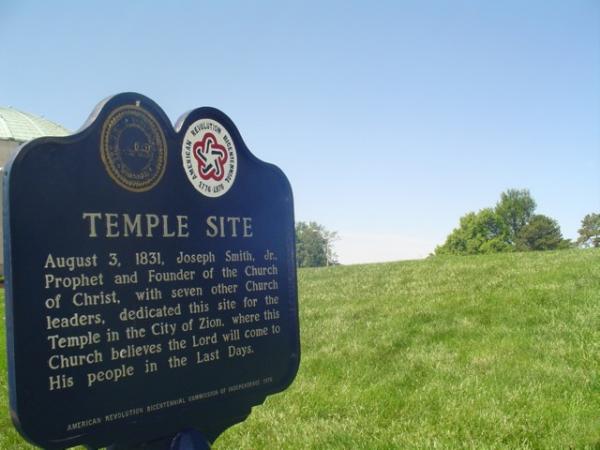
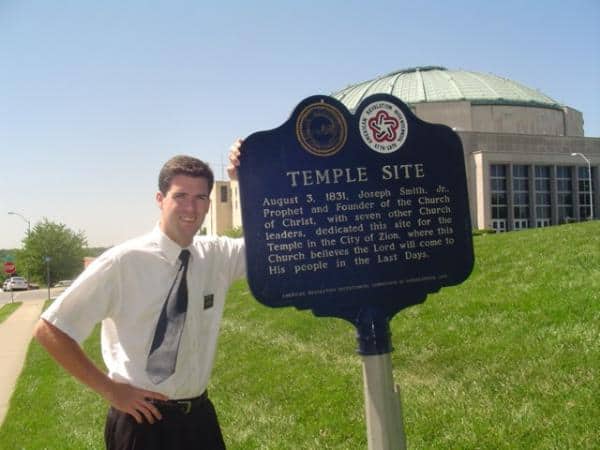
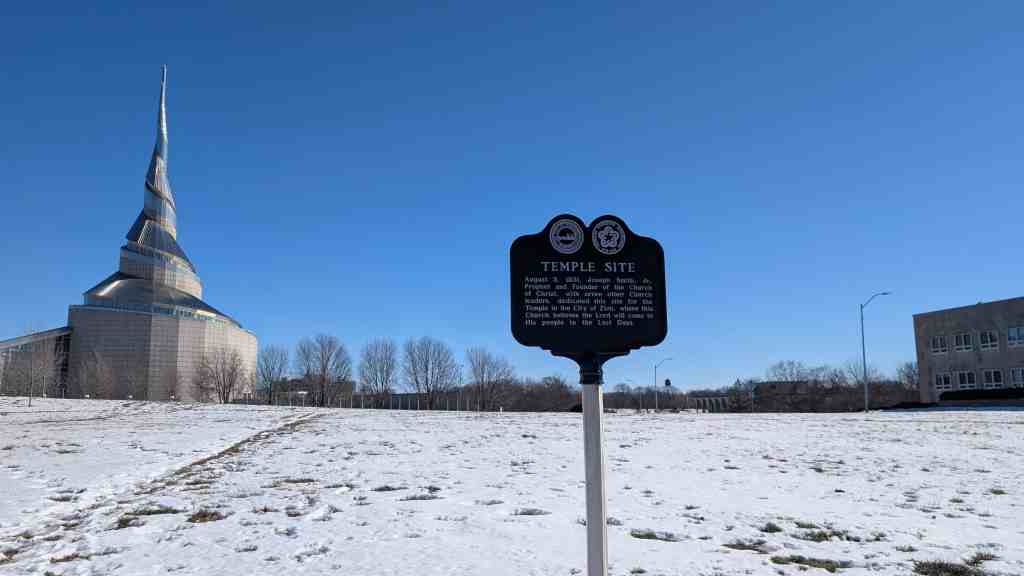
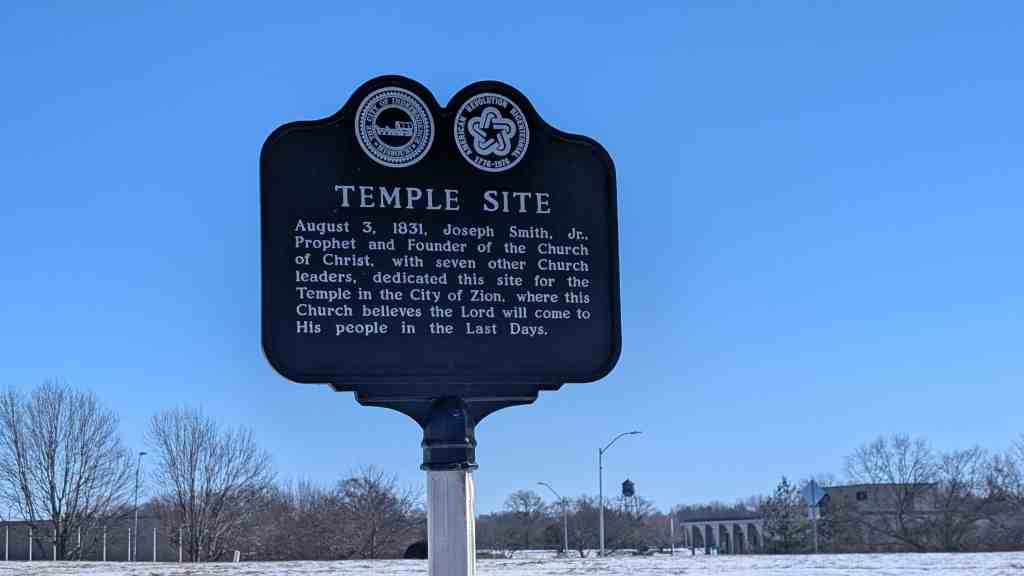
August 3, 1831, Joseph Smith Jr. Prophet and Founder of the Church of Christ, with seven other church leaders, dedicated this site for the Temple in the city of Zion, where this church believe the Lord will come to his people in the last days.
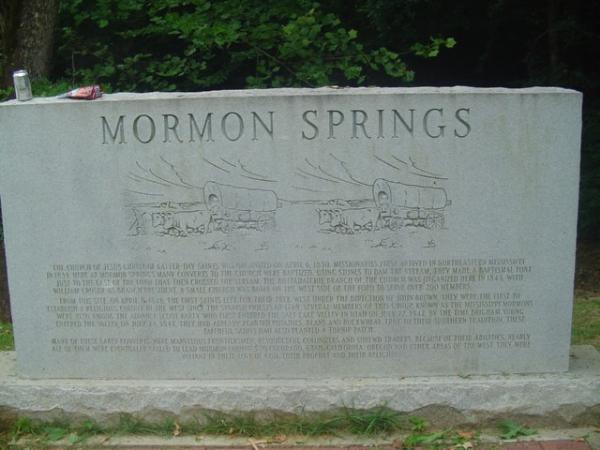
The Church of Jesus Christ of Latter-Day Saints was organized April 6th, 1830 and Missionaries first arrived in North Eastern Mississippi in 1839, here at Mormon Springs many converts to the church were baptized, using stones to dam the stream they made a baptismal font just to the east of the ford that crossed the stream…..
From this site the first Mississippi Saints left for their trek west…
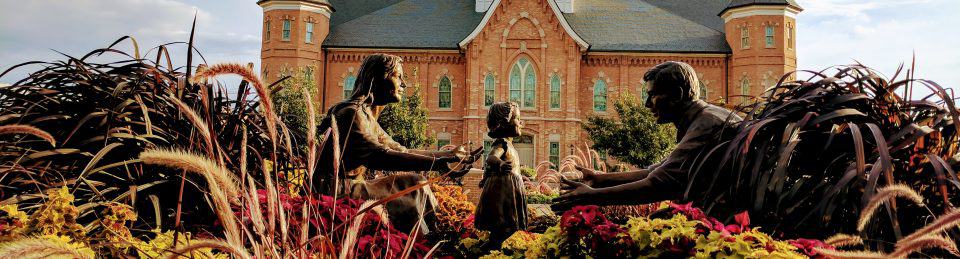
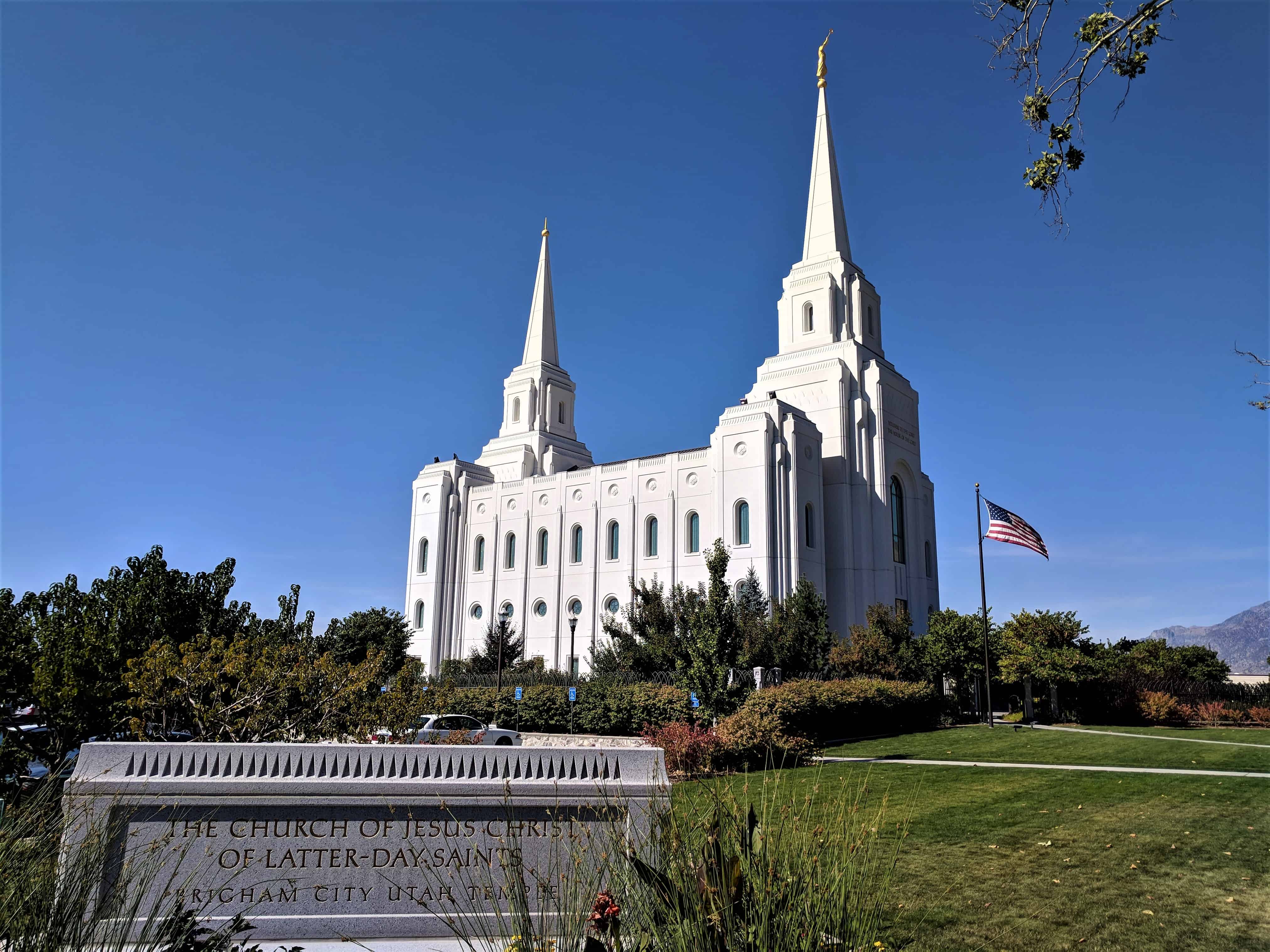
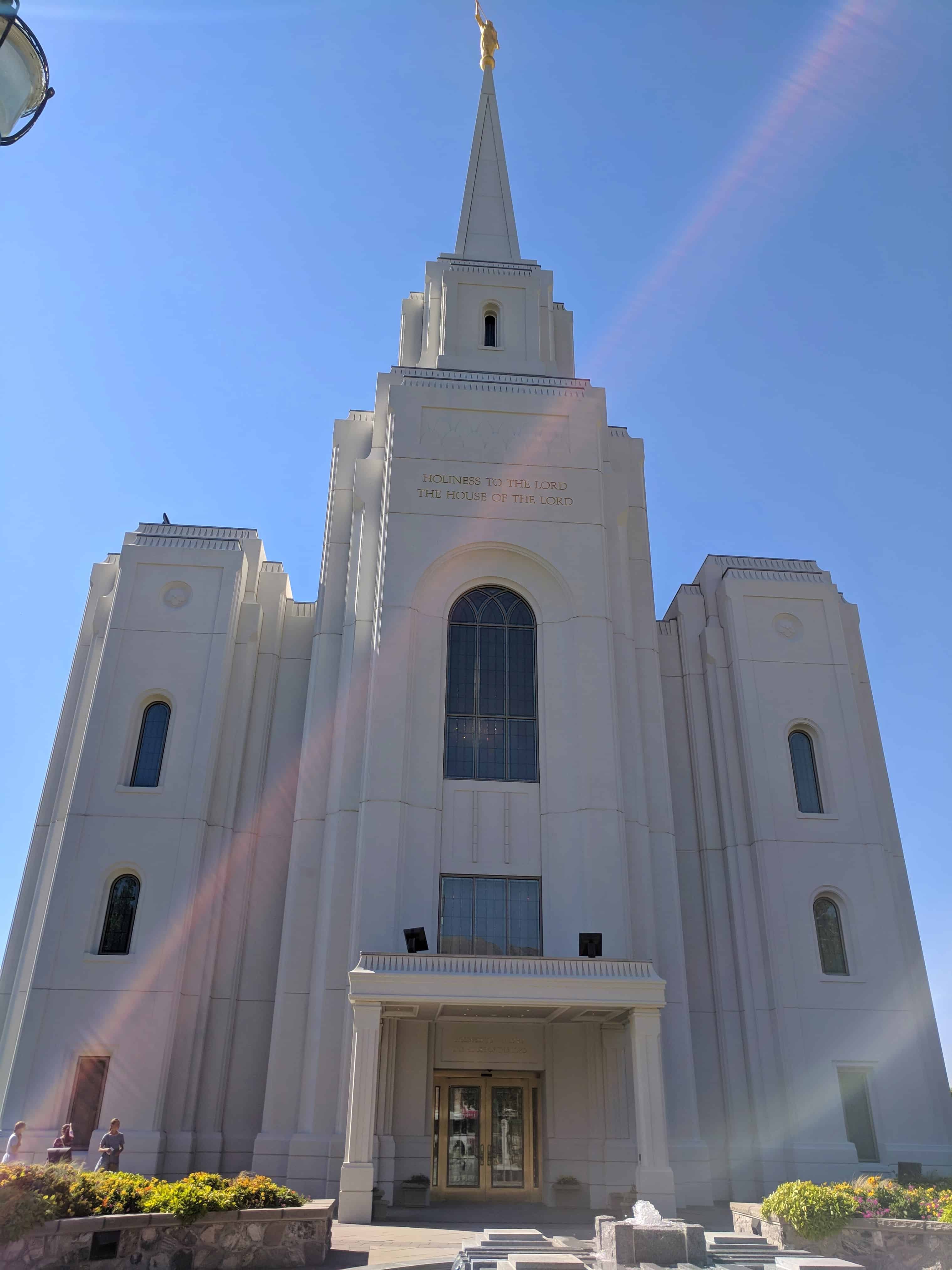
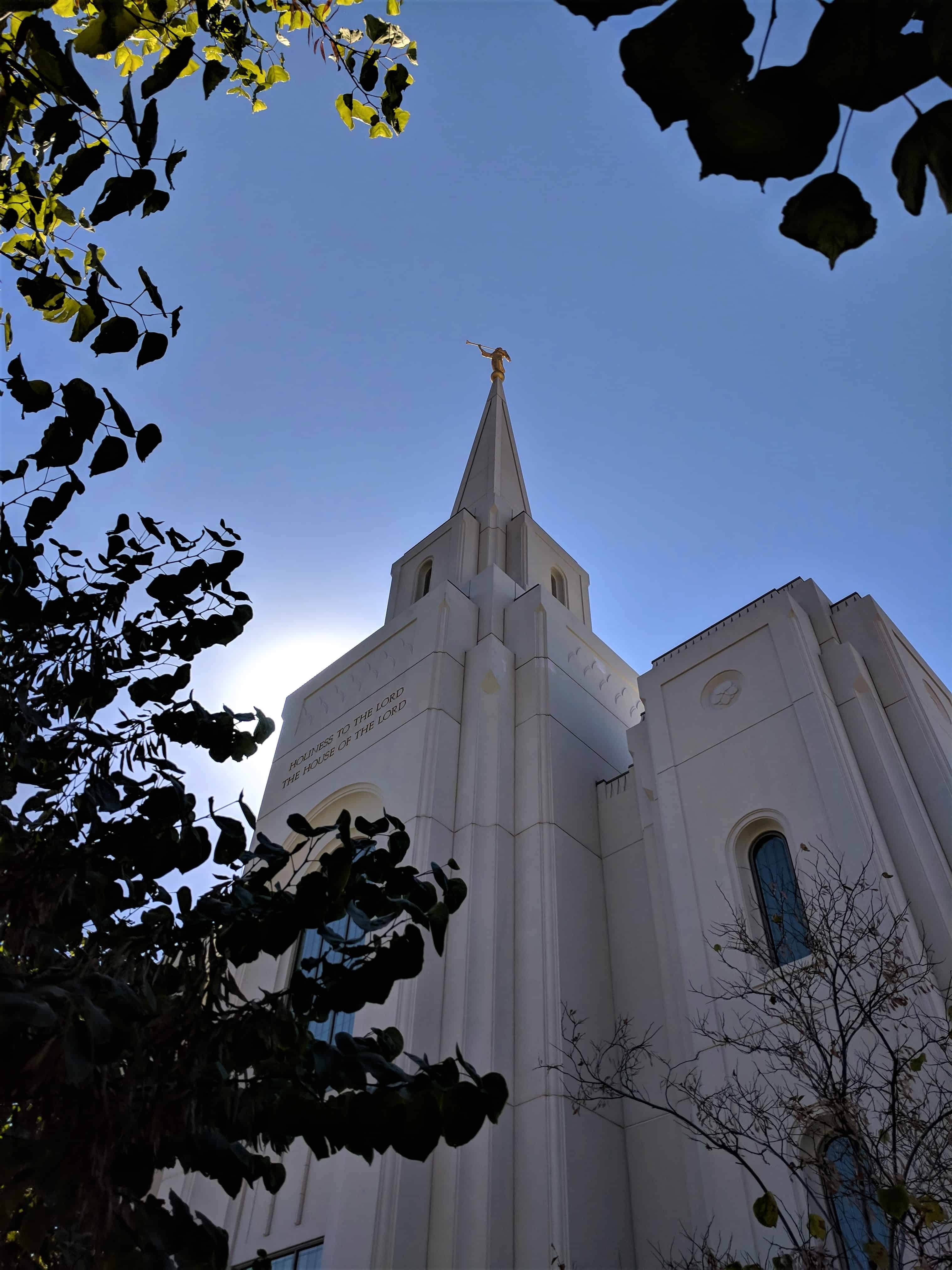
The temple was announced on January 25, 2010, by church president Thomas S. Monson. The temple is located on the southernmost edge of Utah’s Wasatch Front, and is the 15th dedicated temple in the state. The Provo City Center and Cedar City temples, both under construction, will bring the total to 17 when they are completed.
Dallin H. Oaks presided at the groundbreaking ceremony on October 8, 2011.
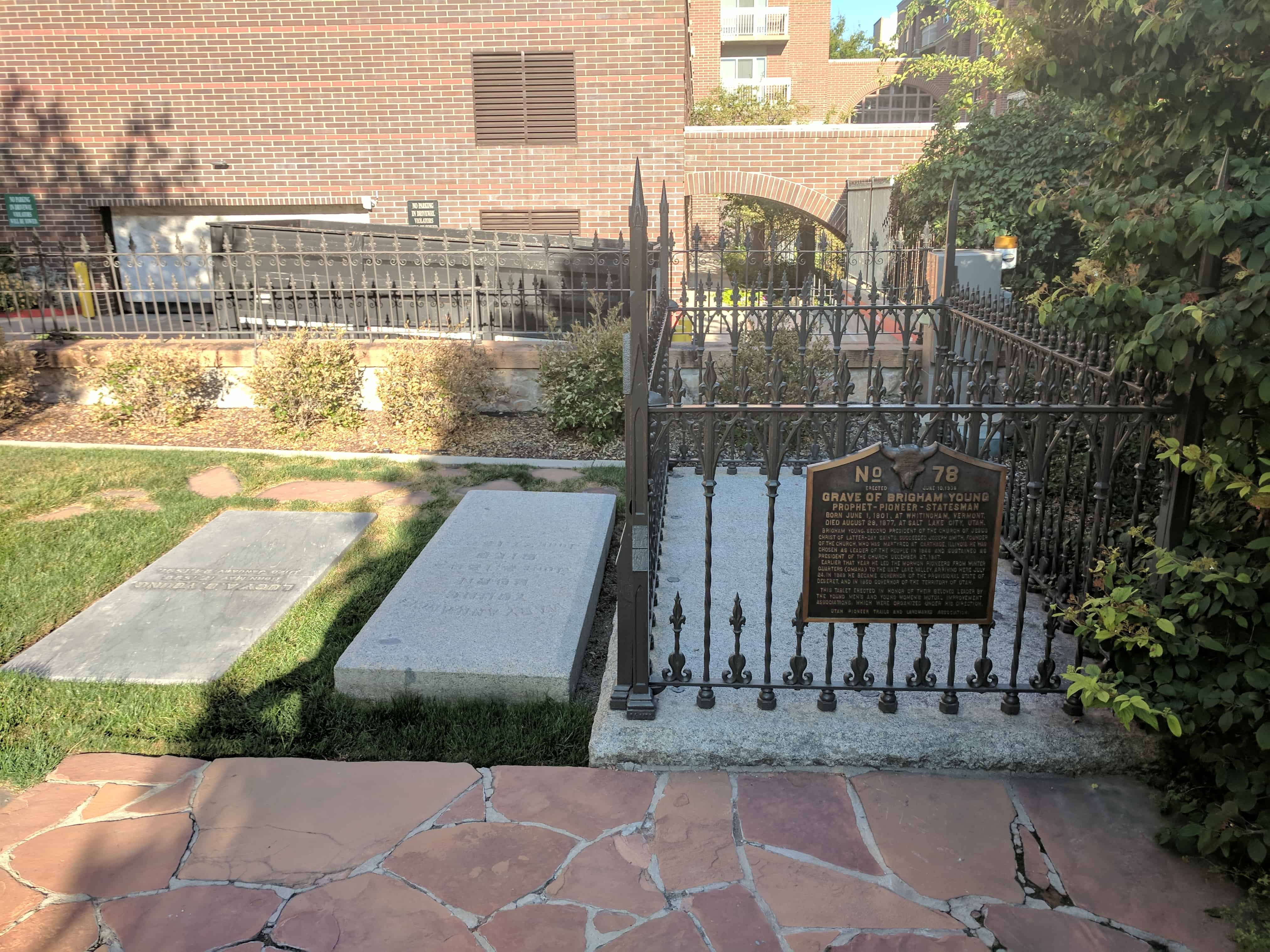
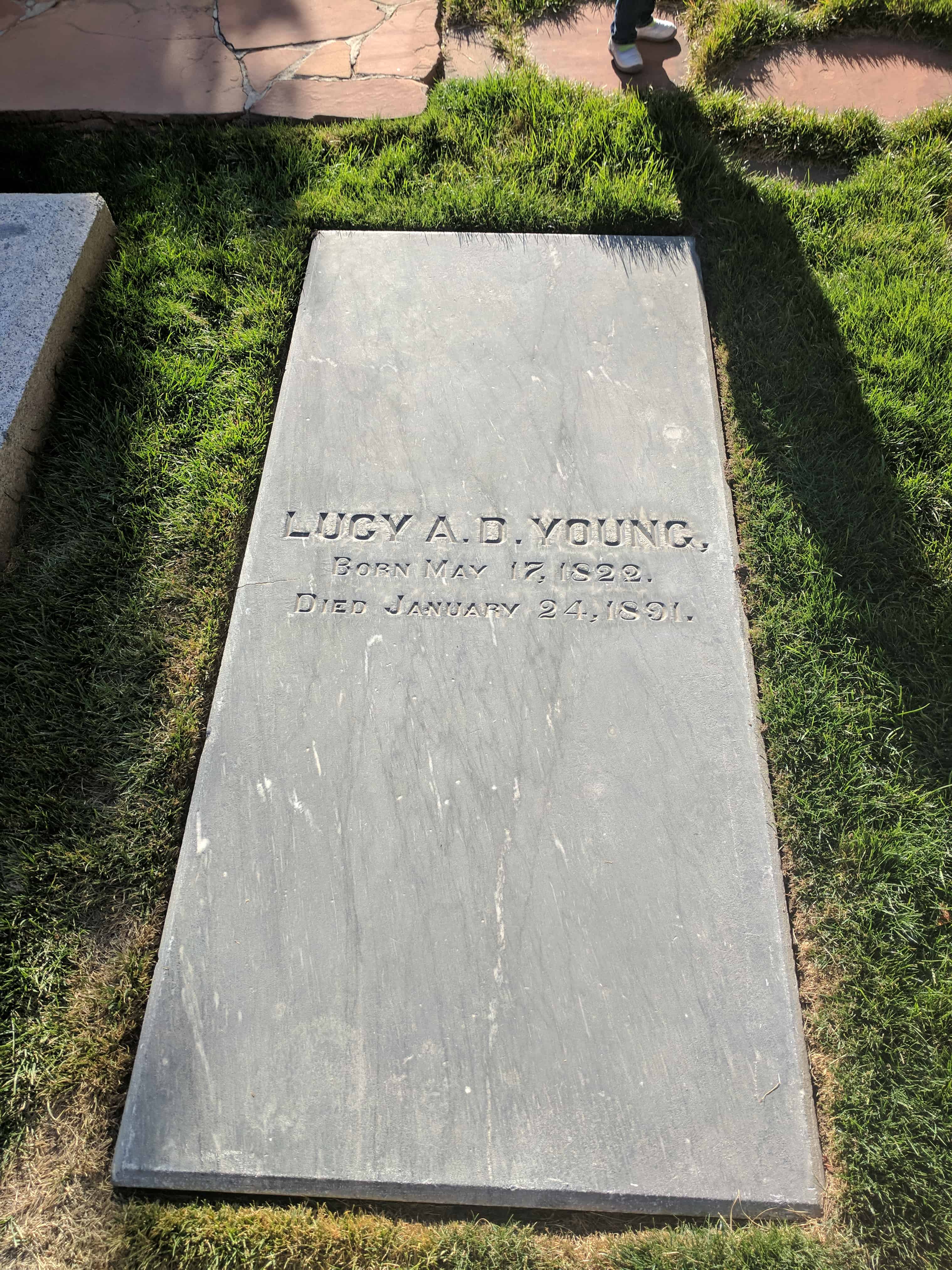
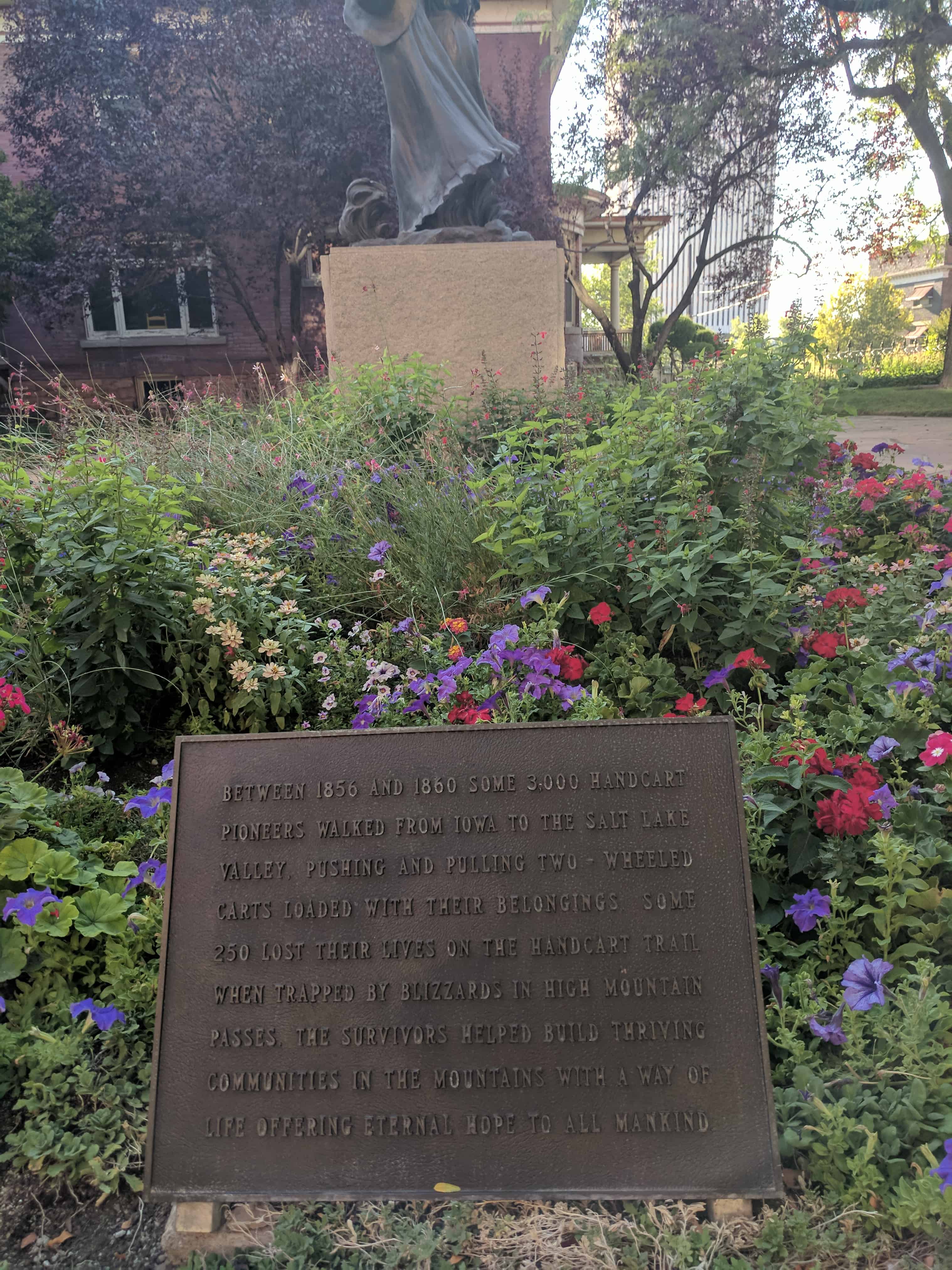
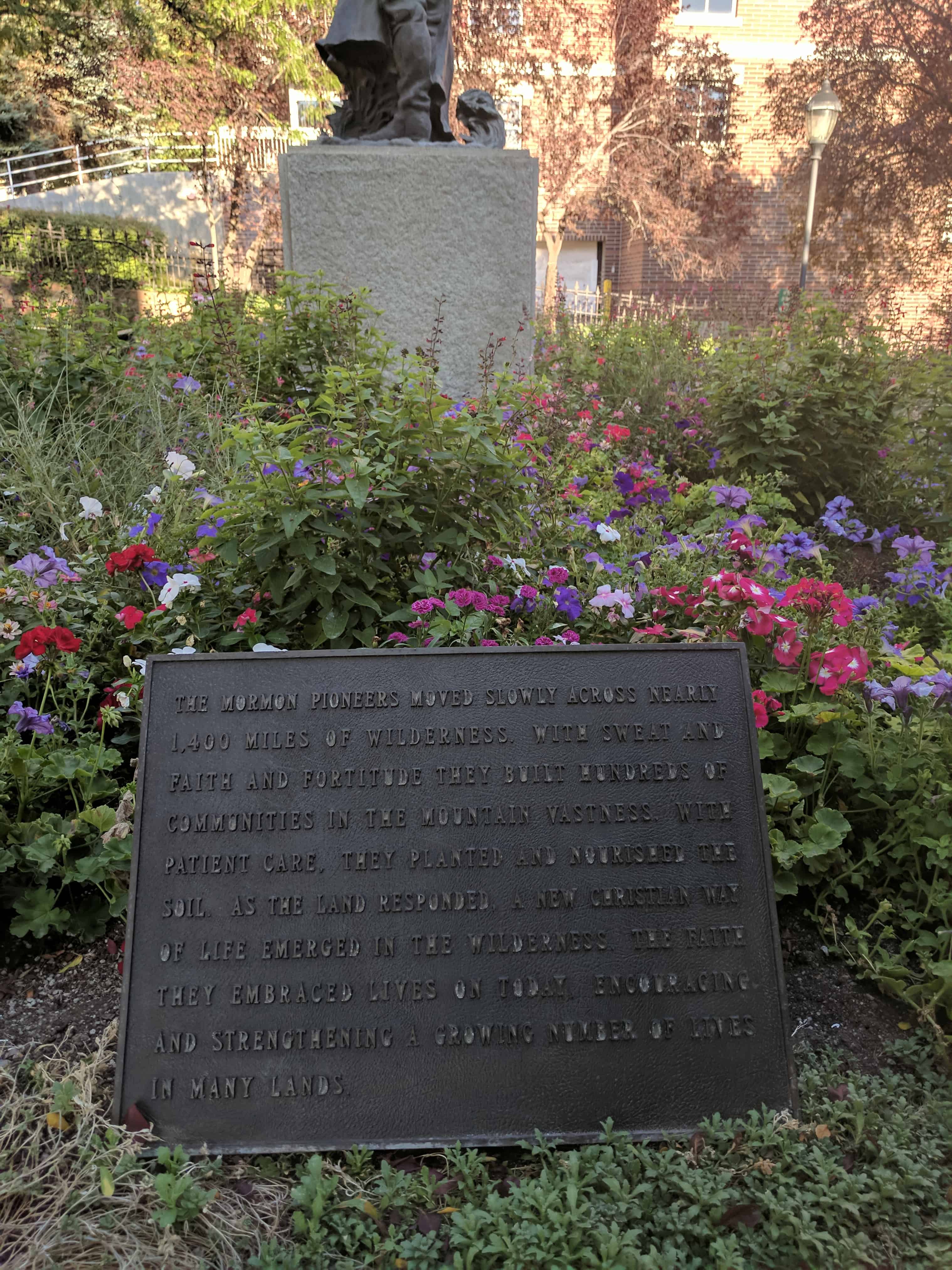
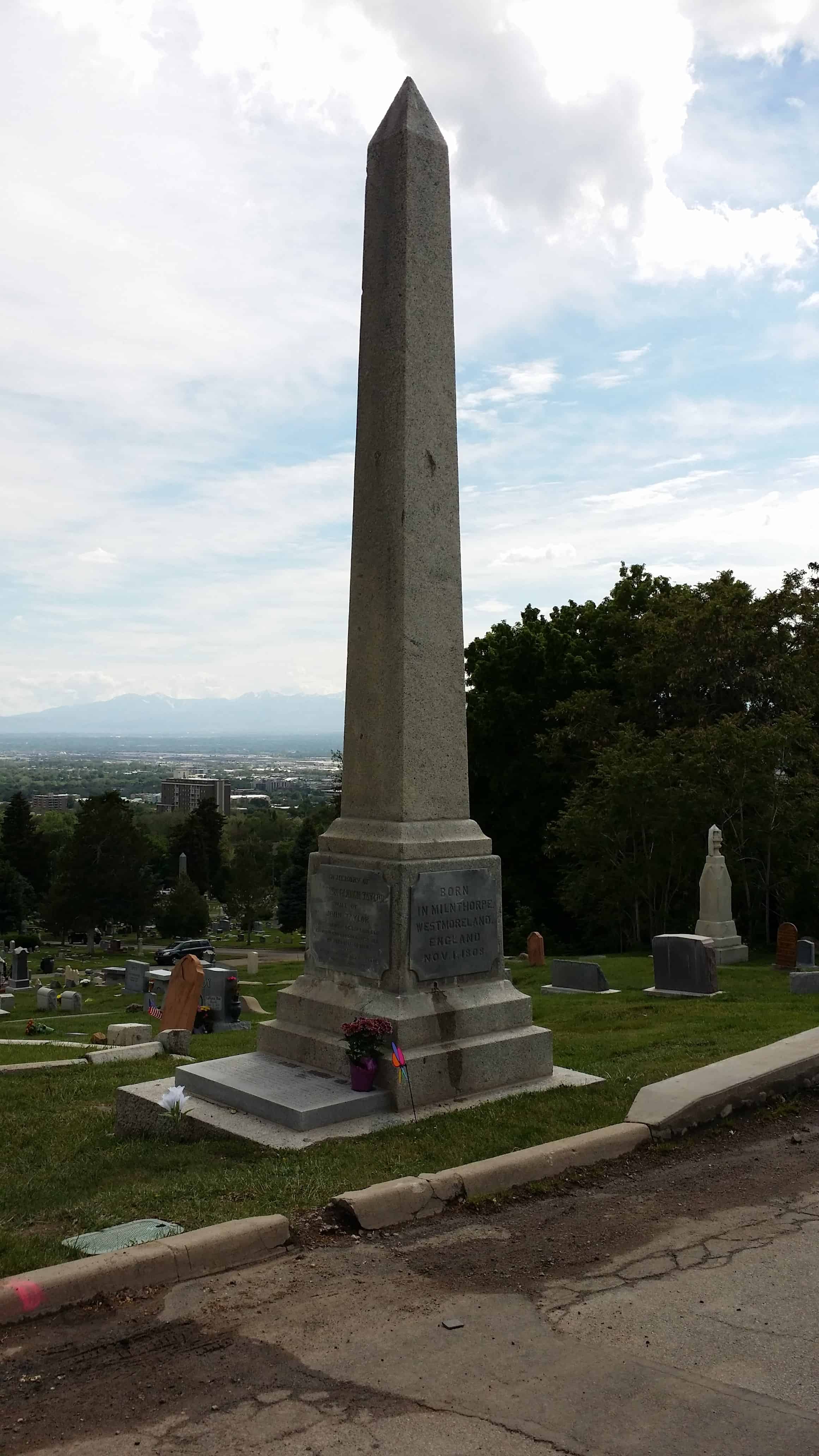
GRAVE OF BRIGHAM YOUNG PROPHET – PIONEER – STATESMAN
Born June 1, 1801, at Whitingham, Vermont Died August 29, 1877, at Salt Lake City, Utah Brigham Young, second President of the Church of Jesus Christ of Latter-day Saints succeeded Joseph Smith, founder of the Church, who was martyred at Carthage, Illinois. He was chosen as leader of the people in 1844 and sustained as President of the Church December 27, 1847. Earlier that year he led the Mormon Pioneers from Winter Quarters (Omaha) to the Salt Lake Valley, arriving here July 24. In 1849 he became Governor of the Provisional State of Deseret and in 1850 Governor of the Territory of Utah. This tablet erected in honor of their beloved leader by the Young Men’s and Young Women’s Mutual Improvement Associations, which were organized under his direction.
See other historic markers in the series on this page for UPTLA/SUP Markers.
For a list of the presidents of the church and links to their gravesites click here.
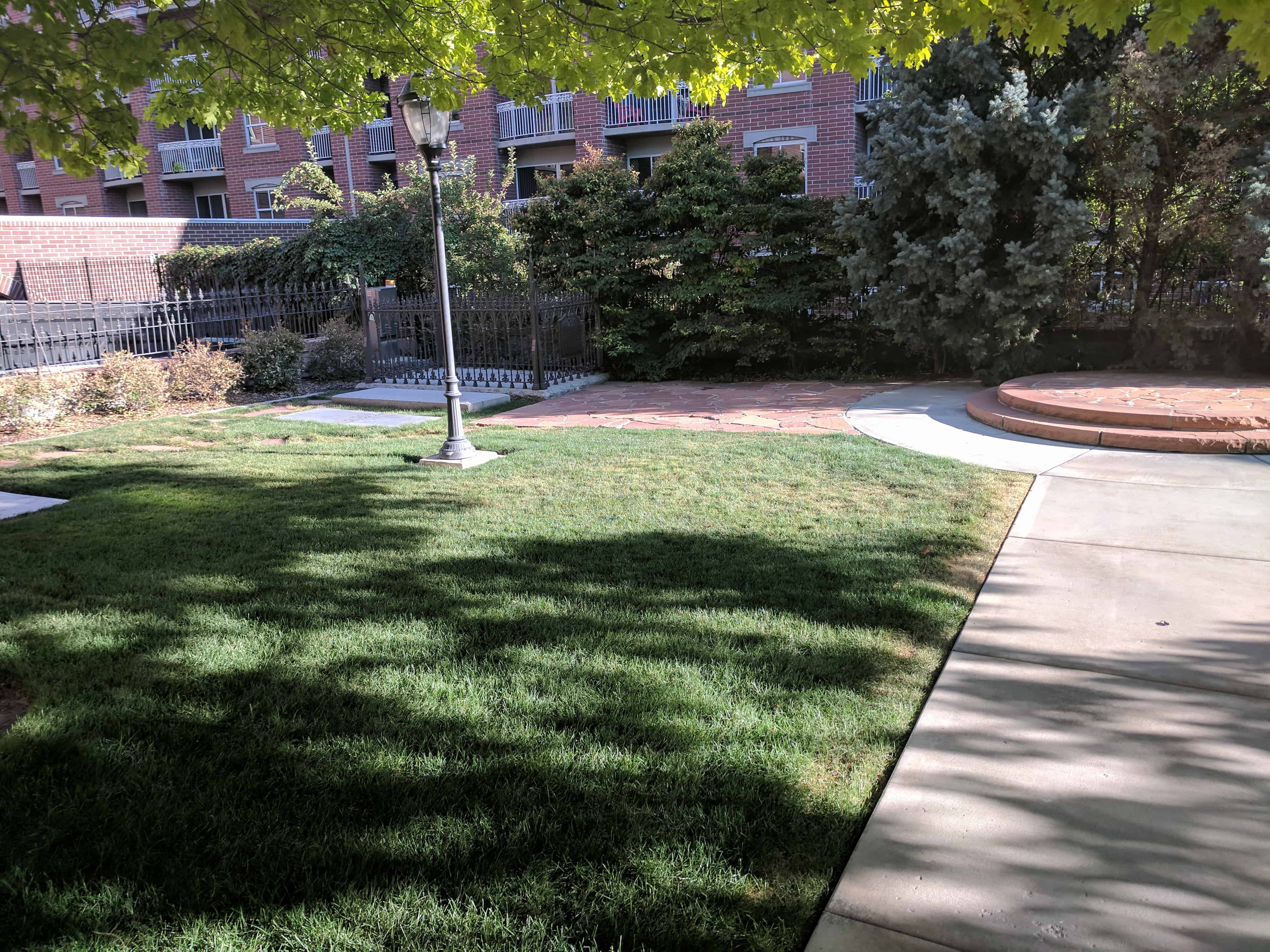
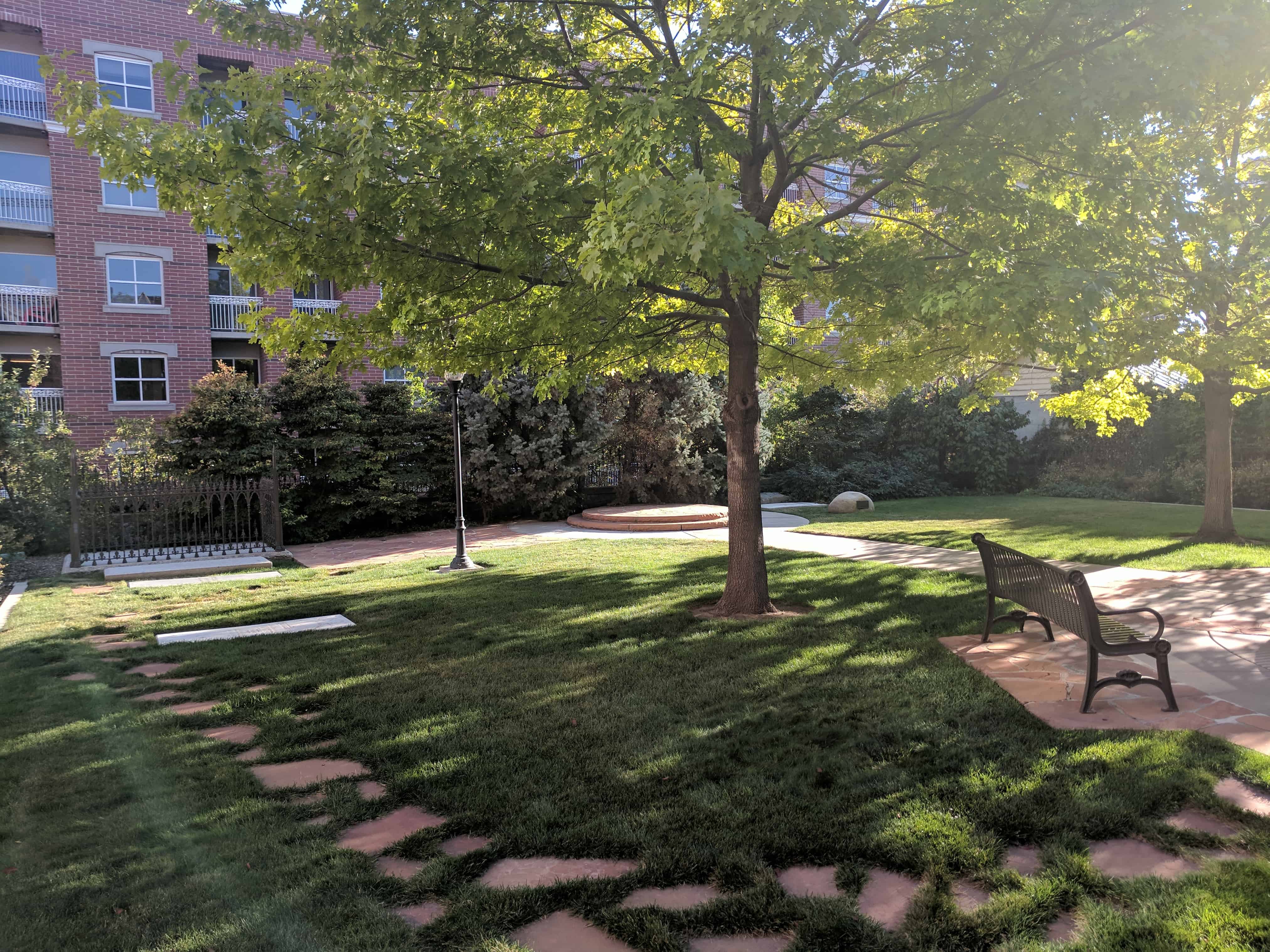
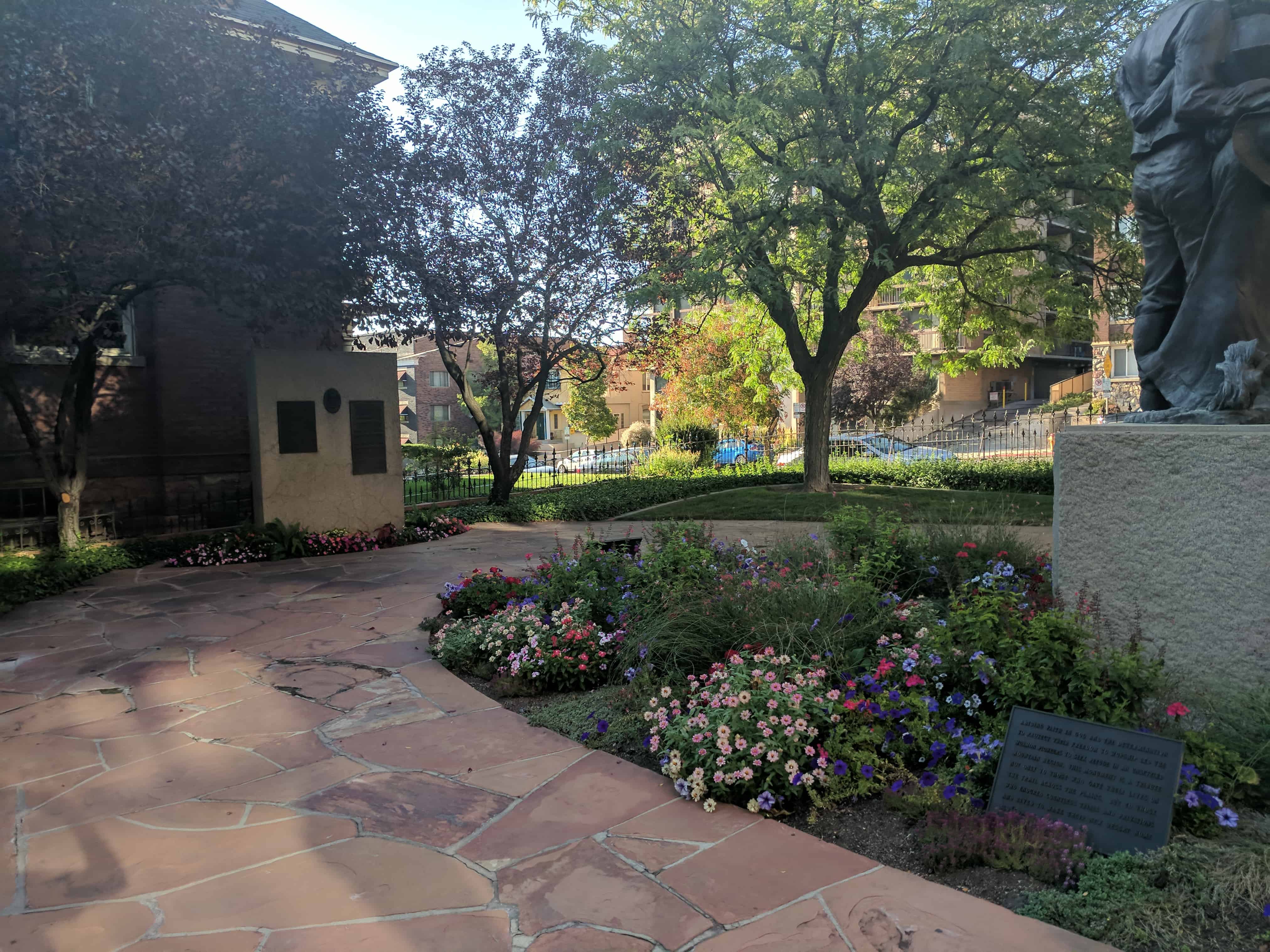
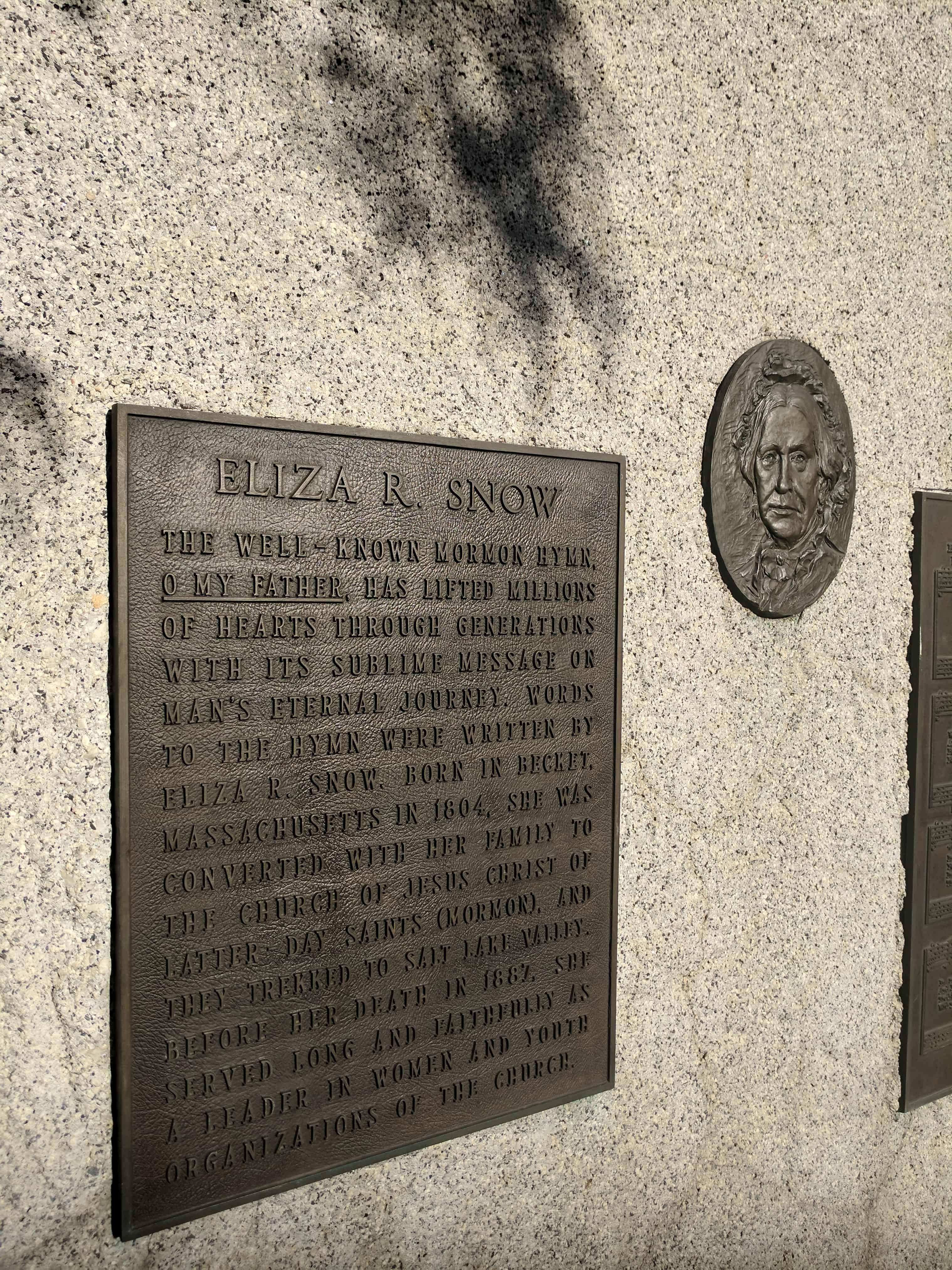
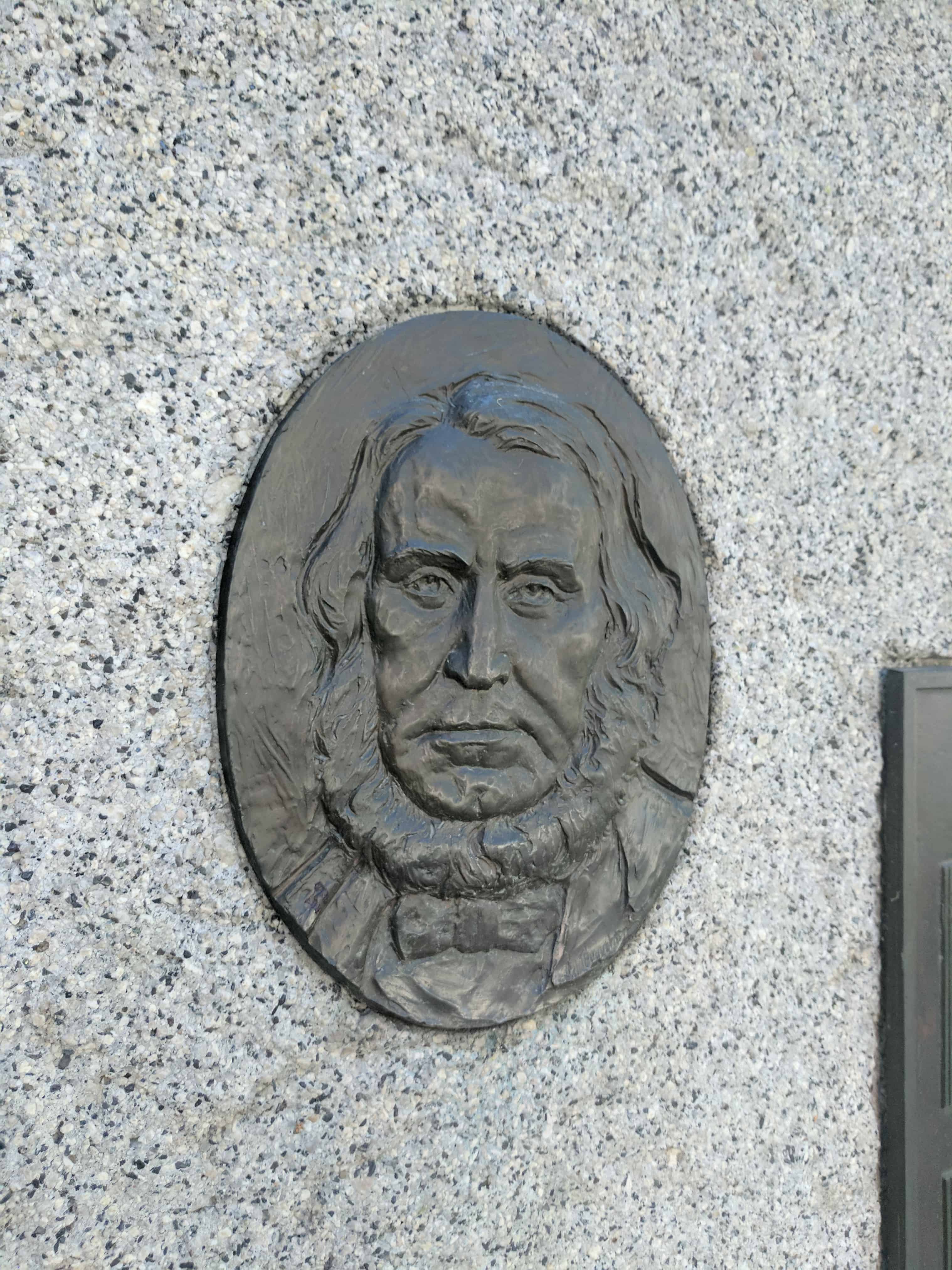
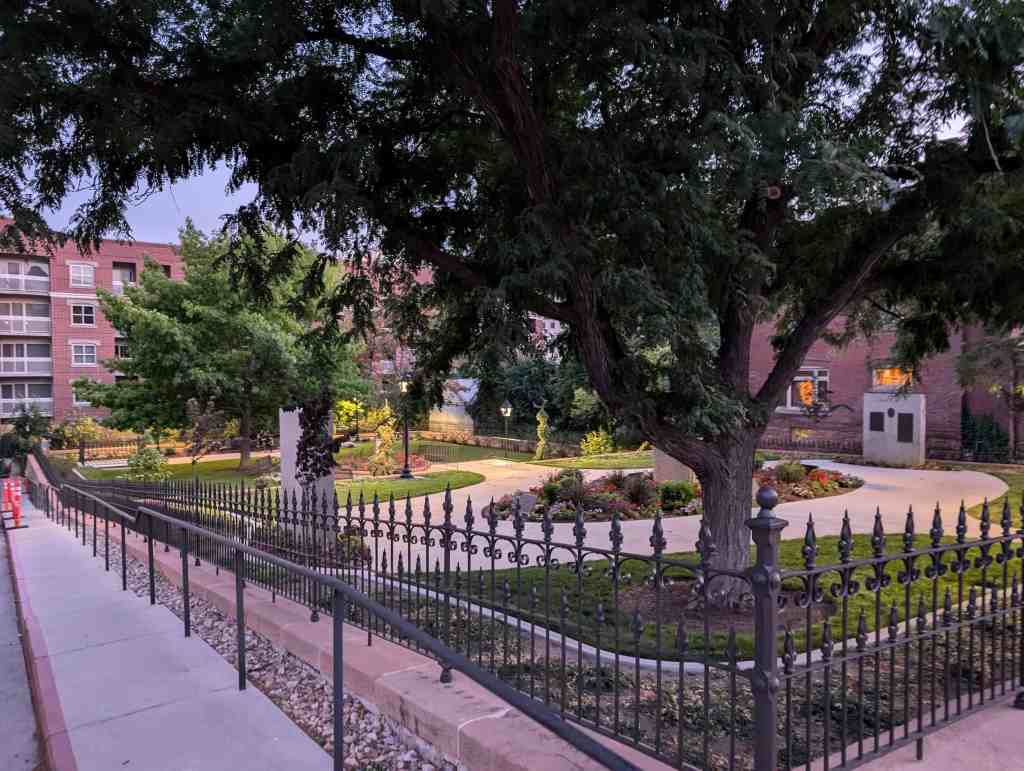
Brigham Young’s grave is a significant site in the Avenues Historic District. A green-lawned area, surrounded by an iron fence, the site marks the spot of Young’s burial. Brigham Young (1801-1877) served as L.D. S. Church President from 1847 until his death.
In May, 1974 the Sons of the Utah Pioneers “beautified” the grounds. They commissioned sculptor Edward J. Fraughton to fashion an eight-foot bronze statue which now marks the grave.
The site remains significant both because of Brigham Young’s importance as a Mormon and political leader and pioneer, as well as the general feeling of the grave an integral part of the Avenues. In addition, this is the only “family plot ” cemetery in the Avenues, and this portion of the area was owned by Young, close to his residence on South Temple.
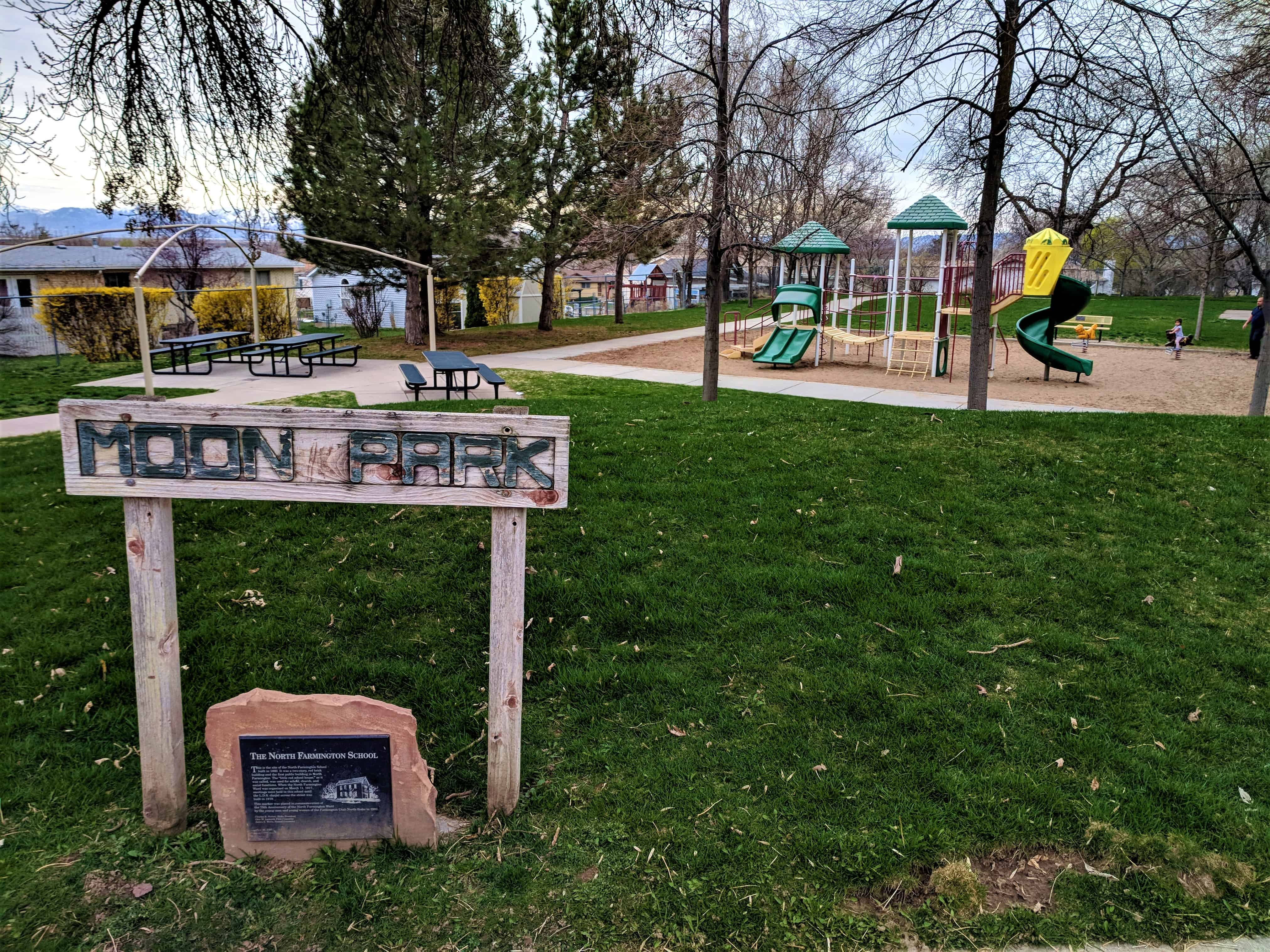
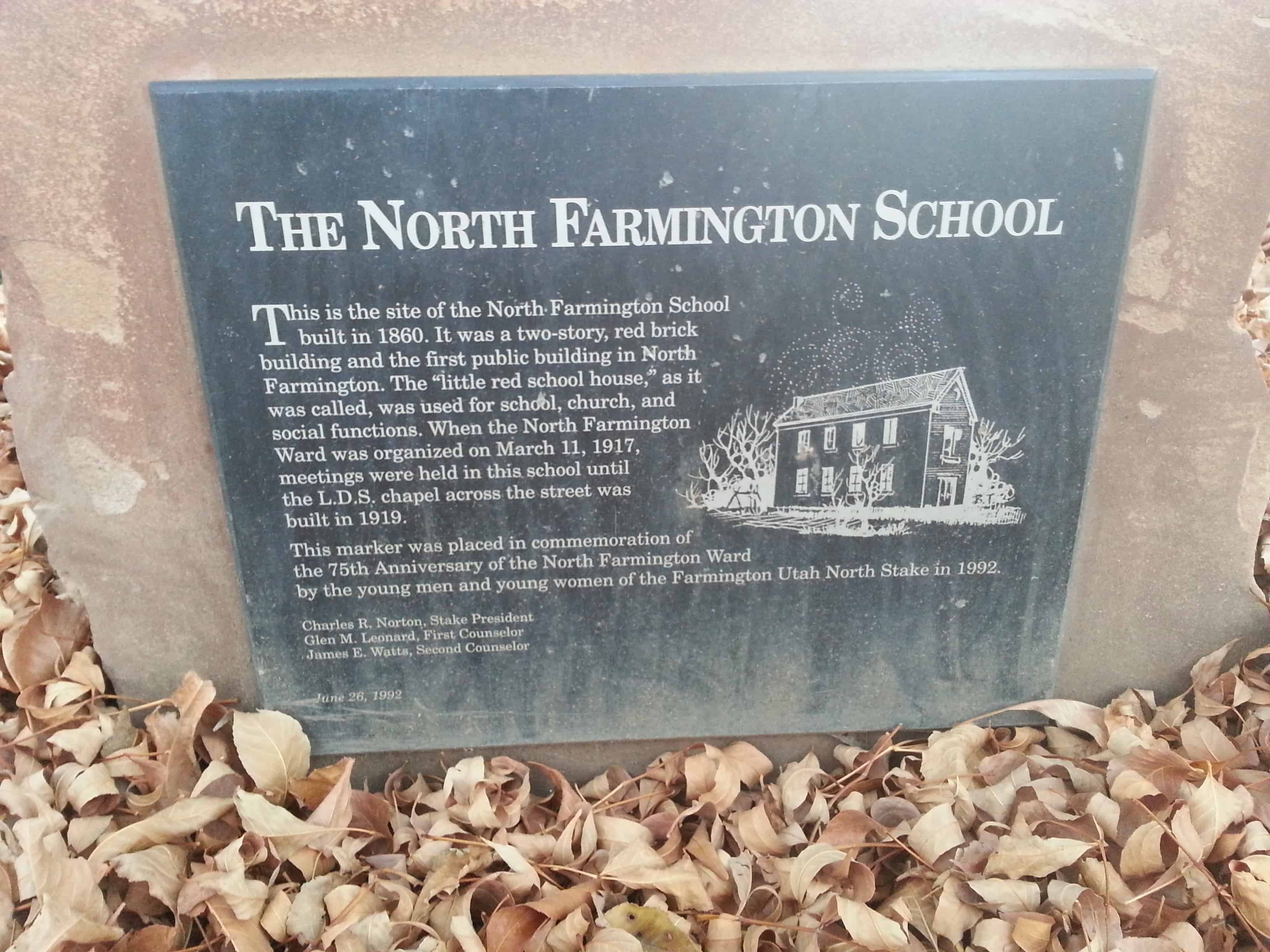
This is the site of the North Farmington School built in 1860. Ut was a two-story, red brick building and the first public building in North Farmington. The “little res school house,” as it was called, was used for school, church, and social functions. When the North Farmington Ward was organized on March 11, 1917, meetings were held in this school until the L.D.S. chapel across the street was built in 1919.
This marker was placed in commemoration of the 75th anniversary of the North Farmington Ward by the young men and young women of the Farmington Utah North Stake in 1992.
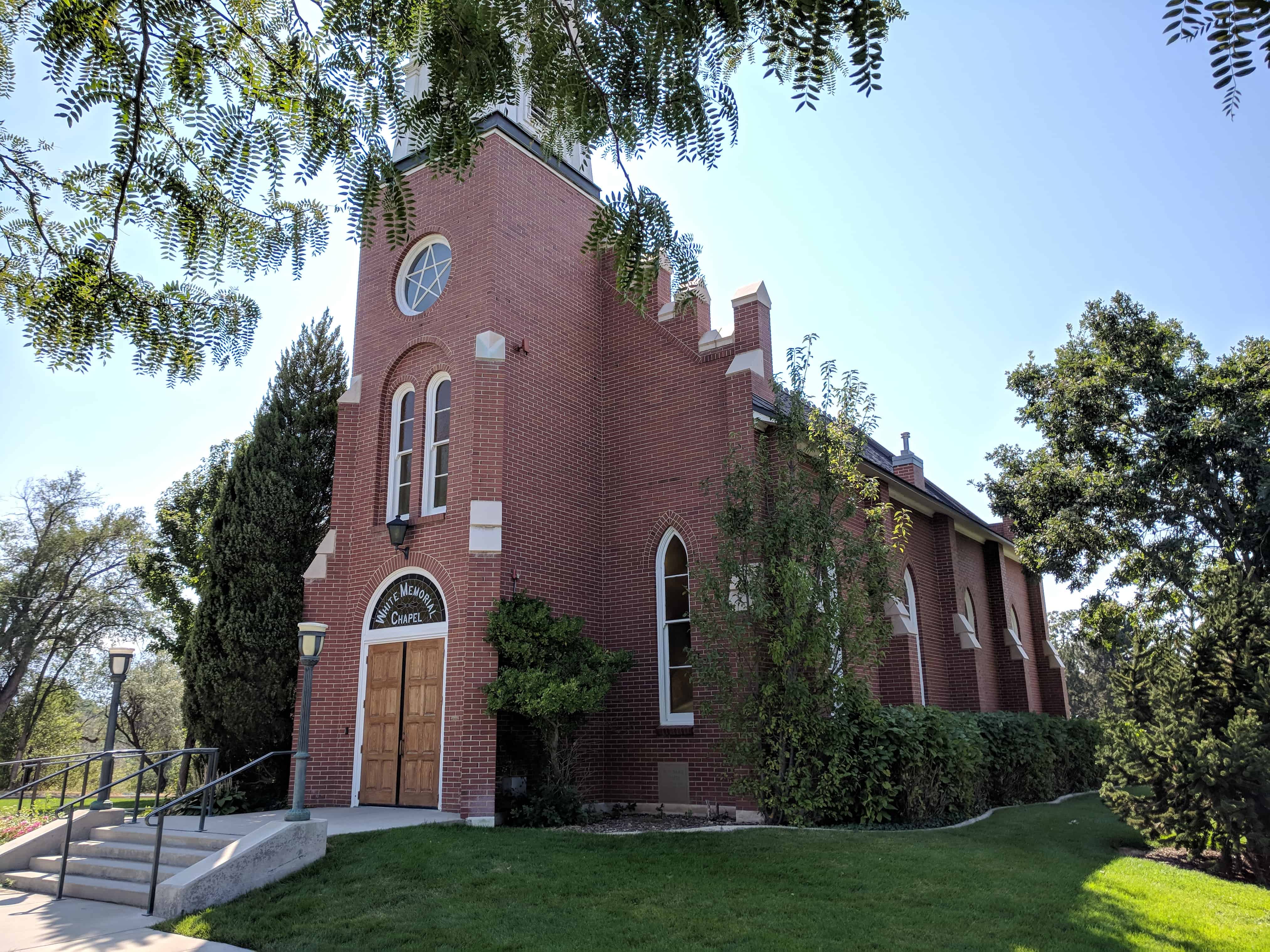
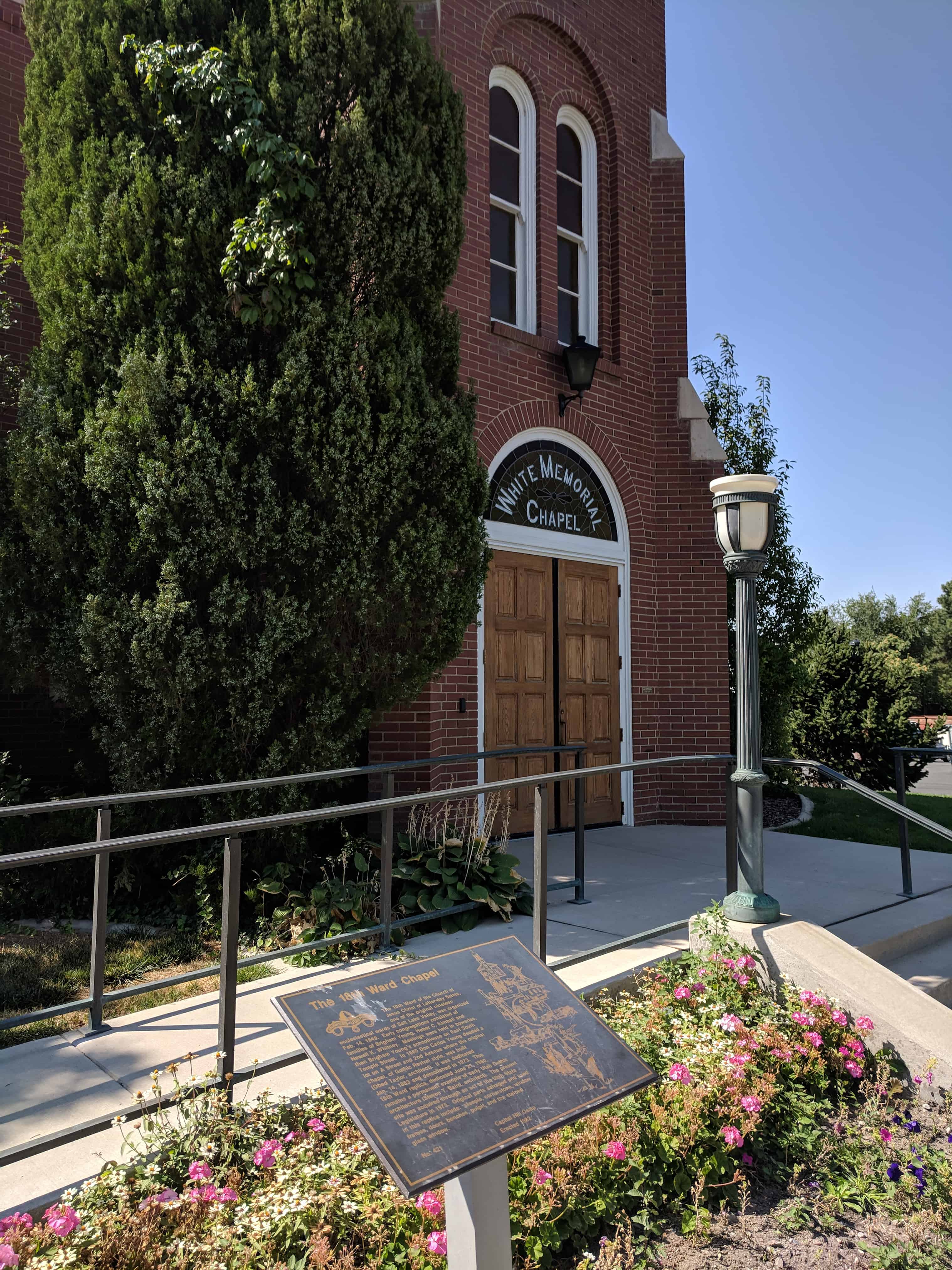
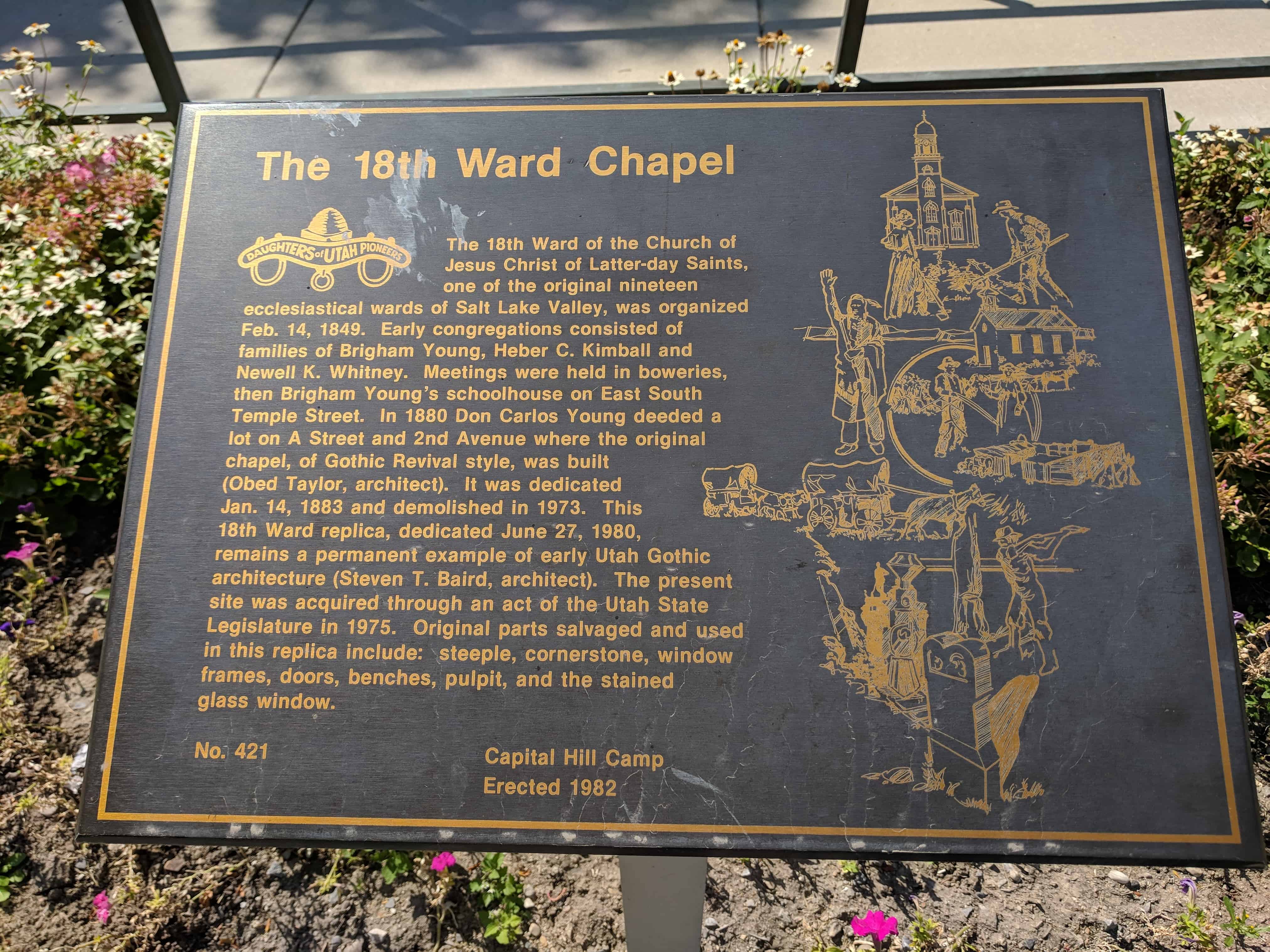
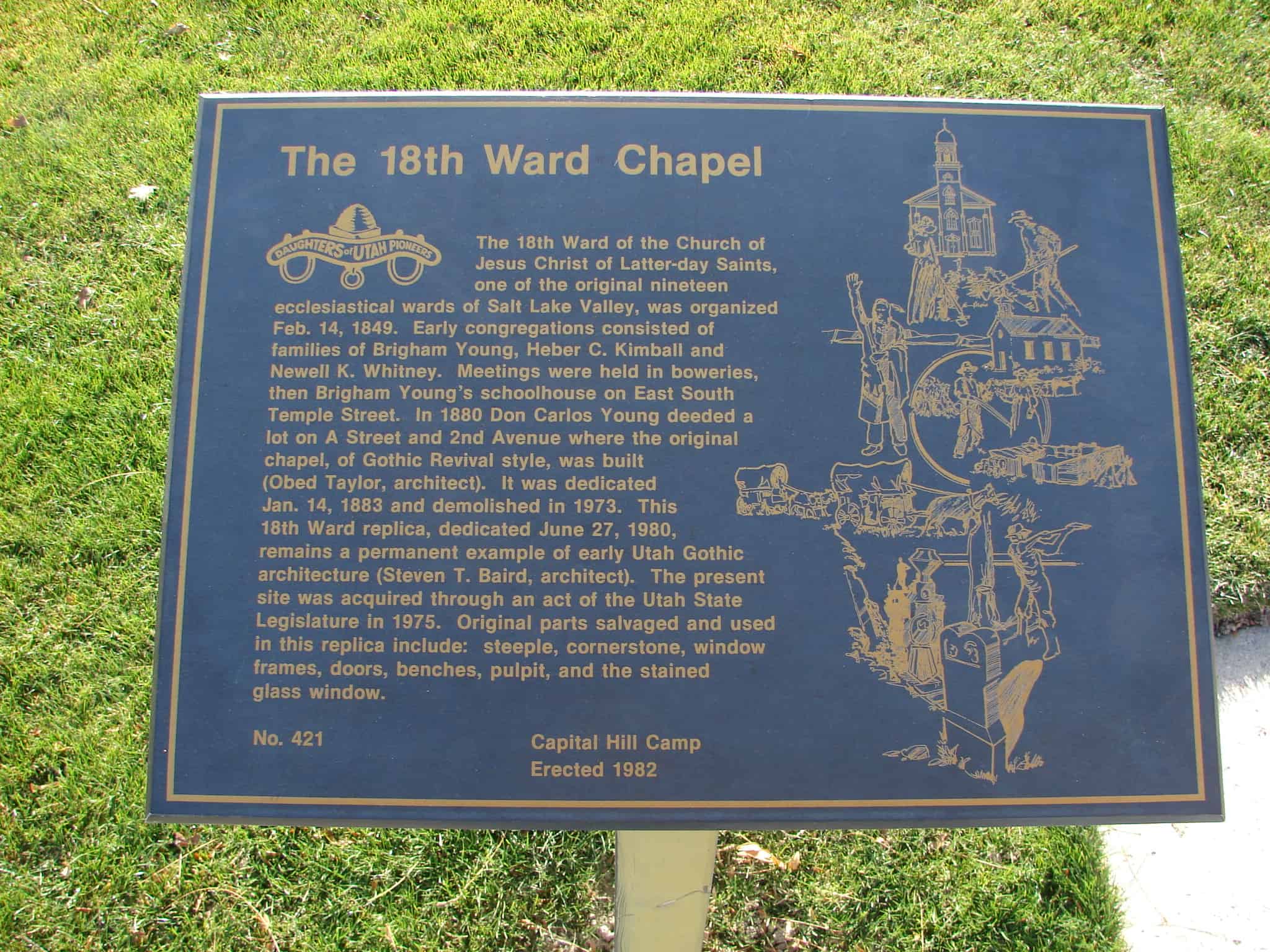
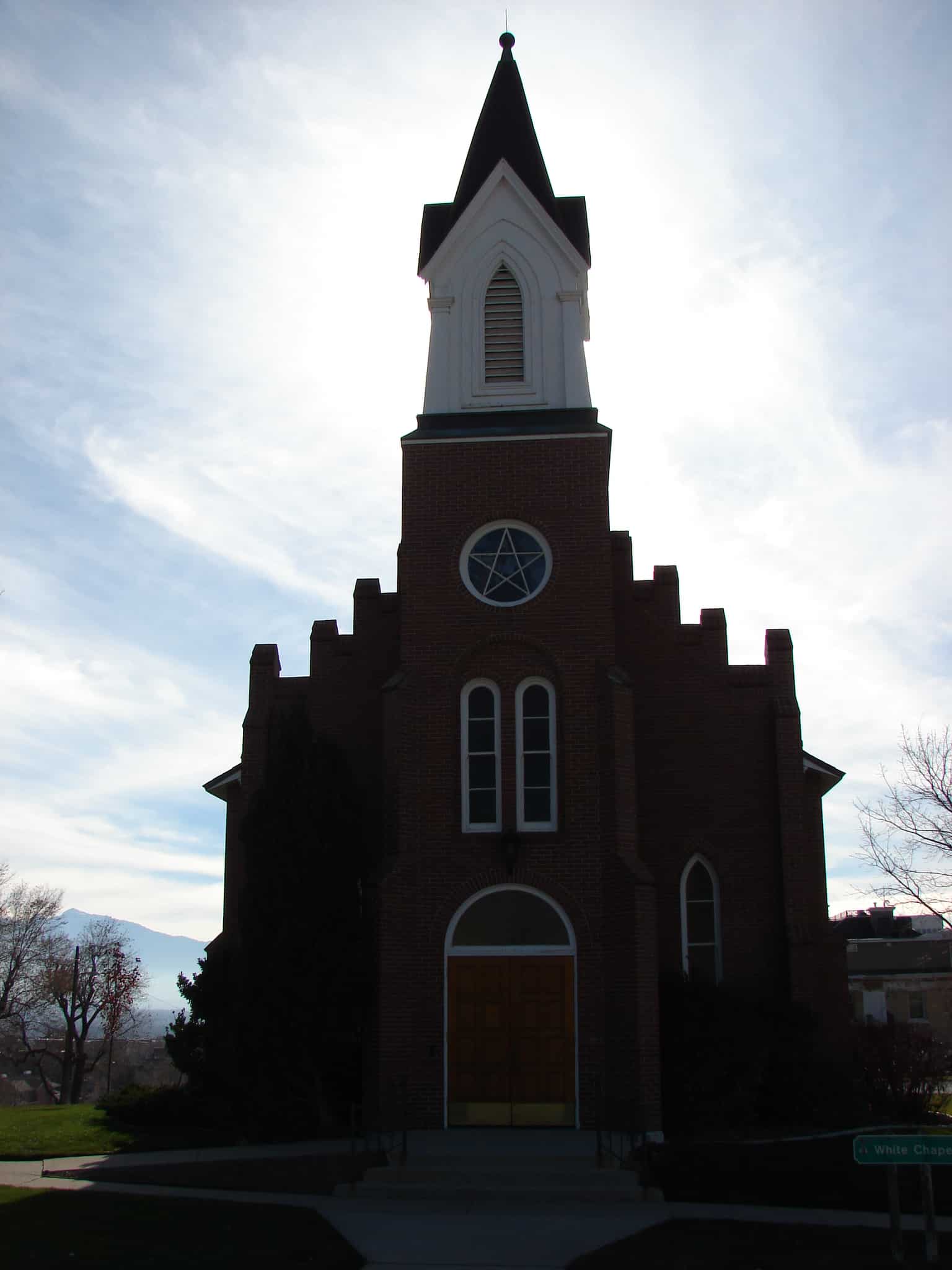
The 18th Ward of the Church of Jesus Christ of Latter-day Saints, one of the original 19 ecclesiastical wards of Salt Lake Valley, was organized Feb. 14, 1849. Early congregations consisted of families of Brigham Young, Heber C. Kimball and Newell K. Whitney. Meetings were held in boweries, then Brigham Young’s schoolhouse on East South Temple Street. In 1880 Don Carlos Young deeded a lot on A Street and 2nd Avenue where the original chapel, of Gothic Revival style, was built (Obed Taylor, architect) dedicated Jan. 14, 1883 demolished in 1973. This 18th Ward replica, dedicated June 27, 1980, remains a permanent example of early Utah Gothic architecture (Steven T. Baird, architect). The present site was acquired through an act of the Utah State Legislature in 1975. Original parts salvaged and used in the replica: steeple, cornerstone, window frames, doors, benches, pulpit, and the stained glass window.
On the north by 7th Ave. (or Ensign Ward), east by C St. (or the 20th Ward), south by South Temple St. (or the 12th-13th Ward), and west by Main St. (or the 17th Ward).
History timeline:
1849 – one of the original nineteen wards into which Salt Lake City was divided in February, 1849. At the time of its organization the ward extended northward and eastward to the mountains The first permanent settlers in the 18th Ward were Pres. Brigham Young and Elders Heber C. Kimball and Newel K. Whitney who, with their families, were the only residents of the ward for several years. 1856 – all that part of the 18th Ward lying east of Walnut St. (later A St.) was organized as the 20th Ward 1877 – boundary line was changed to Pine St. (C St.), its present boundary. 1904 – 18th Ward belonged to Salt Lake Stake, but when Salt Lake City was divided into four stakes in 1904, the ward became a part of Ensign Stake 1913 – The organization of Ensign Ward in 1913 diminished its northern boundary to 7th Ave.
The 18th ward is one of the original 19 wards in Salt Lake City in 1849, you can see the others on this page.
This is a gable roofed, gable facade chapel. The entrance pavilion has a frame cupola. There are buttresses between pointed arched windows. The building is symmetrically arranged with the roof cresting on the main gable. – D. Diana Johnson
The Eighteenth Ward was one of the original ecclesiastical divisions of Salt Lake City, for a few years inhabited only by President Brigham Young and Elders Heber C. Kimball and Newell K. Whitney. “In 1883 a fine brick chapel, erected by the Saints on A Street between 2nd and 3rd Avenues, was dedicated.” This structure was demolished about 1975 and a reconstruction, incorporating elements of the original building, was completed in 1979.