Tags
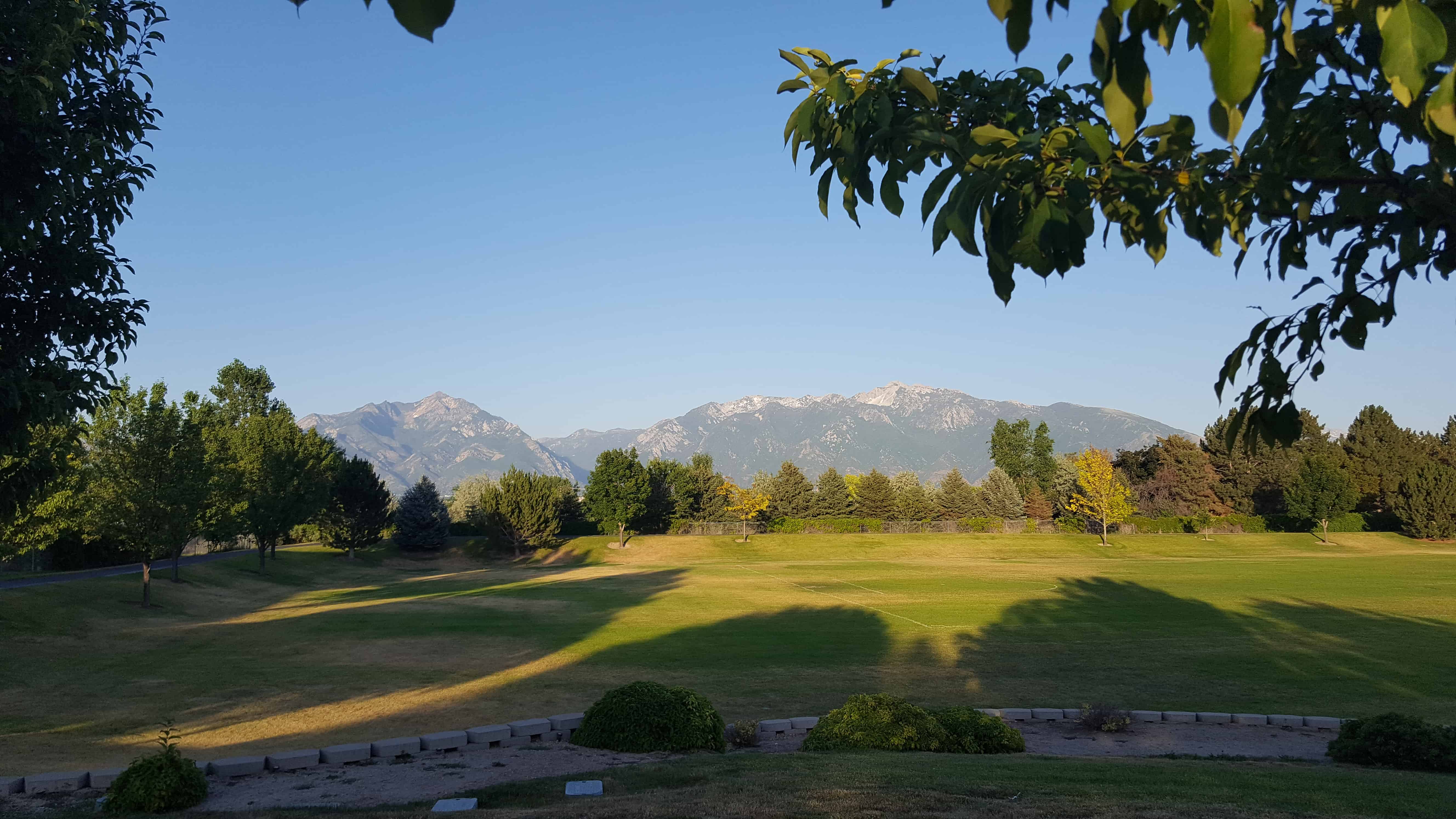
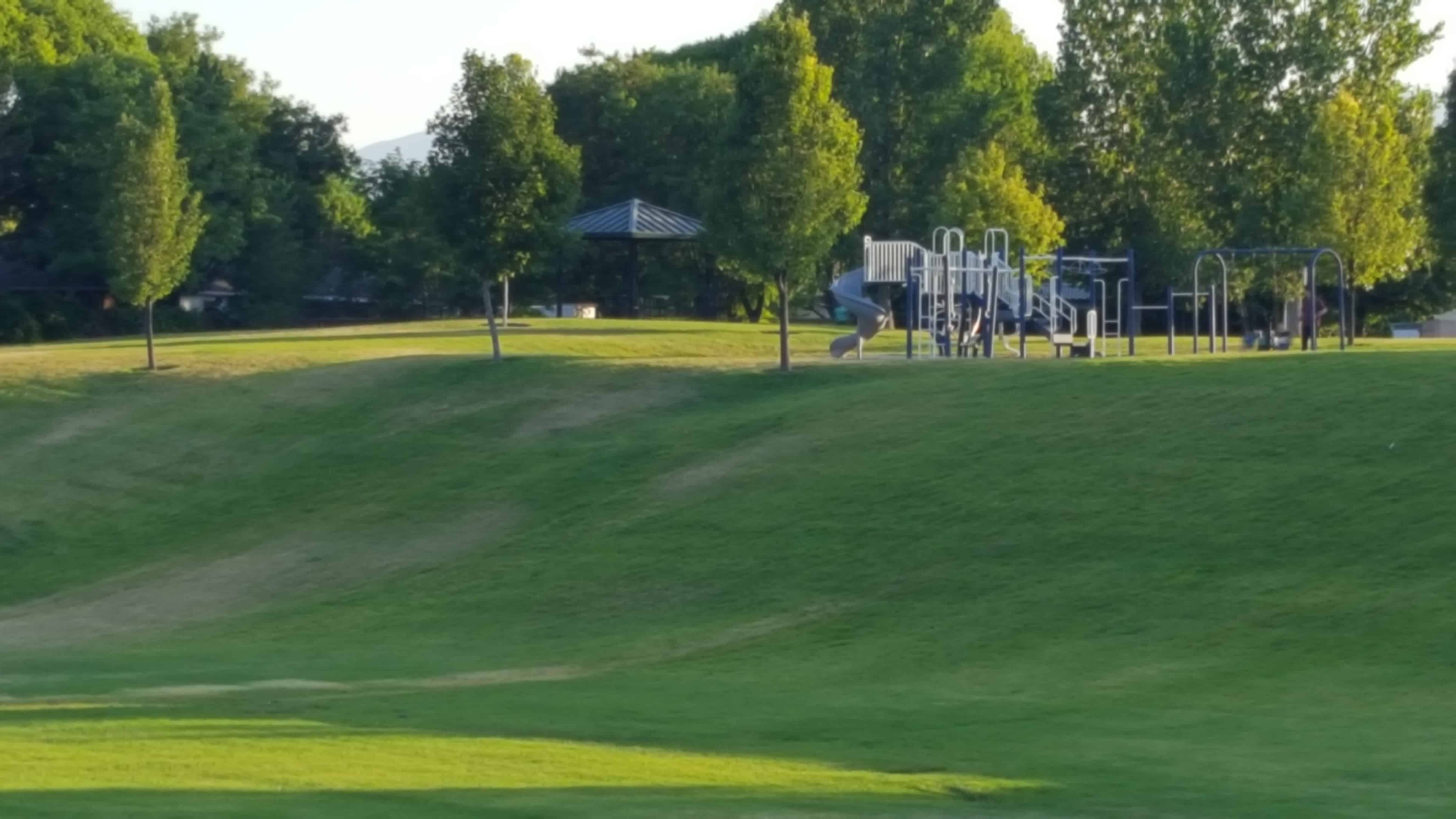
South Jordan City Park
14 Wednesday Mar 2018
Posted in Uncategorized

14 Wednesday Mar 2018
Posted in Uncategorized
Tags
10 Thursday Aug 2017
Posted in Uncategorized
Tags
10 Thursday Aug 2017
Posted in Uncategorized
Tags
10 Thursday Aug 2017
Posted in Uncategorized
Tags

A list of parks in South Jordan, Utah.
Beckstead Park – 10760 S Beckstead Lane
Ascot Downs Park – 4150 W 10200 S
Bolton Park – 4525 W 10040 S
Callendar Square Park Park – 4515 Harvest Moon Drive
City Park – 11000 S Redwood Road
Country Crossing Park – 4288 W Harvest Moon Drive
District Detention Basin Park – 3600 W 11800 S
Dunsinane Park – 9550 S Dunsinane Drive
East Riverfront Park – 10991 S Riverfront Parkway
Fishing Ponds – 11200 S Riverfront Parkway
Garden Corner Park (4181 W Blackshear Dr in Daybreak)
Gateway Park
Glenmoor Baseball Diamond – 4500 W Skye Drive
Heritage Park – 10800 S Redwood Road
High Pointe Park – 10960 S Oceano Dune Court
Hillside Park – 4400 W Open Hill Road
Ivory Crossing Park – 11300 S 3200 W
Jordan Ridge Park – 9500 S 2500 W
Kilmuir Park – 4660 W 9500 S
Lucas Dell Park – 3542 W 11355 S
Midas Creek Park – 2780 W 11670 S
Mulligan’s Golf & Games – 692 W South Jordan Parkway
Mystic Springs Wetland Educational Area
Oquirrh Shadows Park & Splash Pad – 4000 W South Jordan Parkway
Prospector Park – 10200 S 2200 W
Rushton Meadows – 10450 S Harvest Pointe Dr.
Samuel E. Holt Farmstead Park – 1250 W Holt Farm Road
Skye Park – 4800 W Skye Drive
South Ridge Park – 4300 W 9945 S
Stonehaven Park – 9970 S 4075 W
Sunrise Mountain Park – 11259 S Topview Drive
Sunstone Park – 5280 W 11800 S
Triangle Park – 4300 W Skyle Drive
West Riverfront park – 11050 S Riverfront Parkway
Yorkshire Park – 4180 W Skye Drive
Welcome Park – 9400 S Redwood Road
03 Monday Oct 2016
Posted in Uncategorized
Tags
historic, Historic Buildings, Jordan River, Salt Lake, Salt Lake County, South Jordan, utah, West Jordan, West Valley

Pioneer Crossing Bridge
Erected 2013 – This bridge commemorates the area where the first pioneers crossed the Jordan River to settle the West side of the Salt lake Valley. In November 1848, the family of Joseph and Susannah Harker were the first “over Jordan” and built a log home near 3300 South and 1400 West.
On January 9, 1849, the families of Thomas MacKay, John Bennion, Samuel Bennion, Thomas Tarbet, William Blackhurt, William Farrer, John Robinson and James Taylor crossed the Jordan River on the ice and built dugouts and cabins in this area.
Other settlers followed these first pioneer, resulting in many prosperous communities West of the Jordan River. Pioneer Crossing Bridge honors these first families and all others who have sought a brighter future by making their home on the Salt Lake Valley’s West side.

Moesser – Rushton Granary
Erected c1878 in Hunter, Preserved 2014 – As pioneers and homesteaders moved West across the Salt Lake Valley they prospered in developing farming communities. Harvested lumber from Bingham, Harker and Coon Canyons in the Oquirrh Mountains was used by settlers to build area homes, barns and granaries.
Pioneer Joseph Hyrum Moesser constructed this granary near his adobe brick house in c1878 at approximately 4450 South 5400 West in Hunter. Newly wed Alma E Rushton acquired this granary and surrounding farm in 1917. Merging it into the Rushton homestead across the street. This historic granary was in use for over 100 years of agricultural production and is perhaps the oldest building in West Valley City today. It commemorates all those that seek to build and shape their community into a better place.


13 Saturday Aug 2016
Posted in Uncategorized
Tags
Draper, Riverton, Salt Lake County, Sandy, South Jordan, utah, West Jordan

On July 22, 1847, an advanced party of the first Mormon pioneers entered the valley and immediately began to irrigate land and explore the area with a view to establishing new settlements. Alexander Beckstead, a blacksmith from Ontario, Canada, moved his family to the West Jordan area in 1849, and became the first of his trade in the south Salt Lake Valley. He helped dig the first ditch to divert water from the Jordan River, powering Archibald Gardner‘s flour mill. In 1859, Beckstead became the first settler of South Jordan by moving his family along the Jordan River where they lived in a dugout cut into the west bluffs above the river. The flood plain of the Jordan was level, and could be cleared for farming if a ditch was constructed to divert river water along the base of the west bluff. Beckstead and others created the 2.5-mile “Beckstead Ditch”, parts of which are still in use as of 2010.
South Jordan Posts:
12 Friday Aug 2016
Posted in Uncategorized
Tags
Jordan River, LDS, Salt Lake County, South Jordan, Temples, utah


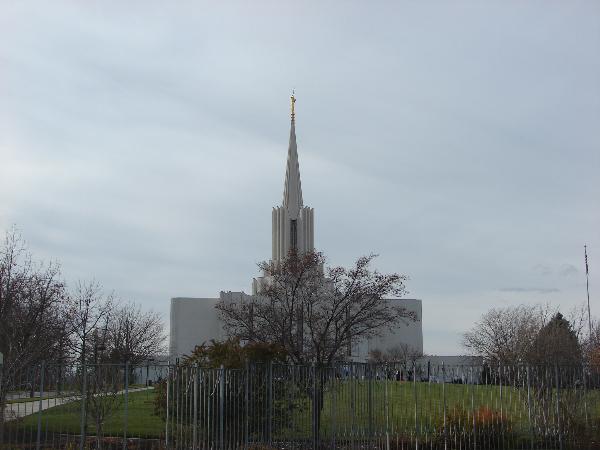
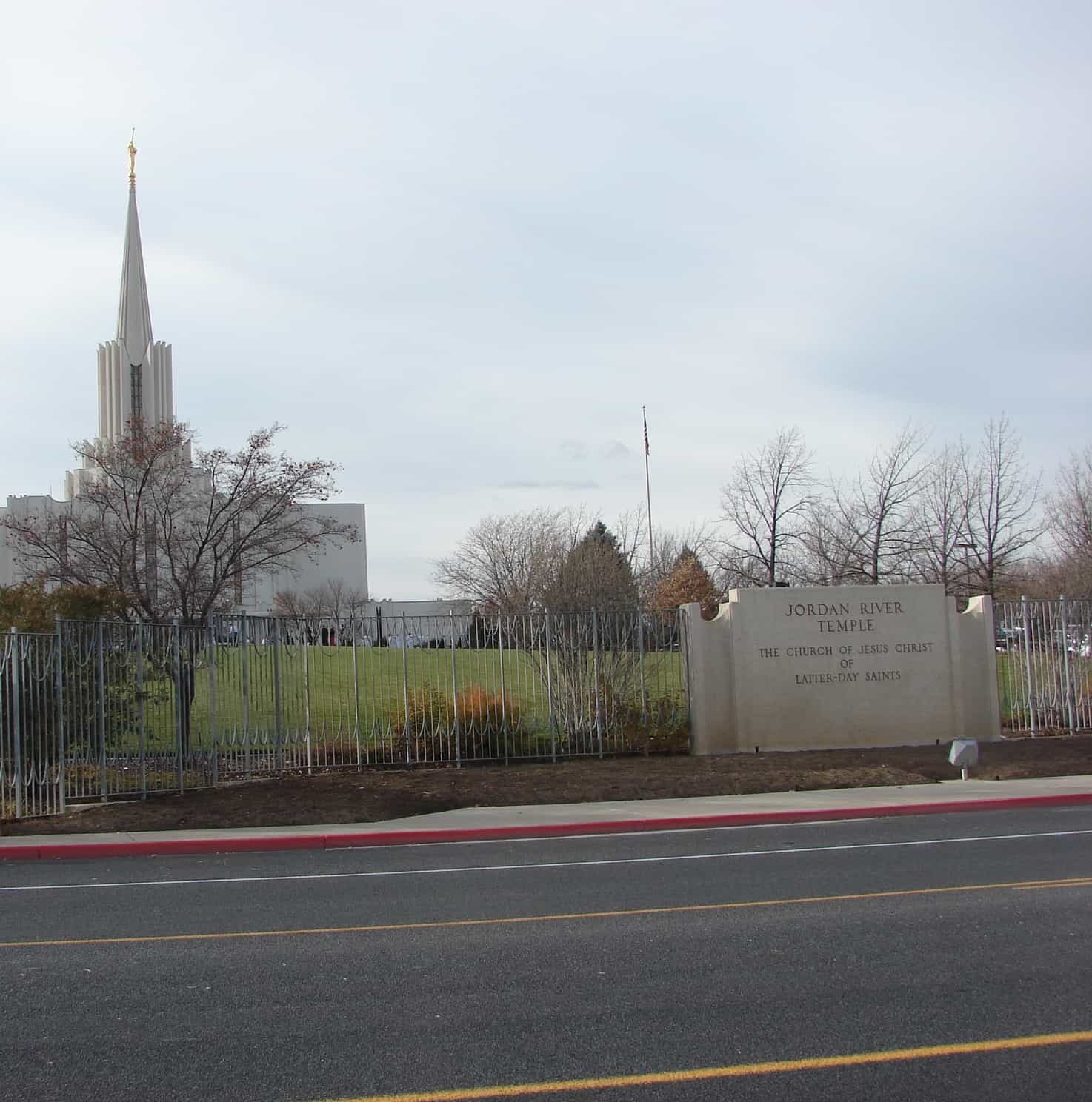
The Jordan River Utah Temple (formerly the Jordan River Temple) is the 20th operating temple of The Church of Jesus Christ of Latter-day Saints .(*)
Located in South Jordan, Utah, it was built with a modern single-spire design. A site dedication and groundbreaking ceremony were held on June 9, 1979. The ceremony and dedication were presided over by church president Spencer W. Kimball. Instead of the usual small ceremonial shovel-full of dirt at the groundbreaking, Kimball used a large power scoop shovel to begin the building process. The temple was open to the public for tours September 29 through October 31, 1981.
Over half a million people toured the temple during its open house. On August 7, 2015 the LDS Church announced that beginning February 15, 2016, the temple closed for renovations that are anticipated to be completed during the latter part of 2017.


21 Tuesday Jun 2016
Posted in Uncategorized
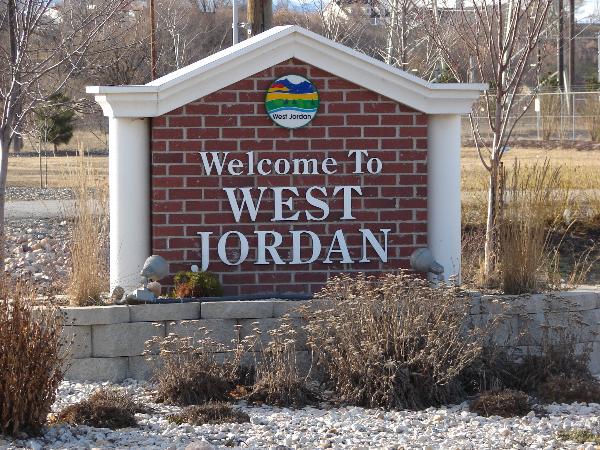
West Jordan Posts:
West Jordan received its name from Mormon settlers who entered the Salt Lake Valley in 1847 under the leadership of their prophet, Brigham Young. These first European-Americans thought of the area to be their Zion, or Holy Land, and thus named the river flowing west of their first settlement, Salt Lake City, the Western Jordan, a reference to the River Jordan in Israel. The name was later simplified to “Jordan River”. Like its Middle Eastern namesake, the Jordan River flows from a fresh water lake (Utah Lake) to an inland salt sea (Great Salt Lake). West Jordan was founded around 1849 on the western banks of the Jordan River.
One of the first sawmills in the area was built in 1850 in the city by Archibald Gardner. Gardner was a devout Mormon whose legacy can still be seen in modern West Jordan. His collection of mills and houses, now historic, have been renovated into a specialty shopping district known as Gardner Village.
Early West Jordan relied primarily on agriculture, mills, and mining activity to form the base of its economy. The first leather tannery west of the Mississippi River was constructed in the city in 1851.
05 Thursday Jun 2014
Posted in Uncategorized
Tags
Cemeteries, DUP, historic, Salt Lake County, South Jordan, utah

In 1859 George A. Smith sold his Mexican land grant to Alexander Beckstead who, with others, settled one-half mile to the south. They dug a five mile ditch from Jordan River, in operation since completed in 1863. Adobe community house built, 1864. John Winward, first school teacher. In 1863 L.D.S. Branch organized, James Woods, Pres., succeeded by Wm. A. Bills, 1867, who became bishop in 1877. Later, on this site, a 30 x 46 ft. granite-adobe chapel was erected also used for school and recreation.
This monument is located in the Cemetery in South Jordan.
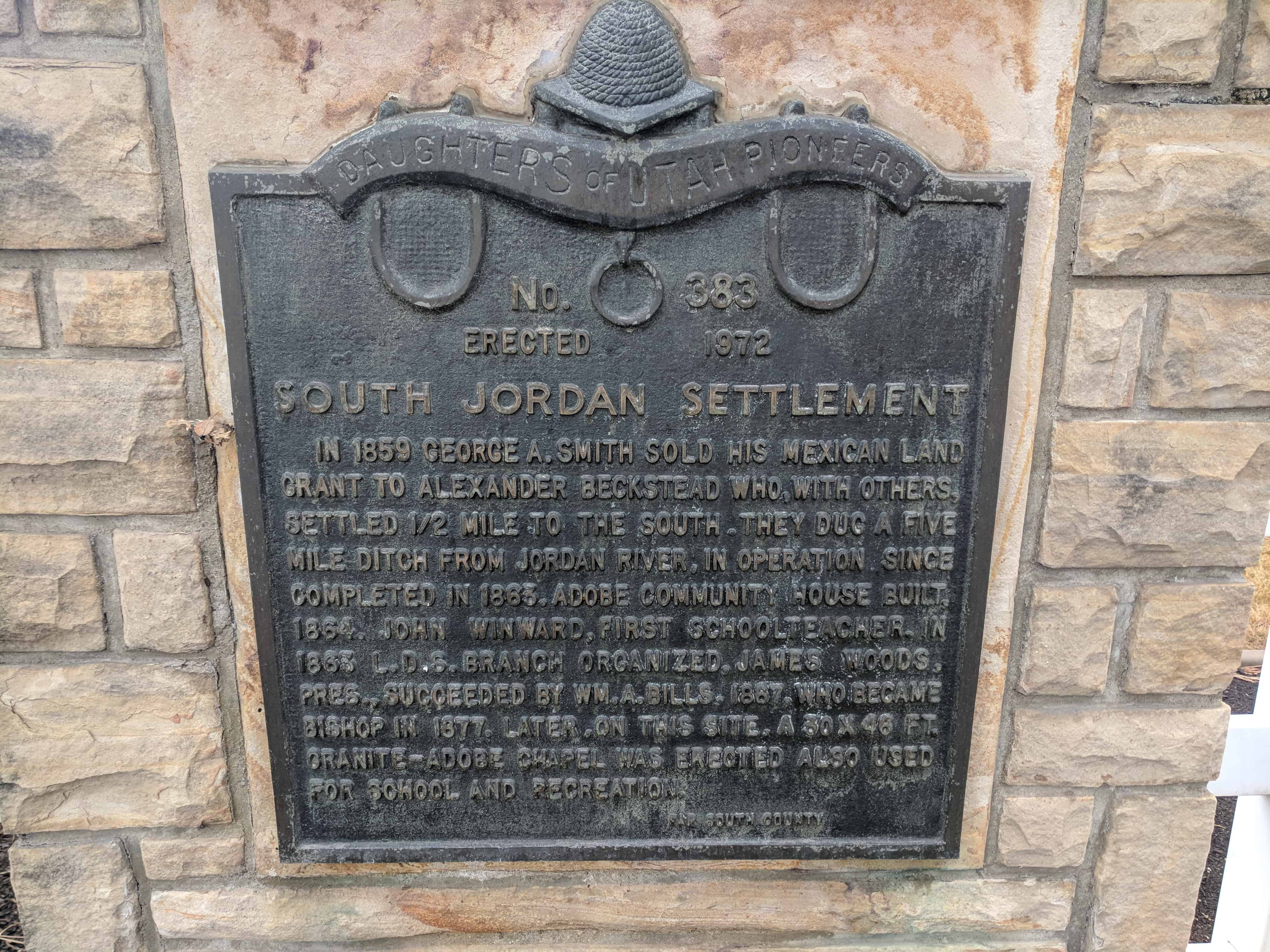
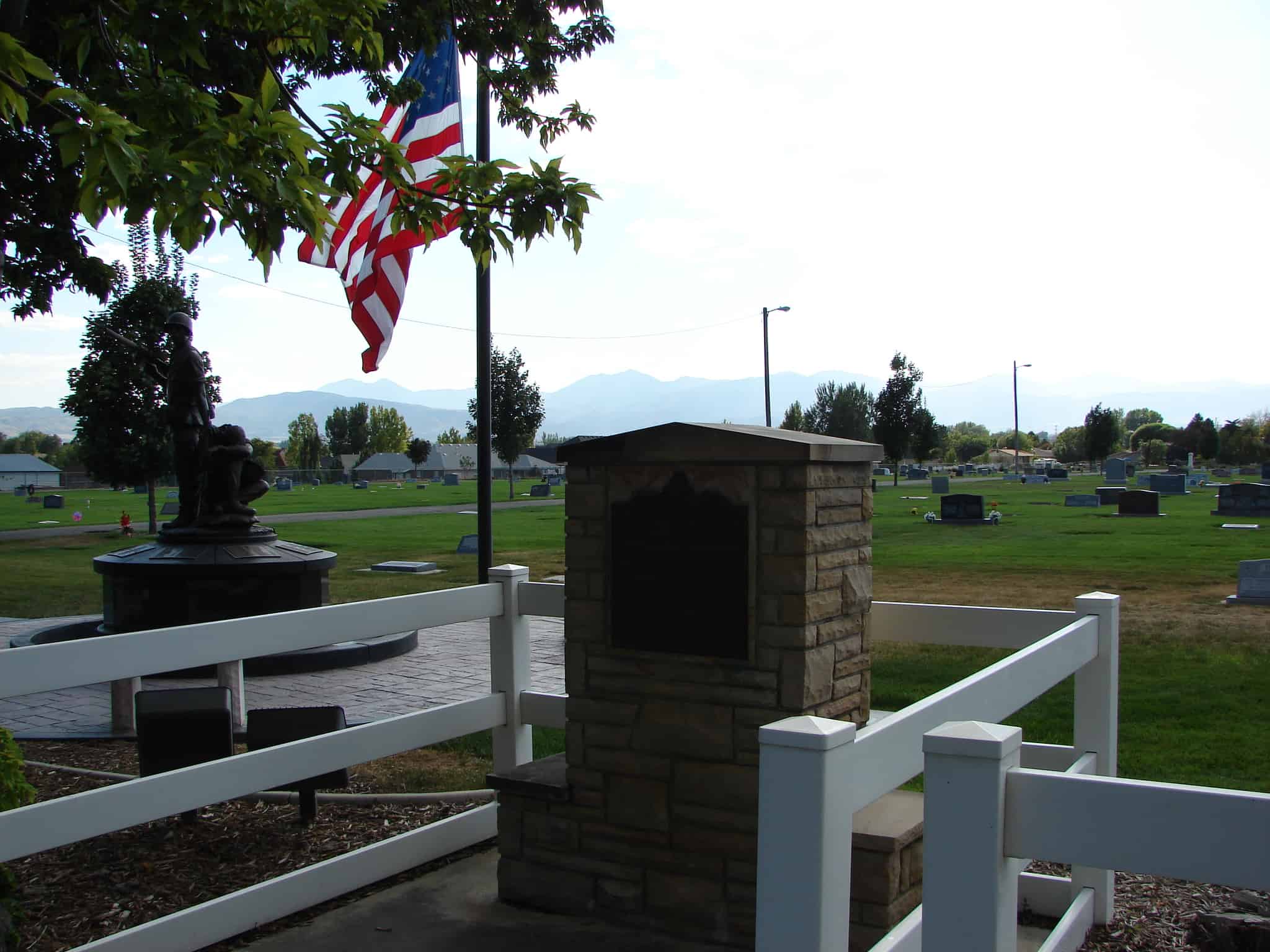
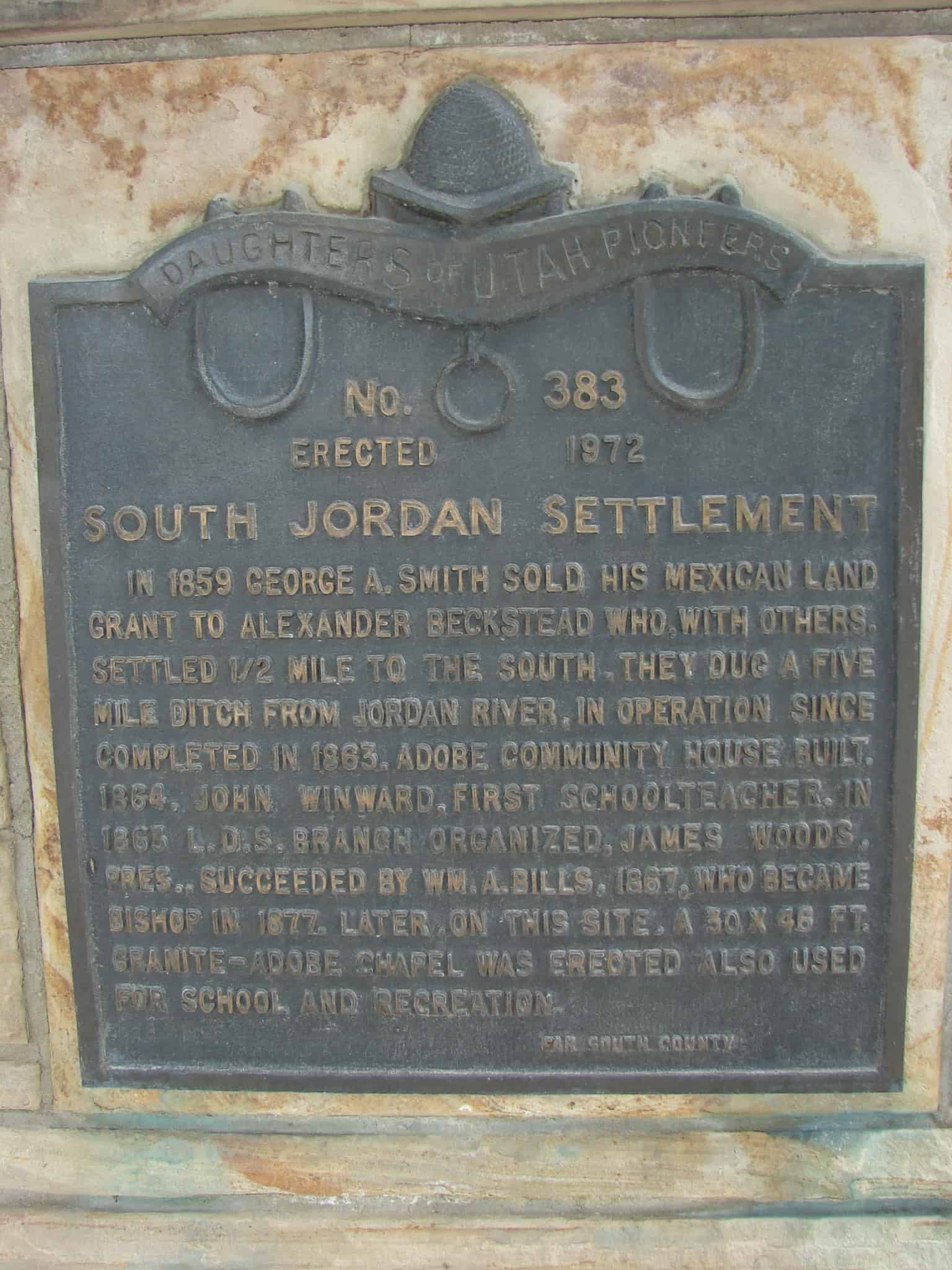
Check out all of the historic markers placed by the Daughters of Utah Pioneers at JacobBarlow.com/dup
01 Friday Nov 2013
Posted in Uncategorized
Tags
Bluffdale, Draper, Point of the Mountain, Riverton, Salt Lake County, Salt Lake Valley, Sandy, Sivogah, South Jordan, Traverse Mountain, utah

Draper Posts:
Draper is in the south-east corner of Salt Lake Valley, near Bluffdale, Sandy, South Jordan and others. Draper is located just north of “Point of the Mountain,” officially “Traverse Mountain,” a popular hang-gliding spot.
Draper was originally called Sivogah, meaning Willows. The town was then known as Willow Creek for the creek the settlers used. They also used the region as a grazing area for their cattle. The town name was then changed to Brownsville for Ebenezer Brown and family who arrived in 1849. Later, the name was again changed to honor William Draper, the town’s first Mormon bishop. The Draper family settled in the area in 1850.