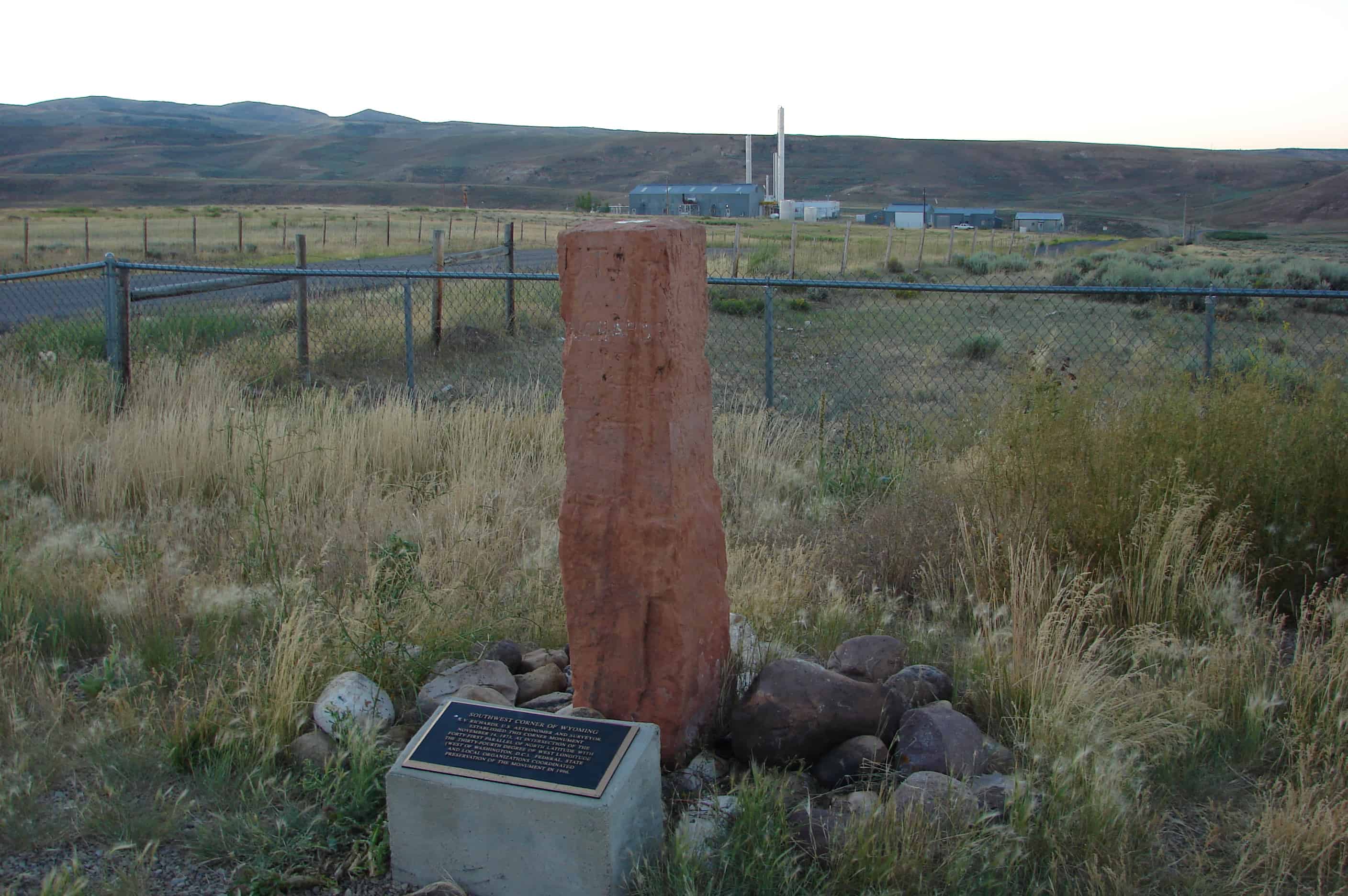
A.V. Richards, U.S. astronomer and surveyor, established this corner monument November 14, 1873, at intersection of the forty-first parallel of north latitude with the thirty-fourth degree of west longitude (West of Washington, D.C.). Federal, state and local organizations coordinated preservation of the monument in 1996.
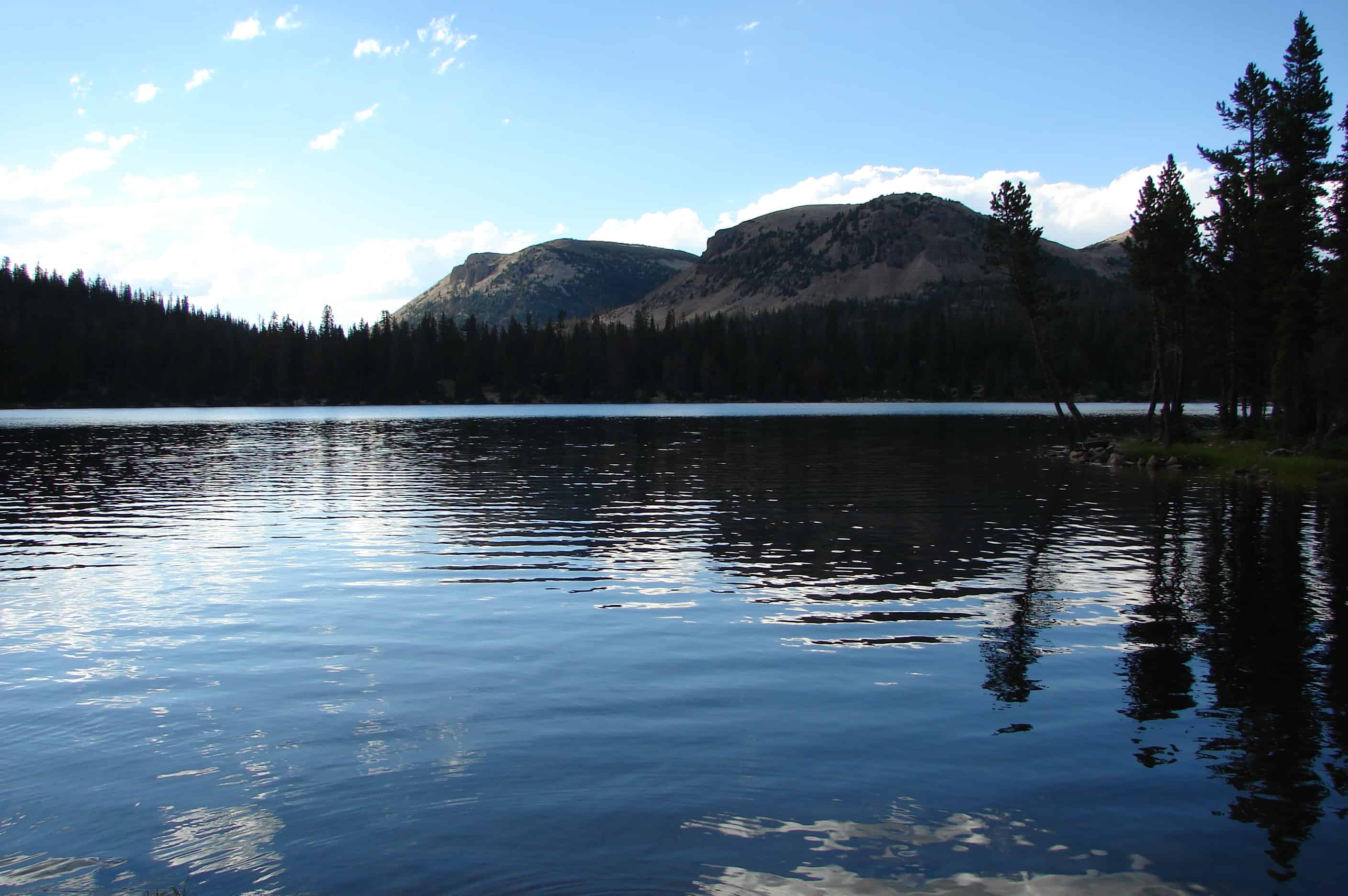
Mirror Lake is a lake in the high Uinta Mountains in Utah. It is a popular fishing and recreation spot. The lake contains three species of trout: rainbow, brook, and tiger. The lake has a Forest Service campground, picnic facilities, and a boat ramp for non-motorized watercraft. Access to the lake is by the Mirror Lake Highway, which is only open during the summer (other than by snowmobile).
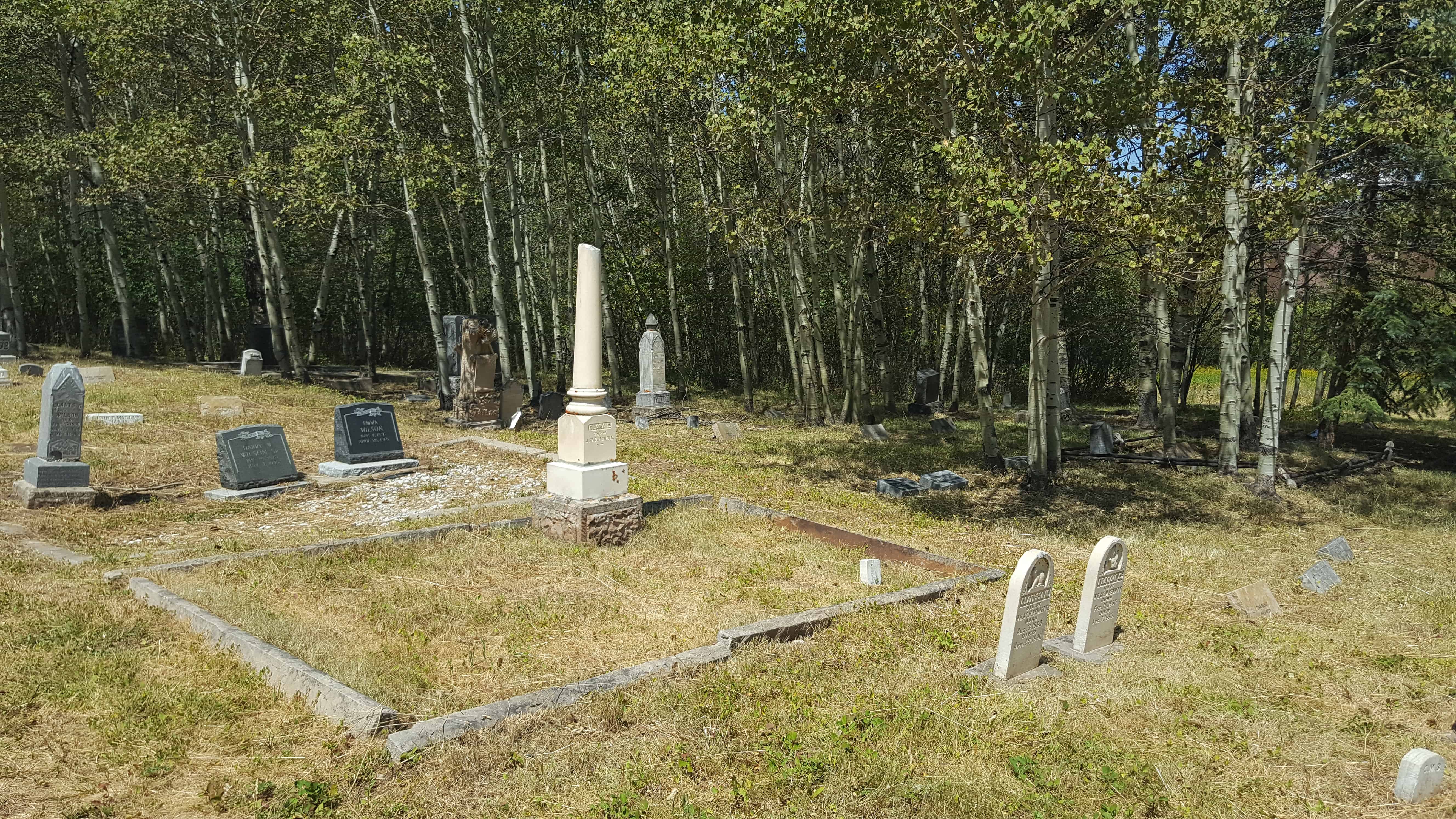
This five-acre private burial site was established in 1885 by fraternal organizations for the use of members and their families. The cemetery and headstones reflect the beliefs and customs of the time as well as display the sense of loss experienced by families and friends. The cemetery, as a single entity, best describes the sense of community that prevailed in Park City, a melting pot of nationalities.
The site was used extensively until the 1920s when a decline in the membership of fraternal organizations corresponded with the collapse of the mining industry in Park City. Use of the cemetery and maintenance of the grounds diminished greatly. In the 1980s a volunteer society, the Glenwood Cemetery Association, funded by public donations, became caretakers, restoring and maintaining the picturesque graveyard as a peaceful refuge.
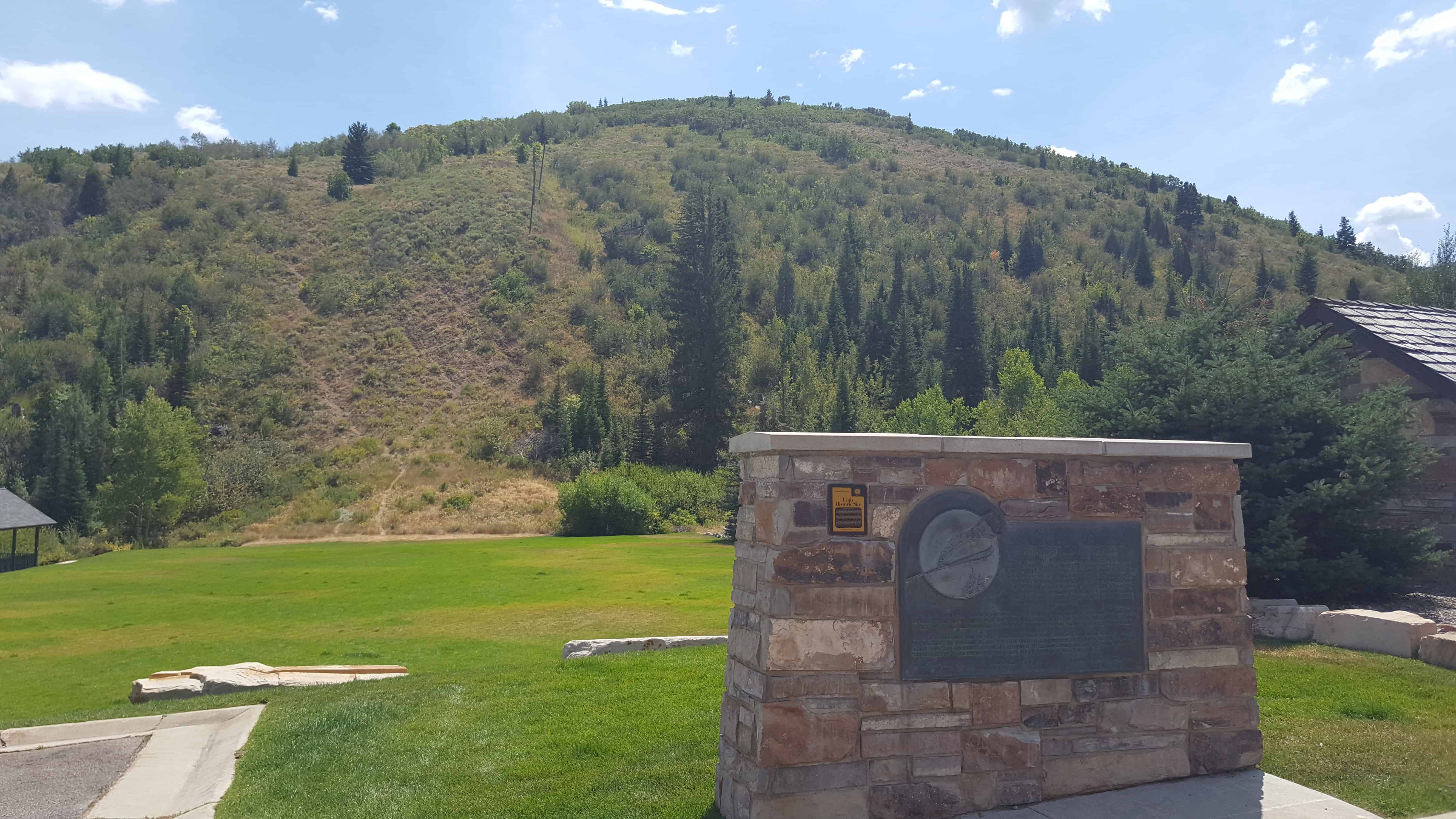
Completed in 1929, Ecker Hill became one of the premier ski jumping hills in the world during the 1930s and ’40s. National meets were held here regularly during that period, and several world records were broken on the hill by Alf Engen. The national and international fame of Ecker Hill established Utah as a prime ski center in the West and helped launch skiing as one of the state’s principal industries. After hosting the national championships in 1949, Ecker Hill’s prominence declined as larger, more professional jumping facilities were constructed both in this country and in Europe, and as downhill skiing emerged as the major attraction for ski enthusiasts. Ecker Hill was used decreasingly until the last jumps were made here in the early 1960s.
(Looking down on Ecker Hill)
In 1929, local ski-jumping enthusiasts Axel Andresen, Marhinius Strand and Peter Ecker conceived the idea of creating a world-class jumping facility at this site, then known as Rasmussen Ranch.
Through the diligent efforts of many supporters and the Rasmussen family, the jump became a reality. In a dedication ceremony on March 2, 1930, Governor George H. Dern named the hill after Ecker, then President of the Utah Ski Club.
Ecker Hill attracted amateur and professional jumpers from all over the world to compete in events that drew thousands of spectators. Alf Engen, who came to Utah from Norway in 1929 broke five world records here and became recipient of the “Skier of the Century” award.
Calmar Andresen, one of Utah’s amateur champions, lost his life here during a state tournament on February 22, 1934. The last official competition at this site was held in the early 1960’s. This monument serves as a memorial to Calmar Andresen and as a tribute to the achievements of Alf Engen and the other daring jumpers at Echer Hill.
From the city website:
Our City Park has lots of open space to enjoy! The South End is available for reservations which is perfect for your family or business gathering. It includes a pavilion with picnic benches and a huge charcoal BBQ & griddle. This is only where the fun begins as the entire City Park has lots of open lawn space, a softball diamond, volleyball, tennis and basketball courts, state of the art skateboard park as well as a playground.
I often enjoy sending some quiet time in the park, there’s a creek and a nice bench with “Our service was made lighter by our laughter” engraved on it.
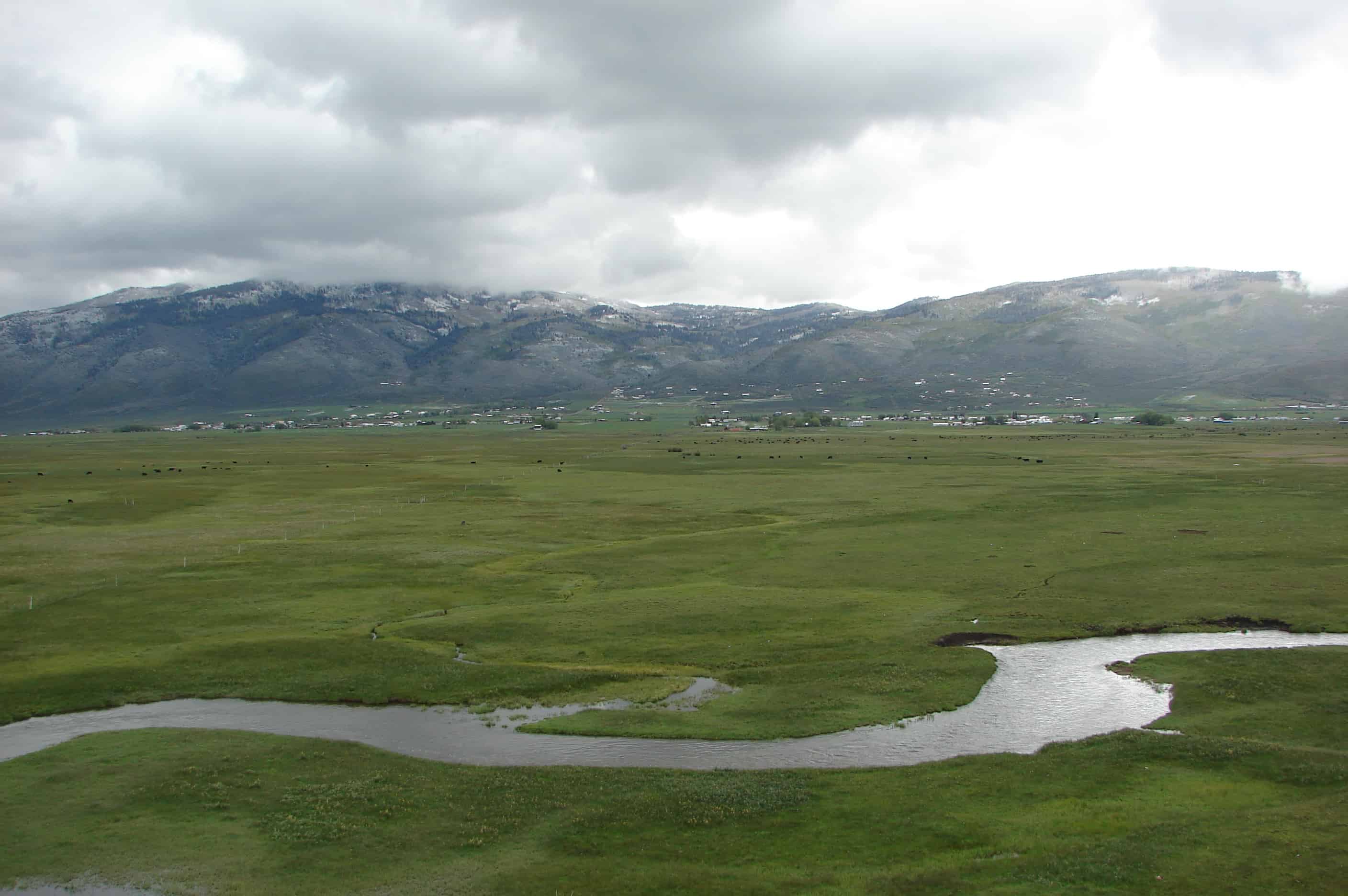
(From Wikipedia) The area that is now Marion was used in the 1860s by rancher Samuel P. Hoyt, whose 600–700 head of cattle grazed over most of Marion’s land. The settlement itself was founded in the mid-1870s and was originally named “Morrell” after William Morrell, who built the first house. A large portion of the early settlers were Danish American immigrants, and the community was also often called “Denmark”.
The name Marion has been credited to two different sources: Francis Marion Lyman, who, as President of the Quorum of the Twelve Apostles of The Church of Jesus Christ of Latter-day Saints, organized the first ward in the area in 1909, and Marion Myrick Sorensen, who settled here with her first husband in 1882. The Marion precinct first appeared under that name in the 1900 census.
Marion made news in 1979 when resident and polygamist homeschooler John Singer was killed while resisting arrest. The community garnered further publicity in 1988 when Singer’s son-in-law, Addam Swapp, bombed the LDS stake center in Marion and was arrested after a 13-day standoff with state and federal law enforcement.
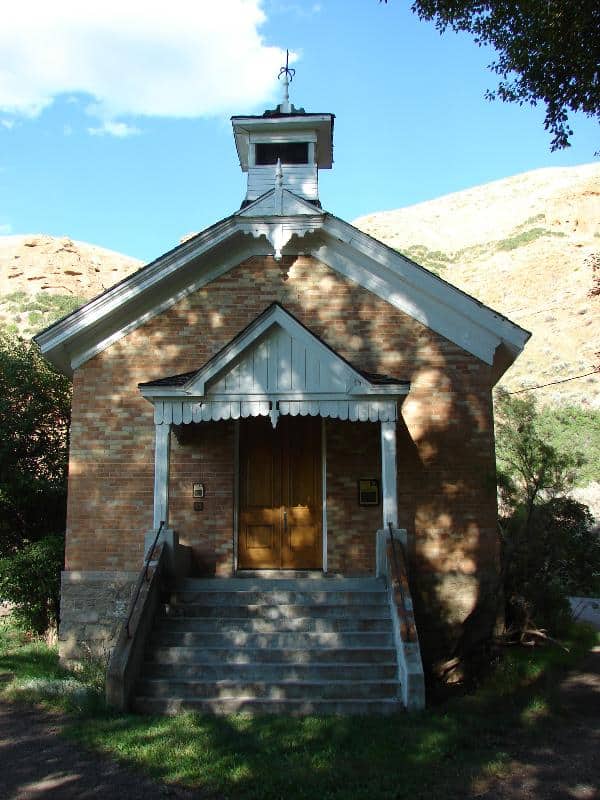
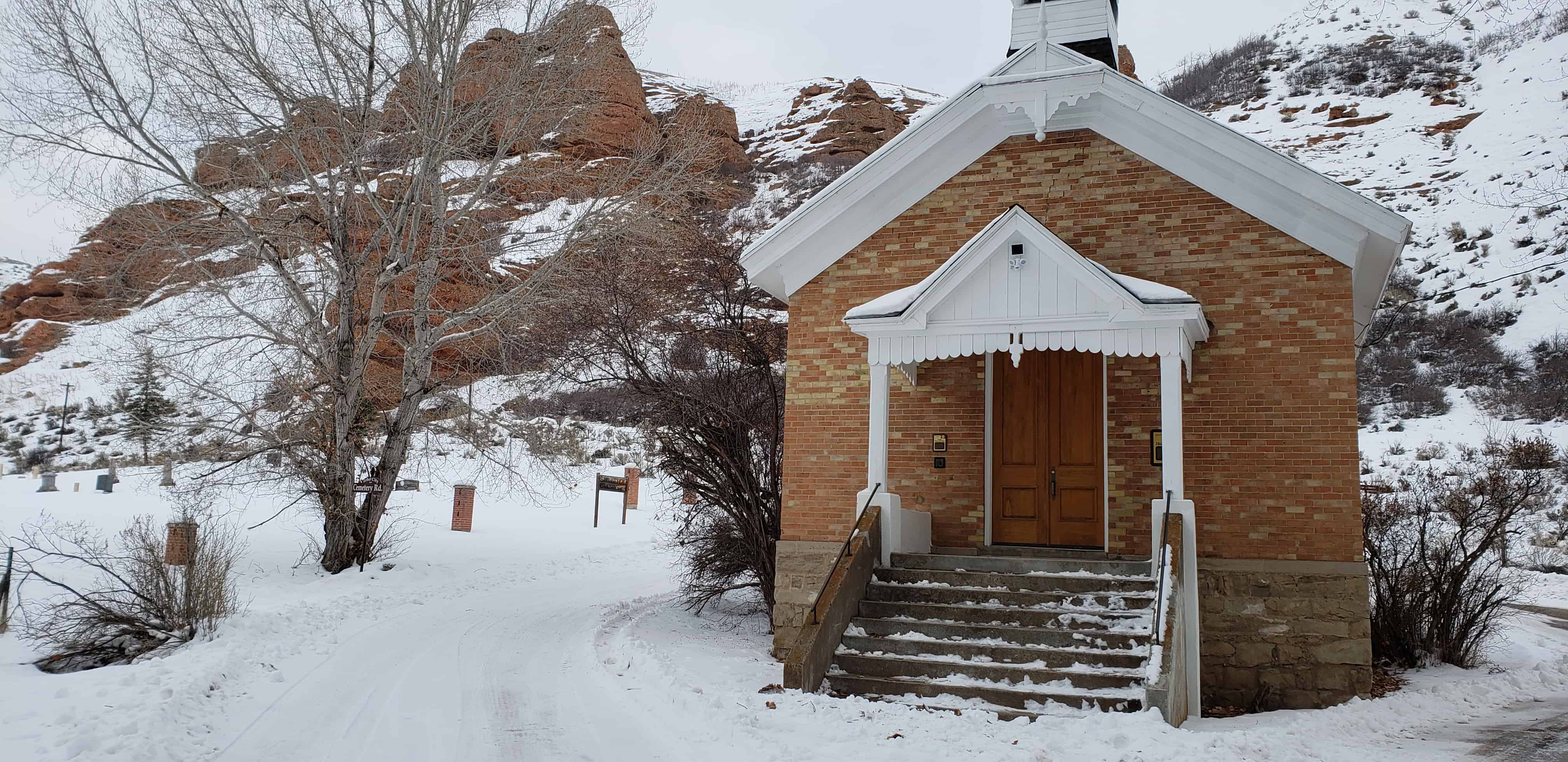
Constructed C. 1876, this building served protestants as a church and school until 1880 when it was sold to the Echo School District. Latter-day Saints then obtained permission to worship here and bought the building in 1913. The chapel served until 1963 when it was closed due to Echo’s declining population. The young adults, L.D.S youth group, reopened the chapel in 1974 and placed this marker in 1976.
Echo School and Church
This Victorian Gothic building stands as the remaining historic edifice of “Echo City,” one of many boom towns built along the Transcontinental Railroad. In 1876, the Echo City School District constructed the building with English immigrant John Shill reportedly designing and supervising the construction. Most of the materials are local: red pine lumber from Saw Mill in Echo Canyon, sandstone from a quarry in Grass Creek, brick from clay in the Echo hills. The bell arrived by rail. Protestants began using the building for evangelical purposes in 1882, and for a few years even provided the weekday school classes. The LDS Church began worshiping here in 1905 and purchased the building in 1914 after Echo built a new school house. In 1940 major remodeling occurred, including a concrete basement and stairway. People of all denominations helped. The building became idle in 1963 as a result of Echo’s decline in population. A local LDS Young Adult group used the building in the 1970’s. In 1983 ECHO, a non-profit corporation dedicated to preserving the site, purchased the building to continue its use as a community center.