Tags

Kristi Westfall, also known as Kristi Newingham; her boyfriend, Jacob Herrera; and their 9-month-old son, Damian passed away here January 28, 2010.
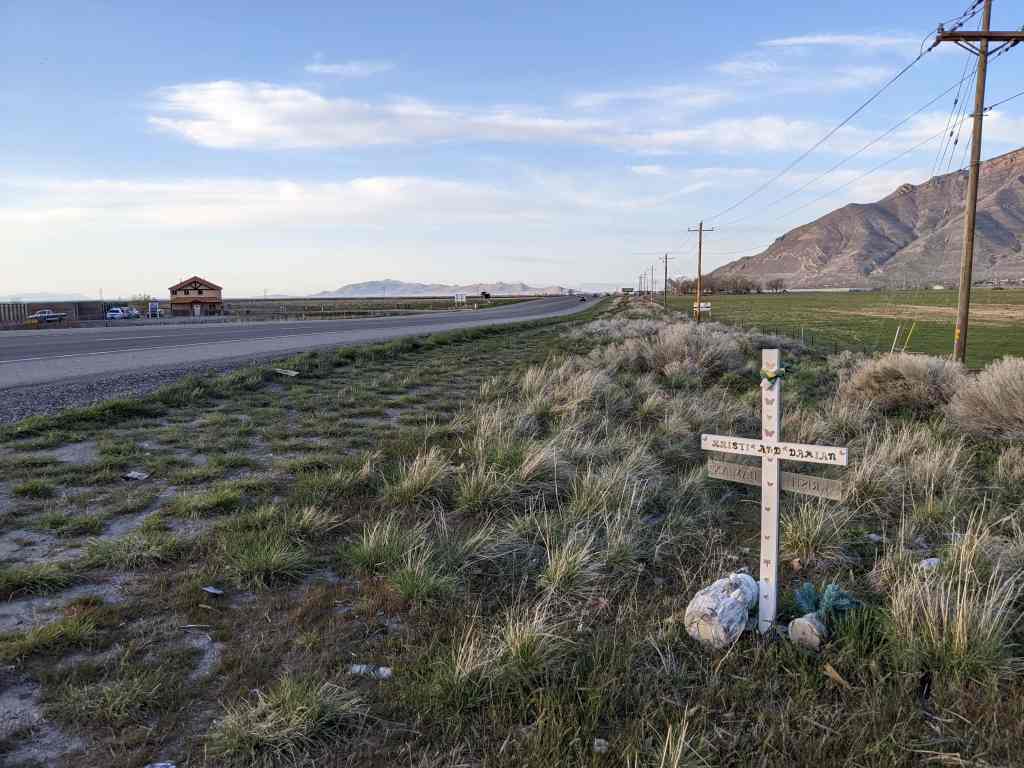
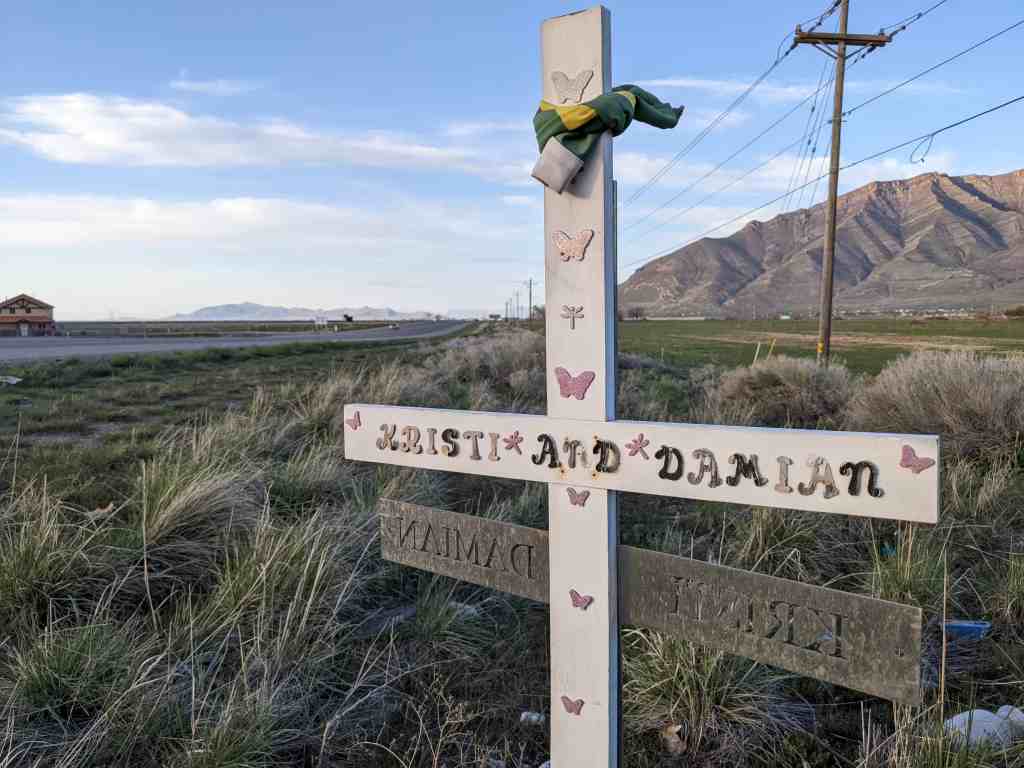
N 40.66264 W 112.28778

28 Sunday Jan 2024
Posted in Uncategorized
Tags
Kristi Westfall, also known as Kristi Newingham; her boyfriend, Jacob Herrera; and their 9-month-old son, Damian passed away here January 28, 2010.
N 40.66264 W 112.28778
26 Tuesday Dec 2023
Posted in Uncategorized
Tags

James Lynn Bevan
March 10, 1931 – June 14, 2016
Blessed, Honored Pioneer!
“It is good to look to the past to gain appreciation for the present and perspective for the future. It is good to look upon the virtues of those who have gone before, to gain strength for whatever lies ahead. It is good to reflect upon the work of those who labored so hard and gained so little in this world, but out of whose dreams and early plans, so well nurtured, has come a great harvest of which we are the beneficiaries. Their tremendous example can become a compelling motivation for us all, for each of us is a pioneer in his own life…”
-Gordon B. Hinckley, 1984
These words are now found on a plaque at the entrance of the Pioneer Museum, the place that Jim Bevan loved so much. Jim loved these words because they epitomized his own thoughts and feelings. He had a drive and desire to help everyone visualize and understand the struggles and sacrifices that were made by those men and women that lived in the very early days of Tooele.
Jim was a descendent of the faithful pioneers that established the city of Tooele. He was the 10th of eleven children born to Eli Edson Bevan and Sarah Shields Bevan. He was named after his relative James Bevan who was born in 1821 in Herefordshire, England and came to Utah in 1847 after coming from California, as a member of the Mormon Battalion. Jim’s father, they called him Kelly, was an engineer of the train that used to travel Vine Street every day giving the men a ride to and from the Tooele Smelter. Jim’s mother died when he was only twelve years old. Jim worked at the lumber company in Tooele, at the Tooele Ordinance Depot and finally at Utah Power and Light Company. He served the LDS church as a bishop, a high counselor and stake president.
Over the years Jim spent thousands of hours with his friends Russ Hammond and John Bryan and gave much in the way of personal resources in an effort to establish a place where people could visit to catch a glimpse of the past. His desire to share his love of those early pioneers and their struggles resulted in many of the displays at the Pioneer Museum. The museum now stands as a monument to his life.

The text on this page is from Sons of Utah Pioneers historic marker #249, located at the James L. Bevan Tooele Pioneer Museum at 39 East Vine Street in Tooele, Utah.
21 Thursday Dec 2023
Posted in Uncategorized
Tags
Eastlake style, Grantsville, Historic Homes, NRHP, Queen Anne style, Tooele County, utah, Victorian Eclectic, Victorian Queen Anne style
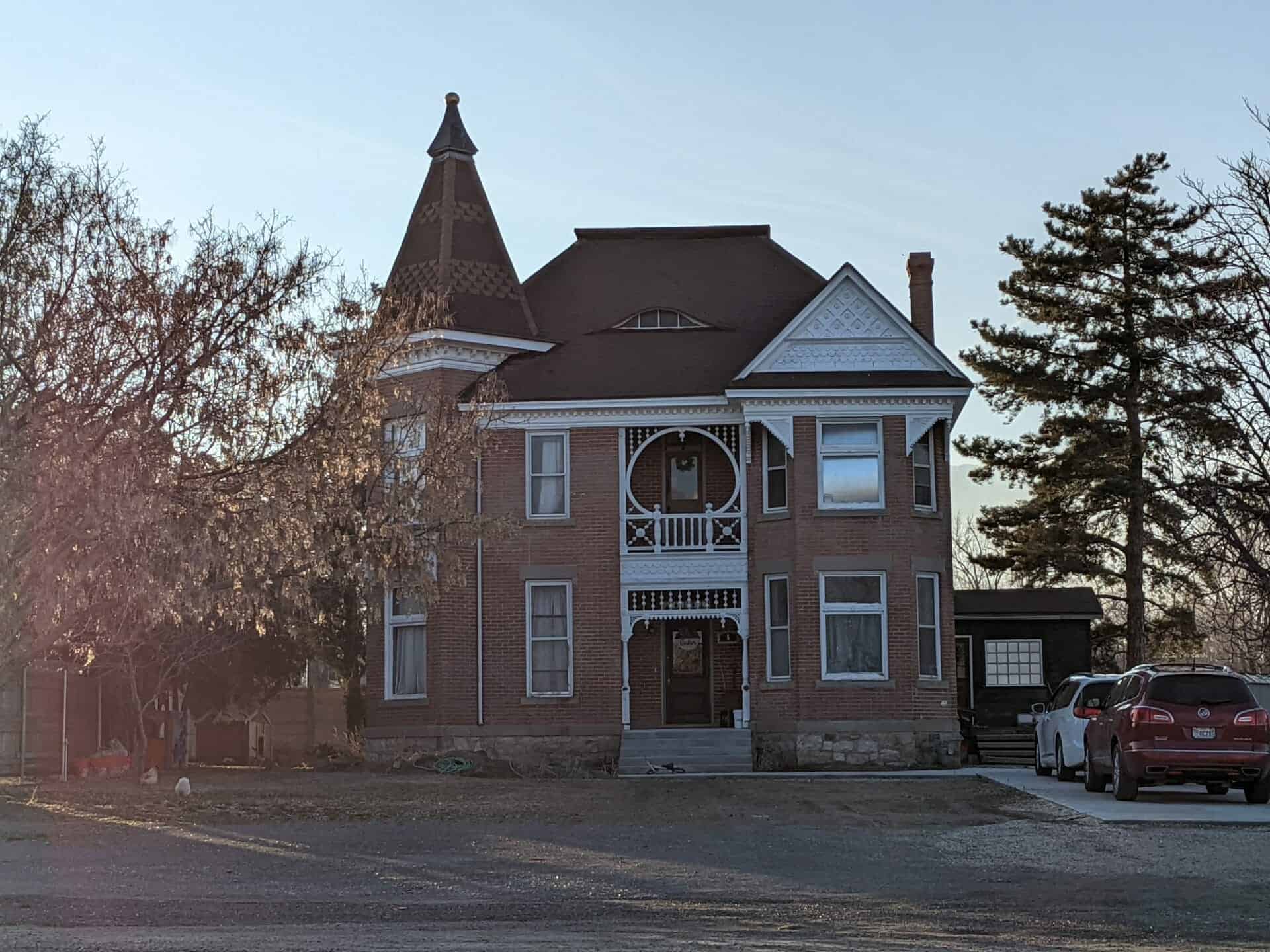
James and Penninah Wrathall House
The Wrathall House is a two-story central-block-with-projecting-bays type house. The house is constructed of brick with sandstone foundation, lintels and sills. The style and ornamentation is Queen Anne with an Eastlake style porch. The house has a wood shingle roof with the original decorative shingles on the turret roof. The house has a circa 1940s one-story frame addition at the northwest corner. The 0.84-acre lot includes two contributing outbuildings (a circa 1910 garage and a circa 1900 coop), and one non-contributing outbuilding (a circa 1980s shed). There is also a contributing structure, a circa 1950 metal Butler silo.
The James and Penninah Wrathall House, built in 1898, is located at 5 North Center Street in Grantsville, Utah and was added to the National Register of Historic Places (#05001629) on February 3, 2006.
Though technically a central-block-with-projecting-bays type house, the footprint of the building is contained within a roughly 40 by 40 foot square. The one-story addition is located in a niche at the northwest corner and extends 12 feet to the north. The house was constructed of brick with a facing of fired red brick and an adobe brick lining on the interior. The brick is laid in a running bond with flush mortar joints. The tan-colored sandstone foundation is rough-faced ashlar blocks with concave mortar. A smooth sandstone stringcourse is above the foundation at the water table. Similarly smooth sandstone blocks provide the lintels and sills from most of the windows. The house faces Center Street to the east. The facade features an octagonal bay to the north and a projecting square turret tower to the south. The centerpiece of the fa9ade is the entrance, which features Eastlake details (spools, spindles, lathe-turned, brackets, etc.) above the main floor entrance and on the second-story porch. The concrete deck and steps, and the wrought iron rail are later additions (circa 1930s-960s).
The Wrathall House has an imposing presence. The attic space under the central truncated pyramidal roof is nearly a story-high. The roof is covered in square-butt wood shingles with a small eyebrow dormer above the main entrance. The slender turret roof is higher than the main roof by ten to twelve feet. It is covered with wood in an alternating pattern offish-scale and square-butt shingles, and is capped metal. The octagonal bay has a simple-gable roof. The bay’s gable trim combines paterae within a weave of wood and a base offishscale shingles. Other ornamentation includes both fan-shaped and scroll-shaped brackets with knobs, and a dentilated cornice. The windows are original (the smaller windows are covered in storm windows, date unknown). The larger windows are fixed frame with transoms. The horizontal mullions are notched with a centered paterae. The tall narrow windows are one-over-one, double-hung wood sash. The front door is original with Victorian carved ornamentation. The exterior wood work is painted grey with dark green accents.
The secondary elevations are less elaborate. Several of the narrow windows on these elevations have been shortened or blocked (circa 1940s to 1970s). The north elevation features a second eyebrow dormer and a leaded and colored-glass window, which lights the staircase. There are corbelled brick chimneystacks on the north and south elevations. The south and east elevations are relatively plain and not easily visible due to the mature trees near the house. The circa 1940s addition at the northwest corner is a one-story frame structure covered in shiplap siding on a concrete foundation. The addition has a concrete stoop on the east side. There are doors on the east and west elevations. The east elevation door is half-glass (with multiple panes). The window also is a multi-pane wood sash window. The west door is at grade level.
( This was added to the National Register of Historic Places (#05001629) on February 3, 2006 and is located at 5 North Center Street in Grantsville, Utah )
On the interior, the house has approximately 2,700 square feet of space divided between the two floors. The full-height attic is expansive, but the basement is only 20 percent excavated. Though a central-block house, because it has a square footprint, the interior feels more like a foursquare. The central entrance has a foyer. The semi-open stair is on the north side. It features a ball and spindle balustrade, knobs, brackets, square newel posts, and a curved rail. At the stair landing, the stained glass window glows in colors of rose and gold. With the exception of the stair rail, the woodwork in the foyer has been painted white. The interior doors are all original with hopper window transoms. The door and window casings feature fluted stiles and paterae. The room in the octagonal bay is to the north. The parlor is on the south in the projecting turret tower. The parlor is the most intact room. The oak woodwork is in excellent condition. The room features an elaborate two-tier mantel featuring columns acanthus-leave capitals, a mirror inset, and a tile surround. The tall oak pocket doors lead to a large dining room in the southwest corner of the house. The kitchen is in the northwest corner. The house has a total of thirteen rooms with four bedrooms and a bath on the second floor. The interior was painted and re-papered in the 1950s.
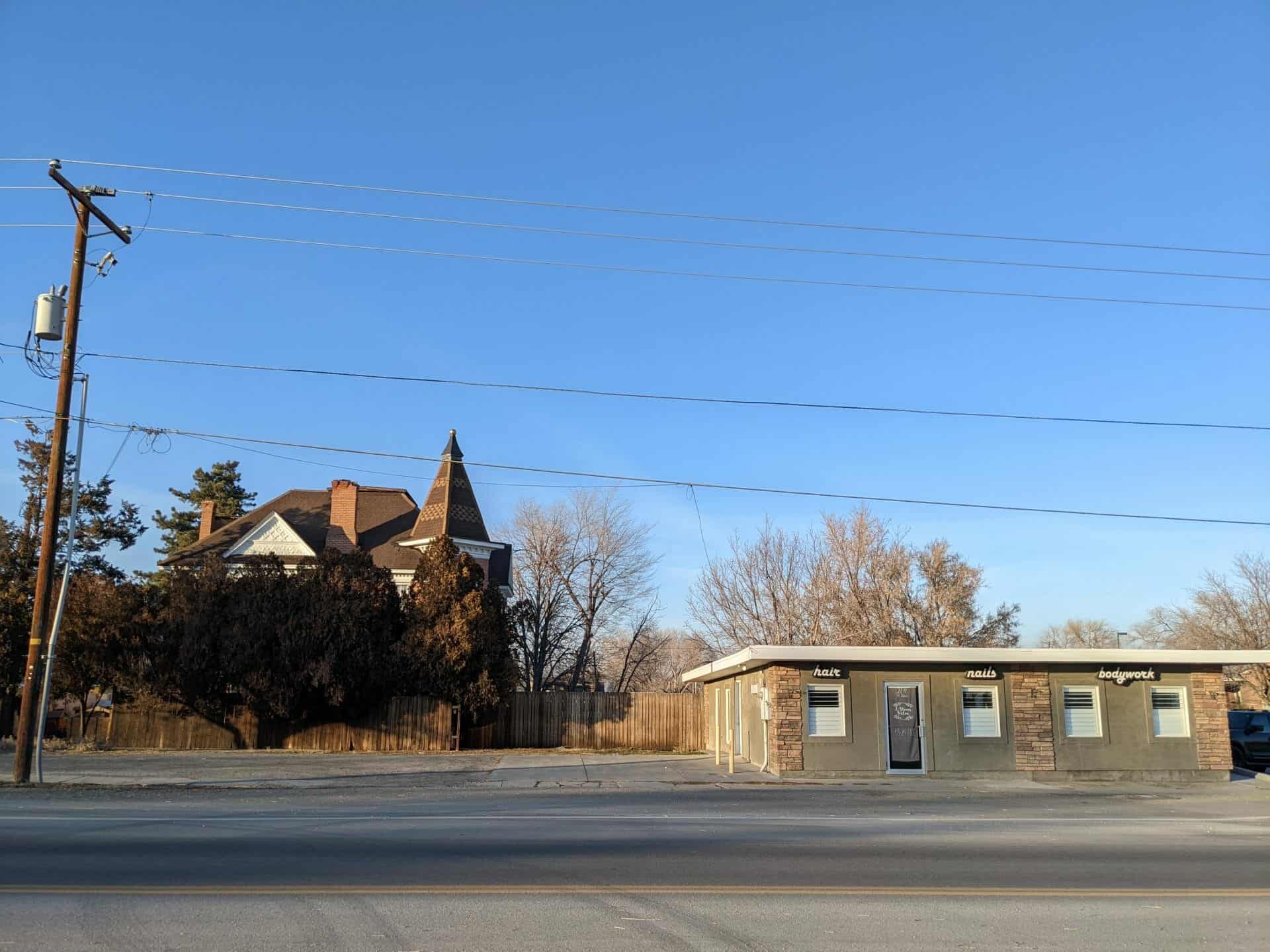
The Wrathall House is on the south half of a 0.84-acre rectangular parcel. A 0.12-acre portion at the corner of Main and Center Streets was divided from the main property and a one-story commercial building (circa 1970s) sits right at the corner. There is a concrete sidewalk leading from Center Street to the main entrance. A wood fence at the rear separates the house from the Main Street property. The landscaping is overgrown and the mature trees near the house obscure views of the secondary elevations. For many years, two 100-year old evergreens obstructed the façade view, but these trees were cut down recently. North of the house is a large field where the outbuildings are located. They include a contributing wood garage with a simple gable roof. This building was built circa 1900 to 1910 and originally may have been an agricultural outbuilding. South and west of this building is a contributing shed or coop (circa 1910), which is partially dilapidated. There is also a non-contributing circa 1980 wood shed. The round metal Butler silo (circa 1950) is a contributing structure. The James and Penninah Wrathall House is in good condition and contributes to the historic resources of
Grantsville, Utah.

The James and Penninah Wrathall House, built in 1898, is significant under National Register Criteria A and C for its association with the development of Grantsville and its contribution to the architectural resources of the rural Utah community. The owners, James and Penninah Wrathall were prominent second-generation members of the community. The property is eligible within the Multiple Property Submission: Historic and Architectural Resources of Grantsville, Utah, 1850-1955. The history of the house spans all of the historic contexts: “Mormon Agricultural Village Period, 1867-1905,” “Impact of Technology and Transportation Period, 1905-1930,” and the “Economic Diversification Period, 1930-1955.” The Wrathall House is architecturally significant as an unusual and well-preserved example of the Victorian style known as Queen Anne. The design shows the influence of design books, particularly in the Queen Anne and Eastlake details, but the execution by local builder, Charles Z. Schaffer, is unique. The imposing residence is a landmark at the corner of Main and Center Streets. The Wrathall House is a contributing historic resource in Grantsville, Utah.
The community of Grantsville was settled on October 10, 1850, three years after the first settlement of the Salt Lake Valley by members of the Church of Jesus Christ of Latter-day Saints (LDS Church or Mormon Church). After several altercations with the nomadic Native Americans who camped in the area, the Grantsville area was settled and known as Willow Creek. In 1852 a town site was surveyed and in 1853, the town was renamed Grantsville in honor of George D. Grant, who led a company of the territorial militia to protect the settlement. In April of 1890, James L. Wrathall bought Lots 1 & 2 of the Grantsville survey’s Block 3 from fellow Grantsville pioneer John Eastham (1820-1893). At the time a small Victorian cottage was located in the southeast corner of Lot 1. The Wrathall family lived in the cottage while their substantial brick home was construction. The local newspaper pinpointed the construction year in an article dated November 25, 1898, which read: “Bishop Wrathal’s [sic] fine home is nearly completed, all of the latest modern design, and shows the skill and fine machanical [sic] labor of C. Z. Schaffer, the builder.”
James Leishman Wrathall was born in Grantsville on September 22, 1860. He was the son of prominent
Grantsville pioneers, James Wrathall (1828-1896) and Mary Leishman Marston (1822-1871), English
immigrants who came to Utah in 1850. On February 2,1882, James L. Wrathall married Penninah Hunter.
Penninah Susan Hunter was born in Grantsville on January 14, 1862. She was the daughter of Edward Hunter (1821-1892) and Mary Ann Whitesides (1825-1914), who were also English immigrants. James and Penninah had ten children, with the last two born after they moved into their new house.
James Wrathall’s early life was spent herding his father’s cattle and sheep on the plains of Tooele County. He saved and invested, eventually becoming the owner of several large herds of sheep and cattle. He also acquired over 4.000 acres of farm and ranchland. He raised hay and sugar beets. He had a large fruit orchard, which included apples and other small fruits. As a prosperous rancher and farmer, he had numerous business interests: North Willow Irrigation Company, president; Richville Milling Company (flour mill in Tooele), president; Utah-Idaho Sugar Company, stockholder; Consolidated Wagon & Machine Company, stockholder; etc. James Wrathall was a member of the Grantsville City Council. He also served on the Grantsville School Board for thirteen years and on the Tooele County Board of Education for seventeen years. He held numerous leadership positions in the LDS Church, including serving as Grantsville’s bishop between 1890 and 1906. A biographical sketch of James L. Wrathall written in 1919, began: “There is no name perhaps that figures more conspicuously and honorably in connection with the business development of Grantsville and Tooele County than does the name of Wrathall. James L. Wrathall is now extensively engaged in farming in this section of the state and he is also at the head of various important business enterprises which constitute a dominant factor in the general development and progress of the district in which he lives.”
An earlier biographic sketch, noted that “He makes his home in Grantsville, where he erected, in 1898, a
beautiful home of twelve rooms. The house is a two-story brick, and modern in every respect.” According to Lisa Miller, “The Wrathall house was known as one of the most elegant residences in Grantsville. Local
citizens still remember the rosettes that adorned the ceilings in the original parlor and dining room and a grand stairway that features a beautiful stained glass window. The house is also believed to be the first residence in Grantsville to have acquired electricity.” Hazel Johnson, the youngest daughter of James and Penninah, remembers the silverware (which she had to polish every Sunday) and the napkins had the family’s initials on them.
At the age of seventy-three, James L. Wrathall gathered his family around him at home and predicted his death. He died the following day, November 29, 1932. In addition to raising ten children, Penninah Wrathall served in the Relief Society and Primary organizations of the LDS Church. She also served as the president of her local Daughters of Utah Pioneers organization. Penninah Hunter Wrathall died on November 16, 1934.
A portion of the property (Lot 2) had been deeded to a son, Morris Y. Wrathall, in 1931. After Penninah’s
death, the remainder went to Irene Wrathall Page in 1936. Irene Page was listed as living with her parents on the 1930 census enumeration. Irene was born on February 13, 1890 in Grantsville. She married George W. Page in 1918. He died in 1936. It is not known how long Irene lived in the house, but she did rent it out for a few years. In 1944, she sold the property to her sister, Hazel Wrathall Johnson. Irene Page died in Missouri on April 5, 1973. Hazel Wrathall was born on July 18, 1905, the youngest child of James and Penninah. She married Milan Johnson on November 17, 1921. Milan “Mike” C. Johnson was born on October 5, 1903, in Grantsville. They had eight children. The Johnsons remodeled the house and restored portions of the downstairs in the 1950s. They lived in the home until their deaths. He died on September 22, 1978, and she died on August 24,1993. In 1994, ownership was transferred to their daughter, Janice Johnson Sommerfeld, and her husband Sigmund Sommerfeld, who are the current owners.
The Wrathall House is architecturally significant as an imposing and unique adaptation of the Queen Anne style. The Queen Anne style was popularized by the 19th century British architect, Richard Norman Shaw. It was the most picturesque of the various Victorian Eclectic style popular in America in the late 19th century. Variations of the style were popular in Utah between 1884 and 1905. Residential examples are characterized by their asymmetrical façade, irregular plans, and variety in materials. The most common house type for Queen Anne residences was the central block with projecting bays. The Wrathall House is an unusual example: it appears as a block mass (almost a foursquare) flanked by a turret and an octagonal bay. The house includes a variety of juxtaposed materials: rough-faced and smooth stone, brick, wood shingles and other ornamentation. The Eastlake-style porch was adapted from a style book written and illustrated by English architect, Charles Locke Eastlake. Most Eastlake homes were constructed entirely of wood frame and shingle, and lacked the variety of materials of the Queen Anne style. The Eastlake style was popular in Utah between 1880 and 1900, but because Utah builders preferred brick, there are very few pure examples of the style. In Utah, as in the case of the Wrathall House, the Eastlake style is most often found on porches and decorative gable cornices in combination with Queen Anne and other Victorian Eclectic styles.
The builder of the Wrathall House was Charles Zephaniah Shaffer. 8 He was born in Pennsylvania on May 13, 1843. He was living in Grantsville at the time of his marriage to Ellen Barrus in 1895. He was listed as a
“carpenter” in a 1900 business gazetteer. Charles Z. Shaffer is also known to have built the Alex and Mary
Alice Johnson House at 5 West Main Street in Grantsville, listed on the National Register on December 13, 1995. The Johnson House was built in 1900, two years after the Wrathall House. Shaffer had probably gained confidence as a builder with his work on the Wrathall House. The Johnson House is a more exuberant expressive of the builder’s skill with extended bays and elaborate wrapping Eastlake porches, but it is also more typical than the Wrathall House. The Alex and Mary Alice Johnson House was listed on the National Register of Historic Places in 1996. It is not known whether Shaffer was responsible for other Queen Anne homes in the Grantsville area.9 Charles Z. Shaffer died in Grantsville on August 29,1904.
16 Saturday Dec 2023
Posted in Uncategorized
Tags
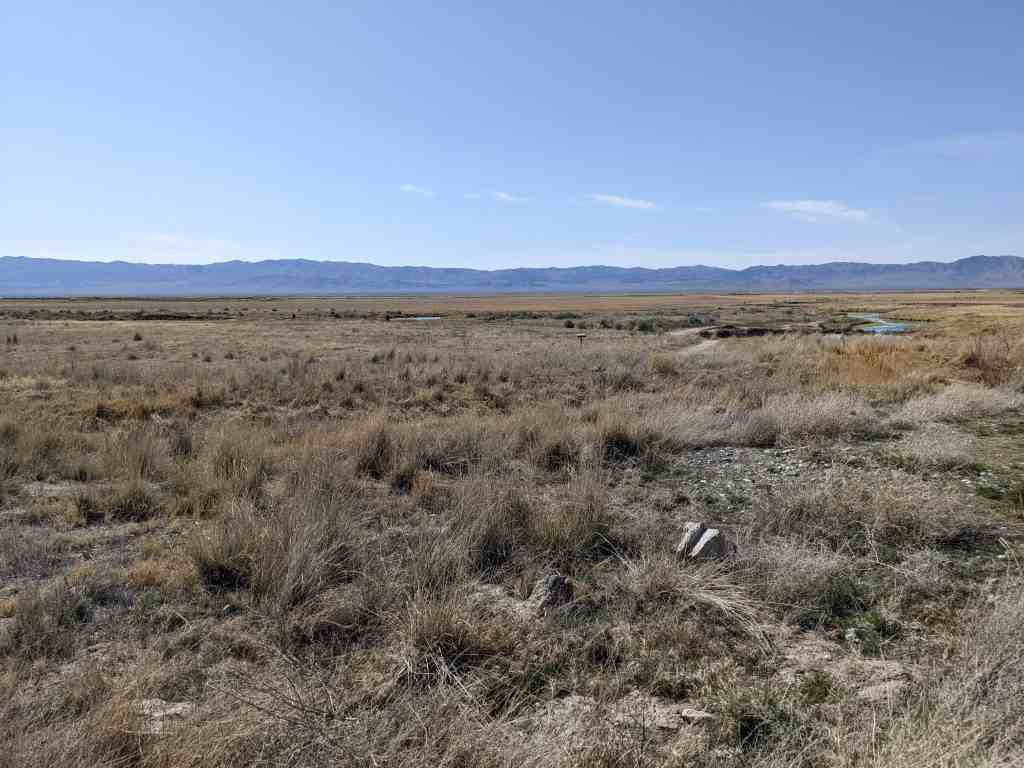
Fishing is popular at these springs and there are several historic markers about those who passed here long ago.
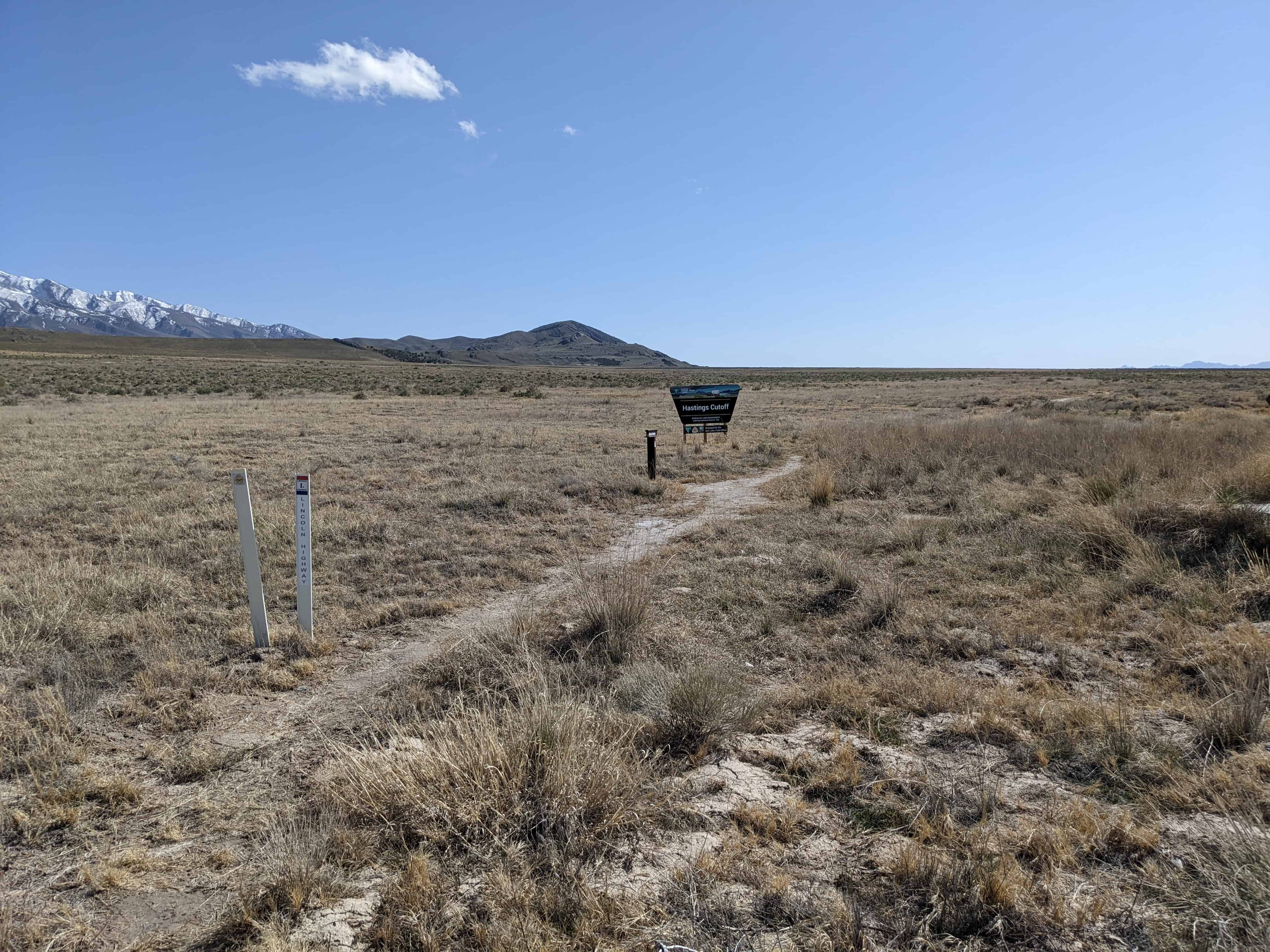
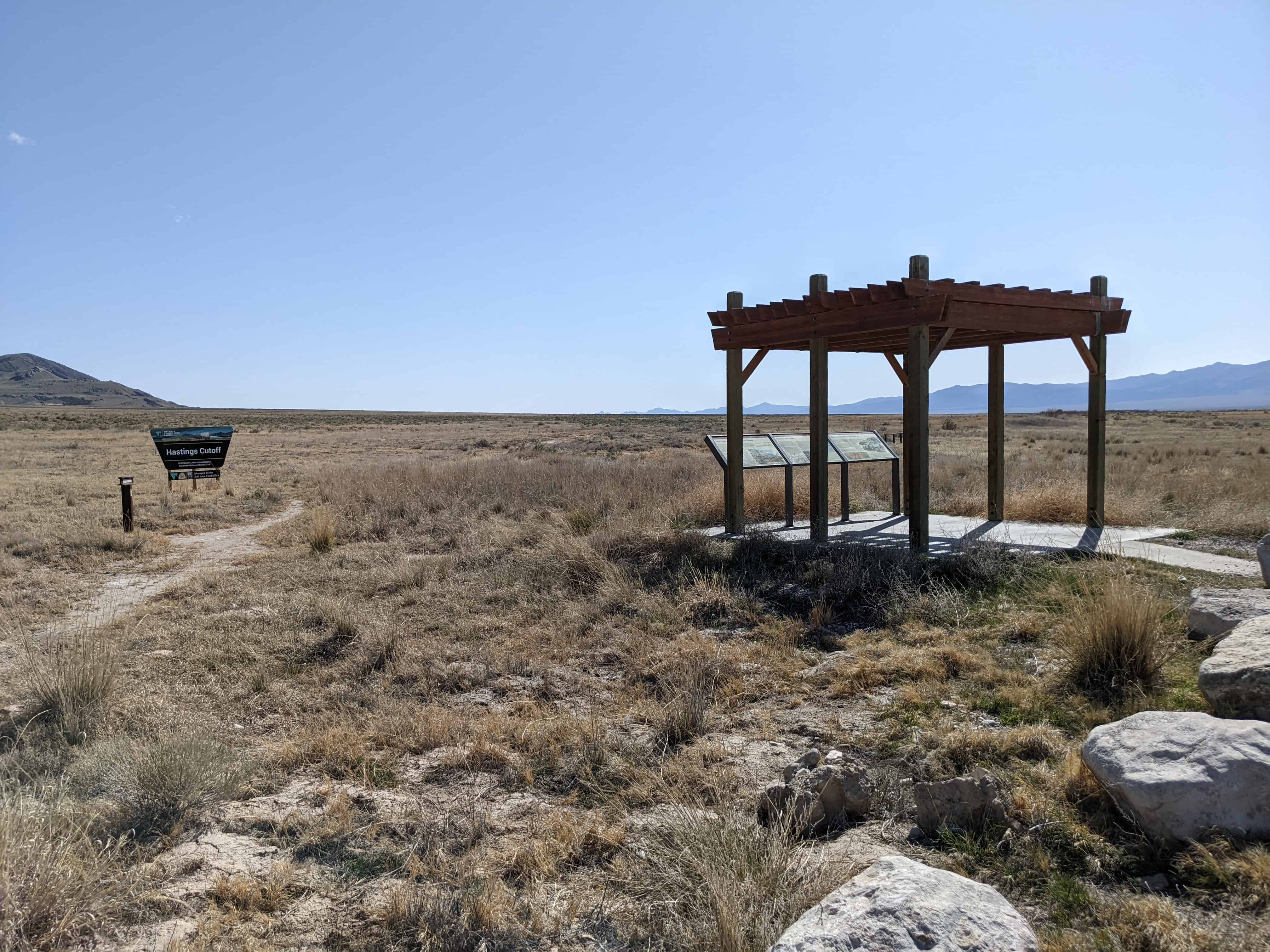
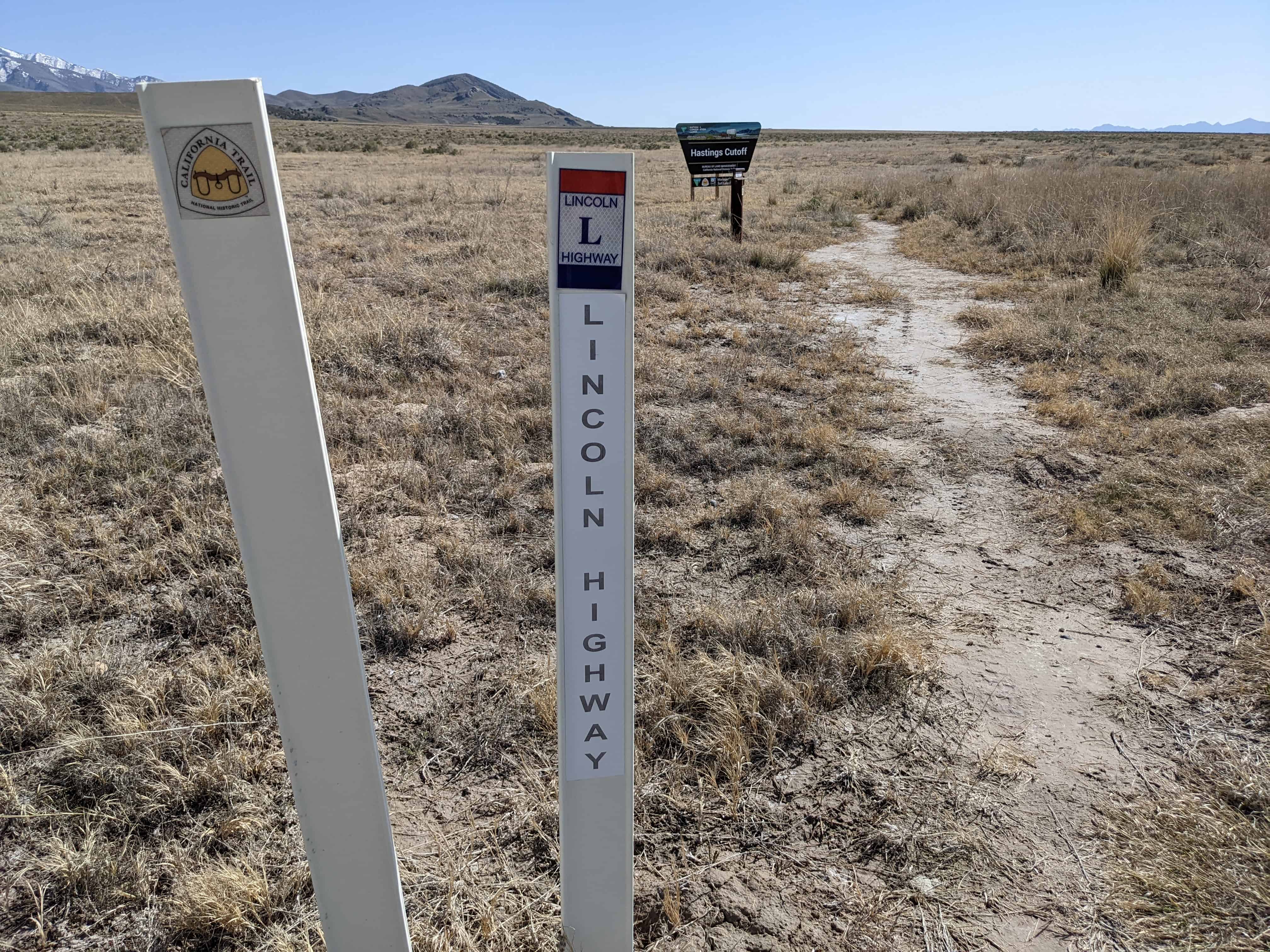

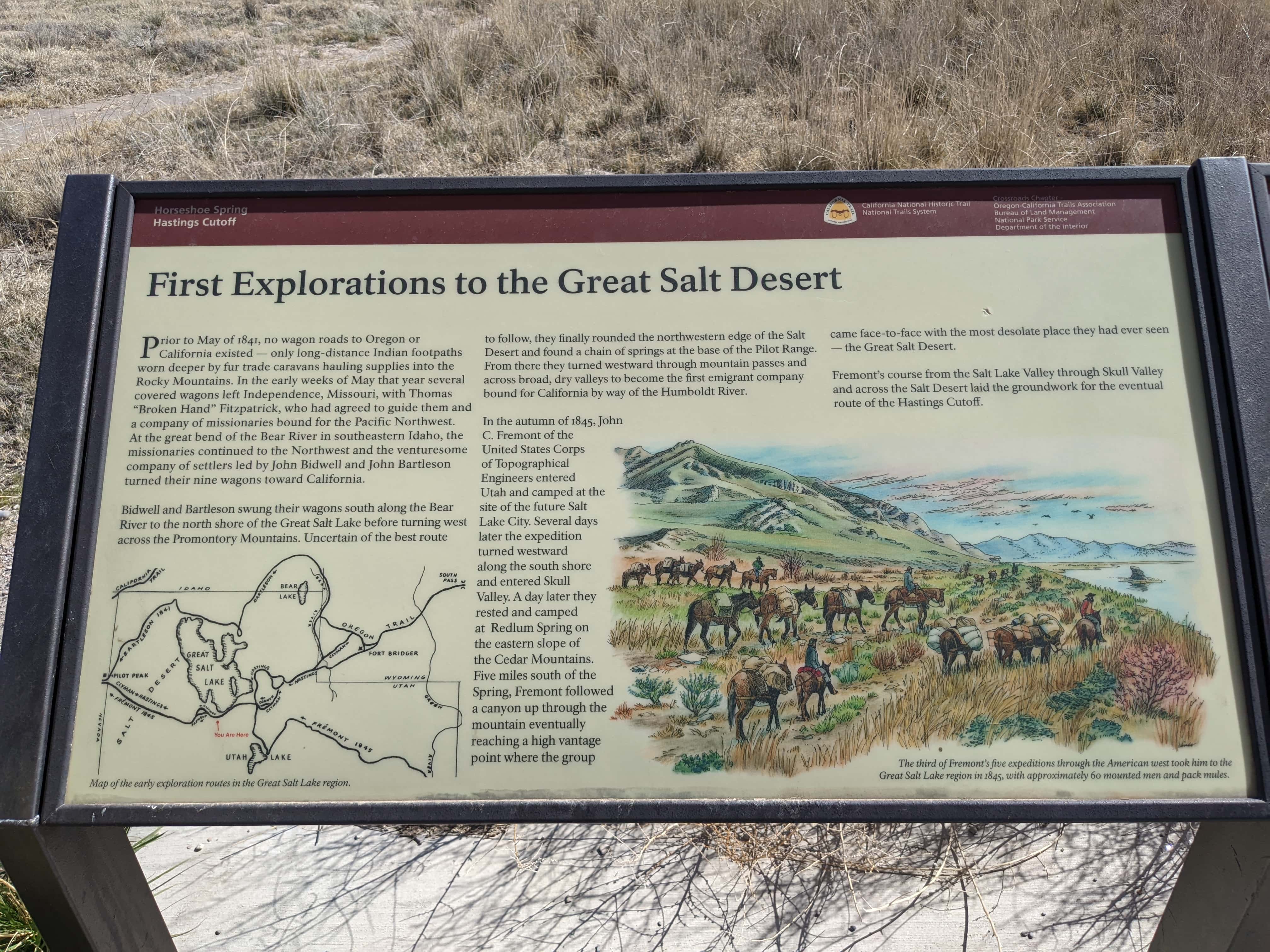

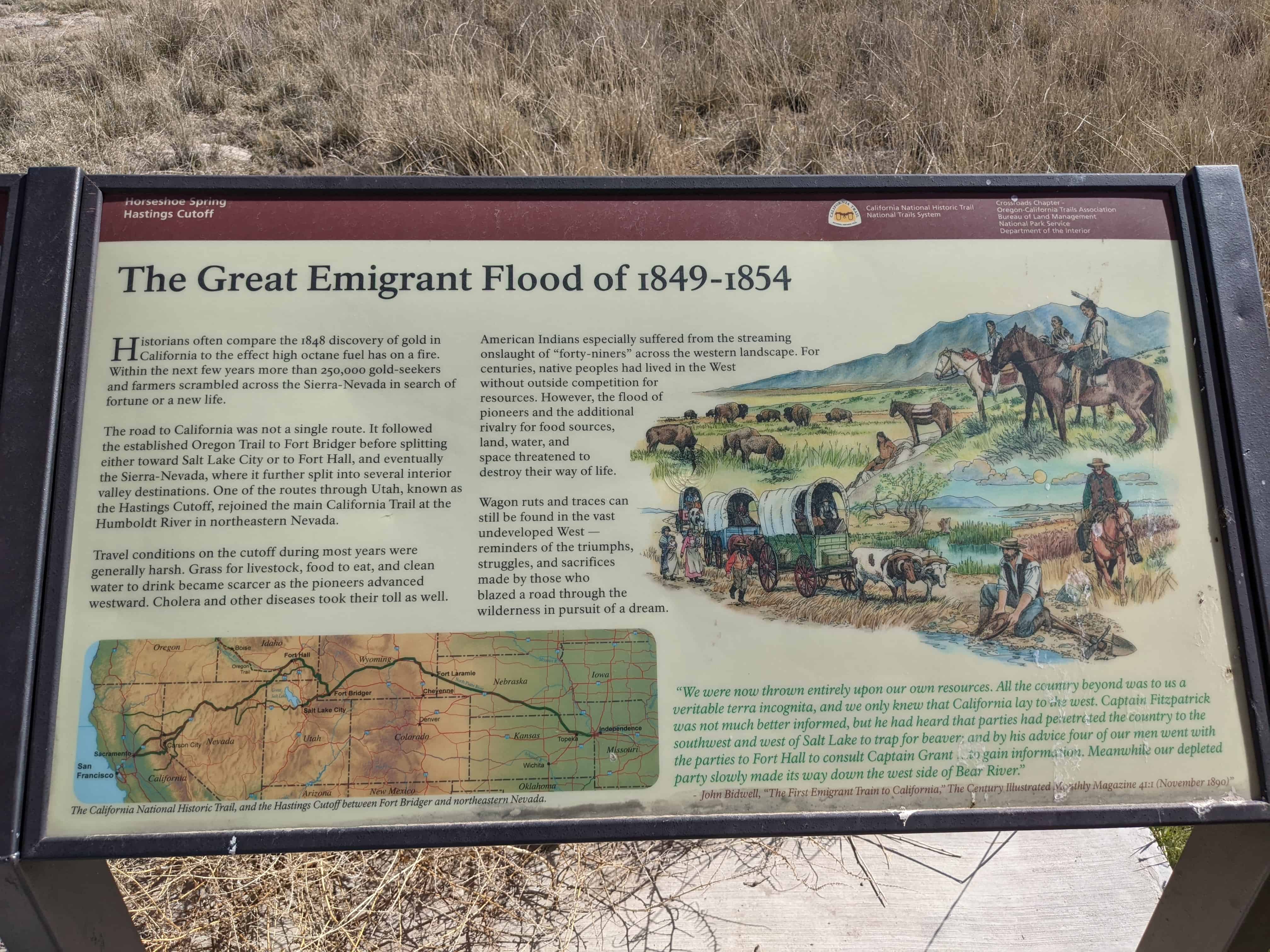
Located here:
N 40.61397 W 112.70810
14 Thursday Dec 2023
Posted in Uncategorized

Tooele County Courthouse and City Hall
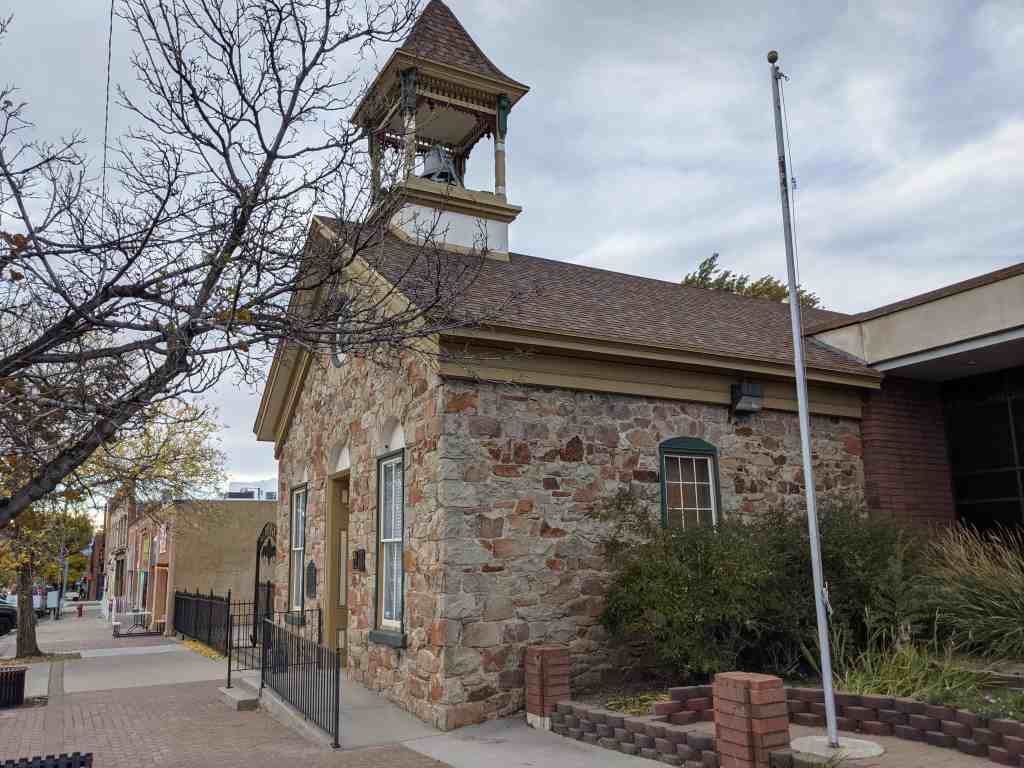
The Tooele County Courthouse and City Hall was added to the National Historic Register (#83003194) on July 21, 1983 and is located at 41 East Vine Street in Tooele, Utah.
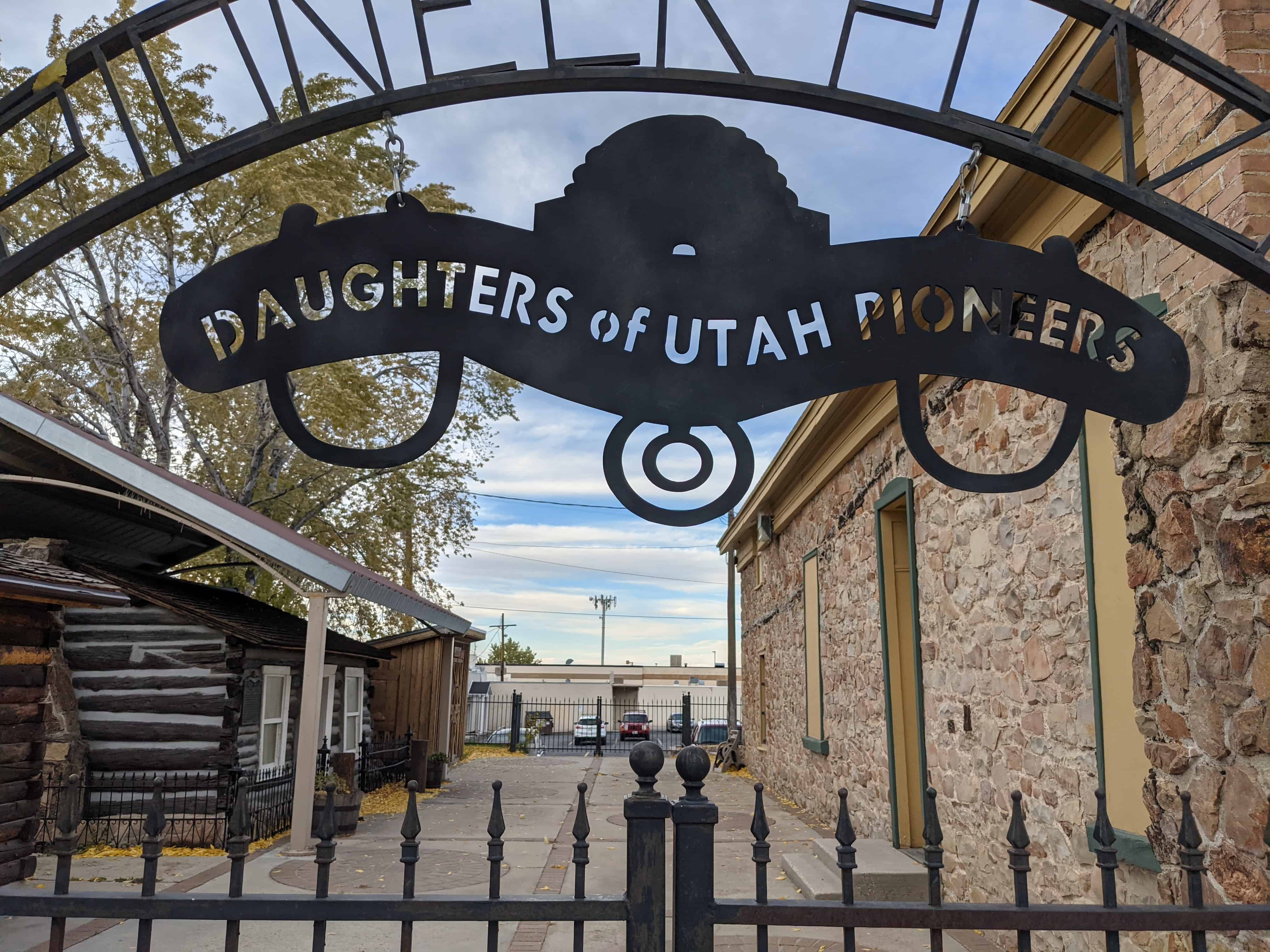
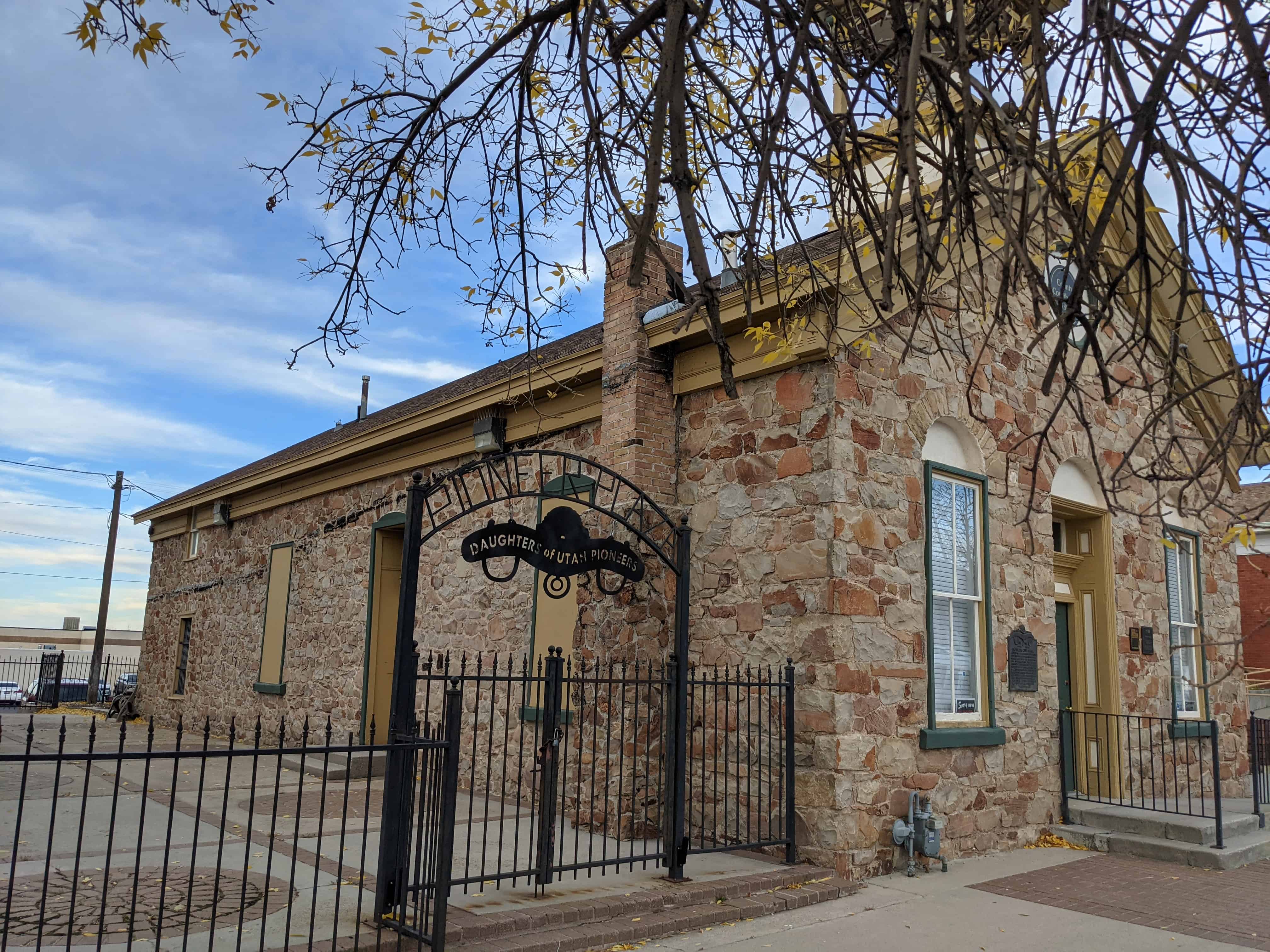
Pioneer City Hall – DUP Historic Marker #84 is located here.
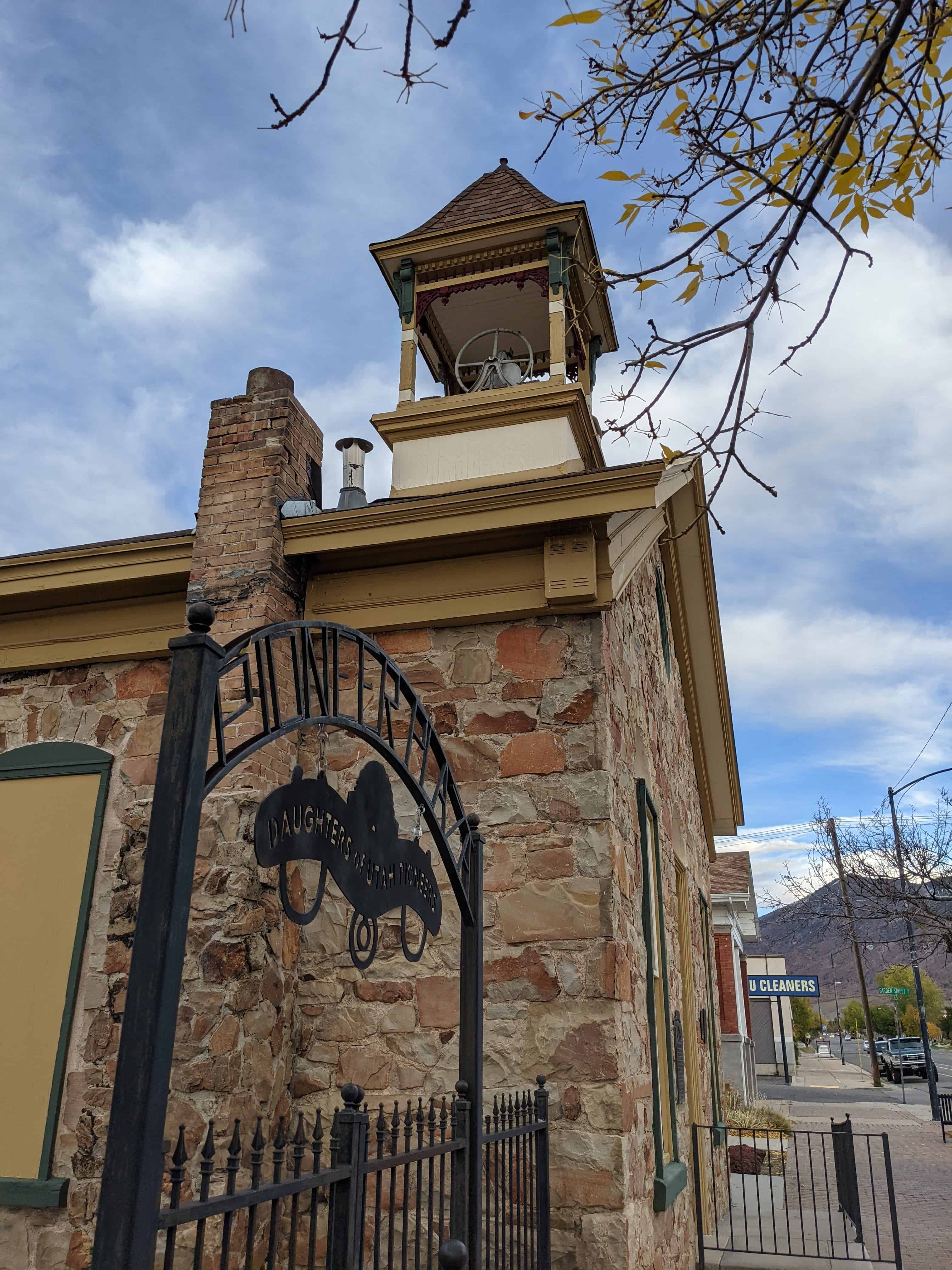
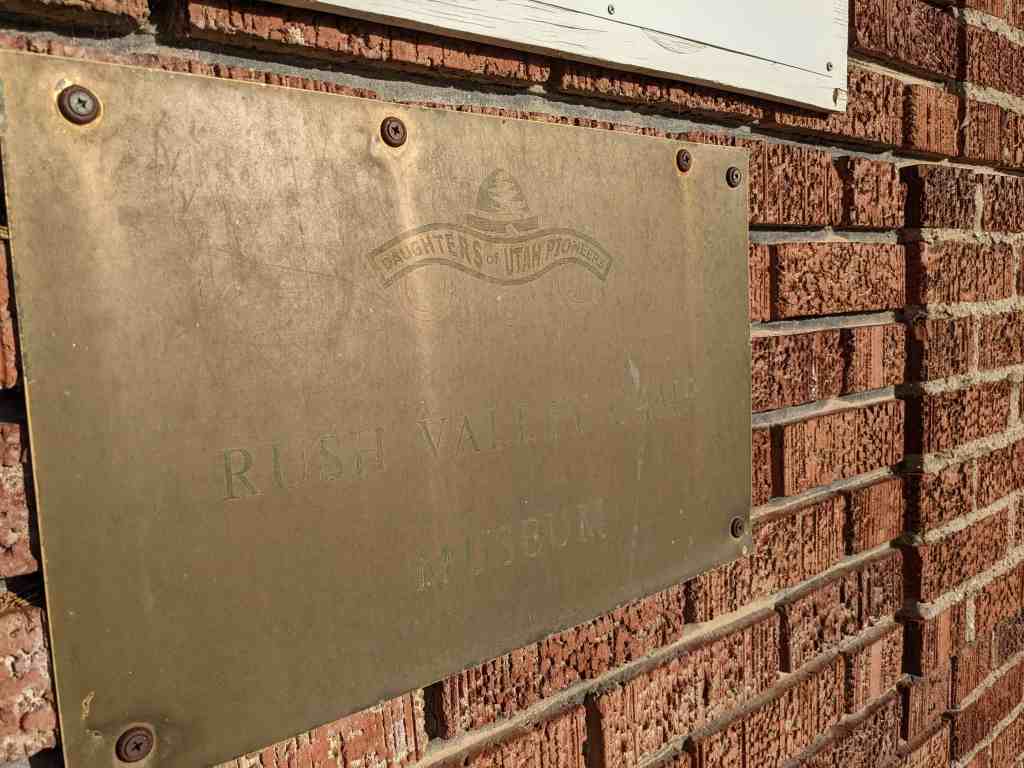
This Greek Revival temple-form building was constructed in 1867 using local stone. The belfry, added sometime after 1874, is Picturesque in style and has lathe-turned posts accentuated by scroll brackets, a distinctive spindle band, and a slightly bellcast pyramid roof. The hall was built, according to a newspaper article of the time, by the citizens of Tooele “for a dancing hall, for dramatic representations and other social and intellectual purposes.” It was leased to William C. Foster and Thomas Croft but was also used for holding court and other city and county business. Live entertainment, however, proved financially unsuccessful, and by 1871 the hall was utilized primarily as a courthouse. In 1899 a new courthouse was constructed, and the building became solely the city hall. In 1942, with the construction of a new city hall, it was authorized for use as a museum by the Daughters of the Utah Pioneers.
The text below is from the nomination form from when it was added to the register.

The Tooele County Courthouse and City Hall, built in 1867, is significant as an important governmental building in the historical development of Tooele County, Utah, and as an excellent example of an early city hall-county courthouse in the state. It is one of fourteen such structures documented and remains both the oldest (known to date) and only extant temple-form city hall in Utah The temple-form, which typically has its short end to the street and a pedimented gable façade in imitation of monumental classical buildings, originated in the Greek Revival period of American building, and was the first and most common building type used in Utah’s early public buildings. Tooele County, located immediately west of Salt Lake County, was organized in the 1851-52 period, some four years after the founding of Salt Lake City by Mormon pioneers. Within the county political framework, Tooele City functioned as the center, but did not gain votes as the County Seat until 1861, and did not become the effective location of county government until 1867, upon completion of this building. The red sandstone, rectangular structure, topped by a belfry (post-1874), also served as an early pioneer social center. It functioned as a courthouse and city hall until 1899, and as city hall until 1944; thus, the Tooele County Courthouse and City Hall formed a central link in the community’s social and political life. In 1968 the building was recorded by the Historic American Buildings Survey.
Tooele County, located approximately twenty-five miles west of Salt Lake City, and extending to the Nevada border, formed one of the earliest units of government in Utah. Settlement in the area reportedly occurred in 1849, with agricultural and milling activity dominant. Within this early period, Mormon ecclesiastical authority also served political purposes; but in 1851 Tooele County was organized and the “first” civil political government in the county was formed in 1852. Although Tooele City, incorporated on January 3, 1853 — the fifth incorporated settlement in Utah was the predominant settlement, the Territorial legislature placed the county seat at Richville. However, in 1861 that act was repealed and citizens voted to make Tooele City the seat of county government. County court continued to be held alternately in Tooele, Richville, and Grantsville until 1867 when the new building was constructed in Tooele to house county facilities.
The structure was built in 1867 of red sandstone, in an uncoursed rubble masonry construction. Interestingly, this time marked a transitional period in building materials and ideas of permanence in the Tooele area. Writing from Tooele in March, 1867, Eli B. Kelsey stated:
The time honored “adobe” is fast loosing [sic] prestige as a building material, and brick and rock are rapidly taking its place. The primitive log cabin, with its turf roof, is fast approaching its destiny, namely, to shelter the lower orders of the animal creation for a little season, and then become one of the things of the past, while the “genus homo” find refuge in structures of brick and stone, with shingle roofs.
In August, 1867 a newspaper article reported that the citizens of Tooele were constructing a social and multi-purpose hall, which was “being done by shares.” The notice continued, “the house is substantially built of rock; its dimensions, 60 x 30. It will be used for a dancing hall, for dramatic representations and other social and intellectual purposes. It is estimated that this building will cost twelve thousand dollars.” In addition, the structure was to house county and city records, and form a type of community center.
According to one source, bids to erect the structure were actually submitted to county officials on February 13, 1865. Those involved in the construction were: Isaac Lee, James Hammond, W. C. Gollaher, and John Gordan. The architect is unknown. A basement was then excavated, where a jail was to be located, and a foundation laid. A Tooele County history noted that a two-room structure started by Isaac Lee, one of the contractors, was purchased and placed on the foundation. Finish work was then completed, including the plastering of the interior by George Atkin and George W. Bryan.
In describing the building’s use, the Daughters of Utah Pioneers, History of Tooele County, records:
Upon the completion of these two rooms, it was decided that the building might serve as the general entertainment and amusement center for the community, inasmuch as no such building was then available and could also be used for purposes of holding court or transacting any city or county business also. A committee was appointed to consider any suggestions or offers from anyone who might be interested. An offer of leasing the building to present home dramatic plays and entertainments was made by William C. Foster and Thomas Croft, and was considered favorable by the council.
On December 25, 1870, the first entertainment was held in this building and the leasors offered a rental of $400.00 for the building. However, due to hard times the financial end of the project was not so good, and in April of 1871, the leasors appeared before the council and petitioned them to be merciful, and offered all the furnishings they had acquired for dramatic purposes in payment of the overdue rent. This petition was accepted and the building was from then on used as a court house except for special entertainments given on very special occasions.
. . .it became necessary to build onto the building to enlarge the jail quarters. The Tooele City officials then petitioned the county officials to permit them to use a portion of the building for city offices. This was granted.
Thus, the Tooele County Courthouse and City Hall continued to function as such until 1899. At that time a new court house was built and the county moved into that facility. The structure then became solely the City Hall, until 1941 when Tooele City erected a new building. In 1942 the city leased the 1867 structure to the Daughters of Utah Pioneers for fifty years. That group utilizes the hall as a museum.

The Old City Hall is a Greek Revival inspired temple-form stone building. It was built in 1867 of uncoursed rubble masonry containing some red sandstone. The building is a rectangular form (27′-3″ x 66′-5″), one story in height at the front, and two stories at the rear. It has a gable roof. A belfry was added sometime after 1874.
This building is oriented with its gable end toward the street, a typical characteristic of temple-form buildings. It has a heavy wooden cornice, and a door is centered between two windows on the façade. A round date stone is located in the point of the gable over the door. Each of the openings on the façade has a semicircular relieving arch of stone, and the date stone is also surrounded by a ring of stone pieces. The windows are the two over two double hung sash type. There is a segmented transom over the door.
Originally the building had three long, narrow windows on the east and west side walls. A window on the east wall was later enlarged to contain an inset door, providing additional access to the interior of the building. A modern addition, made in the 1970s which connects the old courthouse to the city library, resulted in covering two of the windows on the west wall. These changes, however, have not affected the original integrity of the building. The door in the east wall was added well within the historic period, and the brick addition attached to the rear of the west side is unobtrusive, and has provided access to the building, so that it may function as part of a cultural complex.
The belfry, reflecting the influence of the Picturesque movement which followed the period of the Greek Revival, has lathe turned posts accented by scroll brackets, and a distinctive spindle band. It has a slightly bellcast pyramid roof. The addition of the belfry may have been an attempt by the Tooele townspeople to highlight the building in the Victorian period when because of its small scale it would not have been as distinctive among the larger buildings of the period. It may also represent an attempt to bring the building up to date using decorative features of the period. Or, it may have been added strictly for practical reasons, and was designed using the most typical decorative features of the period.
The Old City Hall in Tooele is an excellent, well preserved example of a Greek Revival inspired temple-form building. It has received alterations, previously mentioned, which were made to allow it continual use, but which do not affect the original integrity of the building.



14 Thursday Dec 2023
Posted in Uncategorized
Tags
Historic Schools, NRHP, Schools, Stockton, Tooele County, utah

The text on this page is from the nomination form (#100003269) for the National Historic Register, the school was added to the register on December 31, 2018 and is located at 18 North Johnson Street in Stockton, Utah.
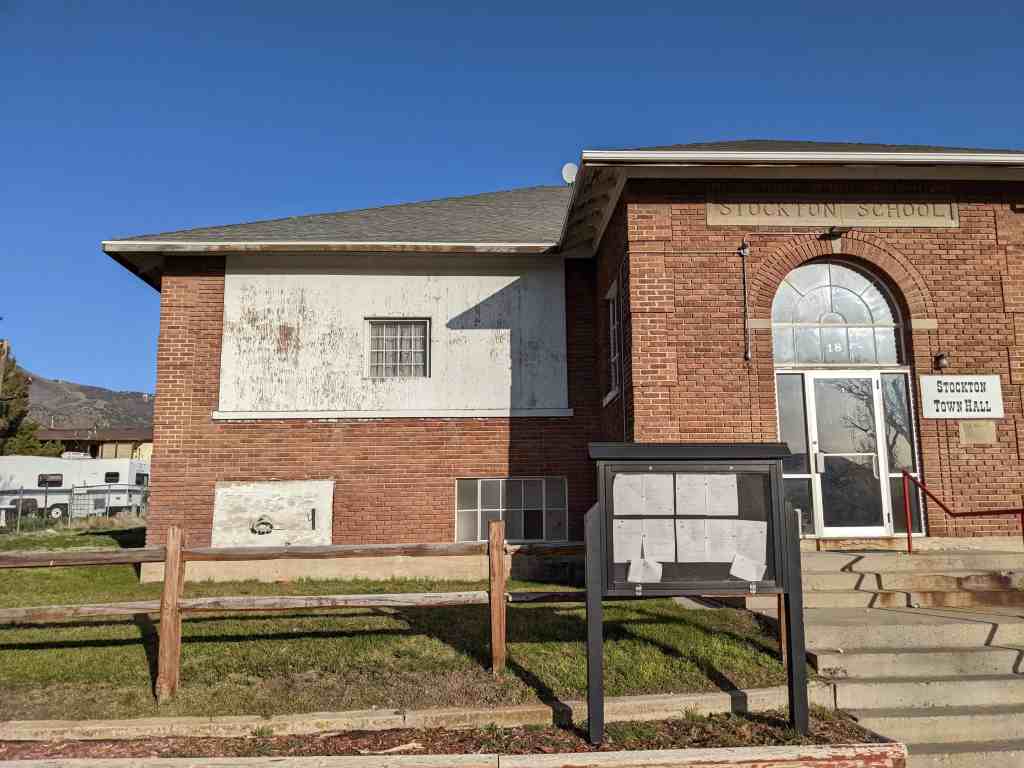
Stockton School, constructed in 1929 in Stockton, Tooele County, is significant under Criterion A in the area of Education. The building is locally significant because of its historic association with the ongoing development of education and improvement in educational facilities in Stockton during the early twentieth century. Stockton was, and still is an isolated town that served the education needs of a few small mining communities located in the nearby mountains to the east. This particular building replaced the previous smaller brick school building that was outgrown as population increased in the region. Stockton School’s historical development is represented in the growth, decline, and vacancy followed by an adaptive reuse of the building in the 1980s. The school was designed by Scott & Welch Architects, which was a prominent regional architecture firm during the early twentieth century. Scott & Welch designed several schools in Utah and surrounding states during this era. However, only few are extant. The period of significance of the Stockton School begins in 1929—when it was constructed—and ends in 1968, the end of the historic period. The school was in continuous use as an education facility until 1984, when Stockton Town adapted it for reuse as the town hall. It now serves multiple functions as town hall, police station and library. The building’s appearance has temporarily changed with the covering of the four main windows with plywood. However, the changes are easily reversible as the historic windows are still in place behind the covering. In spite of this the building still retains sufficient historical integrity to be considered a significant historic resource in the town of Stockton.

Criterion A Significance: Education
Stockton is located in a primarily rural area of Tooele County. In its founding days in the early 1860s, Stockton was known as a gentile (non-Mormon) mining town. As mines were excavated in the surrounding Oquirrh Mountains, Stockton became a base camp for the increasing population. Around the turn of the twentieth century, Mary Jane Hickman and James Brown organized the first school in Stockton, located in the Brown Store building on Main Street. A second school was later established further east on the corner of Grant Avenue and Silver Street. This was used until 1912, when a more permanent red brick schoolhouse was constructed on Silver Avenue and this building was repurposed as the Stockton Opera House. The new building had two classrooms. Four grades were taught in the large west room and four upper grades were taught in the east room. But as the town’s population continued to grow, this two-room building served as the primary center for education only until 1929, when “a new and larger” school building was constructed. The new school was built directly across the street east overlooking the older school. And, once the new building was put into use the 1912 school was reused as an LDS meeting house for a number of years and was later adapted for residential use. It still stands and looks very much as it did when it was a school.
The Stockton School of 1929 had four large classrooms—double that of the previous school–an office and a large basement area that occasionally was used as a classroom and also contained the restrooms. Not only did the building serve Stockton’s children, but it also became the regional school for the surrounding rural areas including Ophir Creek, and later, the Deseret Chemical housing area. However, as in most mining areas, the mines played out and populations move on. But, because of Stockton’s isolation and decreasing enrollment rates, the Stockton School continued in use well beyond the life of school buildings of similar age in more populated areas of the state. Finally, however, continued population decline forced the closure of the school after more than a half-century of use. In 1984 classes at the school were discontinued and the students from the area began to be bussed several miles north to the county seat of Tooele. The schoolhouse went unused for a short while, but since the 1990s the building has been used as Stockton’s Town Hall. Some interior adaptations were made to make spaces for city offices, the police station and the library. Most of these interior alteration is in the form of partition walls in the basement to make office space for the various city entities. The most apparent change on the main floor was the covering of the large multi-paned windows on the west and east elevations with plywood. Although this has caused a slight loss of historic integrity, it is not a permanent change, as the original windows remain in place and could easily be restored with the removal of the wood sheeting. Because of this the building retains sufficient historical integrity to be considered eligible for National Register nomination.
Additional Historical Context: Education in Utah
Members of the Church of Jesus Christ of Latter-day Saints began settling the Great Salt Lake Valley in July 1847. During this time, settlement and survival took priority over education. This resulted in small and often seasonal ward (ecclesiastical unit) schools. Private, informal schools were hastily organized and held in homes and meetinghouses.
This early educational system was heavily influence by local economic and environmental conditions. The curriculum was limited to very basic reading, mathematics and Mormon religious teachings. In 1851 the Provisional State of Deseret structured regions into school districts. Under this organization each community was empowered to create as many schools as needed. The Territorial School Law of 1852 organized school districts. These districts maintained existing school buildings (private homes and meeting houses) through taxation. Unfortunately, taxes under this legislation were rarely levied and funds remained inconsistent between districts. The relative effectiveness of districts varied dramatically, according to the abilities of teachers and the financial means of local residents and trustees. Other religious organizations in Utah saw this as an opportunity to proselytize Mormon children.
Beginning in the late 1860s and early 1870s,these churches offered free schools with professionally trained teachers. During the development of the district schools, mission boards from the Congregational, Presbyterian, and Methodist churches established approximately one hundred private elementary and secondary schools. Initially these schools were popular with families of all religions, but Mormon leaders became alarmed by the influence of the secular teachings of these schools and Mormon parents gradually withdrew their children. Eventually, the territorial legislators (all who belonged to the LDS Church) decided to create a public school system that would not expose their young to non-Mormon teachings. The result was a system of Mormon schools, or academies, established in each stake (similar to a diocese) of the LDS Church.
The Free Public School Act of 1890 quickened the collection of taxes in earnest, consolidated districts according to counties, established a state curriculum, and made attendance compulsory (prior to this legislation only 27 percent of children between 8 and 16 years of age attended). The creation of a tax supported school system had a direct impact on the educational architecture that followed. After 1890 small, individually designed multi-purpose buildings were replaced by large, permanent and uniformly designed, single-purpose schools. Architects hired by the state or local school districts engineered standardized designs.
While education in the nineteenth century was primarily shaped by conflict and necessity, education in the twentieth began to follow national educational patterns and issues. There began to be demands for consolidation and centralization of schools. In the late 1930s, national trends moved towards increased state funding of education.
Setting
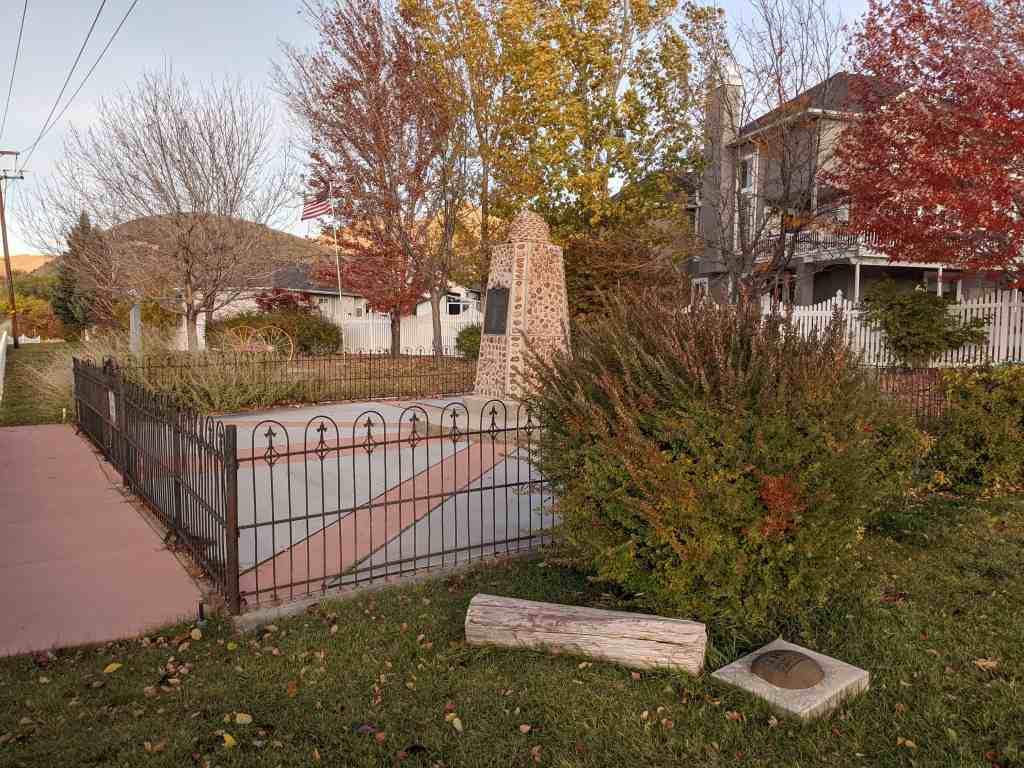
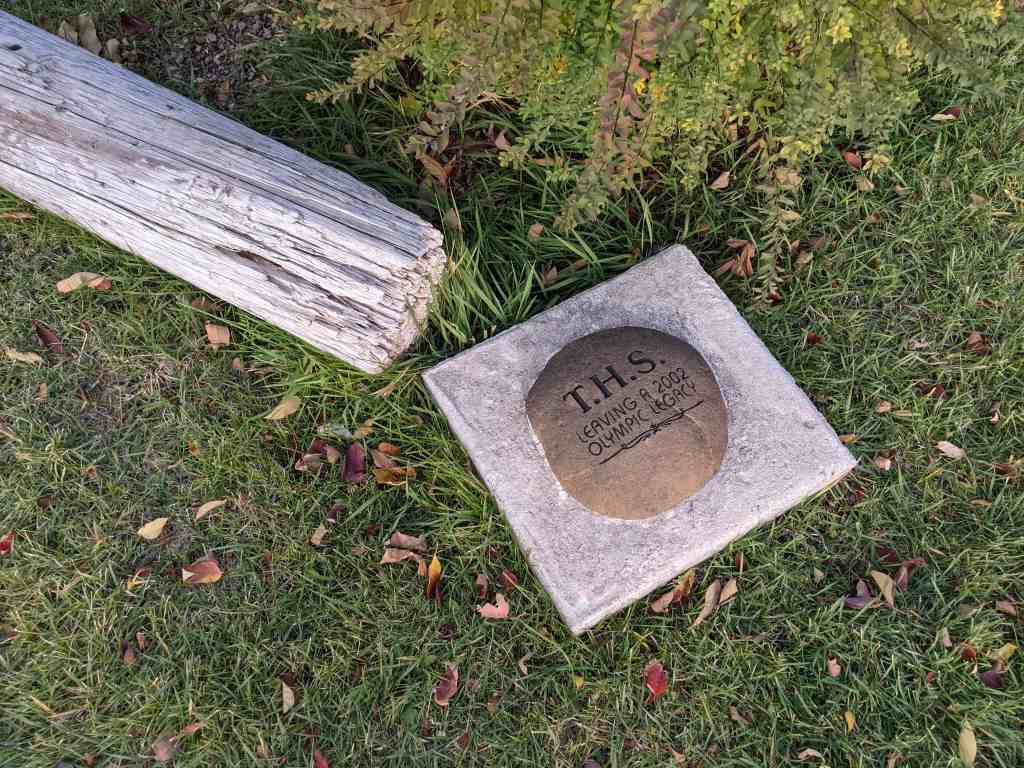
The school is located toward the front of an open corner lot with a lawn/dirt surrounding it on the south, west and east sides A short concrete retaining wall faces the west side of the lot along the front sidewalk. Plants include three large juniper trees growing next to the building on the right half of the west façade, a large spruce tree at the northwest corner a small deciduous tree on the south end and two other deciduous trees—one at the northeast and one at the southeast corner. There is also a large concrete flag pole base with the 2002 Winter Olympics logo embossed in it. Behind (to the east of) the school is a large blacktopped parking area and a larger concrete pad that was used as a basketball court. To the east of this is a small lawn-covered field ascends up a slight rise to the street behind the school. The north, east and most of the south borders or the property are enclosed by chain-link fencing. Other than a small temporary metal shed, there are no permanent outbuildings on the property.
While there have been some alterations to the Stockton School over time—primarily the covering of the large main windows and rearranging of spaces in the basement–overall the main building structure is still intact and retains the majority of its character defining features. It retains sufficient historical integrity to be considered a contributing historic resource in the town of Stockton.
Narrative Description
The Stockton School, constructed in 1929, faces west on a .22 acre lot located at 18 N. Johnson Street in Stockton, Tooele County, Utah. Stockton is a rural area located about 40 miles southwest of Salt Lake City. The all-brick building is set back on the lot with concrete stairs leading from N. Johnson Street to the front (west) of the building. Behind the building (east) is a paved parking lot and there are no other structures on the property. This building is a classically inspired 1½ story, Colonial Revival style school with a hipped roof, and projecting central bays on the main and rear elevation. The building is of masonry construction with a rusticated brick veneer over a poured concrete foundation. The tall hipped roof is covered with asphalt shingles. While there have been some alterations to the school, they have had a minimal impact on the historic character defining features.
The Stockton School, built in 1929, is located on the northeast corner of North Johnson Street and East Silver Avenue in Stockton, Tooele County, Utah. The 1½ story foursquare building faces west over a raised concrete basement. The eclectic Colonial Revival influence found in the Stockton School’s design is typical of early twentieth century school construction in Utah. This style emphasizes symmetry, the use of hipped roofs and large banks of multi-paned windows that rest on continuous sills. The building is clad with American or common bond rusticated brick over wood frame. Brick quoins are applied at the major corners of the building and on the corners of the west central bay. The building has a medium pitched hipped roof with the ridgeline extending north to south with two additional hipped roofs over the central projecting cross bays on the west and east elevations. The roof is covered with asphalt shingles. It overhangs the building approximately two feet on all elevations and features exposed rafters.
The main (west) elevation is symmetrical with two horizontal bands of windows. The upper band is a continuous set of large window openings separated only by the central projecting entrance bay. These windows were boarded over with plywood at an unknown date (but most likely when it was converted to the town hall in the mid-1980s) except for a single sash in the middle. The original multi-paned steel window sash and most of the glazing are intact behind the plywood boards and are visible from the interior. The windows on the lower raised basement level are significantly smaller and have been evenly subdivided in pairs across the façade. The left-and right-most windows at this level have also been covered with plywood, while the inner two windows are still visible. All have the original steel sash. The central bay connects a Roman-arched main entrance with the hipped roof. Two 6/3 windows are located in the north and side walls of the projecting bay. The arch is a combination of soldier and sailor bricks concrete block inscribed “Stockton School” is centrally located over the arched entrance. The window in the archway appears to be the original metal sash. However, the door and sidelights are more-recent aluminum and glass replacements.
The north elevation has no openings in the brick façade. The south elevation has a steel sash, multi-pane window located near the southeast corner at the basement level and an enclosed staircase access to the basement, constructed of CMU block with a shed roof. The shed enclosure is more recent, non-historic addition.
The rear (east) elevation has the same upper horizontal band of boarded-over window openings as the front elevation. The original multi-pane steel sash windows are also intact behind the plywood and are visible from the interior rooms. The central projecting bay has a 6/3 sash window centrally located and a bricked-over coal chute at basement level. The building has an interior chimney that is located slightly off-center of the central bay. The chimney projects approximately eight feet above the roof and has a concrete chimney cap and decorative concrete and brick corbelling at the top. The rear projecting bay has an entrance located in the south side. The door itself is a more-recent aluminum and glass replacement. A non-historic concrete ramp is located laterally across the southeast side of the elevation that leads to the entrance.
On the interior, the main floor has a central hallway with four large rectangular classrooms-one at each corner of the building. A wide hallway bisects the building from front to rear. The hallway features shallow built-in alcoves that were probably originally used for coat racks. The main entrance in the front projecting bay is a half-story below the main floor and a wide stairway ascends to this floor. Flanking narrower stairways descend to the basement level. Small windows on the north and south sides of the projecting bay illuminate the stairway area. The east end of the hall way at the rear of the school has had a restroom constructed at an unknown time (though not during the historic era). This is located adjacent to the rear exit.
The original interior walls are constructed with wood lathe and plaster. Original classrooms components include blackboards, chalk tray, bulletin boards, and closets. All rooms have tall ceilings and have been painted uniformly with a tan color (including painting over the glass panes of the boarded-over windows).
The basement has been altered and subdivided over the years and has a number of smaller rooms. Currently the space is used for storage, Stockton’s Police Department, and the town library.
Scott & Welch Architects
Carl W. Scott and George W. Welch were partners in a prominent Utah architectural firm that successfully survived the Great Depression of late 1920s and 1930s. One of their notable achievements in the 1920s was the planning and design of an entire new community for Utah Copper Company (Copperton Historic District, NRIS #86002642). The firm’s popularity grew once the Works Progress Administration (WPA—later the Work Projects Administration) was initiated as a part of the President Franklin Roosevelt’s New Deal program. In fact, Scott and Welch designed more school buildings in the 1930s than any other architecture firm in Utah, with the list including Hawthorne Elementary School, Bryant Junior High, Tooele High School, and Blanding High School. Many of these schools were WPA funded projects. The firm’s school designs ranged from more-traditional Colonial Revival/eclectic styles, such as the Stockton School, to modern boxy designs with Art Deco embellishment. The Stockton School, like other buildings of their work, has survived and has been adapted for other functions, while others have been demolished or replaced throughout the years. The Stockton School remains an intact example of the dwindling stock of Scott & Welch’s surviving buildings.
30 Thursday Nov 2023
Posted in Uncategorized
Tags
28 Tuesday Nov 2023
Posted in Uncategorized
18 Saturday Nov 2023
Posted in Uncategorized

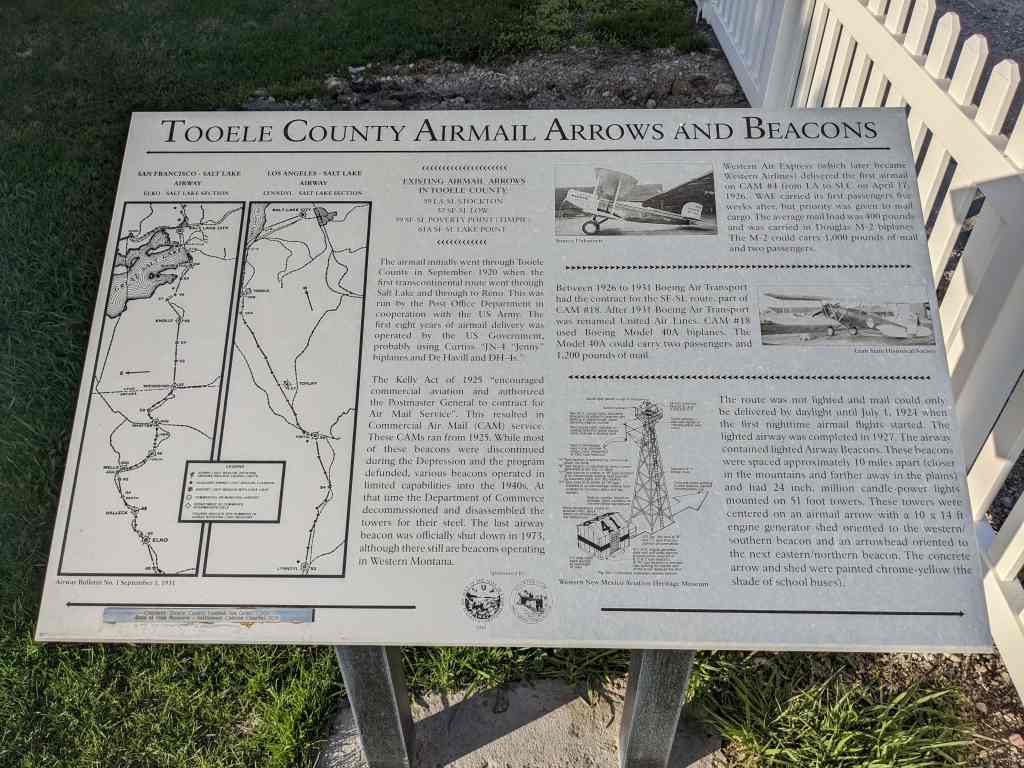
Tooele County Airmail Arrows and Beacons
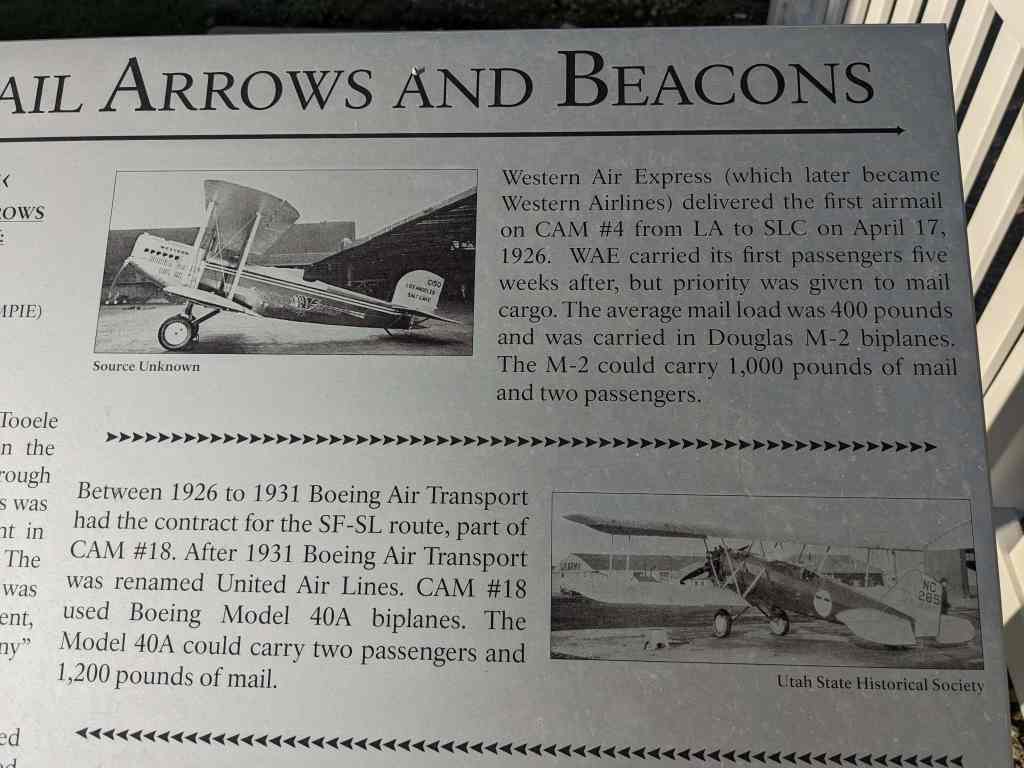
Western Air Express (which later became Western Airlines) delivered the first airmail on CAM #4 from LA to SLC on April 17, 1926. WAE carried its first passengers five weeks after, but priority was given to mail
cargo. The average mail load was 400 pounds and was carried in Douglas M-2 biplanes. The M-2 could carry 1,000 pounds of mail and two passengers.
Between 1926 to 1931 Boeing Air Transport had the contract for the SF-SL route, part of CAM #18. After 1931 Boeing Air Transport was renamed United Air Lines. CAM #18 used Boeing Model 40A biplanes. The Model 40A could carry two passengers and 1,200 pounds of mail.
The route was not lighted and mail could only be delivered by daylight until July 1, 1924 when the first nighttime airmail flights started. The lighted airway was completed in 1927. The airway contained lighted Airway Beacons. These beacons were spaced approximately 10 miles apart (closer in the mountains and farther away in the plains) and had 24 inch, million candle-power lights mounted on 51 foot towers. These towers were centered on an airmail arrow with a 10 x 14 ft engine generator shed oriented to the western/ southern beacon and an arrowhead oriented to the next eastern/northern beacon. The concrete arrow and shed were painted chrome-yellow (the shade of school buses).
EXISTING AIRMAIL ARROWS IN TOOELE COUNTY:
The airmail initially went through Tooele County in September 1920 when the first transcontinental route went through Salt Lake and through to Reno. This was run by the Post Office Department in cooperation with the US Army. The first eight years of airmail delivery was operated by the US Government, probably using Curtiss “JN-4 “Jenny” biplanes and De Havill and DH-4s.”
The Kelly Act of 1925 “encouraged commercial aviation and authorized the Postmaster General to contract for Air Mail Service”. This resulted in Commercial Air Mail (CAM) service. These CAMS ran from 1925. While most of these beacons were discontinued during the Depression and the program defunded, various beacons operated in limited capabilities into the 1940s. At that time the Department of Commerce decommissioned and disassembled the towers for their steel. The last airway beacon was officially shut down in 1973, although there still are beacons operating in Western Montana.
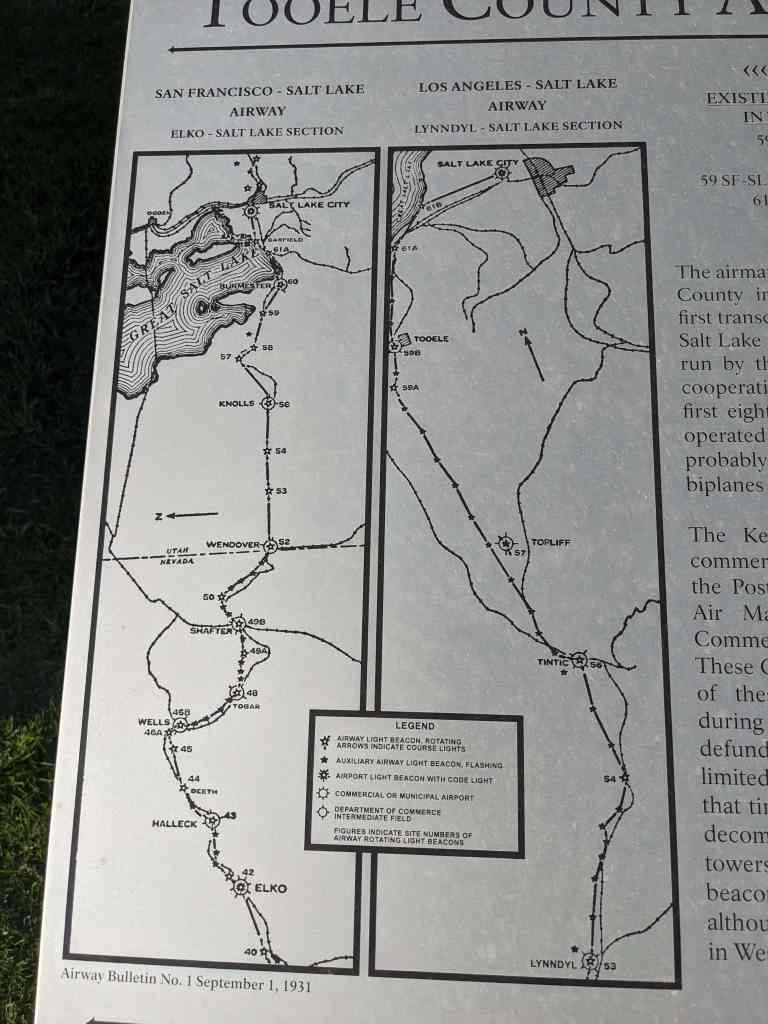
The text above is from Sons of Utah Pioneers historic marker #243, see other markers in the series here:
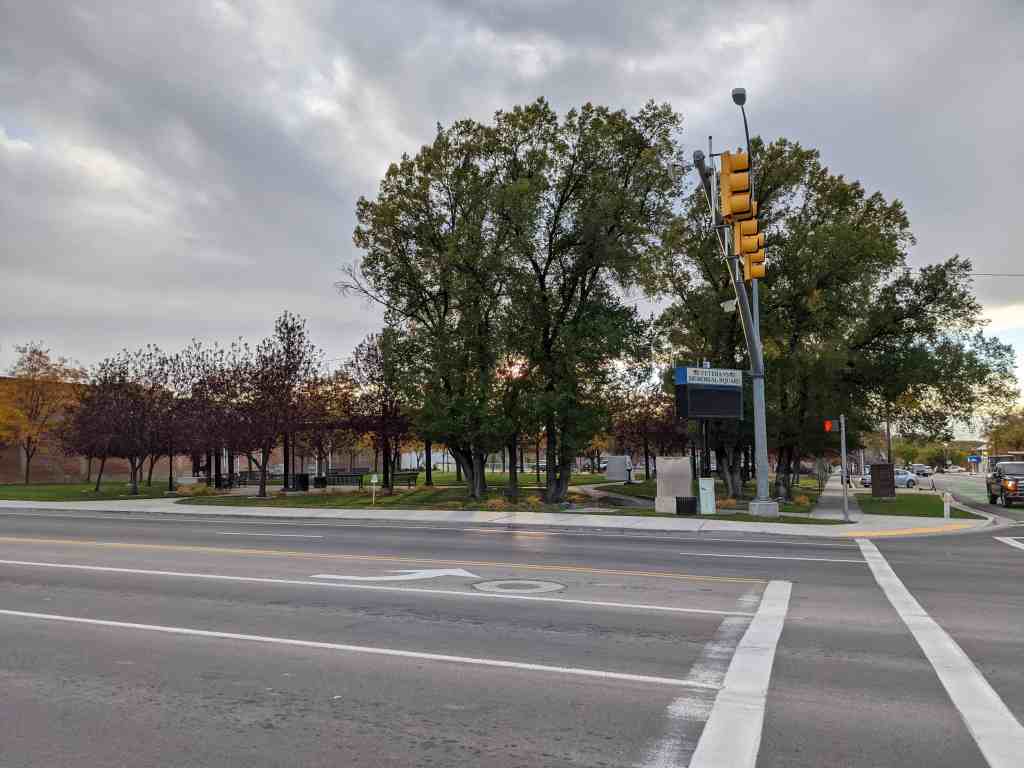
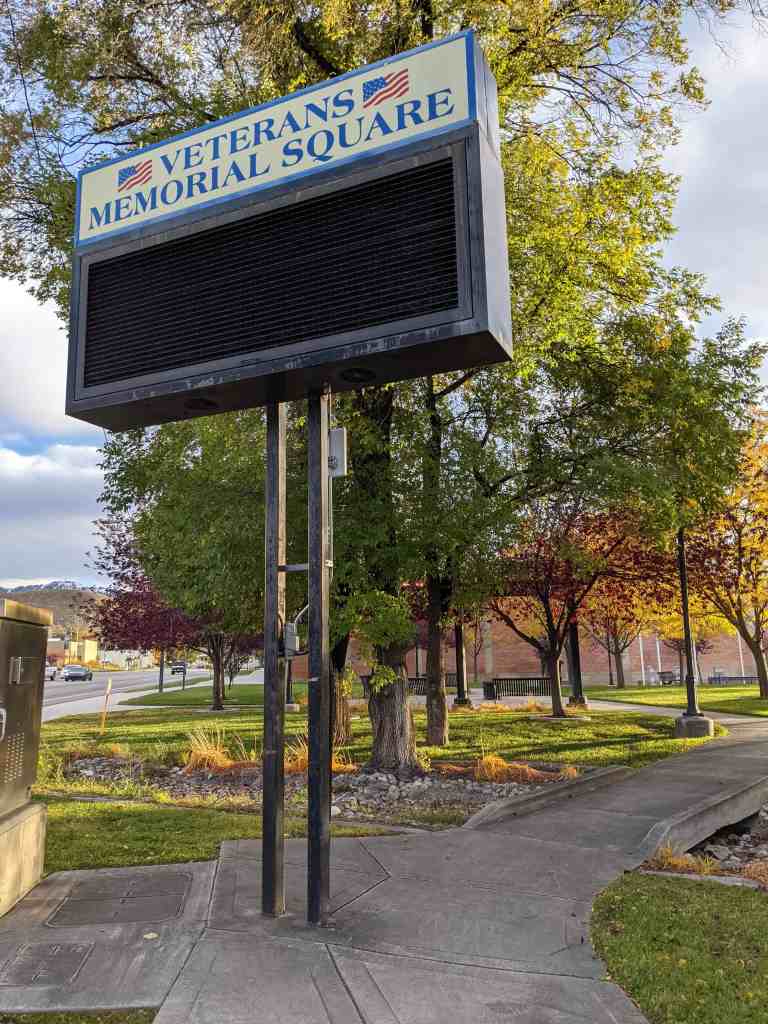
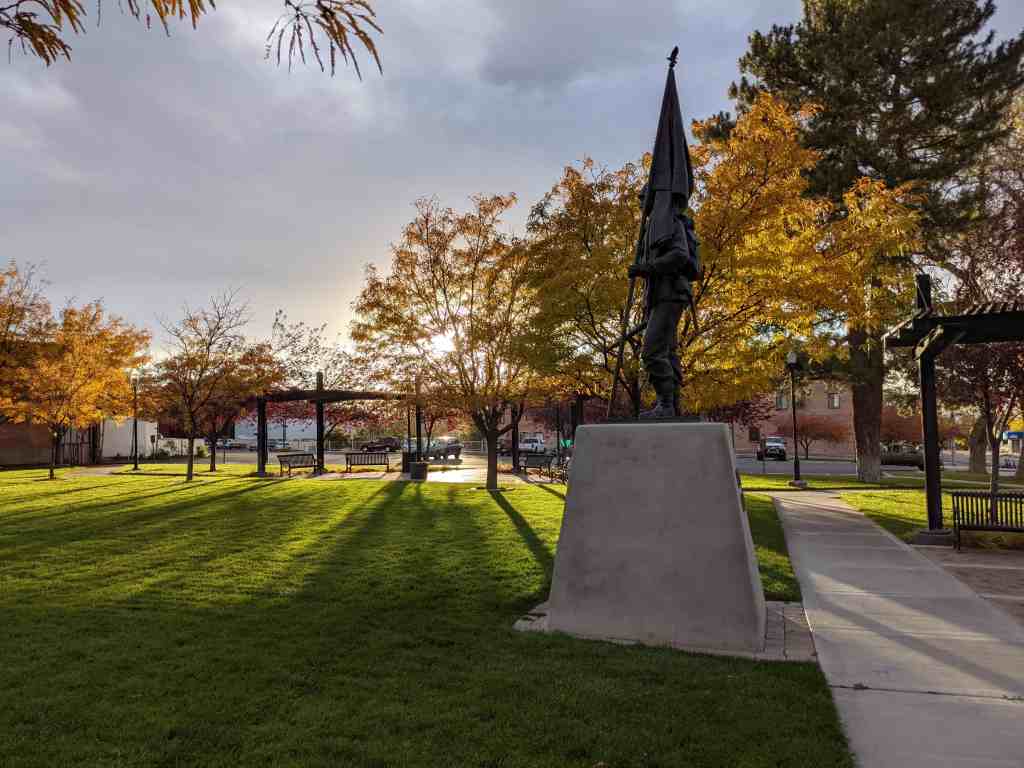
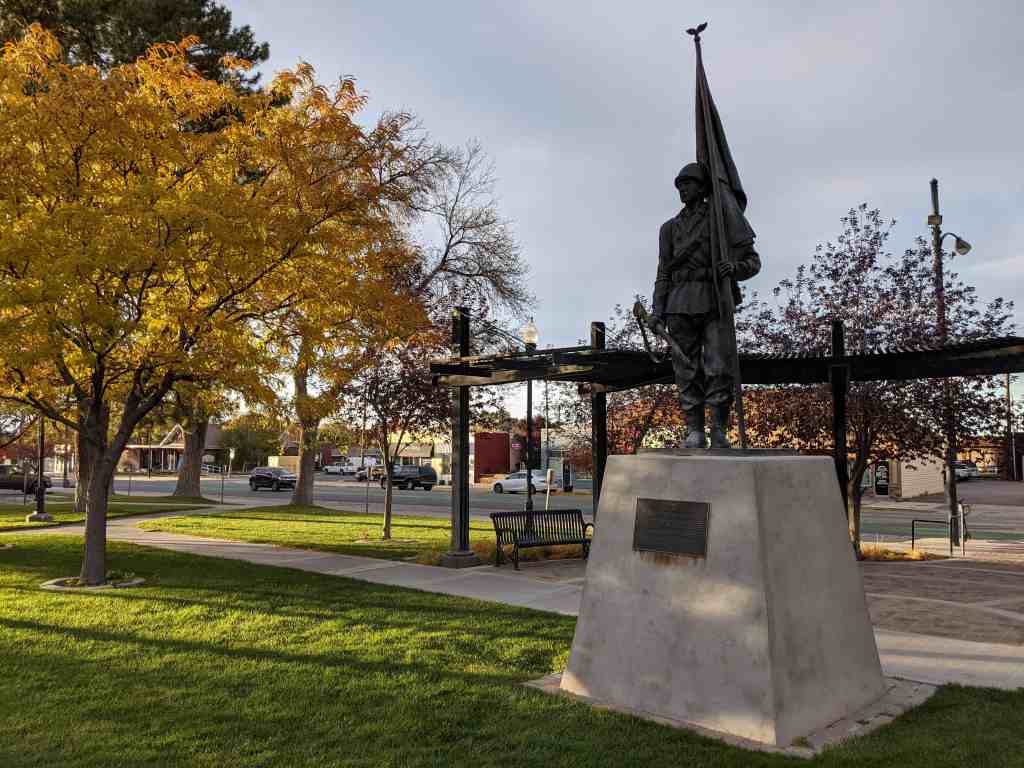
This is located in a little roadside park at the corner of Connor Avenue and Silver Avenue in Stockton, Utah along with other historic markers. Those located here are:


17 Friday Nov 2023
Posted in Uncategorized