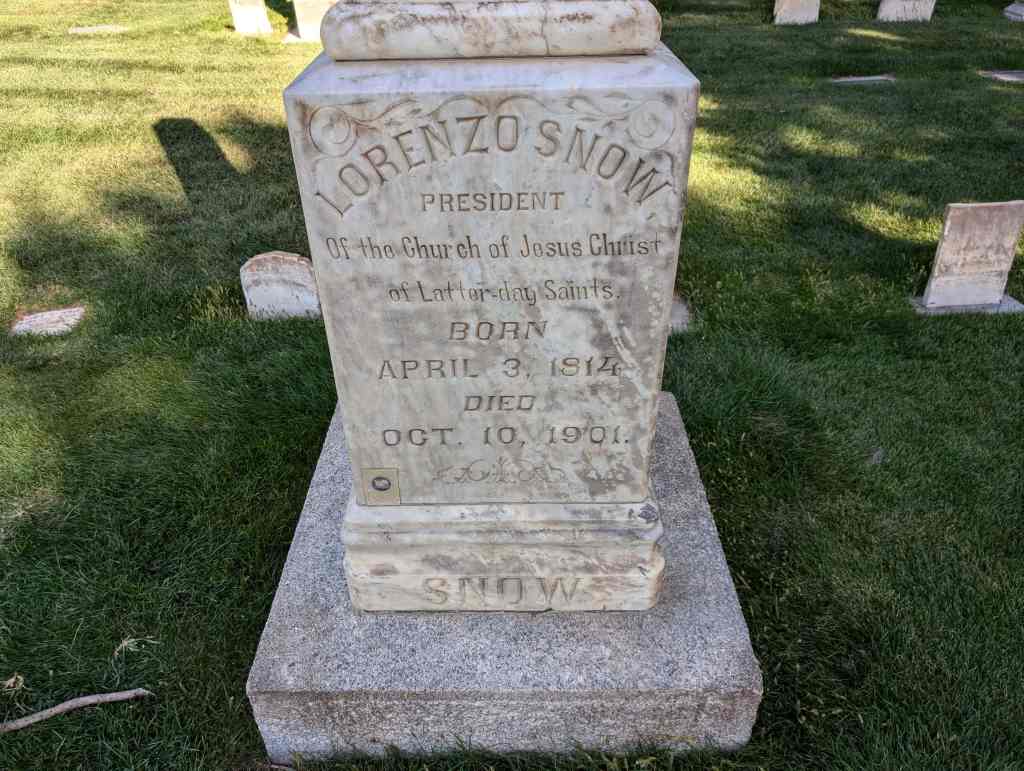
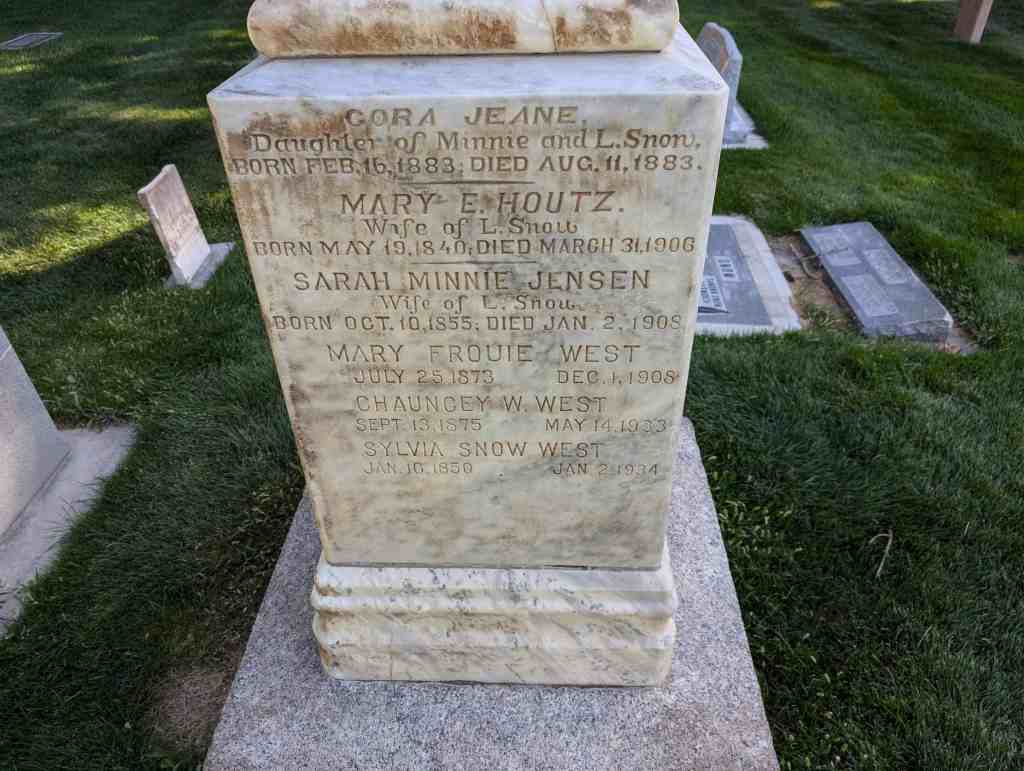
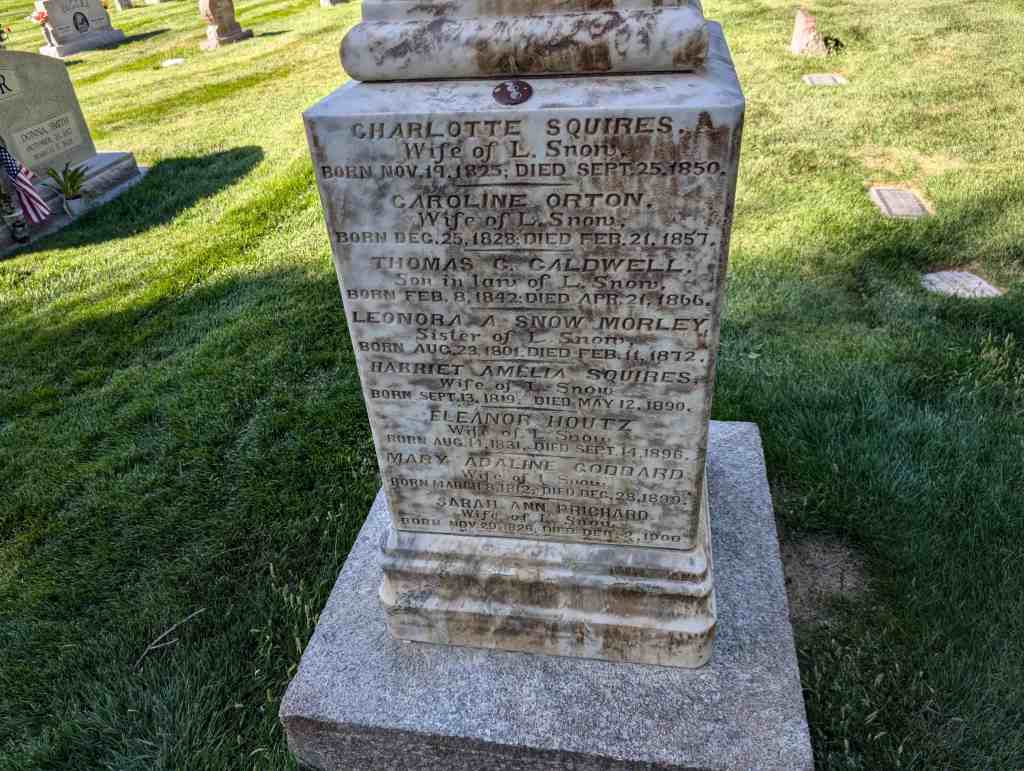
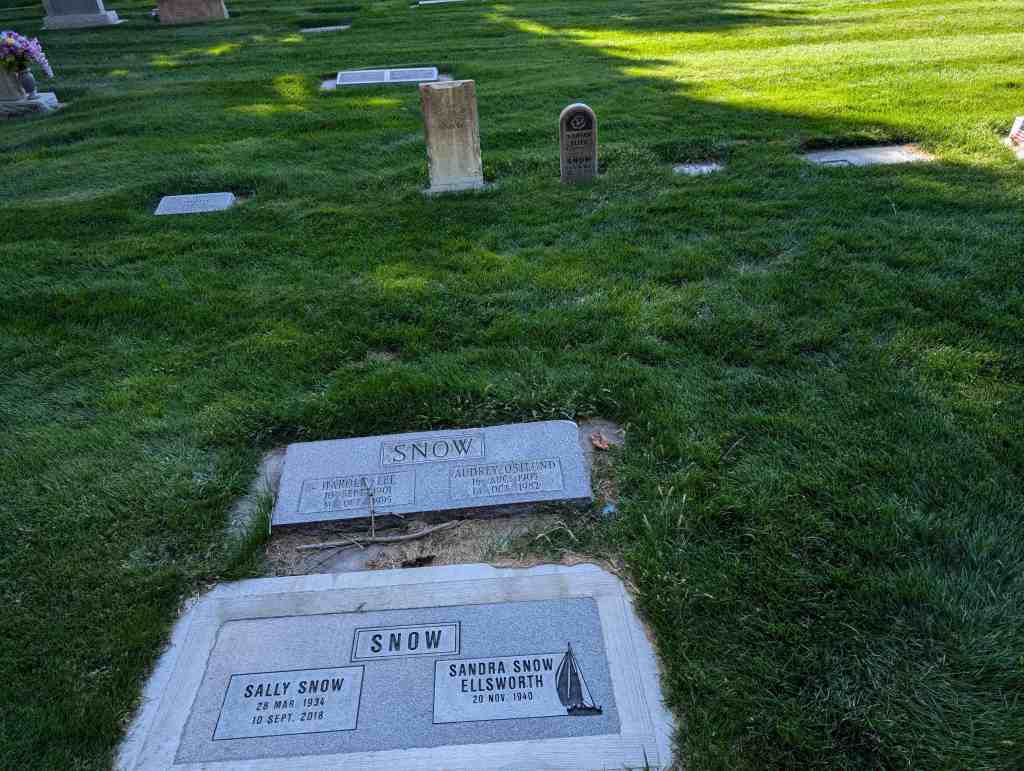
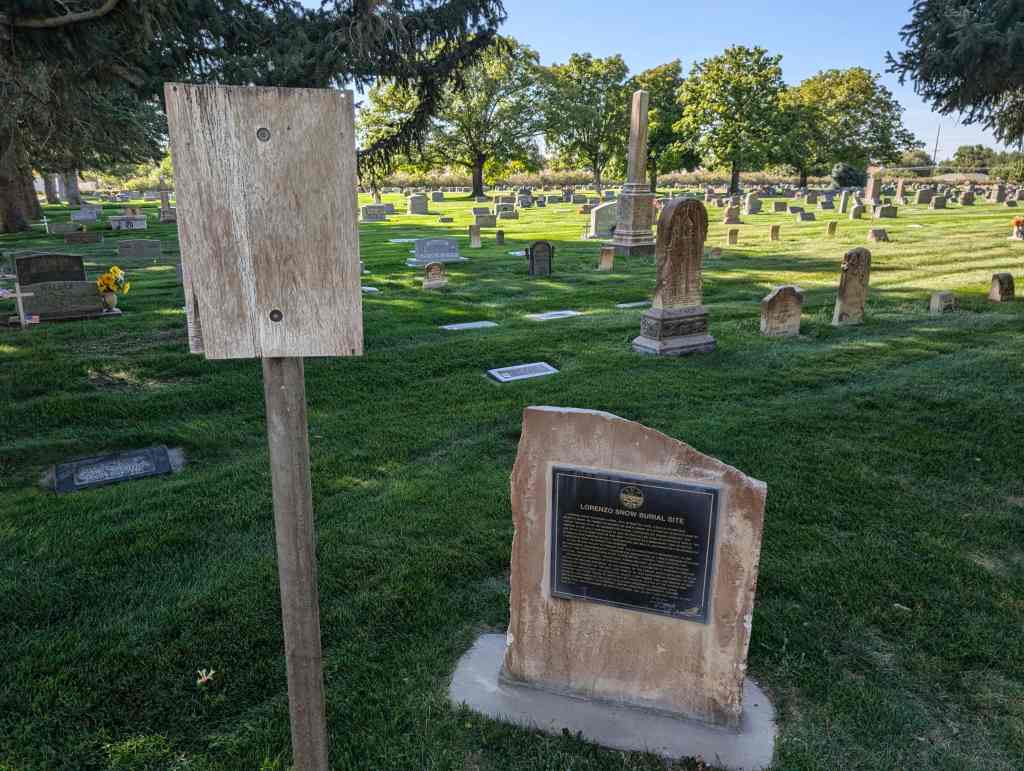
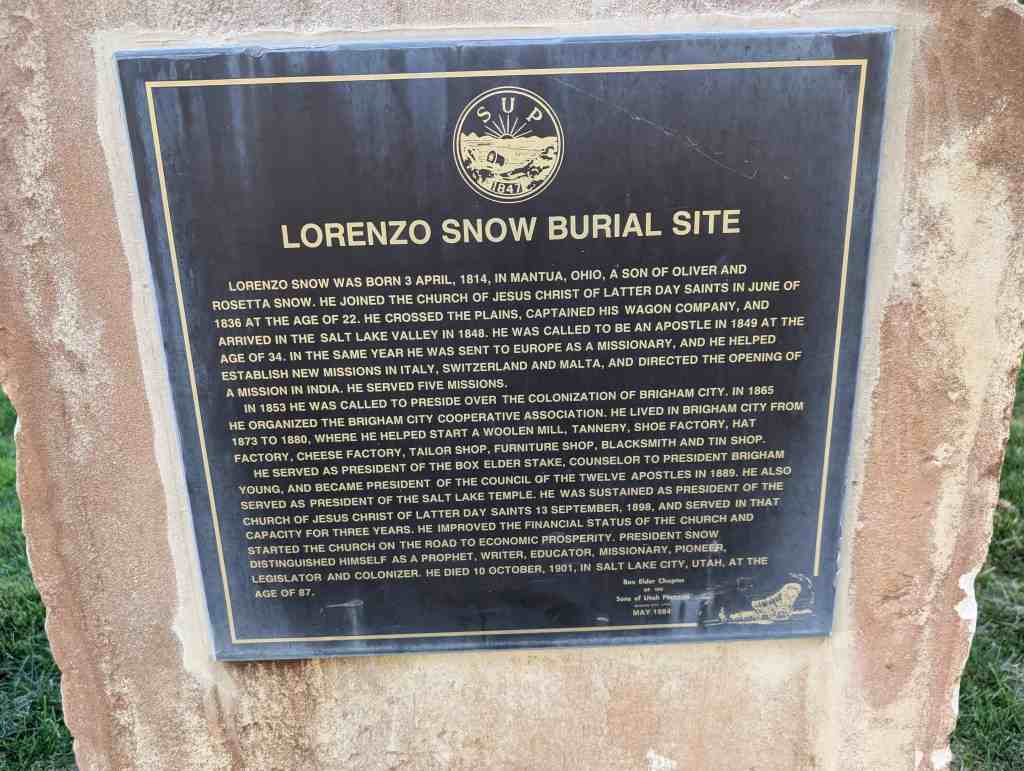
Lorenzo Snow Gravesite
24 Monday Sep 2018
Posted in Uncategorized

24 Monday Sep 2018
Posted in Uncategorized
24 Monday Sep 2018
Posted in Uncategorized

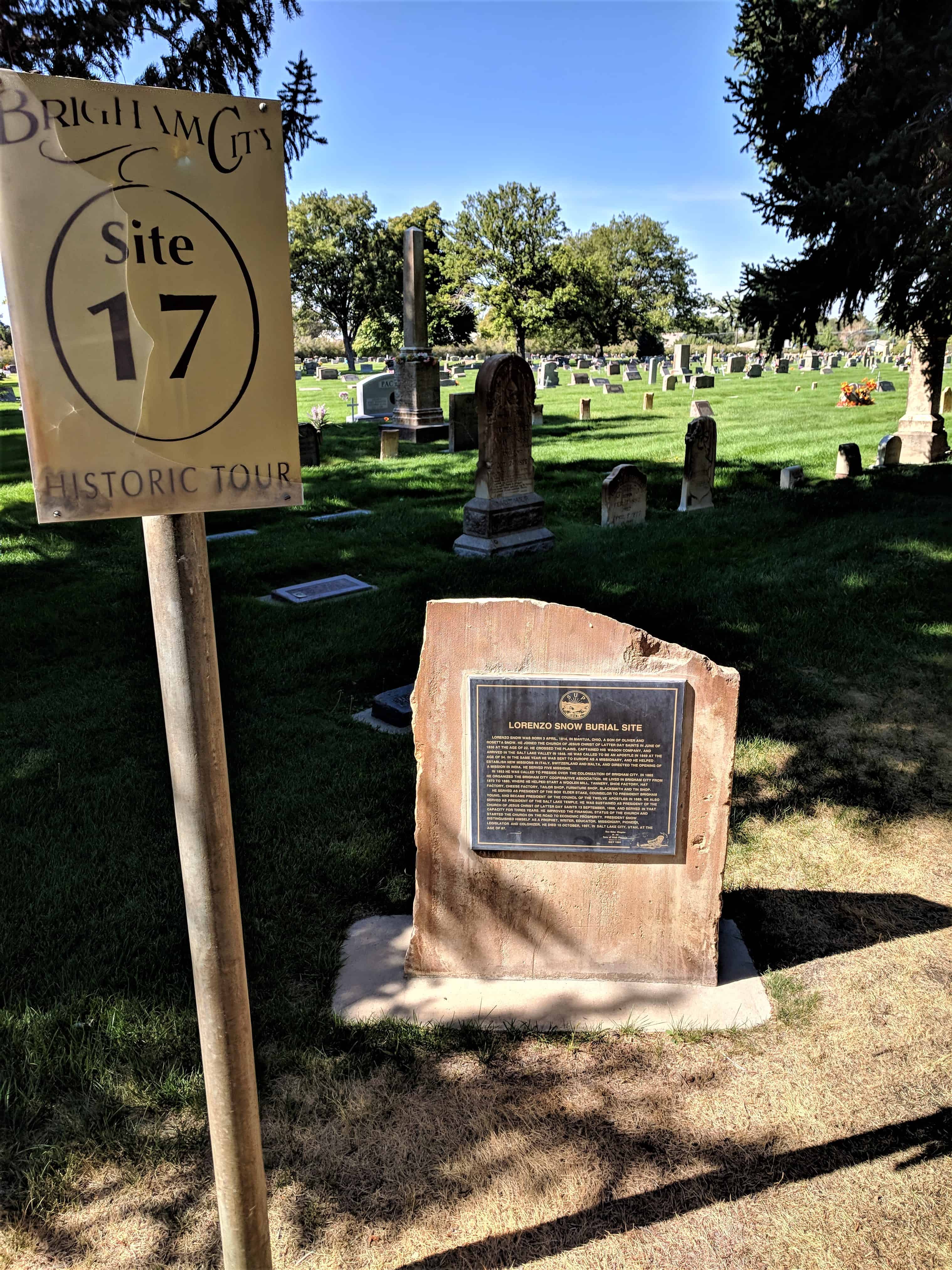
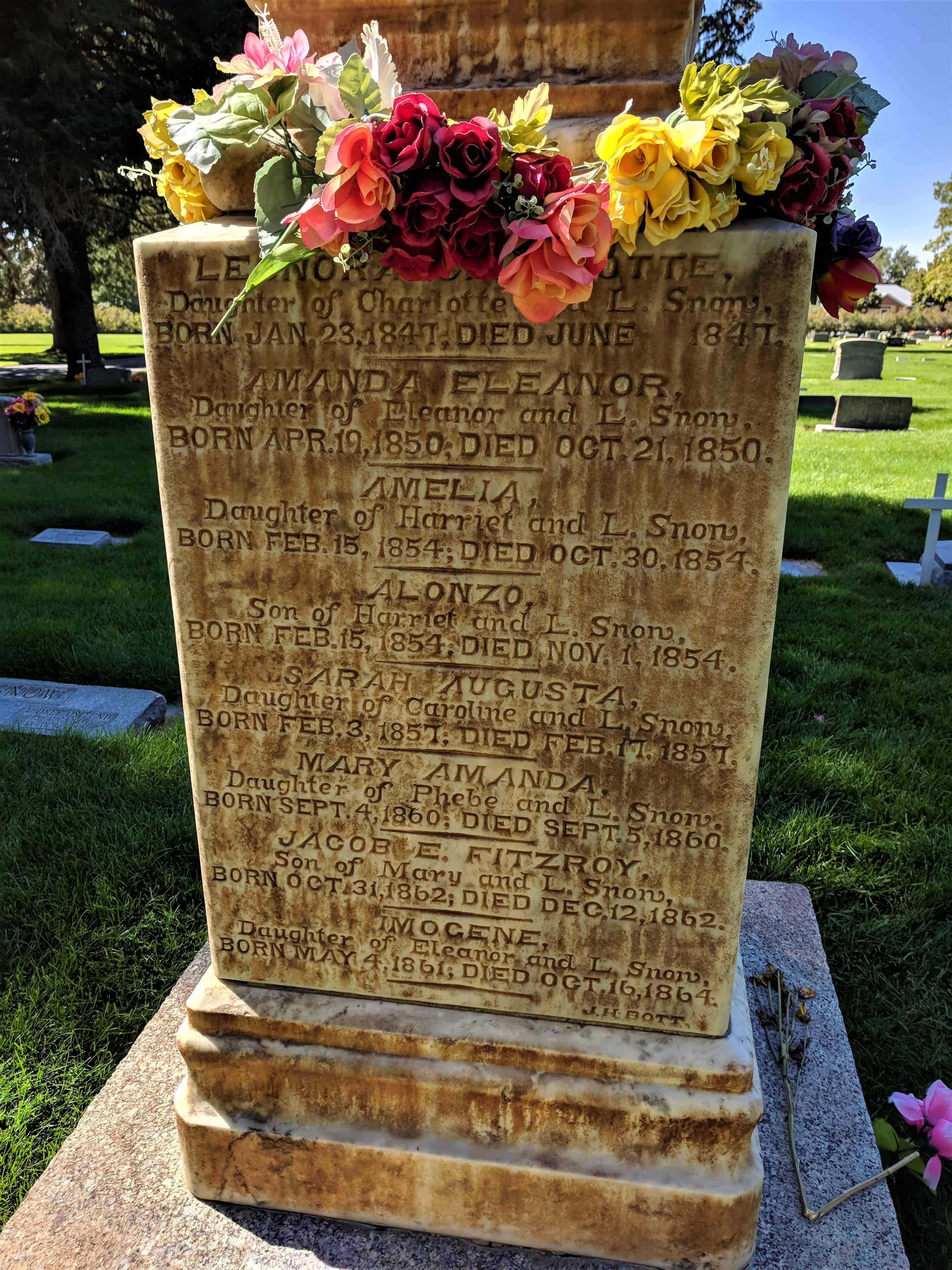
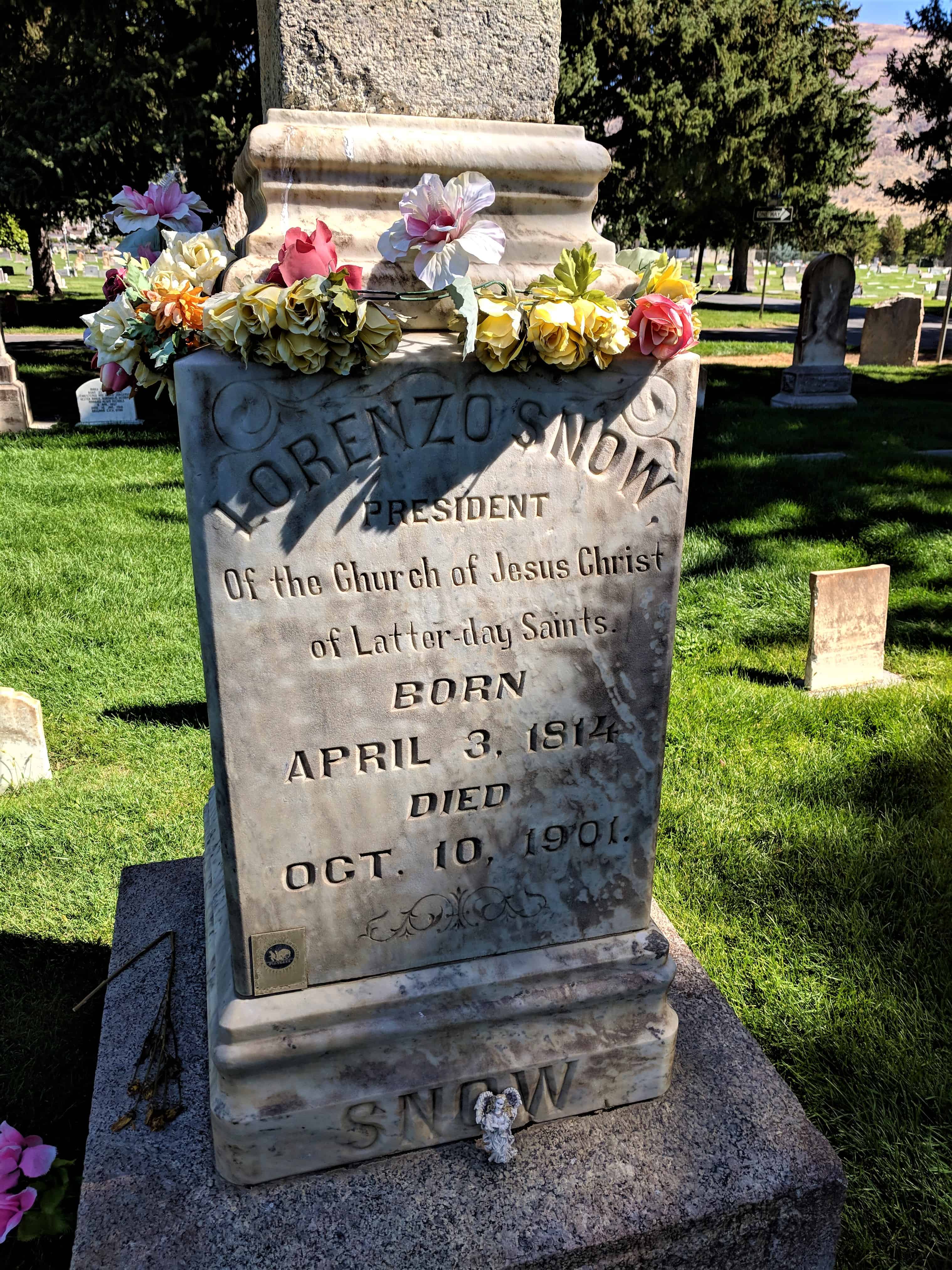
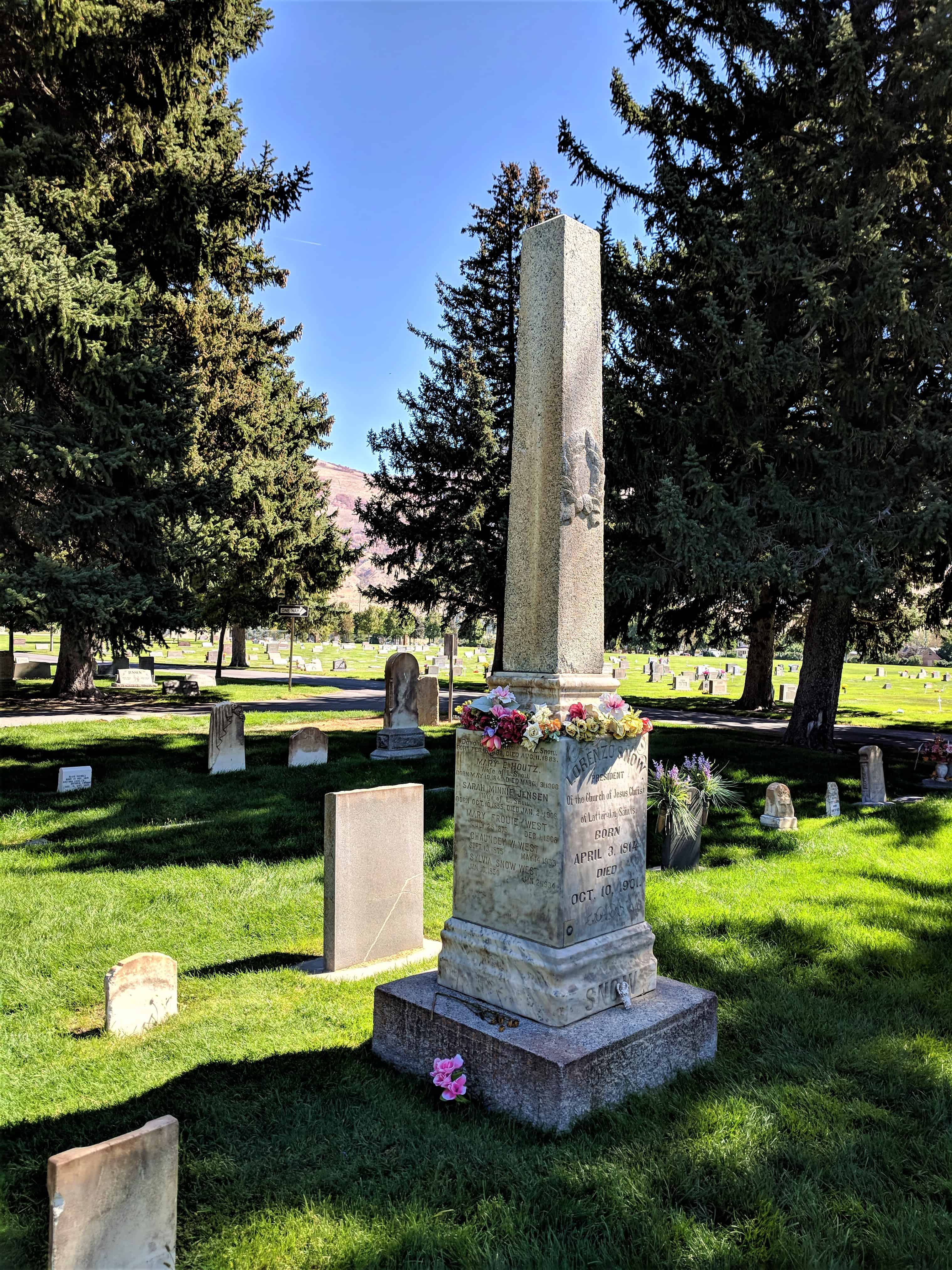
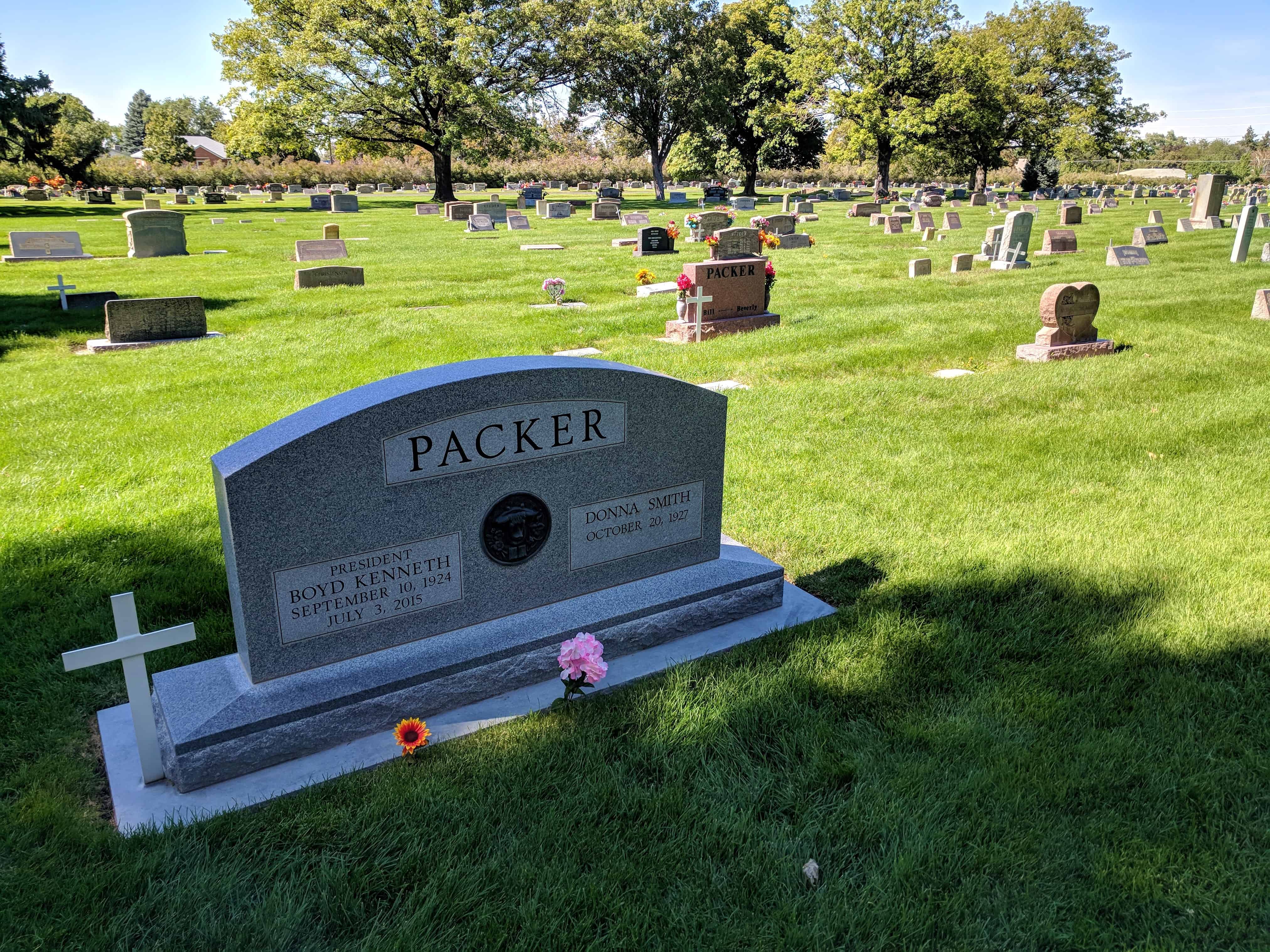
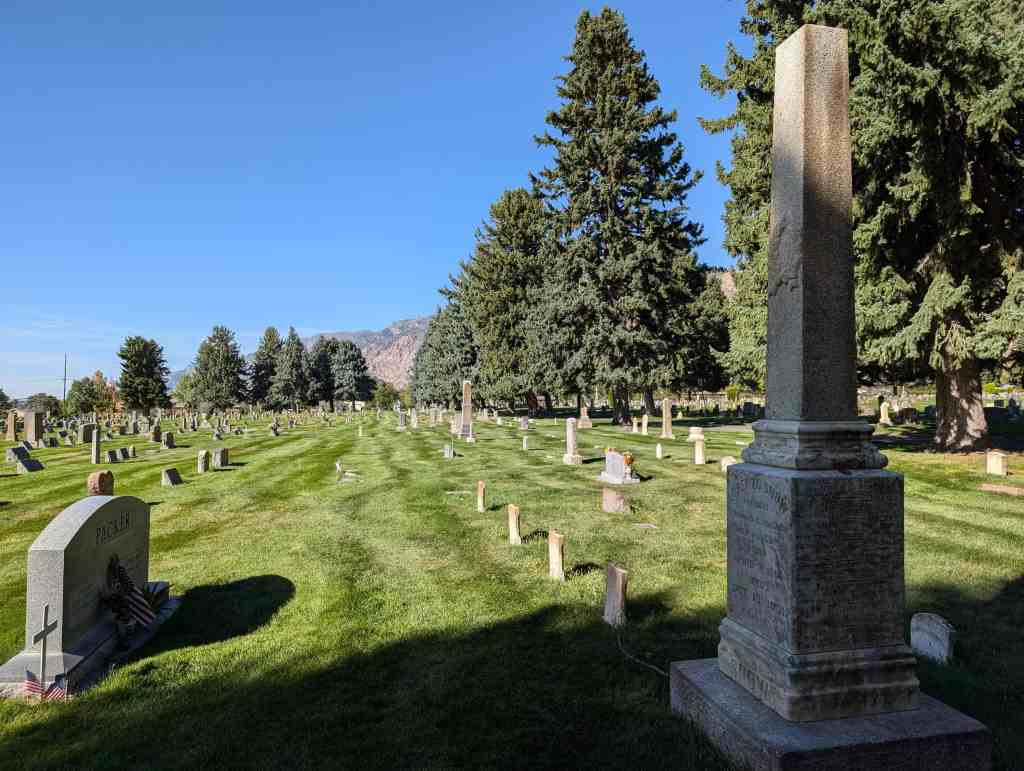
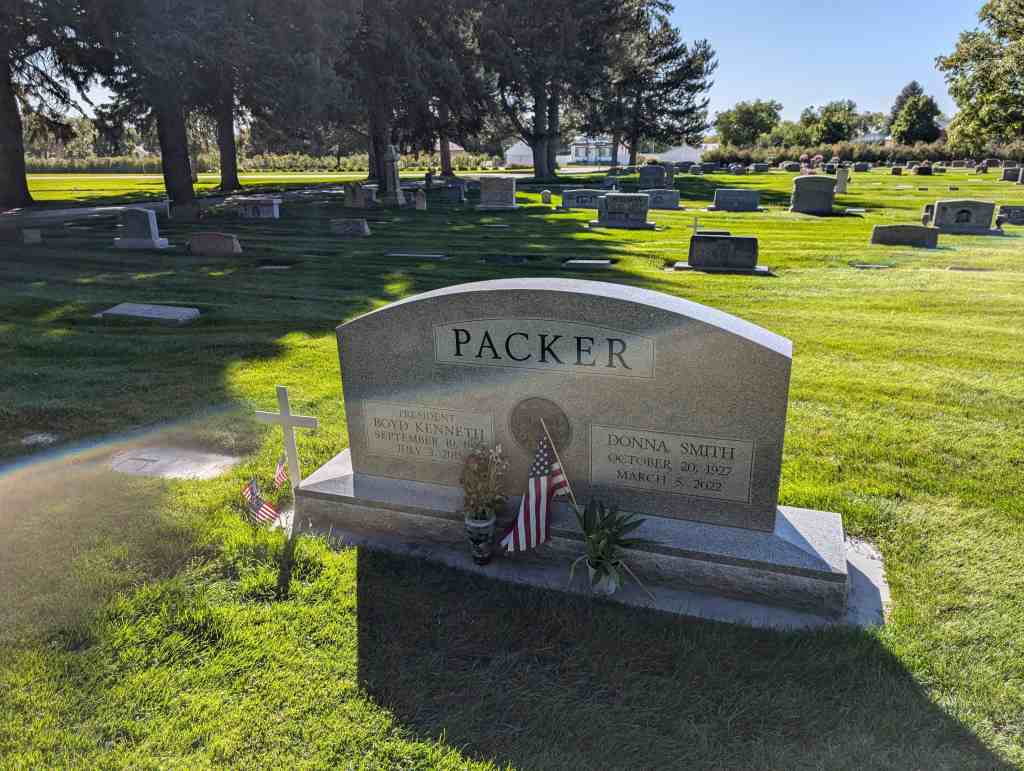
I grew up listening to President Boyd K. Packer and loved him. I stopped by to get pictures of President Lorenzo Snow’s gravesite and some of my family’s as well and was surprised to see this one here.
Located in the cemetery in Brigham City, Utah.


24 Monday Sep 2018
Posted in Uncategorized

I was named after this man, he is my great grandfather.
Located in the cemetery in Brigham City, Utah.
Related:

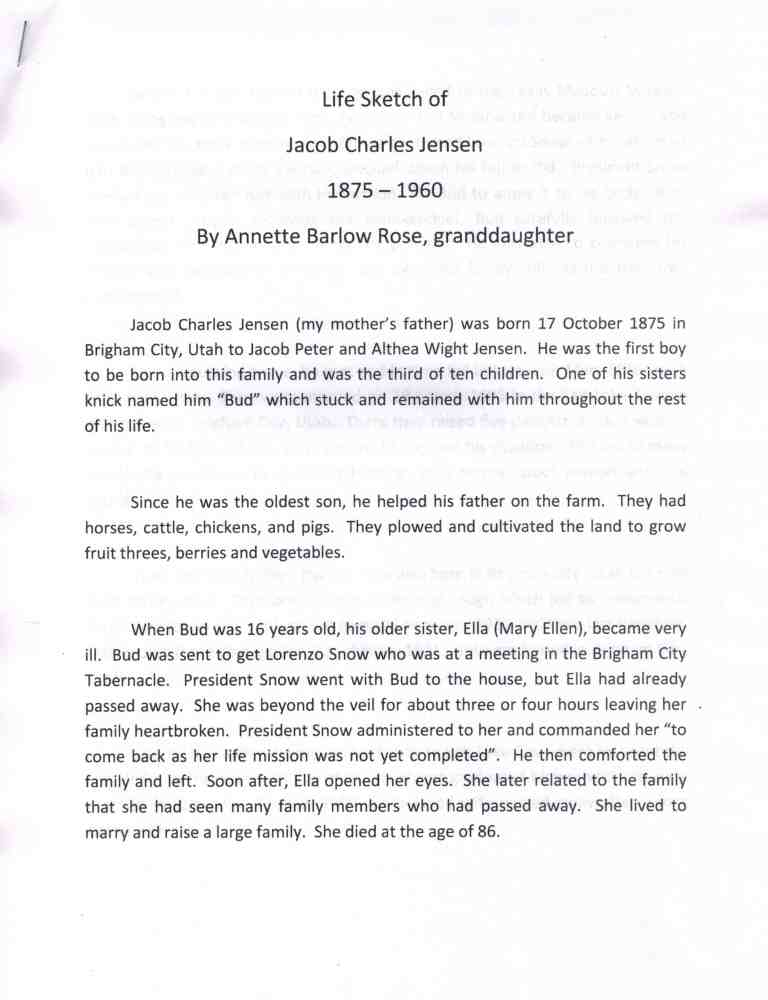
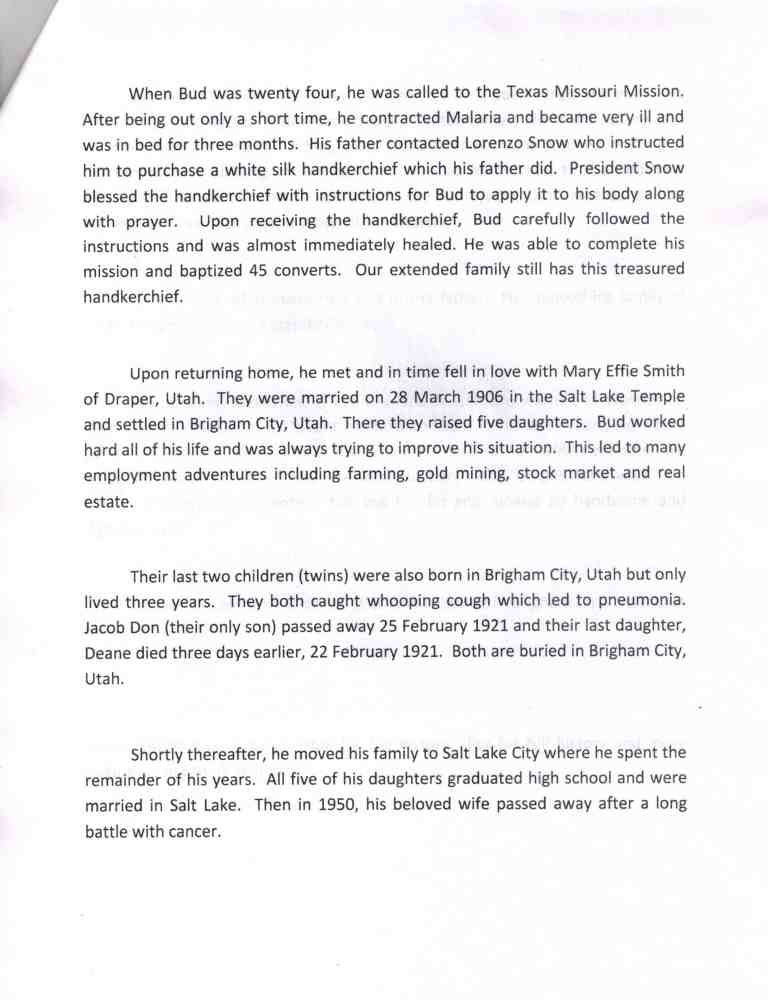
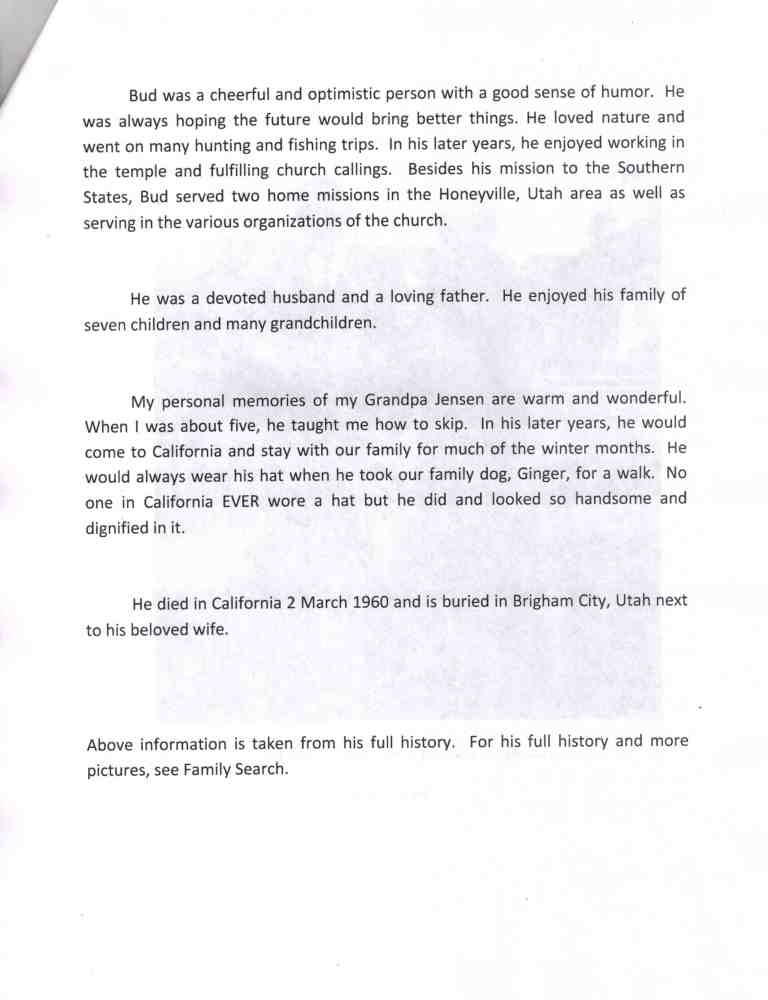
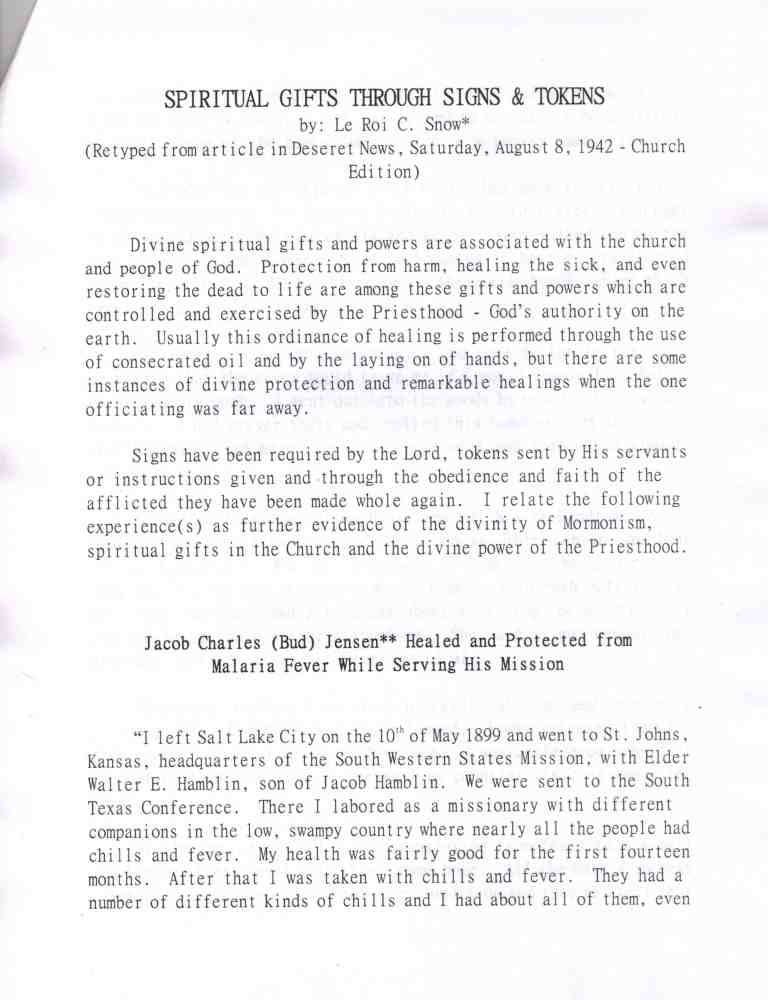
Jacob Charles Jensen
“Mission Blessing Miracle”
Jacob (Bud) was born October 17, 1875, in Brigham City, Utah. His father (Jacob Peter Jensen) and grandfather (Hans Peter Jensen) came across the plains after joining the Church of Jesus Christ of Latter-day Saints in Denmark. His mother’s family came from the Isle of Wight, off the coast of England.
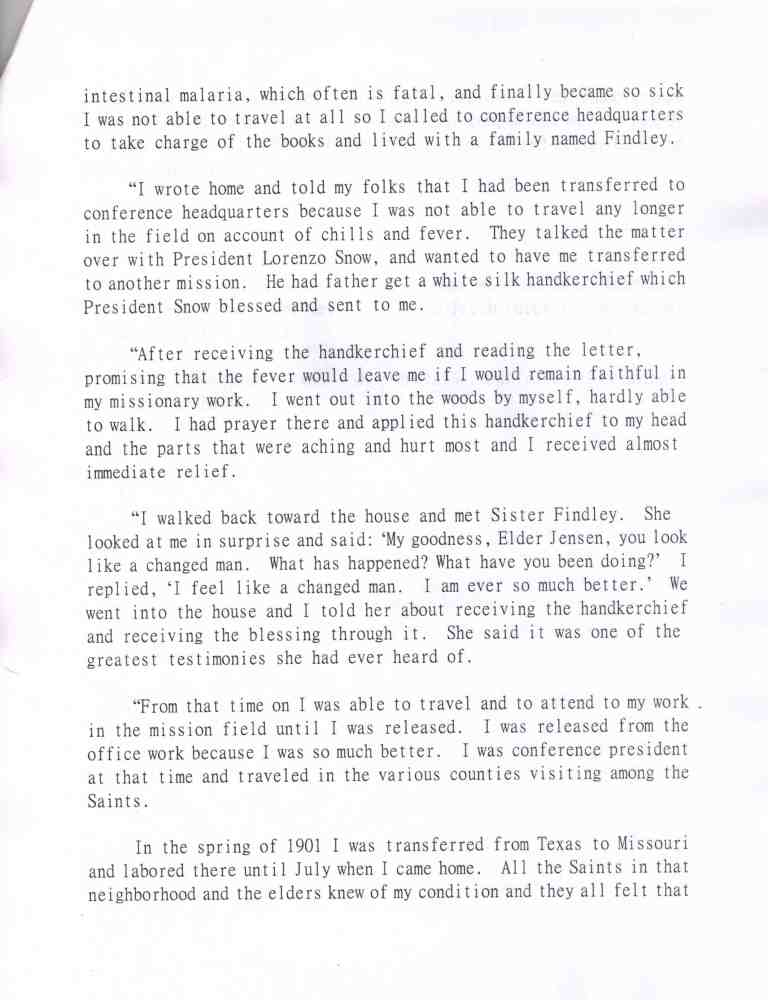
When Bud was 24 years old, he was called to the Texas- Missouri, Mission, serving with Walter Hamblin who was the son of Jacob Hamblin. After being out only a short time he contracted malaria, was seriously ill, and became bedridden for three months. When word came to his father, Jacob Peter contacted his uncle Lorenzo Snow. President Snow instructed Jacob to purchase a white silk handkerchief and bring it to him. Then President Snow blessed the handkerchief with instructions for Bud to apply it to his body along with prayer. Bud said, “After receiving the handkerchief and reading the letter, promising that the fever would leave me if I would remain faithful in my missionary work. I went out into the wood by myself, hardly able to walk. I had prayer there and applied this handkerchief to my head and the parts that were aching and hurt most, and I received almost immediate relief. I felt like a changed man. I was ever so much better.”
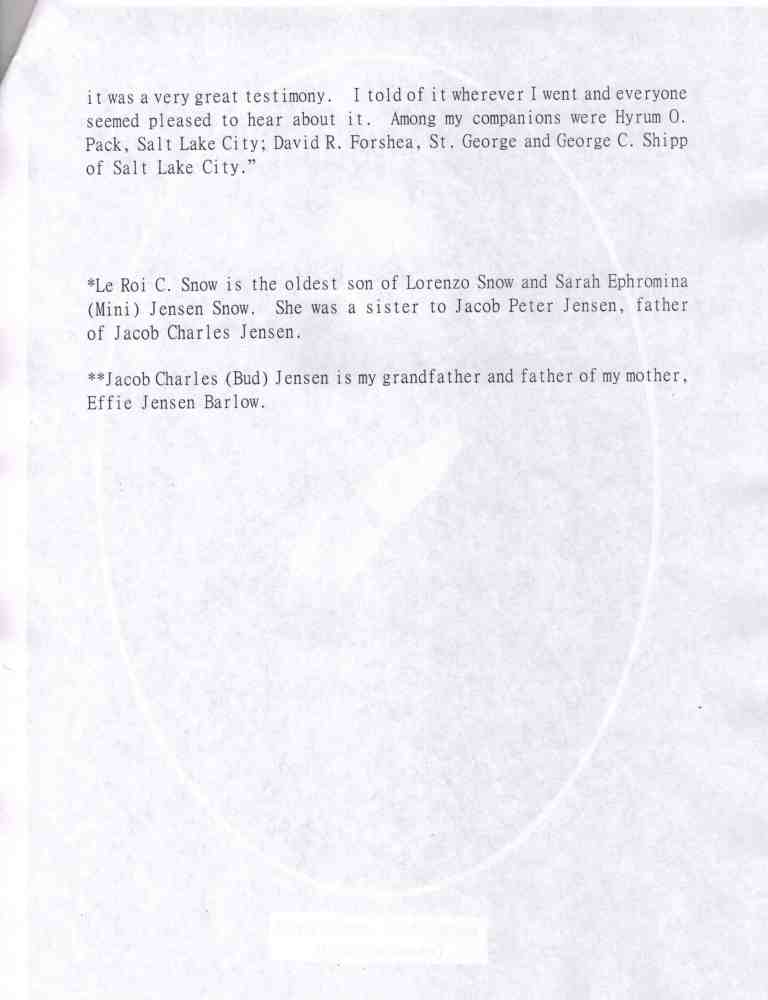
“From that time on I was able to travel and attend to my work in the mission field until I was released. I was released from the office work because I was so much better. I was Conference President at that time and traveled in the various counties visiting among the Saints.” Bud completed his mission in July 1901 after baptizing 45 converts.
Note: When Lorenzo Snow was 22 years old, he received his patriarchal blessing given by Joseph Smith, Sr., who was the father of the prophet Joseph Smith. This blessing was given in the Kirtland Temple. An excerpt from it says, “Thou shalt become a mighty man. Thy faith shall increase and grow stronger until it shall become like Peters-thou shalt restore the sick, the diseased shall send thee their aprons and handkerchiefs and by thy touch their owners shall be made whole. The dead shall rise and come forth at thy bidding.”
While visiting one of his missionary companions Bud broke out with smallpox and was quarantined there in the Shipp home. While there, after recovery, he met Mary Effie Smith. This courtship grew to marriage on Mary 28, 1906 in the Sal Lake Temple. They settled in Brigham City.
Family history and posterity continues to this day. Bud and Mary reared seven children and have numerous grandchildren. This reverenced handkerchief is in possession of the family.
Sources:


Related:
24 Monday Sep 2018
Posted in Uncategorized
Tags
Box Elder County, Brigham City, Historic Buildings, Historic Churches, Historic Markers, SUP, Tabernacles, utah
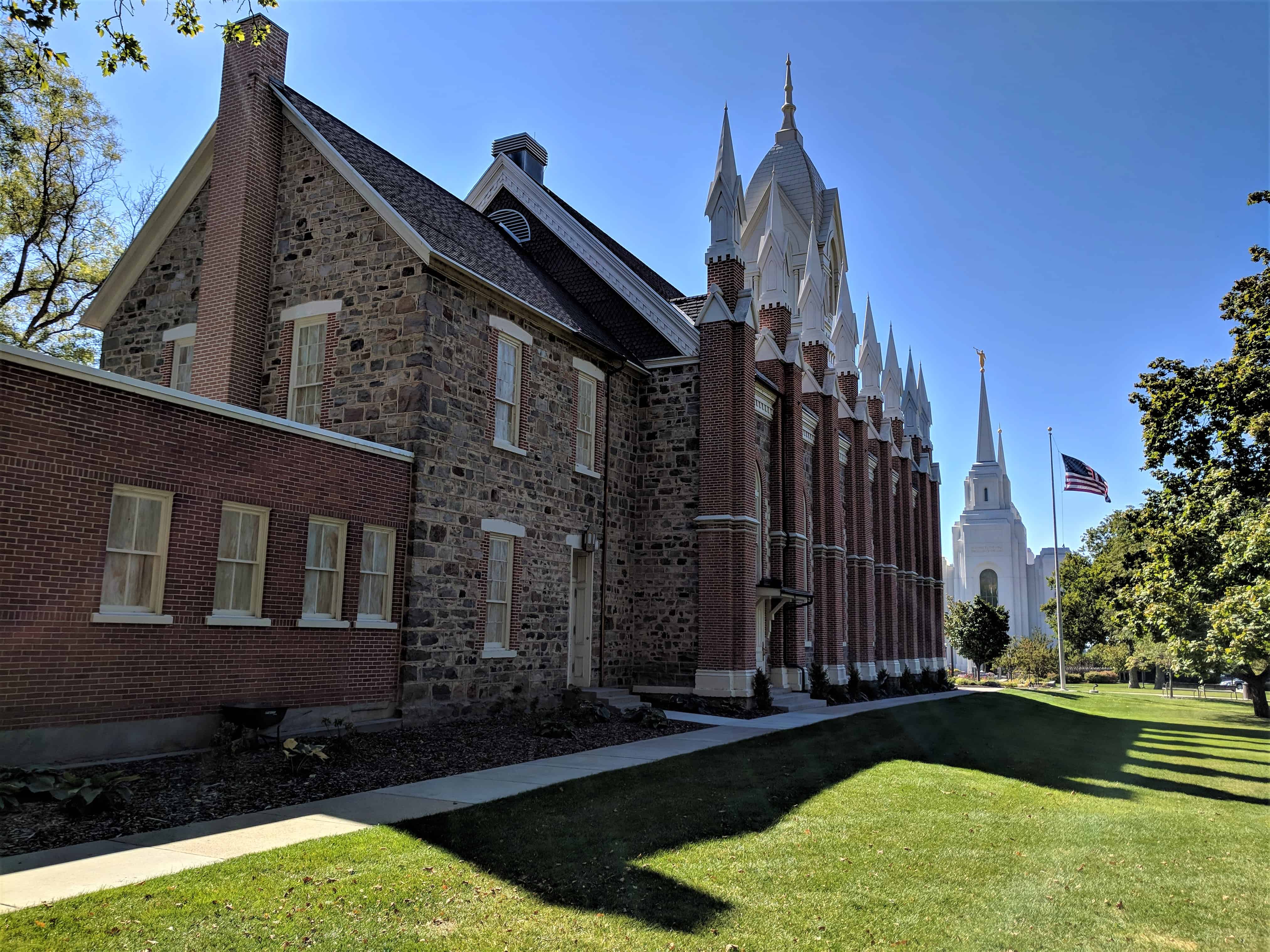
Brigham City Tabernacle
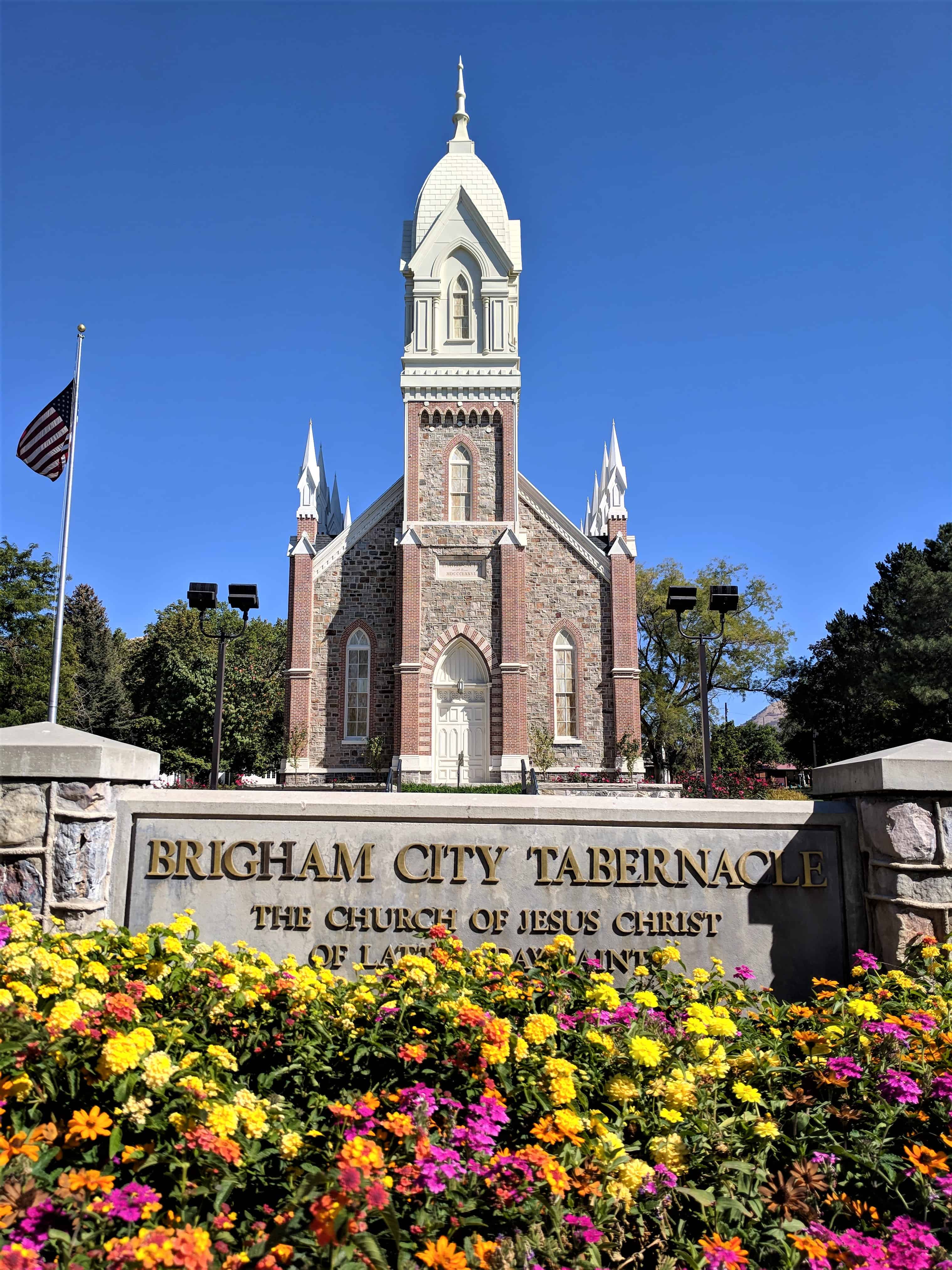
This stately building is one of the finest examples of nineteenth century Latter-day Saint architecture. For more than a century, it has served as a center of Christian worship, cultural enrichment, and community activities. Towering above the trees, it has become one of the principal landmarks of the region.
Members of the Church of Jesus Christ of Latter-day Saints settled this area in 1851, just four years after the arrival of the first pioneers in Salt Lake City. Under the leadership of Elder Lorenzo Snow of the Council of the Twelve Apostles, they built this town at the mouth of Box Elder Canyon, near traditional Shoshone Indian campgrounds and renamed it for the Church president Brigham Young. For many years they worshiped in a log meetinghouse and in the local courthouse, but in 1865 Brigham Young directed Elder Snow and other community leaders to build a tabernacle for conferences of the Box Elder Stake. The local leaders had already selected a site on the corner of Main and Forest Streets in the center of town when President Young visited the community. However, according to tradition, he led them here to “Sagebrush Hill,” the highest point on Main Street and said, “This is the spot for your Tabernacle.” The selection of this site insured that the building would be visible for many miles across the valley. President Young and his territorial surveyor Jesse W. Fox laid the cornerstones on 9 May 1865.
Construction proceeded slowly as local manpower was diverted to completing the transcontinental railroad. Work on the building resumed in earnest in 1876, mostly with donated labor. Local craftsmen used quartzite, sandstone and lumber from the nearby mountains. Women donated produce from their gardens and eggs laid on Sundays to sell for the needed cash for glass and other materials that could not be produced locally. Fourteen years after Brigham Young laid the cornerstone, the first meeting in the partially completed building took place on 27 May 1879.
As originally built, the Tabernacle was sturdy but plain in appearance. However, in 1889, a conference of the Box Elder Stake voted to “complete” the building. In the following months, a tower, a gallery, a rear vestibule, brick buttresses with decorative caps, and other improvements added to beautify the structure. Church President Wilford Woodruff dedicated the finished building 28 October 1890.
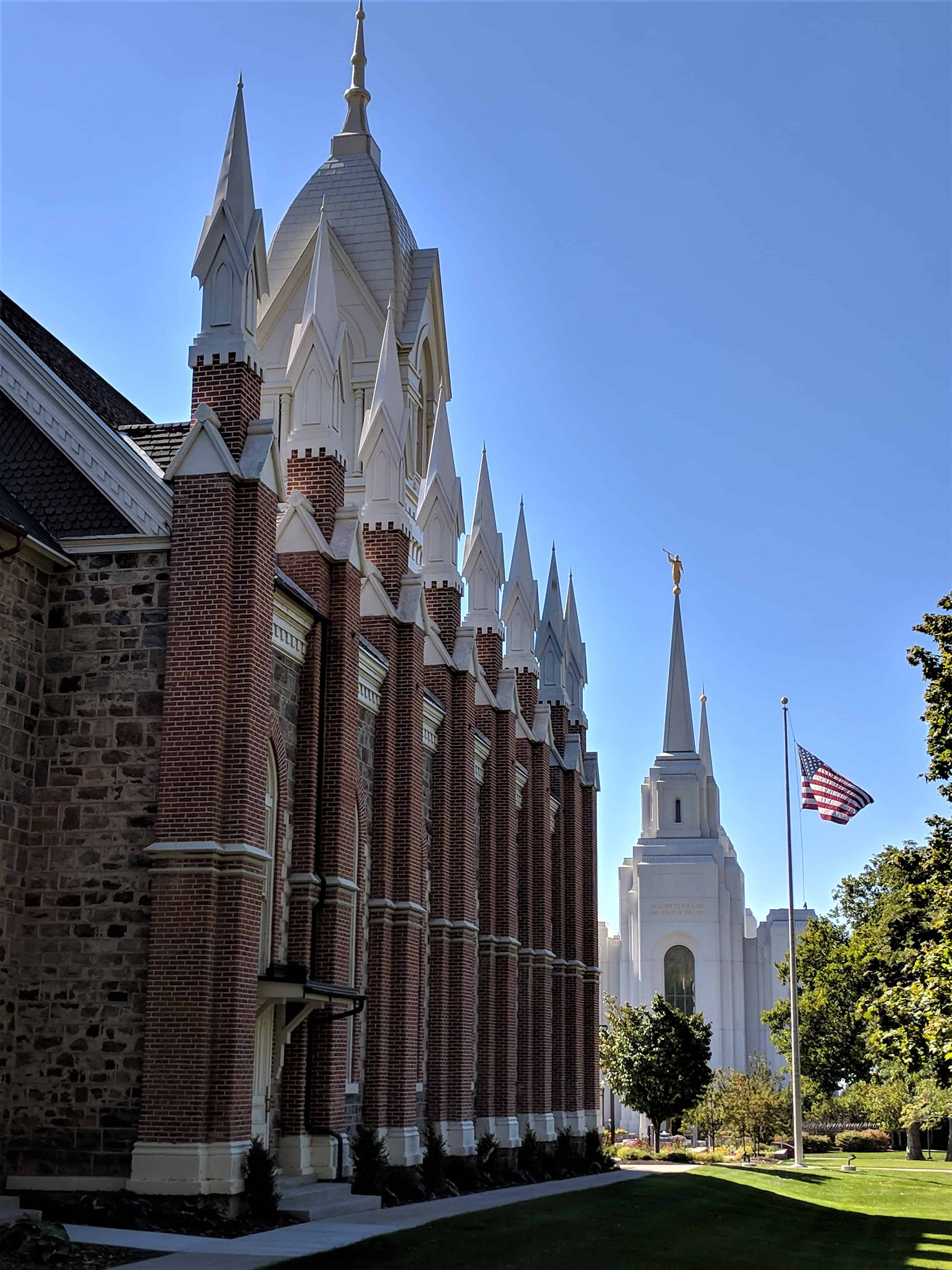
On Sunday 9 February 1896, as people began to assemble for afternoon services, a fire started in the furnace room. No one was injured but despite frantic efforts, only smoke-blackened stone walls remained an hour later. Stake President Rodger Clawson supervised reconstruction over the next thirteen months. The new Tabernacle was even finer than the old, with elegant woodwork, a distinctive gothic/revival tower and sixteen graceful pinnacles. On 21 March 1897, George Q. Cannon, First Counselor to President Woodruff, dedicated the rebuilt structure.
Throughout the following years, the people of Brigham City and neighboring towns have preserved and maintained this beloved building. In 1971, it was listed on the National Register of Historic Places, one of the first buildings in Utah to be so honored. Beginning in 1985, an extensive restoration project replaced the mechanical and electrical systems, reinforced the structure, and carefully renewed both the exterior and interior to guarantee the continued preservation of this magnificent landmark. The 106-old Tabernacle was rededicated on 12 April 1987 by Elder Boyd K. Packer of the Council of the Twelve Apostles, a native of Brigham City.

Located at 251 South Main Street in Brigham City, Utah and is #6 in the Brigham City Historic Tour and #21 of the S.U.P. historic markers. It was added to the National Register of Historic Places (#71000840) on May 14, 1971.

Box Elder Tabernacle- Built 1867-1890 Pioneer settlers used stone and wood from nearby mountains and their finest craftsmanship to built this place of worship. It was finished and dedicated in 1890. Six years later in 1896, it was gutted by fire and had to be rebuilt. The building was finished and rededicated in 1897.






The following is from the National Historic Register’s nomination form:
During the summer of 1865, Brigham Young visited the community. When he observed men beginning an excavation, he asked its purpose. When told it was to be the site of their new tabernacle, he objected. Taking Jesse W. Fox, church surveyor with him, he located a spot on Sagebrush Hill, the back bone of the community. Actually, the site was on the crest of the alluvial fan so characteristic of many of the Mormon communities along the Wasatch front. From that spot the water ran north, south and west.
During the next 11 years rocks were hauled to the site. Construction was begun with some serious intent in 1876. By 1881, the building was sufficiently completed to hold conference in it. However, the buiIding was not finished until 1890. It was dedicated by President Wilford Woodruff October 27th of that year. The building had taken twenty-five years to build, in part because the small community was also building numerous other structures tannery, gristmills, broom factory, etc. under the cooperative arrangement of the United Order or communal economic system.
The lovely structure served well, except for the furnace. One Sunday afternoon, February 9, 1896, it burned down, leaving only the four sturdy walls standing. Stake President Charles Kelley asked architects to investigate the walls. They were declared sound. On March 27, 1896, the people voted to rebuild it. Monies were solicited from as far away as Salt Lake City. Reconstruction began immediately and by March 21, 1897, a lovely new structure was ready for dedication by Apostle George Q. Cannon.
Brigham City holds its tabernacle in high regard. It sits proudly on the crest of the hill, probably one of Utah’s most photographed buildings. Its architectural style and history mark it as one of the State’s most significant structures.
Brigham City’s first Stake President was Lorenzo Snow 1853-1877. He was succeeded by Oliver B. Snow, who served until 1888 when Rudger Clawson became president. His successor, who rebuilt the Tabernacle, was Charles Kelley. The building is still used for L.D.S. Church functions and is open to the public on a restricted basis.
The original Box Elder Stake Tabernacle was built of field stone collected nearby. The architect was probably Truman O. Angel, Jr. or his father, one of the more famous L.D.S. Church architects. The Tabernacle was 50 feet by 95 feet with a tower rising above each of the four corners. The interior when finally completed in 1890, had a gallery on the north and south walls, with the elevated speaker’s stand on the east end. Most of the lumber was hauled from nearly mountains, sawed and delivered to the site. The seating capacity was 1200.
After the building burned in 1896, it was rebuilt even more elaborately. The restoration architect is not identified. Sixteen brick buttresses were added to the exterior with steeples topping each one, A major tower was built on the front. The style has been described as neo-Sothic. Inside the building a vestibule was added, and the seating capacity increased by 400. A very simple hand-carved design goes all around the new balcony to focus the eyes on the pulpit which, with the choir seats, is now on the west end of the building.
The building has an excellent organ and modern lighting and heat. It is maintained by the Box Elder Stake L.D.S. Church.
07 Saturday Jan 2017
Posted in Uncategorized
Tags

WILLARD CENTRAL SCHOOL BELL
When the Willard Central School was constructed in 1902, a bell tower with a large brass bell was installed on the roof toward the front of the building. The bell was rung 15 minutes before school began and again at noon. Students vied for the privilege of pulling the bell cord. The ring could be heard a mile away warning dawdling students to hurry. Although the bell tower was remodeled in 1911-12, the bell remained in place for 37 years.
In 1939, during a remodeling of the school, the bell was removed from the roof and mounted on a circular rock foundation immediately in front of the school. The bell no longer rang but served as a memorial to bygone days.
The school was demolished in 1956 to make room for a new one. This monument, on the old playground, is constructed of rocks from the Fort Wall which was built between 1852-55 and which surrounded the old town of Willard.
Willow Creek Camp DUP Free-standing engraved granite plaque on post: This marker is also built of native stone as well as rocks from the fort wall. The rail was used in the first transcontinental railroad of 1869. Willow Creek Camp 1989

17 Saturday Dec 2016
Posted in Uncategorized
Tags


Related:
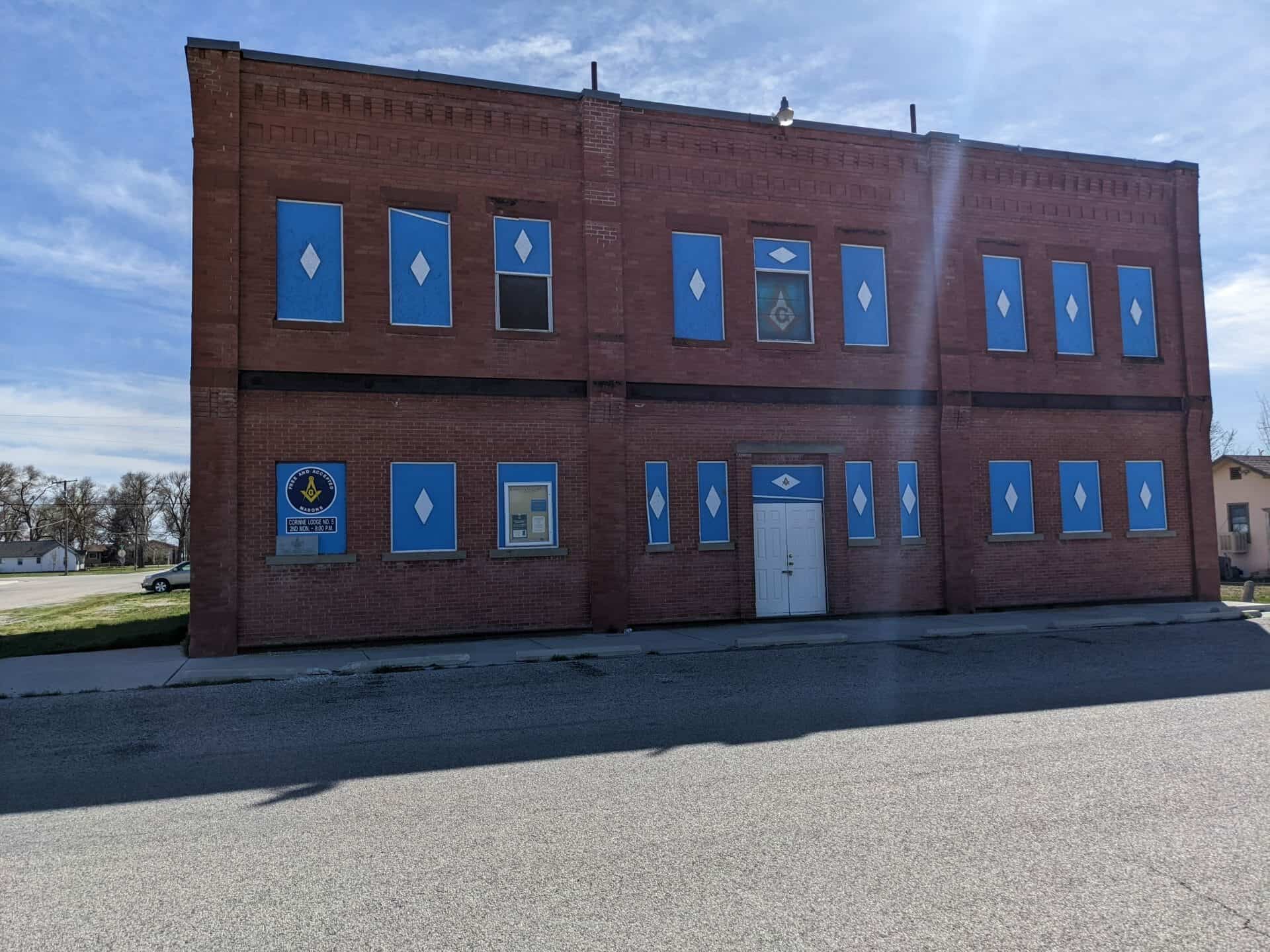
For almost ten years from its founding on 25 March 1869, the town of Corinne prospered as the unofficial “Gentile Capital of Utah”. As the Union Pacific and Central Pacific railroads approached their historic meeting place at Promontory Summit early in 1869, a group of former Union Army officers and some determined non-Mormon merchants from Salt Lake City decided to locate a Gentile town on the Union Pacific line, believing that the town could compete economically and politically with the Saints of Utah. They chose a location about six miles west of Brigham City on the west bank of the Bear River where the railroad crossed that stream. Named by one of the founders (General J. A. Williamson) for his fourteen-year-old daughter, Corinne was designed to be the freight-transfer point for the shipment of goods and supplies to the mining towns of western Montana along the Montana Trail.
In its heyday Corinne had some 1,000 permanent residents, not one of whom was a Mormon, according to the boast of the local newspaper. As an end-of-the-trail town, Corinne reflected a very different atmosphere and culture from the staid and quiet Mormon settlements of Utah, containing not only a number of commission and supply houses but also fifteen saloons and sixteen liquor stores, with an elected town marshal to keep order in this “Dodge City” of Utah. The permanent residents of Corinne did their best to promote a sense of community pride and peaceful, cultural pursuits but had a raucous and independent clientele of freighters and stagecoach drivers to control.





15 Tuesday Nov 2016
Posted in Uncategorized
Tags

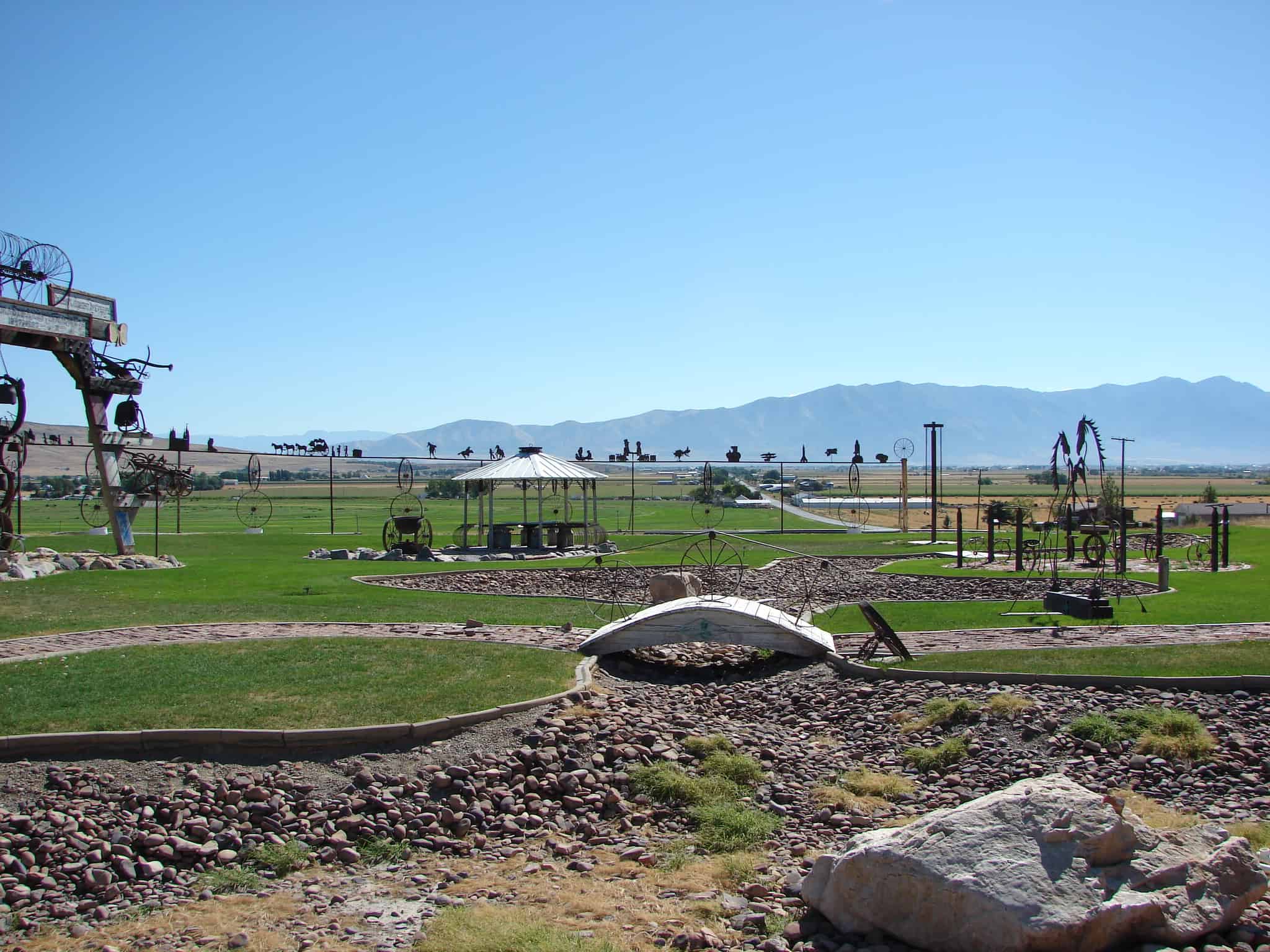
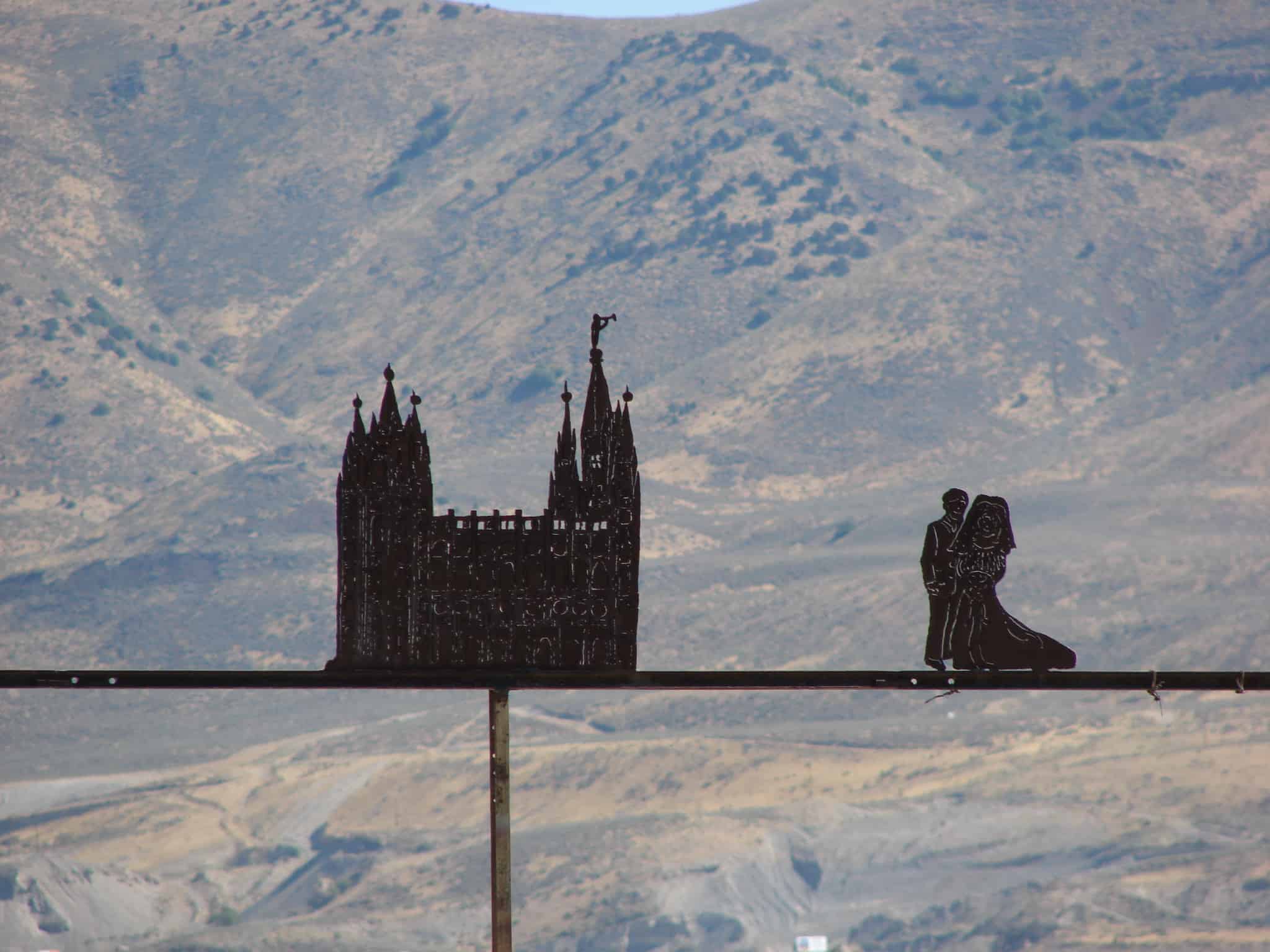
Boyd Marble Park is an interesting place in Bothwell (west of Tremonton).
Many exhibits of Utah sites and LDS church sites made of scrap metal, wire and other interesting materials.

12 Saturday Nov 2016
Posted in Uncategorized
Tags

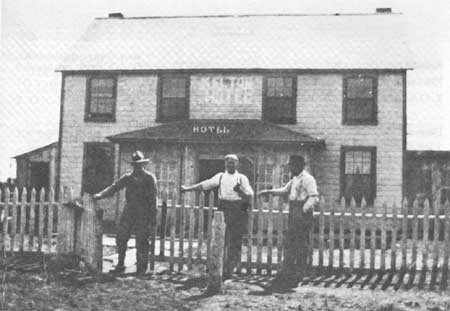
The site was first settled under the name of Indian Creek, when the mostly-Chinese work crew of the Central Pacific Railroad arrived on April 12, 1869, less than a month before the driving of the golden spike. When the post office was established here on December 16, 1869, it was named Kelton after an early stockman. It quickly grew into a prosperous town, soon including several fine hotels, stores, homes, a whole row of saloons and gambling halls, and even a telephone exchange.
Kelton was ideally positioned to link the railroad to the large northern markets of Oregon, Idaho, and Montana. Already by the summer of 1869 a stagecoach route was established between Kelton and Boise, Idaho. By 1871 the Kelton Freight Road was the best road leading into southwestern Idaho. In the 1870s and early 1880s, the Wells Fargo stage line running between Kelton and several gold mines in Idaho and Montana was robbed more often than any other stage line in the Old West. Treasure hunters still search for the hundreds of thousands of unrecovered dollars rumored to be cached in the nearby City of Rocks.
Related:


07 Monday Nov 2016
Posted in Uncategorized
25 Sunday Sep 2016
Posted in Uncategorized
Tags
Bells, Box Elder County, Chapels, Corinne, historic, Historic Churches, Methodist, museums, Protestant, utah
Methodist Episcopal Church
Peak Enrollment 127 in 1915
1870 – 1957
This is the oldest extant Protestant church building in Utah. It was dedicated by Chaplain C. C. McCabe and Reverend G. M. Peirce on September 20, 1870.
Corinne Historical Society
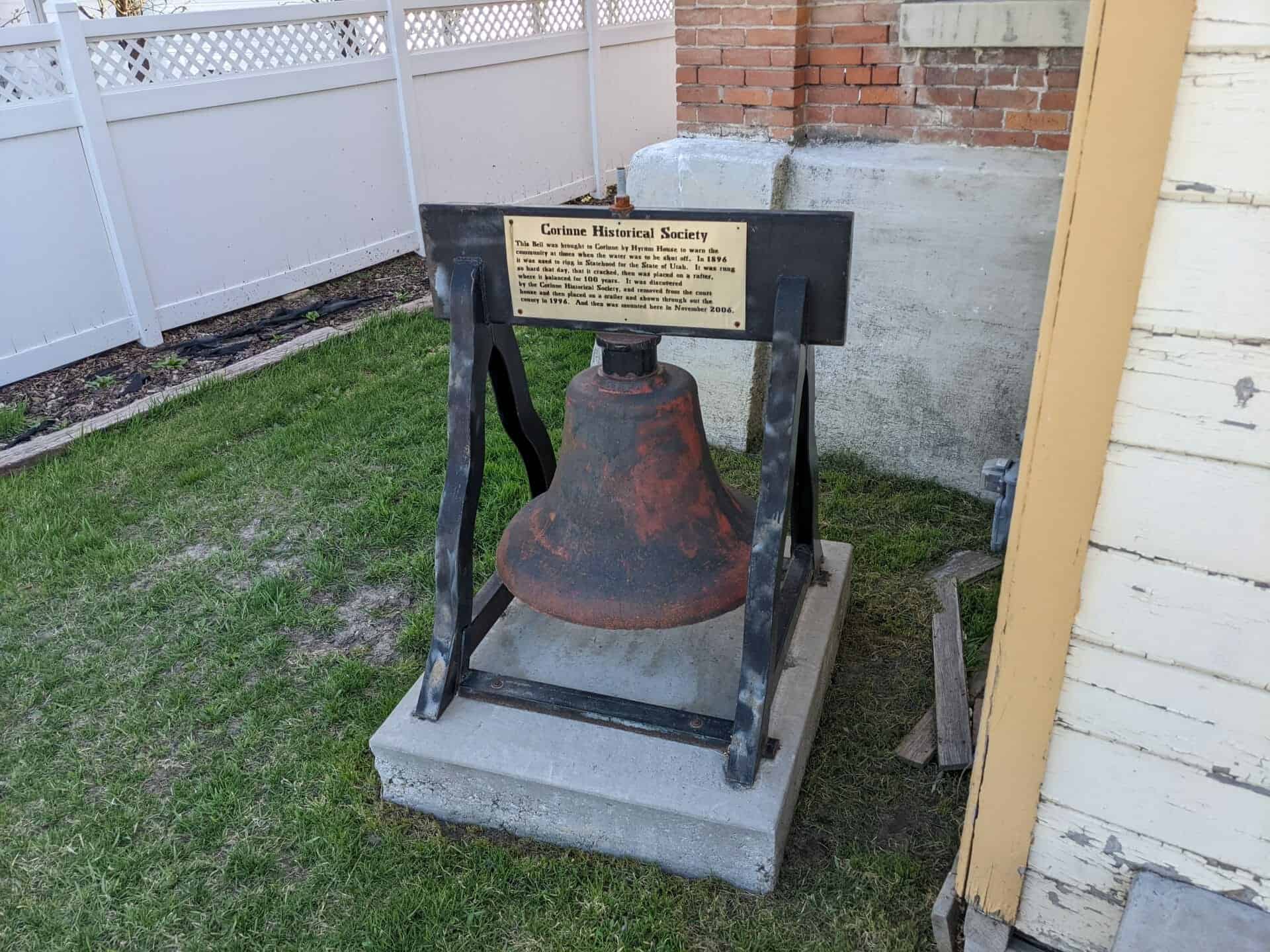
This bell was brought to Corinne by Hyrum House to warn the community at times when the water was to be shut off. In 1896 it was used to ring in the Statehood for the State of Utah. It was rung so hard that day, that it cracked, then was placed on a rafter, where it balanced for 100 years. It was discovered by the Corinne Historical Society, and removed from the court house and then placed on a trailer and shown through out the county in 1996. And then was mounted here in November 2006.
Located at 3995 West 2300 North in Corinne, Utah


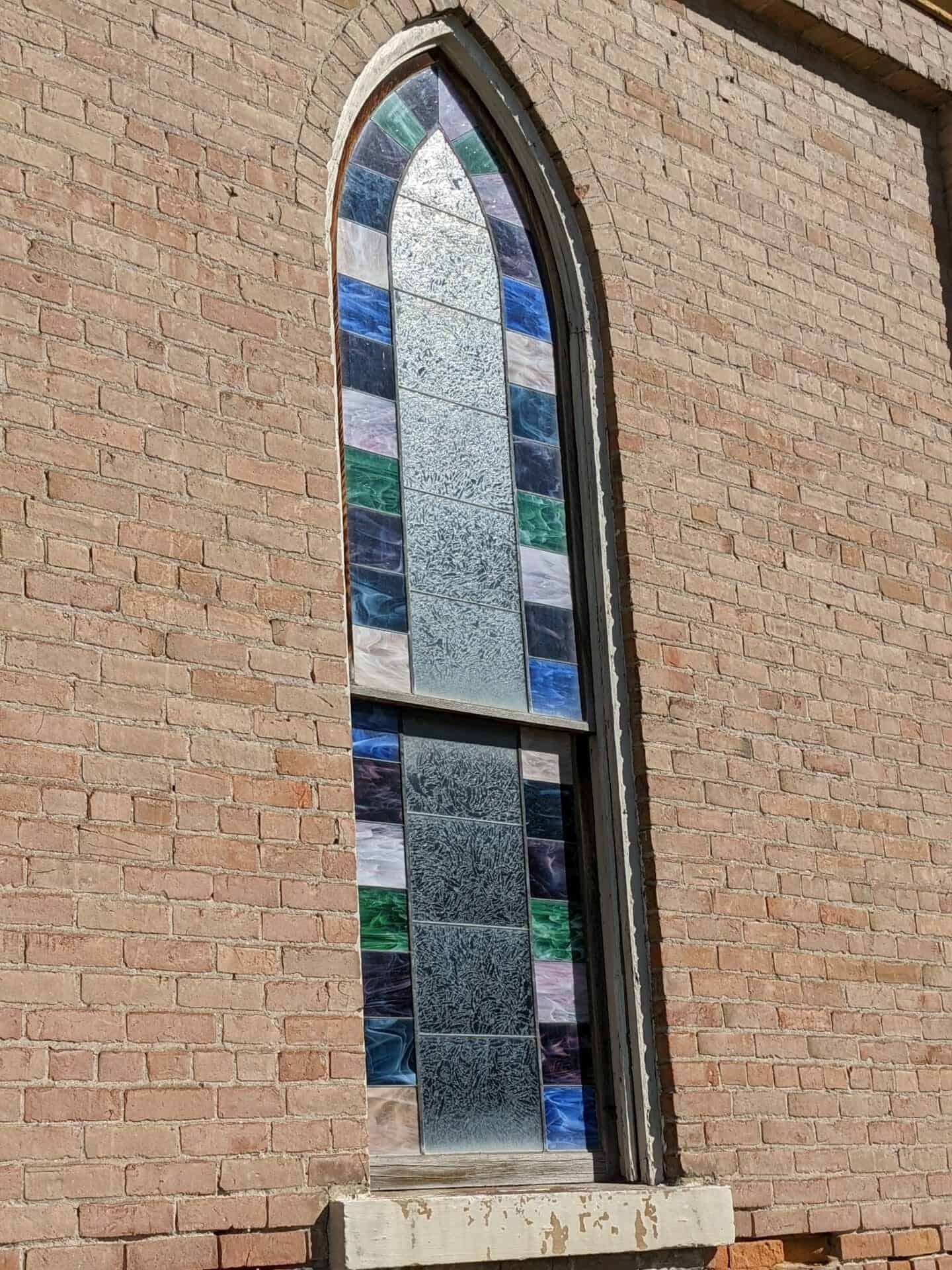




The Corinne Methodist Episcopal Church, located at 3995 West 2300 North in Corinne, Utah was added to the National Register of Historic Places (#71000842) on May 14, 1971. The text below is from the nomination form from when it was added to the register.
Corinne, Utah lays claim to several distinctive features. It was Utah’s First “Gentile” City, having been dreamed of in 1868, but born and built during March and April, 1869, when the Union Pacific Railroad tracks reached there, It was the last U.P.R.R. track town on the transcontinental line, having 1500 inhabitants within a month and 3,000 by the end of April, It was laid out by J. E. Hause, chief engineer for the Union Pacific Railroad. Its name came either from Corinne Williamson, daughter of General J. A. Williamson, and the first white child born in the new town or from the actress who performed there on several occasions, Corinne LaVaunt.
By February, 1870, Corinne had been incorporated. Within another year an all gentile “school,” taught by Mr. A. B. Glockner, reported to have been Utah’s first “free public education” system, was organized. In addition, being a non-Mormon community of size and promise, Corinne is claimed as the birthplace of Utah’s American Liberal Party. The town asked to be made Utah’s capital and later to be annexed to Idaho.
Corinne is distinctive in Utah, because it was settled rapidly by non-Mormons. Within two years three protestant and one Catholic church had been organized. The first church in this “City of the Un-Godly,” probably was the Corinne Methodist Church; Reverend G. M. Pierce delivered his first sermon June 15, 1870, in the opera house, sought donations, and soon raised $4,000 for construction of the church. It was dedicated September 20, 1870.
Corinne retained a prominence as the northern-most point of the transcontinental railroad. However, in time, Ogden became the junction for the Utah Northern Railroad, which replaced the lucrative freighting enterprise centered at Corinne. Later, when Lucin Cutoff crossed the Great Salt Lake south of Promontory, the traffic through Corinne was further reduced.
The town held on and at times has been revived somewhat by mining and irrigated farming booms. Today it is the center of a small farming community.
Corinne was unusual. It represents the first Gentile inroad into Utah. Here the protestants first undertook to “convert” the Mormons. The old church today remains as the only tangible reminder of that role and that era.