• About JacobBarlow.com
  • Cemeteries in Utah
  • D.U.P. Markers
  • Doors
  • Exploring Utah Email List
  • Geocaching
  • Historic Marker Map
  • Links
  • Movie/TV Show Filming Locations
  • Oldest in Utah
  • Other Travels
  • Photos Then and Now
  • S.U.P. Markers
  • U.P.T.L.A. Markers
  • Utah Cities and Places.
  • Utah Homes for Sale
  • Utah Treasure Hunt

JacobBarlow.com

~ Exploring with Jacob Barlow

JacobBarlow.com

Tag Archives: Chapels

Methodist Episcopal Church

25 Sunday Sep 2016

Posted by Jacob Barlow in Uncategorized

≈ 1 Comment

Tags

Bells, Box Elder County, Chapels, Corinne, historic, Historic Churches, Methodist, museums, Protestant, utah

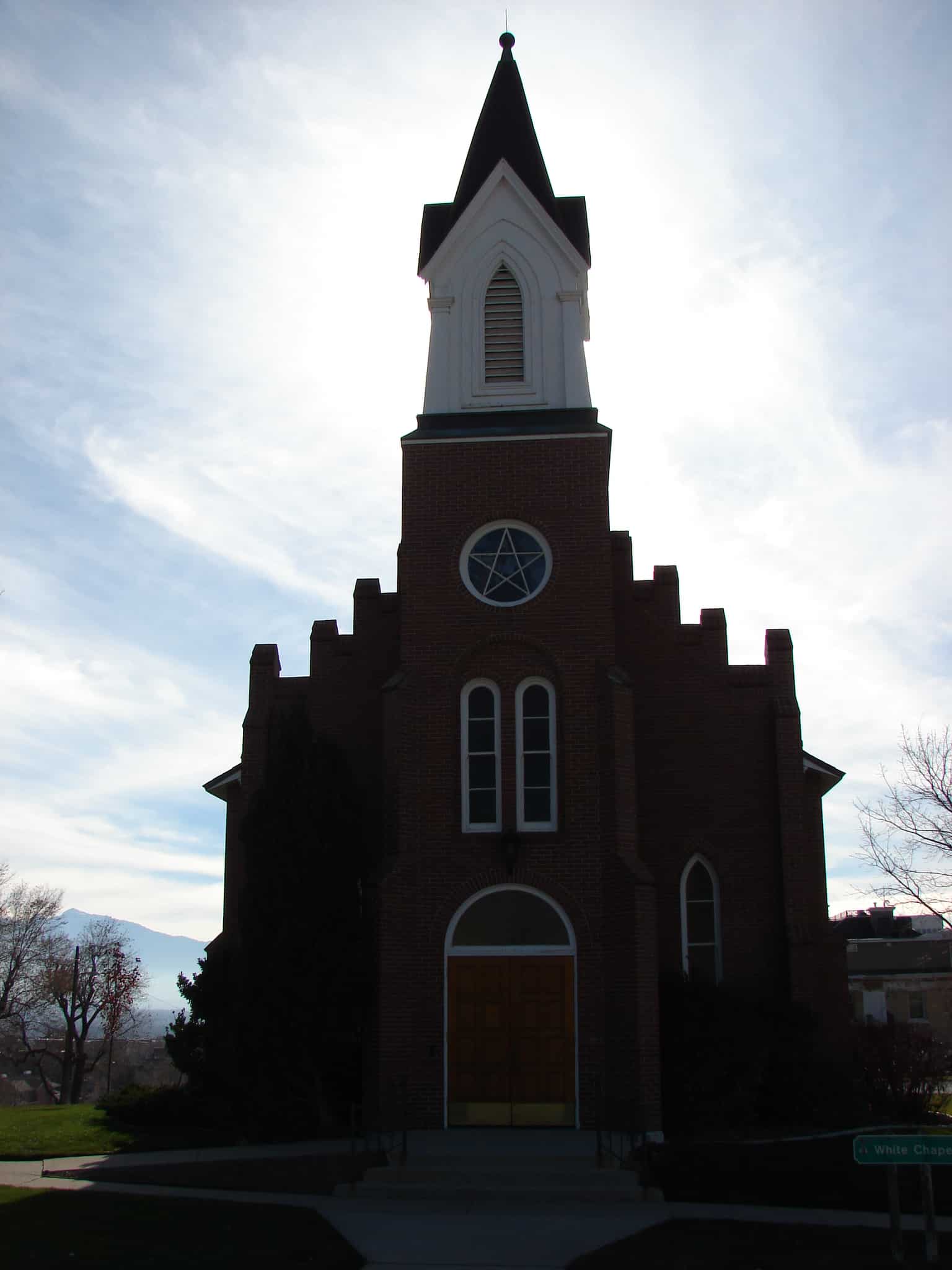
picture04oct07-026

Methodist Episcopal Church
Peak Enrollment 127 in 1915
1870 – 1957

This is the oldest extant Protestant church building in Utah. It was dedicated by Chaplain C. C. McCabe and Reverend G. M. Peirce on September 20, 1870.
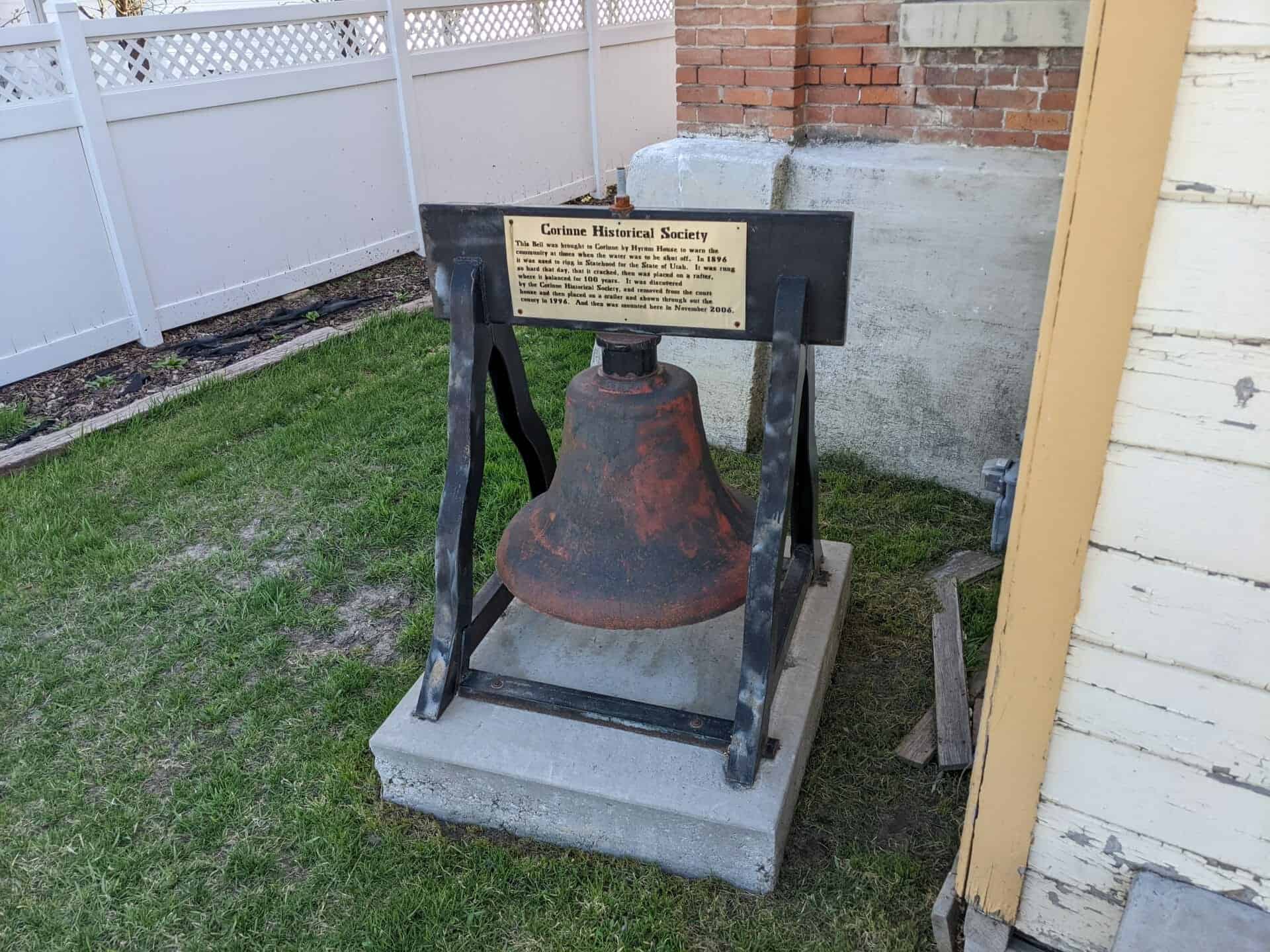
Corinne Historical Society
This bell was brought to Corinne by Hyrum House to warn the community at times when the water was to be shut off. In 1896 it was used to ring in the Statehood for the State of Utah. It was rung so hard that day, that it cracked, then was placed on a rafter, where it balanced for 100 years. It was discovered by the Corinne Historical Society, and removed from the court house and then placed on a trailer and shown through out the county in 1996. And then was mounted here in November 2006.

Located at 3995 West 2300 North in Corinne, Utah

The Corinne Methodist Episcopal Church, located at 3995 West 2300 North in Corinne, Utah was added to the National Register of Historic Places (#71000842) on May 14, 1971. The text below is from the nomination form from when it was added to the register.

Corinne, Utah lays claim to several distinctive features. It was Utah’s First “Gentile” City, having been dreamed of in 1868, but born and built during March and April, 1869, when the Union Pacific Railroad tracks reached there, It was the last U.P.R.R. track town on the transcontinental line, having 1500 inhabitants within a month and 3,000 by the end of April, It was laid out by J. E. Hause, chief engineer for the Union Pacific Railroad. Its name came either from Corinne Williamson, daughter of General J. A. Williamson, and the first white child born in the new town or from the actress who performed there on several occasions, Corinne LaVaunt.

By February, 1870, Corinne had been incorporated. Within another year an all gentile “school,” taught by Mr. A. B. Glockner, reported to have been Utah’s first “free public education” system, was organized. In addition, being a non-Mormon community of size and promise, Corinne is claimed as the birthplace of Utah’s American Liberal Party. The town asked to be made Utah’s capital and later to be annexed to Idaho.

Corinne is distinctive in Utah, because it was settled rapidly by non-Mormons. Within two years three protestant and one Catholic church had been organized. The first church in this “City of the Un-Godly,” probably was the Corinne Methodist Church; Reverend G. M. Pierce delivered his first sermon June 15, 1870, in the opera house, sought donations, and soon raised $4,000 for construction of the church. It was dedicated September 20, 1870.

Corinne retained a prominence as the northern-most point of the transcontinental railroad. However, in time, Ogden became the junction for the Utah Northern Railroad, which replaced the lucrative freighting enterprise centered at Corinne. Later, when Lucin Cutoff crossed the Great Salt Lake south of Promontory, the traffic through Corinne was further reduced.

The town held on and at times has been revived somewhat by mining and irrigated farming booms. Today it is the center of a small farming community.

Corinne was unusual. It represents the first Gentile inroad into Utah. Here the protestants first undertook to “convert” the Mormons. The old church today remains as the only tangible reminder of that role and that era.
19th Ward Chapel

25 Sunday Sep 2016

Posted by Jacob Barlow in Uncategorized

≈ 3 Comments

Tags

Capitol Hill Historic District, Chapels, historic, Historic Churches, NRHP, Salt Lake, Salt Lake City, Salt Lake County, utah

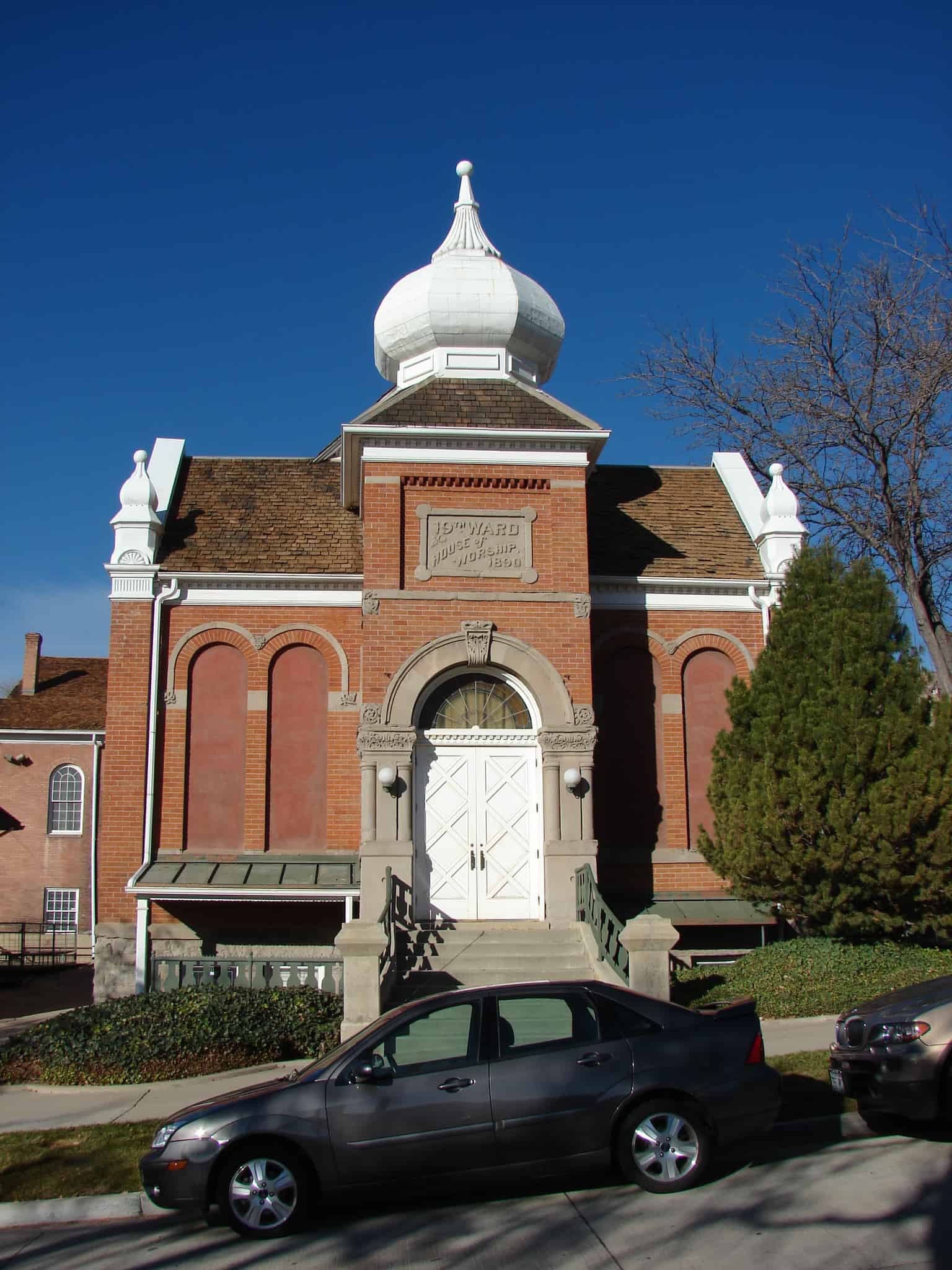
picture24nov07-211

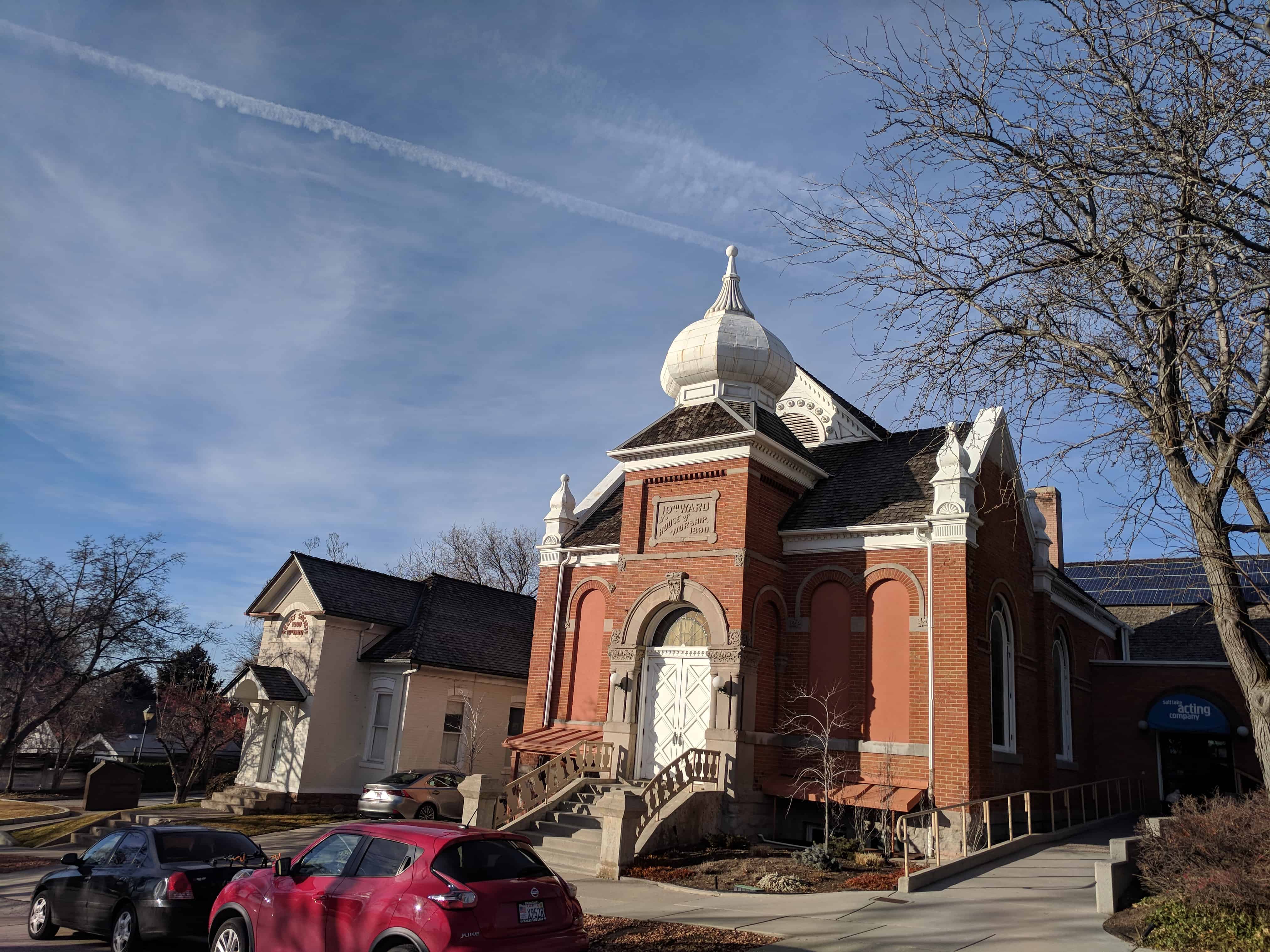
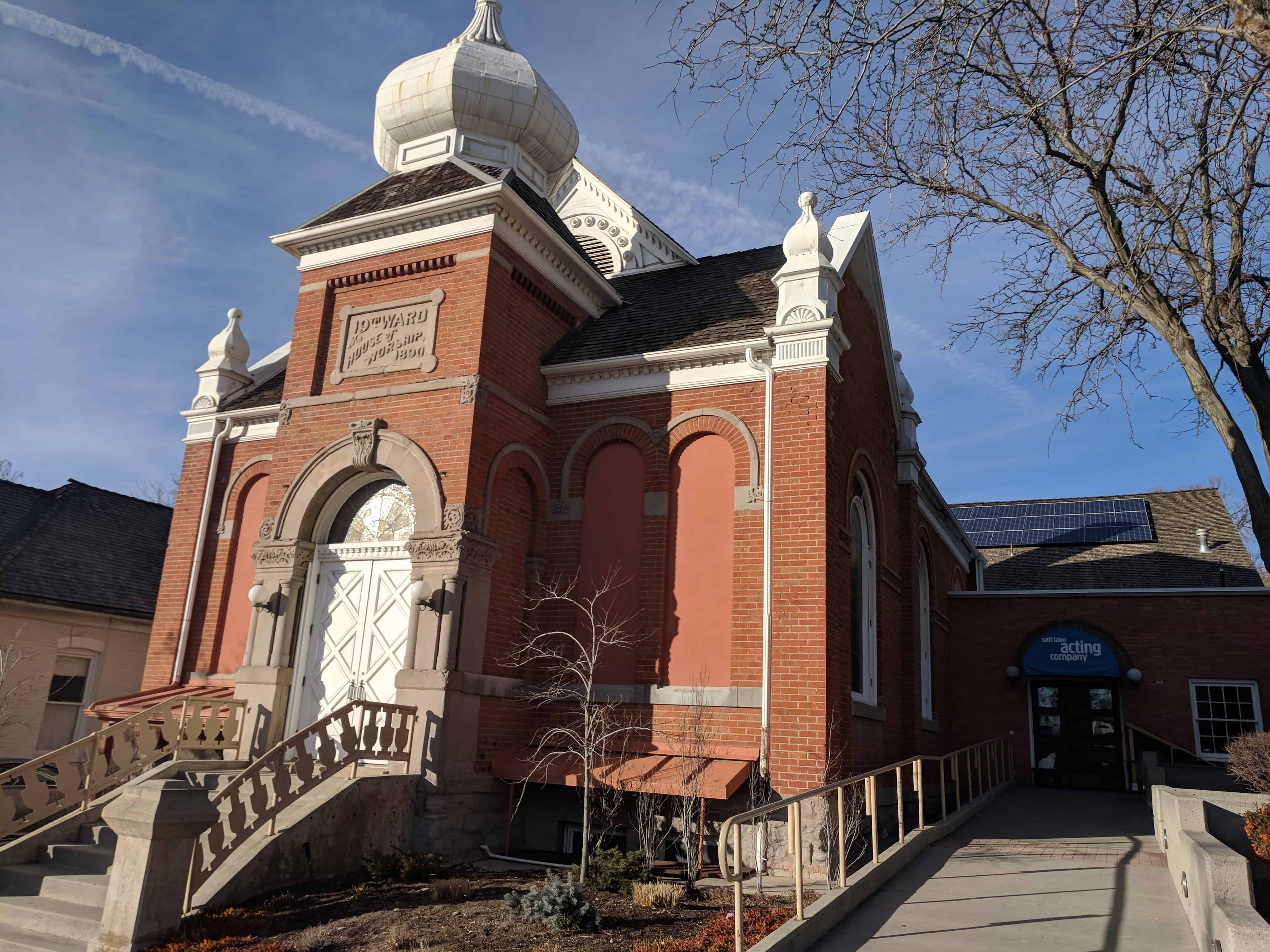
The 19th Ward Meetinghouse and Relief Society Hall.

Located at 168 W. 500 North, Salt Lake City, Utah, was listed on the National Register of Historic Places in 1976.

It was built in 1896. Its architecture is significant in American history as reflecting changes imposed upon The Church of Jesus Christ of Latter-day Saints (LDS Church) by outside influences. Pressure included various Federal enforcement efforts following upon the Edmunds–Tucker Act of 1877, which outlawed polygamy. In effect, the LDS Church capitulated, and sought to adopt different values in conformity with worldwide ones. The meetinghouse was designed by architect Robert Bowman and represented a “totally out of character” change in style; it includes an “oriental, Byzantine, or German Renaissance-inspired onion dome”. It was no longer a church when listed on the National Register of Historic Places in 1976.

The building currently houses the Salt Lake Acting Company.

See other historic churches in the area on this page.

19th Ward Boundaries: (*)

… bounded on the north by 5th North St. and Girard Avenue (or the 24th Ward), east by the brow of the hill (or Capitol Hill Ward), south by 2nd North St. (or the 17th Ward), and west by 1st West St. (or the 22nd Ward).

The boundaries of the 19th Ward were extended so that at one time all that part of Salt Lake City lying between 2nd North St. and the Warm Springs and from Main St. and Arsenal Hill to the Jordan River belonged to the ward, although much of this territory, at the time, was unoccupied.

History timeline:

1849, February 22 – one of the original nineteen wards
1889 – all that part of the ward lying west of 2nd West St. was separated from the 19th Ward and organized as the 22nd Ward.
1891 – all that part of the ward lying north of 9th North St. was separated from the 19th Ward and organized as the 23rd Ward
1909 – the western boundary of the ward was changed from 2nd West St. to 1st West St.
1926 -all that part of the ward lying north of 5th North St. was organized as the 24th Ward

The 19th ward is one of the original 19 wards in Salt Lake City in 1849, you can see the others on this page.

Related:

  • Capitol Hill Historic District
2018-01-13 15.36.12
2018-01-13 15.36.16
2018-01-13 15.35.56
2018-01-13 15.35.51

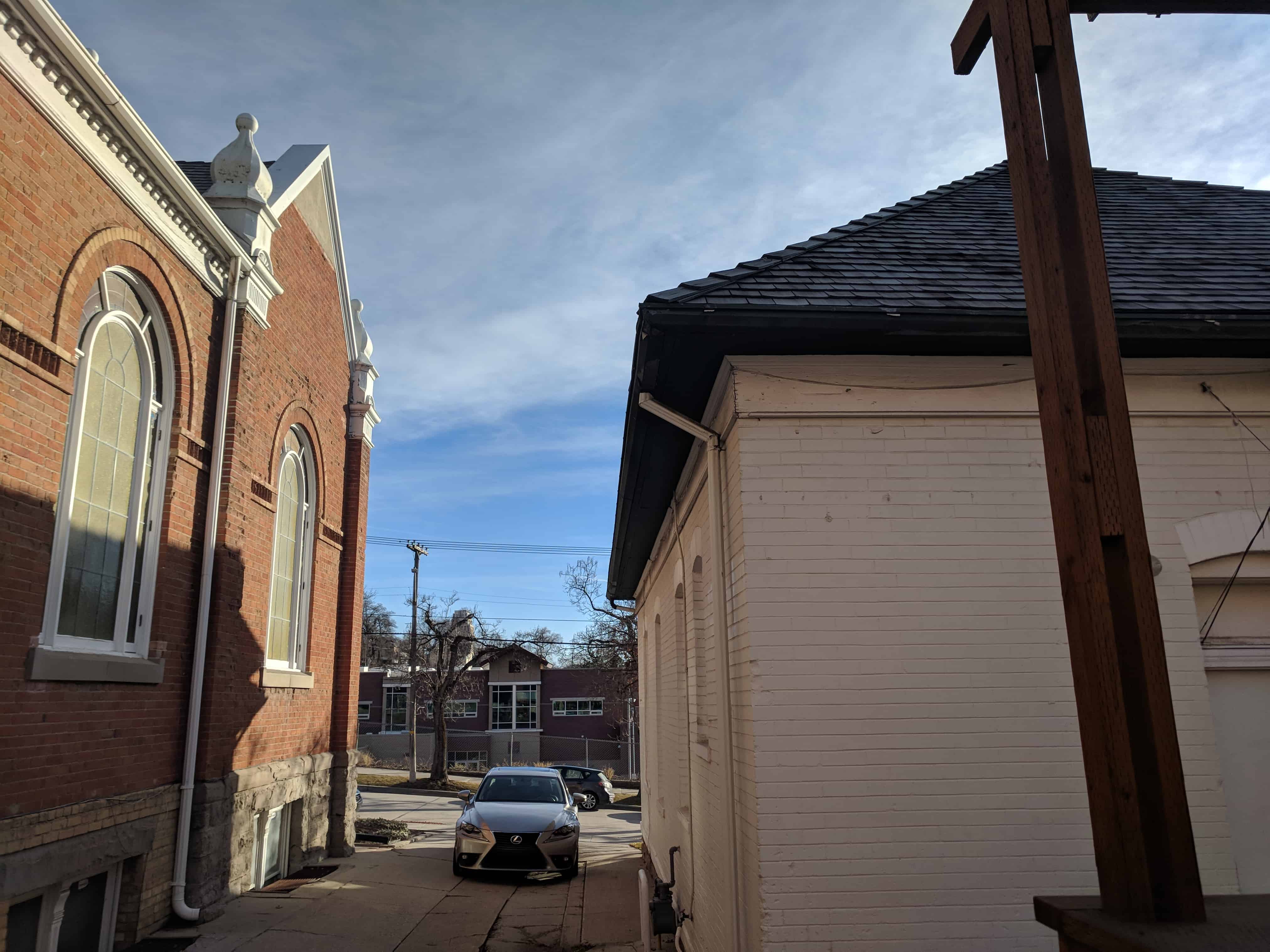
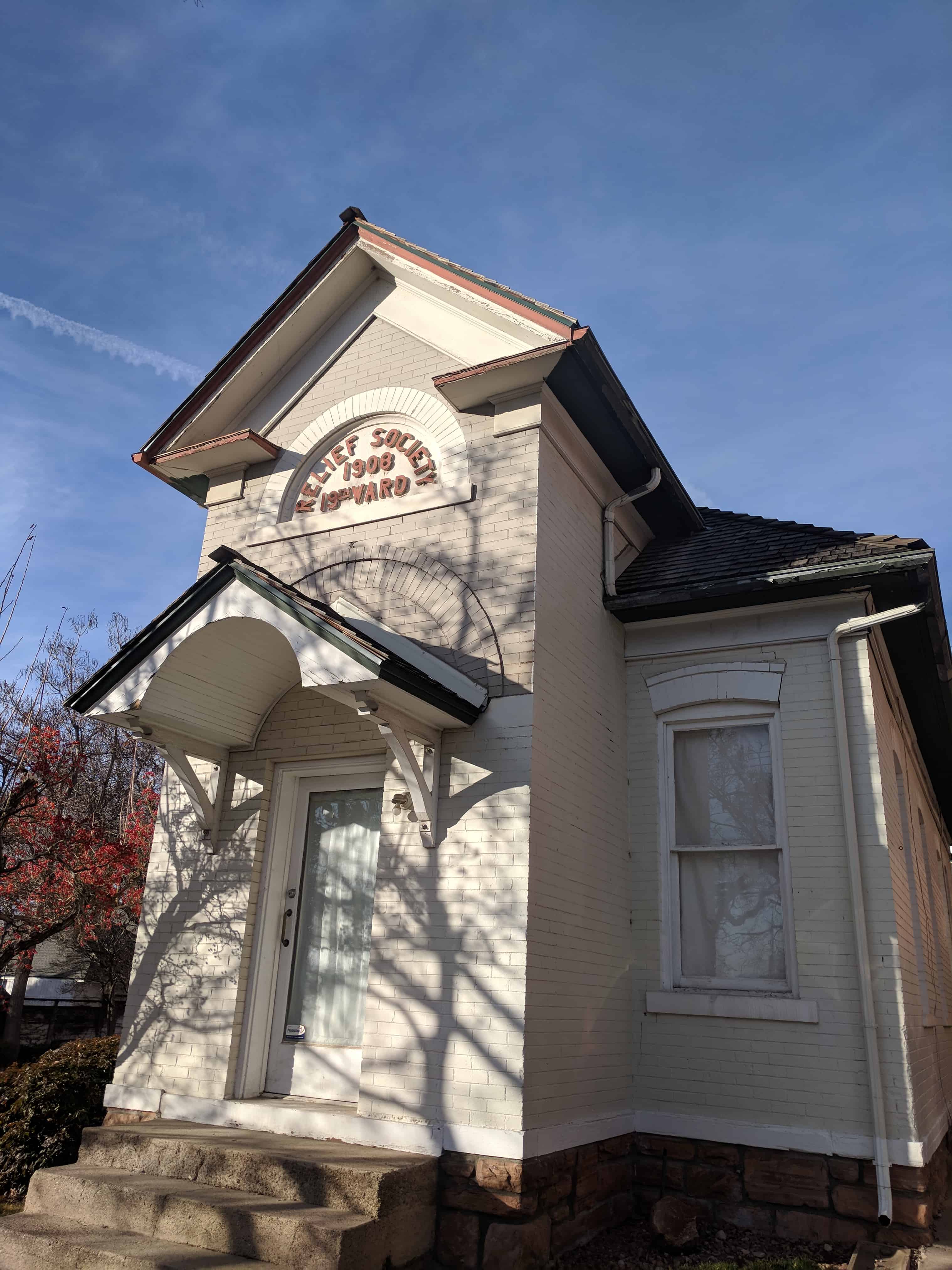
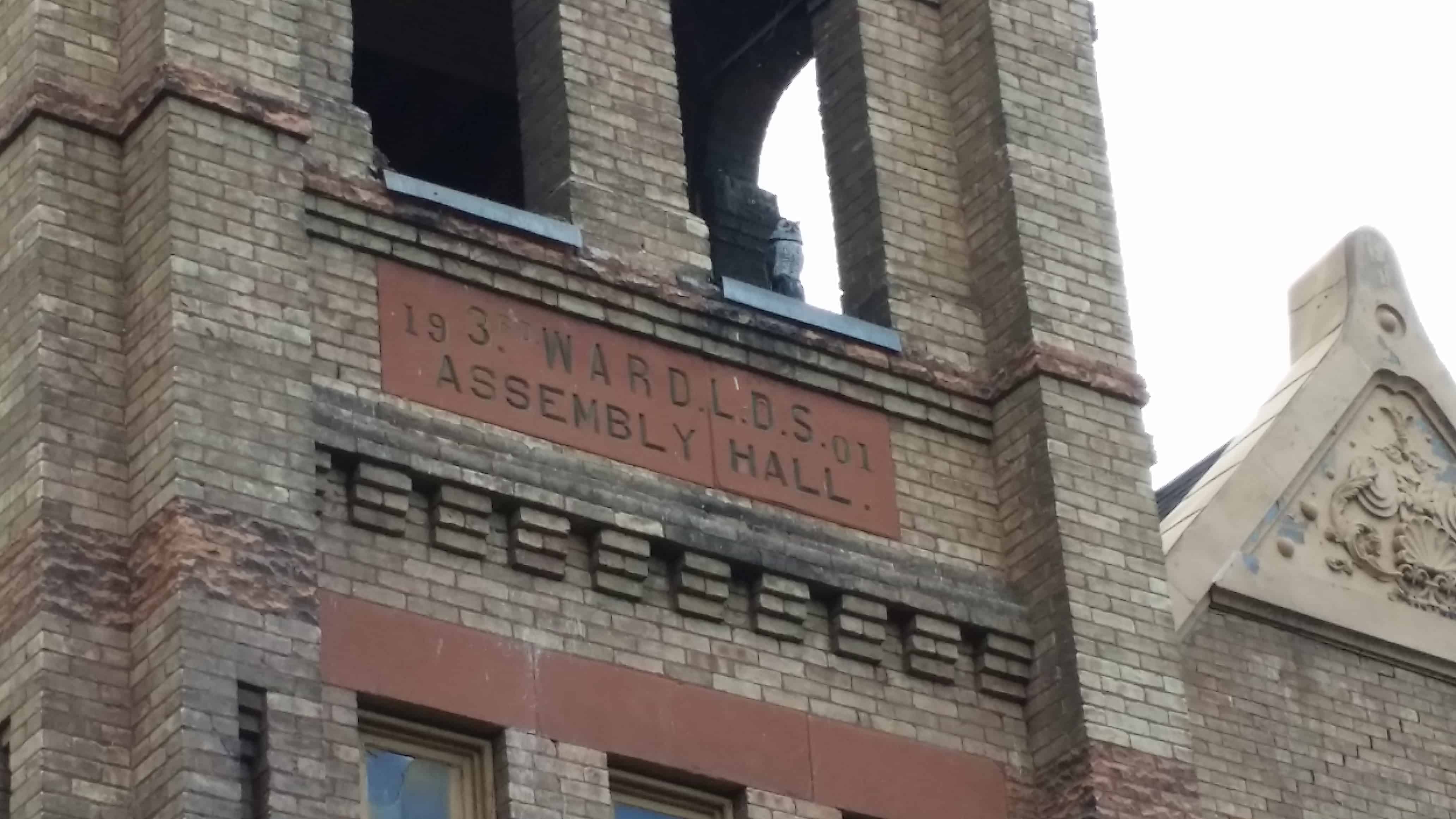
This structure was the third meetinghouse erected 1890-1892 for the 19th ward of the Church of Jesus Christ of Latter-day Saints. Originally encompassing nearly 120 square miles, the 19th ward, repeatedly reduced to create new wards, is now one of the smallest. The meetinghouse is no longer used by the church. The 19th Ward Relief Society Hall was built in 1908 about two blocks away and later moved to its present site. The amusement hall was erected in 1929.

“In 1852 the population of the 19th ward numbered 303 adults and 100 children under eight years of age. Immediately after the organization of the ward the people met for worship in the Warm Springs Bath House, which served until a school house was erected that year on the northeast corner of 4th North and 2nd West streets. In 1866, on the site of the old school house, was erected a large and commodious Building, to which wings were added on the north and south some years later.”

This chapel deviated from the early pioneer chapels built in the valley. Built in 1890 this building shows a heavy Russian influence in its architectural style, The large onion shaped dome is the dominant feature of the chapel. The chapel or assembly hall has been stripped of its pews, to enable it to be used by Ballet West. The ballet trop now uses the chapel as it’s practice headquarters. Since religious icons and symbolic decoration are not common in Mormon meetinghouse, very little else was changed by Ballet West.

The below text is from Preservation Utah‘s Historic Buildings on Capitol Hill Self-Guided Tour:

The Russian influence apparent in the 19th Ward Meetinghouse was a dramatic departure from the plain uniformity of older LDS chapels. Built in 1890, the chapel exemplifies the waning of the pioneer period and a greater acceptance of more varied styles of architecture. The large white onion-shaped dome and lesser onion-topped pillars are dominant features of the red brick building. It is listed, along with the Relief Society Hall, on the National Register of Historic Places.

The 19th Ward was one of the original nineteen wards organized in Salt Lake City. At first, members met in private homes or at the Warm Springs Bath House (later Wasatch Springs Plunge). Subsequent gatherings were held in an adobe schoolhouse until it was razed and replaced by a small chapel in 1866.

The Relief Society Hall was built in 1908 about two blocks away from the present chapel. The building was later moved to this location. The amusement hall was added in 1929. This is the only remaining ward chapel with an adjacent Relief Society Hall in the city. The facility is now owned by Salt Lake City and is being restored to provide office space for the Utah Heritage Foundation and other non-profit organizations.

24th Ward Chapel

25 Sunday Sep 2016

Posted by Jacob Barlow in Uncategorized

≈ 3 Comments

Tags

Chapels, Churches, historic, Historic Churches, Salt Lake, Salt Lake City, Salt Lake County, utah

picture24nov07-207

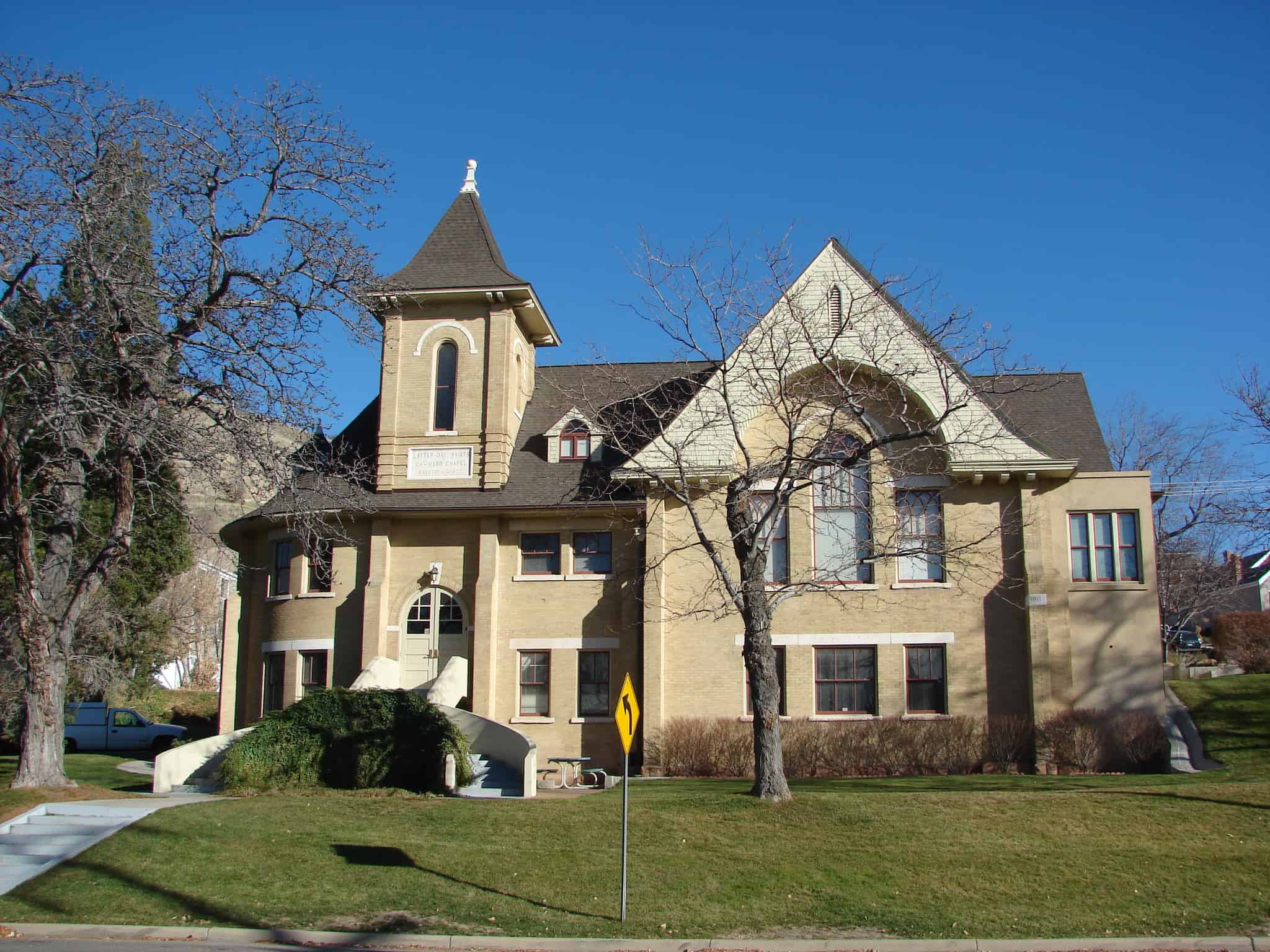
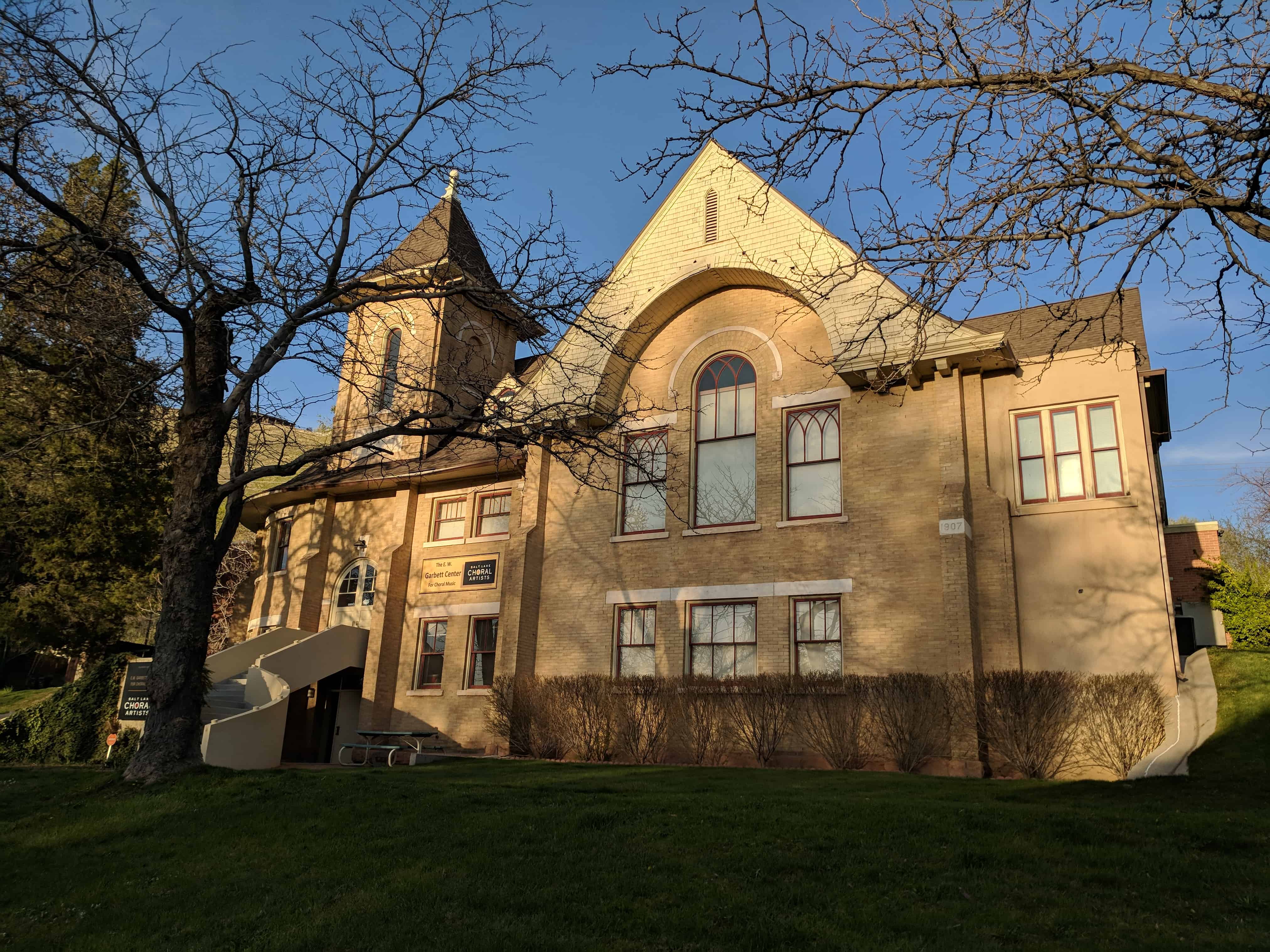
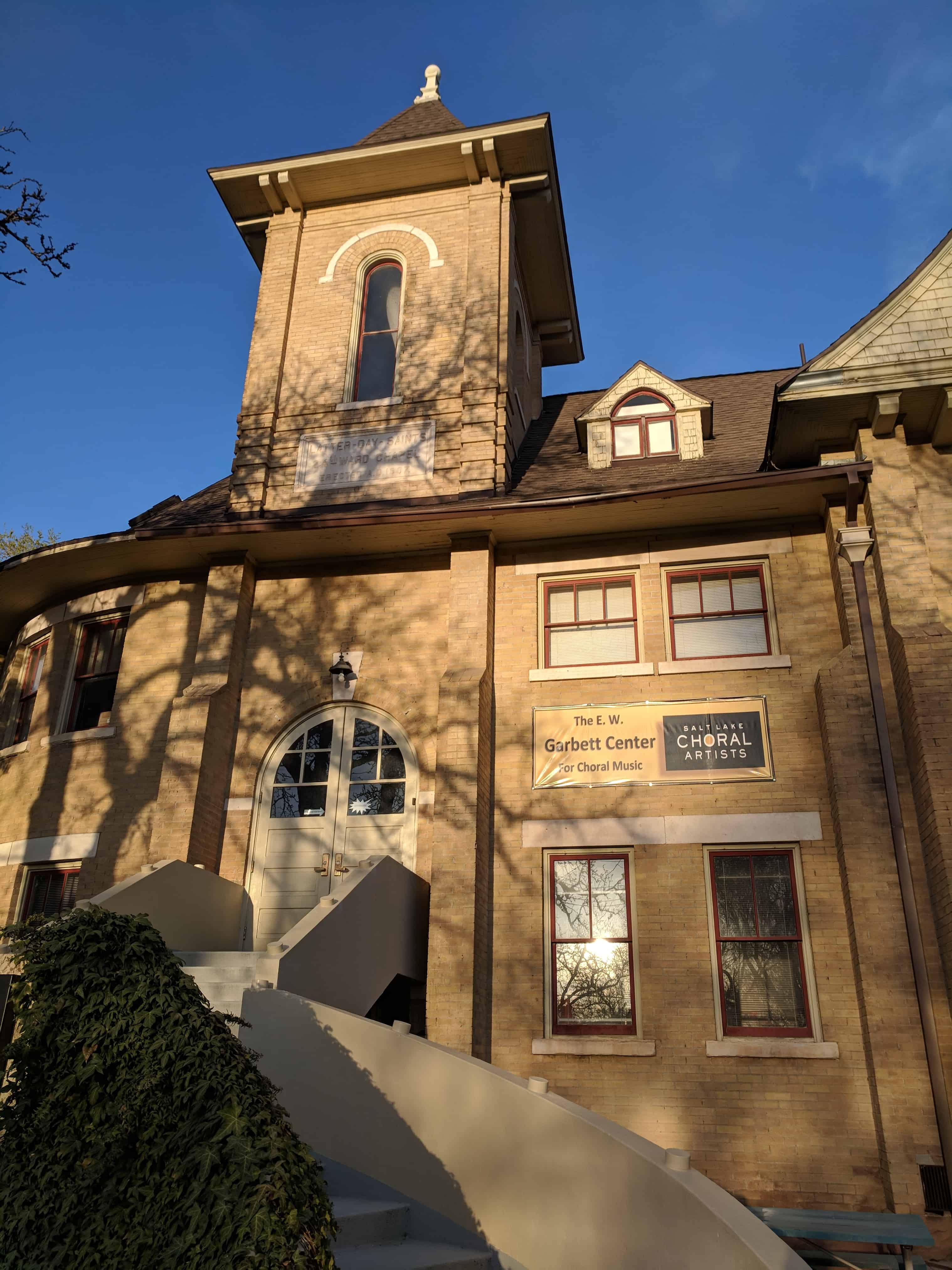
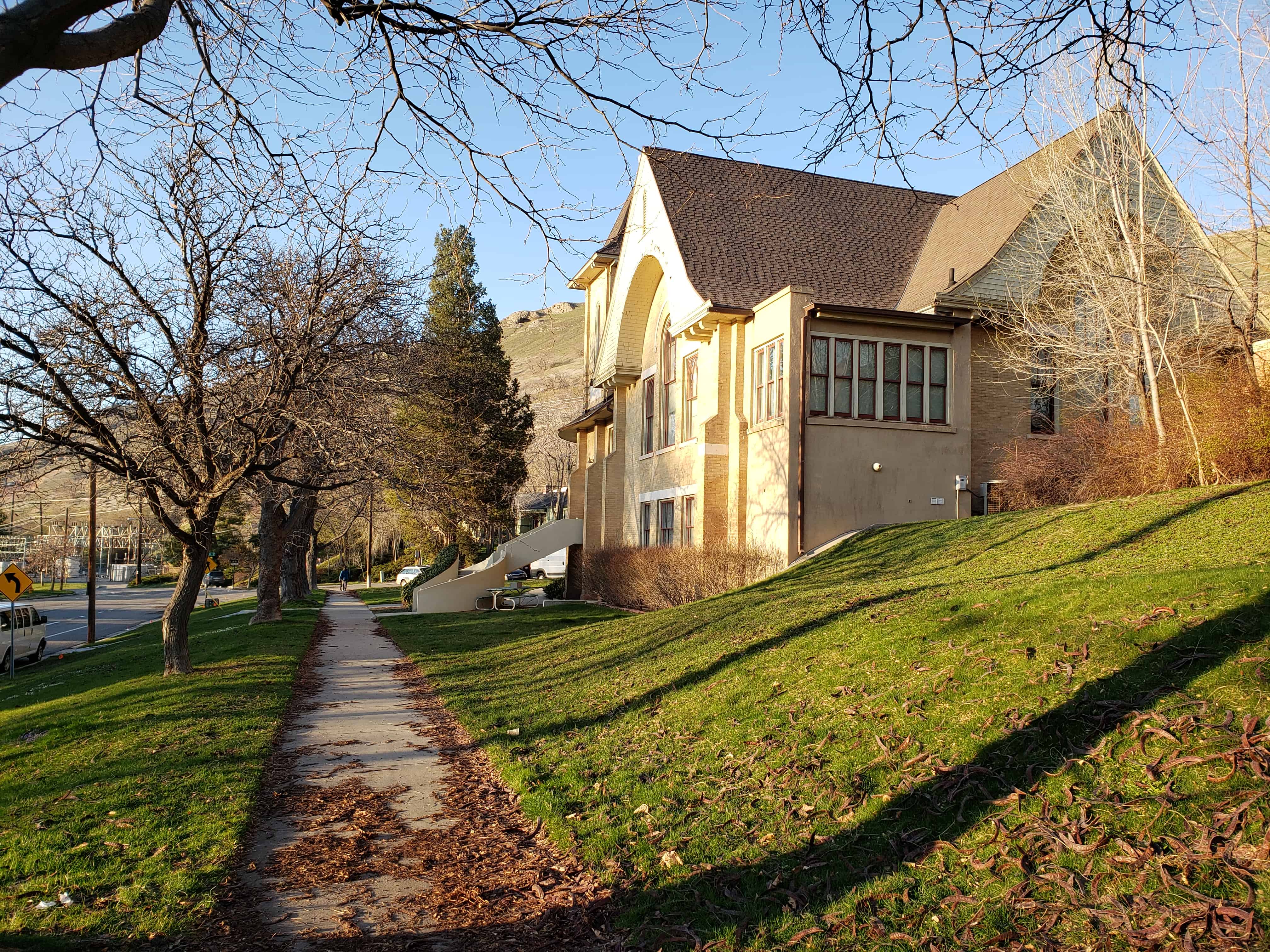
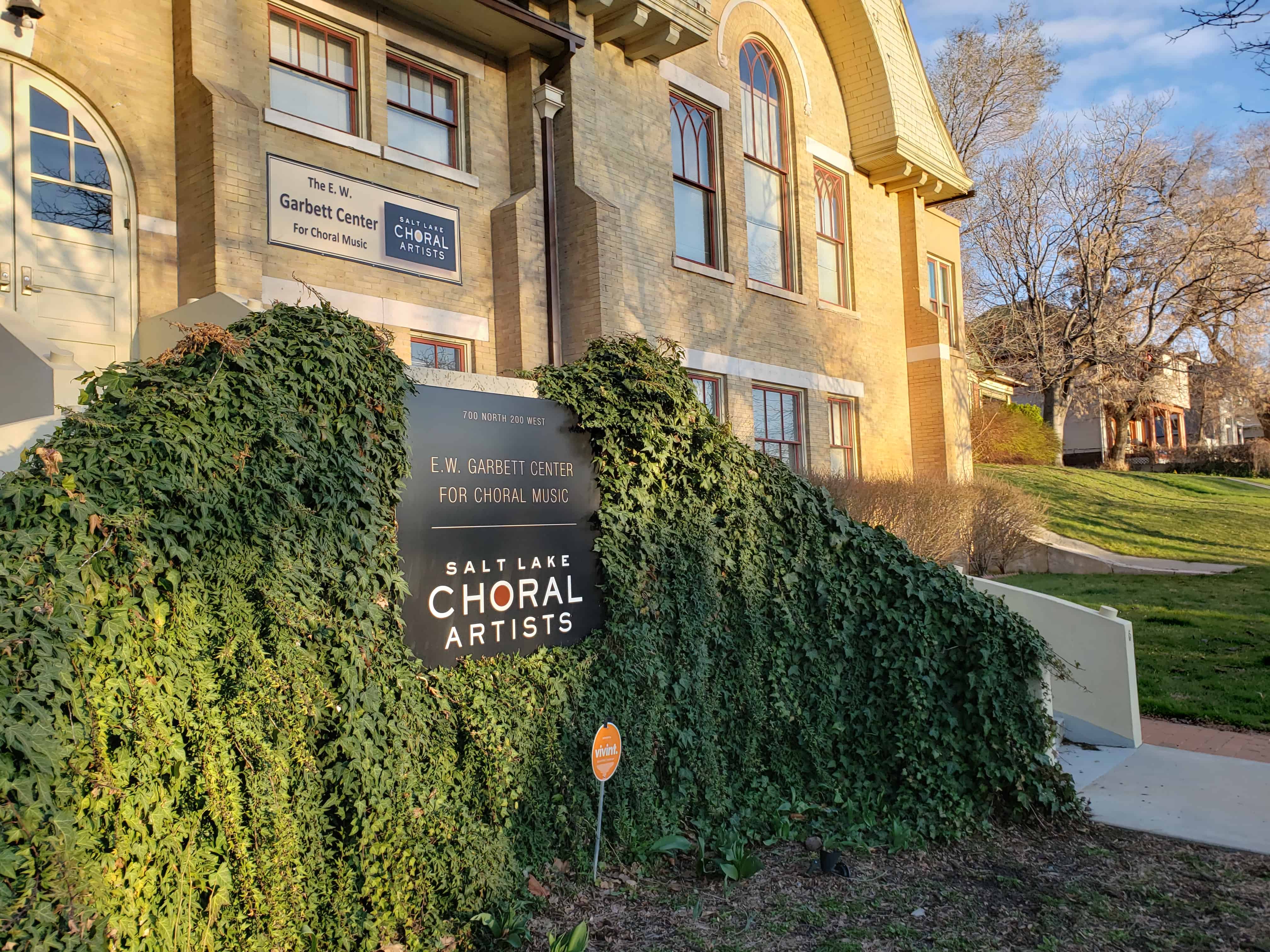
A gorgeous 100+ year old chapel in Salt Lake City, the 24th ward chapel was built in 1907 and is located at 700 North and 200 West. The church sold it in 1969.

See other historic church buildings in Salt Lake on this page.

Related:

  • Capitol Hill Historic District

“The 24th Ward (new) was organized February 4, 1906, from the north part of the 19th Ward. Immediately after the organization of the ward, the erection of a substantial brick and stone chapel on the triangle at the junction of Wall St. and 1st West St. was commenced. To this chapel, which originally cost $17,000, improvements and additions have since been made so that it now has an auditorium with a seating capacity of 500 persons. In the basement is a spacious amusement hall.” William Wood Jr., the first Bishops of the ward, served nearly 25 years until 1925. The chapel continued in use until the 1970’s when it was sold by the church.

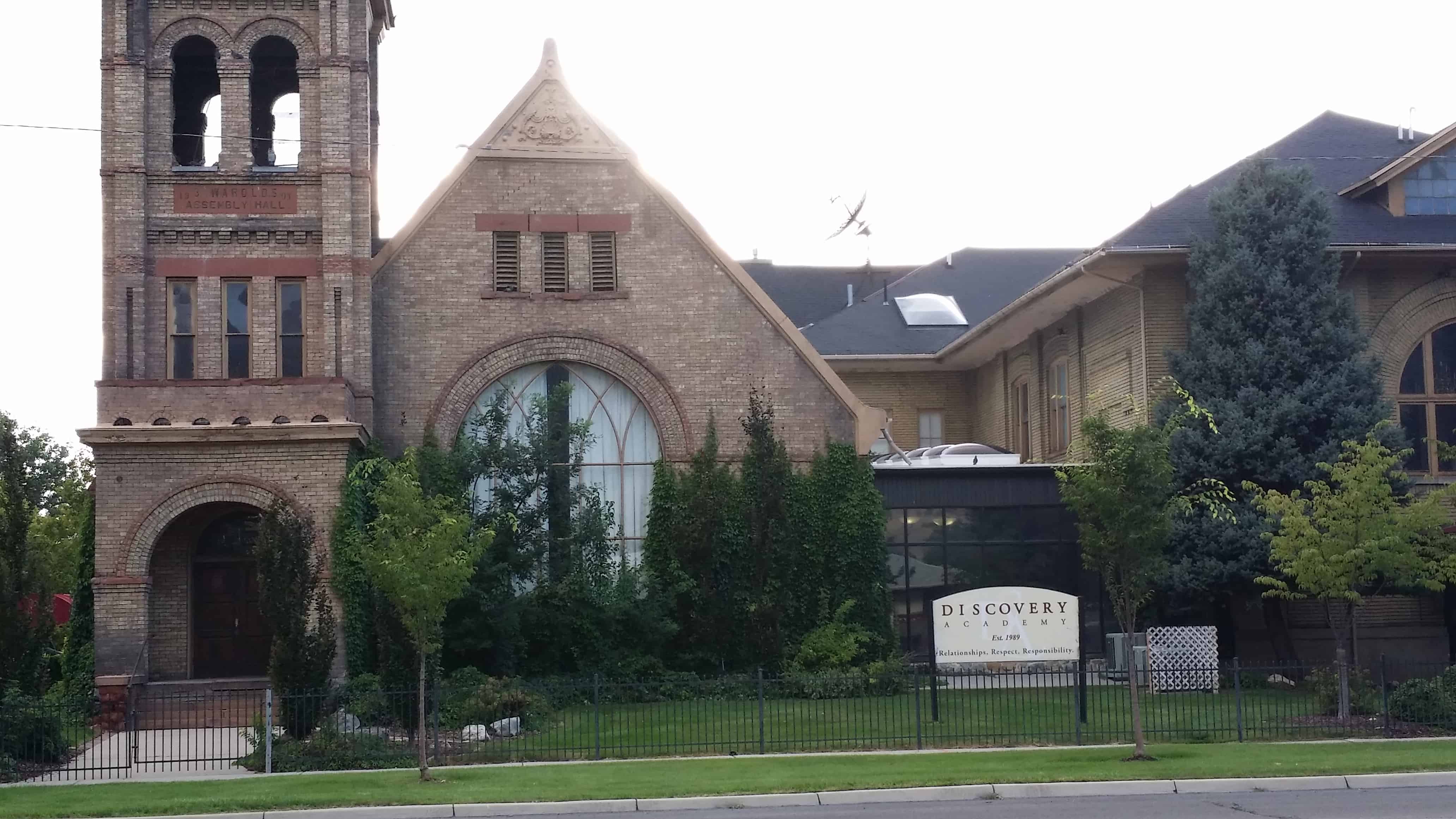
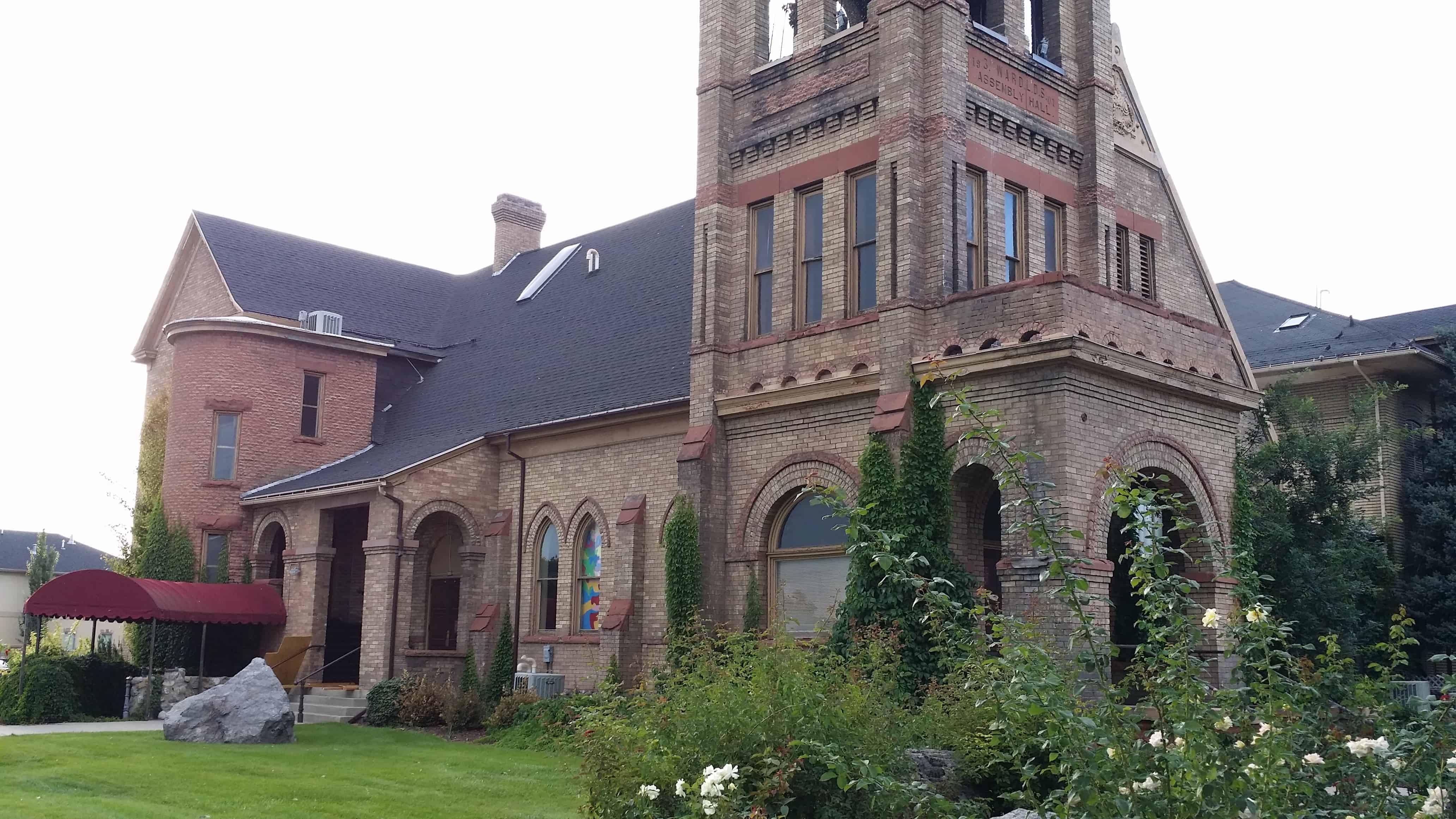
The old 24th LDS Ward is a two-story asymmetrically planned brick structure. The original tan brick has been painted white. The plan and elevation include curved and rectilinear elements and the roof is multiply hipped and gabled. The main gable has a recessed arch enclosing a round arched windows flanked by rectangular lights. The gable features shingle siding. A square tower over the entrance has a hipped roof and round arched windows. Windows have massive concrete sills and lintels. In the south an addition has been made. Modifications have occurred to turn the building into a school facility.

picture24nov07-206
2018-04-09 19.19.44
2018-04-09 19.19.59
2018-04-09 19.20.06
2018-04-09 19.20.22
2018-04-09 19.20.46
2018-04-09 19.20.59
2018-04-09 19.21.21
2018-04-09 19.22.12

Provo Third Ward Chapel and Amusement Hall

03 Monday Nov 2014

Posted by Jacob Barlow in Uncategorized

≈ 4 Comments

Tags

Chapels, historic, Historic Buildings, NRHP, Provo, utah, utah county

The Provo Third Ward Chapel is a historic building located in Provo, Utah. It was listed on the National Register of Historic Places on April 2, 1979.

Under the direction of Bishop Thomas N. Taylor, the Provo 3rd Ward chapel was completed in 1903, exemplifying one of the first English Parish Gothic churches in Utah. The building was designed by architect Richard C. Watkins, native of Provo. The cornerstone was laid in a ceremony on April 25, 1901. An adjoining amusement hall was built in 1913, and the entire interior was redone in the late 1930s under the direction of architect Fred L. Markham.

In 1901 the recently formed Provo Third Ward of the Utah Stake was responsible for the construction of a new chapel. Using primarily local materials and locally employed workers, Bishop Thomas N. Taylor, also the mayor of Provo, and his building committee composed of Arthur Dixon, Edgar Perry, and H. J. Maiben, undertook the project. The cost of the new building was $11,000 and it was completed in 1903. The chapel received an organ that had been used in the Provo Tabernacle in 1907. The adjoining amusement hall was added in 1913, but only the top floow was finished at an additional cost of $15,000. In 1926 the lower floor of the amusement hall was completed for an additional $5,600. The Provo Third Ward Chapel and Amusement Hall served not only as a chapel for worship, but also provided the Saints with a place to interact socially in forms of dance, musicals, sports, etc. During World War II the amusement hall was transformed to serve as army barracks for Army Specialized Training Units associated with Brigham Young University.

Related Posts:

  • Utah Social Halls, Opera Houses, and Amusement Halls
  • 2014-08-24 18.53.01
  • 2014-08-24 18.53.08
  • 2014-08-24 18.55.11
  • 2014-08-24 18.55.19
  • 2014-08-24 18.55.47

The 18th Ward Chapel

06 Friday Jun 2014

Posted by Jacob Barlow in Uncategorized

≈ 3 Comments

Tags

Capitol Hill Historic District, Chapels, DUP, historic, Historic Churches, Historic Markers, LDS Church, Salt Lake City, Salt Lake County, utah

  • 2018-09-01 11.32.12

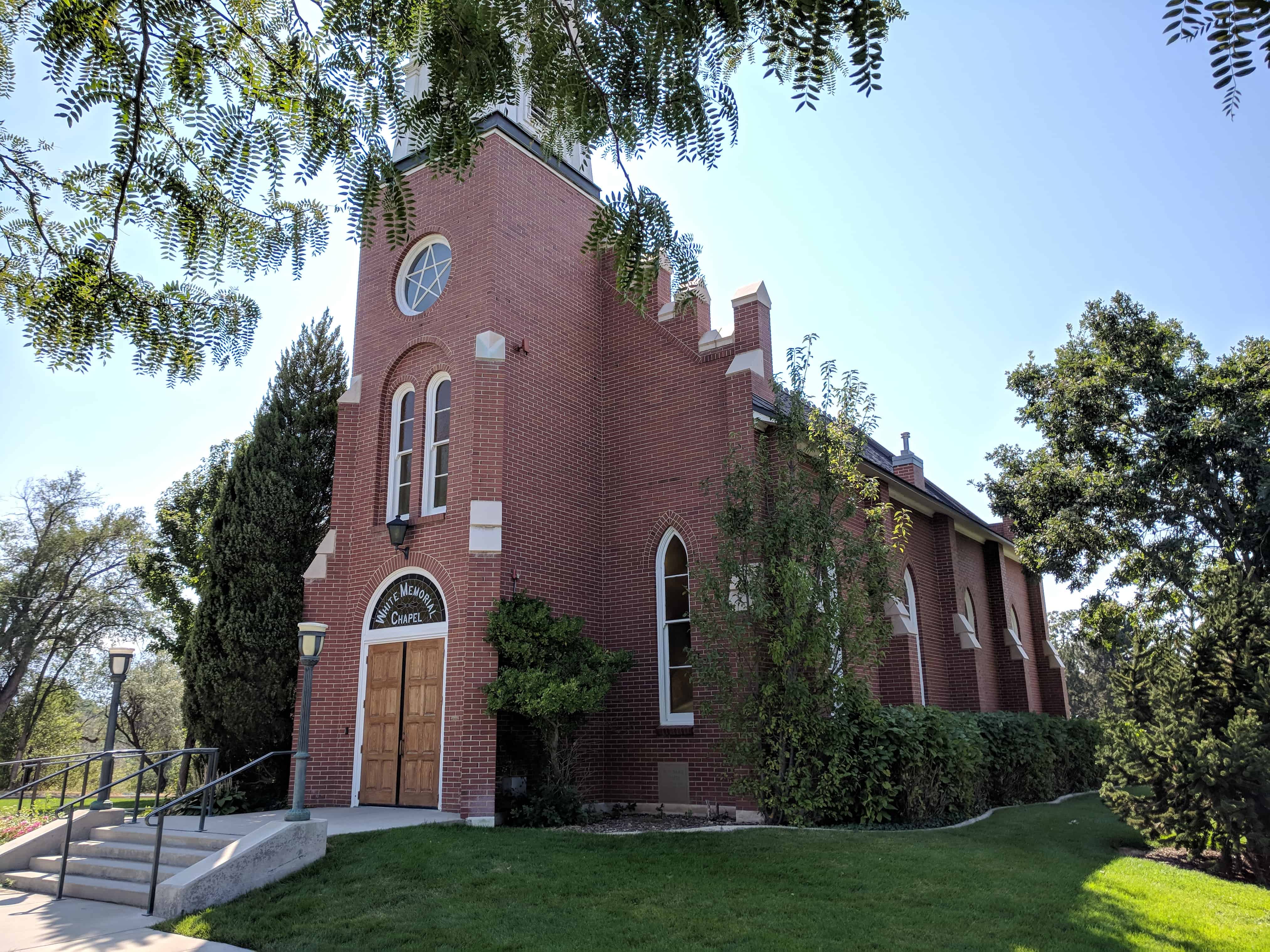
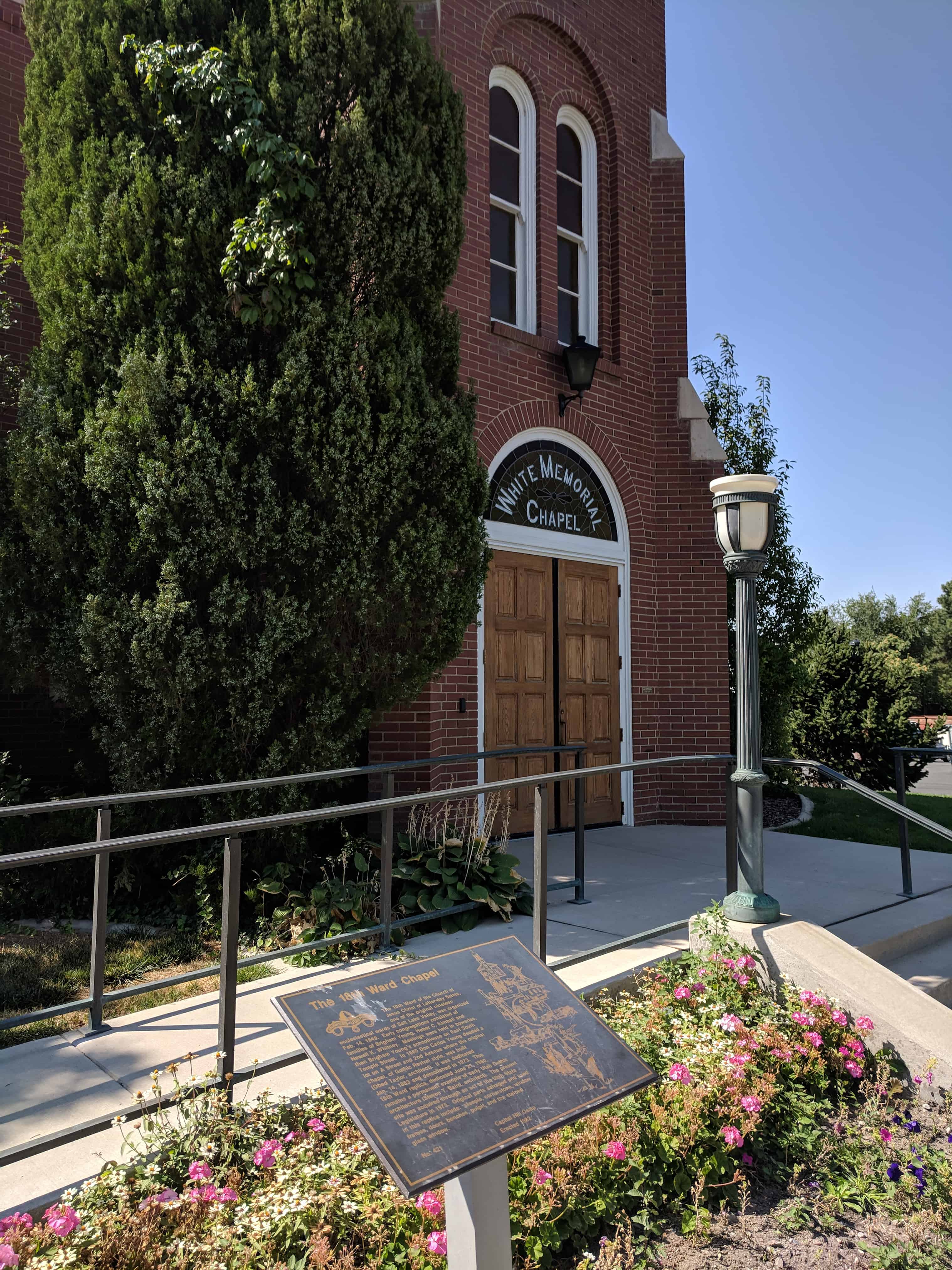
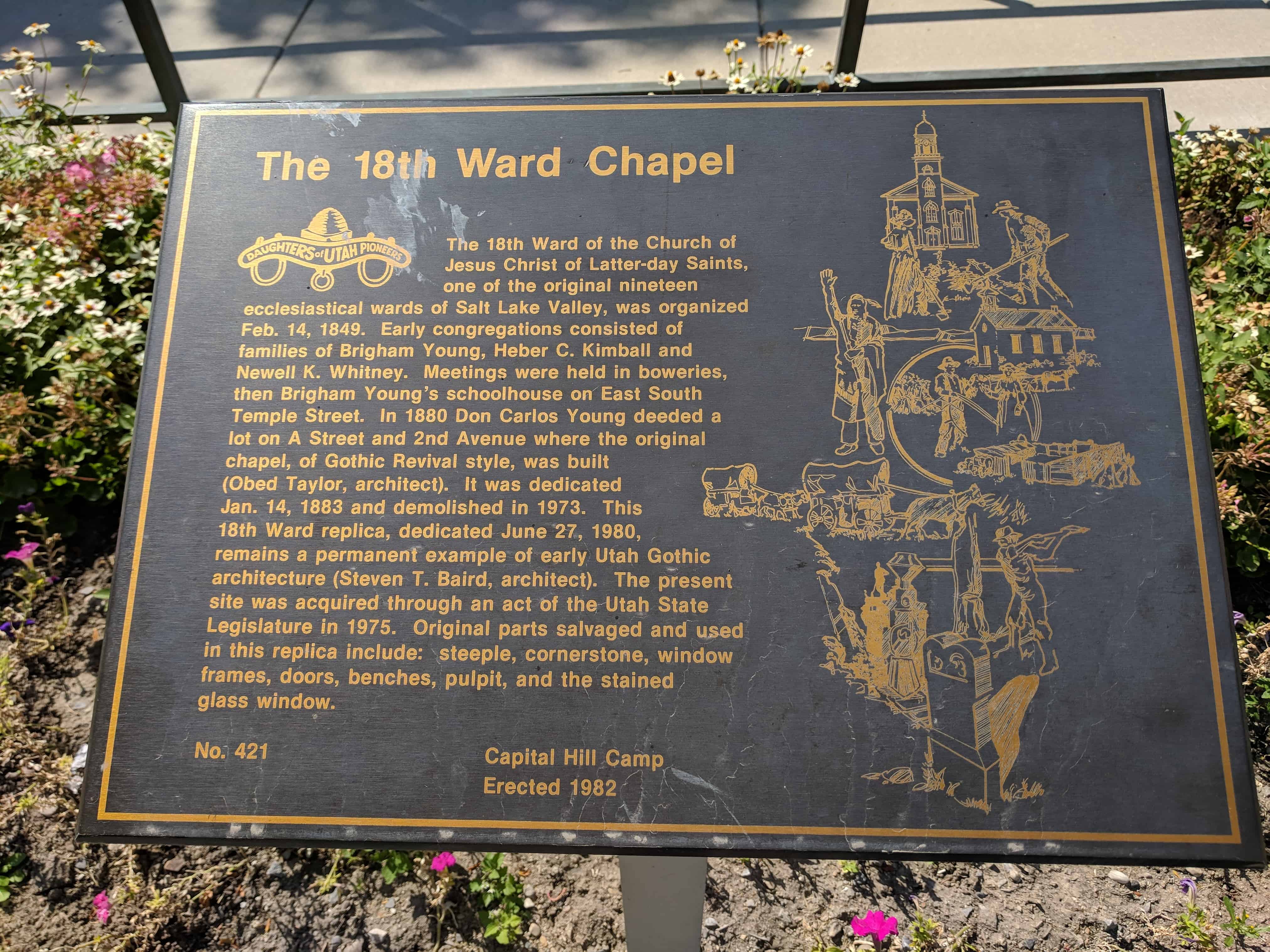
The 18th Ward of the Church of Jesus Christ of Latter-day Saints, one of the original 19 ecclesiastical wards of Salt Lake Valley, was organized Feb. 14, 1849. Early congregations consisted of families of Brigham Young, Heber C. Kimball and Newell K. Whitney. Meetings were held in boweries, then Brigham Young’s schoolhouse on East South Temple Street. In 1880 Don Carlos Young deeded a lot on A Street and 2nd Avenue where the original chapel, of Gothic Revival style, was built (Obed Taylor, architect) dedicated Jan. 14, 1883 demolished in 1973. This 18th Ward replica, dedicated June 27, 1980, remains a permanent example of early Utah Gothic architecture (Steven T. Baird, architect). The present site was acquired through an act of the Utah State Legislature in 1975. Original parts salvaged and used in the replica: steeple, cornerstone, window frames, doors, benches, pulpit, and the stained glass window.

18th Ward Boundaries: (*)


On the north by 7th Ave. (or Ensign Ward), east by C St. (or the 20th Ward), south by South Temple St. (or the 12th-13th Ward), and west by Main St. (or the 17th Ward).

History timeline:

1849 – one of the original nineteen wards into which Salt Lake City was divided in February, 1849. At the time of its organization the ward extended northward and eastward to the mountains
The first permanent settlers in the 18th Ward were Pres. Brigham Young and Elders Heber C. Kimball and Newel K. Whitney who, with their families, were the only residents of the ward for several years.
1856 – all that part of the 18th Ward lying east of Walnut St. (later A St.) was organized as the 20th Ward
1877 – boundary line was changed to Pine St. (C St.), its present boundary.
1904 – 18th Ward belonged to Salt Lake Stake, but when Salt Lake City was divided into four stakes in 1904, the ward became a part of Ensign Stake
1913 – The organization of Ensign Ward in 1913 diminished its northern boundary to 7th Ave.

The 18th ward is one of the original 19 wards in Salt Lake City in 1849, you can see the others on this page.

Related:

  • Capitol Hill Historic District
  • D.U.P. Historic Markers
  • 2018-09-01 11.32.29
  • 2018-09-01 11.32.39
  • 2018-09-01 11.32.44

  • picture24nov07-203

This is a gable roofed, gable facade chapel. The entrance pavilion has a frame cupola. There are buttresses between pointed arched windows. The building is symmetrically arranged with the roof cresting on the main gable. – D. Diana Johnson
The Eighteenth Ward was one of the original ecclesiastical divisions of Salt Lake City, for a few years inhabited only by President Brigham Young and Elders Heber C. Kimball and Newell K. Whitney. “In 1883 a fine brick chapel, erected by the Saints on A Street between 2nd and 3rd Avenues, was dedicated.” This structure was demolished about 1975 and a reconstruction, incorporating elements of the original building, was completed in 1979.

Newer posts →

Follow Jacob

Follow Jacob

Come wander with me on Youtube.

Blog Stats

  • 2,101,960 hits

Social and Other Links

BarlowLinks.com

Recent Posts

  • Scout Monument
  • Provo High School Seminary Building
  • 821 E 100 S
  • 820 E 100 S
  • 817-819 E 100 S

Archives

Loading Comments...