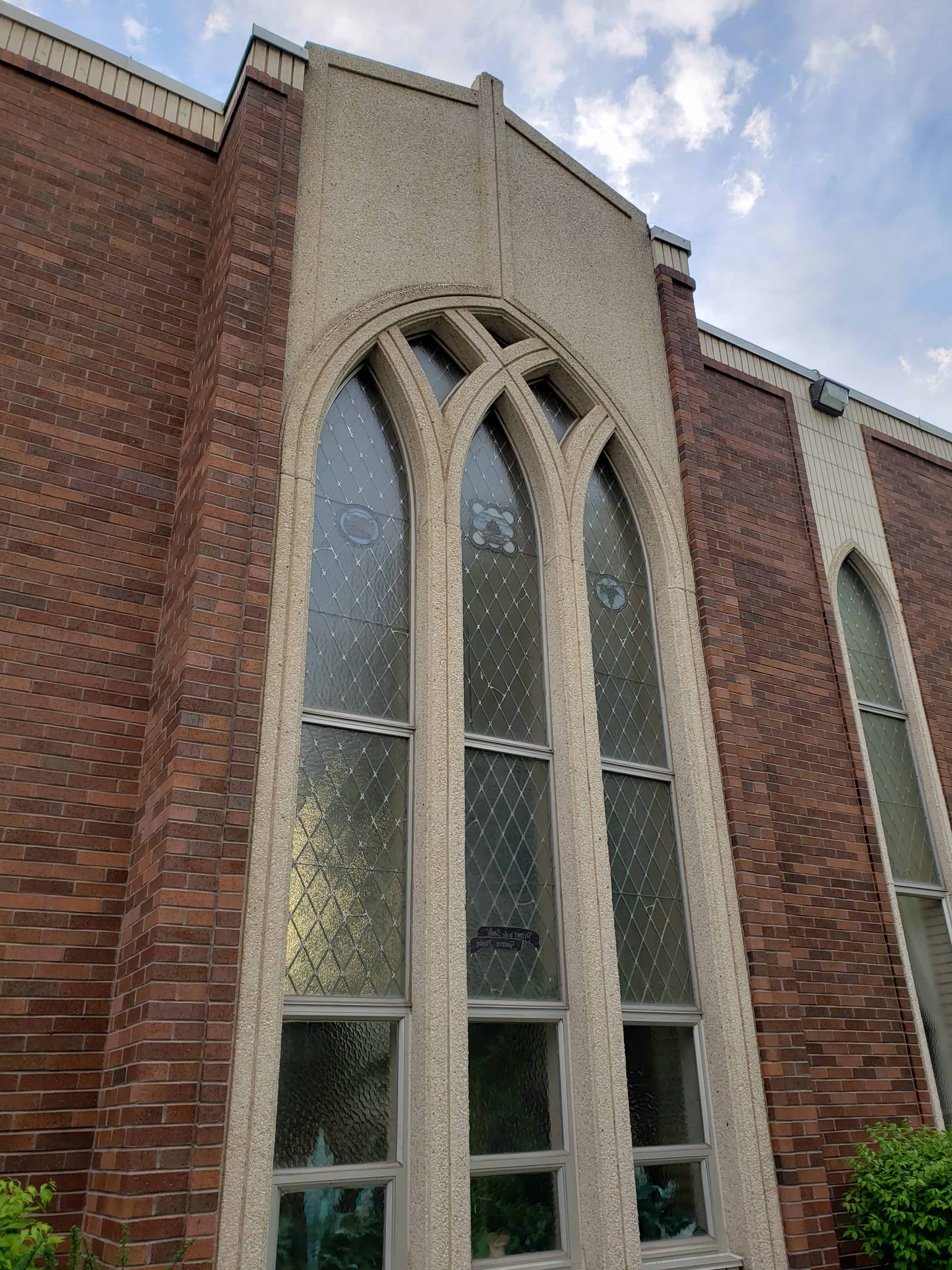
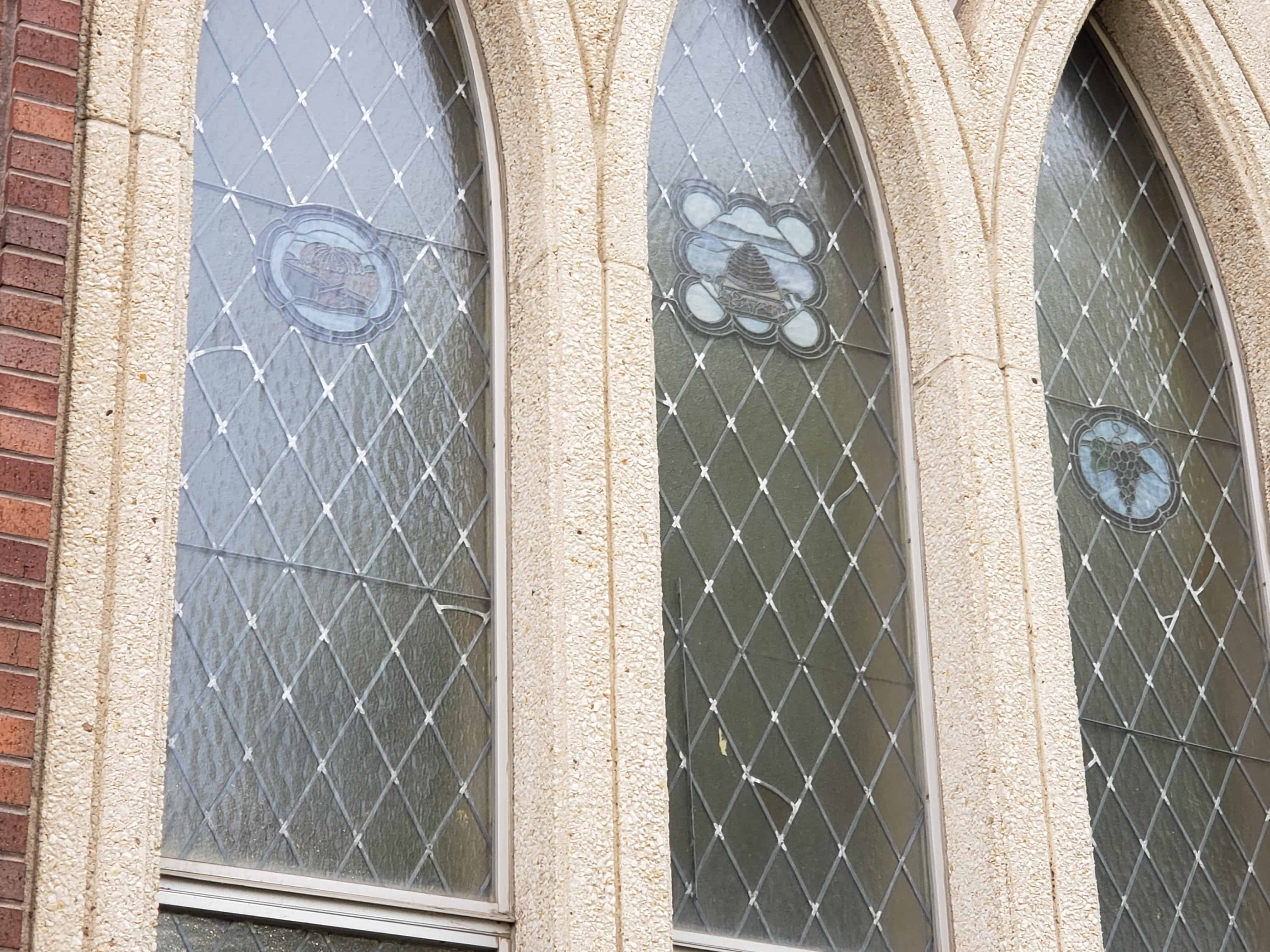
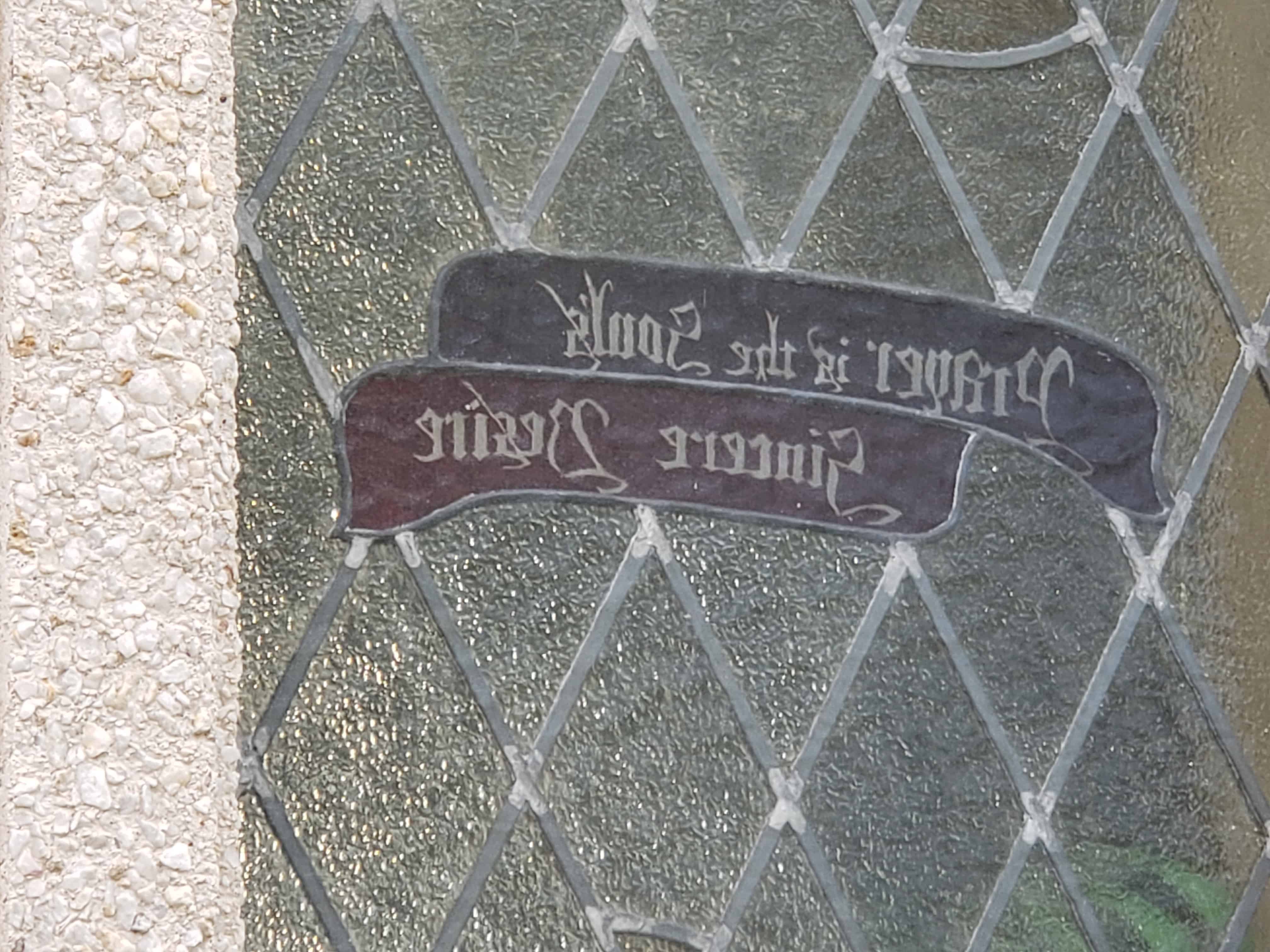
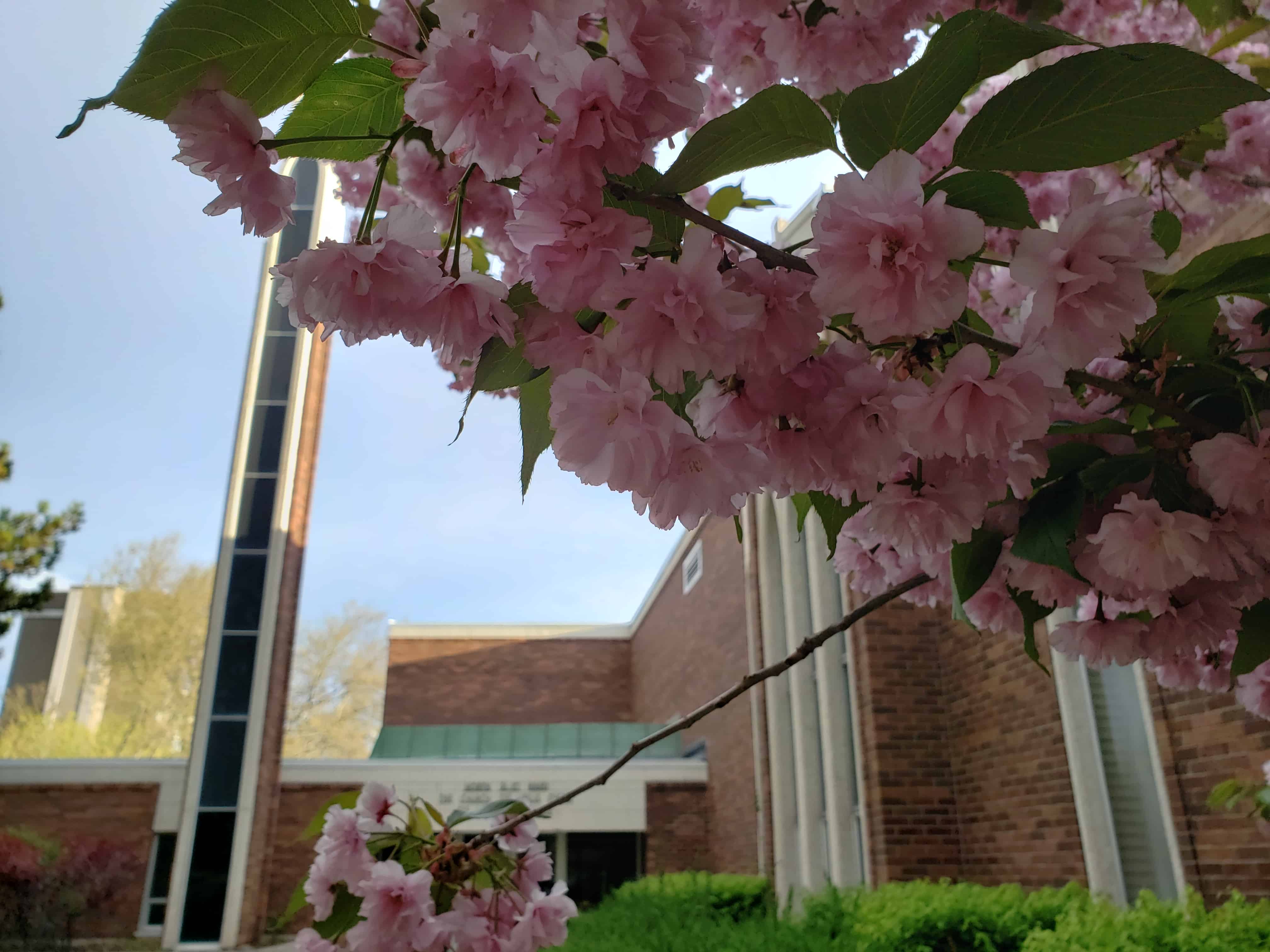
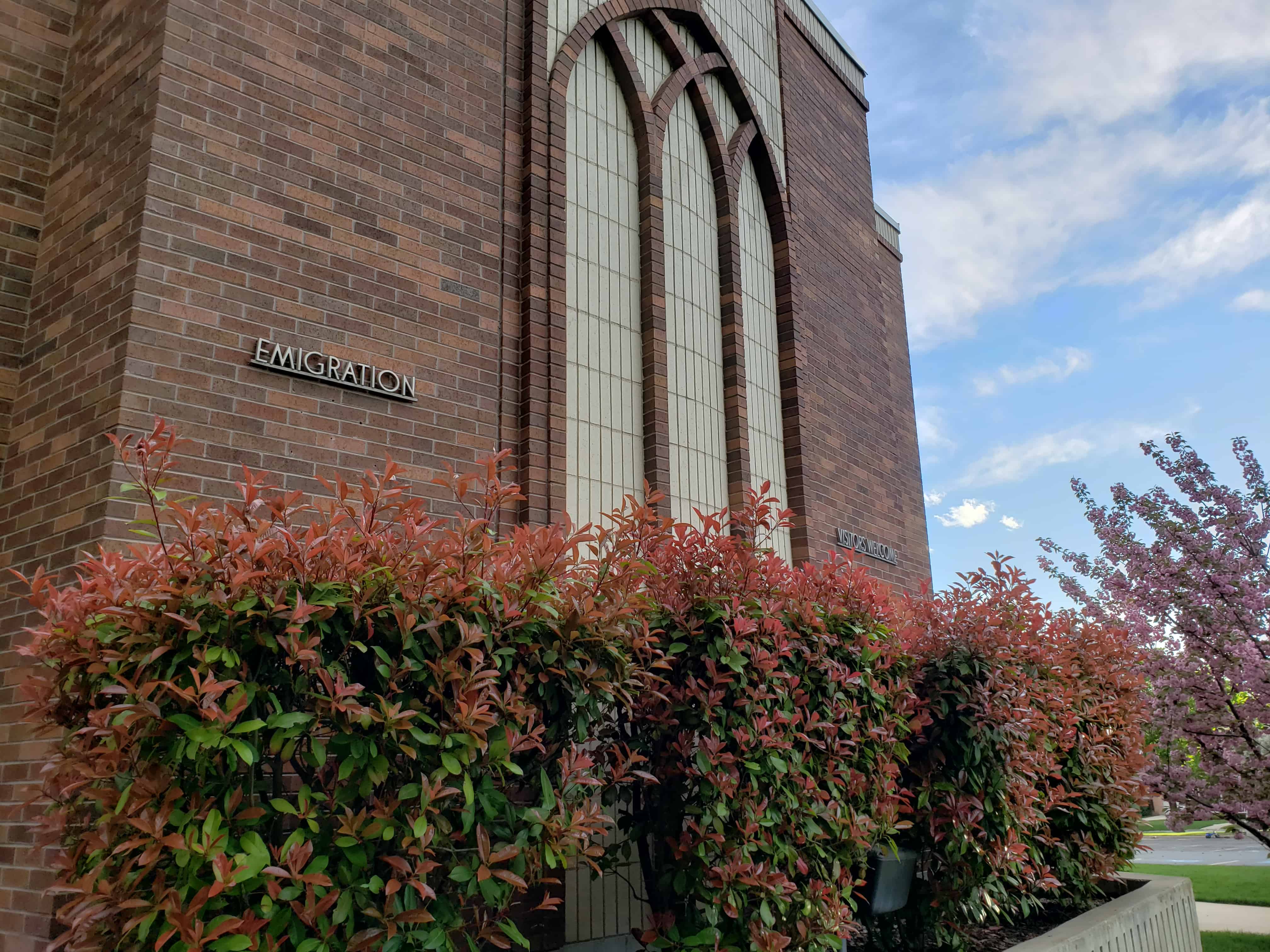
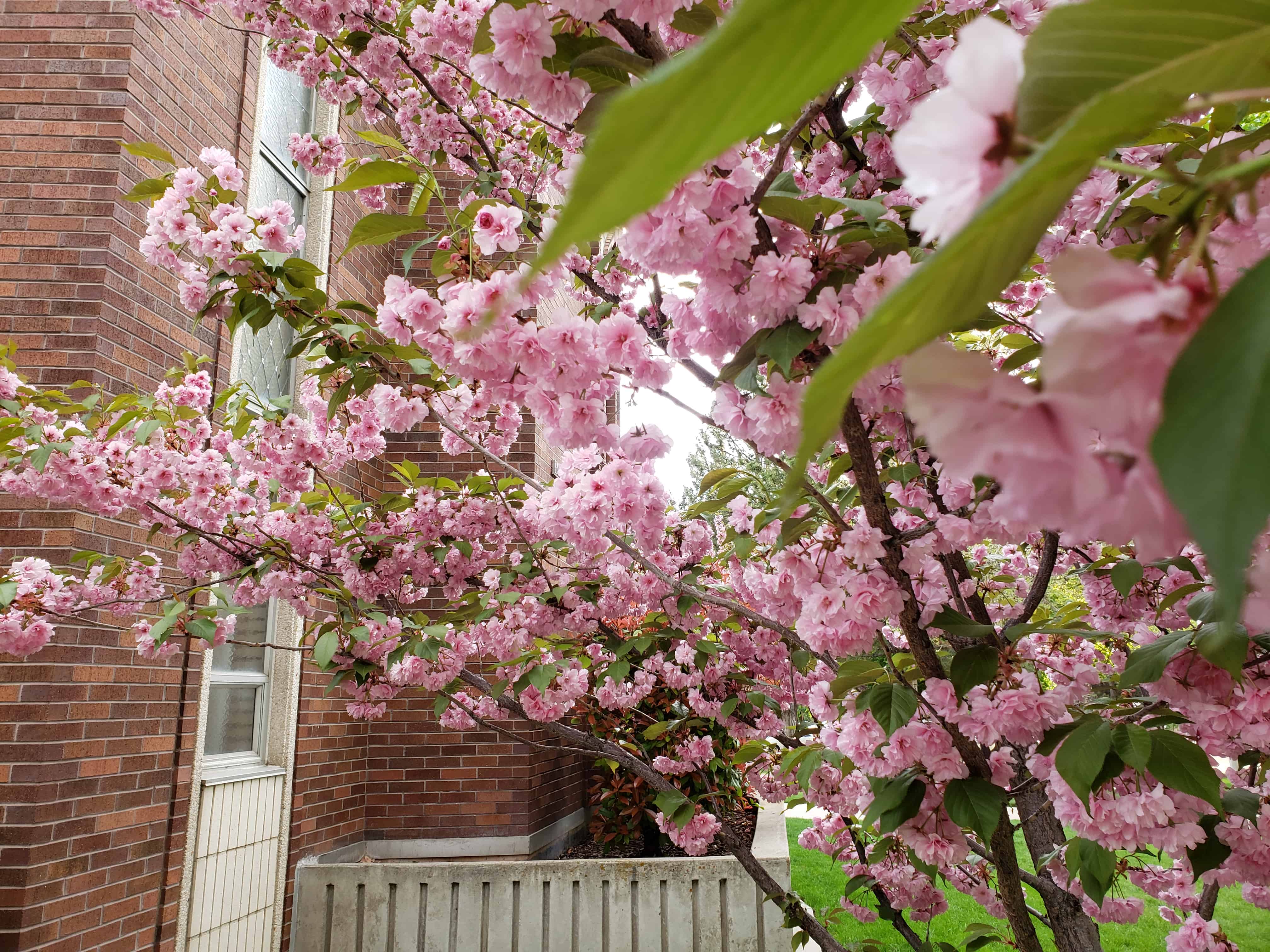
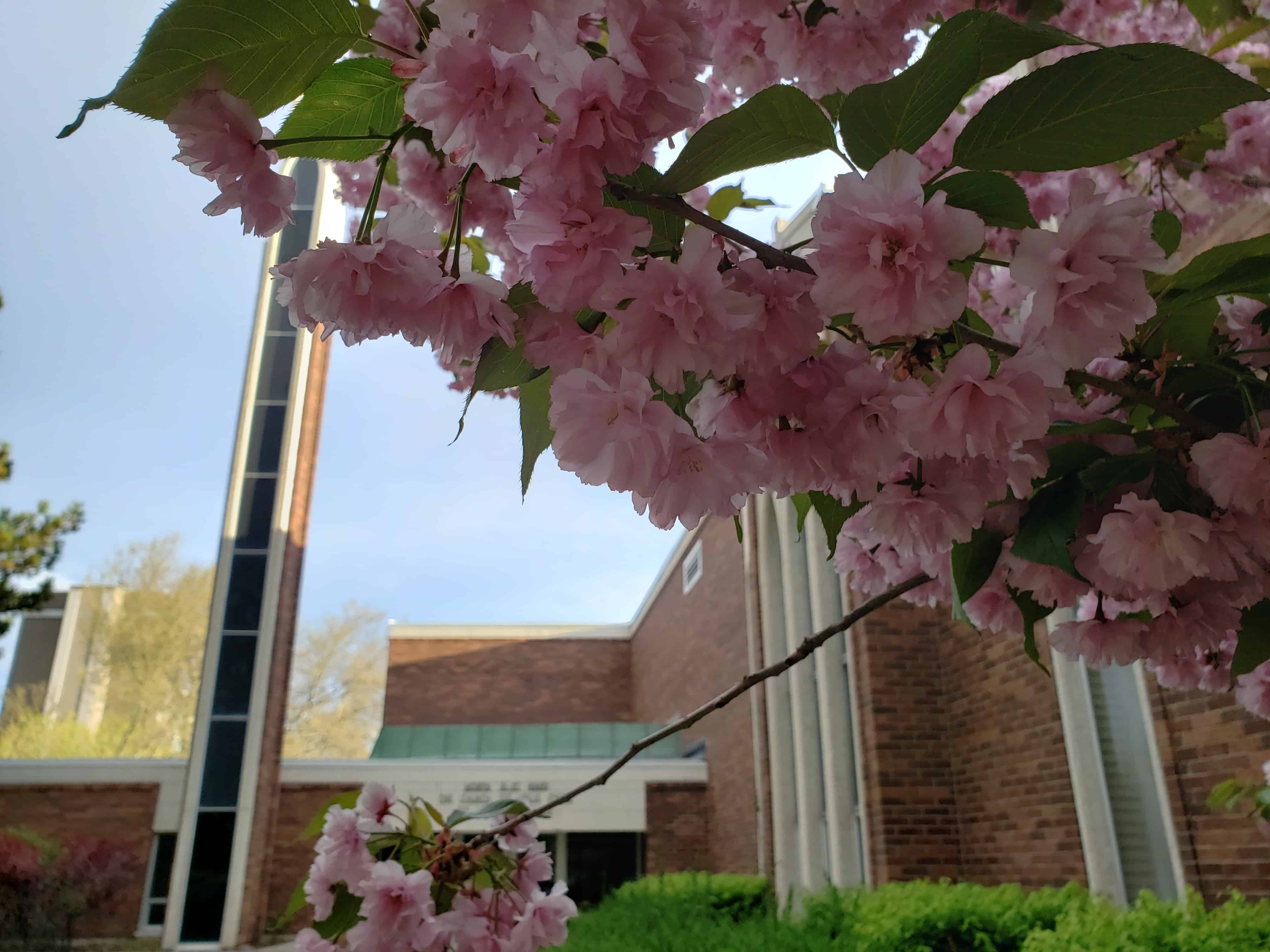
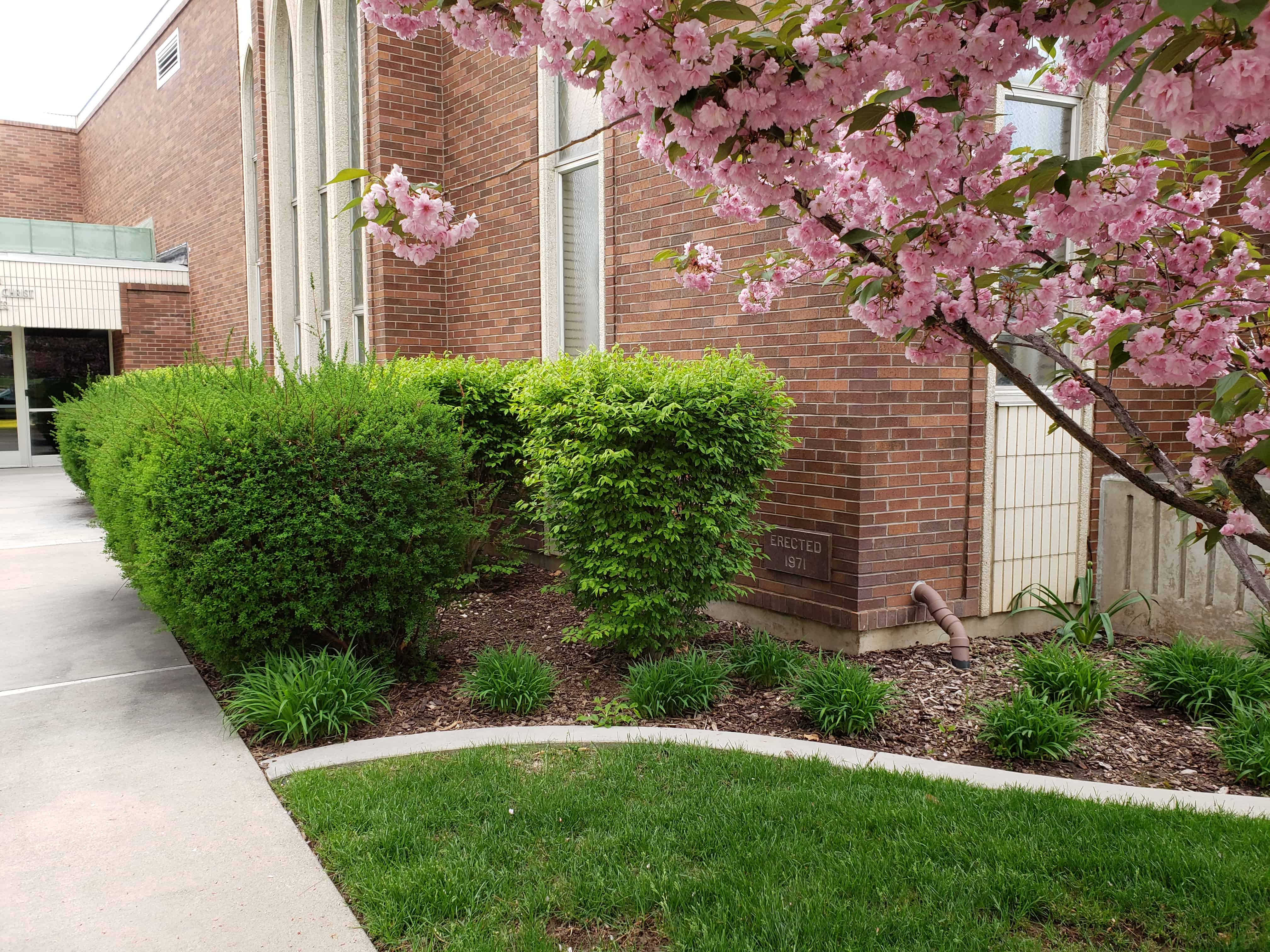
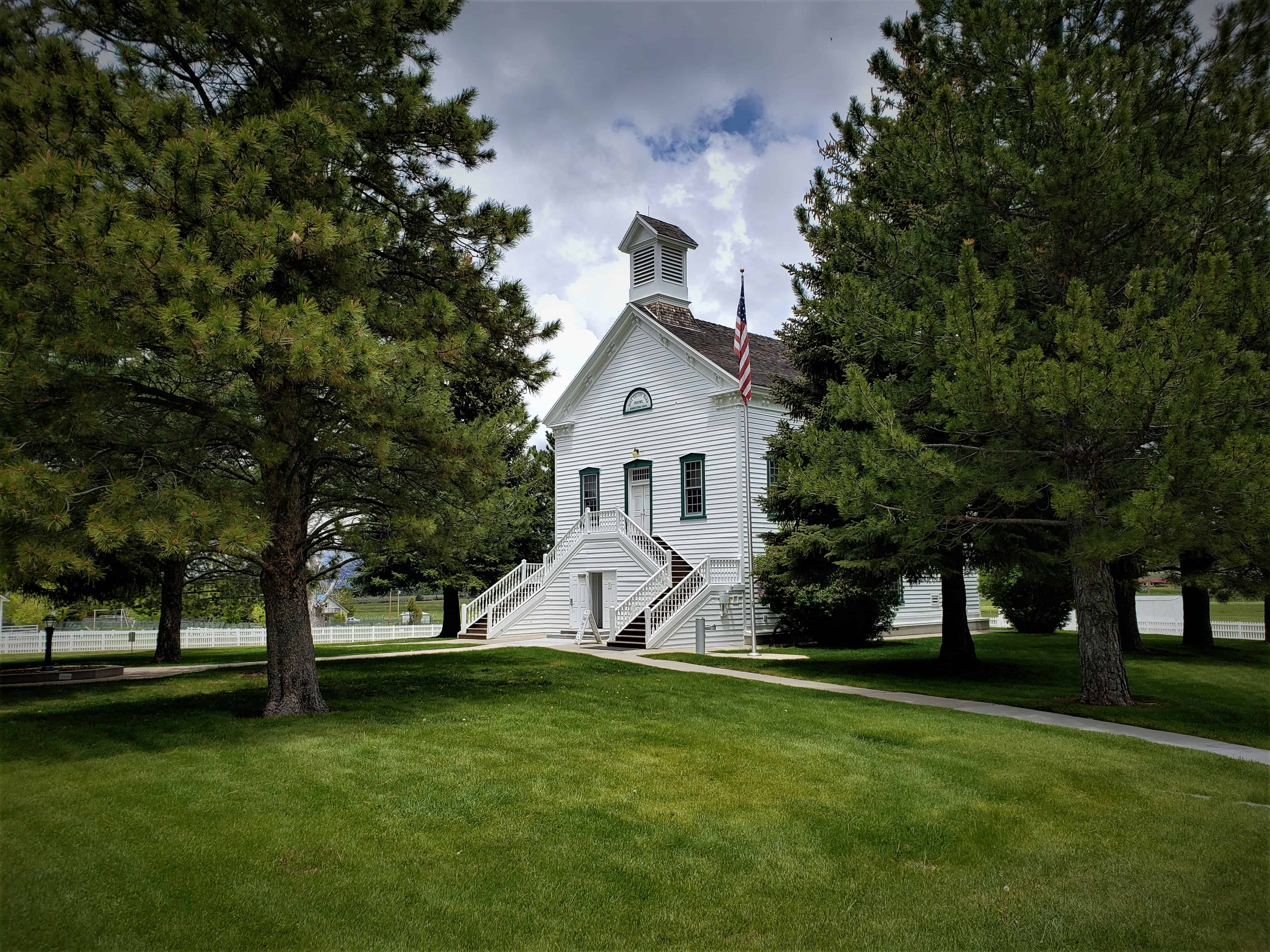
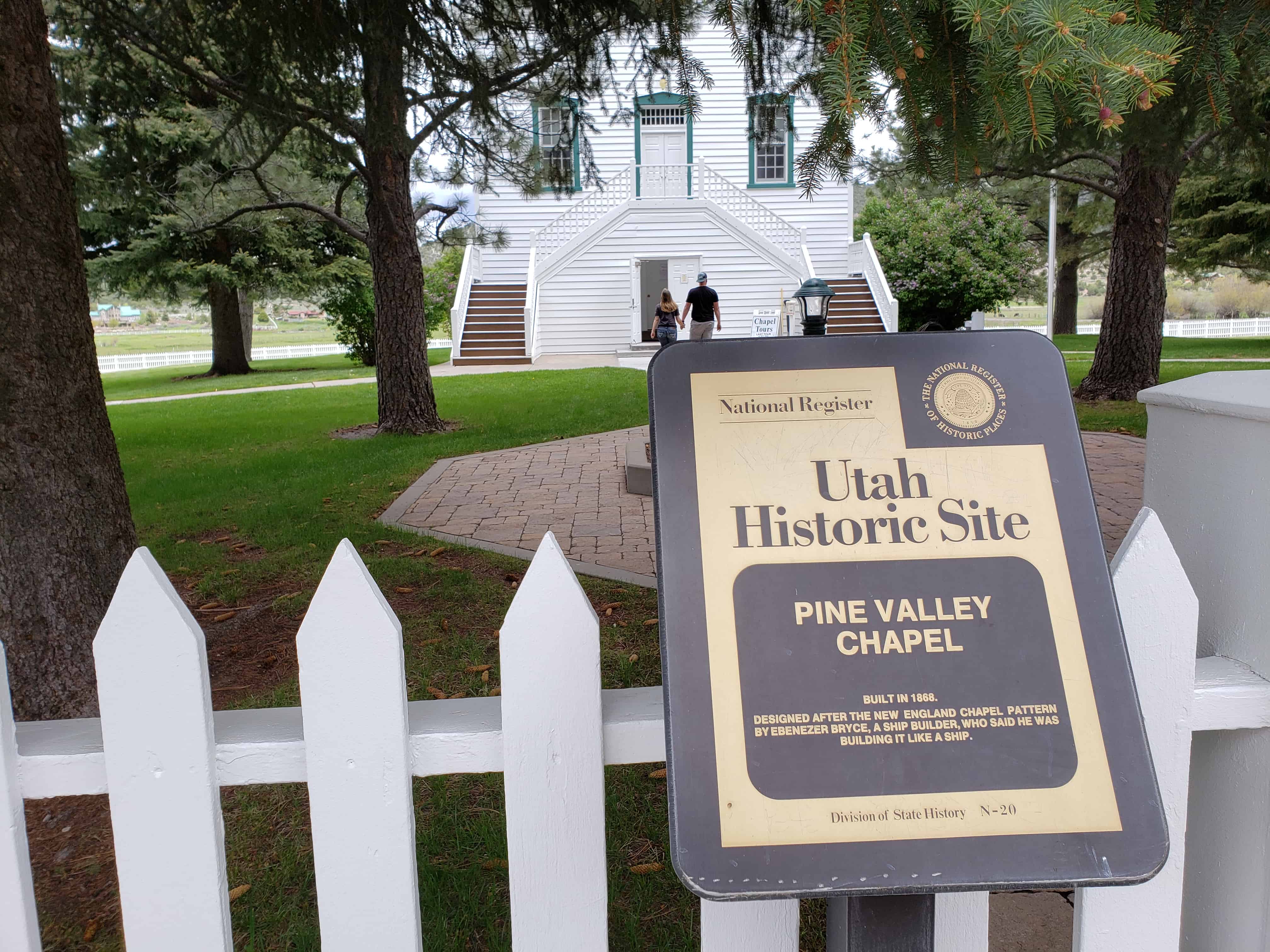
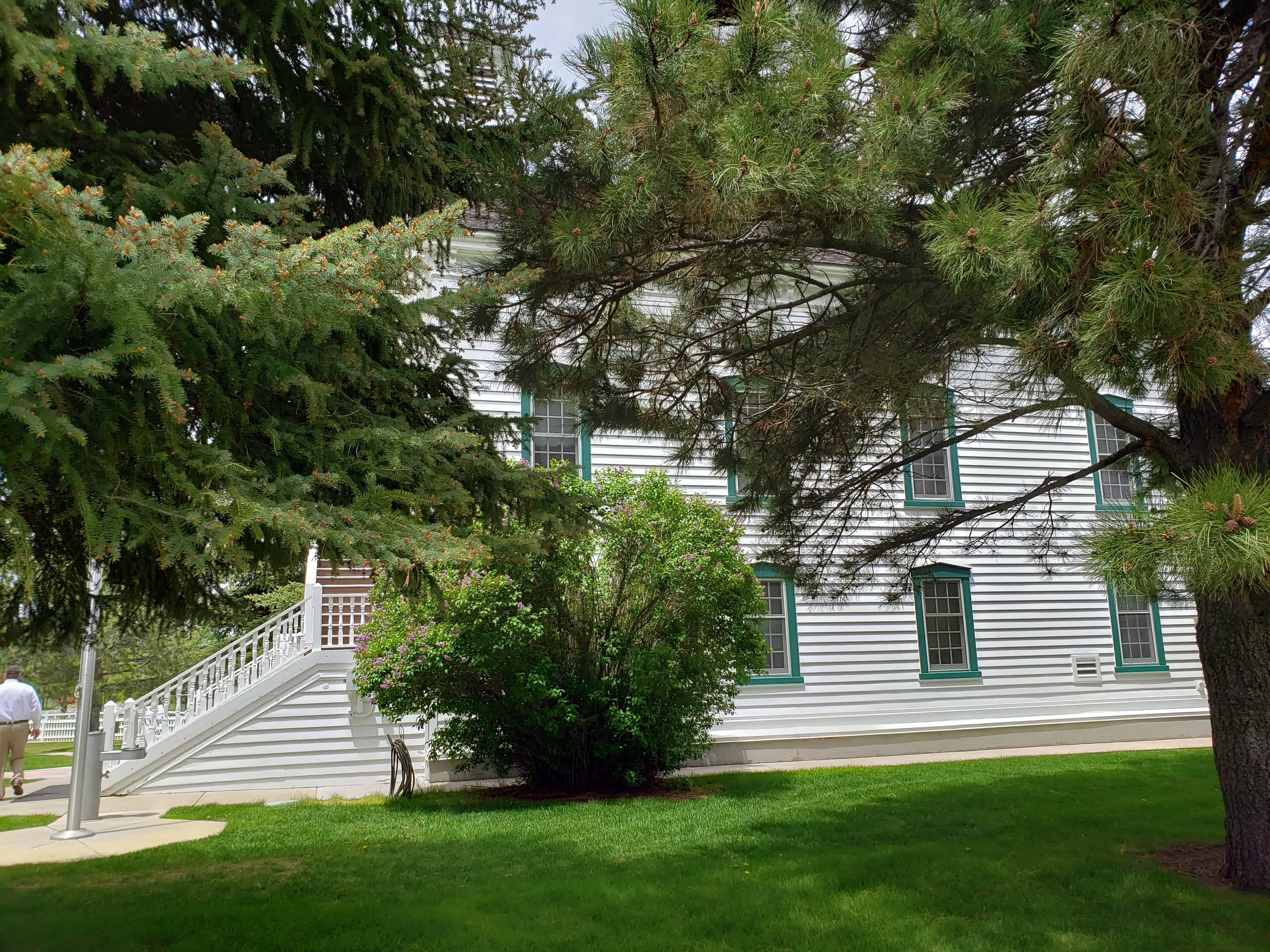
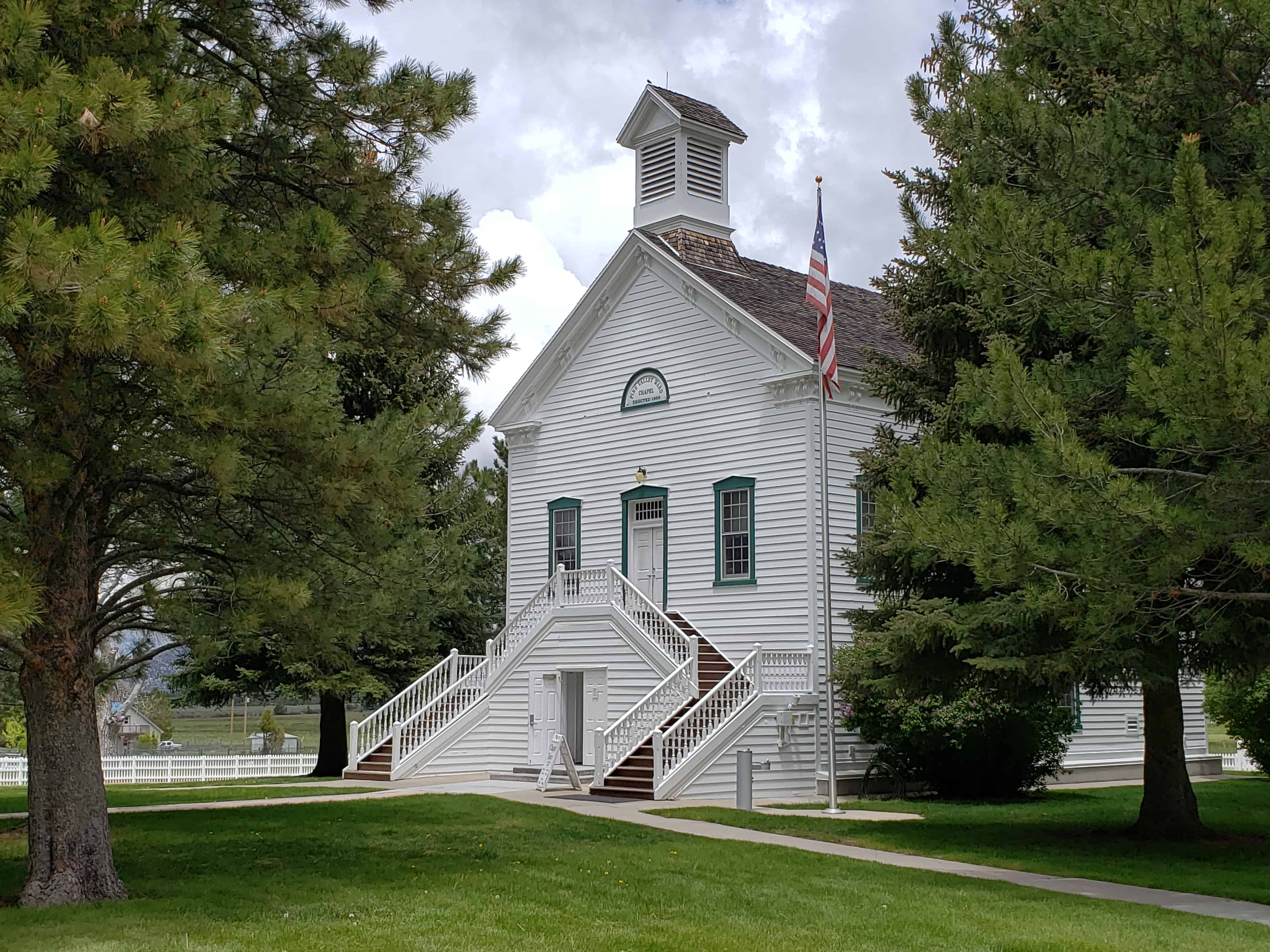
The historic Pine Valley Chapel in Pine Valley, Utah is the oldest continuously used chapel in The Church of Jesus Christ of Latter-day Saints and is a gorgeous building. Ebenezer Bryce had the job of building it and is said to have said that he didn’t know how to build a church, but he knew how to build a ship so he build it as an upside-down ship.
They have about 125 members in the branch with about 60 visitors every week who come to experience church in such a classic old building and 400-600 visitors on Memorial Day weekend’s Sunday so they hold services outside on the lawn. Tours are free and open.
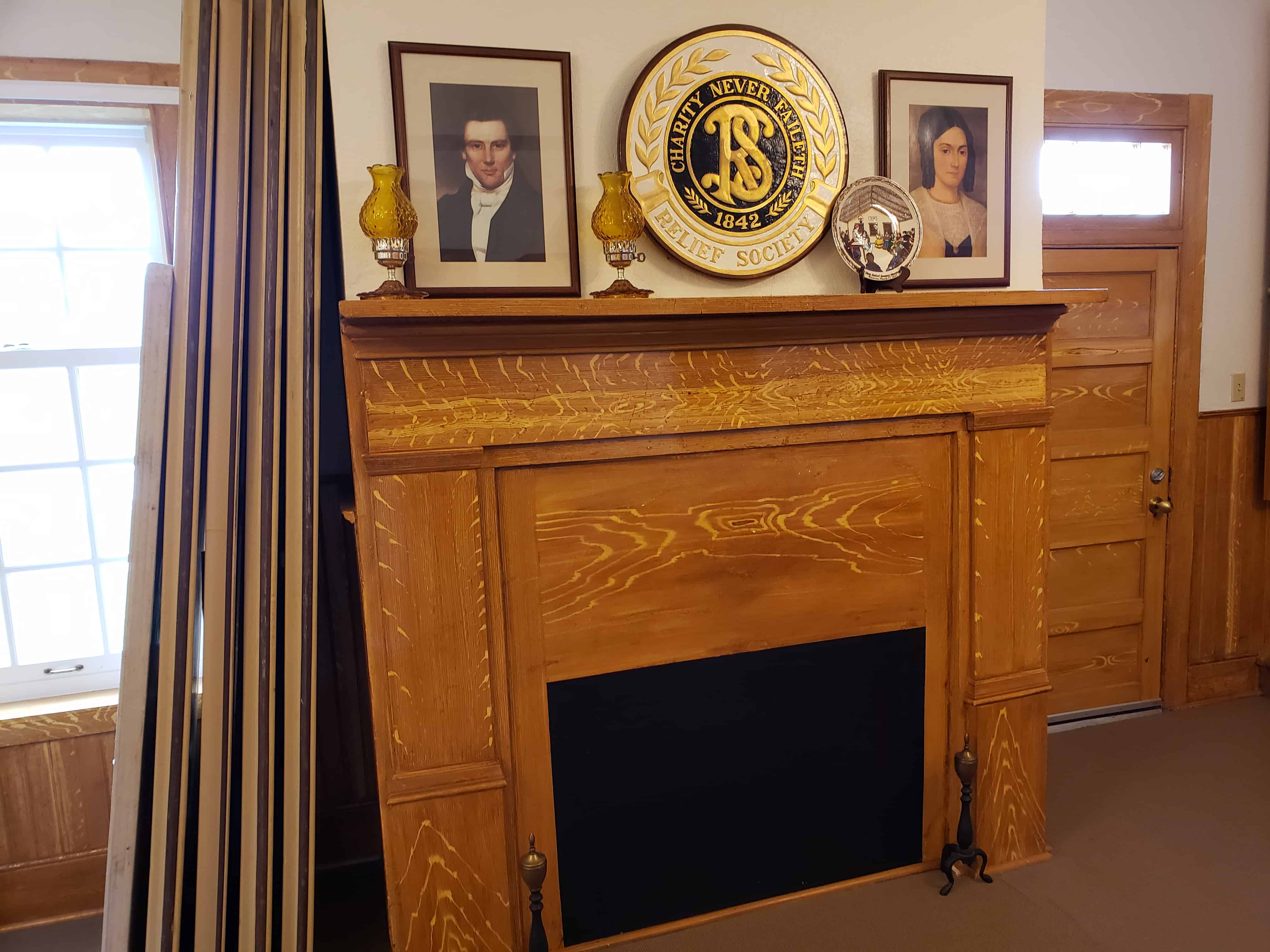
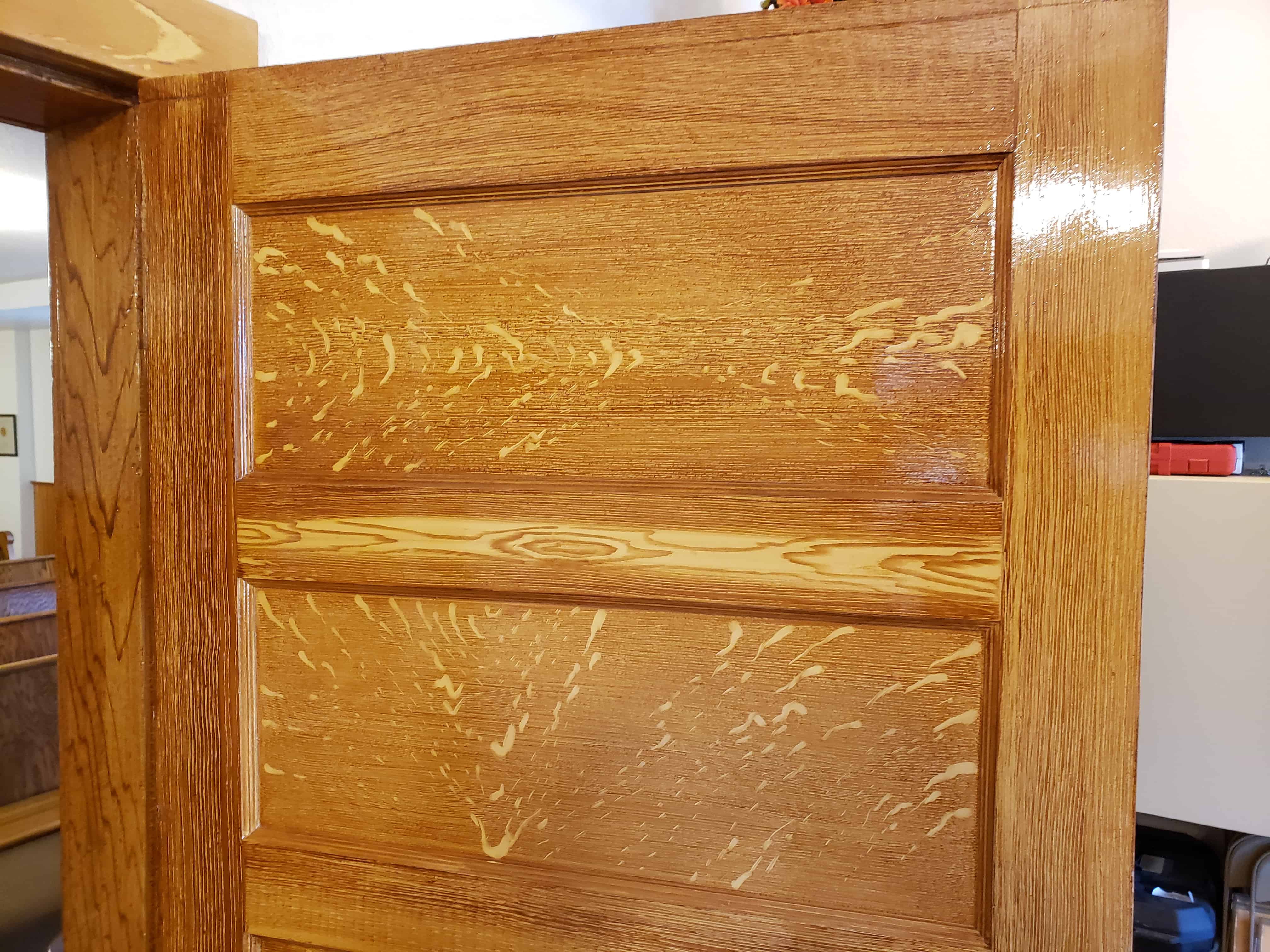
The pews and other woodwork and some cement work was painted to look like oak wood, the painter even hid his name is the grain in some of the pews.
The text below is from the nomination form (#71000859) from when the Pine Valley Chapel and Tithing Office were added to the National Historic Register on April 16, 1971:
Pine Valley was first allotted to John D. Lee a range land on which to run his livestock. However, the valley itself was discovered by Isaac Riddle who followed the trail of a straying cow from the Mormon Indian Mission at Fort Harmony, west over the mountain. He located both good range land, but even more significantly for the southern Utah settlement, excellent timber, both pine and aspen. Riddle and two partners, John Blackham and Robert Richey, purchased machinery for a saw mill and began operation in Pine Valley that fall. With expansion of the southern settlements, Washington, St. George and Santa Clara, especially, the demand for lumber increased. More families moved into Pine Valley. Some limited farming was done before 1864; however, this economic feature was secondary to livestock. Pine Valley also furnished lumber for the mines in both Pioche, Nevada and Silver Reef, Utah. Robert Gardner, one of the early expert lumber men, was asked by Joseph Ridges, organ builder, to select choice pine logs to be sent north to Salt Lake City for the Tabernacle organ’s “pipes.”
By 1868 the people of Pine Valley needed and decided to build their chapel. Ebenezer Bryce designed and supervised the construction.
Later a steam engine was brought in to supply power for the saw mills Today there is some lumbering, but the ruggedness of the lava terrain and the indiscriminate cutting of timber earlier have reduced this economic aspect of the area. It now serves as a summer home area and for recreational activities.
The general setting for the chapel has been landscaped to compliment the overall picture. Visitors are welcome at the site. The chapel is still used by the Pine Valley summer branch of the L.D.S. Church.
The tithing office also is in good repair, and sits nearby as a reminder of the close alliance between religion and the Mormon barter economy. The “Lord’s share” was given in kind and kept therein, to be meted out to the needy and for worthy projects as the Bishop so directed.
The lovely Pine Valley Chapel was designed and built in 1868 by Ebenezer Bryce, for whom the now famous Bryce’s Canyon was named. Being a ship builder from Australia, Bryce employed his earlier skills in building the church. The wood frame walls were assembled on the ground and raised into position, then joined with wooden pegs and rawhide. The frame stands independently, with the walls and petitions “hung” on the basic structure. Since Bryce built the chapel like a ship, he is reported to have claimed: “If the floods come, it will float. And if the winds blow, it may roll over but it will never crash.” The chapel was modeled after churches in New England in honor of Erastus Snow, the Apostle leading the southern colonies, and Brigham Young, church president.
Special timbers were cut from the ponderosa pine in nearby canyons to make the church. The same quality timbers had been hauled all the way to Salt Lake City to be hollowed out for pipes in the famous Mormon Tabernacle.
The church is two stories, with a gabled attic which contains a small “prayer room” over the stage or stand area. Below the main chapel is a basement, which originally consisted of only 2 large rooms, but has since been petitioned into smaller classrooms. The main chapel is a large room with a small stage and speaker’s area.
The structure’s over-all dimensions are 32′ 3″ by 52′ 4″, excluding the steps, which have a pair of double stair landings half way up. The original wooden stairs have been replaced with cement.
Fortunately, however, most of the structure remains as it was originally The restoration in progress at present is careful and minimal. This architectural jewel sits in a lovely mountain valley in Utah, now in continuous use for more than 100 years.
Sitting to the east of the chapel is a small tithing office, built of soft red brick in the 1880’s. The structure is only one story, 16′ by 27′. A “warehouse” door opens on the side. It has a gabled roof and unornamented cornices and eves. The flooring is 5″ pine board. Some refinishing has occurred, but the structure is original and its exterior modified very little. With the chapel, it represents very well the early Mormon Church situation.
Originally (1830) the economic order of the Mormon Church was the “law of Tithing” or ten percent of a person’s income, for the Lord, The administrator of these funds was the Presiding Bishop of the Church. Next a “Law of Consecration” was initiated in Missouri during the mid and late 1830’s, wherein everyone was asked to consecrate all his goods to the Lord. The Bishop in the area was responsible for the property and in turn returned a stewardship of property to each man and family. To this stewardship he received a permanent title, the surplus was retained by the Church to be given as needed to the worthy poor and to young adults whose family could not provide them an inheritance. Its success was limited.
Later the law of tithing was reinstituted. Such was the practice in Nauvoo and in early Utah. However, another kind of communal economic program was inaugurated, called the United Order. Its practices included a kind of cooperative stock holding in various kinds of production. Some “Orders” even had communal kitchens, etc.
However, the law of Tithing has persisted, a lesser law to devout Mormons, but a necessary “schoolmaster” to train the Saints for the higher law. Thus throughout Mormondom and especially in Utah, the tithing office was built, usually near the church, to which tithing in kind — hay, grain, potatoes, vegetables, etc. was brought and receipts issued.
Yet, further functions were served by these “storehouses.” The poor and needy were supplied from them, credit could be obtained by putting tithing in one place (Salt Lake City), and with a scrip issued, reclaim one’s needs in St. George or Pine Valley or where one happened to be going. This system had active use well into the twentieth century. Now only a few buildings remain to remind us of this barter economy which has given way to checking accounts and welfare squares.
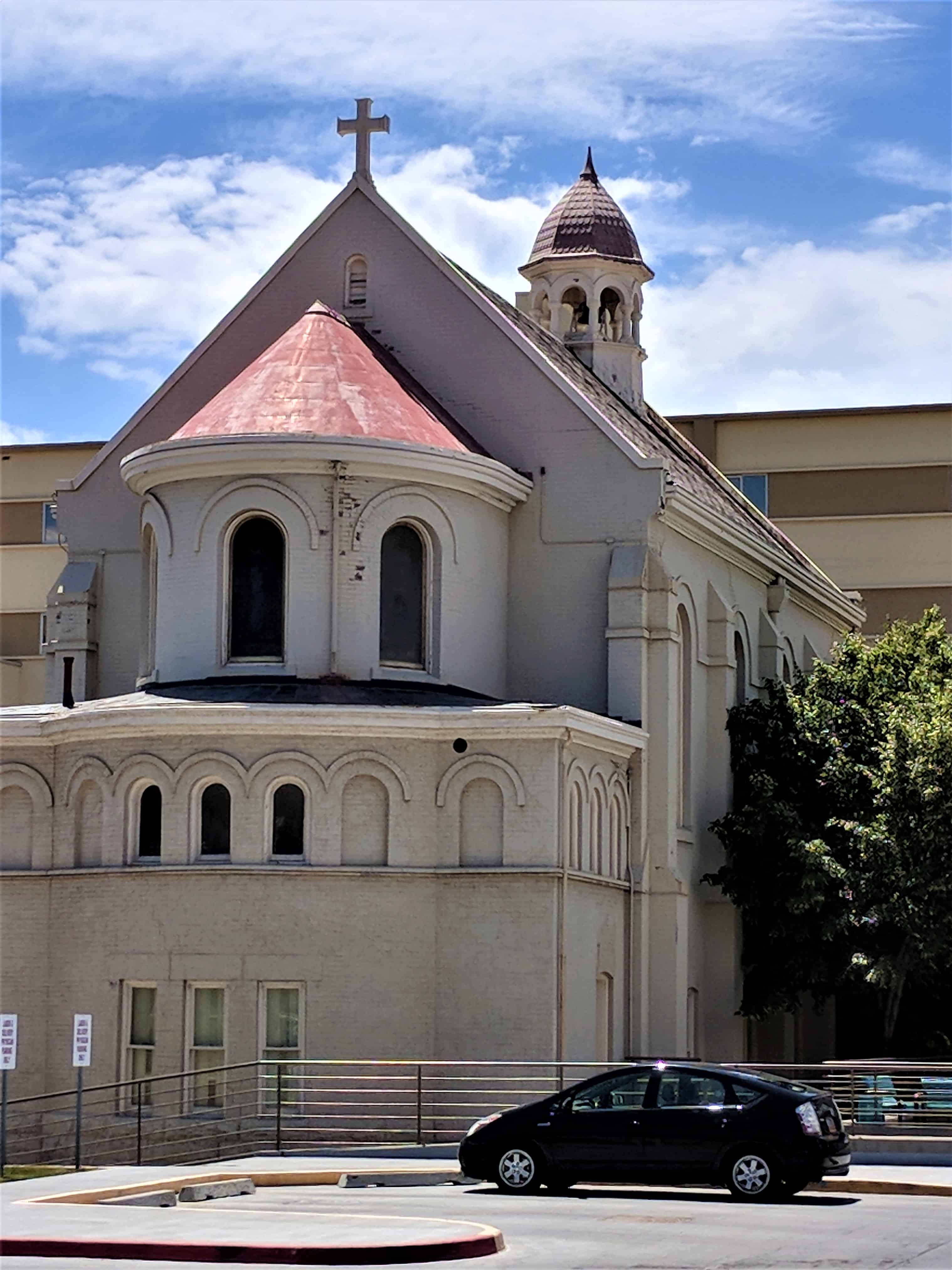
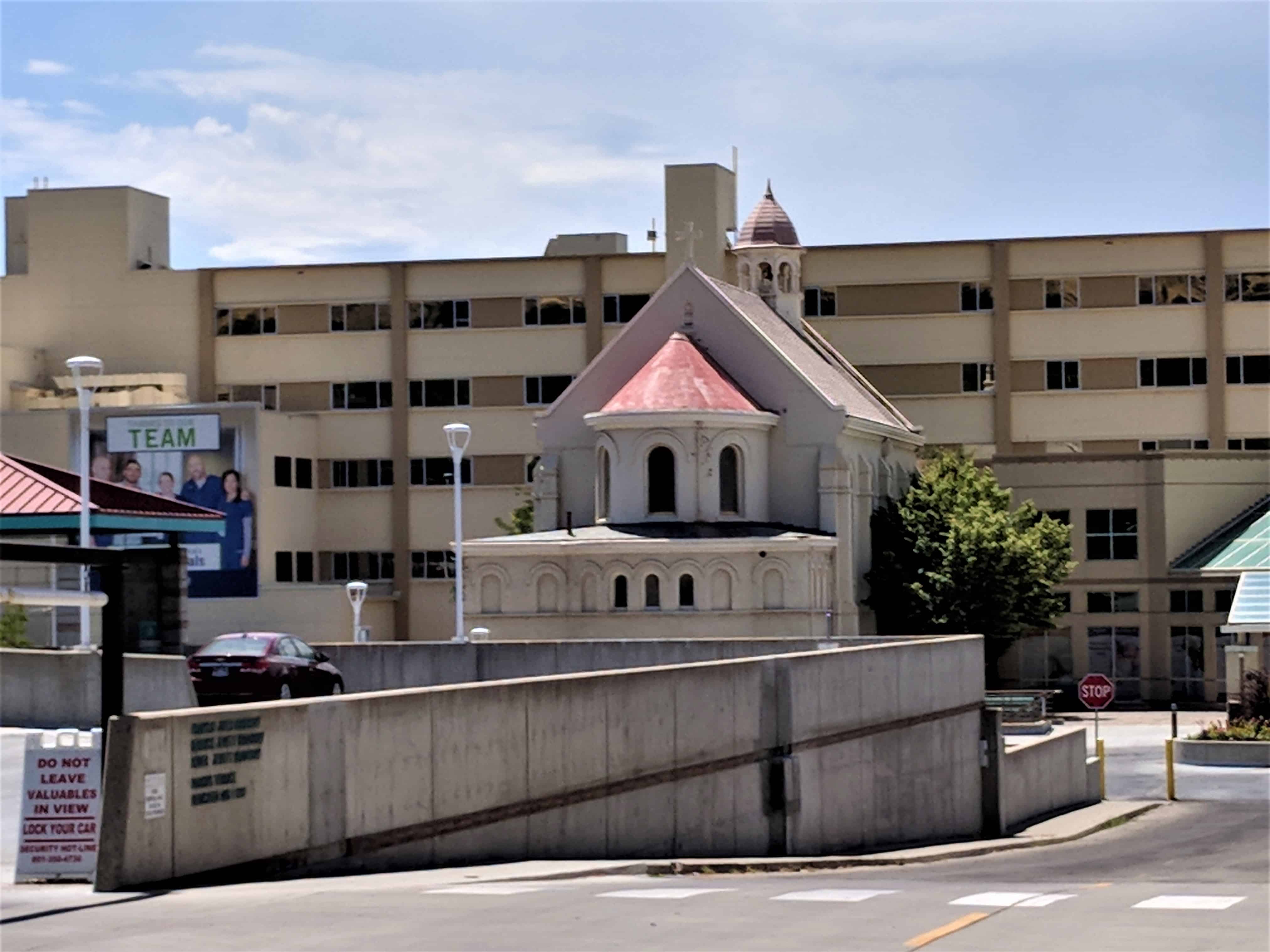
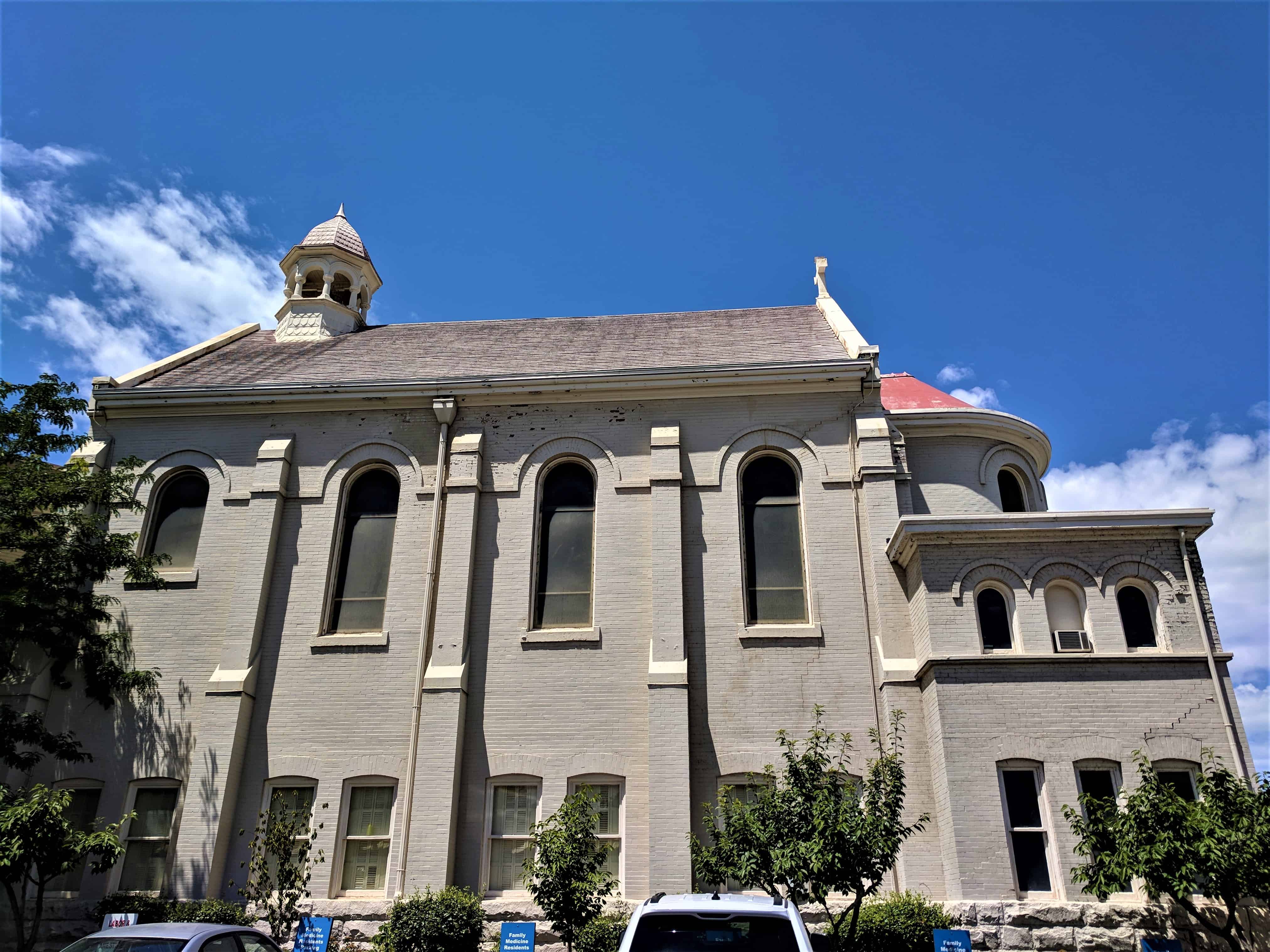
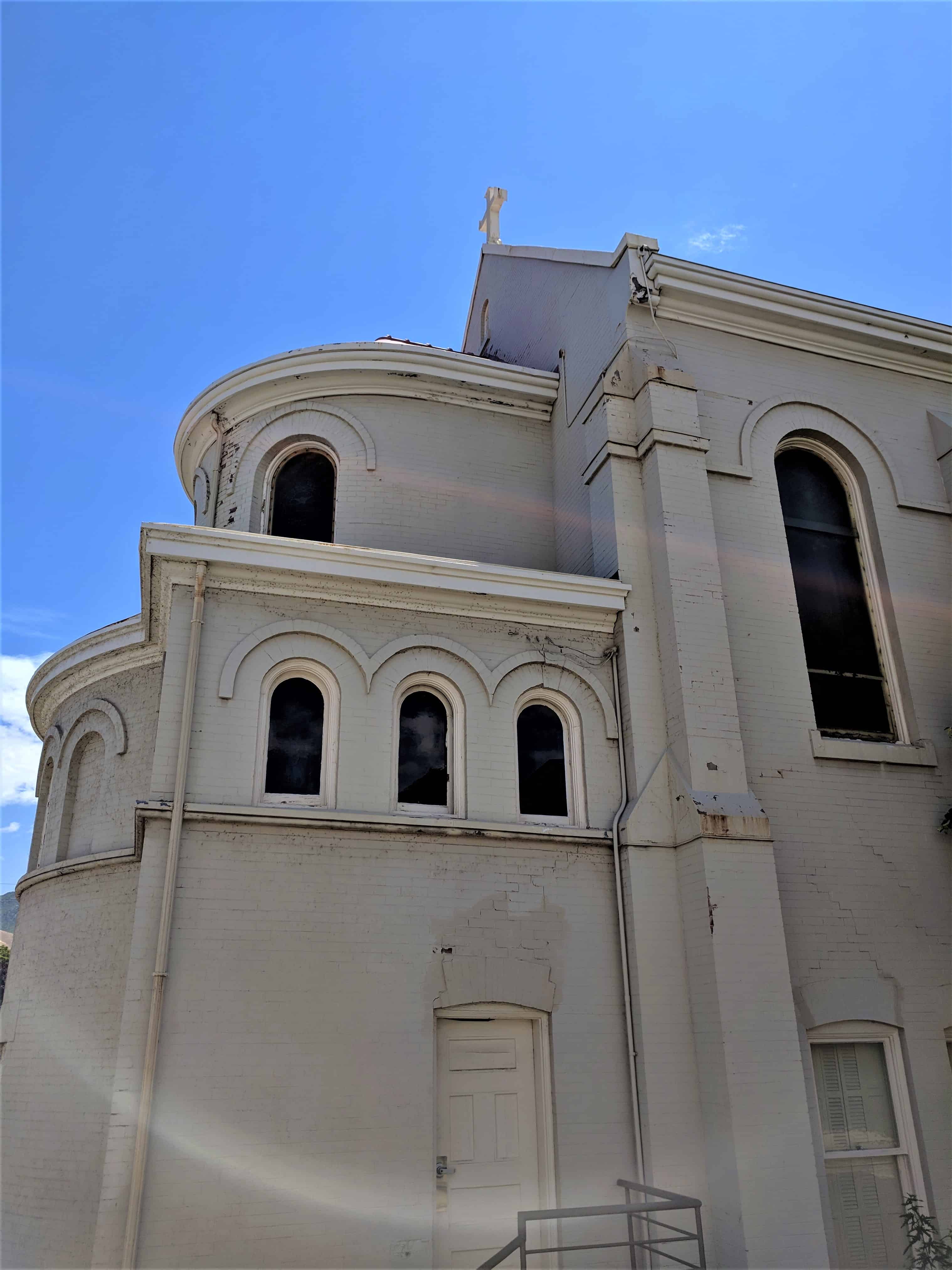
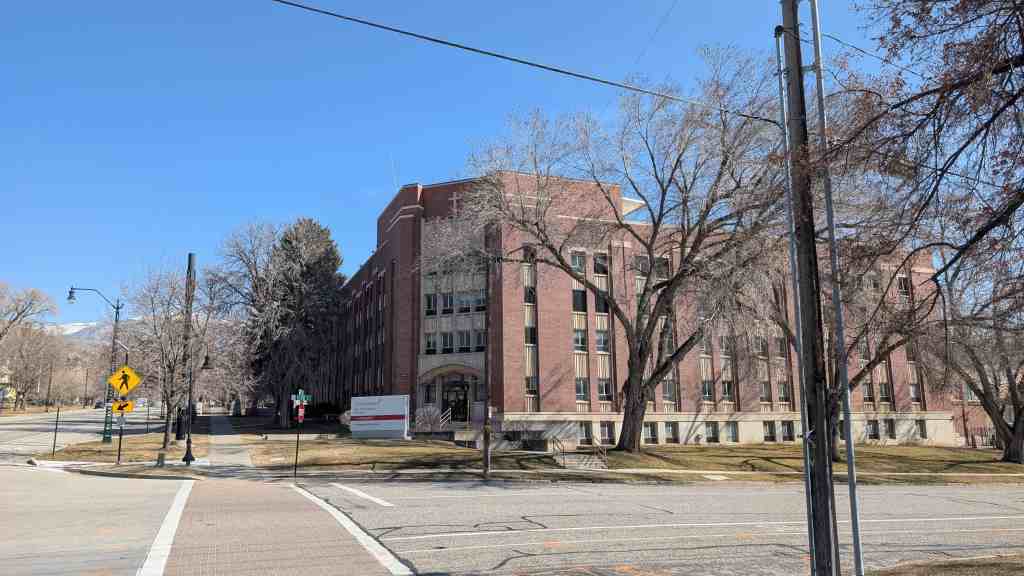
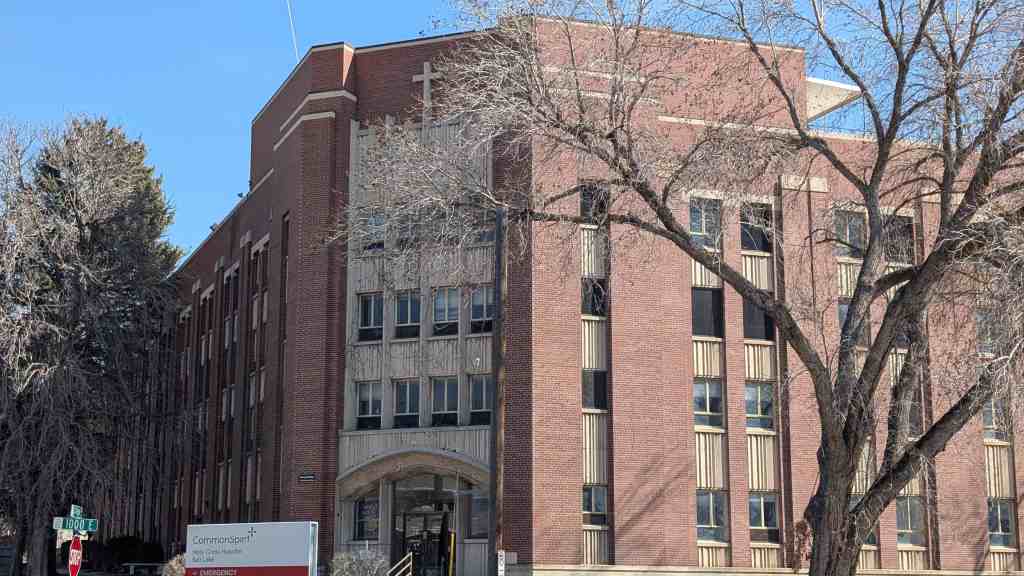
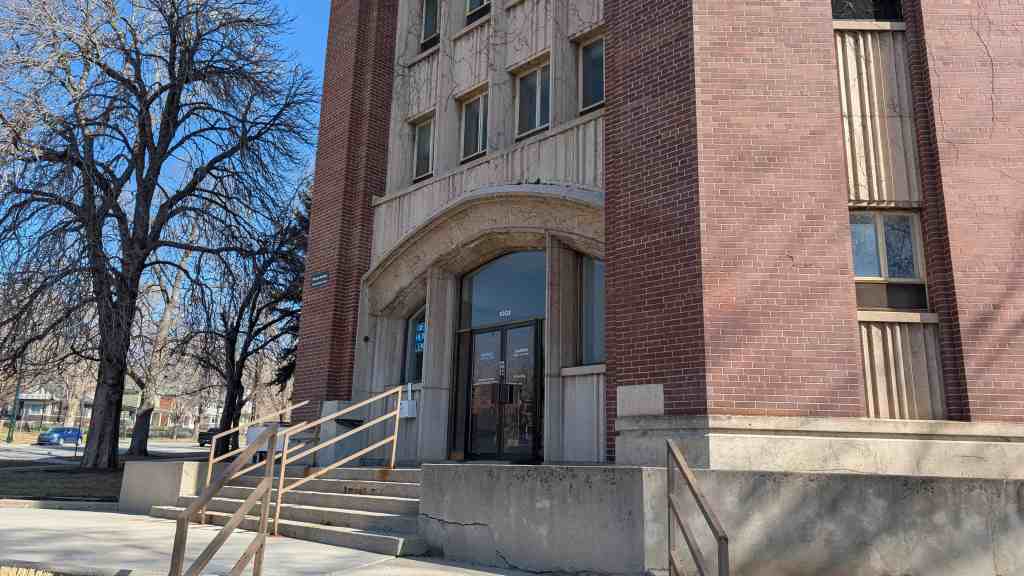
The Holy Cross Chapel at the Salt Lake Regional Medical Center in Salt Lake City, Utah.
Dedicated in 1904, the chapel was originally part of Holy Cross Hospital, established in 1875 by the Sisters of the Holy Cross. It was one of the first hospitals in the Salt Lake Valley.
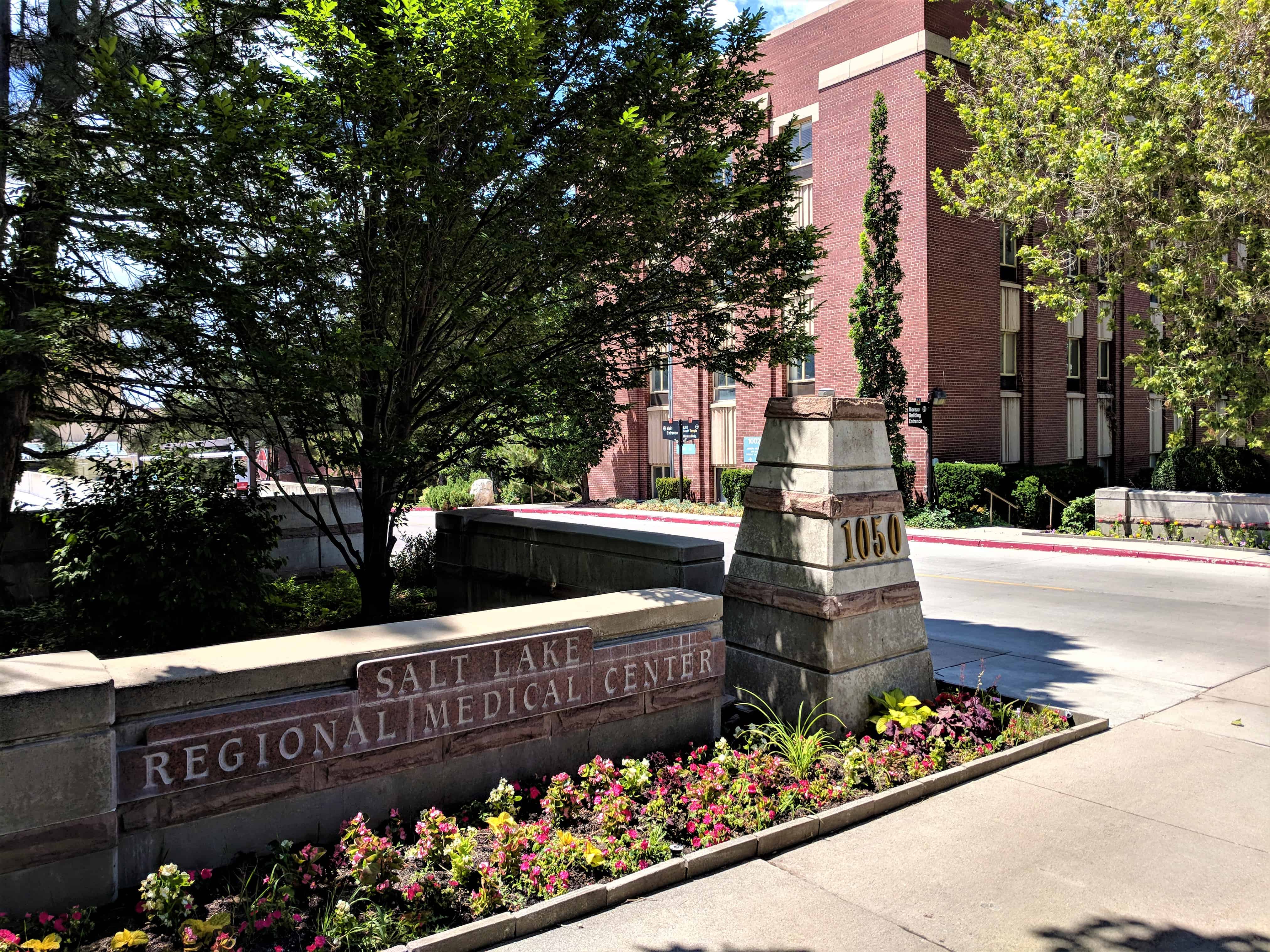
Holy Cross Hospital & Chapel 1050 E. South Temple Main Building—1881-83, Henry Monheim, SLC West Wing—1903, Carl M. Neuhausen, SLC Chapel—1904, Carl M. Neuhausen, SLC East Wing—1916, Bernard O. Mecklenburg, SLC West Wing Remodeled—1920, Bernard O. Mecklenburg, SLC
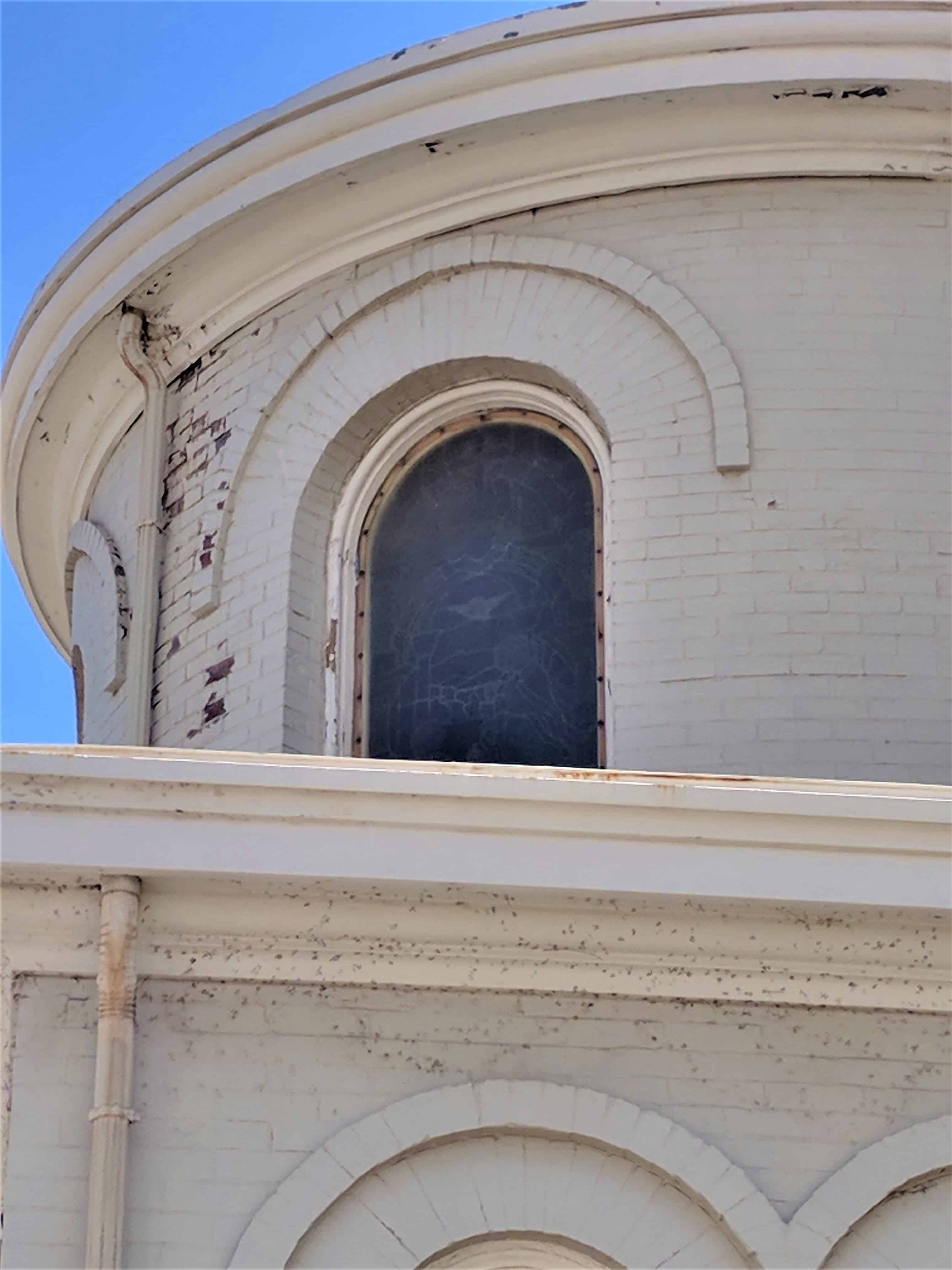
The two remaining historic sections of Holy Cross Hospital, now the Salt Lake Regional Medical Center, are visible from South Temple. The historic chapel, located in the large center courtyard, was dedicated in 1904. It was designed by Carl M. Neuhausen, the architect of The Cathedral of the Madeleine and the Kearns Mansion. The interior of the chapel was decorated by Italian artist Achille Peretti in 1909. The paintings he created for the dome above the alter and the choir loft remain a focal point of the chapel today.
The east wing of the hospital, completed in 1916, was designed by Bernard O. Mecklenburg. This Gothic style building features crenelated gable parapets and square corner buttresses with pyramidal caps. Mecklenburg also worked on the matching west wing of the hospital which was demolished in 1988. Neuhausen designed a one-story west wing in 1903 and Mecklenburg converted it into three stories in 1920. The original central building which connected the east and west wings was completed in 1883. Designed by Henry Monheim, this building was demolished and the new hospital building constructed in 1960.
Holy Cross Hospital was founded under the auspices of the Catholic Church in 1875 by Sisters Holy Cross and Bartholomew. Only the second hospital established in Utah, it was originally located in a small house with just 13 beds. The Sisters worked with three doctors who offered their medical services for free. (from Preservation Utah’s walking tour)
The first meetinghouse in Phoenix for The Church of Jesus Christ of Latter-day Saints (Mormons) was built on this site by the three-hundred-member congregation of the Phoenix Ward. At the time, J. Robert Price was bishop.
Since their beginning in 1912 with nine members, the Latter-day Saints in Phoenix had met in four different locations – – the Knights of Pythias Hall at 23 East Washington Street, a laundry at 534 West Washington Street, an old Spanish-style building at 121 South First Avenue, and a room over a bicycle shop at 237 North Fifth Street. They purchased this area on the eastern edge of Phoenix’s original city plat and built their first chapel 1918-1919.
The handsome meetinghouse – – designed by Pop and Burton, Architects, of Salt Lake City – – was an early example of the influence Frank Lloyd Wright’s architecture had in the Southwest. The Latter-day Saints worshipped here for nearly thirty years. Phoenix used it as a community center, and weekly businessmen’s luncheons and youth dances were held in the building.
By 1923, a thriving congregation (ward) of 730 made it necessary to expand the building; after further expansion in 1926, the meetinghouse filled this plaza area. Other wards were organized and more chapels were built, but the Phoenix First Ward continued to meet here until 1948, and Brill was completed. The building on this site was sold to another church and eventually demolished in 1969.
Bishop J. Robert Price, 1918-1926 Bishop George F. Price, 1926-1928 Bishop John H Udall, 1928-1938 Bishop Arch B. Campbell, 1938-1950
Placed 1981 Sons of Utah Pioneers, Salt River Chapter and Historic Arts and Sites Committee of The Church of Jesus Christ of Latter-day Saints
Archbishop Joseph S. Alemany of the Diocese of San Francisco asked Father Lawrence Scanlan to settle in the mining town of Silver Reef and minister to the miners and their families. Father Denis Kiely arrived in Utah in 1874 and assisted Father Scanlan in Silver Reef. Fathers Henry T. Hyde, P. O’Conner, and P. Galligan also also served the people in Silver Reef from 1880 to 1882.
In 1879, Father Scanlan established the St. John’s Catholic Church, the Silver Reef Hospital, and St. Mary’s School in Silver Reef.
When the church was first constructed, it didn’t have a tower. But Father Hyde collected money and eventually the tower was erected and a 400 lb bell was installed.
St. John’s Church was closed in 1885.
In 1895, William Stirling purchased and moved the vacant St. John’s Catholic Church from Silver Reef to Leeds. He converted the building into the Leeds Social Hall or “Old Stirling Hall.”
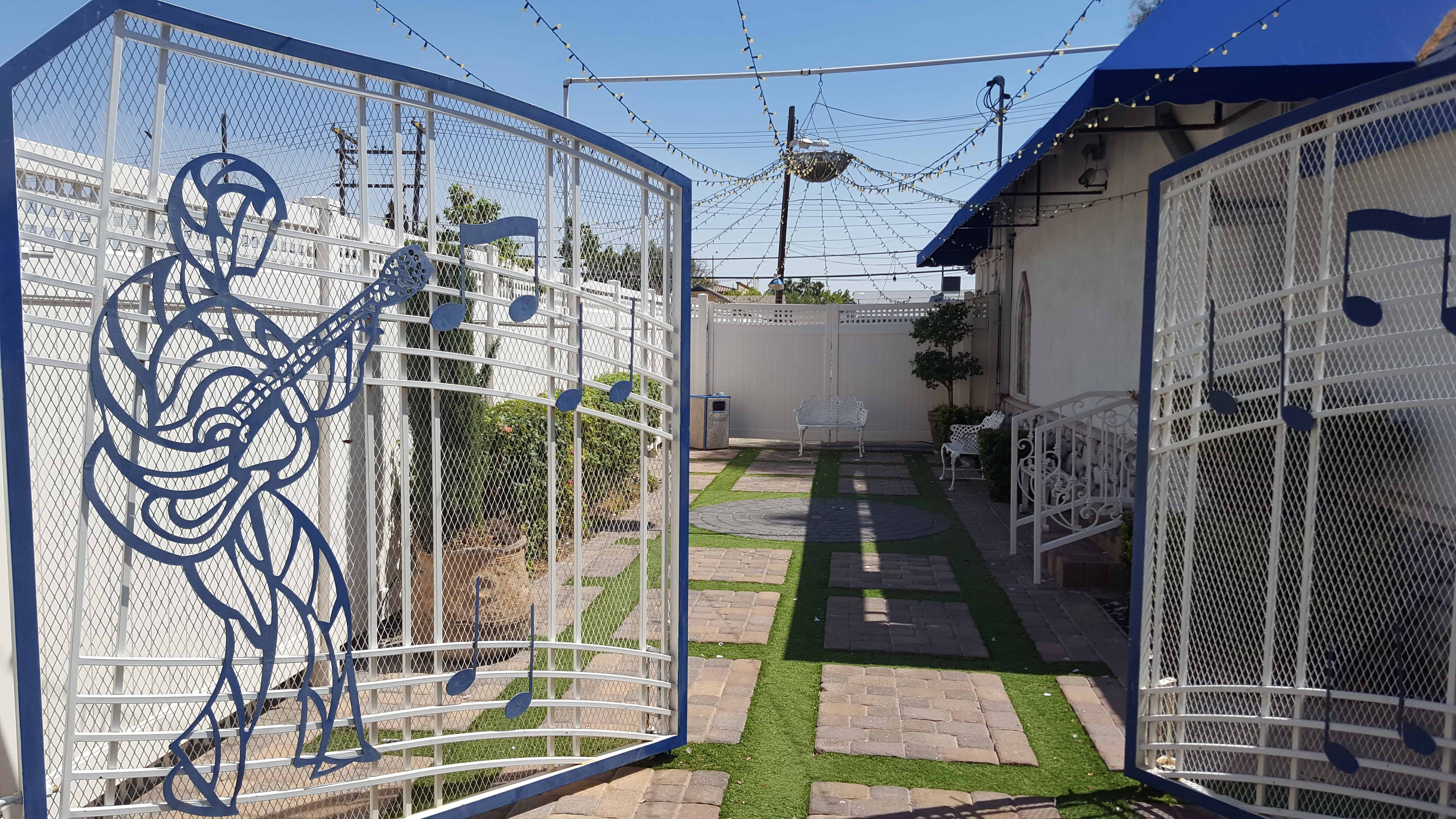
The Graceland Chapel has been a part of the Las Vegas Strip for almost 70 years and is one of the most prominent chapels for a wedding in Las Vegas. A Las Vegas wedding is one of the most appealing wedding ideas to celebrities too. Jon Bon Jovi was married here and in 2001, actually held a concert in our parking lot with 75 couples who renewed their vows with him!
Other musicians such as Billy Ray Cyrus, Aaron Neville and members of popular groups such as Def Lepard, KISS, Deep Purple and The Thompson Twins have all tied the knot here as well. Last year Jay Leno even stopped by with plenty of entourage to check out the chapel.(*)