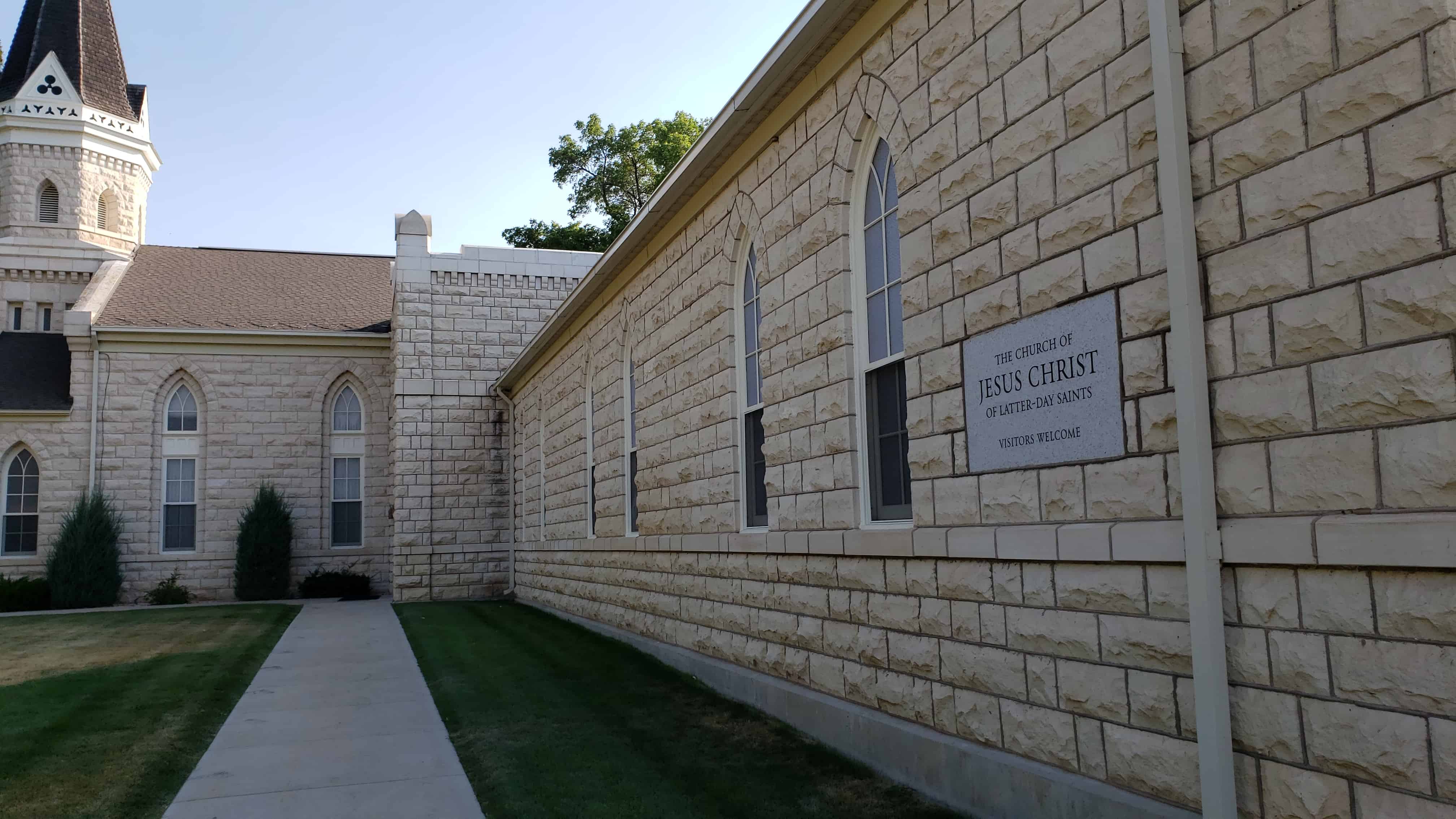
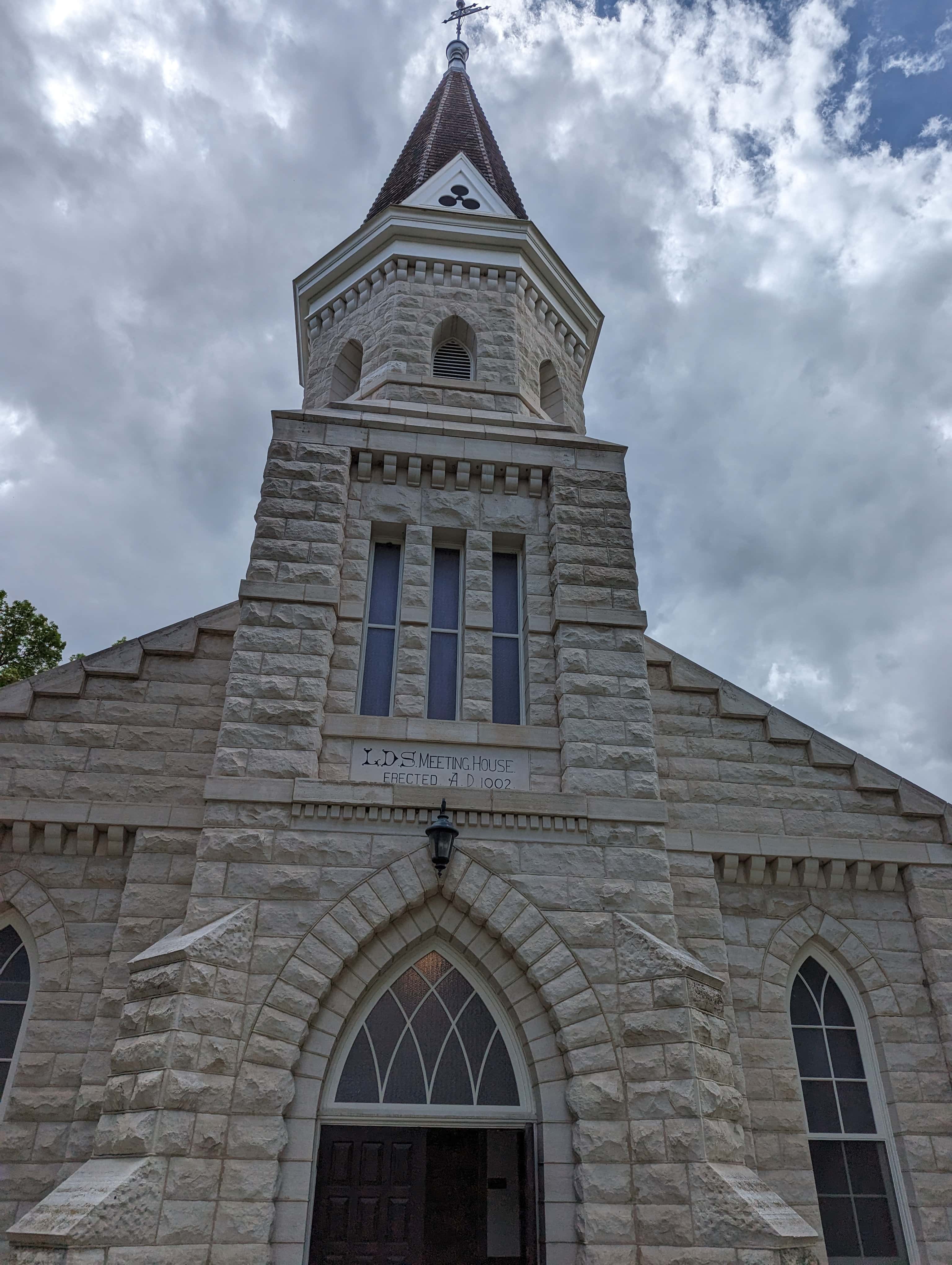
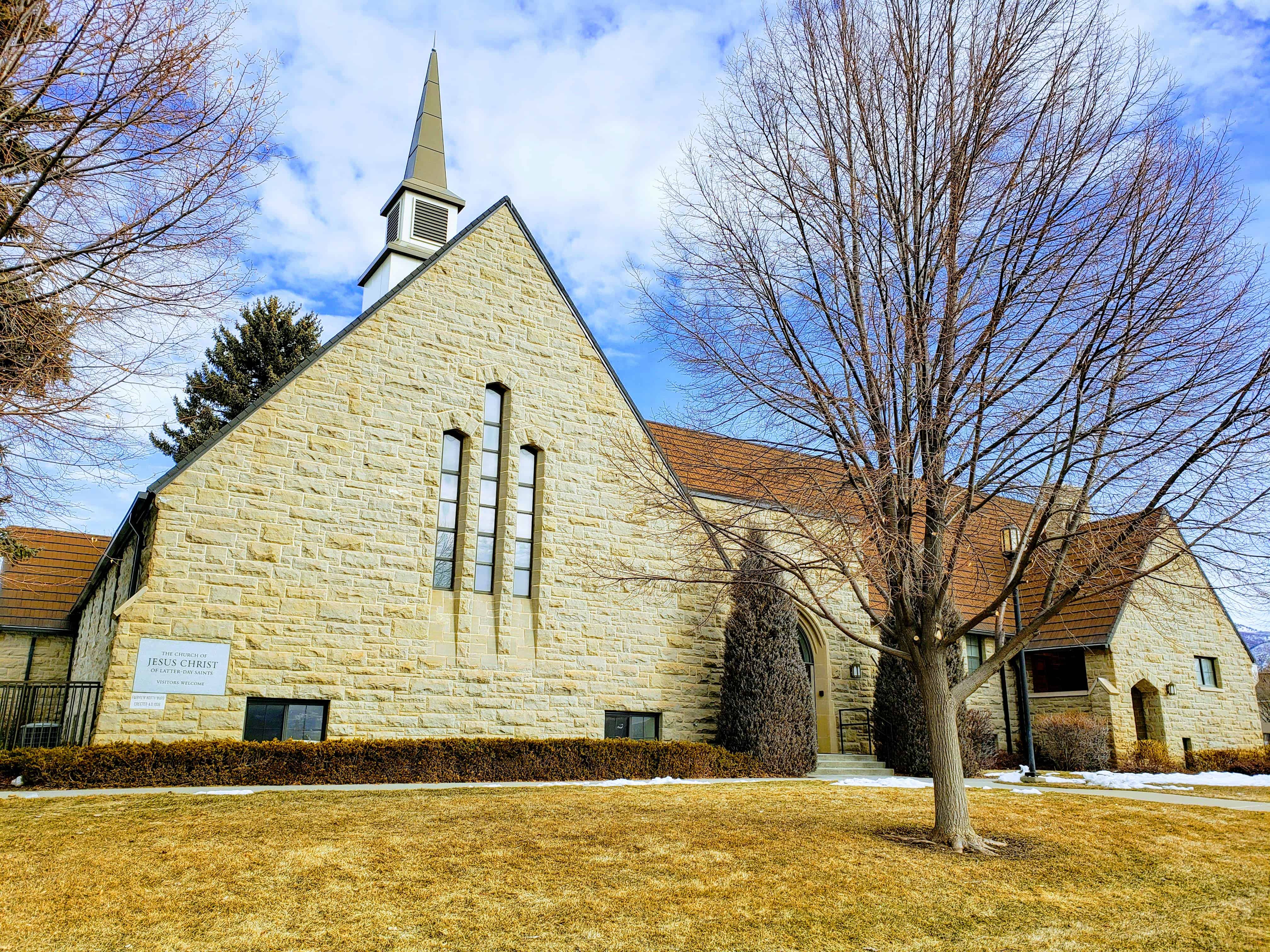
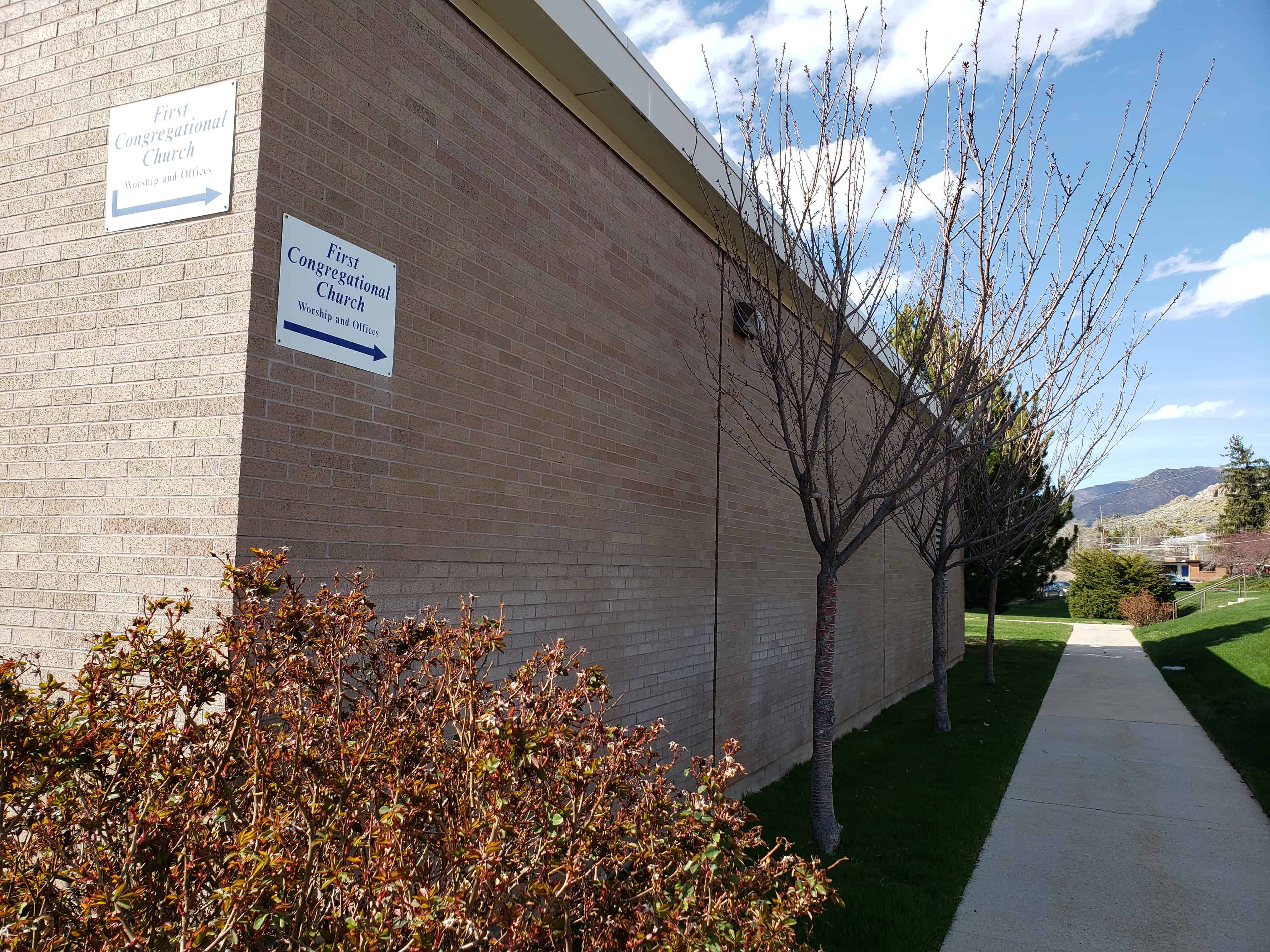
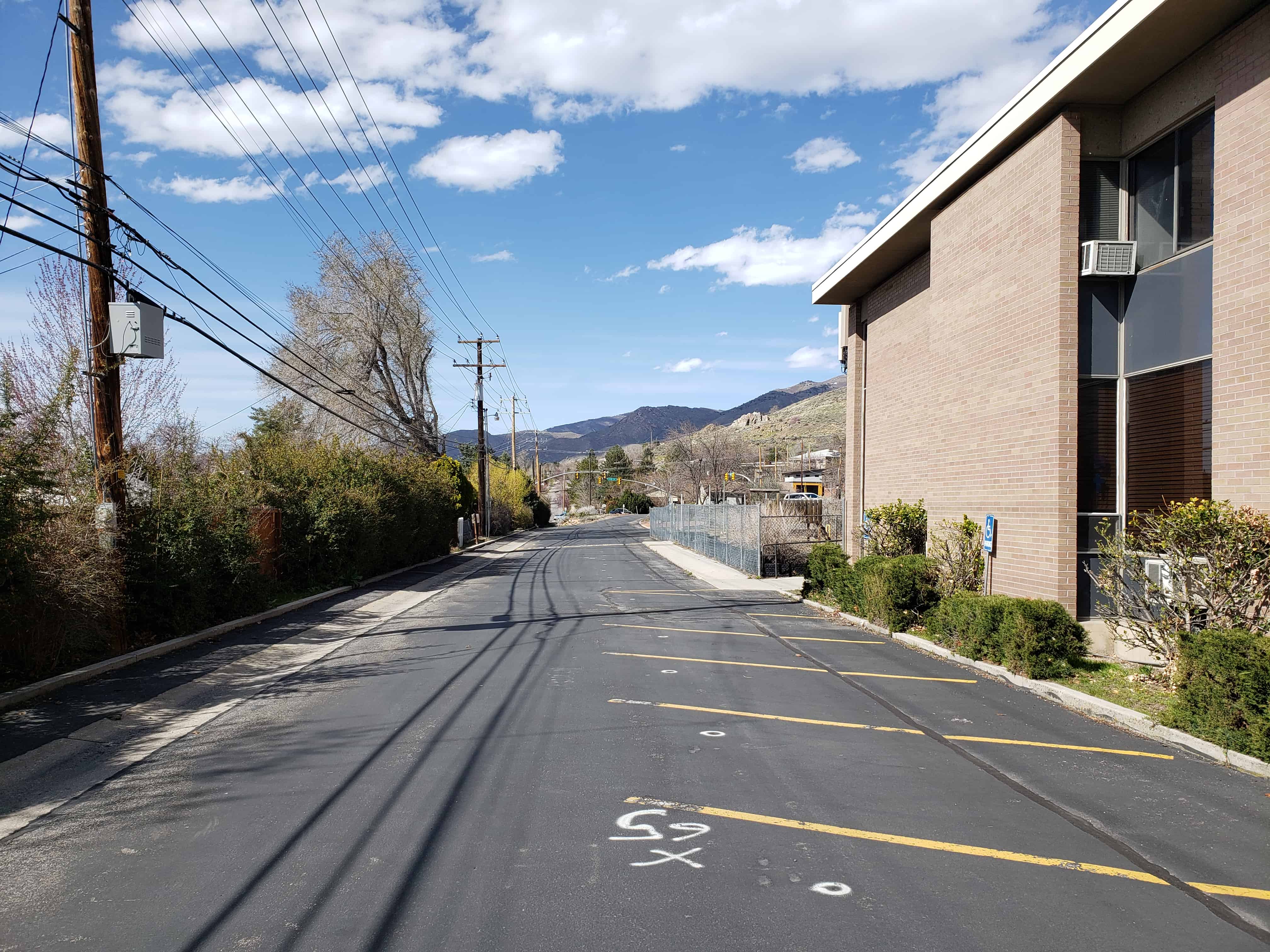
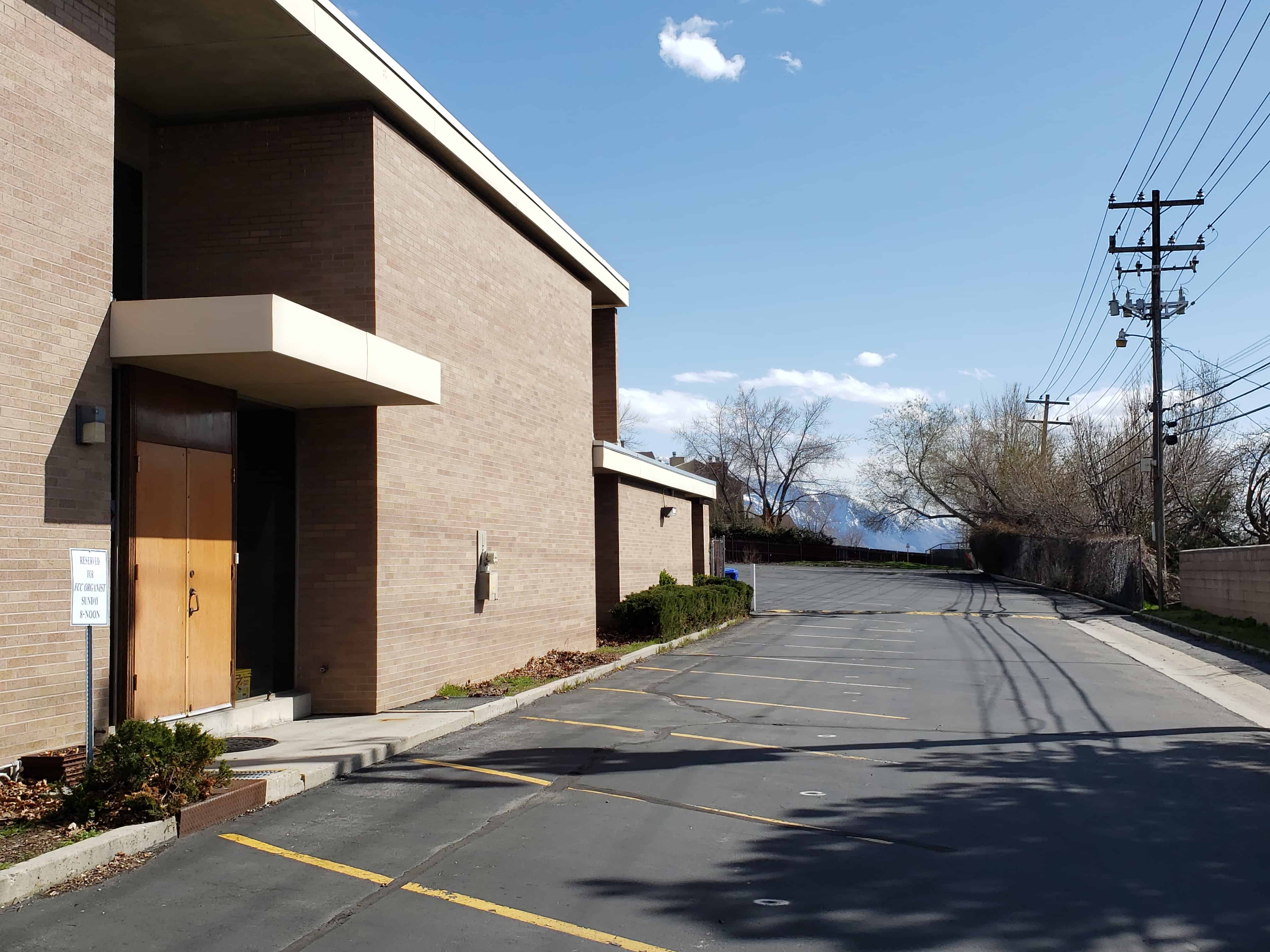
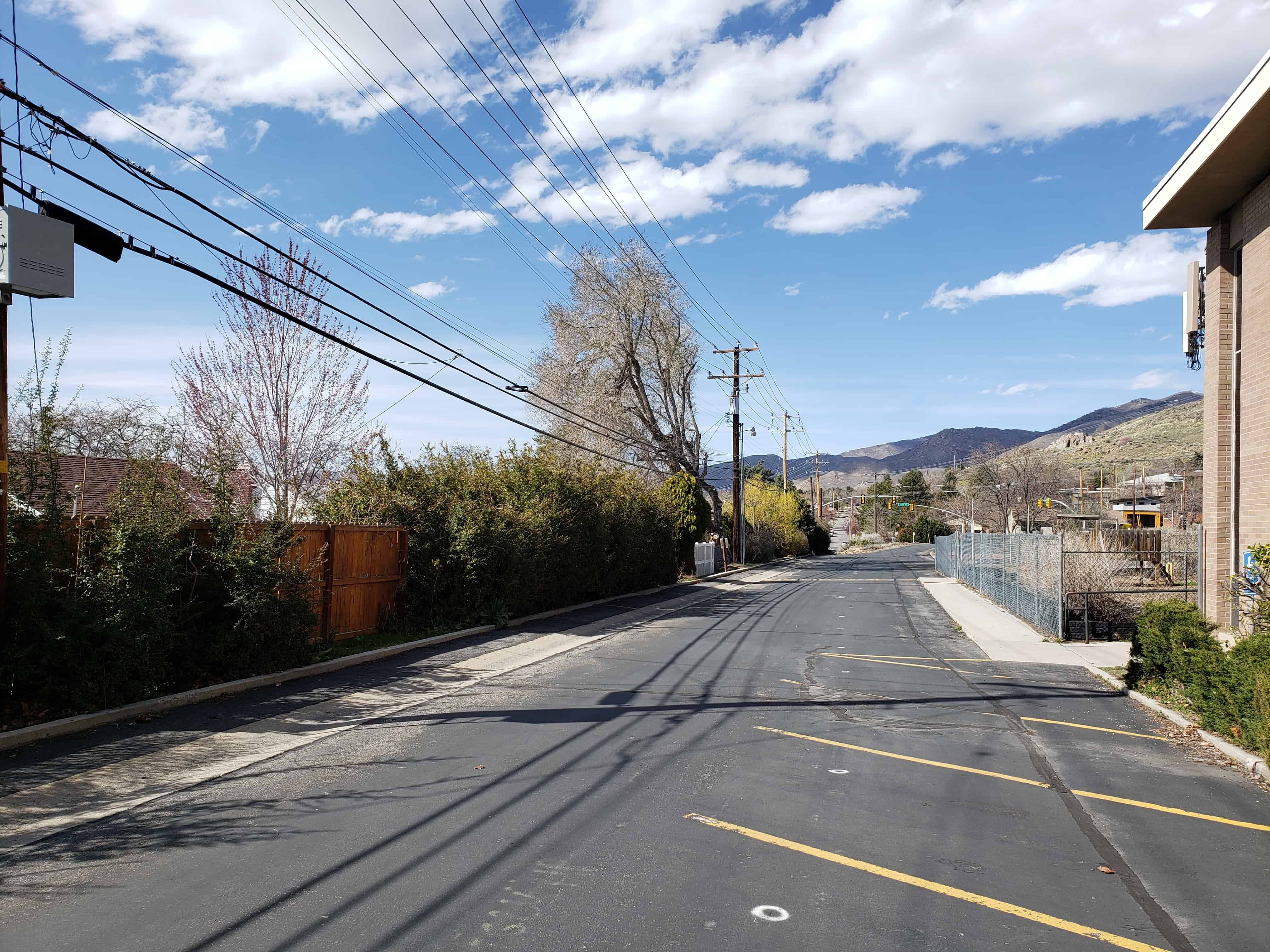
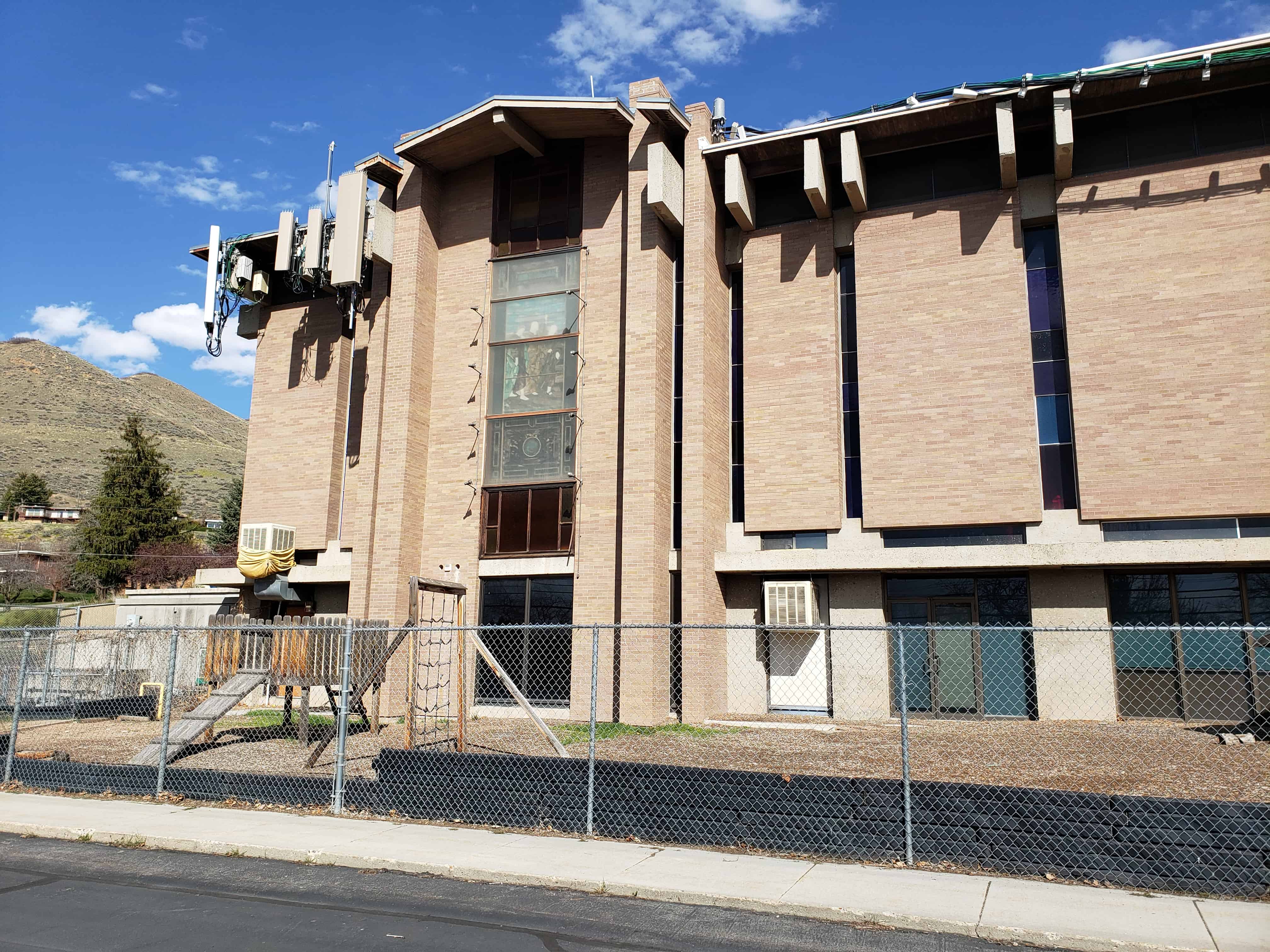
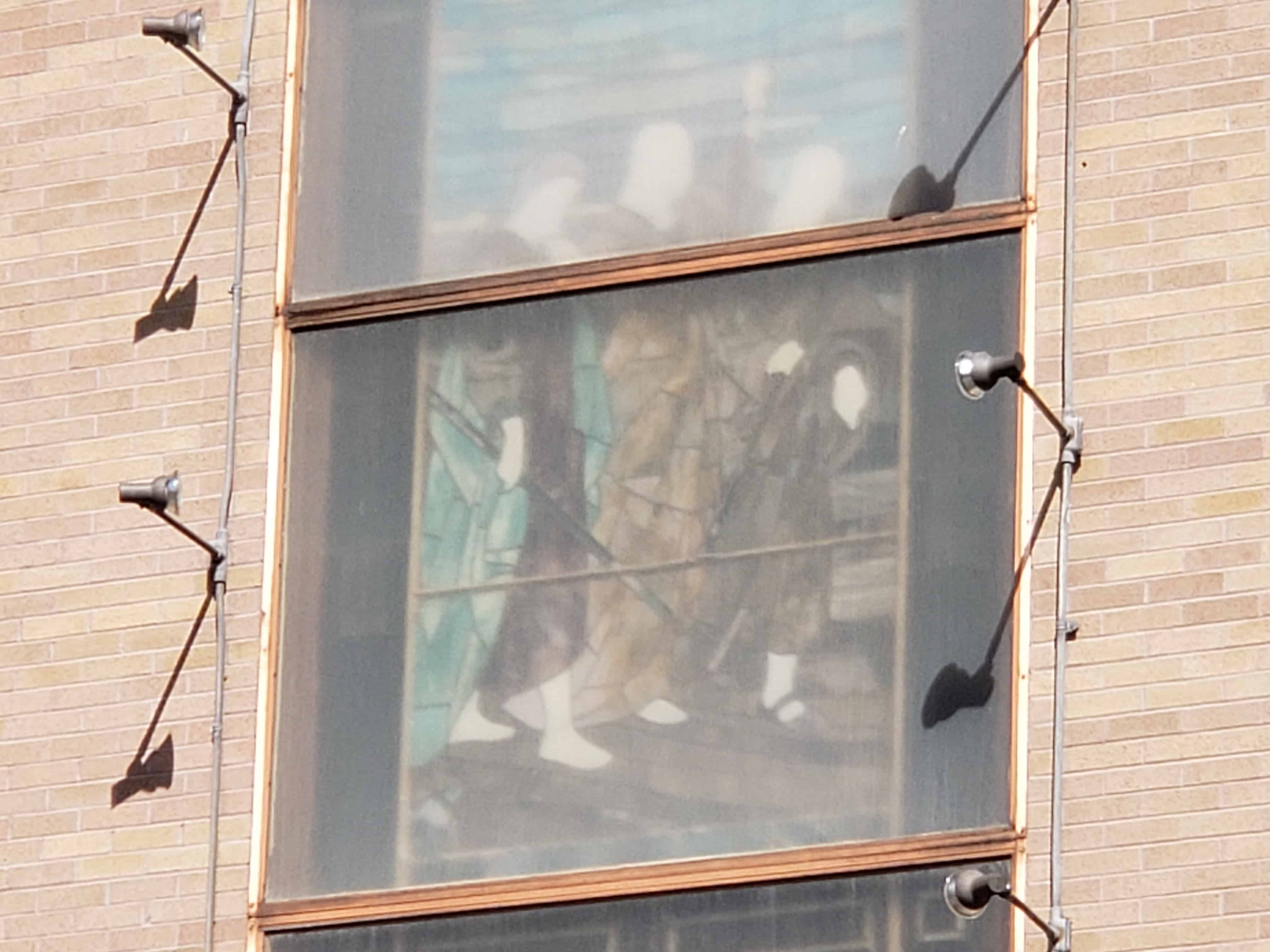
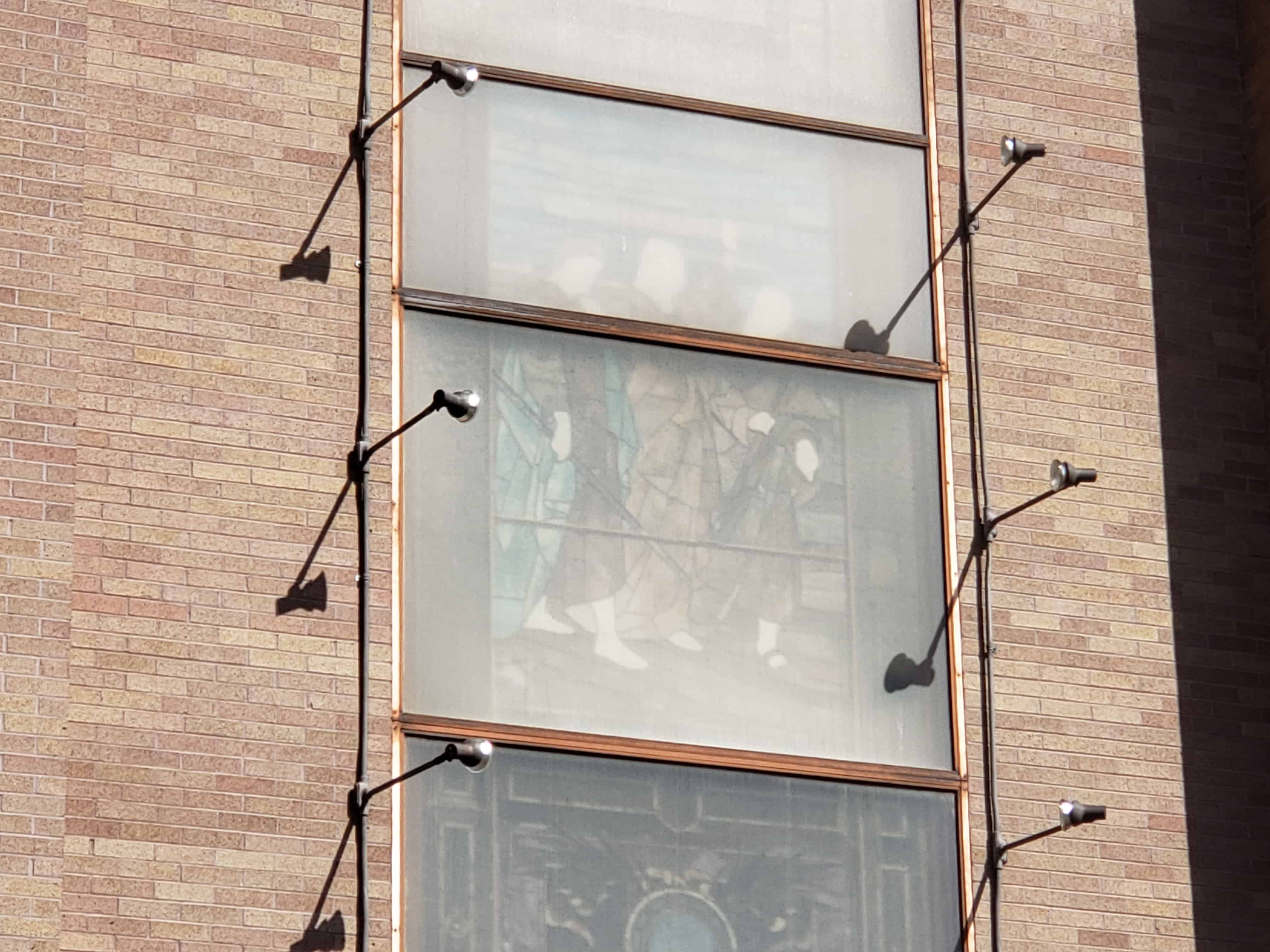
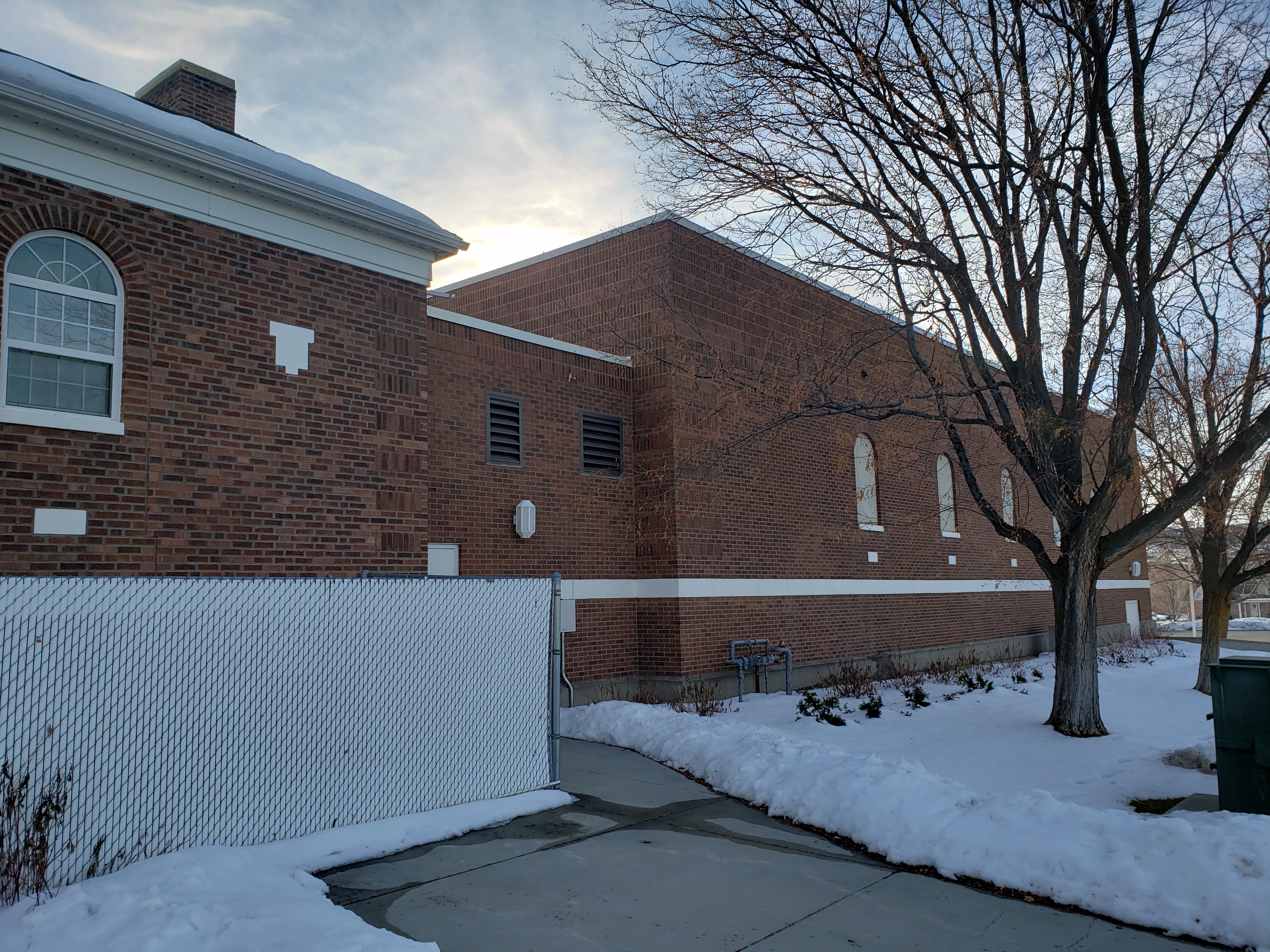
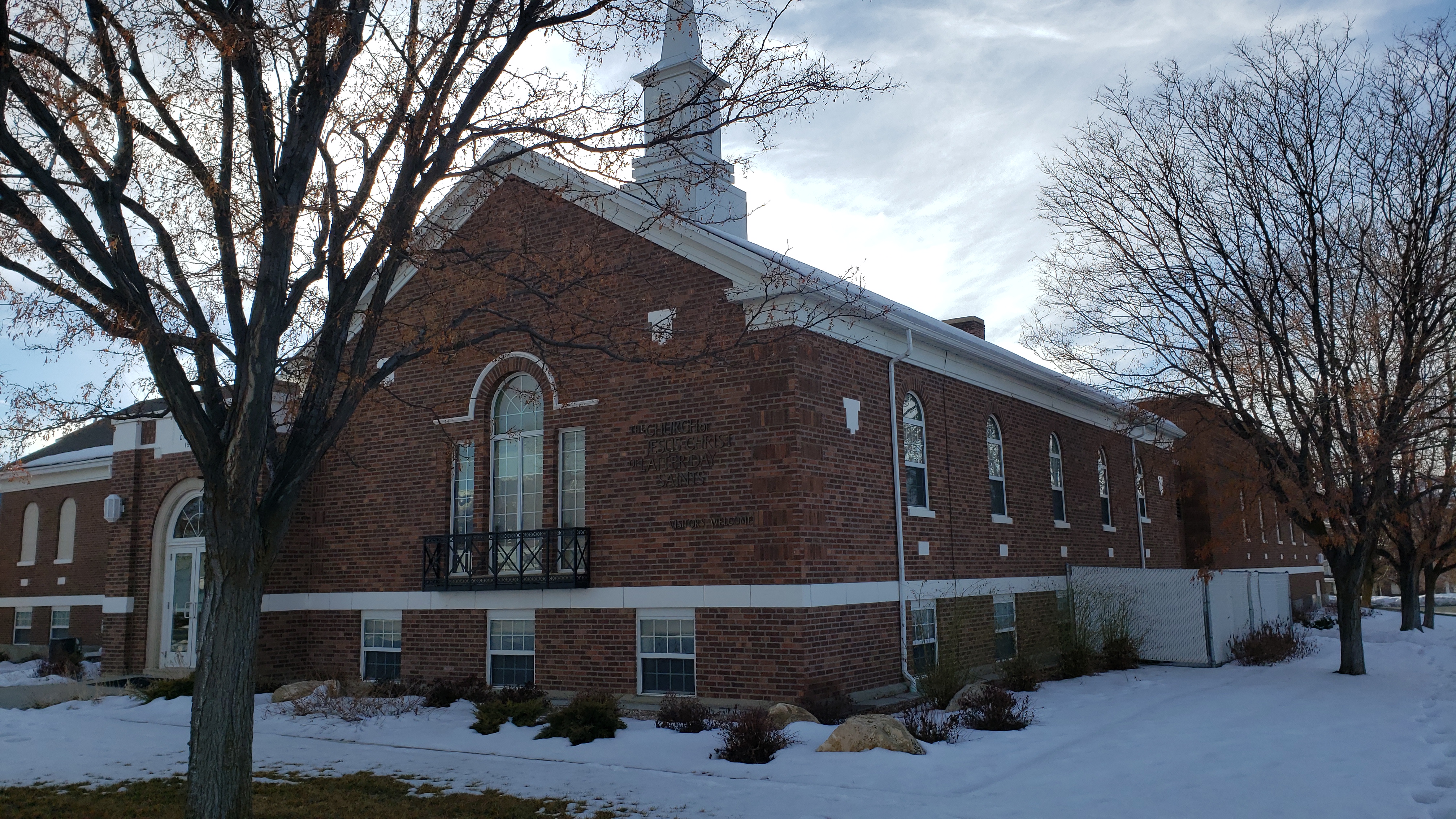
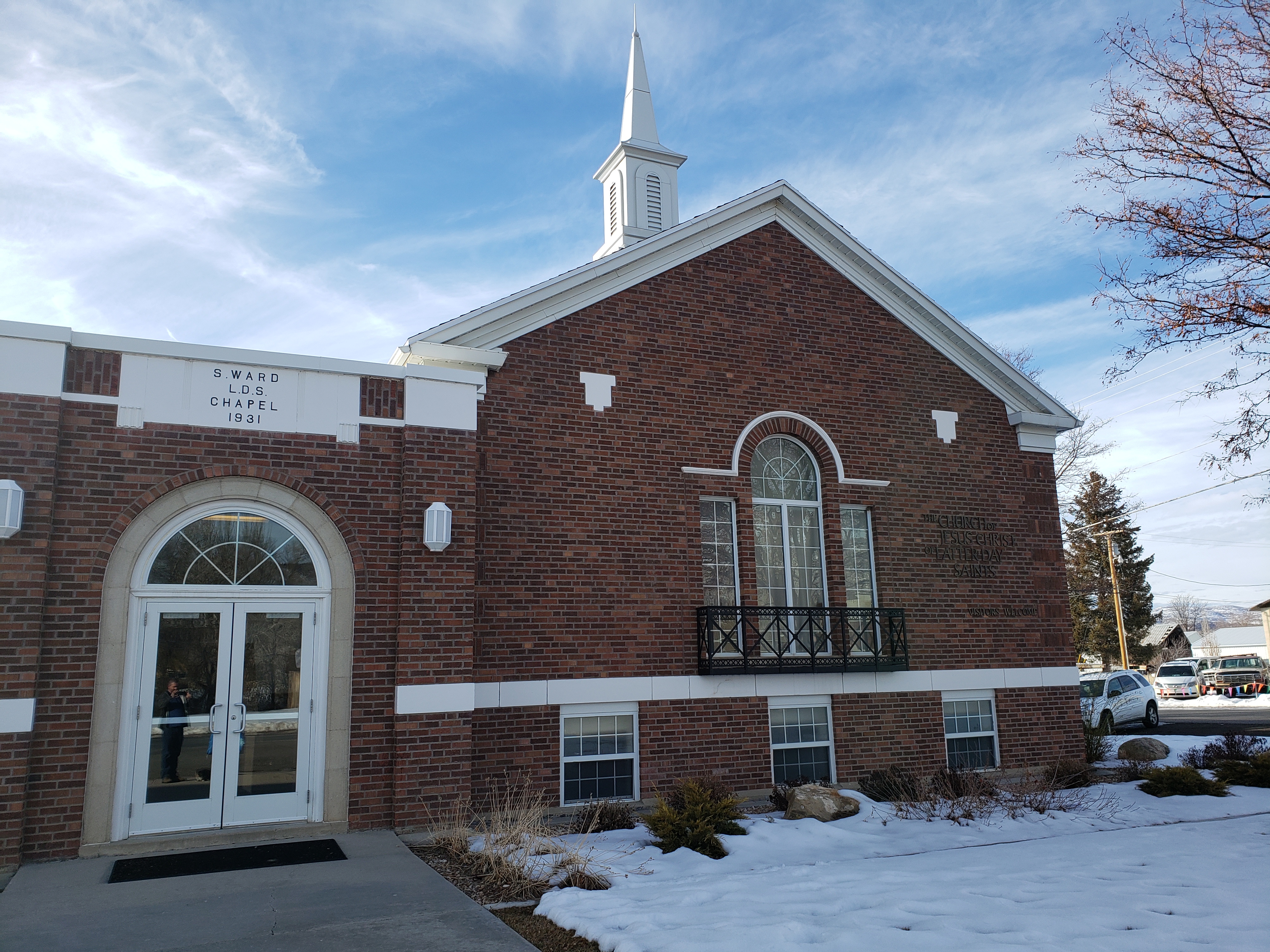
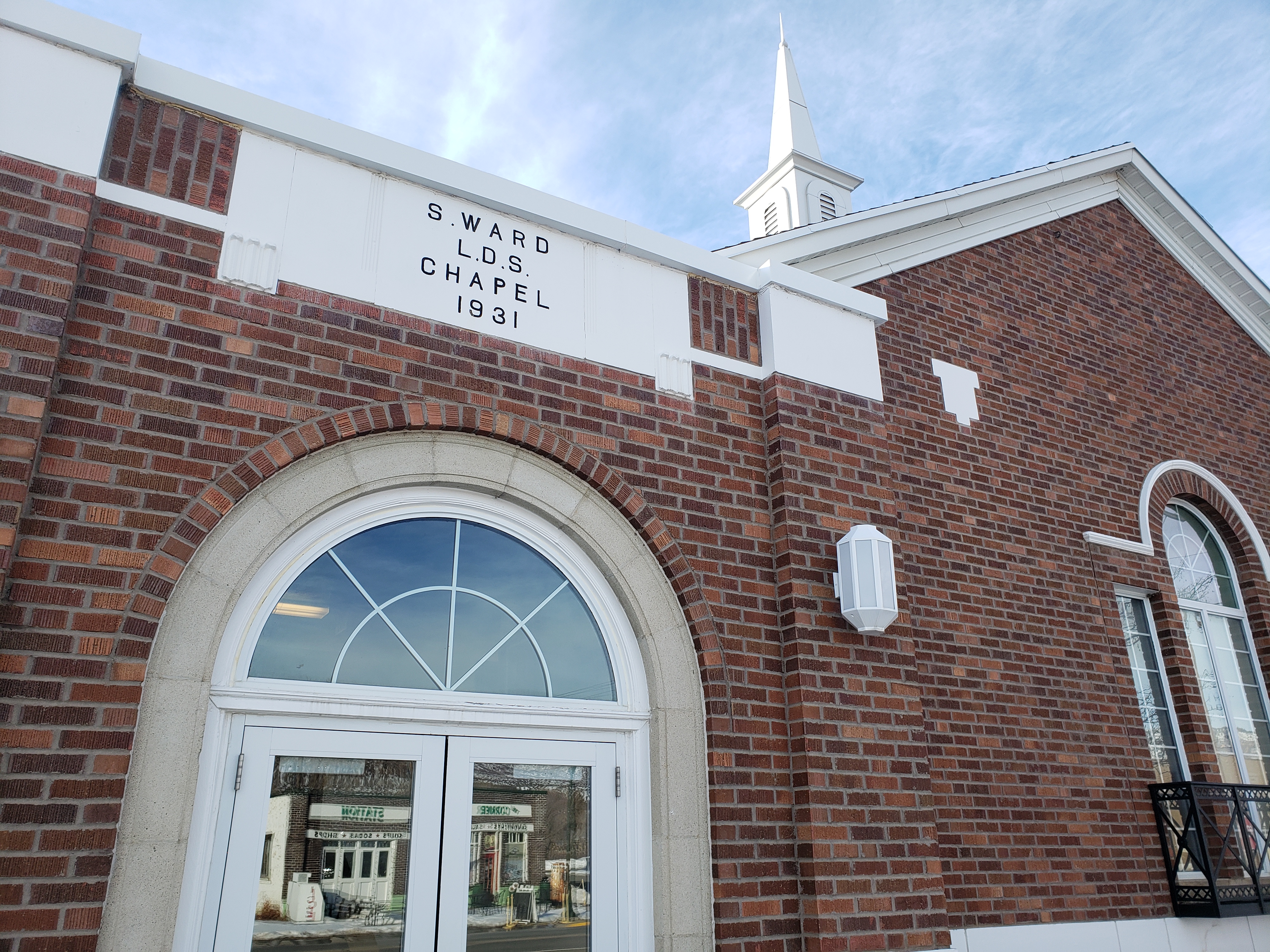
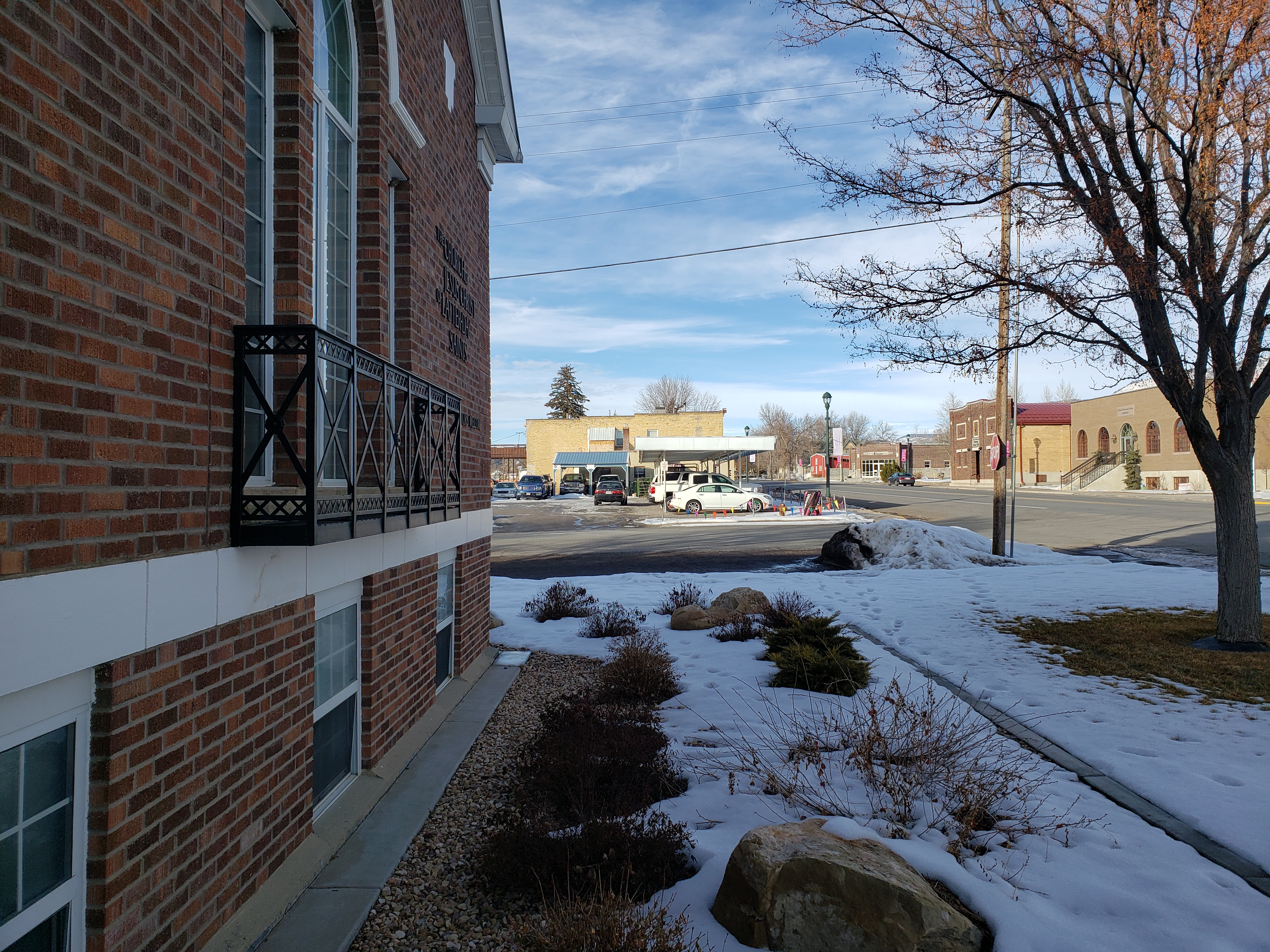
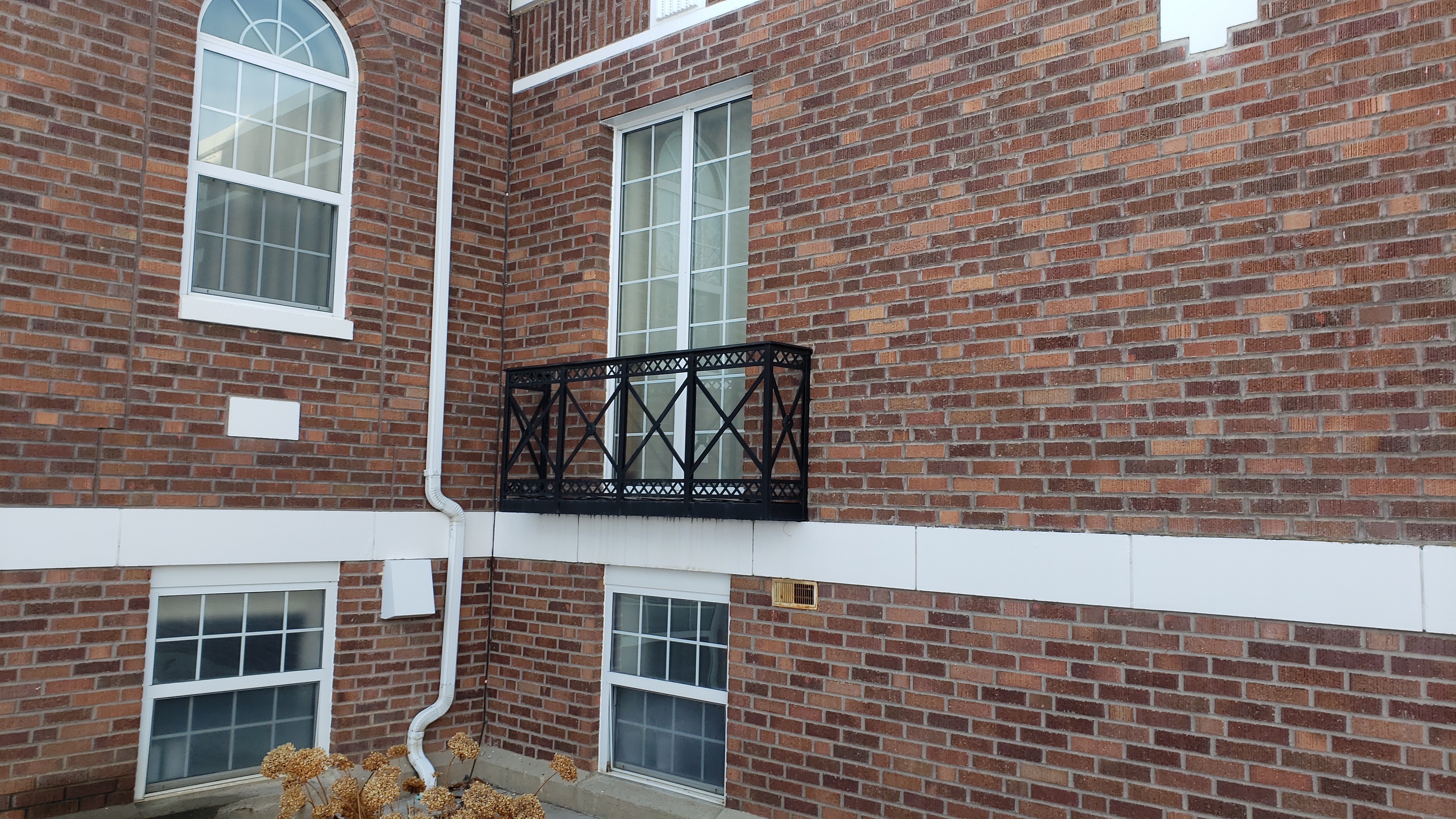
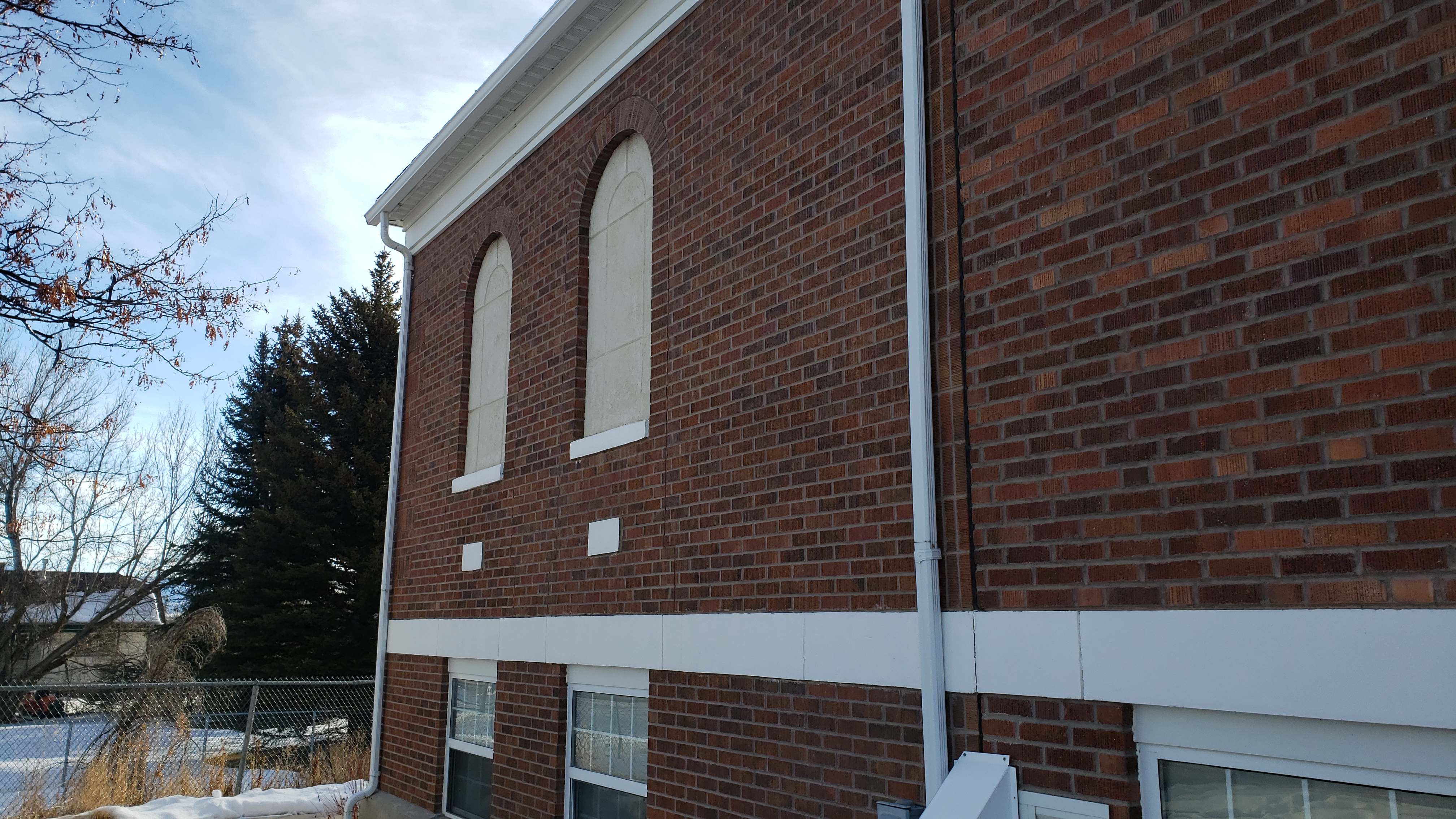
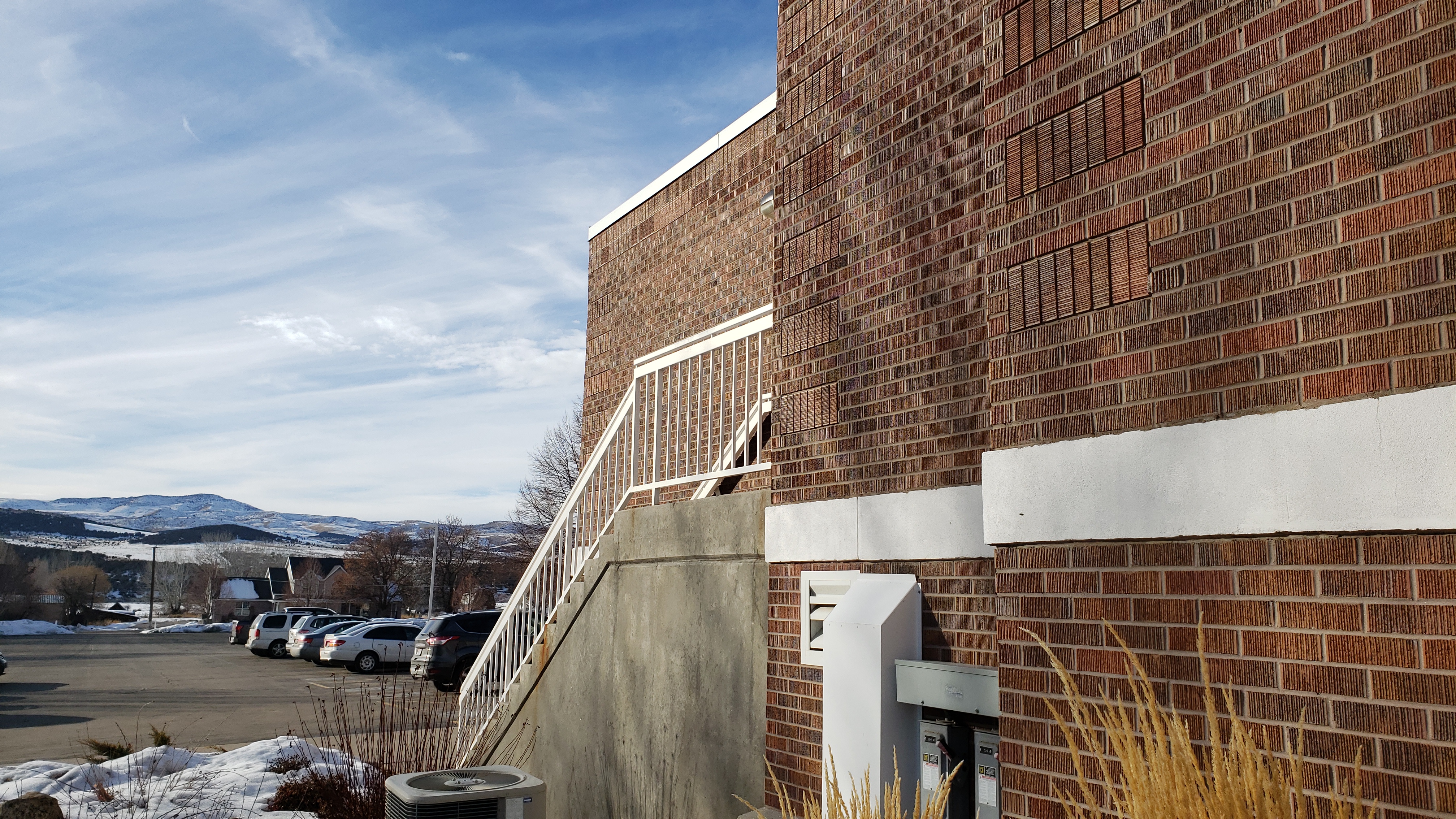
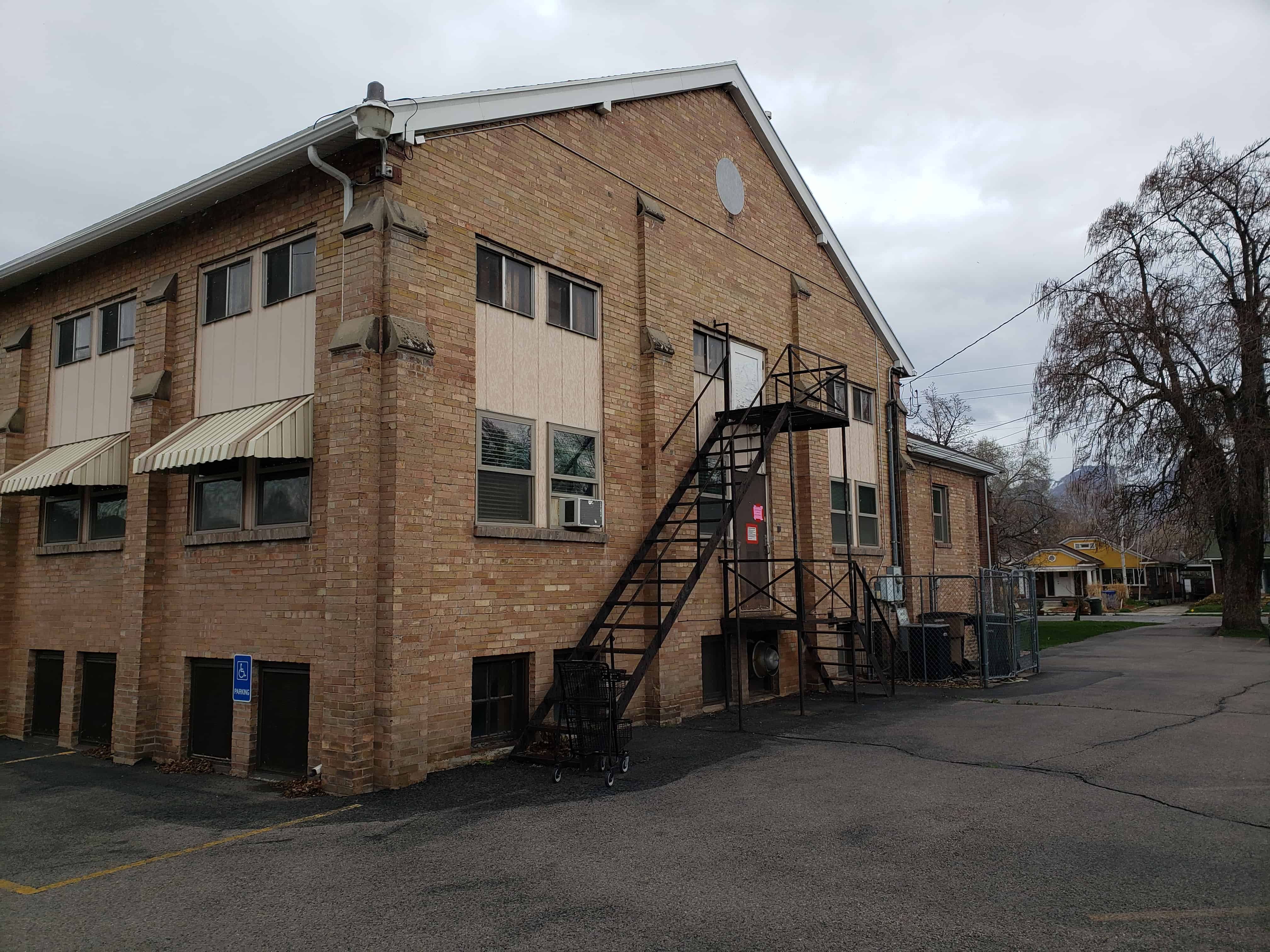
The Spring City Chapel for The Church of Jesus Christ of Latter-day Saints, locally called the old stone church is located at 164 S Main Street in Spring City, Utah.
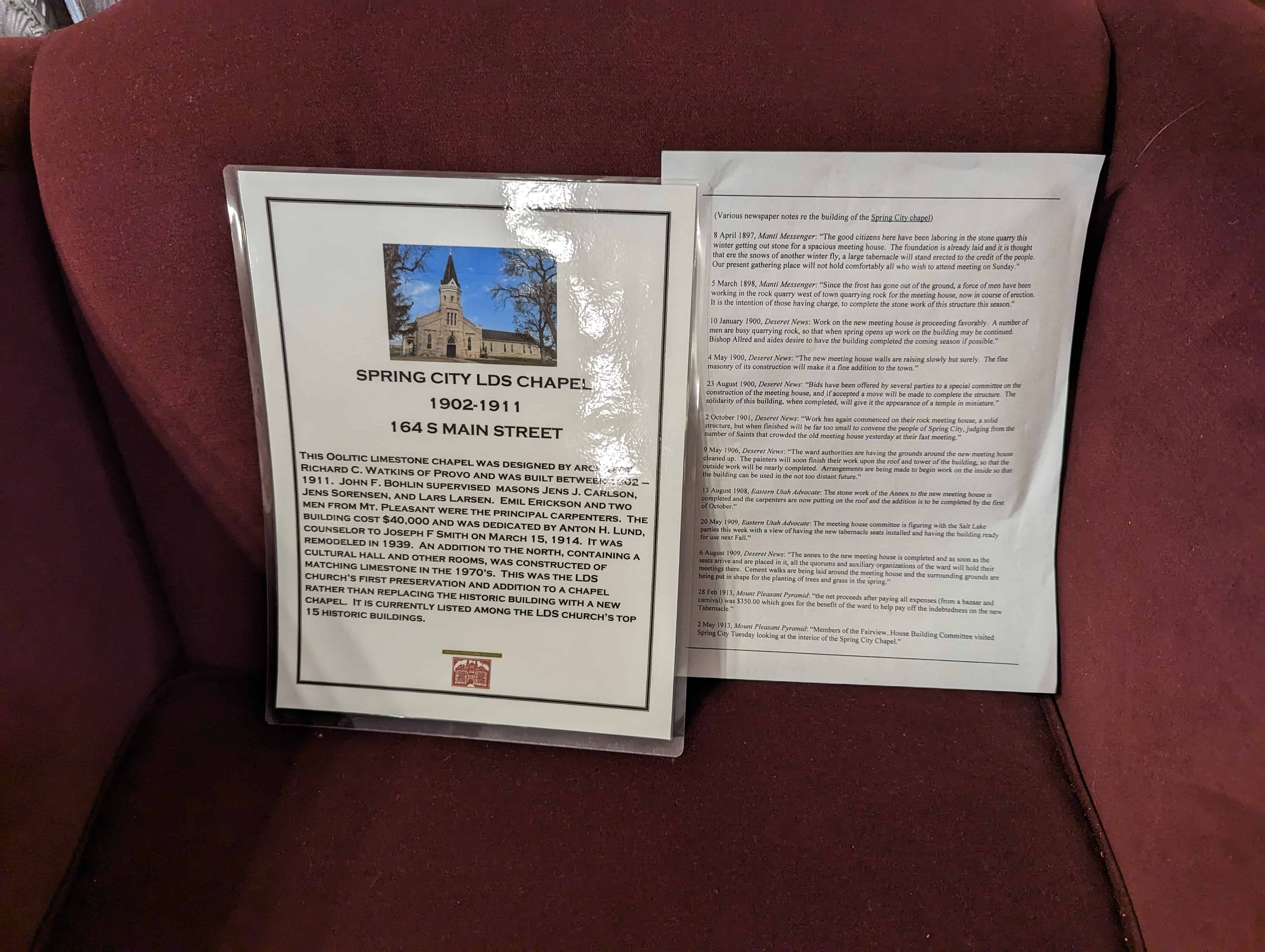
The following is from sanpete.com: This Gothic Revival/Romanesque-influenced stone LDS Chapel was constructed between 1898 and 1914, although an inscription stone bears the date”1902.” Richard C. Watkins was the architect of this spectacular edifice. Scandinavian masons John F. Bohlin (1844-1924), Jens J. Carlson (1848-1927), Lars Larsen (1852-1924) and Jens ‘Rock’ Sorensen did the stone work. The carpenter’s name was Emil Erickson. The building has an elegant, horseshoe-shaped gallery accessible by a stairway in the tower. The chapel features a sloping floor and an ornamental oak pulpit at the west end. Behind the pulpit, hand-grained sliding doors opened into the annex. From the original exposed flooring to the vaulted and beamed ceiling, the interior is replete with beautifully detailed woodworking, all following the Gothic theme. The pulpit and the handmade rostrum chairs for the ward leadership are skillfully carved. The pew ends are decoratively milled, as is the sacrament table. The exterior is equally impressive with its tall, Gothic windows, tall stone tower and buttress and overall massiveness and solidity.
The chapel was conceived in 1882 by LDS bishop James Anderson Allred (1819-1904), who appointed a committee of twenty men to plan the project. It eventually was built at a cost of $40,000, with $6,000 received from church funds, and the remainder being donated by the men and women of Spring City ward. A masterpiece of LDS Church architecture, this chapel was dedicated in March 1914 by Anthon F. Lund, counselor to Mormon Church President Joseph F. Smith. During construction, a classroom annex was added to the rear. A compatible addition was made on the north in 1978, using rock from the same quarry to carefully match the design elements.
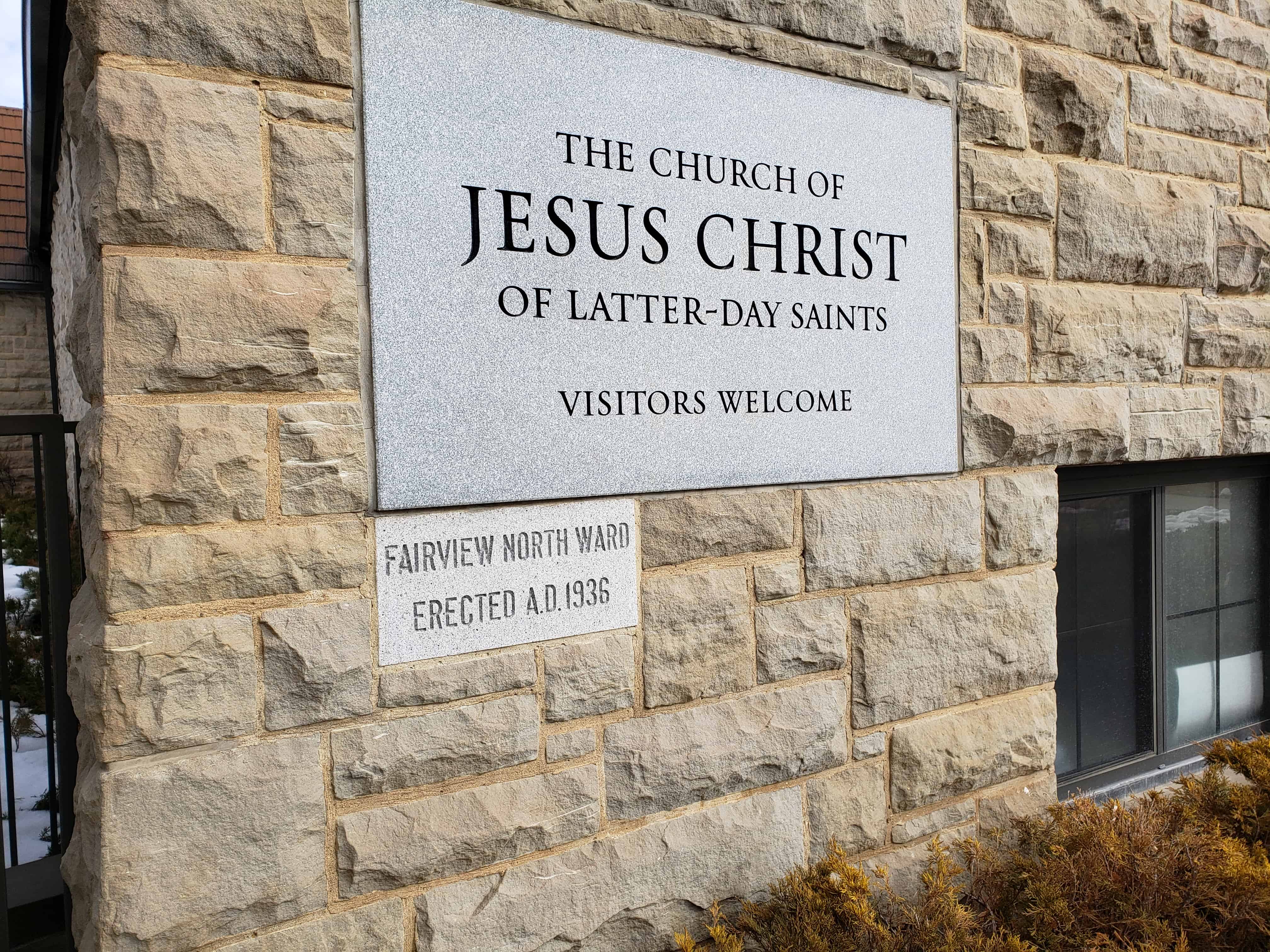
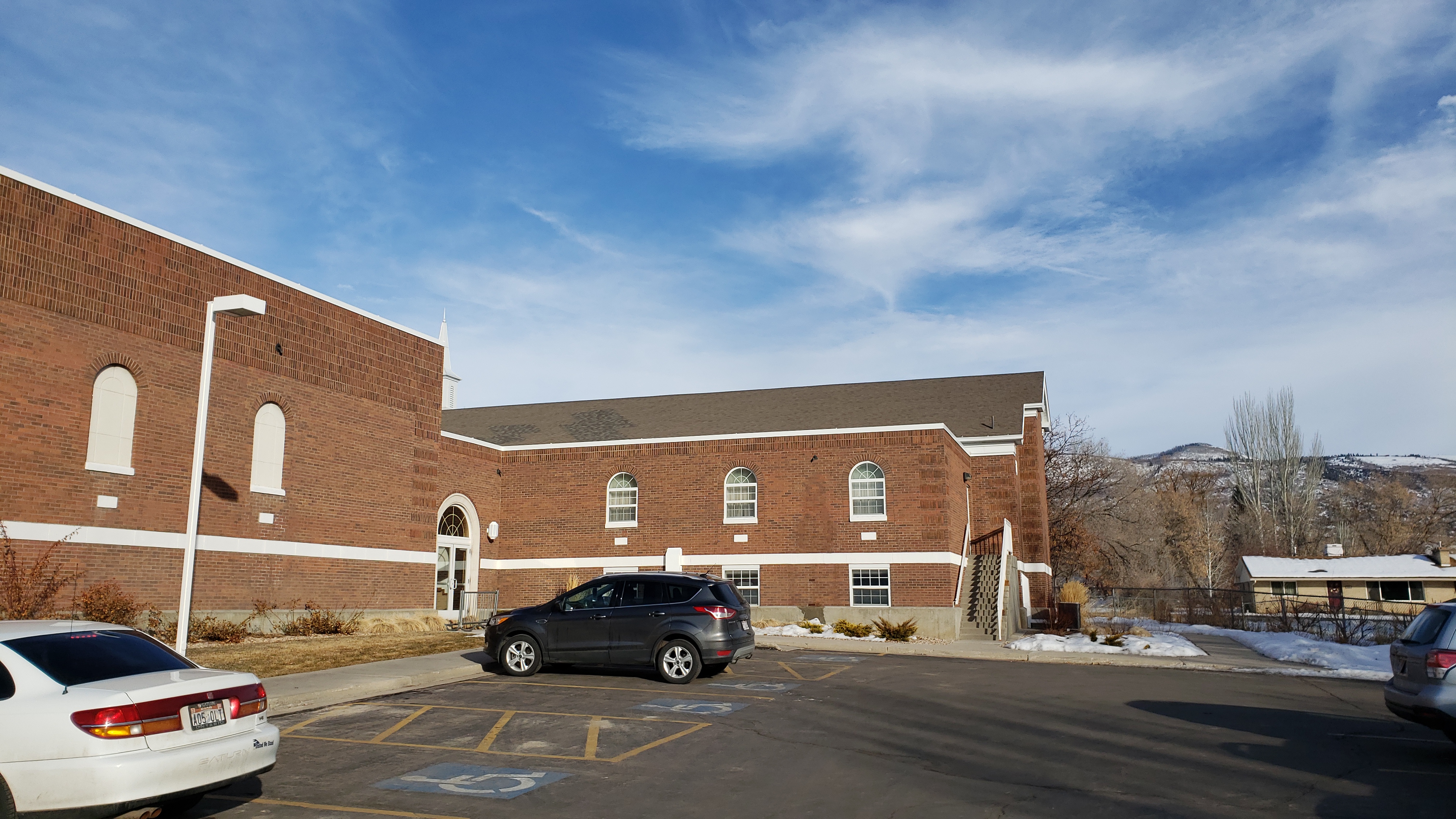
The Edgehill Ward Chapel was built in 1937 at 1750 S 1500 E in Salt Lake City, Utah.
The easternmost exterior wall has a bas-relief mural created by Torleif Knaphus called Christ the Fountainhead, see this page for more information about that and the other buildings that also have it.
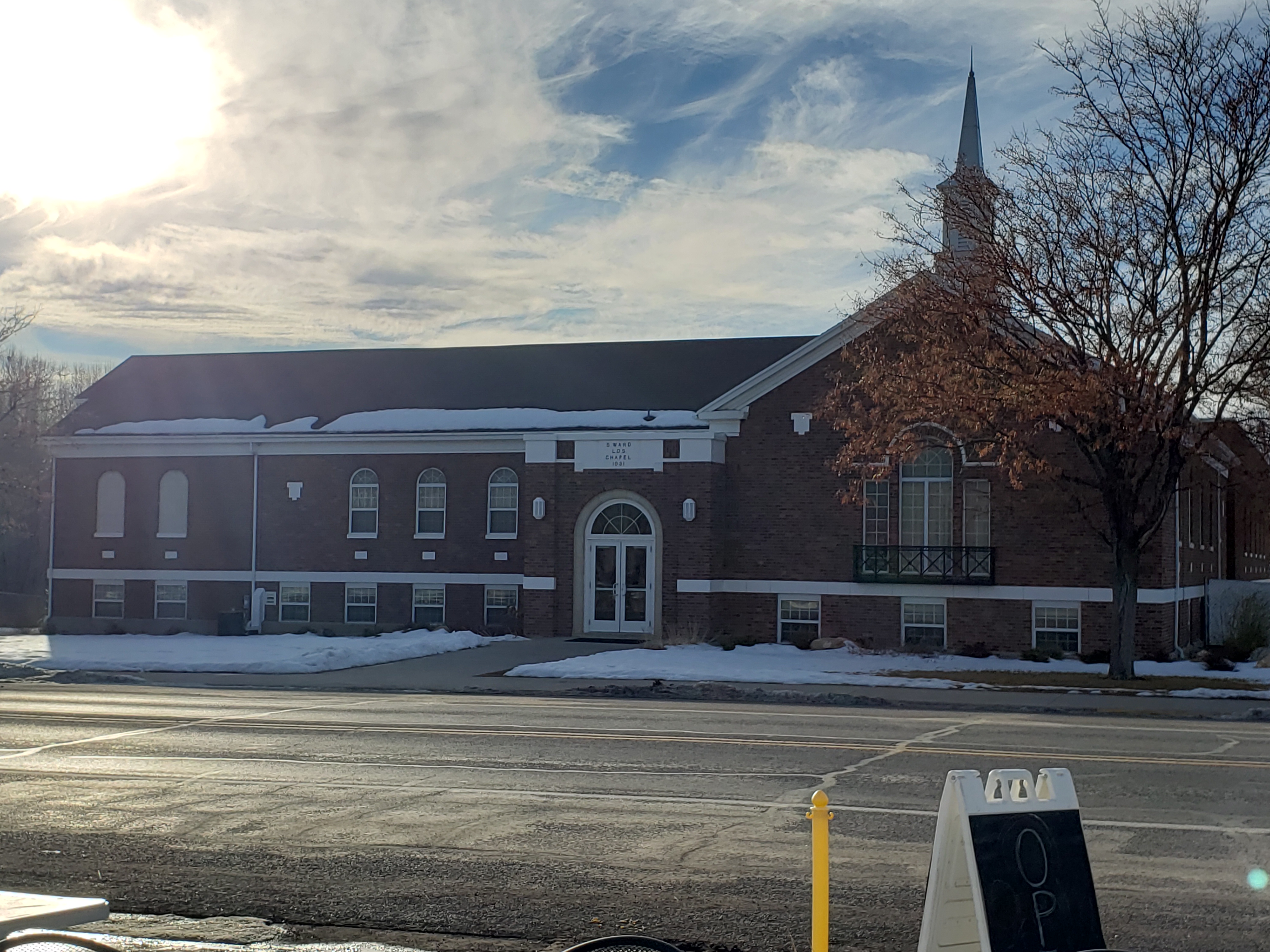
This chapel of the Church of Jesus Christ of Latter-day Saints was built for the Mound Fort Ward, which was named for the early pioneer fort built on an Indian burial mound.
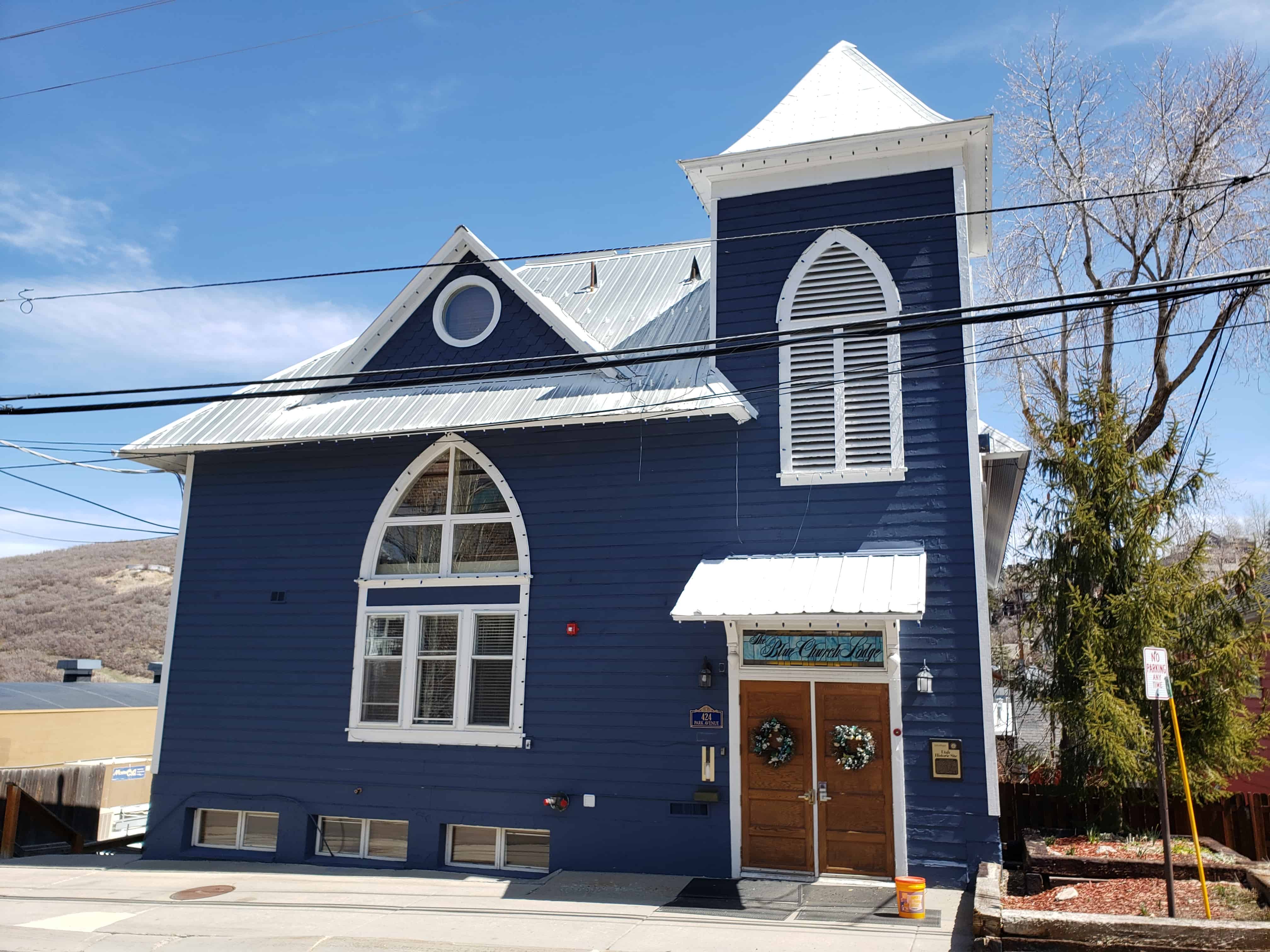
Although the mining community of Park City began in the 1870s, it was not until 1895 that plans for the construction of this LDS Church were formulated. In 1897 construction on a meeting house was started and apparently completed that year. However, the church was burned in the great fire of June 19, 1898, which destroyed many of Park City’s buildings. Rebuilt in 1899, this building was formally opened for services on March 18, 1900. An addition was made to the rear between 1926-1930 and in 1938 work commenced on the amusement hall. The building served as a meeting house until 1962.
The LDS Park City Meetinghouse is located at 424 Park Avenue in Park City, Utah and was added to the National Historic Register (#78002696) on May 22, 1978.
The Park City Mining District dates to a beginning in 1868, with the discovery and location of various claims, among the more important were those by Rufus Walker and Ephraim Hanks. The discovery of ores and organized mining efforts in Utah is credited to the efforts of Col. Patrick E. Connor and his men, a group of California and Nevada volunteers, sent to Utah by the Secretary of War in 1862 to “watch” the Mormons and protect the Overland Mail. Connor’s men included many who were veterans of the California and Nevada mining fields. As such, the men, in passing their time, prospected the mountains in search of precious metals. When the first discoveries were made in the Park City area, Connor’s men were among those active in the vicinity.
In 1872, the discovery of the Ontario mine started Park City’s establishment as one of the West’s richest silver camps. Other operations such as the Daly Mining Company, also contributed to the district’s reputation. Mining in Utah for precious metals was promoted and advanced primarily by “Gentiles”; that is, non-Mormons. Irish influence was very pronounced and from the outset, Park City was a “Gentile Camp”.
Opposition to Mormons in Park City appeared very intense. In 1886 an organization known as the “Loyalty Legion” allegedly wrecked the home of an individual named (Gad) Davis, leader of the city’s Mormons. Additionally, the group encouraged mining companies not to hire Mormon miners. A “ban” existed for approximately seven years, when in 1894, church leaders prevailed upon the mining companies to employ Mormon miners. This coincided with the movement of Mormon entrepreneurs into mining ventures all over the state.
Church membership grew and meetings were held at Roy’s grocery store on Main Street. In 1894 Margaret D. Mason deeded lots 26 and 27, block 10 to the Trustees of the Park City branch of the Church of Jesus Christ of Latter-day Saints, reserving for herself the rear fifteen feet of property for a consideration of $600.00. At a business meeting held at Park City on March 3, 1895 and attended by President William W. Cluff, a committee of three consisting of Frederick Rasband, Orvis J. Call, and George W. Curtis, was appointed to select a building site on which to erect a meeting house. In August, 1895, a building committee comprised of Thomas L. Alien, John Adamson, Frederick Rasband, Hugh Reid, and Fred Thompson, was selected for the erection of the church.
Sources indicate that in 1896, $1,136.19 was raised for the new meeting house. Work continued on the building in 1897 with nearly $1,200 having been raised. On March 1, 1897, the basement was completed to the extent that it was used for a priesthood meeting., A second meeting was held there in April, with Charles Rasband replacing George W. Curtis as branch clerk. The meeting house was destroyed by fire June 19, 1898 the “Great Fire” destroyed many of Park City’s structure on the upper main street area.
Action to remedy the problem was quickly taken. In July, Willard Sorensen and William E. Potts were elected trustees to hold the deeds to the Church property. By September, 1898, the building committee previously chosen was reorganized with Thomas L. Alien, Chairman, William E. Potts, secretary and James R. Glade, treasurer. This committee took the necessary steps for the erection of a new structure.
Construction commenced approximately in 1899 and the finished portion of the two-story structure was formally opened for use on Sunday, March 18, 1900 and consisted of the assembly area. The main room was 40 ft. by 40 ft. and 18 ft. high with two vestry rooms, 11 ft. by 16 ft. and 11 ft. by 14 ft. respectively. At the March meeting a silver sacrament service was presented to the branch by the Relief Society with numerous visitors attending and a formal address presented by Apostle George Teasdale.
In 1925 Margaret D. Mason deeded the rear 15 feet of lots 26 and 27, block 10 to the Park City Church. During the following year, steps were taken to construct a 30 foot addition to the rear of the building which was completed between 1926 – 1930. By 1938, work commenced on the Ward Amusement Hall in the lower level of the structure.
The church remained as the meeting house until 1957 when church members voted to build a new chapel at a cost of $114,000. In December, 1962, the new church was dedicated. The old structure was in private hands until 1976 when it was purchased by it present owner.
Thus, the church was the first chapel of the LDS Church in Park City, rebuilt after the 1898 fire. Its wood Gothic style renders the structure as a rare “existing” example of this style utilized by the LDS Church. In fact, the use of the frame Gothic style for a meeting house dates to the turn of the century and the Park City and Eureka chapels remain the only significant examples of the frame type. In addition, the Park City meeting house is the largest frame structure existing in the town that dates back to the conflagration of 1898.
This structure represented the culmination of years of struggle by the Mormon community in a “Gentile” camp and has served a basic function in tending to the religious needs of the Park City Mormon population. In 1976, the Park City Council designated the structure as a historic building.
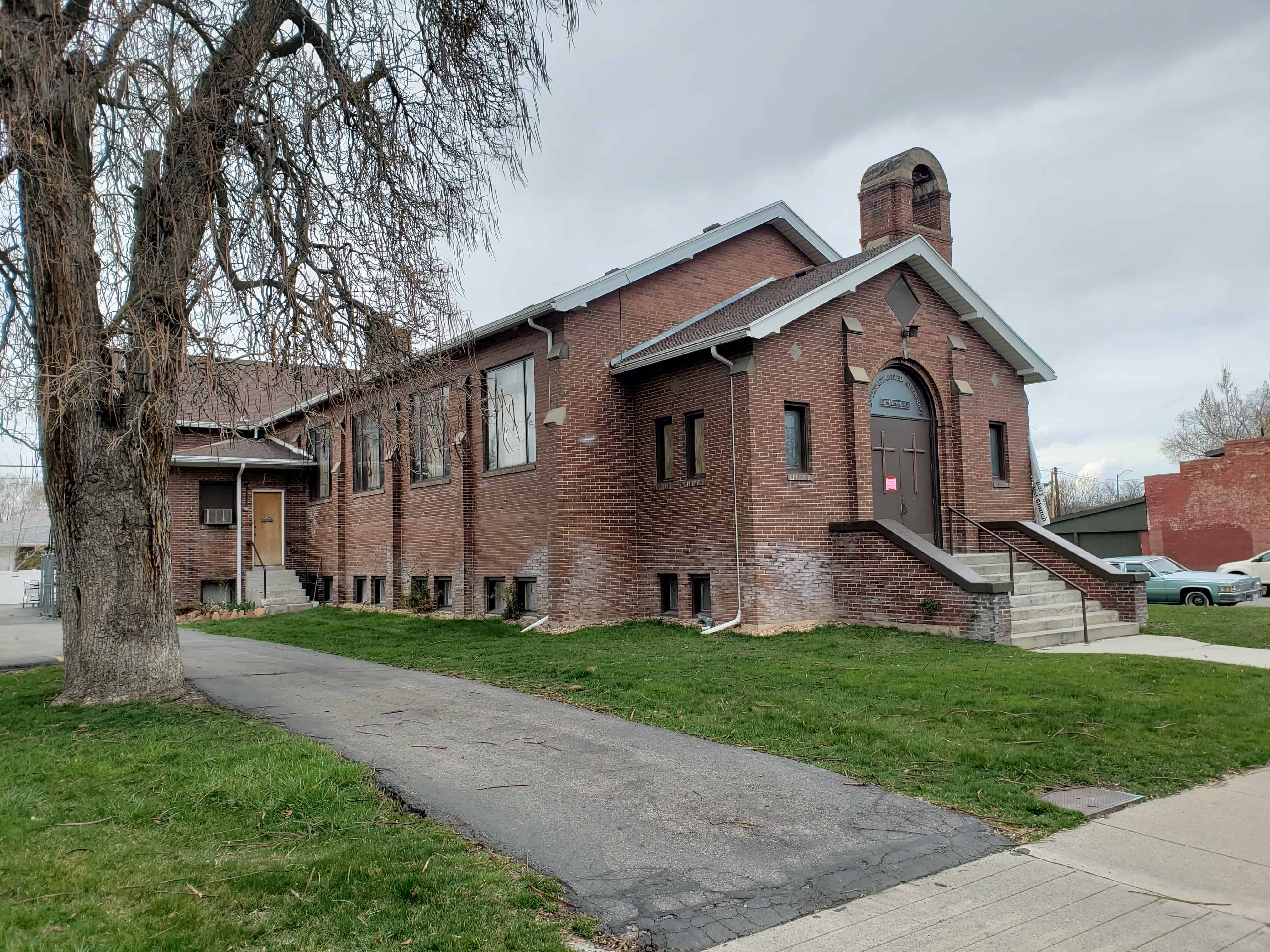
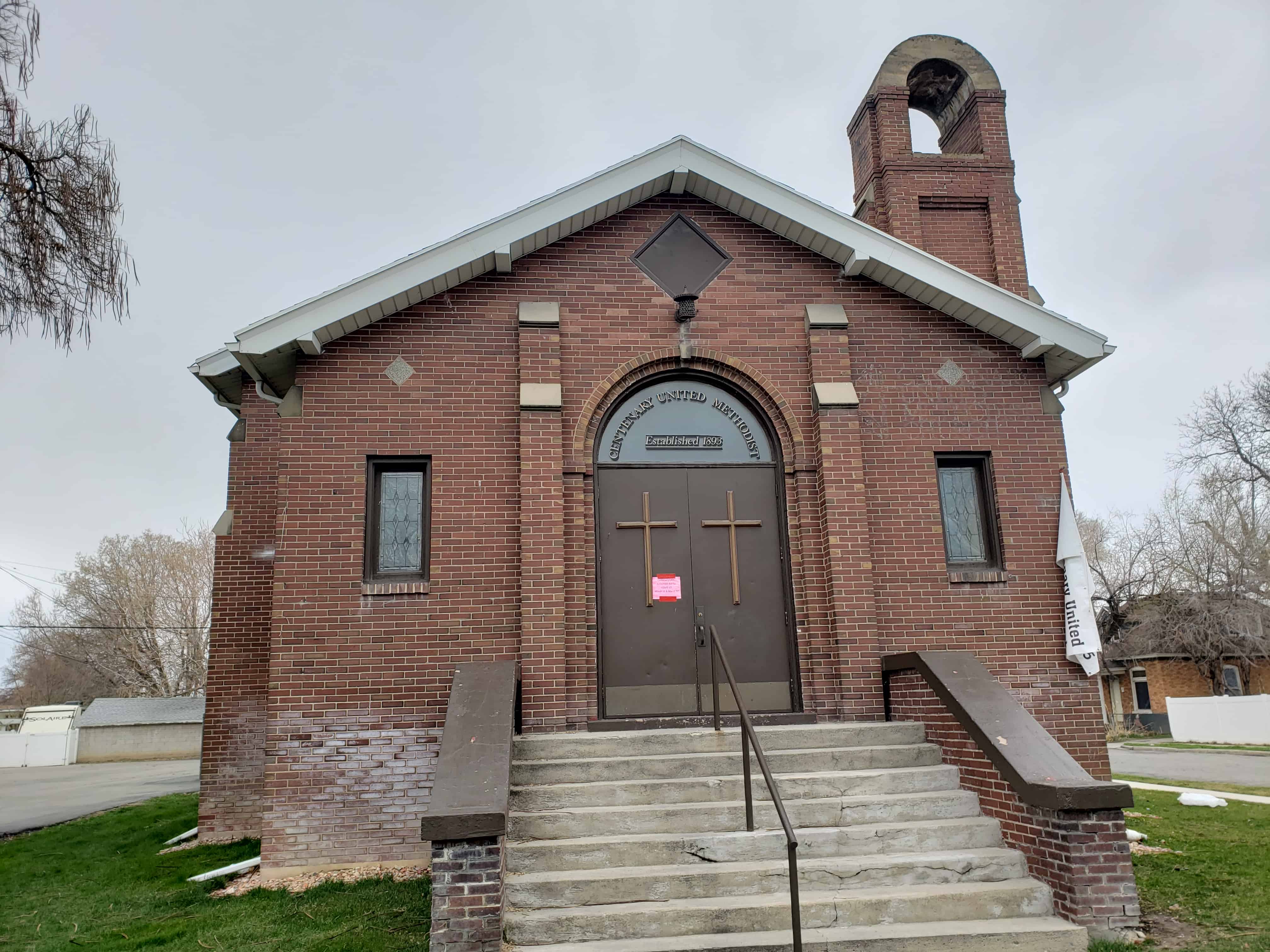
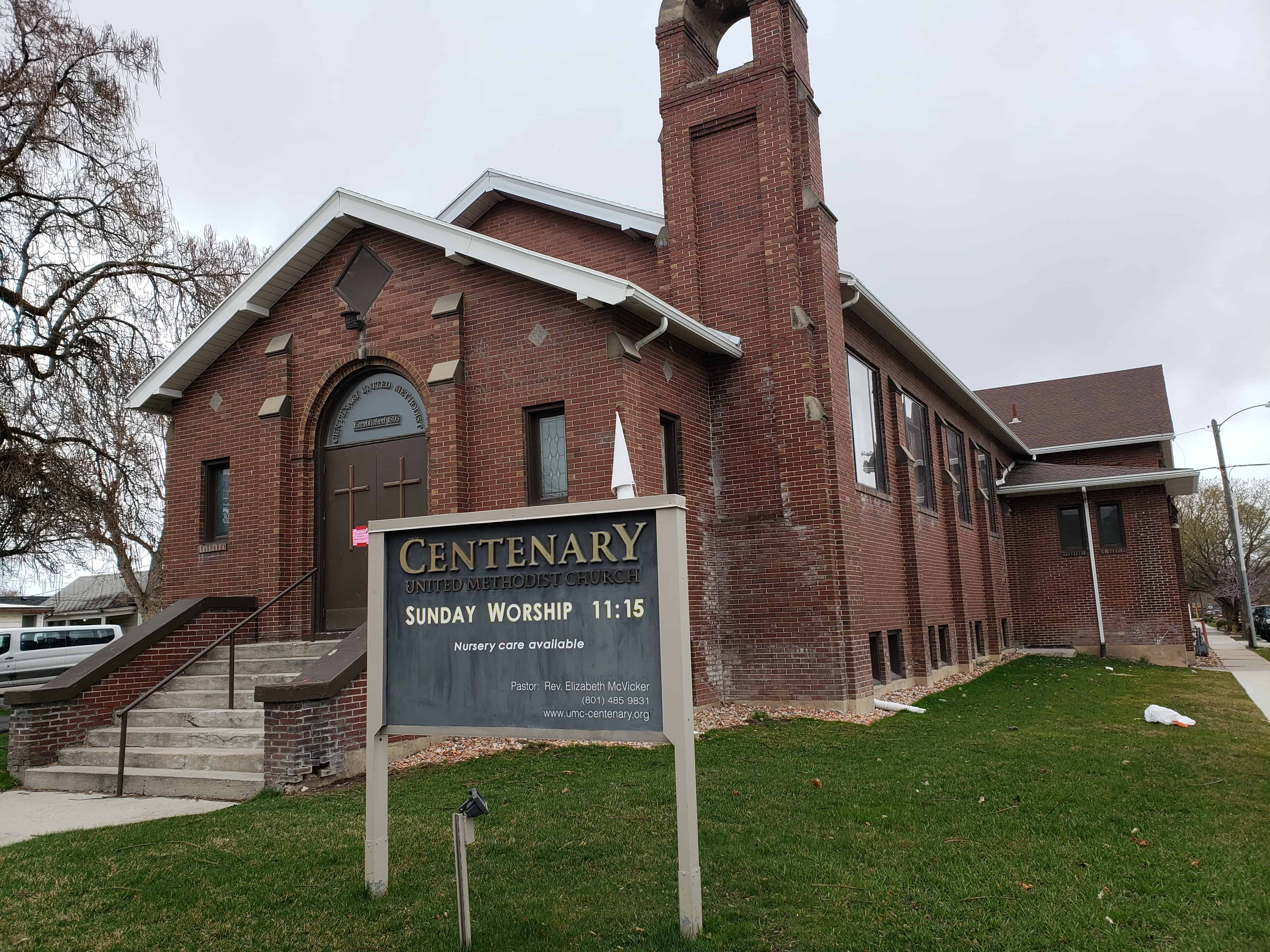
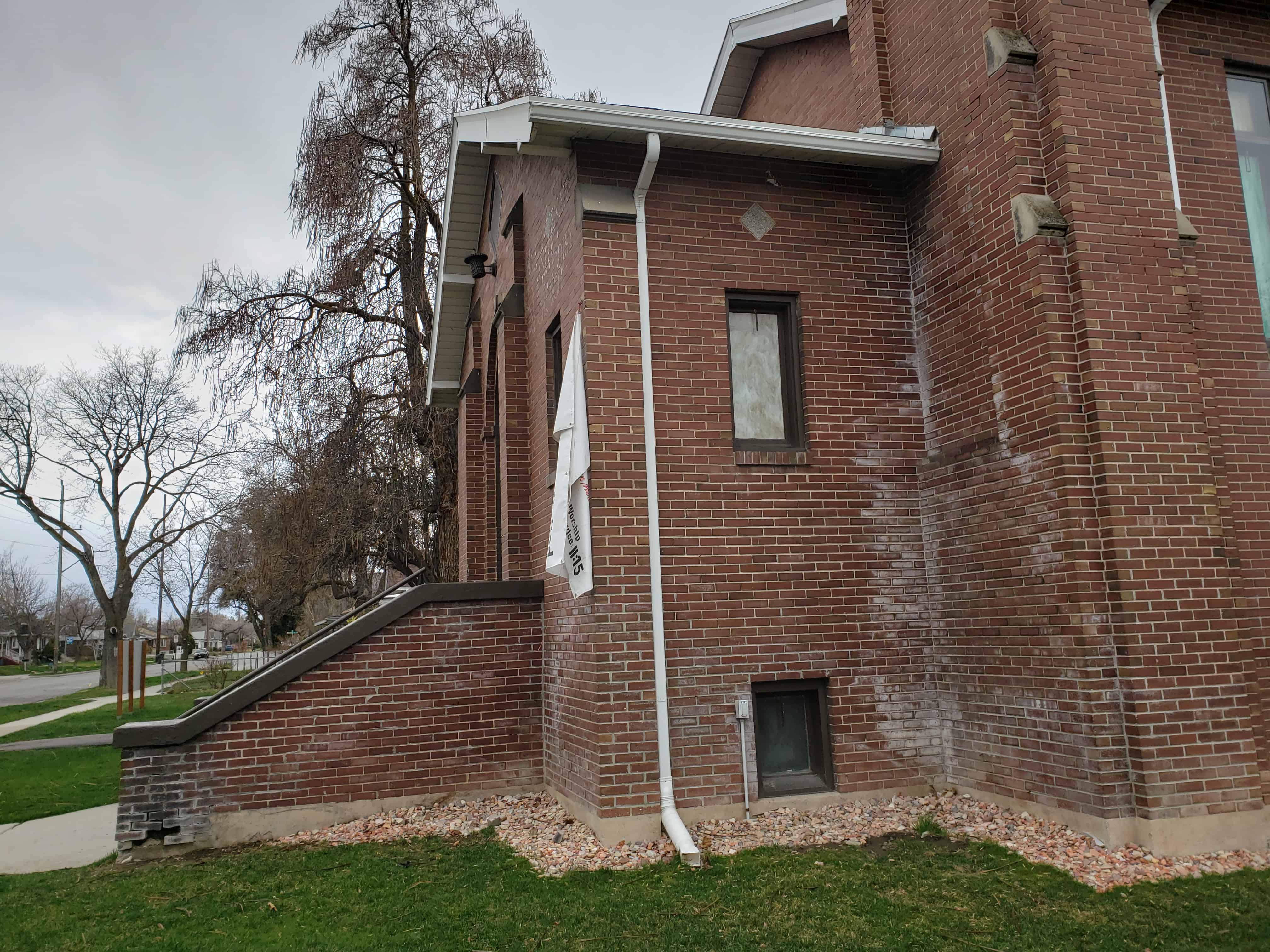
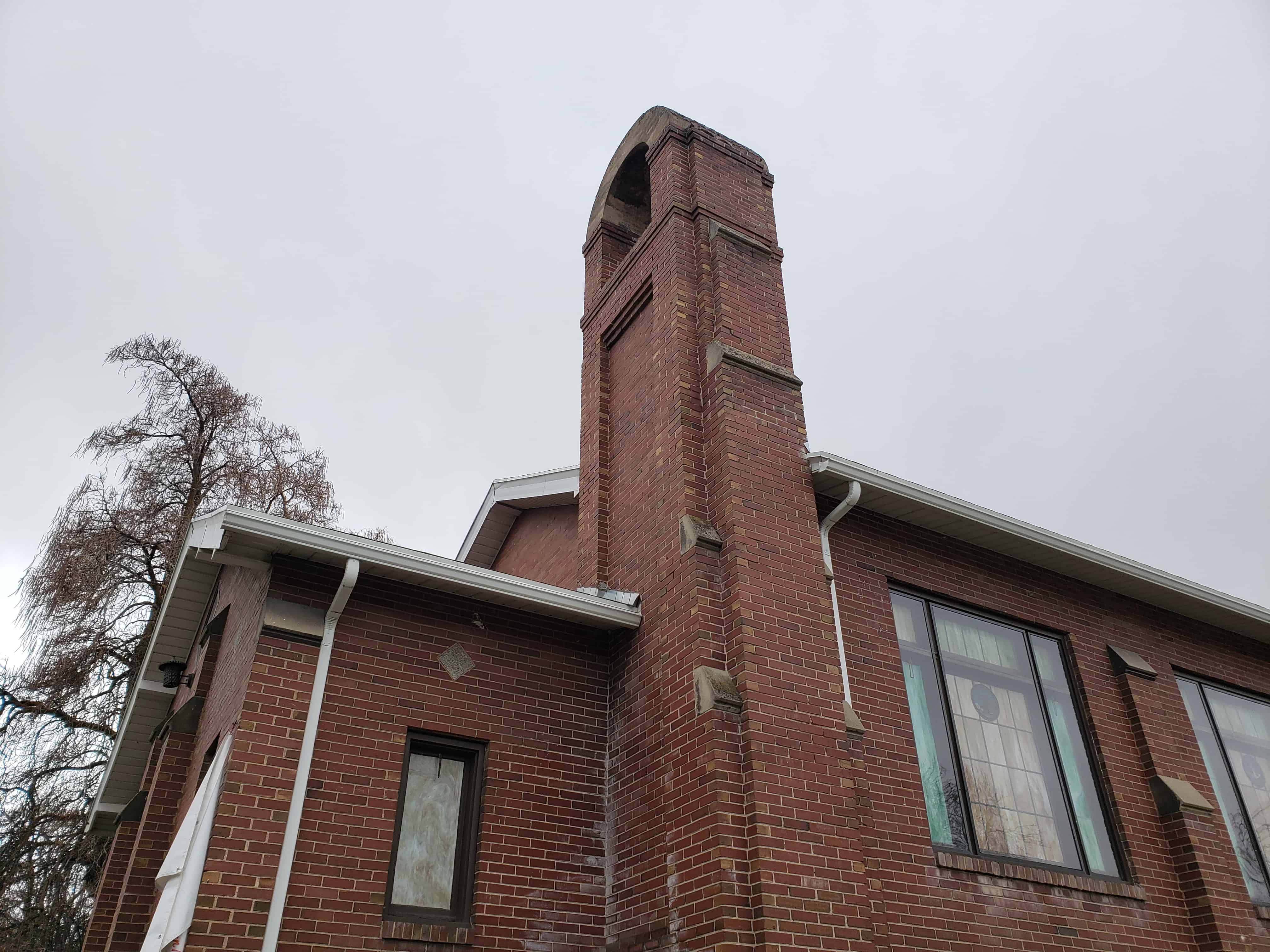
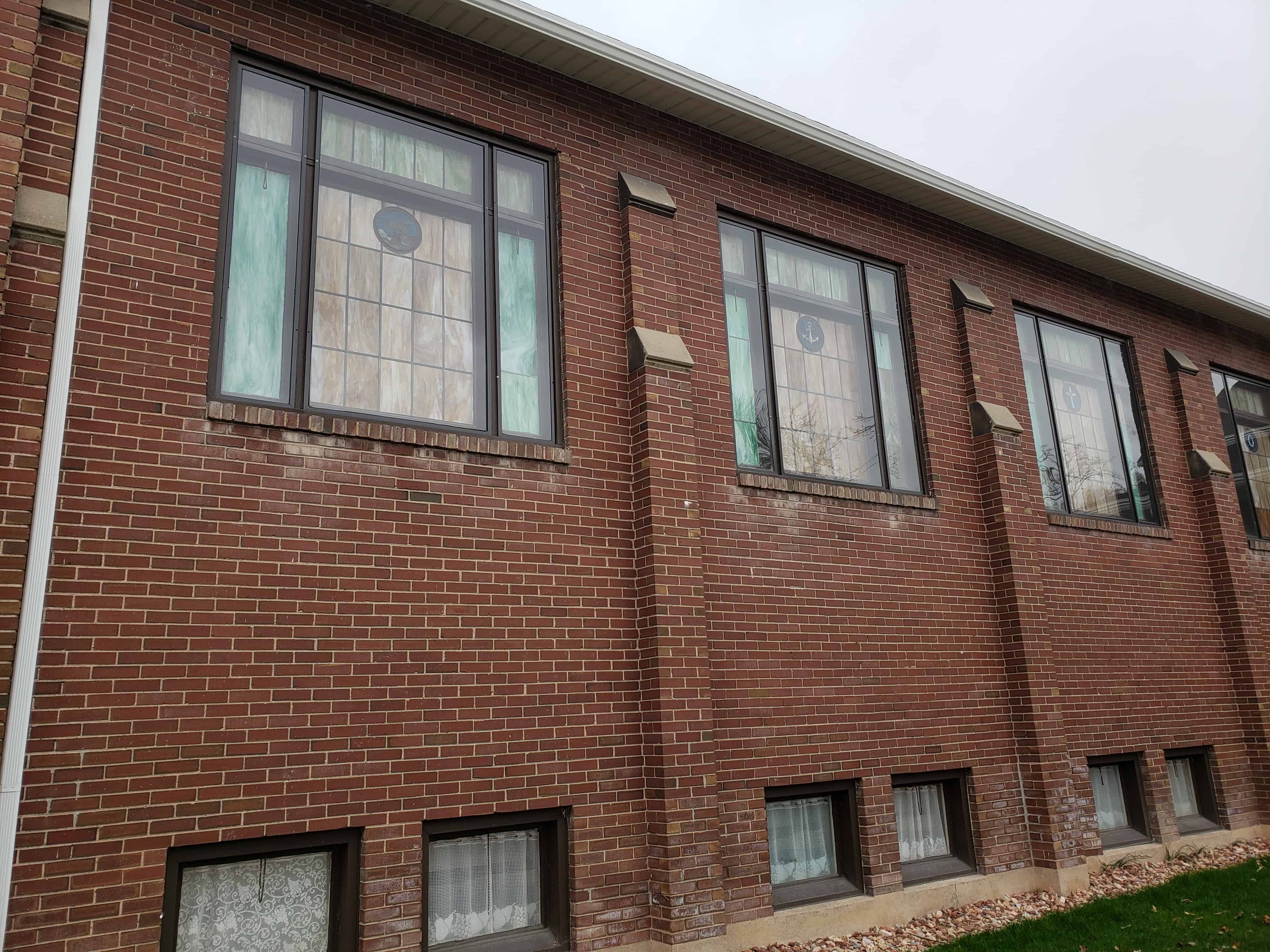
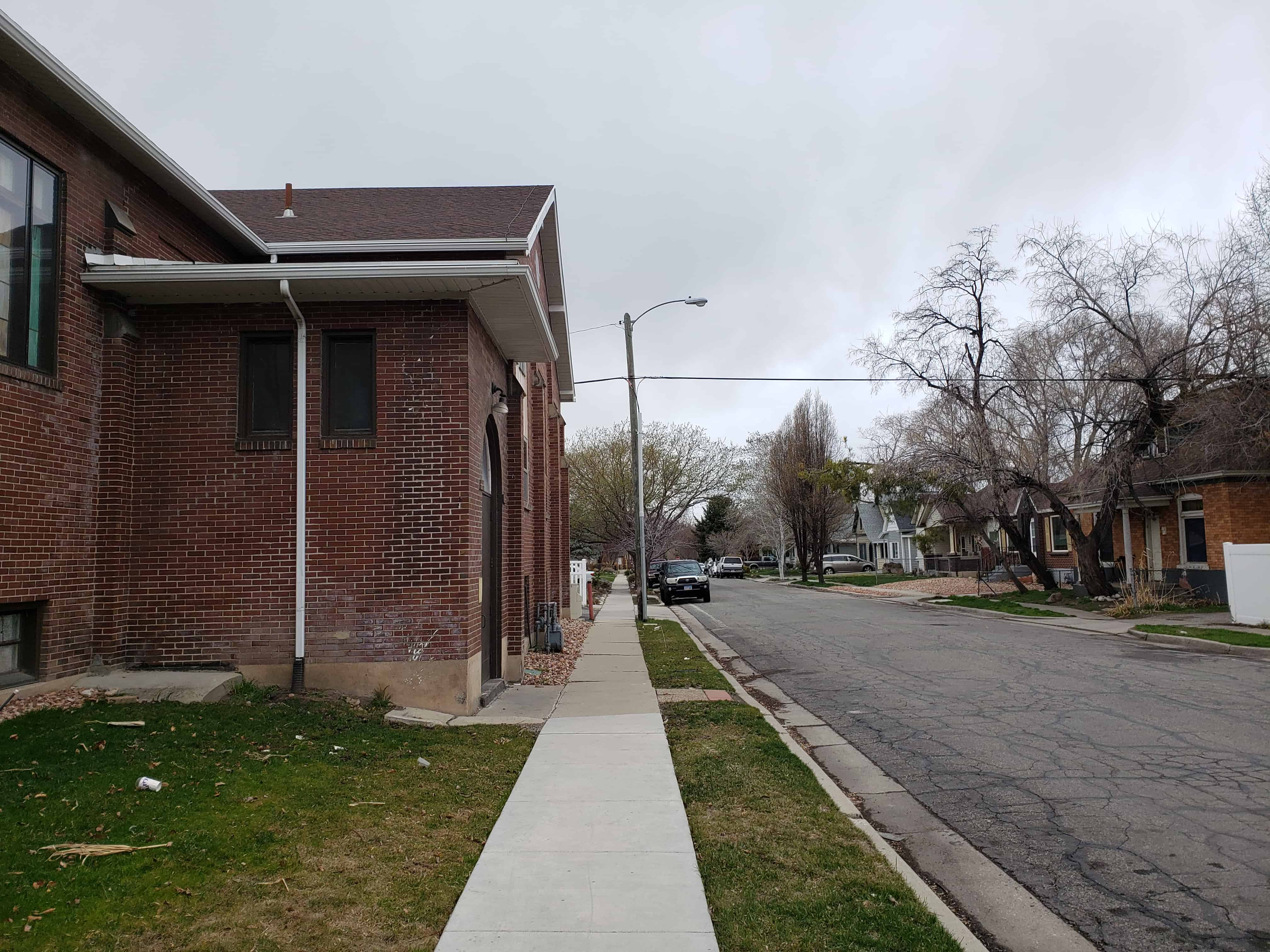
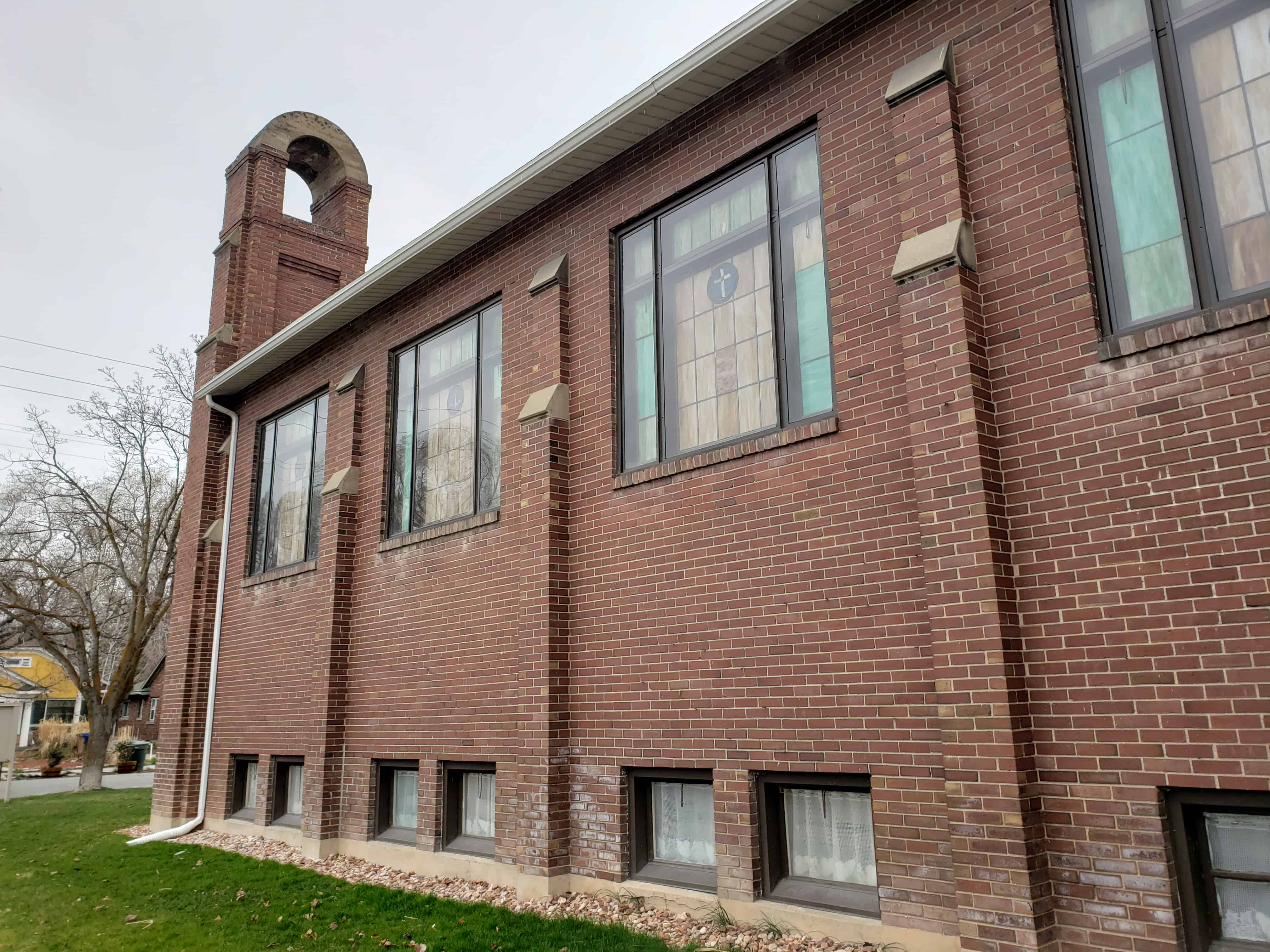
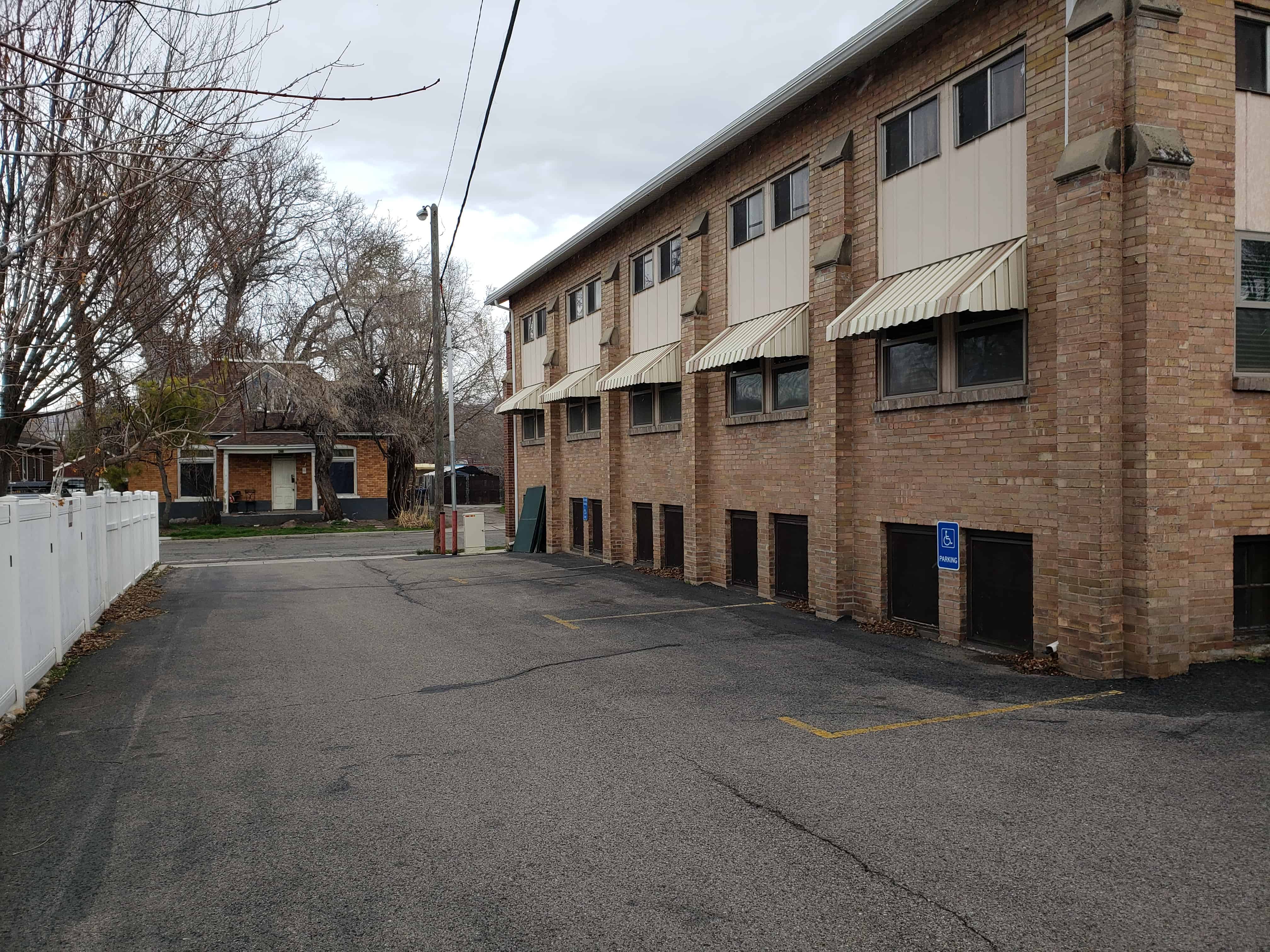
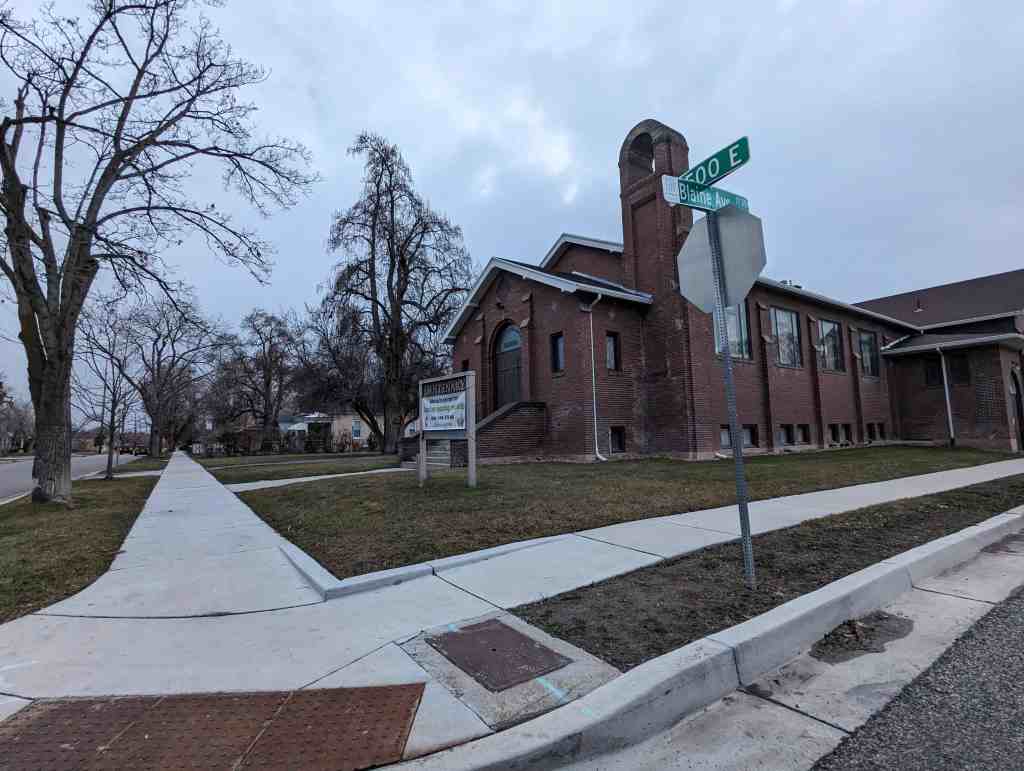
Centenary United Methodist Church, established 1893. Built in 1920.
1740 500 E, Salt Lake City, UT
History from this page: In 1892, The Rev. George E. Jayne was appointed to the “Salt Lake City Mission.” Apparently, his task was to start congregations in the new additions of the rapidly growing city. He met with success in Waterloo Addition, where a lot and building were purchased from the Congregational Church near the southeast corner of what was then Fourth East and Eleventh South (now Seventeenth South). The minutes of the June 1893 annual conference report, “The property there now is worth $1,600, and was purchased and furnished at a cost of $1,000 without help from the Church Extension Society. The Chapel was dedicated, free of debt, May 21st. The membership is 36 and they have been “very helpful in the benevolences.”
The first nine members of the church are recorded as having joined on November 20, 1892, and so we mark our beginning with that date. The church was named Second Methodist Episcopal (M.E.) Church; in a few years it became Waterloo M.E. Church; and in 1921, the name was changed to Centenary M.E. Church. The Methodist Episcopal Church, after going through two mergers, is now known as the United Methodist Church, and so our congregation is Centenary United Methodist Church.
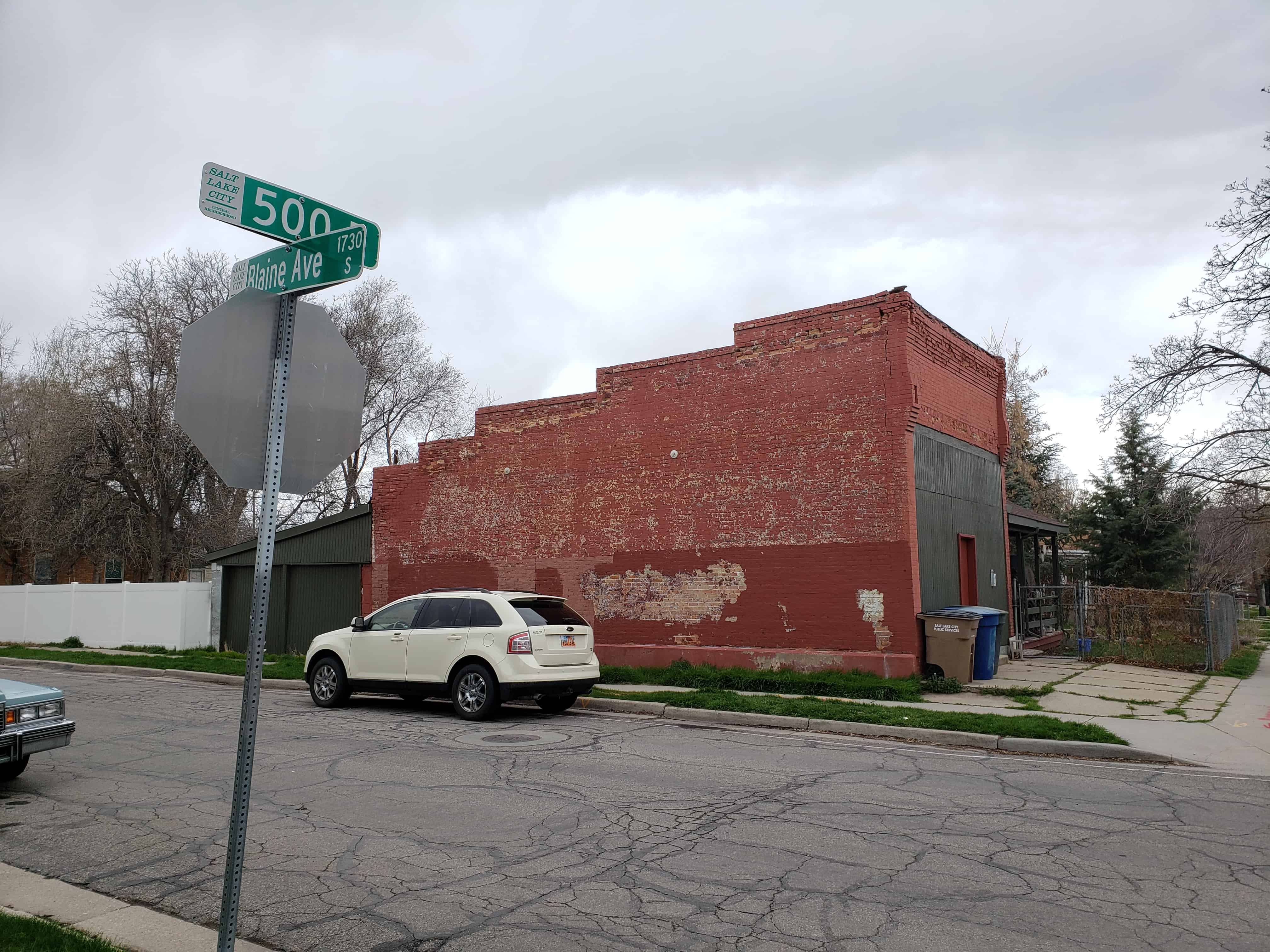
The first building was quickly outgrown and a new building was erected adjacent to it, or nearly so, on the northeast corner of Fourth East and Galena, now Blaine Avenue. In 1920-21, we moved east one block and to the south side of Blaine where the current building was built, funded in part by the Methodist “Centenary” campaign- thus the name, Centenary. Our roots are deep in this neighborhood, having spent the entire one hundred years here.
A few months after Second M.E. church began, Rev. G.C. Waynick was appointed to begin a new work on the west side of the city. After a five week tent revival, nineteen members had joined what was to become Heath M.E. Church, later Grace M.E. Church. In 1975, Grace United Methodist Church was disbanded. Most of its members transferred to Centenary; and we have been blessed by their presence.
We have grown and declined throughout the years in numbers and activity. In 1956, Mrs. C.W. Wrathall remembered that soon after the present building was dedicated, the pastor, Frederick J. Cox, thought it was too large and ought to be sold to the L.D.S. Church, who had offered to buy it. She noted, “There were only 15 people in the congregation, but others felt that the new building should be kept, and that we should try to grow into it.” That growth happened, and throughout its life the church has bustled with energy. Now, with about one hundred members, we are engaged in discovering new life and ministries here.
The church has a solid history of faithful commitment. Two of the original members, Samuel Allison and Charles Campbell, became ordained ministers. In 1916, the church was ahead of 99.8% of all Methodist churches in the country in benevolent collections per member; the standard was a penny per day per member. In recent years, the church has been recognized for its support of various ministries locally and around the world, and individual members have been cited for their discipleship.
We celebrate the soul of this congregation! It is a soul that made Centenary “the church that refused to die.” It can’t be described in a few words or a single concept. It is found in the litany of the stories out of our past and in the confidence with which we face our future. The sign of it can be seen in the faces of our members whenever we meet together; it is alive in the service we do for Christ. We thank God for our church!