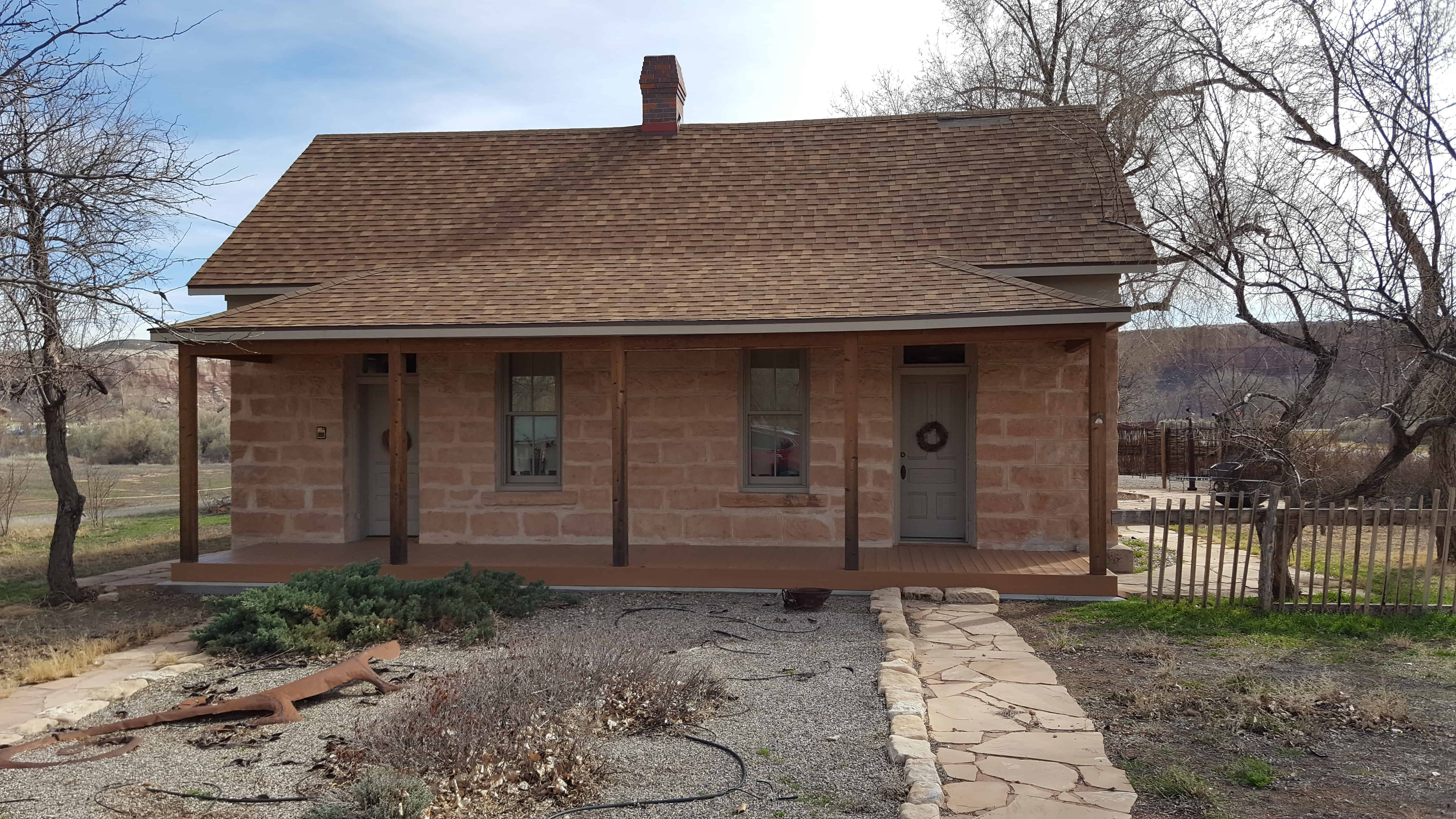
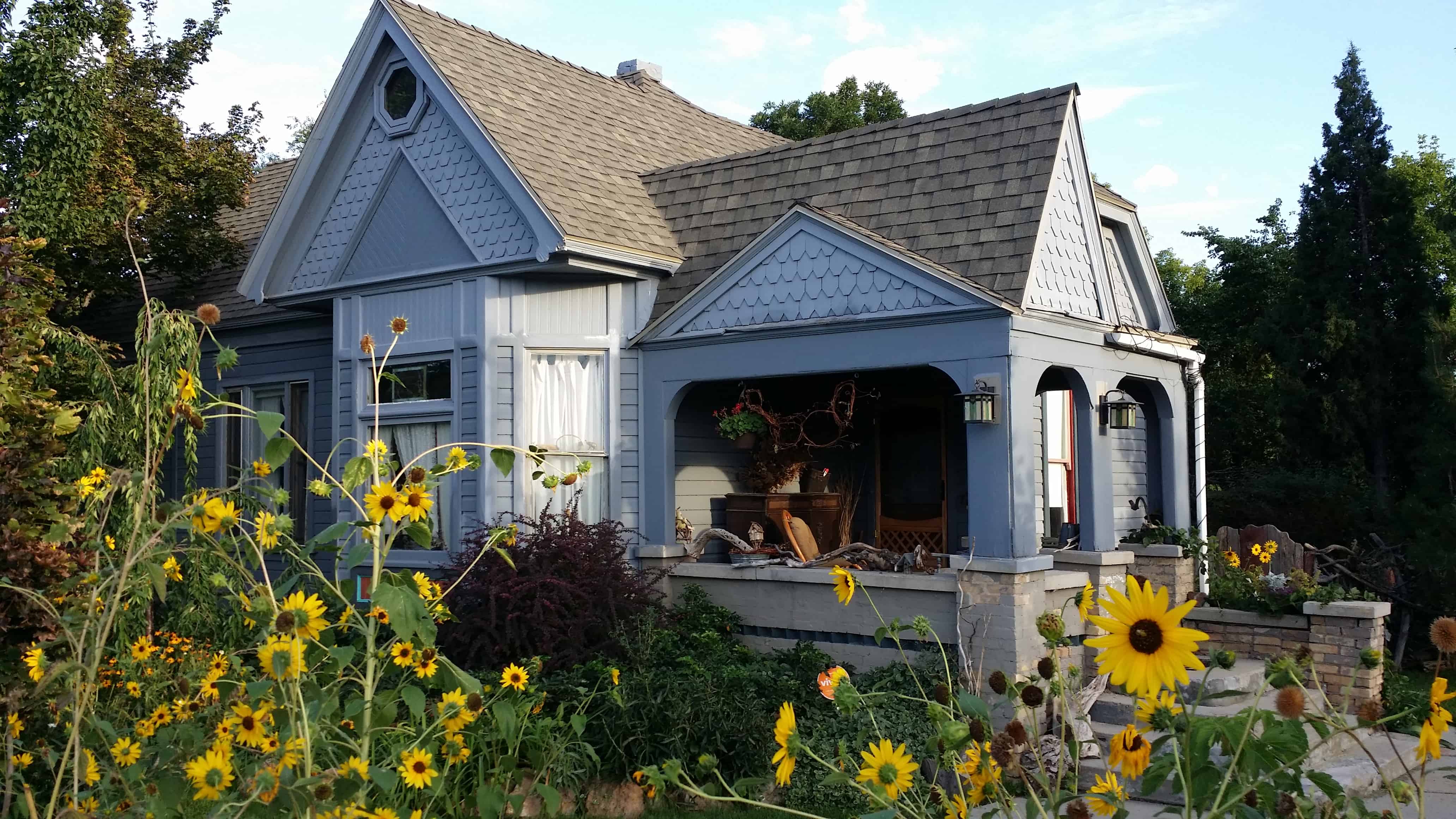
This small, one-story, gable-roofed, vernacular, double-cell type house was originally constructed in the 1890s, by Hyrum Corey Perkins. H.C. Perkins was the son of Hyrum and Rachel Marie Perkins, who were original members of the pioneering Hole-in-the-Rock colonizing expeditions in southeastern Utah. A log cabin was originally located on the lot, which was taken down when this double-cell house was built. Retaining its integrity, the house contributes to the architecture and community of historic Bluff.
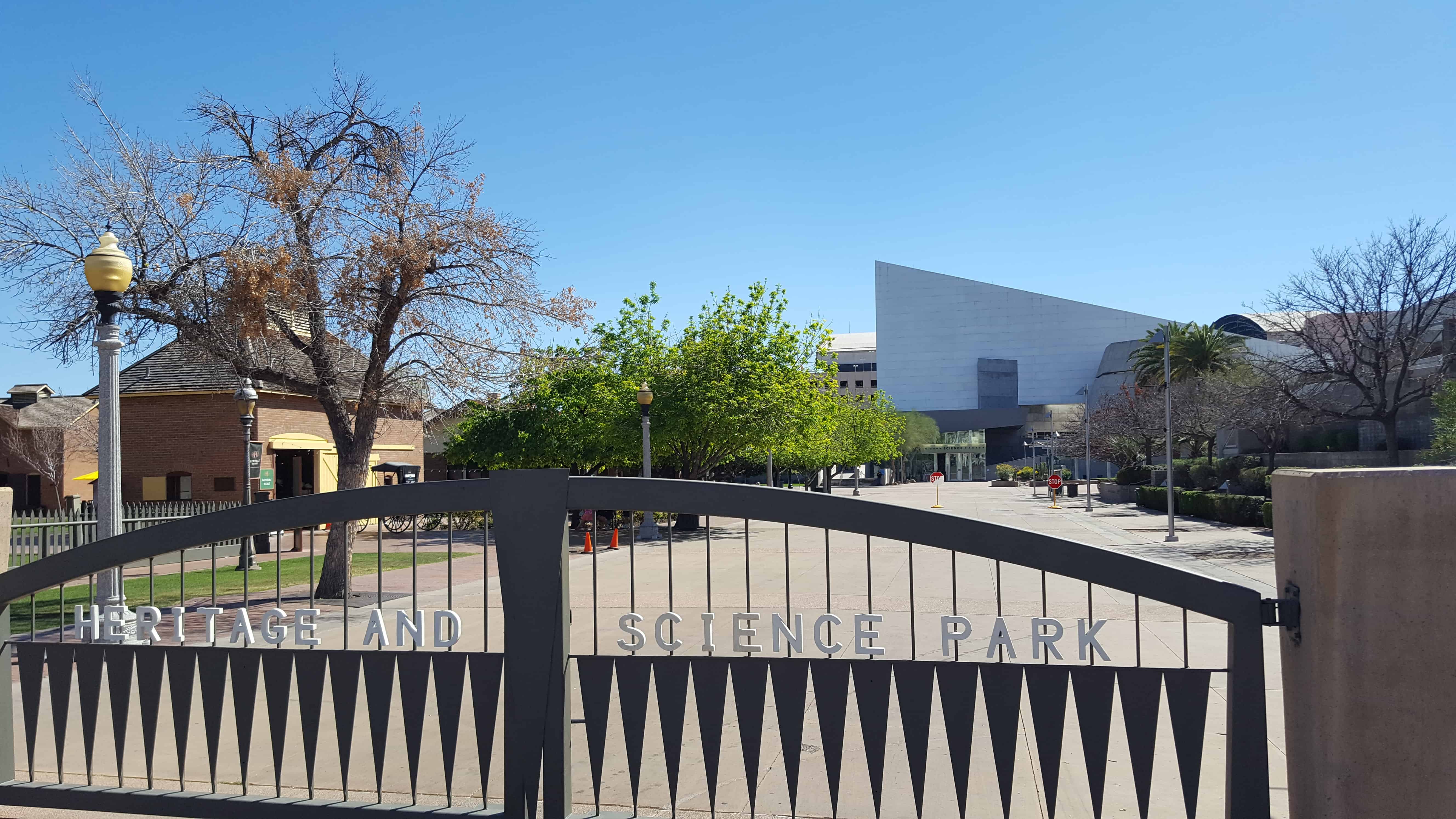
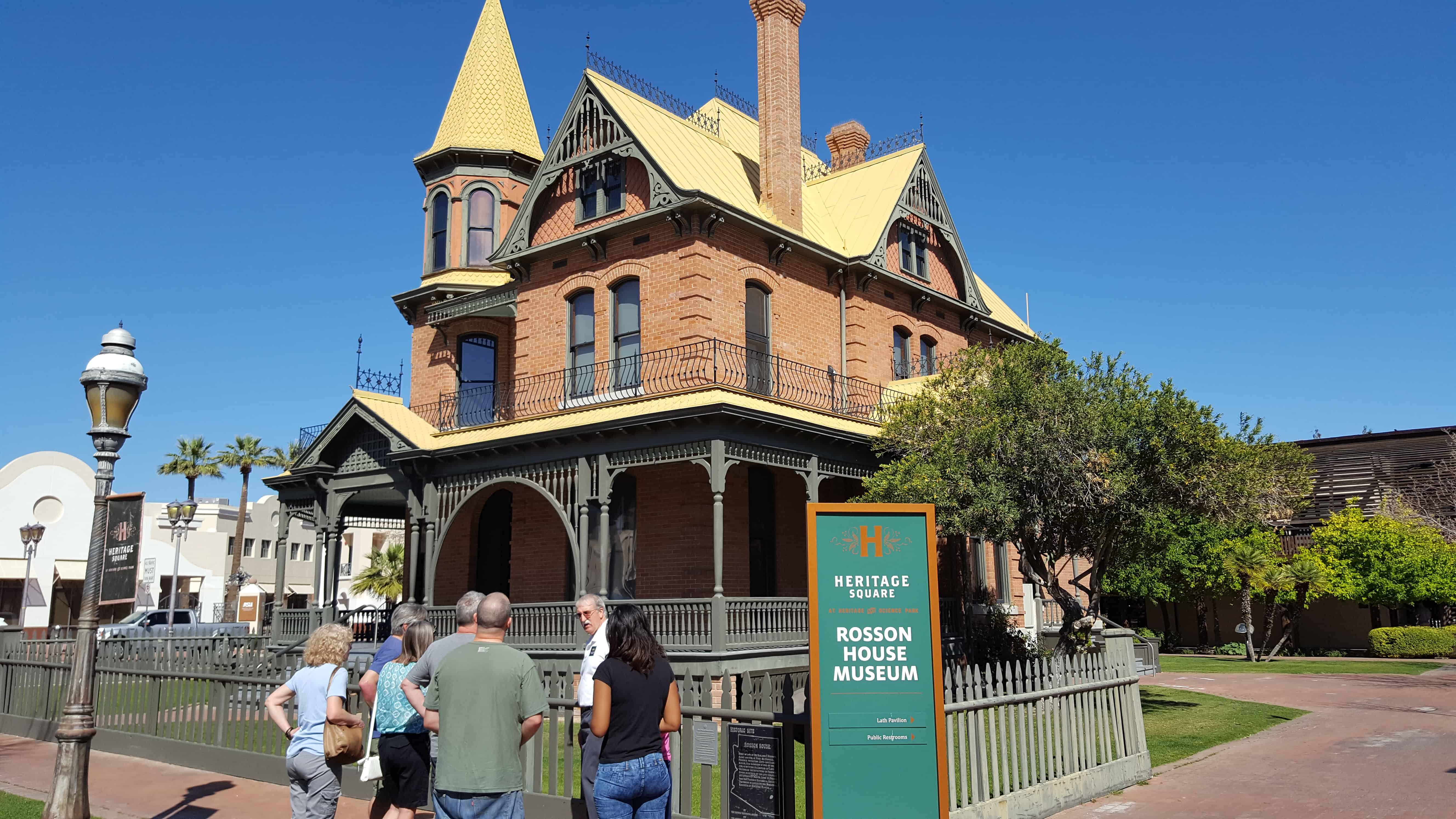
The Rosson House was built between 1894 and 1895 and still sits in its original foundation in downtown Phoenix. Named for Dr. Roland Lee Rosson and his wife Flora Murray Rosson, the house changed hands numerous times before being purchased by the City of Phoenix and restored to its original condition. It now serves as a historic house museum located in Phoenix’s Heritage Square.
Dr. Roland Rosson came to Phoenix in 1879 where he established himself as a general physician and surgeon. Rosson practiced medicine on and off in Phoenix from 1879 until 1897. In addition to his career as a physician, Rosson was also involved in politics. In 1882 he was listed on the Democratic primary ticket. In 1884 he was elected Maricopa County coroner and public administrator. In 1890 he won the office of county treasurer. In 1892 he was elected for a second term and later unsuccessfully attempted to secure the Democratic nomination for sheriff. On May 7, 1895, Rosson was elected Mayor of Phoenix. He served as a Democrat in this unpaid position along with four Republican councilmen. Rosson’s position as mayor was short lived. After difficulties with the city council, he resigned his office on April 6, 1896, before his term was over. Rosson appears to have stayed active in the political scene in Phoenix and his name appears in multiple issues of The Arizona Republican newspaper.(*)
Roland Rosson married Flora B. Murray in Phoenix on August 11, 1880. The Rossons had a total of seven children – Irene, Vivien, Floy, Norma, and Clyde lived to adulthood. Their two other children died in infancy – their first son Roland Lloyd died at age five weeks, and an unnamed daughter died at birth.
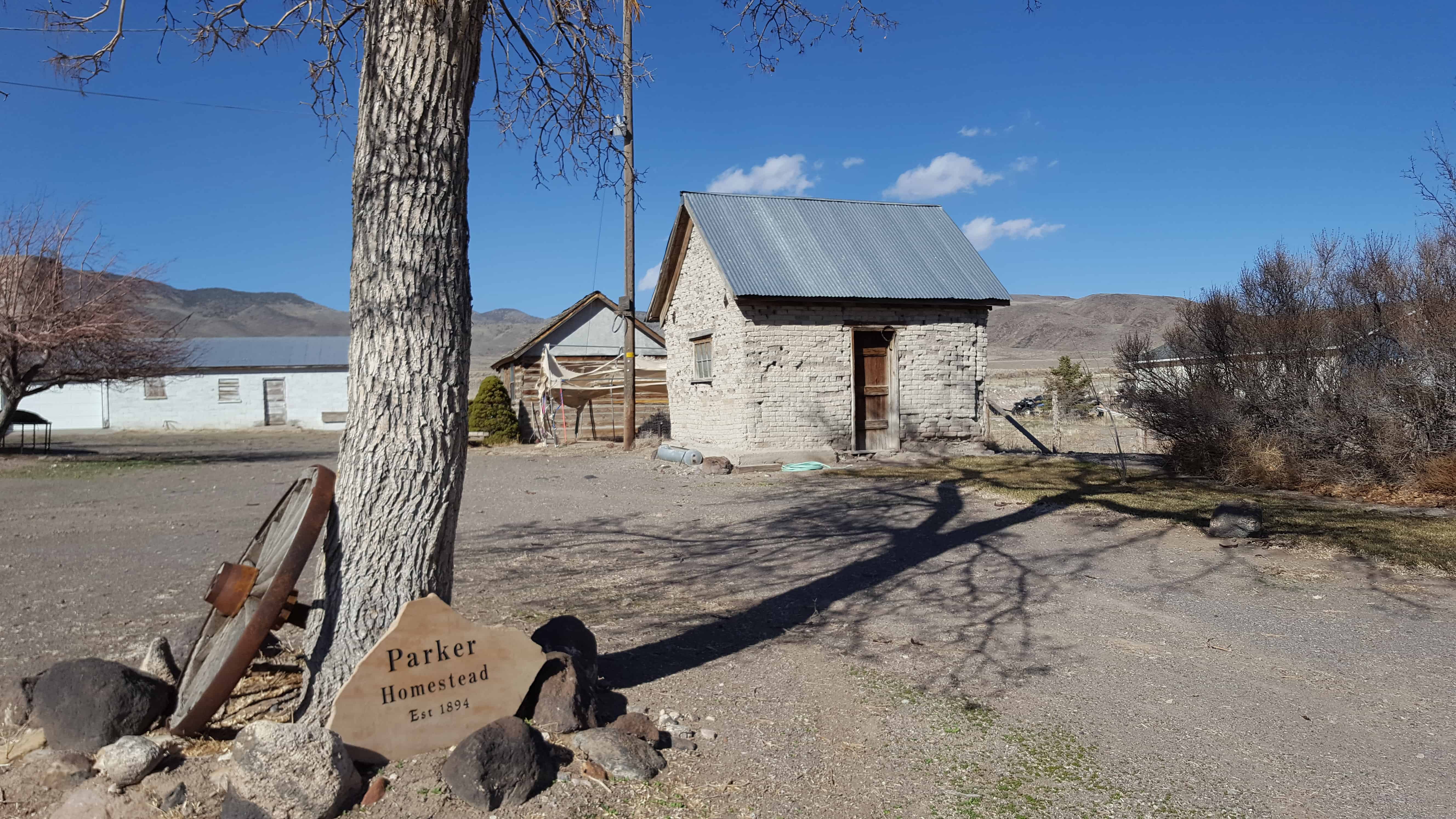
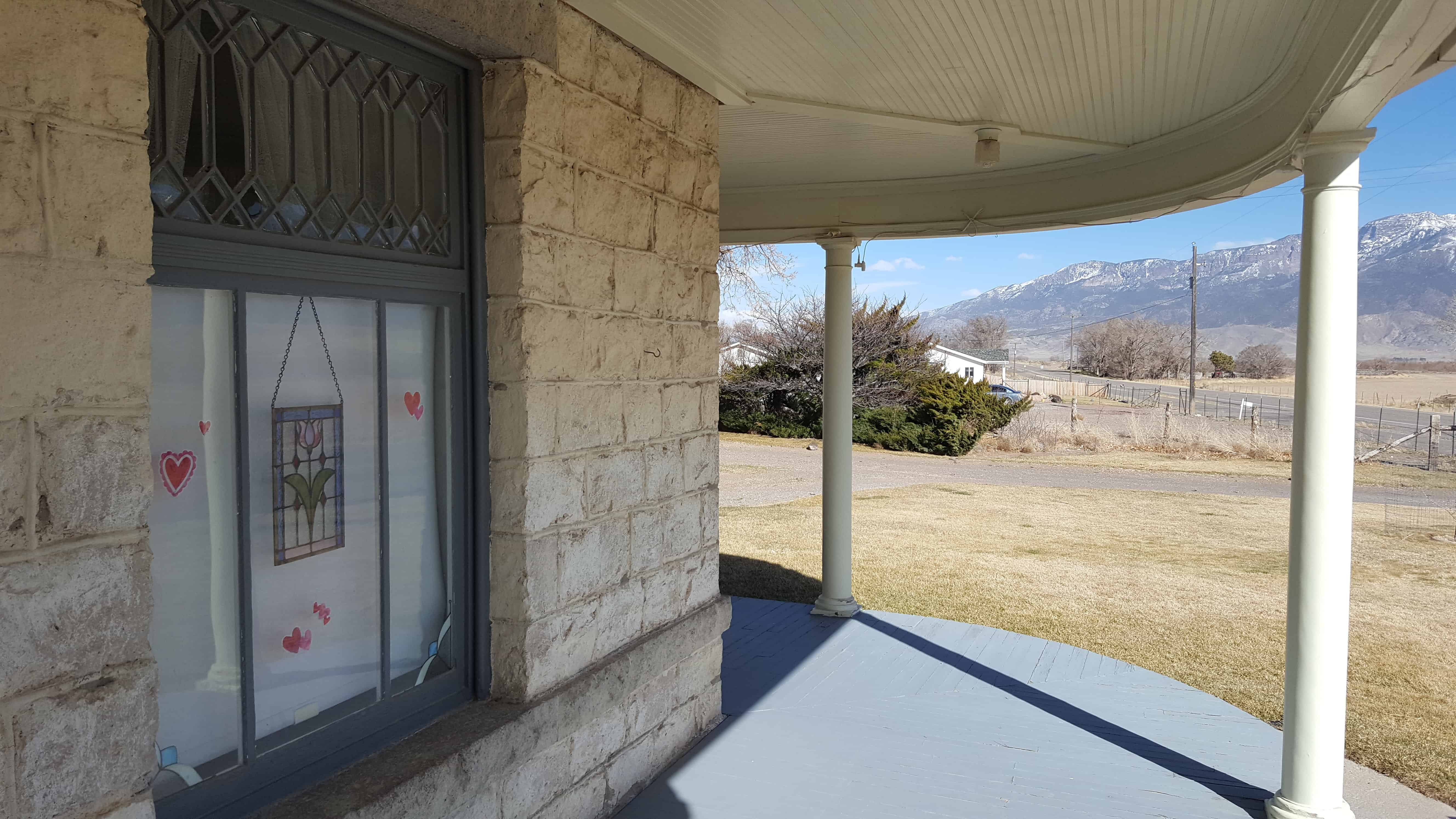
Around 1892, Joseph William Parker traded his house and land in Joseph for 74 acres of undeveloped land outside town. He built a one-room sawed log house where the large family was reared until this Victorian Eclectic style home was finished in 1911. The home was designed by architect/builder A.G. Young of Richfield and was constructed of local oolite limestone. This farm included an outstanding Jersey dairy herd and became a “show place of agricultural activity.” Mr. Parker helped organize the Joseph Cooperative and served as bishop of the Joseph Ward of the LDS Church.
Located at 1705 Sevier Highway, just outside of Joseph, Utah and added to the National Historic Register (#77001318) on March 25, 1977.
The Joseph William Parker Home is an excellent example of one of Utah’s more prosperous agricultural undertakings. Moving on to the undeveloped land in 1892 and despite a two and one half year absence while serving a mission for the Mormon Church, Mr. Parker was able to develop his property into one of the best known agricultural enterprises in South-Central Utah. The small one-room log house juxtaposed with the stately eclectic Victorian style house is a vivid statement of one man’s ability to successfully meet the challenge of Pioneer Utah.
The later Parker Home, built 1907-1911, is also significant as an example of outstanding local craftsmanship and design. Essentially a Victorianized house pattern book type plan, the well built home was designed and constructed under the direction of Archibald G. Young, an architect/builder from nearby Richfield.
Joseph William Parker was born November 19, 1864, at Heber City, Utah. In 1872 his father, Joseph Faulconer Parker, moved the family to Joseph City in Sevier County. The community of Joseph, named for Joseph A. Young, a son of Brigham Young and President of Sevier Stake of the Mormon Church, was settled in the fall of 1872. Joseph William Parker received his early education at Kanosh and Joseph, then attended Brigham Young Academy in Provo for two years. He married Margaret Jane Neel, a schoolteacher, on November 4, 1885, and they built a two-room house near the public square in Joseph City. Against the advice of his family and friends, Joseph W. Parker traded the 2-room house and twelve acres of improved farm land on the outskirts of Joseph for sixty acres of unimproved land and fourteen acres of pasture land two and one-half miles northeast of town. A one-room log house 15% feet by 18% feet was built in 1892-1893 and housed the Parker Family and their seven children, until the present home was completed in 1911. Two years after Joseph Parker began working his newly acquired property, he was called on a proselyting mission to the Southern States for the Mormon Church. Returning to his home in 1897, he spent several winters working at the Otter Creek Reservoir in Piute County to obtain money to purchase lumber to repair his neglected sheds, corrals, and fences, pay debts which had accumulated during his two and one-half year mission, and provide for his family. He also freighted garden produce to the mines at Frisco, Newhouse and Kimberly. By 1906 his efforts had brought sufficient financial success that Archibald G. Young, a Richfield architect/builder was commissioned to draw plans for a new rock home.
A. G. Young was best known as a building contractor, having constructed the Sevier and Piute County courthouses, schools in Richfield and Fillmore, the Young Block and Federal Building in Richfield and other locally significant structures which were designed by other architects. On smaller projects, Young may have drawn his own plans or may have obtained them from house pattern books. The Parker home is very similar to homes portrayed in period house pattern books (for example, “Radford’s Bungalows” printed in 1907) which were circulating locally at the time the house was built.
The architectural significance of the Parker home lies in its design and craftsmanship. The design is pretentious for its rural setting and partakes of the last strains of the Victorian movement. The execution of the design is particularly excellent. The various aspects of construction, masonry, carpentry, metalwork, etc., are masterfully handled. The home is in very good condition today. Lehi Ence and Parley Outzen of Richfield were carpenters, John Johnson and sons of Elsinore did the masonry work and Anthony Lund of Richfield did the painting and interior plastering. Stone for the house was quarried from the mountains at Vacca, near Clear Creek Canyon south of Joseph. J. Elbert and Ervin Parker, sons of Joseph Parker, assisted with the quarrying and masonry work. Improvising when necessary, the builders used pullies from the hay derrick to lift the heavy stones to the top as the walls reached higher.
The home was completed in 1911. Joseph William Parker and his sons installed a water system for the house which consisted of a settling pond, cement cistern with pipes running to the house and yards. In 1917 this system was replaced when the home was connected with the Joseph Water Works. In 1913 the Parker house was electrified when the Telluride Power Company brought electrical service to the community of Joseph.
The home and farm became a show place of local agricultural activity. The Utah Farmer described the house as “One of Sevier County’s Modern Farm Homes,” and Sevier County farm agents often brought guests from the Utah Agricultural College at Logan, and from counties throughout the State to observe the home, farm, and livestock.
Under the initiative of Mr. Parker, he and his sons built up one of the most important Jersey dairy herds in the area. Local historian Irwin L. Warnock observed, “The name Parker is almost synonymous with pure bred Jersey cattle in Sevier County.” In addition to his agricultural pursuits Joseph William Parker was active in other business activities including the organization and financing of the Joseph Co-op. An active member of the Church of Jesus Christ of Latter-day Saints, he served as Bishop of the Joseph Ward and Second Counselor in the South Sevier Stake Presidency. The home still remains in the Parker family and they have expressed a commitment to continue its preservation.
The Thomas Elof & Beda Anderberg House, built C. 1895, is significant for its association with Sandy’s historical development. This house is a single-story frame Victorian Eclectic crosswing type with wooden drop siding.
Thomas E. Anderberg was an early leader in the Sandy community. Thomas E. Anderberg learned the painting trade and was also millwright. He supposedly labored at one time or another on every mill in the state of Utah. He also served as a trustee of the Sandy School Board and was a member of the Lutheran Church, the Ladies Aid of the Sandy Congregational Church, and the Sandy Social Club.
The above text is from the plaque on the home, the text below is from the national register nomination form. This home is located at 28 East Pioneer Avenue (429 West Pioneer Avenue before the system change) in the Historic Sandy area of Sandy, Utah and was added to the National Historic Register (#04001420) on December 30, 2004.
The Thomas and Beda Anderberg House, built c. 1895, is significant under Criterion A for its association with both the Mining, Smelting and Small Farm Era (1871-c. 1910) and the Specialized Agriculture, Small Business and Community Development (1906-1946) categories of the Historic Resources of Sandy City Multiple Property Submission. During that time period the city of Sandy changed from its nineteenth-century reliance on mining and smelting to a more diversified agricultural and small business economy. The property is associated with Thomas and Beda Anderberg, Swedish immigrants who moved to Sandy for employment in the smelters and became a strong part of the community, remaining here after the closure of the smelters and the end of the mining era. The Anderberg family has owned the house for over a hundred years and the great-great grandchildren of the Anderbergs are currently living here. The house has had alterations and additions from the historic period but retains its historic integrity and is a contributing historic resource in Sandy.
The property on which the Anderberg House sits went through a number of owners until William T. Vincent purchased a four-acre piece of the property in 1890. Based on information from the tax file, it is possible he built the existing house sometime around 1895, although through available records it is difficult to determine if this is the actual year of construction and if the Vincents even lived here. William Tyler Vincent was an early leader in the community and a member of the Church of Jesus Christ of Latter-day Saints (LDS or Mormon), owner of one of the four bars in Sandy in 19007 , and active in the local government in Sandy. He was on the initial Sandy City Council in 1893 and in 1896 was the mayor pro tern. He was born in England in 1854 and married Amorillis Gammett in 1875 in Salt Lake City. She was born in 1857 in Little Sioux, Iowa. The Vincents sold this property to Thomas and Beda Anderberg in 1902.
The Anderbergs were Lutheran Swedish immigrants who were supported by the smelters, active in their communities and long-time residents of Sandy. Thomas Elof Anderberg was born in Malmo, Sweden, in 1865 to Ernest and Truin Munson Anderberg. He immigrated to the United States as a small child with his family and settled in St. Louis, Missouri, where his father was employed as a streetcar builder. His father, Ernest Anderberg, brought his family to Utah for his job as a repairman on the first streetcar in Salt Lake City in 1877. Thomas Anderberg learned his painting trade and worked doing sign writing, carriage painting and general house painting. He was also a millwright and supposedly labored at one time or another on every mill in the state of Utah. The United States Smelting, Refining and Mining Company employed Thomas Anderberg as a painter from 1893 when he moved to Sandy until he retired in 1926. He qualified as a member of its Oldtimers Club.
Beda Caroline Soderberg was also a native of Sweden, born in 1866 to Johann and Frederika Soderberg. She migrated to the United States as a young woman. She learned her skills in tailoring in the public schools and worked in the trade when she lived in Bellevue, Idaho. Beda and Thomas were married in Bellevue, Idaho, in 1889 and moved to Sandy in 1893. They purchased this house in 1902 and lived in it for the rest of their lives.
Thomas Anderberg was active in the community as a member of the IOOF, the Pythian Lodge, the Republican Party, and the Congregational Church. He also served as a trustee of the Sandy School Board and was a member of the Sandy City Council, serving as city treasurer in 1898.9 Beda Anderberg was also active in the community as a member of the Lutheran Church, the Ladies Aid of the Sandy Congregational Church, and the Sandy Social Club. Beda died in 1942 and Thomas in 1957. Their son, Donald P., one of their seven children, and his wife, Edith, took title to the property in 1976. Donald and Edith Anderberg moved into the house to the west as newlyweds in 1939. Edith Anderberg currently owns the property and still lives in the house to the west.
There were no mortgages on the property and presumably the Anderbergs added to the initial structure, as space was needed and they had extra funds available. They had two children when they moved to the house and five more children while living there.
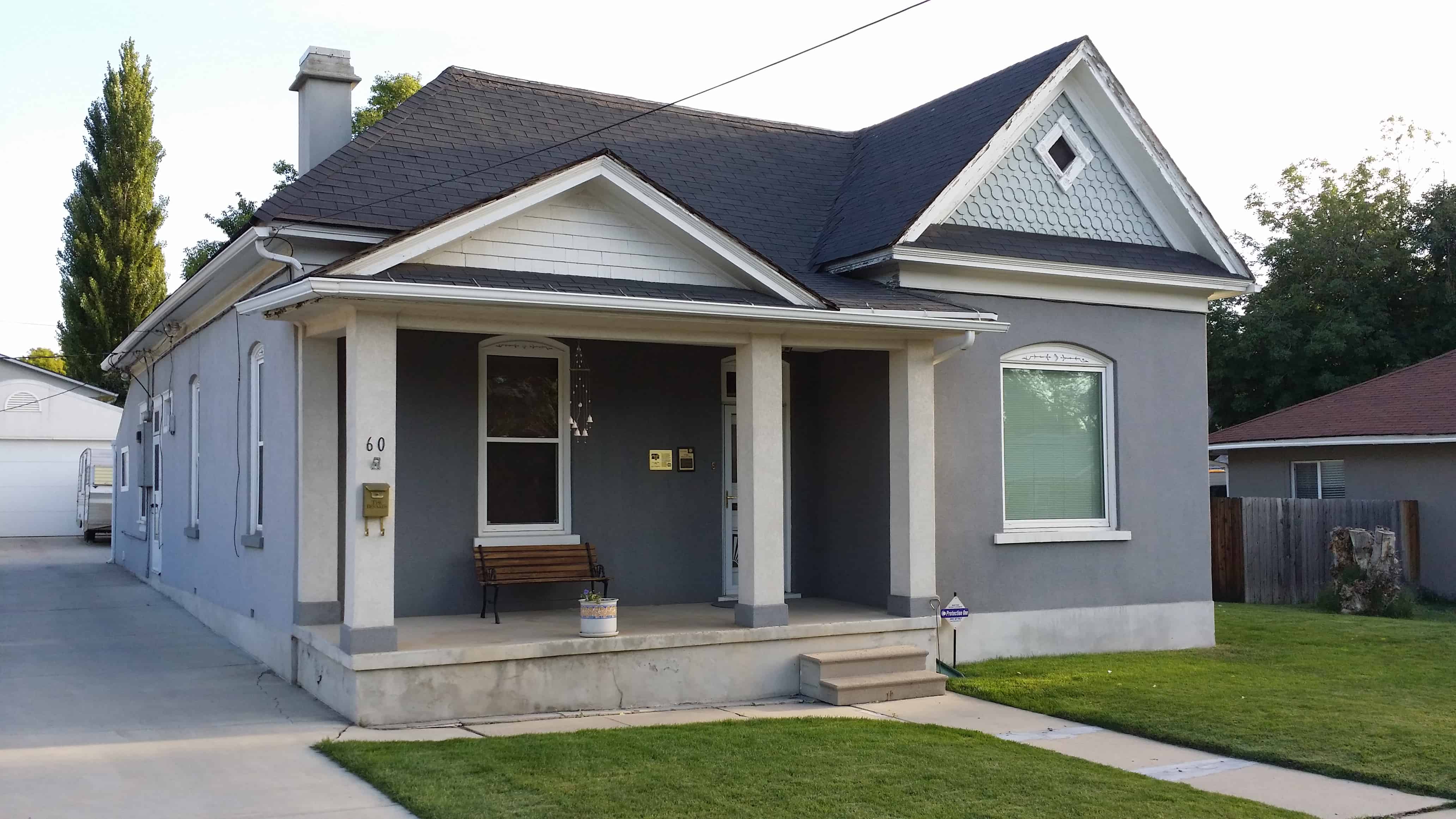
Build c. 1894, the Ernest and Sadie Cushing home is a one-story crosswing type Victorian style house. The front porch was apparently added or changed in the 1930s, perhaps at the same time as the c.1933 brick rear addition. A wood frame addition was built c.1960 A c.1910 storage building is located north and easy of the non-historic garage.
According to family histories, Ernest had saved enough money to have the house built, purchase a horse and buggy, and allow Sadie to pick out furniture, all before they were married. Ernest’s grandfather, James Cushing, lived next door, and across the street lived his parents. There were so many Cushings on Pioneer Avenue it was often referred to as “Cushing Avenue.”
The above text is from the plaque on the home, placed in 1996. The home is located at 60 East Pioneer Avenue in the historic sandy area of Sandy, Utah
The James and Mariah Cushing house in Historic Sandy was built c. 1891, is significant for its association with Sandy‘s historical development. The original house is a common example from the era. Its remodeling c. 1920, after being damaged by fire, is also significant. The house, originally a cross-wing, was rebuilt in the bungalow style, which was gaining national popularity and now reflects changing architectural tastes of the period.
The Cushings had immigrated to Utah in 1853 and raised eight children here. James participated in the rescue of the Martin handcart company, assisted in stringing the first telegraph wire through Salt Lake, and worked on the Salt lake Temple. After building this house, the Cushings lived the rest of their lives in it, surrounded by their children and grandchildren. In 1919 the house was sold to Thomas and Alice Davies. Thomas worked as a boiler maker on the railroad and then at the American Smelting and Refining Company in Murray. The Davies moved to Provo in 1927 and used the house as a rental until 1938.
The above text is from the plaque on the home, placed in 2000. The home is located at 68 East Pioneer Avenue in the historic sandy area of Sandy, Utah
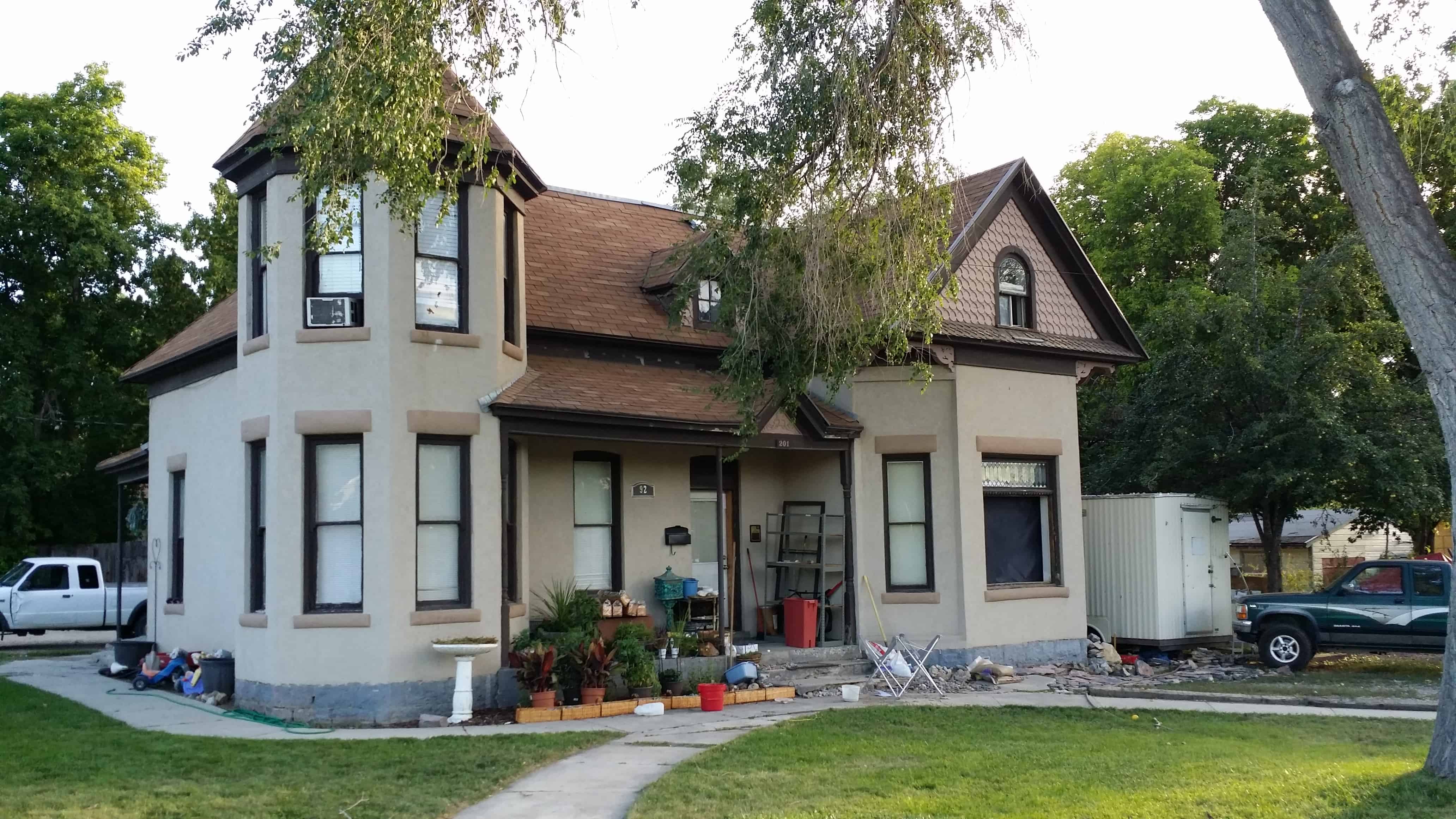
This two-story Queen Anne house was built in 1893. At that time Sandy was a rural community and still isolated enough for a Victorian house of this size and detailing to be unique. The local children called it the “castle house.”
William and Amorillis Gammet Vincent moved to Sandy soon after their marriage in 1875. William, a former railroad conductor in Salt Lake, became a foreman of the Pioneer Ore Sampling Mill and later owned a saloon. The Vincent’s owned several houses in Sandy before building this large one to live in with their seven children. As prominent citizens of the community, the couple hosted many social events such as dances held on the floor of the sampling mill. They also held many events at their elegant home with its polished stairways and light room with extensive views. Amorillis was an avid gardener and the flower gardens surrounding the house were especially elaborate under her care. William died in 1921. In 1934, three years after the death of Amorillis, the property was deeded to their daughter, Mildred, and her husband, William W. O’Brien.
The above text is from the plaque on the home, placed in 1997. The home is located at 8540 South 100 East in the historic sandy area of Sandy, Utah
This house was build by James B. and Ellen May Cushing Jensen following their marriage in 1894. James was active in the mining industry and later was a professor at the university of Utah and a mining consultant. The Jensens sold their home in 1925 to Jedediah and Semira Goff, although it appears they they never lived in the house. John Lavel and Olive Hogan Smith lived here during 1932-48. John was a mechanical engineer and miner. Olive was a machine operator at the Salt Lake Knitting Works.
This Victorian style house is representative of the shift in Sandy architecture to more elaborate homes following the end of the mining boom in 1893. houses began to be build with more permanent, substantial materials and adorned with decorative woodwork of trained craftsmen. The Jensen house is one of the best remaining examples of this style in Sandy.
The above text is from the plaque on the home, placed in 1997. The home is located at 95 East Pioneer Avenue in the historic sandy area of Sandy, Utah