• About JacobBarlow.com
  • Cemeteries in Utah
  • D.U.P. Markers
  • Doors
  • Exploring Utah Email List
  • Geocaching
  • Historic Marker Map
  • Links
  • Movie/TV Show Filming Locations
  • Oldest in Utah
  • Other Travels
  • Photos Then and Now
  • S.U.P. Markers
  • U.P.T.L.A. Markers
  • Utah Cities and Places.
  • Utah Homes for Sale
  • Utah Treasure Hunt

JacobBarlow.com

~ Exploring with Jacob Barlow

JacobBarlow.com

Tag Archives: Historic Homes

Fred J. Moore House

10 Tuesday Oct 2017

Posted by Jacob Barlow in Uncategorized

≈ 1 Comment

Tags

historic, Historic Homes, Provo, utah, utah county

2017-07-11 19.10.12

The Fred J. Moore House in Provo, Utah.  For other historic homes in Provo visit this page.

73 North 500 East in Provo, Utah

Featuring a bellcast gambrel roof, this house is perhaps the best example of the Dutch revival style in Provo.  Some research indicates that the home was constructed in 1907 by Fred J. Moore, who was a manager of the Roberts Buffet in the Hotel Roberts and later, a duggist.  Other research suggests that the home was constructed by Russell Rice in 1894.  Edwin R. Firmage, owner of Firage’s Department store at Center Street and 100 West, owned this home from 1938 to 1948.

The Dutch Colonial style in the U.S. was used on homes in New England beginning in about 1625, continuing until 1840.  Between 1890 and 1940, the style was reintroduced as part of a broader Colonial Revival.  Within Utah, gambrel roof designs became especially popular in Salt Lake City.  House plan books like Radford’s Bungalows, which were in common use around united States during the early twentieth century, were responsible for spreading the style throughout American neighborhoods.  This home is similar to Radford‘s Design No. 2121-B.

2017-07-11 19.10.23
2017-07-11 19.10.31
2017-07-11 19.10.40

Lawrence Bean House

09 Monday Oct 2017

Posted by Jacob Barlow in Uncategorized

≈ 2 Comments

Tags

Historic Homes, Historic Markers, Provo, utah, utah county

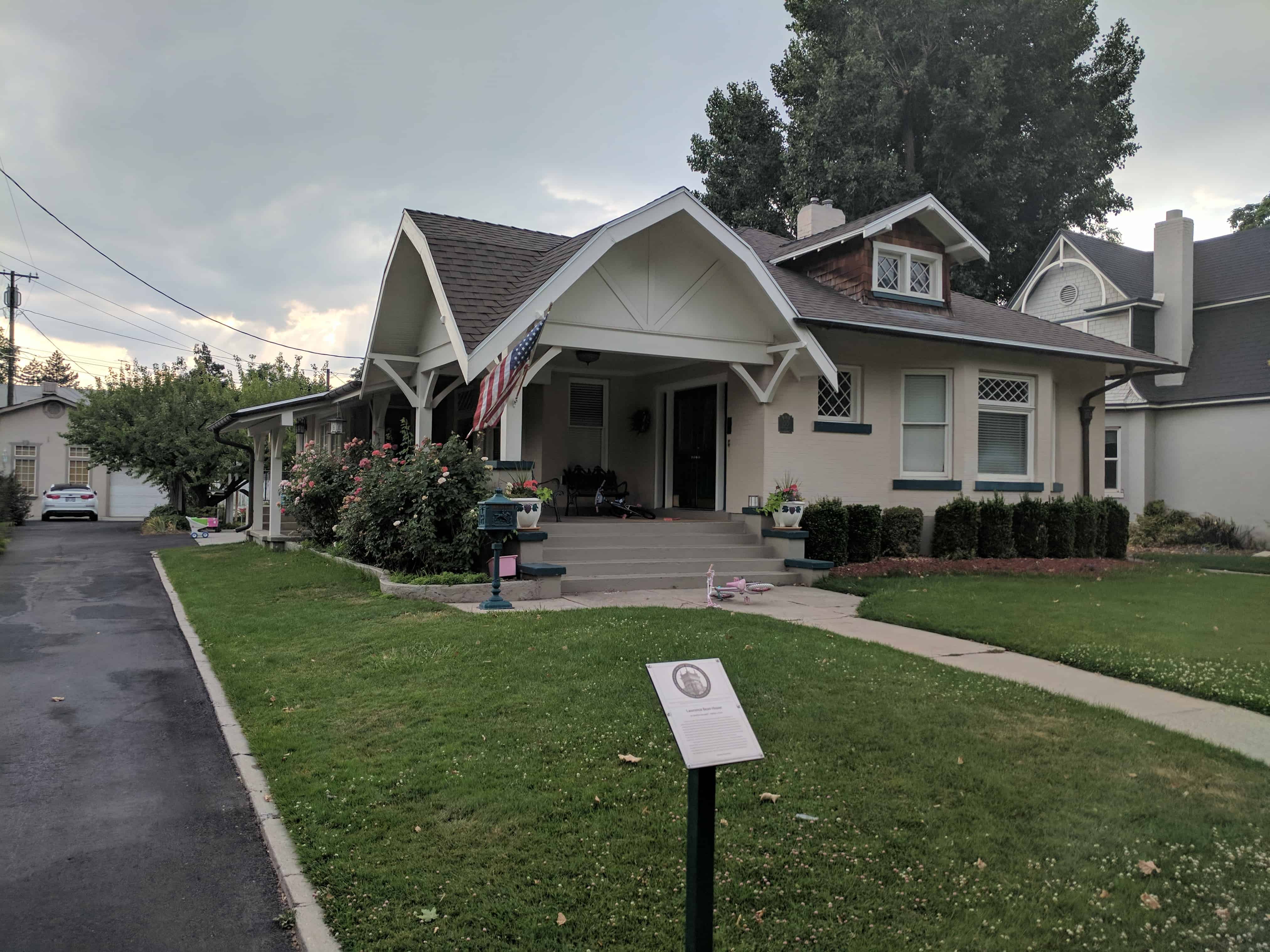
2017-07-11 19.09.36

The Lawrence Bean House in Provo, Utah.  For other historic homes in Provo visit this page.

55 North 500 East in Provo, Utah

Built circa 1911, this yellow pressed brick, single story bungalow is noteworthy for its eclectic combination of styles.  The design of this home is unique since few houses in Utah combine elements of the Dutch Colonial Revival such as the gambrel roof, with Arts and Crafts details like the exposed cross braces of the porch columns.  At the time this home was built, the bungalow was America’s most popular house type, with wide overhanging eaves, projecting bays on the main floor, broad front porches and dormers in the slope of the roof, often facing the street.  This particular home demonstrates all of those features.

The original owners of this home were Lawrence L. and Mary Elizabeth Jones Bean.  Lawrence Bean was among the first generation of Provo residents to be born in the city, his parents and grandparents having been prominent among the pioneers who settled Provo in 1849.  The first major irrigation ditch in Provo was called the “Bean Ditch” after this family whose members helped to dig it.

2017-07-11 19.09.43

Provo’s Two Oldest Existing Homes Are Neighbors in Pioneer Village

26 Tuesday Sep 2017

Posted by Jacob Barlow in Uncategorized

≈ 2 Comments

Tags

historic, Historic Homes, Historic Markers, History, Parks, Provo, utah, utah county

2017-09-12 18.48.38

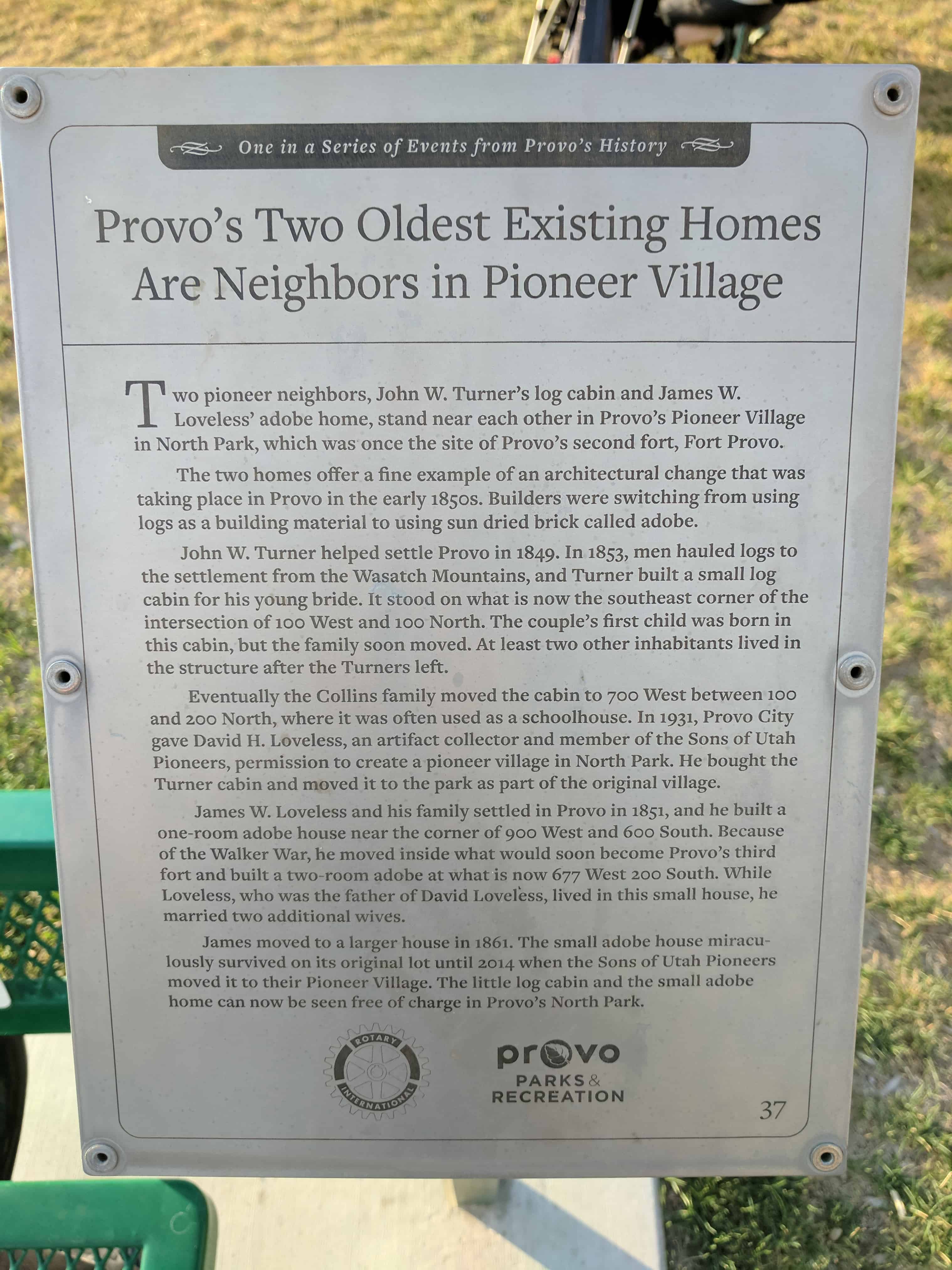
Provo’s Two Oldest Existing Homes Are Neighbors in Pioneer Village.

Two pioneer neighbors, John W. Turner’s log cabin and James W. Loveless’ adobe home, stand near each other in Provo’s Pioneer Village in North Park, which was once the site of Provo’s second fort, Fort Provo.

The two homes offer a fine example of an architectural change that was taking place in Provo in the early 1850s. Builders were switching from using logs as a building materiel to using sun dried brick called adobe.

John W. turner helped settle Provo in 1849. In 1853, men hauled logs to the settlement from the Wasatch Mountain, and Turner built a small log cabin for his young bride. It stood on what is now the southeast corner of the intersection of 100 West and 100 North. The couple’s first child was born in this cabin, but the family soon moved. At least two other inhabitants lived in the structure after the Turners left.

Eventually the Collins family moved the cabin to 700 West between 100 and 200 North, where it was often used as a schoolhouse. In 1931, Provo City gave David H. Loveless, an artifact collector and member of the Sons of Utah Pioneers, permission to create a pioneer village in North Park. He bought the Turner cabin and moved it to the park as a part of the original village.

James W. Loveless and his family settled in Provo in 1851, and he built a one-room adobe house near the corner of 900 West and 600 South. Because of the Walker War, he moved inside what would soon become Provo’s third fort and built a two-room adobe at what is now 677 West 200 South. While Loveless, who was the father of David Loveless, lived in this small house, he married two additional wives.

James moved to a larger house in 1861. The small adobe house miraculously survived on its original lot until 2014 when the Sons of Utah Pioneers moved it to their Pioneer Village. The little log cabin and the small adobe home can now be seen free of charge in Provo’s North Park.

This marker is located in Rock Canyon Park in Provo, for other markers in this series click here.

2017-09-12 18.48.49

Historic Firmage House

18 Monday Sep 2017

Posted by Jacob Barlow in Uncategorized

≈ 2 Comments

Tags

Historic Homes, Provo, utah, utah county

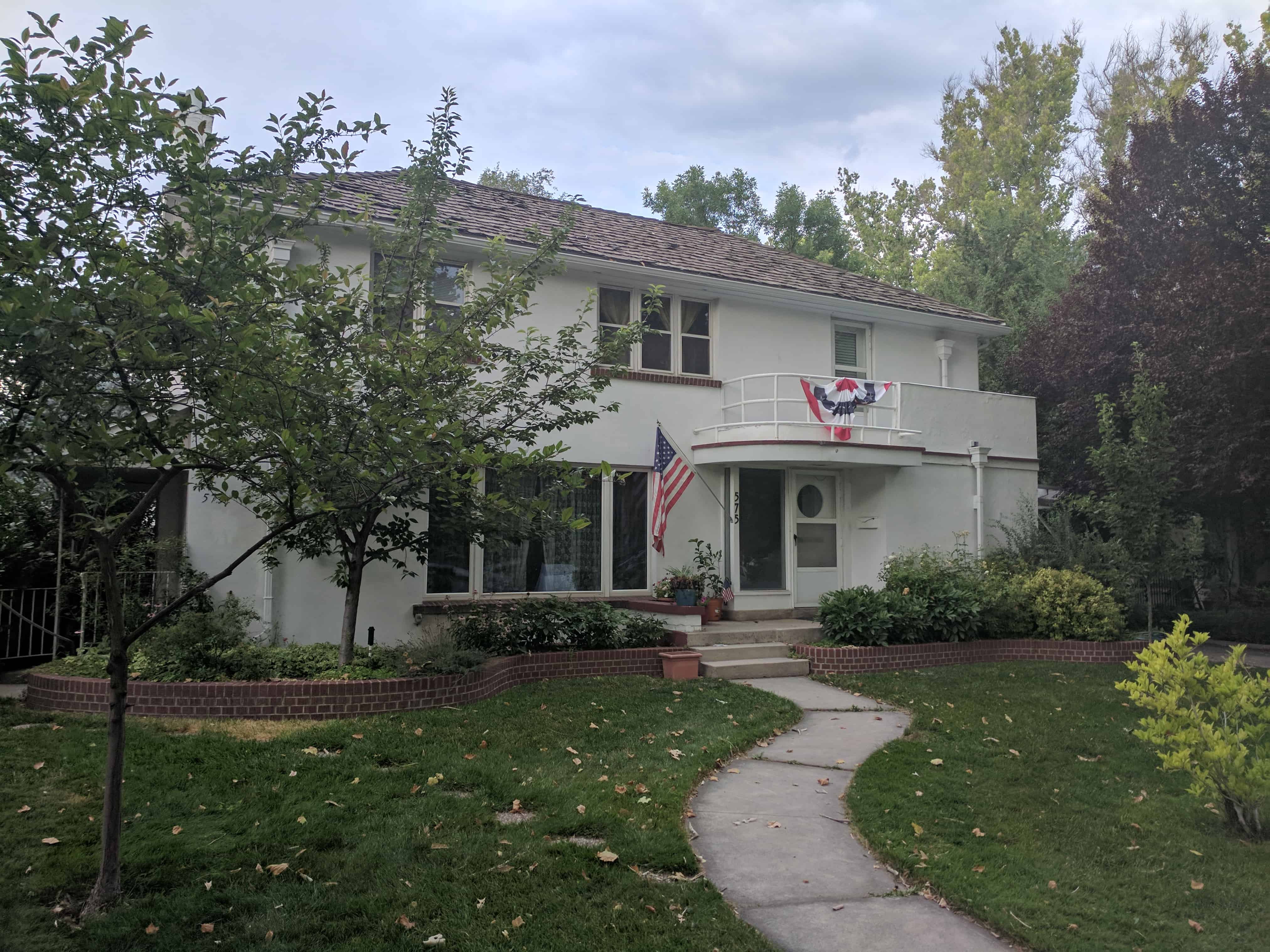
2017-07-11 19.06.58

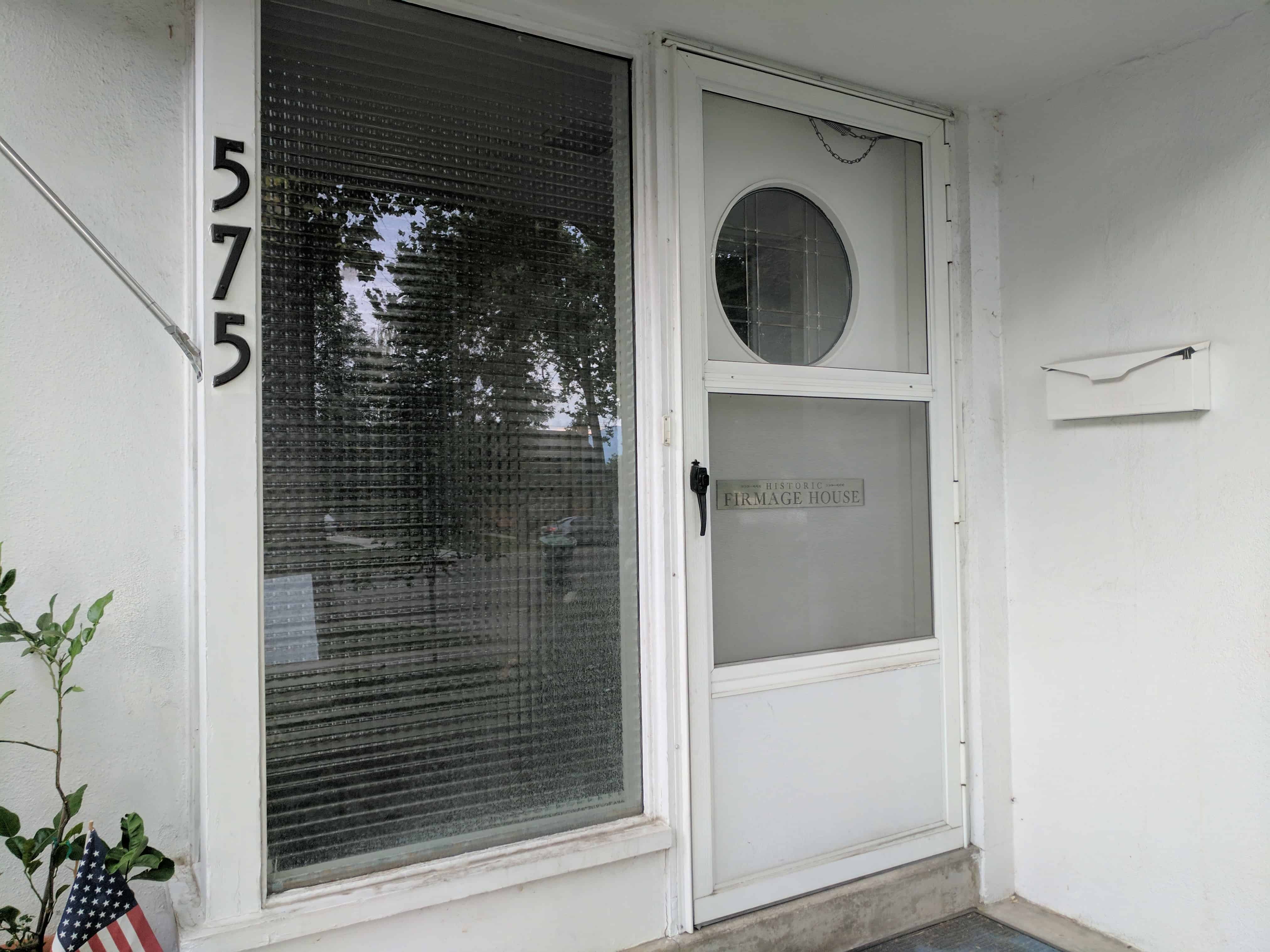
Located at 575 East Center Street in Provo, Utah, the Firmage house is part of Provo’s history.

Click here for other historic homes in Provo.

2017-07-11 19.07.14

Fred R. and Mary J. Taylor House

12 Tuesday Sep 2017

Posted by Jacob Barlow in Uncategorized

≈ 1 Comment

Tags

Historic Homes, Historic Markers, Provo, utah, utah county

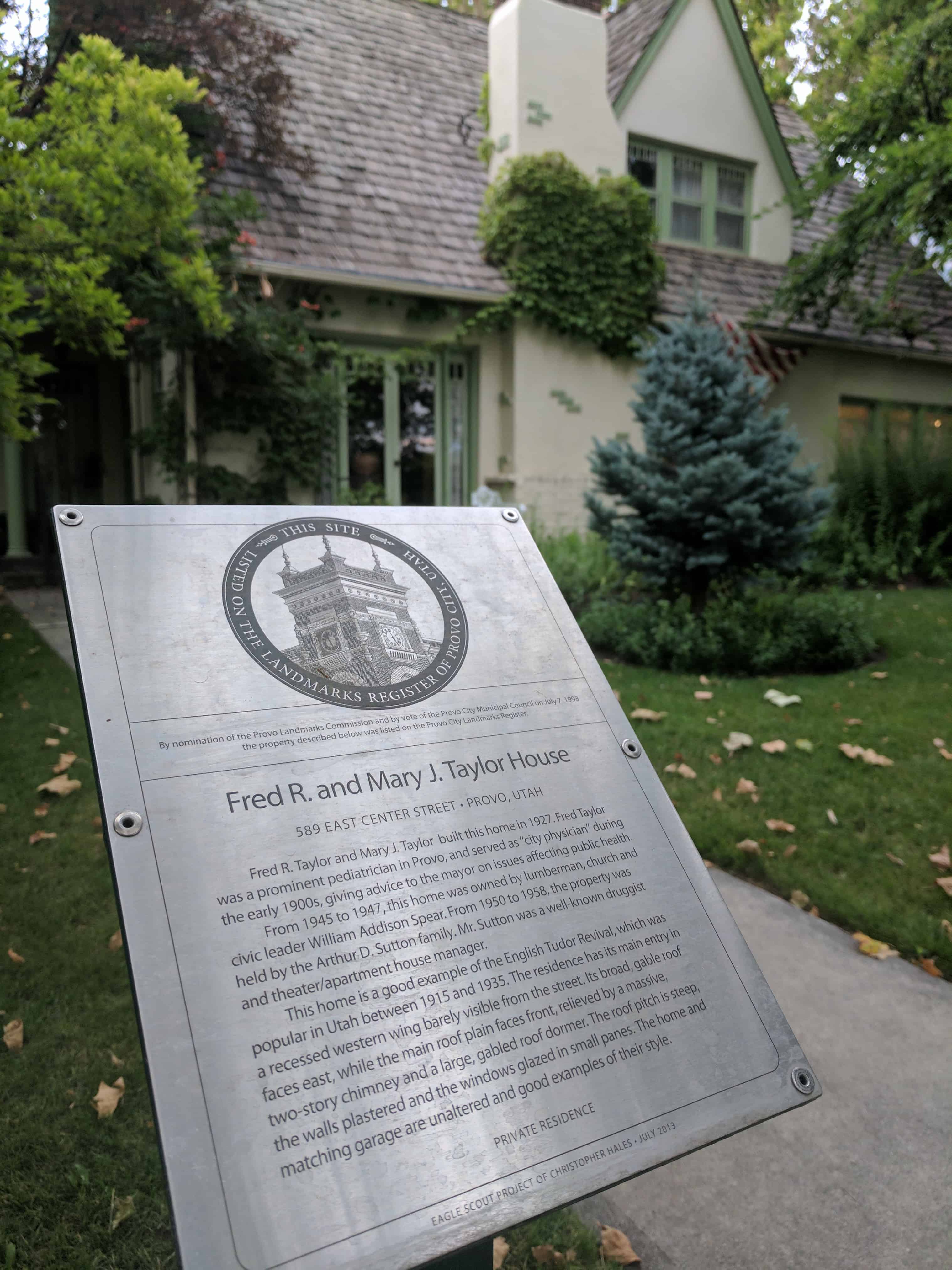
2017-07-11 19.06.15

Fred R. and Mary J. Taylor House

589 East Center Street, Provo, Utah

Fred R. Taylor and Mary J. Taylor built this home in 1927.  Fred Taylor was a prominent pediatrician in Provo, and served as “city physician” during the early 1900s, giving advice to the mayor on issues affecting public health.

From 1945 to 1947, this home was owned by lumberman, church and civic leader William Addison Spear.  From 1950 to 1958, the property was held by the Arthur D. Sutton family.  Mr. Sutton was a well-known druggist and theater/apartment house manager.

This home is a good example of the English Tudor Revival, which was popular in Utah between 1915 and 1935.  The residence has its main entry in a recessed western wing barely visible from the street.  Its broad, gable rood faces est, while the main rood plain faces front, relieved by a massive, two story chimney and a large gabled roof dormer.  The rood pitch is steep, the walls plastered and the windows glazed in small panes.  The home and matching garage are unaltered and good examples of their style.

For other historic homes in Provo click here.

It appears that Fred R. Taylor and Mary J. Taylor were the owners of this property when this house was built. Dr. Taylor was a prominent pediatrician in Provo. From 1945 to 1947, the property was owned by a lumberman, church, and civic leader William Addison Spear. From 1950 to 1958, the property was held by the Arthur D. Sutton family. Mr. Sutton was a well-known druggist and theater/apartment house manager. This building is a good example of the English Tudor style, with steep roof pitch, plaster exterior walls, and small window panes.

2017-07-11 19.06.27

Winchester House

01 Tuesday Aug 2017

Posted by Jacob Barlow in Uncategorized

≈ 3 Comments

Tags

California, California Historical Landmarks, Historic Homes, Historic Markers, San Jose, Santa Clara County

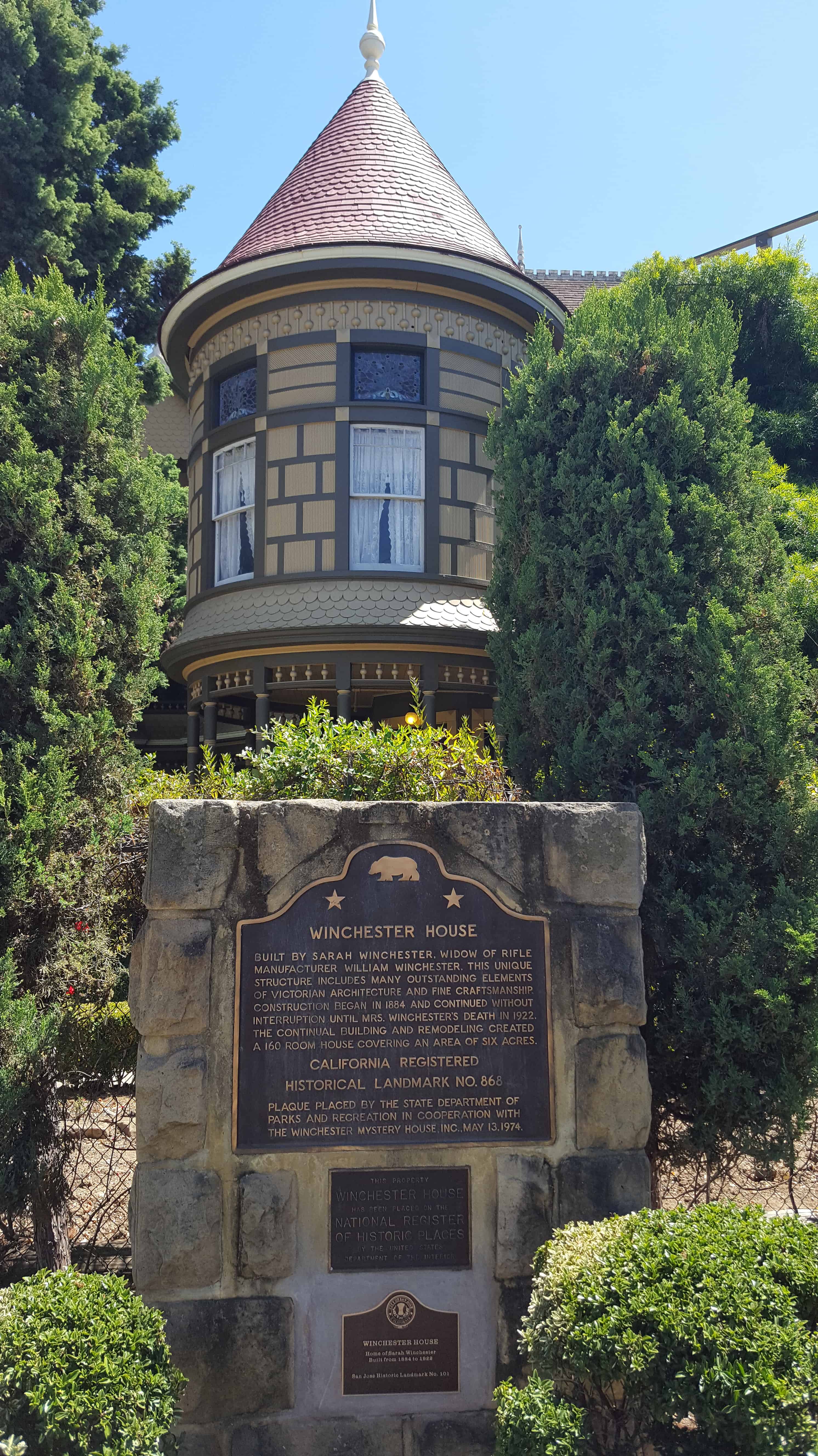
2017-06-28 14.56.17

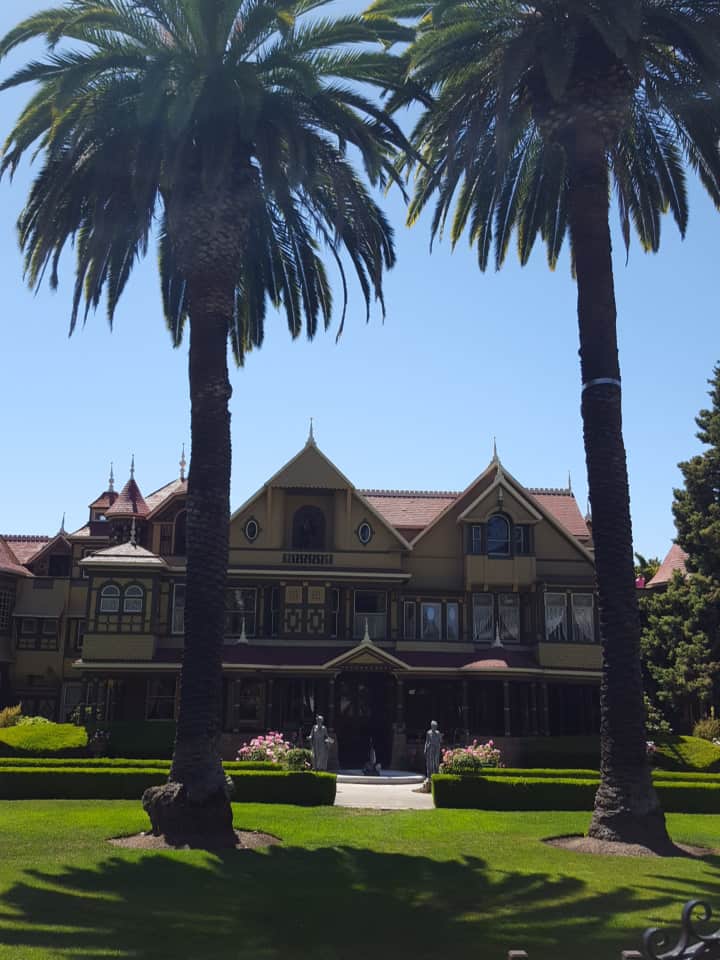
Built by Sarah Winchester, widow of rifle manufacturer William Winchester, this unique structure includes many outstanding elements of Victorian architecture and fine craftsmanship. Construction began in 1884 and continued without interruption until Mrs. Winchester’s death in 1922. The continual building and remodeling created a 160-room house covering an area of six acres.

California Historical Landmark #868.

2017-06-28 14.55.54

2017-06-28 14.56.11

2017-06-28 14.56.22
2017-06-28 14.56.33
2017-06-28 14.56.45

2017-06-28 14.57.47
2017-06-28 14.57.50
2017-06-28 14.58.01

2017-06-28 14.58.47

2017-06-28 14.59.09

Philo T. Farnsworth

25 Sunday Jun 2017

Posted by Jacob Barlow in Uncategorized

≈ 4 Comments

Tags

Beaver, historic, Historic Homes, Manderfield, Millard County, utah

2017-05-13 19.37.25

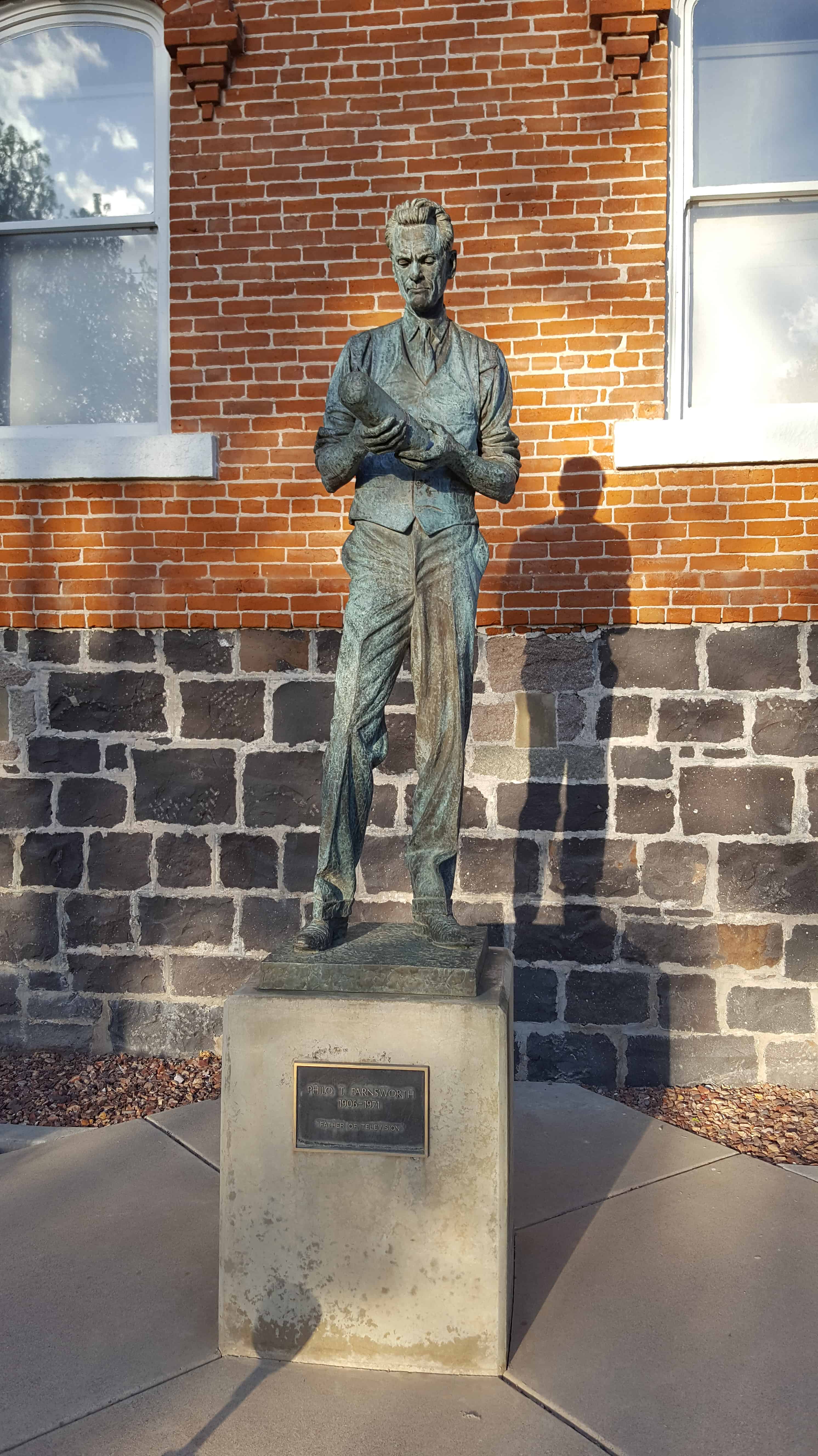
Philo T. Farnsworth

1906-1971

“Father of Television”

Philo Taylor Farnsworth was born August 19, 1906 in a log cabin near Beaver, Utah. At an early age, he became familiar with the various components of the telephone and the gramaphone. By age 12, he had a thorough understanding of electronics. In 1922, at age 15, now living in Rigby, Idaho, he developed the concept of the electronic transmission of images, and drew mathematical diagrams to show how this could be done.

In 1927, in San Francisco, California, after having invented and developed numerous vacuum tubes, such as the image dissector which the statue is holding, he was able to transmit and receive a recognizable image.

In 1934, after demonstrating that his ideas of electronic image transmission were the first to be written down, he was issued patents regarding television methods that are still used in every television receiving set, television camera, and transmitter manufactured in the United States as well as abroad.

He was issued over 170 patents regarding electronic inventions, most of which were designed for television. In addition, he also developed the first electron microscope, baby incubator, and medical gastroscope. He pioneered electronic infrared surveillance scopes used in World War Two and ever since. He developed memory vacuum tubes for radar screens, air traffic control, and underwater sonar devices. At the time of his death, he had developed cold cathode-ray tubes that are used in the television and computer industries, and working in cold nuclear fusion.
2017-05-13 19.37.35
2017-05-13 19.37.42

2017-05-13 19.38.57

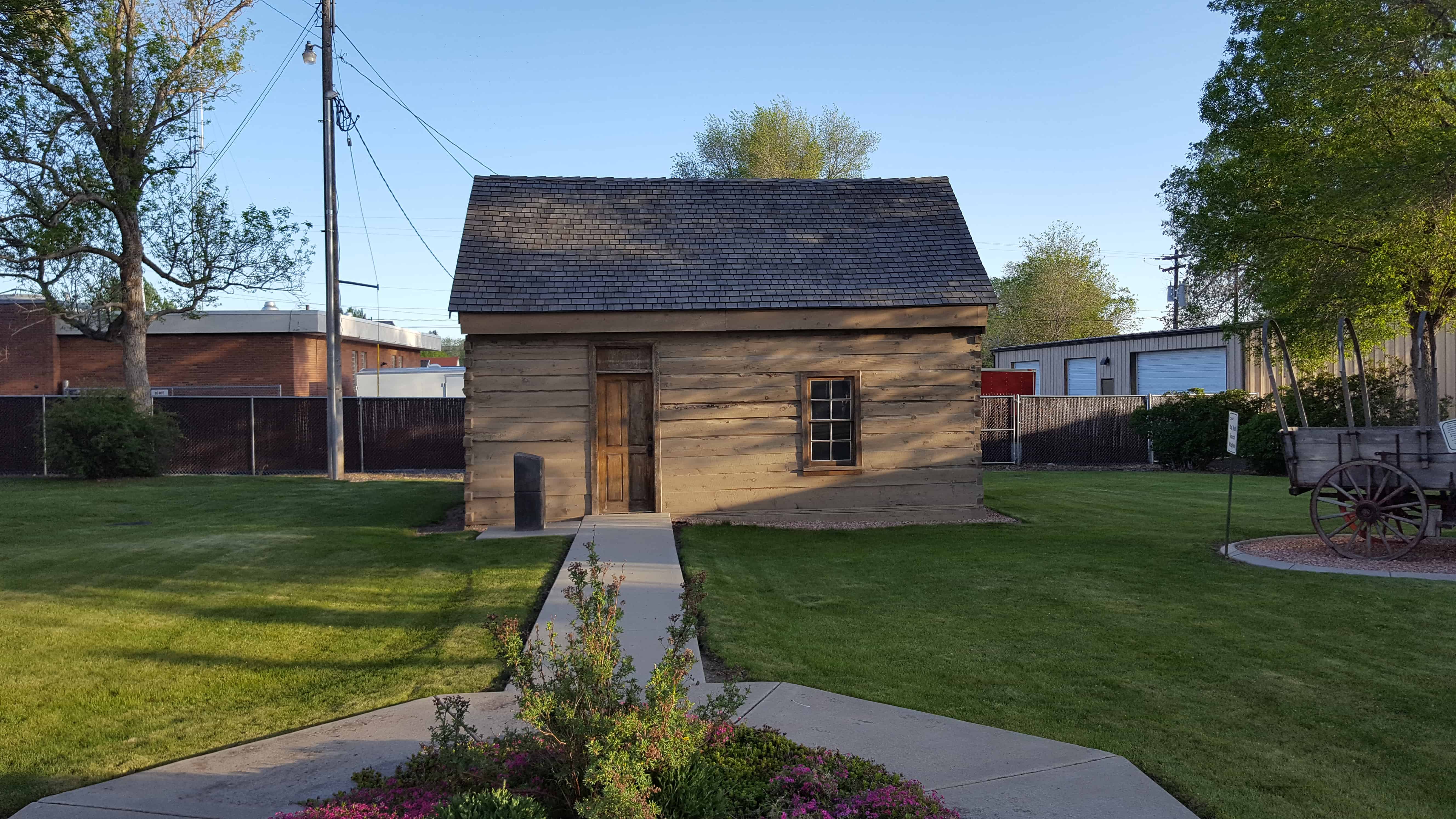
This early sawed log farm cabin (circa 1890-1900) was relocated to this site from the small hamlet of Manderfield located 5 miles north of Beaver.
Manderfield was known as Indian Creek in pioneer days. The Beaver Chapter of the sons of The Utah Pioneers took on the project when the owners of the building, LaVar and LaRay Cox donated it to the community. It is believed by many to be the birth cabin of Philo T. Farnsworth, the inventor of modern television.
His uncle, Robert Farnsworth, is thought to have built the cabin. Philo’s father and two of his mother’s brothers purchased 800 acres just north of his uncle Robert’s homestead the summer of 1906. Consequently, it is thought that Philo’s family was living with his uncle at the time of his birth, August 19, 1906.

For the first three years of his life Philo’s family lived and farmed in the Manderfield area. The family left Beaver County and lived for a time in the town of Washington, near St. George, then near Vernal in northeastern Utah. They eventually moved to a farm near Rigby, Idaho. As a lad of 15, Philo was attending school in Rigby, when the idea of how to electronically scan and transmit a visual image occured to him. It is said that he was riding on a horse drawn plow which created parallel rows in the farm field in preparation for spring planting when the inspiration of how to dissect a visual image into parallel horizontal lines; electronically scan it and reassemble the original image on a Television screen took root. Fortunately he diagrammed his idea on a small piece of paper which he gave to his teacher at Rigby High School. He was 21 years old when he was finally able to transmit an image of his wife, Elma.

The teacher kept the piece of paper, and years later was able to produce it as evidence when Philo’s patent was being challenged in the courts by the RCA Corporation, headed by David Sarnoff. The courts ruled in favor of Philo and settled the matter. Philo T. Farnsworth went on to invent numerous other devices. He died March 11, 1971.
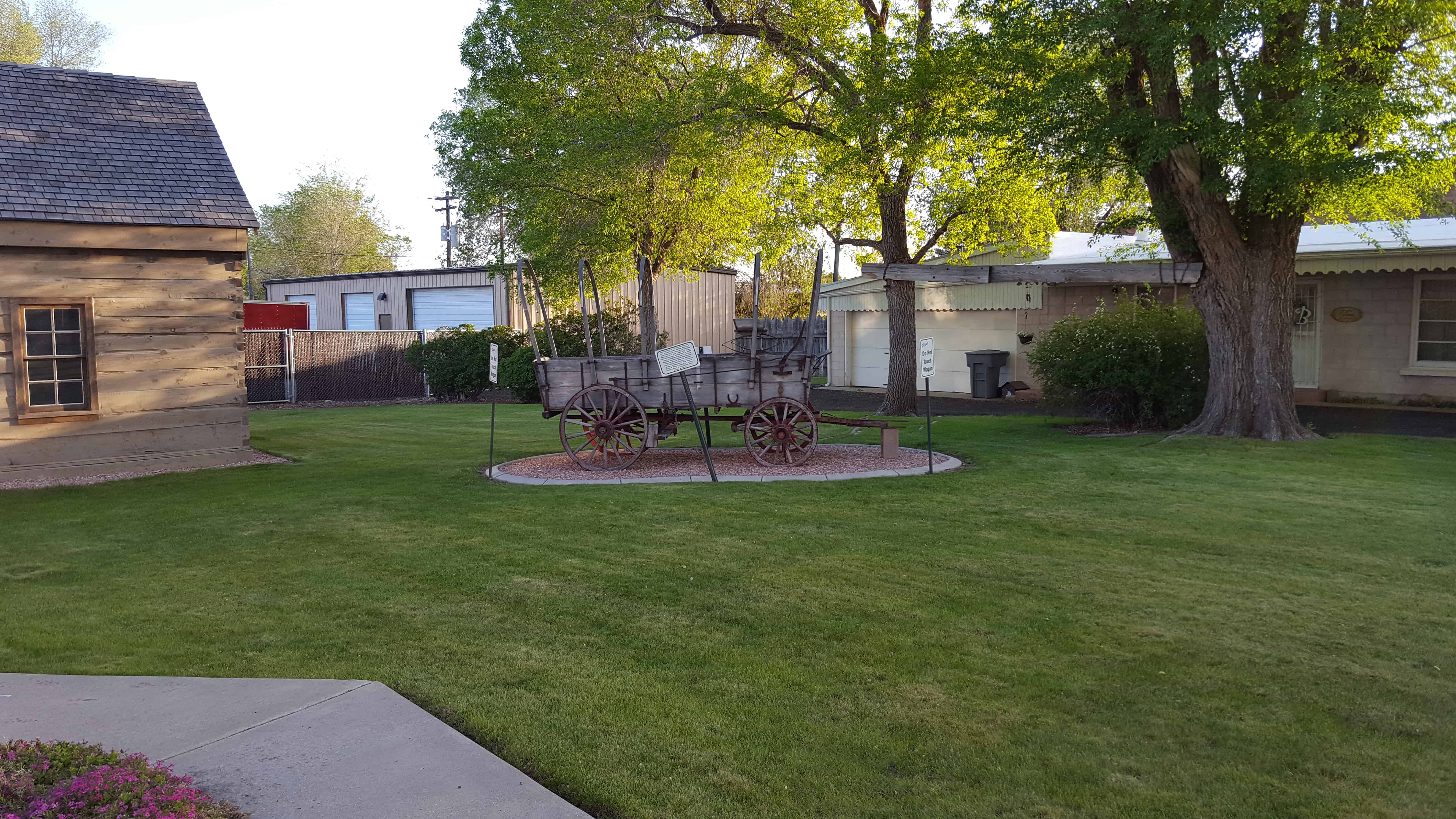
2017-05-13 19.38.44
2017-05-13 19.39.07

2017-05-13 19.39.00

This wagon is a reproduction of the wagons used by the Mormon Settlement to travel from Omaha, Nebraska to Salt Lake City, Utah. It traveled the entire trail in 1997 being navigated by Vern and Carol Condie sponsored by the Beaver County Travel Council during the sesquicentennial re-creation of the settlement. Two mules “Ruth & Ruby” pulled the wagon 1000 miles, a trip which took three months.

Stirling Home

22 Thursday Jun 2017

Posted by Jacob Barlow in Uncategorized

≈ 1 Comment

Tags

historic, Historic Homes, Historic Markers, Leeds, NRHP, utah, Washington County

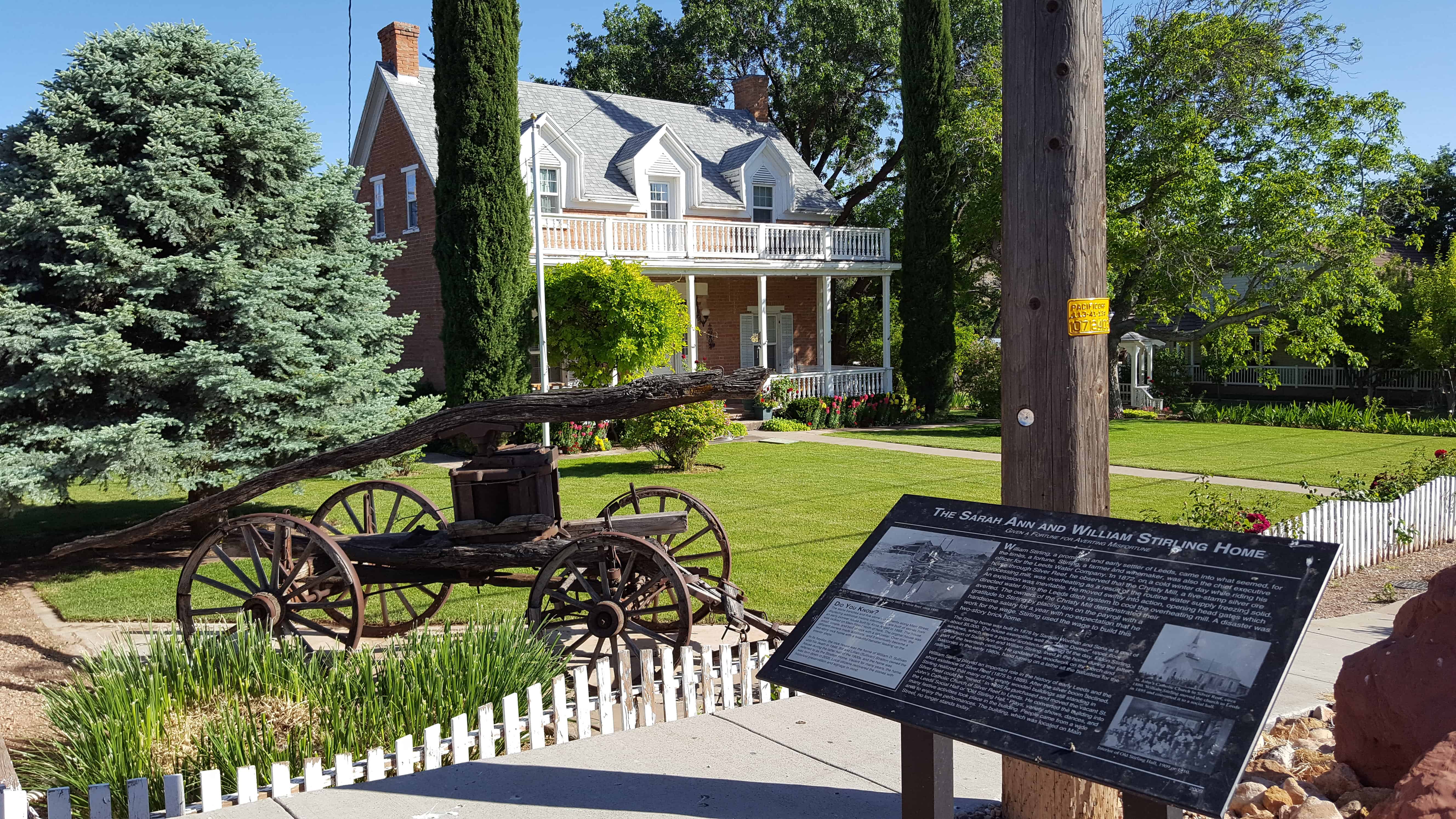
2017-05-13 17.44.56Stiring Home

Built c. 1876 of red brick by Samuel Worthen and sons for William Stirling, one of the first settlers of Leeds.  Fine example of “Dixie Dormers” unique to Southern Utah.  Marker placed 1973 by Mrs. David Stirling and Family.

2017-05-13 17.45.19

William Stirling, a prominent and early settler of Leeds, came into what seemed, for the times, a fortune. Stirling, a farmer and winemaker, was also the chief executive officer for the Leeds Water Company. In 1872, on a cold winter day while riding his horse through Silver Reef, he observed that the Christy Mill, a five-stamp silver ore processing mill, was overheating as a result of the routine water supply freezing solid. An explosion was inevitable. He moved swiftly into action, opening head gates which directed water from the Leeds ditch system to cool the overheating mill. A disaster was averted. The owners of the Christy Mill demonstrated their gratitude to Stirling by placing him on the payroll with a handsome salary for a year with no expectation that he work for the wage. Stirling used the wage to build this two-story brick home.

The Stirling home was built in 1876 by Samuel Worthen and Sons at a cost of about $5,000. The house exemplifies well the “Dixie Dormer” upper floor windows, which were a popular architectural design of the day. Eldon Stirling, grandson of Sarah Ann and William Stirling, lived in the home during the latter part of the twentieth century. He updated the woodwork on the porch and balconies in the early 1980s, hand turning on a lathe all the balusters for the railings

William Stirling played an important role in the history of early Leeds and the short existence of Silver Reef (1875 to 1889). After the silver boom declined, Stirling realized that many of the empty wooden buildings still standing in Silver Reef could be “mined.” In 1895 he purchased and moved the vacant St.
John’s Catholic Church of Silver Reef to Leeds. He converted the building into the Leeds Social Hall or “Old Stirling Hall.” Plays, variety shows, dances, and many festive activities took place in the building. People came from a wide area to enjoy the performances. The building, which was located on Main Street, no longer stands today.(*)

2017-05-13 17.45.51

2017-05-13 17.45.56

Pioneering Utah

11 Thursday May 2017

Posted by Jacob Barlow in Uncategorized

≈ 1 Comment

Tags

Clear Creek Canyon, Fremont Indian State Park, historic, Historic Buildings, Historic Homes, Historic Markers, Sevier, Sevier County

2017-03-26 15.58.39

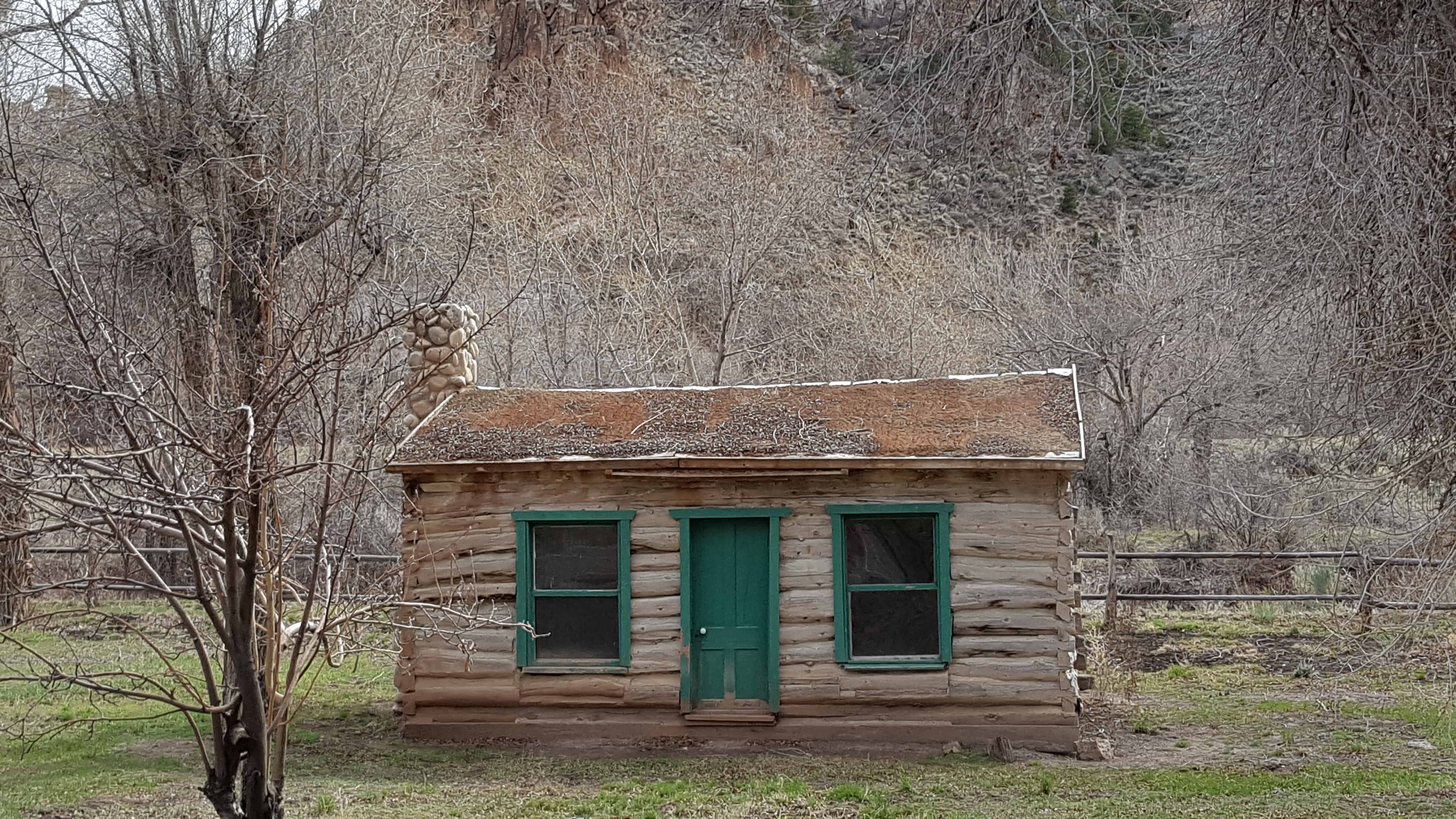
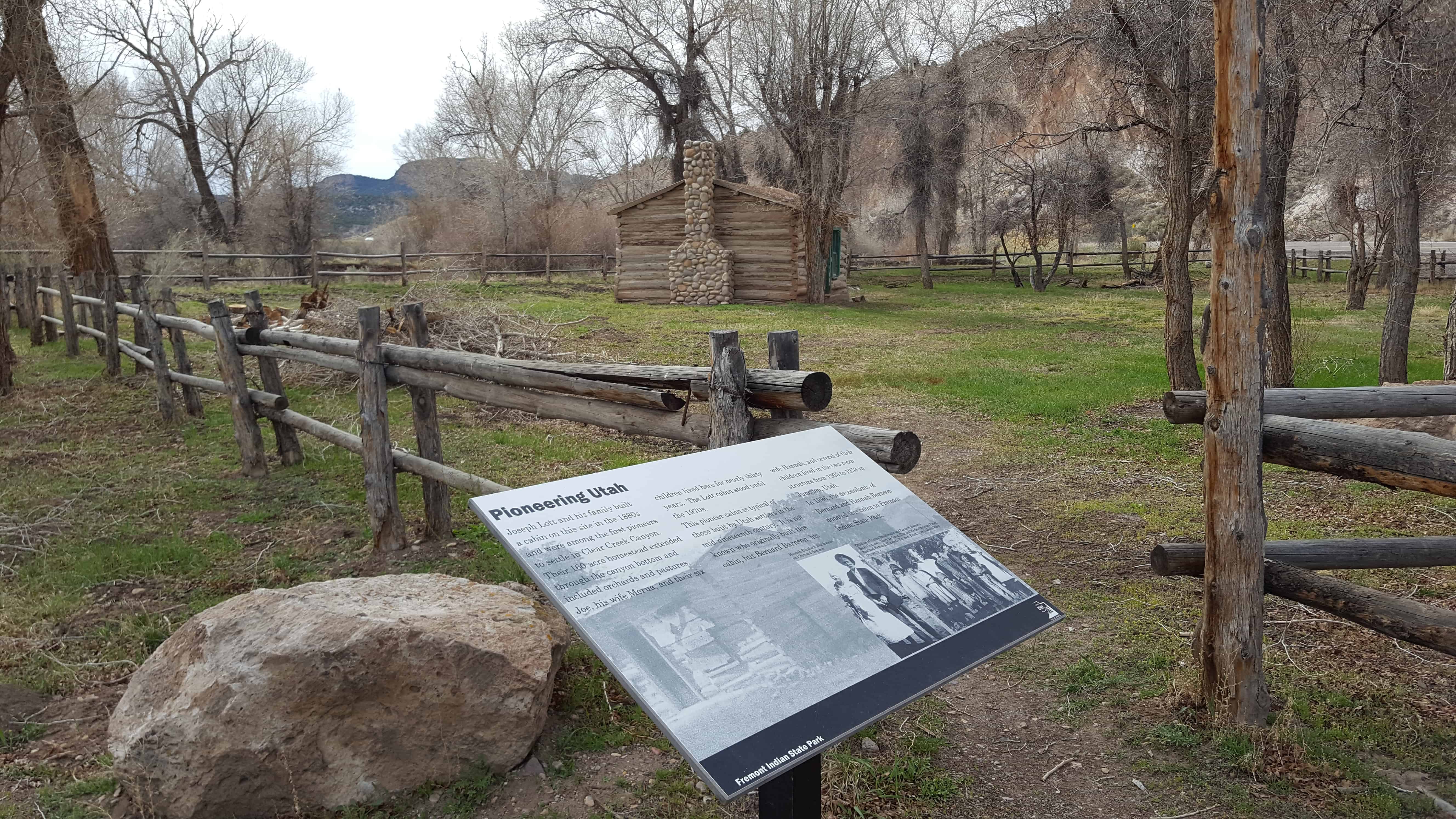
Joseph Lott and his family built a cabin on this site in the 1880s and were among the first pioneers to settle in Clear Creek Canyon.

Their 160 acre homestead extended through the canyon bottom and included orchards and pastures.

Joe, his wife Merua, and their six children loved here for nearly thirty hears.  The Lott cabin stood until the 1970s.

This pioneer cabin is typical of those built by Utah settlers in the mid-nineteenth century.  It is not known who originally built this cabin, but Bernard Barnson, his wife Hannah, and several of their children lived in the two-room structure from 1903 to 195 in Junction, Utah.   In 1996, the descendants of Bernard and Hannah Barnson donated this cabin to Fremont Indian State Park.

2017-03-26 16.00.22

2017-03-26 16.00.18
2017-03-26 15.58.59

Harrisburg Residents

26 Wednesday Apr 2017

Posted by Jacob Barlow in Uncategorized

≈ 1 Comment

Tags

Harrisburg, historic, Historic Buildings, Historic Homes, Historic Markers, Leeds, Silver Reef, SUP, utah, Washington, Washington County

2017-03-19 16.02.02

HARRISBURG RESIDENTS
Named here are the Heads of the Families who settled in Harrisburg between 1859 and 1928:
1859
Moses Harris
1860
James Lewis Hosea Stout
1862
William Leany Dr. Priddy Meeks John Brimhall
Orson Adams Elijah K. Fuller Samuel Hamilton
William Robb Rufus Allen Allen J. Stout
Mosiah L. Hancock Alfred J. Randall
1863
Willard G. McMullen Samuel Gould John Newton
David Ellsworth John McCleve Allen Taylor
William Taylor

1865
Henry E. Harrington Milton Daily Wilson Daily
Thomas Adair Willbur Earl William Stirling
AL Carpenter Jerome Asa
Robert Richardson Frank Owens

See other historic markers in the series on this page for SUP Markers.

← Older posts
Newer posts →

Follow Jacob

Follow Jacob

Come wander with me on Youtube.

Blog Stats

  • 2,095,913 hits

Social and Other Links

BarlowLinks.com

Recent Posts

  • Scout Monument
  • Provo High School Seminary Building
  • 821 E 100 S
  • 820 E 100 S
  • 817-819 E 100 S

Archives

Loading Comments...