• About JacobBarlow.com
  • Cemeteries in Utah
  • D.U.P. Markers
  • Doors
  • Exploring Utah Email List
  • Geocaching
  • Historic Marker Map
  • Links
  • Movie/TV Show Filming Locations
  • Oldest in Utah
  • Other Travels
  • Photos Then and Now
  • S.U.P. Markers
  • U.P.T.L.A. Markers
  • Utah Cities and Places.
  • Utah Homes for Sale
  • Utah Treasure Hunt

JacobBarlow.com

~ Exploring with Jacob Barlow

JacobBarlow.com

Tag Archives: utah

Seven Unknown Soldiers at Soldier Summit

14 Monday Jul 2014

Posted by Jacob Barlow in Uncategorized

≈ 2 Comments

Tags

Cemeteries, Confederate, historic, Soldier Summit, spanish fork canyon, utah

  • 2014-07-12 14.34.36

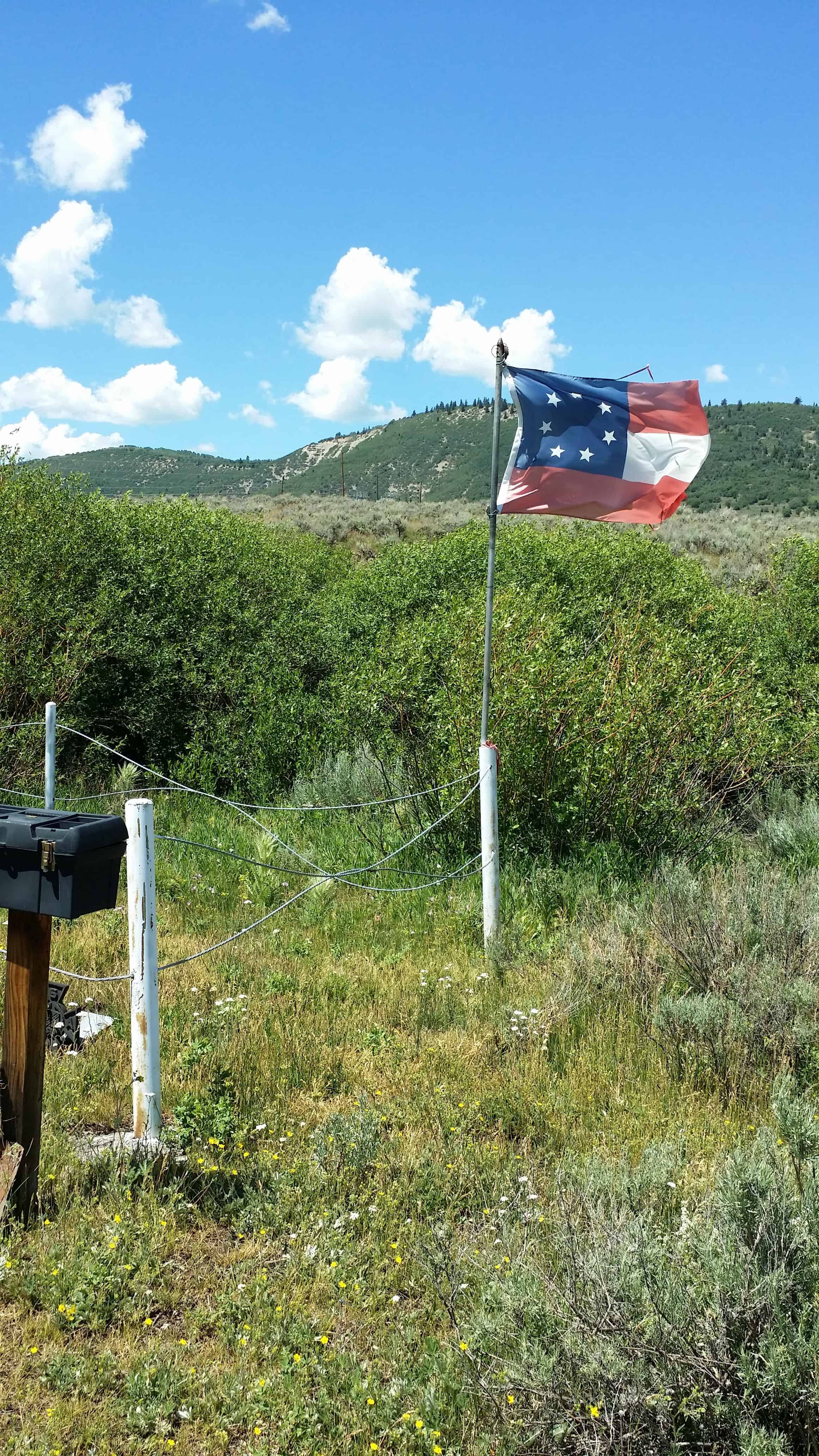
When the Civil War broke out in 1861, soldiers from the South who were stationed at Camp Floyd were released from the US Army. General Albert Sidney Johnson marched eastwards in April. In July, a second group of 40 men, led by General Phillip Cooke marched east to join the Confederate Army. When they reached this spot, they were caught in a freak snowstorm, and six men and a 14-year-old boy froze to death. They are buried in this cemetery. The flag is the first style flown by the Confederacy in 1861.

  • 2014-07-12 14.30.17
  • 2014-07-12 14.34.39
  • 2014-07-12 14.34.48
  • 2014-07-12 14.35.16
  • 2014-07-12 14.35.23
  • 2014-07-12 14.35.36
  • 2014-07-12 14.36.25
  • 2014-07-12 14.42.08

Located at: N 39.92339 W 111.08221

Soldier Summit, Utah

14 Monday Jul 2014

Posted by Jacob Barlow in Uncategorized

≈ 4 Comments

Tags

historic, Railroad, Soldier Summit, spanish fork canyon, utah

2014-06-18 10.29.07

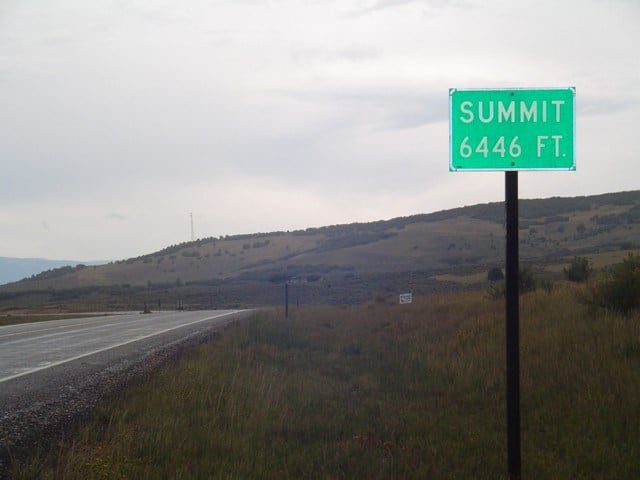
Soldier Summit is the name of both a mountain pass in the Wasatch Mountains in Utah and a ghost town located at the pass.

Related Posts:

  • Cemetery for the unknown soldiers
  • Historic Marker: A Failed Experiment
  • Historic Marker: Soldier Summit
  • Ruins at Soldier Summit

A cool and sad memorial to the confederate soldiers who died here and who this place is named after can be seen here.

Another cool historic marker can be seen here.

Little Leah at some steps at the Soldier Summit ruins.
Soldier Summit ruins.
soldiersummit

Fairview Museum of History and Art

08 Tuesday Jul 2014

Posted by Jacob Barlow in Uncategorized

≈ 2 Comments

Tags

Art, Fairview, museums, Sanpete County, utah

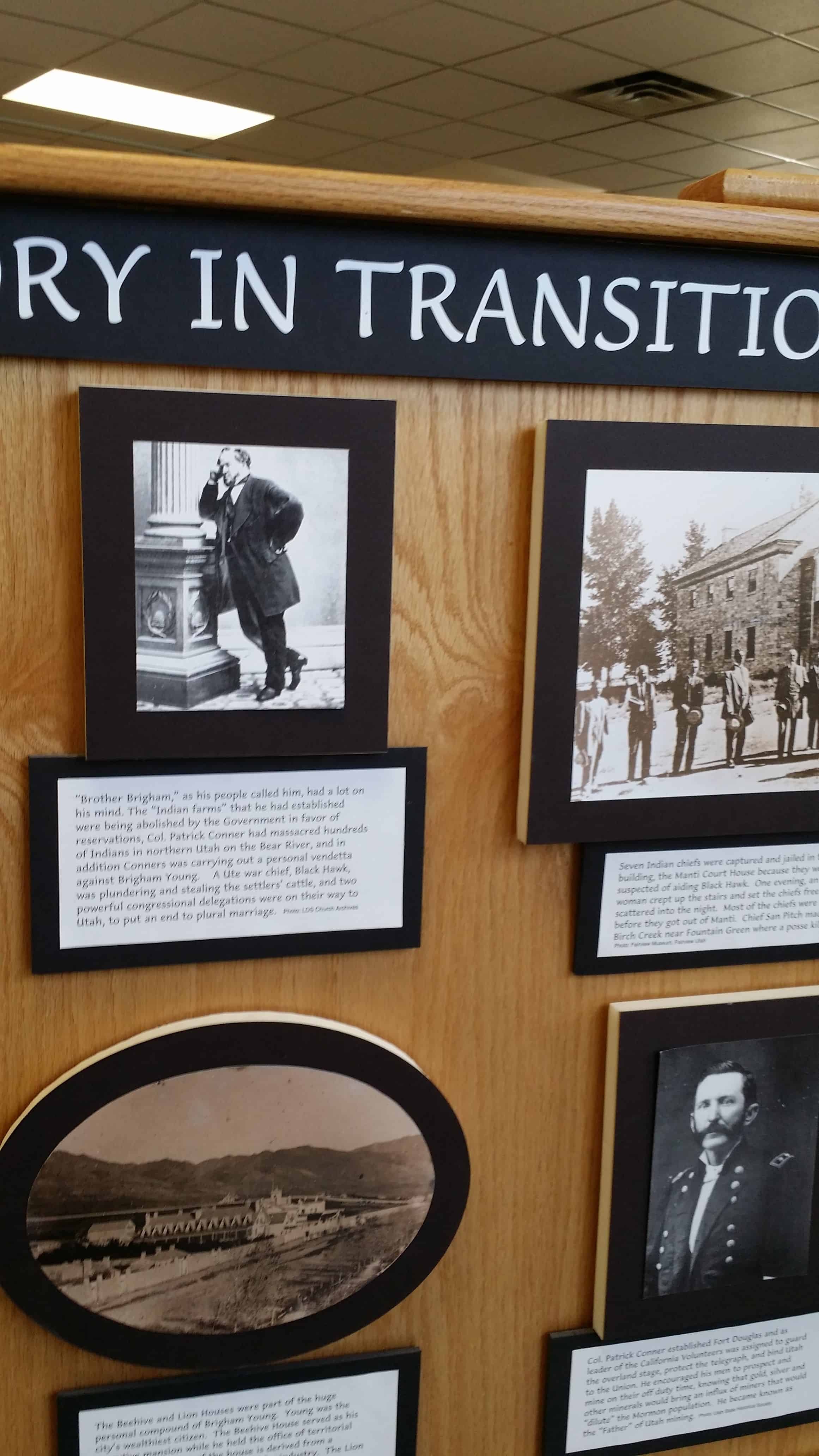
  • 2014-07-04 15.50.23

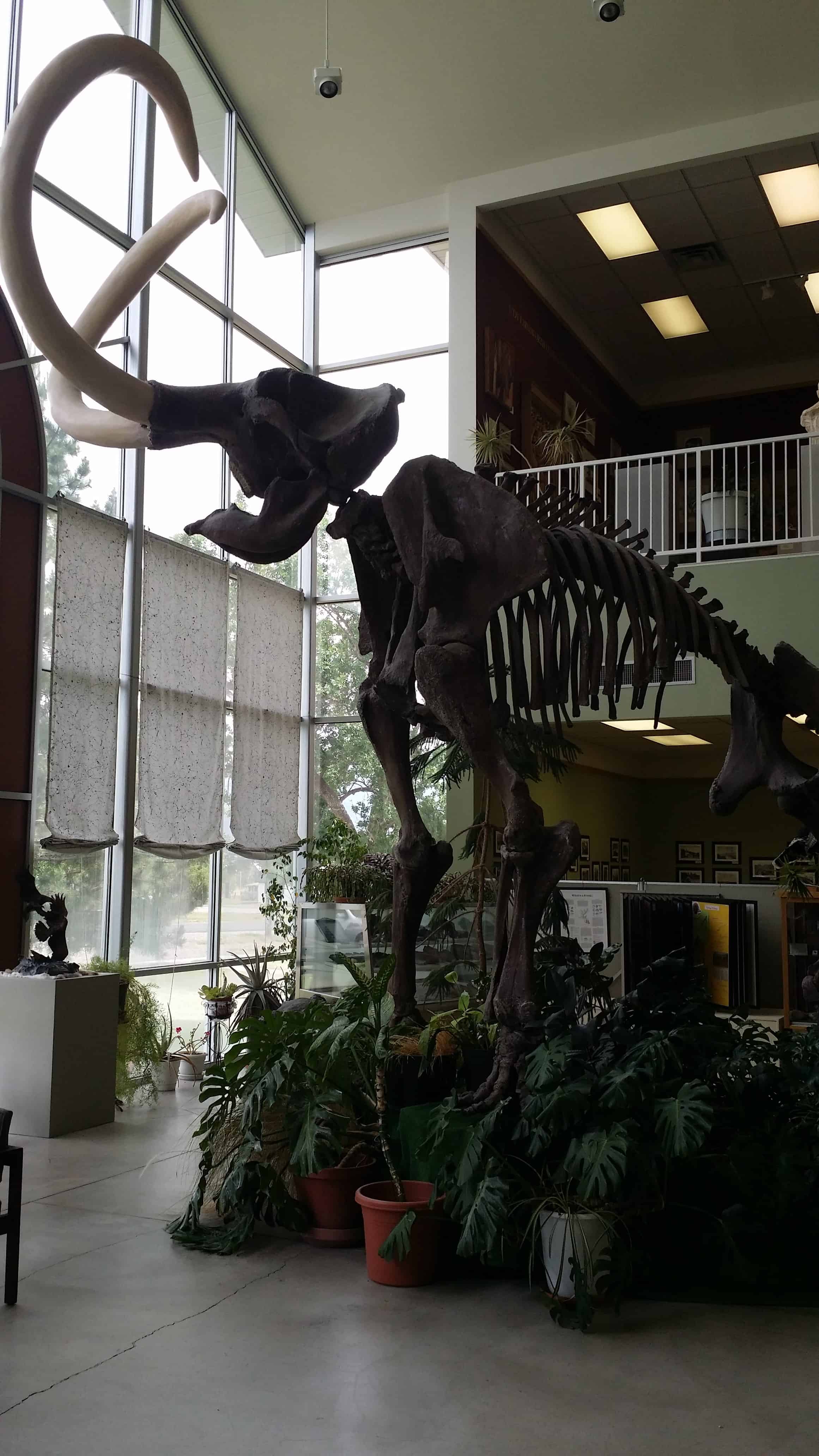
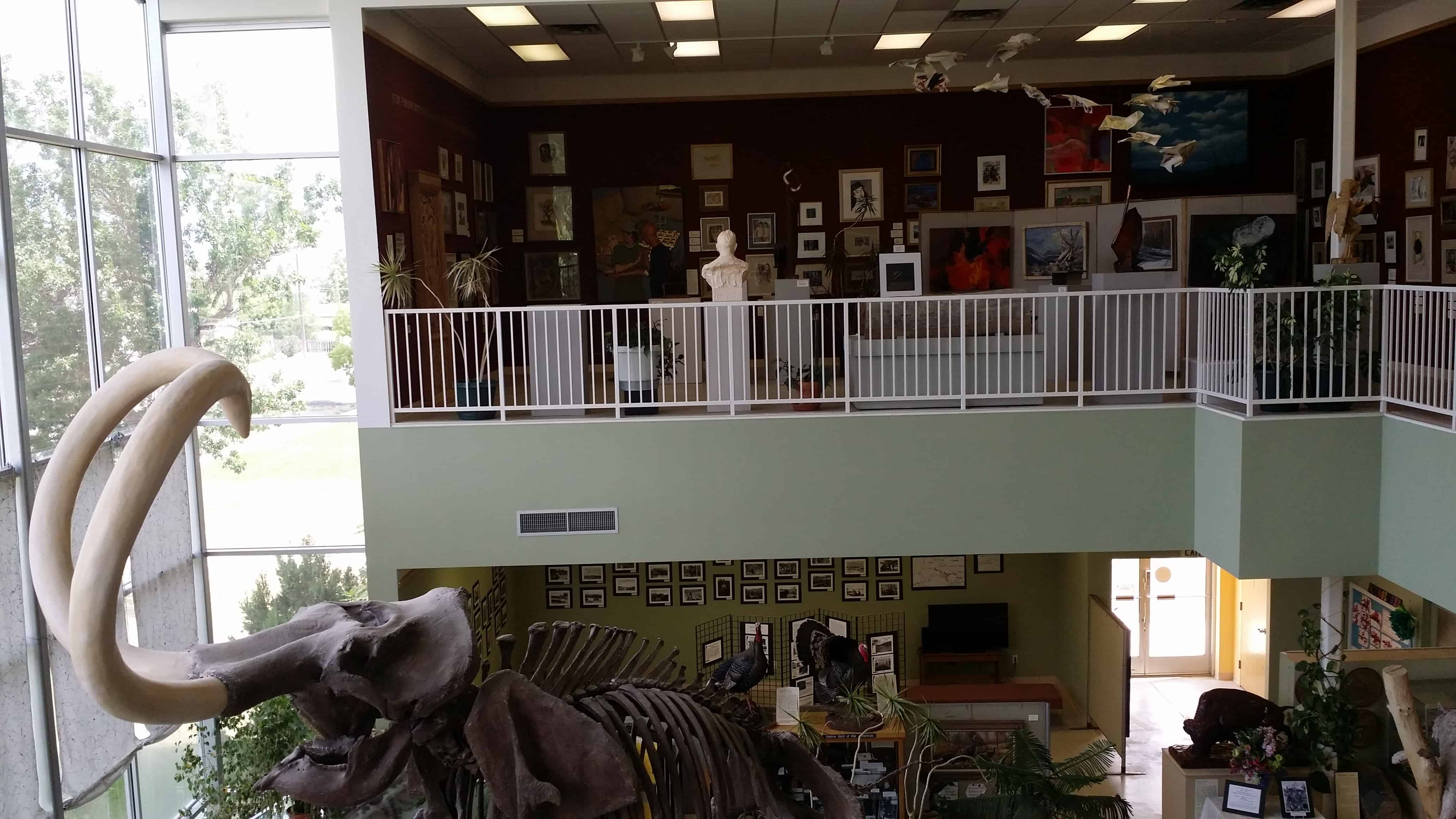
We stopped by the Fairview Museum of History and Art to look around, it was two buildings, it was a holiday (July 4th) and I was surprised they were even open, they offered to open up the North building for us but we decided to save it for another time and just check out the South building.

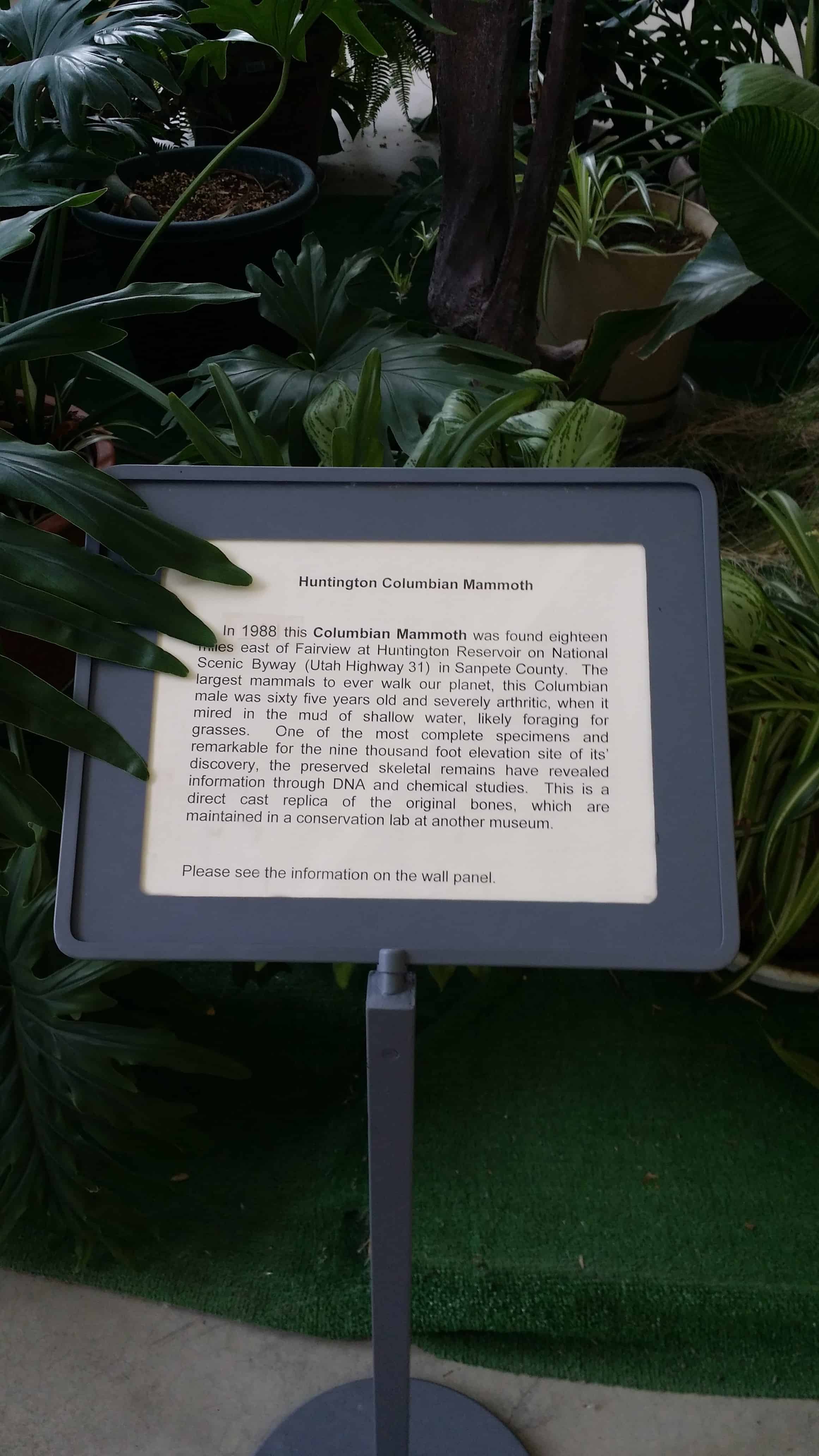
I had wanted to come see the Mammoth for years since I had many times stopped at the site where it was found up the canyon (see this post.)

  • 2014-07-04 15.50.45
  • 2014-07-04 16.01.48
  • 2014-07-04 16.01.57
  • 2014-07-04 16.02.02
  • 2014-07-04 16.02.04
  • 2014-07-04 16.02.12
  • 2014-07-04 16.02.19
  • 2014-07-04 16.02.27
  • 2014-07-04 16.02.42
  • 2014-07-04 16.04.28
  • 2014-07-04 16.06.31
  • 2014-07-04 16.06.36
  • 2014-07-04 16.06.39
  • 2014-07-04 16.07.40
  • 2014-07-04 16.08.11
  • 2014-07-04 16.08.20

Fairview Roller Mill

08 Tuesday Jul 2014

Posted by Jacob Barlow in Uncategorized

≈ 2 Comments

Tags

Fairview, Mills, Sanpete County, utah

  • ingress_20140704_153709_15

I was driving through Fairview and saw this gorgeous old mill and snapped a photo.

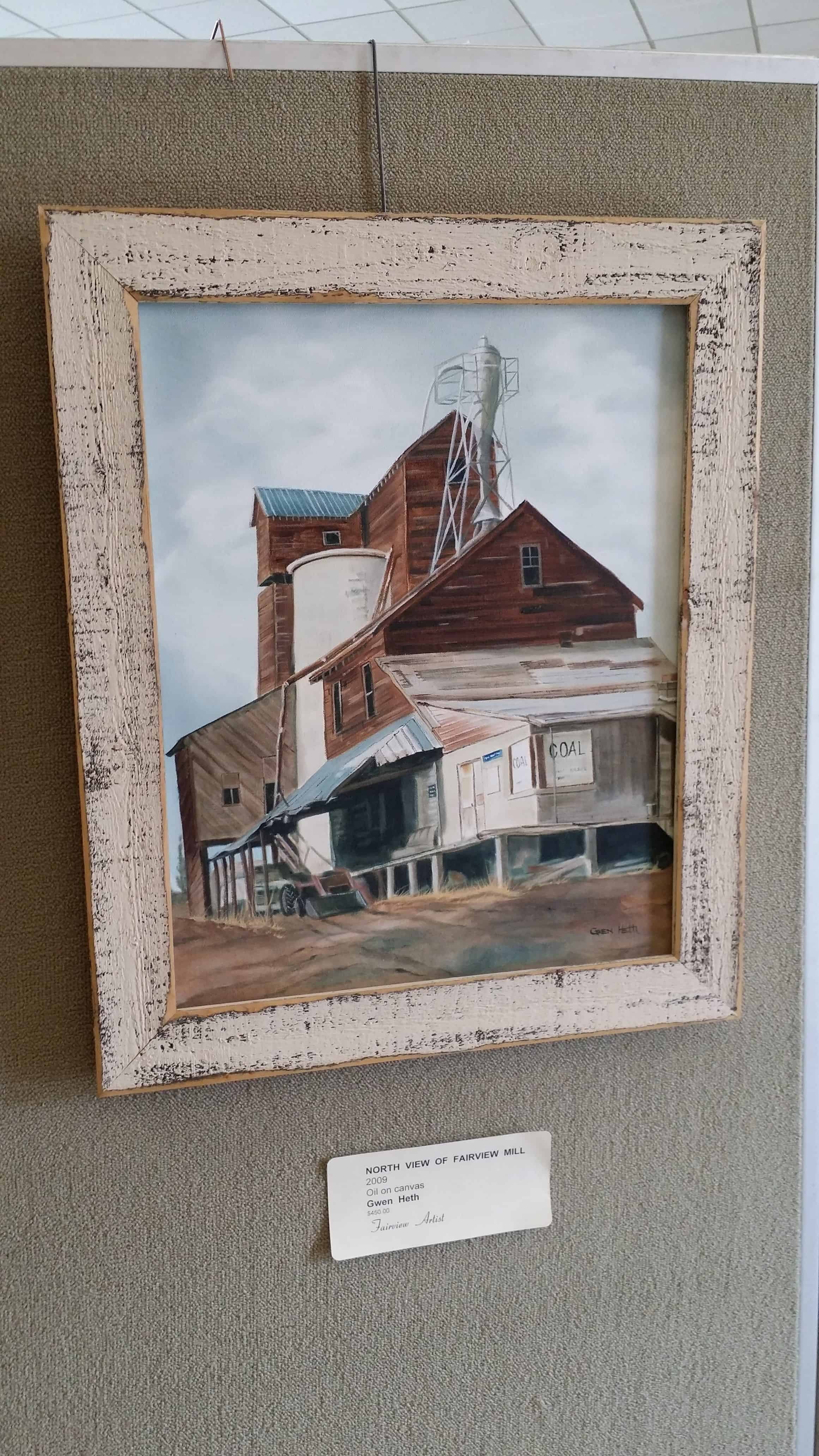
I later stopped in at the Museum in town and saw several paintings of the same Mill, I thought I’d post those here.

  • 2014-07-04 16.07.40
  • 2014-07-04 16.08.11
  • 2014-07-04 16.08.20

The historic Fairview Roller Mill has always been my favorite thing to see in Fairview. It was not in great shape but in 2016 the Utley family puchased it and fixed it up while converting it into a home.

It was the first mill in Fairview, built in 1922.

Related Posts:

  • http://fairviewmill.blogspot.com/

Fairview, Utah

08 Tuesday Jul 2014

Posted by Jacob Barlow in Uncategorized

≈ 3 Comments

Tags

Fairview, Sanpete County, utah

fairview

Members of the Church of Jesus Christ of Latter-day Saints (LDS or Mormon Church) first explored and settled the Sanpete Valley in central Utah in 1849, but because of skirmishes between settlers and indigenous Ute tribal members, more than a decade passed before the various communities became established. Fairview (originally known as North Bend), at the north end of the valley, was one of the last to be settled. It was surveyed in 1859 and a fort constructed the next spring in response to regional Anglo/Indian conflicts. Life in the settlement was not “all work and no play.” A large log schoolhouse built in the center of the fort was dedicated December 9, 1860. It served as a school, church, and community center. Dances were held in this building from the beginning and soon a stage was built in one end for community drama productions. (*)

2014-07-04 16.33.51

A few of my posts related to Fairview are listed here:

  • Churches – North Ward and South Ward
  • City Cemetery and Fairview Pioneer Cemetery
  • City Drug Co.
  • The Corner Station
  • David Sanders House
  • Fairview Amusement Hall
  • Fairview City Hall and Old City Hall
  • Fairview Lakes
  • Fairview Museum Exterior and Interior
  • Fairview Tithing Office/Bishop’s Storehouse
  • First Grist Mill Stones
  • Given Family Massacre
  • Hideaway Valley, Utah
  • Library
  • James Anderson House
  • Niels P. Hjort House
  • Old Fairview Mill
  • Parks – Lions and Sports
  • Settlement of Fairview
  • Fairview posts sorted by address

In 1864 a post office was established and by 1880, with one thousand residents, Fairview was the fourth largest settlement in the valley. The full-time population would exceed 1,700 in 1910 and again in 1940, but currently sits at under 1,000; there are several reasons for this. The primary occupations in Fairview are in the livestock and agricultural industries, with sheep and cattle being the main stock. Other industries were established in the twentieth century, mainly in coal mining and dairy operations, but because major traffic routes bypass the Sanpete Valley, little growth in either industry or population has occurred in the past several decades. The isolation and lack of growth in industry and population has allowed for the retention of a majority of historic buildings and structures, not only in Fairview, but also in the entire Sanpete Valley.

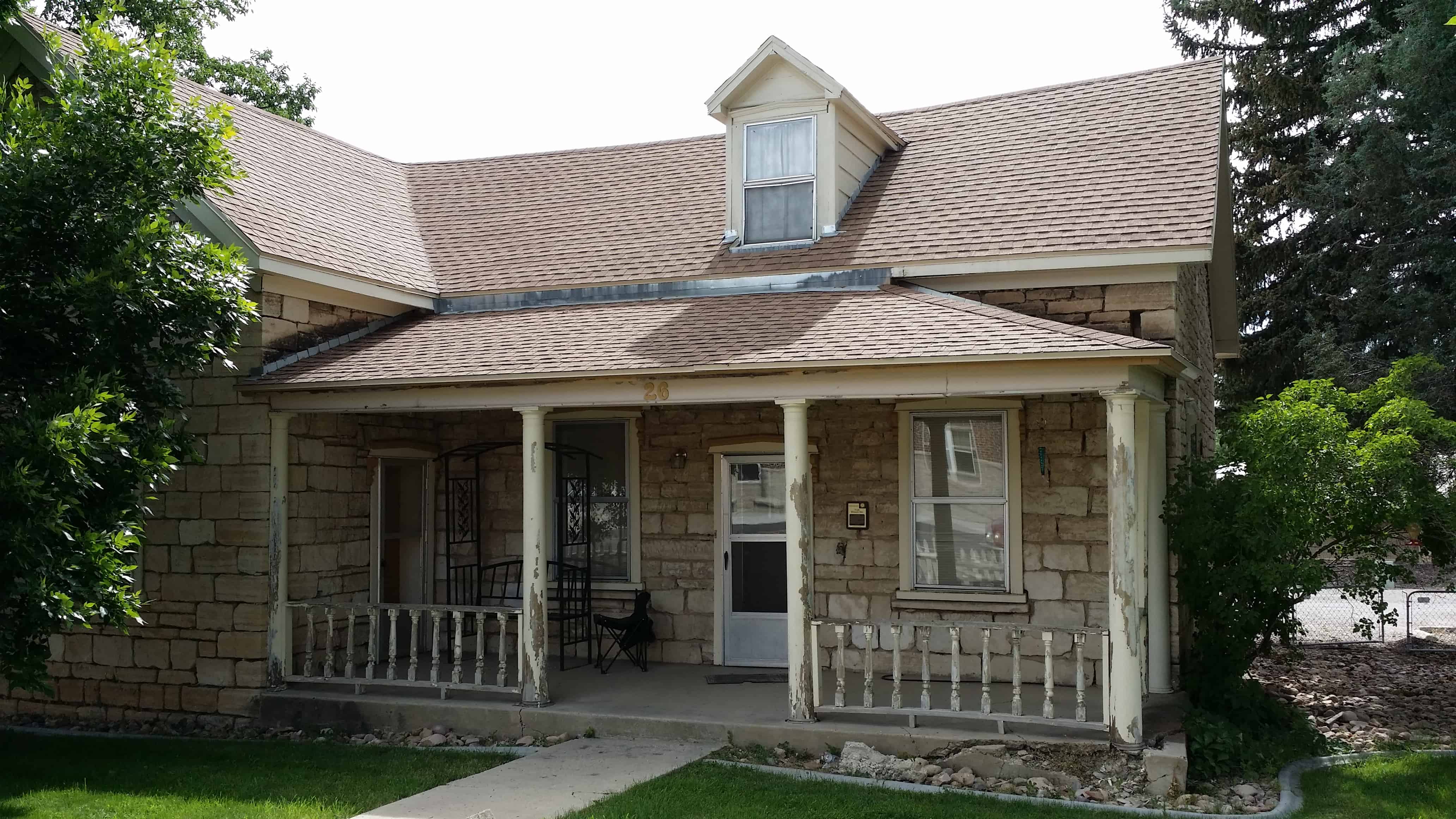
385 N 200 W

Old Palmyra

02 Wednesday Jul 2014

Posted by Jacob Barlow in Uncategorized

≈ 2 Comments

Tags

DUP, Forts, historic, Palmyra, spanish fork, SUP, utah, utah county

picture7sep07-065

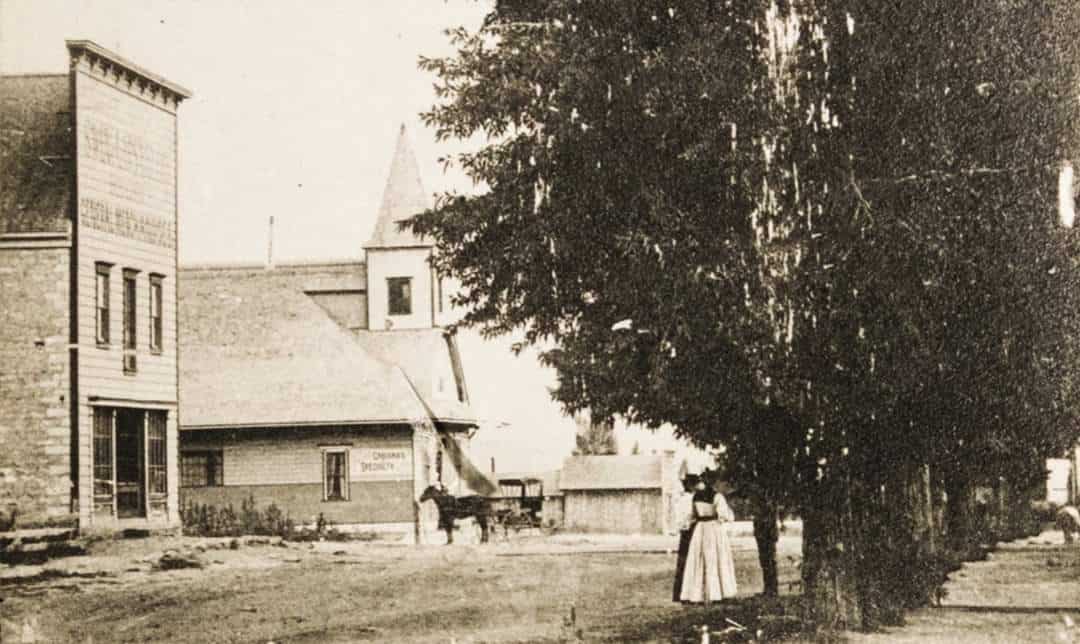
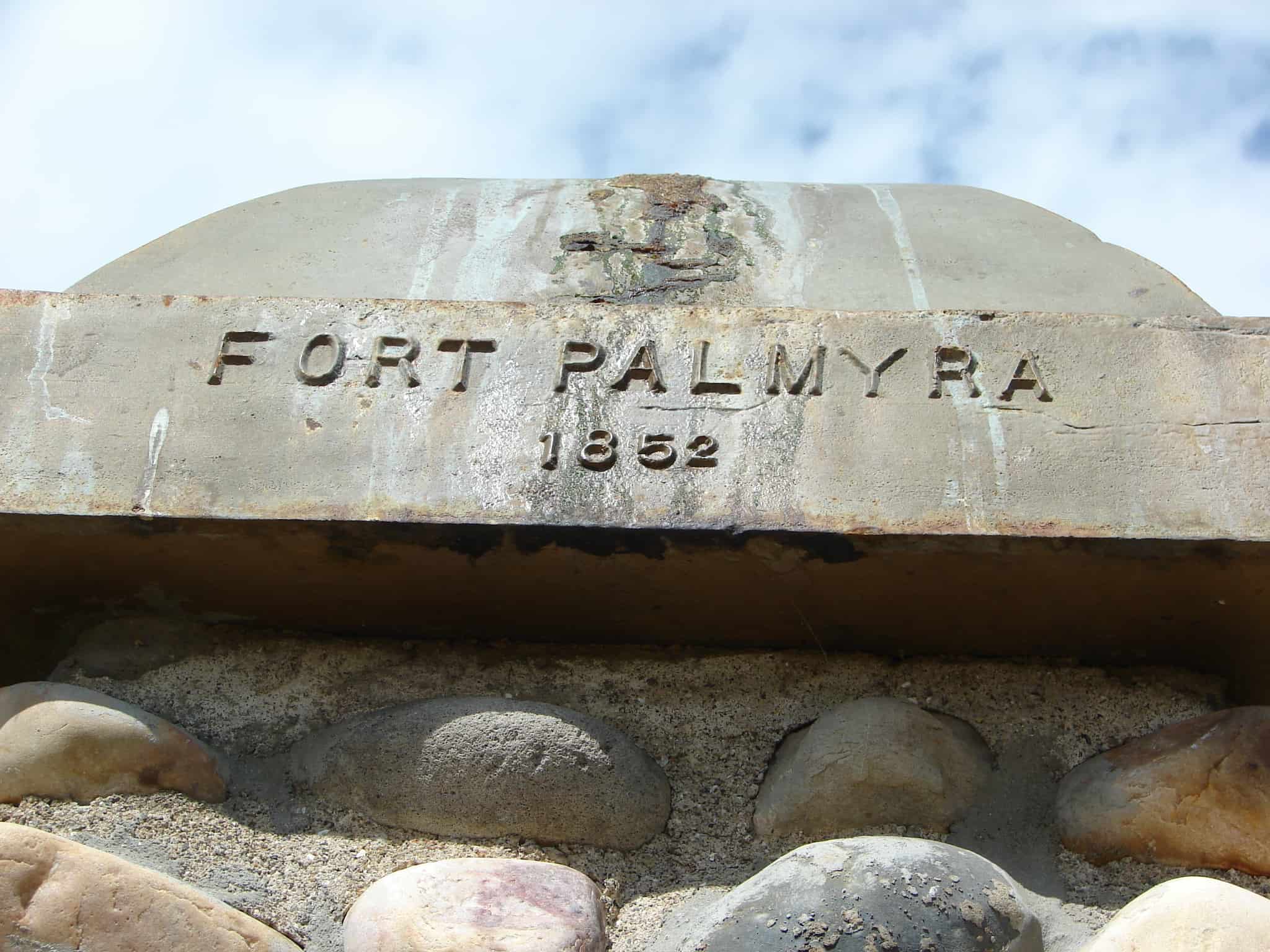
This Monument marks the South-West corner of Fort Palmyra. This Fort was built by the settlers for protection. Palmyra was selected in 1852 as a suitable place to build a city by Apostle Geo. A. Smith. The first home was built in August of that year. W.W. Willis was its first Mayor. The first bishop was Stephen Markam. Silas Hillman was the first school teacher. Upon advice from President Brigham Young, the settlers of Palmyra moved to Spanish Fork, in 1856.

This marker was placed in 1933 and the D.U.P. didn’t start numbering their historic markers until 1934 so it is not in the numbered list.

Related Posts:

  • Fort Palmyra Pioneer Settlement
  • Palmyra, Utah
Picture 018
Picture 019
Picture 020

Pioneer Heritage Cemetery – Spanish Fork

01 Tuesday Jul 2014

Posted by Jacob Barlow in Uncategorized

≈ 2 Comments

Tags

Cemeteries, DUP, historic, spanish fork, utah, utah county

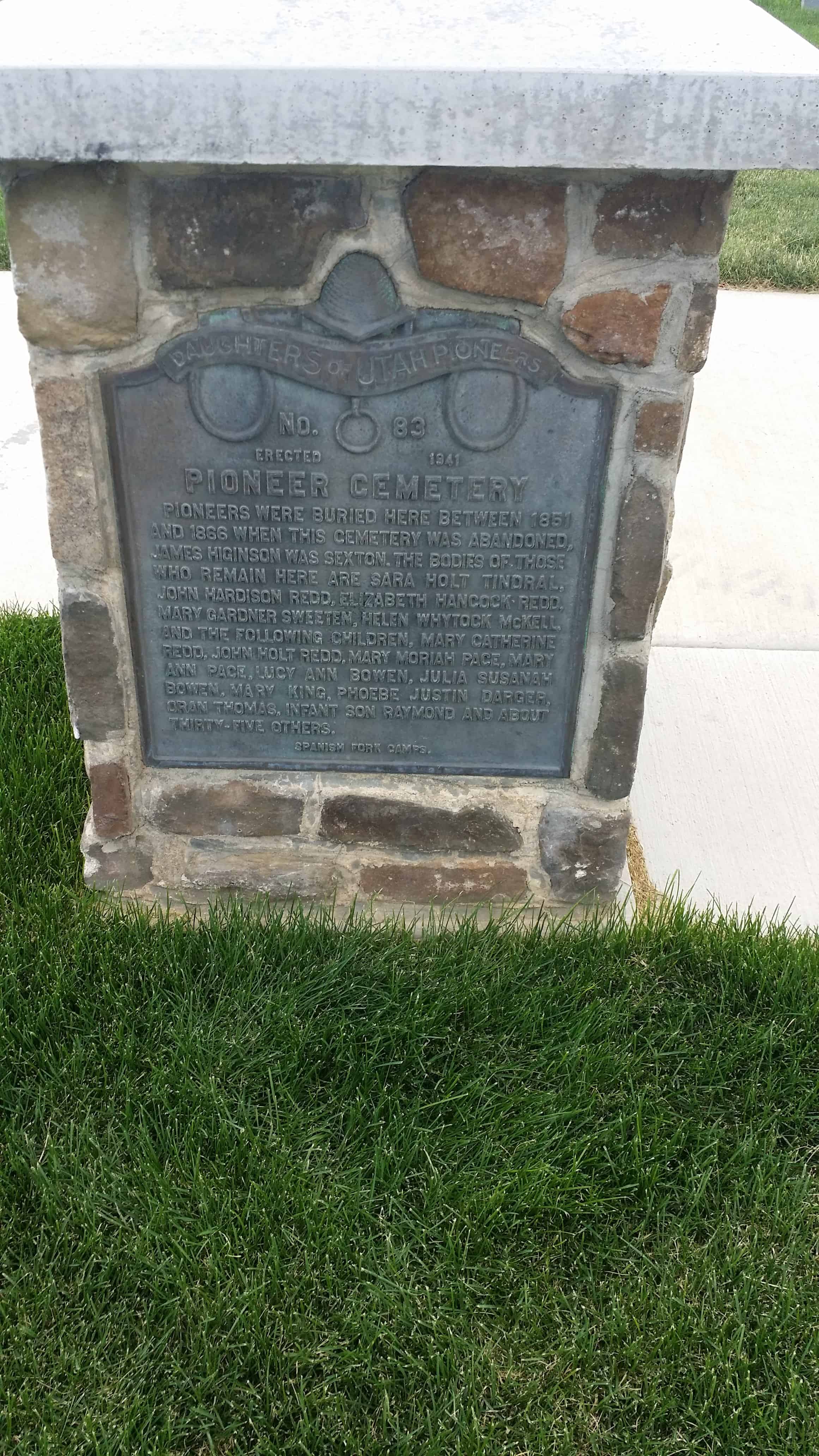
Back in 2006/2007 I was searching out the historic markers placed by the Daughters of Utah Pioneers, #83 (see information here) was at the Pioneer Heritage Cemetery in Spanish Fork, Utah.

Here are a few photos I took back then:

ImageImageImage

As you can see there wasn’t much to look at, a monument and an arch and a weed-filled field. 

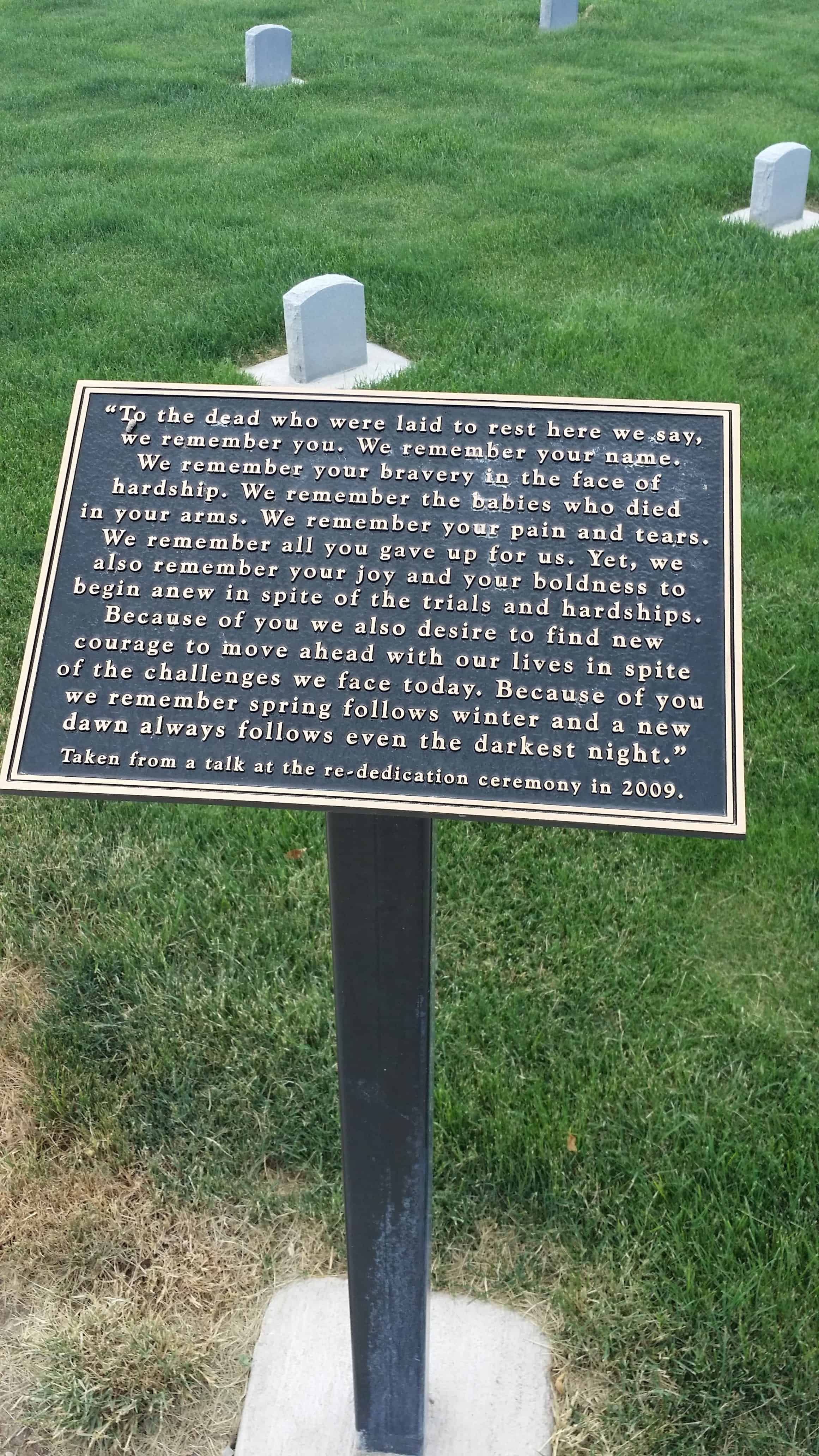
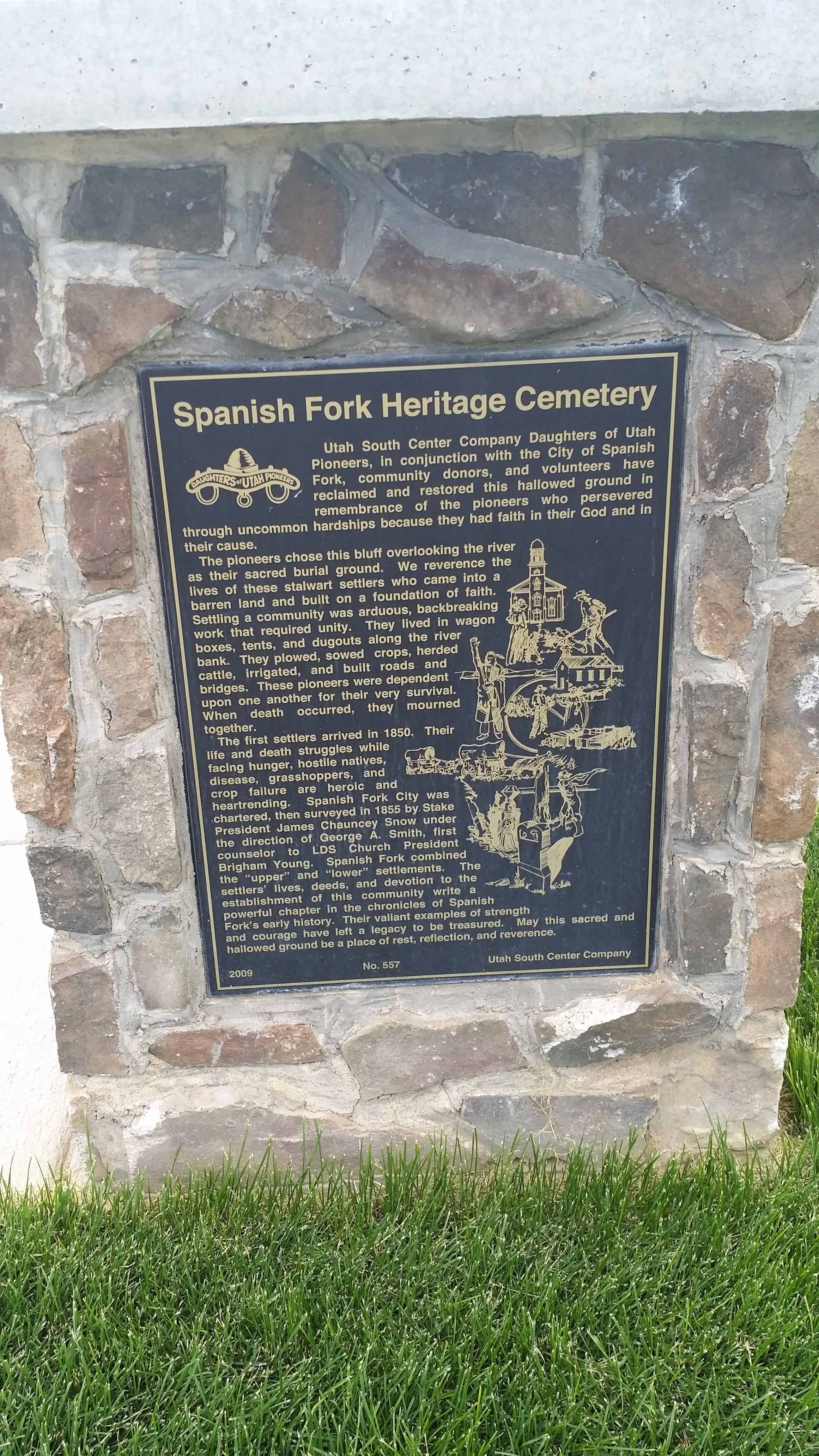
Well they have since really made it quite nice, plaques with stories, a nice lawn, headstones in rows.   It’s a great place.   Here are some more photos that I took the other day when I stopped by with the family.

Image

Settlers to this area built some of their first homes directly below this pioneer cemetery. During warn weather they loved in tents or four foot wide wagon boxes. Many settlers dug into the ground or hillside for shelter during the winter. There were once so many dugouts built in the area that Spanish Fork was known as “Gopher Town.”

One family who came to this area was quite astonished to see the women coming out of the “holes,” along the hillside like gophers. During a very wet spring, one of the dugouts started to leak. More dirt was placed on the top of the roof. This extra weight caused the support beam of the family’s root to break killing the father. He is buried here not far from his home.

Image
Image

Early settlers often faced multiple deaths and burials in one family. On May 5th, 1851, John and Elizabeth Hancock Redd’s 17 year old daughter, Mary Catherine Redd, suddenly because ill and died within hours. She was buried on this bluff overlooking the River Bottoms. John and Elizabeth suffered another loss as their 15 year old son, John Holt Redd, was thrown from his horse on November 15, 1853. His heartsick mother died three days later. Then on June 15, 1858 John Hardison Redd died after being kicked by a horse. All four family members were buried in the Redd Cemetery, now known as the Heritage Pioneer Cemetery.

This Cemetery has also been called The Old Palmyra Graveyard, the East Bench Graveyard, and The Upper Cemetery.

Image
Image

In the spring of 1854, Mary Ann Boice took a Native American child, Alpharetta, into her home. Alpharetta was brought to her by the child’s father after his wife died in childbirth. She took care of the infant, along with her own infant son Alfred. Alpharetta soon died of measles and was buried here. Later, Mary Ann and her husband John were called to settle Kamas. While traveling to their new home, their wagon was surrounded by a band of angry Native Americans covered with war paint. A brave, Alpharetta’s father, recognized Mary Ann, got down from his horse and convinced the cheif to let them go in peace.

Image
Image
Image

Helen Whytock McKell was born in Scotland. She married there, and her husband died leaving her with a son to raise. She then married Robert McKell and together with her son emigrated to Utah.

Brigham Young called Robert and Helen to enter into the practice of polygamy. Within days of the polygamist marriage, Helen became ill and died. Robert McKell’s journal said that she was “buried in the old cemetery on the brow of the bench land near the Vincent farm in the River Bottoms.”
When Robert died later, the family brought Helen’s broken headstone to the new cemetery and placed it beside Robert’s.

Image

Early settlers in Spanish Fork took care of their family burials with the aid of friends and volunteers. The winters were severe and often the ground was frozen hard. Those assisting with burials had to clear snow and sagebrush, mark off the grave, then make and tend a fire that would burn all night to soften the ground.
The first burial in the Pioneer Cemetery was Mary Catherine Redd in 1851. Some of the people buried here were later moved to the Spanish Fork City Cemetery. In 1866 a sexton was appointed to start keeping records of burials which were already being made in the City Cemetery.

ImageImageImageImageImageImage

(This is DUP Marker #557, click here for more info)

ImageImageImageImageImageImageImageImage

Latimer, Utah

01 Tuesday Jul 2014

Posted by Jacob Barlow in Uncategorized

≈ Leave a comment

Tags

Iron County, Latimer, utah

Image

Not much to the old railroad siding of Latimer, Utah.   I snapped this picture and left a geocache for people to find.

Thermo, Utah

01 Tuesday Jul 2014

Posted by Jacob Barlow in Uncategorized

≈ Leave a comment

Tags

Beaver County, Latimer, Lund, Thermo, utah

Image

Not much left to the ghost town and railroad siding of Thermo, Utah.

I thought these two pages were interesting, and needed a place to put the above photo. 😉

http://www.in-the-desert.com/thermohotsprings.html

http://www.utaharchunev.com/places-along-the-pipeline/the-barnes-homestead

Rotten Eggs in Diamond Fork Canyon

01 Tuesday Jul 2014

Posted by Jacob Barlow in Uncategorized

≈ 2 Comments

Tags

Diamond Fork Canyon, Springs, utah, utah county

Here’s some photos from when my friend Dick and I stopped by the sulpher springs in Diamond Fork Canyon.

ImageImageImageImageImageImageImageImage

← Older posts
Newer posts →

Follow Jacob

Follow Jacob

Blog Stats

  • 2,033,276 hits

Social and Other Links

BarlowLinks.com

Recent Posts

  • Dixie Sorghum (Molasses) Mill
  • This is the Place State Park
  • Eyes Westward
  • Wellsville Relief Society Meetinghouse
  • Angels Are Near Us

Archives


Loading Comments...