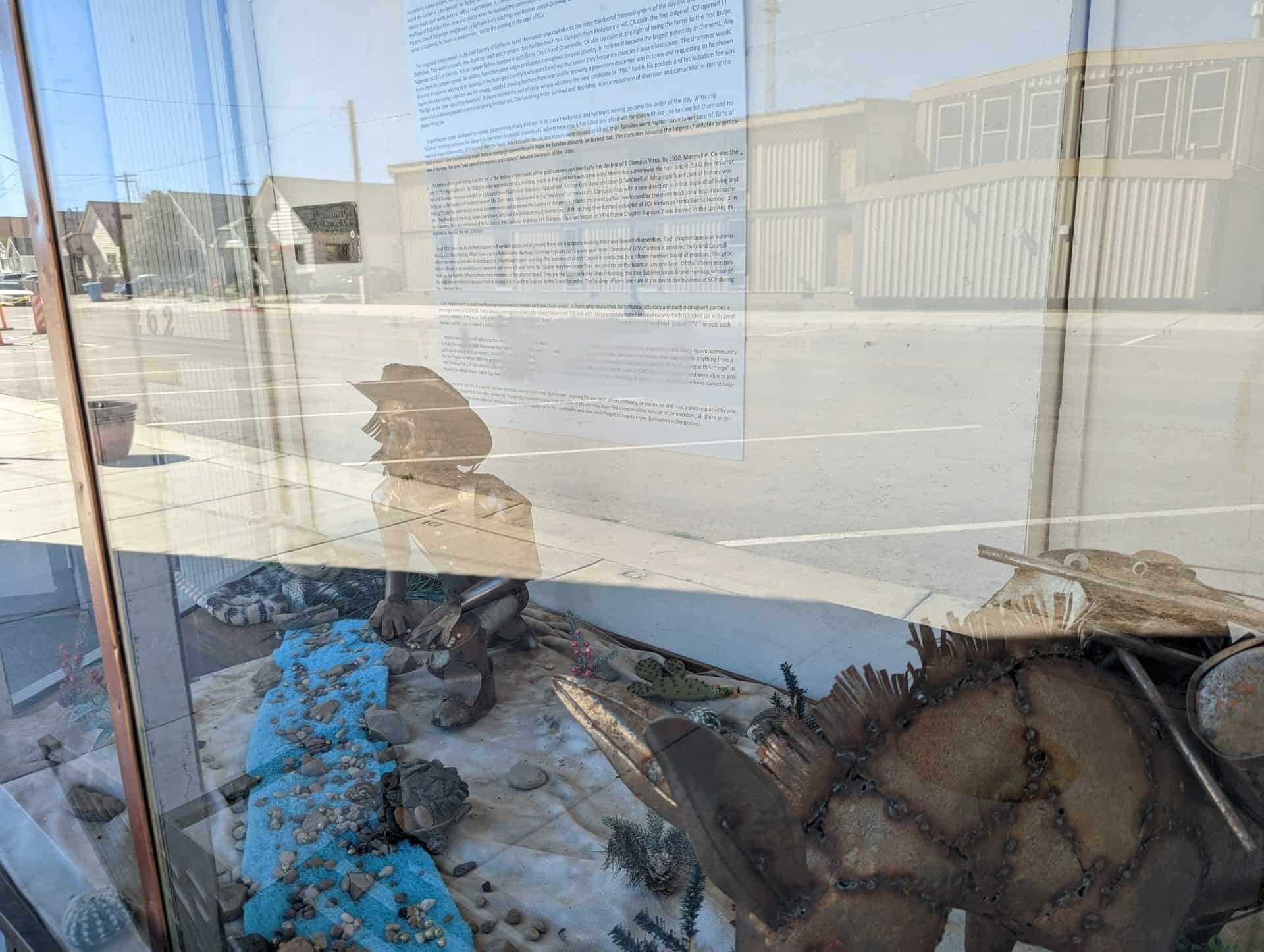
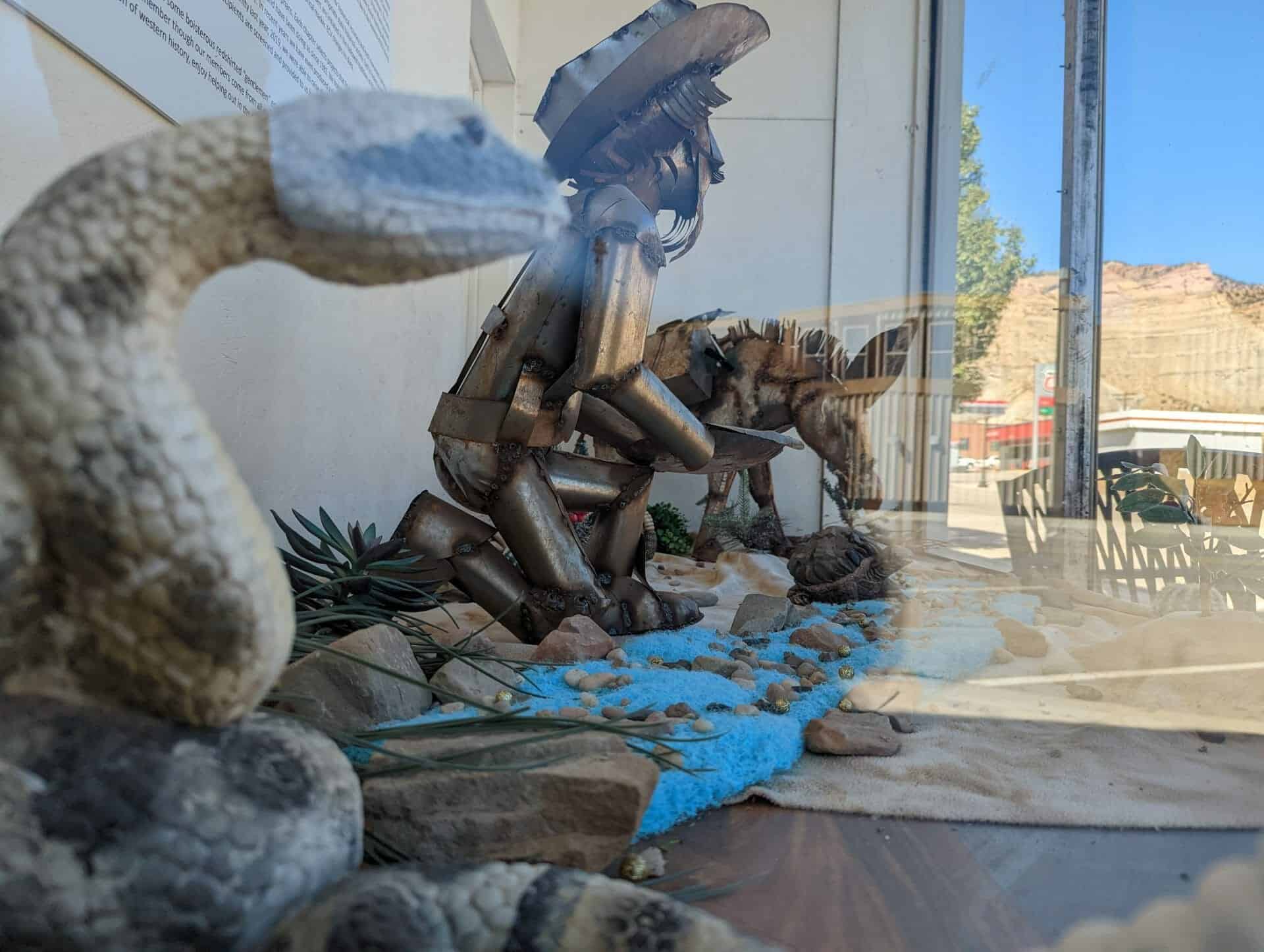
The Carbon Hotel was built in the early 1900’s. It was first owned by C. A. Bartolino. The building was used as a hotel, bar, café and sporting house throughout the years. Due to the large number of single male immigrants into the local mines, the bordello on the upper floor was very popular, though somewhat illegal, during Helper’s heydays. Due to increasing pressure from the authorities during the 1970’s the doors were closed. Matt Warner Chapter purchased the building in 1987 with the help of Helper City. The building was restored and is presantly used as a meeting hall for the organization.
This valley was originally settled in 1881 by Teancum Pratt. The original Pratt Survey still predominates on maps of this area. He sold land to the Rio Grande Western Railroad for a right of way. By the fall of 1887 the railroad had built 27 frame residences and from this start the town continued to grow. With the completion of the standard gauging of track in 1891, a terminal was established in this area.
It took extra engines to push trains over Soldier Summit, these extra locomotives were called “Helpers” and it was from this source that Helper was named.
With a mixed population of practically every nationality, Helper grew into a booming town. In 1907 Helper Township was incorporated.
This historic marker is located at the old Helper City Hall Building at 73 South Main Street in Helper, Utah and was dedicated by the Matt Warner Chapter 1900 of E Clampus Vitus on July 11, 1987 and remounted and rededicated July 8, 1995.
This one-story red brick flat roof building was built as the Helper City Hall in 1927. This building has classical “tin” cornices, columns and pediment. The project architect was Walter E. Ware of Salt Lake City.
The City Hall has been a center of community events since it was built. The building has always served as Helper’s City Hall, maintains its original appearence and contributes to the historic qualities of the Helper Historic District.
Marker Placed in 1997 by Division of State History. ( CR-07-735.)
Star Dancing Erected June 1, 2010 The Star of Helper represents the sky like the town and has no bounds. The Star also represents Helper as Utah’s Christmas Town. Donated by: Marie Camille Truscott Lentsch (a former Helper resident) Kirt E. Mascaro Helper City Councilman, 2010
Presented to Helper City We pledge allegiange to the flag of the United States of America and to the Republic for which it stands one Nation, Indivisible, with Liberty and Justice for all.
Presented and dedicated by Price Lodge No. 1550, B. P. O. Elks June 14 – 1952
This building was constructed in 1919 out of brick and stone rubble salvaged from the burned Double Rock store. Helper Furniture and Hardware Company, a business started by Mike Bergera and purchased by Joe and John Quilico in 1923, was located on the first floor. The original J. C. Penney store in Helper was also located on the first floor. The Hotel Utah, operated in the 1930s by D. C. Cavenah, was located on the second floor. This two-story commercial building contributes to the historic character of the Helper National Register Historic District.
Two story red brick stone and stucco commercial building. Present building was originally owned by Mike P. Bergera and was constructed from the brick and stone rubble of the Double Rock store building which burned in May 1919. The Helper Furniture and Hardware Company was located in the first floor. Begun by Mike Bergera, the furniture business was purchased by Joe and John Quilico in 1923. The original J.C. Penney business was located in the LHS of the first floor. The second floor was the Hotel Utah (presently called the Utah Hotel), operated in 1935 by D.C. Cavenah. The first floor decorative tile dates Business offices presently occupy front façade has been altered. from the early 30’s. Business offices presently occupy the first floor, and the front façade has been altered.
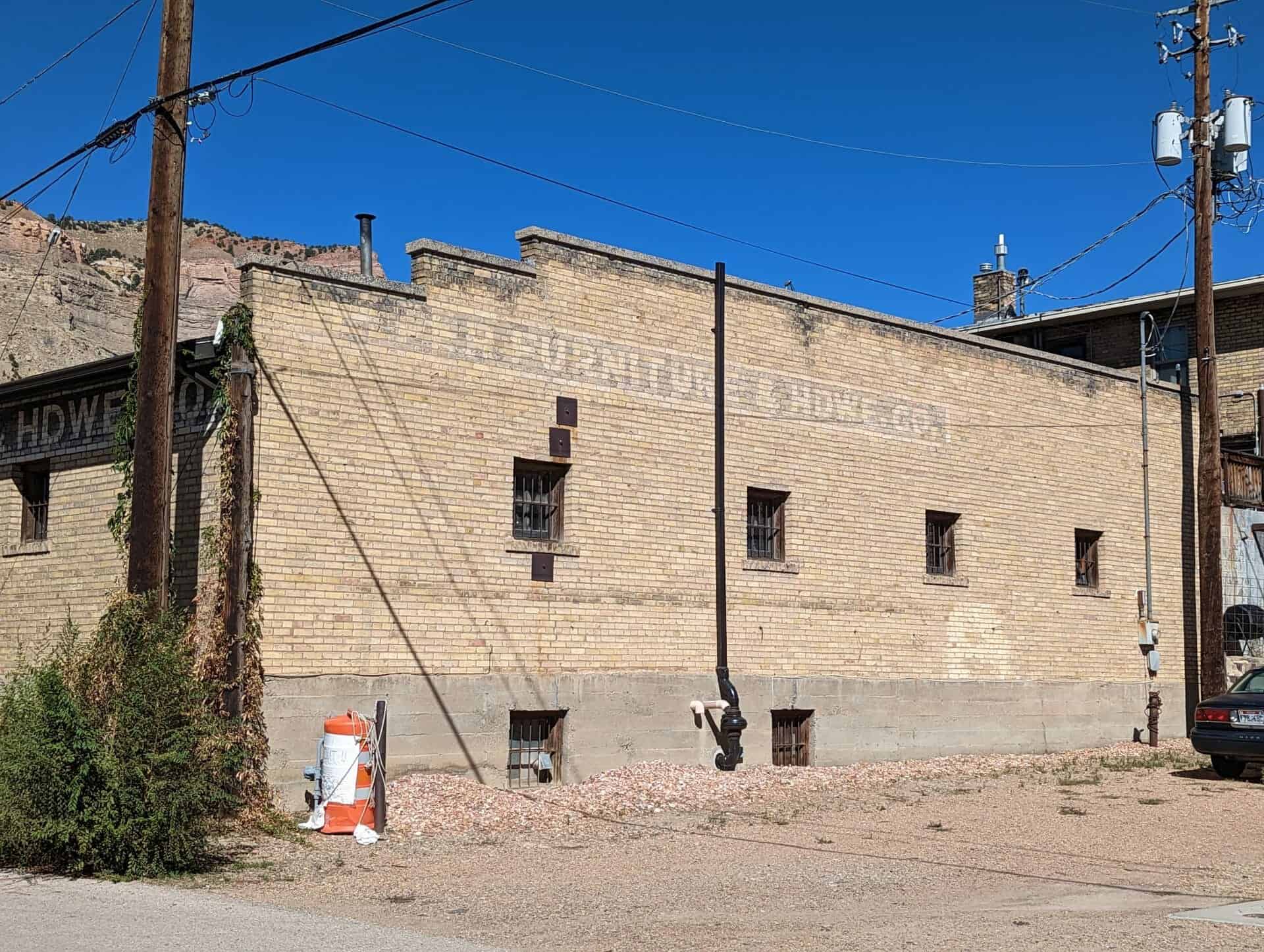
Behind the building is this one story hip roof, tan brick warehouse building constructed for Helper Furniture and Hardware Co., listed as CR-07-676 in the Helper Commercial District.
Left hand side (LHS) two story red brick commercial building, right hand side (RHS) adjoining one story brick commercial building. These buildings were originally owned by Baptist Vignetto and have seen a variety of business uses. The downstairs portion of the LHS was once a silent movie theater and during the depression served as a government supported emergency station for transients. A sign which is still on the rear interior wall of the building states: “This is only an emergency station. . . no person or persons will be allowed more than (2) meals and (10) hours rest. Meals will be served as follow . . . one meal when checking in and one meal when leaving providing that eight hours have elapsed between meals. (as this is only an emergency station – you are requested to keep moving toward your destination as soon as possible) PERSONS CHECKING IN FOR THE NIGHT WILL BE CALLED TO MAKE TRAINS”.
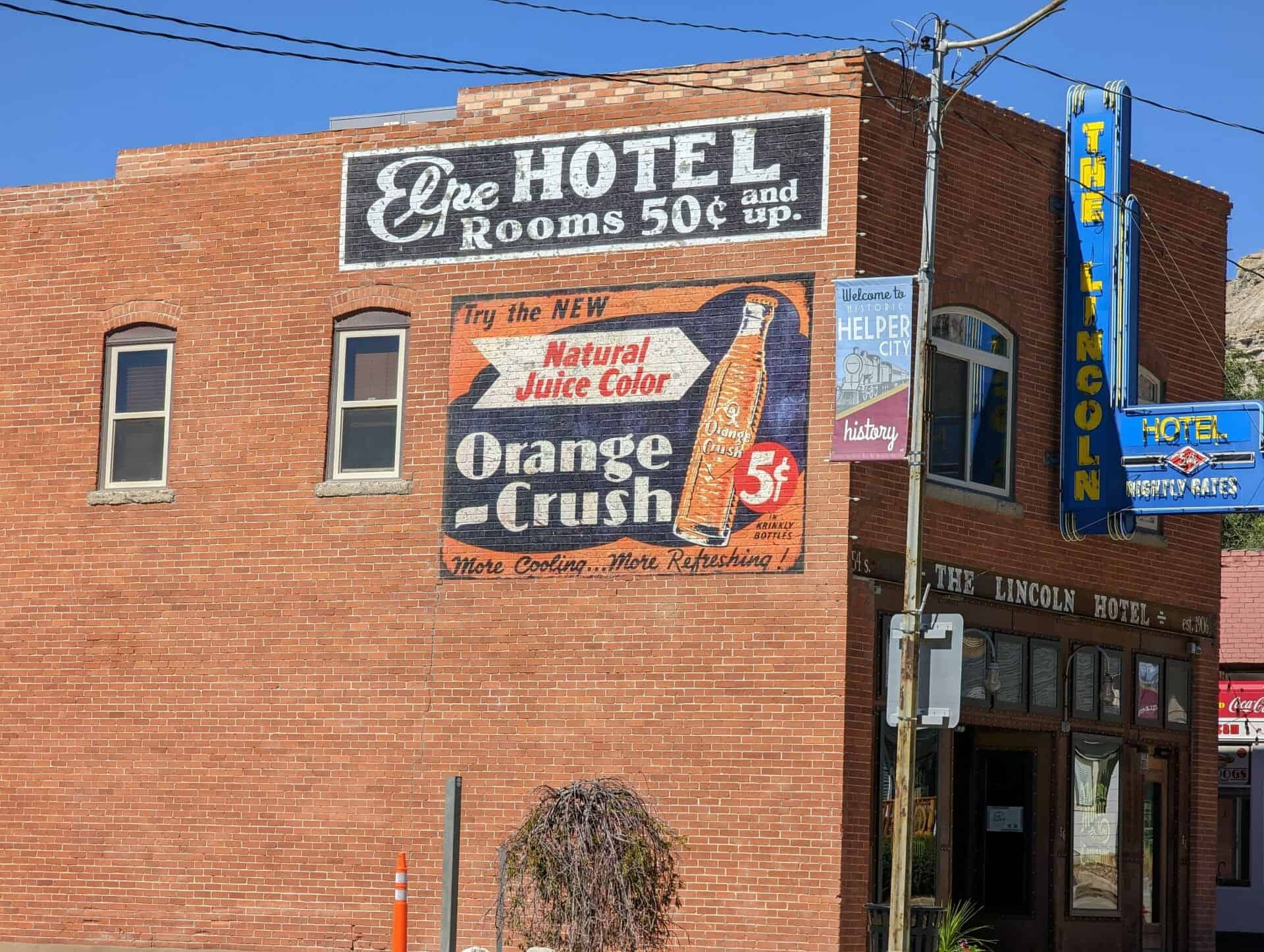
Sometime later the Ricci Market was located in the LHS downstairs. The upstairs portion of the building housed the Elpe Hotel from at least 1924 through 1936. Mrs. Wanda Kadoto is listed as the manager in 1924, and Ray Inue and K. Shirota are listed for the later years. The RHS was apparently a Japanese restaurant during the earlier years. A photograph of the building during the early 30’s shows a window sign “Sun Shine Noodles”. After c. 1940 the building housed OK Cleaners. Both buildings are presently a private club and have had facade modifications.
Built in 1937, the Helper Civic Auditorium was designed by Salt Lake City architects Carl W. Scott and George W. Welch. The building is an excellent example of Art Moderne style also known as “Streamline Moderne.” The style was popular in the 1930s particularly in public buildings. The auditorium features Art Moderne elements such as the flat roof emphasized by concrete coping and coursing, smooth masonry with curved corners, glass block, and pilasters with abstracted capitals.
The Helper Civic Auditorium is part of the Utah Public Works Administration (PWA) and Works Progress Administration (WPA) Buildings Thematic Nomination. The building is significant because it helps document the impact of New Deal programs in Utah during the Great Depression. The Helper Civic Auditorium was one of 226 buildings (two of which were auditoriums) constructed in Utah during the 1930s and early 1940s under the WPA and other New Deal programs. Of those 226 buildings, 130 are still standing. On a local level the construction of the building was a boost to Helper’s economy by providing much needed jobs and funds through the purchase of building materials.
Ashley Valley, settled in 1873, had its first postoffice in this structure. Built in 1879 by Wilbur C. Britt, the first postmaster. Logs hauled from nearby forests were put together with wooden pegs and square nails to erect one large room. A partition separated the postoffice from a store. Once a week carriers, riding horseback or wearing snowshoes, delivered the mail to and from Greenriver, Wyo. Mail service here was discontinued in 1899. This building now belongs to the Daughters of Utah Pioneers.
This is Daughters of Utah Pioneers historic marker #313, located at 1333 West 2000 North in Vernal, Utah
The Ashley Post Office was established in the center of Ashley Town on December 27,1878. At that time there were about 300 settlers in Ashley Valley. Wilbur Carlton Britt and Finley Britt used logs from nearby mountains, wooden pegs, and square nails in constructing this building. It had a dirt roof and wide board floors. The cracks between the logs which were filled with mud. A log partition separated the post office from a grocery store. Wilbur Britt was appointed first postmaster on April 16, 1879. The Ashley Post Office is also on the Utah Register of Historic Places.
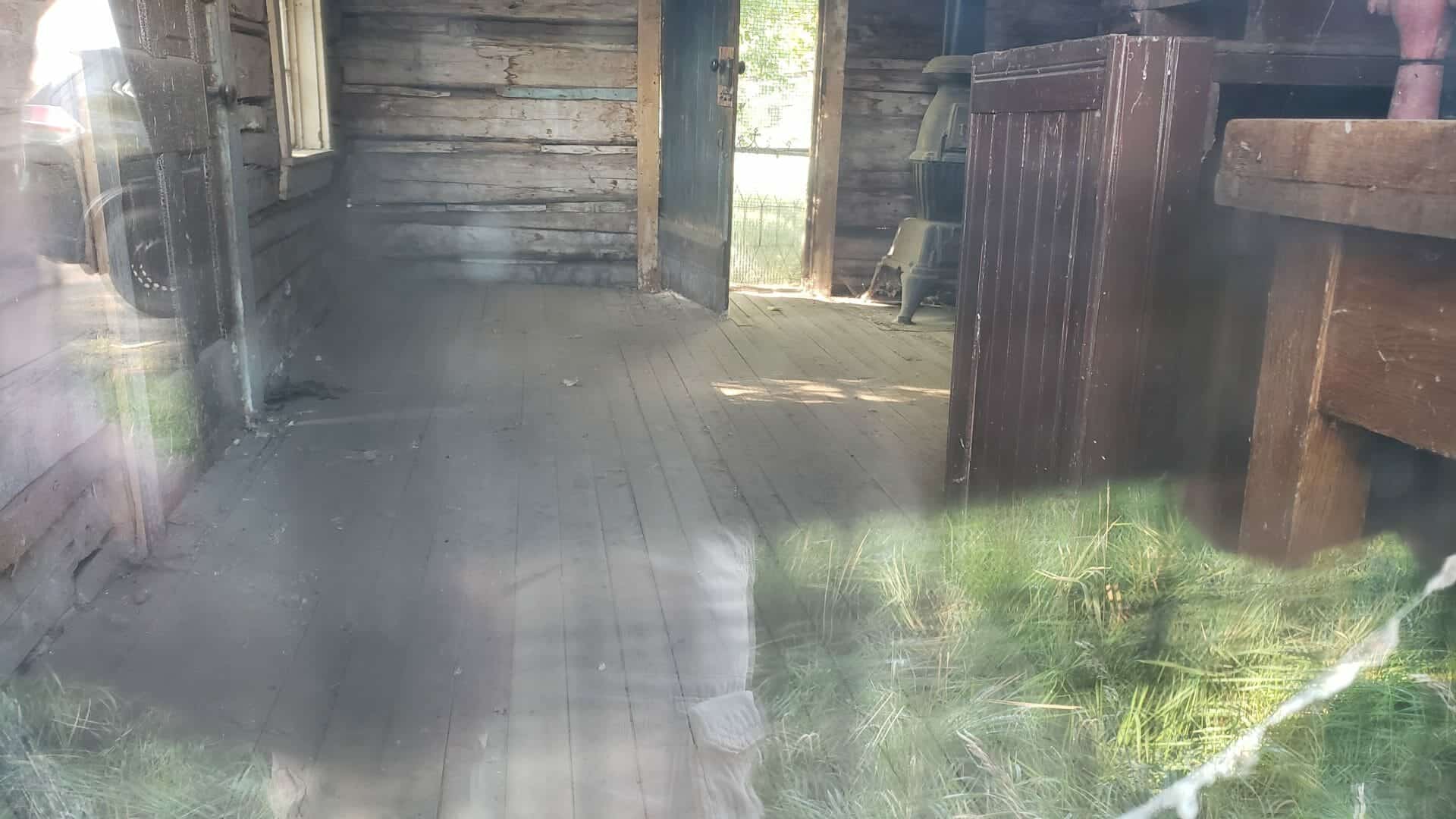
Interior of Old Post Office In the southwest corner of the post office was a pot-bellied stove with places all around to sit and visit. These visits were mostly of a social nature, but from these visits the pioneers also acquired knowledge and news from the outside world. At about the time the post office was built there were around 300 settlers in the valley.
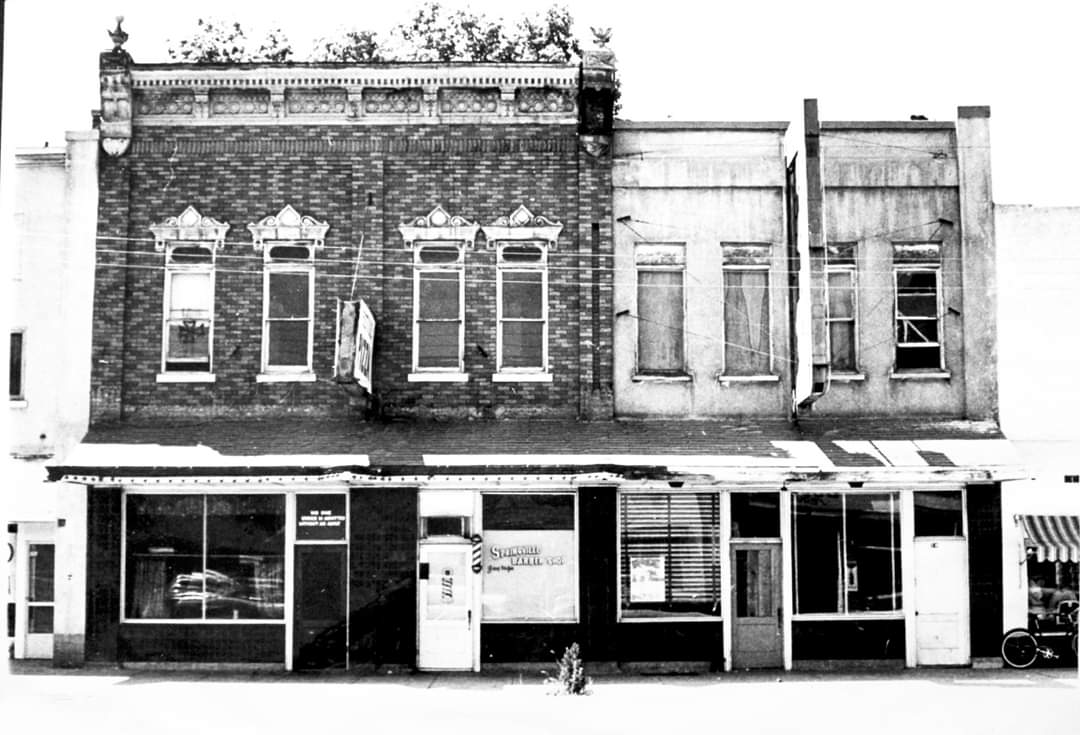
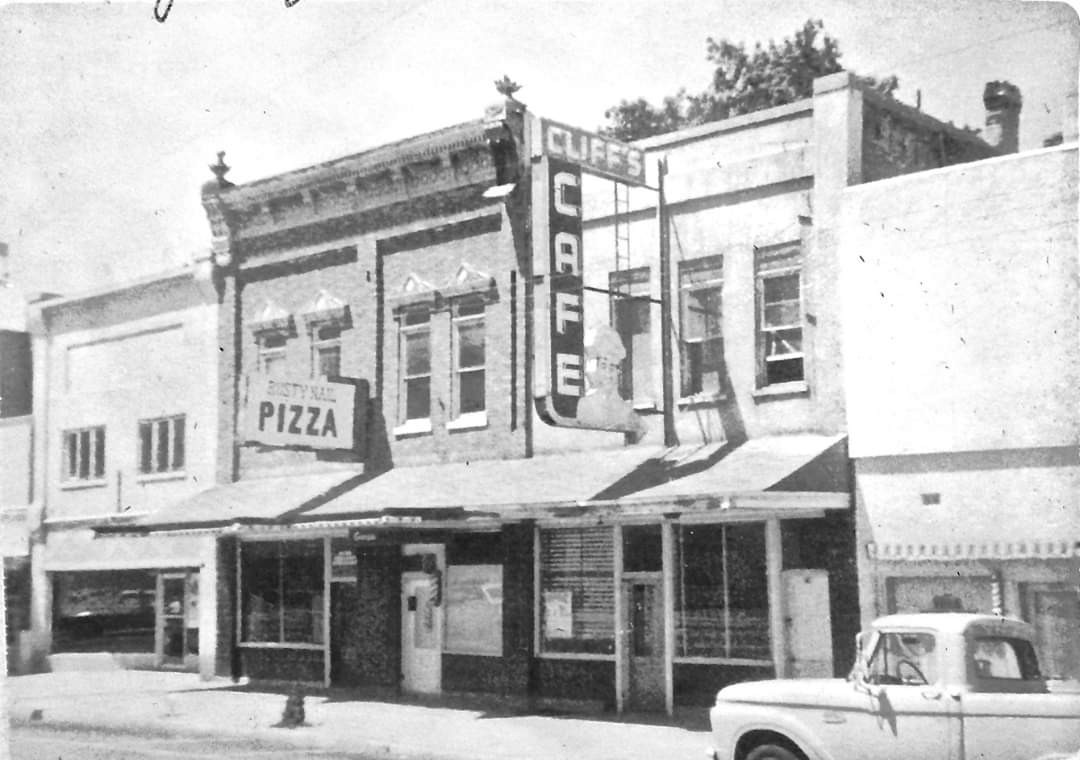
Moroni Miner Block Constructed in 1892, the two-story, two-part commercial block building was built by Moroni Miner following a mortgage of $800 he had taken out in May of that year. Miner was an early prominent citizen of Springville, who engaged in several businesses over the years, including a grocery and meat market, and worked as a farmer and stockman. In 1897 Miner sold the building to William Endar, who in turn sold it to Hyrum Straw in 1899. In 1903 Straw sold the building to Thomas E. Child, along with the building next door at 274 South Main Street. In 1923 the building was acquired by Ellen R. and Maud Peterson and owned by members of the Peterson family until 1977. A variety of businesses occupied the building until it was purchased in 2001 by W. William Brown, Jr., and Marilyn Brown to house Bill Brown Realty.
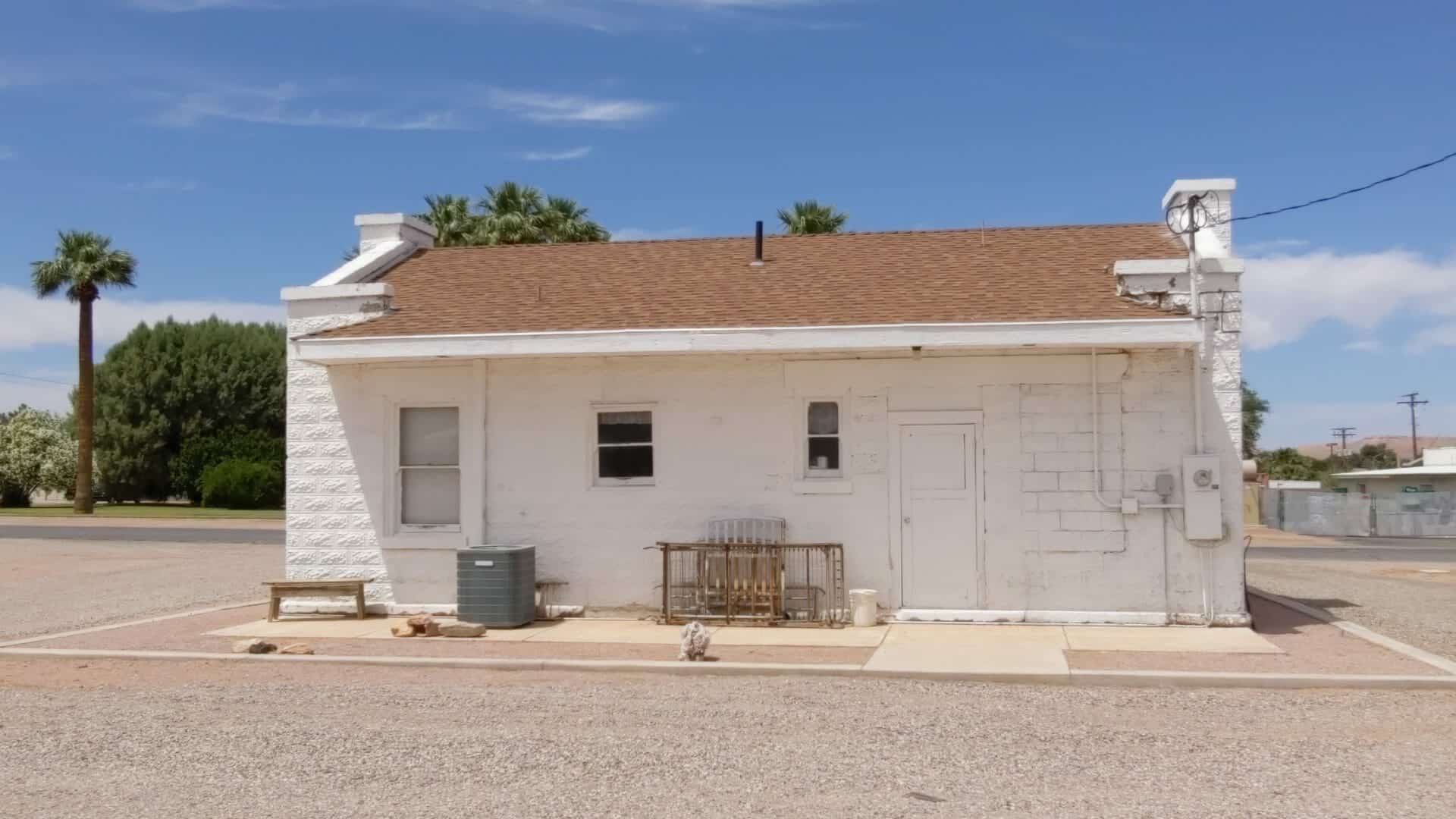
The LDS Moapa Stake Office Building began as the Virmoa Maternity Hospital in 1941, it is located at 159 W Virginia in Overton, Nevada and was added to the National Register of Historic Places (#02000819) on July 25, 2002.
The LDS Moapa Stake Office Building/Virmoa Hospital is eligible for the National Register of Historic Places as representative of population growth in the Moapa Valley based on a flourishing agricultural community, and of the continuous influence of the LDS Church in southern Nevada and the western Great Basin. The Church of Jesus Christ of Latter-day Saints (LDS or Mormons) built the LDS Moapa Stake Office Building to serve as an administrative center for church leaders. The term “stake” refers to a stake in the tent of Zion, a biblical connotation of the promised land. As an administrative unit, a stake oversees several wards or geographical groupings of church members with their own meeting centers. From 1919 until 1939, the LDS Moapa Stake Office Building served as a meeting place for church officials, a place to organize welfare work within the community, and for genealogy classes. In 1941, the building was converted into the Virmoa Maternity Hospital to serve the residents of Overton, Logandale, Moapa, and smaller outlying communities.
The LDS Moapa Stake Office Building must be evaluated under Criteria Consideration A: Religious Properties. Although the building served the Mormon Church as an administrative center, its association with the Mormon community in the Moapa Valley transcends mere religious significance. The role of Mormon settlement in southern Nevada cannot go unacknowledged simply because the Mormons came to be there as a result of their religious beliefs. The Mormon presence in southern Nevada is important to the broader history of exploration, settlement, and agricultural practices in the arid Southwest. The Moapa Stake Office Building also represents a rare example of an early Mormon administrative building. A single stake might cover a number of wards, with families spread over vast stretches of agricultural lands. The LDS Moapa Stake Office Building exemplifies the Mormon presence in the Moapa Valley.
Moapa Valley
Moapa Valley is in the southeastern part of Clark County in Southern Nevada. Rising out of springs in the Pahranagat Valley, the 30-mile long Muddy River flows through Moapa Valley to the Virgin River to the north. The Muddy River is virtually the only source of water from the Beaver Dam Mountains in Utah to Vegas Springs in today’s Las Vegas. Summers in the region are unbearably hot, with little relief over night. As inhospitable as the region seems, with irrigation the valley is extraordinarily fertile. American Indians practiced irrigated agriculture in the valley, raising corn, squash, beans, and cotton, from perhaps 1000 BC to 800 A.D. (Elliott and Rowley 1987). Pueblo Grande de Nevada contained a population from 10,000 to 20,000 thousand people. During the third phase of activity known as the Lost City, dating from 700 A.D. to 1100 A.D., agriculture, likely with irrigation, thrived (Elliott and Rowley 1987). These prehistoric activities became known when Moapa Valley received national acclaim with the archeological excavations conducted from 1924 through 1938 in anticipation of the flooding of Lake Mead. As result of this work the Lost City Museum was built in Overton.
Mormon Settlement in Moapa Valley
The Mormons began their westward trek in 1847, choosing to settle in Utah’s Great Salt Lake Valley. The region fit their needs because of its distance from other population centers and because it fit the biblical description of the “Zion of the last days.” Conditions in Great Salt Lake Valley were difficult, but the Mormons persevered through a program of building, planting, and purchasing supplies from Gentiles (non-Mormons) at nearby Fort Bridger. Although some Mormons moved on to the California gold fields or to more populated areas, most remained in Great Salt Lake Valley under the direction of their leader, Brigham Young (Kimball 1987:292).
The Mormons clearly possessed characteristics that allowed them to succeed under extreme conditions, and that would serve them when they arrived in the Muddy River Valley some 20 years hence. Historian Leonard Arrington noted seven principles that guided early Mormon settlements. (1) Gathering the coming together of faithful at selected gathering places (Zions) to prepare for the Second Coming. (2) The Mormon Village the settlement of the gathered people in villages built according to the Plat of Zion, which divided the land into three sections: Village lots, farming lots, and pasturage. (3) Property as Stewardship all property was consecrated to the church for the benefit of the Kingdom. (4) Redeeming the Earth through the development of local resources. (5) Frugality and Economic Independence by achieving total self-sufficiency. (6) Unity and Cooperation, and (7) Equality (Kimball 1987:292-293).
These principles guided the development of the original Mormon settlement in the Great Salt Lake Valley and as they spread into other valleys. A group of Mormon settlers established a mission at Vegas Springs in 1855, but abandoned it in 1857, when Brigham Young called them back to Salt Lake in fear of military reprisals by the U.S. Army. The military action never came to pass and a second Mormon expansion phase began in the 1860s. It was during this second phase that Mormons brought their established ideals to the Muddy River Valley. At the direction of Brigham Young, the first group of Mormon missionaries, led by Thomas Smith, arrived on January 1, 1865, at the confluence of the Muddy and Virgin Rivers. The group established a community they called St. Thomas, after their leader and guide. In June of that year, a second missionary group arrived in the region and set up a second community nine miles north of St. Thomas, which they named St. Joseph. There soon came to be numerous southern Nevada colonies. In addition to St. Thomas and St. Joseph, there were Callville, West Point, Kaolin, Overton, Bunkerville, and Mesquite, all part of a line of settled valleys that stretched from Rexburg, Idaho to southern Nevada (Kimball 1987).
The purpose of the Muddy Mission, following the seven principles mentioned above, was to grow cotton and other semi-tropical products, to convert the Indians to Christianity, and as a stopover for travel and trade on the Colorado River and for California-bound travelers on the Old Spanish Trail, also known as the Mormon Road. The other purpose was to “secure land from the invasion of Gentile miners and cattlemen . . .” (Kimball 1987:293). Ultimately, more than 100 settlers occupied the lands of the Muddy River Valley, growing cotton, wheat, corn, melons, sunflowers, peach trees, grapes, pumpkins, and general garden vegetables. They also raised livestock, including cattle, mules, goats, chickens, ducks, geese, and sheep. Their success is a testament to their devotion to the tenets of their church and to Arrington’s seven principles (Kimball 1987:295).
Conditions were difficult along southern Nevada’s Muddy River. Isolation from markets and needed supplies, along with malaria and high temperatures, drove some settlers away. According to the 1870 U.S. census, 750 people lived in the region. That same year, however, the boundaries of Nevada and Utah were surveyed and it was discovered that the lands of the Muddy Mission were in Nevada, not Utah as originally thought. Nevada demanded payment of back taxes in gold coin, a debt the Mormons were unable to pay. Brigham Young gave the Mormons at Muddy Mission permission to leave Nevada. All but one family relocated in 1871. As was the case with other abandoned Mormon settlements, Gentiles quickly moved in and took over the farmlands and homes left behind. Ten years later, Mormons come back to the Muddy River Valley. They bought property and re-established the communities of Overton, St. Thomas, 1 and St. Joseph, which was re-named Logandale (Corbett 1975).
Heretofore, farming and ranching flourished in Nevada because it served the mining booms. But when the Comstock mines had played out in 1880s, half the state’s population moved to better job opportunities elsewhere. Nevada had fitful starts with Progressive legislation in developing irrigation projects as a means to stimulate the state’s economy from economic depression. In 1889, the Nevada legislature recognized public ownership of unappropriated water of natural springs and allowed it to be used by builders of irrigation projects (Elliott and Rowley 1987). The National Reclamation Act was passed in 1902, but the foremost national project in Nevada was the Newlands Irrigation Project in northern Nevada’s Lahontan Valley.
The Muddy Valley Irrigation Company, formed in 1895, managed water rights along the Muddy River. Levi Syphus, Overton resident and Nevada state senator, wrote the bylaws and operating system for the irrigation company. Water users dug ditches and canals and quit-claimed their water rights to the company in exchange for a water certificate. By 1914, a modern irrigation system was installed and in the mid-1930s a Civilian Conservation Corps project built a dam on Muddy River to control flooding. Syphus helped write Nevada State Water Law, and he later was appointed by the Bureau of Reclamation to a three-man commission to appraise deeded lands excepting mining property lying under the 1150 contour. These lands were subject to condemnation because of the rising the waters of Lake Mead resulting from the construction of Hoover Dam. Syphus was well-liked in Moapa Valley and had influential friends around the state. He had been encouraged to run for governor by State Democratic Party leaders but declined because his religious association with the LDS Church and the fact that he was unmarried. Syphus knew these factors would hurt him in election (Hafner 1967).
The onset of World War I further spurred agriculture in Nevada. Congressional appropriations allowed farmers and ranchers to increase their herds and flocks and promoted the use of irrigated lands as well as much submarginal land. Moapa Valley farms and ranches flourished, producing a wide assortment of fruits and vegetables including sugar beets and nationally-renown variety of cantaloupe. For ten years, beginning in 1920, Norman Shurtliff produced the famous Shurtliff Dollar Box of vegetables. Each package contained lettuce, radishes, green onions, spinach or beet greens, asparagus, carrots, parsley, and a flower, either a rose or sweet peas. Other farmers raised turkeys, hogs and chicken for the Utah, California, and Las Vegas markets (Hafner 1967).
The importance of Mormon agricultural history, which stretched from upstate New York to Navou, Illinois and across to the Great Basin, cannot be overstated. “While Mormonism is not synonymous with agrarianism . . . there has been a historical, if not doctrinal association between Latter-day Saints and agriculture. Mormons continue to maintain a reverence for the biblical image of sower going forth to sow”(Arrington and Bitton 1979). Historian James Hulse (1991) observes, “The history of Nevada is closely intertwined with the story of the Mormons’ westward trek and their settlement in Utah, and Nevada’s social and political life has been much influenced by Mormonism in recent years.”
The LDS Moapa Stake Office Building
When the Moapa Valley was resettled by Mormons in 1880, Overton became the main settlement due to its central location. In 1881, Overton became a branch ward and soon thereafter a ward, under Bishop Isiah Cox, Sr. Following the completion of the railroad between Salt Lake City and Los Angeles in 1905, and a branch line from the town of Moapa to St. Thomas in 1912, the St. George Stake was divided and a new stake was established to include two Nevada counties, Lincoln and Clark. Stake presidency was awarded to Overton resident, Willard L. Jones. As the southern Nevada Mormon center, Overton grew.
By 1917, church leaders recognized the need for a building where Stake officers and the High Council could meet and the activities of the community could be conducted (Anonymous n.d.).
Construction of the building began in 1917, under the direction of Stake president, Willard Jones. Completion took two years and was marked by the dedication ceremony on November 8, 1919. The Moapa Stake Office Building was the first LDS building within the boundaries of the Moapa Stake. Church services were held in school buildings until the Overton Chapel was built in 1950 (Anonymous n.d.). The Moapa Stake High Council and President used the building as an administrative center and for training sessions in spiritual and secular management. The stake as an umbrella organization oversaw the administration of several wards and was equivalent to a diocese overseeing the operations of several parishes or congregations. Welfare work conducted at the office building included gathering provisions for the needy within the church community and for non-members. A welfare system established by the church grew out of the Great Depression and included the distribution of locally grown food. Franklin Roosevelt commended church officials hoping their work would inspire other groups to establish similar programs (Arrington and Bitton 1979).
In 1939, after 27 years of service, Stake president Jones asked to be released from his duties. By this time, most of the Stake officers lived in Las Vegas. Good roads and new cars allowed for easy travel between Overton and Las Vegas, and it was decided to move Stake administration to the bigger town, thus leaving the little office building without a purpose.
The Virmoa Maternity Hospital
The little office building would not stand vacant long. Southern Nevada Memorial Hospital leased the LDS Moapa Stake Office Building in 1940 to house the first hospital in the Moapa Valley. Willard Jones LDS stake president in Overton and assemblyman in the Nevada legislature, assisted in bringing the branch hospital to Overton. The Virmoa Maternity Hospital opened for business on January 9, 1941. The name is a combination of the words Virgin and Moapa representing the two valleys in the region. Combining two names to form one is a Mormon folk practice. The first baby born at Virmoa Maternity Hospital was Mary Louise Fox, at 10:05 A.M. on January 29, 1941. Over the course of the next 25 years, more than 200 babies were born at the small hospital, including six pairs of twins (Anonymous n.d.).
After World War II, the church had developed a plan to bring hospitals to areas with majority populations of church members. The Latter-day Saints Church Hospital System established seventeen hospitals in Utah, Idaho, and Wyoming2 (Arrington and Bitton 1980). The Virmoa Maternity Hospital was a forerunner of this hospital plan. Before the establishment of the hospital some women traveled either 65 miles to Las Vegas or 75 miles to Saint George, Utah to have their babies. Others gave birth at home or visited the local doctor’s office, which was usually in his home, with the doctor’s wife serving as a nurse assistant (Anonymous n.d.).
When a hospital unit was built in Mesquite, the name of the Moapa building was changed to Emergency Unit of the Southern Nevada Memorial Hospital. An additional room was added to the building for x-ray work. This room has since been removed. The Emergency Unit operated in Overton until 1966, when it was downsized to a once-a-month well-baby clinic. In 1970, after the clinic was moved to another location in town, the Daughters of the Utah Pioneers (DUP) requested permission to use two rooms in the building, and they began a remodel project: “A wall was removed to make a larger room, a cupboard was moved to a smaller room, and repairs were made where needed” (Lyman 1972). LDS Church headquarters in Salt Lake City requested either payment for the building, which had been appraised at $2,000, or a lease agreement. To raise the needed purchase money, the DUP used $1,000 from the sale of their book, One Hundred Years on the Muddy, and $600 that had been donated by the LDS Moapa Stake. Additional book sales, food and rummage sales, and the sale of a “quilt or two” allowed the DUP to purchase the property. Today, the DUP plans to use the building for monthly meetings, and as a museum to house artifacts depicting the days of the pioneers.
Summary
The Moapa Stake Office Building/Virmoa Maternity Hospital stands as a testament to the tenacity, hardwork, and religious principles of the Mormons who settled the Muddy River Valley in the 1860s and to those who returned in 1880 to fully realize the possibilities of the region. The area’s significance was recognized by the church through the presidency of Overton resident Willard Jones, which resulted in the need for the office building. Later, when Stake business moved to Las Vegas, the building fulfilled another mission as the first hospital in the area.