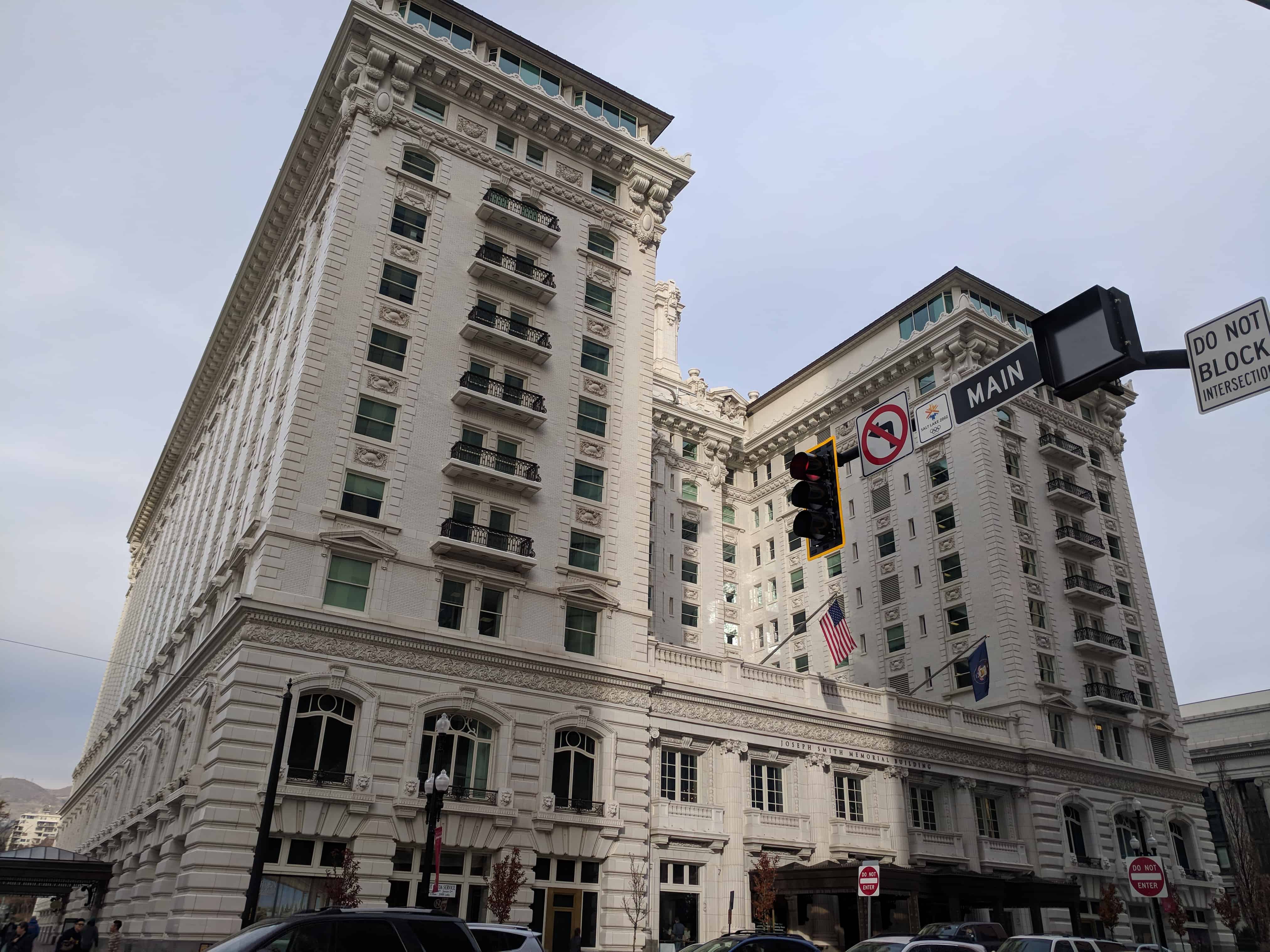
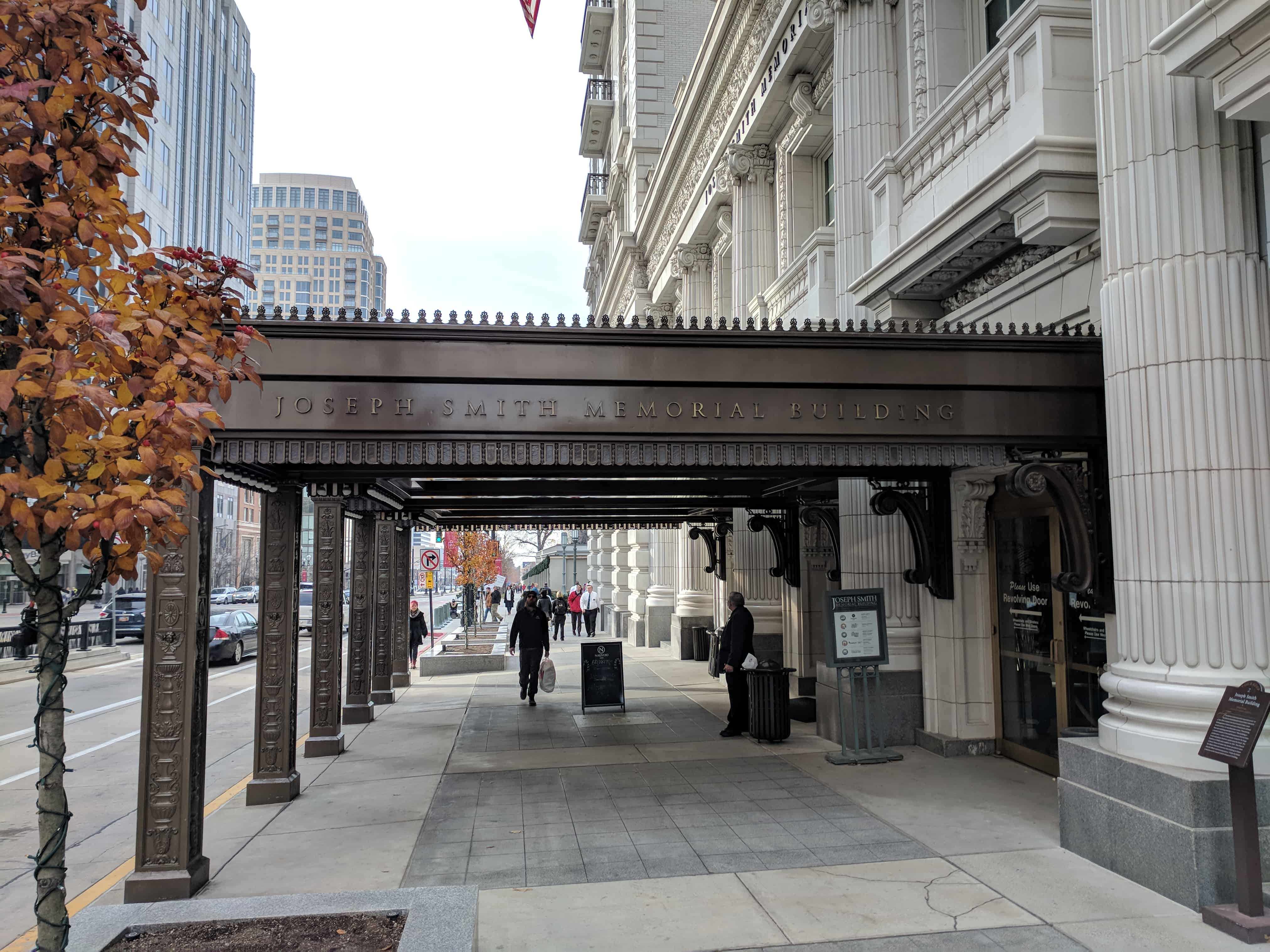
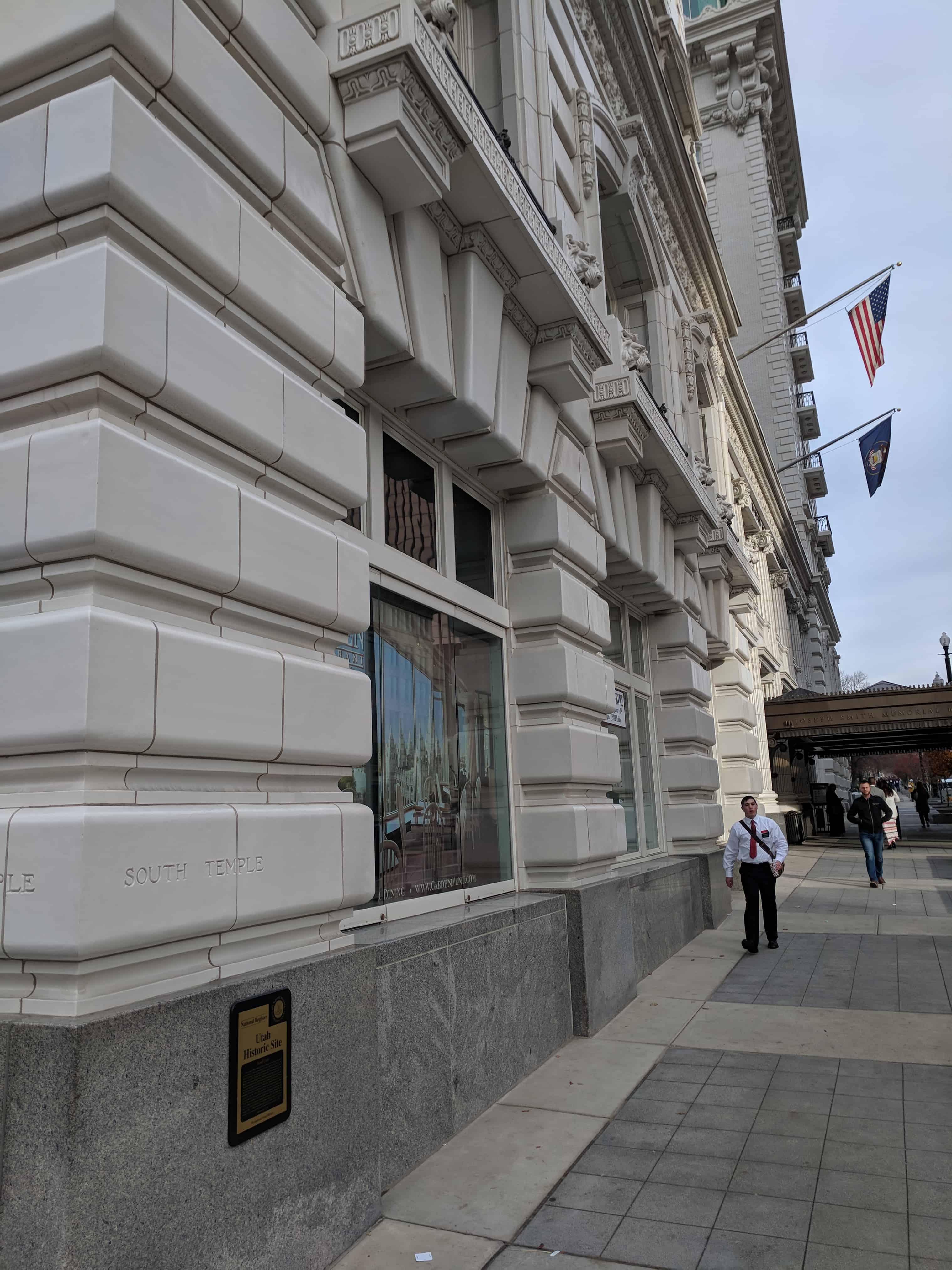
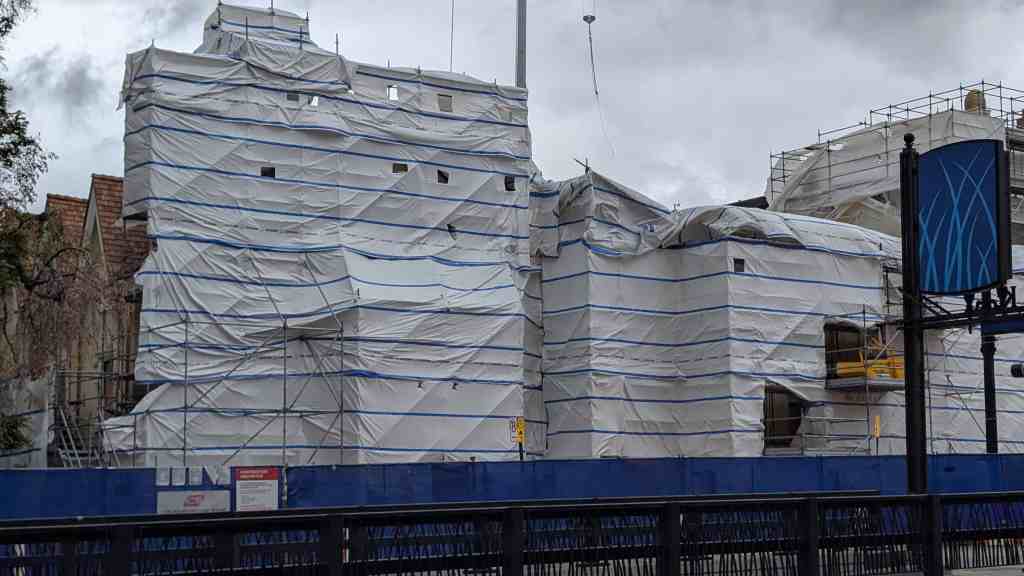
The Joseph Smith Memorial Building, originally called the Hotel Utah, is named in honor of Joseph Smith, the founder of the Latter Day Saint movement. It is located on the corner of Main Street and South Temple, on Temple Square in Salt Lake City. It is now a social center with three restaurants: The Roof Restaurant, The Garden Restaurant and The Nauvoo Cafe. It is also a venue for events complete with 13 banquet rooms, catering services, event coordinators and a full-service floral department – Flowers Squared. Several levels of the building also serve as administrative offices for The Church of Jesus Christ of Latter-day Saints (LDS Church) departments such as FamilySearch. On January 3, 1978, it was added to the National Register of Historic Places as the Hotel Utah.(*)
Joseph Smith Memorial Building – Hotel Utah – 1909-1911, Parkinson & Bergstrom
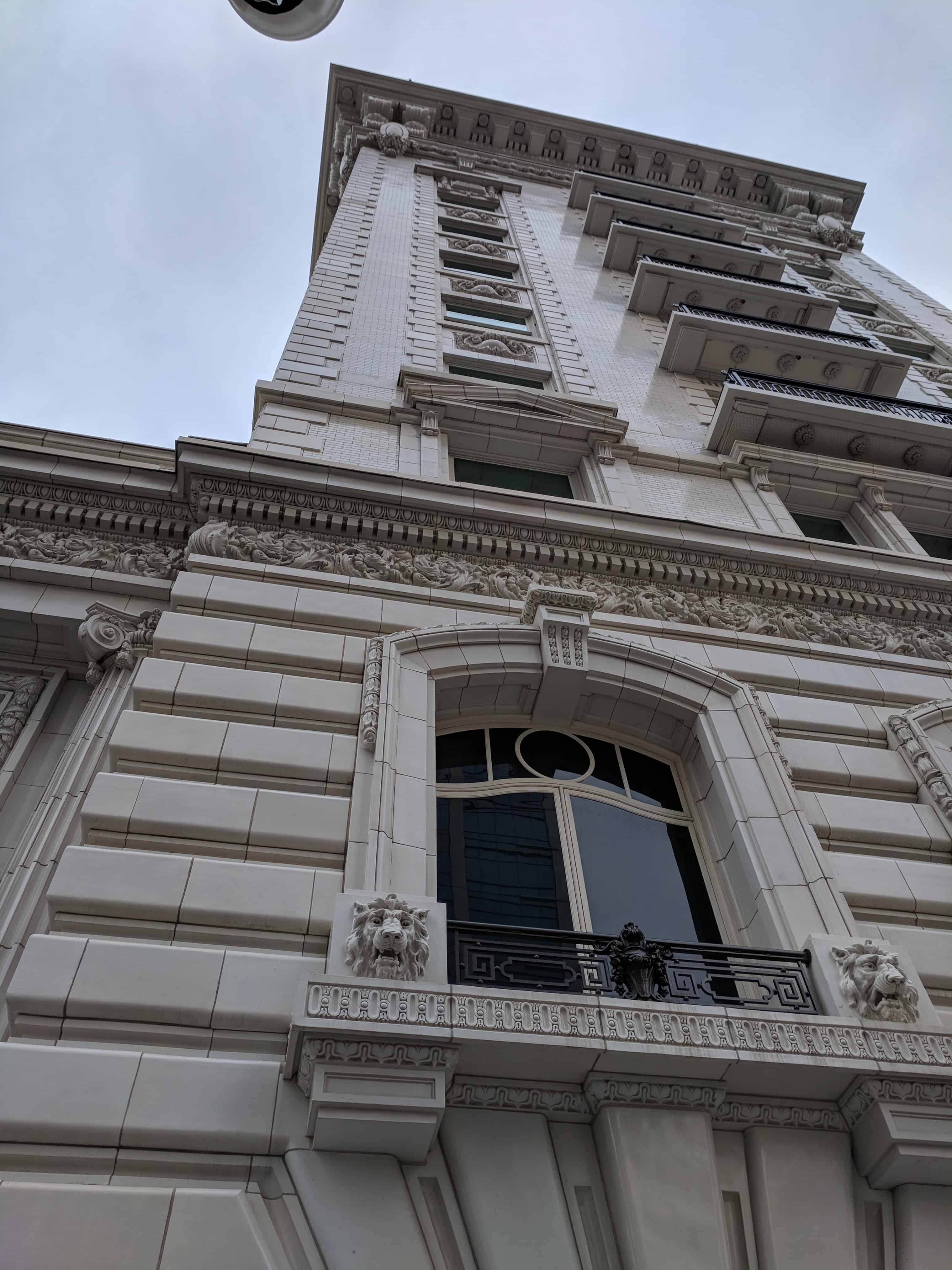
The Hotel Utah was the “Grand Dame” of hotels in the intermountain west. For most of the 20th century the hotel hosted Utah’s most distinguished visitors and was a focal point of local social activity. As one historian wrote, “Everything that was anything was held there.” The building is a lavish example of Second Renaissance Revival Style architecture – with a Utah touch. Look for the huge brick and plaster beehive cupola atop the hotel. The Beehive is Utah’s state symbol. In 1987, The Church of Jesus Christ of Latter-day Saints decided to close the Hotel Utah and renovate the building to house church offices and meeting spaces. Today the hotel is known as the Joseph Smith Memorial Building.
The Utah Historic Site plaque says:
Hotel Utah
The corner of Main Street and South Temple has long been important in Utah history. Prior to construction of the Hotel Utah from 1909 to 1911, the general tithing office of the LDS Church, a bishop’s storehouse, and the Deseret News printing plant all were located on the site.
Work on the Second Renaissance Revival style hotel, designed by the Los Angeles architectural firm of Parkinson and Bergstrom, began in June 1909. Two years later, on June 9, 1911, the Hotel Utah opened for business. While the LDS Church was the primary stockholder, many Mormon and non-Mormon community and business leaders also purchased stock in the effort to provide the city with a first-class hotel.
The ten-story building has a concrete and steel structure and is covered with white glazed terra cotta and brick. Various additions and remodelings have occurred throughout the years, including a substantial expansion to the north and modifications to the roof-top dining facilities.
The building ceased operations as a hotel in August 1987. A major remodeling and adaptive reuse project to accommodate both community and church functions was completed in 1993.
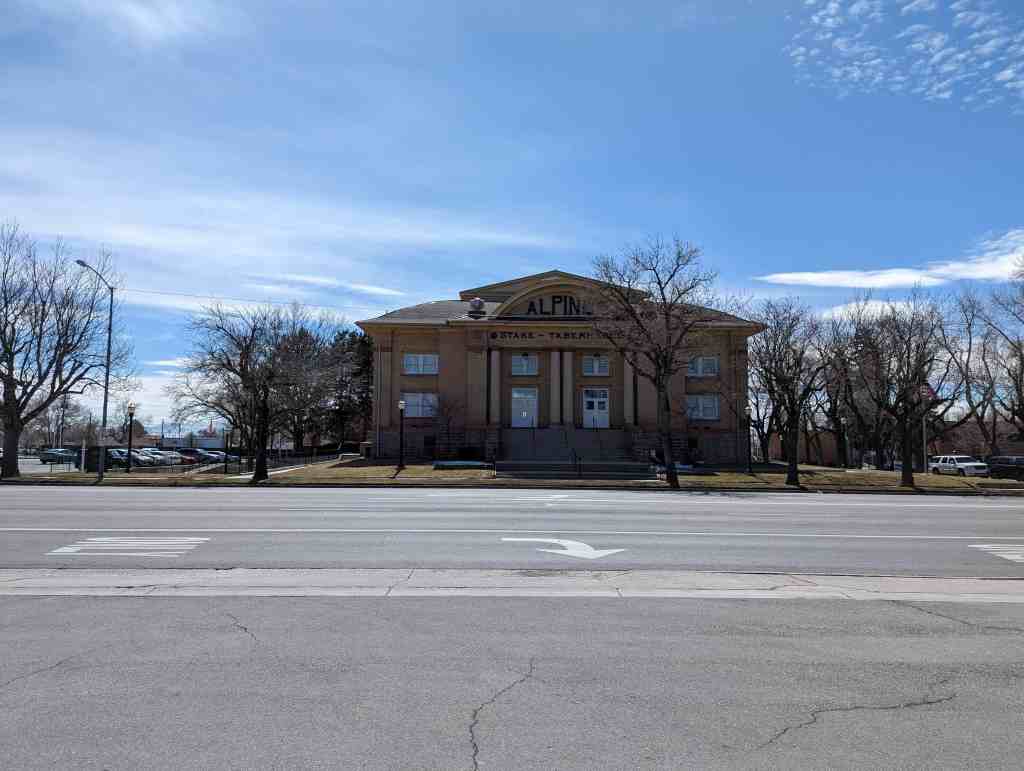
Built in 1911, the Alpine Stake Tabernacle is located in the American Fork Historic District at 110 E. Main Street in American Fork, Utah. It was added to the National Historic Register on December 10, 1988.
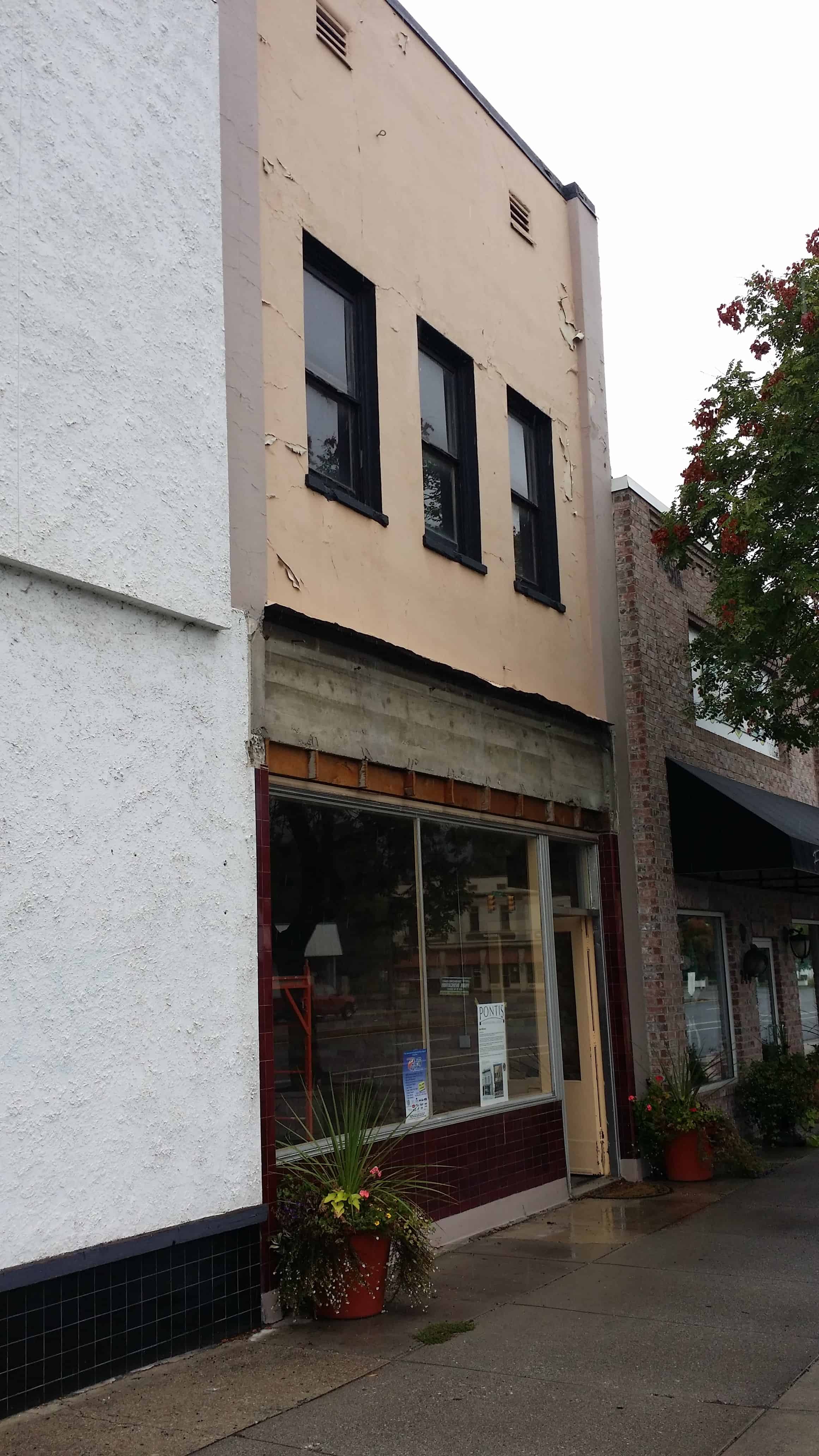
The land located at 248 South Main Street was owned by Simeon Blanchard in the late 1800’s. After his death his son, Benjamin Blanchard, acquired the property.
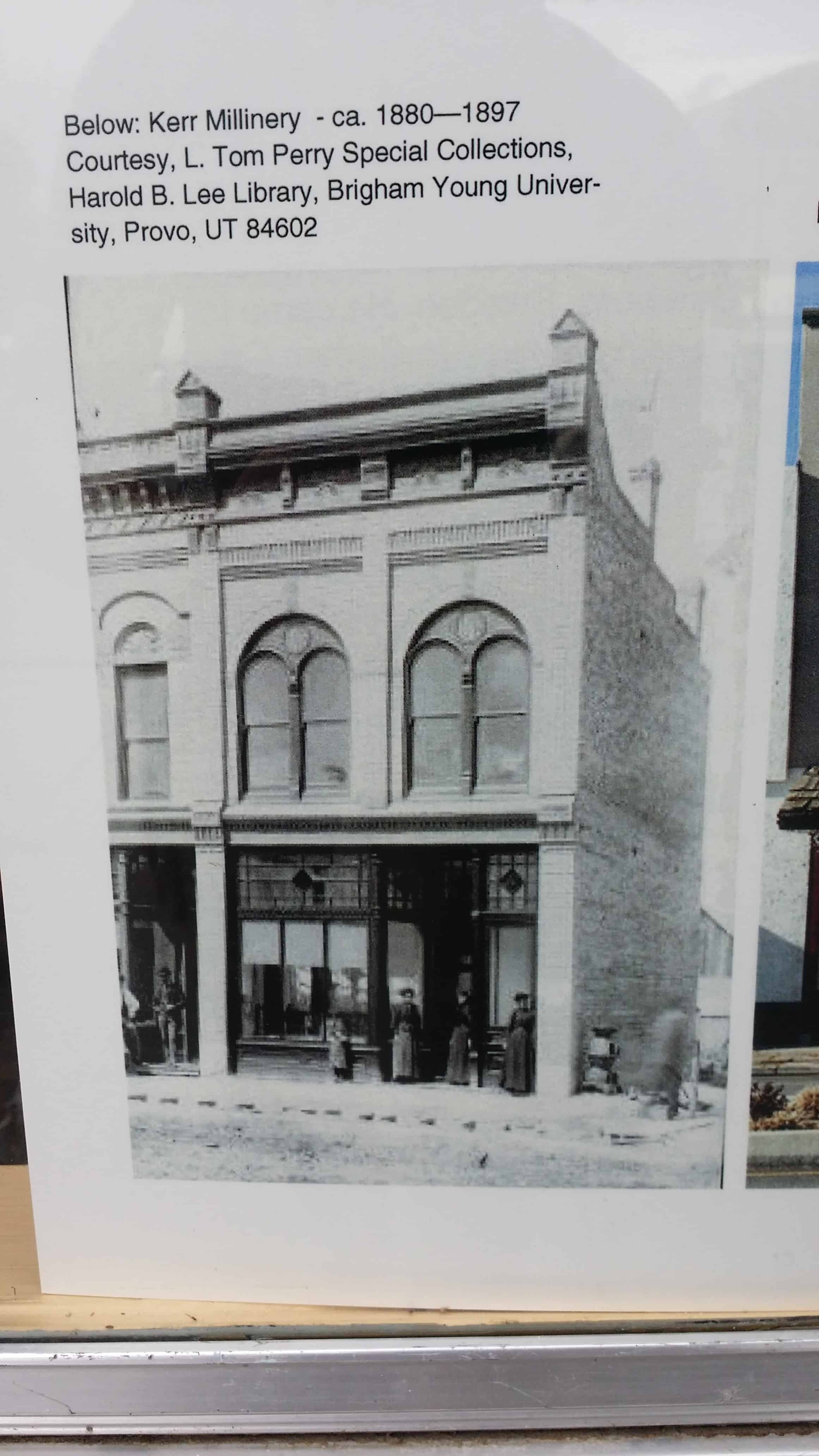
In 1891 a young woman named Nettie Kerr purchased the property. Nettie was 29 years old and unmarried at the time of the purchase. In 1892 Nettie took out a mortgage and it appears she used that to construct the building on the property. She ran a millinery business there until 1897.
Nettie married John S. Groesbeck in 1893 and together they had four children. The building remained in the Groesbeck family into the 1990’s.
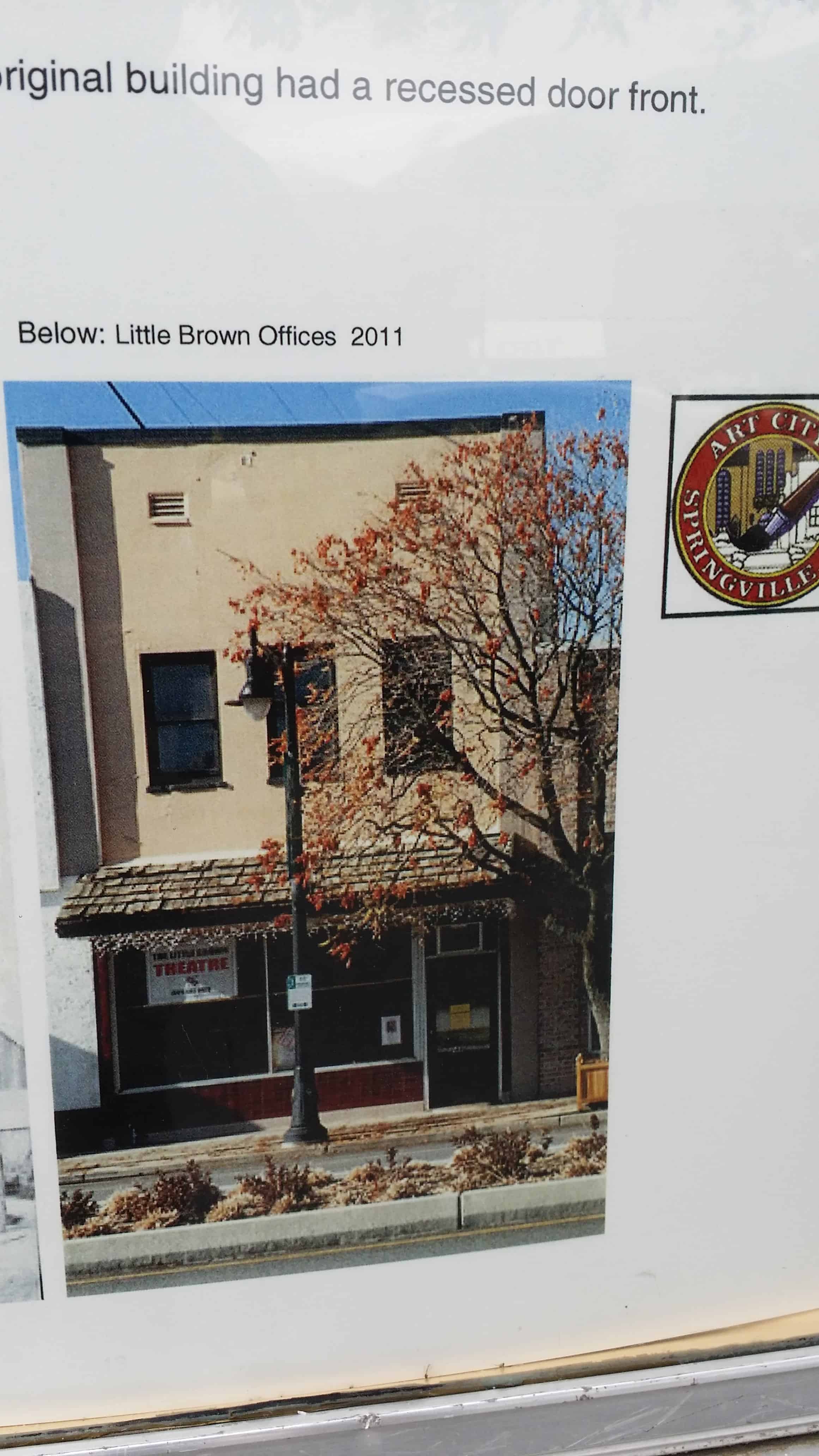
According to the 1898 Sanborn map a tailor occupied the building. The 1908 Sanborn map shows the building was vacant. In 1925 the building was occupied by a billiard hall which also is displayed on the 1931 Sanborn map. Throughout the 1950’s, Monty’s Café did business in the building and in the late 1970’s Sharpe Photography was located there. The building presently houses the offices for the Little Brown Theater.
The building is a two-part, two-story block. The original building had a recessed door front.
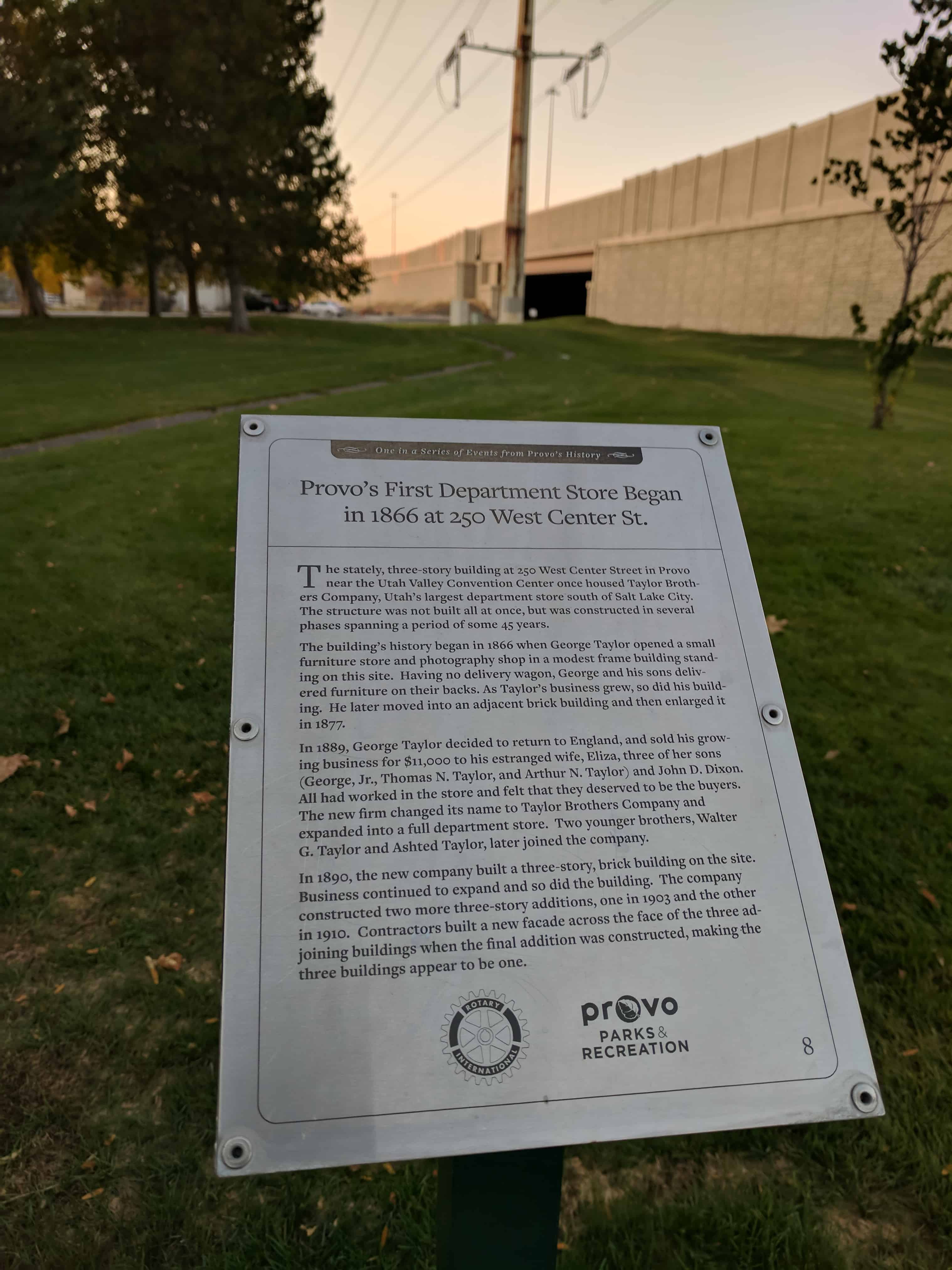
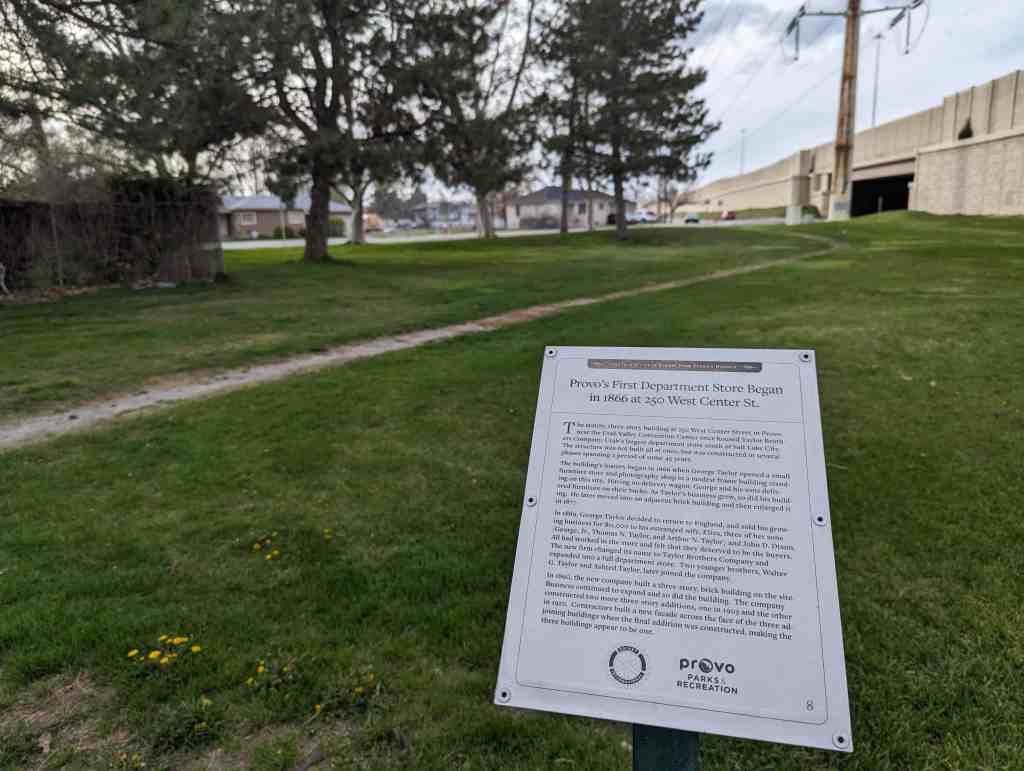
Provo’s First Department Store Began in 1866 at 250 West Center St.
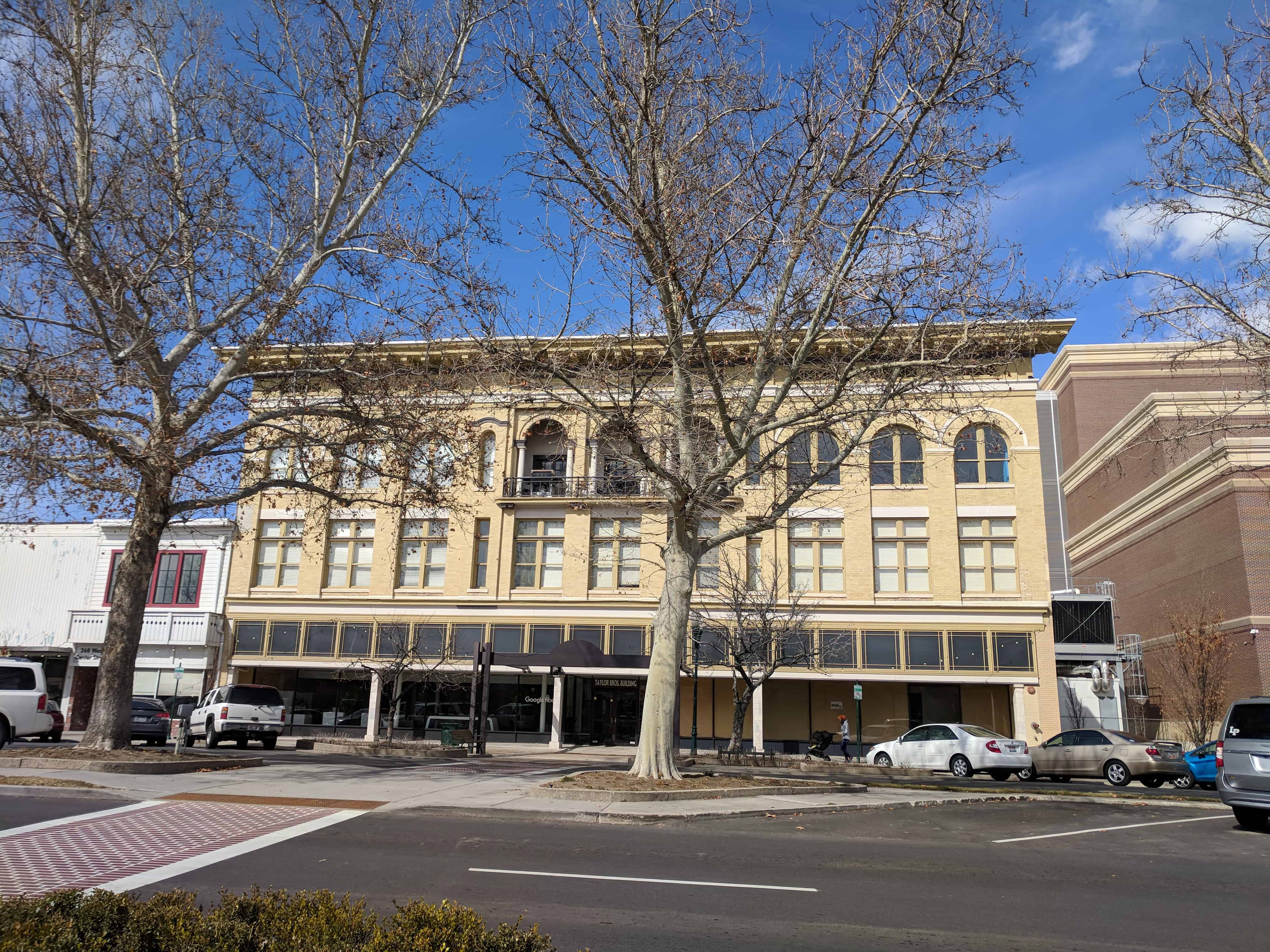
The stately, three-story building at 250 West Center Street in Provo near the Utah Valley Convention Center once housed Taylor Brothers Company, Utah’s largest department store south of Salt Lake City. The structure was not built all at once, but was constructed in several phases spanning a period of some 45 years.
The building’s history began in 1866 when George Taylor opened a small furniture store and photography shop in a modest frame building standing on this site. Having no delivery wagon, George and his sons delivered furniture on this backs. As Taylor’s business grew, so did his building. He later moved into an adjacent brick building and then enlarged it in 1877.
In 1889, George Taylor decided to return to England, and sold his growing business for $11,000 to his estranged wife, Eliza, three of her sons (George, Jr., Thomas N. Taylor, and Arthur N. Taylor) and John D. Dixon. All had worked in the store and felt that they deserved to be the buyers. The new firm changed its name to Taylor Brothers Company and expanded into a full department store. Two younger brothers, Walker G Taylor and Ashted Taylor, later joined the company.
In 1890, the new company built a three-story, brick building on the site. Business continued to expand and so did the building. The company constructed two more three-story additions, one in 1903 and the other in 1910. Contractors built a new facade across the face of the three adjoining buildings when the final addition was constructed, making the three buildings appear to be one.
Erected about 1852 by President Brigham Young as the Official Residence of the President of the Church of Jesus Christ of Latter-day Saints and occupied by him from the time it was completed until his death in 1877.
From 1852 to 1855 it also served as the Executive Mansion of Governor Brigham Young of the Territory of Utah.
It was also the home of presidents Lorenzo Snow (1898 – 1901) and Joseph F. Smith (1901 – 1918), both of whom died here.
The Beehive is the State Emblem signifying industry.
The Utah Historic Site plaque says the Beehive House was built in 1854 of adobe brick, the architect was Truman O. Angell and it was the home of Brigham Young, the 2nd President of the Church of Jesus Christ of Latter-day Saints and 1st Governor of the Territory of Utah.
Tourstop 5 in the Salt Lake City Tour says: The Beehive House served as Brigham Young’s residence, office, and reception area for official visitors. At the time the house was built, Young was both president of the LDS Church and Utah’s territorial governor. The Beehive House was designed by Young’s brother-in-law, Truman O. Angell. Angell was also the architect for the Lion House and the Salt Lake LDS Temple. Built of stuccoed adobe, the Beehive House features a two-story veranda, an observatory, and a cupola topped with a beehive. Young’s son added a three-story wing to the north when he remodeled the house in 1888. In the early 1960s, the LDS Church restored the Beehive House to resemble its 1888 appearance.
(from Preservation Utah’s walking tour) The Beehive House 67 East South Temple 1853-1855, Truman O. Angell, SLC 30-minute guided tours available every 15 minutes Monday-Saturday, 9:30 am-4:30 pm, and Sunday, 10:00 am-1:00 pm.
The Beehive House served as Brigham Young’s residence, office, and reception area for official visitors. It was designed by Young’s brother-in-law, Truman O. Angell. Angell, one of Utah’s prominent early architects, also designed the Lion House and the Salt Lake City LDS Temple. The Greek Revival style Beehive House features a two-story veranda, an observatory, and a cupola topped with a beehive. Young’s son added a three-story wing to the north after he purchased the house in 1888.
In addition to the Beehive House and the Lion House, Young’s walled estate fronting South Temple also included the White House, a family schoolhouse, carpenter shop, barns, orchards, and gardens. The Eagle Gate at the intersection of South Temple and State streets marks the original entrance to Young’s multipurpose compound. The Eagle Gate also provided access to City Creek Canyon to the northeast. See the marker on the northeast corner of the intersection for a history of the Eagle Gate.
In the early 1960s, the LDS Church restored the Beehive House and opened it as a house museum. Guided tours of the building are available daily.
From the nomination form for the National Historic Register:
The beautiful old mansion Is the pioneer home of Brigham Young, but It in 1851. Today’s workmen, under the direction of architects (all grandsons of Brigham Young) have done a remarkable job of restoration. The outside adobe brick walls have been painted in the original straw-colored yellow, which gives the manor a gay, but antique appearance of the original.
The Beehive House was built to meet the dual needs of Brigham Young, second president of the Church of Jesus Christ of Latter-day Saints and first governor of the state of Deseret, later Utah Territory. Above all, however, the Beehive House was a home for his family. It was also used as an official mansion where the Mormon leader received and conferred with other Church leaders, state and federal dignitaries, and entertained prominent traveling officials. During the life of Brigham Young, many famous people were entertained in the Beehive House, including President Ulysses S. Grant, Emperor Dom Pedro of Brazil, General William T. Sherman, Ralph Waldo Emerson, Mark Twain, Jay Gould, Horace Greeley, and even the midget Tom Thumb and his tiny wife.
In 1893, the Church purchased the historic building to make it the official residence of its presidents. Lorenzo Snow and Joseph F. Smith were the only two succeeding presidents to live in it. After the death of President Smith, the house stood vacant for a number of years, and was again remodeled and maintained as an away-from-home residence for young women who came to the city to work or attend school.
In 1959, when the Church decided to restore the Beehive House, a committee made up primarily of descendants of Brigham Young was chosen to carry out the task. Research and detective work on the part of this committee took 18 months to complete, and included the use of old manuscripts describing the house, the search for Brigham Young’s furnishings, and the discovery of “clues” beneath old plaster to find tell-tale evidences of still earlier construction. The “Manuscript” had been written by Clarissa Young Spencer who lived in the Beehive House from childhood until after her marriage.
Heavy coats of paint and wallpaper were peeled away, revealing the original colors and patterns. False ceilings were torn down, exposing ornate medallions which pioneer craftsmen installed in 1854.
With restoration and furnishing complete, the lovely mansion is now open for tours to the public. In its location, it is near Temple Square, a National Landmark, and the Lion House, which adjoins it on the west, and which is also a National Landmark.
The design of the Beehive House follows the 19th century Greek revival in architecture. The architect was Truman O. Angel, who also designed the many-spired Salt Lake Temple, Some of the original drawings for the Beehive house, fortunately, were found in the archives of the Church Historian’s Office shortly after work on the restoration had begun in 1959, and proved invaluable in the complete restoration of the home.
As originally built, the main part of the house consisted of two stories and an attic, surmounted by a beehive-shaped cupola, the traditional Mormon symbol of industry which was to give the home its name. Surrounding this tower is a a steel-railed (originally was wood) “widow’s watch,” reminiscent of the colonial coast.
Since the death of Brigham Young, the Beehive House has undergone two major alterations. The first was made by a son who purchased the home in 1888. Under this remodeling, the rear section was rebuilt into a three-storied wing. The formal dining room downstairs also was extensively remodeled, and an upstairs sitting room and parlor added.
The “adobe” walls were found to be in remarkably good condition. When later additions were torn out (during restoration), the walls revealed the exact location of stairs, halls, doorways, partitions and roof lines as described in the old manuscripts and original plans. With restoration, wide pine board floors, laid with square nails replaced the hardwood (not original.)
In the 1850’s, Brigham Young had a nine-foot high cobblerock wall erected around the Beehive House as protection from unfriendly intruders and as a make-work project for men who needed employment. Portions of this same wall (recently pushed back 23 feet to widen State Street north of Eagle Gate now border the home on the north and east sides. A low wrought-iron fence stands in front of the house where the big wa11 once stood.
The oak-finished door, now painted white, with its silver doorknob opens onto the main hallway. The doorbell system installed by Brigham Young was discovered and restored. Downstairs were Brigham Young’s bedroom, the Parlor and kitchen; on the second floor the “long hall” for entertaining guests, and Brigham Young:1 s offices.
The lovely home is now authentically restored and furnished with furniture from Brigham Young and his family, and from other period furniture at a cost to the Church of Jesus Christ of Latter-day Saints approximating one-half million dollars.
Built by President Brigham Young and used by him as a residence from about 1855 until his death in 1877. On the lower floor were the dining room and kitchens. On the next floor were the living rooms and large parlor; and on the top floor were the bedrooms.
It was in this house that President Young died. Later the building was used for school purposes and as a social center for women and girls. The lion is a replica of one that occupied a similar position on a prominent home in Vermont, the State where President Young was born and spent his youth.
In 1869, Brigham Young founded the Young Women organization in the Lion House.
The Utah Historic Site plaque says the Lion House was constructed 1855-56 as a residence for Brigham Young and his family. The Lion House takes its name from the recumbent lion set on top of the front portico. The House was designed by Truman O. Angell and built of stuccoed adobe. Brigham Young, second president of the Church of Jesus Christ of Latter-day Saints and first territorial governor of Utah, died in this house on August 29, 1877. Since its construction, the Lion House has functioned as a community social center.
Tourstop 4 in the Salt Lake City Tour says: The Lion House takes its name from the carved lion on top of the front portico. The House was constructed with adobe blocks, a common building material during Utah’s settlement period. Brigham Young, second president of the Church of Jesus Christ of Latter-day Saints built the Lion House for his wives and children. He and some early Church members practiced the Old Testament principle of polygamy which was officially ended in 1890. The basement contained a dining room which could accommodate 70 people. On the main floor were sitting rooms and bedrooms for wives with children. The second floor had bedrooms for children and childless wives – one under each of the 20 steeply-pitched gables.
(from Preservation Utah’s walking tour) The Lion House 63 East South Temple 1854-1856, Truman O. Angell, SLC Restaurant open to the public Monday-Saturday, 11:00 am-2:00 pm, and Thursday-Saturday, 5:00-8:30 pm. No tours available. The Lion House is one of several houses built on South Temple by Brigham Young, the second president of the LDS Church and Utah’s territorial governor.Young’s presence on South Temple made it Salt Lake City’s most prestigious residential street. For many years, South Temple was informally known as “Brigham Street.” Brigham Young intended the Lion House to be a model for polygamous living arrangements. As many as 20 of his wives and dozens of his children lived here at one time. The basement contained a dining room which could accommodate 70 people. On the main floor were sitting rooms, a “prayer room,” and bedrooms for wives with children. The second floor had 20 bedrooms for childless wives and older children, one under each of the 20 gabled dormer windows. Brigham Young died in the Lion House in 1877. Some of his wives and children continued to live in the house until the 1900s. Today the building contains a reception center and restaurant.
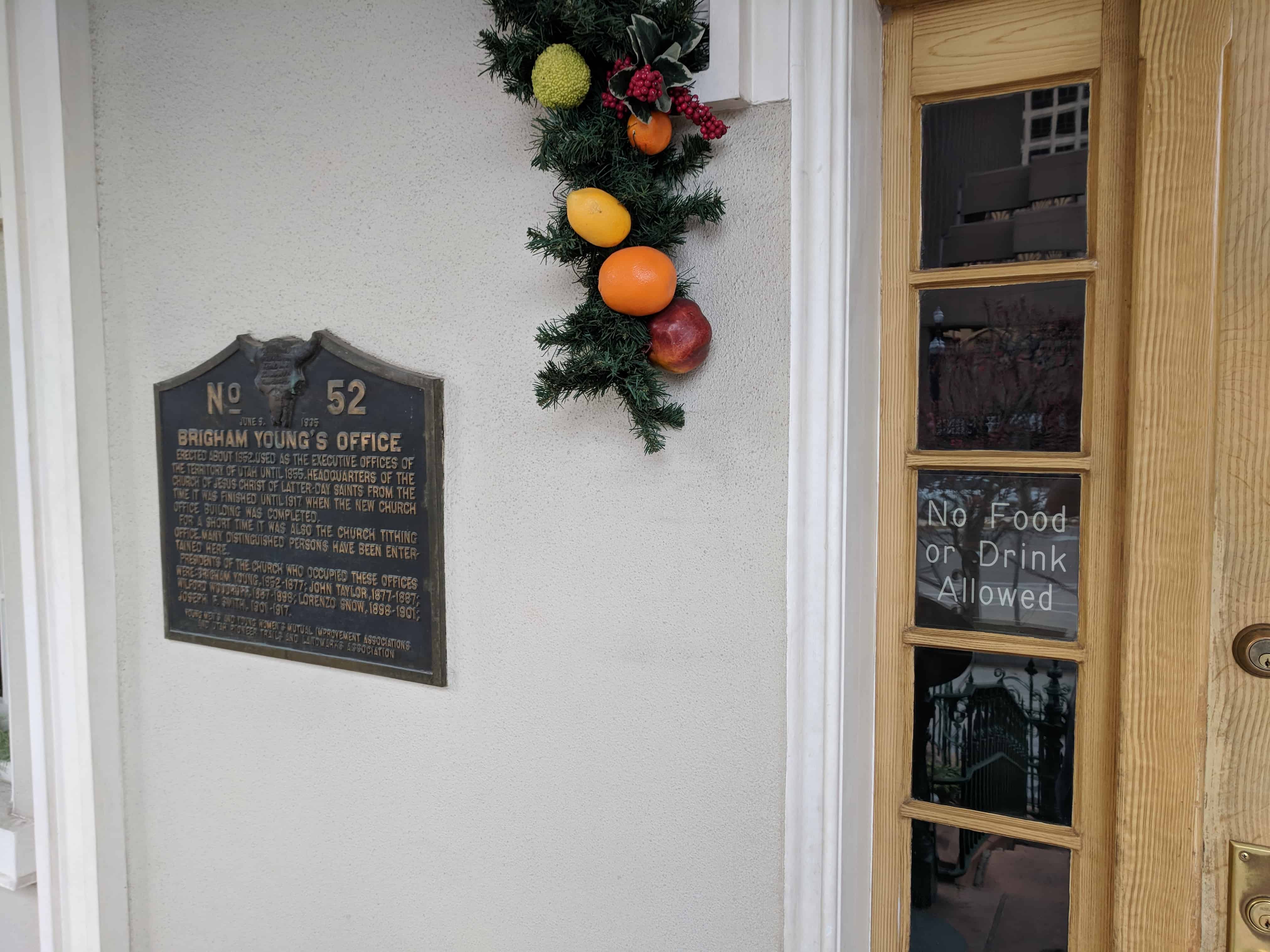
Erected about 1852, used as the executive offices of the Territory of Utah until 1855, headquarters of the Church of Jesus Christ of Latter-day Saints from the time it was finished until 1917, when the new Church Office Building was completed.
For a short time it was also the Church Tithing Office. Many distinguished persons have been entertained here.
Presidents of the Church who occupied these offices were Brigham Young, 1852 – 1877; John Taylor, 1877 – 1887; Wilford Woodruff, 1887 – 1898; Lorenzo Snow, 1898 – 1901; Joseph F. Smith, 1901 – 1917.
Edward Potter Hemsley was born April 23, 1839, at Ditchling, Sussex, England. On May 5, 1862, Edward and his sister, Ellen Potter Hemsley, emigrated to America where their older brother, Richard was already situated in Salt Lake City. Their father, stepmother, and a younger brother, Job, remained in England until some few years later, when they also emigrated.
Edward and Ellen joined a pioneer company led by Captain Miller for the trek to the West. Edward was only twenty-three years of age and he enjoyed the adventure, enduring the hardships and conditions that killed his stepmother a few years later as she traveled to Utah. She was buried along the trail with canvas for a coffin and weeds for memory flowers.
Some time after his arrival in Salt Lake City, Edward married Miriam Simonds who as a young girl had also been in Captain Miller’s pioneer company. The couple settled in Sugar House, where they purchased ground and built a substantial home at 1923 South 1200 East.
Because Miriam suffered from chronically poor health, a neighbor girl named Margaret Brown was employed to help nurse her. Miriam ultimately invited Margaret to marry her husband, which she did in the Salt Lake Endowment House on March 17, 1866. Miriam lived for twelve more years, dying February 24, 1878. Miriam had three children and Margaret had twenty-three.
Edward Hemsley farmed his land and also served as a doctor in the Sugar House area. He was known as Dr. Hemsley, and he treated mental as well as physical ailments and even pulled teeth as required. He compounded a “marvelous” salve that was widely used in treating a diversity of ailments. He was in the early Sunday School superintendency of the Sugar House Ward and used a horse and wagon to transport little children from the district to the house where Sunday School was conducted. He was active in sponsoring dancing and amusements, and was a popular accordionist. In his later years he was appointed warden of the state prison.
Edward Hemsley purchased a tract of land in Mill Creek which he called “THE BRICKYARD.” With his brother Job they manufactured bricks used in construction of early homes, businesses, and church meetinghouses. Bricks from their operations were used to build the first school house in Sugar House. Their business was so vital that Brigham Young rescinded Edward’s mission call so that he might stay home and continue to make bricks. The color of the bricks was obtained from the various levels of clay. For deep red bricks, they would plow two rows of deeply laid yellow clay and one row of black top soil. White brick came from the clay near the top of the pit.
Edward Hemsley died July 22, 1910, at the age of seventy-one.”
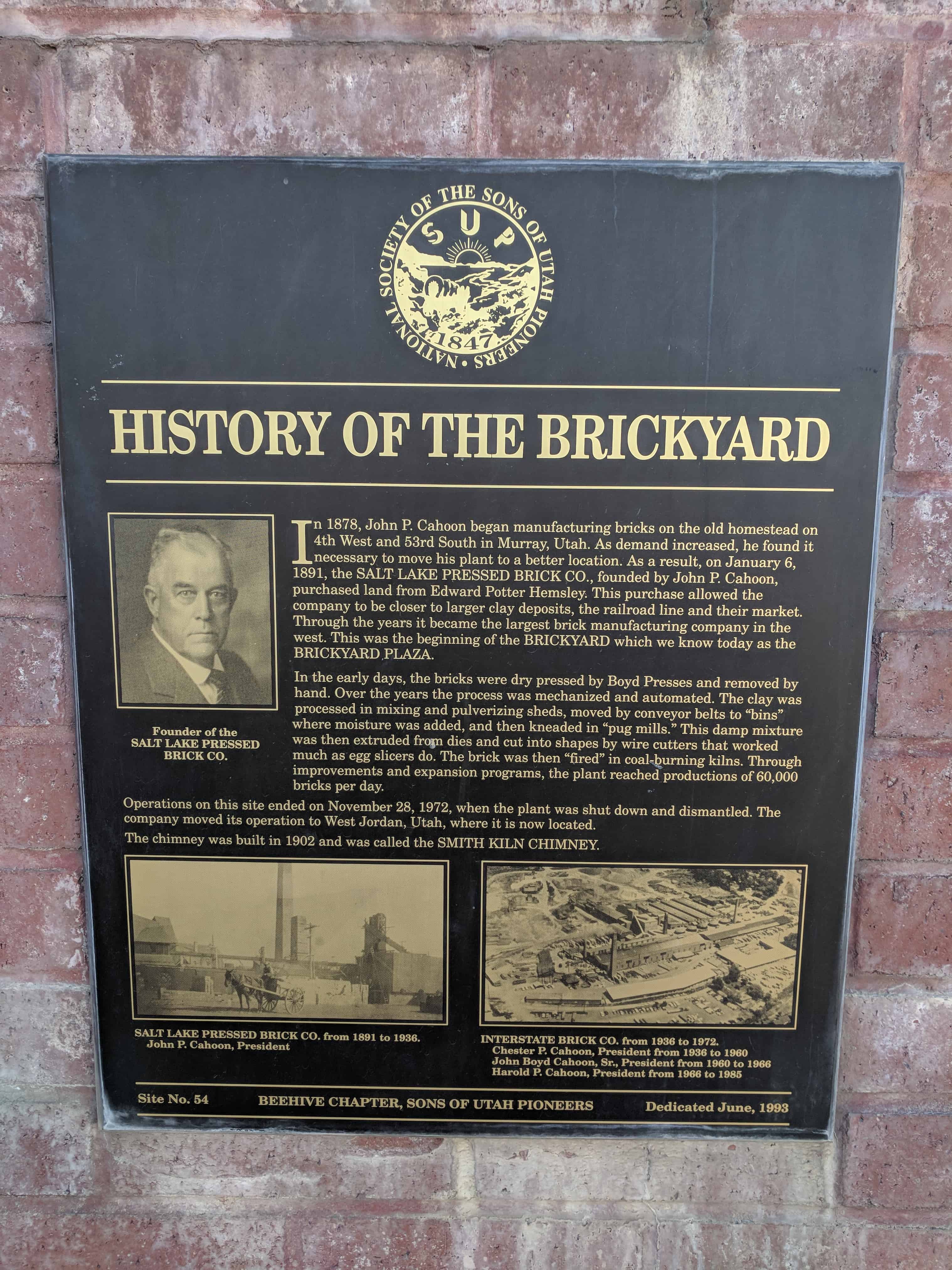
History of the Brickyard
In 1878, John P. Cahoon began manufacturing bricks on the old homestead on 4th West and 53rd South in Murray, Utah. As demand increased, he found it necessary to move his plant to a better location. As a result, on January 6, 1891, the SALT LAKE PRESSED BRICK CO., founded by John P. Cahoon, purchased land from Edward Potter Hemsley. This purchase allowed the company to be closer to larger clay deposits, the railroad line and their market. Through the years it became the largest brick manufacturing company in the west. This was the beginning of the BRICKYARD which we know today as the BRICKYARD PLAZA.
In the early days, the bricks were dry pressed by Boyd Presses and removed by hand. Over the years the process was mechanized and automated. The clay was processed in mixing and pulverizing sheds, moved by conveyor belts to “bins” where moisture was added, and then kneaded in “pug mills.” This damp mixture was then extruded from dies and cut into shapes by wire cutters that worked much as egg slicers do. The brick was then “fired” in coal-burning kilns. Through improvements and expansion programs, the plant reached productions of 60,000 bricks per day.
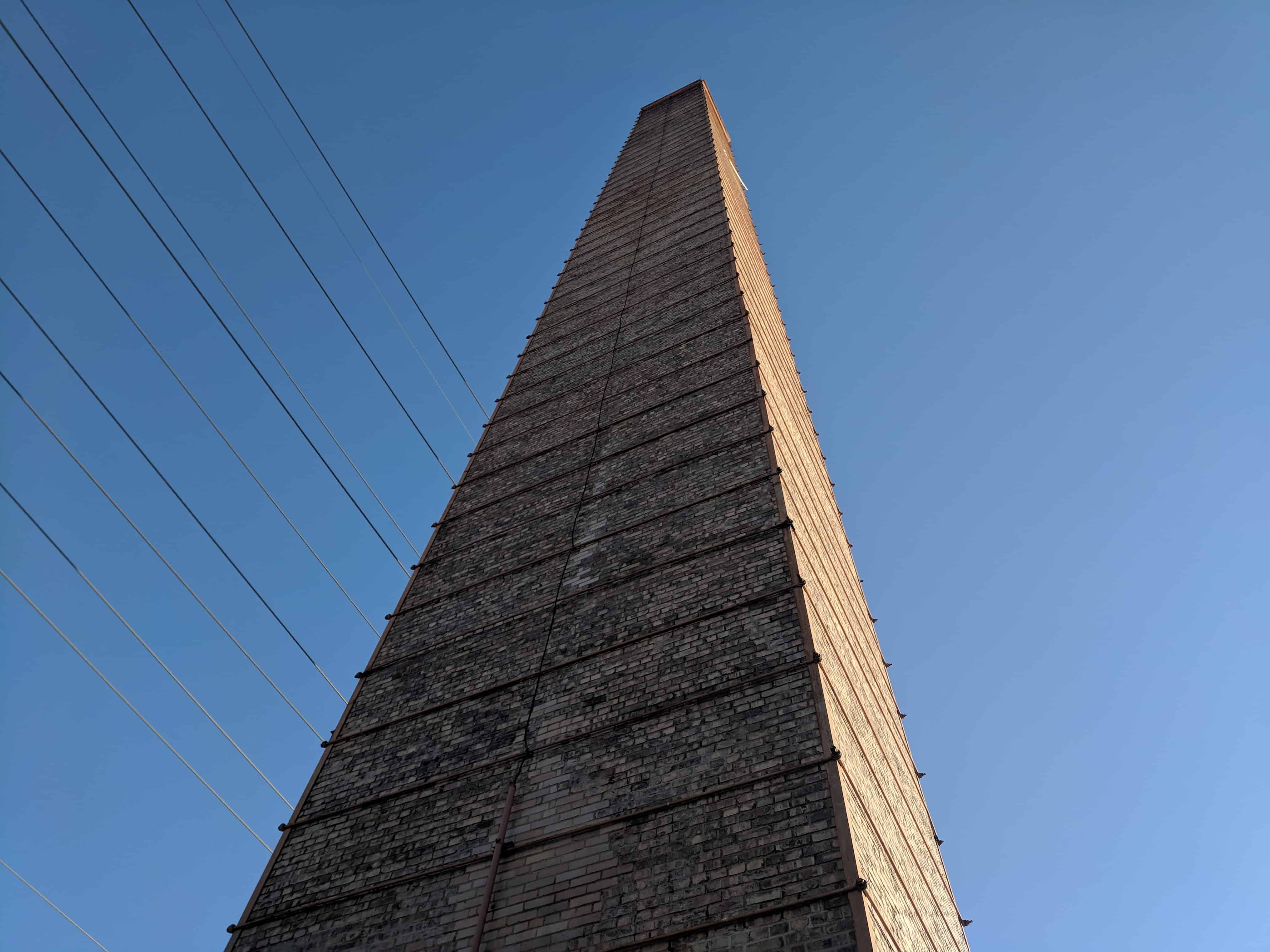
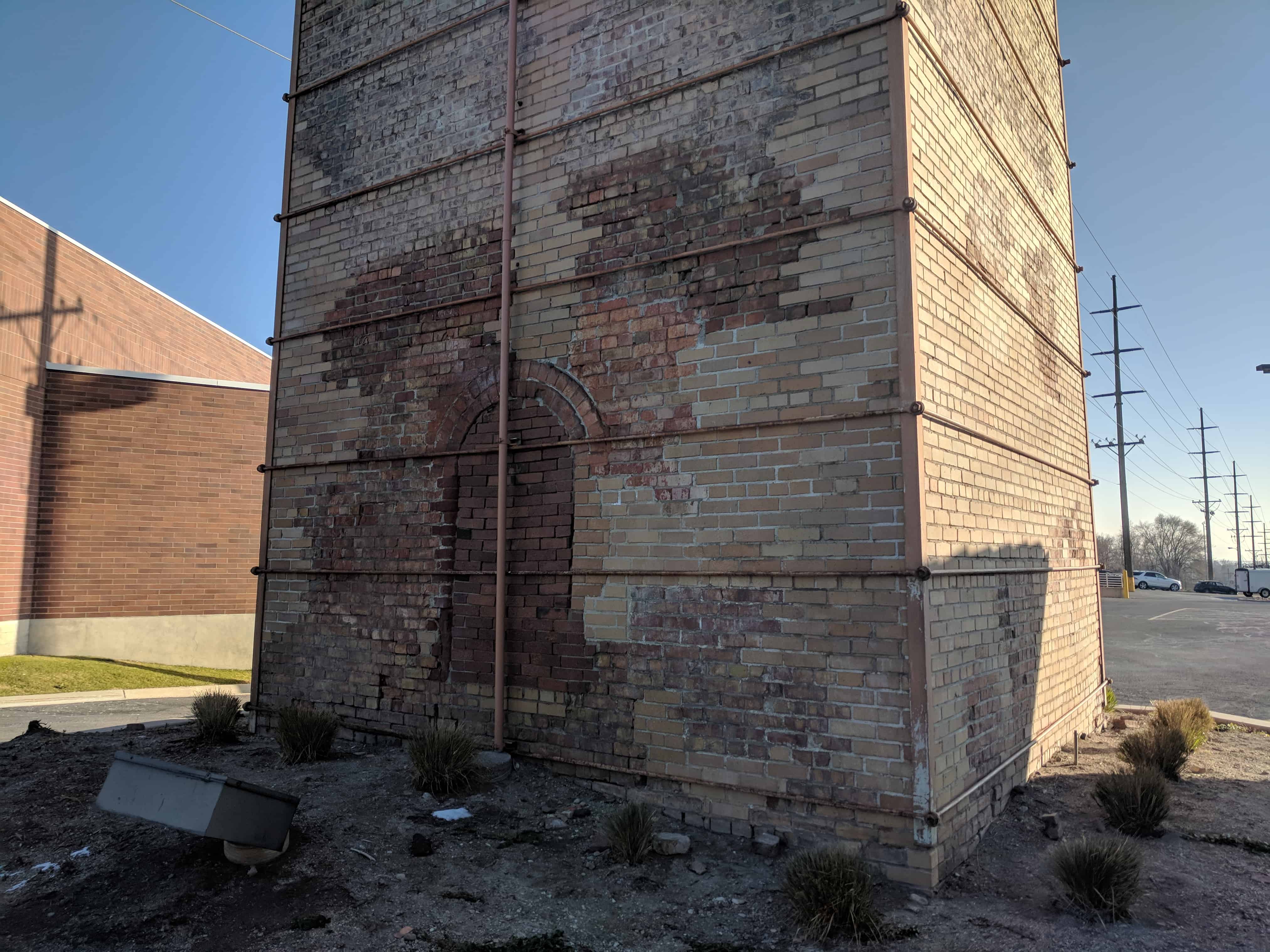
Operations on this site ended on November 28, 1972, when the plant was shut down and dismantled. The company moved its operation to West Jordan, Utah, where it is now located. The chimney was built in 1902 and was called the SMITH KILN CHIMNEY.
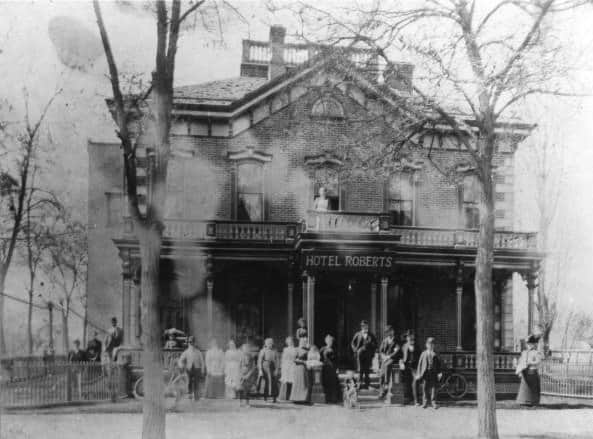
Hotel Roberts was a historic hotel, built in 1882 on University Avenue (US-189) in Provo, Utah, United States. This Mission-style hotel was a famous landmark and a center of Provo social activity for much of the early 20th century. It also served briefly as the Language Training Mission (now called the Missionary Training Center) for The Church of Jesus Christ of Latter-day Saints.
In December 1919 the hotel was purchased by Mark Anderson who would later serve as Mayor of Provo and the namesake of the Provo power plant, “The Mark Anderson Utility Center.” The hotel remained in the family for many years and was run by Anderson’s son, Mark Anderson Jr, until he retired in 1995 at the age of 76 when the family sold the hotel because the upkeep was too much.
In later years, Hotel Roberts fell into serious disrepair, with profound structural and water damage, and was largely known as a residence for transients. Neglect by the owners and lack of community support to maintain the building led to its demolition in 2004. (text from Wikipedia)
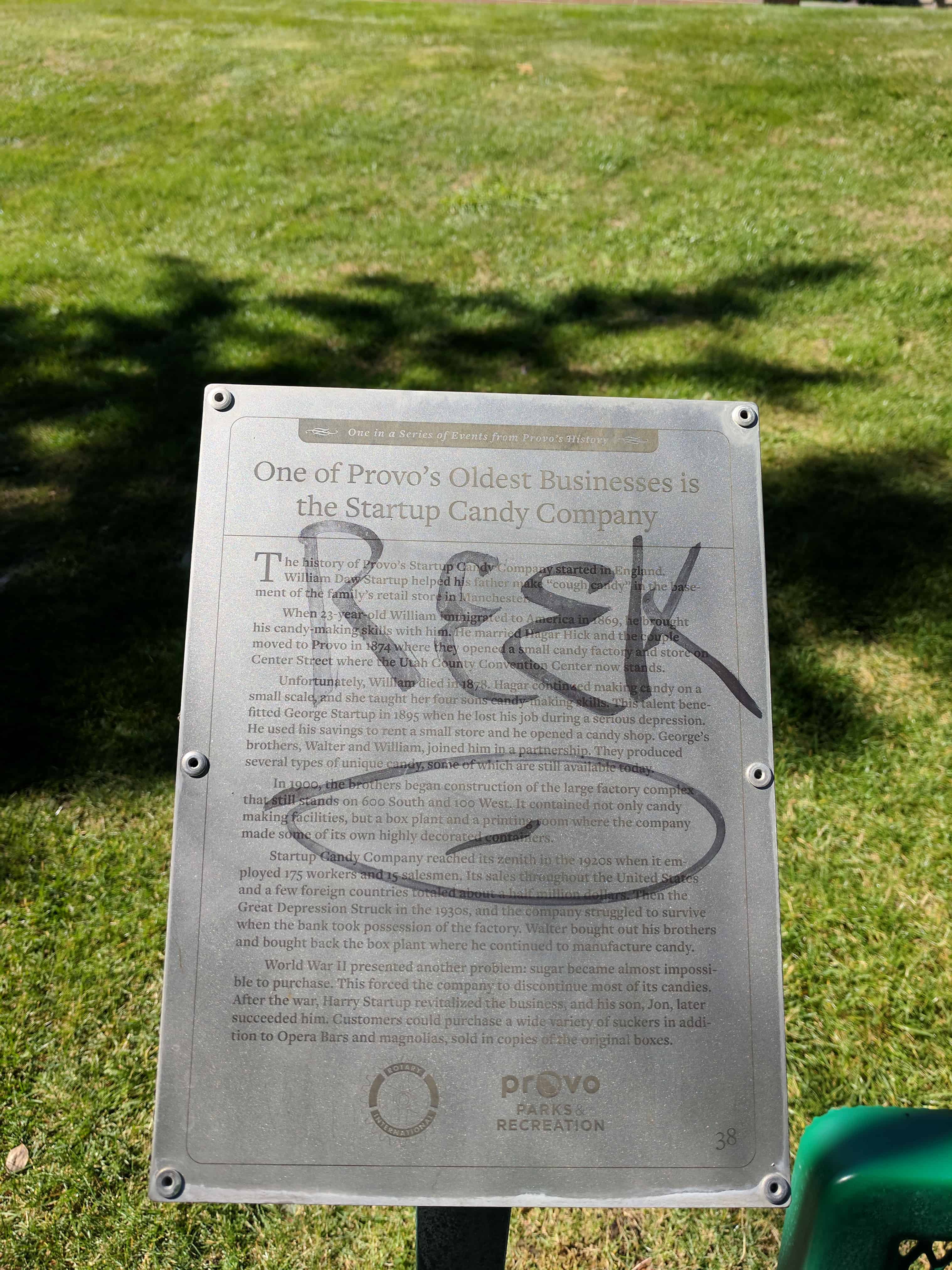
One of Provo’s Oldest Businesses is the Startup Candy Company.
The history of Provo‘s Startup Candy Company started in England. William Daw Startup helped his father make “cough candy” in the basement of the family’s retail store in Manchester.
When 23-year-old William immigrated to America in 1869, he brought his candy-making skills with him. He married Hagar Hick and the couple moved to Provo in 1874 where they opened a small candy factory and store on Center Street where the Utah County Convention Center now stands.
Unfortunately, William died in 1878. Hagar continued making candy on a small scale, and she taught her four sons candy-making skills. This talent benefited George Startup in 1895 when he lost his job during a serious depression. He used his savings to rent a small store and he opened a candy shop. George’s brothers, Walter and William, joined him in a partnership. They produced several types of unique candy, some of which are still available today.
In 1900, the brothers began construction of the large factory complex that still stands on 600 South and 100 West. It contained not only candy making facilities, but a box plant and a printing room where the company made some of its own highly decorated containers.
Startup Candy Company reached its zenith in the 1920s when it employed 175 workers and 15 salesmen. Its sales throughout the united States and a few foreign countries totaled about a half million dollars. Then the Great Depression Struck in the 1930s, and the company struggled to survive when the bank took possession of the factory. Walker bought out his brothers and bought back the box plant where he continued to manufacture candy.
World War II presented another problem: sugar became almost impossible to purchase. This forced the company to discontinue most of its candies. After the war, Harry Startup revitalized the business, and his son, Jon, later succeeded him. Customers could purchase a wide variety of suckers in addition to Opera Bars and magnolias, sold in copies of the original boxes.