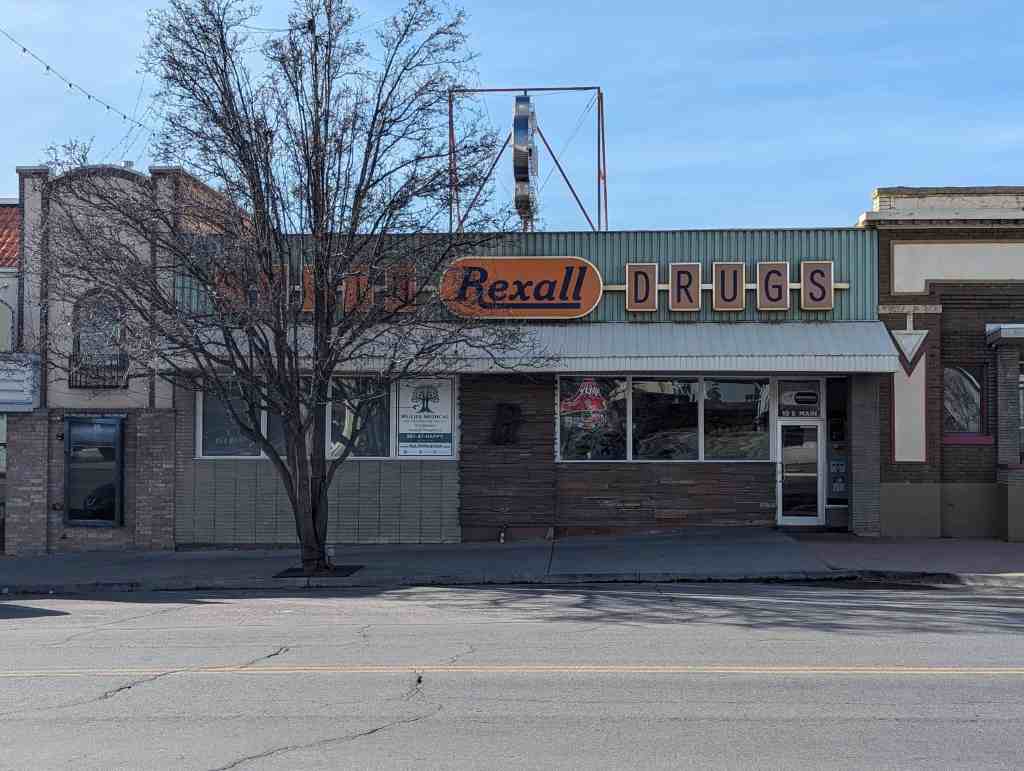
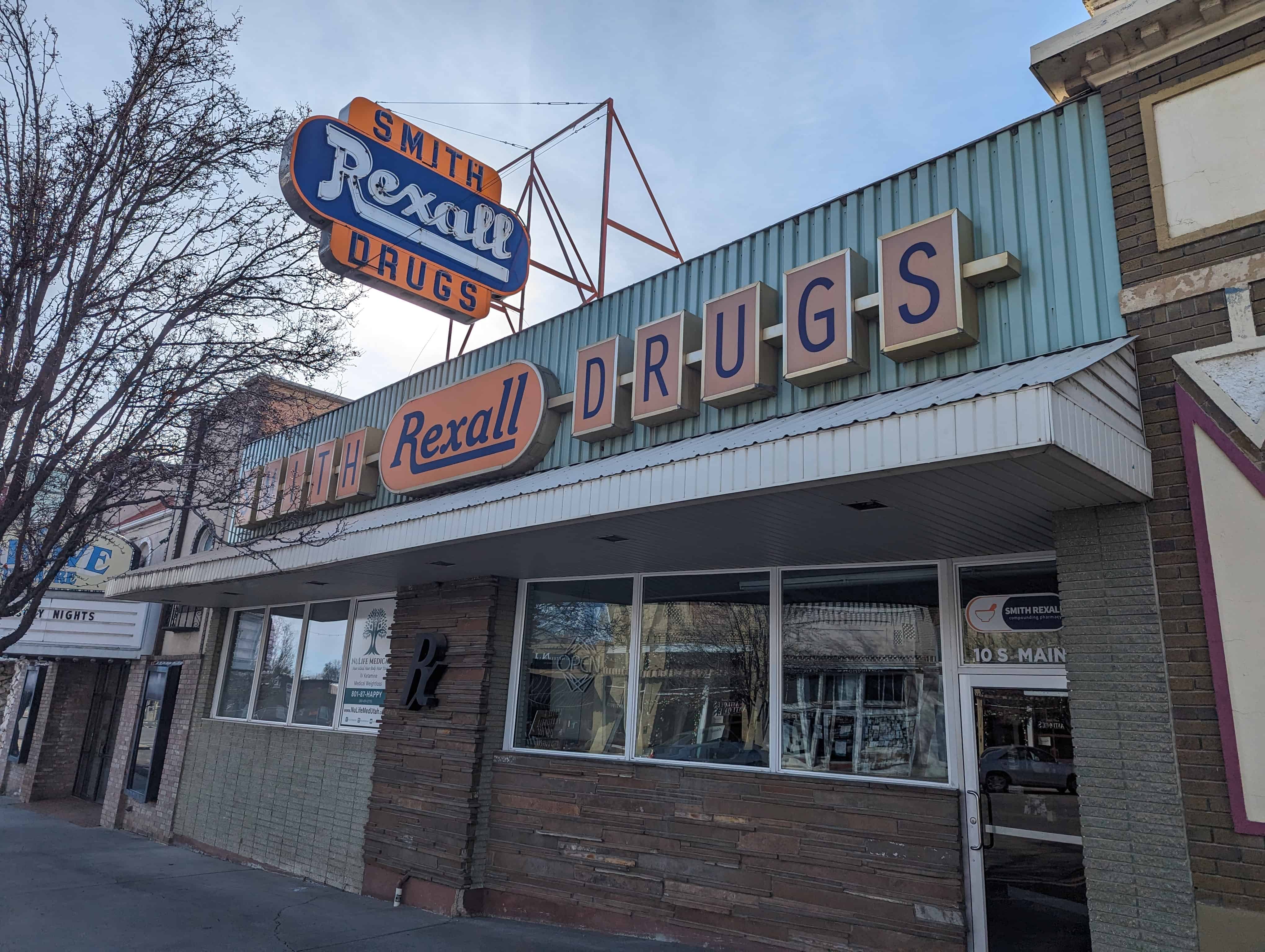
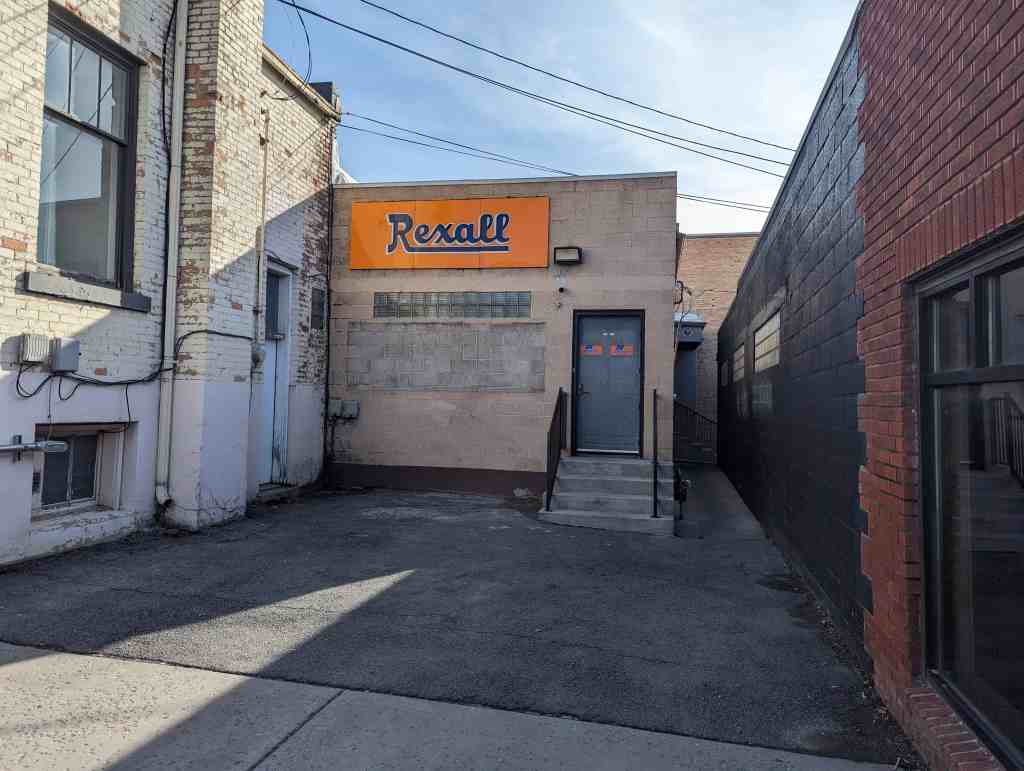
George Leroy Smith (known as “Roy”) began in the drug store business while he was still in high school, about 1910. The store was called Pleasant Grove Drug and was located across the street from it’s current location.
Hedquist Drug bought the store in 1915 and Roy continued as the store’s manager.
In 1917 the store moved across the street to it’s current location and Roy received his pharmacy license that same year.
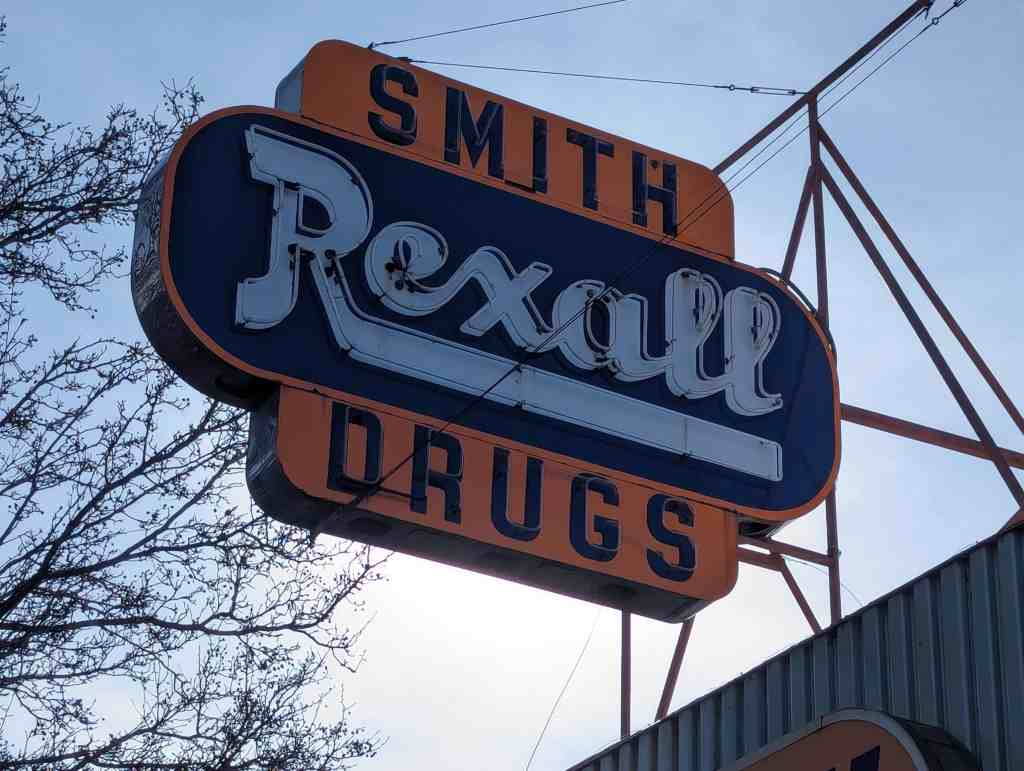
In 1929, Roy bought the store from Hedquist Drug. The store remained Hedquist Drug until 1935 when the name was changed to Smith Drug. (more at smithrexalldrug.com)
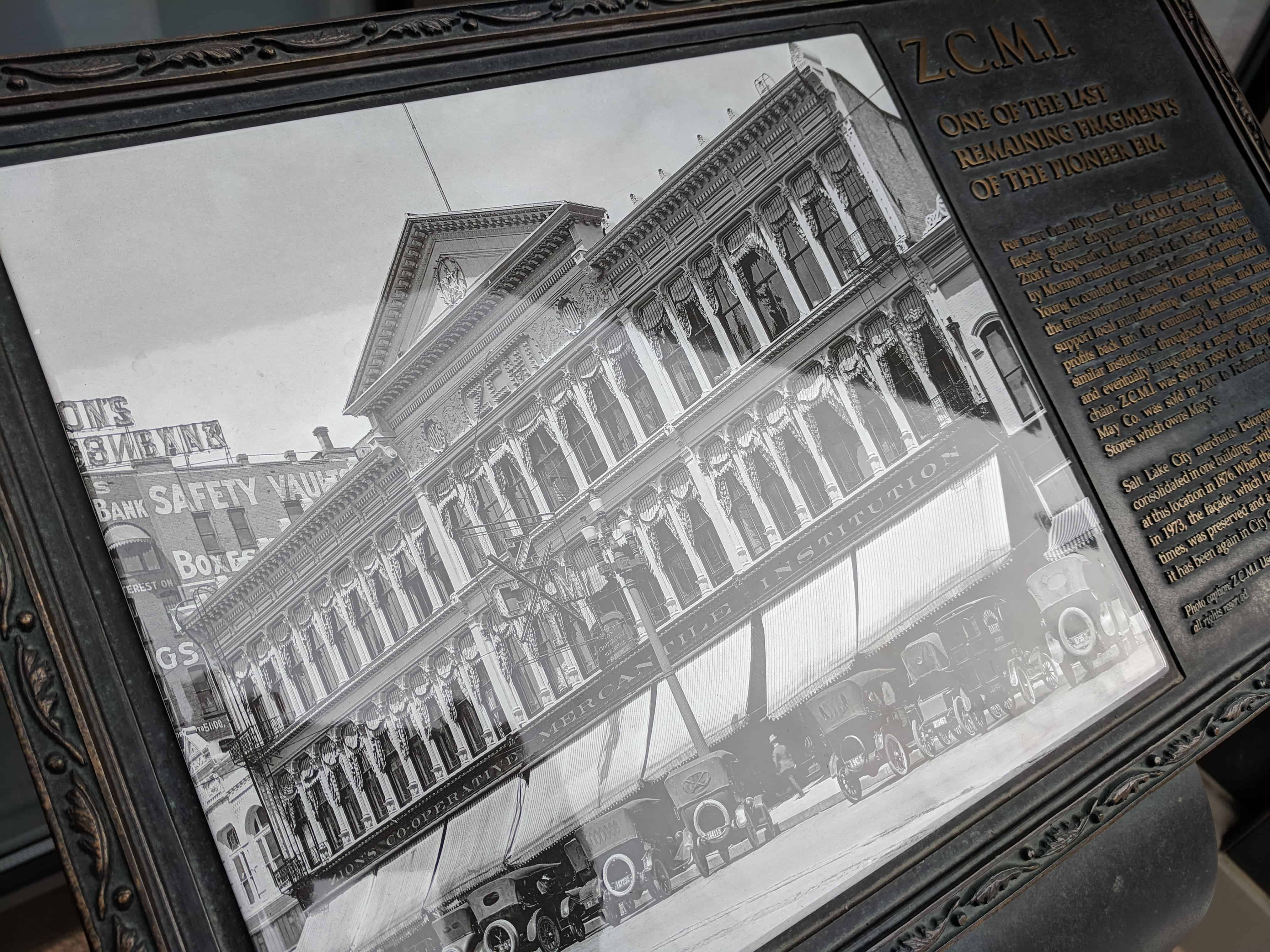
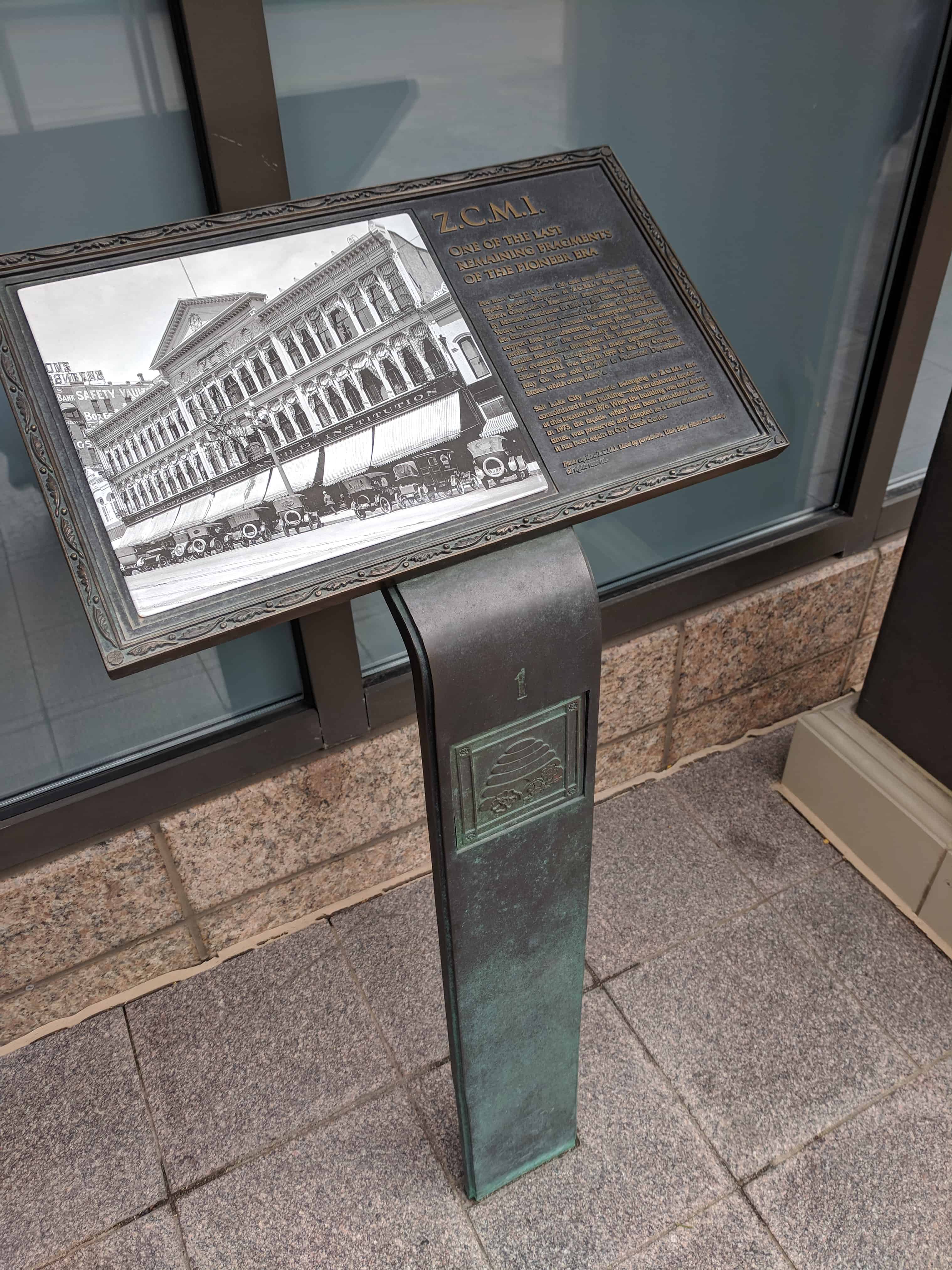
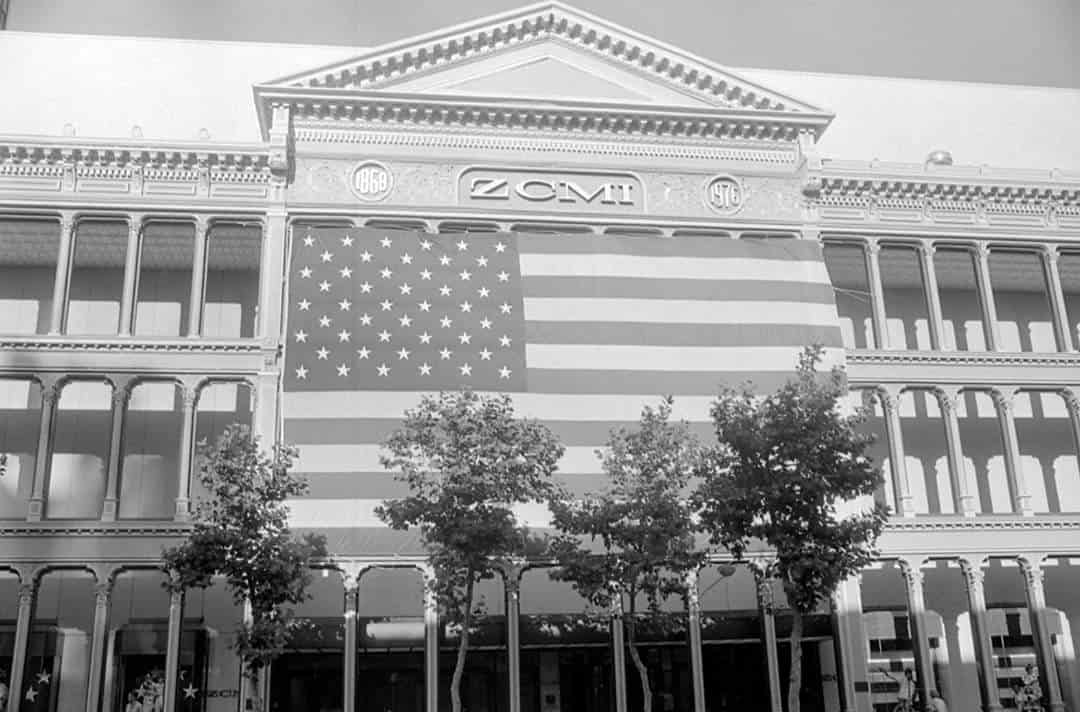
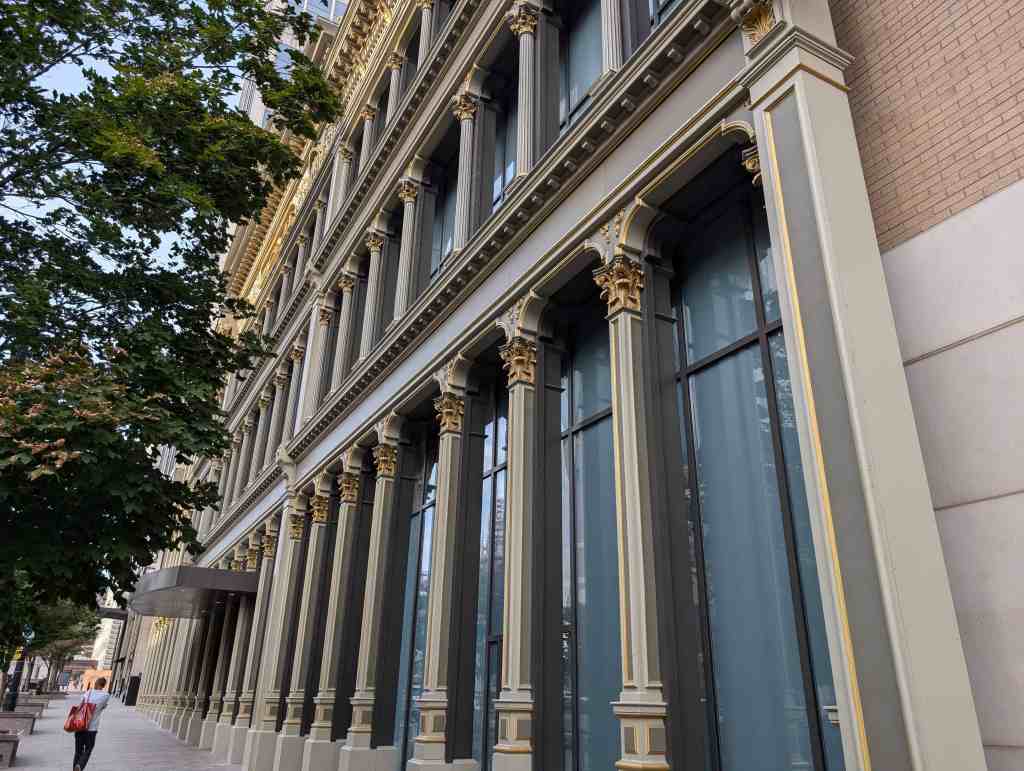
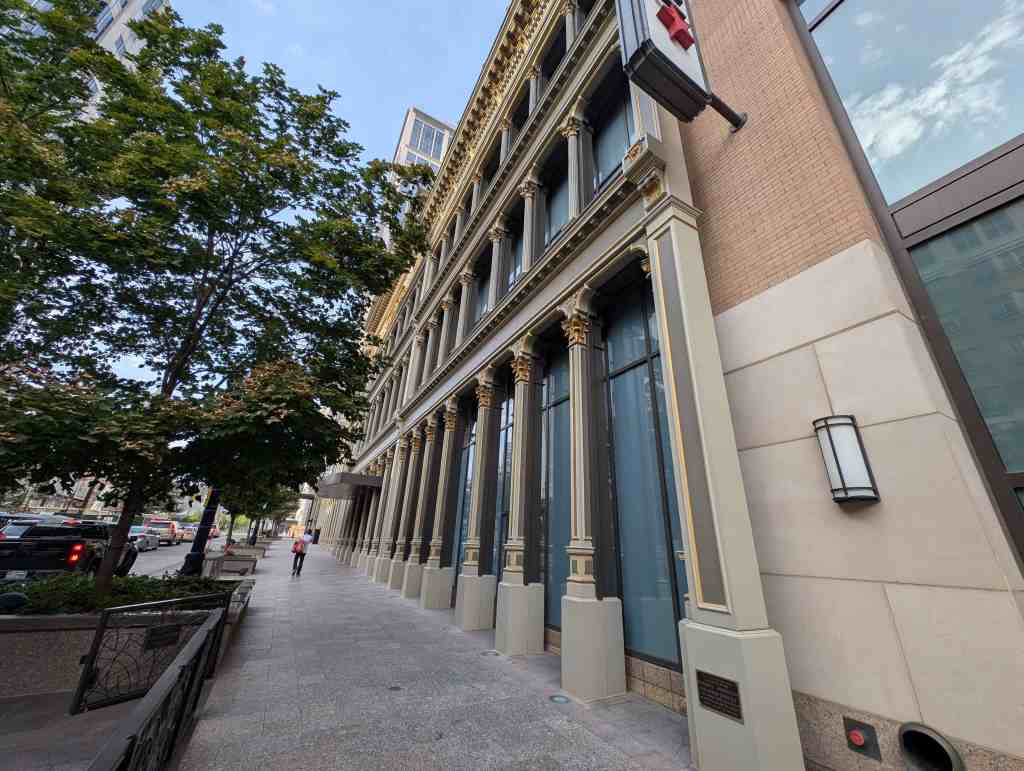
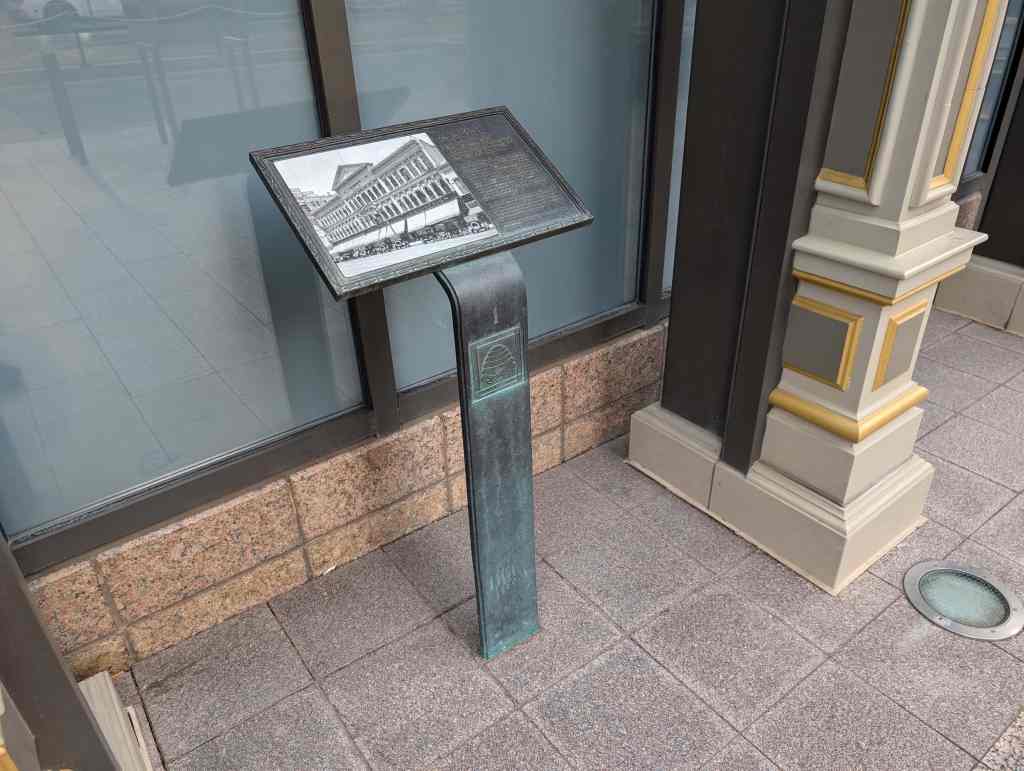
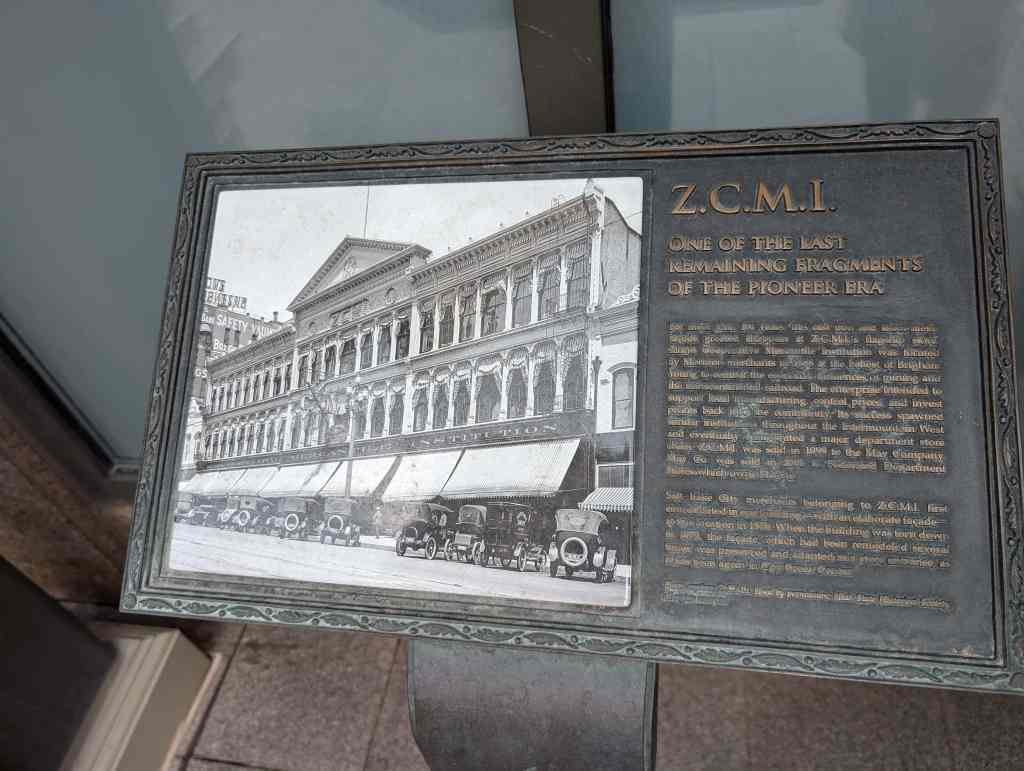
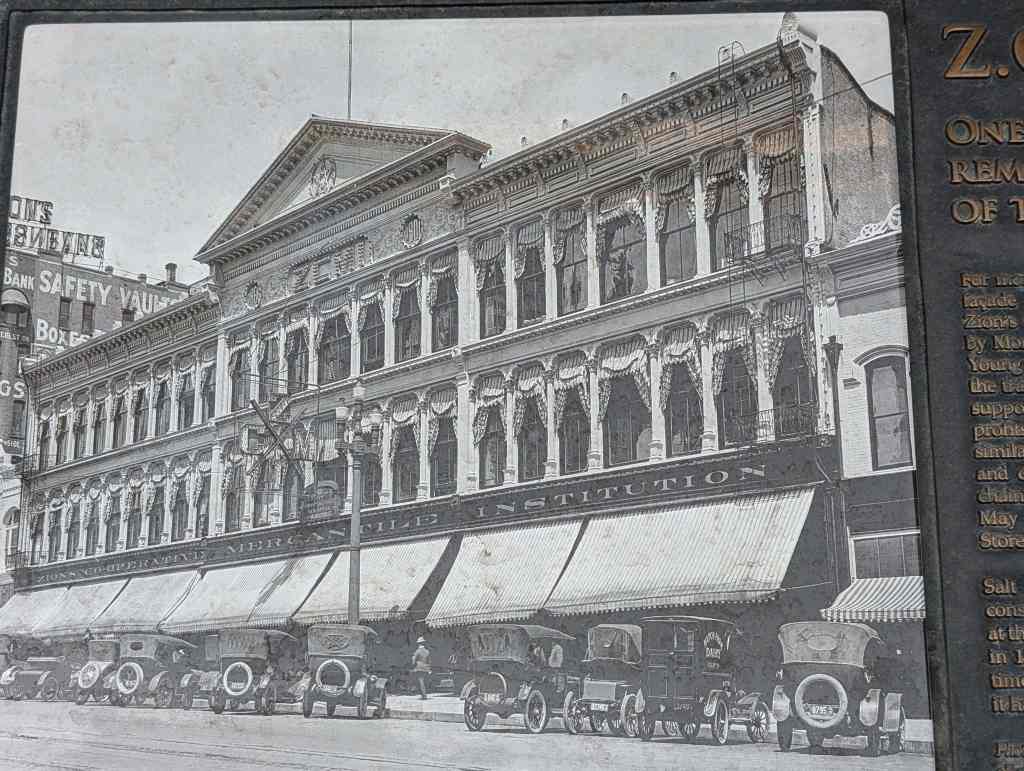
Z.C.M.I. – One of the last remaining fragments of the pioneer era
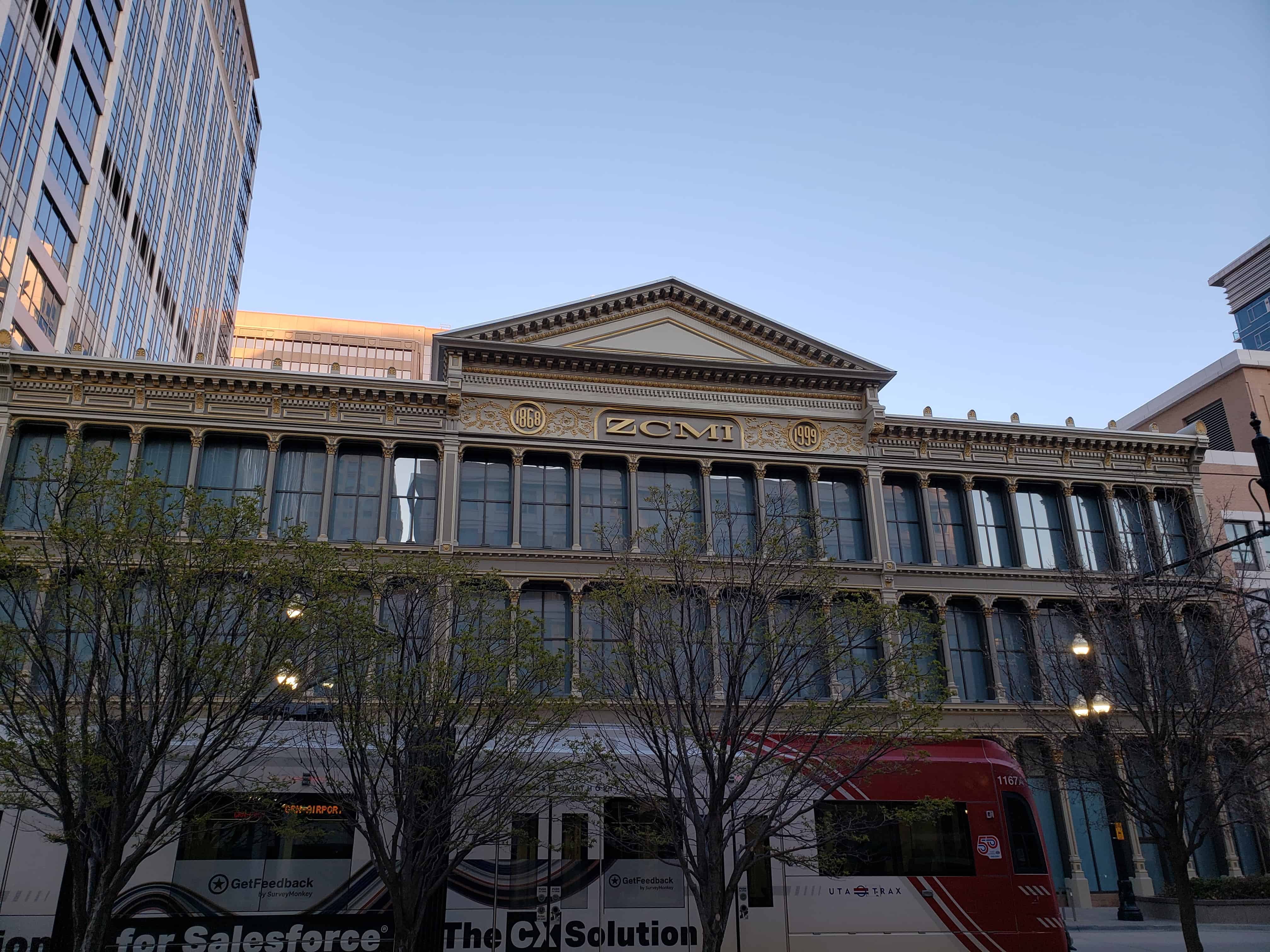
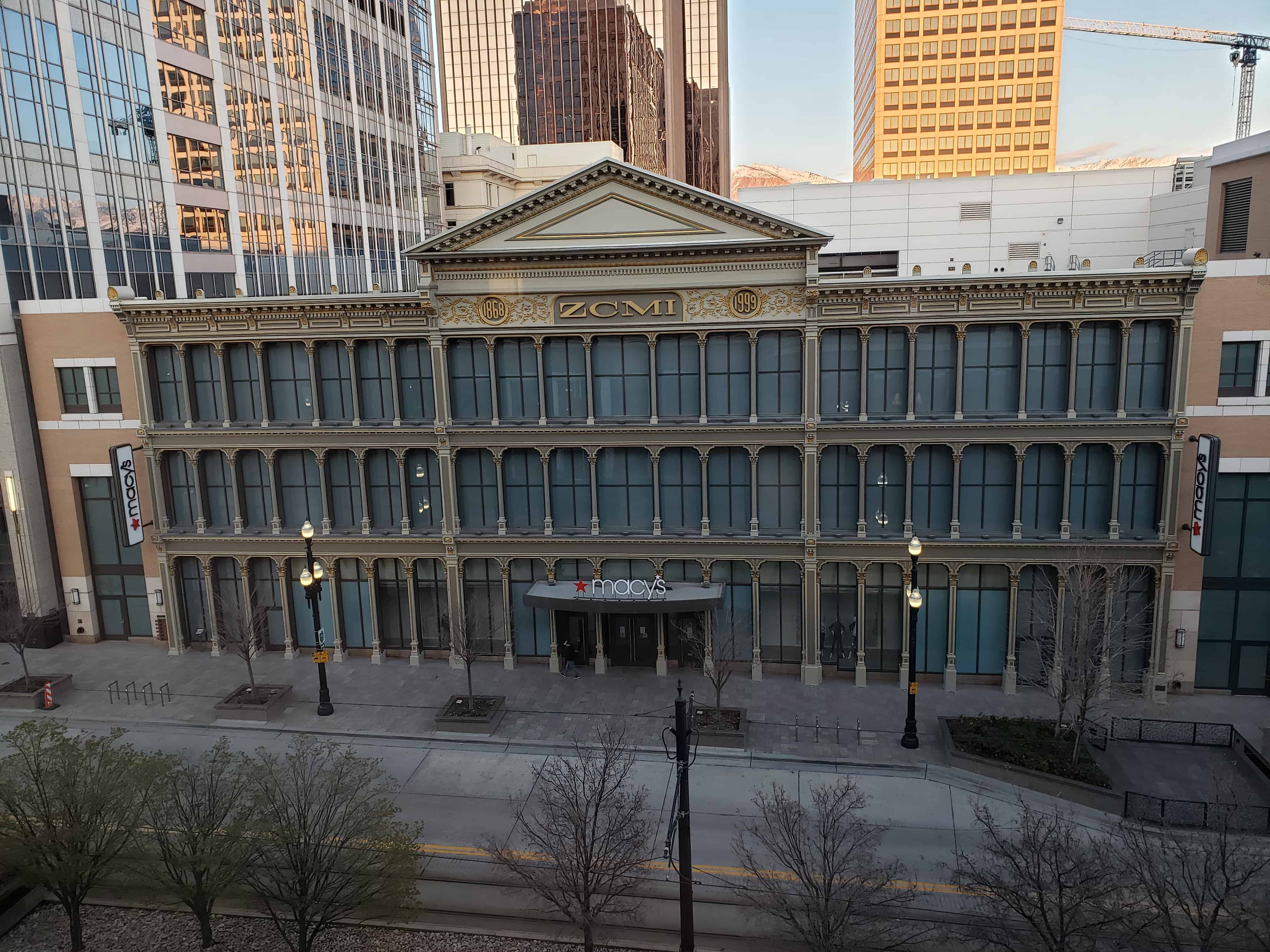
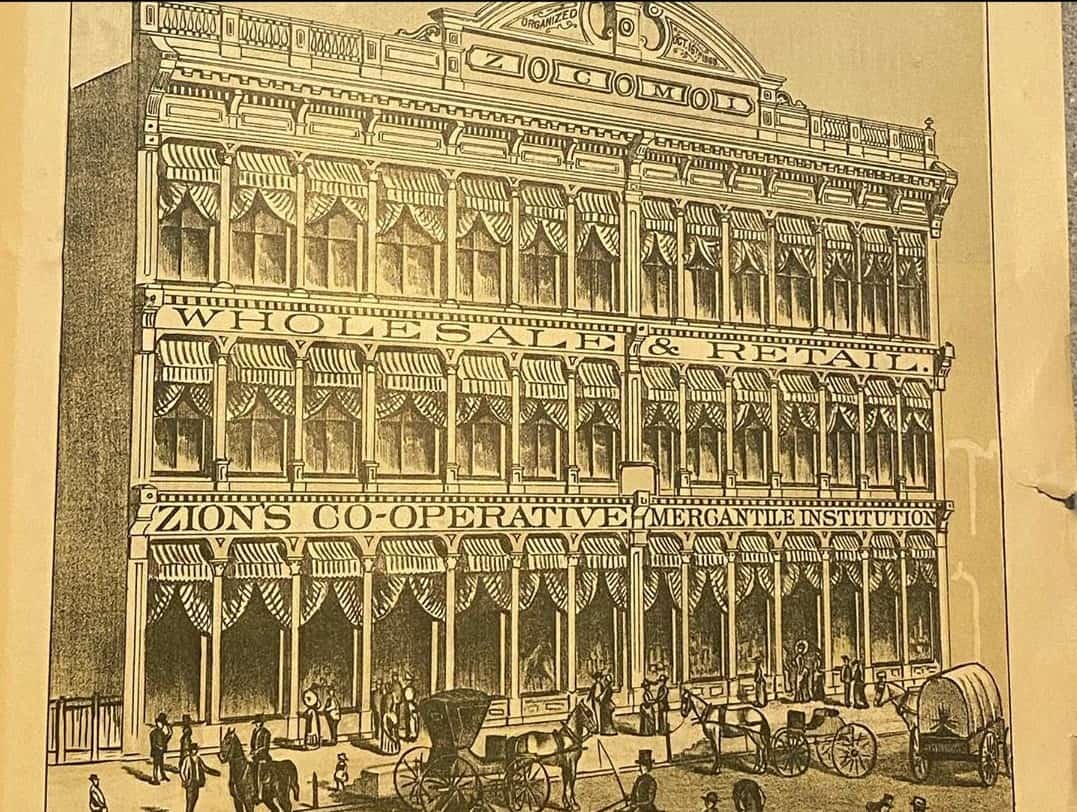
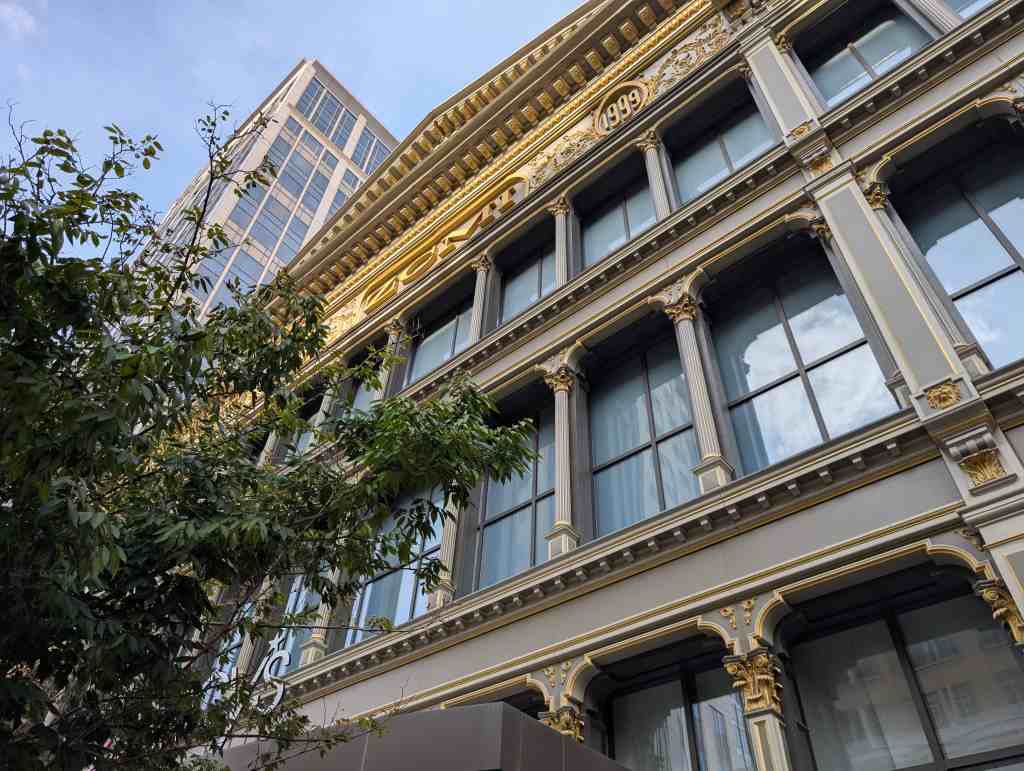
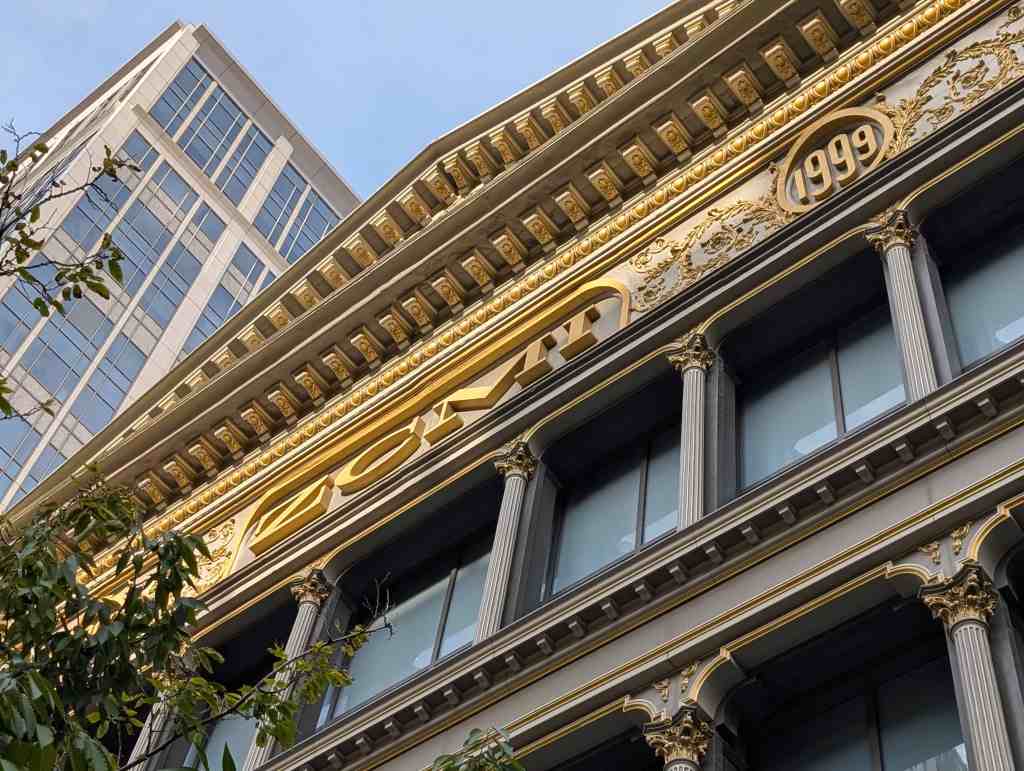
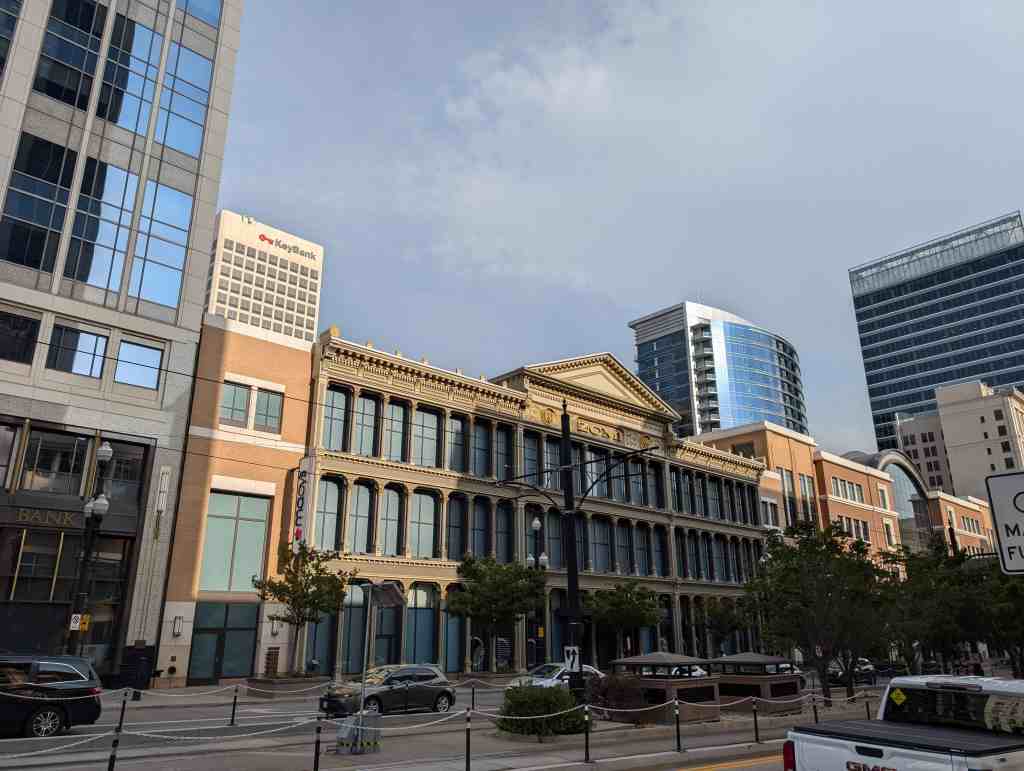
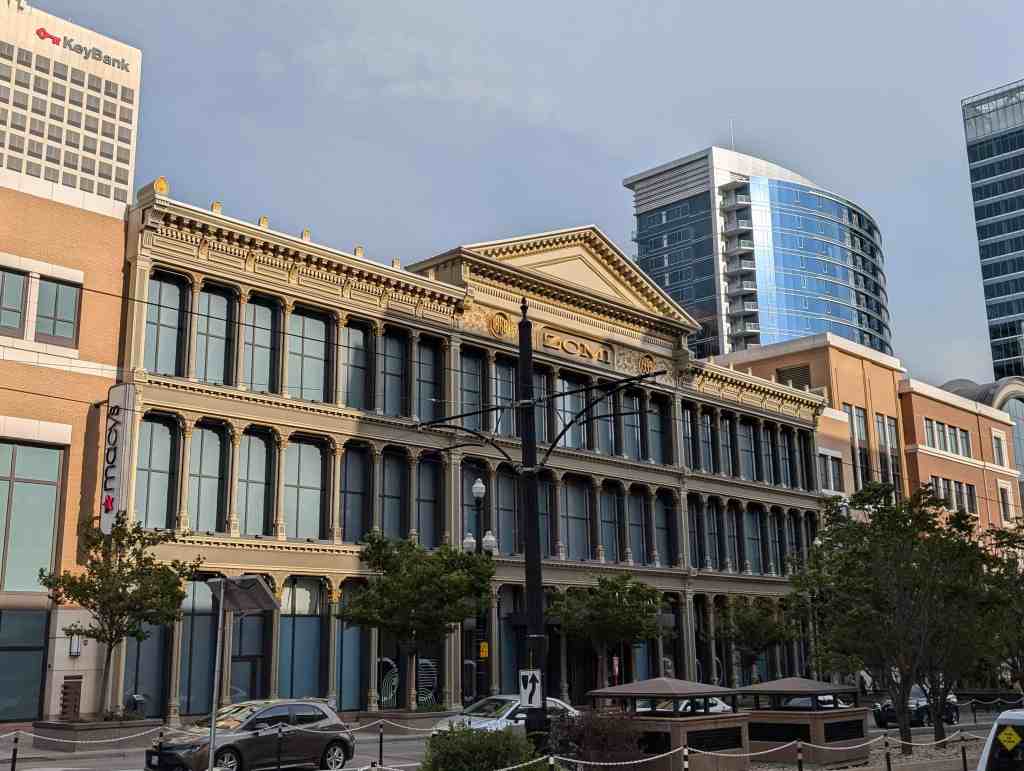
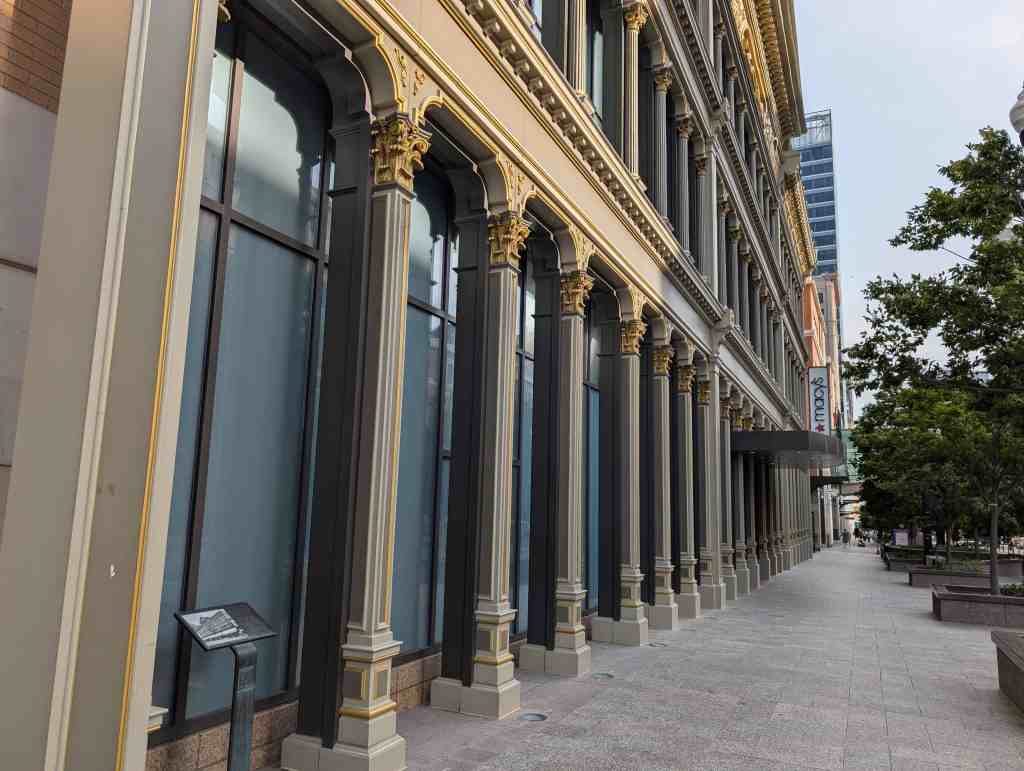
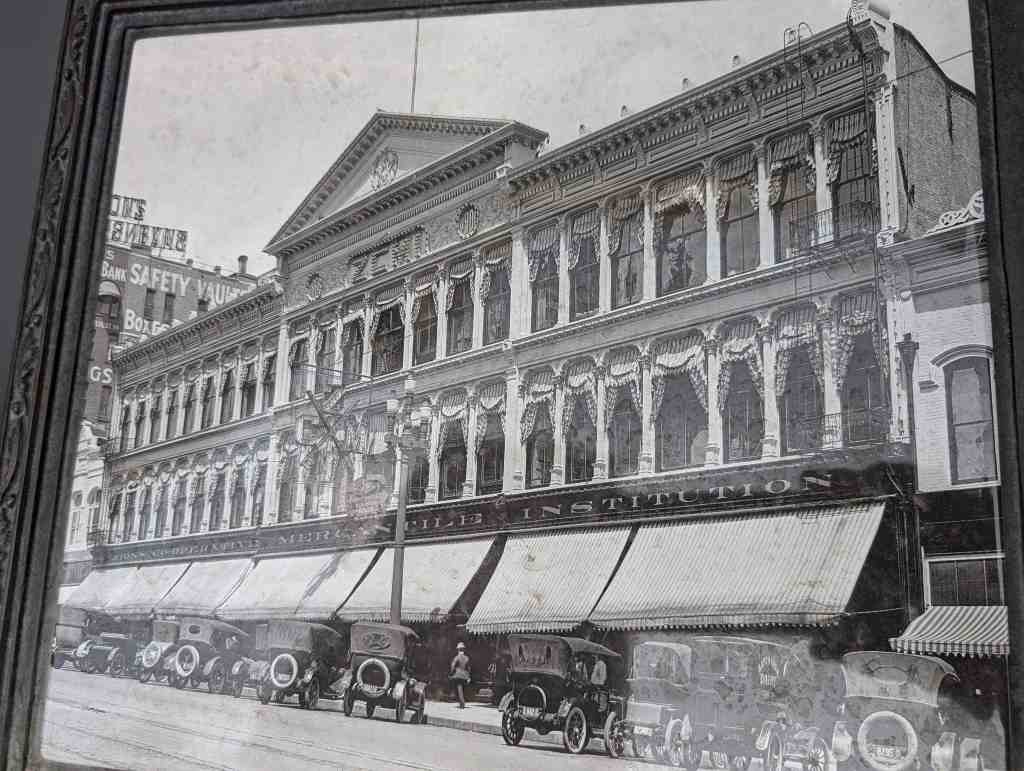
For more than 100 years, this cast iron and sheet metal facade greeted shoppers at Z.C.M.I.’s flagship store. Zion’s Cooperative Mercantile Institution was formed by Mormon merchants in 1868 at the behest of Brigham Young to combat the economic influences of mining and the transcontinental railroad. The enterprise intended to support local manufacturing, control prices, and invest profits back into the community. Its success spawned similar institutions throughout the Intermountain West and eventually inaugurated a major department store chain. Z.C.M.I. was sold in 1999 to May Company. May Co. was sold in 2005 to Federated Department Stores which owns Macy’s.
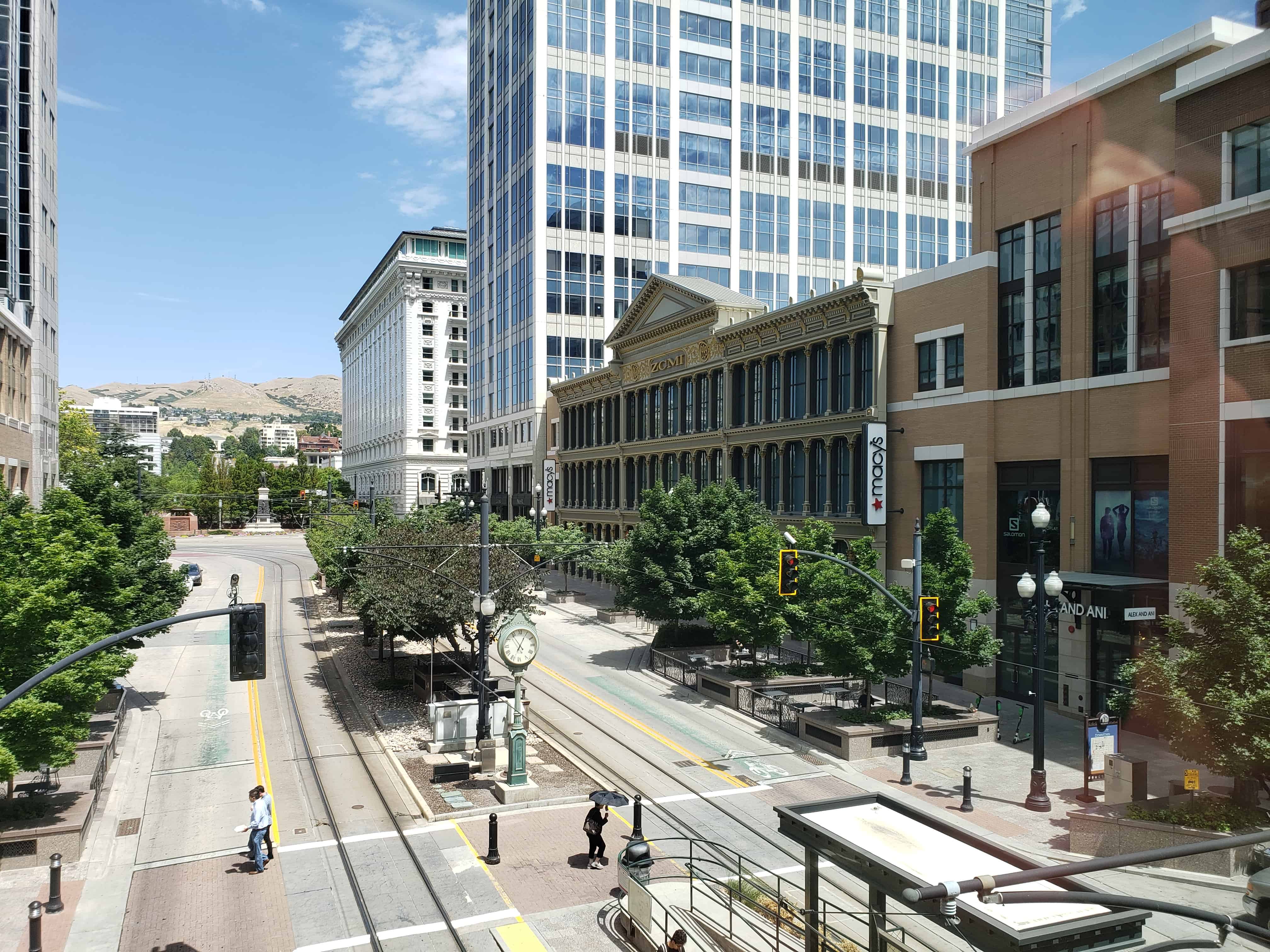
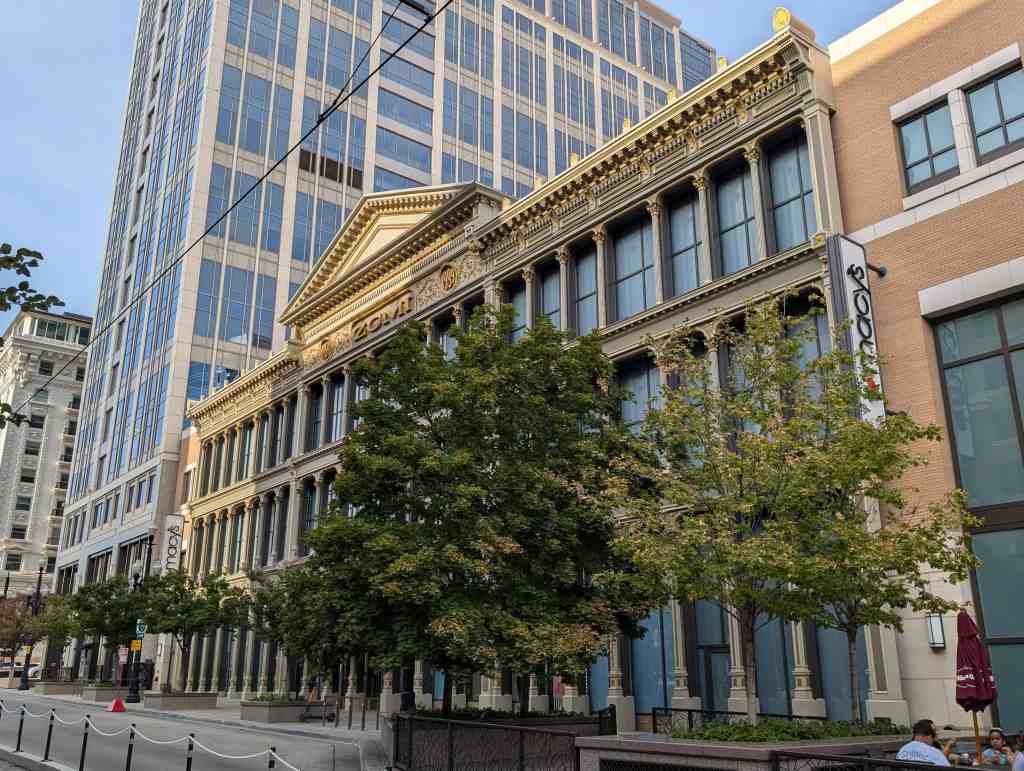
Salt Lake City merchants belonging to Z.C.M.I. first consolidated in one building – with an elaborate facade – at this location in 1876. When the building was torn down in 1973, the facade, which had been remodeled several times, was preserved and adapted as a store entrance, as it has been again in City Creek Center.
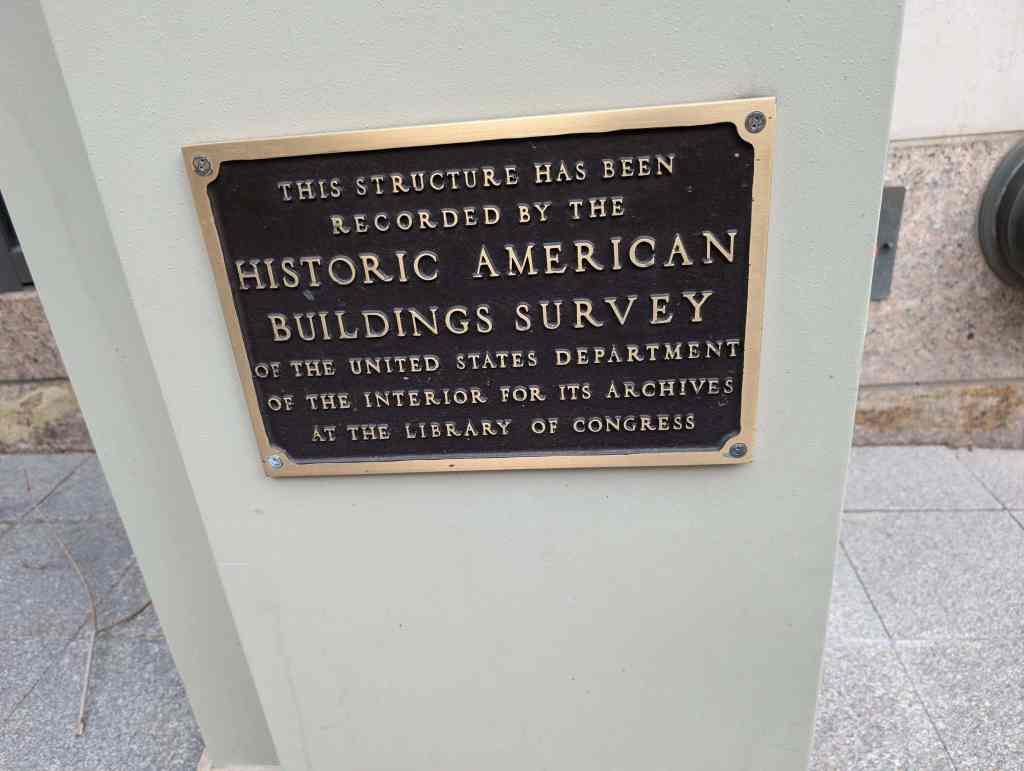
The historic Cast Iron Front at 15 South Main Street in the Downtown neighborhood of Salt Lake City was listed on the National Register of Historic Places on September 22, 1970 (#70000632)
The “Zions Cooperative Mercantile Association” was formed in 1868. Before 1880 one-hundred-fifty branch stores reached into twenty-four counties and one-hundred-twenty-six towns and cities.
On April 10, 1875 a committee was chosen to select a site for a new building in Salt Lake City, and the present site on “East South Temple” (now called Main Street) was selected. The land was purchased from Brigham Young for $30,000.00. The building, which is reputed to be the first department store in America, was completed in March, 1876 and opened for business on April 1, 1876. The cost was $136,544.00. The architects were William H. Folsom and Obed Taylor. The structure is significant because of its unusually well-maintained historic store front of cast iron.
The original Z.C.M.I. building had a frontage of fifty feet by a depth of 318 feet; three stories high, plus a full basement. The whole interior was chiefly lighted by sky lights.
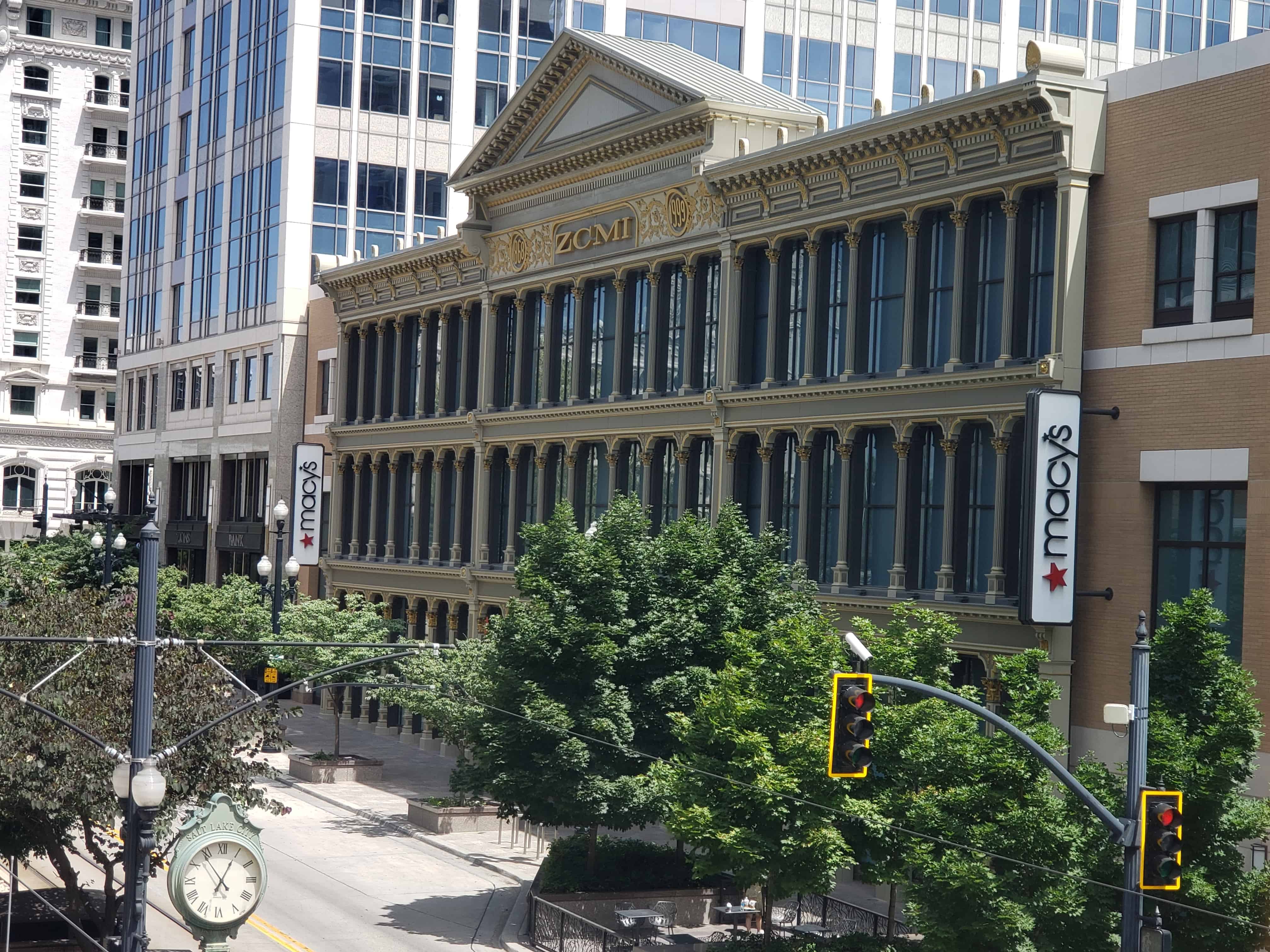
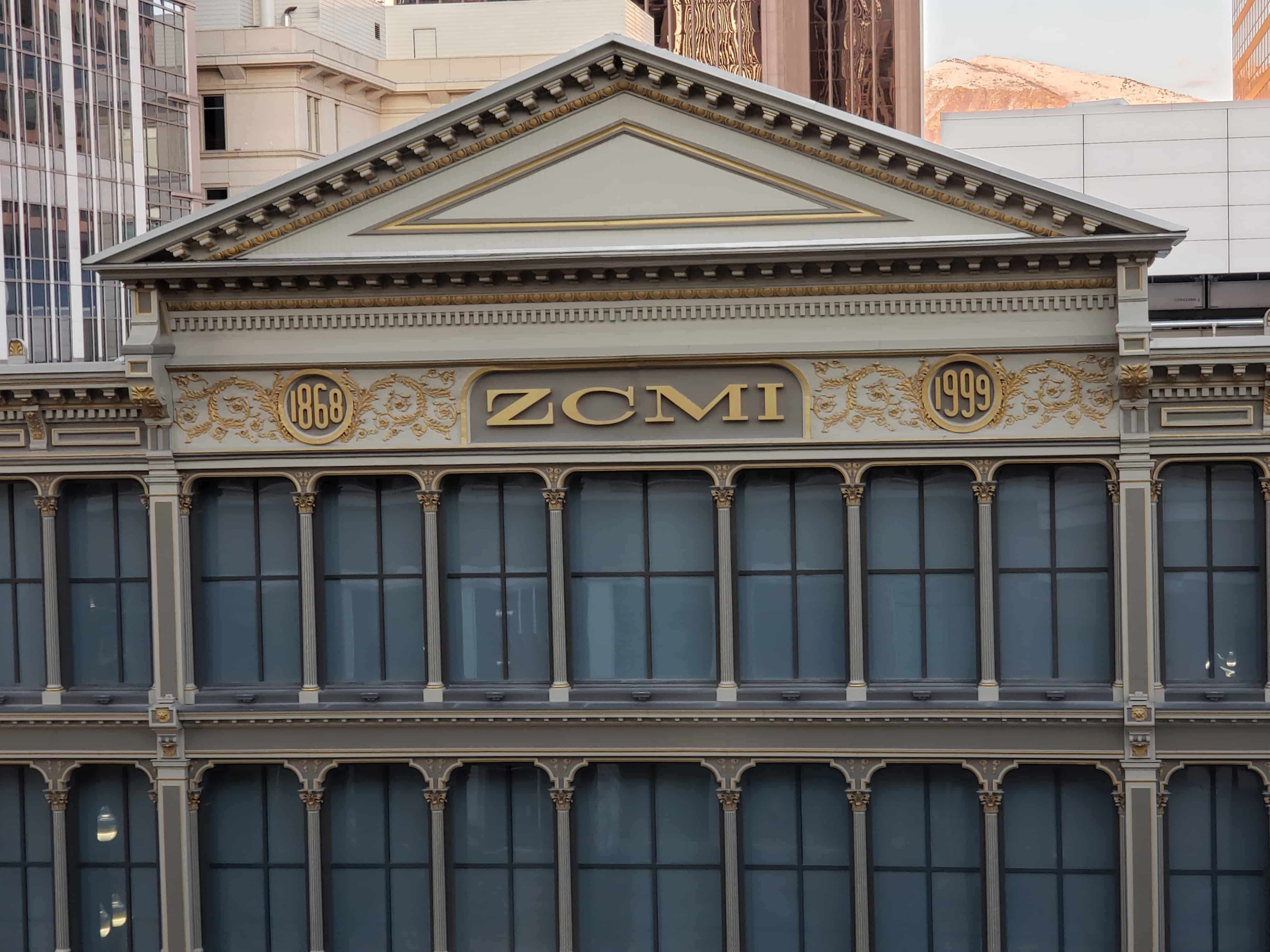
The store front Is a window wall of three matching sections built at three different times. Rows of Corinthian columns divide the windows, These columns are of cast iron In the center (1876) and south (1880) portions but of heavy stamped sheet metal in the north (1901) portion. There is a modillion cornice at each level and also in the rake of the pediment. The top cornice has brackets aligned with the columns below and a row of dentils under the modillions, which are larger than those of the cornices below and ornamented with an acanthus leaf. Under the pediment is a frieze which extends across the center portion of the storefront. It contains large letters ‘ZCMI’ balanced on each side with circular frames containing the date of founding, 1868, on the left and the date of the pediment construction, 1901, on the right. The rest of the frieze contains a connecting vine and leaf pattern. Above the top cornice antefixes project in alignment with the columns below. They are typical of much of the ornament which is of light sheet metal formed over wood.
The windows are double hung wood sash 2/2 glazed with obscure glass. Upper corners of sash and frame are rounded. These windows are extremely large, 11 feet in height and varying in width from 4 feet to 7 feet. They are covered with insect screens of modern louvered mesh in frames which match the windows behind.
The columns are painted black, other ornament and moldings are white and background planes are gray.
The first floor level which once had a columnar treatment like that above now has large show windows with wide spaced supports and is spanned by heavy steel beams.”
As the width of the store front grew the design of the cornice and pediment was changed. Below the marquee and behind the façade there has been frequent modernization, but some of the varnished pine poles remain as structural columns along with much of the original stamped metal ceiling. The store plans extensive remodeling and addition; however, the original cast iron façade will remain.
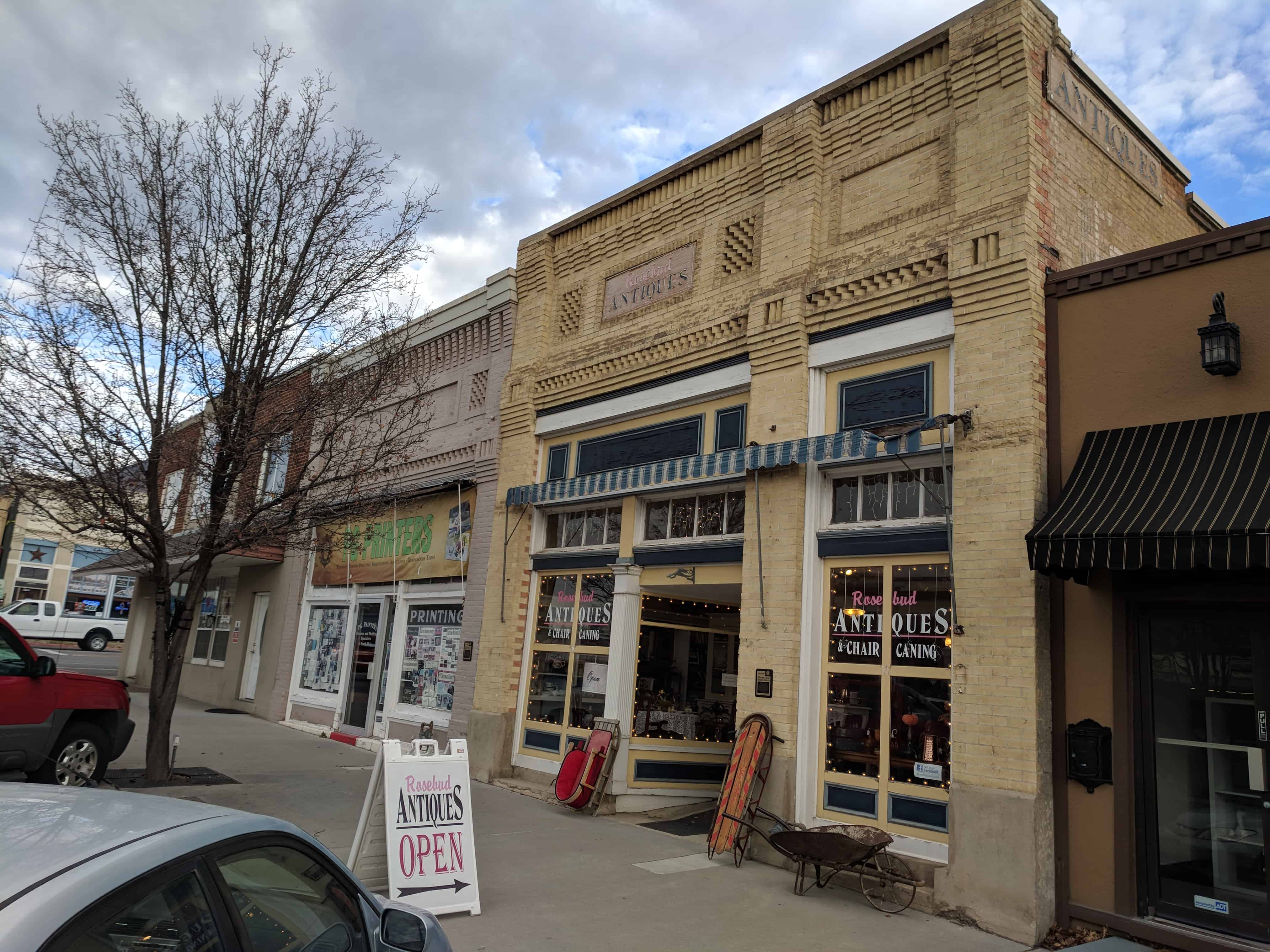
This building was constructed c.1908 by William L. Hayes who leased it to Walter B. Mason for Mason’s Men’s Clothing Store. Several years before his death in 1922, Hyrum L. Clark moved his general merchandise store here. H. Winfield Clark purchased his father’s business and continued with it until 1942. In 1944, Vilace and Fern Radmall established Radmall Hardware, purchasing the building. Their son, David, continued the business from 1972 to 1988. David’s wife, Maxine, restored the building in 1997. (the above text is from the plaque on the building)
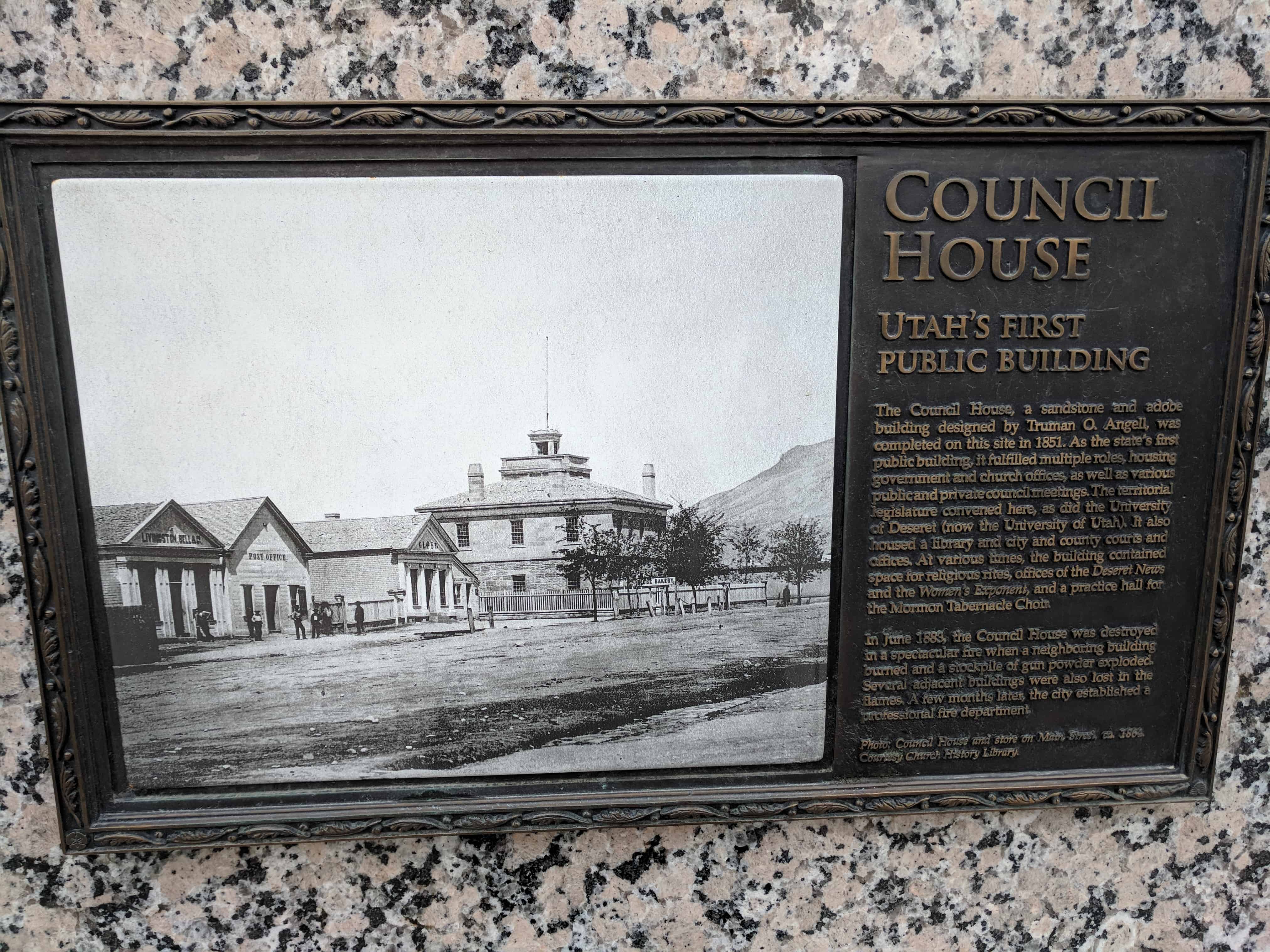
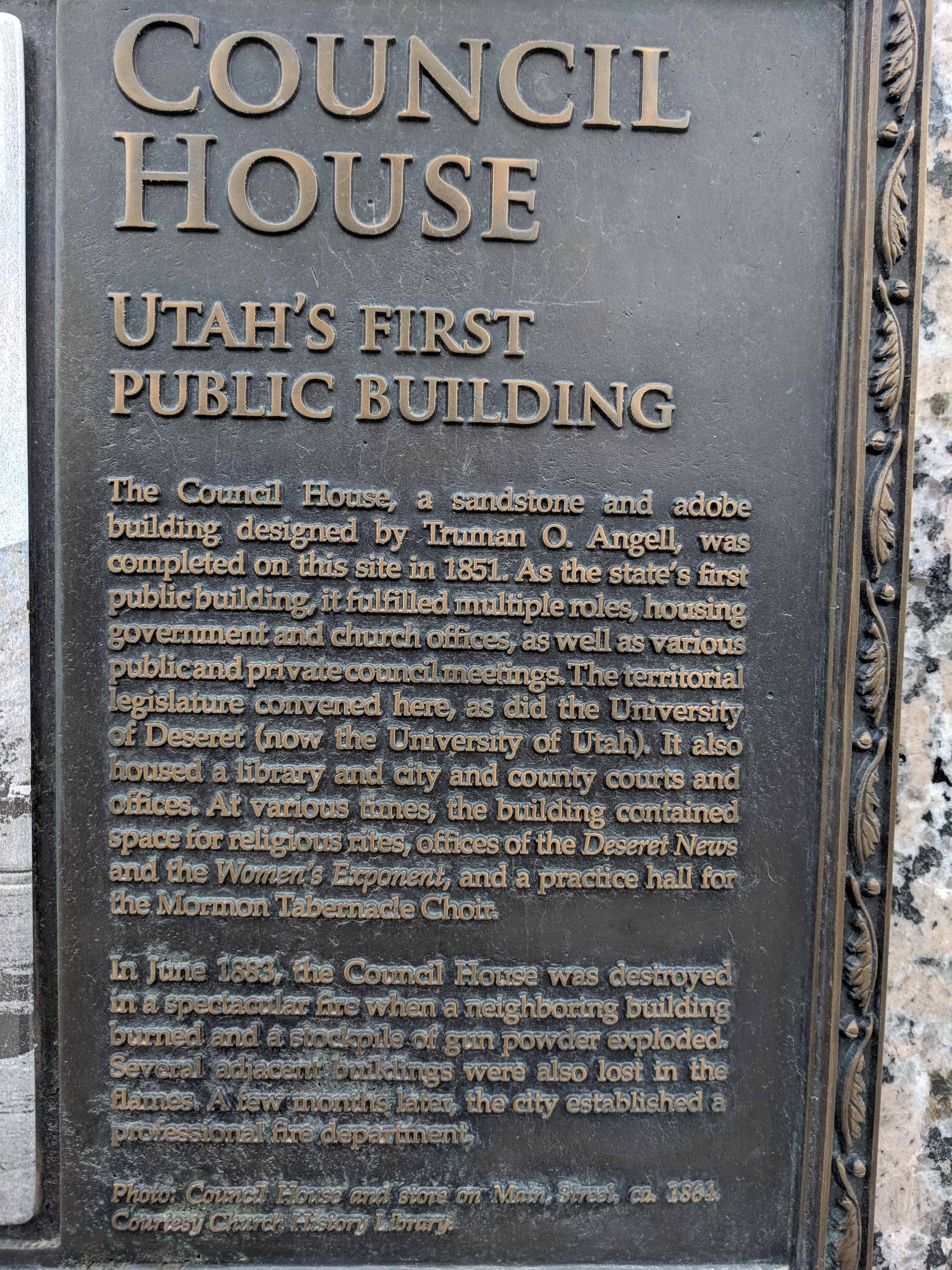
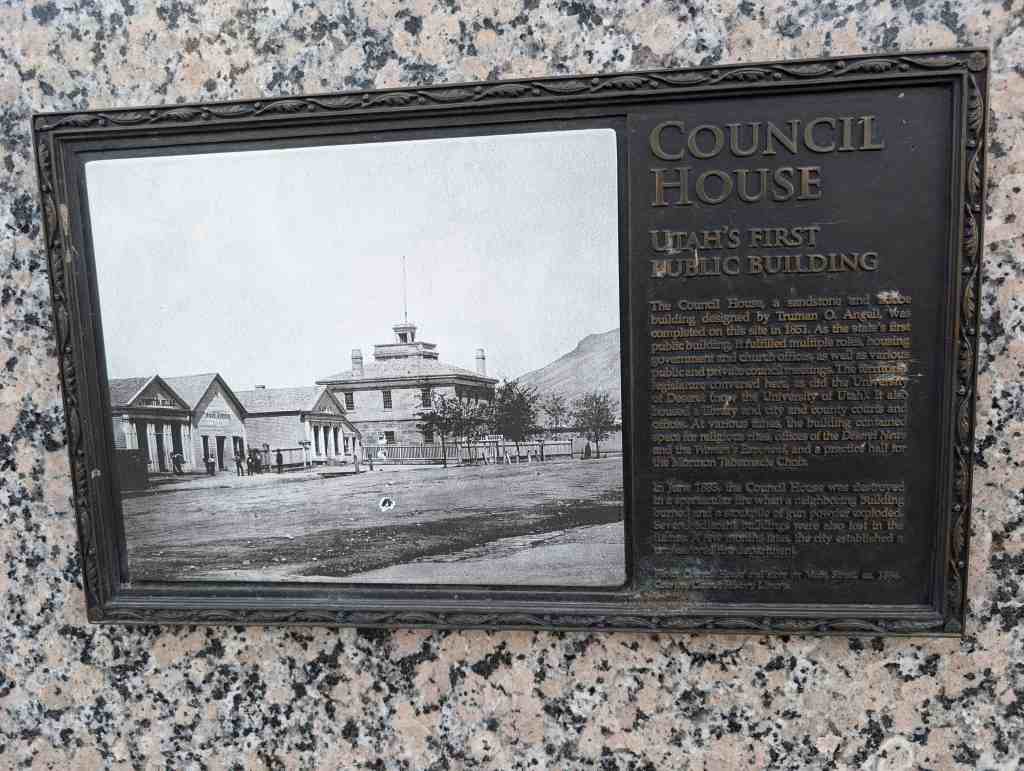
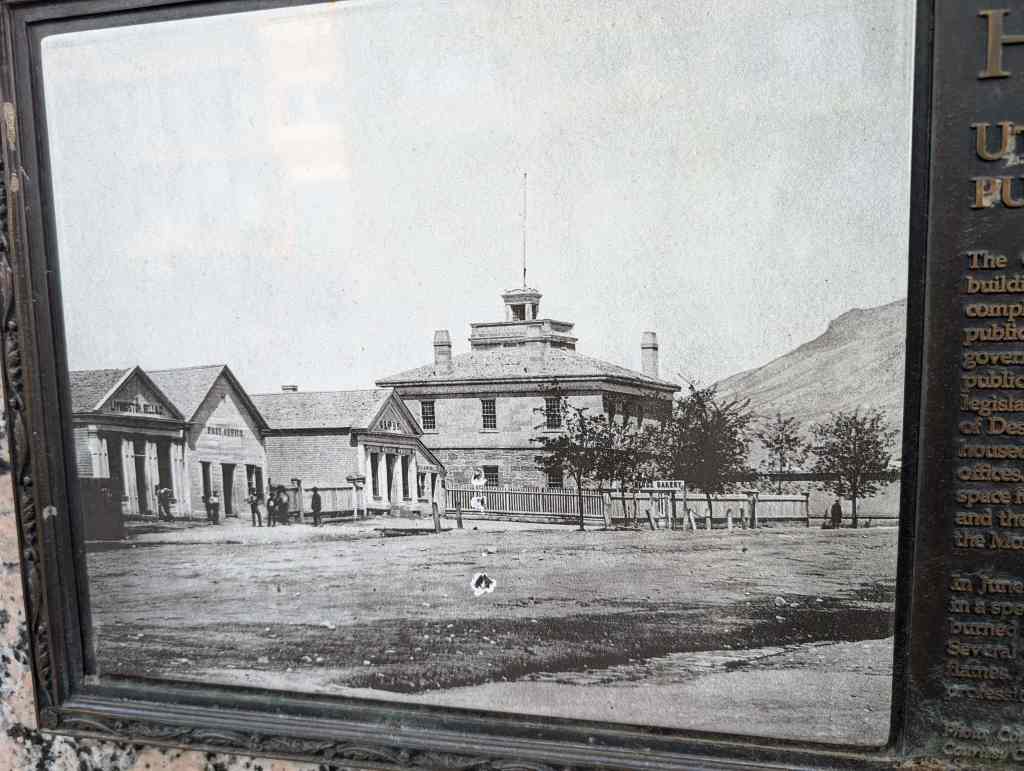
The Council House, a sandstone and adobe building designed by Truman O. Angell, was completed on this site in 1851. As the state’s first public building, it fulfilled multiple roles, housing government and church offices, as well as various public and private council meetings. The territorial legislature convened here, as did the University of Deseret (now the University of Utah). It also housed a library and city and county courts and offices. At various times, the building contained space for religious rites, offices of the Deseret News and the Women’s Exponent, and a practice hall for the Mormon Tabernacle Choir.
In June 1883, the Council House was destroyed in a spectacular fire when a neighboring building burned and a stockpile of fun powder exploded. Several adjacent buildings were also lost of the flames. A few months later, the city established a professional fire department.
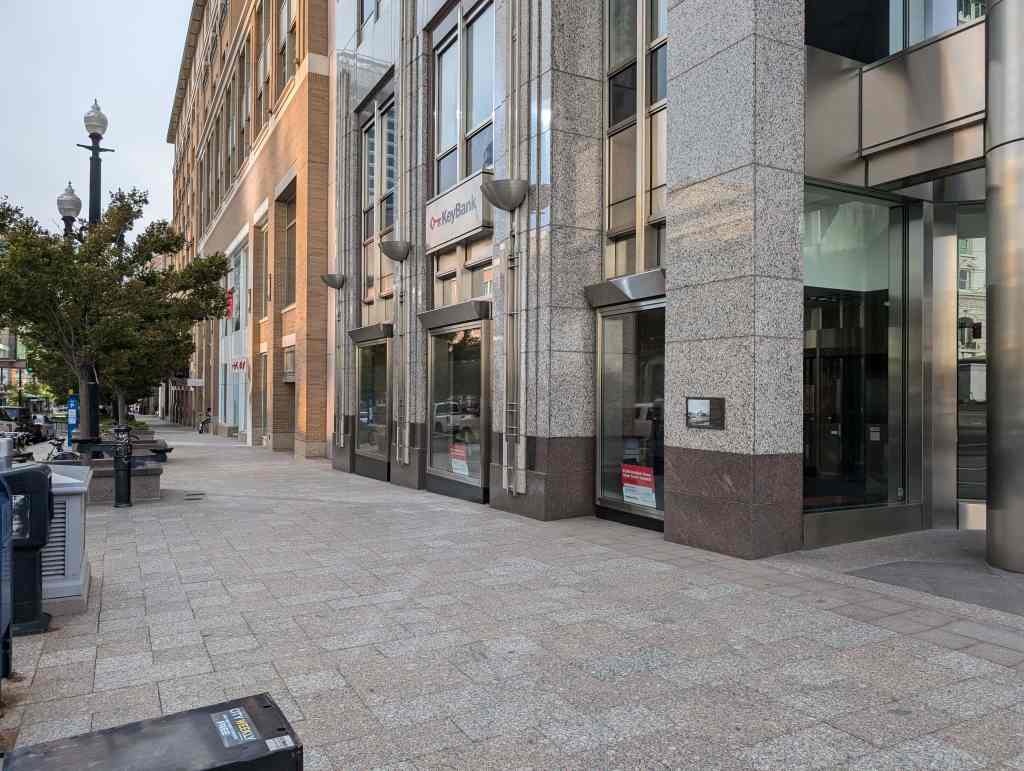
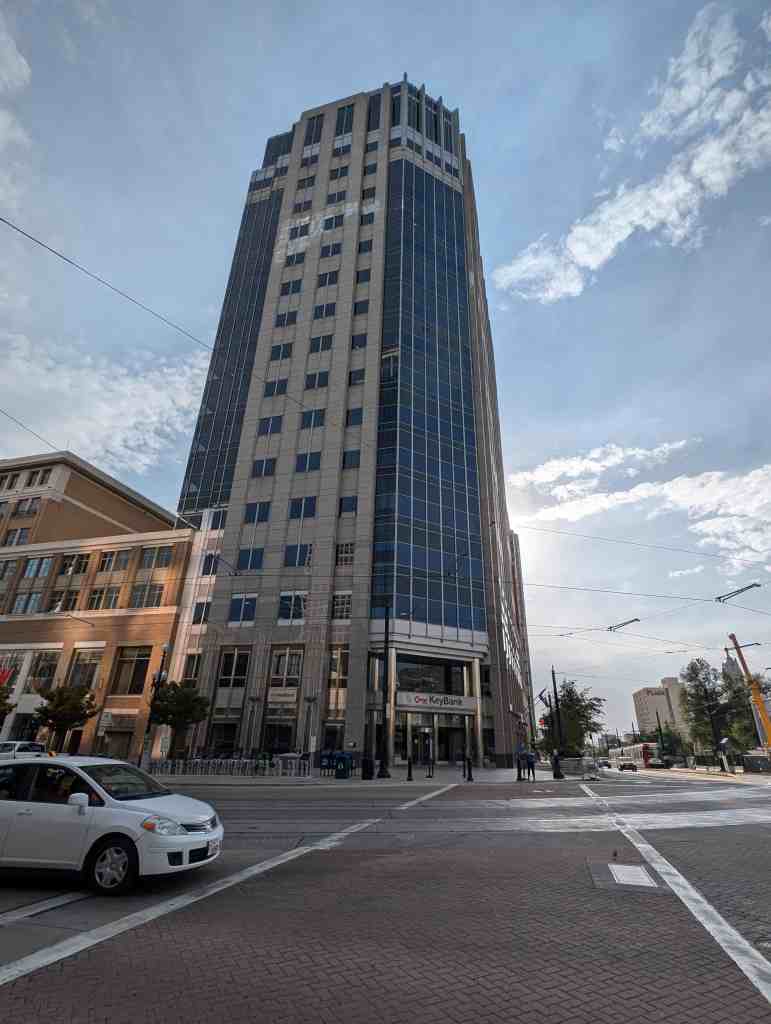
Key Bank is now located at this location. (15 West South Temple in Salt Lake City, Utah )
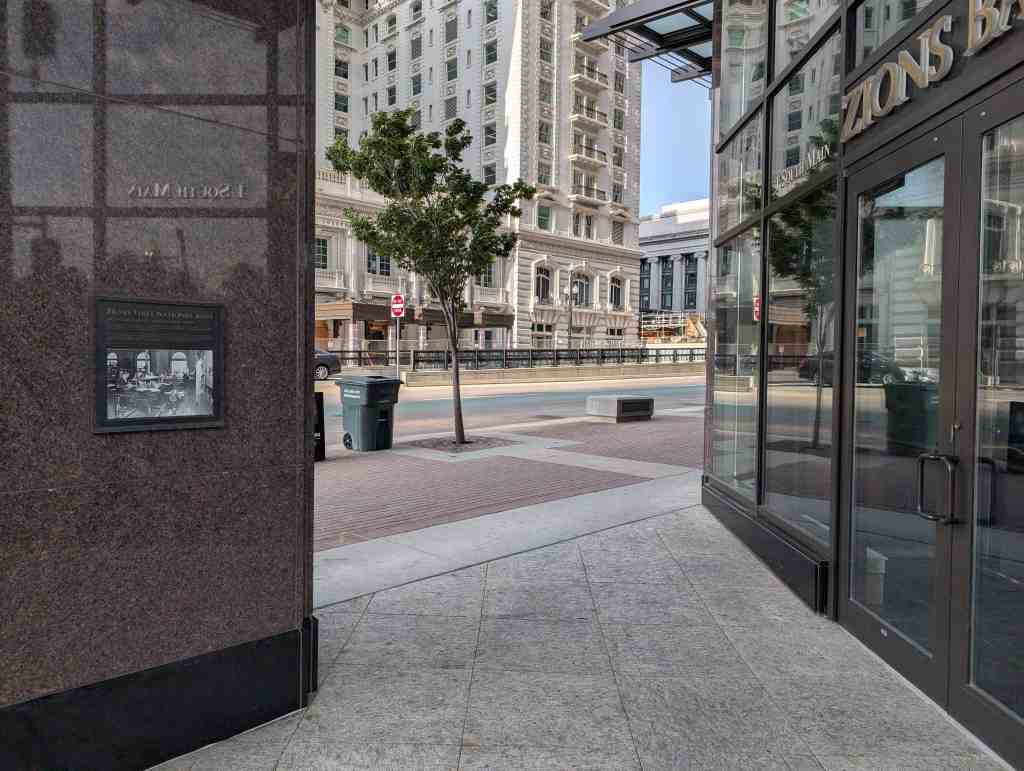
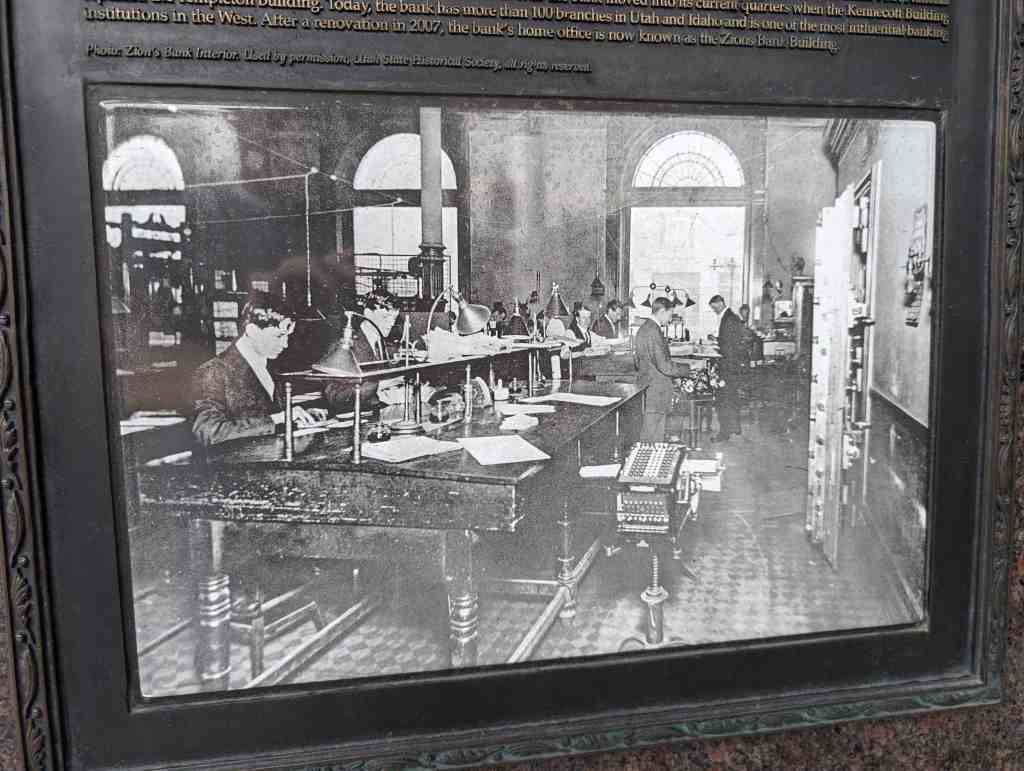
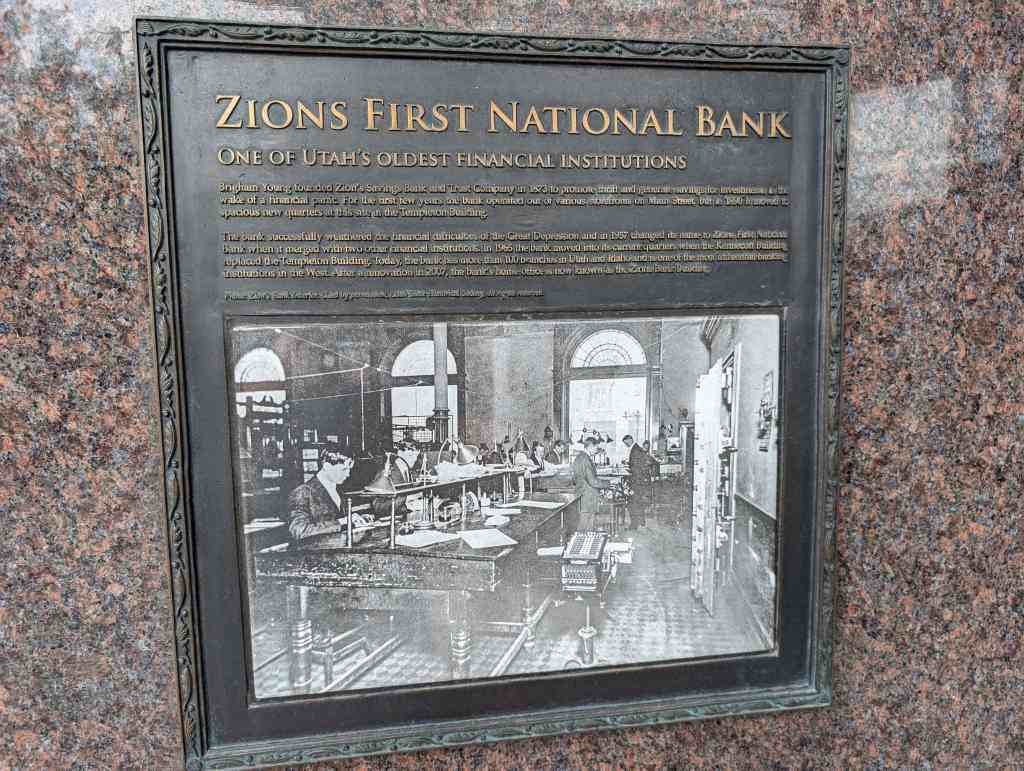
Zions First Nation Bank One of Utah’s Oldest Financial Institutions
Brigham Young founded Zion’s Savings Bank and Trust Company in 1873 to promote thrift and generate savings for investments in the wake of financial panic. For the first few years the bank operated out of various storefronts on Main Street, but in 1890 it moved to spacious new quarters at this site in the Templeton Building.
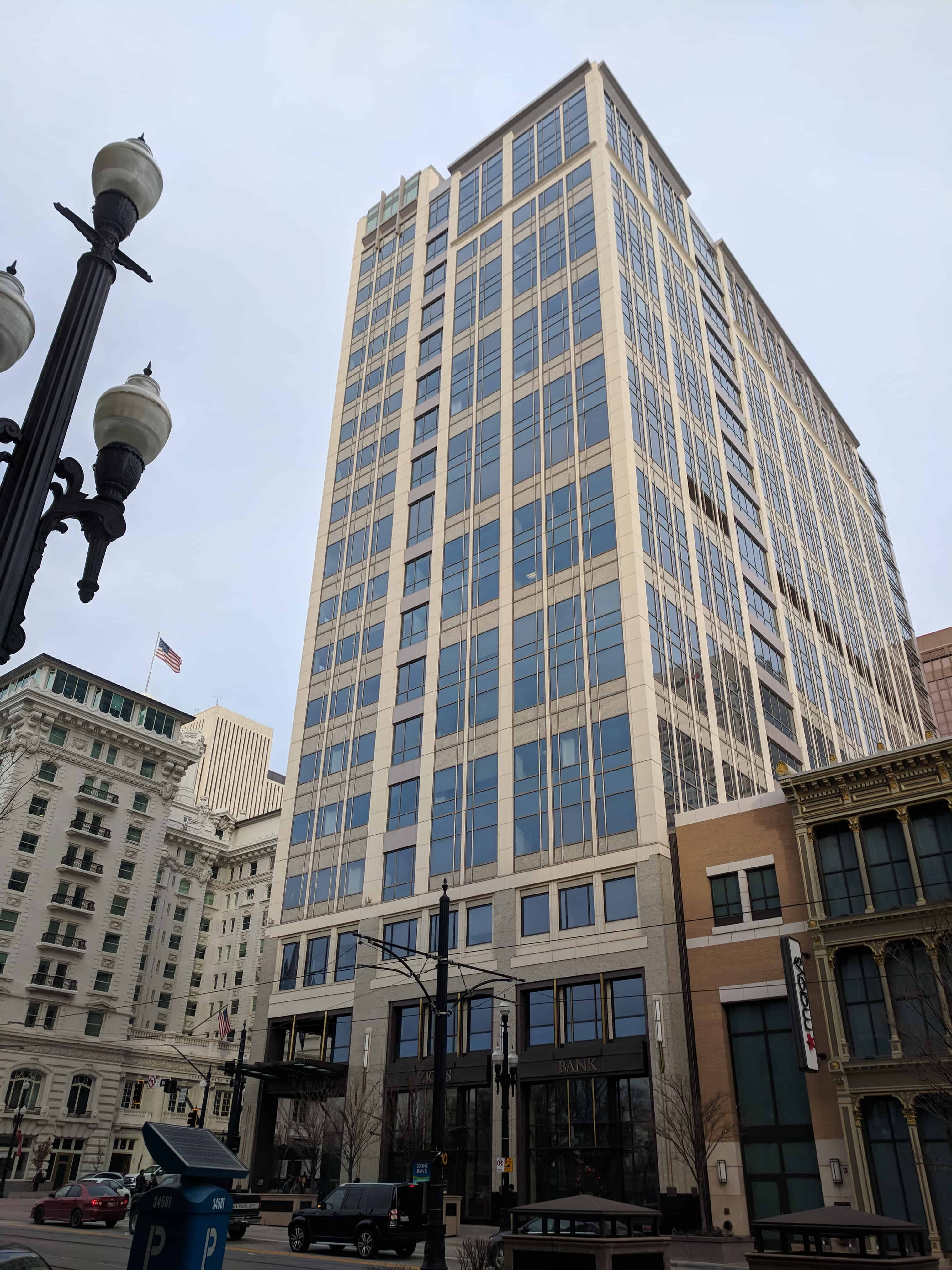
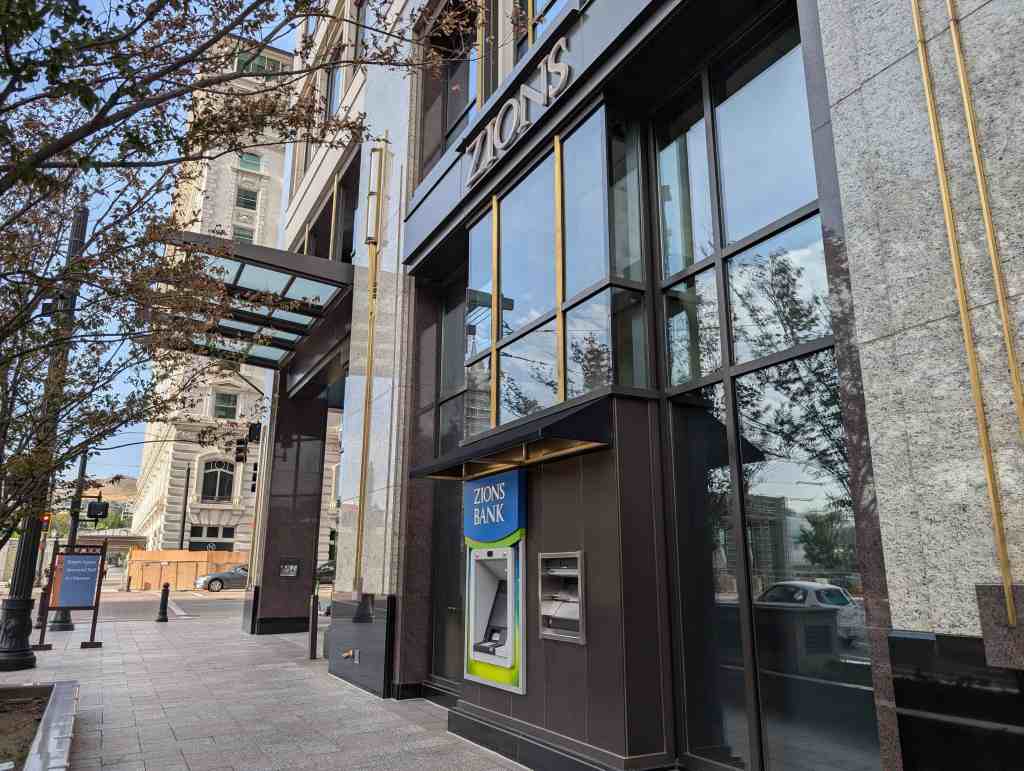
The bank successfully weathered the financial difficulties of the Great Depression and in 1957 changed its name to Zions First National Bank when it merged with two other financial institutions. In 1965 the bank moved into its current quarters when the Kennecott Building replaced the Templeton Building. Today, the bank has more than 100 branches in Utah and Idaho and is one of the most influential banking institutions in the West. After a renovation in 2007, the bank’s home office is now known as the Zions Bank Building.
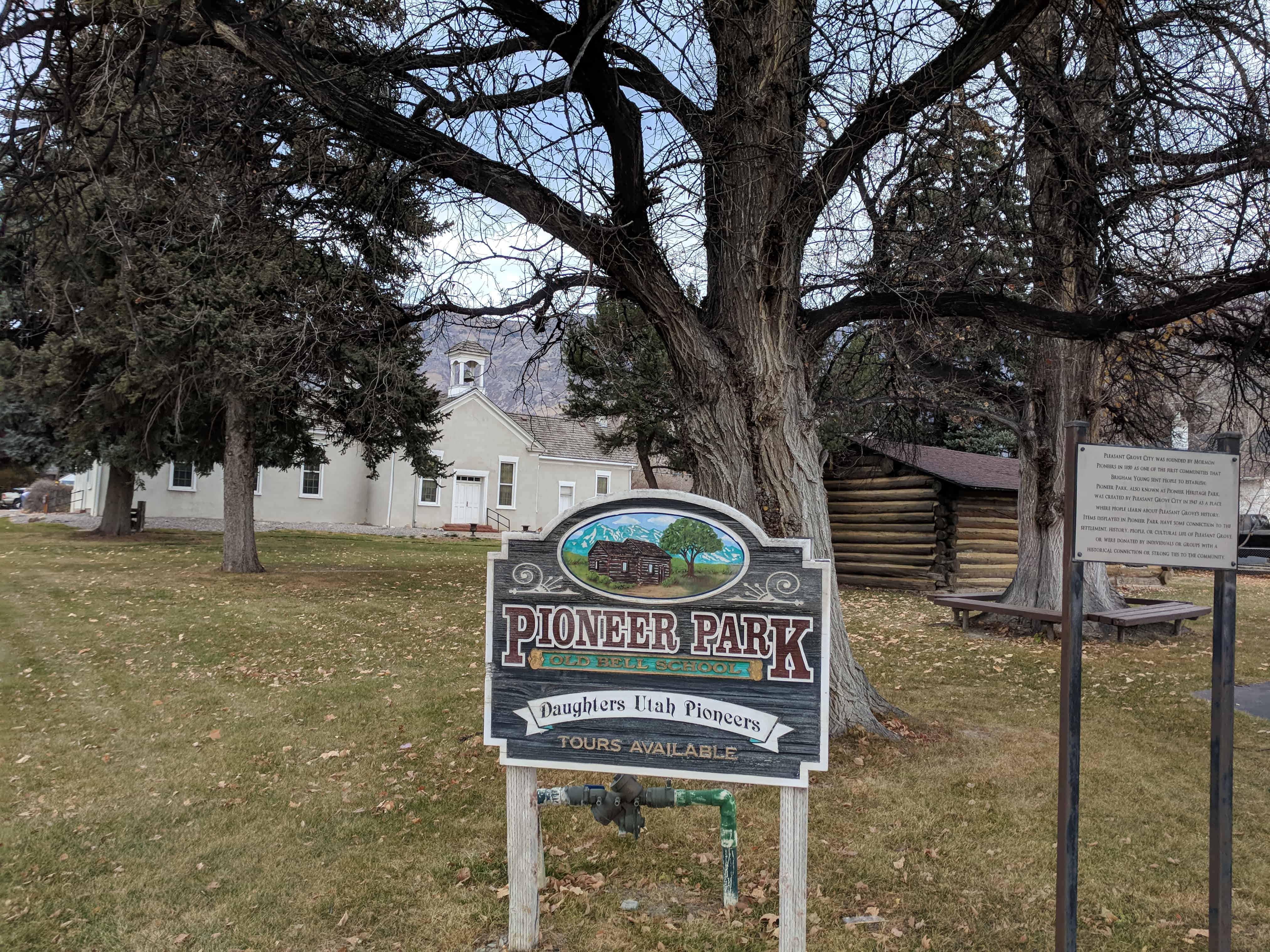
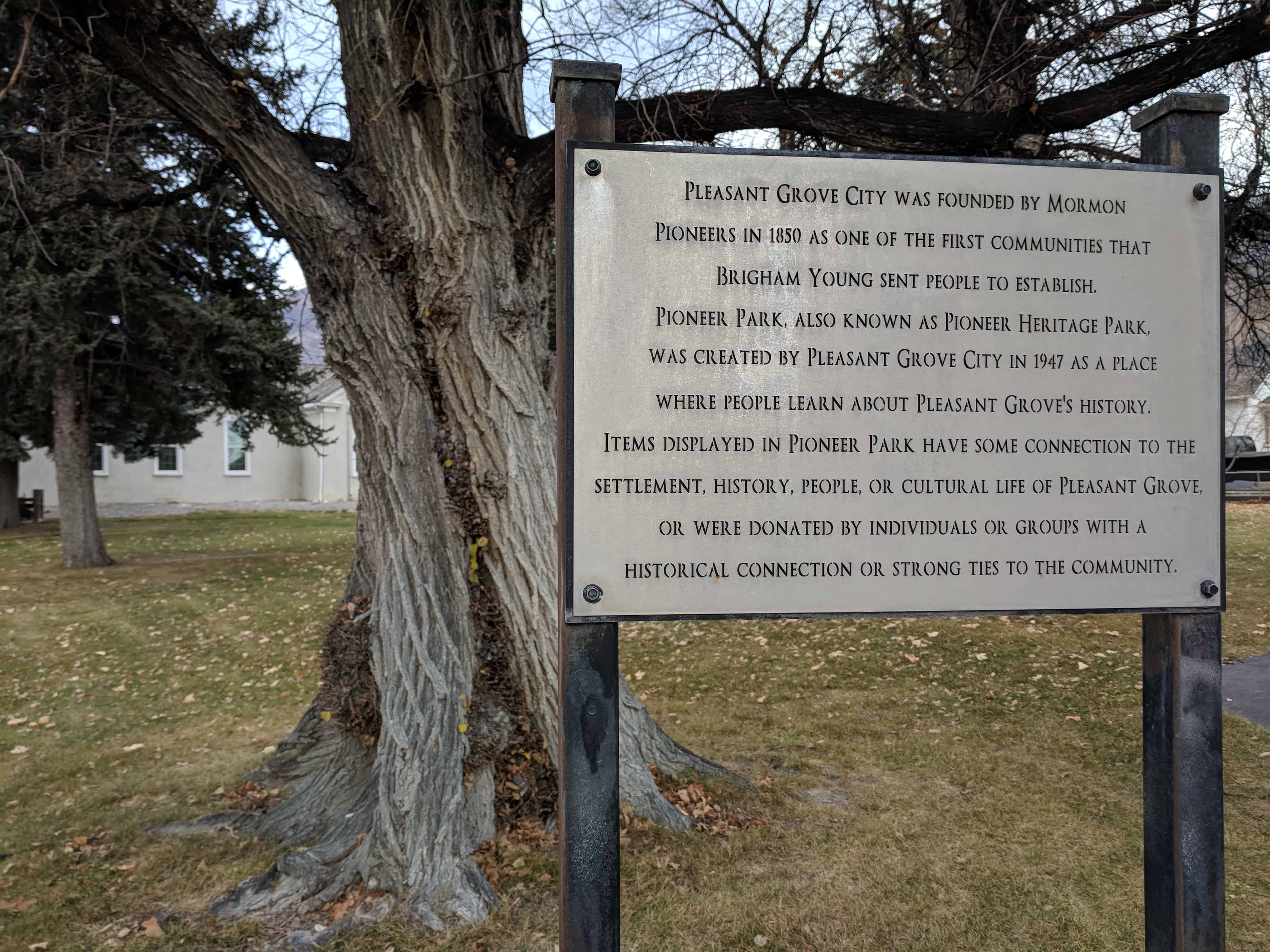
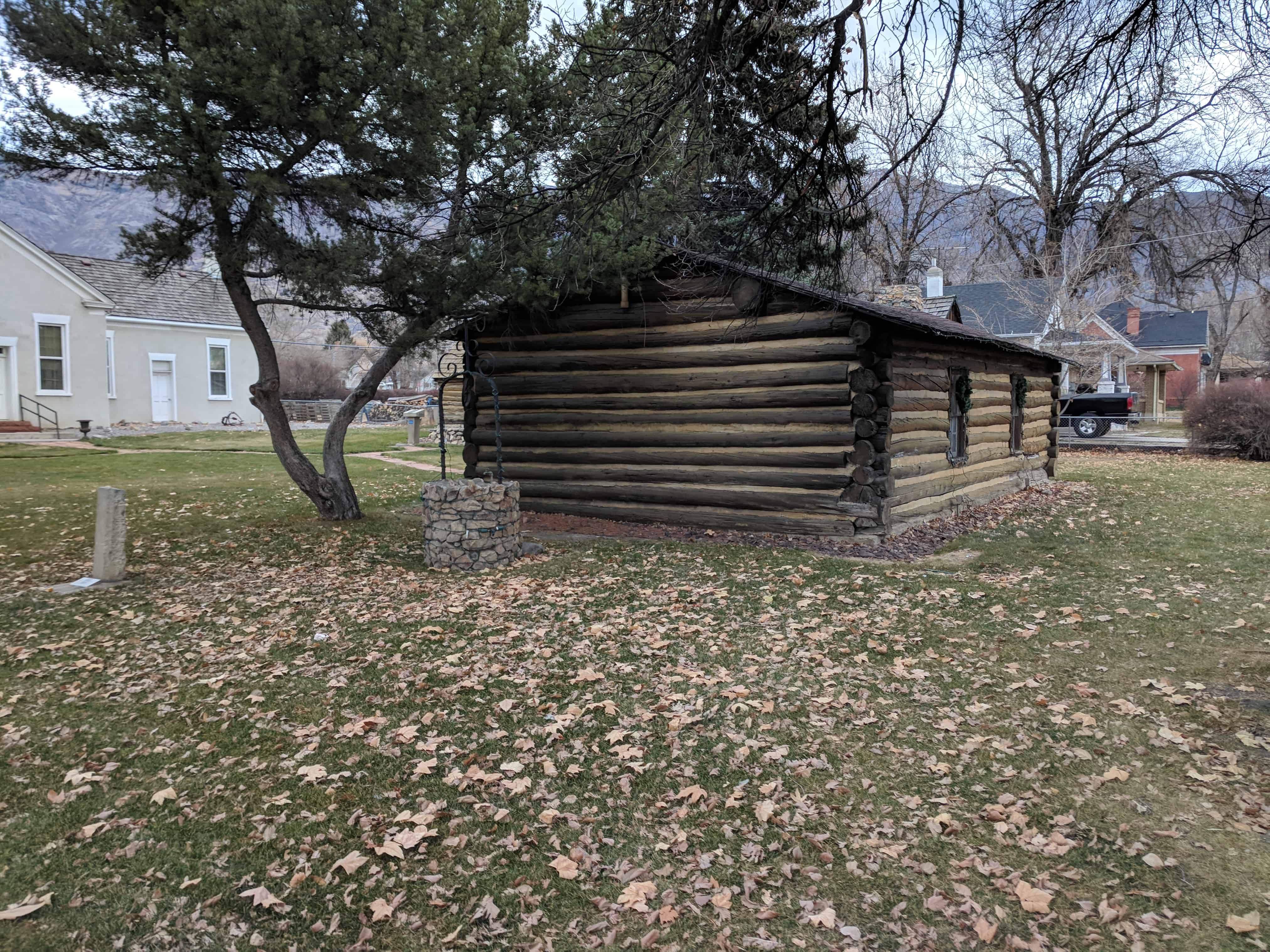
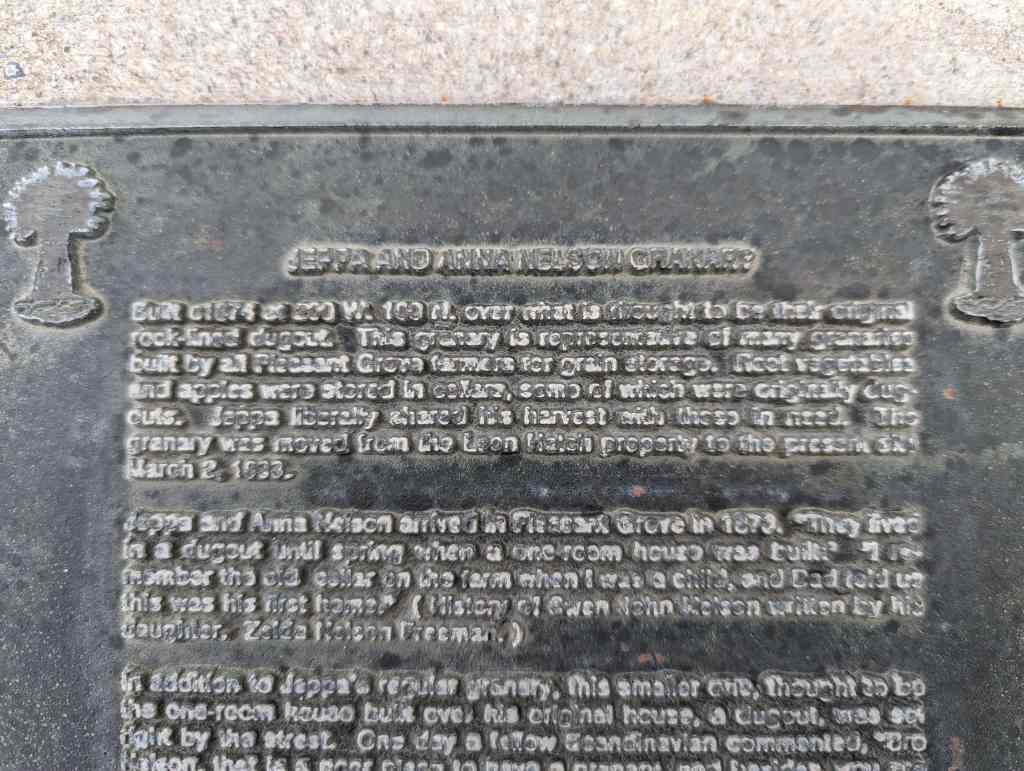
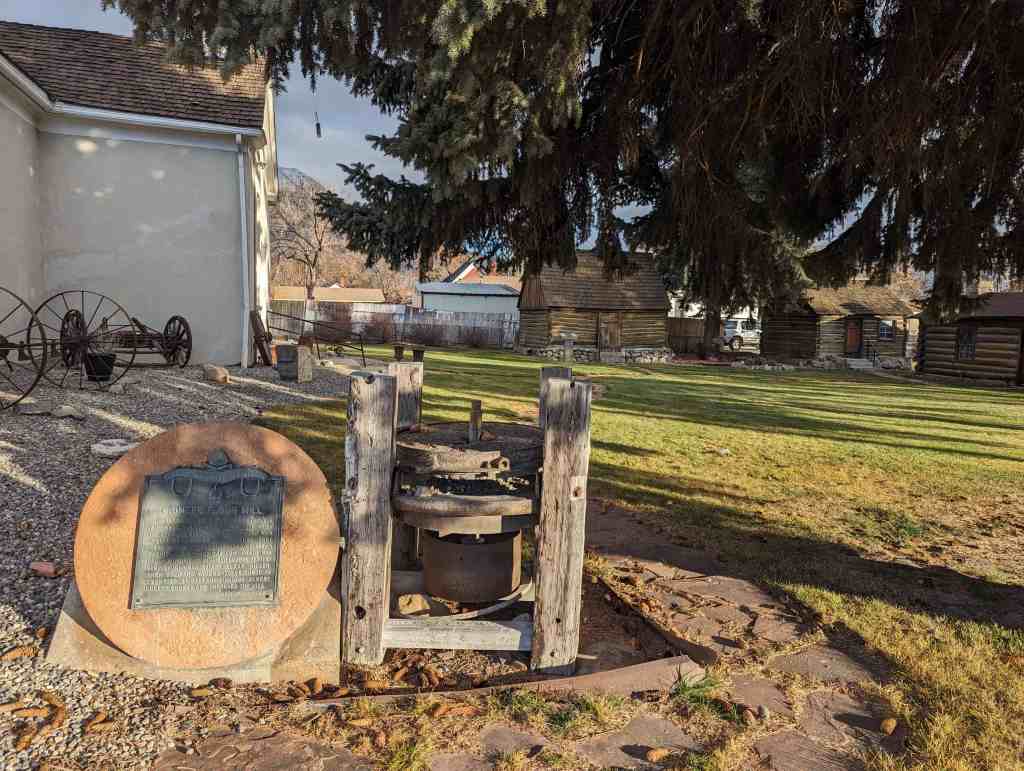
Pleasant Grove City was founded by Mormon Pioneers in 1850 as one of the first communities that Brigham Young sent people to establish. Pioneer Park, also known as Pioneer Heritage Park, was created by Pleasant Grove City in 1947 as a place where people learn about Pleasant Grove’s history. Items displayed in Pioneer Park have some connection to the settlement, history, people or cultural life of Pleasant Grove, or were donated by individuals or groups with a historical connection or strong ties to the community.
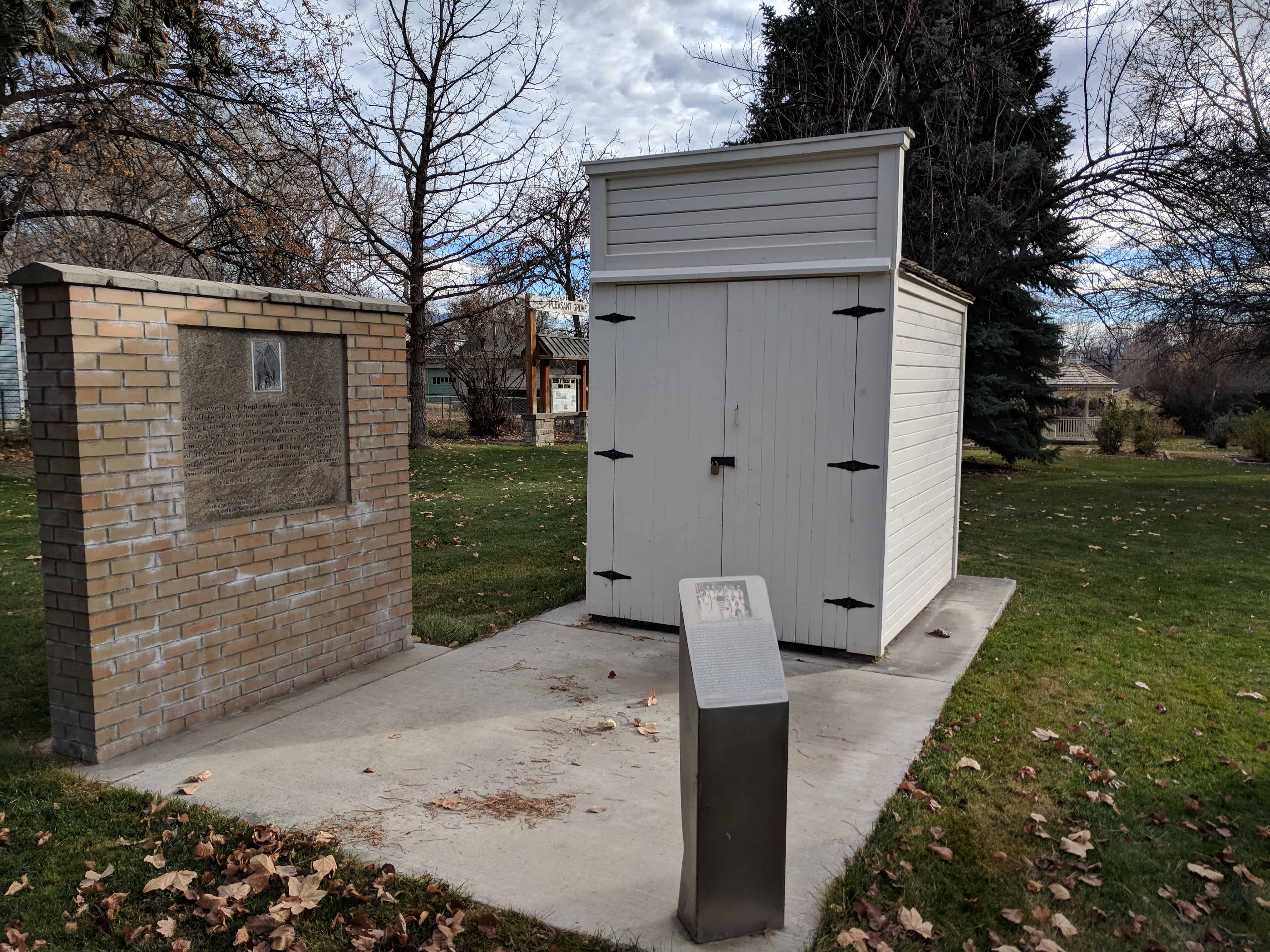
Pleasant Grove’s Fire Department was first organized in 1906. A hand drawn hose cart with 300 feet of hose, and one nozzle was purchased from ZCMI for the price of $210.75. After unsuccessfully recruiting citizens to man the hose cart, the city council appointed Josiah “Si” Kemp on February 21, 1910 to oversee the Fire Department with Hans Williamson, Assistant Fire Chief, and Henry Jeppson, Chris Williamson, Anton Hecker, Clarence Christiansen and Ole Christiansen as charter firemen. In 1910, three chemical fire extinguishers, and an up-to-date nozzle were purchased and the original hose cart was reconstructed to carry these new items. In 1912 Chief Kemp recommended to the City Fathers that the hose cart be moved from a warehouse to a more convenient location. The City Council approved construction of the fire station in 1912, and directed that it be built near the city hall. Two years later the city purchased the Old Bell School from the Pleasant Grove School District. The south door of the building was enlarged so fire fighting apparatus could be stored in the old school. The school bell was rung to summon firemen. On October 19, 1914 the City declared the building surplus and sold it to Chris and Delilah Fugal. The Fugals moved this little fire station to their property and used it as a storage shed for the next 85 years. Mary Fugal Howes, daughter of Chris and Delilah Fugal, donated the little fire station to the Pleasant Grove Fire Department, and in 1999, members of the Pleasant Grove Fire Department transported it to their facility for restoration. Fireman Lyman Smith spent many hours restoring the original wood to exact historic specifications. After restoration, this little fire station was placed in Pioneer Park near it’s original site.
This marker was made possible by the Pleasant Grove Volunteer Fire Department and the Pleasant Grove Historic Preservation Commission.
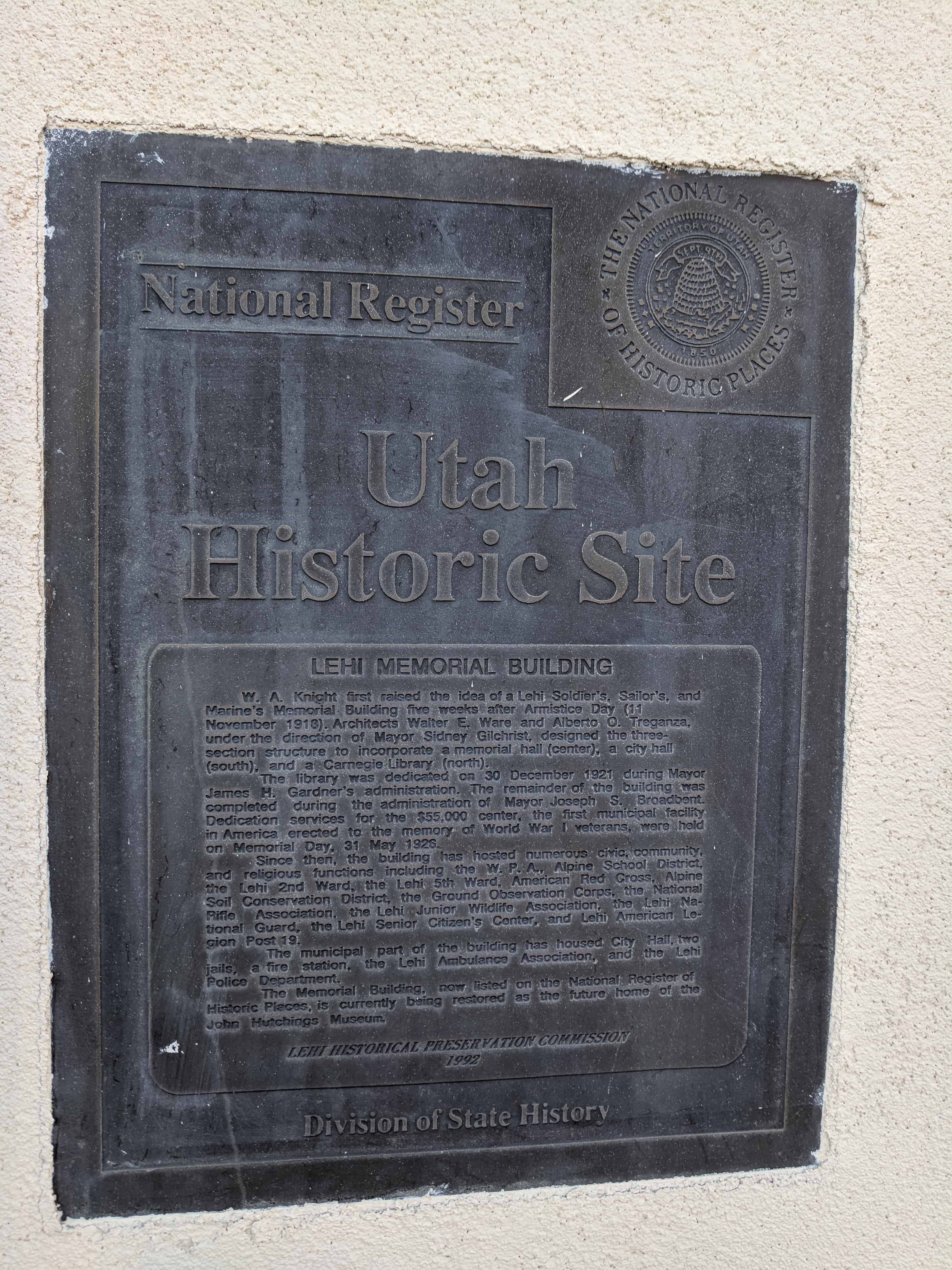
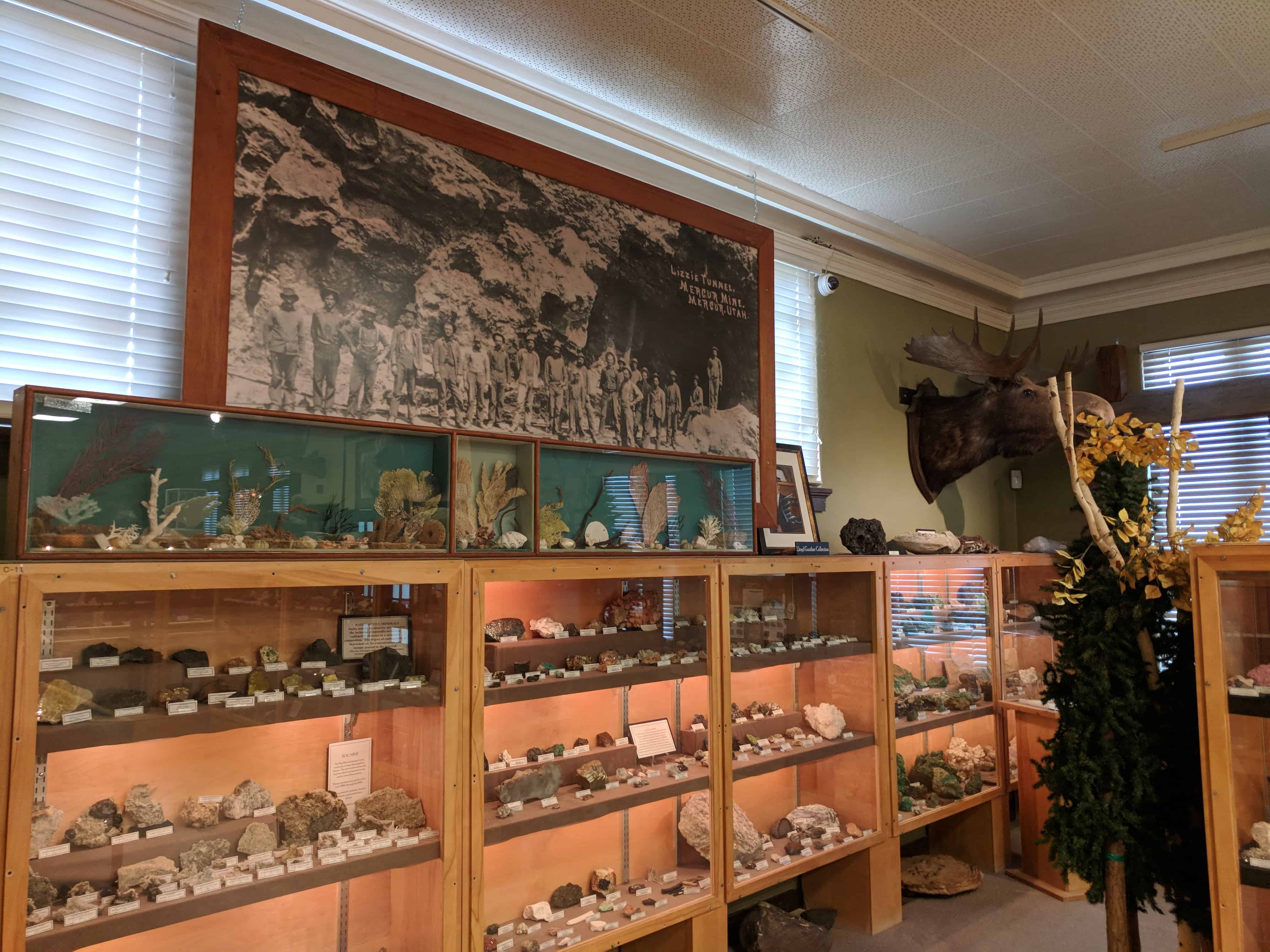
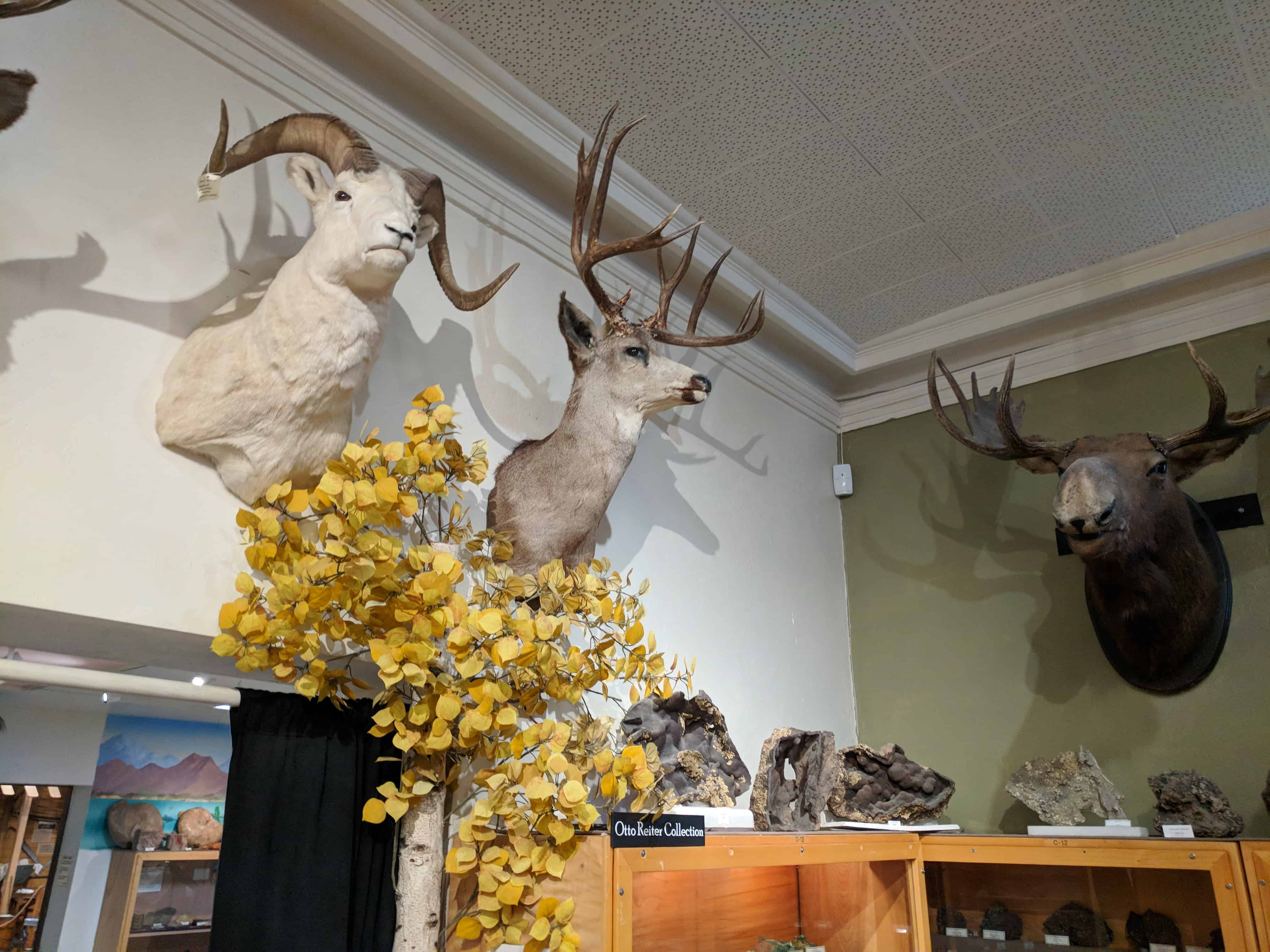
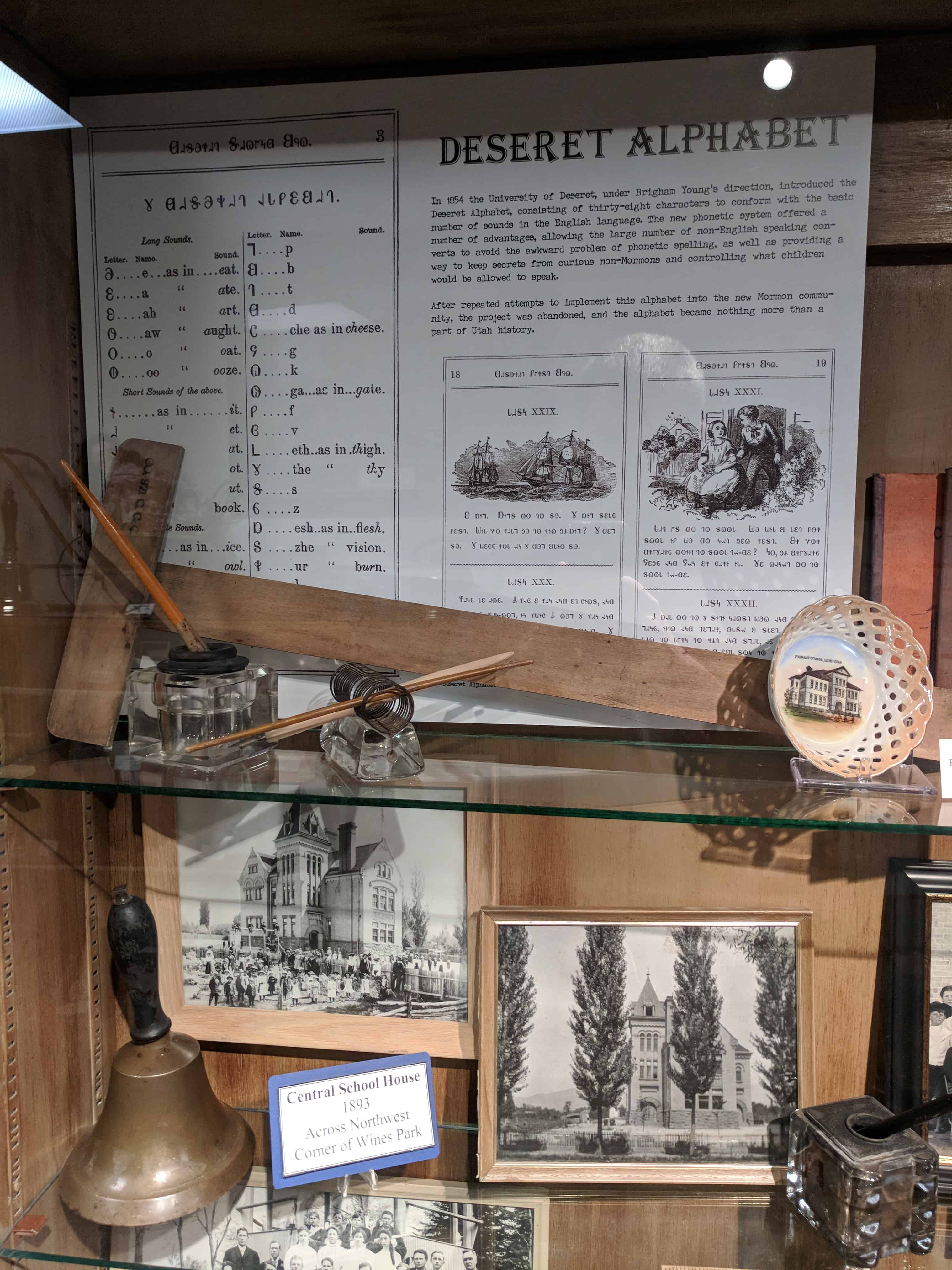
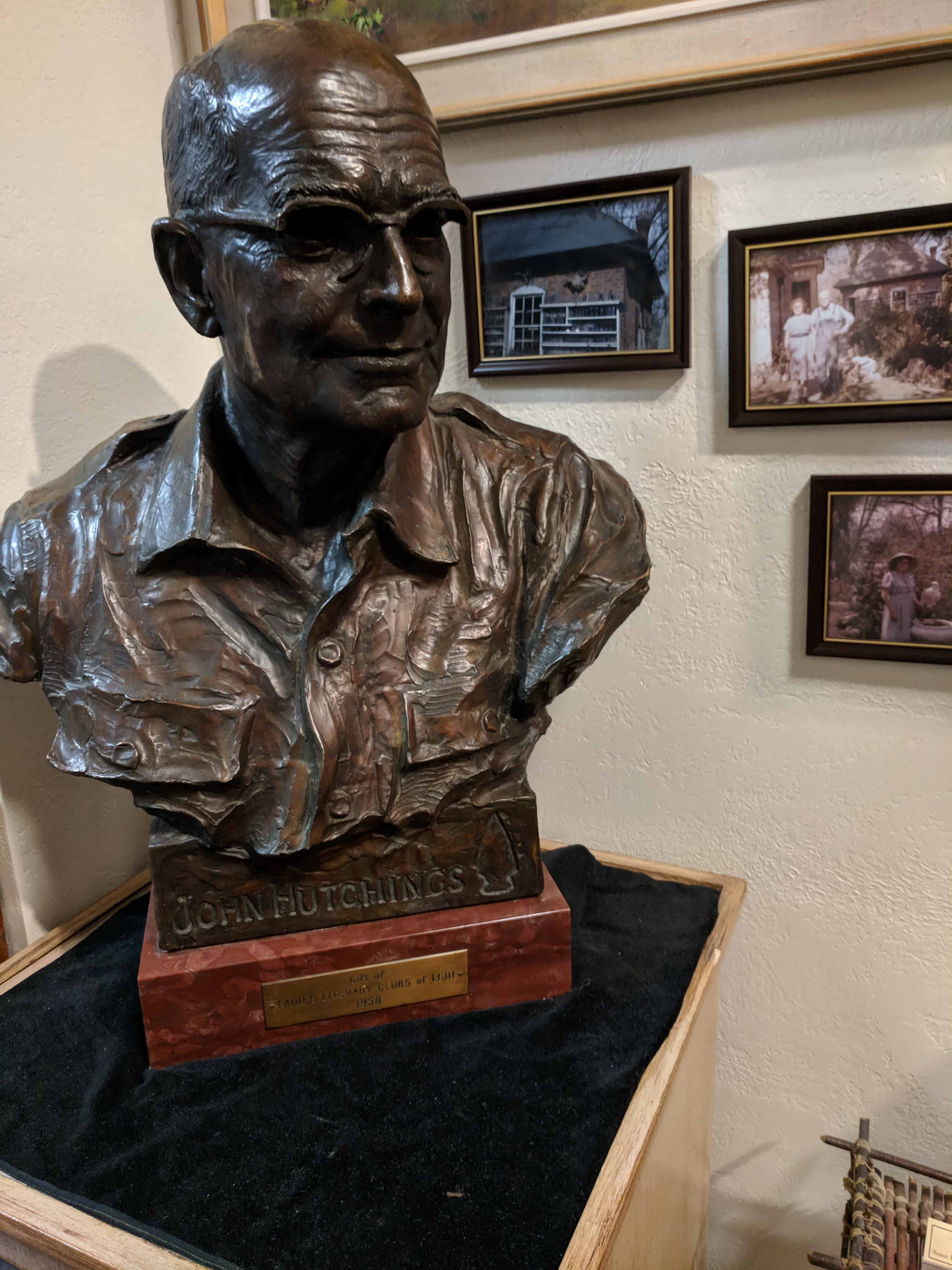
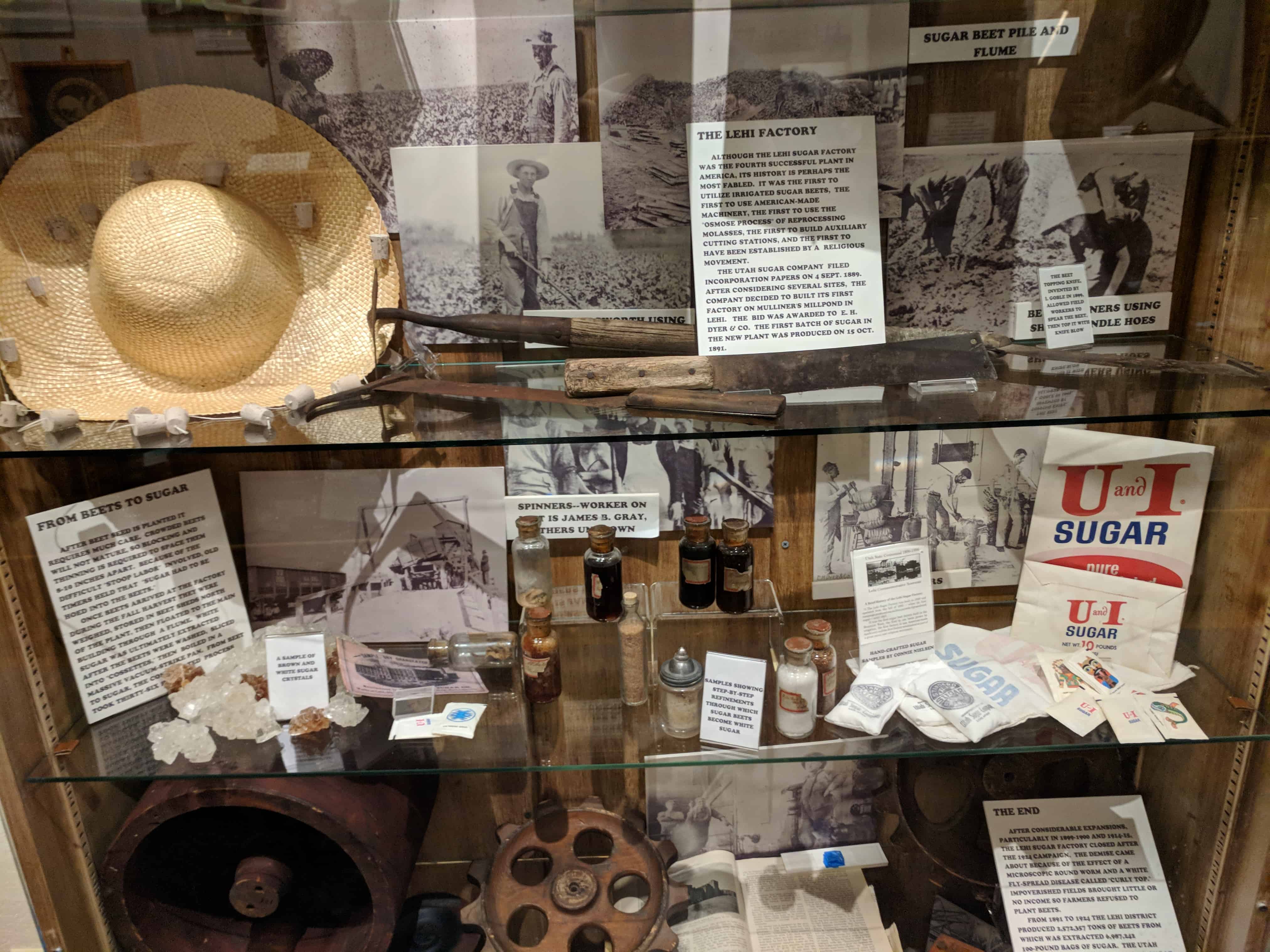
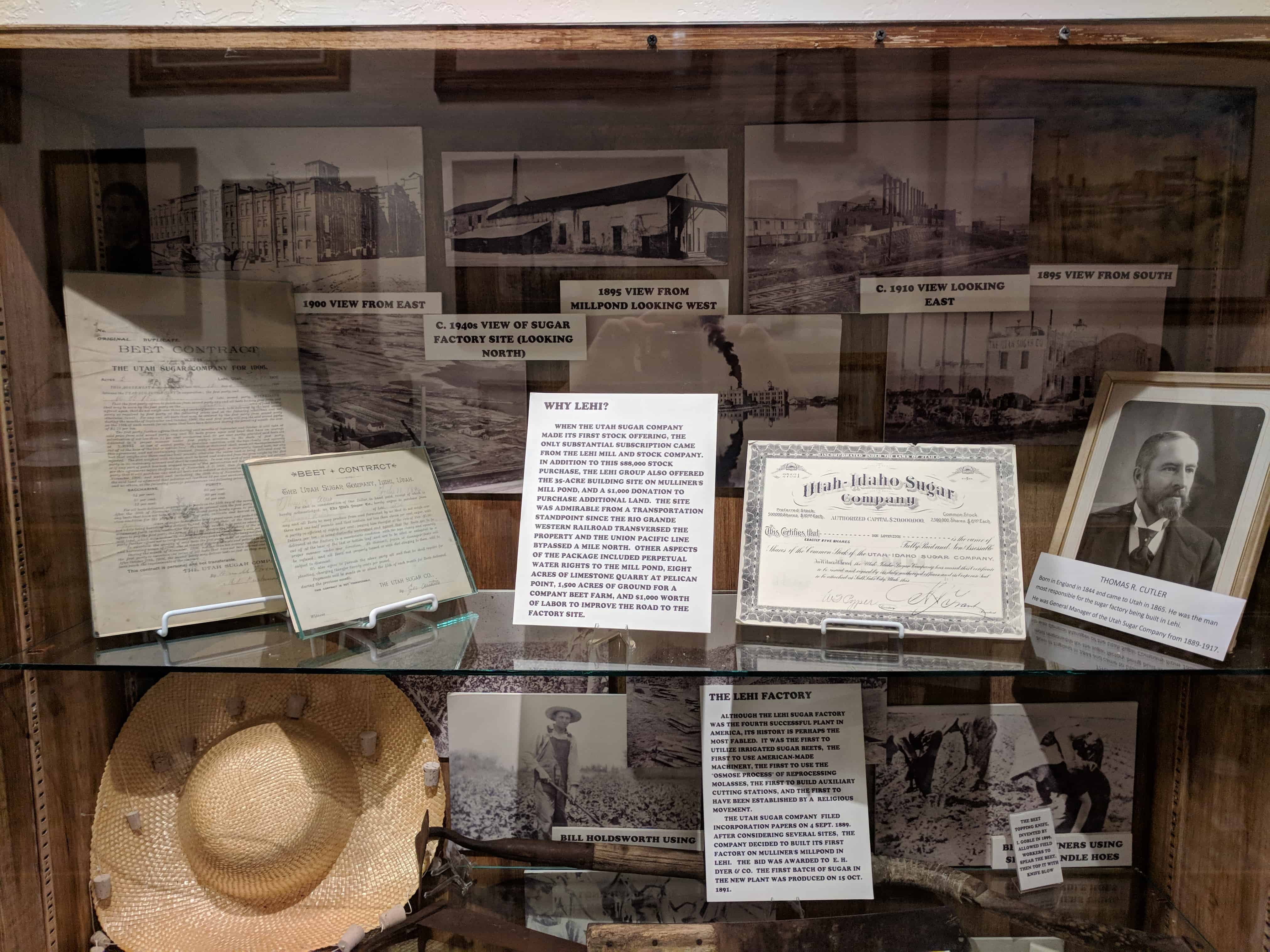
The Lehi Memorial Building / Hutchings Museum outside the Lehi Legacy Center.
The Utah Historic Site plaque says:
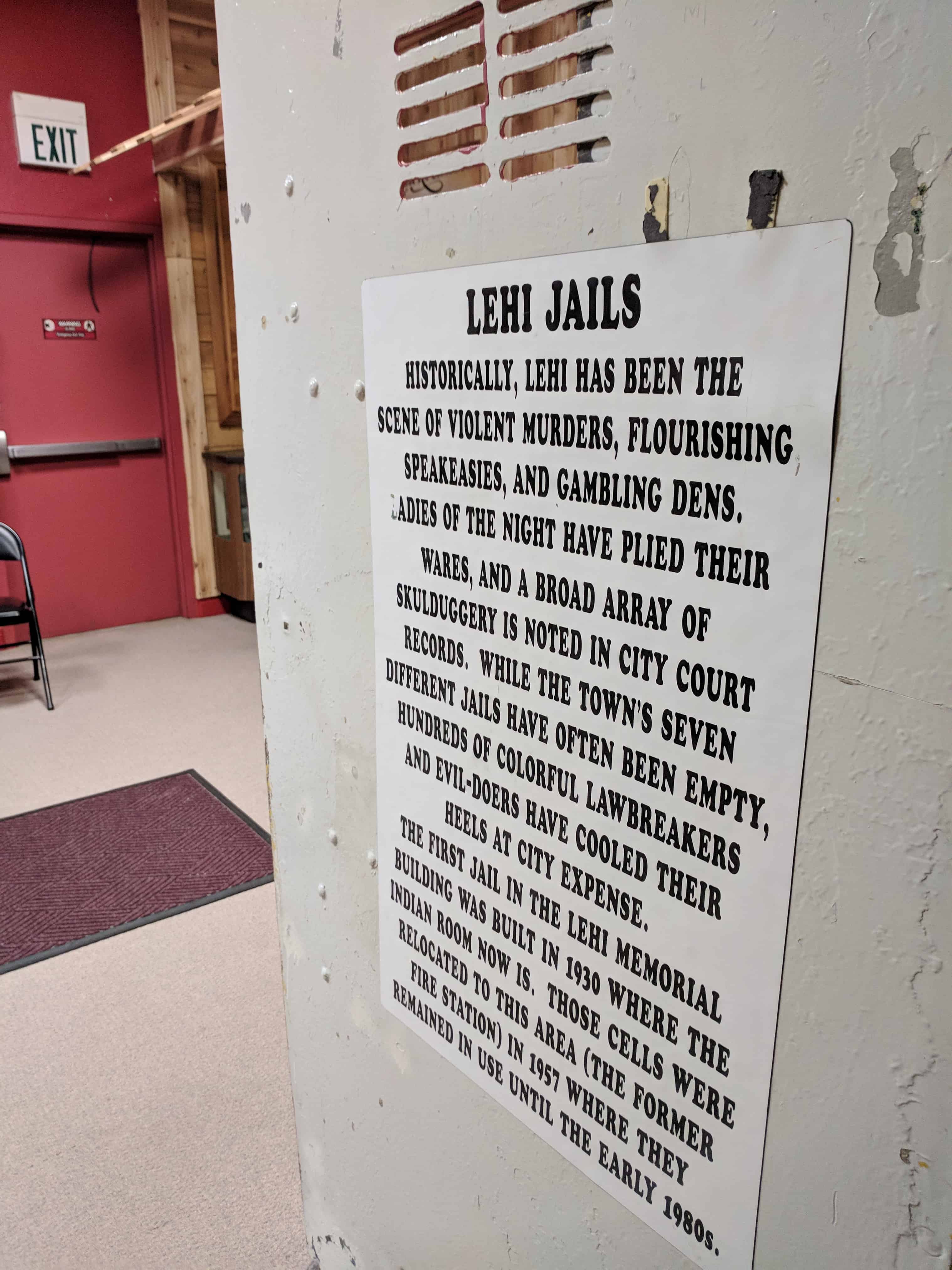
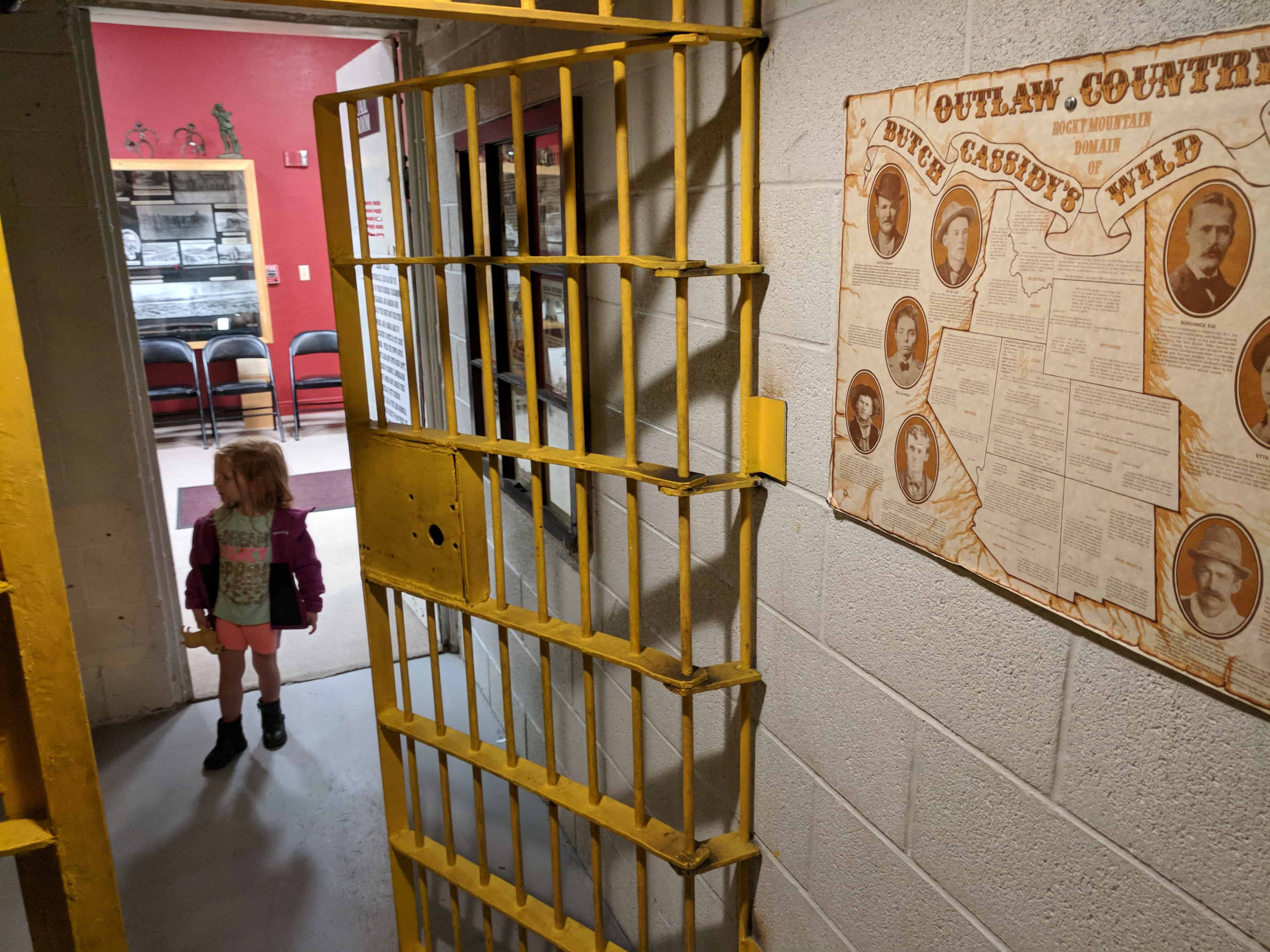
W.A. Knight first raised the idea of a Lehi Soldier’s, Sailor’s and Marine’s Memorial Building five weeks after Armistice Day (11 November 1918). Architects Walter E. Ware and Alberto O. Treganza, under the direction of Mayor Sydney Gilchrist, designed the three section structure to incorporate a memorial hall (center), a City Hall (south) and a Carnage Library (north). The Library was dedicated on 30 December 1921 during Mayor James H. Gardner’s administration. The remainder of the building was completed during the administration of Mayor Joseph S. Broadbend. Dedication services for the $55,000 center, the first municipal facility in America erected to the memory of World War I Veterans, were held on Memorial Day, 31 May 1926. Since then the building has hosted numerous civic, community and religious functions including the W.P.A., Alpine School District, the Lehi Second Ward, the Lehi Fifth Ward, American Red Cross, Alpine Soil Conservation District, the Ground Observation Corps, the National Rifle Association, the Lehi Junior Wildlife Association, the Lehi National Guard, the Lehi Senior Citizens Center, and Lehi American Legion Post 19. The municipal part of the building has housed City Hall, two jails, a fire station, the Lehi Ambulance Association, and the Lehi Police Department. The Memorial Building, now listed on the National Register of Historic Places, is currently being restored as the future home of the John Hutchings Museum.