• About JacobBarlow.com
  • Cemeteries in Utah
  • D.U.P. Markers
  • Doors
  • Exploring Utah Email List
  • Geocaching
  • Historic Marker Map
  • Links
  • Movie/TV Show Filming Locations
  • Oldest in Utah
  • Other Travels
  • Photos Then and Now
  • S.U.P. Markers
  • U.P.T.L.A. Markers
  • Utah Cities and Places.
  • Utah Homes for Sale
  • Utah Treasure Hunt

JacobBarlow.com

~ Exploring with Jacob Barlow

JacobBarlow.com

Tag Archives: utah

Dover Cemetery

13 Thursday Feb 2020

Posted by Jacob Barlow in Uncategorized

≈ 1 Comment

Tags

Cemeteries, DUP, Fayette, Historic Markers, Sanpete County, utah

Dover Cemetery

In 1875, John E. Forsgren, assisted by others from Santaquin, attempted to establish a community after “The Order of Enoch” on the west side of Sevier River, but failed in their scheme. Under leadership of William Robinson, in 1877, the area was resettled and called Dover. At its peak there were 50 homes, a store and a community building. River floods ruined crops and swarms of mosquitoes brought diphtheria epidemics. The death rate was very high. By 1900, all the town people had left, leaving only the dead behind. Zina Pickett bought the cemetery land and gave the deed to The Church of Jesus Christ of Latter-day Saints.

D.U.P. Marker # 422

Related Posts:

  • Fayette, Utah
  • Other DUP Markers

Casey’s Cafe Sign

11 Tuesday Feb 2020

Posted by Jacob Barlow in Uncategorized

≈ Leave a comment

Tags

Mt Pleasant, Sanpete County, Signs, utah, Vintage, Vintage Signs

Another vintage neon sign I noticed and liked, check out this page for others.

This is located at the historic Dental Office Building in downtown Mt Pleasant, Utah.

Gunnison Park

10 Monday Feb 2020

Posted by Jacob Barlow in Uncategorized

≈ 2 Comments

Tags

Gunnison, Parks, Sanpete County, utah

The park in Gunnison is located at 300 North Main Street.

Related Posts:

  • Gunnison Historic Marker in the park
  • Gunnison, Utah
  • Gunnison Valley Veterans Memorial

Hill Top, Utah

09 Sunday Feb 2020

Posted by Jacob Barlow in Uncategorized

≈ Leave a comment

Tags

Hill Top, Milburn, Sanpete County, utah

Near the turn off to go to Milburn from Highway 89 in Sanpete County is Hill Top, Utah.

The George Hotel

09 Sunday Feb 2020

Posted by Jacob Barlow in Uncategorized

≈ Leave a comment

Tags

Hotels, Kanosh, Millard County, NRHP, utah

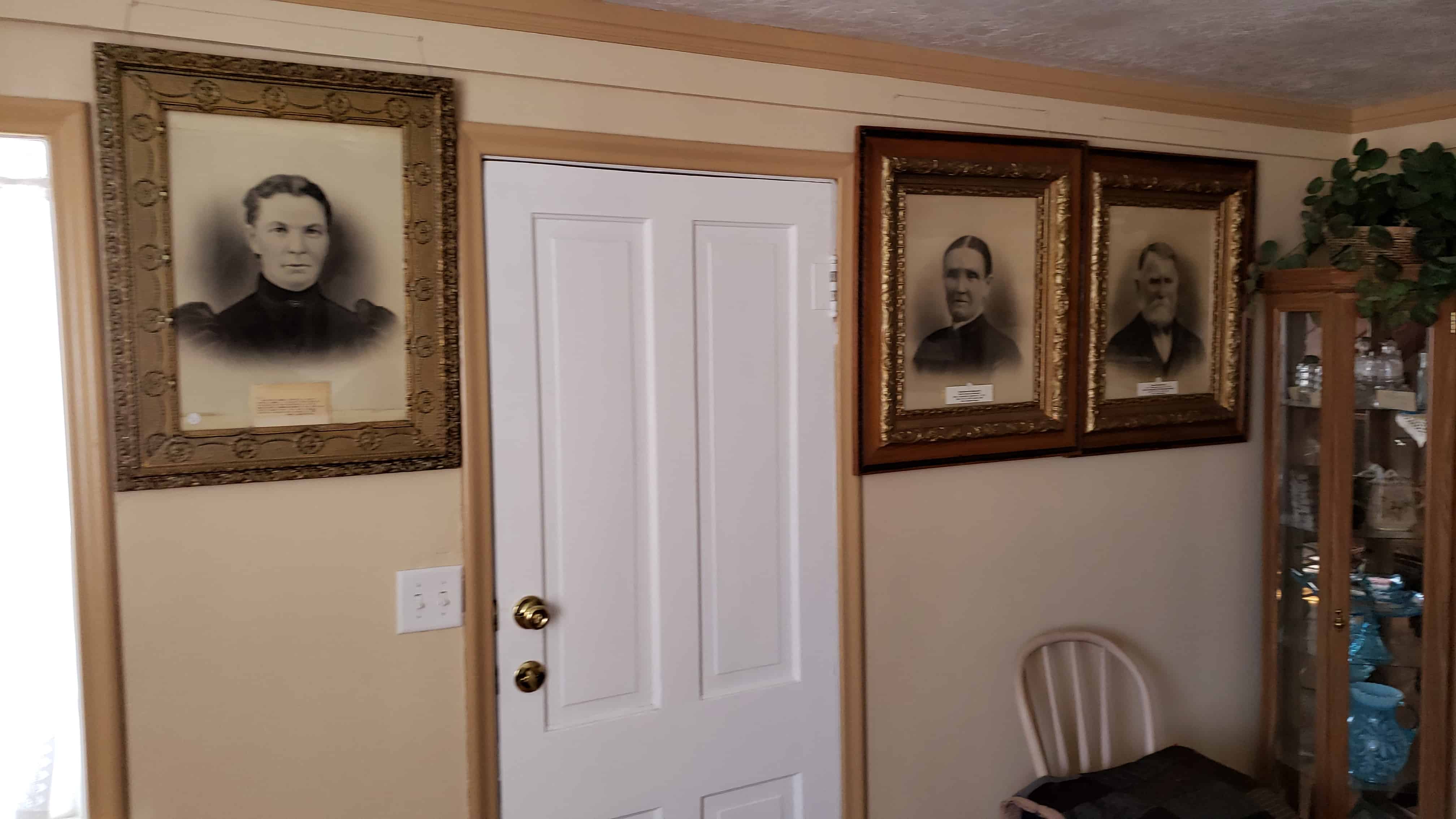
The George Hotel in Kanosh was built in 1887 by James Garnder and William George.

Related Posts:

  • Kanosh, Utah

According to the property’s title history, Mary Jane George formally received the property in 1901 from James Gardner, although the George family had occupied the building in c. 1887 and had turned part of the dwelling into a hotel c. 1900. The upstairs of the building was left unfinished until it became a hotel at that time; the open second-story of the home was used until then as a dance floor and a space for LDS church activities until the church meetinghouse across the street was constructed. 6 Indeed, oftentimes during the late-1800s, local residences were used for church activities and other social functions in small communities in Utah prior to meetinghouses being constructed.

The property has been passed through the hands of several George family members since the original deed in 1901. Mary Jane George was listed as a hotelkeeper in the 1900 Kanosh census and husband William George was listed as the hotelkeeper in the 1900 Utah State Gazetteer; this was the first year that the George Hotel was listed. During the hotel’s operation (c. 1900 to c. 1920), being one of the very few hotels in the area, it was used largely by stagecoach passengers, tourists, hunters, businessmen, and others traveling to and from the Salt Lake City area.

The George family was part of the migration from Petersburg in 1875. They had resided in Petersburg since the 1860s, where they ran a hotel and dining establishment out of their house (setting precedence for the George Hotel in Kanosh). William George, shortly after arriving in Kanosh, became involved with the Kanosh Naduald Cooperative, operated by Albert Naduald. In 1884, William George purchased the co-op from the Naduald’s and other town members.

In 1911, shortly after the passing of her husband William George (William and Mary were married in 1868), Mary Jane George deeded the land to half-brother George A. George; where George, wife Mariah, and their eleven children resided in the building and ran the hotel. George worked as a stockman, farmer and financier; he was also one of the first directors of the State Bank of Millard County. George and Mariah’s daughter, Elizabeth George, was listed in the 1920 census as a hotelkeeper, the last year that the George Hotel was listed in the gazetteer. After 1920, the building was used solely as a residence for the large George family. In 1935, George A. George, deeded the land to Elizabeth. Elizabeth George then deeded the land to her brother Revell George in 1954, who two years later deeded the eastern half of his property to his son Van George. Part of the property left the hands of the George Family for a while, when in 1971 Revell George deeded acreage to Boyd Watts. The Watts family turned the land back over to the Georges in 1990. The entire property is currently owned by J.W. Vande Merwe, who obtained the land and vacant hotel in 2002 and is in the process of preserving and restoring the building to its early-twentieth century appearance.

The George Hotel, constructed c.1887, and located Kanosh, Millard County, Utah, is a one-and-one-half-story T-shaped crosswing-type dwelling, constructed of random sandstone ashlar masonry. The building exhibits a
combination of Classical, Gothic Revival, and Victorian Eclectic stylistic traits, with the dominant theme being Gothic Revivalism. The primary section of the house faces west onto Main Street and has a secondary wing centrally placed at the rear. The corner property contains only a few deciduous trees and is mainly open with lawn surrounding the house and fenced-in open field to the north and east. There are two contributing outbuildings remaining on the property behind the dwelling. Located north to George Hotel is the Kanosh Tithing Office (National Register listed in 1985), and across the street to the west are some early-twentieth century commercial buildings.

The principal facade of the George Hotel faces west and is symmetrically arranged in a bilateral, tripartite scheme, typical of the classicism of early Utah territorial settlement. The centrally placed main entrance features two arched 2/3-length windows below which are two square panels. The doorway is surrounded on the two sides and top by window panels below which are wood panels historically faux-grained to look like hardwood. The center panel above the door is comprised of stained glass spelling out “George Hotel;” this appears to be a nonhistoric replacement. The heavy, flat stone header is partially covered by a decorative segmental wooden arch. The door is flanked on either side by two semi-octagonal bay windows with coupled two-over-two windows on the front and single two-over-two windows on the diagonally placed sides. The foundation walls of the bay windows are made of stone, matching that of the exterior walls of the house.

The second-story fenestration mirrors that of the main story, but is much simpler. The door is similar to that on the main level. The doorway on this level appears to have accessed the roof of a porch that once covered the
primary entrance, but has since been removed. The two flanking windows are two-over-two double-hung wooden sash units with heavy flat wood lintels and thinner wood sills. These openings extend up into gabled dormers, the central one being larger that the other two. The dentillated cornice is incorporated into the gables, which do not have sidewalls.

The south facade reveals the rear T wing, which is also bilaterally symmetrical, although it only features two dormers in a bipartite scheme. The gabled dormers are incorporated into the cornice line of the roof trim, similar to the front fa9ade. The centrally placed entrance is flanked on either side by double-hung, two-overtwo windows. Similar windows are located directly above these on the second floor. All the fenestration on this and the other facades feature heavy flat stone headers. The south gable end of the front section of the house has four window openings, two equally spaced on each level, which are all two-over-two, double hung wood sash. Also visible on this portion at the apex of the roof is a brick chimney with corbelled brickwork.

The east (rear) facade features the gable end of the T wing, which has a single window on each level, one directly above the other, located to the right of the gable end. A brick chimney, similar to the two on either side of the front section projects from the ridgeline at the east end. The rear wall of the front portion is visible from this side and has no fenestration. Attached to the north side of the wing is a wood-frame shed-roof addition that connects to the rear of the front section of the house as well. This has been re-sided with plywood and the roofing replaced with standing seam metal. There is a single window in the east elevation of the addition.

The north elevation is the most visually simple. The wood-frame addition has a door located in the center with a single window to the right of the door. The gable end of the front section of the house on this facade has only two windows, one on each floor, both left of center, although not directly lined up. These are similar to all the other windows. There is also a brick chimney similar to the other two located at the ridgeline of the roof.

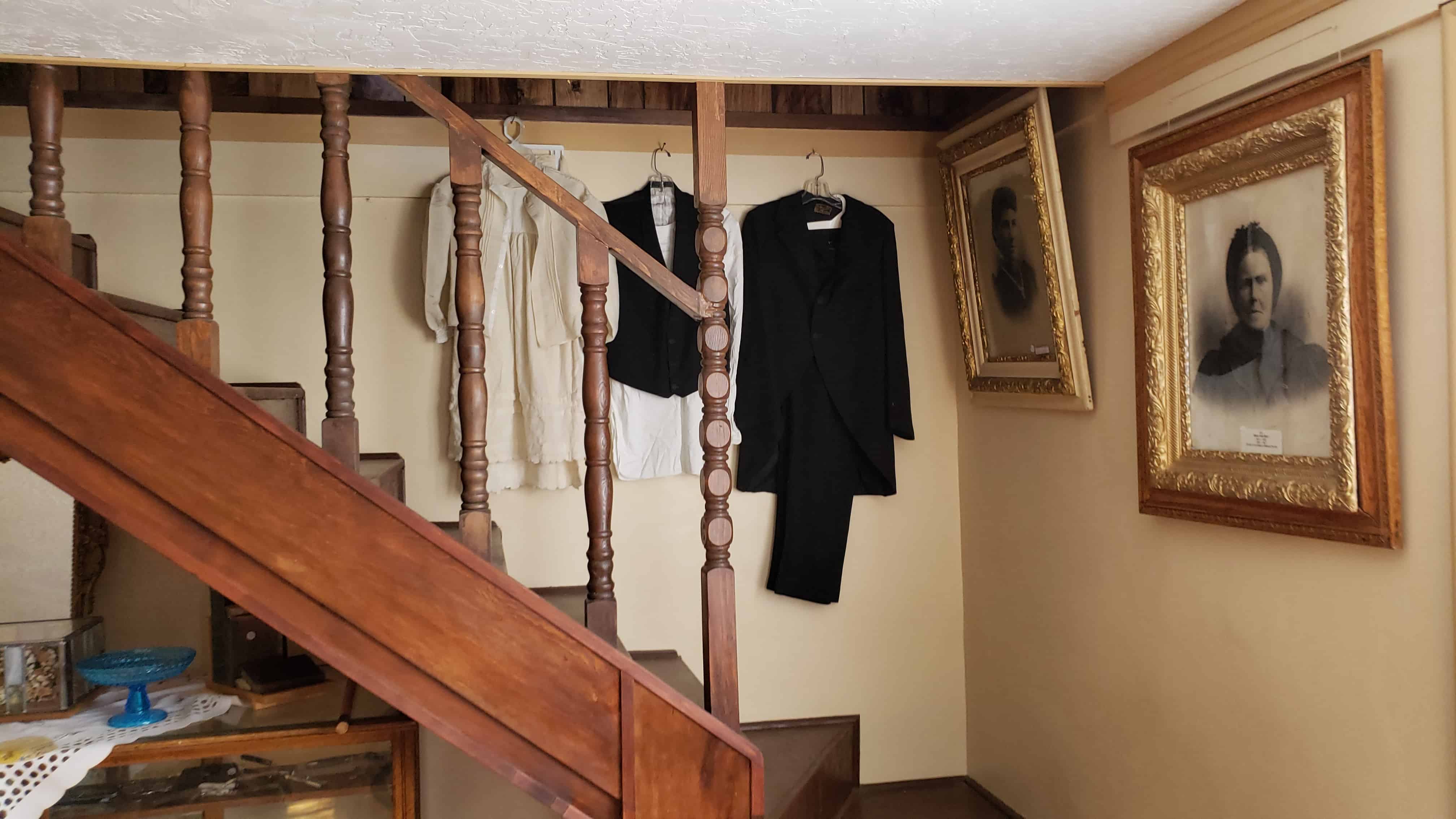
The interior is virtually intact historically. The main level in the front portion of the house is arranged in typical central-passage fashion. The center hall contains the staircase to the second level that runs front-to-rear. Running along the right side of the stairs is the passage leading back through a doorway to the kitchen area in the rear wing. A closet is situated under the stairs and the paneling and balustrade of the staircase is elaborately painted with faux oak and walnut graining, which is in very good condition. A single room is located on either side of the hall; both are similar in appearance, although the room to the north side has a doorway leading into a bathroom in the frame addition. The rear wing has the kitchen area as well as a pantry and bathroom at the east end of the wing. All of the woodwork on this level is in original condition and is being retained, and that which has been damaged is being restored. All the door, window, and baseboard molding is done in Eastlake fashion. Although much of it is painted, the details, such as the patera, are all faux grained to appear as hardwood. All the doors are also faux grained in elaborate patterns, with panels and framing done in contrasted grains and
colors.

The second story appears to have been expediently finished around the turn of the twentieth century. The layout reveals its use as a hotel, with several small rooms spartanly finished; prior to c. 1900 it was open and sometimes used as a dance floor for local dances before the Mormon meetinghouse was finished in 1894. The framing studs are visible in portions of the walls, and the primary wall sheathing over the framework is bead board. Until recently there is no ceiling and all the rough-sawn roof trusses were visible. It is probable that muslin was the only ceiling material since there are remnants apparent. Drywall ceilings have recently been installed. There are six rooms on the upper level, although it appears that at least one wall was removed at an unknown time. At the landing at the top of the stairway, one faces a wall to the east that has an interior window.

This opened into a long narrow room along the north side of the rear wing. It is likely that this was where guests would check their baggage when they stayed here. In the short hallway to the left of the stair landing is the entrance to one of the rooms located at the north end of the main section of the house. This room has a deep interior wall cavity used as a closet and accessed by a doorway built into the wall. This room is divided off from another room to the west, at the front of the house. On the south side of the front portion of the house, separated from the above-mentioned rooms by a hallway that runs along the stair opening, is a single large room that also has a built-in closet. Going back through the hallway to the east end (past the bag room on the left) is the rear wing, which is divided into two sections, one on the north and one on the south. One must pass into the south room to access the north room. The south room is fairly large and open. The north room (baggage room) has more recently been divided into a storage room and a bathroom.

The property retains its historical appearance, situated on an open lot with only a few small deciduous trees. Directly around the house the yard is planted with grass, the rest is untrimmed field. A post and wire fence separates the yard from open fields both to the north and east. Behind the house to the east is a large gable-roof, wood frame and plank shed that may have served as a small barn. Although somewhat dilapidated exact construction date unknown, it was constructed during the historic era, and is considered a contributing building. To the southwest of this is a smaller historic (date unknown) wood frame and plank shed, which is also a contributing building. The George Hotel is one of the largest historic buildings in this small town and sits prominently on the main road through town. It retains its historic integrity and appearances and is a contributing resource in the small town of Kanosh.

Noble Pioneers of Hurricane

07 Friday Feb 2020

Posted by Jacob Barlow in Uncategorized

≈ Leave a comment

Tags

Historic Markers, Hurricane, SUP, utah, Washington County

Noble Pioneers of Hurricane

S.U.P. Historic Marker #23-A, a list of 299 of the pioneers of Hurricane, Utah

Related Posts:

  • Hurricane, Utah
  • Hurricane Valley Pioneer Heritage Park
  • S.U.P. Markers

Manila Creek Park

07 Friday Feb 2020

Posted by Jacob Barlow in Uncategorized

≈ Leave a comment

Tags

Parks, Pleasant Grove, utah, utah county

Manila Creek Park in Pleasant Grove, Utah

Related Posts:

  • Parks in Pleasant Grove
  • Pleasant Grove, Utah

Spencer Cemetery

06 Thursday Feb 2020

Posted by Jacob Barlow in Uncategorized

≈ 1 Comment

Tags

Cemeteries, Indianola, Sanpete County, utah

The Spencer Cemetery in Indianola, Utah

Related Posts:

  • Richard Henry Spencer
  • Spencer Family

The Hurricane Canal

06 Thursday Feb 2020

Posted by Jacob Barlow in Uncategorized

≈ 1 Comment

Tags

Historic Markers, Hurricane, SUP, utah, Washington County

The Hurricane Canal

On August 6, 1904, pioneer families from Virgin City, Grafton, Toquerville, La Verkin, Rockville and Springdale, met in the shade of a bowery and watched the Virgin River water gurgle out of the Hurricane Canal on the fertile, parched soil of this valley. Finally, the Rio Virgin was conquered! At that joyful celebration the city they had dreamed about for many heartbreaking years, was named Hurricane from the historic Hurricane Cliffs. In 1906, the first homes were built here.

This is S.U.P. Marker #23-D, see other S.U.P. Markers here.

This historic marker is located in Hurricane Valley Pioneer Heritage Park in Hurricane, Utah.

The Pattern (by Owen Sanders)

My father dug the ditches
And tilled the stubborn soil;
What have I, his son, to show
For all his years of toil?
My Mother gnarled her tender hands
And suffered for my weal;
What have I, her son, to show
For all her faith and zeal?

Their faith and love of God was strong
Their zest for life sincere;
What have I, their son, to show
For what they held so dear?

My folks have sketched a pattern
And blazed a vivid trail;
They have earned their Golden Goal
Only, I, can fail!

Fort Palmyra Pioneer Settlement

05 Wednesday Feb 2020

Posted by Jacob Barlow in Uncategorized

≈ Leave a comment

Tags

DUP, Forts, Historic Markers, Palmyra, utah, utah county

Fort Palmyra Pioneer Settlement

Daughters of Utah Pioneers Marker #583

Elder George A. Smith called several strong families to travel south of Salt Lake City to settle Palmyra. He counseled them to build a fort for protection to ensure their safety from the local Indians. These stalwart pioneers enclosed a 10-acre square with 10-foot walls. The task of cutting mud blocks, making adobe bricks and building the fort was great. Each family had a small house made with the bricks, which formed the outer walls of the fort; the doors faced the center. Inside, the corral stockade kept the livestock safe. Some families moved into the fort upon completion in 1852. Other families arrived after the Walker War broke out one year later. The meetinghouse was used for church and school. During the winter of 1853-1854, having been joined by settlers from the Upper Settlement (now known as Spanish Fork), the population at Fort Palmyra numbered 404.

A peaceful resolution brought the Walker War to a close in August 1854. Brigham Young counseled the pioneers to move to the Upper Settlement, where there was better farmland. Fort Palmyra was dismantled and the adobe bricks were taken with them to rebuild the buildings they would need to survive. These brave, stalwart pioneer men, women and children built, then totally dismantled their homes and fort in the space of three years and rebuilt new homes in the second settlement.

In January 1855, the Territorial Legislature granted Fort Palmyra/Fort St. Luke, a city charter, allowing the government to rename the city ‘Spanish Fork.’ In 1880, many settlers moved back to Palmyra and built a new meetinghouse that served as a church and a school.

Related posts:

  • Palmyra, Utah
  • Old Palmyra Fort Corner
  • Other D.U.P. Historic Markers

← Older posts
Newer posts →

Follow Jacob

Follow Jacob

Blog Stats

  • 2,050,733 hits

Social and Other Links

BarlowLinks.com

Recent Posts

  • Moses Thatcher, Jr. Home
  • C. Gregory Crampton
  • Las Vegas High School Historic District
  • Martin Harris Gravesite
  • 585 S Riverside Ln

Archives


Loading Comments...