• About JacobBarlow.com
  • Cemeteries in Utah
  • D.U.P. Markers
  • Doors
  • Exploring Utah Email List
  • Geocaching
  • Historic Marker Map
  • Links
  • Movie/TV Show Filming Locations
  • Oldest in Utah
  • Other Travels
  • Photos Then and Now
  • S.U.P. Markers
  • U.P.T.L.A. Markers
  • Utah Cities and Places.
  • Utah Homes for Sale
  • Utah Treasure Hunt

JacobBarlow.com

~ Exploring with Jacob Barlow

JacobBarlow.com

Tag Archives: utah

Wasatch Stake Tabernacle

15 Saturday Nov 2014

Posted by Jacob Barlow in Uncategorized

≈ 2 Comments

Tags

Heber City, historic, Historic Buildings, NRHP, Tabernacles, utah, Wasatch County

2018-02-13 11.16.44

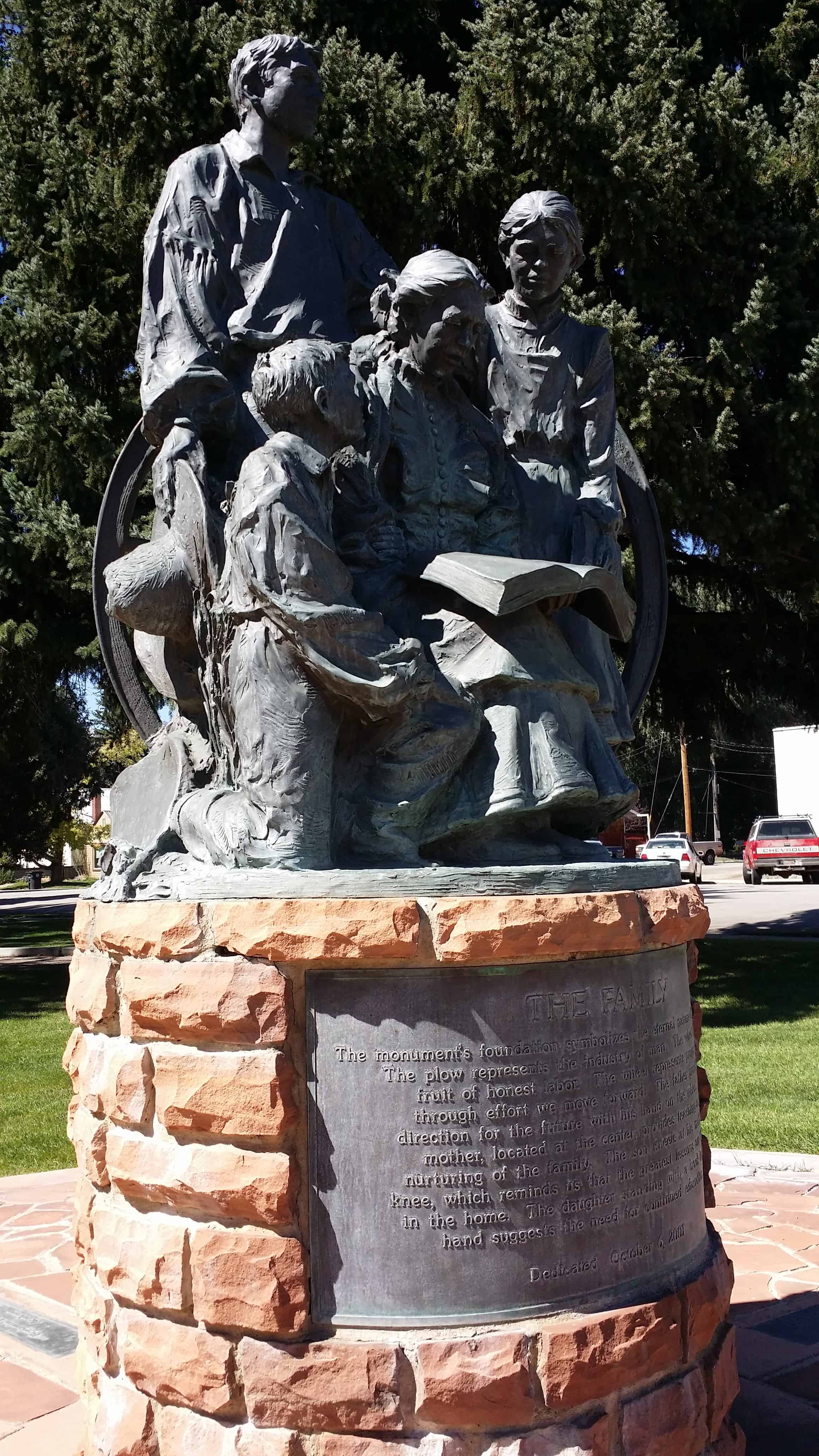
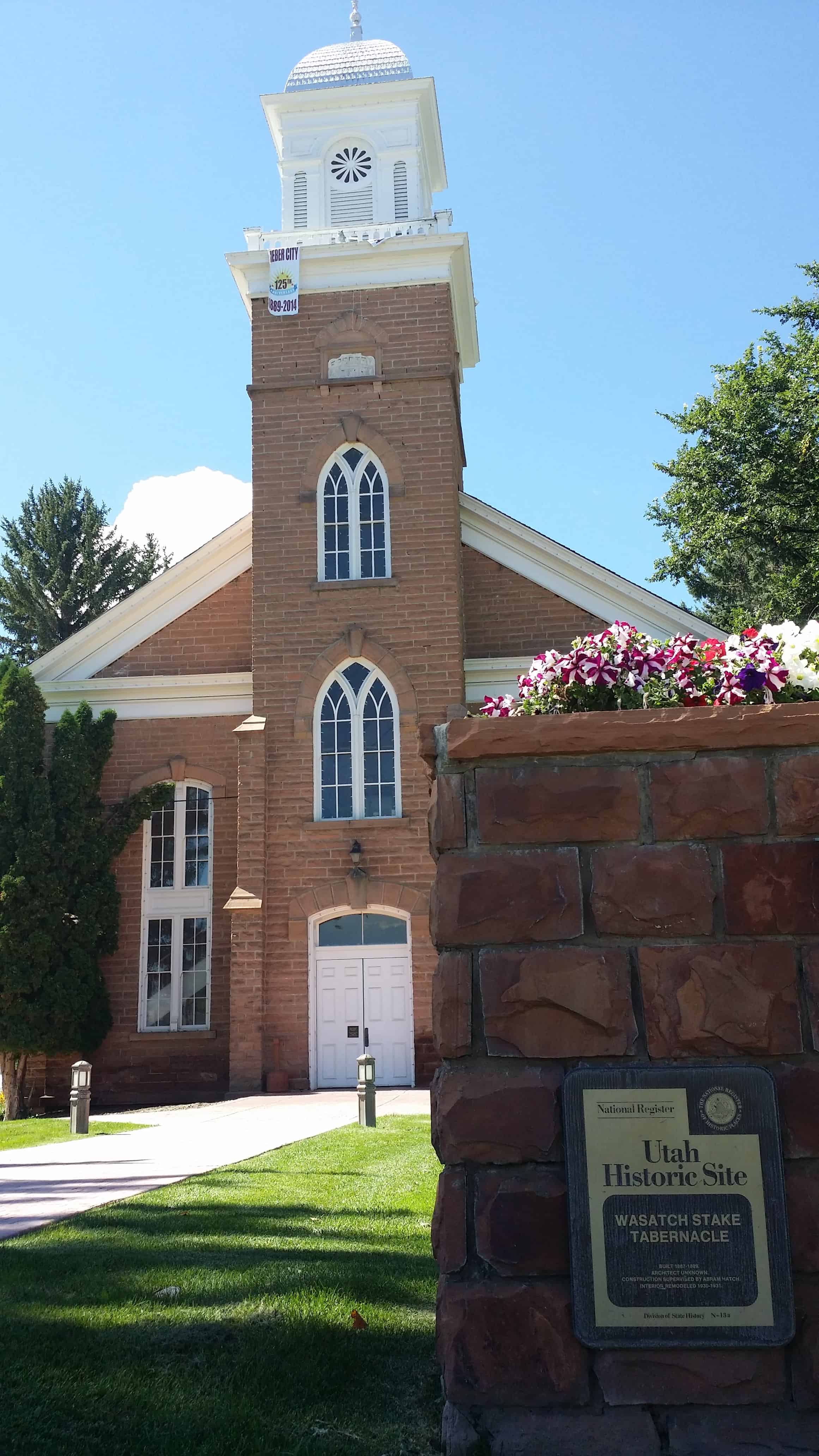
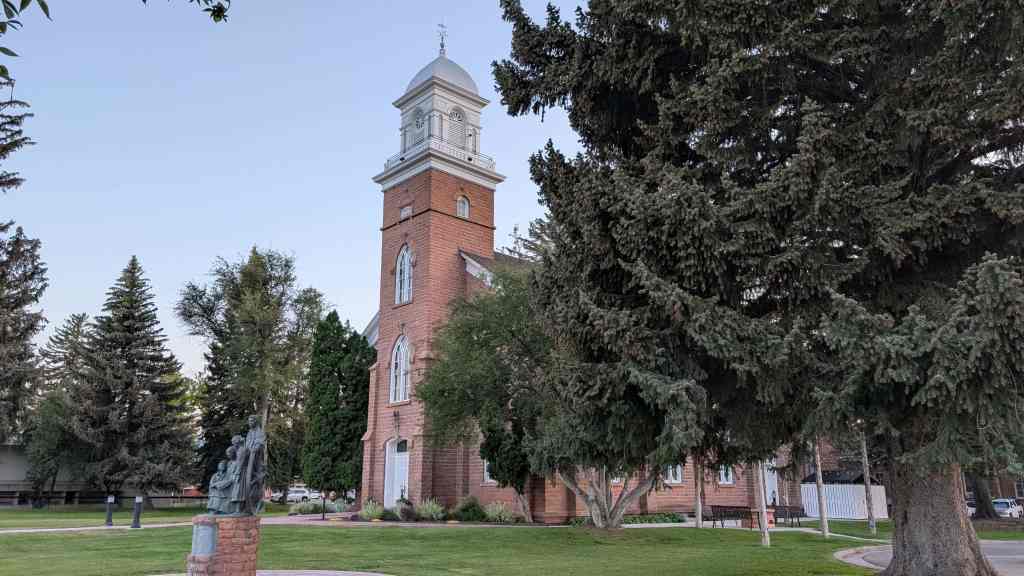
Wasatch Stake Tabernacle – Heber City, Utah

Built in 1887, this is one of the Tabernacles around Utah still standing – it is now used as a city office building but stands as an awesome reminder of what the pioneers did long ago.

Alexander Fortie, Jr. immigrated to America in 1866 from Glosgow, Scotland and was the designer and architect of this tabernacle, he also oversaw the carpentry work during its construction. His tools and tool chest are on display in the D.U.P. Museum.

The Utah Historic Marker outside says:

Built 1887-1889

Architect unknown, construction supervised by Abram Hatch.   Interior remodeled 1930-1931.

The tabernacle is located at 75 North Main Street in Heber City, Utah and is part of the Historic Home Tour.

2018-02-13 11.16.58

The tabernacle is located at 75 North Main Street next to the Amusement Hall in Heber City, Utah and was listed (together with the Amusement Hall as listing #70000633) on the National Historic Register on December 2, 1970.

The Tabernacle is significantly associated with the history of the area and reflects the religious, cultural and social aspirations of the settlers of Heber Valley, The Tabernacle is unique since there is no other such building in Heber Valley, and it is one of the few remaining outstanding early church structures left in Utah, In addition to being a typical early Mormon meeting house, it is part of the Heber Town Square which, in itself, is typical of the early Utah Town Square on which were located governmental recreational and religious structures.

The Wasatch Stake Tabernacle was built of red sandstone quarried from the mountains east of Heber near Lake Creek, It was begun in 1887 and dedicated May 5, 1889, at a cost of over $30,000. President Abram Hatch served as Superintendent, Elisha Averett directed the masonry work, and Alex Fortie the carpentry work. Frederick O. Buell fixed the metal shingles on the tower, and Francis Kirby oversaw the painting. Most of the labor was volunteer.

The good people of Heber City, who had toiled and sacrificed to build the Tabernacle, quite naturally took special pains to furnish and maintain their new stake house. The floors were scrubbed and bleached with homemade soap; homemade carpets were carefully laid down the aisles; the hard benches were sanded and smoothed and polished. Coal oil lamps were hung from the ceiling, and finally, a large bell was placed in the tower. The surrounding grounds were landscaped and cottonwood trees were planted.

In 1930-31, under the direction of President D, A. Broadbent, the inside was extensively remodeled at a cost of $20,000 and a new heating system installed. The side galleries and stand were taken out and a stage put in the west end. This describes its present condition. The structure is in good condition generally, although the interior needs painting and minor repairs.

2018-02-13 11.15.51
2018-02-13 11.15.45
2018-02-13 11.14.46
2018-02-13 11.14.00
ingress_20140911_140301_0
ingress_20140911_140331_2
ingress_20140911_140347_4
ingress_20140911_140413_6
ingress_20140911_140438_8
ingress_20140911_140446_10

Payson Fort Wall

15 Saturday Nov 2014

Posted by Jacob Barlow in Uncategorized

≈ 1 Comment

Tags

Forts, historic, Payson, utah, utah county, Walker War

Several of the towns in Utah started out as forts as protection for the people, many of those have the location of the fort marked, some of those have the location of the corners of the forts marked.  Here are the markers placed to mark where the corners of the Payson Fort was.

The Main Gate:     N 40° 02.629 W 111° 43.774


picture16dec07-033
picture16dec07-034

This road has remained open since 1853.  Just inside was a stagecoach inn & Pony Express station which operated until the telegraph came in 1861.  Alexander Keele, while on voluntary guard duty, was killed on 18 July 1853 by Indians as they left the Fort.

The Southeast Corner: N 40° 02.621 W 111° 43.775


picture16dec07-031
picture16dec07-032

The Fort was 60 rods square with corners built of logs forming a buttress.  Adobe, rock and mud walls stood 8 feet tall.  4 feet wide at the bottom and 2 feet wide at the top on a rock foundation with a deep 4 foot trench around the outside.   It was built during the Walker Indian War 1853-54.

The Southwest Corner: N 40° 02.622 W 111° 44.105


picture16dec07-028
picture16dec07-029
picture16dec07-030

The Northwest Corner: N 40° 02.875 W 111° 44.105


picture16dec07-037
picture16dec07-038

The Northeast Corner: N 40° 02.868 W 111° 43.775


picture16dec07-035
picture16dec07-036

Springville Carnegie Library

12 Wednesday Nov 2014

Posted by Jacob Barlow in Uncategorized

≈ 3 Comments

Tags

Carnegie Libraries, historic, Historic Buildings, NRHP, Springville, utah, utah county

  • 2014-09-14 11.34.12

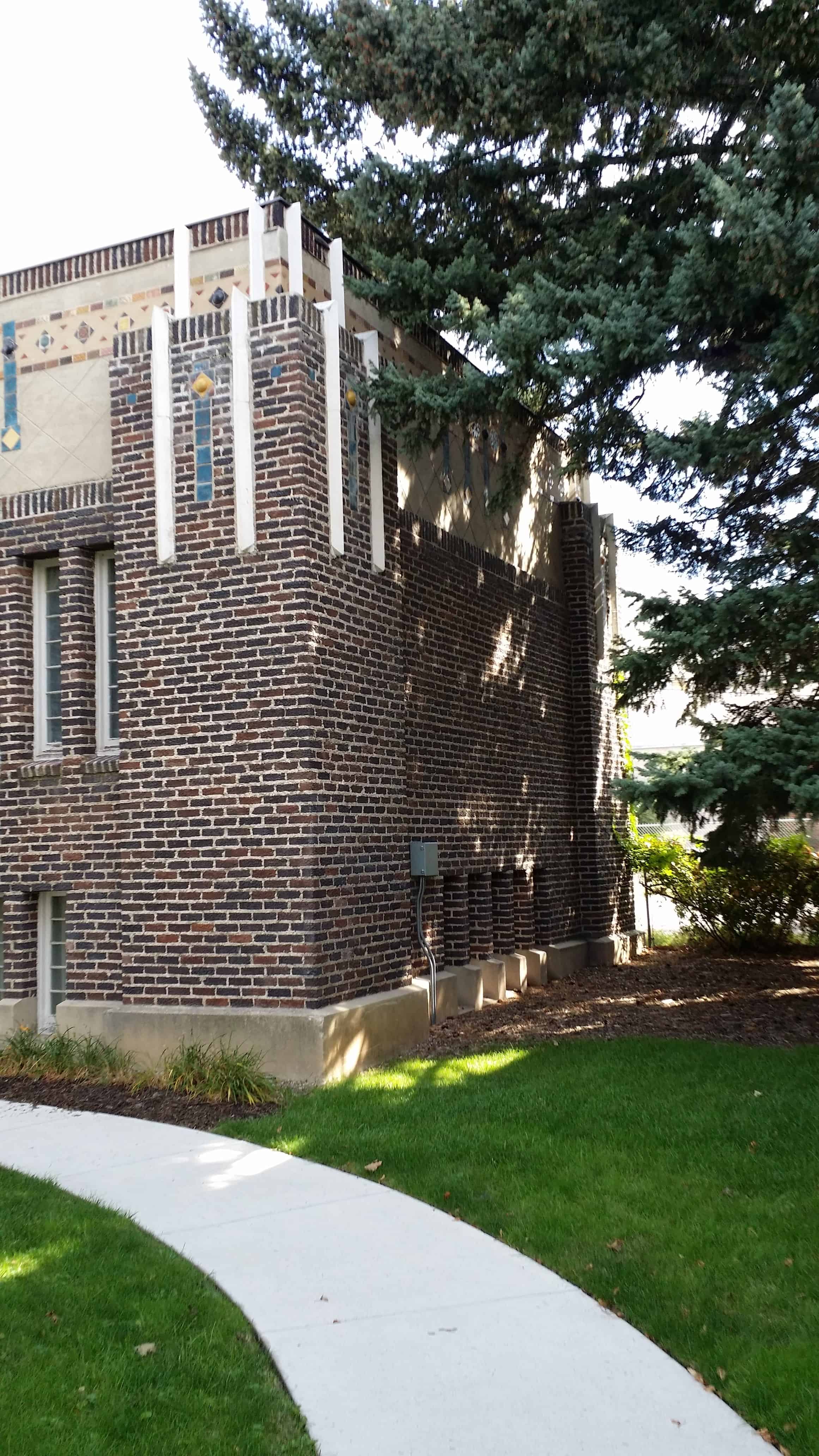
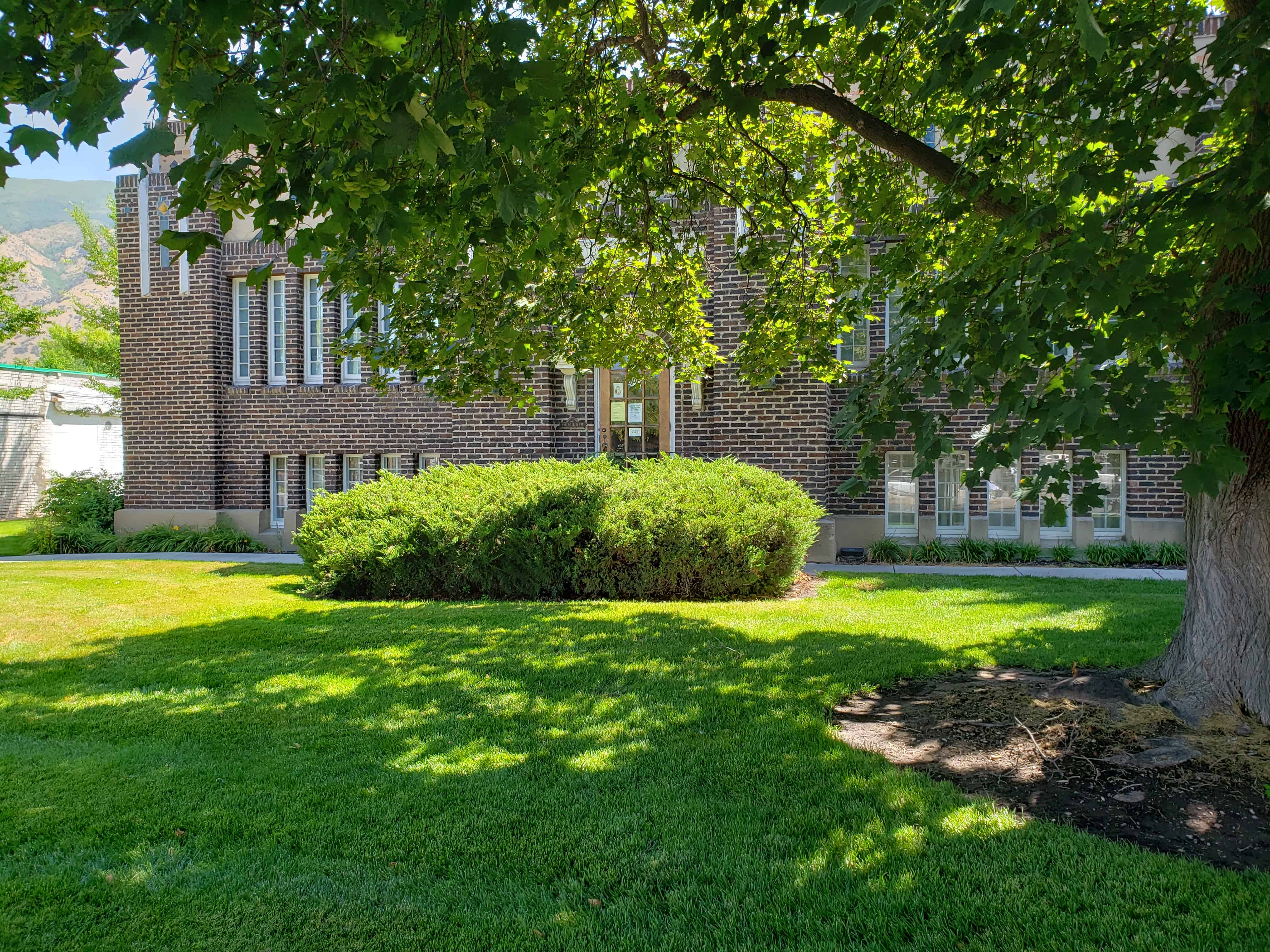
The Springville Carnegie Library at 175 S. Main St. in Springville, Utah is a Prairie School style Carnegie library building completed in 1922. It is one of the 23 Carnegie Libraries built in Utah. It functioned as the city public library until 1965, when the library was moved to a new larger. The 1922 building was listed on the National Register of Historic Places in 1991. It now houses a pioneer relic museum.

The National Register of Historic Places Registration Form describes the building as building that follows the Carnegie Library standards. The building is generally characterized by Prairie style architecture, most notably seen in the tall, vertical windows arranged in a strong horizontal band on both the main and lower levels. However, the main entry is characterized by its classical influences including the rounded top main door capped by a semi-circular pre-cast concrete hood with decorative scroll brackets on both sides.

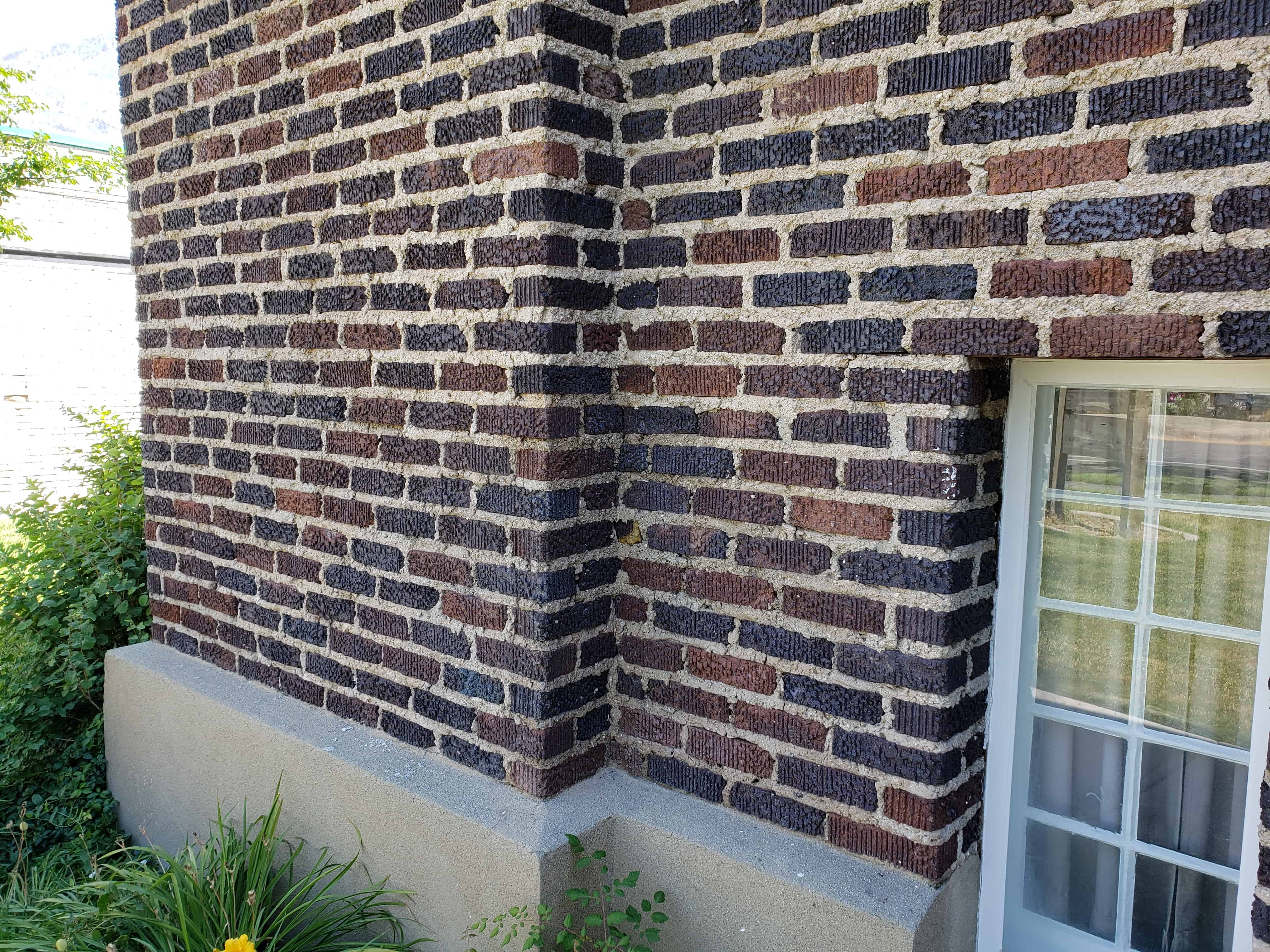
The library is rectangular in shape and one-and-one-half stories in height. The exterior consists of textured bricks and is capped by a horizontal band of stucco decorated in ceramic tile mosaics. This stucco also characterized by a brick soldier course at the top and bottom.

Large masonry piers interrupt at all four corners of the building as well as at the main entry. They divide the main facade into three symmetrical parts.

In the 1970s, an imitation mansard roof was added and this greatly altered its appearance. This addition rendered the Springville Carnegie Library ineligible for recognition by the National Register of Historic Places. Since then, the mansard roof was removed, which restored the building to its original appearance. It is now currently eligible.

The last modification to the exterior of the building was the replacement of a three foot tall brick railing wall at the main entry by a cast iron railing.

Related Posts:

  • Carnegie Libraries in Utah
  • Designed by Walter Ware
  • 2014-09-14 11.34.23
  • 2014-09-14 11.34.20
  • 2014-09-14 11.34.37
  • 2014-09-14 11.34.44
  • 2014-09-14 11.34.49
  • 2014-09-14 11.34.57

United States Post Office – Springville Main

12 Wednesday Nov 2014

Posted by Jacob Barlow in Uncategorized

≈ 1 Comment

Tags

historic, Historic Buildings, NRHP, Post Offices, Springville, utah, utah county

  • 2014-09-14 11.27.04

The U.S. Post Office-Springville Main at 309 S. Main in Springville, Utah was built in 1941. It was built in Colonial Revival style and credited to supervising architect Louis A. Simon. It has also been known as Springville Main Post Office. It was listed on the National Register of Historic Places in 1989.

  • 2014-09-14 11.27.16
  • 2014-09-14 11.27.39
  • 2014-09-14 11.27.41
  • 2014-09-14 11.27.44
  • 2014-09-14 11.27.58

159 North Main Street

10 Monday Nov 2014

Posted by Jacob Barlow in Uncategorized

≈ 1 Comment

Tags

Davis County, Farmington, historic, Historic Homes, NRHP, utah

159 North Main Street, Farmington, Utah

The home was constructed in 1914 by George Ernest Spackman.  George, a local farmer, and his wife Bertha resided in the home for many decades.  The single-story, stucco bungalow has a full-width front porch, front-facing gable, and features a projecting bay.  The house retains excellent historic and architectural integrity and is a contributing resource to the Farmington Main Street Historic District.

20140911_103355 20140911_103413 20140911_103455 20140911_103459

Hector C. Haight House / Union Hotel

09 Sunday Nov 2014

Posted by Jacob Barlow in Uncategorized

≈ 1 Comment

Tags

Davis County, Farmington, Historic Buildings, Historic Homes, NRHP, utah

This house was constructed c. 1857 for Hector C. Haight, “the father of Farmington,” who in addition to helping settle the community, was a farmer, builder, hotel proprietor and county probate judge for a number of years.  He and his family loved in this house, which also doubled as a hotel, until his death in 1879.

The Union Hotel, as it was known, is the oldest remaining hotel in Farmington, which was a natural stopping place for travelers because it was located one-day’s journey from Salt Lake City.  LDS Church authorities and others with business in the communities to the north often stayed overnight at the Union and other hotels in Farmington.  The rear section of the house was probably added in the 1860s or ’70s, apparently to accommodate the expanding hotel business.  The original four-room section of the house is one of the few examples in Utah of a two-story double cell house, a traditional yet relatively uncommon house type in early Utah.

Although the original adobe walls of the house were covered with aluminum siding in the late 1950s, its basic form, window and door openings, and interior remain virtually unaltered.

20140911_103130 20140911_103144 20140911_103201

Salt Lake LDS Temple

08 Saturday Nov 2014

Posted by Jacob Barlow in Uncategorized

≈ 8 Comments

Tags

historic, Historic Buildings, Historic Churches, LDS, Salt Lake City, Salt Lake County, utah

2014-08-26 19.39.07
ingress_20131213_204839_60
2016-09-15-19-46-05

The Salt Lake Temple is a temple of The Church of Jesus Christ of Latter-day Saints (LDS Church) located on Temple Square in Salt Lake City. At 253,015 square feet, it is the largest LDS temple by floor area. Dedicated in 1893, it is the sixth temple completed by the church, requiring 40 years to complete, and the fourth temple built since the Mormon exodus from Nauvoo, Illinois, in 1846.

The temple was designed by Truman O. Angell.

Other LDS Temples in Utah are listed here.

Related:

  • Salt Lake Temple Renovation Project
2017-10-01 13.05.08
2018-05-04 20.56.05
2018-05-04 20.54.38

Ottinger Hall

08 Saturday Nov 2014

Posted by Jacob Barlow in Uncategorized

≈ Leave a comment

Tags

City Creek Canyon Historic District, historic, Historic Buildings, NRHP, Salt Lake City, Salt Lake County, utah

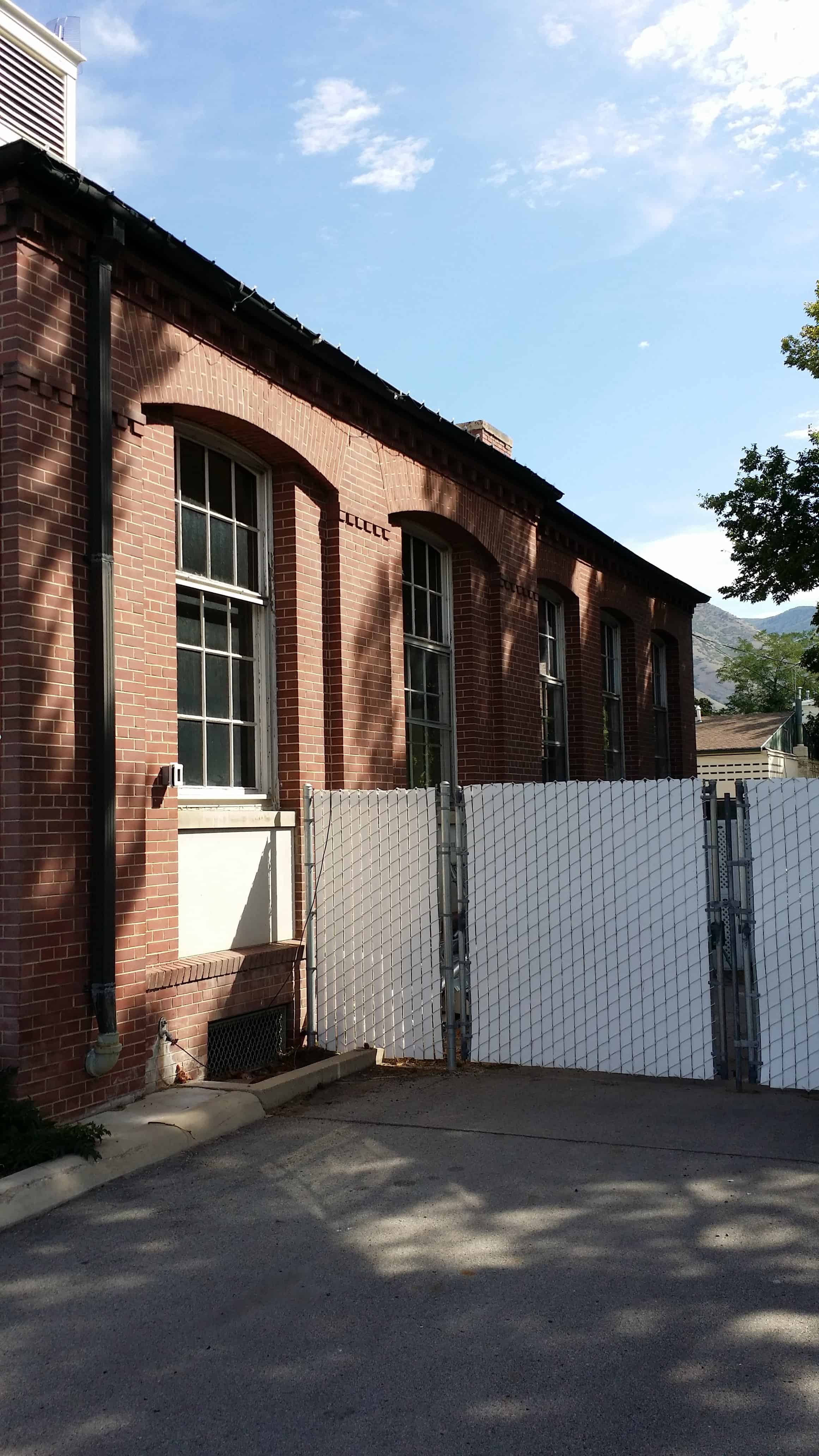
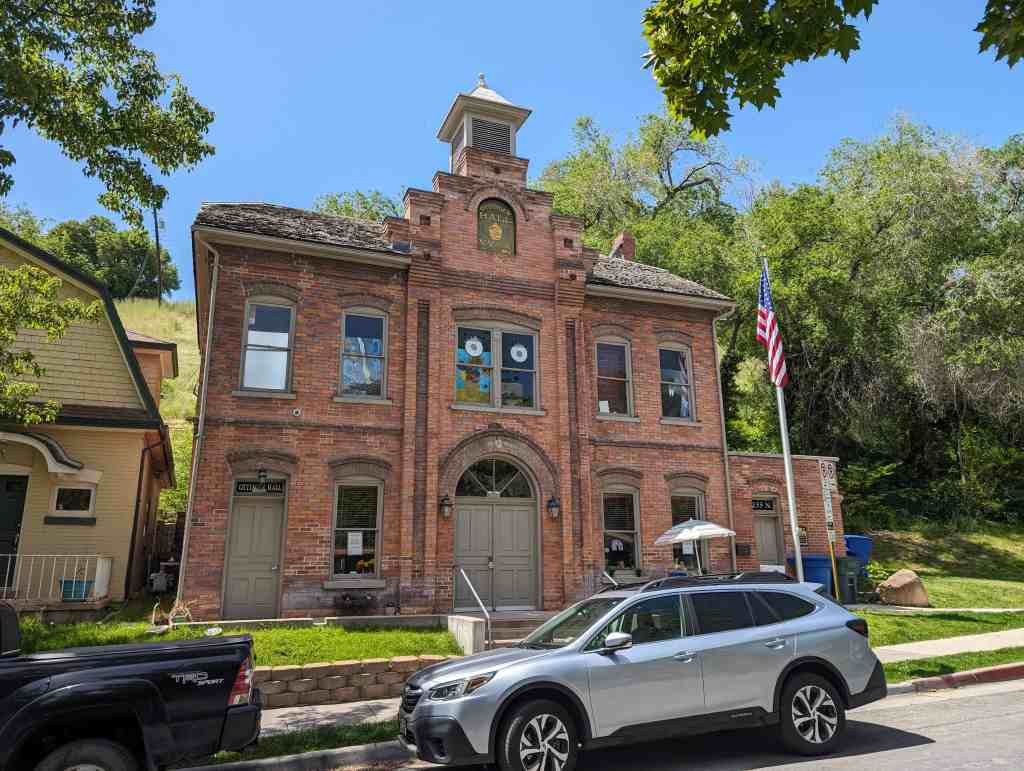
2014-08-26 17.19.17

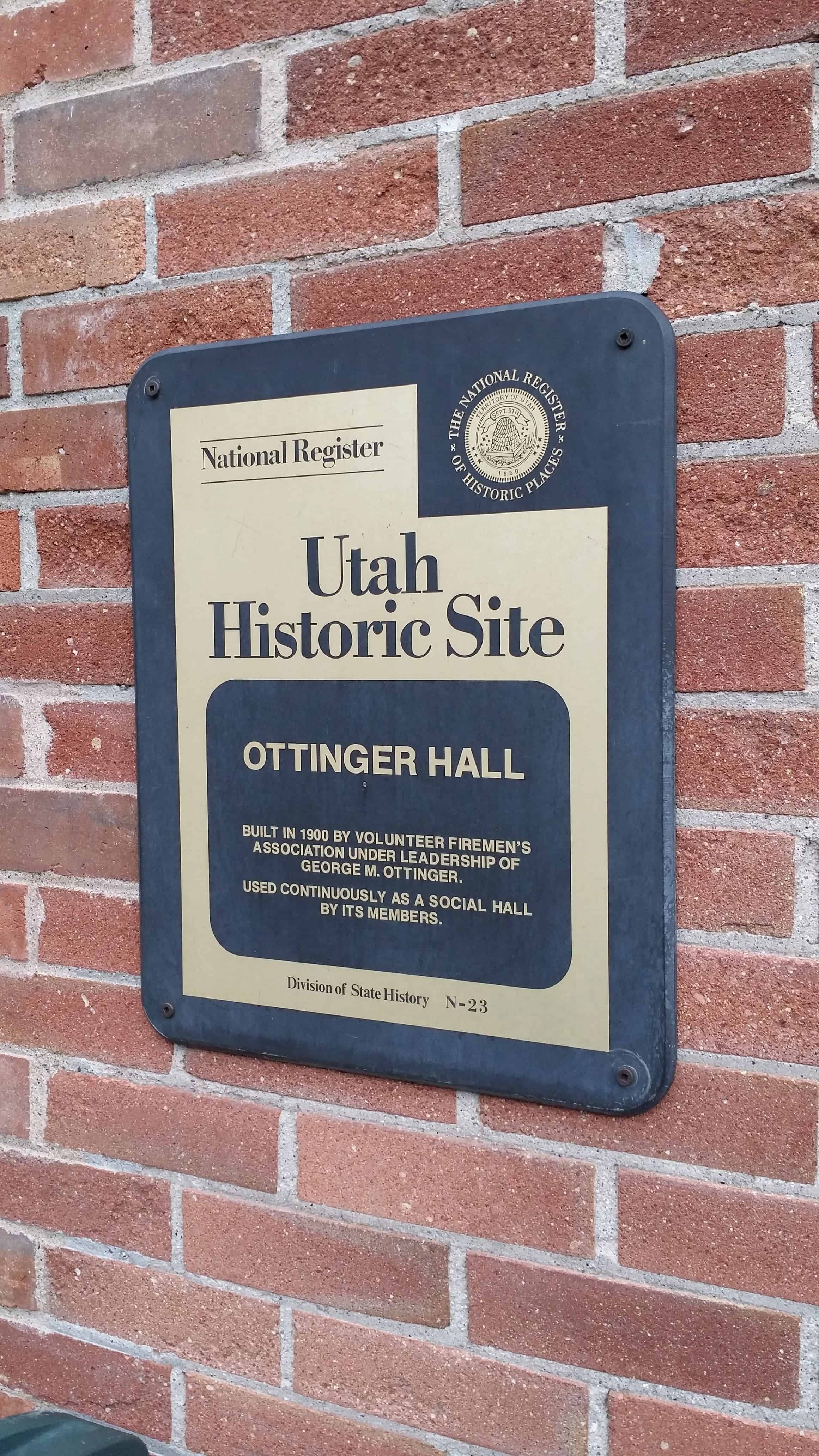
Built in 1900 by volunteer firemen’s association under leadership of George M. Ottinger.

Used continuously as a social hall by its members.

Located at 233 Canyon Road in the City Creek Canyon Historic District in the City Creek Canyon neighborhood in Salt Lake City, Utah and added to the National Register of Historic Places (#71000851) on April 16, 1971.

2014-08-26 17.20.03
2014-08-26 17.20.06
2014-08-26 17.20.09

Ottinger Hall, a two-story brick structure, with a wood shingle roof, was dedicated February 22, 1900, It is rectangular in shape, originally about 27 feet by 39 feet, but with a lean-to kitchen added later to the north side, A bell tower centered on the roof houses the original bell, reputed to be Utah’s oldest. The architect for the building is unknown, but very probably it was designed by members of the Veterans Volunteer Firemen’s Association, who constructed it, Funds were raised through donation, labor, concerts and rummage sales by the members of the Association.

At present the structure is in fair condition only. The original construction was mediocre; however, there is no question about the stability and salvage potential. It houses many pioneer fire-fighting relics of importance, including the first fire engine built in Utah designed and constructed in 1853 under the direction of Jesse C. Little, the colony’s first “official” fire chief. Also, the building houses one of the “hose carts” brought west by Johns ton’s Army in 1858.

The building was constructed originally as a Social Hall for members of the Association and their families. Ft has been used for that purpose continuously. As a unit, the hall and its relics represent and present the story of the development of a fire-fighting department in Salt Lake City. Its preservation Is important to retaining and telling that story.

Ottinger Hall sits in the canyon of lovely City Creek, just a few hundred yards east of the Capitol Building. Its builders wanted a place to meet where they could mingle and pay homage to their proud firemen’s heritage. Today Memory Grove Park bounds it to the north.

Salt Lake City established a Volunteer fire department as early as 1850; however, its first fire chief, Jesse C, Little, was not appointed until 1853, He in turn was succeeded by John D. T. McAllister, Charles H. Doneldson and George M. Ottinger in 1876.

In 1860, a new organization established Deseret Engine Company number one (later changed to Eagle No. 1) and Deseret Hook and Ladder Company number one. Other volunteer companies were also added. The horse-drawn engines and volunteers were unable to handle a major fire in June 1883. Apparently, as a result of this, Salt Lake City elected to establish a paid fire department, beginning October 1, 1883. Its first chief was George M. Ottinger.

Under the leadership of Ottinger, the Veterans-Volunteer Firemen’s Association was organized in 1890. Ten years later they had their meeting and Social Hall, Ottinger remained president until his death in 1917. In 1912 the Ladies Auxiliary was organized.

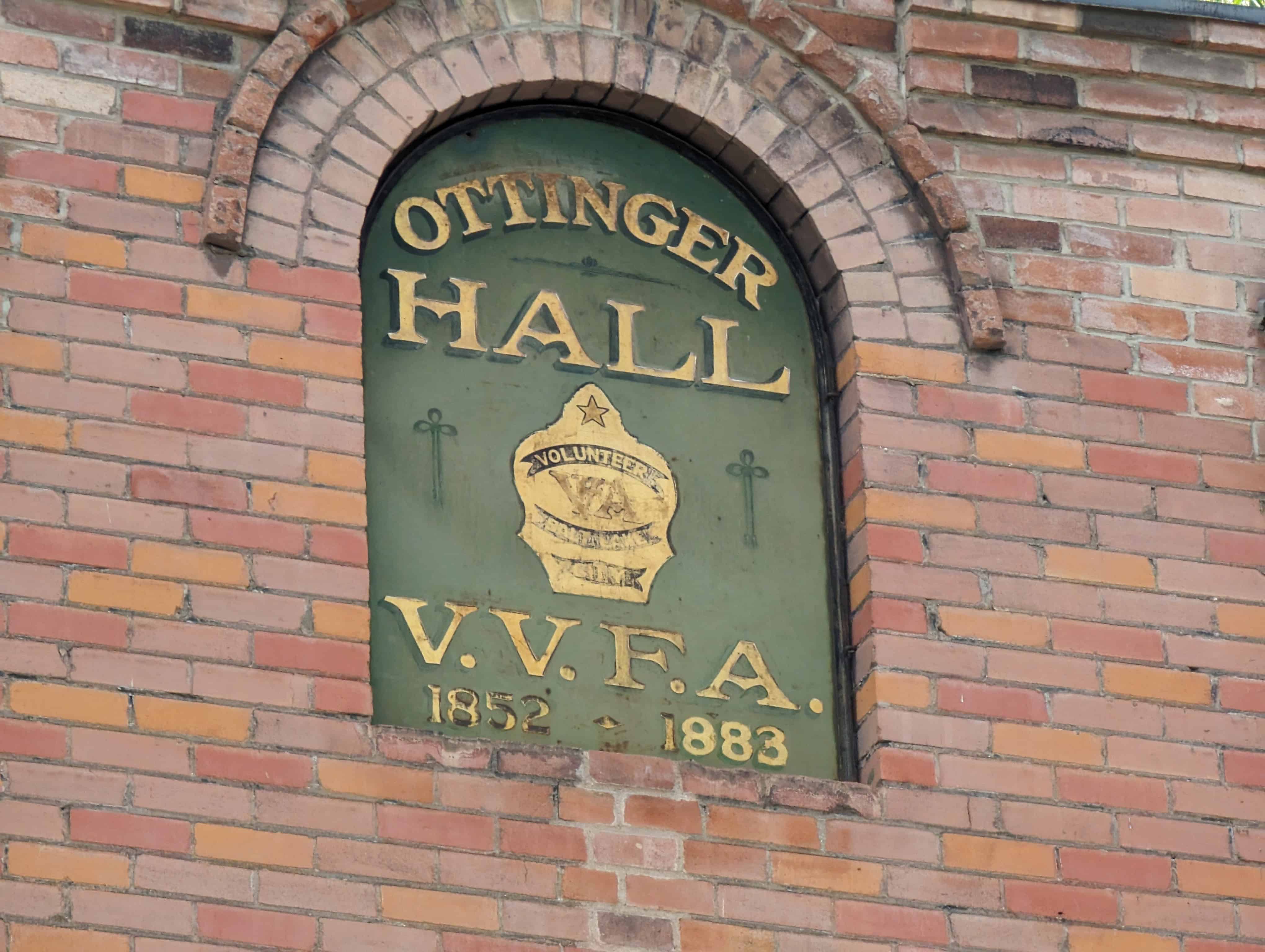
Ottinger was not only a firefighter, but an artist of note, and especially appreciated by local people. His self portrait and other paintings hang in the hall today. He painted a sign displaying the volunteers’ slogan: “We aim to aid and work to save, n now at the hall.

Since Ottinger Hall contains both the tradition and paraphernalia of the Volunteer Firemen of early Salt Lake City,its preservation provides an important link between the past, for this extremely important development, and today’s urban society.(*)

Preservation Utah‘s pamphlet from the 53rd Annual Historic Homes Tour of the City Creek Canyon Historic District on May 18, 2024 said this about the site:

Ottinger Hall was constructed in 1900 as a social hall for the Salt Lake City’s Veteran Volunteer Fireman’s Association. It is named after George M. Ottinger, the city’s first paid fire chief, who founded the VVFA in 1890 and served as its president until 1917.

George Taylor Jr. House

08 Saturday Nov 2014

Posted by Jacob Barlow in Uncategorized

≈ 1 Comment

Tags

historic, Historic Homes, NRHP, Provo, utah, utah county

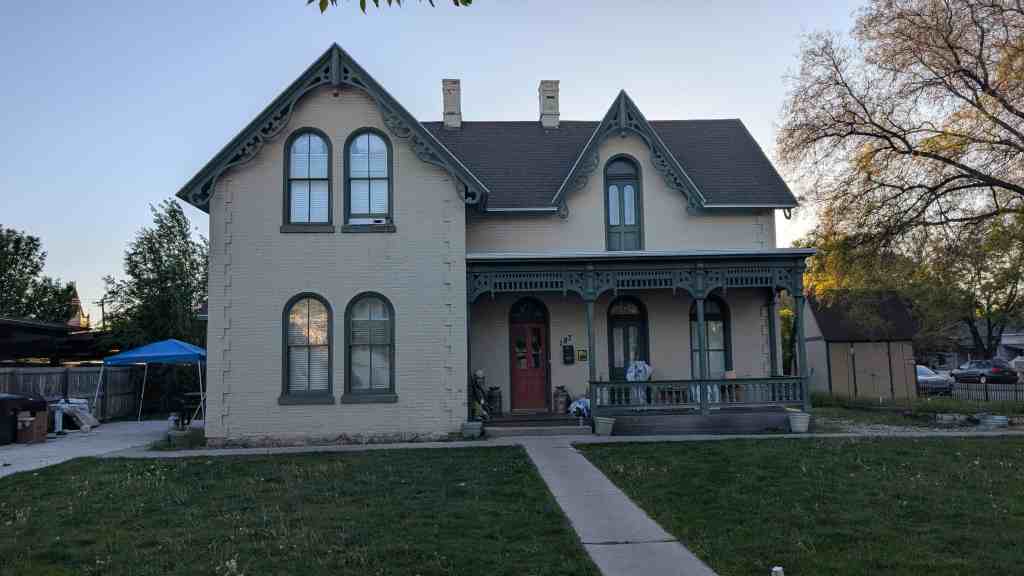
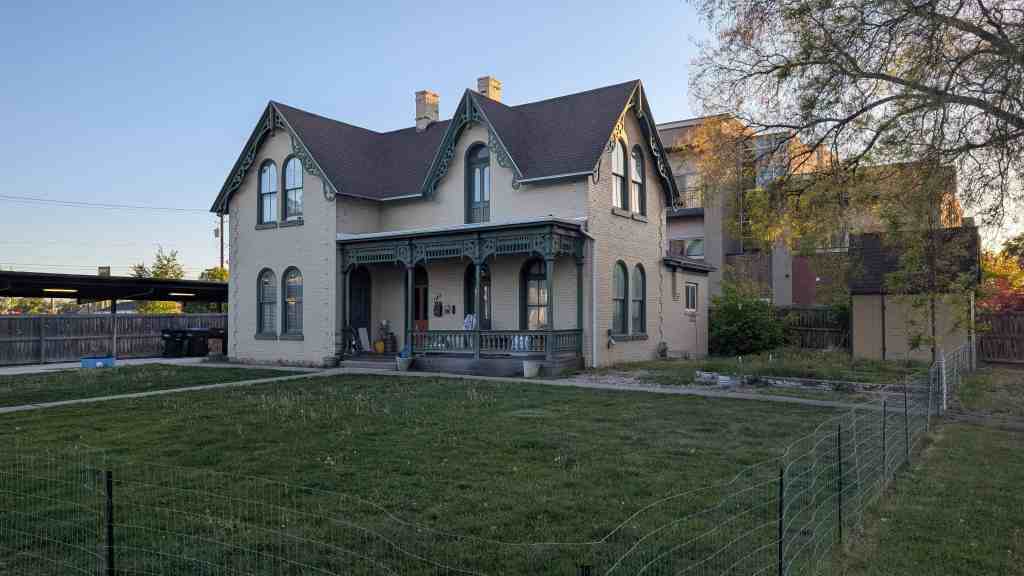
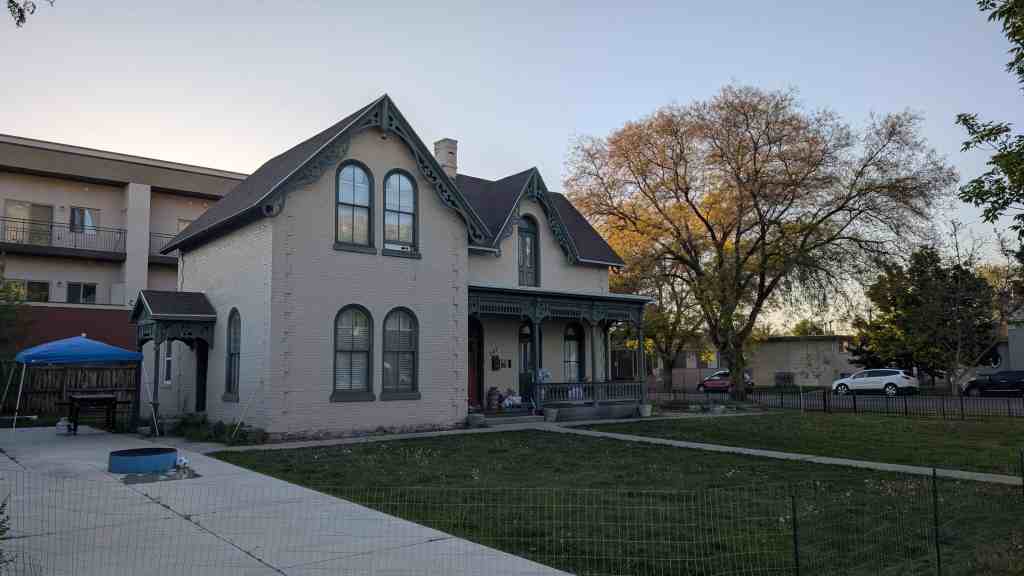
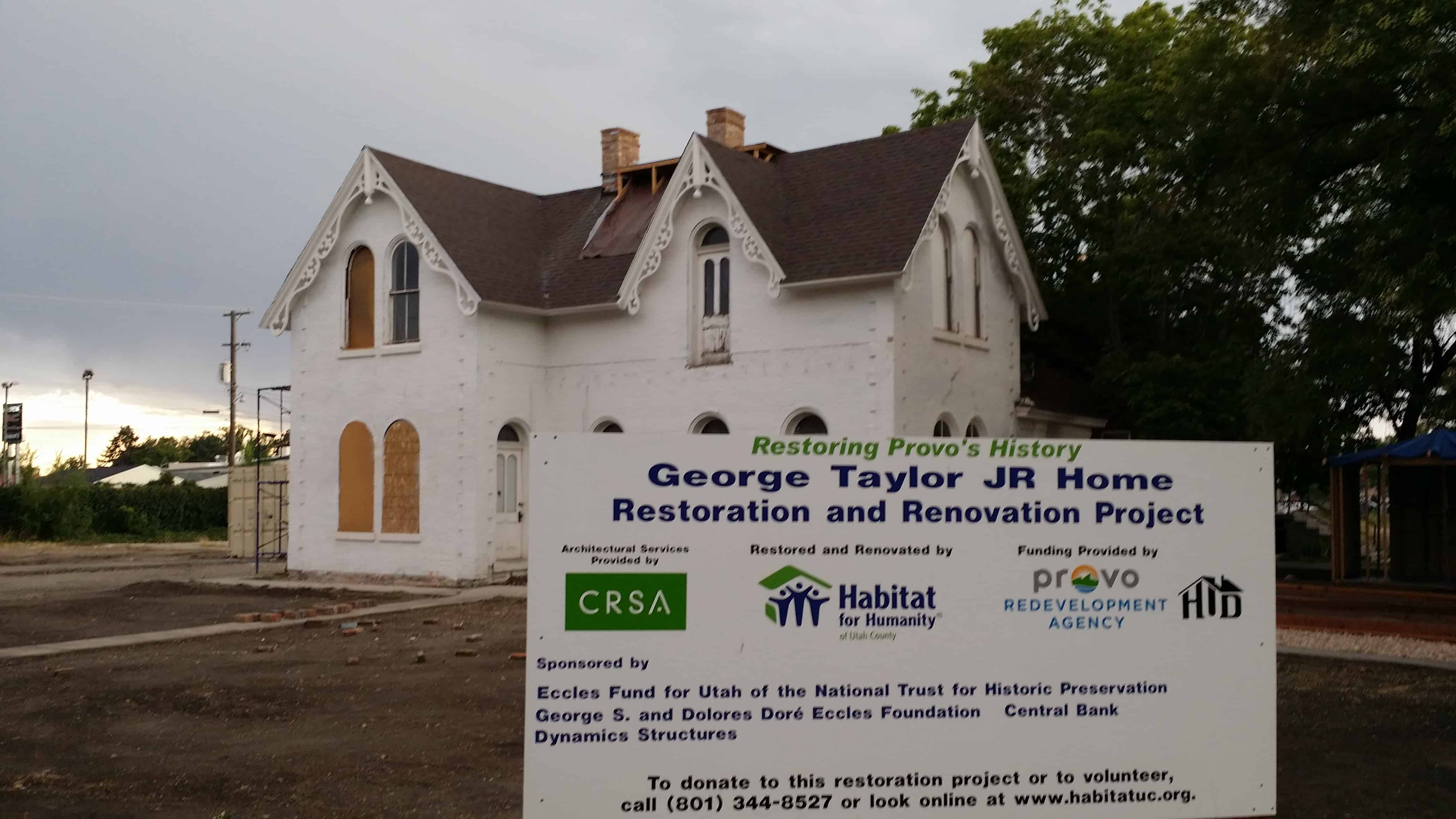
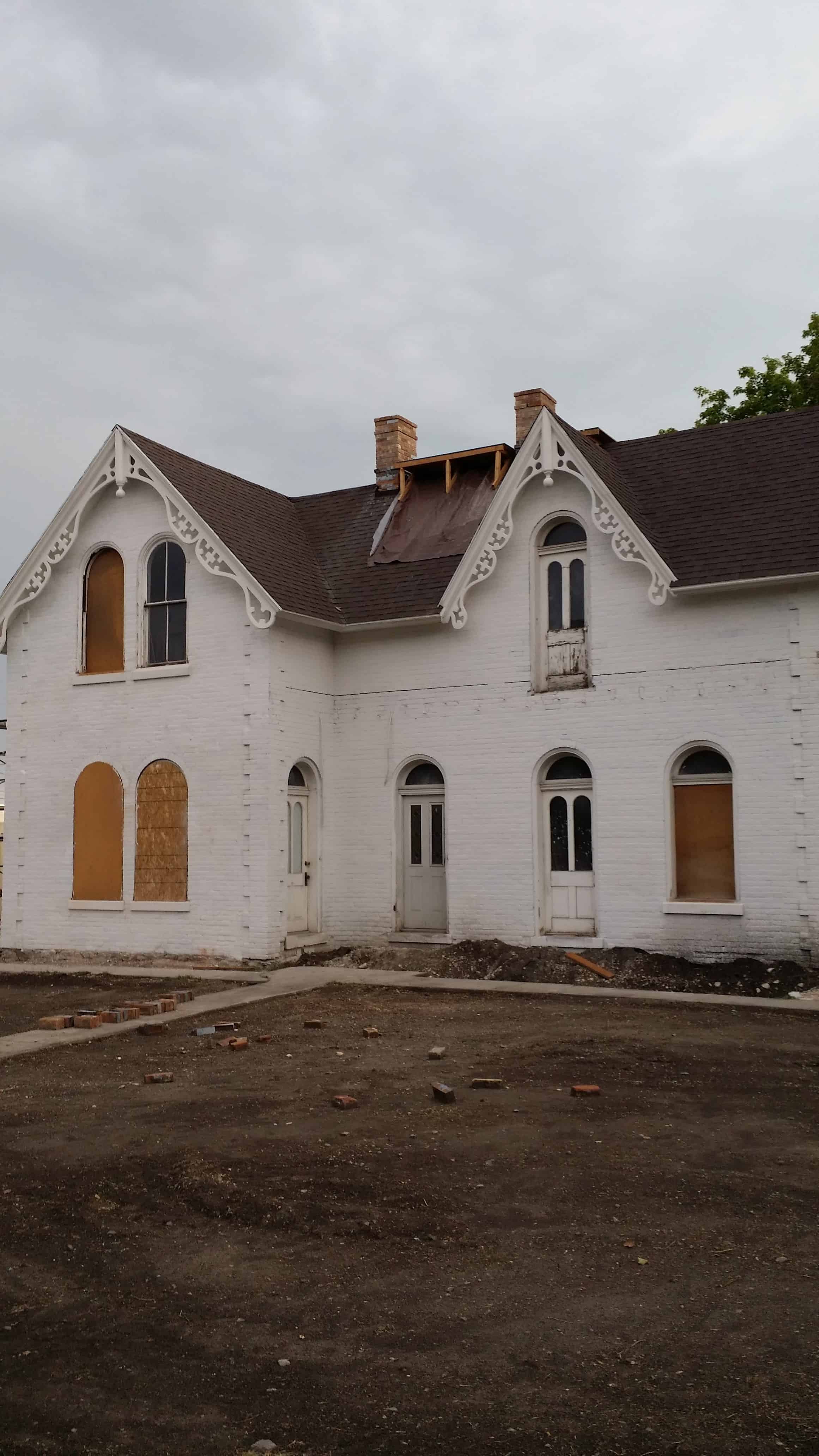
The George Taylor Jr. House is a historic house located at 187 North 400 West in Provo, Utah.

This house was designated to the Provo City Landmarks register on August 22, 1995.

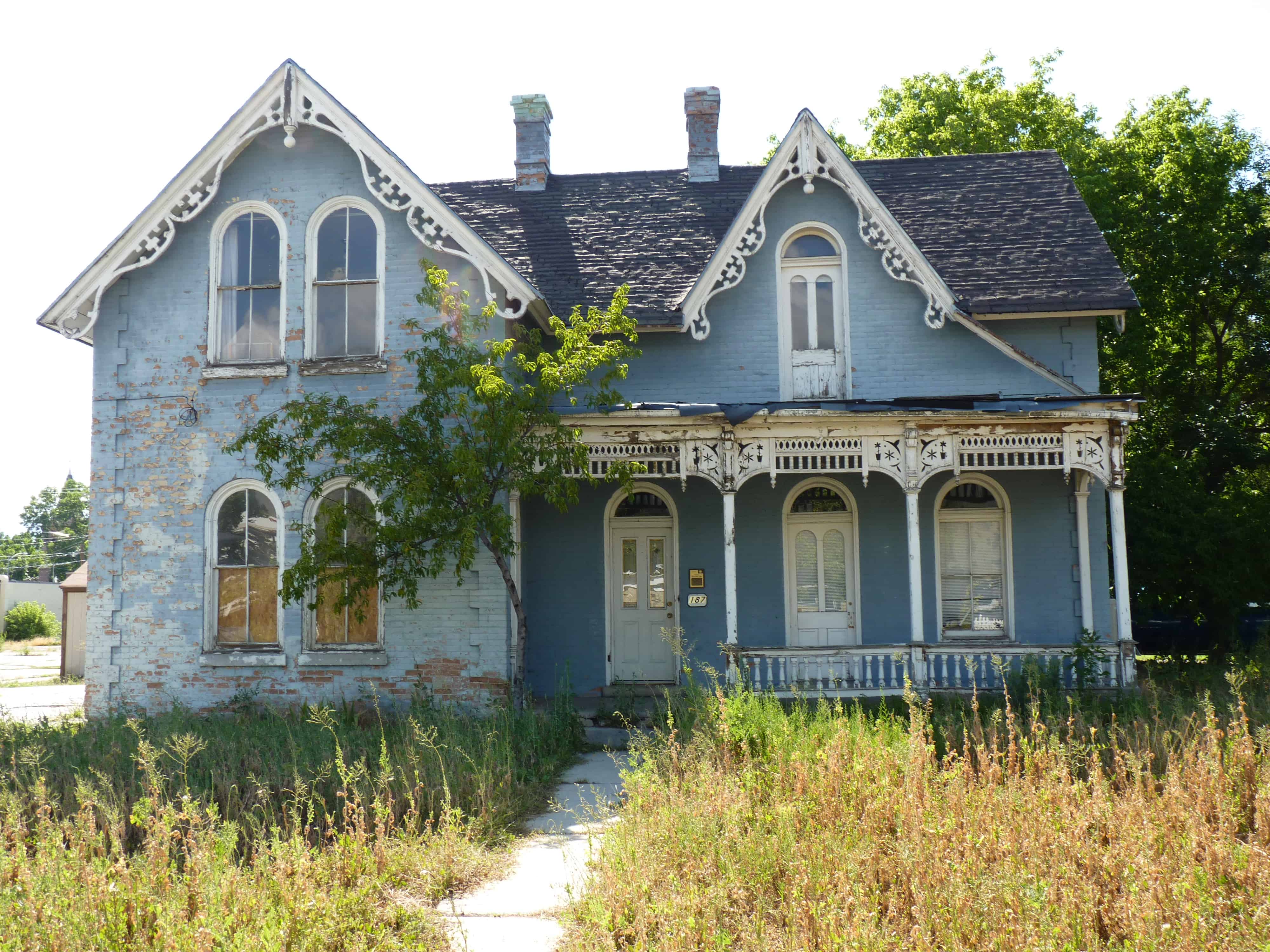
Built in the 1880s, this house offers an important example of the cross-wing house type in Utah. The cross-wing plan was a predominant form of late nineteenth-century construction. The house also portrays a style reminiscent of the Gothic Revival as evidenced by the laced porch and high-arched windows. These two elements, and the unusual craftsmanship of this home, make the Taylor House one of the best examples of the cross-wing plan in the state. Rounded-arch windows and door openings like those seen here are rare in Provo.

Here are two photos from before the remodel (not mine)

http://en.wikipedia.org/wiki/File:George_Taylor_Jr._House_Provo,_UT.jpg
http://en.wikipedia.org/wiki/File:George_Taylor_House_Provo,_UT.jpg

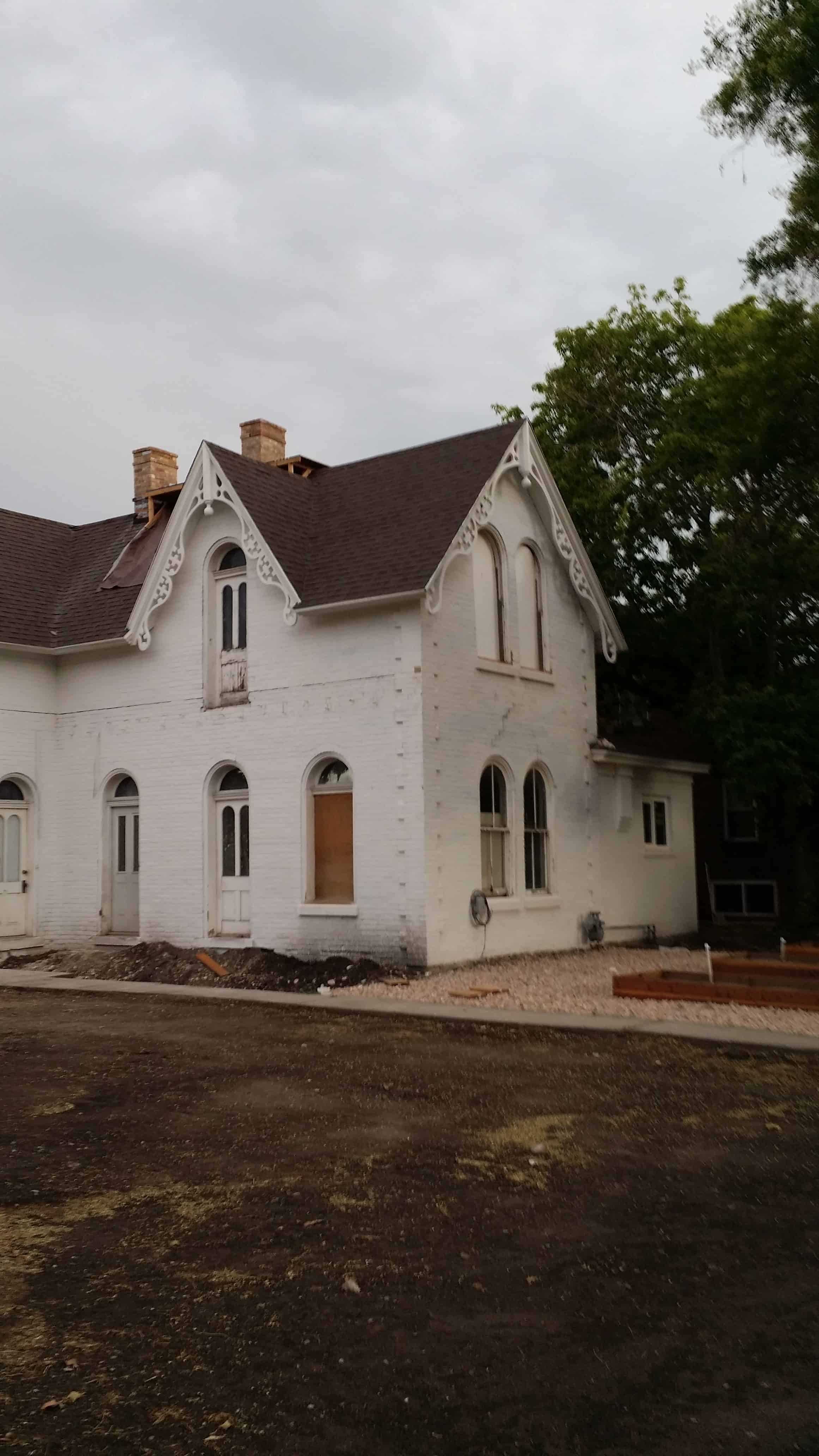
I came around during a remodel, here are my photos then.   I will get more after it is done.

2014-08-24 19.26.43

Joseph H. Frisby House

08 Saturday Nov 2014

Posted by Jacob Barlow in Uncategorized

≈ 1 Comment

Tags

historic, Historic Homes, NRHP, Provo, utah, utah county


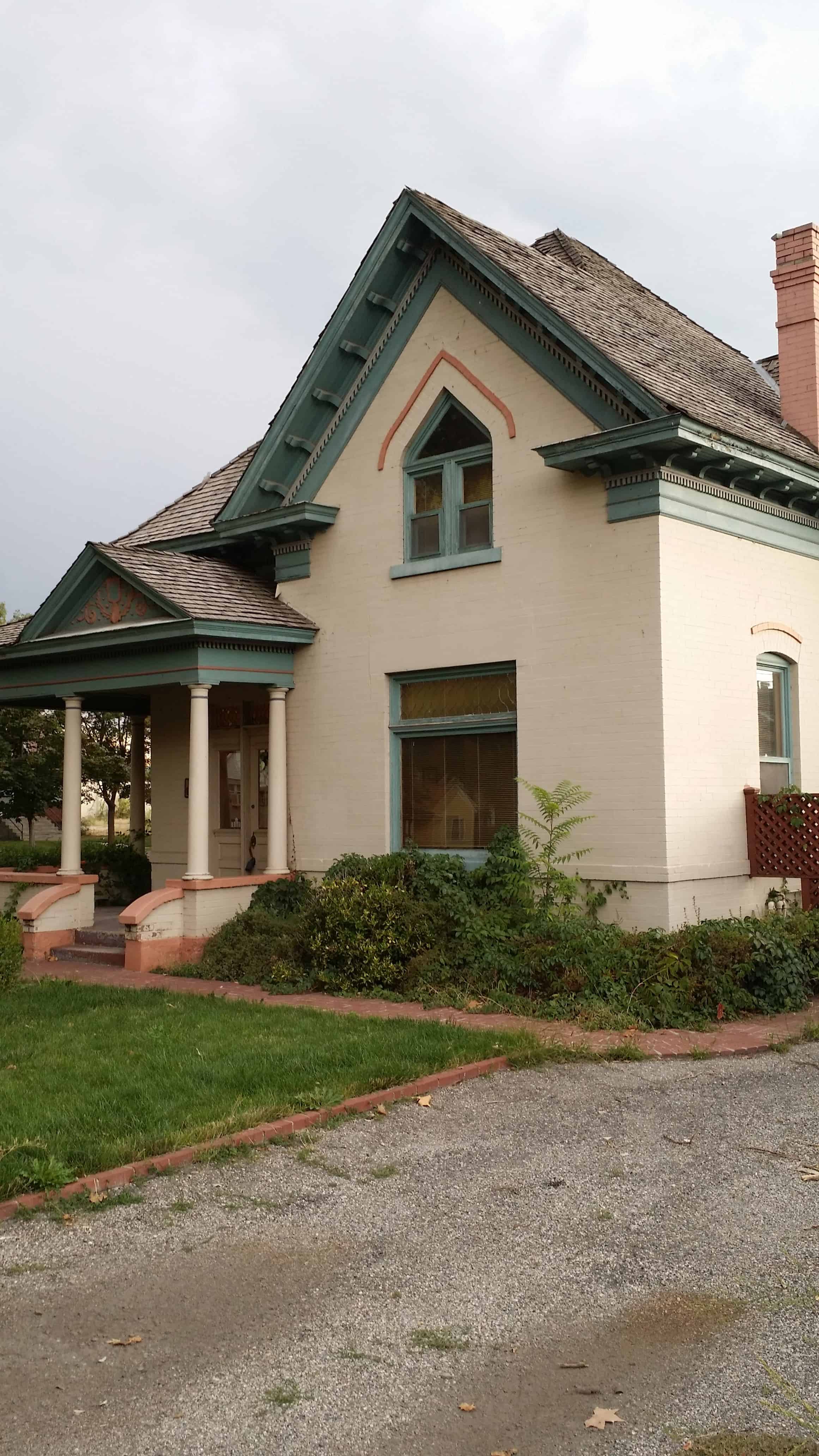
The Joseph H. Frisby House (209 North 400 West) is a historic house located at 209 North 400 West in Provo, Utah. It is listed on the National Register of Historic Places.

This home was built in 1906 for Joseph H. Frisby during the first year of his term as Provo City Mayor. “The House is a somewhat modest Victorian Eclectic house type that was most likely influenced by house pattern books. This house type was not used in Salt Lake City, or in many other areas of the state, but was inexplicably popular in Utah County (Historic Provo p. 8).”

“The Joseph H. Frisby house is a two story brick house with an irregular plan. The irregular plan is determined by the roof configuration of a central pyramid intersected on three sides by projecting gables. A one story porch wraps around the northeast corner of the facade and is terminated at each end by one of the projecting opelted wings. The porch is supported on Tuscan columns that extend from the side of one gabled wing under the eaves of the pyramidal roof to the other gabled wing. Classical detailing appears in the cornice and in the porch. The boxed cornice has brackets and a frieze decorated by dentils. A pediment with Classical Revival decoration on its tympanum and dentils on its frieze is located above the steps leading to the main entrance. Of particular note in the fenestration are the second story windows which have a triangular top above which the brickwork is in the configuration of a four-center ogee and a key-hole, and an oval stained glass window on the south wall of the first floor. A rear extension, which may have been a later addition, was most likely added soon after the original structure was built, and complements the house in its massing and fenestration (National Park Service p.2).”

Joseph H. Frisby was born in Birmingham, England in 1850, and was an English immigrant. He came to Utah in 1864, crossing the plains by ox team, and settled in Coalville, where he remained for several years until he went to Arizona. He settled in Provo in the year 1903, and had this house built soon after in 1905. Frisby lived at this location until 1913, when he sold this house and moved down the street to 258 North 400 West, where he died two years later.

Joseph H. Frisby lived a significant life, having served as a justice of the peace, having operated a mercantile business, and having been mayor of Provo for two years. Frisby’s election was tangled up in controversy. During this time, the town of Provo was divided. Needing a railroad, the east side of town insisted that it be built on the east side of Provo, while the west insisted it belonged on the west side. Hoping to sway the decision, the west side of Provo nominated Joseph Frisby for mayor in hopes that he would act in their favor. Having won the election but narrowly, Joseph decided to postpone the decision until he was out of office.

Joseph Frisby sold his house to Charles Hopkins in 1913. Hopkins, born February 21, 1864, at Dorcetshire, England, immigrated to America in 1887 and settled in the town of Elkhorn, Montana. In Elkhorn Hopkins was primarily involved in mining and the mercantile business, as well as serving as the local postmaster for fifteen years. In 1912 Hopkins relocated to Provo where he was elected to the Provo City Commission, where he served for thirteen years. Under his administration the City and County Building was built, the Provo Memorial Park was planned and most of Provo’s streets were paved. Hopkins also served as the chairman of the Utah County WPA and FERA. He died November 9, 1936 in the Frisby House.

2014-08-24 19.22.35 2014-08-24 19.22.51 2014-08-24 19.23.10 2014-08-24 19.23.16 2014-08-24 19.23.29 2014-08-24 19.23.42

← Older posts
Newer posts →

Follow Jacob

Follow Jacob

Come wander with me on Youtube.

Blog Stats

  • 2,100,633 hits

Social and Other Links

BarlowLinks.com

Recent Posts

  • Scout Monument
  • Provo High School Seminary Building
  • 821 E 100 S
  • 820 E 100 S
  • 817-819 E 100 S

Archives

Loading Comments...