Rockville lies just outside the park boundary for Zion National Park; the park entrance is located approximately 5 miles northeast of the town.
Four miles southwest of Springdale. It was originally settled in late 1860 and early 1861 under the direction of Mormon Apostle Orson Pratt. The original name was Adventure but it was subsequently changed to Rockville because of the rocky soil and surroundings along the Virgin River.
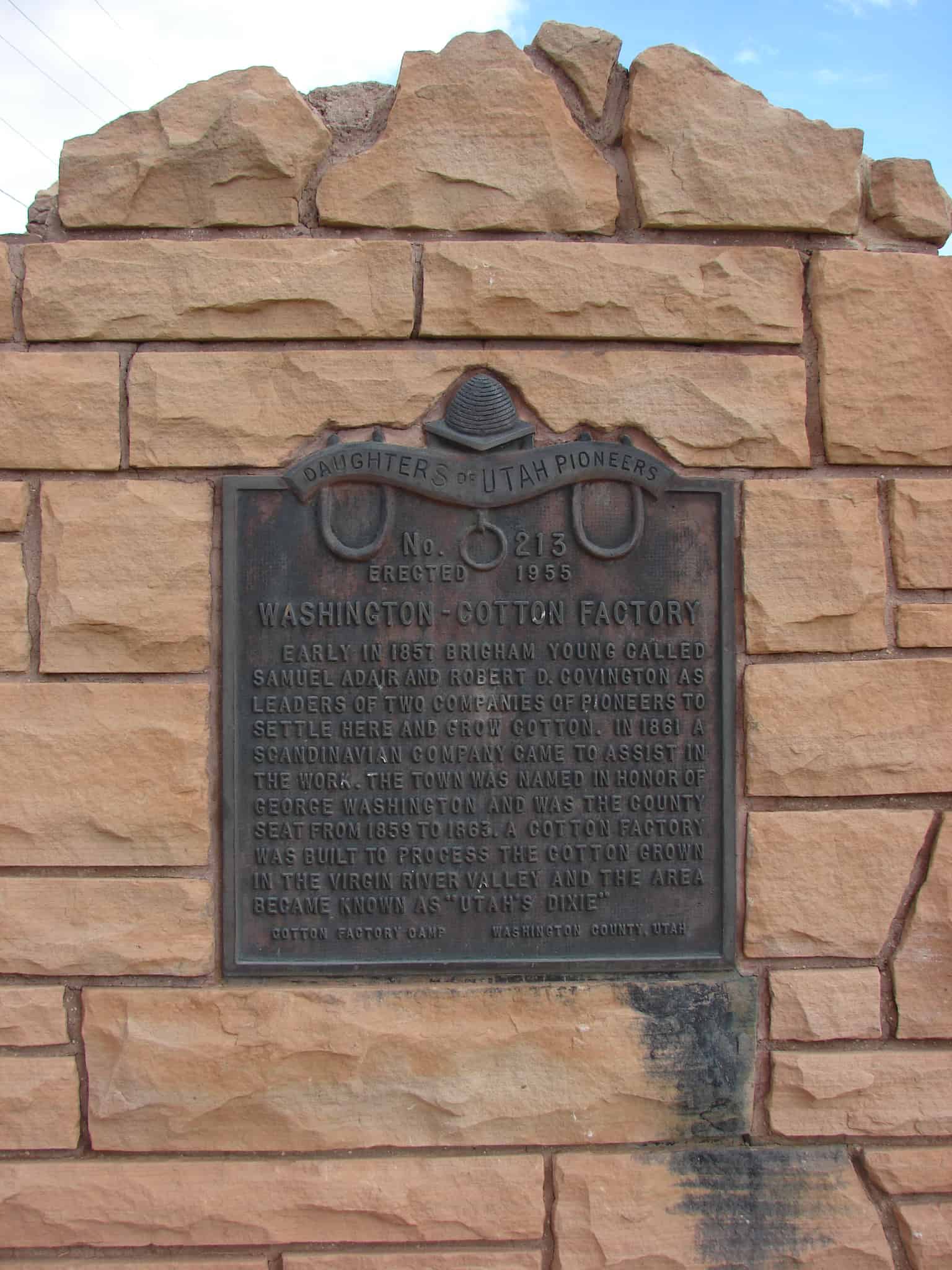
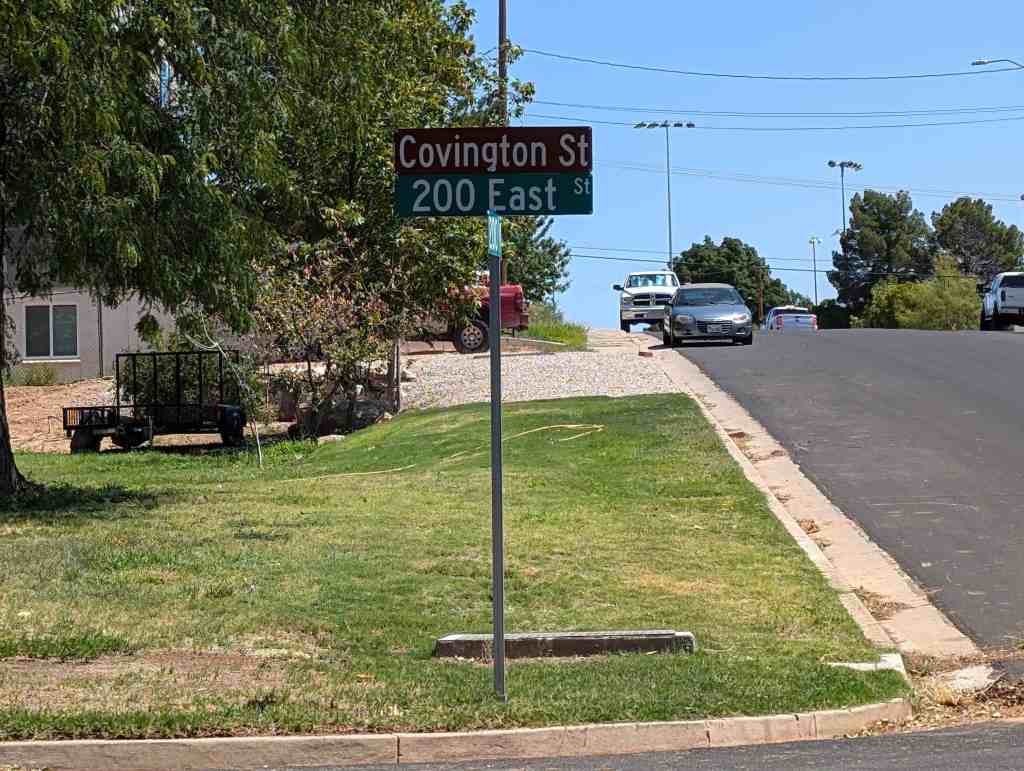
Early in 1857 Brigham Young called Samuel Adair and Robert D. Covington as leaders of two companies of pioneers to settle here and grow cotton. In 1861 a Scandinavian company came to assist in the work. The town was named in honor of George Washington and was the county seat from 1859 to 1863. A cotton factory was built to process the cotton grown in the Virgin River Valley and the area became known as “Utah’s Dixie.”
This is Daughters of Utah Pioneers historic marker #213 located at 98 North Main Street in Washington, Utah. The text above is from the monument.
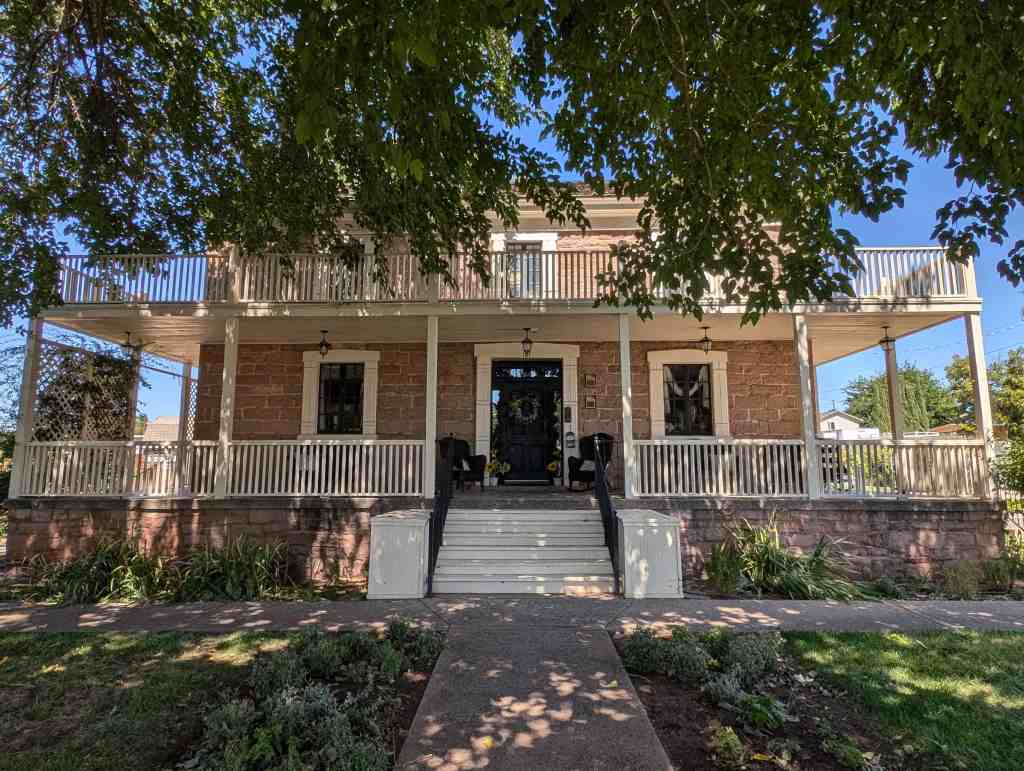
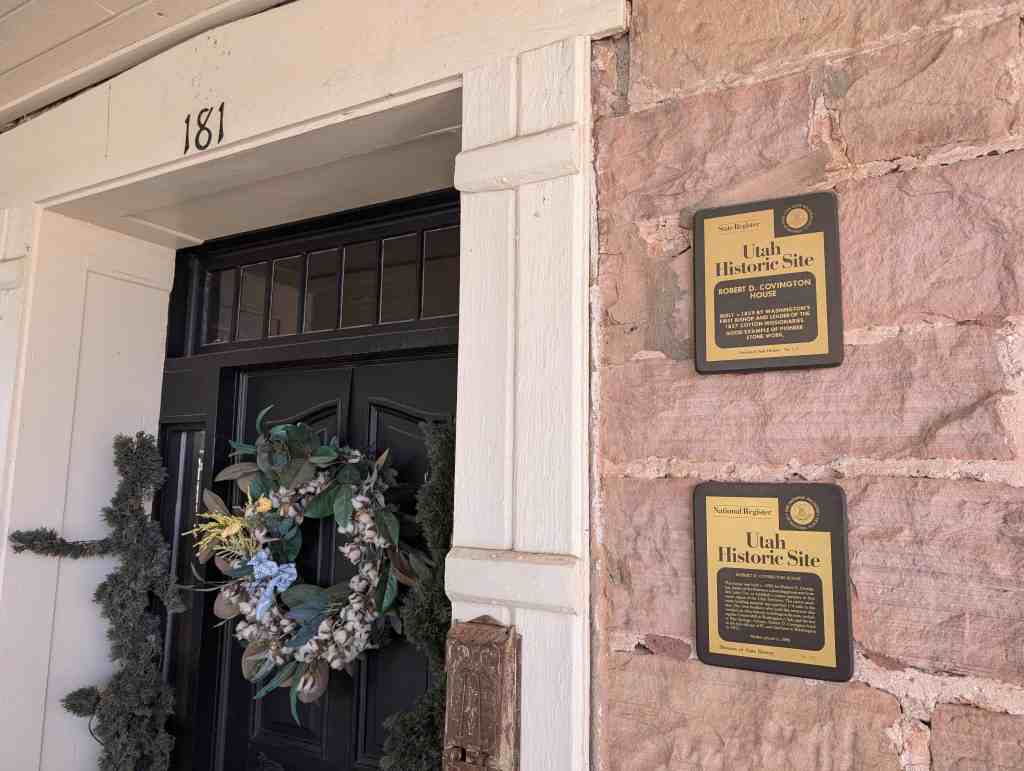
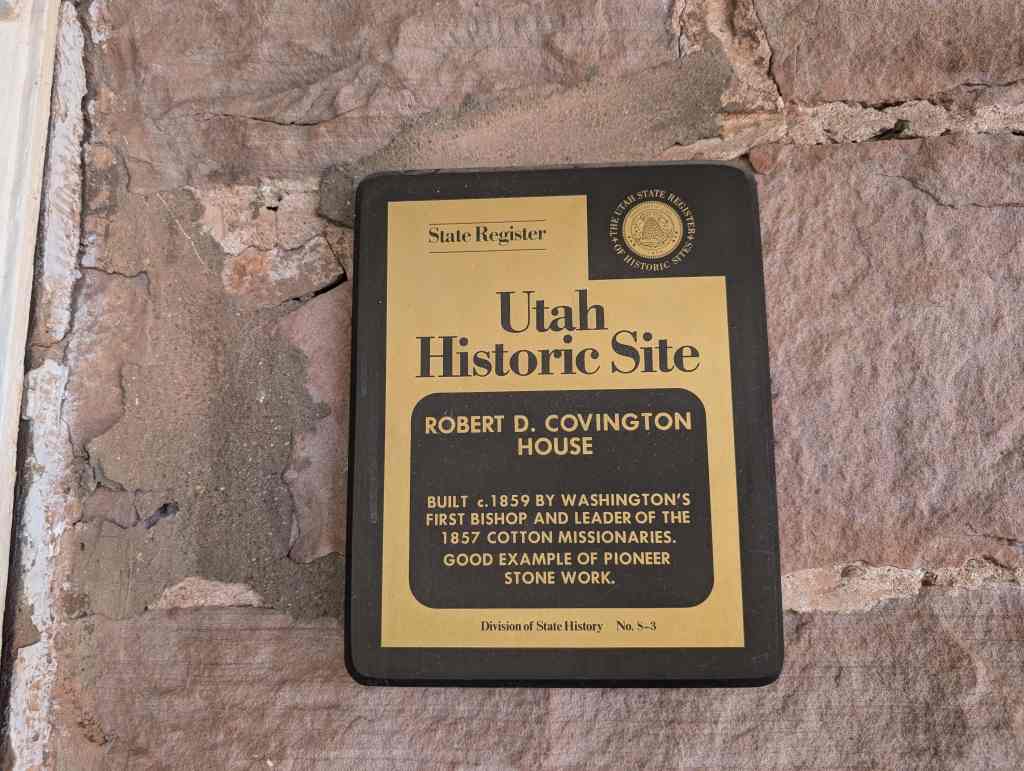
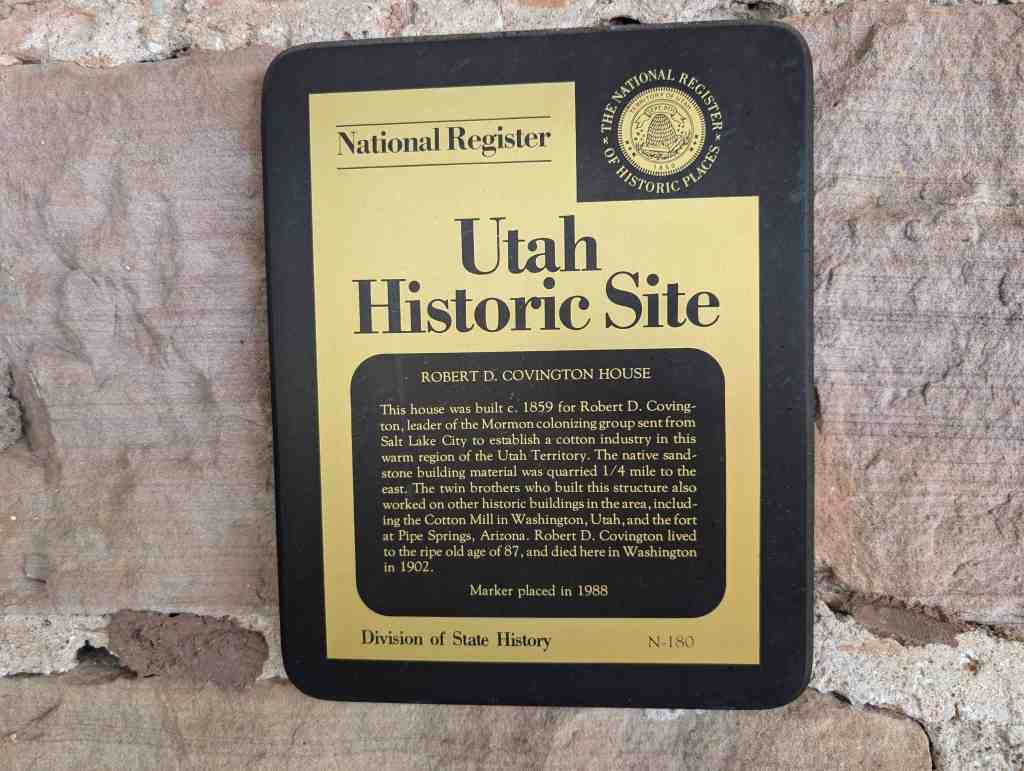
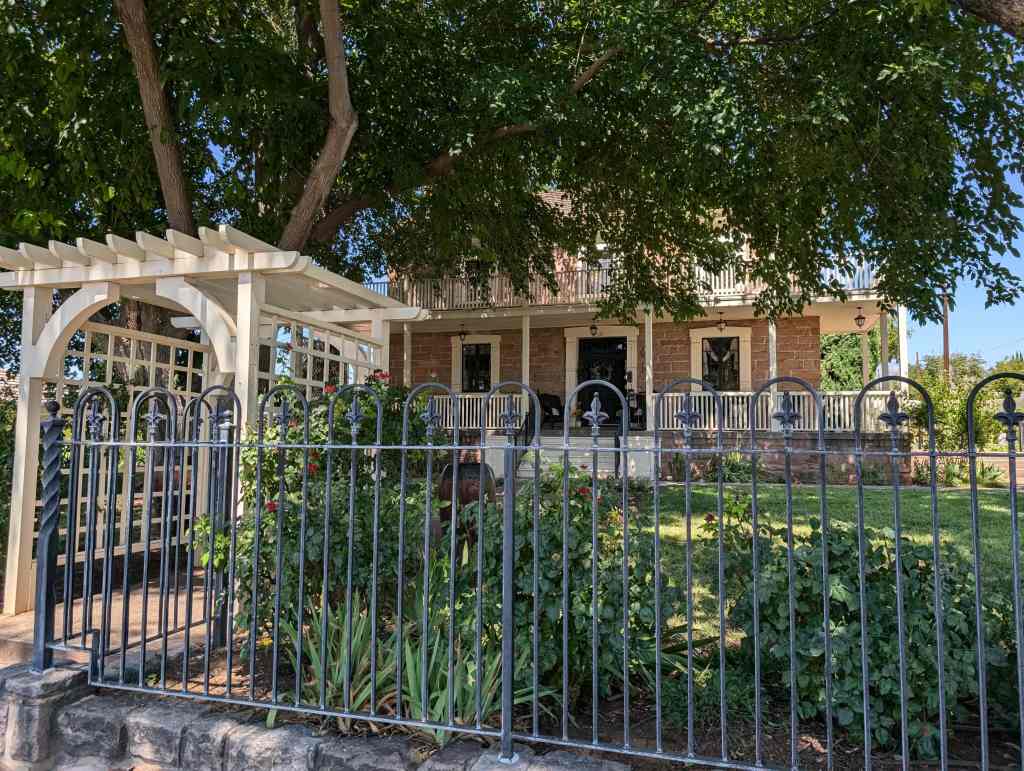
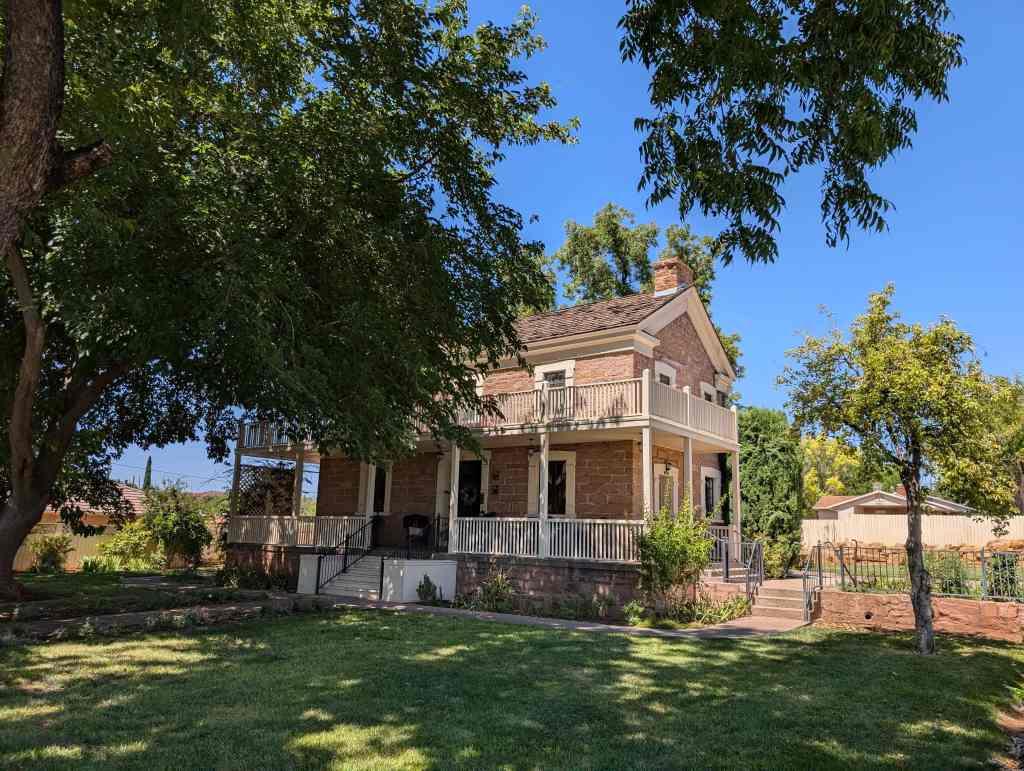
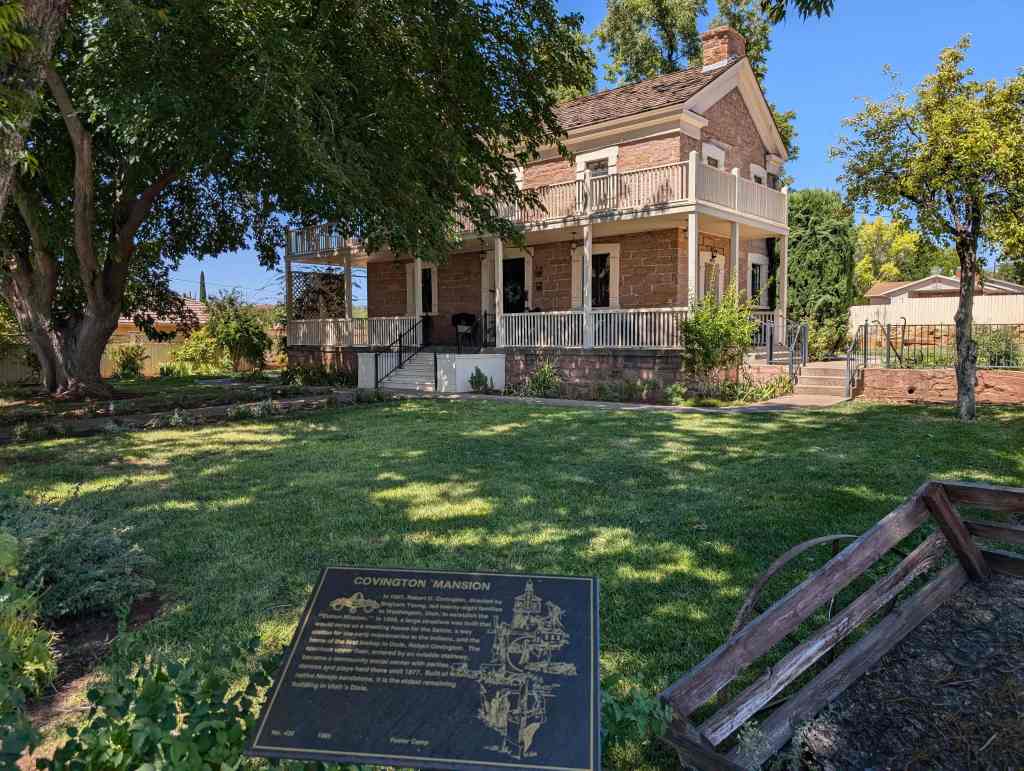
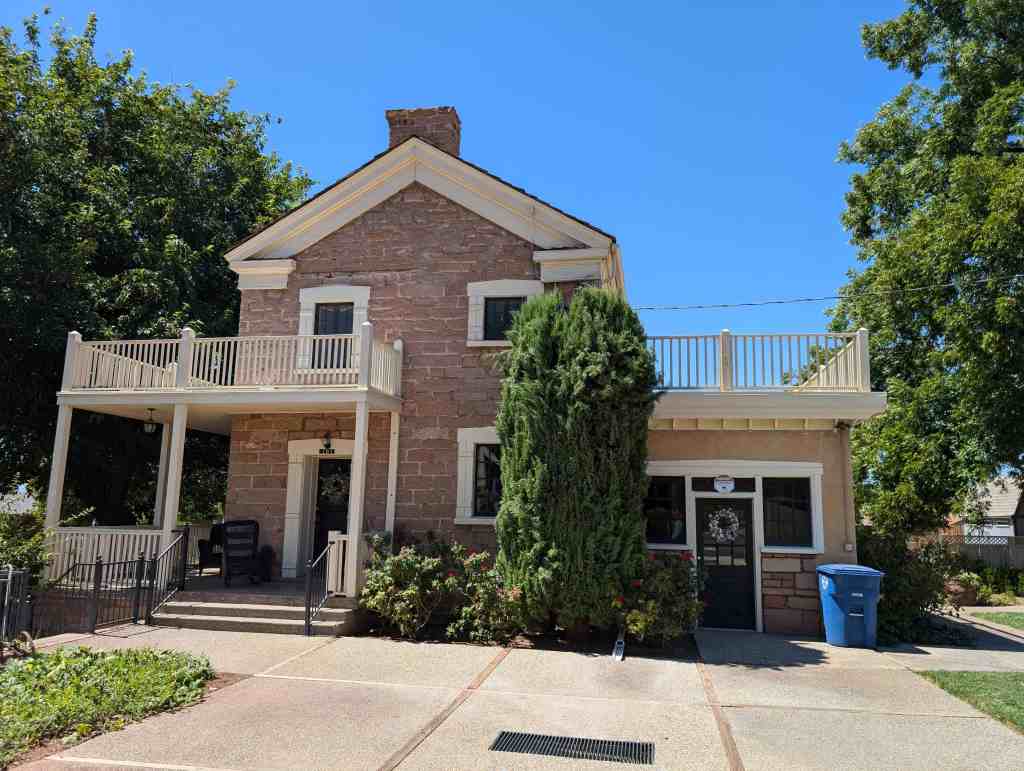
This house was built c. 1859 for Robert D. Coving- ton, leader of the Mormon colonizing group sent from Salt Lake City to establish a cotton industry in this warm region of the Utah Territory. The native sand- stone building material was quarried 1/4 mile to the east. The twin brothers who built this structure also worked on other historic buildings in the area, including the Cotton Mill in Washington, Utah, and the fort at Pipe Springs, Arizona. Robert D. Covington lived to the ripe old age of 87, and died here in Washington in 1902.
Located at 181 East 200 North in Washington, Utah.
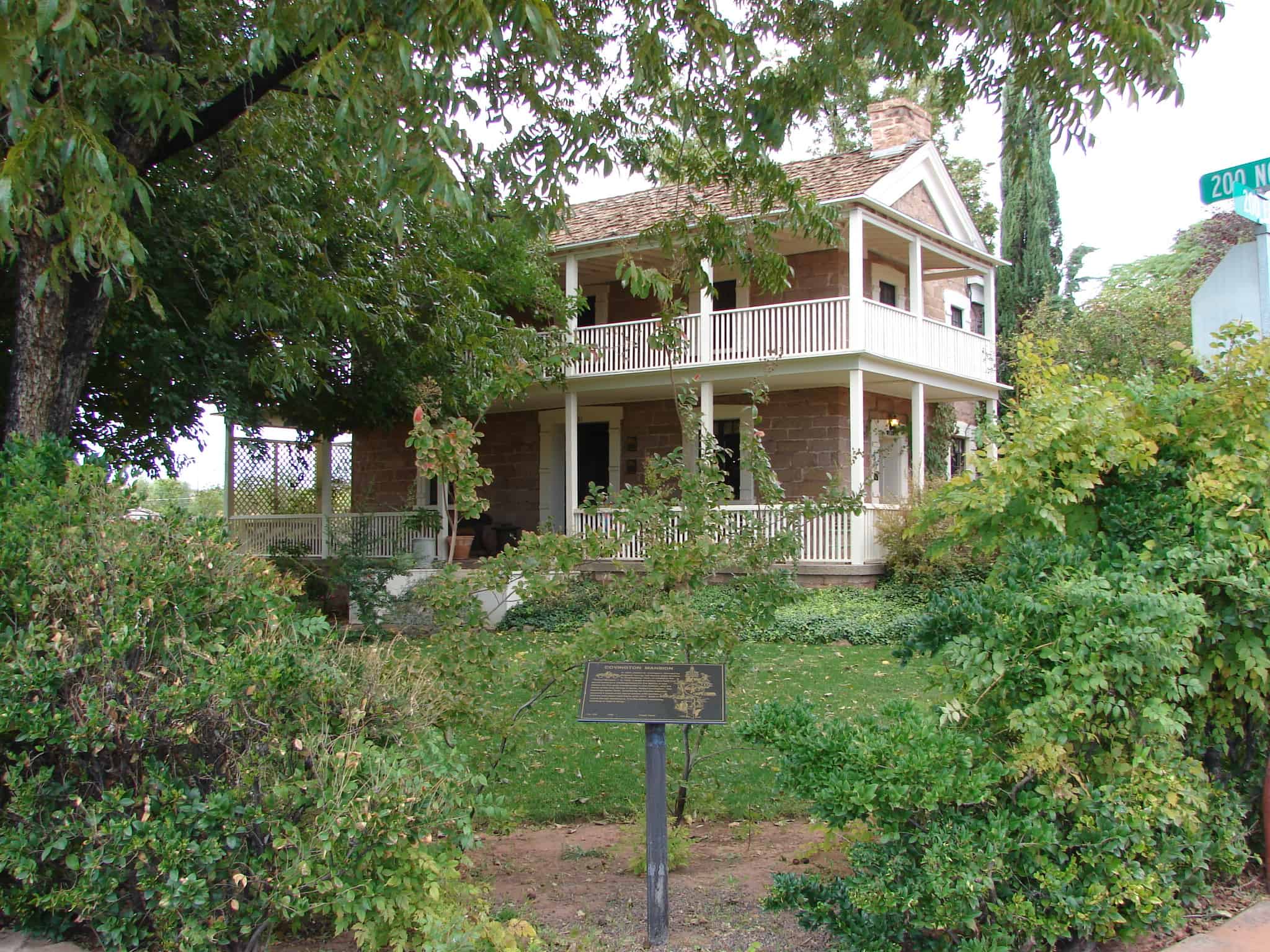
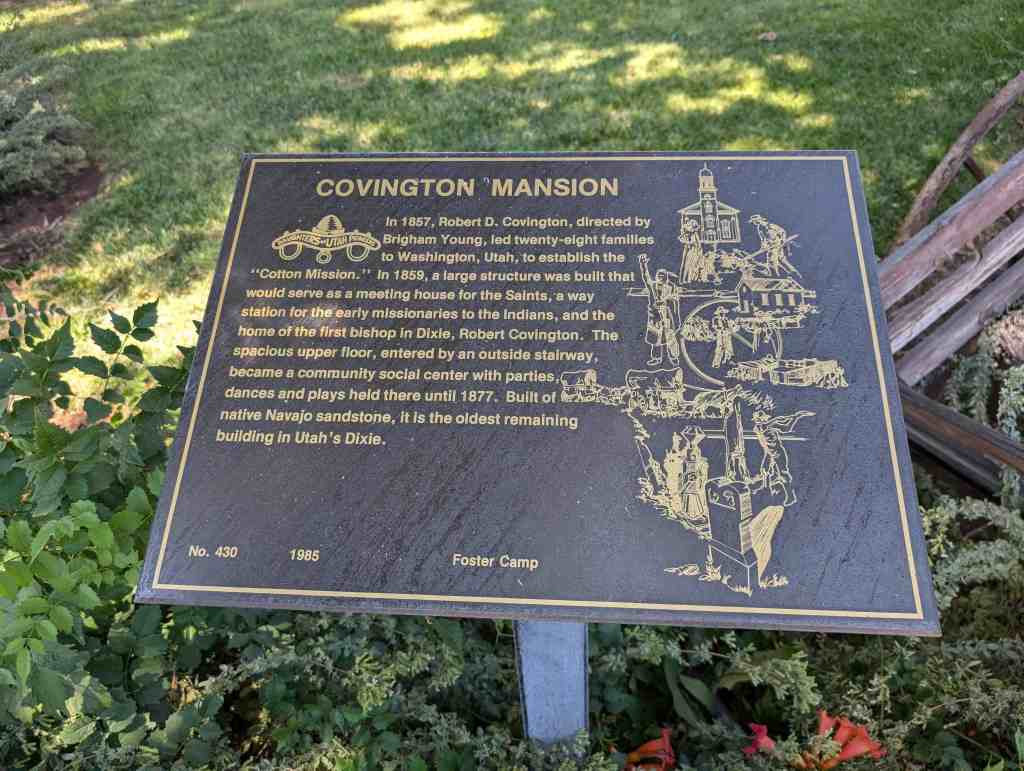
Covington Mansion
In 1857, Robert D. Covington, directed by Brigham Young, led twenty-eight families to Washington, Utah, to establish the “Cotton Mission.” In 1859, a large structure was built that would serve as a meeting house for the Saints, a way station for the early missionaries to the Indians, and the home of the first bishop in Dixie, Robert Covington. The spacious upper floor, entered by an outside stairway, became a community social center with parties, dances and plays held there until 1877. Built of native Navajo sandstone, it is the oldest remaining building in Utah’s Dixie.
St. George is the seventh-largest city in Utah, and the most populous city in the state outside of the Wasatch Front. St. George is the commercial hub of southern Utah and Utah’s Dixie, a nickname given to the area when Mormon pioneers grew cotton in the warm climate.(*)
St. George was founded as a cotton mission in 1861 under the direction of Brigham Young, there is a lot of Pioneer history in the area and also a lot of pre-historic/dinosaur diggings and findings.
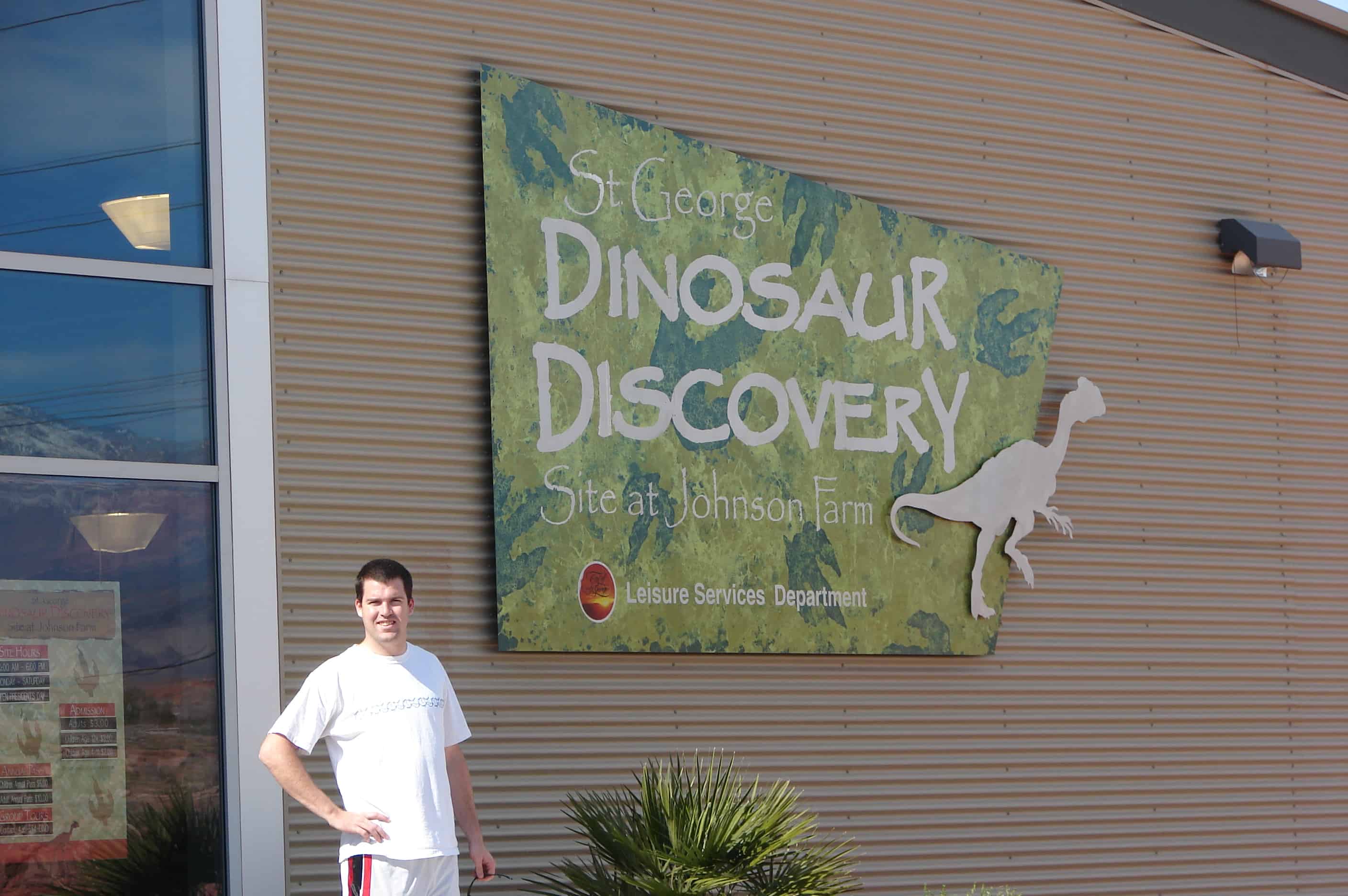
We stopped by the dinosaur site a couple weeks ago, it was interesting and fun for the kids. I think it was $27 for our family of two adults and four kids.
The kids enjoyed it, there wasn’t a lot to see but it was cool to see what kind of tracks and such were found there in our very own St. George. They had a video, some models, many, many tracks and a place for kids to make origami.
It was worth it to see once, probably not twice.