• About JacobBarlow.com
  • Cemeteries in Utah
  • D.U.P. Markers
  • Doors
  • Exploring Utah Email List
  • Geocaching
  • Historic Marker Map
  • Links
  • Movie/TV Show Filming Locations
  • Oldest in Utah
  • Other Travels
  • Photos Then and Now
  • S.U.P. Markers
  • U.P.T.L.A. Markers
  • Utah Cities and Places.
  • Utah Homes for Sale
  • Utah Treasure Hunt

JacobBarlow.com

~ Exploring with Jacob Barlow

JacobBarlow.com

Tag Archives: Historic Markers

Helen Jane Wiser Stewart

16 Saturday Dec 2023

Posted by Jacob Barlow in Uncategorized

≈ 1 Comment

Tags

Art, Clark County, Historic Markers, Las Vegas, Nevada, Sculptures, Women in History

Helen Jane Wiser Stewart
April 16, 1854 – March 16, 1926
“The First Lady of Las Vegas”

“It will only be for two years,” Archibald promised his wife Helen in 1882, coaxing her away from civilized Pioche, Nevada to a ranch in the middle of the desert. Two years later, Helen buried Archibald after he lost his life in a gun fight at the nearby Kiel Ranch. Helen stepped out of her traditional role as wife, mother, and homemaker, to take over the “Los Vegas Rancho.” Helen never looked back. She expanded the ranch to nearly 2000 acres, and became one of the largest property owners in the Las Vegas valley. Helen sold 1835 acres of her property to the San Pedro, Los Angeles, and Salt Lake Railroad in 1902 for $55,000. She kept some land for herself and donated 10 acres to the local Paiute Tribe. Helen was indeed a woman of “Firsts” – first postmaster in the valley – first woman in Las Vegas to serve on a jury – first woman to serve on the Clark County school board. As a founding member of the local Christ Episcopal Church and the Mesquite Club, and a Red Cross activist, Helen shaped early Las Vegas into a vibrant community. Local leaders shut down the city of Las Vegas during Helen’s funeral in honor of her pioneering spirit.


Generous support for the statue in thanks to
Las Vegas Centennial Commission
Friends of the fort
Southern Nevada Women’s History Project
Nevada State Parks
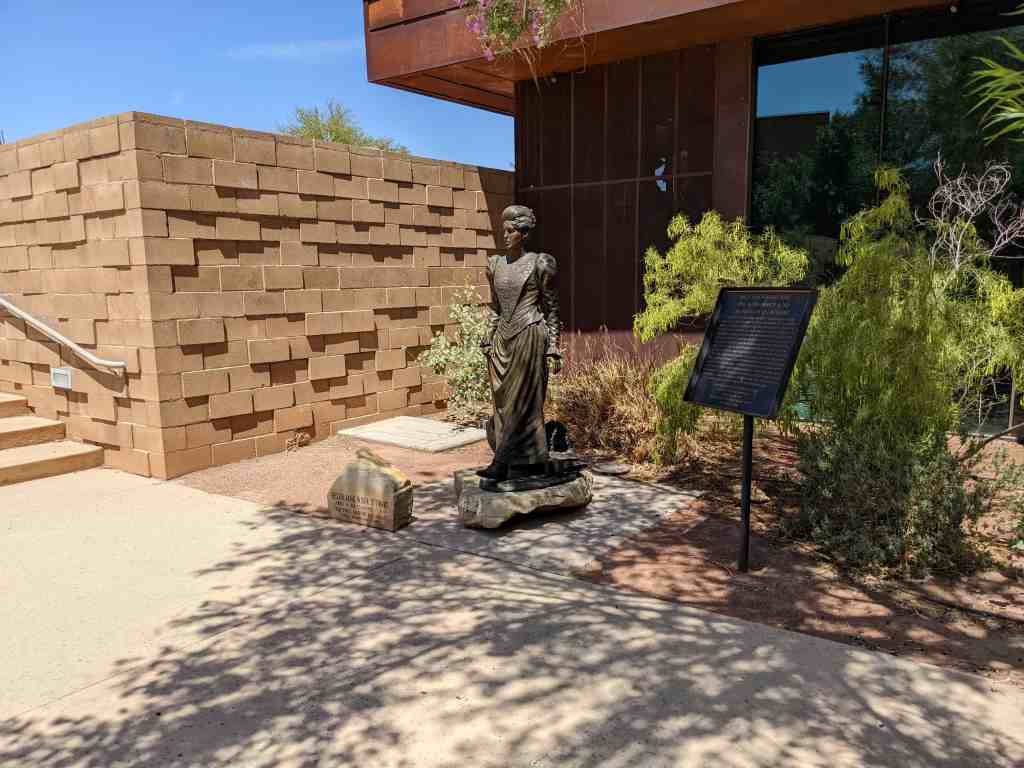
Located at Old Las Vegas Mormon Fort State Historic Park at 500 E Washington Avenue in Las Vegas, Nevada

Rush Valley Station

30 Thursday Nov 2023

Posted by Jacob Barlow in Uncategorized

≈ Leave a comment

Tags

Central Overland Stage, historic, Historic Markers, Overland Trail, Pony Express, SUP, UPTLA, utah

Rush Valley Station

Pony Express – 1860-61
St. Joseph, Missouri – Sacramento, California
Also Overland Stage & Freight Route 1858-1868

Note: The above is a replica of the marker placed c. 1947. However, no records prior to 1862 show a station here. This includes the 1861 Pony Express schedule. In 1862, this new station was built by the Central Overland Stage & Freight and used by others.

This monument was constructed by enrollees, U. S. Grazing Division, C. C. C. Camp G-154, Company 2517 in 1941 and sponsored by the Utah Pioneer Trails and Landmarks Association (#98 of their monuments) it was later adopted by the Sons of Utah Pioneers (#240 of their monuments) and rededicated in 2017.

Related:

  • Central Overland Trail
  • Other UPTLA Historic Markers and Sons of Utah Pioneer Markers
  • Pony Express

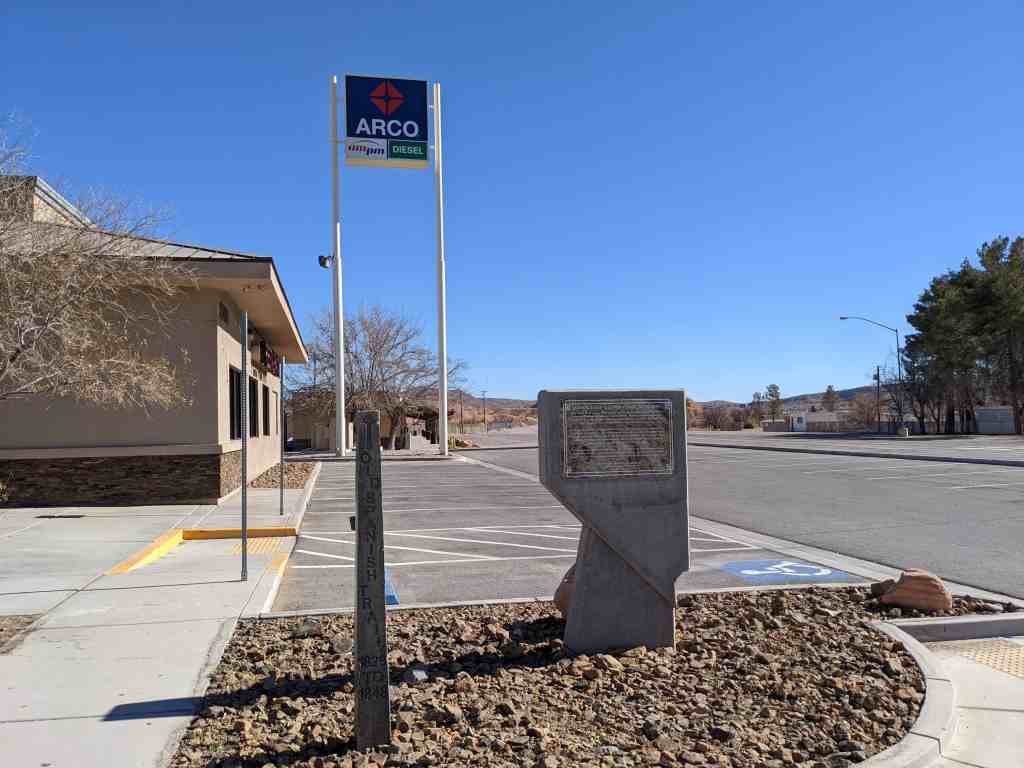
Glendale and “Glendale Nick” Nicolaides

27 Monday Nov 2023

Posted by Jacob Barlow in Uncategorized

≈ Leave a comment

Tags

E Clampus Vitus, Glendale, Historic Markers, Nevada

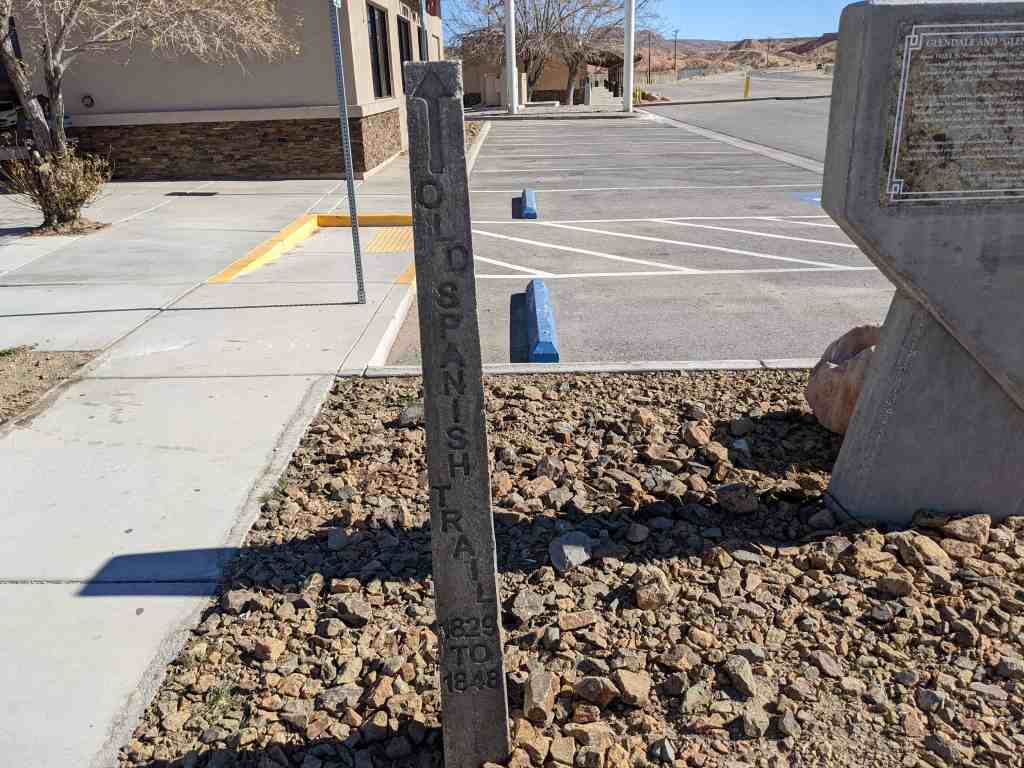
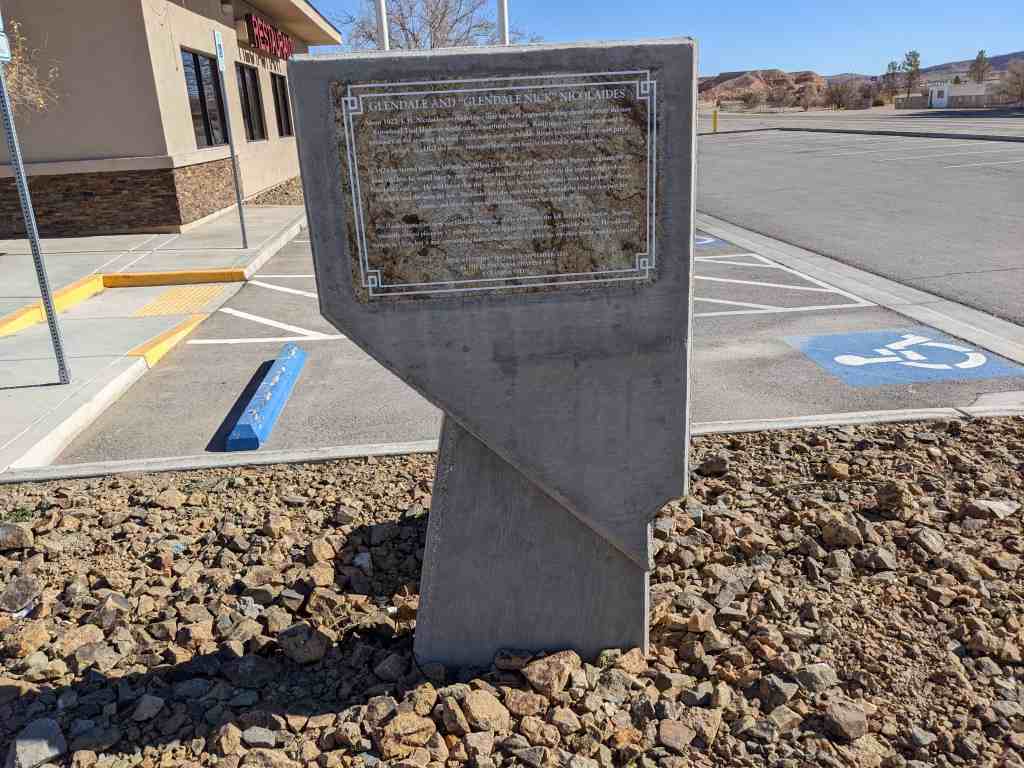
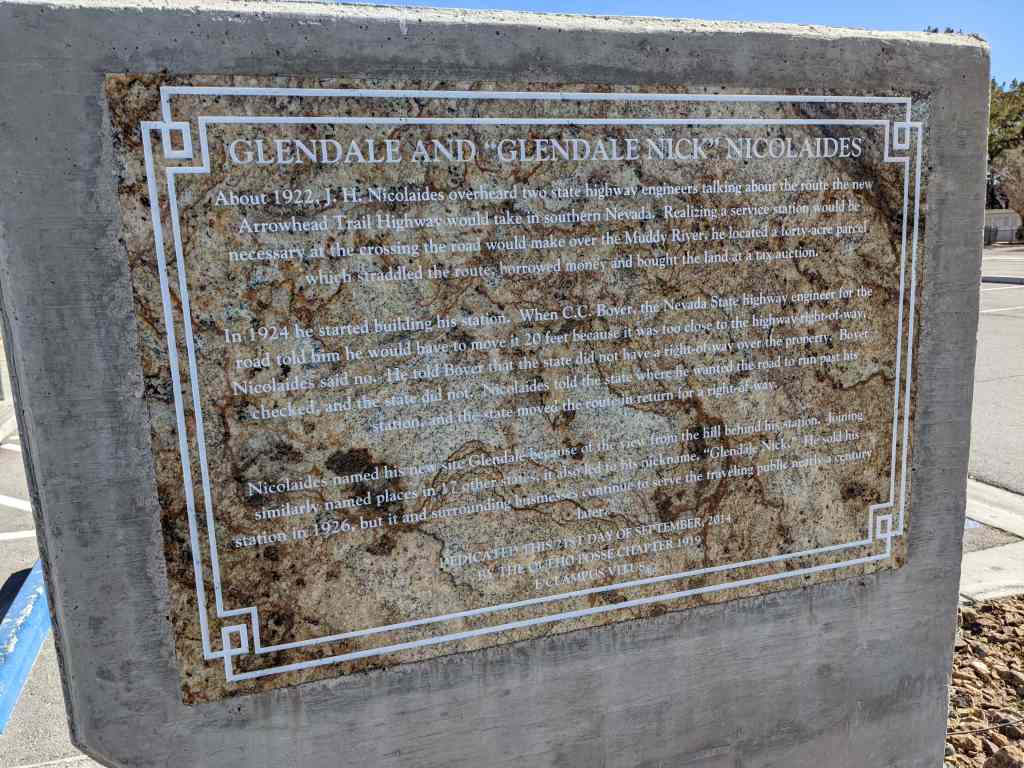
Glendale and “Glendale Nick” Nicolaides

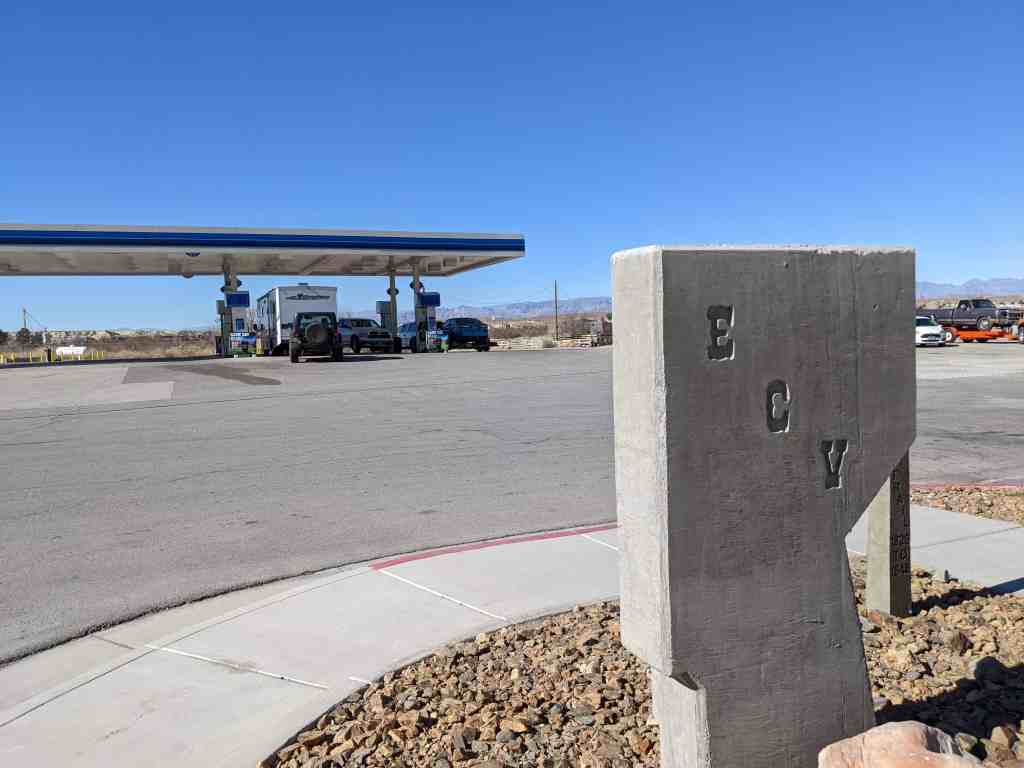
About 1922, J. H. Nicolaides overheard two state highway engineers talking about the new route Arrowhead Trail Highway would take in southern Nevada. Realizing a service station would be necessary at the crossing the road would make over the Muddy River, he located a forty-acre parcel which straddled the route, borrowed money and bought the land at a tax auction.

In 1924 he started building his station. When C. C. Boyer, the Nevada State highway engineer for the road told him he would have to move it 20 feet because it was too close to the highway right-of-way, Nicolaides said no. He told Boyer that the state did not have a right-of-way over the property. Boyer checked, and the state did not. Nicolaides told the state where he wanted the road to run past his station, and the state moved the route in return for a right-of-way.

Nicolaides named his new site Glendale because of the view from the hill behind his station. Joining similarly named places in 17 other states, it also led to his nickname, “Glendale Nick.” He sold his station in 1926, but it and the surrounding business continue to serve the traveling public nearly a century later.

Dedicated this 21st Day of September, 2014 by the Queho Posse Chapter 1919 E Clampus Vitus

Located at 2300 Glendale Boulevard in Glendale, Nevada

  • E Clampus Vitus Historic Markers

The Las Vegas Mormon Fort

26 Sunday Nov 2023

Posted by Jacob Barlow in Uncategorized

≈ Leave a comment

Tags

Clark County, Forts, Historic Markers, Las Vegas, neveda

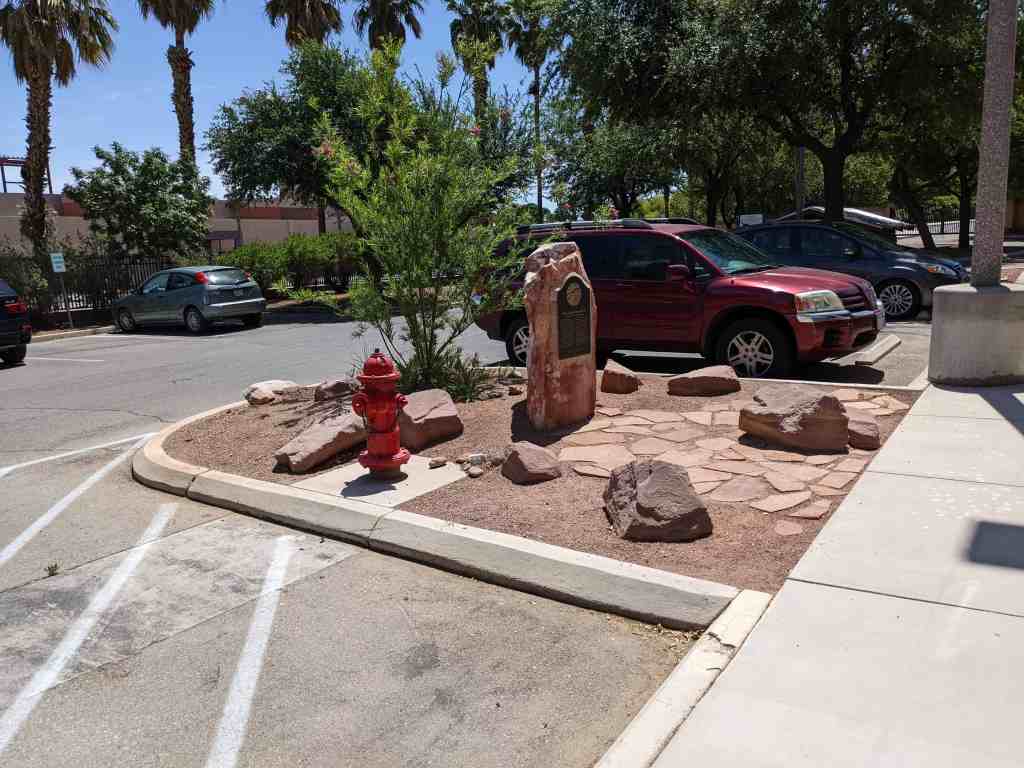
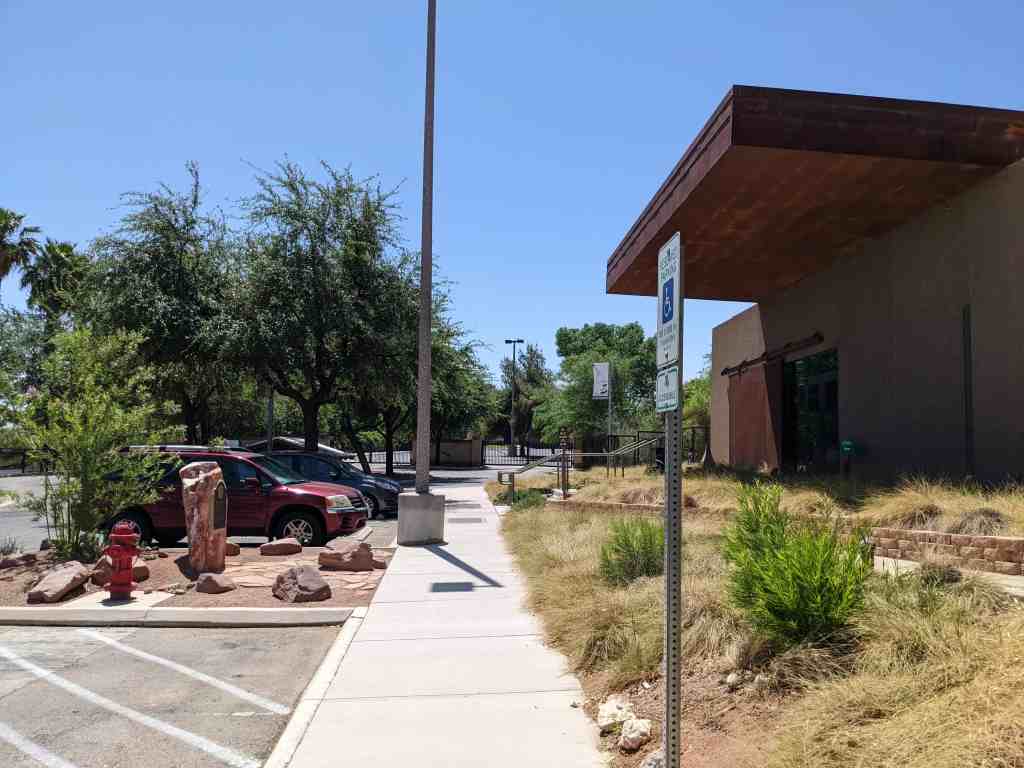
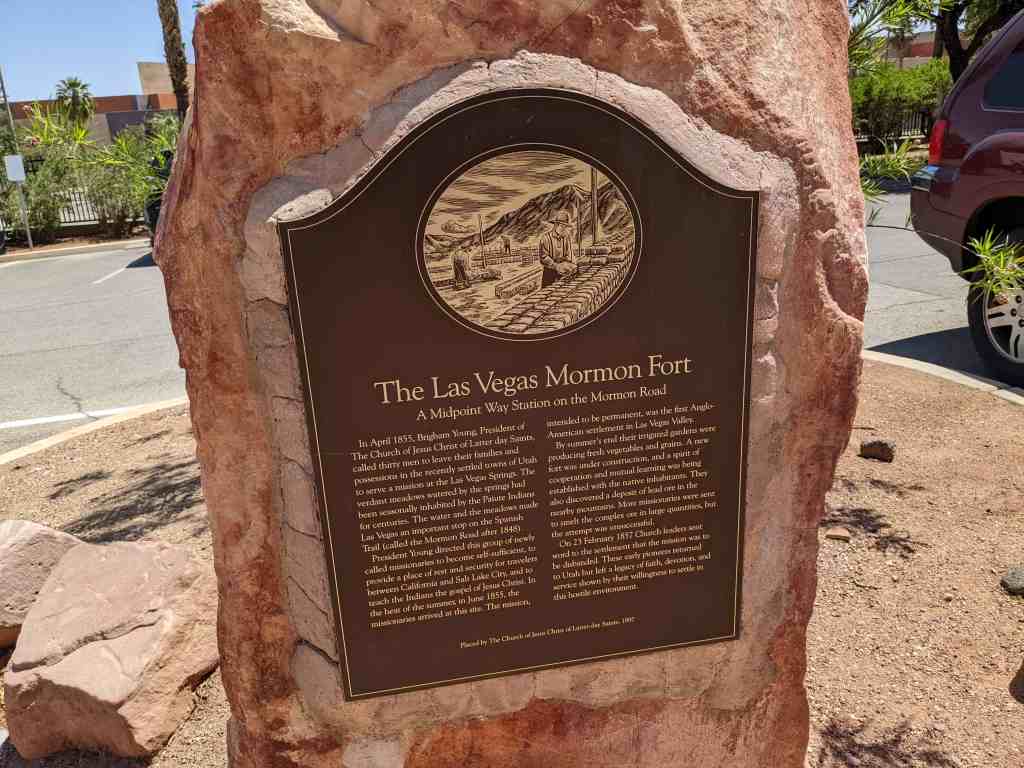
The Las Vegas Mormon Fort
A Midpoint Way Station on the Mormon Road

In April 1855, Brigham Young, President of The Church of Jesus Christ of Latter day Saints, called thirty men to leave their families and possessions in the recently settled towns of Utah to serve a mission at the Las Vegas Springs. The verdant meadows watered by the springs had been seasonally inhabited by the Paiute Indians for centuries. The water and the meadows made Las Vegas an important stop on the Spanish Trail (called the Mormon Road after 1848).

President Young directed this group of newly called missionaries to become self-sufficient, to provide a place of rest and security for travelers between California and Salt Lake City, and to teach the Indians the gospel of Jesus Christ. In the heat of the summer, in June 1855, the missionaries arrived at this site. The mission, intended to be permanent, was the first Anglo-American settlement in Las Vegas Valley.

By summer’s end their irrigated gardens were fort was under construction, and a spirit of producing fresh vegetables and grains. A new cooperation and mutual learning was being established with the native inhabitants. They also discovered a deposit of lead ore in the nearby mountains. More missionaries were sent to smelt the complex ore in large quantities, but the attempt was unsuccessful.

On 23 February 1857 Church leaders sent word to the settlement that the mission was to be disbanded. These early pioneers returned to Utah but left a legacy of faith, devotion, and service shown by their willingness to settle in this hostile environment.

The text above is from a historic marker placed by The Church of Jesus Christ of Latter-day Saints in 1997 at Old Las Vegas Mormon Fort State Historic Park at 500 E Washington Avenue in Las Vegas, Nevada

Last Chance Canal Co., Ltd.

23 Thursday Nov 2023

Posted by Jacob Barlow in Uncategorized

≈ Leave a comment

Tags

Caribou County, DUP, Grace, Historic Markers, Idaho

Last Chance Canal Co., Ltd.

Two miles east is located the dam and headworks of the canal system. Incorporation was effected Feb. 4, 1899 for the purpose of irrigating this valley. First filing on Bear River to supply the canal was Mar. 4, 1897. To perfect the right it was necessary to put the water through the right of way by Feb. 12, 1899. This tremendous task was accomplished through the ingenuity and perseverance of the brave men and women who pioneered this valley.

The text above is from Daughters of Utah Pioneers historic marker #219, located at 206 North Main Street in Grace, Idaho.

  • D.U.P. Historic Markers

The photos below were submitted by Marshall Hurst:

Ivins Pioneer Cemetery

22 Wednesday Nov 2023

Posted by Jacob Barlow in Uncategorized

≈ Leave a comment

Tags

Bancroft, Caribou County, Cemeteries, DUP, Historic Markers, Idaho, Pioneer Cemeteries

Ivins Pioneer Cemetery

This area, known as Ten Mile Sterrett and Ivins, was opened for homesteading in 1880. Emigrants from Utah and Iceland transformed sagebrush lands to productive livestock farms. They befriended the roaming Indians and Oregon Trail travelers. Jared Williams donated this plot 72×105 feet. Twenty person are buried here from 1893 to 1940.

The text above is from Daughters of Utah Pioneers historic marker #348, located on Ivins Road in Bancroft, Idaho.

  • D.U.P. Historic Markers

The photos below were submitted by Marshall Hurst:

Bancroft’s First School

21 Tuesday Nov 2023

Posted by Jacob Barlow in Uncategorized

≈ Leave a comment

Tags

Bancroft, Caribou County, DUP, Historic Markers, Idaho

Bancroft’s First School

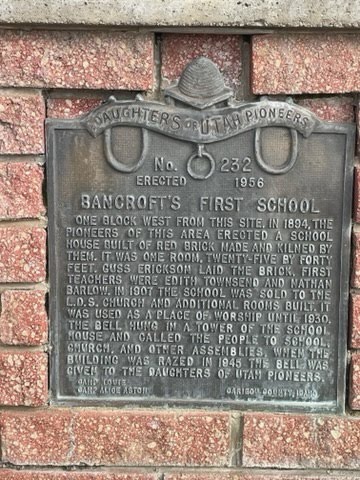
One block west from this site, in 1894, the pioneers of this area erected a school house built of red brick made and kilned by them. It was one room, twenty-five by forty feet. Guss Erickson laid the brick, first teachers were Edith Townsend and Nathan Barlow. In 1907 the school was sold to the L.D.S. Church and additional rooms built. It was used as a place of worship until 1930. The bell hung in a tower of the school house and called the people to school, church, and other assemblies. When the building was razed in 1945 the bell was given to the Daughters of Utah Pioneers.

The text above is from Daughters of Utah Pioneers historic marker #232, located at 95 South Main Street in Bancroft, Idaho.

  • D.U.P. Historic Markers

The photos below were submitted by Marshall Hurst:

Tooele County Airmail Arrows and Beacons

18 Saturday Nov 2023

Posted by Jacob Barlow in Uncategorized

≈ Leave a comment

Tags

Historic Markers, Navigation Arrows, Navigation Beacons, Stockton, SUP, Tooele County, utah

Tooele County Airmail Arrows and Beacons

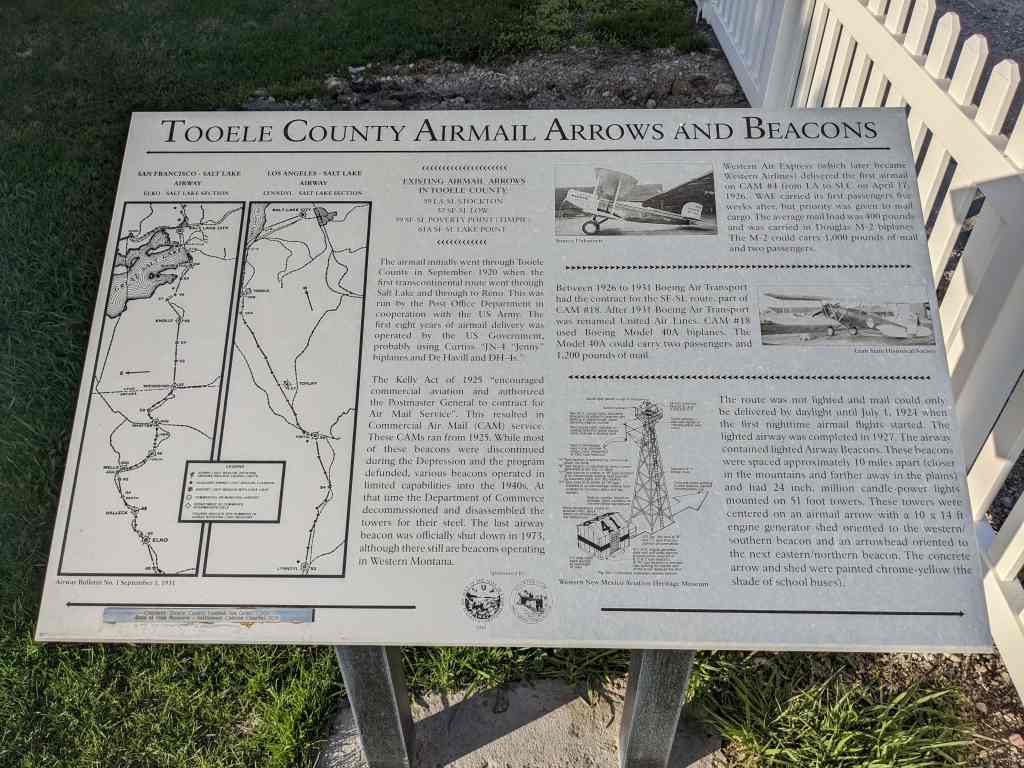
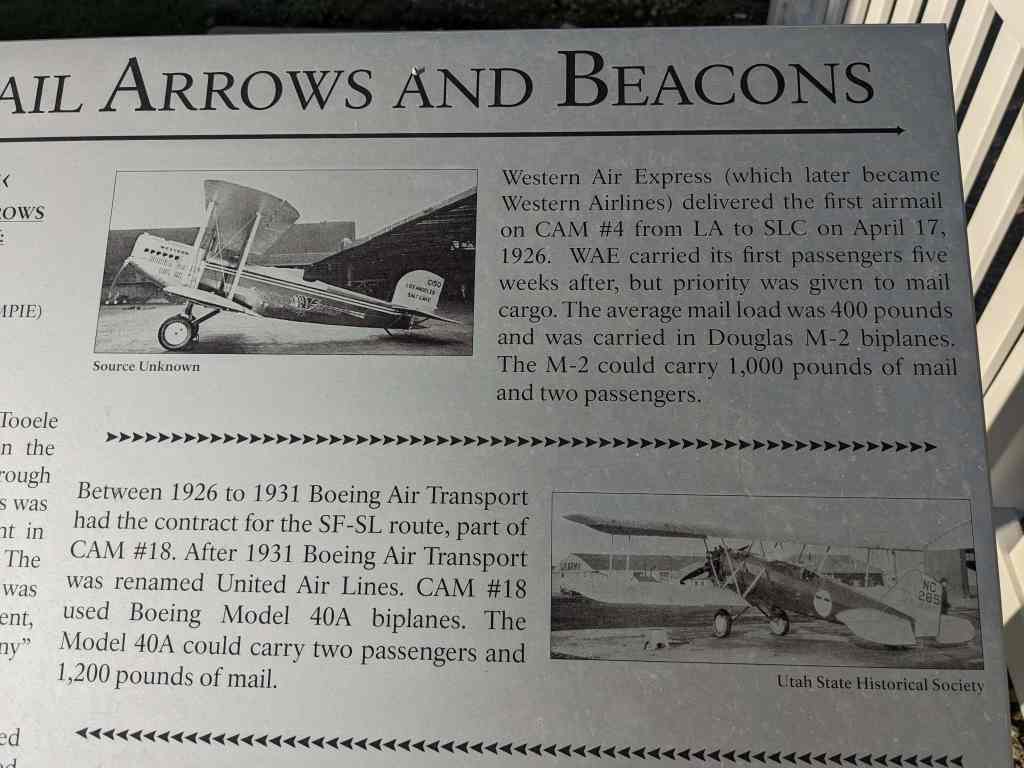
Western Air Express (which later became Western Airlines) delivered the first airmail on CAM #4 from LA to SLC on April 17, 1926. WAE carried its first passengers five weeks after, but priority was given to mail
cargo. The average mail load was 400 pounds and was carried in Douglas M-2 biplanes. The M-2 could carry 1,000 pounds of mail and two passengers.

Between 1926 to 1931 Boeing Air Transport had the contract for the SF-SL route, part of CAM #18. After 1931 Boeing Air Transport was renamed United Air Lines. CAM #18 used Boeing Model 40A biplanes. The Model 40A could carry two passengers and 1,200 pounds of mail.

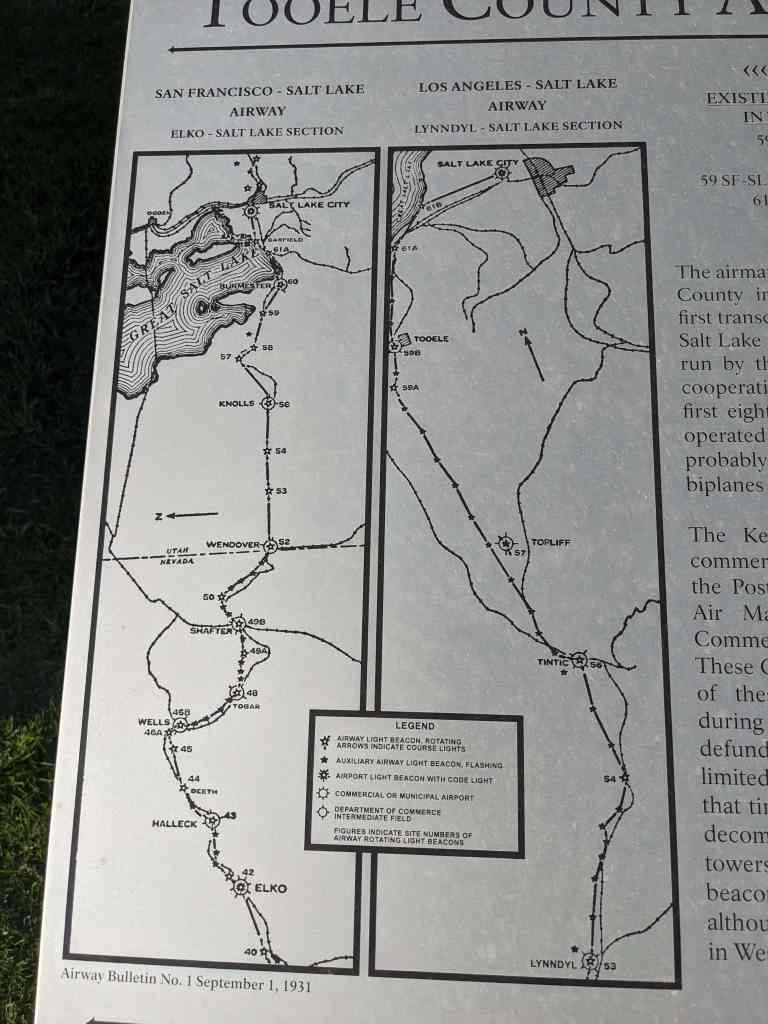
The route was not lighted and mail could only be delivered by daylight until July 1, 1924 when the first nighttime airmail flights started. The lighted airway was completed in 1927. The airway contained lighted Airway Beacons. These beacons were spaced approximately 10 miles apart (closer in the mountains and farther away in the plains) and had 24 inch, million candle-power lights mounted on 51 foot towers. These towers were centered on an airmail arrow with a 10 x 14 ft engine generator shed oriented to the western/ southern beacon and an arrowhead oriented to the next eastern/northern beacon. The concrete arrow and shed were painted chrome-yellow (the shade of school buses).


EXISTING AIRMAIL ARROWS IN TOOELE COUNTY:

  • 59 LA-SL STOCKTON
  • 57 SF-SL LOW
  • 59 SF-SL POVERTY POINT (TIMPIE)
  • 61A SF-SL LAKE POINT

The airmail initially went through Tooele County in September 1920 when the first transcontinental route went through Salt Lake and through to Reno. This was run by the Post Office Department in cooperation with the US Army. The first eight years of airmail delivery was operated by the US Government, probably using Curtiss “JN-4 “Jenny” biplanes and De Havill and DH-4s.”

The Kelly Act of 1925 “encouraged commercial aviation and authorized the Postmaster General to contract for Air Mail Service”. This resulted in Commercial Air Mail (CAM) service. These CAMS ran from 1925. While most of these beacons were discontinued during the Depression and the program defunded, various beacons operated in limited capabilities into the 1940s. At that time the Department of Commerce decommissioned and disassembled the towers for their steel. The last airway beacon was officially shut down in 1973, although there still are beacons operating in Western Montana.

The text above is from Sons of Utah Pioneers historic marker #243, see other markers in the series here:

  • S.U.P. Markers

This is located in a little roadside park at the corner of Connor Avenue and Silver Avenue in Stockton, Utah along with other historic markers. Those located here are:

  • Central Overland Trail – Rush Valley
  • First Electric Light
  • Stockton Historic Marker
  • Tooele County Airmail Arrows and Beacons

First Electric Light

17 Friday Nov 2023

Posted by Jacob Barlow in Uncategorized

≈ Leave a comment

Tags

Historic Markers, Stockton, Tooele County, utah

First Electric Light
Utah Territory, 3 Sept 1880

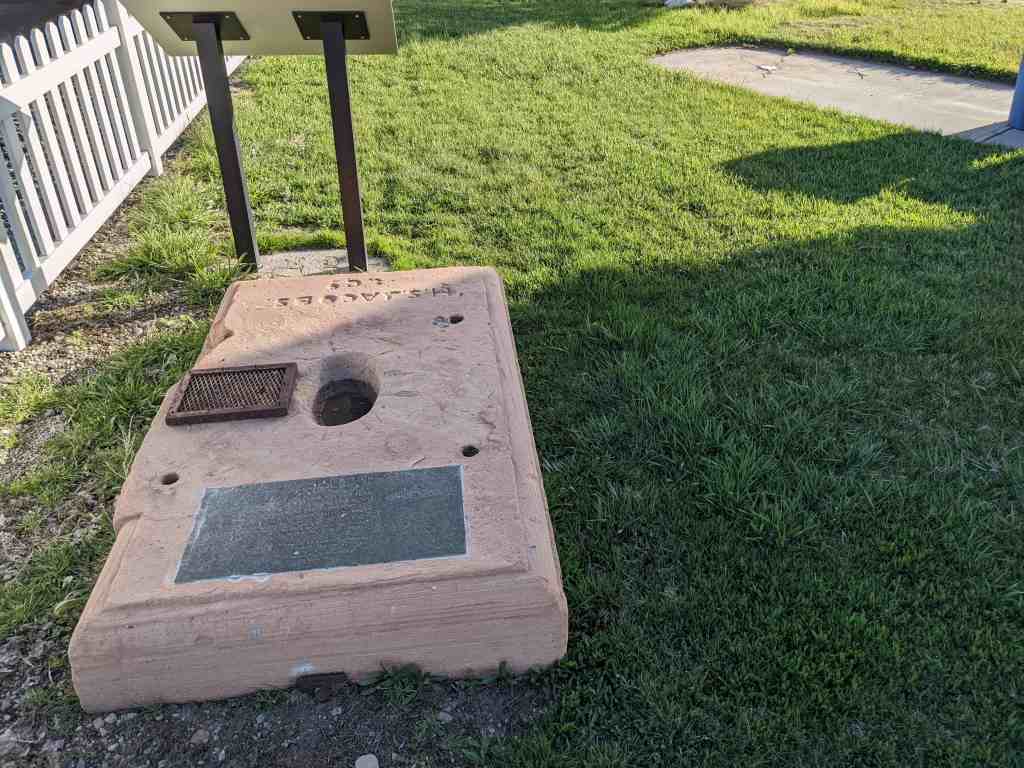
This stone was base for the first generation at the Great Basin Smelting and Concentrating Works.

Managed by General P. E. Connor at Stockton, Utah Territory

Presented by Rush Valley Camp, DUP, Oct. 1983
Courtesy, Elva B Russell and son Kevin Russell.

This is located in a little roadside park at the corner of Connor Avenue and Silver Avenue in Stockton, Utah along with other historic markers. Those located here are:

  • Central Overland Trail – Rush Valley
  • First Electric Light
  • Stockton Historic Marker
  • Tooele County Airmail Arrows and Beacons

The Chief Sanpitch Story

15 Wednesday Nov 2023

Posted by Jacob Barlow in Uncategorized

≈ Leave a comment

Tags

Art, Historic Markers, Mt Pleasant, Sanpete County, Sculptures, utah

The Chief Sanpitch Story

Chief Sanpitch (often mispronounced as “Sanpete”), is more than just the county’s namesake. It is paramount that we are reminded of this land’s first stewards. When Mormon immigrants arrived in the central valley of what is now Sanpete County, Chief Sanpitch was the leader of the Native American band of Utes called the “Sanpits.” While there are undeniable depredations on both sides of our history, Chief Sanpitch deserves recognition for the periodic peace in the region amidst major changes and hostilities to his ancestral lands. The few words recorded from him suggest that he promoted peace and coexistence between settlers and natives.

During the Black Hawk war, In the Spring of 1865, as a ploy to get Black Hawk to bargain, the Mormon leader, Brigham Young, had Sanpitch incarcerated along with other tribal chiefs in the Manti jail. A few chiefs were able to escape, including Sanpitch, who was shot and wounded. He was later found by a local posse near Fountain Green where he sat alone, defenseless atop a boulder near Birch Creek Canyon. It is said that he pleaded for his life but was killed regardless. Today, it is hoped that visitors will find empathy and meaning in the chief’s life and legacy.

Before eventually succumbing to pressure to move his people to a reservation, Sanpitch is recorded as stating, “This is my land. I shall stay here on this land till I get ready to go away, and then I shall go to the Snakes or somewhere else [and not to the reservation.]” (Utah’s Black Hawk War, p.155). Sanpitch died in the place of his birth as a chief who advocated peace for his land and people.

The Artist

Before creating this monument, local artist, Brad Taggart, went to great efforts to gain the support of the Ute Tribal Council concerning the statue’s placement and appearance. He has taken care to study the historical standing of Chief Sanpitch, his garb, and likely features. Sanpitch is posed in a calming gesture, with his free hand moving away from his tomahawk, as if asking for peace and civility. He sits atop a replica of the boulder that still stands today in Fountain Green, as a reminder of his life.

Sponsored by:
Mormon Pioneer National Heritage Area (MPNHA)
The North Sanpete Arts Council (NSAC) Utah Division of Arts and Museums
Mount Pleasant City
Special Thanks to:
Ute Tribal Council Monte and Jackie Bona Horseshoe Mountain Hardware Clint and Chet Hacking Altaview Concrete Round Hills Rock
J.W. Hauling

875 South State Street in Mt Pleasant, Utah

← Older posts
Newer posts →

Follow Jacob

Follow Jacob

Come wander with me on Youtube.

Blog Stats

  • 2,091,998 hits

Social and Other Links

BarlowLinks.com

Recent Posts

  • Provo High School Seminary Building
  • 821 E 100 S
  • 820 E 100 S
  • 817-819 E 100 S
  • 814 E 100 S

Archives

Loading Comments...