• About JacobBarlow.com
  • Cemeteries in Utah
  • D.U.P. Markers
  • Doors
  • Exploring Utah Email List
  • Geocaching
  • Historic Marker Map
  • Links
  • Movie/TV Show Filming Locations
  • Oldest in Utah
  • Other Travels
  • Photos Then and Now
  • S.U.P. Markers
  • U.P.T.L.A. Markers
  • Utah Cities and Places.
  • Utah Homes for Sale
  • Utah Treasure Hunt

JacobBarlow.com

~ Exploring with Jacob Barlow

JacobBarlow.com

Tag Archives: Lindon

Railroad Depot

09 Friday Jan 2015

Posted by Jacob Barlow in Uncategorized

≈ 1 Comment

Tags

historic, Lindon, Railroad, utah, utah county

2013-07-04 15.31.16

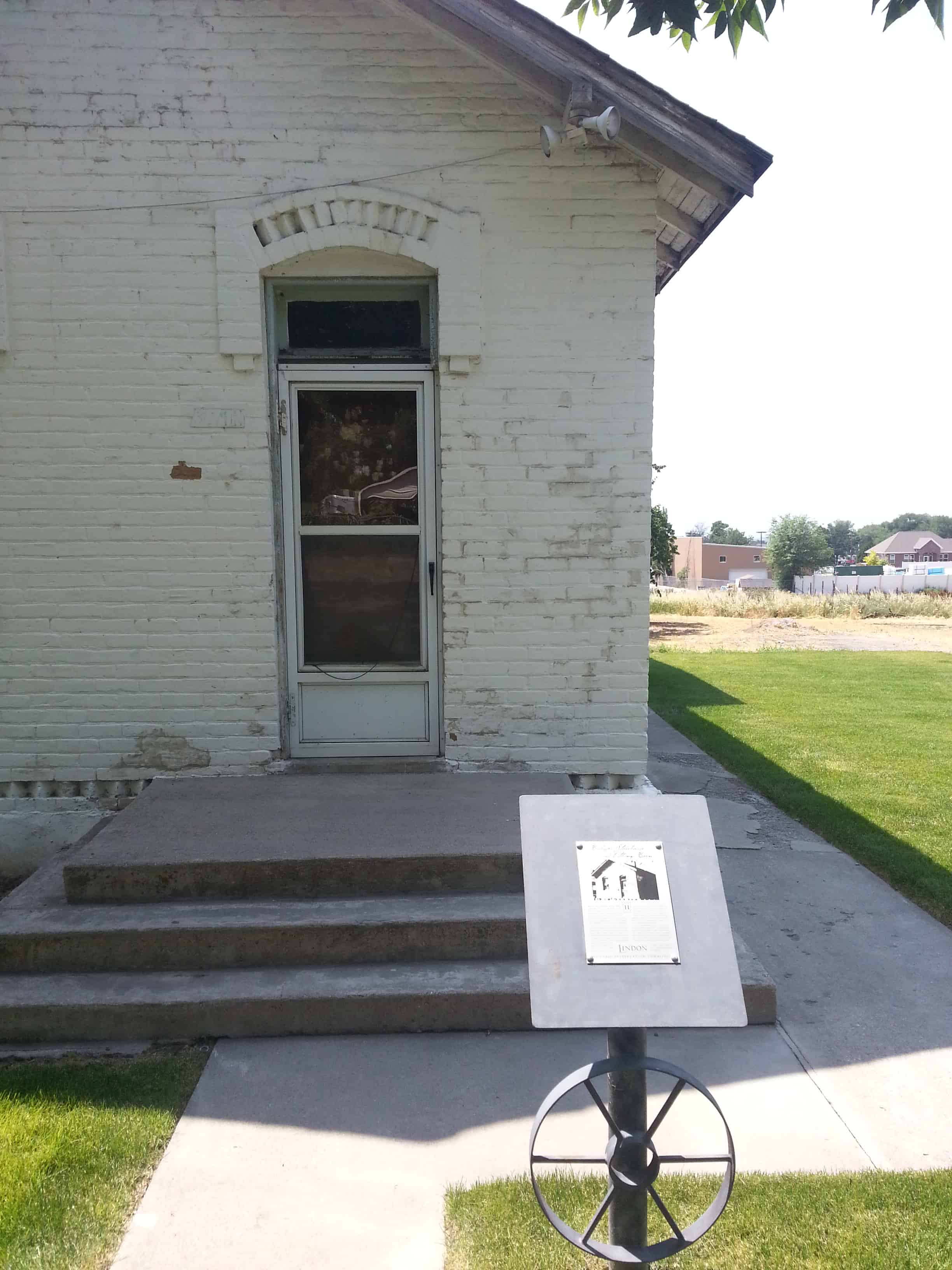
The building on this site was once the Lindon depot of the Salt Lake & Utah Railroad, also called the Orem Line or the “Interurban.” Beginning in 1915, 20 or more trains a day stopped here to service passengers going from Payson to Salt Lake City. The passengers often traveled just for fun, such as to ball games, fairs, or dances. Students could ride to Brigham Young University for only 1.5 cents per mile.

The trains were powered by electricity and traveled at speeds up to 65 miles per hour. The passenger cars were 61 feet long and weighed 43 tons, each having plush seats for 66 passengers.

The Salt Lake & Utah Railroad was said to be one of the finest interurban railroads in the United States, and the Lindon depot was known as being one of the nicest stations on the line, with its spotless wooden floors and hardwood benches.

After 22 years of operation, the railroad finally closed the line and the depot due to the increase in the numbers of fast cars and freight trucks on the new smooth highways.


265 North State Street in Lindon, Utah

  • Orem Interurban Railroad

2013-07-04 15.31.22

2013-07-04 15.31.12 - Copy (2)
2013-07-04 15.31.12 - Copy
2013-07-04 15.31.12

Dittmore Home

09 Friday Jan 2015

Posted by Jacob Barlow in Uncategorized

≈ 1 Comment

Tags

historic, Lindon, utah, utah county

Dittmore Home
325 North State Street in Lindon

Screenshot 2015-01-09 11.10.27

2013-07-04 15.29.40

2013-07-04 15.29.44

2013-07-04 15.29.50

2013-07-04 15.29.53

In 1868 Henry Dittmore, a German immigrant, and his wife, Rachel Smuin Dittmore, moved from the Salt Lake Valley and settled on seven acres at this site. The first home was log with a dirt floor and dirt roof and a fireplace for cooking and warmth. Because the house was on the main road south from Pleasant Grove, many travelers and horse teams were given shelter and hospitality for the night.

In 1876 the Dittmores dug a cellar and rocked up the sides, then the log house was moved over the cellar, and the dirt roof was replaced by one made of shingles. The family had five children by then, and they were glad to have more room. As time passed more rooms were added to the house. Two large adobe rooms were built on the side near the road, with adobe made from mud from Utah Lake. Each room had its own fireplace.
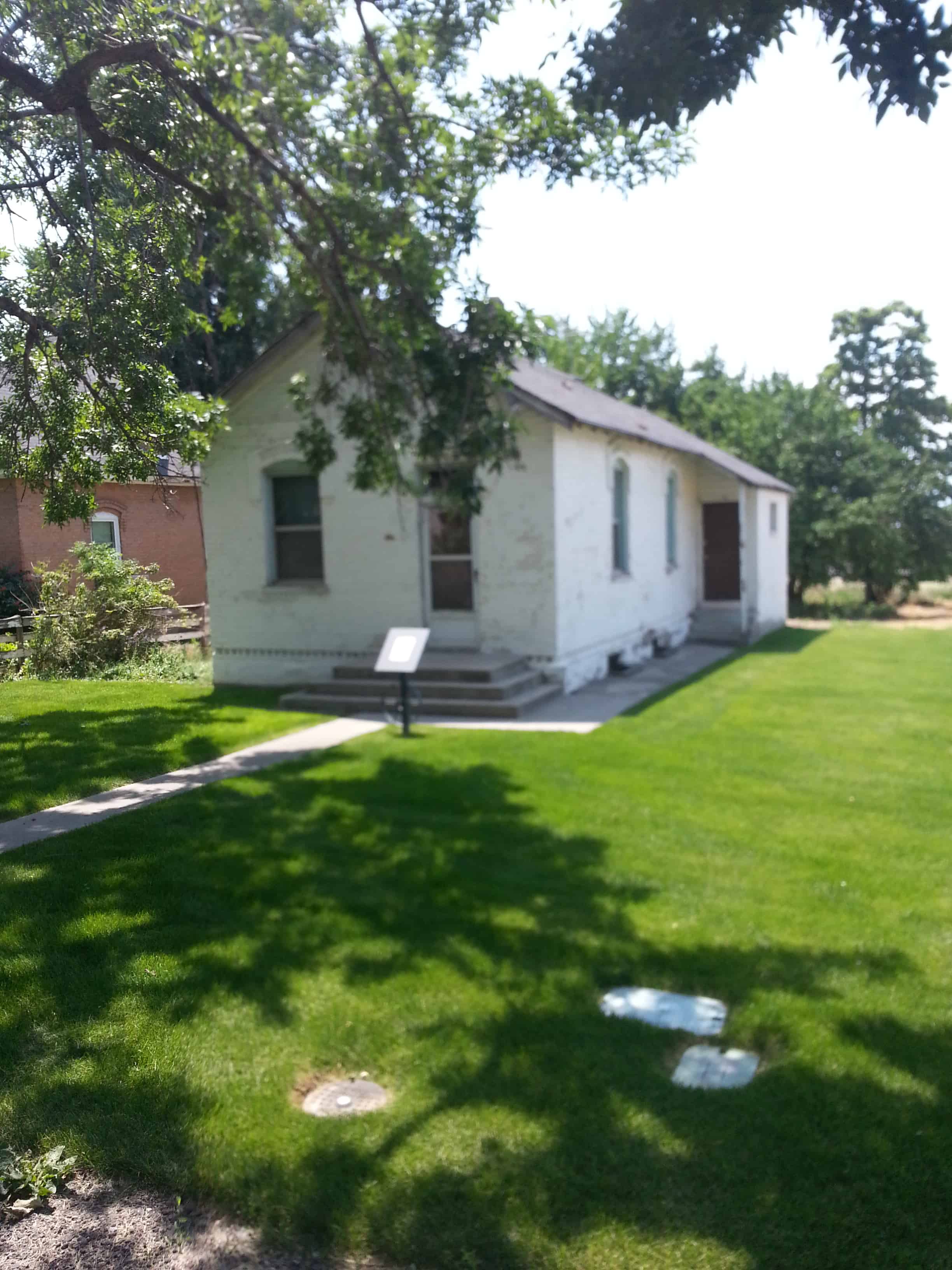
Rachel and Henry raised nine children to maturity in this home. After they died, one of their daughters, Ellen, and her husband, Andrew A. Johnson, bought the property in 1909. They paid $3,000 dollars for the home and seven acres. They raised five children here. In 1950 Andrew and his second wife, Gladys, moved to Pleasant Grove. The house was rented after that, sometimes to strangers, but more often children and grandchildren lived there, especially as newlyweds. Some friends jokingly referred to the house as the “Honeymoon Cottage,” and the family still fondly looks on it as such to this day.

The Robison Home

08 Thursday Jan 2015

Posted by Jacob Barlow in Uncategorized

≈ 2 Comments

Tags

historic, Historic Homes, Lindon, Soft-rock constructed, utah, utah county

The Robison Home
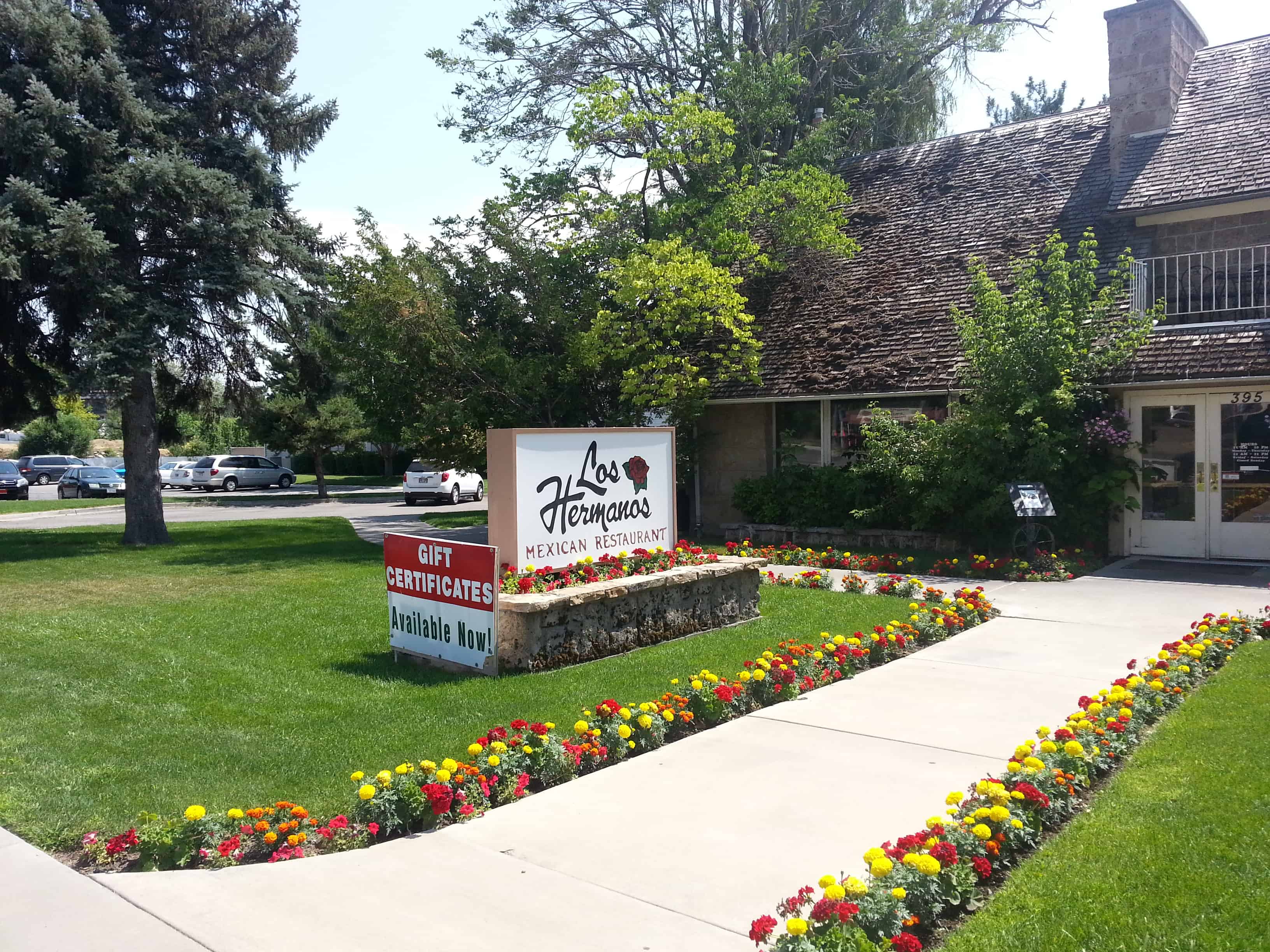
395 North State Street in Lindon

2013-07-04 15.27.27
2013-07-04 15.27.33
2013-07-04 15.27.54
2013-07-04 15.27.56

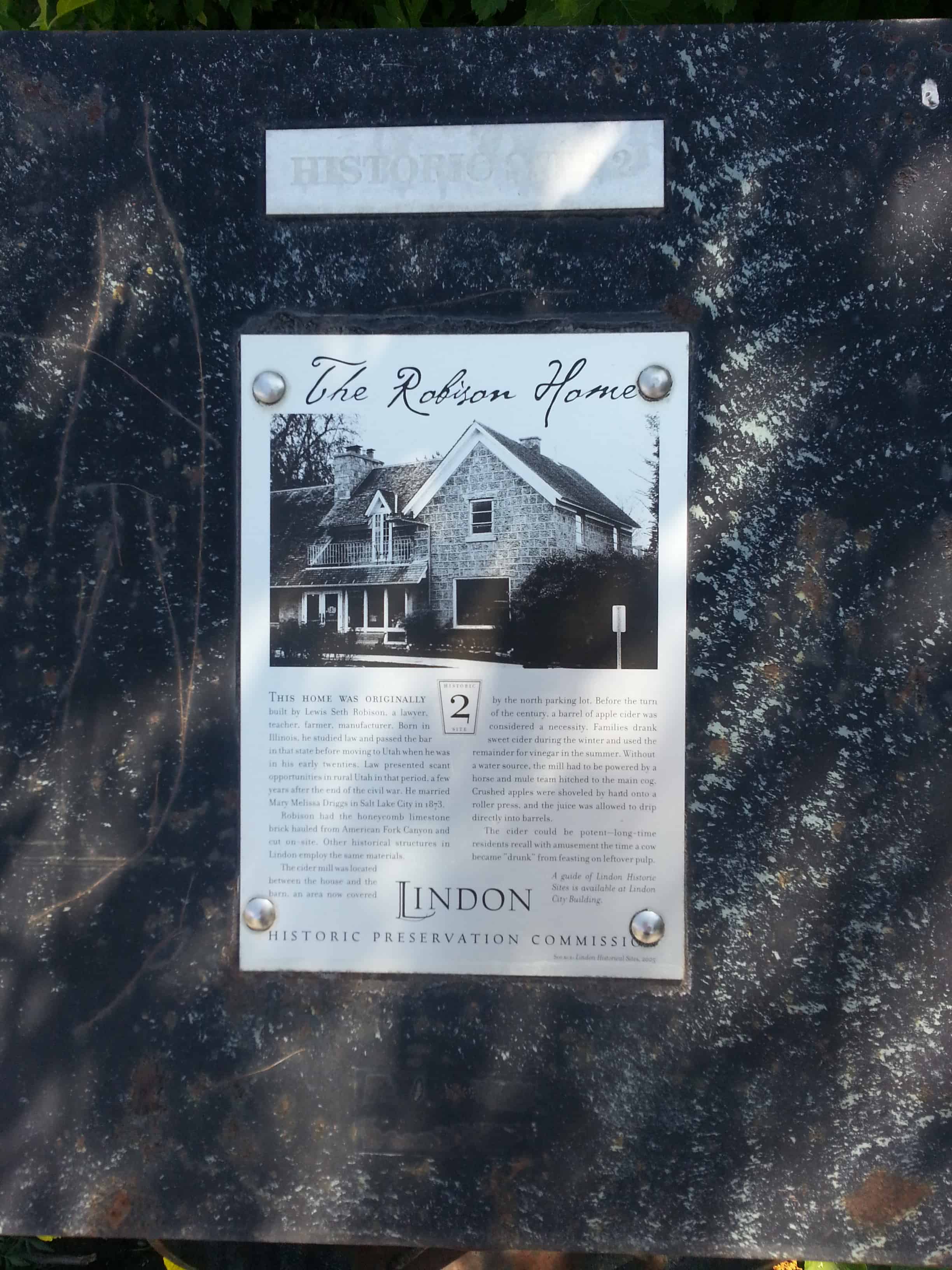
This home was originally built by Lewis Seth Robison, a lawyer, teacher, farmer, manufacturer. Born in Illinois, he studied law and passed the bar in that state before moving to Utah when he was in his early twenties. Law presented scant opportunities in rural Utah in that period, a few years after the end of the civil war. He married Mary Melissa Driggs in Salt Lake City in 1873.
Robison had the honeycomb limestone brick hauled from American Fork Canyon and cut on-site. Other historical structures in Lindon employ the same materials.

The cider mill was located between the house and the barn, an area now covered by the north parking lot.

Before the turn of the century, a barrel of apple cider was considered a necessity. Families drank sweet cider during the winter and used the remainder for vinegar in the summer. Withou t a water source, the mill had to be powered by a horse and mule team hitched to the main cog. Crushed apples were shoveled by hand onto a roller press, and the juice was allowed to drip directly into barrels.

The cider could be potent—long-time residents recall with amusement the time a cow became “drunk” from feasting on leftover pulp.

Fryer Park

02 Friday Jan 2015

Posted by Jacob Barlow in Uncategorized

≈ 1 Comment

Tags

Lindon, utah, utah county

LeRoy (Sam) and Afton Fryer were long time residents of Lindon City. They worked hard in their fruit farm located at 600 North and Locust Avenue in Lindon. They were thrifty and frugal all of their lives. Sam and Afton loved Lindon and had many close friends in the community.
Sam attended Pleasant Grove schools, was a veteran of World War II, and served on the Lindon City Council between 1973 and 1975. During his tenure on the City Council he helped obtain the property where the present day Lindon City Center and pool are now located. Sam also served as a board member on the Pleasant Grove and North Union Irrigation companies.

Afton spent her childhood in American Fork and, later in life, worked as a secretary for Lindon, Central, and Valley View Elementary schools. She retired in 1983 after 23 years with the schools. She continued to run a successful farming business from her property with her orchard remaining productive until her passing.

Sam and Afton were married in 1946 and had only one child, Jim L. Fryer, who was killed in a car accident at the age of 16. Sam and Afton were members of the LDS Lindon 1st Ward and attended church at the building now known as the Lindon Community Center. After Sam passed away in 1977, Afton married Earl Huggard. Her time with Earl was short-lived as he died just a little over a year after their marriage. Afton spent her remaining years alone but had a great desire to bless the lives of the youth in her church and her friends who lived in Lindon. Upon her death in 2009 the Afton Fryer Huggard Foundation was established to distribute her estate to projects and causes that would touch the lives of people in Lindon.

Lindon City thanks Afton for her generosity and love of our wonderful community. Her donation has made several city projects possible including construction of the Lindon Senior Center, construction of of the veterans memorial at the Lindon Cemetery, and construction of a 4-acre city park located at 600 North Main Street – which has been named ‘Fryer Park’ in recognition of her generosity. Afton has left a legacy to Lindon City residents that will last for generations to come.

We honor her kindness to our community.

2013-07-04 15.20.35

2013-07-04 15.20.47

2013-07-04 15.20.49

2013-07-04 15.20.52

Fage Home

31 Wednesday Dec 2014

Posted by Jacob Barlow in Uncategorized

≈ 1 Comment

Tags

historic, Historic Homes, Lindon, utah, utah county

Fage Home
400 North 566 East in Lindon
2013-07-04 15.13.45

2013-07-04 15.13.51

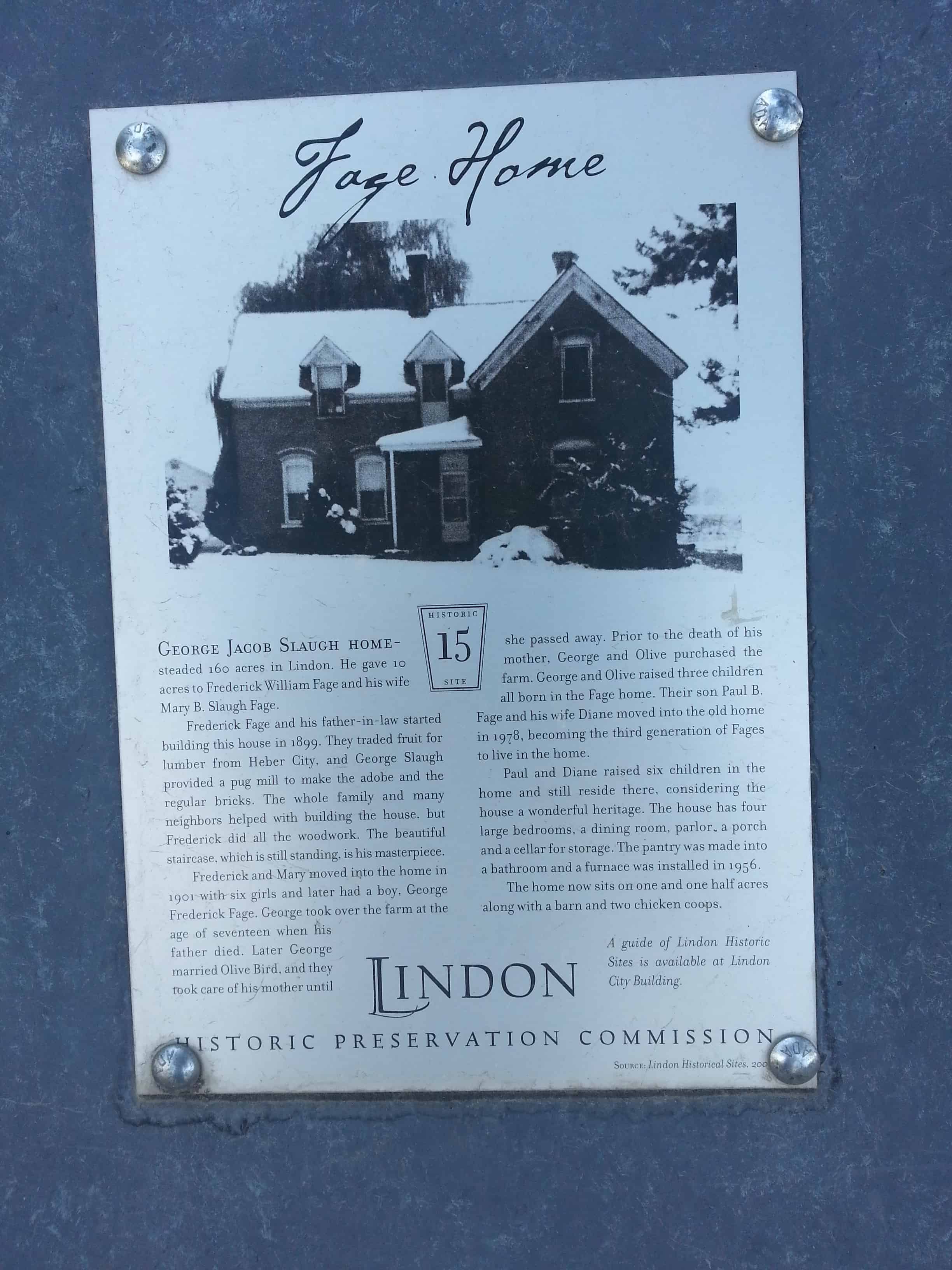
George Jacob Slaugh homesteaded 160 acres in Lindon. He gave 10 acres to Frederick William Fage and his wife Mary B. Slaugh Fage.

Frederick Fage and his father-in-law started building this house in 1899. They traded fruit for lumber from Heber City, and George Slaugh provided a pug mill to make the adobe and the regular bricks. The whole family and many neighbors helped with building the house, but Frederick did all the woodwork. The beautiful staircase, which is still standing, is his masterpiece.

Frederick and Mary moved into the home in 1901 with six girls and later had a boy, George Frederick Fage. George took over the farm at the age of seventeen when his father died. Later George married Olive Bird, and they took care of his mother until she passed away. Prior to the death of his mother, George and Olive purchased the farm. George and Olive raised three children all born in the Fage home. Their son Paul B. Fage and his wife Diane moved into the old home in 1978, becoming the third generation of Fages to live in the home.

Paul and Diane raised six children in the home and still reside there, considering the house a wonderful heritage.

The house has four large bedrooms, a dining room, parlor, a porch and a cellar for storage. The pantry was made into a bathroom and a furnace was installed in 1956.

The home now sits on one and one half acres along with a barn and two chicken coops.

The Joseph Wadley Farm

30 Tuesday Dec 2014

Posted by Jacob Barlow in Uncategorized

≈ 1 Comment

Tags

historic, Historic Homes, Lindon, utah, utah county

The Joseph Wadley Farm
67 East 400 North in Lindon

2013-07-04 15.09.11

2013-07-04 15.09.15

2013-07-04 15.09.22

In 1869, Joseph Wadley, a Mormon convert from England, was granted legal title to farm 32 acres on this Lindon hill. A horticulturist by trade, Joseph cleared this land of sagebrush and rock, developed the irrigation system, and planted a large variety of shade and fruit trees that he had brought from his home in England.

In 1881 he began quarrying and hauling Tulfa rock from Pleasant Grove for construction of this home. It was designed after the traditional English country manor, with formal English gardens in the front. The home was completed in 1882.

Joseph and his family resided here until his death in 1904. His son, Joseph Daniel Wadley, purchased this farm in 1907. He in turn sold the property to his son, Joseph Daniel Wadley, Jr., in 1925. In 1988, a grandson purchased the home and restored it to its original state. He also added several more rooms at the back of the home.

Lindon Ward Chapel

29 Monday Dec 2014

Posted by Jacob Barlow in Uncategorized

≈ 1 Comment

Tags

historic, Historic Buildings, Lindon, Orem, Pleasant Grove, utah, utah county

Lindon Ward Chapel
400 North and Main Street in Lindon

2013-07-04 15.07.18
2013-07-04 15.07.47
2013-07-04 15.07.57

The Lindon Ward Chapel, originally built for the Pleasant Grove 2nd Ward of The Church of Jesus Christ of Latter-day Saints, was dedicated by Reed Smoot of the Council of the Twelve Apostles in 1891.

Construction of the chapel was a community effort. The property was donated by Joseph Wm. Ash. Every able-bodied man and boy contributed labor to the construction. Horses hauled clay from the foothills and pulled the mill to make adobes for the walls of the chapel.

In December 1890, construction was far enough along for a dance to be held. Proceeds from the dance were turned over to the building fund. Alfred E. Culmer, architect and project director, passed away before the final completion of the building. His funeral was the first to be held in the chapel.

The main hall contained two potbellied stoves— one in each corner. The benches ran the full width of the chapel with isles on each side. An upper gallery above the front door could be converted into a classroom by closing a set of curtains.

The chapel was torn down in 1941 with plans to build a new one. The iron fence on the north side of the property and several large pine trees remain.

Alfred Harper House

28 Sunday Dec 2014

Posted by Jacob Barlow in Uncategorized

≈ 1 Comment

Tags

historic, Historic Homes, Lindon, NRHP, Orem, Soft-rock constructed, utah, utah county

Alfred Harper House
125 West 400 North in Lindon.

2013-07-04 15.03.40
2013-07-04 15.03.44
2013-07-04 15.04.13
2013-07-04 15.04.16
2013-07-04 15.04.22

Alfred Harper built this house in 1876 of honeycombed limestone quarried from nearby American Fork Canyon. It is said that he traded his homegrown vegetables and flowers for the rock. Before the building was completed, Harper had to leave his family and home to serve a three-year mission in New Zealand for the LDS church. On his return he finished the house and planted vines he’d brought from New Zealand. The vines eventually grew to surround the building.

Locals called it “The Big House,” and it became a gathering place for community and church activities.

One of the most notable features of the property was a well, complete with bucket and dipper, that passers-by were welcome to use to quench their thirst. Church-goers, children, and even the occasional tramp made good use of the clear, cold water.

In 1987, the Harper House was listed on the National Register of Historic Places, the nation’s official list of cultural resources worthy of preservation. The register recognizes the accomplishments of all peoples who have contributed to the history and heritage of the United States.

Bishop’s Storehouse and Tithing Barn

25 Thursday Dec 2014

Posted by Jacob Barlow in Uncategorized

≈ 1 Comment

Tags

historic, Historic Buildings, Lindon, utah, utah county

Bishop’s Storehouse and Tithing Barn
319 North 135 West in Lindon.

2013-07-04 15.01.47
2013-07-04 15.01.52
2013-07-04 15.02.02

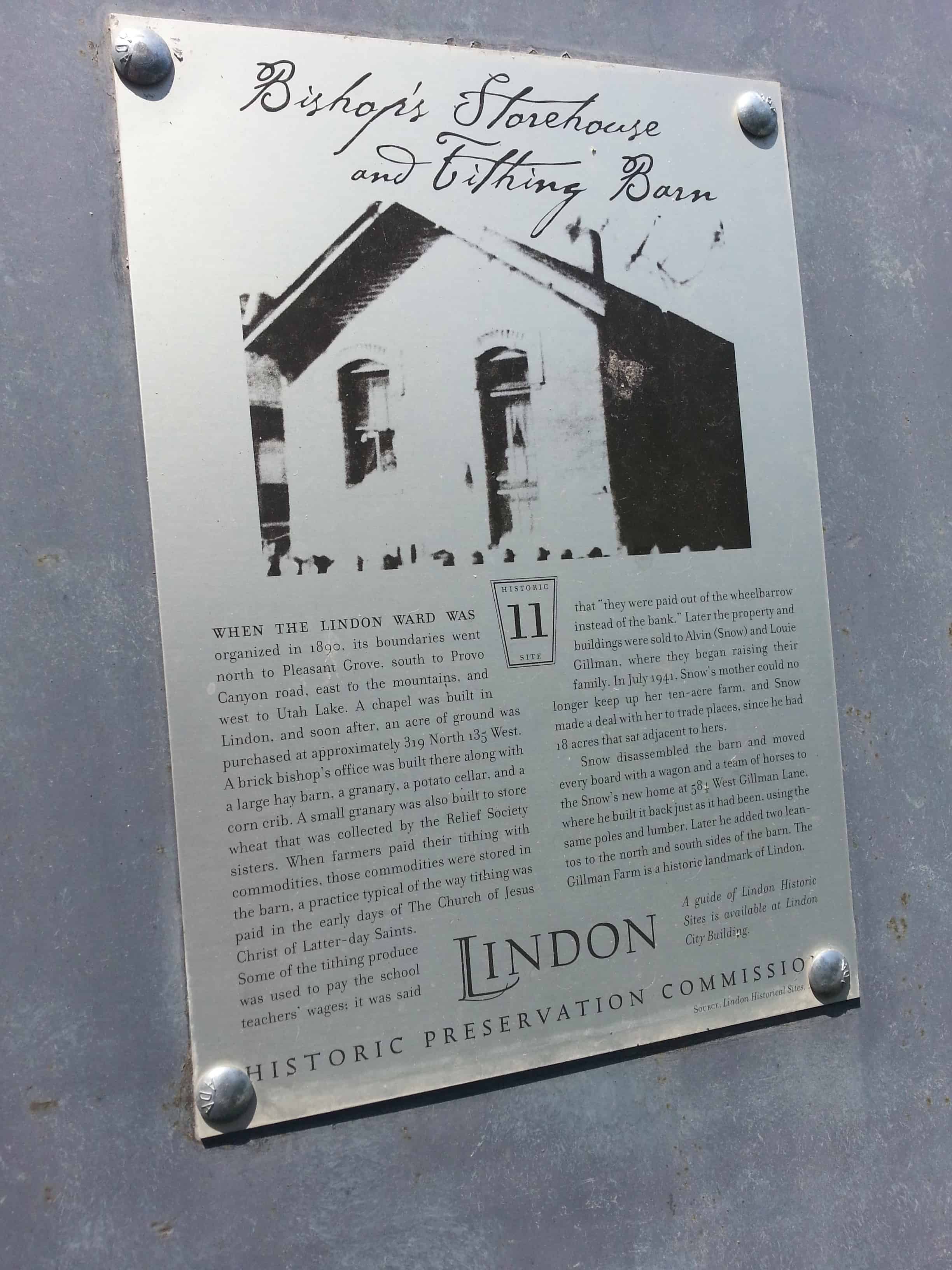
When the Lindon Ward was organized in 1890, its boundaries went north to Pleasant Grove, south to Provo Canyon road, east to the mountains, and west to Utah Lake. A chapel was built in Lindon, and soon after, an acre of ground was purchased at approximately 319 North 135 West. A brick bishop’s office was built there along with a large hay barn, a granary, a potato cellar, and a corn crib. A small granary was also built to store wheat that was collected by the Relief Society sisters. When farmers paid their tithing with commodities, those commodities were stored in the barn, a practice typical of the way tithing was paid in the early days of The Church of Jesus Christ of Latter-day Saints. Some of the tithing produce was used to pay the school teachers’ wages; it was said that “they were paid out of the wheelbarrow instead of the bank.” Later the property and buildings were sold to Alvin (Snow) and Louie Gillman, where they began raising their family. In July 1941, Snow’s mother could no longer keep up her ten-acre farm, and Snow made a deal with her to trade places, since he had 18 acres that sat adjacent to hers.

Snow disassembled the barn and moved every board with a wagon and a team of horses to the Snow’s new home at 584 West Gillman Lane, where he built it back just as it had been, using the same poles and lumber. Later he added two lean-tos to the north and south sides of the barn. The Gillman Farm is a historic landmark of Lindon.

William Kirk Home

22 Monday Dec 2014

Posted by Jacob Barlow in Uncategorized

≈ 1 Comment

Tags

Historic Homes, History, Lindon, Orem, utah, utah county

2013-07-04 14.58.16

William Kirk Home
291 West 400 North in Lindon

2013-07-04 14.58.11
2013-07-04 14.58.27
Screenshot 2014-12-22 20.44.08

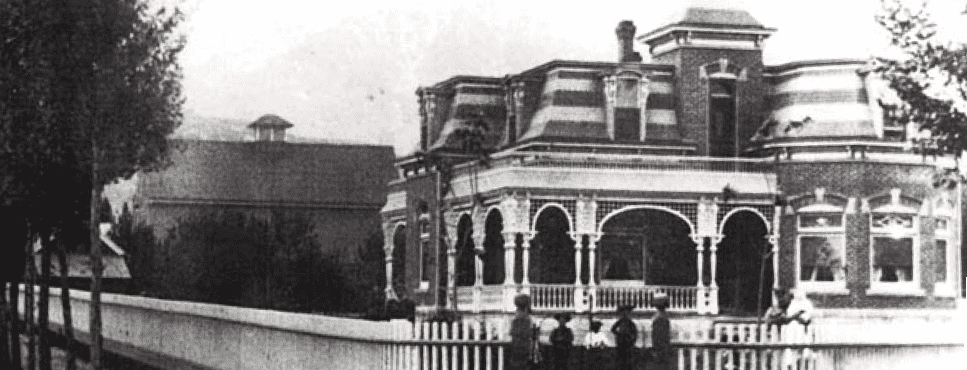
William Kirk and his sons were well-to-do sheepmen in Lindon who flourished in the late nineteenth century. In the 1880s, Kirk built the original house in the late-Victorian gothic style, with a gabled roof, stained-glass windows, porch pillars, and decorative woodwork, as seen in the photograph above.

With its immaculate grounds, tree-lined pathways, and beautiful gardens, the Kirk home became the showplace of the community. The house and grounds seemed to spark the imagination of the local youth, who, it is told, often daydreamed of its gracious living and fantasized of exploring the attics for hidden treasure.

Later the property was purchased by Lester West. Influenced by the utilitarian post-war era, West remodeled the structure by removing the top story of the house and putting on a different style roof. Most of the exterior decorative work was also removed.

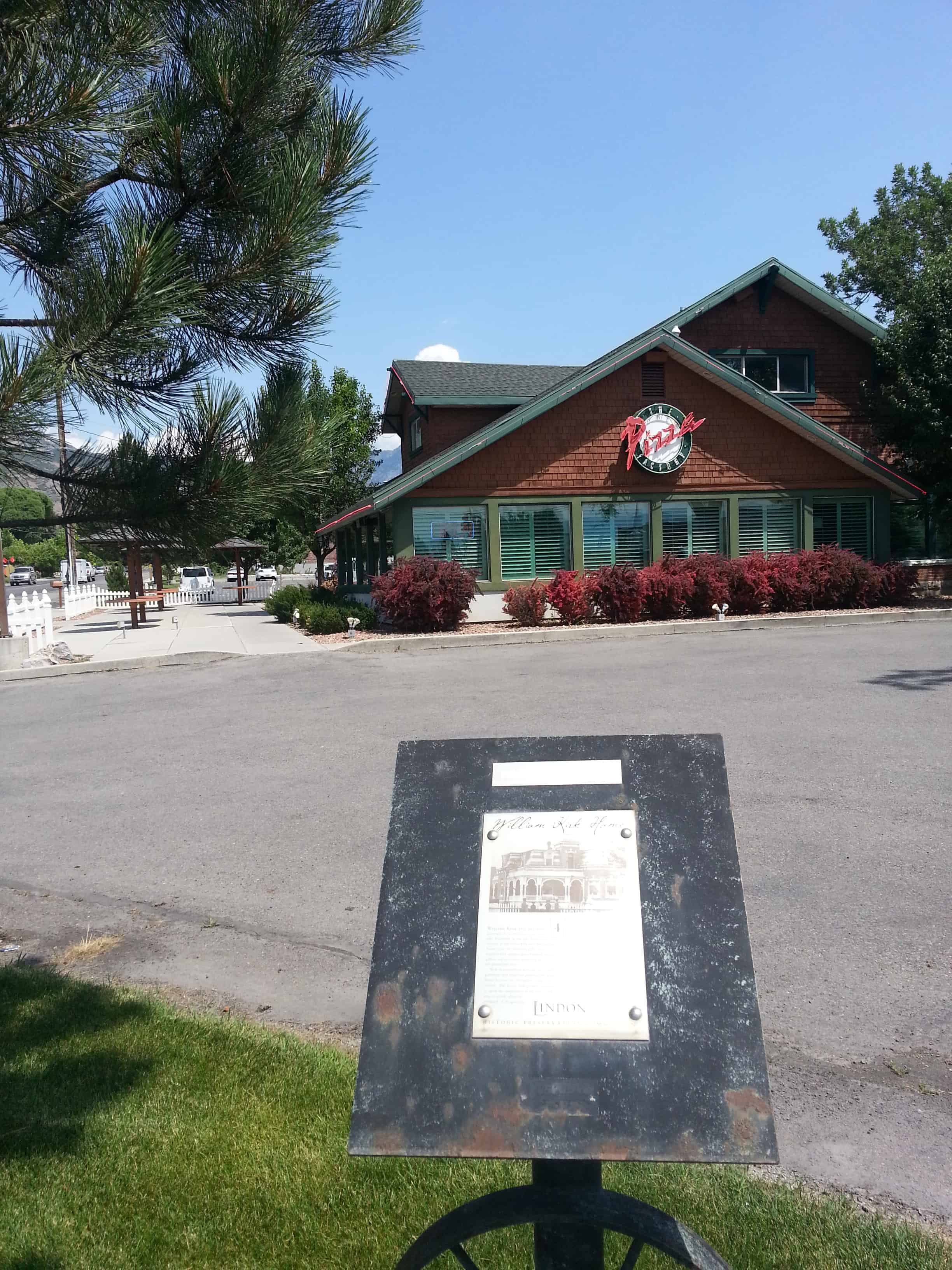
The house has been used over the years for a variety of purposes, including a boys’ home. In 1996 the house was bought by Fireside Pizzeria and renovated into a restaurant.

← Older posts
Newer posts →

Follow Jacob

Follow Jacob

Blog Stats

  • 2,062,008 hits

Social and Other Links

BarlowLinks.com

Recent Posts

  • Arthur Miles Home
  • Navajo Shadehouse Museum
  • Impossible Canyons
  • The Old Hurricane Bell
  • Goulds Shearing Corral

Archives

Loading Comments...