Built in 1937, the Helper Civic Auditorium was designed by Salt Lake City architects Carl W. Scott and George W. Welch. The building is an excellent example of Art Moderne style also known as “Streamline Moderne.” The style was popular in the 1930s particularly in public buildings. The auditorium features Art Moderne elements such as the flat roof emphasized by concrete coping and coursing, smooth masonry with curved corners, glass block, and pilasters with abstracted capitals.
The Helper Civic Auditorium is part of the Utah Public Works Administration (PWA) and Works Progress Administration (WPA) Buildings Thematic Nomination. The building is significant because it helps document the impact of New Deal programs in Utah during the Great Depression. The Helper Civic Auditorium was one of 226 buildings (two of which were auditoriums) constructed in Utah during the 1930s and early 1940s under the WPA and other New Deal programs. Of those 226 buildings, 130 are still standing. On a local level the construction of the building was a boost to Helper’s economy by providing much needed jobs and funds through the purchase of building materials.
Built in 1936, the airport’s hangar was funded by the Works Progress Administration (WPA), which provided jobs for unemployed Americans during the Great Depression. WPA funding required matching work contributions from local communities, so local county commissioners designed the hangar and supervised construction. Built of native ponderosa pine, the hanger is listed on the National Register of Historic Places. Each year, thousands of tourists arrive by air at this historic airport to see Bryce Canyon National Park.
Fires are a natural part of life here on the Paunsaugunt Plateau. When fires start in the region – whether by lightning, accident, or prescribed burn – the airport serves as a staging area for fire monitoring and management, as it did in 2002 during the 78,000-acre Sanford fire in Dixie National Forest.
Bryce Airport’s Vital Role
In this remote region, with major hospitals and airfields hundreds of miles away, Bryce Airport provides critical emergency support. built in 1936 as an emergency landing strip for commercial airlines, the airport has served that purpose twice since then. In 2005, American Airlines Flight 28, with more than 50 passengers on board, lost all engine power and safely landed here. Bryce Airport is also the main staging area for local search-and-rescue operations and fire management.
At 7,400 feet long, Bryce Airport’s runway is unusually long for a small airport. That’s both because it is designed to receive commercial aircraft and because of the high elevation of the runway (7,586 feet). Air is thinner at higher altitudes, providing less lift for airplanes. Heat further thins the air, forcing some small planes to avoid mid-day take-offs here during the summer.
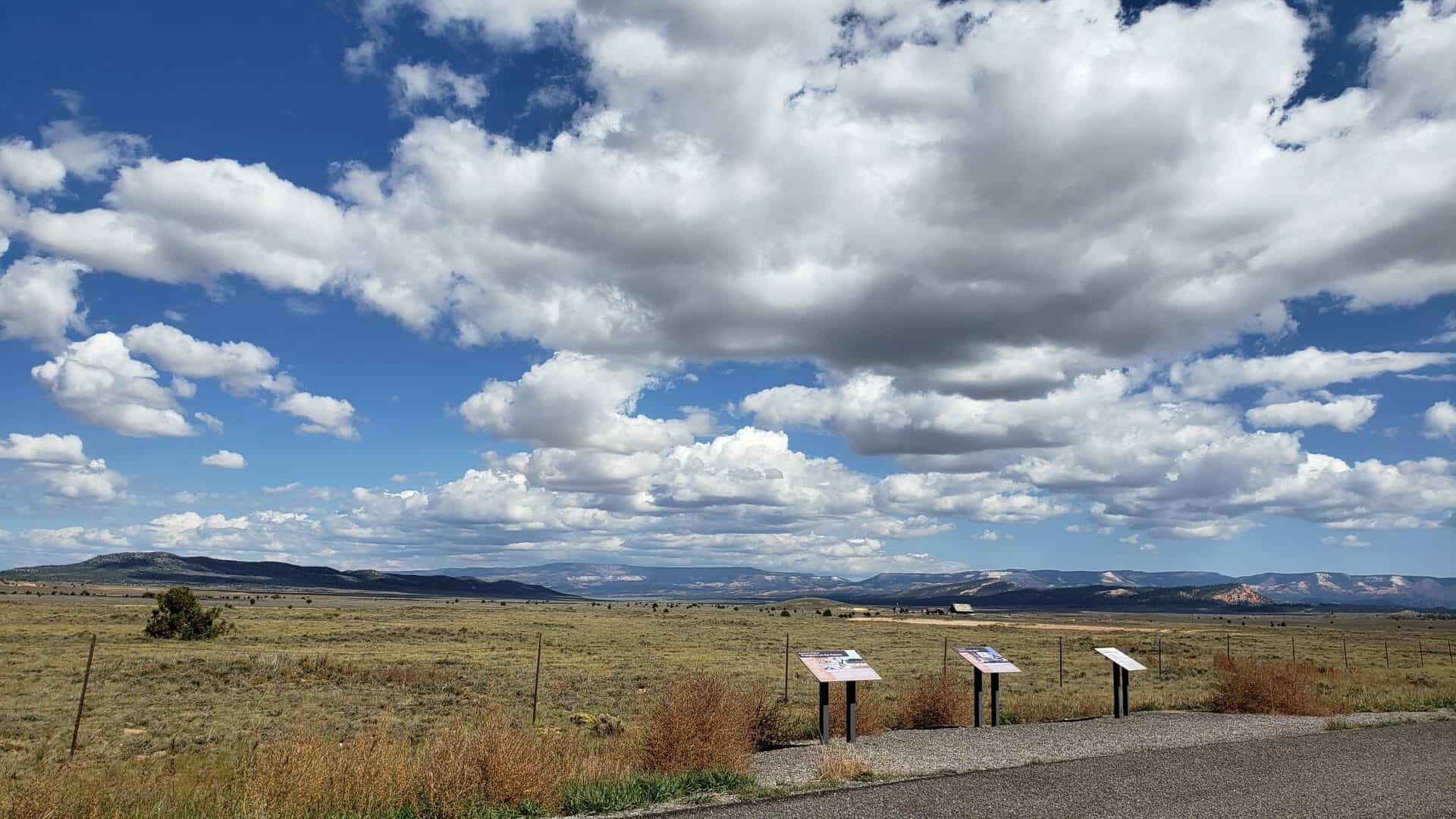
Plaque located near the Bryce Canyon Airport in Bryce Canyon, Utah
The Fillmore Armory, located at 35 West Center Street in Fillmore, Utah was constructed in 1937-1938 and is associated with the second generation of Utah National Guard (UTNG) armory construction. Even in times of peace, training was essential for soldier to be effective and prepared for active service during state and national emergencies. Due to the need for a space to perform drills and store equipment, the armory became a significant property type of the UTNG. During the early 1900s, few existing facilities could accommodate National Guard training, drilling, and storage for arms and equipment. Beginning in 1928, construction began on a second generation of armories in Utah meant to specifically address these needs.
Construction of the Fillmore Armory began with New Deal era funding as part of the Works Progress Administration (WPA) during the Great Depression. Initial construction employed mostly unskilled laborers. Local men supervised the project and used locally purchased building materials. Fillmore residents also donated funds and materials to install a hardwood floor in the building.
The Fillmore Armory was primarily constructed to house Utah National Guard artillery units, including batteries of the 213th Field Artillery Battalion (disbanded in 1967) as well as the 222nd Field Artillery Battalion. Members of these units would train in Fillmore and go on to serve overseas during the Second World War and the Korean War. Later, the 222nd would complete two deployment tours during the Iraq War. In addition to its use in military defense, the building has also served as a community recreation center and dance hall. Ownership of the armory was transferred from the Utah National Guard to the City of Fillmore in 2019 for continued public use.
Located at 35 West Center Street in Fillmore, Utah and added to the National Historic Register on (#100006003) January 4, 2021.
Built in 1935, the Scipio Town Hall is one of over 230 public works buildings constructed in Utah under various New Deal programs during the Depression years of the 1930’s and 40’s. The types of buildings constructed included schools, county courthouses, libraries, National Guard Armories and a variety of others. The Scipio Town Hall was intended for use both as a town hall and as a meeting place for all civic and political functions in the community. Two Scipio men Will and Lew Critchley were the brick and stone masons on the building. Several years after construction, probably in the late 1940’s, the brick vestibule on the front was added. This building is a good example of the stylized classicism associated with the PWA Moderne architectural style in Utah. The building was renovated in 1986 with funds raised principally by the Round Valley Camp of the Daughters of Utah Pioneers to be used as a museum for the D.U.P. and as a Senior Citizens Center.
Located at approximately 49 North State Street in Scipio, Utah and added to the National Register of Historic Places (#88002999) on December 22, 1988.
Built in 1935, the Scipio Town Hall is part of the Public Works Buildings Thematic Resource nomination and is significant because it helps document the impact of New Deal programs in Utah, which was one of the states that the Great Depression of the 1930s most severely affected. In 1933 Utah had an unemployment rate of 36 percent, the fourth highest in the country, and for the period 1932-1940 Utah’s unemployment rate averaged 25 percent. Because the depression hit Utah so hard, federal programs were extensive in the state. Overall, per capita federal spending in Utah during the 1930s was 9th among the 48 states, and the percentage of workers on federal work projects was far above the national average. Building programs were of great importance. During the 1930s virtually every public building constructed in Utah, including county courthouses, city halls, fire stations, national guard armories, public school buildings, and a variety of others, were built under federal programs by one of several agencies, including the Civil Works Administration (CWA), the Federal Emergency Relief Administration (FERA), the National Youth Administration (NYA), the Works Progress Administration (WPA), or the Public Works Administration (PWA), and almost without exception none of the buildings would have been built when they were without the assistance of the federal government.
The Scipio Town Hall is one 233 public works buildings identified in Utah that were built during the 1930s and early 1940s. Only 130 of those 233 buildings are known to remain today and retain their historic integrity. Twenty-two city halls were built; this is one of 17 that remain. In Millard County 10 buildings were constructed, of which only 6 remain.
The Scipio Town Hall was constructed as a Works Progress Administration (WPA) project and was intended for use both as a town hall and as a meeting place for all civic and political functions in the community. Two Scipio men, Will and Lew Critchley, were the brick and stone masons on the building. Several years after the building was constructed, the town board decided to add a sloping floor and put in some theatre seats so the townsfolk could enjoy a movie every Friday and Saturday night. Also at that time the brick vestibule on the front was added. The town board continued to hold their meetings in the basement of the building for a number of years after that. The building was vacant for several years until being renovated as a senior citizen center in 1985-86.
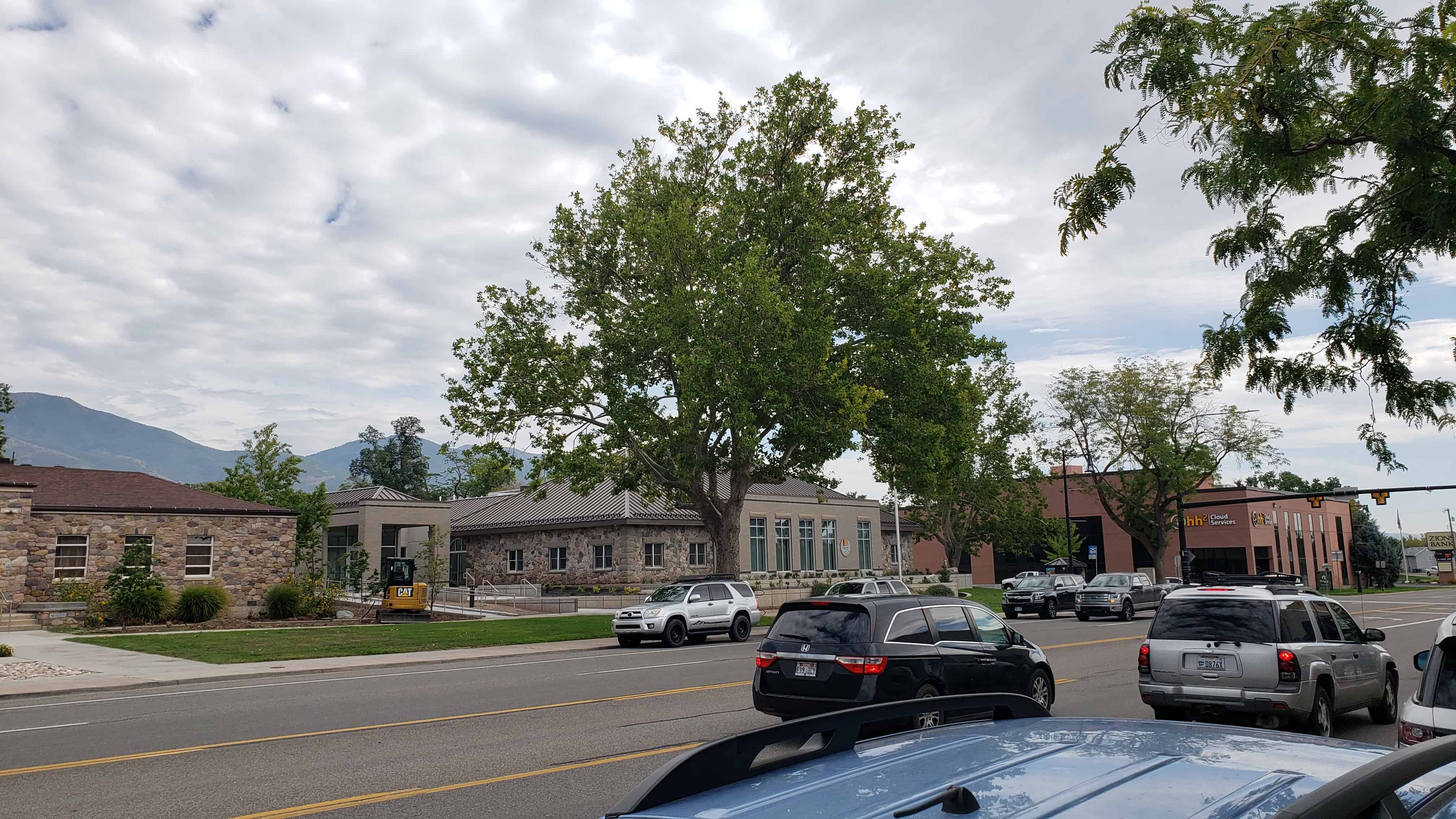
Kaysville Municipal Building / Old Kaysville City Hall / Old Kaysville Library Built in 1940, located at 44 North Main Street in Kaysville, Utah and added to the National Historic Register (#100004476) September 30, 2019.
This historic building was built as Pleasant Grove City Hall as one of the many New Deal Funded projects in Utah between 1938 and 1940. It had the jail downstairs and is now a sign company.
Built in 1938-40, this two-story city government building was financed with money obtained through the Federal Works Project Administration. This WPA Moderne style was often built during the 1930s financed by the Federal Government. Native Soft-rock was salvaged from Clark Hall, the building it replaced, sawed into blocks, and reused in the city hall. Other stone was taken from the hills northeast of town. The Soft-rock building is stuccoed. This building shows the modern streamline design of that period, and is void of ornamentation.*
This building was constructed in 1938-40 as a Works Progress Administration (WPA) project. The WPA was one of several New Deal programs designed to stimulate economic recovery during the Great Depression while providing needed public services and facilities. Over 230 public works buildings were constructed in Utah; approximately half of them retain their architectural integrity.
This building housed the city offices, library, police, and Hurricane Canal Company until the mid-1980s. The city then made it available to the Hurricane Valley Pioneer Heritage Foundation to develop as a museum.
The structure is built chiefly of hand-hewn sandstone that was quarried by construction workers from the banks of Berry Springs, about six miles west of Hurricane. The original estimated cost of construction was $22,300, but as the material cost was greatly reduced, the city was obligated to pay only $7,000.
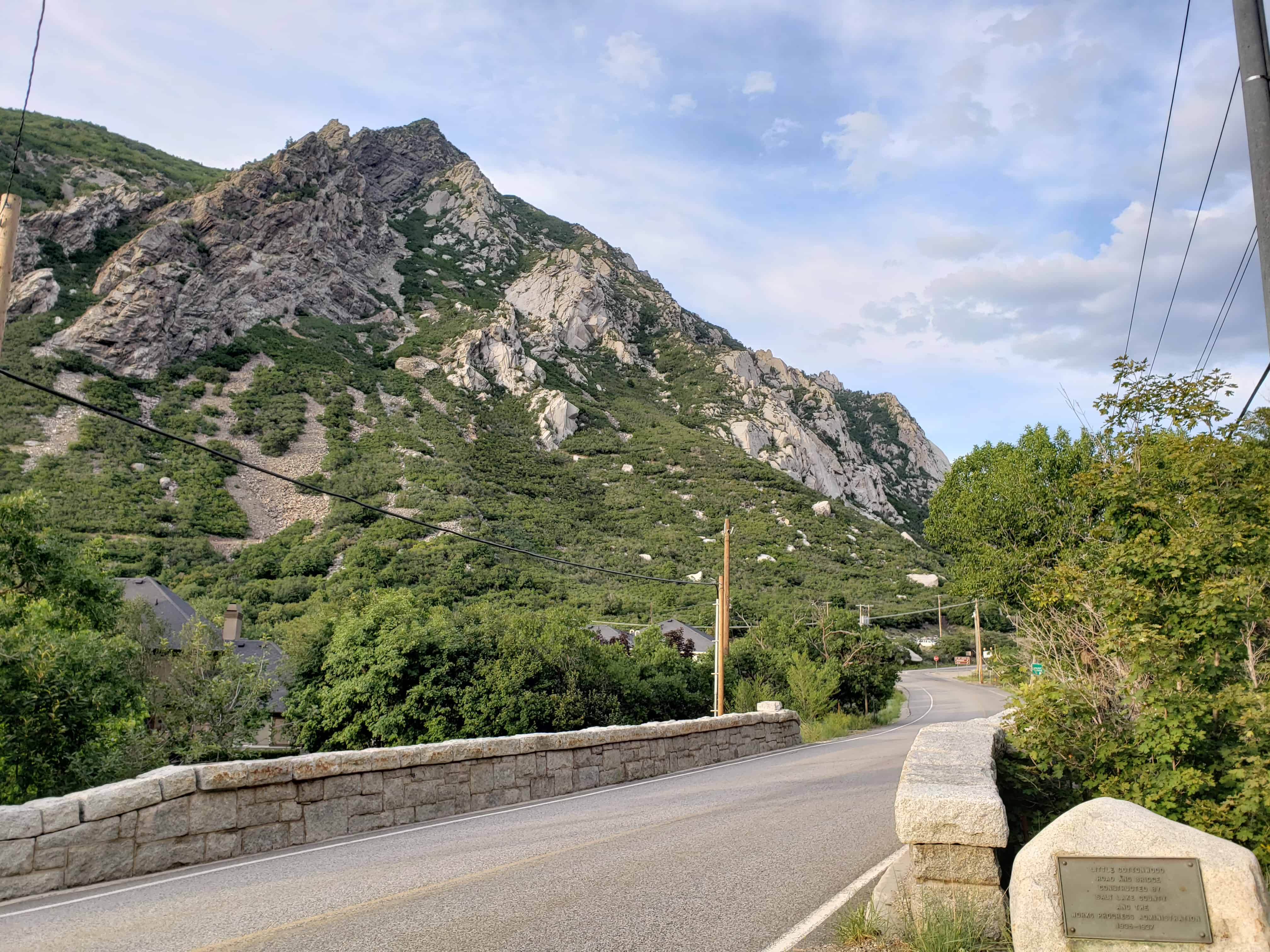
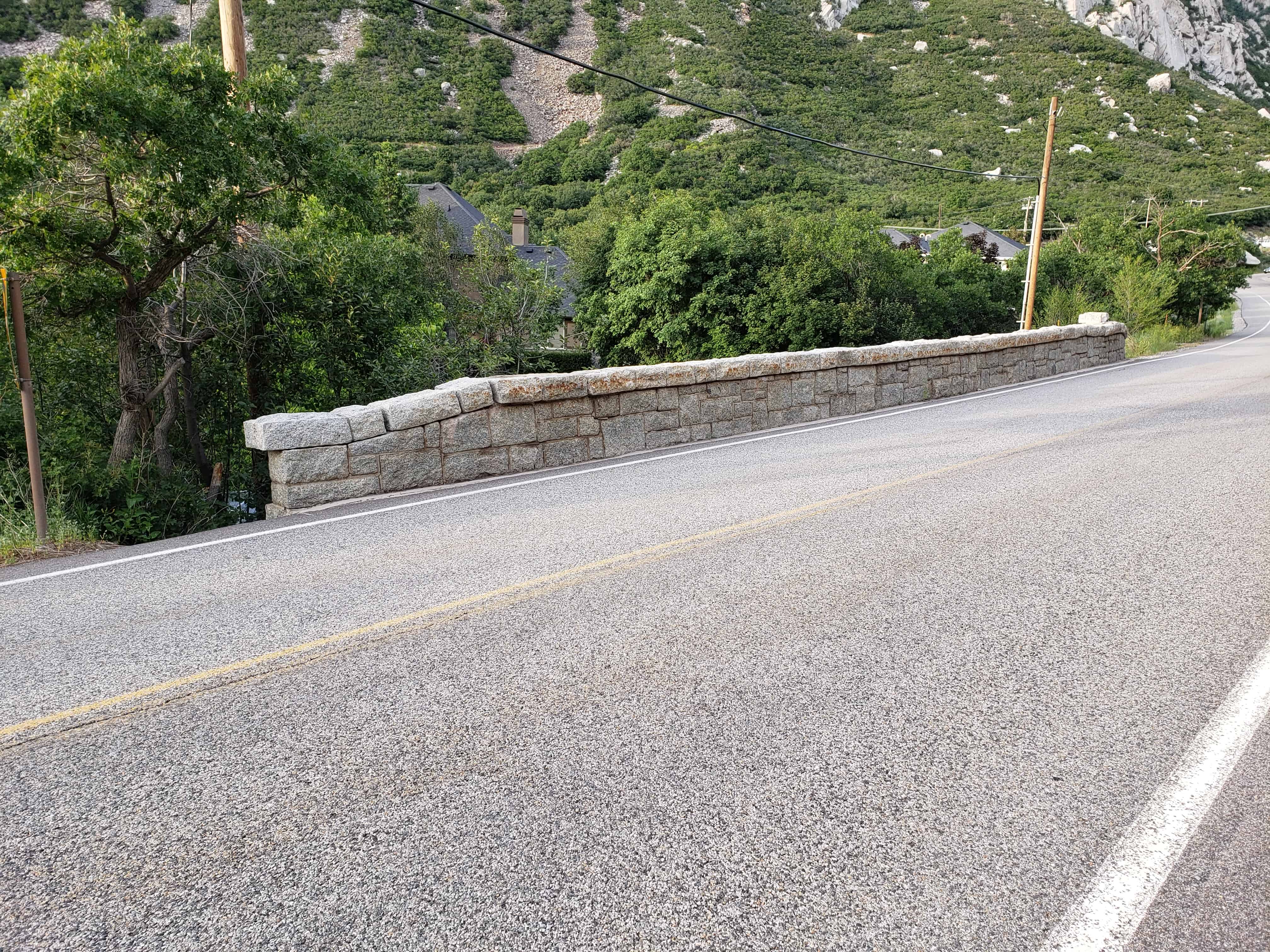
Little Cottonwood Road and Bridge – one of many New Deal Funded Projects in Utah. It was a project to built/repair the road into Little Cottonwood Canyon and the bridge over the creek and it was done by Salt Lake County and the WPA (Works Progress Administration) in 1935-1937.