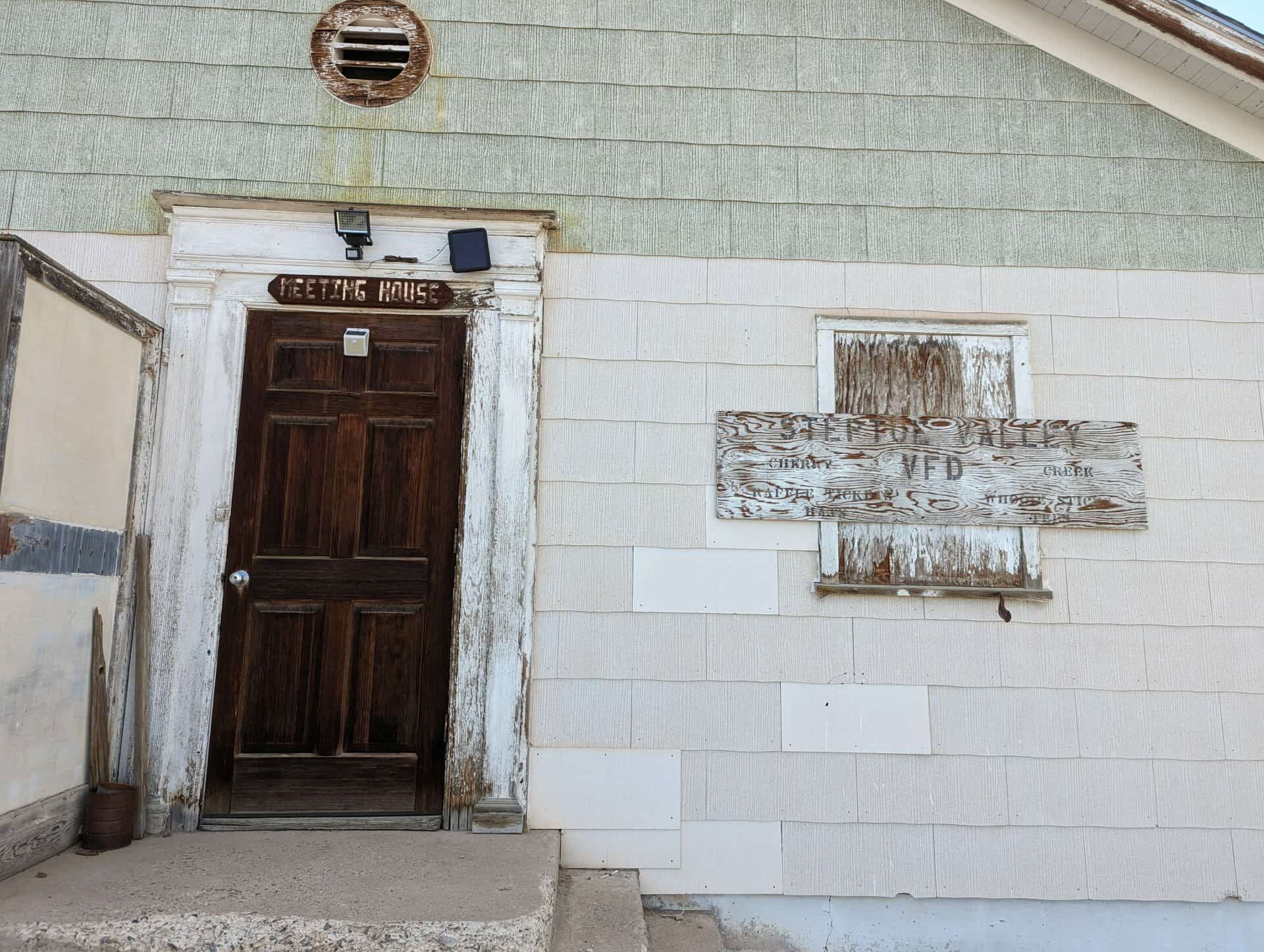
Built when Cherry Creek was founded in 1872, it is one of the two oldest standing Nevada schoolhouses. In November 1894 a dispute between Pat Green and Pat Dolan over the building’s location turned violent with Dolan killing Green in a gunfight. With successful mining operations the area population grew to 6000 people and a peak enrollment of 56 students. In 1901 a lantern was fueled with gasoline and exploded. The fire burned several buildings nearly destroying the schoolhouse. After the last class in 1941, the building was used as a post office until 1971. Acquired by Walter Campbell in 1994, the schoolhouse has been converted into a museum.
This historic marker was dedicated June 12, 1999 by the Lucinda Jane Saunders chapter 1881 of E Clampus Vitus.
Harding School was named after President Warren G. Harding. Classes started August 1925 with George Fox as the first principal. It was used as an elementary school until May 1968 when Principal James L. Jensen called classes to order for the last time. Price City purchased the property and converted the school into a fire station and multi-use center in 1968. It was torn down in 1983 to make way for the Price City Public Safety Building.
Dedicated July 14, 1984 By Utah Outpost Mountain Charlie Chapter No. 1850 E Clampus Vitus
Education was a priority to early pioneers. In 1857 Layton settlers built Adams School. The log structure was 20 x 32 feet, with a thatched roof, dirt floor, and a brick fireplace. The teacher was paid in produce, bacon, or flour.
School buildings were frequently used for church and community events. Transportation to school was often difficult. Most children walked, but a few had access to a horse, buggy, or wagon. Settlers built a stable to accommodate the animals during the day. Outhouses were built next to the stable, one for boys and one for girls. Lunches, which usually consisted mostly of jam/molasses or tomato sandwiches, were carried to school in buckets. Each day buckets of fresh water were brought into the school and served with a large ladle. The teacher traditionally rang a hand bell to mark the beginning or ending of school, recess and lunch. The playground consisted of a ball diamond and some bleachers.
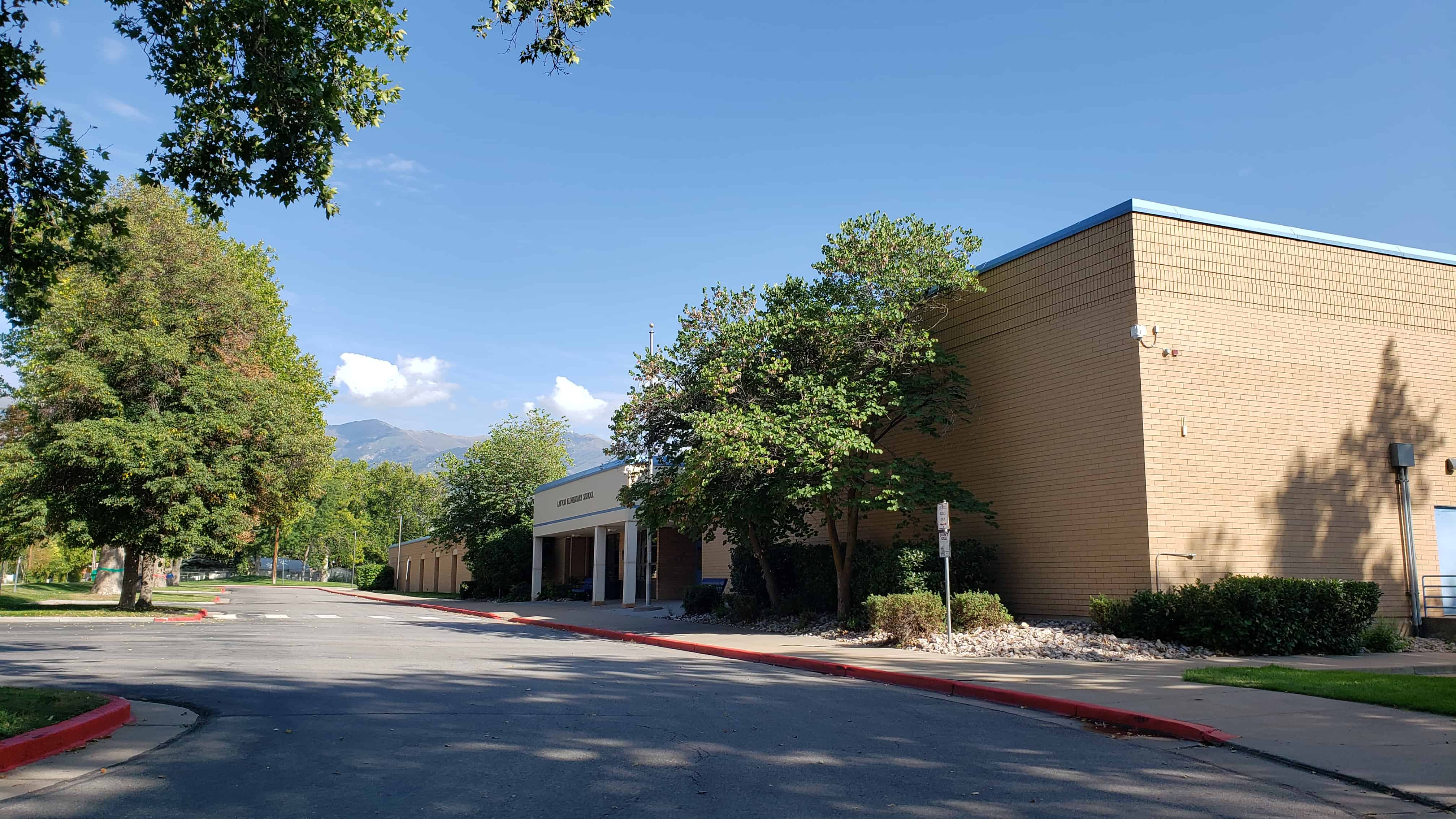
In 1890 the Public School Act was passed in the Territory of Deseret. It marked the beginning of graded schools. On October 12, 1902, Layton Elementary was built. It included all grades up to and including the 7th grade. The site selected was 339 West Gentile Street. The land was owned by the Episcopal Church which had previously housed St. Jude’s School. The city purchased it for $600.00. However, proposed construction bids exceeded the budget, so the school was built using day labor.
Other early one-room schools in Layton were:
Tramain Log School (built in 1860)
Dawson Hollow School (built in 1875)
Log School (built in 1880)
Five Points School (built in 1881)
St. Jude’s School (built in 1888)
West Gentile School (built in 1892)
Doman Frame School (built in 1892)
William Nalder School (built in 1897)
Stephen Nalder School (built in 1897)
Kershaw School (built in 1897)
Sand Knolls School (built in 1898)
After completion of Layton Elementary, all one-room schools closed, leaving Layton Elementary the only school in Layton until 1942. On September 24, 1984, the school building was demolished and a new Layton Elementary was constructed.
DUP Marker # 564, located at 369 West Gentile Street in Layton, Utah – for other DUP Markers visit this page. (it is #564 on the plaque on site, but so is “Pioneer Women” in Price, Utah – this one is listed as #566 in the D.U.P.’s book.)
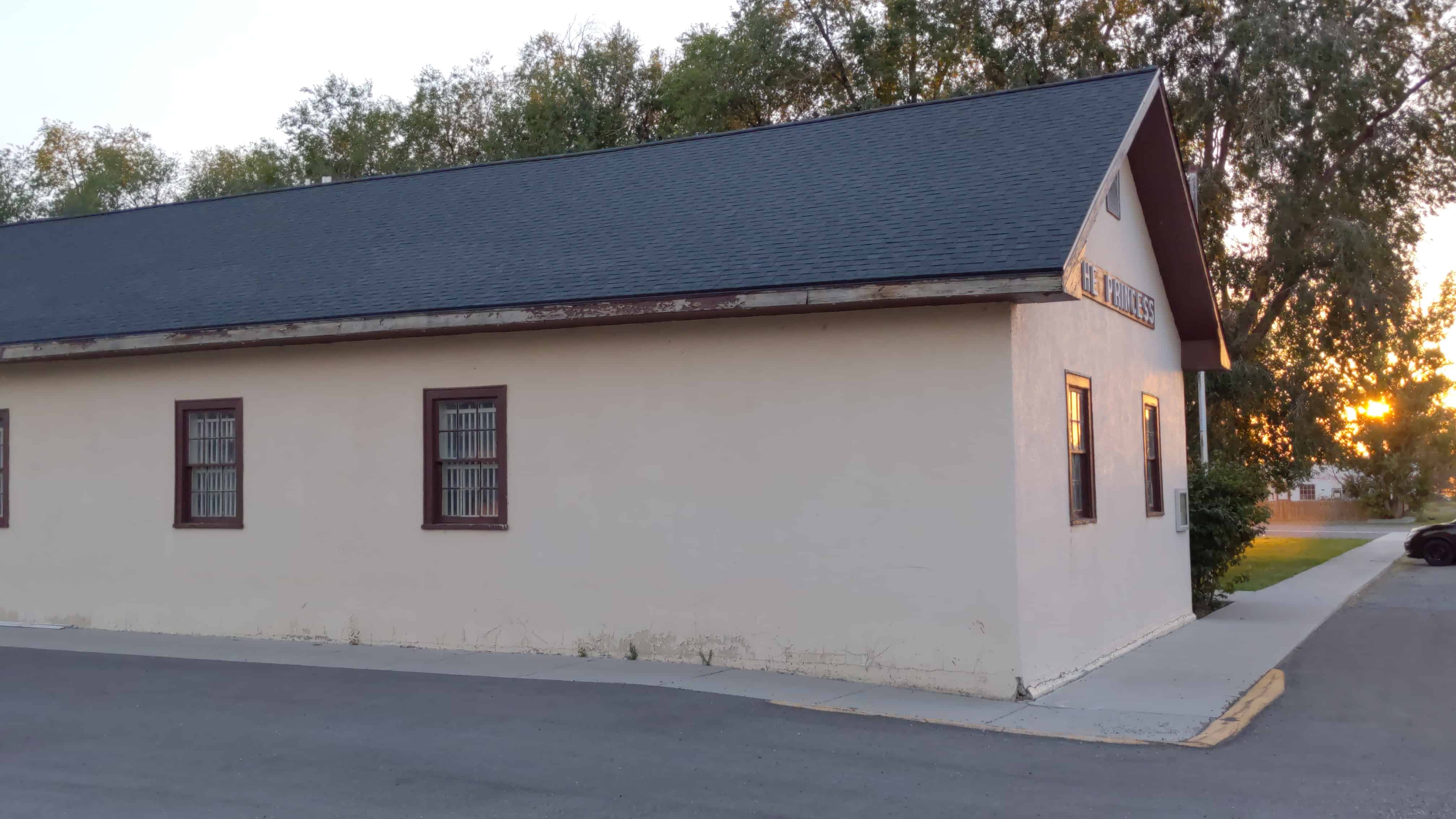
The Princess Recreation Hall/Lynndyl LDS Meetinghouse is locally significant in the areas of entertainment/recreation and religion. Lynndyl Town was established during the railroad expansion era and the Princess Recreation Hall was built to meet the needs of the citizens for a social gathering center. Originally constructed in 1914 as a social and recreation place for the community, is was used for sporting events, dances, public meetings, a school house, a movie theater, and even a hospital during the influenza epidemic of 1917-1918. During its time as a recreation hall, the building also concurrently served as the meetinghouse for the LDS Lynndyl Ward from 1915-1985. It its 100 year history the Princess has never been empty and has remained a community center for social gathering from the beginning. It has been used as the Lynndyl Town Hall since 1982.
From the National Register nomination form: Located within the town of Lynndyl, the Princess Recreation Hall/Lynndyl LDS Meetinghouse is a one-story wood frame and stucco building with minimal detail, located at 98 East Center Street. It is situated in the north-east corner of the community park, with a sports court to the west and a grass sports field to the south and west. The original 1914 building was a recreation hall constructed of wood frame and wood siding, with a basketball court and stage. In 1936-38, an addition was constructed to the west of the building for classrooms and other meeting space to accommodate the needs of The Church of Jesus Christ of Latter- day Saints’ membership in the town. The structure now took on an “L” shape, with projecting entryways. The original building and the new addition were finished with a more modern stucco appearance, although it maintained a vernacular classical appearance. In 1983, a fire station was added to the south of the building, creating a “T” shape. And, although the outside was finished to match the 1936 stucco exterior, the inside of the new section was modern. However, the interior of the 1914/1936 church remodel was not altered. As of 2014, the interior still retains this layout and architectural detail, such as stained wood molding and interior wood doors. The structure has very simplistic features such as the wood decorative eaves and the original wood frame six over six double hung windows, which helps the structure to retain its historic integrity.
Located within Millard County, in the small town of Lynndyl, Utah, The Princess Recreation Hall/Lynndyl LDS Meetinghouse is currently being used for the town hall. In spite of a 1983 addition, the structure has kept its historic integrity by retaining much of the original work from 1914 and the 1936-38 addition. The building was constructed on the corner of Center Street and 100 East, in the north east corner of the public community park. Ball fields can be found south of the building and a sports court is found to the west, divided by a row of several large deciduous trees separating the building from the sports court. Other vegetation around the building includes shrubs and grass. A concrete sidewalk is found along the road on the north and east sides of the building, with unmarked gravel parking adjacent to the concrete sidewalk.
The building was originally constructed in 1914 as a rectangular plan recreation hall with gymnasium and auditorium. The original structure was built on a concrete slab with wood framing and covered with wood siding. The vernacular building was constructed with simplistic detail that was functional rather than decorative. In 1936, the Church of Jesus Christ of Latter-day Saints responded to the demand for a larger place of worship by constructing an addition to the west portion of the building. The new structure used a concrete block foundation which raised the main level of the addition up one-half story and allowed for a full basement. This basement had a coal furnace and coal storage room along with classrooms. The new addition was built using wood framing. It did not keep to the original exposed wood siding of the original, but was finished with stucco. The exterior of the original recreation hall was also finished with stucco to match the new exterior. Other simple details were added to the wide eaves to give the building a slightly more formal appearance, with an understated Classical feeling. When completed in 1938, the new Lynndyl LDS church building had an L-shape plan and increased space for meetings and classes, yet the social hall remained open as a community gathering area with wood floors and plaster covered walls. When completed the finished space was approximately 3,620 square feet.
From the primary entrance on the north side of the 1936-38 wing, one enters a vestibule then proceeds to the interior of this section. The interior of the addition was designed in a split level format with a full set of stairs to the basement and a half flight to the upper level. The basement below this section has rooms for storage, classrooms a coal furnace and a coal room.
The upper level of the addition has a large room on the west side that was originally used as chapel for church services. Another room to the east of this is divided off by an accordion wall and served as a classroom. There is a small window on the south elevation that provided light to this room. However, this was covered on the exterior when the fire station was added. To the east of this room, and separated by another accordion wall is the back stage area from the gymnasium. The east wall of this area has large built-in cupboards and a single window. A doorway at the northeast corner, next to the stage curtains, provides access to a small stairway leading down north to the gymnasium floor. The gymnasium is to the north of this area and is a large open hall with maple flooring. A basketball hoop is on the north end. The ceiling is coved and has fairly old acoustic tile. The gym has a separate exterior entrance through the projecting vestibule on the west side described above. Another doorway at the southwest corner of the gymnasium provides access to an interior stairway leading up to the hall/landing area and a small kitchen. All of the original plaster walls, doors, wood trim and finishes are retained in the 1914-1938 part of the building and very little has been changed or updated except for carpeting on the floors, accordion doors, and light fixtures.
The building remained in this plan until 1983 when Lynndyl Town moved into the building creating a new use as the town hall. Although no structural changes took place within the existing building, a fire station was constructed at the south end as an extension of the gymnasium/auditorium section and was built using wood frame construction and covered with stucco to match the rest of the structure.
The 1983 fire station addition is accessed from the interior by a doorway from the classroom section of the 1936-38 addition. The door leads to a landing with stairs (behind a door) that go up to the second story of the addition, and a half-flight of stairs that leads to the ground-level hall and rooms of the addition. Two restrooms at the north end of the addition are separated from the garage/vehicle storage area of the fire station by an east/west running hallway. At either end of the hall are exterior exits. At the west end of the hall are located the stairs to the second floor and a second stairwell to the basement rooms. The fire station garage area is a single large, open area with room for two vehicles and equipment.
The building has undergone two building campaigns since the original construction that have seen two major sections added to the building. The first one, 1936-38, made major alterations to the original structure in both form and use. The second, in 1983, added a new use and major addition while making little alteration to the overall appearance. In spite of the non-historic addition, the building still retains historical integrity of the 1930s appearance and is a contributing historic building in the small town of Lynndyl.
The Princess Recreation Hall/Lynndyl LDS Meetinghouse is locally significant under Criterion A in the areas of Entertainment/Recreation and Religion, as well as Criteria Consideration A for its historical use as a religious meeting place. Lynndyl Town was established during the railroad expansion era and the Princess Recreation Hall was built to meet the needs of the citizens for a social gathering center. Originally constructed in 1914 as a social and recreation place for the community, it was used for sporting events, dances, public meetings, a school house, a movie theater, and even a hospital during the influenza of 1917-18. During its time as a recreation hall it also concurrently served as the meetinghouse for The Church of Jesus Christ of Latter-day Saints’ Lynndyl Ward from 1915-1982. Therefore, it is significant in relation to its contribution to the social and religious aspects of Lynndyl. Within the 1914-1964 period of significance, the building had two distinct construction periods: 1914, when the original wood framed building housing the gymnasium and stage was built, and 1936-38, when the meetinghouse expansion was completed. In its one hundred-year history the Princess has never been empty and has remained a community center for social gathering from the beginning. It is currently being used as the Lynndyl Town Hall, and has been since 1982 when the Lynndyl LDS Ward was disbanded. In 1983 a section was added to the rear of the building to house the town fire station. In spite of the new construction, the historic portion of the building retains its historical integrity and remains a contributing historic building in the small town of Lynndyl.
The Princess Recreation Hall is significant in the area of Entertainment/Recreation as it was the center of all social life for the community. In 1914 the town’s people desired a social hall to be constructed for their gatherings and events. F.L. Copenham, Walter Johnson and other community members helped construct the hall. Prior to completion, the first ball was held and was recorded as being a “grand affair”. The hall was used for a variety of social and sporting purposes and events. These included a movie theater, a dance hall, and a sporting events center which included a basketball court and collapsible boxing and wrestling ring. According to the Polk and Co.’s Utah Gazetteer, the Princess had several recorded managers, Elmer A. Jacob (1918-1919), GW Sudbury (1924-1925) and Elmer Banks (1927-1928).
The Princess truly served as multi-functional building in this small town. During the day it was used as the school house and at night a dance hall with music provided by a piano, fiddle and banjo, and later, the Lynndyl Town Band. The building was mostly used as a gymnasium where a collapsible platform could be set up for boxing and wrestling. According to a poem written by Lynndyl resident, Roberta Dutson, boxer Jack Dempsey and wrestler Ira Dern, visited the Princess for an exhibition.
Along with the role as a dance hall and gymnasium, the building also served as the local movie theater. According to local historian, Mary Greathouse: “The first picture show was run by Elmer Jacobs. Sometimes the film would break and the audience sat in the dark until Elmer climbed down [to] find a woman who would loan him a hairpin to make repairs. At other times, the film would catch fire and Mr. Jacobs would toss it down from the projecting booth for someone to stamp out. The film would be sliced and the show would go on.”
The building was heated by two large stoves, located in opposite corners of the gym. Prior to 1928, when electric power infrastructure was brought to Lynndyl, the power for lights and the projector was provided by a generator powered by an “old Ford motor”
During the influenza pandemic of 1918, the population of Lynndyl was devastated. Because of the population size and isolation of the town, there was no hospital to serve the health needs of the community. In order to deal with the many sick who required increased observation the Princess was put into use as a makeshift hospital. The building’s use as a hospital was short-lived, as was its former use as a place of education. When the flu threat was over a new school was constructed adjacent to the hall and opened for students in 1919.
The Princess Recreation Hall/Lynndyl LDS Ward Building is significant in the area of Religion under Criteria Consideration A because of the dual role of the building as the primary social and religious-use space in the community. Although there were some informal Sunday schools being held in different homes, there were no other formally established religious organizations in Lynndyl other than the Church of Jesus Christ of Latter-day Saints (which was typical of most communities in Utah). The Lynndyl LDS Ward, which met in The Princess, was the only ward (parish) found in the area.
In 1915, not long after the recreation hall was completed and put into use, the LDS Church purchased the building to use as a meetinghouse. This did not end its use as a recreation hall, however. Even though the ward used the space as a meetinghouse, the structure remained significant in regard to the social aspect of the community as a whole. From its inception, the LDS Church championed recreational activity in all the communities it settled in Utah and the surrounding region. Particularly after the turn of the twentieth century, when the Church’s building program became more formalized, it was common to construct “cultural halls” near its meetinghouses which had functions similar to the Princess Recreation Hall, with a basketball court and stage area. Perhaps because of the small population of Lynndyl, the LDS Church deemed it more feasible to purchase the existing hall and make it a multiple-use building.
For many years the simple gymnasium and stage was used as the chapel and classrooms, with curtains hung on wires to divide up the space. As the population of the community increased, more space was needed for the expanding Lynndyl Ward. In 1936, approval was granted by the school board for the ward to meet in the school building while Princess Hall was enlarged to include a formal chapel and classrooms. In 1938, construction was completed and on Saturday, September 10, a celebration was held that included sporting events followed by a banquet and program. Some 700 people were in attendance for the events which ended with a dance in the hall. On Sunday, the building was dedicated by LDS Church President Heber J. Grant. At this time the membership for the Lynndyl Ward was 248 people.
The town continued with stable population for a few years longer, but as steam locomotives switched to diesel, the railroad no longer found it necessary to stop in Lynndyl. As a result jobs decreased and with it, the population. Although population declined over the decades, the building continued in shared public and religious use for several decades.
On Sunday, November 22, 1981, the LDS Stake President announced the Lynndyl Ward would most likely be abandoned at the beginning of 1982. This was a shock to many of the members and devastating to think of their community without a place to worship and meet with friends and neighbors. The ward continued on for another eleven months and on October 20, 1982, the last meetings were held in the Lynndyl Ward Meetinghouse. Alpha Nielson, who wrote the history of the Relief Society2 in Lyndyll, stated the following: “No more Lynndyl. No more meeting place. No more cultural hall or public building. A little town with no identity. No heart or soul”.
Although the Lynndyl Ward no longer met in the building, it did not remain empty for long. Soon after the ward moved out, Lynndyl Town set up offices in the building. Along with the new use, the town established a local fire department and constructed permanent quarters for their emergency vehicles in 1983. Along with Town functions, the building continues to be used as a public meeting space for the community, with the gymnasium and stage put in use at various times of the year.
When the nearby IPP power plant finally opened, the population saw a small increase; however it has always remained below 150 residents. In 1990 C.B. Tolbert became mayor and pushed for a beautification of the community. He had the town hall repainted and placed letters on the outside that stated once again “The Princess” (Greathouse 207). Being the town hall, it has remained a community gather place. Public meetings continue to be held at the building along with recreational activities, dances, pancake breakfasts, holiday turkey dinners, bingo games, basketball and other recreational activities. The Princess Hall has remained throughout Lynndyl’s history the most significant and prominent structure within the community, and remains a contributing historic resource.
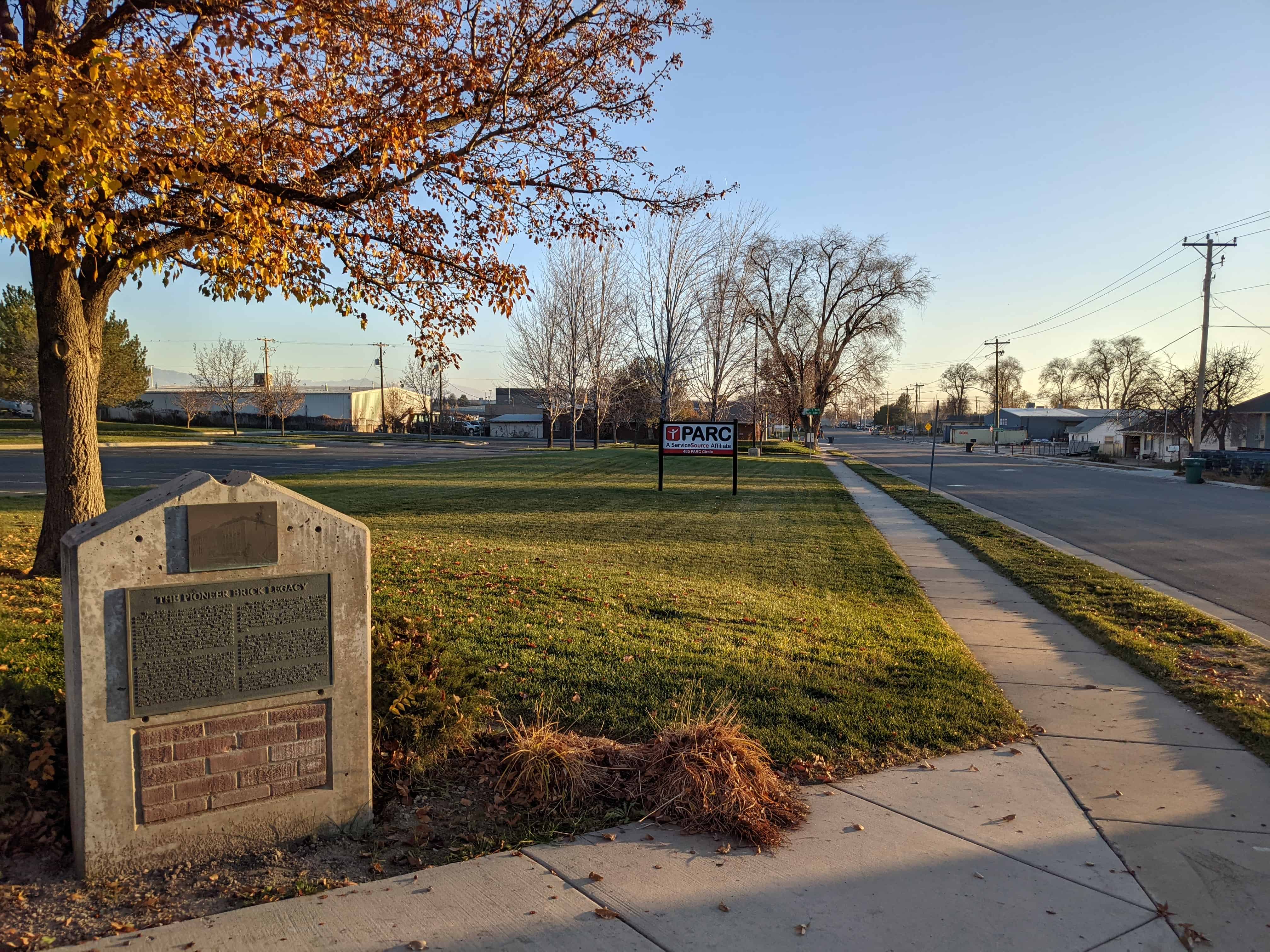
These bricks were recued out of the rubble left behind when the 1907 Pioneer School building was knocked down in December, 1998. A few days later many truckloads of debris were carried away, leaving only a flat expanse of dirt where once the big brick school with its tall landmark brick chimney stood. These bricks were there, witnessing the changes in education from the early 1900’s. We are unable to go back in time to see those very unique, individual decades, but these bricks remain as a physical reminder that those times were real, benefiting many who passed through the doors of the old Pioneer School.
The brickwork for the Clearfield School, at 435 South Main, was completed by Duncan Brothers late in November of 1906, and the school opened in September, 1907. The two-room brick building had two teachers, Heevy Johnston, from Mt. Pleasant, taught the three lowest grades, and the older children were instructed by Florence Todd of Farmington. Six rows of seats filled each classroom, two for each grade. Soon the school was enlarged to four rooms with two grades taught in each room for the first through eighth grade. The seventh and eighth grade teacher was usually also the principal.
The Clearfield School operated from 1907 until 1923. It was destroyed that year, when the wood roof caught on fire. The closest fire department was in Ogden. After meeting in temporary quarters in a church across the street, by 1926 a new six-room Clearfield School was ready for occupancy. The new building acquired the name “Pioneer School” in 1952 and remained in use until 1980.
In 1981, the Davis County School District moved the Davis County Development Center to the Pioneer building. The vocational program serving students and adults with disabilities changed its name to PARC, the Pioneer Adult Rehabilitation Center, to preserve the memory of the Pioneer School. The new location offered PARC participants stronger employment opportunities with close proximity to Hill AFB and new government contracts.
PARC occupied the Pioneer building for 16 years before constructing a new building behind the old Pioneer School and moved out in October, 1996. After a short time as an Alternative Junior High, the Pioneer building stood empty until it was razed in December, 1998.
Located at 685 Parc Circle / 435 South Main Street in Clearfield, Utah