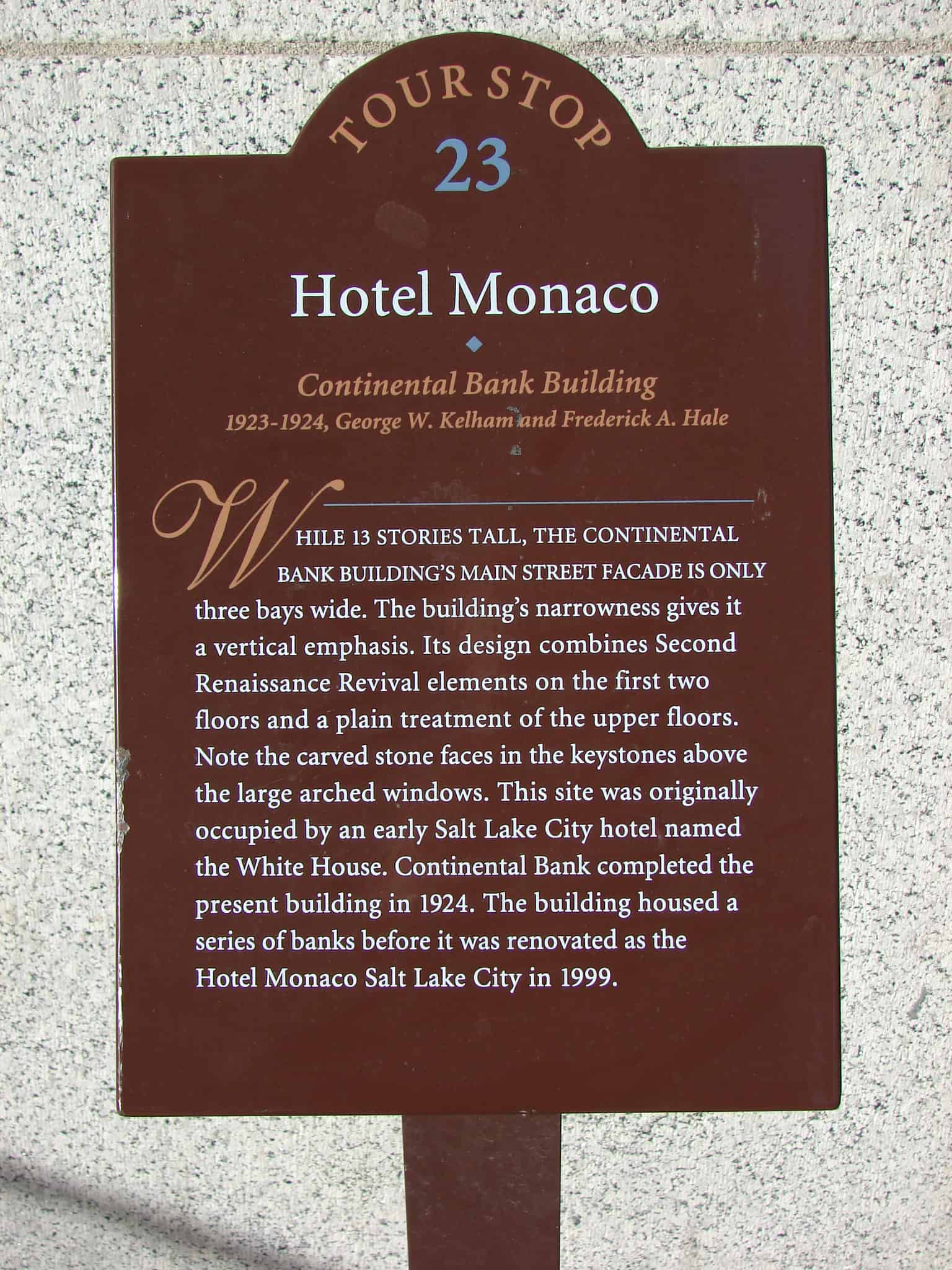
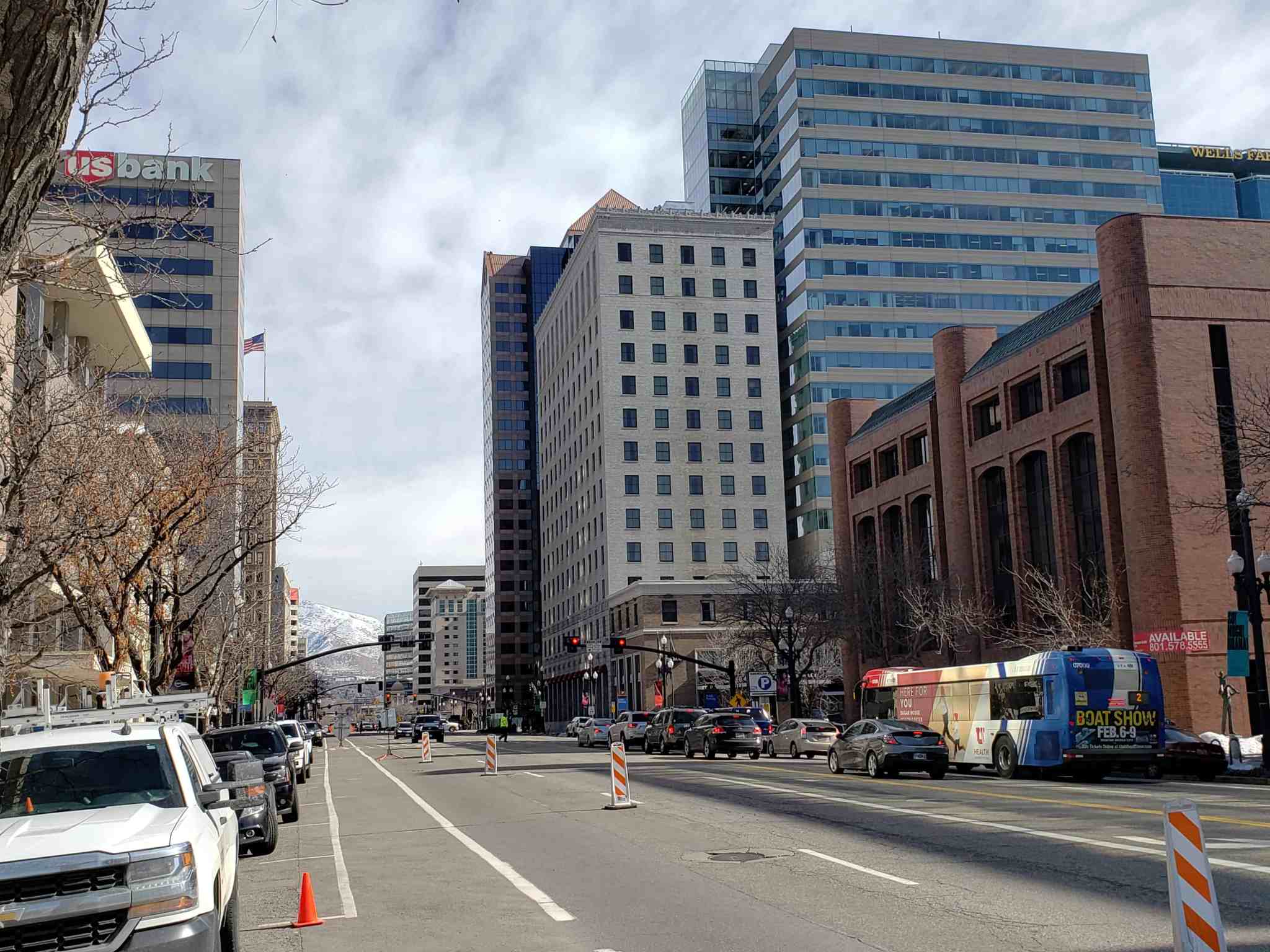
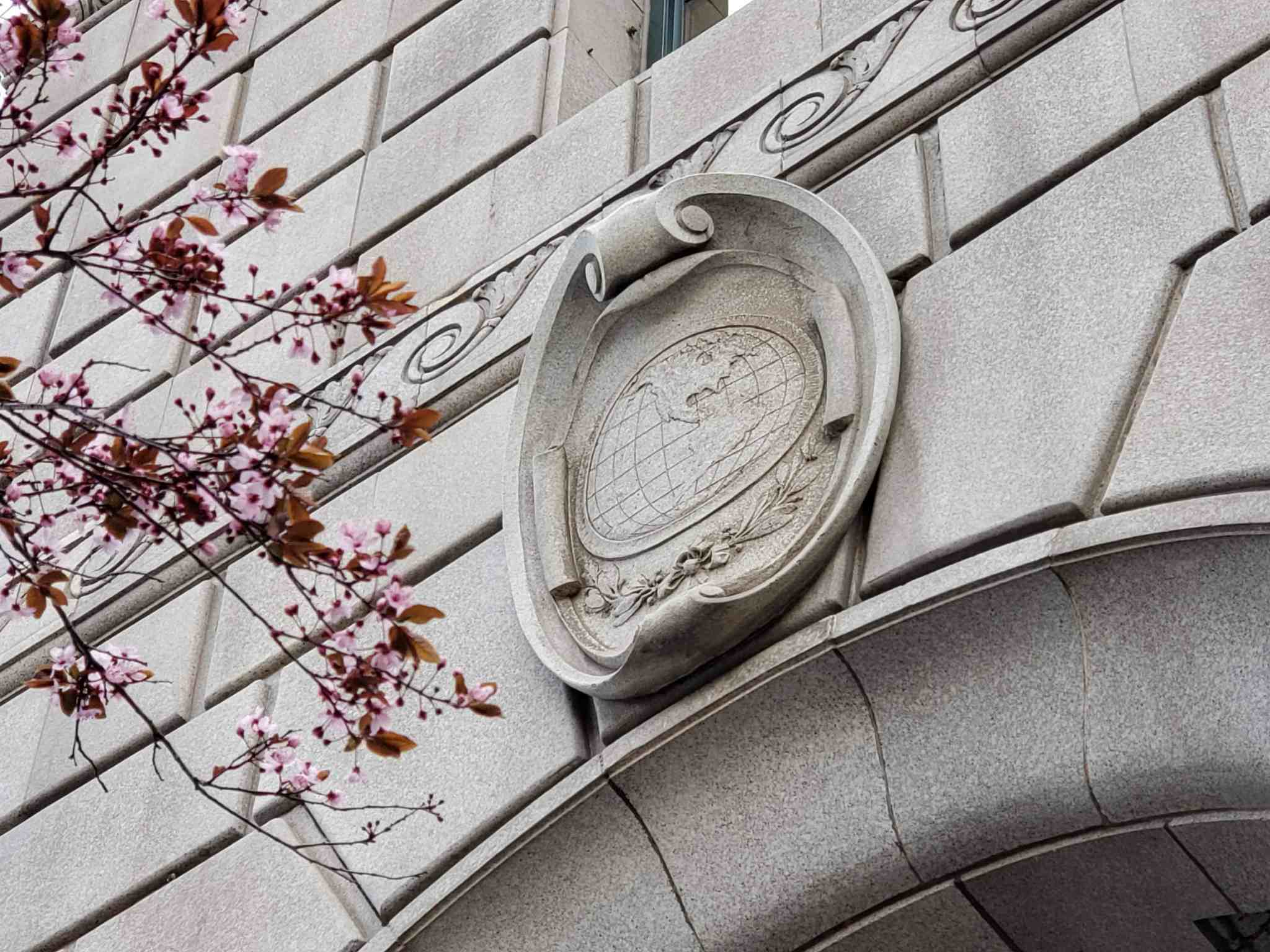
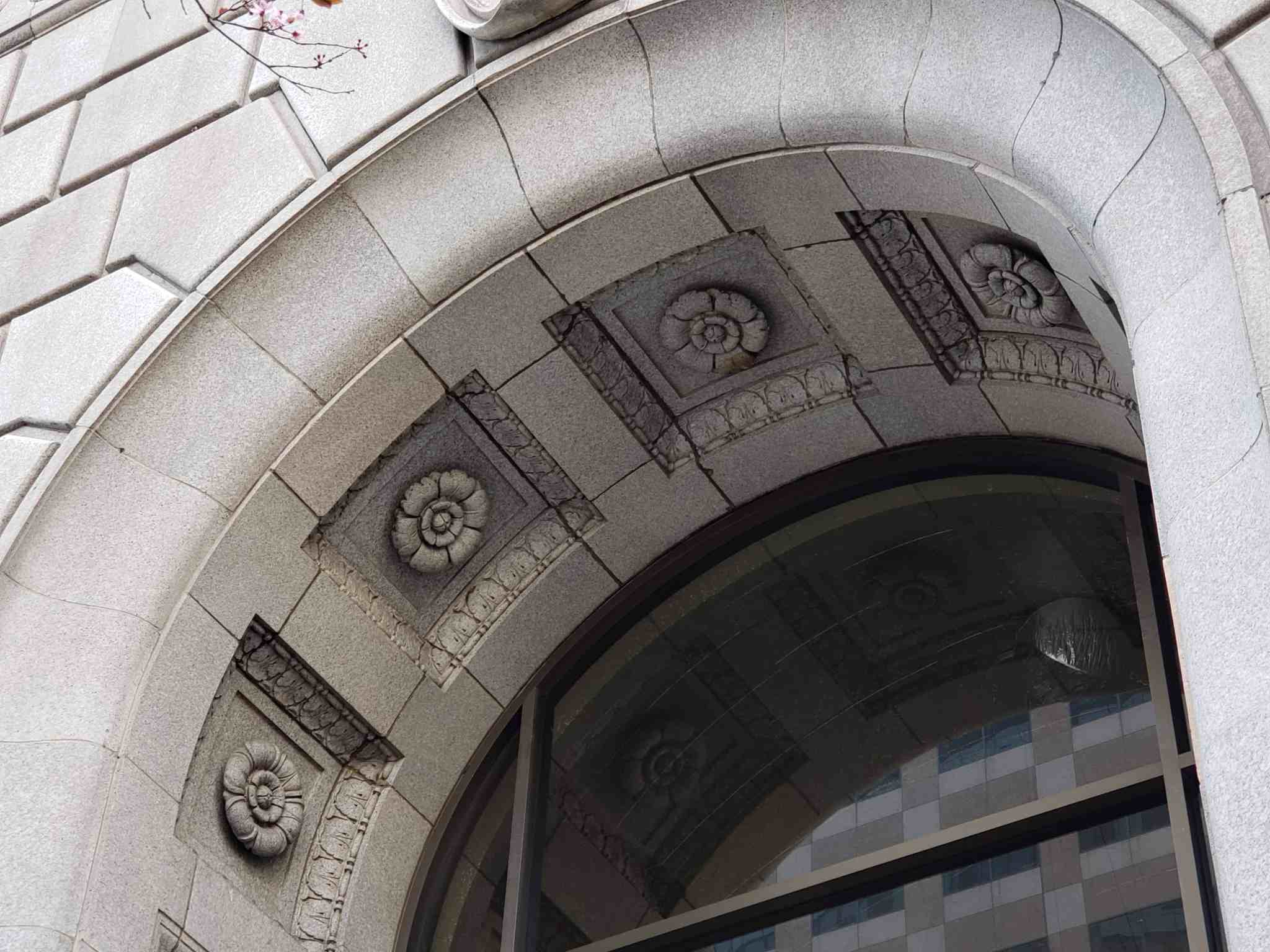
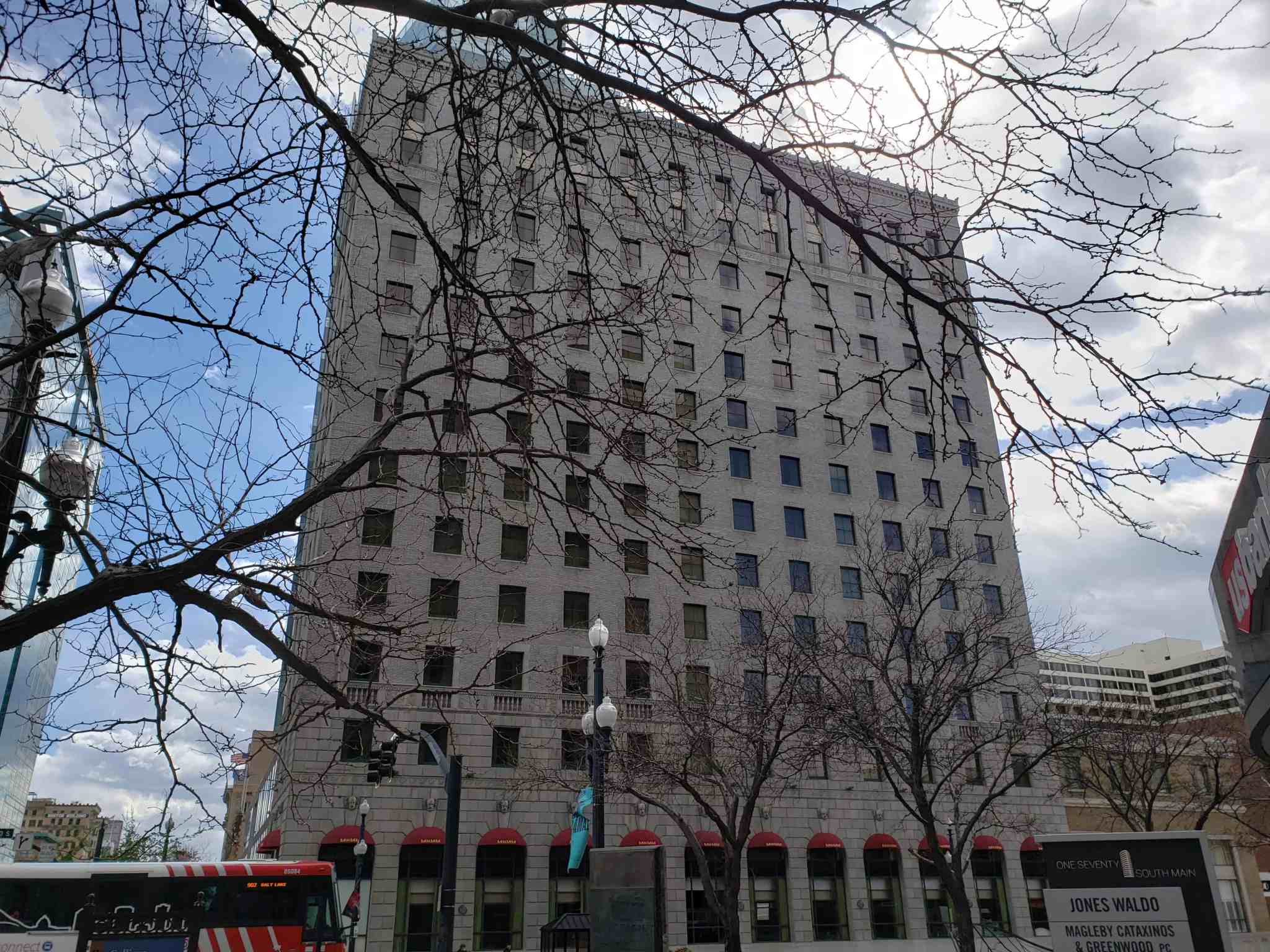
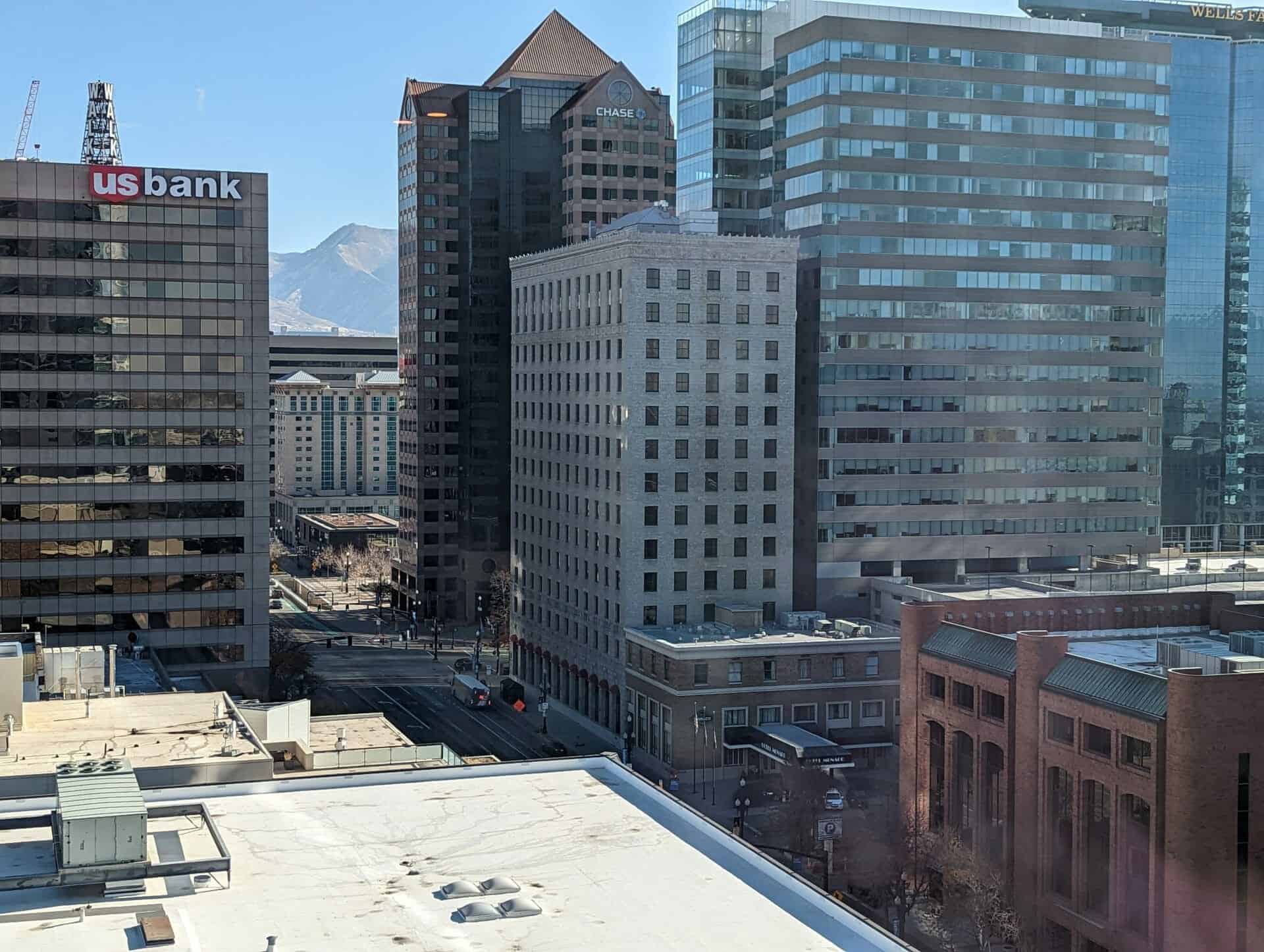
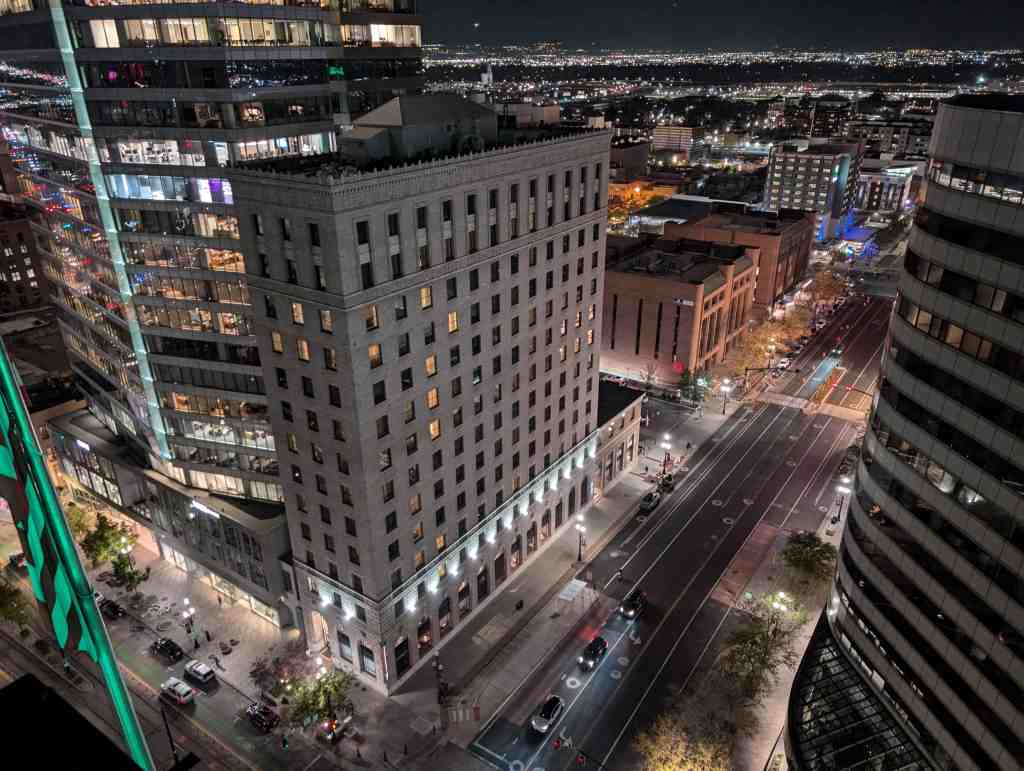
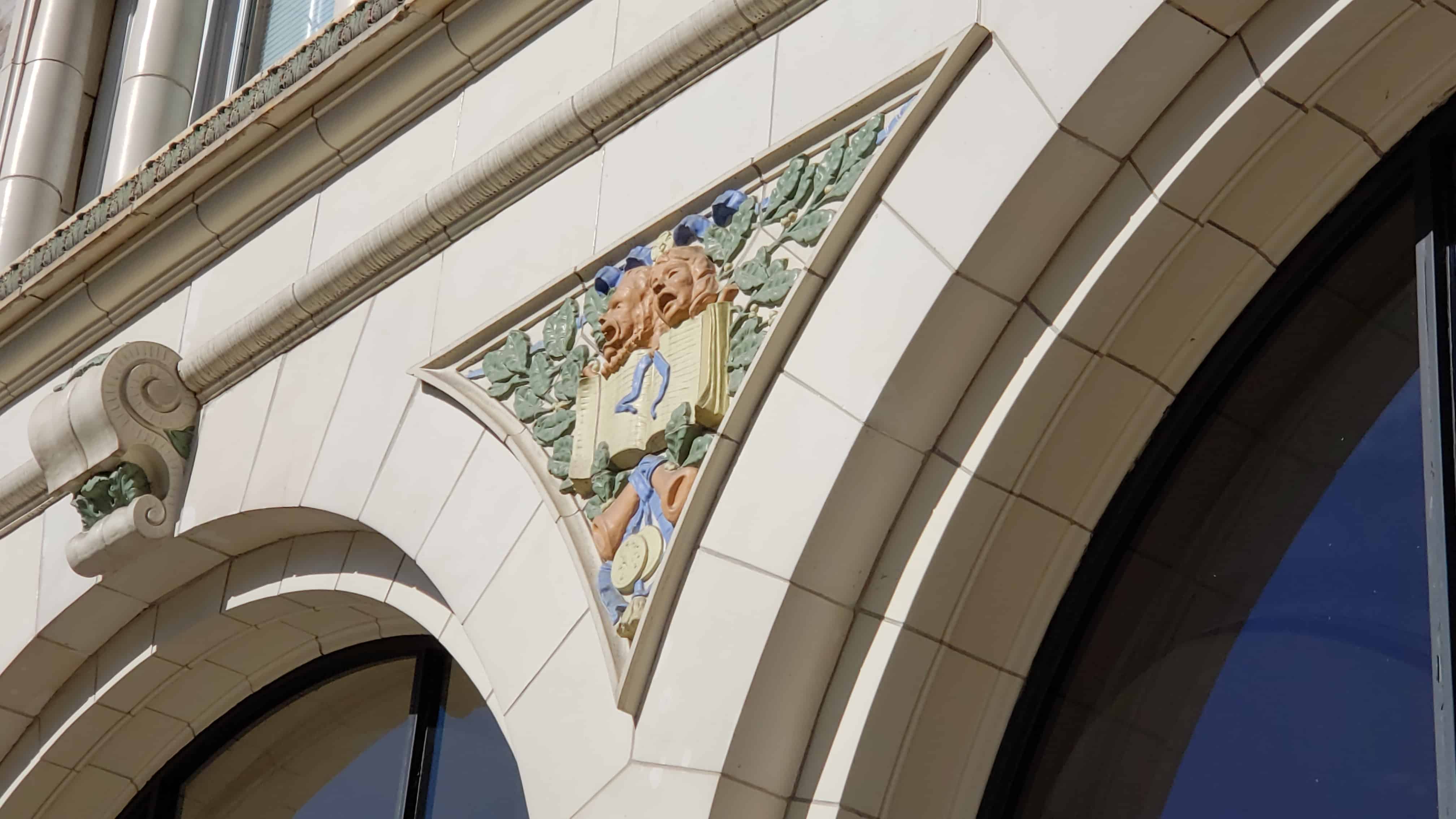
While 13 stories tall, the Continental Bank Building’s Main Street facade is only three bays wide. The building’s narrowness gives it a vertical emphasis. Its design combines Second Renaissance Revival elements on the first two floors and a plain treatment of the upper floors.
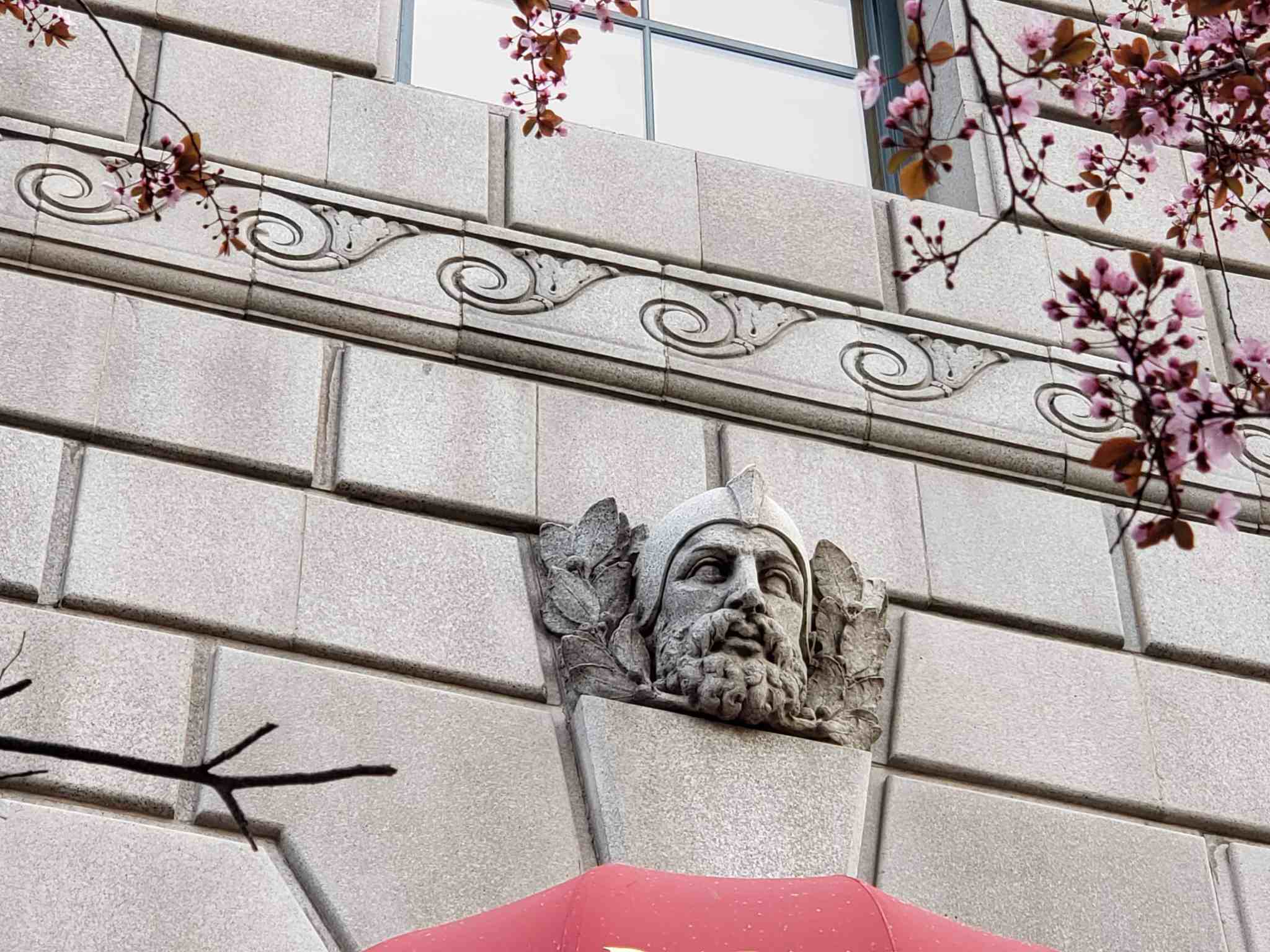
Note the carved stone faces in the keystones above the large arched windows. This site was originally occupied by an early Salt Lake City hotel named the White House. Continental Bank completed the present building in 1924. The building housed a series of banks before it was renovated as the Hotel Monaco Salt Lake City in 1999.
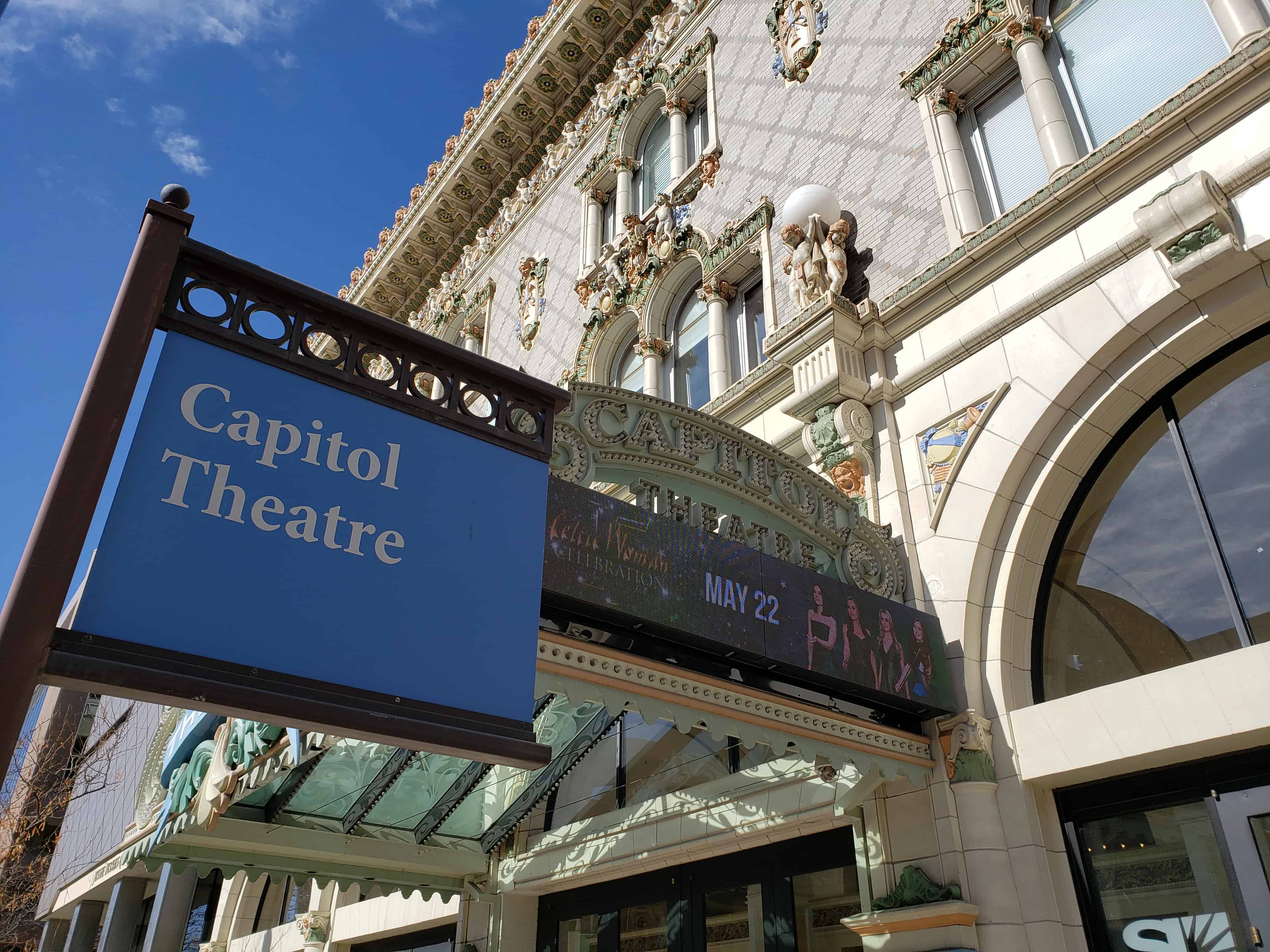
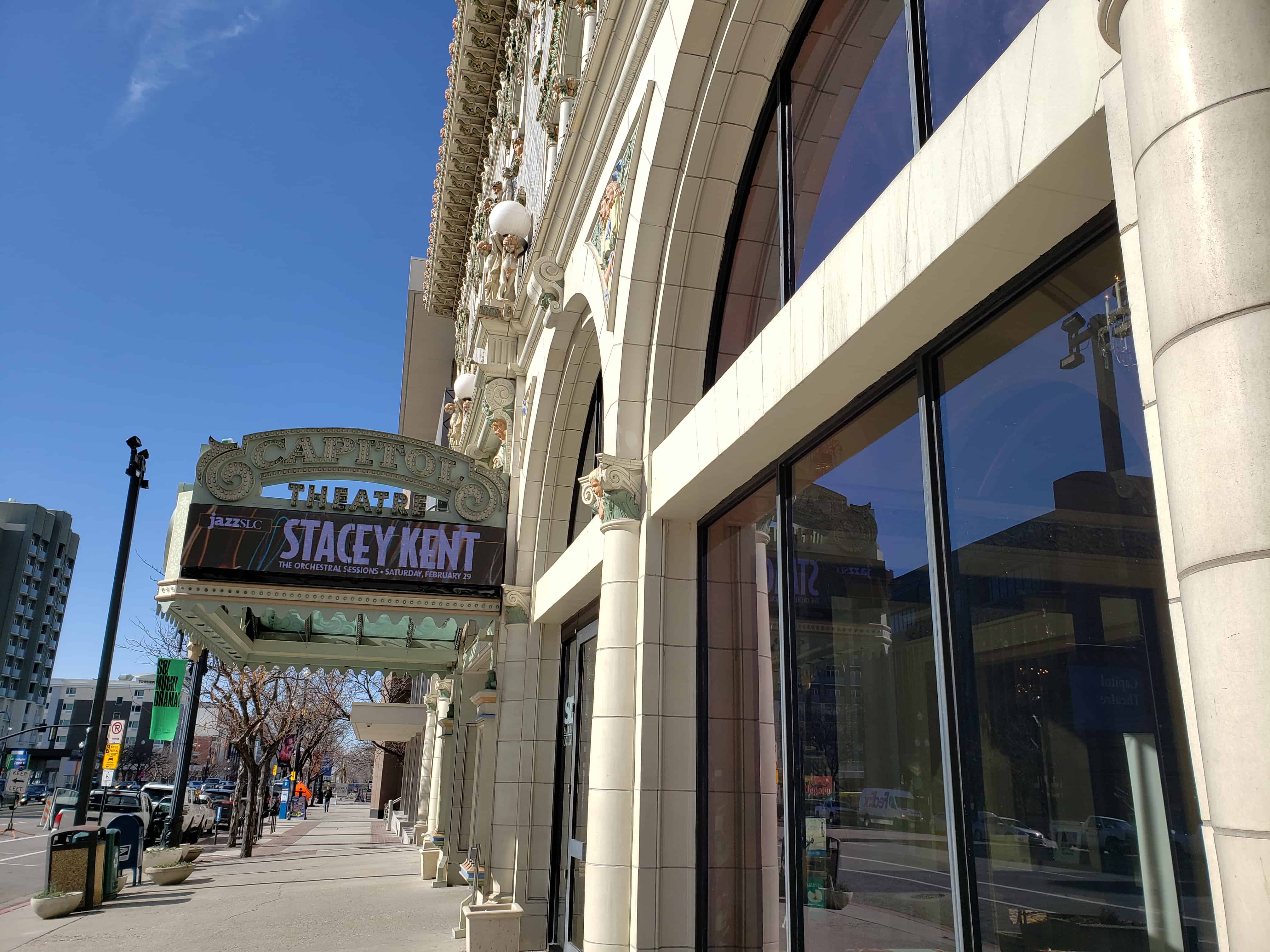
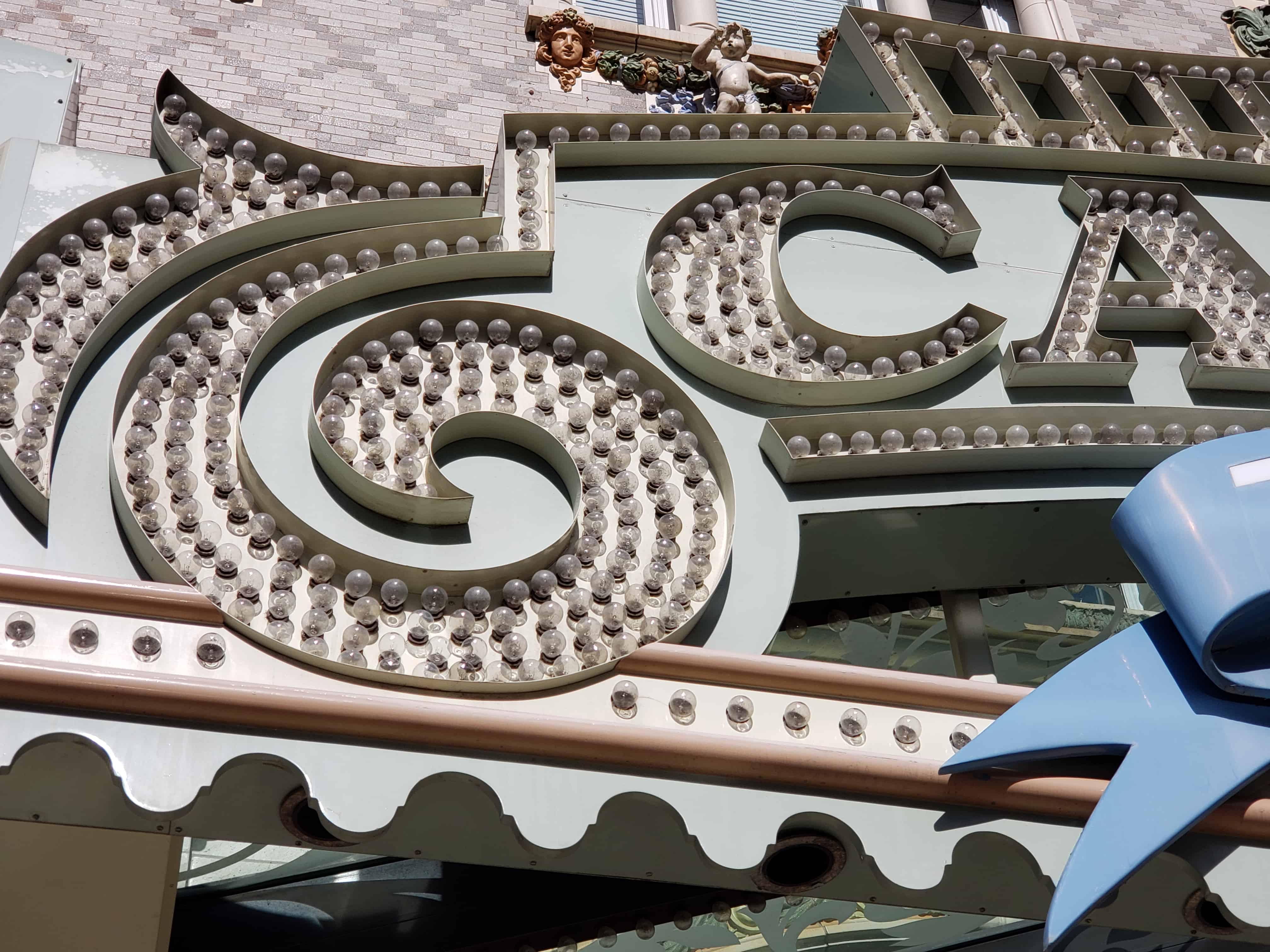
The Orpheum Theatre (now Capitol Theatre), the second theatre built in Salt Lake City for the Orpheum Theatre chain, is significant for introducing innovative architectural features in theatre construction to the Intermountain West. Built in 1912-13, the Orpheum Theatre utilized the most modern mechanical contrivances of its time bringing advancements in safety and comfort through carefully manipulating the interior environment of its public spaces. The building of the theatre also marked an important event in the importation of out-of-state architects and foreign design styles to provide alternatives to the more conventional American and Utah vernacular styles which dominated the majority of commercial and public architecture. The introduction of new building materials tapestry brick and terra cotta, and a highly decorative new style–Italian Rennaissance, along with the “water-curtain,” “Plenum System” air-conditioning and “totally fireproof” construction made the Orpheum Theatre a significant building in the development of architecture in Utah. Of the several theatres built nationally by San Francisco architect G. Albert Lansburgh, the Salt Lake Orpheum was considered one of the most successful.
With such an outstanding facility, the Orpheum Theatre was capable of attracting the best-known performers of the day. The theatre was significant as a major center of vaudeville in Salt Lake City.
After having built a theatre on South Main Street in 1905, the L. L. Orpheum Realty Company took out a permit for a new theatre on May 27, 1912. Architect for the theatre was G. Albert Lansburgh of San Francisco. Thirty-six years of age at the time, Lansburgh had graduated from the Ecole des Beaux Arts in Paris and was awarded Le Dlplome d ! Architect de Government Francais and a gold medal from the Society of French Artists at the Grand Salon of the Champs Elysses in 1906. After spending seven more years studying ancient and modern architecture in Europe, Lansburgh returned to San Francisco, his boyhood home, and began practice. Among the more important buildings which he designed were the Orpheums in San Francisco and Los Angeles, the Manx Hotel, Newman and Levism Building, Concordia Club, Sacks Building, E. and M. A. Gunst Buildings, and Lamberman’s Buildings. Lansburgh was also involved with restoration architecture, having done the restoration of the Temple Emanuel in San Francisco.
Lansburgh’s training in classicism was brought to bear in the design ot the Orpheum Theatre in Salt Lake City. Designed in what described at the time as the “Italian Renaissance Style,” the building displays a profusion of classical revival detailing. The exquisite terra cotta figurines, moldings and brackets, were unknown in the city, with the exception of the Hotel Utah which was built at the same time and used terra cotta decoration from the same California manufacturer.
The theatre housed from 1,800 to 2,000 and was built at a cost of $250,000. Capitalization for the project came from the Walker Estate in Salt Lake City as well as M. Meyerfeld of the Orpheum circuit.
Amenities included were a mezzanine floor lounge for female patrons, marble floors and staircases, removable seats in the front of the auditorium to allow for enlargement of the orchestra pit, 26 box seats, among them a central “royal” box. No posts hindered the view of spectators. Perhaps the most impressive features, however, were those intended to bring extra comfort and safety.
The Orpheum Theatre was considered architecturally advanced during its time. Constructed of concrete, steel and brick, this fireproof construction was aided by a “Water Curtain” which was a series of sprays in front of an asbestos curtain which automatically activated when the temperature reached a designated height. According to one report, “Water spouts from the sides and descends from above, forming a complete screen of water through which fire or smoke could not penetrate.”
A mechanical ventilation system known as the “Plenum system” was also provided. Precurssor to present forced air conditioning systems, it worked thusly: “Automatically the air is expelled through gratings beneath the seats at a rate of three feet per second. It rises to be drawn out through the ventilators in the ceiling and dome without any perceptible draught.” It was claimed that “on the hottest day ‘n summer it is possible to keep the atmosphere at 60 degrees while, when the mercury is below zero in winter, patrons can be warm and snug…and breathe absolutely pure air.”
An added safety feature was the exit system with 30 exits from all sides of the building, “the doors of which are fitted with patent contrivances that cause them to fly open on the least pressure from the inside. A special structural system made the building “earthquake-proof.” The boiler was placed in a separate building to eliminate the dangers of possible explosions.
The total absence of posts, concealed lights and mirrored reflectors, special acoustical treatments were among other new elements which attracted large crowds of theatre-goers. Catering to the vaudeville type of productions, weekly offerings of such artists as Will Rogers, Sophie Tucker, Trixie Friganza and Joe Frisco played to Salt Lake audiences. The theatre offered such fare under the Orpheum Chain until 1923 when the Ackerman-Harris vaudeville Chain purchased the building. In 1927, the Orpheum was purchased by the Louis Marcus Chain, which also owned theatres in Provo, Ogden, and Boise, as well as others in Salt Lake, for $300,000
Major remodeling over a three-month period transformed the structure into a Louis XVI-style theatre, a notable feature being a sunburst set in the center of the ceiling. Interior design was by R. E. Powers, and Co., considered a prominent national designer of the era.
Called the “city’s leading motion picture palace,” by reviewers, the seating capacity was enlarged to 2,260, and included a new Wurlitzer organ, billed as second in the city only to the Tabernacle Organ, and featured Tabernacle Organist Alexander Schreiner as organist.
It apparently catered to a wide spectrum of society, with prices in 1917 ranging from 10 to 75 cents, depending on seating and show-time. The theatre changed with the times, being transformed from live theatre to “talking shows” in 1929.
The Orpheum or Capitol Theatre as it was later called has continued to show motion pictures to the present time, although parts of the building have been turned over to small commercial businesses. In early 1976 the Salt Lake City Redevelopment Agency purchased the building and are currently having the building restored for use as a much needed performing arts center. The restoration is intended to return the Orpheum to much of its original appearance.
Original Appearance:
Newspaper accounts of the opening, August 1, 1913, give an idea of the original appearance of the theatre. Some of the features mentioned include the lobby which was “paved with marble flags, domed by a striking groined ceiling in Caen stone and flanked by supporting pillars.” The staircases to the balconies were marble. The original color scheme was French gray and gold, “the gold being subdued with French lacquers in blue and mulberry which go well with the gold orsini velvet draperies, in turn relieved by mulberry and rose colored silk underdrapes.” The theatre balcony and proscenium arch were heavily molded with classical motifs. Descriptions of the building’s original appearance are extremely detailed and lengthy, but, in short, the entire theatre was extravagantly finished, both inside and out.
1976 Appearance:
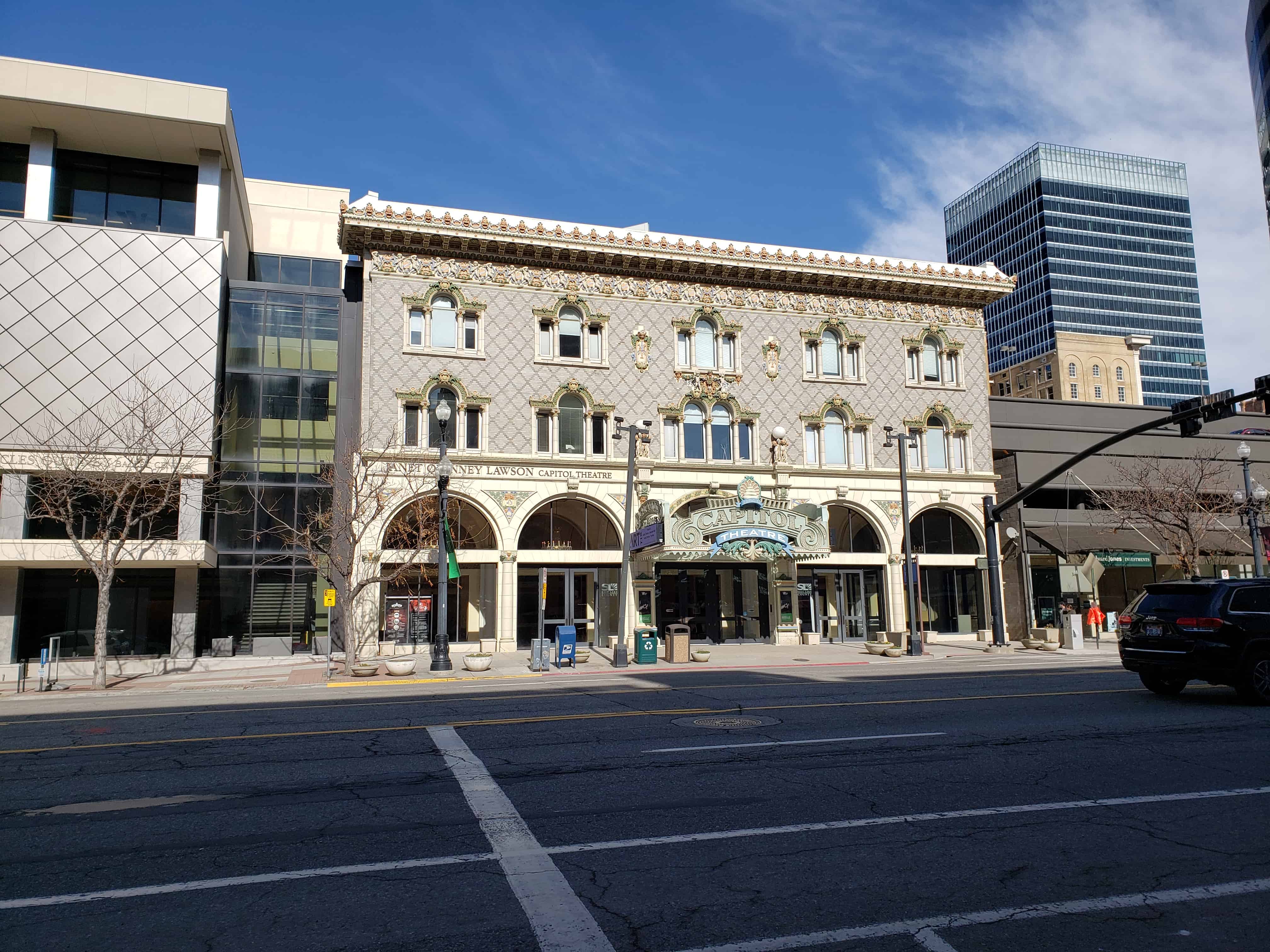
The building now known as the Capitol Theatre is a brick structure, three stories in height with a highly decorative facade consisting of tapestry brick and polychrome terra cotta. The symmetrical front facade is five bays wide with large Roman;arches over each bay on the street level and sets of Palladian windows situated directly above each lower bay. Until recently, the arches were concealed by metal siding which covered the entire clerestory portion of the street level facade. Other modifications of the facade include the rearrangement of spaces and masses between the columns at the street level. Undisturbed, however, is the ornate facade from the first story cornice up. The Palladian windows display round columns with composite capitals, and classically molded entablatures or lintels complete with cartouches, foliated bands, cherubs and stereotyped classicist heads, all done in terra cotta. The frieze is also a repetitious band of cherubs and musical instruments. The bracketed cornice is crowned with a band of drama masks.
Much of the theatre’s interior is intact. The building is rectangular in shape and features the main lobby, ticket rooms, offices, a set of grand staircases elevators, men’s and women’s parlors and restrooms, a large balcony, theatre, orchestra pit, stage control and mechanical rooms. Much of the original interior decor is intact although some changes were made as a result of the remodeling in 1927. The restoration in progress intends to restore as many of the original features as possible. ;
Capitol Theatre
Constructed 1912-1913, the Capitol Theatre incorporated classical design and was stylistically advanced for its time. the theater’s highly decorative Italian Renaissance style is significant as an innovation in the development of Utah architure. The building, with its façade style, including exquisite terra cotta figurines, moldings and brackets, was new in the city, along with the Hotel Utah, which was built at the same time. The interior marble staircases and balconies, as well as the marble-paved lobby, were originally set off by a color scheme of gray and gold.
Designed by Albert G. Lansburgh, who had graduated from the Ecole des Beaux Arts in Paris, the Capitol Theatre was originally built as part of the Orpheum Theatre chain. It utilized the most modern mechanical contrivances or its time, bringing advancements in safety and comfort through such features as fireproof and earthquake-resistant construction and air conditioning. The building was remodeled in 1929 as a motion picture theater. In 1976 it was purchased by Salt Lake County and restored closely to its original form.
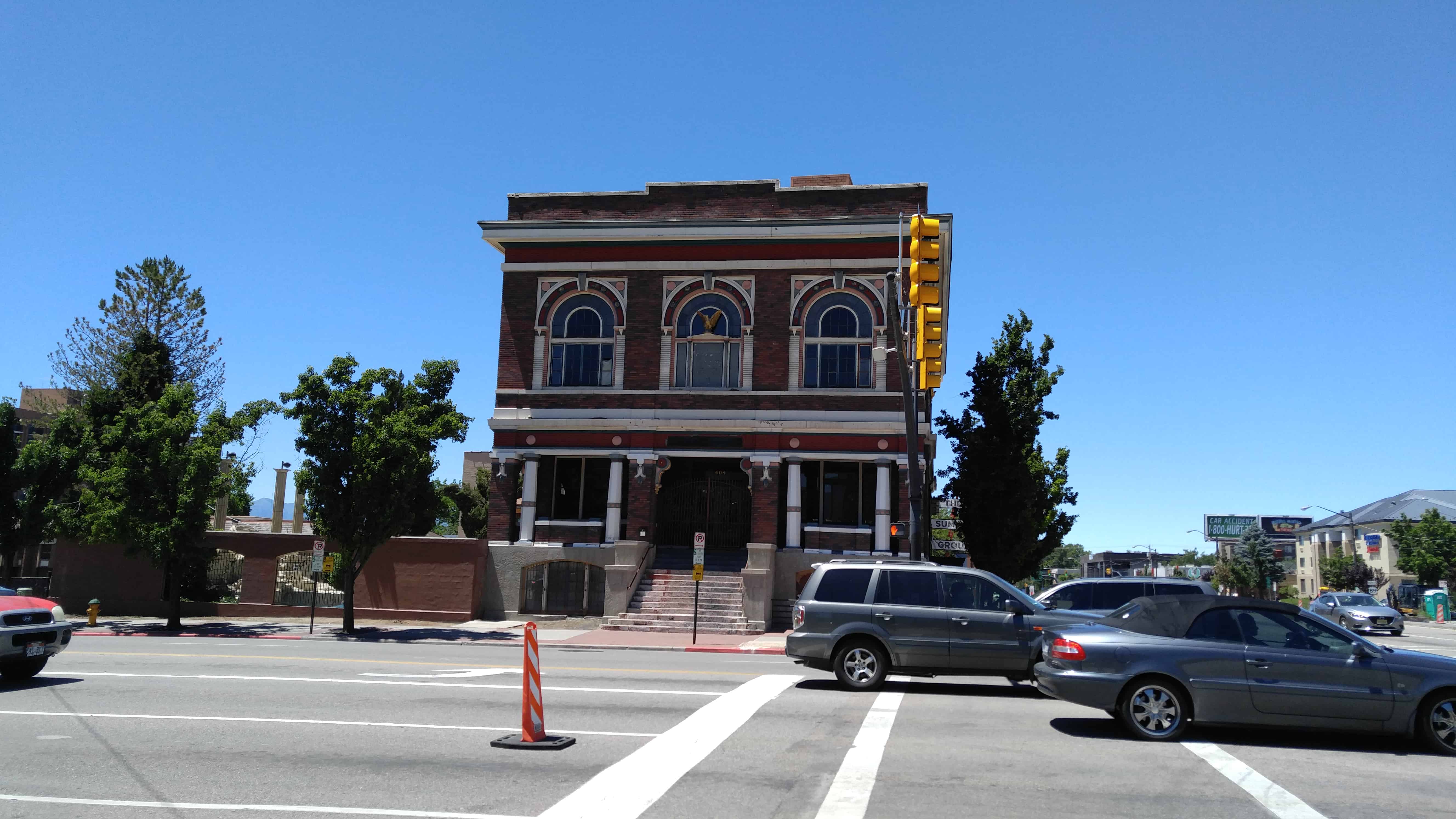
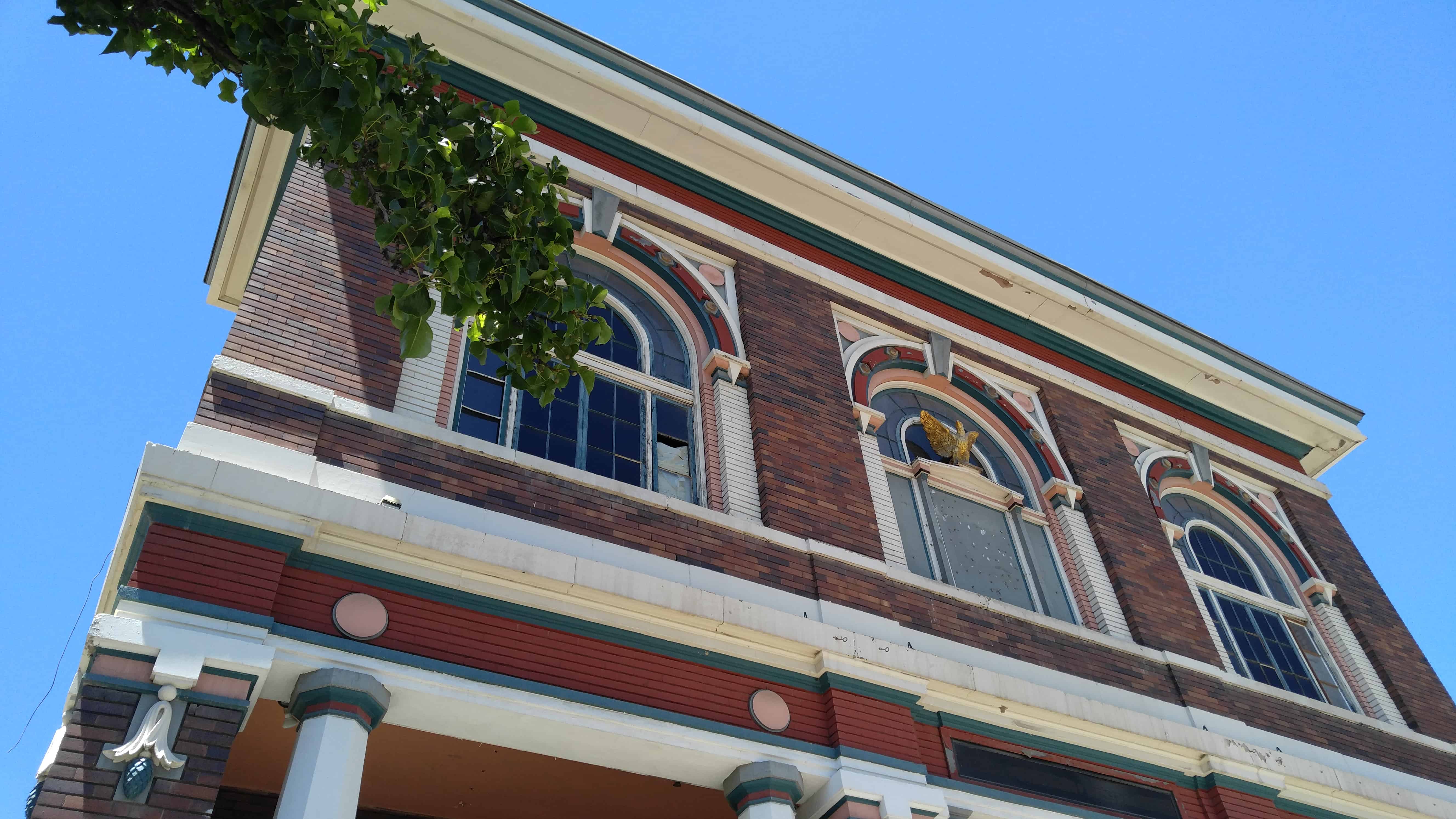
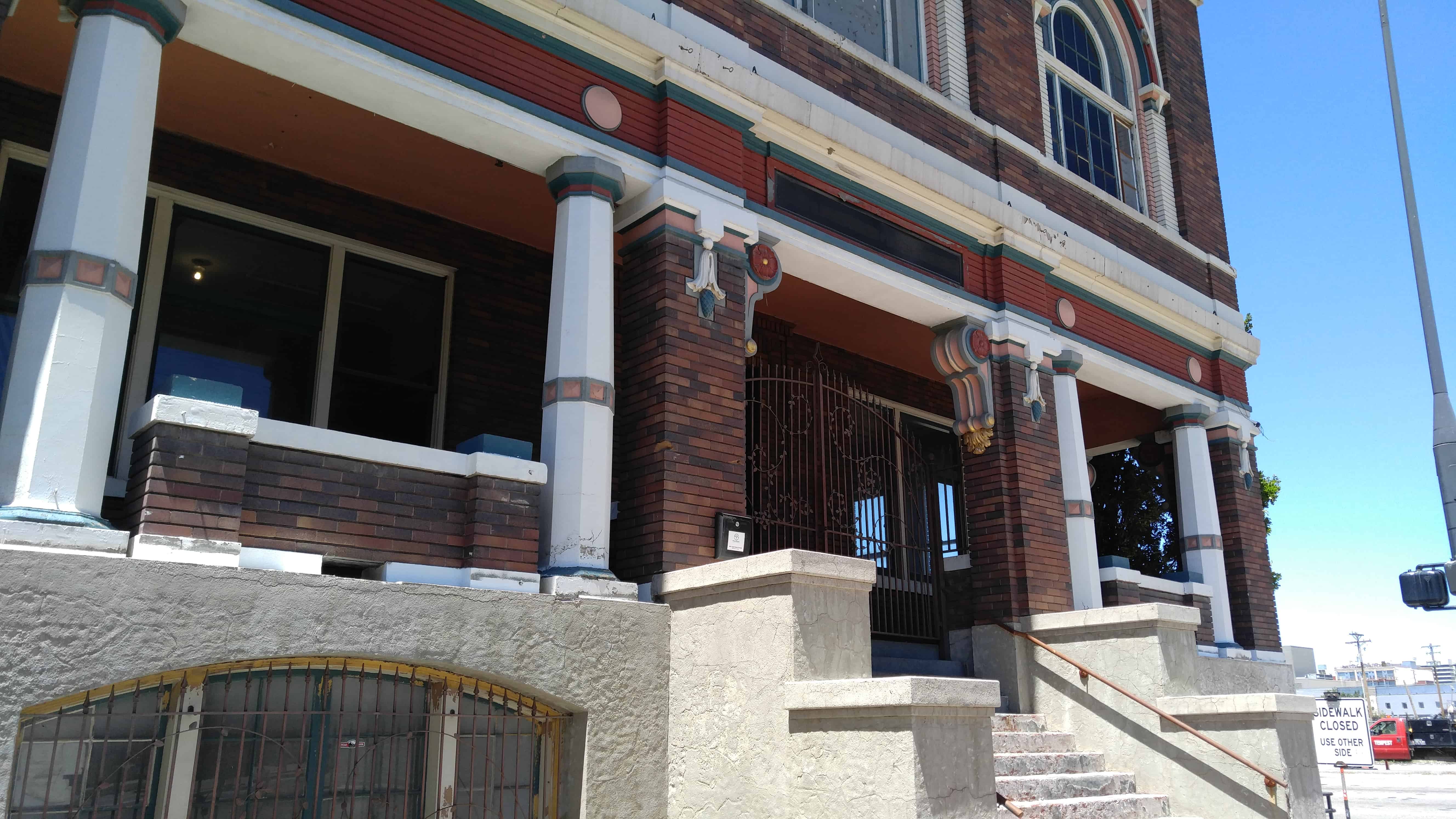
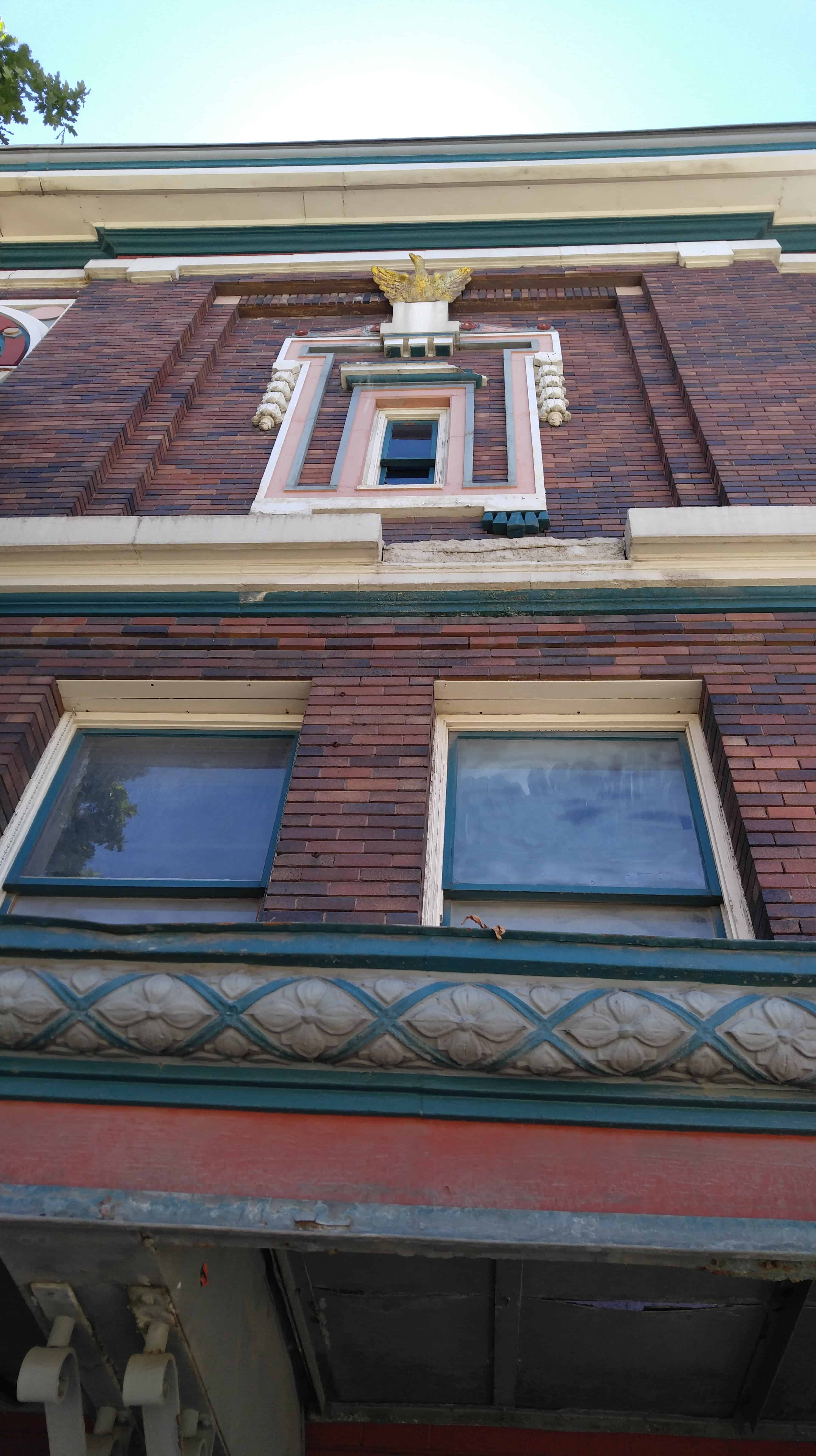
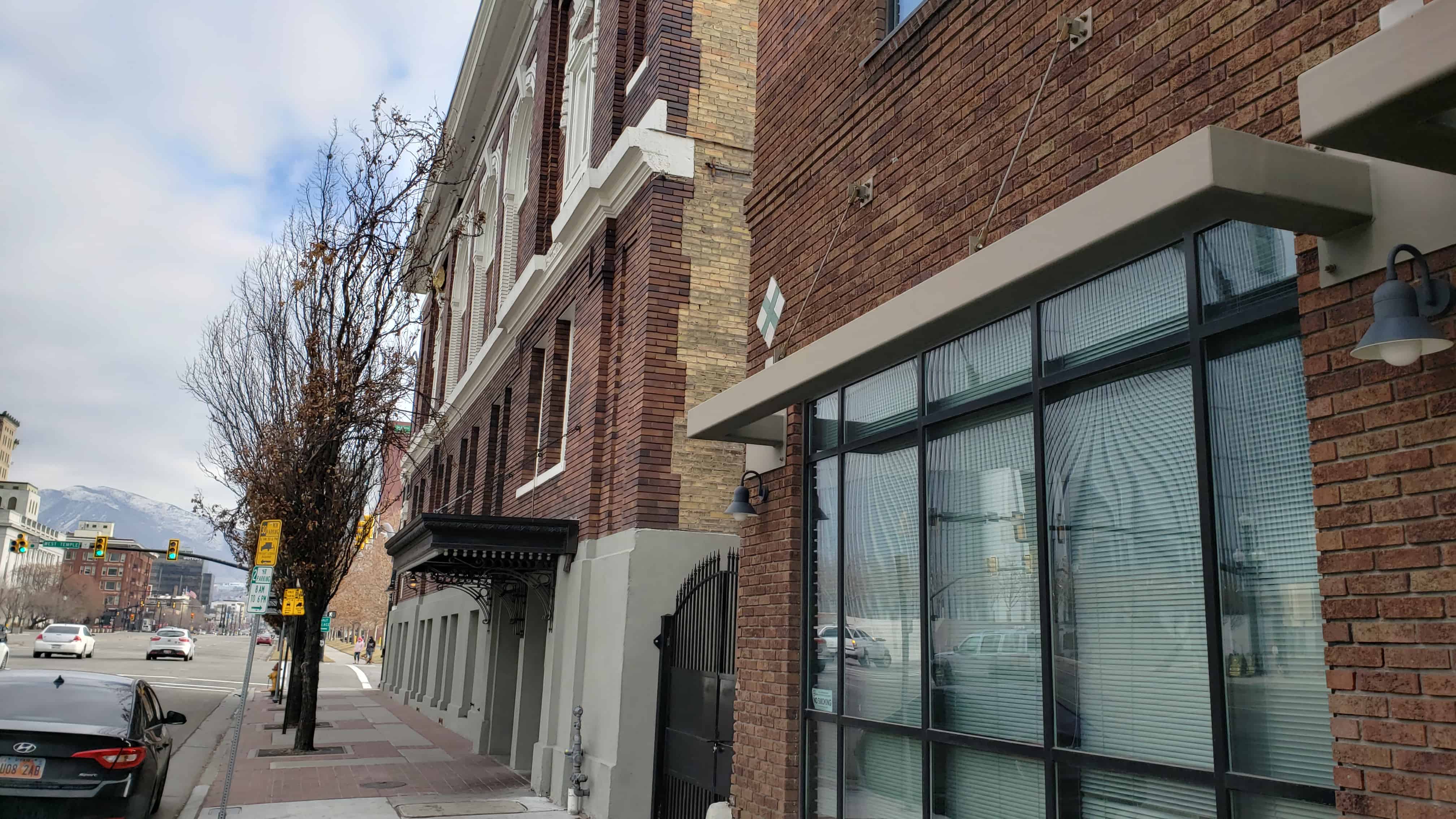
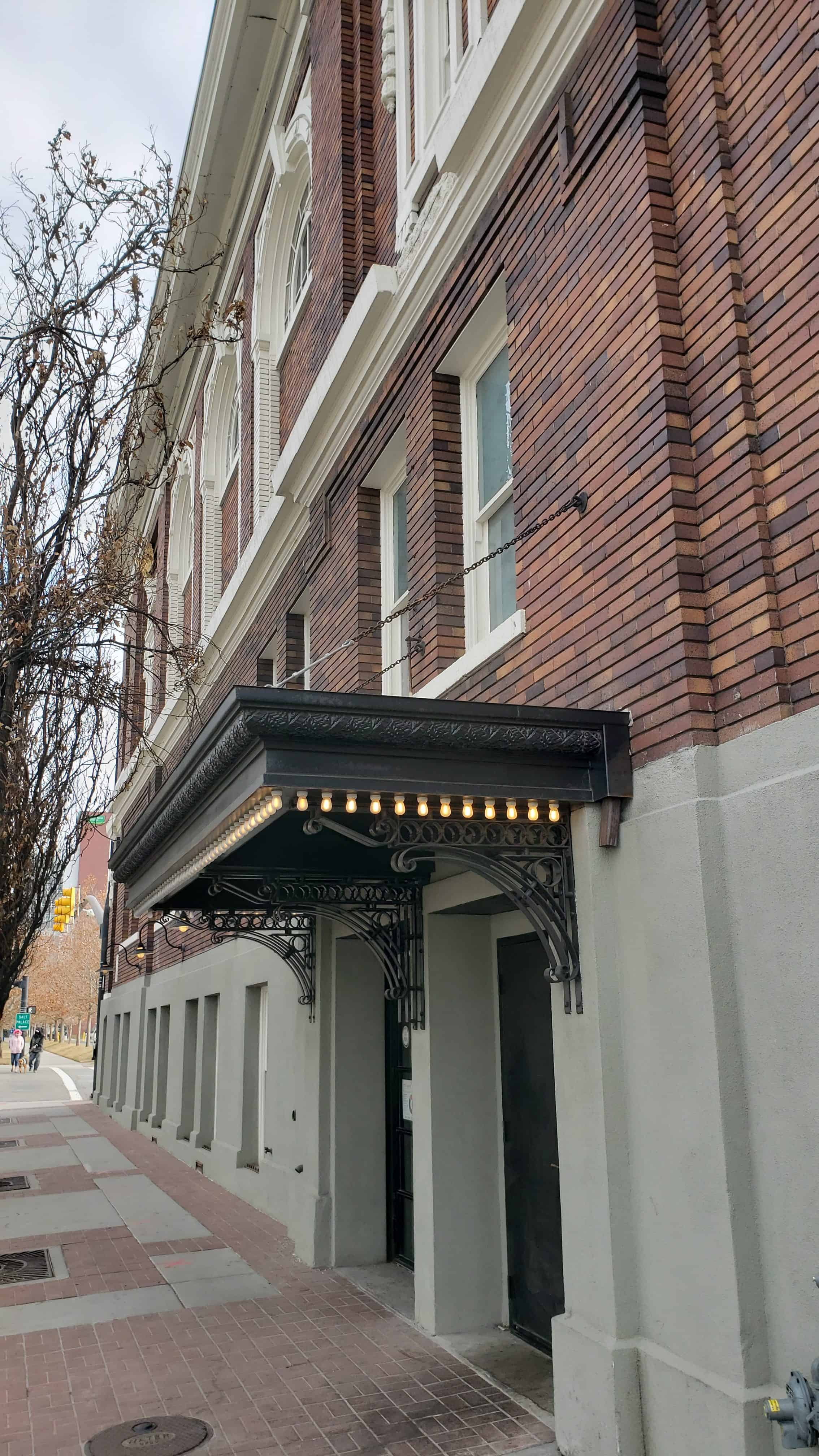
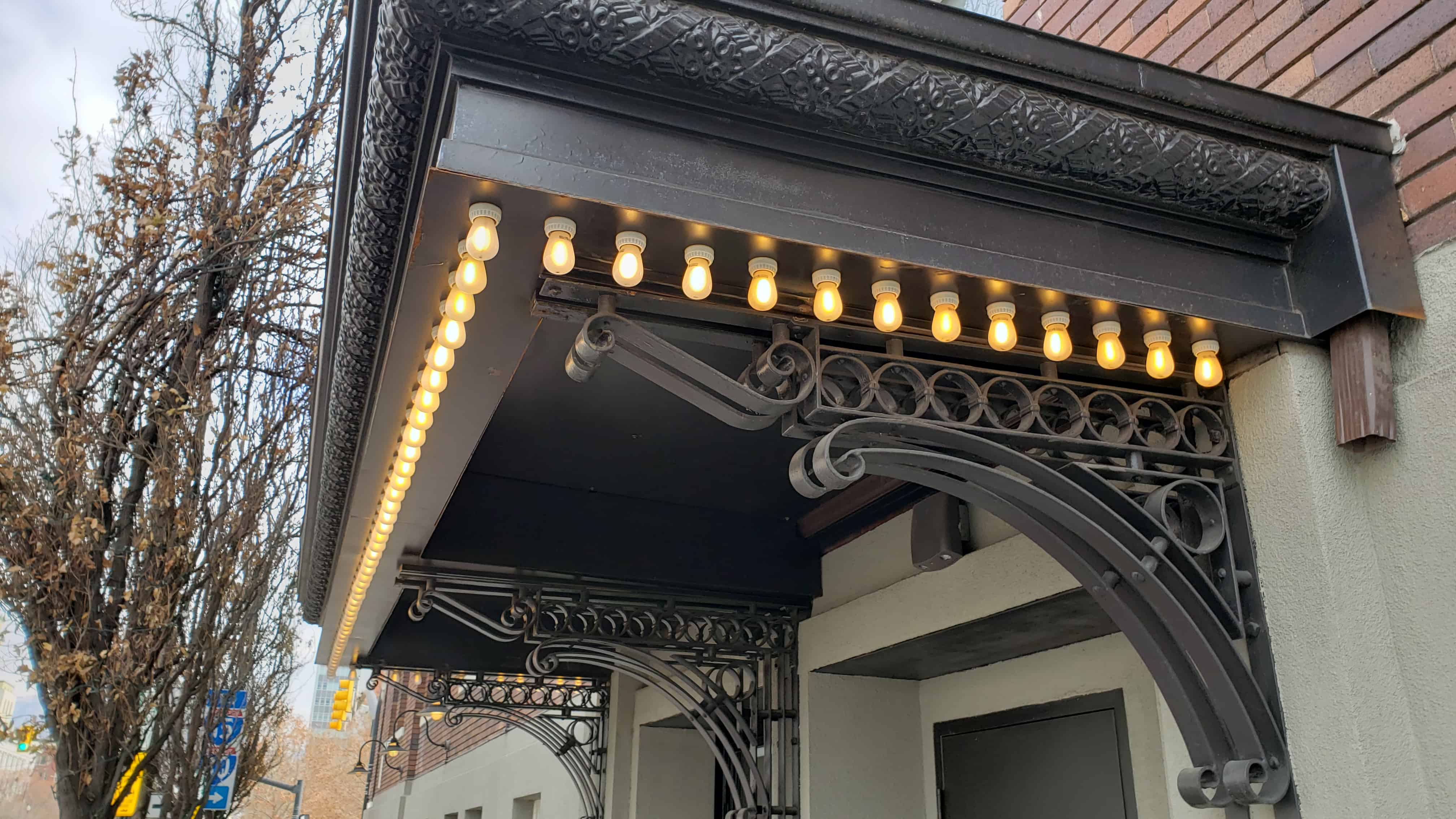
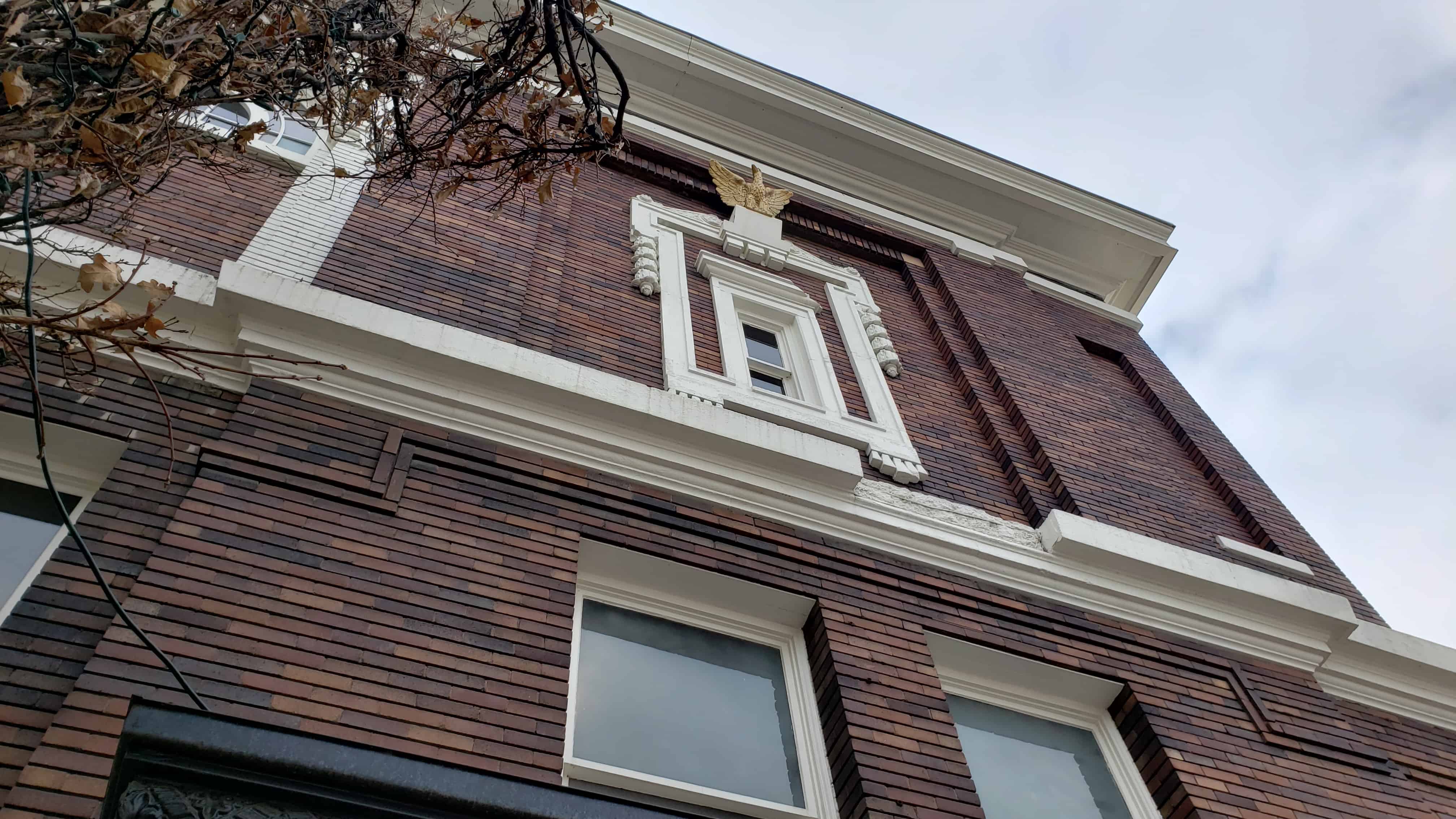
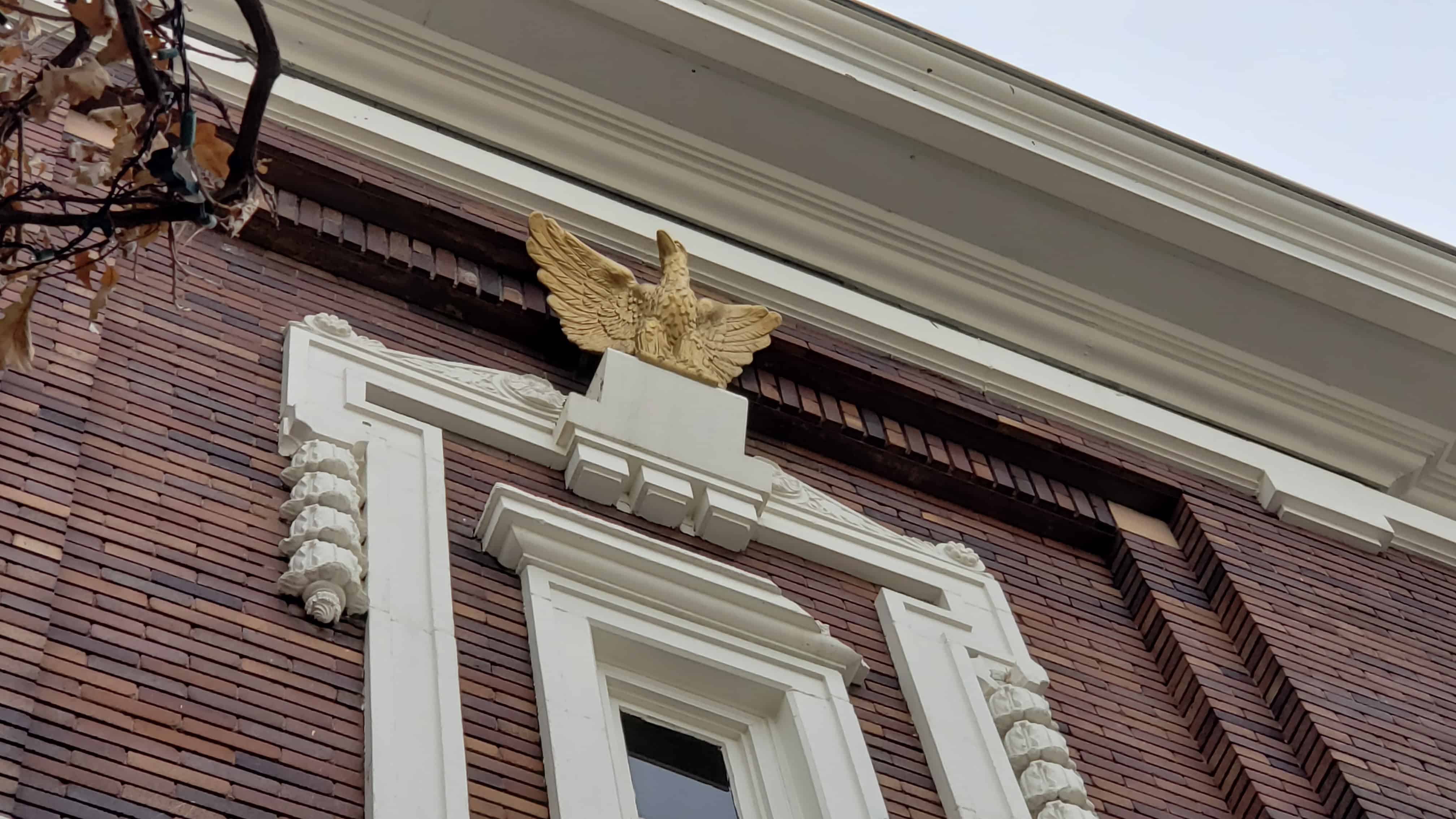
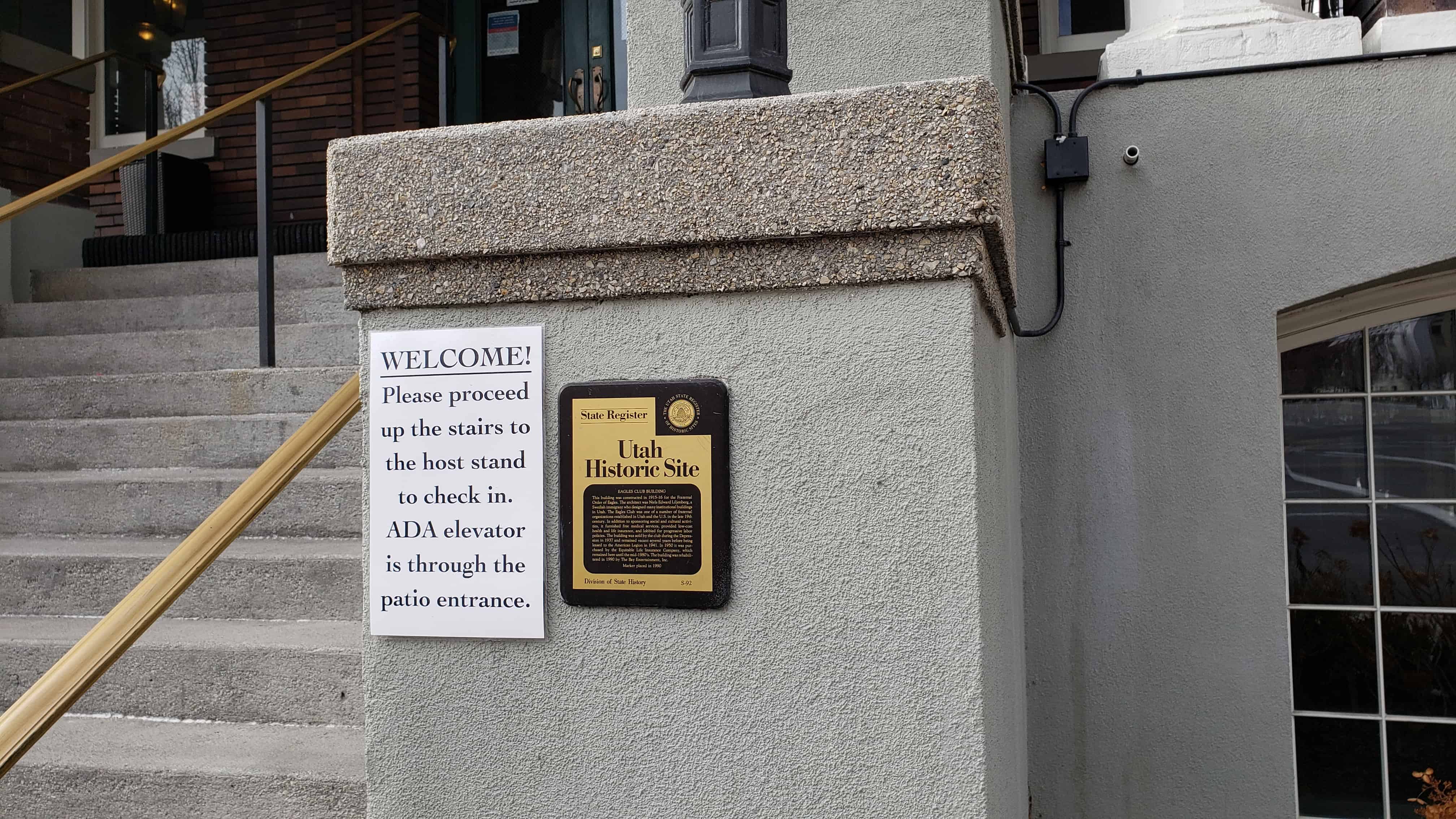
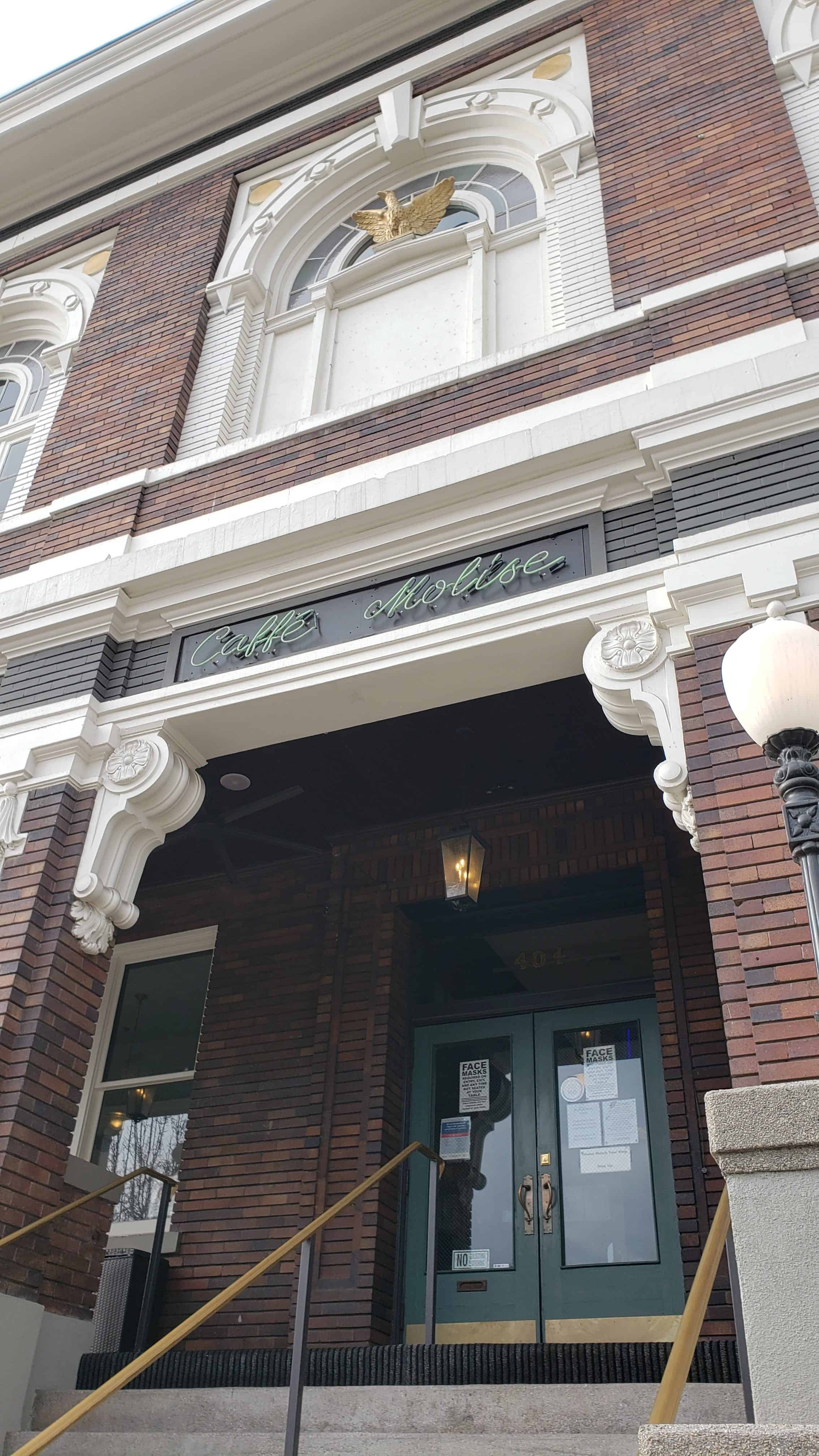
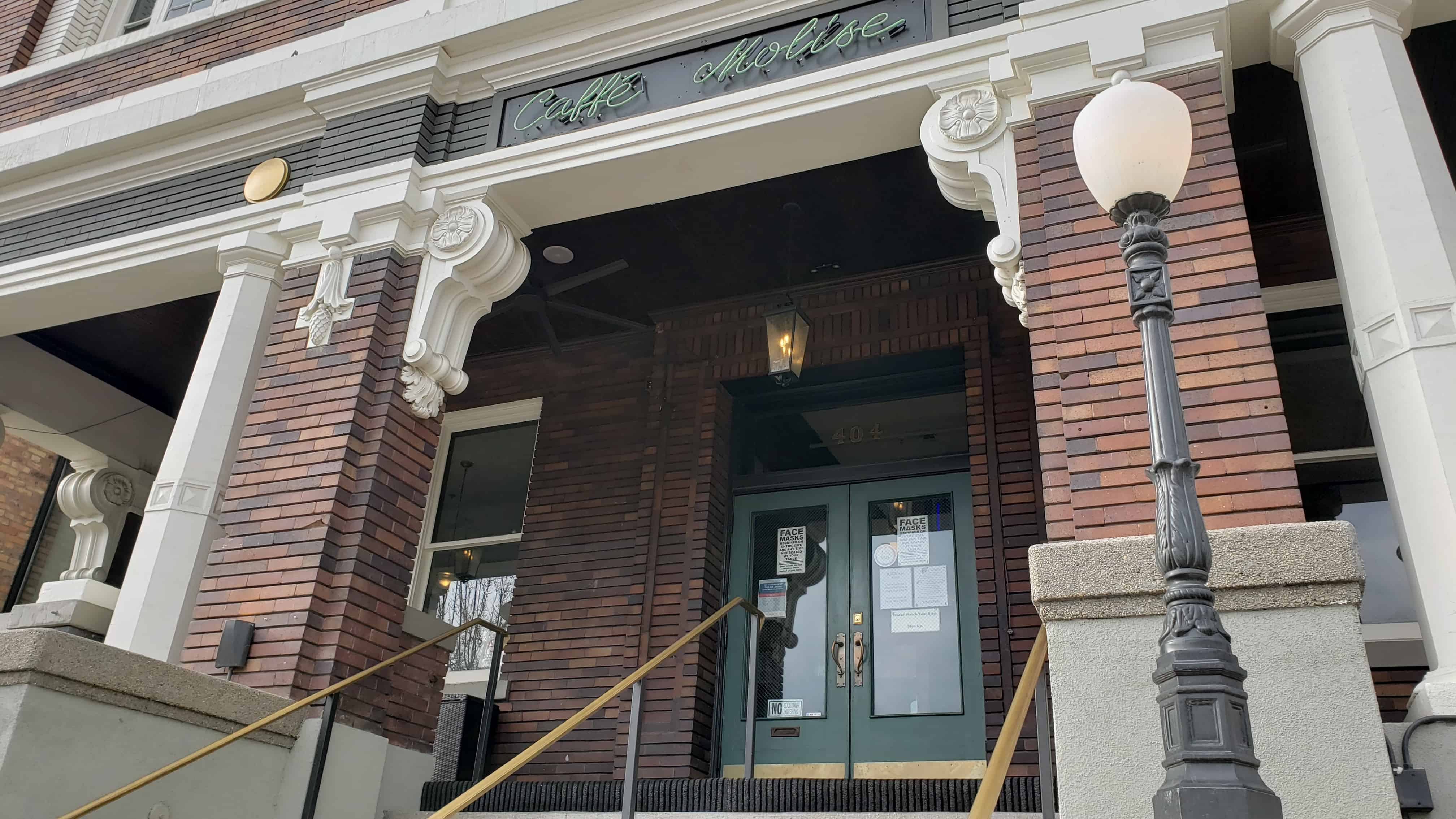
This century old building was originally built for the Fraternal Order of the Eagles and was recently a dance club, The Bay. It is located in downtown Salt Lake City, Utah.
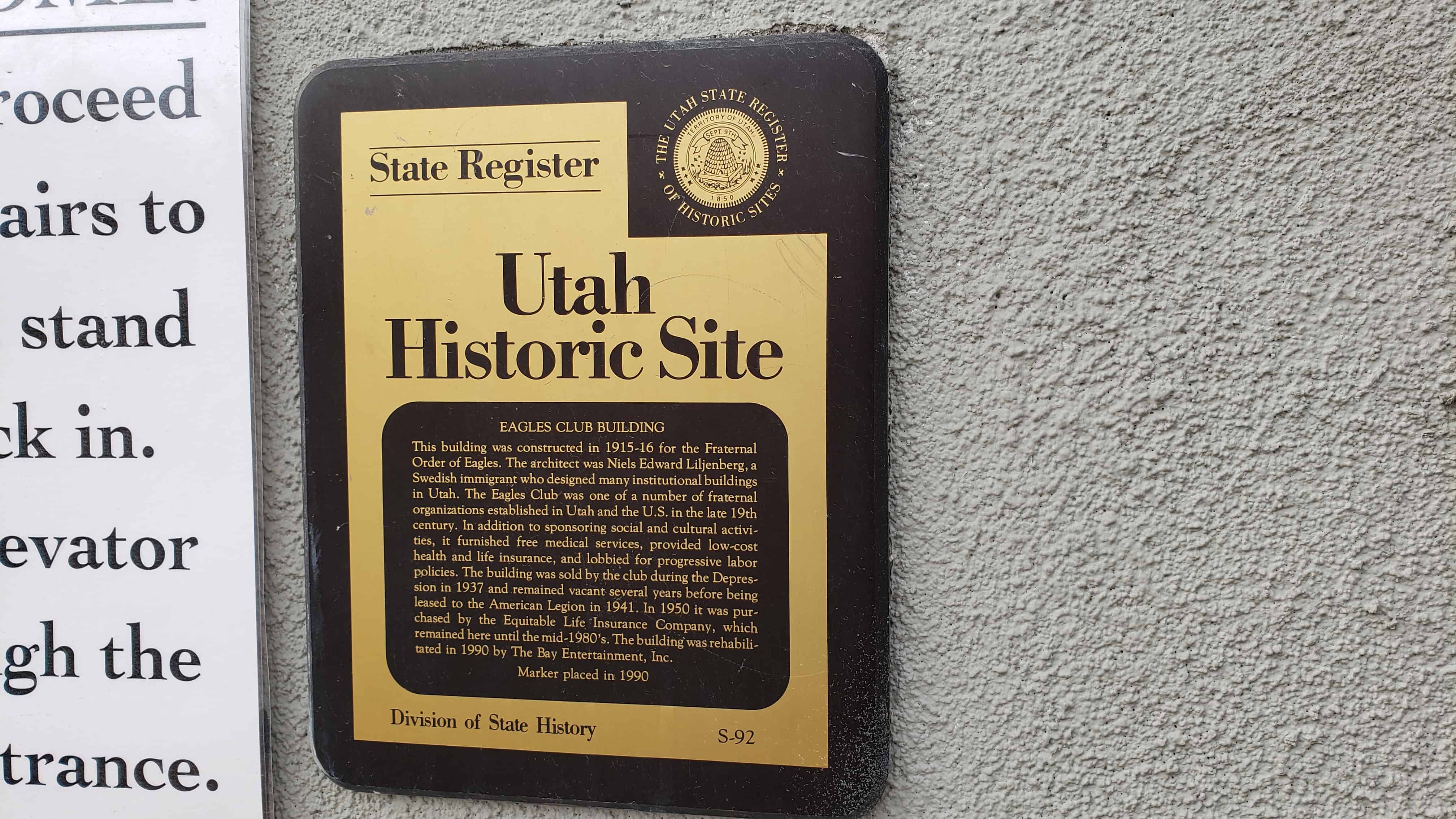
EAGLES CLUB BUILDING
This building was constructed in 1915-16 for the Fraternal Order of the Eagles. The architect was Niels Edward Liljenberg, a Swedish immigrant who designed many institutional buildings in Utah. The Eagles Club was one of a number of fraternal organizations established in Utah and the U.S. in the late 19th century. In addition to sponsoring social and cultural activities, it furnished free medical services, provided low-cost health and life insurance, and lobbied for progressive labor policies. The building was sold by the club during the Depression in 1937 and remained vacant several years before being leased to the American Legion in 1941. In 1950 it was purchased by the Equitable Life Insurance Company, which remained here until the mid-1980’s. The building was rehabilitated in 1990 by The Bay Entertainment, Inc.
Located at 404 South West Temple in Salt Lake City, Utah.
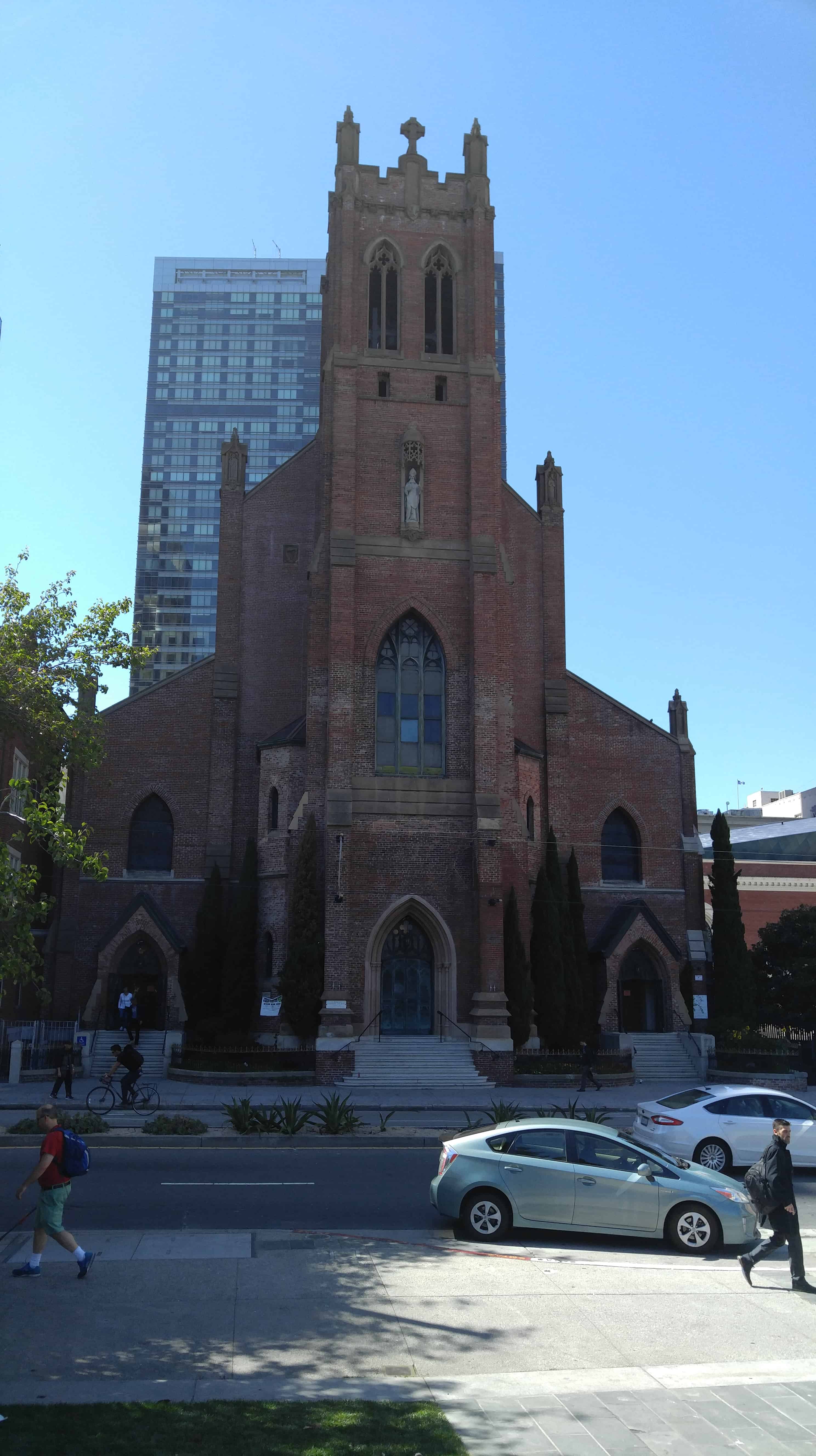
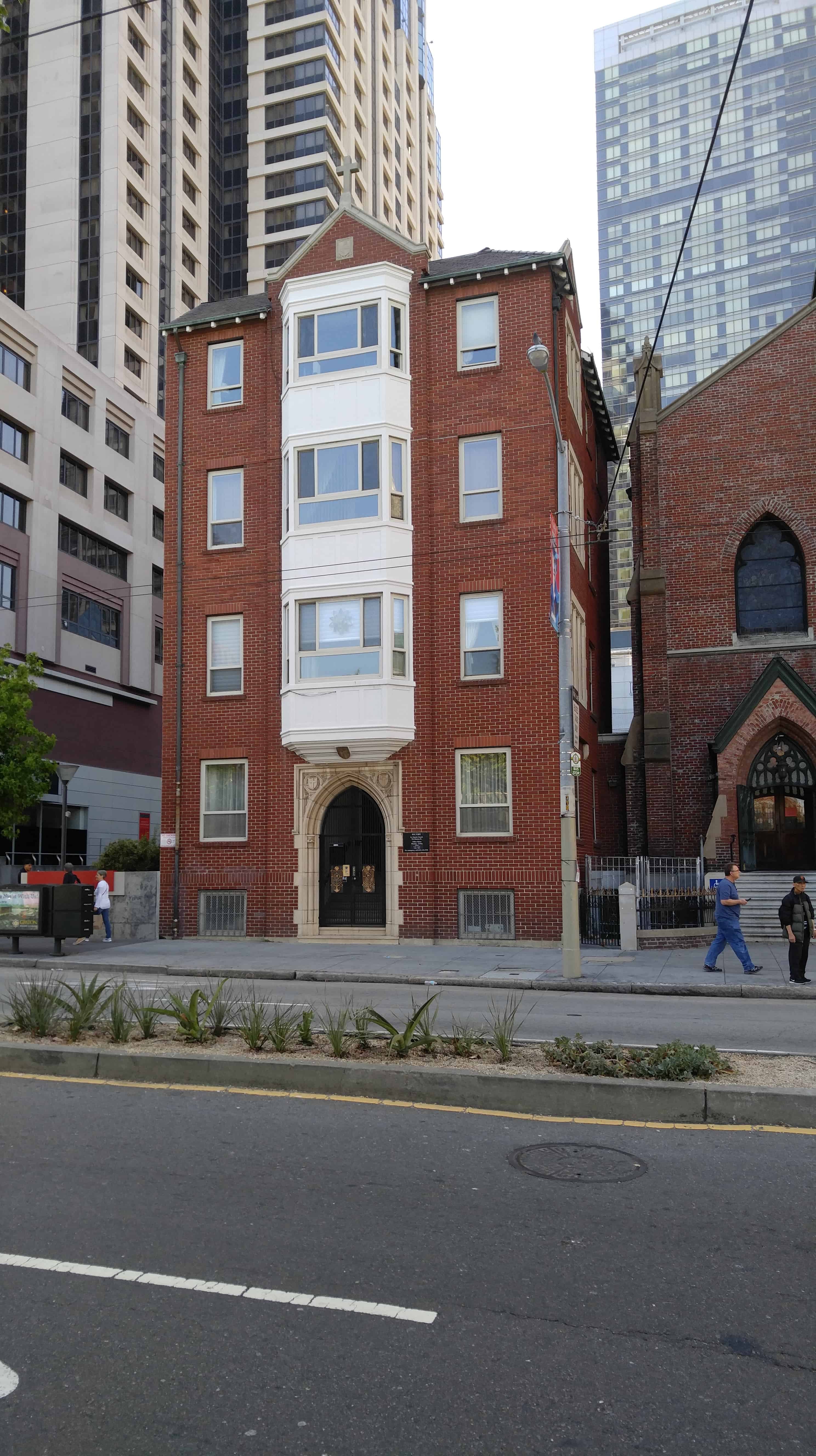
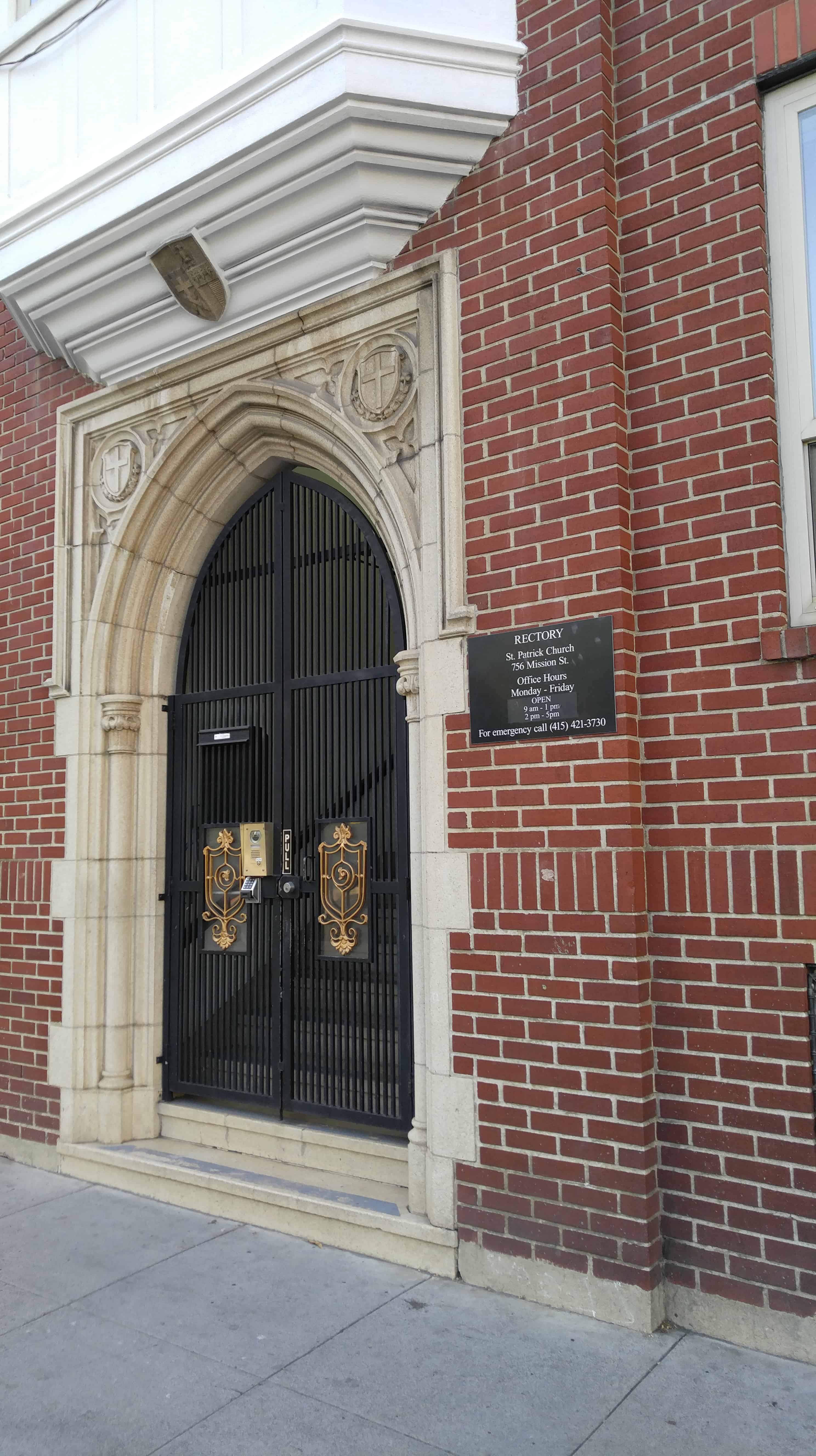
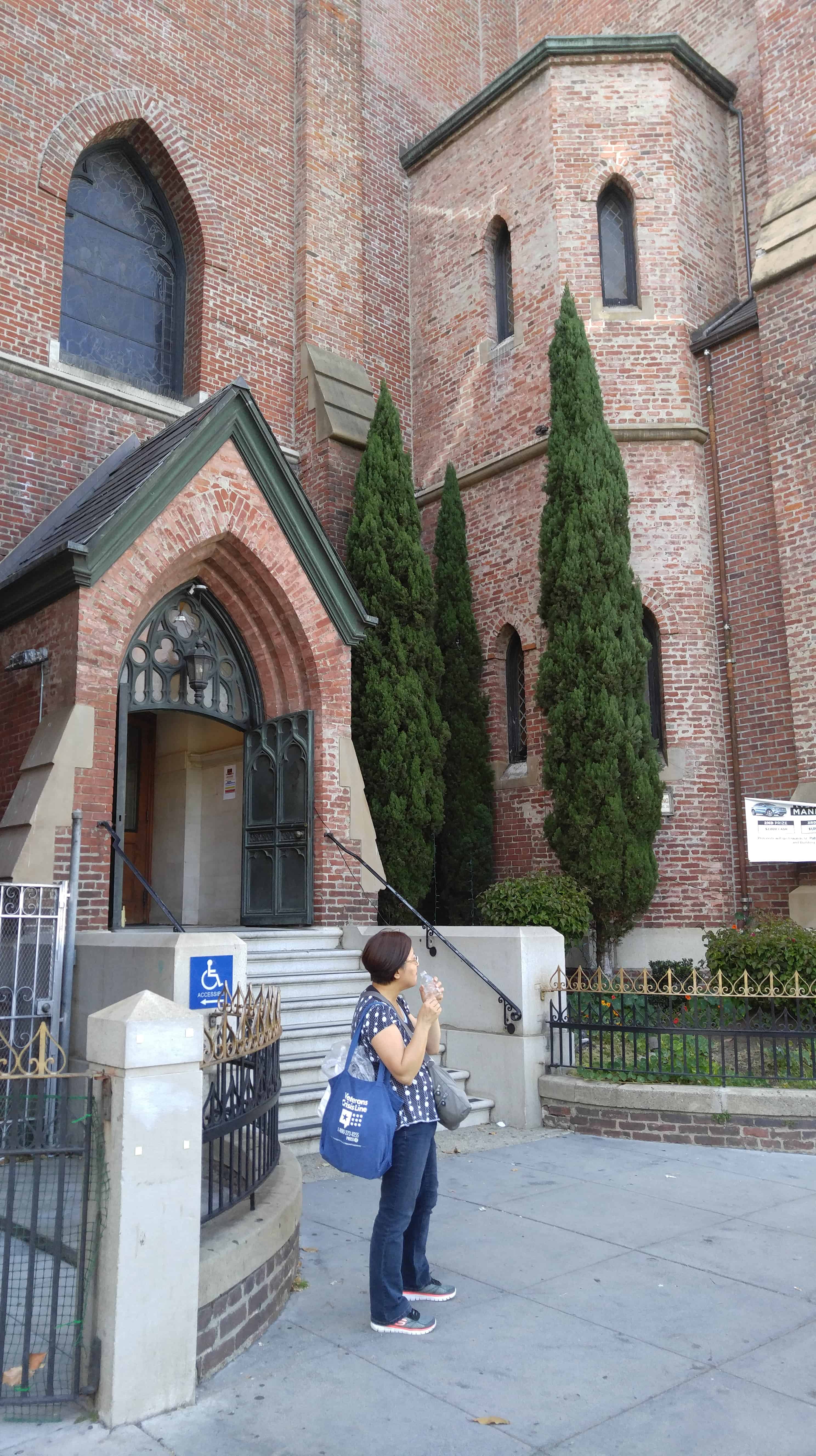
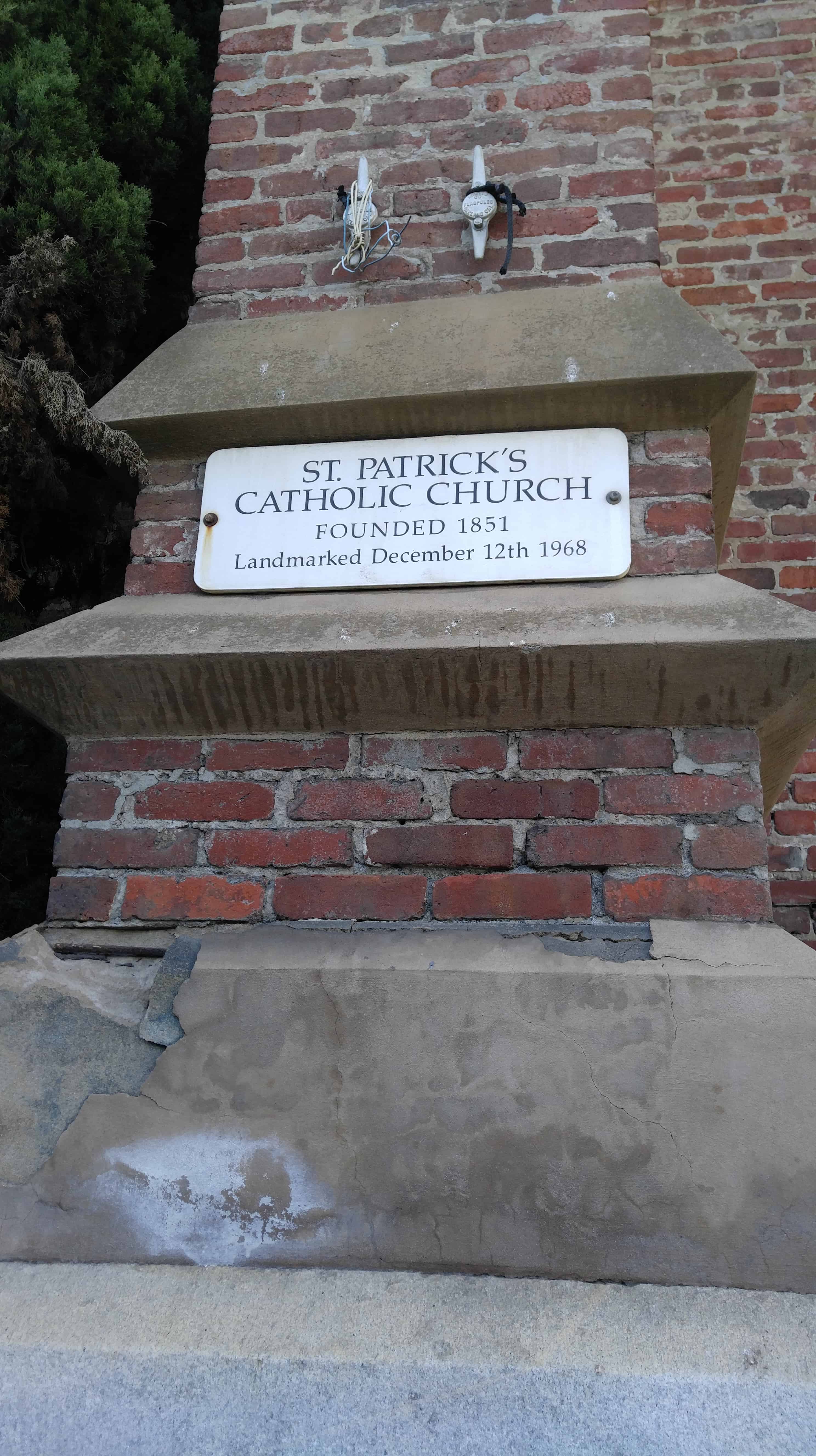
St. Patrick’s Catholic Church is a Roman Catholic church in San Francisco, California, founded in 1851. It is located at 756 Mission Street, between 3rd and 4th streets, across the street from Yerba Buena Gardens in the heart of the South of Market district.
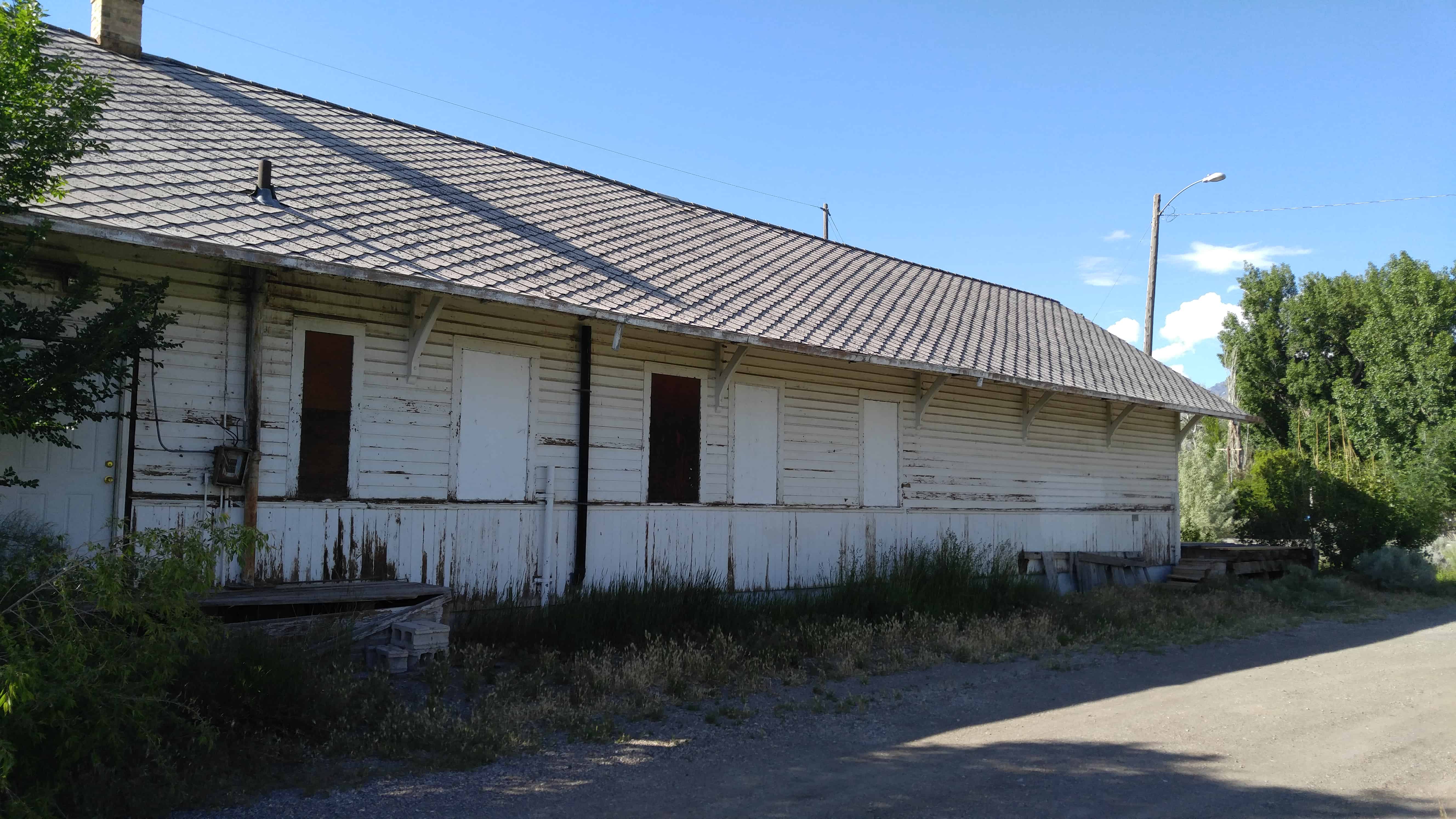
Just outside Francis to the west, this red and white “classic American barn” with gambrel roof is an example of an 1850s Improvement Era barn, which combined a traditional barn with a milking parlor and loafing shed.
Rasmus R. Larsen, a Danish immigrant, purchased the acreage in 1908 and created one of the first farmsteads in the early 1930s. The property transferred to Frank Sorenson and Herbert Auerbach in the late 1930s, and the barn has been known as the Auerbach Barn ever since.
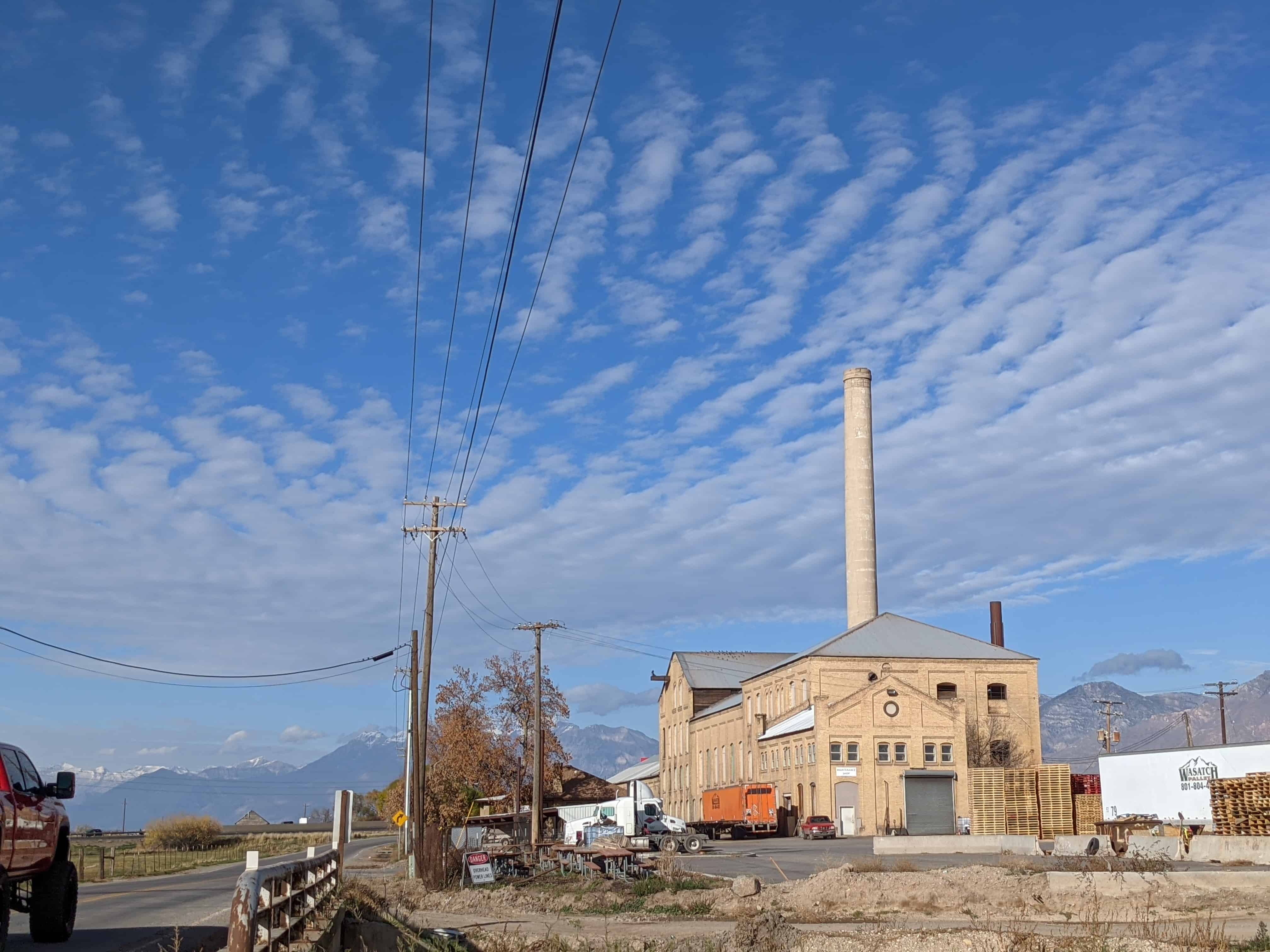
The first Sugar Factory in Utah was built in Lehi, UT, and it was also the first beet sugar factory in the Mountain West, the first to use beets grown by irrigation, the first to have a systematic program for producing its own beet seed, the first to use American-made machinery, the first to use the “osmose process” of reprocessing molasses, and the first to build auxiliary cutting stations. This factory also served as a training base for many of the technical leaders of the sugar beet industry of the United States.
Needless to say, the Lehi factory was a marvel of modern engineering, and one of the most important buildings in Utah Industry for many years. Most of the history linked to the Spanish Fork Factory finds its way back to Lehi. At one point one could say that quite literally, as until the building of the Pleasant Grove pipeline, the beet pipeline between the Spanish Fork and Lehi factories was the largest beet pipeline in the world, although eventually it corroded due to high alkali soils found in the valley.
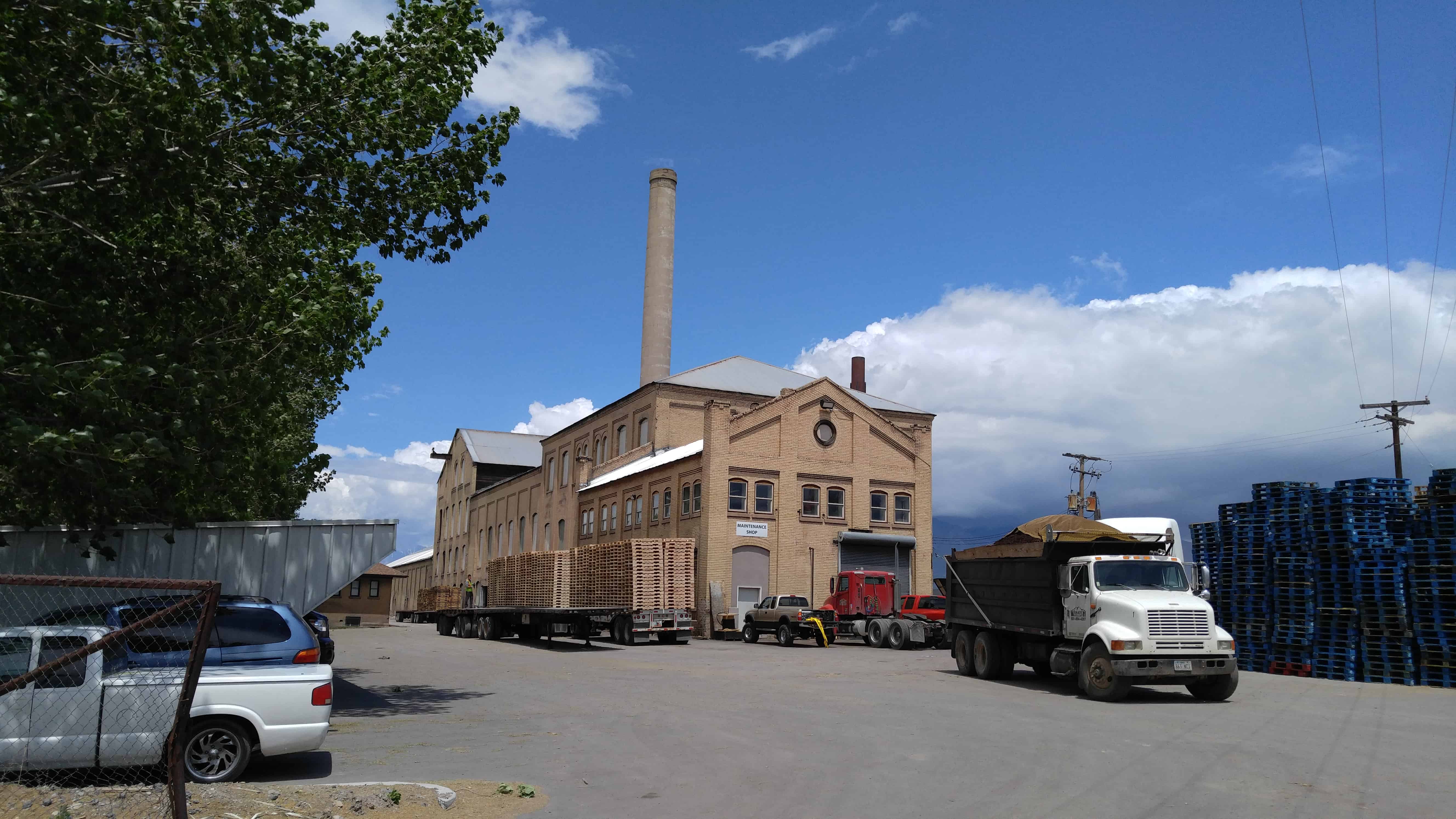
After the initial success of the Lehi factory, many other factories were built around the state. Spanish Fork in particular became the bloodline for the Lehi factory, as the world’s largest and longest pipeline used to transport beets ran between the two. Built sometime in the early 1900s, the factories were owned by the Utah-Idaho sugar company (originally a commercial venture of the LDS / Mormon Church). The current Spanish Fork factory that you can see today was was built in 1916. Much of the plant equipment was transferred from Nampa Idaho to the Spanish Fork area.
The plant was designated as a beet slicing factory and then the beets were shipped to Lehi via pipe. The factory was able to grind 450 to 500 tons of beets per day, 50 tons more than the Lehi factory. The pipe from Spanish Fork to Lehi was, at the time, the longest pipe used for transferring beet pulp in the nation. Trains were an important park of the beet industry, and several railroad lines were extended into Spanish Fork (and possibly down to Payson) expressly for the shipping of sugar beets. There were several factories around the valley, including factories in Payson, Springville, and Provo, although the one in Spanish Fork was one of the largest in the state.
Eventually, the industry changed course. Anti-trust laws broke the back of the company, and many of the factories closed down as a result in the 1920s. Finally, in 1952 the Spanish Fork factory was closed as well, as the industry for sugar swung to sugar cane as the main source of sugar, because it could be grown year-round and the labor to produce it was much cheaper.
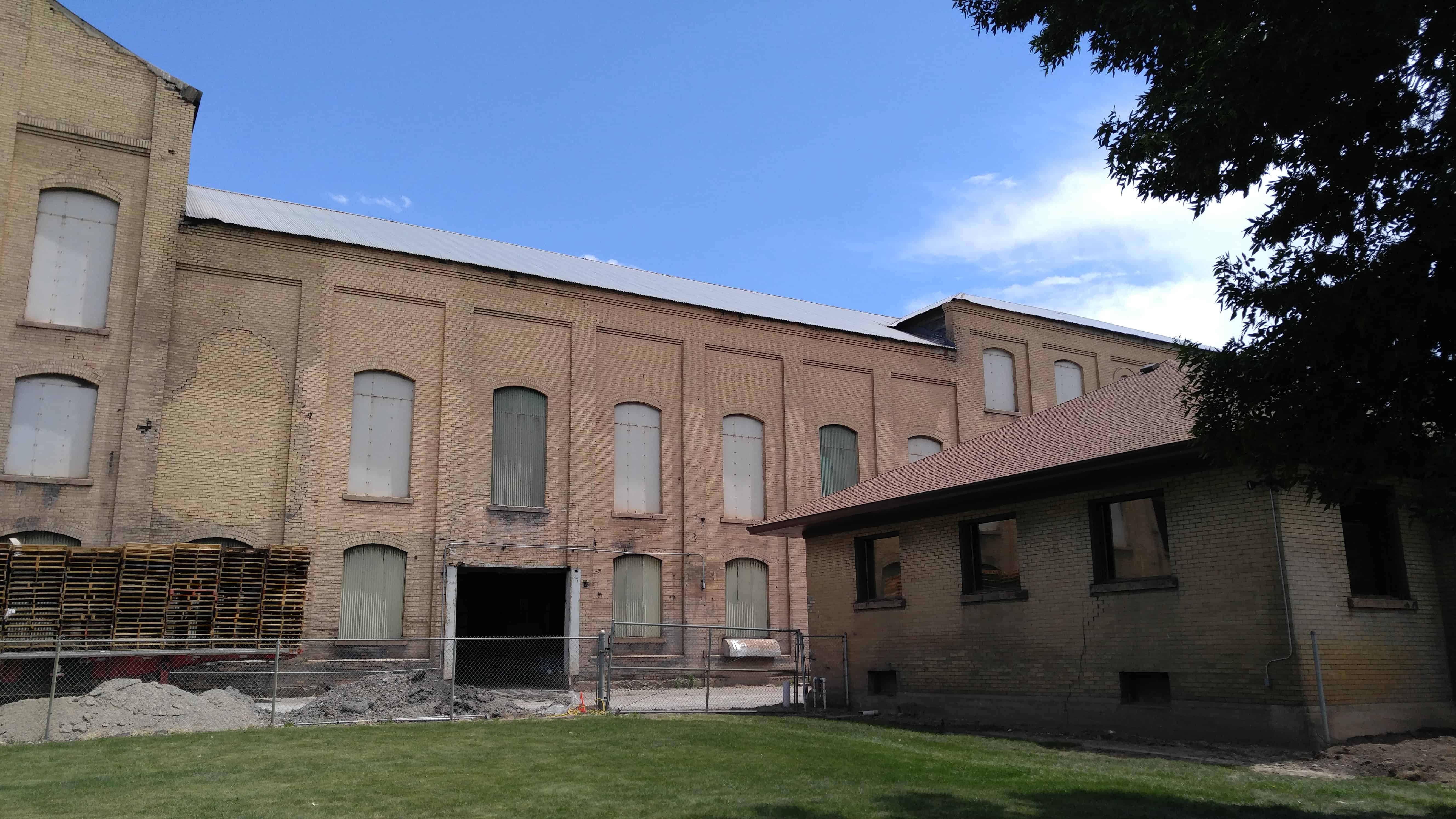
Today, the factory is owned and used by the Wasatch Pallet Company, though most of it is condemned and not considered safe. The owners do not mind letting people get closer just as long as you speak with them and get their permission (you should find them at their office on the south end of the property) and they should oblige. Though a shell of its former self, it is still nevertheless a prominent feature on the landscape, and certainly an important part of the local history.
Located at 521 South 1550 West in Spanish Fork, Utah
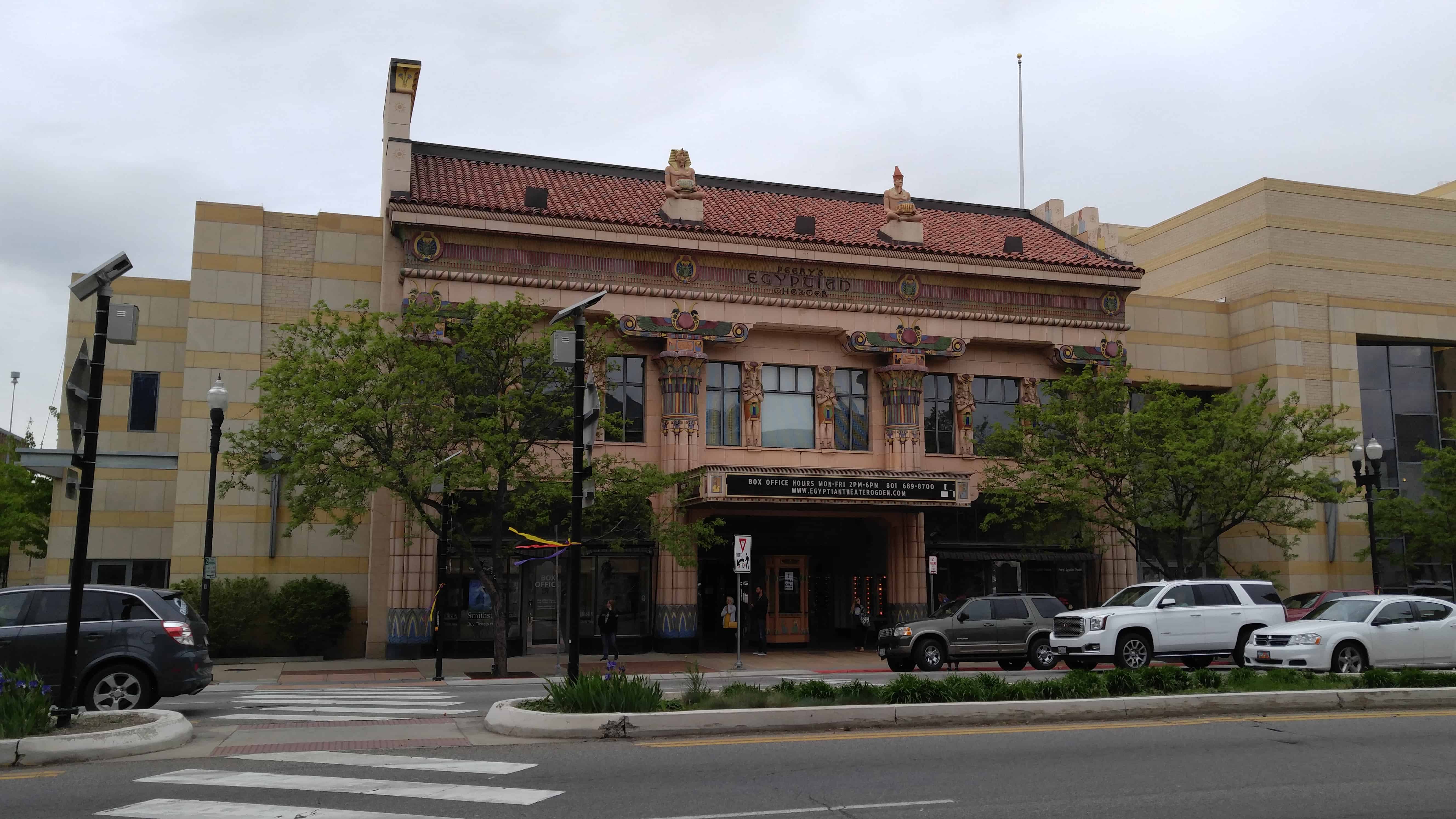
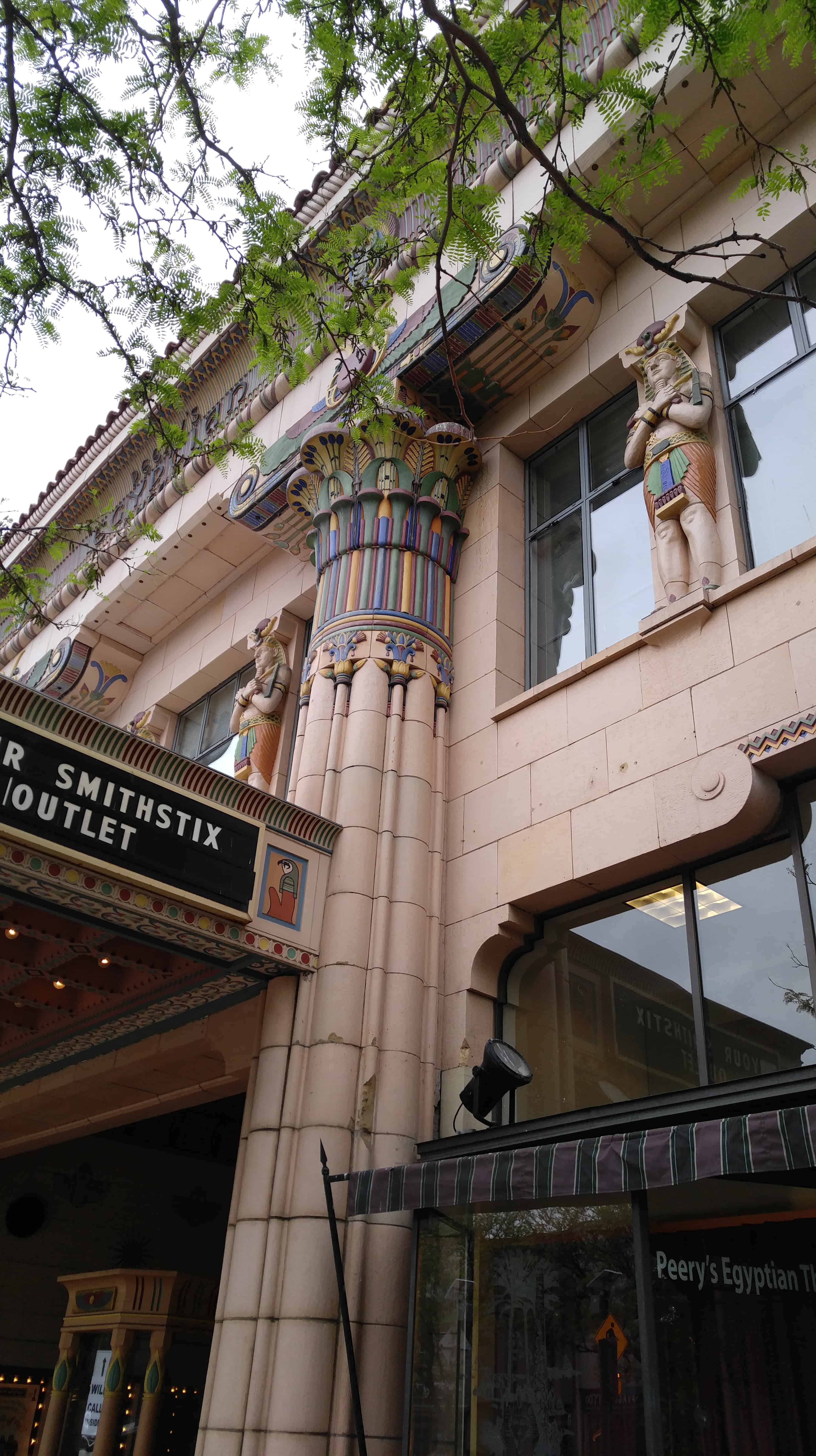
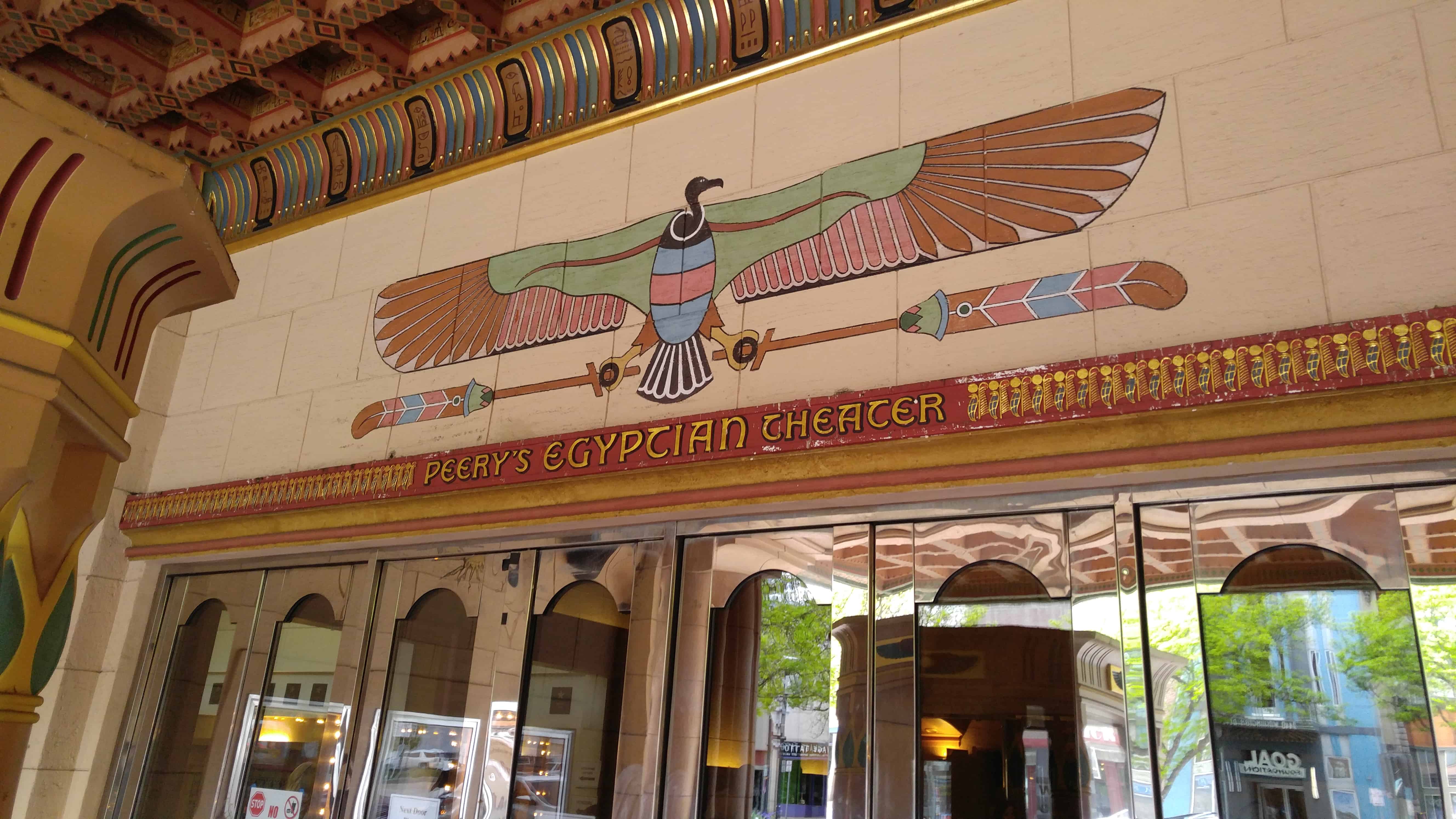
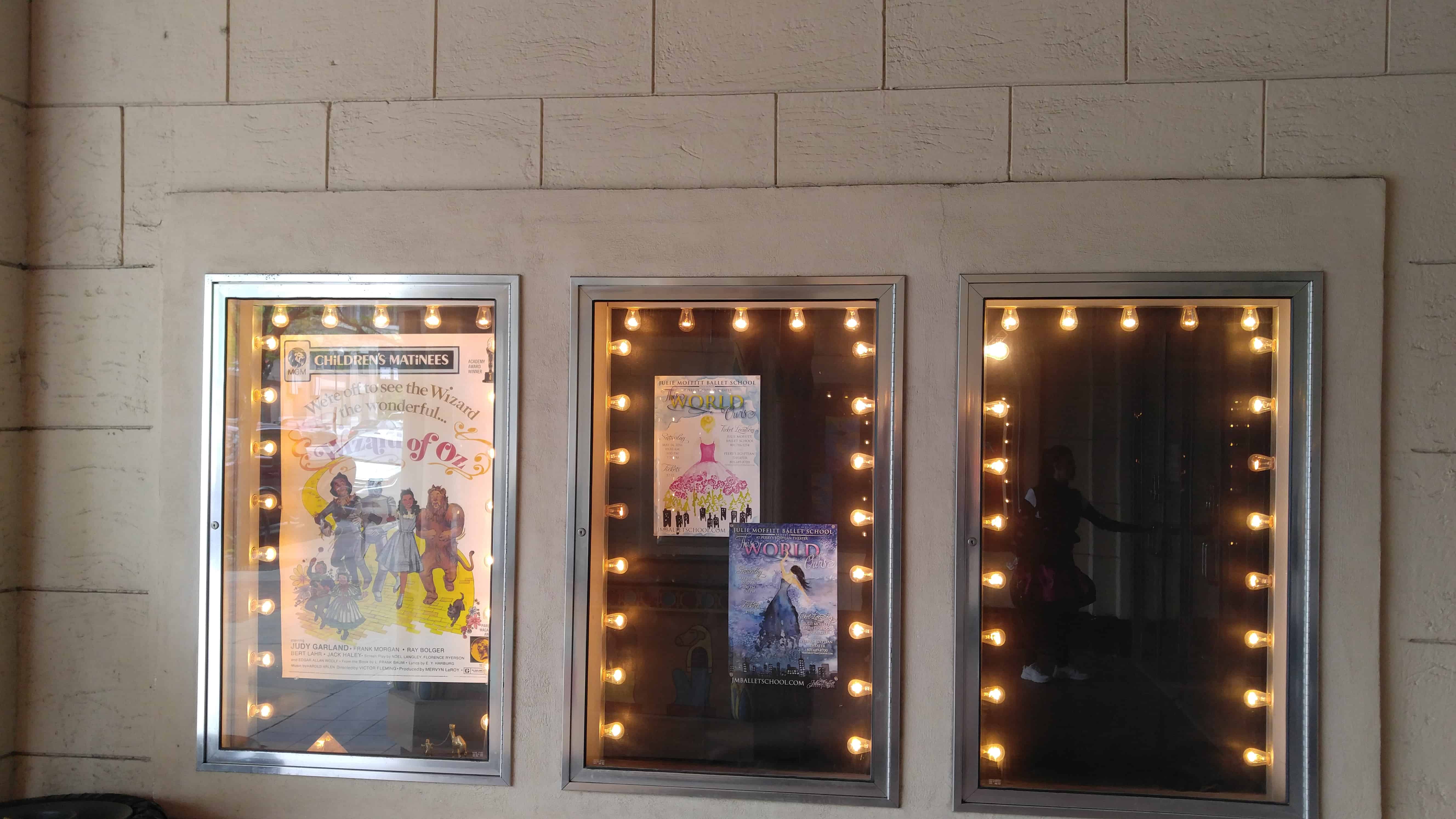
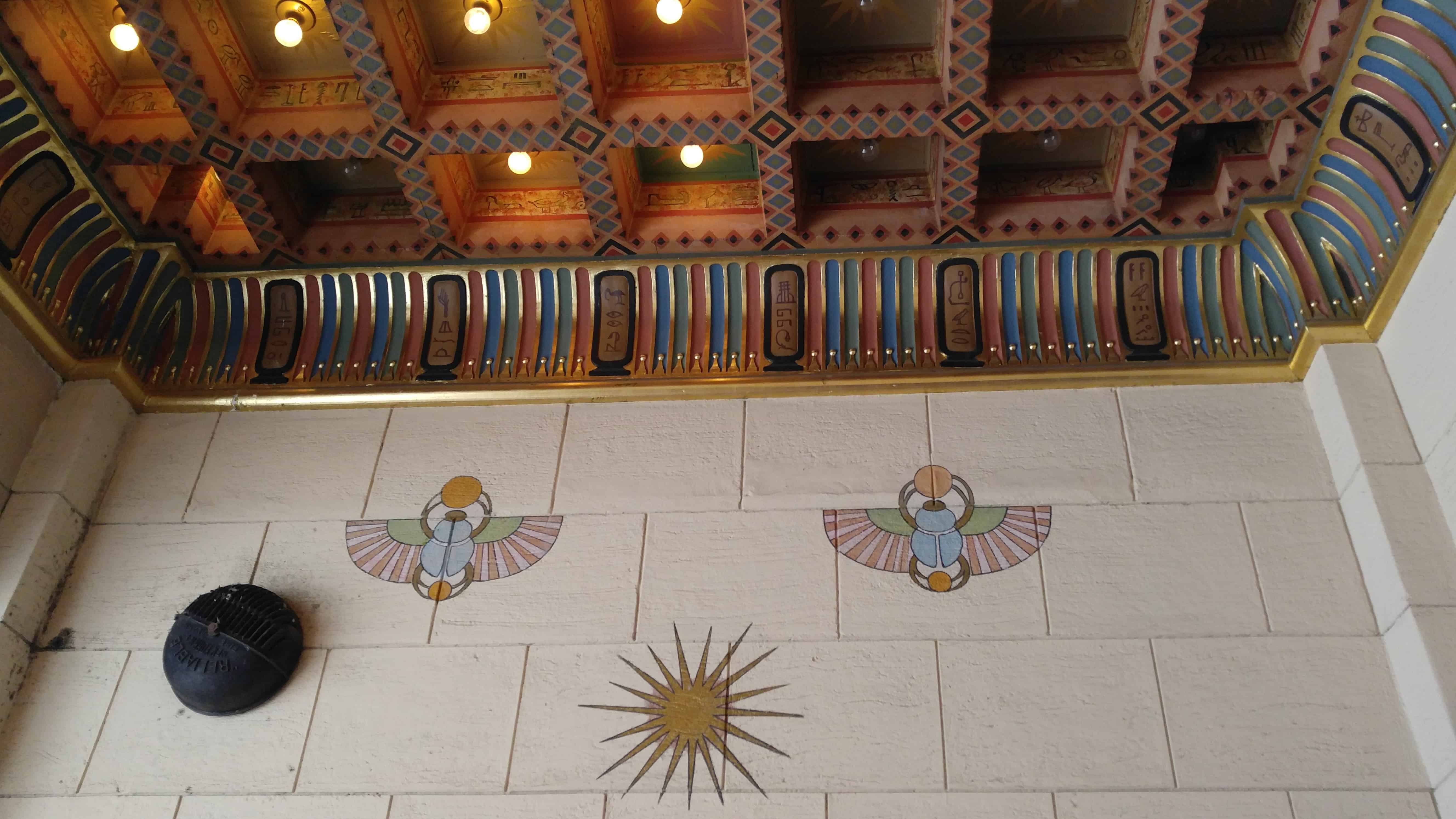
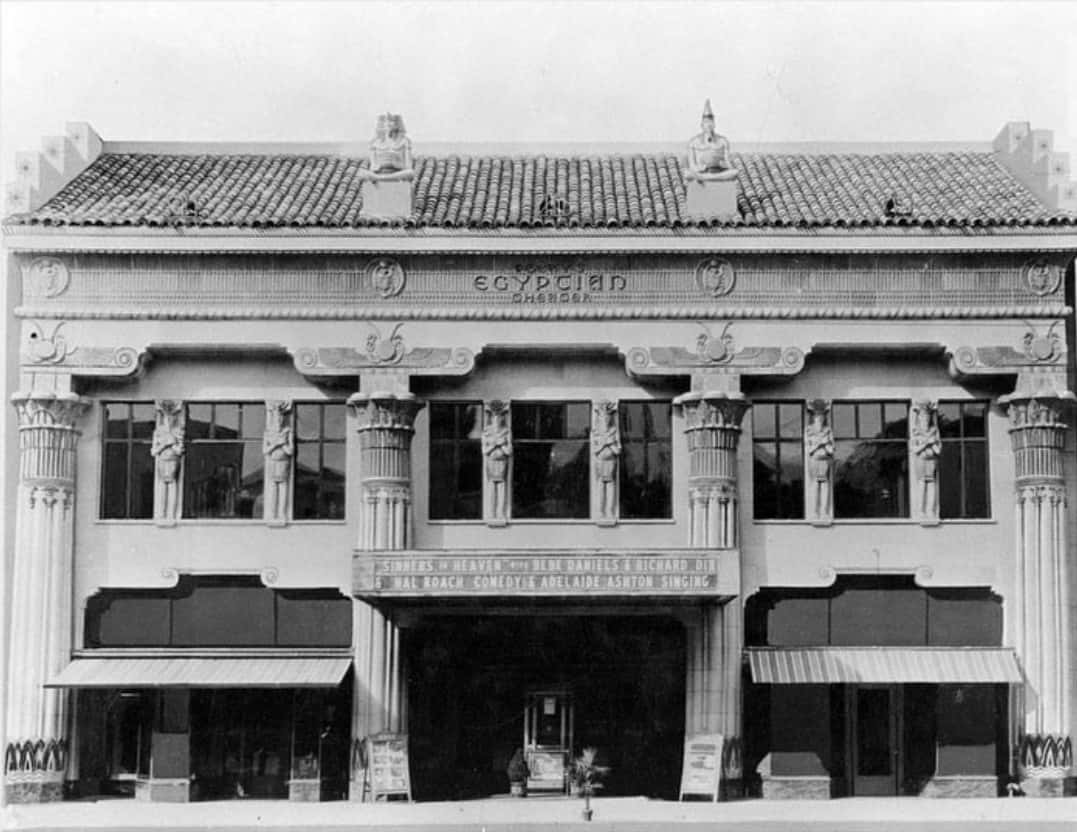
Peery’s Egyptian Theater was built after the fiery demise of the Arlington Hotel in 1923. Harman and Louis Peery devised a plan to build a grand theater, “The Showplace of the West”. The architectural firm of Hodgson & McClenahan, notable for many important Wasatch Front landmarks, was hired for the task. They took cues from many of the most famous western theaters, including Grauman’s Egyptian Theatre in Hollywood, and settled upon an Egyptian-themed showhouse.
Construction began in 1923 on the cleared area left from the Arlington Hotel, and incidentally, the location of the Peerys’ first Ogden home. Ten months passed, and on July 3, 1924, the Egyptian opened. The first feature played at the new theater was Zane Grey’s Wanderer of the Wasteland. This “natural color” silent film was accompanied by the Mighty Wurlitzer, the Egyptian’s famous pipe organ.
The first “talking picture” was In Old Arizona, shown in 1929. This downgraded the role of the house pipe organ, which was occasionally used during intermissions and other programs. In 1960, the organ was removed and put into storage.
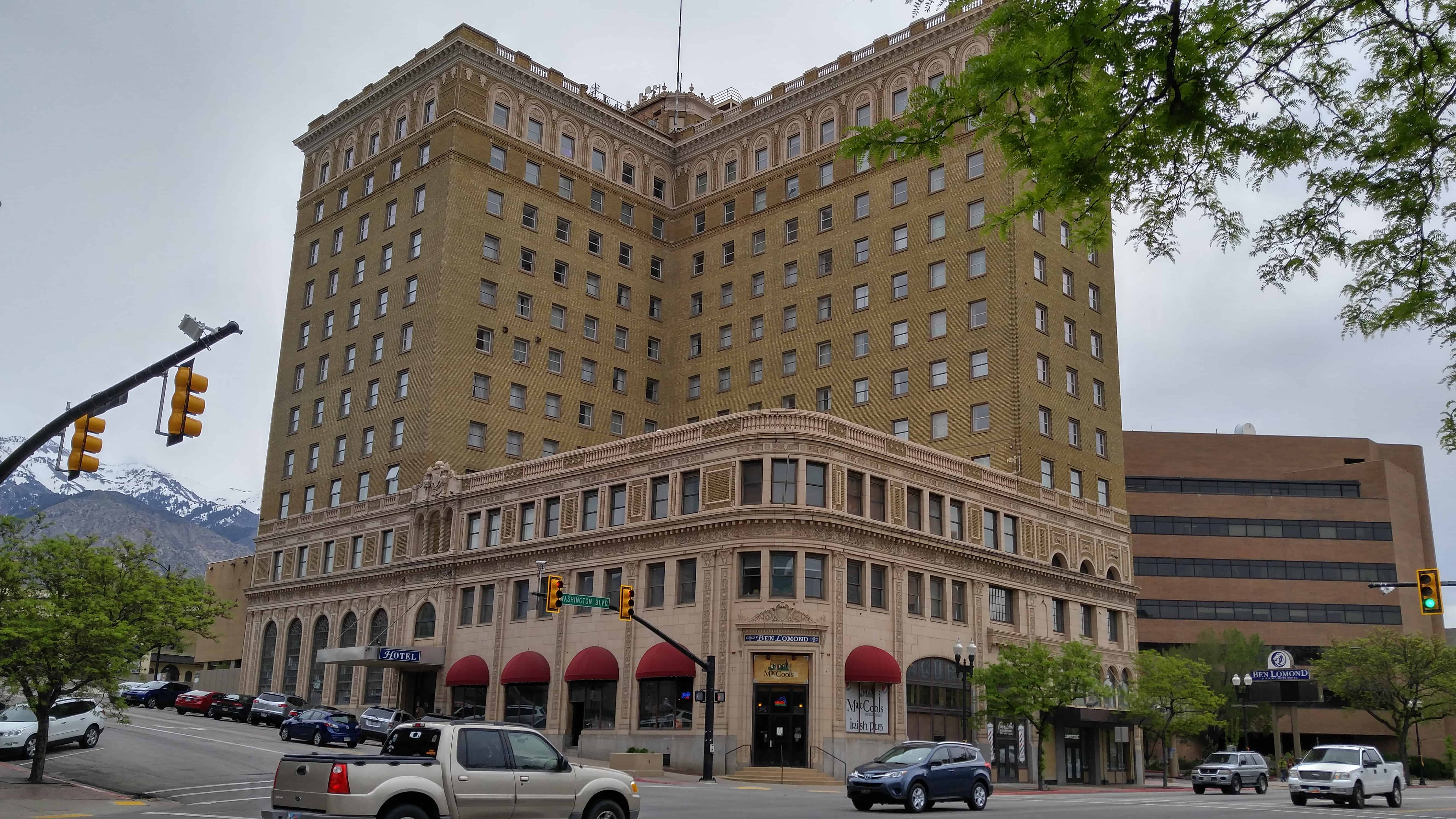
Constructed in 1927, the Bigelow/Ben Lomond Hotel is both architecturally and historically significant. Architecturally, it is an excellent and rare example of the Italian Renaissance Revival style in Utah, which was popular in America in the 1920s but seldom employed in Utah. The building is also the most notable example of the hotel type in Ogden. No other hotel in the history of the city has exceeded the Bigelow/Ben Lomond in size (number of rooms), height or elegance. The hotel is also a significant work of the Ogden/Salt Lake City architectural firm of Hodgson and McClenahan. That firm designed a number of architectural landmarks in Ogden, ranging from the Egyptian Revival style Peery’s Egyptian Theatre to three major Art Deco buildings- Ogden High School, the City and County Building, and the Regional Forest Service Building–to several Prairie School houses in the Eccles Avenue Historic District (all National Register properties). The Italian Renaissance Revival style Bigelow/Ben Lomond Hotel is yet another example of their architectural versatility and proficiency. The hotel is historically significant for its association with Ogden City’s 1920s era of growth. This building, the tallest and most lavishly designed structure in the city, symbolizes that period of optimism and economic development.
Located at 2510 South Washington Blvd in Ogden, Utah and added to the National Historic Register (#90000637) on April 19, 1990.
The Bigelow ranks as one of the three most architecturally significant hotels built in Utah’s historic period. The others, the Hotel Utah (built 1909-11 with 500 rooms) and the Newhouse Hotel (built 1911-14 with 400 rooms), both in the state’s capitol, Salt Lake City, have been converted to a new use and razed, respectively. Of the “Big 3” grand hotels from Utah’s 1900-1920s “boom” era only the Bigelow retains its original commercial and residential uses. Like the Hotel Utah, it also retains much of its architectural integrity.
At the time of the Bigelow Hotel’s construction, Ogden was Utah’s second largest city with a population of 45,000. Its growth prior to 1900 depended on its importance as a railroad and agricultural center. Nineteenth-century visitors to Ogden were accommodated in several small hotels, the largest of which was the Reed Hotel, a five story brick and stone structure built in 1891 on the site later to be occupied by the Bigelow Hotel. Considered to be one of the finest hotels in the West at the time, the Reed Hotel came into the hands of H. C. Bigelow and his Ogden State Bank in 1916. It was his son, prominent businessman and conservationist, A. P. Bigelow, who determined in 1926 to raze the Reed and replace it with a modern, “fireproof,” first-class hotel.
Illinois born, University of Wisconsin-educated, A. P. Bigelow was co-founder and president of the Ogden State Bank (housed in the hotel) and the Bigelow Hotel. He was associated with a large number of major industrial, business, fish, game, and water conservation enterprises in Utah. He served as president of such groups as Utah Power and Light Co., Utah Taxpayer’s Association, Weber River Water Users Association, among others.
The construction of the Bigelow Hotel in 1927 culminated a 25-year period of considerable growth and expansion in Ogden. Perhaps more than any other building, the Bigelow, still the city’s highest building, symbolized the high water mark in Ogden’s development, a zenith which ended with the depression of 1929-36 and which has never been approached in Ogden since.
Following the completion of the trans-continental railroad at Promontory (northwest of Ogden) in 1869, Ogden became the region’s leading railroad center. Called the “Junction City,” Ogden at one time hosted as many as eight railroad companies, including the Union Pacific, Southern Pacific, Denver & Rio Grande, Oregon Shortline, Utah Central and Bamberger lines. In the early twentieth century, Ogden established itself as the Intermountain West’s leader in manufacturing, jobbing, commerce, and transportation. Important secondary industries included livestock and agriculture, tourism and conventions, and government agencies. Paralleling this growth was a building boom which affected all building types, especially hotel construction.
Despite the construction of several small-to-medium sized hotels and apartments in the early twentieth century, the mid-1920s brought a community demand for a single grand hotel and convention center “to further the city’s industrial and commercial prosperity.” Built at a period of peak capital influx, the Bigelow reflects the community’s economic optimism, it sense of civic opulence, and its fervid booster spirit.
In 1926, self-described “Boosting Circles” and A. P. Bigelow came to an agreement to construct a community-backed luxury hotel to be operated by Bigelow. Within months a new corporation with 300 stockholders and a board of directors consisting of leading business figures was formed.
The Ogden/Salt Lake City architectural firm of Hodgson and McClenahan was commissioned to prepare construction documents for the hotel. The city’s most prolific architects, the firm designed several impressive structures which would eventually be listed on the National Register of Historic Places.
Within a year the impressive structure was complete, and its exuberantly and voluptuously eclectic style was a monument to the taste and business mentality of the time. Visitors were to be overwhelmed by the sophistication of Ogden’*’s showplace, which included a coffee shop in the Arabian style, a ballroom that incorporated features from a palace in Florence and a meeting room for businessmen’s clubs done in the “atmosphere of old Spain.” The English Room was done completely in old paneling, and is an adaptation of a room in Bromley Castle, England. The Shakespeare Room, with its fine murals, was intended to be the cultural highlight, “One can almost hear the screeching of the witches in ‘Macbeth’ when he looks upon the walls of the Shakespeare Room, so excellent is the work of Le Conte Stewart, Utah artist. (The Le Conte Stewart murals are now in the possession of the North Davis Art Society.) The Georgian Room, with its Adamesque ornamentation, and strategically located across the mezzanine from a “splendid” ladies rest room, was “as feminine as one could imagine a room to be.”
Ogden considered its new premier hotel “a fit home for presidents, kings, and emperors.” There was no doubt that the Bigelow as a serious competitor with the Hotel Utah in Salt Lake City for the title of the state’s leading hotel. In 1927, the hotel was briefly the center of national attention during a convention of Western Democrats which resulted in the creation of a Western States “Smith for President” association. This signaled to national Democratic leaders the existence of a national constituency for Alfred E. Smith and was instrumental in the selection of Smith as Democratic standard bearer in the 1928 presidential election.
In 1933, the name of the hotel was changed to the Ben Lomond when the property was acquired by Marriner S. Eccles, shortly to become Roosevelt’s Secretary of the Treasury. After passing through the hands of various corporations representing Eccles family interest, the hotel was acquired in 1965 by Woodbury Corporation of Salt Lake City. Subsequently, in 1977, it was acquired by Weber County to house administrative services. In the mid~1980s, the hotel was obtained and rehabilitated by Ben Lomond Suites, Ltd., and Ogden company.
The hotel’s period of significance extends from its construction in 1927 through the first change of ownership in 1933. At that time the name was changed to the Ben Lomond Hotel, under which it operated for over 40 years. Though the hotel is still an architectural landmark in the city and is still playing a significant role in the central business district, its historical period of significance is best defined by its date of construction (1927) and the transition to its more permanent identity as the Ben Lomond Hotel in 1933.
The architectural firm of Hodgson and McClenahan was the premier architectural firm in Ogden during the early decades of the twentieth century and was prominent on a statewide and regional basis as well. Leslie S. Hodgson, born in Utah in 1879, learned the building trades from his father then received architectural training from two of Utah’s most prominent architects, Richard Kletting and Samuel S. Dallas, both of Salt Lake City. Hodgson gained his architect’s license in 1904, then in 1905 worked for several months in the San Diego, California, office of Hebbard and Gill. He returned to Utah in 1906 and established an architectural partnership with Julius A. Smith in Ogden. That partnership dissolved in 1910. Leslie Hodgson and Myrl McCLenahan formed their partnership in 1919, though McClenahan had worked for Hodgson previously, beginning in 1912. The partnership lasted until McClenahan’s death in 1940.
Hodson and McClenahan produced some of Ogden’s finest and most diverse architecture. Hodgson designed a number of Prairie School style houses in the Eccles Avenue subdivision (National Register historic district) in the 1910s. The firm designed the elaborate Egyptian Revival style Peery’s Egyptian Theatre in 1927, which was the same time they were working on the Italian Renaissance Revival style Bigelow Hotel. In the 1930s came three excellent examples of the Art Deco style the Regional Forest Service Building, Ogden High School, and the City and County Building all located in Ogden and all listed in the National Register. These three buildings are the finest examples of the Art Deco style in Utah. The firm also designed a number of other public buildings and schools in Utah and the Intermountain West. However, their best work, among which the Bigelow/Ben Lomond Hotel can be counted, was done in Ogden.
The Bigelow/Ben Lomond Hotel, constructed in 1927 and extensively renovated in the 1980s, is a three-part commercial block with a four-story rectangular base, nine-story upper ell and a two-story tower at the nexus of the ell. The hotel was built with a reinforced concrete skeletal frame infilled with hollow clay tile and veneered with pressed brick. Designed in Early 20th Century Revival styling of an eclectic Italian Renaissance mode, the exterior featured ornamental terra cotta along the four-story façade of the base, the upper story of the ell and the tower. The flat roofs were trimmed with ballustrades on parapet walls. Window types varied from the fixed, round and segmentally-arched storefronts at the street level, to double-hung sash windows in tall, flat-arched bays in the upper eleven stories. While the north and west elevations (facing 25th Street and Washington Blvd., respectively) were highly ornamented, the south and east “rear” elevations were plain, consisting only of rectangular window bays in unrelieved brick walls.
The hotel’s floor plan was arranged to provide 350 guest rooms in the ell, plus dining space for 1000 seats, ballrooms, meeting and display rooms, lounges, restrooms, retail shops and a bank, all located in the four-story base. Support functions such as kitchens, food storage, laundry, and mechanical areas were located in the basement. The two-story tower was designed as a penthouse residence for the Bigelow family.
The interior of the hotel featured an eclectic variety of exotic decors, especially in the public spaces. The Coffee Shop was decorated in an Arabian mode while the main ballroom exhibited Roman motifs. A smaller ballroom was called the Spanish Room because of its Mediterranean furnishings. One dining room had Japanese decor, while the ladies parlor relied on a Georgian theme and Adamesque detail. The English Room displayed rich oak paneling and the Shakespeare Room was lined with hand-painted mural. Ornamental plasterwork and terra cotta existed throughout the interior. A period interest in luxury, sophistication, variety and exotic cultures was clearly apparent.
The exterior of the Bigelow/Ben Lomond Hotel retains its overall architectural integrity. Some adverse alterations of street-level commercial windows in the 1970s were remedied by more compatible modifications during a major renovation in the 1980s. Deteriorated windows were replaced with units of similar design and materials. Flags and canvas awnings were placed over the street-level, arched windows and two new metal canopies were installed on either side of the southwest corner of the hotel. Narrow, vertical stair towers that extend to the full height of the building were attached to both the south and east elevations. Both have plain stuccoed exteriors.
The interior public spaces in the four-story base remain intact, although the bank space has been re-partitioned and the main lobby has had its shops and reception areas modified. Much of the interior has been repainted and many of the original light fixtures are not longer extant. The eleven floors in the ell have experienced significant floor plan changes to accommodate fewer but larger living units and offices. This renovation was part of a certified tax project.
A three-story motel addition was attached to the east side of the building c. 1957. It is an ell-shaped, flat-roofed, brick and concrete structure with ground-level parking beneath two stories of motel units. Though its utilitarian design does not complement the hotel, it does not significantly detract from it either. The motel is located on the least visible of the hotel’s facades, the east side or rear, and the open court formed by the ell faces away from the hotel. There is no interior connection between the hotel and the motel section, though the motel functioned as an annex to the hotel (and still does).
A low, two-level parking garage was built adjacent to the southeast corner of the hotel in the early 1960s. This garage, which obscures none of the original elevations, is a non-contributing building on the property.
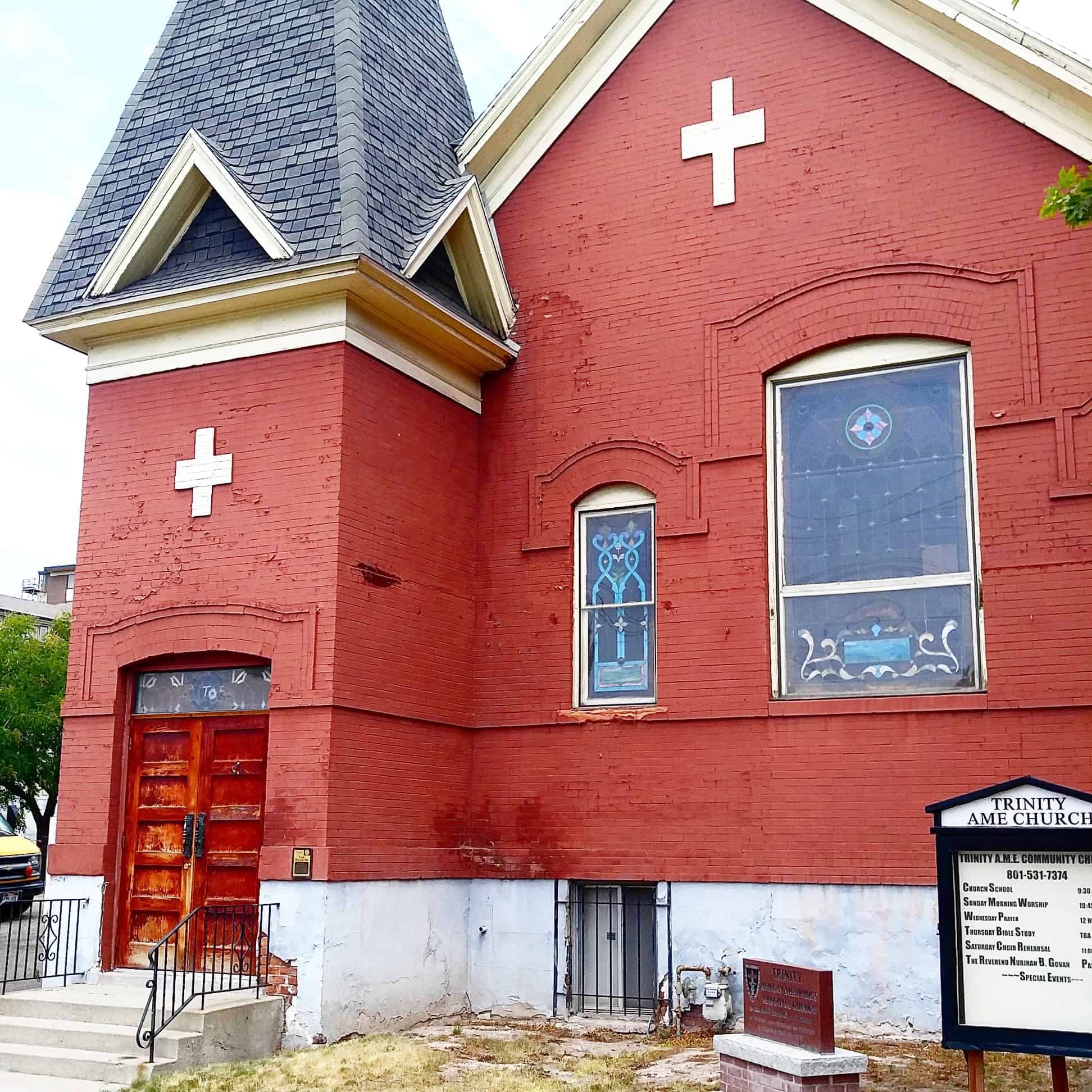
Organized during the 1880’s by the Reverend T. Saunders, this congregation has served as a focus of black religious, social, and cultural activity in Utah from territorial days to the present. In 1907 property at this spot was acquired, and a church designed by Hurly Howell was constructed through the sacrifice and energy of the congregation under the Reverend T. C. Bell. Restoration was begun in 1976 under the Reverend D. D. Wilson.
The congregation met in various members’ homes until it acquired enough funds to buy property to build a church in 1907. The new church was located on 600 South which is now Martin Luther King Boulevard.
From the 1930s and through the 1960s the church congregation numbered around 300 members. Despite the previous strong membership, the church has struggled with declining membership since the 1970s. In 2012 it reported only 50 worshippers a week. Trinity AME now touts itself as a “working class” church that primarily serves widowed senior citizens. It has struggled to attract more youth despite its long history of community involvement. It continues to hold youth activities such as movie nights that partner with the Salt Lake City women’s shelter. It also sponsors interfaith events that involve other religious denominations in the city.(*)