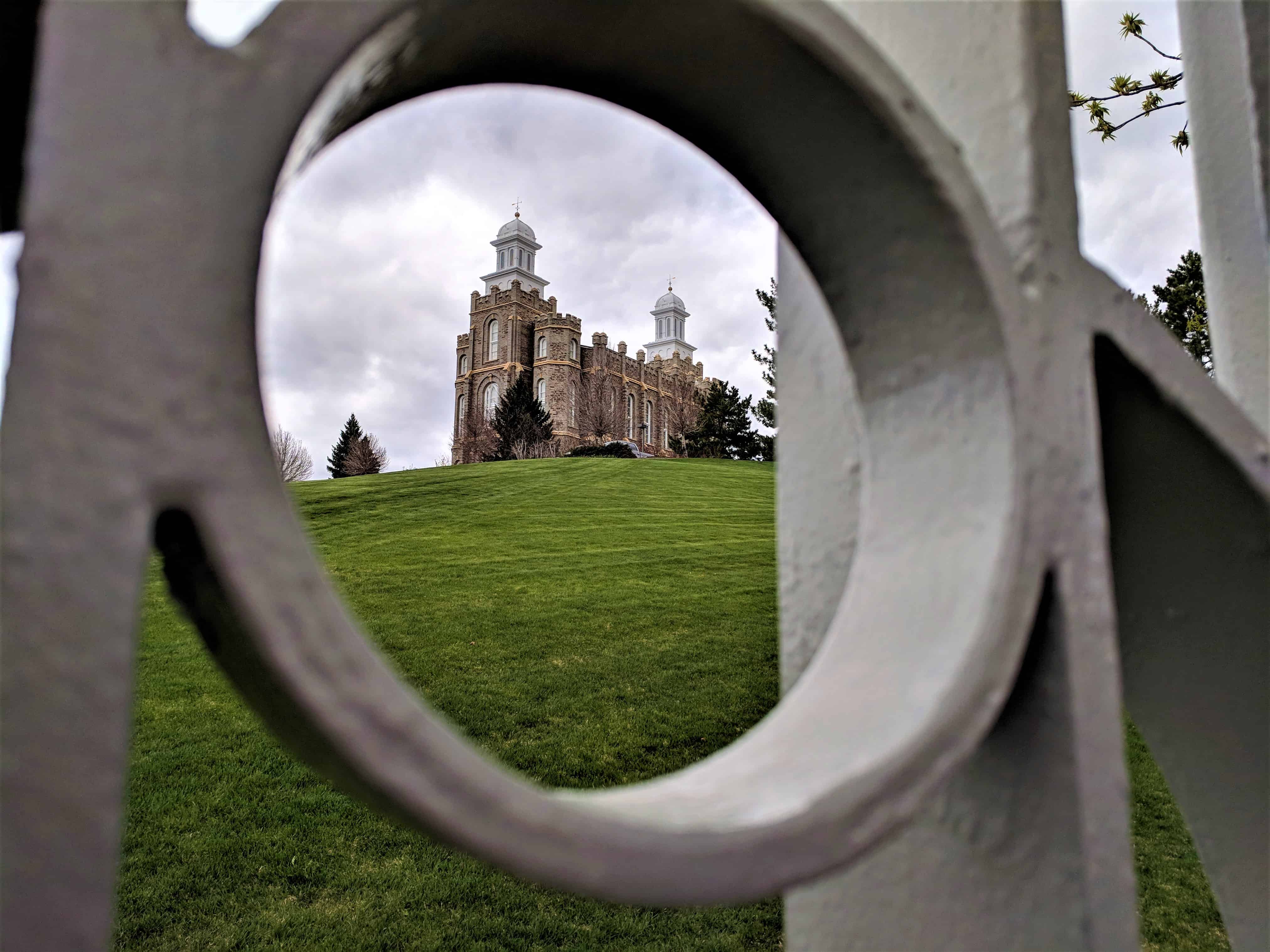
The Manti Utah Temple (formerly the Manti Temple) is the fifth constructed temple of The Church of Jesus Christ of Latter-day Saints (LDS Church). Located in the city of Manti, Utah, it was the third LDS temple built west of the Mississippi River, after the Mormons’ trek westward. (The St. George and Logan Utah temples preceded it.)
Located at 200 East 510 North in Manti, Utah and added to the National Historic Register (#71000854) on August 12, 1971.
Architect was William H. Folsom. The building, with its unique setting is undoubtedly one of the finest examples of Mormon Temple architecture to be found anywhere.
The temple, with its base eighty feet above the highway, holds a commanding position over Manti and the surrounding valley. The sloping lawns, brilliant flowers, and wide variety of trees and shrubs were made possible by hauling enough soil to cover the stone base.
The temple is 171 feet long and 95 feet wide. It is built of local oolitic limestone of a warm cream color. The towers on each end are topped by bell-shaped roofs which are influenced by Victorian architectural fashions The front of the Temple is on the east as with all Mormon Temples and the rear fronts the highway. The interior is striking in its simple elegance. Hardware, woodwork with its graceful arches, heavy doors and finely cut mouldings, and decorating all indicate skilled workmanship. In the basement is a baptismal font resting on the backs of twelve cast life-size oxen. The main floors are occupied for the most part by ceremonial rooms. An assembly room fills the entire upper floor. It was here in 1888 that fifteen hundred members of the Church met to dedicate the building. In the two west corner towers are spiral staircases, extending from the basement to the roof. Engineers and architects have acclaimed them as remarkable pieces of workmanship. In each case the center Is open, without any supporting column and the walnut railings and balusters, winding up through five stories, form a symmetrical coil, perfectly plumb from top to bottom. The building is used continuously and is in an excellent state of repair.
Alterations have been minimal. The annex was built along with the original structure. It was remodeled and added to (on the west and north) in 1956-58.
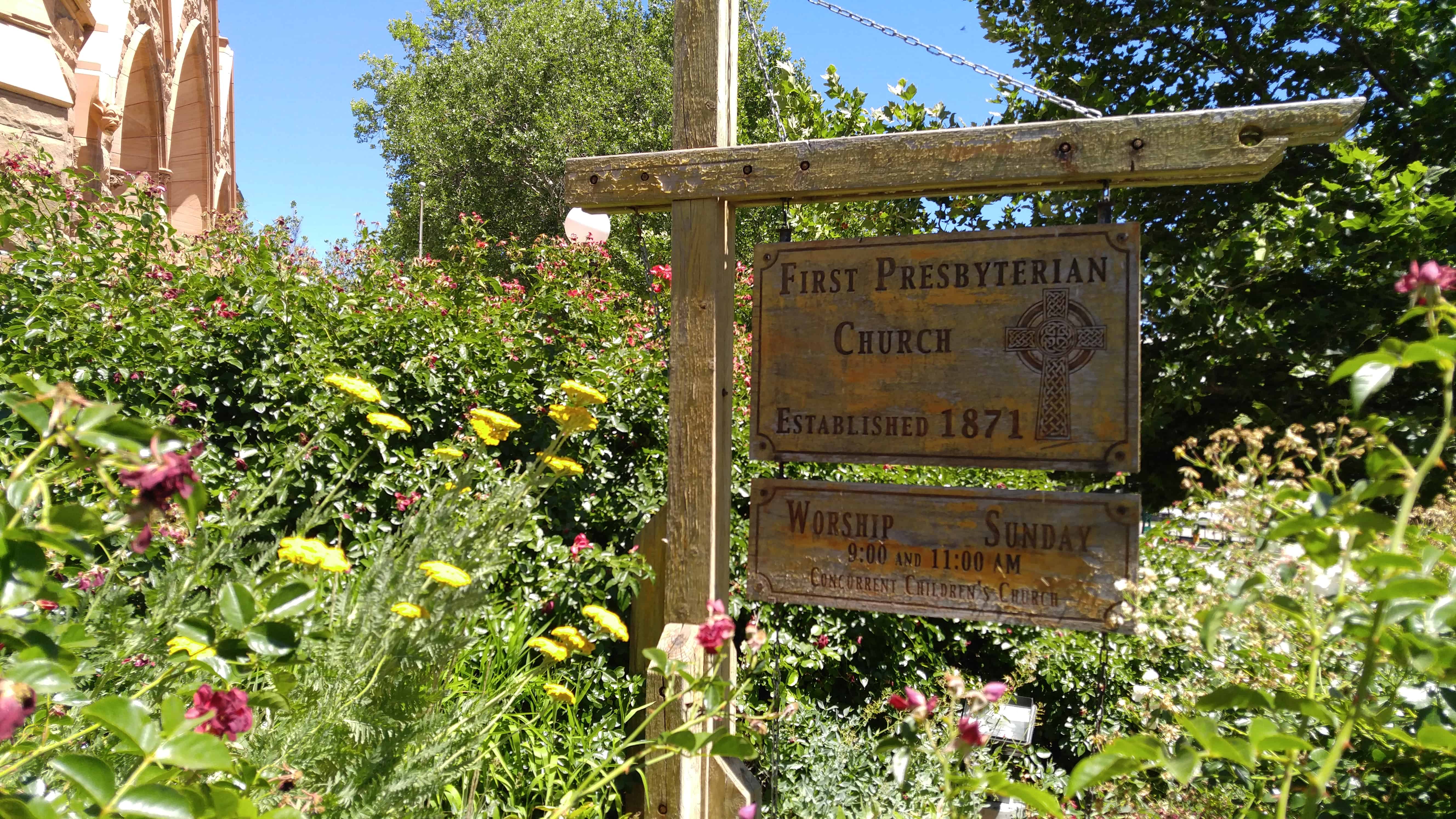
With the completion of the transcontinental railroad in 1869, the isolation of Salt Lake City was broken, and the Church of the Latter Day Saints witnessed an ever-increasing non-Mormon population in their city. Sheldon Jackson recruited newly ordained home missionary Josiah Welsh (1841–1876) to organize a Protestant congregation.
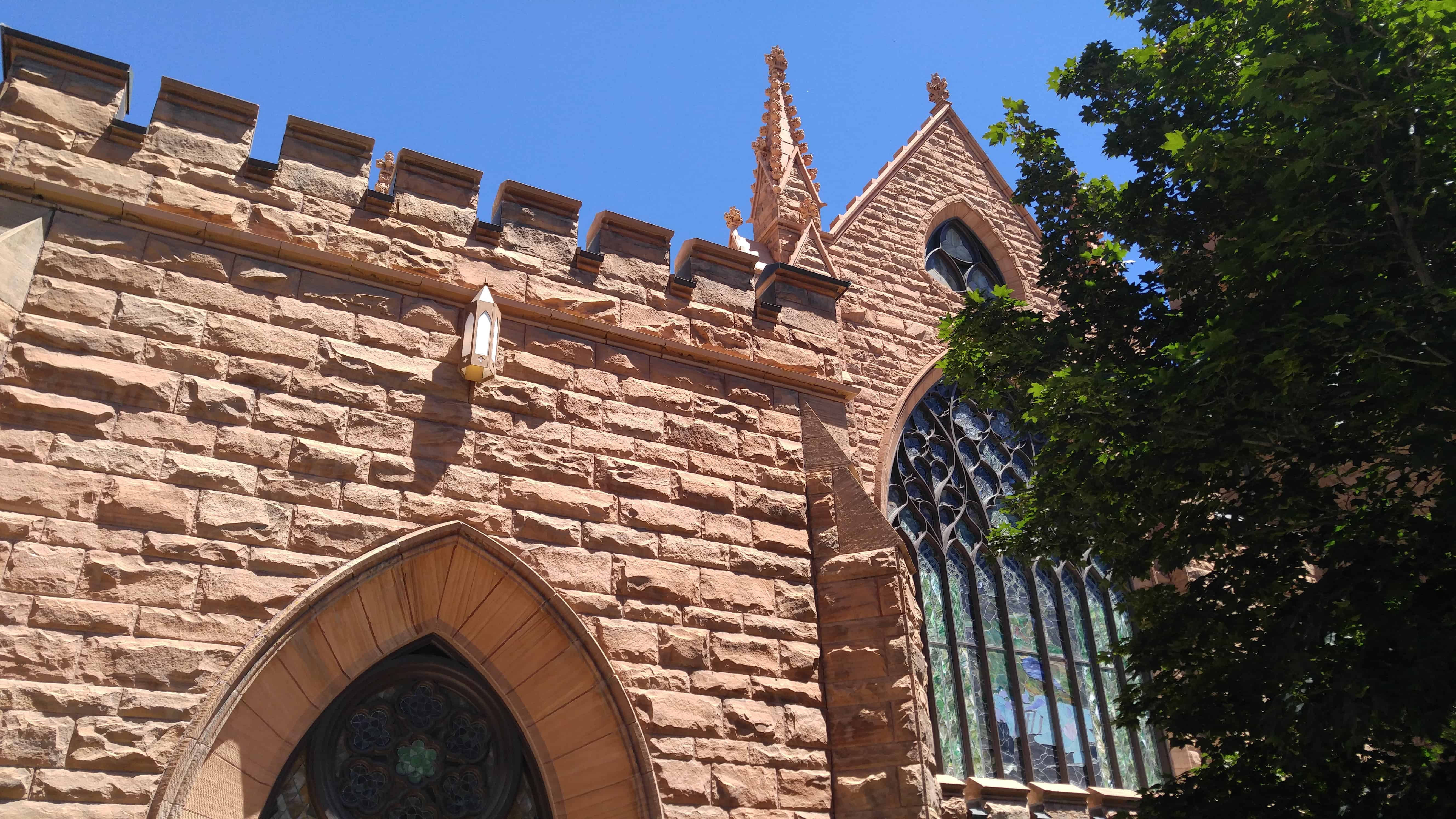
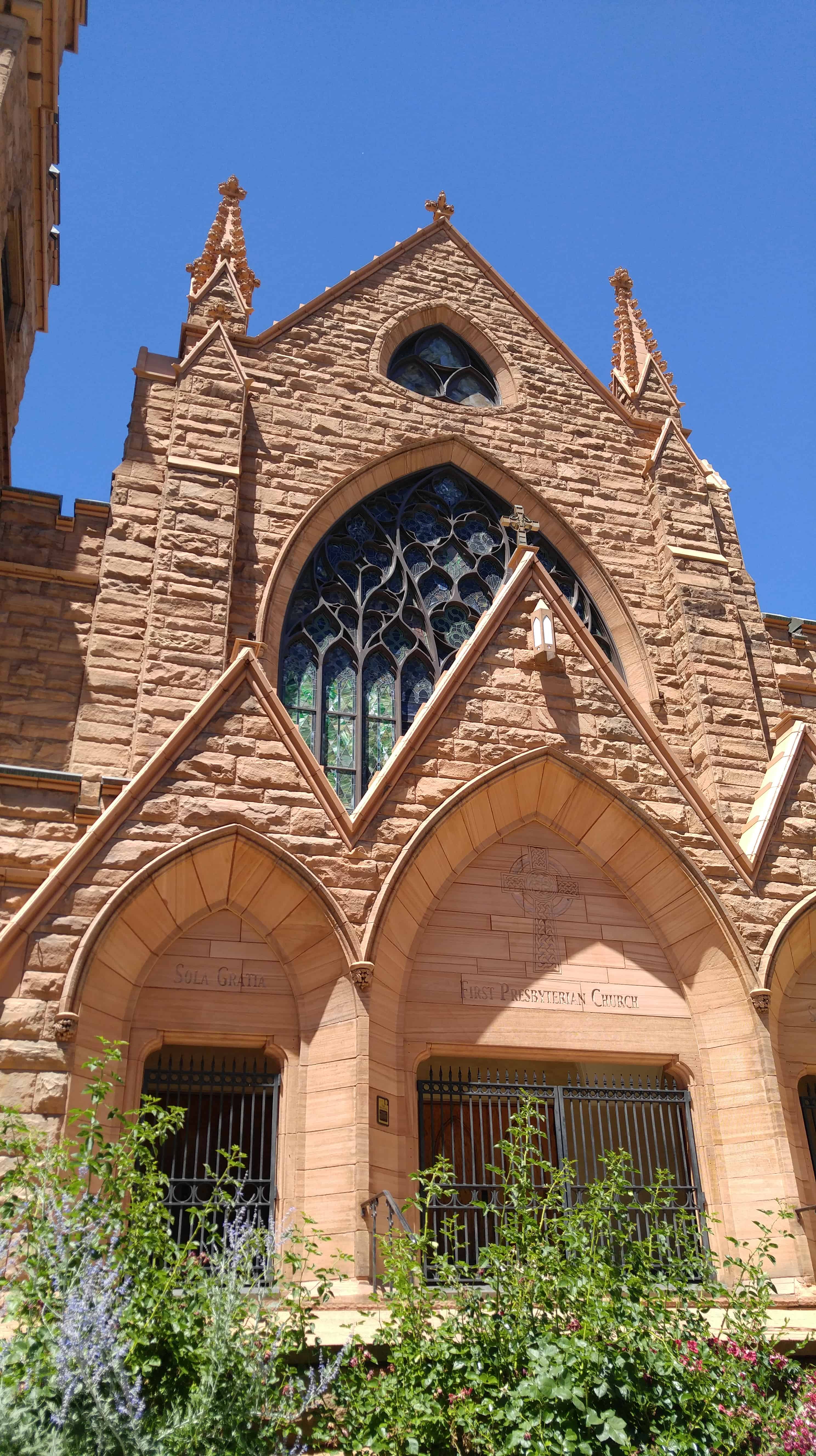
The First Presbyterian Church was organized in November, 1871 with eleven members. Its first building, built with monies solicited in the East, was the first home of Westminster College, and was occupied for thirty years before the congregation, which grew to over five hundred members, moved to its present facility. Walter E. Ware designed the Gothic Revival structure, with its low square tower and patterned on the cathedral church of Carlyle, England. The exterior was built of locally quarried red butte stone with hard stone trim.
First occupied in 1905, the congregation substantially enlarged, renovated, and modernized it in 1956. It was listed on the National Register of Historic Places in 1980. It is also Entry No. 323 on the American Presbyterian/Reformed Historic Sites Registry.
The construction of the First Presbyterian Church marked the coming of age of Utah’s Presbyterian community. The state’s early Presbyterian chapels and mission schools were funded by Presbyterian missionary organizations in the East. The money for this magnificent building, however, was raised by local Presbyterian congregations. Thus, the First Presbyterian Church was a symbol of the growing numbers and influence of Presbyterians in Mormondominated Utah.
Utah architect Walter E. Ware modeled his design for the First Presbyterian Church on the beautiful medieval cathedral in Carlisle, England. Like the Carlisle Cathedral, First Presbyterian Church is built of red sandstone. The church’s irregular massing, crenellated square tower, finials, and lancet-shaped windows are also reminiscent of the Carlisle Cathedral.
The church’s three large stained glass windows are artistic treasures. The west window depicts Christ in the manger, the south depicts Christ at Gethsemane, and the east depicts the first Easter. In October 1906, only five months after the church was completed, a severe storm blew out the magnificent east window. Because of the damage, no services could be held in the church for six months. Undaunted, congregation members raised over $3,000 to replace the window.
The sanctuary of First Presbyterian Church is noted for its fine acoustics and has long been used for concerts and recitals. The debut of the church’s new pipe organ in 1911 was reported in the Deseret News as “one of the most notable musical functions that have been held in the city.” Today, the church continues to host musical performances as well as the meetings and activities of over 50 cultural, educational, and community groups.
The Cathedral of the Madeleine is a Roman Catholic church in Salt Lake City, Utah, United States. It was completed in 1909 and currently serves as the cathedral, or mother church, of the Diocese of Salt Lake City. It is the only cathedral in the US under the patronage of St. Mary Magdalene.
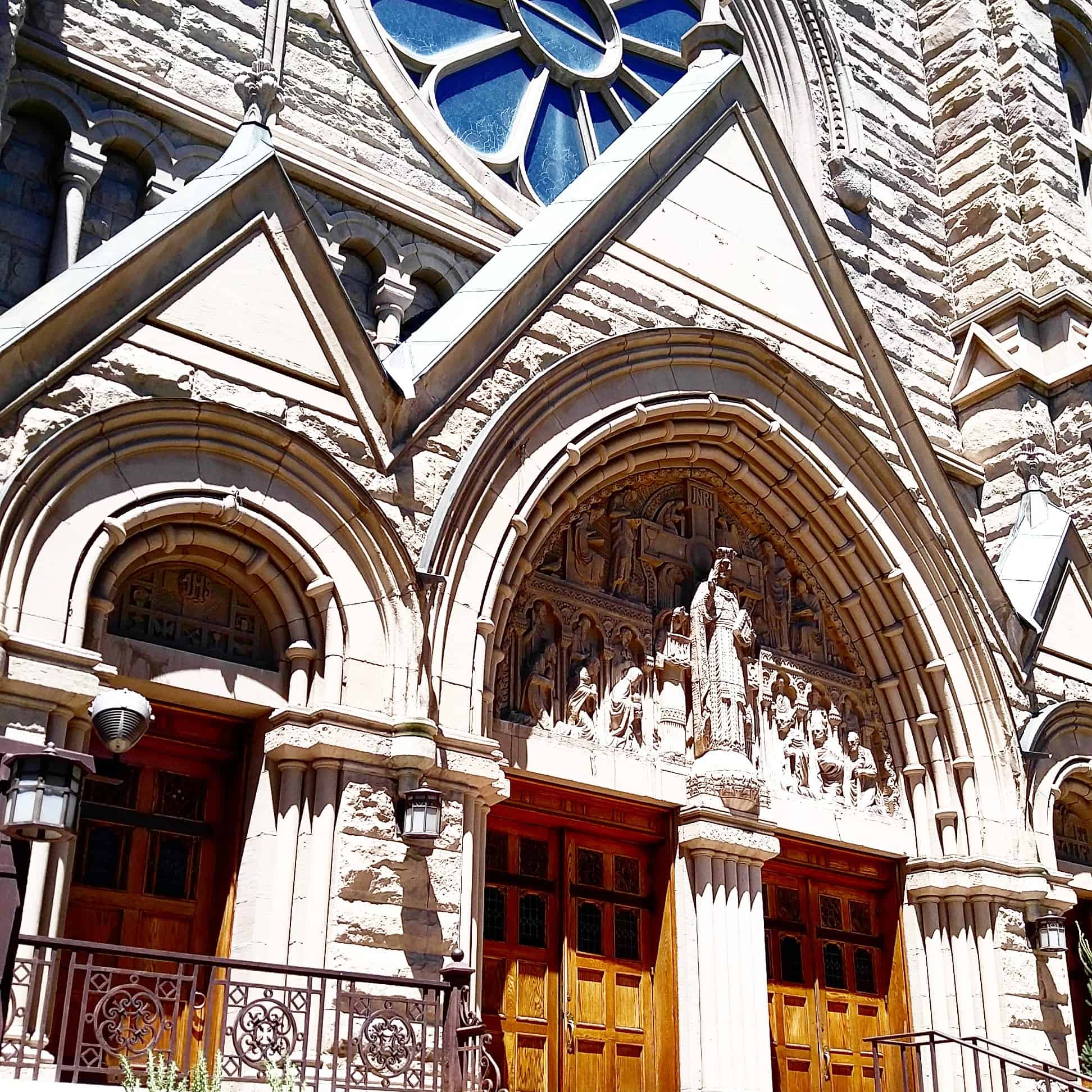
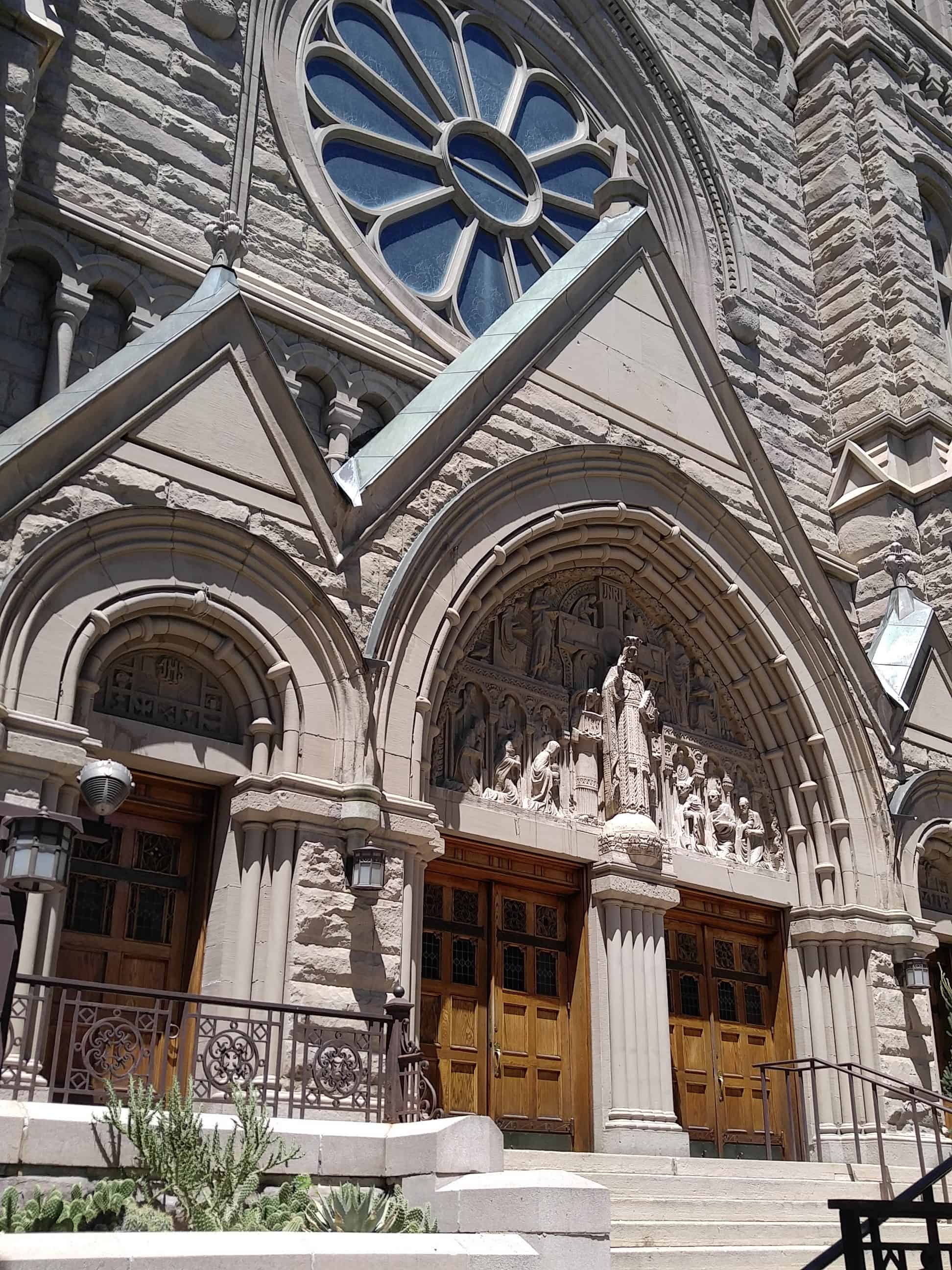
The cathedral was built under the direction of Lawrence Scanlan, the first bishop of Salt Lake. It was designed by architects Carl M. Neuhausen and Bernard O. Mecklenburg. The outside is predominantly a Neo-Romanesque design, while the inside tends more toward the Neo-Gothic. Construction began in 1900 and was completed in 1909. It was dedicated by Cardinal James Gibbons, Archbishop of Baltimore.
The Cathedral of the Madeleine has a very interesting history in which four important facets of Utah and American history are expressed. First of all, it was designed by Architect C. M. Neuhausen, and demonstrates his attachment to H. H. Richardson’s architecture, popular in America at the turn of the century. Some writers suggest that the influence of Sir Christopher Wren is also evident as a result of the Irish background of Bishop Lawrence Scanlon.
Secondly, the Cathedral represents the missionizing efforts of Catholicism in settling the American west. Fathers Antanazio Domingues and Silvestre Velez de Escalante were the first white men to explore into Utah. In addition, in 1776, the “Pious Fund” established by the early Jesuit Padre Kino and Father Salvatierra, for building churches in the Californias (1697), became available after more than two centuries of “controversy,” Allowing a ruling by the Hague Tribunal in 1902. Monies from these Jesuit funds were paid to the “Bishops of the Californias” of which $124,080.54 sent to the Salt Lake Diocese for building the Cathedral, a fitting tribute to the long and continuing impact of the Catholic missions on the American west.
Thirdly, much of the money used to build and furnish the Cathedral came rom Utah mines, which also provided the first attraction for major Catholic emigration to Utah. Such names as David Keith, Thomas Kearns, Mrs. Mary Judge and others are among the contributors. The Father of Utah mining, General Patrick Connor, was a Catholic. Many of the thousands of miners who came to exploit Utah’s minerals were and still are Catholics. Between 1873 and 1915 all were directly affected by the Cathedral builder, Father Scanlon.
Finally, the lovely Cathedral is the crowning, tangible monument to the extensive and effective labors of Bishop Lawrence Scanlon. Father Edward Kelly had been assigned to Salt Lake City in 1866, and his successor, Father Patrick Walsh, came in 1871. They had purchased land and built the first Catholic Church in Salt Lake City, yet the edifice retained a debt of $6,000 Scanlon arrived in 1873.
Under Scanlon’s direction, churches were built in most of the mining and larger communities of Utah. all parishes in Utah before his death, and all charitable and educational institutions as well, including All Hallows College, St. Mary’s Academy, St. Ann’s Orphanage, and Holy Cross Hospital.
The Cathedral itself evolved slowly. In 1889, land was purchased from Don Carlos Young for about $39,000. Ground was broken on July 4, 1889, but the cornerstone was not laid until July 22, 1900. By 1907 the building was almost finished except for the spires. At that time Bernard O. Mecklenburg was hired as a new architect. Construction was completed and the structure dedicated August 15, 1909. It was a day for celebration, especially by Utah Catholics. Construction costs have been estimated at over $300,000 plus furnishings.
Bishop Scanlon worked successfully with Mormon and civic leaders, who held him in high regard. His death May 10, 1915 was mourned by all Utahns. In tribute to him, his remains were placed in the crypt under the Sanctuary. The words of Bishop Keane, given at the time the Cathedral was dedicated, pay eloquent tribute to this structure: “This magnificent temple is a confession of faith of the Catholics of Salt Lake. Families will come and go, revolutions will arise, but Temples such as this remain as lasting monuments to those who built them, monuments to the living faith in human hearts.“
(from Preservation Utah’s walking tour) The Cathedral of the Madeleine 331 E. South Temple 1899-1909, Carl M. Neuhausen (1899-1907), SLC, and Bernard O. Mecklenburg (1907-1909), SLC Open to the public M-F, 7:30 am-9 pm, Sat. & Sun., 7:30 am-7 pm. Guided tours available Fridays at 1 pm and Sundays at 12:30 pm.
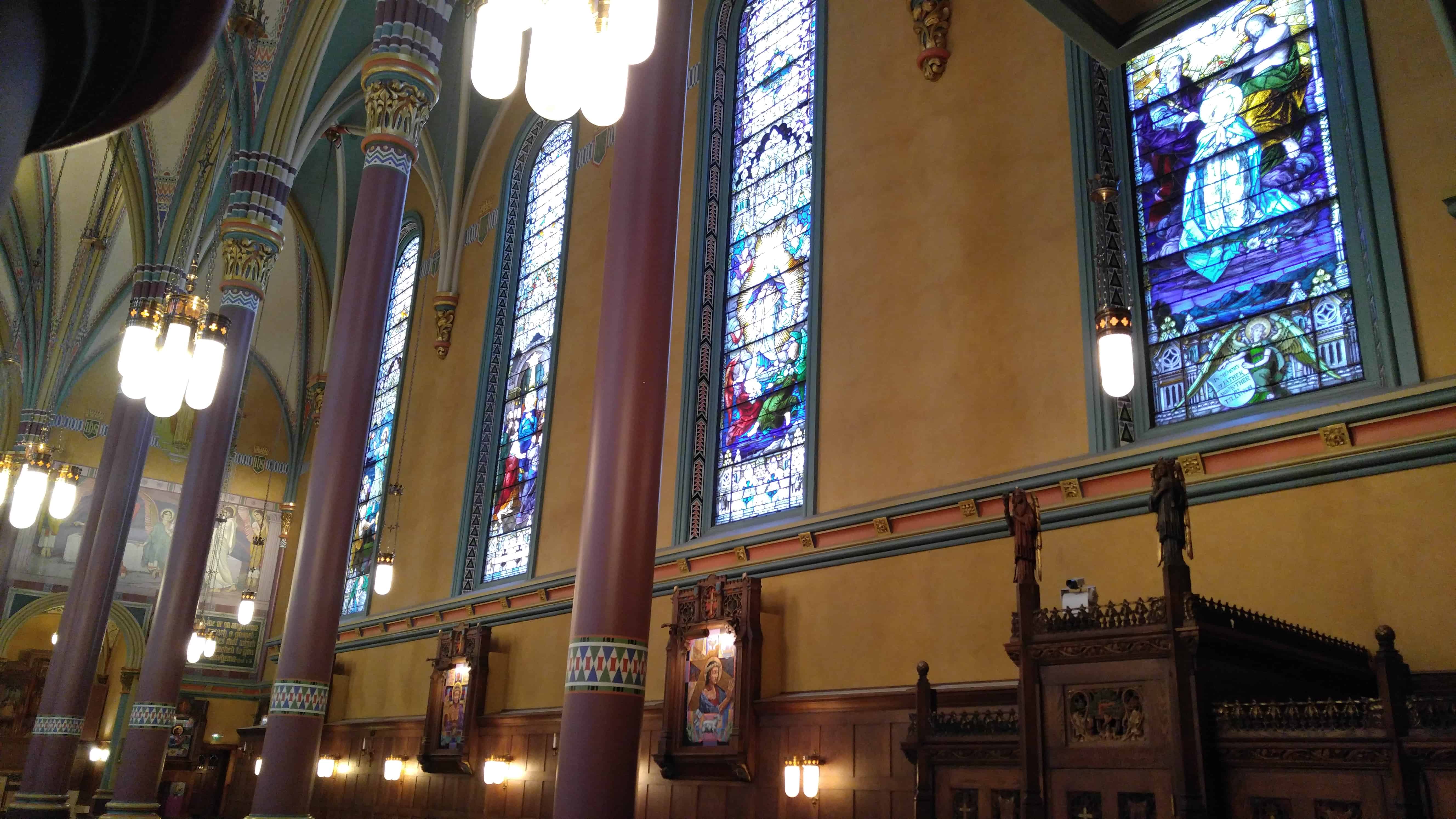
The mining fortunes that gave rise to South Temple’s grandest mansions also helped fund the construction of Utah’s first Catholic cathedral. The Cathedral of the Madeleine was built between 1899 and 1909 under the direction of the Right Reverend Lawrence Scanlan. It was designed by prominent Utah architect Carl M. Neuhausen as a Romanesque-style building with round Roman arches and rough-cut stone. Later, when Bishop Scanlan acquired additional funds for the project, the towers and pointed Gothic style portico were added to the plans. Upon Neuhausen’s death in 1907, Bernard O. Mecklenburg was hired to complete the roof and towers. While the exterior of the cathedral was substantially complete by 1909, the interior remained quite plain. In 1915, the Right Reverend Joseph Glass embarked on a three-year project to enhance the interior. Under the direction of noted American architect John Comes, the finest craftsmen of the day created paneling, painted murals, and carved wooden altarpieces for the building. The resulting ornate, polychrome interior is an outstanding example of the Gothic Revival style popular in the early 20th century. Comes also oversaw the completion of the exterior of the cathedral with the addition of the tympanum carving, tower gargoyles, and bi-level front steps.
Both the exterior and interior of the cathedral have undergone extensive restoration to preserve their historic character. The National Trust for Historic Preservation recognized the excellence of the interior restoration with a prestigious Honor Award in 1994.
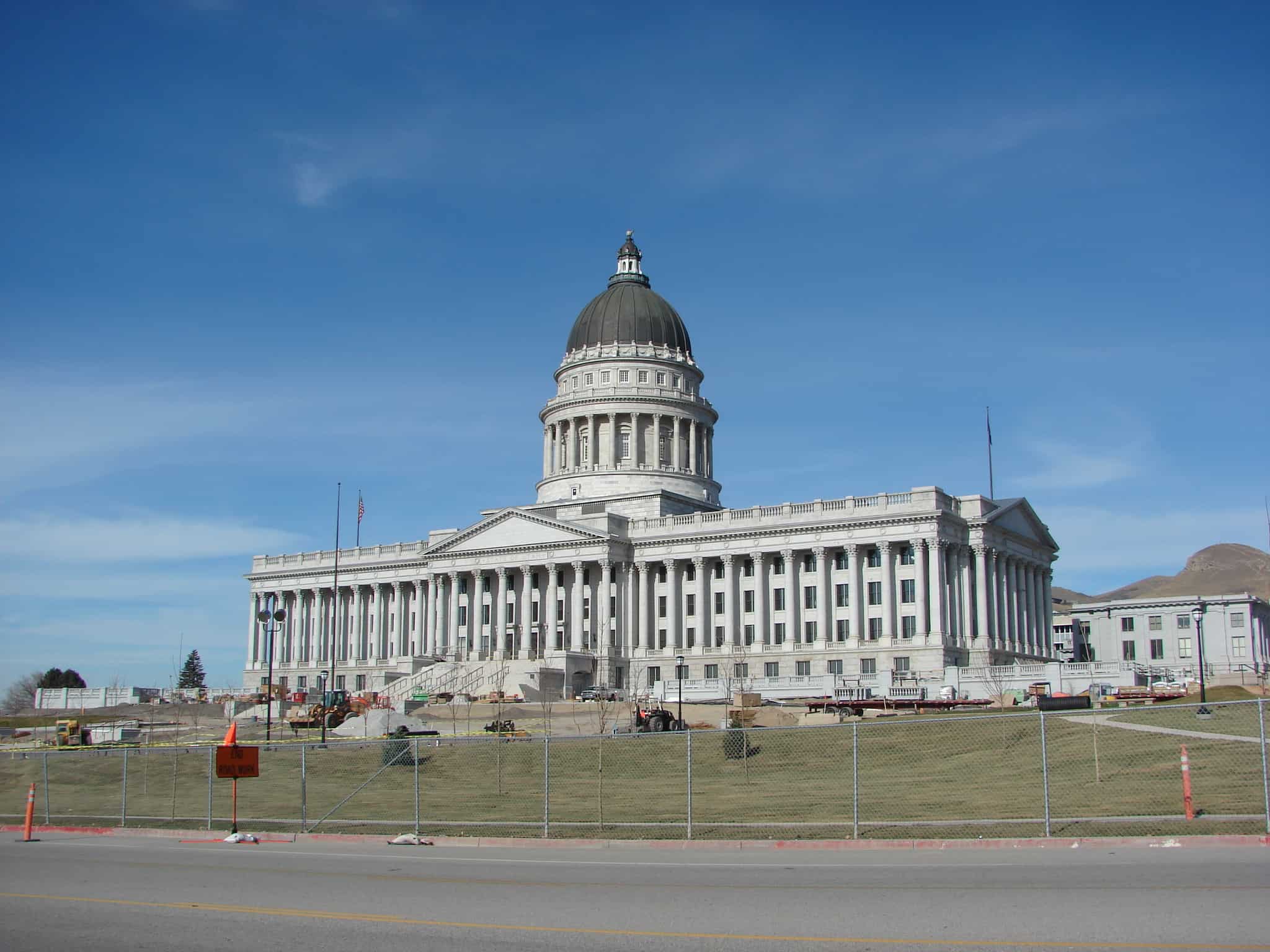
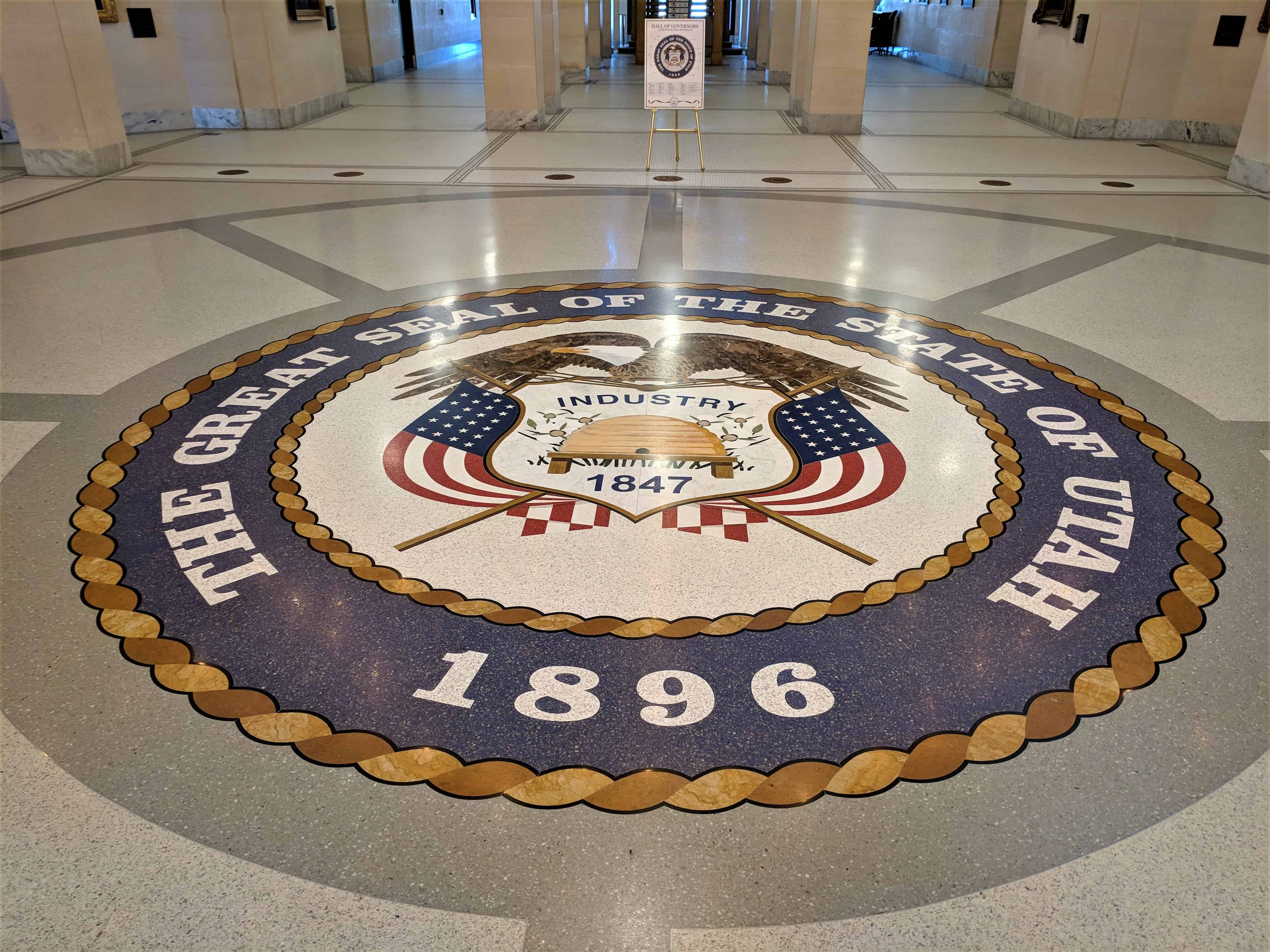
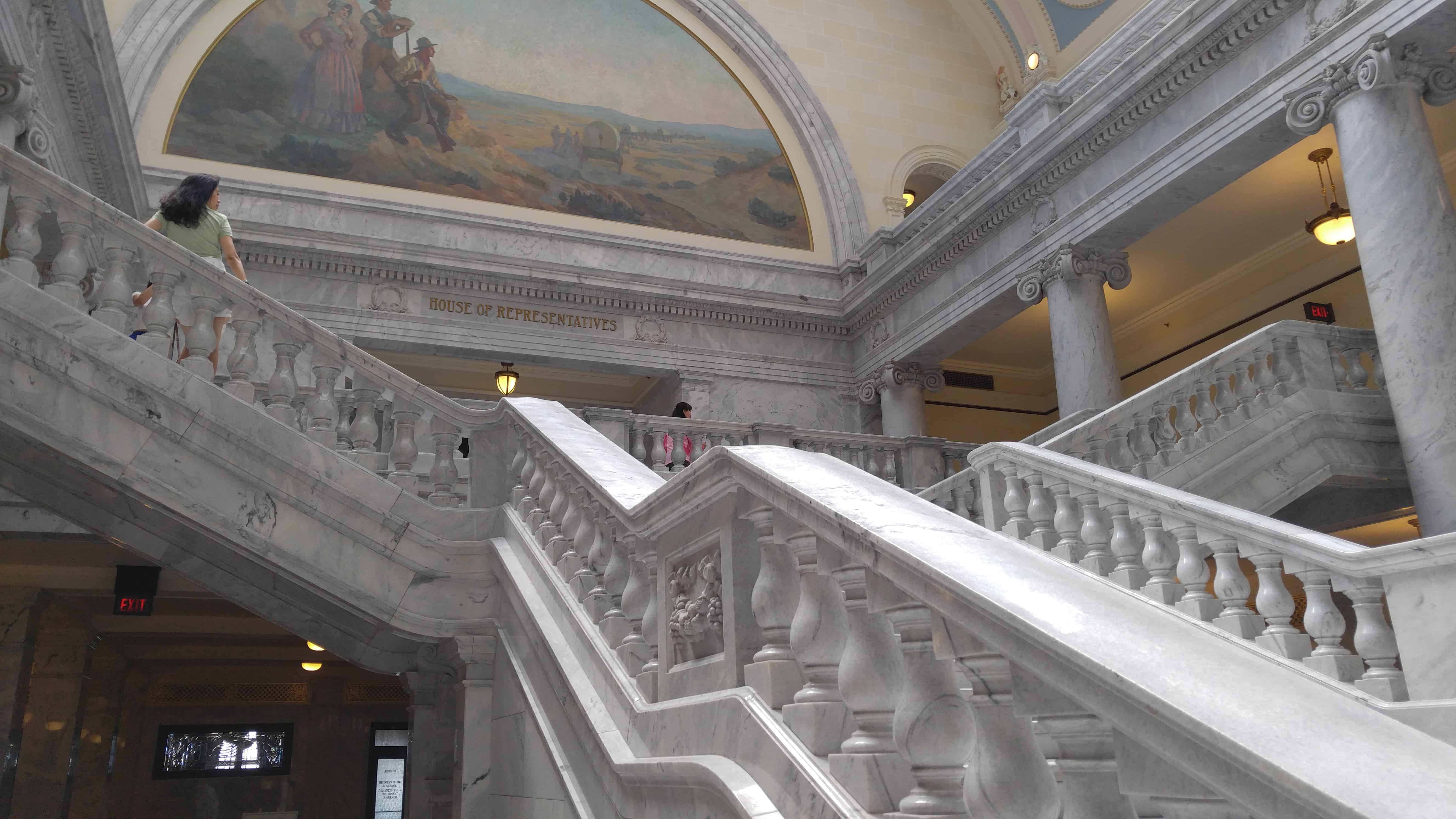
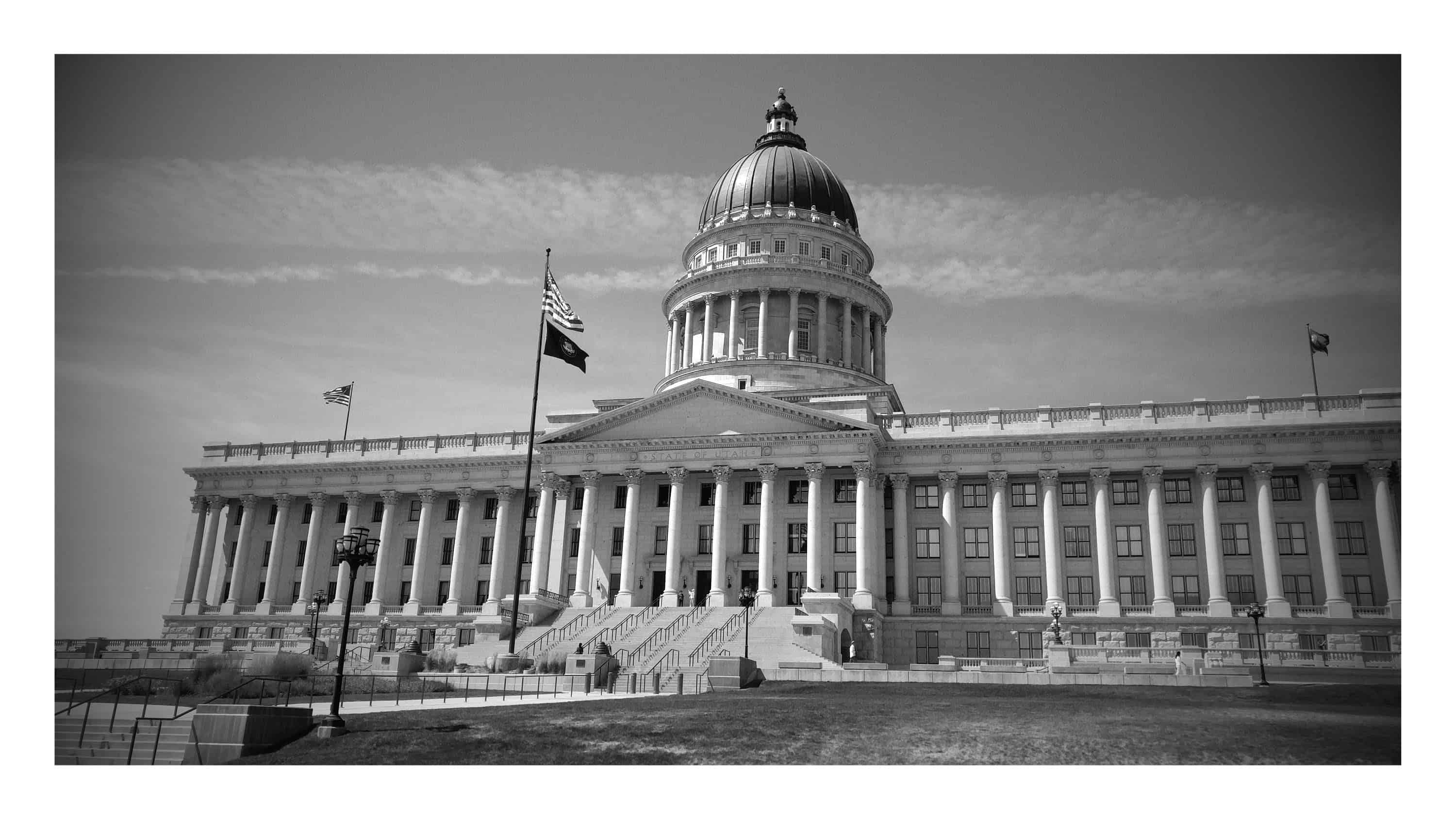
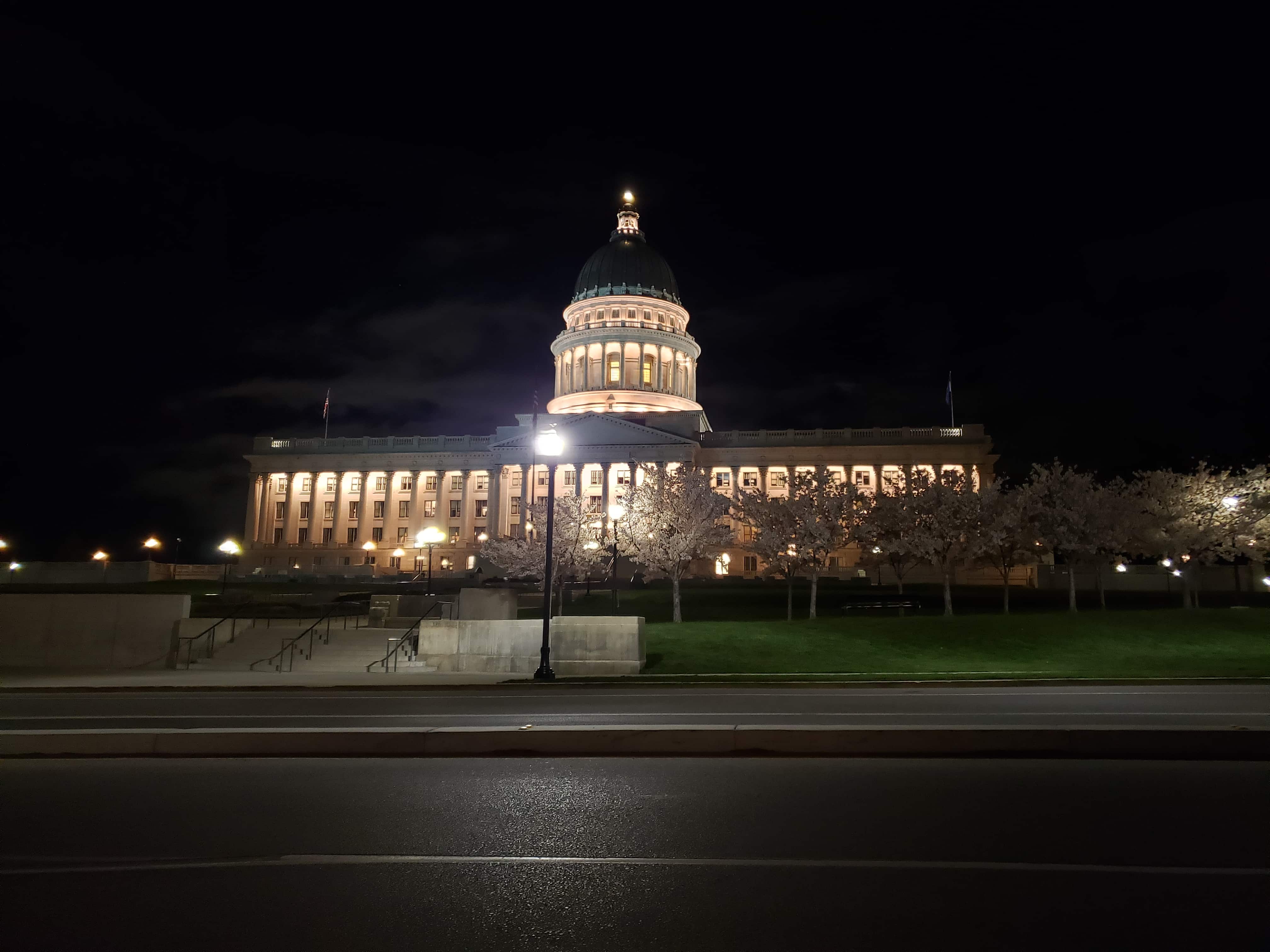
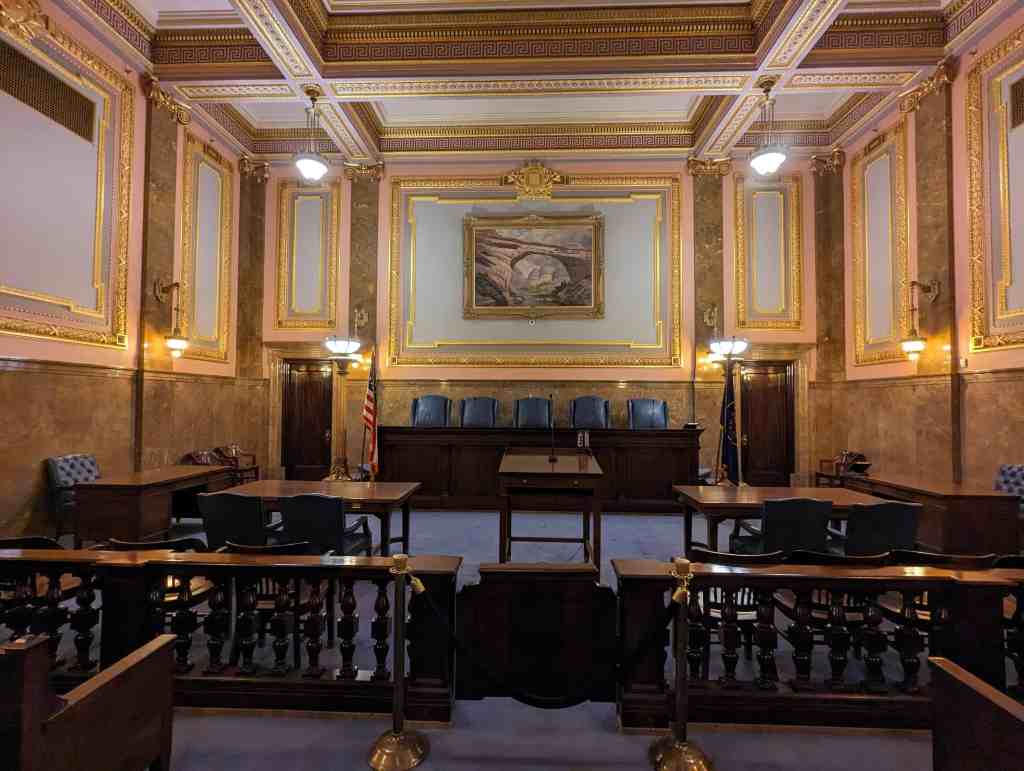
The Utah State Capitol is the house of government for the U.S. state of Utah. The building houses the chambers and offices of the Utah State Legislature, the offices of the Governor, Lieutenant Governor, Attorney General, the State Auditor and their staffs. The capitol is the main building of the Utah State Capitol Complex, which is located on Capitol Hill, overlooking downtown Salt Lake City.
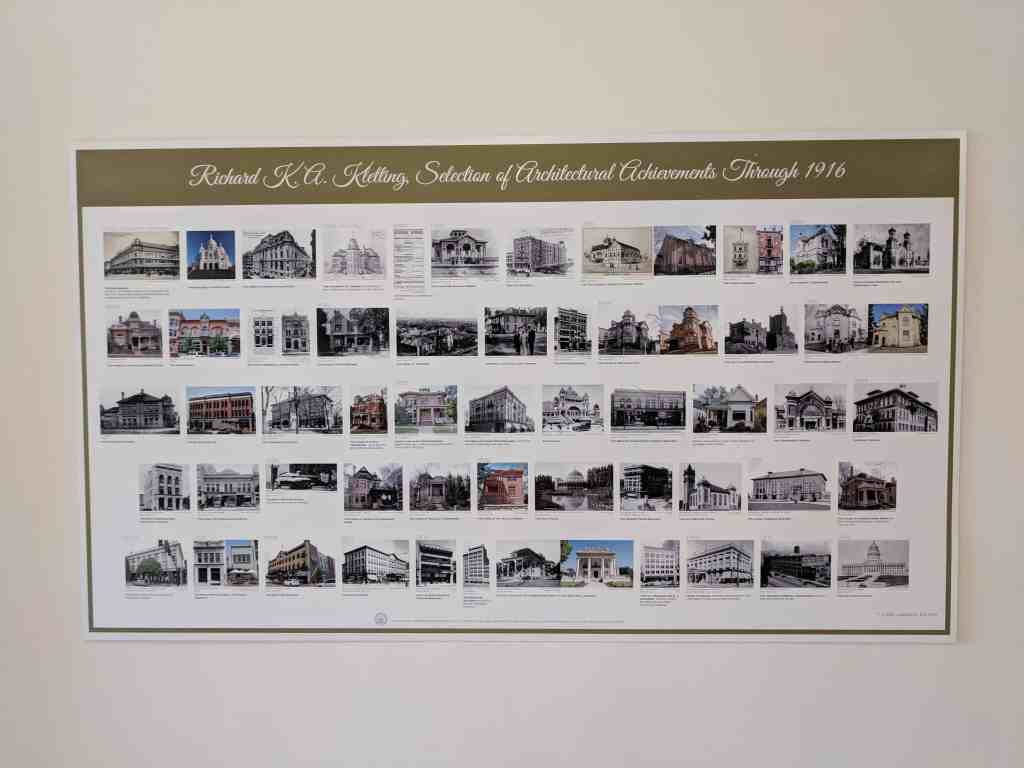
The Neoclassical revival, Corinthian style building was designed by architect Richard K.A. Kletting, and built between 1912 and 1916. The building was added to the National Register of Historic Places in 1978. Beginning in 2004, the capitol underwent a major restoration and renovation project. The project added two new buildings to the complex, while restoring many of the capitol’s public spaces to their original appearance. One of the largest projects during the renovation was the addition of a base isolation system which will allow the building to survive as much as a 7.3 magnitude earthquake. After completion of the renovations, the building was rededicated and resumed normal operation in January 2008.
I was out looking for an old benchmark with this description:
DESCRIBED BY NATIONAL GEODETIC SURVEY 1934 IN PROVO. ABOUT 200 FEET NORTH OF THE DENVER AND RIO GRANDE WESTERN RAILROAD FREIGHT STATION AT PROVO, UTAH COUNTY, AT THE SOUTHWEST CORNER OF THE Z.C.M.I. BUILDING, IN A BRICK WALL, AND ABOUT 4 FEET ABOVE THE GROUND. A UNITED STATES GEOLOGICAL SURVEY STANDARD DISK, STAMPED 4520 1910 12.
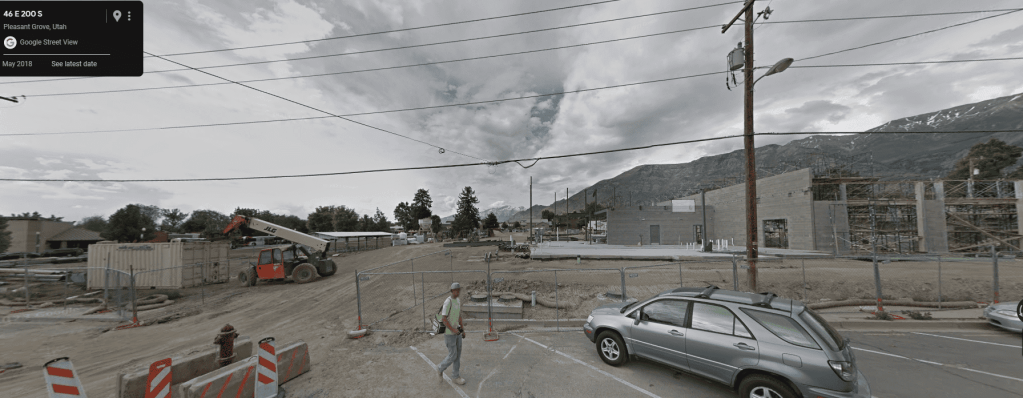
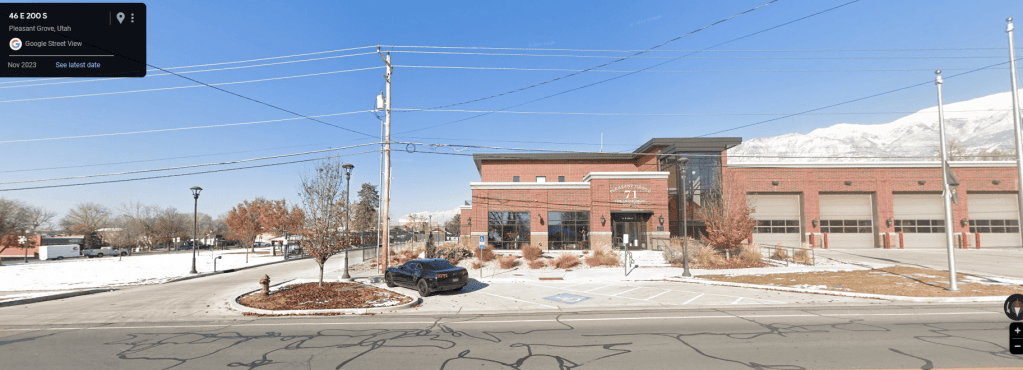
Turns out that building was taken down in 1967 but I found some old photos.
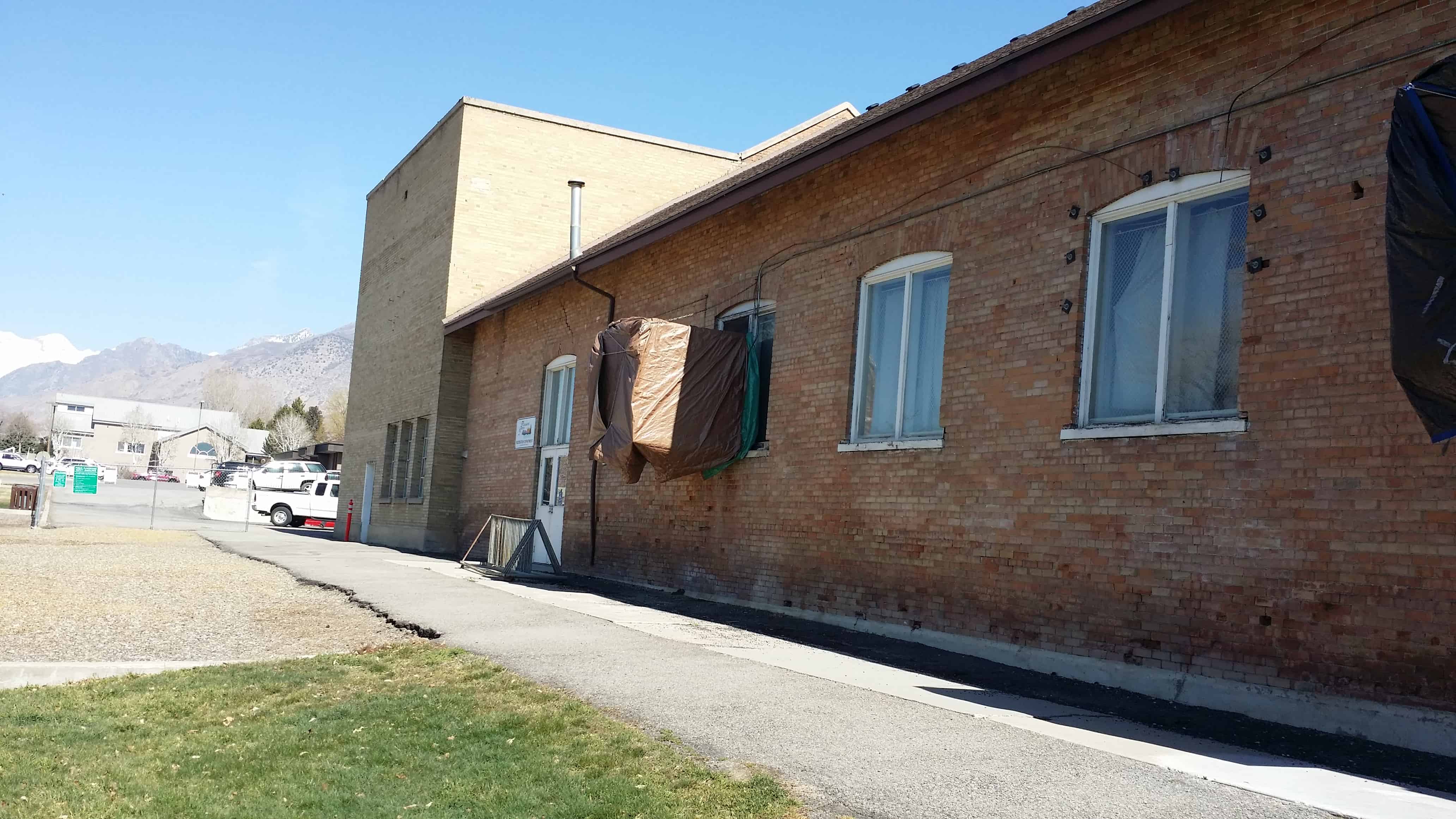
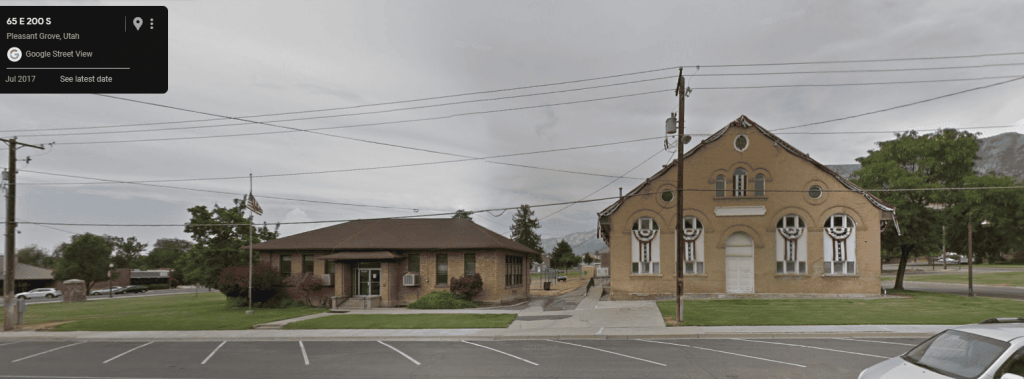
Joseph Clark built this dance hall during 1908-9 with a spring floor. Alpine School District purchased the building in 1920, building onto the back and remodeling the inside front for a high school gymnasium, Pleasant Grove City purchased the building in 1965 for the recreation department.
An anonymous comment sheds a little more light, ” Jacob, the old high school and gymnasium in PG, which I attended, was still owned and operated by Alpine School District as late as 1975 as I remember. My last year in that school was 1973 and I know of two other classes younger than myself also went there. It would be nice to see some accurate dates if you could and update your information. Once again this is only my recollection of the time period.“
201720182019
Built in 1909, this one and one-half story brick masonry building has the classical characteristics of arched pediments displayed in Beaux Arts Classicism. During the first decade of the century this decorative styling was used on public and commercial buildings with spacious interiors. In 1921, dressing rooms were added to the front interior of the building and a smaller addition was built to the rear of the building some time later.*