This building, designed by architect Richard C. Watkins, served as the Eureka L.D.S. Ward Meetinghouse from its construction in 1902 until 1976. It was dedicated in 1903 by Apostle Reed Smoot. The Gothic Revival Style building has been an important part of the religious history of the Tintic Mining Area. The structure, including windows and the tower which had been changed, was restored by the Ferrel Thomas family in 1988.
Constructed in 1891 with funds secured from local Methodists and the Mission Conference of 1890, this building is important in documenting the religious life of Eureka and Tintic. Methodism began in Tintic when Dr. Thomas C. Iliff visited and preached on June 18, 1890. Reverend W. A. Hunt was appointed first pastor and succeeded by Dr. J. D. Gillilan who finished the church structure. The Gothic style tower houses the original Bell.
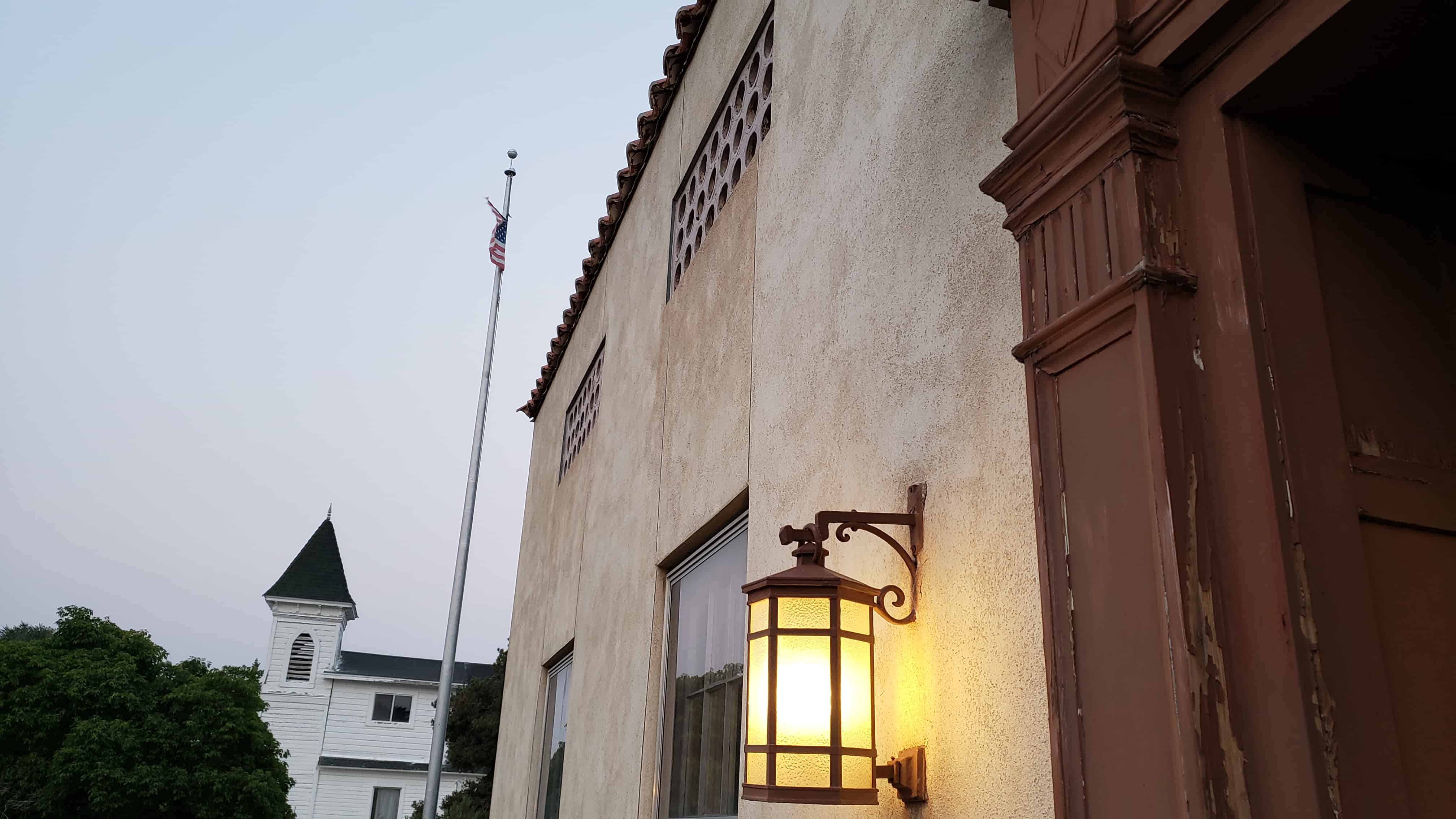
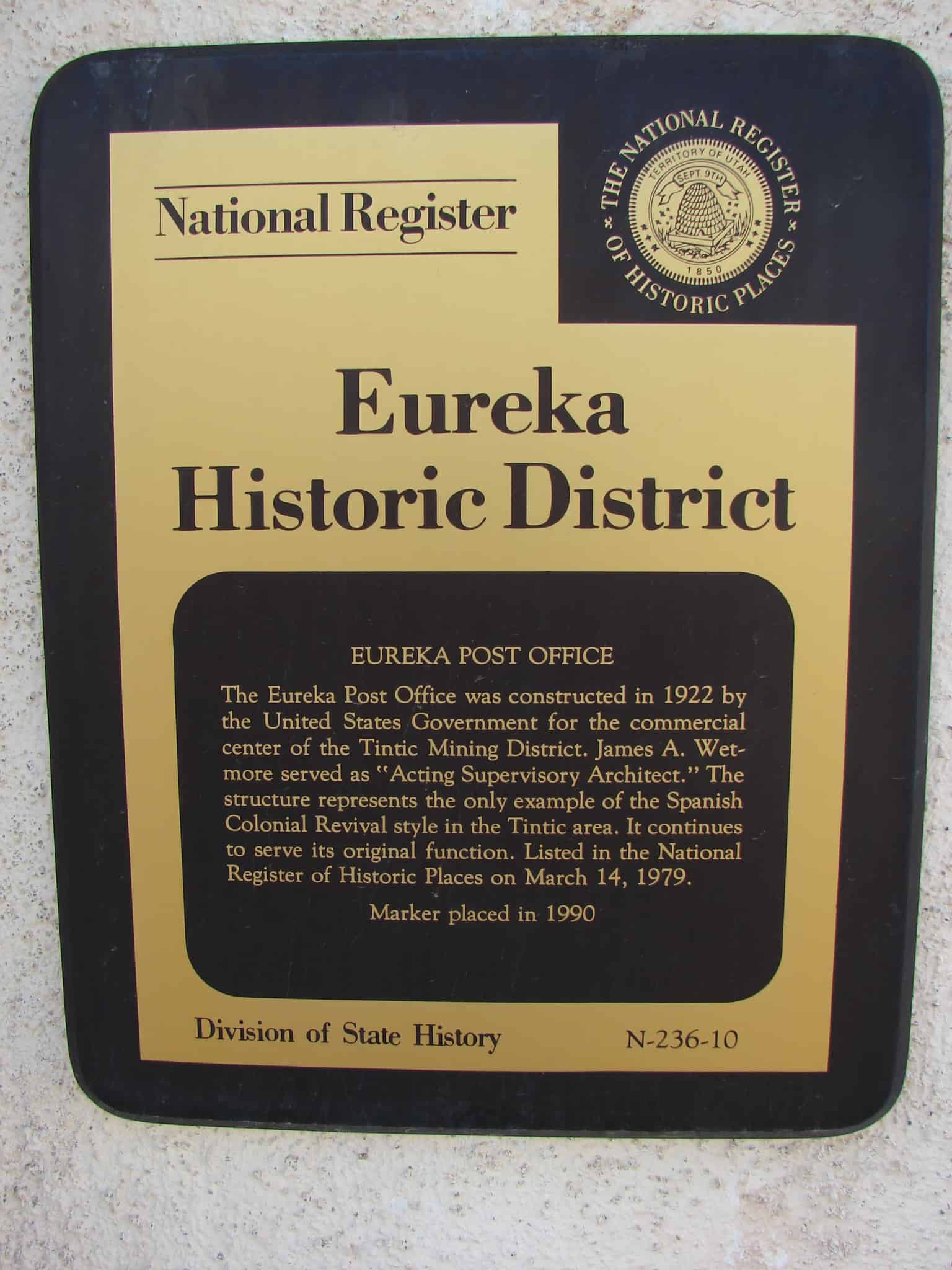
The Eureka Post Office was constructed in 1922 by the United States Government for the commercial center of the Tintic Mining District. James A. Wetmore served as “Acting Supervisory Architect.” The structure represents the only example of the Spanish Colonial Revival style in the Tintic area. It continues to serve its original function. Listed in the National Register of Historic Places on March 14, 1979.
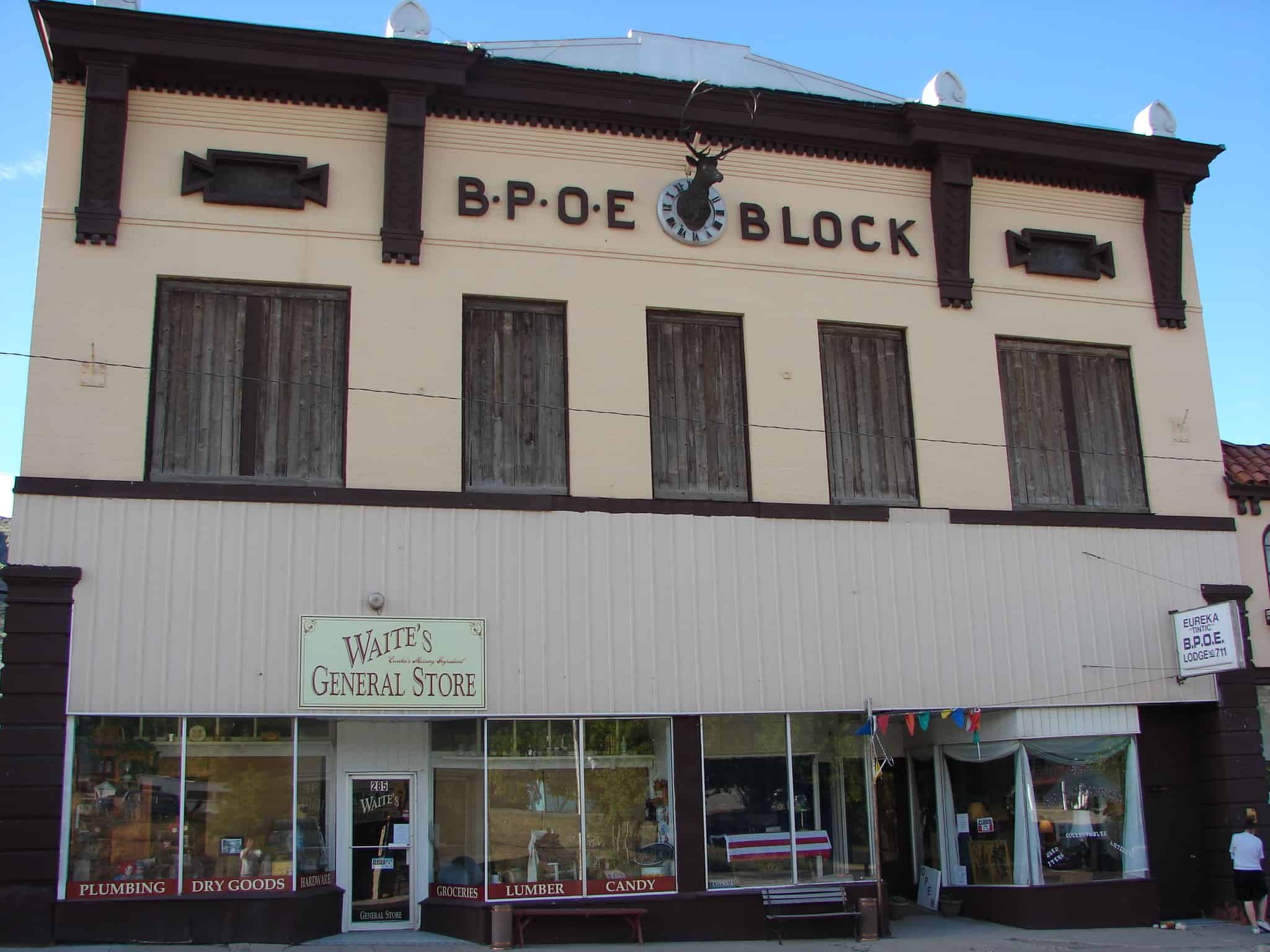
Constructed in 1909-1910 by the Benevolent and Protective Order of the Elks, Tintic Lodge #711 was designed by architects Richard C. Watkins and John F. Birch and built by contractor Martin E. Anderson, a Logan contractor. Cost of the building was $30,000. The meeting hall for the Elks Lodge was on the upper floor, with rooms rented to doctors, lawyers, etc., and the lower floor was rented, initially to the Hefferman-Thompson (general merchandise) Company. Later, it was occupied by Norman and Jensen and J.C. Penneys. The small structure on the west was added sometime between 1910-1923, and in 1929 the second story, five rooms for office suites, was built. At that time the lower floor of the small building was occupied by the Eureka Mercantile Commission Company. The Elks “Tintic Lodge” was organized June 20, 1901.
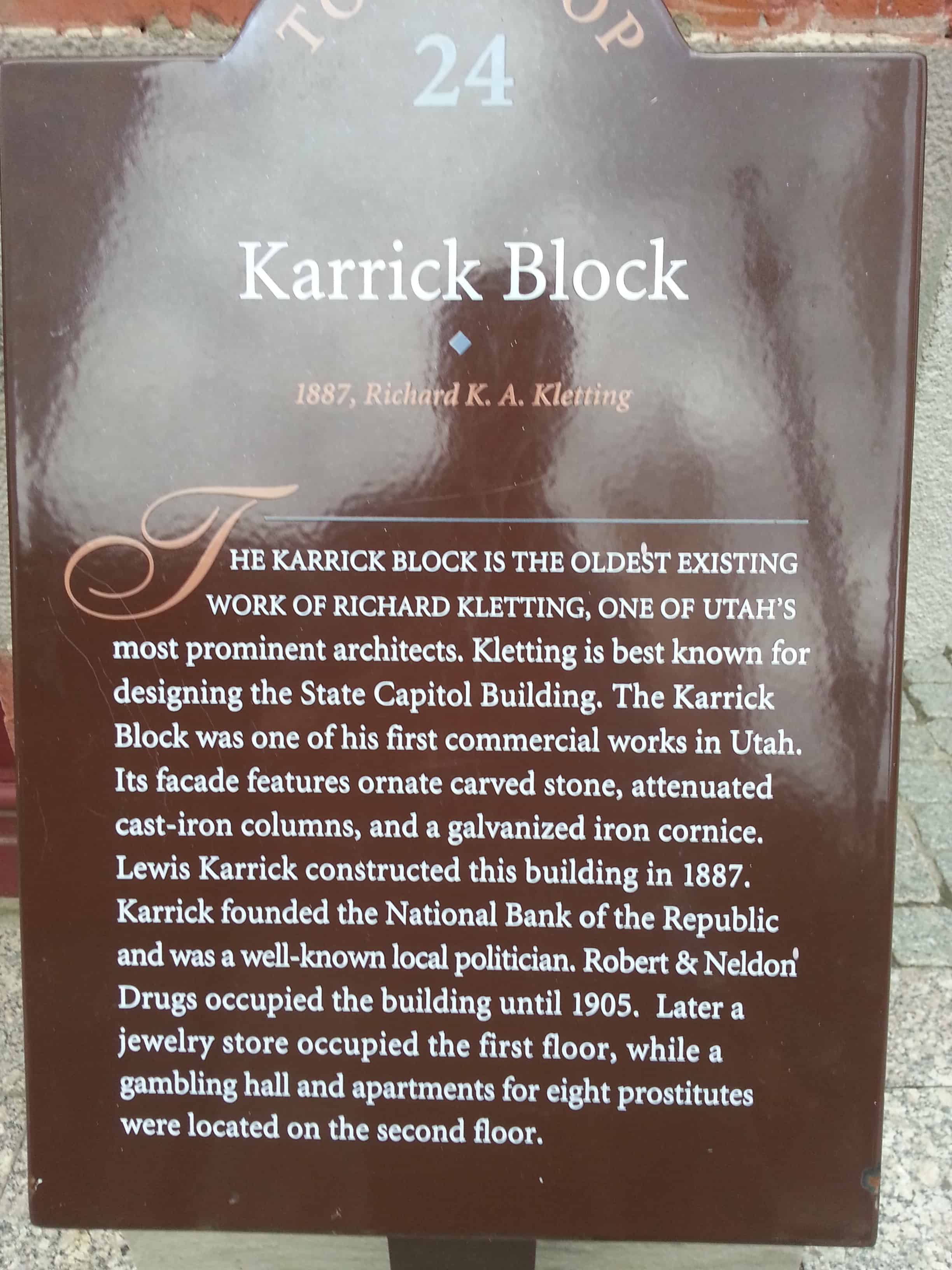
The Karrick Block is the oldest existing work of Richard Kletting, one of Utah’s most prominent architects. Kletting is best known for designing the State Capitol Building. The Karrick Block was one of his first commercial works in Utah. Its façade features ornate carved stone, attenuated cast-iron columns, and a galvanized iron cornice. Lewis Karrick constructed this building in 1887. Karrick founded the National Bank of the Republic and was a well-known local politician. Robert & Neldon Drugs occupied the building until 1905. Later a jewelry store occupied the first floor, while a gambling hall and apartments for eight prostitutes were located on the second floor.
Devereaux House:
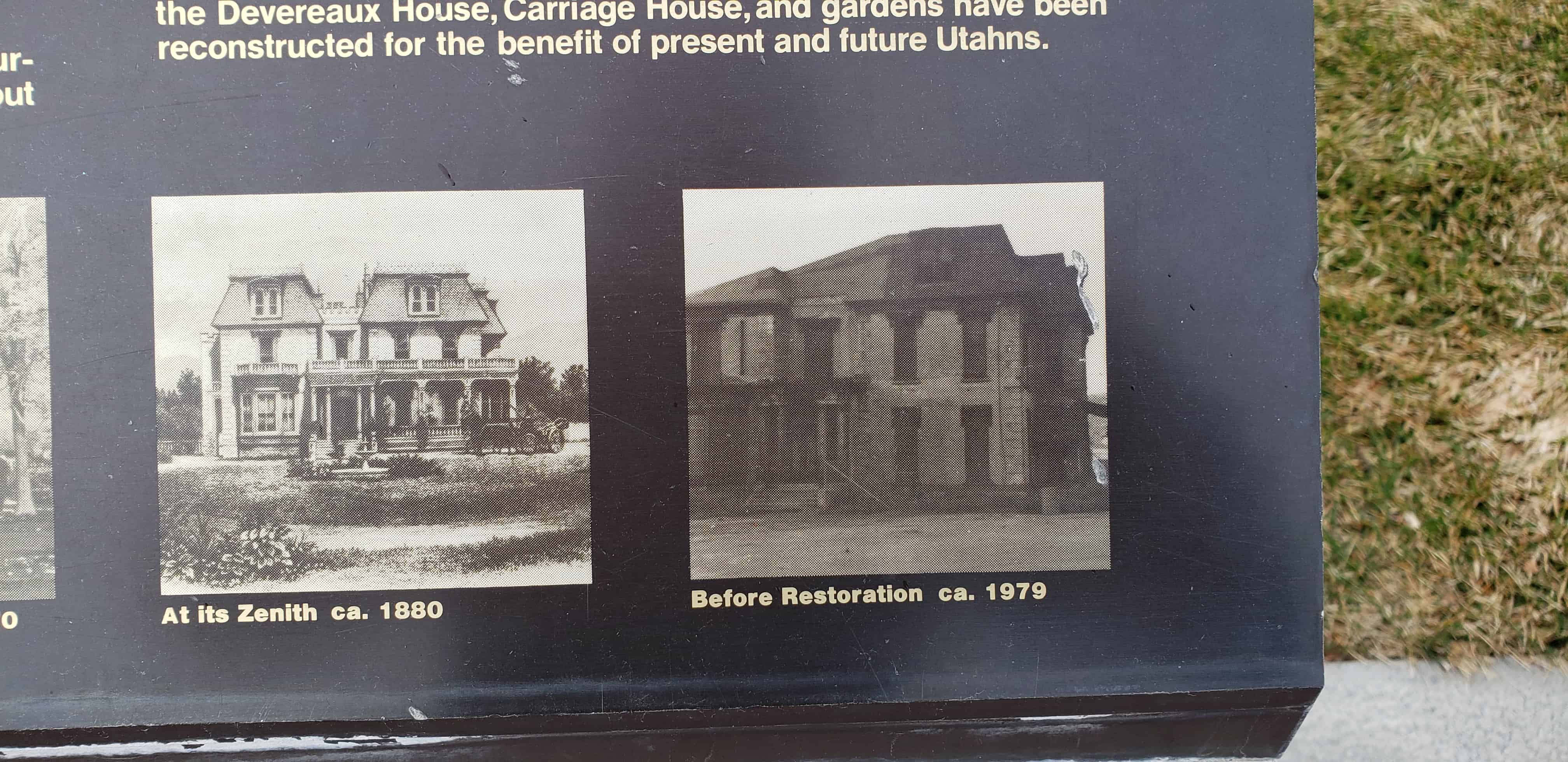
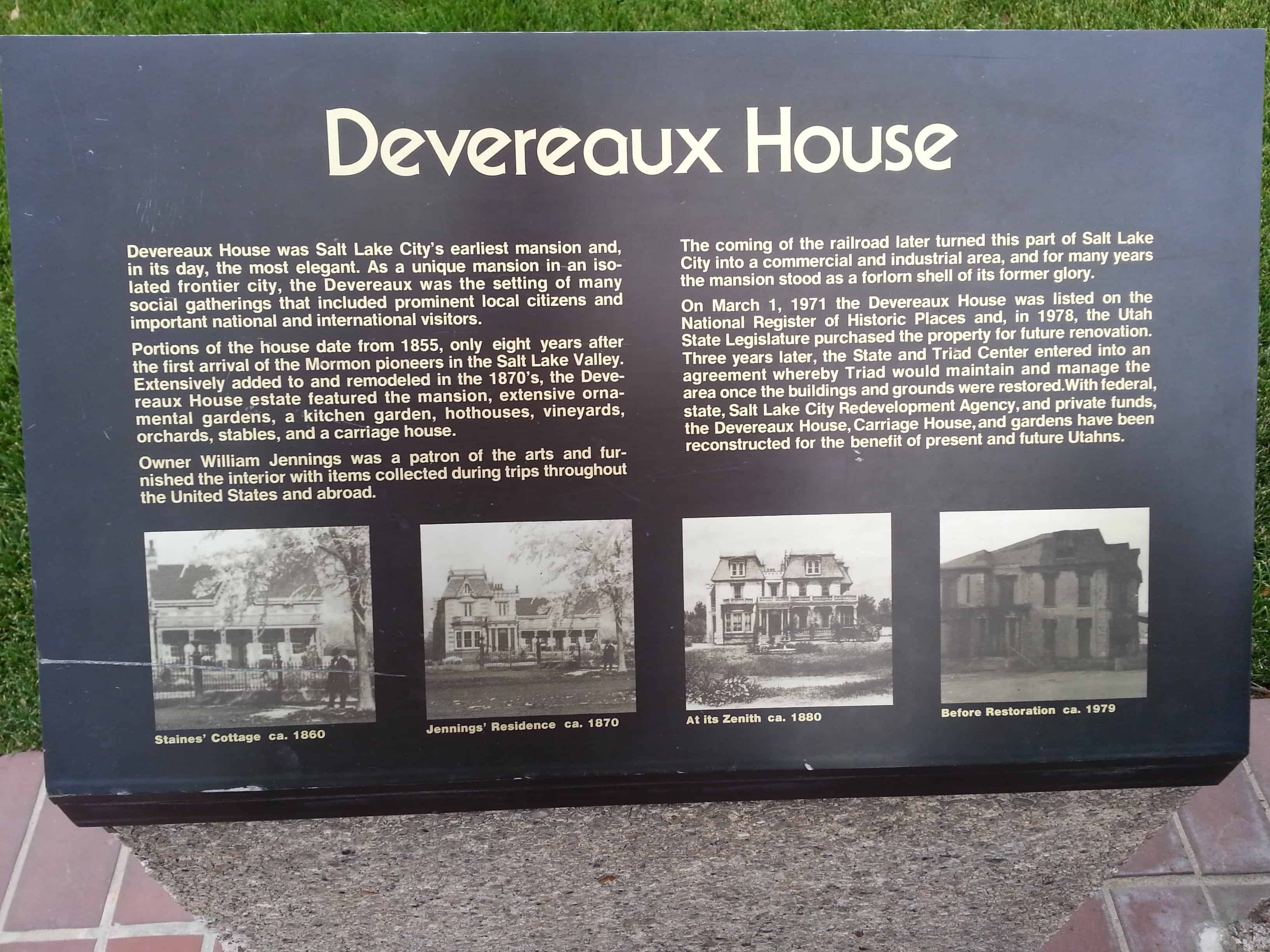
Devereaux House was Salt Lake City’s earliest mansion and, in its day, the most elegant. As a unique mansion in an isolated frontier city, the Devereaux was the setting of many social gatherings that included prominent local citizens and important national and international visitors.
Portions of the house date from 1855, only eight years after the first arrival of the Mormon pioneers in Salt Lake Valley. Extensively added to and remodeled in the 1870’s, the Devereaux House estate featured the mansion, extensive ornamental gardens, a kitchen garden, hothouses, vineyards, orchards, stables, and a carriage house.
Owner Willian Jennings was a patron of the arts and furnished the interior with items collected during trips throughout the United States and abroad.
The coming of the railroad later turned this part of Salt Lake City into a commercial and industrial area, and for many years the mansion stood as a forlorn shell of its former glory.
On March 1, 1971 the Devereaux House was listed on the National Register of Historic Places and, in 1978, the Utah State Legislature purchased the property for future renovation. Three years later, the State and Triad Center entered into an agreement whereby Triad would maintain and manage the area once the buildings and grounds were restored. With federal, state, Salt Lake City Redevelopment Agency, and private funds, the Devereaux House, Carriage House, and gardens have been reconstructed for the benefit of present and future Utahns.
William Staines and William Jennings:
Two men figure most prominently in the history of Devereaux House.
William Staines was the original occupant of this property. Staines was an English-born horticulturist whose dedication to his “mission to beautify Zion” helped establish the rich landscape tradition which has since characterized Salt Lake City.
A convert to the Mormon faith, Staines, arrived in Salt Lake City in 1847. He acquired the property in 1855 and developed a cottage-style home in the midst of extensive English gardens. He later served as superintendent of Brigham Young’s gardens.
William Jennings purchased the property in 1867 and developed the present Devereaux House, incorporating Staines’ original cottage in the expanded structure.
Jennings was also an English convert to the Mormon church. Arriving in Salt Lake City in 1852, he entered the mercantile business. Taking advantage of the business opportunities of a rapidly-growing regional center, Jennings branched out into freighting and banking, becoming Utah’s first millionaire. In 1864 he founded the Eagle Emporium, which was later sold to the Mormon church and became the forerunner of the present-day ZCMI department store. In 1882 Jennings was elected Mayor of Salt Lake City, serving one term.
A hospitable and gracious host, Jennings entertained the famous and influential of the day. Devereaux House was the scene of lavish dinners and accommodated such prominent guests as Presidents Ulysses S. Grant and Rutherford B. Hayes, and General William T. Sherman.
The “Devereaux” House lays claim to fame for two primary reasons. First of all, it was the first “mansion” in Salt Lake Valley, having been built by William Staines in 1857. Secondly, it was the center of early social life in Utah. Mr. Staines provided hospitality to such important dignitaries as General Thomas I. Kane who arrived in Salt Lake City in February, 1858, to arbitrate the “Mormon War.” Governor Cumming and his lady arrived in April and were received by Brigham Young at this house, where Cumming also assumed his position as governor of the Territory of Utah.
In 1865 Mr. Staines sold his home to Brigham Young’s oldest son, Joseph A., for $20,000, Young sold the property to William Jennings, a prominent Salt Lake City merchant, for $30,000 two years later. Jennings enlarged the property and changed the name to “Devereaux” in honor of the family estate at Yardley, near Birmingham, England.
William Jennings had two wives, Jane and Pricilla, who moved to the Devereaux House in 1867. When Pricilla died in 1871, Jane acted as mother not only to her own eleven but also to Pricilla’s fourteen; however, it appears only fourteen of the children were living in 1881. Jennings entertained royally in his home, not only the “creme de la creme” of Salt Lake Valley but also distinguished national figures as well. After the Civil War Mr. William Seward, Secretary of State, visited Utah and was a guest at the Devereaux Mansion with Brigham Young. Later General Philip H. Sheridan was sent to Utah to “insure federal authority.” His visit to the Jennings estate had a salutary impact for the Mormons, since Jennings was himself a polygamist.
In early October, 1875, President Ulysses S. Grant arrived in Utah and before leaving he and Mrs. Grant spent a few pleasant hours at Devereaux. Later, General William T. Sherman, accompanying President Rutherford B. Hayes, also spent time at the house. It was not uncommon for as many as 300 guests to be entertained at one time in the lovely home. Finally, other international dignitaries were occasional guests of the Jennings.
For people of early Salt Lake City, the Devereaux Mansion represented quality and affluence at its best. William Jennings became a very successful merchant, freighting goods to Utah and marketing them through his “Eagle Emporium.” After his death January 15, 1886, the home served as a residence for the Jennings family until about 1900, when it was sold to Aaron Keyser and Thomas Weir. Subsequently, it served several roles, including one as a clinic for rehabilitation of alcoholics (the Keely Institute).
During the depression, the J. J. Coan family lived in the mansion. Many of the treasures of the home have disappeared. However, fortunately, an authentic restoration is feasible. At present a committee consisting of representatives of the Junior League of Salt Lake City, the Utah Heritage Foundation, Salt Lake City Historic Buildings Advisory Committee, Women’s Architectural League, the Utah American Institute of Architects, the Board of State History, and the Utah State Historical Society, is developing a program for the complete restoration of this historic structure and its setting.
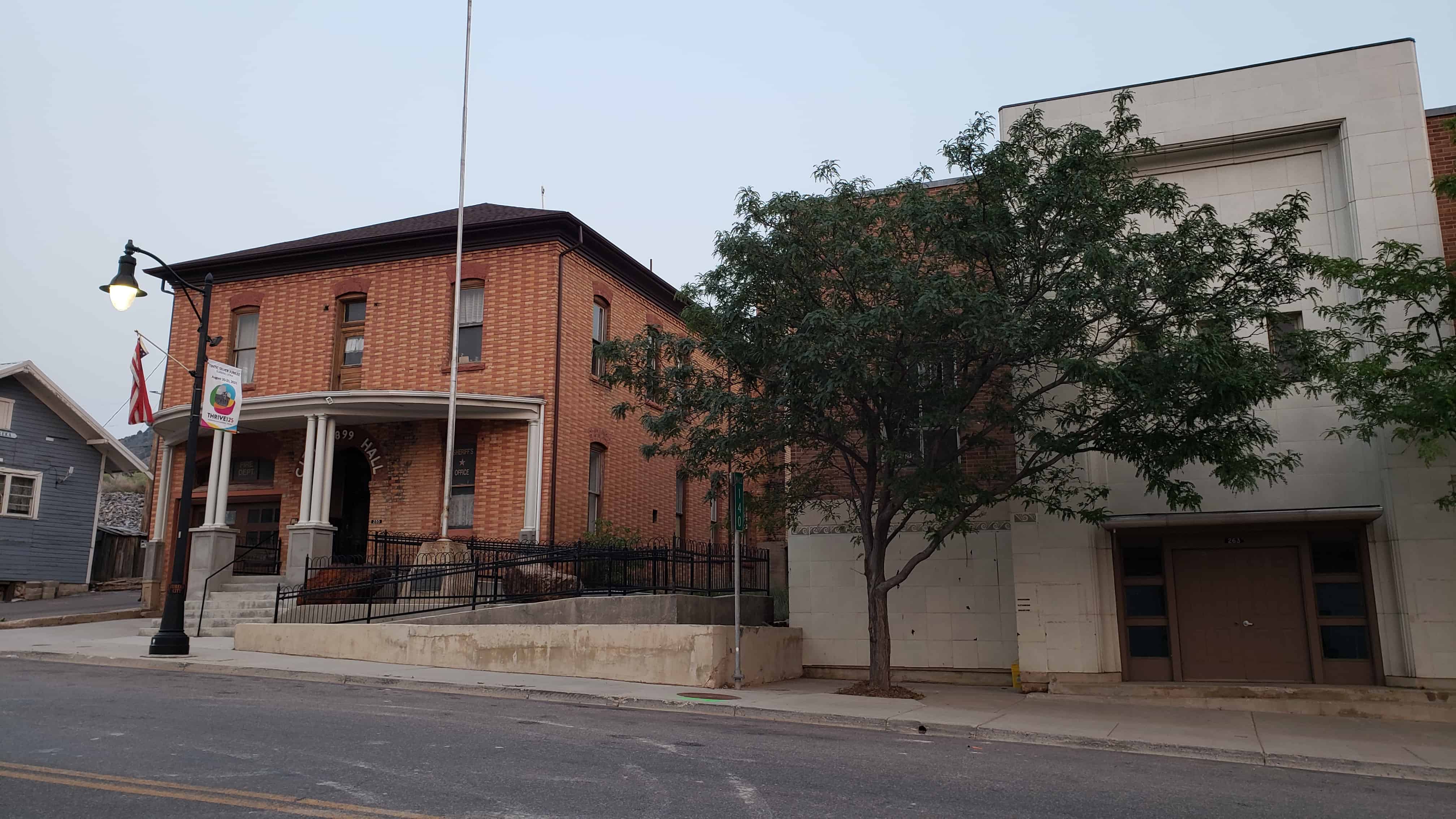
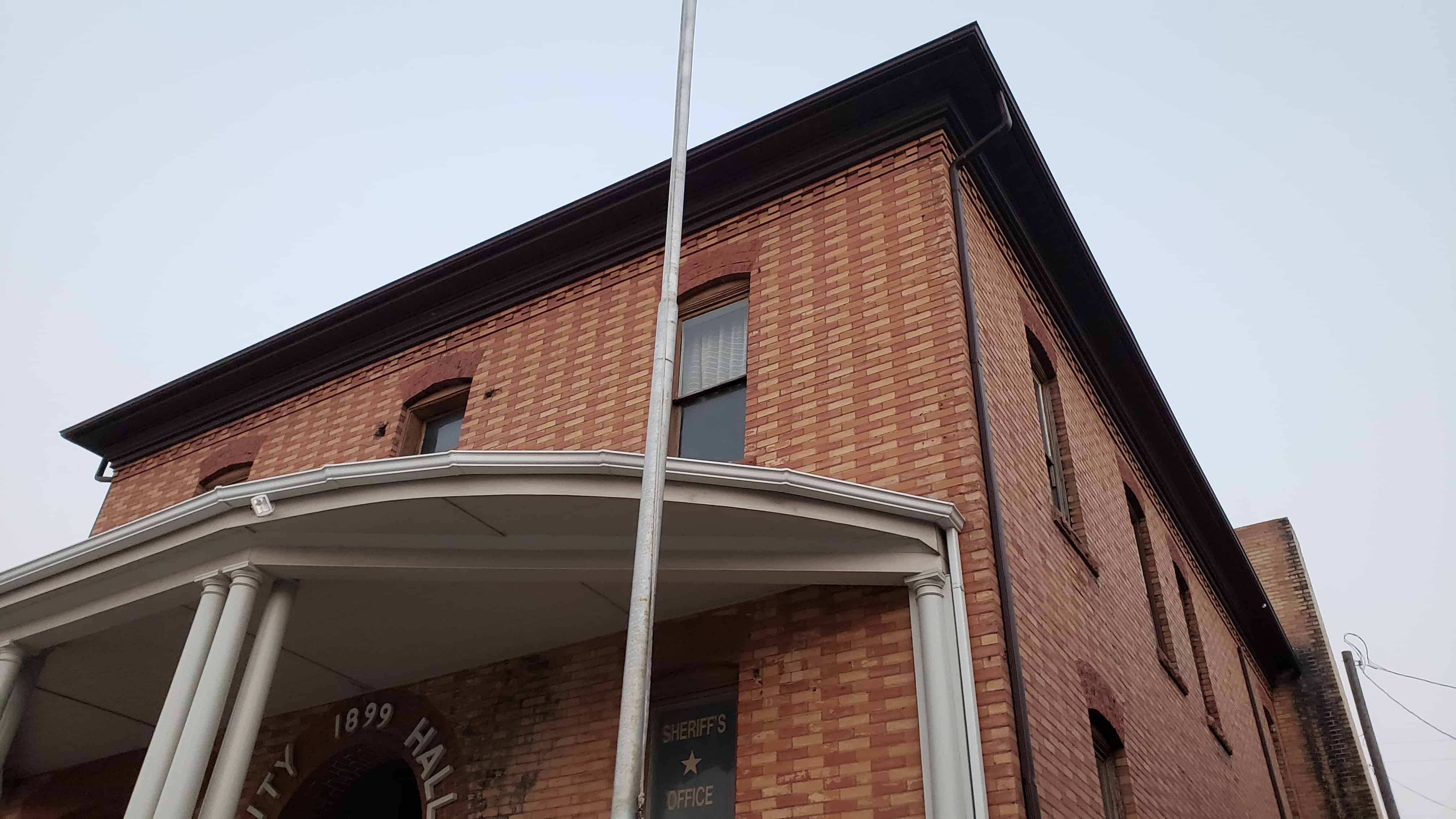
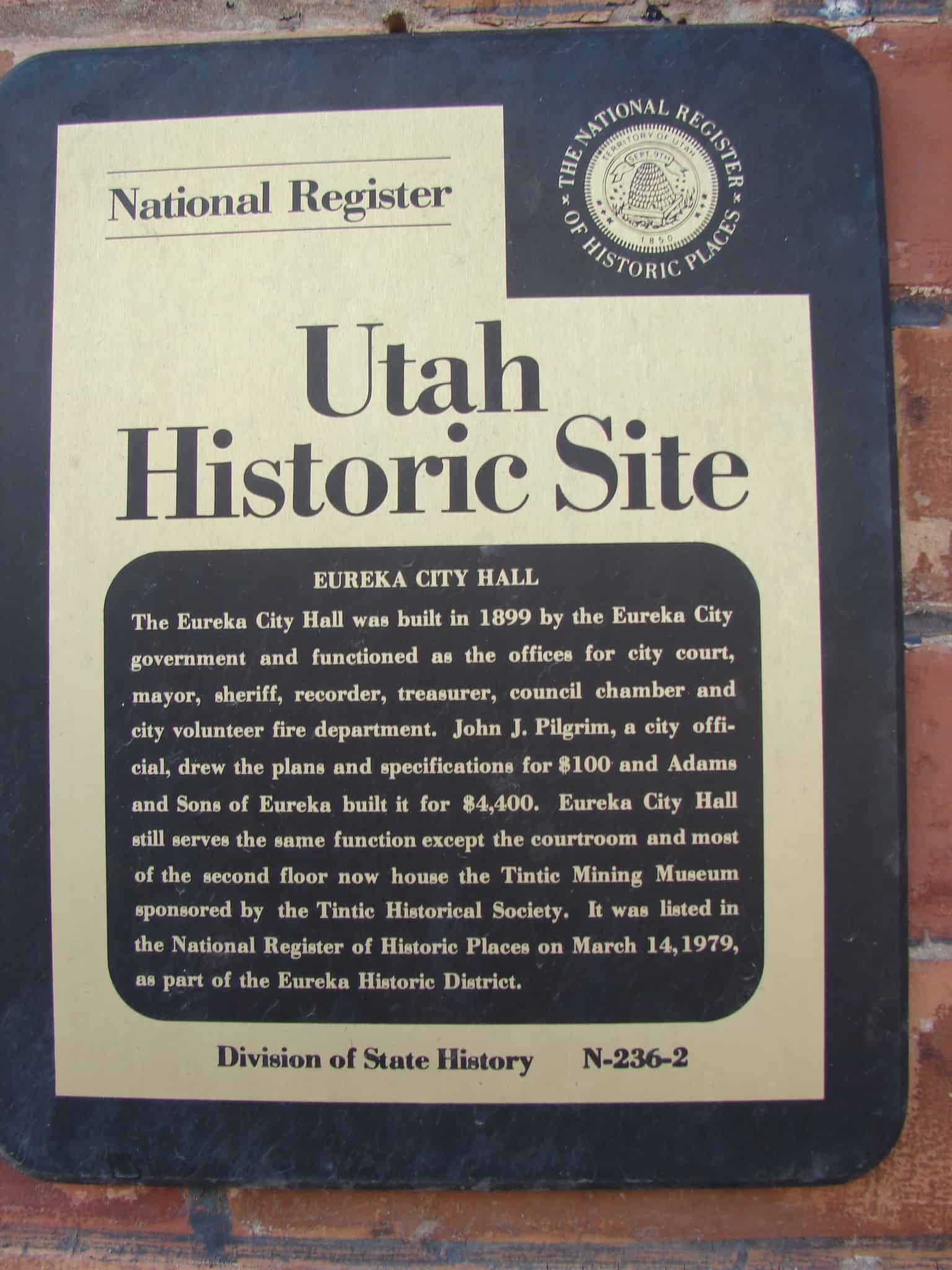
The Eureka City Hall was built in 1899 by the Eureka City government and functioned as the offices for city court, mayor, sheriff, recorder, treasurer, council chamber and city volunteer fire department. John J. Pilgrim, a city official, drew the plans and specifications for $100 and Adams and Sons of Eureka built it for $4,400. Eureka City Hall still serves the same function except the courtroom and most of the second floor now house the Tintic Mining Museum sponsored by the Tintic Historical Society. It was listed in the National Register of Historic Places in March 14, 1979, as part of the Eureka Historic District.
Lindon Ward Chapel 400 North and Main Street in Lindon
The Lindon Ward Chapel, originally built for the Pleasant Grove 2nd Ward of The Church of Jesus Christ of Latter-day Saints, was dedicated by Reed Smoot of the Council of the Twelve Apostles in 1891.
Construction of the chapel was a community effort. The property was donated by Joseph Wm. Ash. Every able-bodied man and boy contributed labor to the construction. Horses hauled clay from the foothills and pulled the mill to make adobes for the walls of the chapel.
In December 1890, construction was far enough along for a dance to be held. Proceeds from the dance were turned over to the building fund. Alfred E. Culmer, architect and project director, passed away before the final completion of the building. His funeral was the first to be held in the chapel.
The main hall contained two potbellied stoves— one in each corner. The benches ran the full width of the chapel with isles on each side. An upper gallery above the front door could be converted into a classroom by closing a set of curtains.
The chapel was torn down in 1941 with plans to build a new one. The iron fence on the north side of the property and several large pine trees remain.
Built circa 1894, this building served as the town post office until 1922, when a new post office building was constructed. In 1926 a merchandising company known as “Everybody’s” occupied the building. It is a good example of the commercial architecture in Eureka and is one of at least three commercial buildings in town that are of similar size, constructed of stone, and have brick facades.



 Eureka Post Office