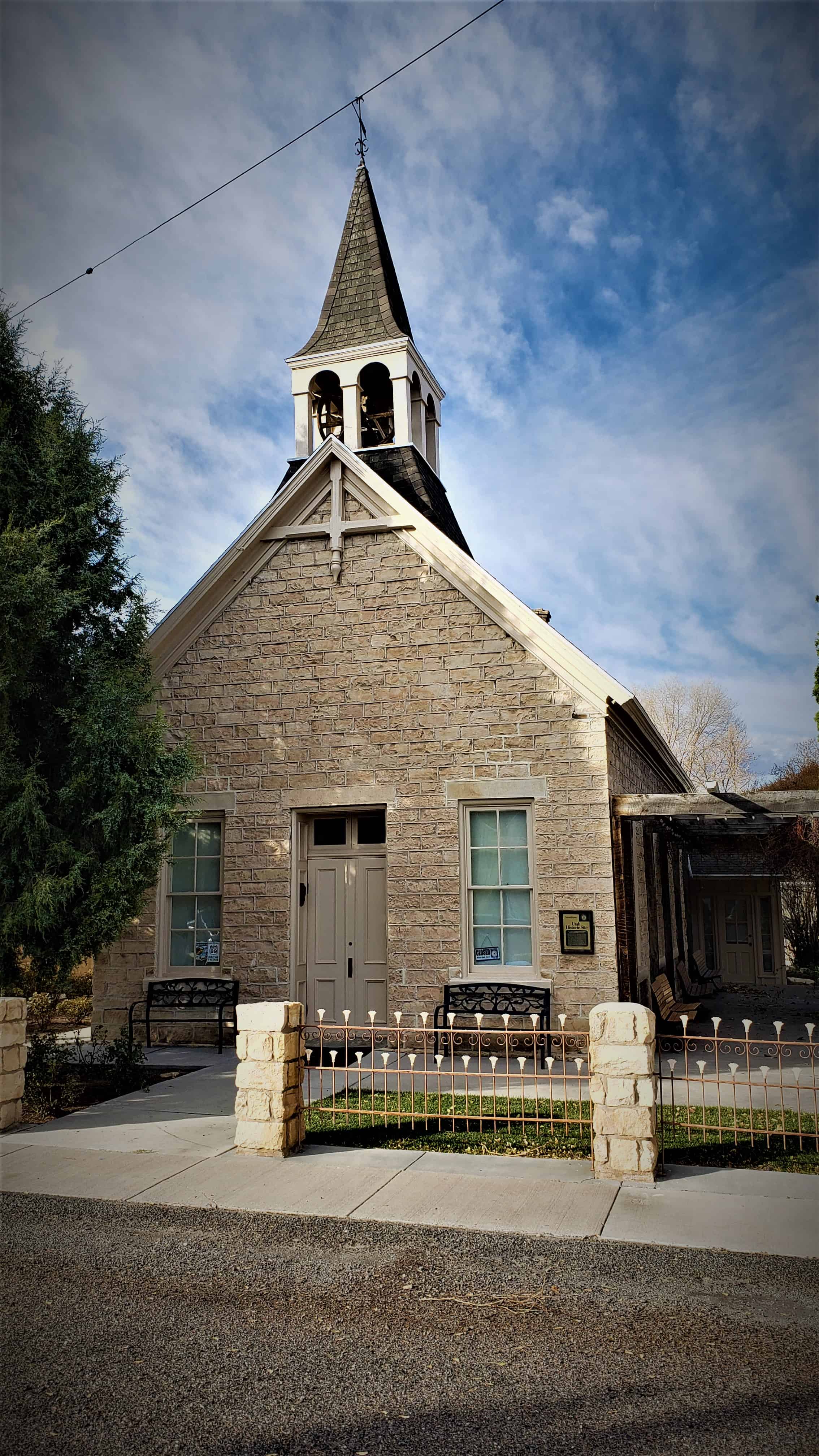
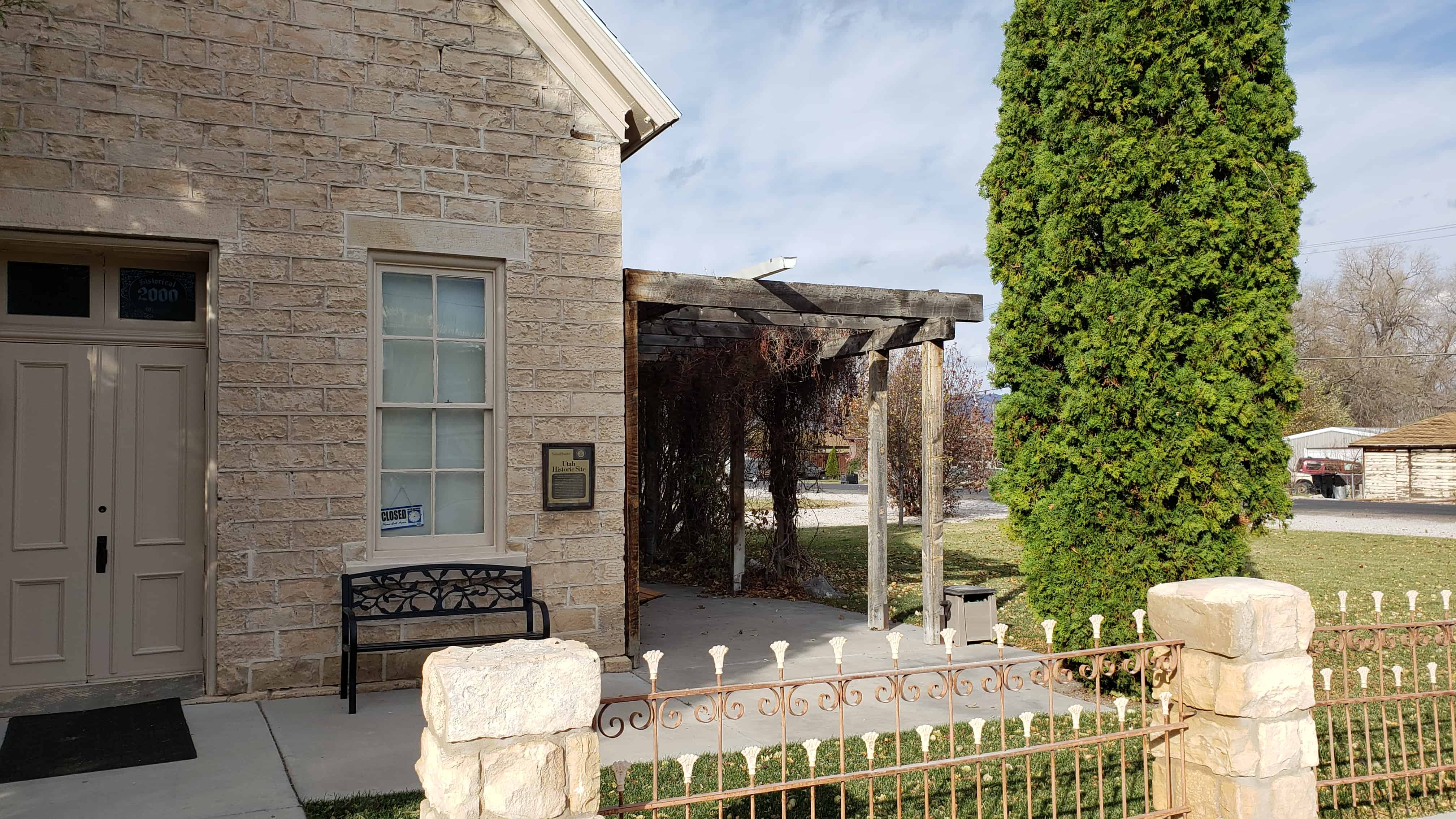
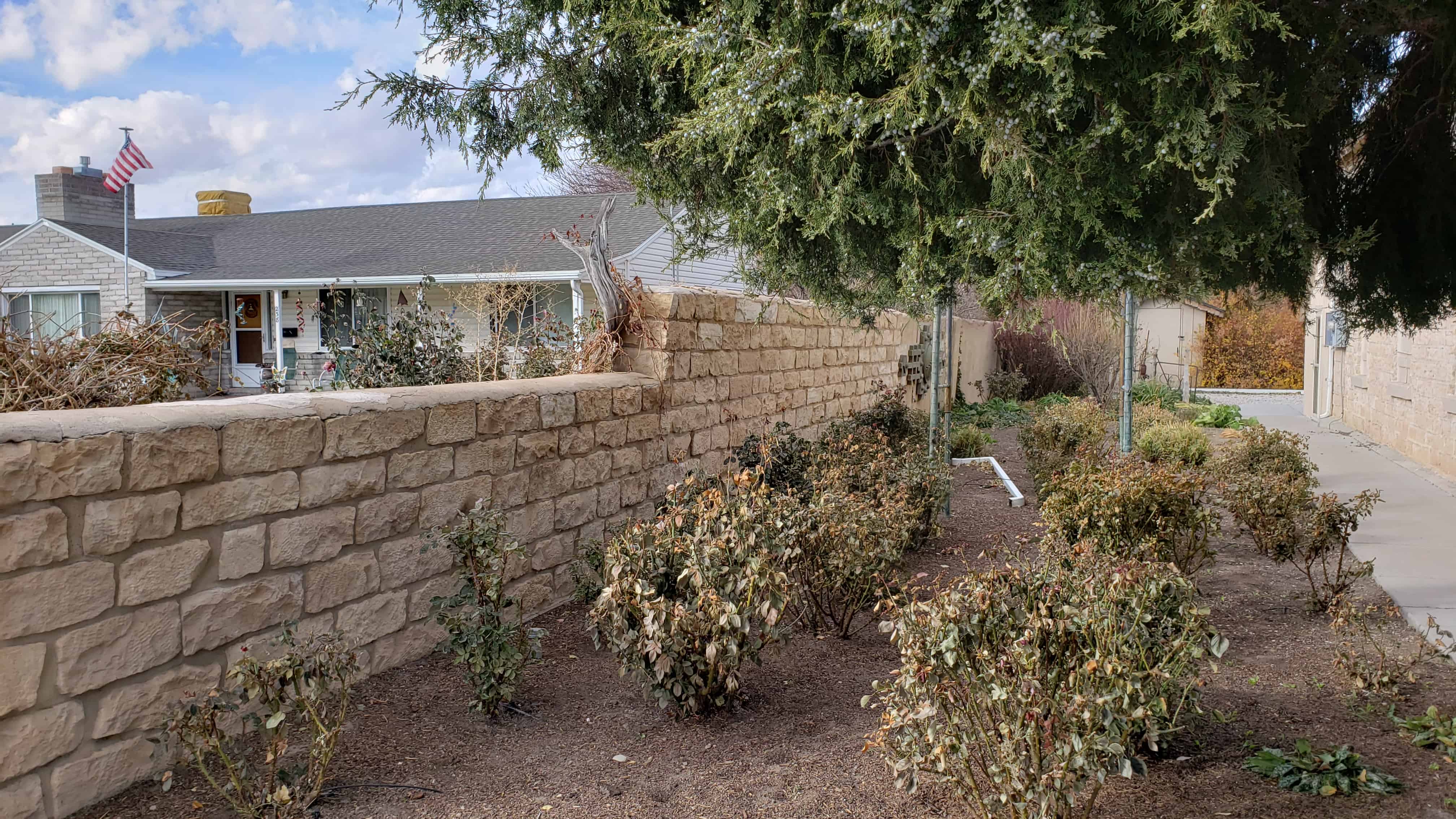
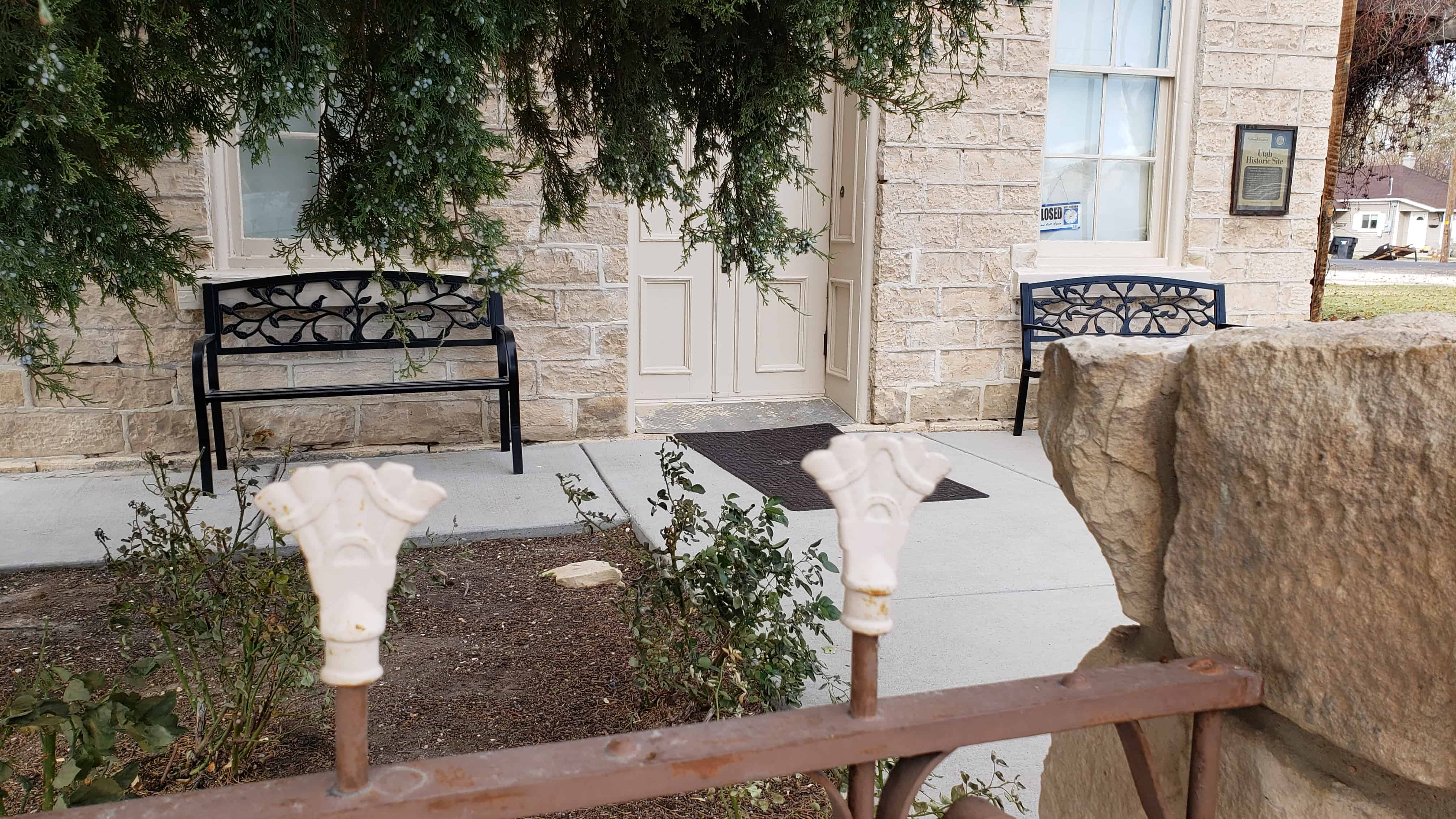
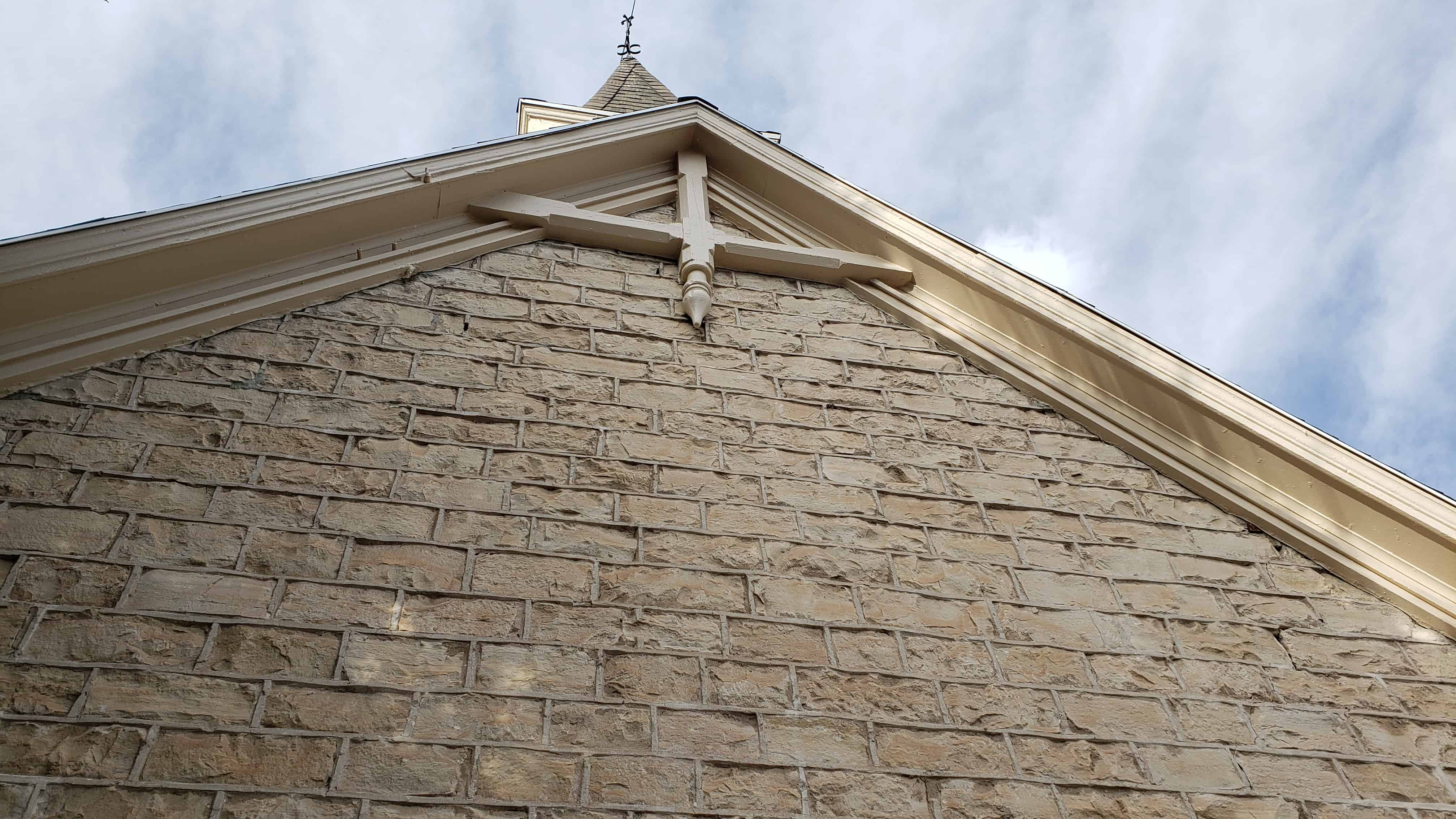
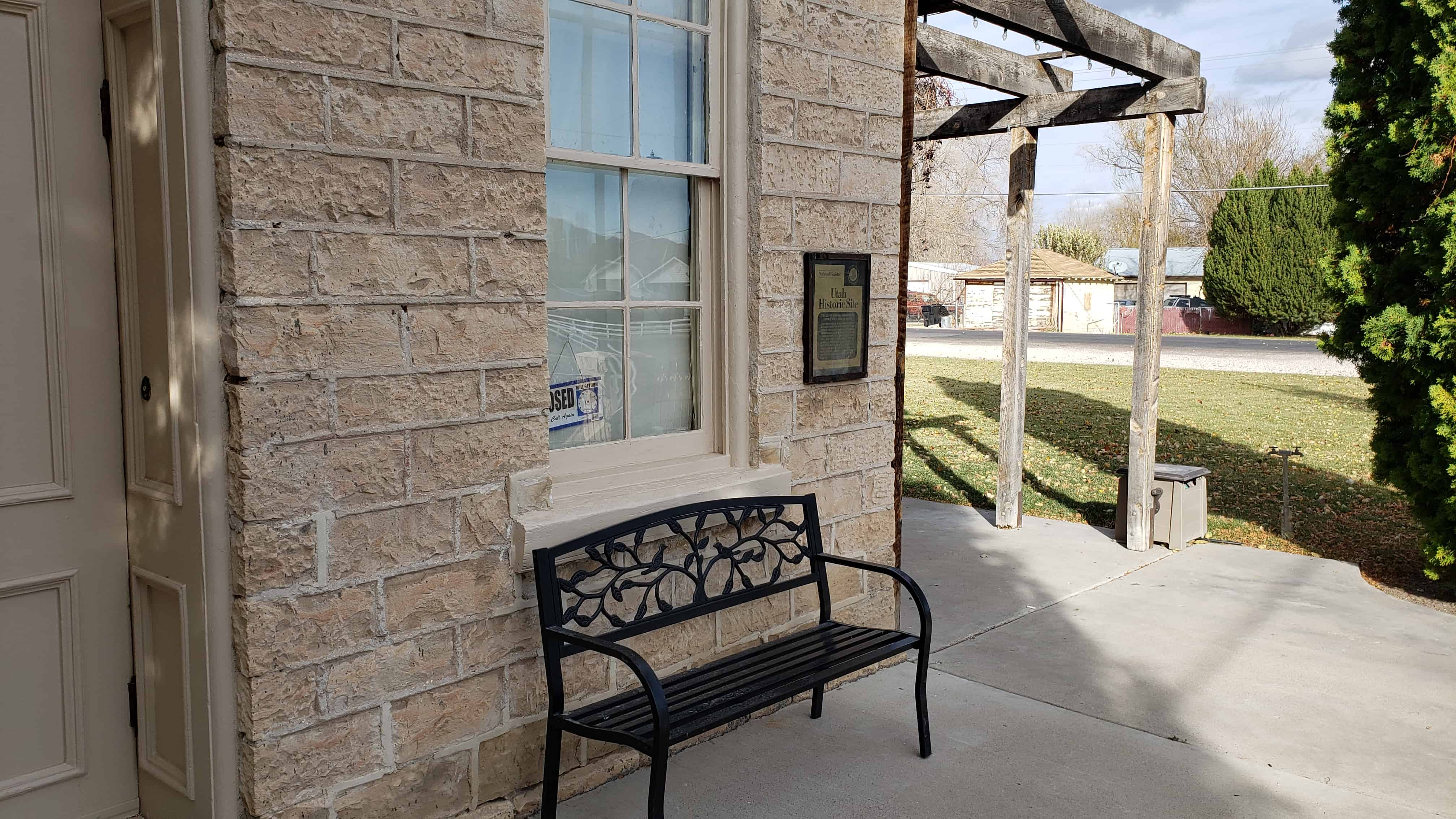
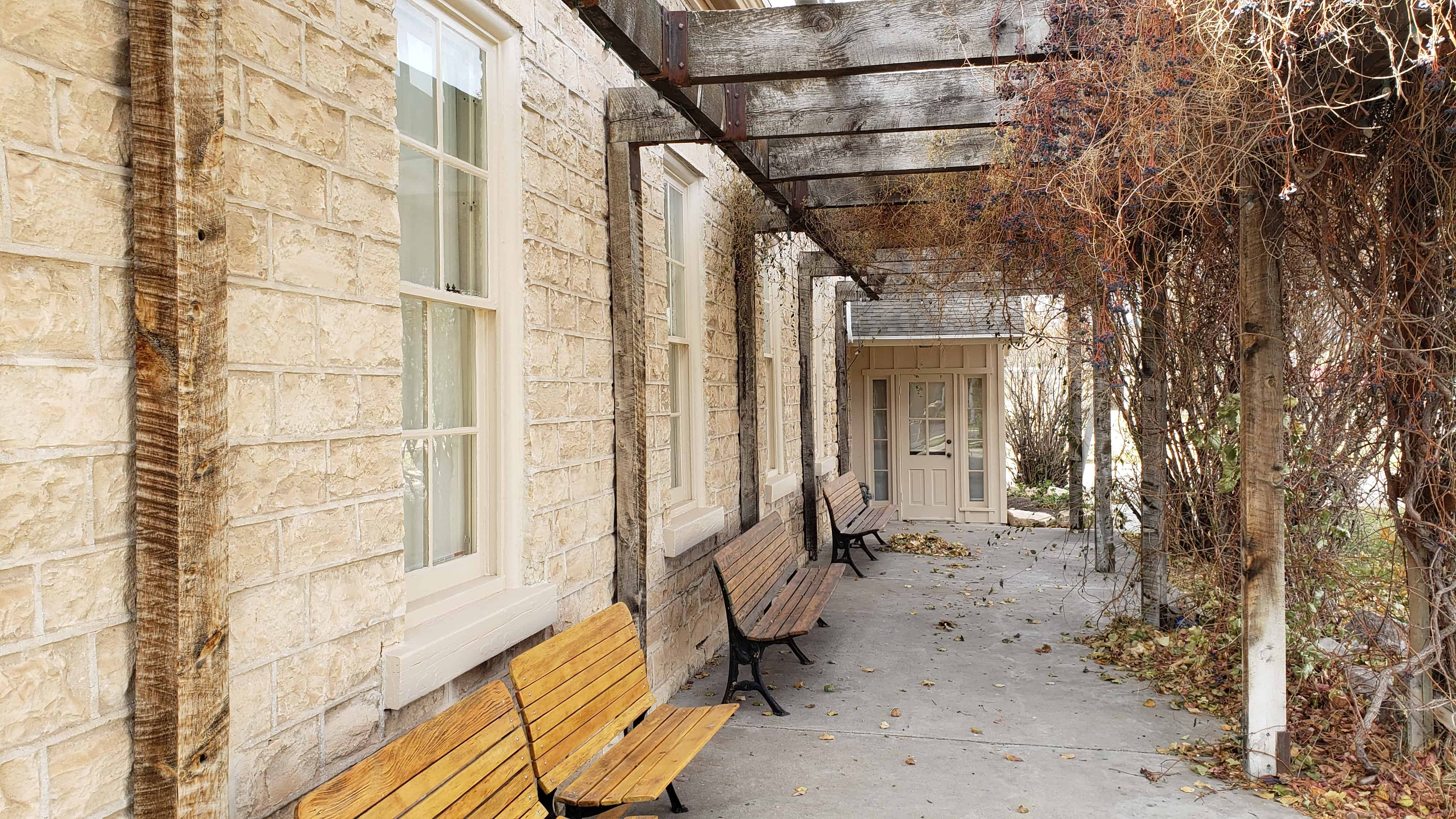
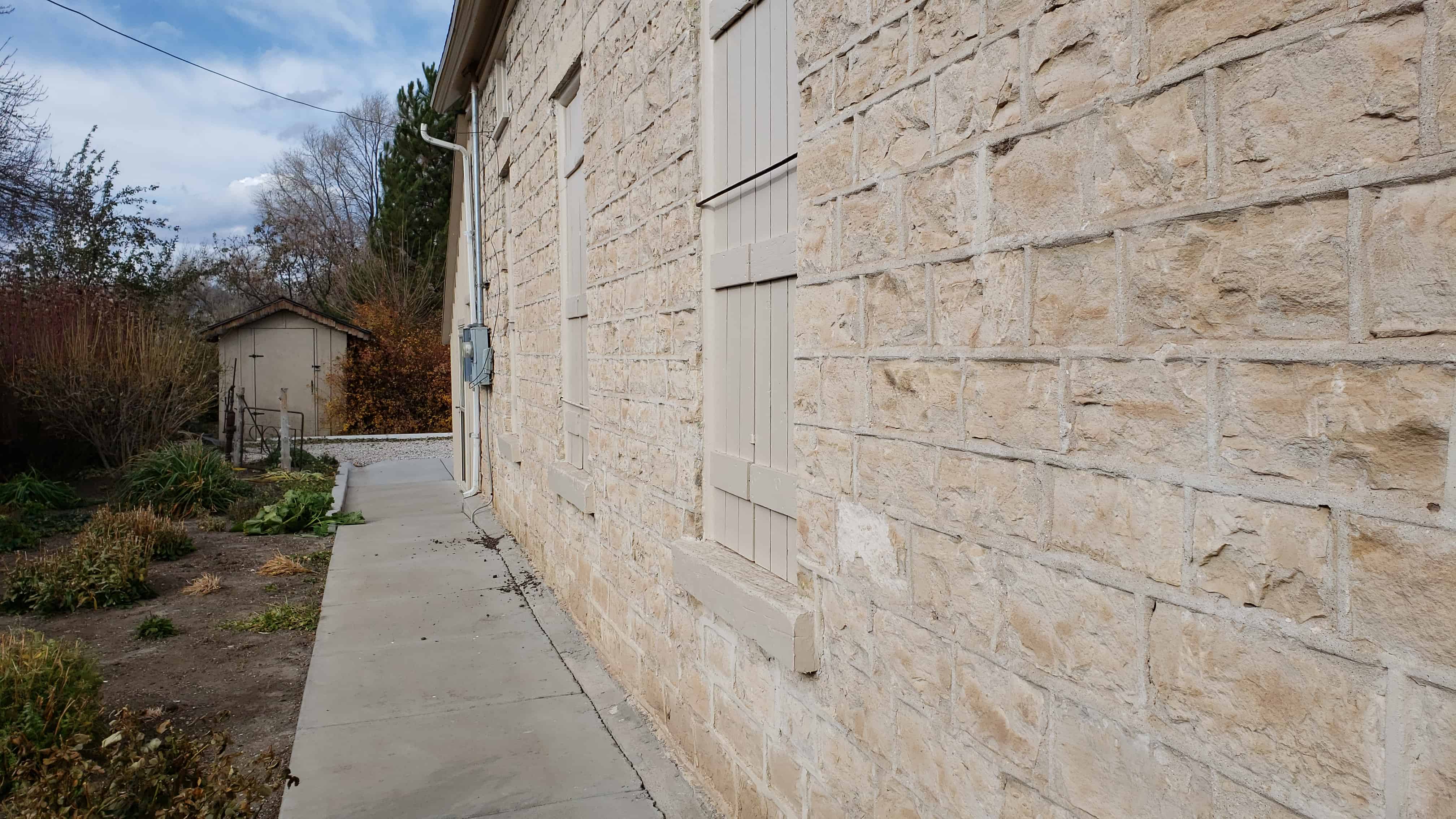
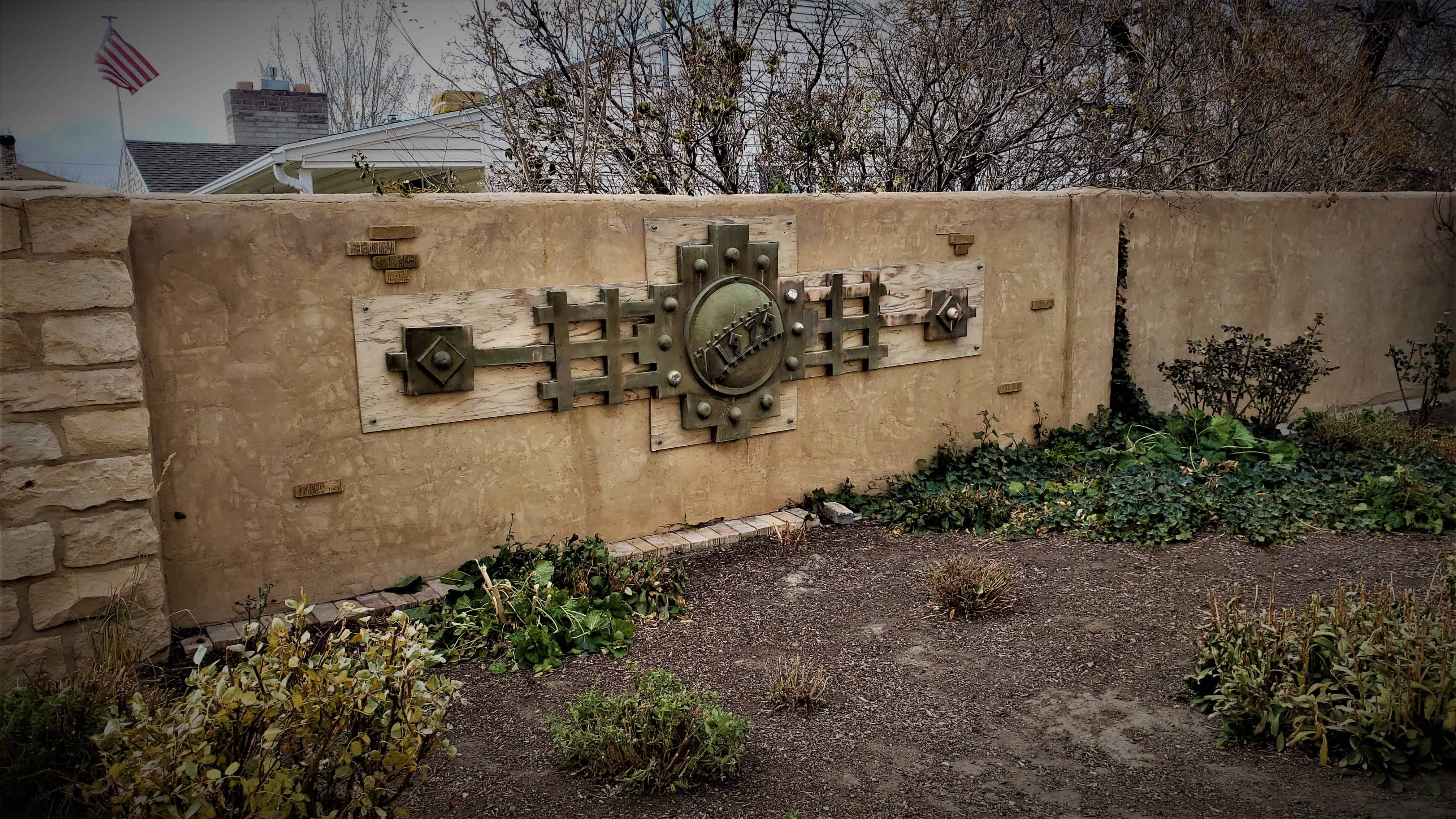
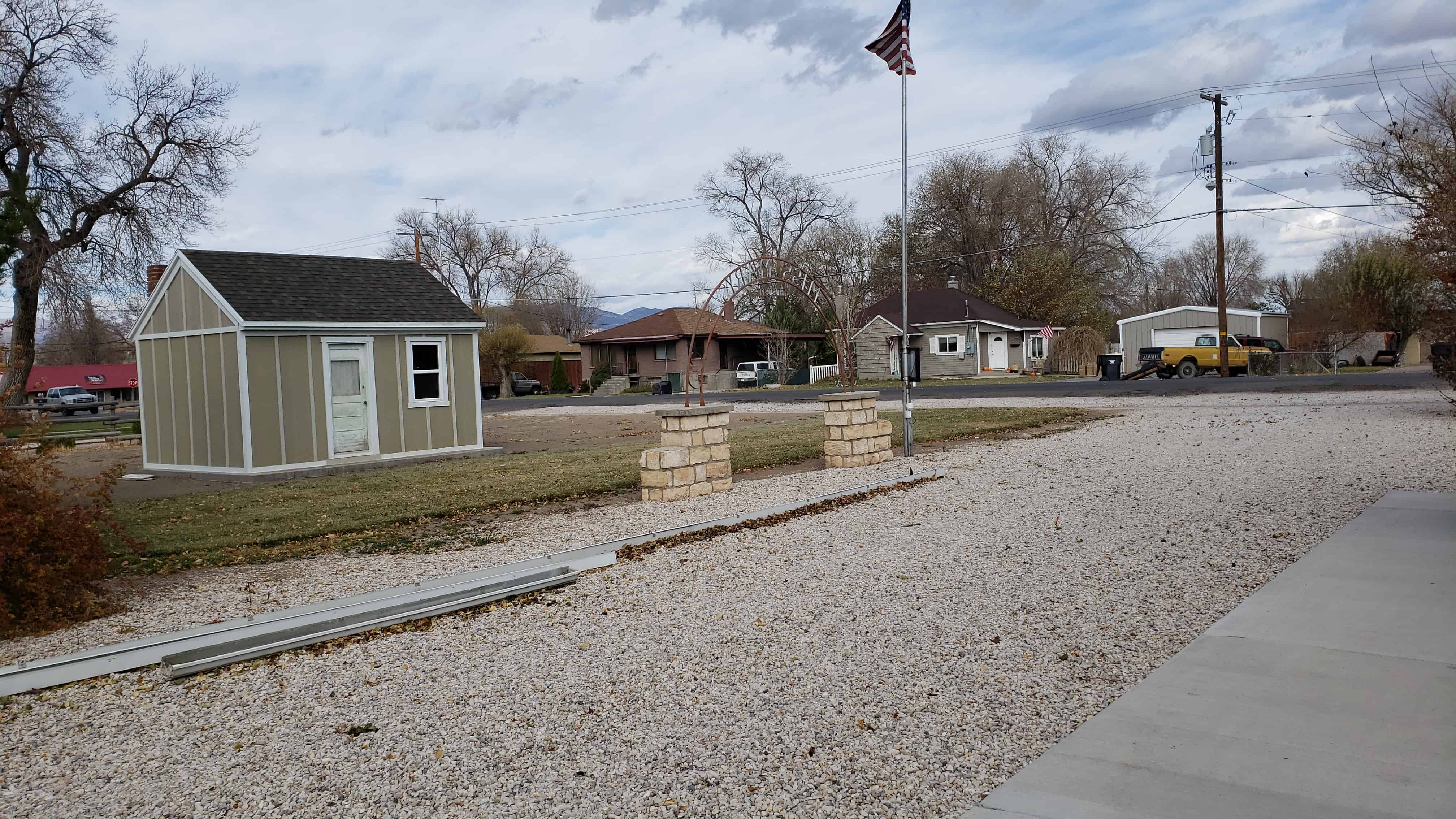
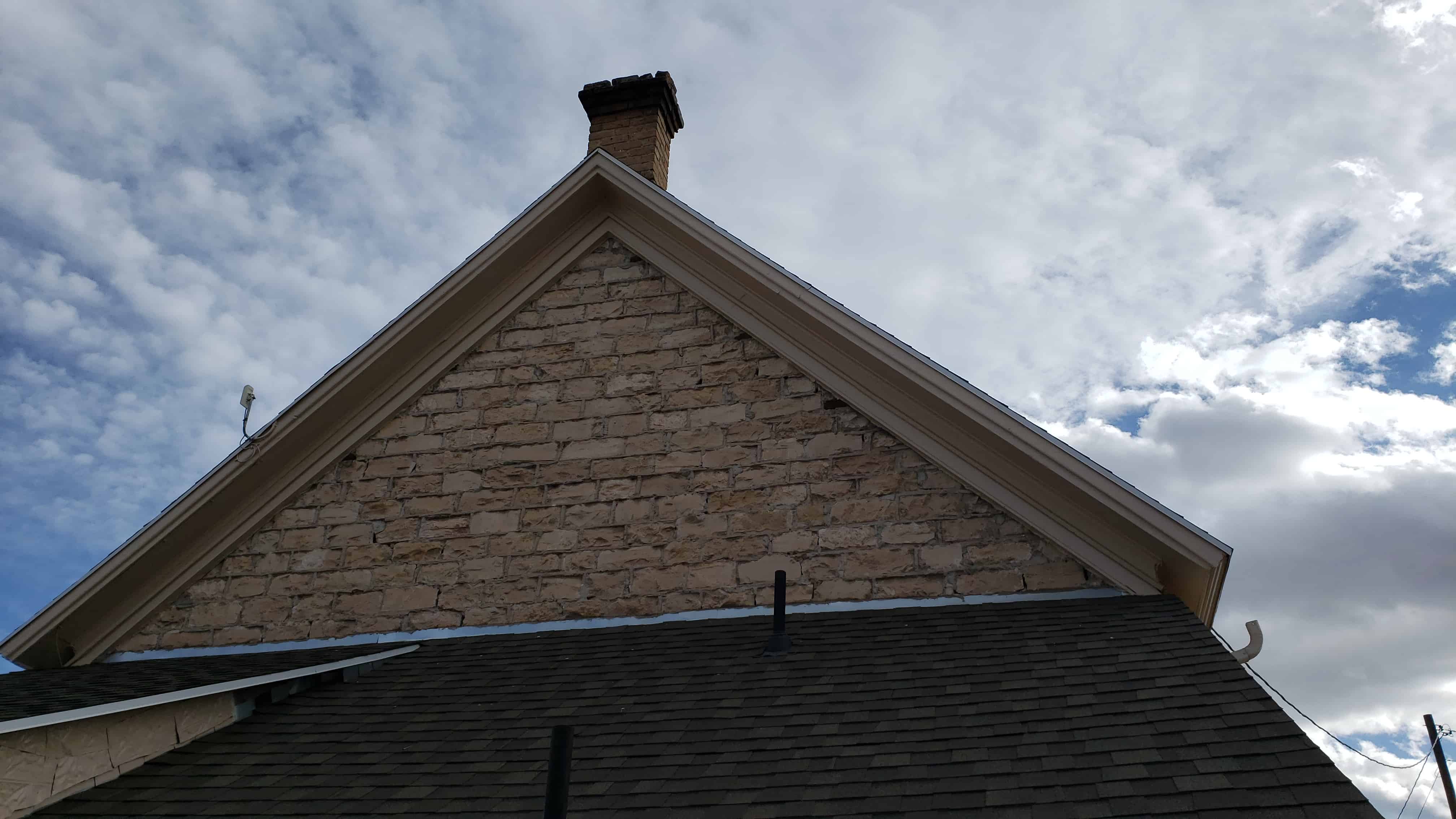
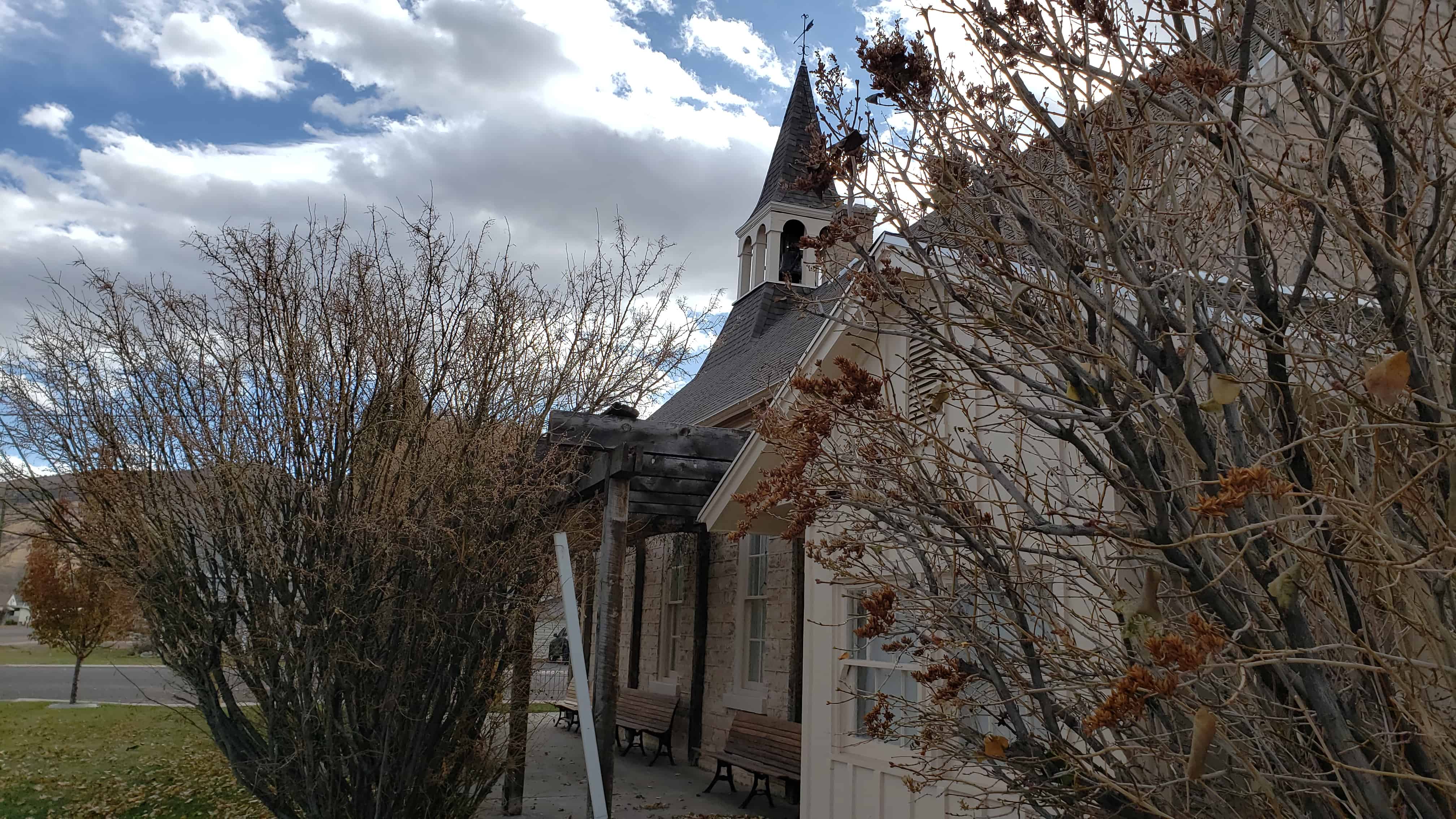
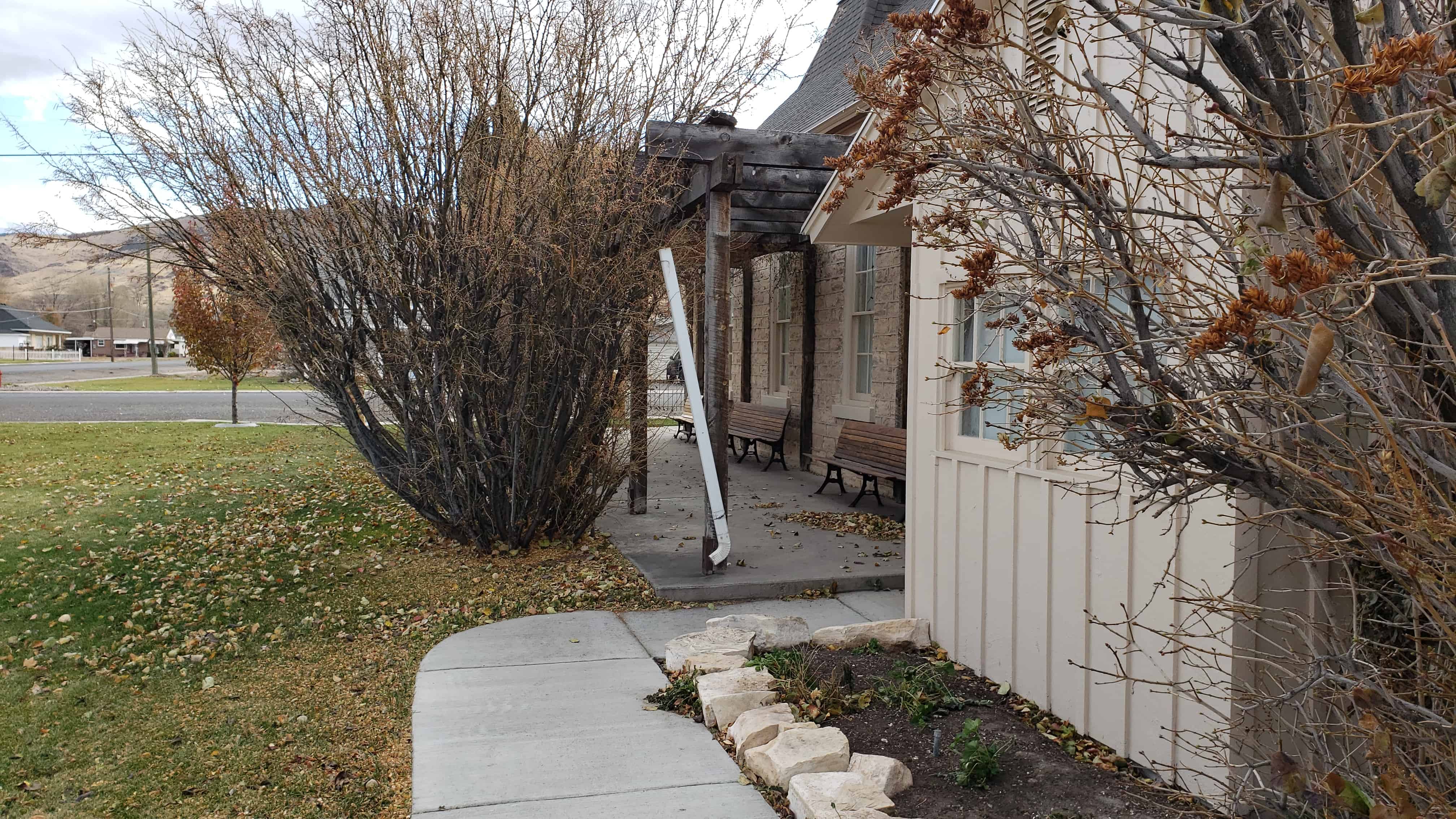
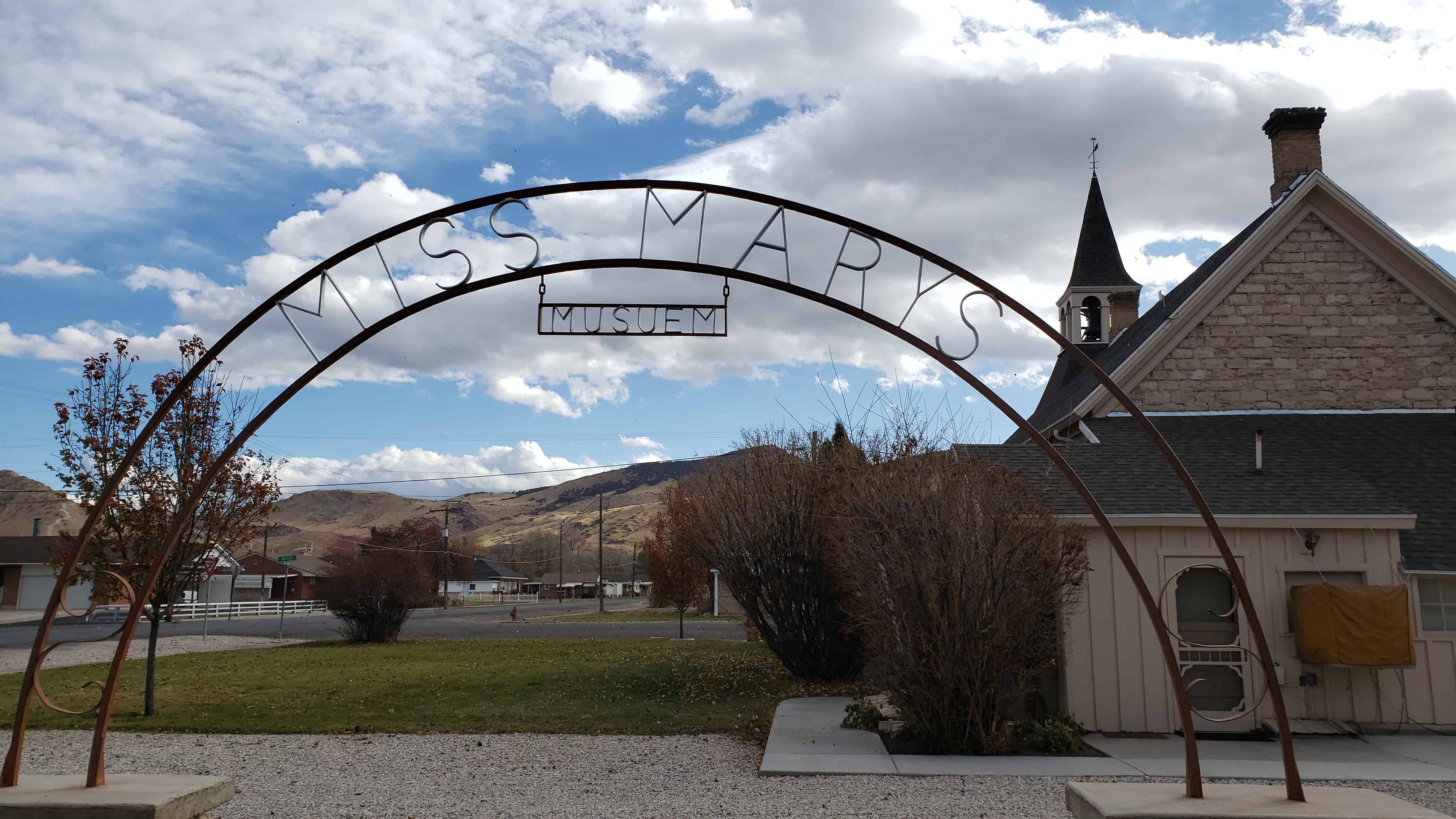
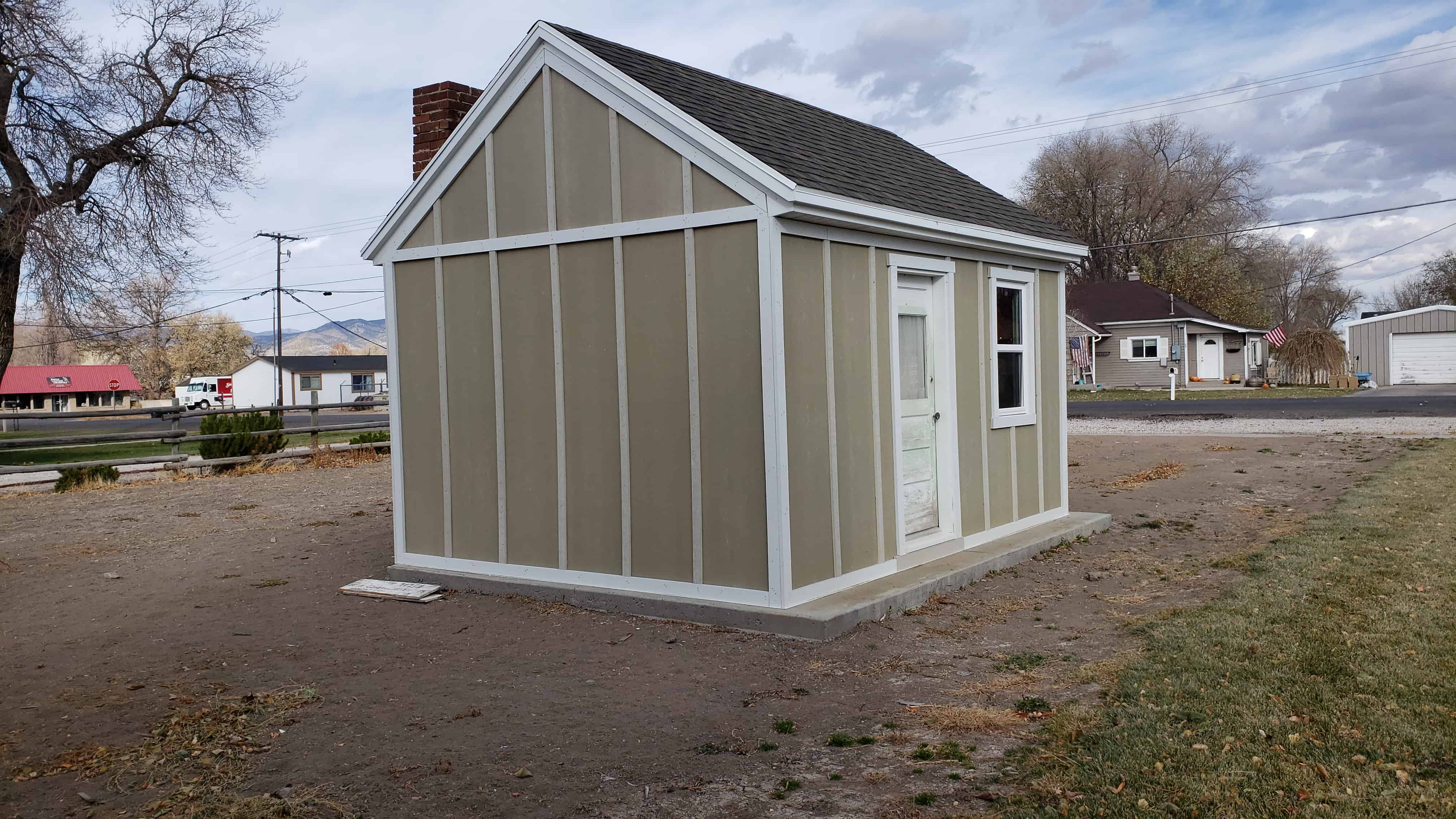
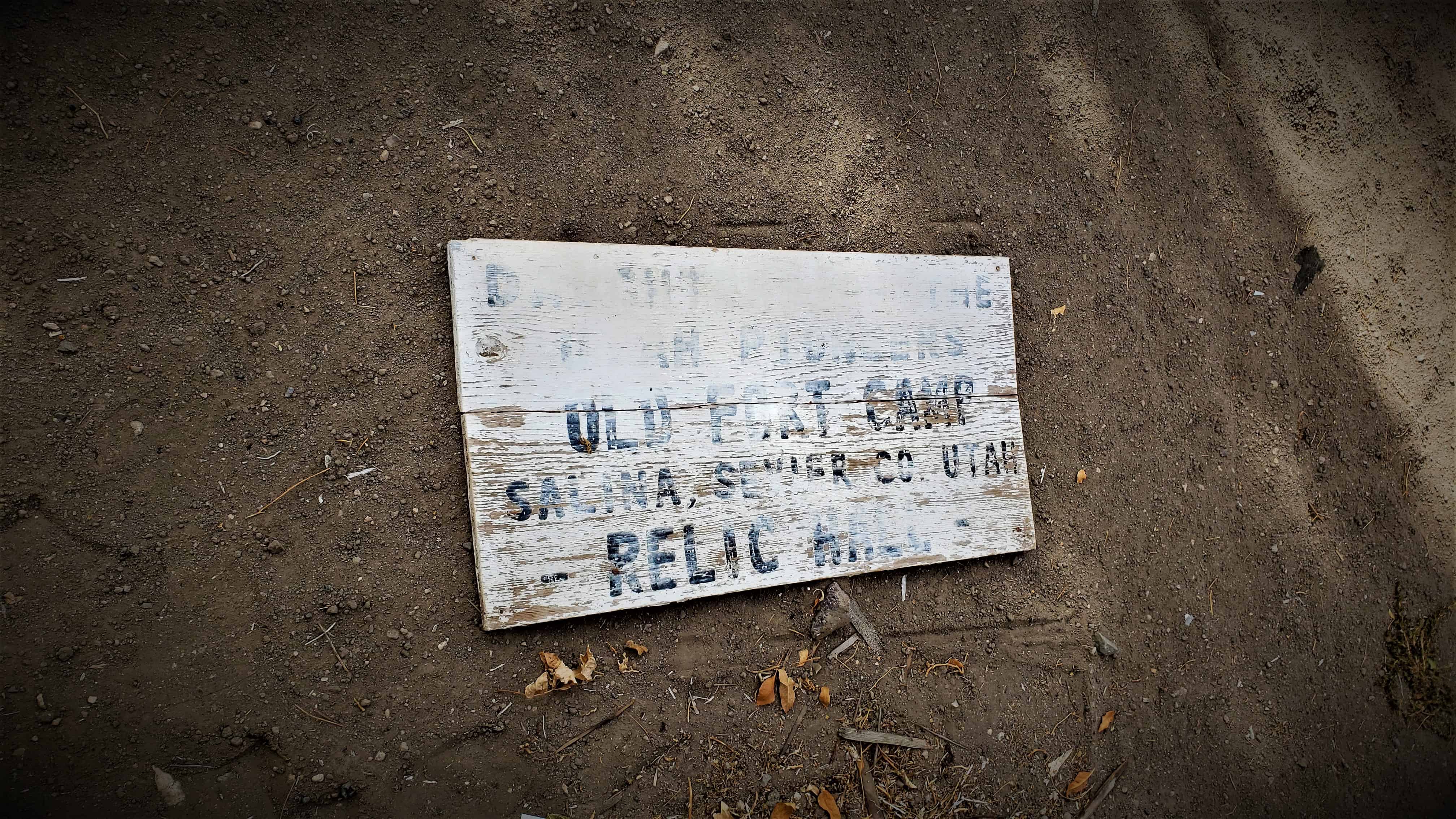
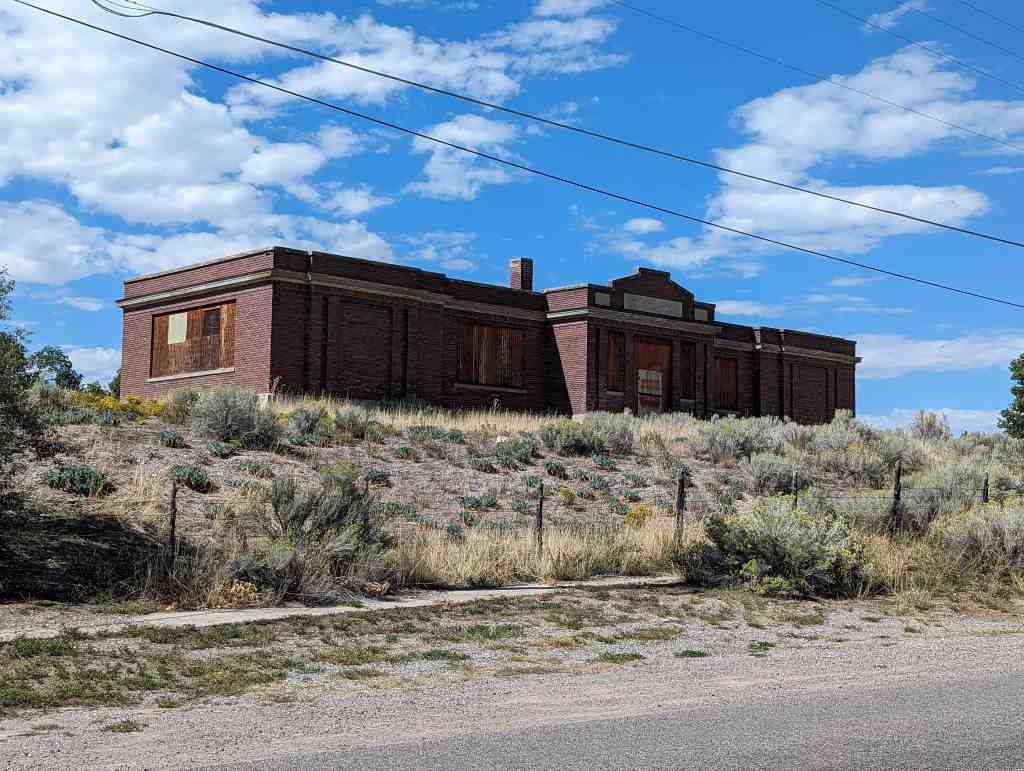
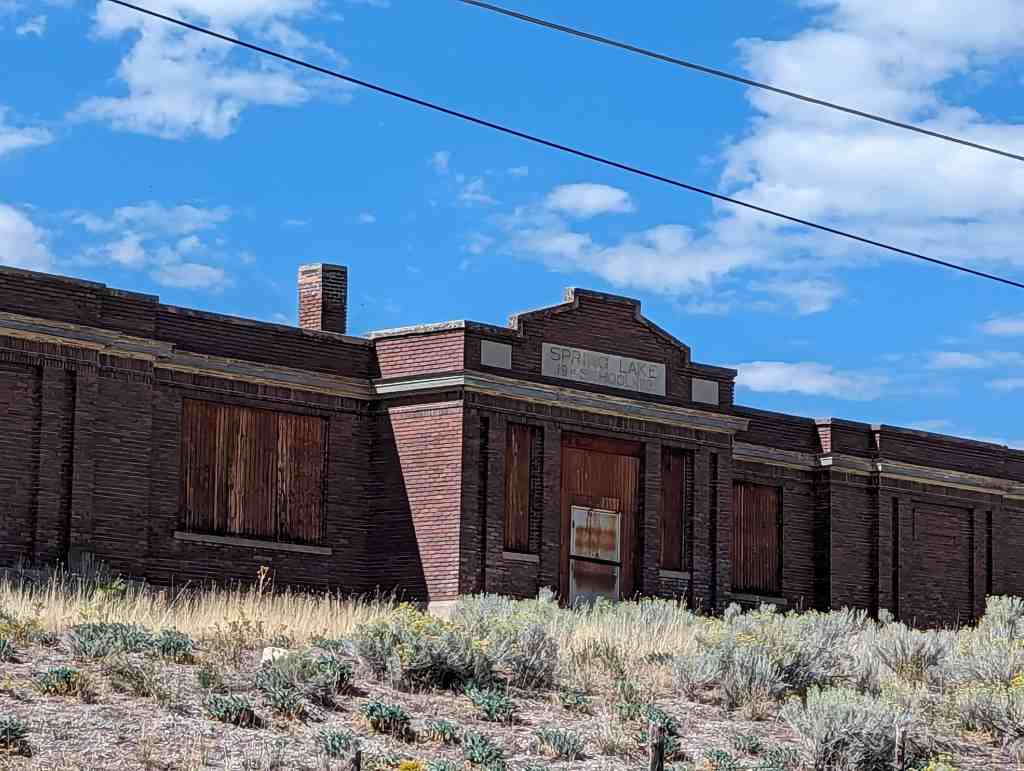
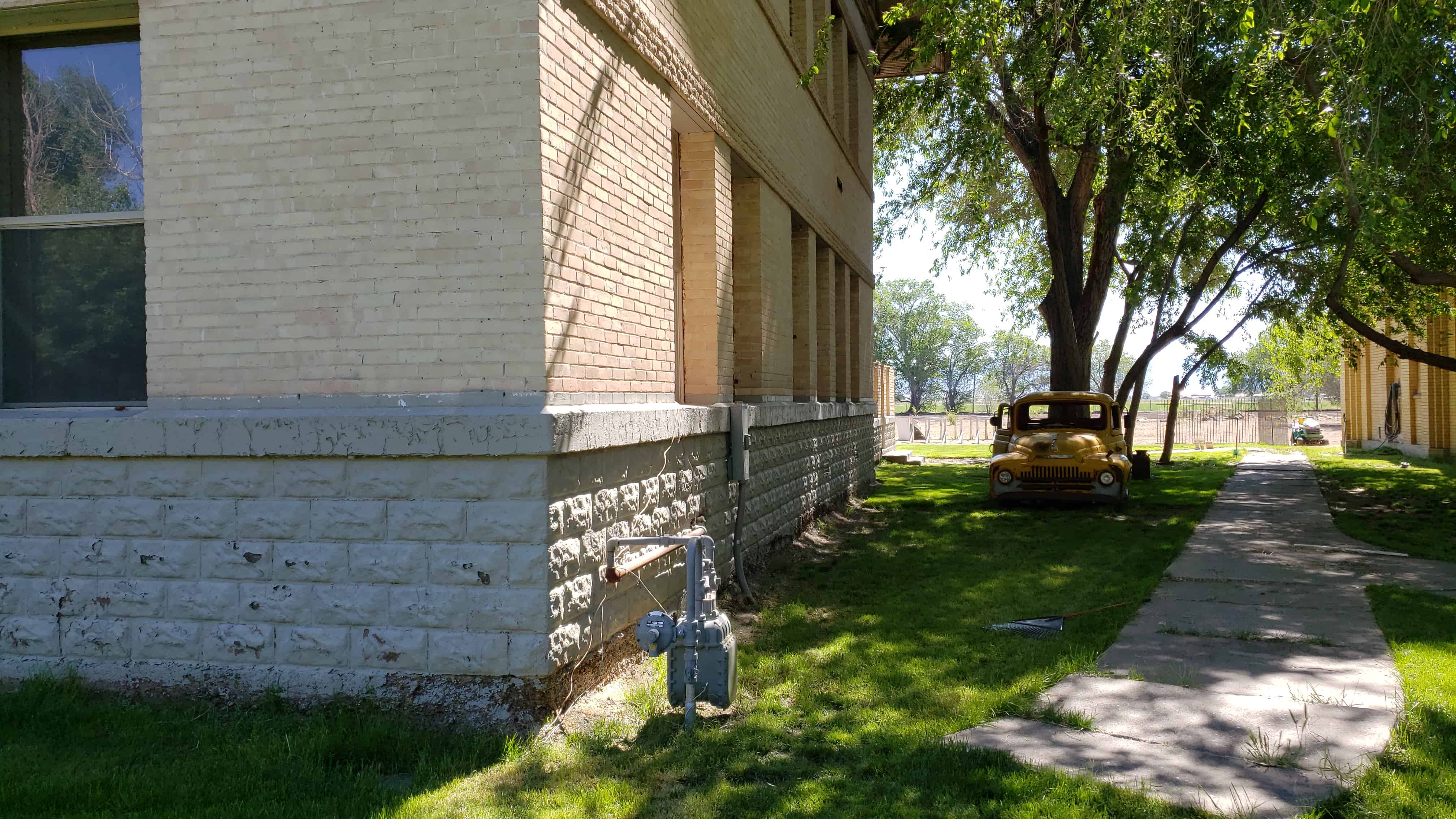
Local carpenters and stonemasons constructed this building in 1893 to serve as a civic meeting hall. It was also used as a schoolhouse until the big school was opened in 1900. The simple forms, symmetrical facade, and Greek Revival style cornice are typical of nineteenth-century civic buildings in Utah. The building served as the city hall until 1988.
Located at 46 North Main Street in Spring City, Utah.
This is one of the few surviving vernacular civic buildings remaining in Sanpete County. Built in 1893 of oolitic limestone it is a temple form building with Greek Revival influence complete with a bell tower. The builders included masons: Jens D. Carlson (1848-1927), Jens. J. Sorensen , John F. Bohlin (1844-1924), and carpenters: William Downard and Marinus Mortensen. The building was used as a schoolhouse until 1900 when the large public school was opened. Two municipal bands used it as a practice hall. It served as the city hall until 1988 when this function was moved to the old Junior high school. It is now the D. U. P. Museum. Behind the building is an old jailhouse.*
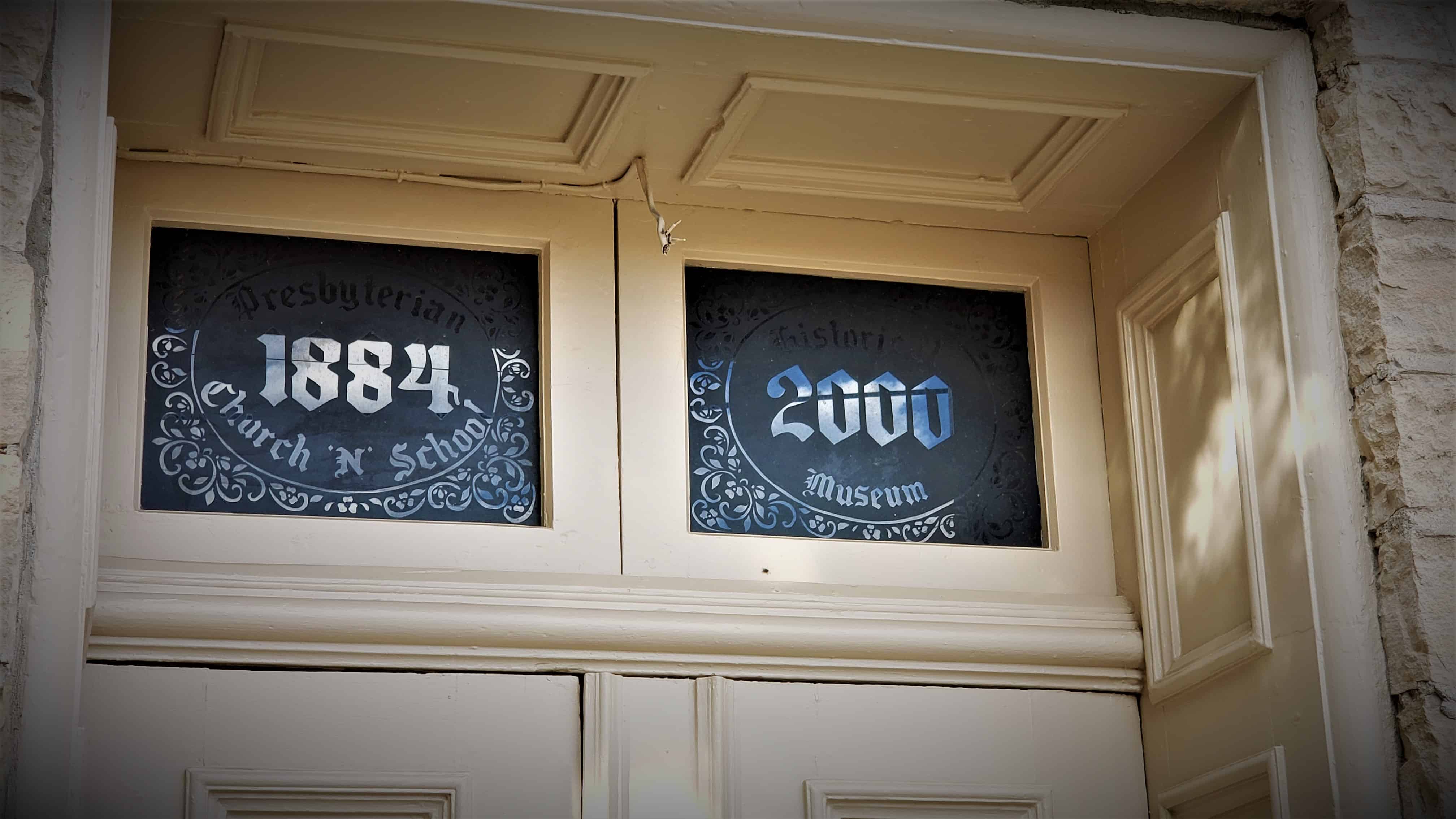
The Crosby Memorial Presbyterian Church and School of Salina
Erected in 1884 as a memorial to Helen Rutgers Crosby of New York City, this church and school was one of several Presbyterian Churches built in central Utah’s Sanpete and Sevier valleys under the direction of Reverend Duncan McMillan, Presbyterian Mission Superintendent in Utah from 1875 to 1917. The chapel has been renovated by Mr. and Mrs. Thomas W. Carter, in memory of Mrs. Carter’s mother, Mrs. Florence Mathew Gordon.
Located at 204 South 100 East in Salina, Utah and added to the National Register of Historic Places (#80003967) on March 27, 1980 – the text below is from the nomination form for the national register:
The Crosby Memorial Chapel in Salina derives its significance from its important role in the religious and educational history of central Utah, and also as an interesting example of late 19th century “charitable good works” as it was a privately endowed Presbyterian chapel.
Presbyterianism was established in Utah on June 11, 1869, with the arrival of the Reverend Melancthon Hughes to begin a pastorate in Corinne, Utah. Although begun with work in a Gentile boom town, Presbyterianism in Utah quickly became a determined missionary and youth education program aimed principally at converting Mormons.
As a religion whose own beliefs demanded an educated understanding of Christian doctrine, and whose style of religious organization was democratic, Presbyterians perceived Mormonism as a perversion, “a sort of cross between Roman Catholicism and Protestantism with vestigal marks of paganism, too eclectic to be evangelical and yet too evangelical to be wholly non-Christian.” Similarly, the authoritarian nature of the Mormon Church and its internal discipline was seen as “despotic suppression of liberty among its votaries and victims.” Convinced that Mormonism was both false and un-American, and, strengthened by the resolve that “Christianity and patriotism are natural allies . . . the Presbyterian Church discovered that it had mission work in Utah requiring intellectual strength, fervent piety, and executive ability.”
The missionary who epitomized these qualities, the Reverend Duncan McMillan, was also the man who brought into being the Presbyterian missionary strategy in Utah of offering superior educational facilities that would in time create an educated populace who would turn away from Mormonism. McMillan’s first venture demonstrated his ability to capitalize on available opportunities. Hearing of a group of disaffected Mormons in Sanpete County, he received permission from the Presbytery of Utah to proceed to Mt. Pleasant.
When he arrived on March 3, 1875, the Reverend McMillan found a group of potential converts in the Mt. Pleasant Liberal Club. These people were former members of the Mormon Church, either apostate or excommunicated, who had been growing in number since 1862 when a rift in the local Mormon Church organization had produced the defection of a sizeable number of Swedes. They had been joined over the years by others, Anglo-American and from the other Scandinavian groups, whose common bond was that they were now no longer Mormon. Politically they supported the Liberal Party against the People’s (Mormon) Party in territorial politics, but religiously they were adrift. Since they had progressed far enough in organization to have completed a Liberal Hall just the year before, the situation for the Reverend McMillan was well-nigh perfect … to have both a congregation and a meeting place.
The other situation from which the Reverend McMillan was able to profit was the poor quality of public schools in Utah. While Mormon communities had generally established schools as among their settlement priorities, the nature and product of this schooling left much to be desired. Lack of trained teachers and an irregular and often-interrupted school year meant that most children received an indifferent education at best, but often, none at all. Fashioning benches with his own hands, McMillan opened his first school in Mt. Pleasant on April 20, 1875, with 35 students in attendance.
After overcoming some initial financial problems and with the help of other ministers and a corp of dedicated female Presbyterian missionary teachers, McMillan would establish congregations or schools throughout Sanpete and Sevier counties and in other parts of Utah territory. His school at Mt. Pleasant would become the Wasatch Academy, still operating and listed on the National Register.
The Crosby Memorial Chapel in Salina was used principally as a school, with the small lean-to at the rear serving as the teacher’s quarters. There seems to have never been a permanent minister installed in this Church, which was served principally by the circuit-riding Reverend G. W. Martin of Manti. As was true for many of the smaller congregations, the Presbyterian presence in Salina was personified by the resident Presbyterian teacher. Acting as both teacher, missionary, civic worker, nurse, and being equally evangelical in matters of religion, education, and culture, these extraordinary women were undoubted assets to their frontier communities . . . although treated by local Mormons with considerable ambivalence.
Part of the Mormon distrust of these Presbyterian efforts was undoubtedly a resentment of being evangelized by what they felt to be a false religion. But the Crosby Memorial Chapel represents yet another cause for resentment; with the construction of this fine school facility with a full time teacher, paid for from sources outside the community, local Mormons could hardly escape having the same kinds of feelings that, say, the Chinese had about “rice Christians.” Although modest by many standards, these expenditures were clearly seen as a form of bribery and the Mormon response was to take the education and reject the religion. In 1889-1890 the Presbyterians had 36 mission schools, 4 academies, 65 qualified teachers. By 1897, as the system was being wrapped up, the Board of Presbyterian Missions announced that approximately 50,000 children had received some education in these schools.^ Considering the handful of Presbyterian converts gained from this effort, one can well understand the exasperation of one delegate to a Presbyterian General Assembly who is said to have lamented that “vast sums were spent on the education of future Mormon bishops and Sunday School teachers.”
The Crosby Memorial Chapel in Salina, now a private summer residence that is being gradually restored, is the kind of cultural asset that, in addition to its inherent charm and architectural interest, has the power to illuminate many interesting aspects of the late 19th century Mormon/Gentile conflict.
Located at 241 West 400 North in Payson, Utah, this park was built where the Wightman School stood and the plaque placed there reads:
Wightman School
Upon this site was once a private school and residence built circa 1883 by William C. and Lucretia J. Pepper Wightman. The school was built approximately 400 feet west of the northwest corner of the original fort and used to educate the children of early settlers in Payson.
When educational activities ended at the school, the structure was used as a residence until June of 2002. In August of 2003 =, the structure was demolished due to years of neglect and deterioration. This monument has been erected to remind all children that play in this park of the important role education has played in the history of the community.
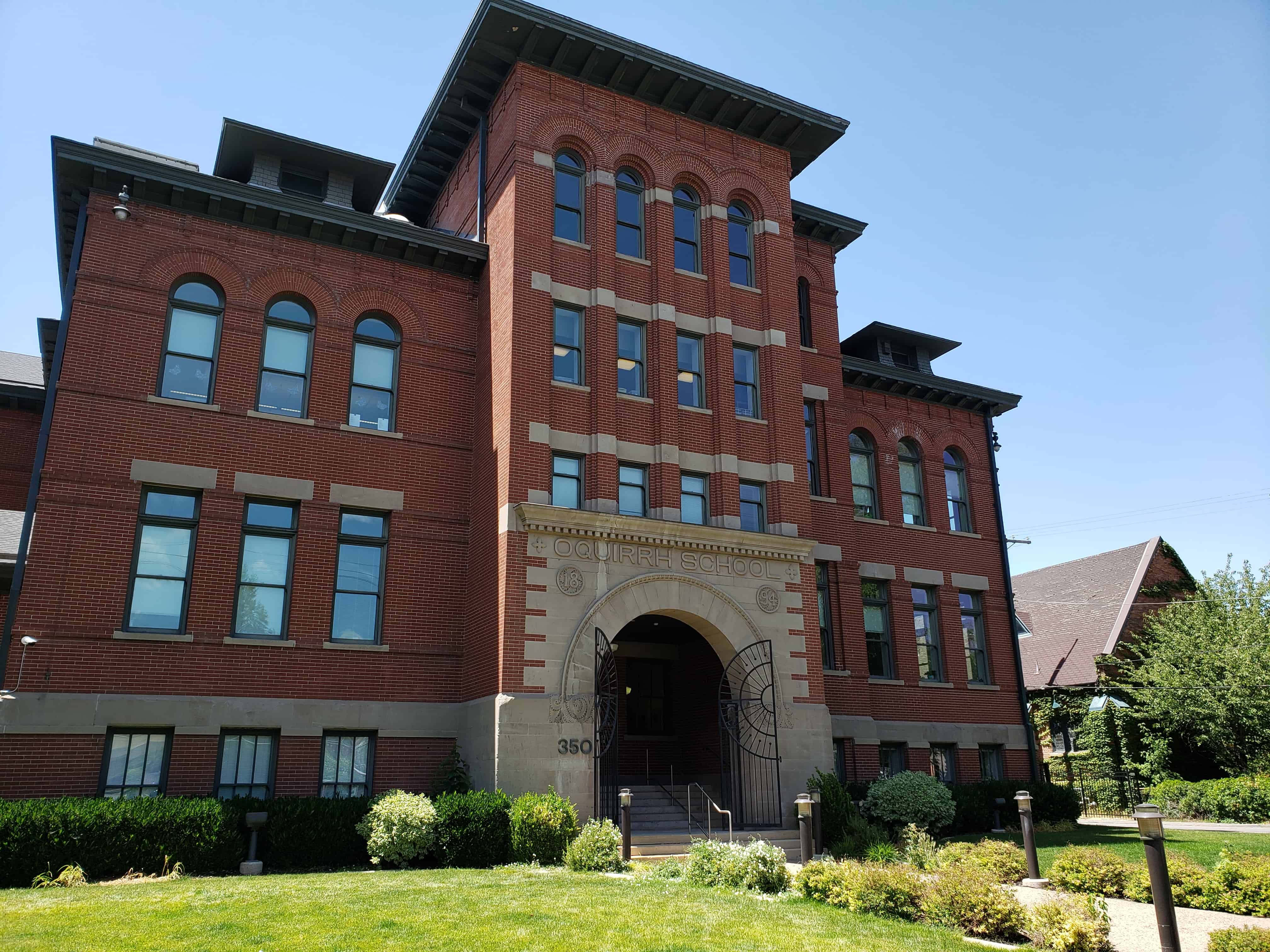
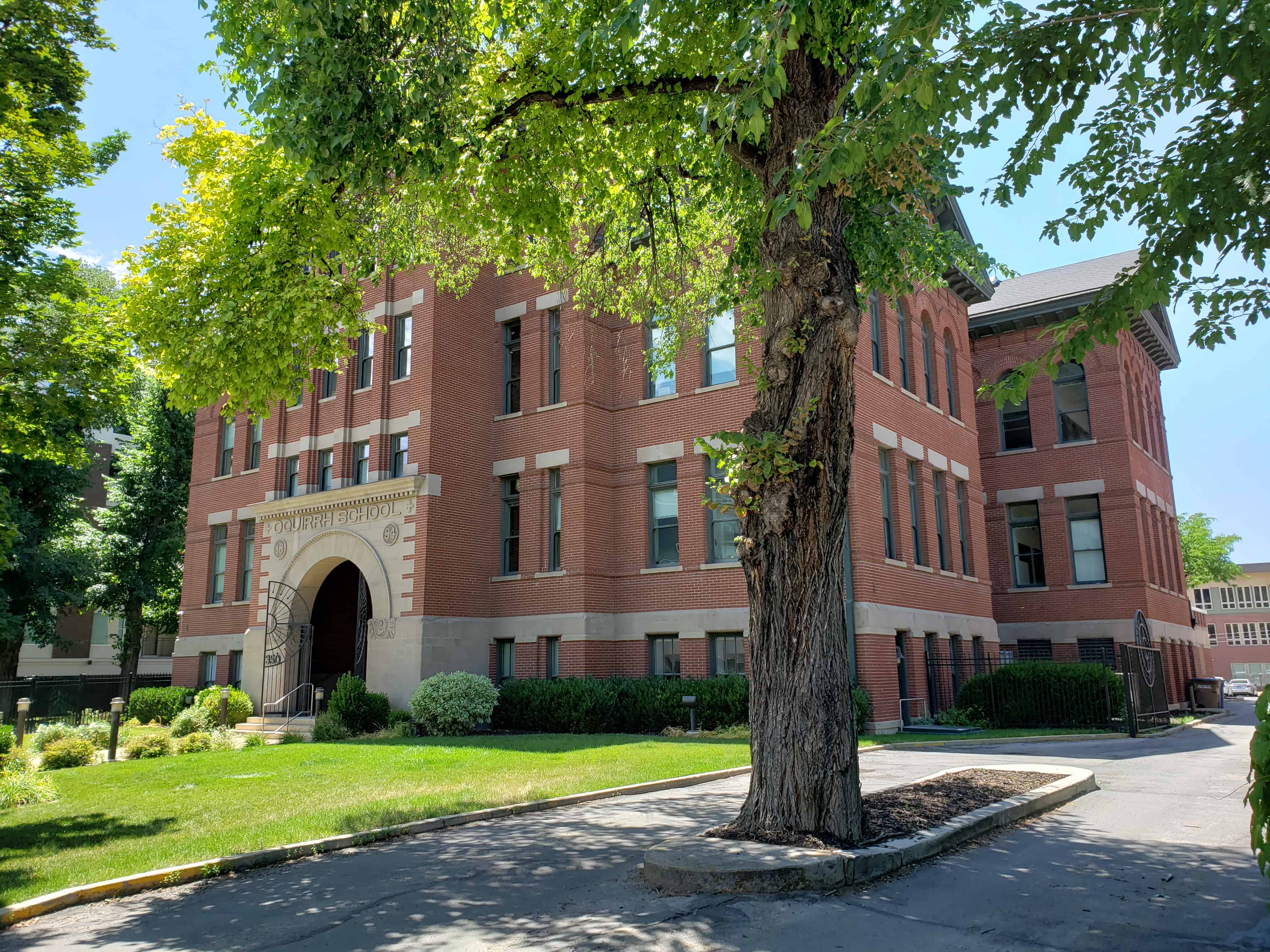
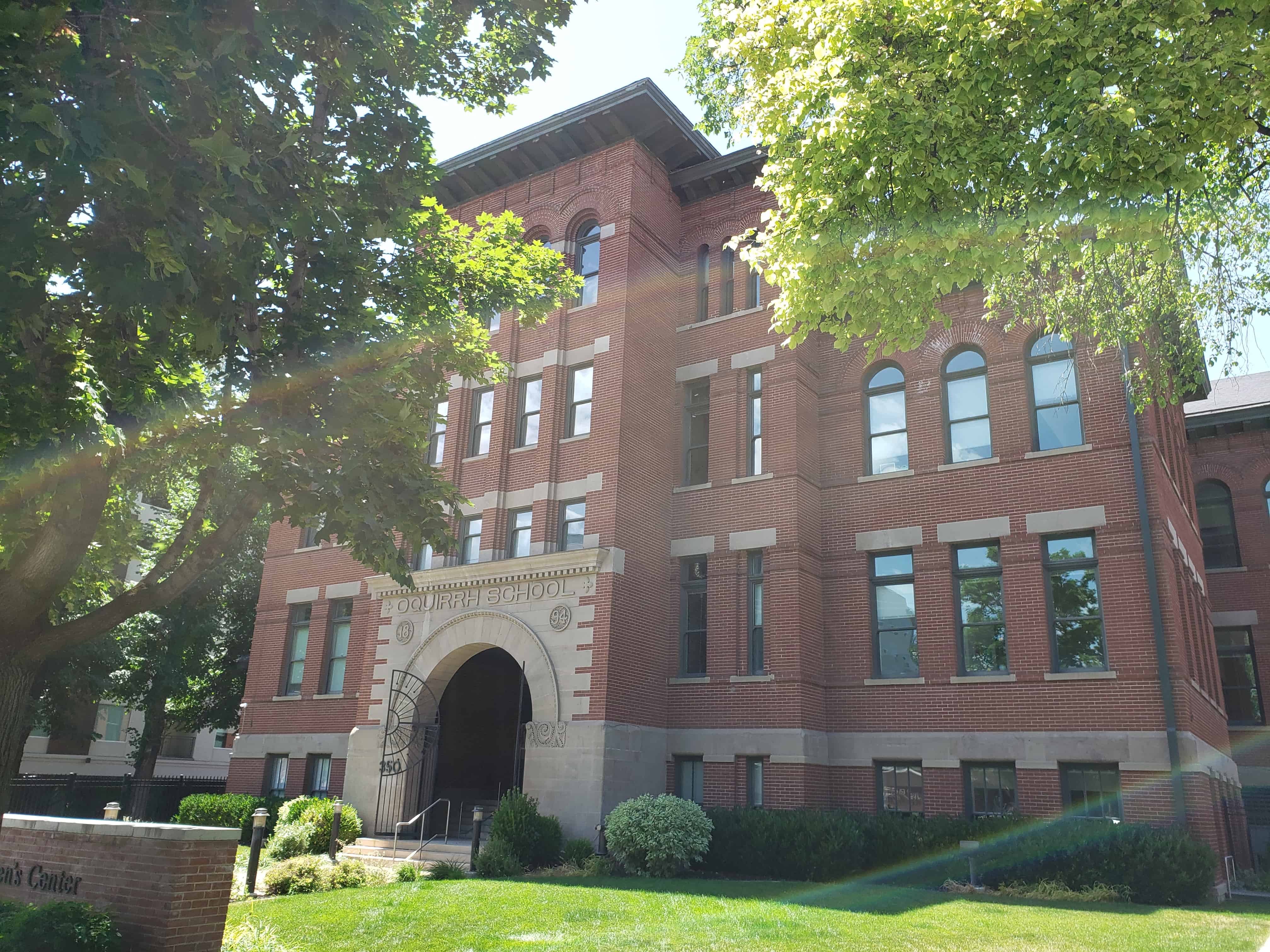
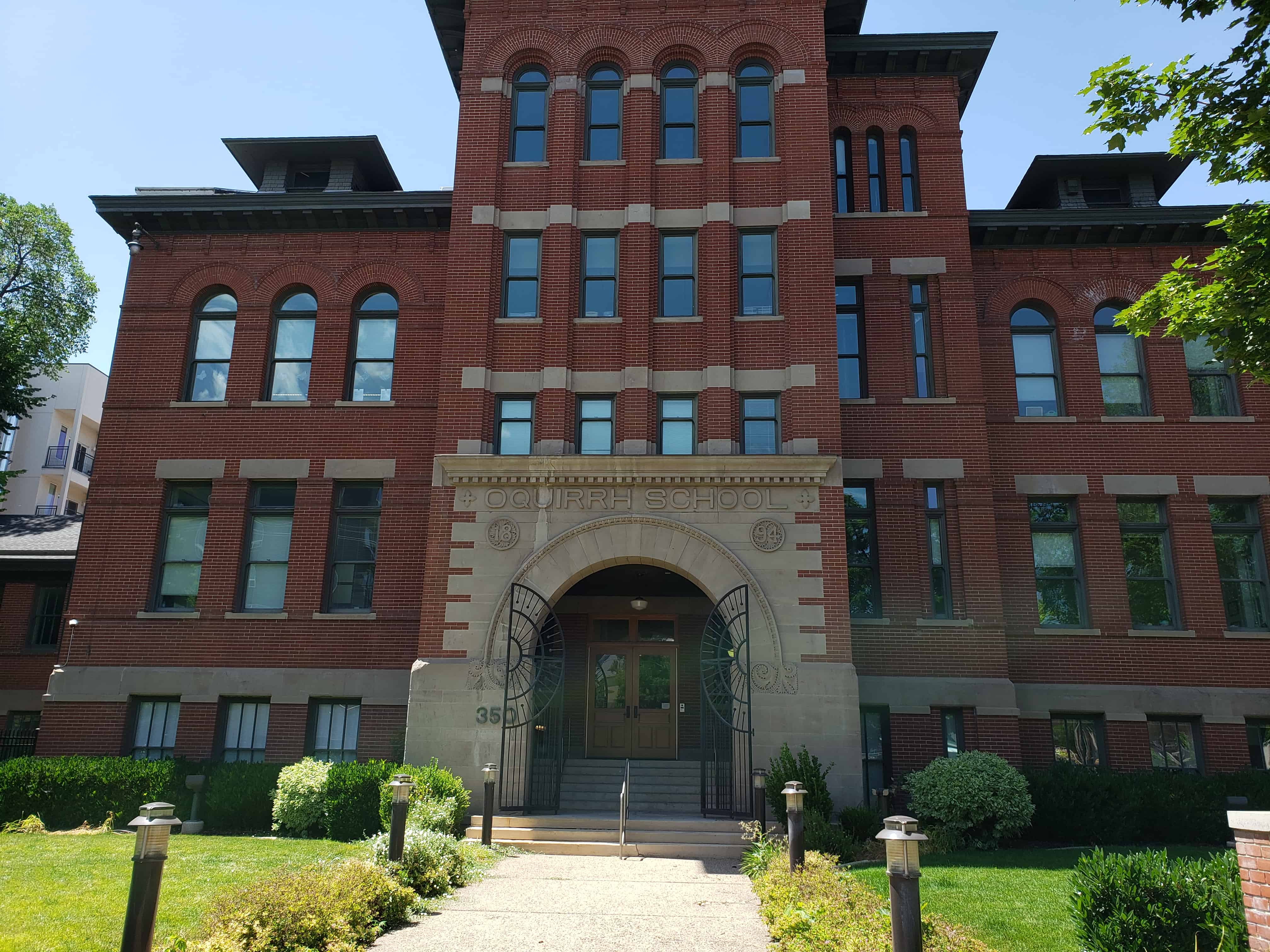
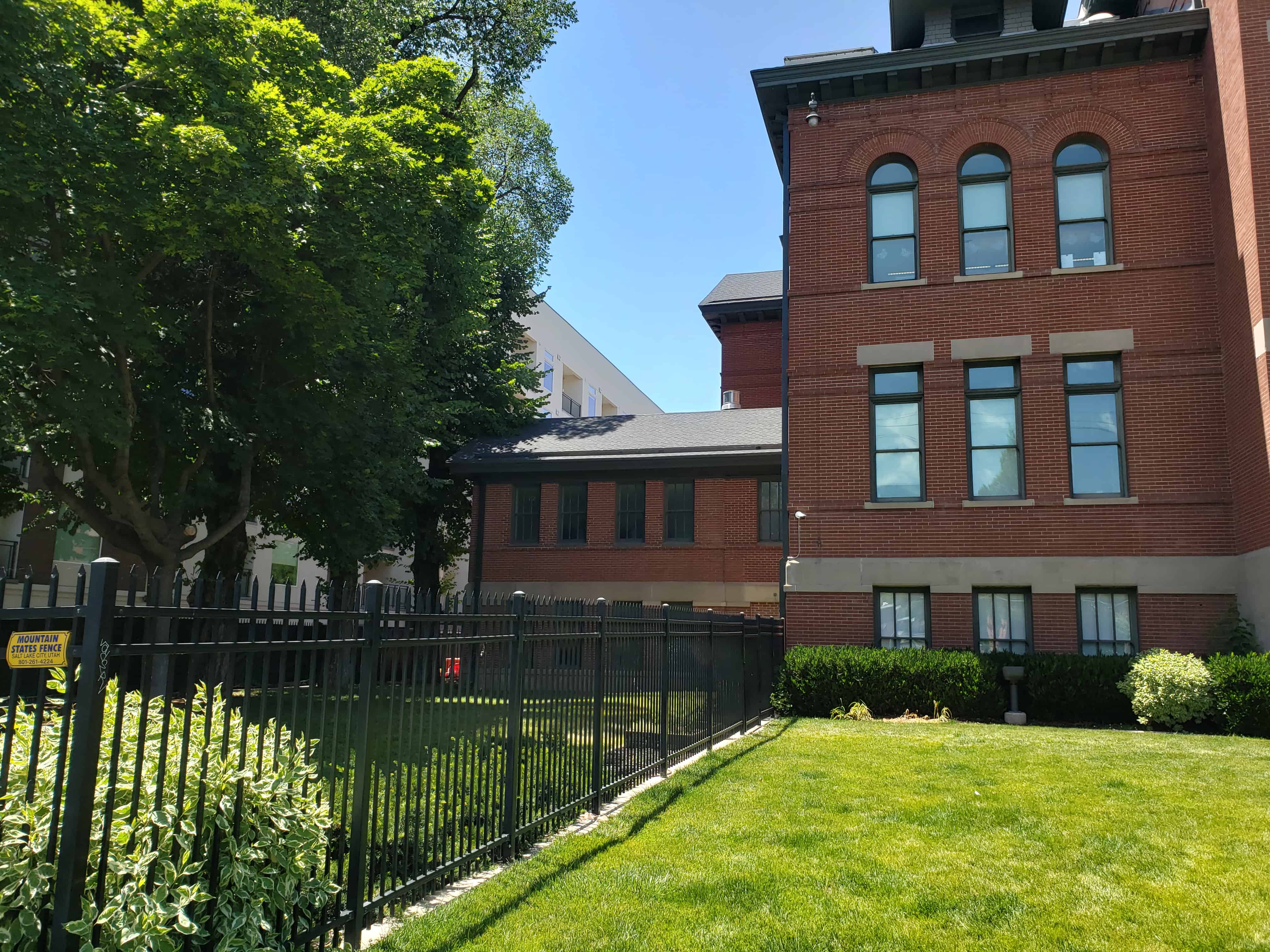
The Oquirrh School, constructed in 1894, is significant as a representational example of the schoolhouses constructed as a result of the education reforms and development of the public school system that accompanied Utah’s campaign for statehood in the 1890s. Reforms include the consolidation of school districts, the adoption of a statewide curriculum and and the construction of numerous unified schoolhouses. The Oquirrh School was one of the first to be built and as such embodies the earliest ideologies and practices of public education in Utah. The Oquirrh School is also architecturally significant because it was one of the first public schools built in Salt Lake City and is an excellent example of late Victorian institutional architecture implementing a combination of the Romanesque and Second Renaissance Revival styles. The school can also be considered the work of a master, namely the regionally prominent architect Richard K. A. Kletting*, who also designed several emblematic Utah buildings.
This is located at 350 South 400 East in Salt Lake City, Utah – the text above is from the plaque on site from the National Register of Historic Places.
Built in 1928 at 1255 Park Avenue, this was Park City High School until the new high school on Kearns Blvd was built in 1981. This is now the city library.
During the 2002 Olympics the top two floors were Norway House, housing the King and Queen of Norway and many Norwegian athletes, officials and business people. A Norwegian restaurant and display area were open to the public. Next door in the Library Park monster.com built a giant snow maze for children.
Constructed in 1909, the Cedar Fort School is historically significant as the only remaining two-room schoolhouse in Utah County, and one of a small handful in the state of Utah. This building is a rare extant example of the many schoolhouses that were built in the twenty years after the state legislature created the Free Public School Act in 1890 for the purpose of greatly increasing the number of schools in the state. Architecturally, the school is important for retaining its distinctive character-defining features on the principle facades. Its Victorian Eclectic style combines a mix of Romanesque Revival (popular in the late nineteenth century for institutional buildings) and the then newly emerging Prairie School style. This mix of styles was quite common in the state during the first two decades of the century. The building particularly contributes to the town of Cedar Fort, Utah, which retains few examples of its historic architecture.
Built in 1935-36, the Hinckley High School Gymnasium is part of the Public Works Buildings Thematic Nomination and is significant because it helps document the impact of New Deal programs in Utah, which was one of the states that the Great Depression of the 1930s most severely affected. In 1933 Utah had an unemployment rate of 36 percent, the fourth highest in the country, and for the period 1932-1940 Utah’s unemployment rate averaged 25 percent. Because the depression hit Utah so hard, federal programs were extensive in the state. Overall, per capita federal spending in Utah during the 1930s was 9th among the 48 states, and the percentage of workers on federal work projects was far above the national average. Building programs were of great importance. During the 1930s virtually every public building constructed in Utah, including county courthouses, city halls, fire stations, national guard armories, public school buildings, and a variety of others, were built under federal programs by one of several agencies, including the Civil Works Administration (CWA), the Federal Emergency Relief Administration (FERA), the National Youth Administration (NYA), the Works Progress Administration (WPA), or the Public Works Administration (PWA), and almost without exception none of the buildings would have been built when they were without the assistance of the federal government.
The Hinckley High School Gym is one of 233 public works buildings identified in Utah that were built during the 1930s and early 1940s. Only 130 of those 233 buildings are known to remain today and retain their historic integrity. This is one of 107 public school buildings that were constructed in Utah, 55 of which remain. In Millard County 10 buildings were constructed. This is one of 6 that remain, and one of 2 school buildings remaining of 5 that were built.
The Hinckley High School Gymnasium was built between 1935 and 1936. It was part of a larger Public Works Administration (PWA) project that the Millard County School District undertook that included, in addition to this building, a mechanical arts building at Delta High School and a gymnasium at Millard High School in Fillmore. Total cost for the 3 buildings was $130,000. Construction on all 3 buildings began in the summer of 1935 and was completed by June of 1936. The architects of all three were Carl W. Scott and George W. Welch, and the contractors were Talboe and Litchfield.
Carl W. Scott and George W. Welch were both prominent Utah architects. Scott was born October 17, 1887, in Minneapolis, Kansas, and graduated in 1907 from the University of Utah with a degree in mining. He was given credit for the idea of the concrete “U” on the hill that is still above the university campus. Following graduation he began a career in architecture as a draftsman for Richard Kletting. In 1914 he became partners with George W. Welch. Welch was born in Denver, Colorado, on May 15, 1886, graduated from Colorado College, and came to Salt Lake City to begin work as an architect. Active in political affairs while here, he was a member of the Utah House of Representatives from 1919 until 1921. Among the buildings that Scott and Welch designed were Salt Lake City’s Elks’ Club Building, South High School, the Masonic Temple, and many public school buildings throughout Utah including Hawthorne Elementary School and Bryant Junior High School in Salt Lake, Park City High School, Tooele High School, Blanding High School, and Cedar City Elementary School. They also designed a number of commercial buildings including the N. O. Nelson Manufacturing Company Warehouse, the Nelson-Ricks Creamery Building, and the Firestone Tire Company Building, all in Salt Lake City.
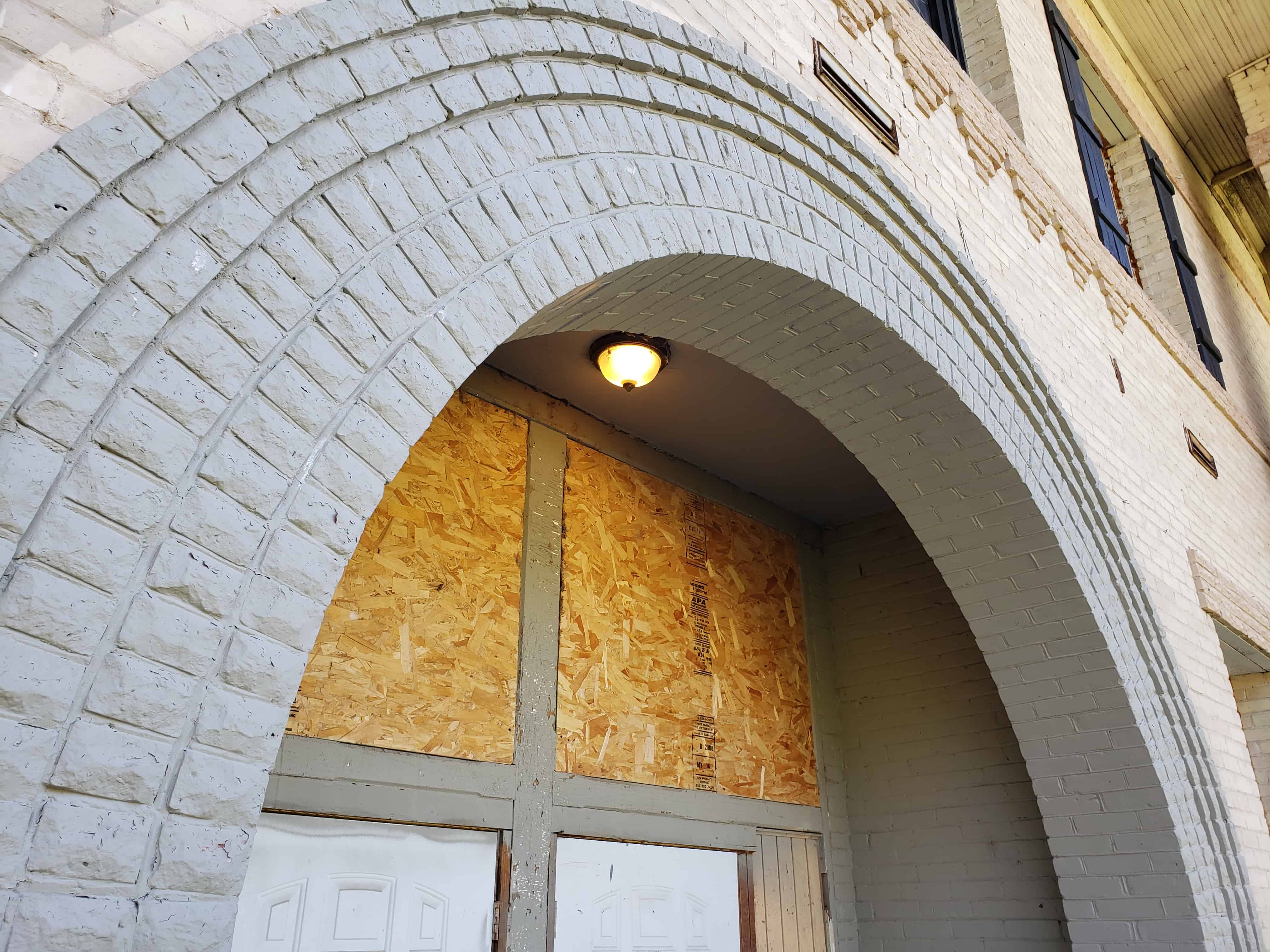
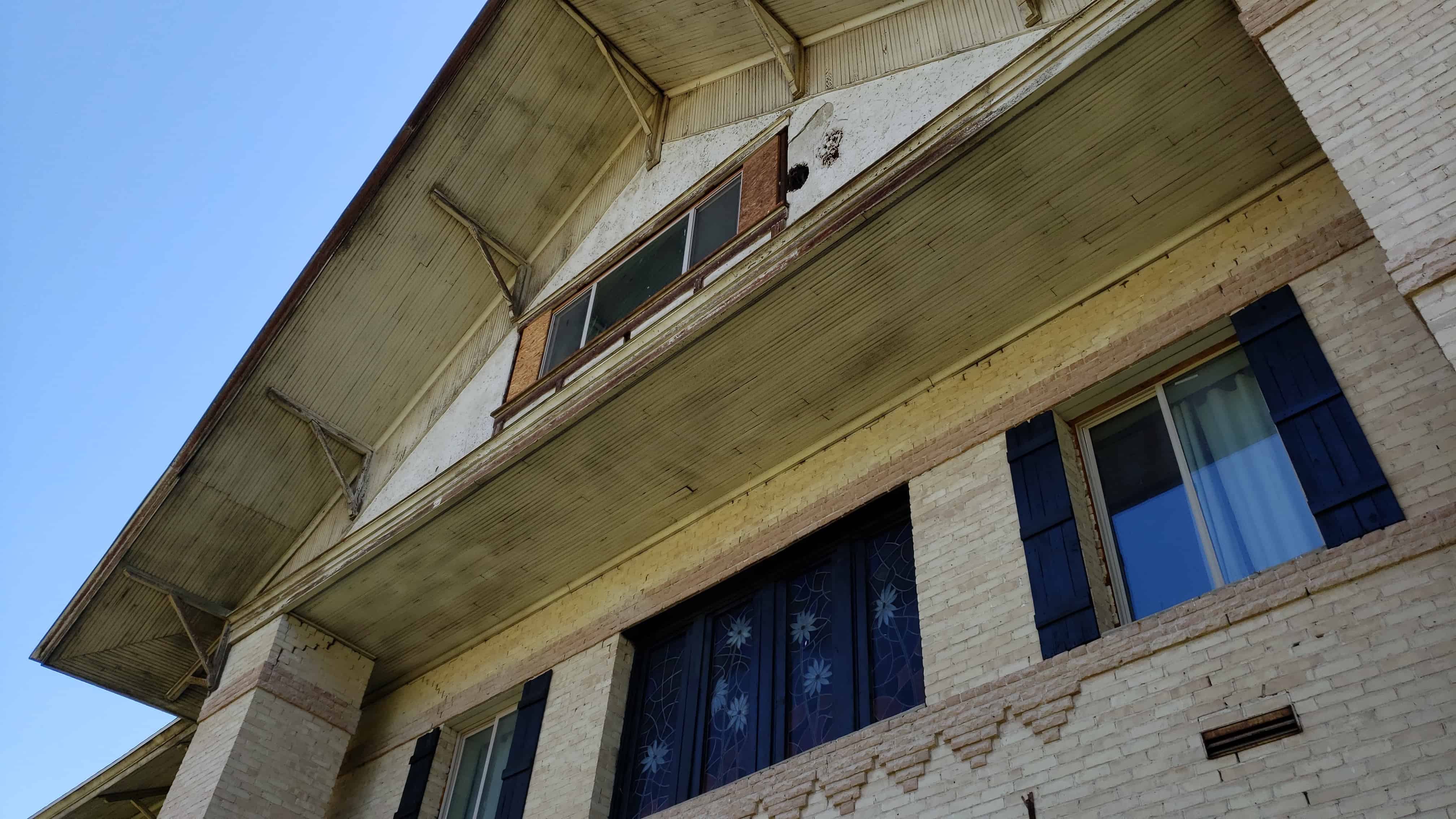
Millard Academy in Hinckley, Utah was built 1919-1910 by T. George Theobald with S.T. Whicker as the architect, it was the Millard LDS Academy until 1923 and then from 1923 to 1953 it was Hinckley High School.
(the text on this page is from the nomination form for the National Historic Register linked above)
The Millard Academy was built from January 1909 to September 1910 as one of nearly three dozen secondary schools that the Mormon Church built between 1875 and 1911 as rivals of both public schools and non-Mormon private schools. It is significant because it helps document the emergence of a secularized public school system in Utah and the adjustment of the Mormon Church to that system. In addition, it is a local landmark, expressing the continuing commitment of the citizens of Millard County to the value of education.
For a generation or so after the settlement of Utah, Mormons, who constituted more than 90% of the population, naturally dominated the territory’s public school system, and religious studies were an integral part of the public school curriculum. By the mid 1870s, however, as the non-Mormon population of Utah began to expand rapidly, the situation began to change. Efforts began to secularize the public schools, and non-Mormon private schools were rapidly established. To counter the “tendencies that grow out of a Godless education,” the Mormon church undertook several measures. It instituted a religion-class movement under which Mormon teachers taught “the Restored Christian Gospel” once a week after regular school hours to all pupils who would come, and it began to establish its own secondary schools. Brigham Young Academy at Prove was founded in 1875, followed by Brigham Young College at Logan in 1877, the Latter-day Saint College in Salt Lake City in 1886, and the Fielding Academy at Paris, Idaho in 1887.
The Edmunds-Tucker Act of 1887 gave added impetus to the Mormon Church’s determination to establish their own secondary school system. Among other things, it required that Utah school laws, which had originally been designed to sanction and support a Mormon dominated public school system, be suspended; that the territorial schools be placed under the control of the territorial Supreme Court and a Court-appointed, and non-Mormon commissioner; and that the financial resources of the Corporation of the Church be disposed of for the use and benefit of the public schools. In response to the Edmunds-Tucker Act, church authorities called upon every Mormon stake to establish an academy in its area. Sixteen were established that first year, and ultimately thirty-five were founded in Utah, and in other states of the Intermountain West, Canada, and Mexico. They were supervised by a church superintendent of schools, a church board of education, and stake boards of education, and were modeled after the Brigham Young Academy in Provo and the Brigham Young College in Logan. By 1905, more than 60% of Utah’s high school students and a substantial portion of Mormon high school students in Arizona, Wyoming, Idaho, and Nevada were enrolled in Mormon academies.
The Millard Academy in Hinckley, Millard County, Utah was one of the last to be founded. Only the Dixie Academy in St. George was established later. In the fall of 1908, the church board of education decided to establish an academy in Millard County.
The choice of location was left to a vote of the Millard Stake High Council and the bishoprics of each ward in the stake. A lively debate followed over the location of the academy, with each town in the area lobbying on its own behalf, though there was widespread feeling that Fillmore, as the county seat and largest town, would probably be chosen. It was not, however, primarily, it seemed, because three saloons, were located in the town. In response to the criticism that tine presence of saloons meant that Fillmore did not offer a wholesome environment for students, the Fillmore town council promised to raise the licensing fee from $400 per year to $1200, thereby to drive the saloons out of business. Finally, however, the town of Hinckley, which had no saloons, was chosen as the site of the academy.
Construction began in January 1909 on eight acres of land near the center of town donated by local resident Joseph W. Blake. He also donated 40 acres of land out of town so that crop yields could help finance the building.
Construction proceeded under the direction of T. George Theobold. An early settler of Millard County, he was born March 26, 1874 in Duncan’s Retreat, Washington County, Utah, a son of Arthur and Jane Burgess Theobold. A carpenter and engineer by trade, lie was involved in the construction of many of Millard County’s early buildings, including the Millard County Courthouse, the Hinckley Elementary School, the Hinckley Relief Society Hall, and the Pratt Merchantile Store. Prominent in local affairs, he served on the Millard County Board of Supervisors, the Millard School District Board of Education, the Hinckley Town Board, and was mayor of Hinckley from 1928 to 1936.
The architect of the Millard Academy was Samuel T. Whitaker of Ogden. Born in Centerville, Utah, December 20, 1859, a son of Thomas W. and Elizabeth Mills Whitaker, he led a varied career, alternating periods of private practice as an architect with other pursuits. He traveled throughout the United States as a sketch artist, became associated with the Boston architectural firm of Paulson and LaVelle, doing field work for them in Utah, Montana, and Idaho; and was the superintendent of the Gibson and Sadler Mill, and then the Barnard and While Mill, both of Ogden. He also served as Ogden’s police chief for six months, and managed the Ogden office of the Utah Light and Traction Company for four years. In addition to the Millard Academy, he also designed the Mormon academies at Alberta, Canada; Oakley, Idaho; and Juarez, Mexico. Other notable buildings he designed include Ogden’s Orpheum Theater, Ogden’s First National Bank, the David H. Peery and the John Browning Houses in Ogden, the Ogden IDS Sixth Ward, and the Farmer’s Free Market in Salt Lake City. With Leslie Hodgson, another well known Utah architect, he designed the Eccles Building in Ogden. Active in the Mormon Church, he was President of the LDS Scotch-Irish Mission form 1888 to 1890 and first counselor in the Ogden LDS Sixth Ward. Involved in civic affairs, he was a member of Utah’s Food and Fuels Board during World War I and was Director of the Utah State Fair Association in 1919.”
The Millard Academy was completed at a cost of nearly $55,000, $23,924 of which was raised by members of the Millard Stake. Each ward in the stake was assessed a certain amount, as follows: Delta, $500; Hinckley, $10,000: Fillmore, $2000; Deseret, $1500; Oasis, $875; Holden, $1925; Kanosh, $1000; Leamirgton, $1000; Meadow, $1500; Oak City, $1250; and Scipio, $2125.
The Academy opened on September 13, 1910 with a faculty of seven people, including Principal Louis F. Moench, and 79 students, some from every ward in the stake. By mid-year, there were a total of 141 students.
The program dedicating the academy opened with a prayer, followed with the singing of “We Thank Thee O God for a Prophet,” and featured speeches by Stake President Alonzo A. Hinckley, Bishop Joseph Damron, Jr. and Bishop Joseph L. Stott.
The academy offered three years of work in three fields: normal (teacher training), domestic arts, and manual training. In addition, it offered special work in music, cooking, sewing, and woodwork, and remedial work for those too old to attend elementary school. Also, each student was required to take the following religion courses during his three years at the school: Book of Mormon; Life and Christ and New Testament; Old Testament; and History and Doctrine of the LDS Church.
As the last group of Mormon academies, including the Millard Academy, were being established, public high schools in Utah began to proliferate. Growth was particularly rapid after a 1911 amendment to the Utah Constitution that paved the way for better financing of a statewide public high school system. Thus, while in 1890, only 5% of all secondary students in Utah attended public schools, by 1911, half did, and in 1925, 90%.
As the public school movement grew, the Mormon Church, began to re-evaluate its educational policies. It was reluctant to give up its academies, however, until an alternative way could be found to provide religious instruction to Mormon’s of high school age. In 1912, Church leaders persuaded the Granite School District in Salt Lake City to approve the establishment of an experimental LDS Seminary near Granite High School. There religious instruction would be offered to high school students on a voluntary basis, with “released time” being granted by the school. If successful, such seminaries could provide religious training for LDS students at a fraction of the cost of maintaining regular church schools. Seminary classes began that fall and by the end of the decade had spread to other schools.
As the seminary program continued, the Church worked in close cooperation with state education officials, and in January 1916 the state board of education granted limited high school credit for released-time classes in Bible history and literature. This provided an important boom to seminary enrollment.
In the meantime, the state superintendent of public instruction discussed state concerns with the Church board of education and urged the Church to withdraw completely from secondary schools. The money saved, he suggested, could be used to establish good normal schools for teacher training, a seriously growing need in the state.
The Mormon Church was already sympathetic with the idea of better teacher training and especially concerned that public school teachers be well prepared in their academic subjects and also in turn with the spiritual and moral ideals of the Church. As a result of that concern, and the success of the released time seminary program, the Mormon church, in 1920, decided to convert some of its academies into teacher training institutions and transfer the others to local school districts for use as public high schools.
The Millard Academy was one of those transferred to the state, and in 1923 became the Hinckley High School. In 1953. because o£ falling enrollment, the high school was eliminated and for the next 20 years the building housed the Hinckley Elementary School.