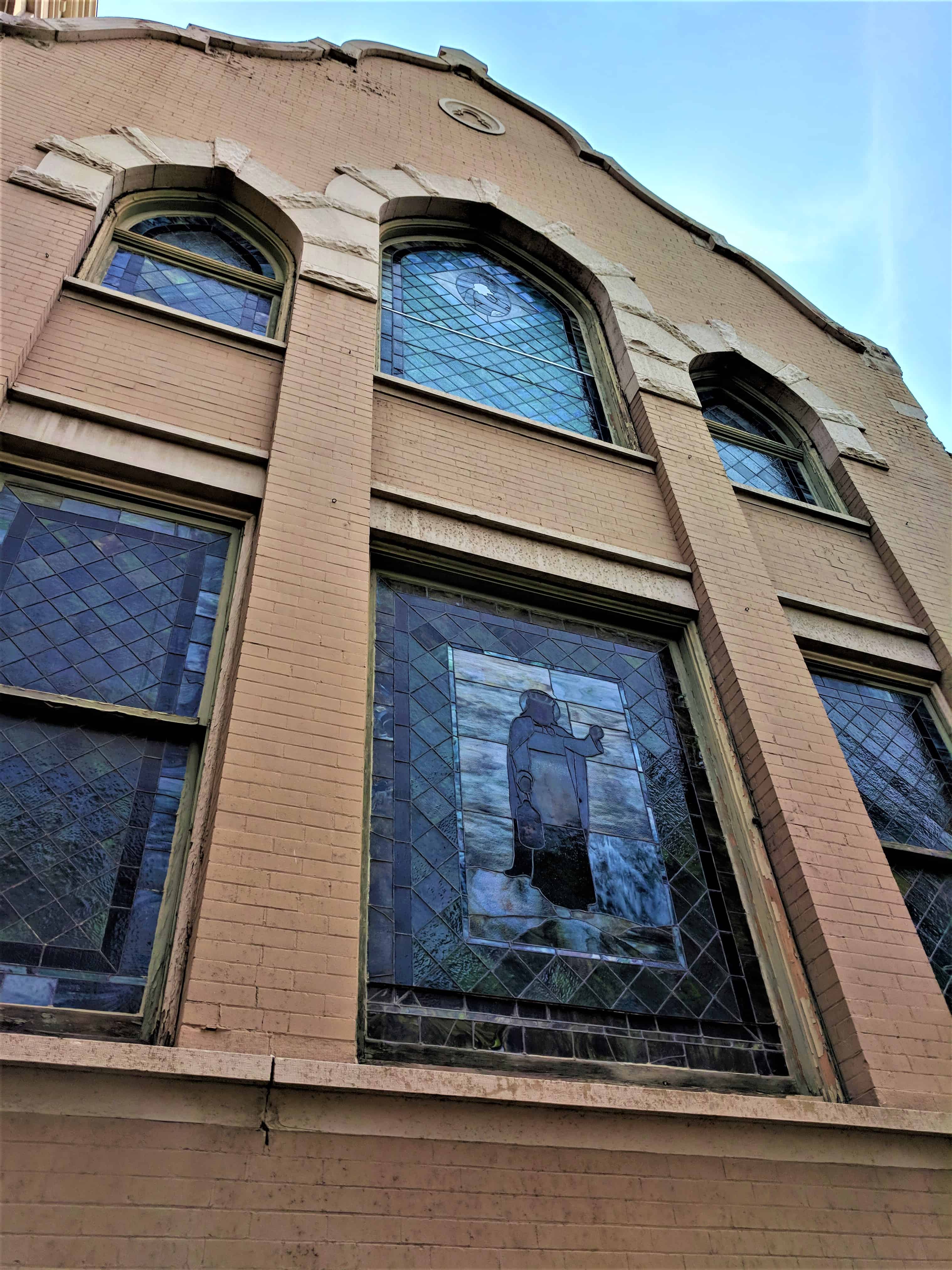
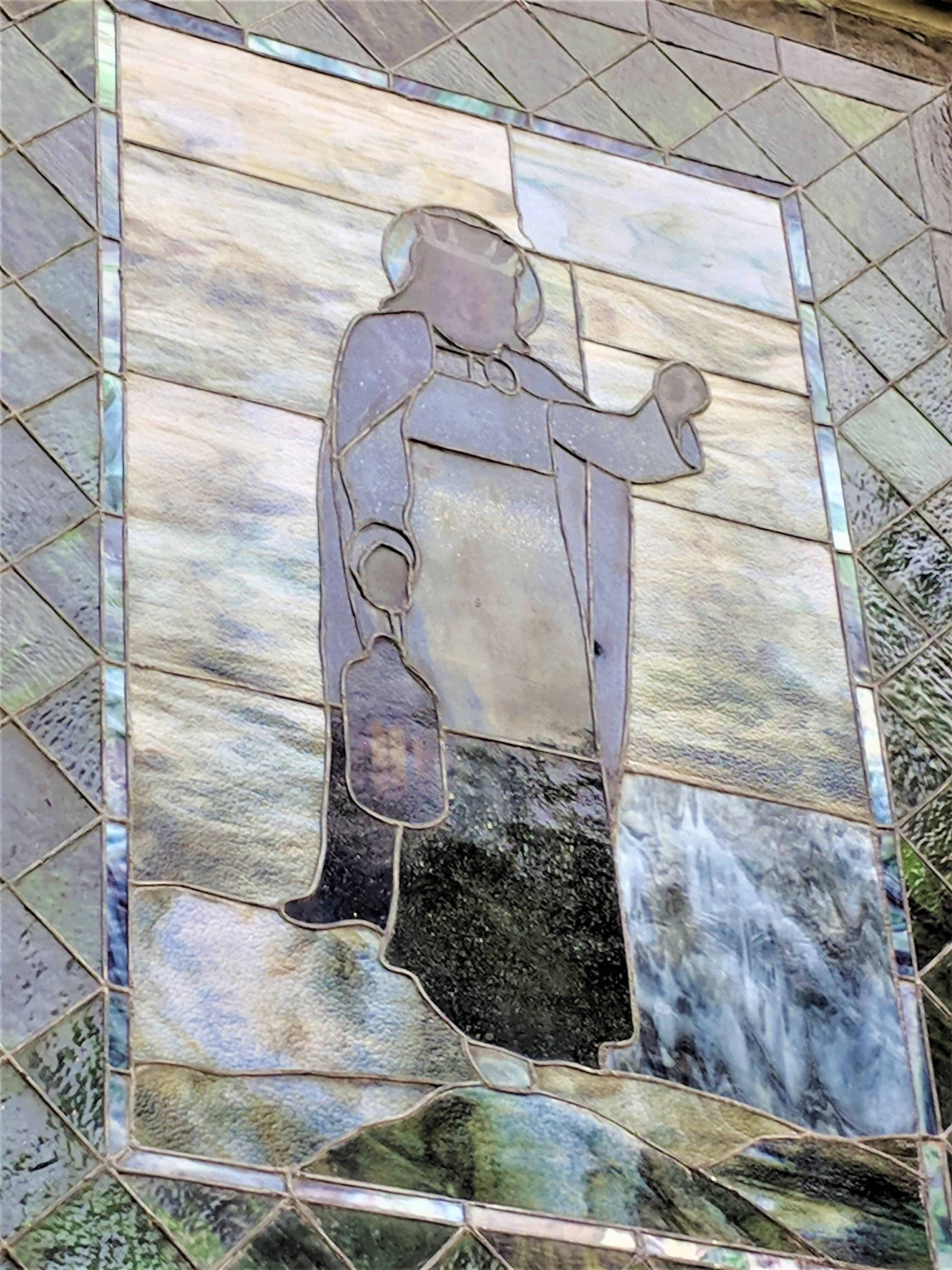
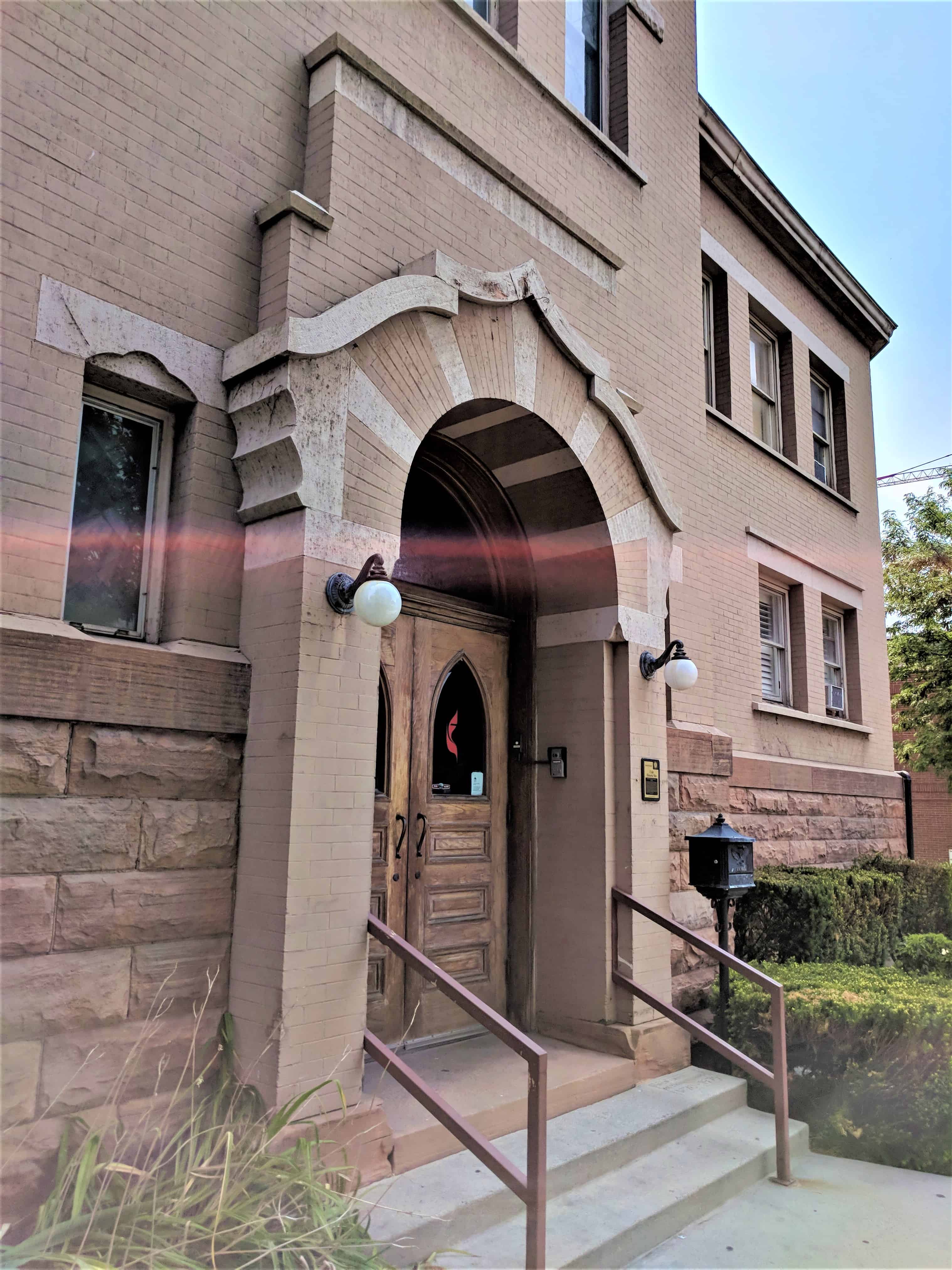
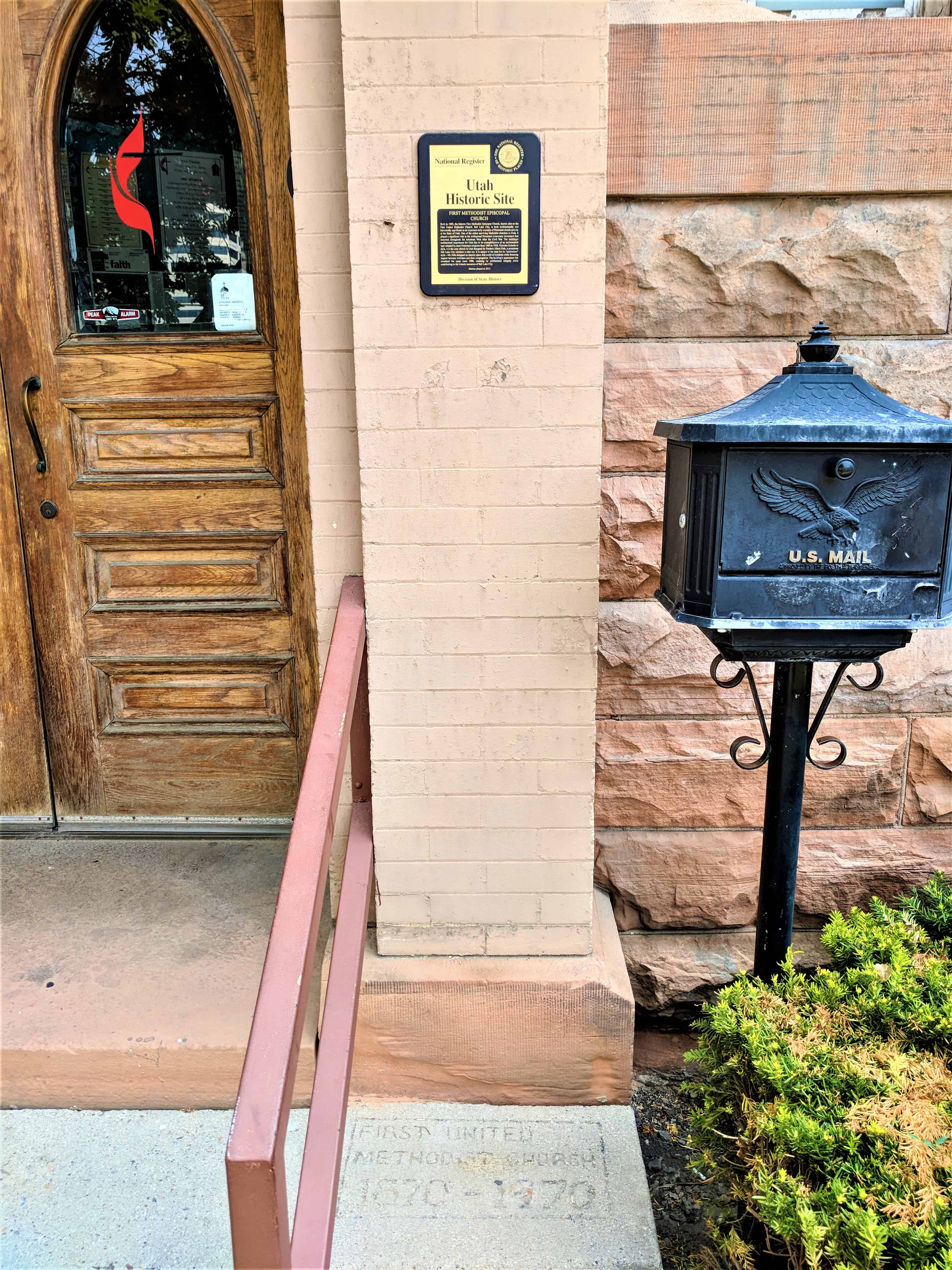
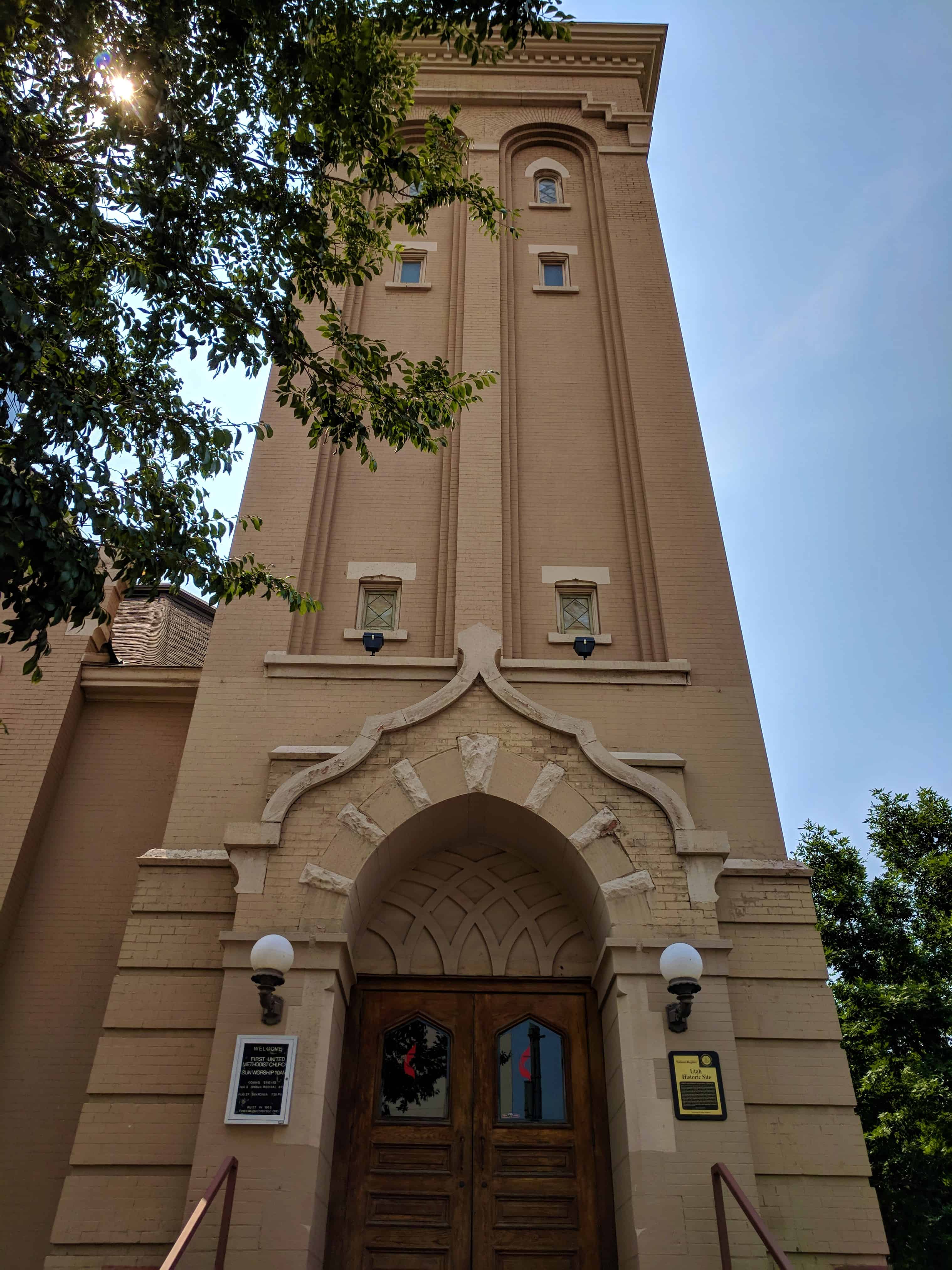
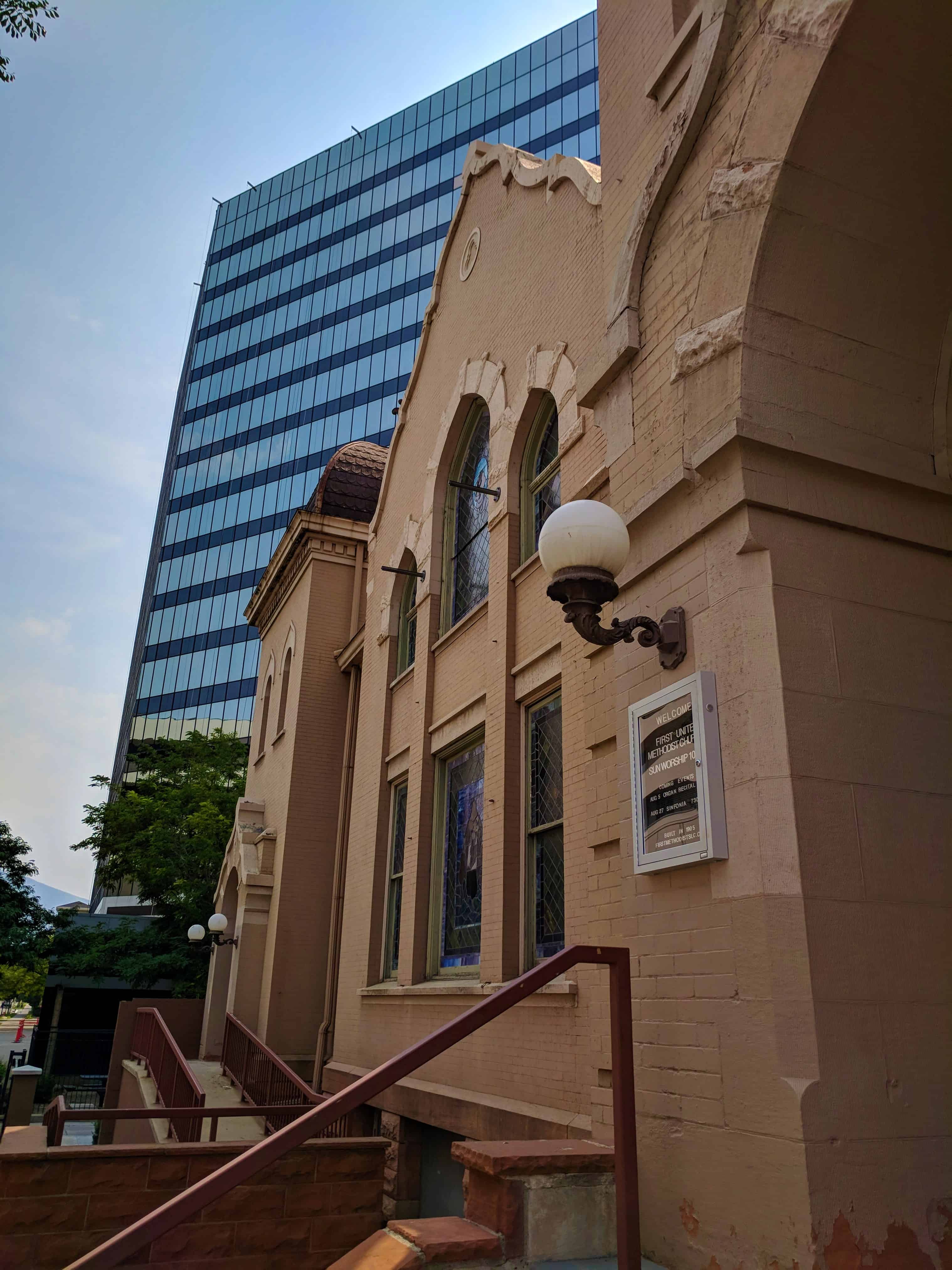
Built in 1905, the historic First Methodist Episcopal Church, known also as the First United Methodist Church, Salt Lake City, is both architecturally and historically significant as an important early example of Protestant church activity in the State of Utah.
One of the oldest surviving Methodist churches in Utah, it played a significant role in the widespread Protestant missionary movement that occurred throughout the American West after the Civil War. The building’s architectural importance for Utah lies in its exemplification of an ecclesiastical type adopted by most Protestant religions from 1880 to 1930. Victorian Eclectic in style, it is the only church in Utah designed by Frederick Albert Hale, a prominent Salt Lake City architect in that era. It is unique in the state for its “auditorium” style – Mr. Hale designed an interior space that could sit hundreds while fostering rapport between ministers and their congregation. The building’s appearance has remained the same since 1906, retaining its architectural integrity while contributing to the historic resources of Salt Lake City.
It was added to the National Register of Historic Places in 1995.
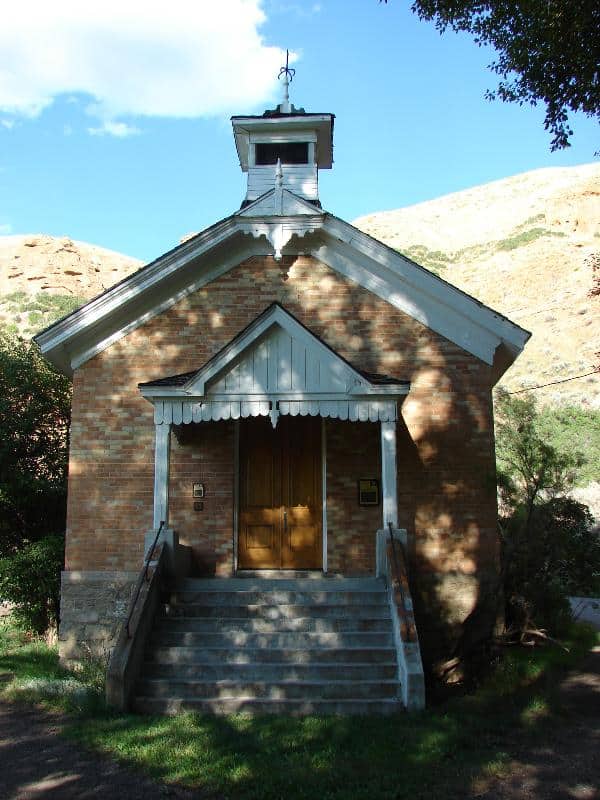
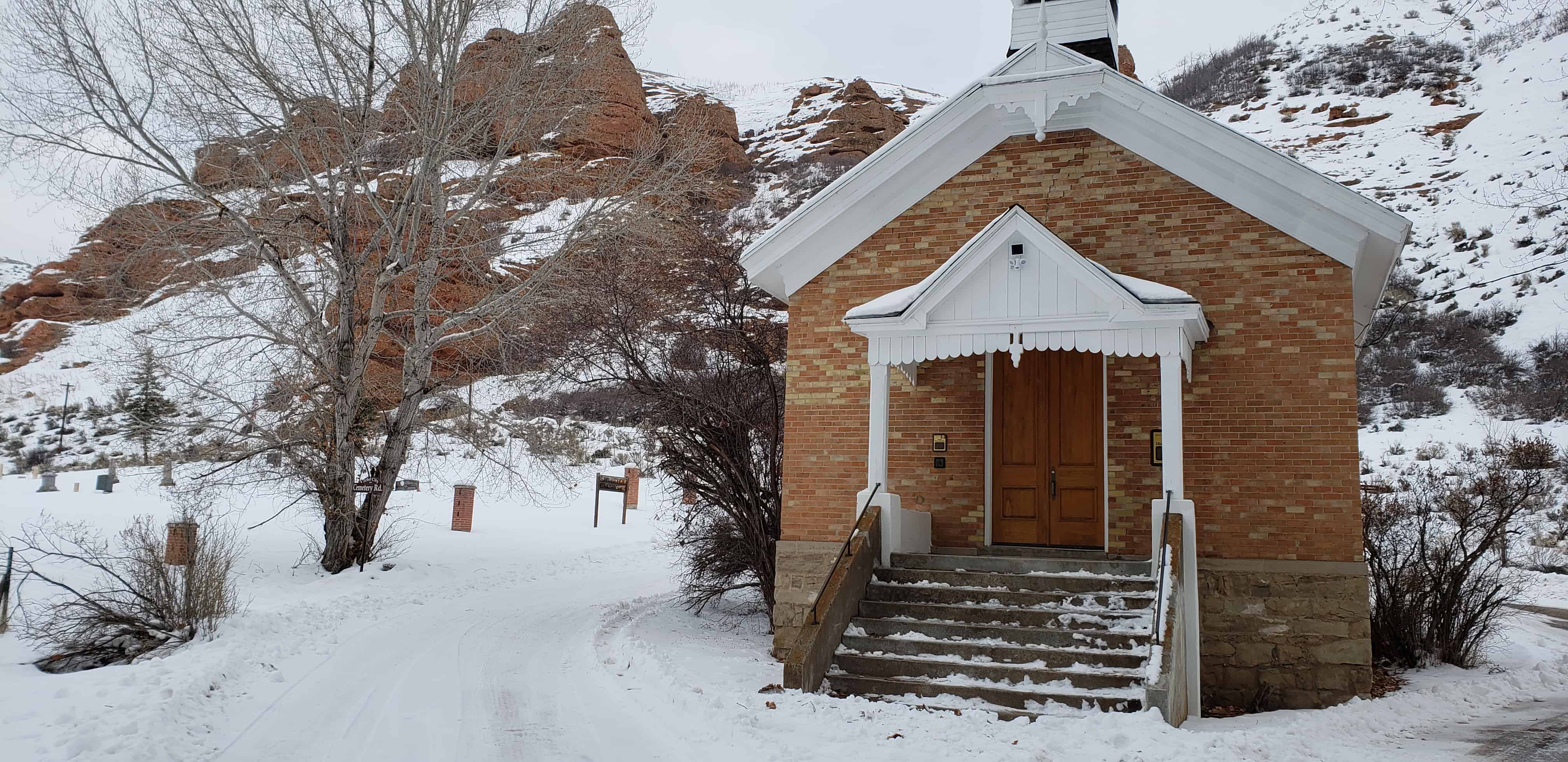
Constructed C. 1876, this building served protestants as a church and school until 1880 when it was sold to the Echo School District. Latter-day Saints then obtained permission to worship here and bought the building in 1913. The chapel served until 1963 when it was closed due to Echo’s declining population. The young adults, L.D.S youth group, reopened the chapel in 1974 and placed this marker in 1976.
Echo School and Church
This Victorian Gothic building stands as the remaining historic edifice of “Echo City,” one of many boom towns built along the Transcontinental Railroad. In 1876, the Echo City School District constructed the building with English immigrant John Shill reportedly designing and supervising the construction. Most of the materials are local: red pine lumber from Saw Mill in Echo Canyon, sandstone from a quarry in Grass Creek, brick from clay in the Echo hills. The bell arrived by rail. Protestants began using the building for evangelical purposes in 1882, and for a few years even provided the weekday school classes. The LDS Church began worshiping here in 1905 and purchased the building in 1914 after Echo built a new school house. In 1940 major remodeling occurred, including a concrete basement and stairway. People of all denominations helped. The building became idle in 1963 as a result of Echo’s decline in population. A local LDS Young Adult group used the building in the 1970’s. In 1983 ECHO, a non-profit corporation dedicated to preserving the site, purchased the building to continue its use as a community center.
Methodist Episcopal Church Peak Enrollment 127 in 1915 1870 – 1957
This is the oldest extant Protestant church building in Utah. It was dedicated by Chaplain C. C. McCabe and Reverend G. M. Peirce on September 20, 1870.
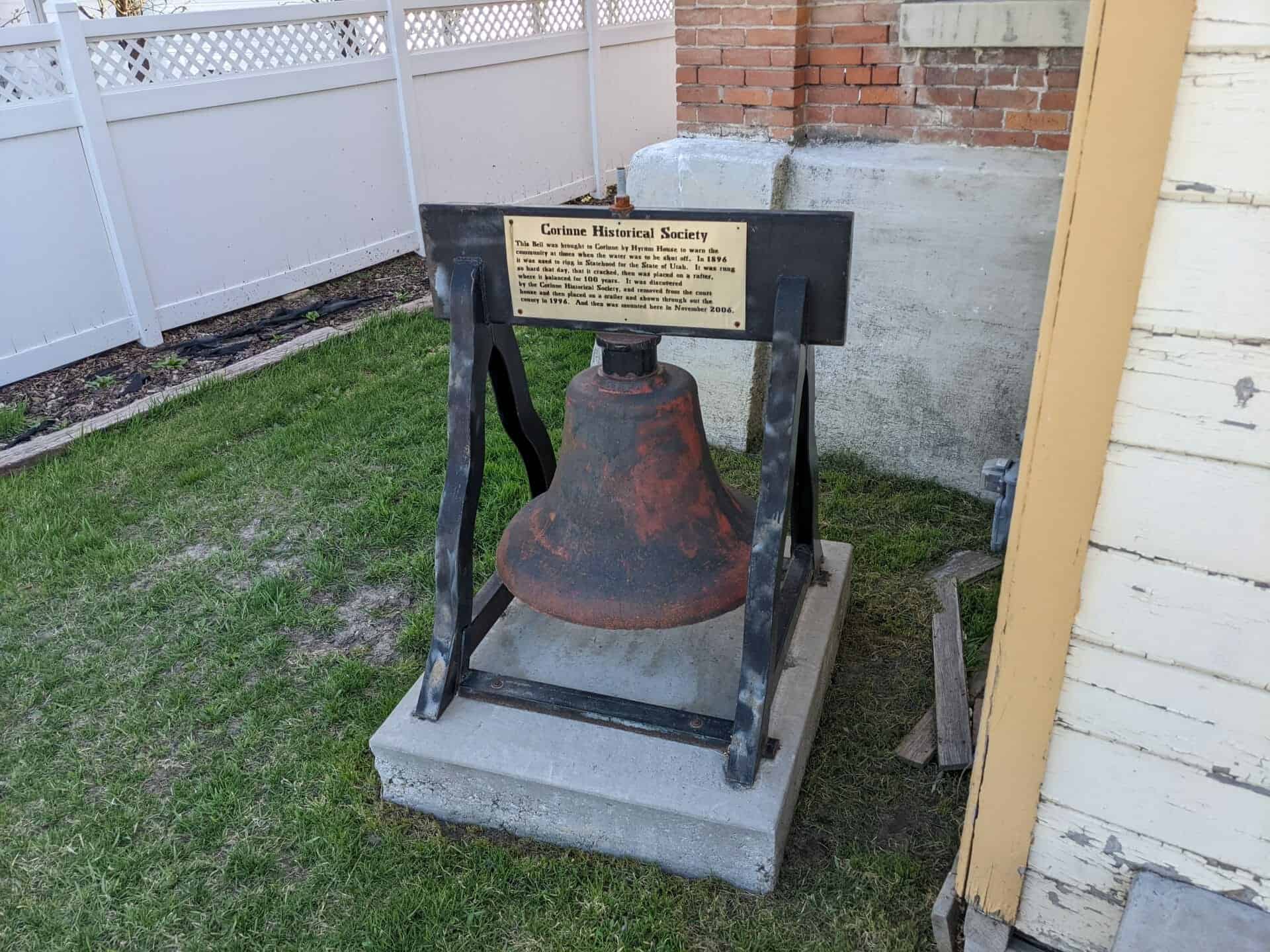
Corinne Historical Society This bell was brought to Corinne by Hyrum House to warn the community at times when the water was to be shut off. In 1896 it was used to ring in the Statehood for the State of Utah. It was rung so hard that day, that it cracked, then was placed on a rafter, where it balanced for 100 years. It was discovered by the Corinne Historical Society, and removed from the court house and then placed on a trailer and shown through out the county in 1996. And then was mounted here in November 2006.
The Corinne Methodist Episcopal Church, located at 3995 West 2300 North in Corinne, Utah was added to the National Register of Historic Places (#71000842) on May 14, 1971. The text below is from the nomination form from when it was added to the register.
Corinne, Utah lays claim to several distinctive features. It was Utah’s First “Gentile” City, having been dreamed of in 1868, but born and built during March and April, 1869, when the Union Pacific Railroad tracks reached there, It was the last U.P.R.R. track town on the transcontinental line, having 1500 inhabitants within a month and 3,000 by the end of April, It was laid out by J. E. Hause, chief engineer for the Union Pacific Railroad. Its name came either from Corinne Williamson, daughter of General J. A. Williamson, and the first white child born in the new town or from the actress who performed there on several occasions, Corinne LaVaunt.
By February, 1870, Corinne had been incorporated. Within another year an all gentile “school,” taught by Mr. A. B. Glockner, reported to have been Utah’s first “free public education” system, was organized. In addition, being a non-Mormon community of size and promise, Corinne is claimed as the birthplace of Utah’s American Liberal Party. The town asked to be made Utah’s capital and later to be annexed to Idaho.
Corinne is distinctive in Utah, because it was settled rapidly by non-Mormons. Within two years three protestant and one Catholic church had been organized. The first church in this “City of the Un-Godly,” probably was the Corinne Methodist Church; Reverend G. M. Pierce delivered his first sermon June 15, 1870, in the opera house, sought donations, and soon raised $4,000 for construction of the church. It was dedicated September 20, 1870.
Corinne retained a prominence as the northern-most point of the transcontinental railroad. However, in time, Ogden became the junction for the Utah Northern Railroad, which replaced the lucrative freighting enterprise centered at Corinne. Later, when Lucin Cutoff crossed the Great Salt Lake south of Promontory, the traffic through Corinne was further reduced.
The town held on and at times has been revived somewhat by mining and irrigated farming booms. Today it is the center of a small farming community.
Corinne was unusual. It represents the first Gentile inroad into Utah. Here the protestants first undertook to “convert” the Mormons. The old church today remains as the only tangible reminder of that role and that era.
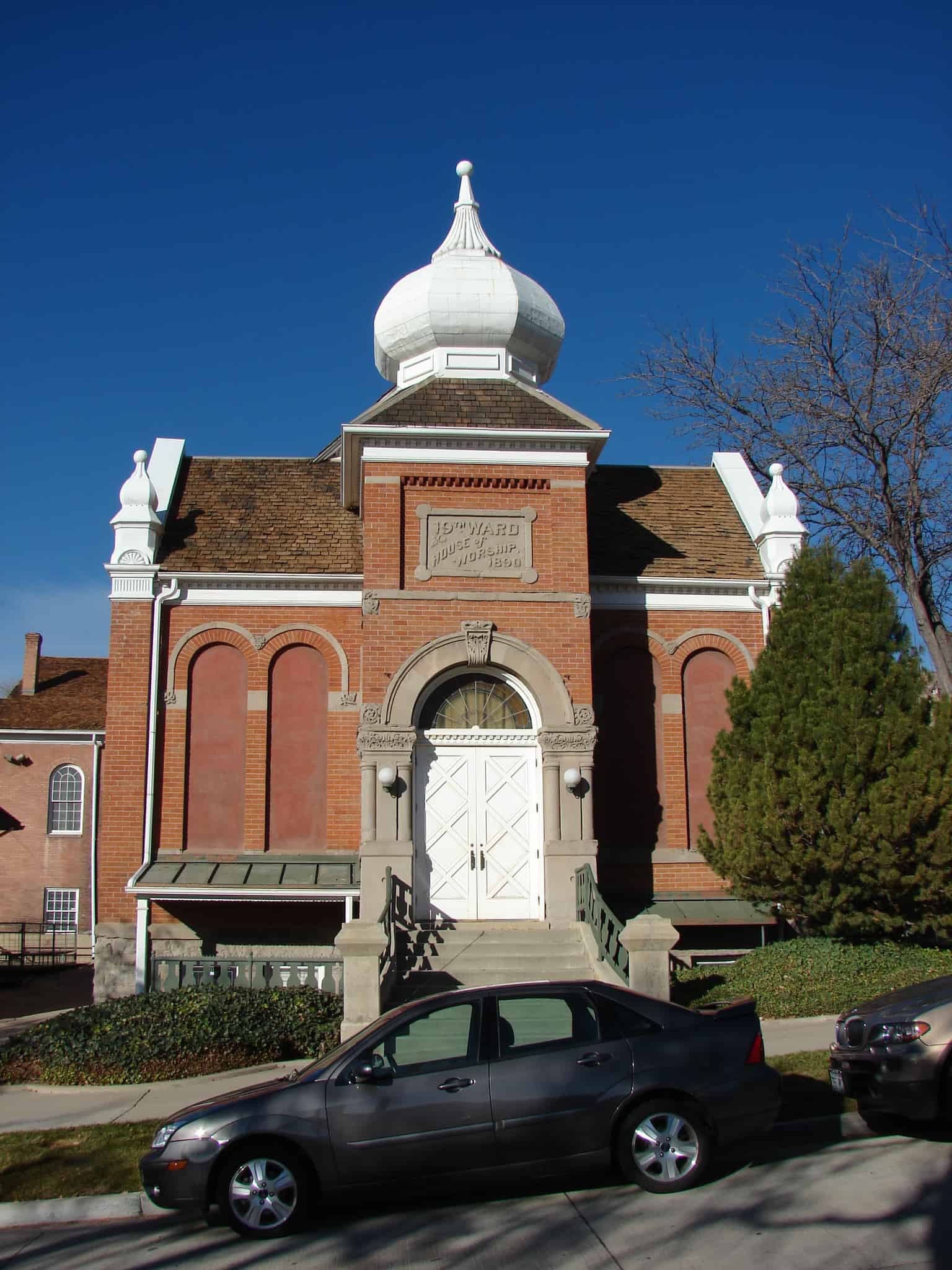
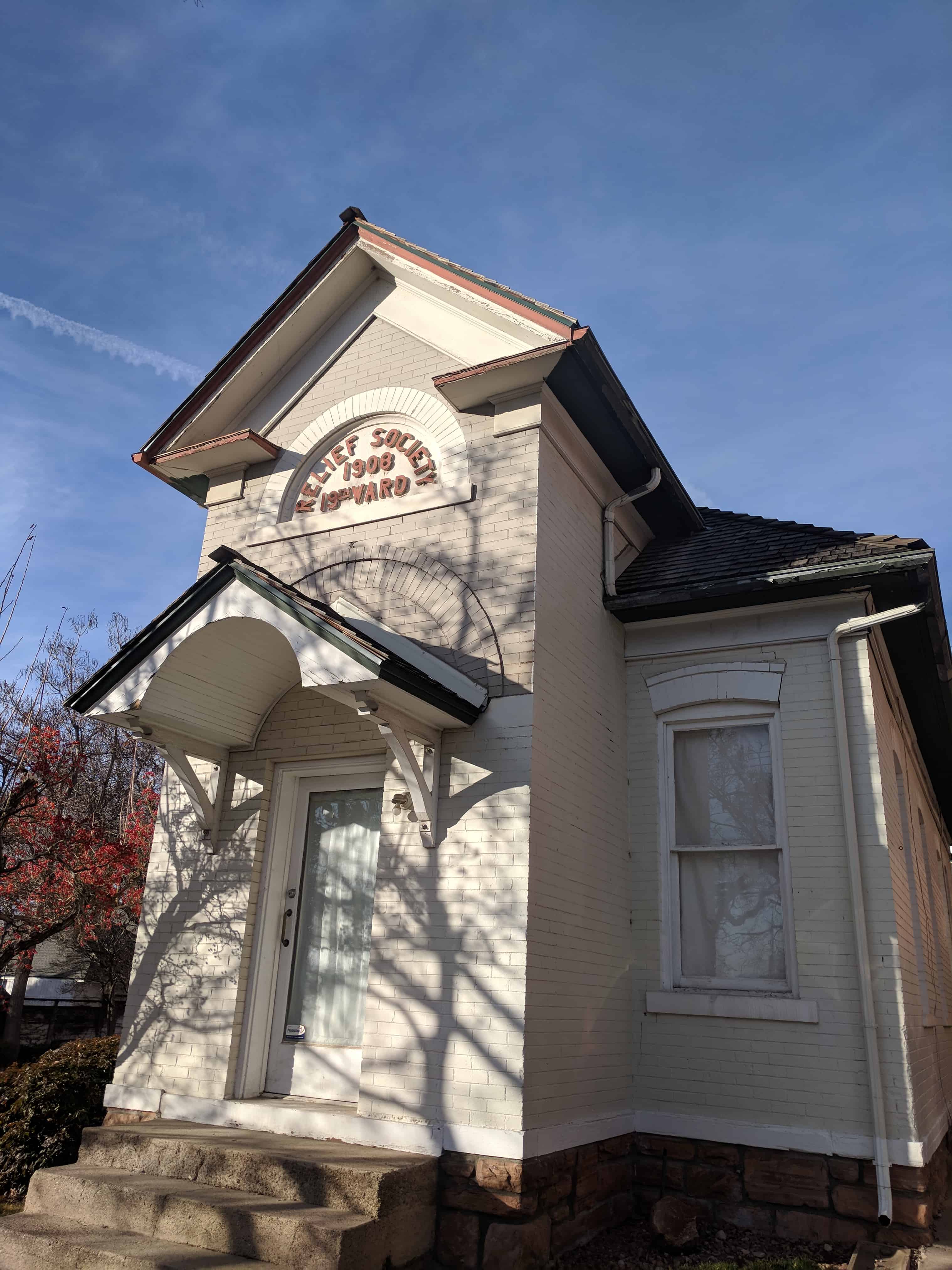
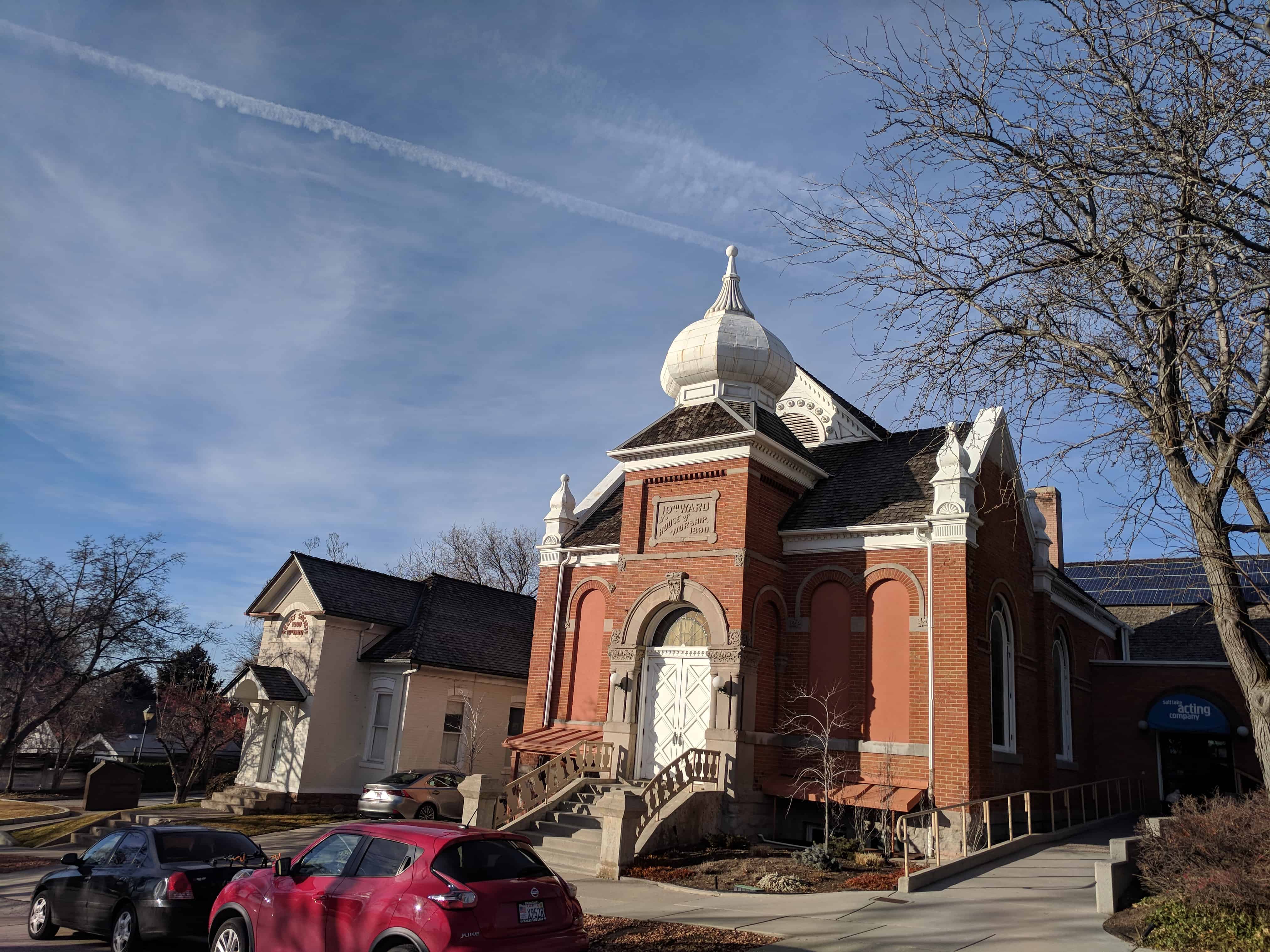
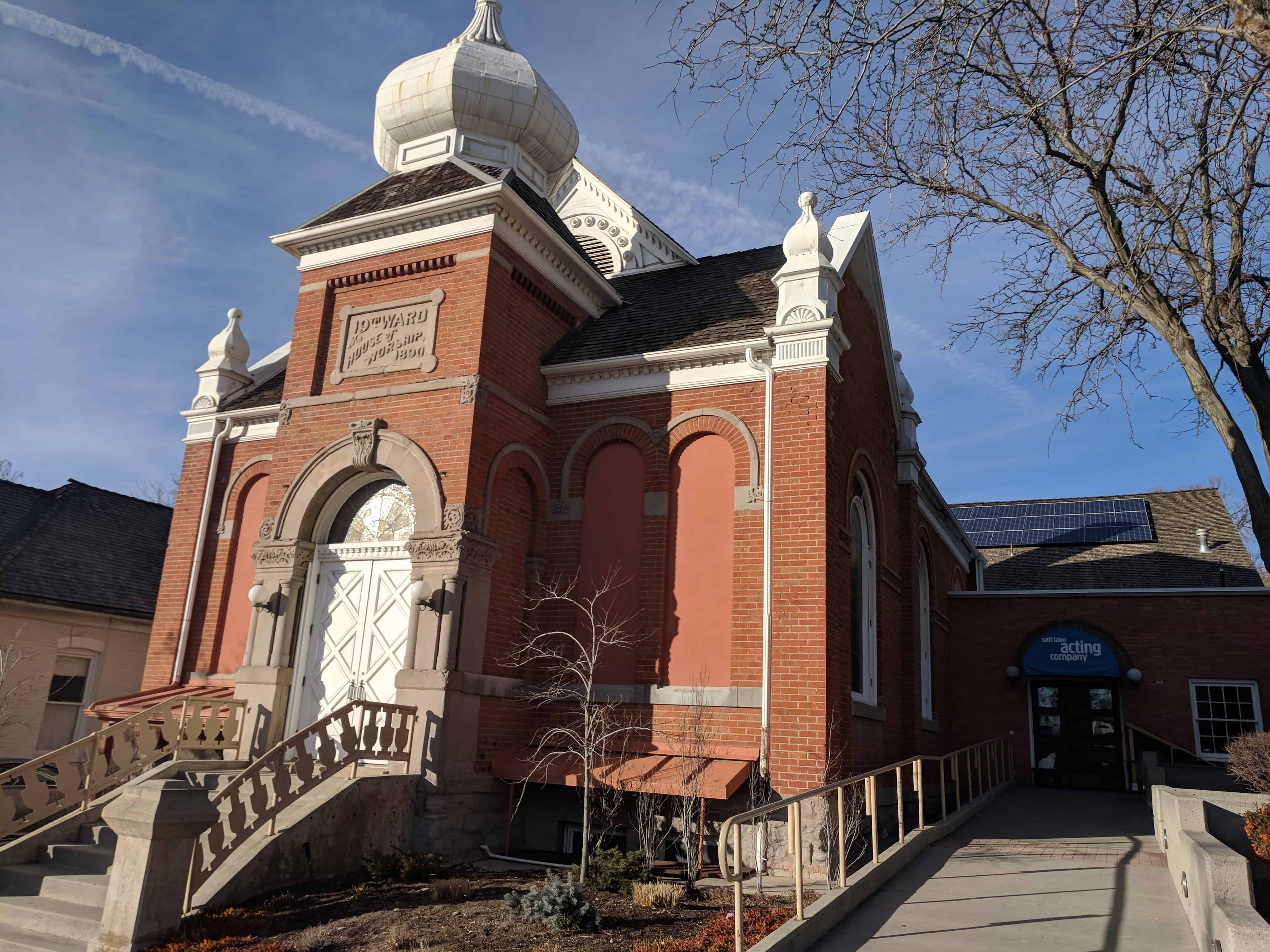
The 19th Ward Meetinghouse and Relief Society Hall.
Located at 168 W. 500 North, Salt Lake City, Utah, was listed on the National Register of Historic Places in 1976.
It was built in 1896. Its architecture is significant in American history as reflecting changes imposed upon The Church of Jesus Christ of Latter-day Saints (LDS Church) by outside influences. Pressure included various Federal enforcement efforts following upon the Edmunds–Tucker Act of 1877, which outlawed polygamy. In effect, the LDS Church capitulated, and sought to adopt different values in conformity with worldwide ones. The meetinghouse was designed by architect Robert Bowman and represented a “totally out of character” change in style; it includes an “oriental, Byzantine, or German Renaissance-inspired onion dome”. It was no longer a church when listed on the National Register of Historic Places in 1976.
The building currently houses the Salt Lake Acting Company.
See other historic churches in the area on this page.
… bounded on the north by 5th North St. and Girard Avenue (or the 24th Ward), east by the brow of the hill (or Capitol Hill Ward), south by 2nd North St. (or the 17th Ward), and west by 1st West St. (or the 22nd Ward).
The boundaries of the 19th Ward were extended so that at one time all that part of Salt Lake City lying between 2nd North St. and the Warm Springs and from Main St. and Arsenal Hill to the Jordan River belonged to the ward, although much of this territory, at the time, was unoccupied.
History timeline:
1849, February 22 – one of the original nineteen wards 1889 – all that part of the ward lying west of 2nd West St. was separated from the 19th Ward and organized as the 22nd Ward. 1891 – all that part of the ward lying north of 9th North St. was separated from the 19th Ward and organized as the 23rd Ward 1909 – the western boundary of the ward was changed from 2nd West St. to 1st West St. 1926 -all that part of the ward lying north of 5th North St. was organized as the 24th Ward
The 19th ward is one of the original 19 wards in Salt Lake City in 1849, you can see the others on this page.
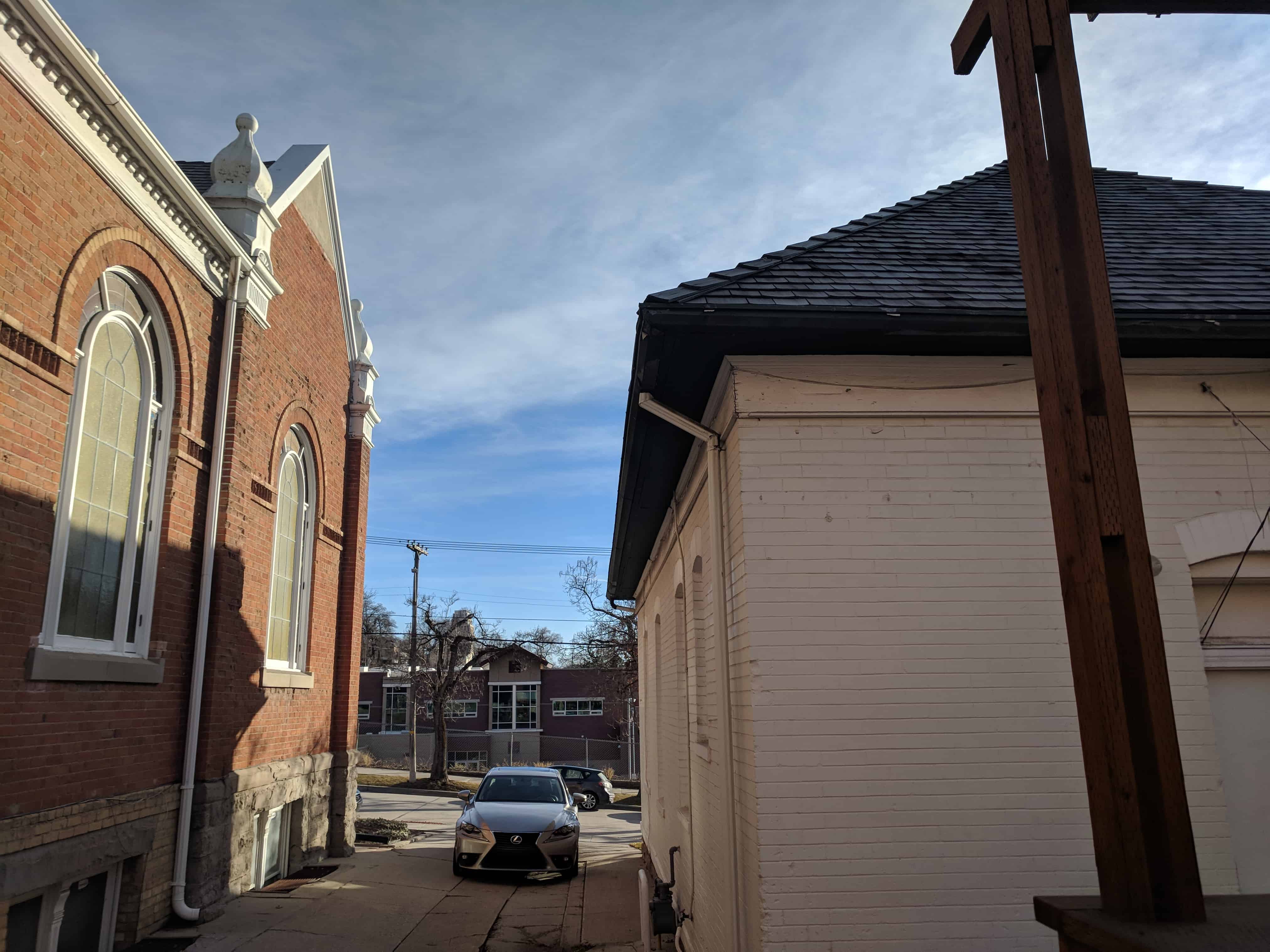
This structure was the third meetinghouse erected 1890-1892 for the 19th ward of the Church of Jesus Christ of Latter-day Saints. Originally encompassing nearly 120 square miles, the 19th ward, repeatedly reduced to create new wards, is now one of the smallest. The meetinghouse is no longer used by the church. The 19th Ward Relief Society Hall was built in 1908 about two blocks away and later moved to its present site. The amusement hall was erected in 1929.
“In 1852 the population of the 19th ward numbered 303 adults and 100 children under eight years of age. Immediately after the organization of the ward the people met for worship in the Warm Springs Bath House, which served until a school house was erected that year on the northeast corner of 4th North and 2nd West streets. In 1866, on the site of the old school house, was erected a large and commodious Building, to which wings were added on the north and south some years later.”
This chapel deviated from the early pioneer chapels built in the valley. Built in 1890 this building shows a heavy Russian influence in its architectural style, The large onion shaped dome is the dominant feature of the chapel. The chapel or assembly hall has been stripped of its pews, to enable it to be used by Ballet West. The ballet trop now uses the chapel as it’s practice headquarters. Since religious icons and symbolic decoration are not common in Mormon meetinghouse, very little else was changed by Ballet West.
The Russian influence apparent in the 19th Ward Meetinghouse was a dramatic departure from the plain uniformity of older LDS chapels. Built in 1890, the chapel exemplifies the waning of the pioneer period and a greater acceptance of more varied styles of architecture. The large white onion-shaped dome and lesser onion-topped pillars are dominant features of the red brick building. It is listed, along with the Relief Society Hall, on the National Register of Historic Places.
The 19th Ward was one of the original nineteen wards organized in Salt Lake City. At first, members met in private homes or at the Warm Springs Bath House (later Wasatch Springs Plunge). Subsequent gatherings were held in an adobe schoolhouse until it was razed and replaced by a small chapel in 1866.
The Relief Society Hall was built in 1908 about two blocks away from the present chapel. The building was later moved to this location. The amusement hall was added in 1929. This is the only remaining ward chapel with an adjacent Relief Society Hall in the city. The facility is now owned by Salt Lake City and is being restored to provide office space for the Utah Heritage Foundation and other non-profit organizations.
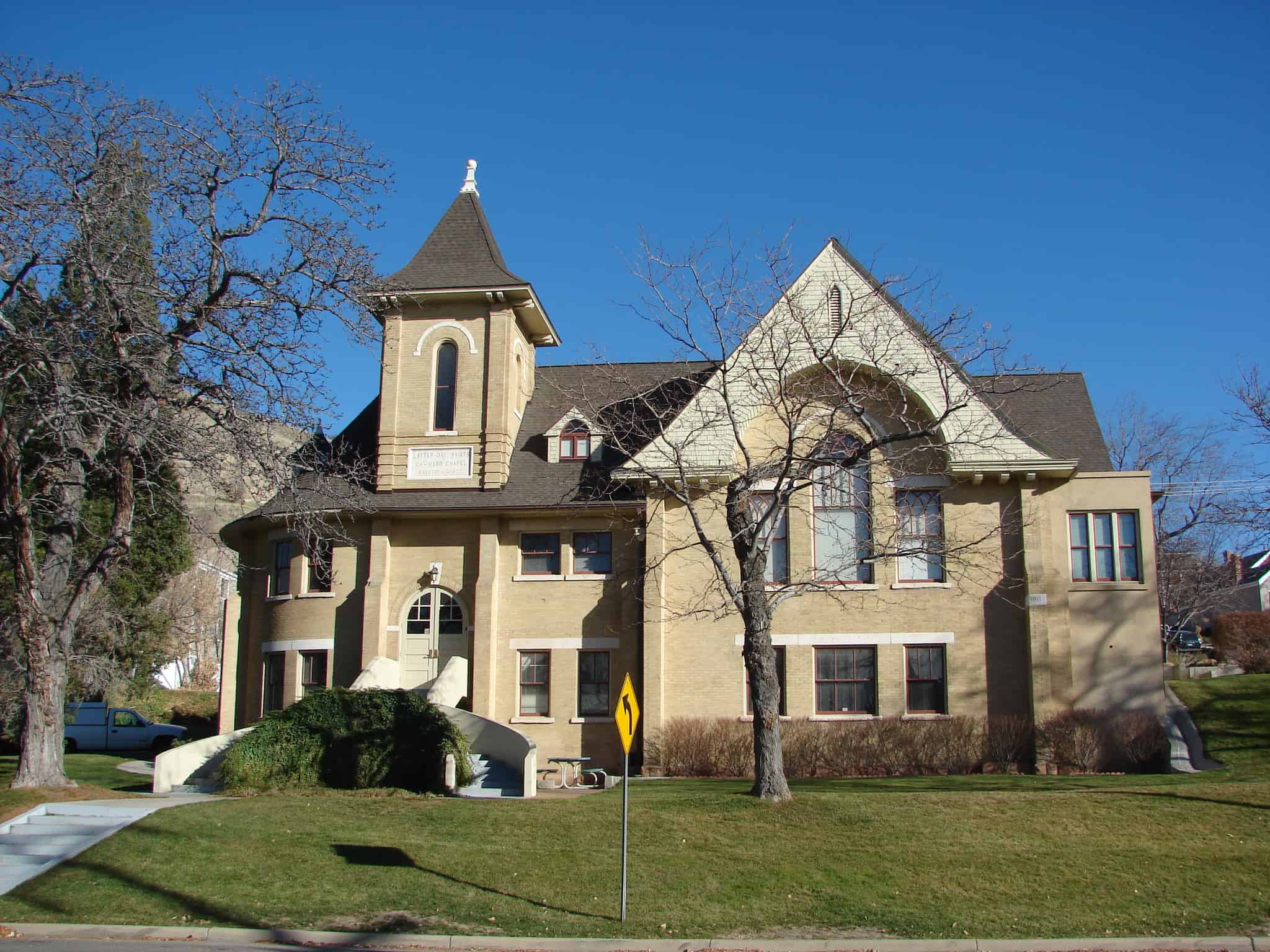
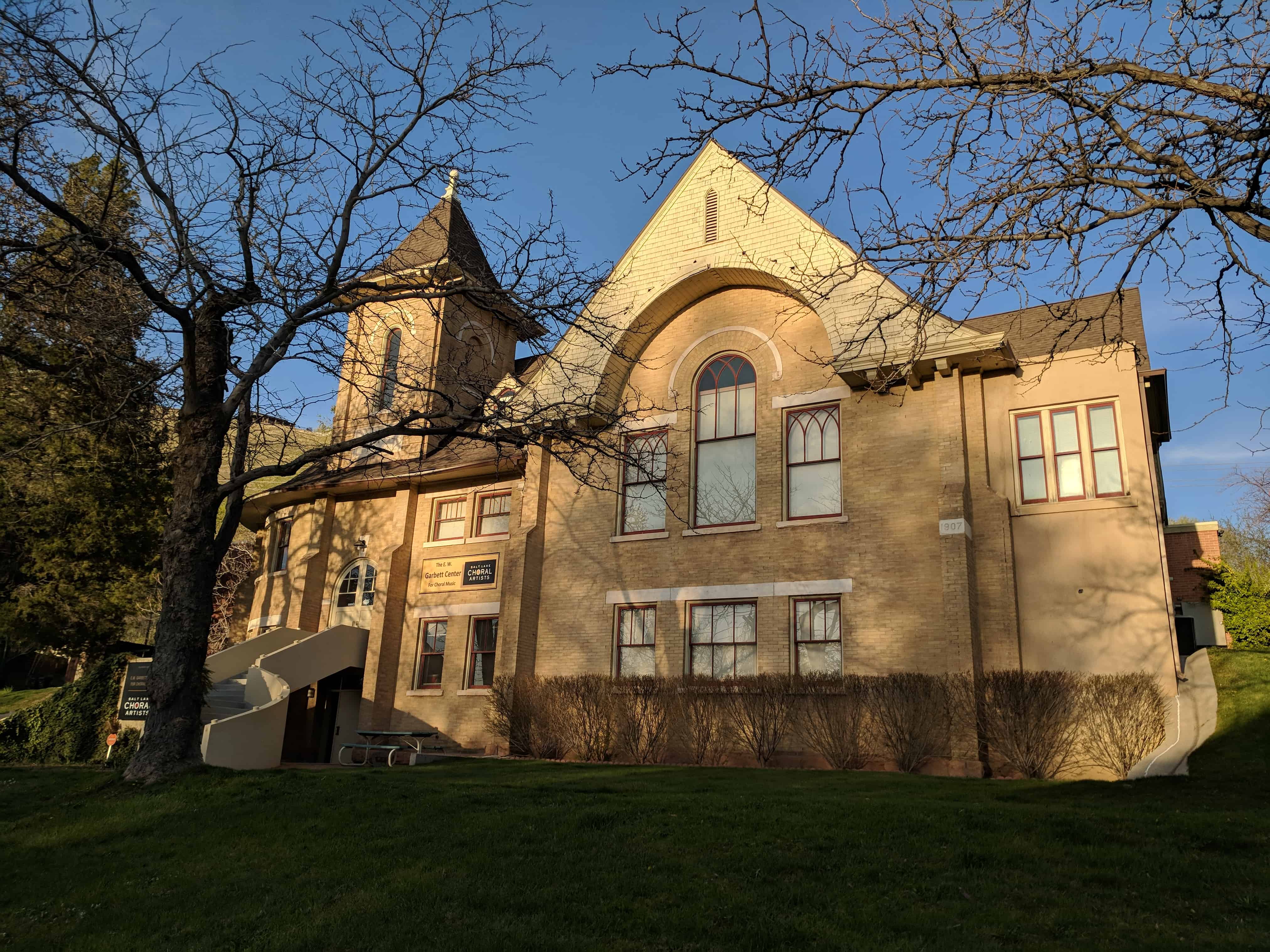
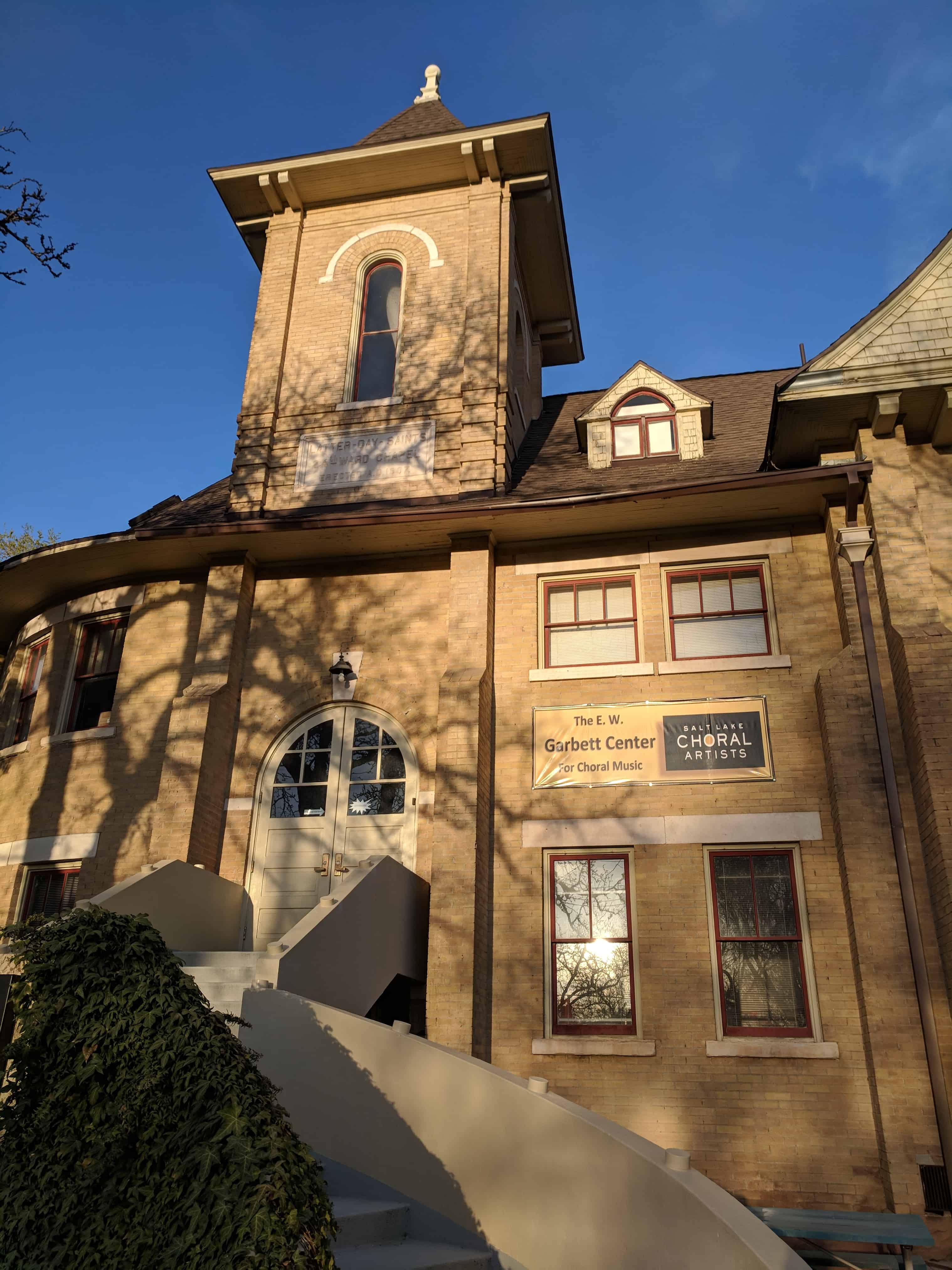
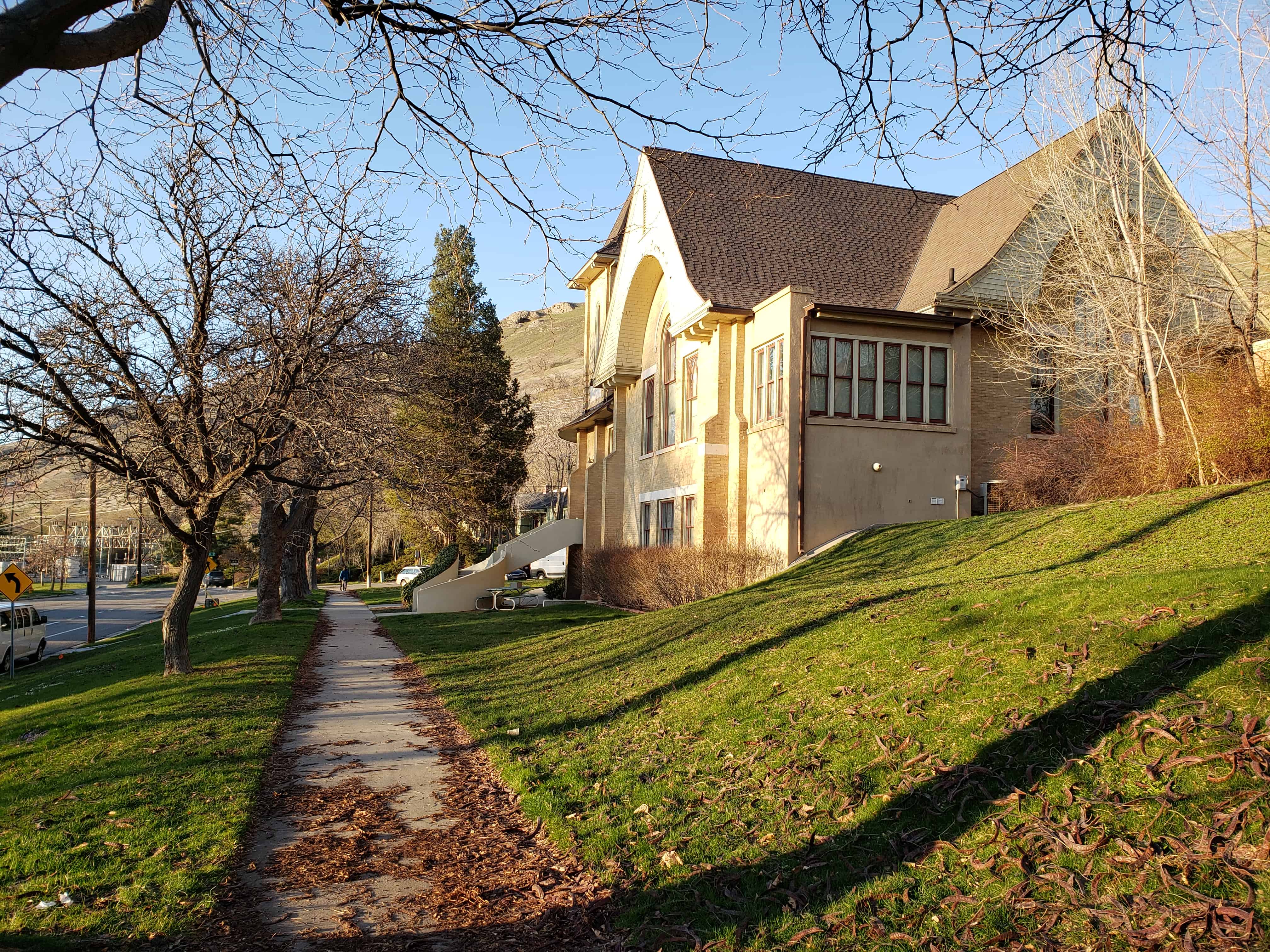
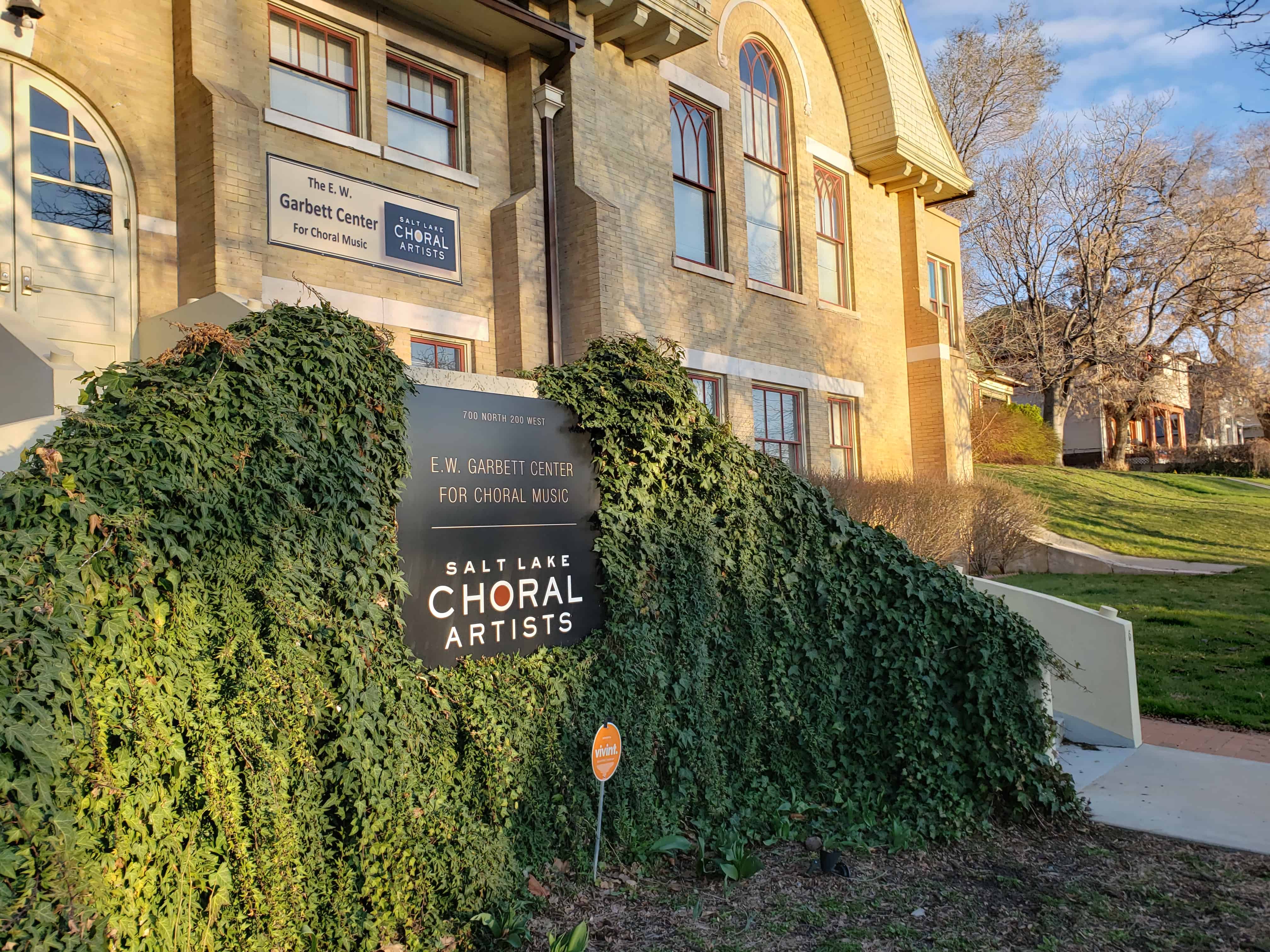
A gorgeous 100+ year old chapel in Salt Lake City, the 24th ward chapel was built in 1907 and is located at 700 North and 200 West. The church sold it in 1969.
See other historic church buildings in Salt Lake on this page.
“The 24th Ward (new) was organized February 4, 1906, from the north part of the 19th Ward. Immediately after the organization of the ward, the erection of a substantial brick and stone chapel on the triangle at the junction of Wall St. and 1st West St. was commenced. To this chapel, which originally cost $17,000, improvements and additions have since been made so that it now has an auditorium with a seating capacity of 500 persons. In the basement is a spacious amusement hall.” William Wood Jr., the first Bishops of the ward, served nearly 25 years until 1925. The chapel continued in use until the 1970’s when it was sold by the church.
The old 24th LDS Ward is a two-story asymmetrically planned brick structure. The original tan brick has been painted white. The plan and elevation include curved and rectilinear elements and the roof is multiply hipped and gabled. The main gable has a recessed arch enclosing a round arched windows flanked by rectangular lights. The gable features shingle siding. A square tower over the entrance has a hipped roof and round arched windows. Windows have massive concrete sills and lintels. In the south an addition has been made. Modifications have occurred to turn the building into a school facility.
A fire in 1935 gutted the sanctuary, but the church was rebuilt following the original design.
Located in the Central City neighborhood at 231 East 100 South in Salt Lake City, Utah. The building was added to the National Historic Register (#70000630) on September 22, 1970.
The original plan for the Cathedral was drawn by Richard Upjohn. His design called for an east-west transept on a Latin cross plan. The cornerstone was laid in 1870, but only part of the nave was built in 1871. However, the original plan was completed in two later stages, 1882 and 1902.
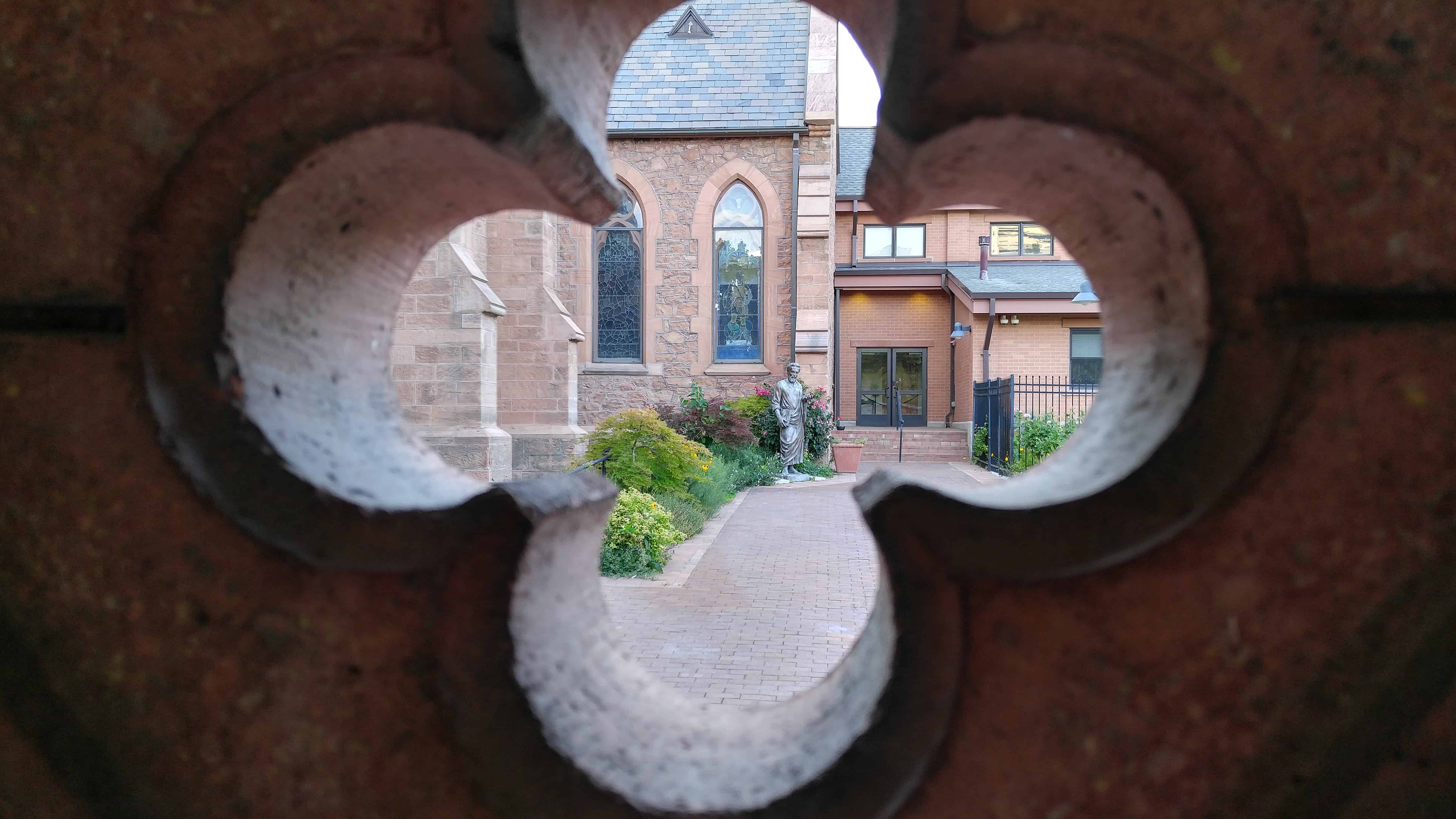
It was built of red sandstone, cutstone, and rubble, with one story, a basement and a gabled roof. The belfry and chimney are extensions of the façade. The nave windows have Gothic arches; the; gables contain rose windows. Arched roof beams are supported on hammerbeams and stone corbels. The stained glass windows represent the tastes of a ninety-year period and include several from Tiffany Studios.
Several alterations have been made. The east transept and an organ were added in October 1882; the west transept and chancel were added in 1902 (architect: Mr. Hall). The west transept and chancel were rebuilt after fire on March 31, 1935. The interior alterations to the main and second floor were by architects, Snedaker & Macdonald (November 1946). The front was extended with a new vestibule and cloisters were added in 1958 (architect: Ashley T. Carpenter). The balcony and organ were installed at rear of nave in 19&7 by Mr. Carpenter. Present condition of fabric is excellent. The additions obscure, but have not changed, the original building.
St. Mark’s Episcopal Cathedral is the oldest non-Mormon cathedral in Utah and probably the oldest religious structure in continuous use in Salt Lake City. It was designed by famed architect, Richard Upjohn, architect of the Trinity Church, New York City, and founder and first president of the American Institute of Architects. It is said to be the last church designed by Mr. Upjohn and is a good example of his Gothic Revival style. Its location in Utah is significant.
Now owned by the Corporation of the Episcopal Church of Utah, 1911, St. Mark’s Episcopal Cathedral, Parrish of Salt Lake City, Utah, who held the cornerstone centennial celebration April, 1970. This lovely cathedral sits in downtown Salt Lake City as a monument to a great architect and pioneer church construction in Utah.
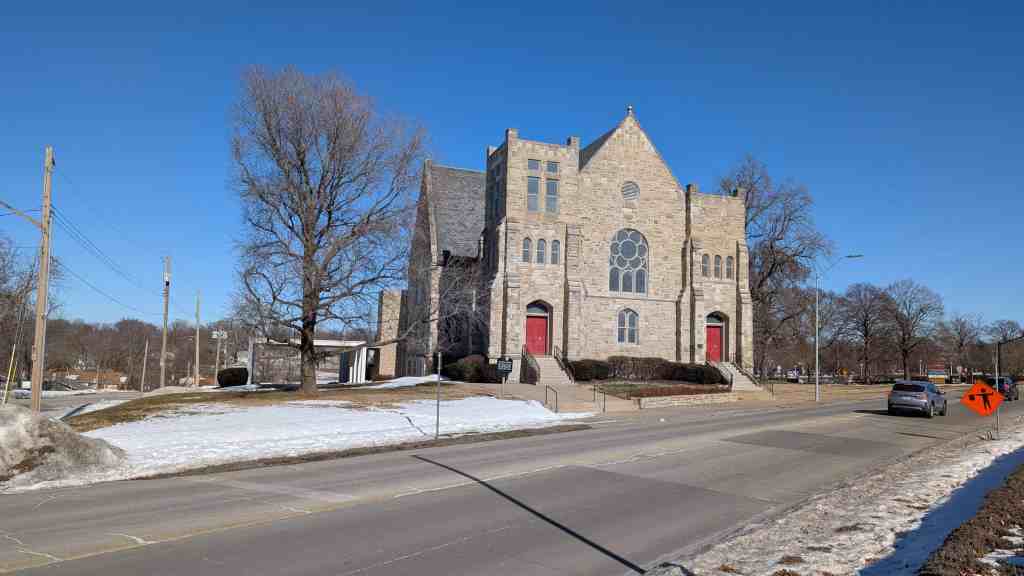
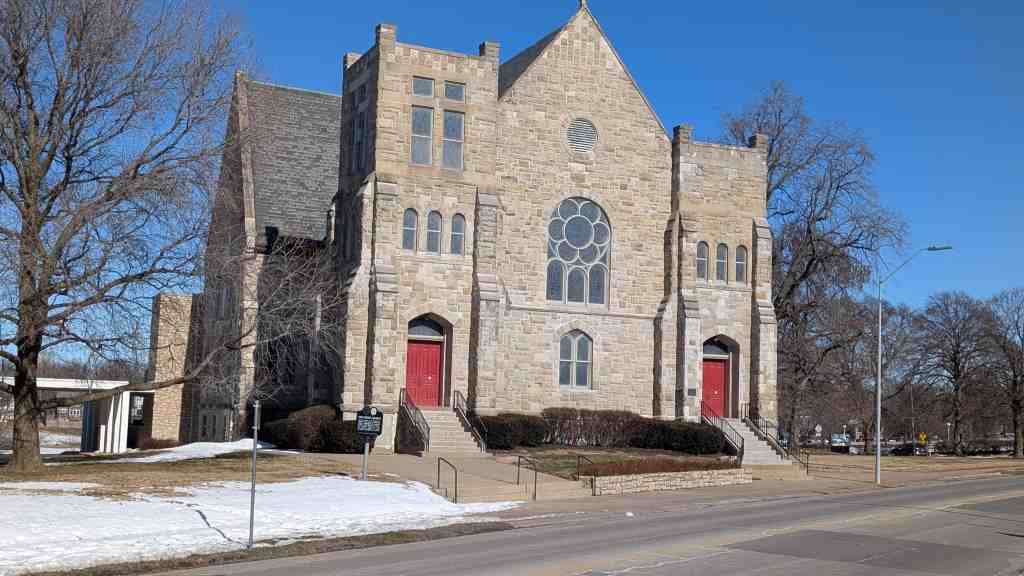
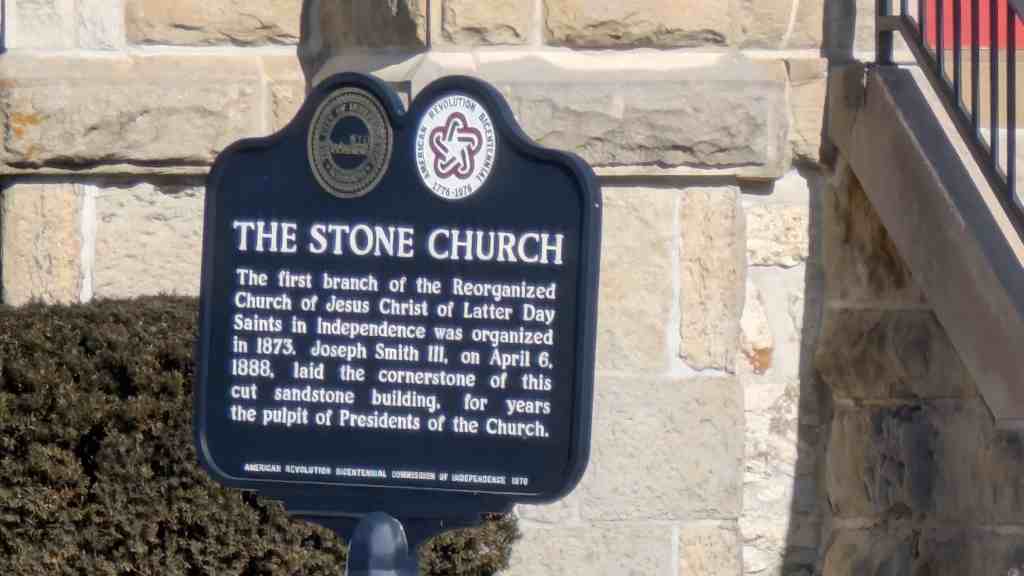
The First Branch of the Reorganized Church of Jesus Christ of Latter-Day Saints in Independence was organized in 1873. Joseph Smith III on April 6th, 1888 laid the cornerstone of this cut sandstone building.
1012 West Lexington Avenue in Independence, Missouri
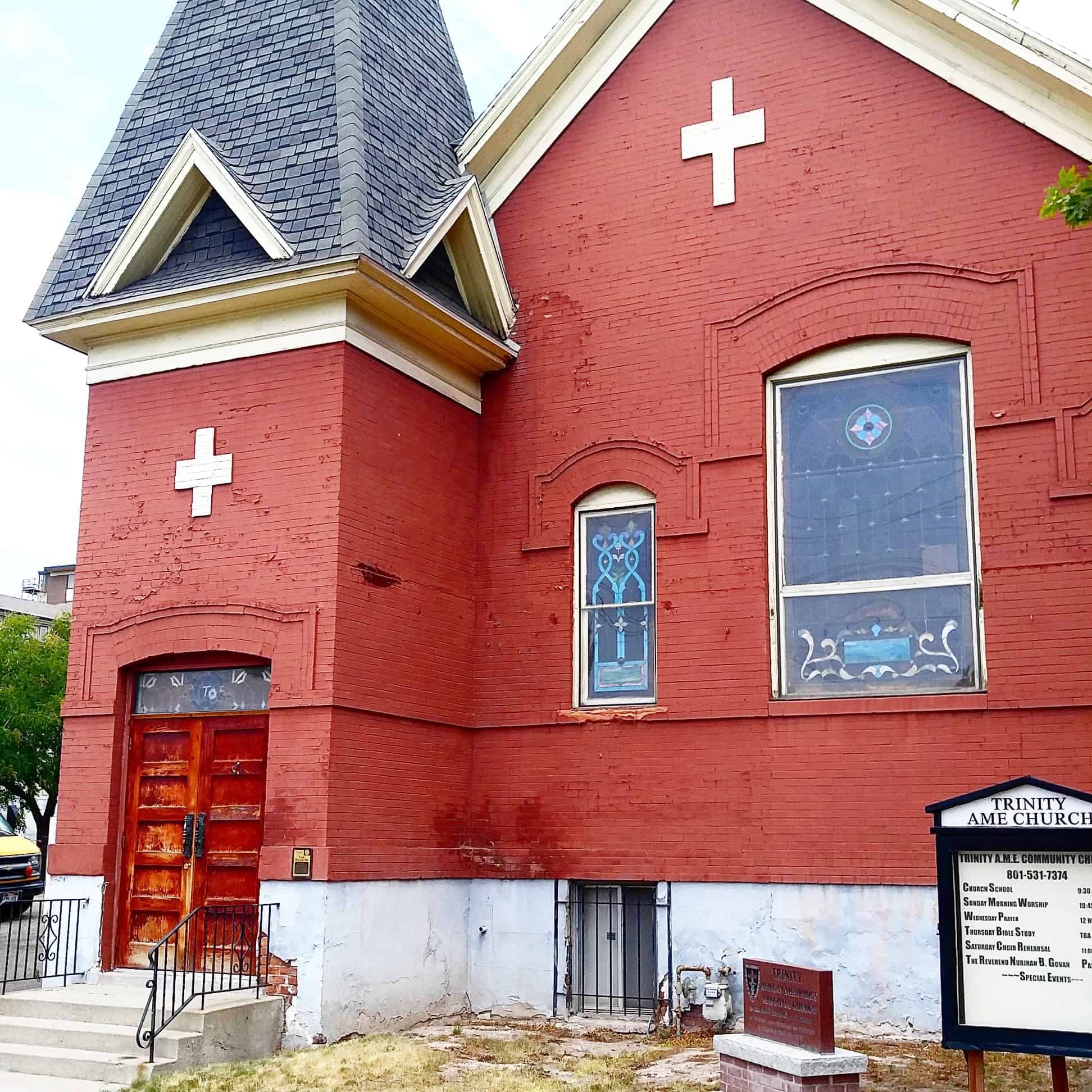
Organized during the 1880’s by the Reverend T. Saunders, this congregation has served as a focus of black religious, social, and cultural activity in Utah from territorial days to the present. In 1907 property at this spot was acquired, and a church designed by Hurly Howell was constructed through the sacrifice and energy of the congregation under the Reverend T. C. Bell. Restoration was begun in 1976 under the Reverend D. D. Wilson.
The congregation met in various members’ homes until it acquired enough funds to buy property to build a church in 1907. The new church was located on 600 South which is now Martin Luther King Boulevard.
From the 1930s and through the 1960s the church congregation numbered around 300 members. Despite the previous strong membership, the church has struggled with declining membership since the 1970s. In 2012 it reported only 50 worshippers a week. Trinity AME now touts itself as a “working class” church that primarily serves widowed senior citizens. It has struggled to attract more youth despite its long history of community involvement. It continues to hold youth activities such as movie nights that partner with the Salt Lake City women’s shelter. It also sponsors interfaith events that involve other religious denominations in the city.(*)
The Manti Utah Temple (formerly the Manti Temple) is the fifth constructed temple of The Church of Jesus Christ of Latter-day Saints (LDS Church). Located in the city of Manti, Utah, it was the third LDS temple built west of the Mississippi River, after the Mormons’ trek westward. (The St. George and Logan Utah temples preceded it.)
Located at 200 East 510 North in Manti, Utah and added to the National Historic Register (#71000854) on August 12, 1971.
Architect was William H. Folsom. The building, with its unique setting is undoubtedly one of the finest examples of Mormon Temple architecture to be found anywhere.
The temple, with its base eighty feet above the highway, holds a commanding position over Manti and the surrounding valley. The sloping lawns, brilliant flowers, and wide variety of trees and shrubs were made possible by hauling enough soil to cover the stone base.
The temple is 171 feet long and 95 feet wide. It is built of local oolitic limestone of a warm cream color. The towers on each end are topped by bell-shaped roofs which are influenced by Victorian architectural fashions The front of the Temple is on the east as with all Mormon Temples and the rear fronts the highway. The interior is striking in its simple elegance. Hardware, woodwork with its graceful arches, heavy doors and finely cut mouldings, and decorating all indicate skilled workmanship. In the basement is a baptismal font resting on the backs of twelve cast life-size oxen. The main floors are occupied for the most part by ceremonial rooms. An assembly room fills the entire upper floor. It was here in 1888 that fifteen hundred members of the Church met to dedicate the building. In the two west corner towers are spiral staircases, extending from the basement to the roof. Engineers and architects have acclaimed them as remarkable pieces of workmanship. In each case the center Is open, without any supporting column and the walnut railings and balusters, winding up through five stories, form a symmetrical coil, perfectly plumb from top to bottom. The building is used continuously and is in an excellent state of repair.
Alterations have been minimal. The annex was built along with the original structure. It was remodeled and added to (on the west and north) in 1956-58.