• About JacobBarlow.com
  • Cemeteries in Utah
  • D.U.P. Markers
  • Doors
  • Exploring Utah Email List
  • Geocaching
  • Historic Marker Map
  • Links
  • Movie/TV Show Filming Locations
  • Oldest in Utah
  • Other Travels
  • Photos Then and Now
  • S.U.P. Markers
  • U.P.T.L.A. Markers
  • Utah Cities and Places.
  • Utah Homes for Sale
  • Utah Treasure Hunt

JacobBarlow.com

~ Exploring with Jacob Barlow

JacobBarlow.com

Tag Archives: Historic Churches

First Presbyterian Church of American Fork

14 Sunday Jan 2018

Posted by Jacob Barlow in Uncategorized

≈ Leave a comment

Tags

American Fork, Historic Churches, NRHP, Presbyterian Churches, utah, utah county

2015-03-28 18.50.05

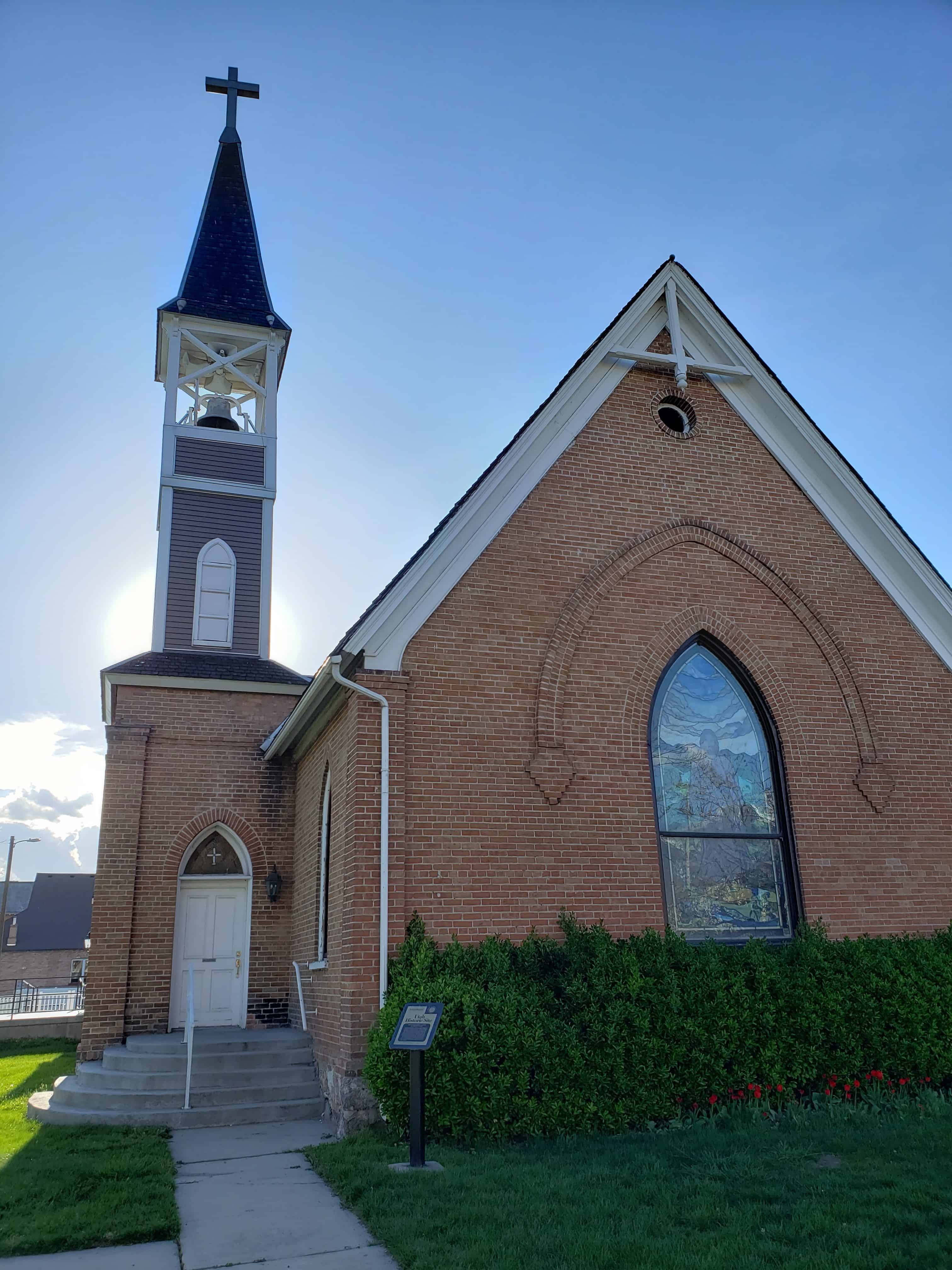
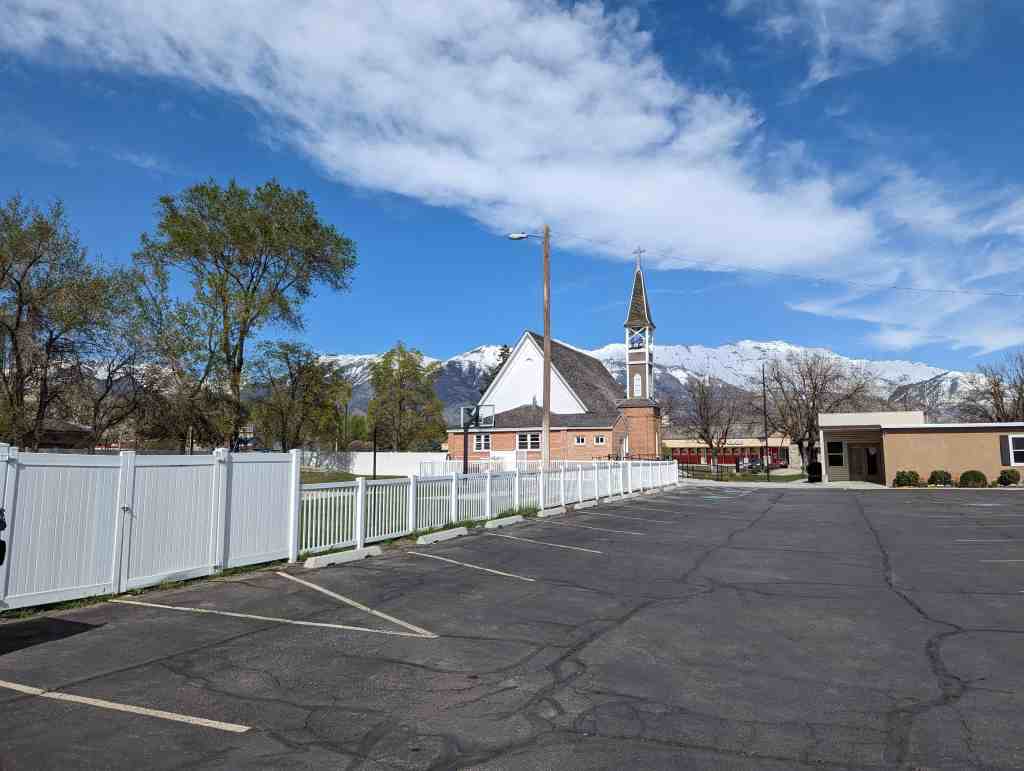
First Presbyterian Church of American Fork – 75 North 100 East

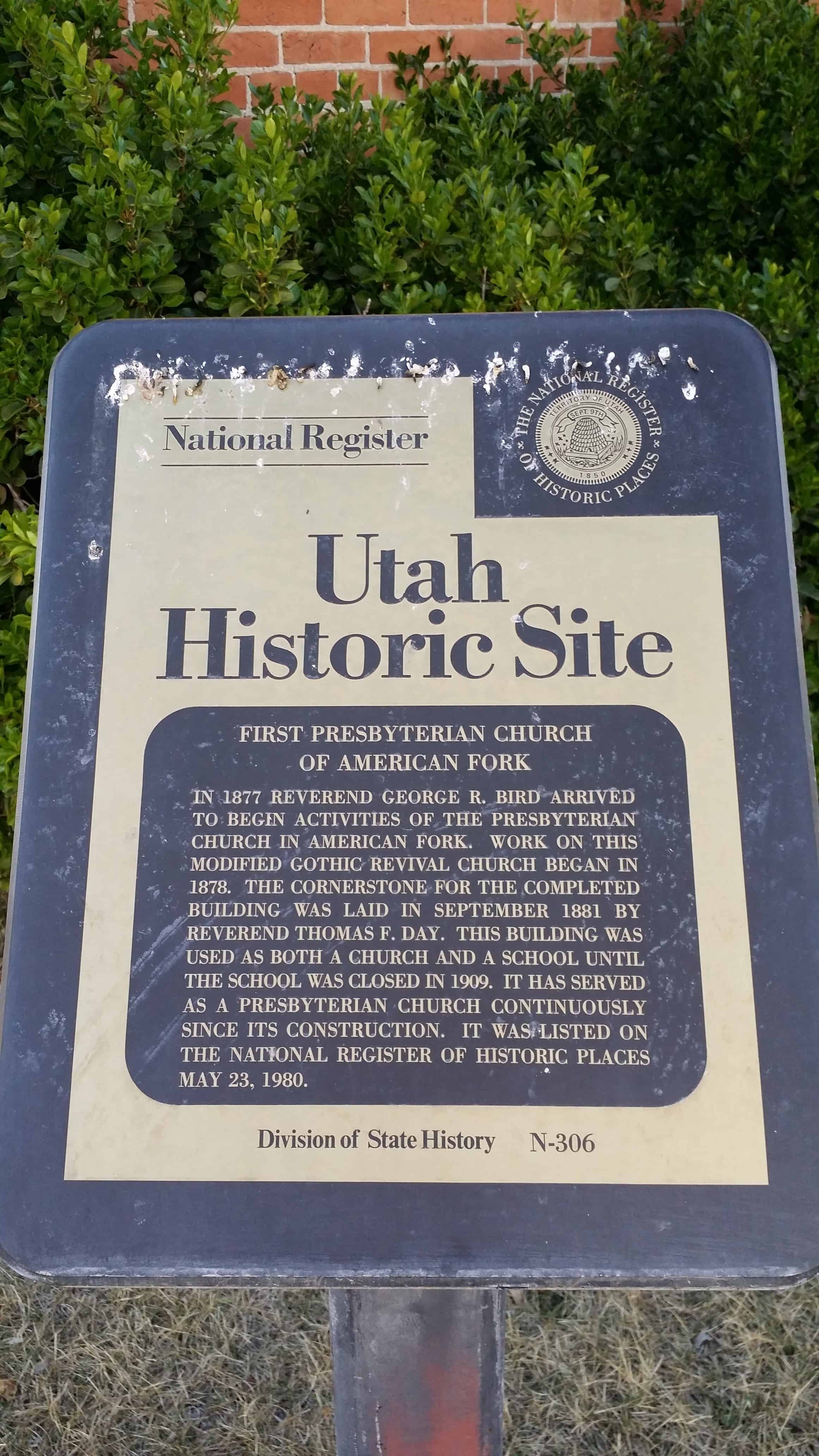
In 1877 Reverend George R. Bird arrived to begin activities of the Presbyterian Church in American Fork. Work on this modified gothic revival church began in 1878. The cornerstone for the completed building was laid in September 1881 by Reverend Thomas F. Day. This building was used as both a church and a school until the school was closed in 1909. It has served as a Presbyterian Church continuously since its construction. It was listed on the National Register of Historic Places May 23, 1980.

2015-03-28 18.50.10
2015-03-28 18.50.44
2015-03-28 18.50.36
2015-03-28 18.50.32

Alpine Stake Tabernacle

12 Friday Jan 2018

Posted by Jacob Barlow in Uncategorized

≈ 2 Comments

Tags

American Fork, Historic Buildings, Historic Churches, LDS Church, NRHP, utah, utah county

2015-03-28 18.43.21

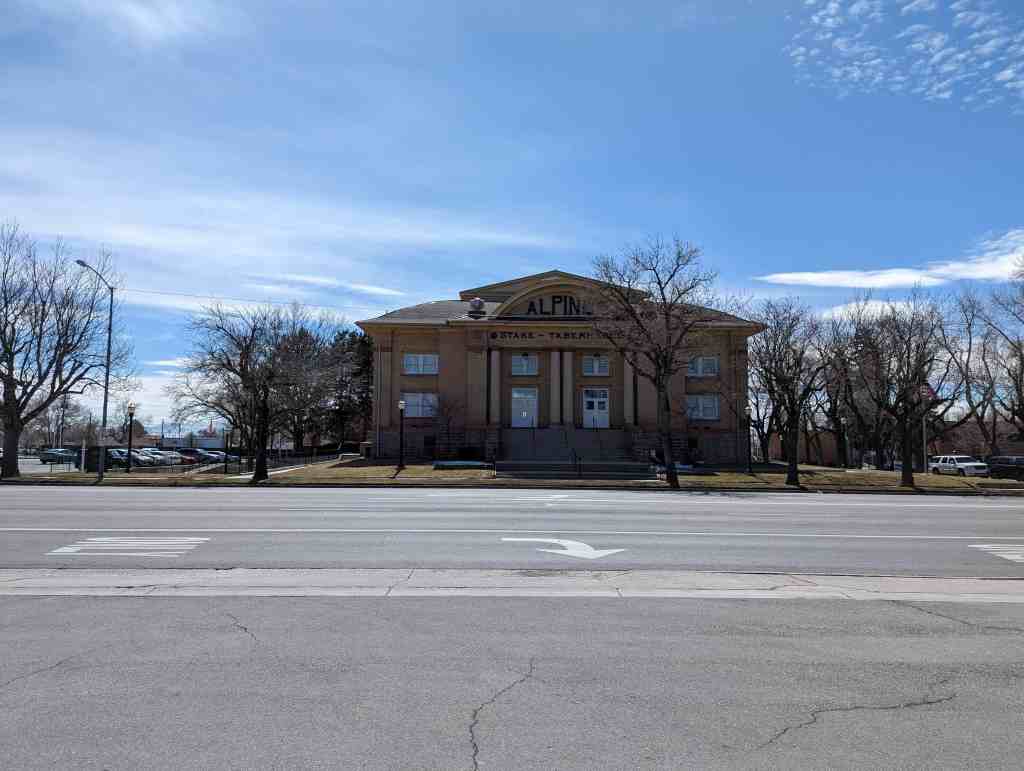
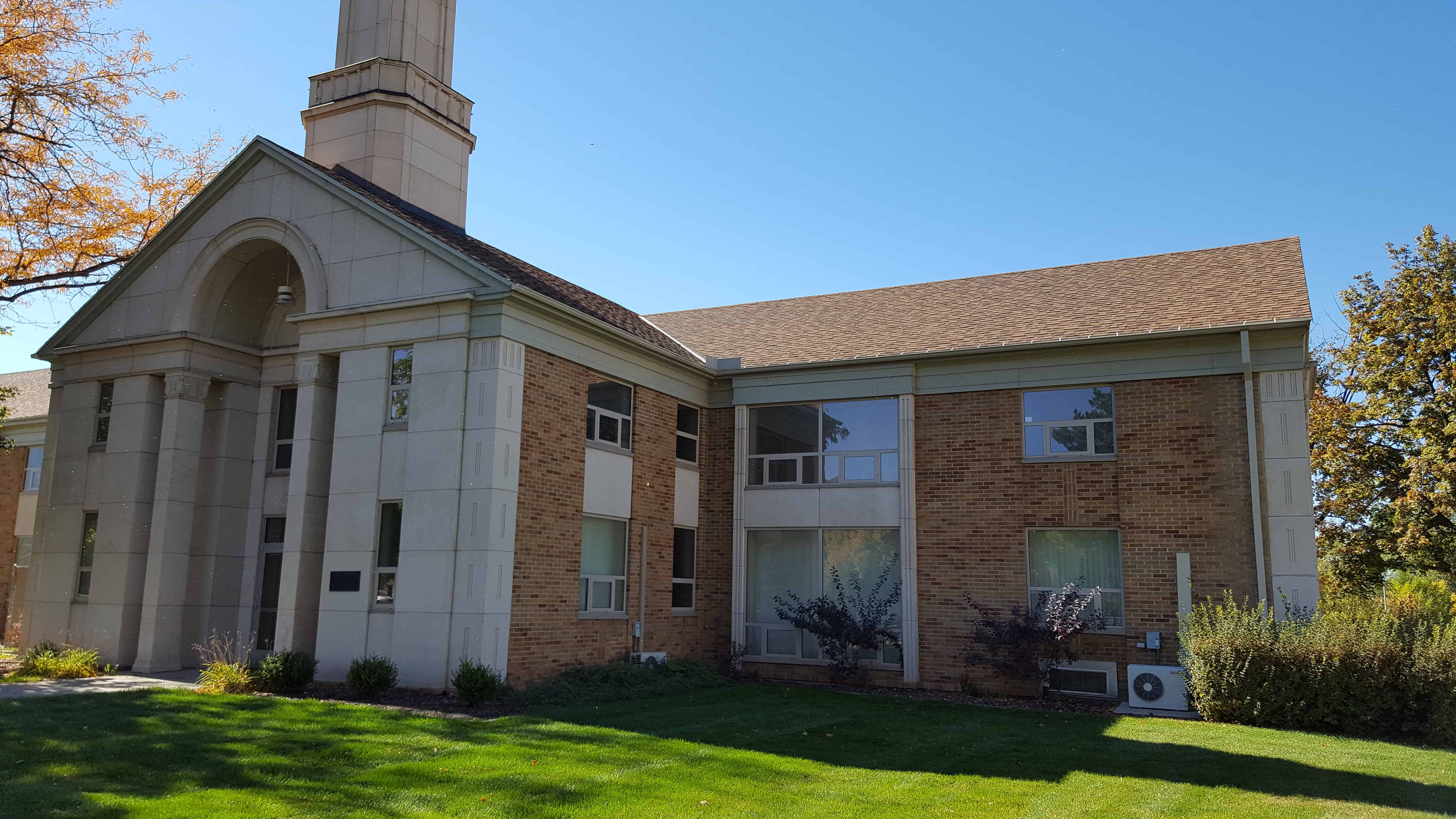
Built in 1911, the Alpine Stake Tabernacle is located in the American Fork Historic District at 110 E. Main Street in American Fork, Utah. It was added to the National Historic Register on December 10, 1988.

Related:

  • LDS Tabernacles
2015-03-28 18.43.47
2015-03-28 18.43.25

First Latter-day Saint Chapel in Phoenix

12 Wednesday Apr 2017

Posted by Jacob Barlow in Uncategorized

≈ 2 Comments

Tags

Arizona, Arizona Historic Markers, Chapels, Churches, historic, Historic Buildings, Historic Churches, LDS Church, Maricopa County, Phoenix, SUP

2017-03-11 14.40.24

First Latter-day Saint Chapel in Phoenix

The first meetinghouse in Phoenix for The Church of Jesus Christ of Latter-day Saints (Mormons) was built on this site by the three-hundred-member congregation of the Phoenix Ward. At the time, J. Robert Price was bishop.

Since their beginning in 1912 with nine members, the Latter-day Saints in Phoenix had met in four different locations – – the Knights of Pythias Hall at 23 East Washington Street, a laundry at 534 West Washington Street, an old Spanish-style building at 121 South First Avenue, and a room over a bicycle shop at 237 North Fifth Street. They purchased this area on the eastern edge of Phoenix’s original city plat and built their first chapel 1918-1919.

The handsome meetinghouse – – designed by Pop and Burton, Architects, of Salt Lake City – – was an early example of the influence Frank Lloyd Wright’s architecture had in the Southwest. The Latter-day Saints worshipped here for nearly thirty years. Phoenix used it as a community center, and weekly businessmen’s luncheons and youth dances were held in the building.

By 1923, a thriving congregation (ward) of 730 made it necessary to expand the building; after further expansion in 1926, the meetinghouse filled this plaza area. Other wards were organized and more chapels were built, but the Phoenix First Ward continued to meet here until 1948, and Brill was completed. The building on this site was sold to another church and eventually demolished in 1969.

Bishop J. Robert Price, 1918-1926
Bishop George F. Price, 1926-1928
Bishop John H Udall, 1928-1938
Bishop Arch B. Campbell, 1938-1950

Placed 1981
Sons of Utah Pioneers, Salt River Chapter and Historic Arts and Sites Committee of The Church of Jesus Christ of Latter-day Saints

Plaque located in Heritage Square.

See other historic markers in the series on this page for SUP Markers.

2017-03-11 14.40.13

2017-03-11 14.42.06

Grafton, Utah

10 Friday Mar 2017

Posted by Jacob Barlow in Uncategorized

≈ 2 Comments

Tags

Ghost Towns, Grafton, historic, Historic Buildings, Historic Churches, Rockville, Washington County

2017-03-04 13.49.48

Grafton Posts:

  •  
  • Grafton Cemetery
  • Rockville
  • Russell Home (Alonzo and Nancy)
  • Russell Home (Louisa) 
  • Wood Home (George)
  • Wood Home (John and Ellen)

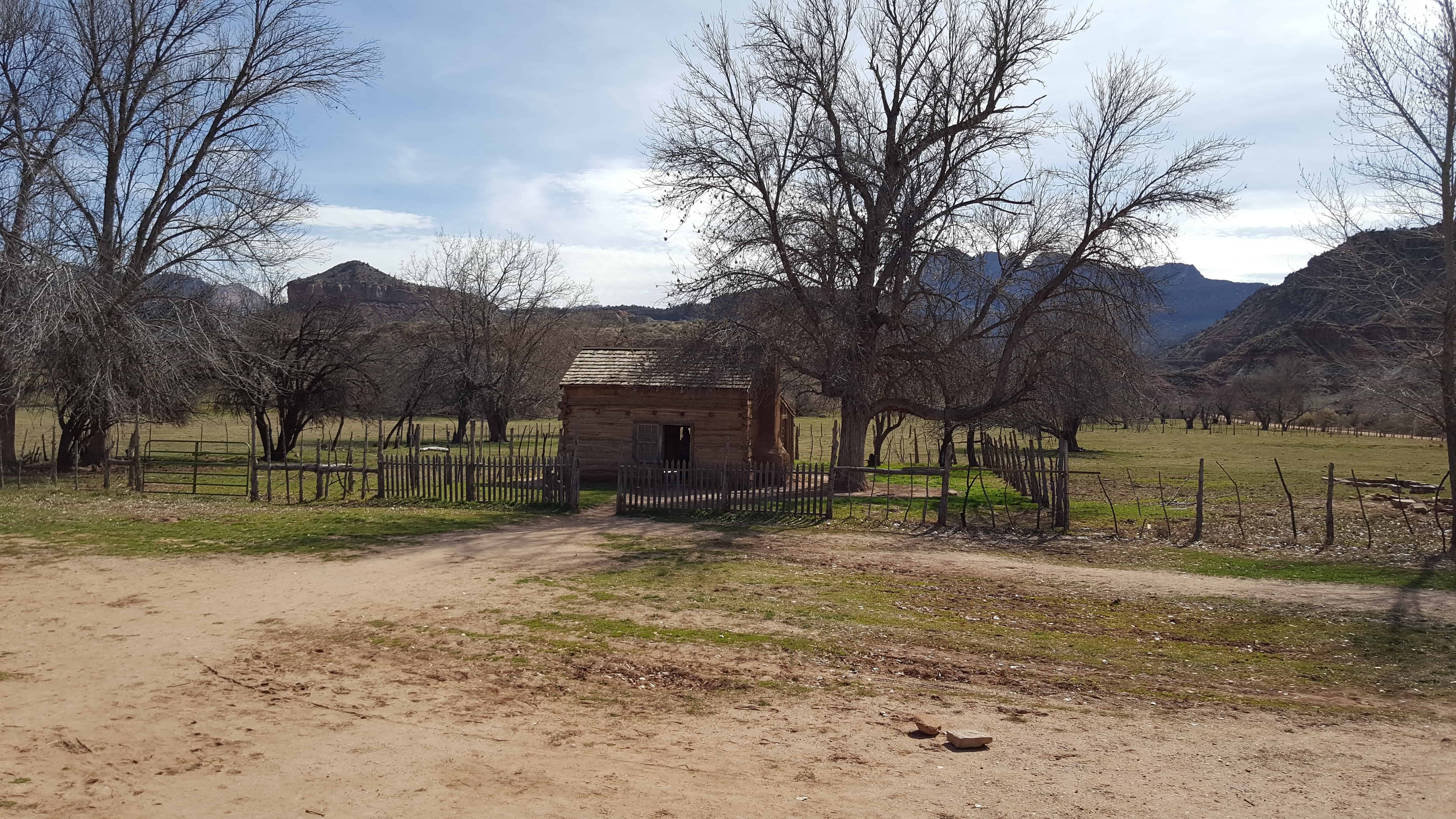
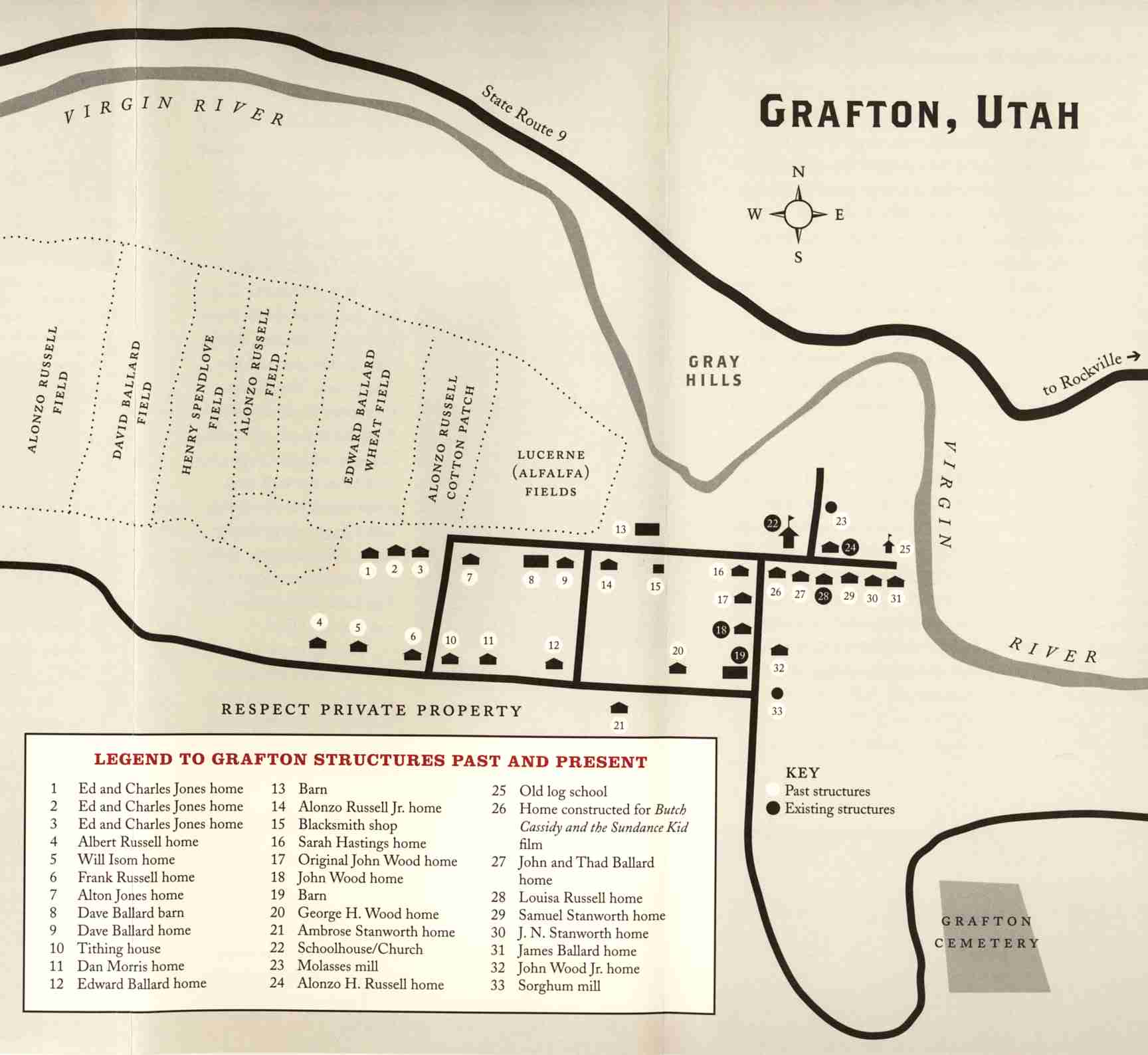
Grafton is a ghost town, just south of Zion National Park in Washington County. It is said to be the most photographed ghost town in the West and it has been featured as a location in several films, including 1929’s In Old Arizona—the first talkie filmed outdoors—and the classic Butch Cassidy and the Sundance Kid. The nearest inhabited town is Rockville.

2017-03-04 13.52.04

The site was first settled in December 1859 as part of a southern Utah cotton-growing project ordered by Brigham Young. A group from Virgin led by Nathan Tenney established a new settlement they called Wheeler. Wheeler didn’t last long; it was largely destroyed on the night of January 8, 1862 by a weeks-long flood of the Virgin River, part of the Great Flood of 1862. The rebuilt town, about a mile upriver, was named New Grafton, after Grafton, Massachusetts.(*)

2017-03-04 13.51.24

The town grew quickly in its first few years. There were some 28 families by 1864, each farming about an acre of land. The community also dug irrigation canals and planted orchards, some of which still exist. Grafton was briefly the county seat of Kane County, from January 1866 to January 12, 1867, but changes to county boundaries in 1882 placed it in Washington County.

2017-03-04 13.56.29

Flooding was not the only major problem. One particular challenge to farming was the large amounts of silt in Grafton’s section of the Virgin River. Residents had to dredge out clogged irrigation ditches at least weekly, much more often than in most other settlements. Grafton was also relatively isolated from neighboring towns, being the only community in the area located on the south bank of the river. In 1866, when the outbreak of the Black Hawk War caused widespread fear of Indian attacks, the town was completely evacuated to Rockville.

2017-03-04 14.16.55

Continued severe flooding discouraged resettlement, and most of the population moved permanently to more accessible locations on the other side of the river. By 1890 only four families remained. The end of the town is usually traced to 1921, when the local branch of the Church of Jesus Christ of Latter-day Saints was discontinued. The last residents left Grafton in 1944.

2017-03-04 13.49.27
2017-03-04 14.39.54
2017-03-04 14.22.26
2017-03-04 14.19.07
2017-03-04 14.18.59
2017-03-04 14.18.34
2017-03-04 14.18.25
2017-03-04 14.18.07
2017-03-04 14.17.44
2017-03-04 14.16.55
2017-03-04 14.16.34
2017-03-04 14.16.27
2017-03-04 14.03.23
2017-03-04 14.03.19
2017-03-04 14.03.15
2017-03-04 14.01.21
2017-03-04 14.00.22
2017-03-04 14.00.20
2017-03-04 13.59.59
2017-03-04 13.59.56
2017-03-04 13.59.54
2017-03-04 13.59.41
2017-03-04 13.59.39
2017-03-04 13.59.37
2017-03-04 13.59.25
2017-03-04 13.59.14
2017-03-04 13.56.48
2017-03-04 13.56.40
2017-03-04 13.56.29
2017-03-04 13.56.21
2017-03-04 13.56.17
2017-03-04 13.56.16
2017-03-04 13.53.14
2017-03-04 13.52.40
2017-03-04 13.52.04
2017-03-04 13.52.01
2017-03-04 13.51.42
2017-03-04 13.51.24
2017-03-04 13.50.58
2017-03-04 13.50.55
2017-03-04 13.50.40
2017-03-04 13.49.48
2017-03-04 13.49.32

IMG_20170312_235314_407

St. John’s Church

07 Tuesday Mar 2017

Posted by Jacob Barlow in Uncategorized

≈ 1 Comment

Tags

Chapels, Churches, Ghost Towns, historic, Historic Buildings, Historic Churches, Silver Reef, utah, Washington County

st-johns-catholic-church1

Archbishop Joseph S. Alemany of the Diocese of San Francisco asked Father Lawrence Scanlan to settle in the mining town of Silver Reef and minister to the miners and their families. Father Denis Kiely arrived in Utah in 1874 and assisted Father Scanlan in Silver Reef. Fathers Henry T. Hyde, P. O’Conner, and P. Galligan also also served the people in Silver Reef from 1880 to 1882.

In 1879, Father Scanlan established the St. John’s Catholic Church, the Silver Reef Hospital, and St. Mary’s School in Silver Reef.

When the church was first constructed, it didn’t have a tower. But Father Hyde collected money and eventually the tower was erected and a 400 lb bell was installed.

St. John’s Church was closed in 1885.

In 1895, William Stirling purchased and moved the vacant St. John’s Catholic Church from Silver Reef to Leeds. He converted the building into the Leeds Social Hall or “Old Stirling Hall.”

2017-03-04 10.49.46

2017-03-04 10.49.34
2017-03-04 10.49.39
2017-03-04 10.49.46
2017-03-04 10.49.51

Old Church Vacation Rental

27 Tuesday Dec 2016

Posted by Jacob Barlow in Uncategorized

≈ 1 Comment

Tags

Churches, historic, Historic Buildings, Historic Churches, Joseph, Sevier County, utah

2016-12-26-16-53-48

This lovely Old Church, built in 1929, is located in Joseph, Utah and has been meticulously remodeled to ensure that you and your group have a wonderful time.

This building once was an LDS Church and then used as a city office building. Now the Old Church offers the ultimate getaway for family reunions, corporate retreats, business meetings, weddings, group gatherings, and more!

2016-12-26-16-53-48
2016-12-26-16-53-57
2016-12-26-16-54-07
2016-12-26-16-54-22
2016-12-26-16-54-27

2016-12-26-16-53-57
2016-12-26-16-54-07

This Bell is mounted on top of a brick monument in front of the Old Church Vacation Rental.

The Little Church of the West

27 Sunday Nov 2016

Posted by Jacob Barlow in Uncategorized

≈ 1 Comment

Tags

Clark County, Historic Churches, Las Vegas, Nevada, NRHP

picture10jul07-123

Little Church of the West is a wedding chapel on the Las Vegas Strip in Las Vegas, Nevada that is listed on the United States National Register of Historic Places. Built of California redwood, it was intended to be a replica of a typical pioneer town church. It is the oldest building on the Strip.

The Little Church of the West opened its doors in 1942 on what would become The Strip. The chapel was originally built as part of the Hotel Last Frontier complex on the Las Vegas Strip. The chapel was moved from the north side of the hotel to the south side in 1954. In 1979, to make way for the Fashion Show Mall, the chapel was moved onto the grounds of the Hacienda. In 1996, when the Hacienda was closed and demolished, the chapel moved again to its current location on the east side of the strip south of the Mandalay Bay.

In 2012, the Little Church of the West celebrated its 70th anniversary and remains the oldest chapel on the Las Vegas Strip.

The Little Church of the West was listed on the National Register of Historic Places (#92001161) on September 14, 1992 and is located at 4617 Las Vegas Boulevard in Las Vegas, Nevada.

Historic Springville 3rd and 9th Ward Chapel

27 Sunday Nov 2016

Posted by Jacob Barlow in Uncategorized

≈ 2 Comments

Tags

Historic Buildings, Historic Churches, Springville, utah, utah county

  • 2016-10-21-13-38-39

The 3rd and 9th Ward Chapel in Springville.

Mesa Temple

19 Saturday Nov 2016

Posted by Jacob Barlow in Uncategorized

≈ 1 Comment

Tags

Arizona, Historic Buildings, Historic Churches, LDS, LDS Church, Maricopa County, Mesa, Phoenix, Temples

img_20160905_173318

The LDS temple in Mesa was one of the first to be constructed by the church. Similar to the Cardston Alberta Temple, the church decided to hold a competition for the design of the temple with the exception of only inviting three Salt Lake firms to participate. The winning design was proposed by Don Carlos Young, Jr. and Ramm Hansen. Announced in 1919, only seven years after Arizona had achieved statehood, it was one of 3 temples announced and constructed to serve outlying Latter-day Saint settlements in the early part of the century, the others being constructed in Laie, Hawaii and Cardston, Alberta. While none of the three settlements were particularly large in their own right, they were considered thriving centers of largely Latter-day Saint populations. The long and arduous trip to existing temples located in the state of Utah would prove costly and even dangerous for the faithful of the era, and temple attendance was (and is) an important part of the faith. As such, it was seen as necessary to construct temples in these communities.

Numerous colonies had been set up in Arizona by the church during the last half of the nineteenth century, and plans had been discussed for a temple in the area as early as 1908, but the start of World War I stopped these for a while. The plan to build a temple in Mesa, Arizona was finally announced on October 3, 1919 and a 20-acre  site was selected and bought in 1921. The site was dedicated shortly after on November 28, 1921 and on April 25, 1922 the groundbreaking ceremony took place. Heber J. Grant conducted the ceremony.

Following the earlier traditions set forth in the building of temples, such as the Salt Lake Temple, the new structure in Mesa was a centerpiece of an organized and planned community for the faithful that lived nearby. Upon its completion in 1927 it was the third largest temple in use by the church and the largest outside of Utah, and remains among the largest temples constructed to this day.

In a departure from the style of temples constructed prior, the Mesa temple (along with the temples in Laie and Cardston) was built in a neoclassical style suggestive of the Temple in Jerusalem, lacking the spires that have become a mainstay of temples built since then, and prior to the announcement and impending construction of the Paris France Temple it was the last LDS temple constructed without a spire. The temple is a neoclassical design featuring the primary structure atop a pedestal, a frieze, pilasters with Corinthian capitals (12 pair along the long side and 10 pair along the short side) and amphorae on fluted columns on the grounds. Below the cornice, eight frieze panels (carved in low relief) depict the gathering of God’s people from the Old and New World, and the Pacific Islands to America.

When construction was finished on the temple, the public was able to take tours through the temple. Two hundred thousand people were able to take a tour through the Mesa Temple. The temple was dedicated on October 23, 1927 by Heber J. Grant. By that afternoon, the temple was being put to use. In 1945, the temple was distinguished by becoming the first to offer temple ordinances in Spanish, the first time they were offered in a language other than English.

2016-09-05-17-26-03
2016-09-05-17-28-37
2016-09-05-17-29-33
2016-09-05-17-31-53
2016-09-05-17-31-55
2016-09-05-17-32-15
2016-09-05-17-32-19
2016-09-05-17-32-34
2016-09-05-17-33-46
2016-09-05-17-33-51
2016-09-05-17-34-07
2016-09-05-17-34-45
2016-09-05-17-34-57
2016-09-05-17-35-18
2016-09-05-17-35-29
2016-09-05-17-35-46

Visitor Center

2016-09-05-17-36-35

2016-09-05-17-38-24
2016-09-05-17-38-28
2016-09-05-17-38-32
2016-09-05-17-50-26

Centerville 1879 Church

19 Saturday Nov 2016

Posted by Jacob Barlow in Uncategorized

≈ 4 Comments

Tags

Centerville, Davis County, historic, Historic Buildings, Historic Churches, Historic Homes, utah

2016-10-16-14-57-44

This old church, built in 1879 is a one of the beautiful sites in Centerville.

Also located here:

  • Centerville Pioneer Memorial Cabin
  • Church Well
  • Red Brick Two-Room School

160 South 300 East in Centerville, Utah

← Older posts
Newer posts →

Follow Jacob

Follow Jacob

Blog Stats

  • 2,064,823 hits

Social and Other Links

BarlowLinks.com

Recent Posts

  • The Heinrich Gubler Home
  • The Temple Quarry
  • The Old Settler’s “Swallow’s Nest”
  • Arthur Miles Home
  • Navajo Shadehouse Museum

Archives

Loading Comments...