With the completion of the transcontinental railroad in 1869, the isolation of Salt Lake City was broken, and the Church of the Latter Day Saints witnessed an ever-increasing non-Mormon population in their city. Sheldon Jackson recruited newly ordained home missionary Josiah Welsh (1841–1876) to organize a Protestant congregation.
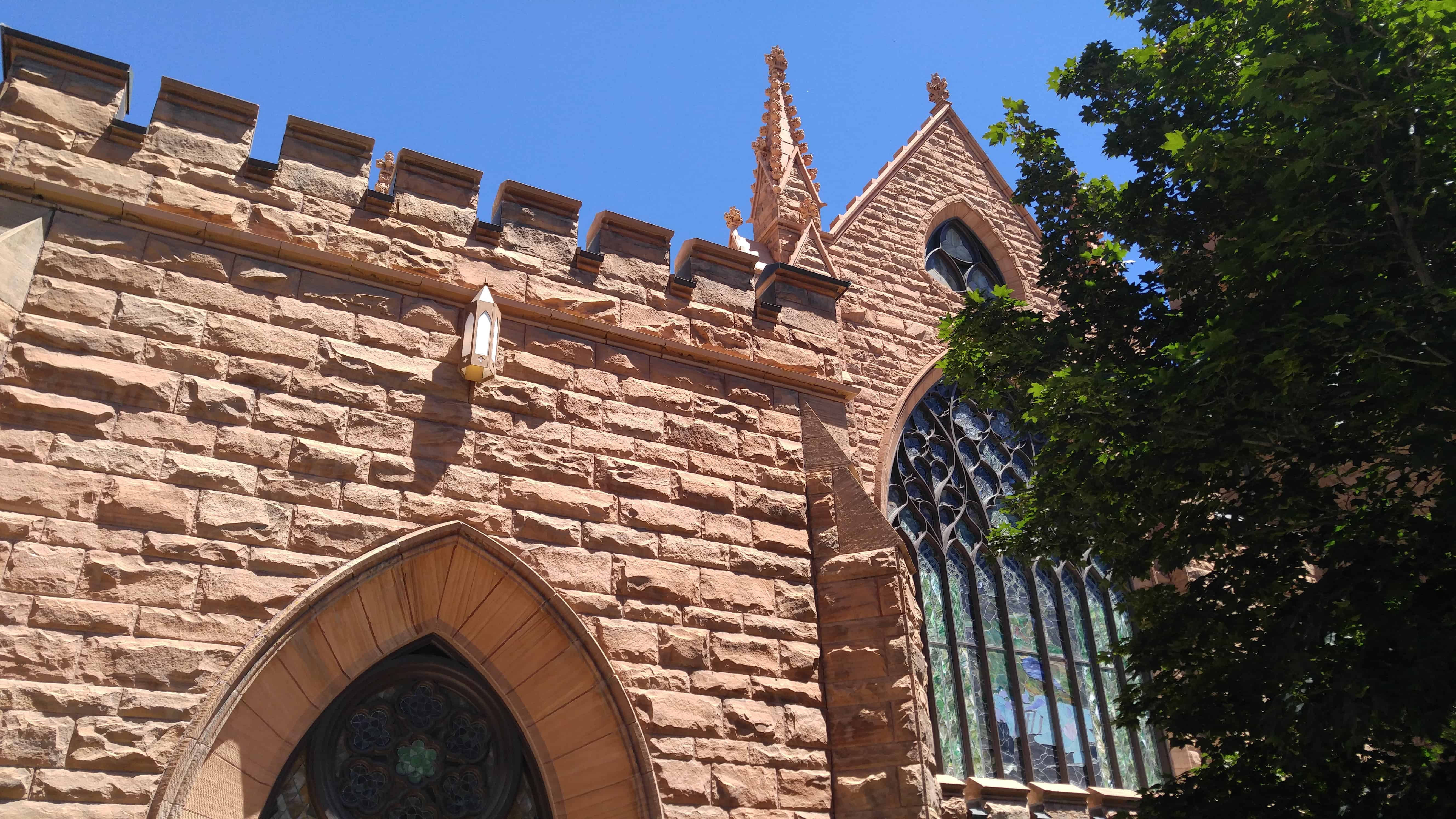
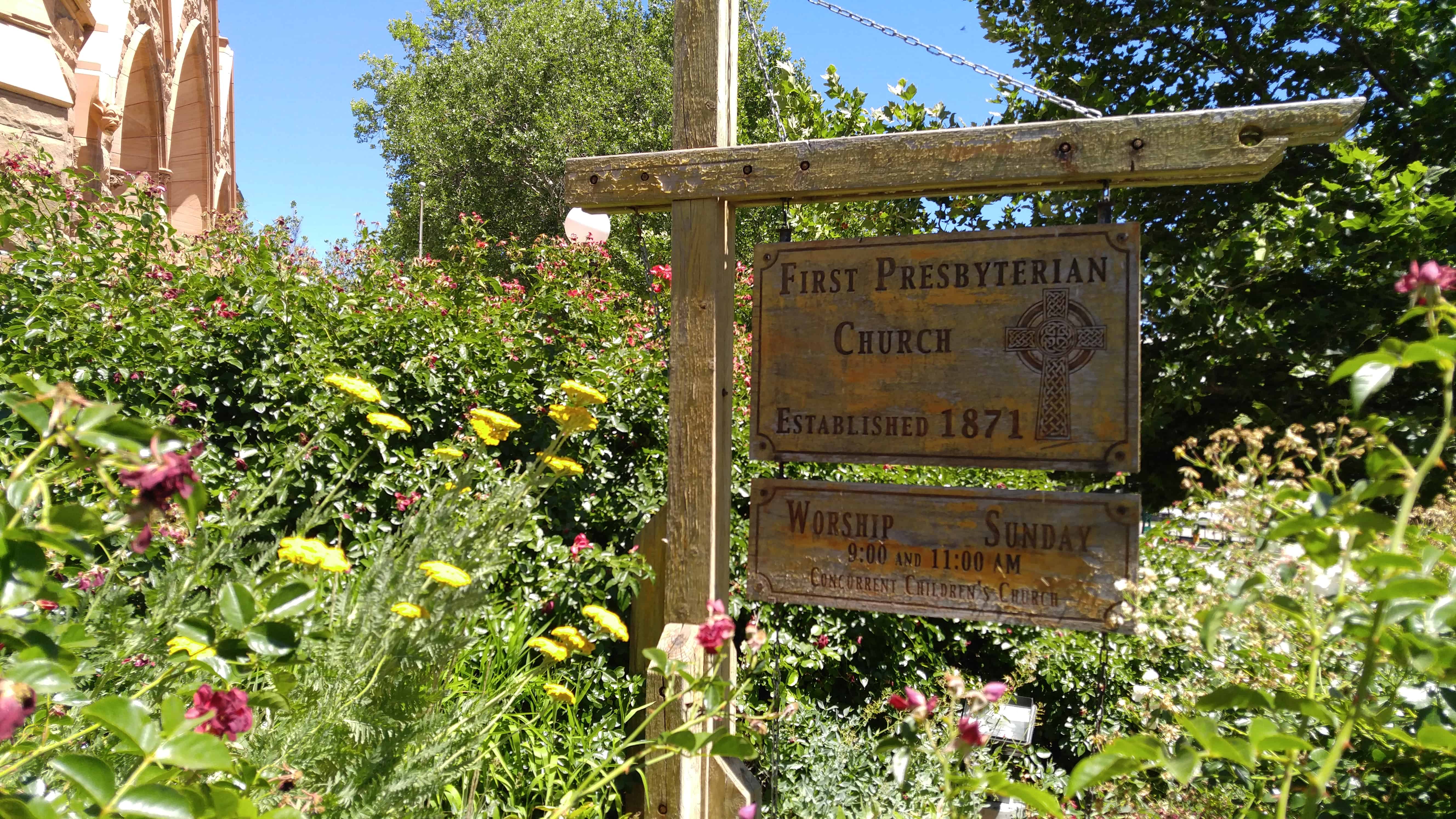
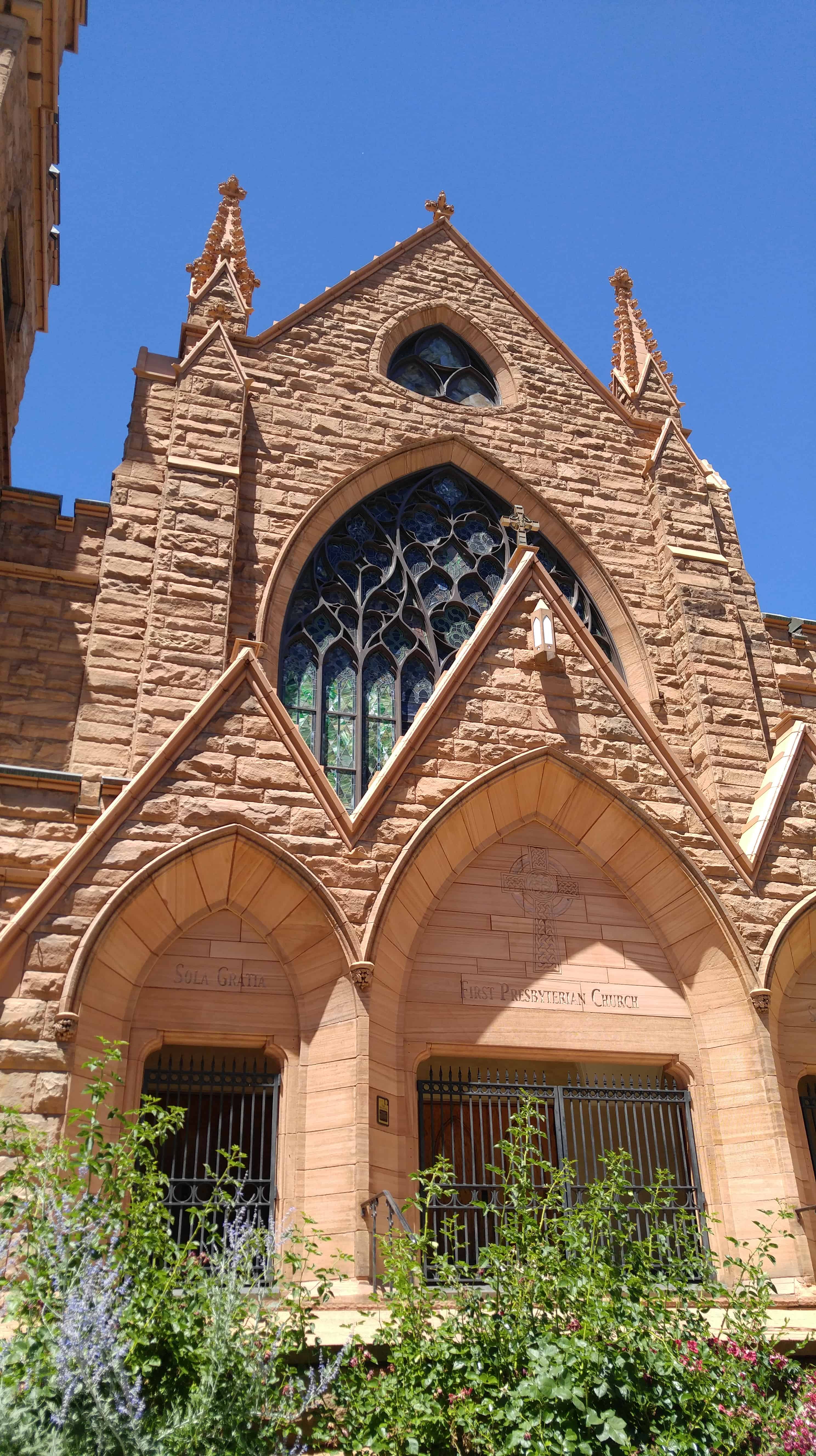
The First Presbyterian Church was organized in November, 1871 with eleven members. Its first building, built with monies solicited in the East, was the first home of Westminster College, and was occupied for thirty years before the congregation, which grew to over five hundred members, moved to its present facility. Walter E. Ware designed the Gothic Revival structure, with its low square tower and patterned on the cathedral church of Carlyle, England. The exterior was built of locally quarried red butte stone with hard stone trim.
First occupied in 1905, the congregation substantially enlarged, renovated, and modernized it in 1956. It was listed on the National Register of Historic Places in 1980. It is also Entry No. 323 on the American Presbyterian/Reformed Historic Sites Registry.
The construction of the First Presbyterian Church marked the coming of age of Utah’s Presbyterian community. The state’s early Presbyterian chapels and mission schools were funded by Presbyterian missionary organizations in the East. The money for this magnificent building, however, was raised by local Presbyterian congregations. Thus, the First Presbyterian Church was a symbol of the growing numbers and influence of Presbyterians in Mormondominated Utah.
Utah architect Walter E. Ware modeled his design for the First Presbyterian Church on the beautiful medieval cathedral in Carlisle, England. Like the Carlisle Cathedral, First Presbyterian Church is built of red sandstone. The church’s irregular massing, crenellated square tower, finials, and lancet-shaped windows are also reminiscent of the Carlisle Cathedral.
The church’s three large stained glass windows are artistic treasures. The west window depicts Christ in the manger, the south depicts Christ at Gethsemane, and the east depicts the first Easter. In October 1906, only five months after the church was completed, a severe storm blew out the magnificent east window. Because of the damage, no services could be held in the church for six months. Undaunted, congregation members raised over $3,000 to replace the window.
The sanctuary of First Presbyterian Church is noted for its fine acoustics and has long been used for concerts and recitals. The debut of the church’s new pipe organ in 1911 was reported in the Deseret News as “one of the most notable musical functions that have been held in the city.” Today, the church continues to host musical performances as well as the meetings and activities of over 50 cultural, educational, and community groups.
The Cathedral of the Madeleine is a Roman Catholic church in Salt Lake City, Utah, United States. It was completed in 1909 and currently serves as the cathedral, or mother church, of the Diocese of Salt Lake City. It is the only cathedral in the US under the patronage of St. Mary Magdalene.
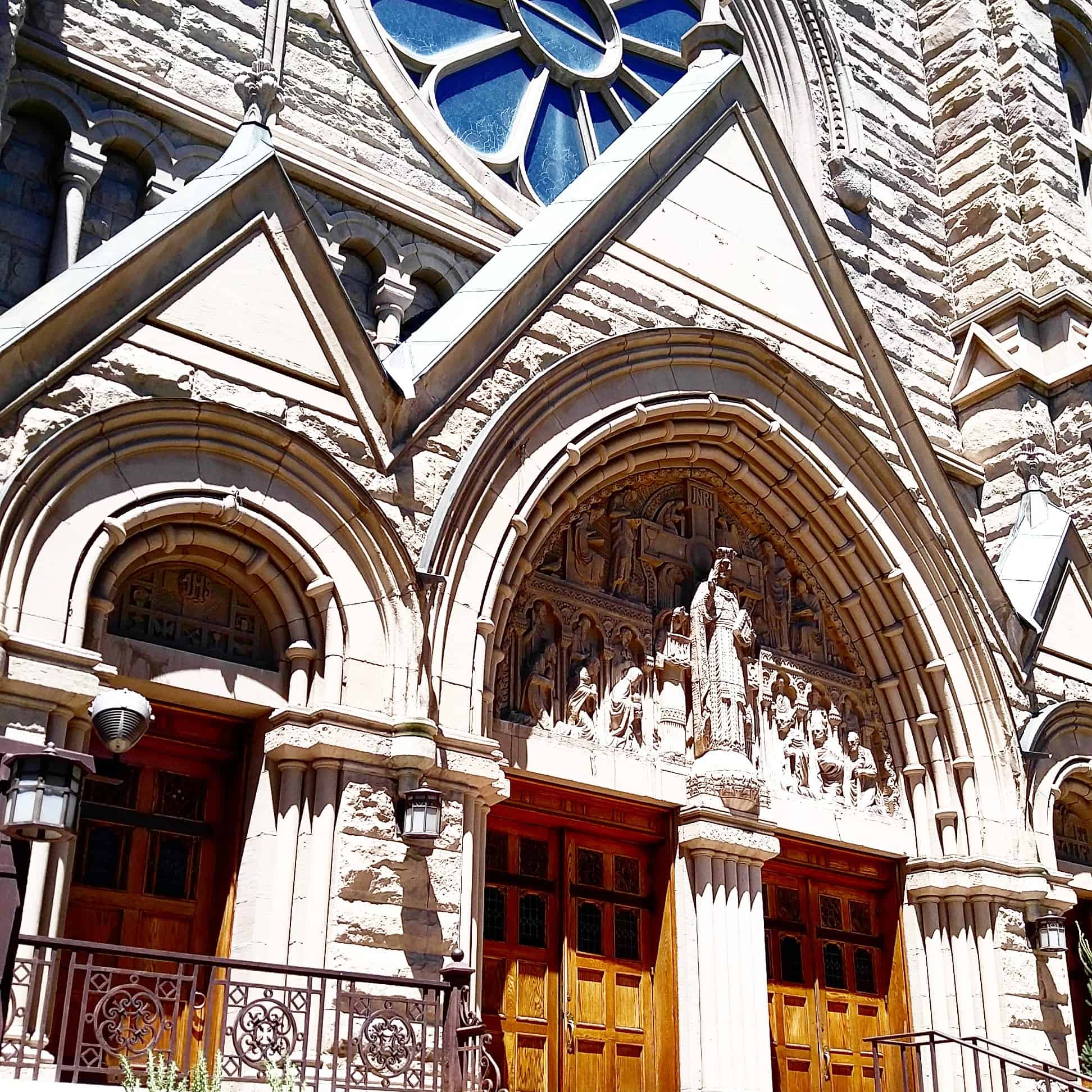
The cathedral was built under the direction of Lawrence Scanlan, the first bishop of Salt Lake. It was designed by architects Carl M. Neuhausen and Bernard O. Mecklenburg. The outside is predominantly a Neo-Romanesque design, while the inside tends more toward the Neo-Gothic. Construction began in 1900 and was completed in 1909. It was dedicated by Cardinal James Gibbons, Archbishop of Baltimore.
The Cathedral of the Madeleine has a very interesting history in which four important facets of Utah and American history are expressed. First of all, it was designed by Architect C. M. Neuhausen, and demonstrates his attachment to H. H. Richardson’s architecture, popular in America at the turn of the century. Some writers suggest that the influence of Sir Christopher Wren is also evident as a result of the Irish background of Bishop Lawrence Scanlon.
Secondly, the Cathedral represents the missionizing efforts of Catholicism in settling the American west. Fathers Antanazio Domingues and Silvestre Velez de Escalante were the first white men to explore into Utah. In addition, in 1776, the “Pious Fund” established by the early Jesuit Padre Kino and Father Salvatierra, for building churches in the Californias (1697), became available after more than two centuries of “controversy,” Allowing a ruling by the Hague Tribunal in 1902. Monies from these Jesuit funds were paid to the “Bishops of the Californias” of which $124,080.54 sent to the Salt Lake Diocese for building the Cathedral, a fitting tribute to the long and continuing impact of the Catholic missions on the American west.
Thirdly, much of the money used to build and furnish the Cathedral came rom Utah mines, which also provided the first attraction for major Catholic emigration to Utah. Such names as David Keith, Thomas Kearns, Mrs. Mary Judge and others are among the contributors. The Father of Utah mining, General Patrick Connor, was a Catholic. Many of the thousands of miners who came to exploit Utah’s minerals were and still are Catholics. Between 1873 and 1915 all were directly affected by the Cathedral builder, Father Scanlon.
Finally, the lovely Cathedral is the crowning, tangible monument to the extensive and effective labors of Bishop Lawrence Scanlon. Father Edward Kelly had been assigned to Salt Lake City in 1866, and his successor, Father Patrick Walsh, came in 1871. They had purchased land and built the first Catholic Church in Salt Lake City, yet the edifice retained a debt of $6,000 Scanlon arrived in 1873.
Under Scanlon’s direction, churches were built in most of the mining and larger communities of Utah. all parishes in Utah before his death, and all charitable and educational institutions as well, including All Hallows College, St. Mary’s Academy, St. Ann’s Orphanage, and Holy Cross Hospital.
The Cathedral itself evolved slowly. In 1889, land was purchased from Don Carlos Young for about $39,000. Ground was broken on July 4, 1889, but the cornerstone was not laid until July 22, 1900. By 1907 the building was almost finished except for the spires. At that time Bernard O. Mecklenburg was hired as a new architect. Construction was completed and the structure dedicated August 15, 1909. It was a day for celebration, especially by Utah Catholics. Construction costs have been estimated at over $300,000 plus furnishings.
Bishop Scanlon worked successfully with Mormon and civic leaders, who held him in high regard. His death May 10, 1915 was mourned by all Utahns. In tribute to him, his remains were placed in the crypt under the Sanctuary. The words of Bishop Keane, given at the time the Cathedral was dedicated, pay eloquent tribute to this structure: “This magnificent temple is a confession of faith of the Catholics of Salt Lake. Families will come and go, revolutions will arise, but Temples such as this remain as lasting monuments to those who built them, monuments to the living faith in human hearts.“
(from Preservation Utah’s walking tour) The Cathedral of the Madeleine 331 E. South Temple 1899-1909, Carl M. Neuhausen (1899-1907), SLC, and Bernard O. Mecklenburg (1907-1909), SLC Open to the public M-F, 7:30 am-9 pm, Sat. & Sun., 7:30 am-7 pm. Guided tours available Fridays at 1 pm and Sundays at 12:30 pm.
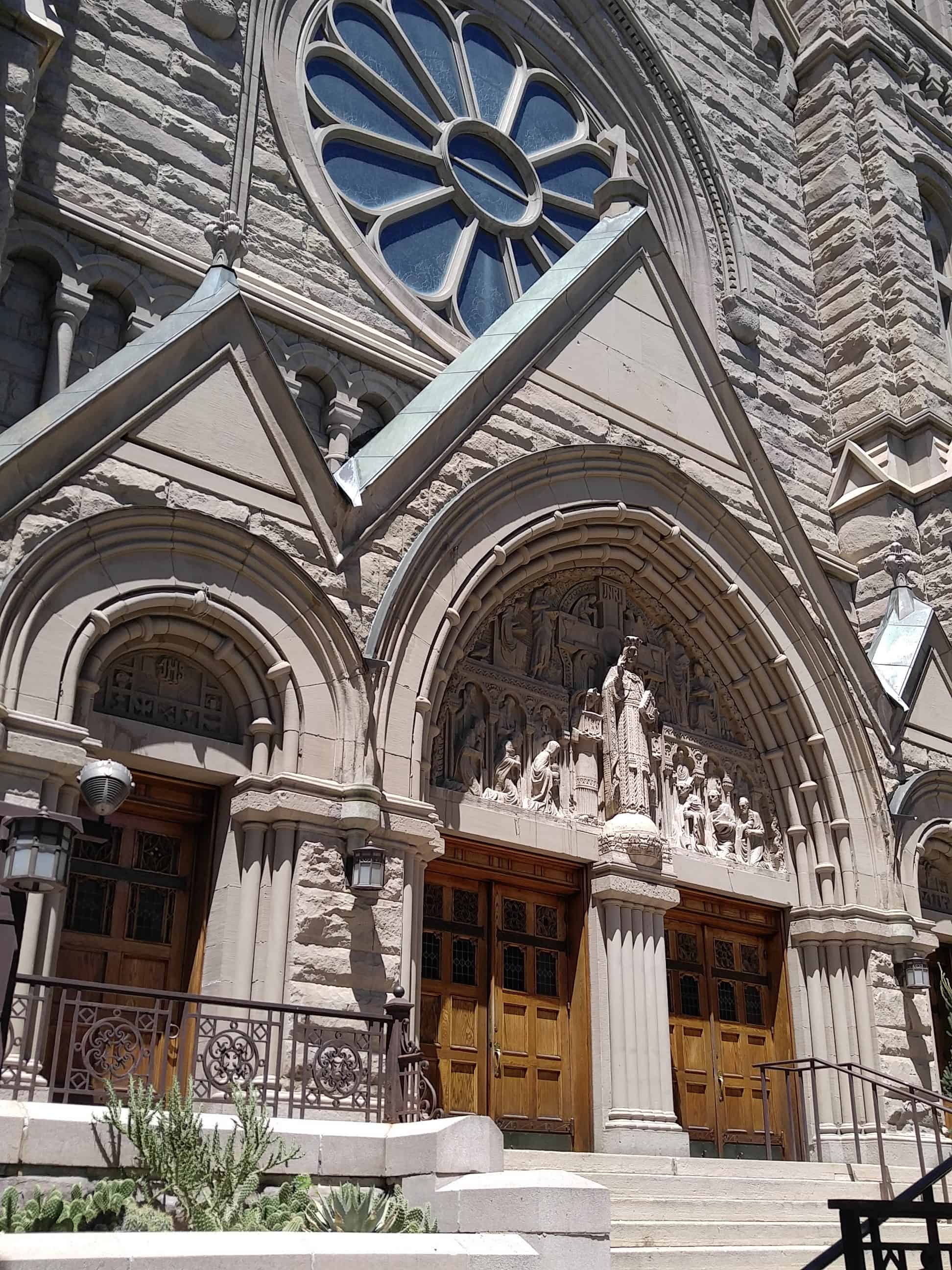
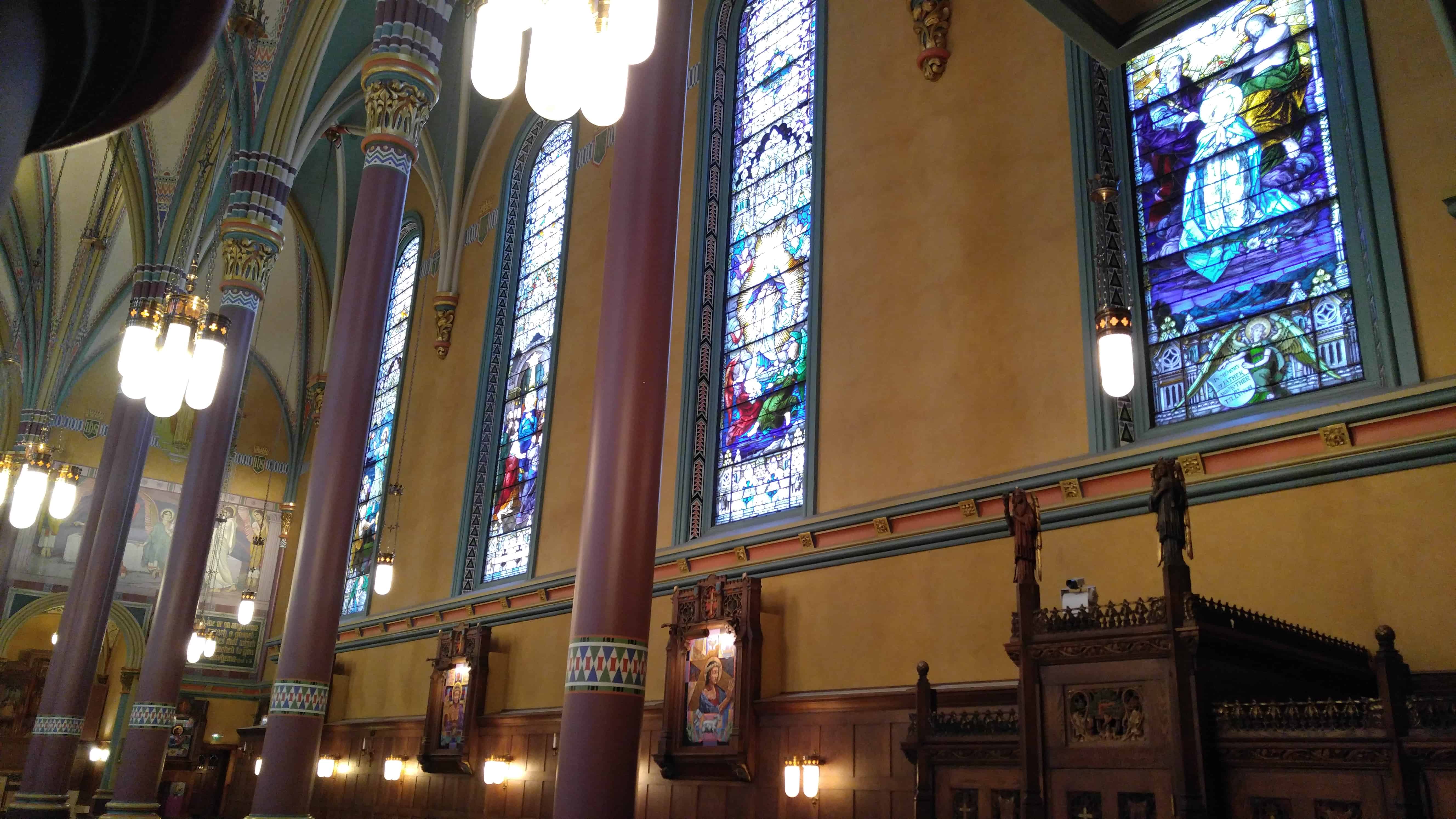
The mining fortunes that gave rise to South Temple’s grandest mansions also helped fund the construction of Utah’s first Catholic cathedral. The Cathedral of the Madeleine was built between 1899 and 1909 under the direction of the Right Reverend Lawrence Scanlan. It was designed by prominent Utah architect Carl M. Neuhausen as a Romanesque-style building with round Roman arches and rough-cut stone. Later, when Bishop Scanlan acquired additional funds for the project, the towers and pointed Gothic style portico were added to the plans. Upon Neuhausen’s death in 1907, Bernard O. Mecklenburg was hired to complete the roof and towers. While the exterior of the cathedral was substantially complete by 1909, the interior remained quite plain. In 1915, the Right Reverend Joseph Glass embarked on a three-year project to enhance the interior. Under the direction of noted American architect John Comes, the finest craftsmen of the day created paneling, painted murals, and carved wooden altarpieces for the building. The resulting ornate, polychrome interior is an outstanding example of the Gothic Revival style popular in the early 20th century. Comes also oversaw the completion of the exterior of the cathedral with the addition of the tympanum carving, tower gargoyles, and bi-level front steps.
Both the exterior and interior of the cathedral have undergone extensive restoration to preserve their historic character. The National Trust for Historic Preservation recognized the excellence of the interior restoration with a prestigious Honor Award in 1994.
The Salt Lake Temple is a temple of The Church of Jesus Christ of Latter-day Saints (LDS Church) located on Temple Square in Salt Lake City. At 253,015 square feet, it is the largest LDS temple by floor area. Dedicated in 1893, it is the sixth temple completed by the church, requiring 40 years to complete, and the fourth temple built since the Mormon exodus from Nauvoo, Illinois, in 1846.
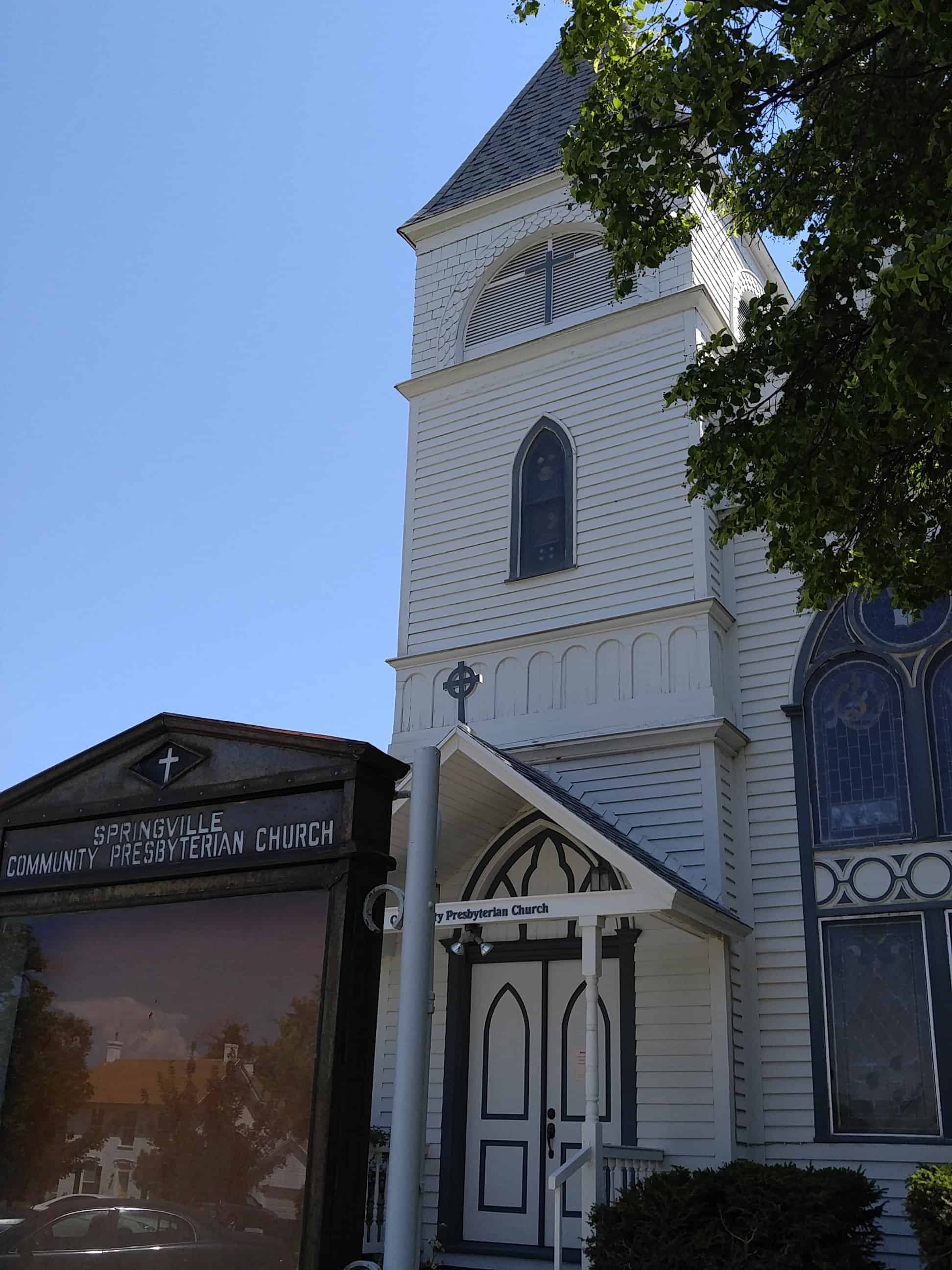
Located at 251 South 200 East in Springville is the Springville Presbyterian Church. In 1877 The Rev. George Leonard established a Presbyterian Church and Mission School in Springville. In 1892-1893, this church was built just south of the Presbyterian Hungerford Academy, the only school then providing education from elementary grades through high school for all denominations. This church is an example of the late gothic revival style with a romanesque revival bell tower. The stained glass windows are part of the original structure. This building has served as a Presbyterian Church continuously since its construction.
In 1886 the Presbyterian Church built the Hungeford Academy in Springville, on the corner of 200 East 200 South. Six years later, in 1892, they built the Presbyterian Church to the South of it. The Hungeford Academy was a private boarding school, and only stood on that corner for 26 years, before being torn down in 1912.
The Payson Presbyterian Church at 160 S. Main in Payson, Utah was built in 1882. It has also been known as Payson Bible Church. It was listed on the National Register of Historic Places (NRHP) in 1986; the listing included two contributing buildings.
According to its NRHP nomination, it is “one of a number of Protestant churches constructed in Utah during the 1870s-90s, the period of most concentrated and active missionary work by Protestants among the Mormons.”
It is also a contributing building in the Payson Historic District, which was listed on the National Register in 2007.
Here is the NRHP listing text: The Payson Presbyterian Church, constructed in 1882, is a one-storyGothic Revival brick building with a rectangular plan and a steeply pitchedgable roof with a bell tower. Despite a few minor alterations, the buildingretains its historical integrity.
Evidence of the building’s Gothic Revival style is found in the use ofpointed arches over the windows and door and in the decorative bargeboards onthe gable end of the façade. Also located on the front gable are a circularwindow and a decorative corbeled brick belt course which arches over thewindow and door openings. All elevations of the building are symmetricallycomposed, with four evenly spaced windows on each side and a central doorwayflanked by two windows on the façade. The bell tower, located at the peak ofthe front gable, is an original feature. The building rests on a stonefoundation.
Alterations made to the church over the years are minor and do notsignificantly affect the building’s integrity. The most noticeable change isthe small one-story frame addition on the rear which was built sometime after1930. The front doorway has been altered slightly by the replacement of theoriginal door with the existing modern one (n.d.) and by the removal of whatwas probably a window or transom above that door; the opening itself has notbeen altered, however. The only alteration of note on the interior is the addition of a small, enclosed entrance vestibule.
There is one other building located on the property, a one-story brick“education building” situated just south of the church building. Since it wasbuilt in the 1970s it does not contribute to the significance of this property.
Built in 1882, the Payson Presbyterian Church is historically significant asone of approximately ten remaining Presbyterian churches built in Utah as partof the church’s missionary program among the Mormons during the latenineteenth century. The Payson Presbyterian Church, which was the firstProtestant church built in Payson, served for over 25 years as both a schooland church, making it one of the longest-lived of the approximately 20church/schools operated by the Presbyterians. The Presbyterian Church was oneof several Protestant denominations which operated day schools as an importantpart of their missionary work among the Mormons in Utah. Though thosefacilities were not successful at winning converts, they were effective inproviding some of the highest quality education available in Utah prior to the establishment of a publicly funded school system in the 1890s. The PaysonPresbyterian Church is also architecturally significant as one of the bestexamples, if not the only example, of the Gothic Revival style in Payson.
Though an architectural survey of Payson has not yet been completed, it isknown that there are relatively few examples of the Gothic Revival style inthe community. The Gothic Revival style was a popular choice for smallProtestant churches throughout the state, though it was not common for Mormonchurches built during the same period.
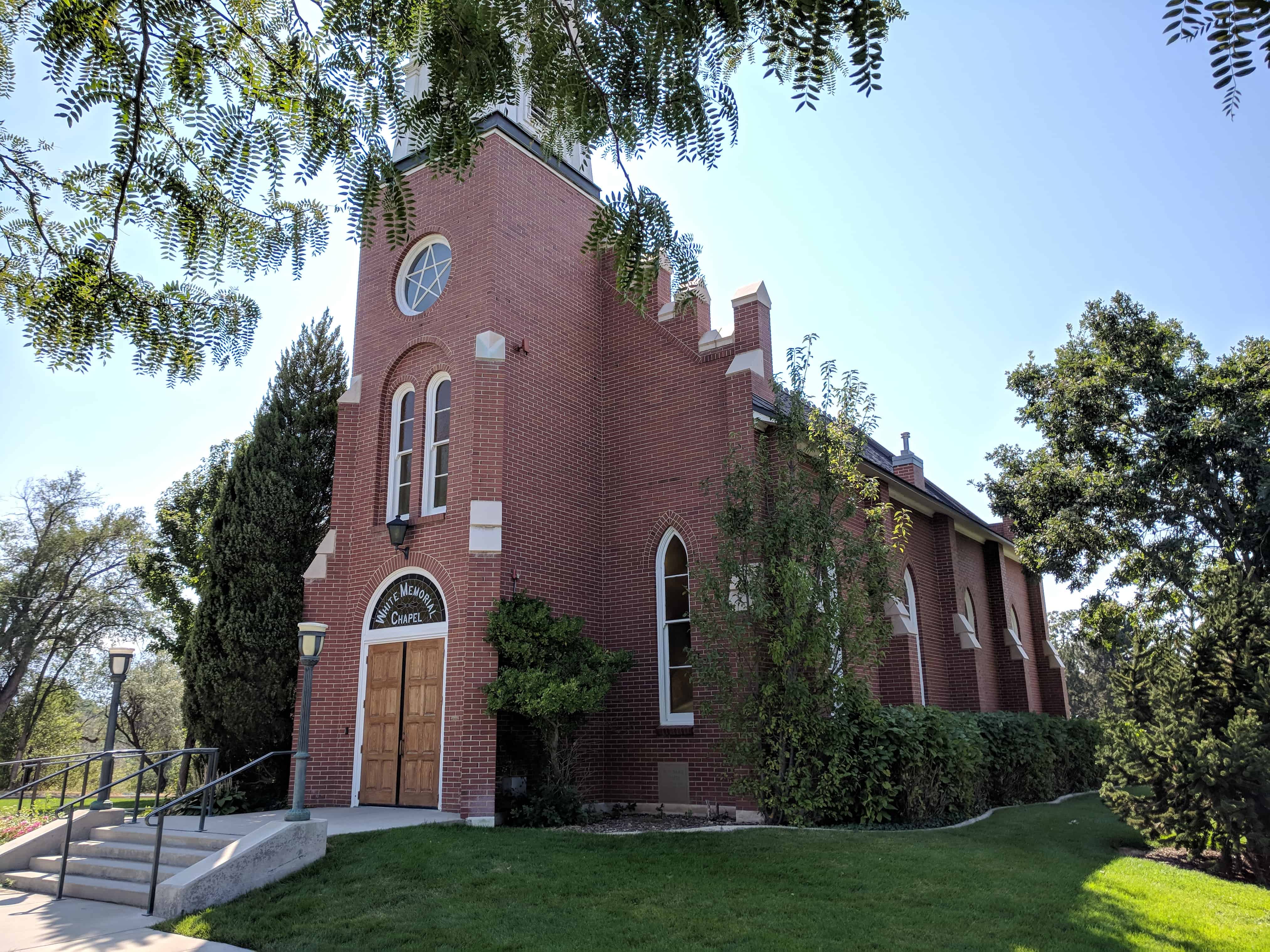
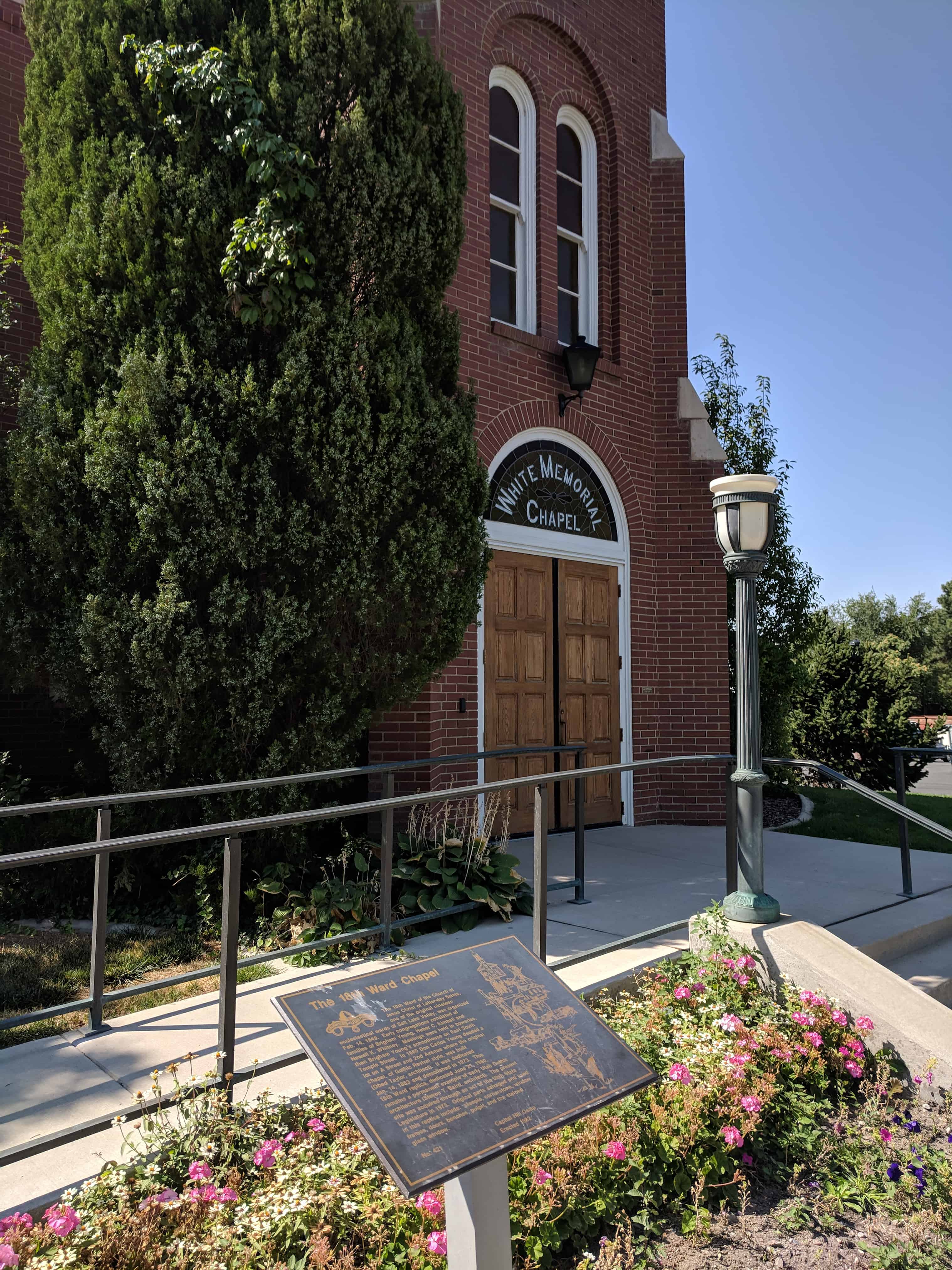
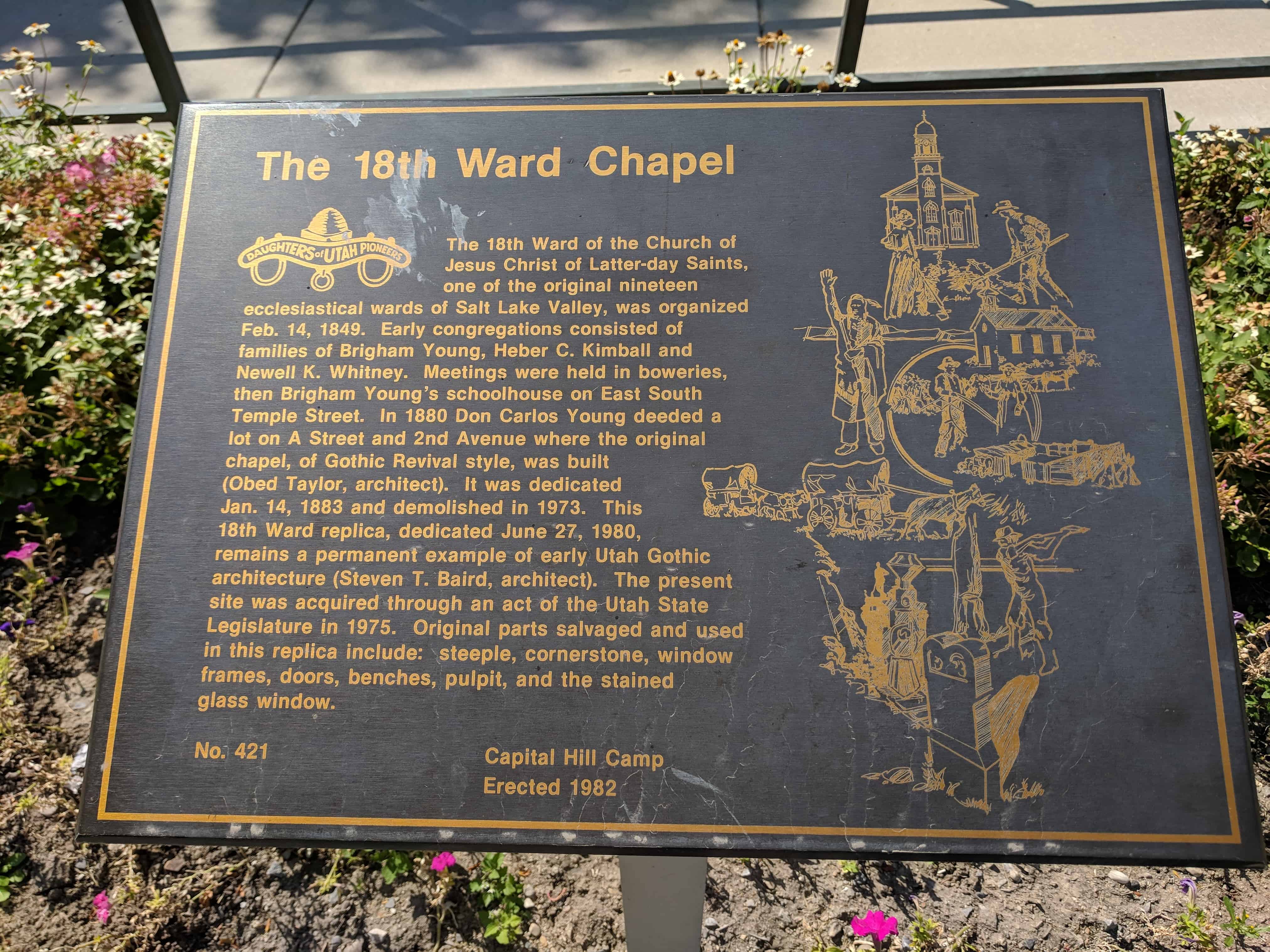
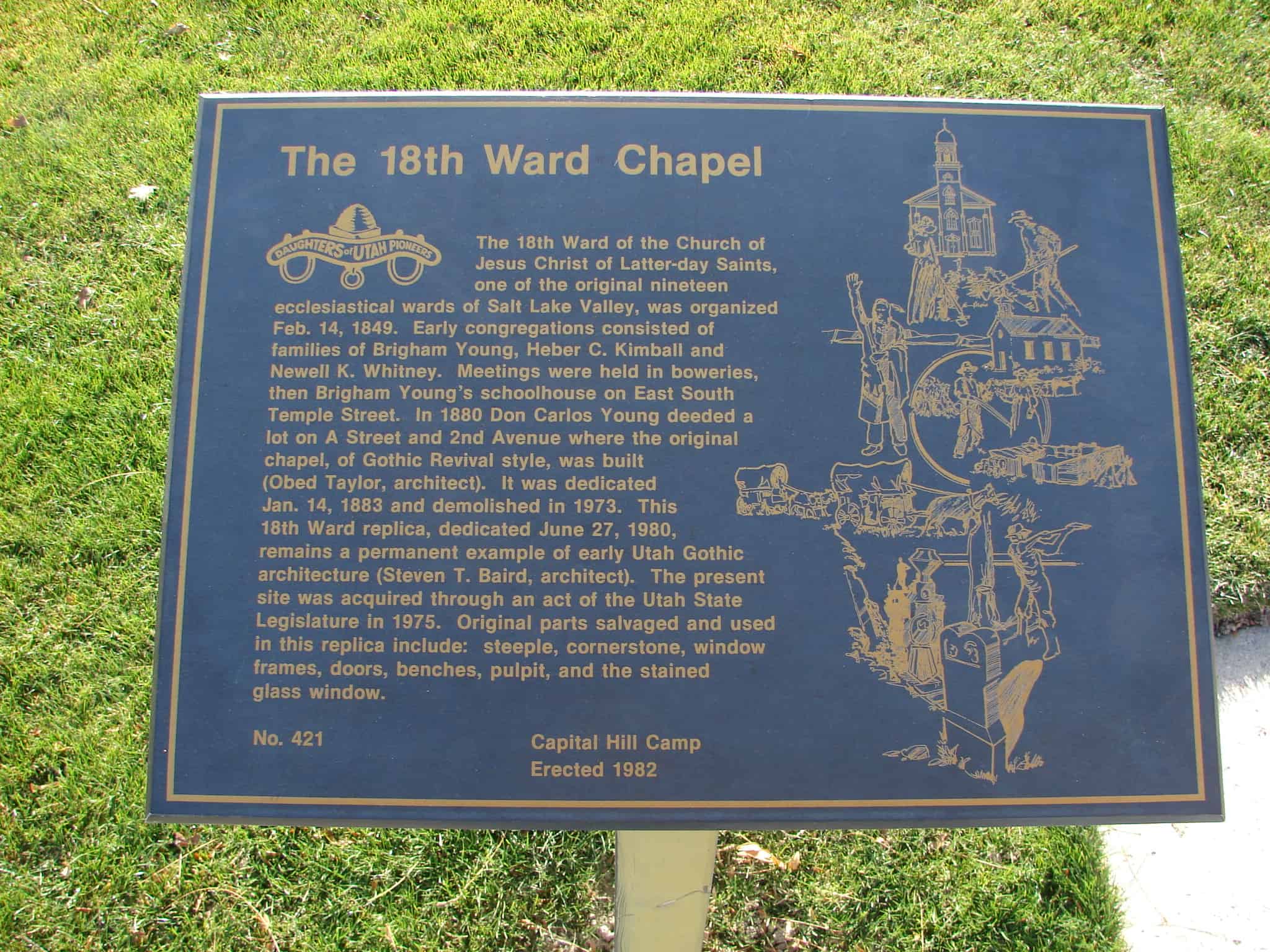
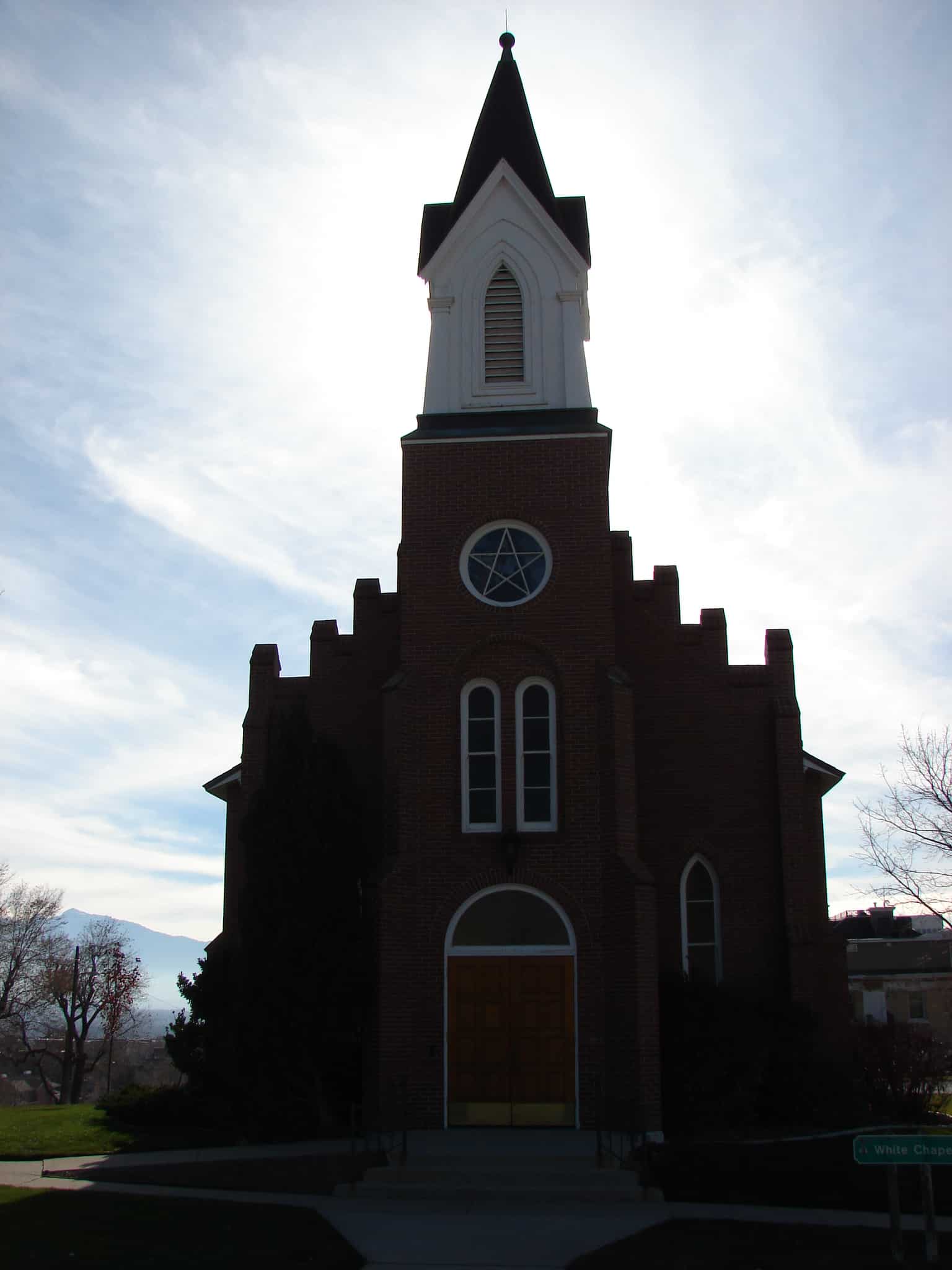
The 18th Ward of the Church of Jesus Christ of Latter-day Saints, one of the original 19 ecclesiastical wards of Salt Lake Valley, was organized Feb. 14, 1849. Early congregations consisted of families of Brigham Young, Heber C. Kimball and Newell K. Whitney. Meetings were held in boweries, then Brigham Young’s schoolhouse on East South Temple Street. In 1880 Don Carlos Young deeded a lot on A Street and 2nd Avenue where the original chapel, of Gothic Revival style, was built (Obed Taylor, architect) dedicated Jan. 14, 1883 demolished in 1973. This 18th Ward replica, dedicated June 27, 1980, remains a permanent example of early Utah Gothic architecture (Steven T. Baird, architect). The present site was acquired through an act of the Utah State Legislature in 1975. Original parts salvaged and used in the replica: steeple, cornerstone, window frames, doors, benches, pulpit, and the stained glass window.
On the north by 7th Ave. (or Ensign Ward), east by C St. (or the 20th Ward), south by South Temple St. (or the 12th-13th Ward), and west by Main St. (or the 17th Ward).
History timeline:
1849 – one of the original nineteen wards into which Salt Lake City was divided in February, 1849. At the time of its organization the ward extended northward and eastward to the mountains The first permanent settlers in the 18th Ward were Pres. Brigham Young and Elders Heber C. Kimball and Newel K. Whitney who, with their families, were the only residents of the ward for several years. 1856 – all that part of the 18th Ward lying east of Walnut St. (later A St.) was organized as the 20th Ward 1877 – boundary line was changed to Pine St. (C St.), its present boundary. 1904 – 18th Ward belonged to Salt Lake Stake, but when Salt Lake City was divided into four stakes in 1904, the ward became a part of Ensign Stake 1913 – The organization of Ensign Ward in 1913 diminished its northern boundary to 7th Ave.
The 18th ward is one of the original 19 wards in Salt Lake City in 1849, you can see the others on this page.
This is a gable roofed, gable facade chapel. The entrance pavilion has a frame cupola. There are buttresses between pointed arched windows. The building is symmetrically arranged with the roof cresting on the main gable. – D. Diana Johnson
The Eighteenth Ward was one of the original ecclesiastical divisions of Salt Lake City, for a few years inhabited only by President Brigham Young and Elders Heber C. Kimball and Newell K. Whitney. “In 1883 a fine brick chapel, erected by the Saints on A Street between 2nd and 3rd Avenues, was dedicated.” This structure was demolished about 1975 and a reconstruction, incorporating elements of the original building, was completed in 1979.
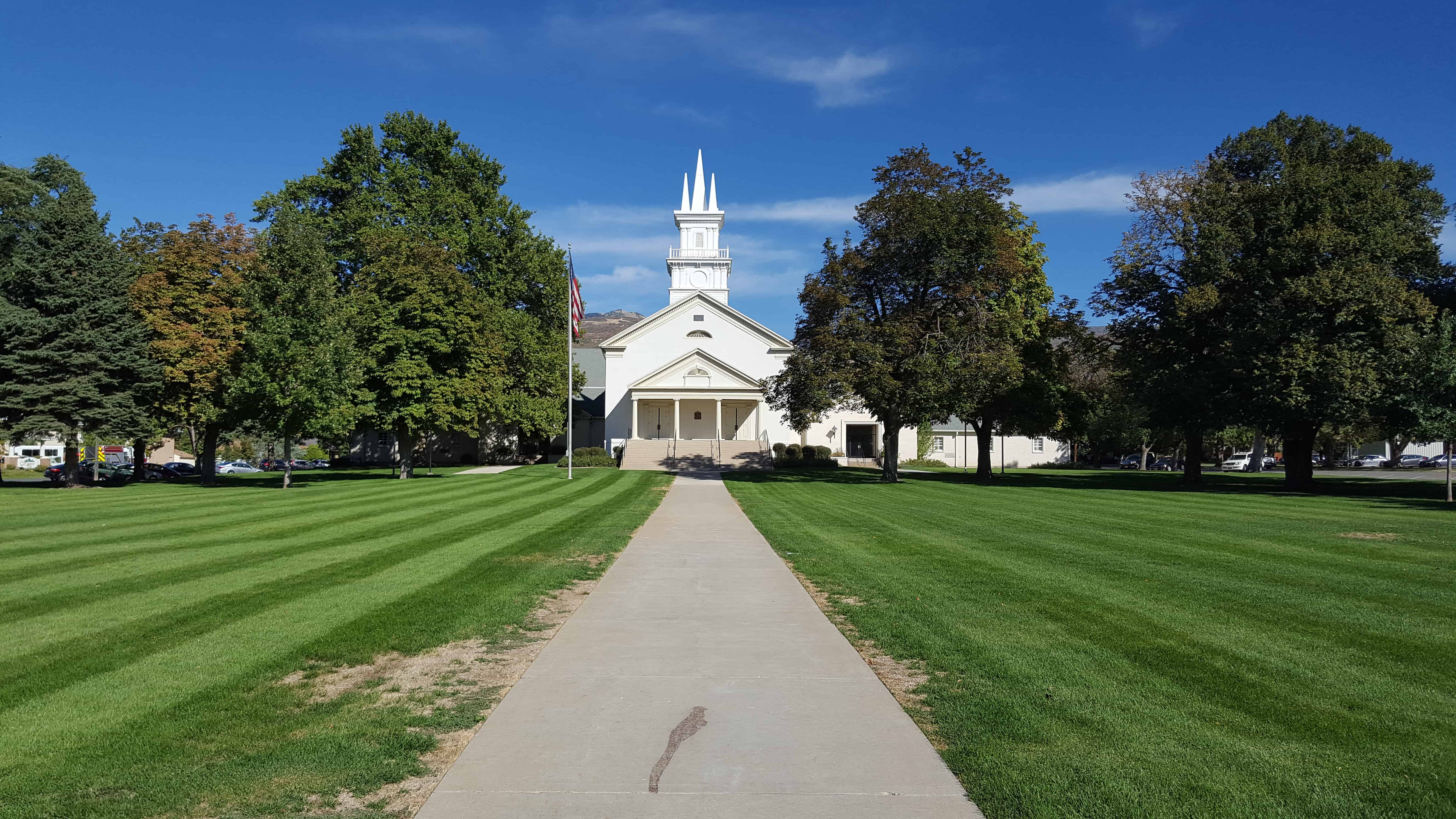
One of the oldest L.D.S. Chapels. Finest at time of erection. Augustus Farnham architect. Site dedicated Feb. 11, 1857 by Elder Lorenzo Snow. Grain was stored in stone foundation when Johnston’s Army advanced. The walls are of adobe, roof timbers fastened with wooden pegs, lumber from Meeting House Hollow, Holbrook Canyon. Tower had five spires, the center spire served as a sun dial. Dedicated March 14, 1863 by Elder Heber C. Kimball, President Brigham Young presiding. Cost $60,000, Bishop John Stoker. Councilors Wm. Atkinson and Wm. H. Lee.
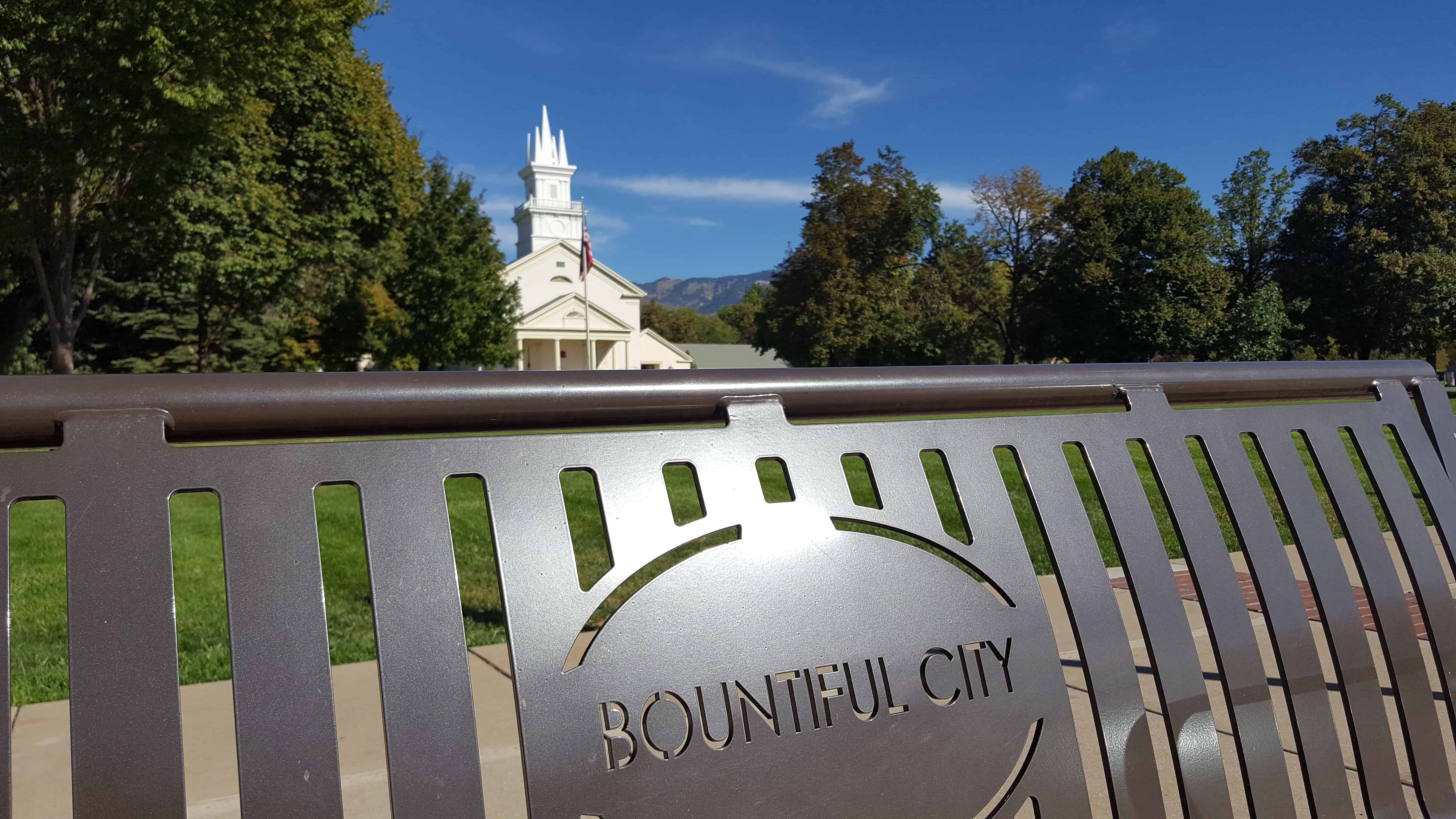
Located at 55 South Main Street in Bountiful, Utah and added to the National Historic Register (#76001813) on January 1, 1976.
On February 11, 1851 (or 1857 there is some discrepancy among sources) Lorenzo Snow broke ground for the new building in a rather elaborate ceremony. The first stone was laid on February 12, 1857, The tabernacle was built almost entirely of local materials, with local labor. Cost was scene $60,000. Architect was Augustus Farnham. Apparently the best materials and artisanship available were used, and at the time of erection it had the reputation -£or being the finest meetinghouse in the Territory of Utah,
Work on the tabernacle continued as Johnston’s Army approached in 1857-58. When the town was evacuated in 1858, grain was stored in the rock foundation.
The building was finished in 1862, including the Joseph Smith mural which was commissioned by Brigham Young and painted by Daniel Waggelund. The dedication on March 14, 1863, was the occasion of a momentous gathering attended by several noteworthy dignitaries: Brigham Young presided and Heber C. Kimball offered the dedicatory prayer.
The five spires have been blown off the tower, at least once in 1906 by a Davis County east wind. They were restored some 50 years later.
In 1925 the north wing with amusement hall and classrooms, was added. The building was “remodeled, redecorated and modernized” and a new pipe organ was added in 1942. In 1957 a new wing was added to the rear of the amusement hall, containing a kitchen, Relief Society room, and offices.
The new part was dedicated on February 10, 1957, by President David O. McKay.
On March 14, 1963, a centennial service was held in and for the building. The featured speaker was President Hugh B. Brown, who rededicated the building “for another hundred years,” He declared the tabernacle to be “holy ground” where every prophet but Joseph Smith had occupied the pulpit.
The Bountiful Tabernacle is significant historically by virtue of its being the oldest religious structure in the State of Utah, the religious building enjoying the longest continuous use in Utah, and the oldest edifice built by the Church of Jesus Christ of Latter-day Saints (Mormons) to be in continuous use as a place of worship. Every prophet of the Mormons, save Joseph Smith, who was killed in Nauvoo, Illinois, before coming West, has preached in the tabernacle.
The Bountiful Tabernacle also has the distinction of being the oldest extant example, and undoubtedly the most impressive example from any period, of early Greek Revival architecture in Utah. Greek Revival styling was the first prominent style to take hold in Utah after the technology was developed to advance from the levels of primitive shelter and vernacular architecture. Architect Augustus A. Farnham, an early convert to the Mormon Church, was born in Andover, Massachusetts, and called upon his knowledge of Greek Revival motifs to enhance a potentially ordinary adobe meetinghouse. Each craftsman in turn contributed his finest decorative work to set the tabernacle apart from other public buildings at the time. From the fine circular stairways leading to the gallery but It by George W. Lincoln, to the classically pilastered and arched reredos framing the Weggeland portrait of Joseph Smith, the building was finished and detailed in the most refined methods the Bountiful pioneers were capable of. Recently saved from destruction by Mormon Church leaders, there is no other Utah structure that better represents the aspirations, pride, and accomplishments of pioneers in a primitive environment than the Bountiful Tabernacle.
The original part, the chapel, is a rectangle 40′ by 80′ with a portico over the front entrance and a small utility room at the back. The foundation is of stone, 6 feet thick and 9 feet high. The walls are of adobe, 3 feet thick. The exterior has been covered with plaster or stucco for at least half of the building’s life. The single centered inset tower is capped by five spires.
The roof is shingled. The gable is of medium pitch with a boxed and returned cornice and a decorated frieze of wood. On each side wall were three large 3-sashed recessed windows with capstone lintels and brick sills, Directly underneath were basement windows in the stone foundation, A later addition covered the windows on the north. The only windows in the front façade are 2 half-round ventilators in the wall and in the porch.
The main entrance is composed of 2 doors under the portico. The portico follows the line of the main gable. It is supported by 6 fluted columns of wood, the stairs originally descending to ground level both to the front and sides.
The basement inside is devoted to small classrooms. The main floor is a single room. Its walls are plastered with a 4 foot high wooden slat paneling around the bottom and a decorative, possibly hand-carved moulding around the top. There are three chandeliers hanging from carved mountings.
In the rear is a balcony, approached from the sides by winding staircases. It is supported from beneath by fluted columns and from above by square ones. These columns are of wood and are painted in a “marbled” pattern similar to that on the columns in the tabernacle in Temple Square. On the front of the balcony is a façade of decorative woodwork.
On the rear wall over the choir is a mural in green, gray and white, featuring a bust of Joseph Smith in an alcove surmounted by 2 cherubim holding a banner which reads “Holiness to the Lord.”
The only apparent alterations in this original part are a new stairway from the portico outside, descending only to the front the original descended to the sides as well with an added 4 iron railings; and a large door, folding, on the north side leading to the new amusement hall and replacing two of the windows.
The two additions, to the north side and to the rear a cultural hall and a Relief Society room and kitchen both with full basements, are well integrated to the exterior style of the original building.
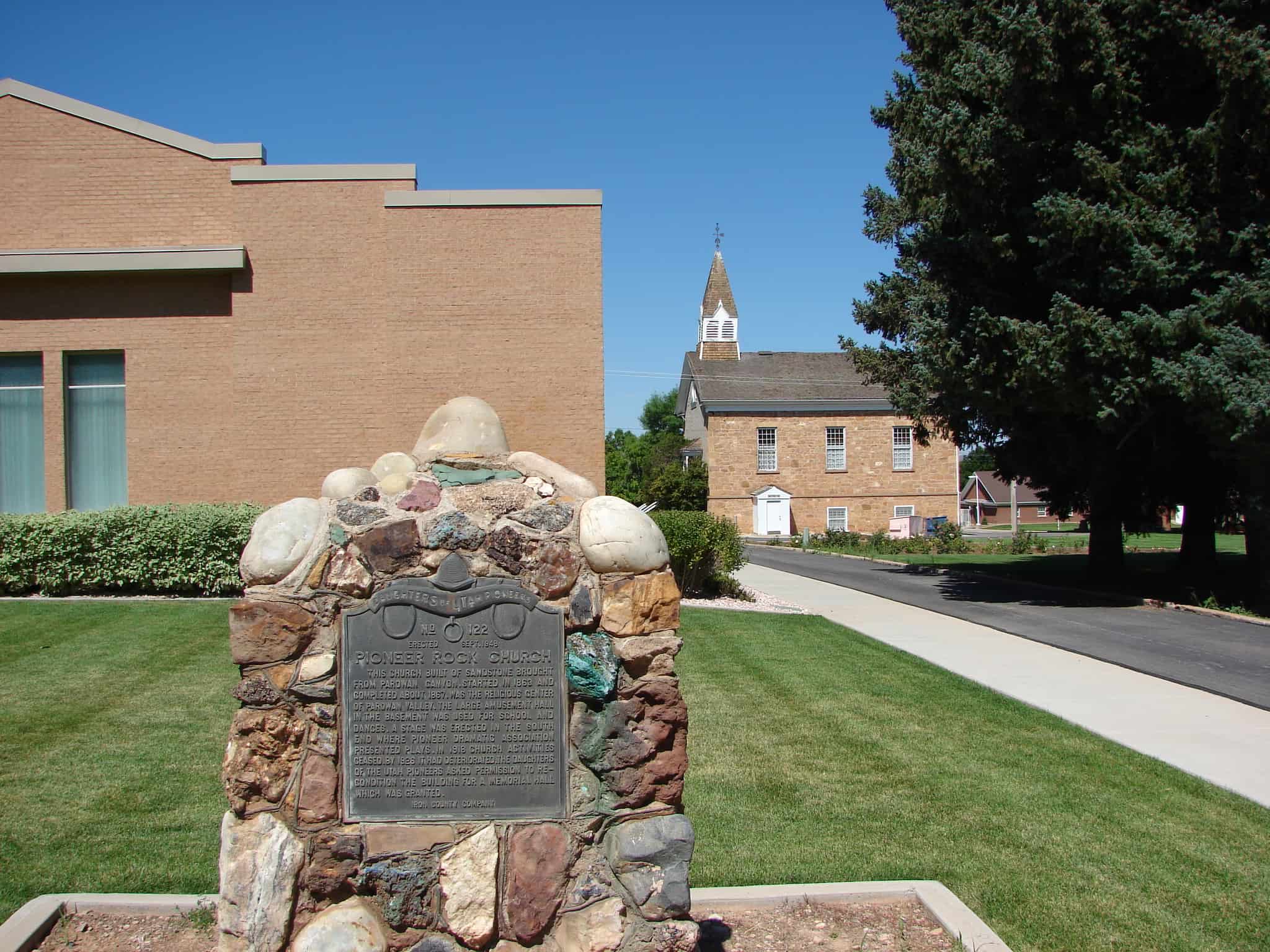
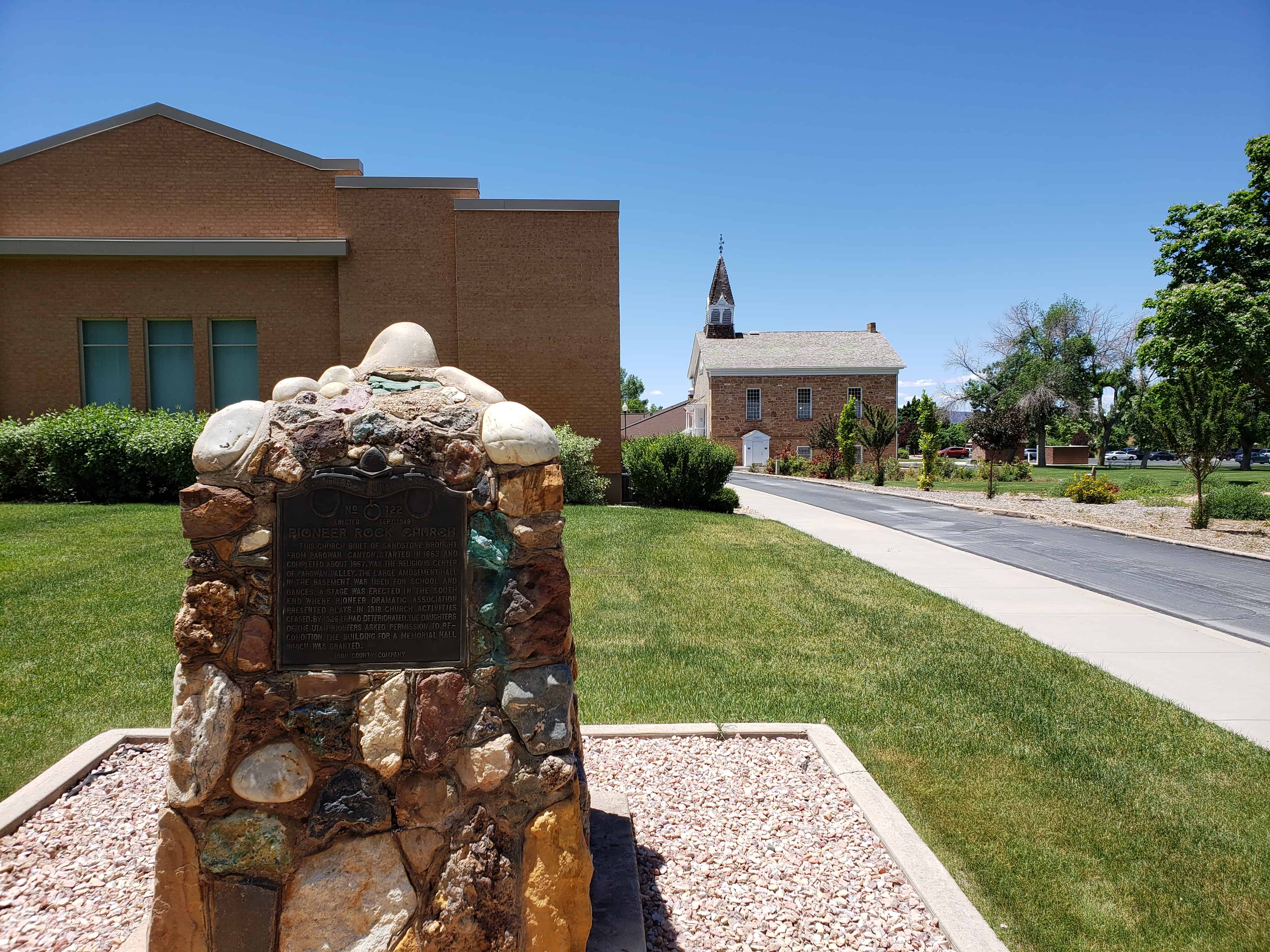
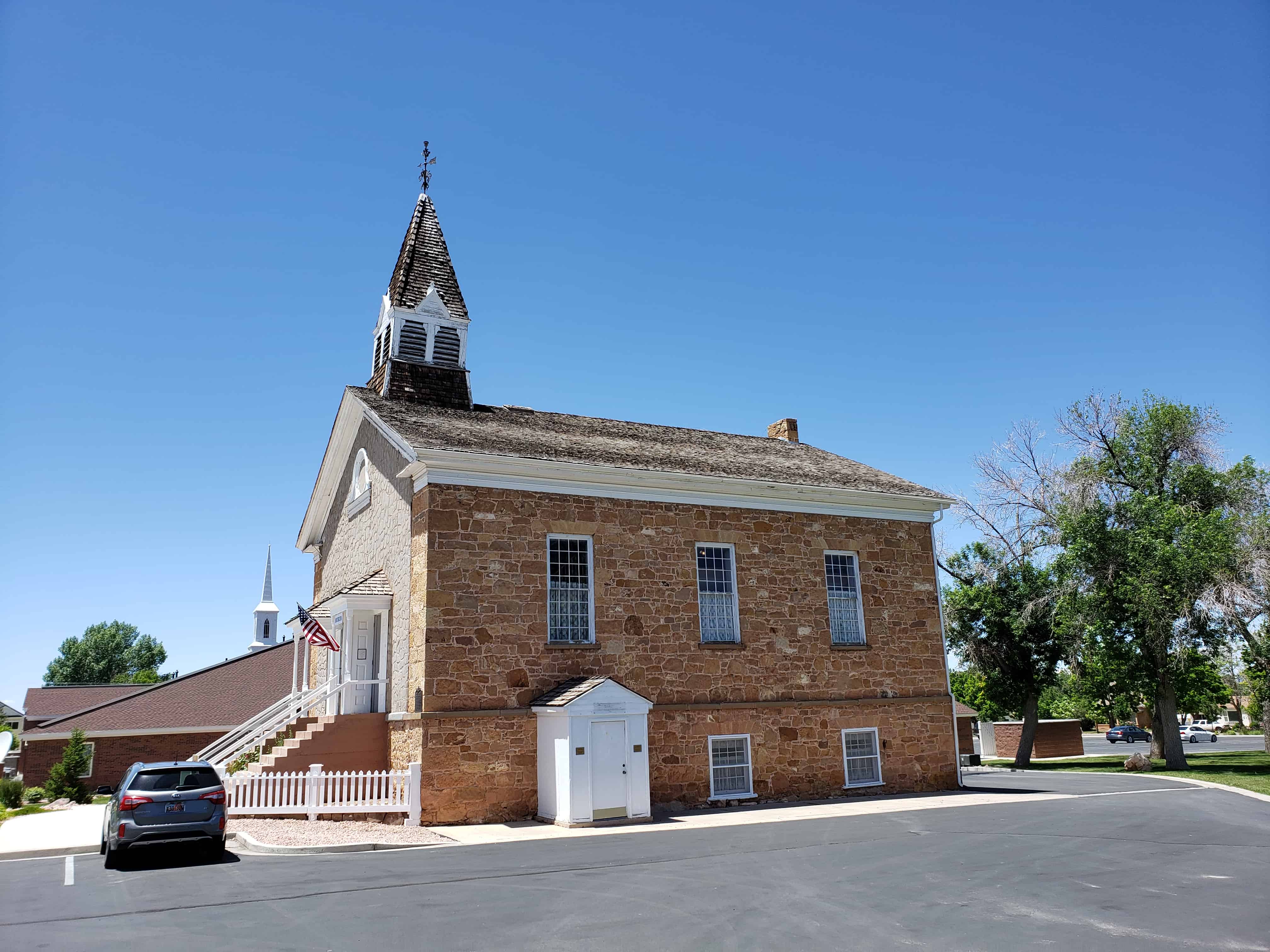
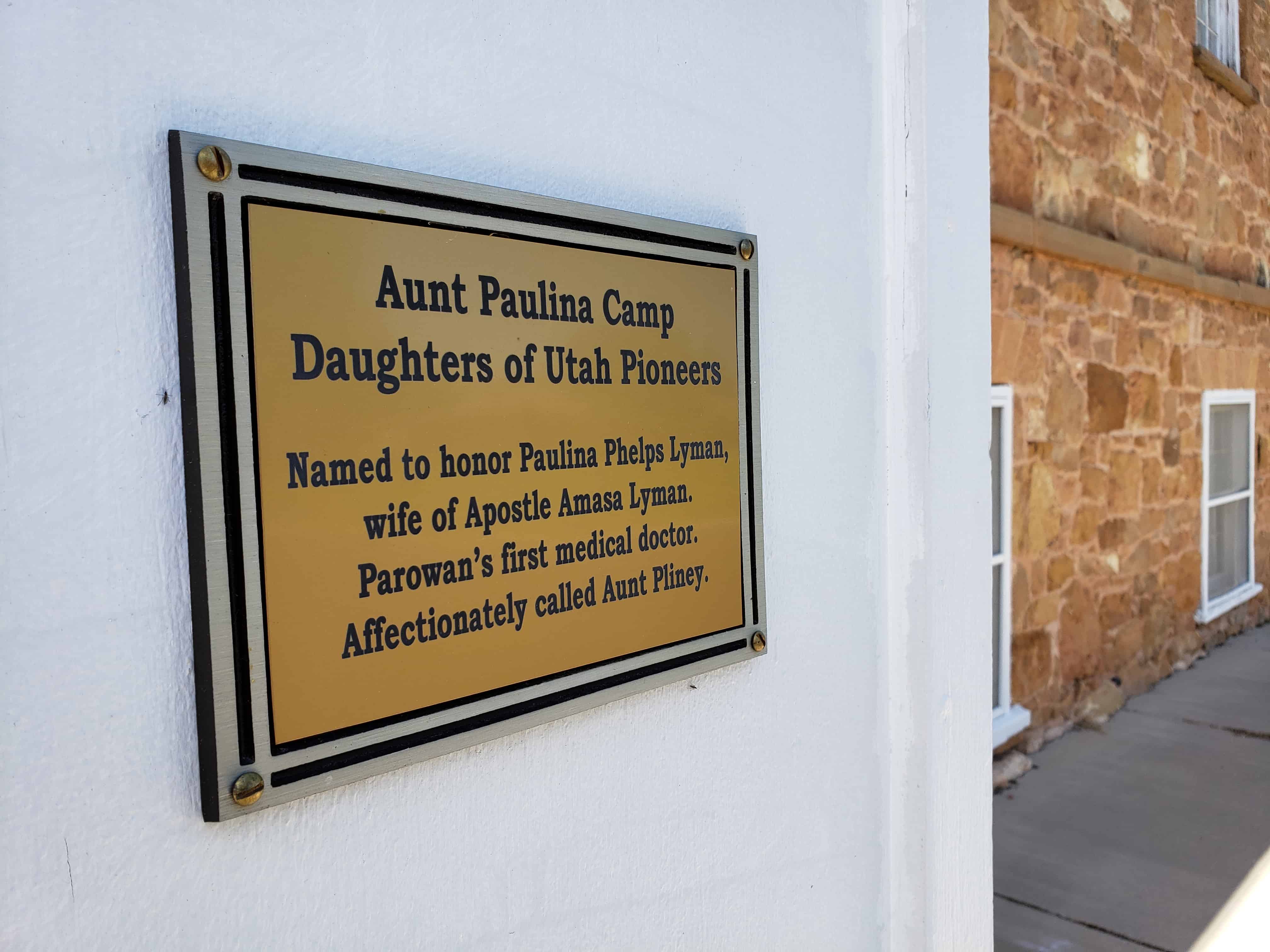
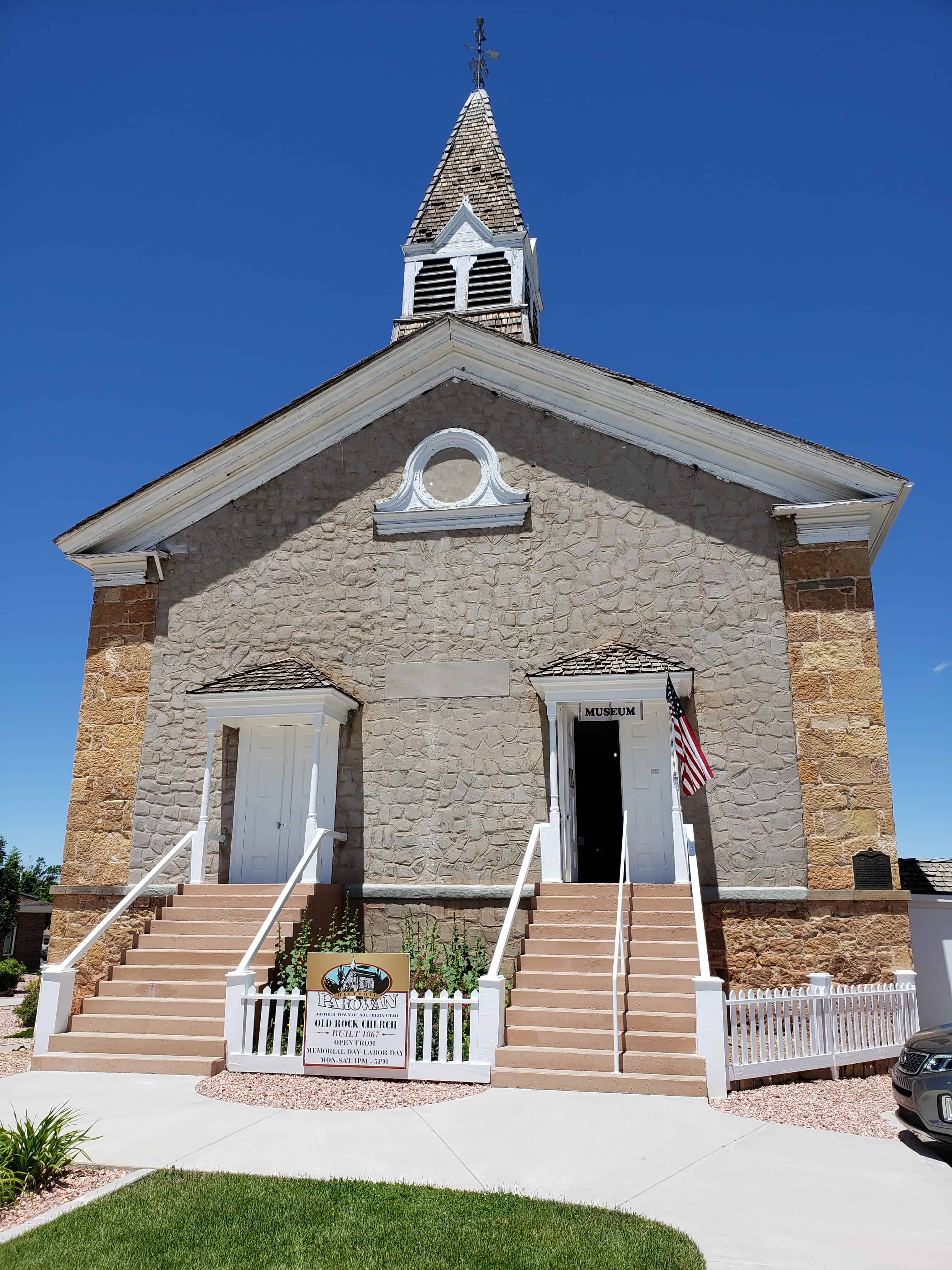
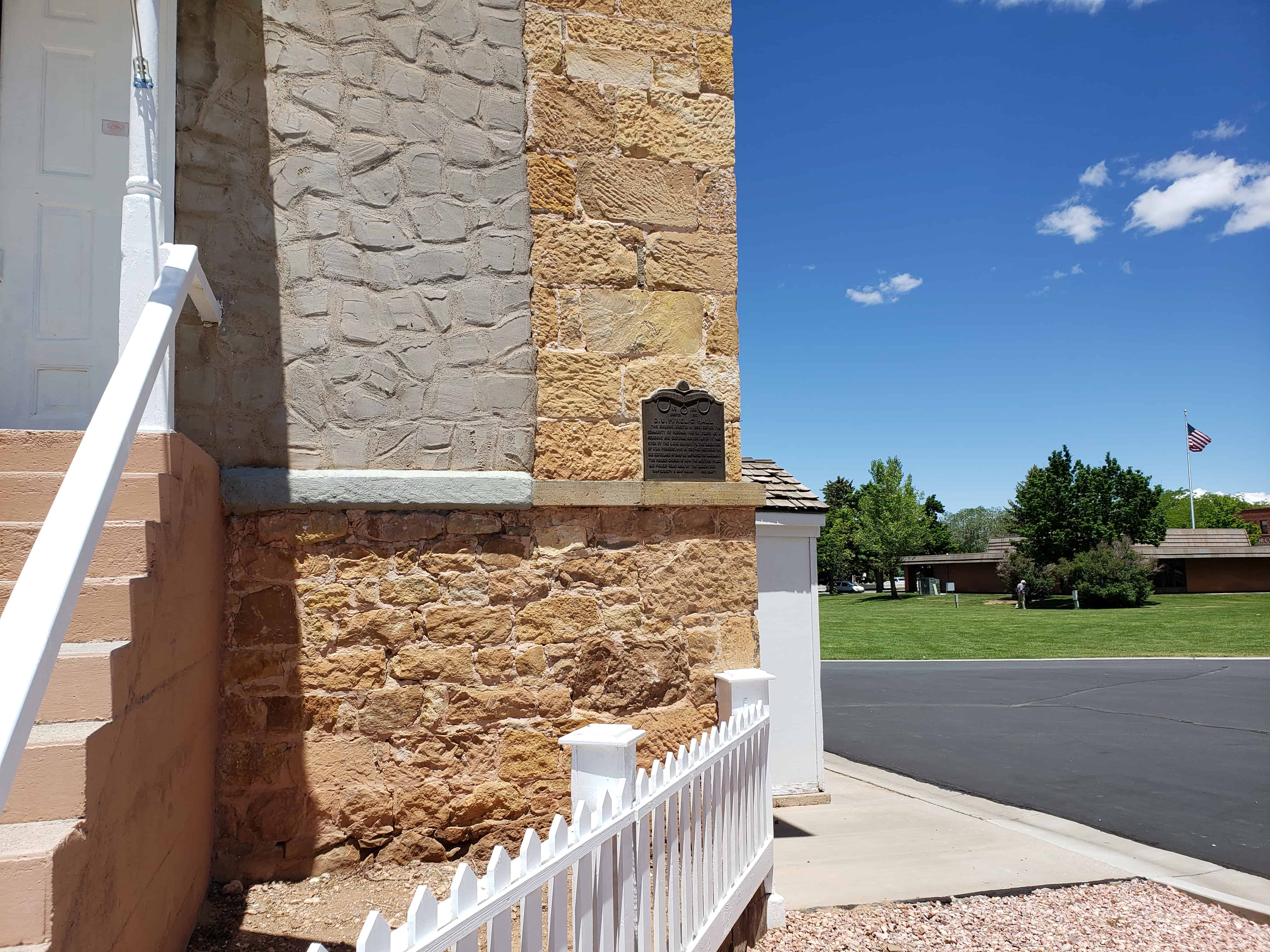
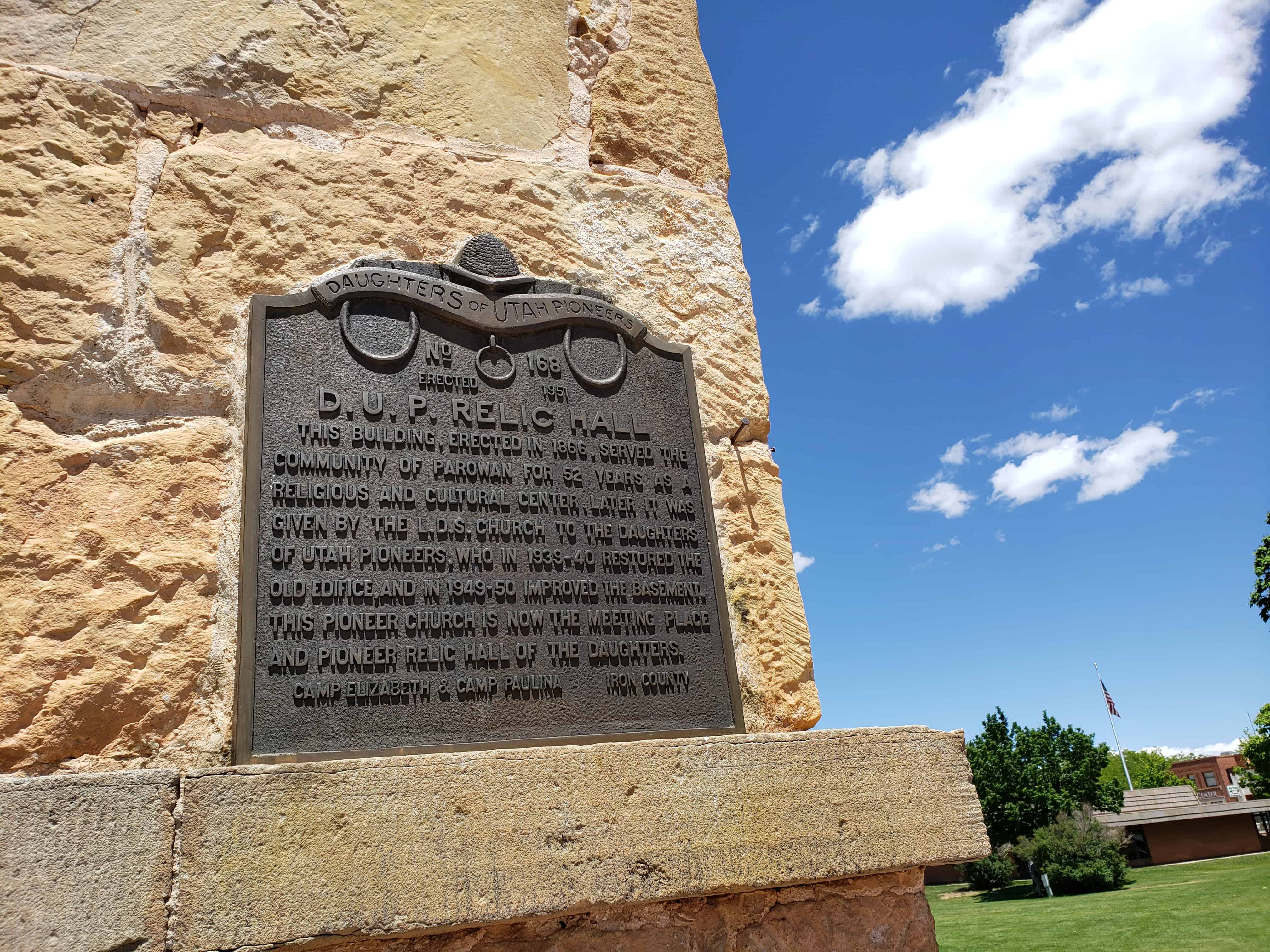
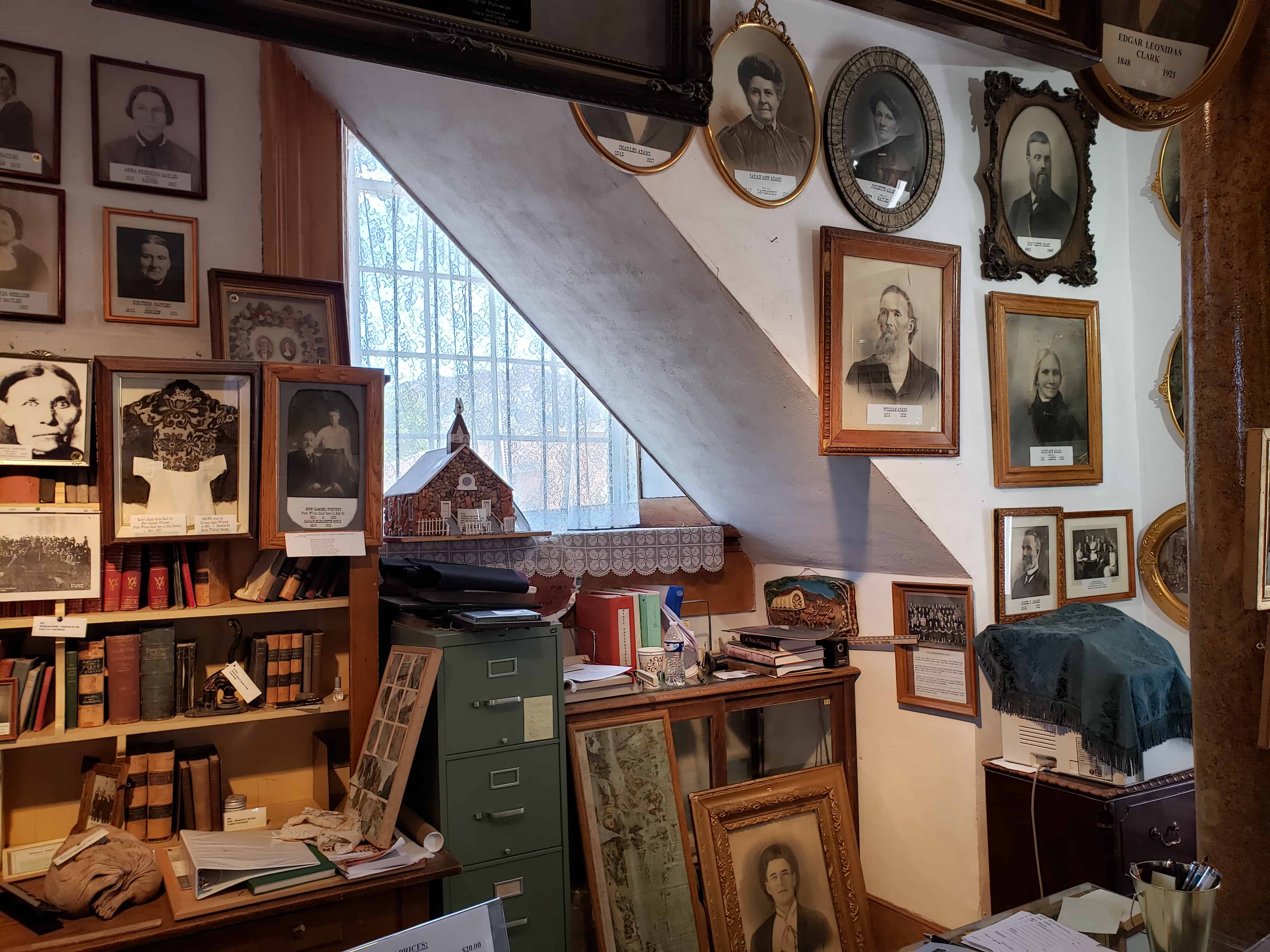
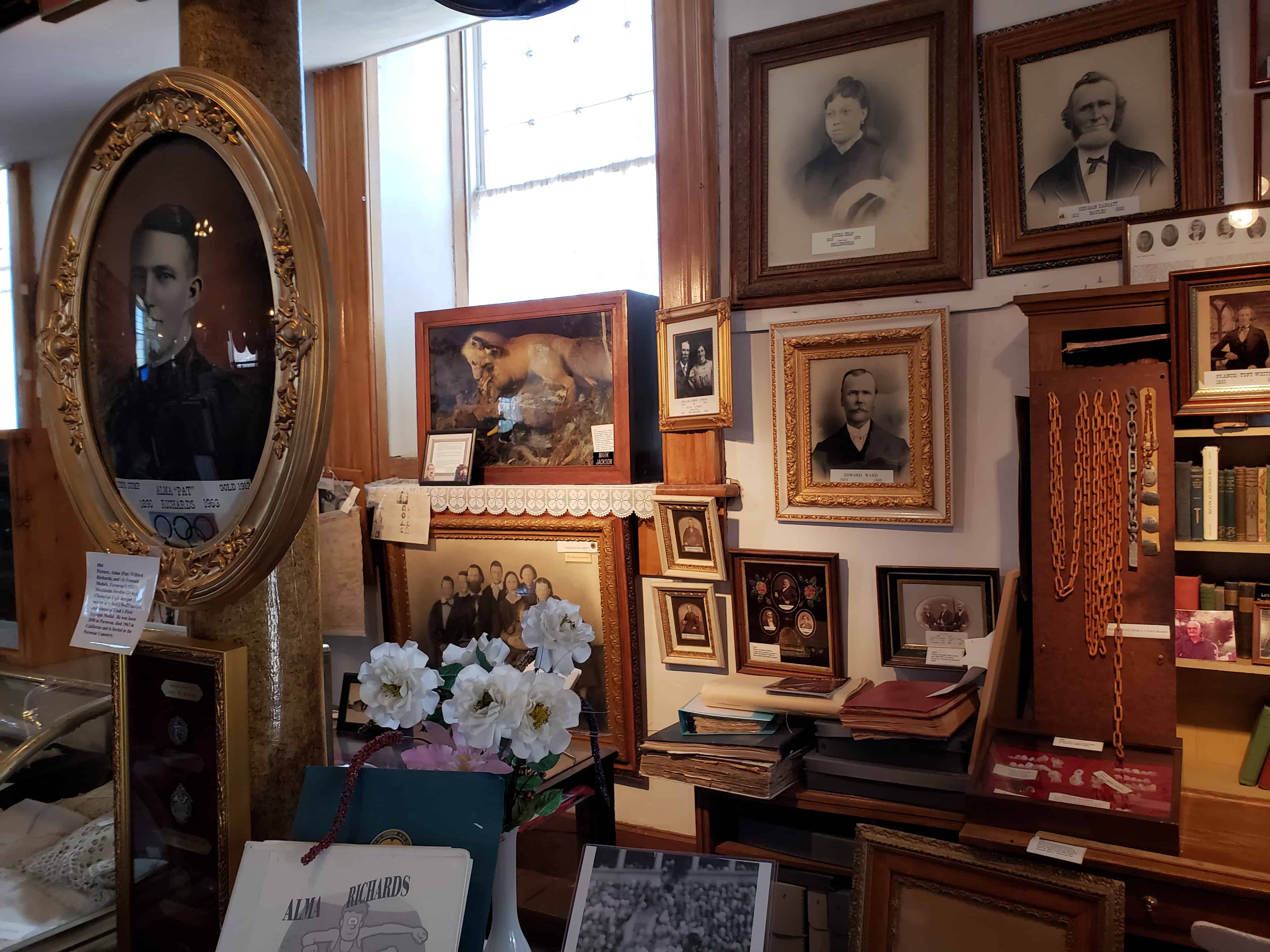
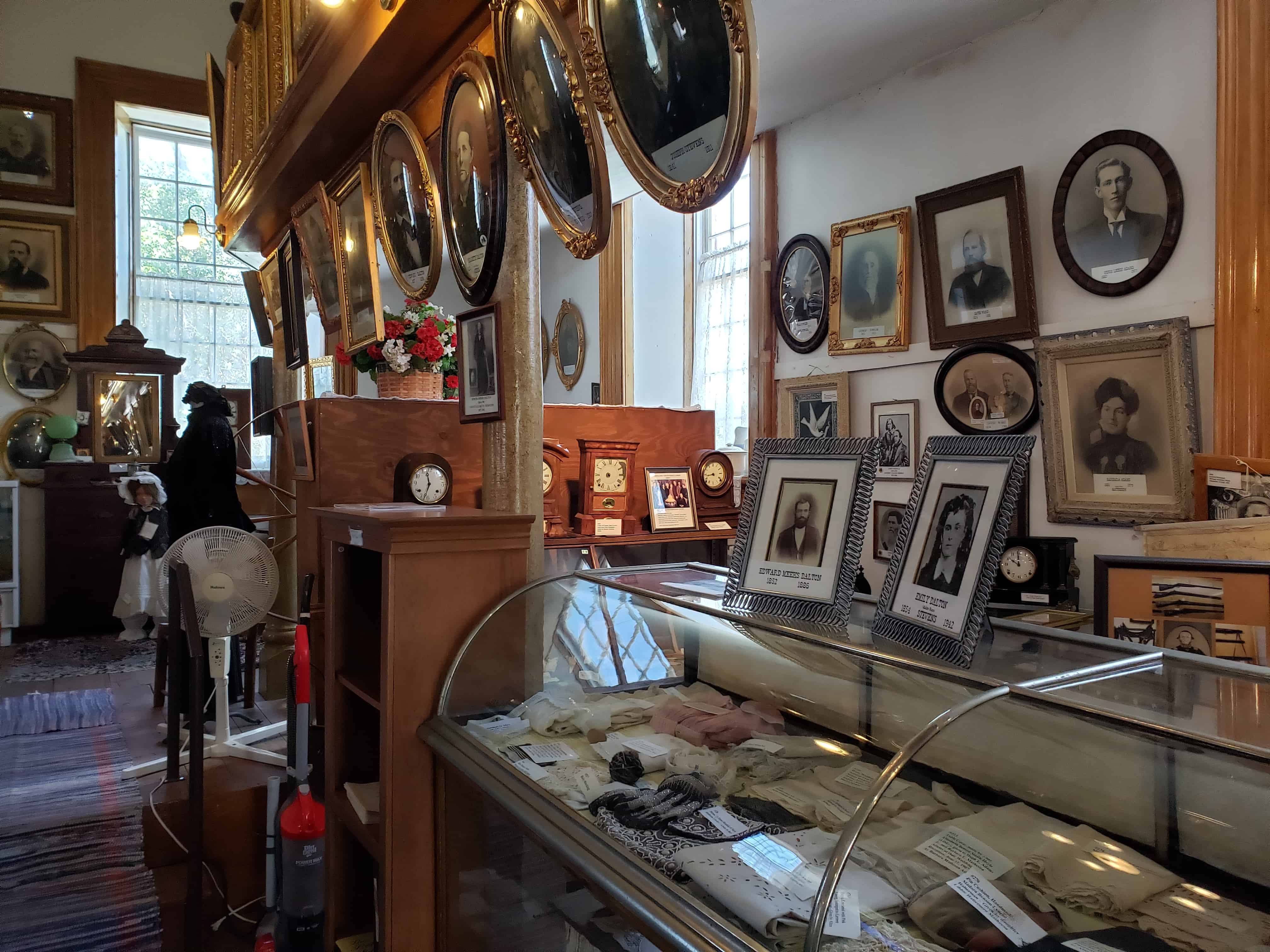
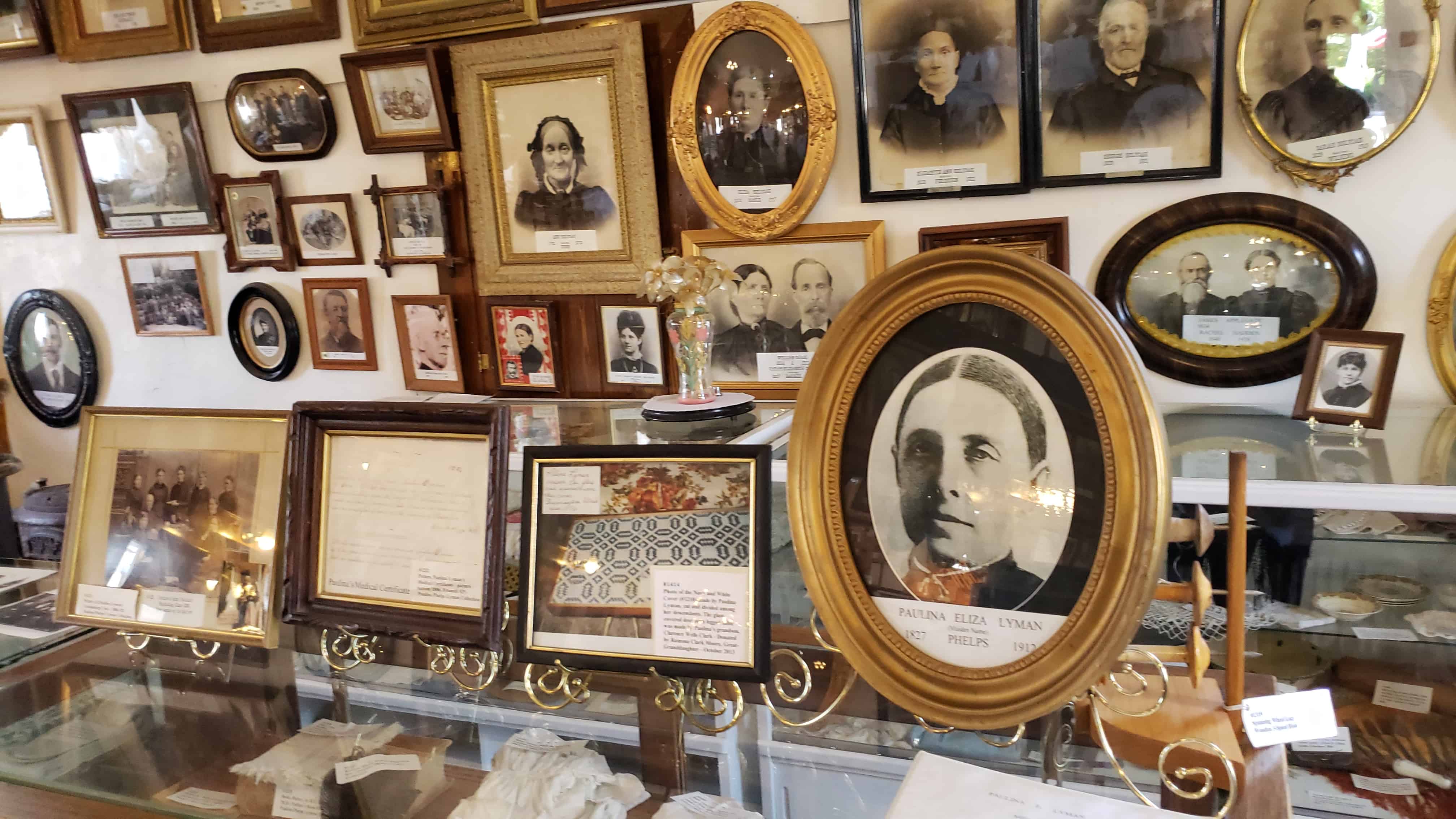
This building, erected in 1866, served the community of Parowan for 52 years as a religious and cultural center. Later it was given by the L.D.S. Church to the Daughters of Utah Pioneers, who in 1939-40 restored the old edifice and in 1949-50 improved the basement. This Pioneer Church is now the meeting place and Pioneer Relic Hall of the Daughters.
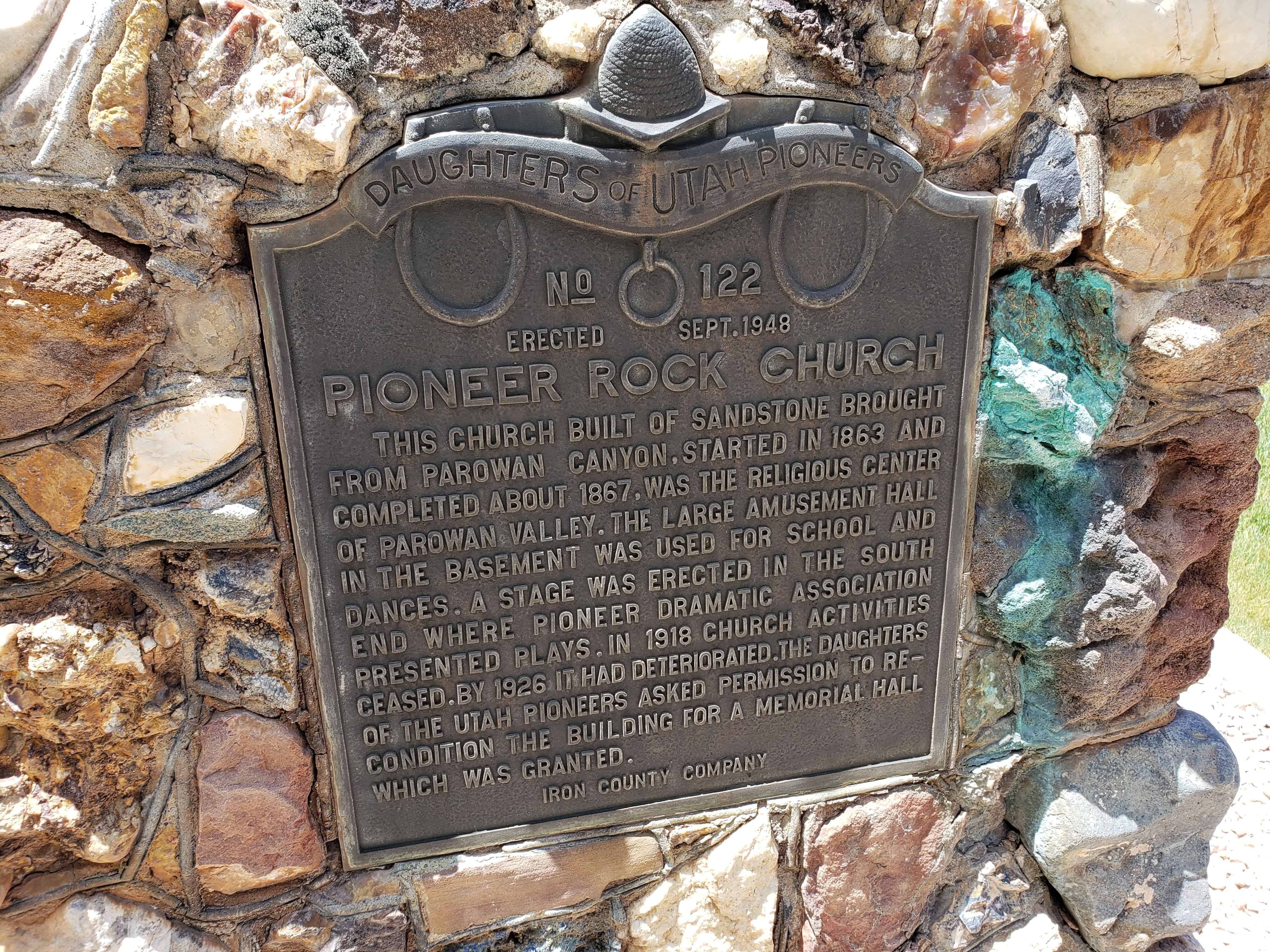
This church built of sandstone brought from Parowan Canyon, started in 1863 and completed about 1876, was the religious center of Parowan Valley. The large amusement hall in the basement was used for school and dances. A stage was erected in the south end where Pioneer Dramatic Association presented plays. In 1918 church activities ceased. By 1826 it had deteriorated. The Daughters of Utah Pioneers asked permission to recondition the building for a Memorial Hall which was granted.